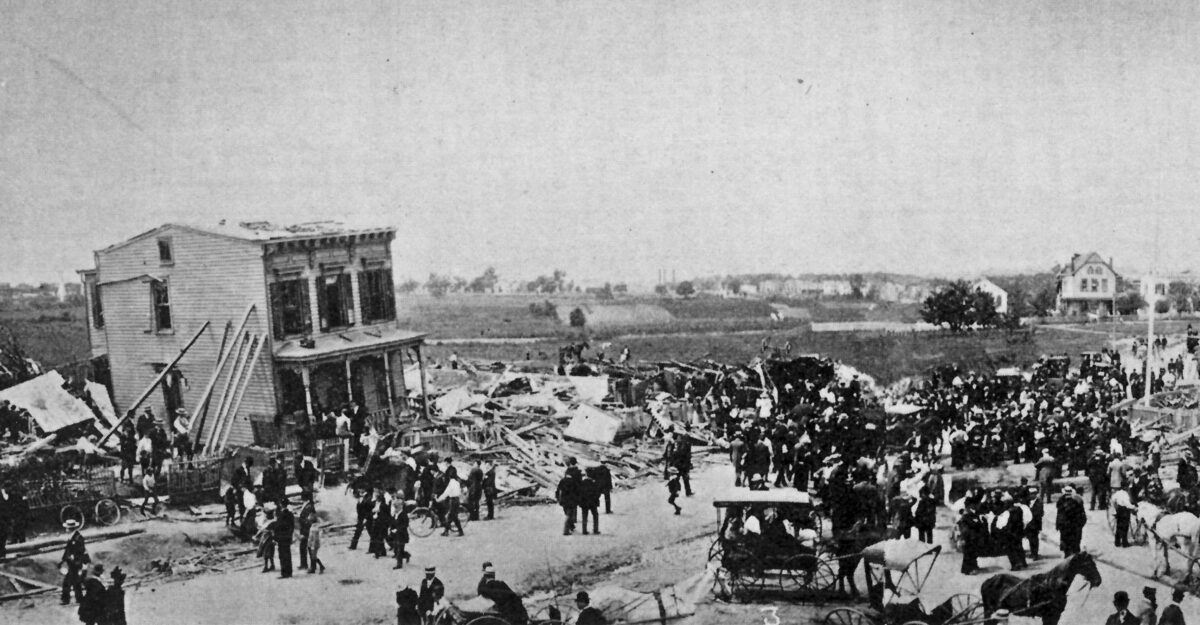
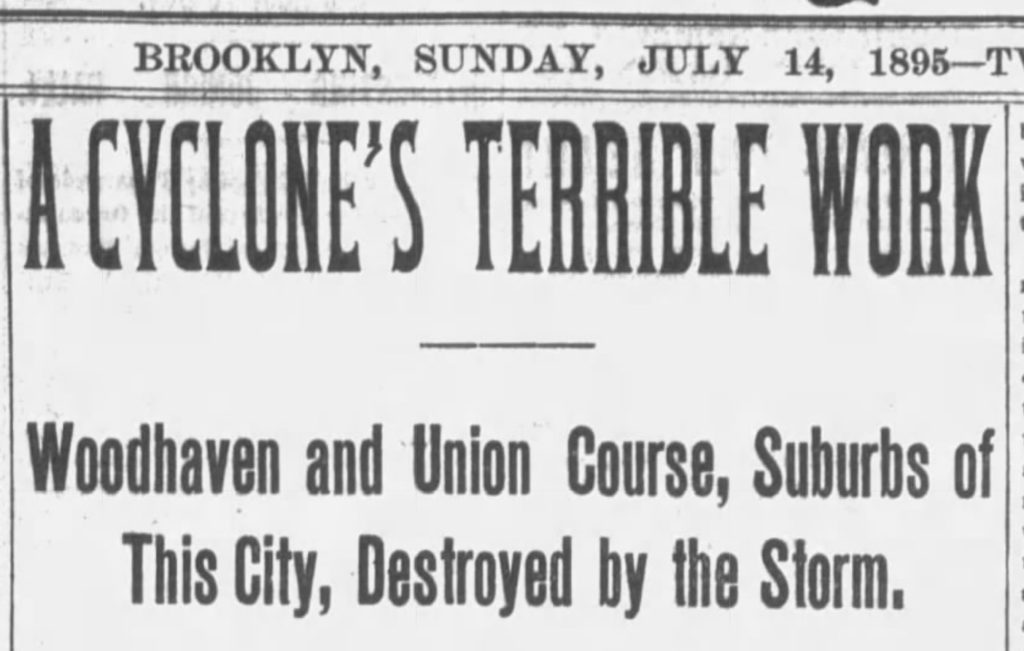
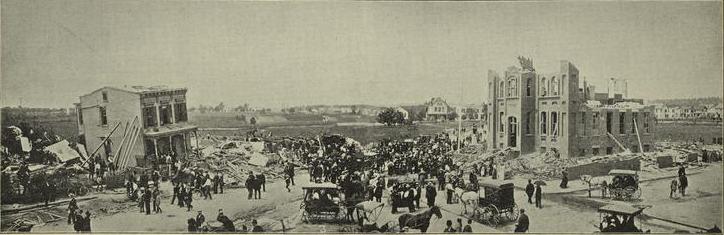
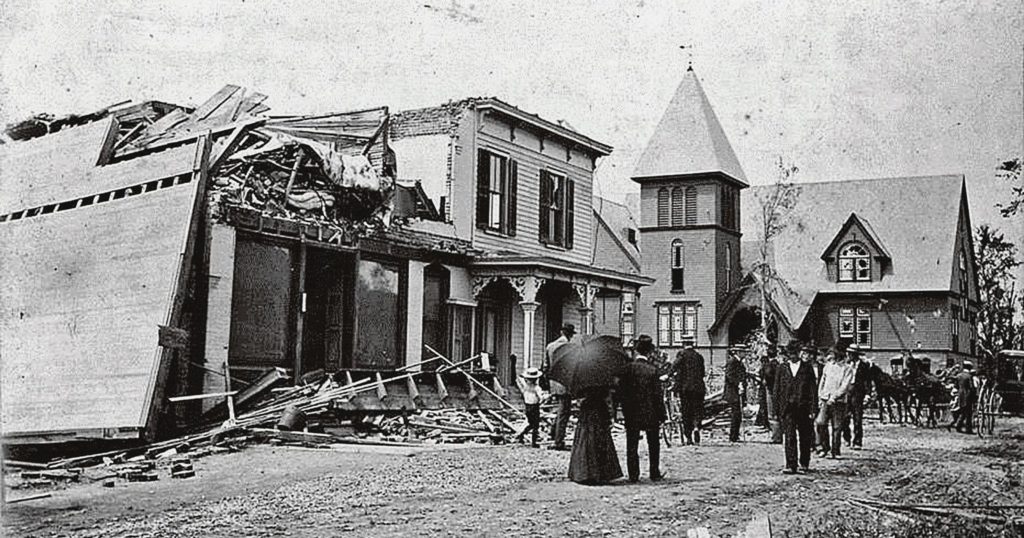
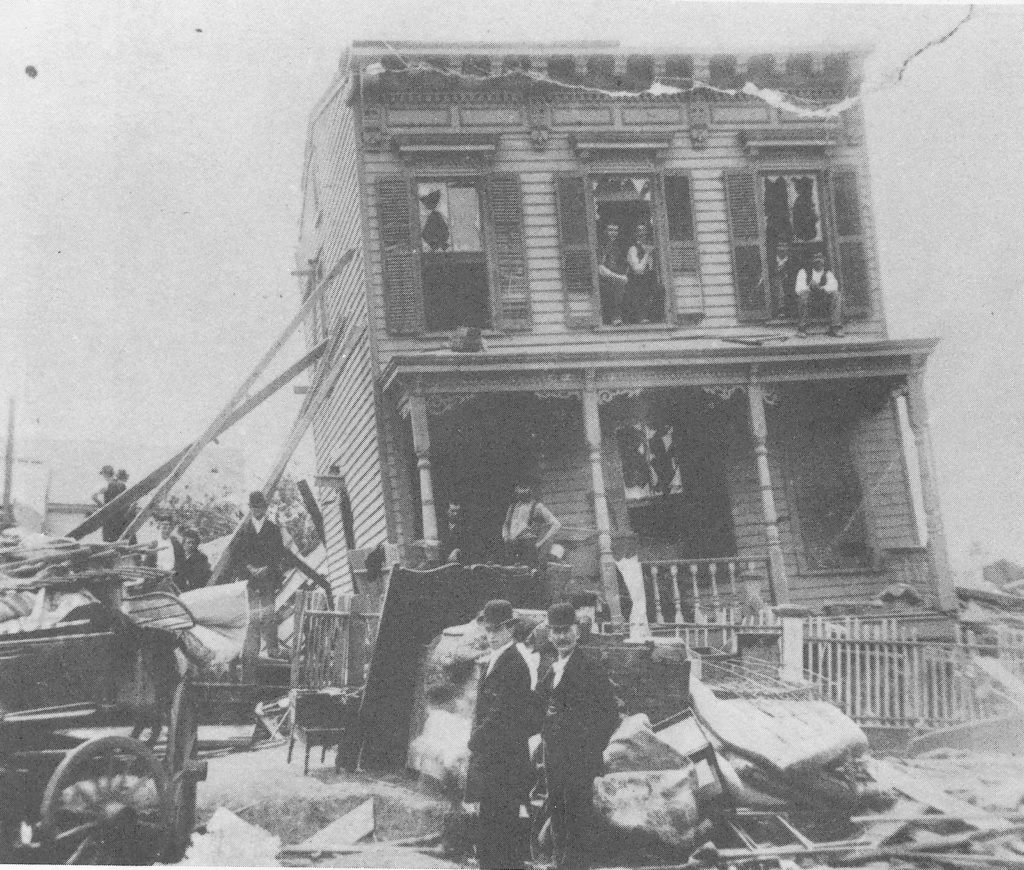
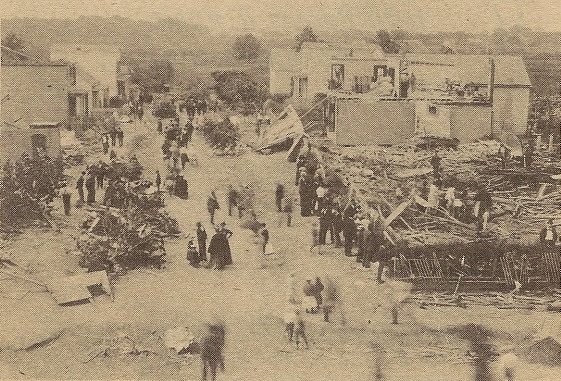
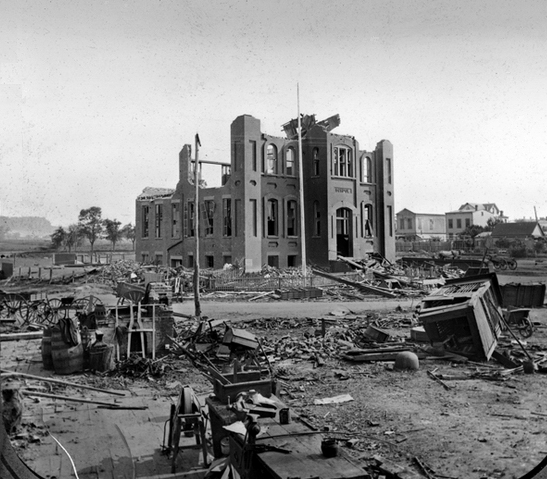
But all of these pale in comparison to the terrifying storm which hit the area in the summer of 1895, nearly decimating a neighborhood in Queens.
Brooklyn Citizen, July 14, 1895 — BROOKLYN ESCAPED AS BY A MIRACLENew York Public Library
On the afternoon of July 13, 1895, a horrendous tornado — a “hellish wind” — ripped apart the New Jersey town of Cherry Hill (pictured below). A New York Times reported that “nearly every building in the place bears evidence of the force of its power.” Some claim the village’s name became so associated with that destructive storm that it later had to change its name to North Hackensack.
Courtesy the Bergen County Historical Society
That same storm swept into New York, whipping through Manhattan via Harlem, leaping across the East River and striking the village of Woodhaven.
The rather unusual reaction of New Yorkers to this storm caught my attention, as reported by the New York Sun: “Yesterday was another eventful day in the history of Woodhaven, Long Island. The tornado on Saturday that killed one, wounded forty, demolished fifteen houses and partially wrecked thirty more, was followed by the largest crowd of sightseers that ever collected in town limits.”
The paragraph ends, “Altogether it was a great day in the town.”
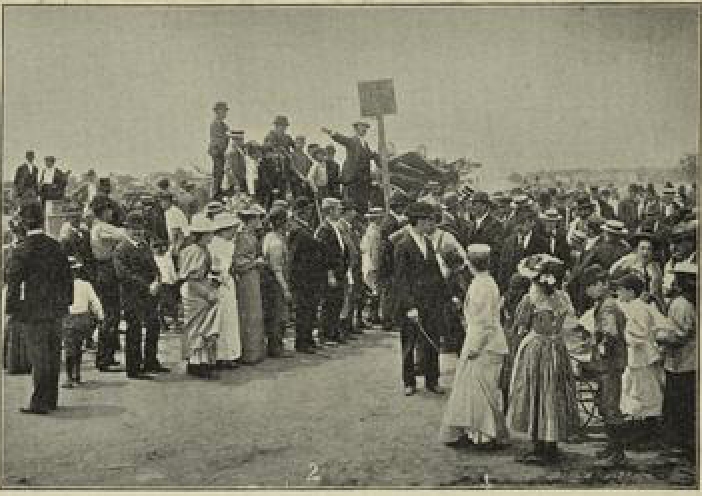
Throngs of locals from New York and Brooklyn took the newly constructed elevated railroads into Queens to witness the carnage, to help out the victims or, in very isolated cases, snag a souvenir of this rare event.
The Sun reports that over 100,000 people visited the site over the next day, and while most were there to assist those in need — a genuine outpouring — still others came merely to witness the pandemonium.
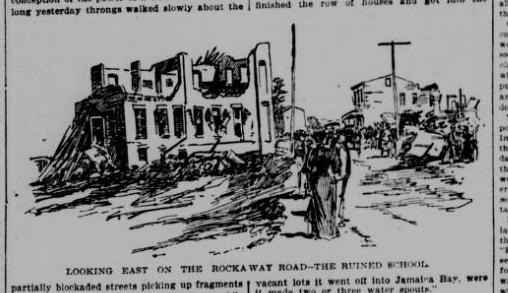
Below: an illustration on the schoolhouse, from the New York Tribune:
For those lucky to own Woodhaven’s saloons — and there were many, the village being near the former Union Course racetrack — the vicious tragedy drew bewildered drinkers. “The saloons that were not wrecked were open. Some of those that were wrecked had beer on tap, and the crowd drank as fast as the spigots could be put in the kegs. Nobody went thirsty.” [Sun]
The tornado tore up pieces of the village and redistributed them at random. One man had four roofs in his backyard; cows and chickens were deposited into new homes. The Sun reports the bodies of dozens of chickens, plucked of their feathers by the winds.
New York Public Library
This being the days before FEMA and decent insurance plans, many families were left to beg.
Many of the gawkers and sightseers began pulling money from their wallets. An enterprising lawyer took an empty beer keg and asked people to fill it with money for the needy. Soon volunteers carried signs saying “Help fill the barrel!” The throngs were directed past the money barrel as a man cried, “You’ve spent your lives emptying kegs. Fill this one!”
The scene took on the feel of a macabre carnival, with gory recounts of the storm and cries from virtual carnies driving more people to arrive and donate. “In the keg! In the keg! In the k-e-g!”
Soon there were many empty kegs (and boxes and bags) distributed throughout the wreckage, gathering funds for the homeless and wounded.
From my experience with late 19th century New Yorkers, I’m going to take a wild guess and say that not all that money ended up in the proper hands. But for the most part, it seems, it was an overflow of generosity and charity that day.
As the sun set upon the ruins of Woodhaven, the money was compiled at the schoolhouse — pictured below, its roof gone and walls torn away — while “perhaps 5,000 people” gathered outside.
Courtesy Woodhaven Cultural and Historical Society
In the end, two people from Queens died during that storm — a pregnant 17 year old struck by a beam and a five-year-old boy. (Actually, the Times reports the boy lived; the Sun says he died. Such was the way of New York newspapers in 1895.)
One rather remarkable story of survival soon emerged — the ten-year-old daughter of the village milkman was walking her cow back to the barn when the tornado picked up both her, the cow and the barn. The barn was torn to splinters and the cow thrown into Jamaica Bay. The girl, thankfully, was deposited into an onion patch, only slightly bruised. [From the New York Tribune]
Let that be a reminder of the days when Queens had barns, cows, milkmen, milkmen’s daughters — and deadly tornados!
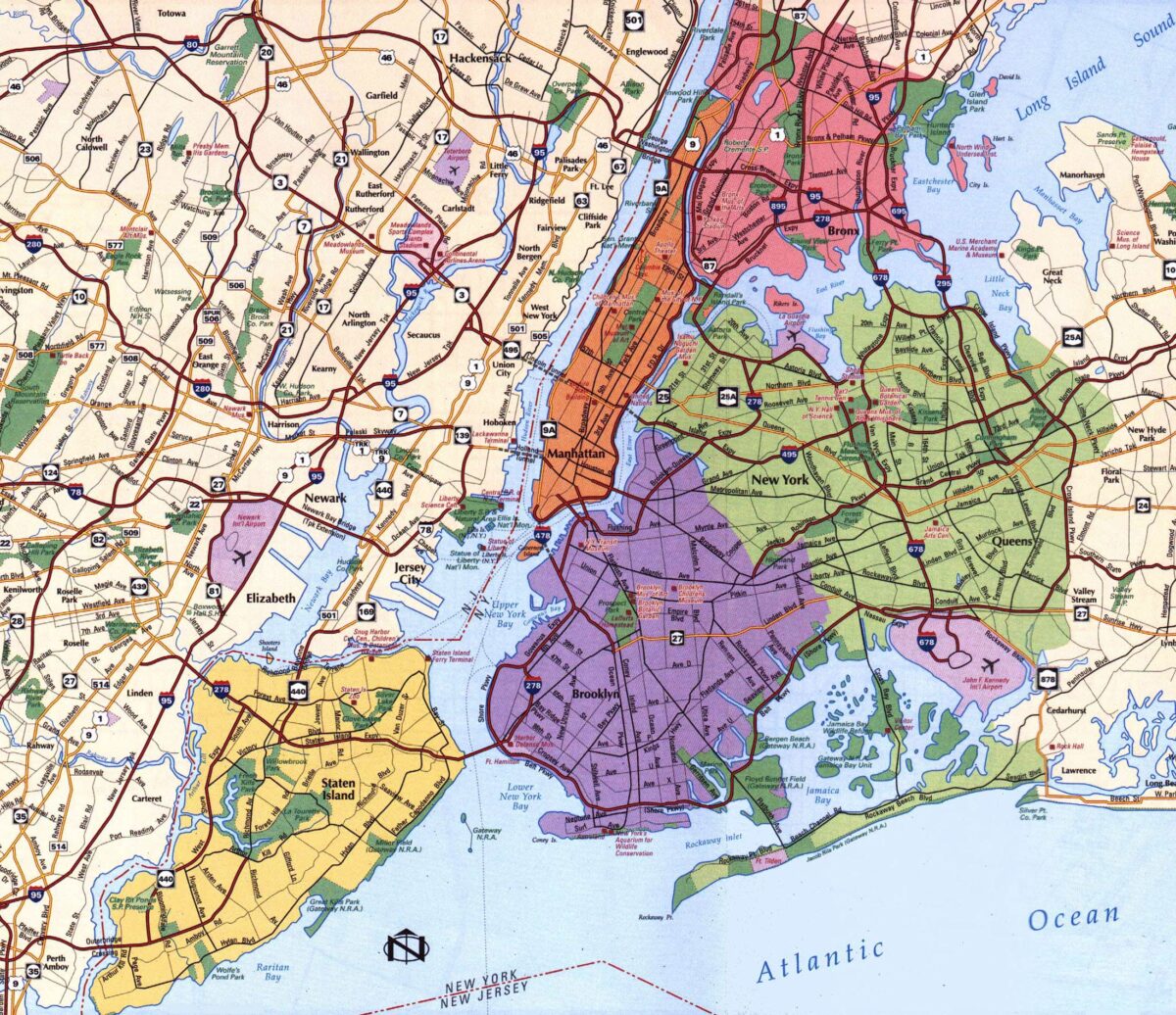
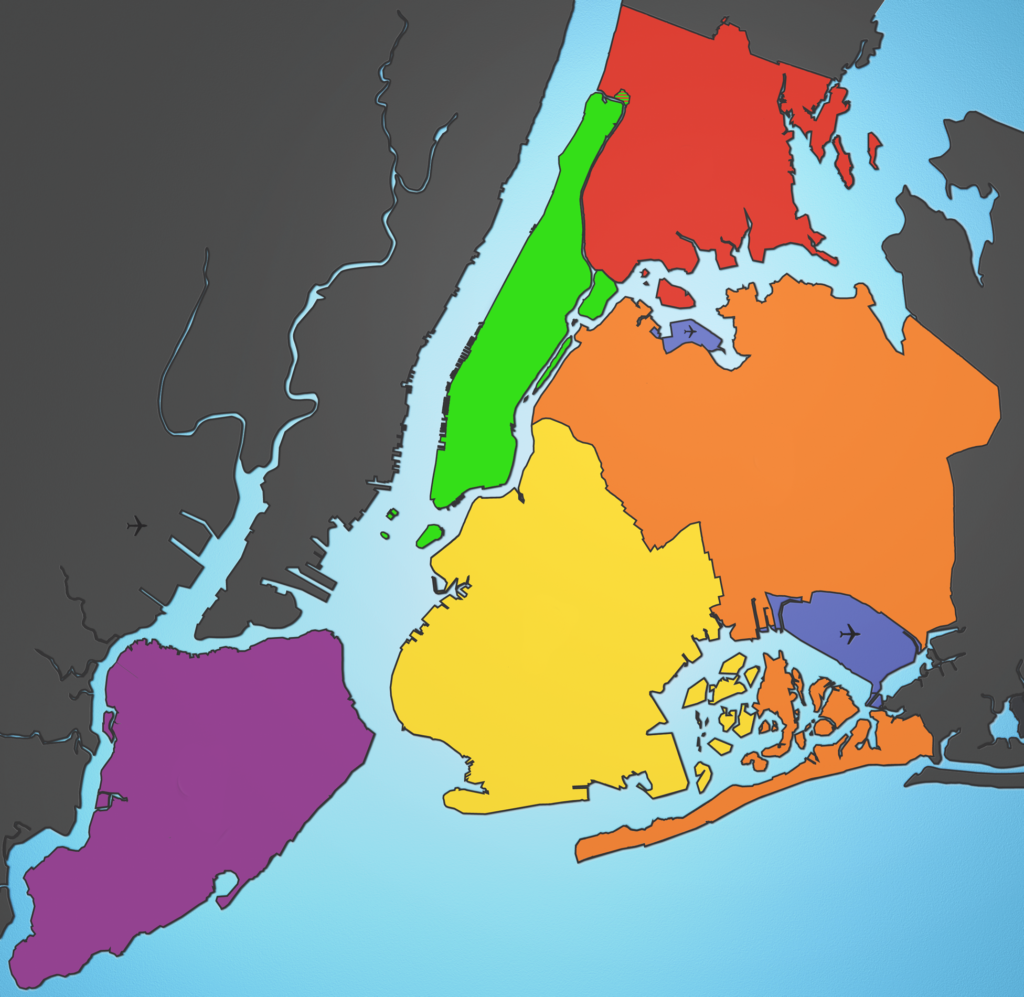
On January 1, 2023, New York City will celebrate a special moment, the 125th anniversary of the formation of Greater New York and the creation of the five boroughs — The Bronx, Brooklyn, Manhattan, Queens and Staten Island.
In honor of this special moment in New York City history, we are celebrating a bit early, reissuing our episode (originally #150) on the Consolidation and the formation of the boroughs, with a new introduction.
And stay tuned for new episodes of the Bowery Boys Podcast for the rest of the year!
Artwork Julius Schorzman; modified by Astuishin, courtesy Wikimedia Commons
Here’s the story of how two very big cities and a whole bunch of small towns and villages — completely different in nature, from farmland to skyscraper — became the greatest city in the world.
This is the tale of Greater New York, the forming of the five boroughs into one metropolis, a consolidation of massive civic interests which became official on January 1, 1898. But this is not a story of interested parties, united in a common goal.
In fact, Manhattan (comprising, with some areas north of the Harlem River, the city of New York) was in a bit of a battle with anti-consolidation forces, mostly in Brooklyn, who saw the merging of two biggest cities in America as the end of the noble autonomy for that former Dutch city on the western shore of Long Island. You’ll be stunned to hear how easily it could have all fallen apart!
In this podcast is the story of Manhattan, Brooklyn, the Bronx, Queens and Staten Island (or Richmond, if you will) and their journey to become one. And how, rather recently in fact, one of those boroughs would grow uncomfortable with the arrangement.
LISTEN NOW: BIRTH OF THE FIVE BOROUGHS
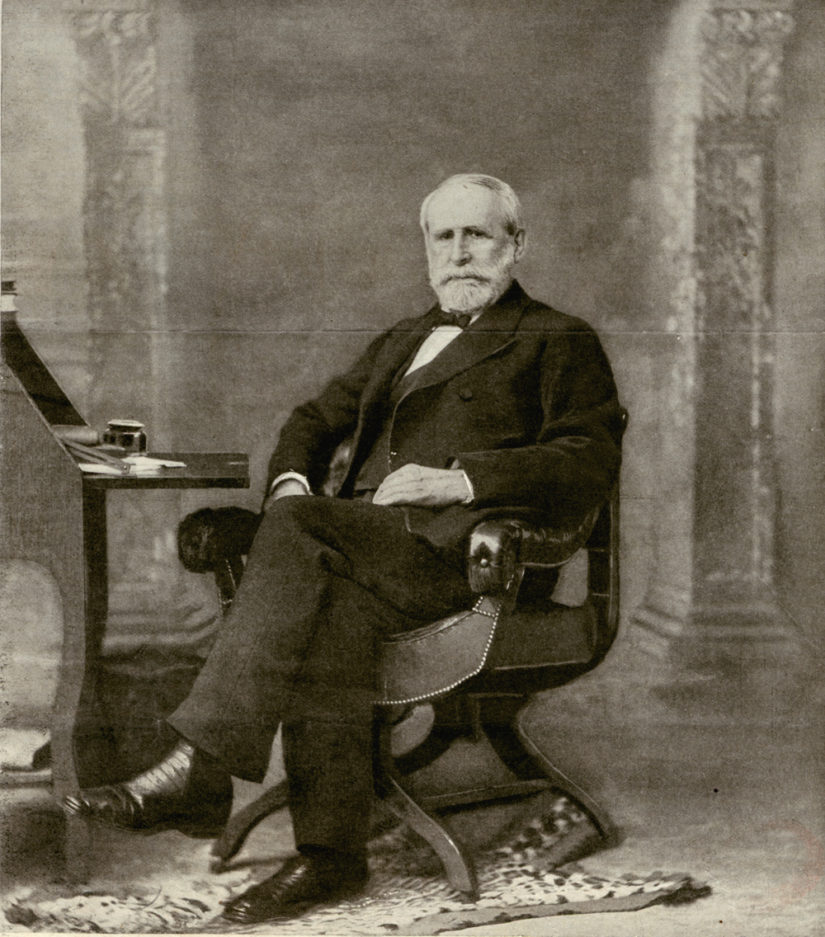
The hero of our story — Andrew Haswell Green
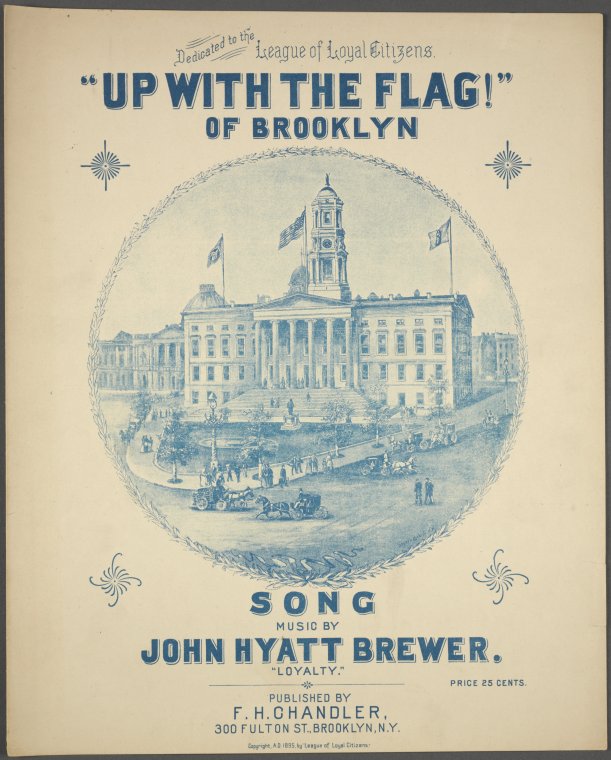
Below the prize-winning anti-Consolidation song mentioned in the podcast (courtesy NYPL):
Style: “Music_Sep4E”
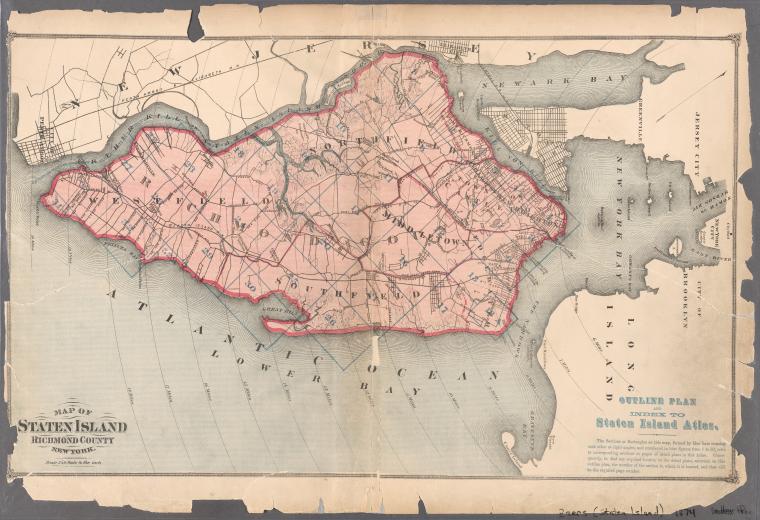
A map of Richmond from 1874
FURTHER LISTENING
This show was recorded in 2013 and since then, many aspects of this story have been turned into their own podcasts. After listening to this show, dive back into these episodes:
In honor of the 100th birthday of television icon Norman Lear (creator of All in the Family, The Jeffersons, Good Times and many, many more) I’ve revised and re-edited this, yes, rather strange round-up originally published in 2013 about New York City and television intros and theme songs.
Please play the TV themes as you scroll through this article. Note that a few of the videos can only be watched on YouTube directly.
And now, on with the show….
The camera zooms over the New York City skyline as an earnest pop tune — usually devoid of any rhythm or edginess, but insanely catchy — descends as though sent from outer space.
The next shot focuses on one particular landmark, a bridge or a park, letting you know, see we’re not in some television studio in L.A., we’re really here, the Big Apple!
We meet the rest of the cast, a wacky bunch of people, urban people, who find themselves in comedic situations. The city appears again in the background, but we’re already off with our new friends — the stars of 1970s prime time.
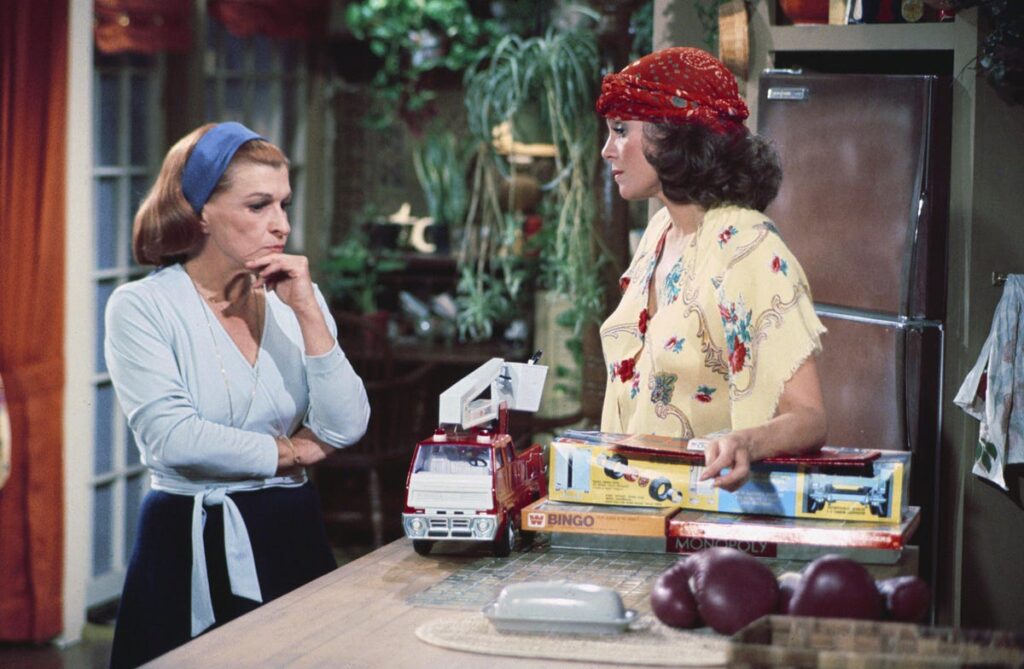
From Rhoda with the great Nancy Walker and Valerie Harper
That’s how a great many television programs began during the 1970s. New York City was heavily represented on television during the decade, an easily identified setting that could be depicted in two or three establishing shots before moving on to introduce the stars.
It popped up in no-nonsense crime dramas and sitcoms alike, an almost singular destination for television characters. After the ‘rural purge‘ of folksy TV shows likeBeverly Hillbilliesand Green Acres(two shows which lampooned the urban snob), there was little room for small-town America; places like Cincinnati, Milwaukee, Chicago and of courseLos Angeles filled out the schedule.
In reality, New York was entering a dark period of deteriorating public services, high crime and financial woes. While television news would often dramatically reflect this image out to America, television entertainment would do the opposite.
Few TV series of the period accurately reflected New York’s troubles outside of a few occasional crime dramas and action shows (like 1977’s Amazing Spiderman).
Of course, most television shows about New York City in the 1970s were actually filmed in Los Angeles. And you couldn’t fault sitcom creators for wanting to eschew real-life troubles that would distract from their clean and cheerful worlds of comic misunderstandings.
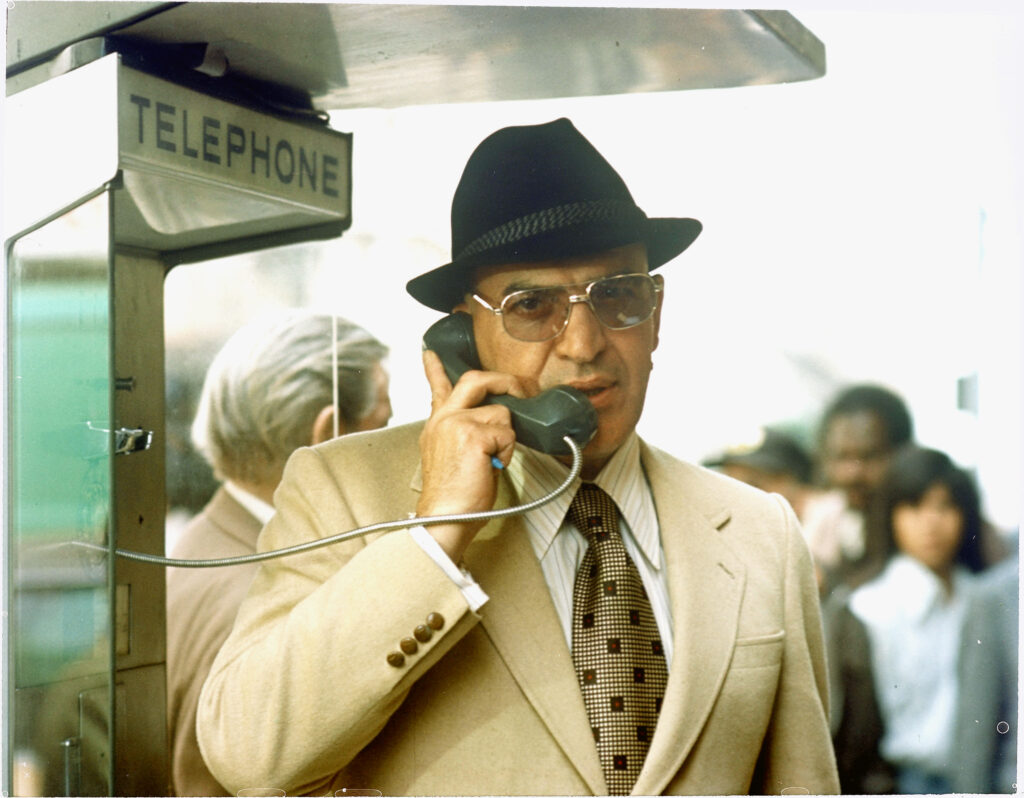
Even great detective shows like Kojak pulled their punches, largely because reality was often too graphic to present in prime time.
That doesn’t look like a New York City public phone.
But an alternate world emerges from watching a series of television intros from the 1970s, pulled from top sitcom and dramas of the period. New York City is essentially Midtown and Central Park (but for the few shows that ventured into the other boroughs), glamorous and utterly harmless, without edge.
And in those few shows that did exploit the city’s dangerous side, the intros made clear — through artistically rendered graphics — that the danger was merely of the pulp variety.
A Woman’s Playground
Many shows of the decade presented Manhattan as an aspirational destination, especially for women, even as thousands of people in real life fled the city. Television was finally focusing on the adventures of single women, but to do so, New York had to be depicted as nearly flawless.
The iconic example of this is That Girl starring Marlo Thomas. In this 1970 opener, New York is nothing but glamour, shopping, Lincoln Center and Broadway.
The lousy sitcom On Our Own, New York’s variant of Laverne & Shirley, opens with a couple of crazy gals heading to their job at an advertising agency. The intro actually features a bit of physical violence against one woman, played up for laughs!
Not every show was so blind to the rough edges of New York. But it required a tough lady like Rhoda, a native New Yorker, to maneuver all those sliding locks and tough-talking cabbies. (The third season intro is below, but the first season intro is probably the more memorable one.)
The Hustle-and-Bustle
As with the On Our Own intro, many workplace comedies chose to contrast their wacky interior antics with the frenetic urban rhythms of New York City. It’s as though the comedy you were about to see generates from walking through the crazy, chaotic streets of Midtown.
The intro to the Garment District comedy Needles and Pinsratchets the enthusiasm of That Girl‘s intro down to a quiet, confident strut. Yeah, I work here.
A variation of the buzzing energy of New York City being a impetus for comedy is seen in the intros for Saturday Night Live, even to this day.
The Taxi City
One identifying symbol of New York is the taxicab or, more specifically, the cabbie. While films like Taxi Driver were putting an ominous spin on this image, television still relied on the cab as shorthand for the modern urban experience.
And if you could somehow combine it with a basketball court — as with Busting Loose — then you know it’s really, really New York.
The taxi is a vehicle of love in the romantic comedy Bridget Loves Bernie. There’s no way to see this today as anything other than slightly creepy especially in light of Martin Scorsese’s Taxi Driver (which came out a few years later). This extended intro ticks off all the boxes — cabs, school yards, the Queensboro Bridge, Central Park….
Taxis were so representative of the New York experience that one of the era’s greatest sitcoms was centered around the industry. Taxi survived well into the 1980s showing a more realistic version of New York than other shows of the day.
It also features the Queensboro Bridge, a heavily used symbol for the expanse of the city. Since shows of the period rarely went downtown, the Queensboro could sit in for the Brooklyn Bridge when long vistas of the East River were required. (Taxi actually did go downtown; it was set in a garage at Charles and Hudson Streets.)
The Outer Borough
Television shows often went to the other boroughs when they wanted to express the clashes of modern life, contrasted against a more suburban backdrop which many Americans could more easily identify.
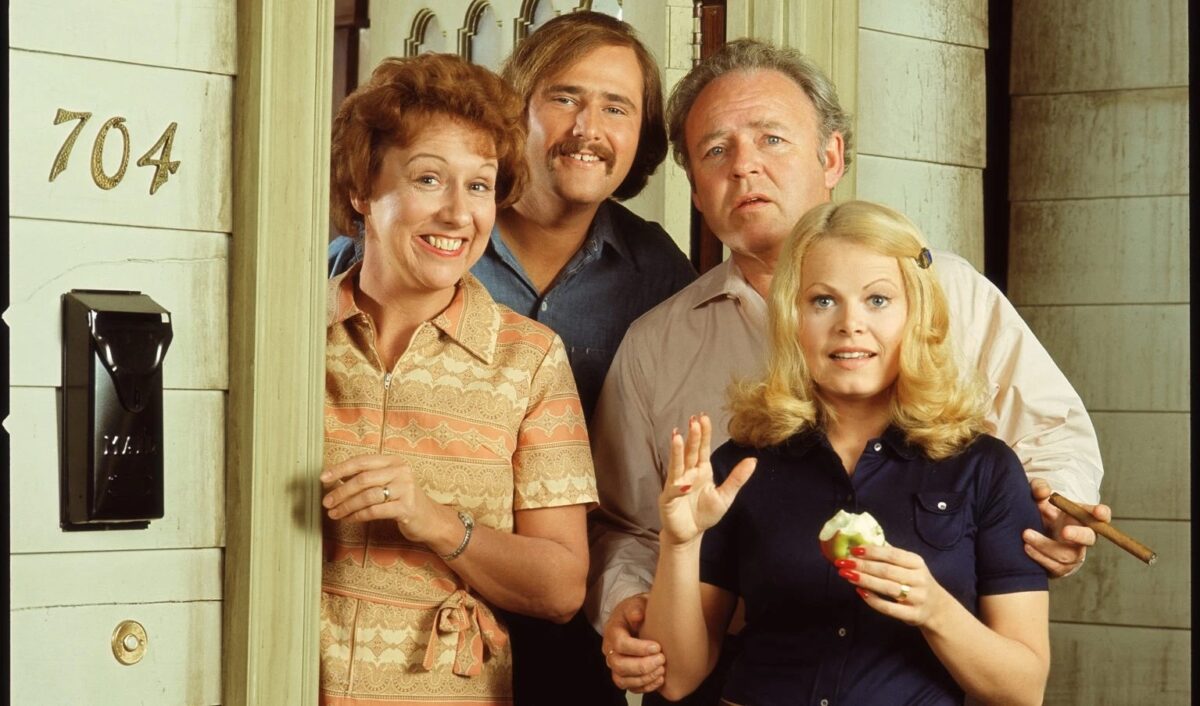
Most everybody knows the iconic theme song from All In The Family as delivered by Carroll O’Connor and Jean Stapleton. What you may not remember is yet another establishing shot of Manhattan, used to contrast with the rows of Queens homes. In these few seconds, the intro excellently sets up the conflicts of modernity, a quiet residential present, and a duo that seem stuck in a sheltered past.
The same sort of pull-away from Manhattan is used in O’Connor’s follow-up series, Archie Bunker’s Place, which yanks the viewer away from the skyline, back over the Queensboro Bridge and down Northern Boulevard. Archie has changed since those years at the piano, and so have his surroundings. The blocks of uniform homes have been replaced with subway graffiti and bustling street life.
13 Queens Blvd went even deeper into Queens but still relied on the establishing shot of Manhattan to let viewers know how far we are from real urban issues. The show’s situations were driven by the comic misunderstandings within an apartment complex, a little like One Day At A Time (set in Indianapolis) or Three’s Company (set in Santa Monica) perhaps. The show didn’t last long.
Brooklyn was represented in the 1970s by Welcome Back Kotter. Set in a fictional high school, it is New Utrecht High School that’s used in the opening. While other sitcoms used a Manhattan establishing shot, Kotter prefers a beat-up sign that announces Brooklyn as the 4th largest city in America. With its painted trains and lines of laundry, this might be the grittiest depiction of New York in a sitcom, even as its high school students (the Sweathogs) were incredibly unrealistic.
Movin’ On Up
Mostly though, sitcoms preferred the fantasy, Manhattan as an Emerald City. (It was literally depicted as such in the 1970s musicalThe Wiz.) No amount of deterioration seemed to supplant the image of Manhattan as having ‘made it’, especially when dealing with African-American television characters.
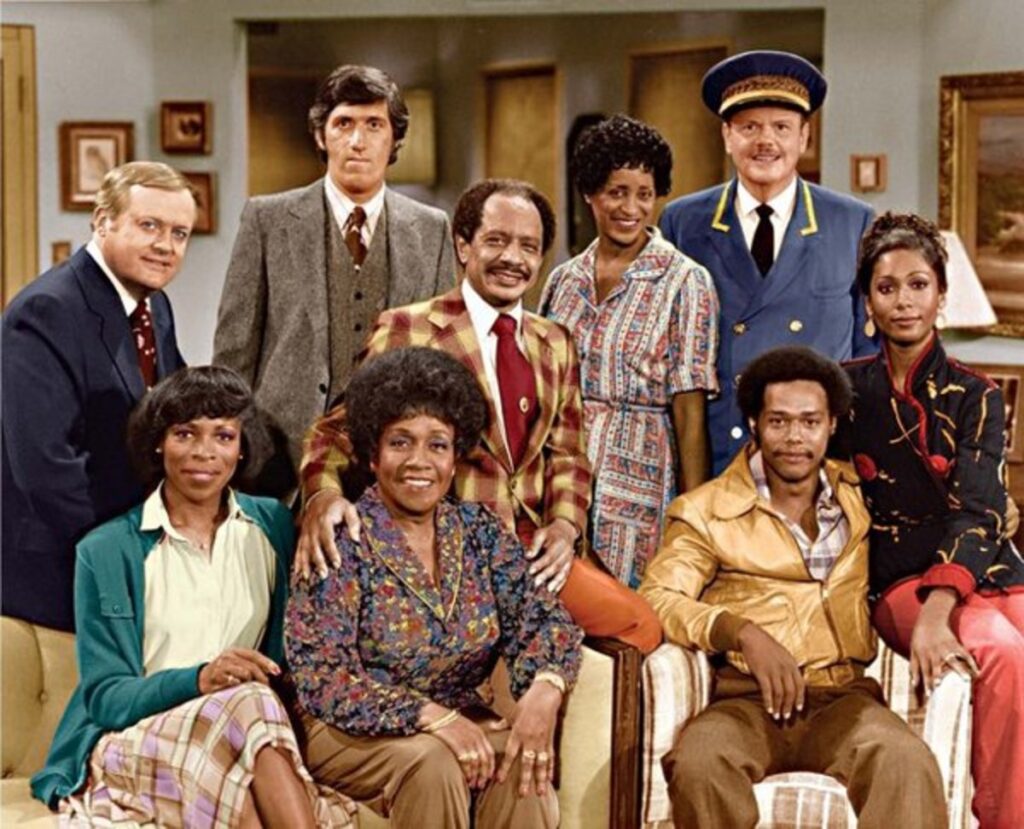
Taxis are again the vehicle of transformation in The Jeffersons, plucking George and Louise Jefferson from the land of Archie Bunker — again, using the Queensboro Bridge — and putting them in a luxury accommodation on the Upper East Side.
Two African-American boys are saved by a wealthy white man in Diff’rent Strokes.For emphasis in the intro, Arnold and Willis are playing basketball, the de facto symbol in 1970s television of the inner city.
I don’t know if the show was any good, but the intro to the 1970 sitcom Barefoot In The Park seems refreshing in retrospect. The show, based on the Broadway show, features a young black couple trying to make it though the first years of marriage in Manhattan. It seems to handle the subject with the same euphoria used in ‘That Girl’.
They’re riding a horse-and-carriage drinking champagne! It literally does not get cheesier.
Unvarnished New York
There were a few shows that felt embedded within the actual New York experience. Their intros reflect a certain melancholy, a feeling that perhaps the city was not always a whirlwind of breezy excitement. The champagne remains corked.
Barney Miller is one of the few shows actually set in Greenwich Village. Perhaps as a result, its establishing shot of Manhattan is moody, even dreary, a perfect backdrop for a comedy television show about criminal behavior.
In the opening to The Odd Couple, New York is an embodiment of its characters’ anxieties and differences. There is no establishing shot of Manhattan, no attempt to glamorize the big city. These two are actually at odds with the city, not each other, as presented here. The intro ends with a rare pan-up of the two characters with the city looming behind them.
The Wild East
In an opposite reaction to rural shows like Green Acres (where people fled New York), a maverick sensibility came to New York in the 1970s, especially in the detective genre, with iconoclastic characters bringing foreign forms of justice to an ungoverned city.
On McCloud, a New Mexico detective wrangles up a few pimps and car thieves, bringing fun but clumsy cowboy tropes to Times Square. Unlike sitcoms, detective dramas actually went to 70s Times Square all the time for obvious reasons. Although most did not bring stagecoaches with them.
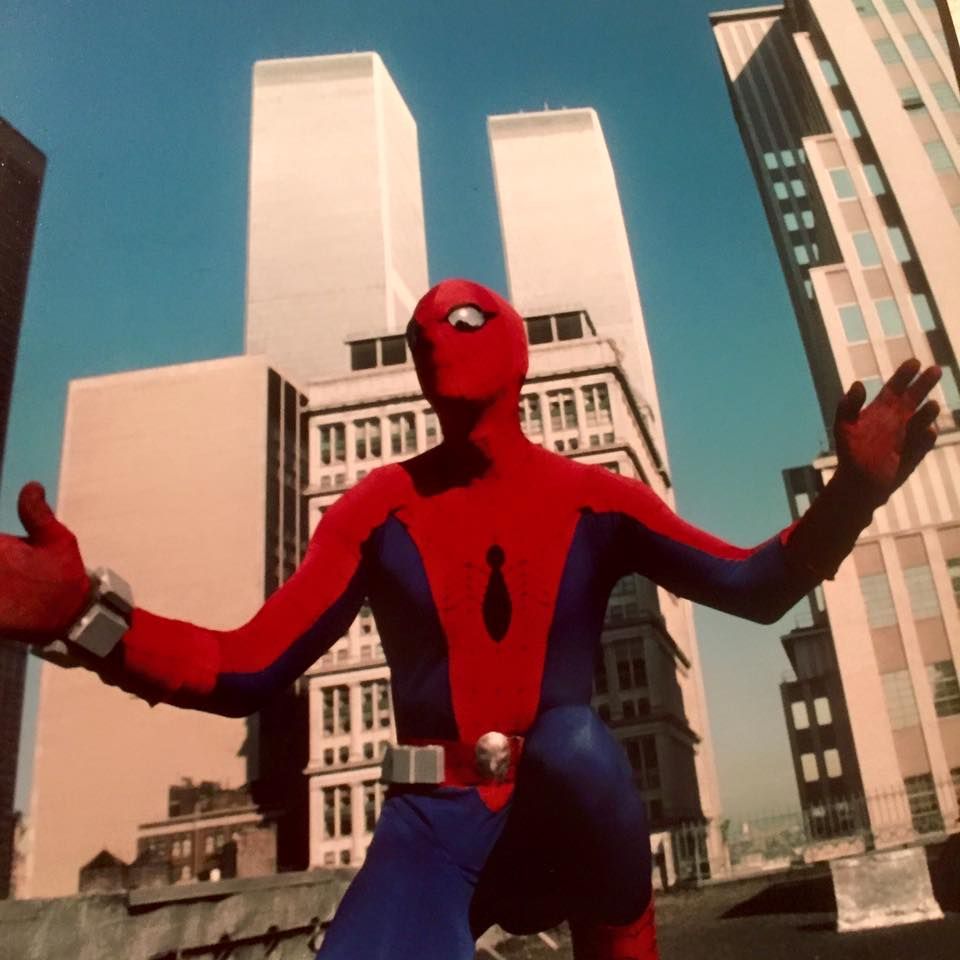
Another bizarre crime-fighter to the New York skyline was the Amazing Spider-Man. We get a Manhattan establishing shot here, comically interrupted by Spiderman’s awful costume. They spend a great amount of time with Spidey on the Empire State Building; in fact most of the show was filmed in L.A.
You didn’t even need a reason to bring in a cowboy. In the 1970 sitcom Mr Deeds Goes To Town, a folksy newspaper editor takes on the big city. The intro lays it on thick.
Groovy 70s Noir
A few crime dramas of the 1970s were actually filmed in New York City and thus could highlight the city a bit more fully in their intros.
The short-lived television version of Serpico features numerous places throughout the city, from the Battery to Times Square. And, yes, the Queensboro Bridge is again represented here via its subway stop.
New York’s greatest television crime fighter of the 1970s was Kojak, so cool that the city is given a trippy noir vibe, peeking from the nooks of swirling graphics. Of course most of Kojak was filmed in Los Angeles, but, according to writer Burton Armus, the production crew went to New York on occasion for “surrounding shots, background shots, one or two scenes.”
Taking its cue from Kojak in its tone, Eischied was also a bit of a cowboy, bringing some Southern swagger to the mean streets of Manhattan. Its credit sequence is a confused mess.
Ozone Park, a quiet residential Queens neighborhood near Woodhaven, is one of those places created by real estate developers in the 1880s.
It happens to have one of the best neighborhood names in all of New York City. So where did it come from?
Ozone is a gas that exists as part of the Earth’s atmosphere and, more dangerously, as a component of ground-level pollutants like smog and industrial waste.
By all accounts, the word should sit nowhere near the word ‘Park’ where the foul-smelling gas would kill everything.
The First Ozone
But when ozone gas was first identified in 1840, its harmful effects were not widely understood. It was associated with fresh air, filled with refreshing recuperative properties.
One dictionary in particular describes ozone as “clean bracing air as found at the sea side.”
By the 1860s and 70s, beach resorts and hotels were advertising their properties are paradises full of tonic air with all the ozone you could want!
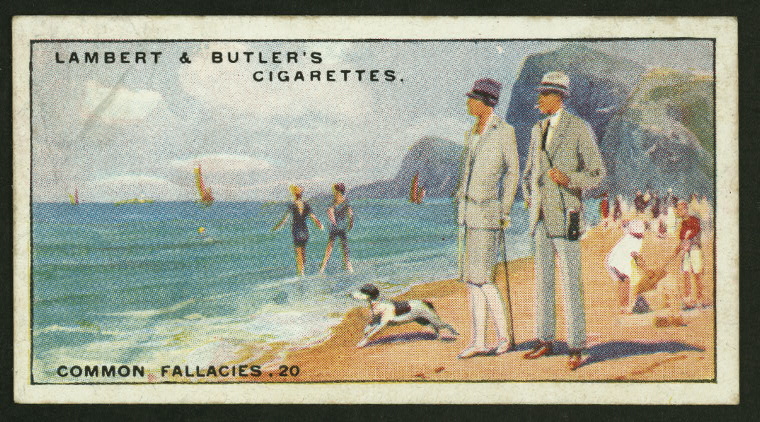
Below: This cigarette card was labeled ‘Ozone is present in the air at the sea-side.” So you have cigarettes and ozone…..
New York Public Library
Lands to Develop
There was no borough of Queens in the 1860s, only the counties of Kings and Queens sitting near each other on the western end of Long Island.
The county of Queens was sparsely populated outside of a few towns further north, including Flushing, Jamaica, Astoria and Newtown (later Elmhurst).
The vast population rise and the improving financial fortunes of the cities of New York and Brooklyn in the 1860s inspired some developers to sweep into under-populated areas with the hopes of developing new communities.
It was in the decades following the Civil War that many new Queens communities sprouted up in this way.
Starts With A Fire
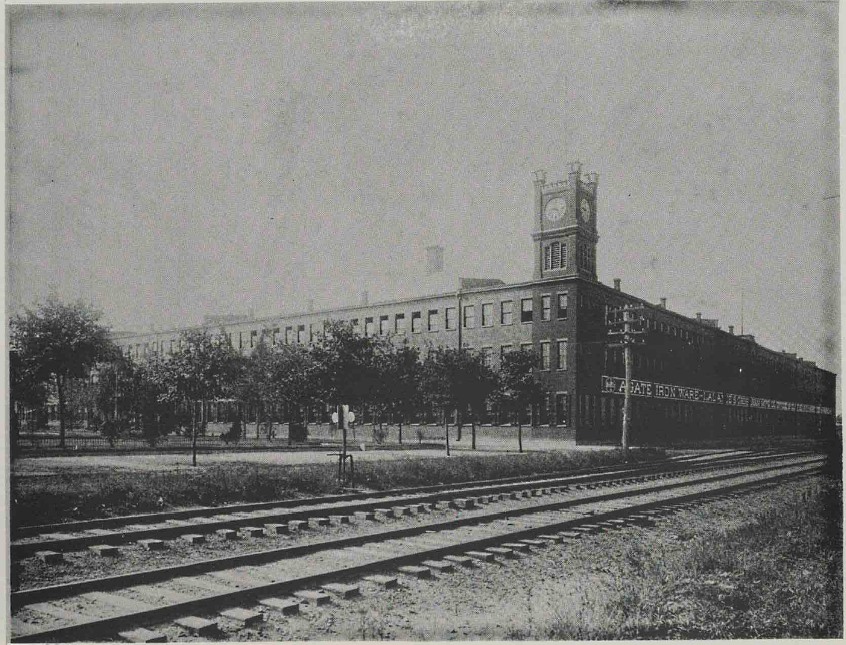
In the 1870s, the cooking and houseware manufacturers Florian Grosjean and Charles Lalance built a large factory near the site of the old Union Course racetrack, long since closed. The company town which sprouted up around the factory became the basis for the Woodhaven neighborhood.
In 1876, the factory was destroyed in a devastating fire, so complete in its destruction that Grosjean, upon seeing his life’s work in flames, fainted to the ground.
But Grosjean rebuilt his massive factory just a bit south of the original site, constructing more new cottages for his workers.
I bring up the origins of Woodhaven because the southern factory opened up new opportunities for some undeveloped land. New employees of Grosjean’s factory would eventually venture into this area needing housing,
In 1880, the Long Island Railroad built a station south of Woodhaven as part of its line from Long Island City to Howard Beach.
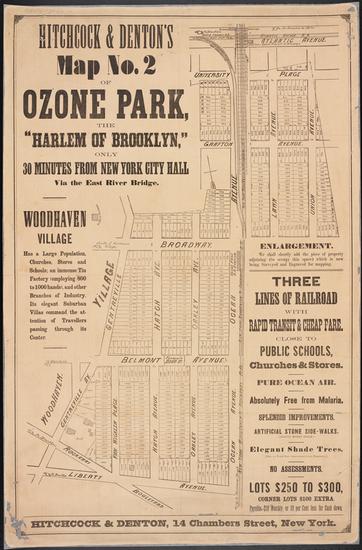
Two years later, two speculators Benjamin W. Hitchcock and Charles C. Denton bought up most of the plots of land around the station and began marketing the area as a visionary new neighborhood called Ozone Park!
Hitchcock had made his moneyin the music publishing business, one of several enterprising Manhattan businessmen who looked to the vast undeveloped spaces of Long Island to make money. He coined the name Ozone Park to promote the area’s proximity to fresh tonic ocean air.
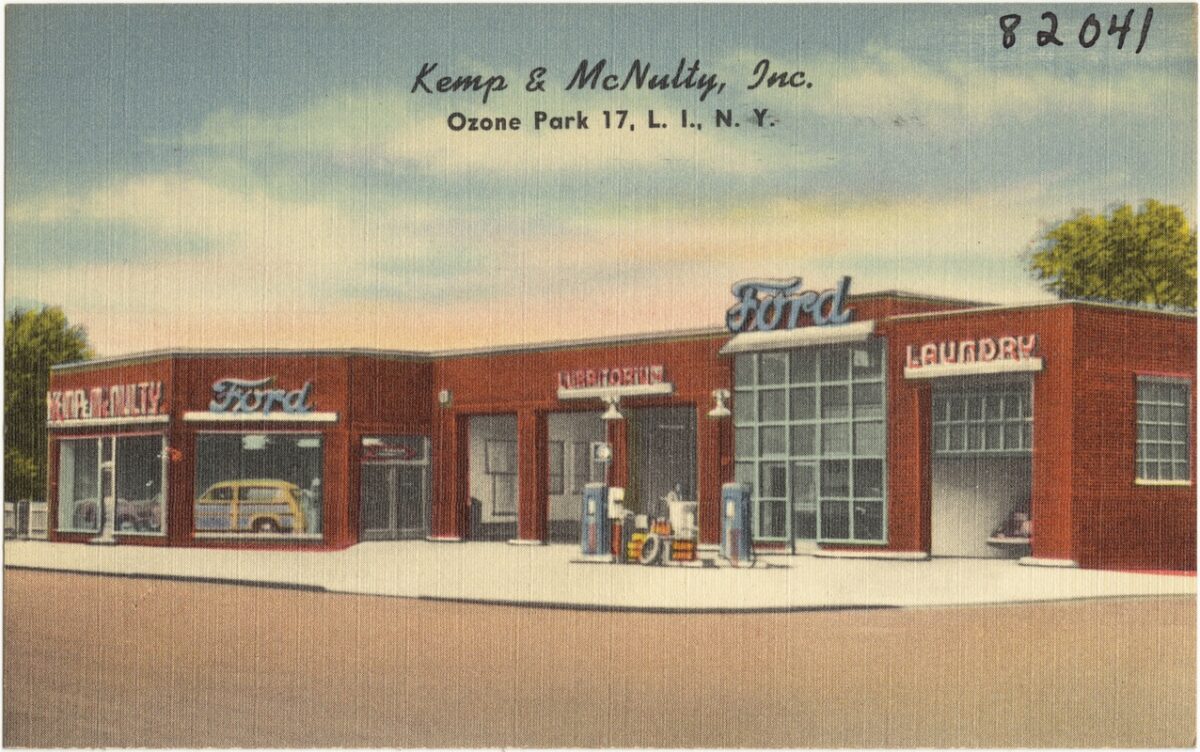
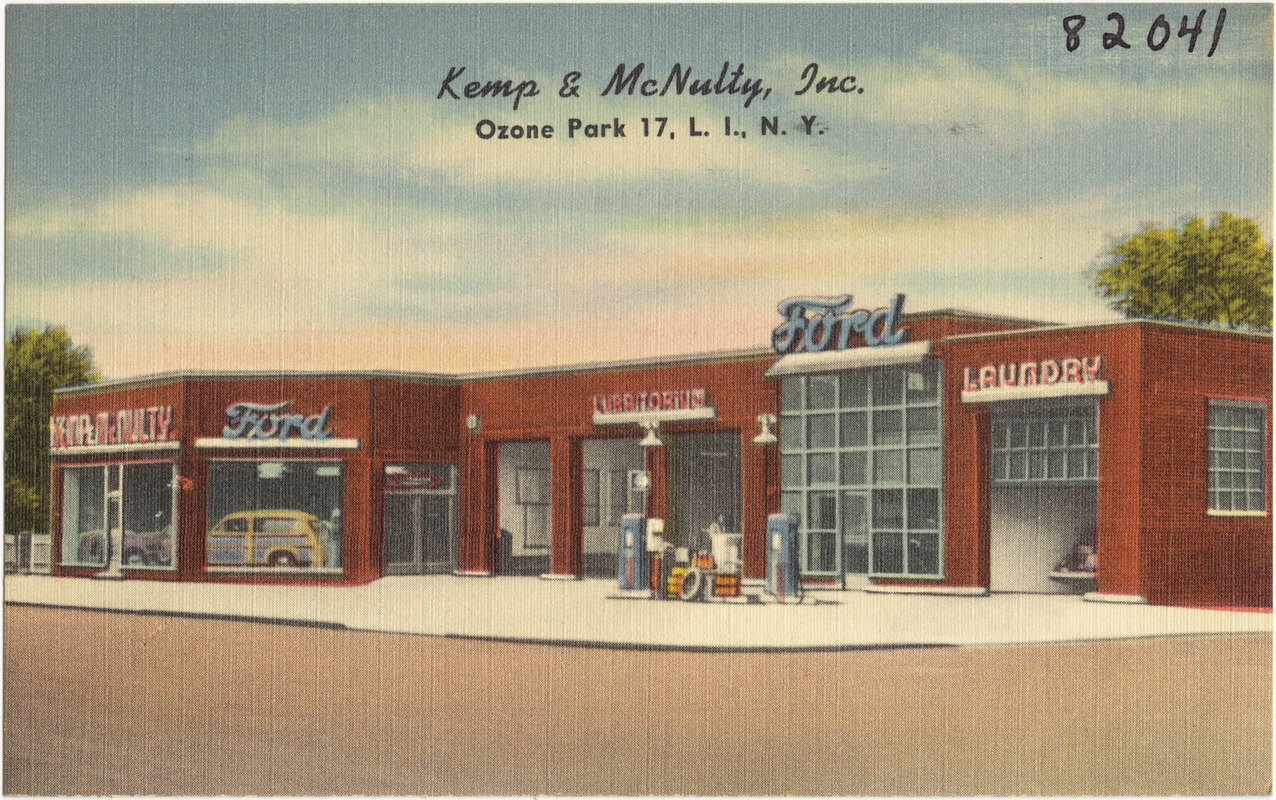
Below: Postcard of an Ozone Park filling station circa 1930s
Courtesy Boston Public Library
The “Harlem of Brooklyn”?
Here’s a few examples of advertisements used to lure prospective customers to the area:
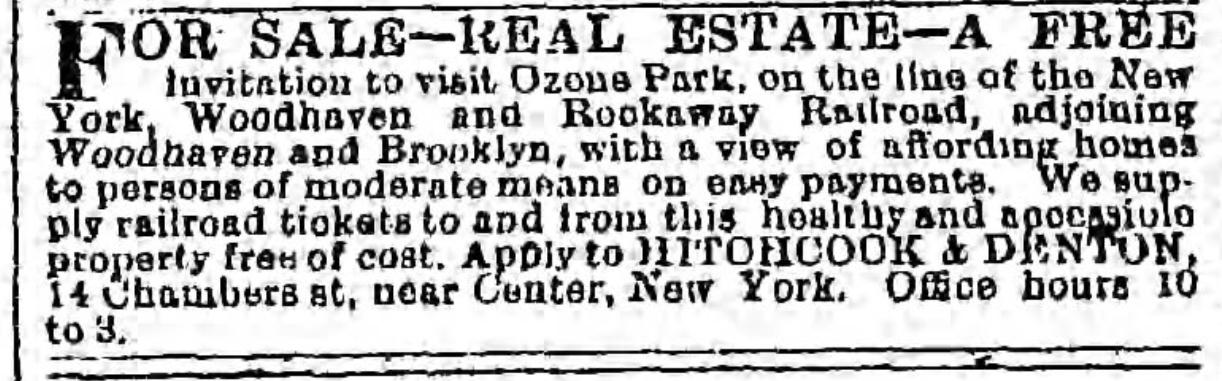
From the Brooklyn Daily Eagle (7/9/1882):
“A FREE invitation to visit Ozone Park, on the New York, Woodhaven and Rockaway Railroad, adjoining Woodhaven and Brooklyn, with a view of affording homes to persons of moderate means on easy payments.”
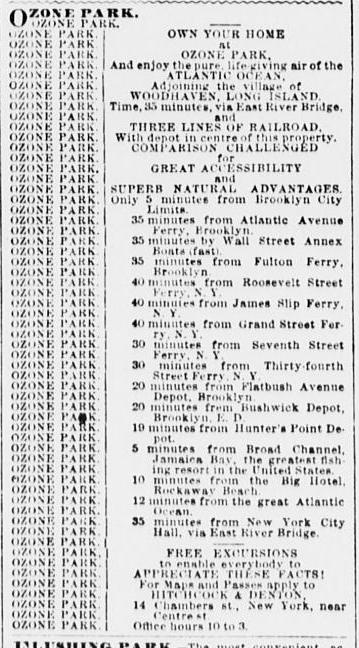
From the New York Sun (8/27/1882):
“OWN YOUR HOME at OZONE PARK, And enjoy the pure, life-giving air of the ATLANTIC OCEAN……”
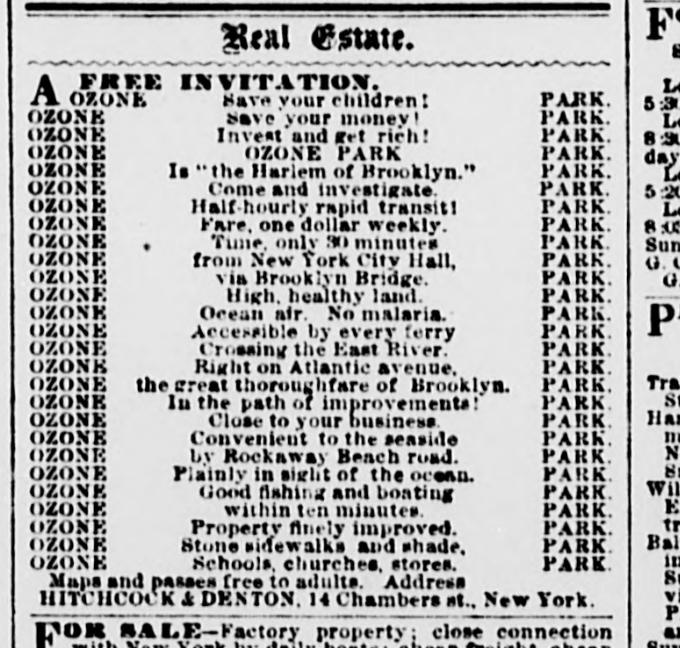
From the New York Sun (4/21/1883):
“Save your children! Save your money! Invest and get rich! OZONE PARK is ‘the Harlem of Brooklyn.’ Come and investigate!”
Wait — ‘the Harlem of Brooklyn‘? Ozone Park isn’t even in Brooklyn, although it’s near the modern border of the borough.
In the 1880s Harlem was a thriving and newly developed Jewish and Italian neighborhood, a new rowhouses were being built along the routes of elevated rail lines. This is certainly the comparison the developers had in mind with this particular advertisements.
Courtesy Museum of the City of New York
Park Life
By 1884, the developers carved streets to connect the properties. Far from relaxing and ‘tonic’, the area was a fury of building construction.
Five years later there were at least 600 residents living in Ozone Park, enough to merit its very own post office.
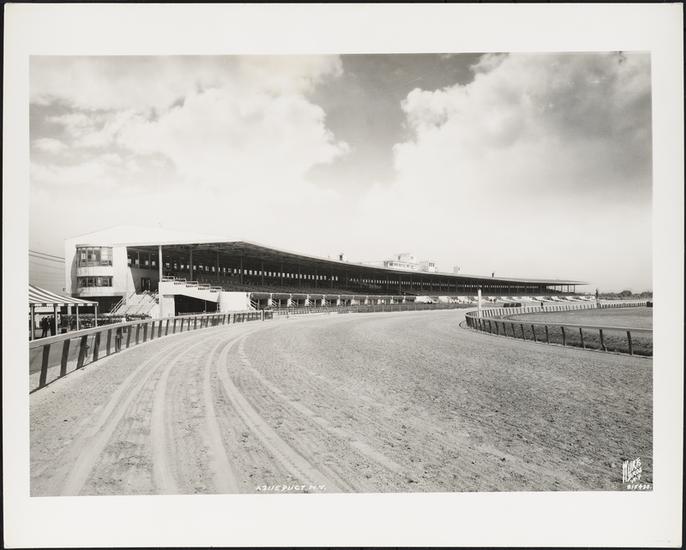
The development of South Ozone Park was bolstered with the construction in 1894 of the Aqueduct Racetrack (pictured below in 1941).
When Idlewild Airport (later JFK Airport)was completed in 1948, anything positively “ozone” about the the air quickly evaporated.
“The city seen from the Queensboro Bridge is always the city seen for the first time, in its first wild promise of all the mystery and the beauty in the world.” — F. Scott Fitzgerald
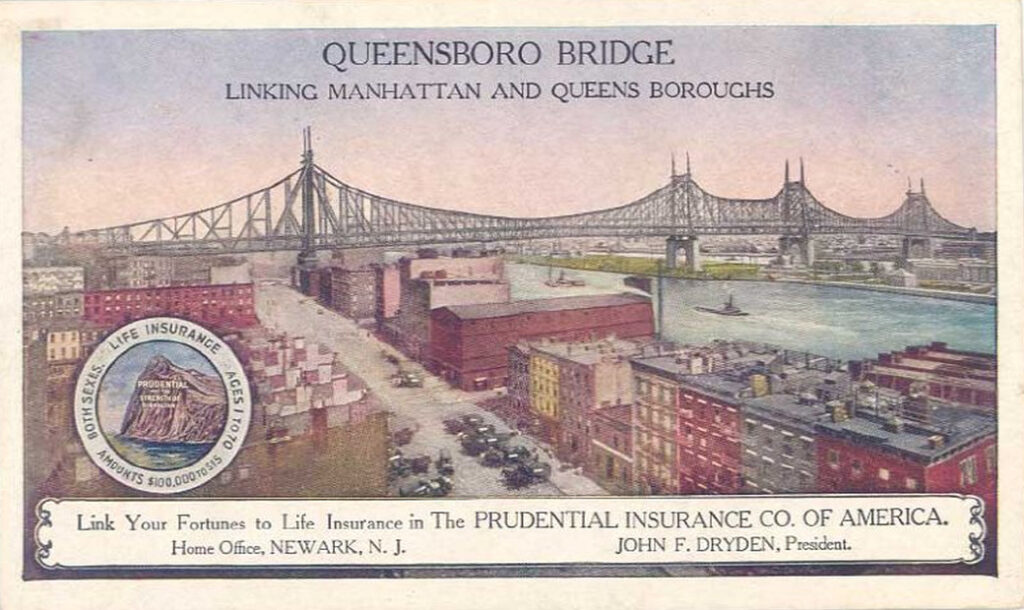
EPISODE 349 This is the story of a borough with great potential and the curious brown-tannish cantilever bridge which helped it achieve greatness.
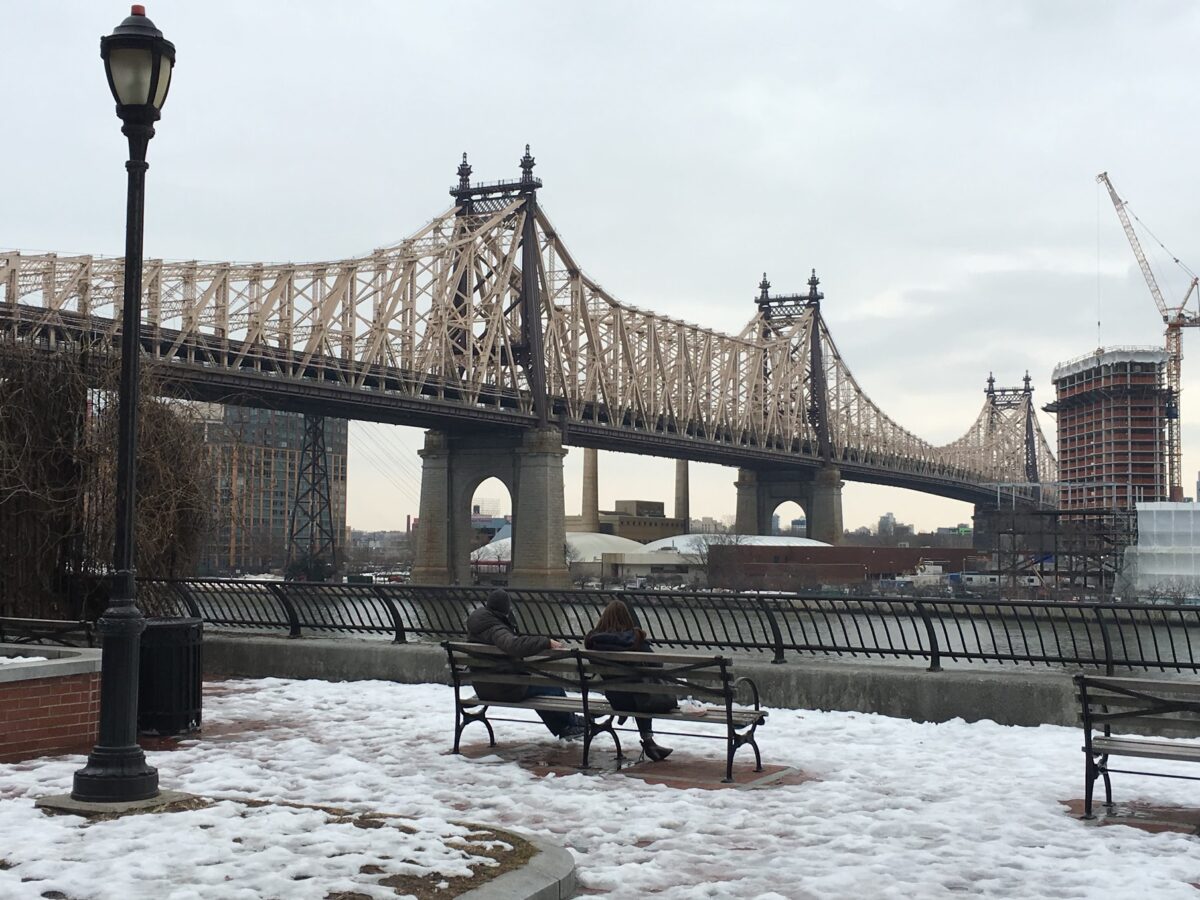
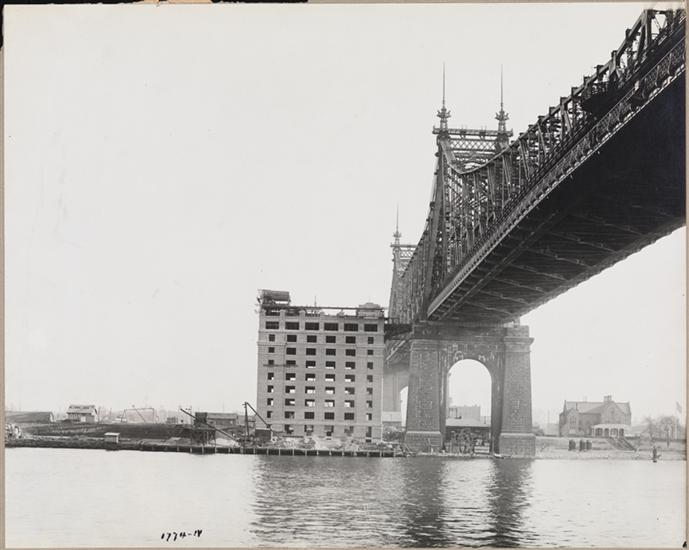
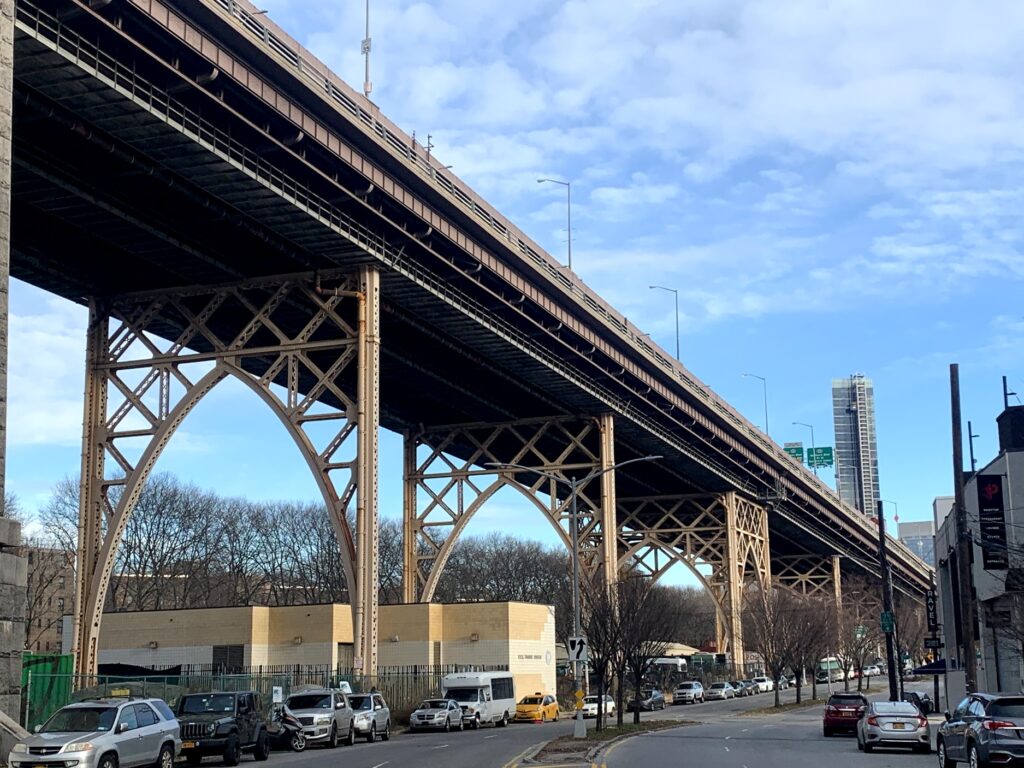
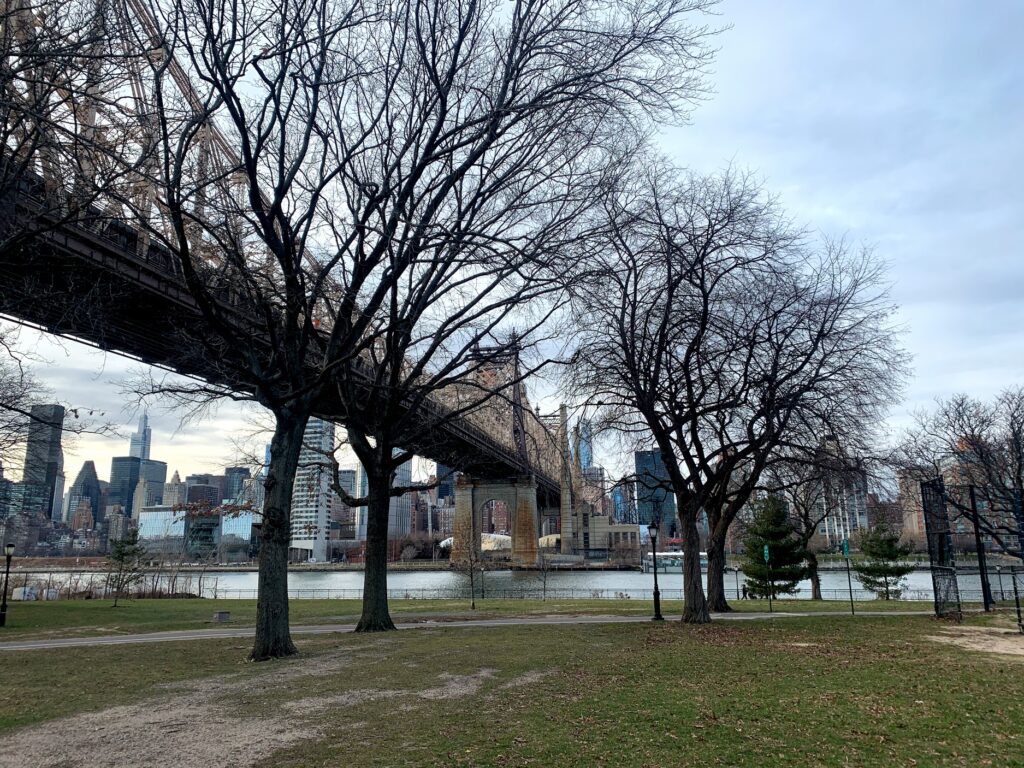
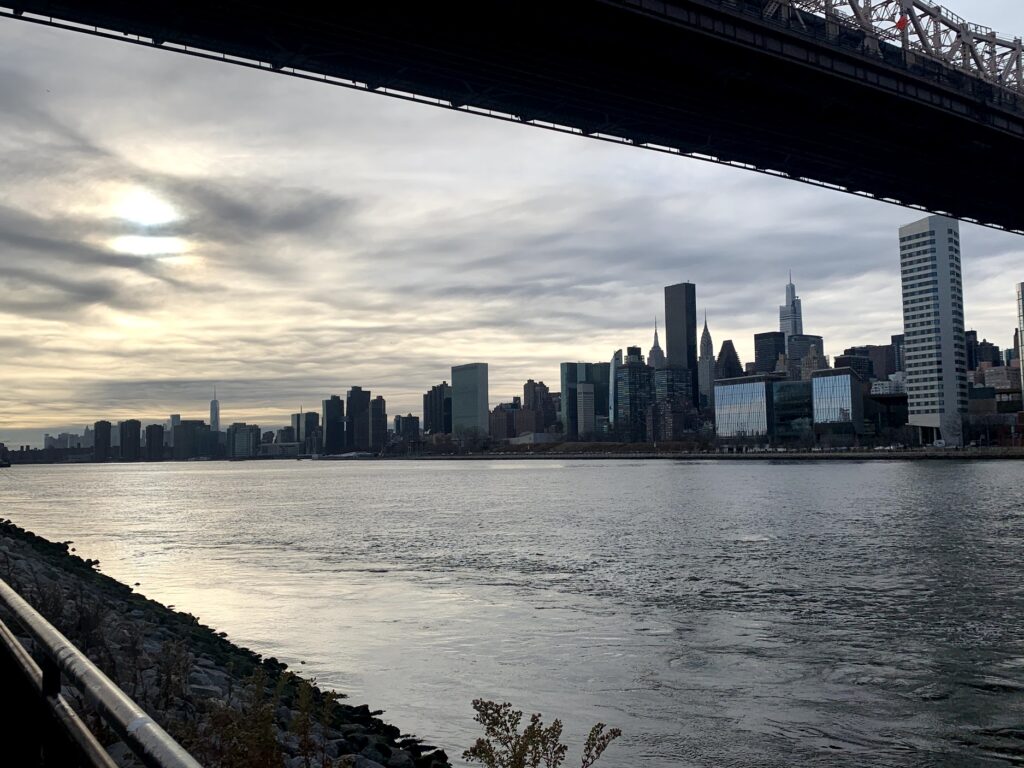
The Ed KochQueensboro Bridge (sometimes known as the 59th Street Bridge) connects Manhattan with Queens by lifting over the East River and Roosevelt Island, an impressive landmark that changed the fate of the borough enshrined in its curious name.
In 1898, before the Consolidation of 1898, which created Greater New York and the five boroughs, much of Queens was sparsely populated — a farm haven connected by dusty roads — with most residents living in a few key towns, villages and one actual city — Long Island City.
With Brooklyn and Manhattan already well developed (and overcrowded in some sectors) by the early 20th century, developers and civic leader looked to Queens as a new place for expansion. But in 1900 it had no quick and convenient connections to areas off of Long Island.
The bridge in 1917 with the elevator storehouse, Museum of the City of New York
With the opening of the bridge in 1909, rich new opportunities for Queens awaited. Communities from Astoria to Bayside, Jackson Heights, Flushing and Jamaica all experienced an unprecedented burst of new development.
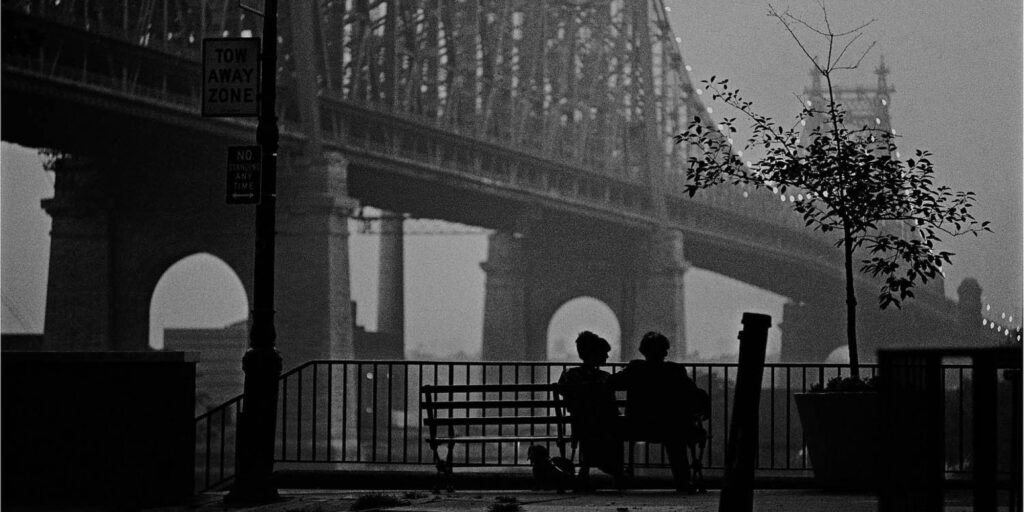
Thanks in small part to the bridge so famous that it inspired a classic folk song and became the cinematic backdrop of a 1970s film classic.
Listen here or from your favorite podcast player:
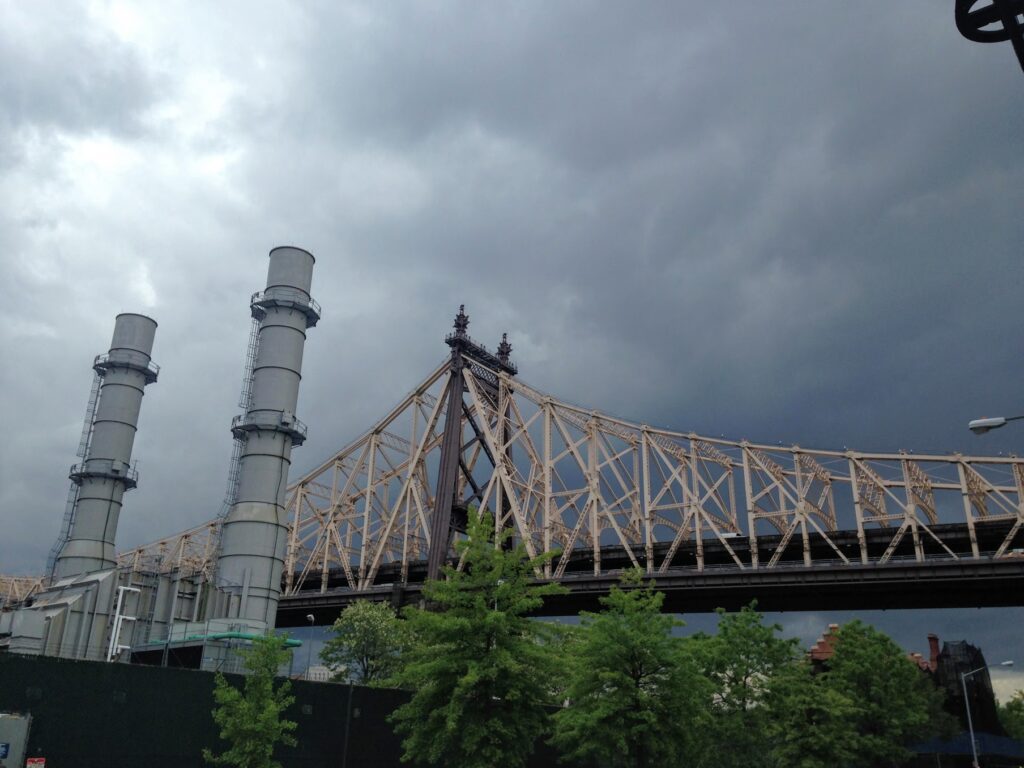
From a stormy Spring day in 2014. Photo by Greg Young(Courtesy Shorpy)Courtesy Shorpy)
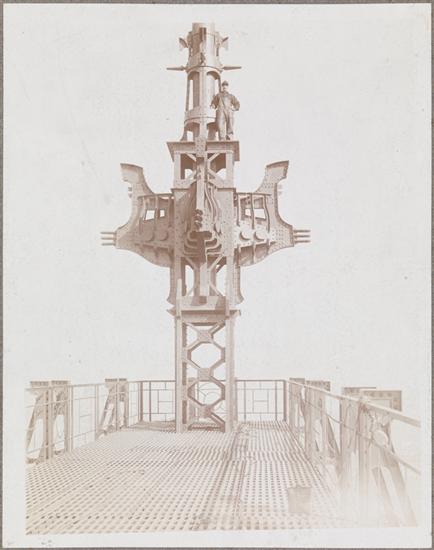
The unique finials at the top of the bridge, 1905. Courtesy Museum of the City of New York
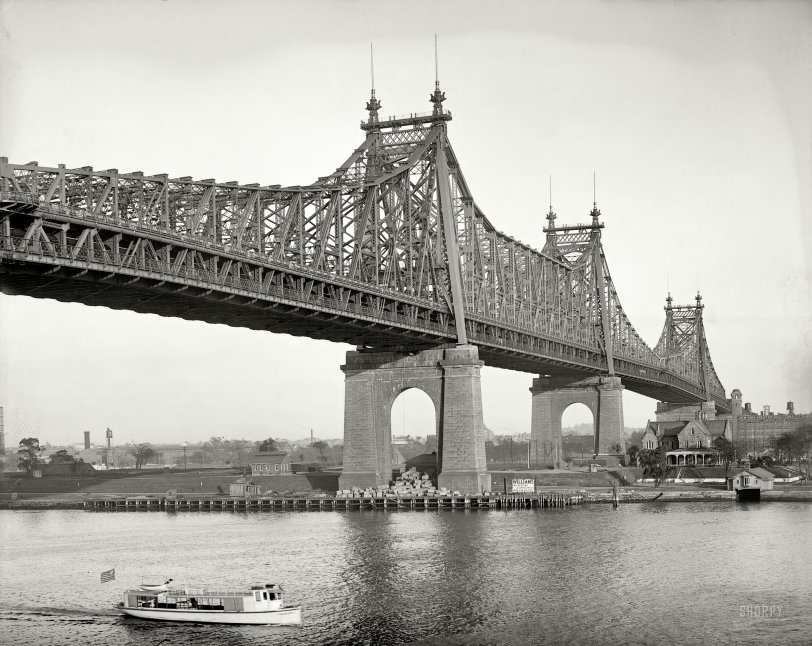
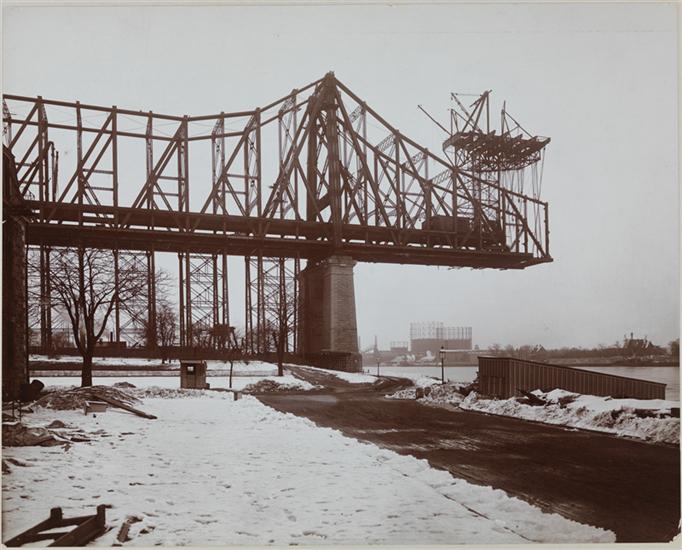
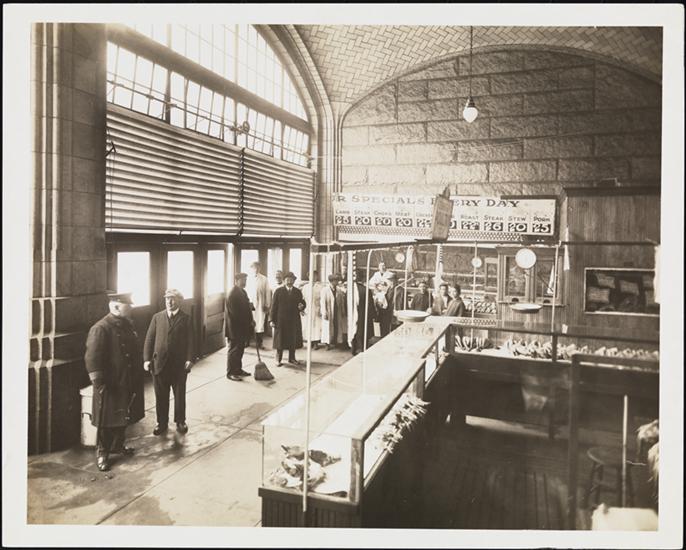
The bridge near complete, 1908. Courtesy the Museum of the City of New YorkThe marketplace with Guastavino tile, 1915. Courtesy Museum of the City of New York
The Bowery Boys: New York City History podcast is brought to you …. by you!
We are now producing a new Bowery Boys podcast every other week. We’re also looking to improve and expand the show in other ways — publishing, social media, live events and other forms of media. But we can only do this with your help!
We are now a creator on Patreon, a patronage platform where you can support your favorite content creators.
Please visit our page on Patreon and watch a short video of us recording the show and talking about our expansion plans. If you’d like to help out, there are six different pledge levels. Check them outand consider being a sponsor.
We greatly appreciate our listeners and readers and thank you for joining us on this journey so far.
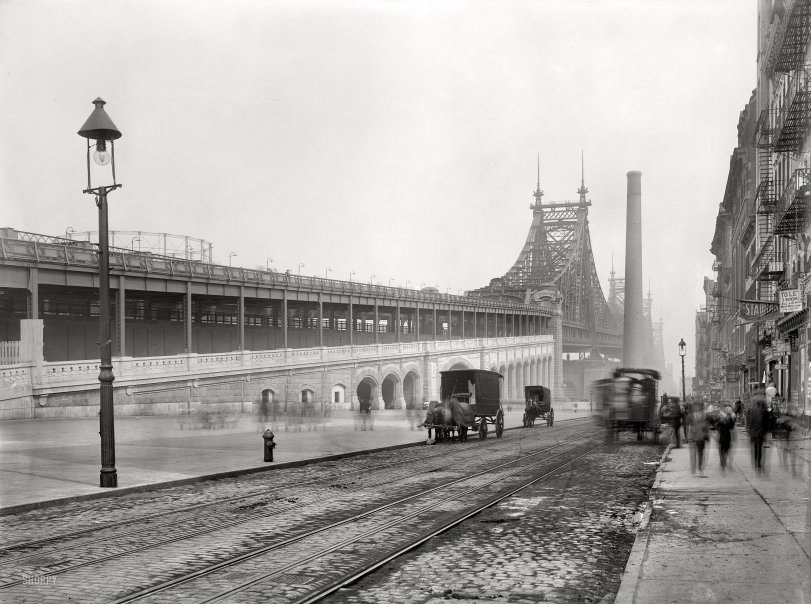
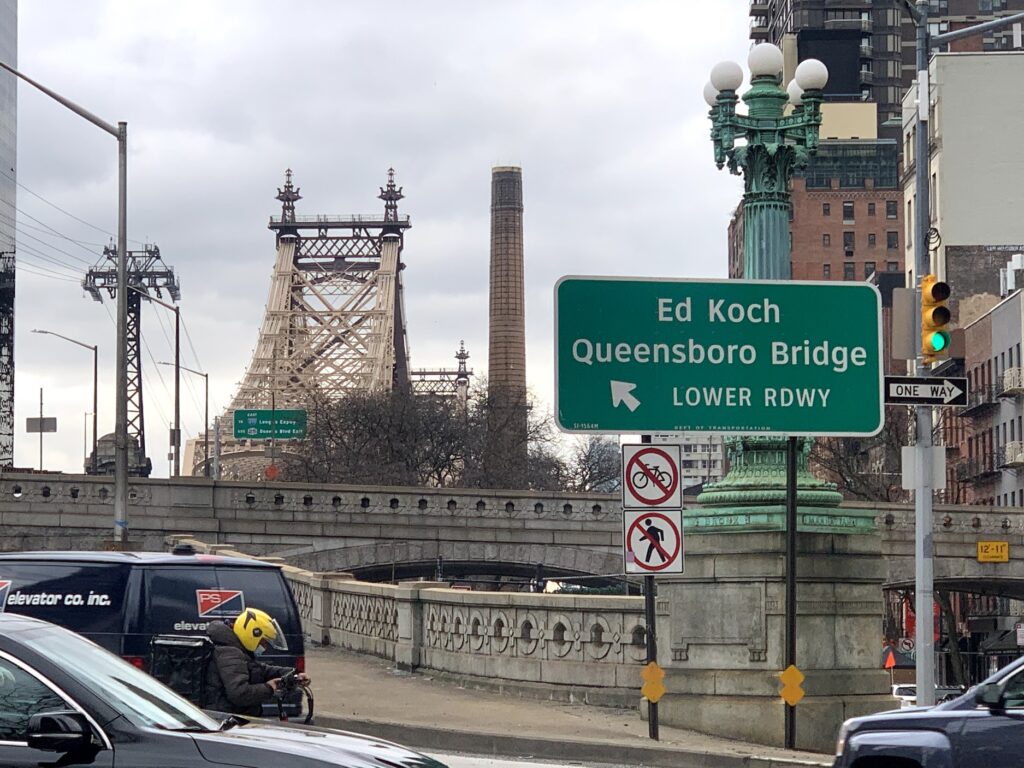
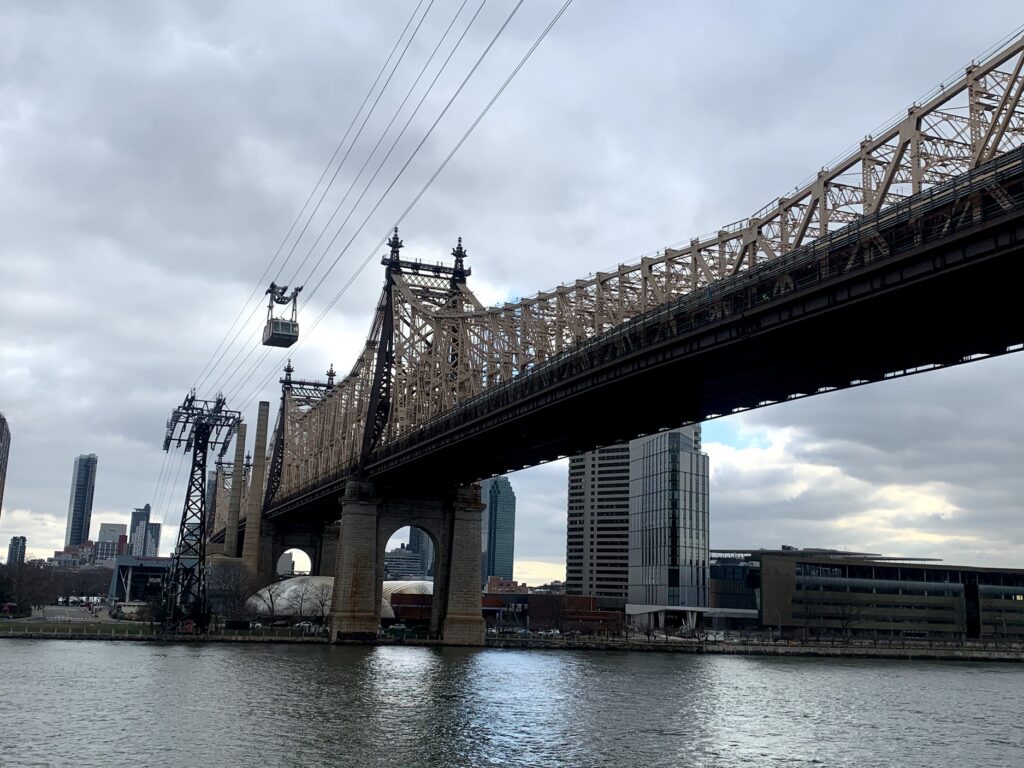
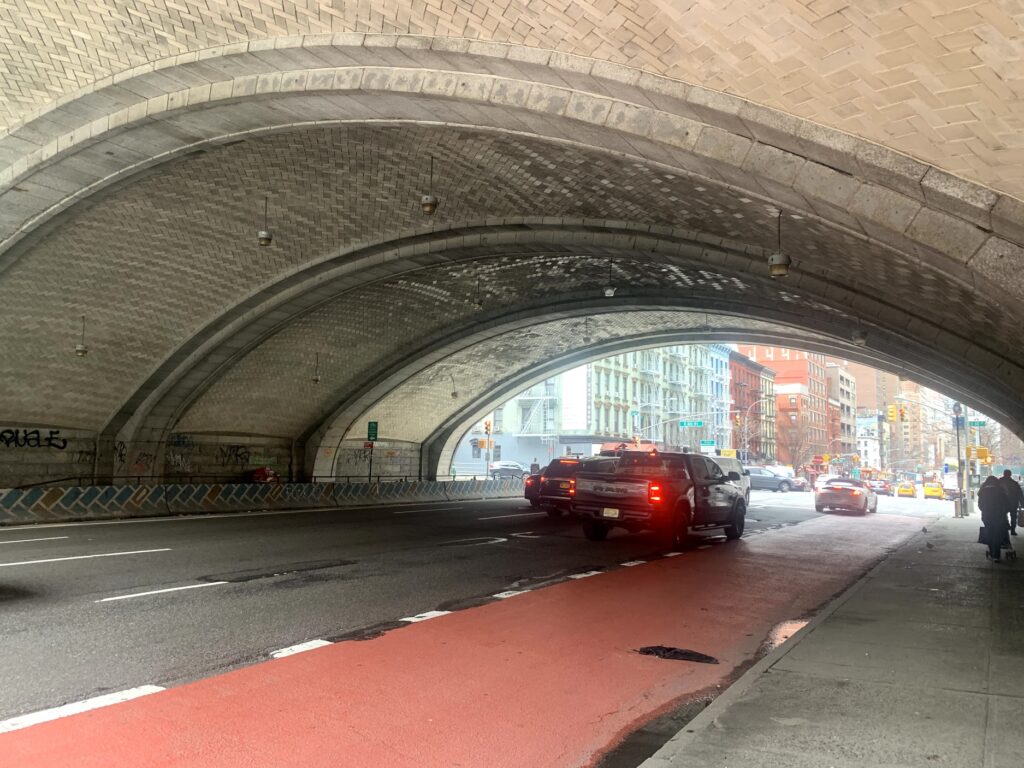
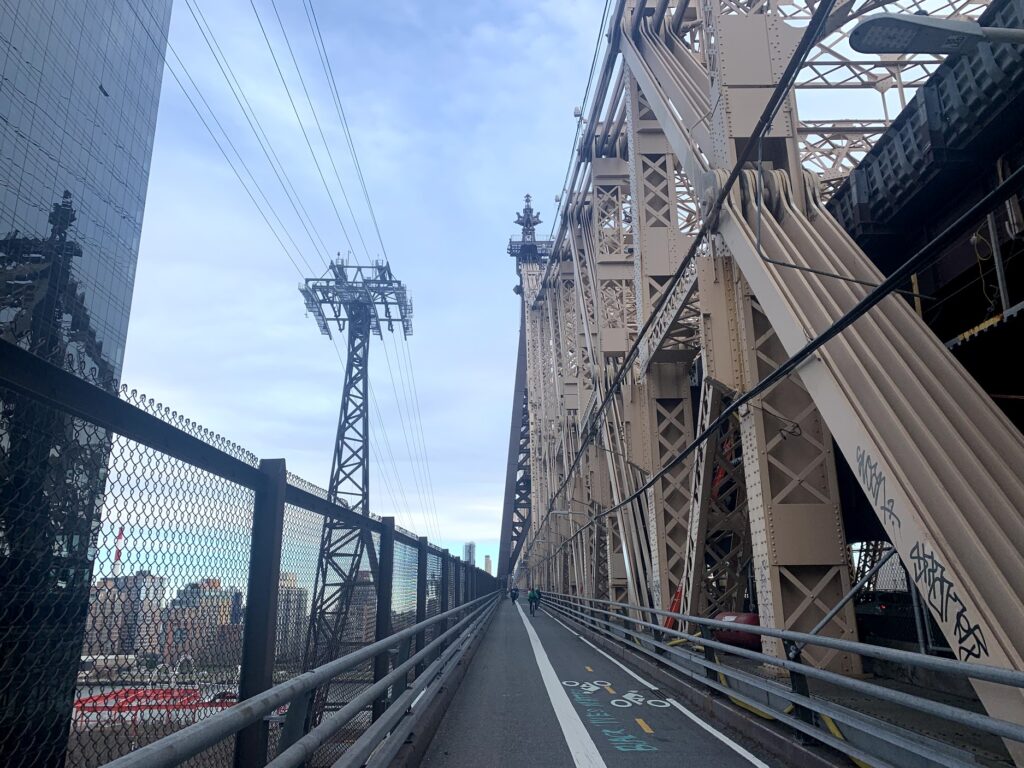
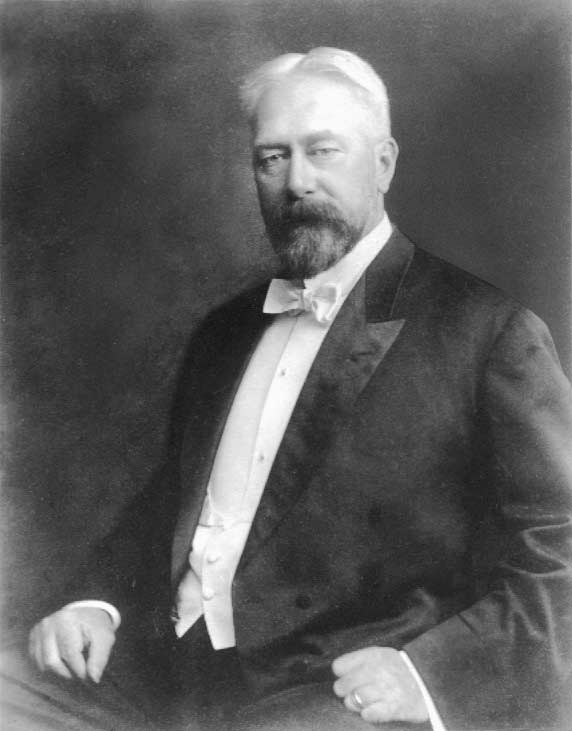
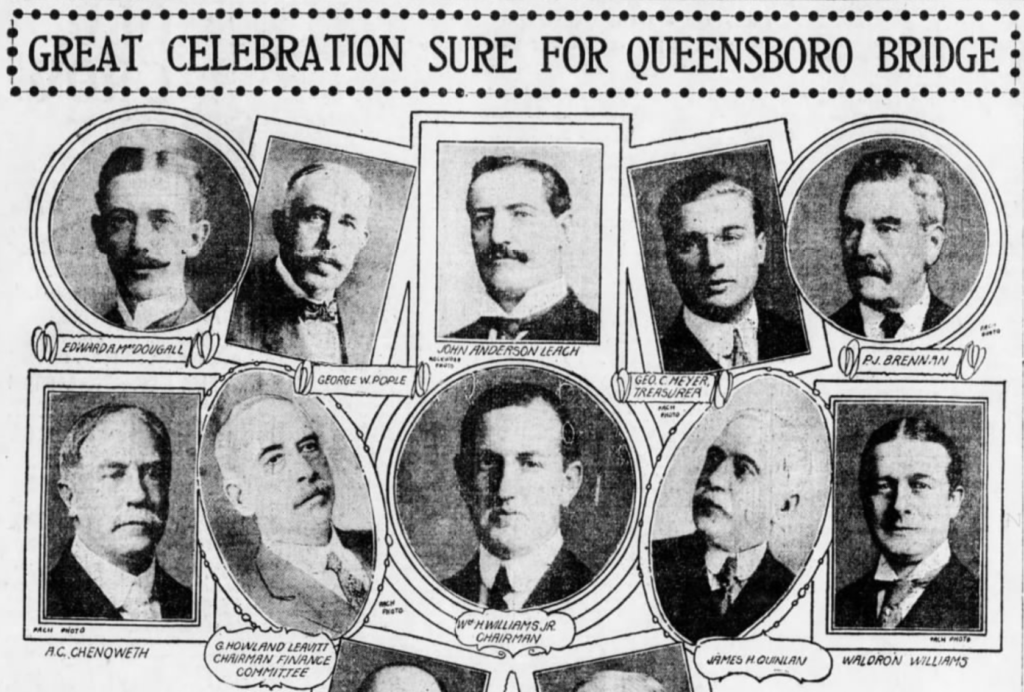
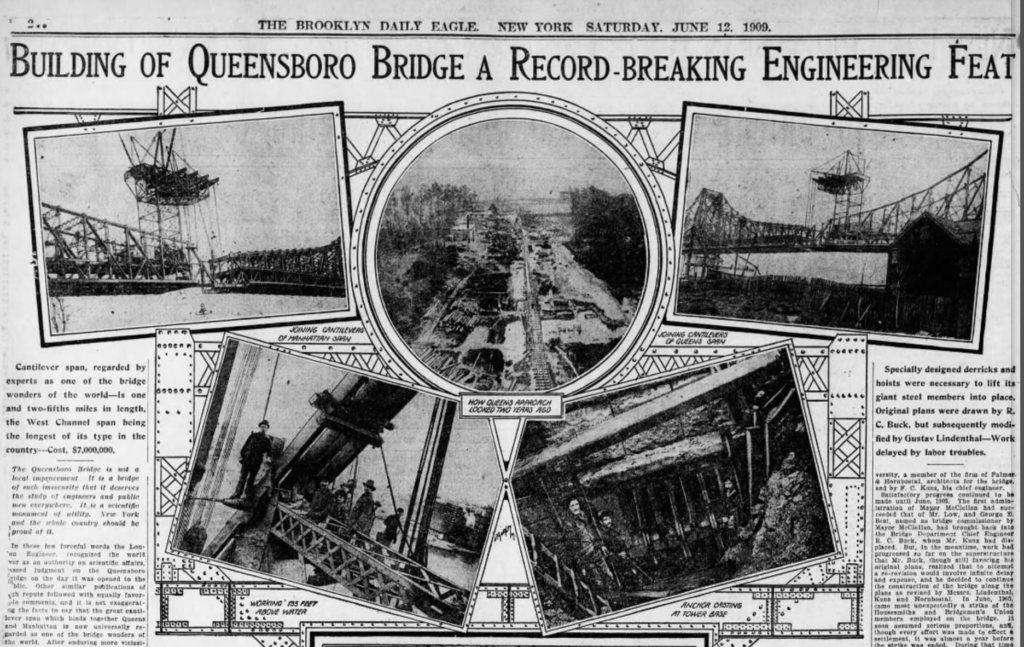
Approaching the bridge at street level on the Manhattan side. Photo Greg YoungThe bridge as the Roosevelt Island Tramway crosses. (GY)Guastivino tile on the First Avenue archway beneath the bridge. (GY)Across the bridge….. (GY)On the Queens side, the bridge takes on a different character, dominating the waterfront blocks. (GY)Views from Queensbridge Park. (GY)Gustav Lindenthal in 1909, the year the bridge opens.From the June 12, 1909 Brooklyn Daily Eagle
PODCAST Visiting the first World’s Fair at Flushing Meadows Corona Park, the unimaginable playground of the future, planted inescapably within the reality of the day.
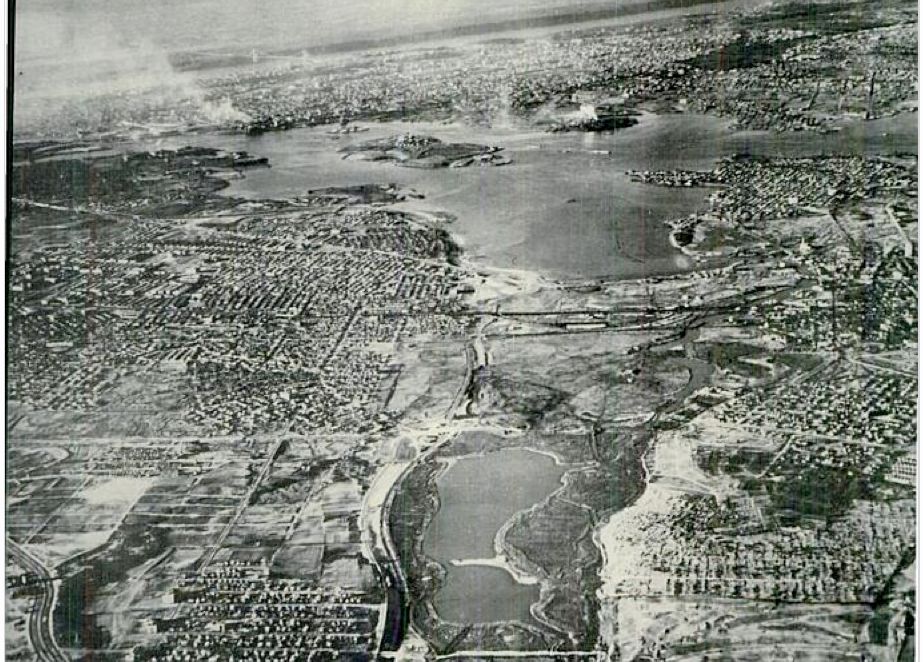
Flushing Meadows Corona Park, the fourth largest park in New York City and the pride of northern Queens, has twice been the doorway to the future.
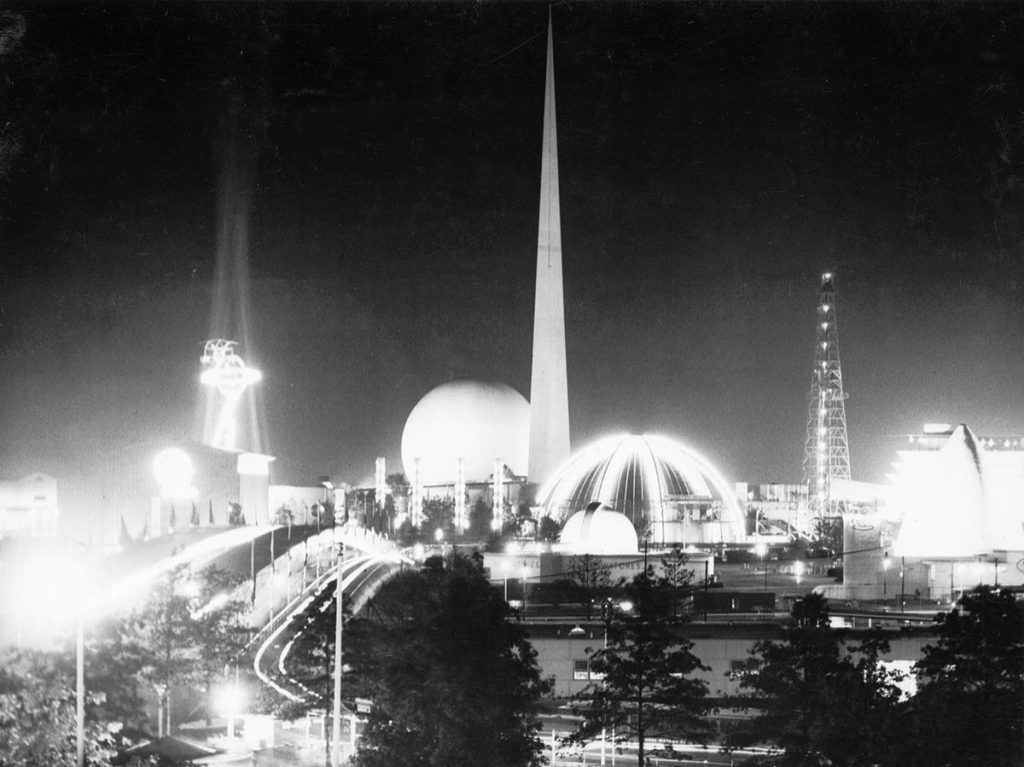
Two world’s fairs have been held here, twenty-five years apart, both carefully guided by power broker Robert Moses. In this episode, we highlight the story of the first fair, held in 1939 and 1940, a visionary festival of patriotism and technological progress that earnestly sold a narrow view of American middle-class aspirations.
It was the World of Tomorrow! (Never mind the protests or the fact that many of the venues were incomplete.) A kitschy campus of themed zones and wacky architectural wonders, the fair provided visitors with speculative ideas of the future, governed by clean suburban landscapes, space-age appliances and flirtatious smoking robots.
The fair was a post-Depression excuse for corporations to rewrite the American lifestyle, introducing new inventions (television) and attractive new products (automobiles, refrigerators), all presented in dazzling venues along gleaming flag-lined avenues and courtyards.
But the year was 1939 and the world of tomorrow could not keep out the world of today. The Hall of Nations almost immediately bore evidence of the mounting war in Europe. Visitors who didn’t fit the white middle-American profile being sold at the fair found themselves excluded from the ‘future’ it was trying to sell.
And then, in July of 1940, there was a dreadful tragedy at the British Pavilion that proved the World of Tomorrow was still very much a part of the world of today.
PLUS: Where can you find traces of the fair in New York City today?
Listen Now: New York World’s Fair of 1939 Podcast
The Bowery Boys: New York City History podcast is brought to you …. by you!
We are now producing a new Bowery Boys podcast every other week. We’re also looking to improve the show in other ways and expand in other ways as well — through publishing, social media, live events and other forms of media. But we can only do this with your help!
We are now a member of Patreon, a patronage platform where you can support your favorite content creators.
Please visit our page on Patreon and watch a short video of us recording the show and talking about our expansion plans. If you’d like to help out, there are six different pledge levels (New Amsterdam, Five Points, Gilded Age, Jazz Age, Empire State and Greater New York). Check them out and consider being a sponsor.
And join us for the next episode of the Bowery Boys Movie Club, an exclusive podcast provided to our supporters on Patreon. This month’s movie — On The Town!
We greatly appreciate our listeners and readers and thank you for joining us on this journey so far.
AP Photo
Silent color video of the 1939 World’s Fair
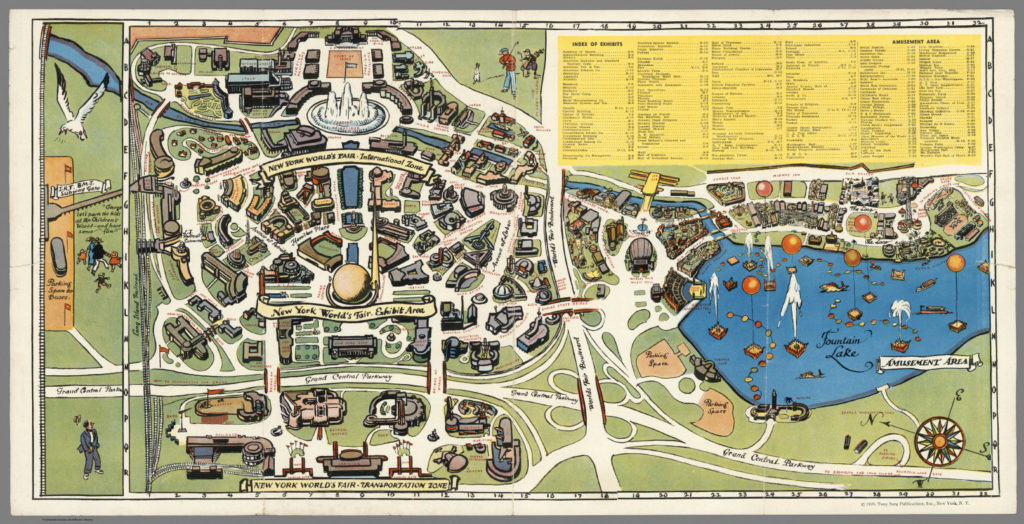
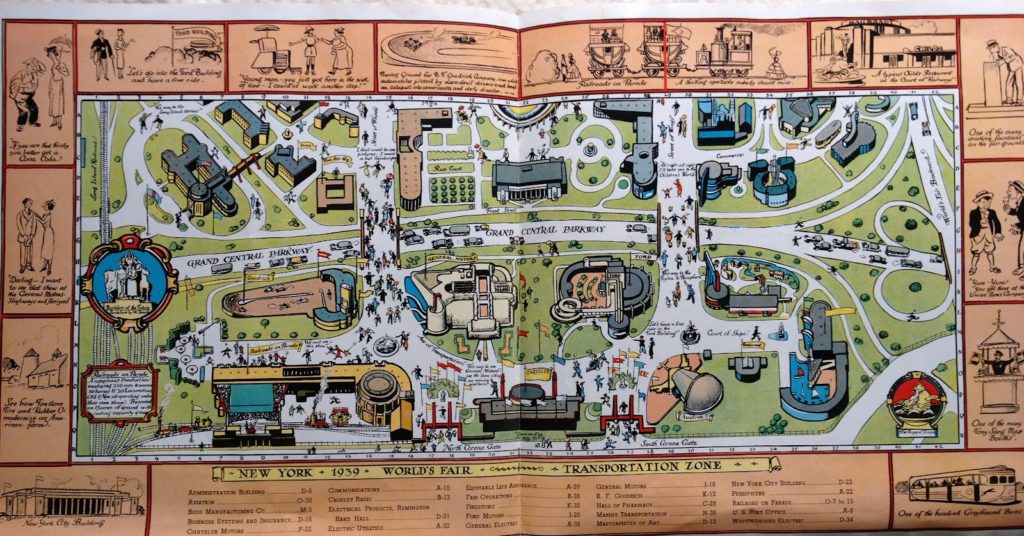
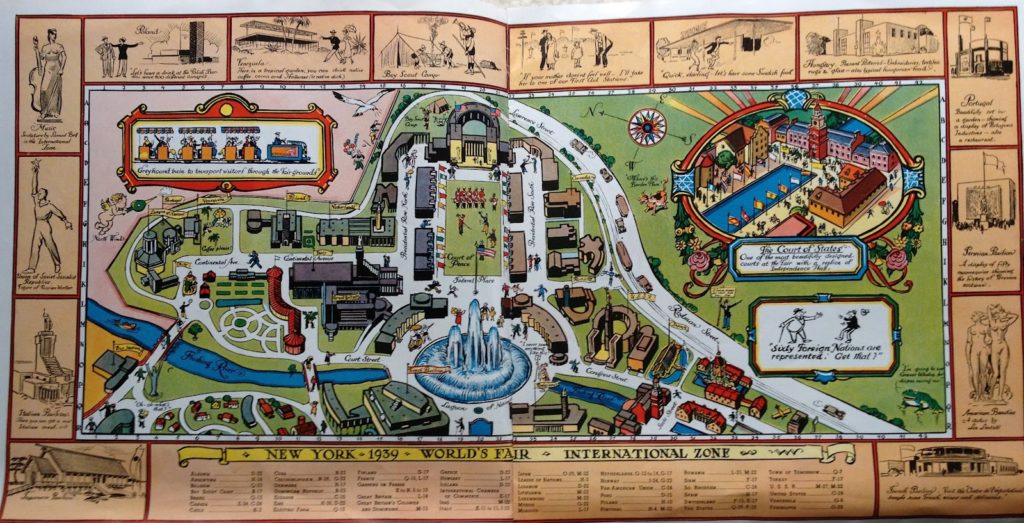
A map of the World’s Fair of 1939, courtesy the David Rumsey Map Collection. Click here to zoom in and get a closer look.
David Rumsey Map CollectionRenfusa/designer Tony SugaRenfusa/designer Tony Suga
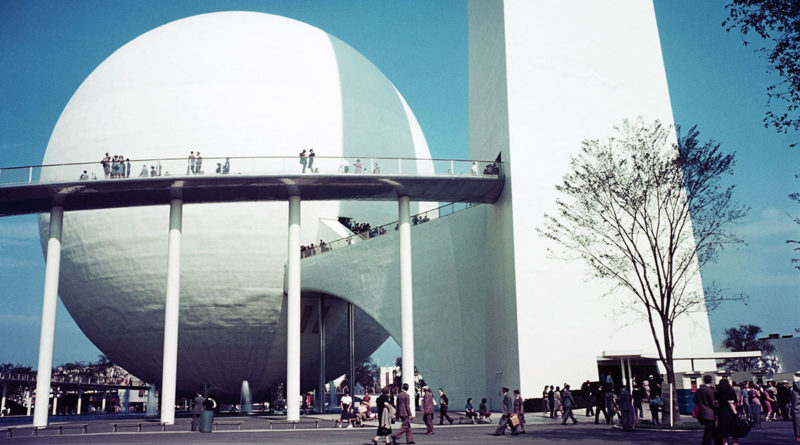
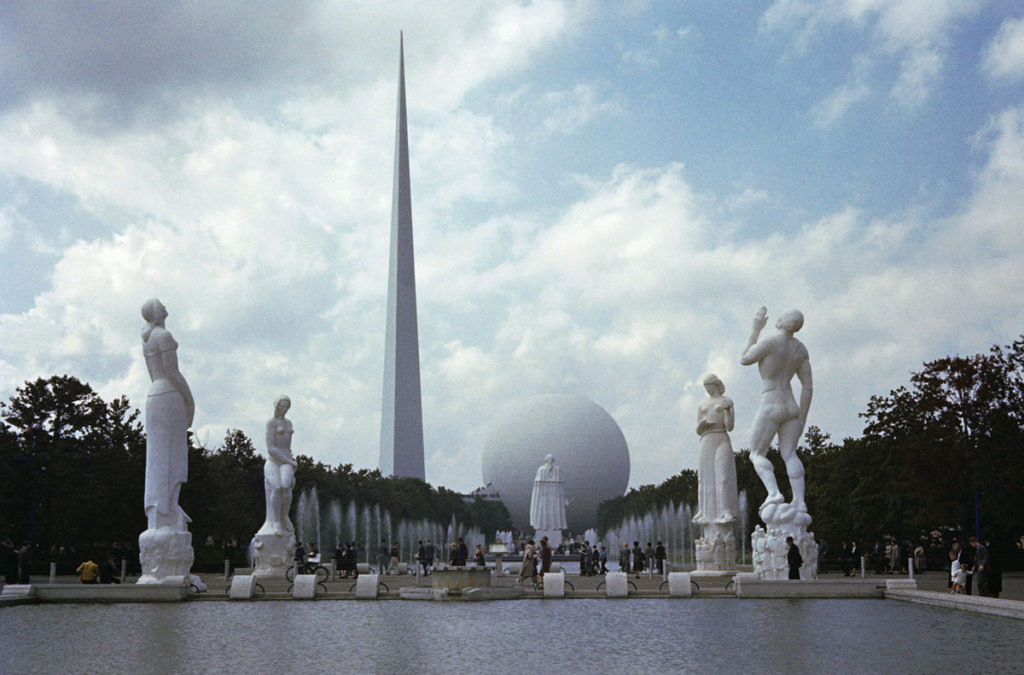
With the Trylon and Perisphere in the background, a statue of George Washington presides over the lagoon era and statues of the Four Freedoms. Read this for more information on the fair’s Washington inauguration connection.
Peter Campbell/CORBIS/Corbis via Getty Images
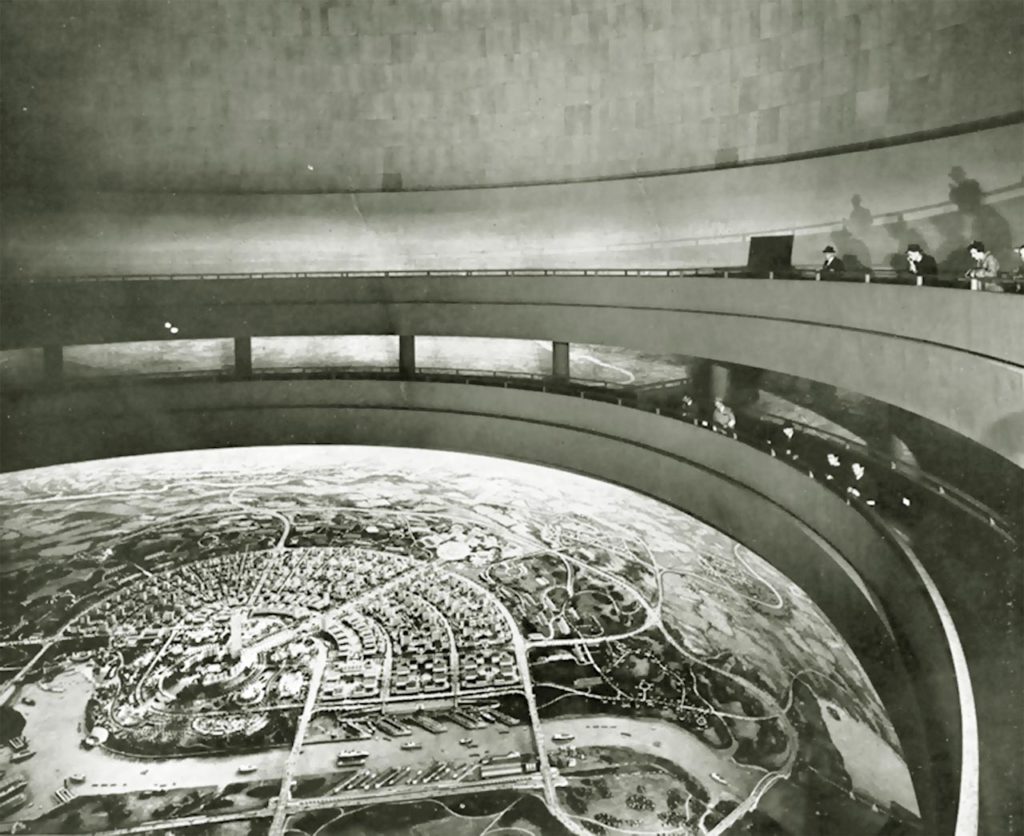
Gazing down at the wonder of Democracity within the Perisphere.
Worlds Fair Community
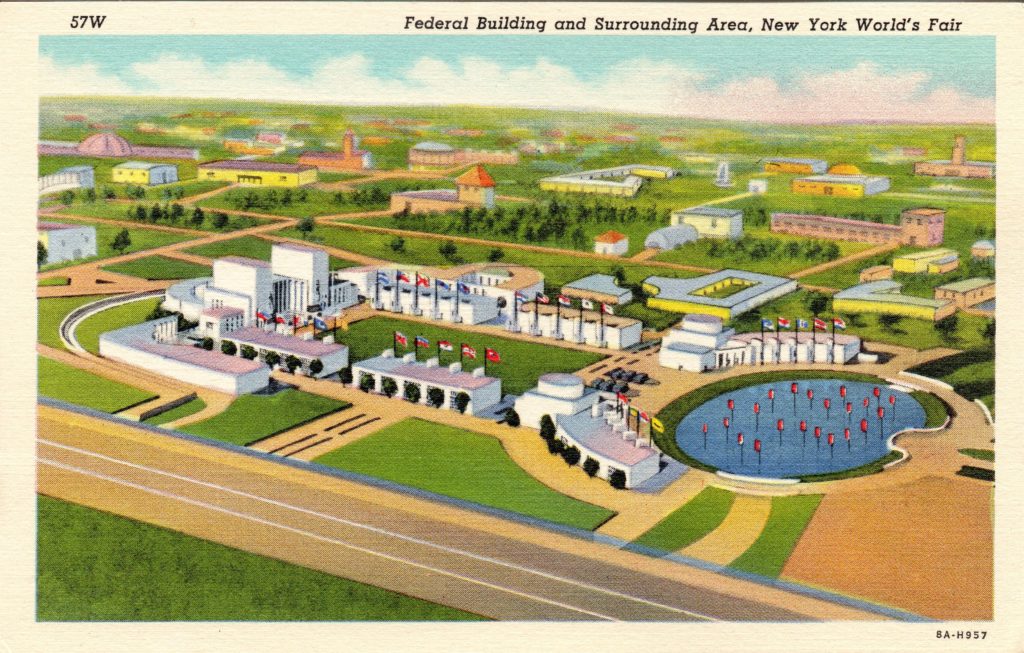
Starring into the gushing waters of the Lagoon of Nations with a view of the U.S. Federal Building.
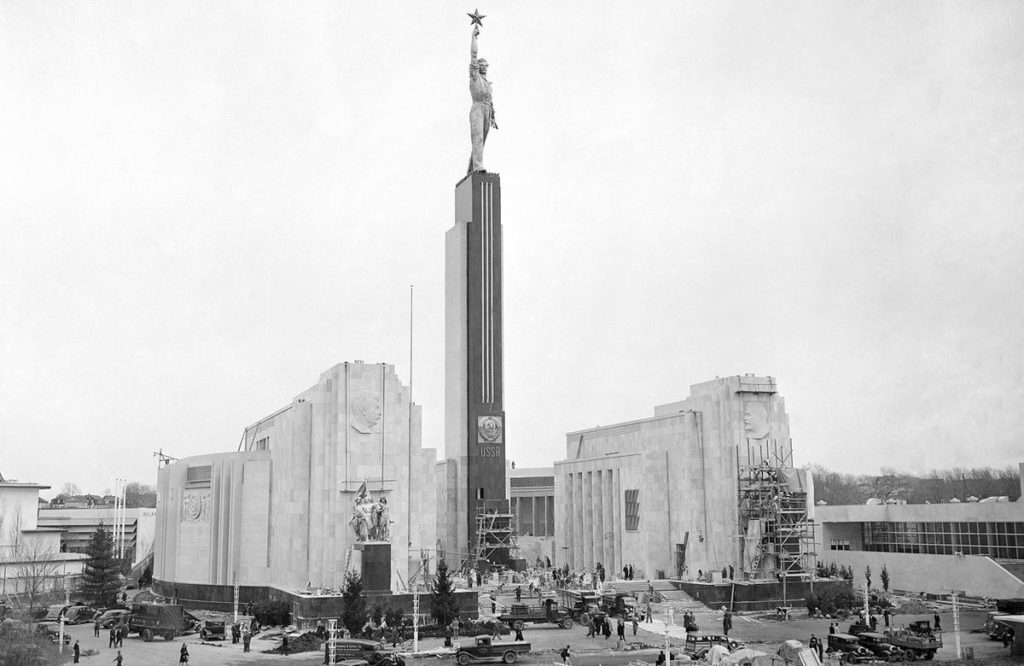
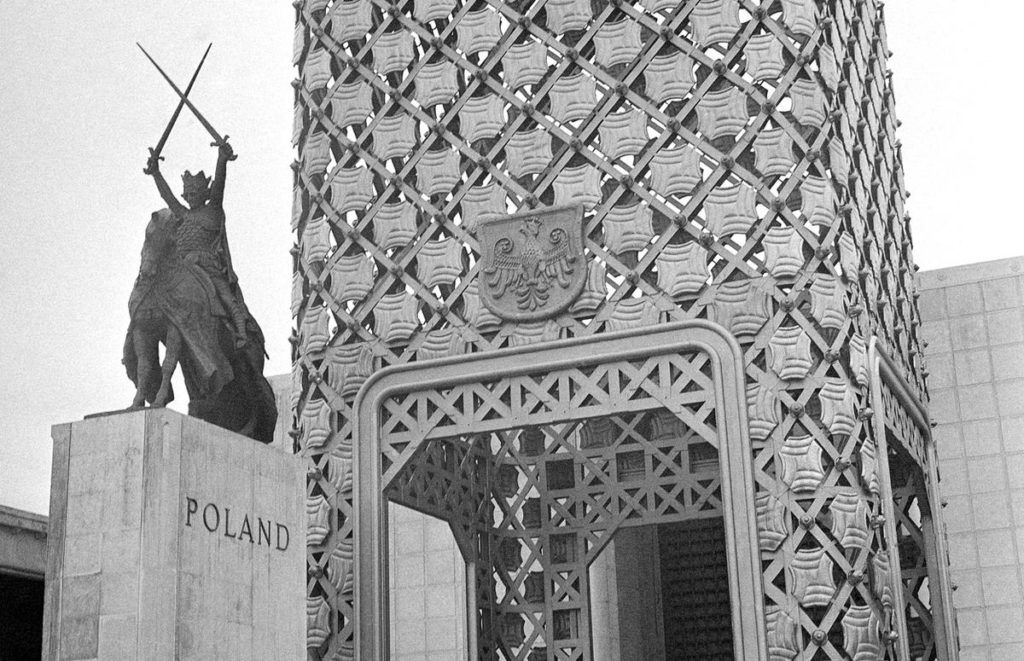
A few images of pavilions from the ‘Government Zone’ that were mentioned on the show:
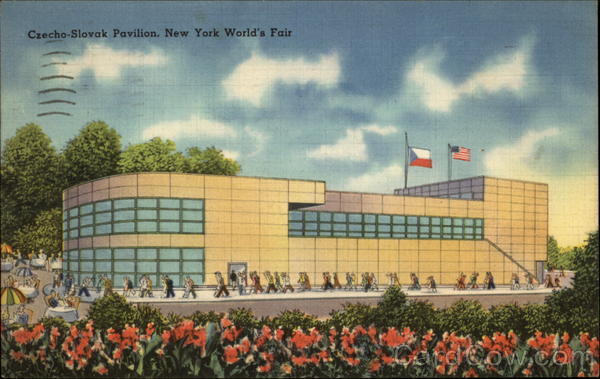
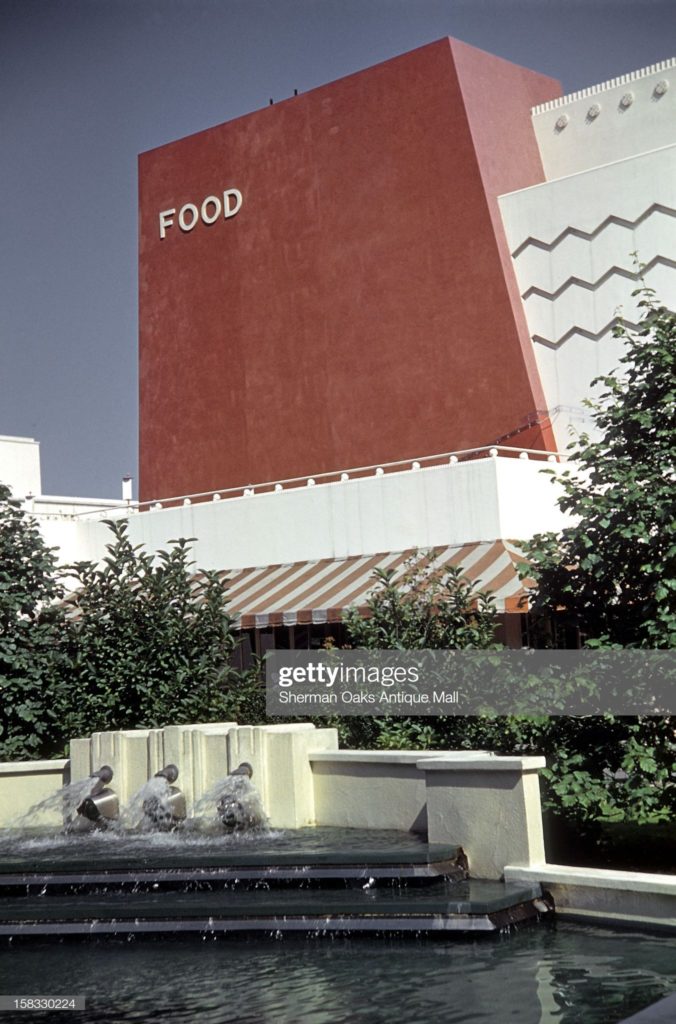
The Soviet Union pavilion/AP PhotoPoland pavilion/AP photoCzech-Slovak Pavilion, New York World’s Fair New York CityA view of the Food North Building at the 1939 New York World’s Fair in Flushing Meadows, Queens, New York City, New York. (Photo by Sherman Oaks Antique Mall/Getty Images)
The Mickey and Minnie Mouse cartoon which appeared at the National Biscuit Company (Nabisco) exhibition.
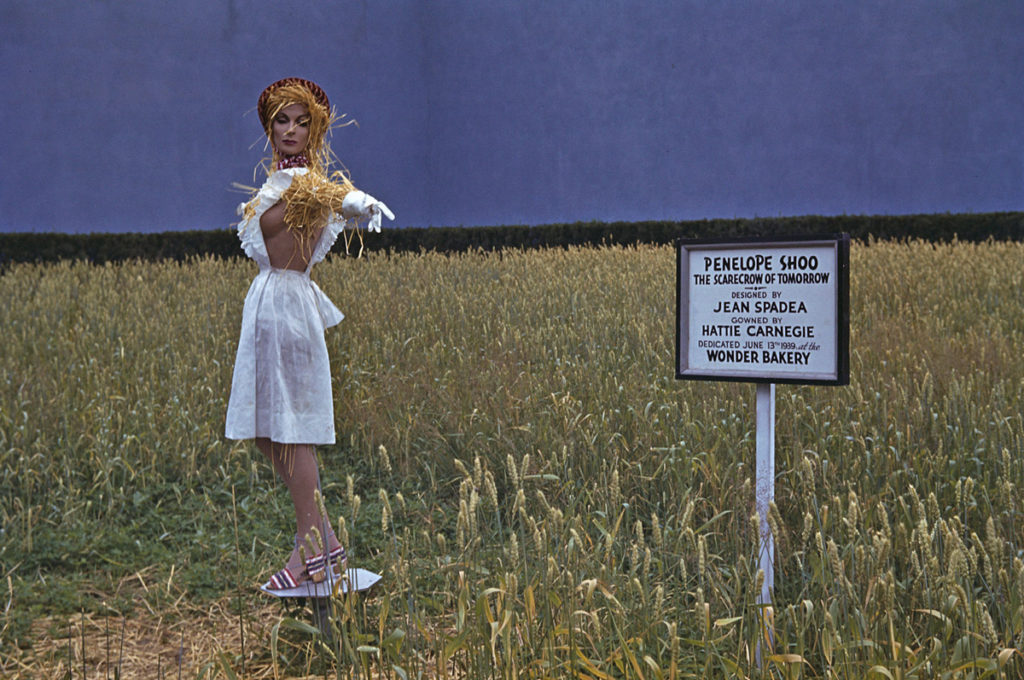
Wonder Bakery displays a wheat field exhibit at the 1939 World’s Fair. The model, Penelope Shoo, is wearing an outfit designed by Hattie Carnegie. The wheat field was billed as “the first planted in New York City since 1875.” (Peter Campbell//Corbis via Getty Images)
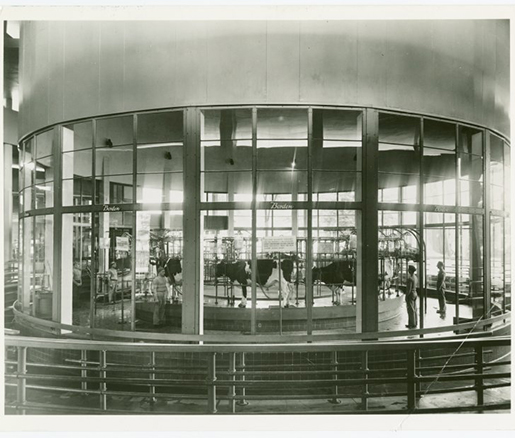
The ‘rotolactor’ in the Borden Company Exhibit
Courtesy James Beard
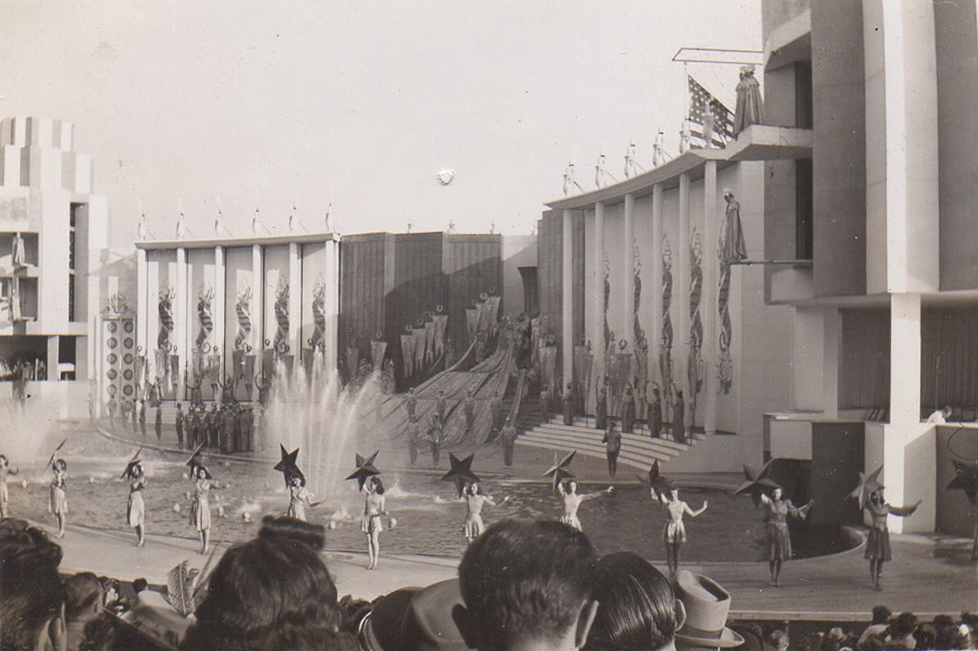
Billy Rose’s Aquacade — or if Aquaman were a musical!
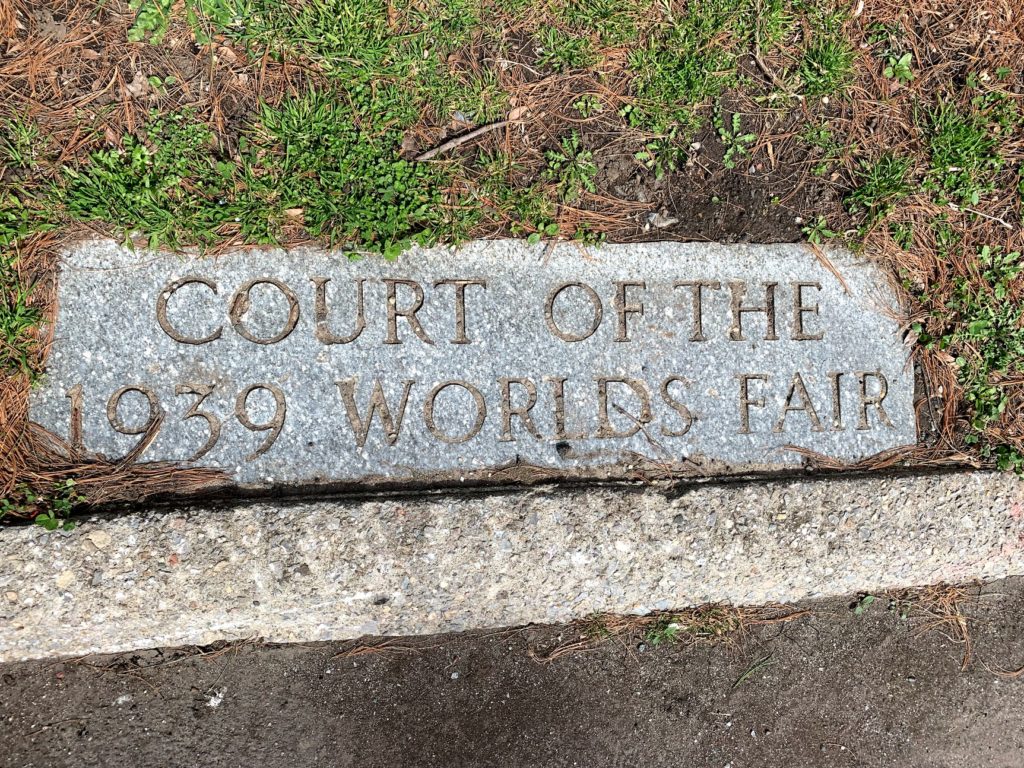
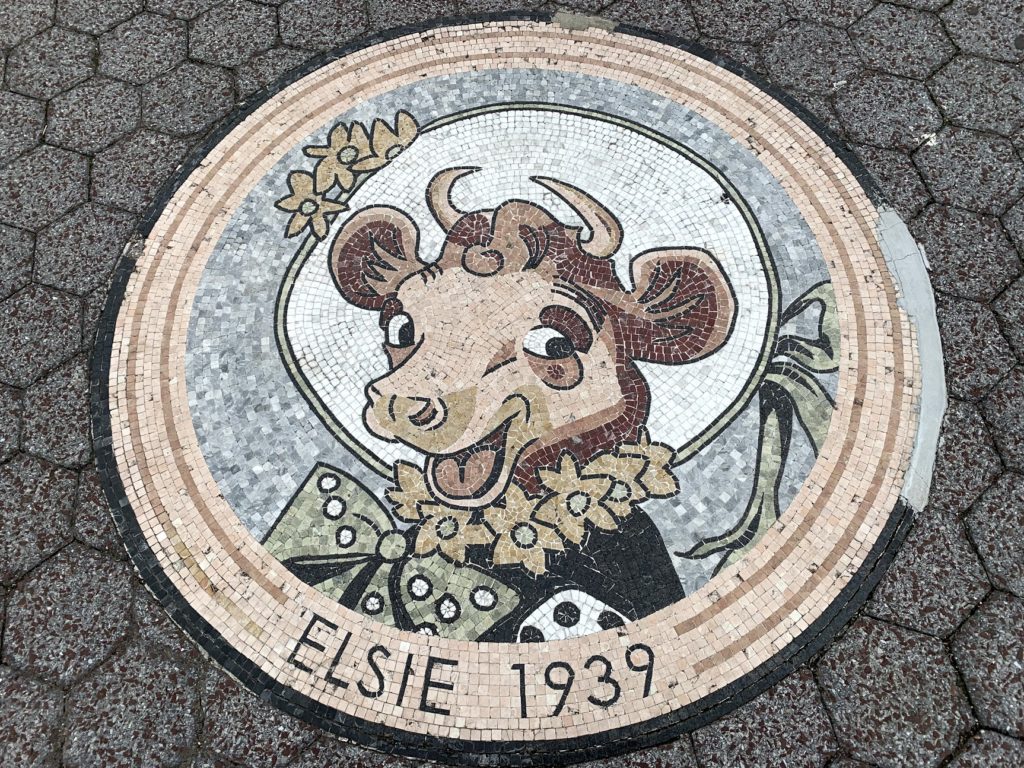
You can find evidence of the 1939 Worlds Fair all over the place in the park! Just a few examples (pictures by Greg Young):
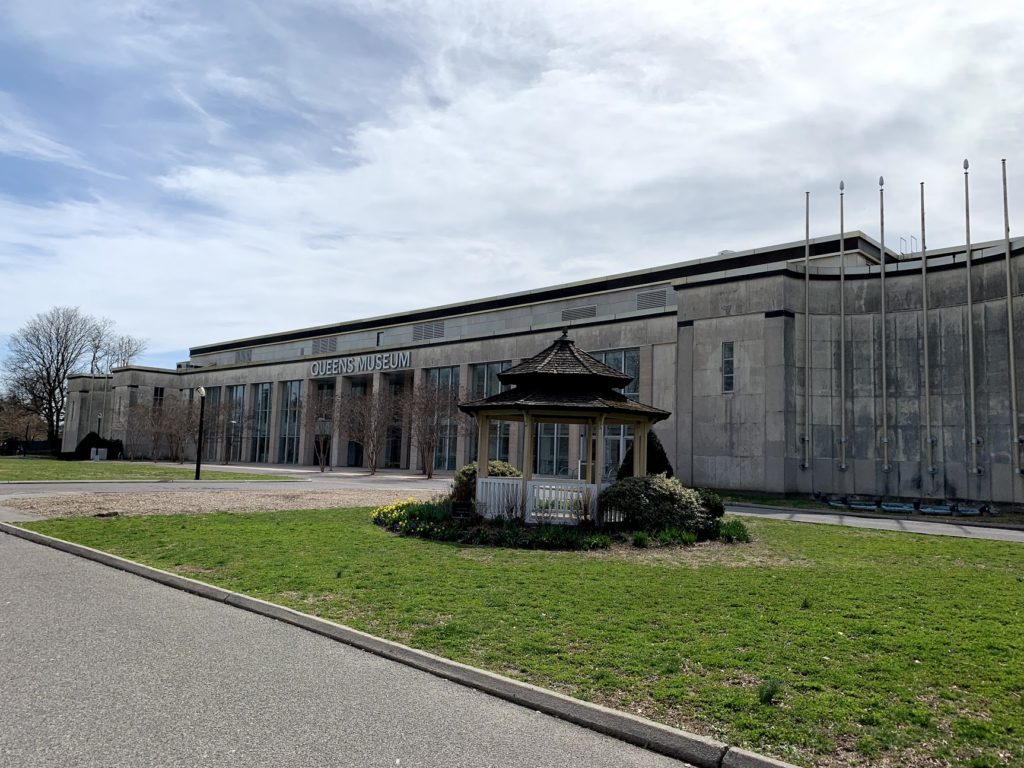
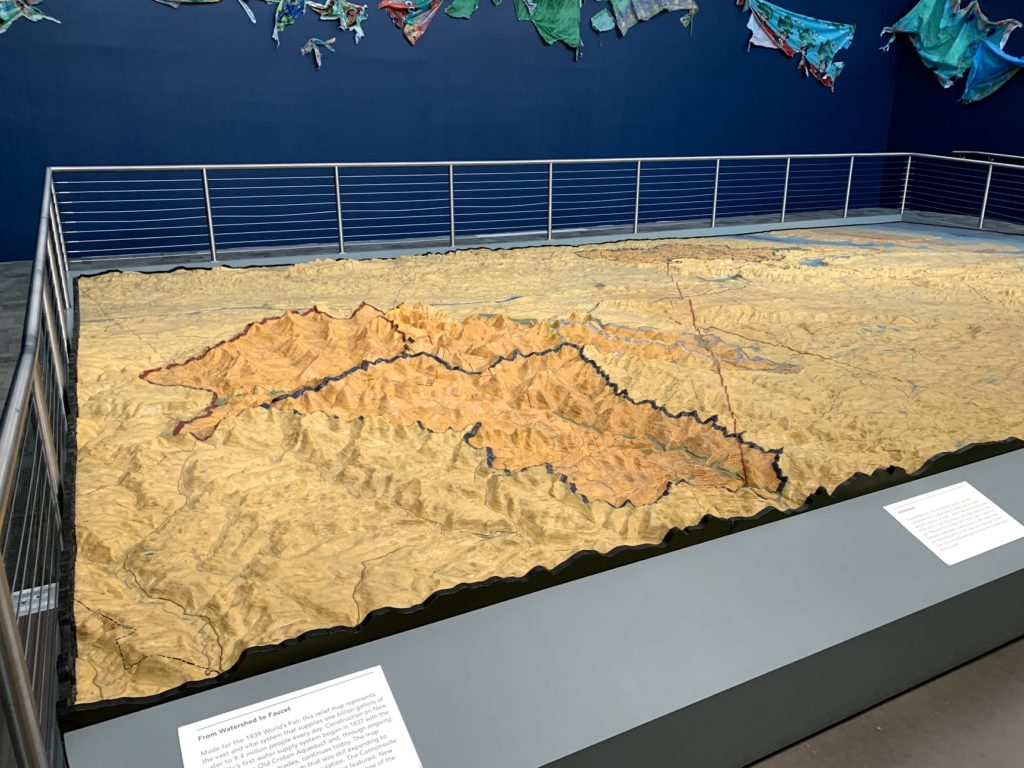
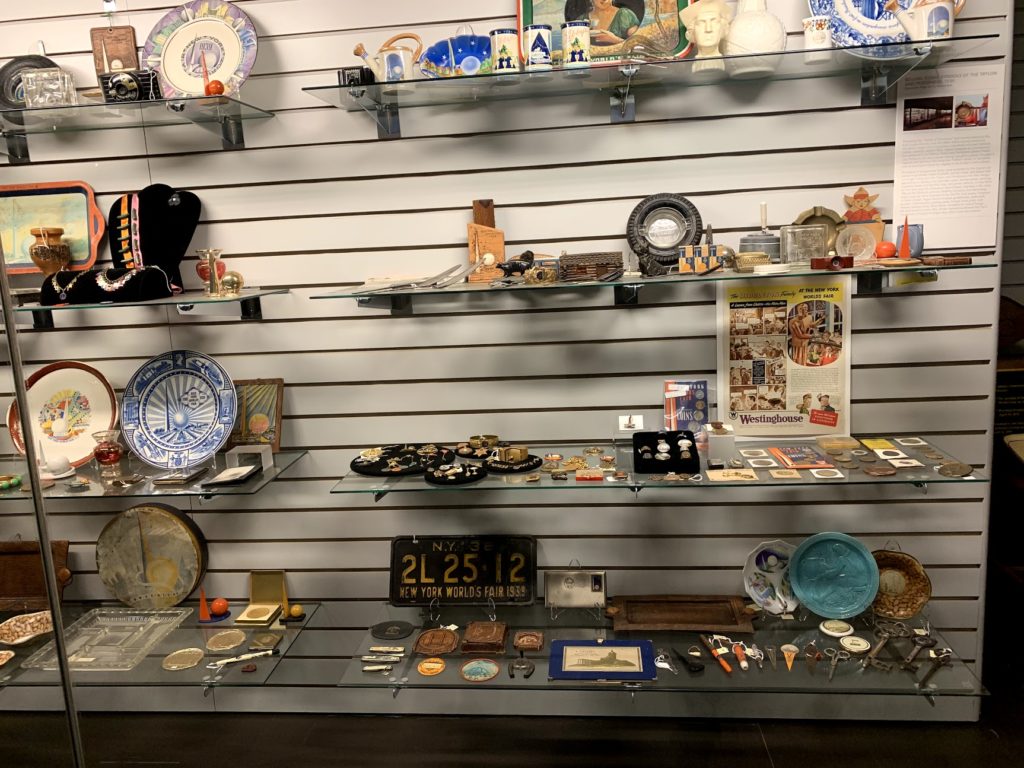
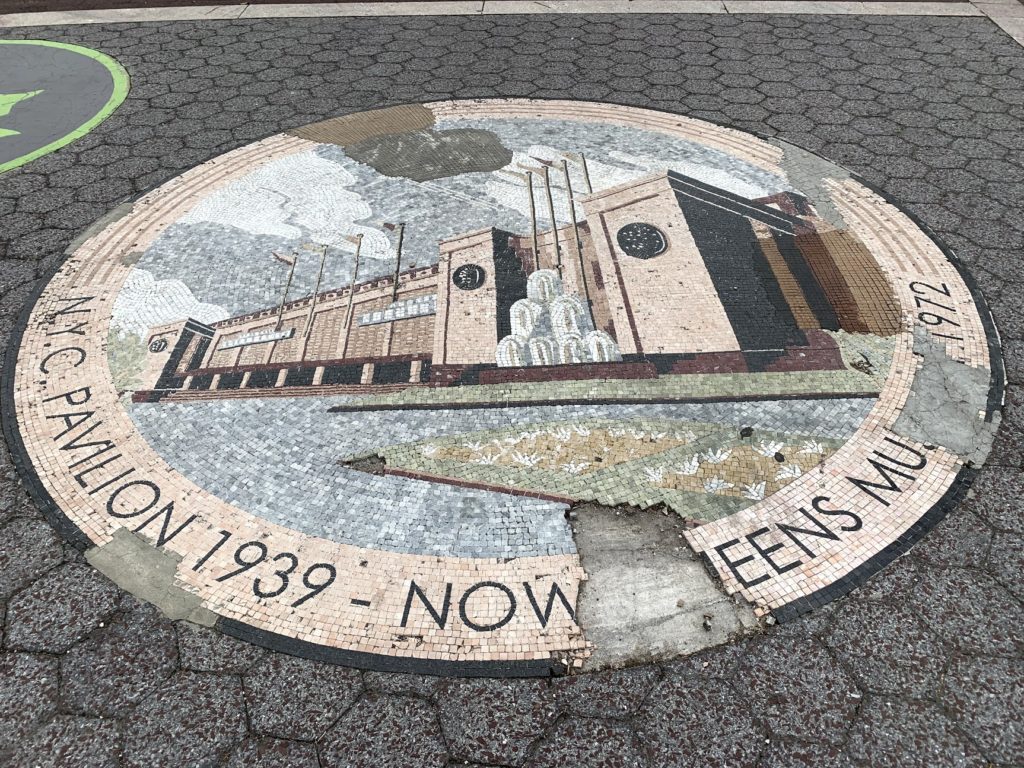
The former “New York City Building” which sat in the shadow of the Trylon and the Perisphere. Today it’s the Queens Museum….…where you can find the relief map of the New York City water supply, designed for the 1939 World’s Fair but never used.On the second floor, you’ll find a visible storage collection of World’s Fair memorabilia from both fairs.
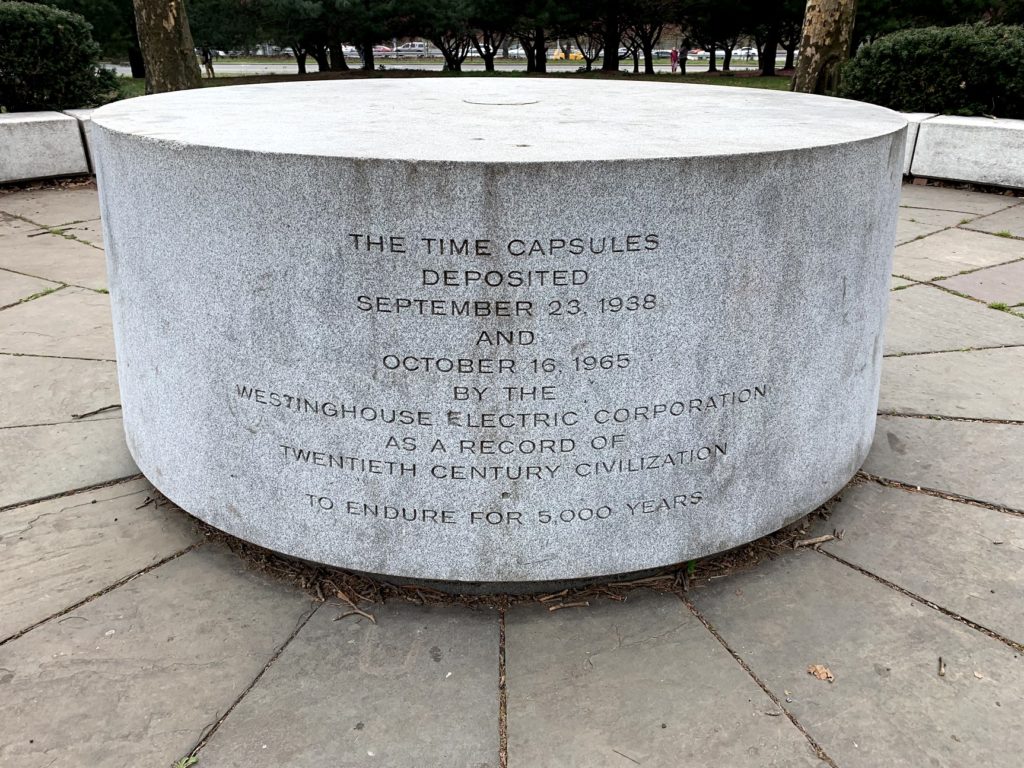
Don’t just look up! At your feet are also some tributes and traces to the World’s Fair.
FURTHER READING
The website 1939 New York World’s Fair is a wonderful resource, breaking down the specifics of most pavilions and even offering scans of brochures and programs from the fair.
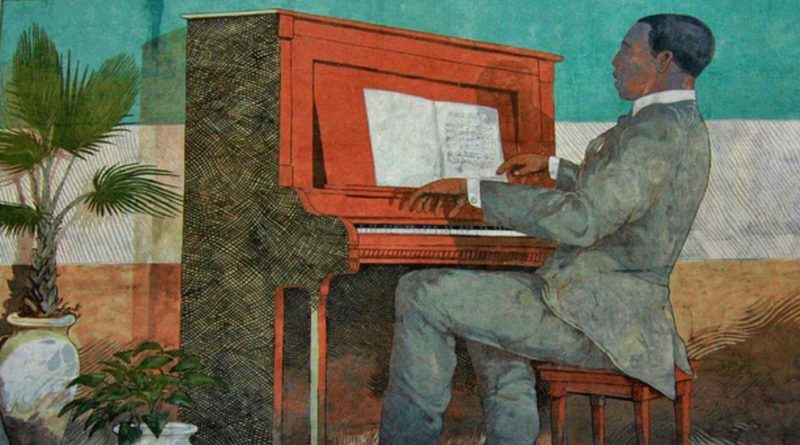
PODCAST How did one of the greatest composers of the 20th century end up buried in Queens in a pauper’s grave?
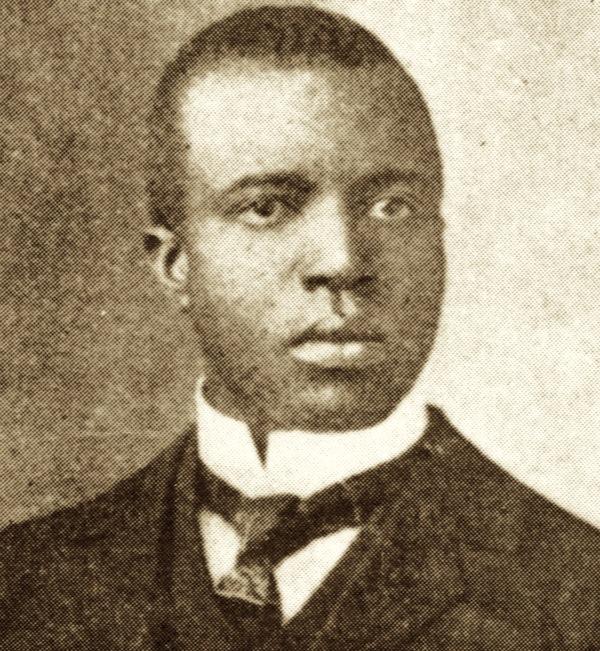
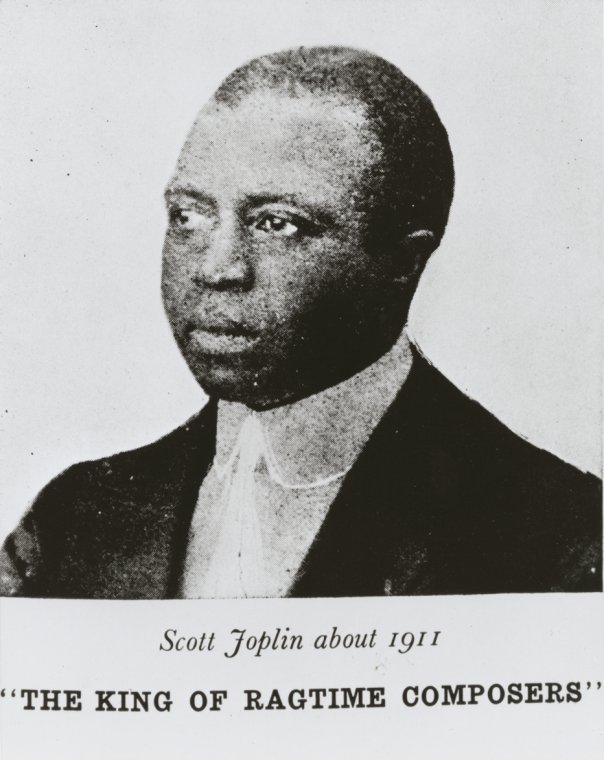
Scott Joplin, the “King of Ragtime”, moved to New York in 1907, at the height of his fame. And yet, he died a decade later, forgotten by the public.
He remained nearly forgotten and buried in a communal grave in Queens, until a resurgence of interest in ragtime music in the 1970s. How did this happen?
In today’s music-packed show, we travel to Missouri, stopping by Sedalia and St. Louis, and interview a range of Ragtime experts to help us understand the mystery of Joplin’s forgotten years in New York City.
The Bowery Boys: New York City History podcast is brought to you …. by you!
We are now producing a new Bowery Boys podcast every other week. We’re also looking to improve the show in other ways and expand in other ways as well — through publishing, social media, live events and other forms of media. But we can only do this with your help!
We are now a member of Patreon, a patronage platform where you can support your favorite content creators for as little as a $1 a month.
Please visit our page on Patreon and watch a short video of us recording the show and talking about our expansion plans. If you’d like to help out, there are five different pledge levels (and with clever names too — Mannahatta, New Amsterdam, Five Points, Gilded Age, Jazz Age and Empire State). Check them out and consider being a sponsor.
And join us for the next episode of the Bowery Boys Movie Club, an exclusive podcast provided to our supporters on Patreon.
We greatly appreciate our listeners and readers and thank you for joining us on this journey so far.
Here are Reginald Robinson and Richard Dowling performing Scott Joplin:
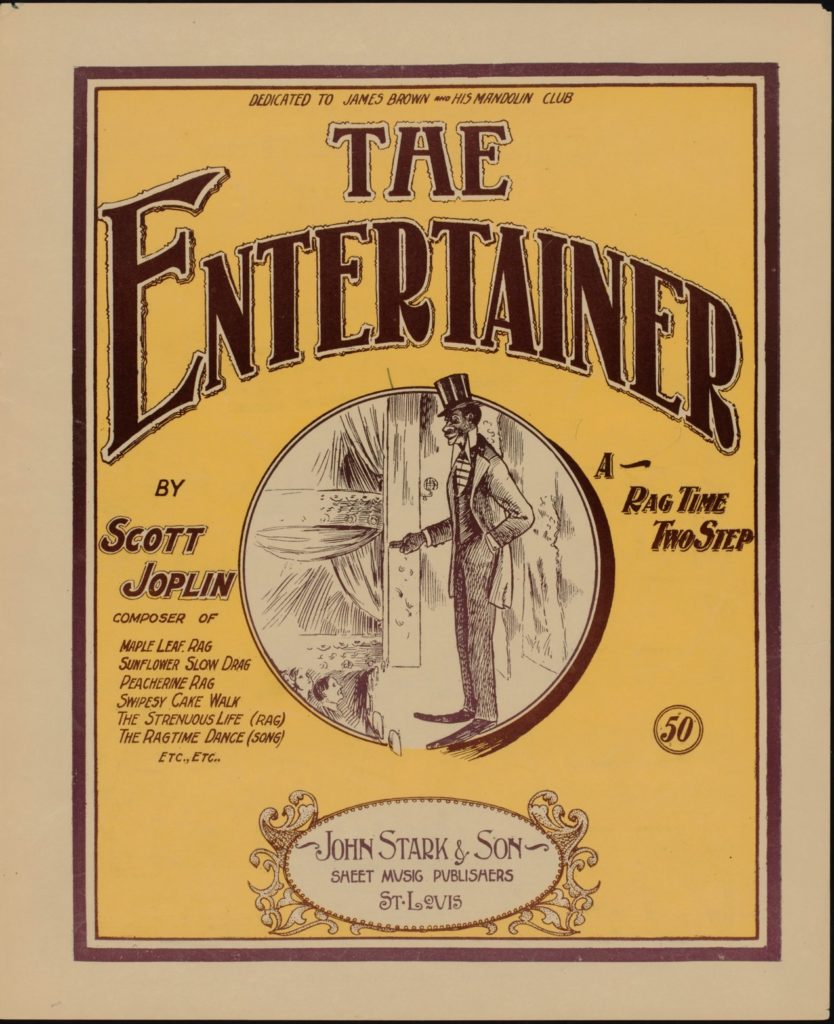
New York Public LibraryThe Entertainer published 1902/New York Public Library
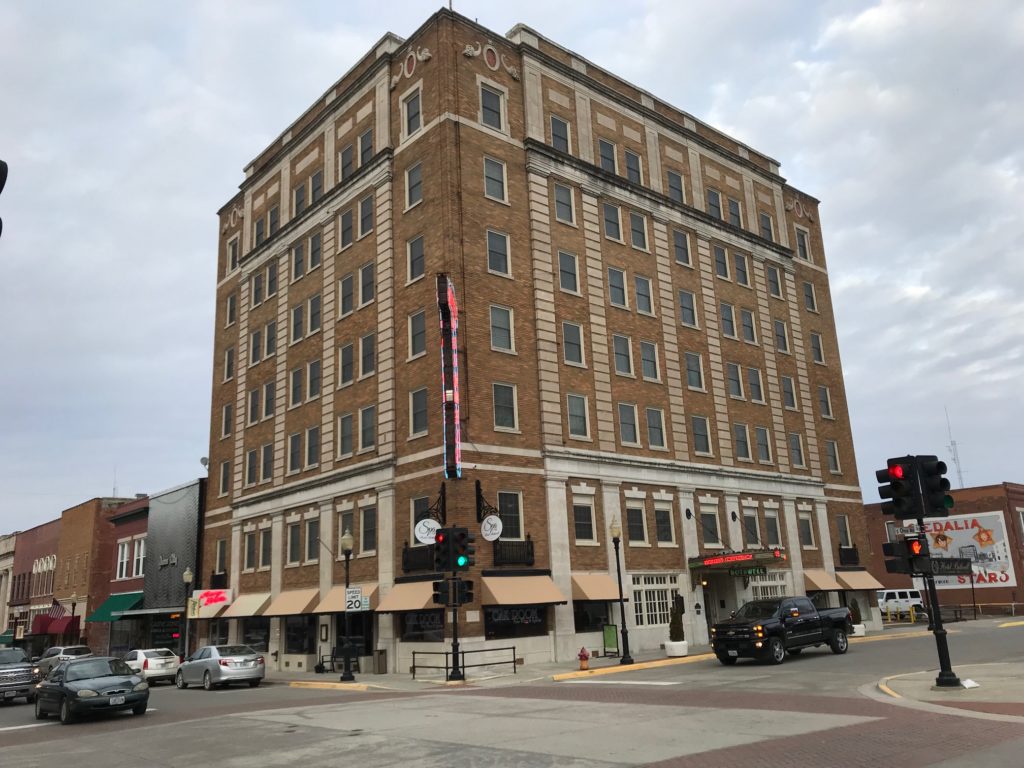
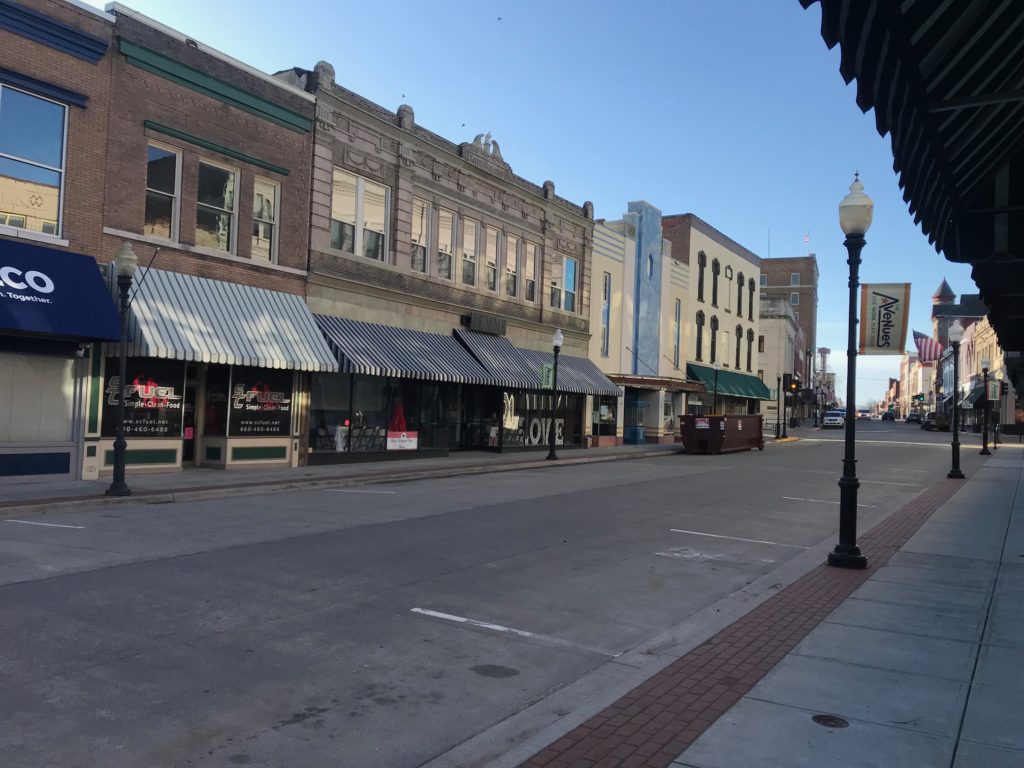
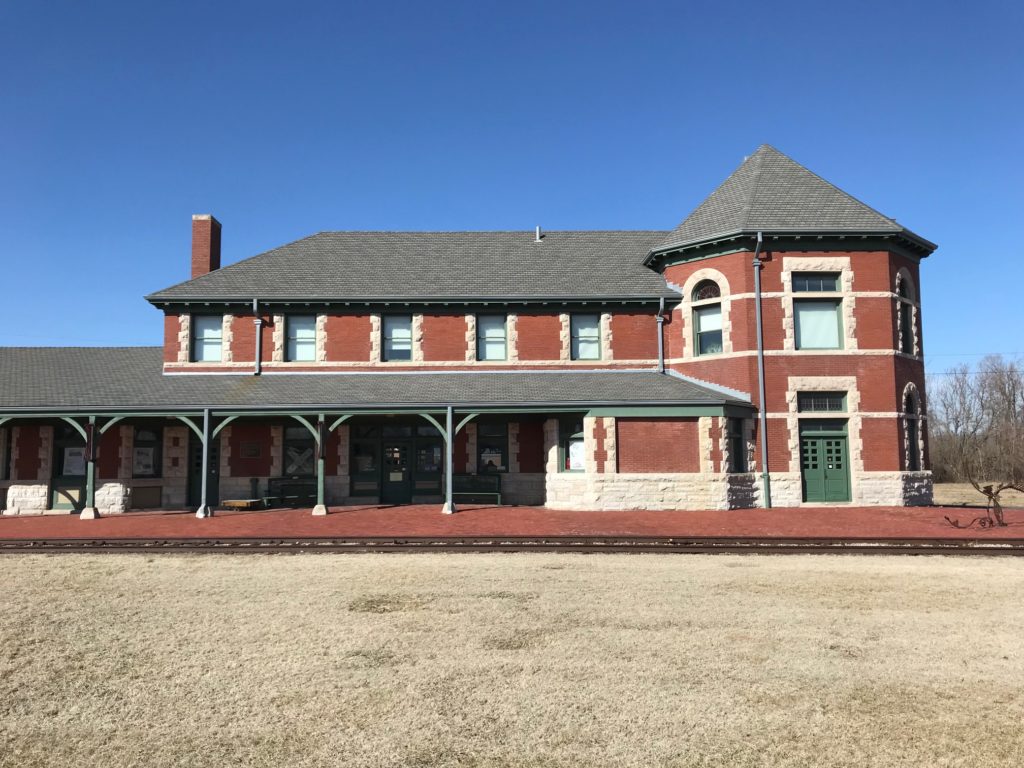
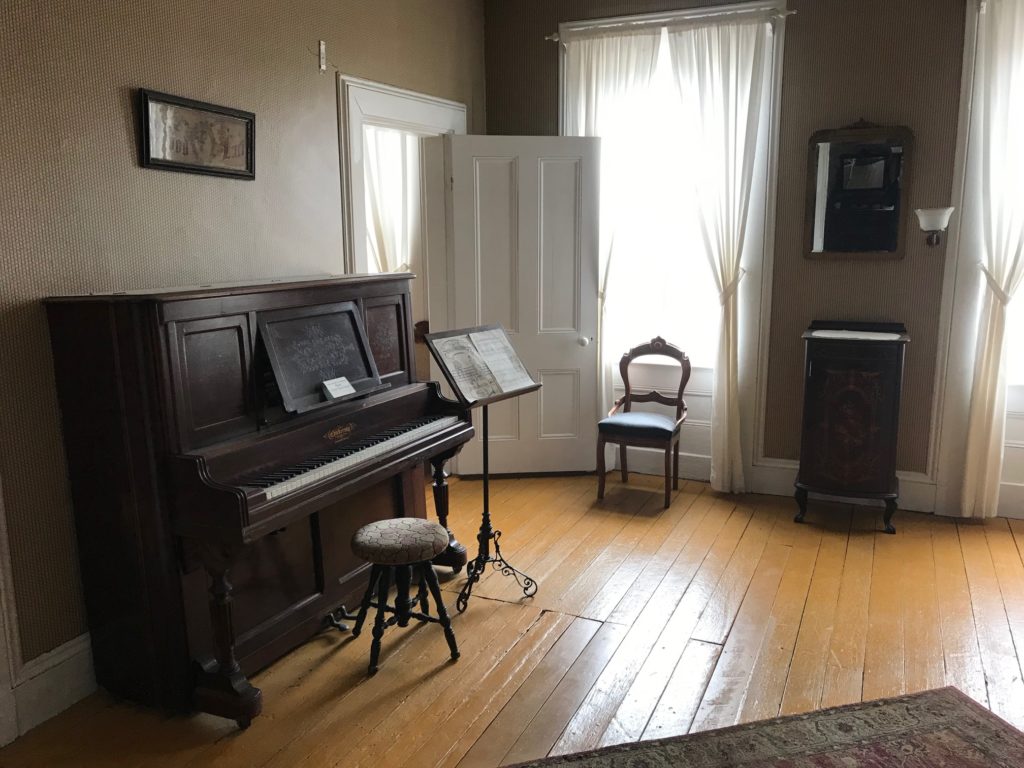
Tom’s images from Sedalia and St. Louis, Missouri:
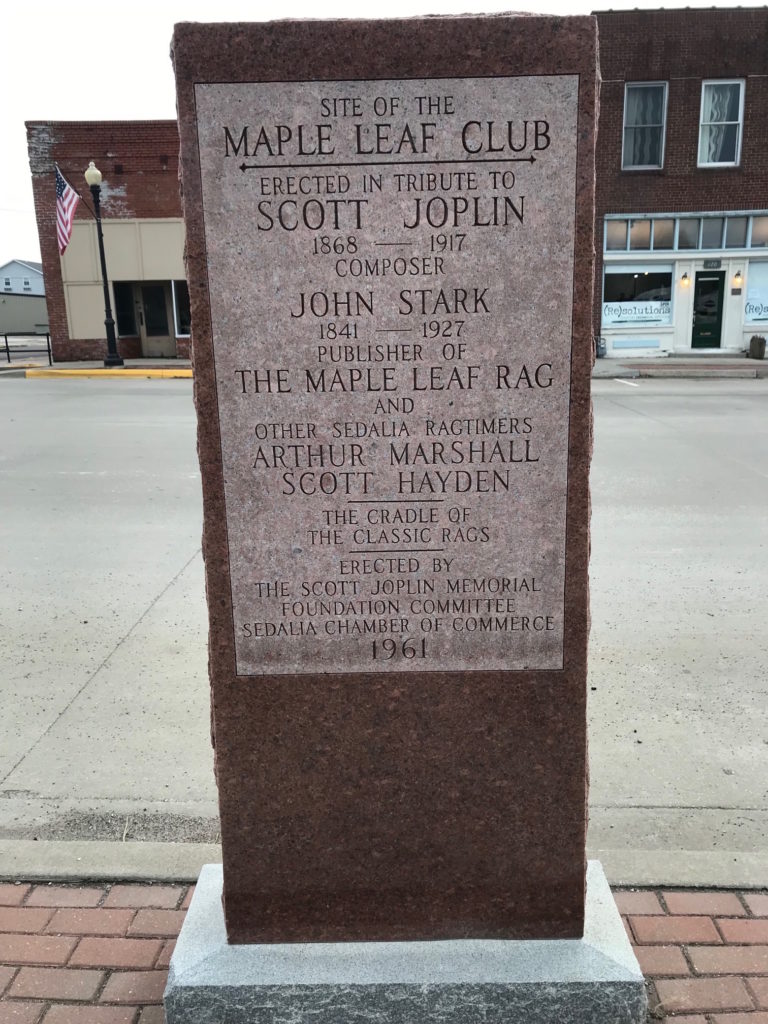
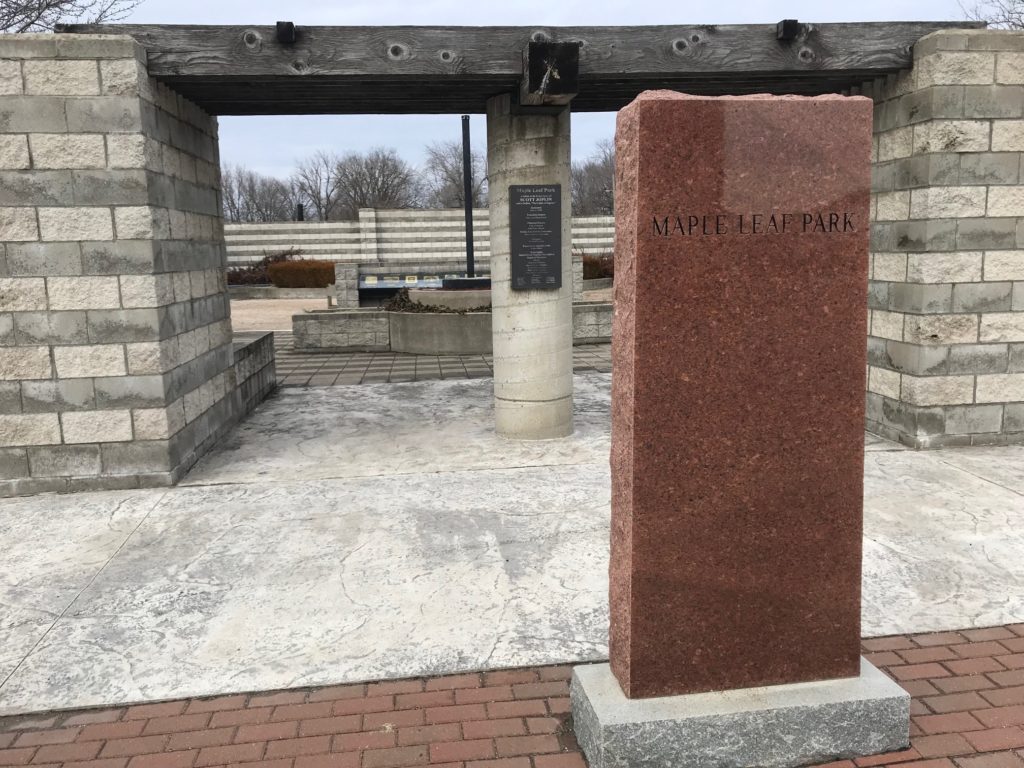
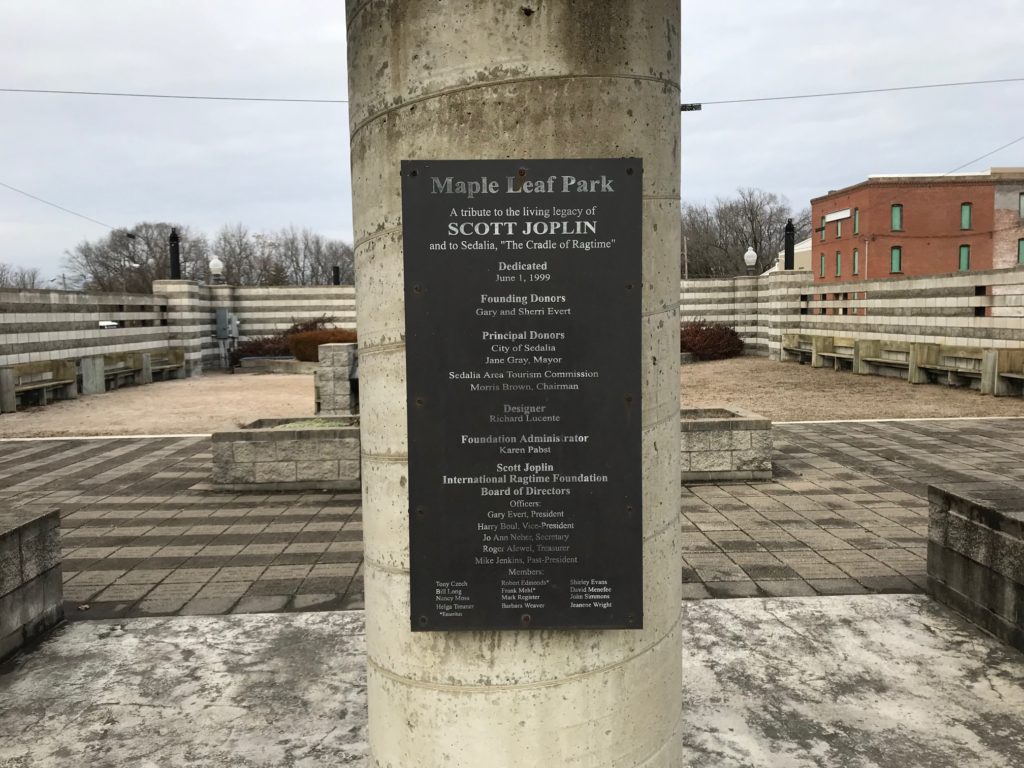
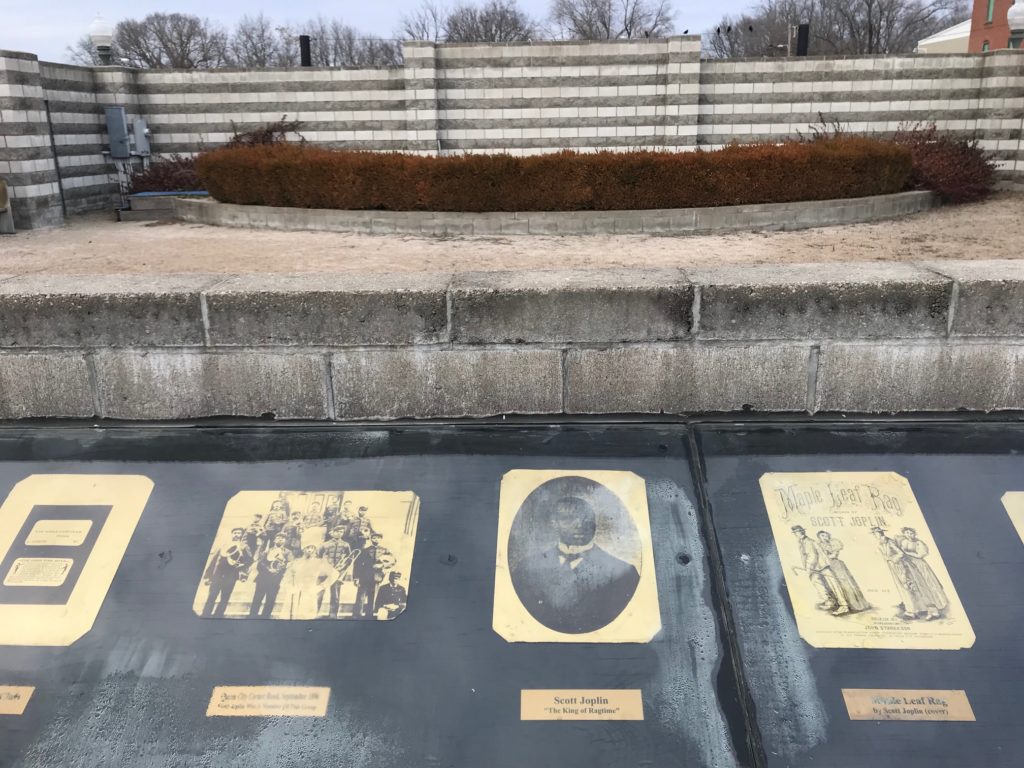
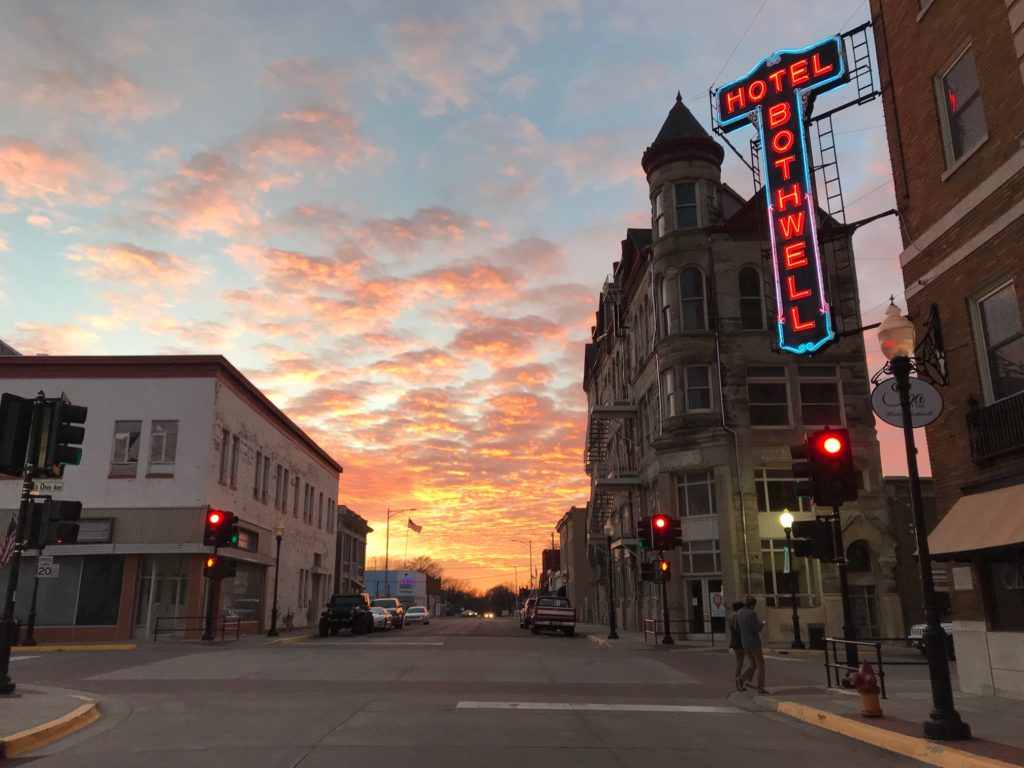
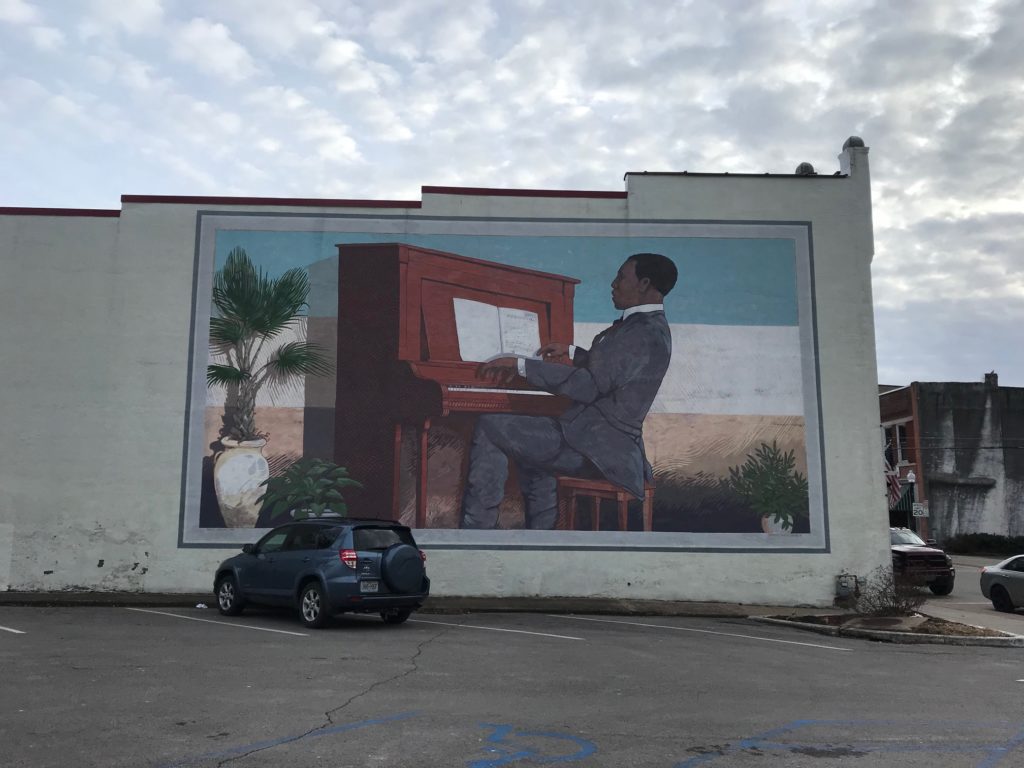
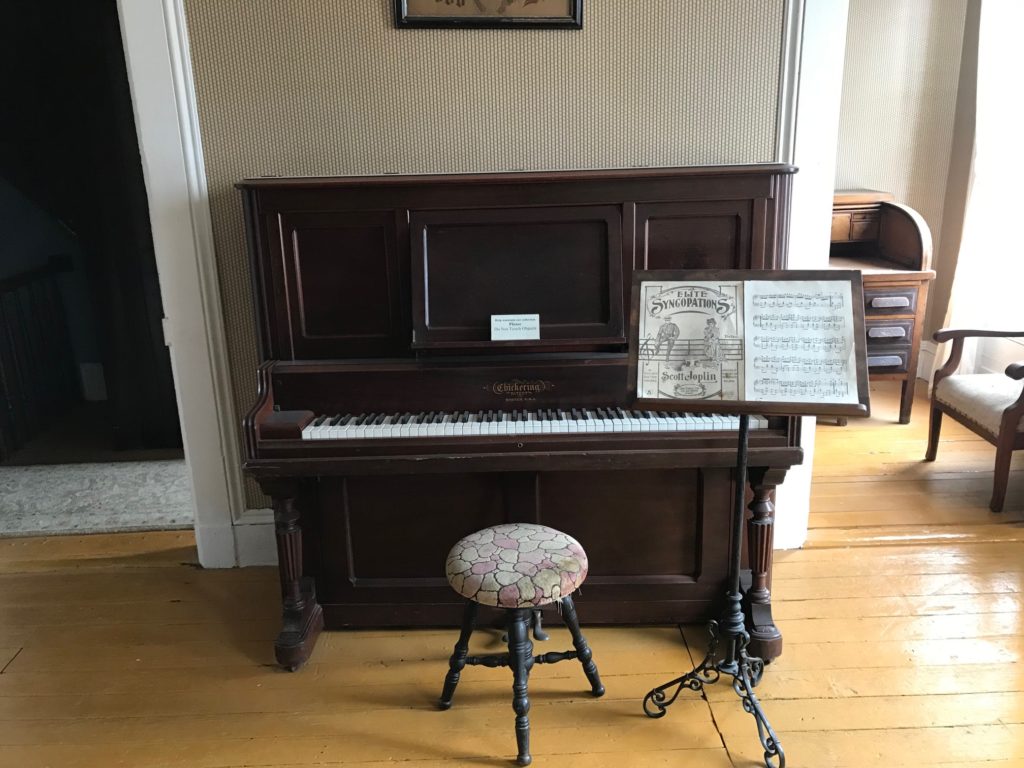
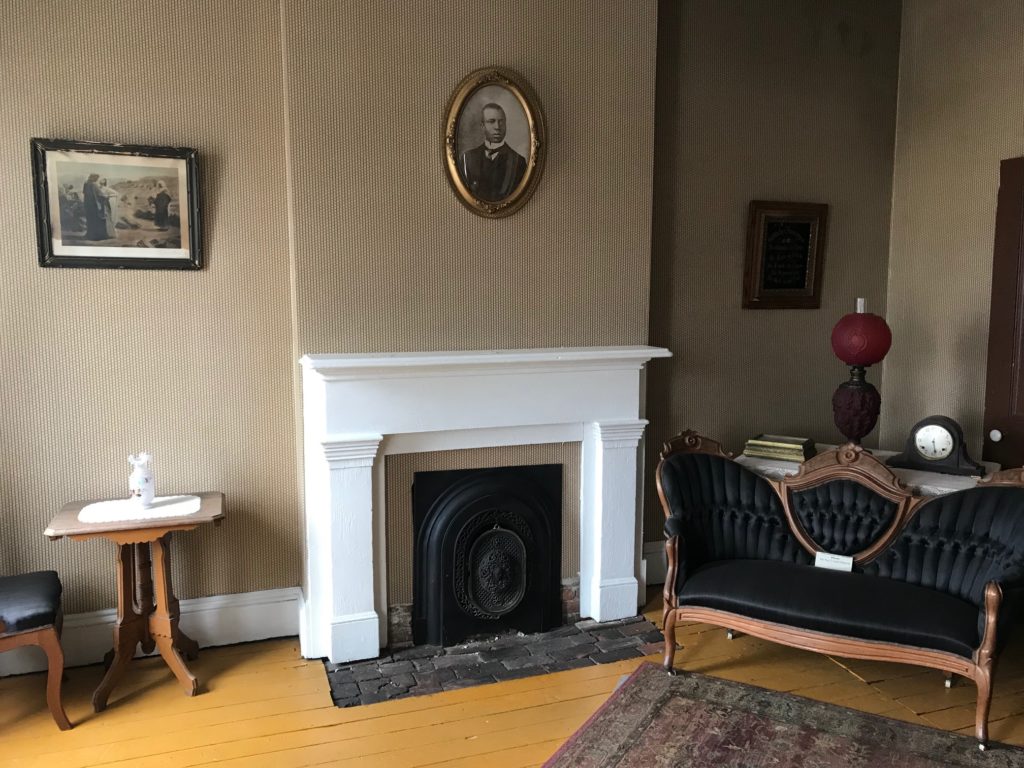
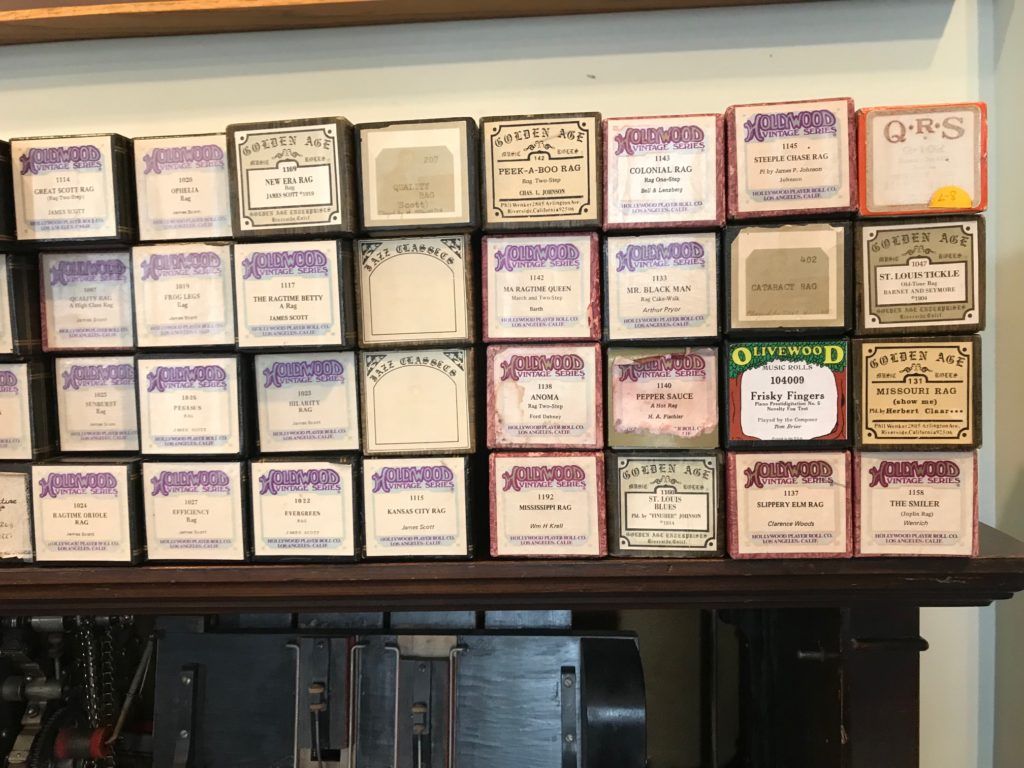
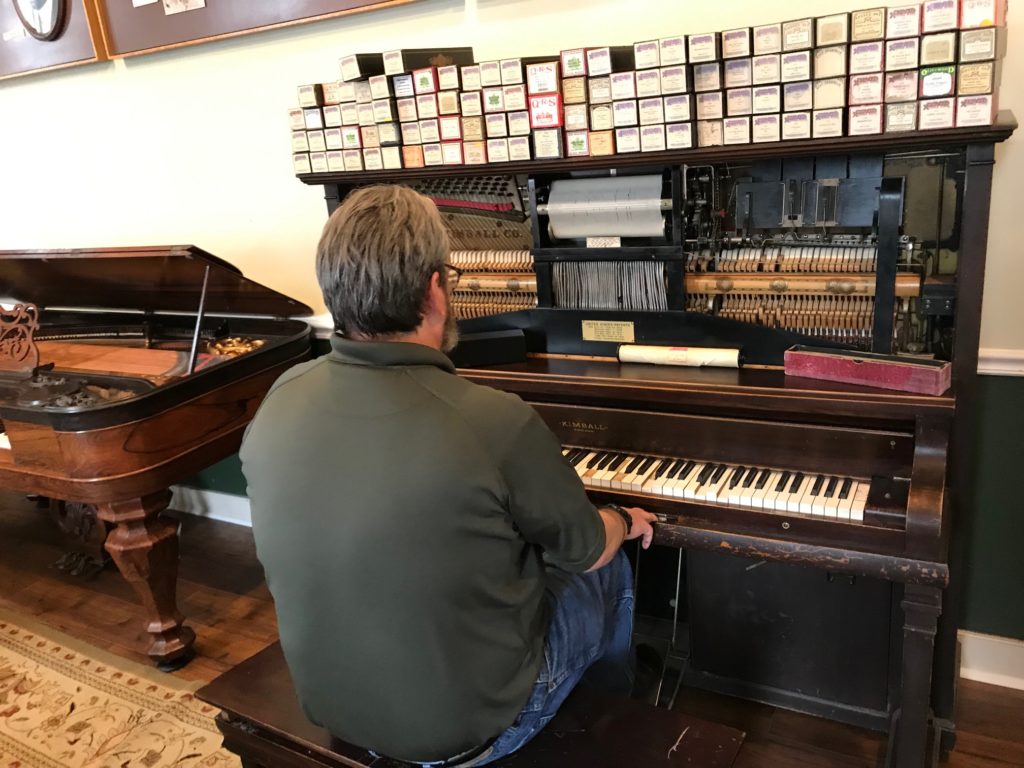
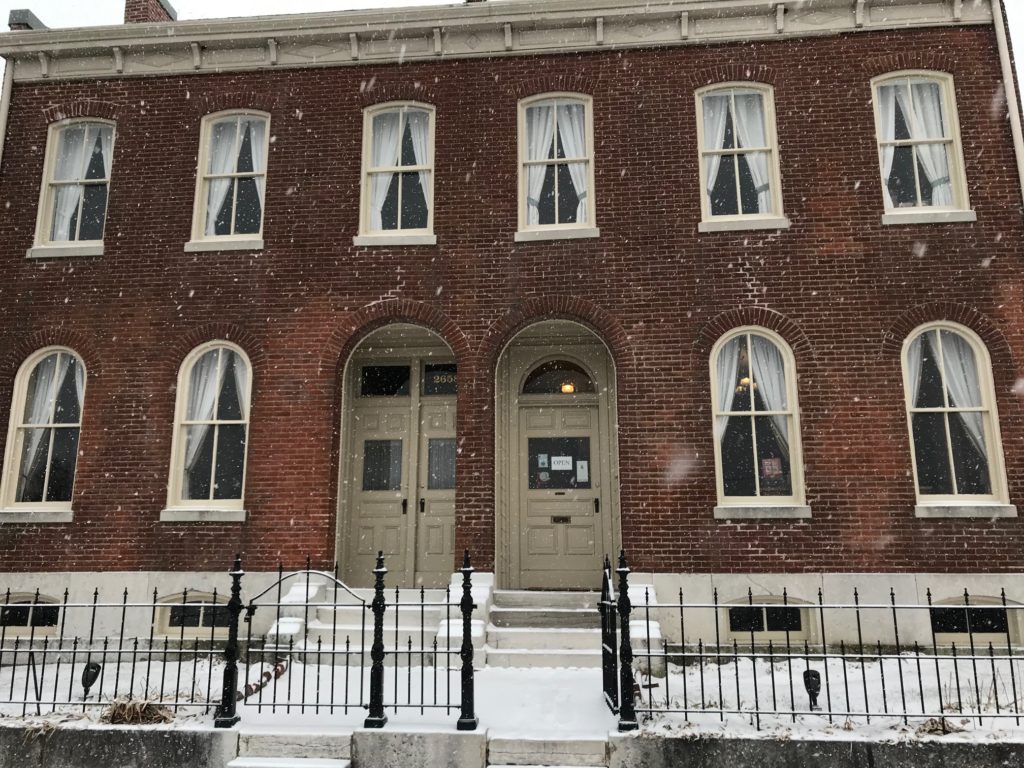
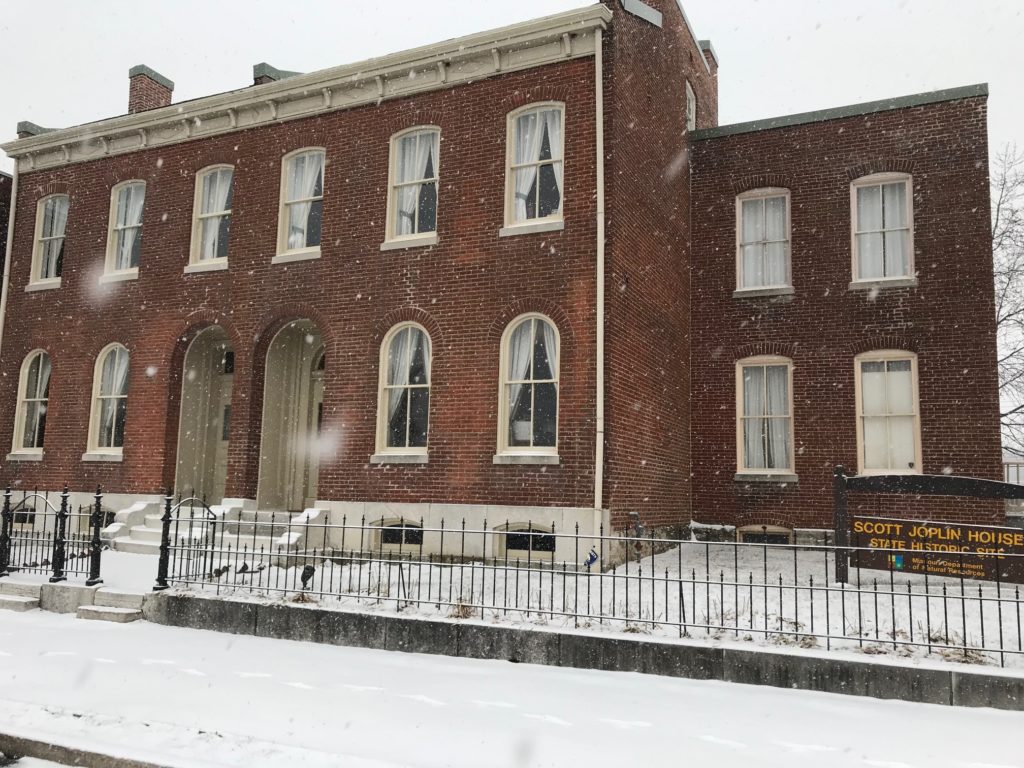
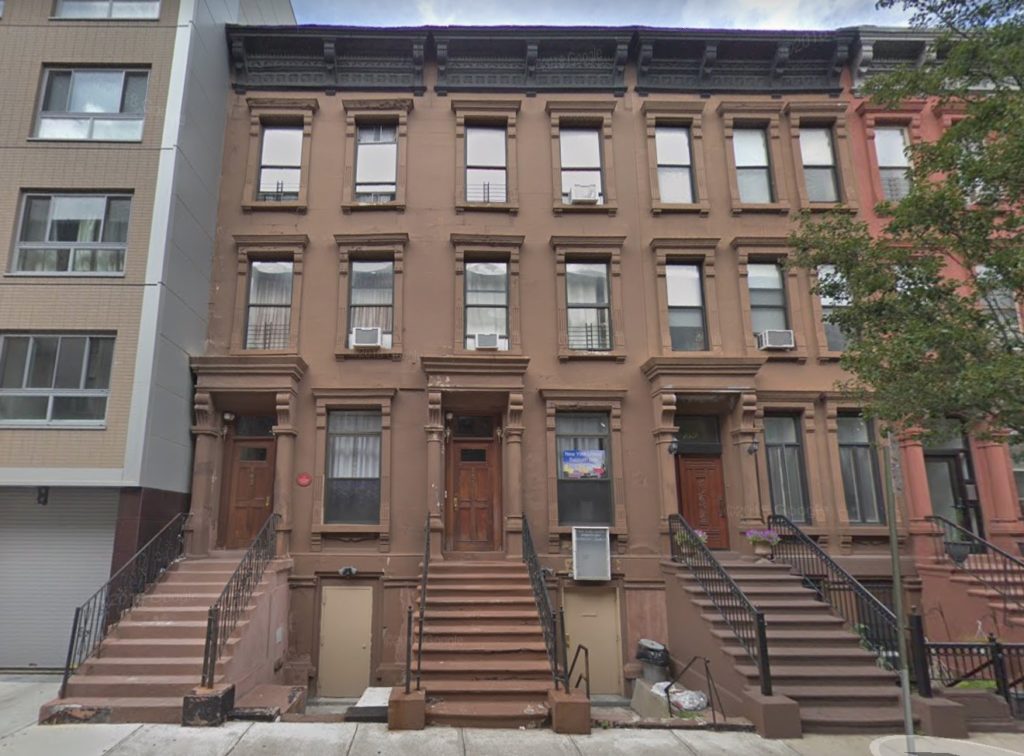
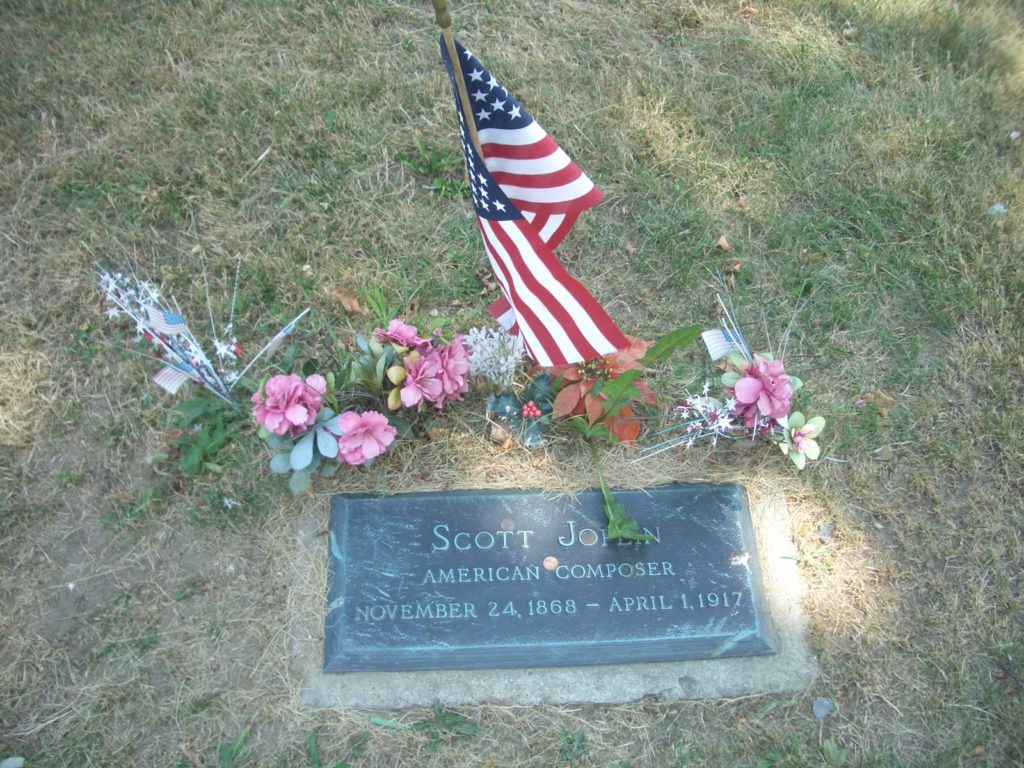
The historic marker outside the site of the Maple Leaf Club in Sedalia, Missouri.Looking into Maple Leaf Park, on the site of the historic club.Inside Maple Leaf ParkMaple Leaf Park contains a timeline of Joplin, the “Maple Leaf Rag” and the club.Downtown Sedalia at sunset, with the historic Hotel Bothwell, right.Historic downtown Sedalia. This is a shot on Main Street.Sedalia’s mural dedicated to Scott Joplin.The Hotel BothwellLooking up Ohio Avenue in downtown Sedalia.Sedalia’s former train station has been converted into a visitors center, with a museum that covers a lot of Ragtime, and Joplin, history.Inside the Scott Joplin House State Historic Site in St. Louis. This is the front apartment, where Joplin may have boarded.A piano with, of course, Joplin music ready to be played.Joplin’s portrait hangs on the wall of the Scott Joplin House in St. Louis.The piano room downstairs at the Scott Joplin House in St. Louis contains many piano rolls of Joplin compositions.Bryan Cather, interviewed in the show at the Scott Joplin House, pumps away at the player piano.Outside the Scott Joplin House in St. Louis on a snowy February day.Scott Joplin House, St. Louis.The last home of Scott Joplin at 163 West 131st Street in Harlem. Image courtesy Google MapsThe grave of Scott Joplin at St. Michael’s Cemetery. Image courtesy Gardens of Stone.The major reason for Scott Joplin’s resurgent popularity in the 1970s was the box office hit The Sting starring Robert Redford and Paul Newman.The Maple Leaf Rag, Joplin’s most successful song in his lifetime. A clip of the Houston Grand Opera’s version of Treemonisha, performed in 1976.
FURTHER LISTENING:
Get a background on the music scene of the early 1900s by listening to these two podcasts on New York’s early music heritage:
And for a look at early African-American neighborhoods in New York, check out this episode (with trips to Seneca Village and Weeksville):
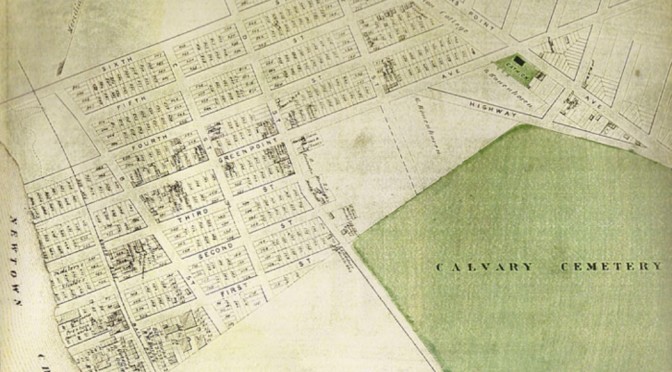
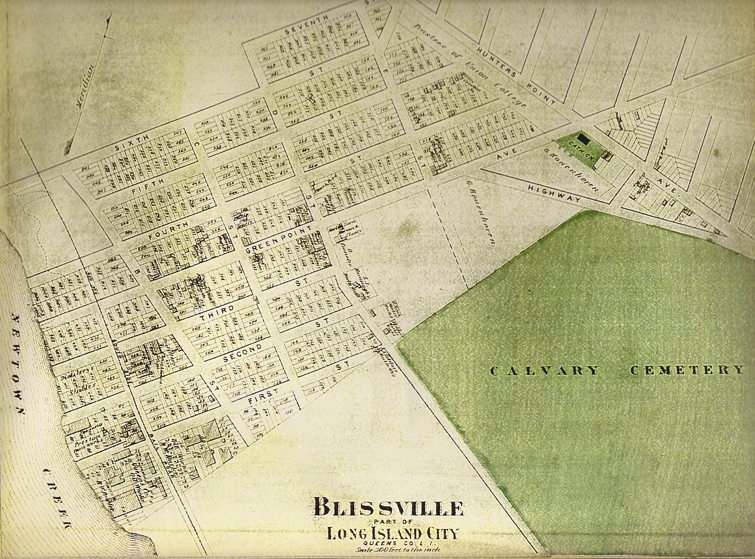
Long Island City is really a confederation of small villages and hamlets along the northwestern shore of Long Island. The name began essentially as a re-branding of Hunter’s Point then grew to eventually include Astoria, Ravenswood, Sunnyside, Blissville and other communities after the development of the Long Island Railroad improved its land value.
“Fifteen years ago, outside of the village of Astoria, there was not a house in the limits of Long Island City, except the dwellings of half a dozen farmers and a line of palatial mansions fronting on the East River, from Hunter’s Point to Hell Gate,” said the New York Times in 1870 at the time of Long Island City’s charter.
It was an area of great change that still retained a rural character, even as two of America’s greatest cities rose to its south. The perfect setting — for a ghost story!
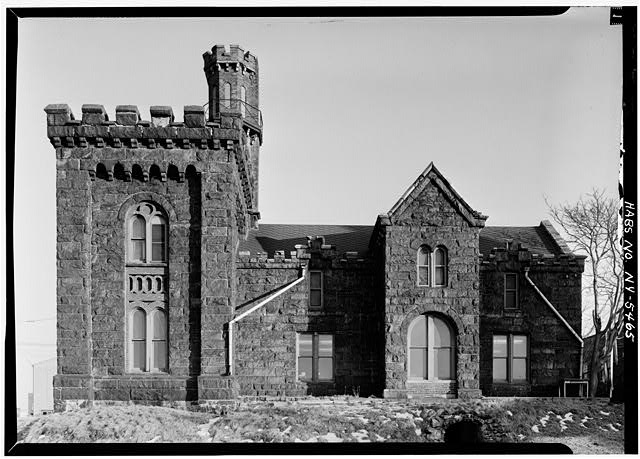
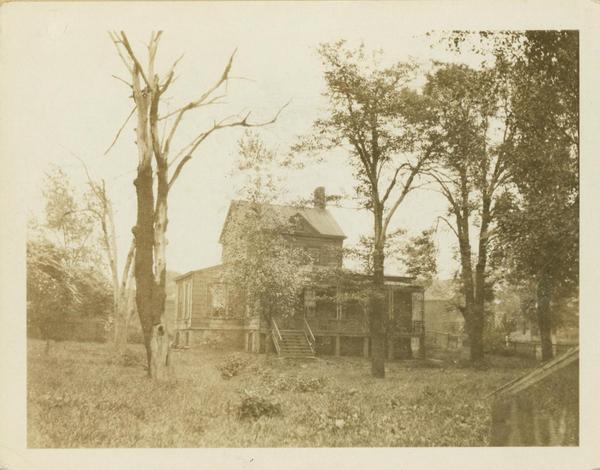
Haunted houses as often simply old mansions that look out of place on a changing landscape. By that definition, Long Island City in transition would have had its share of these. Interspersed within this article are a few old homes and mansions of northwestern Queens. Haunted or not, but still captivating!
I was looking through some newspaper archives looking for some old stories about Long Island when these two spooky stories popped up. Almost as if they wanted to be found and retold! Both are based on newspaper reporting of the day and were reported (albeit with a touch of skepticism) as fact:
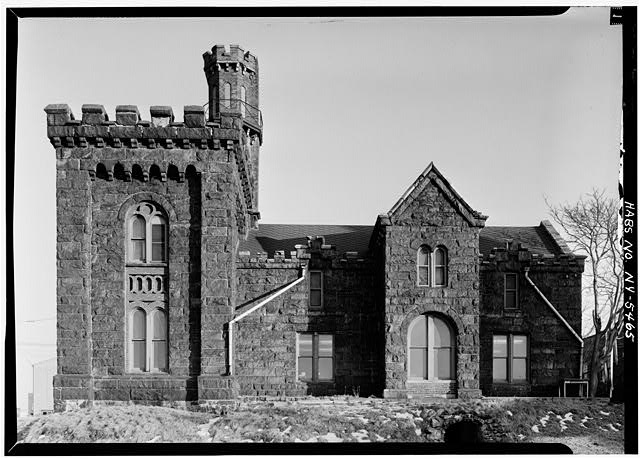
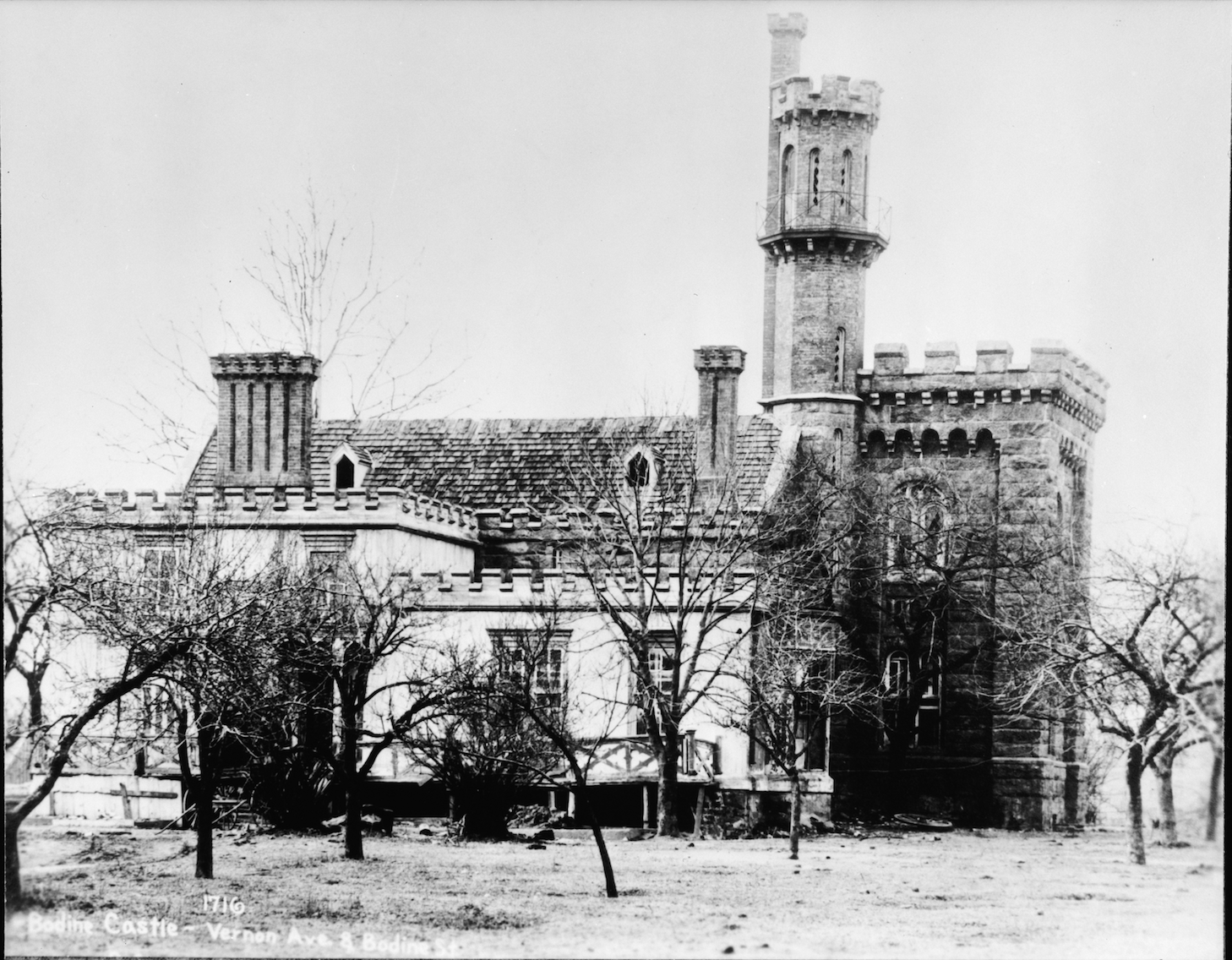
Below: Bodine Castle at 4316 Vernon Boulevard
A Ghost In Long Island CityÂ
January 29, 1874 [source]
There once was a home at Jackson Avenue and Dutch Kills Road that was quite haunted, so haunted that its landlord was unable to rent it out. Soon a fearless family with the last name of Daly decided to rent the house.
“They were informed that there would be other occupants besides themselves in the house, but that did not deter them.”
They were in the house for a week until one night they heard moans coming from the hallway. The father investigated the hall, then the kitchen. The sound seem to move away from him — into the parlor, then into dank cellar. But there was no evidence of any intruder, no reason for the noise.
“Shortly after this as if some heavy body were falling downstairs were heard. Â Mrs. Daly, upon being interrogated, affirmed that the crockery in the cupboard was thrown down and broken, and declared the door was unopened.”
With a disturbing lack of empathy the newspaper then reports, “One child was so thoroughly frightened that it was thrown into violent convulsions and has since died.”
They stayed in the home the following evening to be awakened by horrific cries of ‘Murder! Murder!’ at midnight. Â The following day the family finally moved out of this haunted house. “Today a rigid investigation will take place, and the hoax, if it is one, will probably be ventilated.”
No further information was found about this house.
Below: Vernon Boulevard, at the S.E. corner of Astoria Boulevard, showing the Cornelius Rapelye House, built about 1780. A garage was later erected on the site. Eugene L. Arabruster Collection 1922
Courtesy New York Public Library
A Red-Haired, Blue-Eyed Ghost The Stoutest Hearted Citizens of Blissville Filled With Fear
March 10, 1884 [source]
“All the hair in Blissville, Long Island, is on end with terror and excitement, and even the stoutest-hearted citizens feared to sleep until they got to church yesterday, because the ghost cries “Oh, ho!” and “Ah, ha!“ and likewise “Humph, humph” still haunted the Calvary Cemetery, and all Saturday night gave vent to weird and mysterious moans and sighs.”
A hotel proprietor names John Powers was stumbling home at night — almost midnight — in some presumed state of inebriation. On the road he passed a very short woman dressed entirely in black, “mov[ing] along in a strange manner, looking neither to the right nor to the left.”
The little woman did not respond when Powers wished her good night.  Finally, “filled with strange forebodings,” he decided to look at the woman. But she had completely vanished.
“There were no houses, trees, nor fences near, nothing that even a cat could have concealed itself behind, and yet the weird apparition had disappeared and left not the slightest indication of its presence.”
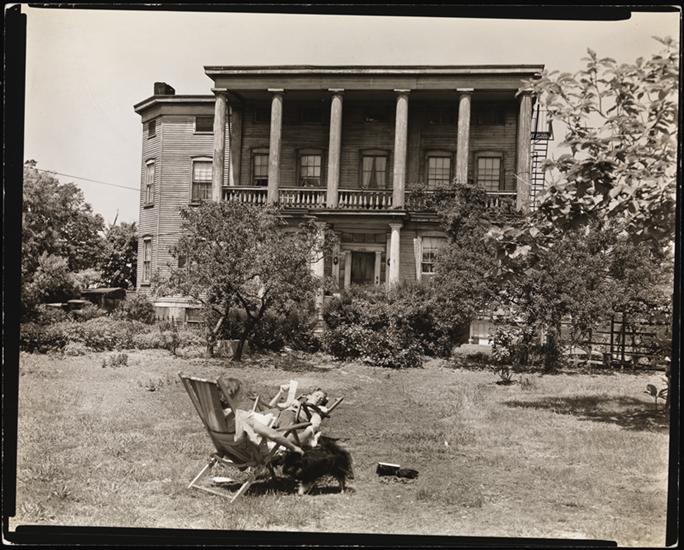
Below: The old Payxtar Homestead, area of today’s Jackson Ave. and Queensboro Bridge Plaza, Long Island City
Courtesy Library of Congress
Another man named Thomas Culvert told a similar story that same evening. His description of the spirit is quite bizarre. “She was not more than three feet tall and had red hair, he said, and long curls hung down her back.”
His eyes lingered upon the woman a bit too long for she gazed up at him, making eye contact. “[H]er eyes were of a stony blue that chilled his very blood as she fixed them upon him for a single instant.” Culvert scurried immediately home and locked the door.
Throughout the night the townspeople of Blissville heard a series of shrieks and cries in the vicinity of an abandoned house. Â “Numbers of persons, made brave by the daylight, visited the haunted house and locality yesterday afternoon, but shrank away when the shadows began to deepen.”
Efforts were made to disprove these spooky tales but no source was ever found. Thus the residents of Blissville lost many hours of rest. “There will be no peace until the grisly secret is explained.”
Below: 27th Avenue, no. 805, Astoria, taken in 1937
Courtesy Museum of the City of New York, photo by Berenice Abbott
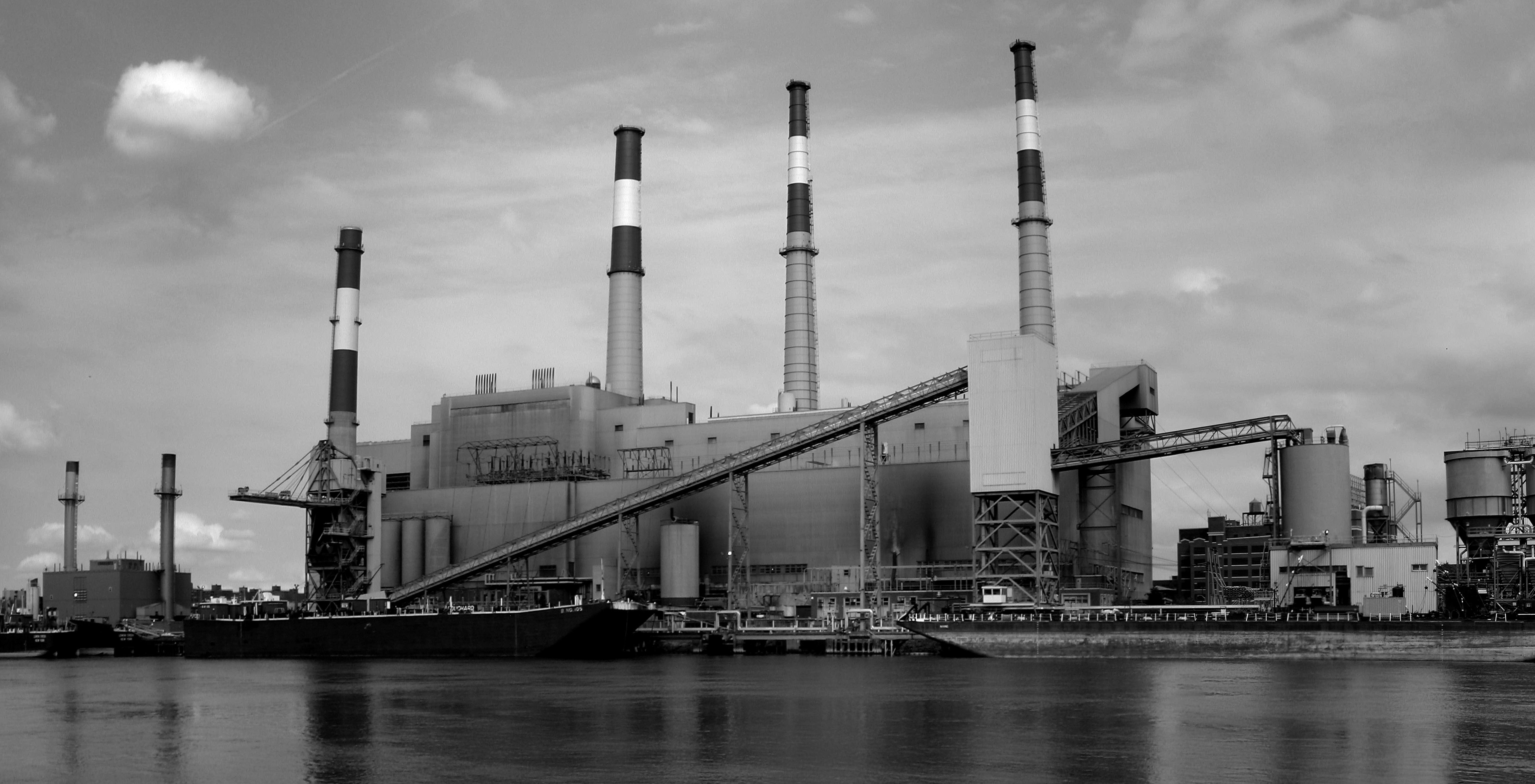
Ravenswood is a dramatic name for a New York City neighborhood and certainly wasted on its primary resident today — Big Allis, the Con Edison generating power station that provides the Queens waterfront with its most unattractive feature.
This pocket district is situated on the western edge of Queens just north of Hunter’s Point. Situated near the power station are two quiet parks — Queensbridge Park and Rainey Park which pay homage to the neighborhoods most striking landmark — the Queensboro Bridge — and the bridge’s most ardent proponent Dr. Thomas Rainey.
There’s little indication of it today, but over 150 years ago, this narrow ridge of land on the East River waterfront was once the most exclusive neighborhood on Long Island. It was indeed a ‘narrow’ stretch for the eastern side was hemmed in by a massive swamp. (The Ravenswood Housessits on the spot of the old swamp.)
Among the first English settlers, the land was originally owned by Captain John Manning, then by Robert Blackwell. Both men also owned the island in the East River, today’s Roosevelt Island. (In fact, the island wore Blackwell’s name for over two centuries. Listen to our show on Roosevelt Island for more information.) It wasn’t until 1814 that a US mineralogist named Col. George Gibbs bought up this property and begin chopping up the lots for sale to wealthy merchants who desired large estates with a waterfront vista.
Nobody knows definitely where the name came from. One theory suggests it was named for the bishop of North Carolina — John S. Ravenscroft — and later altered. Author Vincent Seyfried gives a couple more romantic suggestions, “that there were a lot of native American ravens in the neighborhood, and that Ravenswood is a name figuring prominently in Sir Walter Scott’s “Bride of Lammermoor”, a historical romance popular in that day.”
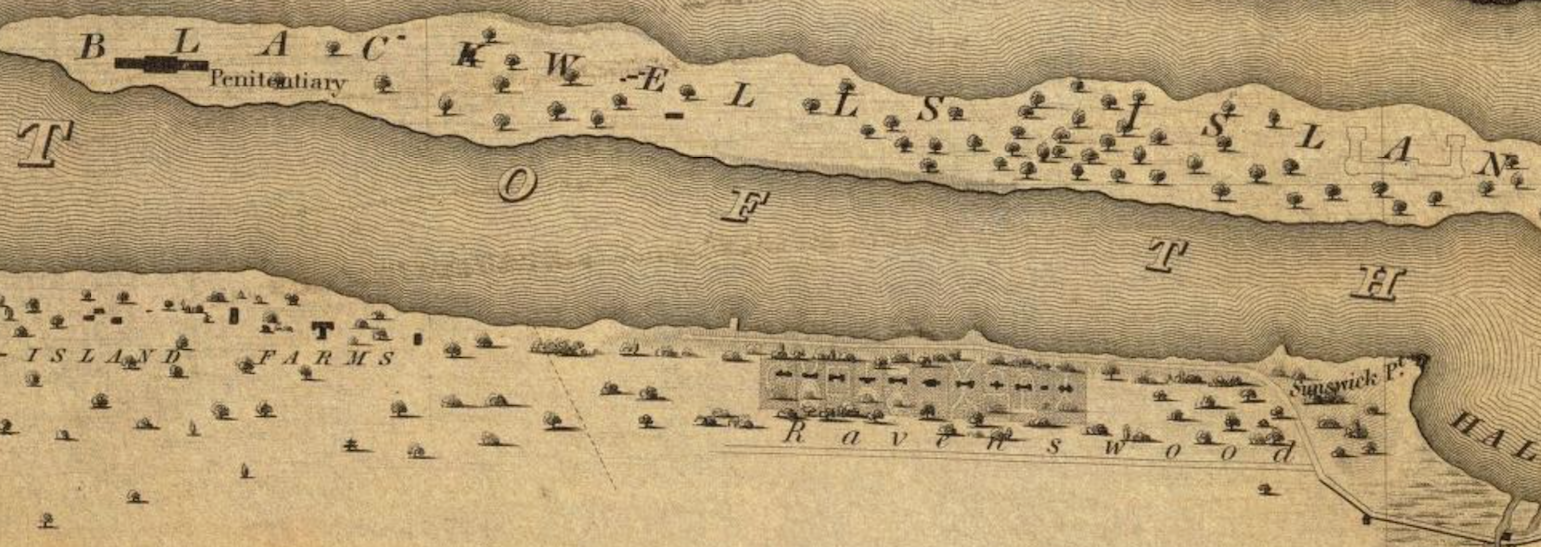
Below: From the David Ramsey Map Collection — a 1836 view of Blackwell’s Island and Ravenswood
By the 1850s, both Blackwell’s Island and Ravenswood were frantic with new construction — Blackwell with new public institutions like the almshouse, Ravenwood with sumptuous estates. From a local newspaper in 1852: “Buildings are going up in every direction and much taste is manifested by the owners in arranging and decorating their grounds. “
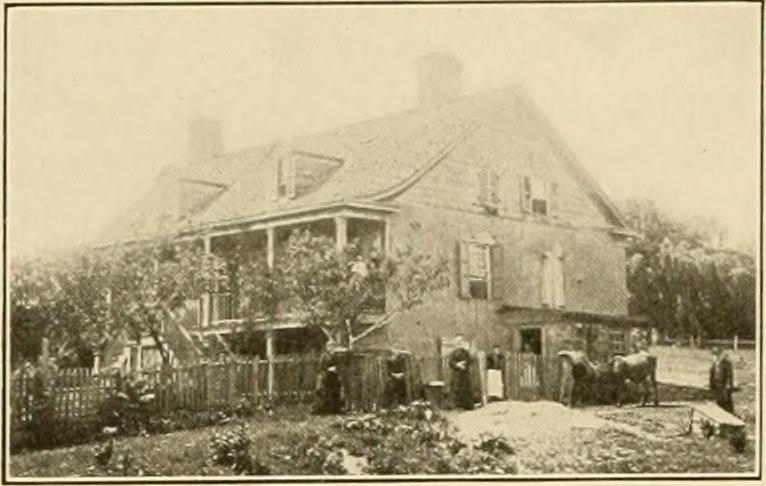
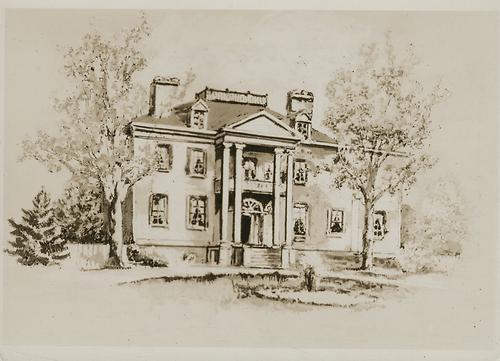
Below: The Delafield house which was owned by George Gibbs
Queens Archives
Most of the new residents were New York merchants enriched with the city’s growing fortunes, stimulated large by the construction of the Erie Canal. Almost none of them came from old families (who had manors in other parts of the region). Looking though a list of Ravenwood landowners from the 1850s, you’ll find mirror manufacturers, grocers, meat packers, doctors, insurance salesmen and Wall Street bankers.
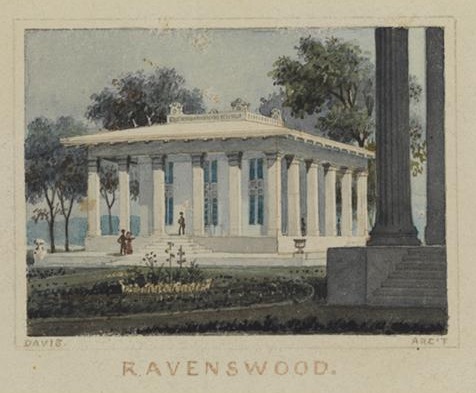
Below: An example of a Ravenswood property, from an engraving by Alexander Jackson Davis (ca. 1836)
From the Queens Gazette, 1953: “Ravenswood — Â That beautiful village, so picturesquely located on the banks of the river, is improving rapidly and its present rate of increase will soon complete the chain of city and village which stretches almost from the Narrows to beyond Hell Gate.”
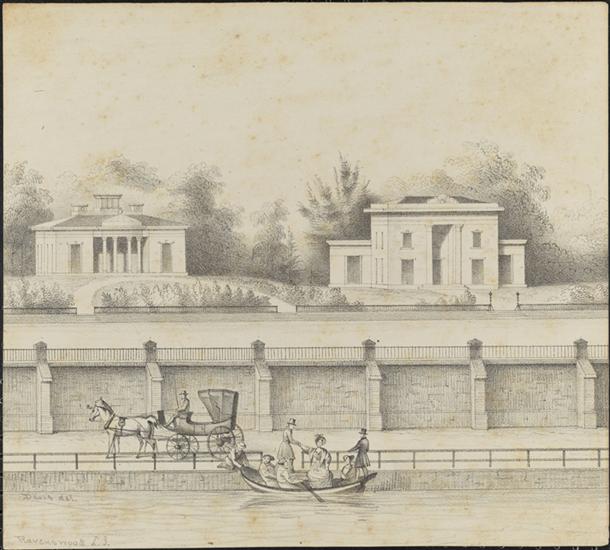
A unique feature of these new development was the public promenade (seen in the map image above). While lots were granted to the edge of the East River, a public walkway was carved into the properties so that neighbors could enjoy the impressive views.
Below: Ravenswood and its promenade, from an engraving by Alexander Jackson Davis (1850)
Courtesy Museum of the City of New York
Of course you might ask — wasn’t the back of Blackwell’s Island an unsightly mess by the late 19th century? It became the home of penitentiaries, asylums, workhouses and various hospitals. Well, by the time it got it got too unfortunate, the era of aristocratic Ravenswood was over.
Hunter’s Point, south of Ravenswood, was rapidly becoming a dense, industrial zone by the 1860s, endangering any bucolic peace that this new mansion row would have enjoyed. The swamp to the east — called Sunswick Swamp or Ravenswood Swamp — and the mosquitos it attracted created a serious health crisis with frequent malaria outbreaks.
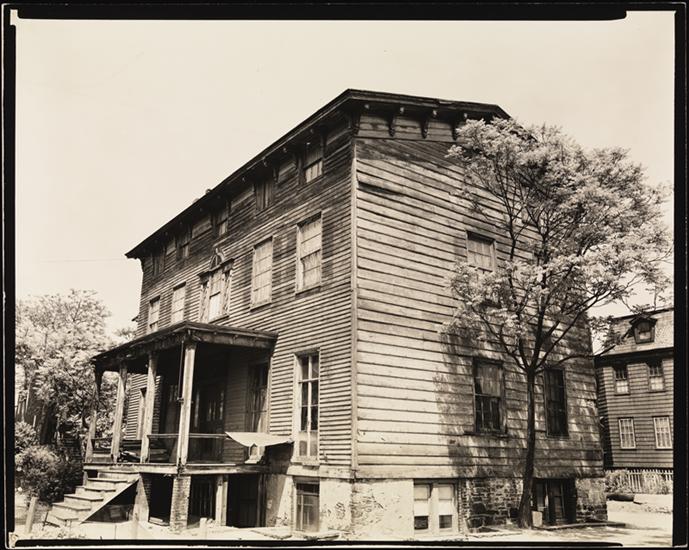
Below: A last holdout at Vernon Boulevard and 30th Road (ca. 1937)
Berenice Abbott, courtesy MCNY
In 1870, Ravenswood was absorbed into the district of Long Island City, encompassing all the village and hamlets of northwestern Queens, including Astoria and the new company village of Steinway & Sons. While this incorporation was a great benefit to the region overall — rapidly bringing utilities and municipal support — it eventually destroyed the small residential haven of Ravenswood.
A gas works was constructed in 1875 on the waterfront at 37th and 38th Avenues, the precise spot today of Big Allis. Residents almost immediately began fleeing.
In 1877, the Newtown Register lamented, “The aristocratic neighborhood of Ravenswood is beginning to be invaded by factories. We observe a large brick structure run up which will be devoted to canning fruits. The location of this factory is at the southern end of the neighborhood. The gas house on the water’s edge near the old Blackwell house may be considered another invasion, and like Union Square, New York, we may suppose these temples of industry to be ‘the beginning of the end’. [This is reference to New York’s Gas House District, on the spot of today’s Stuyvesant Town – Peter Cooper Village.]
Already one aristocratic mansion is converted into a summer hotel and restaurant. Such is change, such is life.”
Most of these interruptions are experienced in a unique way, a group of strangers coping with a  situation outside their control. After a few minutes of waiting, people get impatient, pace the train, grumble silently, turn up the volumes on their listening devices. Their spheres of comfort may change, allowing them to speak to a fellow passenger in a sign of solidarity.
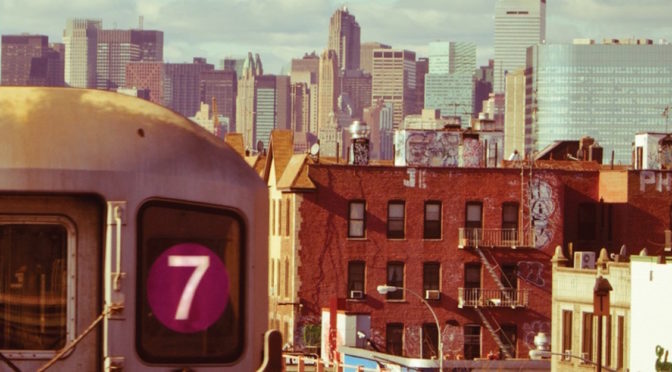
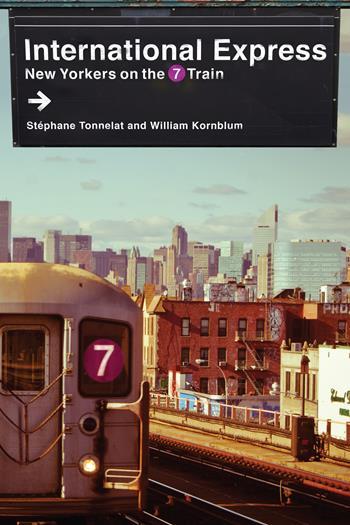
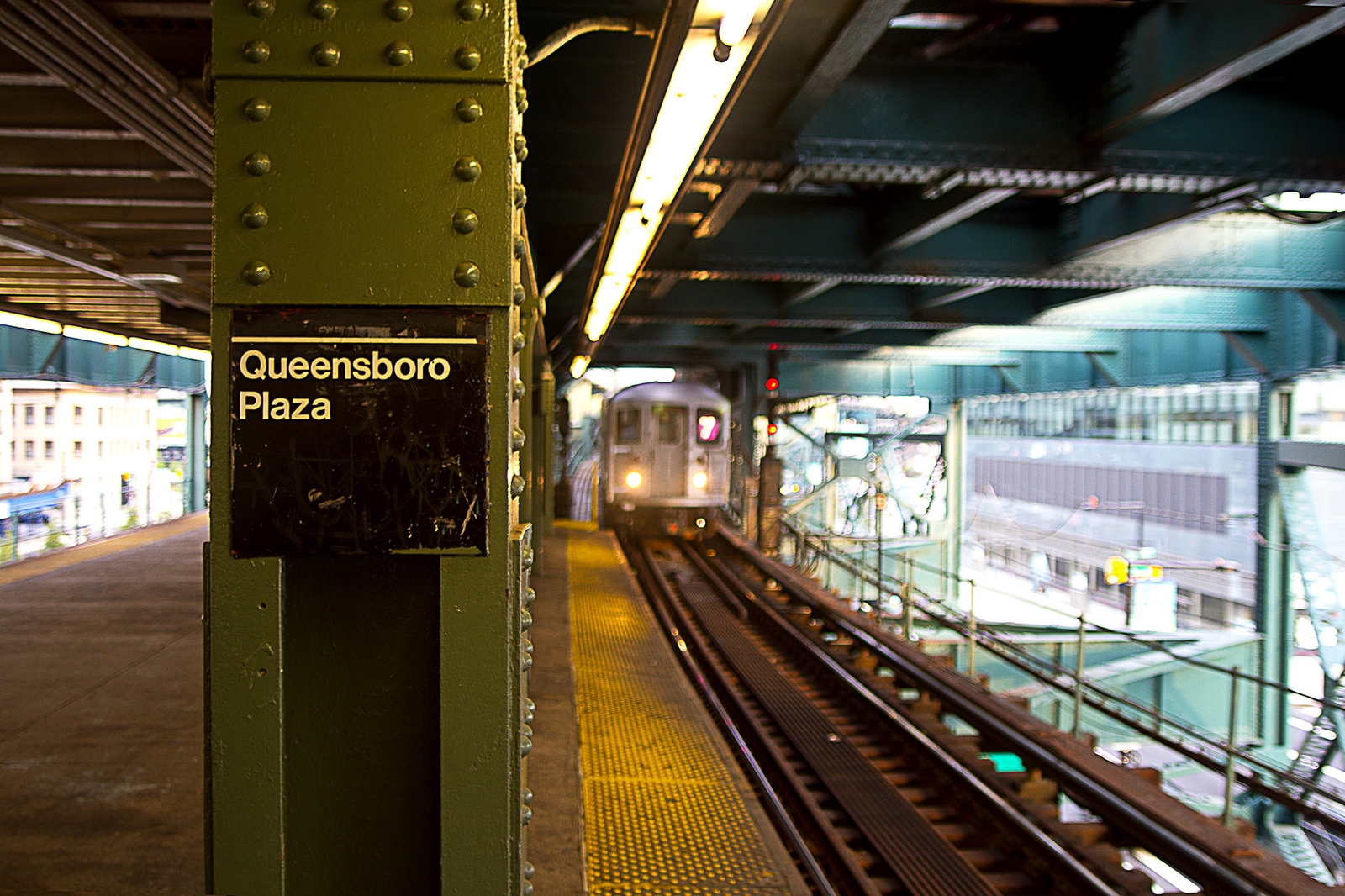
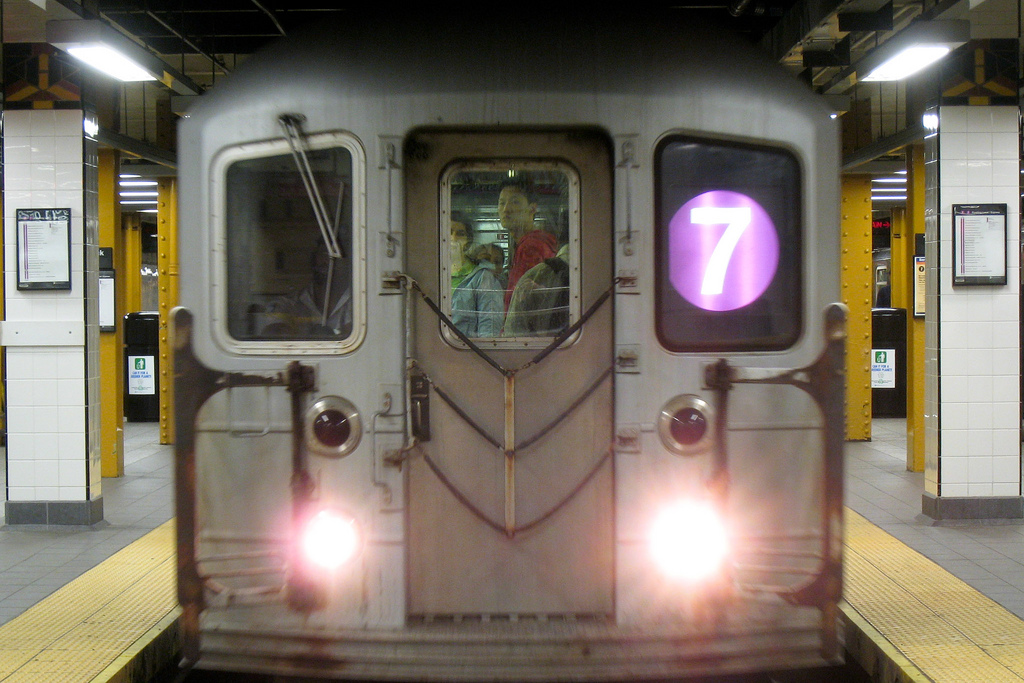
Now take those regular mass-transit routines and observe them on the most unusual train in all of New York  City (if not the world) — the 7 train which travels from the Hudson Yards to Flushing, passing through a wide variety of ethnic neighborhoods. It’s affectionately called the International Express.
As the two authors observe, there really is no experience on earth like riding the subway.
Their observations of human behavior can be read to include all experiences upon the New York subway, but the 7 train provides a very unique mix of languages and cultures, intensifying and sometimes complicating regular daily routines.
Riders in rich ethnic communities of one type may only interact with those of other communities while riding the subway. On the 7, this means sharing a space with people of many ethnic backgrounds at once. Â “Riders are fascinated by the diversity they experience and take pride in learning in learning to read cues regarding the identities of strangers on the trains.”
Flickr/Doug Letterman
In a very blunt but incisive way, the authors identify various aspects of New York that often hard to quantify. “[A]fter paying the fare, we all have an equal right to be on the subway, to be in the city dressed however we please, and to be ready to defend ourselves against stereotyping and bigotry.”
And yet, as observed in interviews with countless 7-train riders, the train becomes a sort-of safe space as well, where individuality is not only allowed but even supported, as it allows every rider to express themselves personally within basic norms of decency. Not that riders don’t personally harbor hostile or racist views at times; but mostly, perhaps as preservation of the 7 train’s neutral space, they keep these thoughts to themselves.
The authors also explore the particular power of the 7 train itself in transforming Queens into the most diverse and second-most populous borough, allowing neighborhoods of specific ethnic character to thrive, even at moments in New York City history where the rest of the city stagnated.
The success of neighborhoods like Jackson Heights and Flushing ultimately depend on the train. The most illuminating sections of International Express seem almost like dire warnings in light of 2017’s recent mass-transit disasters.
Or, as the authors put it, “Despite overcrowding, construction and mechanical delays, sweltering platforms in the summer, and endlessly broken escalators, the physically and socially competent urbanite chooses the subway. Will that always be the case?”
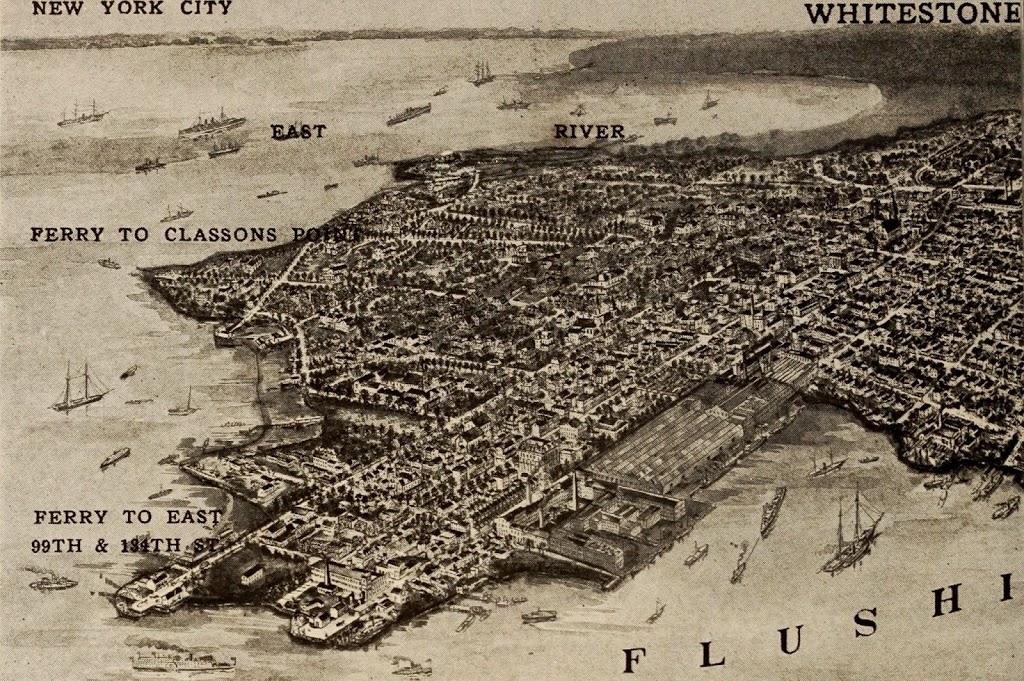
As that book goes on to describe, “COLLEGE POINT is essentially a manufacturing town—the industrial center of the Flushing District. It is an old settlement like Flushing and Whitestone, both of which it immediately adjoins on Flushing Bay, and like both, it is rich in its possession of old trees and old houses. It has many fine modern residences, too; and even the proximity of its scores of factories doesn’t seem to spoil its charm as one of New York City’s pretty home suburbs.”
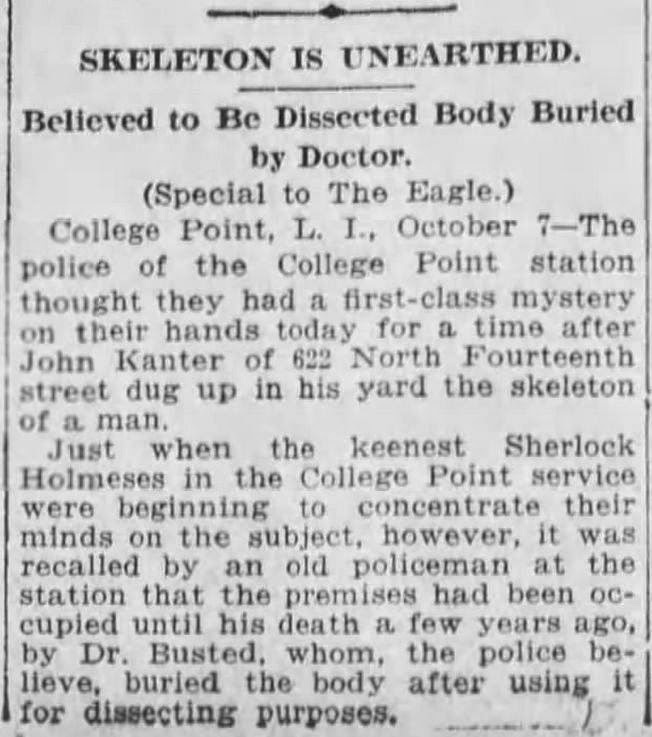
But for a ‘pretty home suburb’, you never know what you’re going to find as you’re digging up out in your yard. I found the following disturbing notice in the Brooklyn Daily Eagle, October 7, 1914:
“College Point, LI, October 7 — The police of the College Point station thought they had a first-class mystery on their hands today for a time after John Kanter of 622 North Fourteenth Street [sic] dug up in his yard the skeleton of a man. Just when the keenest Sherlock Holmeses in the College Point service were beginning to concentrate their minds on the subject, however, it was recalled by an old policeman at the station that the premises had been occupied until his death a few years ago by Dr. Busted whom, the police believe, buried the body after using it for dissecting purposes.”
It’s more likely the doctor’s name was Busteed. Dr. Busted sounds like a character from a 1980s horror film.
Here’s a proper mystery: Would somebody like to figure out where 622 North 14th Street in College Point, Queens, is today? Many streets and roads in Queens were renumbered in the 1920s. I believe the house mentioned in the article above is on today’s 14th Avenue, but there’s also a 14th Road. And neither of them is numbered in the 600s.
If there was one skeleton in the yard, might there still be others?
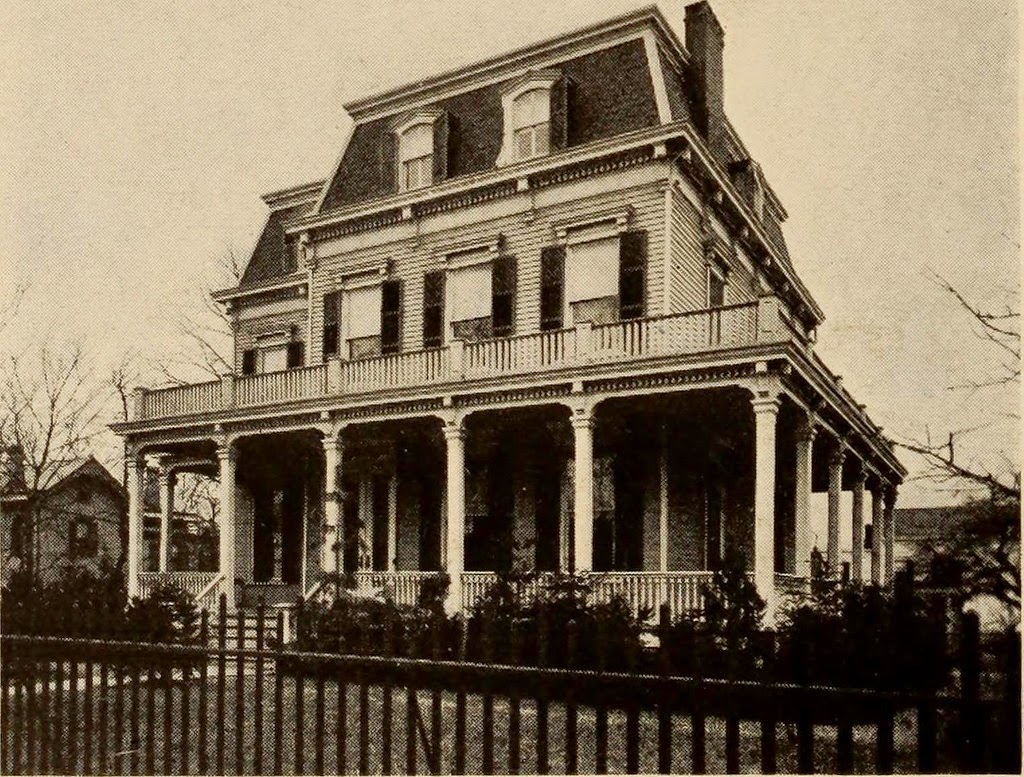
Below: A College Point home from the brochure described at top, belonging to a silk manufacturer. From the brochure:
“As a bit of prophecy, the reader is asked to lay aside this book for ten years and then compare this portrayal of College Point-Flushing conditions as they now exist with those of a decade hence. It is pretty safe to say that the two old mansions, pictures of which are printed with this article—the Stratton and Graham homesteads — that today stand as landmarks on the trolley line between College Point and Flushing will long since have disappeared, and in their places and on their surrounding acre swill have risen many beautiful, modern residences and apartment houses, and that the meadows some distance away will have been covered with manufacturing plants all th eway from the hills to the waters of Flushing Bay.”
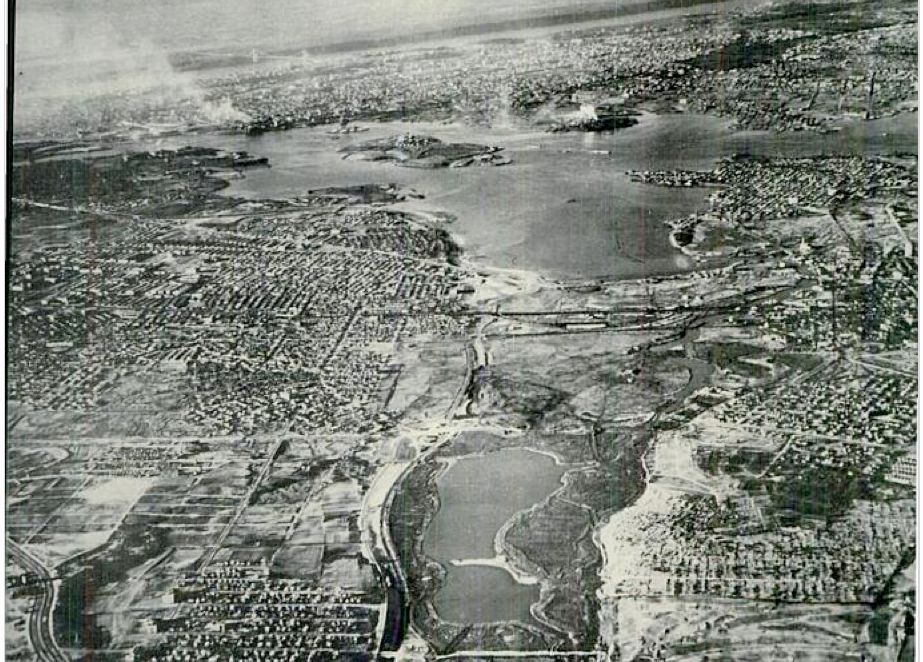
Ah, take in the horrid reality of the Corona marshes with their ashes, manure and garbage! (Courtesy CUNY)
Outside of probably Hell, there is no literary landscape as forlorn and soul-crushing as the ash dumps of Corona, Queens.
“This is the valley of ashes,” writes Fitzgerald in The Great Gatsby, “a fantastic farm where ashes grow like wheat into ridges and hills and grotesque gardens; where ashes take the forms of houses and chimneys and rising smoke and, finally, with a transcendent effort, of men who move dimly and already crumbling through the powdery air.”
The Corona ash dump was a stain on Queens every bit as real as Fresh Kills landfill would later be on Staten Island, a repository for the detritus from Brooklyn coal furnace that created crud-caked mountains amid a salty marsh.
The salt marshes sat relatively untouched, along with other large stretches of the newly formed borough. The Brooklyn Ash Removal Company moved here in 1909 after it outgrew its dumping grounds on a small island in Jamaica Bay named Barren Island. (The island no longer exists per se; landfill connected it to the mainland and Floyd Bennett Field was built there in 1930)
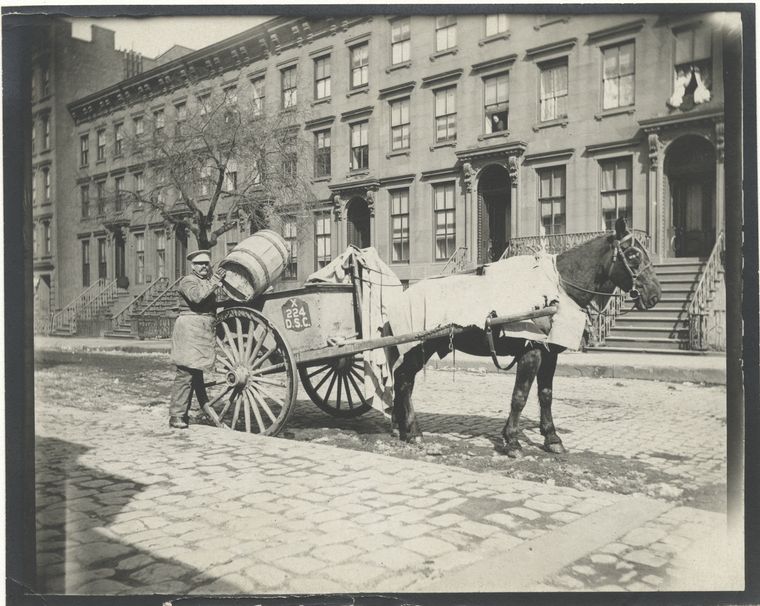
Below: A sanitation worker carting carting away a full barrel of ash. The open cart would be filled, taken to barges, then sent to far-away dumps. In the 1910s, Brooklyn ash went to Corona. {NYPL}
With the increase of coal-burning furnaces in the late 19th century, the city had yet another sanitation crisis sullying the streets. Even by 1910s, New York was trying to clamp down on the situation — literally — attempting to get residents and private businesses to cover their ash carts and containers “as to protect pedestrians from the annoyance of flying ash dust.” [source]
In Queens, mountains of choking, awful ash made for poor living conditions for neighboring Corona on one side, Flushing on the other. It was a constant eyesore for early commuters, as the Long Island Railroad went right past it, as did the main thoroughfares of northern Long Island — roads taken by many of the wealthy ‘Gold Coast’ families.
One ash pile was so large — almost 100 feet — that it was christened Mount Corona. And of course it wasn’t just ash; barges filled with animal manure docked here as well, awaiting local farmers who used the waste as fertilizer.
And new menace was introduced in 1920 — an infestation of rats. “War Declared Upon Rats,” declared the New York Times. An army of exterminators were sent to wipe out the colony of rats that lived among the ashen meadow dumps.
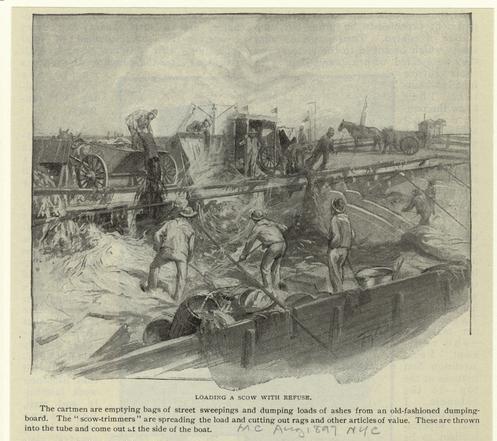
Below: From 1897, loading a scow full of ash to be taken to the local dump (NYPL)
Believe it or not, the Brooklyn Ash Removal Company tried to convince residents that presence of the grim, brimstone terrain next to their homes was getting rid of pests. When they were taken to court in 1923, “charged with permitting dense smoke to issue from the dumps,” they claimed the dumping grounds were good for the salt marshes, as they helped rid the neighborhood of mosquitoes!
With the population of Queens almost doubling during the 1920s, it seemed the days of the Corona Ash Dump were numbered. Enter Robert Moses, with his dreams of a large and spectacular park for the growing borough. He swiftly moved in, bought all the marshland, all the mountains of ash, and filled in wetlands and the dark hills to create Flushing Meadows-Corona Park. If you’ve been to Citi Field or theBillie Jean King Tennis Center, then you have sat upon land that was once the Corona ash dumps.
Reaction to the Bowery Boys podcast on the Consolidation of 1898 has been tremendous! But I do have one clarification, and provided by a very excellent source.
The accurate placing of the boundary line between Queens and the newly created Nassau County was a source of frustration for a great many months after consolidation. I recounted one such tale involving a schoolhouse in Hempstead, included within New York City’s border after a revised survey was completed. (You can read the complete tale here.)
But that is only one part of the story, specific to the area around that particular building. It may have gained a schoolhouse, but in fact, overall, New York City lost land in the revised survey, and quite a bit of it too!
According to Manhattan borough historian Michael Miscione: “When the NYS legislature created Nassau County on Jan. 1, 1899 out of that portion of Queens County that was not part of Queens Borough, they almost entirely redrew the Queens Borough line. In the process, Greater New York did NOT gain territory as you state; though it may have acquired an extra sliver of real estate here and there in the resurvey, NYC ultimately LOST about 12 square miles.
Check out the Queens Borough border on an 1897/8 map versus a map from 1899 or later, and the difference is obvious. As a consequence, NYC was the largest it has ever been during the 12 months from Jan. 1 to Dec. 31, 1898! (A very cool piece of trivia that might come in handy some day.)”
Thanks for that great information, Michael! If you enjoyed our podcast, you’ll have to check out Miscione’s upcoming lecture on the most malleable neighborhood in the history of New York — Marble Hill, the Manhattan neighborhood that’s really in the Bronx:
PEOPLE V. BOYD: THE MURDER TRIAL THAT NEARLY REDREW THE MAP OF NEW YORK CITY Manhattan Borough Historian Michael Miscione will describe the peculiar and complex status of Marble Hill, a neighborhood that is attached to the Bronx but is legally a part of Manhattan. (Or is it?)
Tuesday, June 4, 2013 6:00p The General Society Library 20 West 44th St. (Between 5th & 6th Aves.) $15 general admission / $10 General Society members / $5 students Advanced registration is suggested. Call 212.840.1840 ext. 2, or email victoria.dengel@generalsociety.org . http://www.generalsociety.org/
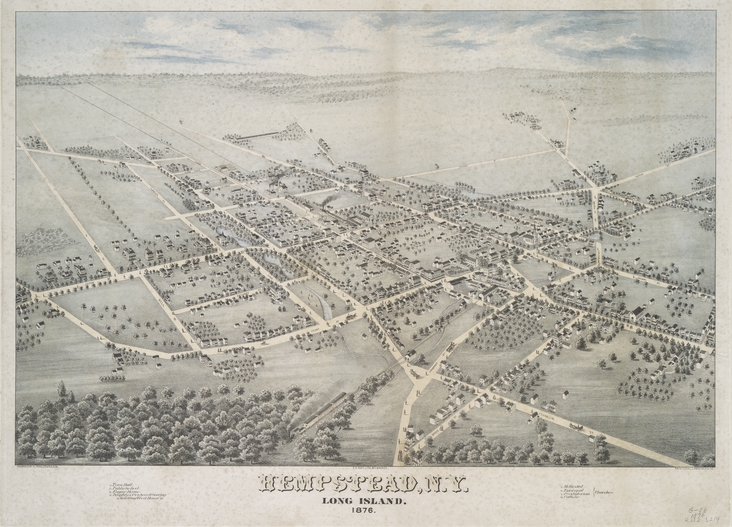
Above: A map of the town of Hempstead in 1876. Part of its western border was affected by the re-surveying of the border with New York City.
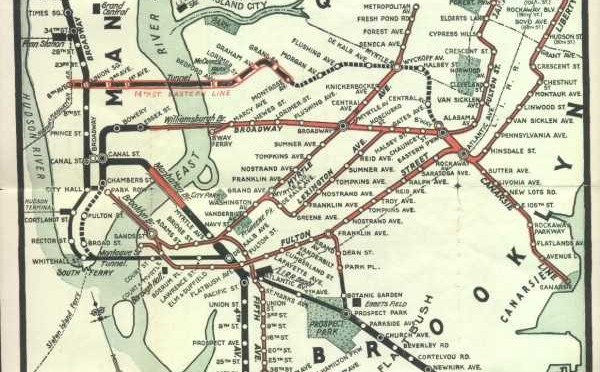
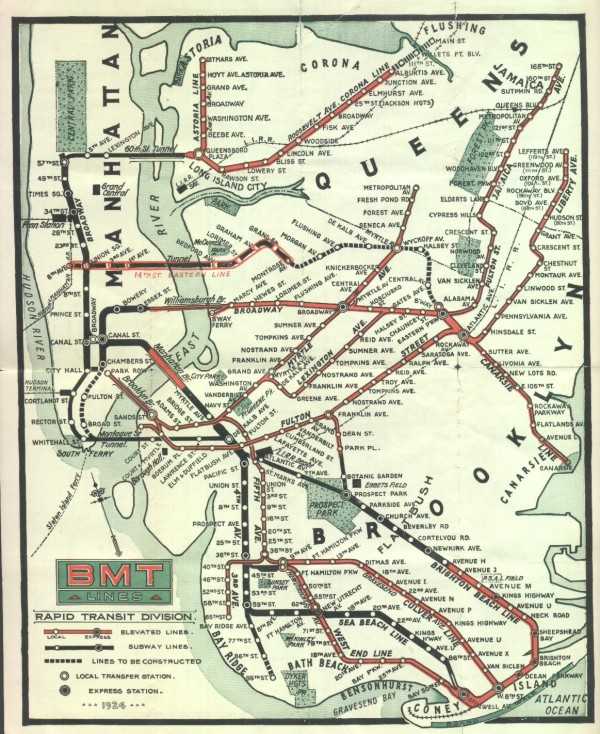
A subway map from 1924, illustrating the system created as a result of the Dual Contracts agreement.
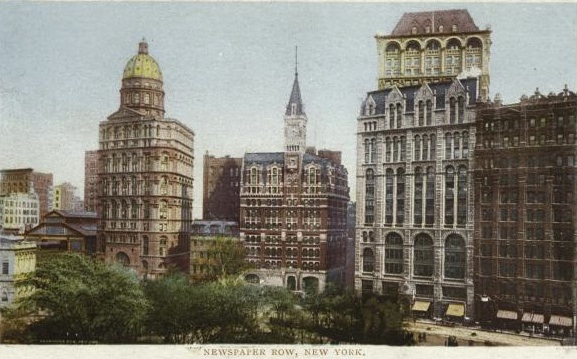
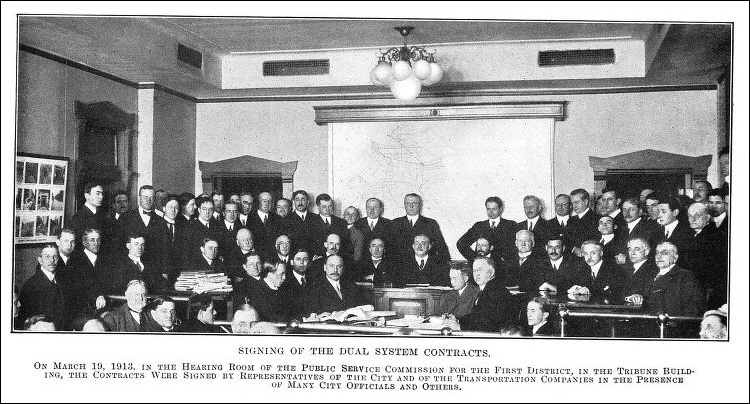
After years of negotiations, false starts and lengthy arguments played out in the press, a group of greatly relieved businessmen entered the large hearing room of the New York Tribune Building (at Nassau and Spruce, where Pace University is today) and put their names to a series of documents that have come to be known as the Dual Contracts.
The beleaguered ceremony ran a half hour late, as a great many gentlemen crammed into the third floor meeting room to sign the official documents, stamped with gold lettering and expensively bound in morocco leather and colored ribbons.
With those signatures, the chaotic New York transportation system — with its fledgling subway and its miles of elevated lines — officially came of age that day — March 19, 1913.
“This makes March 19 a red-letter date on the municipal calendar,” declared the New York Tribune, in whose building the agreement was signed. The Dual Contracts authorized millions of dollars of new tracks, more than doubling the system in size, from 296 miles of track to 618 miles!
Below: The buildings of Newspaper Row. The towered Tribune Building, in the middle, was the site of the Dual Contracts signing in 1913.
This seminal agreement in American transportation history is ‘dual’ because the city negotiated two separate contracts — one with August Belmont Jr.’s Interborough Rapid Transit Company (IRT) who operated the New York subway, and the Municipal Railway Company on behalf of the Brooklyn Rapid Transit (BRT), who ran most of Brooklyn’s transit system.
Under the agreement, the city would shoulder some of the cost of building new subway services — many into places where New York expected populations to rise in the coming years — and the two private companies would then lease the new routes from the city and profit from their operation.
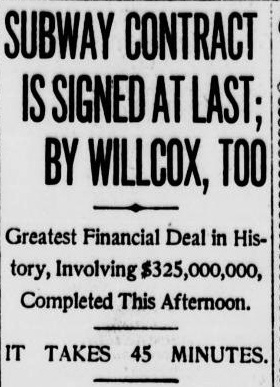
At right: the headline from the New York Evening World
Essentially this gave IRT permission to operate into Brooklyn (once the domain of the BRT) and vice versa. Previously, people arriving from Brooklyn to Manhattan had to immediately change trains once arriving into the new borough.
According to a report by the Public Service Commission later that year: “The Dual System will remove this abnormal condition and give the Brooklyn company a system of subways in Manhattan, by means of which it shall distribute its passengers through the territory south of 59th Street. Thus the present congestion at the Manhattan terminals of the bridges will be ended and the passengers from Brooklyn will be enabled to reach their destinations in lower Manhattan without change of cars or the payment of an additional fare.” [source]
As part of the deal, the two companies agreed to operate two new lines into Queens. The importance of this particular part of the deal cannot be overstated. The borough of Queens was just over a dozen years old by this time and still sparsely populated given its size. (Less than 300,000 people in 1910.) With the arrival of the Queensboro Bridge in 1909, paired with new subway and elevated services provided by the Dual Contracts, the population of Queens would explode in the 1920s to well over a million.
And this didn’t just stimulate development there. The deal brought a subway to the Manhattan’s Upper East Side and to the West Village, to most Bronx neighborhoods and down the Eastern Parkway in Brooklyn. New home and apartment developments into those regions soon followed.
Below: City luminaries gather around to watch representatives from government and the two private companies sign the pretentiously bound contracts. (Picture courtesy NYCSubway, an indispensable destination for transit history.)
The Dual Contracts also created express and local trains, facilitating another great development in the history of New York — the arrival of midtown Manhattan as the heart of business and entertainment.
In all, the contract signed one hundred years ago today made the New York City transit system the largest in the world. In fact, it was larger than all the rapid transit systems of the world at the time — combined (according to Peter Derrick’s excellent book on the subject Tunneling To The Future).
But this also set in motion one of the great flaws of the subway system. Tracks operated by the IRT were a different size from those operated by the BRT. The track gauge was wider on BRT tracks. As a result, today the New York subway system still operates two different sizes of cars. (Ed: See notes below for a slight clarification/better explanation.)
On a humorous note, the original contracts, bound as they were in thick leather volumes, were apparently quite heavy to lift. The president of the IRT remarked, “I am glad that I have enough strength to receive these contracts.”
For more details on the Dual Contracts, please check out the second podcast on the birth of the New York subway system — Subway by the Numbers (and Letters)
WARNING The article contains a couple spoilers about last night’s ‘Mad Men’ on AMC. If you’re a fan of the show, come back once you’re watched the episode. But these posts are about a specific element of New York history from the 1960s and can be read even by those who don’t watch the show at all. You can find other articles in this series here.
This week’s episode was set in the week before Thanksgiving 1966, certainly a moment of great apprehension for many American housewives like the embittered Betty Francis (the artist formerly known as Betty Draper).
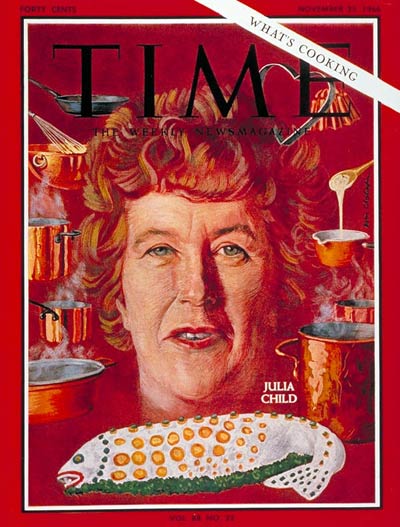
The cover of Time Magazine that week (11/25/66) featured a psychedelic portrait of Julia Child, framed in a chorus of saucepans with some kind of odd,decorated fish below her. Her Boston-based programThe French Chefhad been on the air over three years by then, bringing rich, savory delicacies into American homes. “Her fingers fly with the speed and dexterity of a concert pianist. Strength counts, too, as she cleaves an ocean catfish with a mighty, two-fisted swipe or, muscles bulging and curls aquiver, whips up egg whites with her wire whisk.” [source]
Child made classic, wholesome dishes with generous portions of high-calorie ingredients. But the 1960s also shoehorned greater artificiality into American kitchens — a barrage of food products loaded with preservatives, in unnatural shapes and presentations. The two food products most substantially featured on this week’s episode were canned whipped cream and Hostess Sno Balls, pink mounds of firmly molded, processed cake coated in a gelatinous frosting of uncertain origins. Even as Child stressed classic meals with fresh ingredients, actual food production was moving further away from easily digestible ingredients.
Made available to American grocery stores between 1965 and 1967: Bac-Os bacon bits, Shake ‘N’ Bake, Doritos, Easy Cheese, SpaghettiOs, Tang, Cool Whip.
If eating patterns in the 1960s set the county on a path of future health problems, they also spawned America’s first significant weight loss regiment. Betty, mortified by her extra pounds and judging herself against the lanky frame of her ex-husband’s new wife, turns to a community group that would grow to become the most successful weight loss program of the 20th century — Weight Watchers, a Queens-based company formed in 1963 that brought weight control to the mainstream.
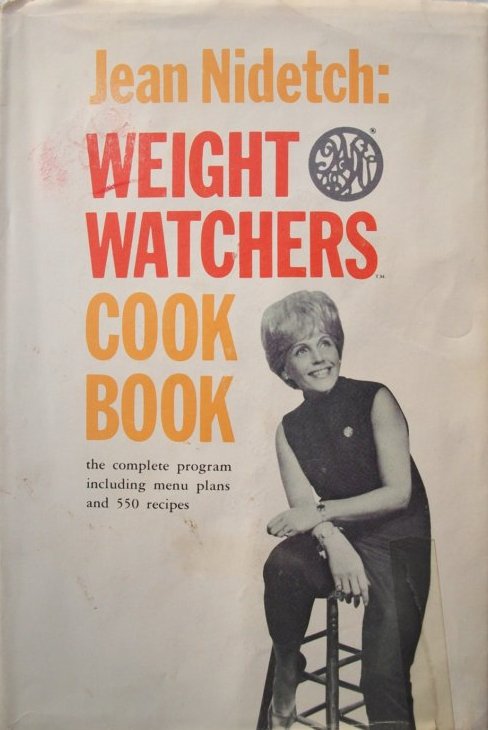
Founder Jean Nidetch described herself in a 1971 biography as a “fat Brooklyn girl who grew up to be an even fatter Queens housewife.” She graduated from high school in Bedford-Stuyvesant in the 1940s and worked for the Internal Revenue Service before marrying in 1947. By the 1950s, she found herself in the massive garden apartment complex Deepdale Gardens in northeast Queens raising two sons and developing a compulsive eating habit.
Trying every available fad diet to no avail, she eventually visited a city-run obesity clinic in the neighborhood of Kips Bay in Manhattan, where she was advised to eat a so-called ‘prudent diet’: “two pieces of bread and two glasses of milk a day, fish five times a week and a weekly meal featuring liver.” [source] What they didn’t prescribe was camaraderie.
Nidetch took the food plans back to her apartment complex and organized a small cluster of neighborhood women to support each other in their quest to shed pounds. By 1962, she had lost dozen of pounds and had gained valuable insight into the power of group support to control eating habits. Using the ‘prudent diet’ as a rough guideline, she moved her regular meetings into a loft above a movie theater in Little Neck, charging $2 per meeting — the same price as the movie tickets being sold downstairs.
As depicted in this week’s episode, set in November 1966, Weight Watchers was still very much a regional program. Nidetch’s first Weight Watchers cookbook was released earlier in the year, debuting the regimented eating plan and structured point system.
A sampling: “Luncheon: 4 ounces fish or lean meat or poultry, or 2/3 cup cottage cheese or pot cheese or 4 ounces farmer cheese or 2 ounces hard cheese or 2 eggs. All you want of unlimited vegetables. 1 slice bread.”
As she confesses from the back cover: “Weight Watchers began when I invited to my house six overweight friends – have you ever noticed that most fat people have fat friends? – and much to the surprise of all of us we found that there were other people hiding cookies in the bathroom and eclairs in the oven.”
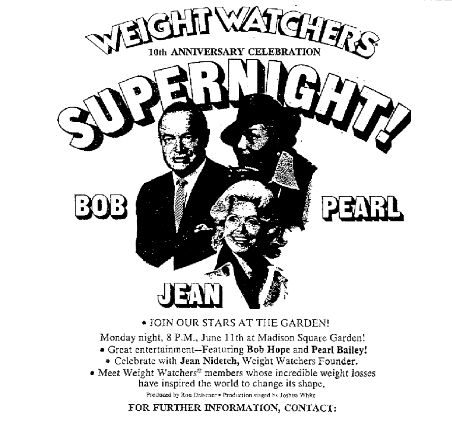
By the end of the decade, Nidetch’s new company — incorporating its famous food-points system and a methodology of daily calorie targets — would go worldwide. By 1972, Nidetch would invite 20,000 national devotees to a tenth anniversary party at Madison Square Garden, featuring guest appearances by Bob Hope and Pearl Bailey. (Ad below from Lubbock, TX, newspaper)
In 1978, Weight Watchers was acquired by the H.J. Heinz Company (which, in ‘Mad Men’ continuity, has been a most frustrating client for our favorite ad staff) who would mass produce Weight Watchers frozen foods.