Categories
Neighborhoods Parks and Recreation

Nostalgia for Astoria Pool, an early Robert Moses project with a high diving, Olympic-sized history

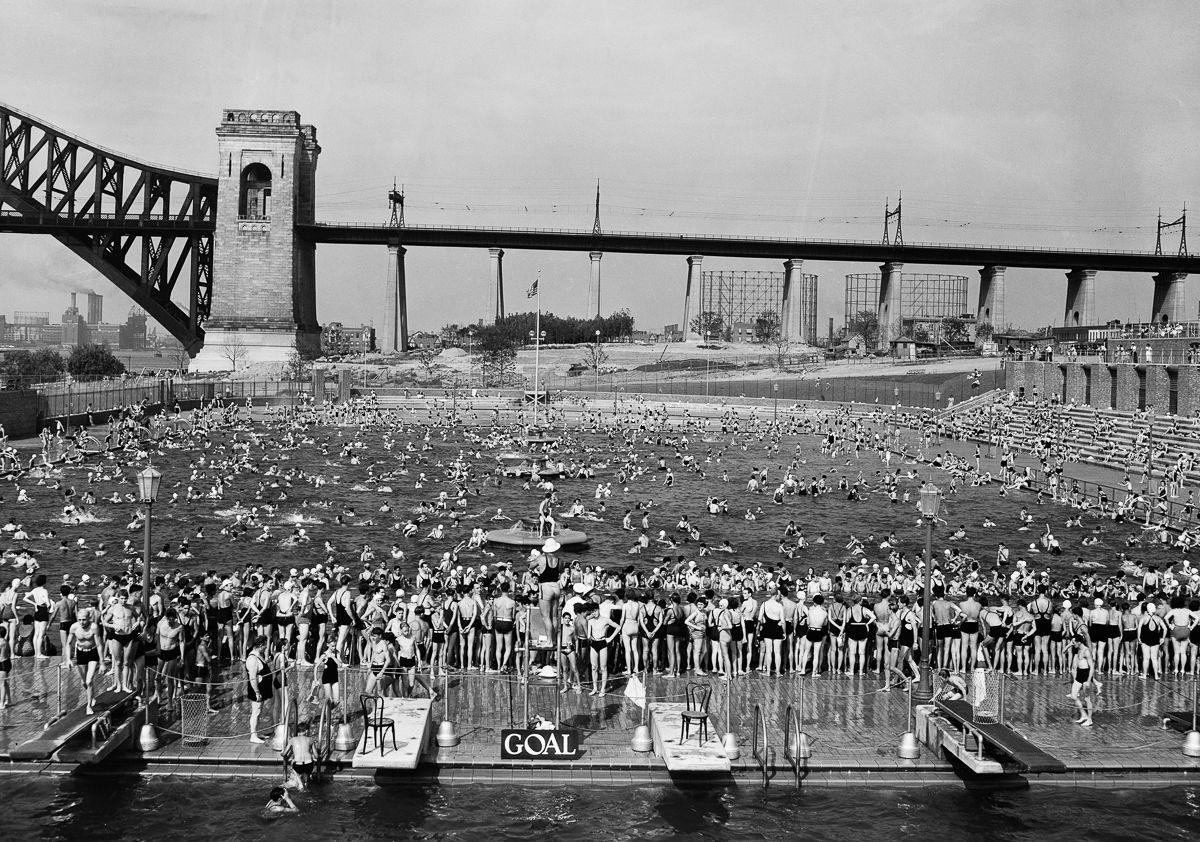
Astoria Pool is the largest venue for swimmers in New York, outside of the Hudson and East Rivers and, of course, the ocean.

Its location in Astoria Park is certainly theatrical, parallel with the river and in sight of two spectacular bridges (the Robert F. Kennedy and the Hell Gate) that sail over to Randall’s Island.
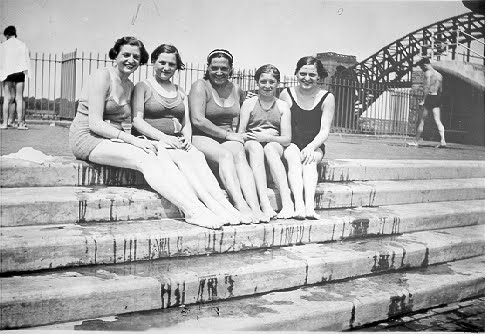
Mermaidens: Five sisters in bathing suits pose on steps of Astoria Pool, circa 1938. Courtesy the LaGuardia and Wagner Archives

For a public pool, its so big (330 feet long, with a supposed capacity of 3,000 people) that it might be more comfortable in a theme park.

Riding the Wave

The pool, the park, one of the bridges (the RFK, aka the Triborough) and the roads you probably used to get to thee places were all 1930s projects overseen by New York Parks Commissioner Robert Moses.

But the real fuel behind the creation of Astoria Pool was the Works Progress Administration, a federal agency that infused billions of dollars into local communities during the Great Depression.
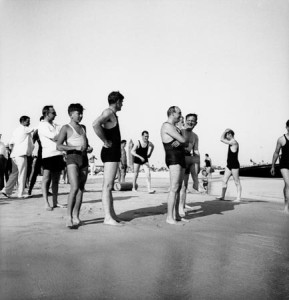
The money came just as Moses (above, in a swimsuit, at Jones Beach) was ascending into his various governmental roles in city and state government. The result was some of his most earnest and arguably most effective projects.

Perhaps his legacy might not be as hotly debated today had he stopped with his greatest hits of the decade: the Triborough, the parkways and the many miles of parkland scattered throughout the city.

And of course the swimming pools, eleven in total, built during the 1930s.

Dipping A Toe Into Swimming Pools

They were of special note as a culmination of the modern public facility, using modern design and new technology to create places of recreation for regular New Yorkers.

The idea of municipal pools wasn’t new — Philadelphia had them as early as 1890s, and New York had plenty of public baths and even floating baths  — but standards of decency had changed by the 1920s.

Women could cavort with men, as could different social classes. (And occasionally people of different races, although many of Moses’ own pools were guilty of segregation.)

Astoria Pool, with its subdued Art Deco design, was the grand model for all the new pools in the other boroughs. And it was certainly the most popular, from the moment it opened in July 1936.
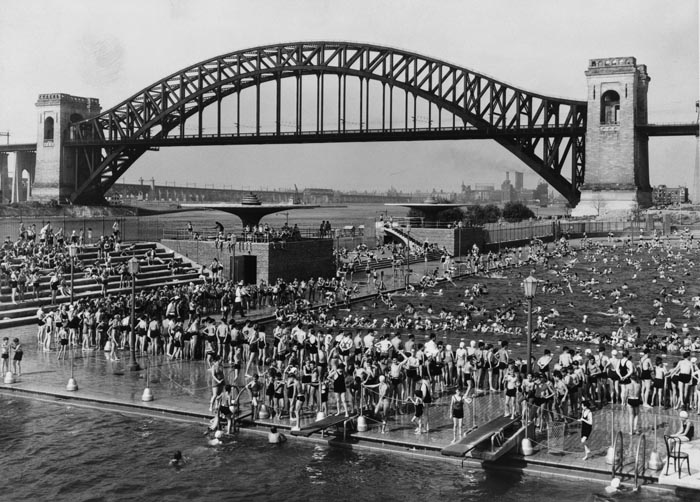
It became a daily destination during the summer for neighborhood children.

“In 1936, I was eight years old,” recalled New York Yankee superstar Whitey Ford. “You could stand by the pool on a hot summer day –along with a couple thousand neighborhood kids in the main pool and maybe another hundred in the diving pool — look up, and see quite a sight. On the right was Hell’s Gate Bridge….and on your left, was the brand new Triboro Bridge heading towards the horizon.”

But Moses wasn’t just concerned with public accommodation. He had different intentions for this pool, reflected in the semi-circle of bleachers and that spectacular diving platform stretching like a plant over a deeper half-moon pool.

The Astoria Pool was meant to create swimming superstars.
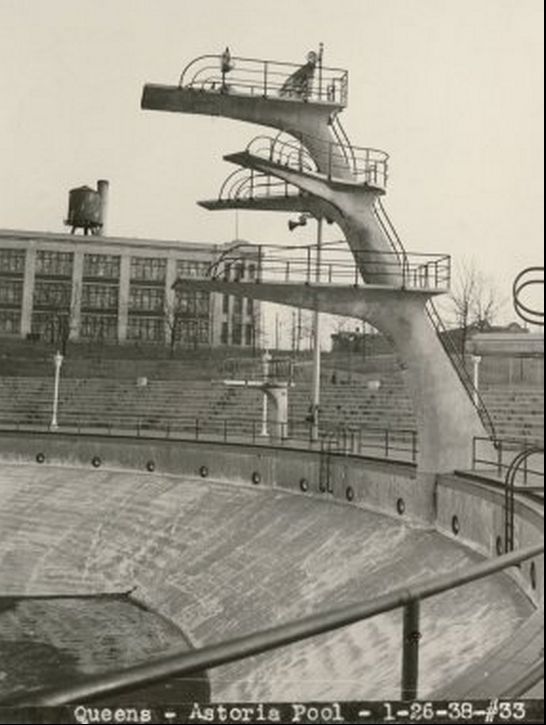
The Diving Board and the Butterflies

Two days after its opening, on July 4, 1936, Astoria Pool hosted the U.S. Olympic trials in swimming and diving. From these events, victors went straight over to the Games, hosted that year in Berlin.

And they weren’t the only athletes tested that month in a New York WPA project.

Across the water, at Randall’s Island, Olympic track-and-field trials were hosted at Downing Stadium, producing the man who would become the most famous Olympian of the ’36 games — Jesse Owens, winner of four golds. [For more information, check out the podcast on Randall’s Island and the 1936 Olympic trials.]

Two massive Olympic torches stood astride the pool as competitors fought for a spot on the Olympic team.

Events at the Astoria Pool in July 1936 produced several winners, including gold medal swimmers Jack Medica and Adolph Keifer and a slate of athletes that went on win ten of twelve medals in men’s and women’s platform and springboard diving.

(Interestingly, the other two medalists were Germans. And both their medals were bronze, yet another result that must have angered Adolf Hitler.)

Olympics trials returned to Astoria Pool in 1952, and again in 1964, producing athletes that again nearly swept the diving events in the Tokyo games.

Swimmer Don Schollander went on to win 4 golds that year, the most of any athlete in 1964 and the most medals won by an American athlete since Jesse Owens.

But, as it would turn out, the biggest swimming celebrities fostered from the Astoria Pool were neighborhood boys.
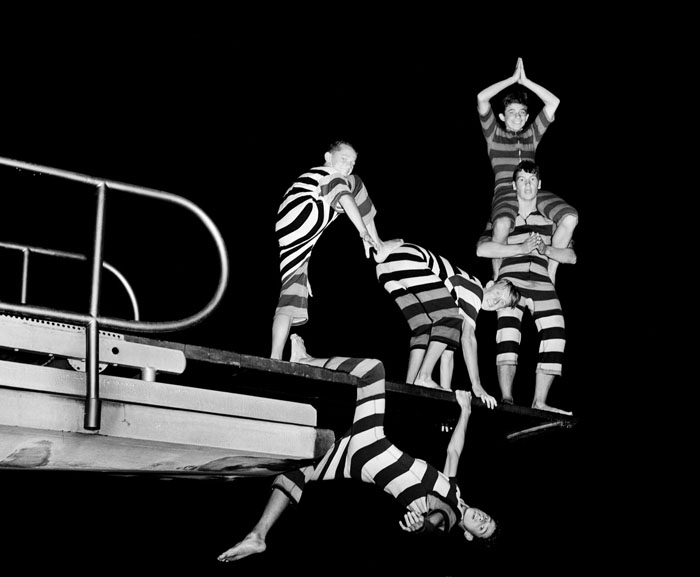
Aqua-Zanies

Imagine being a kid in Astoria, Queens, in the early 1940s, living next to a swimming pool that had helped produce the world’s greatest swimmers!

A group of local swimming enthusiasts looked at Astoria Pool’s extended diving platform and saw a opportunity to entertain, forming an athletic-comedy group called the Aqua-Zanies.

Garbed in matching stripped ensembles, the teenagers performed wacky acrobatic stunts from off the platform — darting, twirling and sometimes bellyflopping into the water below.

They soon became ‘America’ leading water comedians‘, performing throughout New York and even going on an international tour in the early 1950s. Several Aqua-Zanies went onto more legitimate swimming careers.

And certainly these effortless performance have inspired hundreds of others to leap from the Astoria diving platform with equal attempts at gravity-defying levity.

Although the swimming pool has remained a important part of the community even to this day, that diving platform, weathering decades of elemental abuse, was shut down in the 1970s and has become something of a beloved ruin.

In June 2006 it was officially designated a New York City landmark. And the pool is open for swimming again. Let your aqua-zany dreams soar!

Thanks to the Parks Department for use of the images above. (Diving platform photo courtesy NYC Dept of Records)
Categories
Mysterious Stories

The Ghost with the Red Hair: Two Hauntings in Long Island City

Long Island City is really a confederation of small villages and hamlets along the northwestern shore of Long Island. The name began essentially as a re-branding of Hunter’s Point then grew to eventually include Astoria, Ravenswood, Sunnyside, Blissville and other communities after the development of the Long Island Railroad improved its land value.

“Fifteen years ago, outside of the village of Astoria, there was not a house in the limits of Long Island City, except the dwellings of half a dozen farmers and a line of palatial mansions fronting on the East River, from Hunter’s Point to Hell Gate,” said the New York Times in 1870 at the time of Long Island City’s charter.

It was an area of great change that still retained a rural character, even as two of America’s greatest cities rose to its south. The perfect setting — for a ghost story!

Haunted houses as often simply old mansions that look out of place on a changing landscape. By that definition, Long Island City in transition would have had its share of these. Interspersed within this article are a few old homes and mansions of northwestern Queens. Haunted or not, but still captivating!

I was looking through some newspaper archives looking for some old stories about Long Island when these two spooky stories popped up. Almost as if they wanted to be found and retold! Both are based on newspaper reporting of the day and were reported (albeit with a touch of skepticism) as fact:

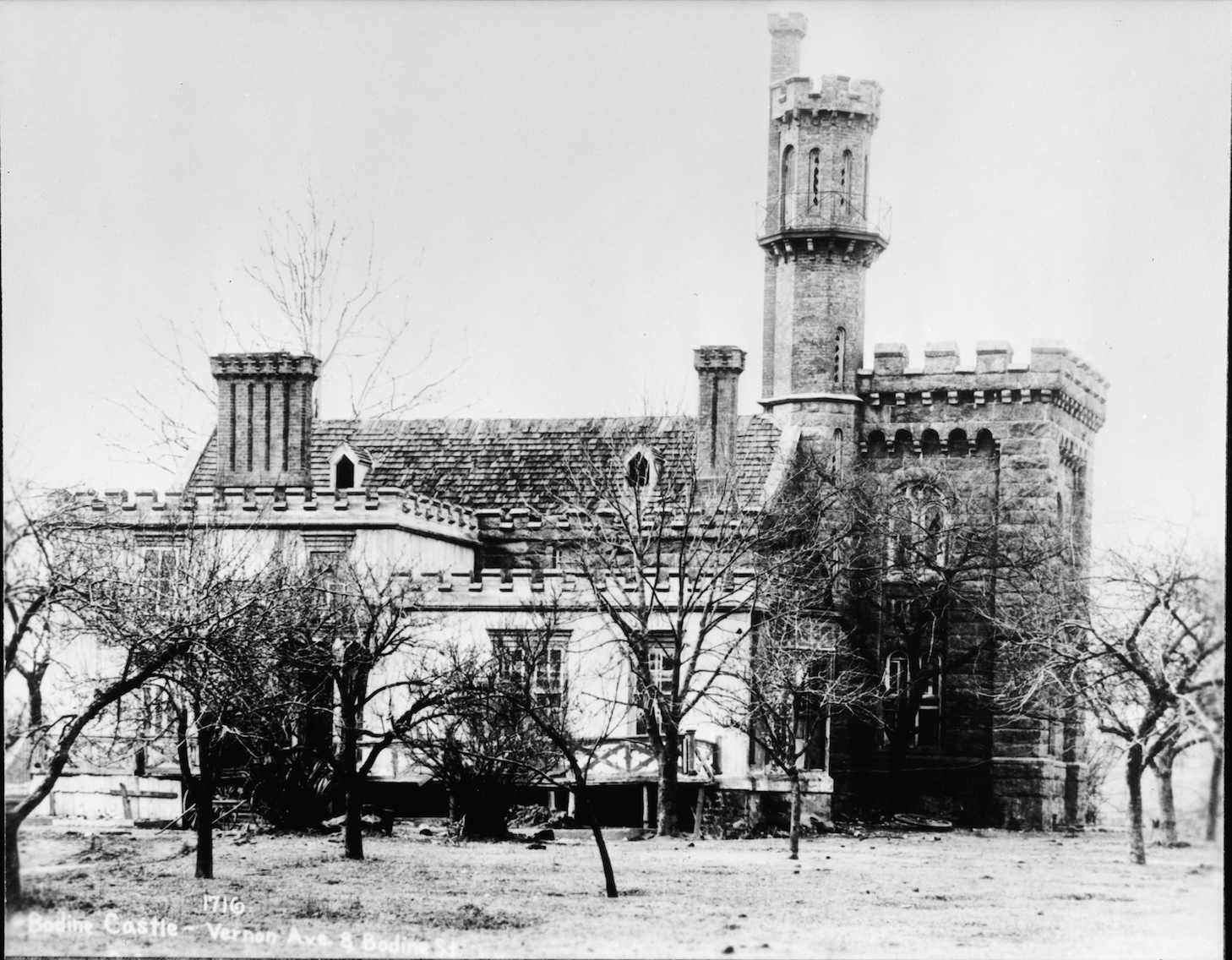
Below: Bodine Castle at 4316 Vernon Boulevard

bodine


A Ghost In Long Island City 
January 29, 1874 [source]

There once was a home at Jackson Avenue and Dutch Kills Road that was quite haunted, so haunted that its landlord was unable to rent it out. Soon a fearless family with the last name of Daly decided to rent the house.

“They were informed that there would be other occupants besides themselves in the house, but that did not deter them.”

They were in the house for a week until one night they heard moans coming from the hallway. The father investigated the hall, then the kitchen. The sound seem to move away from him — into the parlor, then into dank cellar. But there was no evidence of any intruder, no reason for the noise.

“Shortly after this as if some heavy body were falling downstairs were heard.  Mrs. Daly, upon being interrogated, affirmed that the crockery in the cupboard was thrown down and broken, and declared the door was unopened.”

With a disturbing lack of empathy the newspaper then reports, “One child was so thoroughly frightened that it was thrown into violent convulsions and has since died.”

They stayed in the home the following evening to be awakened by horrific cries of ‘Murder! Murder!’ at midnight.  The following day the family finally moved out of this haunted house. “Today a rigid investigation will take place, and the hoax, if it is one, will probably be ventilated.”

No further information was found about this house.

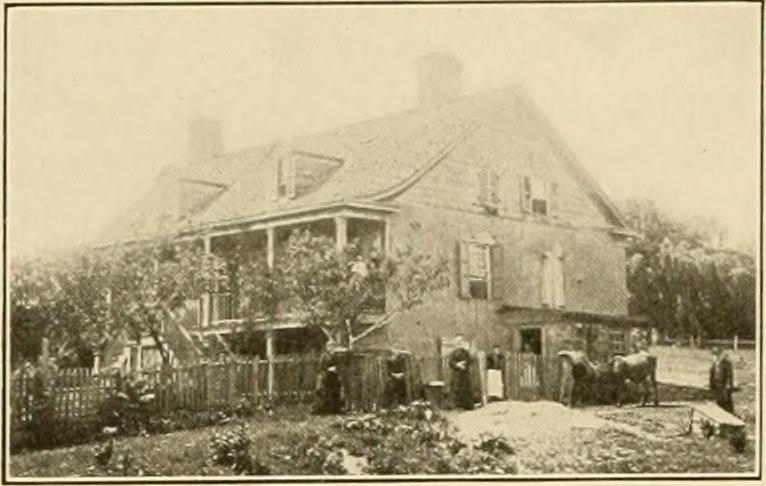
Below: Vernon Boulevard, at the S.E. corner of Astoria Boulevard, showing the Cornelius Rapelye House, built about 1780. A garage was later erected on the site. Eugene L. Arabruster Collection 1922

Courtesy New York Public Library

A Red-Haired, Blue-Eyed Ghost
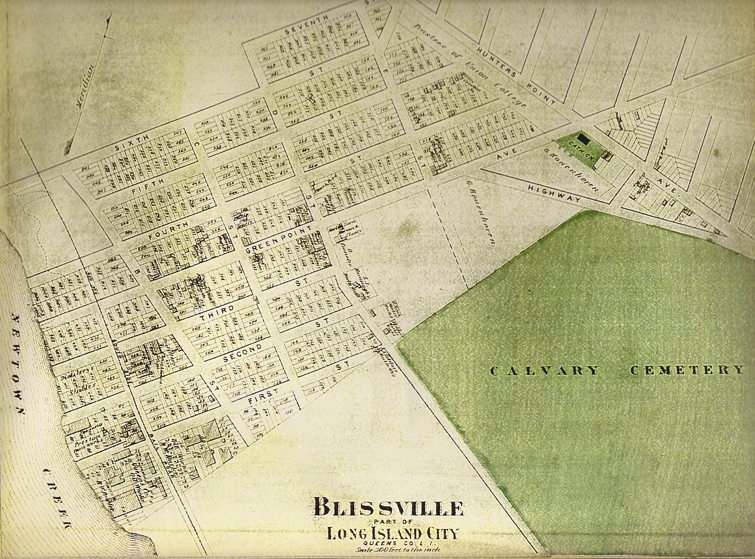
The Stoutest Hearted Citizens of Blissville Filled With Fear
March 10, 1884 [source
]

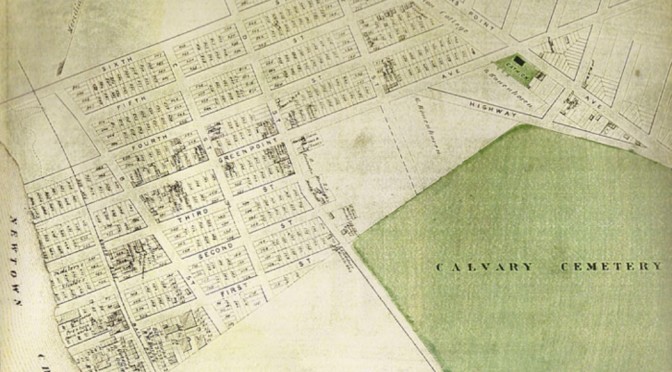
“All the hair in Blissville, Long Island, is on end with terror and excitement, and even the stoutest-hearted citizens feared to sleep until they got to church yesterday, because the ghost cries “Oh, ho!” and “Ah, ha! and likewise “Humph, humph” still haunted the Calvary Cemetery, and all Saturday night gave vent to weird and mysterious moans and sighs.”

1

A hotel proprietor names John Powers was stumbling home at night — almost midnight — in some presumed state of inebriation. On the road he passed a very short woman dressed entirely in black, “mov[ing] along in a strange manner, looking neither to the right nor to the left.”

The little woman did not respond when Powers wished her good night.  Finally, “filled with strange forebodings,” he decided to look at the woman. But she had completely vanished.

“There were no houses, trees, nor fences near, nothing that even a cat could have concealed itself behind, and yet the weird apparition had disappeared and left not the slightest indication of its presence.”

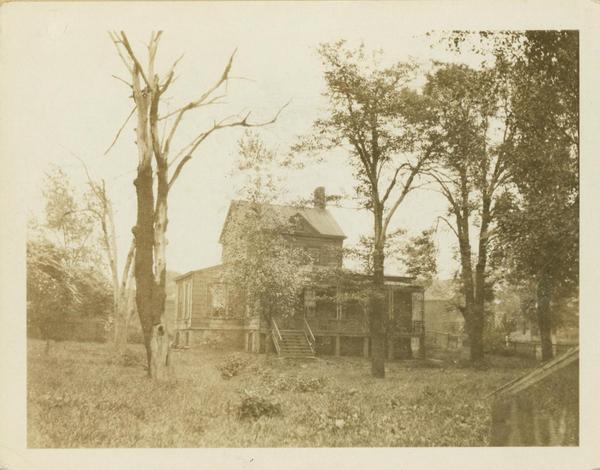
Below: The old Payxtar Homestead, area of today’s Jackson Ave. and Queensboro Bridge Plaza, Long Island City

Courtesy Library of Congress

Another man named Thomas Culvert told a similar story that same evening. His description of the spirit is quite bizarre. “She was not more than three feet tall and had red hair, he said, and long curls hung down her back.”

His eyes lingered upon the woman a bit too long for she gazed up at him, making eye contact. “[H]er eyes were of a stony blue that chilled his very blood as she fixed them upon him for a single instant.” Culvert scurried immediately home and locked the door.

Throughout the night the townspeople of Blissville heard a series of shrieks and cries in the vicinity of an abandoned house.  “Numbers of persons, made brave by the daylight, visited the haunted house and locality yesterday afternoon, but shrank away when the shadows began to deepen.”

Efforts were made to disprove these spooky tales but no source was ever found. Thus the residents of Blissville lost many hours of rest. “There will be no peace until the grisly secret is explained.”

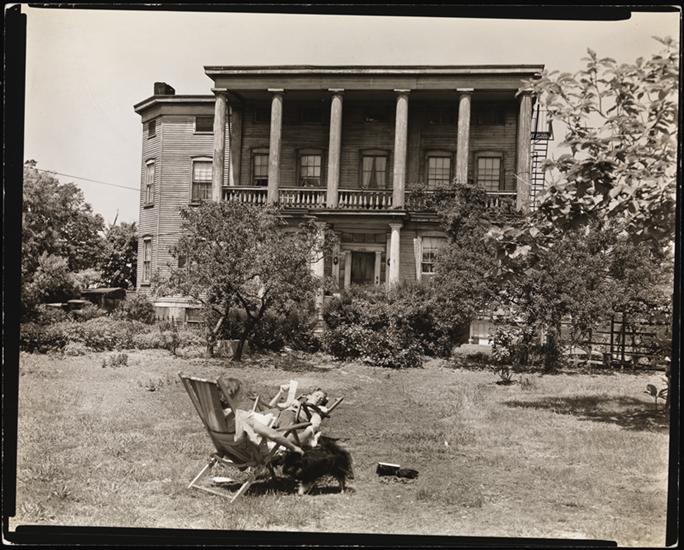
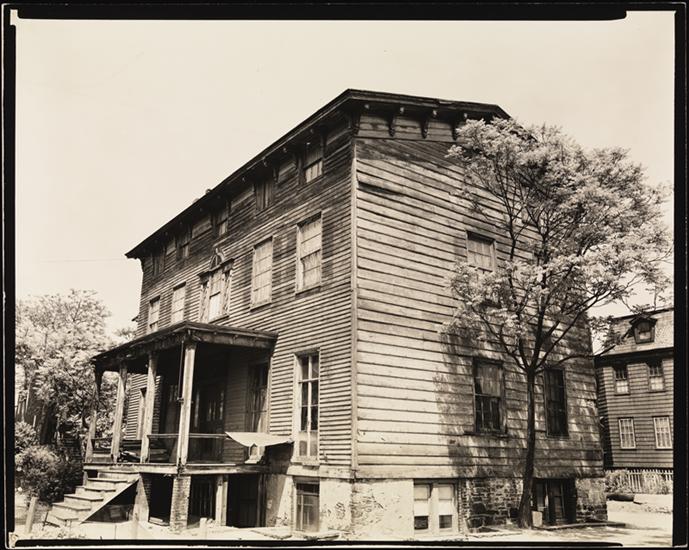
Below: 27th Avenue, no. 805, Astoria, taken in 1937

Courtesy Museum of the City of New York, photo by Berenice Abbott


Categories
Queens History

The Fall of Ravenswood, Old Aristocratic Queens

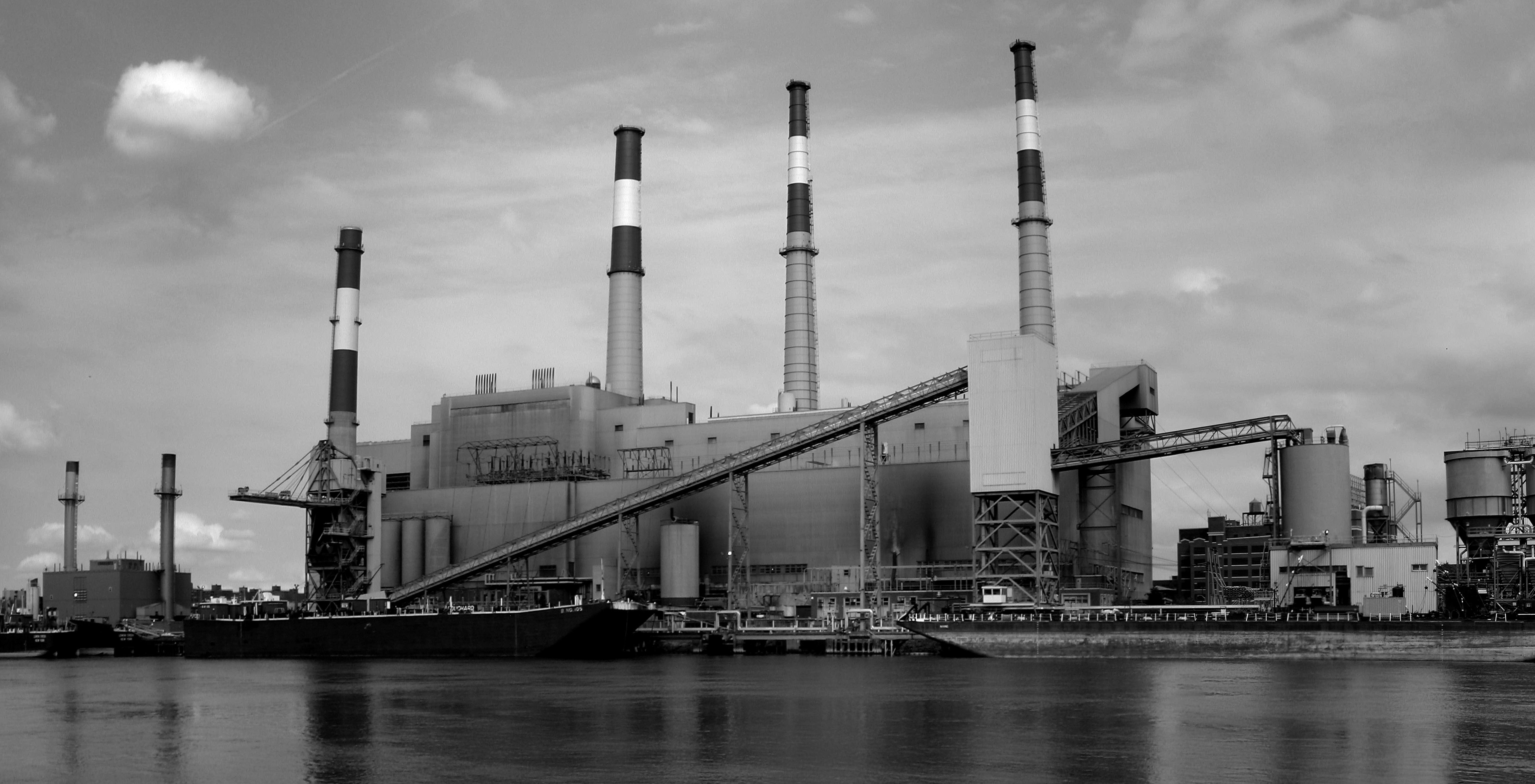
Ravenswood is a dramatic name for a New York City neighborhood and certainly wasted on its primary resident today — Big Allis, the Con Edison generating power station that provides the Queens waterfront with its most unattractive feature.

This pocket district is situated on the western edge of Queens just north of Hunter’s Point. Situated near the power station are two quiet parks — Queensbridge Park and Rainey Park which pay homage to the neighborhoods most striking landmark — the Queensboro Bridge — and the bridge’s most ardent proponent Dr. Thomas Rainey.

There’s little indication of it today, but over 150 years ago, this narrow ridge of land on the East River waterfront was once the most exclusive neighborhood on Long Island. It was indeed a ‘narrow’ stretch for the eastern side was hemmed in by a massive swamp. (The Ravenswood Houses sits on the spot of the old swamp.)

Among the first English settlers, the land was originally owned by Captain John Manning, then by Robert Blackwell. Both men also owned the island in the East River, today’s Roosevelt Island. (In fact, the island wore Blackwell’s name for over two centuries. Listen to our show on Roosevelt Island for more information.) It wasn’t until 1814 that a US mineralogist named Col. George Gibbs bought up this property and begin chopping up the lots for sale to wealthy merchants who desired large estates with a waterfront vista.

Nobody knows definitely where the name came from. One theory suggests it was named for the bishop of North Carolina — John S. Ravenscroft — and later altered. Author Vincent Seyfried gives a couple more romantic suggestions, “that there were a lot of native American ravens in the neighborhood, and that Ravenswood is a name figuring prominently in Sir Walter Scott’s “Bride of Lammermoor”, a historical romance popular in that day.”

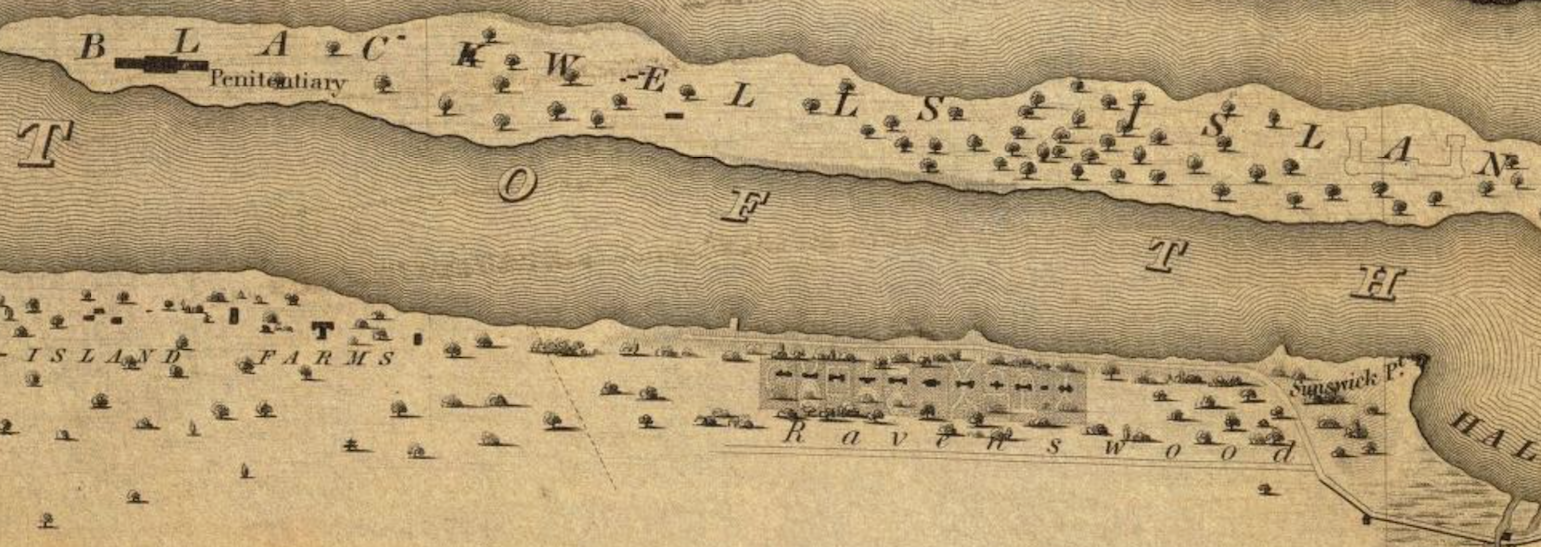
Below: From the David Ramsey Map Collection — a 1836 view of Blackwell’s Island and Ravenswood

By the 1850s, both Blackwell’s Island and Ravenswood were frantic with new construction — Blackwell with new public institutions like the almshouse, Ravenwood with sumptuous estates. From a local newspaper in 1852: “Buildings are going up in every direction and much taste is manifested by the owners in arranging and decorating their grounds. “

Below: The Delafield house which was owned by George Gibbs

Queens Archives

Most of the new residents were New York merchants enriched with the city’s growing fortunes, stimulated large by the construction of the Erie Canal. Almost none of them came from old families (who had manors in other parts of the region). Looking though a list of Ravenwood landowners from the 1850s, you’ll find mirror manufacturers, grocers, meat packers, doctors, insurance salesmen and Wall Street bankers.

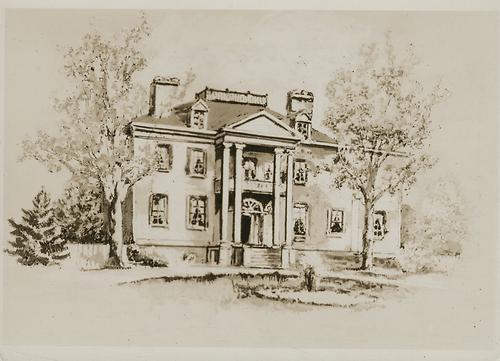
Below: An example of a Ravenswood property, from an engraving by Alexander Jackson Davis (ca. 1836)

From the Queens Gazette, 1953: “Ravenswood —  That beautiful village, so picturesquely located on the banks of the river, is improving rapidly and its present rate of increase will soon complete the chain of city and village which stretches almost from the Narrows to beyond Hell Gate.”

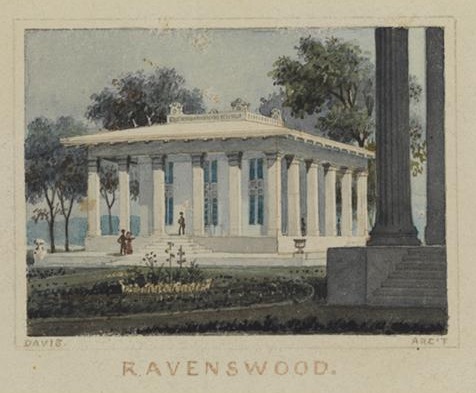
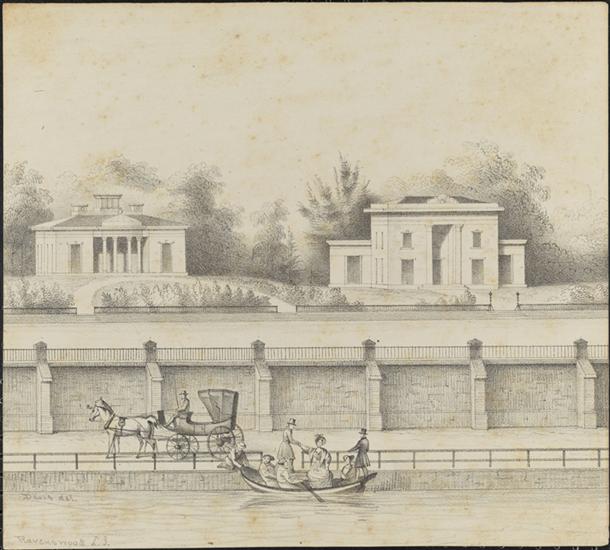
A unique feature of these new development was the public promenade (seen in the map image above). While lots were granted to the edge of the East River, a public walkway was carved into the properties so that neighbors could enjoy the impressive views.

Below: Ravenswood and its promenade, from an engraving by Alexander Jackson Davis (1850)

Courtesy Museum of the City of New York

Of course you might ask — wasn’t the back of Blackwell’s Island an unsightly mess by the late 19th century? It became the home of penitentiaries, asylums, workhouses and various hospitals. Well, by the time it got it got too unfortunate, the era of aristocratic Ravenswood was over.

Hunter’s Point, south of Ravenswood, was rapidly becoming a dense, industrial zone by the 1860s, endangering any bucolic peace that this new mansion row would have enjoyed. The swamp to the east — called Sunswick Swamp or Ravenswood Swamp — and the mosquitos it attracted created a serious health crisis with frequent malaria outbreaks.

Below: A last holdout at Vernon Boulevard and 30th Road (ca. 1937)

Berenice Abbott, courtesy MCNY

In 1870, Ravenswood was absorbed into the district of Long Island City, encompassing all the village and hamlets of northwestern Queens, including Astoria and the new company village of Steinway & Sons. While this incorporation was a great benefit to the region overall — rapidly bringing utilities and municipal support — it eventually destroyed the small residential haven of Ravenswood.

A gas works was constructed in 1875 on the waterfront at 37th and 38th Avenues, the precise spot today of Big Allis. Residents almost immediately began fleeing.

In 1877, the Newtown Register lamented, “The aristocratic neighborhood of Ravenswood is beginning to be invaded by factories. We observe a large brick structure run up which will be devoted to canning fruits. The location of this factory is at the southern end of the neighborhood. The gas house on the water’s edge near the old Blackwell house may be considered another invasion, and like Union Square, New York, we may suppose these temples of industry to be ‘the beginning of the end’. [This is reference to New York’s Gas House District, on the spot of today’s Stuyvesant Town – Peter Cooper Village.]

Already one aristocratic mansion is converted into a summer hotel and restaurant. Such is change, such is life.”

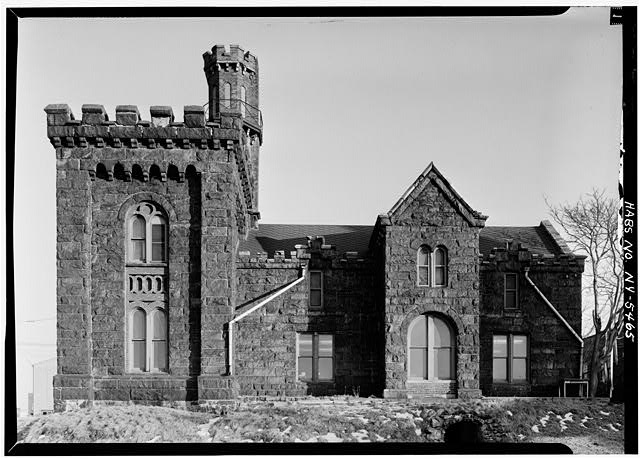
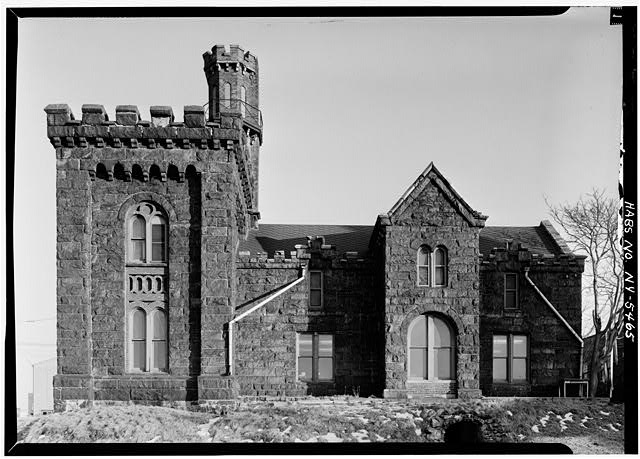
By 1905 even the promenade was gone. All traces of Ravenswood were eliminated save one — Bodine Castle at Vernon Boulevard and 43rd Avenue (pictured below). It too was demolished in 1966.

The area is now best known for this:

Courtesy Harald Kleims/Wikimedia

[My thanks to Vincent F. Seyfried and the Greater Astoria Historical Society for help with this research.]

Categories
Amusements and Thrills

From ‘Hot Circuits’ to ‘Arcade Classics’: A Museum’s Quest to Preserve Video Games

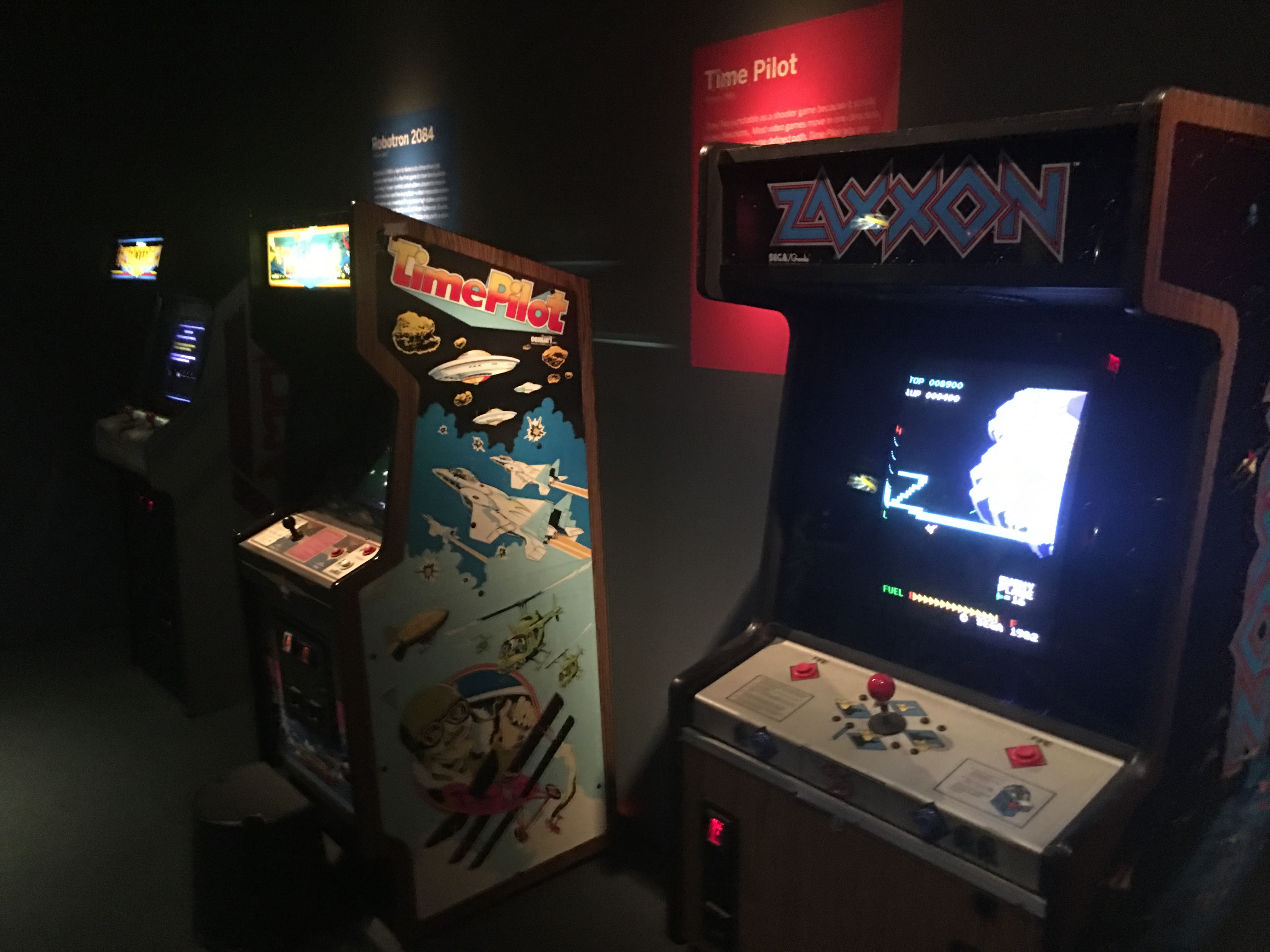
ARCADE CLASSICS, the latest show at the Museum of the Moving Image, pulling from the museum’s regular collection of video arcade games, is indeed an all-star line-up of classics. But without the fussiness of an actual arcade. (For one, the experience is at pleasant decibels.)

The machines will mostly be familiar to anybody who identifies as Generation X, devices of digital merriment released mostly between 1979 and 1984. Asteroids, Pole Position, Defender, Missile Command, Dragon’s Lair, Tron — they stand as sentinels in a Hall of Justice, evenly spaced throughout the third floor. The idea is to remove the machines from the arcade environment just enough so that you become appreciative of their whole artistry, the unity — from the sleek digital landscapes to the cabinet design. On that point, the show is a complete success.

IMG_9761 (1)

Luckily, you can play most of the games — you get a few complimentary tokens and there’s even a token machine if you want to play more  —  and the echoes through the chamber will certainly bring back childhood memories, even if the presentation is far more austere.

Today a gallery exhibit on video games hardly seems risky. After all these machines are precursors to an entire universe of modern digital images and were themselves influential to later art and fashion.

But the exhibit recalls the Museum’s first attempt at a major retrospective on video game design — 1989’s Hot Circuits, A Video Arcade, considered to be the first-ever video game museum exhibition.

A rare Star Wars game at the current Arcade Classics exhibit.

Sam Branan / Museum of the Moving Image.

At the time, the ‘video game craze’ — fueled by Space Invaders beginning in 1978 — was a decade old. Most of the consumer focus on video games was on home consoles. The Game Boy, the portable gaming device that would revolutionize game portability,  debuted on the market a couple months before the exhibit opened.

The New York Times write-up on the exhibition focuses mostly on the difficulty curators had in locating games that were intact.  “[A]ssembling the exhibition became a yearlong detective story that drew museum curators to arcade warehouses, motel storage areas and basement recreation rooms.

A video game retrospective for a population obsessed with Pokemon Go and Call of Duty seems like an obvious notion. But the idea seemed less obvious in 1989. The Museum’s founding director Rochelle Slovin confessed, “On a general level, I knew that video games were not, as many dismissed them, a trend or fad, but on the contrary, the beginning of something significant. Exactly what, I wasn’t sure.”

Slovan’s original remarks on the show focus on early video games’ similarities to silent film and an appreciation for the elegantly observed artistic choices of the early games.

While stodgier museum goers might have been downright confused by Hot Circuits, it did broaden the Museum’s focus almost immediately into further exploration into digital media. Indeed, in 2016, as you pass the admissions desk into the museum, you will pass a flamboyant wall display on the The Reaction GIF: Moving Image As Gesture. Michael Jackson will eternally eat popcorn and Homer Simpson will continue to sink into the bushes as you enjoy yourself with the digital delights upstairs.

ARCADE CLASSICS, at the Museum of the Moving Image (in Astoria, Queens) runs until September 18. Visit the museum website for more information on the exhibit and visiting hours.
 

Categories
It's Showtime Podcasts

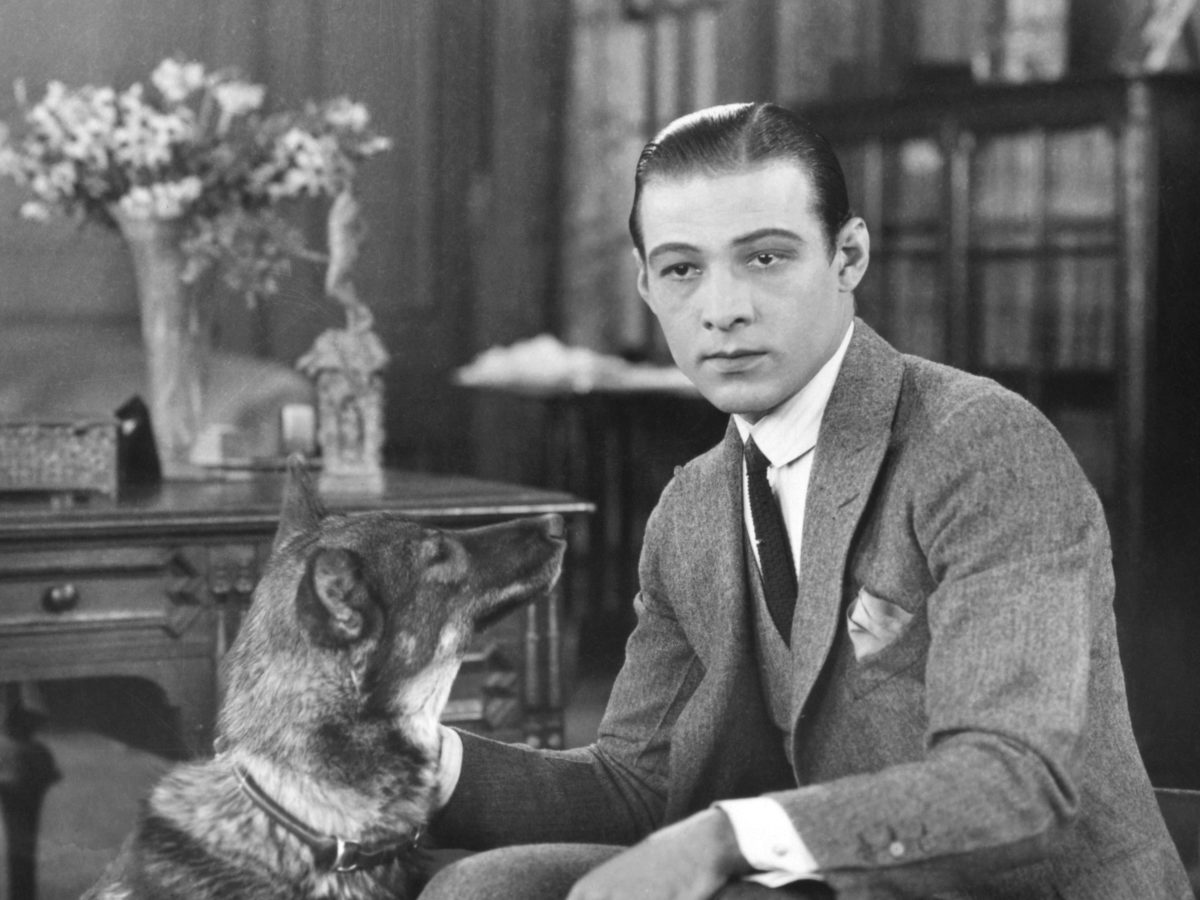
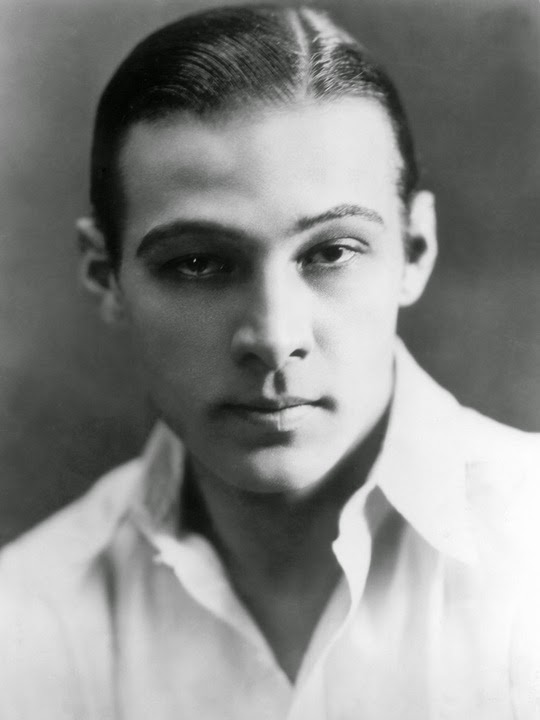
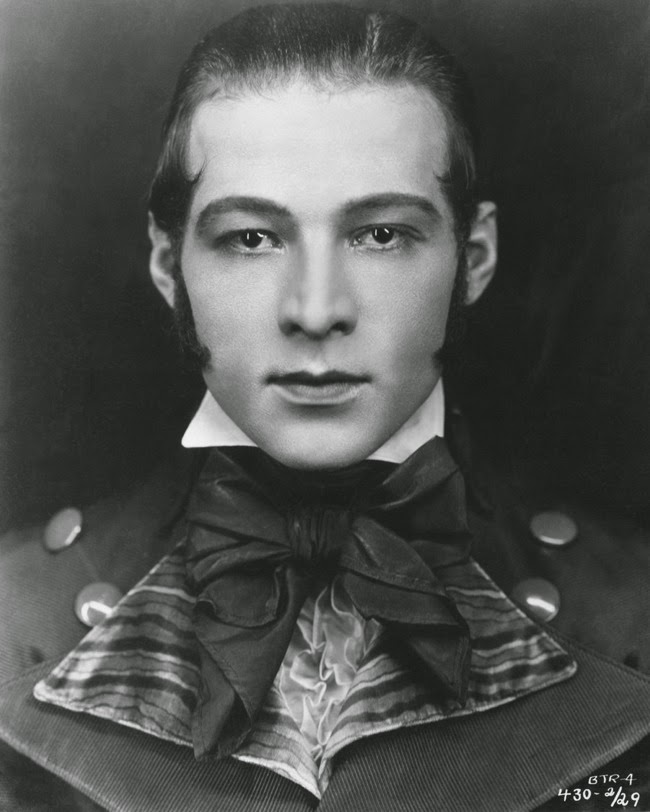
Rudolph Valentino, the seductive, tragic idol of the Jazz Age


PODCAST  Rudolph Valentino was an star from the early years of Hollywood, but his elegant, randy years in New York City should not be forgotten.  They helped make him a premier dancer and a glamorous actor. And on August 23, 1926, this is where the silent film icon died.

 
Valentino arrived in Ellis Island in 1913, one of millions of Italians heading to America to begin a new life.  In his case, he was escaping a restless life in Italy and a set of mounting debts! But he quickly distinguished himself in New York thanks to his job as a taxi dancer at the glamorous club Maxim’s, where he mingled with one particular Chilean femme fatale.
 

He headed to Hollywood and became a huge film star in 1921, thanks to the film The Sheik, which set his reputation as the consummate Latin Lover.  Throughout his career, he returned to New York to make features (in particular, those as his Astoria movie studio), and he once even judged a very curious beauty pageant at Madison Square Garden.

 
In 1926, he headed here not only to promote his sequel Son Of The Sheik, but to display his masculinity after a scathing article blamed him for the effeminacy of the American male!
 
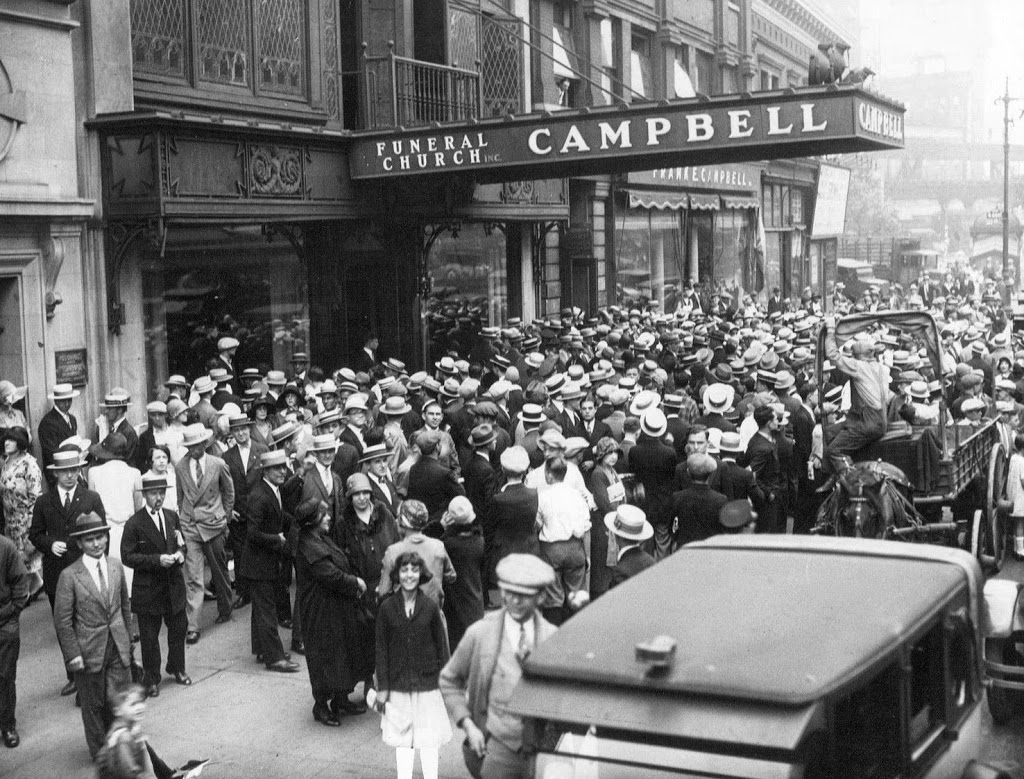
Sadly, however, he tragically and suddenly (and, some would say, mysteriously) died at a Midtown hospital.  People were so shocked by his demise that the funeral chapel (in the area of today’s Lincoln Center) was mobbed for almost a week, its windows smashed and the streets paralyzed by mourners — or where those people paid by the film studio?Here are the details of the tragedy that many consider one of the most important cultural events of the 1920s.


ALSO: We are proud to introduce to you — POLA! 


To get this week’s episode, simply download it for FREE from iTunes or other podcasting services.

____________________________________________________________________

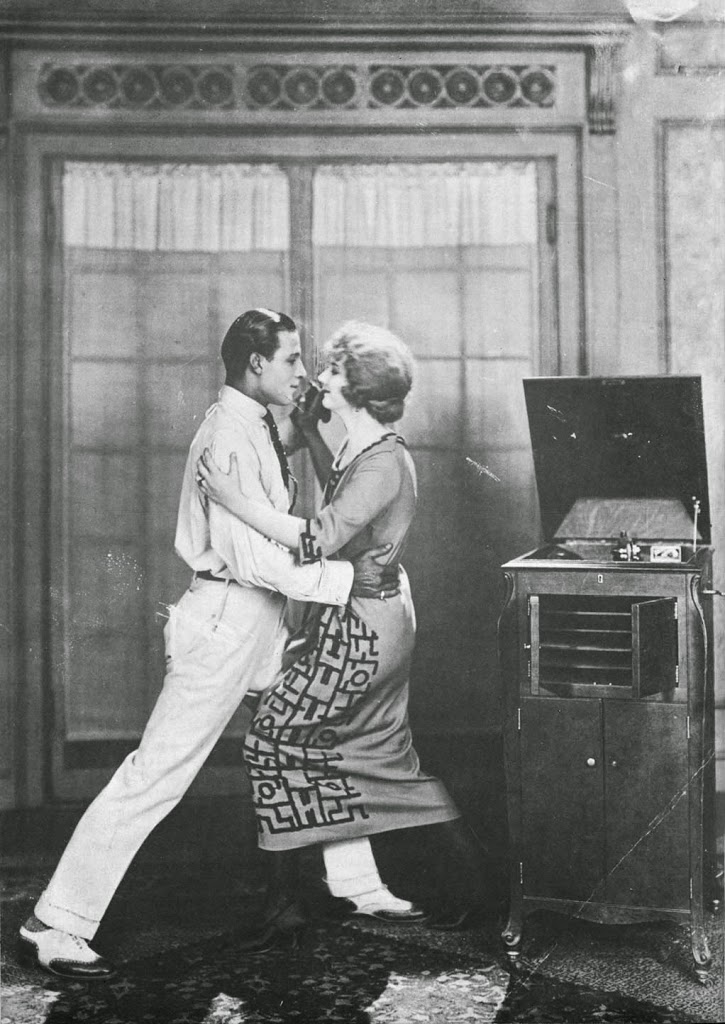
The young dancer was employed at Maxims on 110 West 38th Street. From a 1916 guidebook: “A famous ‘smart’ restaurant. A la carte. Music, dancing, cabaret, from 6:30 to close. High prices. Special ladies luncheon at noon.” Valentino would use his skills as a struggling actor in Los Angeles and incorporate it into his film work. Below: Valentino with Alice Terry

Valentino’s breakthrough film — The Four Horsemen of the Apocalypse.  “He paints the town red!” “Each kiss flamed with danger!” Like many of his movies, the plot seems taken from his life. Valentino spent some time as a youth in Paris, dancing and dining his way through the city (and into debt). (NYPL)

The Sheik, the film that made his reputation:

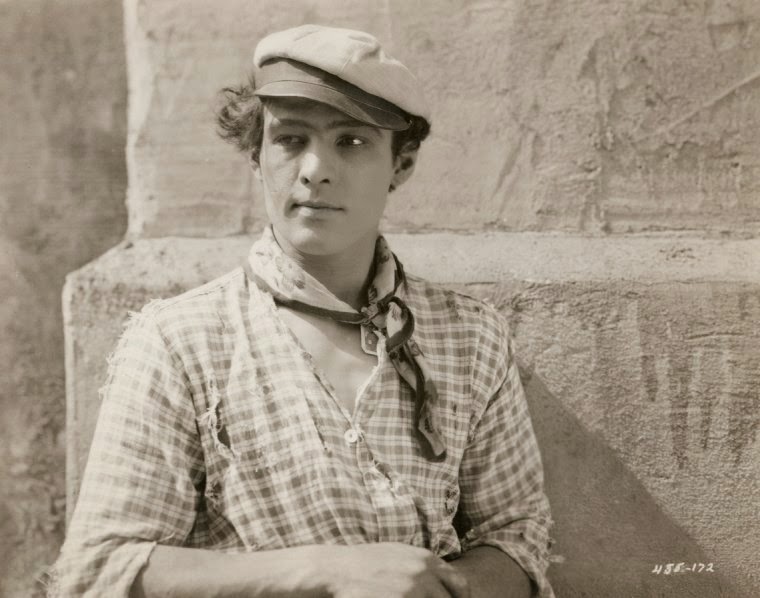
From Blood and Sand (1922) — In this one, the Italian Valentino plays a Spanish toreador. (NYPL)

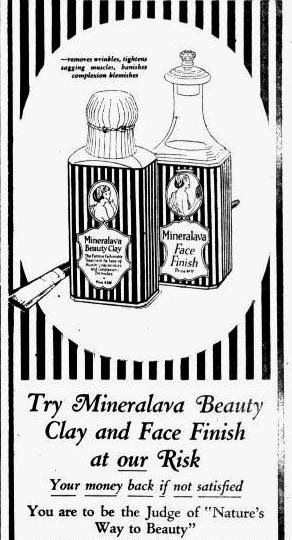
Mineralava Beauty Clay, the sponsor of Valentino and Rambova’s cross-country tango trip:

Newsreel footage of Valentino at Madison Square Garden judging the Mineralava Beauty Clay competition:

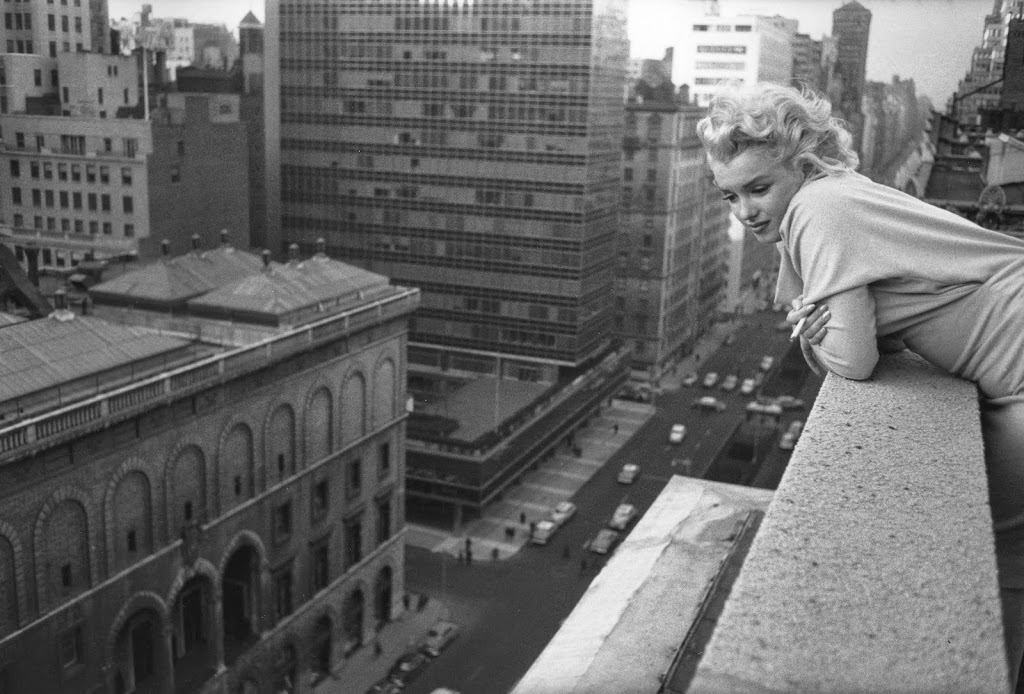
The Hotel Ambassador at Park Avenue and 51 Street.  This is where Valentino boxed the reporter (on the rooftop) to defend his masculinity and where he was staying on August 15, 1926, when he collapsed.

Most people are familiar with the Ambassador due to another iconic film star and her memorable photo shoot (by Ed Feingersh) on the rooftop:

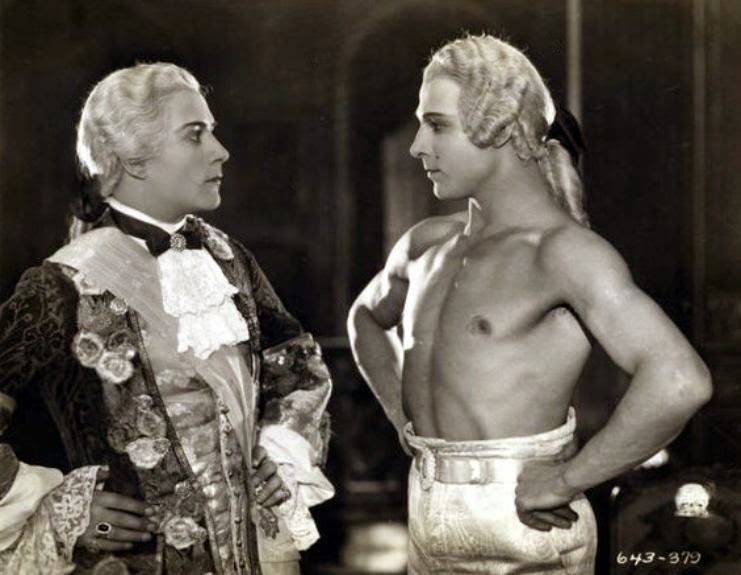
Rudolph in Monsieur Beaucaire, filmed at the Famous Players (later Paramount) studio in Astoria, Queens:


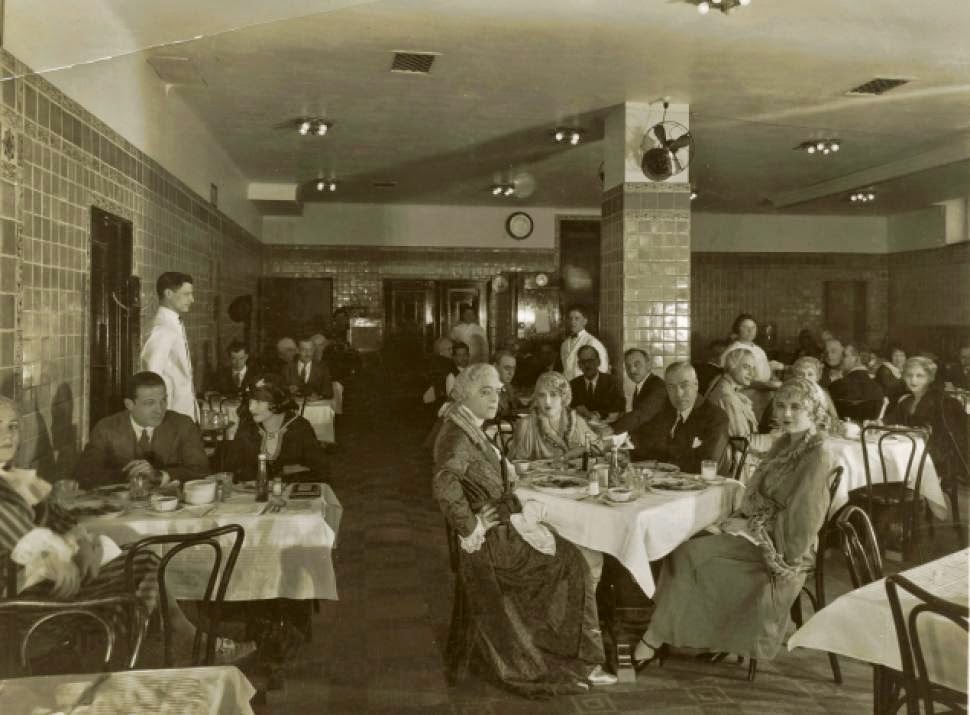
Downstairs, in the studio commissary, with Valentino (at left) and the cast of the film.  Today this room is a restaurant named The Astor Room, which features cocktails named for silent film stars. There’s even a Valentino-themed cocktail called Blood and Sand!

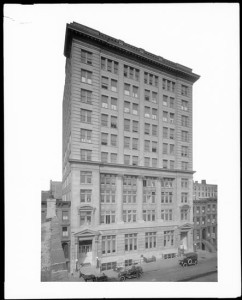
Polyclinic Hospital at 345 West 50th Street, where Valentino died on August 23, 1926. The building still exists today as an apartment complex. (Picture courtesy Museum of the City of New York)

West 50th Street. Polyclinic Hospital.

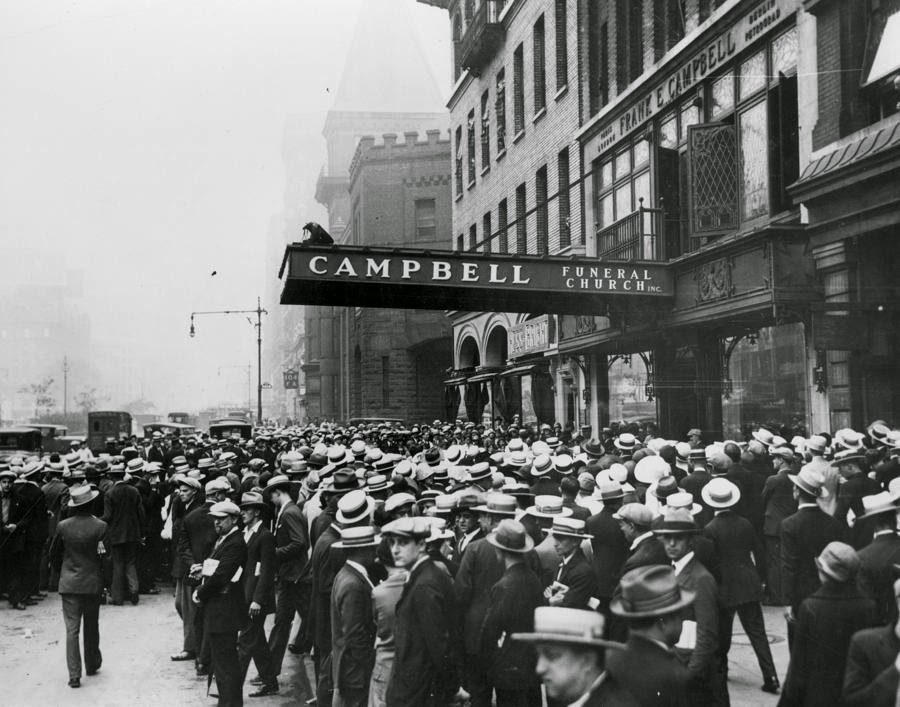
Pictures of the mad, chaotic crowds outside Frank Campbell’s Funeral Church during the week of August 23-30, 1926:

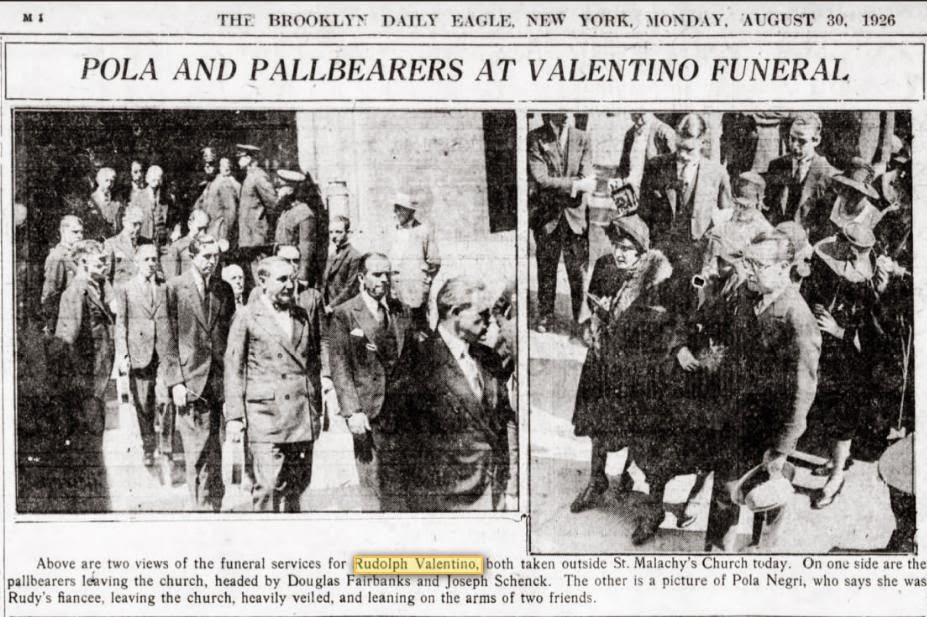
Pola Negri, who made quite a scene at the funeral of Valentino (NYPL):

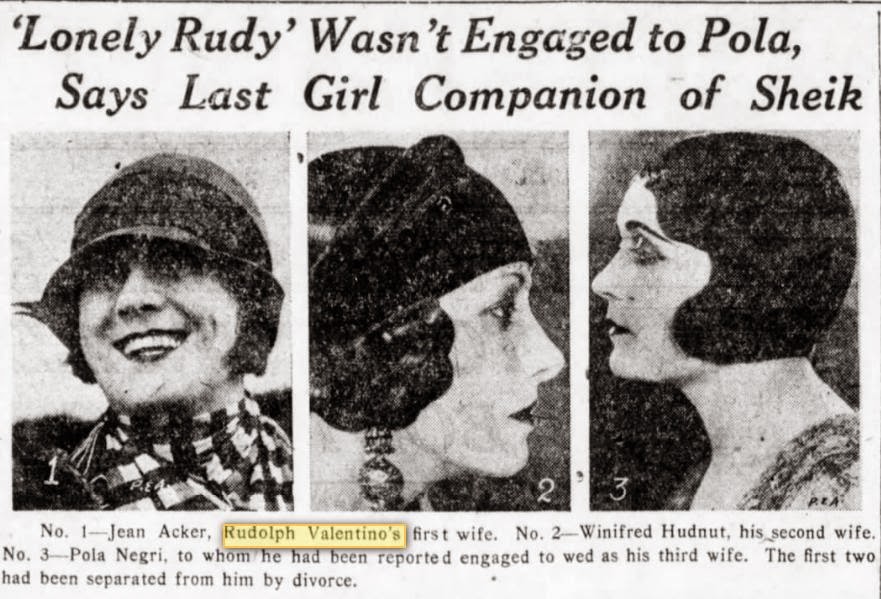
From the Brooklyn Daily Eagle, August 30, 1926

Newsreel footage of his funeral in Midtown Manhattan — from Frank Campbell’s (in today’s Lincoln Center area) to St Malachy’s on West 49th Street:

SOURCES AND SUGGESTED READING:
Note: Don’t say we didn’t warn you! There’s a lot of material that seems to be based on speculation.  Thoughts of possible sexual adventures have sent many authors into wild fits of imagination. (  Enter the back catalog of Valentino at your own risk:

Rudolph Valentino: A Wife’s Memories of an Icon by Natacha Rambova and Hala Pickford
The Valentino Mystique: The Death and Afterlife of a Silent Film Idol by Allen R Ellenberger and Edoardo Ballerini
Dark Lover: The Life and Death of Rudolph Valentino by Emily W. Leider
The Valentino Affair: The Jazz Age Murder Scandal That Shocked New York Society and Gripped The World by Colin Evans
The Intimate Life of Rudolph Valentino by Jack Scagnetti
Falcon Lair — an indispensable online resource for all things Valentino
Publications sited:  New York Times, New Yorker, Newark News, Brooklyn Daily Eagle, New York Sun

Almost his entire film catalog is available to watch for free on YouTube.  These include The Sheik, Blood And Sand, The Four Horsemen of the Apocalypse, Son of the Sheik and his Astoria-made film Monsieur Beaucaire.  Another film he made in Astoria — A Sainted Devil — has been lost with no extant copies available.

Categories
Parks and Recreation

That time Christopher Columbus annoyed Robert Moses

Christopher Columbus is among the most honored figures in New York statuary, appearing abundantly throughout the five boroughs — standing prominently, nestled in parks and squares, peering from building features.

I’ve located a seemingly complete list of New York Columbus monuments, strangely enough, on a German website, inclusive even of Chris’s appearance of 8th Avenue subway tiles.

Photo by Kevin Kalish/The Living New Deal

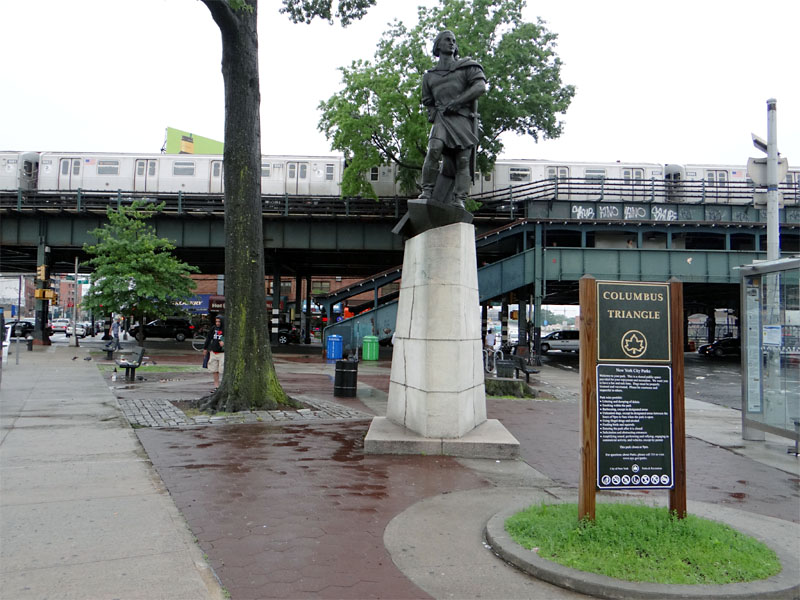
While the one perched atop the column at Columbus Circle is the most famous, perhaps the most interesting one sits in Columbus Park, in Astoria, Queens.

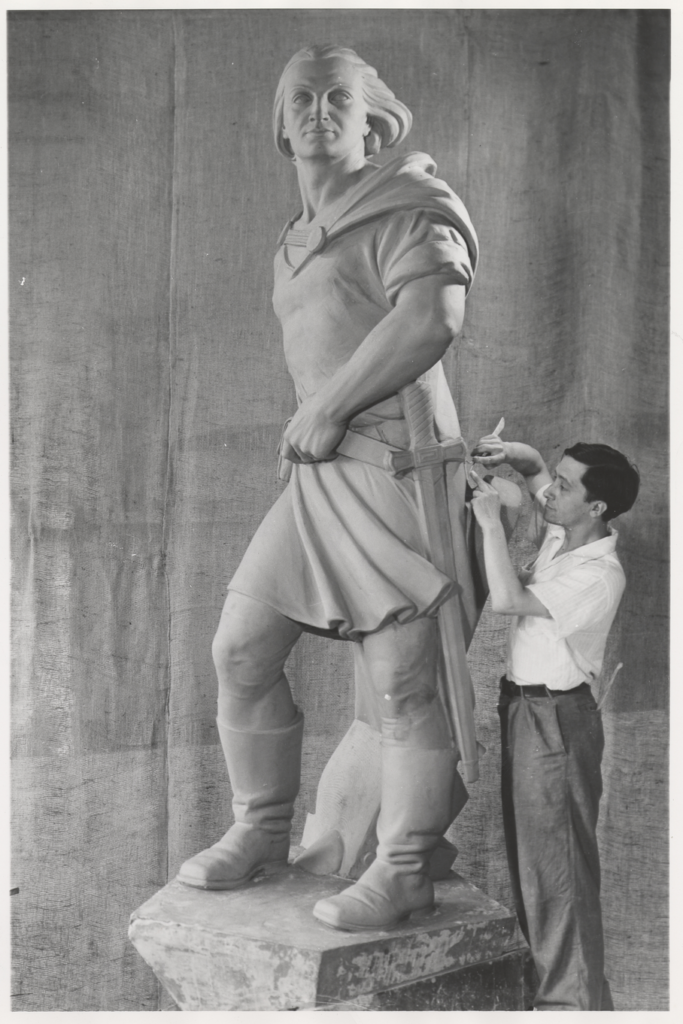
Depicting a young, robust explorer, the statue was erected here in 1941 in recognition of the area’s growing Italian population. But youthful Chris was almost immediately removed to the basement of Queens Borough Hall, for fears it would get melted down in wartime scrap-metal programs.

Racioppi works on Astoria’s Columbus as part of the WPA program.

It was returned to dignity by the end of the war and has commanded the crossroads here ever since.

Had Parks Commissioner Robert Moses had his way, however, the striking, romantic monument would never have seen light of day. “We don’t think the statue looks like anything we have read about Columbus, or that as a piece of symbolism it represents anything associated with Columbus,” Moses complained.

“Anything Moses doesn’t design himself, he thinks is no good,” replied Queens Borough President George U. Harvey.

Nearby you’ll find a dedication plaque from the Italian Chamber of Commerce. Your eyes aren’t deceiving you; it lists a dedication date of 1937.

Although sculptor Angelo Racioppi had completed the work by then, the community couldn’t afford the base until a few years later.

Categories
Podcasts

Steinway and Sons: piano men and kings of Queens

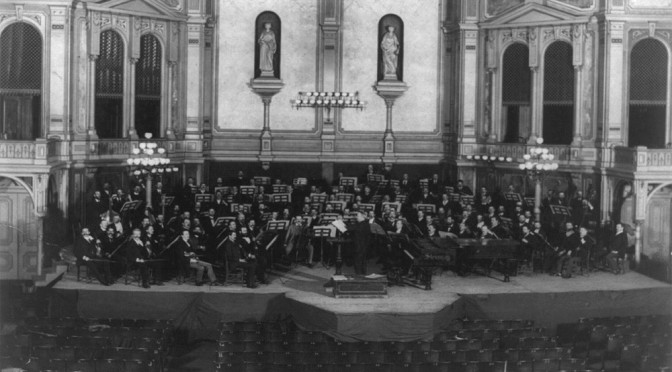
Inside Steinway Hall 1890: the 14th Street concert venue could seat 2,000 and also functioned as a showroom for Steinway pianos

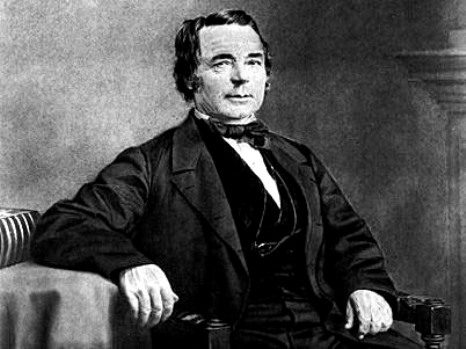
Henry Steinway, a German immigrant who came to New York in 1850, made his name in various showrooms and factories in downtown Manhattan, enticing the wealthy with his award-winning quality pianos. At their grand Steinway Hall on 14th Street, the family turned a popular concert venue into a clever marketing opportunity.

But their ultimate fate would lie outside of Manhattan; the Steinways would graduate from an innovative factory on Park Avenue to their very own company village in Queens, the basis of a neighborhood which still bears their name today. You may not know much about pianos, but you’ve crossed path with this family’s influence in the city. Tune in for this short history of Henry Steinway and his sons.

PODCAST Download this show it for FREE on iTunes or other podcasting services. Click this link to download it directly from our satellite site. Or click below to listen here:

The Bowery Boys: Steinway and Sons

___________________________________
As always, click on pictures for a bigger view

Hello Henry: Heinrich Steinweg made his first piano as a present for his bride. A year later he completed his very first grand piano and began a small manufacturing practice with his sons. They took the show on the road to New York in 1850.

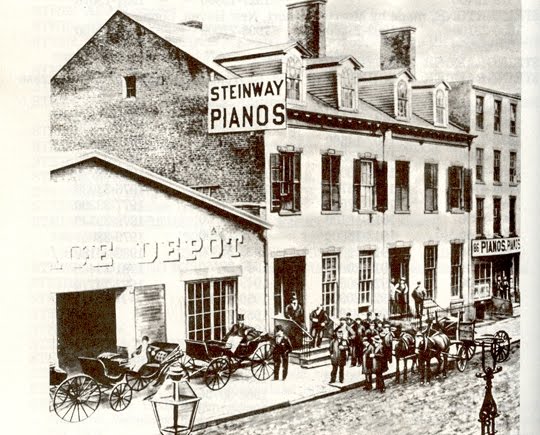
First movement: Within three years of arriving in New York harbor, the Steinways had opened their first workshop on Varick Street, then moved to a larger space on at 82-88 Walker Street (illustrated below).

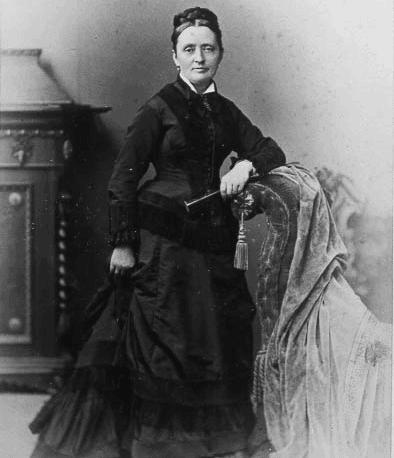
Daughter Doretta Steinway, in her later years. Doretta was key to Steinway’s early success, due to her generous offering of free piano lessons to anyone who purchased an instrument from them.

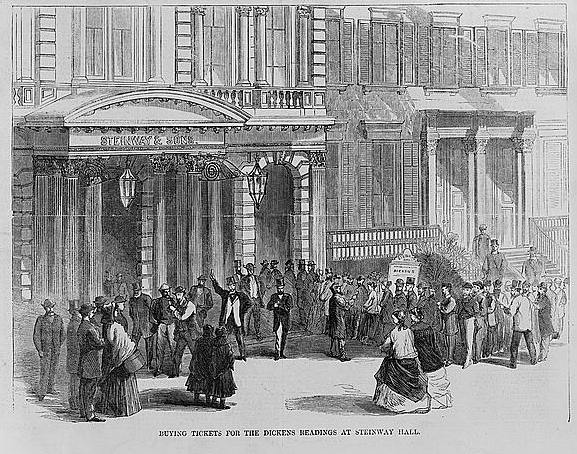
Steinway Hall, built in 1864, was located at 71-73 East 14th Street, right off of fashionable Union Square. The hall hosted a great variety of functions, not just music performances. The illustration below depicts the frenzy outside of a Charles Dickens reading.

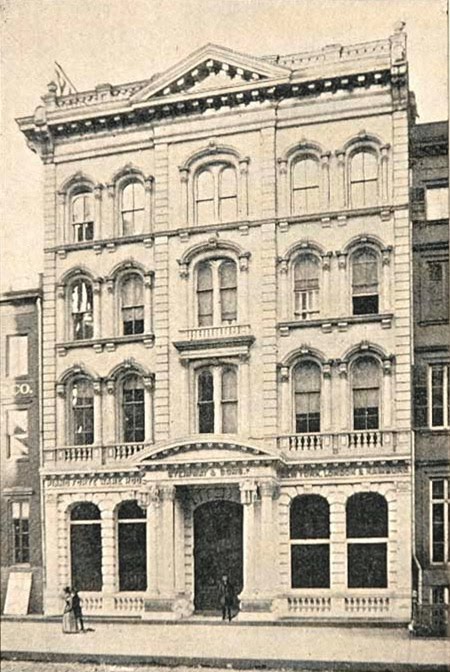
The front of the hall, which also featured a showroom of all the latest Steinway products. The venue was such a smashing success that other halls opened around the world.

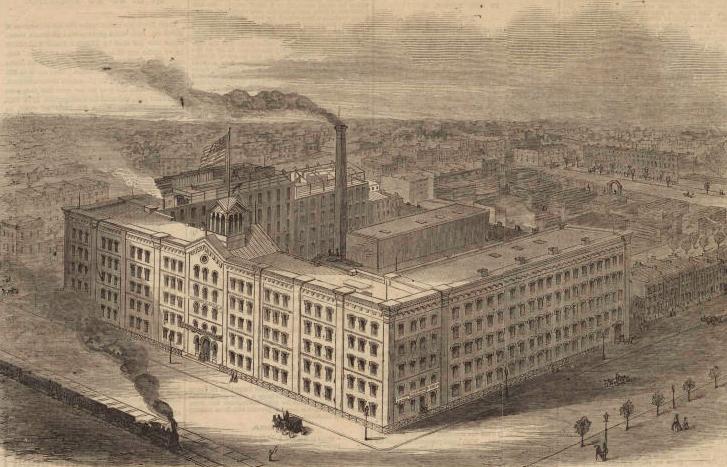
The uptown Manhattan factory opened in 1860 at 52nd and 53rd streets and Fourth Avenue — known as Park Avenue today. The new plant could manufacture up to 1,800 pianos a year. Look what stands there now!

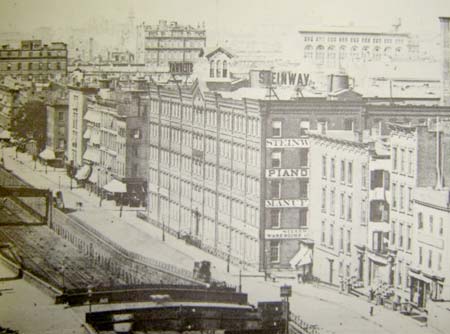
To illustrate how fast the city was moving uptown, this photo shows the same factory just 30 years later. Its dated 1890, although at this time most Steinway operations had moved to their headquarters in Queens. Either they were still doing some work here at this time, or else nobody bothered to rename the building! Note the train tracks in front, rolling their way down to the Grand Central Depot.

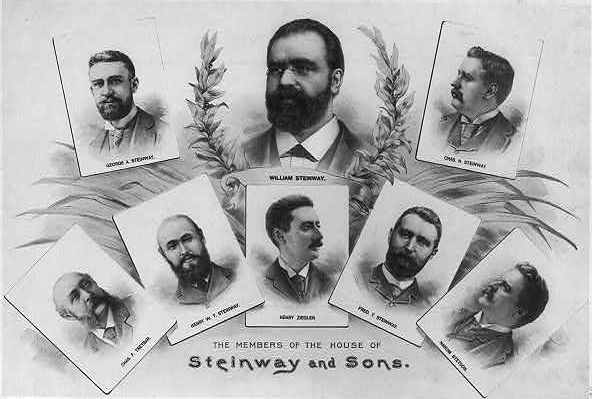
Full house: After Henry’s death in 1871, the Steinway boys would move the company’s operation to Queens. William Steinway would display ambitions far beyond pianos, expanding his pursuits to include public transportation and even automobiles.

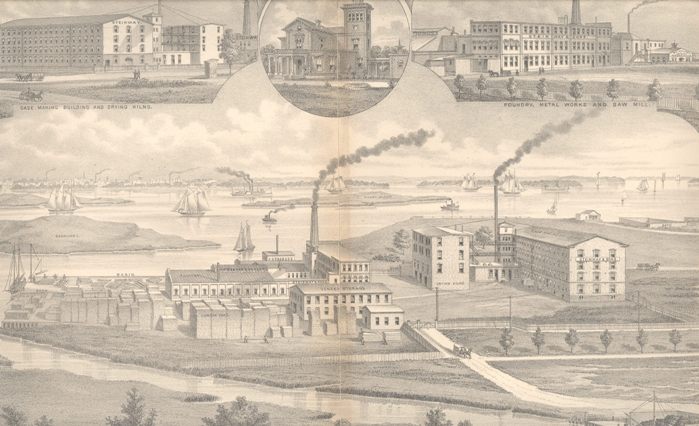
A bucolic illustration of Steinway’s Astoria factory, with river access and company village for their workers. The move allowed the Steinways to expand; it also thwarted labor groups and gave the company more power over its employees.

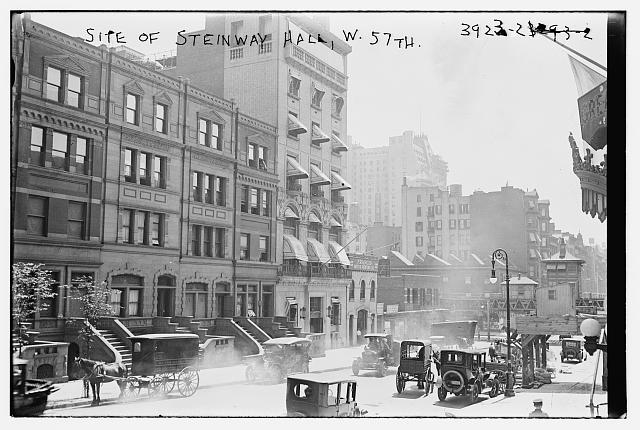
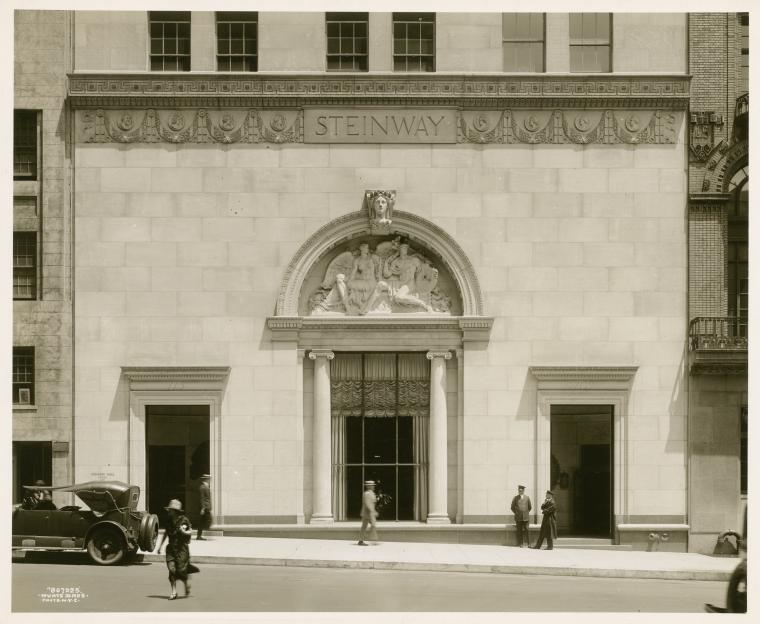
In 1925, Steinway Hall moved uptown to 57th Street, not so terribly far away from their old factory. The sooty, smelly neighborhood had become Park Avenue, and 57th Street was graced with Carnegie Hall. So naturally, the Steinways got out of no-longer-fashionable Union Square and joined the high society ranks accumulating uptown.

The new hall, designed by Warren and Wetmore, was a far smaller venue but still featured a Steinway piano showroom. You can still stroll through it today and peruse their instruments.

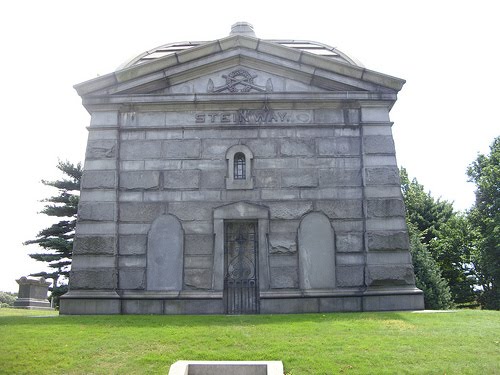
The Steinway vault at Green-Wood Cemetery. I greatly encourage a visit to Green-Wood. And while you’re visiting the Steinway, swing over and say hello to Boss Tweed! He’s buried right nearby.

You can actually tour the Steinway Queens plant. You can find information at their official website.

And did you know that everytime you take the 7 train between Queens and Manhattan, you travel through something called the Steinway Tunnel?

Location of the Steinway factory:

View Larger Map