Categories
Parks and Recreation Sports

New York City loves the Olympics — despite never hosting them

OLYMPICS ROUNDUP Starting today Tokyo, the biggest city in the world, will host the Games of the XXXII Olympiad aka the Tokyo Olympics 2020 (in 2021). The Japanese city first hosted the games back in 1964.

New York City, the biggest city in the United States, has never hosted the Olympics Games.

The city did aim to host the 2012 Olympics in an ultimately unsuccessful bid back in 2005. Those games went to London. 
Alas.

A great many New Yorkers were quite happy to be without that international sporting event in the city. Personally, I would have loved to have seen New York become even more international for a few weeks, although I’m relieved that plans for that catastrophic Olympic Village in Queens were never realized.

Outside of that, the closest the city has ever gotten to the Olympics is a little under 300 miles — the distance from New York to Lake Placid, which hosted the 1980 Winter Olympics.
Those games featured the now-storied ‘Miracle on Ice‘ match between the USA and the USSR.

But did you know that the Russian team completely iced the US team just a few days earlier in an exhibition game played at Madison Square Garden? You can read more about that in my article ‘No Miracle on Ice’ from February 2010.

Although New York has never hosted the Games, when it comes to events before and after the Olympics, New York City’s all over them.

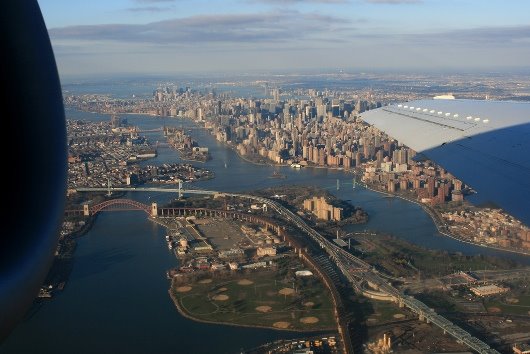
Randall’s Island
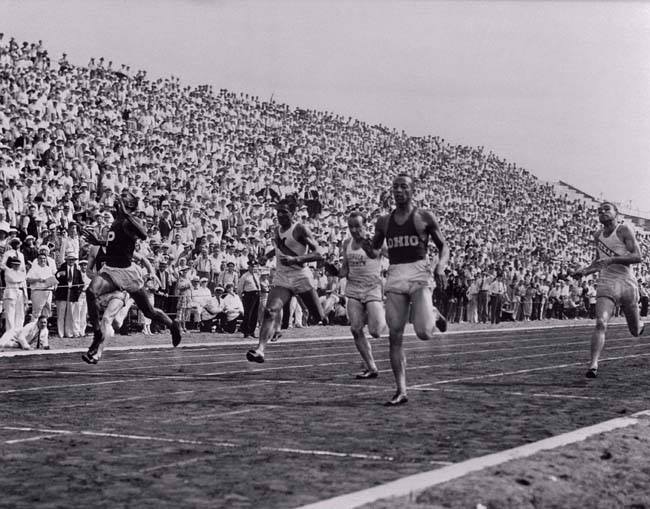
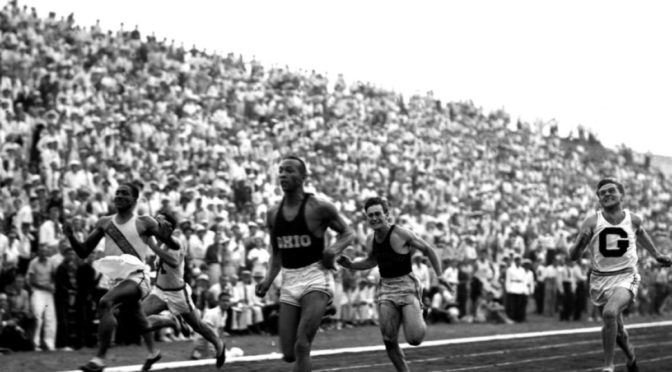
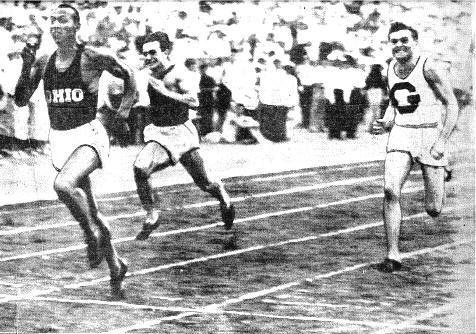
Randall’s Island has hosted several Olympic trials, including one of the most famous at all, the track and field events from 1936 which produced sports legend Jesse Owens.

You can hear all about it in one of our very early podcasts on the history of Randall’s Island and the 1936 Olympic Trials.

Astoria Pool
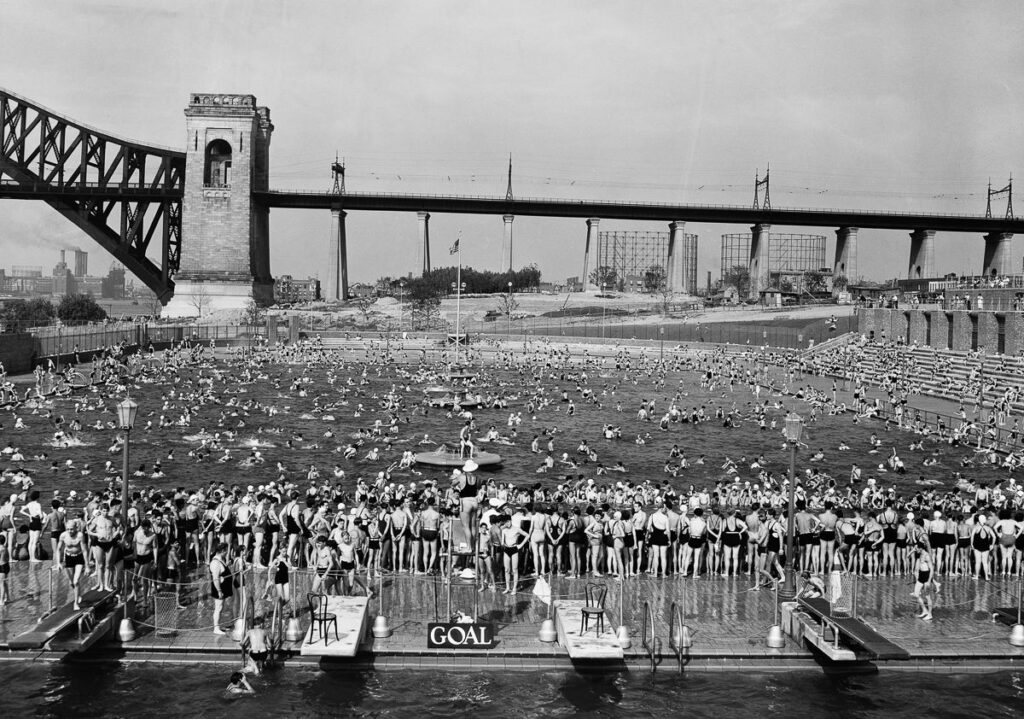
Around the same time, Robert Moses commissioned Astoria Pool with the explicit purpose of hosting Olympic swimming trials.

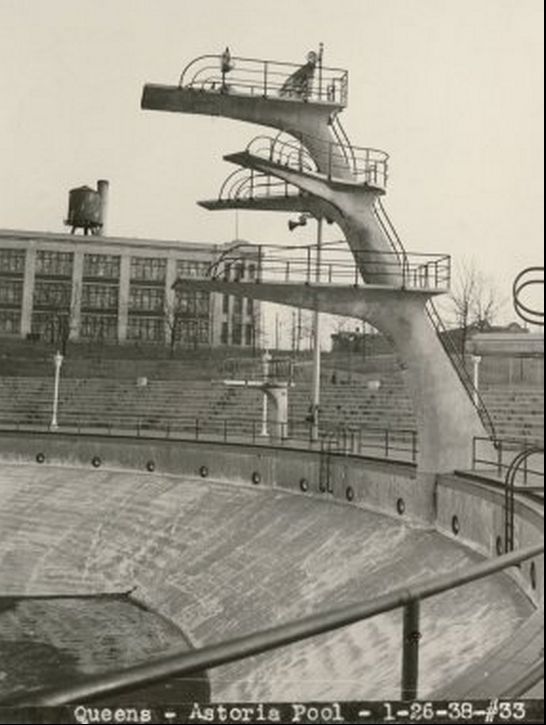
That 1936 event, featuring its dramatic diving platform, produced several American gold medalists. Two massive Olympic torches stood astride the pool as competitors fought for a spot on the Olympic team.

Olympics trials returned to Astoria Pool in 1952, and again in 1964, producing athletes that again nearly swept the diving events in the Tokyo games. 

Swimmer Don Schollander went on to win 4 golds that year, the most of any athlete in 1964 and the most medals won by an American athlete since Jesse Owens.

You can read more about Astoria Pool here — Nostalgia for Astoria Pool

The Counter Olympics

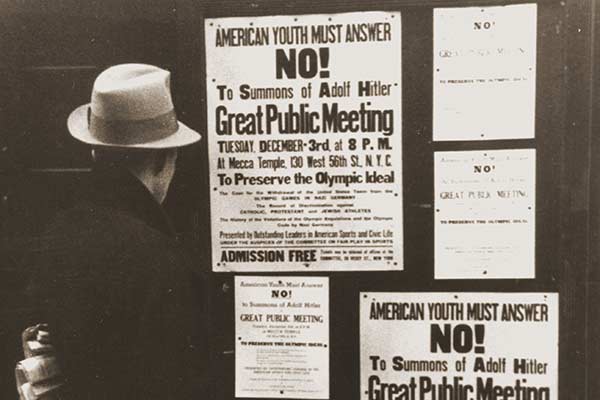
Of course, a great many New Yorkers were entirely unhappy with any participation in the 1936 Olympic Games, given that they were being held that year in Berlin, in the heart of Nazi Germany.

A concerted effort by politicians (including Fiorello LaGuardia), religious leaders and athletes to boycott the games was met with defeat, but in the summer of 1936, a group of Jewish athletes competed in a ‘counter-Olympics’.

For more information, check out our article Boycott the Olympic Games!

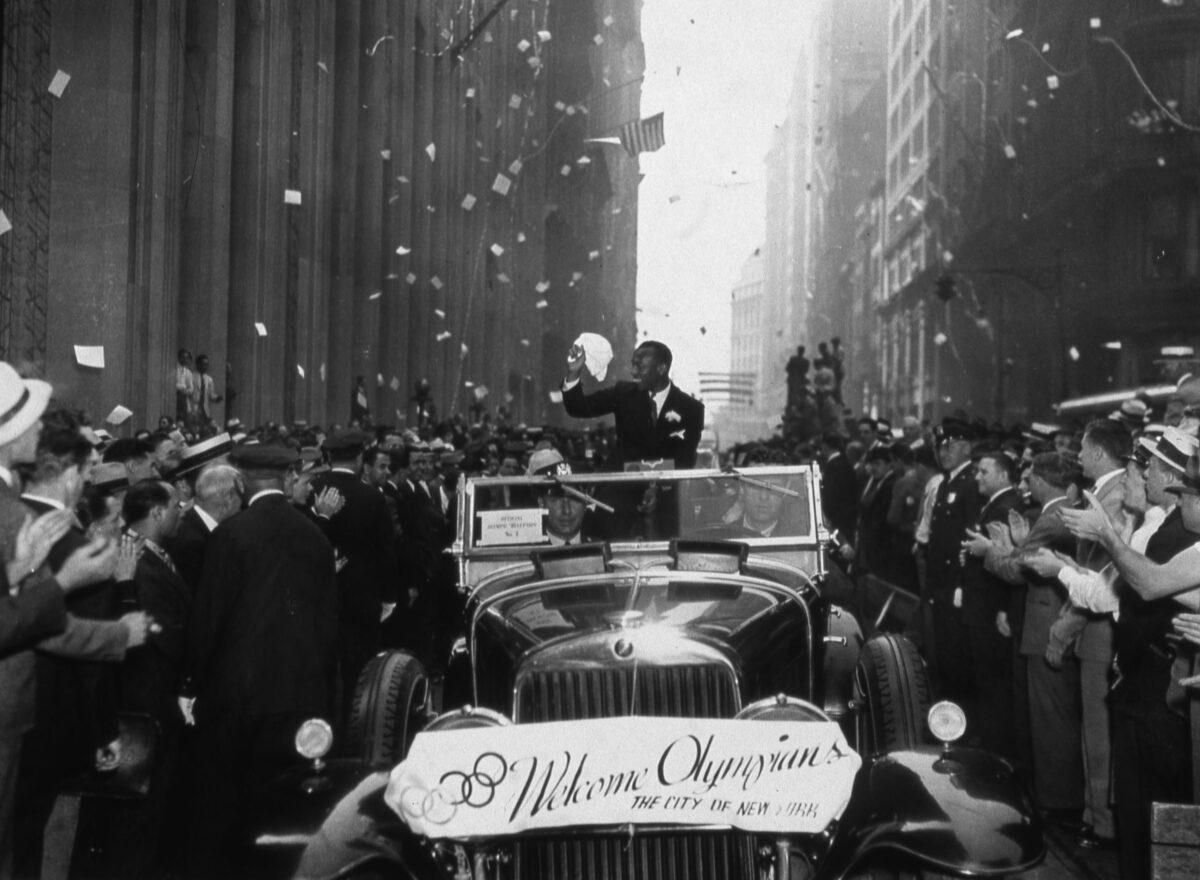
New York Welcomes Olympians

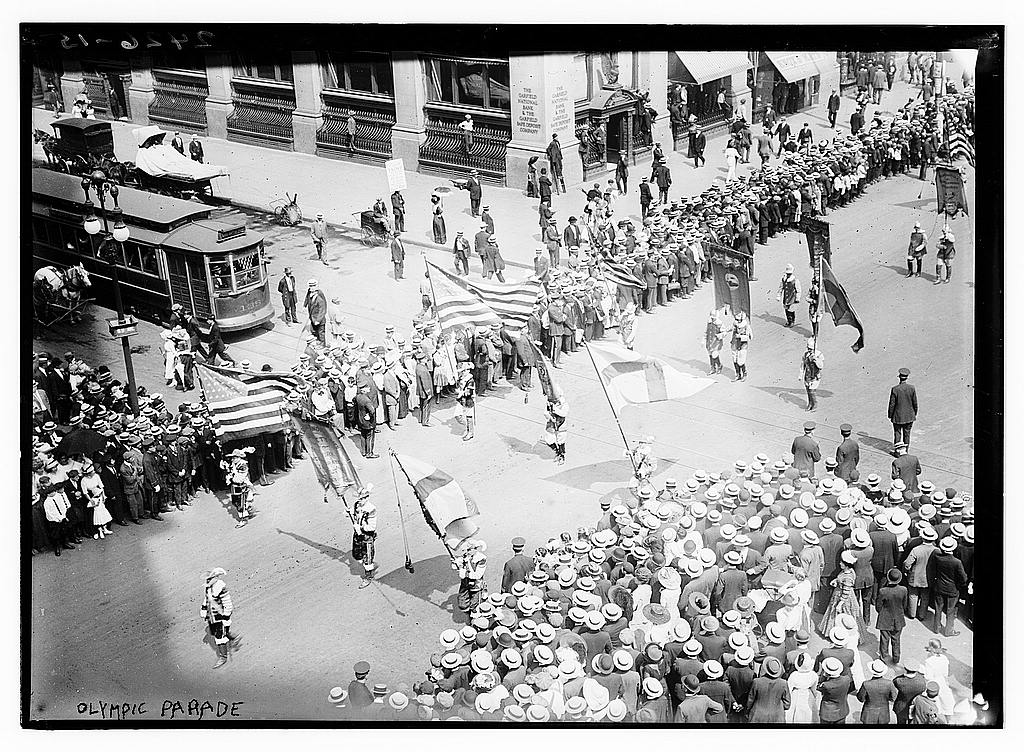
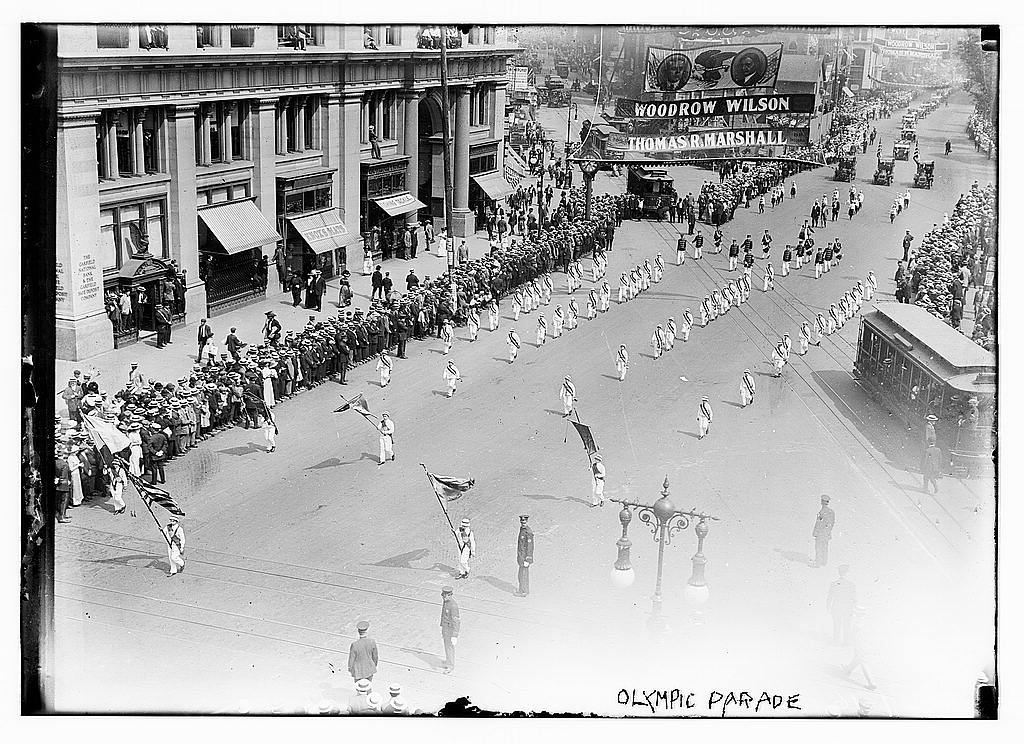
And finally, here are some pictures of two glorious receptions of American Olympians held in New York — after the 1908 games (in London) and the 1912 games (in Stockholm).
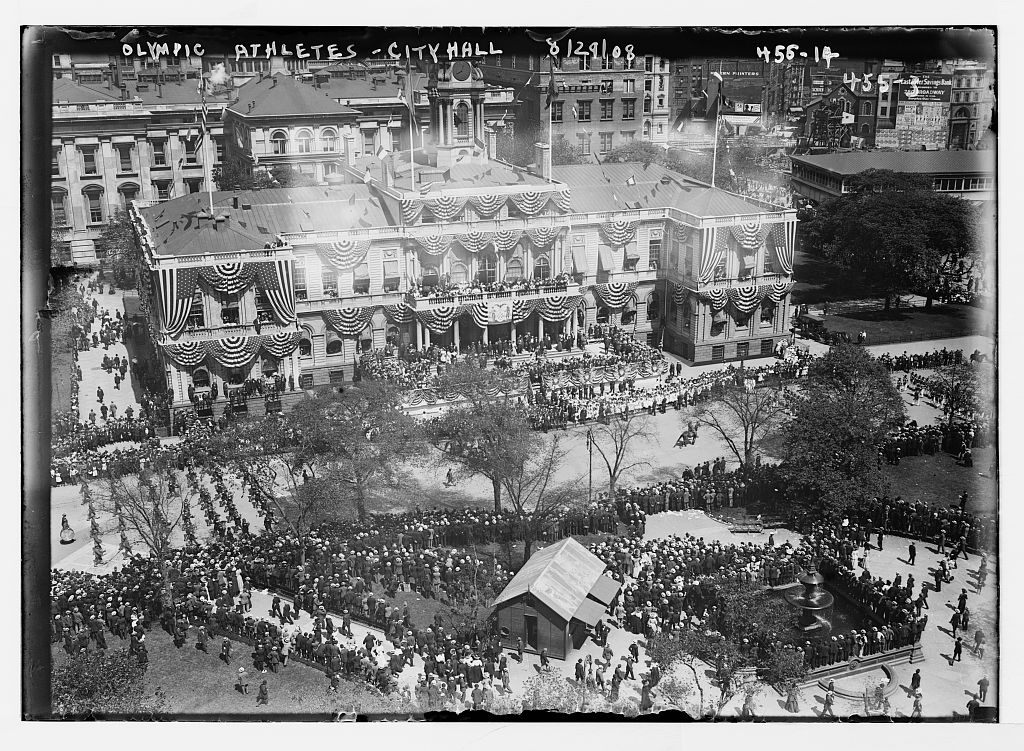
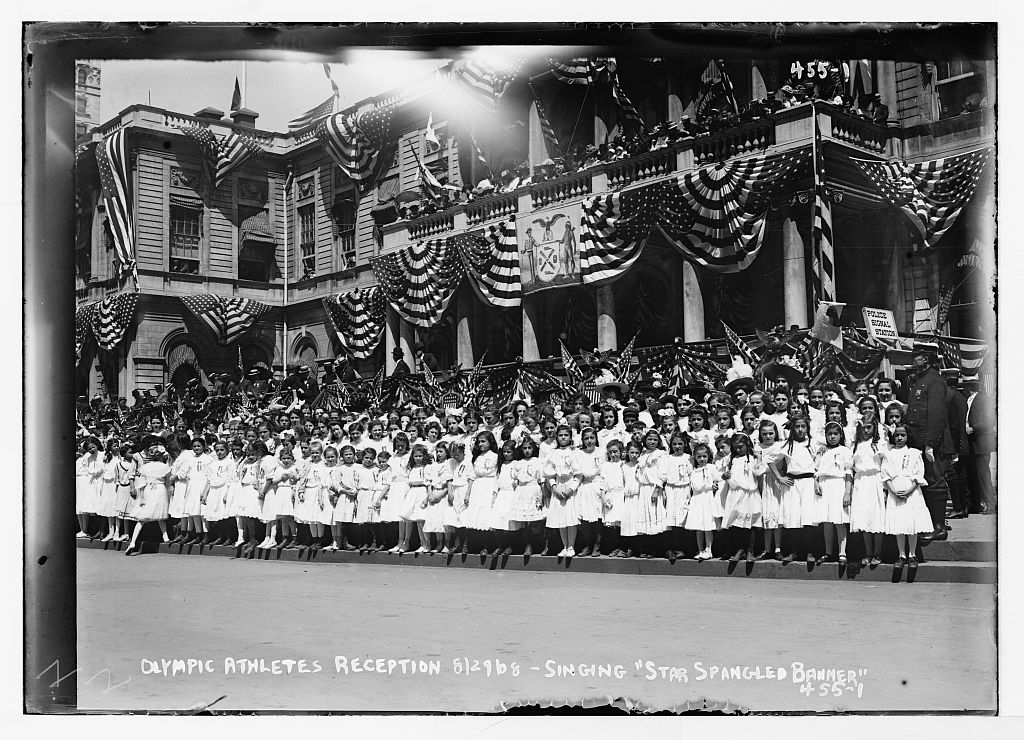
Photo showing an event in New York City related to the 4th Olympic Games, held in London, England, in 1908. Library of Congress
Photo showing an event in New York City outside City Hall, related to the 4th Olympic Games, held in London, England, in 1908. Library of Congress
Photo showing a parade in New York City related to the 5th Olympic Games, held in Stockholm, Sweden, in 1912. Library of Congress

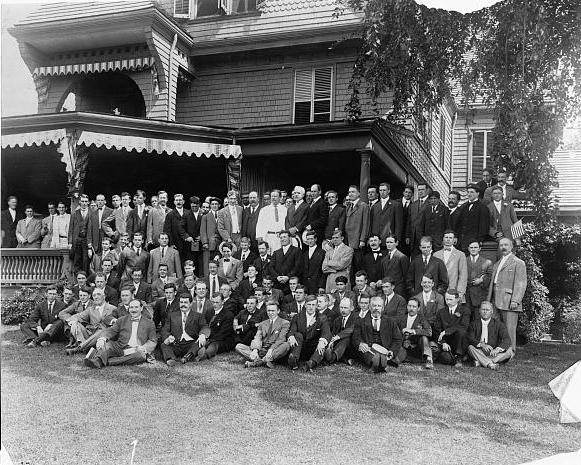
And finally, here’s a swell photograph — no other adjective to describe it — of the U.S. Olympic team from 1908, posing with President Theodore Roosevelt at his home in Sagamore Hill, Long Island.
Categories
Neighborhoods Parks and Recreation

Nostalgia for Astoria Pool, an early Robert Moses project with a high diving, Olympic-sized history

Astoria Pool is the largest venue for swimmers in New York, outside of the Hudson and East Rivers and, of course, the ocean.

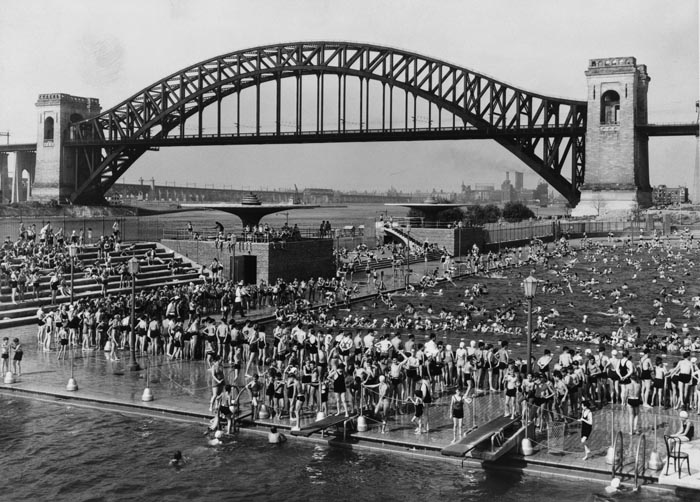
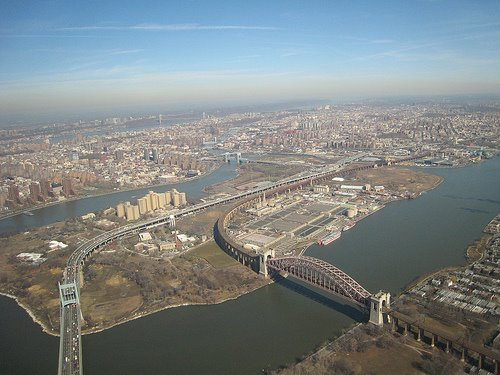
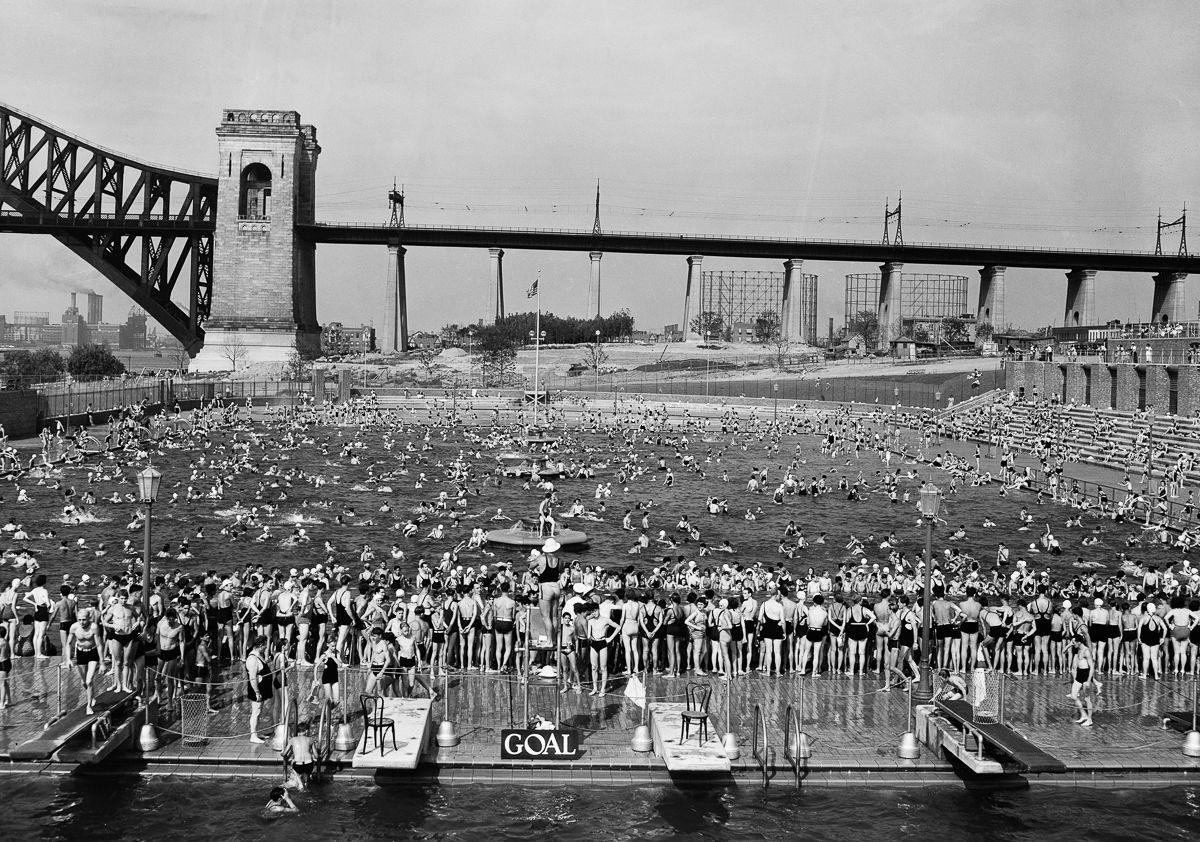
Its location in Astoria Park is certainly theatrical, parallel with the river and in sight of two spectacular bridges (the Robert F. Kennedy and the Hell Gate) that sail over to Randall’s Island.

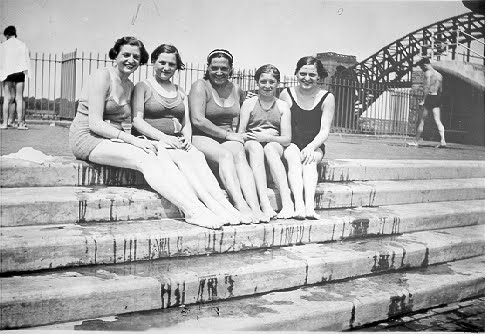
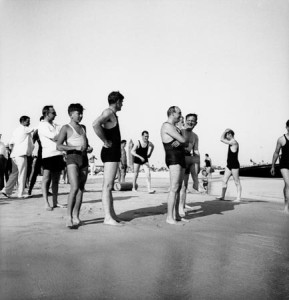
Mermaidens: Five sisters in bathing suits pose on steps of Astoria Pool, circa 1938. Courtesy the LaGuardia and Wagner Archives

For a public pool, its so big (330 feet long, with a supposed capacity of 3,000 people) that it might be more comfortable in a theme park.

Riding the Wave

The pool, the park, one of the bridges (the RFK, aka the Triborough) and the roads you probably used to get to thee places were all 1930s projects overseen by New York Parks Commissioner Robert Moses.

But the real fuel behind the creation of Astoria Pool was the Works Progress Administration, a federal agency that infused billions of dollars into local communities during the Great Depression.

The money came just as Moses (above, in a swimsuit, at Jones Beach) was ascending into his various governmental roles in city and state government. The result was some of his most earnest and arguably most effective projects.

Perhaps his legacy might not be as hotly debated today had he stopped with his greatest hits of the decade: the Triborough, the parkways and the many miles of parkland scattered throughout the city.

And of course the swimming pools, eleven in total, built during the 1930s.

Dipping A Toe Into Swimming Pools

They were of special note as a culmination of the modern public facility, using modern design and new technology to create places of recreation for regular New Yorkers.

The idea of municipal pools wasn’t new — Philadelphia had them as early as 1890s, and New York had plenty of public baths and even floating baths  — but standards of decency had changed by the 1920s.

Women could cavort with men, as could different social classes. (And occasionally people of different races, although many of Moses’ own pools were guilty of segregation.)

Astoria Pool, with its subdued Art Deco design, was the grand model for all the new pools in the other boroughs. And it was certainly the most popular, from the moment it opened in July 1936.

It became a daily destination during the summer for neighborhood children.

“In 1936, I was eight years old,” recalled New York Yankee superstar Whitey Ford. “You could stand by the pool on a hot summer day –along with a couple thousand neighborhood kids in the main pool and maybe another hundred in the diving pool — look up, and see quite a sight. On the right was Hell’s Gate Bridge….and on your left, was the brand new Triboro Bridge heading towards the horizon.”

But Moses wasn’t just concerned with public accommodation. He had different intentions for this pool, reflected in the semi-circle of bleachers and that spectacular diving platform stretching like a plant over a deeper half-moon pool.

The Astoria Pool was meant to create swimming superstars.

The Diving Board and the Butterflies

Two days after its opening, on July 4, 1936, Astoria Pool hosted the U.S. Olympic trials in swimming and diving. From these events, victors went straight over to the Games, hosted that year in Berlin.

And they weren’t the only athletes tested that month in a New York WPA project.

Across the water, at Randall’s Island, Olympic track-and-field trials were hosted at Downing Stadium, producing the man who would become the most famous Olympian of the ’36 games — Jesse Owens, winner of four golds. [For more information, check out the podcast on Randall’s Island and the 1936 Olympic trials.]

Two massive Olympic torches stood astride the pool as competitors fought for a spot on the Olympic team.

Events at the Astoria Pool in July 1936 produced several winners, including gold medal swimmers Jack Medica and Adolph Keifer and a slate of athletes that went on win ten of twelve medals in men’s and women’s platform and springboard diving.

(Interestingly, the other two medalists were Germans. And both their medals were bronze, yet another result that must have angered Adolf Hitler.)

Olympics trials returned to Astoria Pool in 1952, and again in 1964, producing athletes that again nearly swept the diving events in the Tokyo games.

Swimmer Don Schollander went on to win 4 golds that year, the most of any athlete in 1964 and the most medals won by an American athlete since Jesse Owens.

But, as it would turn out, the biggest swimming celebrities fostered from the Astoria Pool were neighborhood boys.

Aqua-Zanies

Imagine being a kid in Astoria, Queens, in the early 1940s, living next to a swimming pool that had helped produce the world’s greatest swimmers!

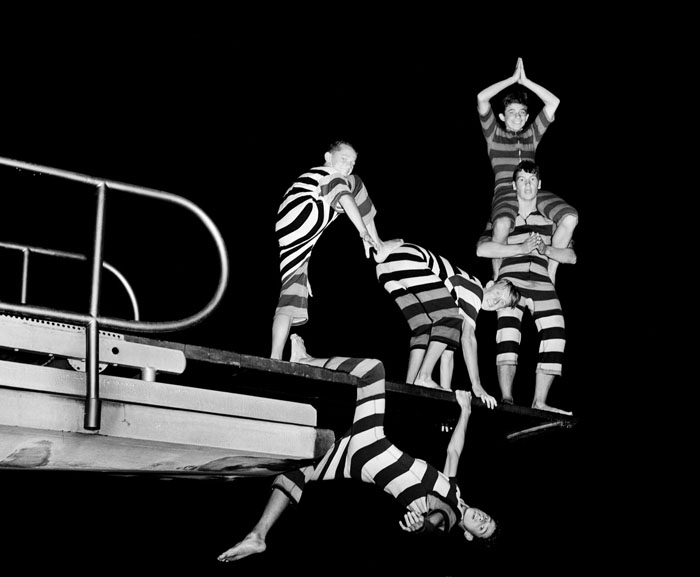
A group of local swimming enthusiasts looked at Astoria Pool’s extended diving platform and saw a opportunity to entertain, forming an athletic-comedy group called the Aqua-Zanies.

Garbed in matching stripped ensembles, the teenagers performed wacky acrobatic stunts from off the platform — darting, twirling and sometimes bellyflopping into the water below.

They soon became ‘America’ leading water comedians‘, performing throughout New York and even going on an international tour in the early 1950s. Several Aqua-Zanies went onto more legitimate swimming careers.

And certainly these effortless performance have inspired hundreds of others to leap from the Astoria diving platform with equal attempts at gravity-defying levity.

Although the swimming pool has remained a important part of the community even to this day, that diving platform, weathering decades of elemental abuse, was shut down in the 1970s and has become something of a beloved ruin.

In June 2006 it was officially designated a New York City landmark. And the pool is open for swimming again. Let your aqua-zany dreams soar!

Thanks to the Parks Department for use of the images above. (Diving platform photo courtesy NYC Dept of Records)

Categories
Podcasts Sports

PODCAST: Randall’s Island and the 1936 Olympic trials

PODCAST The smaller islands of the East River reveal fascinating secrets of the city’s past, and Randall’s and Ward’s Islands are no exceptions.

Found out how these former potter’s fields are related to the most important Olympics-related event New York City has ever seen. The cast includes a swashbuckling British engineer, Jesse Owens, Tony Bennett, Franklin Delano Roosevelt, Fiorello LaGuardia, Robert Moses, and Pearl Jam!

2326150506_5987517b19

The Olympic trials at Downing Stadium not only made Jesse Owens (seen below in the 100 meter) into an athletic superstar, but the black and Jewish American athletes who qualified that day became an embarassment to the Olympic host city, Berlin, and Nazi leader Adolf Hitler.

jesse-owens

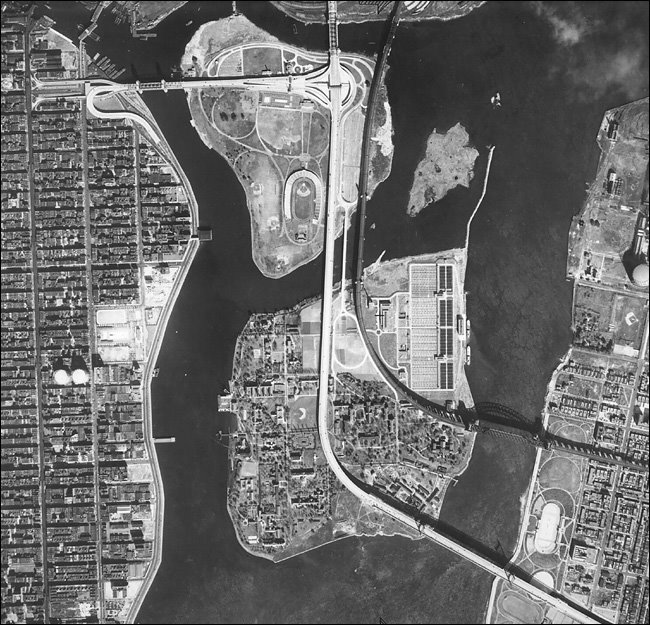
From a stock picture in the 40s, when Randall’s and Ward’s were still seperate entity and the Little Hell Gate was still a existing body of water.
1948-randalls-and-wards

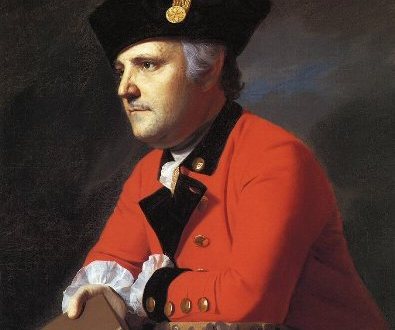
Engineer and interogator John Montressor, who owned Randall’s Island during British occupation.
montresor

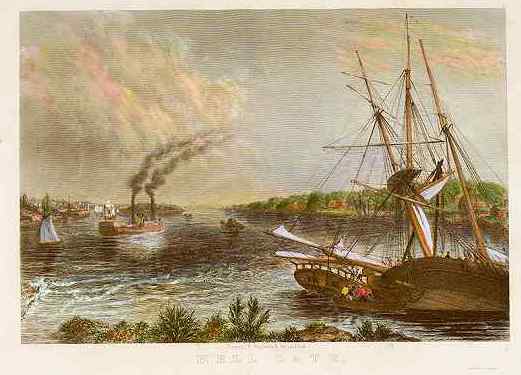
From a British print — the treacherous Hell Gate pass, as seen from ‘Great Barn Island’ (later to be known as Ward’s Island)

hell-gate-great-barn


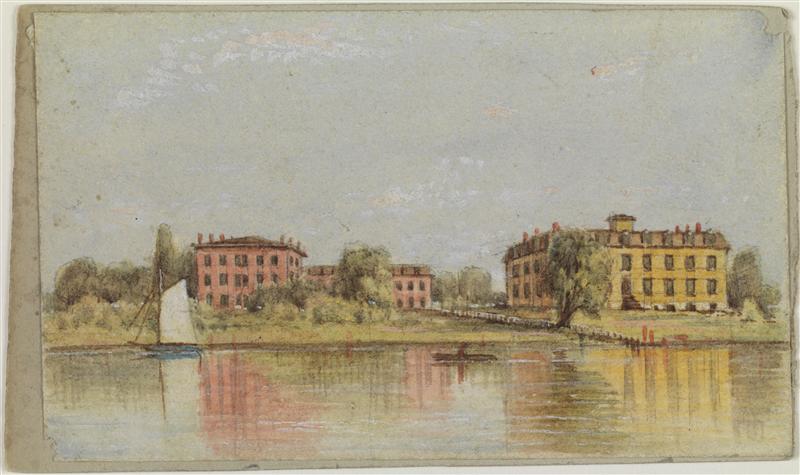
Two hospitals on Wards Island, 1880

Museum of the City of New York

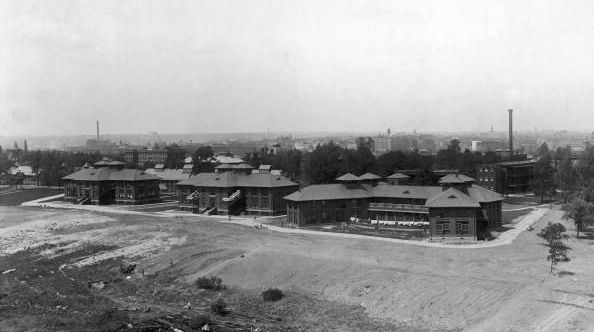
A picture of the Infant’s Hospital on Randall’s Island, 1935

infant-randals

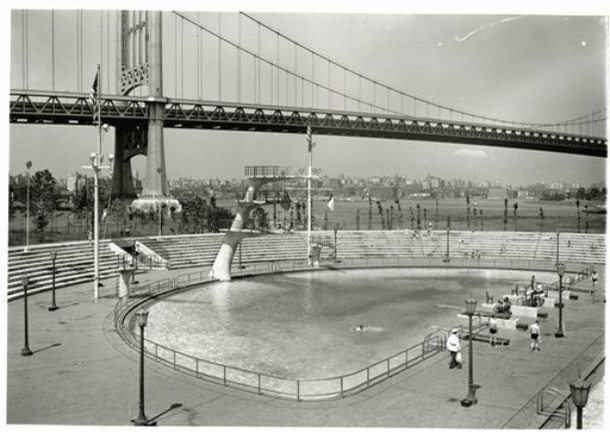
The Triborough Bridge as seen from Astoria swimming pool, circa the bridge’s date of birth — 1936

1936-Triborough-Astoria-Pool

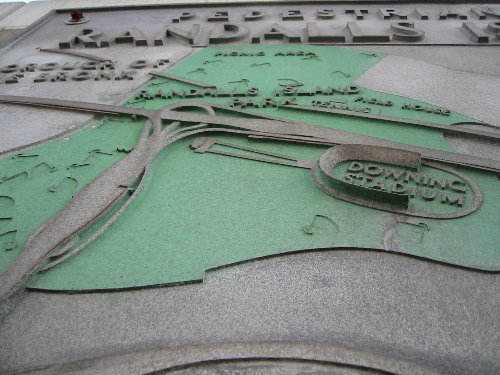
From on old tactile sign on the island, indicating the placement of Downing Stadium.

randalls
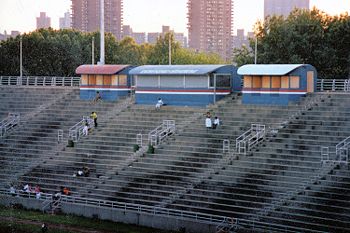
Downing Stadium, the later years.

downing

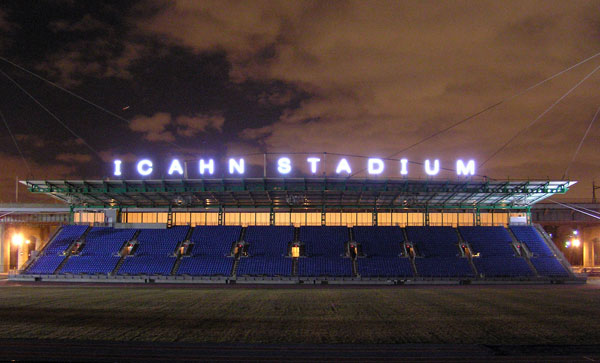
The spectacular new Icahn Stadium at night

2006-09-Icahn-Stadium_SloanLED

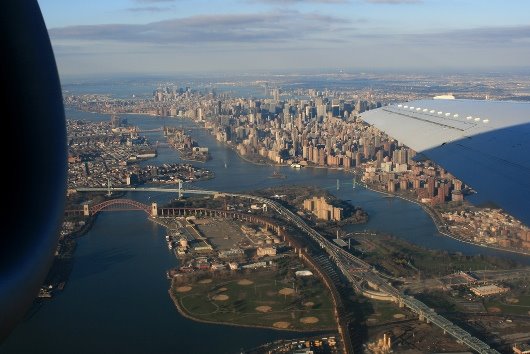
Another angle, with downtown Manhattan at top.

randallsisland

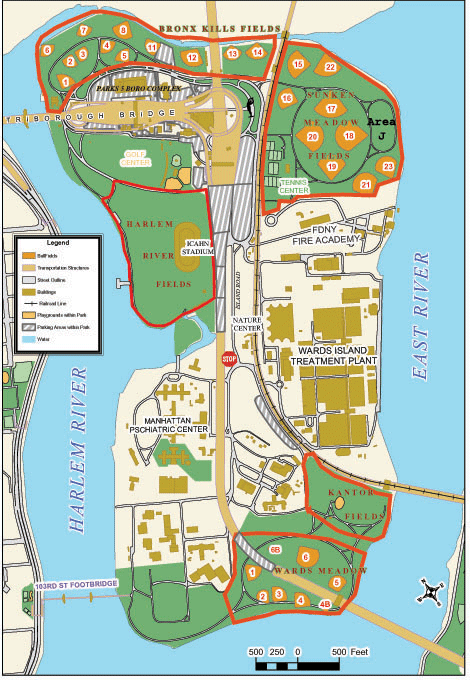
A current map of Randall’s and Ward’s.

current-map