Categories
Sports

Boston vs. New York: You think this is just about sports?

Here’s a fun article I wrote back in 2012 that may find new meaning for many of baseball fans this week. Again, happy to take any corrections on any particular sports statistics! – Greg


When again we see New York Knicks face off against the Boston Celtics this weekend, the beast of an old rivalry will continue to roar, the latest configuration of a fierce competition between two of America’s greatest cities.

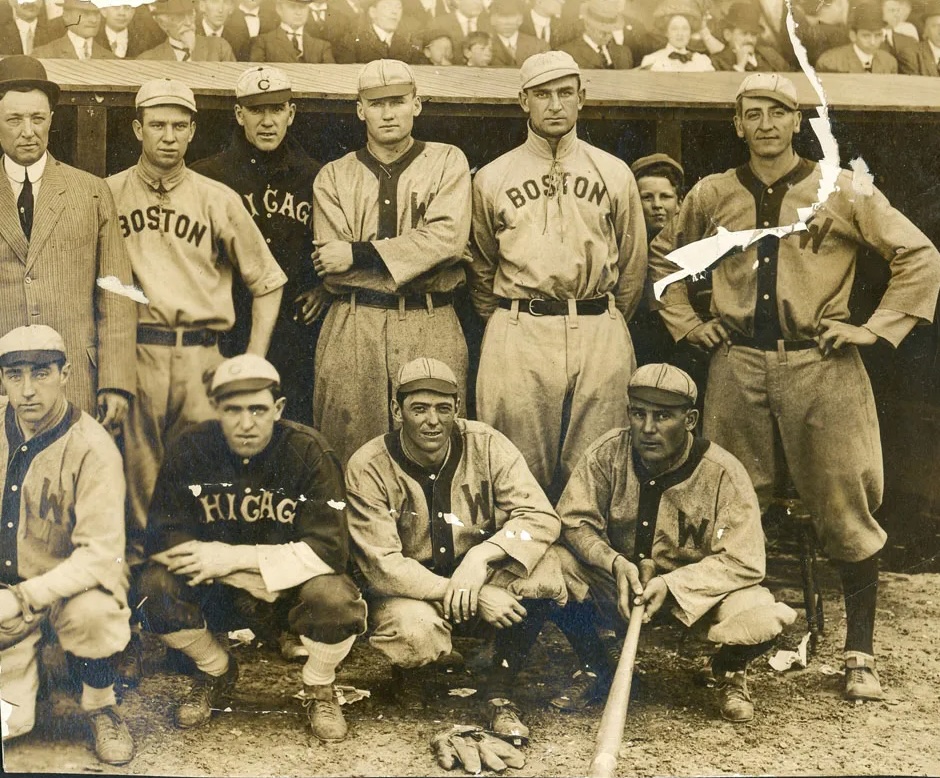
While the rivalry between Boston and New York primarily manifests within the world of sports — the venue of modern warfare —  it echos a spirit of competition that has existed between the coastal cities for over two centuries. But how did it begin?
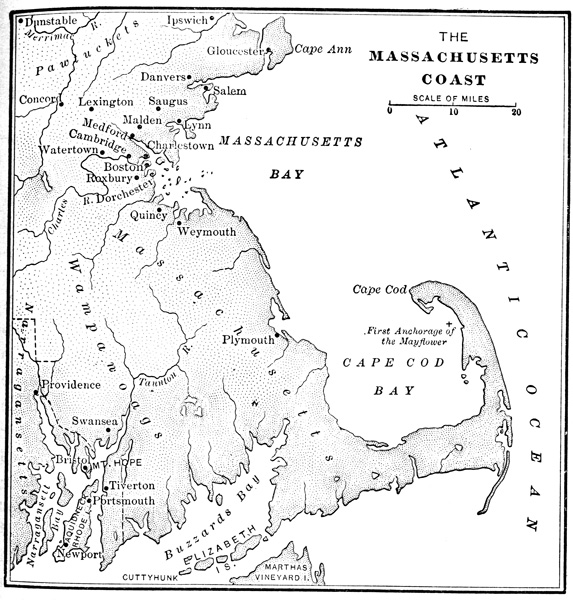
The cultures of the cities which would become Boston and New York were drastically different from the very start. Boston, after all, was founded in 1630 by Puritans of the Massachusetts Bay Colony, a society based on specific religious values, with little tolerance for variation. New Amsterdam, New York’s pre-cursor, developed as a company town in the 1620s and was quite renown for being notoriously value-less, relatively speaking.

The Puritans, with a moral superiority that paralleled national antagonisms, believed a distasteful mix of cultures, an abhorrent godless mixture festered there in New Amsterdam. As a secular development, New Amsterdam fostered a policy of religious freedom far more in keeping with modern American ethics than the stringent, finger-pointing Puritans. Many so-called heretics fled the Puritans and were granted haven by the Dutch.

The Puritans were fortified by their connection to England, while New Amsterdam was a rowdy outpost of a faltering world power. By 1644, Massachusetts had created a powerful alliance with other colonies, allowing England a stronghold in the New World.

New Amsterdam, meanwhile, deteriorated as the Dutch focused on warfare with the Lenape and encroaching colonies such as Swedish. Peter Stuyvesant arrived in 1647 to shape up the Dutch town, but by then motions were already in place to drive them out entirely.

By 1664, the Dutch were thrown out of New Amsterdam and the defeated city was renamed New York, part of a larger British colony named for the Duke of York.  Boston, for its part, became the premier British bastion, capital of the Dominion of New England, and a place many believed chosen by God (the storied ‘City Upon a Hill’) as a shining beacon of humanity. Boston was right to have an attitude.

Even as New York and Boston became competing ports in the British era, the Massachusetts city always had the edge.

America has benefited from Boston pride. The opening salvos of American independence were born from clashes between Boston citizens and British soldiers, rebellion in the form of bloody clashes (the Boston Massacre) and economic unrest (the Boston Tea Party).

As colonists rose up against British oppression during the Revolutionary War, they could look to the Boston battle at Bunker Hill as an example of victory and perseverance.

Bostonians celebrated Evacuation Day on March 17 because the British were booted from there in 1776 and never returned. New Yorkers celebrated the same holiday on November 25 because the British kept that city for most of the war and weren’t expelled from it until 1783.

Both cities struggled for economic footing after the war. Both had sophisticated ports and bustling harbors ready to send and receive shipping vessels, manufacturing plants rivaling anything overseas, and a growing class of wealthy old-family elites. In Boston, they were the Brahmins and went to Harvard. In New York, they were Knickerbockers and turned to Yale or Princeton. (Columbia was not quite in their league yet.)

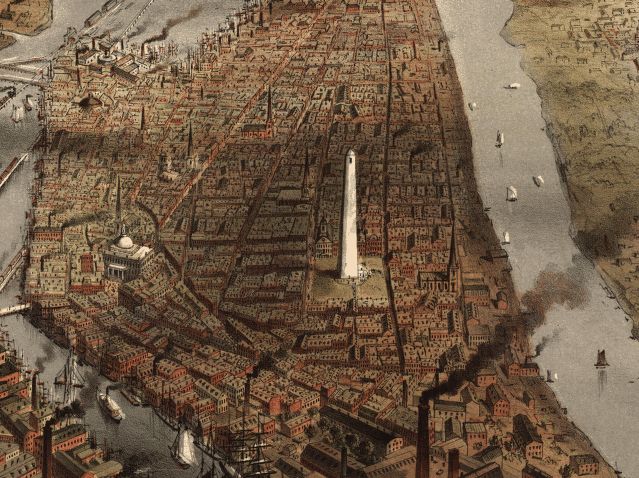
Below: Boston in 1873
But only one city had access to a river inland, a point made explicit with the opening of the Erie Canal in 1825. Suddenly, New York became a gateway into the expanding American west. Not only would New York traders and merchants grow rich and form a nouveau upper-crust (thriving in the wake of men like John Jacob Astor), the canal would siphon away much of Boston’s livelihood, one ship at a time.

Bostonians were not pleased. The founder of Boston’s first daily newspaper saw a diversion of goods to New York as ‘evil‘ and recommended the city jump on a newfangled transportation idea just debuting in England — the steam-powered railroad. Within a few years, train tracks stretched down the old Boston Post Road (almost, but not quite, to New York) in an effort to connect Boston to the waters of the Hudson River.

Or as author Eric Jaffe observes: “…the goal of everyone involved in Boston’s railroad system at the time was clear: to move Manhattan toward the [Massachusetts] Bay along the highways of the future.”

The two cities remained locked in quiet, but stiff, competition throughout the 19th century, not only in industry and trade, but in intelligentsia, literature, politics and social ‘quality’.

The dynamics of both cities changed with the immigration boom that began in the late 1840s. Soon, one fifth of the populations of both cities would be Irish.

The culture of Boston was greatly affected, perhaps more that any American city, by these new Irish arrivals, but it was New York that felt the most weight. By 1860, with New York as the biggest city in America, even the city of Brooklyn had a greater population than Boston.

Bostonians had their legendary, steely pride for their city — in many ways, America’s first, greatest city — but New York was a powerful, untouchable metropolis by the time of the Gilded Age. Despite its grime and squalor, despite its sinful and corrupt reputation (or perhaps because of it), New York had bested Boston to become the biggest, richest, most powerful city in America by the time of the Civil War.

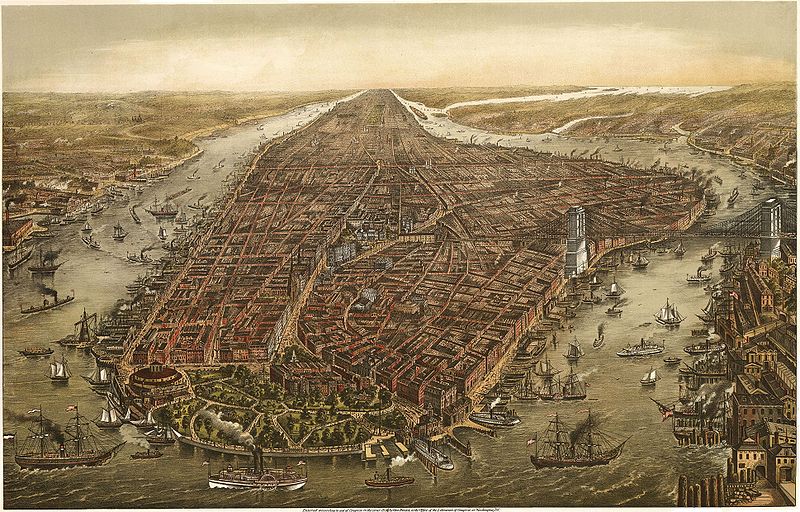
Below: New York City in 1873 (from George Schlegel lithograph)
And so it was that, in the late 19th century, an apparatus arose for which the undercurrent of rivalry between the cities could take a more explicit, more robust form — sports.

Universities already organized sports teams — with accompanying rivalries of their own — and now, in the post-war era, professional teams began sprouting up in a wide variety of games.

The first sports leagues formed in the Northeast, thus it was natural that teams from Northern and Rust Belt cities would often clash.

The first organized baseball league principally concerned New York and Brooklyn teams. (Don’t even get me started on the New York/Brooklyn rivalry!) Teams wouldn’t truly take on defined regional characters until the formation of the National League in 1876, which included the Boston Red Stockings, a precursor of the Sox, among its original teams.

The two baseball franchises that would cement the Boston-New York conflict were born in the 20th century. The Boston team came first, in 1901, with the inauguration of the American League, but were not referred to by their distinctive bold-colored foot coverings until 1908.

In 1904, the Boston team was declared champion of the American League. However, National League teams looked down upon the ‘inferiority’ of the younger American League teams, and thus, what might have been the first World Series — between the Boston Red Sox and National League victors the New York Giants — never occurred.

The Giants were considered New York’s principal baseball franchise and even spawned a successful soccer team. (They frequently played a soccer spinoff of the Boston Beaneaters.)

By this time, another New York team limped into the city in 1903 — the Highlanders, who later changed their name to the New York Yankees.
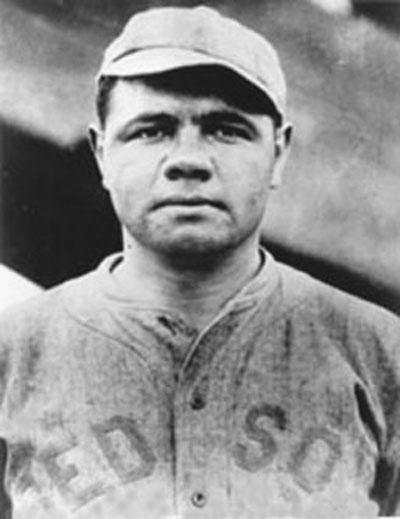
In 1918 came an event that changed the fortunes of the Boston Red Sox and the New York Yankees forever. Red Sox star Babe Ruth was traded to the New York Yankees during the off-season 1919-1920, allegedly because Sox owner Harry Frazee was looking to finance his Broadway musical offering No No Nanette. (That’s the popular legend, although many believe the trade was to finance another, equally  ridiculous production called My Lady Friends.)

Whatever the origin of the ‘Curse of the Bambino’, it had a psychological effect on fans and players on both sides. Boston, once the league’s most successful squad, didn’t win another World Series until 2004, while the Yankees, well, changed sports history with 27 World Series victories.

The deep animosity spilled over into other sport match-ups. In basketball, the New York Knicks pale under the legacy of the Boston Celtics, simply put the best basketball team in history.

In hockey, the Boston Bruins and New York Rangers became the first two American teams to play each other for the Stanley Cup in 1929. The Bruins cleaned the ice with the Rangers.

But it’s in football that the two cities have had some truly dramatic clashes. The New York Giants football team, hardly a threat when they first formed in the late 1920s, were a force to be reckoned with by the time they first met the Boston Patriots in 1960.

Notably, when the Boston team changed its name to the New England Patriots and moved to Schaefer Stadium in Foxborough in 1971, the first game they played was against the Giants.

The Giants and the Patriots have met in the Super Bowl just once before — and notably so — in 2008. New York was the victor, in one of the greatest upsets in sports history. This Sunday, Boston seeks revenge. As you sit through a halftime show with Madonna (a New Yorker in her formative years), ponder upon the weight of history hanging over both teams.


To sports fans: I welcome any clarification of details if I’ve gotten something wrong!
Categories
Parks and Recreation Sports

New York City loves the Olympics — despite never hosting them

OLYMPICS ROUNDUP Starting today Tokyo, the biggest city in the world, will host the Games of the XXXII Olympiad aka the Tokyo Olympics 2020 (in 2021). The Japanese city first hosted the games back in 1964.

New York City, the biggest city in the United States, has never hosted the Olympics Games.

The city did aim to host the 2012 Olympics in an ultimately unsuccessful bid back in 2005. Those games went to London. 

Alas.

A great many New Yorkers were quite happy to be without that international sporting event in the city. Personally, I would have loved to have seen New York become even more international for a few weeks, although I’m relieved that plans for that catastrophic Olympic Village in Queens were never realized.

Outside of that, the closest the city has ever gotten to the Olympics is a little under 300 miles — the distance from New York to Lake Placid, which hosted the 1980 Winter Olympics.

Those games featured the now-storied ‘Miracle on Ice‘ match between the USA and the USSR.

But did you know that the Russian team completely iced the US team just a few days earlier in an exhibition game played at Madison Square Garden? You can read more about that in my article ‘No Miracle on Ice’ from February 2010.

Although New York has never hosted the Games, when it comes to events before and after the Olympics, New York City’s all over them.

Randall’s Island

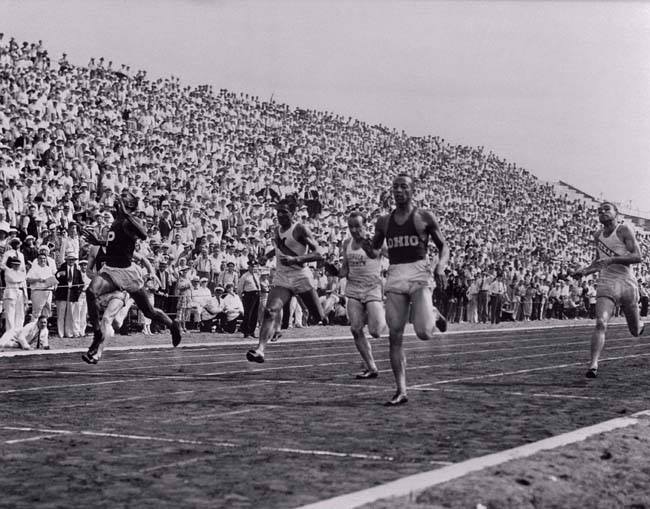
Randall’s Island has hosted several Olympic trials, including one of the most famous at all, the track and field events from 1936 which produced sports legend Jesse Owens.

You can hear all about it in one of our very early podcasts on the history of Randall’s Island and the 1936 Olympic Trials.

Astoria Pool

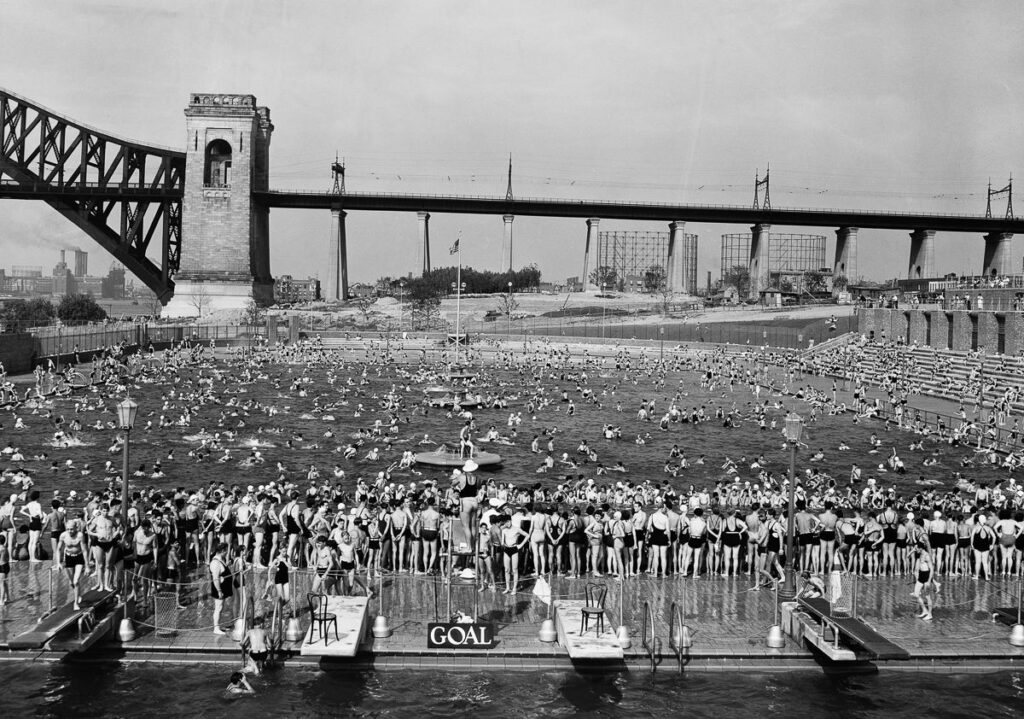
Around the same time, Robert Moses commissioned Astoria Pool with the explicit purpose of hosting Olympic swimming trials.

That 1936 event, featuring its dramatic diving platform, produced several American gold medalists. Two massive Olympic torches stood astride the pool as competitors fought for a spot on the Olympic team.

Olympics trials returned to Astoria Pool in 1952, and again in 1964, producing athletes that again nearly swept the diving events in the Tokyo games. 

Swimmer Don Schollander went on to win 4 golds that year, the most of any athlete in 1964 and the most medals won by an American athlete since Jesse Owens.

You can read more about Astoria Pool here — Nostalgia for Astoria Pool

The Counter Olympics

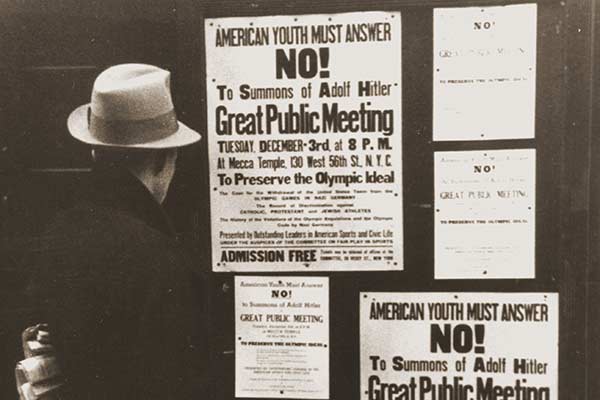
Of course, a great many New Yorkers were entirely unhappy with any participation in the 1936 Olympic Games, given that they were being held that year in Berlin, in the heart of Nazi Germany.

A concerted effort by politicians (including Fiorello LaGuardia), religious leaders and athletes to boycott the games was met with defeat, but in the summer of 1936, a group of Jewish athletes competed in a ‘counter-Olympics’.

For more information, check out our article Boycott the Olympic Games!
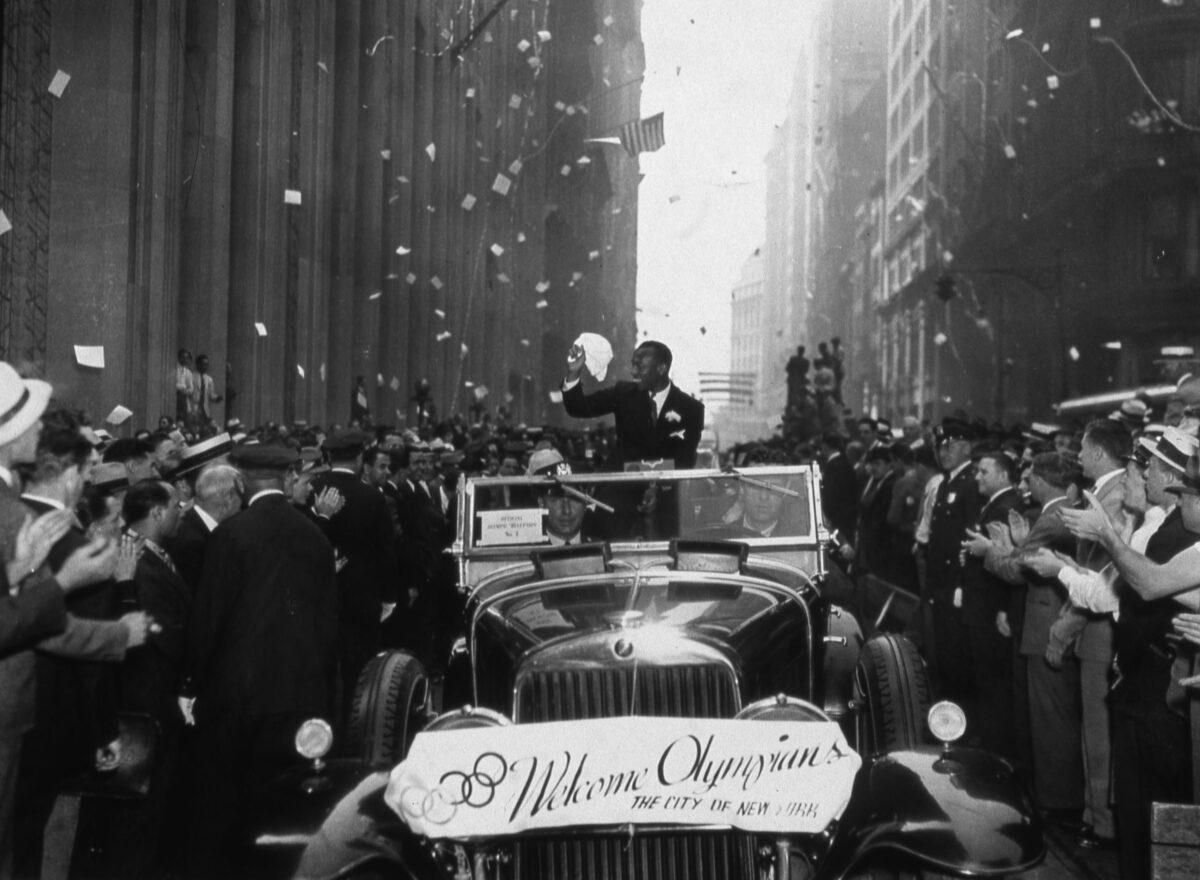
New York Welcomes Olympians

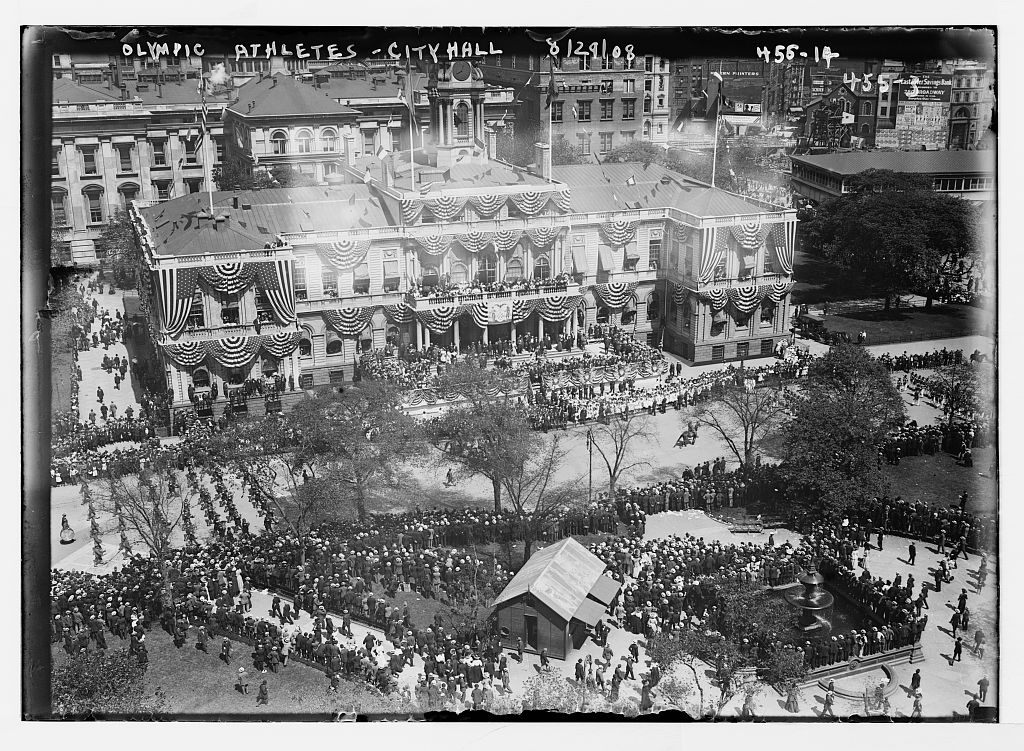
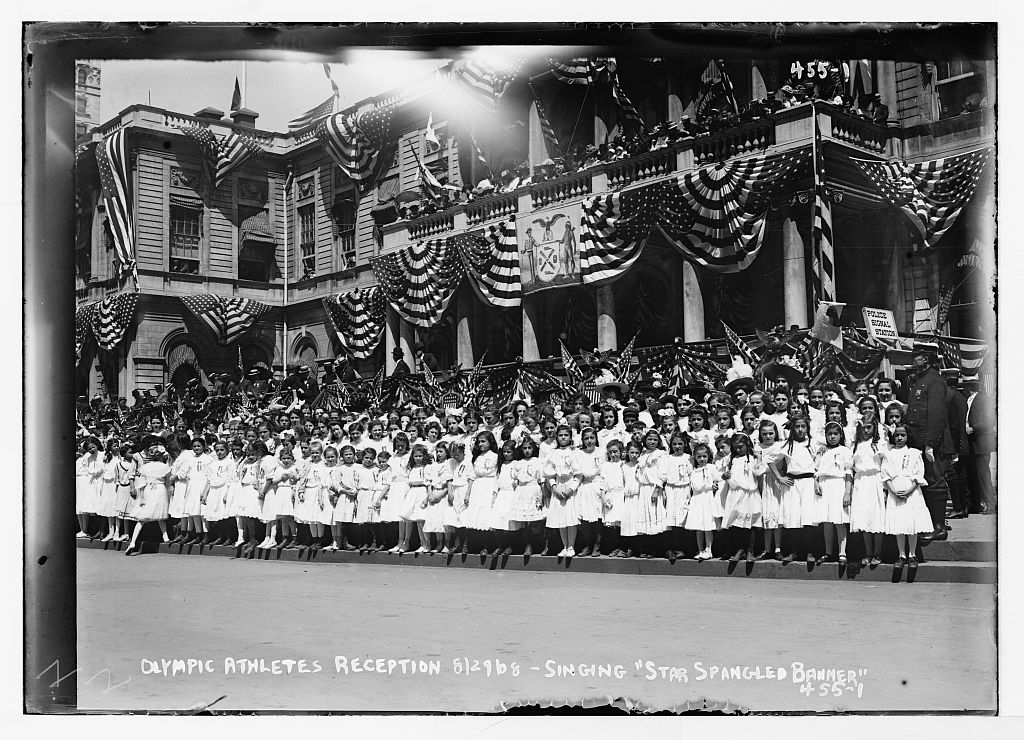
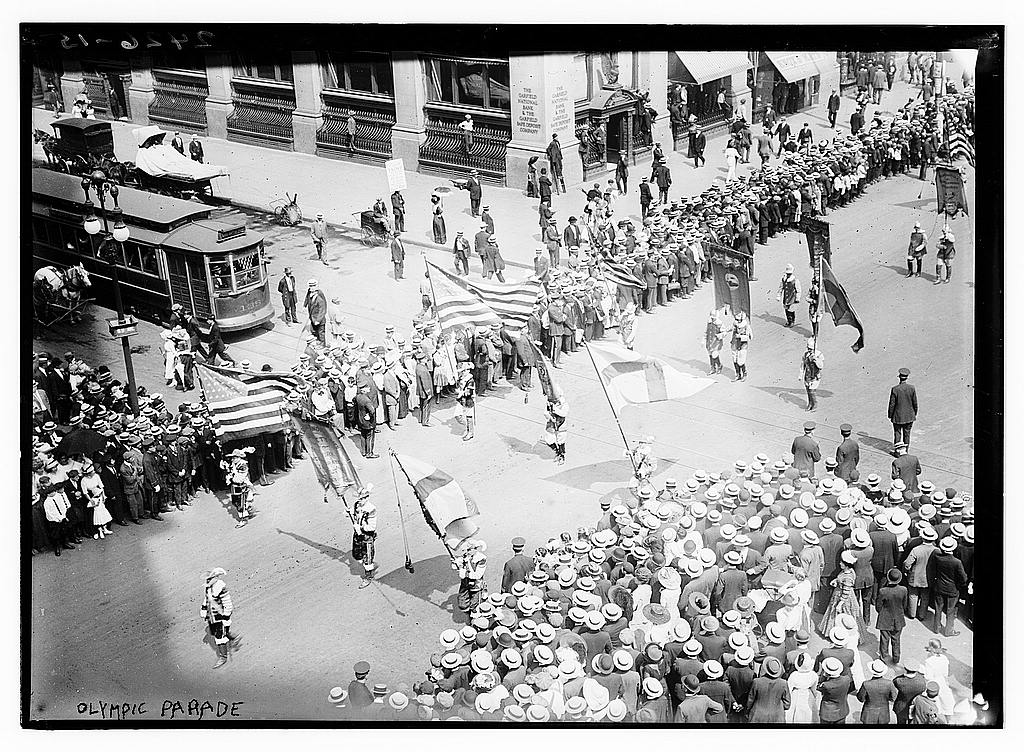
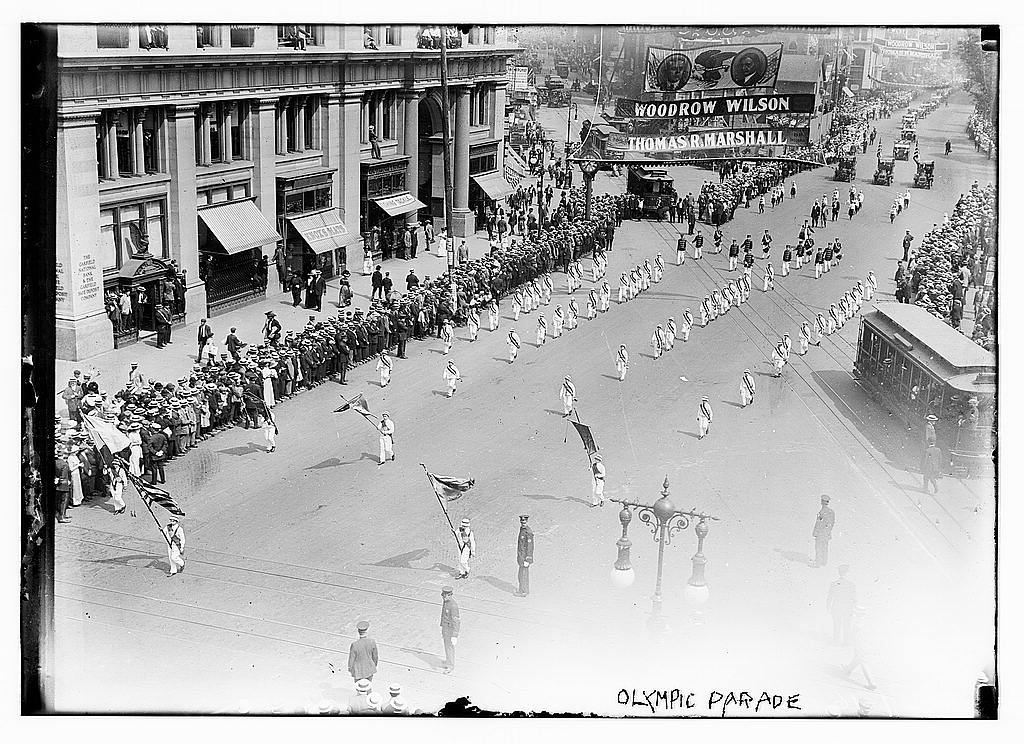
And finally, here are some pictures of two glorious receptions of American Olympians held in New York — after the 1908 games (in London) and the 1912 games (in Stockholm).

Photo showing an event in New York City related to the 4th Olympic Games, held in London, England, in 1908. Library of Congress
Photo showing an event in New York City outside City Hall, related to the 4th Olympic Games, held in London, England, in 1908. Library of Congress
Photo showing a parade in New York City related to the 5th Olympic Games, held in Stockholm, Sweden, in 1912. Library of Congress

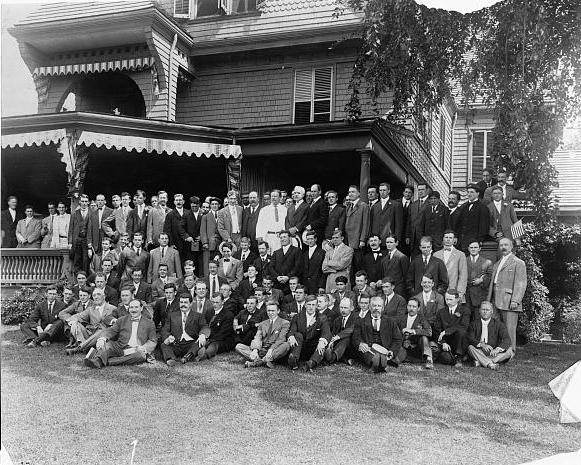
And finally, here’s a swell photograph — no other adjective to describe it — of the U.S. Olympic team from 1908, posing with President Theodore Roosevelt at his home in Sagamore Hill, Long Island.

Categories
Sports

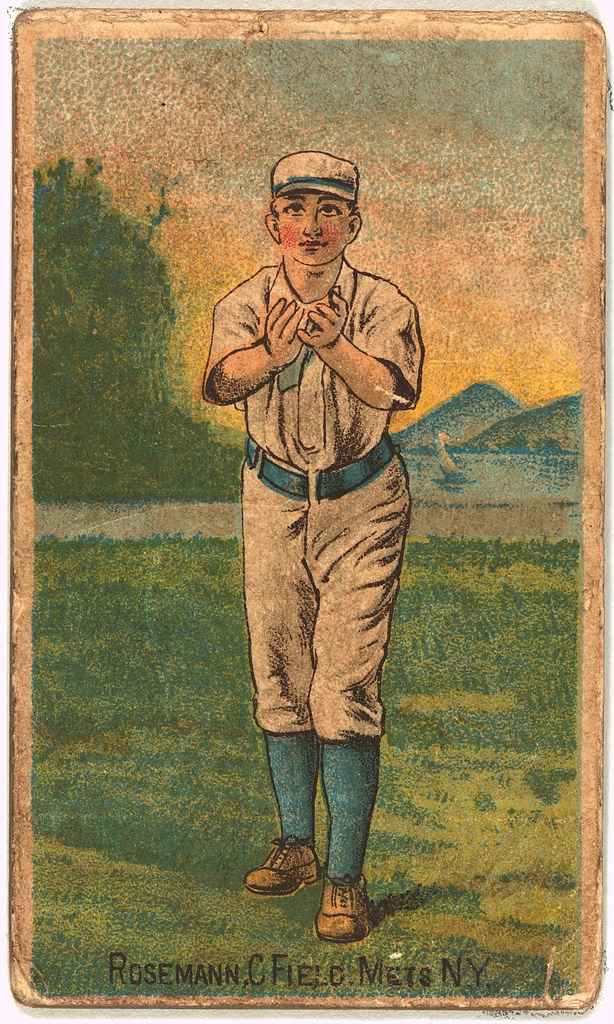
Meet the Mets! The Metropolitans, that is, an early NY baseball team

The New York Mets, 2015 National League Champions and New York’s perpetual baseball underdogs, are only 53 years, formed in 1962 to fill the void after the departure of the Brooklyn Dodgers and the New  York Giants* to California. But in name, at least, they’re older than even the Yankees.

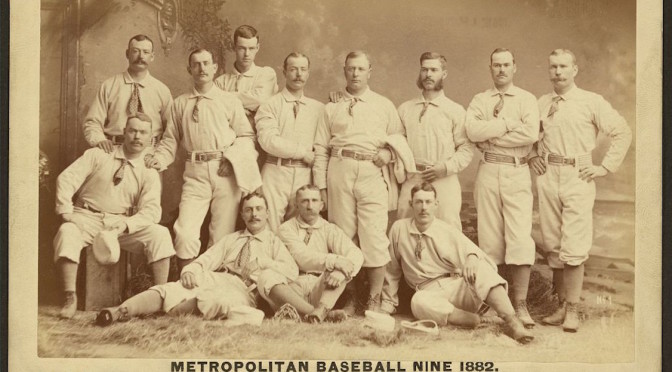
The first New York ball club to call themselves the Mets — or really, the Metropolitans, if we’re being fancy — made their first appearance 130 years ago.  They burned bright for many years, inaugurated New York’s first great sports venue, then faded away.

To be metropolitan in 1880 did not merely suggest a team representative of a city and its surrounding area.  It was code for the finest — from the Metropolitan Opera (which formed the same year) to the Metropolitan Museum (whose Central Park building also opened that year).

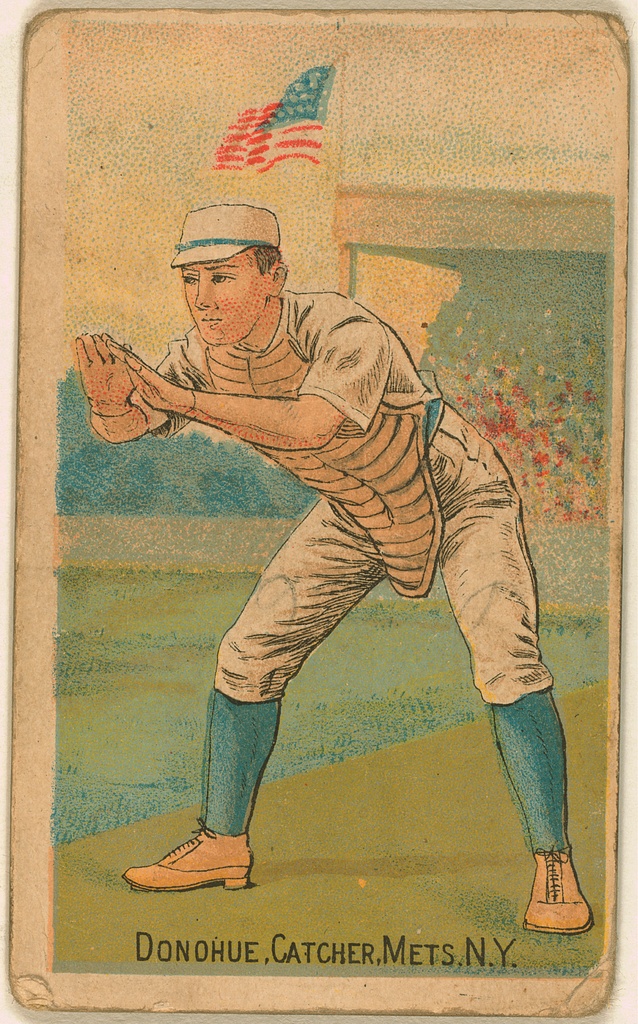
Jim Donahue, catcher

1

Baseball, however, was not a prestige sport by any means in 1880, but this did not matter to John Day, baseball fanatic and owner of a large tobacco plant on the Lower East Side. One day Day met Jim Mutrie, a shortstop from Boston, and agreed to fund a new team. In September, the New York Metropolitans made their debut on a field in Brooklyn.

A few weeks later they would take over a playing field used mostly for polo matches, located at the northeast corner of Central Park. While it would later be known as the Polo Grounds, it would soon host a variety of sports. A larger version of the Polo Grounds, further north on 155th Street, would later be home to the modern Mets franchise.

James John ‘Chief’ Roseman

Courtesy Library of Congress

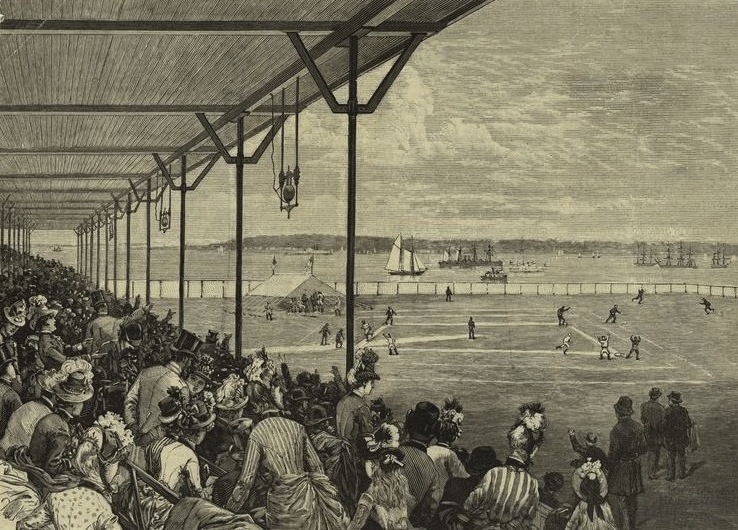
Day and Mutrie had also formed a second team — the New York Gothams — who proved to be more lucrative. In 1885 they sold the Metropolitans to  land developer Erasmus Wiman who then moved the team to Staten Island as a way to encourage growth for the underpopulated future borough. (Wiman also owned a ferry service.) The Metropolitans went from a polo grounds to a cricket’s ground — the St. George Cricket Grounds.

Below: The Metropolitans in Staten Island

mets

To no one’s surprise by Wiman’s, this idea didn’t work, and the Metropolitans were soon sold for $15,000 to their rivals the Brooklyn Dodgers who dismantled the team by recruiting its best players.  Their last game was 1887.

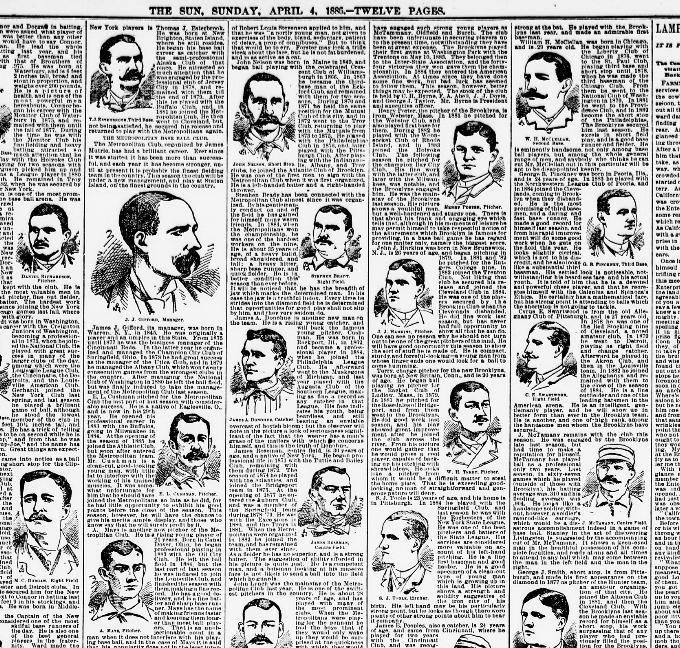
Below: At the pass off to Wiman, The New York Sun profiles all the players of the Metropolitans. You can read the entire article here.  “The Metropolitan Club, organized by James Mutrie, has had a brilliant career.  Ever since it was started it has been more than successful, and each year it has become stronger, until at present it is probably the finest fielding team in the country.”

1

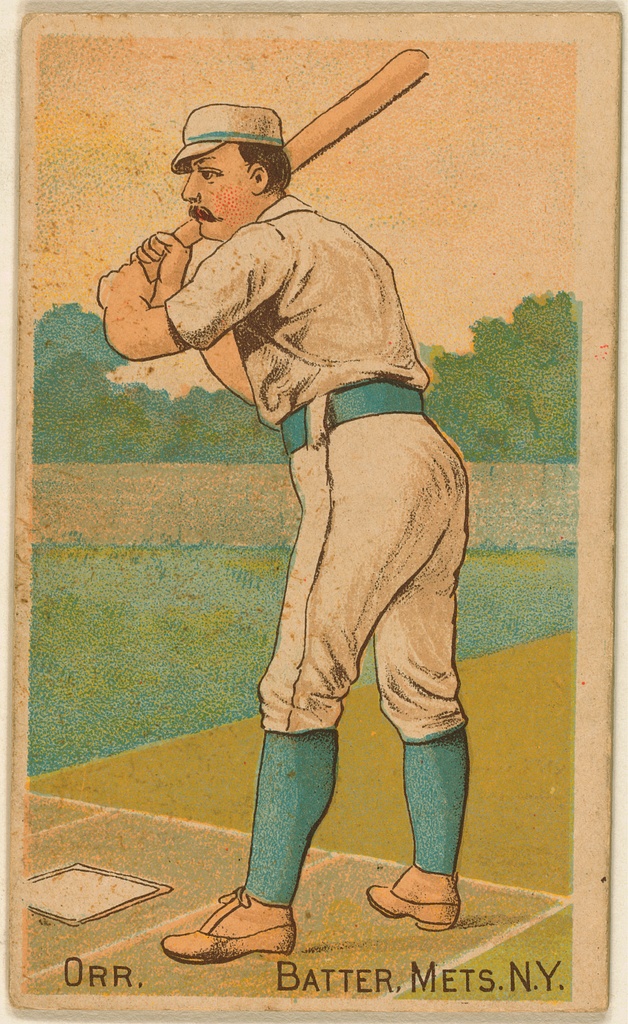
Another reason the Metropolitans may have disappeared — their weight. The New York Sun, reporting on one of their last games, played on October 30, 1887: “The old men of the Metropolitan have grown very stout. Troy, with his 195 pounds is running a close race with Orr for avoirdupois, while Brady and Kennedy have gained remarkably in weight.” [source]

Dave Orr, first baseman

orr
Courtesy Library of Congress


**The original article neglected to mention the Giants.

Categories
Sports

‘Arctic blasts’, union rousers and hunchbacks: Ten bits of trivia about Ebbets Field’s opening day, 100 years ago today


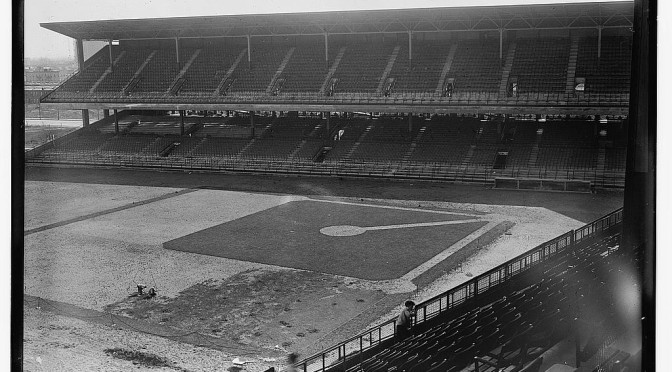
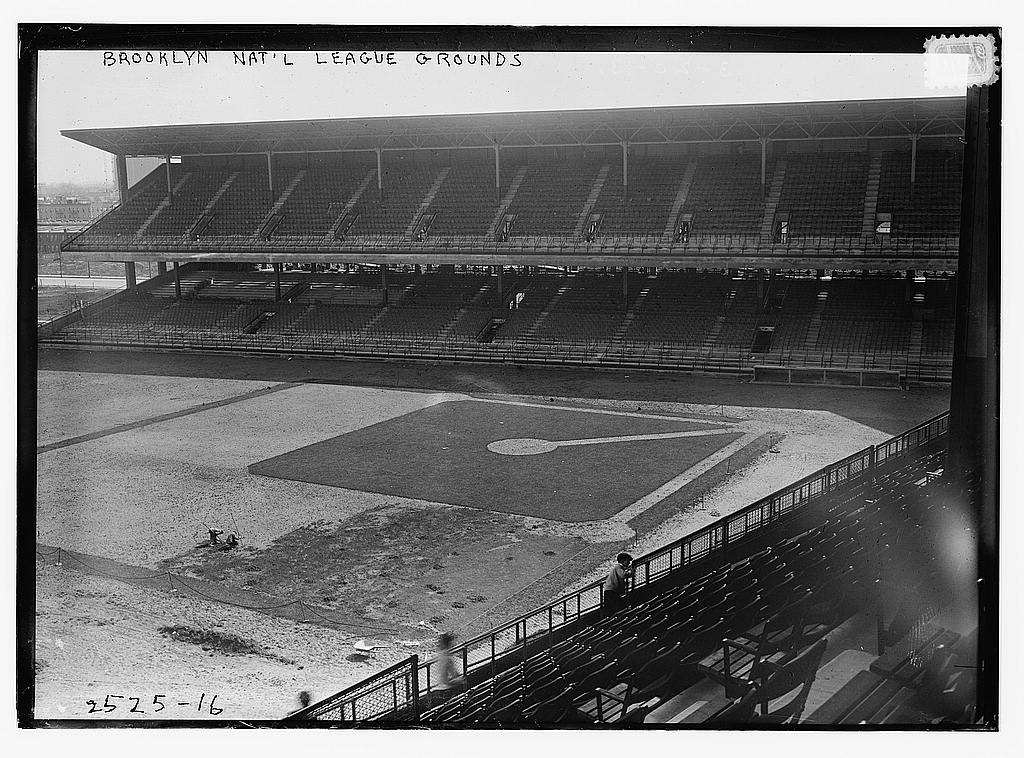
Inside Ebbets Field, 1913, Library of Congress

The first-ever regular season baseball game at Ebbets Field was played 100 years ago today.  The legendary field, once located in the Flatbush neighborhood of Brooklyn, was home to the Brooklyn Dodgers from 1913 until the team left for Los Angeles in 1958.

Here are ten interesting facts about the opening game, played on April 9, 1913:

1)  The Dodgers were thirty years old by the time their lavish new field opened. The team was originally formed under the name the Brooklyn Grays in 1883 by real estate speculator Charles Byrne.  Like many early ball fields, their first home, Washington Park in today’s Park Slope neighborhood, was frozen over during the winter to become Brooklyn’s leading skating rink.

2)  They were originally nicknamed the Brooklyn Trolley Dodgers, for the treacherous skill exhibited by their fans crossing rail-covered streets to get to the ball field.  There were still a great many streetcar lines near their new home of Ebbets Field, but by 1913 the team was more affectionately known as just ‘the Dodgers’.

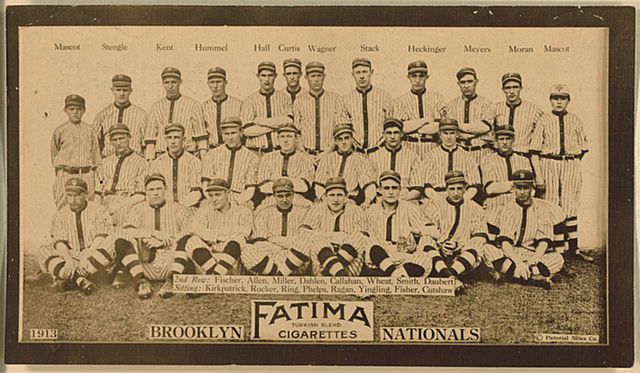
However several names would be casually attached to the team by fans and local journalists — the picture above calls them the Brooklyn Nationals — until 1933, when the name DODGERS would finally be added to both their home and road uniforms.

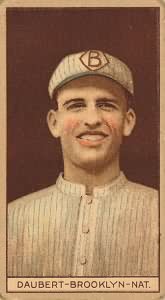
3)  As a nod to its first-ever day, Ebbets Field was allowed to open one day before everybody else in the National League.  One of their most popular players, first baseman Jake Daubert (at right), was presented with a golden bat and a floral horseshoe in a ceremony before the game and would, by season’s end, go on to win the league’s Most Valuable Player honor.

“Gentleman Jake,” as he was called, is better known today as being one of the founders of the baseball’s unionization movement.   This did not make him popular with the namesake of Ebbets Field, owner Charles Ebbet, who traded Daubert in 1917 after a salary dispute.   His union connection may also explain why this unique, well-liked and exemplary ballplayer is not currently listed within National Baseball’s Hall of Fame.

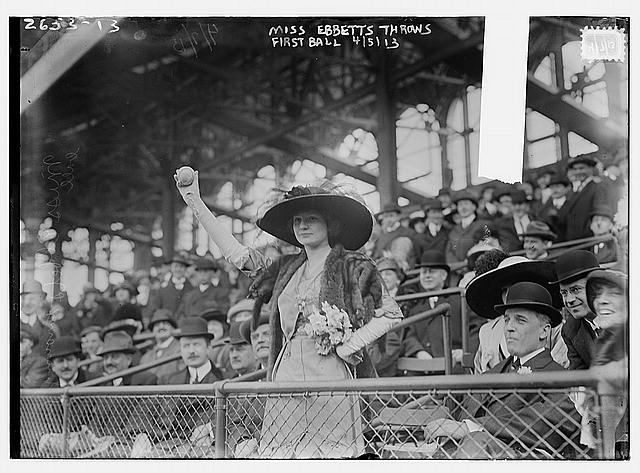
4)  The ceremonial first ball was thrown in by Brooklyn Borough President Alfred E. Steers, a resident of the neighborhood Ebbets Field made its home — Flatbush.   However, at an exhibition game played just a few days earlier, Ebbets’ lovely daughter Genevieve Ebbets tossed out the first pitch.


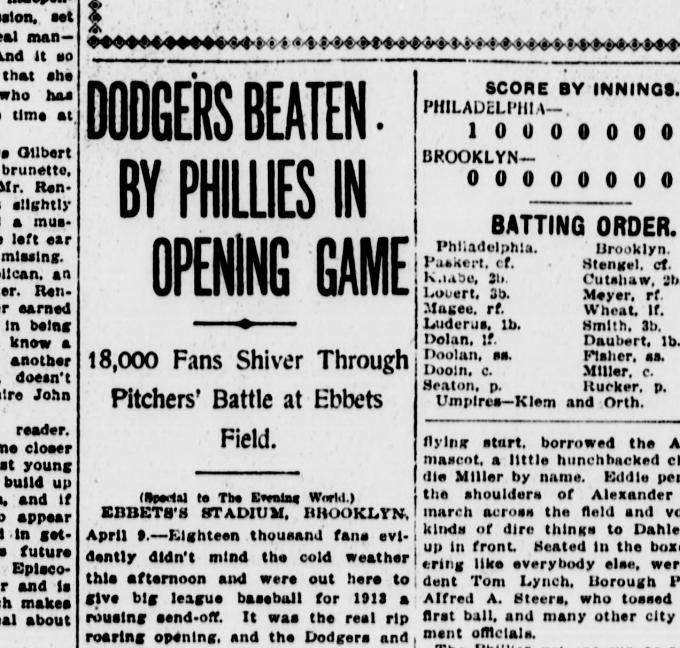
5) The Brooklyn Dodgers played the Philadelphia Phillies that day, which should have boded well for the team in their new home. The Phillies weren’t yet considered a formidable team and were more associated with constant injury. Despite this, the Phillies beat the Dodgers that day, 1-0.

6) Why did the Dodgers lose? Uh, it was unseasonably cold? The Tribune reported that the frightful chill kept the brand-new grandstand partially empty. From the New York Times, April 10, 1913: “It was so cold that the attendance was seriously affected, about 10,000 spectators braving the arctic blasts to see the Phillies win a well-played game by a score of 1 to 0.” [source]

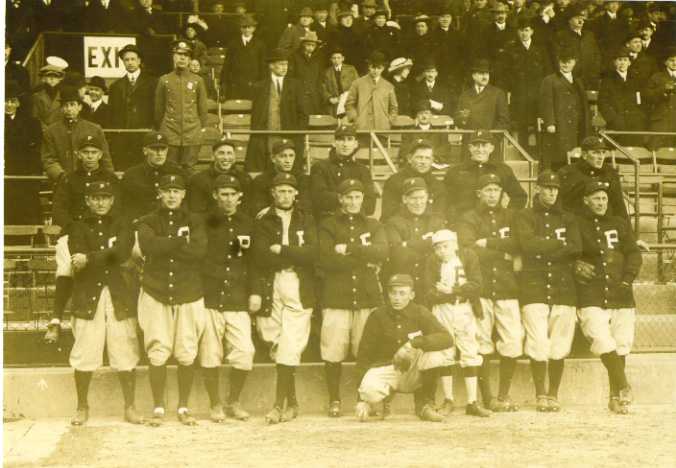
7) The Phillies also had with them an unusual mascot — a hunchback teenage dwarf.  The Phillies home rival the Philadelphia Athletics had a hunchback mascot of their own named Louis Van Zelst, and owner Connie Mack wanted to emulate their success. By, apparently, finding his own young man with a hunchback. Unfortunately, this boy’s name is unknown, but he appears in a 1913 picture with the team:

NOTE: The Tribune infers that this may have been Mr. Van Zelst himself and not another teenager. As the name of the boy in the picture above has not been reported, it’s quite likely that this is the Athletics ‘mascot’.  Note that in the article, the Dodgers are called by yet another name — the Superbas.  

Courtesy the Philadelphia Athletics Historical Society

8) As you could imagine with a 1-0 game, the first-day crowds at Ebbets Field were hardly cheerful.  One might even described them as bored.  The upper seats were barely filled, and the crowd didn’t exactly “wax enthusiastic until the eighth inning” when the Dodgers finally got somebody on base.

9) The first Dodger to ever score a hit in the new field was second baseman George Cutshaw who had only been with the team one year when he scored a single in the first inning.  Ironically, the second basemen was called out when he was caught trying to steal second base.

10) The Dodgers would fare poorly in their first season at Ebbets Field, eventually placing sixth out of eight teams. The winning team that season were their rivals across the East River — the New York Giants.  They would finally bring Ebbets its first pennant victory in 1916.

Categories
Mad Men

‘Mad Men’ notes: The rock gods of Forest Hills, Queens


WARNING The article contains a few spoilers about last night’s ‘Mad Men’ on AMC, so if you’re a fan of the show, come back once you’re watched the episode.

Lusty groupies, ample drug intake, smoky hallways and deafening rock music. One might have thought last night’s ‘Mad Men’ — partially centered around the backstage antics of a Rolling Stones concert — was taking place at Shea Stadium, where the Beatles famously performed to their largest audience in 1965. Or maybe that was Madison Square Garden, the one on Eighth Avenue and 50nd Street, where Marilyn Monroe sang happy birthday to John F. Kennedy in 1962?

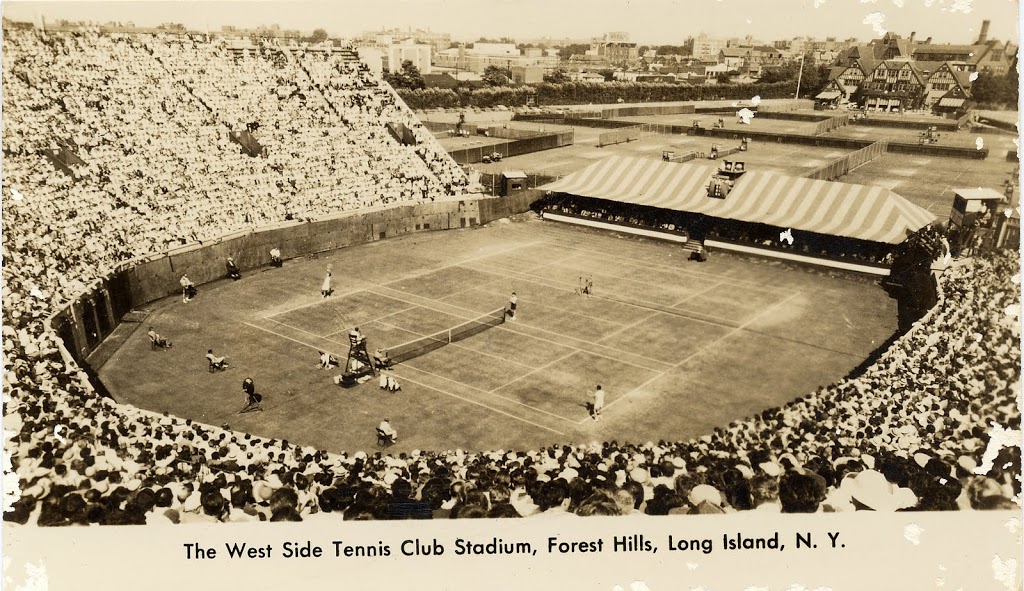
No, that mad, bacchanalian event took place at an esteemed tennis club — the West Side Tennis Club in Forest Hills, Queens.

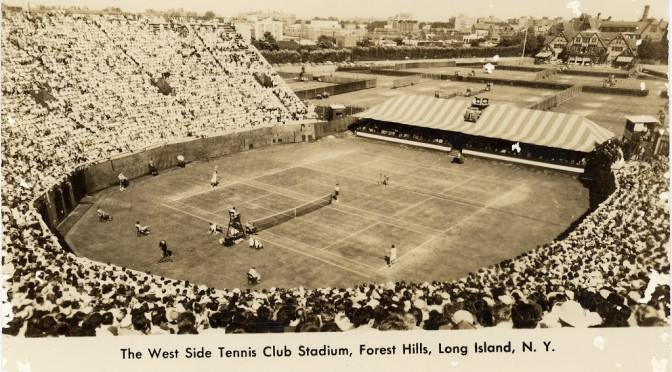
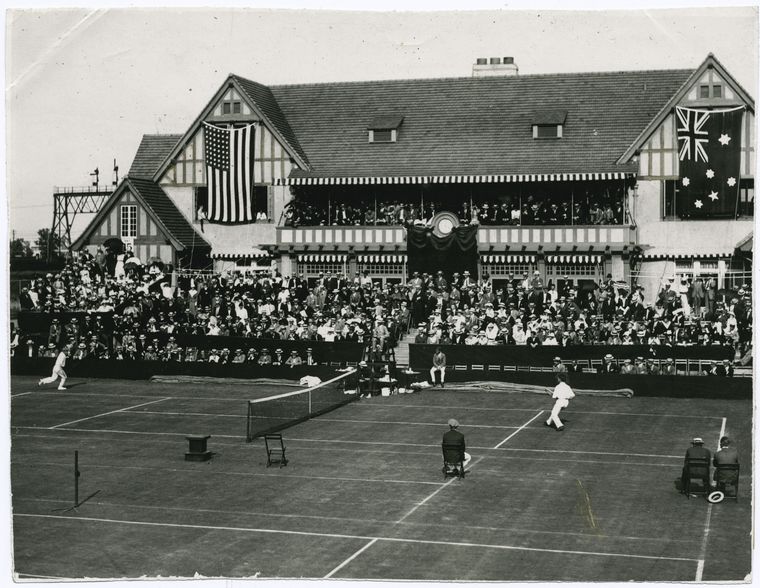
Organized in New York in the 1890s, the tennis organization and social club quickly outgrew various venues in Manhattan and made their way to Queens. The momentary inconvenience of relocating to an outer borough was swiftly forgotten when the venue opened in 1914, a sumptuous series of grand courts, manicured lawns and a spectacular Tudor-style clubhouse designed by Grosvenor Atterbury* and John Almay Tompkins. A later court addition would provide seating for 14,000 spectators.

The clubhouse reflected the style of  homes in nearby Forest Hills Gardens, also planned by Atterbury as a private, upper class community. To this day, the ‘cottage community’ is one of Queens most exclusive neighborhoods.

Below: A vigorous match between Maurice McLoughlin and Norman Brookes in 1914.  The larger court would not be built for several more years. Courtesy NYPL

The grounds were so abundant that it drew the U.S. Open from Newport, Rhode Island, in 1915, and they remained here until 1987. In fact, for most of the 20th century, the tennis club became the American capital for the sport, seeing victories by sports icons like Arthur Ashe, Jimmy Connors, Althea Gibson and Billie Jean King. Alfred Hitchcock even filmed a pivotal scene in ‘Strangers On A Train’ here.

Tying in some of these themes of this season of ‘Mad Men’, there was even a scandal involving the exclusion of black and Jewish members from the club in the 1959, a scandal that involved an under-secretary from the United Nations.

But the appeal of a large and vibrant permanent outdoor venue soon drew, shall we say, less buttoned-up events. The Forest Hills Music Festival was a weekend precursor to New York’s many outdoor concert events today, bringing modern stars to the courtyards and giving this upper crust cloister a taste of counter-culture and teen-fueled rock and roll. One of its organizers was Ron Delsener, later to become a renown concert promoter in the New York area.

Beginning in the late 1950s, concert events were staged on the court itself. At first, the venue drew acts like the Kingston Trio, Frank Sinatra, Harry Belafonte, Barbra Streisand, and even Woody Allen with a stand-up performance. But not of those performers brought the frenzy quite like the Beatles, who played two nights in late August 1964 and drew such passionate crowds that their helicopter had to land on the court itself, their fans separated from the performance area by an eight-foot fence.

Forest Hills was known for its ungainly crowds. Bob Dylan performed there in August 1965 and was booed by audience members outraged that he would deign perform with electric accompaniment, “betraying the cause of folk music,” according to music historian Tony Glover.

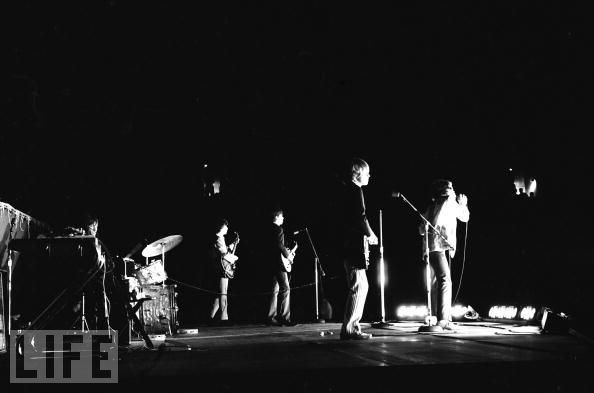
So with all that in mind, imagine the passionate crowds which awaited the shaggy ragamuffins from Dartford, the Rolling Stones, on July 2, 1966, appearing in the United States just as radio stations were buzzing with their number one song, ‘Paint It Black‘.

After three opening acts (including the Trade Winds), the Stones played ten songs at Forest Hills (pictured above), including ‘Lady Jane’, ‘Get Off My Cloud, and of course ‘Satisfaction’, to a crowd of 9,400 people.Yes, believe it or not, they didn’t sell out the venue, but that’s because the most expensive seats (an unheard-of $12.50!) went unsold, and the temperature for the outdoors concert was in the high 90s.

But those that were in attendance were frenzied enough that 250 cops were deployed to the show, armed with tear gas and nightsticks, holding back frothing audiences of young people sent “into peroxsyms” by the British stars. “A dozen youngsters willfully broke through the police line,” according to the Times. “Within seconds the park lights went up and the Rolling Stones’ helicopter took off into the night.”

Far from the maddening crowd, members of the band hit the club circuit in Manhattan, first Cafe Wha? in Greenwich Village, and then Ondine’s at 59th Street, where they were wowed by the energy of a young guitarist named Jimi Hendrix.**

And here’s some further context you should keep in mind. That was the summer of 1966. The biggest American musical artist that year was actually two young sons from Forest Hills, Queens — Paul Simon and Art Garfunkel — and their album The Sounds of Silence would become the biggest album of the year.

Believe it or not, the tennis club lost its bid recently to become a New York landmark.

Top picture courtesy the Rego-Forest Preservation Council

*Mr. Atterbury also played a significant role in the renovation of New York’s City Hall in the early 1900s. We have a ball with Grosvenor in our City Hall podcast from 2009


**There seems to be a little confusion here. Keith Richards bios recall Cafe Wha?, while the diary of Bill Wyman mentions Ondine’s. Hendrix played at both venues a few times, so either (or even both) is possible. Keep in mind, everybody was probably stoned.

Categories
Sports

The New York Giants, before they were giants


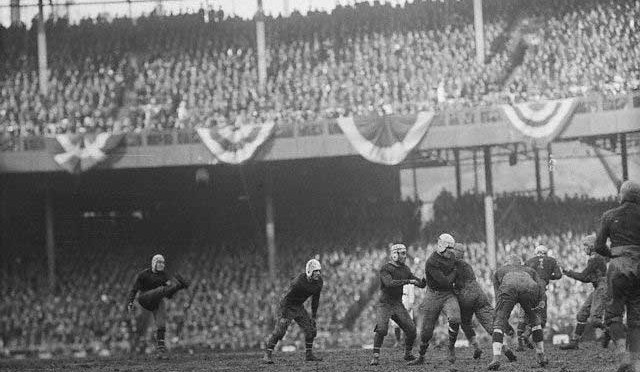
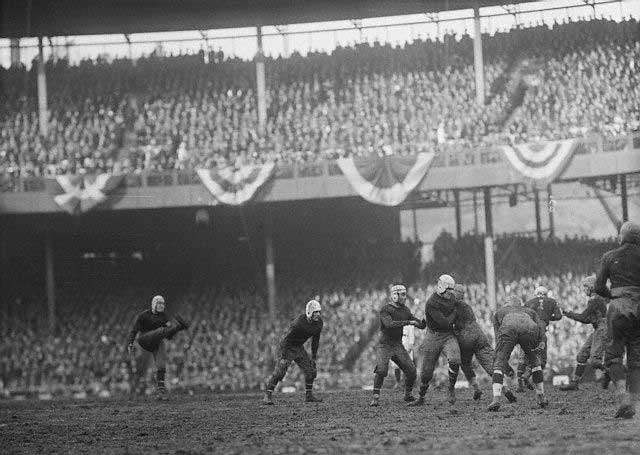
At the legendary Polo Grounds 1925, where the Giants football team (after a couple false starts) finally make their mark on the sport.


The New York Giants, currently in the playoffs and on their way to tackle the formidable Green Bay Packers this Sunday, are football’s oldest existing NFL team, and among its greatest — with seven total championship victories since their debut in 1925.  But that original team, dazzling with such stars as Jim Thorpe at their original home at the Polo Grounds, was not New York’s first professional football team. It wasn’t even New York’s first football team called the Giants!

The first try at a New York Giants football club came in 1919. They were a spin-off of the New York Giants baseball team*, a club considered the best of its day, dominating the sport from the late 19th century and into the 1910s.  Like the baseball franchise, the young Giants football team was to have played at the Polo Grounds as well, the location for many college football contests of the day. But those college games were played on Saturday, and on the month of October 1919, all Saturdays were fully booked.

So the Giants were scheduled to debut on a Sunday, against an Ohio team called the Massillon Tigers. This seemed possible, as team organizers understood that New York’s blue law, prohibiting Sunday play, had been removed from the books. But the city quickly clarified: the law had made way for Sunday baseball, not Sunday football.

Since football was more popularly considered a college pastime — many still questioned the validity of so-called ‘professional’ teams — nobody budged for the football Giants. And thus, the game was cancelled, and the team disbanded before they even hit the field.

The team’s coach, Harvard football star Charles Brickley, tried again two years later, managing to cobble together twenty-four players, a squad that is sometimes referred to as ‘Brickley’s Giants’ to distinguish them from the 1925 team. And people often choose to distinguish them, because Brickley’s Giants were a utter disaster. As one of 21 teams with the American Professional Football Association during its second season, Brickley’s team lost both its regular-season games. The Buffalo team actually destroyed them, 55-0.

During a bout with Jim Thorpe‘s Cleveland team, The New York Times noted, “The game was lopsided and had little to excite even the most rabid of rooters….[L]ittle can be said for the brand of football displayed.”

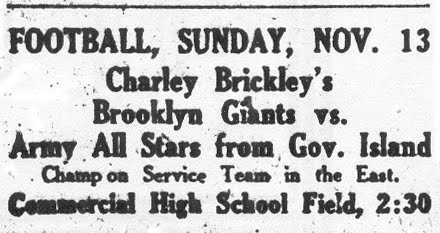
They were more successful at some exhibition games, such as the one advertised below in the Brooklyn Daily Eagle, Brickley’s ‘Brooklyn Giants’ (as they played at Ebbets Field by this time) against the Governors Island ‘Army All Stars’, whom they defeated. (Thanks to Paul Luchter for this image.) 

The following year, the American Professional Football Association changed its name to the National Football League, but Brickley’s team never made it that far, dropping out for good before the new season. They did continue to play exhibition games, but eventually disbanded by 1923. After these two disastrous attempts, nobody would attempt another Giants franchise for another couple years, when former newsie-turned-bookmaker Tim Mara joined the ascendant NFL with a third go at a New York team. And you know what they say about the third time.

By the way, the Maras have kept the Giants in the family since its 1925 debut. Tim’s grandson John Mara is an owner along Steve Tisch (whose last name should be familiar to any students at NYU’s Tisch School of the Arts).

*The original Giants baseball team now haunts and torments New York sports fans today in the form of the San Francisco Giants. The franchise moved to the West Coast in 1958.

Brooklyn baseball: the Superbas and the worst batter ever

The New York Times this morning had an intriguing story about a unfortunate fellow who plays for the Chicago White Sox named Adam Dunn — nicknamed ‘the Big Donkey’.  This has been a banner year for Mr. Dunn as he is about to make the list as one of the worst players in the history of the sport.

It’s that list that brings the story back to New York. Dunn has a current batting average of .165. For you complete novices, that the number of hits Dunn has scored divided by the number of times he’s been at bat. (Ed.: I’m obviously one of those novices. Check the notes below for a clearer definition.) That is roughly my batting average when I played for my church softball team when I was nine years old.

According to writer Sam Borden, “a number like .165 will put his name in the record books for the lowest single-season batting average by an everyday player since 1909, when Bill Bergen, a catcher, hit .139 for the Brooklyn Superbas.” With a basic average of almost 9 outs for every 10 at-bats, who is this Bill Bergen and why was he allowed to play at all?

The history of baseball would be nothing without Brooklyn. Not only were some of the first leagues formed in the former independent city, but perhaps the sport’s most legendary team (the Brooklyn Dodgers) played here at Ebbets Field. The first enclosed ballfield, the Union Grounds, was built in 1862 in today’s Williamsburg.

Brooklyn’s first professional National League team in the 1890s went by many unofficial names. At one point, they were called the Brooklyn Bridegrooms — not the most rousing name — then the Brooklyn Robins. By the time Brooklyn consolidated with New York in 1898, the team received a new nickname, and from a surprising source.

A couple weeks ago I wrote about the daredevil vaudevillian acrobats the Hanlon Brothers, known for extraordinary feats of human agility mixed into theatrical extravaganzas. They made their debut at Niblo’s Garden in 1858, and fifty years later, their sons were still carrying on the tradition of thrilling audiences with their mix of fantasy, theater and gymnastics.

In the 1890s, the Hanlon sons focused their energies on two popular traveling variety shows, elaborate productions akin to a stadium rock show, often employing revolving stages, costumed casts, and sophisticated harnesses and props. The first, Fantasma!, would later be the subject of Thomas Edison’s early films. Their second, Superba!, would accidentally inspire the world of baseball.

In 1899, scrappy baseball superstar Ned Hanlon — who made his career in the 1880s in Cleveland and Pittsburgh — moved to Brooklyn to manage the then-named Brooklyn Bridegrooms.  Ned Hanlon was not related to the flamboyant Hanlon brothers in any way.  However, simply by confusion or a cheeky name-play by journalists, the team was soon called the Brooklyn Superbas, borrowing the title of the popular theatrical show. (You pronounce it the Su-PER-bas.)  The name stuck until the early 1910s, when the borough’s primary form of transportation inspired another nickname — the Trolley Dodgers, soon shortened to just the Brooklyn Dodgers.

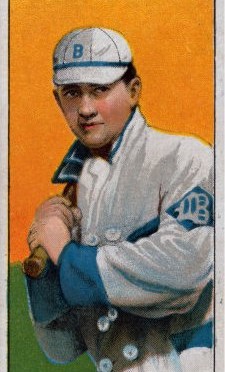
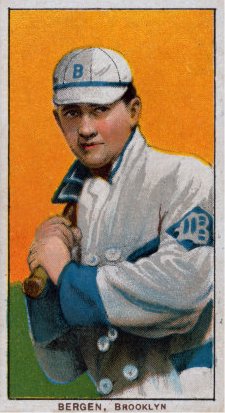
Bill Bergen (at left), the man with the lowest batting average in professional baseball history, was a catcher for the Brooklyn team during much of its Superbas era. Bill was a superb catcher — in fact, still considered one of the best by baseball historians — but a lousy batter. In 1909, he set that rather infamous batting average, and over the course of his entire eleven year career, he hit just two home runs.

Let us not criticize Bergen too harshly. Several years earlier, his big brother Marty Bergen, also a baseball star, suffered from devastating mental issues. In 1900, Marty murdered his own wife and kids with an axe, before taking his own life with a straight razor. That certainly makes a crappy batting average seem rather trivial.

And no, Brooklyn did not name its Bergen Street — which runs a dozen blocks north of Ebbets Field — after this early baseball star. The name of that lovely street has a far older history.

Categories
Uncategorized

Yes, there really was a FIFTH Madison Square Garden

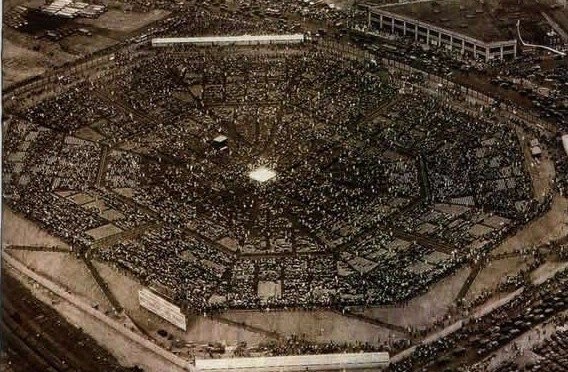
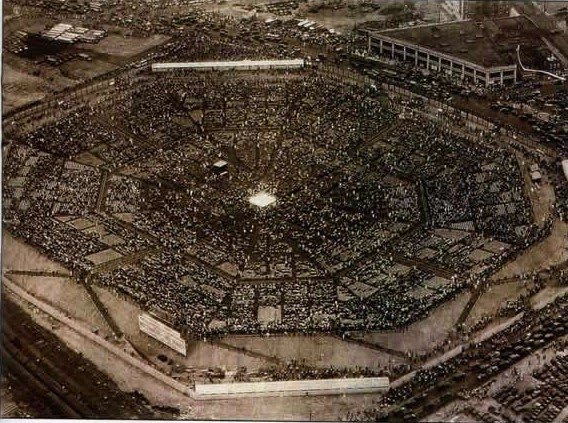
A packed house at MSGBowl on June 21, 1932, turning out for a prizefight between Max Schmeling and Jack Sharkey Picture courtesy Awesome Stories

There was so much to speak about during the Madison Square Garden podcast that we didn’t have time to mention that, for a brief time, the borough of Queens once had its own Madison Square Garden — one that spawned a ‘cinderella’ sports legend.

Situated in Long Island City, the Madison Square Garden Bowl was a roomy Depression-era spinoff of Tex Rickard’s midtown Manhattan branch, built in 1932 at 45th Street and Northern Boulevard, an immense outdoor stadium that could seat up to 72,000 people. It was not a regular venue but instead hosted big-ticket events during the summer. The Bowl cost the Garden only $160,000 to build, designed for high capacity if not longevity.

It may not have exactly been a popular place among name boxing stars. Sometimes referred to as the ‘Jinx Bowl’ or ‘The Graveyard of Champions’, reigning champs who boxed here frequently lost, heavyweight championship titles regularly changing hands here. “It was the arena where champions went to die,” according to author Jeremy Schaap.

People were willing to pay up to $25 for ringside seats because of the talent sparring in the ring, including Max Baer, Joe Louis, Henry Armstrong, and (most famously) James Braddock, aka ‘Cinderella Man’. A depiction of the Bowl naturally pops up in the Russell Crowe film ‘Cinderella Man’ about Braddock.

The Bowl hosted more than boxing, famously hosting several vigorous “midget auto races” (that’s like NASCAR for really small cars). “They had these midget auto races there and a lot of times the fumes of whatever it was they used to keep ’em going would spill through the entire neighborbood,” recalled Yankees legend and neighbor Whitey Ford. “If the wind was blowin’ the right way, we could get asphyxiated in our apartments if we didn’t keep the windows closed.”

During World War II, the arena saw little use, and Garden management soon gave up on it entirely, tearing it down in 1942, to be replaced with a mail depot for the U.S. Army. At some point that too was ripped down. As you can see, the area remains singularly unexciting today.


View Larger Map

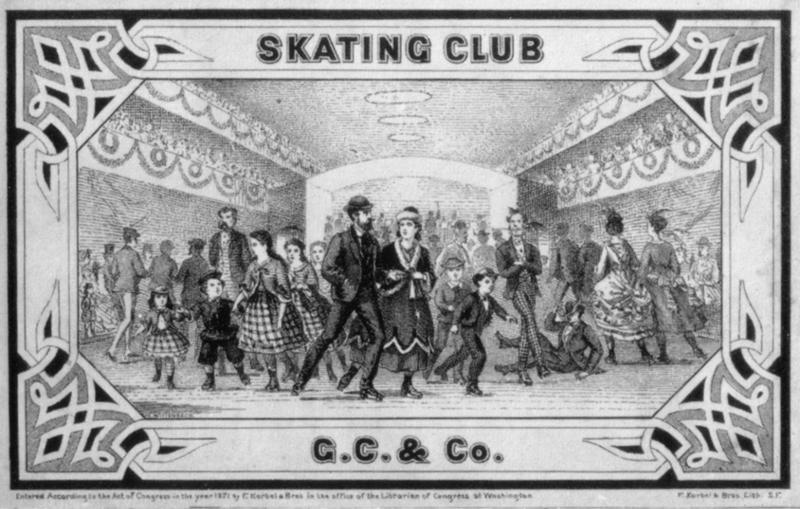
Stars of MSG: The deadliest roller skating event ever

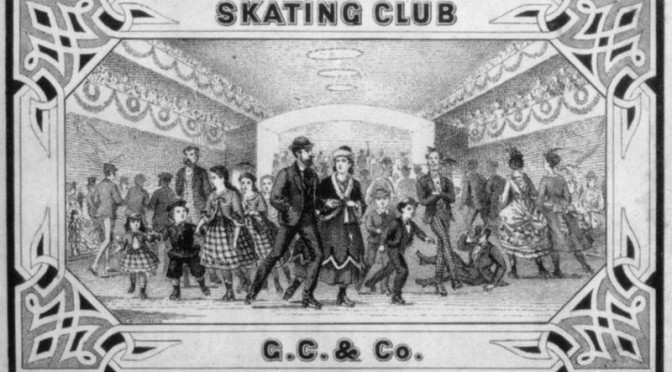
People were just wild about skating in the 1880s.

STARS OF MADISON SQUARE GARDEN: Six-day skater William Donovan
LOCATION: MSG I

People were a touch insane in the 1880s and 90s. One of the most popular sports was the six-day bicycle race, a sport so popular, particularly in Madison Square Garden II (debuting there in 1891), that they were referred to as ‘madison events’ in international circles.

But they were preceded by six-day rollerskating marathons, the first one in New York on March 1885, in the original Madison Square Garden — an event so strenuous it actually killed the young 19-year-old winner, William Donovan.

Donovan was a newsie from Elmira, NY, who trained for the event with a man who went by the name ‘Happy Jack Smith.’ The event, a ‘go as you please’ event involving a velodrome built within the garden, attracted 36 skaters aiming for a $500 prize.

The dangers of this event were apparently well elaborated. ” ‘It’s the first test of endurance that has ever been made on roller skates,’ said a sporting man, ‘and I believe that over half the men entered will cripple themselves for life.’ “ [source] Great, where do I sign up?!

I can’t help but think this sort of event would attract a certain sort of young, brash derring-do, possibly with lots of time on his hands. From the same article, two spectators were quoted describing a participant:

” ‘I shouldn’t think his mother would let him come out of the house looking that way,’ said a pretty little miss.

” ‘Perhaps he’s an orphan,” said her companion. “He looks like he’s seen a lot of trouble.’ ” [source]

Contestants would frequently collapse in a faint, be taken off the track, revived, then taken back to the course. Spectators actually sat in the arena for the entire six days, in apparently some kind of come-and-go ticket arrangement. There was an ongoing carnival and bicycle demonstrations to keep ticket holders busy when the skating got boring.

It appears athletes were allowed to rest off-track, but obviously the time spent sleeping was taken off their total. Many of the most popular skaters were given nicknames; redheaded Donovan, for instance, was ‘Sorrel-top’, I assume for the color of red sorrel, not green. The total length of the track multiplied by the 144 hours of non-stop riding meant that young Donovan had ridden 1,092 miles, awarding him the prize money and a fine diamond belt.

A few days later, while staying nearby at the trendy Putnam House, the victor Donovan caught pneumonia. While looking out his window at people streaming to P. T. Barnum’s Greatest Show on Earth (holding court at, yes, Madison Square Garden), Donovan collapsed and died within 36 hours — of acute pericarditis (heart inflammation).

Newspaper investigation of his death reveals that the boy had skated the course with a ‘dead bone’ (necrosis) on his right leg.

Within days it was revealed that a second skater who participated in the event, Joseph Cohen, had also died afterwards.

Now, why the heck would anybody be interested in roller-skating for six straight days?

Rollerskating was a popular craze in the 1880s, with mass production and sale beginning then, so a six-day roller-skating fest would have been the 1885 equivalent of x-treme sports.

Evaluating the safety of the event was indeed in its infancy, as this excerpt from a medical journal in 1885 illustrates:

“The mind acts “exoneurally,” we are told, and the vibrating brain-cells of the enthusiastic roller-skater communicate their rhythmical pulsations to the previously insensitive spectator. Whatever the mechanism, there is certainly at present a morbidly exaggerated passion for, and indulgence in, roller-skating. And the question comes home to the physician, whether it is doing any physical or mental harm.”

Too much skating, as Donovan proved, was dangerous. Organizers of the skating marathon booked the Garden for a second event in May 1885, but participants were handpicked only the most experienced and healthy, including a few surviving the last go-round. Shortly afterwards, official skating events were prohibited from being longer than four hours in length.

Stars of MSG: Indoor fishing in an outdoor wonderland

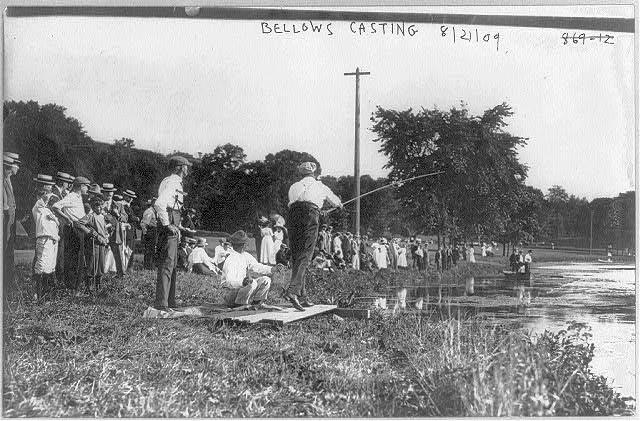
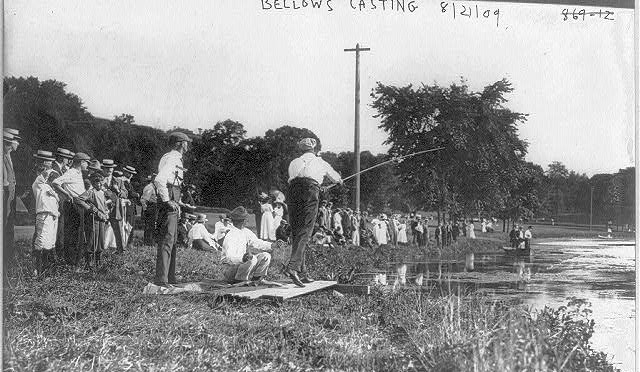
ABOVE: Fly fishing in Van Cortlandt Park in the Bronx, August 1909. Meanwhile, downtown, people cast for greater prizes indoors. (Pic courtesy LOC)

STARS OF MADISON SQUARE GARDEN: R.C. Leonard, fisherman
LOCATION: MSG II

Of all the curious events to ever happen at Madison Square Garden — from the first one to the latest — no competition seems more surreal to me as a spectator sport than watching somebody fish. But in fact, for many years, Madison Square Garden II had quite popular fly fishing contests, either on their own or as part of elaborate hunting and fishing extravaganzas, the Bass Pro Shops meets Disneyworld.

The luxe, new Madison Square Garden, designed by Stanford White, was equipped with its own aquatic tank for water polo events, but in sporting season, it was apparently used for fishing events as well. The arena was obviously dressed up to resemble the ‘great outdoors’. In a tournament in 1911, an artificial mountain and waterfall were even designed as casting sites. The following year promised “so complete will be the change in the appearance of the amphitheatre that it will be hardly recognizable.” [Times]

For the fishing competitions, there was both ‘dry fly-casting’ using distance and accuracy markers, as well as the naturalistic kind, immersed in these natural dioramas.

And the leader of this sports was apparently one R.C. Leonard, who set a record for fly casting for black bass – at 101 feet and 6 inches — at the very first indoor fishing event at MSG, on March 15, 1897. He was still setting records as late as 1905: “He made the most notable cast that has ever been seen in the Garden,” according to the Times, breaking a distance record that he himself had set a few years previous. When Leonard made this “most notable” cast, the “rubber frog” hurled over the end of the 130-foot tank and hit the decorative “rustic bridge”!

Leonard, born either in 1862 or 1863, was the undisputed master of the sport, by 1905 the winner of 55 gold medals in the sport.

Leonard might have met his match many years later in 1911 — in the form of a four-year-old girl. If ever a novelty act existed, it was Madge Seixas, a tot with an impressive arm, “having a mark of forty-five feet with a fly rod weighing about four ounces.” She climbed the fakemountain, situated on the Park Avenue (Fourth Avenue back in the day) side of the auditorium, and “insisted upon casting into the waterfall.”

Fishing was only one of several curious displays honoring the great outdoors. As part of an annual Motor Boat and Sportsmen’s Show festival, the 1905 event also featured canoe races at the Garden on a makeshift lake, and a whole hunter’s paradise — tent, camp fire and all, with a recently killed deer suspended from a tree and other game dangling from other faux foliage. In addition, there was a shooting range for schoolboys.

Incidentally, the New York Boat Show, held just a few weeks ago at the Jacob Javits Center, traces its lineage back to this 1905 convention.

Stars of MSG: No miracles on ice — Russians beat USA!


STARS OF MADISON SQUARE GARDEN: 1980 Russian Olympic Team
LOCATION: MSG IV

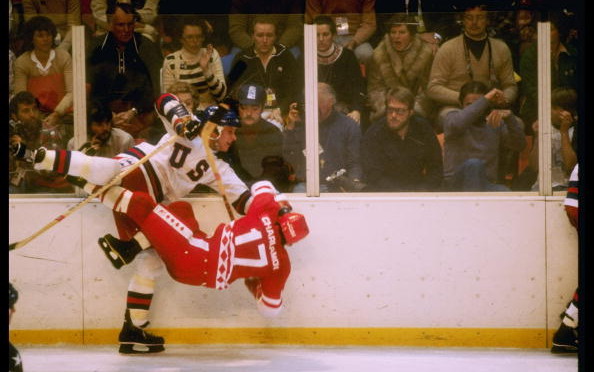
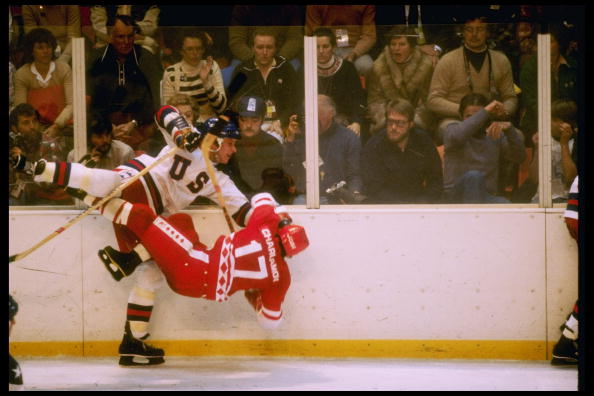
Nope, that headline is not from an alternate timeline. Thirty years ago, the most memorable moment in US Winter Olympics history occurred on February 22, with the victory of the US men’s hockey team against its athletic and ideological rivals from the Soviet Union. What’s lost in the mists of history is that these two teams has played each other two weeks earlier, in New York, at Madison Square Garden — and the Russians iced the US team.

In promotion of the 1980 Olympics that year, in Lake Placid, NY, the two squads played an exhibition round for fired-up New Yorkers on February 9th, 1980, just three days before the opening ceremonies. Despite an openly hostile crowd, the Russians handily beat the young team of American athletics, 10-3.

According to sportscaster Al Michael, “Anybody who left Madison Square Garden that day thought to themselves: ‘The Soviets will win every game in the Olympics, take home the gold medal, and never be challenged.'”

Of course, in the game that really counts, the American team swept aside the Russians in Lake Placid, 4–3, in what has been called ‘the greatest sports moment of the 20th century.”

The Sheila Variations has a nice, full write-up of the MSG battle

Picture from the Lake Placid match-up, courtesy World Hockey

The Americans: NYC’s first professional hockey stars

The New York Rangers , the city’s ice hockey hope since 1926, began their season on Friday, losing one that night and recovering on Saturday versus Ottowa Senators.

Okay, so I’m not going to pretend that I’ve ever been a hockey fan before this year. However, geek alert, I have this uncanny ability to trick myself into liking something by studying and absorbing its history. To see that bloody ice, those flying sticks, that vulgar degree of unsportsman-like agitation! When Sean Avery, who will debut this week after an injury, punches somebody in the face, it’s part of a proud tradition that harkens back generations.

While the Rangers often play fourth-fiddle in the pantheon of high-profile New York sports teams, they’ve been part of the city for decades, playing their first game on November 16, 1926, against the Montreal Maroons. They beat the Maroons — and almost everybody else, winning the American Division title (though losing the Stanley Cup) their very first year.

Believe it or not, however, the Rangers were not even New York’s first hockey team. Enter the far less successful but not forgotten New York Americans, one of the few U.S. sports teams to be owned by a Prohibition bootlegger.

Ice hockey was invented in Canada, flourishing and expanding there, but before the 20th century began spilling over the border to the United States and into New York, with amateur leagues in Manhattan and Brooklyn, and even a Columbia University team. Hockey’s first home in New York was St. Nicholas Rink, a sports venue at 69 West 66th Street (at Columbus Avenue) which opened in 1896 as an exclusive site for ice sports until a more popular sport — boxing — forced it out in 1920.

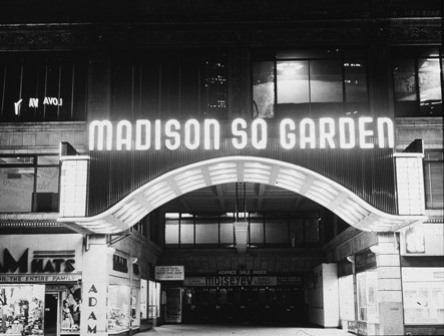
Which was fine for ice hockey enthusiasts, because the sport was moving on to a brand new venue — Madison Square Garden. In this case, we’re not talking about the Stanford White classic which actually sat in Madison Square or the current MSG at 34th street above Penn Station. No, from the years 1925-1968, another building held the name, located at 50th Street and 8th Avenue. Today, Worldwide Plaza stands in its place.

This MSG, owned by the flamboyant promoter Tex Rickard, would famously stake its reputation on boxing and circuses. But in its first year, Rickard agreed to open the floor to brand new ice hockey team.

The Canadian National Hockey League was a granting franchise licenses to various American cities. The franchise promoter Thomas Duggan saved one for himself and set his sights for a New York team. His only setback was money. This being 1925, smack in the heart of Prohibition, it’s no surprise he turned to famous bootlegger and mobster Bill Dwyer for assistance. Yes, New York’s first ice hockey team was funded by one of the city’s most notorious gangsters.

By 1925, Dwyer had even spent some time in jail for bribing the Coast Guard. He looked at funding sports teams as a vie for ‘legitimate’ business, although it was his amassed wealth by illicit gains that was actually used to sculpt the new team. When members of an Ontario team the Hamilton Tigers revolted against their management, Duggan simply bought out all the players, moved them to New York and — certainly thumbing their noses at their old Canadian owners — called them the New York Americans.

The Americans, garbed in patriotic colors, played their first game on December 15th, 1925, against the Montreal Canadiens. At least in 1925, Americans were no match in the game of hockey against Canadians, and they lost 3-1. And would continue to lose, from 1925 to 1941, once or twice making division playoffs but mostly placing last.

But New Yorkers, at least that first year, were intrigued. Attendance was so strong that Rickard, jealous of Duggan and Dwyer’s success, wanted his own team, one in which he didn’t have to split the profits. And so, the very next year, on the very same ice as the Americans, the New York Rangers made their debut. They were an even bigger hit because they actually won games, partially due to being placed in a division with fewer seasoned Canadian teams.

By 1941, the Americans were overshadowed, utter defeated and out of steam. A brief ploy to rebrand the team as the Brooklyn Americans — they never actually played any matches in Brooklyn — only delayed the inevitable, and the team’s franchise was bitterly not renewed.

Most Rangers fans are probably not too familiar with the Americans’ record, but they are familiar with Rangers ‘curse’ placed upon them by then-Americans coach Red Dutton, who supposedly declared that their rivals would never win another Stanley Cup while Red was still alive. It worked. The Rangers would not take home the cup until 1994, seven years after Red’s death. Talk about holding a grudge!