Categories
Film History Podcasts Side Streets

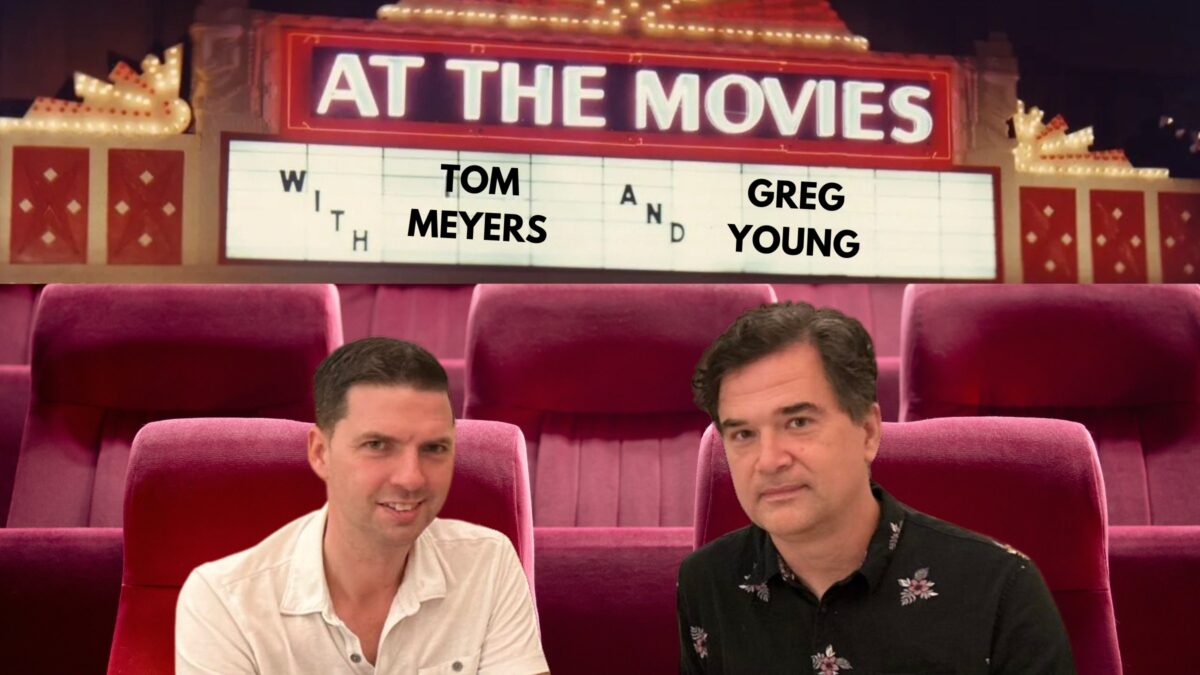
At The Movies with Meyers and Young: Celebrating New York City on the big screen

Greg and Tom have taken off their historian hats for a minute and have suddenly become — movie critics? Close but not quite!

This week we’re giving you a ‘sneak preview’ of their Patreon podcast called Side Streets, a conversational chat show about New York City and, well, whatever interests them that week.

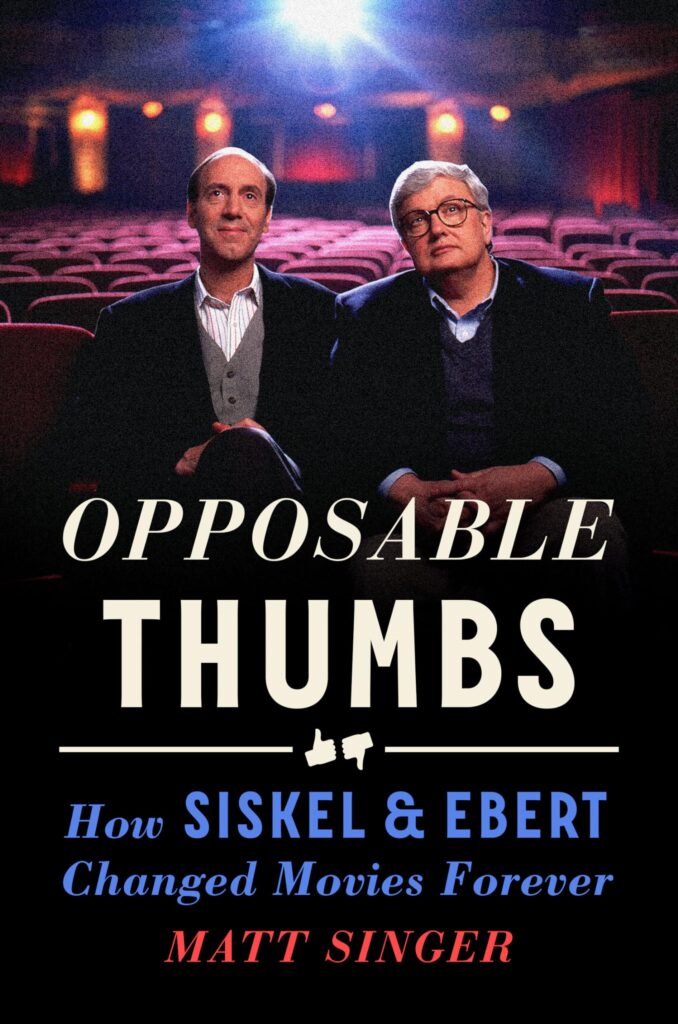
In honor of the Academy Awards, the Bowery Boys hosts pay homage to the great Gene Siskel and Roger Ebert while looking at five award-worthy films with strong New York City connections:

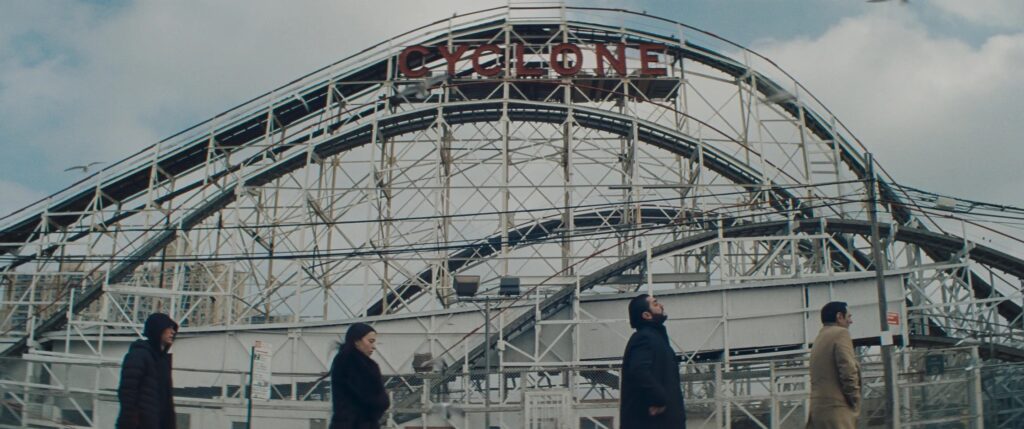
— Anora with its captivating south Brooklyn locations

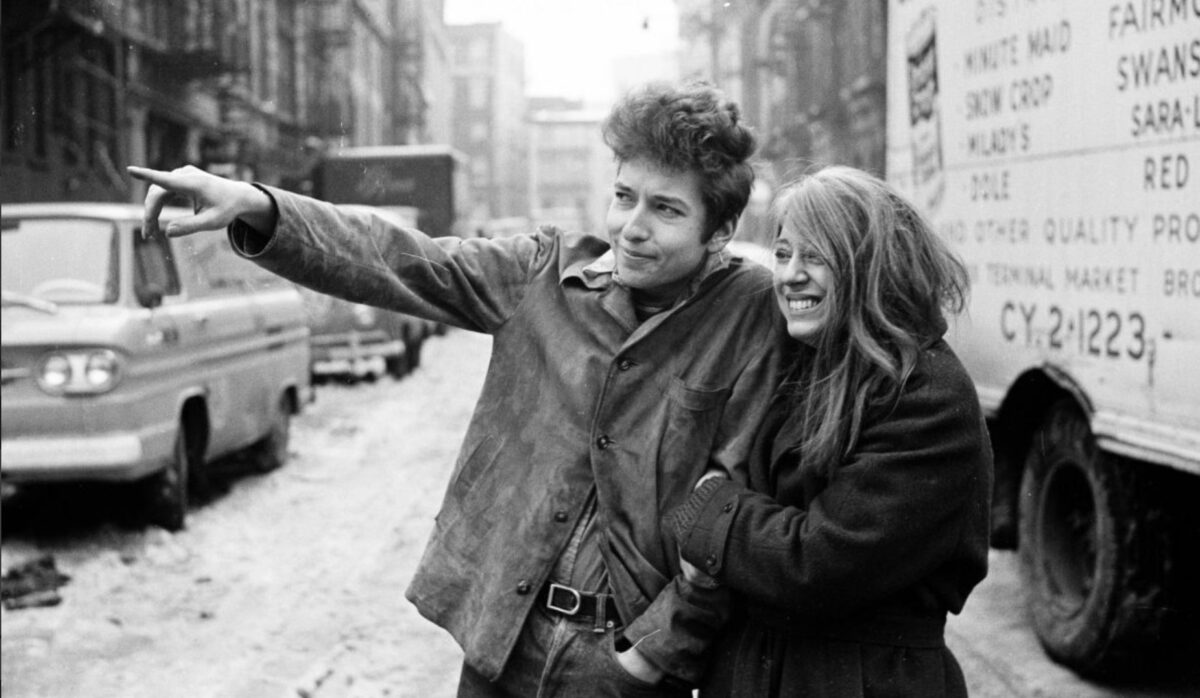
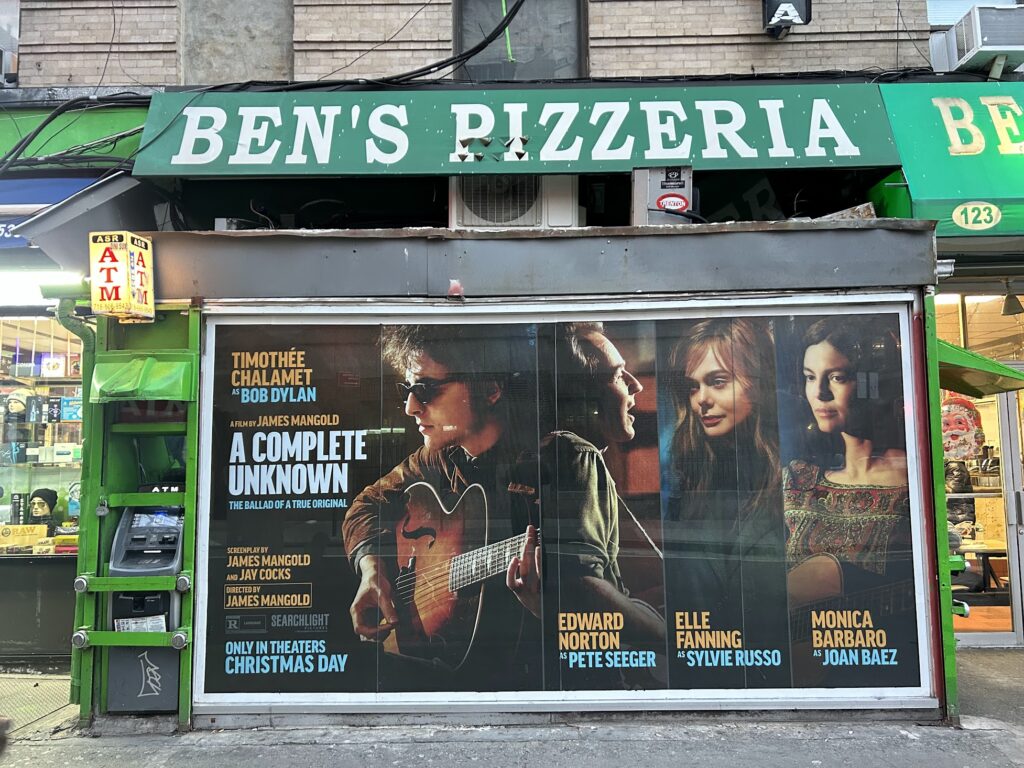
— A Complete Unknown, taking us back 1960s Greenwich Village 

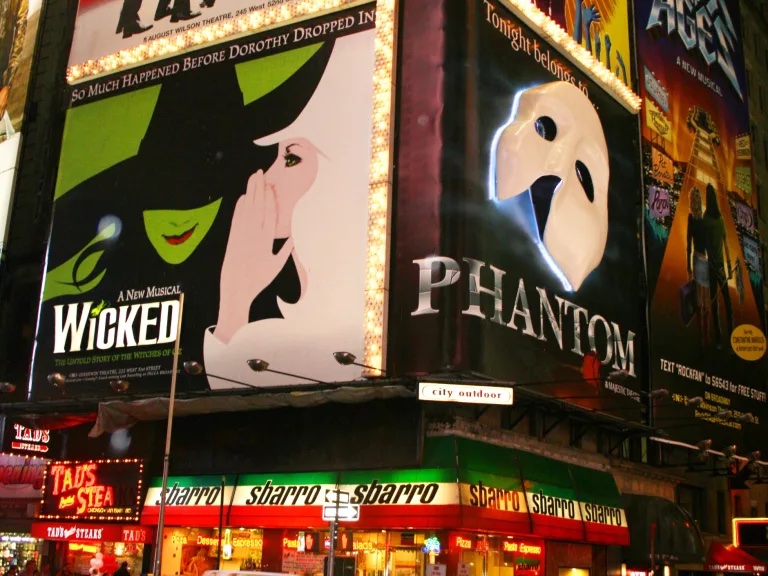
— Wicked, a spritely interpretation of the Broadway musical

— The Brutalist, an epic about more than just architecture

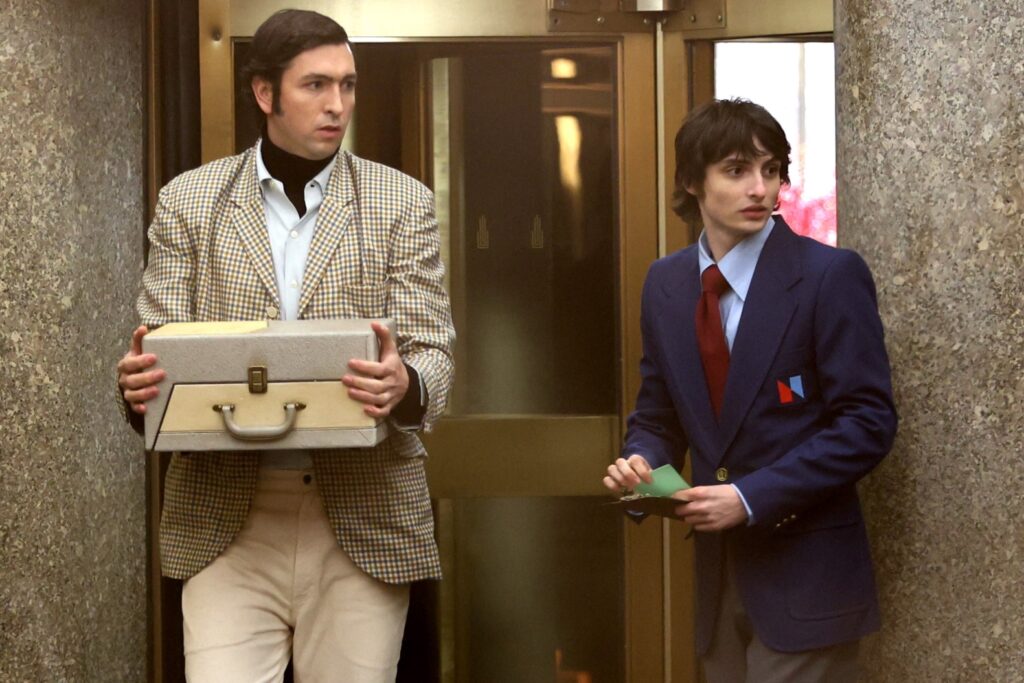
— Saturday Night, a frenetic tribute to the comedy-show icon which turns 50 years old this year

NOTE There are light spoilers (especially to locations used in some of these films) but nothing that will ruin your enjoyment of these movies.

LISTEN NOW: AT THE MOVIES

To listen to all episodes of Side Streets, support the Bowery Boys on Patreon 

This episode was edited by Kieran Gannon


FURTHER READING

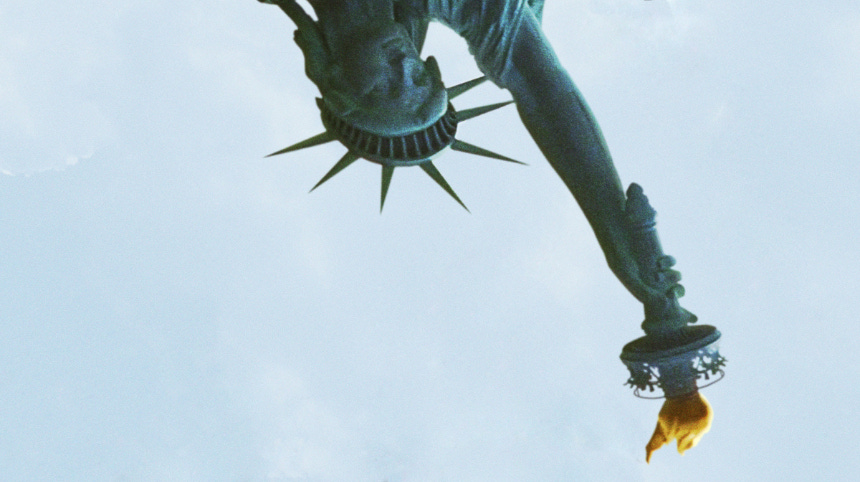
Scenes from

ANORA

A COMPLETE UNKNOWN

WICKED

THE BRUTALIST

SATURDAY NIGHT

Categories
It's Showtime Music History Neighborhoods Podcasts

Bob Dylan’s Greenwich Village: The Neighborhood Which Shaped American Music

Greenwich Village is one of America’s great music capitals, an extraordinary distinction for an old neighborhood of tenements, townhouses, dive bars and a college campus.

So many musical titans of jazz, folk, pop and rock and roll got their start in the Village’s many small nightclubs and coffeehouses, working alongside artists, writers, actors and comedians to create an American cultural mecca unlike any other.

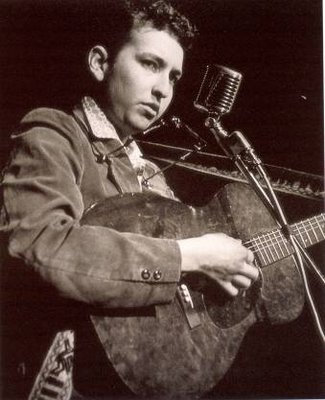
And it was here, on January 24, 1961, that a nineteen-year-old young man from Minnesota entered the fray — Robert Zimmerman, otherwise known as Bob Dylan.

The Village completely transformed the young folk singer into the voice of a generation, working out his transformation on the minuscule stages of the Gaslight, Cafe Wha? and Gerde’s Folk City.

But this show isn’t strictly about Dylan’s ascent to greatness, but the neighborhood — the people, the streets, the basements! — which cultivated artists like Dylan (and Billie Holiday and Nina Simone and Pete Seeger and Barbra Streisand and Joan Baez and so on.)

PLUS: Bob Moses and Jane Jacobs stop by for a hootenanny (and a protest)

LISTEN NOW: BOB DYLAN’S GREENWICH VILLAGE


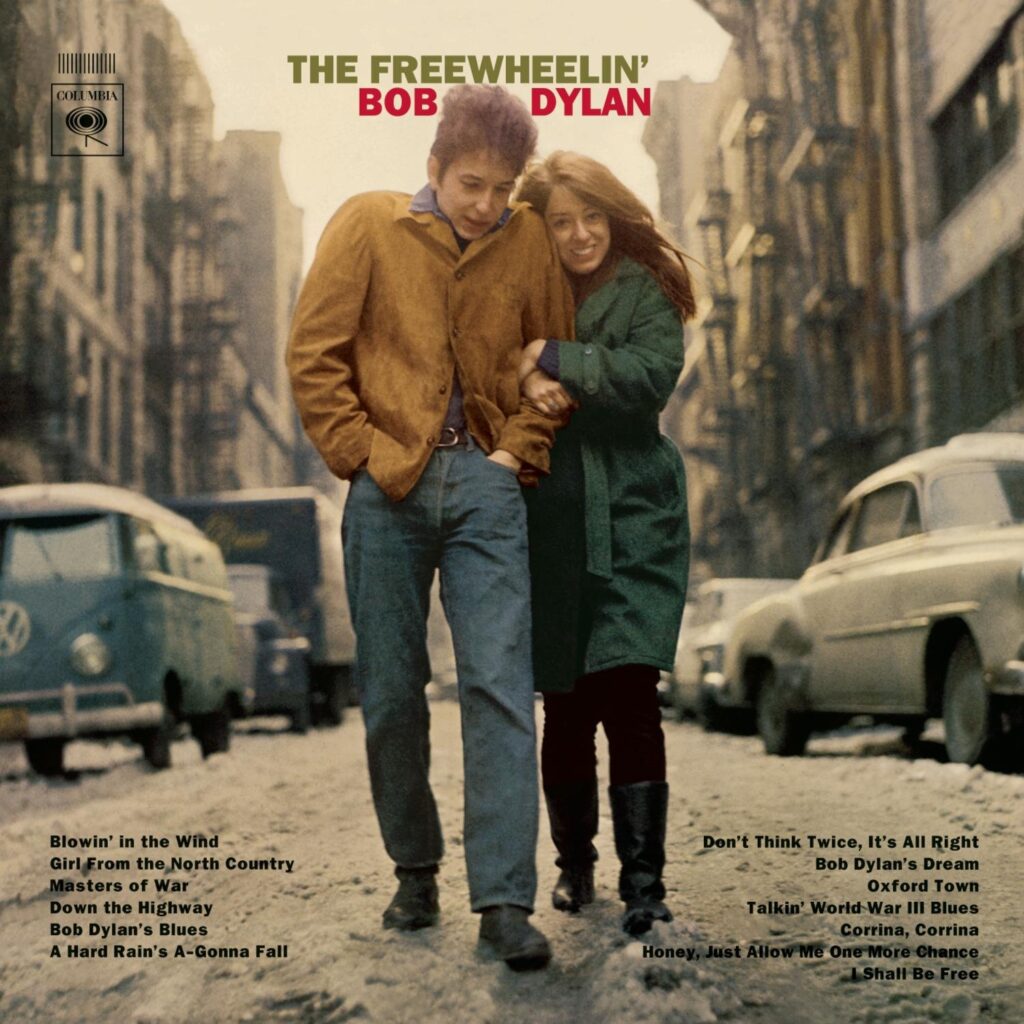
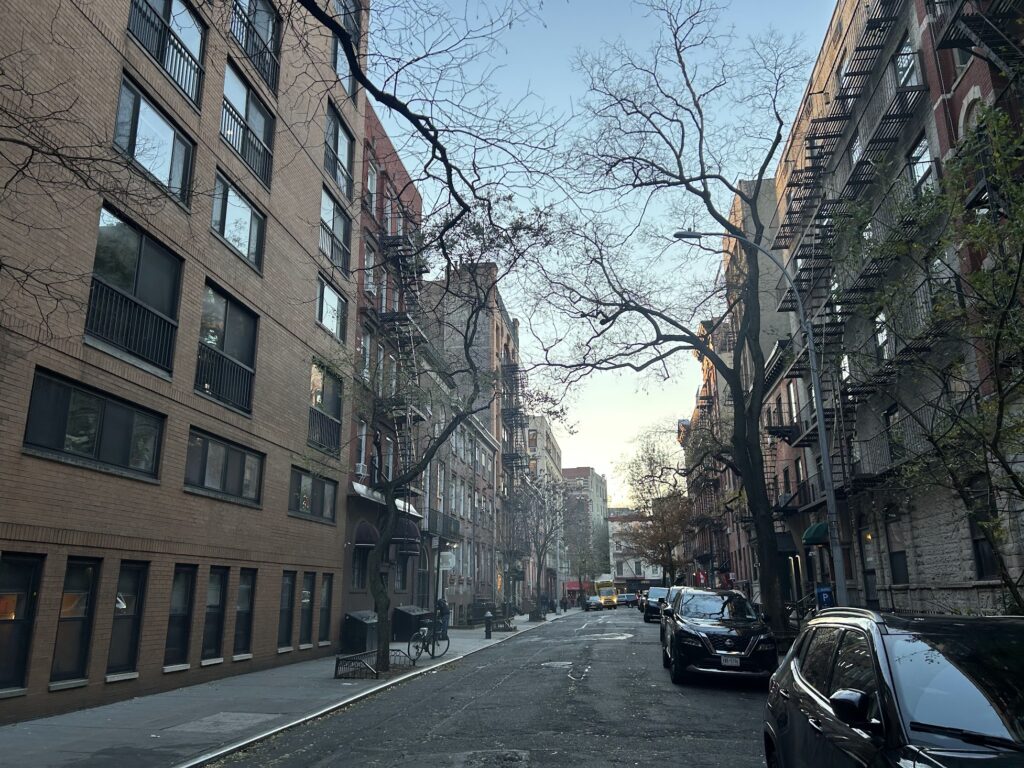
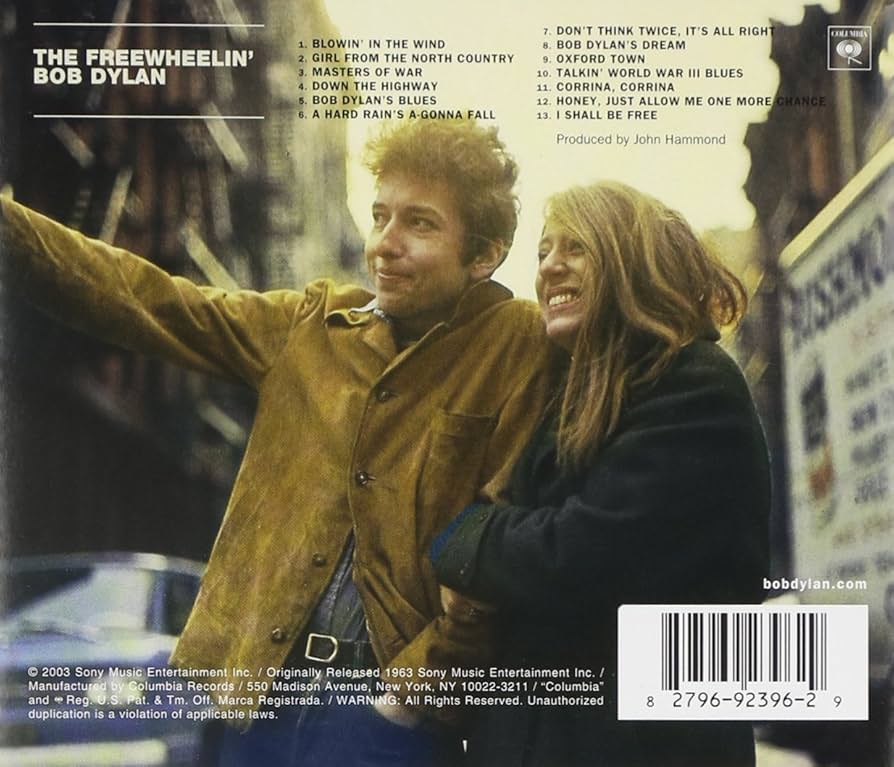
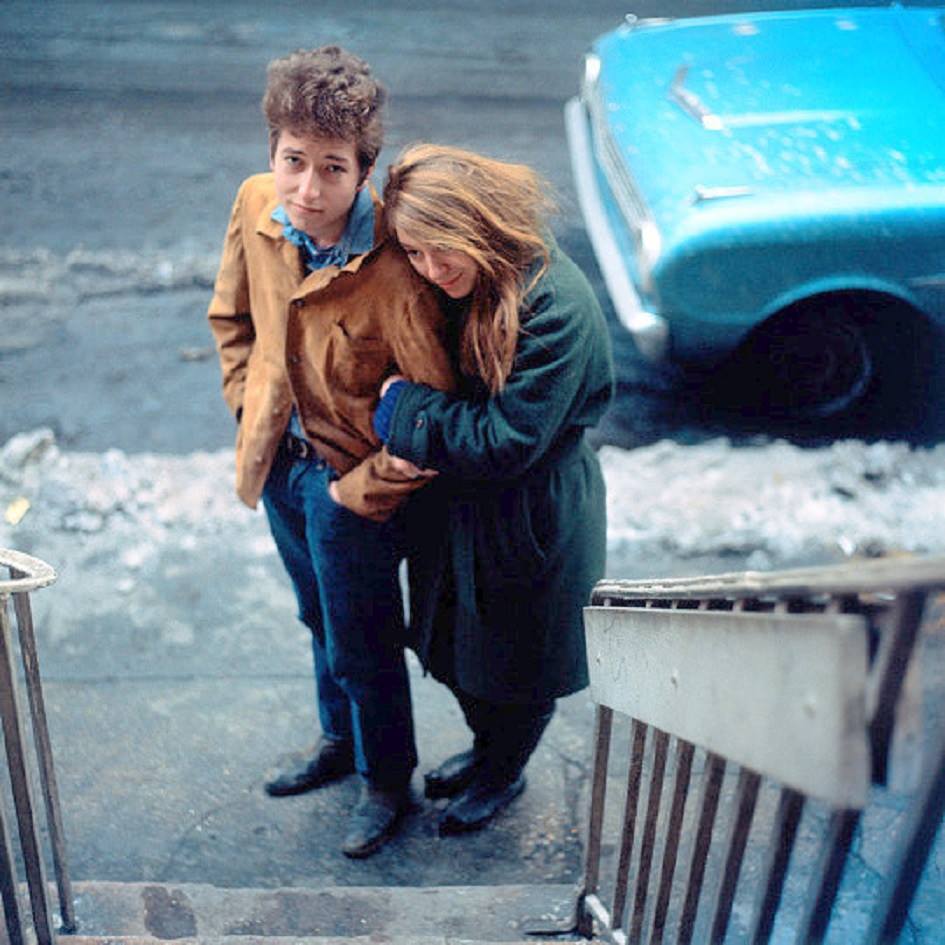
Jones Street, today a popular place for selfies thanks to the album cover
Photography by the legendary music photographer Don Huntstein
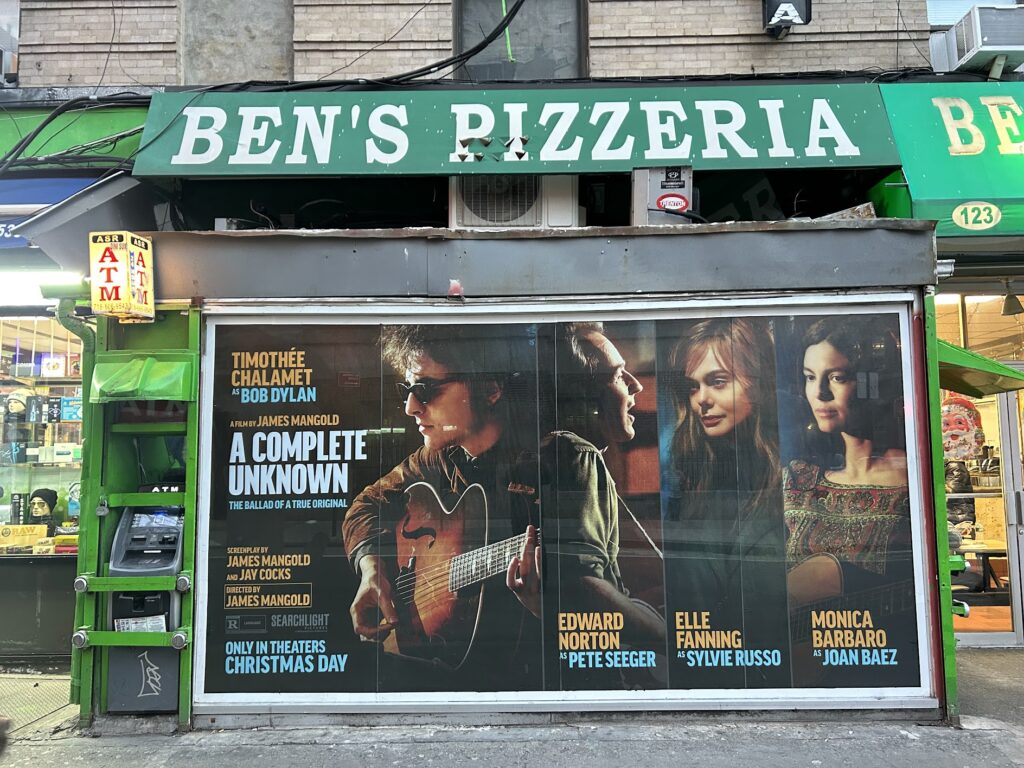
Ben’s Pizzeria on MacDougal Street
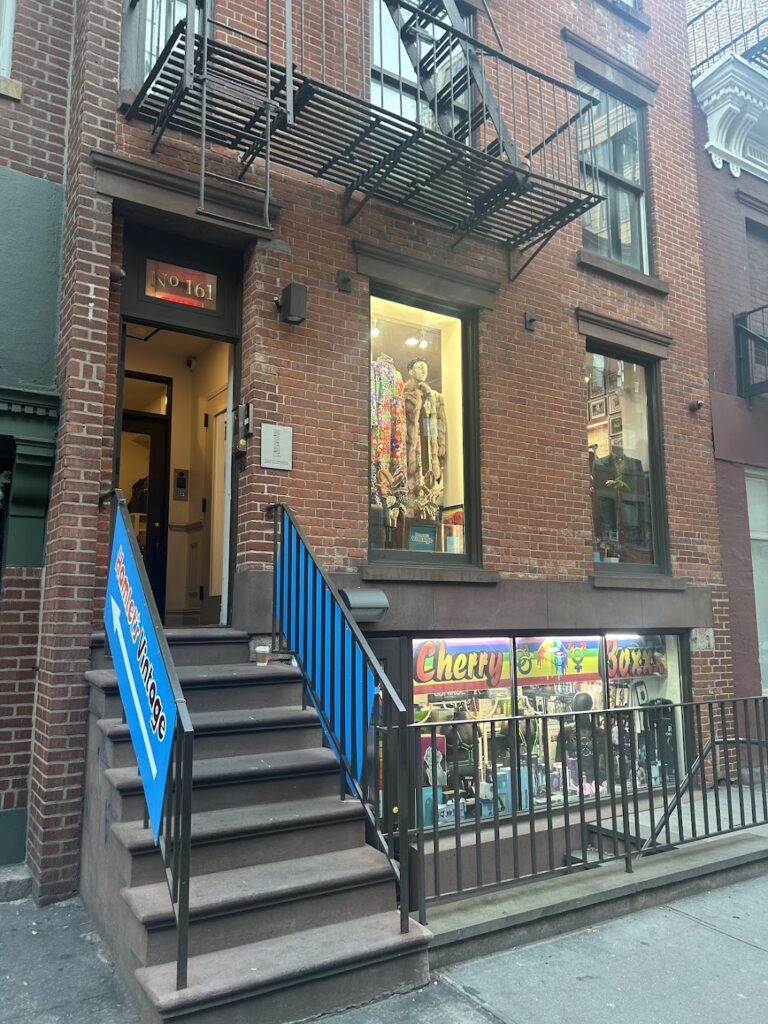
Bob and Suze’s apartment on West 4th Street
The former Gaslight and Kettle of Fish
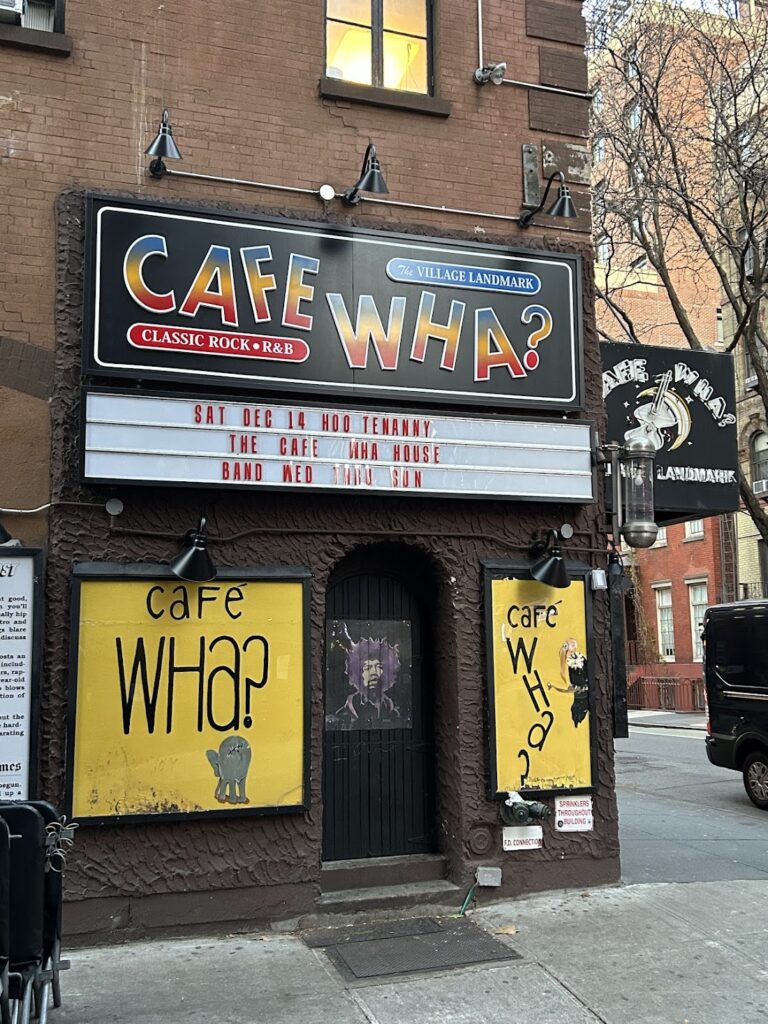
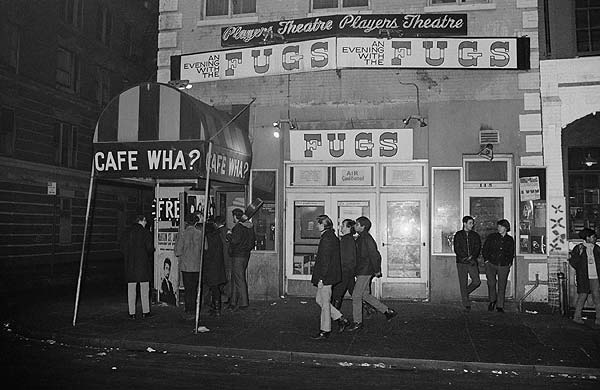
Still hosting hootennanies at the Cafe Wha?

FEATURED READING

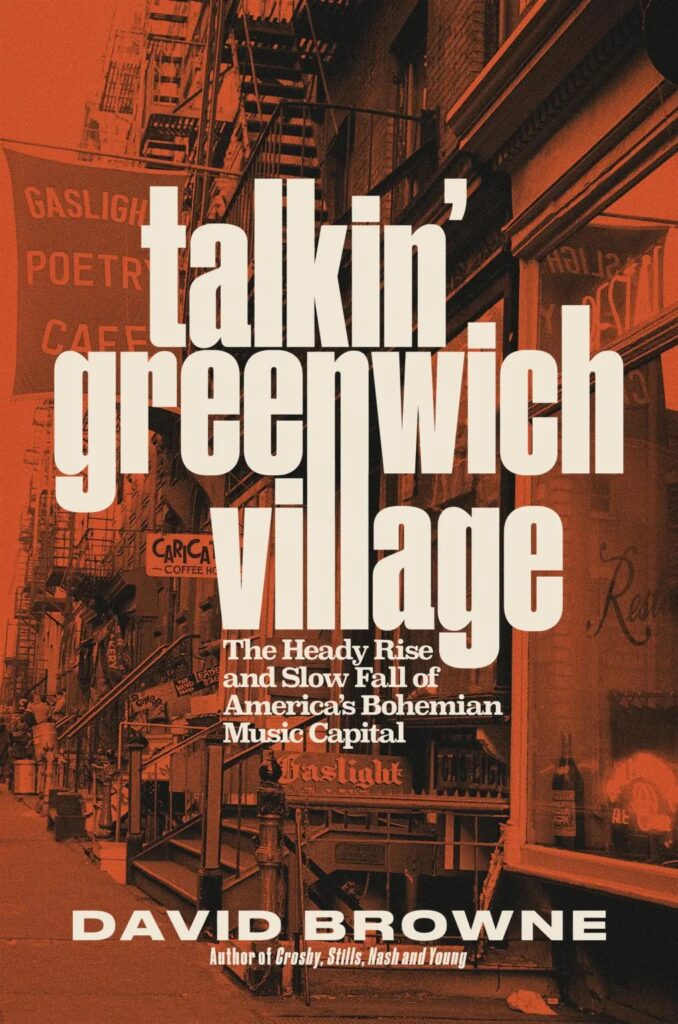
David Browne / Talkin’ Greenwich Village

Bob Dylan / Chronicles
Stephen Petrus and Ronald D Cohen / Folk City: New York and the American Folk Music Revival
Suze Rotolo / A Freewheelin’ Time: A Memoir of Greenwich Village in the Sixties
Howard Sounes/ Down the Highway: The Life of Bob Dylan
Sean Wilentz / Bob Dylan in America

FURTHER LISTENING

Music featured on this show:

“Talkin’ New York” by Bob Dylan (from his first album for Columbia Records)
Dylan Thomas reciting “Do Not Go Gentle Into That Good Night” from Dylan Thomas Reading A Child’s Christmas in Wales & Five Poems
“Strange Fruit” by Billie Holiday (Commodore)
“Little Girl Blue” by Nina Simone (Bethlehem/Verve)
“A Sleepin’ Bee” by Barbra Streisand (Columbia Records)
“Goodnight Irene” by the Weavers (Decca Records)
“This Land Is Your Land” by Woody Guthrie
“Talkin’ John Birch Paranoid Blues” by Bob Dylan
“Blowin’ In The Wind” by Bob Dylan
“Don’t Think Twice, It’s All Right” by Bob Dylan
Only A Pawn In Their Game” by Bob Dylan
The Times They Are A-Changin’” by Bob Dylan

Izzy Young discussing the early years of Bob Dylan (courtesy The Local)

Dylan’s infamous Newport Folk Festival performance, 1965


Categories
Mad Men

‘Mad Men’ notes: The rock gods of Forest Hills, Queens


WARNING The article contains a few spoilers about last night’s ‘Mad Men’ on AMC, so if you’re a fan of the show, come back once you’re watched the episode.

Lusty groupies, ample drug intake, smoky hallways and deafening rock music. One might have thought last night’s ‘Mad Men’ — partially centered around the backstage antics of a Rolling Stones concert — was taking place at Shea Stadium, where the Beatles famously performed to their largest audience in 1965. Or maybe that was Madison Square Garden, the one on Eighth Avenue and 50nd Street, where Marilyn Monroe sang happy birthday to John F. Kennedy in 1962?

No, that mad, bacchanalian event took place at an esteemed tennis club — the West Side Tennis Club in Forest Hills, Queens.

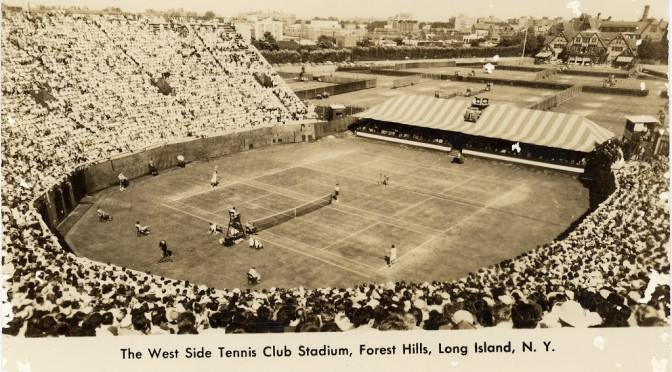
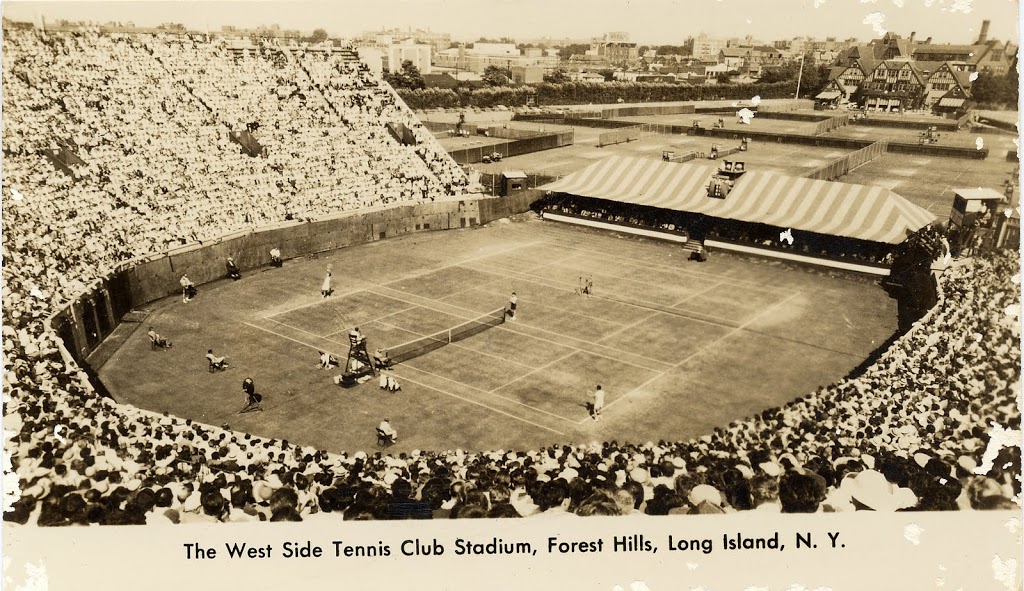
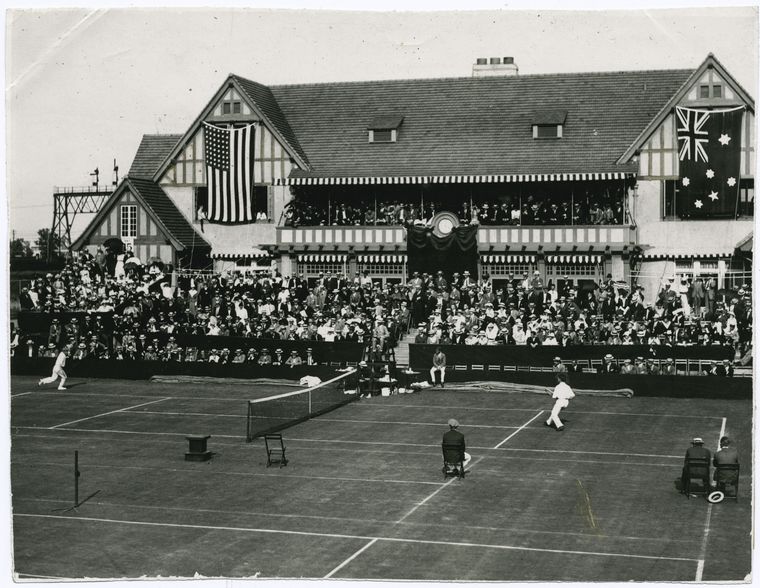
Organized in New York in the 1890s, the tennis organization and social club quickly outgrew various venues in Manhattan and made their way to Queens. The momentary inconvenience of relocating to an outer borough was swiftly forgotten when the venue opened in 1914, a sumptuous series of grand courts, manicured lawns and a spectacular Tudor-style clubhouse designed by Grosvenor Atterbury* and John Almay Tompkins. A later court addition would provide seating for 14,000 spectators.

The clubhouse reflected the style of  homes in nearby Forest Hills Gardens, also planned by Atterbury as a private, upper class community. To this day, the ‘cottage community’ is one of Queens most exclusive neighborhoods.

Below: A vigorous match between Maurice McLoughlin and Norman Brookes in 1914.  The larger court would not be built for several more years. Courtesy NYPL

The grounds were so abundant that it drew the U.S. Open from Newport, Rhode Island, in 1915, and they remained here until 1987. In fact, for most of the 20th century, the tennis club became the American capital for the sport, seeing victories by sports icons like Arthur Ashe, Jimmy Connors, Althea Gibson and Billie Jean King. Alfred Hitchcock even filmed a pivotal scene in ‘Strangers On A Train’ here.

Tying in some of these themes of this season of ‘Mad Men’, there was even a scandal involving the exclusion of black and Jewish members from the club in the 1959, a scandal that involved an under-secretary from the United Nations.

But the appeal of a large and vibrant permanent outdoor venue soon drew, shall we say, less buttoned-up events. The Forest Hills Music Festival was a weekend precursor to New York’s many outdoor concert events today, bringing modern stars to the courtyards and giving this upper crust cloister a taste of counter-culture and teen-fueled rock and roll. One of its organizers was Ron Delsener, later to become a renown concert promoter in the New York area.

Beginning in the late 1950s, concert events were staged on the court itself. At first, the venue drew acts like the Kingston Trio, Frank Sinatra, Harry Belafonte, Barbra Streisand, and even Woody Allen with a stand-up performance. But not of those performers brought the frenzy quite like the Beatles, who played two nights in late August 1964 and drew such passionate crowds that their helicopter had to land on the court itself, their fans separated from the performance area by an eight-foot fence.

Forest Hills was known for its ungainly crowds. Bob Dylan performed there in August 1965 and was booed by audience members outraged that he would deign perform with electric accompaniment, “betraying the cause of folk music,” according to music historian Tony Glover.

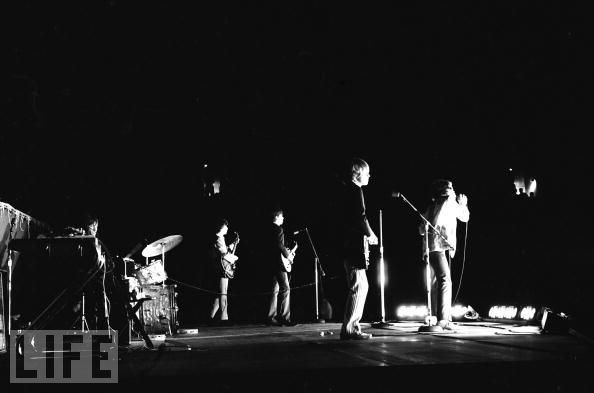
So with all that in mind, imagine the passionate crowds which awaited the shaggy ragamuffins from Dartford, the Rolling Stones, on July 2, 1966, appearing in the United States just as radio stations were buzzing with their number one song, ‘Paint It Black‘.

After three opening acts (including the Trade Winds), the Stones played ten songs at Forest Hills (pictured above), including ‘Lady Jane’, ‘Get Off My Cloud, and of course ‘Satisfaction’, to a crowd of 9,400 people.Yes, believe it or not, they didn’t sell out the venue, but that’s because the most expensive seats (an unheard-of $12.50!) went unsold, and the temperature for the outdoors concert was in the high 90s.

But those that were in attendance were frenzied enough that 250 cops were deployed to the show, armed with tear gas and nightsticks, holding back frothing audiences of young people sent “into peroxsyms” by the British stars. “A dozen youngsters willfully broke through the police line,” according to the Times. “Within seconds the park lights went up and the Rolling Stones’ helicopter took off into the night.”

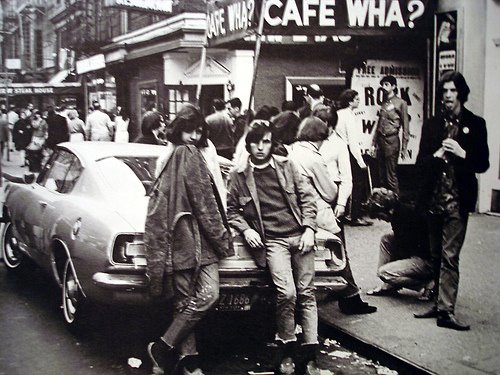
Far from the maddening crowd, members of the band hit the club circuit in Manhattan, first Cafe Wha? in Greenwich Village, and then Ondine’s at 59th Street, where they were wowed by the energy of a young guitarist named Jimi Hendrix.**

And here’s some further context you should keep in mind. That was the summer of 1966. The biggest American musical artist that year was actually two young sons from Forest Hills, Queens — Paul Simon and Art Garfunkel — and their album The Sounds of Silence would become the biggest album of the year.

Believe it or not, the tennis club lost its bid recently to become a New York landmark.

Top picture courtesy the Rego-Forest Preservation Council

*Mr. Atterbury also played a significant role in the renovation of New York’s City Hall in the early 1900s. We have a ball with Grosvenor in our City Hall podcast from 2009


**There seems to be a little confusion here. Keith Richards bios recall Cafe Wha?, while the diary of Bill Wyman mentions Ondine’s. Hendrix played at both venues a few times, so either (or even both) is possible. Keep in mind, everybody was probably stoned.

Categories
Podcasts

Chelsea Hotel, the muse of New York counterculture

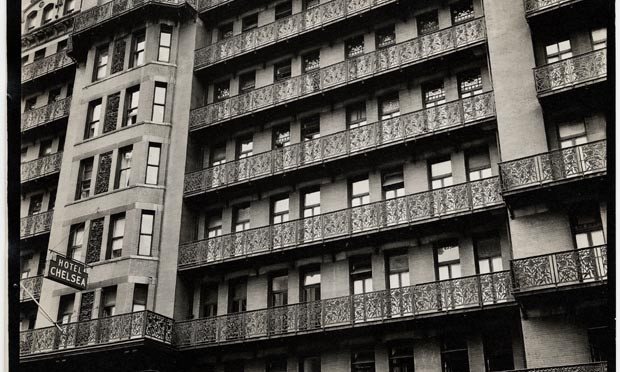
Berniece Abbott looks up to the Chelsea, 1936

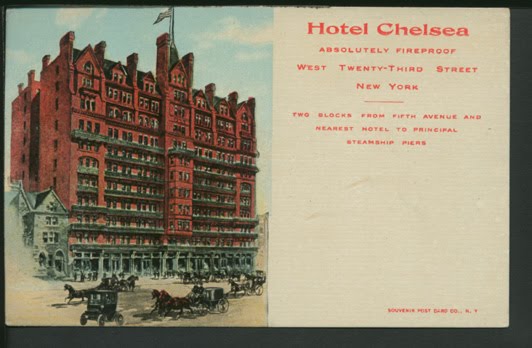
Arguably New York’s least conventional hotel, the Chelsea Hotel (or rather, the Hotel Chelsea) is the one of New York’s culture centers, a glamorous, art-filled Tower of Babel for both creativity and debauchery. From Mark Twain to Andy Warhol, it’s been both inspiration and accommodation for artistic wonder.

We wind back the clock to the beginnings of the Chelsea neighborhood and to the hotel’s early years as one of the city’s first cooperative apartment buildings. What made the Chelsea so different? And why are people still fighting over this storied structure today?

___________________________________
As always, click on pictures for a bigger view

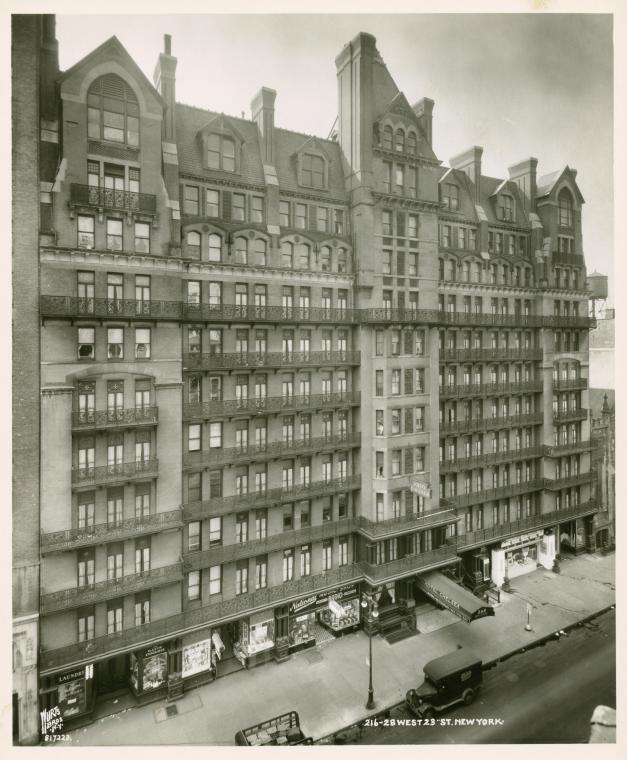
Standing Tall The Chelsea Hotel, built in 1883, was originally intended as a cooperative apartment building for wealthy tenants. However, by 1905, the building was turned into a hotel. Throughout its history, the Chelsea accommodated residents staying there for a few days … or a few decades. (Photograph by the the Wurtz brothers)

___________________________________

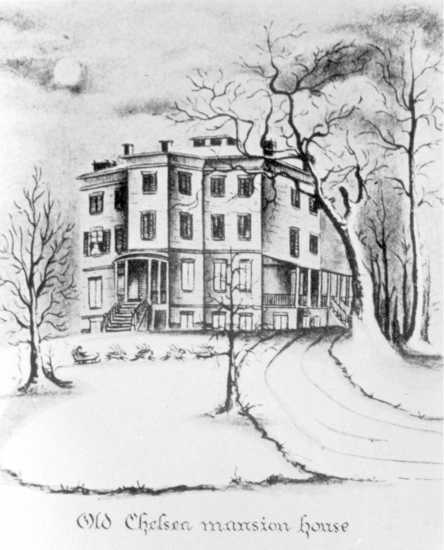
Old Chelsea Mansion The neighborhood of Chelsea was carved from the estate of Captain Thomas Clarke and his descendants. Clarke named his large, hilly estate after the still-operating Royal Chelsea Hospital, a respite for retired British soldiers. The Clarke mansion home sat approximately where the intersection of 23rd and 9th Avenue is today — just down the street from the Hotel Chelsea.

___________________________________

Absolutely Fireproof Many of the Chelsea’s sturdy amenities would come in handy when it began hosting rowdy musicians and artists. The buildings fireproofs claims would be put to the test when certain residents (Edie Sedgwick, Sid Vicious, to name a couple) would set fire to their rooms. And the building’s soundproof walls would be of service when rock bands stayed here.

___________________________________

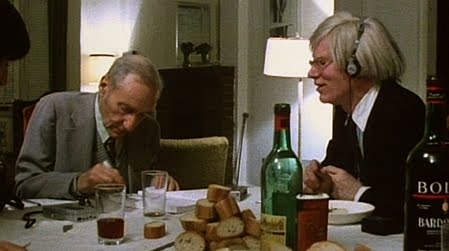
Bird Of A Feather William Burroughs and Andy Warhol in a room at the Chelsea, from a scene in Abel Ferrera’s documentary Chelsea On The Rocks, a film hopefully seeing the light of day very soon.

___________________________________

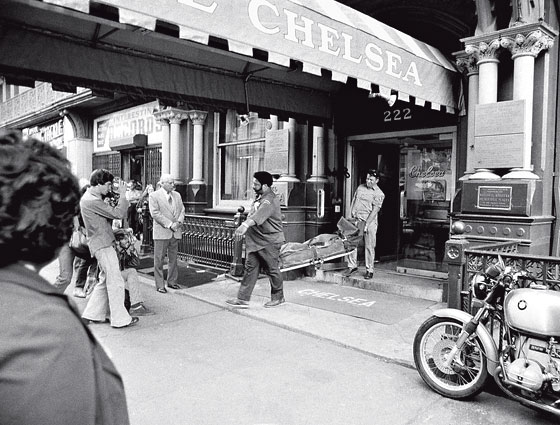
Tragedy 1978 No resident of the Chelsea was as infamous as Sex Pistols bassist Sid Vicious and his girlfriend Nancy Spungen, a raucous tragic pair who literally tore up the hotel. Vicious woke from a drug stupor in his room on October 12, 1978 to find his girlfriend stabbed to death. Sid would eventually die of a drug overdose the next year. Below, her body is carried from the hotel.

___________________________________

Below: A clip from Andy Warhol’s Chelsea Girls, filmed in various rooms at the hotel.

Wanna Know More? Your one-stop source for Chelsea Hotel history and recollection is Ed Hamilton’s very fascinating, very opinionated Living With Legends: Hotel Chelsea blog and companion book Legends of the Chelsea Hotel.

Cafe Wha?: the whys, wheres, whos and hows

FRIDAY NIGHT FEVER To get you in the mood for the weekend, every other Friday we’ll be featuring an old New York nightlife haunt, from the dance halls of 19th Century Bowery, to the massive warehouse clubs of the mid-1990s. Past entries can be found here.

LOCATION Cafe Wha?
115 Macdougal St, at Minetta Lane

Occasionally, the usual types actually did pack into Cafe Wha? — the intellectuals, the progressive, heavy-lidded types. Some of them actually were true beatniks — Sartre, cigarettes and turtlenecks — although most were just regular college students, some hippie precursors mixed among them, or uptowners who were looking to see these so-called beatniks in their natural habitat. They all filtered into this plain, dark room on Macdougal Street, where revolutions were hatched nightly from a guitar or a harmonica.

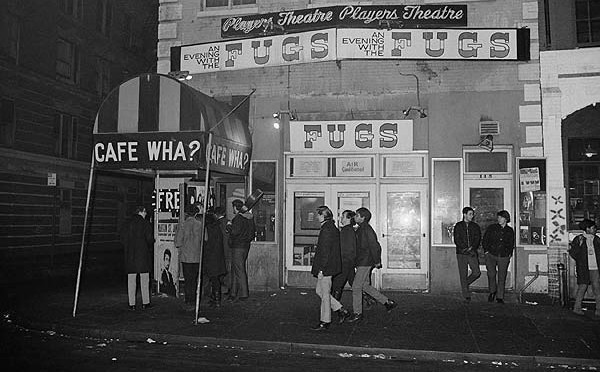
Cafe Wha?, at 115 MacDougal Street, helped create and then outlived New York’s pre-Vietnam War folk era, providing a stage for performers who would literally make music history.

Wha? was one in a string of Village ‘baskethouses’ as they were sometimes called, small music venues where a small wicker basket would be passed around for tips during performances. The music acts didn’t get paid much; there were dozons of aspiring Woody Guthries in the Village, much of the talent interchangable. Performers would traipse up and down the street, playing several times in different places, sometimes on the street.

Many would stumble into Cafe Wha?’s unassuming, sometimes dingy doorway. The club was owned by Manny Roth, who would open here in the late 1950s. He would own a few nightclubs and lounges over time, including another folk venue Cock ‘N Bull (later to become The Bitter End).

Roth’s lineage would create a different source of musical inspiration in the form of his nephew David Lee Roth, to become the flamboyant frontman of Van Halen. Young David would frequently accompany Manny into the club and would often be left with whatever singer happened to be performing at the time (including, a few times, with Richie Havens.) Little David, destined for tight pants, never stood a chance.

Many of folk’s most talented stars played the small Wha? stage, entertaining both bohemian and uptown audiences eager for new talent. Hilly Kristal, later the owner of New York’s most influential rock club CBGBs, was a burgeoning folk singer who frequently performed here. “Those were fun years, the beatnik era,” he said.

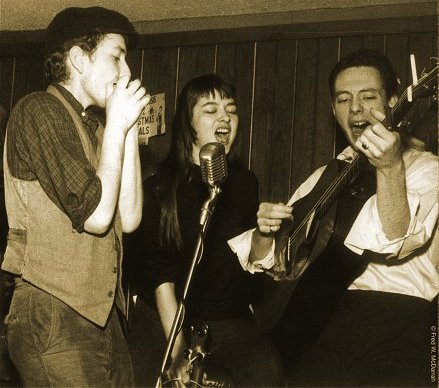
But the kernal of Wha?’s reputation lay with a wan, undistinguished looking boy named Bob Dylan. As the story goes, Cafe Wha? was the very first venue Dylan ever played in New York City, arriving there on his very first day in town on January 24, 1961. He auditioned for Roth, who hired Dylan to play behind one of Roth’s stars Fred Neil, a folkster who would later write songs for Harry Nilsson.

Dylan would only perform as a solo artist at Cafe Wha? only in the afternoons and would perform for free. He would play for bigger audiences at night, but only as backup for Neil.

“I worked for Manny all afternoons, from twelve to eight,” Dylan recalls. “There was constantly something happening on stage. You never really did get popular there, ’cause people never knew who you were….It was just a nonstop flow of people, usually they were tourists who were looking for beatniks in the Village.”

Below: Dylan with Neil and singer Karen Dalton
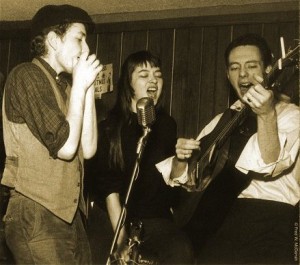
According to a biography by Bob Spitz, the odd, gangly Dylan instantly set himself apart. “That voice! Nobody had ever heard anything like it before….Bob had perfected the tonsilly scranch, a dry, throaty tenor ‘with all the husk and bark left on the notes’, which, if you weren’t actually looking at him, sounded like a middle-age hillbilly with emphysema.”

Certainly he was perceived by some as a parody of a folk singer: raggy clothing, offbeat and sincere. He would eventually distinguish himself as a solo star at other venues — most notably over at Gerde’s Folk City, a venue which would launch him to fame.

But in February 1961, he was just second-fiddle to Neil, who wasn’t the only notable headliner on the Wha? stage. Noel Stookey had a successful stand-up routine at the club long before he took the stage name Paul which fit nicely between the names Peter and Mary. However the performer that interests me most was another folk singer who would more lucratively abandon music altogether — Lou Gossett Jr. As in Officer and a Gentleman Lou Gossett Jr., quite a talented and well-known folk musician in the early 1960s.

Like a handful of other Village music spots, Cafe Wha? helped create the soundtrack for New York counterculture, enriched the Village’s rich reputation for the different. By the mid-60s, Wha? would diversify its musical acts. For instance, a New York Times article from 1965 a ‘Beatles backlash’ emanating from the Cafe What basement in the form of ‘modern blues’.

At the suggestion of Richie Havens (who also got his start at Wha?), a young guitar player Jimi Hendrix auditioned for Roth and got a three-month gig here in the summer of 1966, performing with a group called the Blue Flames. Hendrix and the Flames performed funkified covers of popular songs, certainly the most dynamic house band one can possibly imagine. Curiously, Hendrix and Dylan, the two great stars of Wha?, met only once, and it was at another Village bar, Kettle of Fish.

Around this time another rock band The Castiles would frequently perform here. The group would dissolve after a couple years, and its lead singer, Bruce Springsteen, would continue his slow climb to fame.

Roth would continue to operate the club for two more decades, presenting a host of entertainers from comedians like Lenny Bruce and Richard Pryor to definitely-not-folk-acts like Kool and the Gang.

Roth sold Cafe Wha? in 1988 but would go on to own other performance venues like the West End Gate. Cafe Wha? is open today under different management, hosting a roster of rock and soul artists. I’m not sure however if they still pass about a basket.
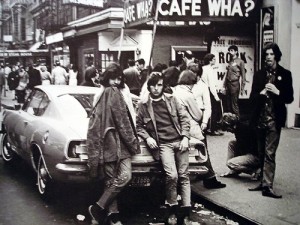

FRIDAY NIGHT FEVER: Gerde’s Folk City

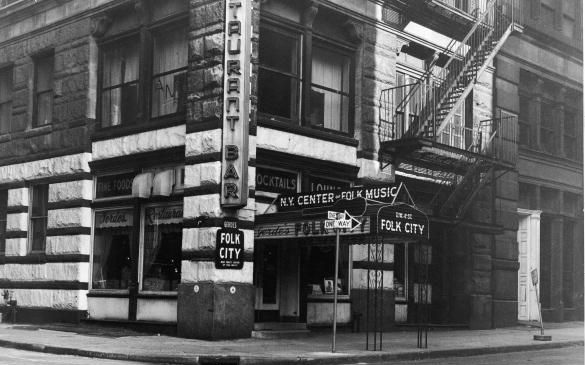
ABOVE: Gerde’s in its original location, circa 1960

To get you in the mood for the weekend, every Friday we’ll be celebrating ‘FRIDAY NIGHT FEVER’, featuring an old New York nightlife haunt, from the dance halls of 19th Century Bowery, to the massive warehouse spaces of the mid-90s. Past entries can be found HERE.

Few streets in Greenwich Village have more history than West 4th Street, which runs along the south side of Washington Square and became a lifeline to New York’s art and bohemian culture. The teahouse Mad Hatter at 150 W. 4th was an influential artist destination, later becoming the lesbian bar Pony Stable Inn, where Allan Ginsberg first met close friend and fellow beat poet Gregory Corso. (It’s now the ever reliable Washington Square Diner. I heartily endorse their grilled cheese.)

The Whitney Studio Club sprang up at 147 W. 4th in 1910, presenting Edward Hopper’s first exhibit of his works, and later became the bohemian hangout Ristorante Volare. The Washington Square Methodist Church, a lovely Romanesque church built in 1860, on 135 W. 4th gave refuge to draft dodgers in the 60s and was appropriately called ‘Peace Church’.

And we can’t forget the notorious Golden Swan Café, a 19th century saloon formerly on the corner of W. 4th and Sixth Avenue, which Eugene O’Neil immortalized in ‘The Iceman Cometh’.

But for music lovers, no place on this tiny street is more revered than the former location (now gone) of Gerde’s Folk City.

You won’t find the strange but fabulous Todd Haynes film ‘I’m Not There’ anywhere near West Fourth Street — it was filmed in Canada! — but this is the street where Bob Dylan, the artist, was born. The mousey Minnesota born musician arrived in 1961 and quickly caught the attentions of Village habitues. Although he performed in various places up and down the street — including the NYU Loeb Student Center (once at 61 W. 4th) — Gerde’s was his best known haunt.

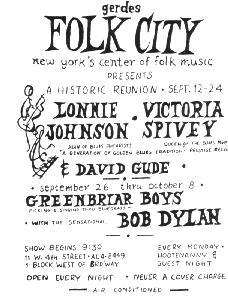
Owner Mike Porco took over Gerde’s restaurant in 1952 and refashioned it as a coffeehouse with Monday night ‘hootenannys’, amateur nights for local musicians. However, when you’re in Greenwich Village, the talent pool at Gerde’s would be filled with future stars — Judy Collins, Arlo Guthrie, Tom Paxton. And of course, Dylan, who approached Porco and began performing in April of 1961, on a ticket that night with John Lee Hooker.

He threw the clientele for a loop. Dylan Roots quotes Happy Traum as saying, “I remember watching him, thinking ‘This boy’s unbelievable, he’s going to become another Woody Guthrie.’ I also thought that he would not become known outside of Greenwich Village.”

He would become quite known, however, thanks to a performance at Gerde’s in September that was reviewed by the New York Times critic Robert Sheldon. Dylan wasn’t even headlining that night; he opened that night for a bluegrass outfit the Greenbriar Boys. By October, Dylan had a record deal with Columbia Records. Sheldon, by the way, would go on to write ‘No Direction Home’, a biography on Dylan that would be made into Martin Scorcese film.

Gerde’s would move in 1970 to 130 West 3rd Street. Its now the home of the Village Underground, another great Village music venue.
I would suggest going on an ultimate Dylan excursion through the Village, even if you’re not really into Dylan. Go check out ‘I’m Not There’ at the Film Forum, then walk up to Fourth Street to the other addresses associated with Dylan. On top of the previously mentioned Gerde’s and Loeb Student Center, his former apartment is in 161 W. 4th and he snarfed down bagels at 168 w. 4th. New Pony has an entire map of Dylan-themed locations in downtown Manhattan!

I think we can conclude what Bob’s ‘Positively Fourth Street’ was about.

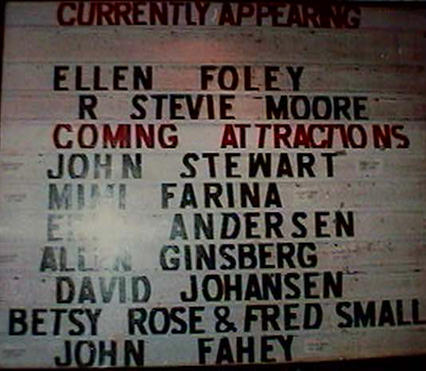
Below: from R. Stevie Moore, a billboard from latterday Gerde’s (1984) listing some of the headliners that month: