Categories
American History On The Waterfront Podcasts

The Titanic and the Fate of Pier 54

In the early morning hours of April 15, 1912. the White Star ocean liner RMS Titanic struck an iceberg en route to New York City and sank in the Atlantic Ocean.

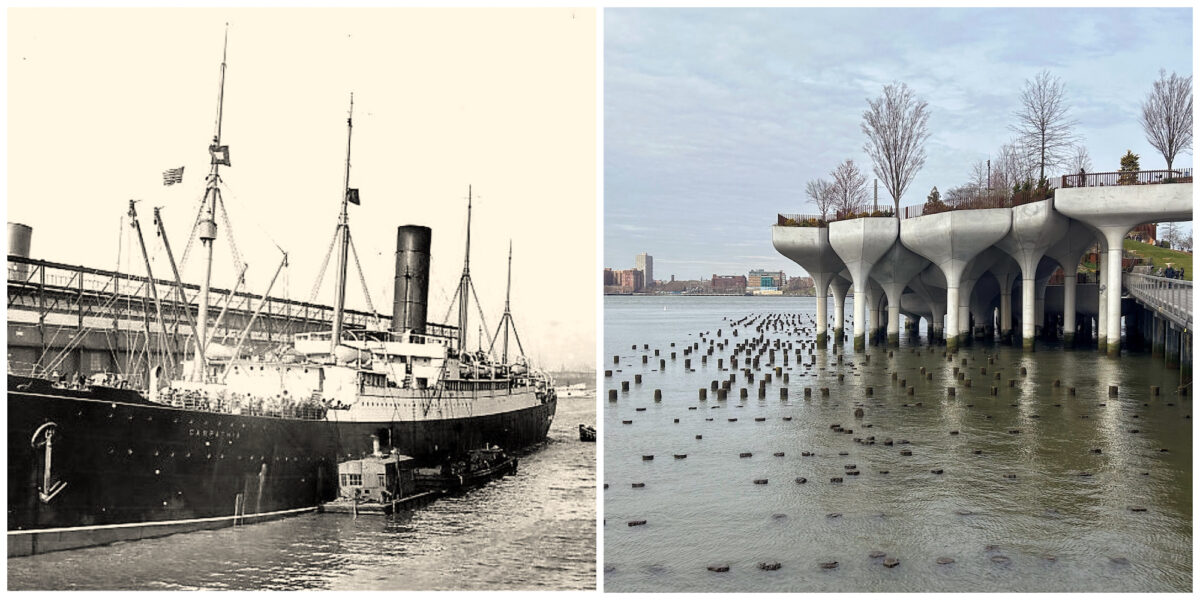
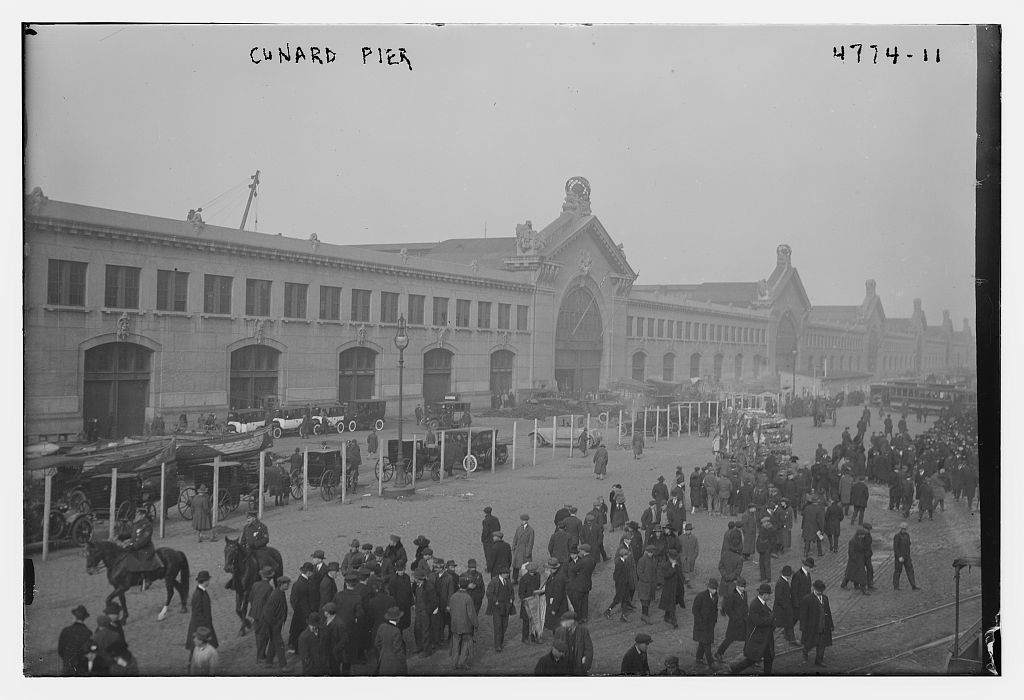
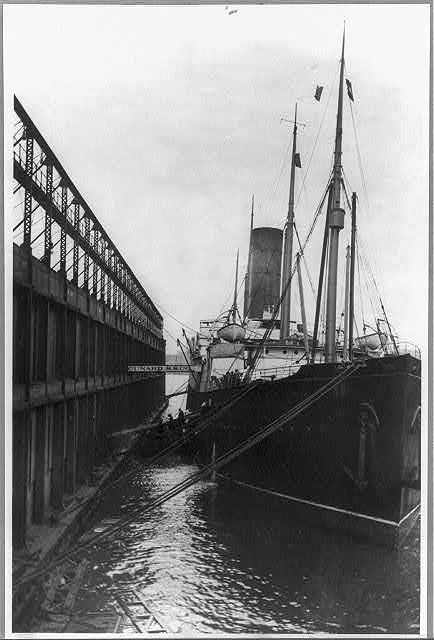
Survivors were rescued by the Cunard liner Carpathia and brought to their berth at Pier 54 at the Chelsea Piers.

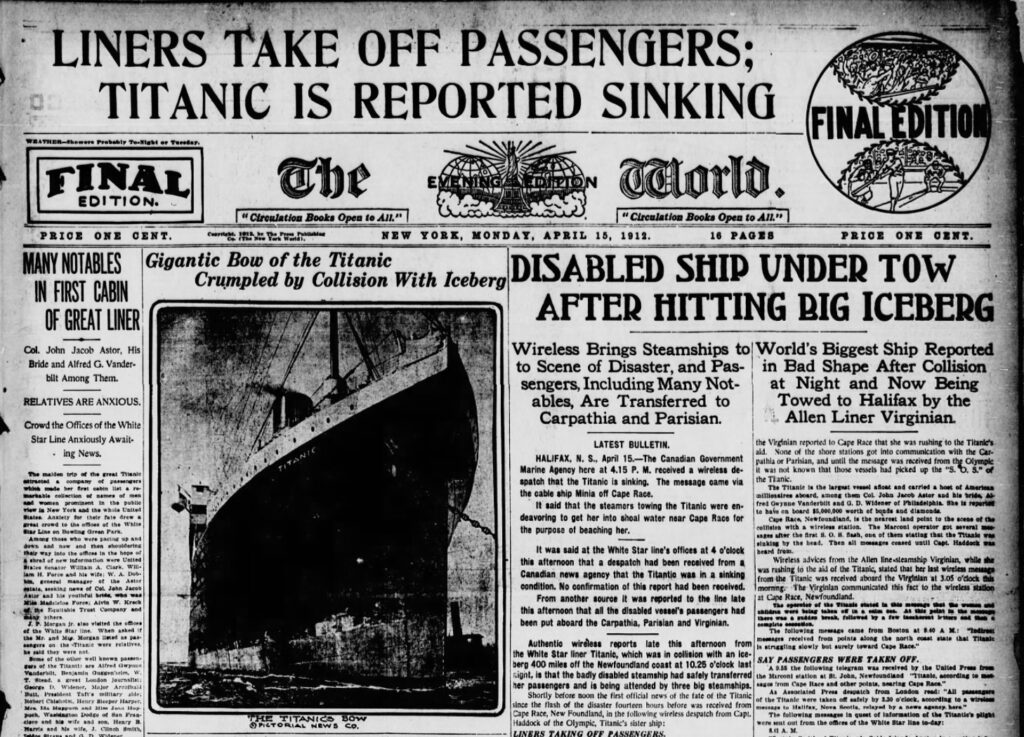
The earliest accounts of the Titanic sinking were filled with rumors.

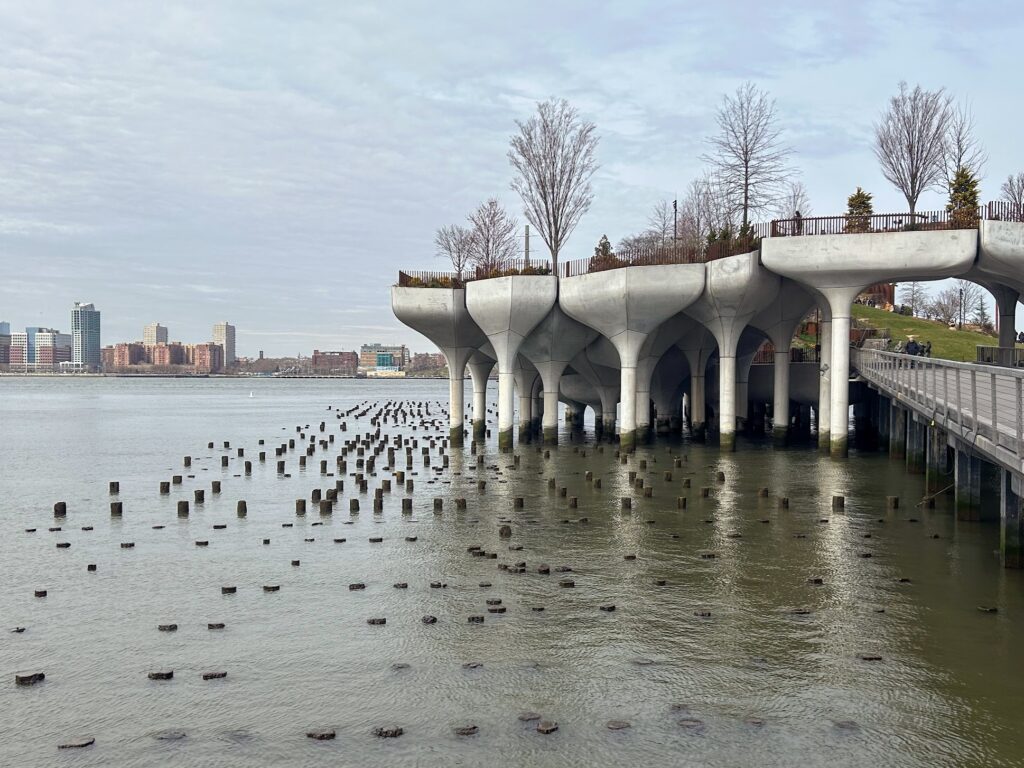
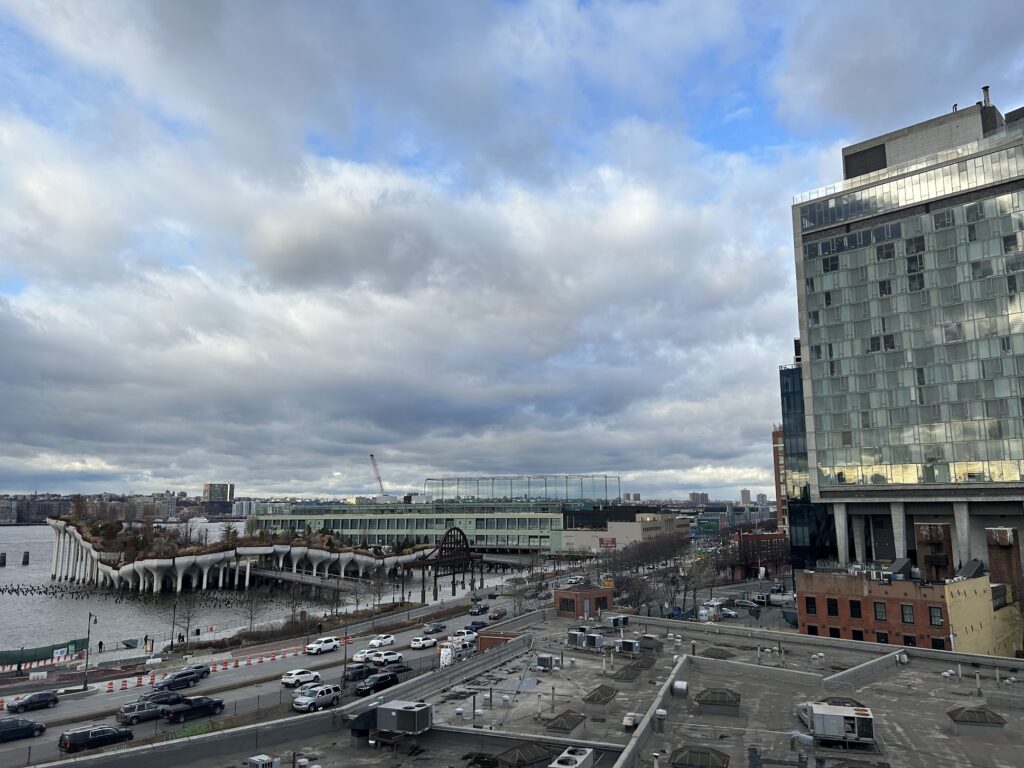
On that very spot today, a fanciful waterfront development juts out into the Hudson River, a place called Little Island which opened in 2021. This recreational oasis will draw thousands of people, New Yorkers and tourists alike, this spring and summer.

But on the southern side of Little Island, peering out of the water, are dozens of wooden posts – these are the remains of the former Pier 54.

And it was on this pier, on April 18, 1912, that survivors of the Titanic disembarked and touched land.

The remains of Pier 54 jut out from the water on the southern side of Little Island. Photo by Greg Young

There are many, many books and documentaries on the subject of the Titanic’s sinking. (And of course a very popular movie.) But in this episode, Greg and Tom look at the story from the perspective of New York City – from the famous New Yorkers who were passengers to the experiences of New Yorkers anxiously awaiting news in those horrifying days following the ship’s sinking.

This is the story of the places that figured into the aftermath and the story of how New York memorialized those lost to the tragedy.

And in the end they return to Little Island and to the ghost of Pier 54, the place where this disaster became reality for most people.

Where survivors were greeted with joy and where many hundreds of people faced the reality that their loved ones were never coming home.  

LISTEN NOW: THE TITANIC AND THE FATE OF PIER 54

Little Island and the Meat Packing District. Photo by Greg Young
Pier 54, 1912
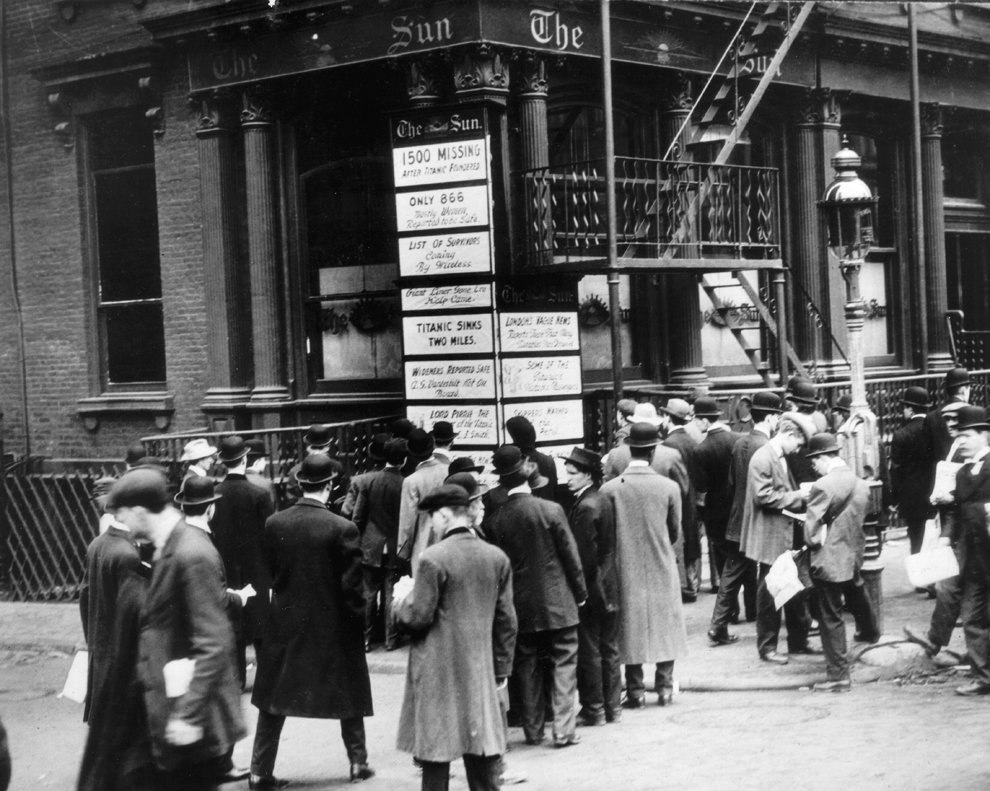
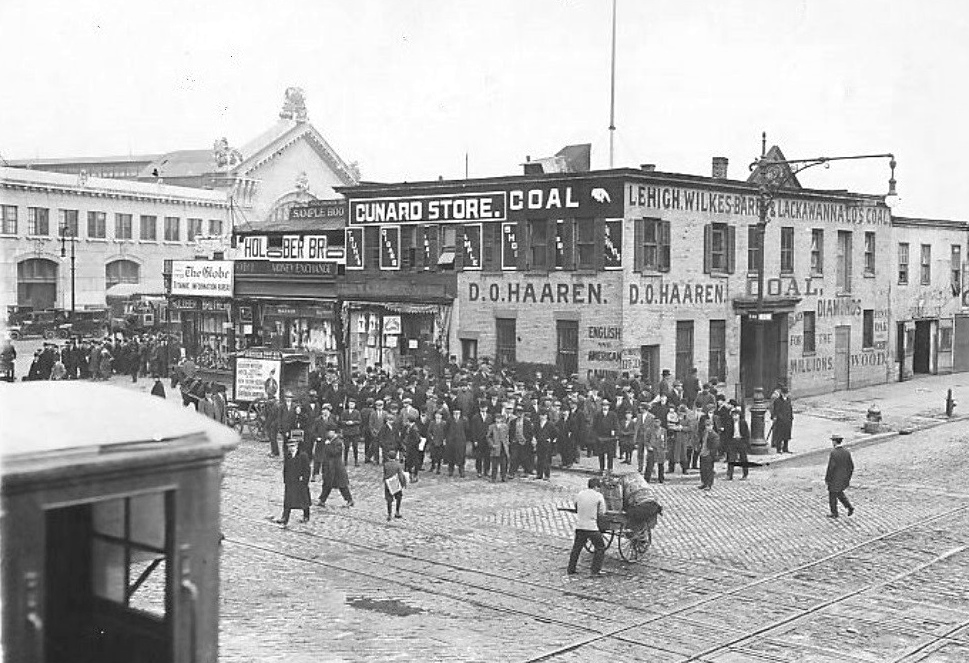
Many people found out about the Titanic disaster from newspaper bulletin boards where breaking news was posted.
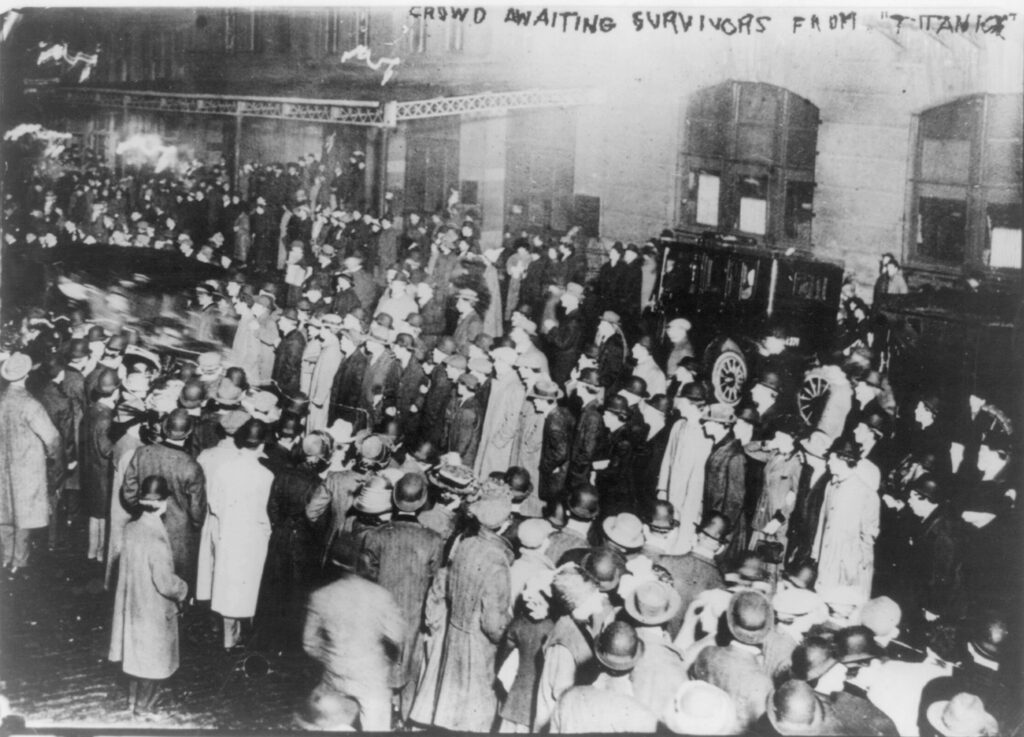
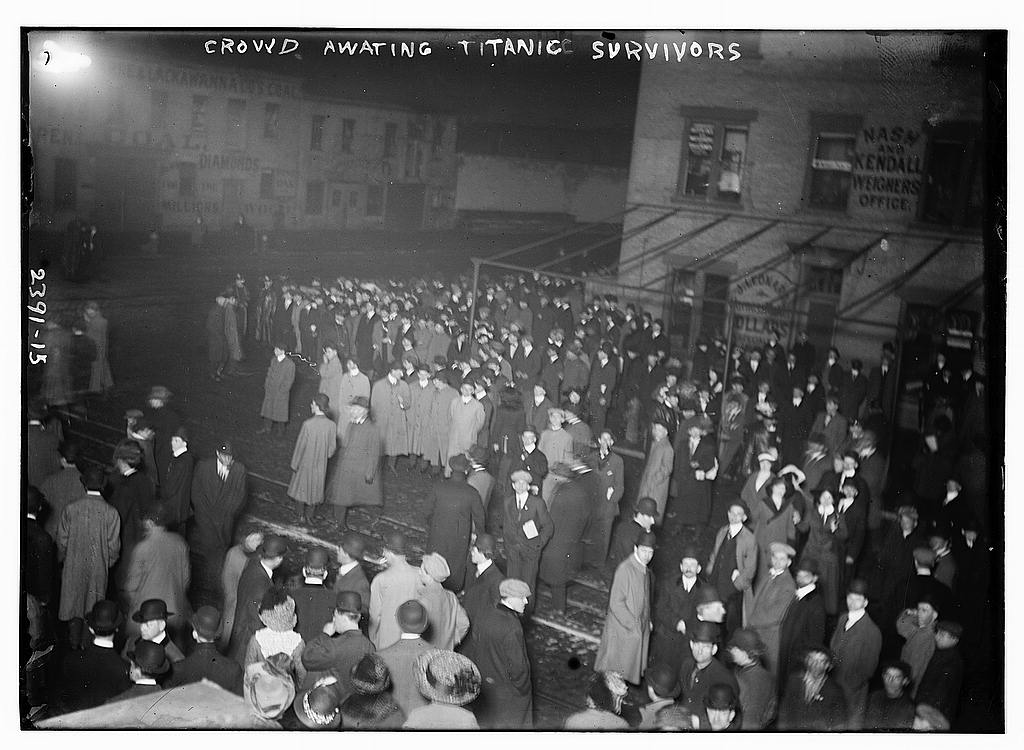
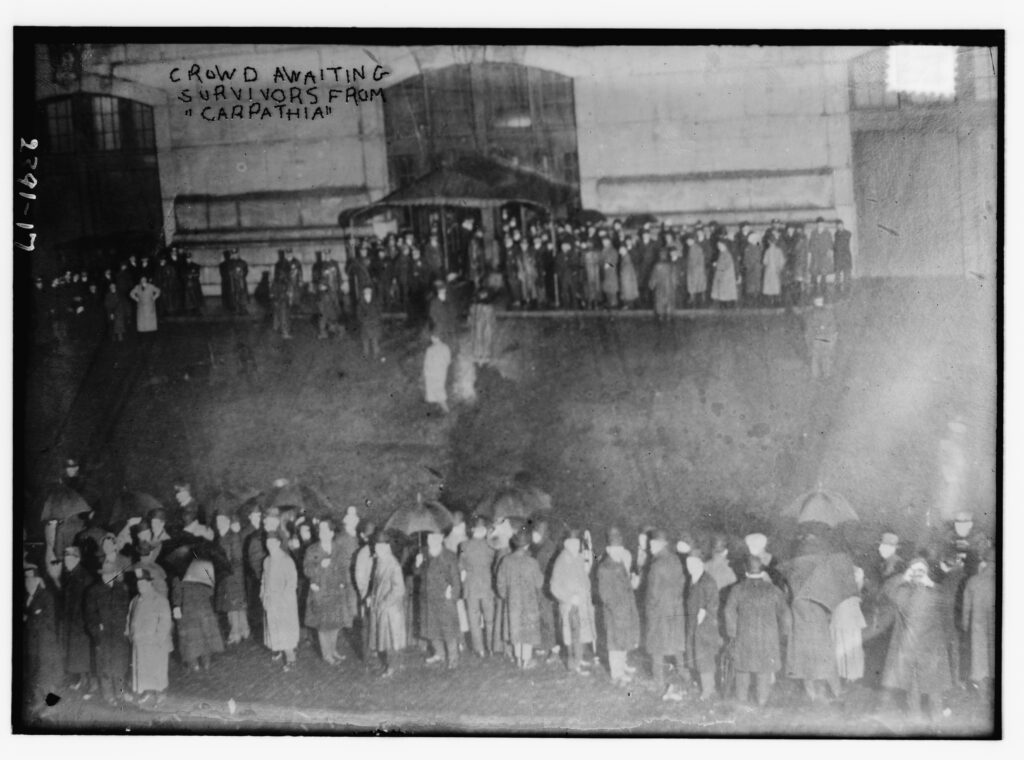
The streets were lined with people that night at Pier 54.
The morning of April 19, 1912 — Crowds gather at the Cunard Pier 54 (at 14th Street) where the Carpathia landed with survivors of the Titanic disaster the previous evening. News accounts say there were up to 40,000 people gathered at the pier waiting for Carpathia on April 18. (Picture courtesy AP)
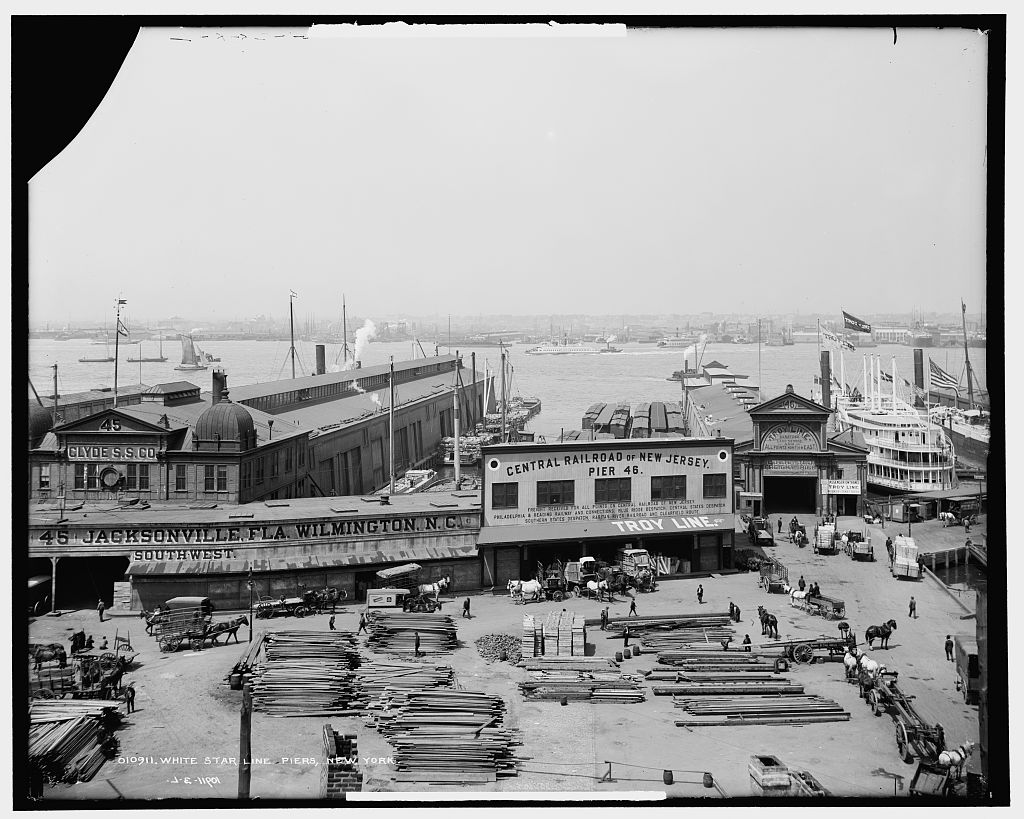
The berth of the White Star line
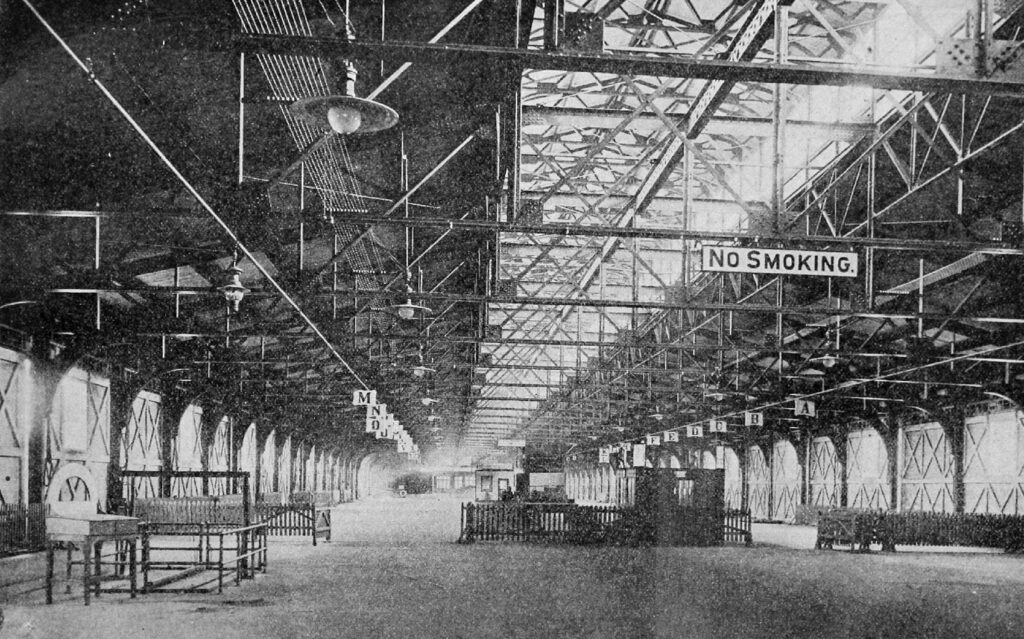
Inside Pier 54, the Cunard line, in 1912
The Carpathia at Pier 54
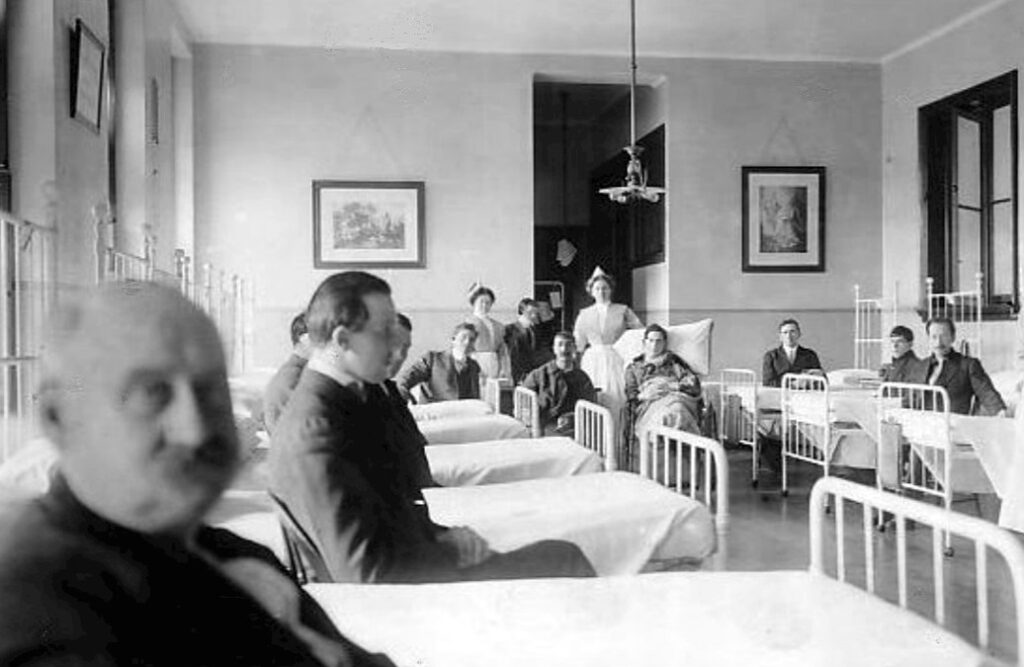
Titanic survivors are treated at St. Vincent’s Hospital (Picture courtesy AP)

As Tom mentioned on the show, you can visit Titanic: The Exhibition in the same building where Macy’s opened and where Titanic passenger Isador Straus (with his brother Nathan) got their start with the department store. For more information, visit their website.


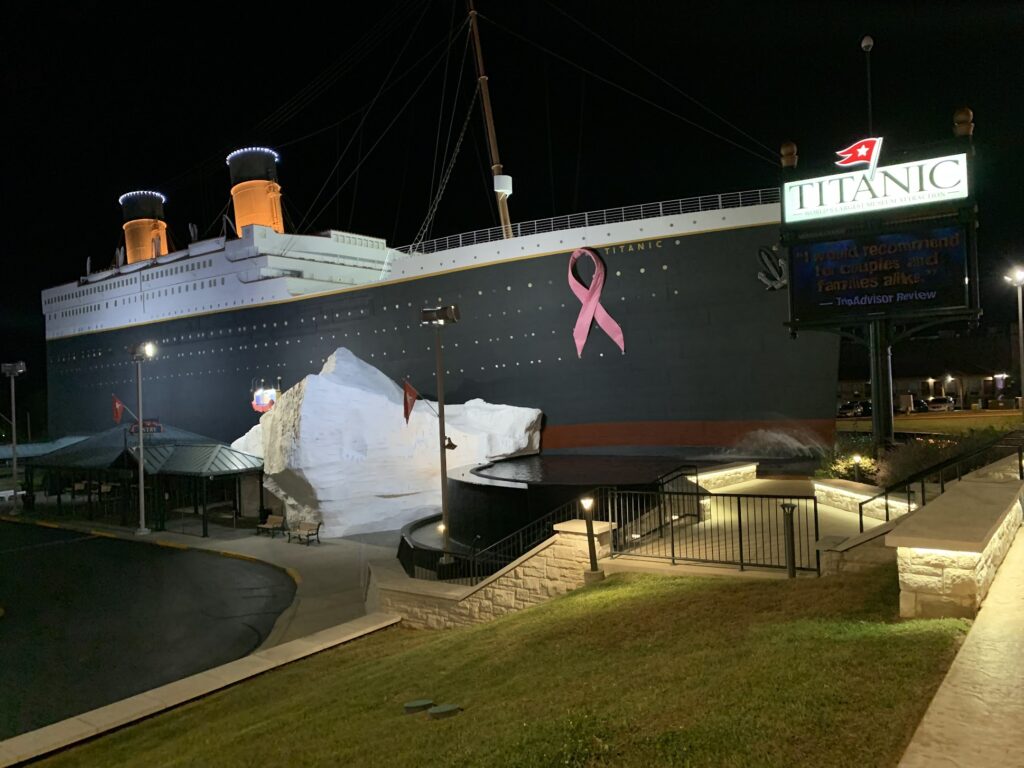
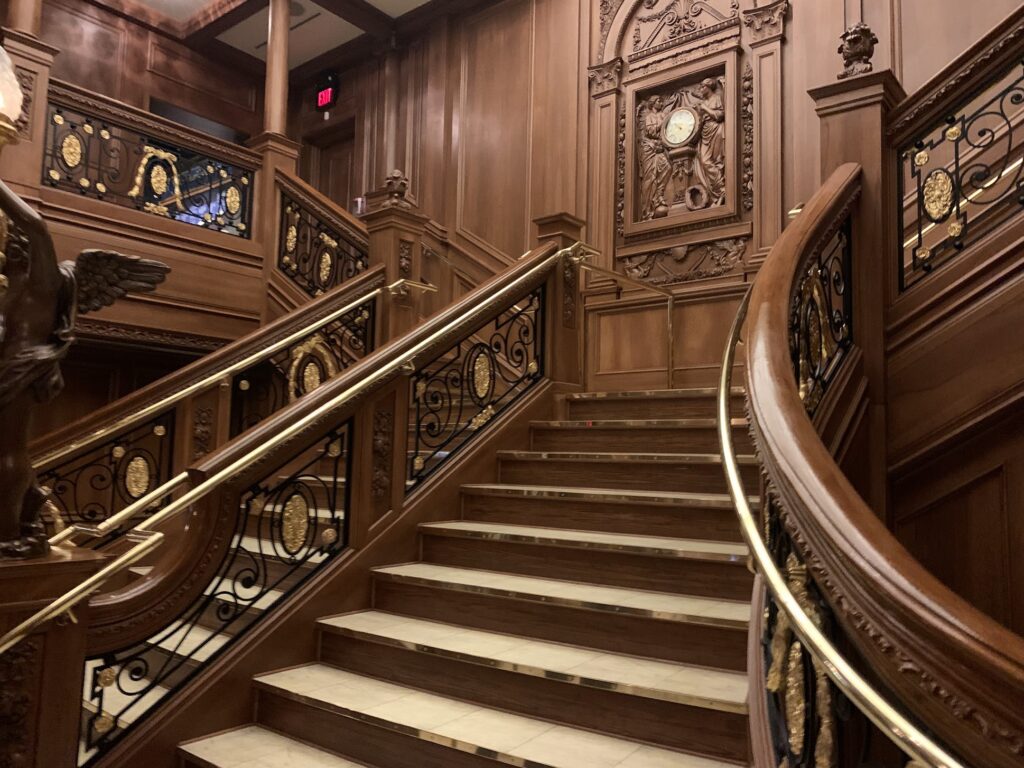
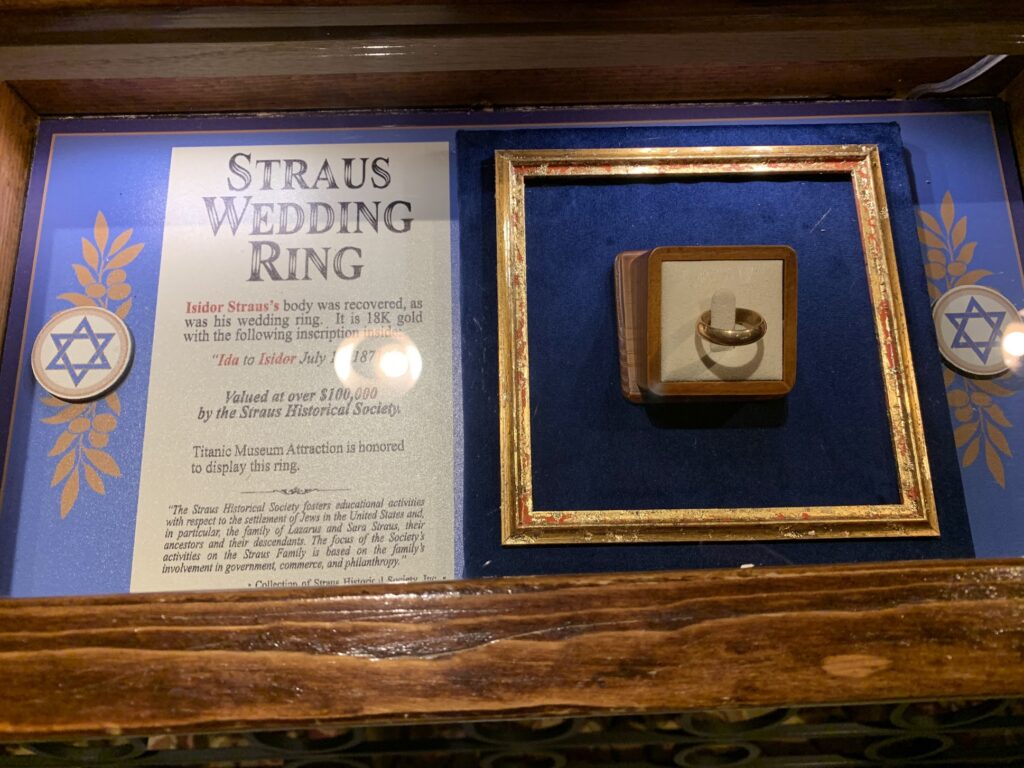
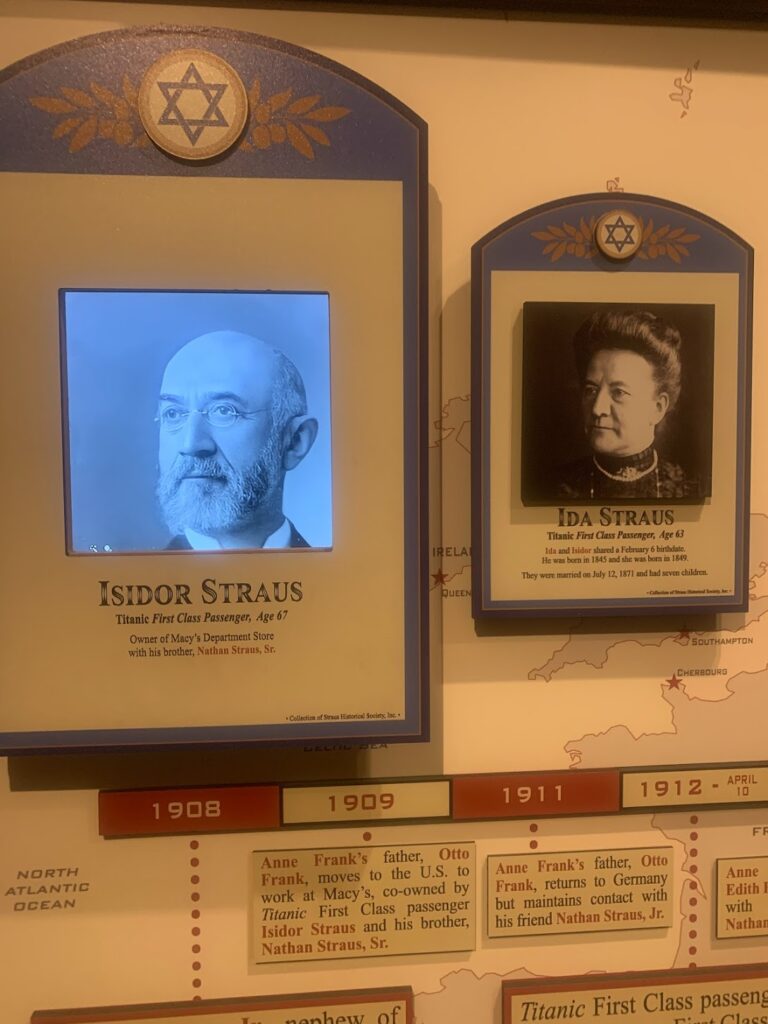
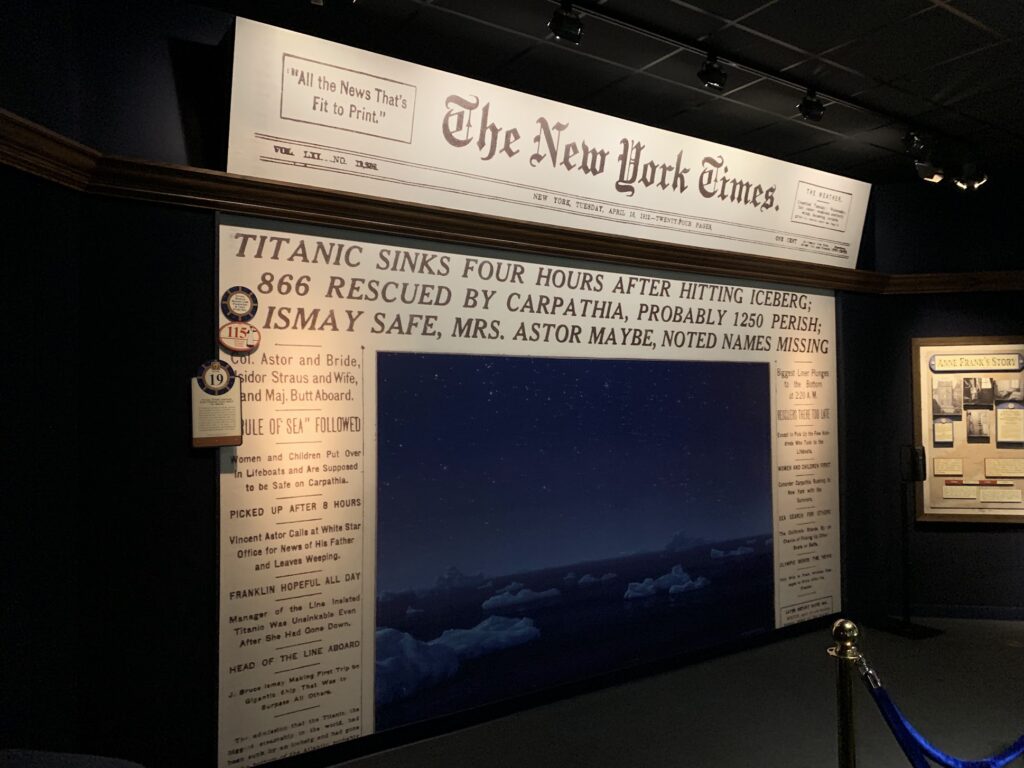
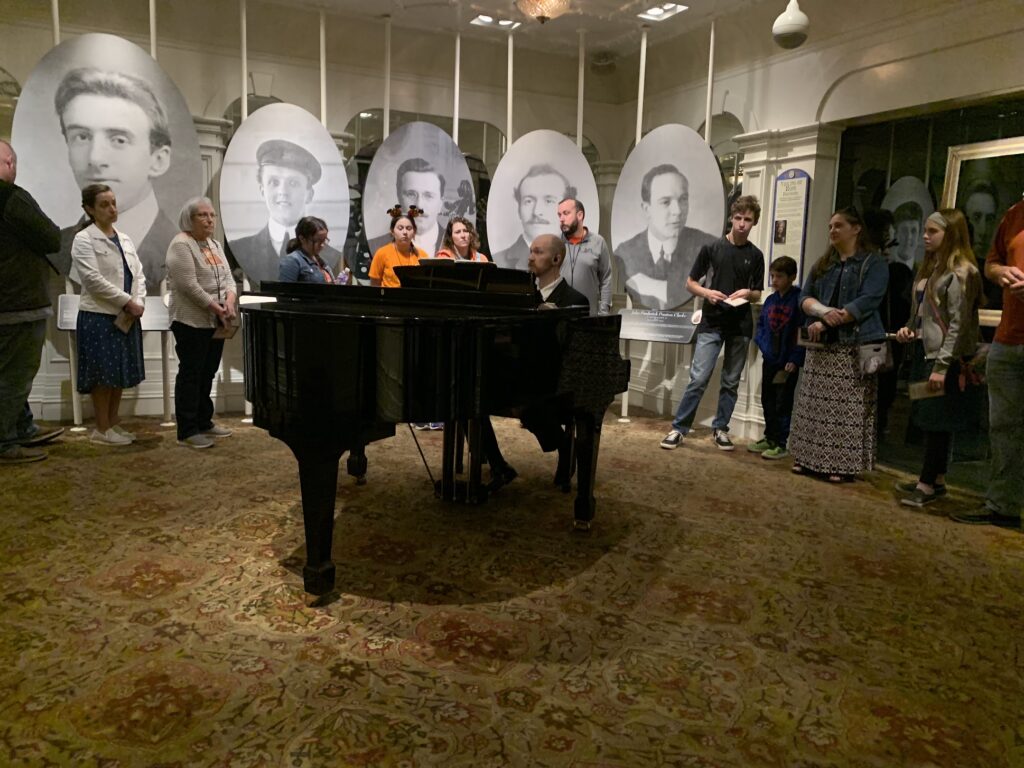
And for a more long distance experience, here are Greg’s pictures from the Titanic Museum in Branson, Missouri:

FURTHER READING:

A short history of New York City’s various Titanic memorials

The doctor, the heiress and the accidental nanny: New York women who survived the Titanic

A Haunting Look Inside the Lusitania

The Lusitania’s final voyage, breathlessly told

Sigourney Weaver boards an off-Broadway ‘Titanic’ in 1976

FURTHER LISTENING:

After listening to this tale of New York City and the Titanic disaster, check out these shows with similar themes:

Categories
Mysterious Stories Podcasts

Haunted Landmarks of New York : Tourist Terrors in the Big Apple

PODCAST It’s the ninth annual Bowery Boys ghost stories podcast, our seasonal twist on history, focusing on famous tales of the weird and the disturbing at some of New York’s most recognizable locations.

Don’t be frightened! We’re here to guide you through the back alleys … OF TERROR!

In this installment, we take a look at the spectral lore behind some of New York City’s most famous landmarks, buildings with great reputations as iconic architectural marvels and locations for great creativity.

But they’re also filled with ghost stories:

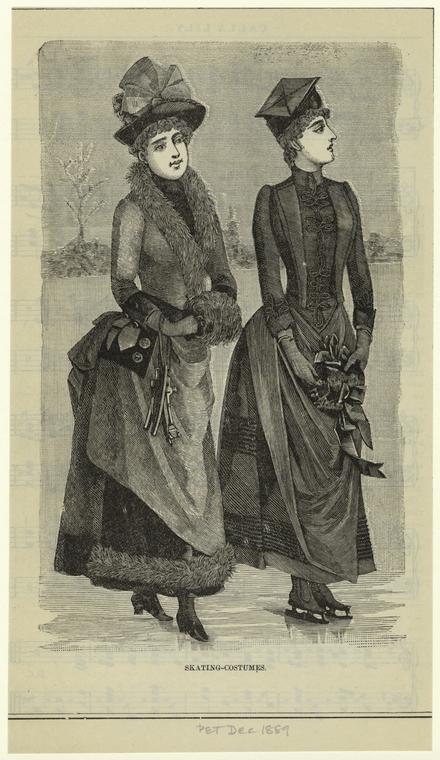
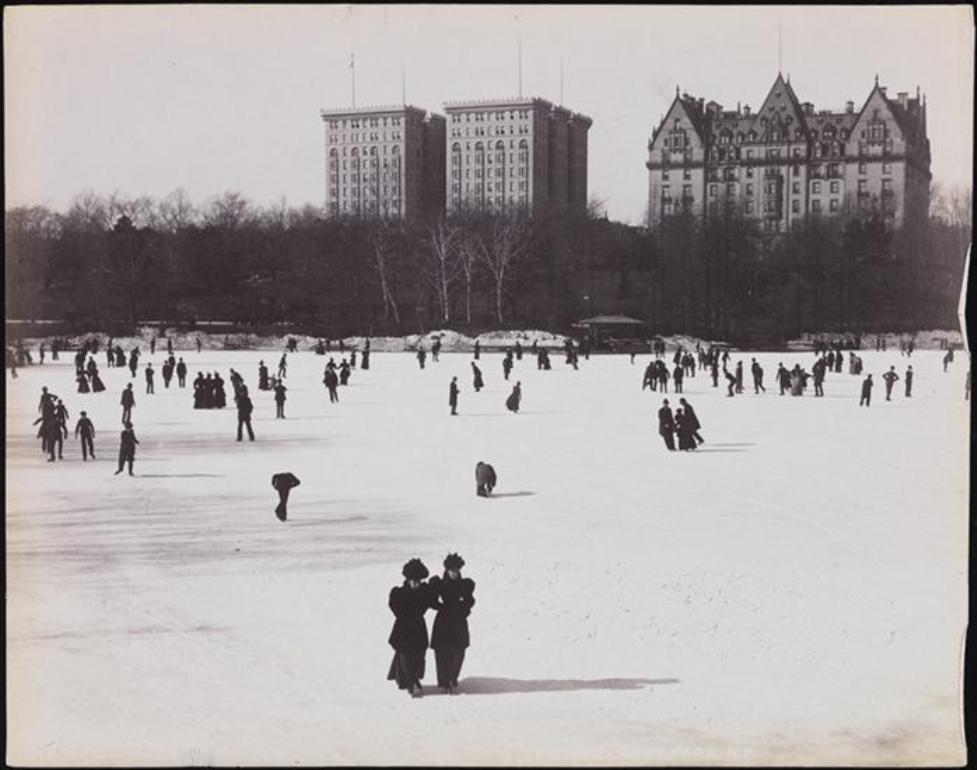
Who are the mysterious sisters in colorful outerwear skating on the icy pond in Central Park? And why are there so many uninvited guests at the Dakota Apartments, one of the first and finest buildings on the Upper West Side?

Meanwhile, at the Chelsea Hotel, all the intense creativity that is associated with this great and important location seems to have left an imprint of the afterworld upon its hallways.

Over at Grand Central Terminal, the Campbell Apartment serves up some cocktails — and a few unnatural encounters with Jazz Age spirits.

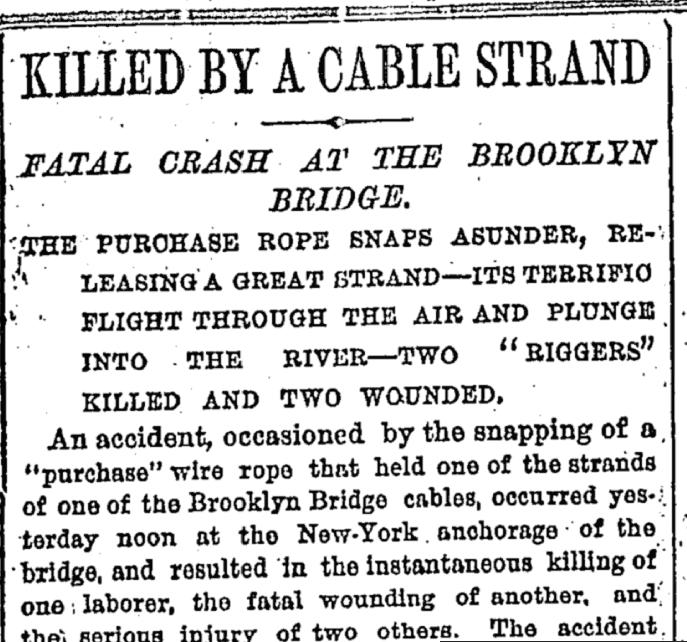
Finally, on the Brooklyn Bridge, a tragedy during its construction has left its shadow upon the modern tourist attraction. Who’s that up ahead on the pedestrian pathway?

A little spooky fun — mixed with a lot of interesting history — and a few cheesy sound effects!


The Bowery Boys: New York City History podcast is brought to you …. by you!

We are now producing a new Bowery Boys podcast every two weeks. We’re also looking to improve the show in other ways and expand in other ways as well — through publishing, social media, live events and other forms of media. But we can only do this with your help!

We are now a member of Patreon, a patronage platform where you can support your favorite content creators for as little as a $1 a month.

Please visit our page on Patreon and watch a short video of us recording the show and talking about our expansion plans. If you’d like to help out, there are five different pledge levels (and with clever names too — Mannahatta, New Amsterdam, Five Points, Gilded Age, Jazz Age and Empire State). Check them out and consider being a sponsor.

We greatly appreciate our listeners and readers and thank you for joining us on this journey so far. And the best is yet to come!


Two women in fashionable skating garments 1889. Perhaps similar to the ensembles worn by Janet and Rosette Van Der Voort during their ghostly figure eights in Central Park.

New York Public Library


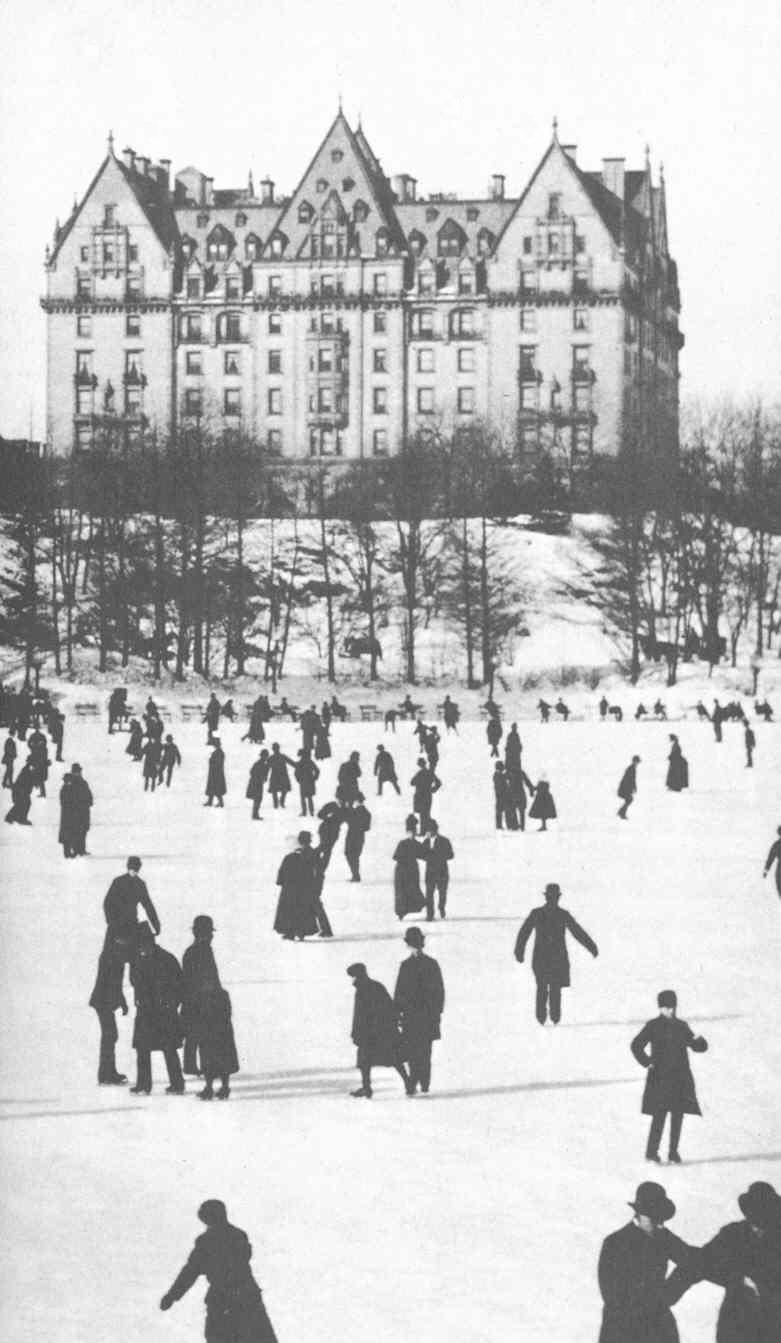
A famous image of the Dakota Apartment — all alone on the Upper West Side landscape — with skaters enjoying the frozen pond on a cold winter’s day.
The_Dakota_1880s

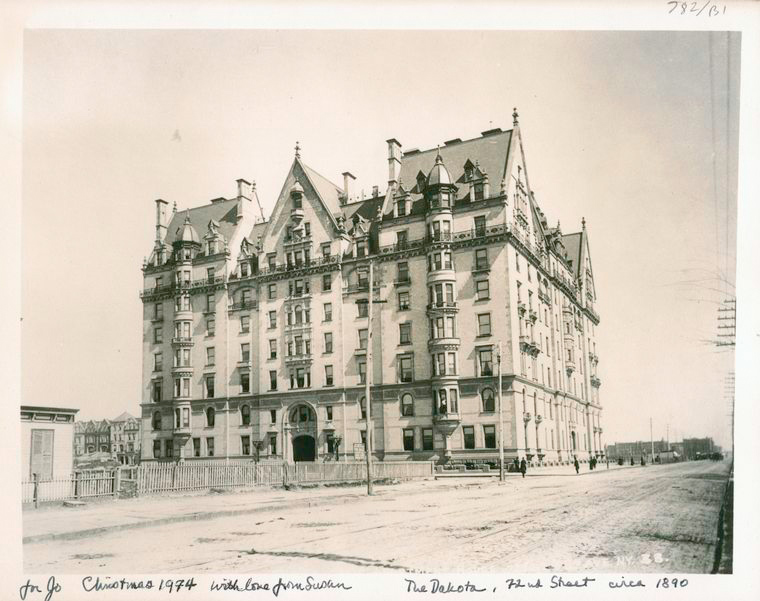
The Dakota photographed in 1890/

Courtesy New York Public Library


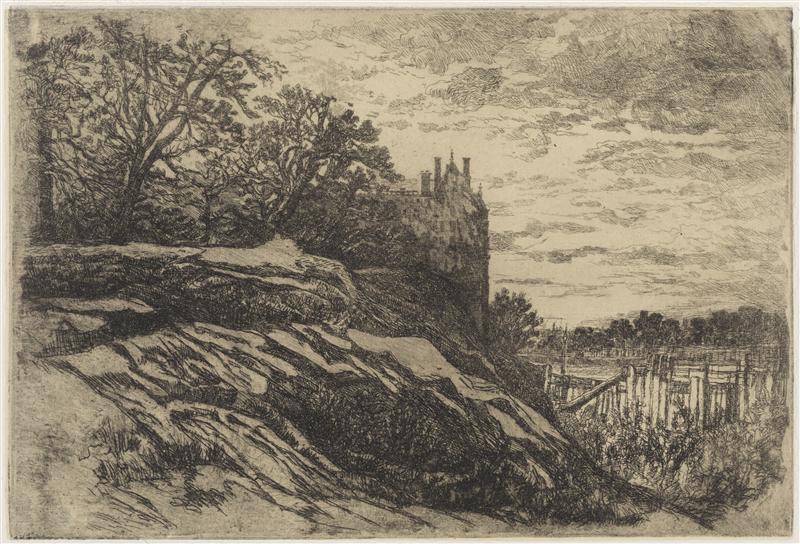
A haunting illustration by Eliza Greatorex from 1885 showing “The Dakota behind a rock at 72nd Street and Bloomingdale Road.”

1
Courtesy Museum of the City of New York


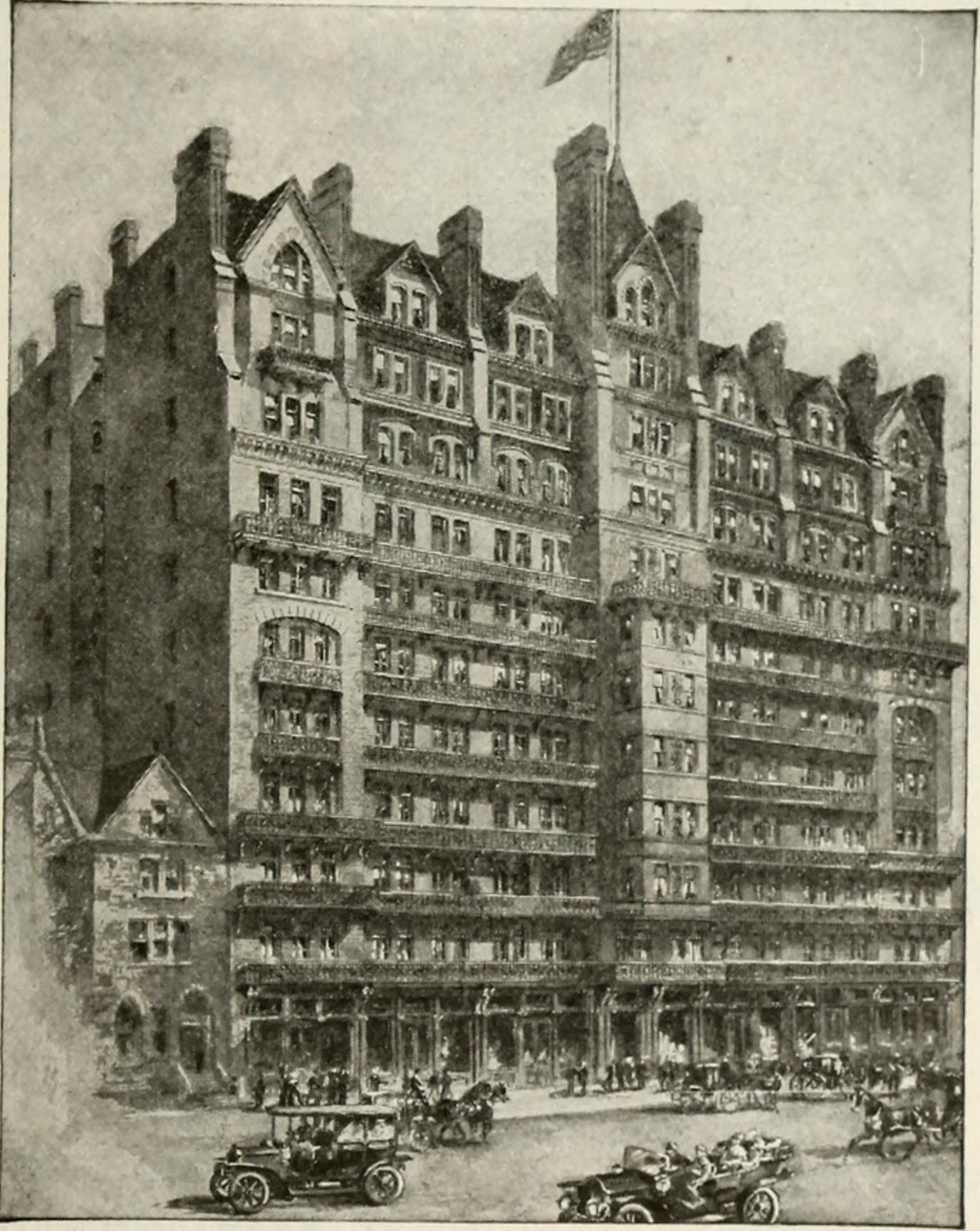
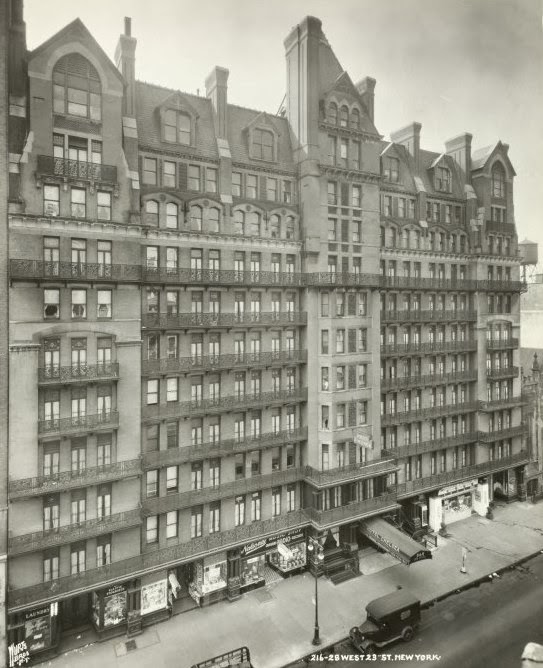
The Chelsea Hotel in 1903, one of the premier apartment houses in New York City which eventually became a destination (both short and long-term) for the city’s artistic circles. It also attracted its share of eccentric and even disturbed individuals over the decades.

Internet Book Archvies

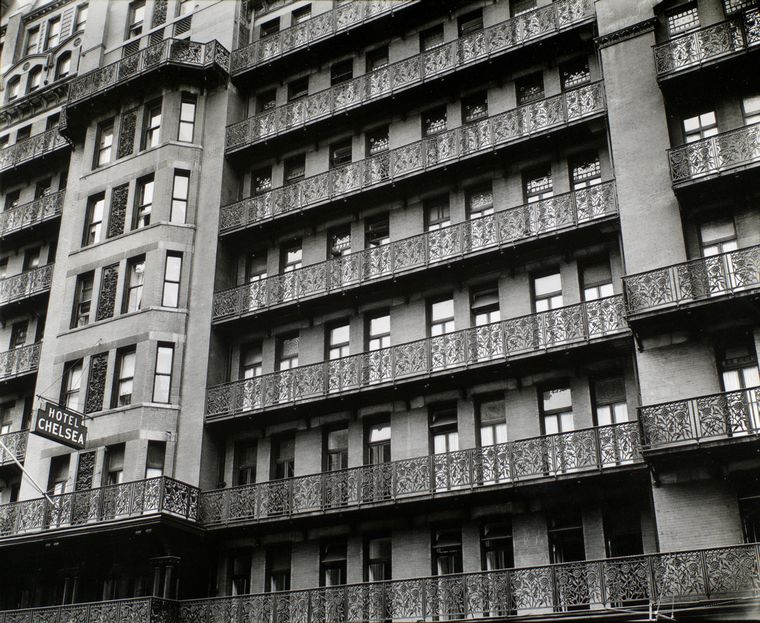
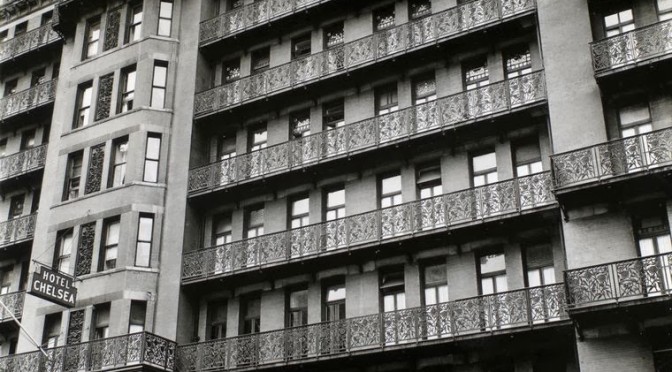
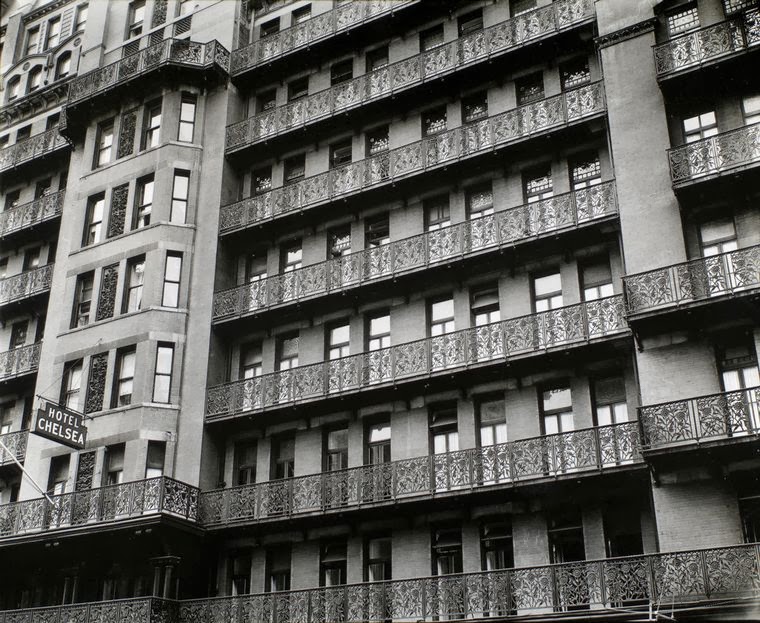
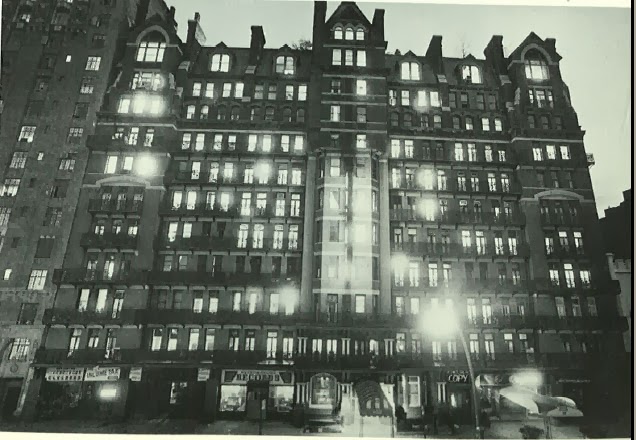
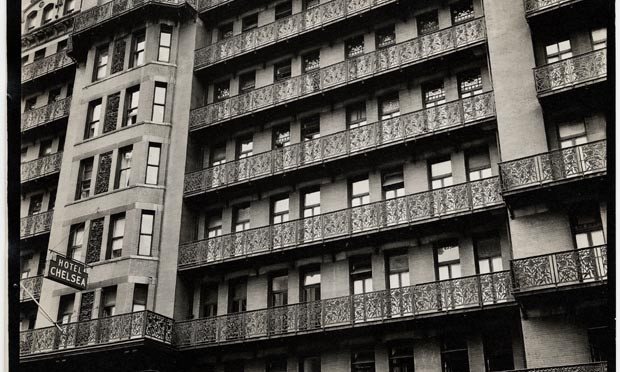
Oh what these floors have seen! The Chelsea in 1936.

Courtesy Berenice Abbott

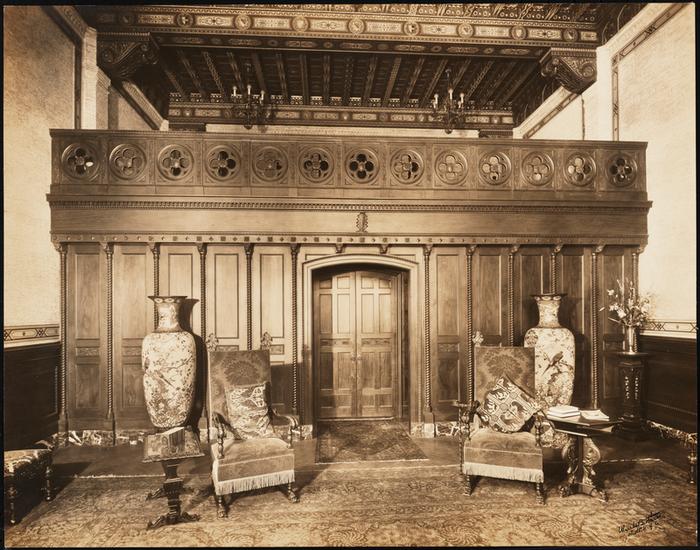
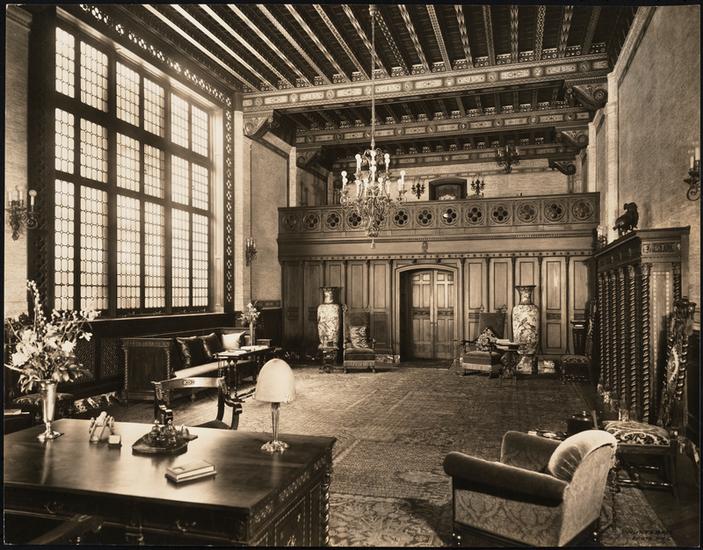
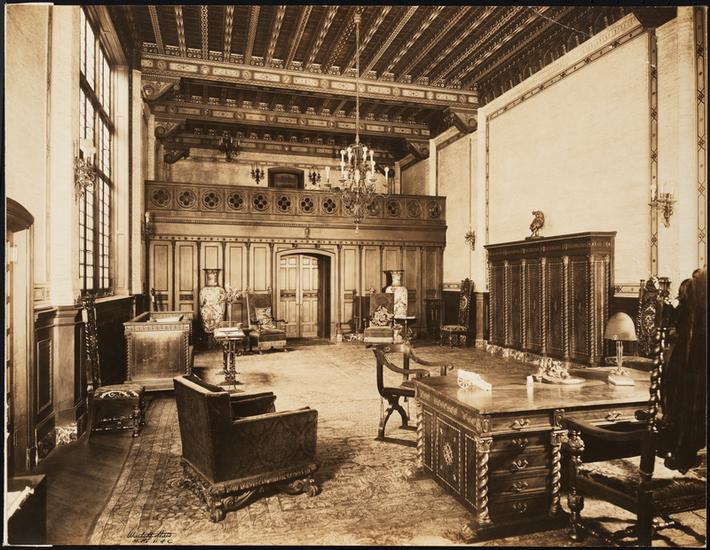
The interiors of the Campbell Apartment, back when it was an actual office. Are the ghosts of former party guests still enjoying the room’s luxurious trappings? More information at this blog post at the Museum of the City of New York. All photos, taking in 1923, by the Wurts Brothers.

Courtesy Museum of City of New York


2
Courtesy Museum of City of New York


Courtesy Museum of the City of New York

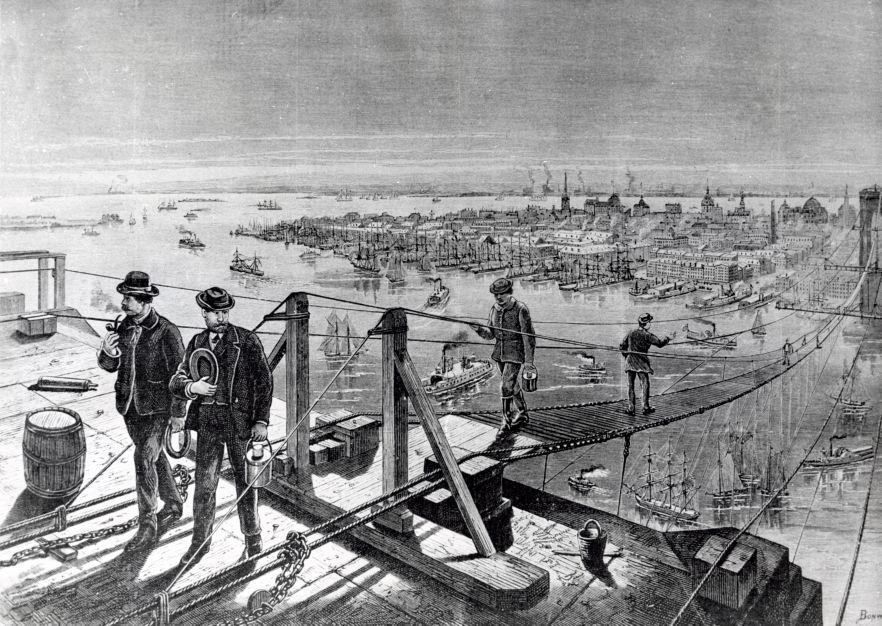
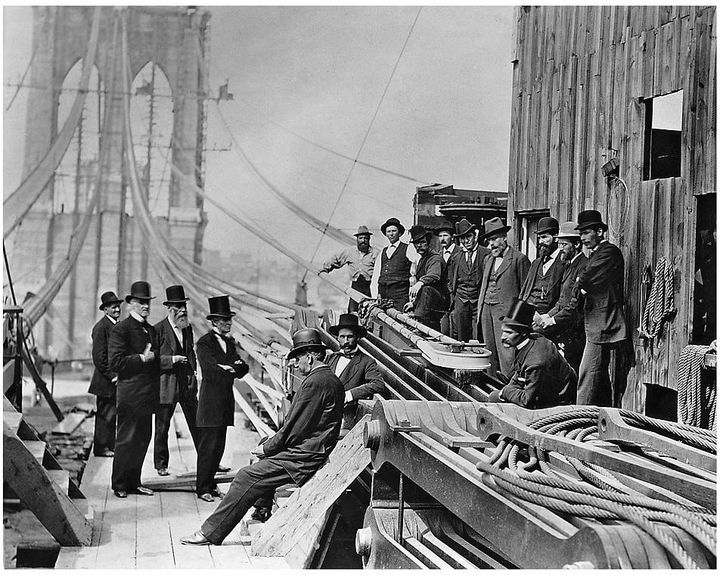
Workers upon the Brooklyn Bridge, a dangerous work environment where dozens of men were injured over the course of its construction.

1

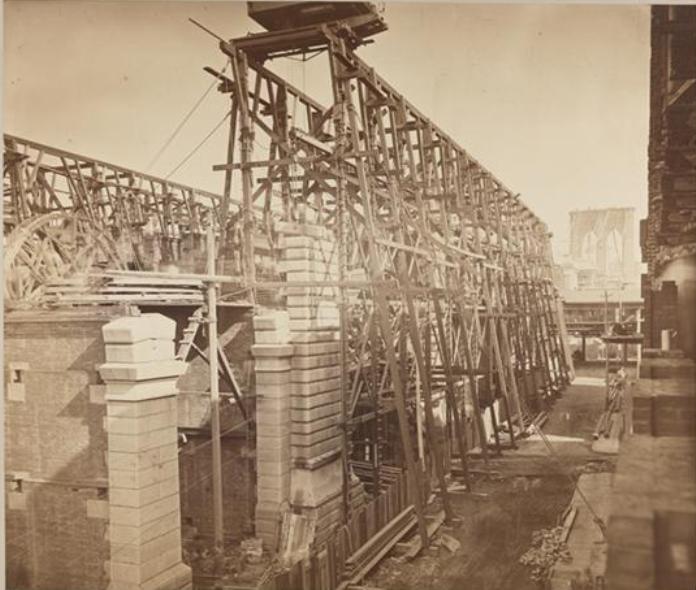
Construction of the approach to the bridge on the New  York side.

MNY146544
Courtesy Museum of the City of New York


From the New York Times article regarding the unfortunate tragedy on the Brooklyn Bridge. Read the whole article here.

Courtesy New York Times

The scene at the bridge a few months after the accident — October 1878.

Courtesy New York Times


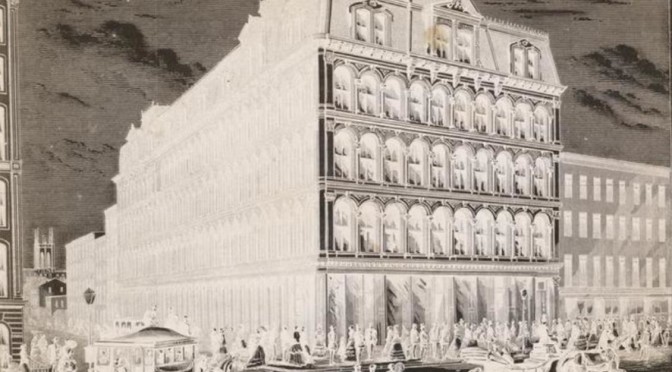
The picture at top is a reversed negative of the Methodist publishing and mission buildings, corner of Broadway and 11th Street, New York. [source]

Categories
Landmarks

The wonder of the Chelsea Hotel: ‘Inside the Dream Palace’ — an interview with author Sherill Tippins

The Hotel Chelsea, August 1936, photograph by Berenice Abbott (NYPL)

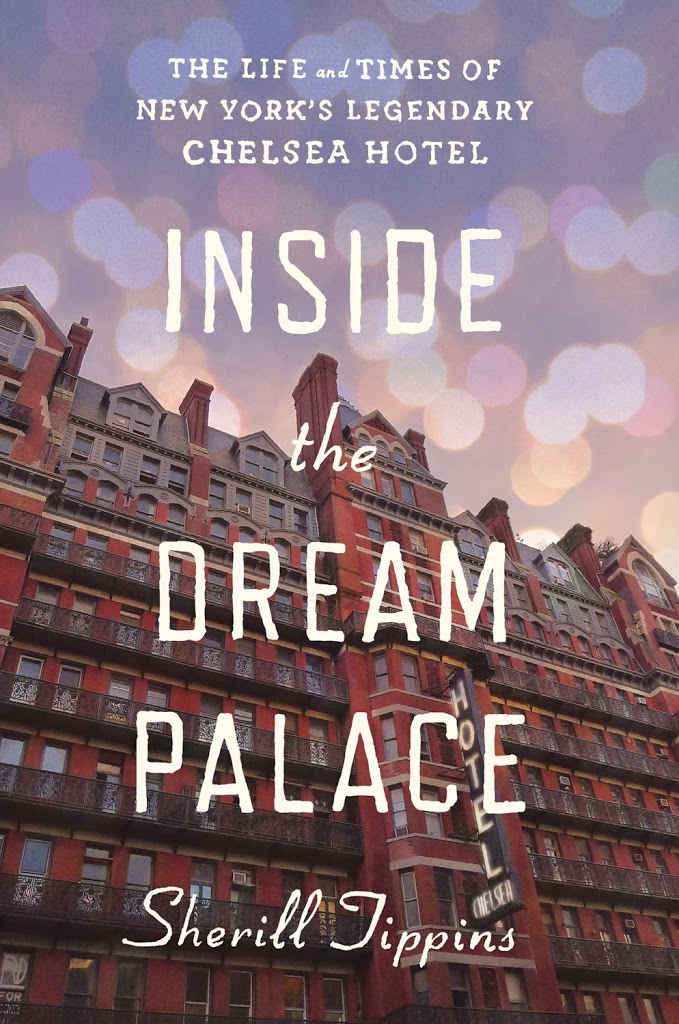
Inside the Dream Palace
The Life and Times of New York’s Legendary Chelsea Hotel
by Sherill Tippins
Houghton Mifflin Harcourt

Few places in New York exist with so many ghosts as the Chelsea Hotel. Oh, I don’t know if it’s really haunted, but the historical figures that have gained inspiration from their stays at this storied place have certainly left their mark.  But with geniuses — with the pressure of being genius — also comes drama, escapism, and tragedy.

Sherill Tippins‘ new book on the Chelsea Hotel — aptly named Inside the Dream Palace — does double-duty as a hall of fame for great substance-abusing artists and writers.  It’s a wondrous, colorful account of a unique social living experiment as it slowly dismantled its pretensions and became a rustic den of creativity, community and debauchery.

All the great tales are recounted here — from Dylan Thomas‘s death to Sid and Nancy‘s tragic evening — and a many new ones introduced.  For all the names I expected to see (Henry Miller, Arthur C. Clarke, Thomas Wolfe, Patti Smith), there were a great many more that have surprising connections to this unique landmark.

I had such a fantastic time sampling the lives of the Chelsea’s various characters that I wanted to ask the author a few questions myself.  Here’s Sherill Tippins, elaborating upon the hotel’s unusual origins, its tenacious spirit and uncertain future:

Reading of the original philosophies behind the Chelsea Hotel – the utopic, if somewhat simplistic notion of communal living of various types of classes – I kept thinking ‘Wow, imagine if somebody tried floating this idea today!”  What was it about this period and this project specifically that made people open to such a radical suggestion?

ST:  In the wake of Boss Tweed’s thefts, the long, deep recession of 1873, and the usual massive shift of wealth to the top one percent that followed (sound familiar?), the city’s social fabric seemed to many New Yorkers to be irredeemably destroyed.  People were so desperate for some kind of workable solution that New Yorkers from different economic classes started meeting in unprecedented ways – “bankers sitting next to bakers,” as one reporter put it in amazement – to discuss what had happened to the city and how it might start to recover.

Into this critical moment in history walked the Chelsea’s architect, Philip Hubert.  Basically, Hubert appealed to New Yorkers in the same way every successful idea man has in New York, before or since – via their pocketbooks.  (Below: The Chelsea, photographed by the Wurts Brothers, NYPL)

He introduced the concept of cooperative living – showing how much cheaper it was for New Yorkers to form a “club” to buy their own land, build an apartment house to their own liking, and share the costs of maintenance, fuel, and other services.  The new cooperative apartments were so appealing and cheap that the demand for them proved nearly insatiable.

Here was a way to bridge the stultifying divide that had opened up between classes in a society where status was determined by the size of an individual’s bank account, so that citizens felt compelled to isolate themselves, as Hubert put it, “to guard their dearly cherished state of exaltation.” New Yorkers who lived together, on the other hand, would have to converse and exchange ideas. Alliances would form, and perhaps these alliances would arm groups against the chicanery of the next Boss Tweed.

To create real diversity, Hubert had to make cooperatives not only practical but, in a sense, sexy.  He managed that feat with the Chelsea Association Building, set in the heart of New York’s racy theater district, at the intersection of all the new elevated railroad lines and equidistant from the Ladies’ Mile shopping district and the decadent Tenderloin.  To make life at the Chelsea even more enticing, he built a cooperative theater and a drama school to go with the cooperative, and invited in an assortment of artists, musicians, actors and writers to spice up the core population of businessmen, financiers, and working people.

You walk us very vividly through different decades of the Chelsea’s strange and storied existence. If you could re-visit a particular era of the Chelsea yourself, to which time period would you like to see? Its earliest days, the wild 60s, or another era?

ST
:  Every time I’m asked this question I respond differently, because in fact I love every era at the Chelsea. Today, though, I’ll choose the Depression era as the one I’d most like to experience.

It was a surprisingly idyllic time at the hotel.  Room prices had lowered to a level that artists could actually afford, and secondly because many residents experienced a new kind of creative freedom as they were subsidized financially by the W.P.A. (“I can’t begin to tell you how rich everyone was,” one artist recalled.)

This was the era when the residents laid down a set of “house rules” that have been followed, more or less, ever since: don’t interrupt people during work hours; don’t visit without an invitation; don’t hit up famous neighbors for a job or a connection, and so on.  With their privacy protected, working artists felt comfortable socializing after hours: Edgar Lee Masters entertaining Thomas Wolfe in his suite, Masters and the artist John Sloan listening to music on the Victrola together, Van Wyck Brooks dropping in for cocktails with Sloan….  It was from these interactions that a real, lasting Chelsea Hotel culture was born—a culture that would nurture generations of artists in the decades to come.

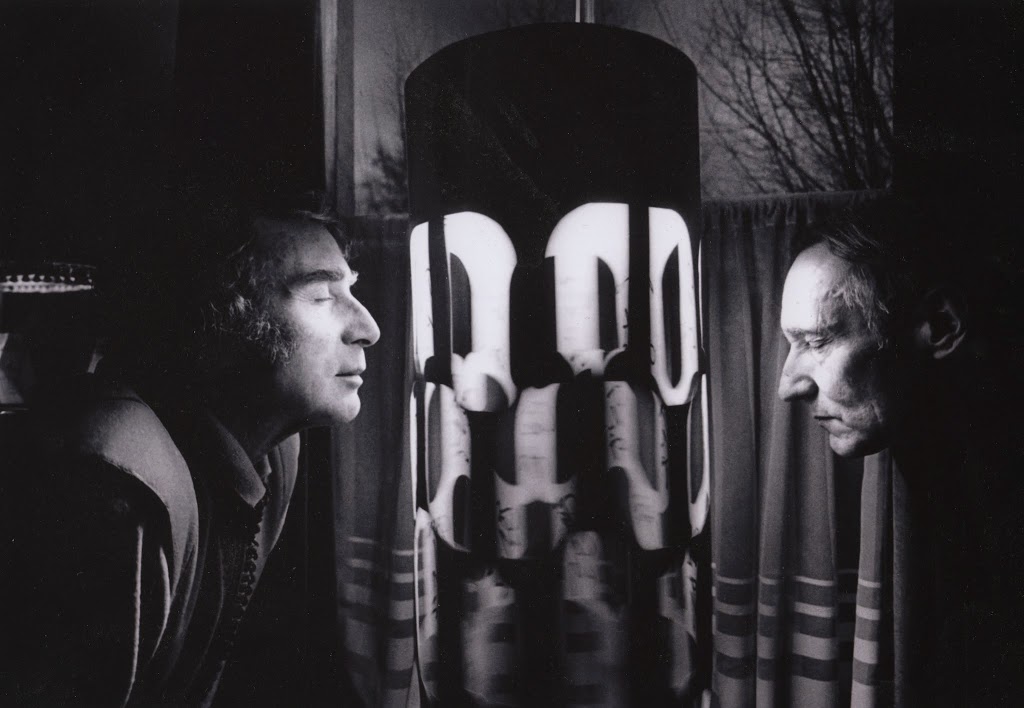
From ‘Dream Palace’: “The artist Brion Gysin and his close friend William Burroughs arrived to market their new invention, the Dream Machine.”

You’ve written about so many iconic writers and artists, both in this book and in your past projects. And this is really a story of icons, as they pass through this extraordinary landmark.  But I greatly enjoyed stumbling upon some of your rather obscure figures here, those fairly forgotten today. Any particular individuals that you newly discovered in your research that were a particular favorite of yours?

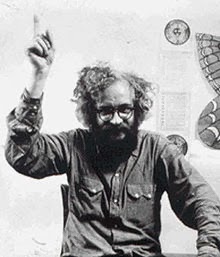
ST:   One of the most fascinating longtime Chelsea Hotel denizens, who is known surprisingly little considering his cultural contributions, is the anthropologist-musicologist-artist-filmmaker-occultist Harry Smith (at right).  Smith created The Anthology of American Folk Music, a collection of powerfully resonant American blues, ballads, gospel, and other songs that helped inspire the 1960s folk music movement and that inspired Bob Dylan in particular.

At the Chelsea, in his role as house magician, Smith provided the Yippies with a magic spell for levitating the Pentagon and Leonard Cohen with a love spell to seduce the singer Nico. (It failed, sadly.) Smith was also an experimental filmmaker, considered a genius by the underground film community; his films were designed to affect viewers neurologically, presumably altering their state of consciousness as a path toward further evolution. In the 1970s, Smith created a film, Mahagonny, based on the opera by Kurt Weill and Bertolt Brecht and featuring such Chelsea Hotel residents as Patti Smith, Robert Mapplethorpe, and Allen Ginsberg—a film intended to communicate to all cultures, regardless of language or location, humanity’s troubled state.

There are others I found captivating, even if they weren’t known outside their small circles of admirers.  In fact, I would have included hundreds more if I’d only had the pages to contain them.

There’s also a large amount of tragedy associated with the Chelsea, from the most famous events (Dylan Thomas and Sid Vicious, of course) to even the footnotes of history, those known only for their awful ends.  For instance, the woman who cut off her hand and jumped off the roof. (I went back and read that sentence like six times!)  Did you sense any particular reason for this in your research? Is it just the density of dramatic figures that stayed here? 

ST: I’m so glad you asked that question, because I’ve asked it myself so many times!  Unfortunately, I’ve never come up with a definitive answer, but I can give you my hypothesis.

Somehow, from the beginning—according to the letters and other writings in various archives—the Chelsea has always felt feminine to those who have lived in it.  Feminine and maternal, like a mother welcoming her children into her arms.  I would imagine that if one were in a state of existential despair or psychological extremity, one might look for comfort to an architectural (archetypal?) mother figure, particularly as one made the ultimate decision to end one’s life.

I’m thinking of Frank Kavecky, the impoverished young artist who was robbed on the subway of funds he was holding for the Hungarian Sick and Benevolent Society.  Discovering his loss, he went straight to the Chelsea – checking into a room for the afternoon, locking the door, settling himself into a rocking chair, and shooting himself in the head.

And Almyra Wilcox, the well-to-do visitor who overdosed on pills while writing a love letter to someone she knew she’d never see again. She was found dead the next morning, unfinished letter in hand.  Reading these stories, I think, if I were ready to do myself in, I might choose the Chelsea.  Wouldn’t you?

Photo by Claudio Edinger (courtesy Ed Hamilton/Living With Legends)

The fate of the Chelsea Hotel remains undecided, sitting empty, “like a corpse in its niche on Twenty-Third Street.”  If you could somehow dictate the future of the Chelsea yourself, what would you like see happen here? A return to its transient roots or an entirely new purpose altogether? 

ST:  Of course, the obvious desire would be to bring back the old days, with the former co-owner Stanley Bard managing the Chelsea and his son, David Bard, waiting in the wings. But since life is about moving forward, I would hope that the new owner, Ed Scheetz, will respect the Chelsea’s traditional function as fully as he claims to do.

The new owner has some intriguing ideas for the “new” Chelsea: creating a small, urban MacDowell-colony type program in which a half-dozen artists would enjoy free room and board, along with space on the ground floor to display or perform finished work.  He has shown me his plans for placing large, expensive rooms next to small, relatively cheap ones, to encourage a mix of people in the traditional Chelsea Hotel way.  He has assured me that he intends to maintain the building as a hotel, with the much-needed circulation of daily visitors from around the world, along with permanent residences whose occupants can pass on the community’s memories and values.

All of this sounds wonderful. The challenge, as always, lies in making this culture both “real” and affordable. It’s ultimately my hope that Ed Scheetz will be willing to go so far as to make the Chelsea the loss leader of his collection of New York hotels, if that’s what it takes to keep the life of the Hotel Chelsea going.
_______________________________________

Sherill was also on the Leonard Lopate Show on WNYC, talking about the book. Here’s the show (and thanks to Chip Pate on Twitter for pointing this out!): 


Other recent selections from the Bowery Boys Bookshelf:

Chelsea’s old Opera House: from robber barons to BBQ
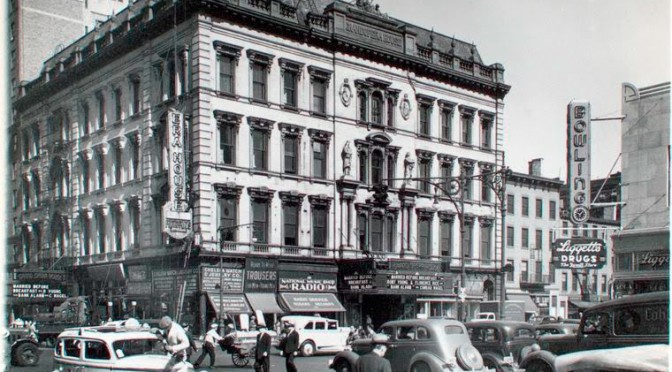
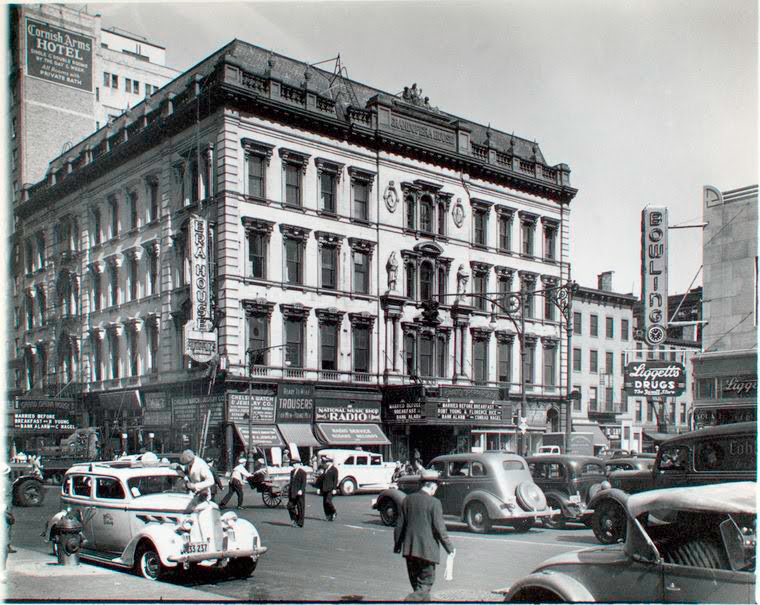
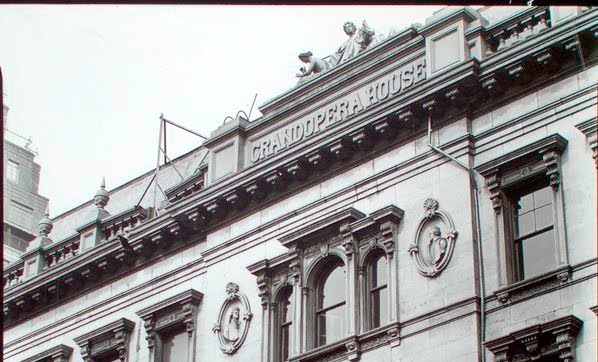
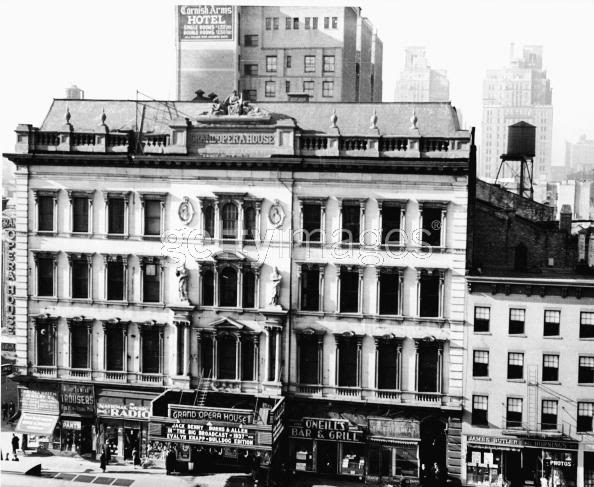
In last Friday’s podcast on the Hotel Chelsea, I mentioned a building that was located very near by called the Grand Opera House, at the northwest corner of 23rd Street and 8th Avenue. Here it is:

The opera house sprang up in 1868, the project of Samuel N. Pike, who purchased the land directly from Chelsea estate owner Clement Clarke Moore himself. In fact, the original Moore estate was only a block away.

The Pike Opera House, as it was called in those days, was Pike’s play for legitimacy in New York. A German immigrant who arrived in the U.S. in 1837, Pike lived in New York for a few years and made his fortunes in wine imports. Aspiring to upper-crust tastes, Pike fell in love with opera music after viewing performances by PT Barnum chanteuse Jenny Lind.

Pike constructed a massive opera house in his adopted home of Cincinnati in 1859 and many years later built a companion here in Manhattan at 23rd Street. Pike’s timing was off; theaters would crowd along 23rd Street in the coming years, but in 1860s, the wealthy preferred the Academy of Music down on 14th Street.

So the next year, Pike sold his lavish hall to two rather unlikely investors — Jim Fisk and Jay Gould, grade-A robber barons, pals of Boss Tweed and the orchestrators of the Black Friday Panic of 1869. Why would these two nefarious characters want an opera house?

The house’s upper floors doubled as the offices of their own Erie Railway venture. Fisk’s mistress Josie Mansfield was frequently installed into productions at the newly named Grand Opera House; it was even rumoured her next-door apartment was connected to the opera house with an underground tunnel.

However it does seem that Fisk and Gould were legitimately aficionados of the theater, or at very least fans of the elite who would attend them, and the profits that would follow. The Grand Opera House would soon showcase a great number of theater endeavors outside of opera.

Mansfield would prove Fisk’s downfall; her other lover Edward Stokes shot him in 1872. Mourners could stream through the lobby of the Opera House and observe Fisk’s body laying in state there. Gould would operate the Opera House for several years afterwards, eventually renting it out to vaudeville shows and ‘second-run’ Broadway productions, its fortunes disintegrating as theater moved uptown and the Chelsea neighborhood became more middle-class.

Like many old stages before it, the Grand Opera House switched to films in the 1920s. RKO tried its best to rehabilitate the space, hiring Thomas Lamb to renovate the theater with modern flourishes, reopening the space as the RKO 23rd Street Theatre. The picture below is actually from the year before the renovation, which stripped away some of the the Grand Opera’s frippery:

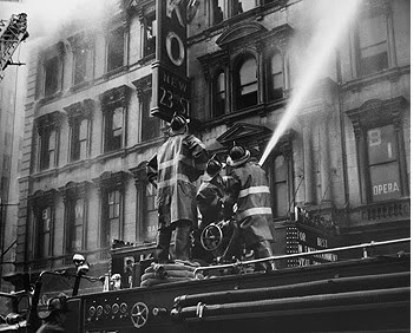
The site remained a movie house through the 40s and 50s, finally closing on June 15, 1960. In a further indignity, the Opera House was thoroughly gutted in a fire (seen in the picture below (courtesy Cinema Treasures):

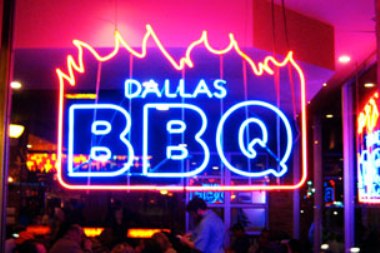
And thus it was time — to put in a strip mall! Today you can visit that very corner and enjoy a rather enduring Chicken Delight location or stop and have a Texas-sized margarita at the corner Dallas Barbecue.

Categories
Podcasts

Chelsea Hotel, the muse of New York counterculture

Berniece Abbott looks up to the Chelsea, 1936

Arguably New York’s least conventional hotel, the Chelsea Hotel (or rather, the Hotel Chelsea) is the one of New York’s culture centers, a glamorous, art-filled Tower of Babel for both creativity and debauchery. From Mark Twain to Andy Warhol, it’s been both inspiration and accommodation for artistic wonder.

We wind back the clock to the beginnings of the Chelsea neighborhood and to the hotel’s early years as one of the city’s first cooperative apartment buildings. What made the Chelsea so different? And why are people still fighting over this storied structure today?

___________________________________
As always, click on pictures for a bigger view

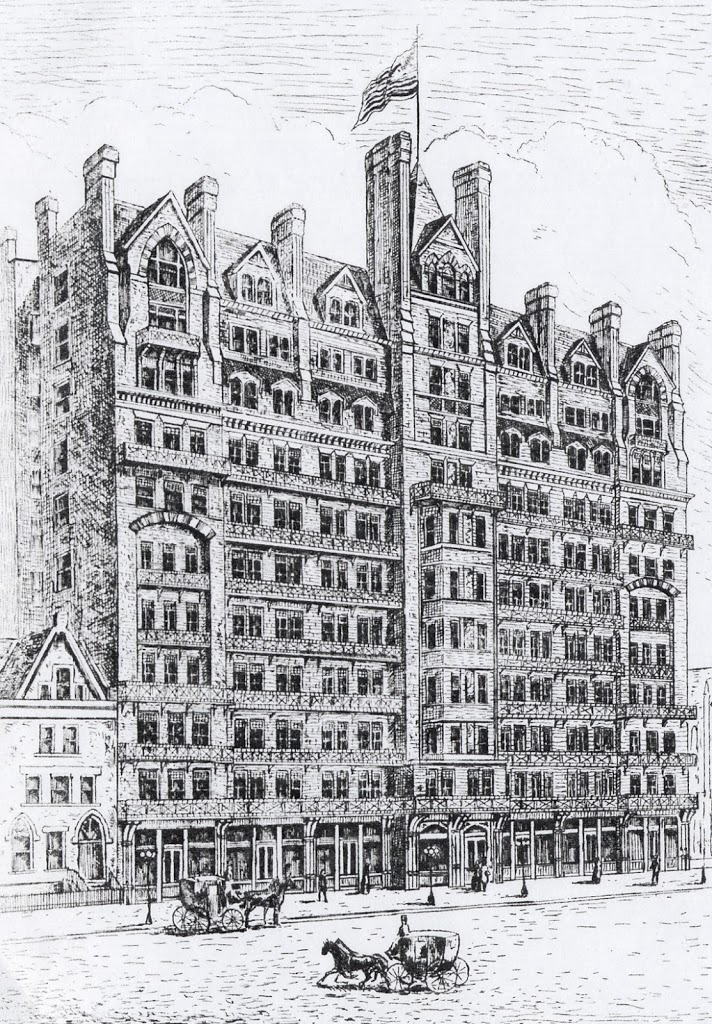
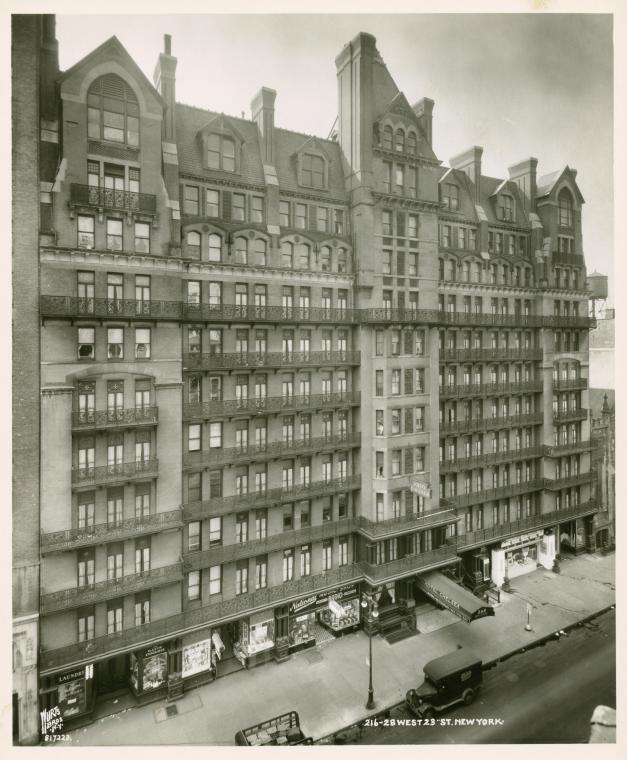
Standing Tall The Chelsea Hotel, built in 1883, was originally intended as a cooperative apartment building for wealthy tenants. However, by 1905, the building was turned into a hotel. Throughout its history, the Chelsea accommodated residents staying there for a few days … or a few decades. (Photograph by the the Wurtz brothers)

___________________________________

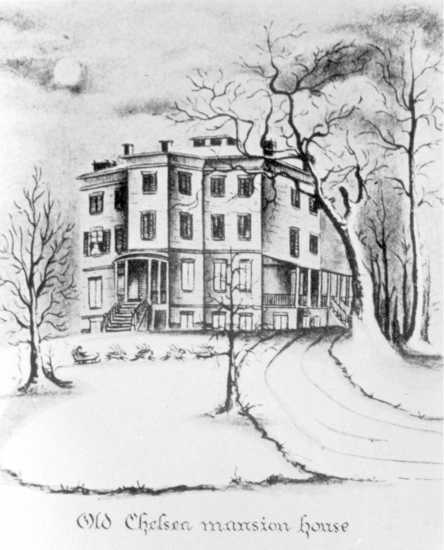
Old Chelsea Mansion The neighborhood of Chelsea was carved from the estate of Captain Thomas Clarke and his descendants. Clarke named his large, hilly estate after the still-operating Royal Chelsea Hospital, a respite for retired British soldiers. The Clarke mansion home sat approximately where the intersection of 23rd and 9th Avenue is today — just down the street from the Hotel Chelsea.

___________________________________

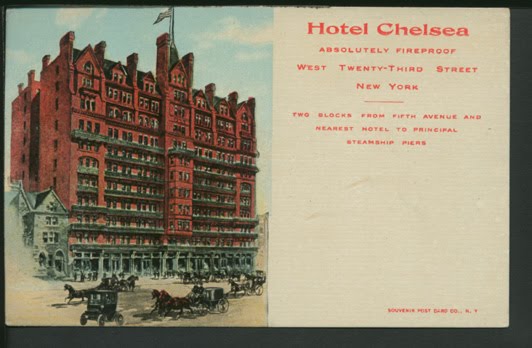
Absolutely Fireproof Many of the Chelsea’s sturdy amenities would come in handy when it began hosting rowdy musicians and artists. The buildings fireproofs claims would be put to the test when certain residents (Edie Sedgwick, Sid Vicious, to name a couple) would set fire to their rooms. And the building’s soundproof walls would be of service when rock bands stayed here.

___________________________________

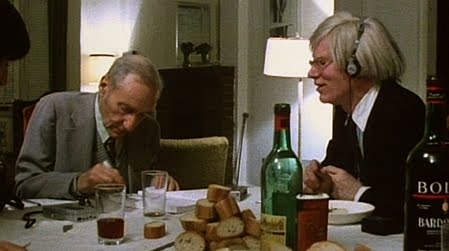
Bird Of A Feather William Burroughs and Andy Warhol in a room at the Chelsea, from a scene in Abel Ferrera’s documentary Chelsea On The Rocks, a film hopefully seeing the light of day very soon.

___________________________________

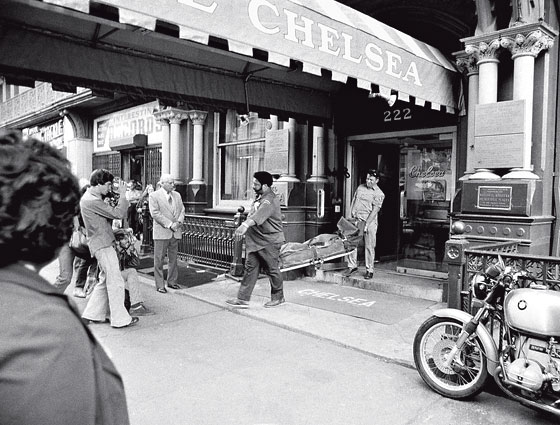
Tragedy 1978 No resident of the Chelsea was as infamous as Sex Pistols bassist Sid Vicious and his girlfriend Nancy Spungen, a raucous tragic pair who literally tore up the hotel. Vicious woke from a drug stupor in his room on October 12, 1978 to find his girlfriend stabbed to death. Sid would eventually die of a drug overdose the next year. Below, her body is carried from the hotel.

___________________________________

Below: A clip from Andy Warhol’s Chelsea Girls, filmed in various rooms at the hotel.

Wanna Know More? Your one-stop source for Chelsea Hotel history and recollection is Ed Hamilton’s very fascinating, very opinionated Living With Legends: Hotel Chelsea blog and companion book Legends of the Chelsea Hotel.