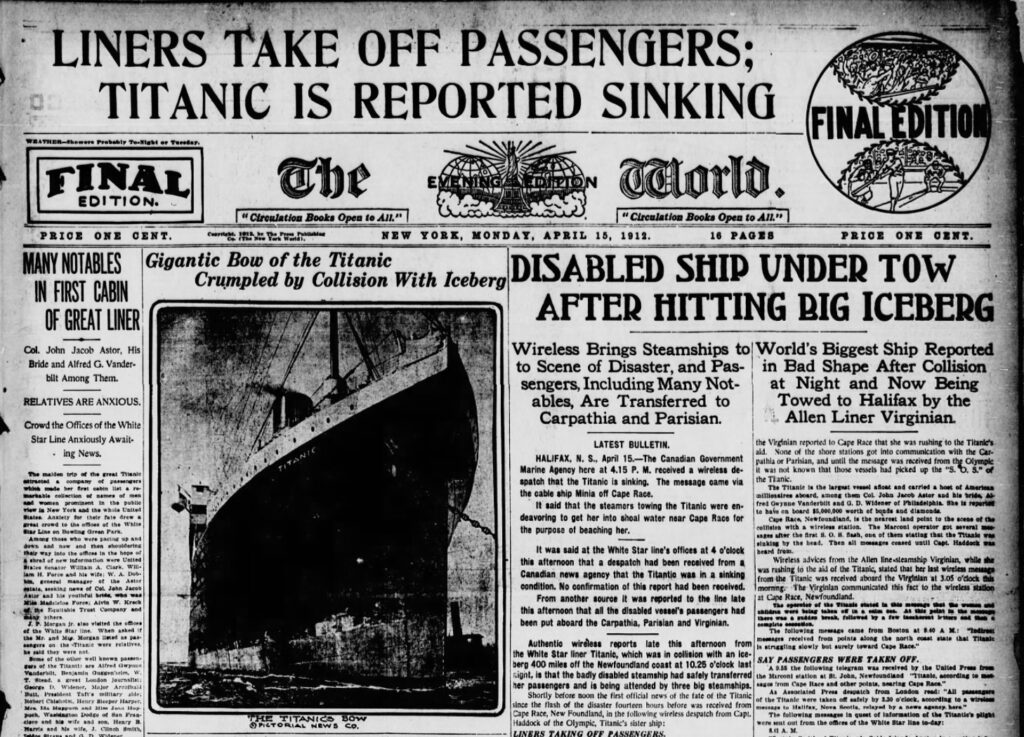
In the early morning hours of April 15, 1912. the White Star ocean liner RMS Titanic struck an iceberg en route to New York City and sank in the Atlantic Ocean.
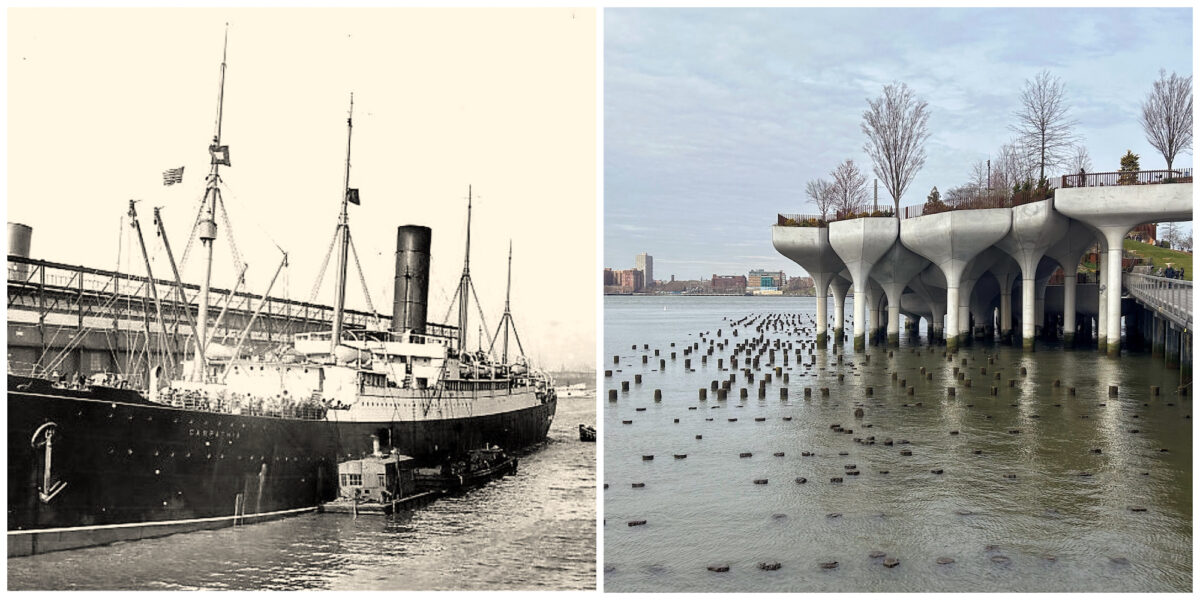
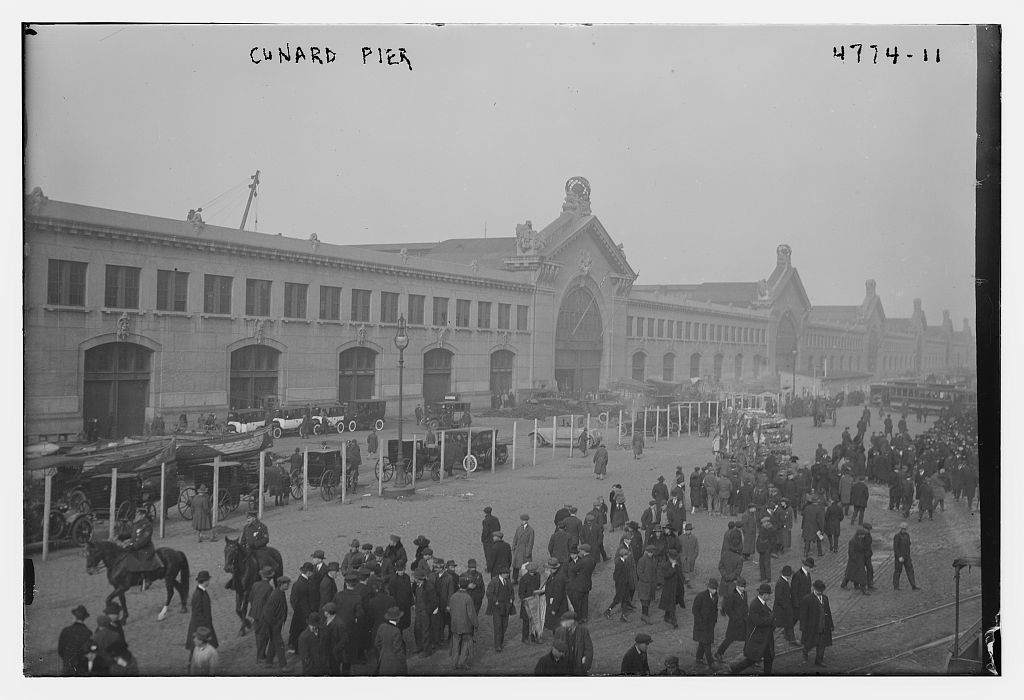
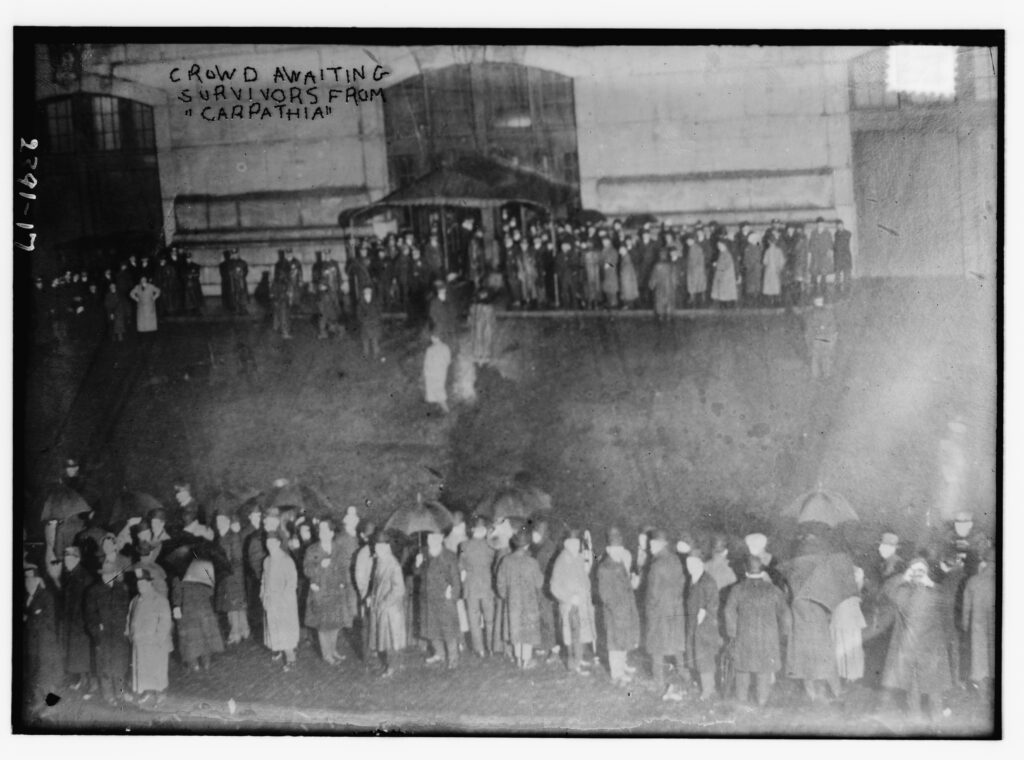
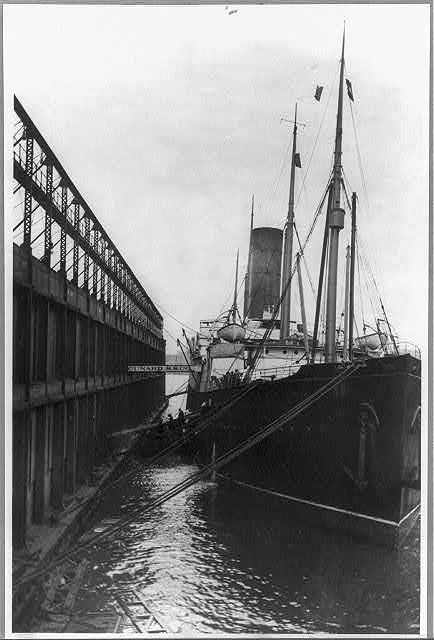
Survivors were rescued by the Cunard liner Carpathia and brought to their berth at Pier 54 at the Chelsea Piers.
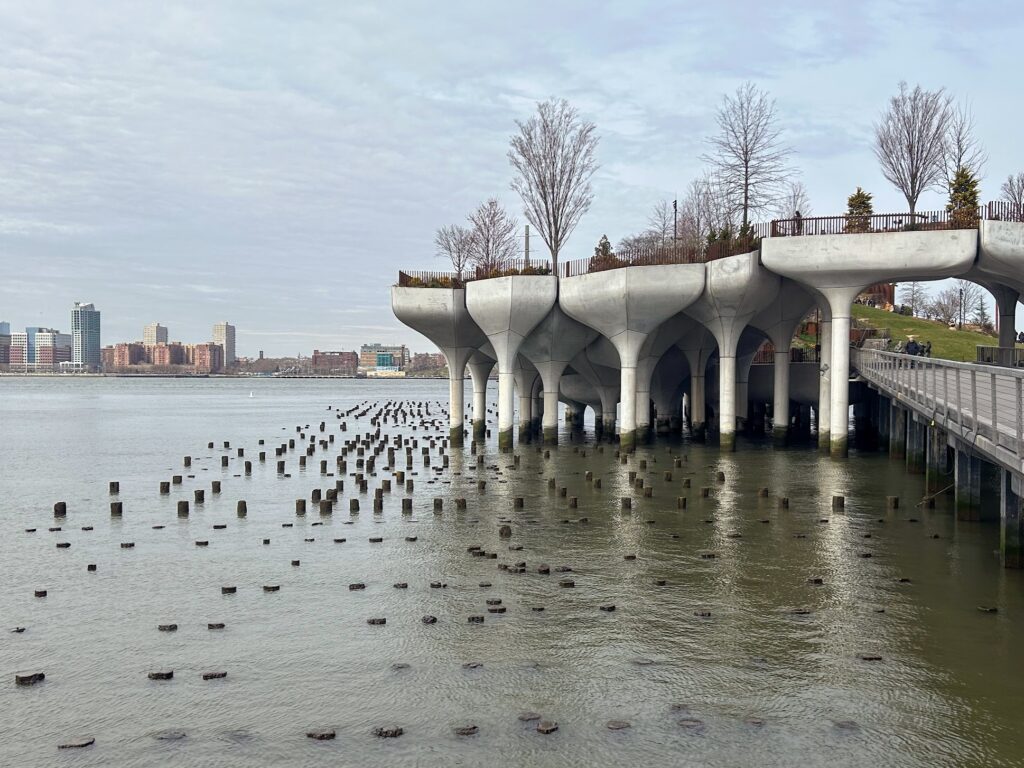
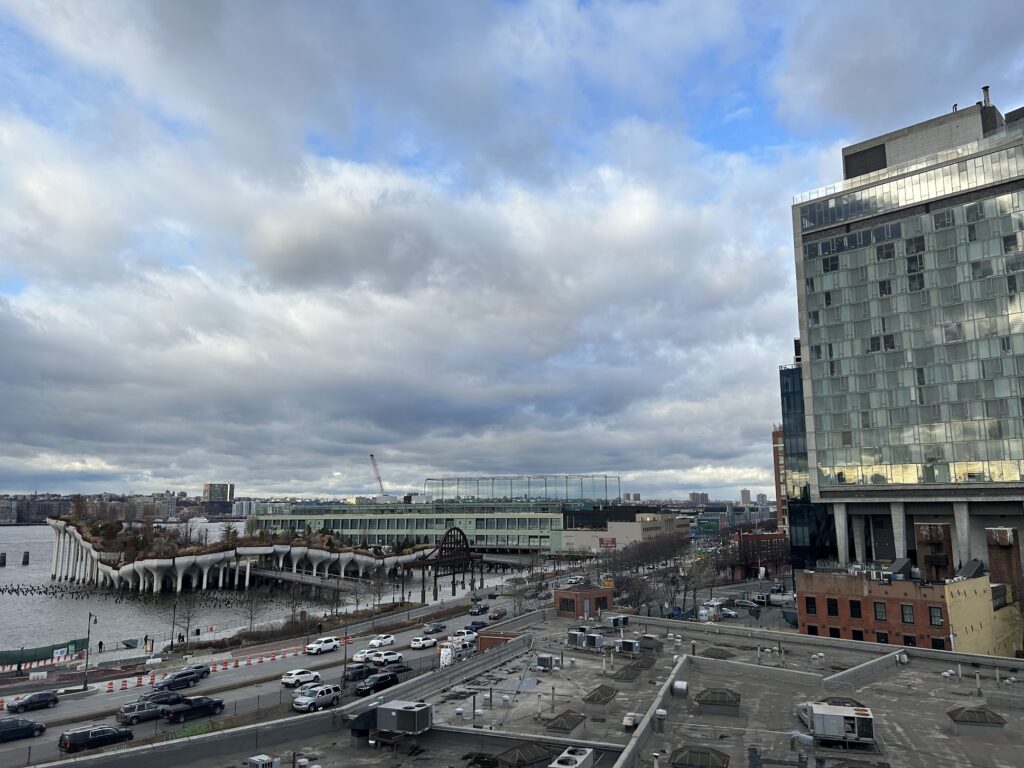
On that very spot today, a fanciful waterfront development juts out into the Hudson River, a place called Little Islandwhich opened in 2021. This recreational oasis will draw thousands of people, New Yorkers and tourists alike, this spring and summer.
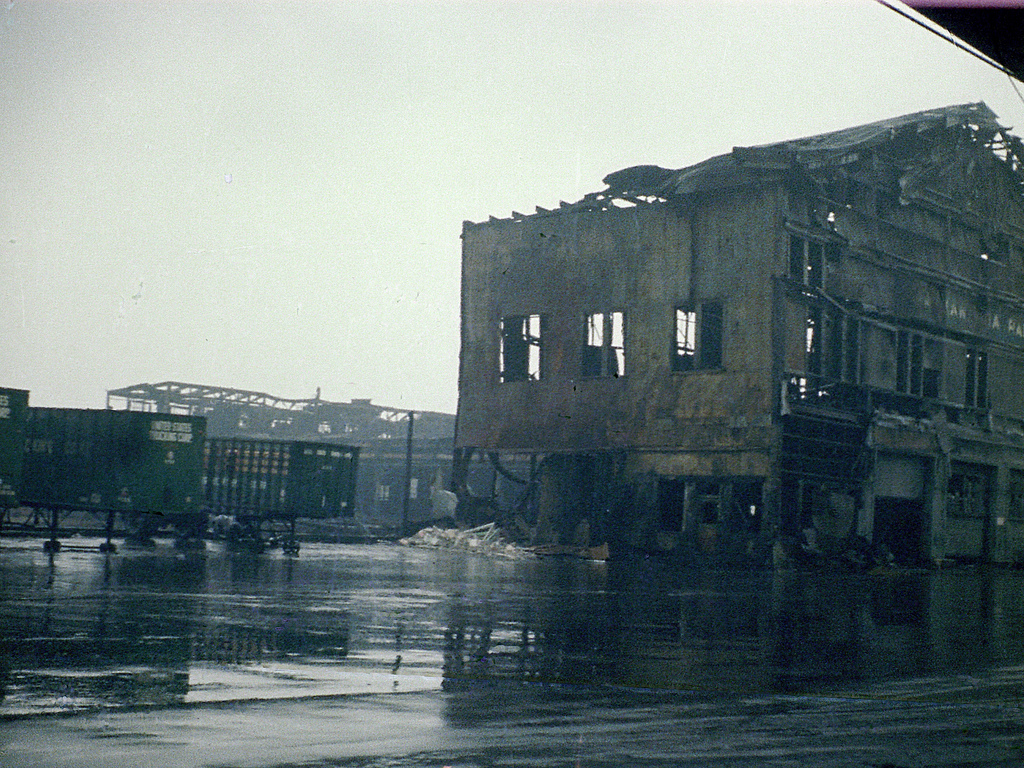
But on the southern side of Little Island, peering out of the water, are dozens of wooden posts – these are the remains of the former Pier 54.
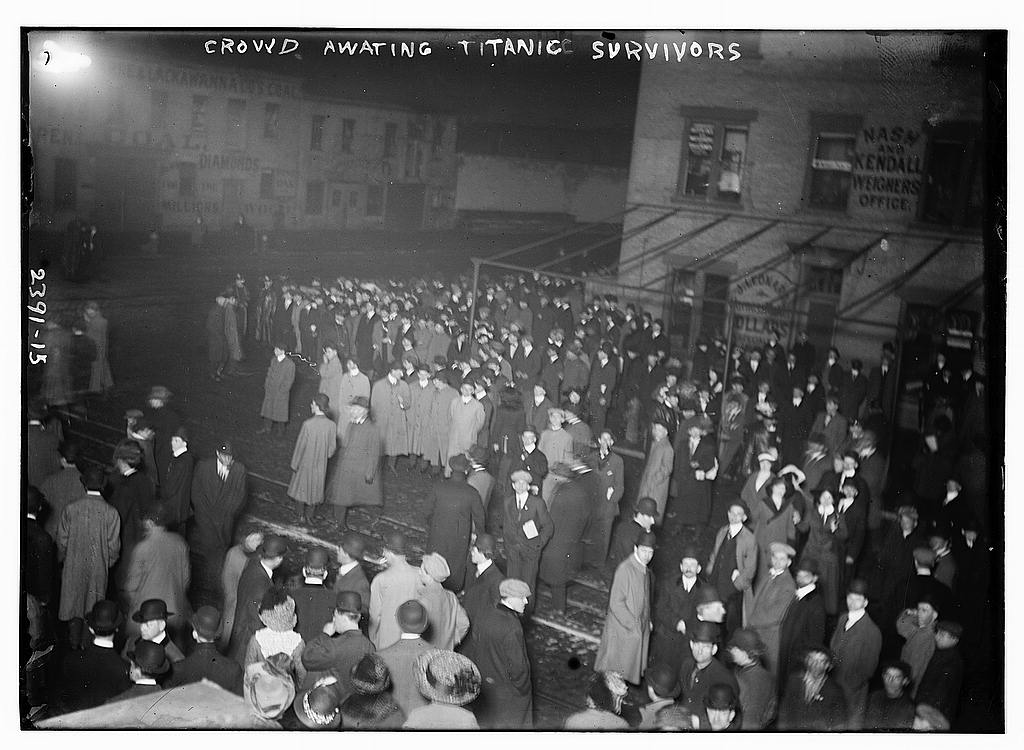
And it was on this pier, on April 18, 1912, that survivors of the Titanic disembarked and touched land.
The remains of Pier 54 jut out from the water on the southern side of Little Island. Photo by Greg Young
There are many, many books and documentaries on the subject of the Titanic’s sinking. (And of course a very popular movie.) But in this episode, Greg and Tom look at the story from the perspective of New York City – from the famous New Yorkers who were passengers to the experiences of New Yorkers anxiously awaiting news in those horrifying days following the ship’s sinking.
This is the story of the places that figured into the aftermath and the story of how New York memorialized those lost to the tragedy.
And in the end they return to Little Island and to the ghost of Pier 54, the place where this disaster became reality for most people.
Where survivors were greeted with joy and where many hundreds of people faced the reality that their loved ones were never coming home.
LISTEN NOW: THE TITANIC AND THE FATE OF PIER 54
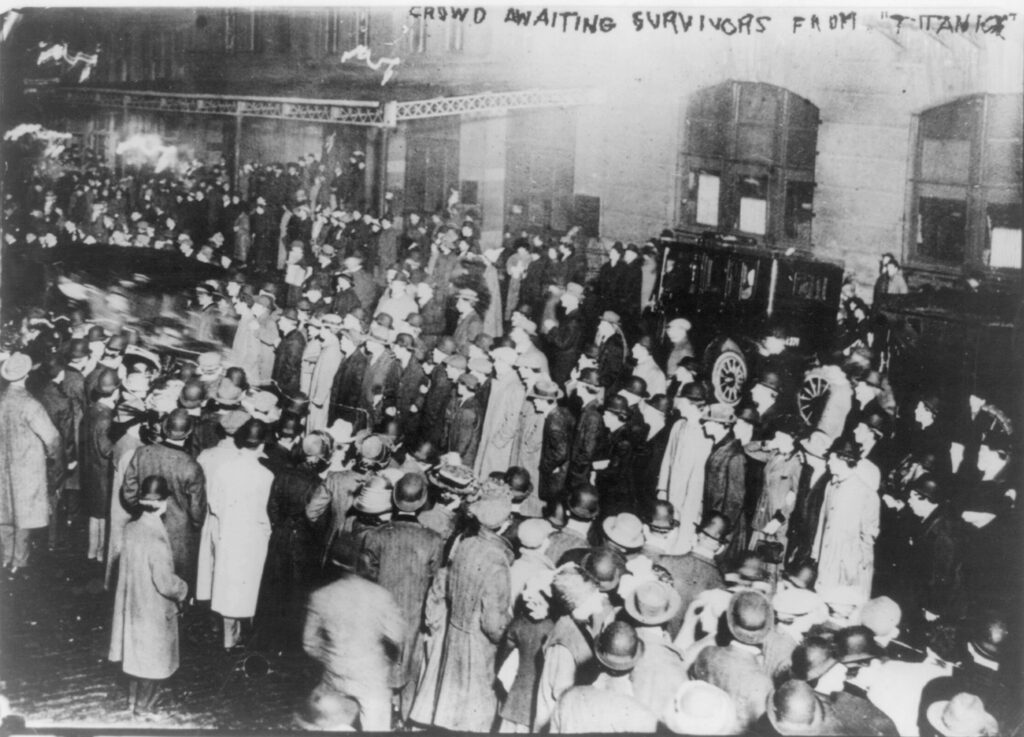
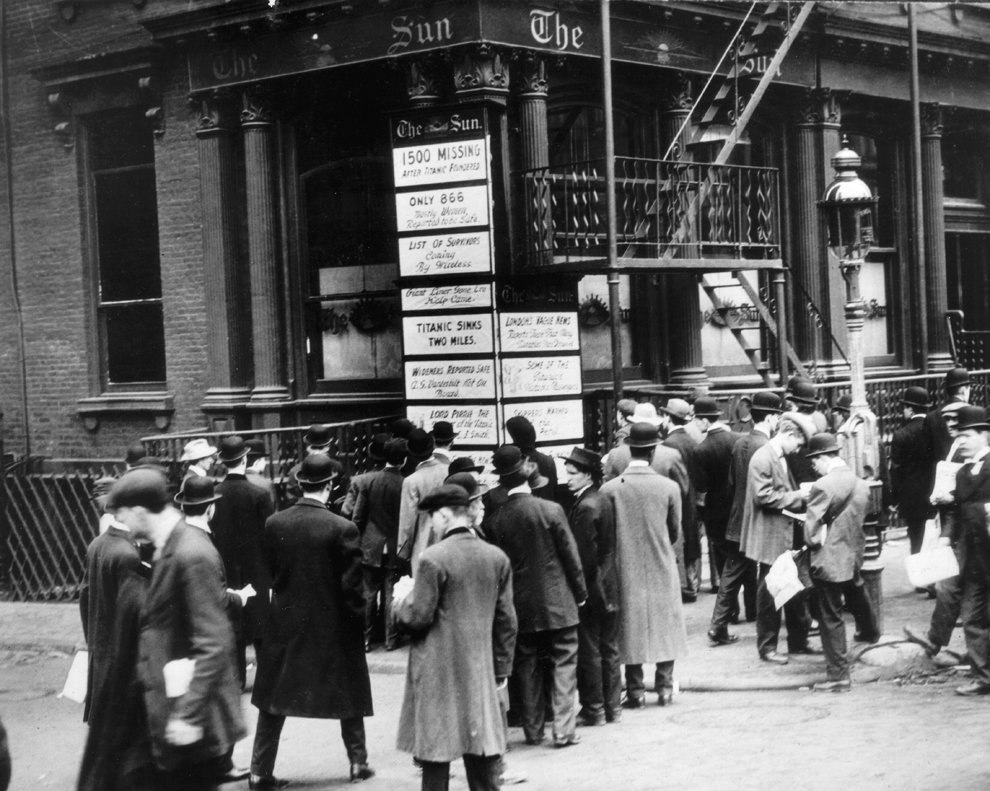
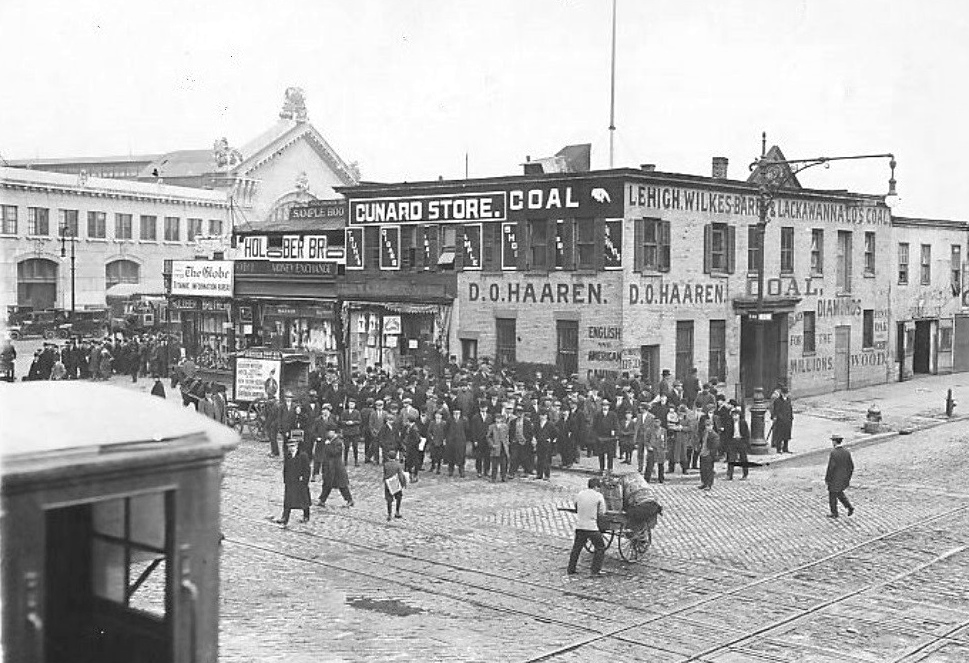
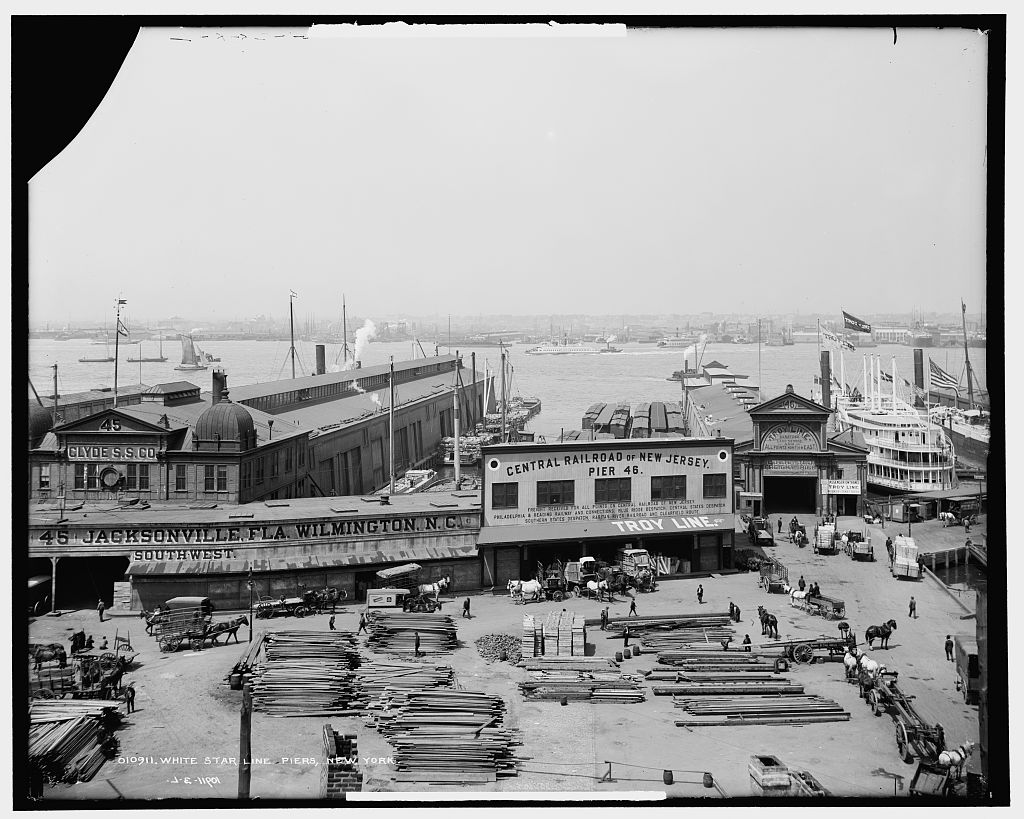
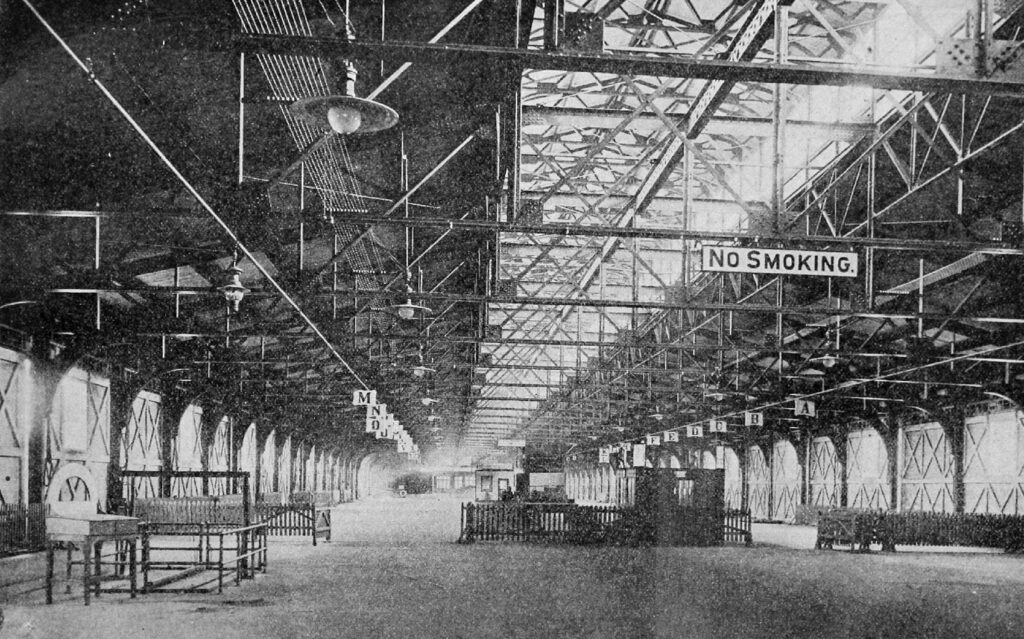
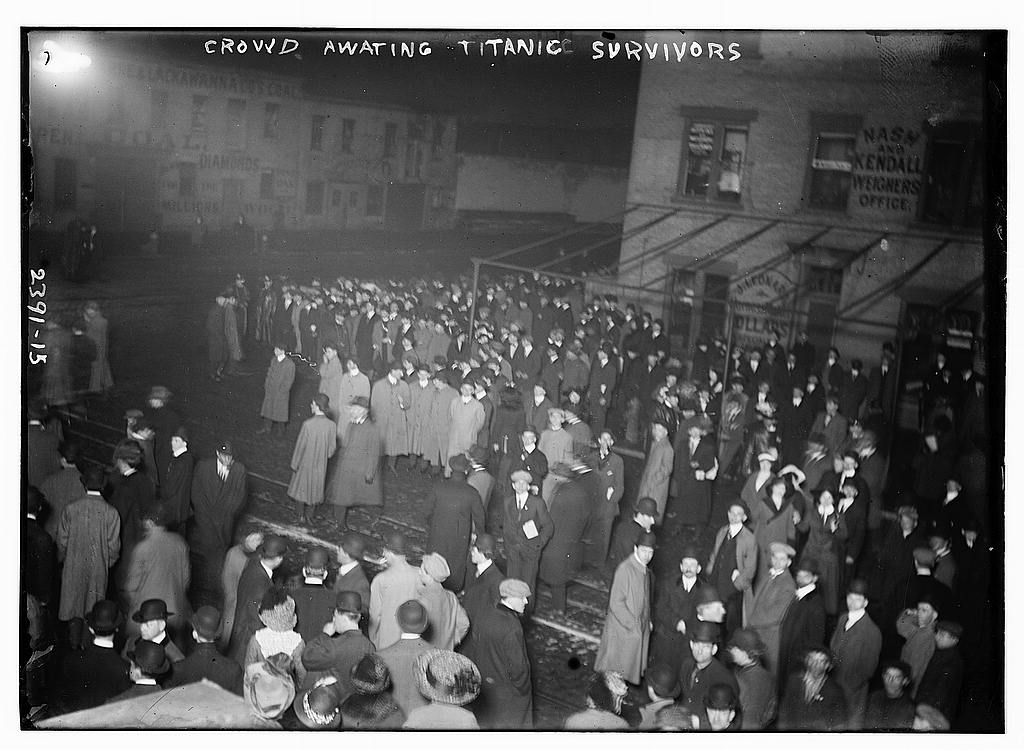
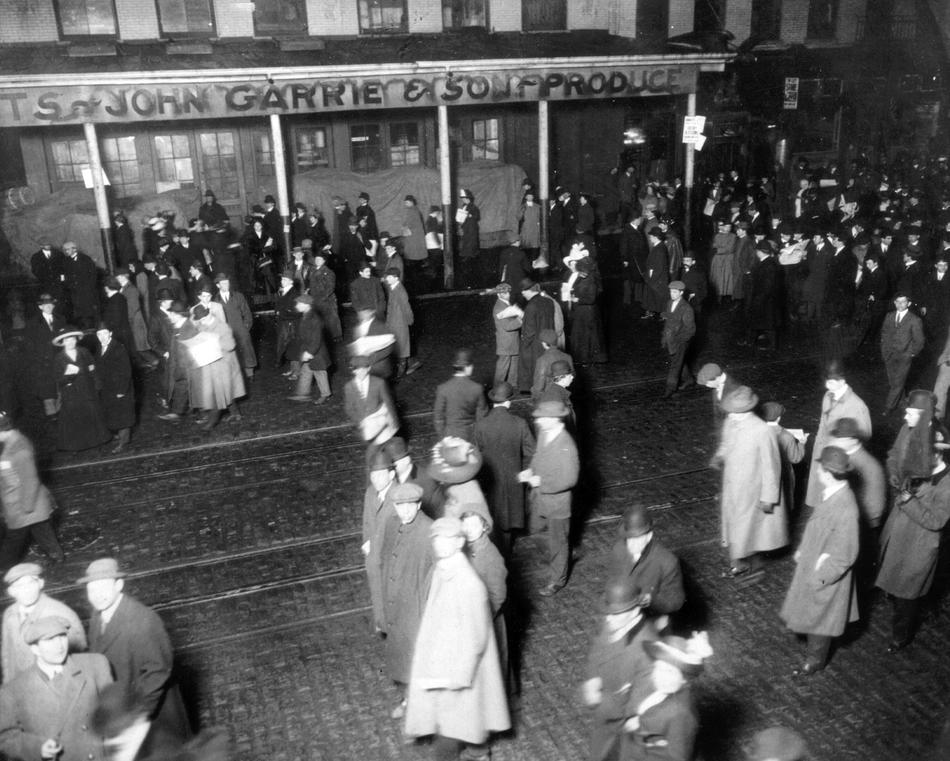
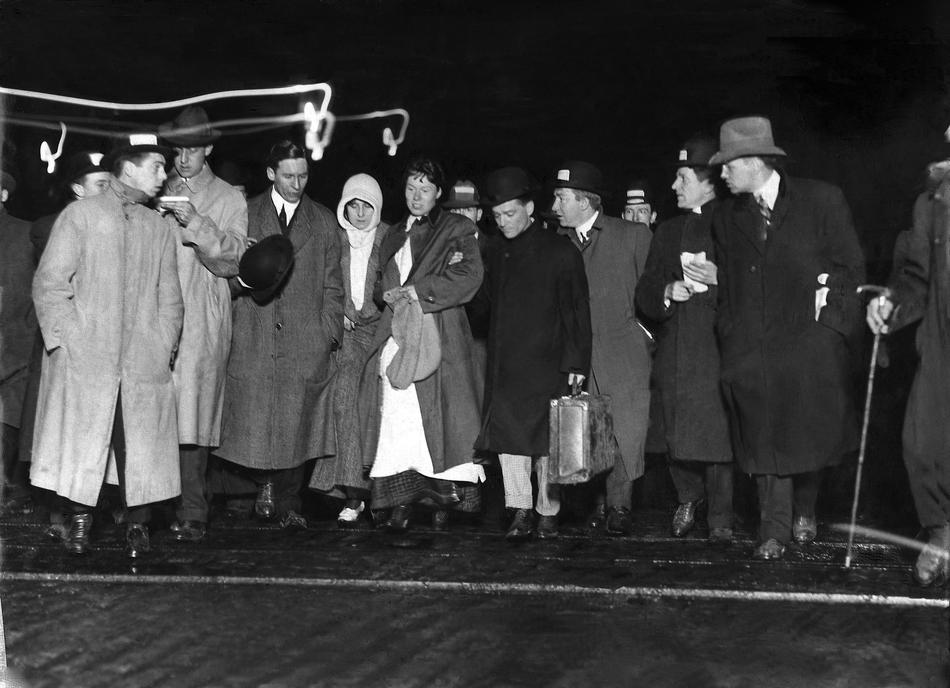
Little Island and the Meat Packing District. Photo by Greg YoungPier 54, 1912Many people found out about the Titanic disaster from newspaper bulletin boards where breaking news was posted.The streets were lined with people that night at Pier 54.The morning of April 19, 1912 — Crowds gather at the Cunard Pier 54 (at 14th Street) where the Carpathia landed with survivors of the Titanic disaster the previous evening. News accounts say there were up to 40,000 people gathered at the pier waiting for Carpathia on April 18. (Picture courtesy AP)The berth of the White Star lineInside Pier 54, the Cunard line, in 1912
The Carpathia at Pier 54
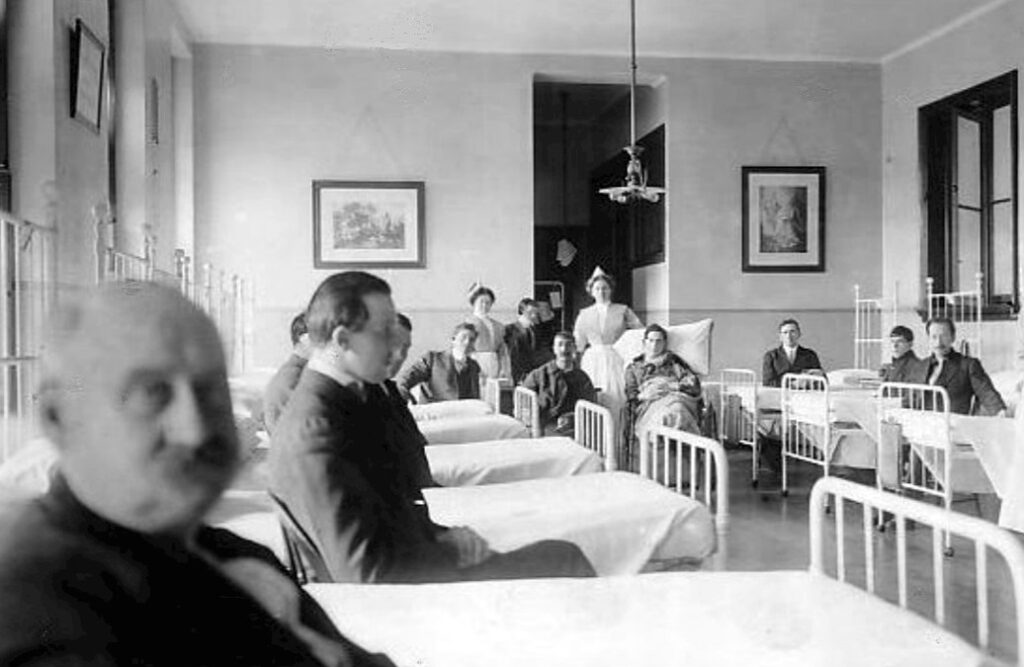
Titanic survivors are treated at St. Vincent’s Hospital (Picture courtesy AP)
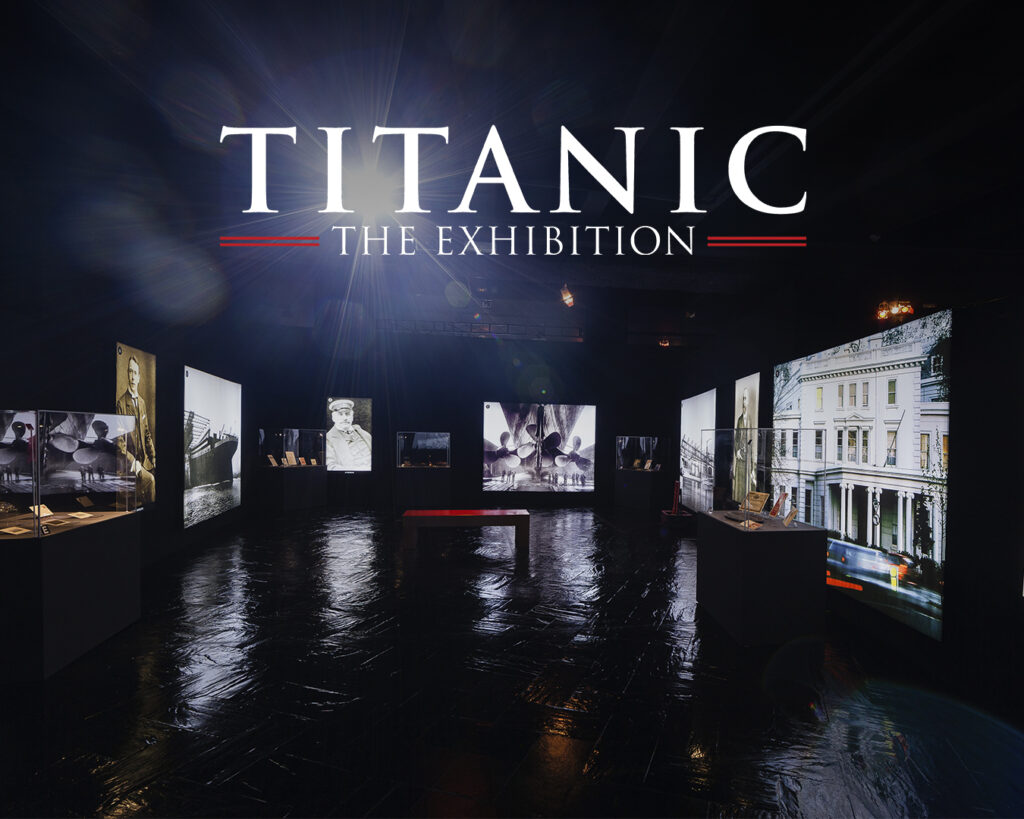
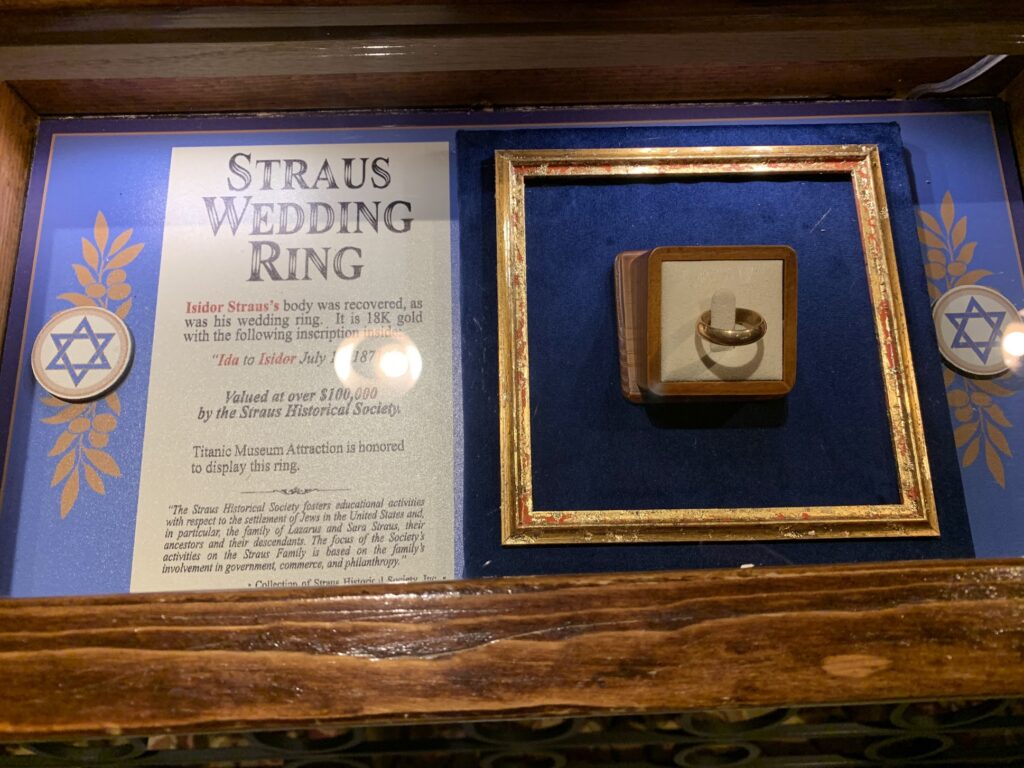
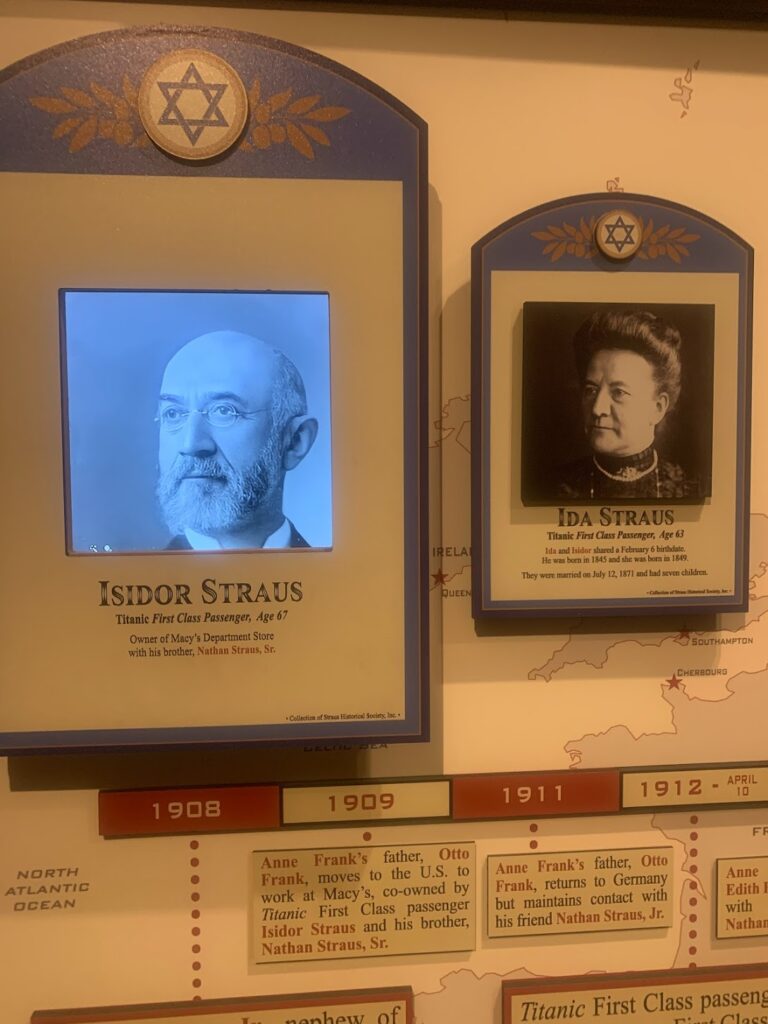
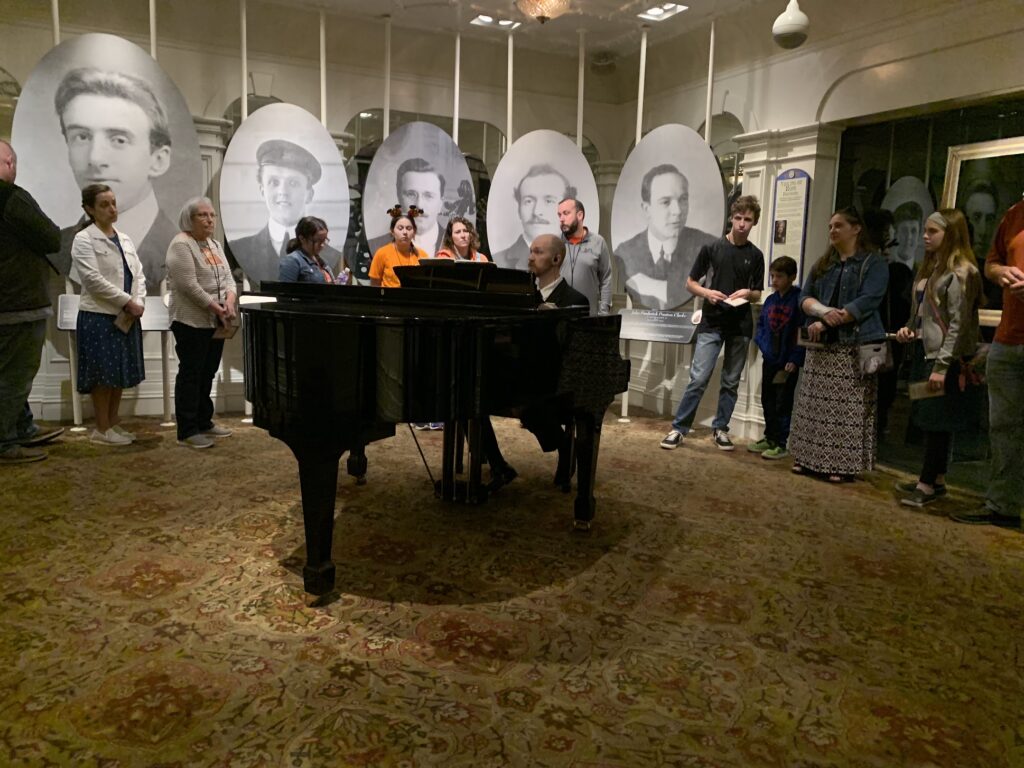
As Tom mentioned on the show, you can visit Titanic: The Exhibition in the same building where Macy’s opened and where Titanic passenger Isador Straus (with his brother Nathan) got their start with the department store. For more information, visit their website.
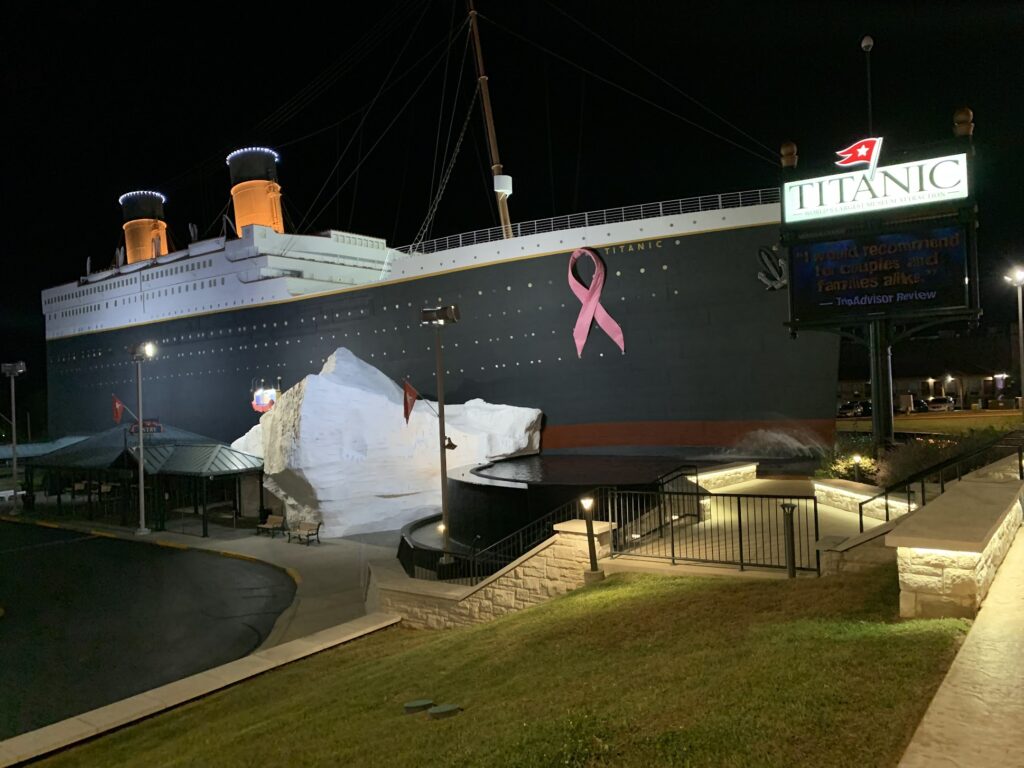
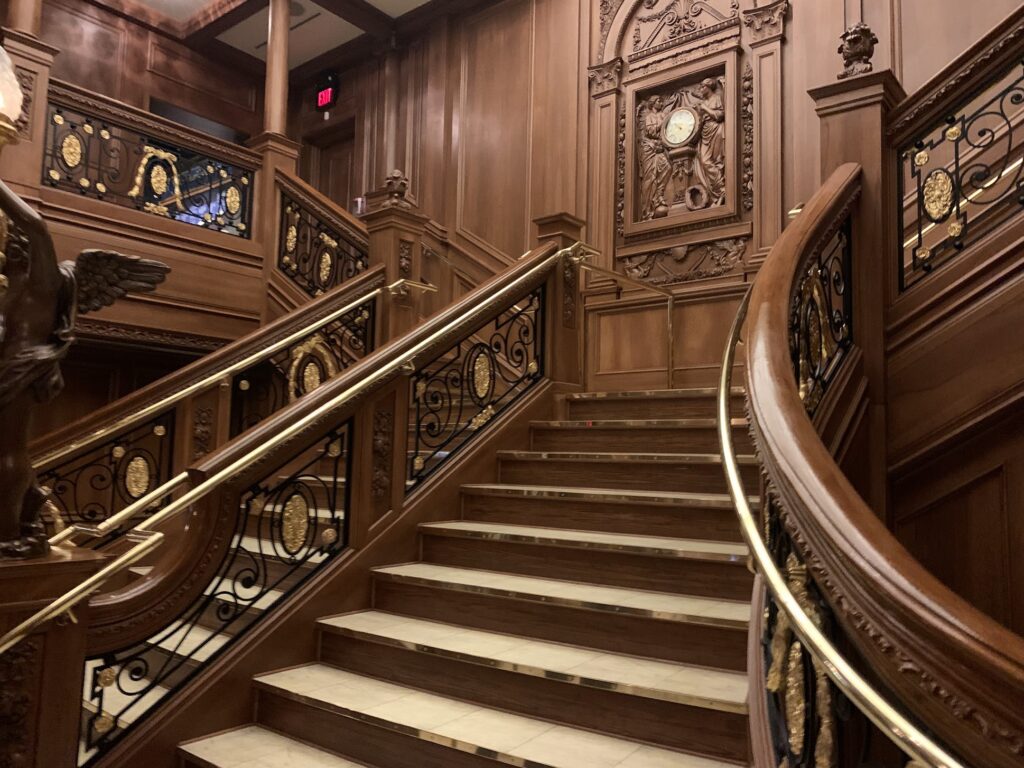
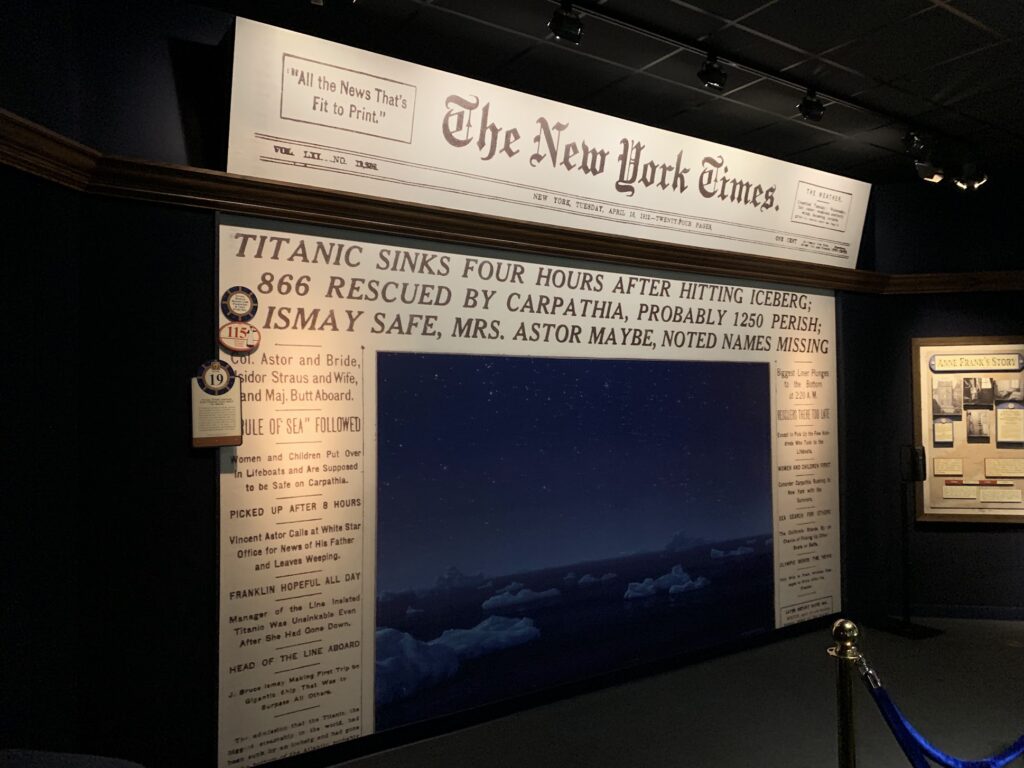
And for a more long distance experience, here are Greg’s pictures from the Titanic Museum in Branson, Missouri:
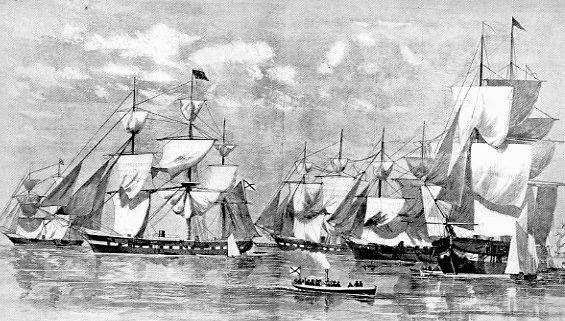
In 1863, New Yorkers flocked to the waterfront to see a startling sight — Russian war ships in New York Harbor. They were here as a display of force, but not to threaten the United States.
The fleet of Russian ships, sailing into New York Harbor in September 1863, as depicted by Harper’s Weekly.
Russia’s Atlantic Squadron, as the fleet was known, was patrolling the Atlantic Ocean as a show of strength against England’s Royal Navy.
They arrived in the harbor on September 24, 1863, initially anchoring in Flushing Bay, and stayed in the city for a couple months. (A description of the various Russian vessels can be found in this 1863 New York Times report.)
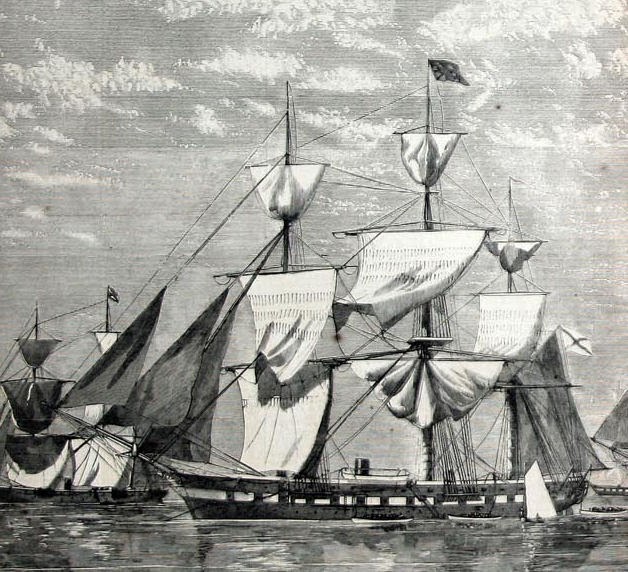
The fleet was led by the massive frigate Alexander Nevski (pictured below), an American-designed ship commissioned and built by the Russian government.
A reporter for Harper’s Weekly, joining a reception onboard the vessel, praised its beauty. “A lady with the most immaculate skirts and kid gloves can move any where, on deck or below, without danger of soiling either, so perfectly clean every thing about the ship is kept.”
America was in the midst of the Civil War, and New York itself was still recovering from the Draft Riots that July.
Many Americans believed the appearance by the Russians underscored a healthy support for the Union over the Confederacy, but most scholars today believe the Russians were acting with far more self-interest.
Still, most New Yorkers embittered by war welcomed the impressive show by friendly foreign powers, kicking off “a slight craze in the public mind.”
Harper’s Weekly remarked, ” [E]very citizen felt bound to do what in him lay to testify to the Russians our sense of gratitude for the friendly manner in which Russia has stood by us in our present struggle, while the Western Powers [England and France] have done not a little to work our ruin.”
New Yorkers marveled at the mighty mast of the Alexander Nevsky, “lying almost on a line westward from Trinity Church,” as it shot off its cannons and a band on-board attempted to play ‘Yankee Doodle Dandy.’
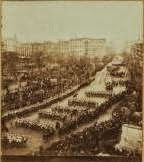
The ship officially docked on the west side at 23rd Street, and the procession, joined by city leaders, marched through the streets (pictured at left, courtesy NYPL), past Union Square and down Broadway.
“[T]he scene became splendidly animated. The moving pageant rolled in a glittering stream down the broad thoroughfare between banks of upturned human faces, the trappings of the equipages, the gold and silver epaulets of the Muscovite guests and the sabres, helmets, and bayonets of the escort reflecting back in unnumbered dazzling lines the glory of the evening sun.” In particular, New York women were captivated by the brawny Russian contingent in their handsome uniforms. “Throngs of ladies in the windows most vigorously waved their ‘kerchiefs, to the great delight of the Russian officers, who never left off bowing, smiling, and even uttering their thanks aloud, while they doffed their gold-laced chapeau.”
(Not every woman was infatuated. The following day, two Russian officers reported being robbed by three women “at a disreputable house.“)
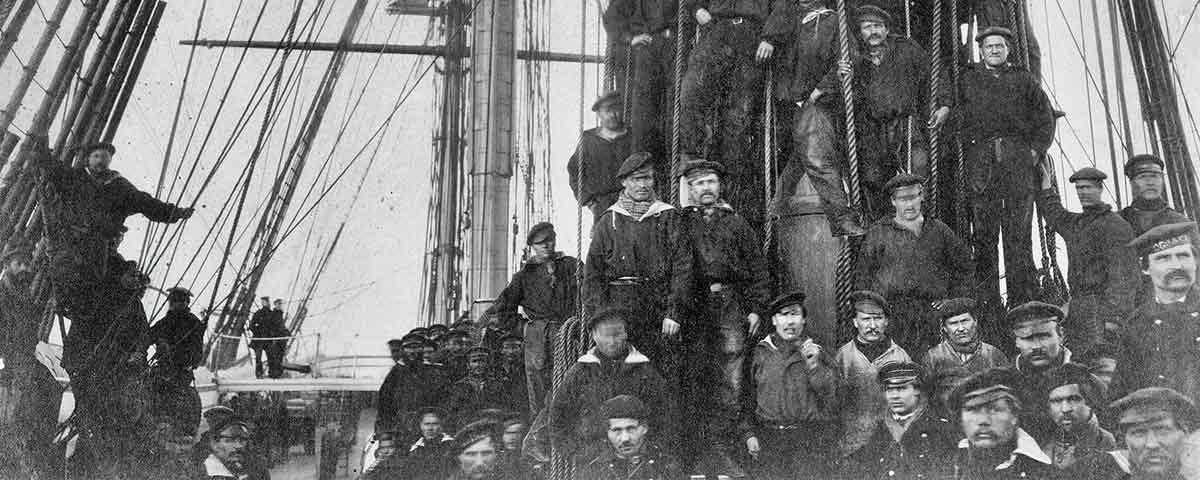
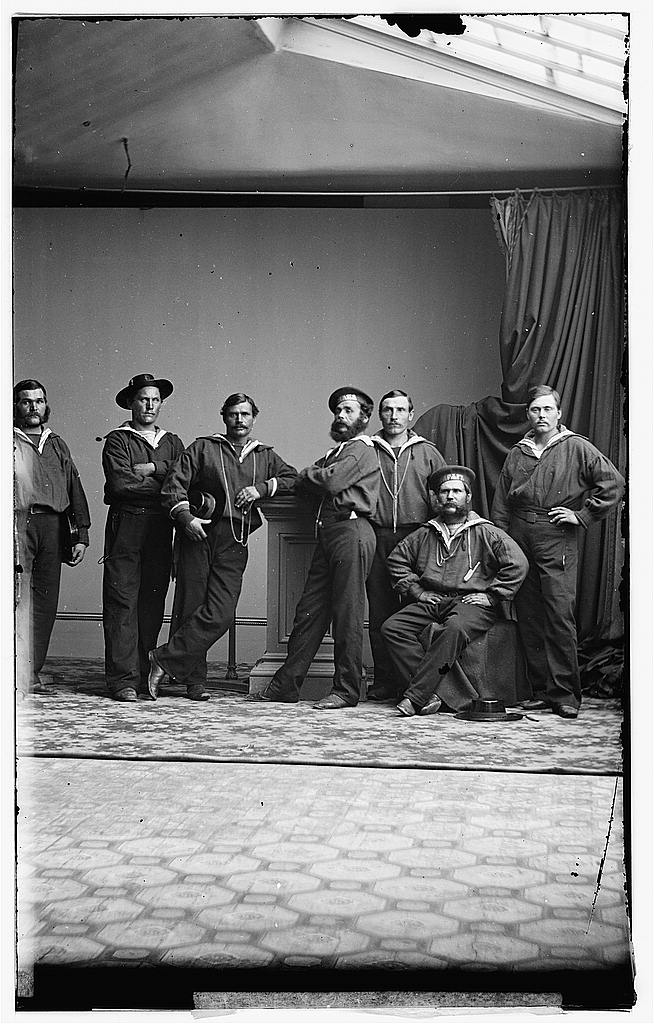
Below: A group of Russian soldiers, taken October 1863, courtesy Library of Congress
The finest hotels of New York were adorned with American and Russian flags. Tiffany’s, at its location on Broadway between Prince and Spring Streets, unfurled a gigantic Russian banner that stretched the length of the building.
Throughout the following weeks, the Russians were continually feted by the grateful Americans. At a dinner with Mary Todd Lincoln and other American dignitaries, Mrs. Lincoln toasted the Russians for their kindness.
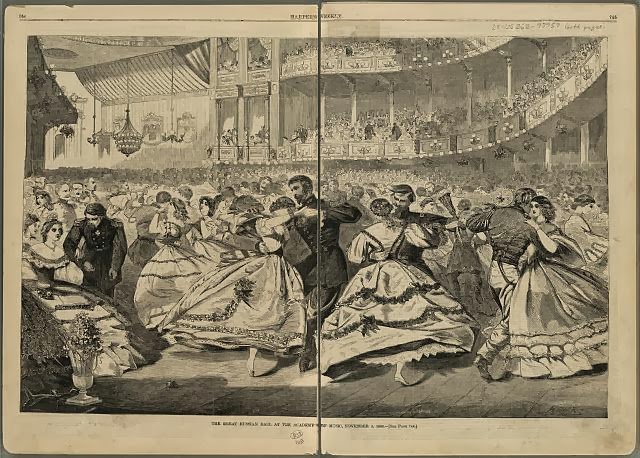
Russian dignitaries frequently met with Mayor George Opdyke and the Common Council and were wined and dined at virtually every hotel in town, including an opulent banquet at the Academy of Music in early November (depicted below in an illustration in Harper’s Weekly).
“They are dined, walked, driven, and are, with unconcealed gratification, availing themselves of the many opportunities of seeing us and all around and about us,” said the New York Times that October. “Yesterday, a number visited Central Park and enjoyed its fine drives and beautiful walks; others were whirled to High Bridge, and others were entertained with City sights of interest.”
The Russian ships would remain in American waters for almost seven months, darting up and down the coast, including a period of time in Washington D.C.
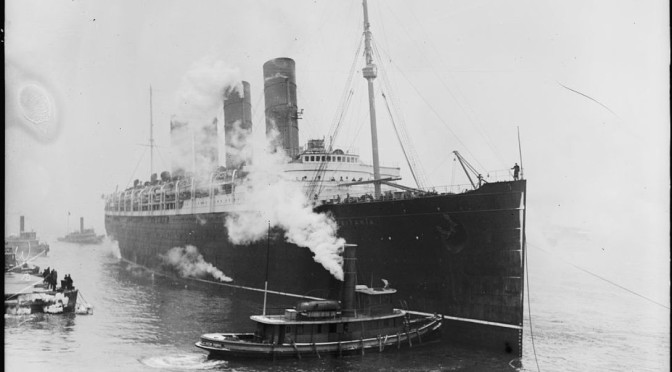
The Lusitania gets dwarfed by recollections of the Titanic. But in many ways, the destruction of the Cunard Line’s premier ocean liner on May 7, 1915, was a deeper tragedy than that of the White Star liner.
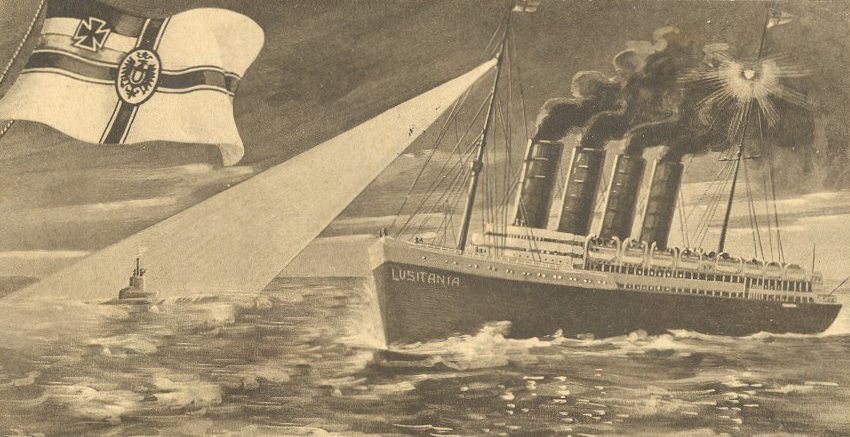
As a casualty of war — sunk by a German U-boat off the coast of southern Ireland — the Lusitania disaster began a slow but inevitable march towards the United States’ entry into World War I. Â Its destruction send a shockwave through Americans and Britons alike. Nobody sailing the Atlantic was safe.
Almost 1,200 people died that afternoon of May 7th. Among the deceased were millionaires (Alfred Gwynne Vanderbilt), impresarios (Charles Frohman), writers, scientists, nurses and soldiers.
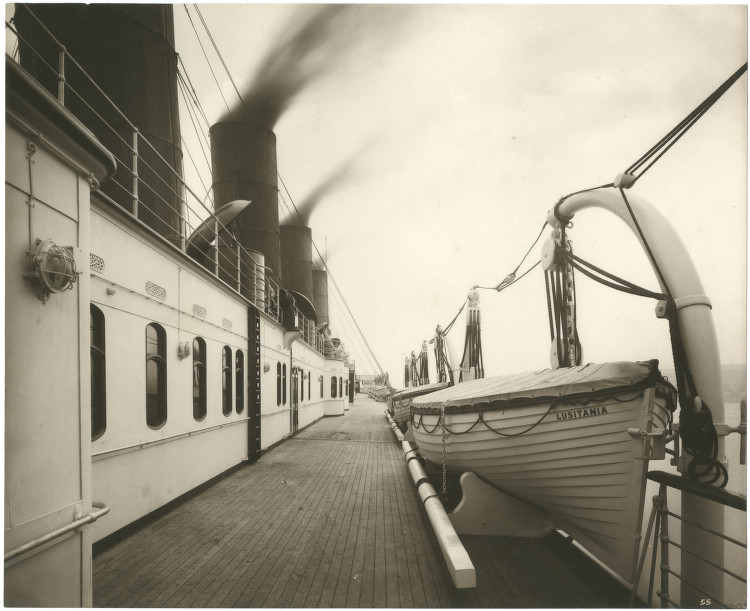
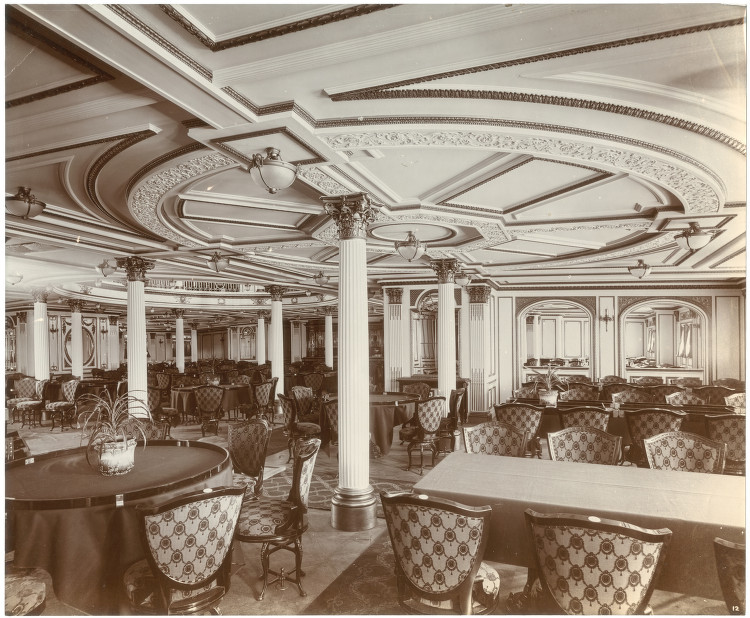
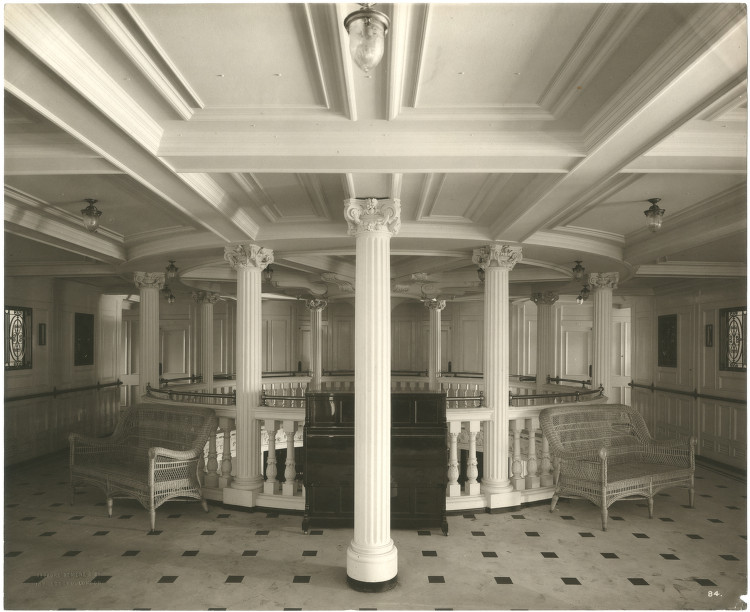
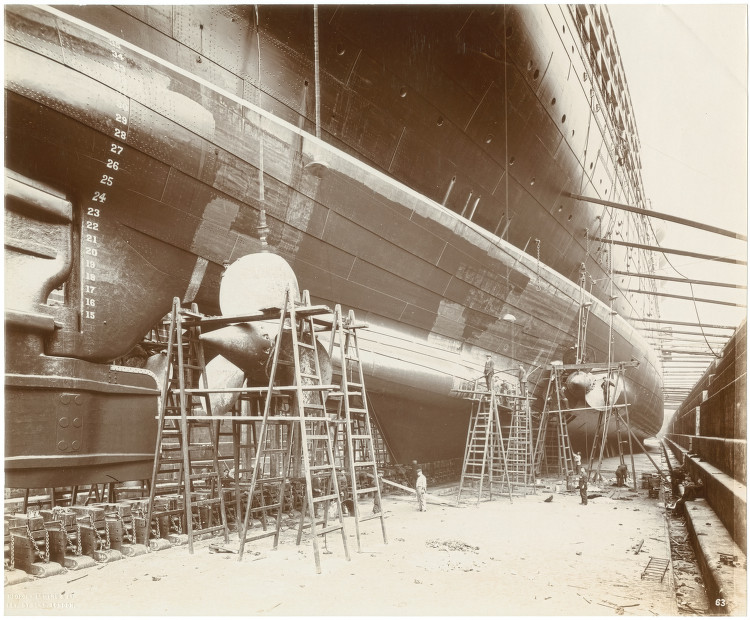
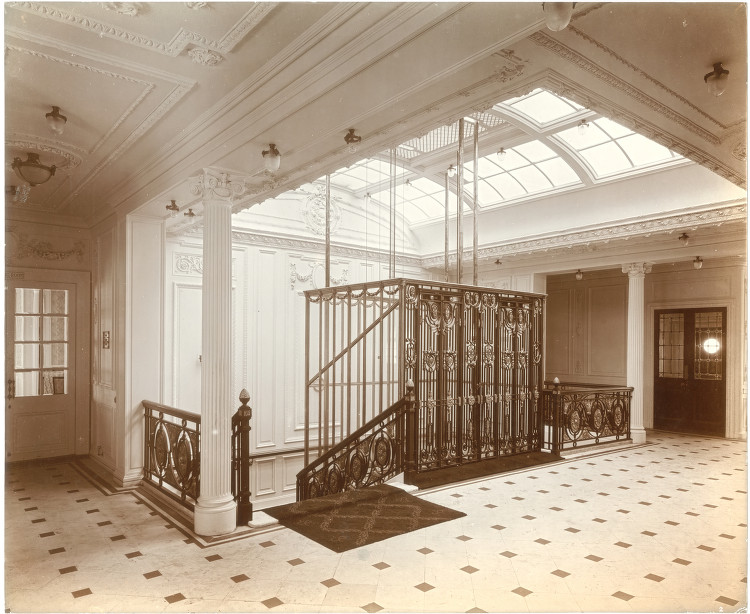
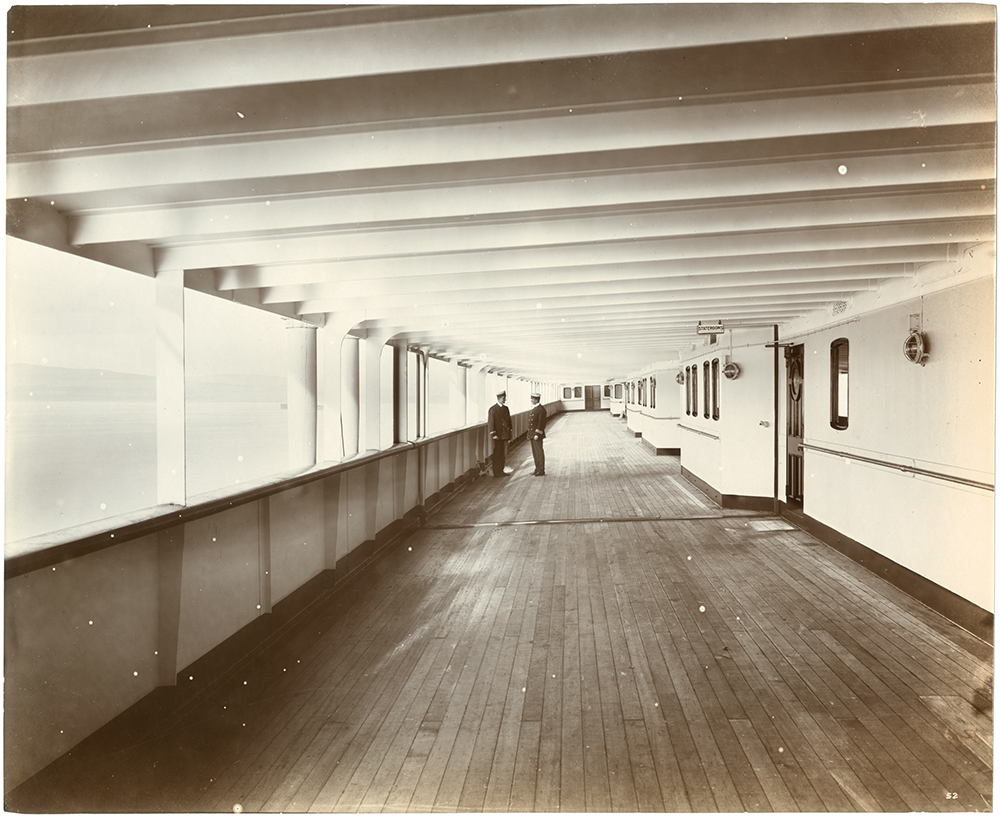
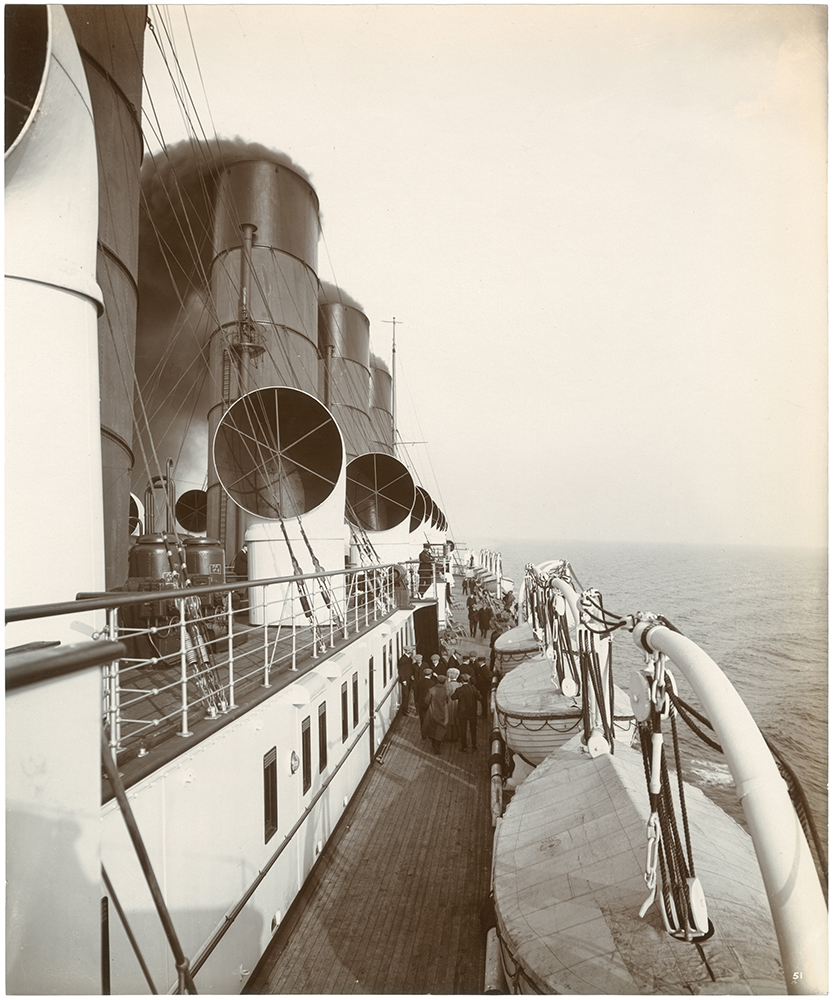
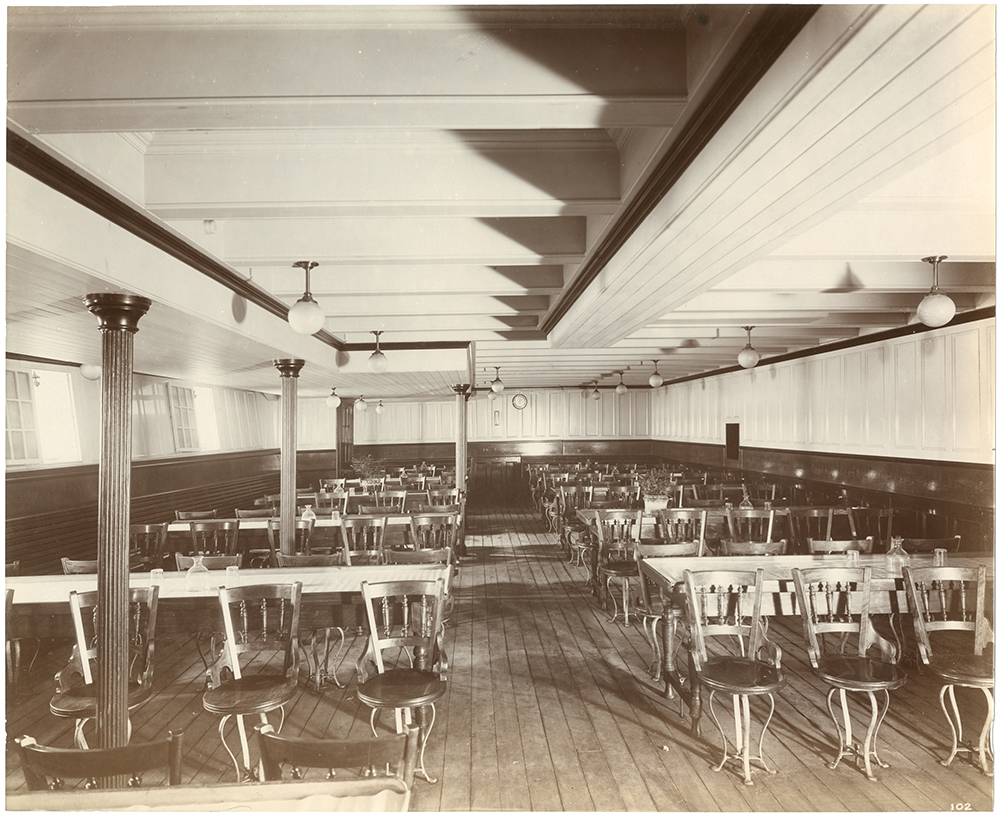
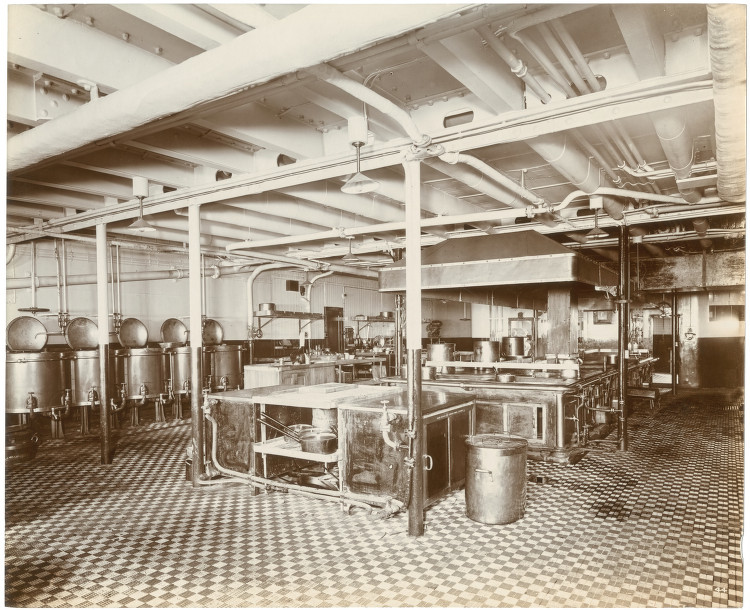
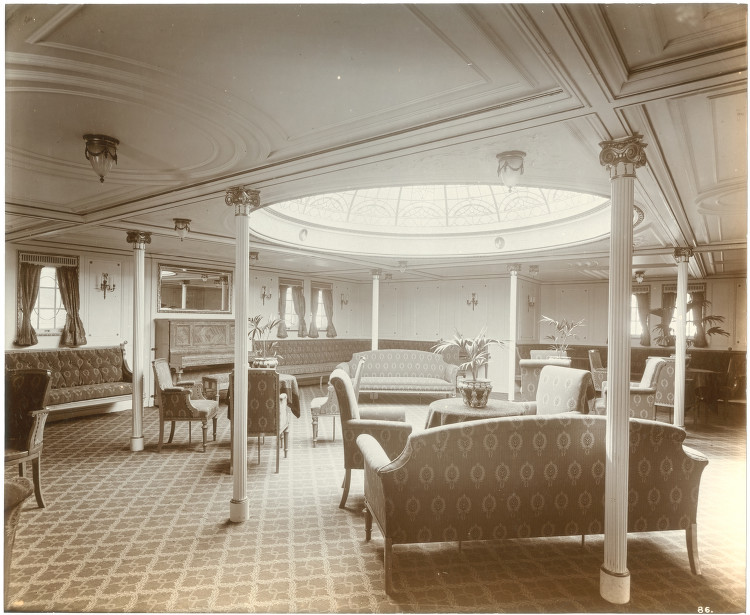
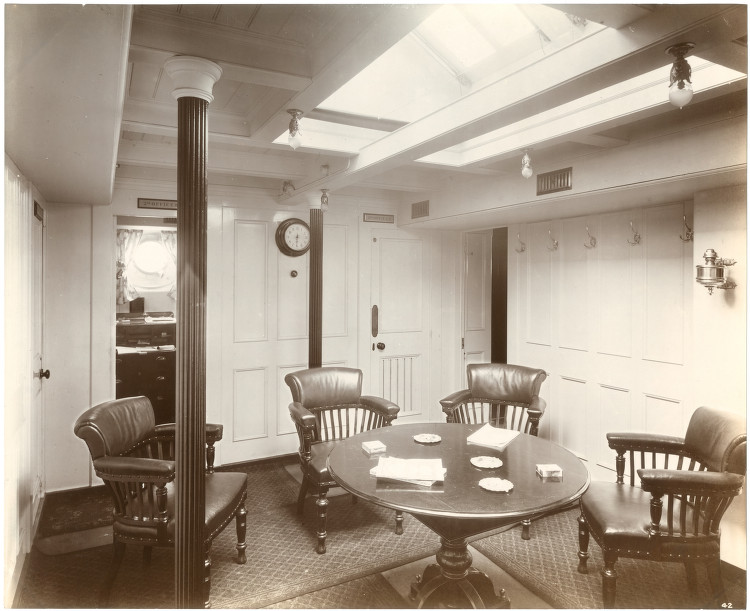
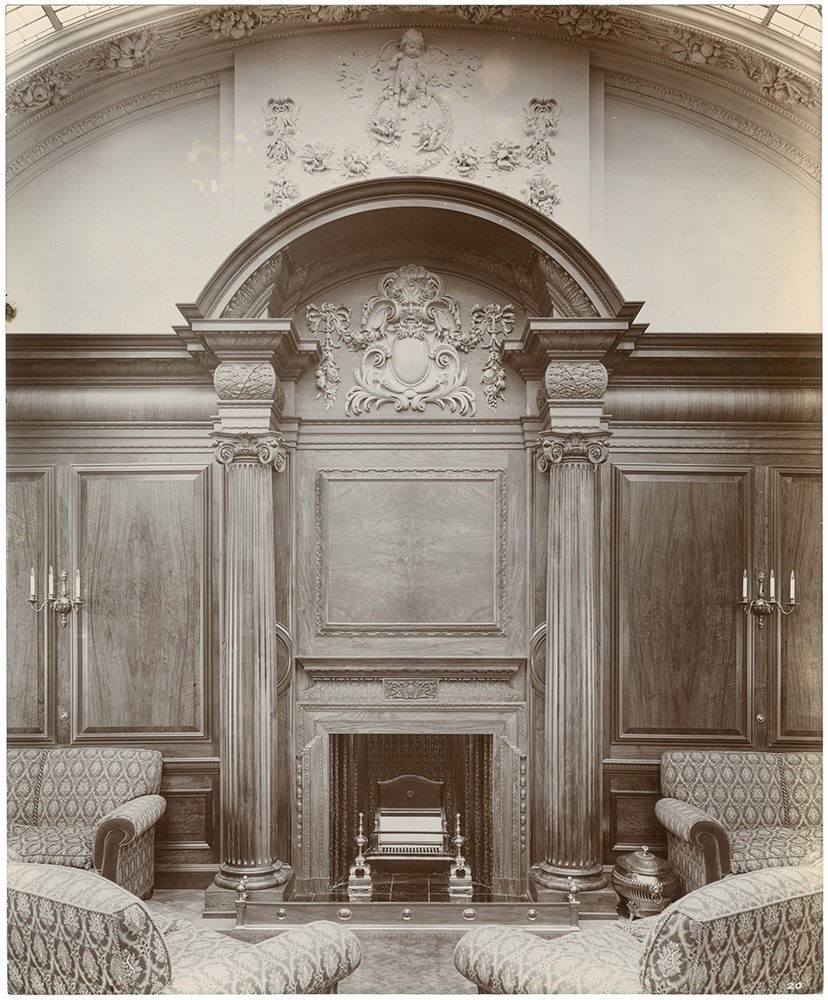
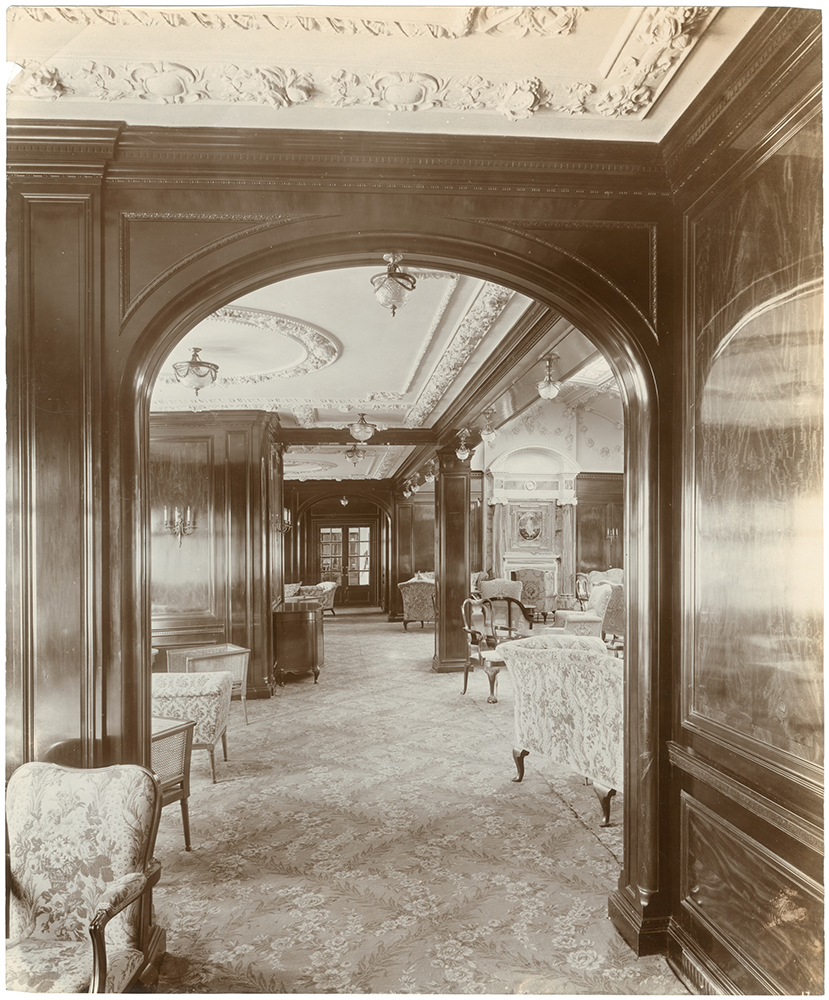
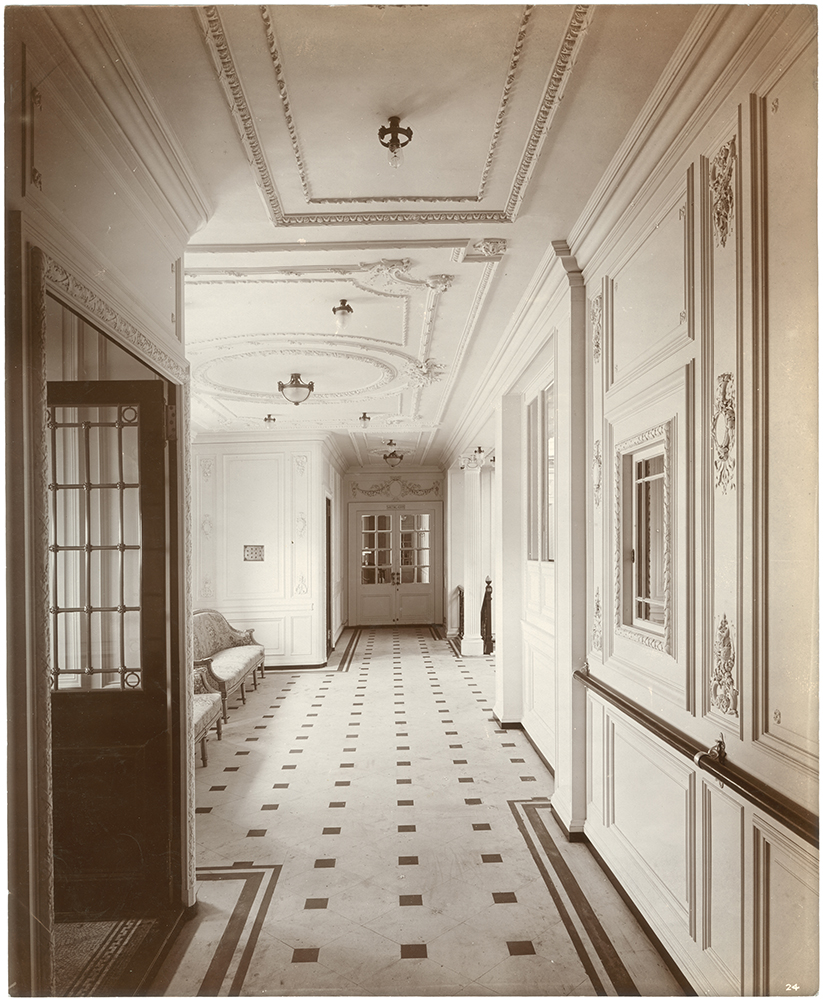
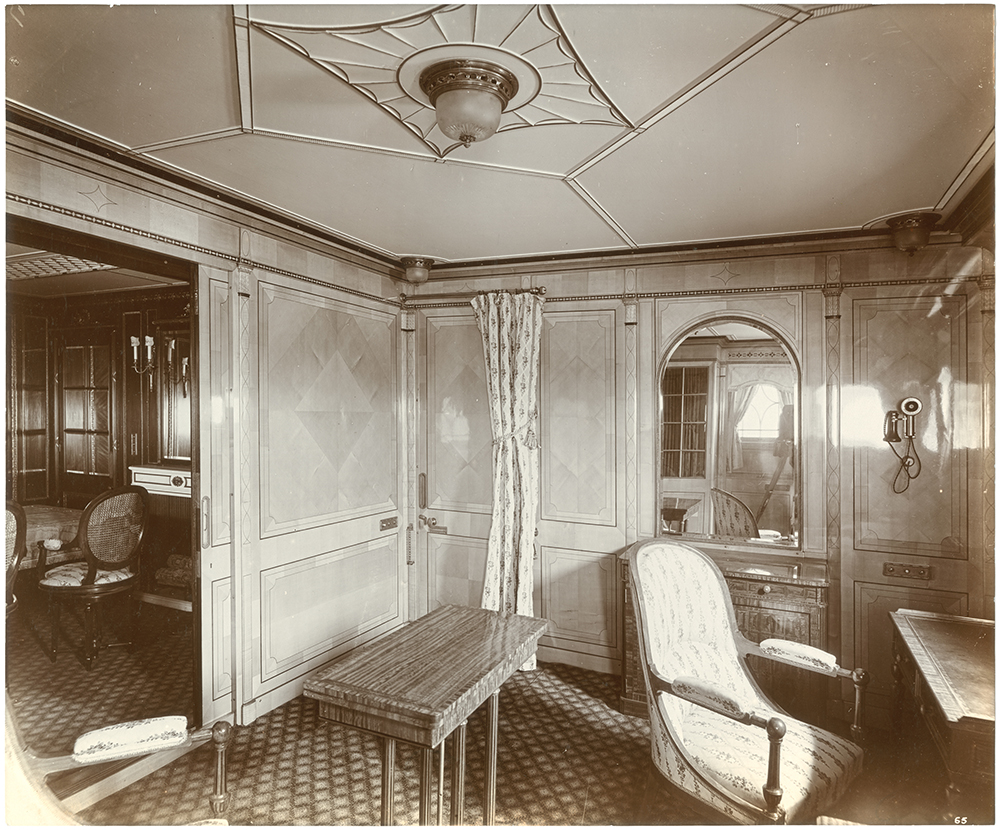
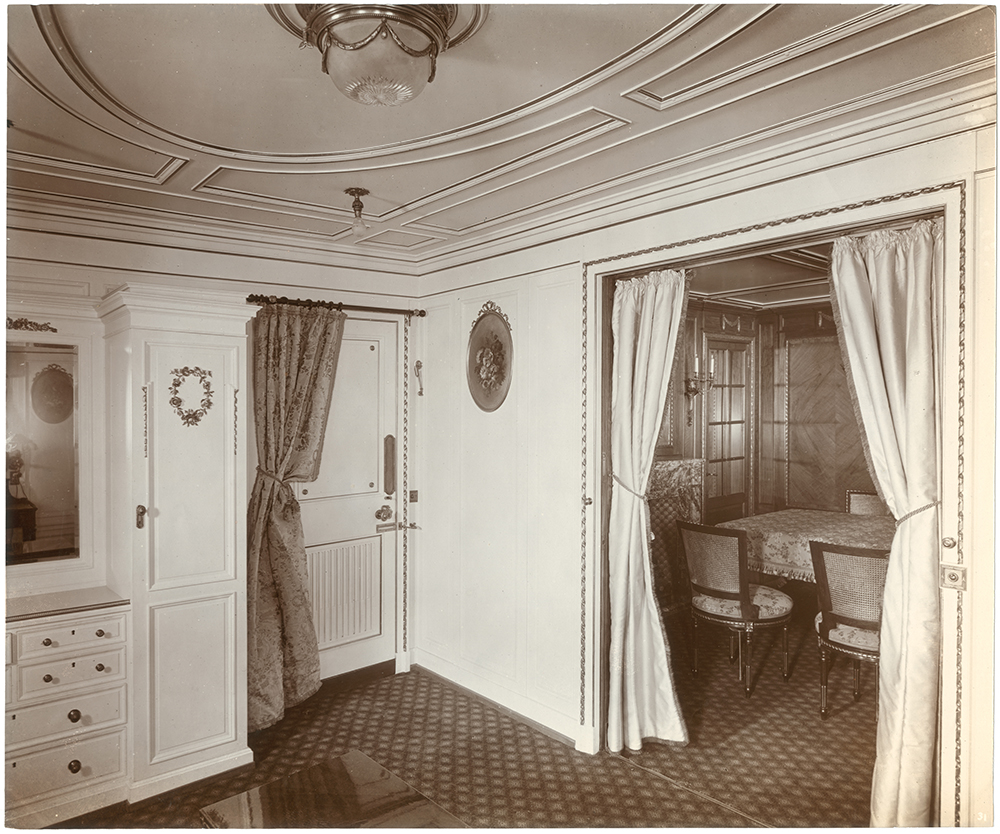
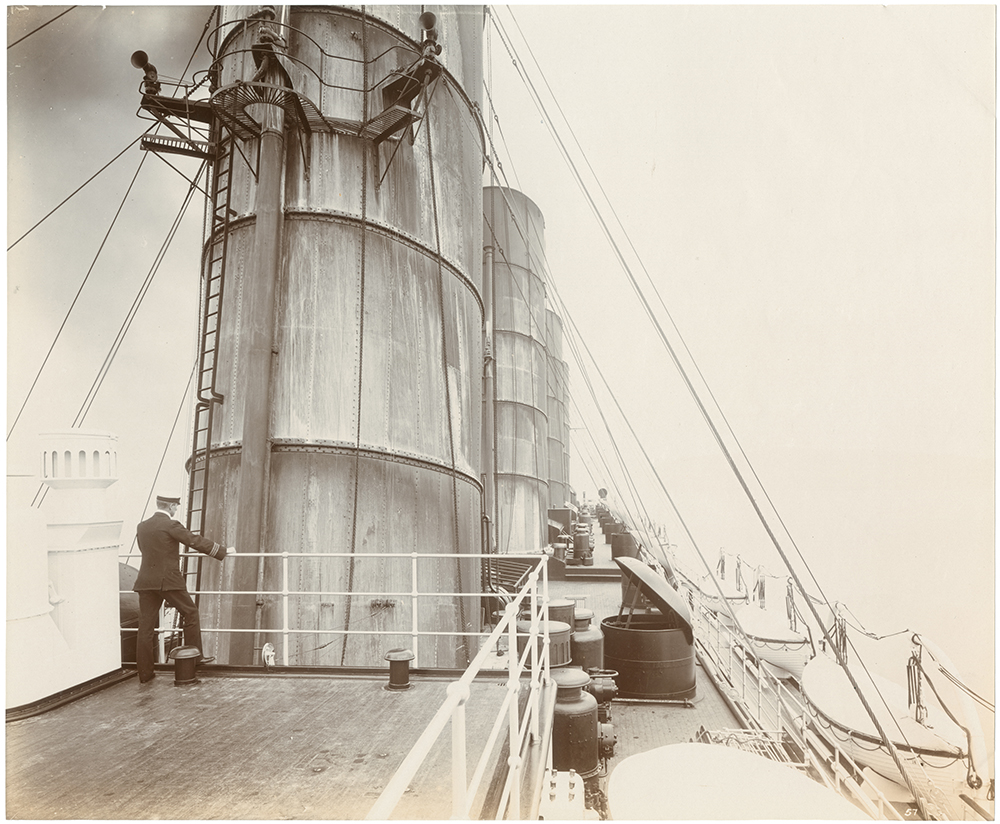
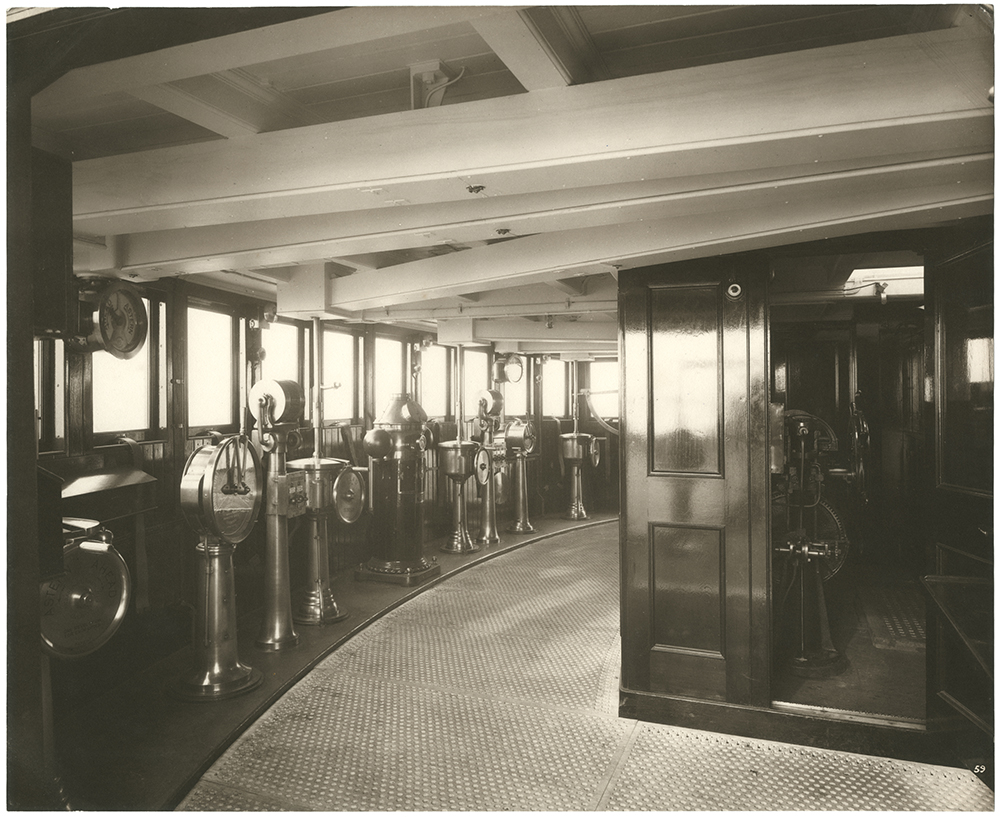
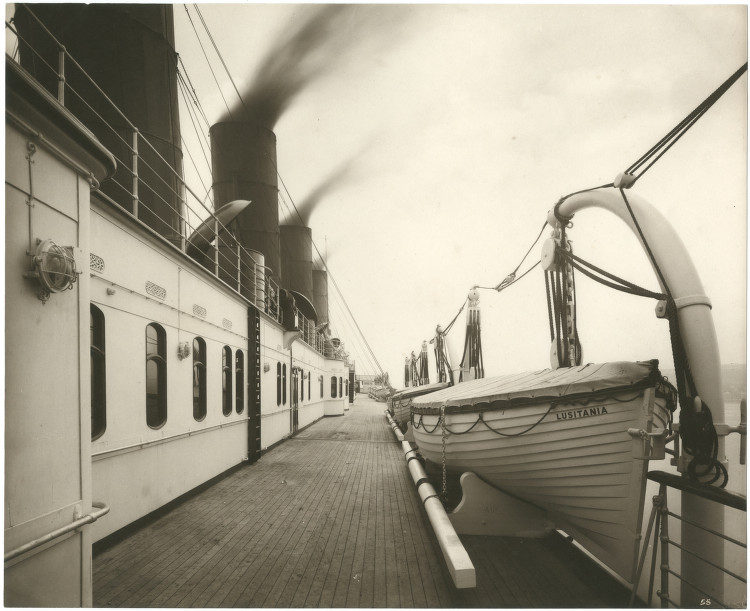
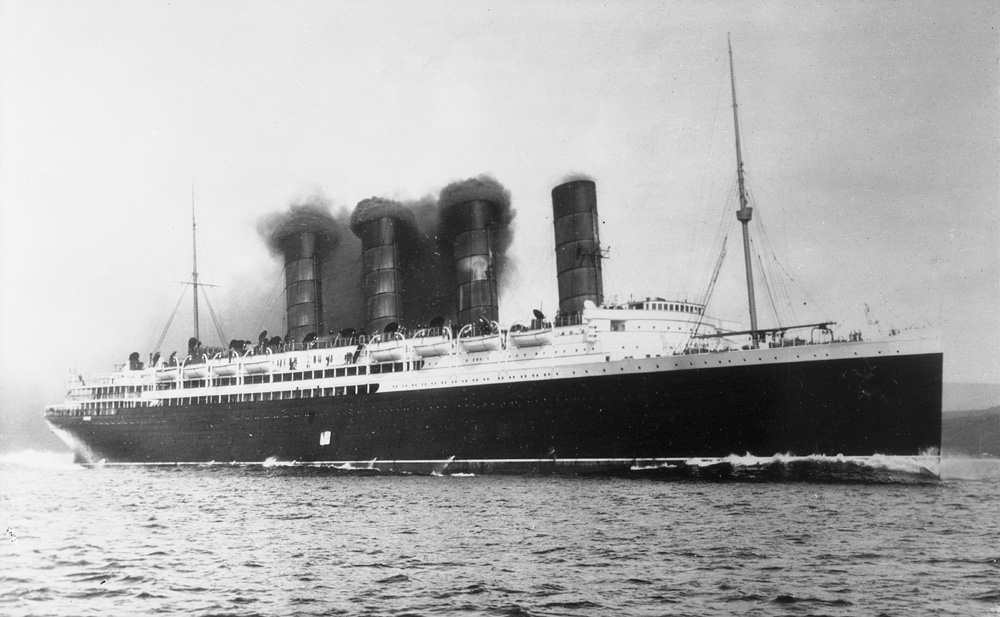
The ship itself was a major loss both for Cunard and the British military as the ship was fitted for active service. Here are a selection of images from 1905 (courtesy SMU Central University) of the Lusitania in all her glory, years before her demise.
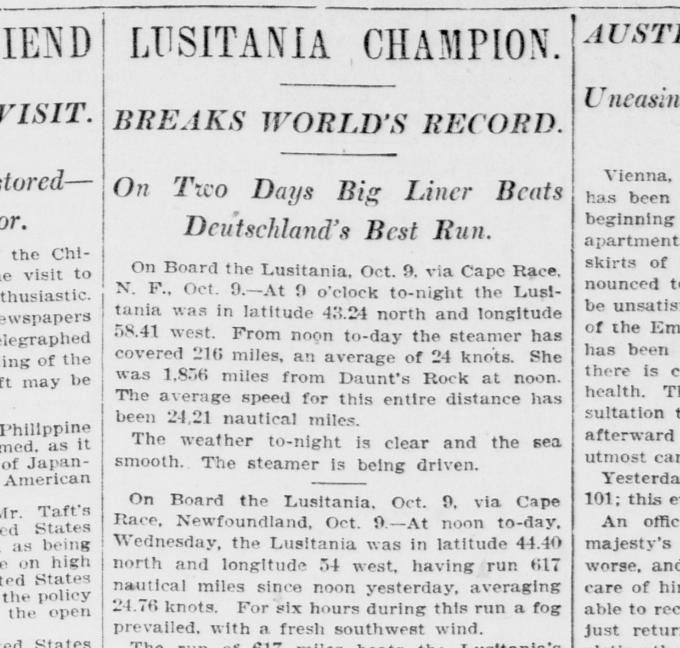
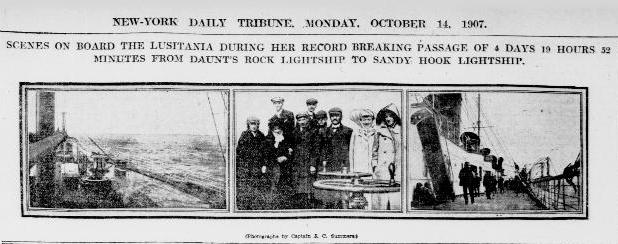
Interspersed are some newspaper clippings from its initial launch in 1906 and some from 1907, the year the vessel first sailed to New York.
From the Lusitania’s debut in Scottish waters, New York Times June 08, 1906:
“GLASGOW, Scotland, June 7. — The new Cunard Line steamer Lusitania, the world’s largest liner, was successfully launched at Clydebank to-day, and was named by Dowager Lady Inverclyde. Hundreds of visitors from all parts of the country, besides thousands of the local population, witnessed the ceremony.
The Lusitania is the first of the giant Cunarders to be launched, and her sister, the Mauretania, will follow her into the sea a month ago. The Lusitania is 790 feet long, and her greatest breadth is 88 feet, while her depth molded is 60 1/2 feet.”
Cabin accommodations: 552 first class, 460 second class, 1,186 third class. 2,198 total
Second class entrance
NYT , July 31, 1907: “LUXURIOUS OCEAN TRAVEL. The new Cunarder Lusitania is now afloat, and will soon be on her way to New York. She is at the present moment the largest and most richly appointed ocean steamship in the world, though she may take second place within a year or so.”
Side view of Lusitania showing the launching cradle and the propellers
LUSITANIA STARTS FIRST TRIP TO-DAY; Will Race the Lusitania Across in an Effort for a New Record. BOTH BOATS ARE FULL Colossal Ferries Groomed for the Event — Lusitania Will Burn 1,000 Tons of Coal Daily.
First class promenade deck
From the New York Tribune, October 10, 1907
Third class:
The kitchen:
Second-Class Ladies Lounge:
Officers smoking lounge:
From the New York Tribune, October 14, 1907
First class smoking room, music lounge, and library entranceway:
And pictures of the ‘regal suite’, the nicest rooms on the boat:
An officer atop the navigation bridge:
And finally — the navigation bridge
You can find many more images at Flickr Commons, courtesy Southern Methodist University, Central University Libraries, DeGolyer Library
PODCASTThe Chelsea Piers were once New York City’s portal to the world, a series of long docks along the west side of Manhattan that accommodated some of the most luxurious ocean liners of the early 20th century.
Passenger ocean travel became feasible in the mid 19th century due to innovations in steam transportation, allowing for both recreational voyages for the wealthy and a steep rise in immigration to the United States.
The Chelsea Piers were the finest along Manhattan’s busy waterfront, built by one of New York’s greatest architectural firms as a way to modernize the west side. Both the tragic tales of the Titanic and the Lusitania are also tied to the original Chelsea Piers.
But changes in ocean travel and the financial fortunes of New York left the piers without a purpose by the late 20th century. How did this important site for transatlantic travel transform into one of New York’s leading modern sports complexes?
ALSO: The death of Thirteenth Avenue, an avenue you probably never knew New York City ever had!
The offices of Steamship Row near Bowling Green and Battery Park. With the rise of ocean travel in the mid 19th century, passengers went to these buildings to make voyage accommodations.
These were later replaced with more lavish offices, many of which are still around in the neighborhood today.
Courtesy Museum of the City of New York
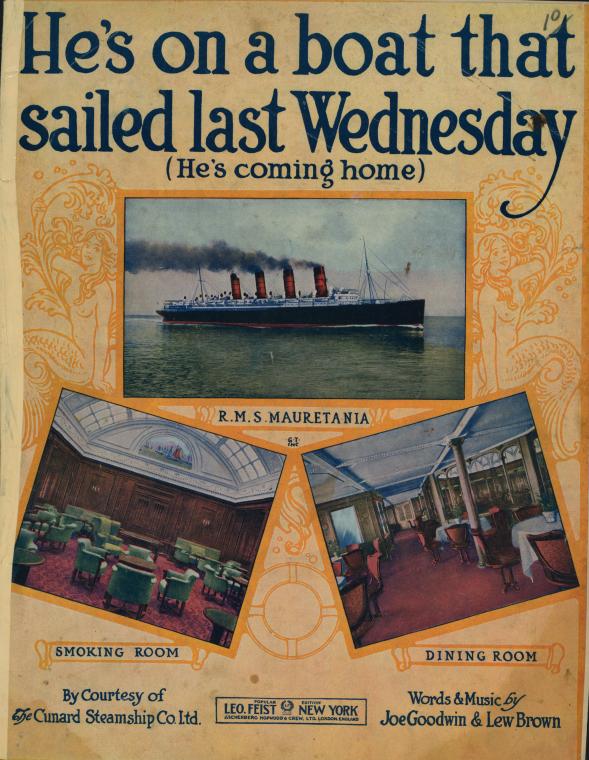
A jaunty song written for the Cunard ship Mauretania, sister ship of the Lusitania.
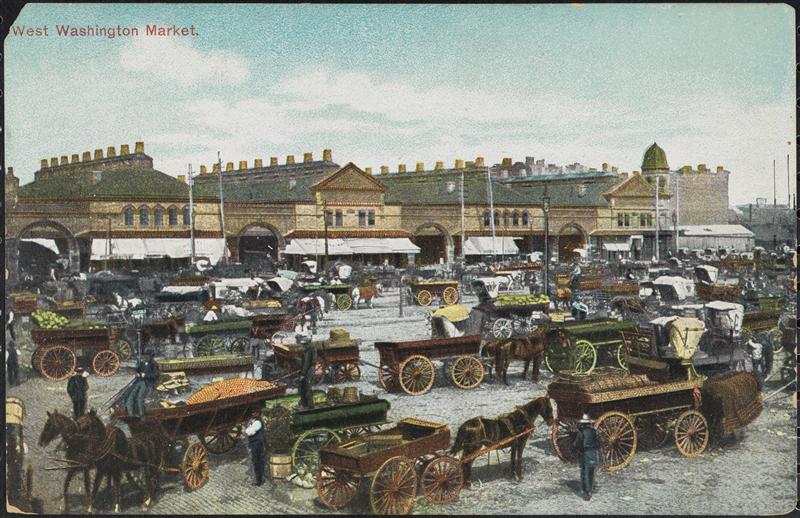
The crazy scene out in front of West Washington Market in 1905. The market was built well before the Chelsea Piers and helped preserve a bit of 13th Avenue when most of that street was eliminated for the Piers’ construction.
Courtesy Museum of the City of New York
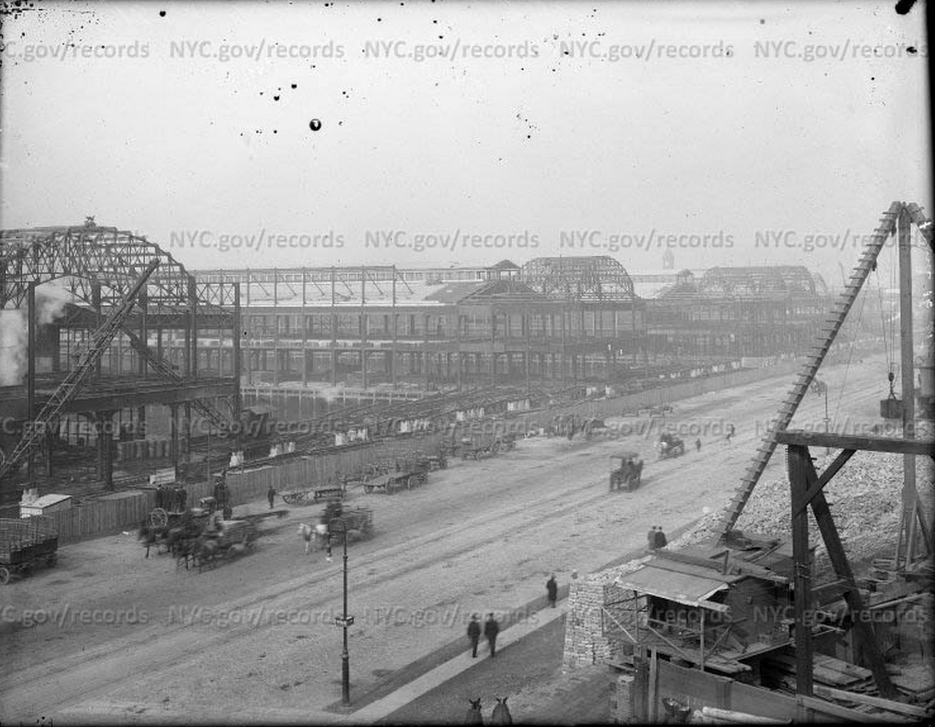
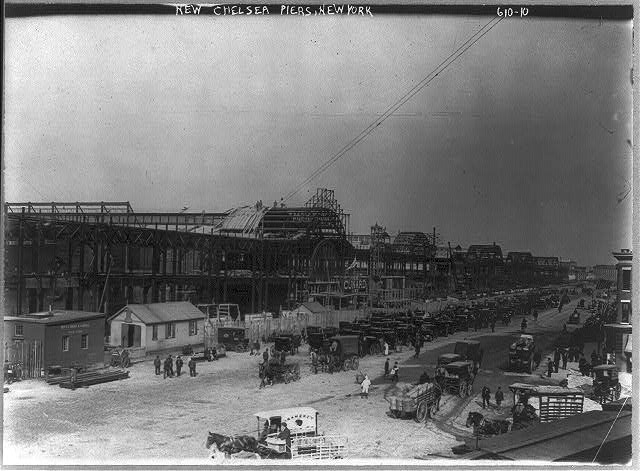
Construction of the Chelsea Piers complex in progress, looking northwest from 16th Street, 1910.
Courtesy New York Department of Records
Courtesy Library of Congress
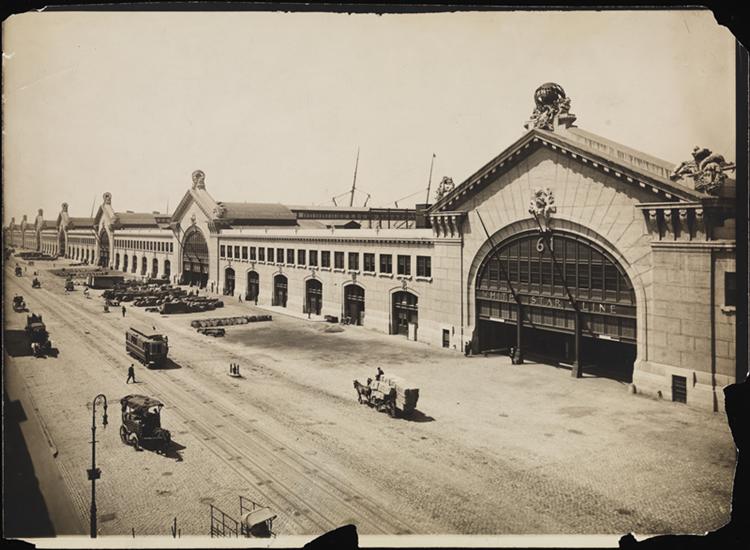
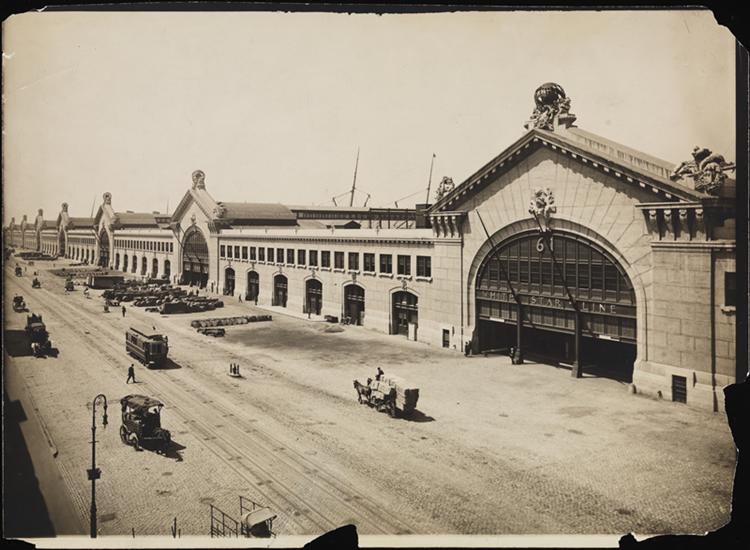
The lavish Chelsea Piers headhouse, designed by Warren and Wetmore of Grand Central Terminal. This picture was taken in 1910 at their completion. It looks very calm on the street in front, a rarity!
Courtesy the Museum of the City of New York
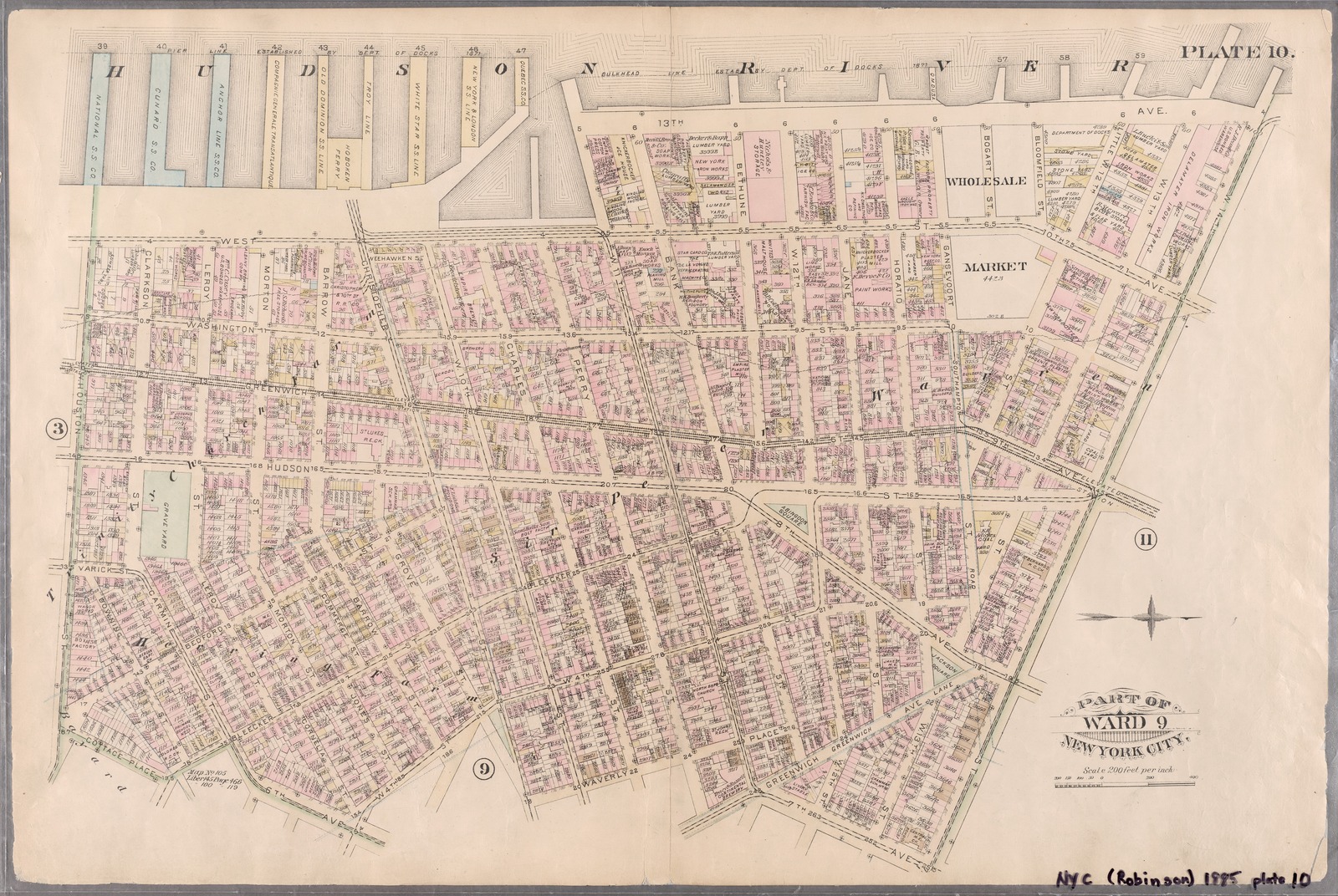
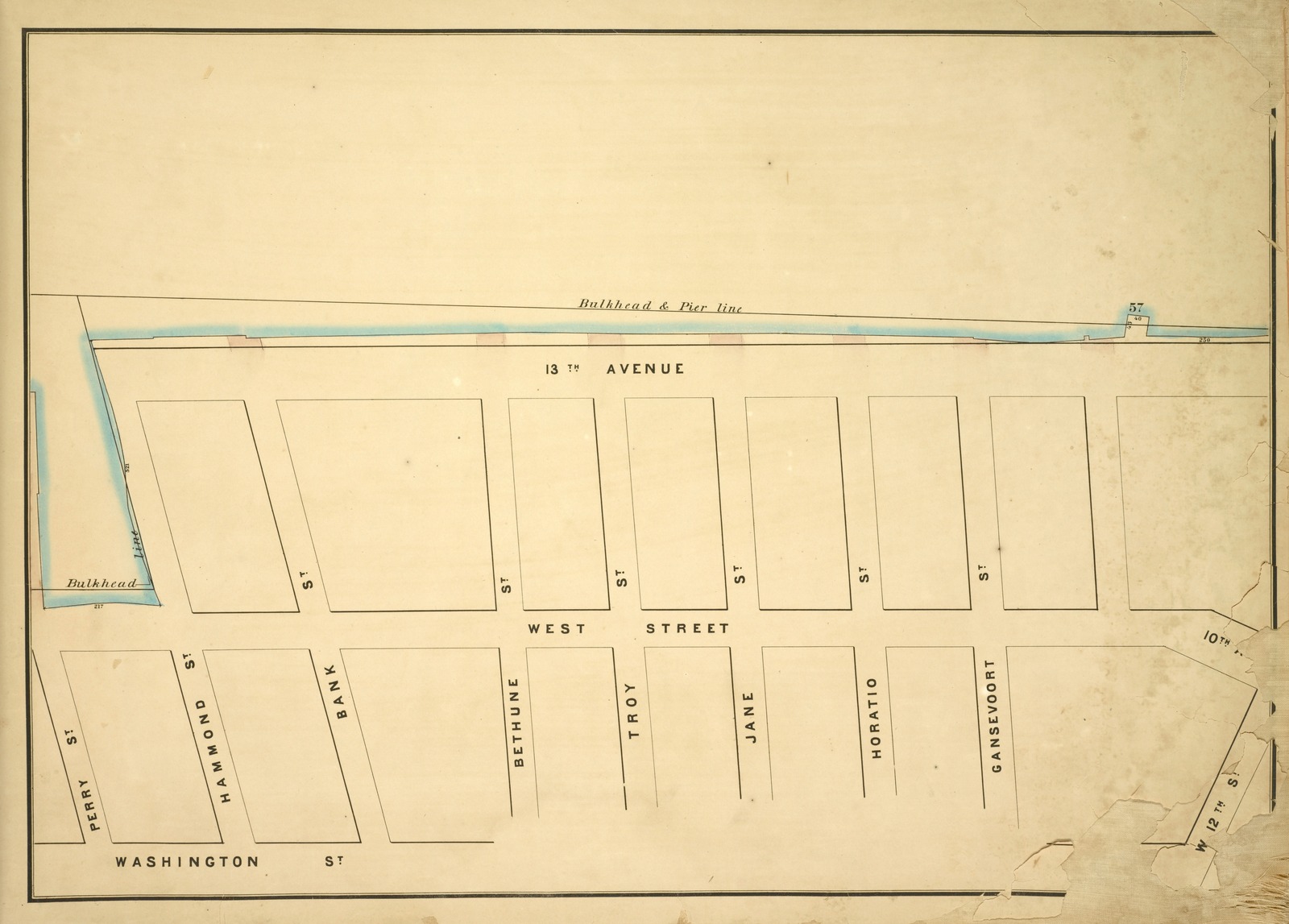
An insurance map from 1885, detailing the streets near the areas of waterfront along West Village and the Meat-Packing District. Note the location of 13th Avenue along the water, running along the top from center to right. Most of this was removed for the construction of the piers.
Courtesy New York Public Library
Courtesy New York Public Library
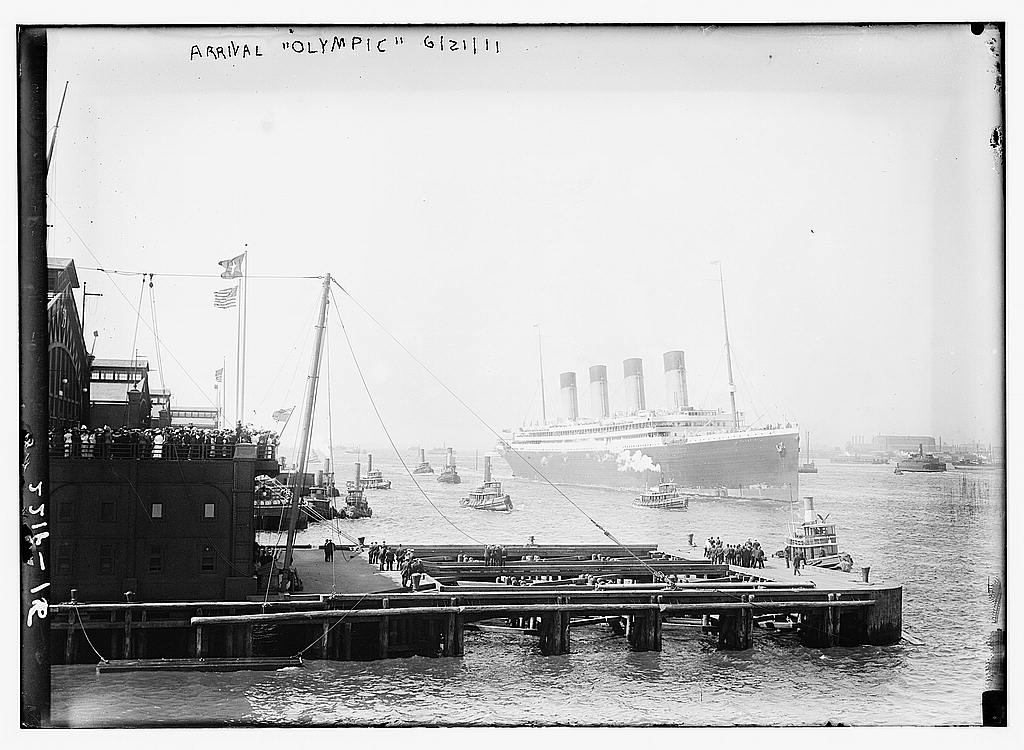
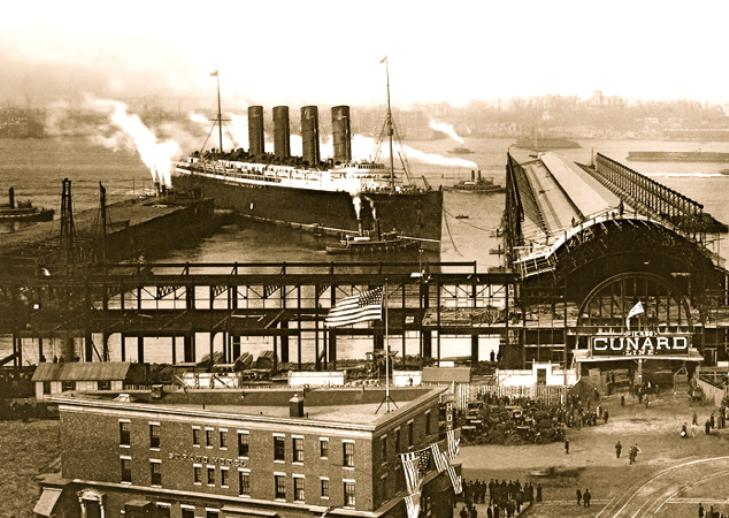
The arrival of the White Star ocean liner Olympic into New York harbor, 1911.
Courtesy Library of Congress
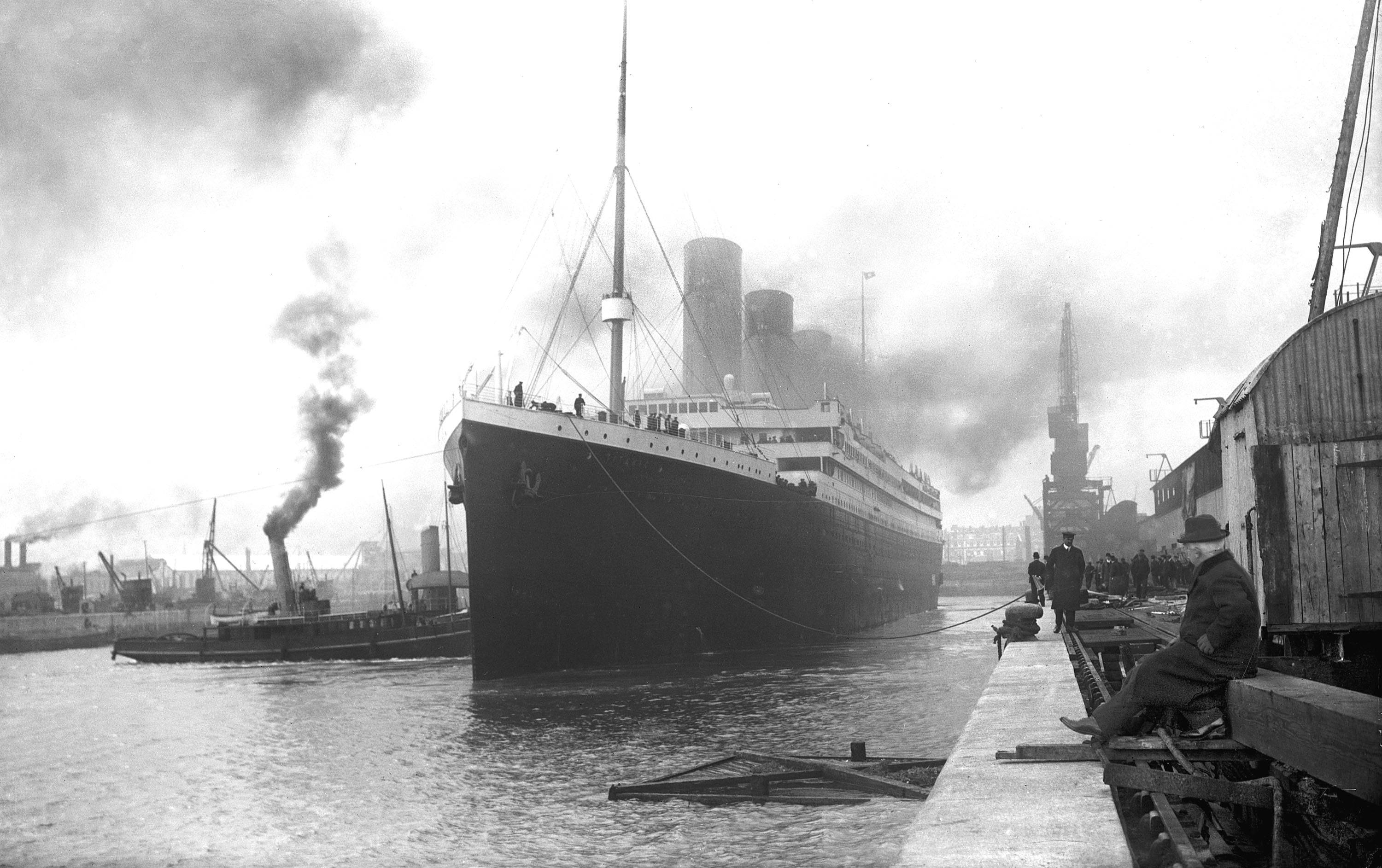
The Titanic on its maiden voyage on April 10, 1912. This was obviously taken from Southhampton where they had much more room for massive ocean vessels!
Crowds gather at a location near Chelsea Piers awaiting the survivors of the Titanic disaster.
Courtesy Library of Congress
The RMS Carpathia arrives at Pier 54 on April 18, 1912. Reporters scurry to interview survivors of the Titanic.
Courtesy New York Times
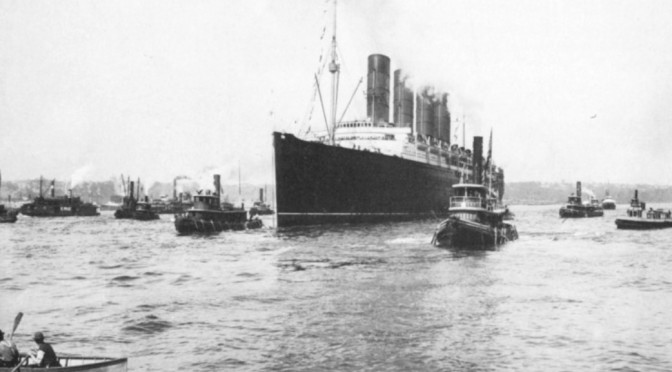
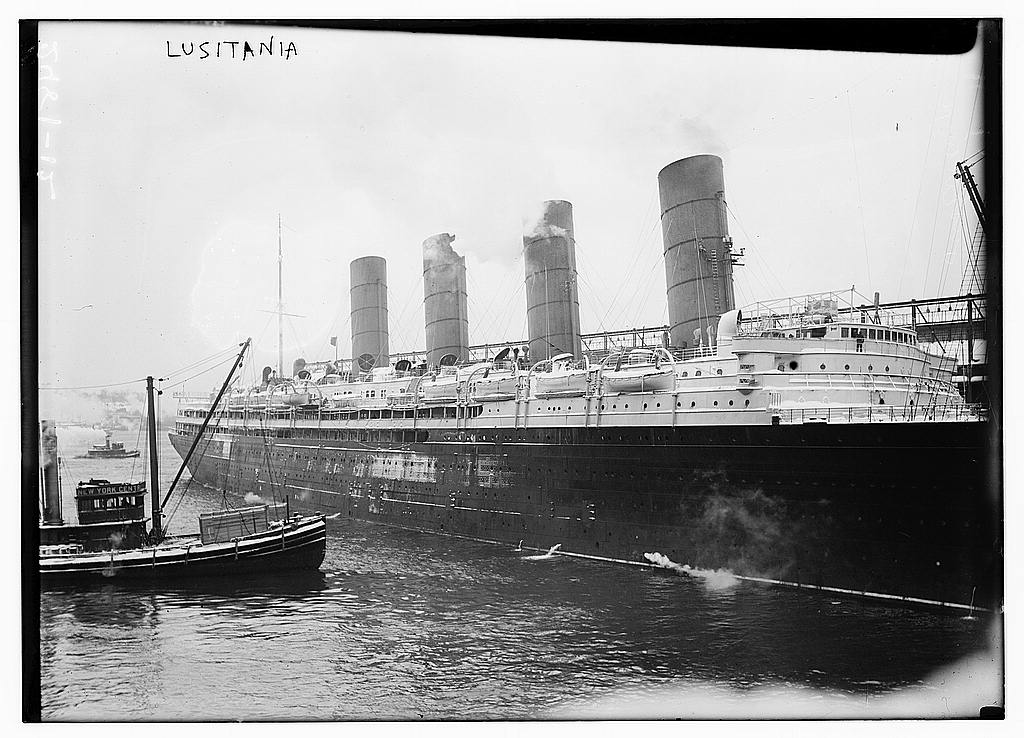
The Lusitania in New York Harbor, and other with the Lusitania at Pier 54 (date unknown but obviously before the Chelsea Piers were completed)
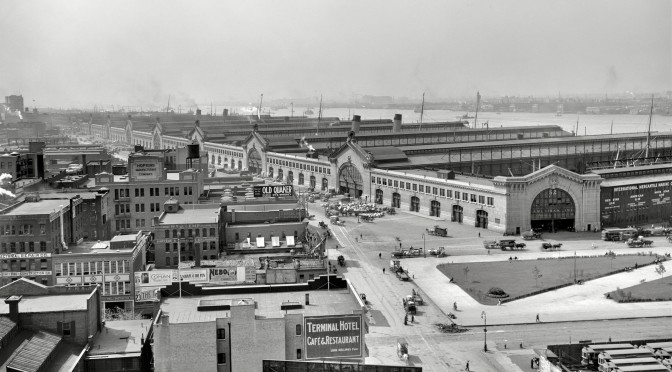
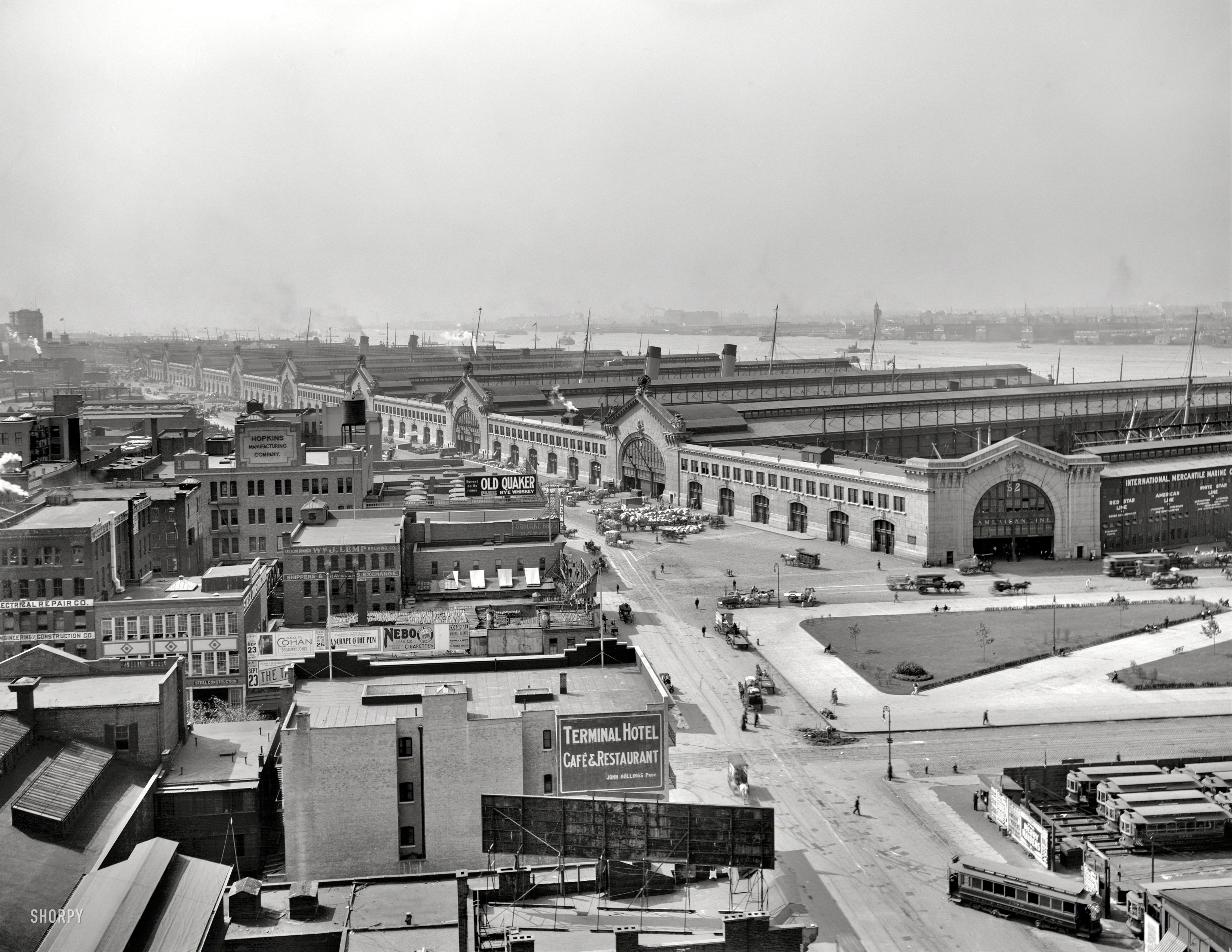
This striking image (cleaned-up photography courtesy of Shorpy) shows the Chelsea Piers in context with the streets of Chelsea in front of it. 1920
Courtesy Shorpy
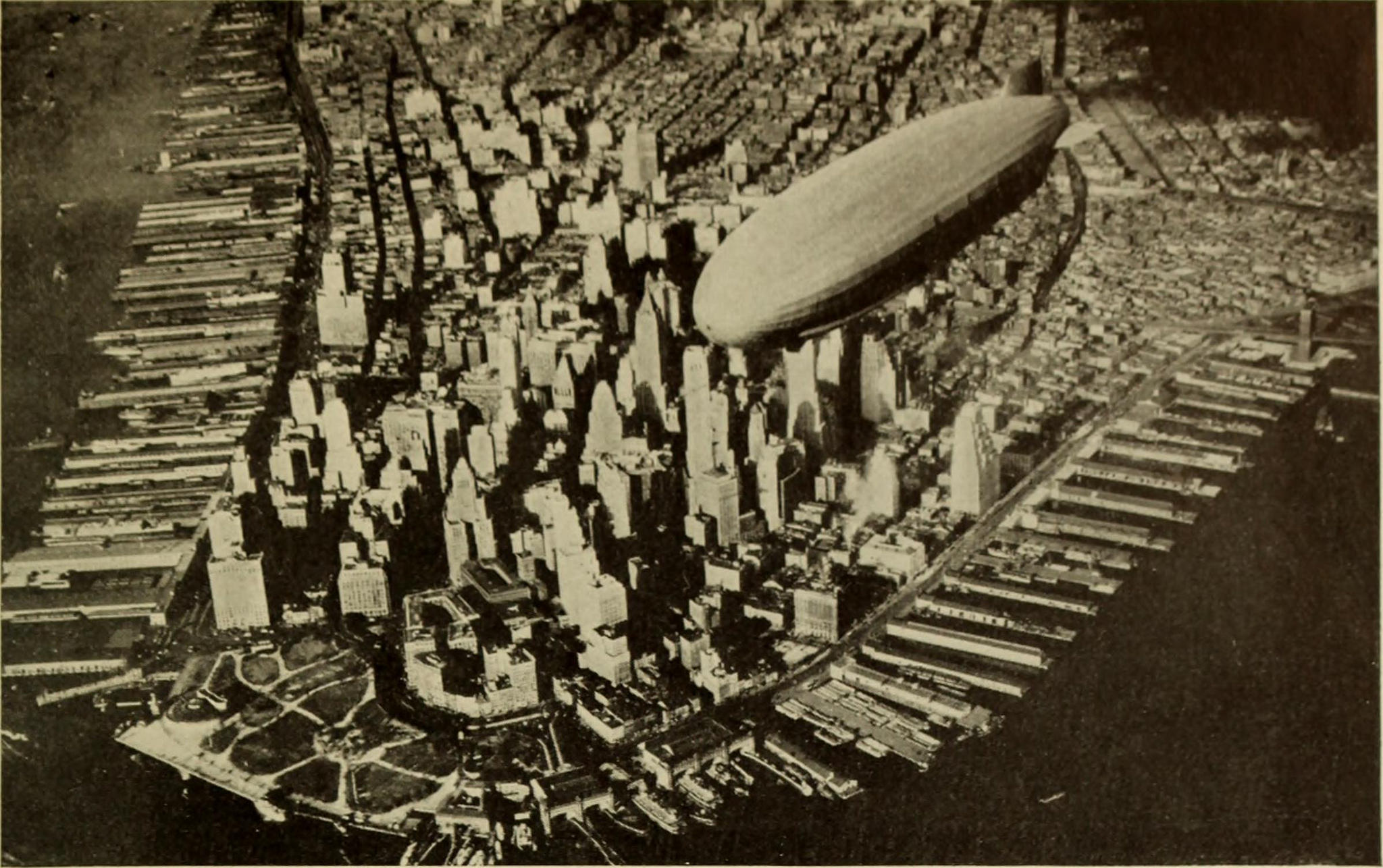
An excellent image of the crazy pier situation in lower Manhattan. This picture is from 1931. Chelsea Piers would be in the upper left-hand corner.
Courtesy Internet Book Image Archives
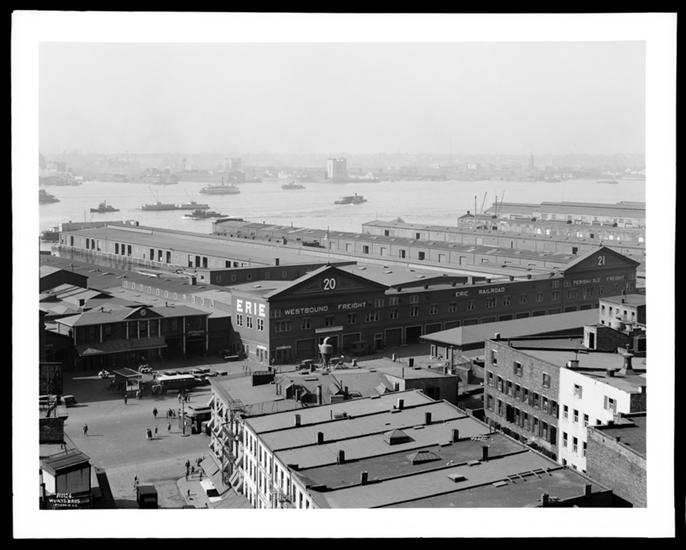
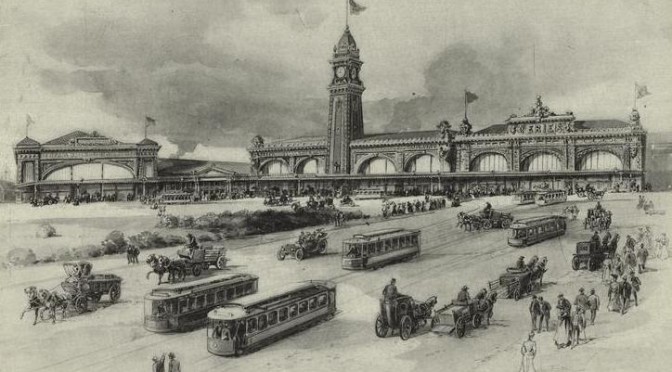
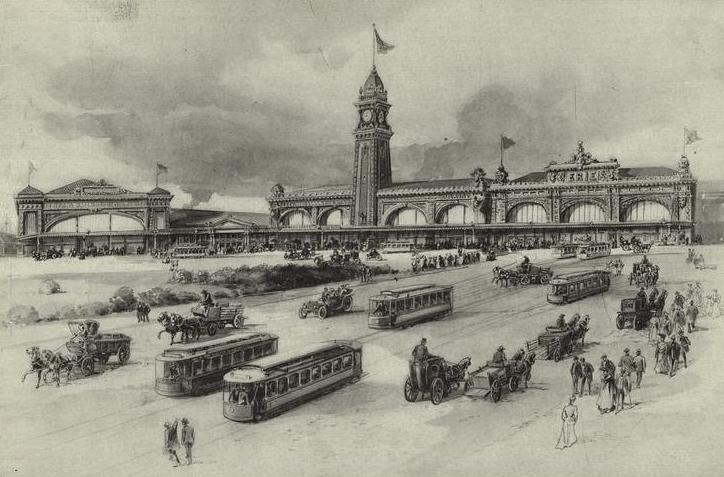
There were of course other pier structures running down the Hudson shoreline, many of them quite imposing such as this one at Pier 20 and 21 for the Erie Railroad Company at the foot of Chambers Street, picture taken in 1930.
Wurts Brothers, courtesy Museum of the City of New York
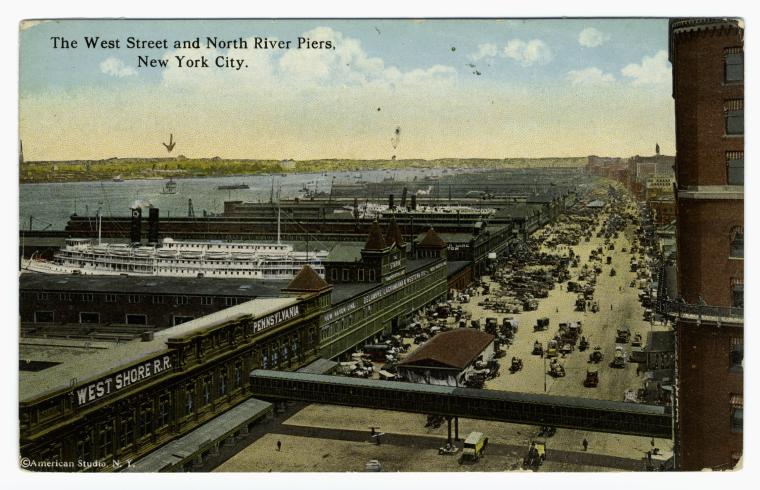
A photomechanical postcard of the piers further south of Chelsea Piers, 1916.
Courtesy New York Public Library
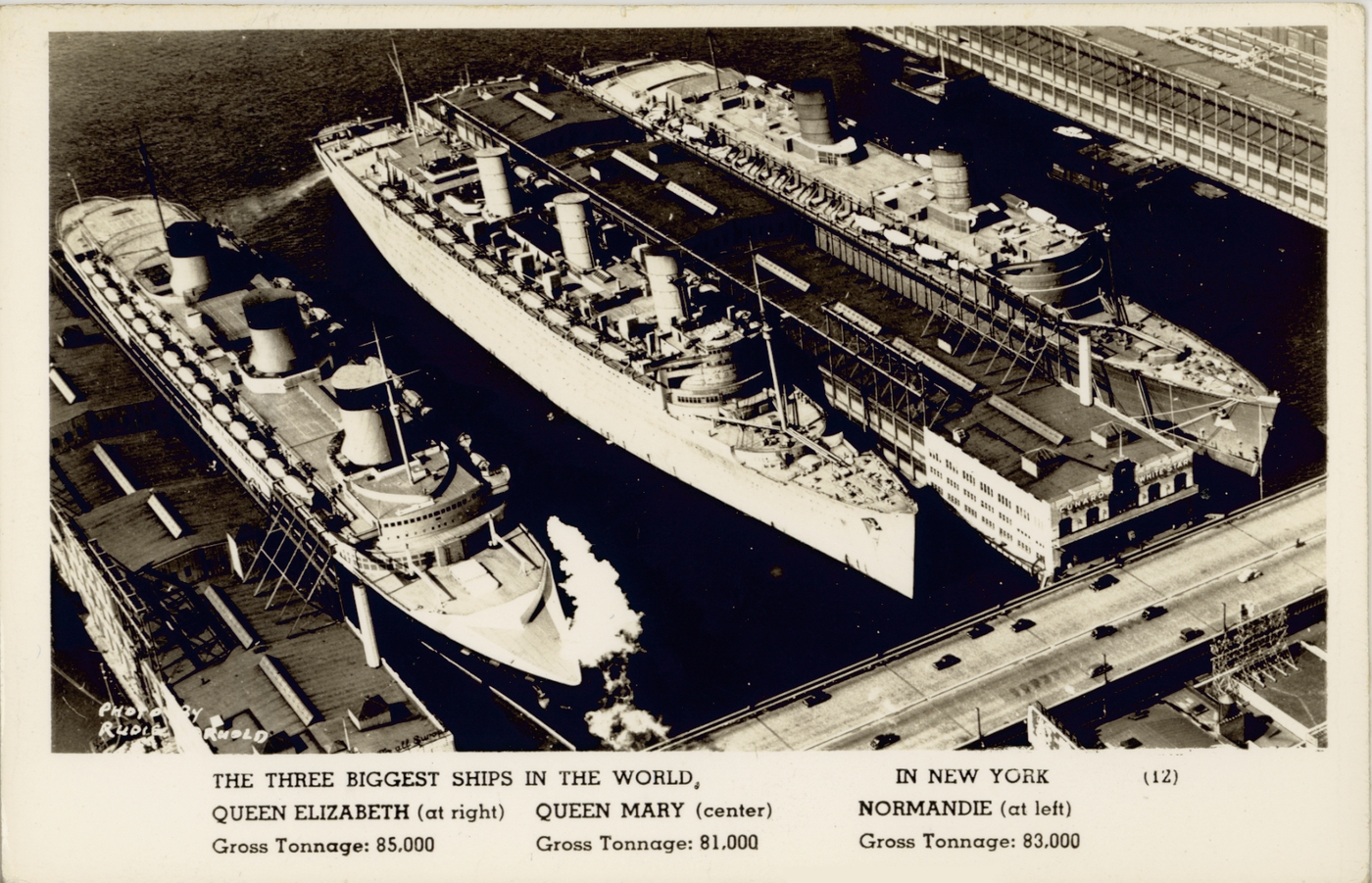
The three largest ships in the world in 1940, all docked in mid-Manhattan, not Chelsea Piers because it could not accommodate their size.
(Courtesy State Library of New South Wales)
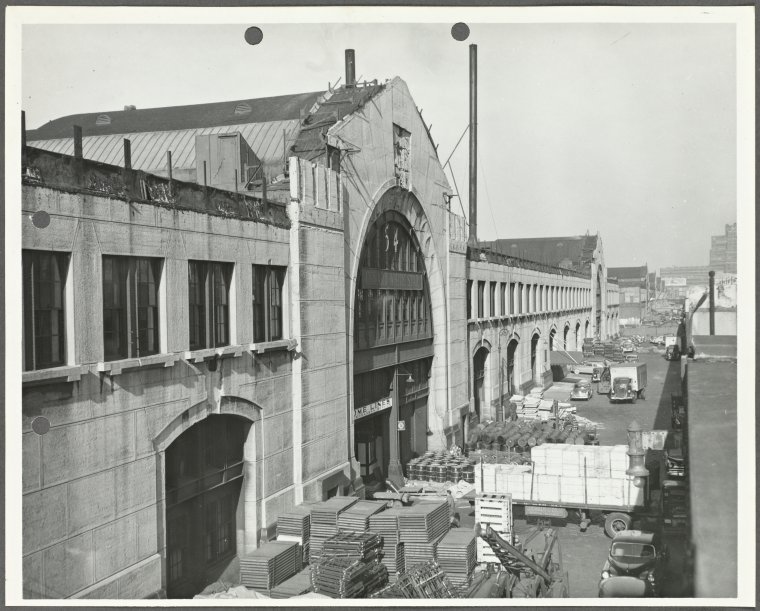
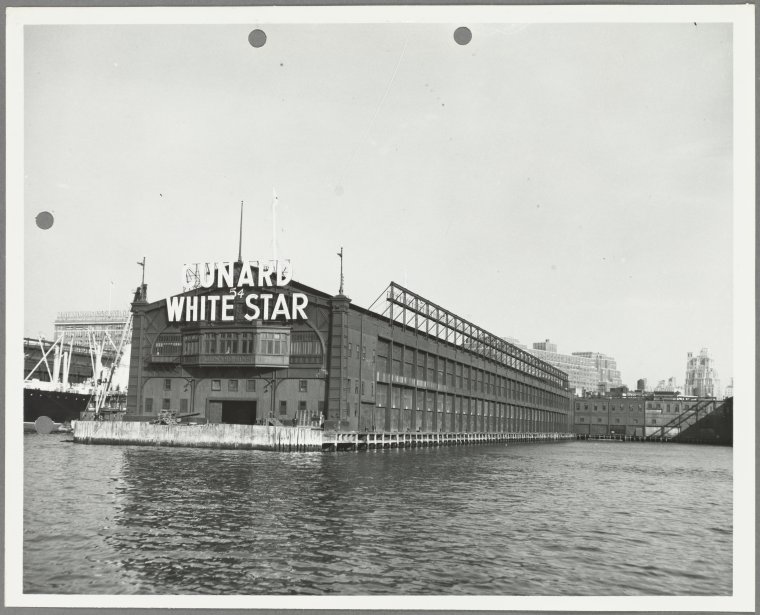
This is what Pier 54 looked like in 1951 after Cunard and White Star merged to become a single transatlantic company.
Courtesy New York Public Library
Courtesy New York Public Library
The piers of Washington Market in the 1970s. Most of the pier structures along the water had badly deteriorated by then.
Courtesy Andy Blair/Flickr
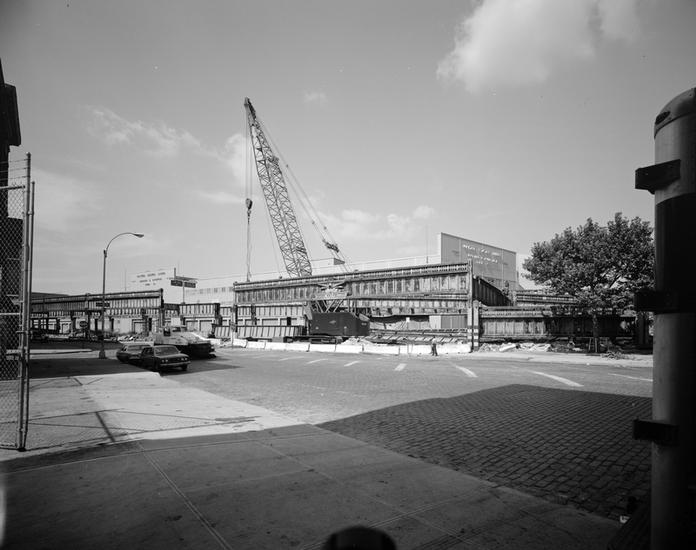
The Elevated West Side Highway being torn down in front of Pier 62. The area looks quite different today. In fact Pier 62 is part ofthe Hudson River Park system.
Photo by Edmund V. Gillon, courtesy the Museum of the City of New York
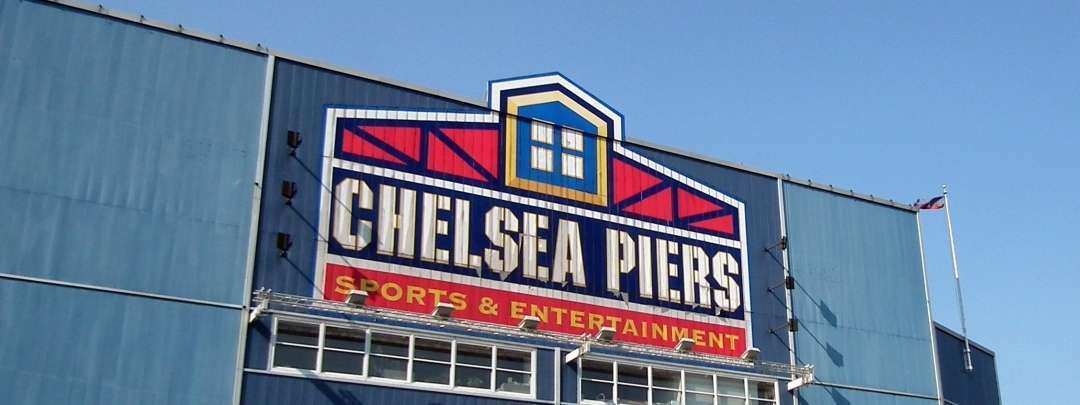
The Chelsea Piers sporting complex was constructed in the 1990s, saving a portion of the original Chelsea Piers from further deterioration. Although I think we can all agree the exterior could be a bit sexier.
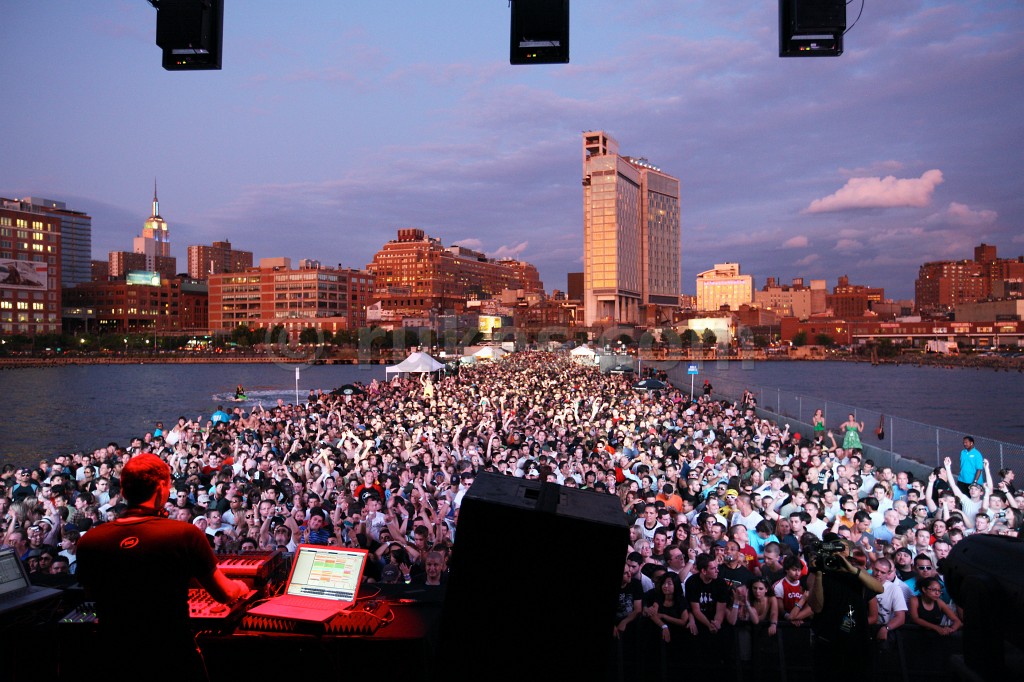
Meanwhile Pier 54 continues to find a variety of new uses. Here’s a dance party deejayed by Paul Van Dyk from 2008.
“To say that she [the ship] is flung down on her side in the waves, with her masts dipping into them, and that, springing up again, she rolls over on the other side, until a heavy sea strikes her with the noise of a hundred great guns, and hurls her back — that she stops, and staggers, and shivers, as though stunned, and then, with a violent throbbing of her heart, darts onwards like a monster goaded into madness, to be beaten down, and battered, and crushed, and leaped on by the angry sea — that thunder, lightening, hail, and rain, and wind, are all in fierce contention for the pastry — that every plant has its grown, every nail its shriek, and every drop of water in the great ocean its howling voice — is nothing. Â
To say that all is grand, and all appalling and horrible in the last degree is nothing. Words cannot express it. Thoughts cannot convey it. Only a dream can call it up again, in all its fury, rage and passion.“
This is in describing his voyage to the United States. Horrible, to be sure. But given the thousands of people who involuntarily traveled across the Atlantic in the decades earlier, and the wretched conditions they faced, it’s hard to be overly sympathetic to Mr. Dickens’ inconvenience!
They said the Lusitania couldn’t be sunk. The German telegrams to the contrary were merely cheap scare tactics. Besides, England will provide protection once in their heavily guarded waters. The boat is simply too big to sink. There are plenty of lifeboats, enough for the entire passenger list. Even those in steerage!
And the best one — there are Americans on board. Germany wouldn’t risk dragging her into war.
The excuses made by the passengers and crew of the Lusitania seem strikingly naive now, almost 100 years to that May 7th afternoon when the premier vessel of the Cunard fleet was taken down — by a single German torpedo — and brought to the bottom of the ocean in all of 18 minutes.
The deck of the Lusitania, 1905-07, courtesy SMU Central University
Dead Wake, the captivating new narrative non-fiction by Erik Larson, follows the tragic fate of the Lusitania from four sectors.
In England, a group of cryptoanalysts in shadowy Room 40 attempt to crack German messages as their U-boats began prowling through British-controlled waters. Meanwhile, President Woodrow Wilson, still mourning the loss of his wife, attempts to keep American neutrality intact in the face of growing threats.
But the two central perspectives are what grant Dead Wake its lurching, inevitable dread. And Larson switches between them like the dance of predator and prey in a nature documentary.
The Lusitania on one of its early voyages, 1906, courtesy Royal Museum Greenwich
In New York, docked at Chelsea Piers, passengers from all walks of life board the Lusitania, ready for leisure and occupied with trivial affairs of the day. The bookseller Charles Lauriat Jr. boards with a valise of valuable literary works.
Theodate Pope, the spirited, independent woman who’s clearly Larson’s favorite, hits the decks with her mysterious male companion Edwin Friend. A pregnant Bronx woman named Margaret Kay boards with her young son Robert, destined to get the measles. An entire family with the last name of Luck boards the ship, never a good sign in these kinds of books.
And then there’s the enigmatic Preston Prichard, a Canadian medical student described in such striking, beatific terms that it spells doom for him almost immediately.
Meanwhile, thousands of miles away, the other narrative course follows the U-20 submarine captained by Walther Schwieger, a stern and sometimes unforgiving man in charge of a lonely vessel cutting through the waters of the Irish Sea.
Submarine warfare was primitive by nature and callous by design. Captains gauged the success of a mission not by numbers of ships sunk, but the amount of tonnage destroyed. Human lives were lightly considered.
Sinking of the Lusitania, European postcard
Larson is best known for a certain flamboyant style of storytelling, meshing two or more sometimes unrelated story arcs to create a swelling crescendo of melodrama. His books bristle with energy even when artificially cultivated. His best known book, The Devil In the White City, works entirely because of this particular narrative mechanism, weaving together the tales of the Chicago World’s Fair and a ruthless serial killer
But in Dead Wake, it’s the inevitable confrontation between the Lusitania and the U-20 that drives the story, and Larson finely manages the tension.
He prefers to spend time with lesser known people aboard the Lusitania and barely looks at its most famous passengers — Alfred Gwynne Vanderbilt or the Broadway impresario Charles Frohman. Once the torpedo hits, you’re genuinely invested in situations all throughout the boat.
The book has a cinematic feel and comparisons with the film Titanic will surely be made. You can almost feel the urge to transform passengers like Pope or Prichard into the next Rose or Jack.
But the story never lapses into phoniness or boisterous, over-descriptive speculation for long. There are thankfully few of those artificial “she felt the wind in her hair” moments that hamper other narrative non-fiction book events. Larson is the master of this particular genre, and once the torpedo hits the ocean liner on that fateful May afternoon, he’s in full control of the story.
When you get to Dead Wake‘s halfway point, prepare to keep your afternoon open, because you won’t want to put it down.
Dead Wake: The Last Crossing of the Lusitania By Erik Larson Crown Publishers
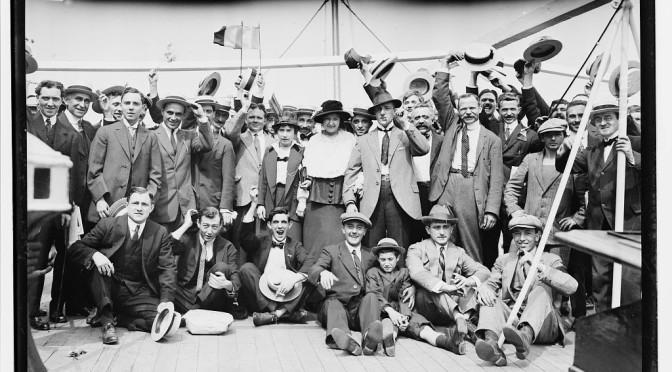
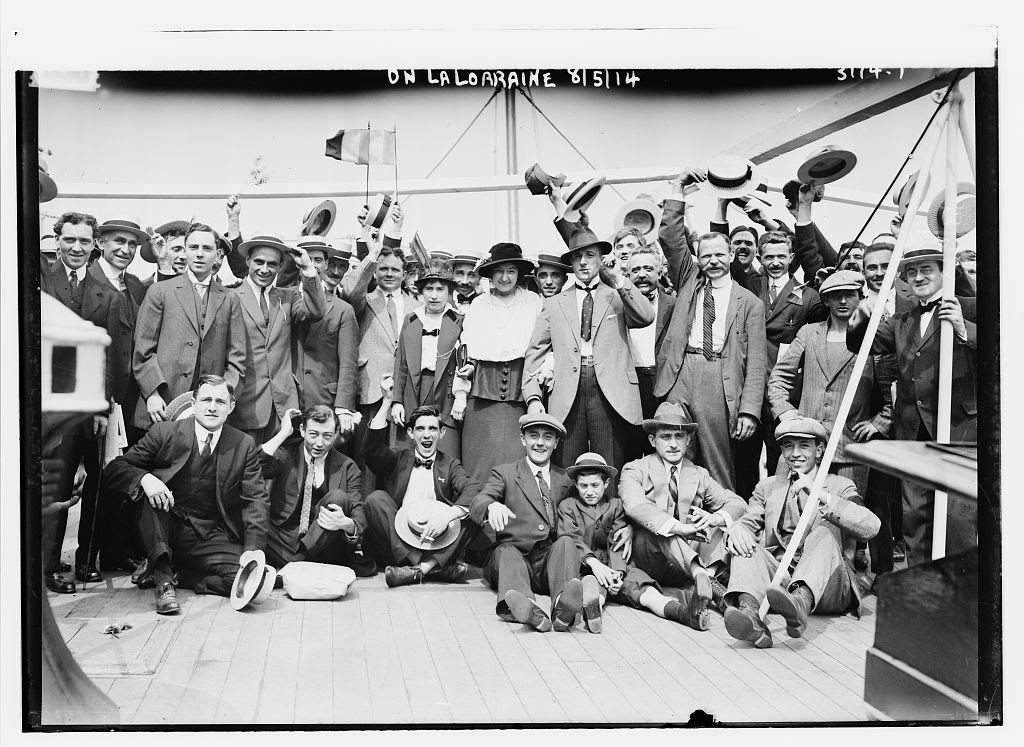
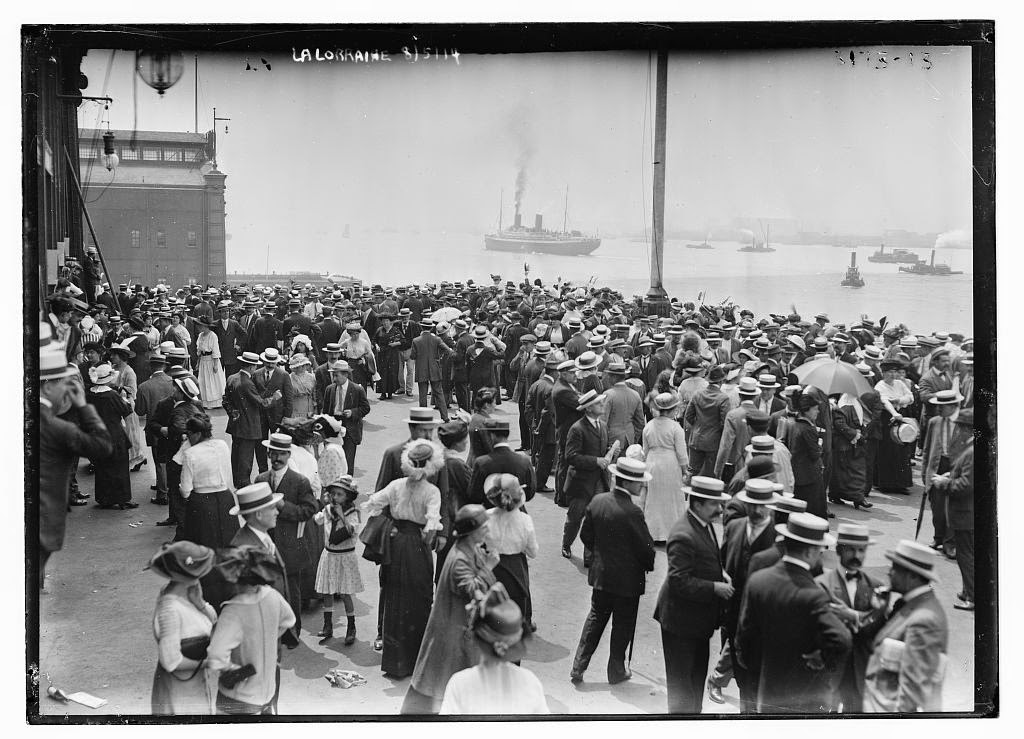
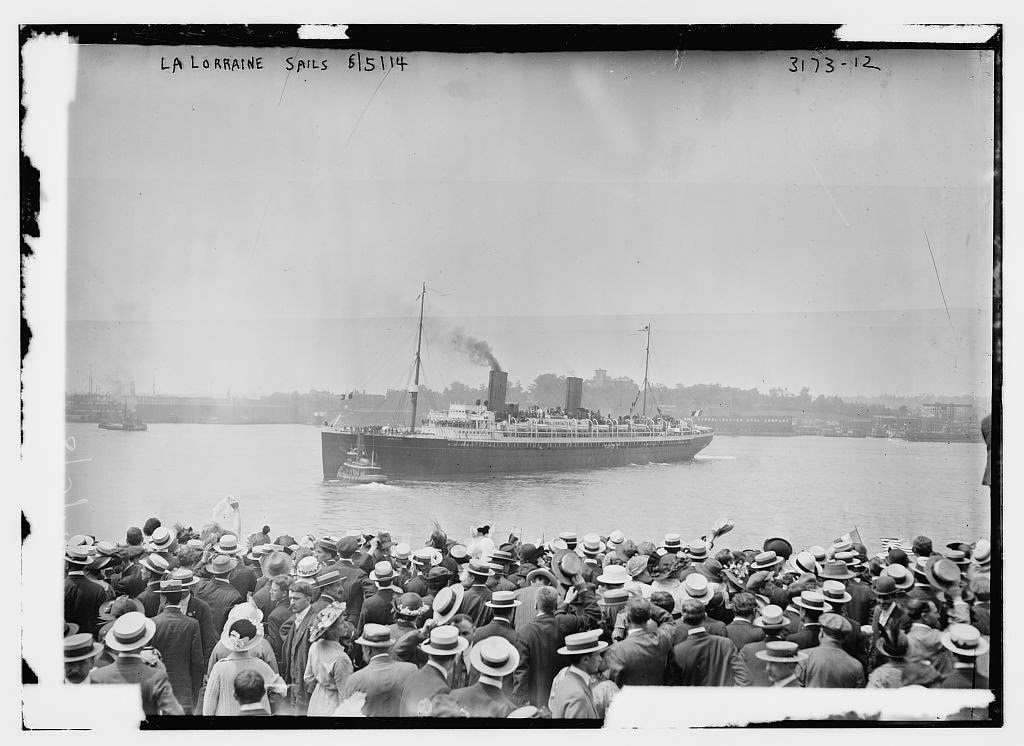
Men and women aboard La Lorraine, heading to France and the prospects of a grave war.
War was newly ablaze in Europe one hundred years ago today. A latticework of alliances was slowly drawing virtually country on the continent into a conflict which would rage for years and later become known as World War I. Austria-Hungary and Germany had already declared war on Russia one century ago, and within the week, France and Britain would join in.
The effect on the streets of New York City was immediate. Many had arrived from the warring countries via Ellis Island. A great many New Yorkers with strong ethnic and regional ties either to Germany or Russia lived alongside each other.
A great many wished to return home and fight for their countries. Many men were reservists for their respective countries and rushed to their consulates in New York to enlist. “Germans, Austrians and Hungarians paraded the streets singing the songs of their fatherlands,” said the New York Times. “The Russian, French and British reservists did not display their patriotism in the streets, but they registers it at their consulates and let it be known that they were eager to fight for their native land.”
On the morning of August 5, 1914, the French steamship La Lorraine — fatefully named for a region which would much later be a scene of great warfare — left the dock of New York City with over 10,000 people, not only French reservists heading home to reenlist, but many Americans who volunteered to serve alongside them. “Among the volunteers was an entire class of young engineer students from a school in Chester, Penn.”
“‘It made us all very grateful.’ said M. d’Anglade, the French Consul General, ‘for it made us think in offering their services to France these young Americas had remembered the Marquis de Lafayette.’ “ [source]
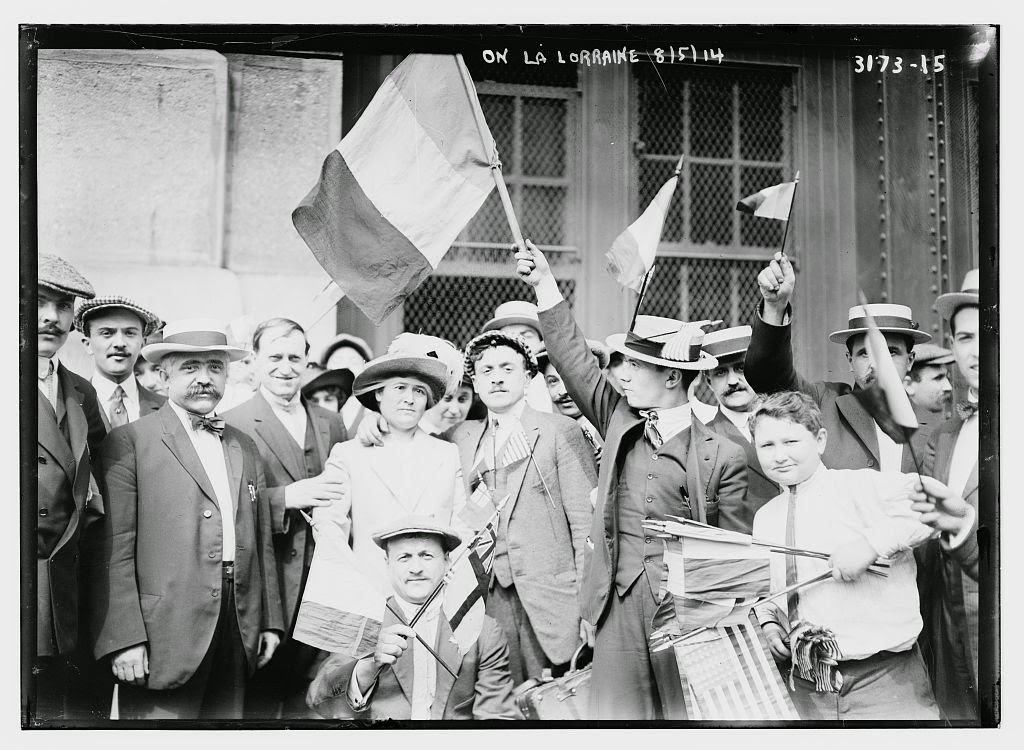
Even Mayor John Purroy Mitchel came by to wish the vessel a safe voyage. As the boat sat at dock, reservists and other patriotic men and women aboard the vessel began singing “Marseillaise,” their friends and loved ones at the dock joining them in song — “the loudest and most enthusiastic demonstration that had been made on the waterfront in many months.” [source]
This voyage, believe it or not, had a deep impact on New York restaurant culture. Aboard the ship were dozens of chefs, cooks and bakers, many employed by noted restauranteur Louis Mouquin, who tearfully bid adieu to his colleagues. “[H]e did not believe a French chef or waiter would be left in New York in another week,” said the Evening World.
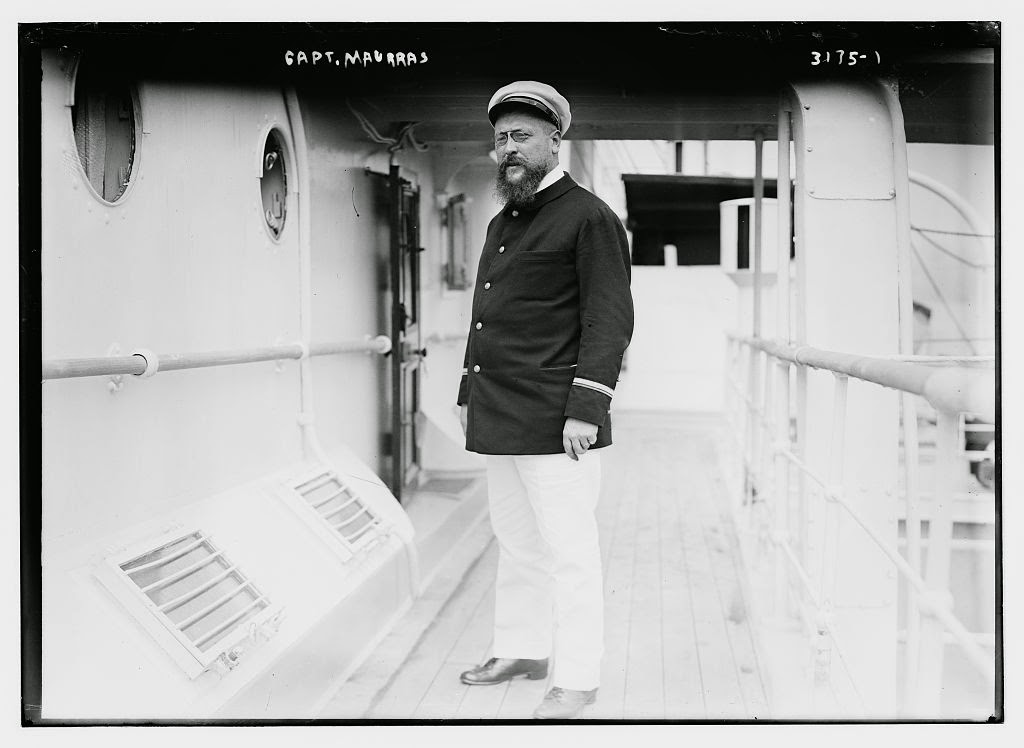
Here are some moving pictures of these French volunteer bidding farewell to New York. Many of them would never return. (Pictures courtesy Library of Congress)
Wheels converge: Motor buggies, horse drawn carriages and other conveyances glide and to and from the railroad terminal ferry station at West 23rd Street (i.e. Chelsea Piers) Pic courtesy NYPL
Tomorrow we begin our first official summer blockbuster: a set of several podcasts in a row, themed BOWERY BOYS ON THE GO. Every two weeks, we’ll be taking on the history of a certain aspect of New York City public transportation. Like always, the podcasts will be available every other Friday starting tomorrow. You can download them from iTunes, at other podcast services, and of course from links on this page.
Although the blog will be, as usual, quaintly all over the place, I’ll try and focus a bit more on some of the history tales that we won’t get to cover on the podcast.
So let’s start! As an introduction, I give you this educational filmreel from the 1940s, vaguely about the wonders of New York City transportation:
Our modest little series about some of the greatest, notorious, most important, even most useless, mayors of New York City. Other entrants in our mayoral survey can be found here.
Perhaps no mayor of New York City this side of Fiorello Laguardia has ever overseen so drastic a change to the landscape of the city than George B. McClellan Jr.
For six extraordinary years (1904-09) McClellan presided over the openings of the New York Public Library, Chelsea Piers, Grand Central Station, christened the first subway service and licensed the first taxi cab.
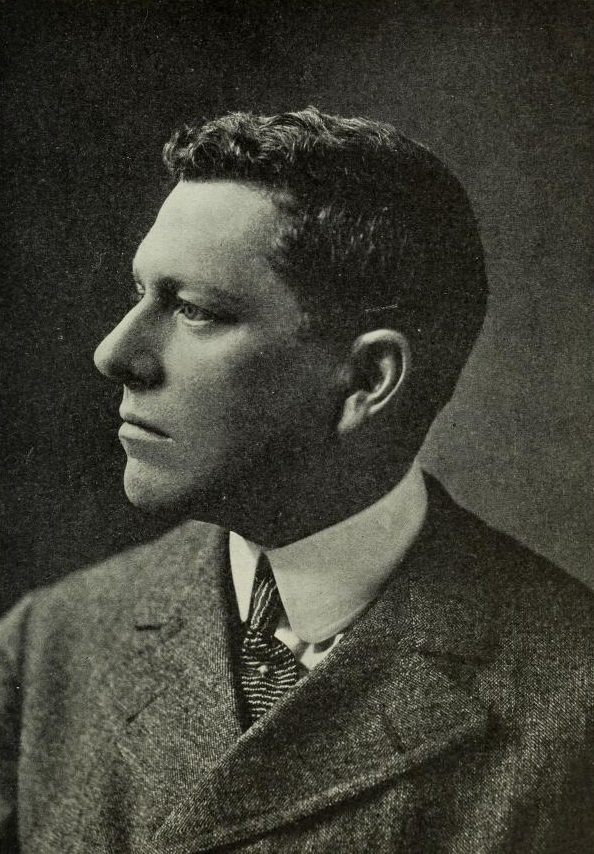
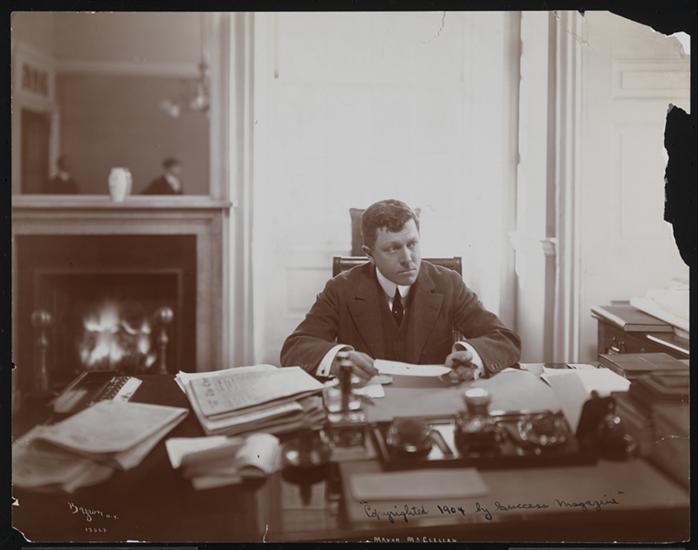
Below: Mayor McClellan in 1904, his first year in office
But oddly, George is perhaps best remembered today for his half-hearted but successful campaign against motion pictures.
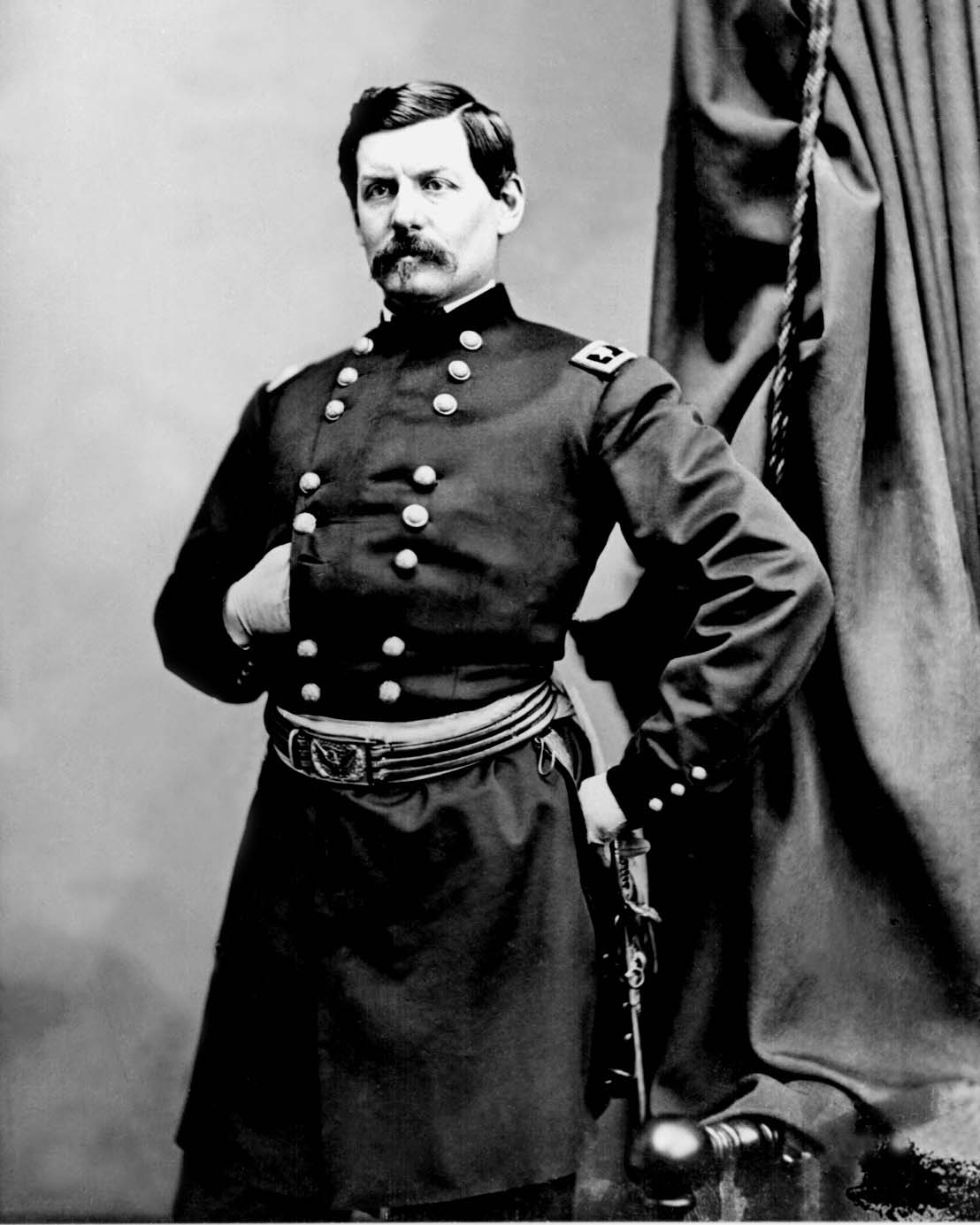
If his name sounds vaguely familiar, thank your high school history teacher. George Jr. was the son of the ultimately disastrous Civil War general of the same name, a Union general first fired by Lincoln, then defeated by him in the presidential election of 1864. Despite this, George McClellan Sr. did become the governor of New Jersey, providing his son with a model of leadership he would implant into his many civic duties.
Below: Papa McClellan
The dashing George Jr — or you can call him Max, his family did — is one of New York’s few foreign-born mayors, born in 1865 in Dresden, a few years before it was absorbed into Germany. Growing up in New Jersey while father governed, George graduated from Princeton in 1886 and a couple years later ended up as a writer for the revitalized New York World, Joseph Pulitzer‘s popular scandal sheet, in its brand new office on Newspaper Row — just across the street from George’s future office at City Hall.
Actually, George was mayor before he was really mayor. Name recognition and an inherited interest in public service placed him on the Board of Aldermen (precursor to the City Council) by the 1890s, and he was elected board president in 1893. The next year, due to an absence from the city by sitting mayor Thomas Gilroy, McClellan, age 29, became the acting leader for a month.
His biggest controversy? Raising on Irish flag over City Hall for St. Patricks Day, outraging local schoolboys. No, really. He even received threats of bodily harm, but held firm. Deal with it, he told the boys.
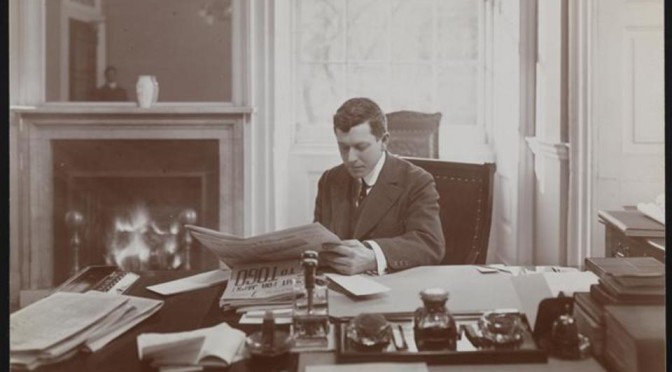
Mayor McClellan in his office, 1904 (Courtesy Museum of the City of New York)
Snugly in bed with Tammany Hall and a favorite of oleBoss Croker, McClellan spent the next several years representing New York in the U.S. House of Representatives. He returned to the New York scene in 1903 as a Tammany instrument to oust mayor Seth Low, a reform ‘clean-up’ mayor who may have irked more than a few tavern owners.
McClellan, with Tammany’s blind eye towards New York’s more lascivious industries, handily won. And would stay in office for six years, making him New York’s longest serving mayor since Richard Varick in 1789. (The man he beat for re-election in 1905? William Randolph Hearst.)
New York blossomed under McClellan’s reign, with many long boiling projects coming to fruition. One new bridge, the Williamsburg, opened under his watch with another (Manhattan Bridge) well on its way, he unveiled lofty plans to improved the city’s water system, and he gave Longacre Square a new name (Times Square). The Battery Maritime Terminal (built in 1906), that jade beauty next to the Staten Island ferry, is even dedicated to McClellan. New York Public Library was nearly completed — and Grand Central Terminal half-way done — by the end of his term.
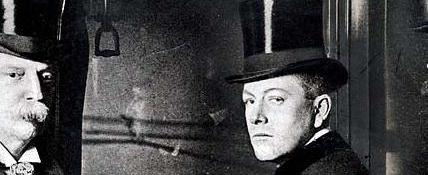
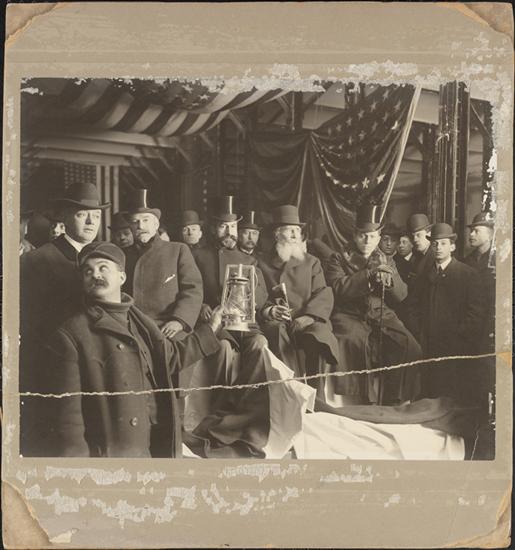
A picture in the new subway tunnels, Mr. McClellan looking very confident near the center right. (Museum of the City of New York)
An intrepid tale springs up about McClellan involving the grand opening of the IRT’s first subway tunnelin October 27, 1904. Meant only go ceremonially start up the engine of the first train, McClellen requested that he would like to actually go ahead and drive the train all the way up to Harlem! (And Bloomberg brags that he only rides the train.) He deftly steered the new engine up to 103rd Street before handing over the controls.
To me, McClellan’s biggest contribution is valuable indeed — overseeing the construction of the Chelsea Piers (below), which allowed massive steamships to dock in the city, turning New York into a truly international port. By 1907, in fact, the Lusitaniawas already at dock here, although the terminal wasn’t officially completed until 1910.
Yet with all of these remarkable changes, the story which arises the most about McClellan involves his war against a technological threat — the rise of cinema.
By 1905, the city had dozens of ‘movie houses’, nickelodeons and amusement arcades where patrons could pay a penny to see the birth of the motion picture. A theater owned by Marcus Loews, quickly to become the biggest name in film exhibition, opened in New York in 1904; the city got its own production company, Biograph, in 1906.
This new moving pictures craze was sweeping the United States — two million patrons in 1907, according to the Saturday Evening Post — and like everything foreign and new, it was soon seen as a corrupting influence, ‘demoralizing’ children, a bastard offspring of vaudeville and burlesque.
Some accounts have McClellan ardently opposed to this new medium on those grounds. I prefera more rational theory: by 1908, McClellan had his eye on a new job — president of Princeton University — and in order to get that, he had to be seen as sticking up for higher morals. (Something Tammany candidates aren’t exactly known for.)
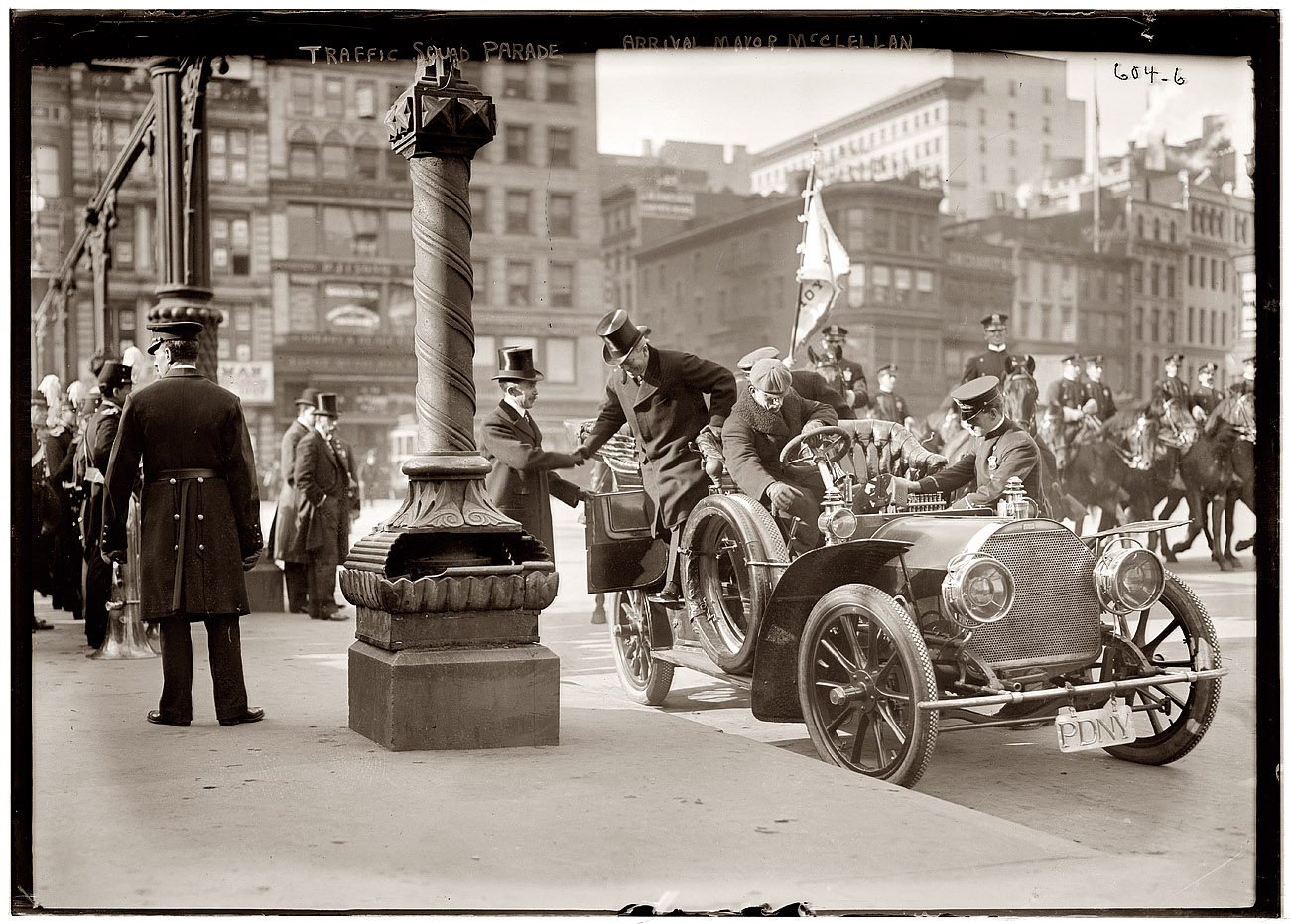
Below: McClellan steps from a newfangled automobile onto the streets of Union Square in 1908 (pic courtesy Shorpy)
And so, on the technicality of being dangerous fire hazards, McClellan tore up the licenses of over 550 motion picture exhibitors — yes, that’s right, 550. (Nickelodeons were in music halls, taverns, even a few restaurants.) Most were not reinstated until the debut of New York’s Board of Censorship in 1909, a reviewing board which ended up not censoring much of anything. By the 1910s, movie makers and theatre owners were becoming too powerful to overrule.
By why was McClellan looking for a new job in the first place? In 1908, he was not long for the mayor’s office. Like blessed as Tammany Hall golden boys, McClellan got a conscious in his second term, hiring many non-Tammany employees and rooting out a mountain of Tammany related corruption in civic offices.
This turncoat did not please new Tammany boss Charlie Murphy, no it didn’t. In 1909, Tammany put up their new contestant, the colorful William J. Gaynor. (Incidentally, he also beat William Randolph Hearst, in his second and final unsuccessful run at the office.)
McClellan never became the president of Princeton, but he spent his remaining years teaching there until 1931, when he retired to the good life, writing books about his real passion — the history of Venice. He died in 1940 in Washington DC and was buried in Arlington Cemetery.
But clearly, it’s to New York that he belong.
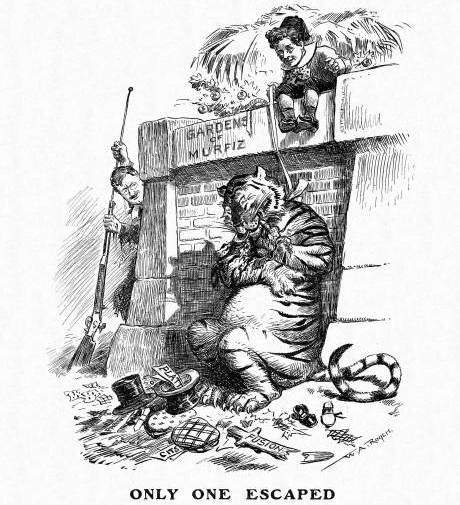
Below: in this 1905 Harpers Weekly cartoon, McClellan is seen as a little boy holding the Tammany tiger, devouring the ‘fusion candidate’ (Seth Low). President Theodore Roosevelt peeks from the side. (He always did like wildlife.) Within three years, McClellan would be the devoured.