Categories
American History

Terror Spree: Harvard professor bombs U.S. Capitol, shoots JP Morgan

In the early days of July 1915, the United States was preparing for a subdued celebration of America’s 139th Independence Day.

It was hardly a festive time. War was still raging in Europe, and America was debating its entry on the side of Britain, Italy and France.

The deaths of 128 Americans aboard the RMS Lusitania on May 7 had forced the U.S.’s hand, some thought. President Woodrow Wilson pressed Germany for an apology while not yet calling for war. His Secretary of State William Jennings Bryan thought even that too harsh; he resigned in protest from Wilson’s cabinet in June.

The headlines were dire as it seemed the entire world would soon be caught in the maelstrom of the Great War.

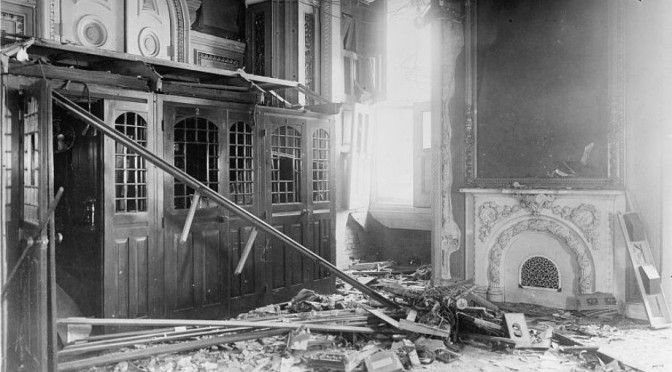
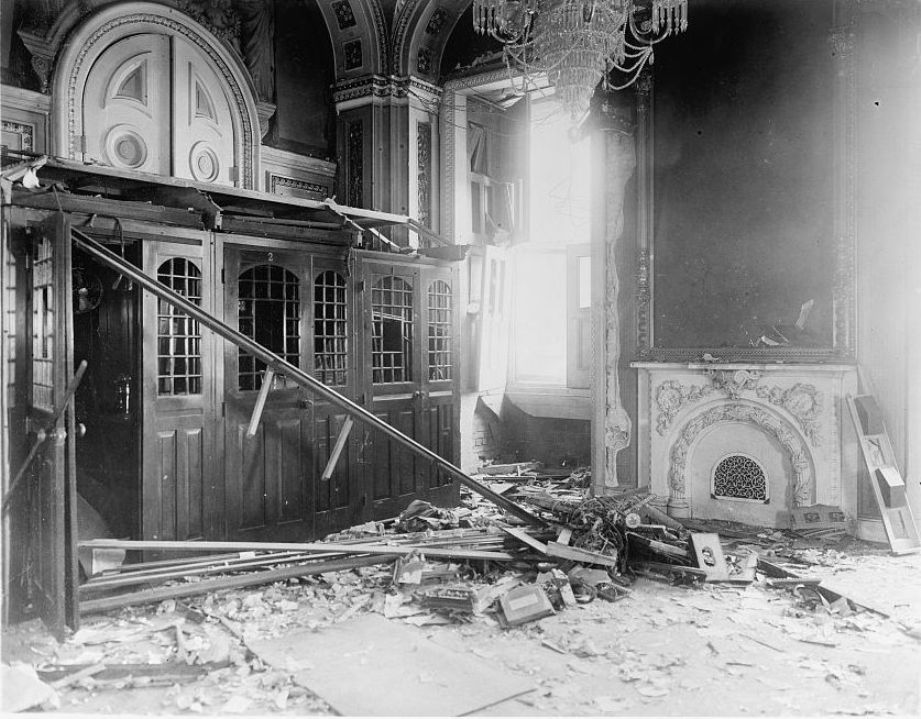
And then, right before midnight, July 2, 1915, a bomb went off at the U.S. Capitol building in Washington, D.C.

It exploded in an empty reception area. “The explosion was a loud one and shook the entire building, breaking transoms and shattering plastering, ” said the Sun. Windows and mirrors were smashed, but the only bodily harm it caused was throwing a watchman from his chair.

The Sun: “Some persons in the crowd which had gathered around the Capitol were inclined to believe that the bomb had been placed by some war fanatic as an act of resentment against the United States government.”

Below: The Capitol reception room after the explosion
1
Courtesy Library of Congress

They were right. And Eric Muenter wasn’t done.

Before newspaper readers in New York City would find out about the bombing, its instigator would have already arrived in their city, with a roster of further crimes on his mind.

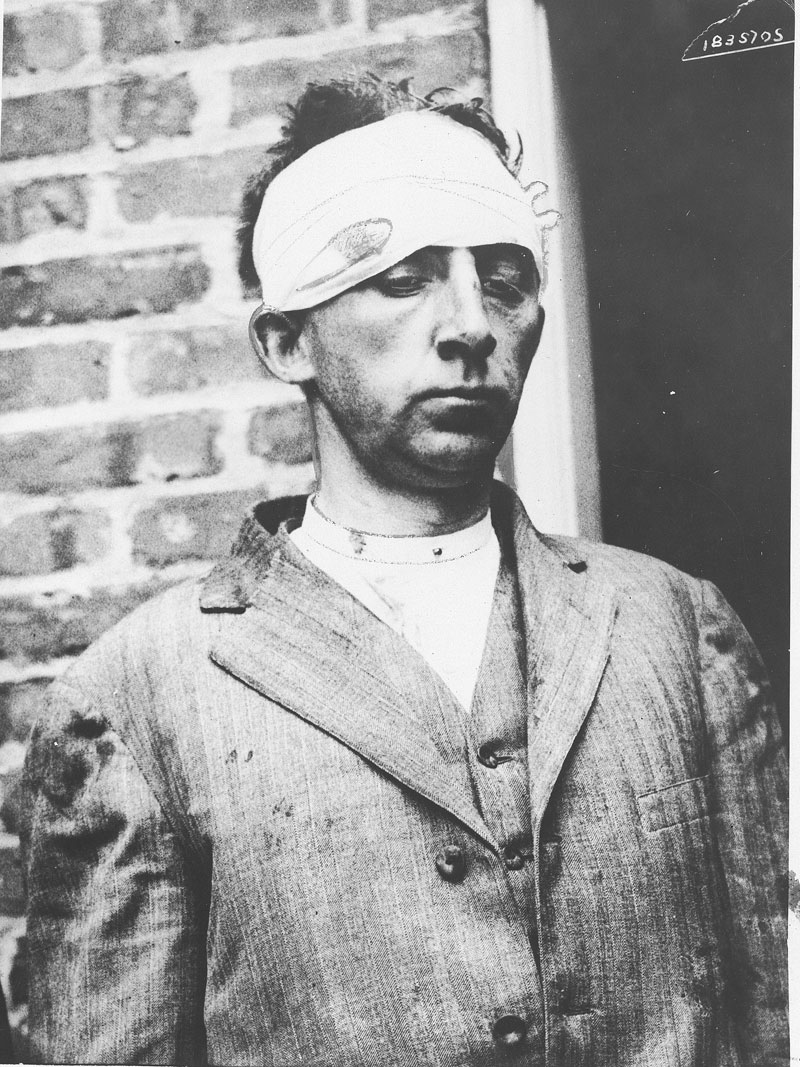
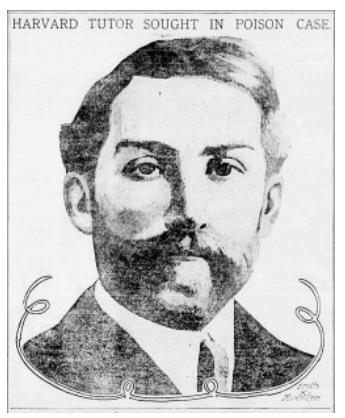
Muenter (pictured below), a former professor at Harvard University*, was a German sympathizer angered at American intervention in the war. He spread his vitriol wide, preparing to target private businessmen personally funding war efforts.  In fact targeting one of America’s most wealthy financiers — JP Morgan Jr.

Below: Muenter after he was captured
4502797-4840111722-cover

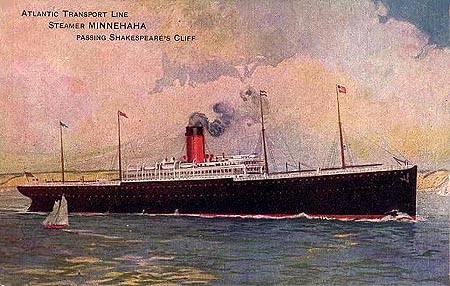
Following his sabotage at the Capitol, Muenter fled to New York on the morning of July 3 to wreak further chaos. He had a makeshift headquarters at the Mills Hotel (Seventh Avenue and 36th Street) where he had stored dozens of sticks of dynamite and fuses. At the port of New York, he managed to sneak aboard the SS Minnehana, an ocean liner filled with explosives destined for England, and install a time bomb to detonate once the ship was at sea.
Minnehaha-01
Courtesy Library of Congress

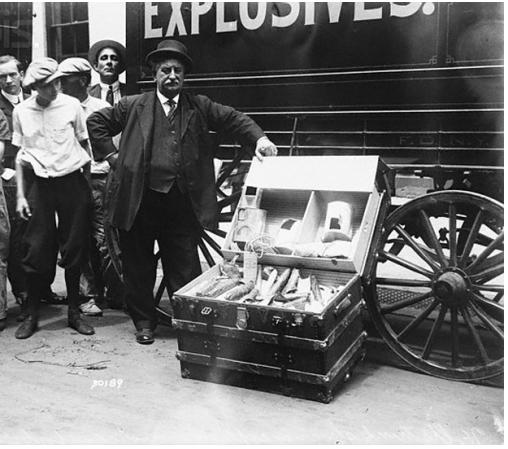
It’s at this time that a similar time bomb was placed at New York Police Headquarters at 240 Centre Street. The device here was later believed to be from the same batch of dynamite as Muenter’s. If he was involved, you have to admit he was incredibly efficient with his time, for by 8 am, he had boarded a train, headed to Glen Cove, Long Island.

Below: New York’s Inspector of Combustibles with Muenter’s steamer trunk filled with dynamite. (Courtesy Glen Cove Heritage)
Courtesy Glen Cove Heritage

JP Morgan Jr. had been in control of his father’s banking empire since the elder’s death in 1913. The son embodied America’s involvement in the Great War in the years before the U.S.’s official entry. He facilitated an unprecedented loan of 500 million dollars to the Allied countries, backed by a consortium of over 2,000 American banks.  The loans would soon grow to almost 3 billion dollars.

This made the financier both a symbol of American beneficence for some and a target of unwanted intervention for others. New York was a great stew of European diversity in the 1910s, and the far-away war often played out in the streets of New York, especially in German communities.

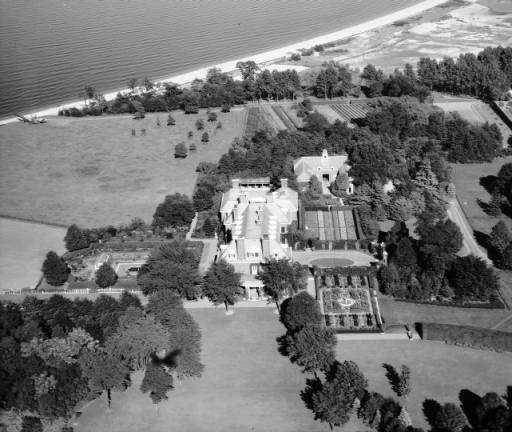
Morgan Jr had his recently-built summer home in Glen Cove, a palatial manor called Matinecock Point (pictured below). This was Muenter’s destination.

The assailant arrived, armed with two revolvers and a set of dynamite in his pocket, during an opportune breakfast meeting; the Morgans just happened to be entertaining the British ambassador Sir Cecil Spring-Rice.
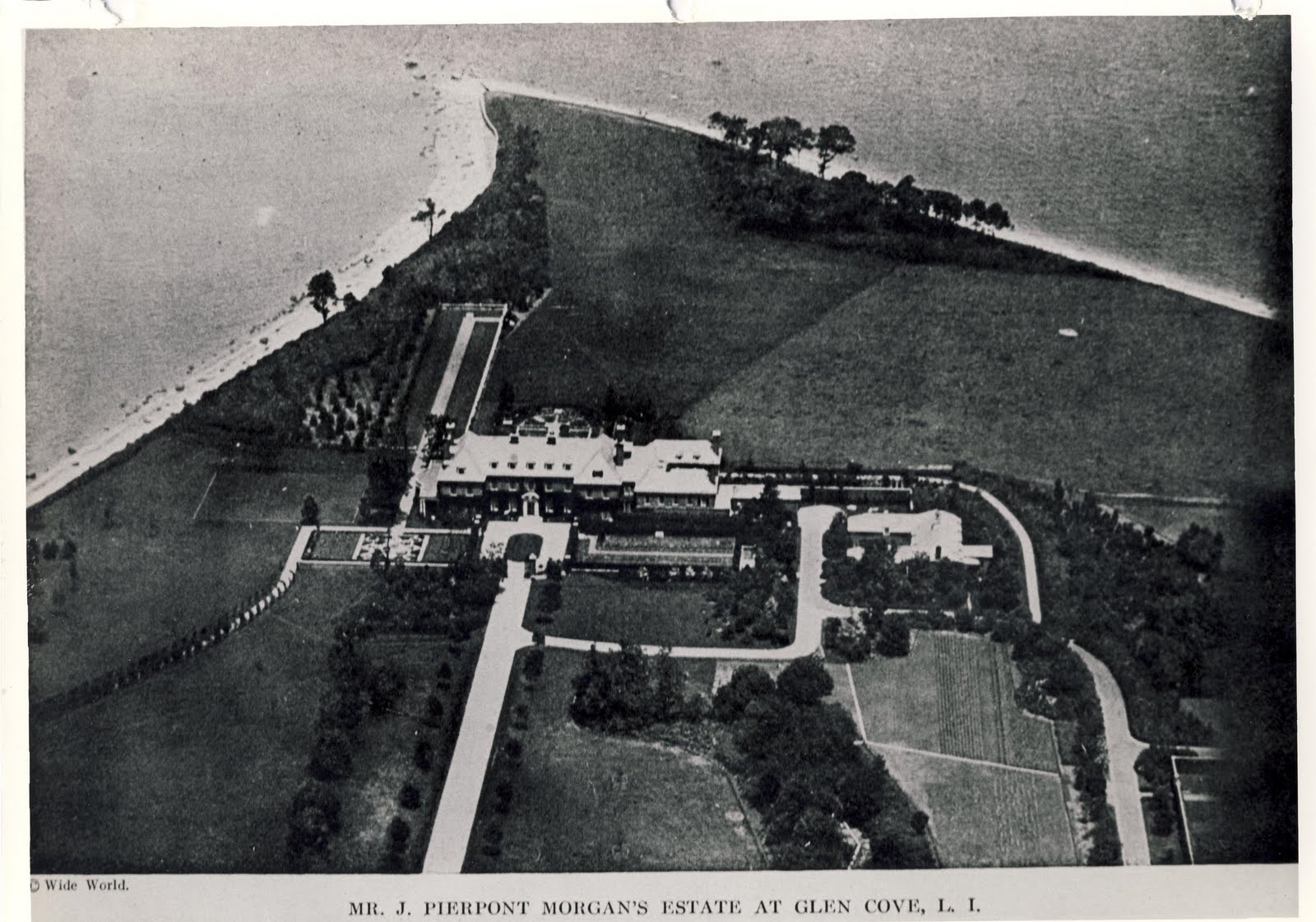
Courtesy American Homes of Today, 1924

At the door, Muenter pulled a gun on Morgan’s butler who, quickly thinking, directed the intruder down an opposite hall then shouted in the other direction for the Morgans to hide.  The family scattered throughout the house.

Eventually, for the safety of their children, the Morgans did appear at the second floor landing and lured Muenter to them.

“Now Mr. Morgan I have got you.” he said reportedly.

His wife Jane attempted to leap in front of the gunman but was harshly shoved out of the way.  Muenter then shot Morgan twice and prepared to fire again from the second pistol.

Fortunately Morgan had actually fallen into the gunman, pinning him to the floor. This allowed time for Mrs. Morgan and the children’s elderly nurse to finally apprehend the shooter. The fact that Spring-Rice, the British ambassador, also personally assisted in the capture of the shooter seems especially notable.

His plan thwarted, Muenter reportedly exclaimed, “Kill me! Kill me now! I don’t want to live any more. I have been in a perfect hell for the last six months on account of the European war.”
eric

Originally giving his names as Frank Holt, it was soon discovered that the assailant was in fact Muenter, the former Harvard professor.  In 1906, he was accused of poisoning his pregnant wife. Most likely, he did indeed kill her, for he disappeared from campus, changing his name to avoid arrest and had apparently spent years cultivating this new identity.

Once in custody on Long Island, Muenter spilled the beans. “I wanted to attract the attentions of the country to the outrages being committed by those who are sending the munitions of war to the Allies.” [source]
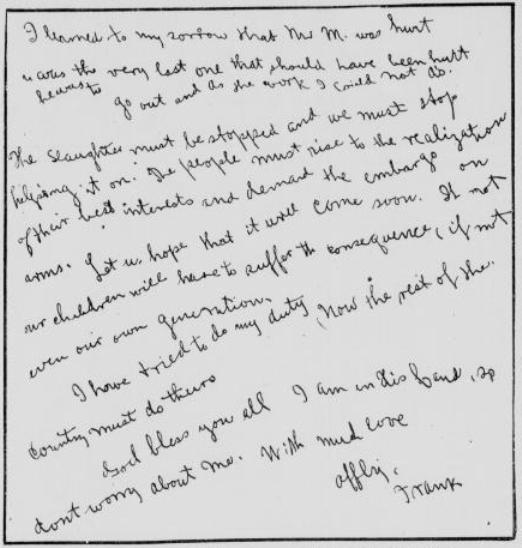
letter

Below is a fragment of a letter Muenter wrote to his father-in-law while in custody. “I learned to my sorrow that Mrs. M[organ] was hurt,” it begins.

On July 5th the explosion at New York Police Headquarters went off, following another explosion at the home of Andrew Carnegie. Nobody was hurt in these blasts. These similar explosions were later declared unrelated to the Muenter incident itself, but it grimly reinforces the danger New Yorkers faced during wartime, even so far away from the battlefields.

Morgan quickly recovered from his injuries although the attack had a chilling effect among the residents of Long Island’s Gold Coast. Security was quickly beefed up at Matinecock Point and at the estates of other wealthy financiers associated with the Morgan bank loan.

Below: Muenter in custody
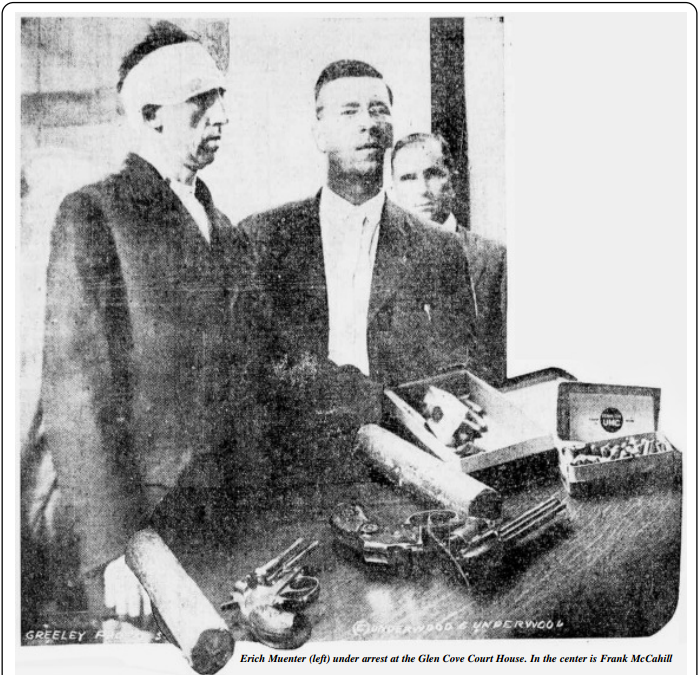
Muenter

On the evening of July 6, Muenter leaped to his death from his cell at Nassau County jail in Mineola. While it was but a short drop, he had jumped head first, crushing his skull.

The death was so bizarre and sudden — it actually made a loud, deafening thud — that investigators initially believed that he had placed a blasting cap in his teeth to hasten his demise.

But the reign of terror wasn’t over. The time bomb that Muenter had placed aboard the SS Minnehaha did eventually explode while the ship was in the Atlantic. While it caught the ship ablaze, fortunately the ship was able to reroute to Halifax, and the fire was safely put out.
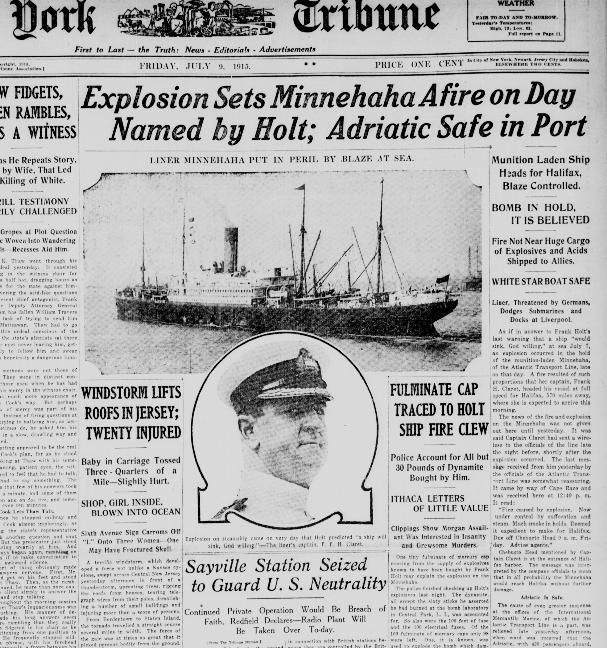
4

For more information on this spellbinding case, I highly recommend this excellent write-up by Daniel E. Russell for Glen Cove Heritage.

NOTE: Original version of this story featured the mugshot of another bomber Alexander Burkman. It’s been corrected to include the proper mugshot.

*Press reports initially thought he was from Cornell.

Originally published July 2 2015
Categories
Landmarks Politics and Protest Preservation

Federal Hall: Now and Always An American National Treasure

Federal Hall National Memorial, currently administered by the National Park Service, has always been a popular landmark with tourists thanks to its position on one of the most photographed intersections in New York. Who can resist that noble statue of George Washington silently meditating on the financial juggernaut of Wall Street?

In 2015 Federal Hall was officially named an official American National Treasure, part of the ongoing Saving Places program by National Trust for Historic Preservation calling attention to endangered landmarks of national significance. (The following article was originally posted that year in honor.)
It joins an impressive hodgepodge of local landmarks such as South Street Seaport, the Lower East Side Tenement Museum and the Whitney Studio.

While this sounds like a distinction that might pique the interest of Nicolas Cage — after all, he broke into Trinity Church up the street in the first National Treasure film — the National Treasure program gives a boost to historic places that may be otherwise neglected or under-appreciated. When’s the last time you were there?

Here are a few facts about the history of Federal Hall that you may not have known:

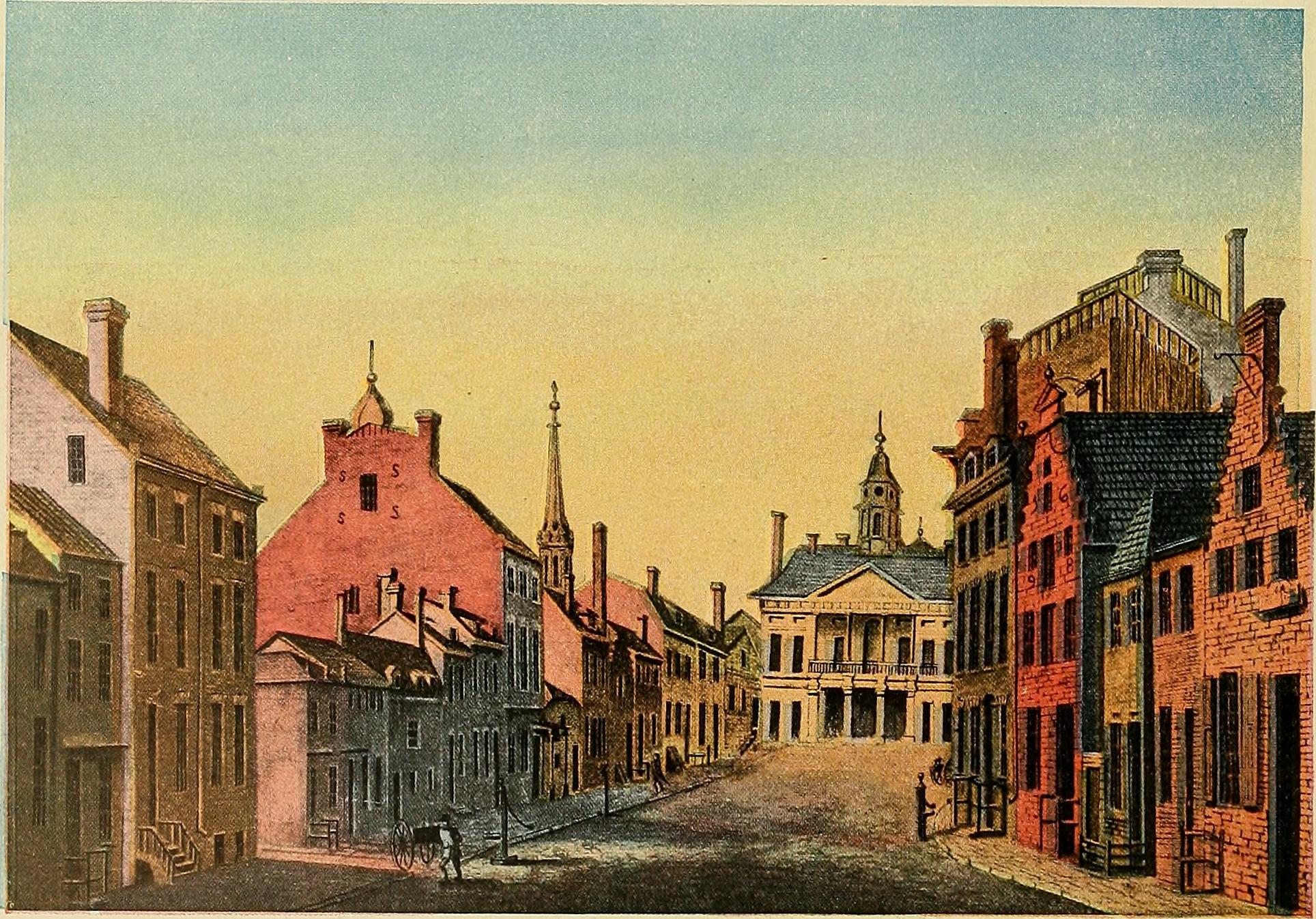
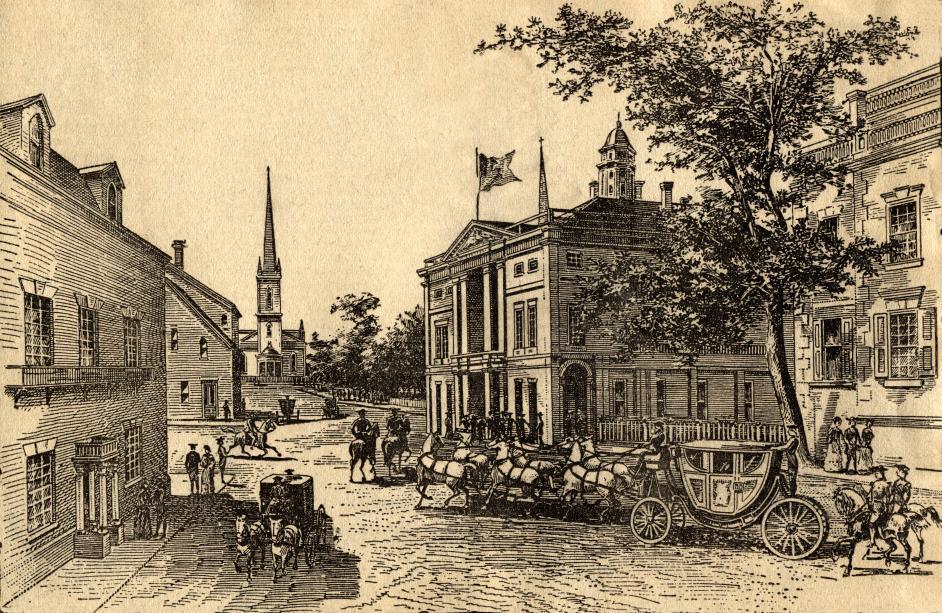
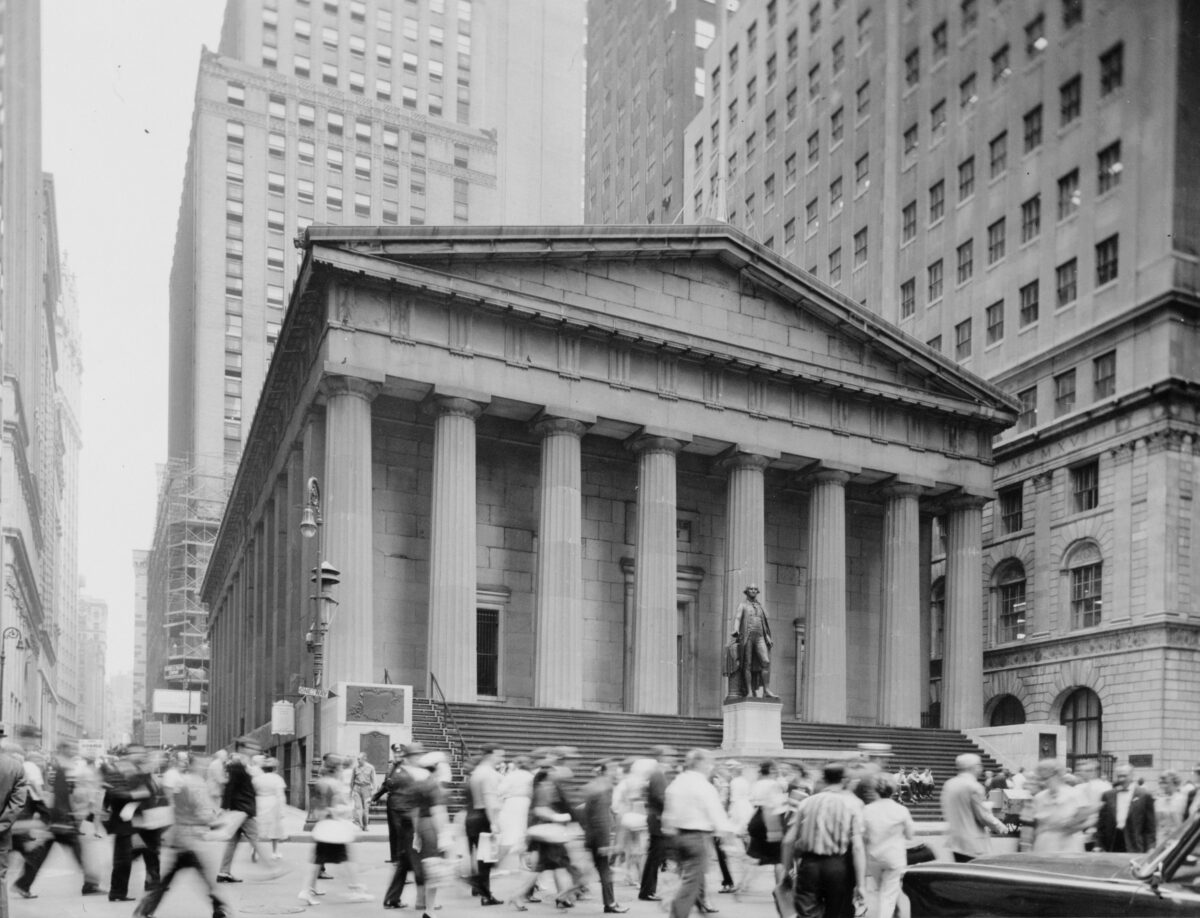
1. This isn’t the real Federal Hall The original structure was built in 1699, built by the British who used materials from the city’s demolished north defense wall — aka the wall of Wall Street — to construct it. It was the center of most governmental functions, from city administration to later federal functions.

5
2. That Federal Hall was remodeled by a controversial architect. Pierre Charles L’Enfant, a successful city contractor and former Continental Army engineer redesigned the structure in time for its use as the first national capital.

According to David McCullough, it was the first building in America designed to exalt the national spirit, in what would come to be known as the Federal style. Lâ’Enfant would later work on the creation of Washington DC from Maryland swampland and be fired from that project by George Washington.

Courtesy Nationaal Archief

Courtesy Nationaal Archive

3. George Washington was first inaugurated here on April 30, 1789. The King James bible he was sworn in with — property of a New York Freemason lodge — is still at Federal Hall.

4. The original Federal Hall was torn down in 1812 when city administration moved to the new City Hall.  Its materials were sold off to make other buildings in the city.

Below: Wall Street in 1825 without a Federal Hall, either old or new!
New_York,_Wall_Street_1825

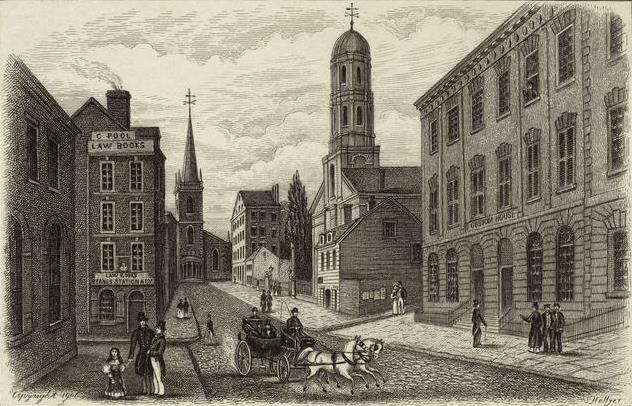
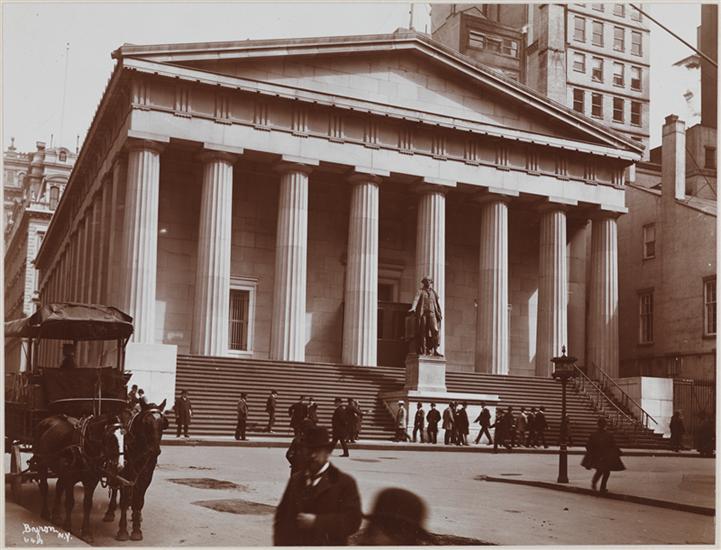
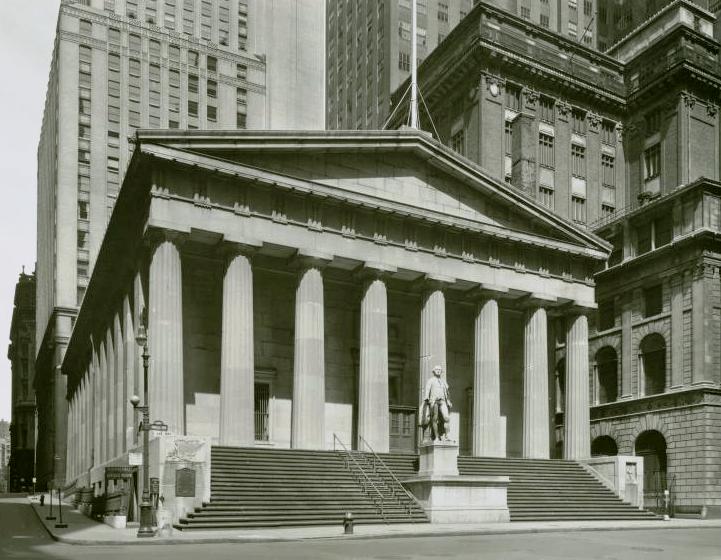
5. The current Federal Hall is actually the original U.S. Custom House which opened in 1842, replacing a structure used for that purpose at 22-24 Wall Street.

Courtesy Museum of the City of New York

6. The offices of the Custom House again moved in 1855, and the building was used as the U.S. Sub-Treasury building. In 1913 it became the first place in New York to buy the original buffalo nickel.

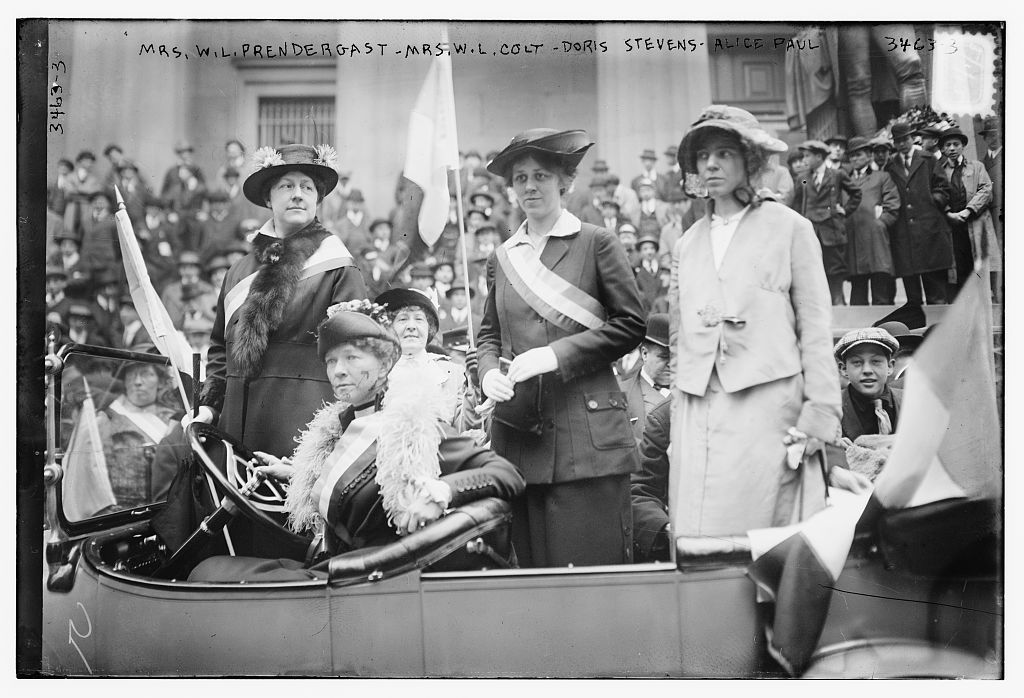
Below: Suffrage proponents Mrs. W.L. Prendergast, Mrs. W.L. Colt, Doris Stevens, Alice Paul stop in front of Federal Hall

Courtesy Library of Congress

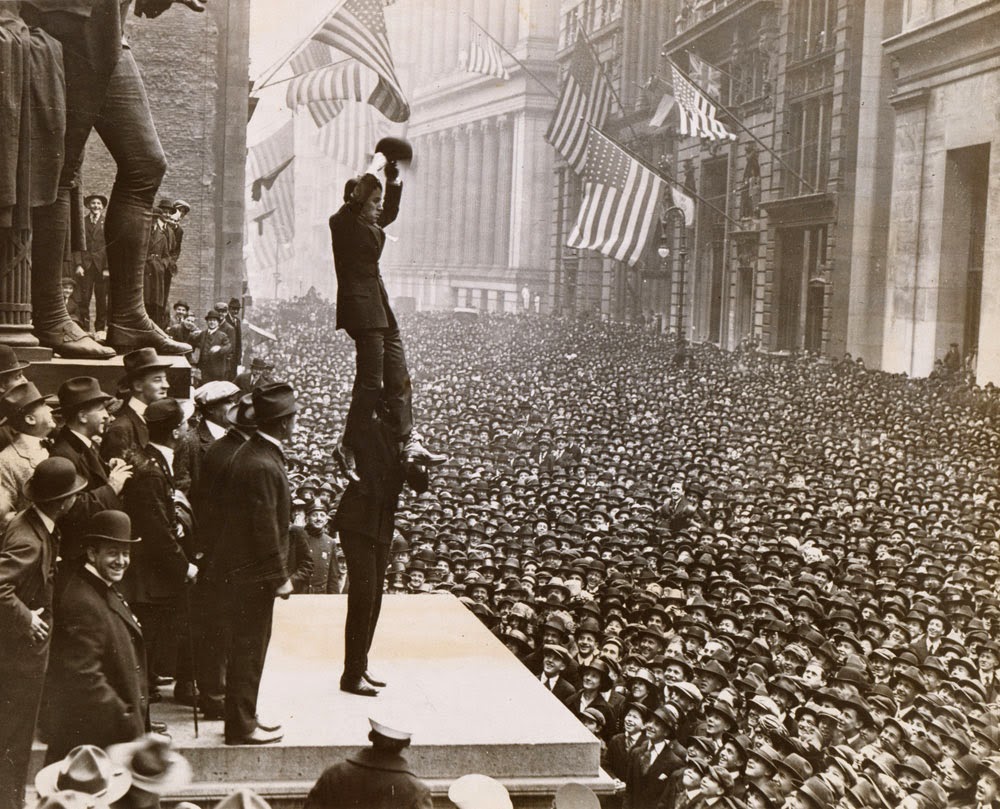
7. In 1918 Charlie Chaplin and Douglas Fairbanks famously drew thousands to the steps of Federal Hall to promote the sale of war bonds. Later that year doughnuts were auctioned off from its steps as a war fund-raiser.

129

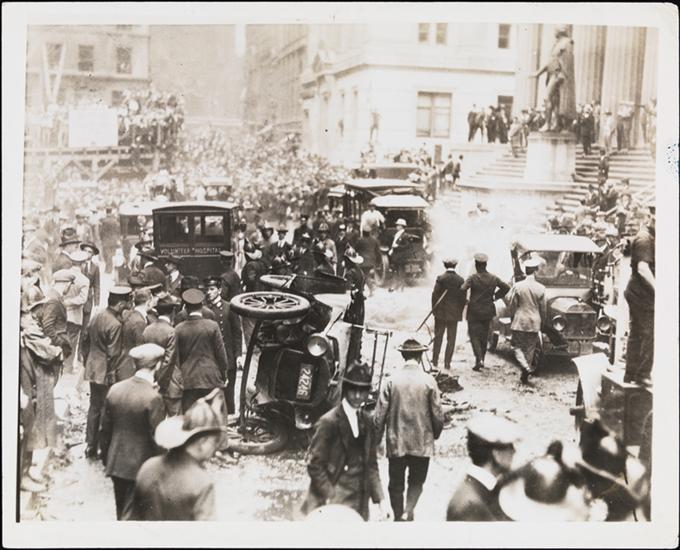
8. In 1920 a wagon full of dynamite exploded across the street from the Sub-Treasury, killing 38 people in what is today still an unsolved mystery.

Courtesy Museum of the City of New York

9. The Sub-Treasury had moved out by the 1930s, and the building was officially re-opened as the Federal Hall Memorial Museum in January 1940. It was inspired in part by America’s celebration of the 150th anniversary of Washington’s inauguration. The 1939-40 World’s Fair presented a replica of the original Federal Hall even after an earlier version of Federal Hall in Bryant Park failed to attract visitors. 

Courtesy New York Public Library

10. Federal Hall received a massive renovation in 2006 after the collapse of the World Trade Center in 2001 weakened the foundations of the building.

Check out the official announcement at the website for the National Trust for Historic Preservation.

Top image by the Wurts Brothers, taken in 1908. Courtesy Museum of the City of New York

Categories
Podcasts Wartime New York

Danger in the Harbor: World War I and the Black Tom Explosion of 1916

PODCAST The tale of the Black Tom Explosion which sent shrapnel into the Statue of Liberty and rocked the region around New York harbor.

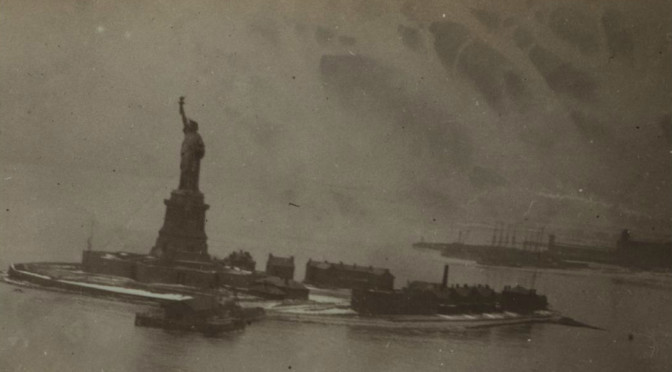
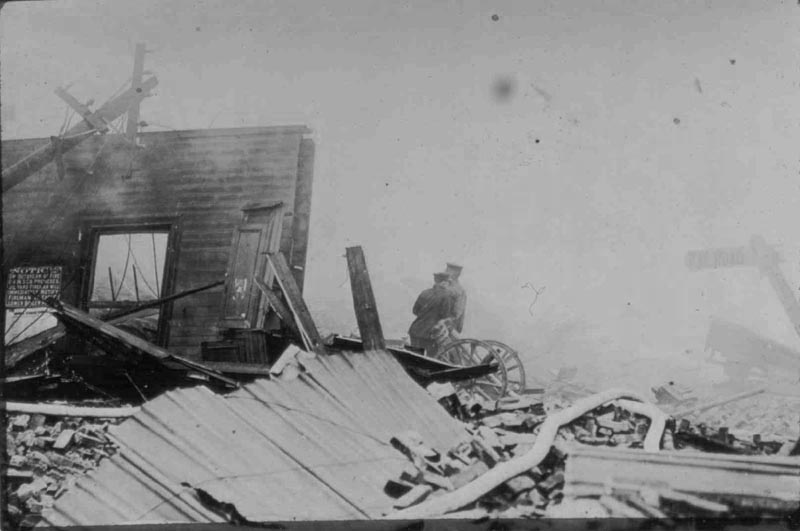
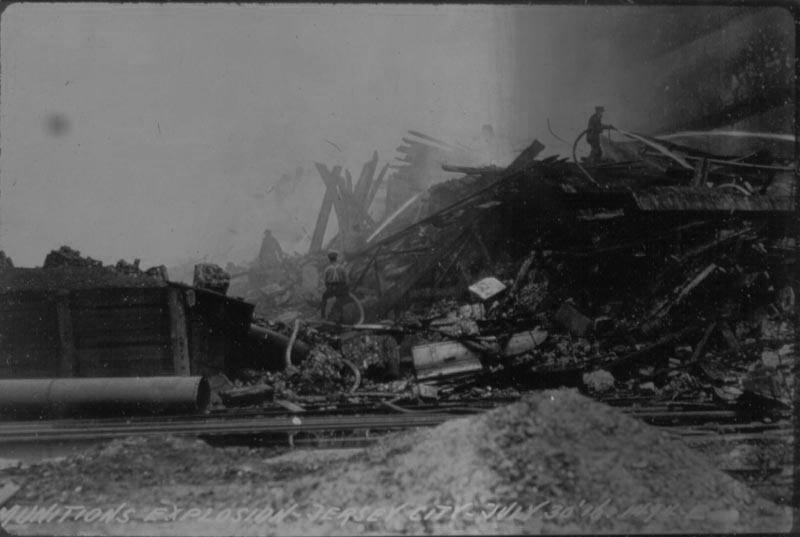
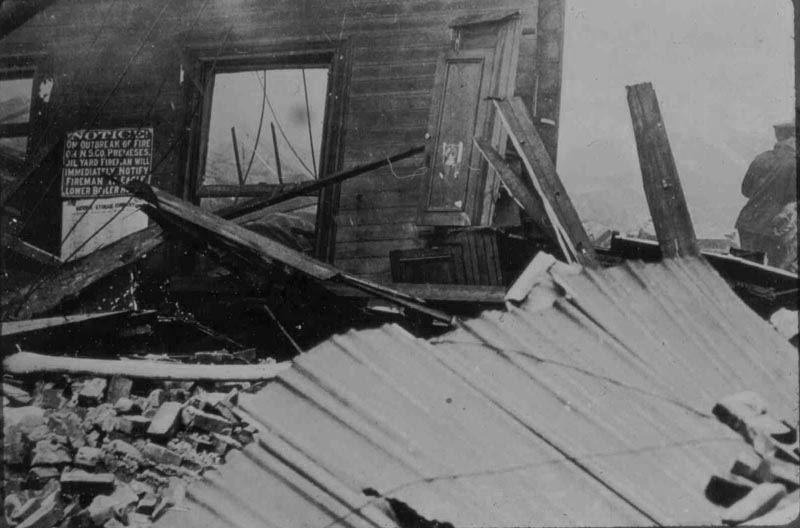
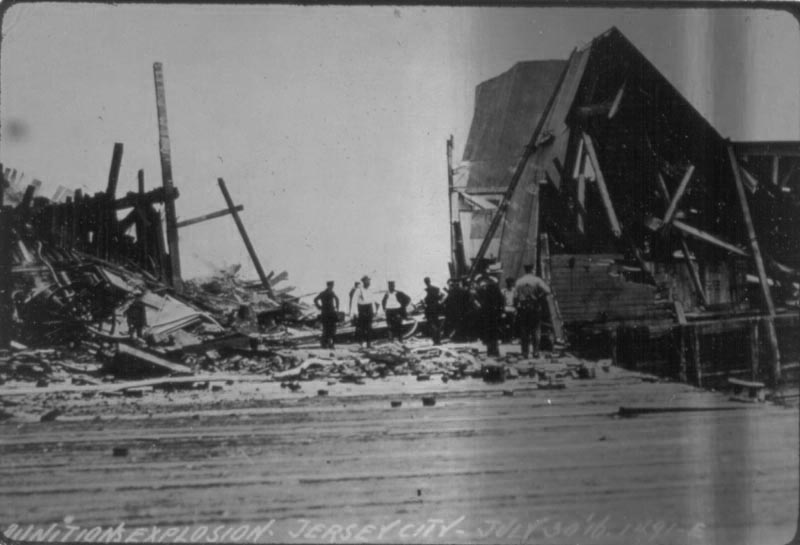
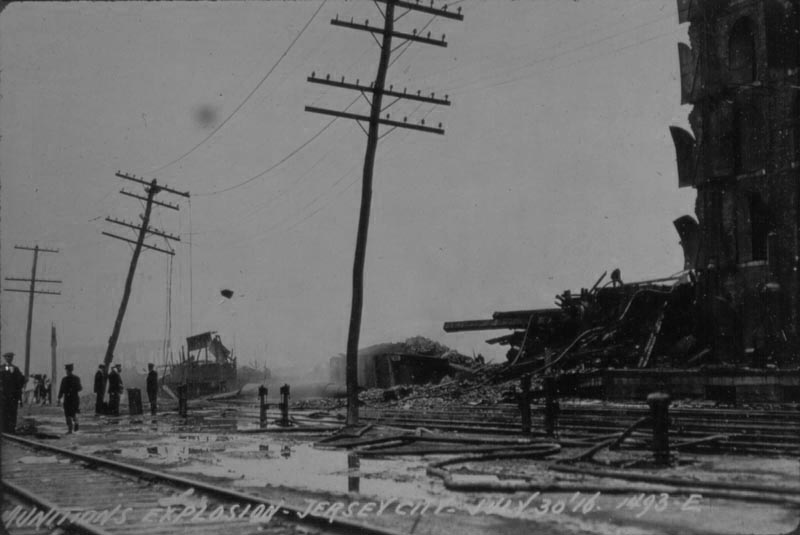
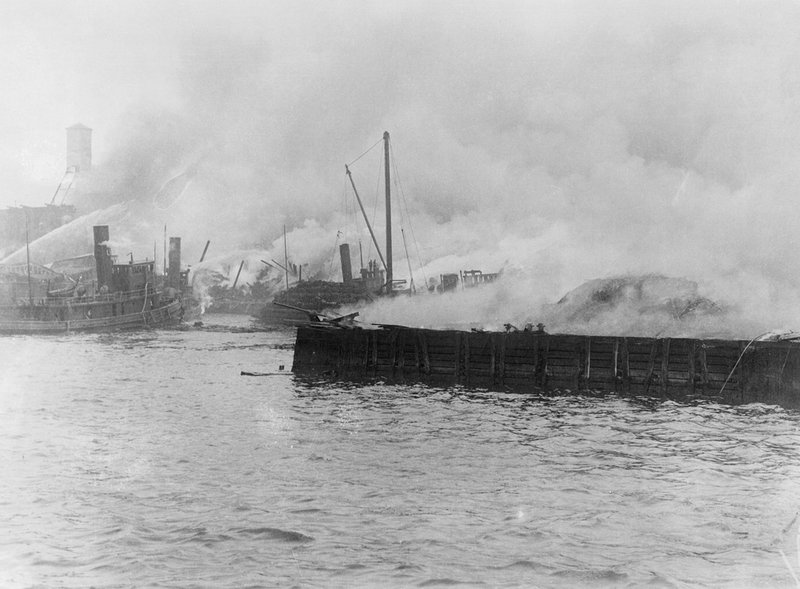
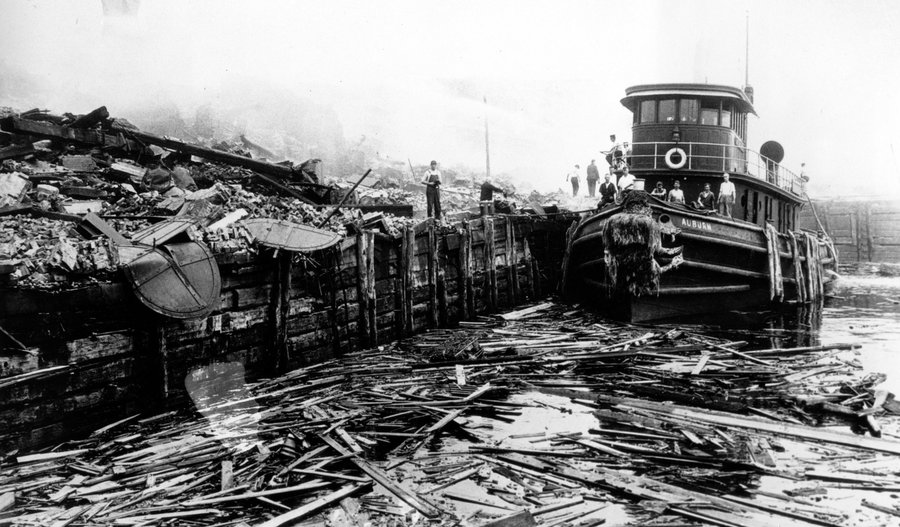
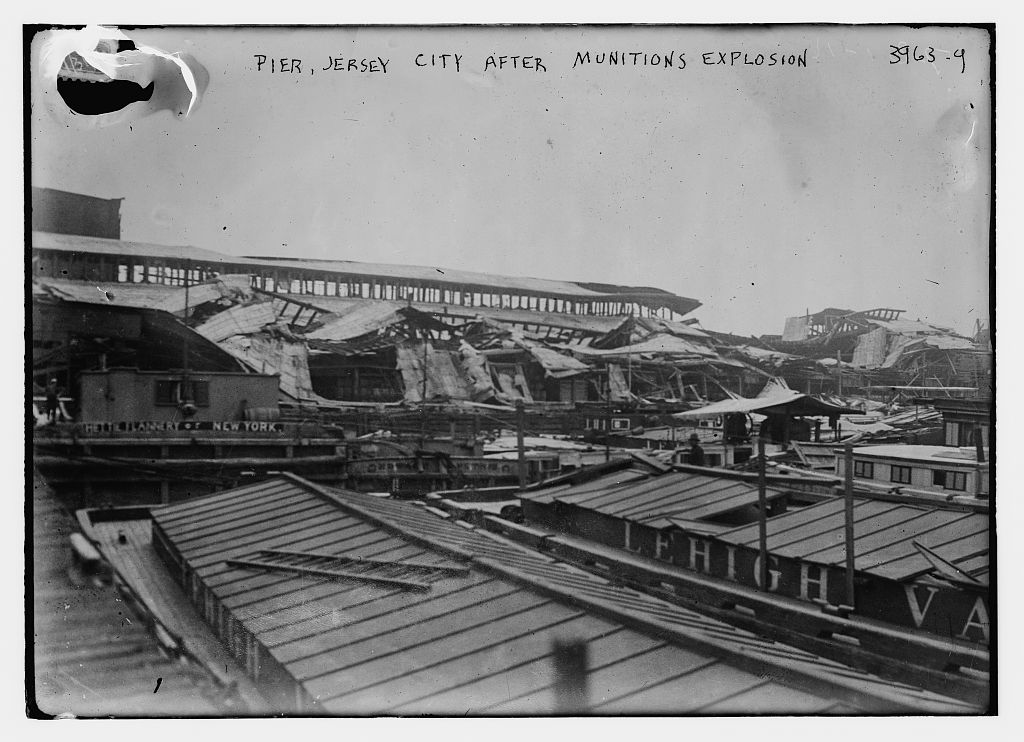
On July 30, 1916, at just after 2 in the morning, a massive explosion ripped apart the island of Black Tom on the shoreline near Jersey City, sending a shockwave through the region and thousands of pounds of wartime shrapnel into the neighboring Ellis Island and Bedloe’s Island (home to the Statue of Liberty).

Thousands of windows were shattered in the region, and millions woke up wondering what horrible thing had just happened.

The terrifying disaster was no accident; this was the sabotage of German agents, bent on eliminating tons of munitions that were being sent to the Allied powers during World War I. Although America had not yet entered the war, the United States was considered an enemy combatant thanks to weapons manufactures in the New York region and around the country.

But the surprising epicenter of German spy activity was in a simple townhouse in the neighborhood of Chelsea.

ALSO: New Yorkers still feel the ramifications of the Black Tom Explosion today at one of America’s top tourist attractions.


The Bowery Boys: New York City History podcast is brought to you …. by you!

We are producing a new Bowery Boys podcast every other week. We’re also looking to improve and expand the show in other ways — publishing, social media, live events and other forms of media. But we can only do this with your help!

We are creators on Patreon, a patronage platform where you can support your favorite content creators.

Please visit our page on Patreon and watch a short video of us recording the show and talking about our expansion plans. If you’d like to help out, there are several different pledge levels. Check them out and consider being a sponsor.

We greatly appreciate our listeners and readers and thank you for joining us on this journey so far.


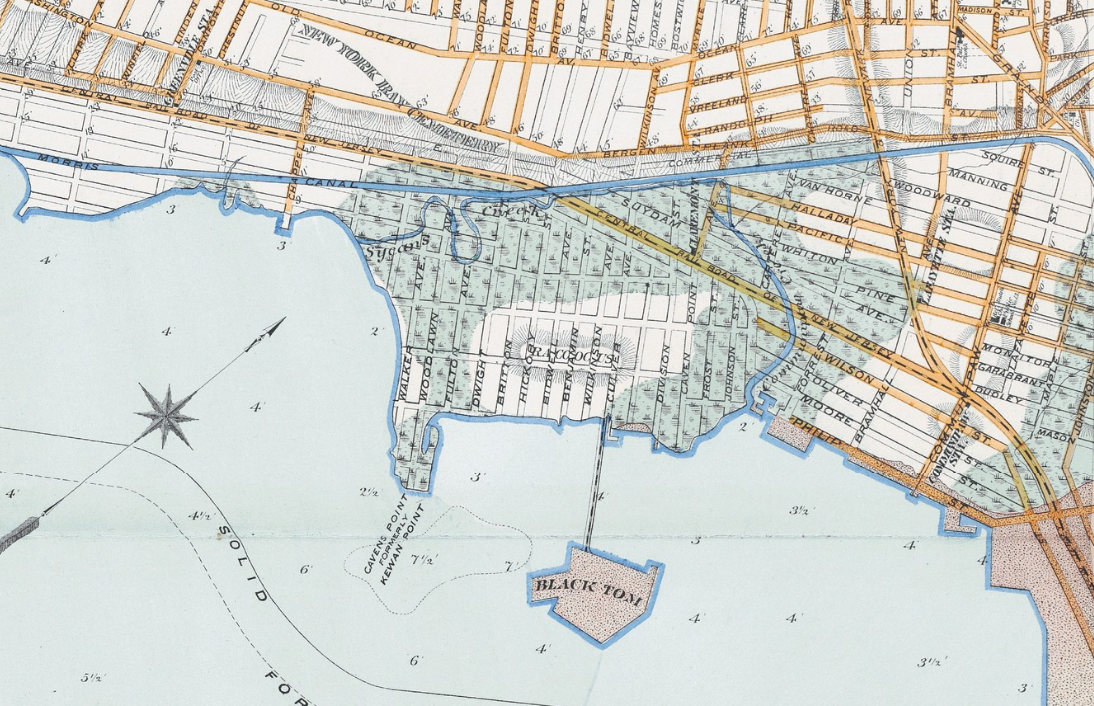
The location of Black Tom Island in relation to Jersey City, circa 1880.

Courtesy New Jersey City University
Courtesy New Jersey City University/ Prepared for the National Board of Health, Washington, D.C.(Hoboken, N.J.: Spielmann & Brush, 1880)

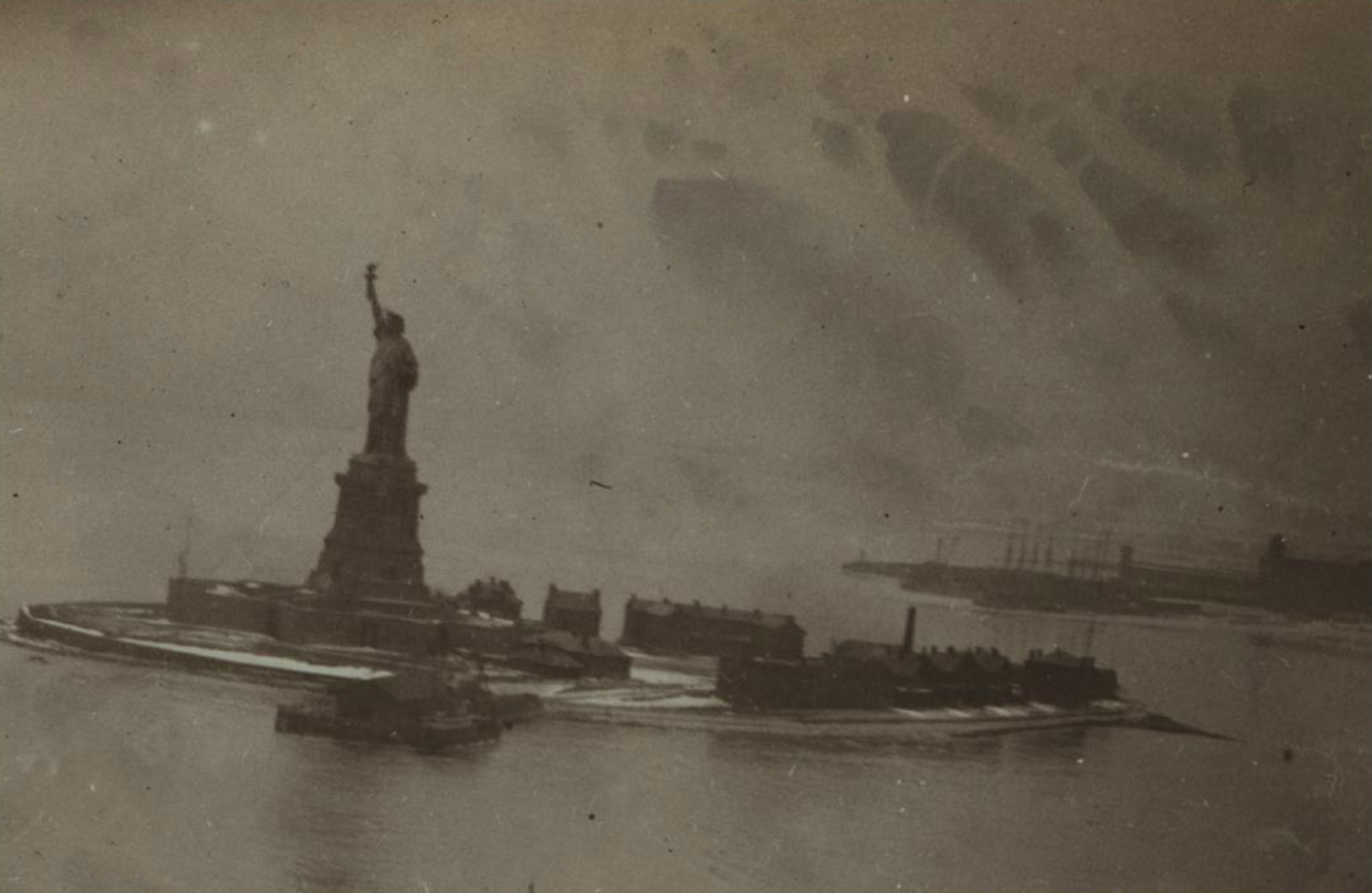
The Statue of Liberty in relation to Black Tom (situated in the background) in 1912

New York Public Library

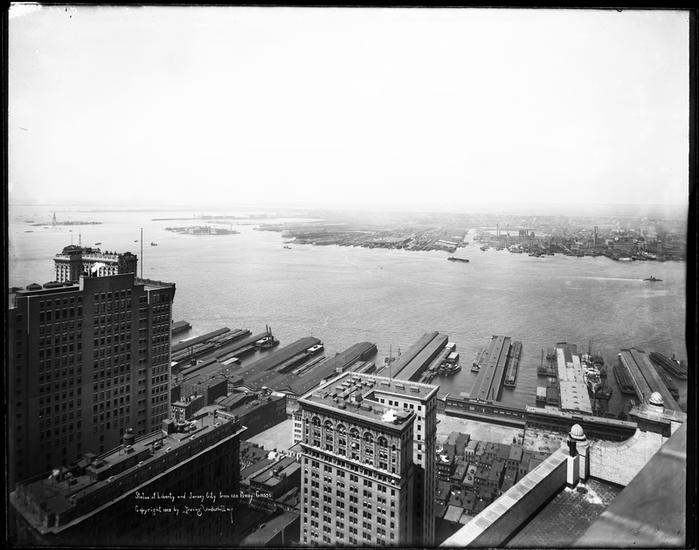
The view of Jersey City from a skyscraper in downtown Manhattan, 1918.

Courtesy Museum of the City of New York

Images of the grim aftermath of the explosion (courtesy Liberty State Park):

1 2 3 4 5


corbis


Associated Press
Associated Press

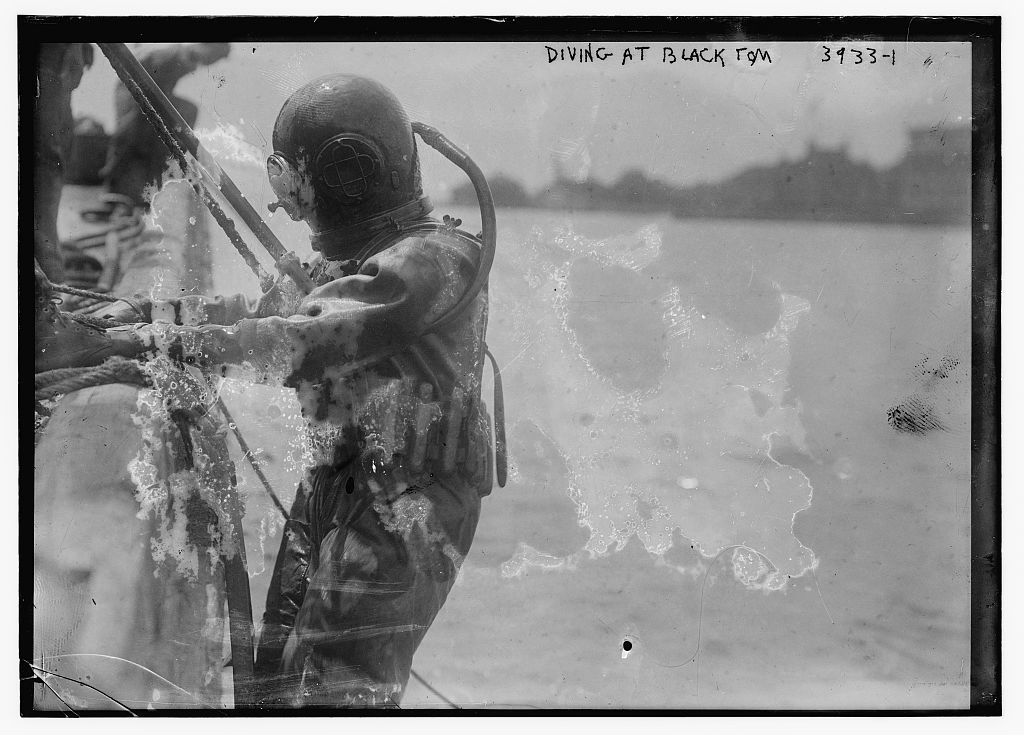
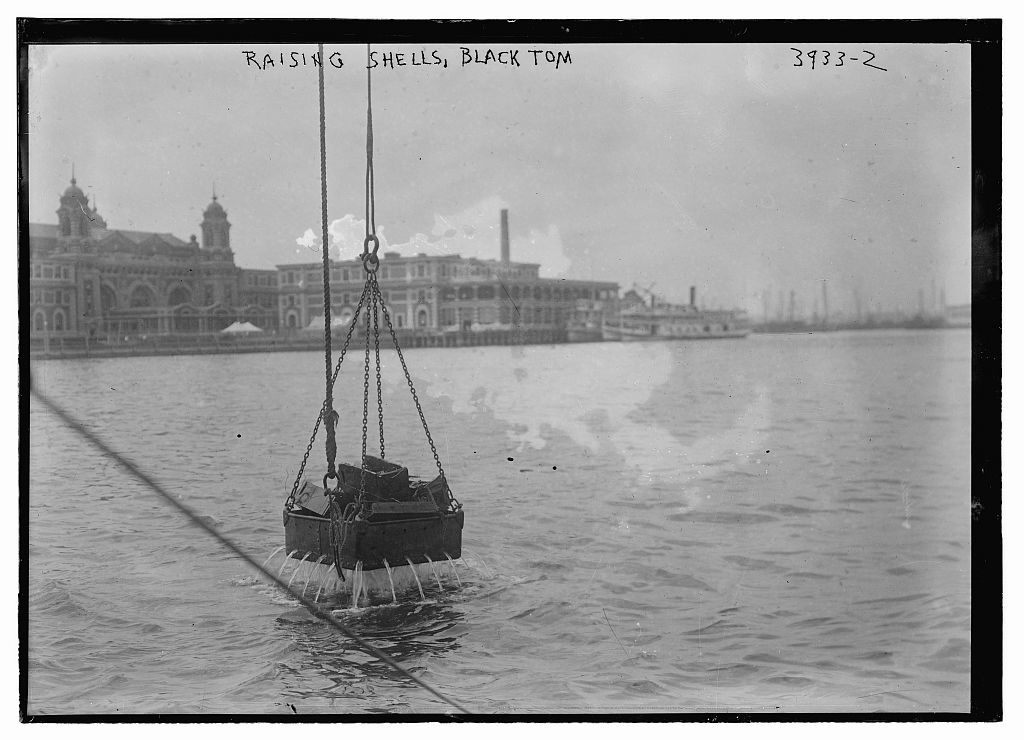
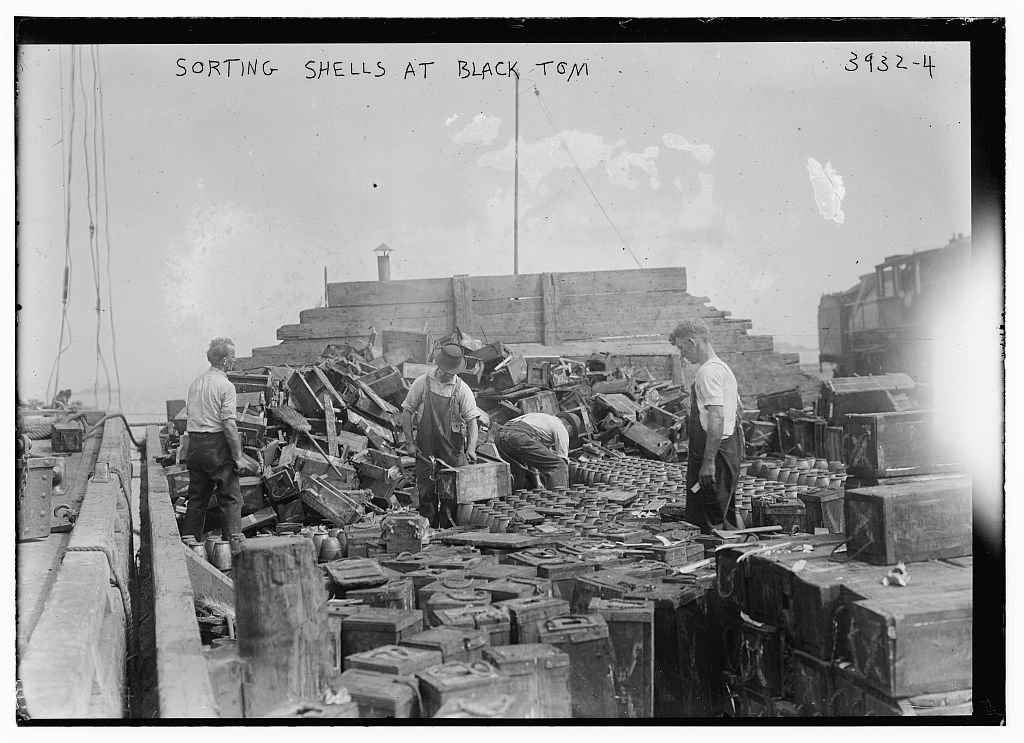
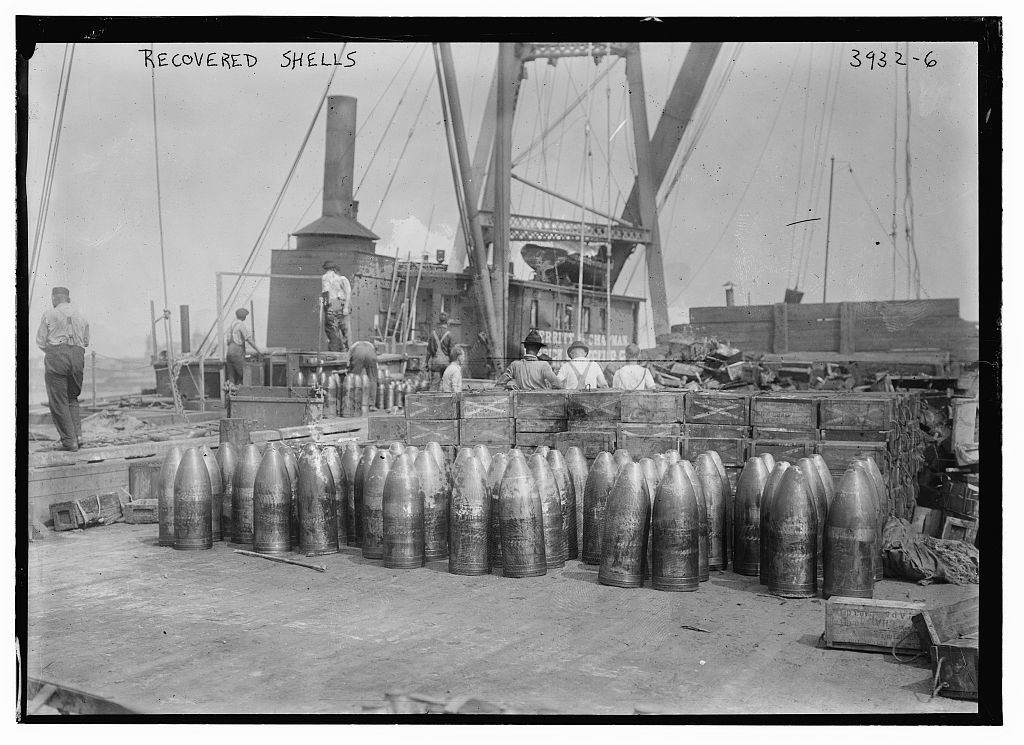
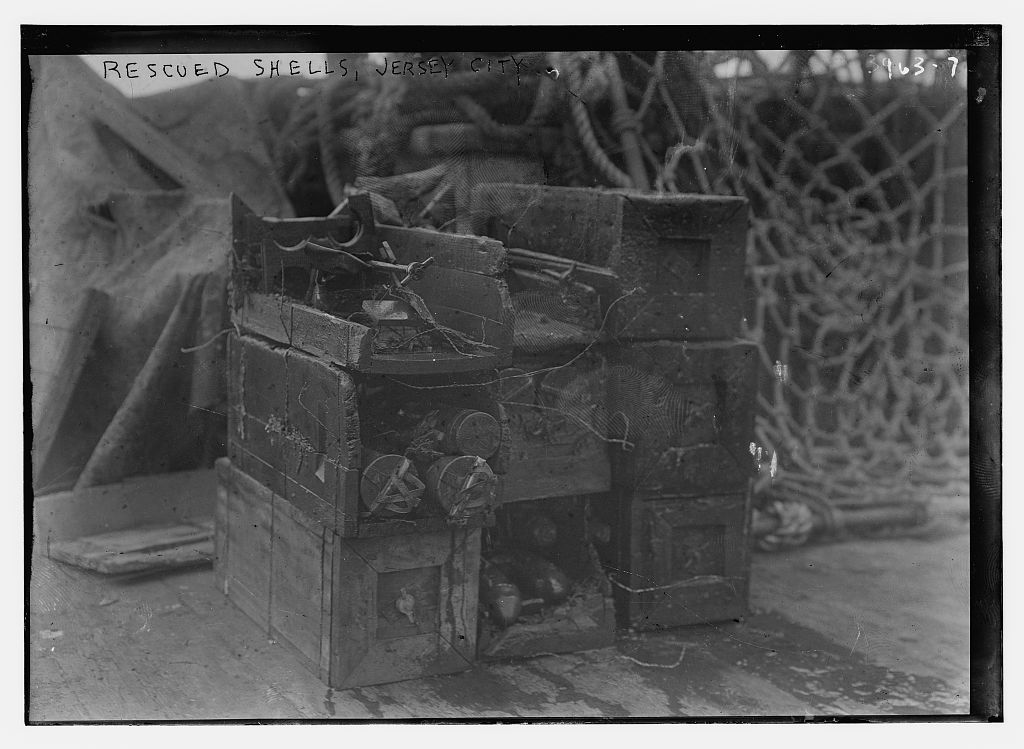
This series of photos (courtesy Library of Congress) shows the efforts of divers and salvagers looking for remaining munitions that had sunk into the harbor!

1 2 3 4 6

5

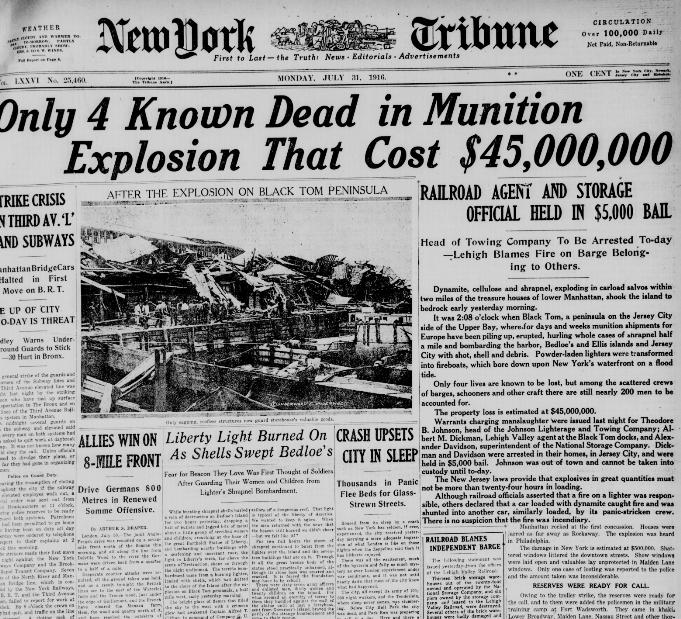
The front page of the New York Tribune the following day:

trib


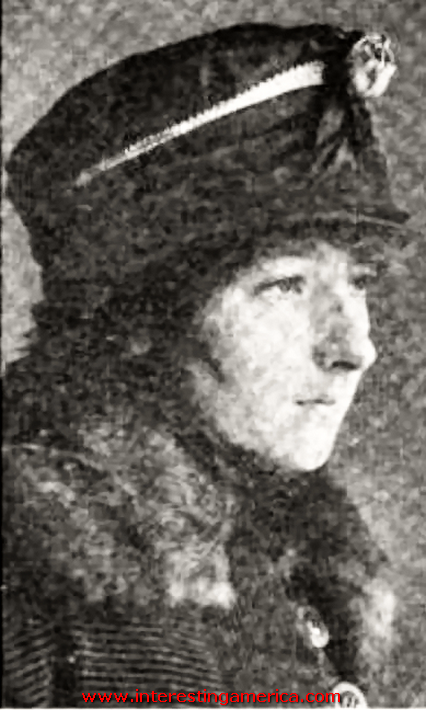
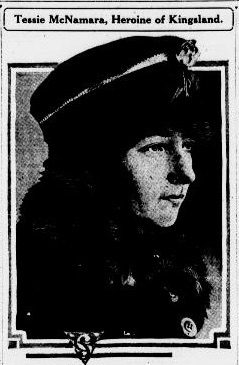
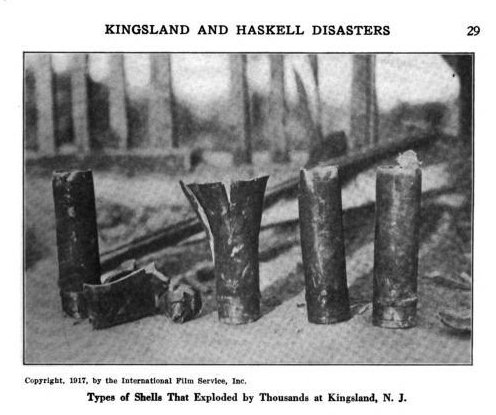
The Kingsland munitions explosion of January 11, 1917, caused millions of dollars in damage, but no lives were lost thanks to the efforts of a single switchboard operator named Tessie McNamara who stayed at her post throughout the disaster.

tessie


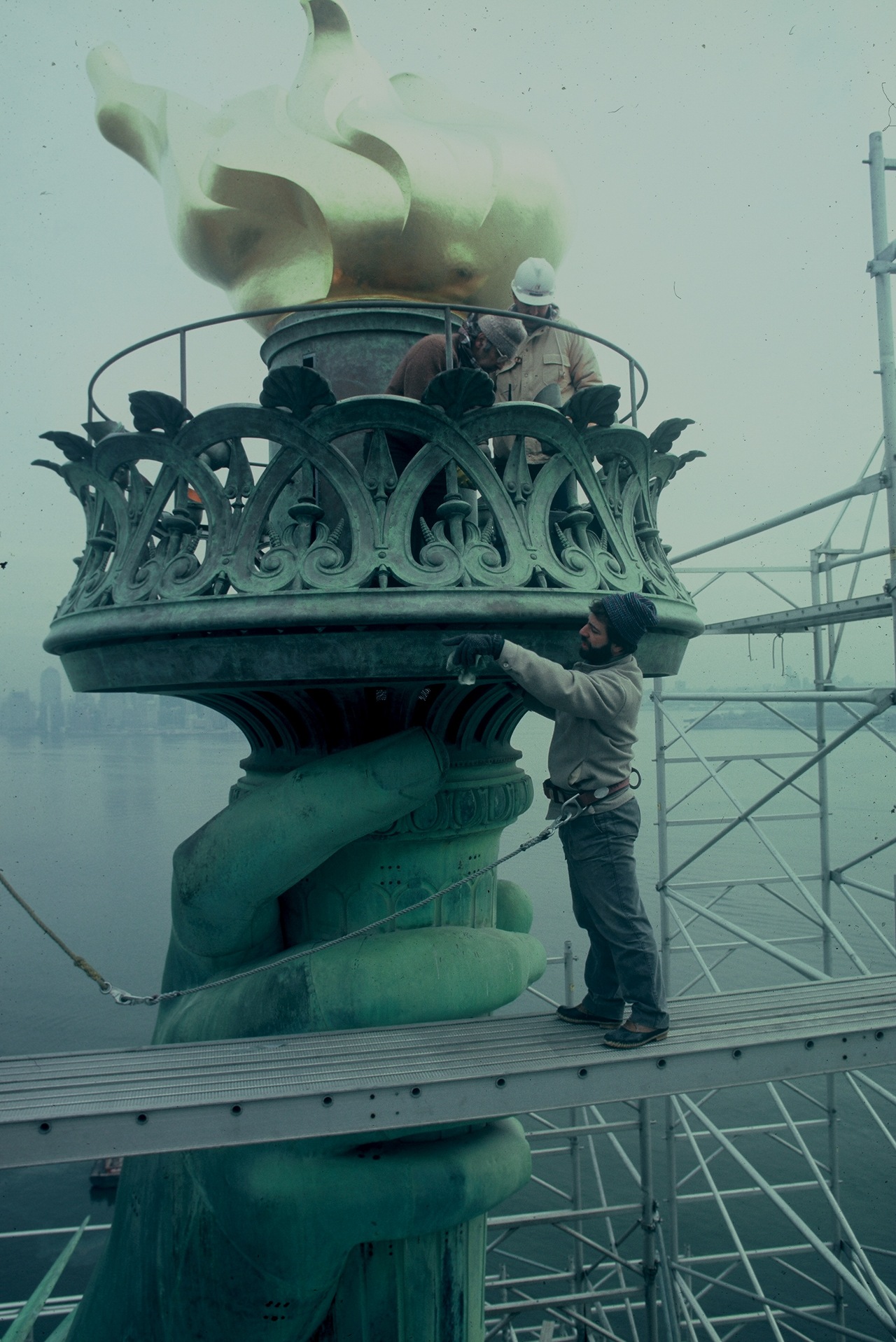
To give you some idea of the size of the Statue of Liberty’s torch, here’s a picture of its replacement during the 1984 renovation. It can only be accessed via a very narrow stairway.

pic

Categories
Wartime New York

The Kingsland Factory Explosion (and the switchboard operator who saved the day)

Today is the 105th anniversary of the Kingsland factory explosion. To mark the occasion I’m reposting this article originally released on the 100th anniversary of this mysterious disaster.

On the afternoon on January 11, 1917, workers in downtown Manhattan skyscrapers were jolted from their desks by a startling sight in New Jersey — an exploding munitions plant in Kingsland, a small community about nine miles south of New York City.

“For four hours Northern New Jersey, New York City, Westchester and the western end of Long Island listened to a bombardment that approximated the squad of a great battle — a bombardment in which probably half a million three-inch high explosive shells were discharged.” (New York Times)

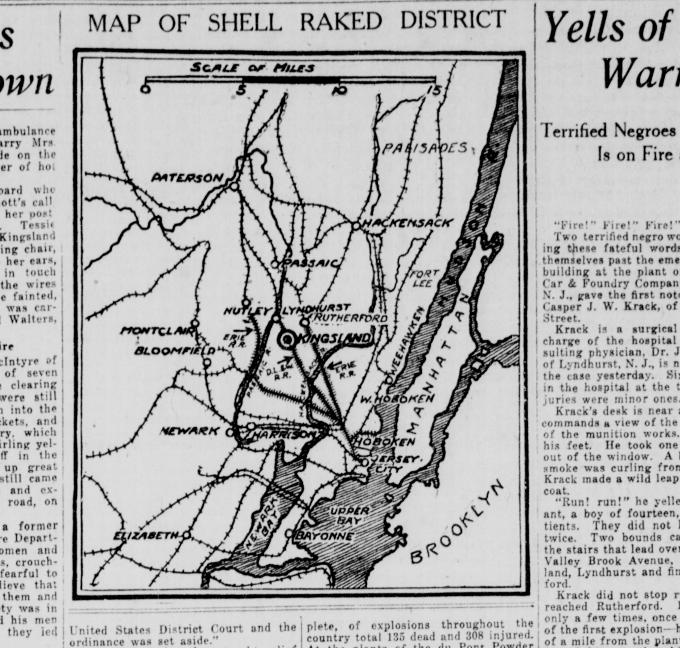
A map from the New York Tribune:

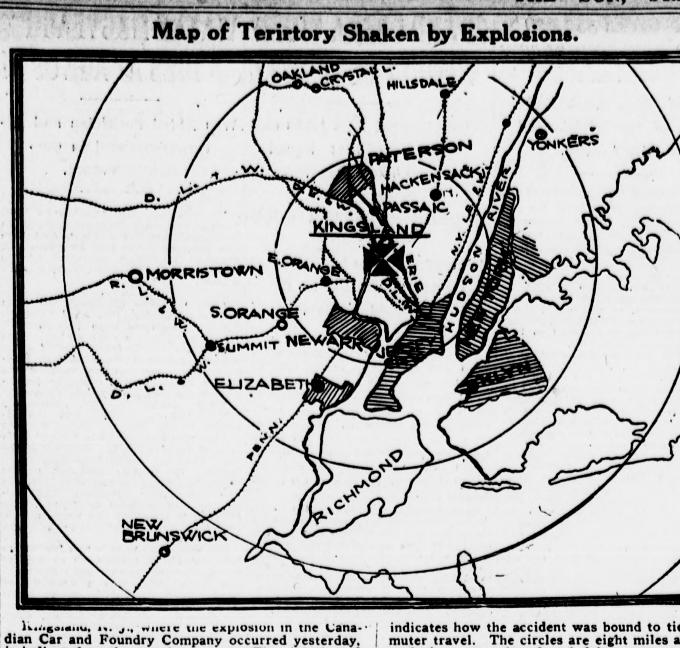
A Canadian company Canadian Car and Foundry had been producing weaponry for Russia and Great Britain in Kingsland. All of it went up in a dramatic and deathly burst. Two square miles of town completely flattened.

Given the dangerous work of manufacturing exploding devices, unfortunate accidents occurred all the time. But was this something more? Was this an act of sabotage?

A slightly less interesting map from the New York Sun:

The region had been on edge for a few years. Although the United States had still not yet entered the European conflict, fireworks and munitions plants had been producing weapons for Allied forces — France, the United Kingdom and Russia.

By 1917, America was clearly considered an enemy agent by the warring Germans.

Just a few months earlier, on July 30, 1916, the area shook with the horrific explosion at Black Tom Island in Jersey City, NJ, an act of sabotage that blew out thousands of windows and even damaged the Statue of Liberty. (We recount the entire story in our podcast from 2016 about the Black Tom Explosion.)

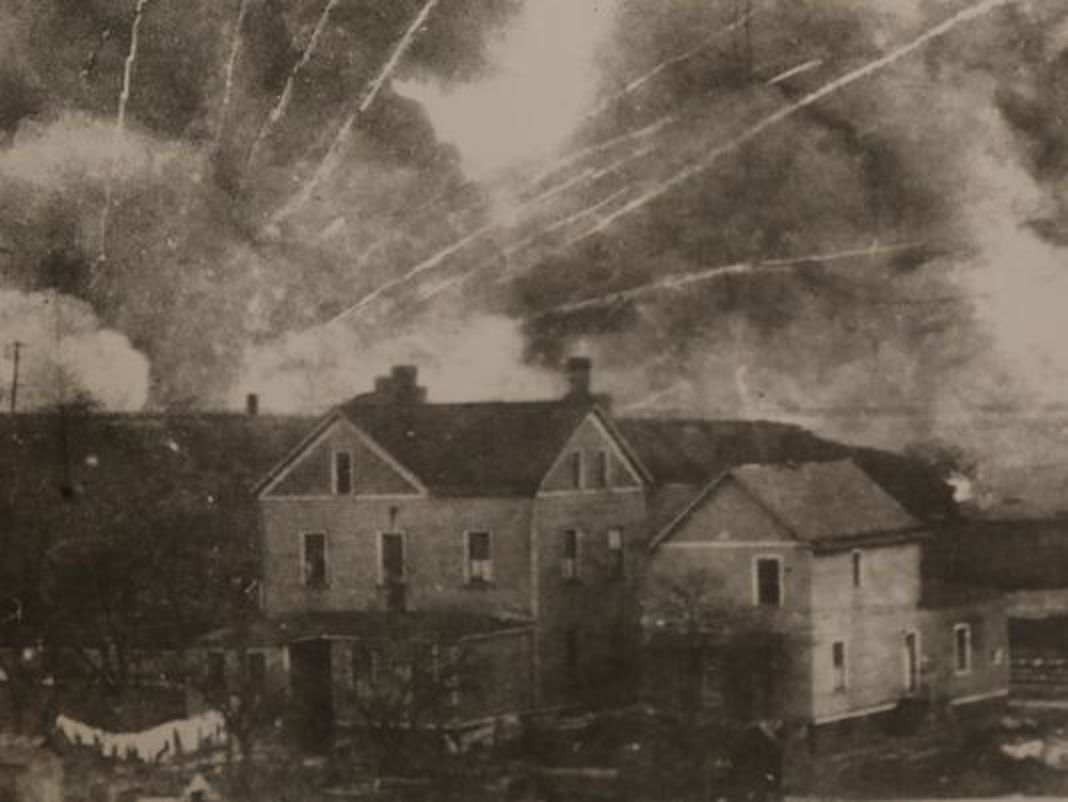
Courtesy Lyndhurst Historical Society

Seven people died in that explosion the previous year. But in Kingsland that day, with a deadly blast even greater than that which had occurred at Black Tom, nobody died.

This is attributed to the heroism that day of a single woman — Lyndhurst resident Theresa Louise “Tessie” McNamara.

Tessie was a switchboard operator at the plant that fateful day. The explosions began in a building used for cleaning artillery shells. Once they began, the company’s buildings were a scene of confusion and chaos.

McNamara was immediately informed of the blaze, but kept to her station, broadcasting messages to every building in the complex, even as most others fled the site fearing for their lives.

From the New York Tribune: “McNamara, operator of the Kingsland Central, stayed in her revolving chair, with the receivers clamped to her ears, keeping the terrified town in touch with the outer world until the wires were blasted away. Then she fainted, with her job well done, and was carried away to safety by Fred Walters, of East Rutherford.”

From the New York Sun: “It was emphasized from a dozen sources that one girl’s bravery stood between many hundreds of men and shocking death.”

From an interview of Miss McNamara: “Shells were dropping all around and I thought every minute would be my last. About a dozen buildings were now on fire and I had completed 36 calls. No more were coming in and I started for the door without coat or hat. Just then three of the boys who had missed me appeared in the office doorway. One of them shouted, “Come on now, Tess!” but I couldn’t walk. My courage left me and I needed their assistance to get out” [source]

The explosion stranded tens of thousands of passengers along train lines in New Jersey. The explosion’s curious timing — at the end of the day, near closing time — meant that trains were filled with commuters on their way home from work. Nobody was injured, but nobody got home in time for dinner that evening.

This begs the question — was the Kingsland Explosion purposefully set? Nobody was ever arrested, although many reported the mysterious behavior of an employee named Fiodore Wozniak who lived in New York.

From a statement by Wozniak’s foreman: “I noticed that this man Wozniak has quite a large collection of rags and that the blaze started in these rags. I also noticed the he had spilled his pan of alcohol all over the table, just preceding that time. I also noticed that someone threw a pail of liquid on the rags or the table almost immediately in the confusion ….. Whatever the liquid was, it caused the fire to spread very rapidly and the flames dropped down on the floor and in a few minutes, the entire place was in a blaze.

It was my firm conviction from what I saw, and I stated, that the place was set on fire purposely, and that has always been and is my firm belief.

Wozniak later disappeared and never questioned.

In the 1970s, Germany did pay tens of millions of dollars in reparation for various acts of sabotage within the United States, but did specifically accept the blame for the Kingsland disaster.

Today you can visit a unique site associated with the explosion — a smokestack that somehow survived the disaster, near a plaque dedicated in Miss McNamara’s honor. [More details here]

For additional information visit the Lyndhurst Historical Society page on the disaster.

Categories
Podcasts

1918: The Story of the Harlem Hellfighters

PODCAST (EPISODE 310): New York’s 369th Infantry Regiment was America’s first black regiment engaged in World War I.  The world knew them as the Harlem Hellfighters.

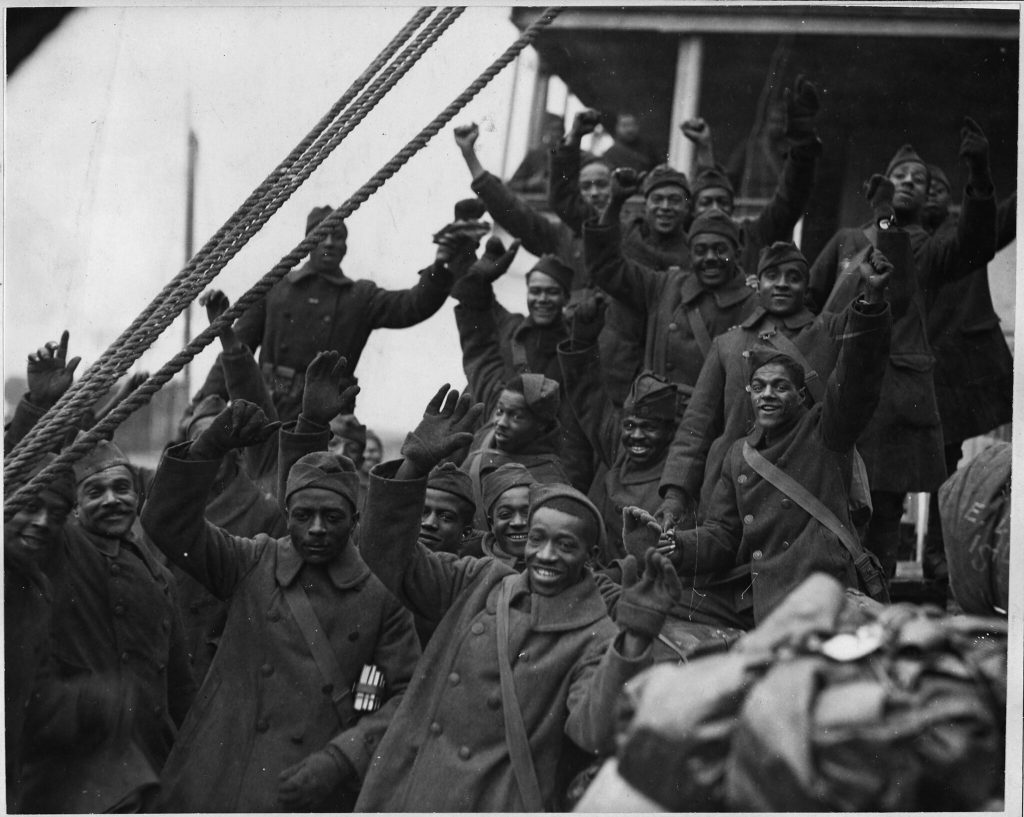
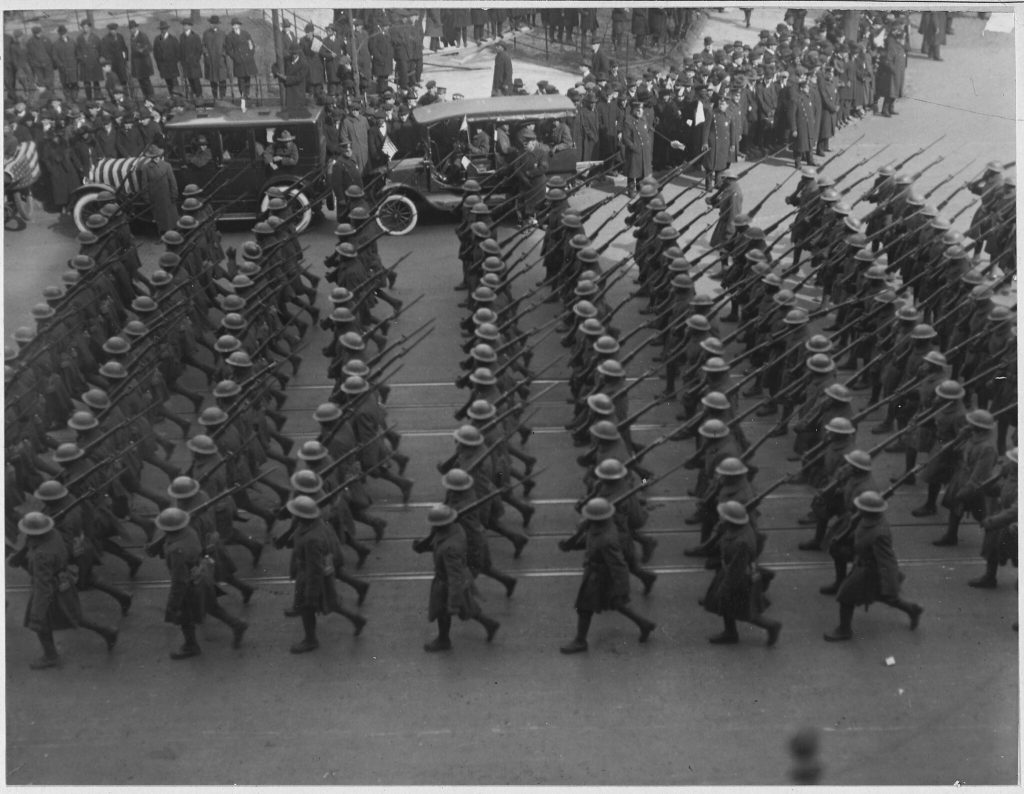
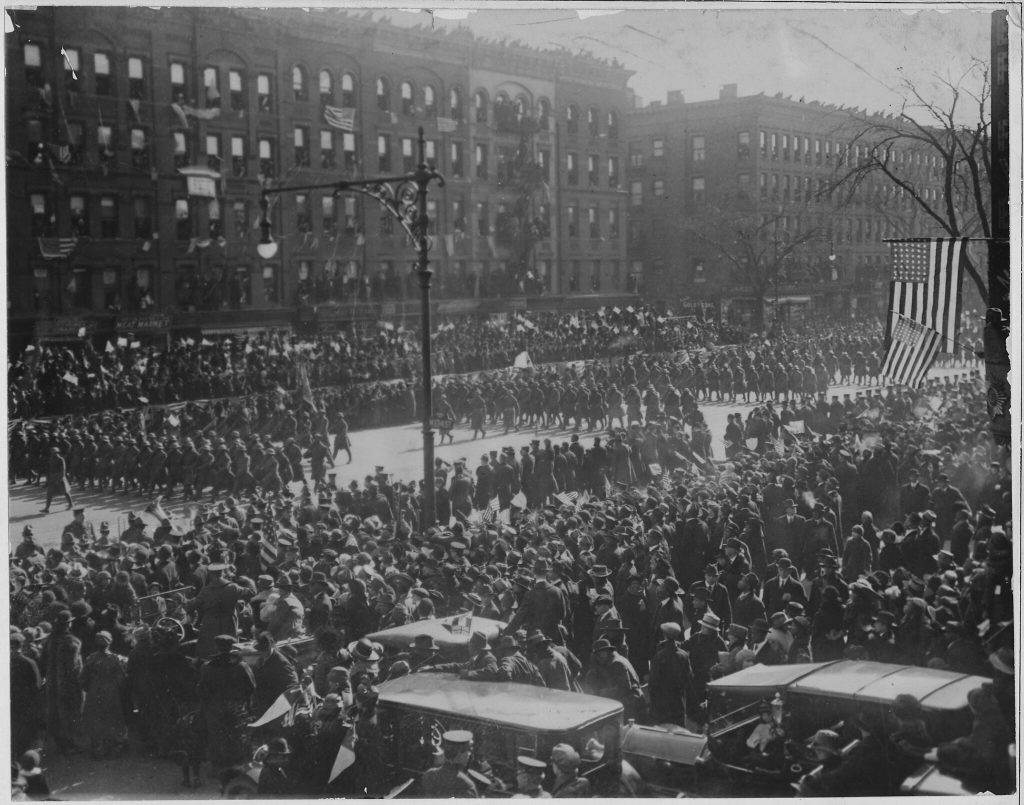
On February 17, 1919, the Hellfighters – who had spent much of the year 1918 on the frontline – marched up Fifth Avenue to an unbelievable show of support and love.

The Harlem Hellfighters were made up of young African-American men from New York City and the surrounding area, its enthusiastic recruits made up of those who had arrived in the city during a profound period of migration from the Reconstruction South to (only slightly) more tolerant Northern cities.

They were not able to serve in regular American military units because of segregation, but because of an unusual series of events, the regiment instead fought alongside the French in the trenches, for 191 days, more than any other American unit.

They were known around the world for their valor, ferocity and bravery. This is the story of New York musicians, red caps, budding painters, chauffeurs and teenagers just out of school, serving their country in a way that would become legendary.

FEATURING the voices of World War I veterans telling their own stories. PLUS some brilliant music and a story from Barack Obama (okay it’s just a clip of the former president but still.)

LISTEN NOW — THE HARLEM HELLFIGHTERS


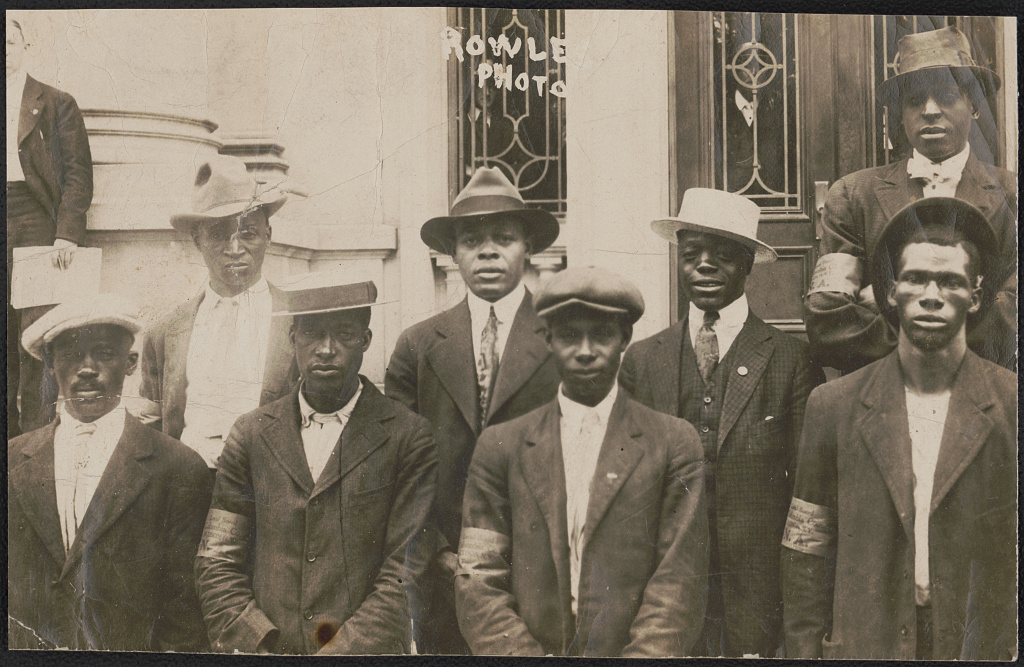
Photograph shows group portrait of men recruited for the 15th New York National Guard Regiment, later known as the 369th Infantry Regiment (the Harlem Hellfighters), wearing armbands. Library of Congress.
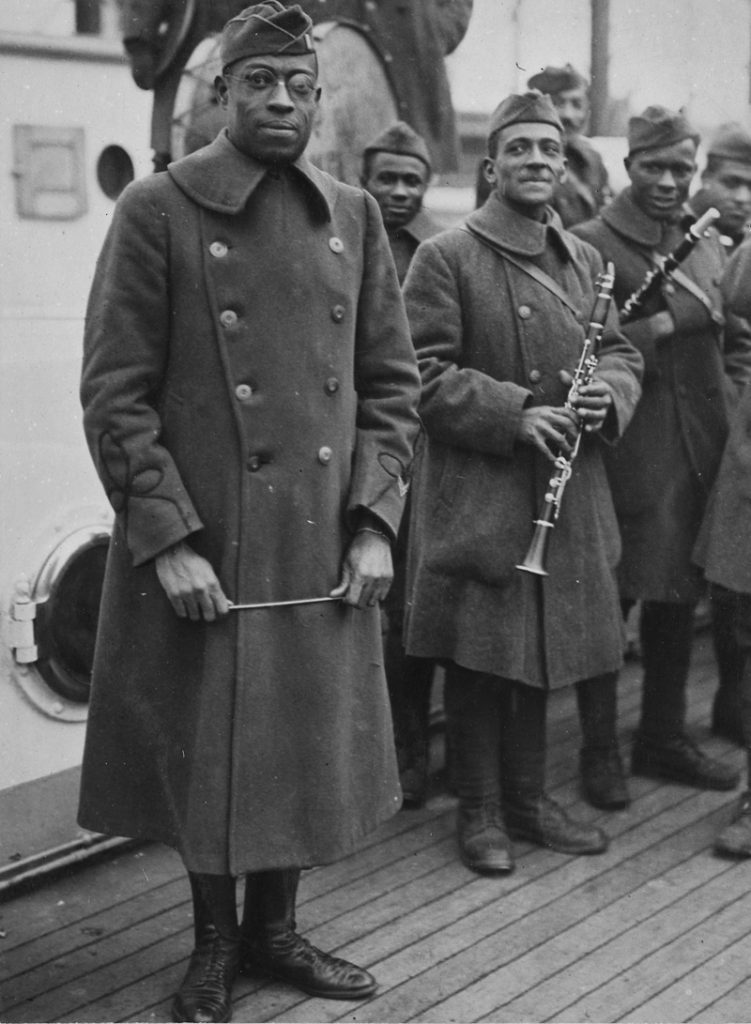
James Reese Europe, who both fought on the front lines AND brought jazz to France.
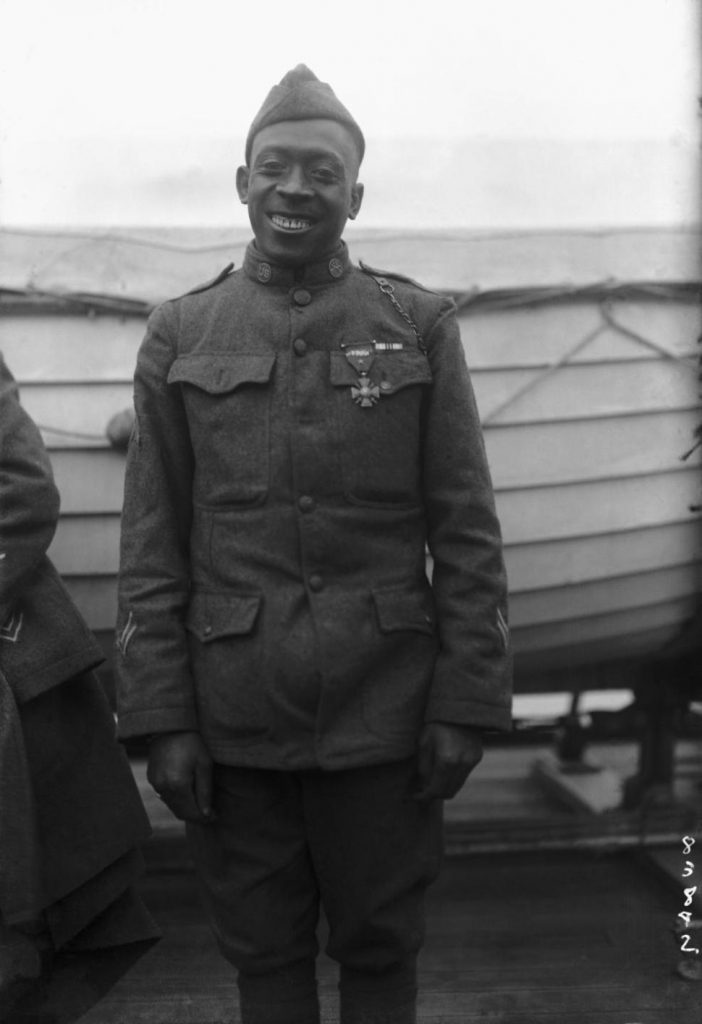
Henry Johnson, whose skills on the battlefield earned him the French Croix de guerre in his lifetime — and a U.S. Medal of Honor many decades later.
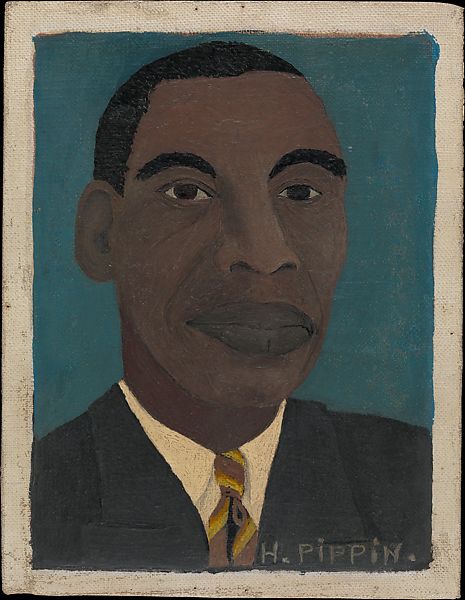
Horace Pippin (American, West Chester, Pennsylvania 1888–1946 West Chester, Pennsylvania) Self-Portrait, 1944. Courtesy the Metropolitan Museum of Art, New York, Bequest of Jane Kendall Gingrich, 1982 (1982.55.7) http://www.metmuseum.org/Collections/search-the-collections/482605

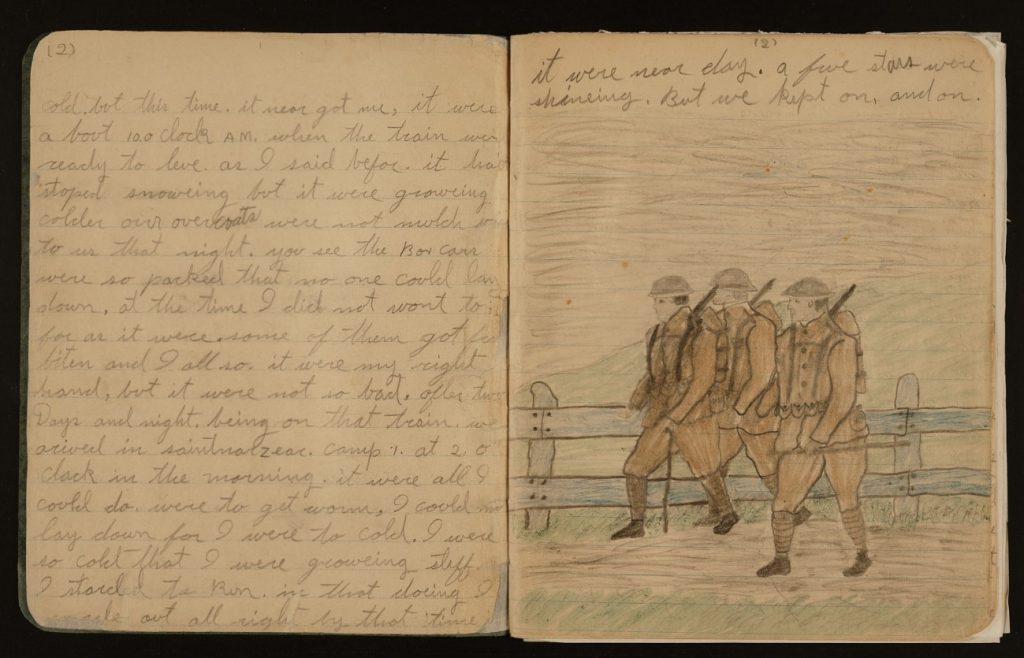
Visit the Smithsonian Archive of American Art to explore the journal of painter Horace Pippin who fought on the front lines during the summer and fall of 1918.

From the journal of Horace Pippin, featuring illustrations among his observations.
US National Archives
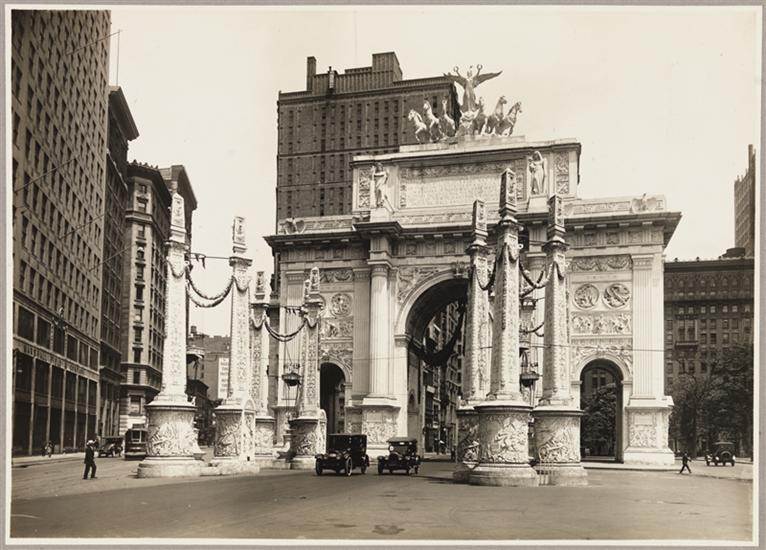
The 369th were the first regiment to march beneath the Victory Arch, installed near Madison Square Park. Courtesy Museum of the City of New York
US National Archives

From the New York Times the following day after the parade:

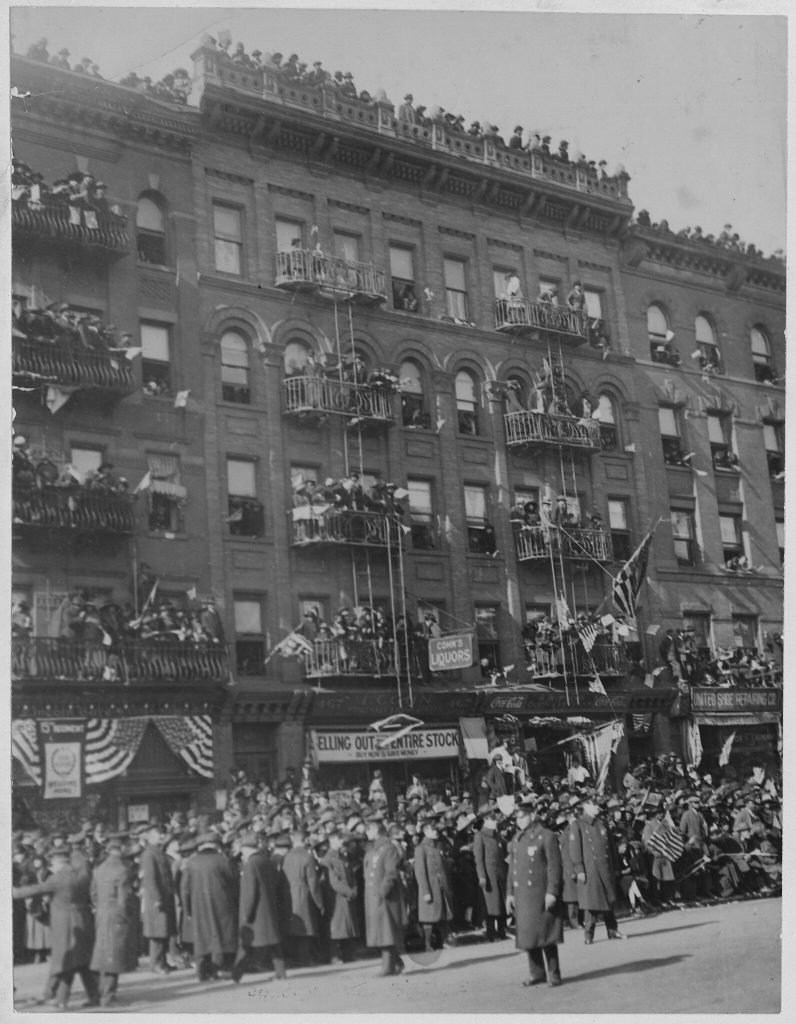
New York’s negro soldiers, bringing with them from France one of the bravest records achieved by any organization in the war, marched amidst waving flags and cheering crowds yesterday from Twenty-third Street and Fifth Avenue to 145th Street and Lenox Avenue.”

“At Thirty-Fourth Street the men marched under a shower of cigarettes and candy, and such tokens were pitched at them at other points in the line, but the files did not waver for an instant.

US National Archives

The complete version of the 1977 film Men of Bronze, detailing the story of the Harlem Hellfighters, directed by Bill Miles, is available to watch on YouTube.

President Obama awards the Medal of Honor posthumously to two World War I veterans, Private Henry Johnson (featured in this show) and Sergeant William Shemin.


READING LIST
From Harlem to the Rhine by Arthur West Little
Harlem Rattlers and the Great War by Jeffrey Sammons and John Howard Morrow
A Life In Ragtime: A Biography of James Reese Europe by Reid Badger
Lost Battalions by Richard Slotkin
A More Unbending Battle by Peter Nelson
We Return Fighting from the National Museum of African American History and Culture
When Pride Met Courage by Walter Dean Myers

FURTHER LISTENING


The Bowery Boys: New York City History podcast is brought to you …. by you!

We are now producing a new Bowery Boys podcast every other week. We’re also looking to improve and expand the show in other ways — publishing, social media, live events and other forms of media. But we can only do this with your help!

We are now a creator on Patreon, a patronage platform where you can support your favorite content creators.

Please visit our page on Patreon and watch a short video of us recording the show and talking about our expansion plans. If you’d like to help out, there are six different pledge levels. Check them out and consider being a sponsor.

ALL patrons at all levels will receive many benefits include the next episode of the Bowery Boys Movie Club, an exclusive podcast (released every 6-8 weeks) celebrating New York City in the movies. And patrons at the Five Points ($5) level and up will get our other exclusive podcast — The Bowery Boys: The Takeout — released every two weeks.

We greatly appreciate our listeners and readers and thank you for joining us on this journey so far.

Categories
Wartime New York

New York doughnut history: From Washington Irving’s olykoeks to doughnut huts in Union Square

Today is National Doughnut Day which is not a real holiday although that shouldn’t stop you from celebrating in whatever powdered, glazed, creme-filled way you see fit.

However you will be surprised to learn that this day traces its roots to the Salvation Army and World War I.

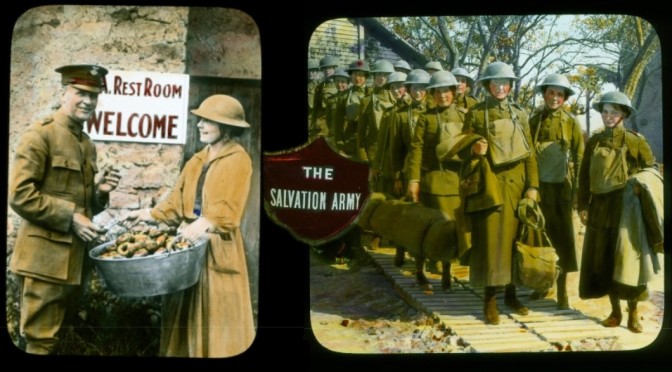
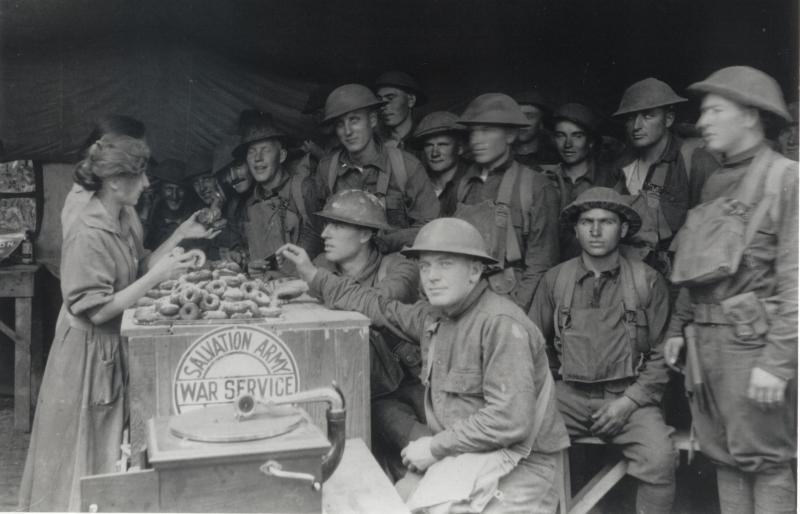
To provide for the American troops fighting in France in 1917-18, Salvation Army workers set up small tents or ‘huts’, providing the comforts of home, with nourishing meals, a quiet place to write letters or to get clothing mended.

Time to make the doughnuts: A Salvation Army hut during World War I (Courtesy the Salvation Army)

There were actually several dozen of these Salvation Army huts already set up in the United States near military bases so the tradition was simply transferred over to Europe when the war began, with workers often setting up huts in abandoned or even bombed-out buildings.

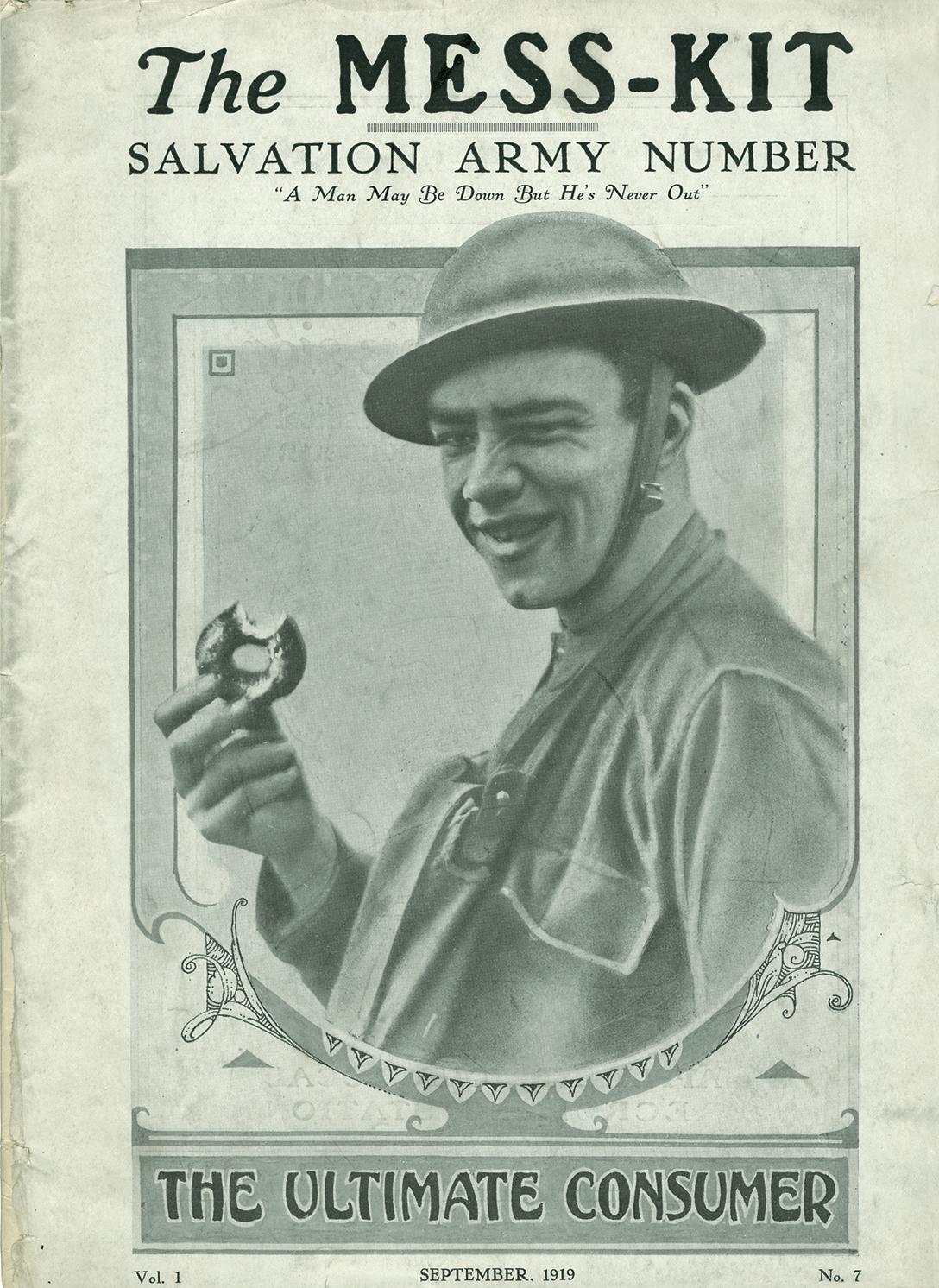
Below: A doughboy eating a doughnut on a 1919 magazine cover. (LOC)

8616914748_9dd3a80bf3_o

What brings greater pleasure than a baked good? But the Salvation Army couldn’t transport large baking ovens, so they improvised with the doughnut, deep-frying dough on small portable stoves.

Irving and the Oly Koek

The round pastry was not invented by the Salvation Army.  Indeed, Washington Irving himself is credited with the first mention of the doughnut in print back in 1809.

Regaling on old Dutch custom, he writes “[I]t was always sure to boast of an enormous dish of balls of sweetened dough, fried in hog’s fat, and called dough-nuts, or oly koeks: a delicious kind of cake, at present known scarce to this city, except in genuine Dutch families.”

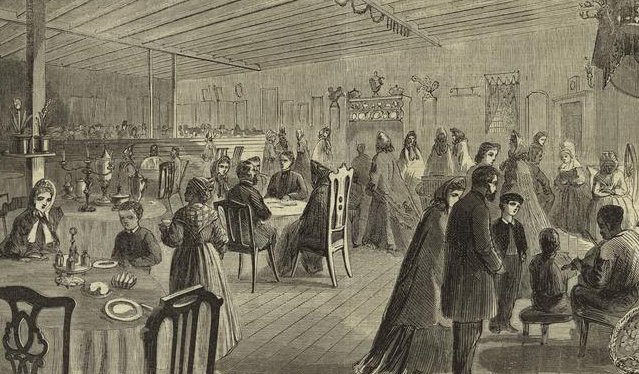
Above: A scene from the Knickerbocker Kitchen in 1864 (NYPL)

Due to their ease of preparation, doughnuts became associated with wartime cuisine.  But even the original Dutch ‘oly koeks’ made a wartime return as well, brought back as a fund-raiser during the Civil War, sold during the 1864 Metropolitan Fair in the Knickerbocker Kitchen, a sort-of theme restaurant where Dutch delights were sold.

The Battleship in Union Square

Interestingly, the Knickerbocker pavilion was located just off of Union Square. Many decades later, the doughnut would return to Union Square for yet another war-related pageant.

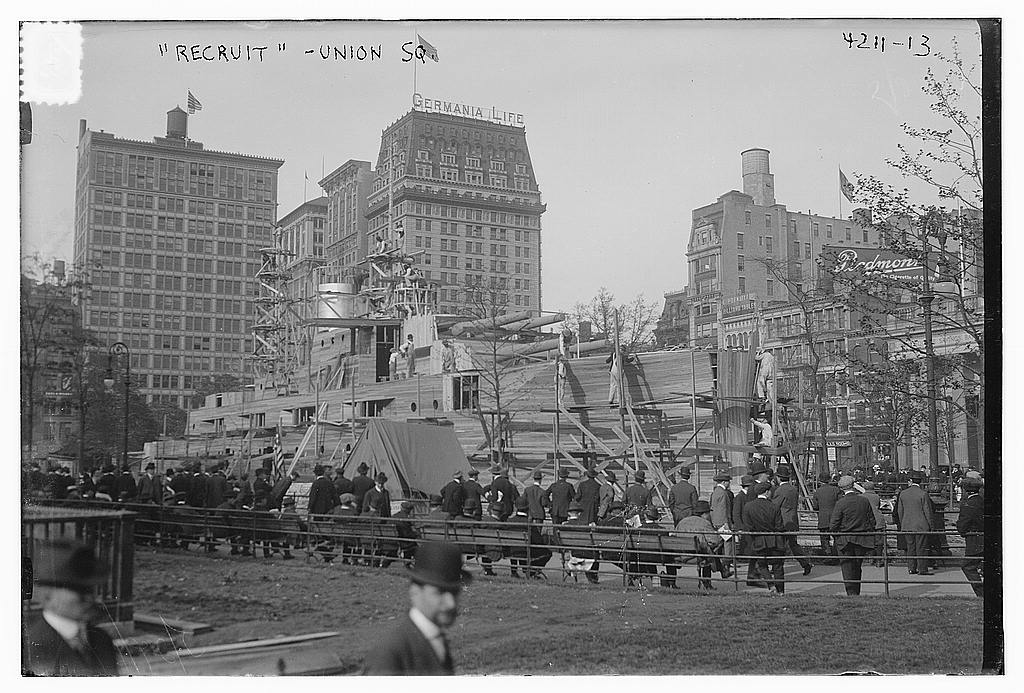
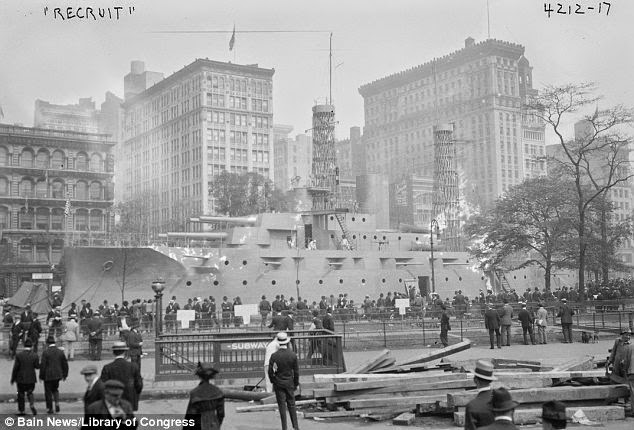
In 1917, during World War I, the U.S. Navy set up a curious recruitment tool in Union Square — a life size wooden battleship called, appropriately, the USS Recruit.

Courtesy Library of Congress

Once the war was over, the Salvation Army thought it would be a kind gesture to those New Yorkers were fought in the war to recreate their welcoming war huts. And it made natural sense to set one up here in Union Square, next to the wooden battleship and conveniently located near their headquarters on West 14th Street (still there today).

The Salvation Army’s Union Square hut opened for business January 12, 1919, with a grand ceremony around the USS Recruit and military officers from the Brooklyn Navy Yard.

Inside Salvation Army workers were busily preparing the doughnuts, using the same tools as on the battlefield.  It was led by Adjutant Violet McAllister, one of the original “doughnut sweethearts” of the war, with “flour on her nose and a great white apron over her khaki uniform.

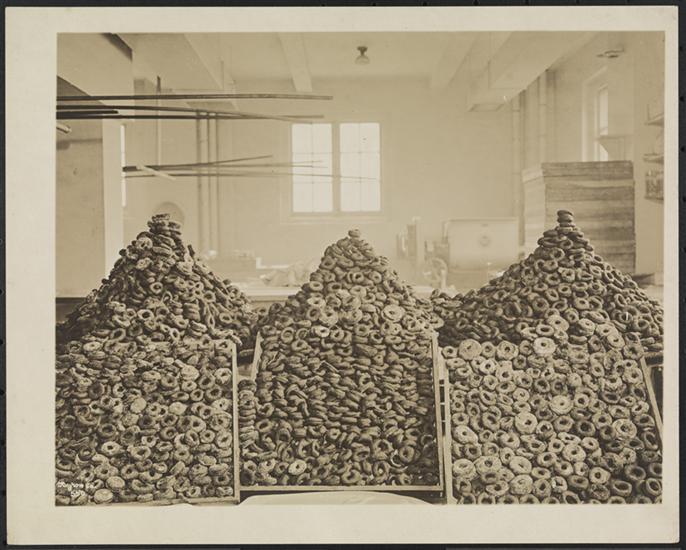
That day over 1,000 doughnuts were prepared, many for soldiers returning from the war.  In emulation of the war front huts, the Union Square edition was “open every day for reading, writing and gossip, with doughnut and coffee for 10 cents for all men in uniform.” [source]

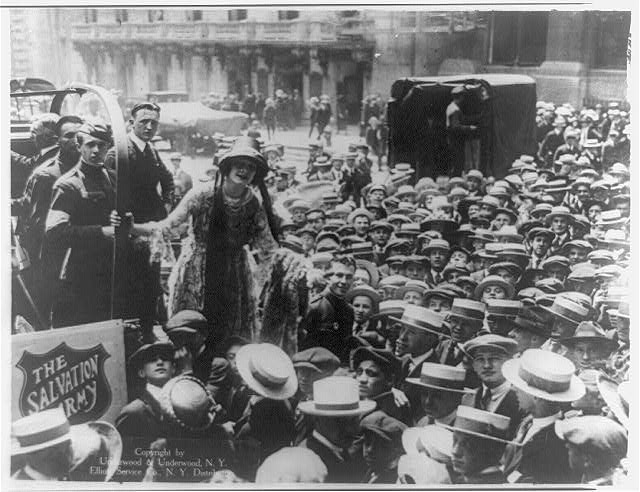
Above: Silent film star and New Yorker Martha Mansfield sells doughnuts for $1 apiece on the streets of New York during a fundraiser for the Salvation Army. (LOC)

Doughnuts on Every Corner

To those at home, observing the battles of World War I from afar, the doughnut became a symbol of the war effort (although the word doughboy is not related.)  A month before the Treaty of Versailles was signed, Salvation Army volunteers sold doughnuts on street corners throughout the city and even auctioned off doughnuts on the steps of the Sub-Treasury Building (today’s Federal Hall), with one doughnut being sold for $5,000!

Below: The doughnuts were prepared at the Hotel Commodore, Lexington and 42nd Street.

Courtesy Museum of the City of New York

By 1920, the battleship — and I assume the doughnut hut as well — were dismantled.  In 1938, two decades after World War I, the Salvation Army started National Doughnut Day as a fundraiser and in honor of its phalanx of busy doughnut makers.

New Yorkers of course no longer needed to associate this food with wartime activities as the pastry soon sprang up at every lunch corner and automat in town.

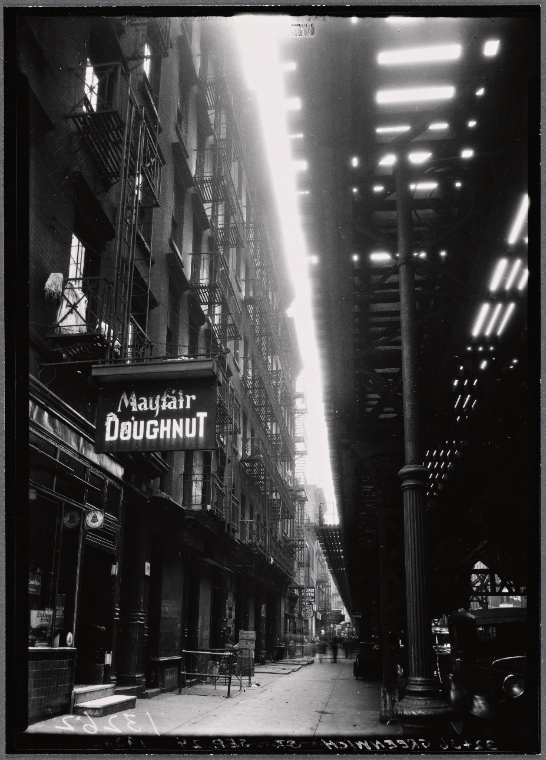
Below: Mayfair Doughnut under the elevated at 32-36 Greenwich Street (courtesy NYPL)

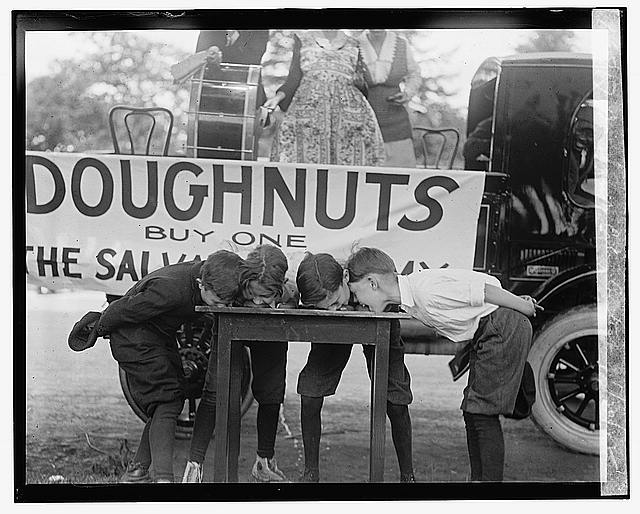
A doughnut eating contest from 1922. I’m not sure this is from New York City, but how could I overlook this hilarious picture? (LOC)

Categories
Bowery Boys Bookshelf

The Lusitania’s final voyage, breathlessly told

They said the Lusitania couldn’t be sunk. The German telegrams to the contrary were merely cheap scare tactics. Besides, England will provide protection once in their heavily guarded waters. The boat is simply too big to sink. There are plenty of lifeboats, enough for the entire passenger list. Even those in steerage!

And the best one — there are Americans on board. Germany wouldn’t risk dragging her into war.

The excuses made by the passengers and crew of the Lusitania seem strikingly naive now, almost 100 years to that May 7th afternoon when the premier vessel of the Cunard fleet was taken down — by a single German torpedo — and brought to the bottom of the ocean in all of 18 minutes.

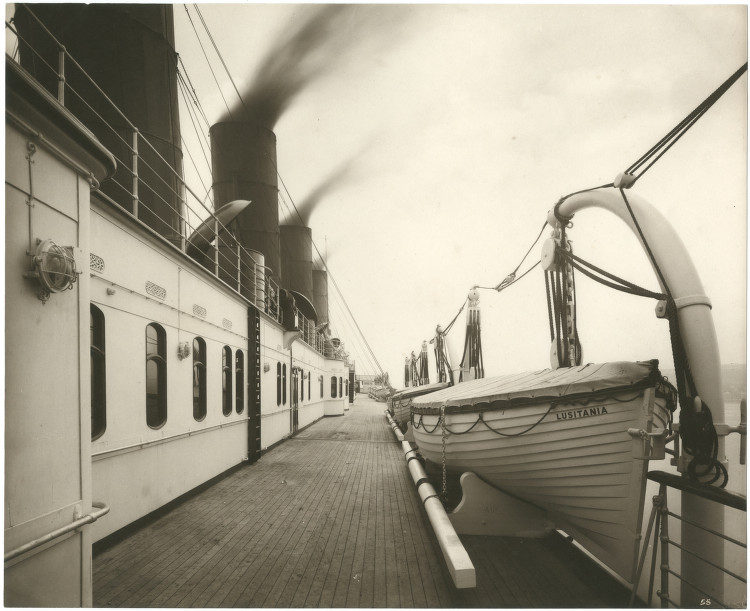
The deck of the Lusitania, 1905-07, courtesy SMU Central University

Dead Wake, the captivating new narrative non-fiction by Erik Larson, follows the tragic fate of the Lusitania from four sectors.

In England, a group of cryptoanalysts in shadowy Room 40  attempt to crack German messages as their U-boats began prowling through British-controlled waters. Meanwhile, President Woodrow Wilson, still mourning the loss of his wife, attempts to keep American neutrality intact in the face of growing threats.

But the two central perspectives are what grant Dead Wake its lurching, inevitable dread.  And Larson switches between them like the dance of predator and prey in a nature documentary.

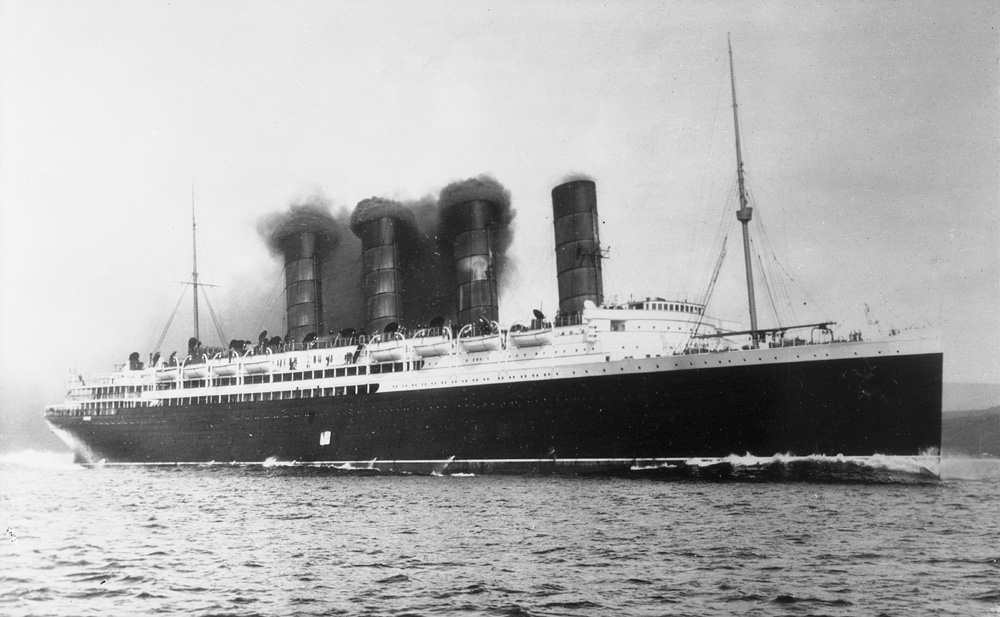
The Lusitania on one of its early voyages, 1906, courtesy Royal Museum Greenwich

In New York, docked at Chelsea Piers, passengers from all walks of life board the Lusitania, ready for leisure and occupied with trivial affairs of the day. The bookseller Charles Lauriat Jr. boards with a valise of valuable literary works.

Theodate Pope, the spirited, independent woman who’s clearly Larson’s favorite, hits the decks with her mysterious male companion Edwin Friend. A pregnant Bronx woman named Margaret Kay boards with her young son Robert, destined to get the measles. An entire family with the last name of Luck boards the ship, never a good sign in these kinds of books.

And then there’s the enigmatic Preston Prichard, a Canadian medical student described in such striking, beatific terms that it spells doom for him almost immediately.

Meanwhile, thousands of miles away, the other narrative course follows the U-20 submarine captained by Walther Schwieger, a stern and sometimes unforgiving man in charge of a lonely vessel cutting through the waters of the Irish Sea.

Submarine warfare was primitive by nature and callous by design. Captains gauged the success of a mission not by numbers of ships sunk, but the amount of tonnage destroyed. Human lives were lightly considered.

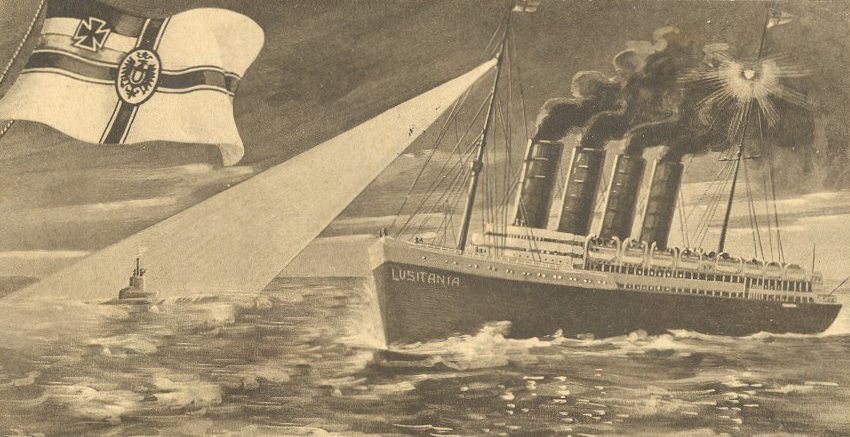
Sinking of the Lusitania, European postcard

Larson is best known for a certain flamboyant style of storytelling, meshing two or more sometimes unrelated story arcs to create a swelling crescendo of melodrama. His books bristle with energy even when artificially cultivated. His best known book, The Devil In the White City, works entirely because of this particular narrative mechanism, weaving together the tales of the Chicago World’s Fair and a ruthless serial killer

But in Dead Wake, it’s the inevitable confrontation between the Lusitania and the U-20 that drives the story, and Larson finely manages the tension.

He prefers to spend time with lesser known people aboard the Lusitania and barely looks at its most famous passengers — Alfred Gwynne Vanderbilt or the Broadway impresario Charles Frohman. Once the torpedo hits, you’re genuinely invested in situations all throughout the boat.

The book has a cinematic feel and comparisons with the film Titanic will surely be made. You can almost feel the urge to transform passengers like Pope or Prichard into the next Rose or Jack.

But the story never lapses into phoniness or boisterous, over-descriptive speculation for long. There are thankfully few of those artificial “she felt the wind in her hair” moments that hamper other narrative non-fiction book events. Larson is the master of this particular genre, and once the torpedo hits the ocean liner on that fateful May afternoon, he’s in full control of the story.

When you get to Dead Wake‘s halfway point, prepare to keep your afternoon open, because you won’t want to put it down.

Dead Wake:  The Last Crossing of the Lusitania
By Erik Larson
Crown Publishers

Categories
Holidays

On this Veteran’s Day, a salute to the Harlem Hellfighters!

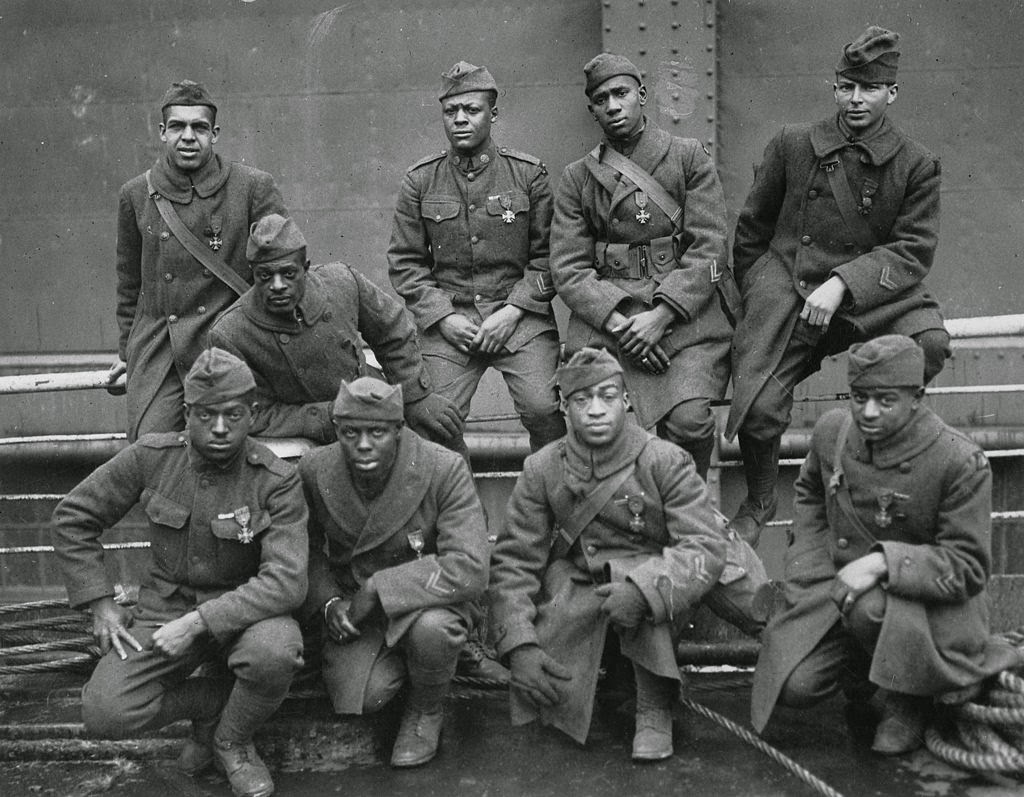
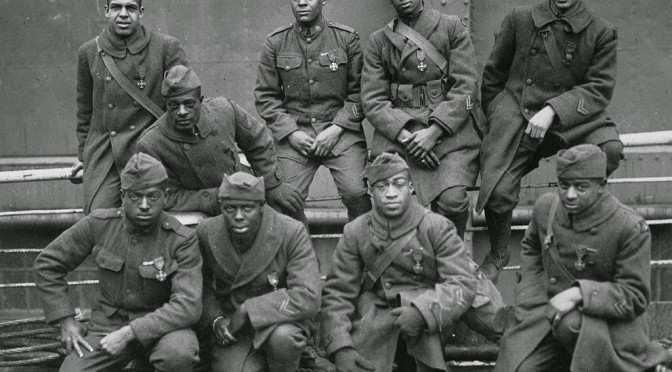
The men of the 369th who were awarded France’s Criox de Guerre for distinguished acts of heroism:  Pvt. Ed Williams, Herbert Taylor, Pvt. Leon Fraitor, Pvt. Ralph Hawkins. Back Row: Sgt. H. D. Prinas, Sgt. Dan Strorms, Pvt. Joe Williams, Pvt. Alfred Hanley, and Cpl. T. W. Taylor

New York’s 369th Infantry Regiment was America’s first African-American regiment engaged in World War I.  While many white American soldiers would have been happy to serve next to trained regiments of any color, intense racial prejudice in the United States forced many who signed up to fight for their country to instead be assigned to the French army.

Nicknamed the Harlem Hellfighters, the regiment served alongside the French during the summer and fall of 1918.  Perhaps the most famous soldier of the 369th was Private Henry Lincoln Johnson (at right) whose deadly efficiency on the battlefield earned him the grim nickname Black Death.  He became the first of dozens from the 369th to receive the prestigious Criox de Guerre, the equivalent of the American Medal of Honor.

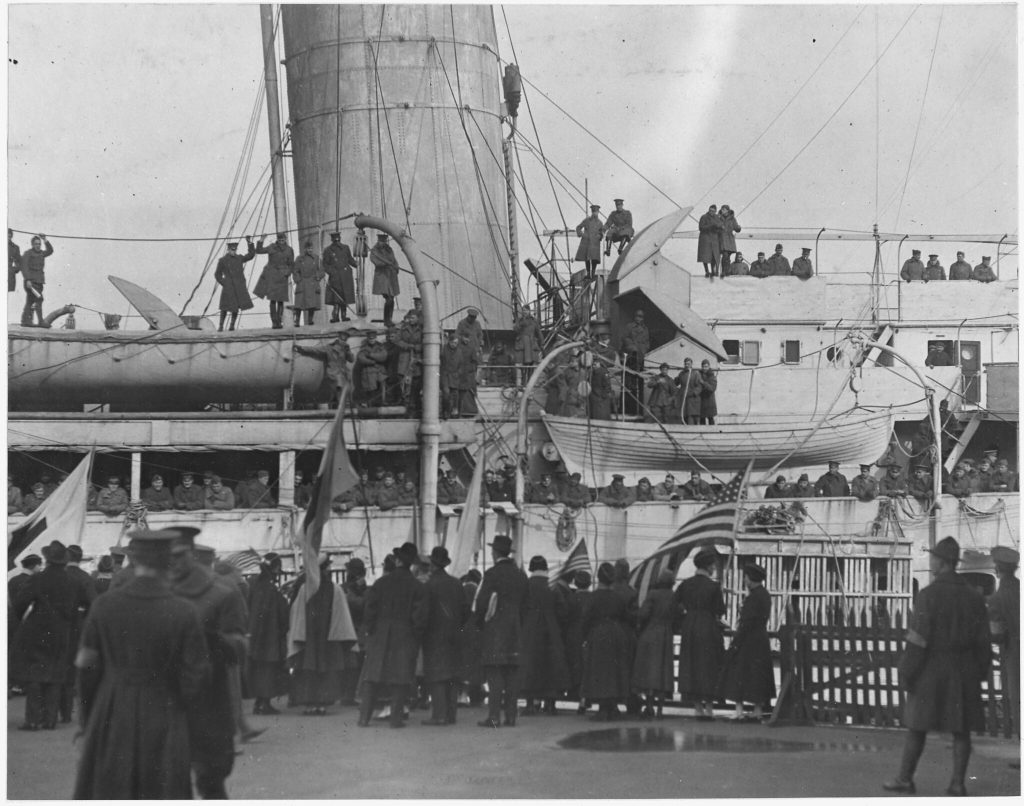
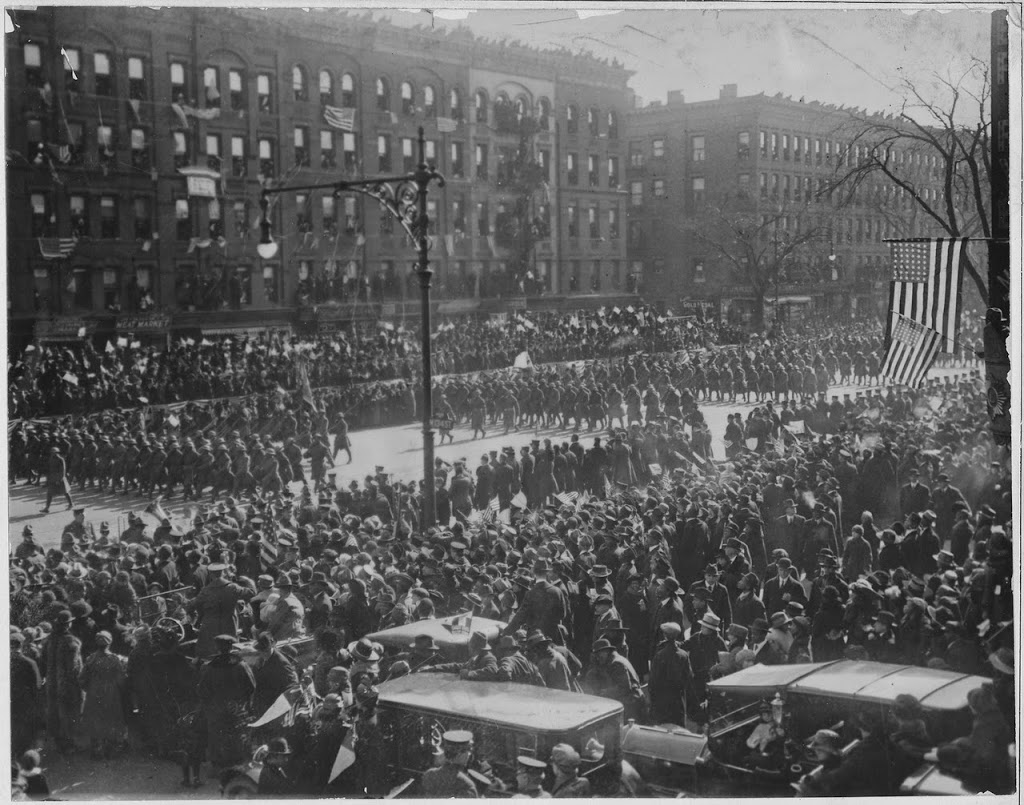
They returned to New York in February 1919 and marched through the streets of Manhattan on February 17 — from Greenwich Village to Harlem, in triumph.

From the New York Times the following day:

New York’s negro soldiers, bringing with them from France one of the bravest records achieved by any organization in the war, marched amidst waving flags and cheering crowds yesterday from Twenty-third Street and Fifth Avenue to 145th Street and Lenox Avenue.”

“At Thirty-Fourth Street the men marched under a shower of cigarettes and candy, and such tokens were pitched at them at other points in the line, but the files did not waver for an instant.

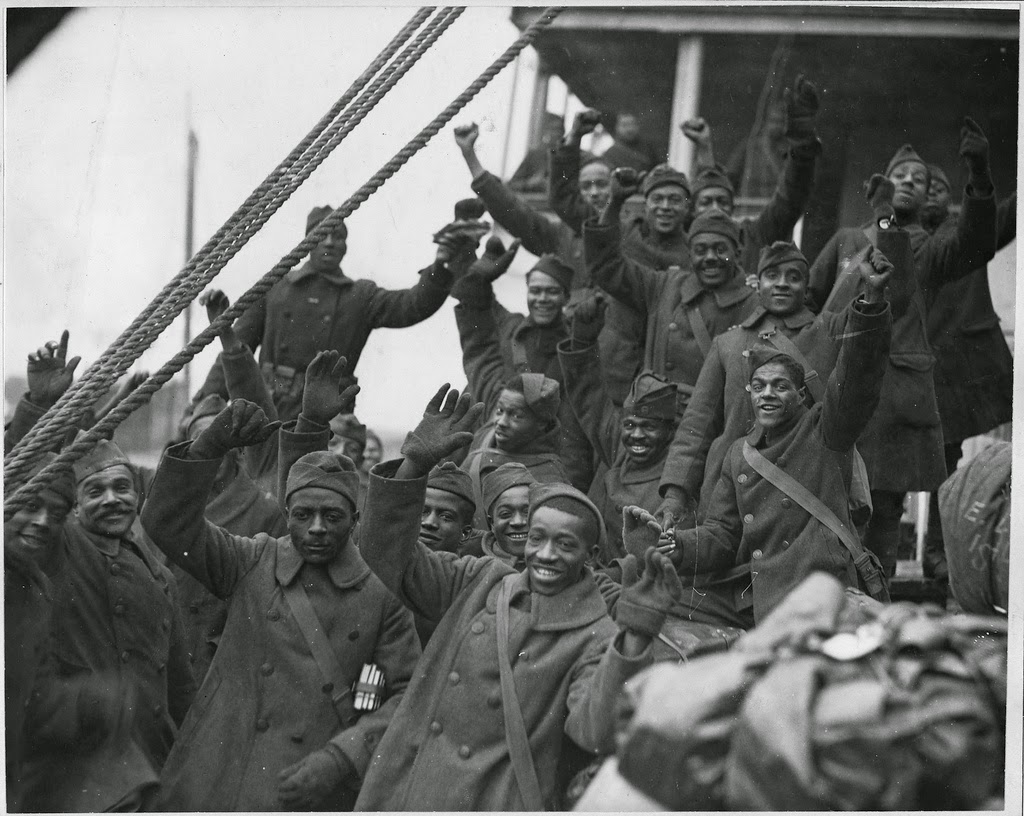
The men of the 369th photographed as they arrive back in New York City, 1919

From original caption (courtesy US National Archies):  “[The] 369th New York City Infantry (old 15th) [African American] troops and some of the 370th Infantry, Illinois [African American] troops, one of the most decorated regiments in the United States Army return to New York City. They saw [the] longest service of any American regiment as part of a foreign army, and had less training than any before going into action. They were never in an American division or brigade always being with the French.”

The 369th marching up Fifth Avenue.

The men are shown here in this assortment of newsreel footage from the war:

Pictures from the U.S. National Archives

Categories
True Crime Wartime New York

In 1914, a Jersey City fireworks and munitions plant exploded. Was it sabotage by the Germans?

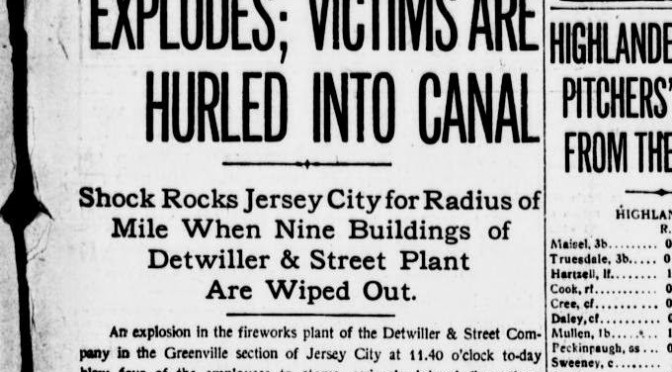
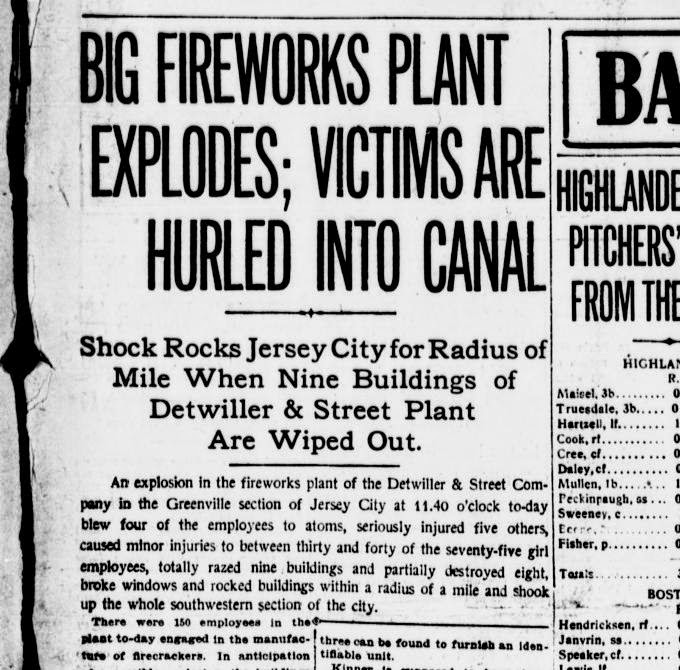
One hundred years ago today, the Detwiller & Street fireworks plant, located in the Greenville section of Jersey City, exploded in a horrible shower of fire and glass.  Four men were killed instantly and dozens of employees were injured.  Several surrounding buildings “fell to pieces like houses of cards.”   The rumble shook buildings throughout the city, up to Weehawken and even into Manhattan and Staten Island. [sources]

This was the sad, weird reality of munitions plants in the New York metropolitan area.  Staten Island was one of America’s largest producers of fireworks and saw its share of disasters, including a 1907 explosion in Graniteville.

But there was one huge difference between the 1907 Graniteville disaster and the 1914 Jersey City explosion — World War I.  Fireworks manufacturers during the war also produced munitions.  As the United States wasn’t yet engaged in the European conflict, some manufacturers were hired directly by the Allied nations.

The New York Tribune notes the unwillingness of executives to talk about the blast, and eventually the plant’s superintendent was eventually charged with “violations of the Crimes act, which makes it unlawful to store high explosives within 1,000 feet of a  highway unless in a fireproof vault.”

From the Evening World, October 3, 1914:

While the press reports of the day never explicitly mention Detwiller & Street’s munitions productions, it’s clear from later incidents that this was probably at least part of the plant’s output that year.  Another explosion at the very same plant in 1917 killed nine, all women.  A safety report clearly indicates then that “[t]he company is engaged in the manufacture of munitions for the Russian government.”  On hand to rescue some of the women was a Russian munitions inspector. [source]

This naturally leads to a more disturbing question — was the 1914 explosion sabotage by the German?

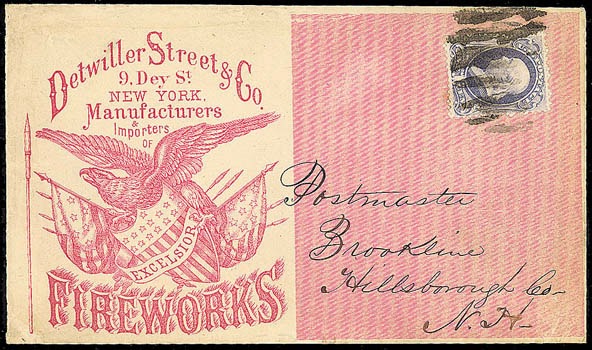
An early postcard from 1873.  The New York based Detwiller & Street specialized in “fireworks, time danger signals, railroad track torpedoes, etc.”  They were also responsible for the spectacular fireworks display at the opening of the Brooklyn Bridge.

That’s one suggestion according to a 1918 book The German Secret Service In America 1914-1918, listing a set of suspicious fireworks accidents in New Jersey before Oct. 3, 1914, Jersey City disaster. While these early accidents may have been due to increased munitions contracts in the hands of inexperienced employees, the authors admit ominously, “These explosions were the opening guns.”

German orders from that year make clear the focus on American targets.  From the German Secret Service book: “[A] circular dated November 18, issued by German Naval Headquarters to all naval agents throughout the world, ordered mobilized all ‘agents who are overseas and all destroying agents in ports where vessels carrying war material are loaded in England, France, Canada, the United States and Russia.”

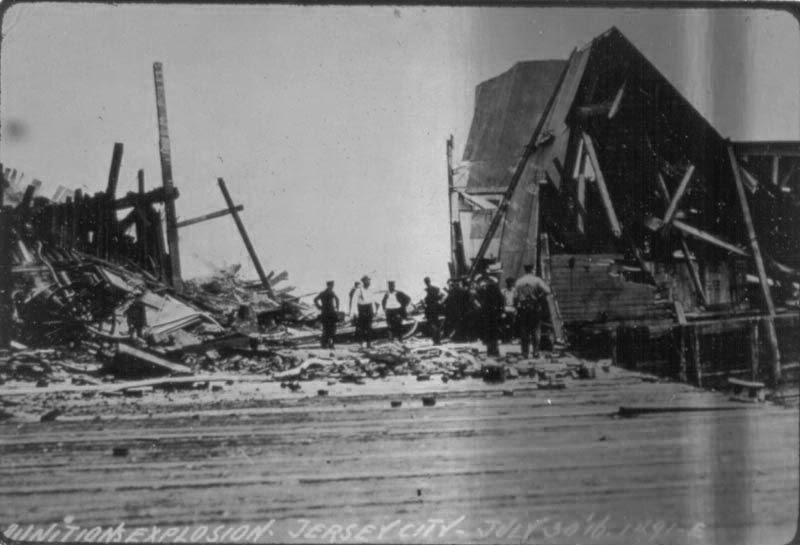
This had horrible consequence for the United States and those plants in New Jersey, New York and Pennsylvania in particular, leading to the greatest act of sabotage prior to America’s involvement in World War I — the Black Tom Explosion. (Pictured above: Aftermath of the Black Tom Explosion, courtesy Liberty State Park)

On July 30, 1916, a munitions depot on Black Tom pier in Jersey City was set ablaze by German agents.  The resulting explosion killed seven people on neighboring Ellis Island  in Jersey City and ricocheted through the metropolitan area, shattering windows in Times Square and over at St. Patrick’s Cathedral and shaking people from their beds in Brooklyn.  The Statue of Liberty also suffered damage from this act of sabotage.

And so it’s hard to read accounts of the Jersey City explosion from one hundred years ago and not imagine the possibility of sinister intention.


Categories
Wartime New York

The Women’s Peace Parade, a moody anti-war protest in 1914

Give Peace A Chance: Women take to the streets in a stunning parade of mourning

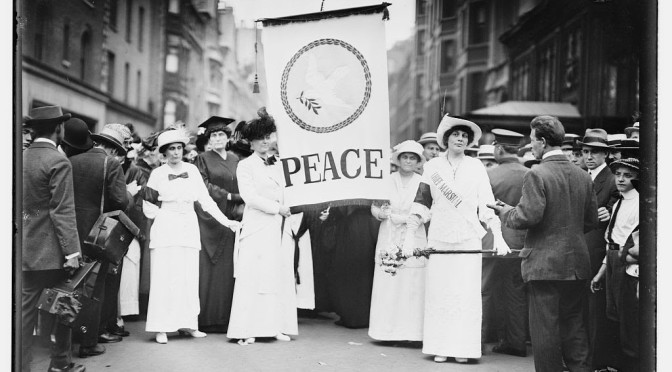
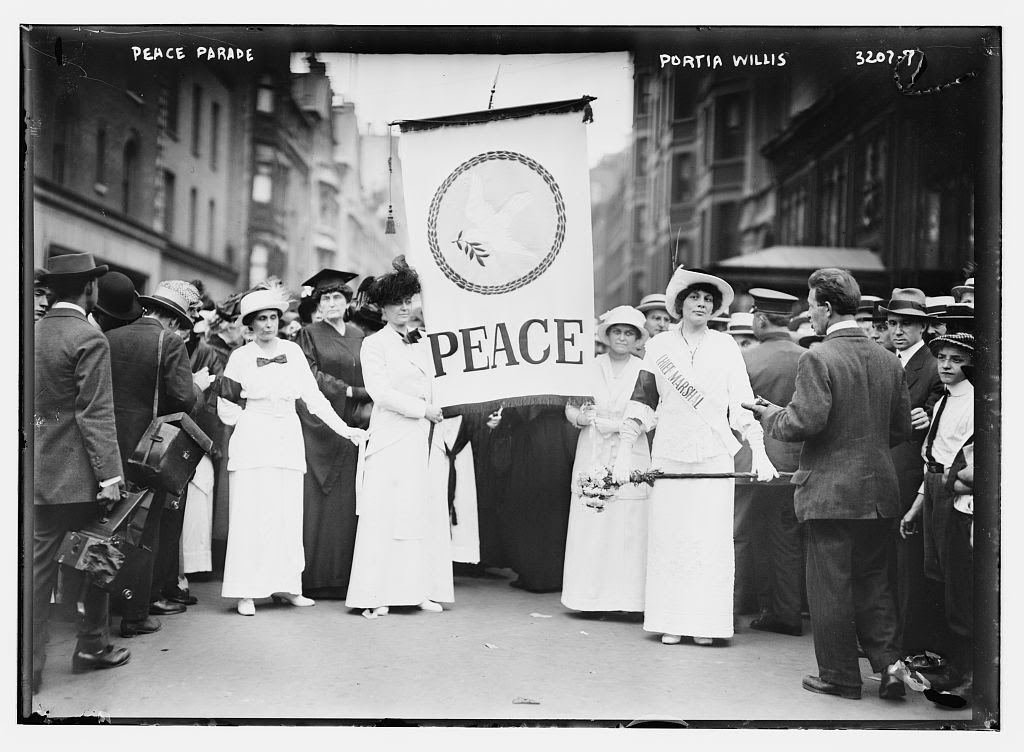
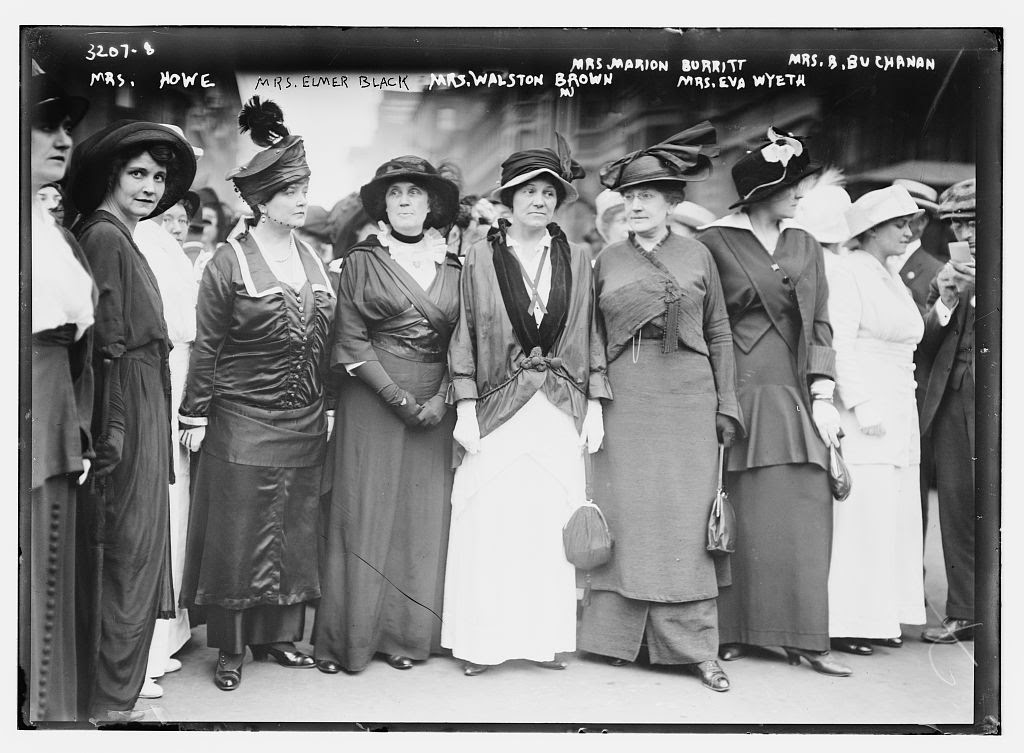
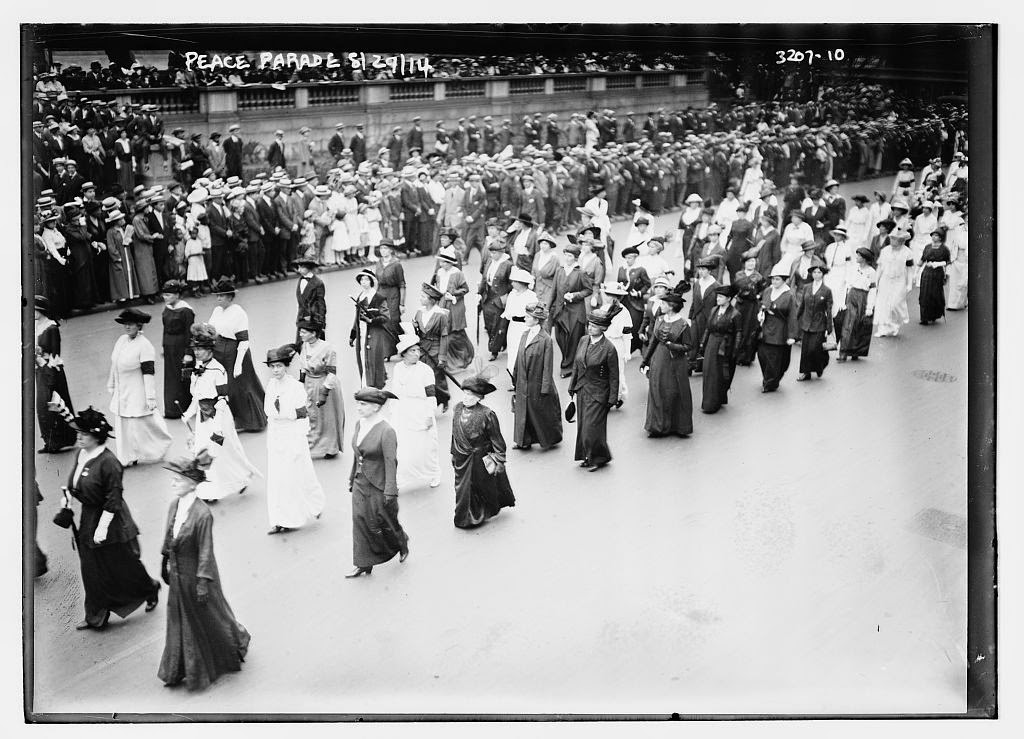
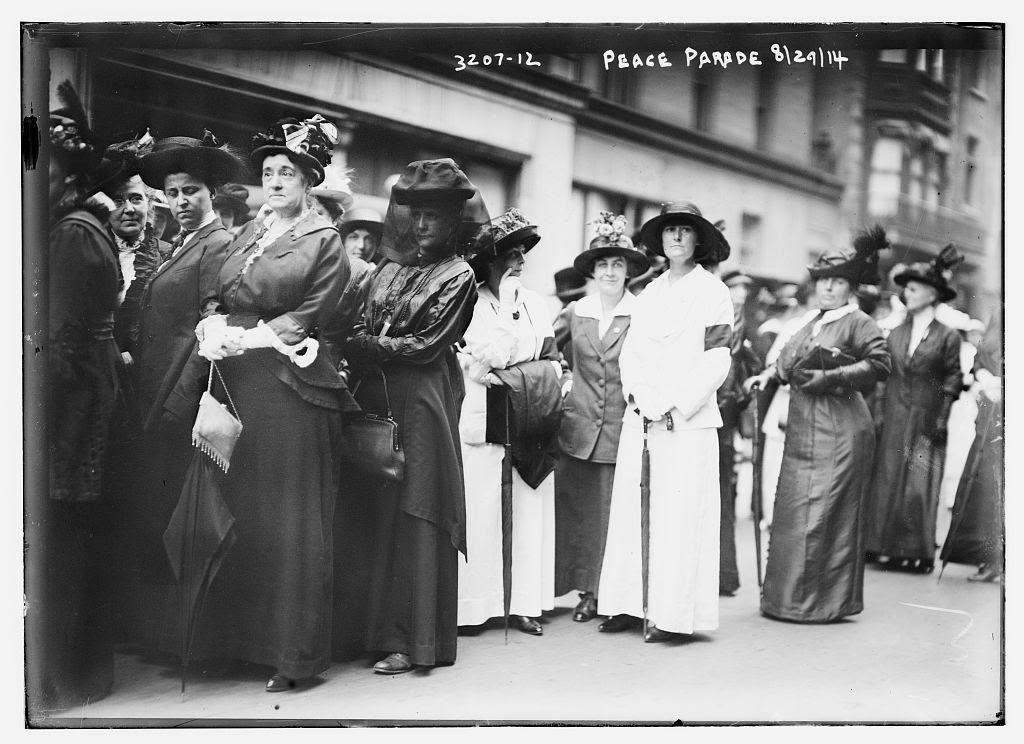
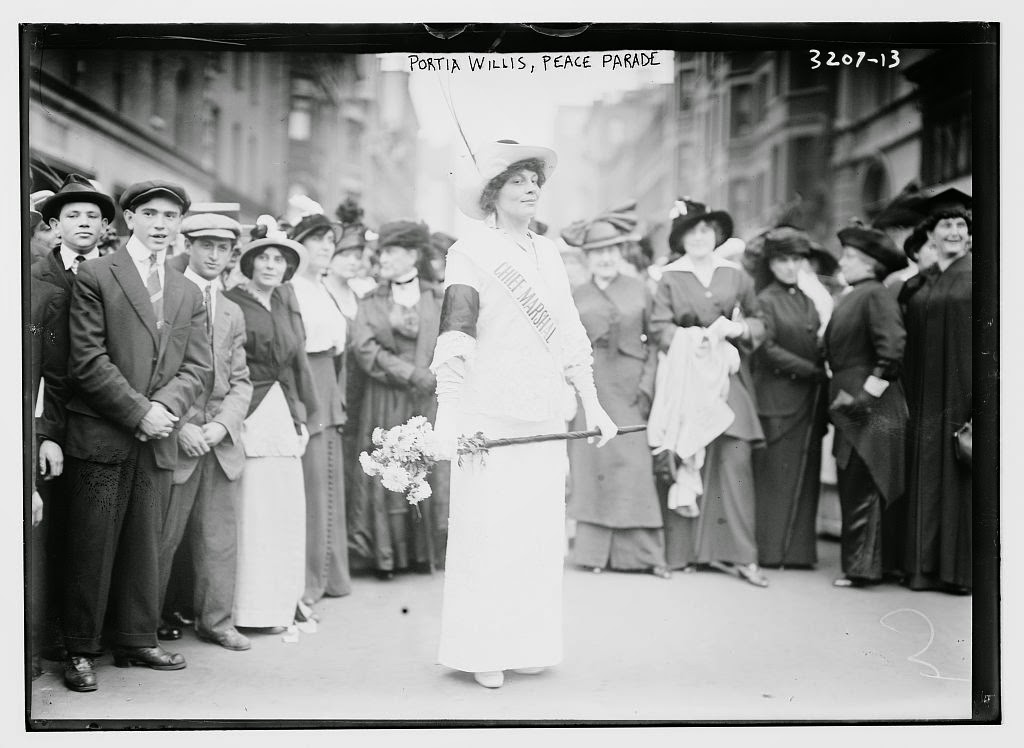
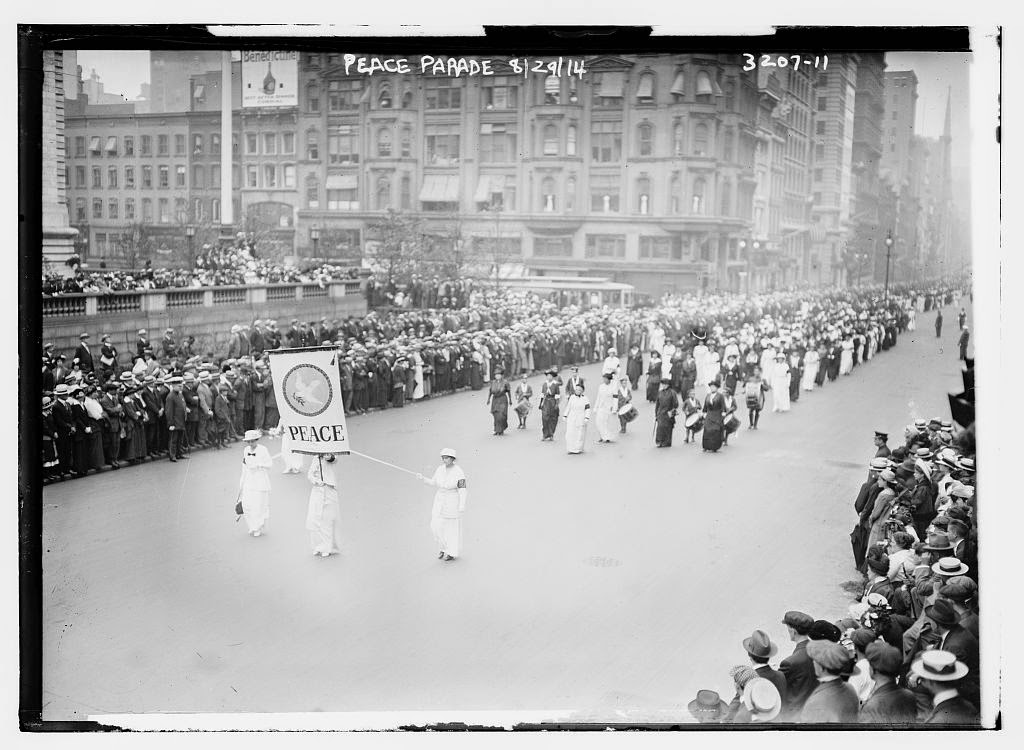
Below are some pictures of what’s possibly New York City’s first anti-war protest organized by women, on August 29, 1914.

War had erupted that summer in Europe, sparked by the assassination of Archduke Franz Ferdinand in late June and unfurling into a continent-wide catastrophe, as countries entered the fray on either side of the conflict.  Within weeks of the conflict, New Yorkers with strong ties to individual nations were raising money and even boarding ships to fight alongside their distant countrymen.

In other cities with sizable European populations — such as Montreal — people were already marching, calling for an end to the conflict.  And leading this call were women already involved in social organizations, in particular, suffragists with networks that reached into high society.

Protesting war has been a touchy issue in New York City. [See the Civil War Draft Riots for such a protest gone wrong.]  The mayor had expressly forbade parades in support of individual nations on New York streets lest a microscopic version of the European conflict erupt here.  Anti-war was often associated with socialist organizations and indeed, that August, several did march in Union Square.  But these were comprised largely of men.

Which makes the Women’s Peace Parade so unusual.  Prominent women met at the Hotel McAlpin in mid-August to plan what was essentially a mourning parade, with its participants — from all walks of life — dressed in black as though in a funeral procession. (As you can see in the pictures, many women also chose to wear white in a symbol of peacetime, garnished with black accessories.)

Many people didn’t quite understand what a peace protest even meant, seeing it as a wasted effort. One letter writer to the New York Times asked. “Will any of the women who intend to parade in protest of the war explain what they mean to accomplish by such a demonstration?”

While the parade drew from prominent individuals in the suffrage movement, others were simply not convinced.  Carrie Chapman Catt, one of America’s most famous suffragists, remarked, “If anybody thinks that a thousand, or a million, women marching through New York or talking about peace in the abstract will have any effect on the situation in Europe, it is because they don’t know the situation in Europe.”

But, in fact, there was a motivation.  One of New York’s leading activists Harriet Stanton Blanch — daughter of Elizabeth Cady Stanton — was very succinct about their motivation. “This is a movement for actual work. We intend to do something definite. We wish to have a meeting at The Hague Peace Conference called.”

The parade began in the afternoon, marching down Fifth Avenue from 58th Street down to Union Square. Women who either lived or shopped along the avenue now marched in formal procession down it, accompanied by the “ominous beat of muffled drums.”  There was occasional applause but otherwise “the general silence of the great gathering was considered the best evidence of understanding.” [source]

Among the marchers were Lillian Wald and the nurses of Henry Street Settlement.
The skies were appropriately gray.  Some participants hoped for rain actually.  “Every woman in the slow-moving line wore some badge of mourning, either a band of black around her sleeve or a bit of crepe fluttering at her breast, as a token of the black death which is hovering over the European battlefields.” [source]

The parade marshal was the young Portia Willis, a magnetic lecturer on the suffragist circuit. .

While the organizers announced there was to be only one flag on display in the parade — the flag for peace — one other crept into the proceedings.  “The smallest Boy Scout was Alfred Greenwald, 4 years old, who … attracted much attention.  Little Alfred unknowingly broke the most stringent rule of the parade by carrying a flag.  He carried a United States flag but it was furled.” [source]

Unfortunately I was not able to locate any pictures of the second half of the parade — with 250 African-American women in solidarity, followed by “a number of Indian and Chinese women” and carloads of elderly women and babies.

Those who witnessed the parade would not soon forget it, especially in the following months as the conflict that would become known as World War I grew to eventually encompass the United States.

Categories
Wartime New York

Voyage into war: New Yorkers enlist for France a century ago

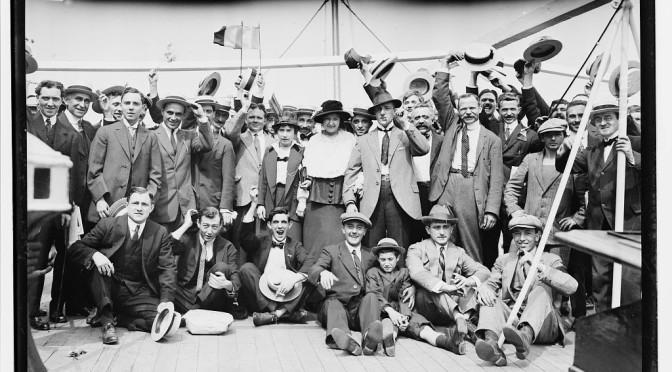
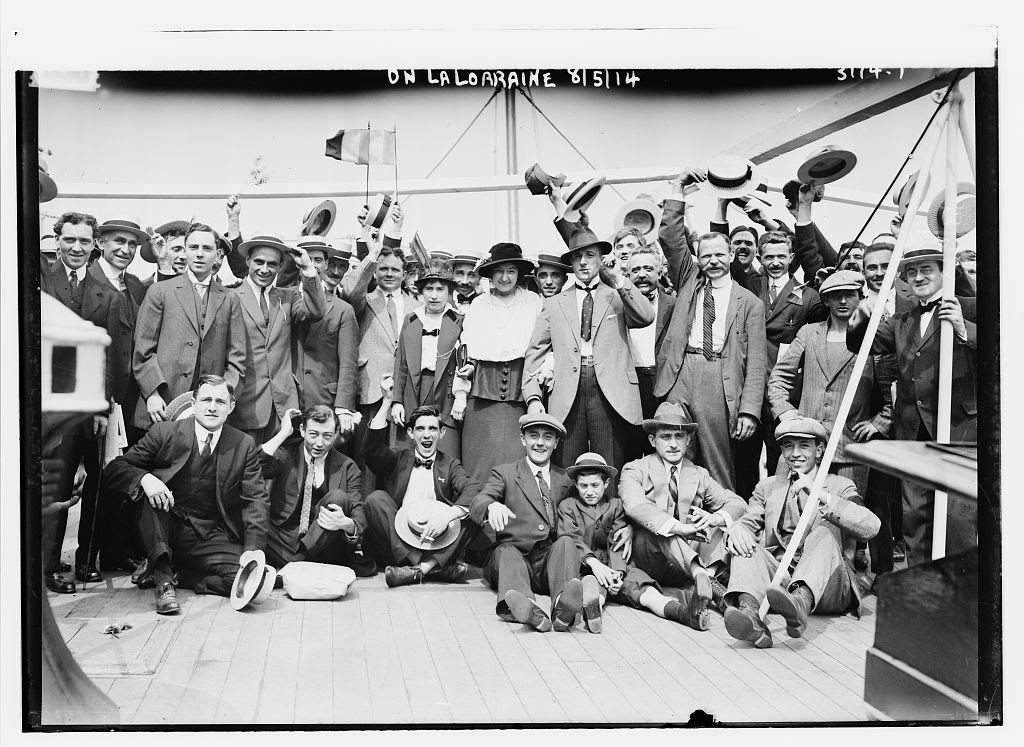
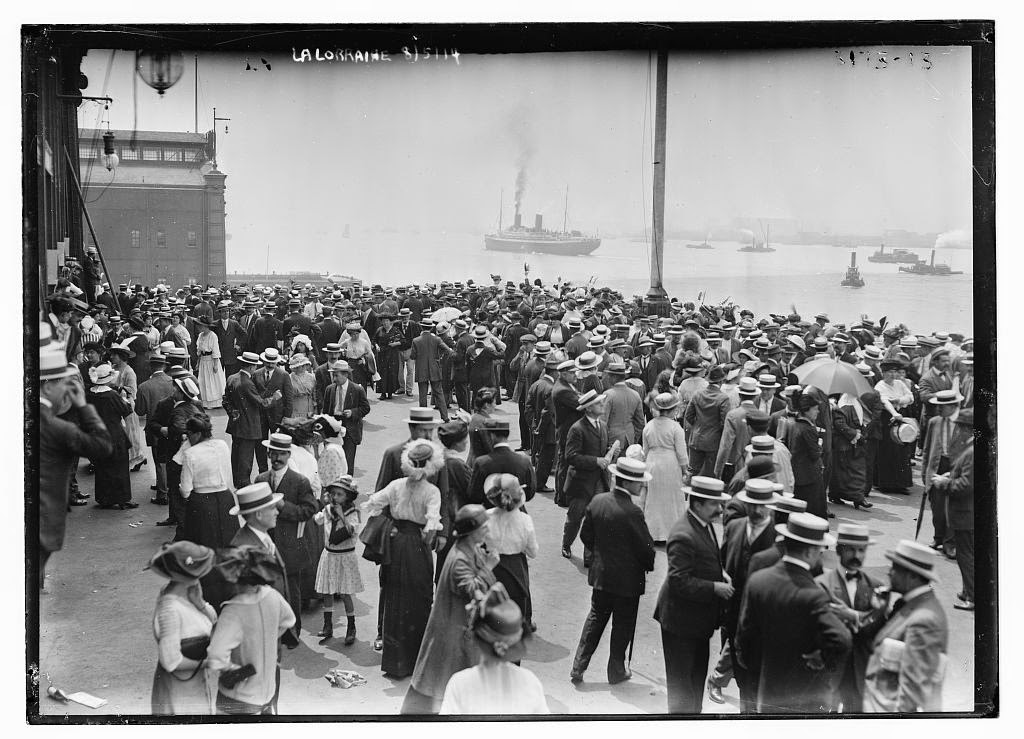
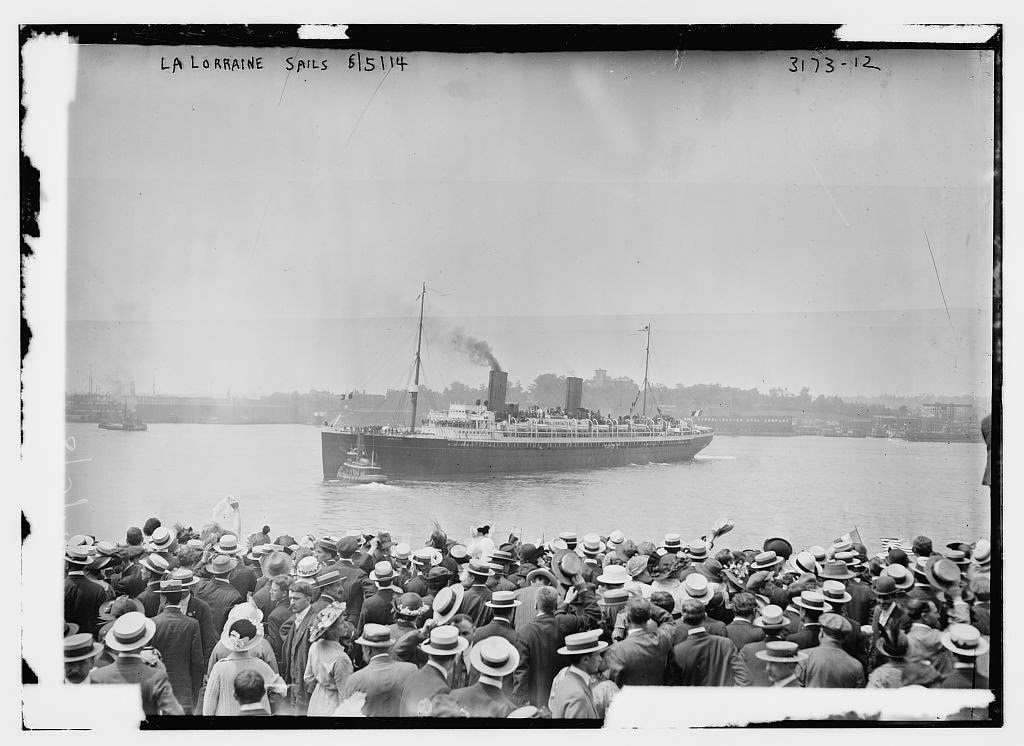
Men and women aboard La Lorraine, heading to France and the prospects of a grave war.

War was newly ablaze in Europe one hundred years ago today. A latticework of alliances was slowly drawing virtually country on the continent into a conflict which would rage for years and later become known as World War I.  Austria-Hungary and Germany had already declared war on Russia one century ago, and within the week, France and Britain would join in.

The effect on the streets of New York City was immediate.  Many had arrived from the warring countries via Ellis Island.  A great many New Yorkers with strong ethnic and regional ties either to Germany or Russia lived alongside each other.

A great many wished to return home and fight for their countries. Many men were reservists for their respective countries and rushed to their consulates in New York to enlist.  “Germans, Austrians and Hungarians paraded the streets singing the songs of their fatherlands,” said the New York Times. “The Russian, French and British reservists did not display their patriotism in the streets, but they registers it at their consulates and let it be known that they were eager to fight for their native land.”

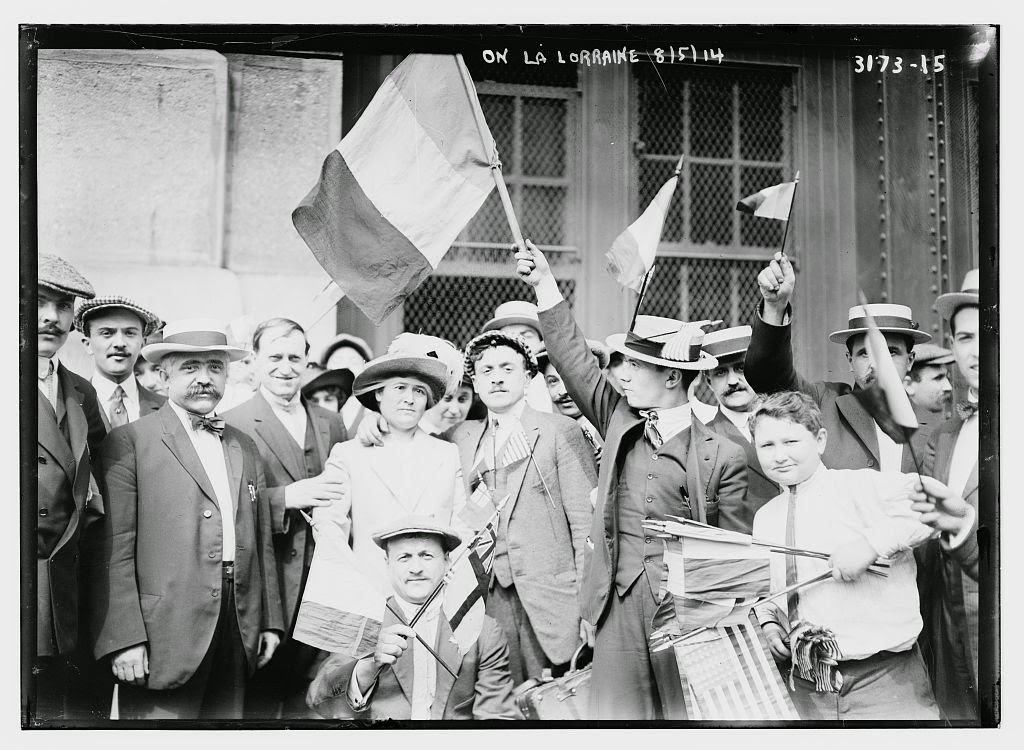
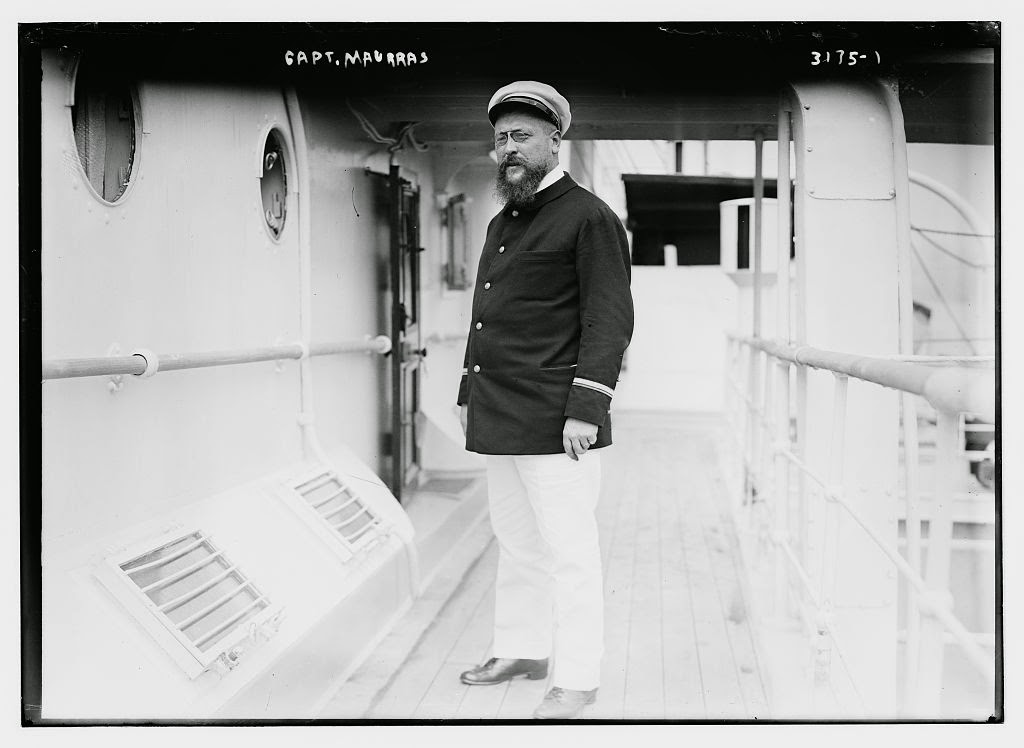
On the morning of August 5, 1914, the French steamship La Lorraine — fatefully named for a region which would much later be a scene of great warfare — left the dock of New York City with over 10,000 people, not only French reservists heading home to reenlist, but many Americans who volunteered to serve alongside them.  “Among the volunteers was an entire class of young engineer students from a school in Chester, Penn.”

“‘It made us all very grateful.’ said M. d’Anglade, the French Consul General, ‘for it made us think in offering their services to France these young Americas had remembered the Marquis de Lafayette.’ “
[source]

Even Mayor John Purroy Mitchel came by to wish the vessel a safe voyage.  As the boat sat at dock, reservists and other patriotic men and women aboard the vessel began singing “Marseillaise,” their friends and loved ones at the dock joining them in song — “the loudest and most enthusiastic demonstration that had been made on the waterfront in many months.” [source]

This voyage, believe it or not, had a deep impact on New York restaurant culture.  Aboard the ship were dozens of chefs, cooks and bakers, many employed by noted restauranteur Louis Mouquin, who tearfully bid adieu to his colleagues. “[H]e did not believe a French chef or waiter would be left in New York in another week,” said the Evening World.

Here are some moving pictures of these French volunteer bidding farewell to New York.  Many of them would never return. (Pictures courtesy Library of Congress)

Categories
Wartime New York

Charlie Chaplin on Wall Street: The tale behind the 1918 photo

The comedy legend Charlie Chaplin was born 125 years ago today in London, so I thought I’d use the opportunity to re-post one of my favorite photographs of Wall Street.

 
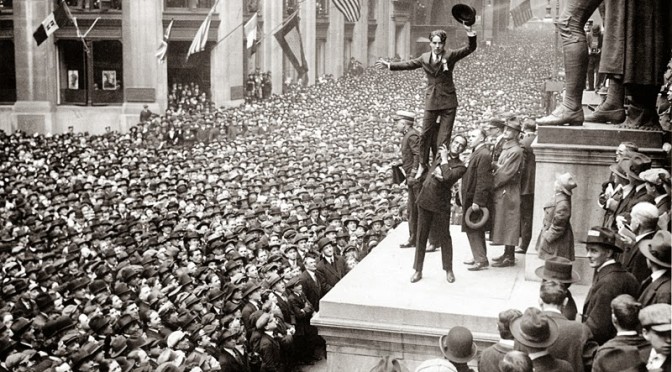
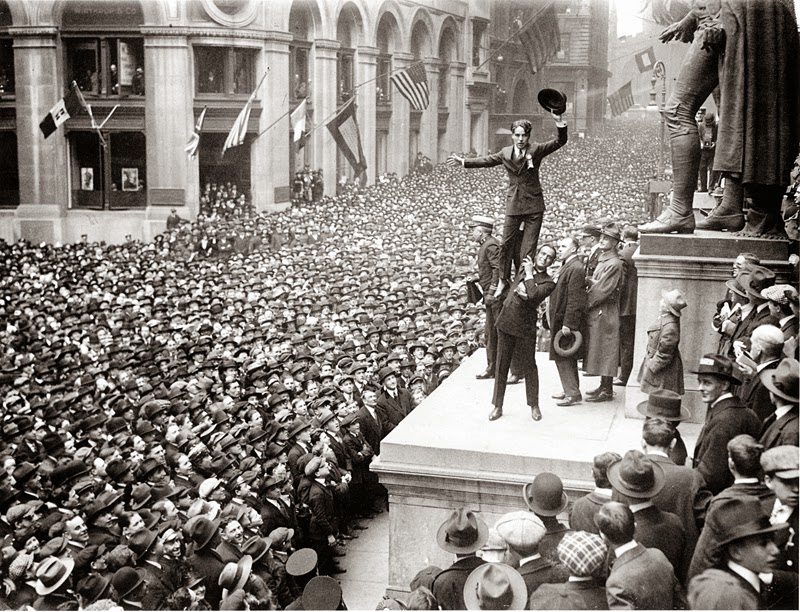
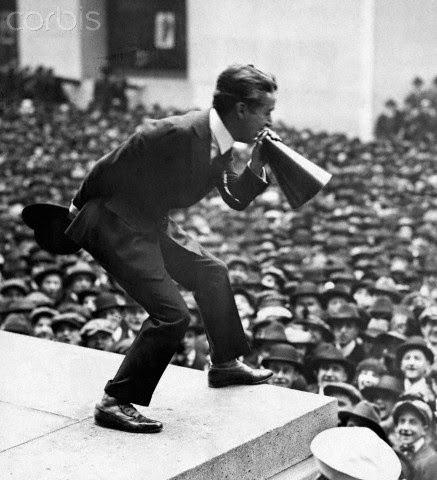
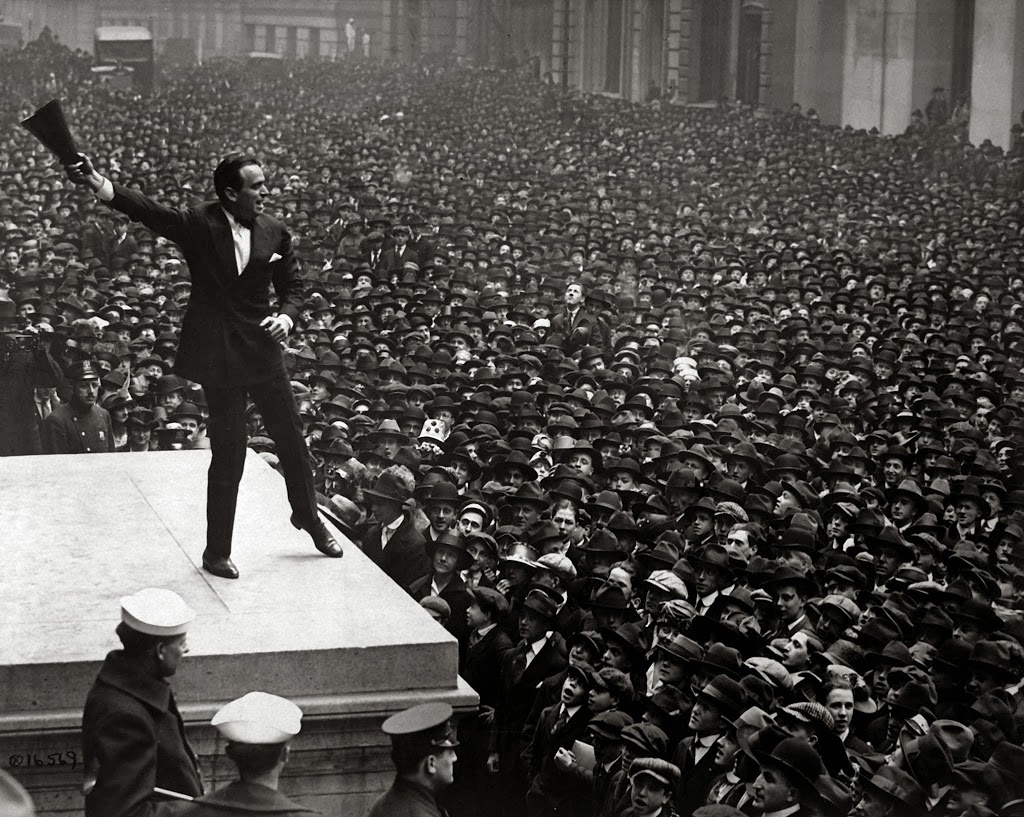
In the 1918 photo above, Charlie Chaplin and Douglas Fairbanks draw tens of thousands to Wall Street and the foot of the United States Sub Treasury building (i.e. today’s Federal Hall) to drum up support for World War I war bonds (or, more precisely, Liberty Bonds).
 
The United States had entered the conflict the prior year, on April 6, 1917, and began selling bonds to raise funds for the war effort.  Although many Americans were caught up in a patriot fervor, war bond sales were initially quite weak.  Most Americans in the late 1910s had never bought a bond of any kind.
 

To promote sales, the government began enlisting celebrities from several fields of entertainment, most notably motion pictures.  Since the New York area was filled with film stars — Hollywood not yet being the center of the film business — its streets were soon filled with dutiful movie stars, extolling the patriotic and moral virtues of supporting their county through bond sales.

 
My favorite instance of this was the sale of doughnuts — considered a symbol of wartime — on the street by glamorous movie stars like Martha Mansfield.  The Sub Treasury building, New York’s largest bond repository, was often the center of such rallies and fund drives.  (There were even doughnut auctions held on the steps here.)  It made sense to bring the biggest stars to the Sub Treasury to drum up the most publicity.
 
And so, on April 9, 1918, as the New York Tribune headline goes, “20,000 Throng Wall Street to Hear Movie Stars Tell How To Win War.”
Chaplin threw himself into the war effort, embarking on a nationwide tour to promote the sale of bonds.  That year he would make a propaganda film called The Bond:
 
 
But there may have been a bit of self-promotion in his appearance at the Sub Treasury.  His film A Dog’s Life would conveniently open in movie theaters five days later.


People weren’t used to hearing their movie stars speak in 1918.  “I never made a speech before in my life,” he proclaimed through a megaphone that noon, standing in front of the statue of George Washington. “But I believe I can make one now.”

The dashing Fairbanks — known for swashbucklers and romances — happily broke character, goofing around with Chaplin to the delight of the crowd.  “Folks, I’m so hoarse from urging people to buy Liberty bonds that I can hardly speak.”

As eager as audiences were to hear their matinee idols, it was their horseplay that caused the greatest satisfaction:

“It was difficult for the lay ear to determine whether Chaplin or Fairbanks got the most enthusiastic reception.   But there one was feature that got more than either. That was the combination of Chaplin and Fairbanks.   The later carried the former around on his shoulders, and the 20,000-odd crowd howled with delight.”

Afterwards, Fairbanks and vocalist Harvey Hindemeyer led the crowd in a rendition of “Over There,” the American war anthem written by Broadway impresario George M. Cohan the previous year. (The story behind that song was featured in our podcast on the birth of the Broadway musical.)

Mary Pickford was also on a war bonds tour through America at this time.  The following year, Pickford, her secret lover Fairbanks, Chaplin and the film director D.W. Griffith would start the film studio United Artists.


Categories
Wartime New York

Decorating the Flatiron Building with cannons and silver coins

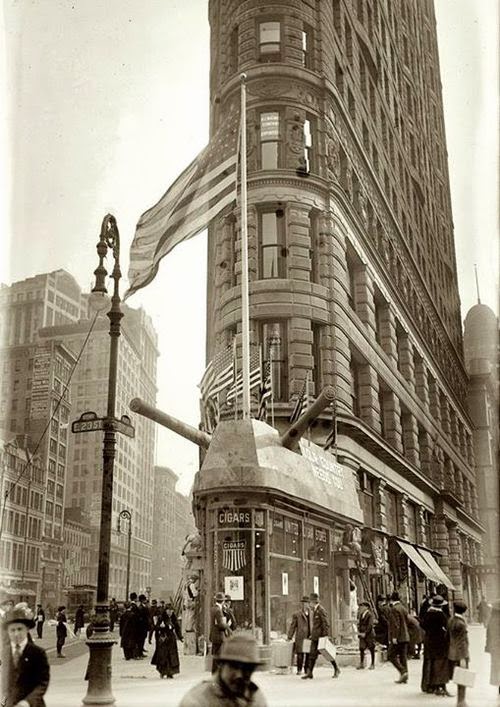
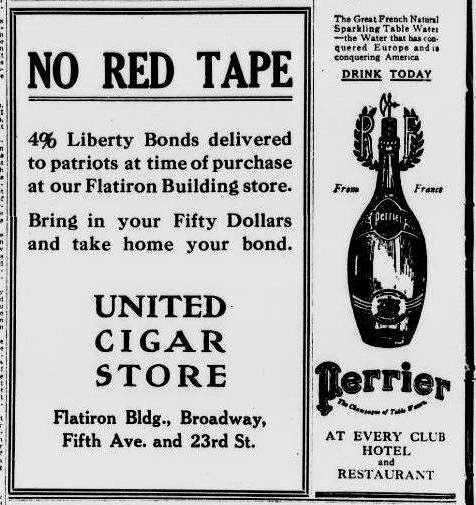
At the very first-floor corner of the Flatiron Building once sat the trusty United Cigar Store.  Being so striking a location in such an unusual building, the cigar store was often decorated occasions.

For instance, one hundred years ago today (April 1, 1914), the windows were filled with 7,150 silver dollars as part of a promotion by the New York Tribune for a newspaper quiz.

“The money is in shining, new silver dollars, and the glittering pile possessed marked magnetic qualities, drawing thousands of shoppers and business men.  The situation of the window gave Broadway and Fifth Avenue equal and simultaneous opportunities to gaze at the treasure.” [source]

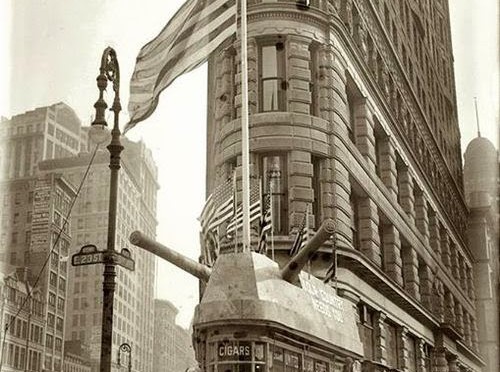
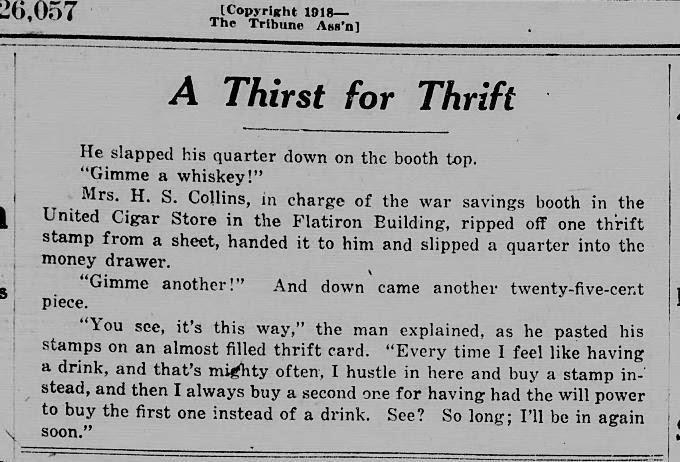
Something more unusual arrived atop the little cigar store a few years later.  With America’s entry into World War I, the patriotic owner of the cigar store donated the space for a recruiting center for the U.S. Navy.  Atop the store were decorative flags and replicas of naval cannons.  A war-stamps salesman would stand astride the cannons and beckon pedestrians to purchases war stamps.

The flamboyant show had a profound effect, as illustrated in this front-page anecdote from March 20, 1918

For a time, the cigar store was one of New York City’s centers for the war effort, an ideal and attractive spot in one of New York’s busiest intersections.  During one such campaign drive, society ladies operated the booths inside while the military band played on the roof, between the cannons.  During the day, there were various demonstrations on front of the cigar store, including one for the Browning machine gun!

To give you a little bit more context of how dramatic this all was, down the street in Union Square sat a wooden Naval battleship, the U.S.S. Recruit.  (Read more about New York’s World War I efforts in my article last year on the history of the wartime doughnut.)

Categories
Wartime New York

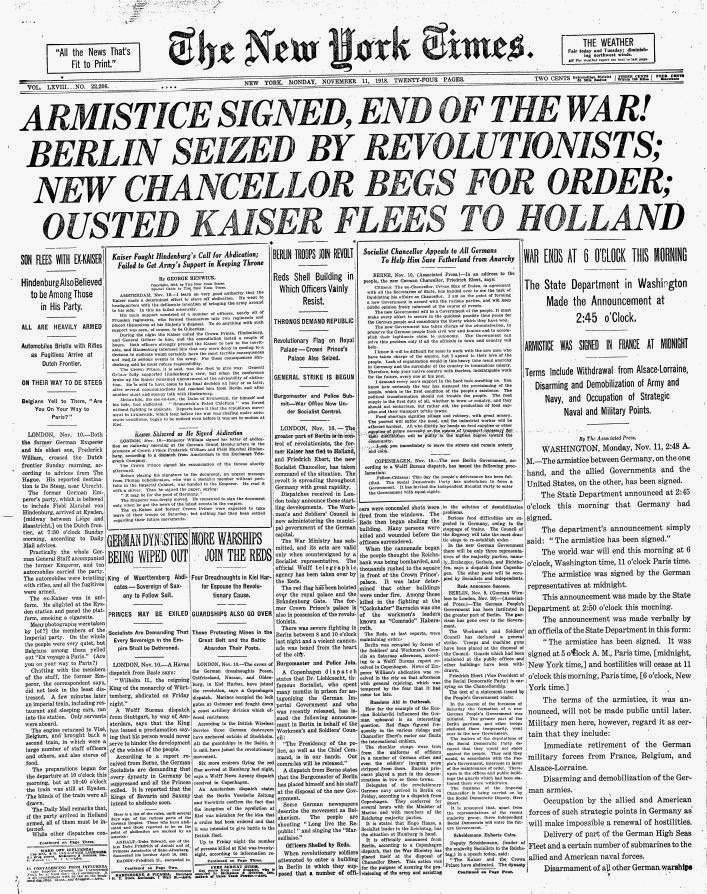
The end of war: New York newspapers celebrate Armistice Day and the end of World War I

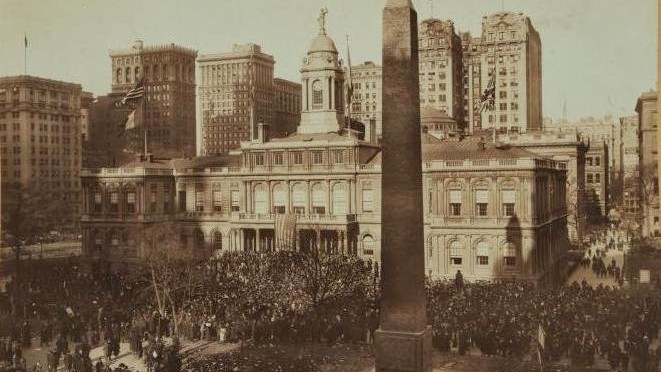
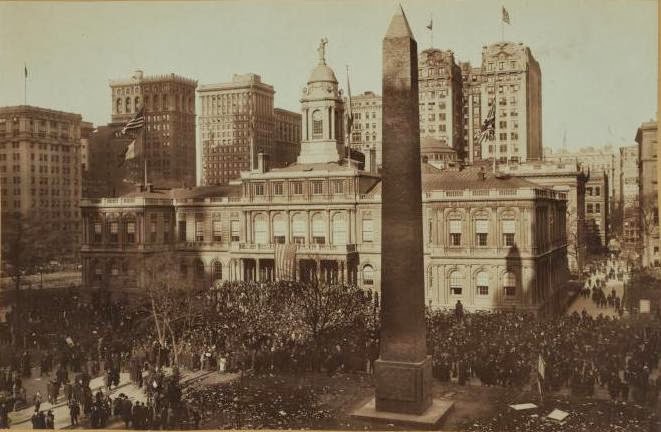
Armistice Day 1918: An impromptu gathering of New Yorkers gathered in front of City Hall. (NYPL)

Today is Veterans Day in the United States, a holiday devoted to the memory and service of those in the American armed forces.  While this is a commemoration of all men and woman who have served — during war and peace-time — the specific date of Veterans Day (November 11) derives from one particular moment — the end of World War I, on November 11, 1918.

By 1919, several individual states had already made Armistice Day a holiday.  According to the New York Tribune, the first Armistice Day parade that year took place at four in the morning, when Brooklyn post office workers and a thousand other well-wishers took to the streets in front of Brooklyn Borough Hall.

Armistice Day was declared a national holiday in 1938.  At the completion of World War II, the national holiday was expanded to include those who had served in that war, officially renamed Veterans Day in 1954.

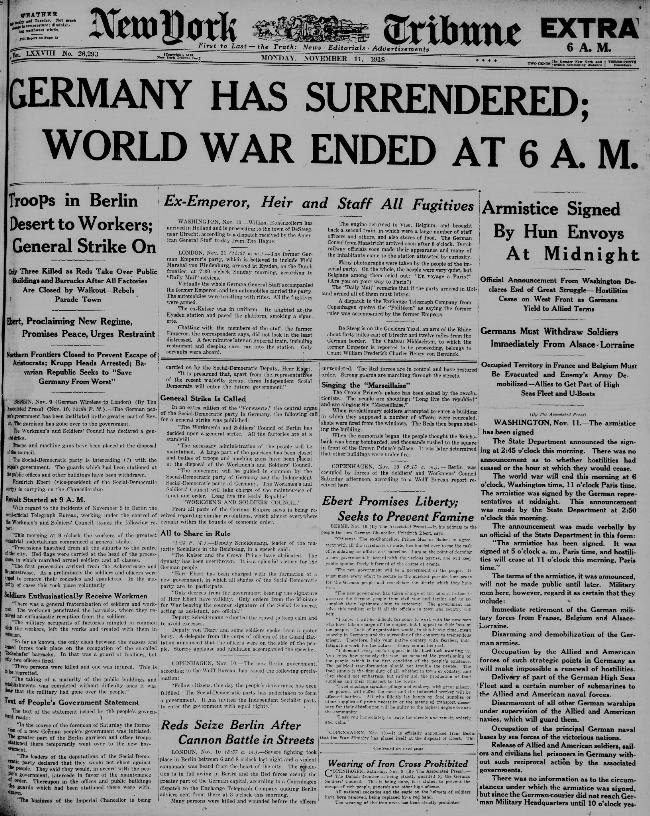
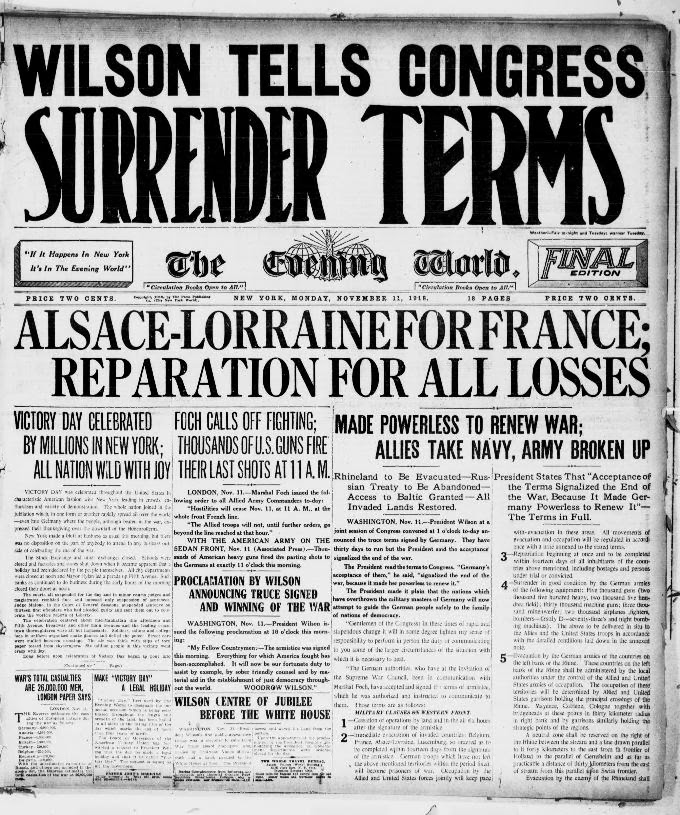
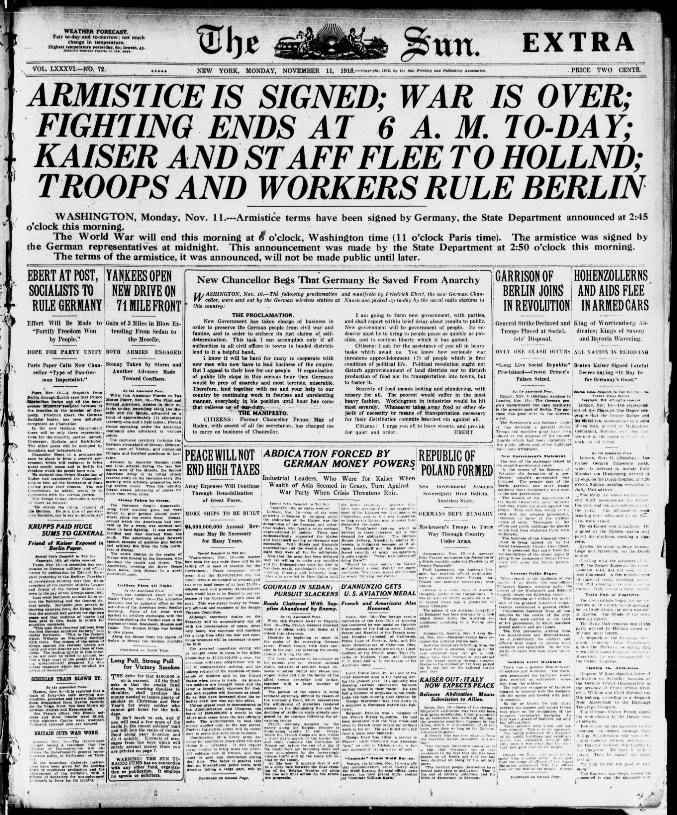
But I do find it interesting that the date itself commemorates a specific event, and one that brought a flood of relief and passion to millions of people around the world.  Here’s how the major New York City newspapers presented the event to their readers:

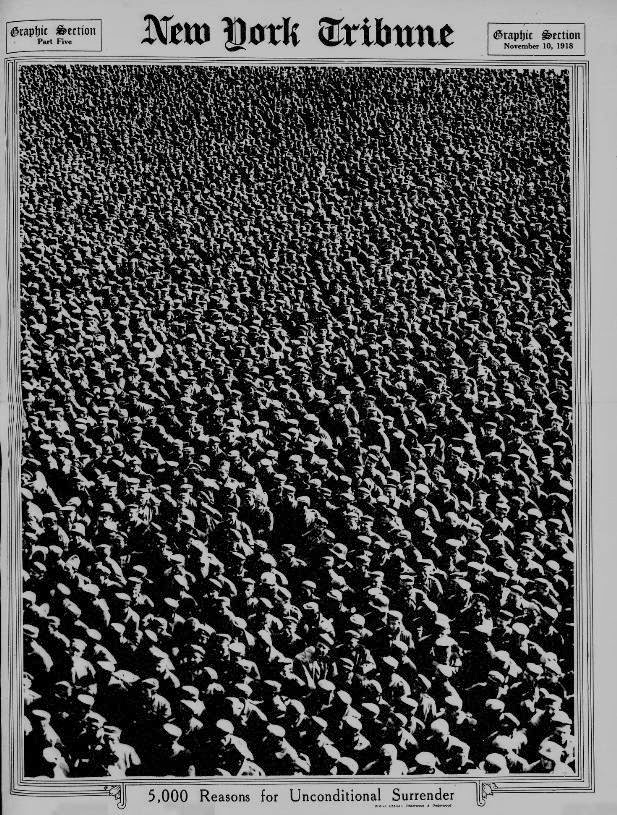
  The New York Tribune, November 10, 1918

The New York Tribune, November 11, 1918

 
A font-kerning nightmare! The New York Evening World, November 11, 1918:

Semi-colon heaven! The New York Sun, November 11, 1918

The New York Times, November 11, 1918

Categories
Podcasts

PODCAST: New York Public Library

The New York Public Library may be one of the most revered libraries in America, but it took a farflung combination of bookworms, millionaires and do-gooders to make it into the institution it is today. Also: find out why the architectural style of the Beaux Arts sometimes reminds us of an old French prostitute.

Listen to it for free on iTunes or other podcasting services. Or you can download or listen to it HERE

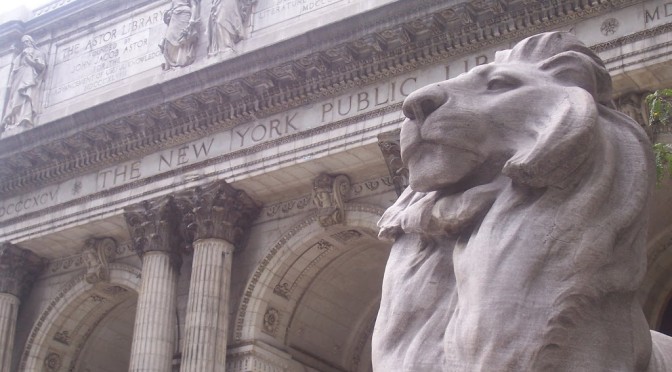
Before the lions of the New York Public Library — now less imposingly called the Humanities and Social Sciences Library — parked themselves at 40th and 6th Ave, the Croton Reservoir stood imposingly there, holding the city’s water supply. As you can tell from this picture, it looked a bit like an Egyptian pyramid, or perhaps a alien spaceship.

This was a distribution reservoir, which received water from a larger ‘receiving reservoir’ in what is now Central Park, but what was then on the outskirts of town.

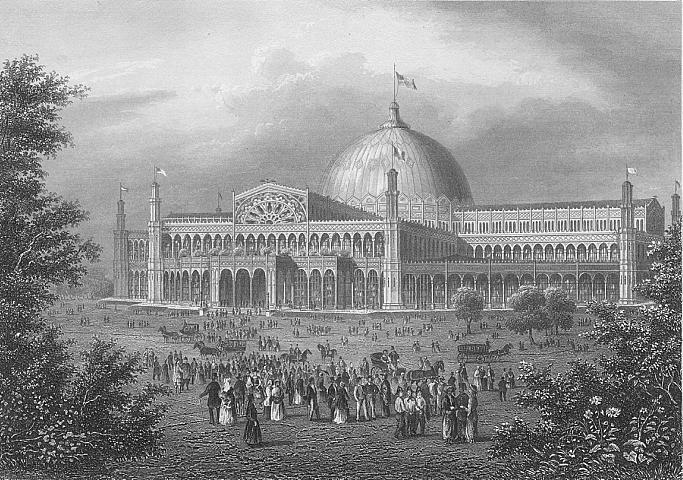
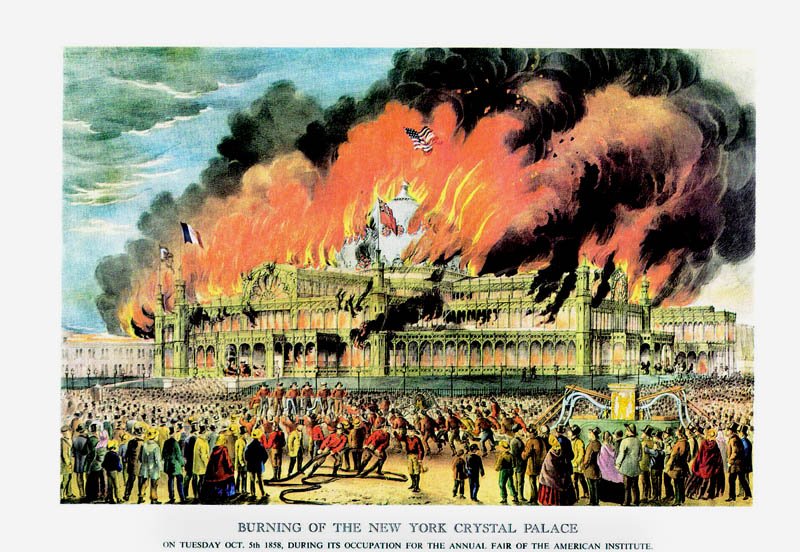
Meanwhile, the space now considered Bryant Park was, in the 1850s, the location of the New York Crystal Palace, home of America’s technological and engineering marvels. Here’s a look at the Crystal Palace in all its glory:

And a dramatic illustration of its final moments, felled in a quick burning fire.

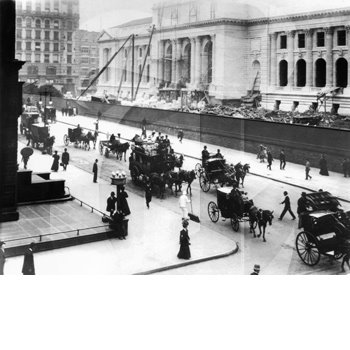
The construction of the library took nine years — sixteen if you consider the time from original design to dedication. The most ambitious marble building of its time, it was covered in Vermont marble so carefully chosen that two-thirds of the shipped stone was rejected for not being refined enough. The marble is at a thickness of almost a foot all around. The net effect even now gives the structure an immovability that makes the modern skyscrapers around it seem light and temporary.

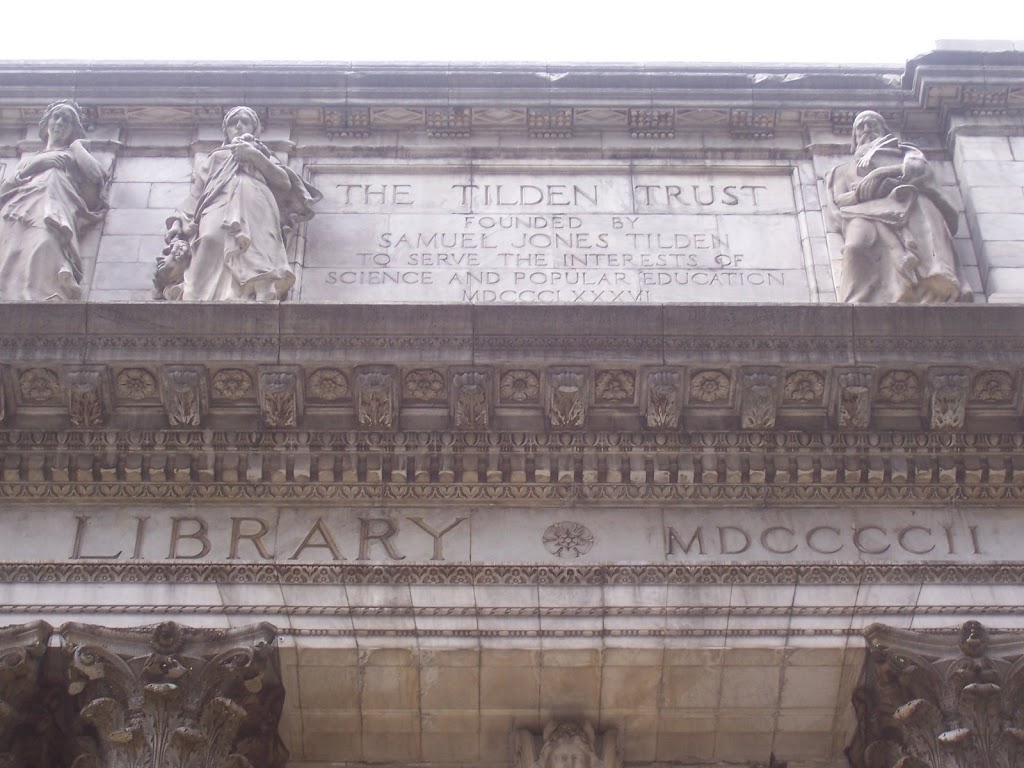
On the frontispiece above the entrance to the library is a tribute to its three creators — millionaire John Jacob Astor, collector James Lenox and former governor Samuel Tilden:

However, the area of 41st street that runs between 5th and 6th Avenue is now called ‘John Bigelow Plaza’, after the man who brought the Astor and Lenox collections together with the Tilden Trust.

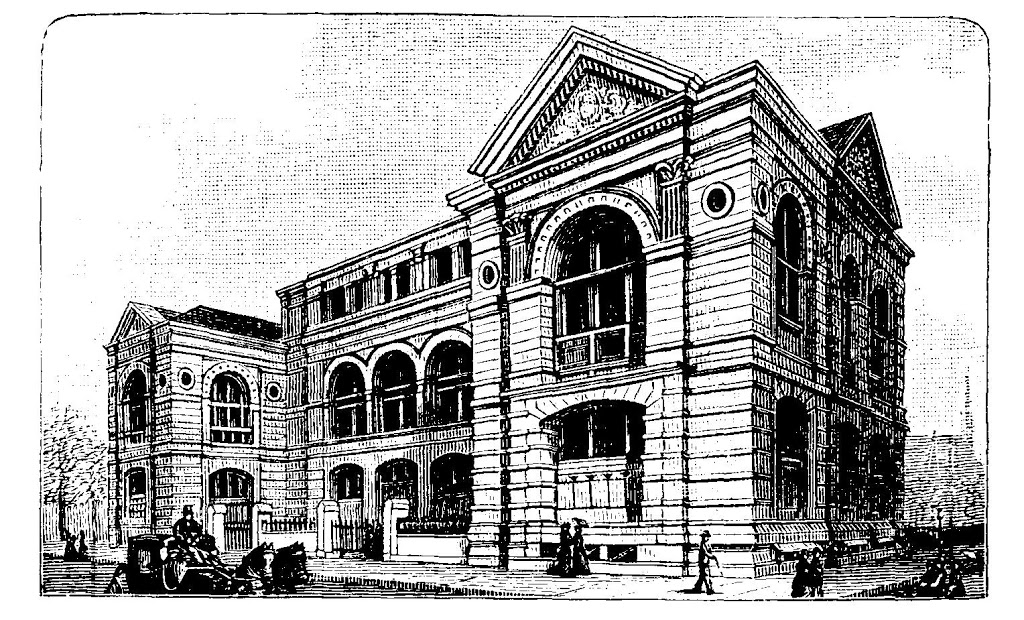
James Lenox has originally kept his collection in his own library on 5th and 70th street. This scratch illustration displays Lenox’s ‘indestructible’ limestone library, which housed most of the items held at the Public Library today, including Lenox’s personal copy of the Gutenberg Bible.

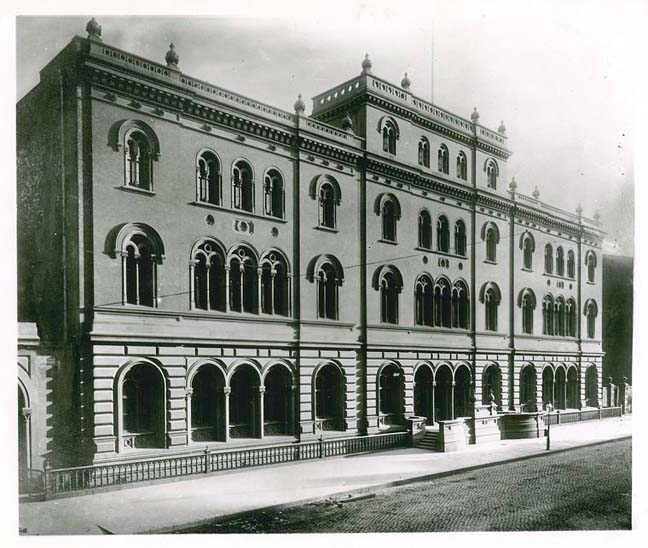
Meanwhile, the rest of the collection came from the Astor Library, constructed with money bequeathed by the millionaire. Thankfully the building remains pretty much intact, thanks to its present occupants, the Public Theatre, whose decades of success on Broadway, off-Broadway, dance, performance art and especially Shakespeare in the Park would have confused but satisfied the building’s original benefactor.

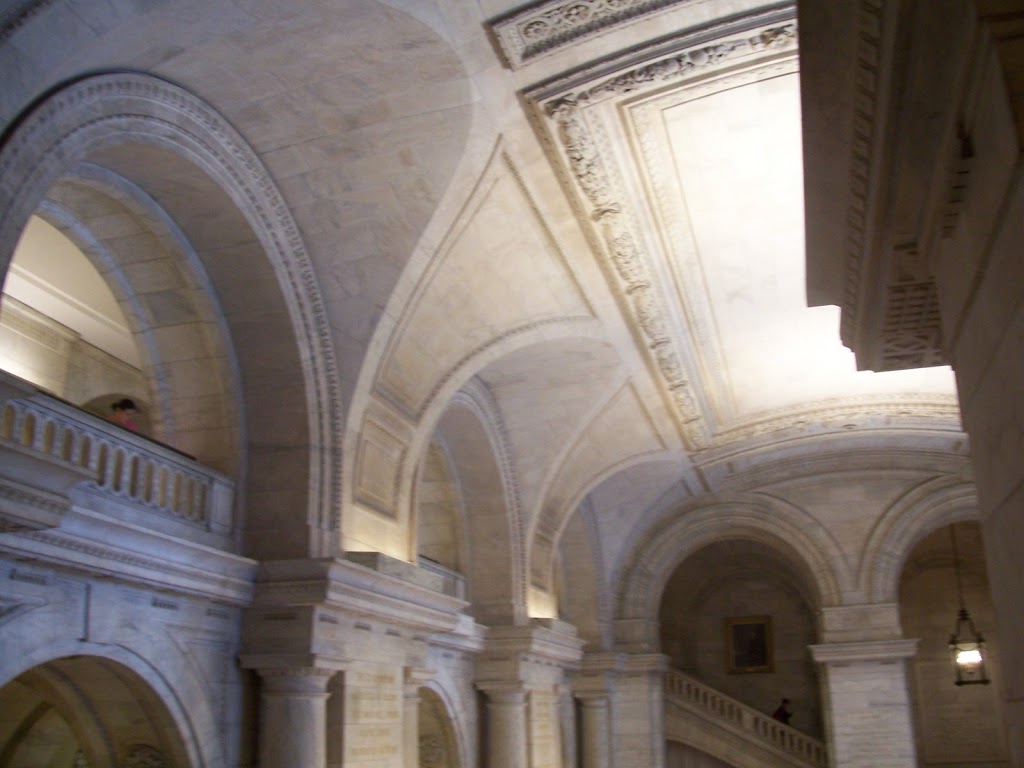
Some pictures from inside the New York Public Library building illustrate some of its more Beaux-Art-ish features. The broad vaulted arches:

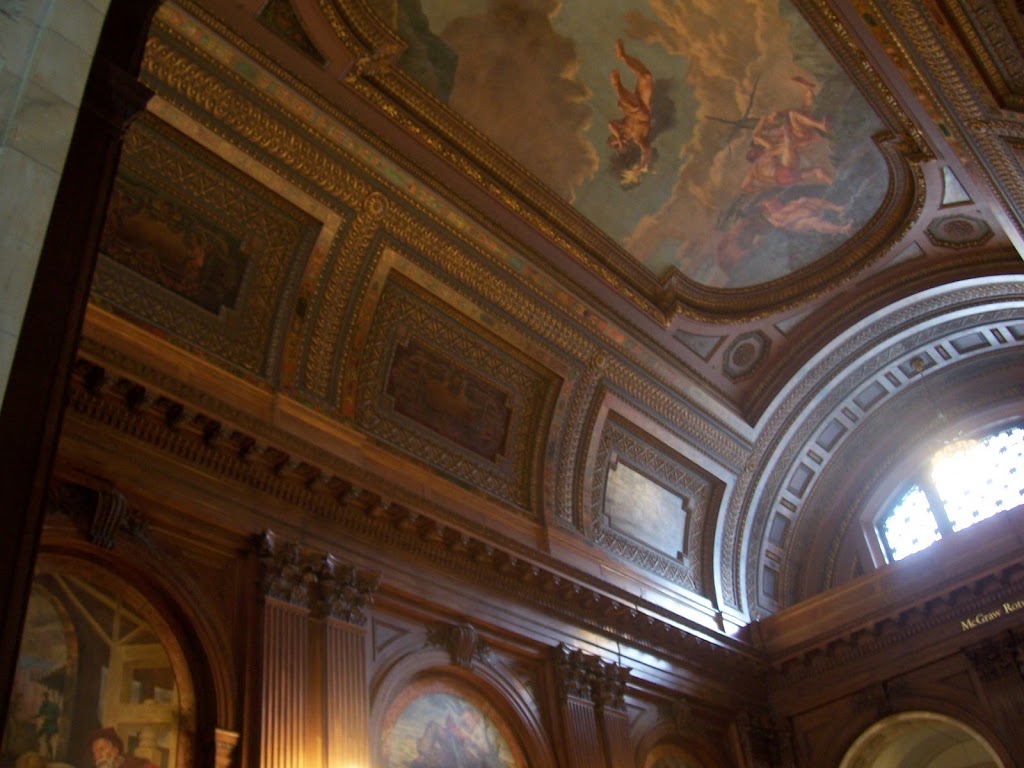
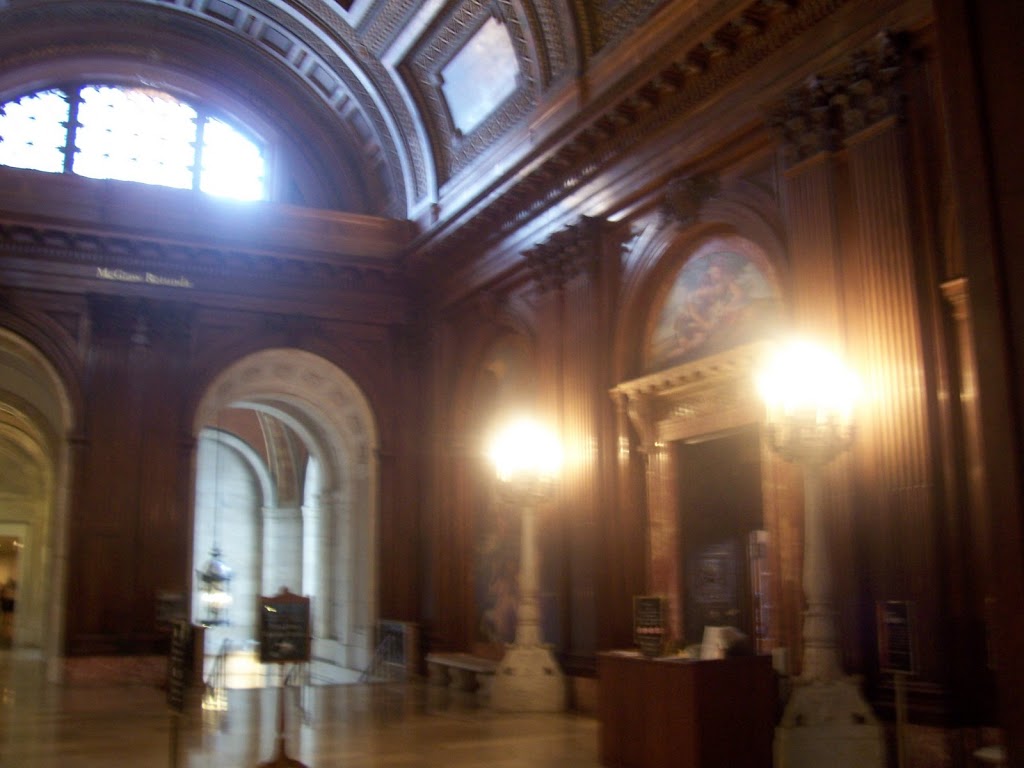
And ornate muralled ceilings in the McGraw Rotunda. The effect is a bit like the Vatican apartments mixed with an old bank:

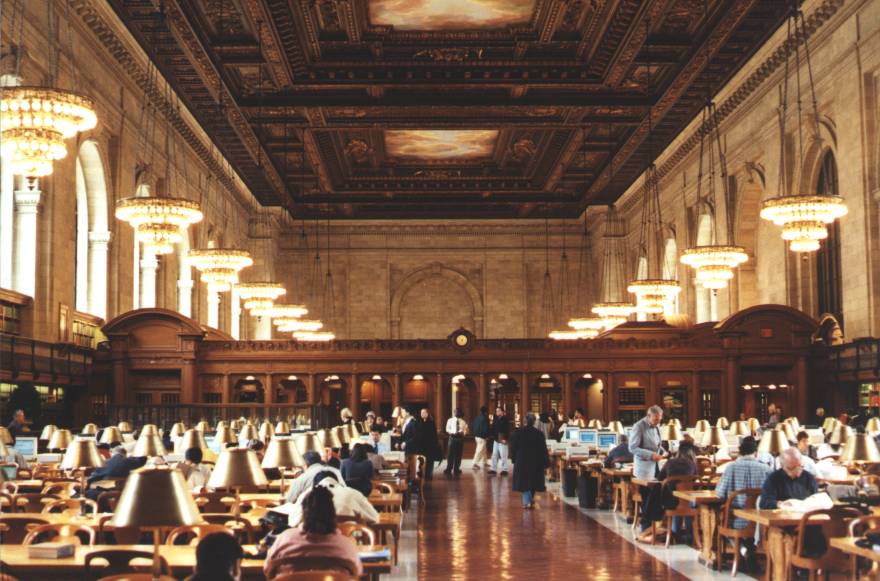
Its all dwarfed, however by the massive Rose Reading Room, whose basic organization came not from the architects but from the library’s first director, Dr. John Shaw Billings, from a sketch he made on a postcard!

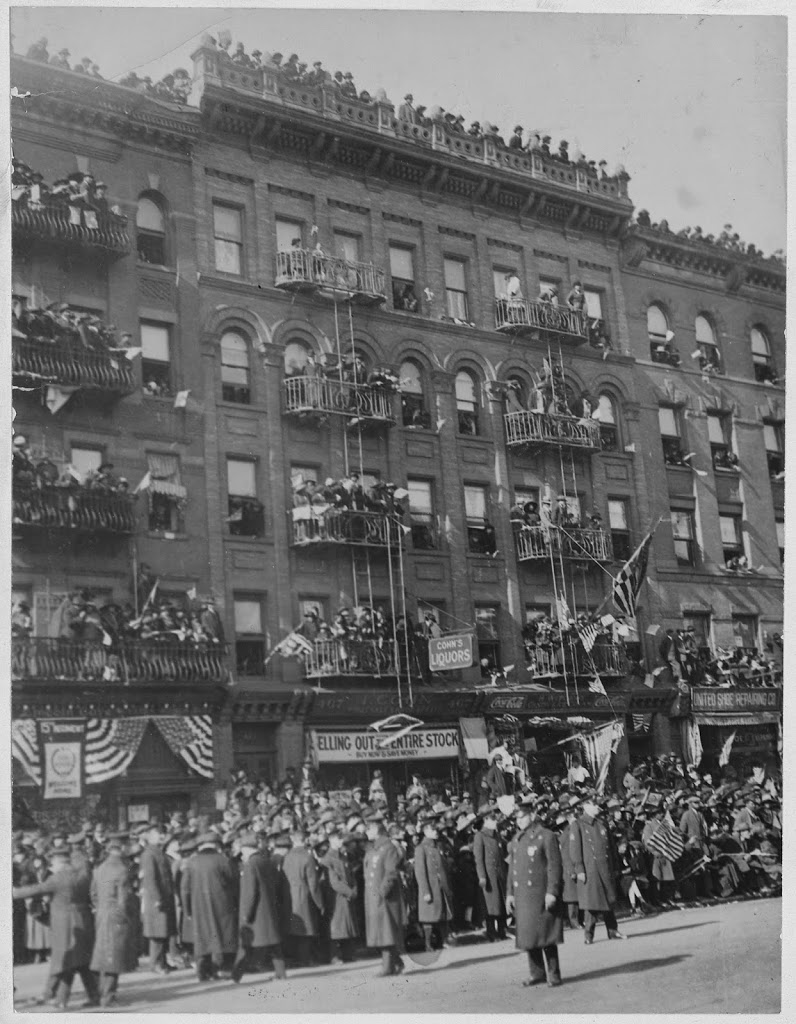
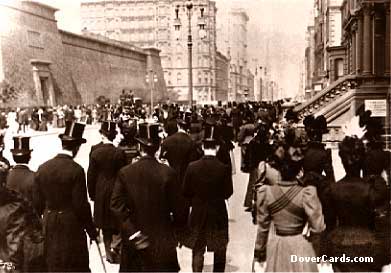
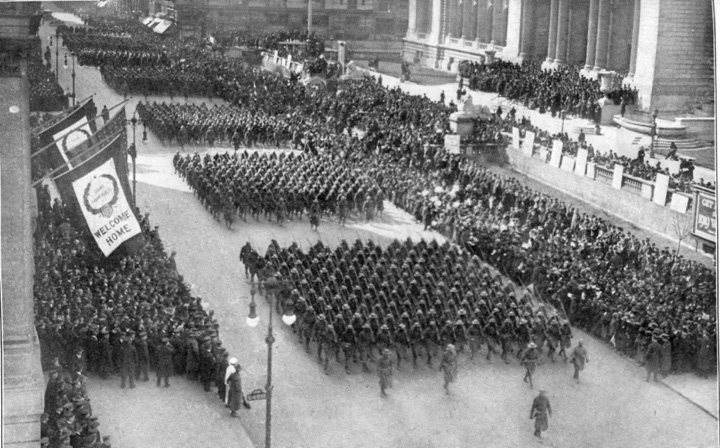
And finally, a beautiful picture I found on a World War I website, showing the fairly new library in all its glory, as New York’s 369th Regiment passes by.

Thanks to the New York Public Library official website for providing us with some of our trivia. And there’s lots more there to intrugue you. Click here for visiting hours and facts about some of the branch libraries.