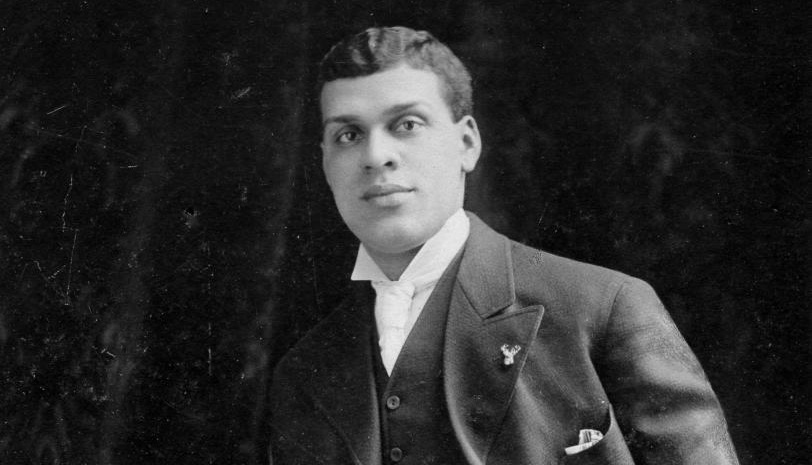
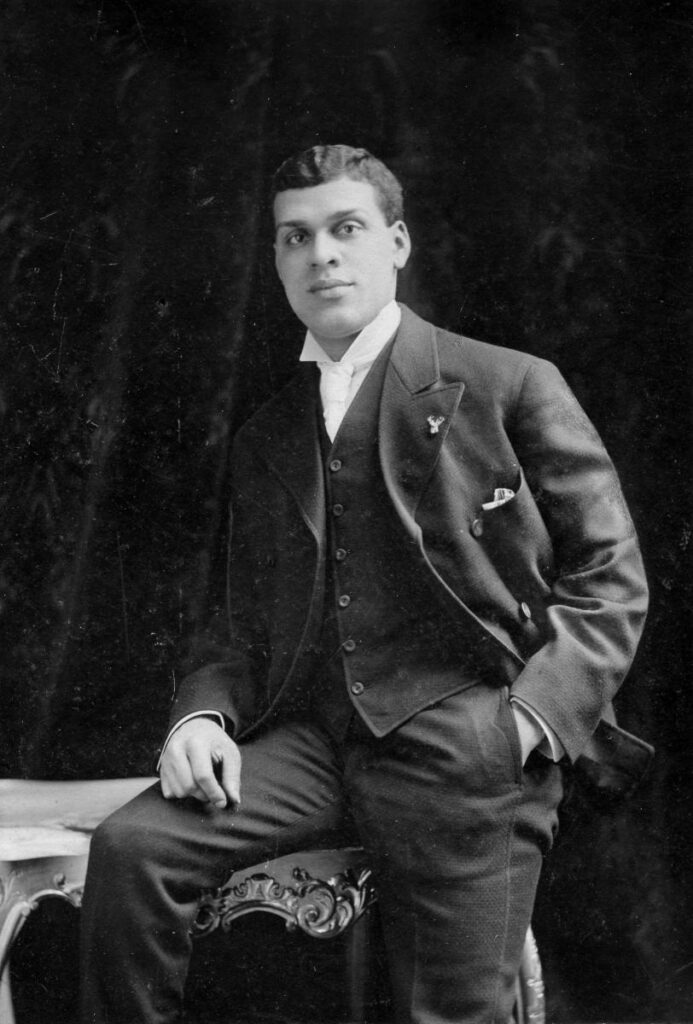
James H. Williams, here in 1905, would soon become the "Chief" of a force of hundreds of Red Caps at Grand Central, a post he'd keep for four decades.
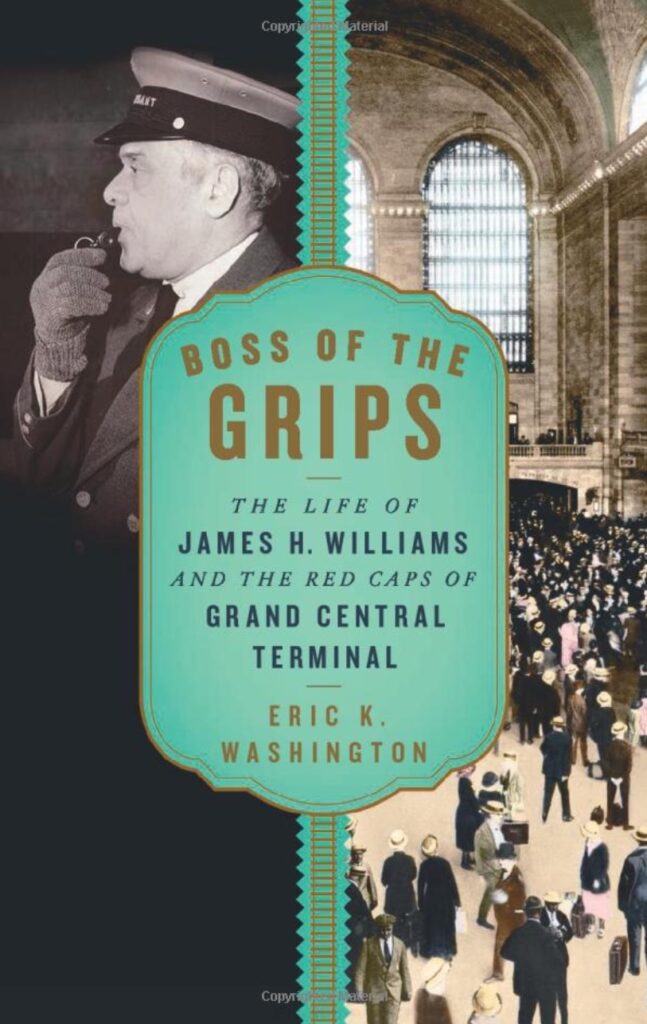
PODCAST EPISODE #339: An interview with author Eric K. Washington, author of “Boss of the Grips: The Life of James H. Williams and the Red Caps of Grand Central Terminal”.
The Red Caps of Grand Central Terminal were a workforce of hundreds of African-American men who were an essential part of the long-distance railroad experience. Passengers relied on Red caps for more than simply grabbing their bags — they were navigators, they helped with taxis, offered advice, and provided a warm greeting.
He also tells the story of Grand Central Terminal, and specifically, of the Red Caps who worked here, especially during the Terminal’s heyday in the first half of the 20th century. And along the way, the book chronicles how New York’s African-American enclaves and communities developed and moved around the city.
That huge story is told through the lens of this one, often underappreciated, and yet instrumental man — James Williams. He was the chief of the Red Caps, but also an under-reported figure in the Harlem Renaissance.
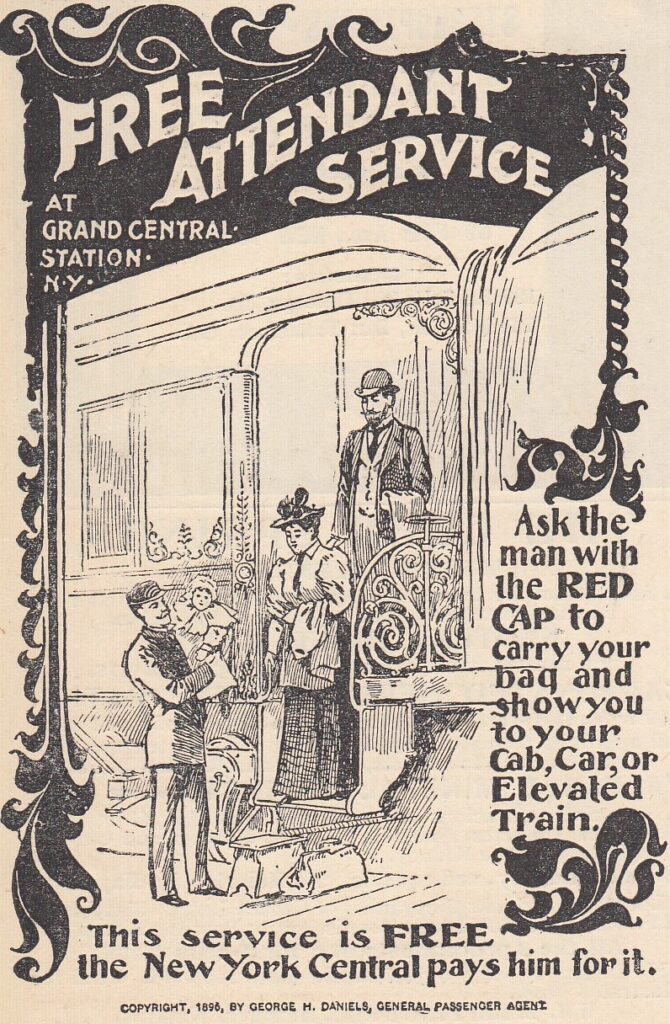
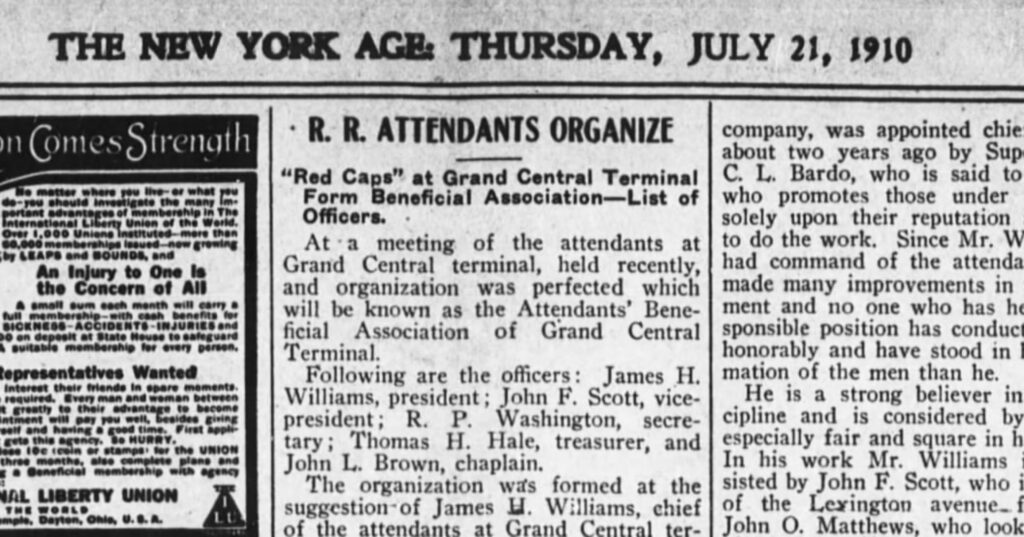
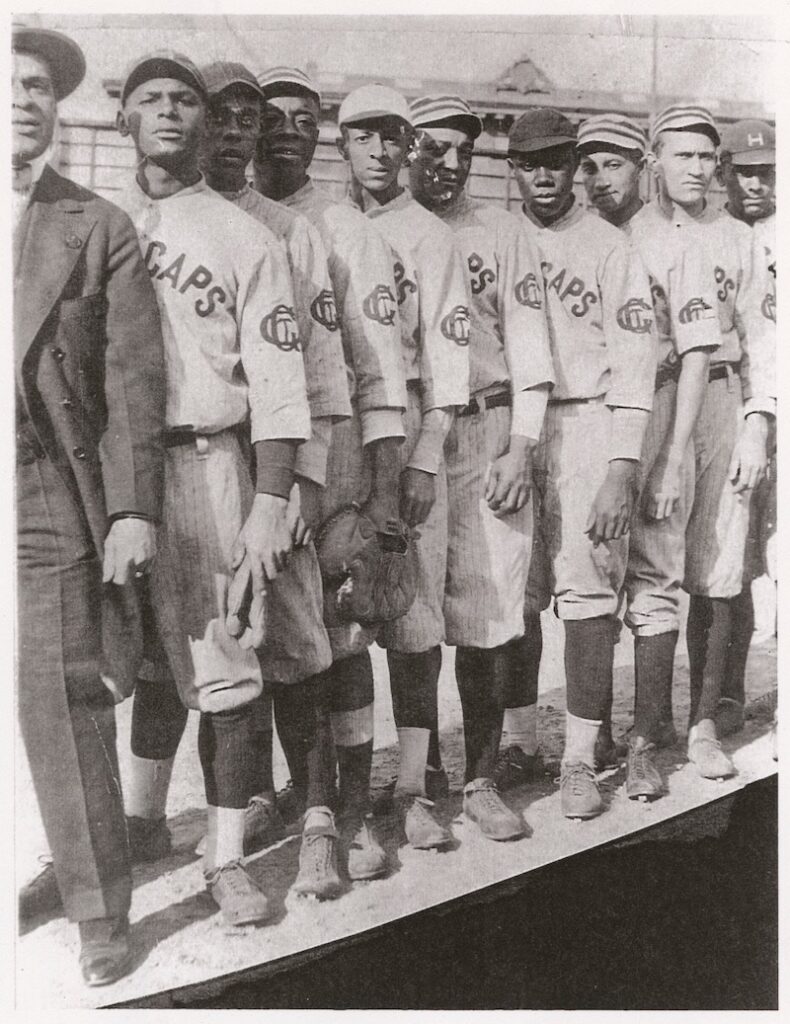
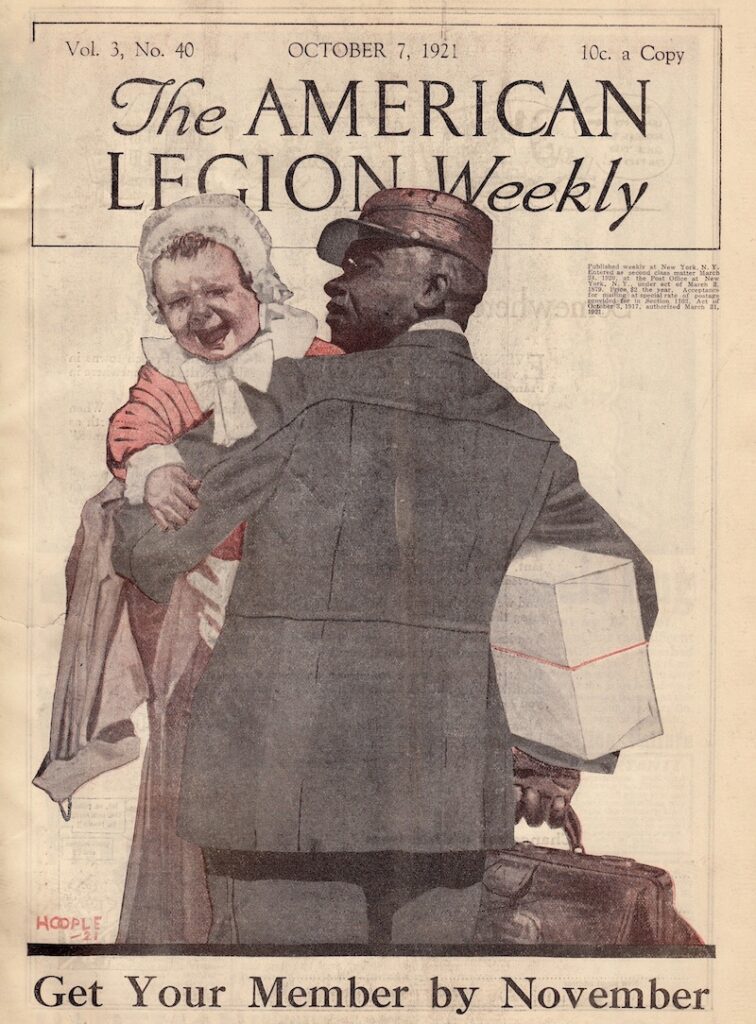
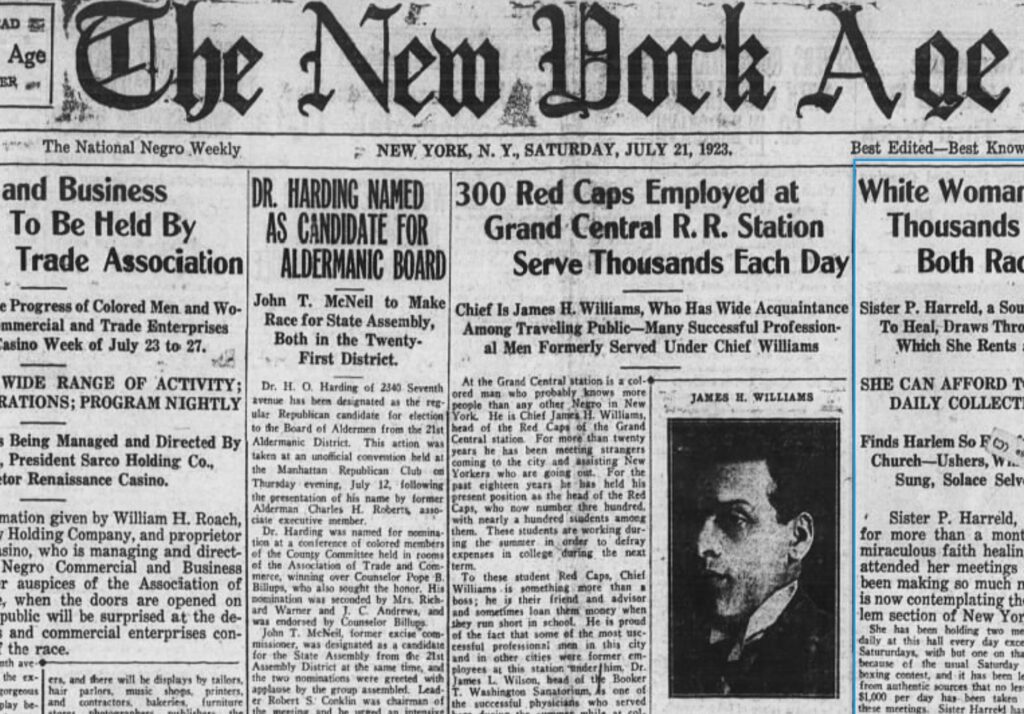
The New York Central launched its free Red Cap service in 1895, and promoted it widely in advertisements like this one, from 1896.When Williams sat for this portrait in 1905, he was working as a Red Cap, but had not yet been named Red Cap director, or “Chief”. Williams became the “Chief” of the Red Caps in 1909, and immediately got to work organizing a benevolent association for the Red Caps, covered here in the New York Age in 1910.Chief Williams posing with the Grand Central Terminal Red Caps baseball team in 1918. Red Caps carried hat boxes, valises… and sometimes even crying babies, too, as illustrated in this 1921 cover of The American Legion Weekly.James H. Williams was regularly covered in the local and national press. In 1923, the New York Age published a profile of Williams on its front page.
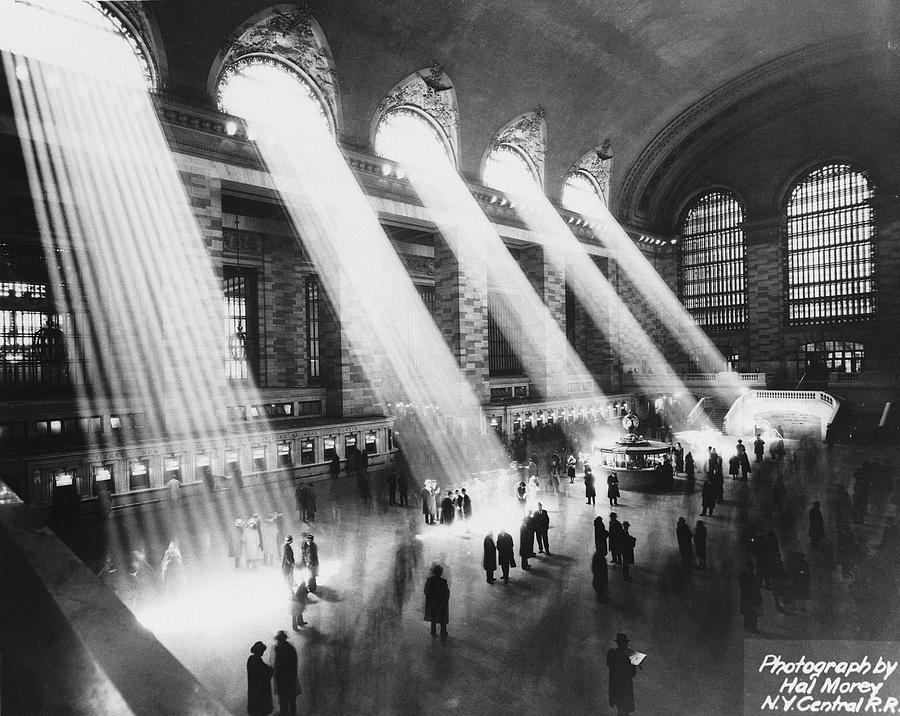
Hal Morey’s iconic shot of Grand Central from 1930 captures a blur of activity in the lower left corner. Could it be a Red Cap carrying a bag, drenched in sun?
The Grand Central Red Caps Orchestra perform “Nina”, under the direction of Russell Wooding, Frank Luther (vocals). RCA Victor, 1931
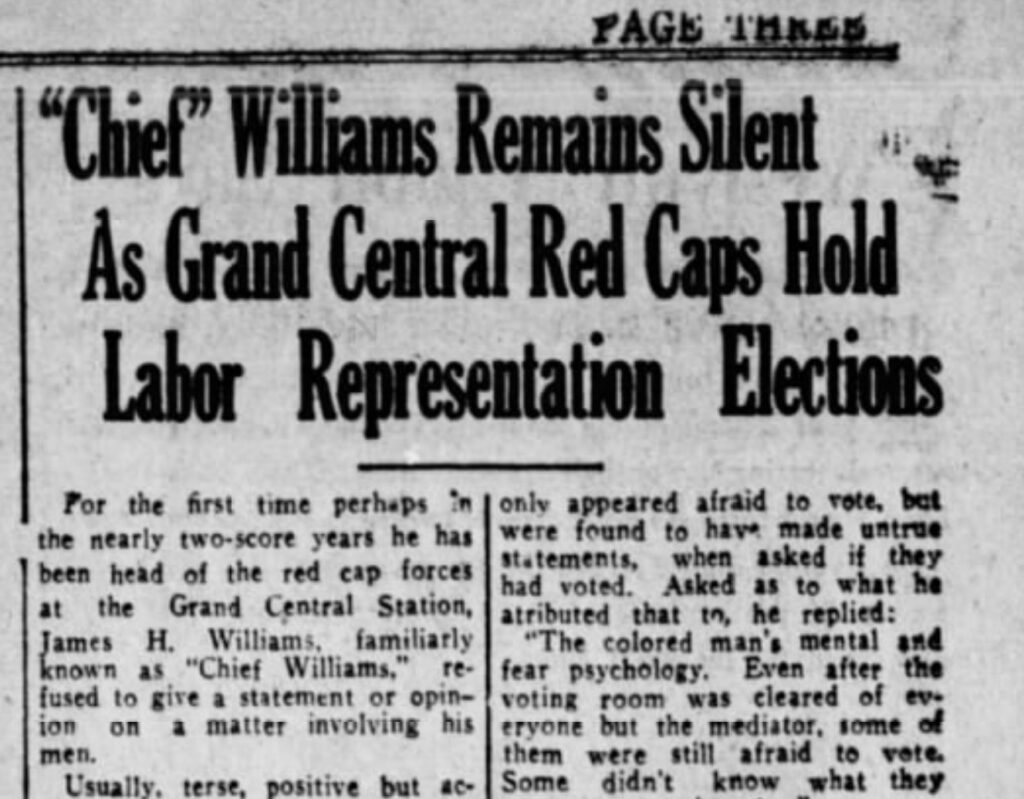
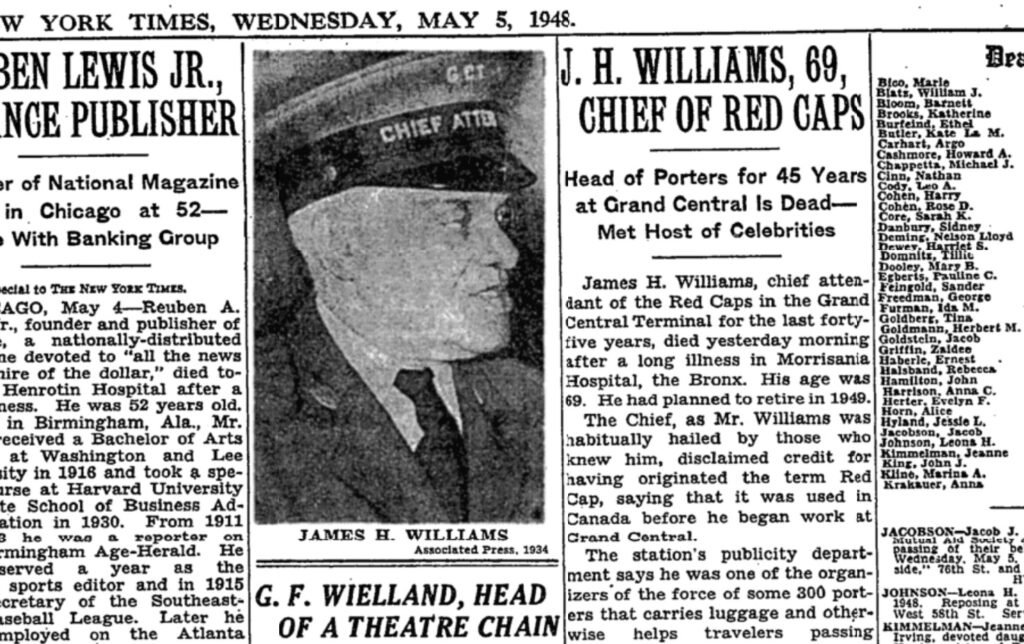
In 1939 as Red Caps around the country started organizing, Chief Williams remained strategically quiet. The formation of a Red Cap union was covered in this piece in the New York Age, September 16, 1939.Williams obit in the New York Times, May 5, 1948.
The Bowery Boys: New York City History podcast is brought to you …. by you!
We are now producing a new Bowery Boys podcast every week. We’re also looking to improve and expand the show in other ways — publishing, social media, live events and other forms of media. But we can only do this with your help!
We are now a creator on Patreon, a patronage platform where you can support your favorite content creators.
Please visit our page on Patreon and watch a short video of us recording the show and talking about our expansion plans.
If you’d like to help out, there are six different pledge levels. Check them out and consider being a sponsor.
We greatly appreciate our listeners and readers and thank you for joining us on this journey so far.
PODCAST (EPISODE 310):New York’s 369th Infantry Regiment was America’s first black regiment engaged in World War I. The world knew them as the Harlem Hellfighters.
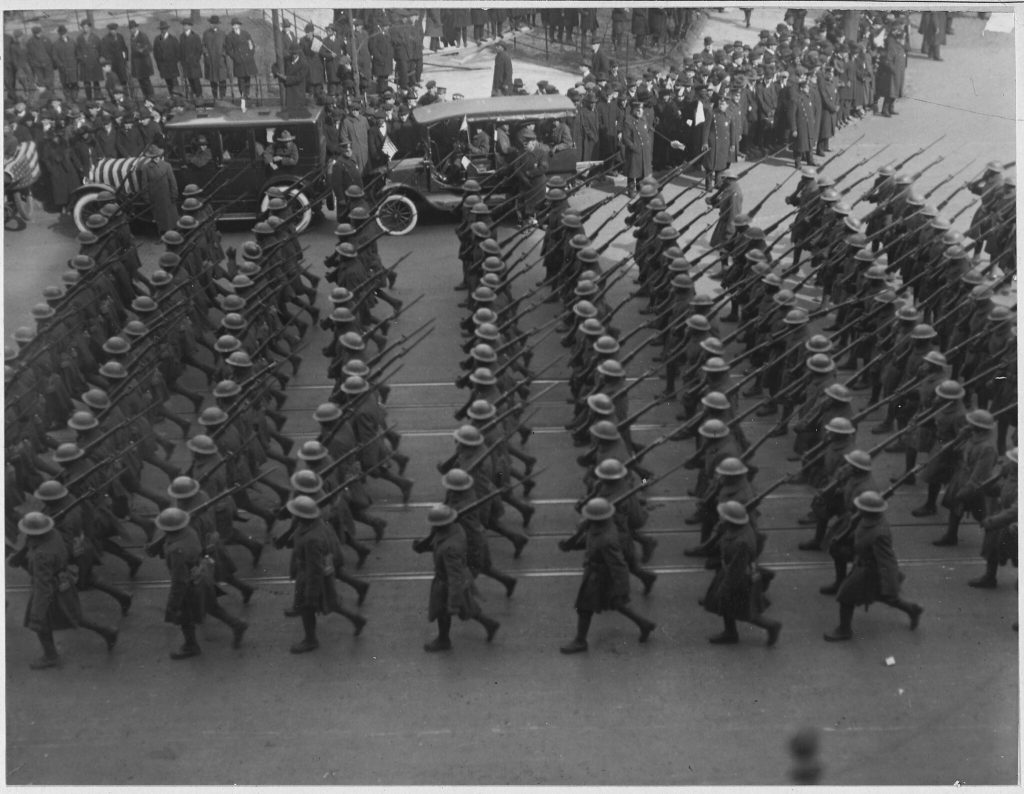
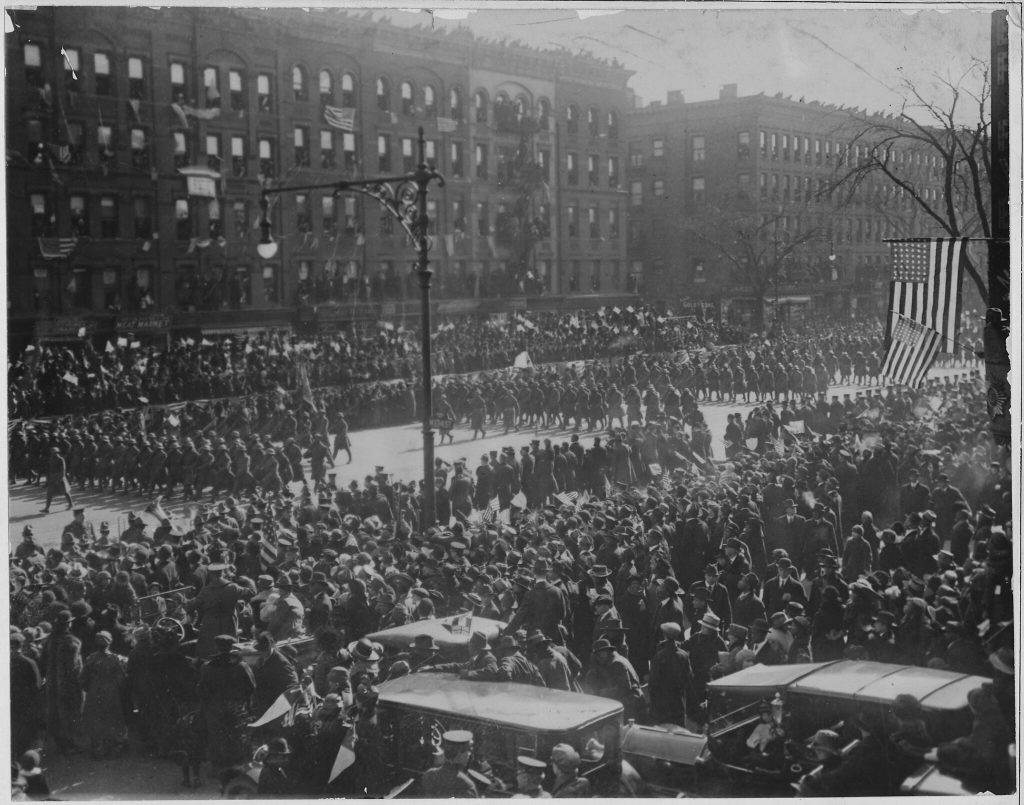
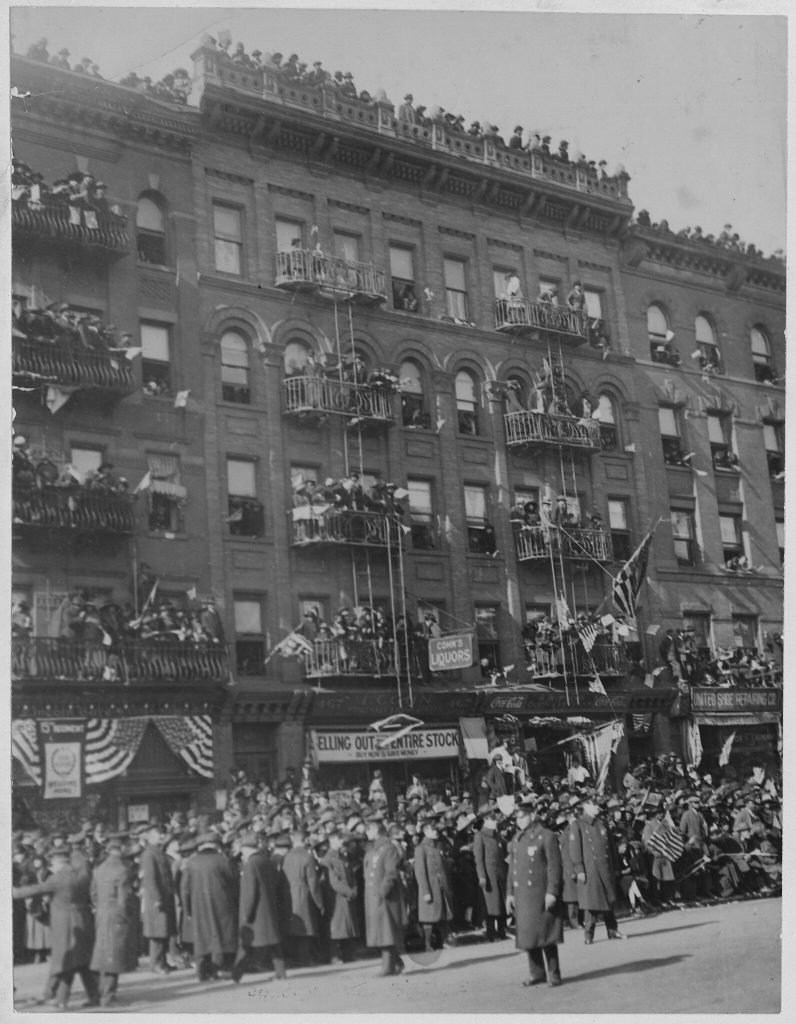
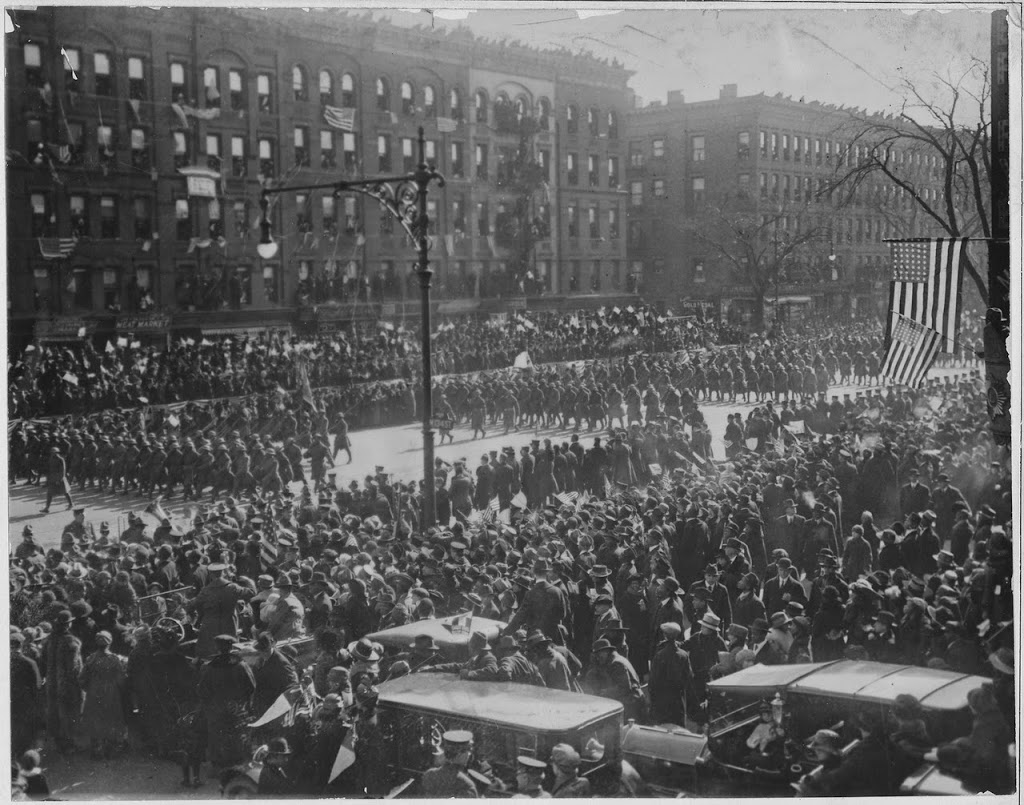
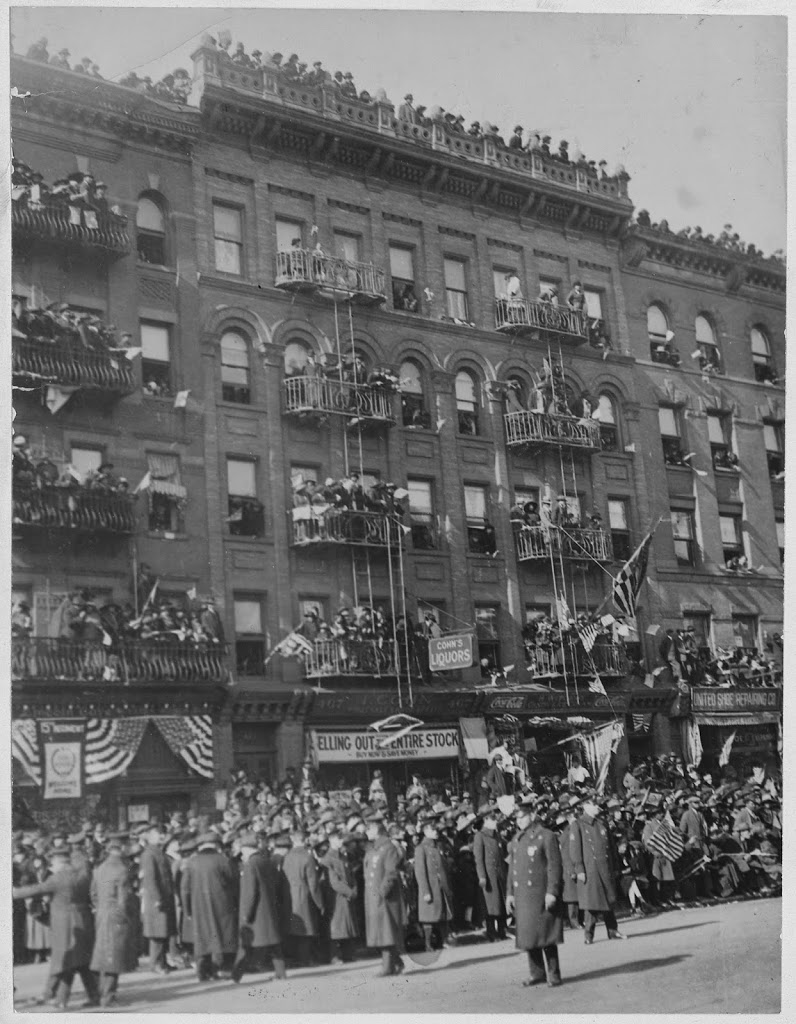
On February 17, 1919, the Hellfighters – who had spent much of the year 1918 on the frontline – marched up Fifth Avenue to an unbelievable show of support and love.
The Harlem Hellfighters were made up of young African-American men from New York City and the surrounding area, its enthusiastic recruits made up of those who had arrived in the city during a profound period of migration from the Reconstruction South to (only slightly) more tolerant Northern cities.
They were not able to serve in regular American military
units because of segregation, but because of an unusual series of events, the
regiment instead fought alongside the French in the trenches, for 191 days,
more than any other American unit.
They were known around the world for
their valor, ferocity and bravery. This is the story of New York musicians, red
caps, budding painters, chauffeurs and teenagers just out of school, serving
their country in a way that would become legendary.
FEATURING the voices of World War I veterans telling their own stories. PLUS some brilliant music and a story from Barack Obama (okay it’s just a clip of the former president but still.)
LISTEN NOW — THE HARLEM HELLFIGHTERS
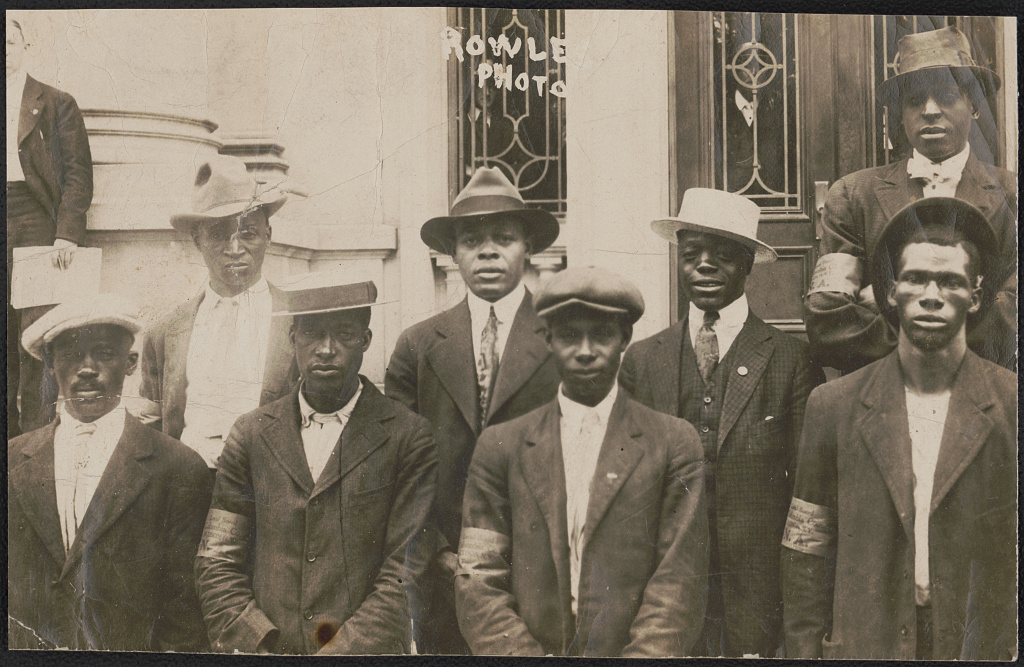
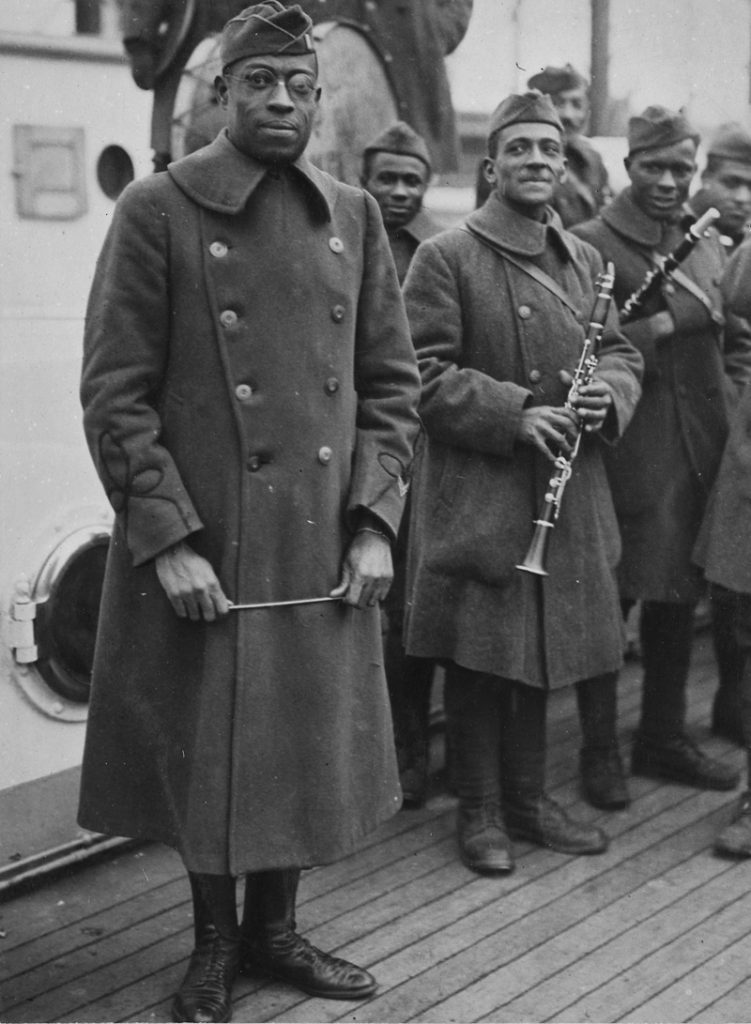
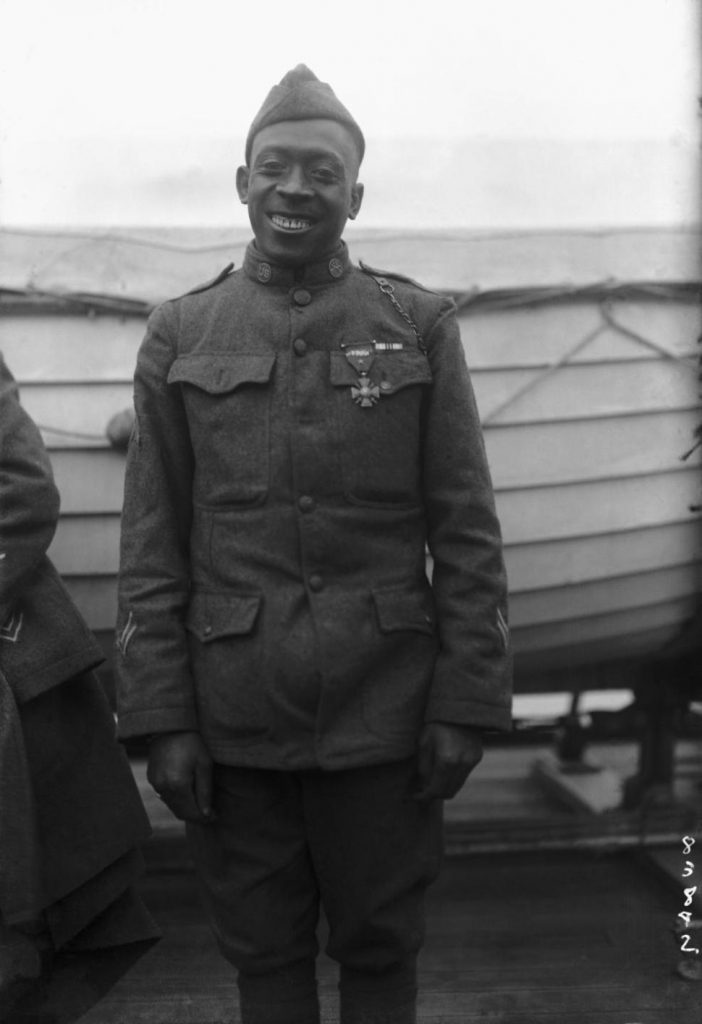
Photograph shows group portrait of men recruited for the 15th New York National Guard Regiment, later known as the 369th Infantry Regiment (the Harlem Hellfighters), wearing armbands. Library of Congress.James Reese Europe, who both fought on the front lines AND brought jazz to France.Henry Johnson, whose skills on the battlefield earned him the French Croix de guerre in his lifetime — and a U.S. Medal of Honor many decades later.
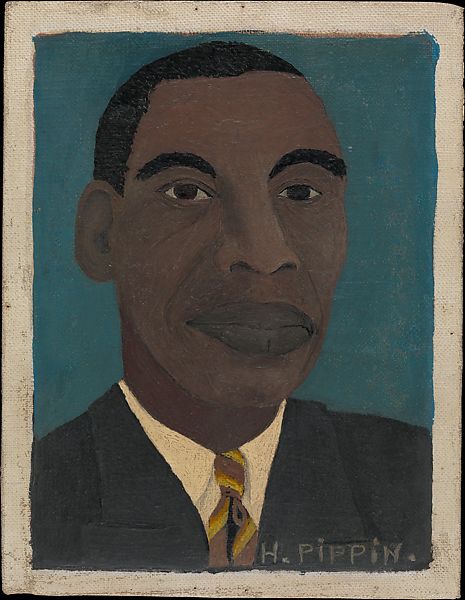
Horace Pippin (American, West Chester, Pennsylvania 1888–1946 West Chester, Pennsylvania) Self-Portrait, 1944. Courtesy the Metropolitan Museum of Art, New York, Bequest of Jane Kendall Gingrich, 1982 (1982.55.7) http://www.metmuseum.org/Collections/search-the-collections/482605
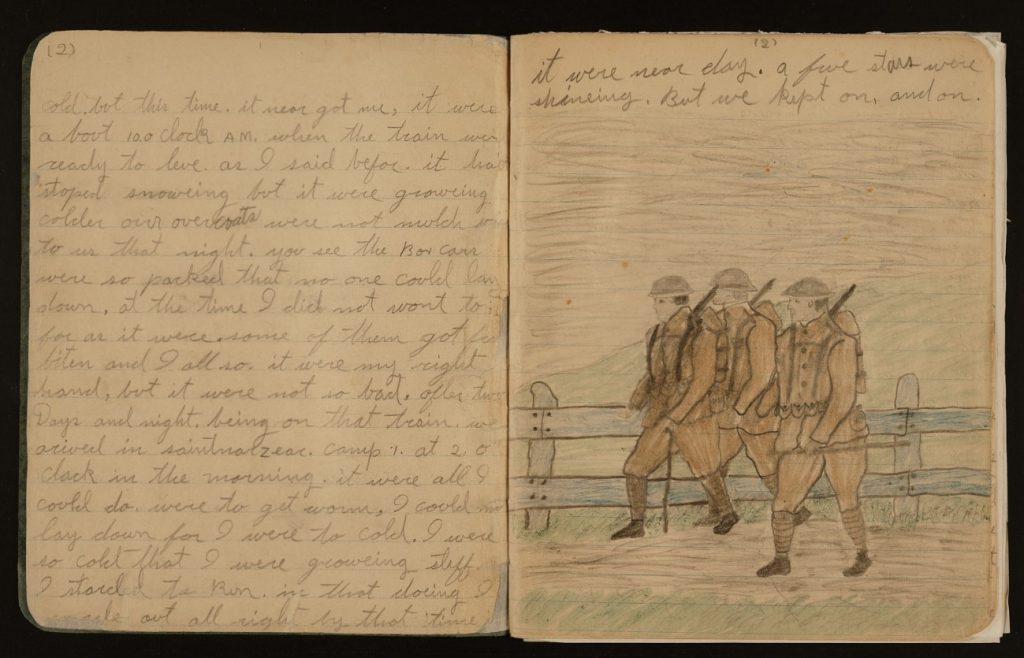
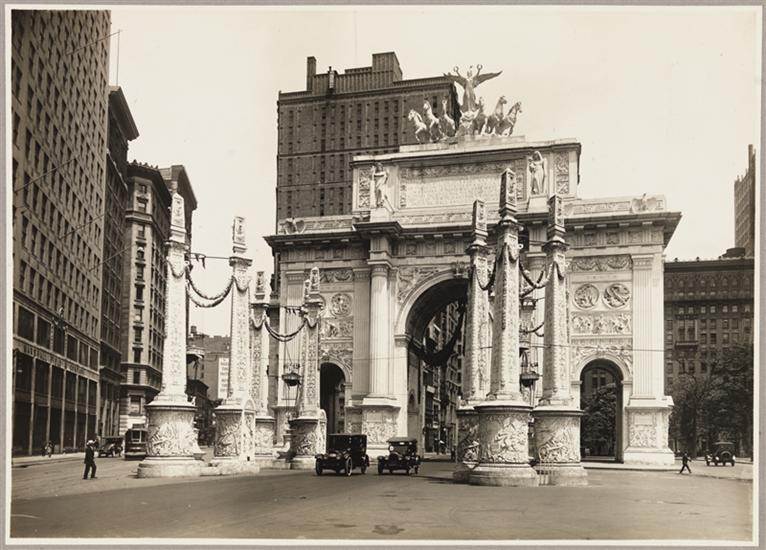
From the journal of Horace Pippin, featuring illustrations among his observations.US National ArchivesThe 369th were the first regiment to march beneath the Victory Arch, installed near Madison Square Park. Courtesy Museum of the City of New YorkUS National ArchivesUS National Archives
From the New York Times the following day after the parade:
“New York’s negro soldiers, bringing with them from France one of the bravest records achieved by any organization in the war, marched amidst waving flags and cheering crowds yesterday from Twenty-third Street and Fifth Avenue to 145th Street and Lenox Avenue.”
“At Thirty-Fourth Street the men marched under a shower of cigarettes and candy, and such tokens were pitched at them at other points in the line, but the files did not waver for an instant.”
US National Archives
The complete version of the 1977 film Men of Bronze, detailing the story of the Harlem Hellfighters, directed by Bill Miles, is available to watch on YouTube.
President Obama awards the Medal of Honor posthumously to two World War I veterans, Private Henry Johnson (featured in this show) and Sergeant William Shemin.
READING LIST From Harlem to the Rhine by Arthur West Little Harlem Rattlers and the Great War by Jeffrey Sammons and John Howard Morrow A Life In Ragtime: A Biography of James Reese Europe by Reid Badger Lost Battalions by Richard Slotkin A More Unbending Battle by Peter Nelson We Return Fighting from the National Museum of African American History and Culture When Pride Met Courage by Walter Dean Myers
FURTHER LISTENING
The Bowery Boys: New York City History podcast is brought to you …. by you!
We are now producing a new Bowery Boys podcast every other week.
We’re also looking to improve and expand the show in other ways —
publishing, social media, live events and other forms of media. But we
can only do this with your help!
We are now a creator on Patreon, a patronage platform where you can support your favorite content creators.
Please visit our page on Patreon
and watch a short video of us recording the show and talking about our
expansion plans. If you’d like to help out, there are six different
pledge levels. Check them out and consider being a sponsor.
ALL patrons at all levels will receive many benefits include the next episode of the Bowery Boys Movie Club,
an exclusive podcast (released every 6-8 weeks) celebrating New York
City in the movies. And patrons at the Five Points ($5) level and up
will get our other exclusive podcast — The Bowery Boys: The Takeout — released every two weeks.
We greatly appreciate our listeners and readers and thank you for joining us on this journey so far.
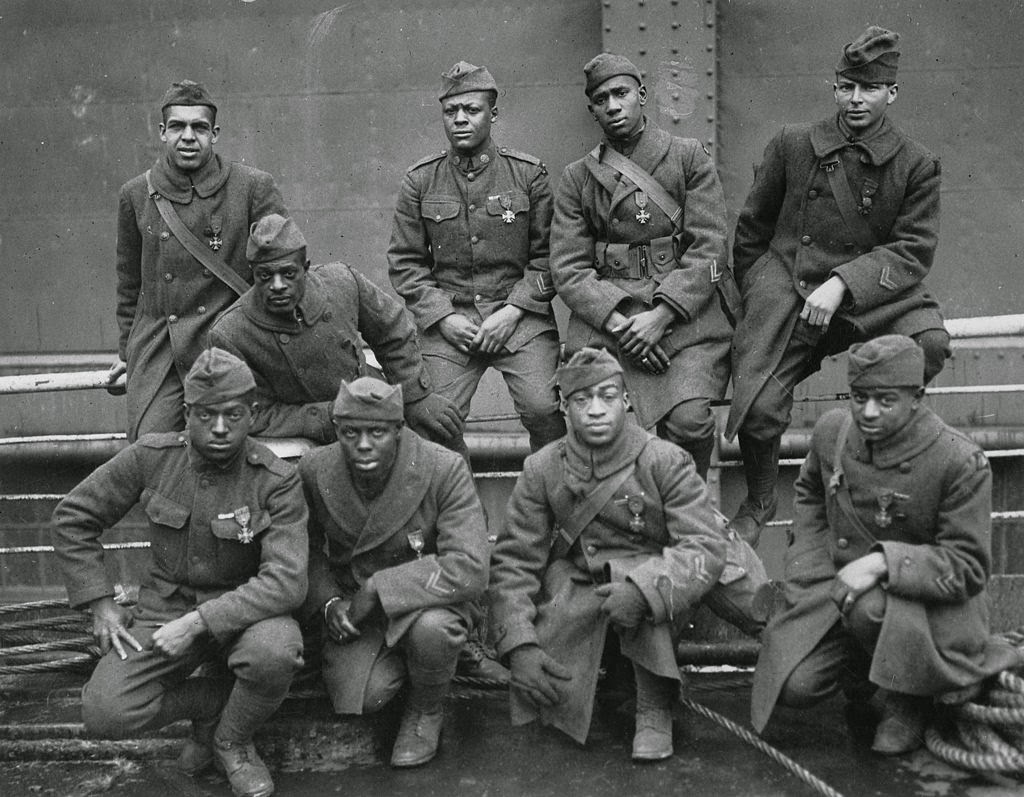
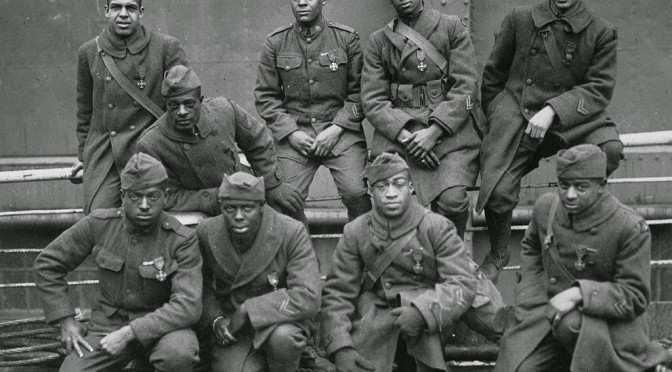
The men of the 369th who were awarded France’s Criox de Guerre for distinguished acts of heroism: Â Pvt. Ed Williams, Herbert Taylor, Pvt. Leon Fraitor, Pvt. Ralph Hawkins. Back Row: Sgt. H. D. Prinas, Sgt. Dan Strorms, Pvt. Joe Williams, Pvt. Alfred Hanley, and Cpl. T. W. Taylor
New York’s 369th Infantry Regiment was America’s first African-American regiment engaged in World War I. Â While many white American soldiers would have been happy to serve next to trained regiments of any color, intense racial prejudice in the United States forced many who signed up to fight for their country to instead be assigned to the French army.
Nicknamed the Harlem Hellfighters, the regiment served alongside the French during the summer and fall of 1918.  Perhaps the most famous soldier of the 369th was Private Henry Lincoln Johnson (at right) whose deadly efficiency on the battlefield earned him the grim nickname Black Death.  He became the first of dozens from the 369th to receive the prestigious Criox de Guerre, the equivalent of the American Medal of Honor.
They returned to New York in February 1919 and marched through the streets of Manhattan on February 17 — from Greenwich Village to Harlem, in triumph.
From the New York Times the following day:
“New York’s negro soldiers, bringing with them from France one of the bravest records achieved by any organization in the war, marched amidst waving flags and cheering crowds yesterday from Twenty-third Street and Fifth Avenue to 145th Street and Lenox Avenue.” “At Thirty-Fourth Street the men marched under a shower of cigarettes and candy, and such tokens were pitched at them at other points in the line, but the files did not waver for an instant.”
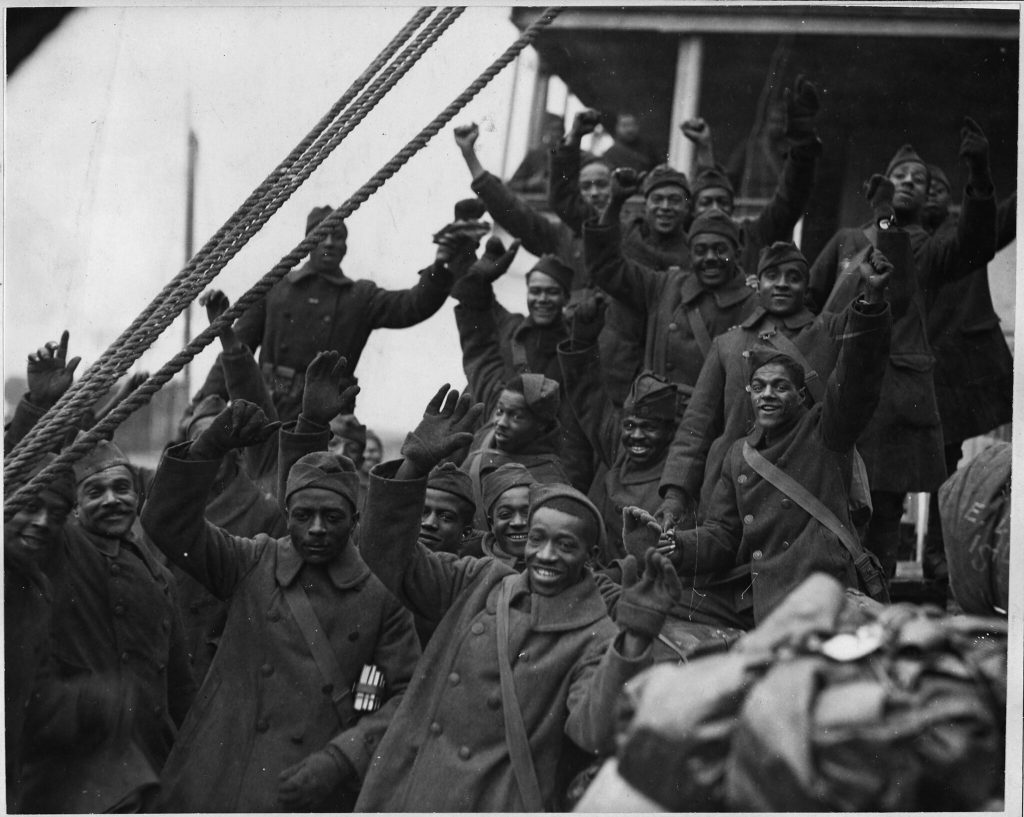
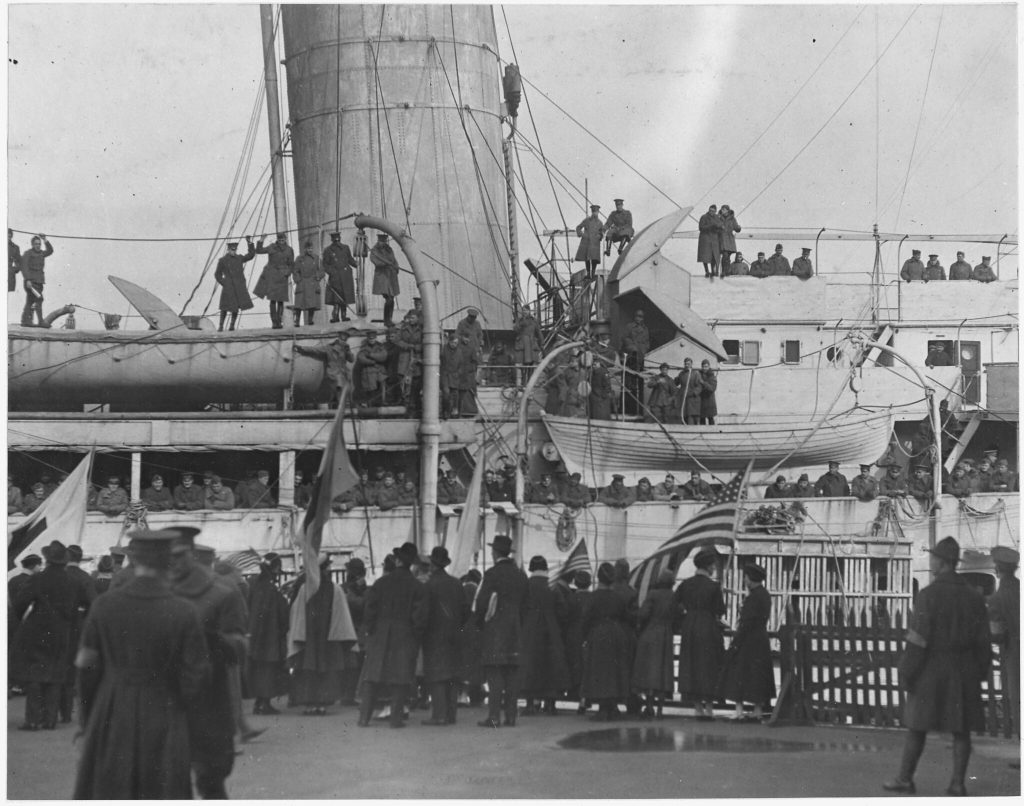
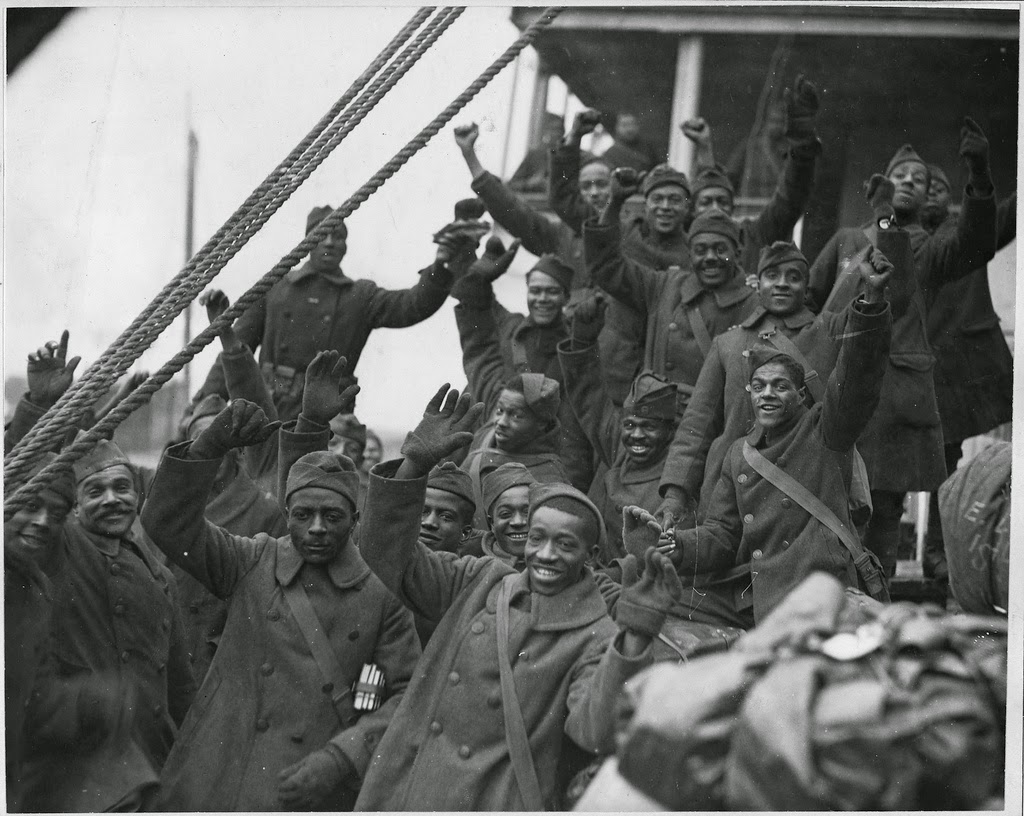
The men of the 369th photographed as they arrive back in New York City, 1919
From original caption (courtesy US National Archies): Â “[The] 369th New York City Infantry (old 15th) [African American] troops and some of the 370th Infantry, Illinois [African American] troops, one of the most decorated regiments in the United States Army return to New York City. They saw [the] longest service of any American regiment as part of a foreign army, and had less training than any before going into action. They were never in an American division or brigade always being with the French.”
The 369th marching up Fifth Avenue.
The men are shown here in this assortment of newsreel footage from the war: