Categories
Black History It's Showtime Neighborhoods Podcasts Writers and Artists

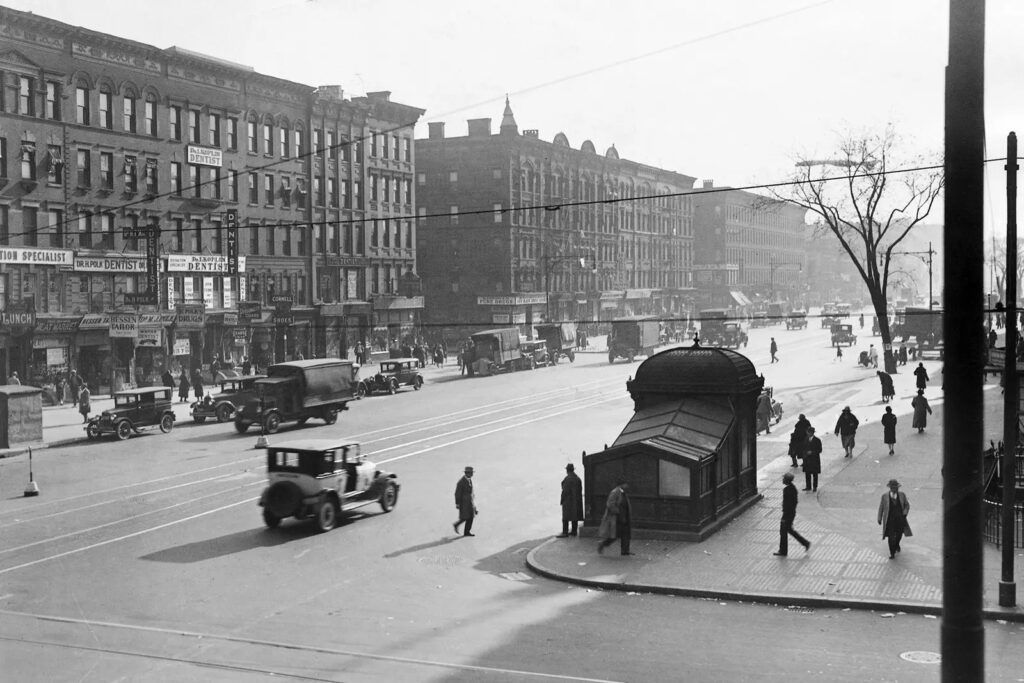
Harlem in the Jazz Age: A Renaissance in New York, a Revolution on Swing Street

For the Bowery Boys episode number 450, we’re looking at the glamour and mystery of Harlem during the 1920s, a decade when the predominantly black neighborhood, in the words of Langston Hughes, “was in vogue.”

This year marks the 100th anniversary of Alain Locke’s classic essay “The New Negro” and the literary anthology featuring the work of Langston Hughes, Zora Neale Hurston, Countee Cullen and other significant black writers of the day.

The rising artistic scene would soon be known as the Harlem Renaissance, one of the most important cultural movements in American history.

And centered within America’s largest black neighborhood — Harlem, the “great black city,” as described by Wallace Thurman, with a rising population and growing political and cultural influence.

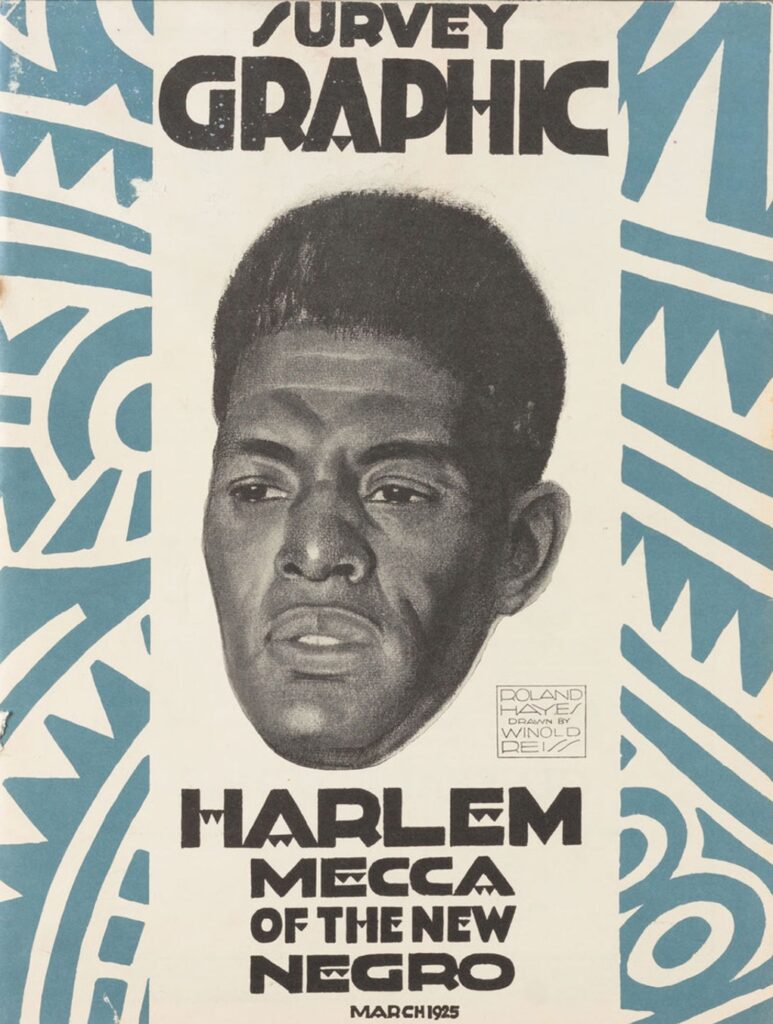
The Survey Graphic, published in March 1925, focusing on “Harlem: Mecca of the New Negro” and featuring the writing of Alain Locke.

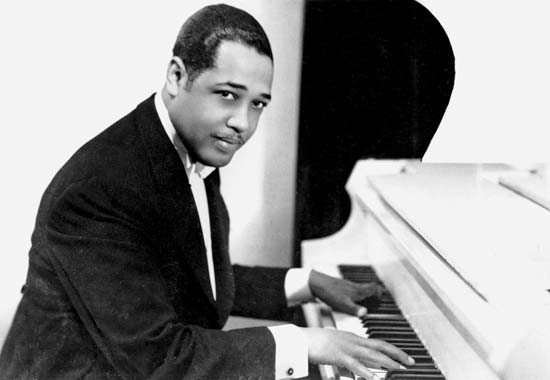
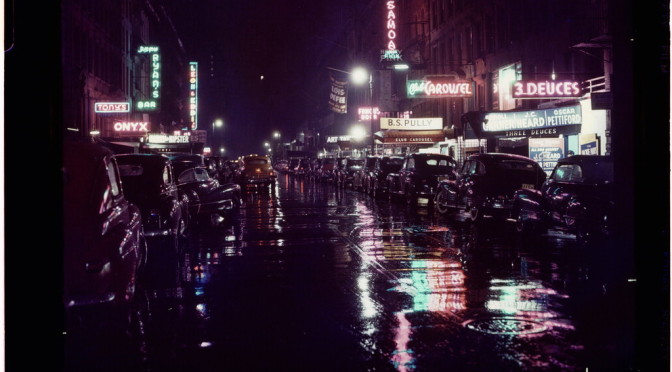
And during the 1920s, Harlem became even more. Along “Swing Street” and Lenox Avenue, nightclubs and speakeasies gave birth to American music and fostered great musical talents like Count Basie, Billie Holiday and Duke Ellington.

Ballrooms like the Savoy and the Alhambra helped turn Harlem into a destination for adventure and romance.

While Harlem was truly the largest and most prominent African-American neighborhood in America, it was still tied to — and even reliant upon — the white New Yorkers who became fascinated by black culture. Many Harlem nightclubs (notably The Cotton Club) were not open to the black residents who lived around them.

What were these two worlds like — the literary salons and the nightclubs? How removed were these spheres from the every day lives of regular Harlem residents? How did the neighborhood develop both an energetic and raucous music scene and a diverse number of churches — many (like the Abyssinian Baptist Church) still around today?

FEATURING the stories of Sugar Hill, the Dunbar Apartments, and Hamilton Club Lodge Ball

PLUS lots of great music!

LISTEN TODAY: HARLEM IN THE JAZZ AGE

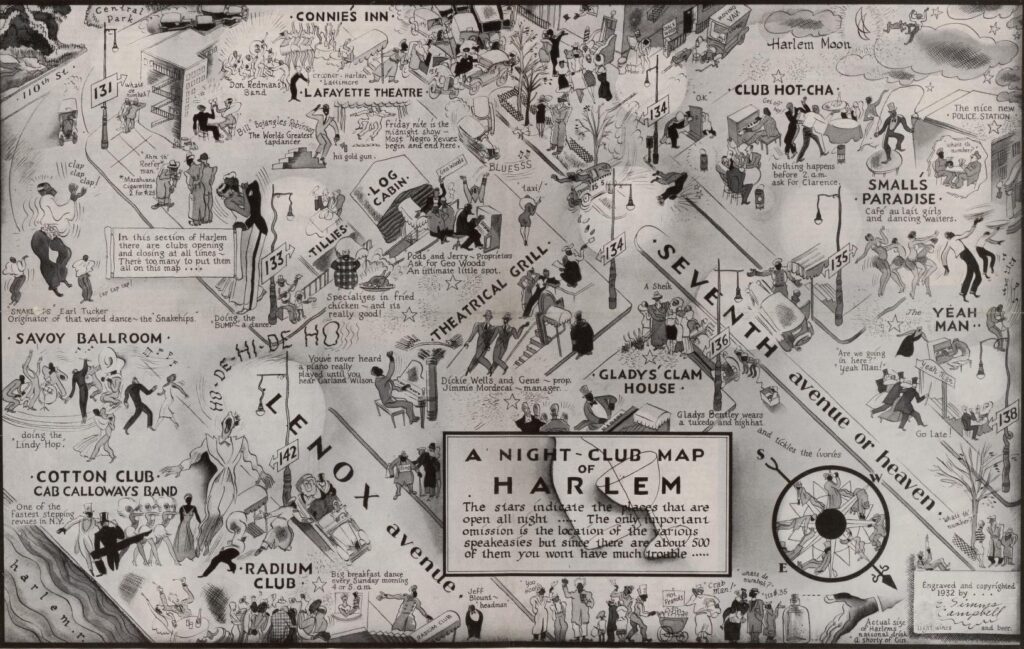
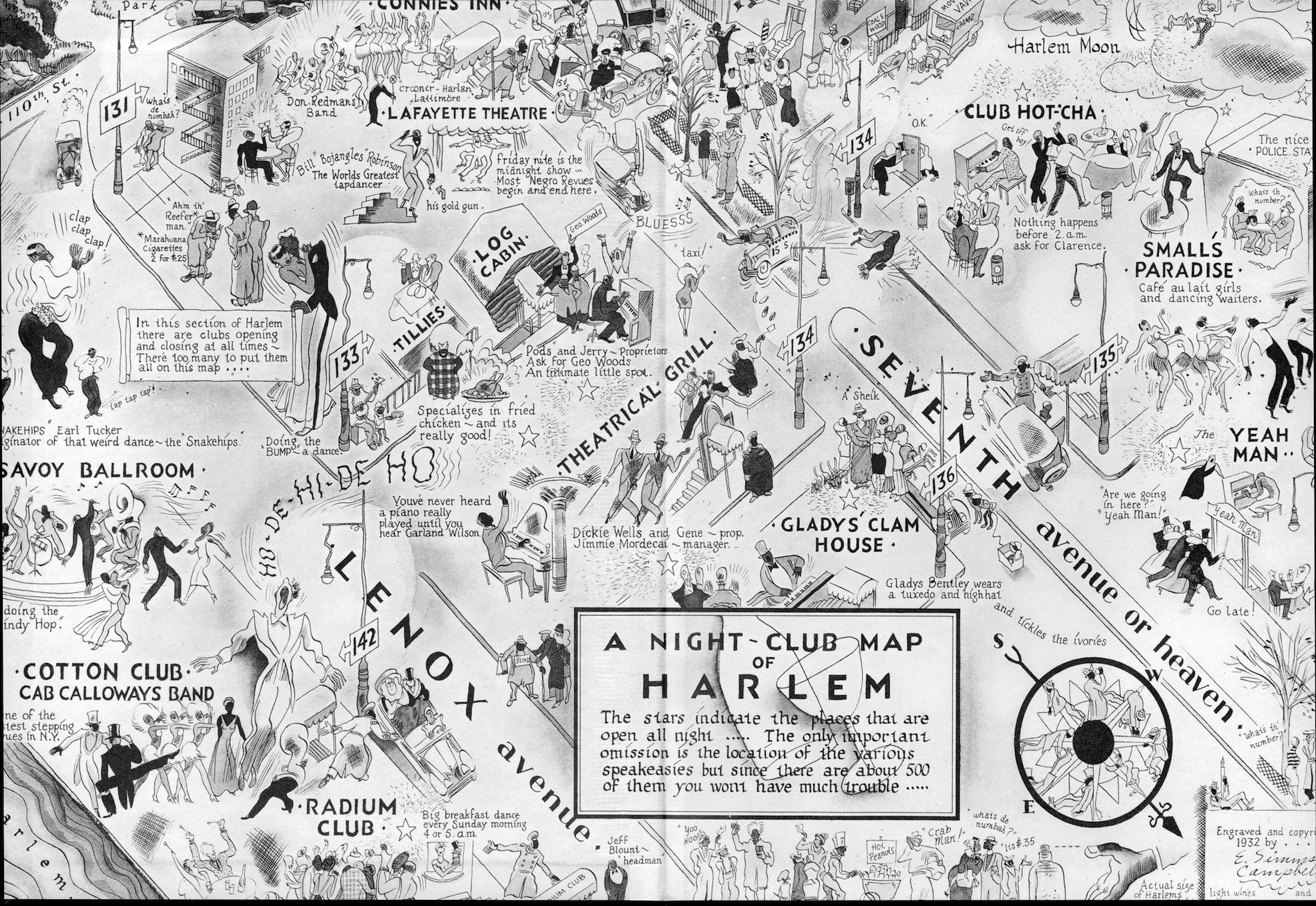
Harlem Night Life map in 1933, Campbell, E. Simms (Elmer Simms), cartographer. Dell Publishing Company, publisher.

Get tickets to our March 31 City Vineyard event Bowery Boys HISTORY LIVE! here

And join us for our Gilded Age Weekend in New York, May 29-June 1, 2025. More info here.

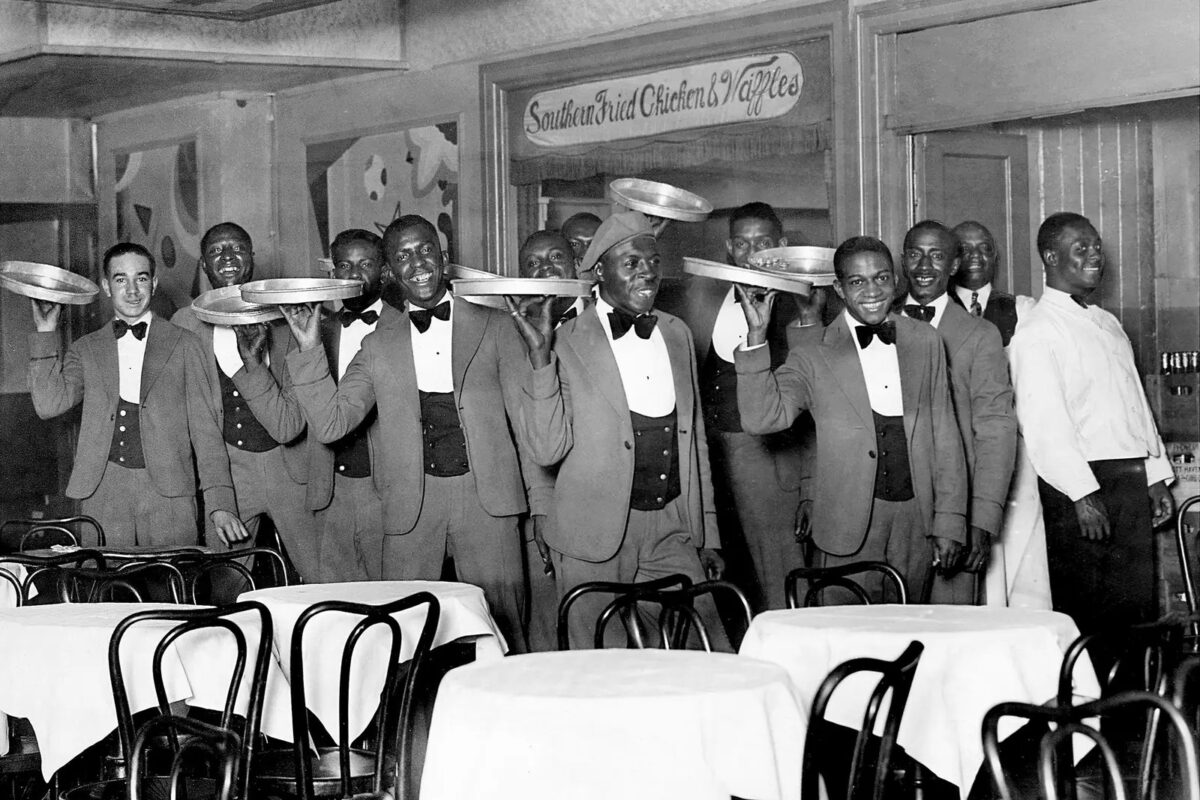
Harlem scene, 1927, George Rinhart / Getty Images

FURTHER LISTENING

Categories
Mysterious Stories Podcasts

The Ghosty Men: The Story of the Collyer Brothers

You better clean your room or you’ll end up like the Collyer Brothers.

New York City, a city crammed of 8.6 million people. It’s filled with stories of people who just want to be left alone – recluses, hermits, cloistering themselves from the public eye, closing themselves off from scrutiny.

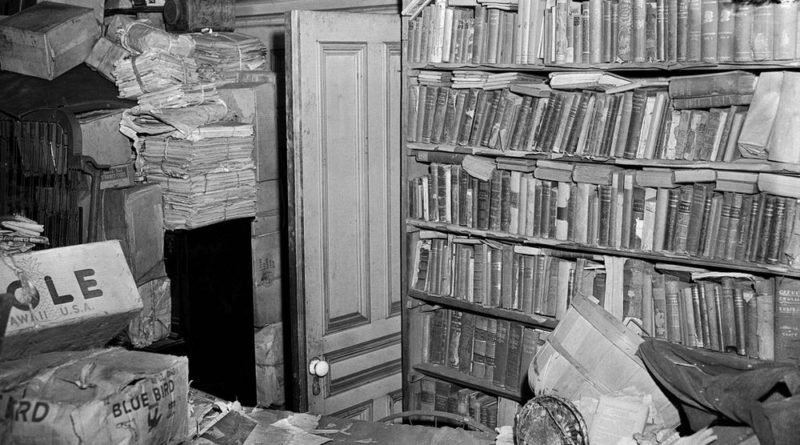
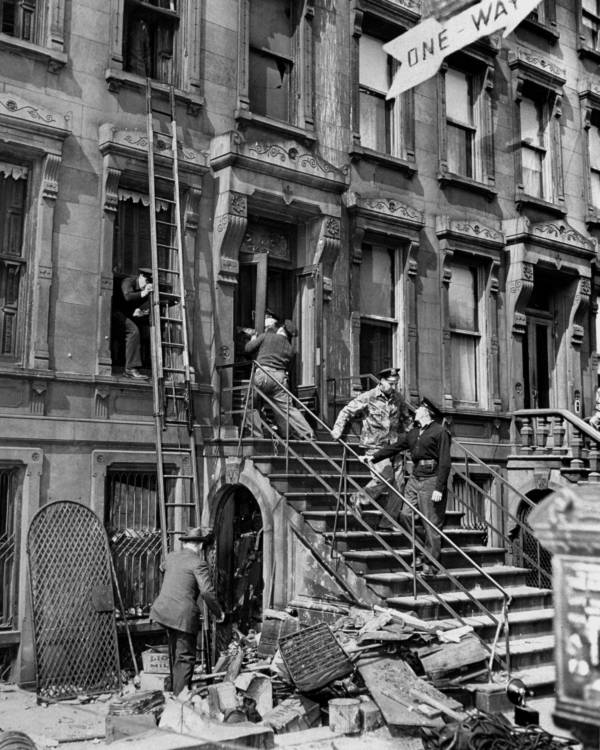
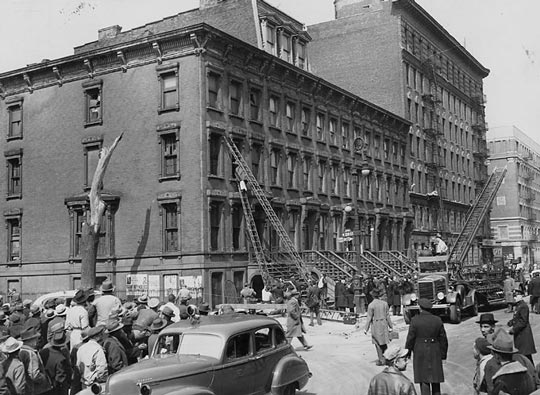
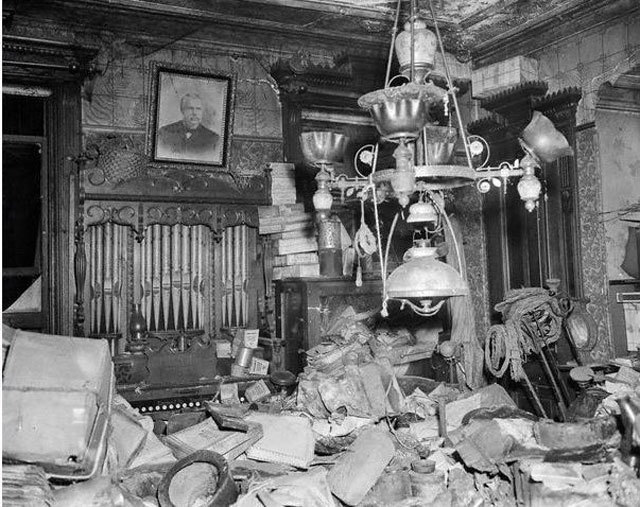
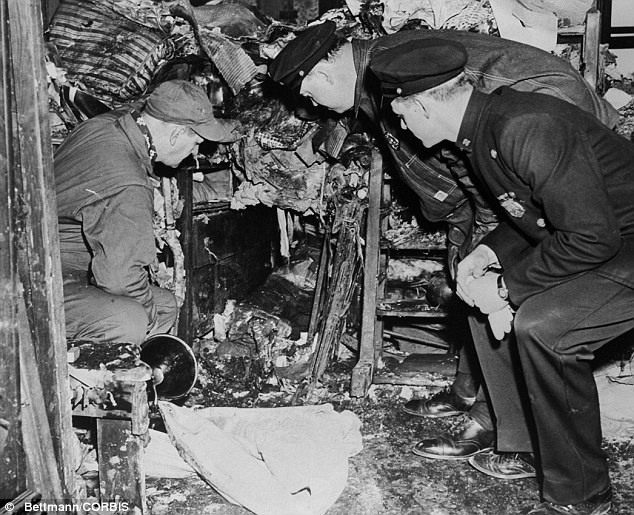
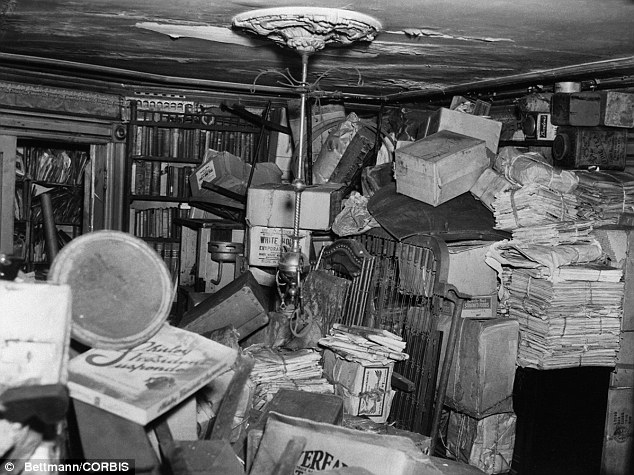
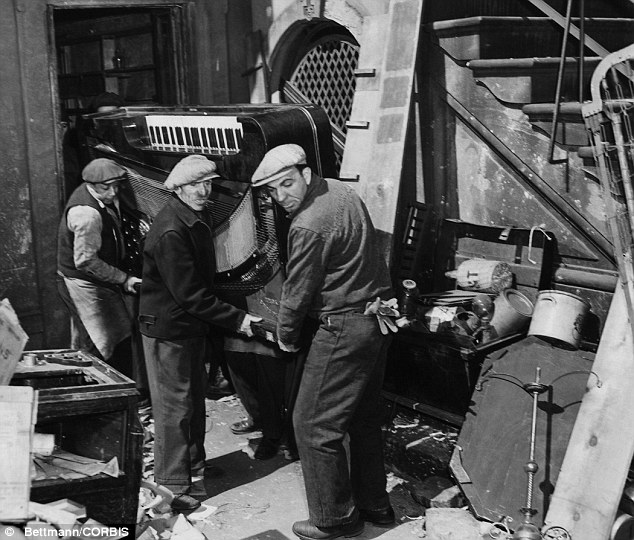
But none attempted to seal themselves off so completely in the way that Homer and Langley Collyer attempted in the 1930s and 1940s. Their story is infamous. In going several steps further to be left alone, they in effect drew attention to themselves and to their crumbling Fifth Avenue mansion – dubbed by the press ‘the Harlem house of mystery’.

They were the children of the Gilded Age, clinging to blue-blooded lineage and drawing-room social customs, in a neighborhood that was about to become the heart of African-American culture. But their unusual retreat inward — off the grid, hidden from view — suggested something more troubling than fear and isolation. And in the end, their house consumed them.

Listen Now: Collyer Brothers Podcast

__________________________________________________________

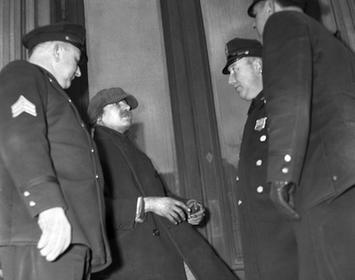
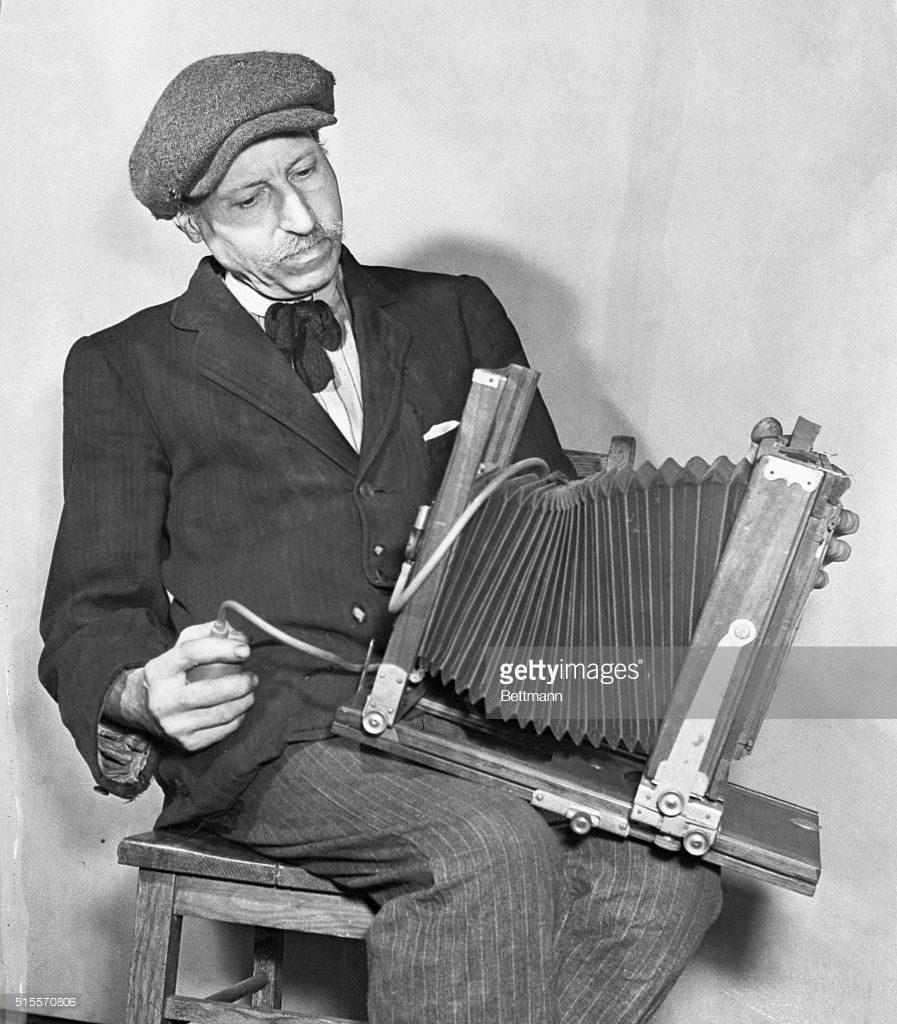
Homer Collyer, 1939

Langley Collyer, 1942, at his New York Herald Tribune photo shoot

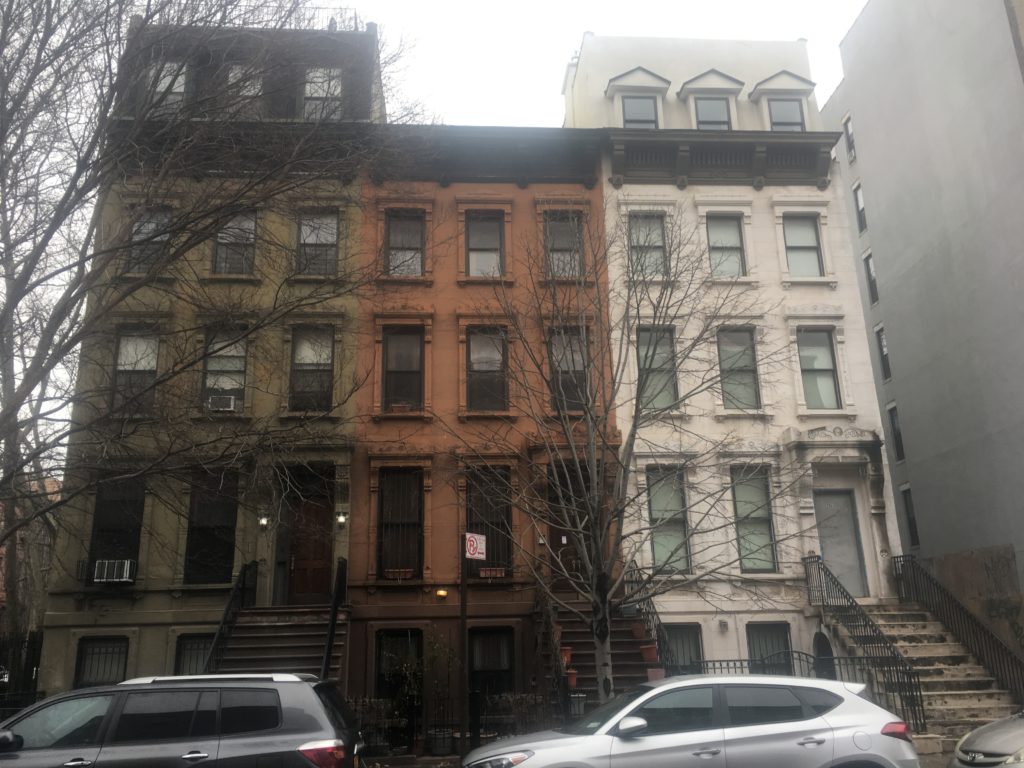
The three remaining rowhouses developed by George J. Hamilton. The middle house gives you some idea of what the Collyer mansion looked like.

Charles Hoff / NY Daily News

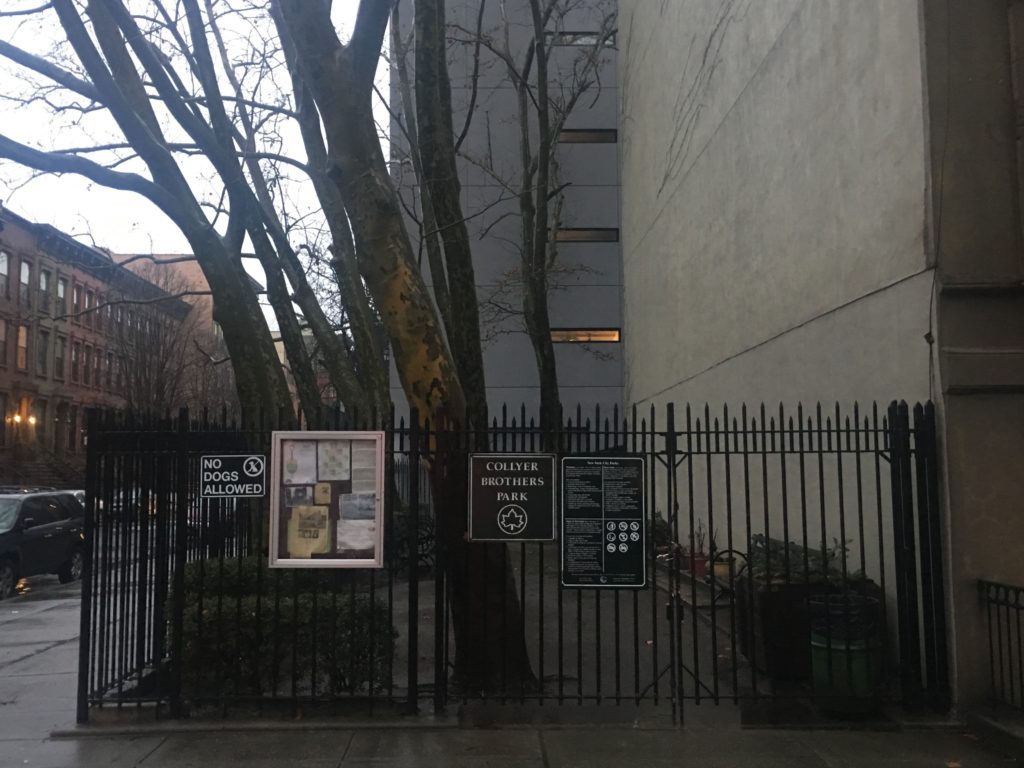
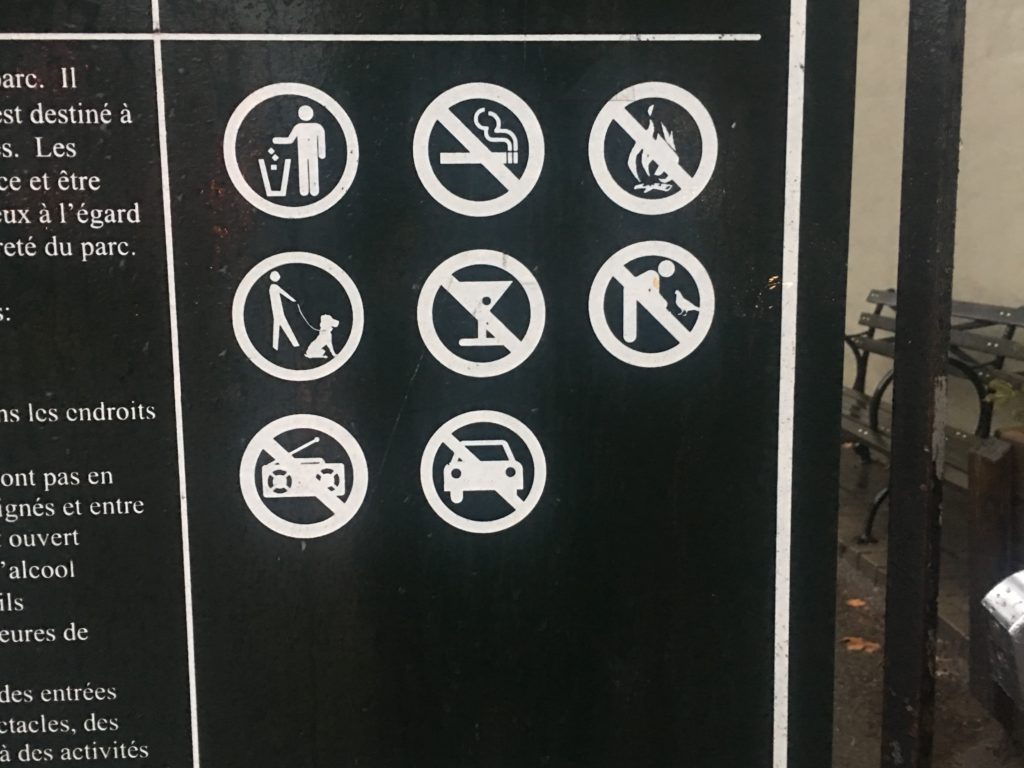
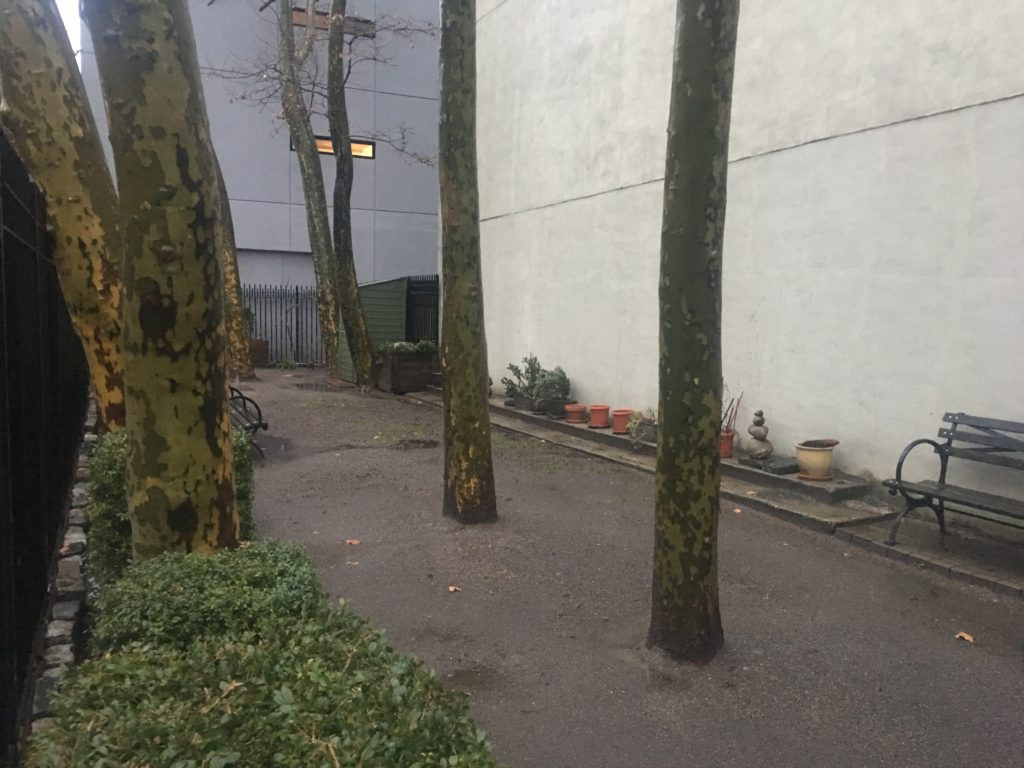
No littering in Collyer Brothers Park!

Silent footage taken outside the Collyer house, 1947

FURTHER READING

Homer and Langley by E.L. Doctorow
Out of this World by Helen Worden Erskine
Stuff: Compulsive Hoarding and the Meaning of Things by Randy O. Frost and Grail Steketee
Ghosty Men by Franz Lidz

FURTHER LISTENING

We’ve visited the back story of famous recluses in past shows with the story of Big Edie and Little Edie Bouvier (Grey Gardens) and the legendary film actress Greta Garbo:

And the story of changing Harlem is profiled in the biography episode of the great Madam C. J. Walker

<
Categories
Adventures In Old New York New Amsterdam Podcasts

The Bowery Boys Adventures in the Netherlands: All Episodes Now Available

Our epic ‘road trip’ to the Netherlands is at an end and it was mission accomplished! We learned so much about New York’s Dutch roots — from the settlement of New Amsterdam to the European settlers who first populated the island which would become Manhattan.

Along the way we also found interesting connections — and great contrasts — between America and the Netherlands. We’ll certainly never look at a bike lane the same way.

All five episodes of our Adventures in the Netherlands series are now available. Make that six actually — our show The Lenape Nation serves as an excellent prologue and reminder of the people who were already here when the Dutch arrived in 1624.

Here’s the trailer for the whole series:

The shows were designed so they the end of one show rolls into the next one, so the series makes an excellent summer binge listen! Better yet, take them with you on your own adventure someplace.

You can find the shows on most of the major podcast players including Spotify, Apple, Overcast, iHeartRadio, Pocket Casts, Podcast Addict and Amazon Music (ask your Alexa to play our show!)

Start here:

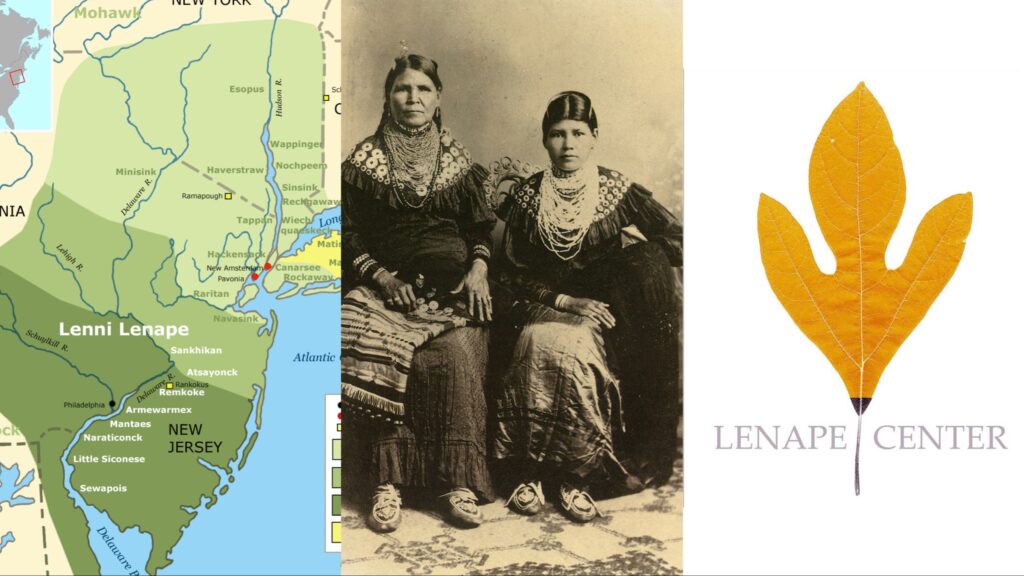
#432 The Lenape Nation: Past, Present and Future

The Lenape were among the first in northeast North America to be displaced by white colonists — the Dutch and the English. By the late 18th century, their way of life had practically vanished upon the island which would be known by some distorted vestige of a name they themselves may have given it – Manahatta, Manahahtáanung or Manhattan.

But the Lenape did not disappear. Through generations of great hardship they have persevered.


Our Introduction and a Special Guest:

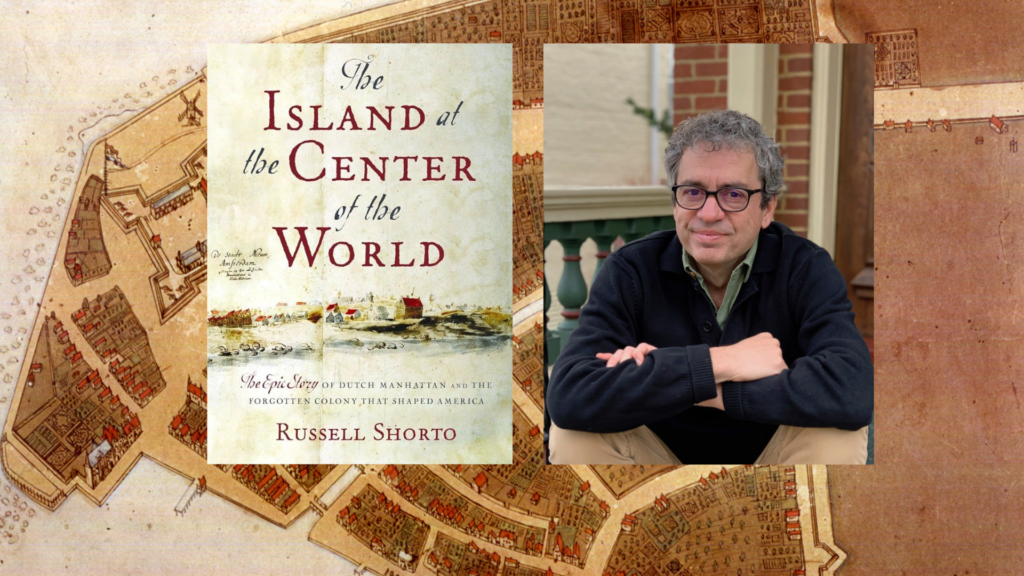
#433 New Amsterdam Man: An Interview with Russell Shorto

The Bowery Boys Podcast is headed to Amsterdam and other parts of the Netherlands for a very special mini-series, marking the 400th anniversary of the Dutch first settling in North America in the region that today we call New York City.

But before they go, they’re kicking off their international voyage with a special conversation — with Russell Shorto, author of The Island At The Center of the World, the man who inspired the journey.


Amsterdam/New Amsterdam:

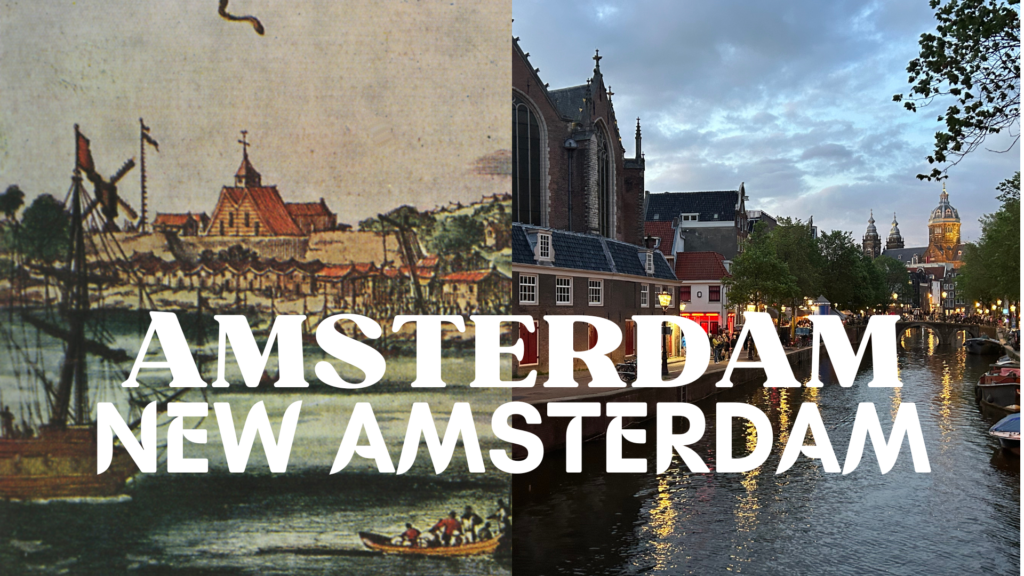
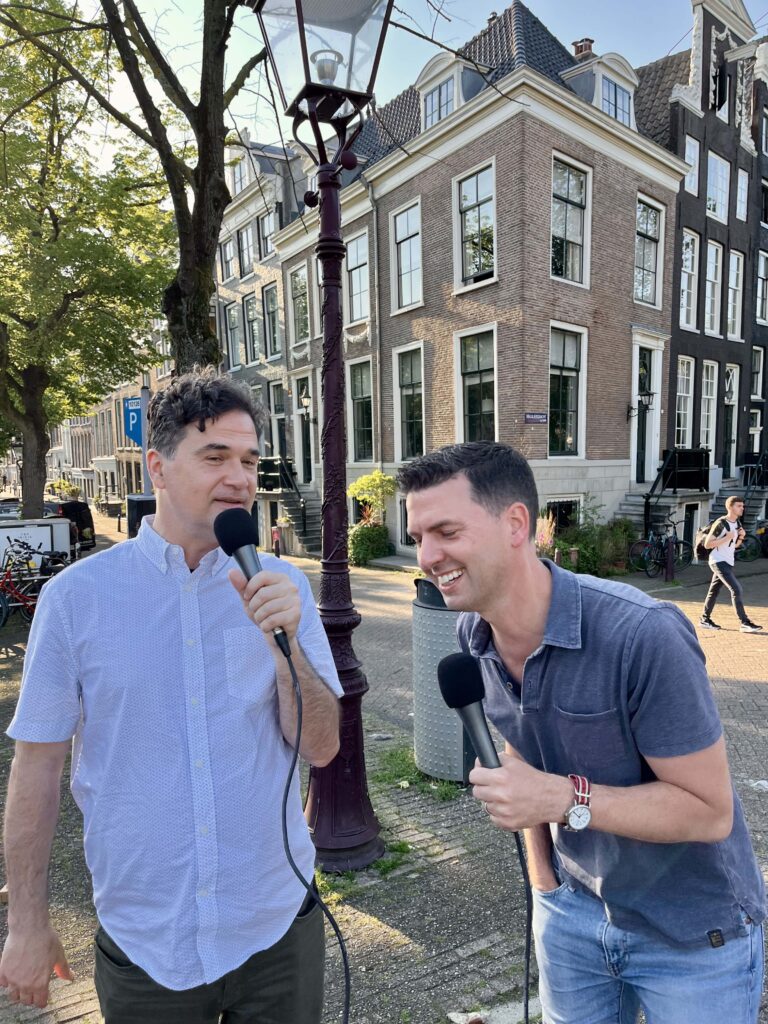
#434 Amsterdam/New Amsterdam: Empire of the Seas

We begin our journey at Amsterdam’s Centraal Station and spend the day wandering the streets and canals, peeling back the centuries in search of New York’s roots.

Our tour guide for this adventure is Jaap Jacobs, author of The Colony of New Netherland: A Dutch Settlement in Seventeenth-Century America

Jaap takes us around to several spots within the old medieval city — Centrum, including the Red Light District — weaving through the canals and along the harbor, in search of connections to New York’s (and by extension, America’s) past.


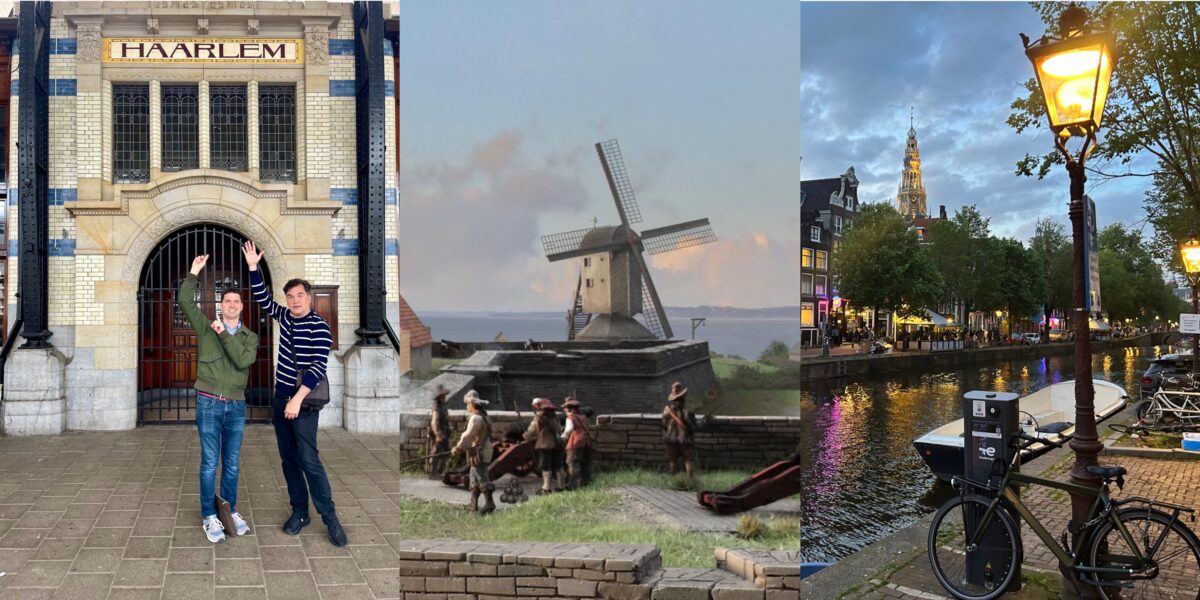
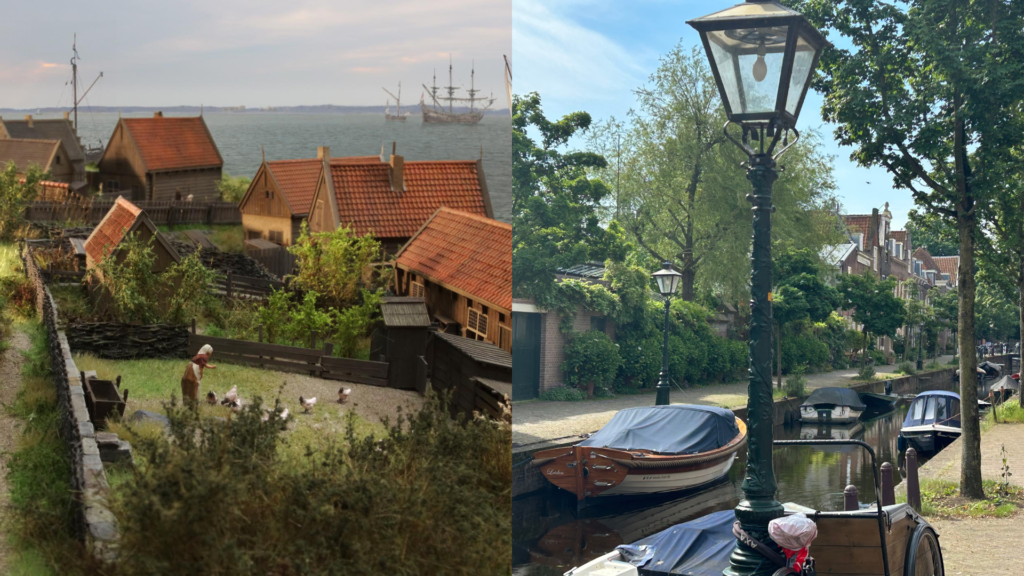
A look at the New Amsterdam miniature and a scene of full-size Leiden

#435 Amsterdam/New Amsterdam: The Radical Walloons

Our adventure in the Netherlands continues with a quest to find the Walloons, the French-speaking religious refugees who became the first settlers of New Netherland in 1624. Their descendants would last well beyond the existence of New Amsterdam and were among the first people to call themselves New Yorkers.

But you can’t tell the Walloon story without that other group of American religious settlers — the Pilgrims who settled in Massachusetts four years earlier.


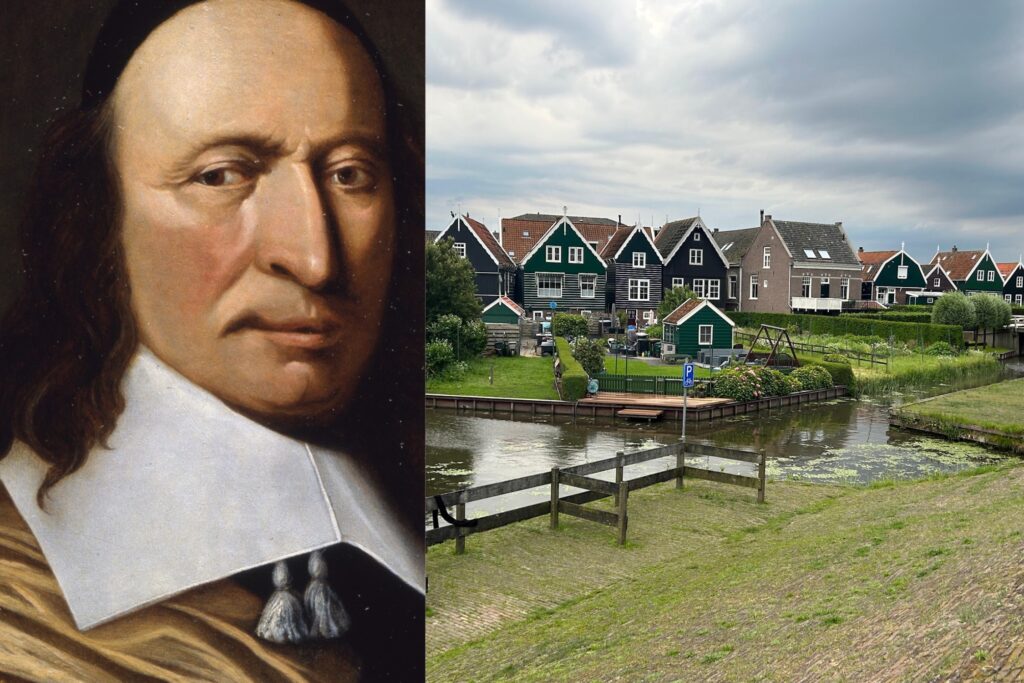
#436: Amsterdam/New Amsterdam: Finding Peter Stuyvesant

In our last days in Amsterdam (before heading to other parts of the Netherlands), we spend their time getting to know Peter Stuyvesant, the last director-general of New Amsterdam.

The name Stuyvesant can be found everywhere in New York City. — in the names of neighborhoods, apartments, parks and high schools. He’s a hero to some, a villain to others — and probably a caricature to all. What do we really know about Peter Stuyvesant?

And outside the mayor’s residence in Amsterdam’s exclusive Gouden Bocht (Golden Bend), we meet up with Jennifer Tosch of Black Heritage Tours  to investigate the story of New Amsterdam and the Dutch slave trade.


And Finally, To Other Parts of the Netherlands:

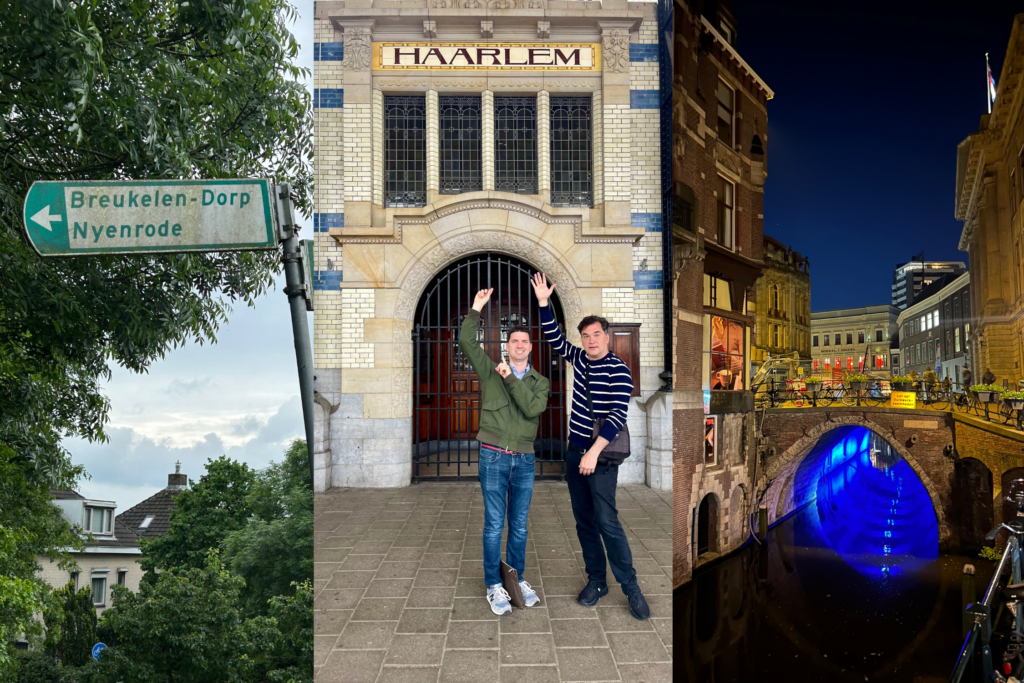
#437: Haarlem, Breukelen, Utrecht: Exploring New York’s Dutch Roots

Follow along with us in this travelogue episode as we visit several historic cities and towns in the Netherlands — Utrecht, De Bilt, Breukelen and Haarlem— wandering through cafe-filled streets and old cobblestone alleyways, the air ringing with church bells and 

But of course, our mission remains the same as the past three episodes. For there are traces of Dutch culture and history all over New York City — through the names of boroughs, neighborhoods, streets and parks.


Over On Patreon

We released a series of daily shows while on the streets of the Netherlands! These are true behind-the-scenes episodes and we let you in on the unique processes of putting these shows together. You can check out those shows — and the many other benefits of being a Bowery Boys patron — by supporting the show at Patreon.


And on Instagram

We’ve been going wild with the Instagram Reels to show you videos of our adventures. Follow us on Instagram to follow our journey. Here’s just a sampling:

Categories
Landmarks Podcasts

Harlem Nights at the Hotel Theresa

PODCAST The Hotel Theresa was once called the Waldorf of Harlem, a glamorous New York City accommodation known as a hub for Black society and culture in the 1940s and 50s — and for a few eyebrow-raising political moments in the 1960s.

The luxurious apartment hotel was built by a German lace manufacturer to cater to a wealthy white clientele.

But almost as soon as the final brick was laid, Harlem itself changed, thanks to the arrival of thousands of new Black residents from the South.

Harlem, renown the world over for the artists and writers of the Harlem Renaissance and its burgeoning music scene, was soon home to New York’s most thriving Black community.  But many of the businesses here refused to serve Black patrons, or at least certainly made them unwelcome.

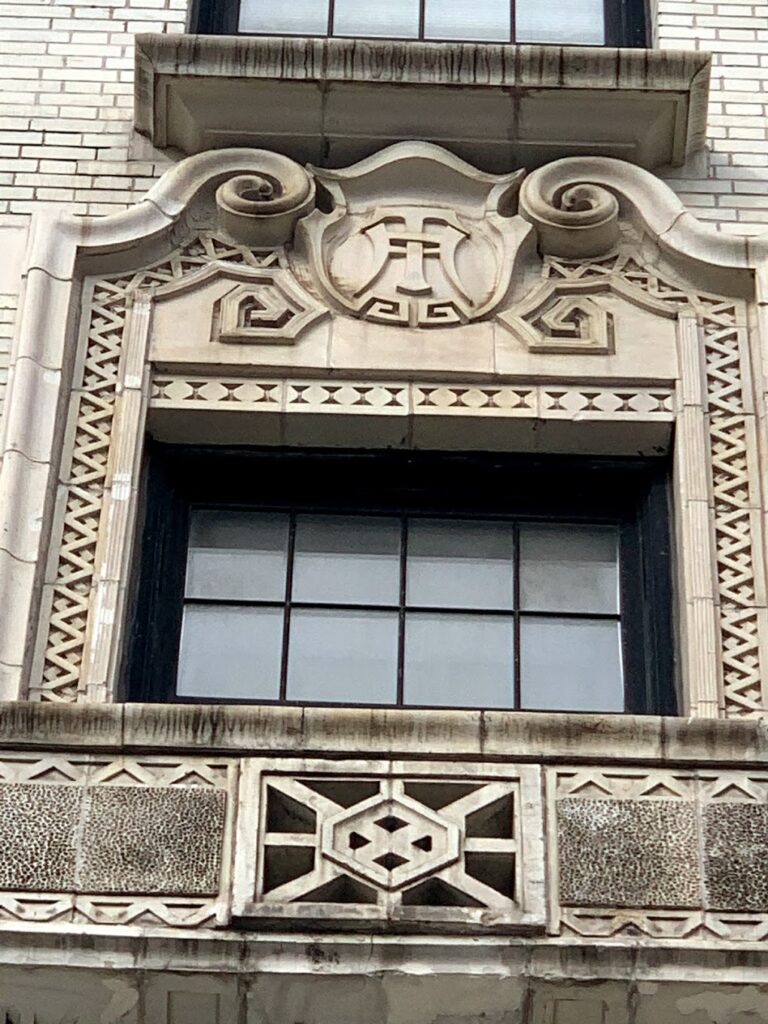
The TH initials over the windows. Photo courtesy Greg Young

The Theresa changed its policy in 1940 and soon its lobby was filled with famous athletes, actresses and politicians, many choosing to live at the Hotel Theresa over other hotels in Manhattan.  

The hotel’s relative small size made it an interesting concentration of America’s most acclaimed Black celebrities. And an almost surreal backdrop for presidents and foreign leaders alike.

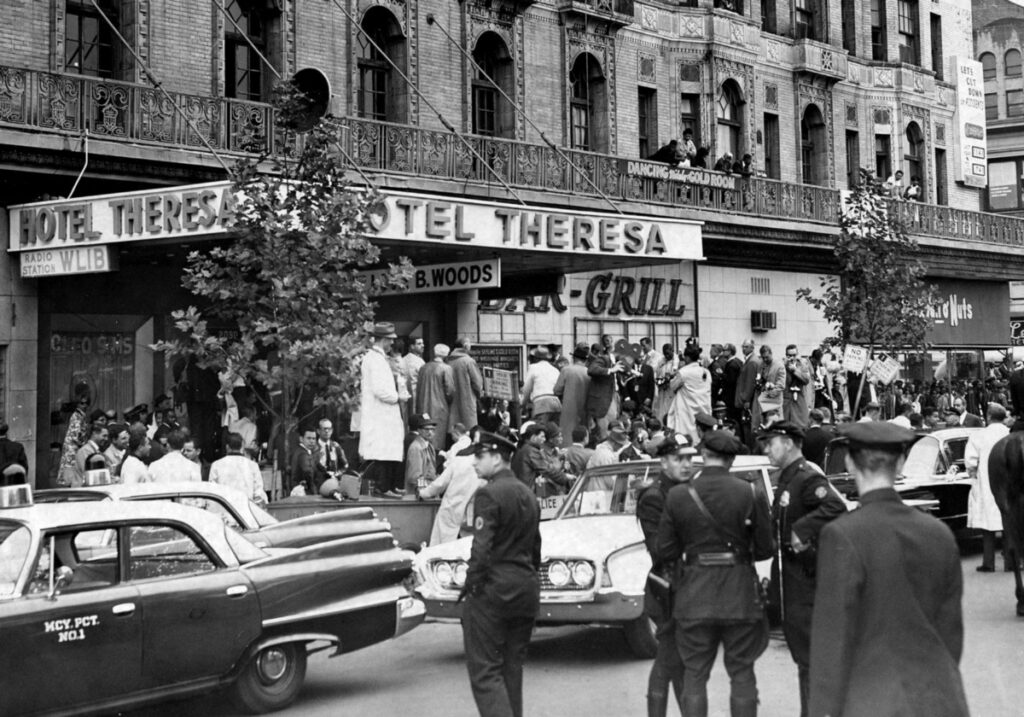
Media frenzy around the Fidel Castro’s stay at the hotel.

In this podcast, Greg gives you a tour of this glamorous scene, from the corner bar to the penthouse, from the late-night coffee shop to the crazy parties of Dinah Washington.

WITH: Martin Luther King Jr, Dwight D. Eisenhower, and Fidel Castro. And music by Sarah Vaughan, Billy Eckstine and Duke Ellington

ALSO: Who is this mysterious Theresa? What current Congressman was a former desk clerk? And what was Joe Louis’ favorite breakfast food?


Listen to Harlem Nights at the Hotel Theresa on your favorite podcast player or from the player below:

The first half of this show was originally released in 2013 (as Episode #158) but has been newly edited for this release. The second half of this show is ALL NEW.

MUSIC FEATURED: “Sophisticated Lady” by Duke Ellington and His Orchestra and “Dedicated To You” by Billy Eckstine and Sarah Vaughan. 


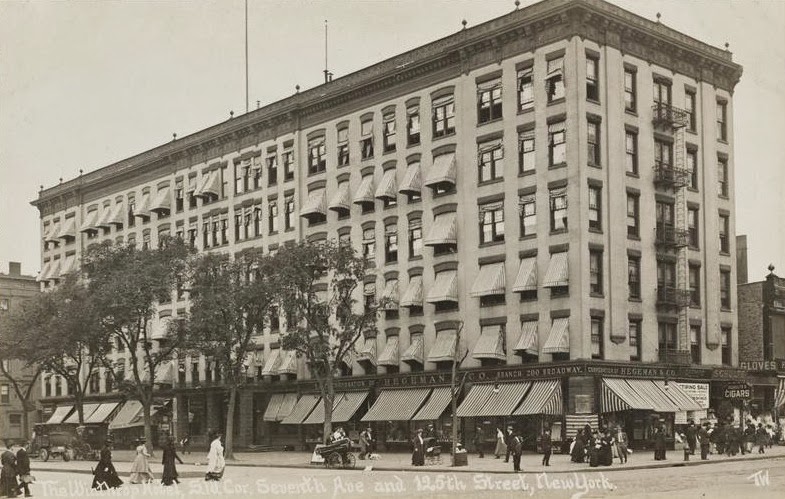
The Hotel Winthrop which sat on the spot of the Theresa before it was torn down in the early 1910s, deemed a bit inadequete for the growing neighborhood.

Museum of the City of New York

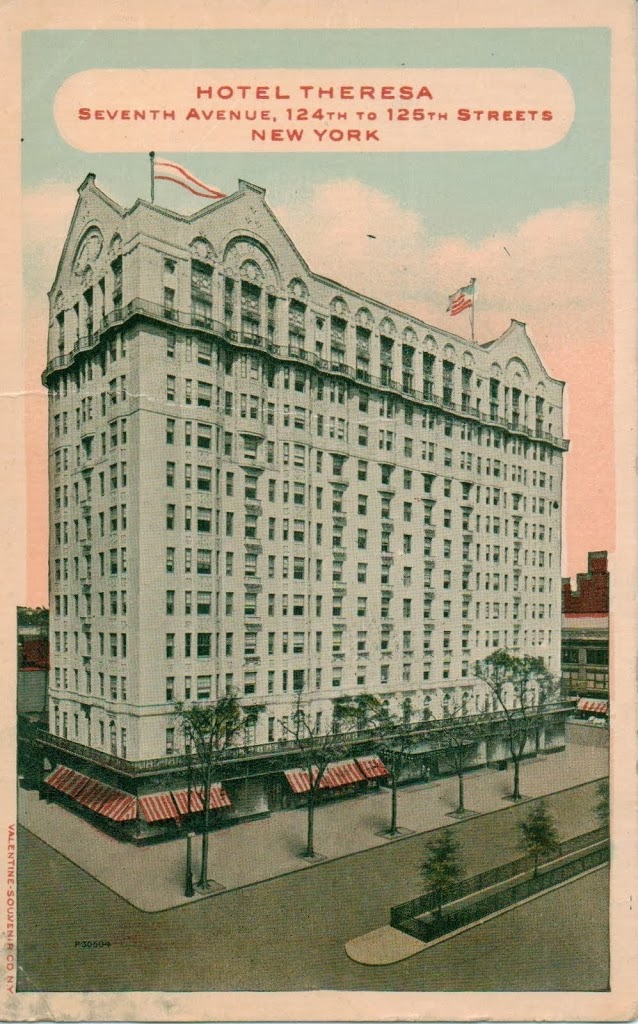
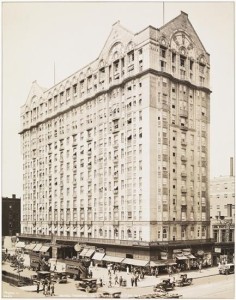
An early glimpse of the Hotel Theresa.

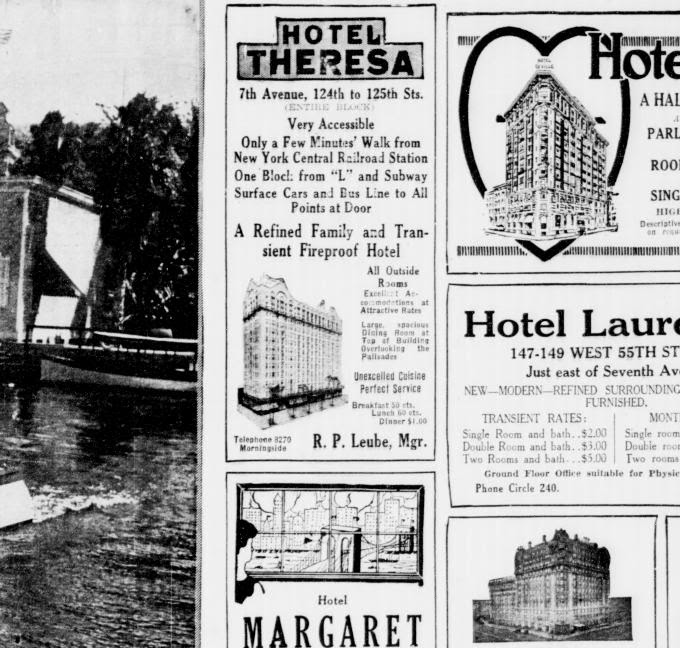
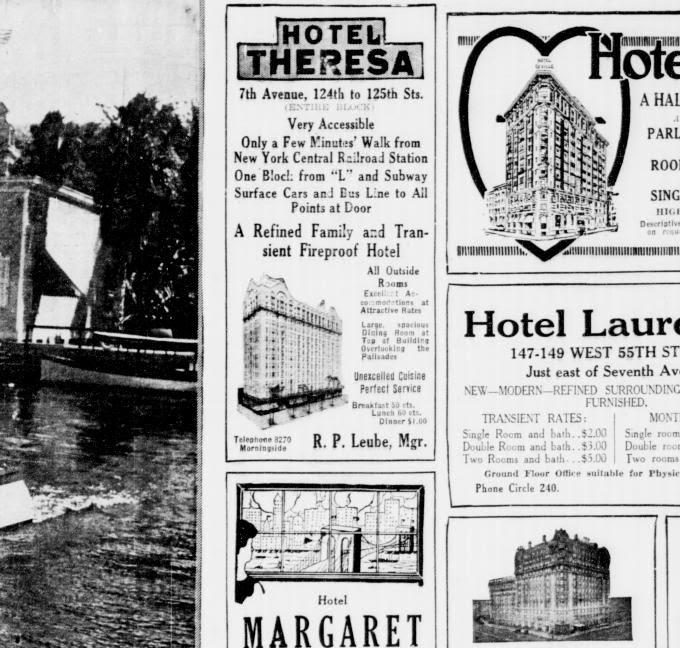
From the February 4, 1917, issue of the New York Tribune, making note of its “large spacious dining room overlooking the Palisades.”

The Hotel Theresa, circa 1915.  Courtesy the Museum of the City of New York

Hotel Theresa, Seventh Ave. & 125th Street.

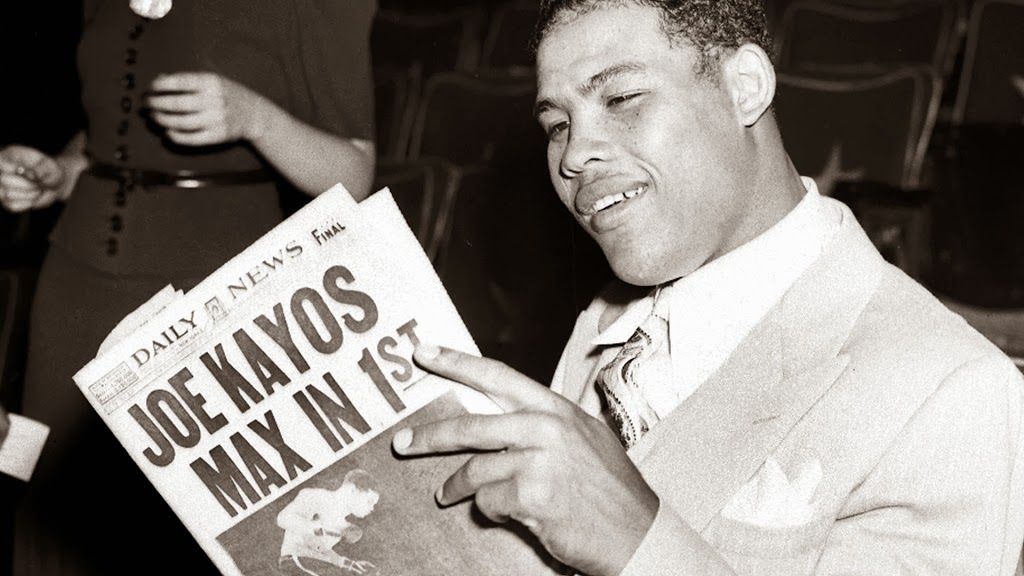
Boxer Joe Louis was one of America’s most famous athletes in the 1940s and a frequent guest at the Teresa.  Joe fought the German boxer Max Schmeling twice, both times at Yankee Stadium.  

Max bested Joe in the first match, but on the second go-around in 1938, Louis knocked out Schmeling in the first round.  

He enjoyed his win that evening at the Theresa, as thousands of fans gathered in front of the hotel and throughout the city in celebration.

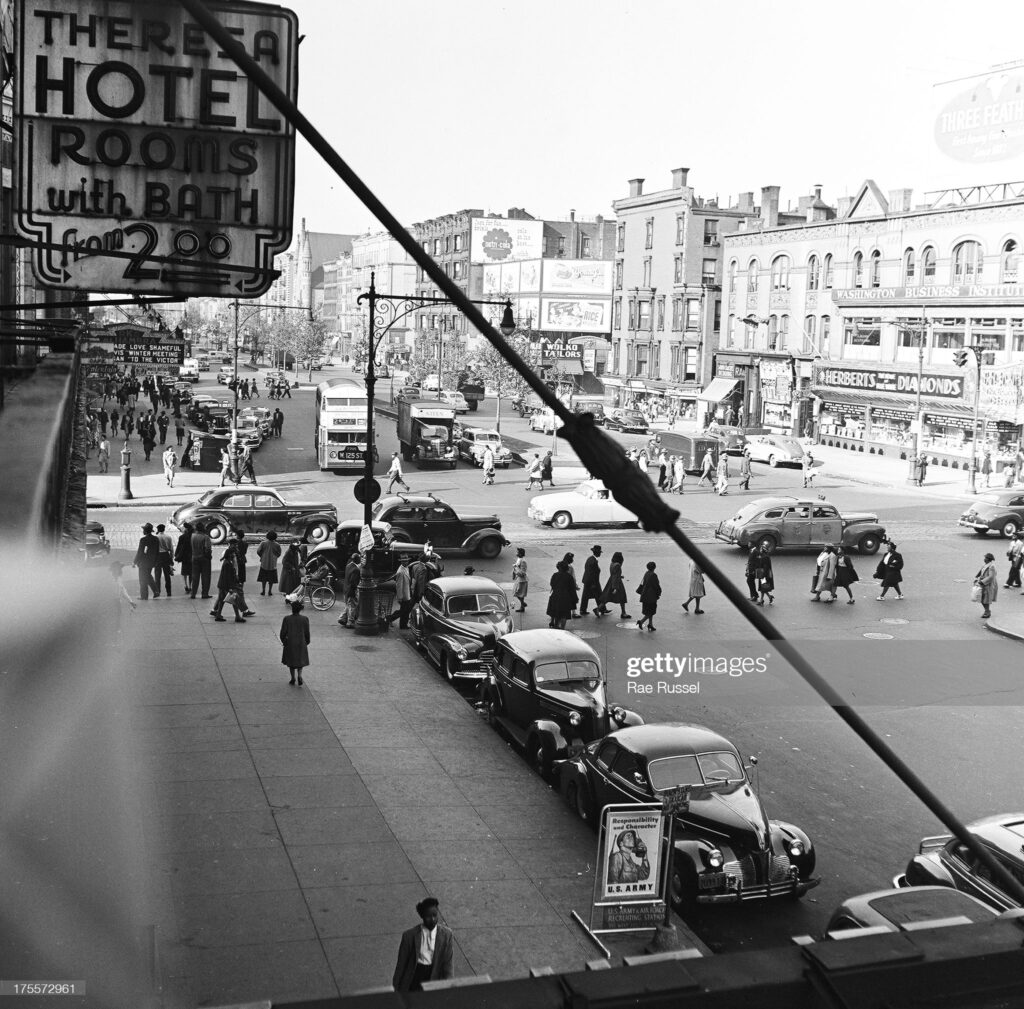
View of pedestrian and vehicular traffic at the corner of 125th Street and 7th Avenue in Harlem, New York, New York, 1948. The sign for the Theresa Hotel is visible on the left. (Photo by Rae Russel/Getty Images)

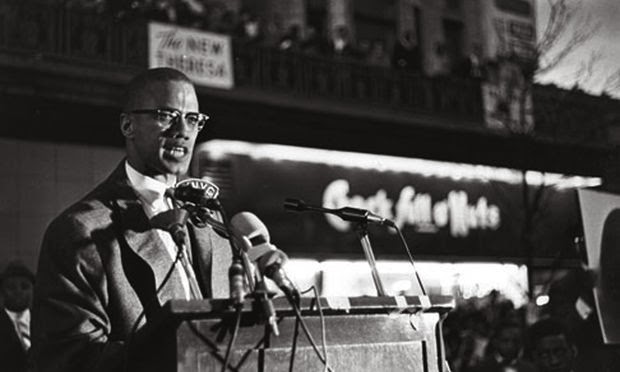
Malcolm X speaking to crowds in front of the Hotel Theresa — back when there was a Chock Full O Nuts on street level! Malcolm would be very associated with the hotel, headquartering here after his split with the Nation of Islam.  

Photo by Larry Fink c/o WNYC
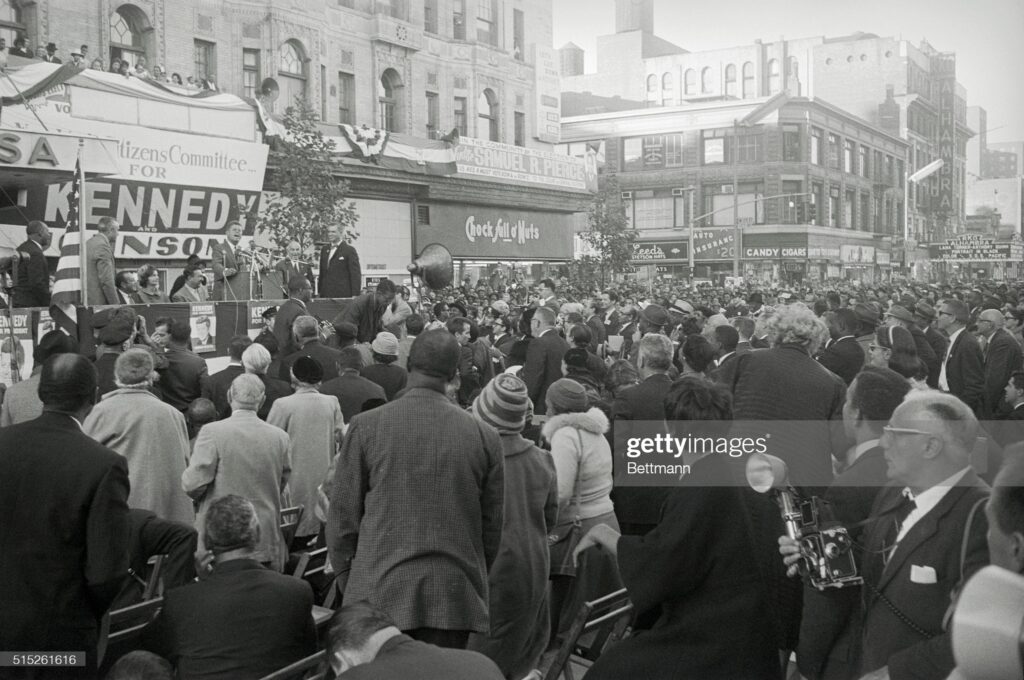
Sen. John F. Kennedy, Democratic presidential nominee, speaks at a rally in front of the hotel Theresa in Harlem. Kennedy made a half dozen speeches or appearances in and around the city during the second of a three-day bid for New York State’s 45 electoral votes. (Getty Images)

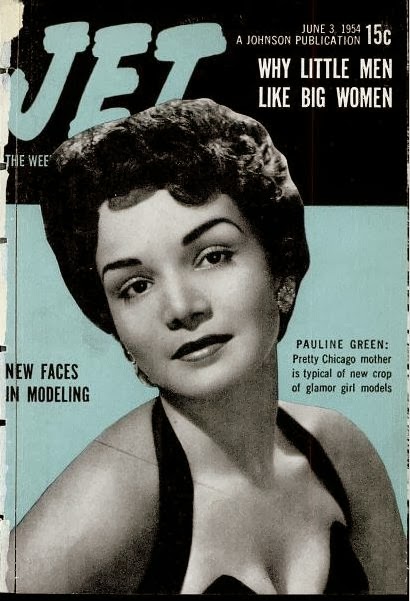
Jet Magazine and Ebony Magazine founder John J Johnson conceived the ideas for both magazine at the Hotel Theresa and frequently published articles about the Theresa.

 A notice in a 1954 issue of Jet announcing the opening of the Hotel Theresa ballroom, called the Skyline.

The Bowery Boys: New York City History podcast is brought to you …. by you!

We are now producing a new Bowery Boys podcast every other week. We’re also looking to improve and expand the show in other ways — publishing, social media, live events and other forms of media. But we can only do this with your help!

We are now a creator on Patreon, a patronage platform where you can support your favorite content creators.

Please visit our page on Patreon and watch a short video of us recording the show and talking about our expansion plans. If you’d like to help out, there are six different pledge levels. Check them out and consider being a sponsor.

We greatly appreciate our listeners and readers and thank you for joining us on this journey so far.

Categories
Podcasts

1918: The Story of the Harlem Hellfighters

PODCAST (EPISODE 310): New York’s 369th Infantry Regiment was America’s first black regiment engaged in World War I.  The world knew them as the Harlem Hellfighters.

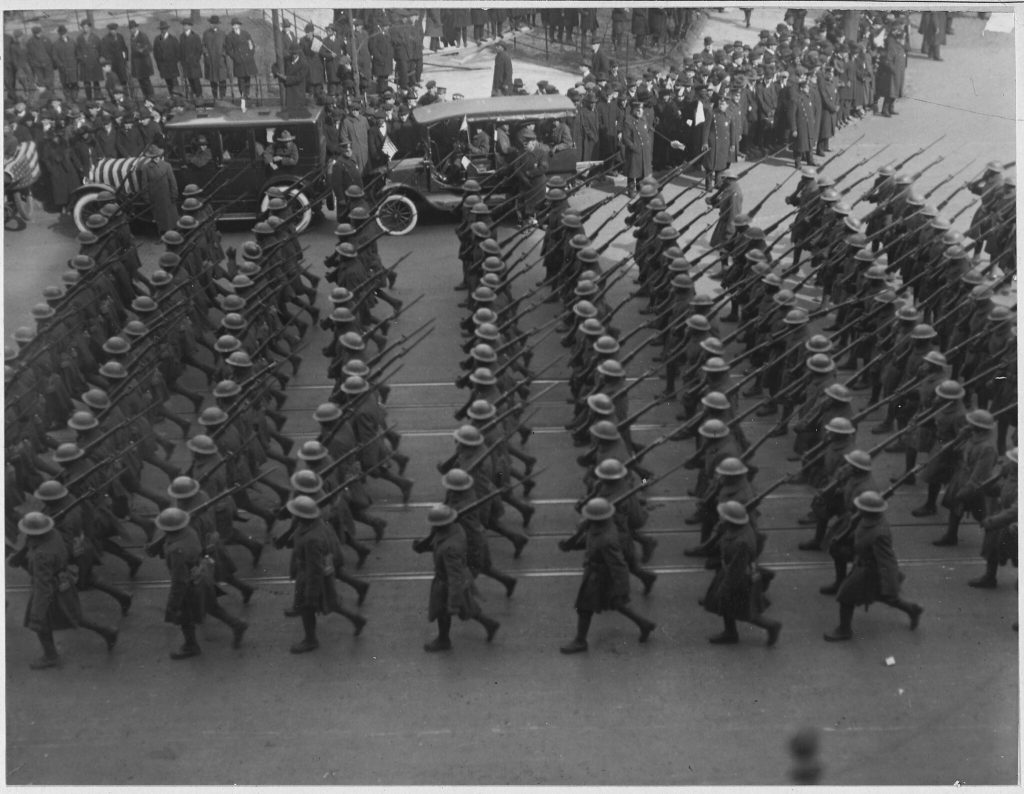
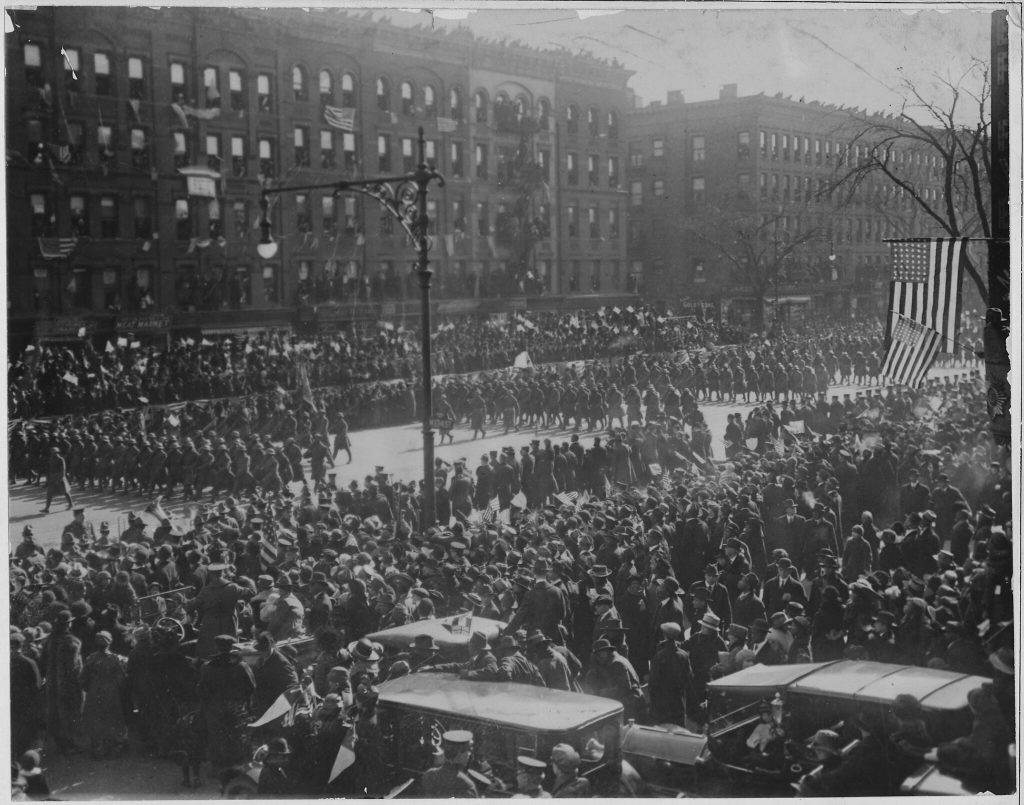
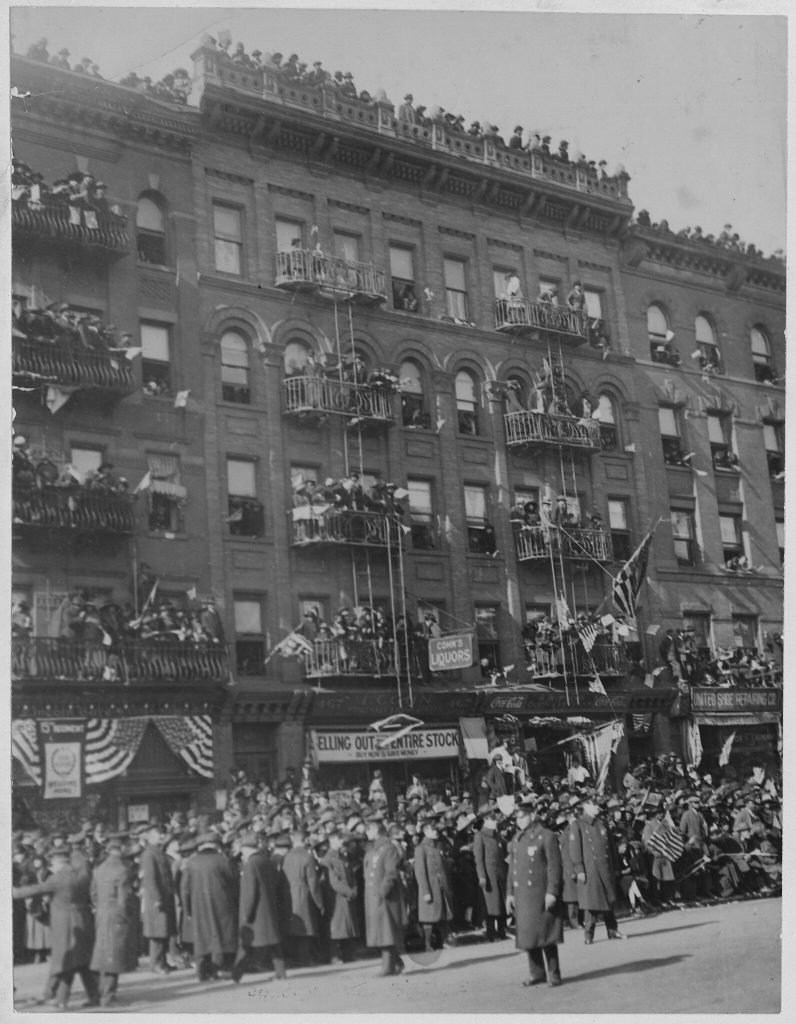
On February 17, 1919, the Hellfighters – who had spent much of the year 1918 on the frontline – marched up Fifth Avenue to an unbelievable show of support and love.

The Harlem Hellfighters were made up of young African-American men from New York City and the surrounding area, its enthusiastic recruits made up of those who had arrived in the city during a profound period of migration from the Reconstruction South to (only slightly) more tolerant Northern cities.

They were not able to serve in regular American military units because of segregation, but because of an unusual series of events, the regiment instead fought alongside the French in the trenches, for 191 days, more than any other American unit.

They were known around the world for their valor, ferocity and bravery. This is the story of New York musicians, red caps, budding painters, chauffeurs and teenagers just out of school, serving their country in a way that would become legendary.

FEATURING the voices of World War I veterans telling their own stories. PLUS some brilliant music and a story from Barack Obama (okay it’s just a clip of the former president but still.)

LISTEN NOW — THE HARLEM HELLFIGHTERS


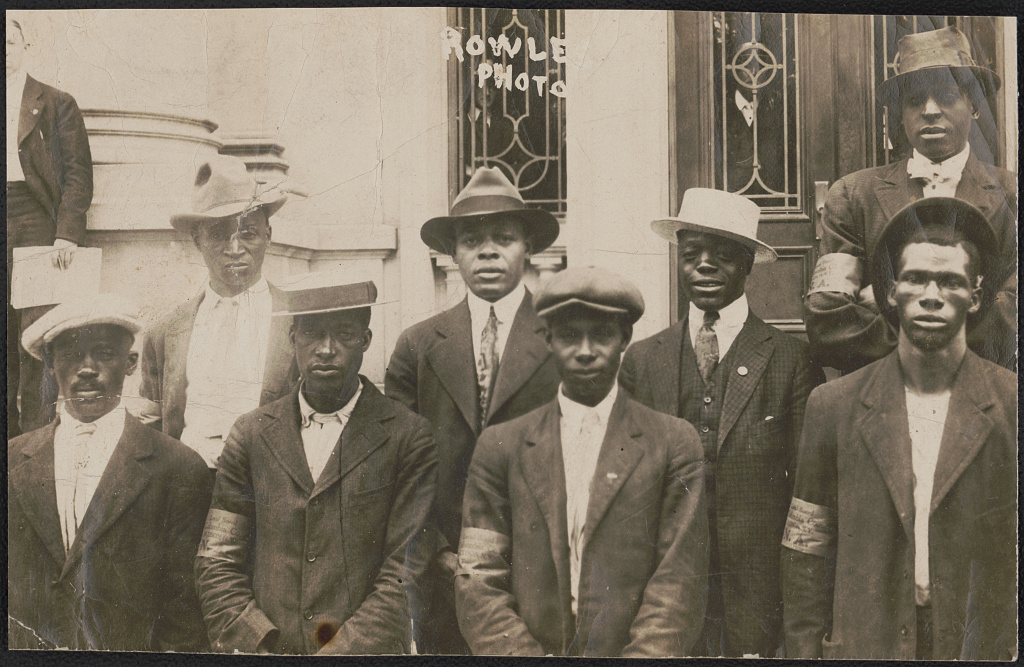
Photograph shows group portrait of men recruited for the 15th New York National Guard Regiment, later known as the 369th Infantry Regiment (the Harlem Hellfighters), wearing armbands. Library of Congress.
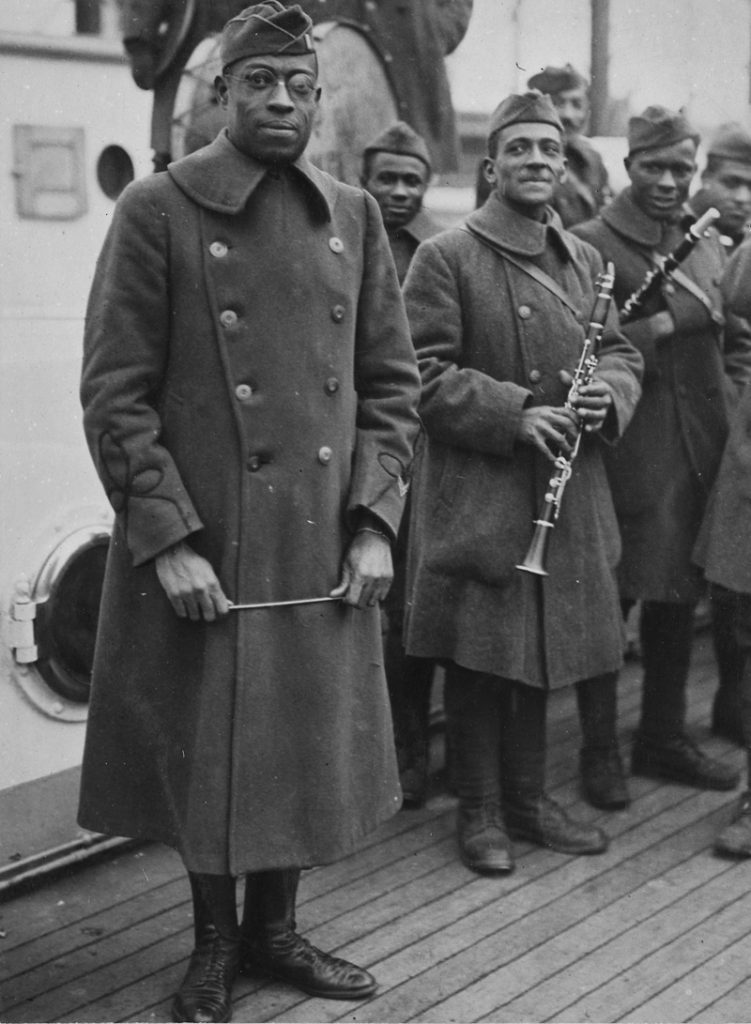
James Reese Europe, who both fought on the front lines AND brought jazz to France.
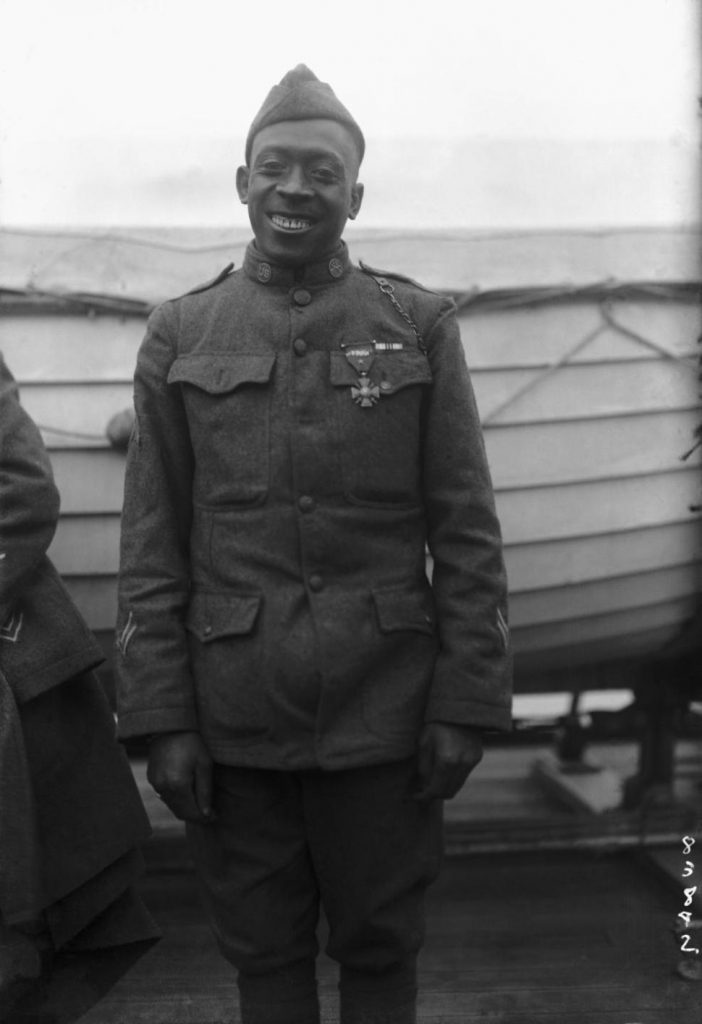
Henry Johnson, whose skills on the battlefield earned him the French Croix de guerre in his lifetime — and a U.S. Medal of Honor many decades later.
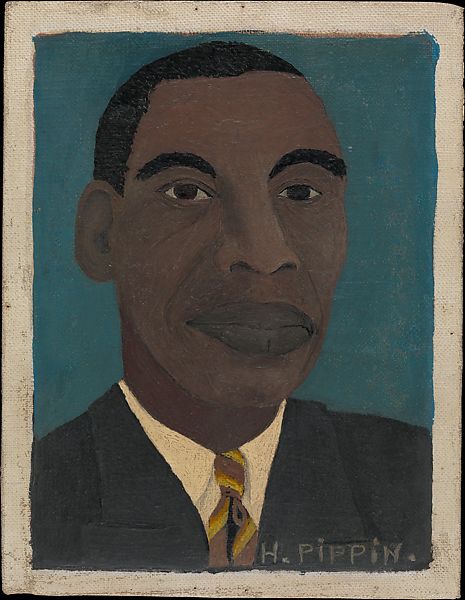
Horace Pippin (American, West Chester, Pennsylvania 1888–1946 West Chester, Pennsylvania) Self-Portrait, 1944. Courtesy the Metropolitan Museum of Art, New York, Bequest of Jane Kendall Gingrich, 1982 (1982.55.7) http://www.metmuseum.org/Collections/search-the-collections/482605

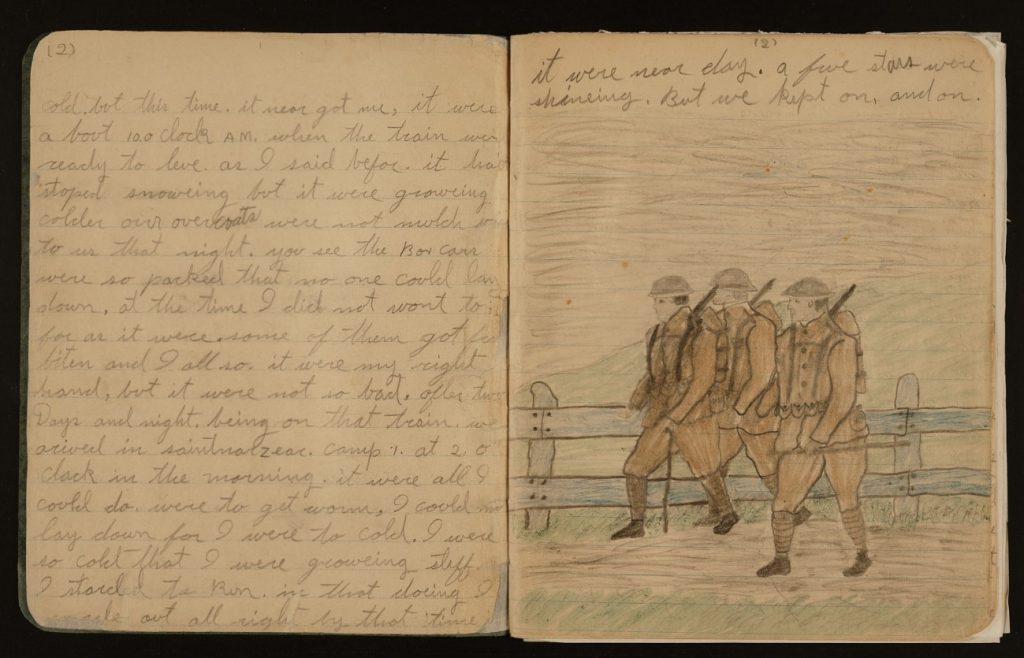
Visit the Smithsonian Archive of American Art to explore the journal of painter Horace Pippin who fought on the front lines during the summer and fall of 1918.

From the journal of Horace Pippin, featuring illustrations among his observations.
US National Archives
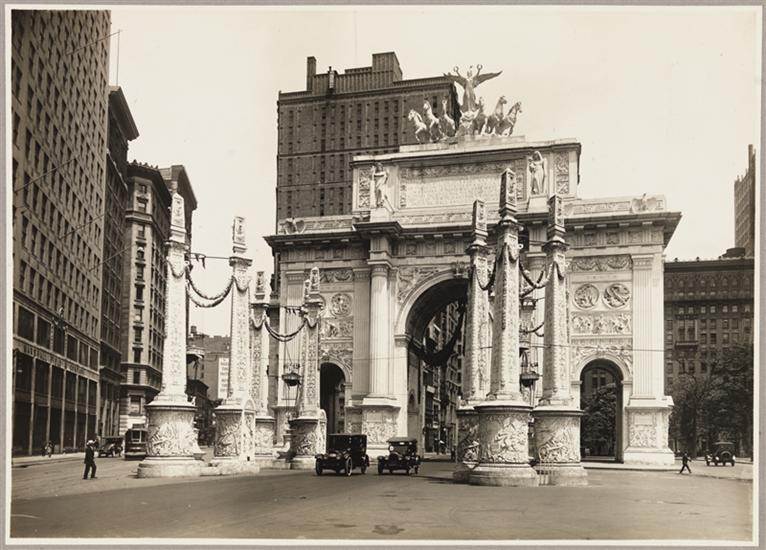
The 369th were the first regiment to march beneath the Victory Arch, installed near Madison Square Park. Courtesy Museum of the City of New York
US National Archives

From the New York Times the following day after the parade:

New York’s negro soldiers, bringing with them from France one of the bravest records achieved by any organization in the war, marched amidst waving flags and cheering crowds yesterday from Twenty-third Street and Fifth Avenue to 145th Street and Lenox Avenue.”

“At Thirty-Fourth Street the men marched under a shower of cigarettes and candy, and such tokens were pitched at them at other points in the line, but the files did not waver for an instant.

US National Archives

The complete version of the 1977 film Men of Bronze, detailing the story of the Harlem Hellfighters, directed by Bill Miles, is available to watch on YouTube.

President Obama awards the Medal of Honor posthumously to two World War I veterans, Private Henry Johnson (featured in this show) and Sergeant William Shemin.


READING LIST
From Harlem to the Rhine by Arthur West Little
Harlem Rattlers and the Great War by Jeffrey Sammons and John Howard Morrow
A Life In Ragtime: A Biography of James Reese Europe by Reid Badger
Lost Battalions by Richard Slotkin
A More Unbending Battle by Peter Nelson
We Return Fighting from the National Museum of African American History and Culture
When Pride Met Courage by Walter Dean Myers

FURTHER LISTENING


The Bowery Boys: New York City History podcast is brought to you …. by you!

We are now producing a new Bowery Boys podcast every other week. We’re also looking to improve and expand the show in other ways — publishing, social media, live events and other forms of media. But we can only do this with your help!

We are now a creator on Patreon, a patronage platform where you can support your favorite content creators.

Please visit our page on Patreon and watch a short video of us recording the show and talking about our expansion plans. If you’d like to help out, there are six different pledge levels. Check them out and consider being a sponsor.

ALL patrons at all levels will receive many benefits include the next episode of the Bowery Boys Movie Club, an exclusive podcast (released every 6-8 weeks) celebrating New York City in the movies. And patrons at the Five Points ($5) level and up will get our other exclusive podcast — The Bowery Boys: The Takeout — released every two weeks.

We greatly appreciate our listeners and readers and thank you for joining us on this journey so far.

Categories
Brooklyn History Film History

Motherless Brooklyn: 10 things to know before checking out Edward Norton’s detective film

Motherless Brooklyn, a radical retro transformation of Jonathan Lethem’s book of the same name, refits the bright noir of the movie Chinatown into 1950s New York City. Edward Norton, who wrote and directed this adaptation, also stars as its central figure — Lionel Essrog or simply Brooklyn, a detective with Tourette syndrome and a photographic memory.

The film is a lot. Its success for you will depend on your tolerance for Norton’s performance as Brooklyn, who explodes with spontaneous verbal tics while on a labyrinthine case nodding (often blatantly, sometimes brilliantly) to dozens of classic detective tropes.

I saw it a week ago and I’m still not sure whether I loved it or detested it. It’s a movie full of wonderful concepts, fascinating history and a few failed ideas.

But if you’ve ever listened to our podcast — or spent more than five minutes on this website — then I’m pretty sure you’ll find something to admire in Motherless Brooklyn.

The list below contains no big spoilers pertaining to the film’s plot, but prepare to recognize the following historical figures and concepts. In fact you might like to listen to a podcast or two before or after you view the film. Some listening suggestions are below:

THE POWER BROKER

In many ways Motherless Brooklyn is as much an adaptation of The Power Broker as it is Lethem’s detective novel. (There are at least three character monologues that feel like information dumps from the book.)

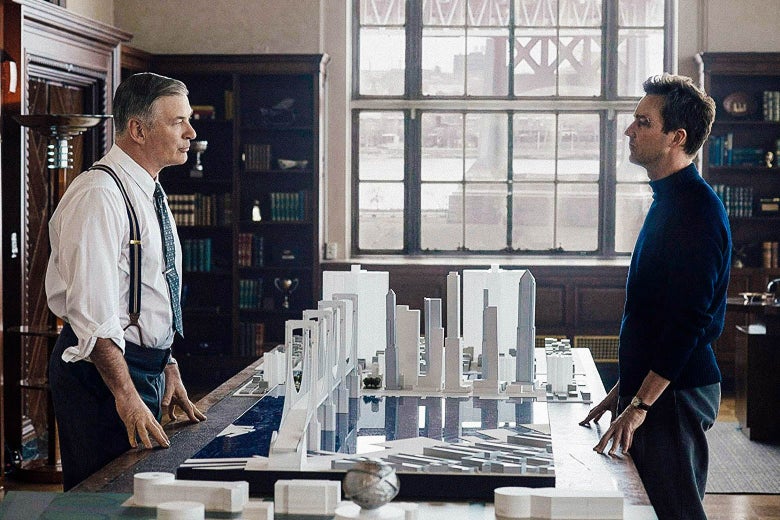
The central antagonist Moses Randolph (Alec Baldwin) stands in for Robert Moses, the unelected city official who amassed great power during the 1940s and 50s, shaping the city to his whims. By the ’50s, Moses has collected several job titles, lording over weak mayors and determining the city’s fate — with little consideration for individual community needs.

Warner Bros

TRIBOROUGH BRIDGE AND TUNNEL AUTHORITY

In Motherless Brooklyn, Moses’ instrument for change is actually called the Borough Authority, but its headquarters are located in the same place as Moses’ — Randall’s Island. Originally commissioned by the state to construct the Triborough Bridge, the authority’s merged with other city agencies under Moses.

THE GREAT MIGRATION

Thousands of African-Americans moved out of the South in the first half of the 20th century — escaping the dominance of Jim Crow laws — and many came to New York City, only to find a familiar tenor of discrimination here. By the 1940s, housing shortages in black communities like Harlem vexed African-Americans who were unable to rent from many landlords in mostly white neighborhoods.

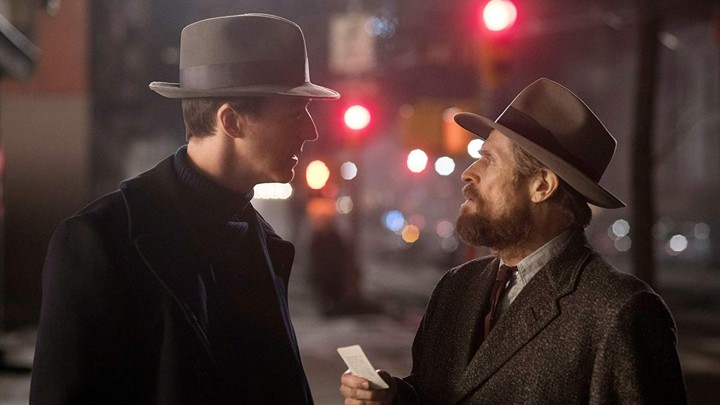
Norton with Willem Dafoe in a stand-out performance. Courtesy Warner Bros

REDLINING

The process by which banks and insurance companies, with de facto approval by the city, denied loans and mortgages to residents in predominantly minority neighborhoods, leading to the deterioration of those neighborhoods, leading them to be labeled ‘slums’. When then led to….

SLUM CLEARANCE

An urban renewal strategy popular in the mid-20th century — Robert Moses was its maestro — involving the complete demolition of neighborhoods labeled slums and relocating its displaced residents to public housing in far off (less valuable) quadrants of the city. In many cases, those neighborhoods were not ‘slums’ at all; that is, they were thriving places that just happened to be homes to black, Hispanic or Jewish residents.

EAST TREMONT

A neighborhood in the South Bronx, largely populated with working class Jewish residents, decimated by the construction of the Cross Bronx Expressway in the 1940s and 50s. From The Power Broker: “The one mile of the Cross-Bronx Expressway through East Tremont was completed in 1960. By 1965, the community’s “very good, solid housing stock,” the apartments that had been so precious to the people who had lived in them, were ravaged hulks.

Glen Wilson/Warner Bros.

JANE JACOBS

Cherry Jones plays Gabby Horowitz, a community activist very much in the mold of Greenwich Village crusader Jane Jacobs. There’s even an interesting nod to her work in Washington Square and a notable rally which took place there in 1958.

HARLEM JAZZ

Harlem’s glorious jazz-club tradition is vividly illustrated in one set piece — a smoky club called the King Rooster. The film used the actual St. Nick’s Pub (St. Nicholas Avenue at West 149th Street) which dated back to the 1930s. Sadly the club burned down in 2018 in a tragic blaze which killed a firefighter.

THE ORIGINAL PENNSYLVANIA STATION

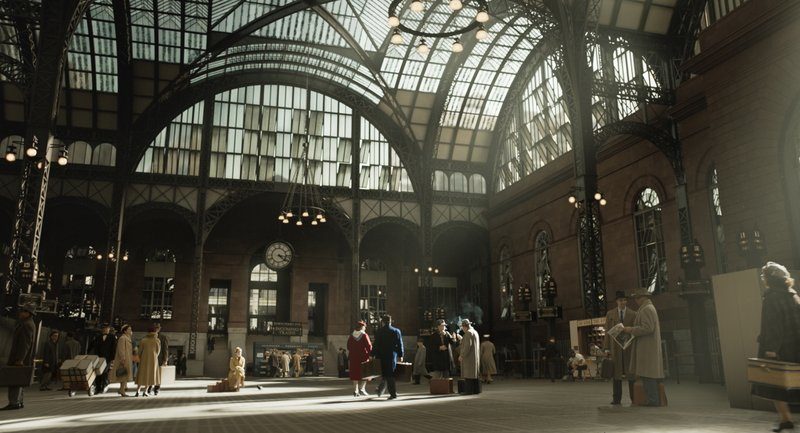
By the 1950s, the first Pennsylvania Station — above ground, designed by McKim, Meade and White — was just a few years away from demolition. It was deteriorating and not very clean by then, but Norton thankfully recreates a fantasy, photo-perfect version of Penn Station. It’s genuinely breathtaking.

SWIMMING

Robert Moses was a champion swimmer and even let his hobby influence early policy, constructing ten massive swimming pools during the 1930s with Work Progress Administration funding. Quoting Caro: “Moses gave each of his pools … his personal attention. Under his prodding, his architects adorned them with masterful little touches; over the entrance which divided men from women as they entered the bathhouse at the Corona Pool complex sat a stork wearing an expression that made him look as if he were puzzling over the physical differences in the creatures he had brought into the world.”

FURTHER LISTENING:

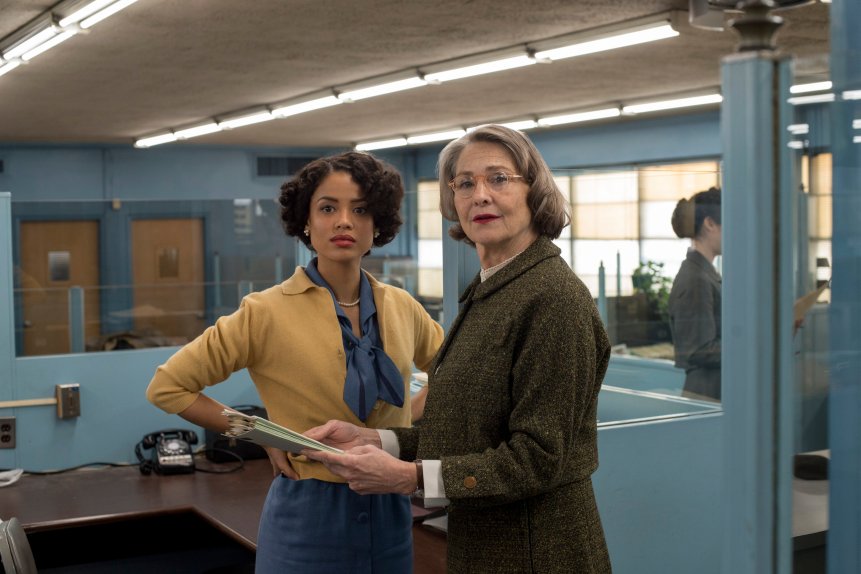
At top: Gugu Mbatha-Raw and Edward Norton

Categories
It's Showtime Podcasts

Absolutely Flawless: A History of Drag in New York

PODCAST The story of New York City’s most colorful profession.

Television audiences are currently obsessed with shows like RuPaul’s Drag Race and FX’s Pose, presenting different angles on the profession and art of drag. New York City has been crucial to its current moment in pop culture and people have been performing and enjoy drag performers for well over a century.

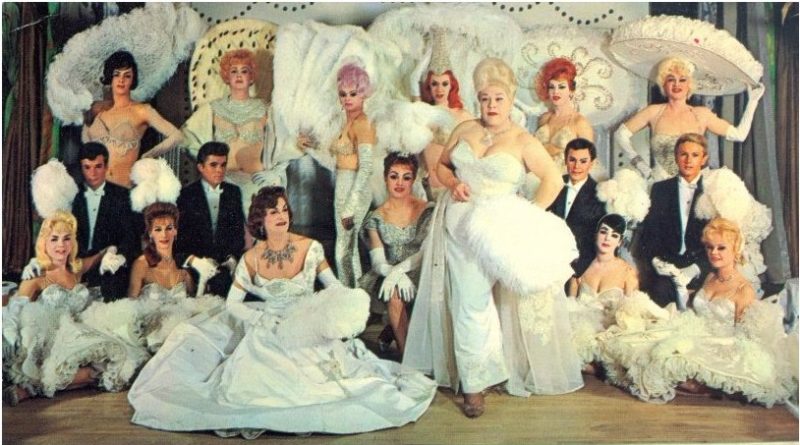
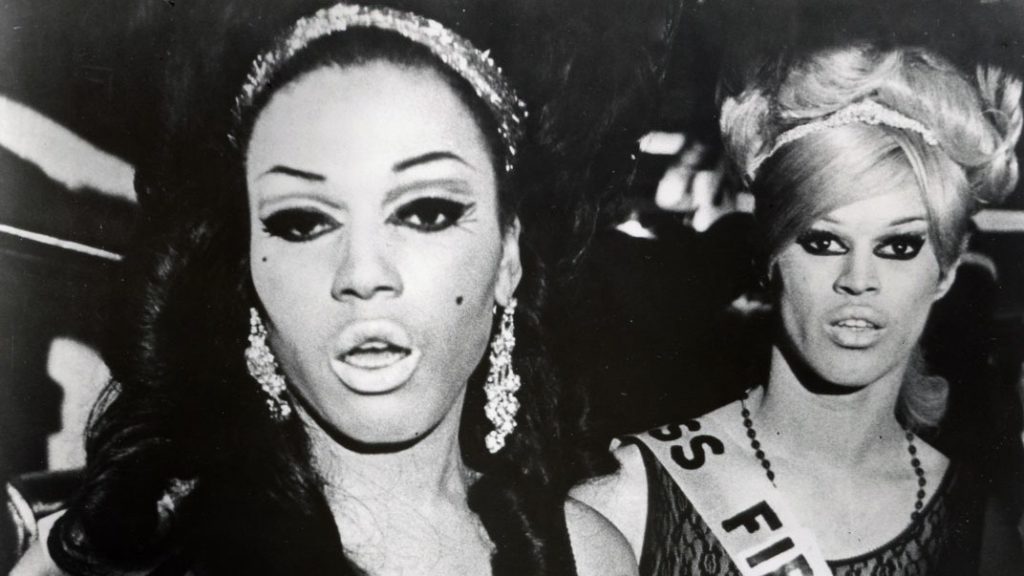
In the beginning there were two kinds of drag — vaudeville and ballroom. As female impersonators filled Broadway theaters — one theater is even named for a famed gender illusionist — thrill seekers were heading to the popular balls of Greenwich Village and Harlem.

During the middle of the 20th century, the gay scene retreated into the shadows, governed by mob control and harshly policed by the city. By design, drag became political. It also became a huge counter-cultural influence in the late 1960s — from the glamour of Andy Warhol‘s superstars to the jubilant schtick of Charles Busch.

But it was the 1980s that brought the most significant influences to our current pop cultural moment. Joining Greg on this show are two experts on two late 80s/early 90s scenes — Felix Rodriguez, a videographer of the ballroom culture (made famous in the landmark documentary Paris Is Burning) and Linda Simpson, one of the great queens of East Village drag.

FEATURING: Drag kings! Wigstock! And a famous drag queen superstar who got struck by lightning.

Listen Now: Drag Queen History Podcast

_________________________________________________________

The Bowery Boys: New York City History podcast is brought to you …. by you!

We are now producing a new Bowery Boys podcast every other week. We’re also looking to improve the show in other ways and expand in other ways as well — through publishing, social media, live events and other forms of media. But we can only do this with your help!

We are now a member of Patreon, a patronage platform where you can support your favorite content creators for as little as a $1 a month.

Please visit our page on Patreon and watch a short video of us recording the show and talking about our expansion plans. If you’d like to help out, there are five different pledge levels (and with clever names too — Mannahatta, New Amsterdam, Five Points, Gilded Age, Jazz Age and Empire State). Check them out and consider being a sponsor.

We greatly appreciate our listeners and readers and thank you for joining us on this journey so far.

_______________________________________________________

Big thanks to Felix and Linda for joining me on the show! For more information on the history they spoke about, reach out to their work directly.

The Drag Explosion — Simpson’s collection of spectacular photographs from the late 80s/early 90s East Village drag scene.

And visit Linda Simpson at her long-running bingo night at (le) poisson rouge

Courtesy Linda Simpson

And here’s one of Felix’s videos featuring the early 90s ballroom scene. Find many more at his YouTube page:

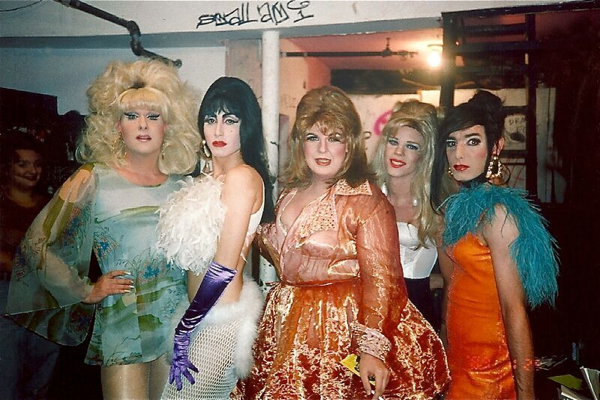
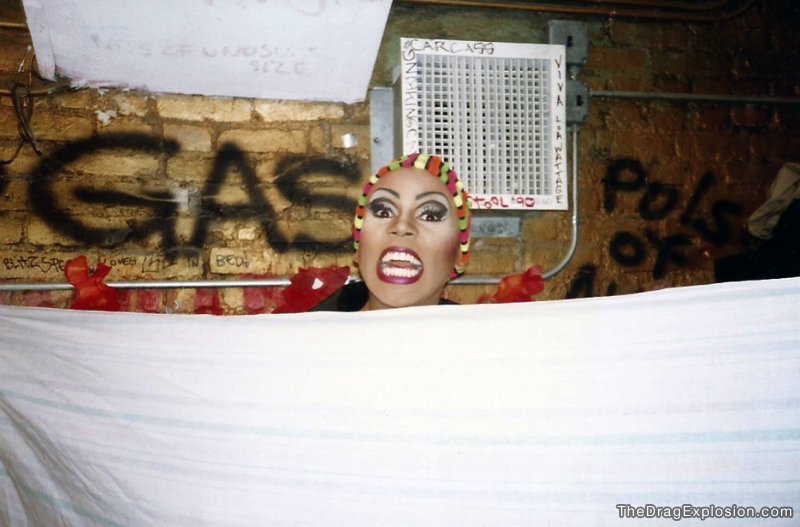
A couple images from Linda Simpson’s Drag Explosion project:

The Drag Explosion

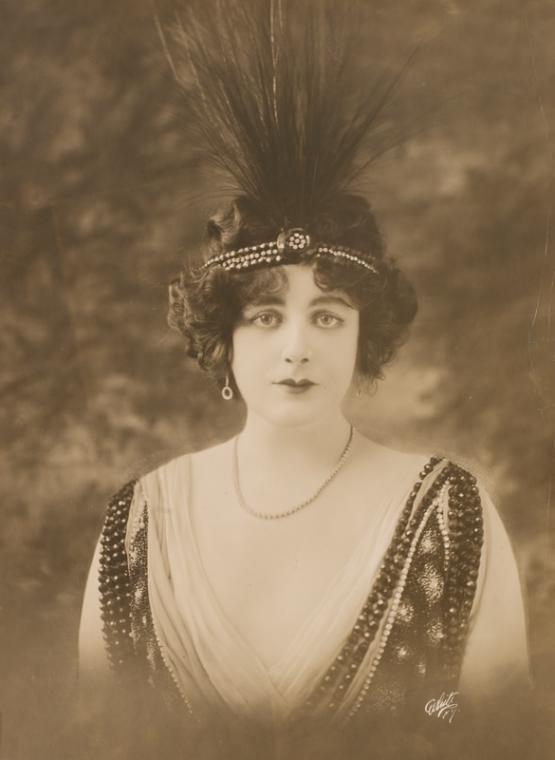
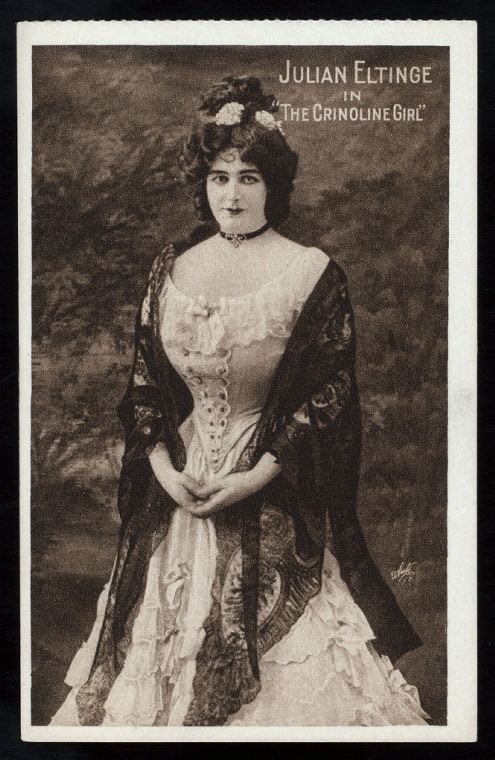
Vaudeville superstar Julian Eltinge, in a couple of popular looks:

New York Public Library

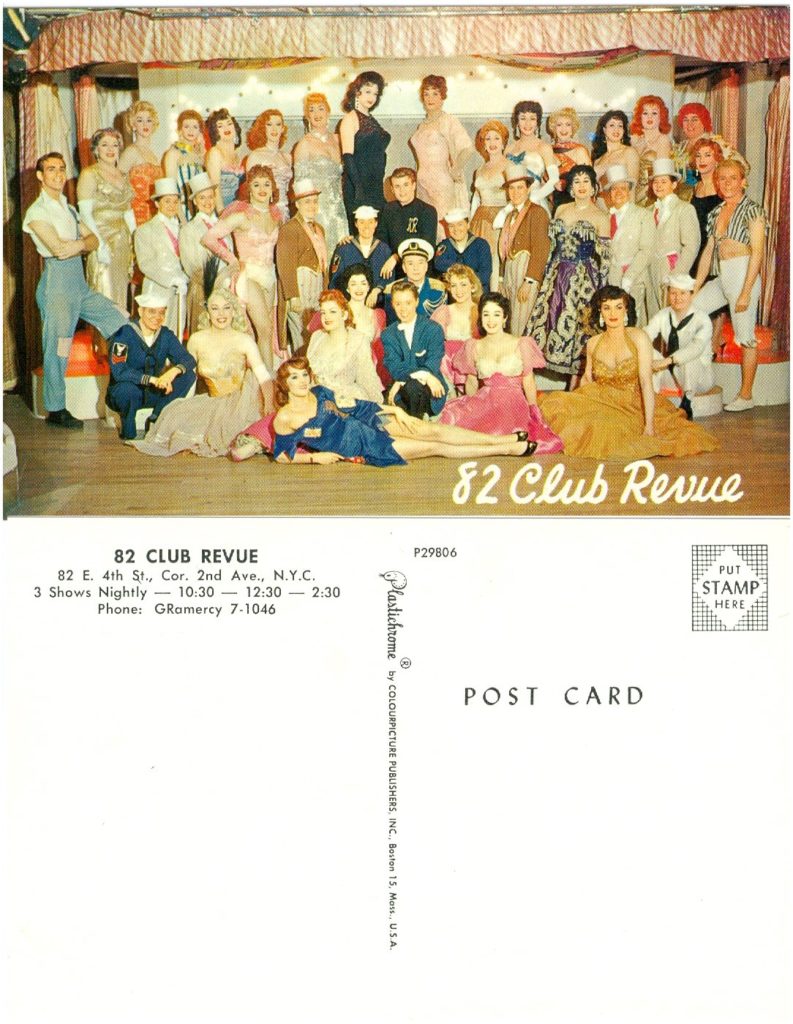
A postcard from Club 82. (Queer Music Heritage has an unbelievable collection of these.)

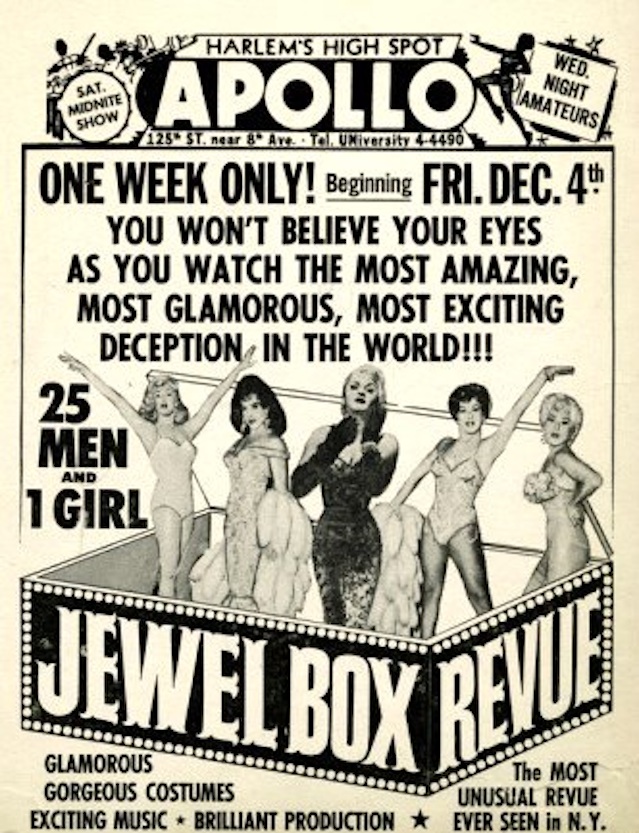
From the Jewel Box Revue’s 1960 appearance at the Apollo Theatre:

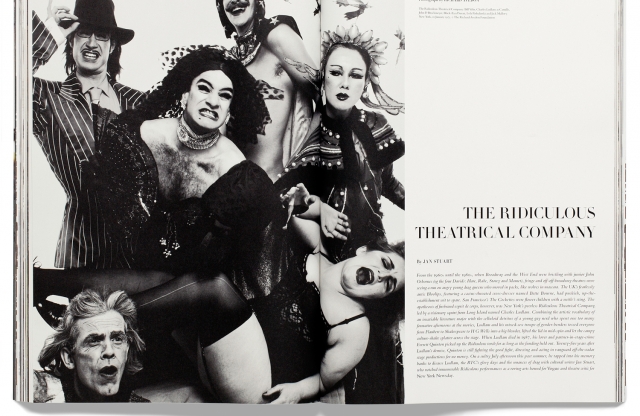
The Ridiculous Theatrical Company (with Charles Ludlum), one of the great influences on the modern drag scene.

Stormé DeLarverie who performed with the Jewel Box Revue. DeLarverie was also a participant at the Stonewall Riots.

The stars of the eye-opening documentary The Queen

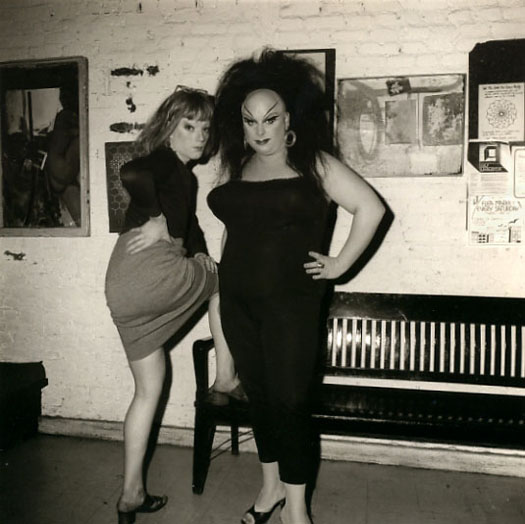
Jackie Curtis with Divine

Flickr/Confetta

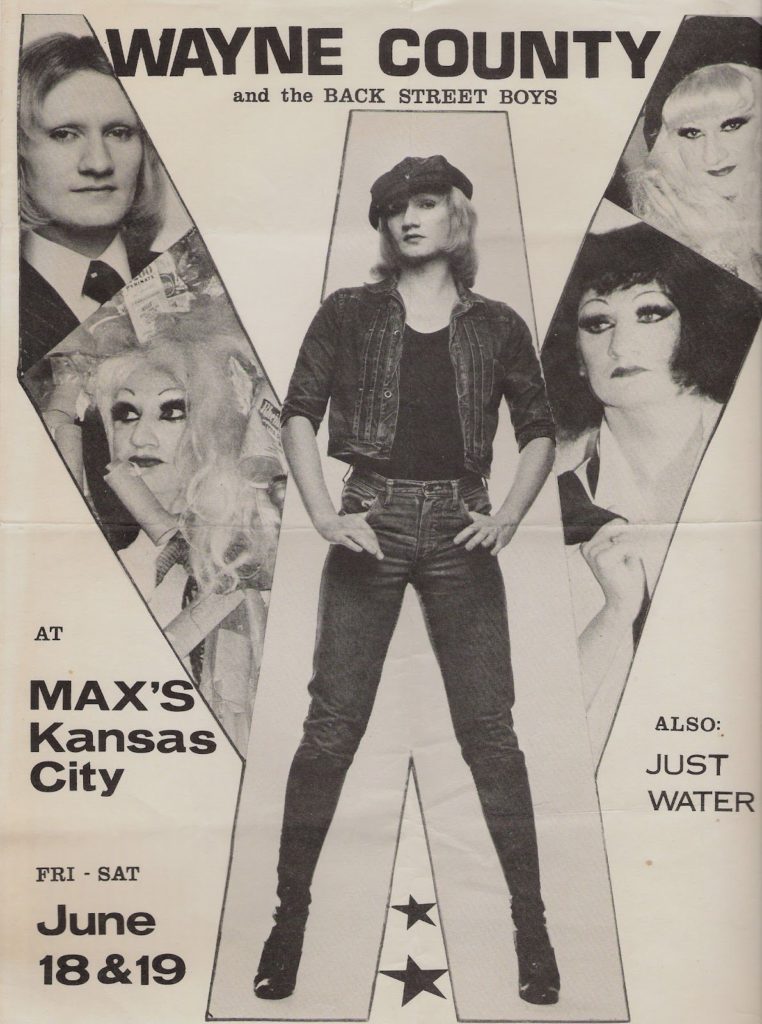
A flyer for a Wayne County (with the Back Street Boys) at the iconic rock venue Max’s Kansas City.

Categories
Black History Podcasts Women's History

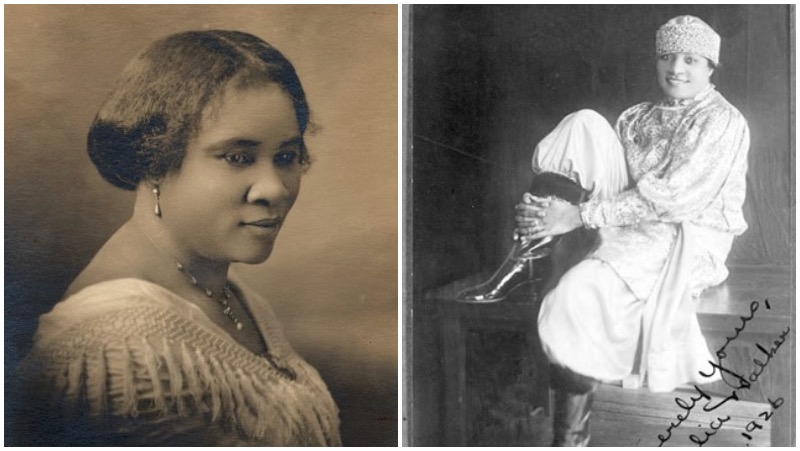
Madam C.J. Walker, Harlem’s self-made millionaire, and her daughter A’Lelia, patron of the Jazz Age

PODCAST The story of Harlem’s hair care queen and her daughter A’Lelia, a patron of the Harlem Renaissance.

In 1867, Sarah Breedlove was born to parents who had once been enslaved on a Louisiana plantation. Less than fifty years later, Breedlove (as the hair care mogul Madam C.J. Walker) would be the richest African-American woman in the United States, a successful business owner and one of black America’s great philanthropists.

At her side was daughter Lelia (later A’lelia) Walker, guiding her mother’s company to great success despite extraordinary obstacles.

The Walkers moved to Harlem in the mid 1910s during the neighborhood’s transformation from a white immigrant outpost to a thriving mecca for African-American culture.

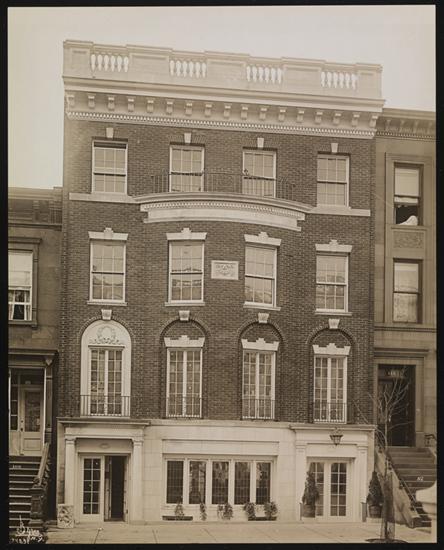
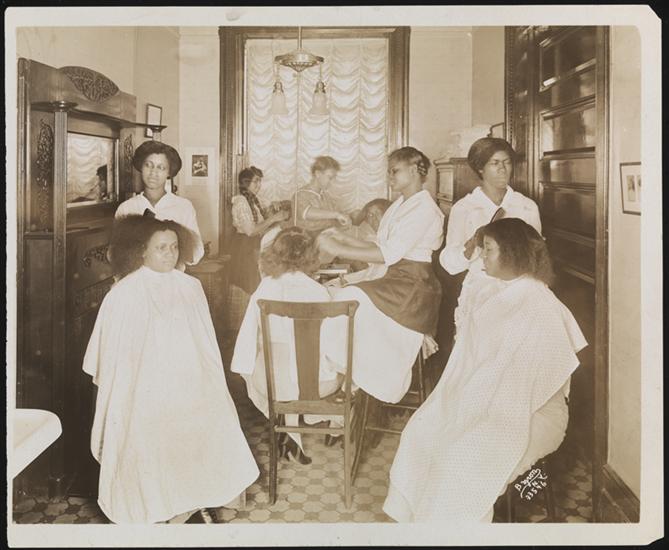
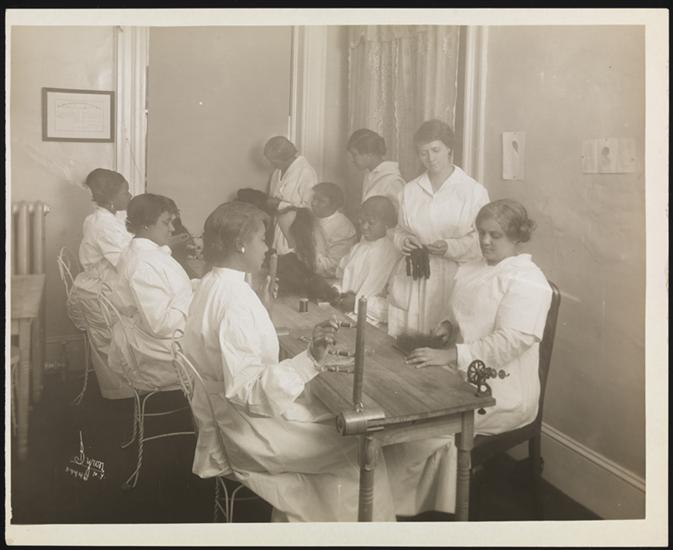
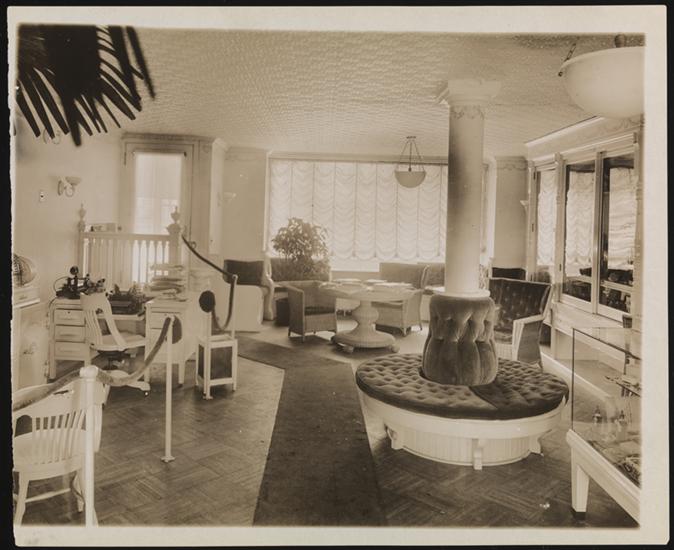
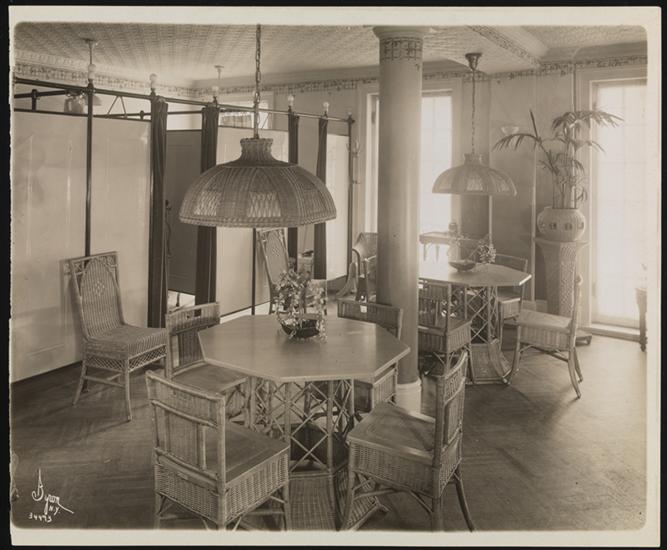
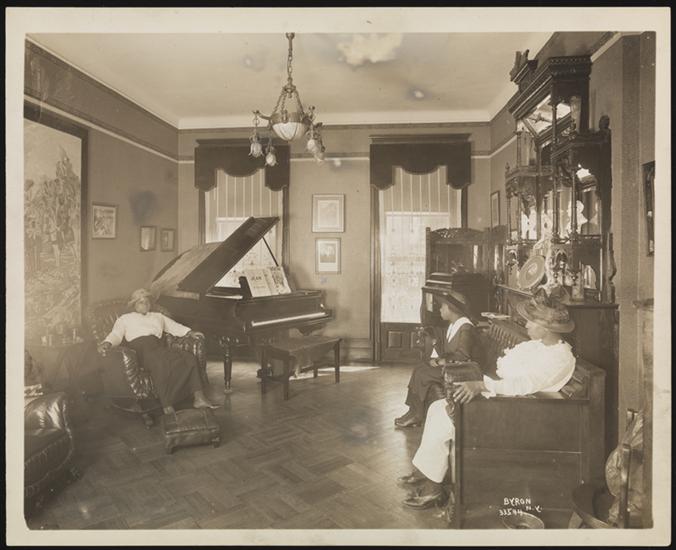
The ground floor of their spacious West 136th Street home was a hair salon for black women, opened during a contentious period when irate white property owners attempted to stem the tide of black settlement in Harlem.

The Walkers were at the heart of significant strides on African-American life. Madam used her wealth to support organizations like the NAACP push back against violence and racism.

A’lelia, meanwhile, used her influence to corral the great talents of the Harlem Renaissance. The two of them would positively influence the history of Harlem and black America forever.

FEATURING: The words of Langston Hughes, describing one of the most fabulous parties of the Jazz Age!

LISTEN HERE:

To download this episode and subscribe to our show for free, visit iTunes or other podcasting services or get it straight from our satellite site.

__________________________________________________________

The Bowery Boys: New York City History podcast is brought to you …. by you!

We are now producing a new Bowery Boys podcast every other week.  We’re also looking to improve the show in other ways and expand in other ways as well — through publishing, social media, live events and other forms of media.  But we can only do this with your help!

We are now a member of Patreon, a patronage platform where you can support your favorite content creators for as little as a $1 a month.

Please visit our page on Patreon and watch a short video of us recording the show and talking about our expansion plans.  If you’d like to help out, there are five different pledge levels (and with clever names too — Mannahatta, New Amsterdam, Five Points, Gilded Age, Jazz Age and Empire State). Check them out and consider being a sponsor.

We greatly appreciate our listeners and readers and thank you for joining us on this journey so far.

_________________________________________________________

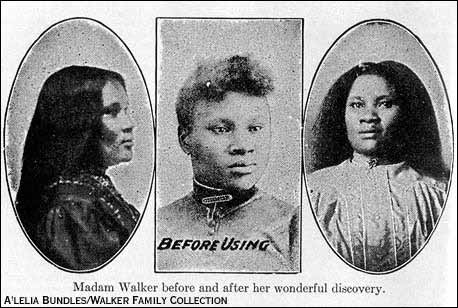
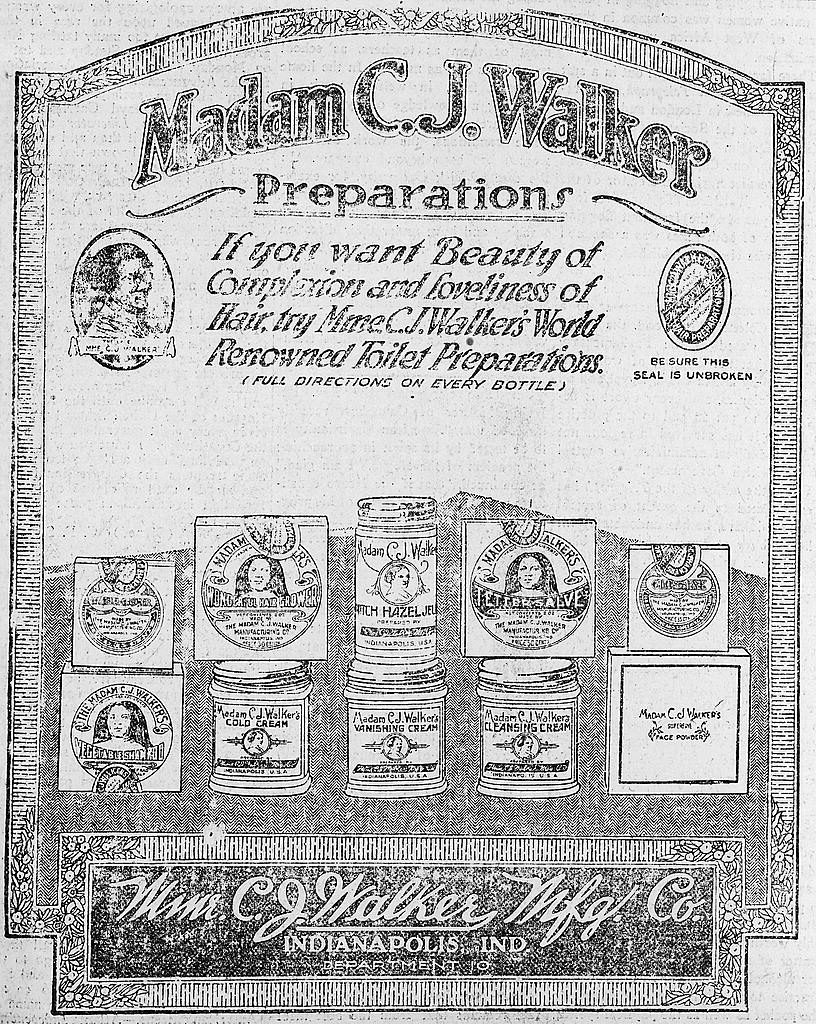
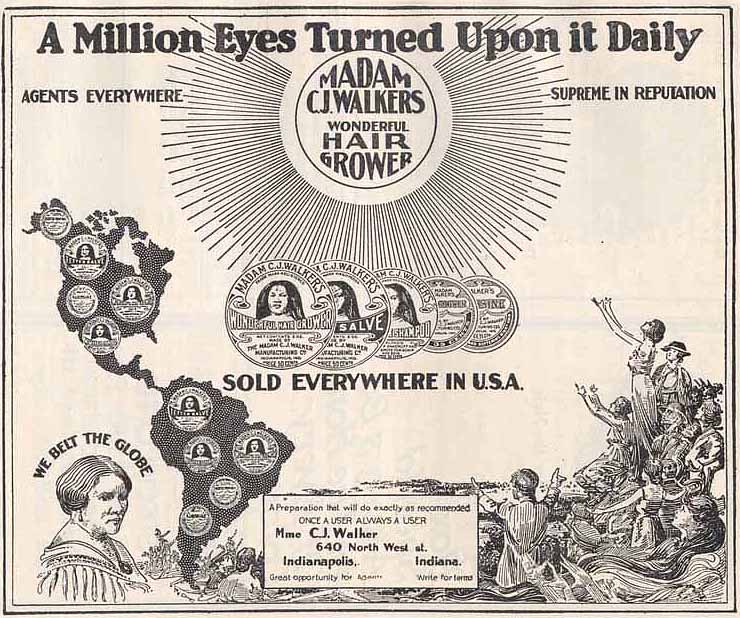
A selection of advertisements of Walker products. In most cases, her own image was use to sell the product. At the start of the century, it was still a new and extraordinary thing to even see the image of a black female face in print that was meant to convey beauty and confidence.

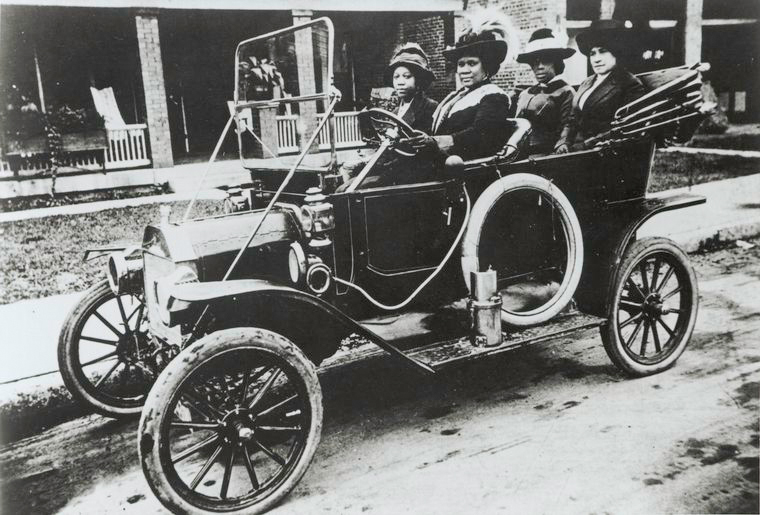
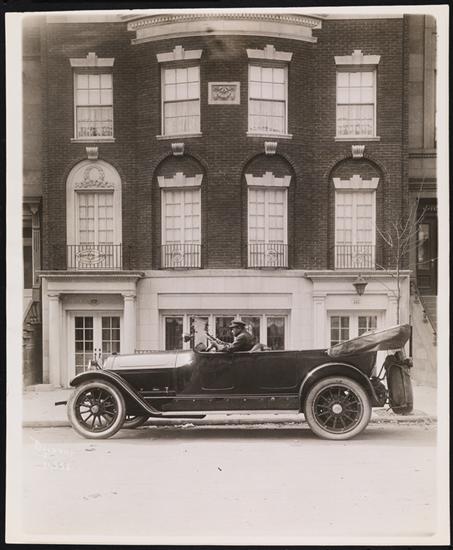
In the drivers seat: Madam C.J. Walker takes a road trip with (left to right) her niece Anjetta Breedlove; Madam C.J. Walker Manufacturing Company factory forelady Alice Kelly; and Walker Company bookkeeper Lucy Flint.

The training school, salon and townhouse of the Walkers, photographed in 1915/16.

Courtesy Museum of the City of New York
Byron Co./MCNY
Byron Co/MCNY
Byron Co/MCNY
Byron/MCNY
Byron Co/MCNY
MCNY

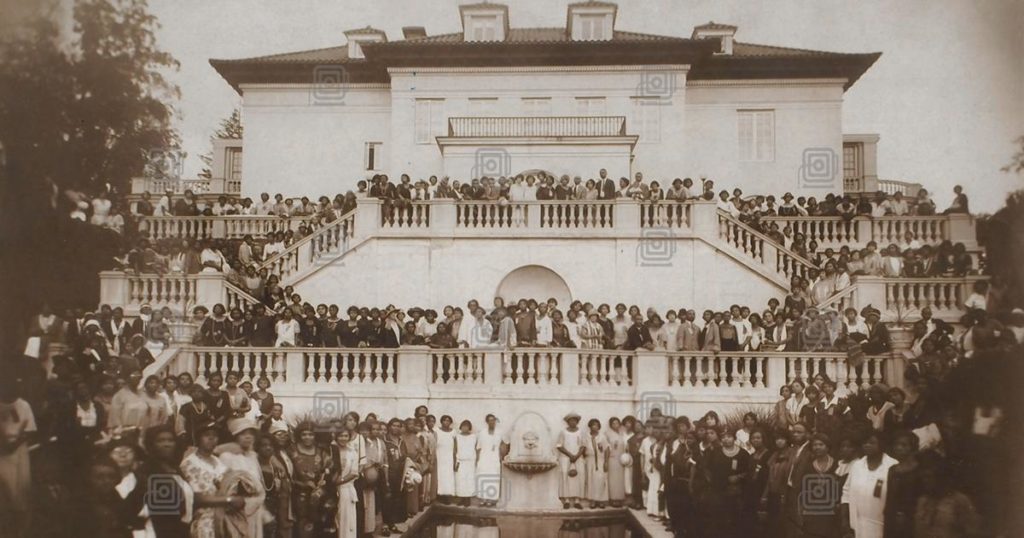
A gathering at Villa Lewaro in 1924, many years after the death of Madam C.J. Walker.

A’LELIA BUNDLES/MADAM WALKER FAMILY ARCHIVES

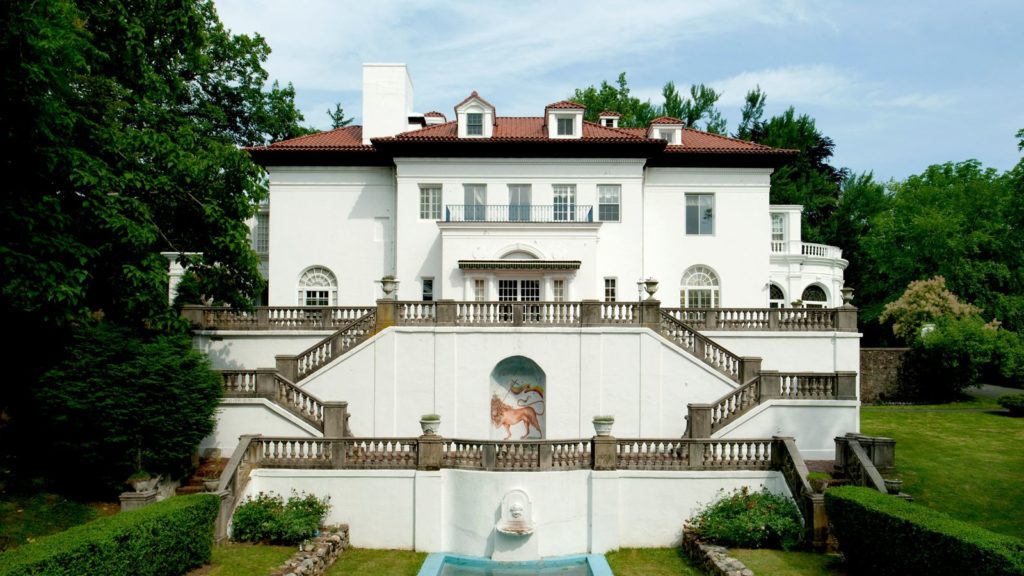
A look at the villa today….

Courtesy David Bohl/Curbed

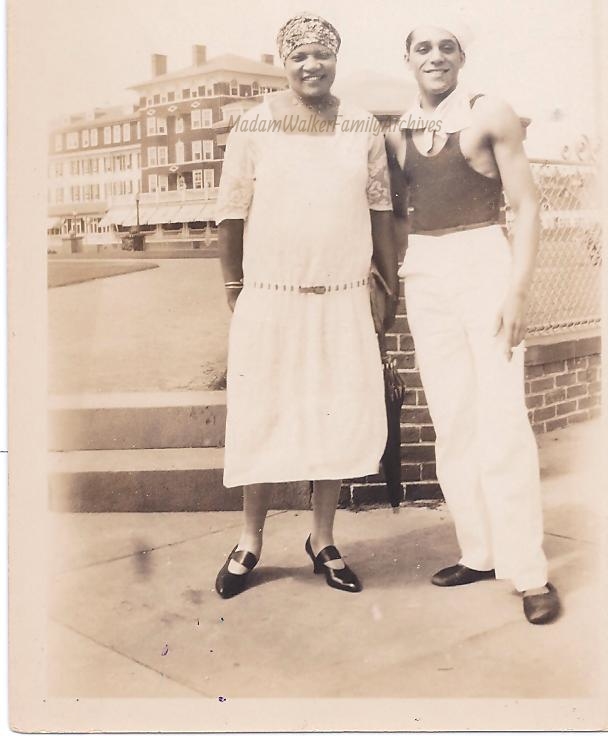
A’Lelia Walker, in the eyes of many, could not fill her mother’s shoes. So, in the 1920s, she decided to wear her own, becoming an impresario — empress-ario? — of the Harlem Renaissance, befriending and fostering the talents of America’s greatest black writers, artists and creators.  She’s pictured here with dancer Al Moore who frequently performed with Fredi Washington.

Courtesy Madam Walker Family Archives

A’lelia Bundles, the great great granddaughter of Madam C.J. Walker

FURTHER LISTENING:


This episode of the Bowery Boys mentioned two earlier shows. After you’ve listened to the Madam C.J. Walker show, check these out —

Categories
American History

Hamilton Grange: New York’s Most Historic Mobile Home (NPS at 100)

This month America celebrates the 100th anniversary of the National Park Service, the organization which protects the great natural and historical treasures of the United States. There are a number of NPS locations in the five borough areas. Throughout the next few weeks, we will focus on a few of our favorites.   For more information, you can visit National Parks Centennial for a complete list of parks and monuments throughout the country.  For more blog posts in this series, click here.


IMG_0779

HAMILTON GRANGE
UPPER MANHATTAN. HAMILTON HEIGHTS. ST. NICHOLAS PARK.

I’m going to write a musical about Hamilton Grange.

This three-hour musical epic will be a complete survey of this historic home, which was built by Alexander Hamilton in an area of Manhattan a good hour and a half from town.

It will be a story of struggle, evolution, change, spirituality, love and melodrama.

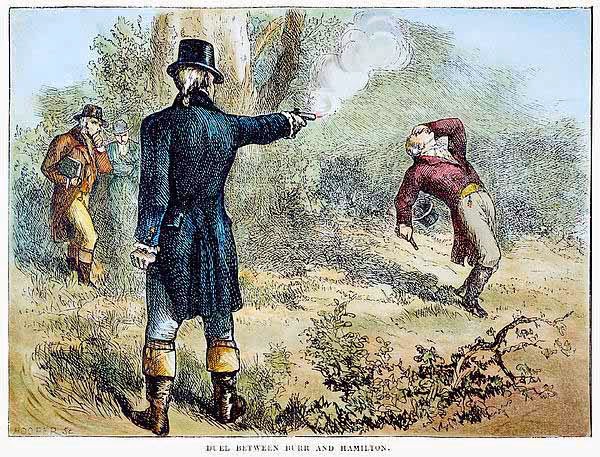
And here’s the catch — this imagined musical would begin with the death of Hamilton in his duel with Aaron Burr. (Far from giving this scoundrel a Tony-winning sized role, Burr would not even make an appearance!)  Because in most ways, that’s when the story of Hamilton Grange really begins.

14776265775_4b9019b09b_o
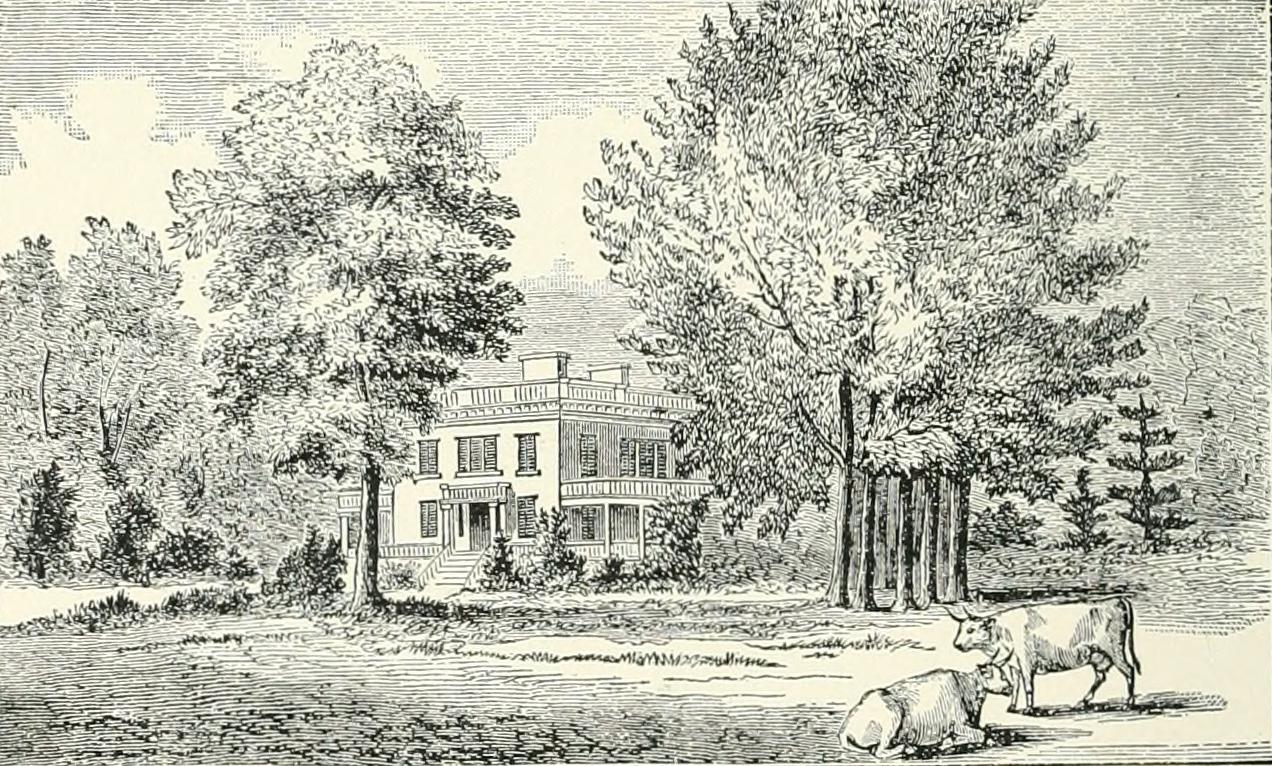
It will be Hamilton’s home until the cows come home.

Last week I took a free tour of this charming  National Park Service location, newly energized by musical appreciations of Hamilton and his life. My tour of Hamilton’s home was completely booked, and at least two people in the tour wore Hamilton: The Musical shirts. (Two other musical fans were turned away to join a later tour. My advice: Call ahead. Get on the list.)

You will ultimately visit only a small number of decorated rooms and in fact may have a richer educational experience in the Grange’s excellent gallery about Hamilton’s life.  But while several historic homes in the New York City area are larger and more spectacular, few have such an extraordinary tale of survival as Hamilton’s pet project.

hamilton_grange_no__1

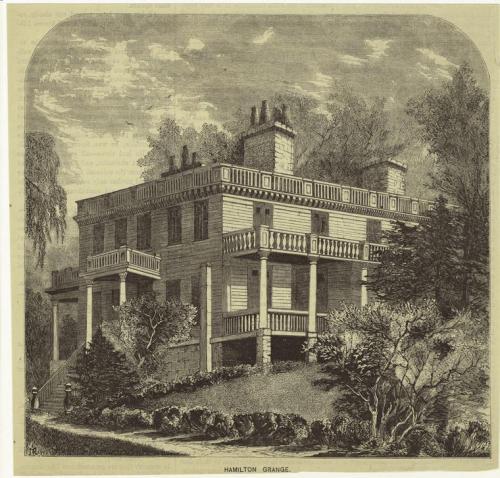
Hamilton purchased a set of upper Manhattan lots in 1800 in order construct a fine home for his family. Its name would be inspired by an ancestral Scottish mansion as well as his childhood home in St. Croix.  Designed by John Macomb Jr, (who was also commissioned for fellow NPS landmark Castle Clinton, as well as New York City Hall), the Hamilton Grange was completed in 1802, accompanied on the peaceful landscape by duck ponds, barns and an orchard.

IMG_9900

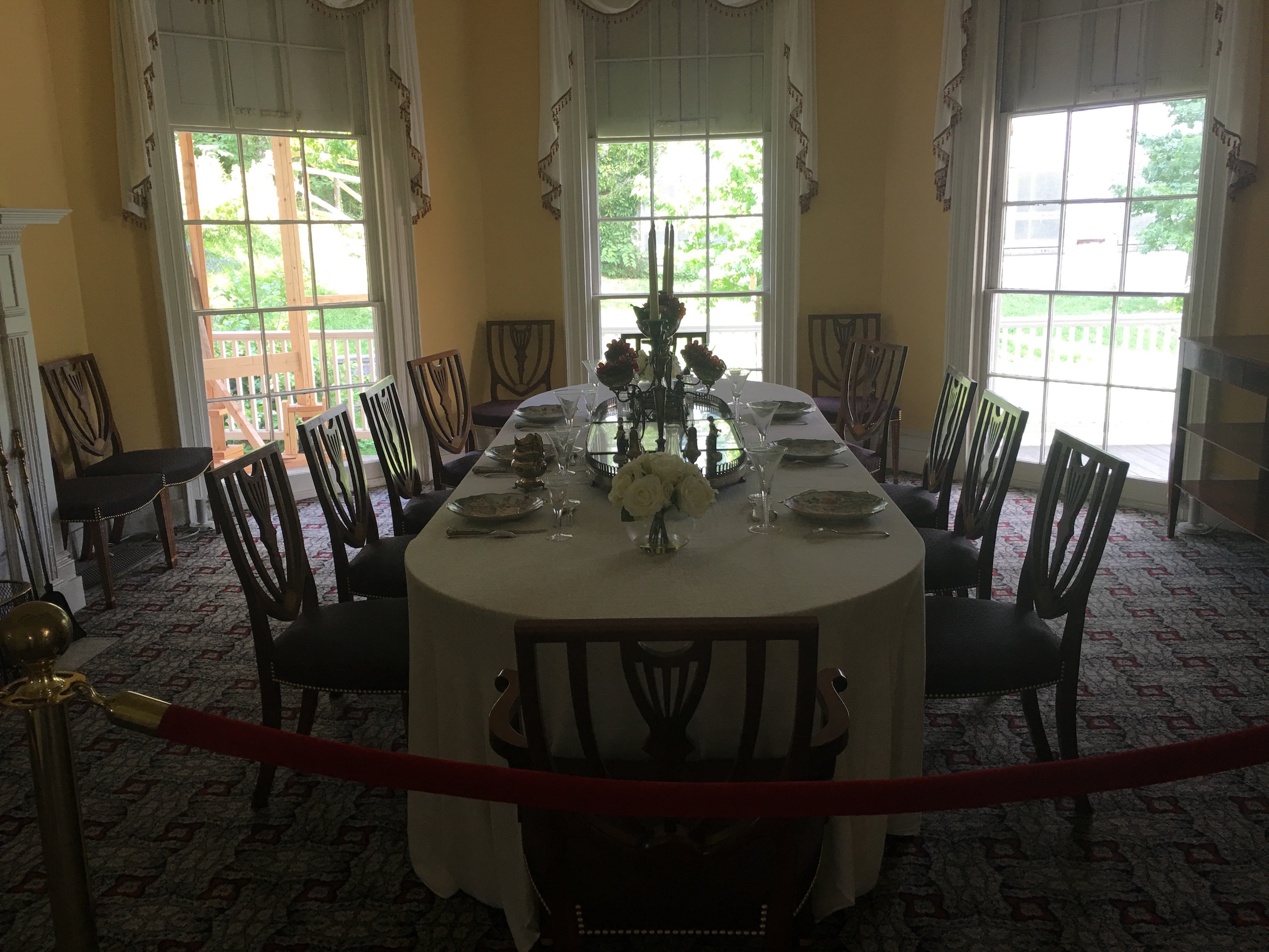
The house feted an extraordinary roster of politicians and dignitaries who ate and drank to their hearts’ content in the Hamiltons’ mirrored dining room (which you get to peek in on during the tour). Indeed, a week before the duel, the Hamiltons threw a lavish dinner party with the likes of John Trumbull and Nicholas Fish.

And like every good piece of New York City real estate, the Grange plunged the family into deep debt.

D’oh!

113

After Hamilton died in the summer of 1804, Hamilton’s widow Eliza Schuyler Hamilton struggled to maintain the family finances.  Eventually a group of supporters (led by good ole Gouverneur Morris) bought the home and sold it back to her for half price. She managed to stay there until 1833, at which point she moved into her son’s new home on St. Mark’s Place.

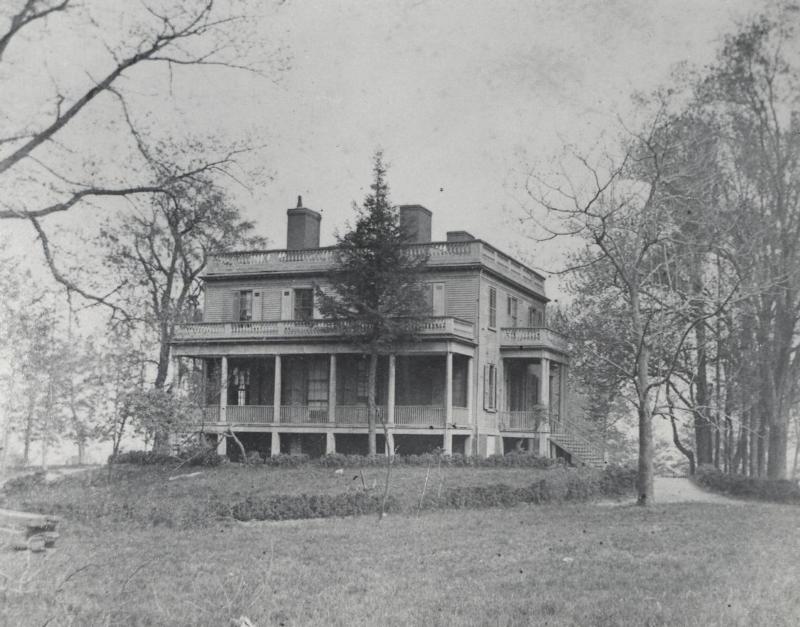
Below: The Grange, left adrift as the city moved up around it. Date of picture unknown,  but most likely early 1880s.

Courtesy NPS
Courtesy NPS

With the new grid plan eventually stretching up into upper Manhattan, farmhouses that were situated at all angles to maximize their glorious views now proved impossible to accommodate. Most were torn down with a few exceptions (such as the Dyckman Farmhouse, the oldest house in Manhattan).

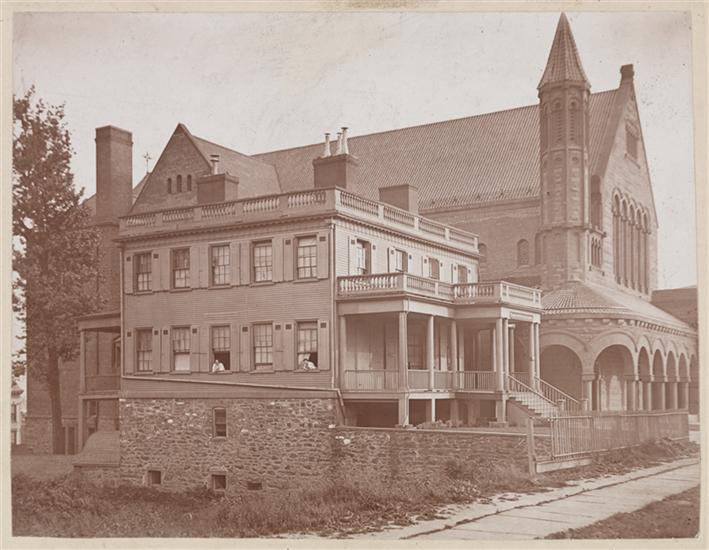
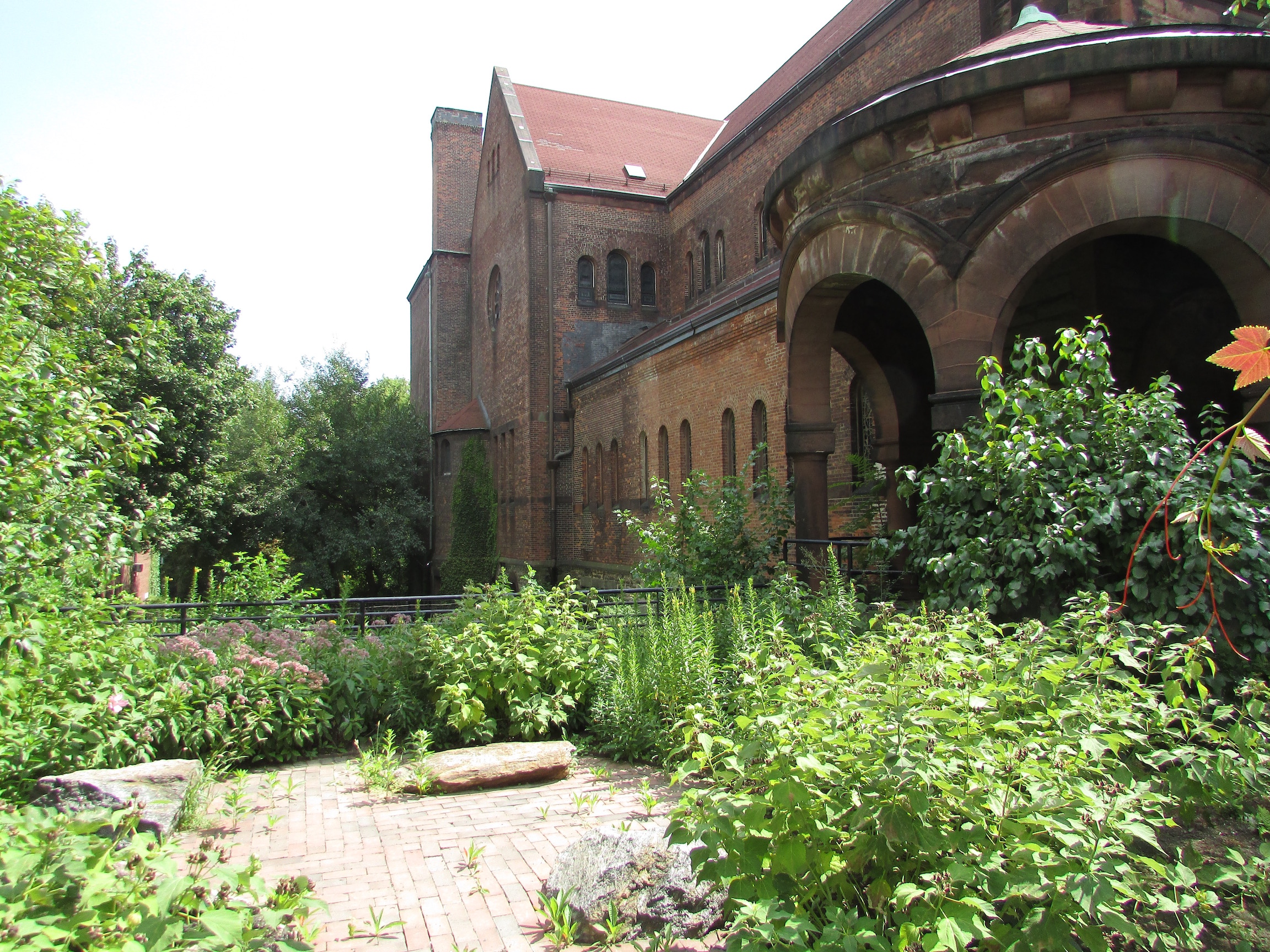
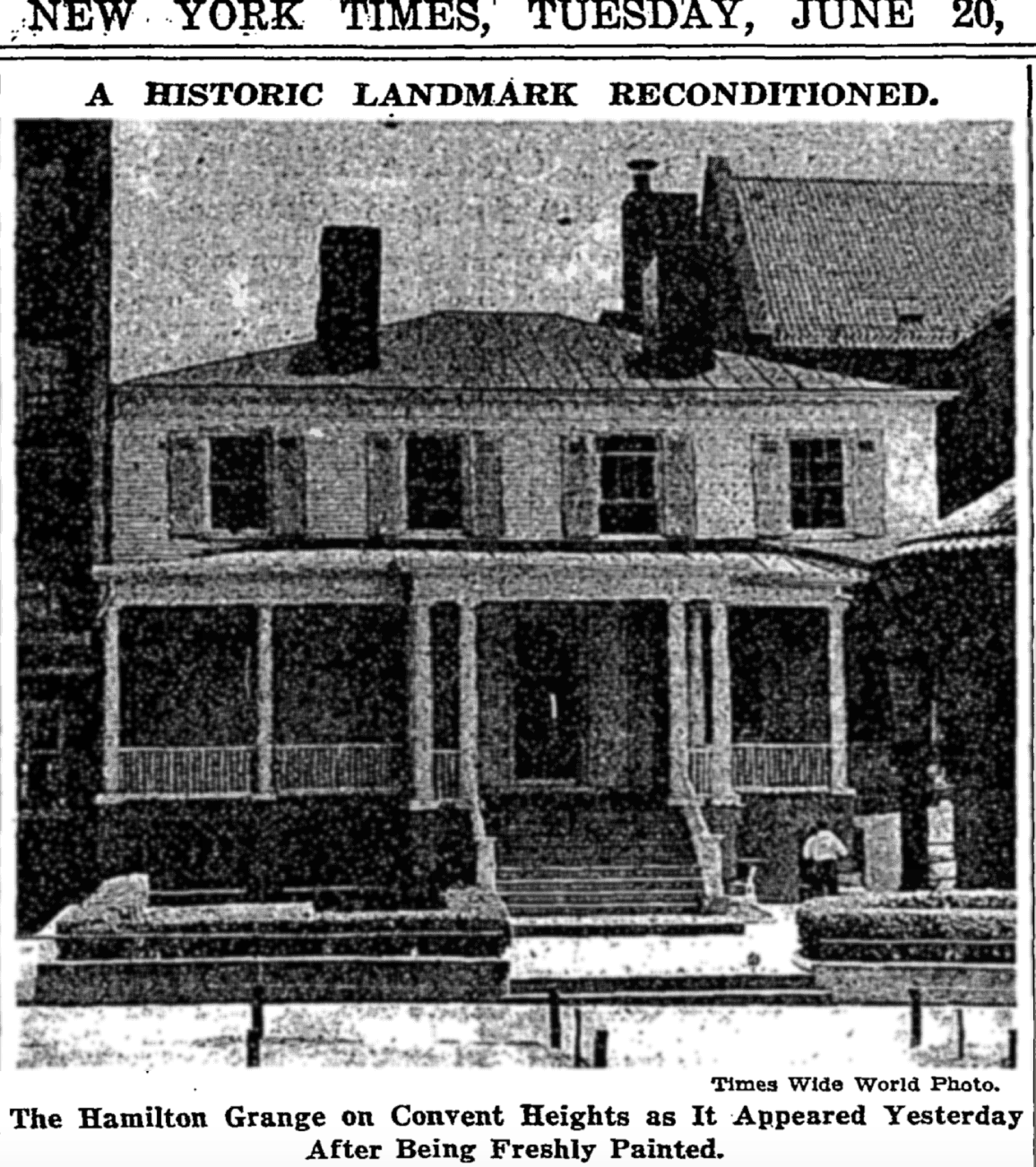
The battered old Grange would certainly have been erased from history if not for the congregation of St. Luke’s Episcopal Church who found use for the structure as an uptown chapel. The catch — it needed to move to their lot a block and a half away, conforming to Convent Avenue. By 1888 the house then became Hamilton Grange Reformed Church.

By the following year, the Grange was joined by a larger church structure which practically enfolded itself around the old house.

Courtesy Museum of the City of New York

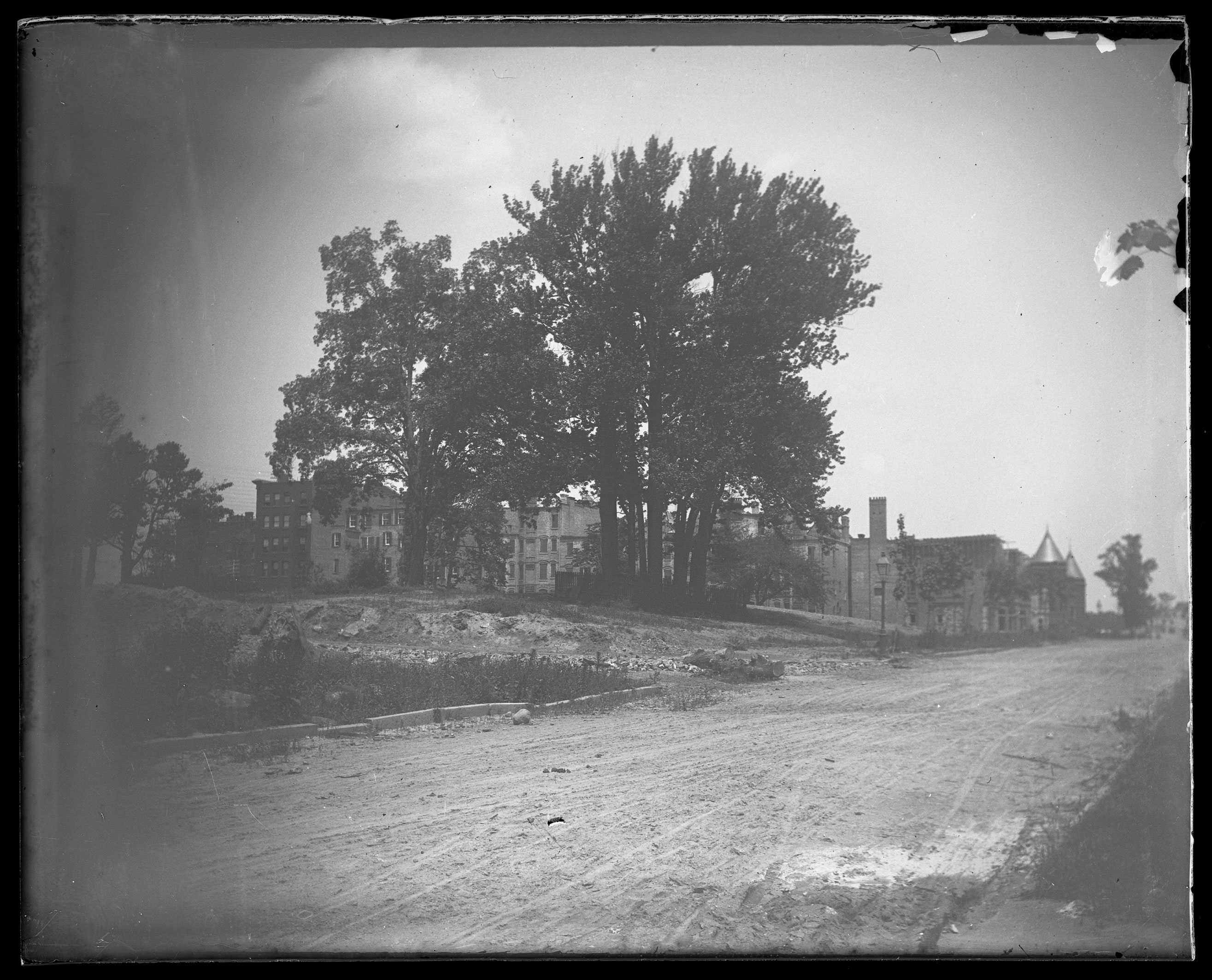
Sadly other nostalgic components of the property which still remained — Hamilton’s thirteen famous elm trees, pictured below — were unceremoniously torn out in 1900.

Courtesy New York Historical Society

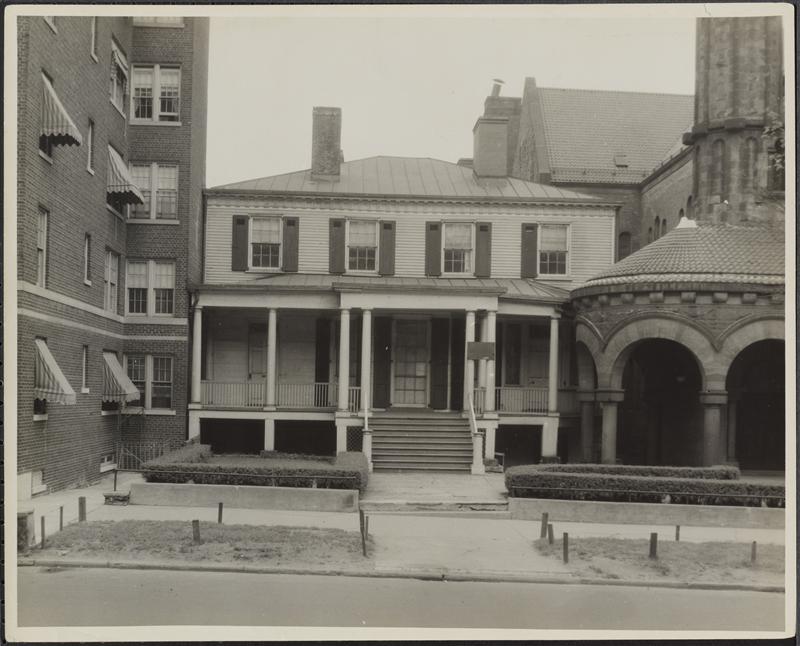
Further aesthetic travesties beset the house when an apartment complex was built onto the other side. Have you ever ridden a really, really packed subway? Now imagine riding that subway for almost a century. Thus was the fate of Hamilton Grange, a house-sized collectable artifact now shoved onto a tight shelf.

MNY80047

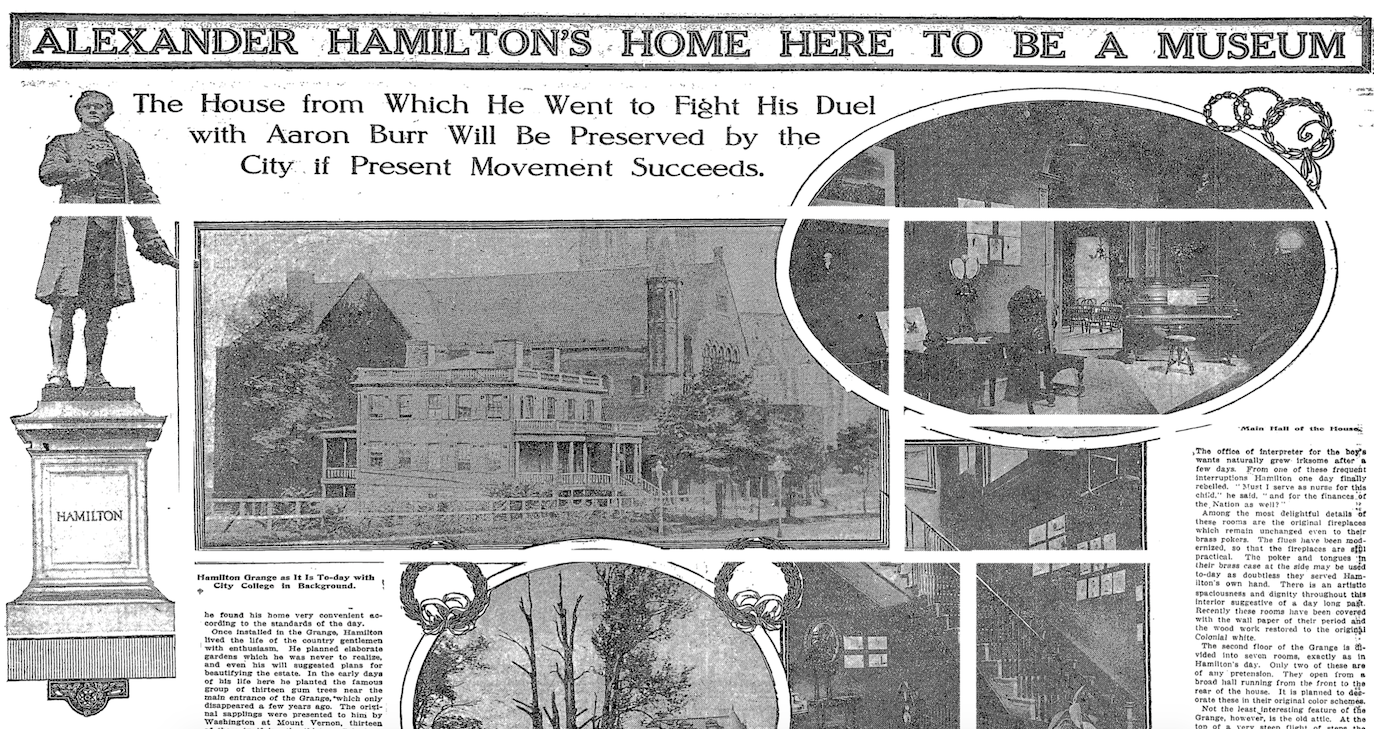
Almost immediately, concerned historians began discussing the rehabilitation of the house. “The Hamilton Grange is the oldest structure in this sector of the city, as it is assuredly the most historic,” observed the New York Times in a full-page spread in 1912. “In its present setting, hemmed in by rows of modern dwellings and apartments, its beautiful lines appear exceedingly incongruous.”  Daughters of the American Revolution beseeched the city to purchase the property.

Screen Shot 2016-08-23 at 11.46.43 AM

Curiously it was first proposed to move the Grange to St. Nicholas Park in 1915 as “it would not obstruct the landscape yet still stand on a portion of the Grange farm.” This prophesy would indeed come to pass almost 100 years later.

In the 1920s, plans were again picked up to transform the squished little house into a museum. Apparently there was some interest in moving the entire thing to Chicago when, in 1924, this glorious announcement was made:  “The rivalry of New York and Chicago to possess Alexander Hamilton’s historic home has been ended by preserving the stately old mansion as a public museum near its original position on Manhattan Island. Hamilton Grange, as it is generally known, has become the property of the American Scenic and Historic Preservation Society, after some twenty-five years of unremitting effort.”  In 1933 it finally reopened as a museum.

Screen Shot 2016-08-23 at 12.06.18 PM

But even with the church congregation gone, even with the house filled with artifacts that were once owned by the Hamilton, the house’s placement robbed it of any context.

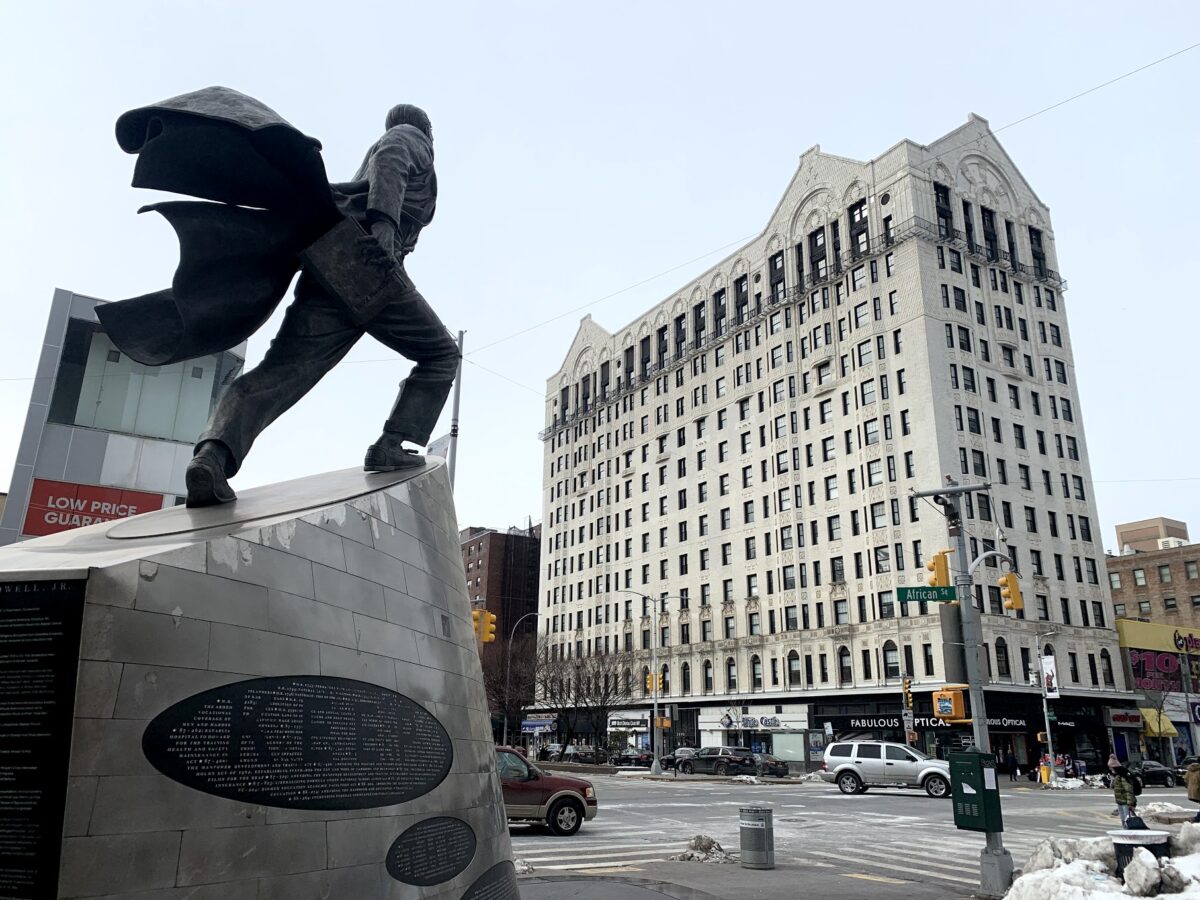
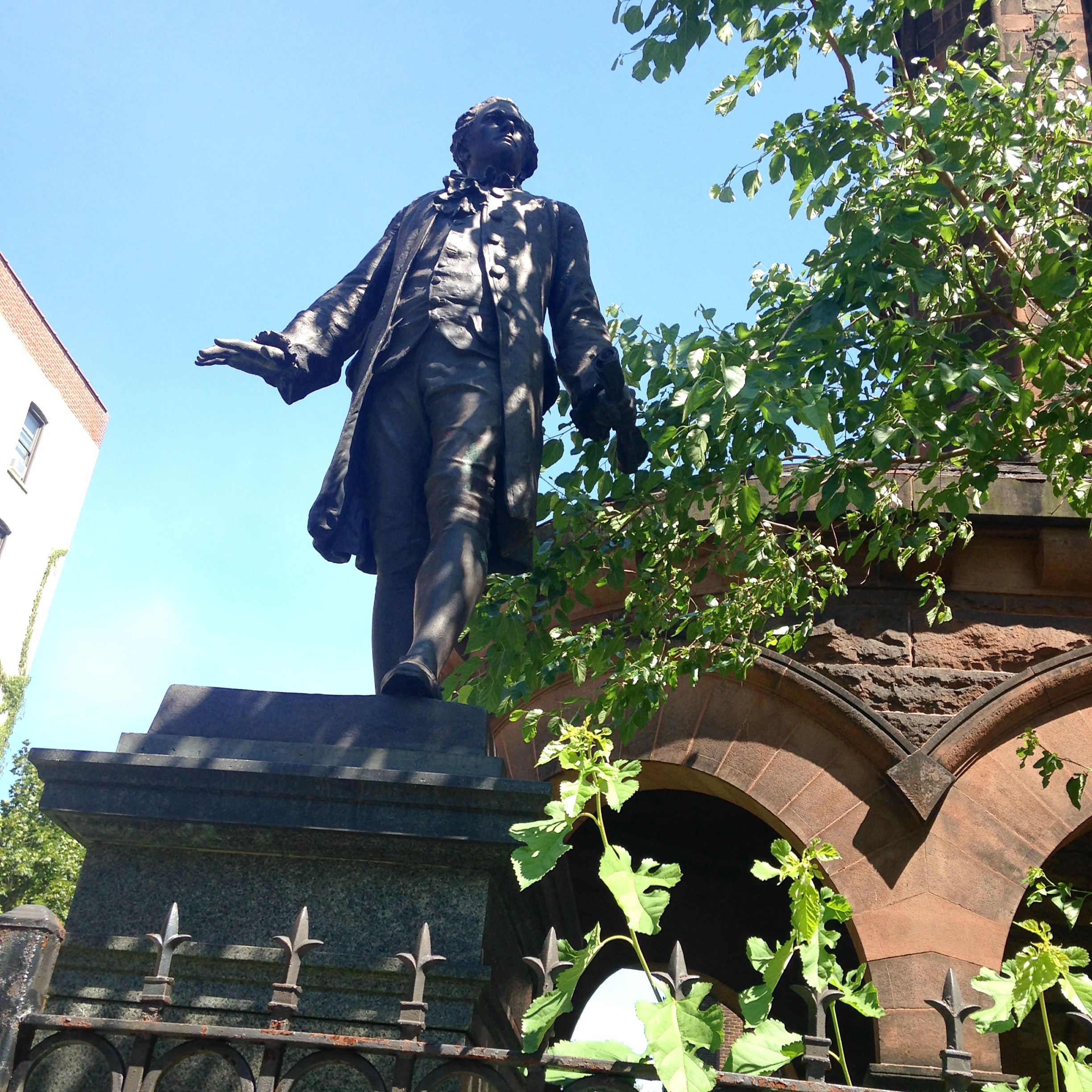
In 1936 a statue of Alexander Hamilton was mounted in front of the building. It was officially dedicated on the very same day that a statue of General Philip Sheridan was dedicated in a ceremony in Christopher Park.  Today — thanks to Stonewall National Monument — the Sheridan statue now too stands on property operated by the National Park Service.

The statue remains in front of the church even as the house is now gone.

IMG_4449 (1)

The NPS would finally get its hands on Hamilton Grange after it was declared a National Historic Landmark in 1960 and Congress declared it a National Monument in 1962.  The house was to be moved to another location and fully restored.

But unfortunately the city’s financial upheaval of the 1960s and 70s threw off any serious work on the house. Or to quote a historic preservation graduate student from a New York Times 1988 article:  ”’If the Grange were anywhere else, this would be a fait accompli,’ said Michael Adams, a Columbia University graduate student in historic preservation. ‘The only reason it has fallen into this deplorable condition is because it is in Harlem.’ ”

IMG_0787

Finally in 2008, efforts were finally made to lift the house from its tucked-in spot near St. Luke’s to its new home in St. Nicholas Park. The newly revitalized house was opened to the public in 2011.

Here’s a dramatic video of its historic move:

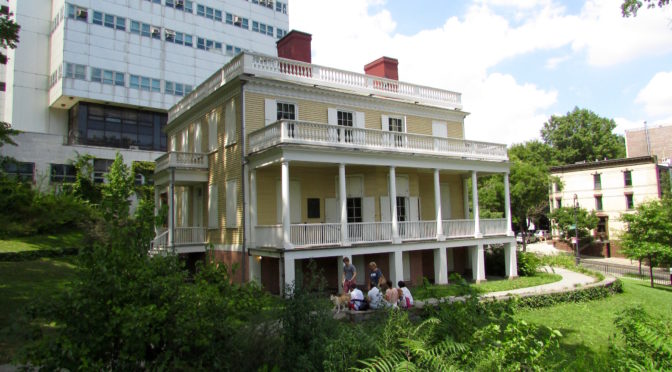
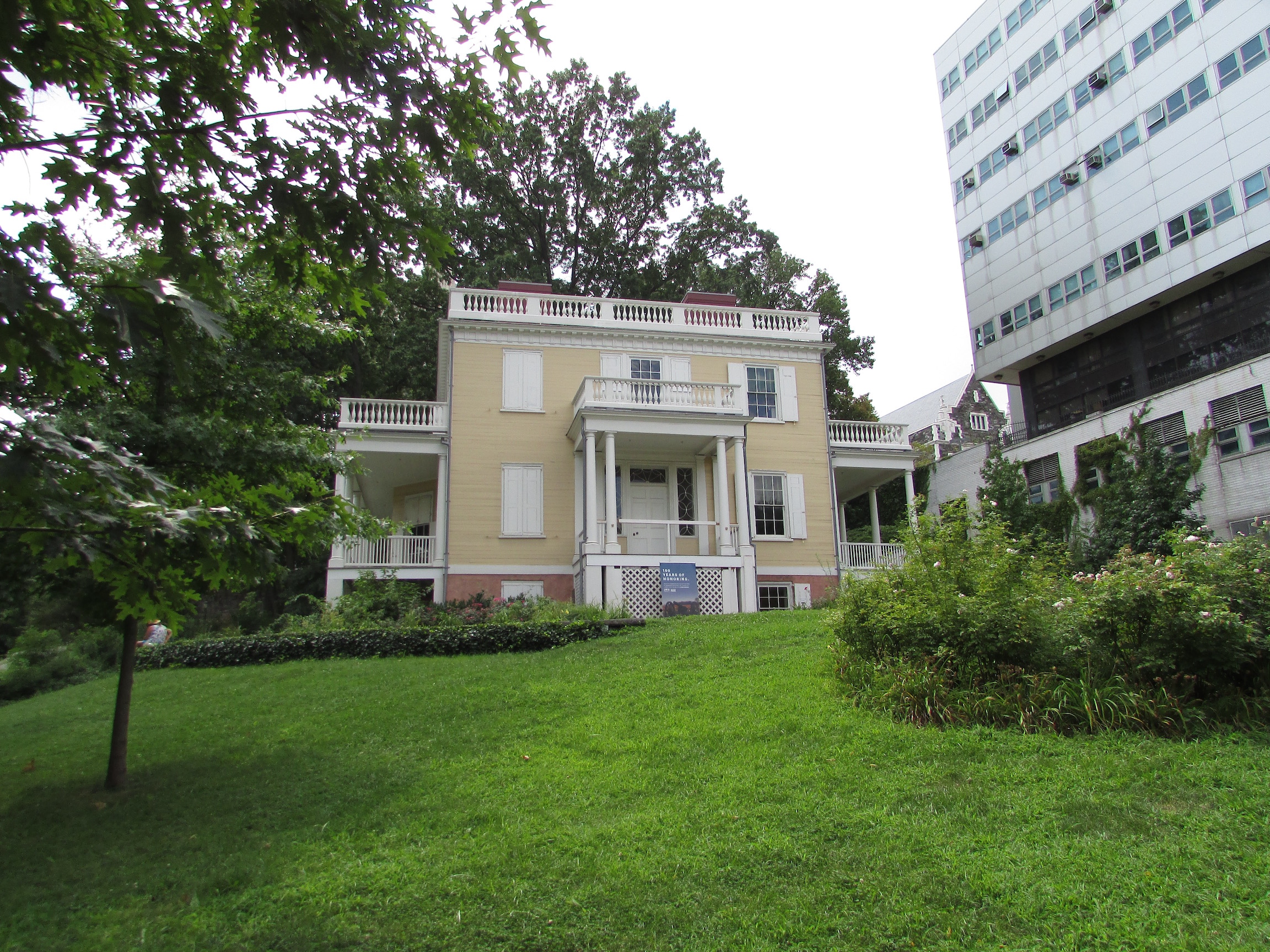
Today the Hamilton Grange feels out of place — but in the right way. Another tall structure hovers over it to the east, but at least it doesn’t smother the house’s natural beauty, restored in a bright canary yellow.  Surrounded by the rocky terrain of the park, visitors can get a sense of the calm that Alexander and his family might have felt as they gazed out from the porches.

And almost 175 years after his family moved from the house, the Hamilton Grange has finally become a show-stopper.

WANT MORE INFORMATION? Visit the NPS Hamilton Grange National Memorial site for more information.

LISTEN TO OUR PODCAST! We have a podcast on the famous duel between Alexander Hamilton and Aaron Burr. It’s Episode #168. You can find it on iTunes at our show page.  Or download it from here.


Categories
Friday Night Fever

The tale of the Cotton Club: “The Aristocrat of Harlem”

PODCAST The musical story of the Cotton Club, the most famous (and infamous) nightclub of the Jazz Age.


The Cotton Club, Harlem’s most prominent nightclub during the Prohibiton era, delivered some of the greatest music legends of the Jazz Age — Duke Ellington, Cab Calloway, Fletcher Henderson, Ethel Waters, the Nicolas Brothers. Some of the most iconic songs in the American songbook made their debut at the Cotton Club or were popularized in performances here.

But the story of gangster Owney Madden‘s notorious supper club is hardly one to be celebrated.

That the Cotton Club was owned by Prohibition’s most ruthless mob boss was just the beginning. The club enshrined the segregationist policies of the day, placing black talent on the stage for the pleasure of white patrons alone. Even the club’s flamboyant decor — by Ziegfeld’s scenic designer, no less — made sure to remind people of these ugly admission practices.

This is the tale of Harlem late night — of hot jazz and illegal booze, of great music and very bad mobsters. Featuring some of the greatest tunes of the day by Ellington, Calloway, King Oliver and more.

__________________________________________________________

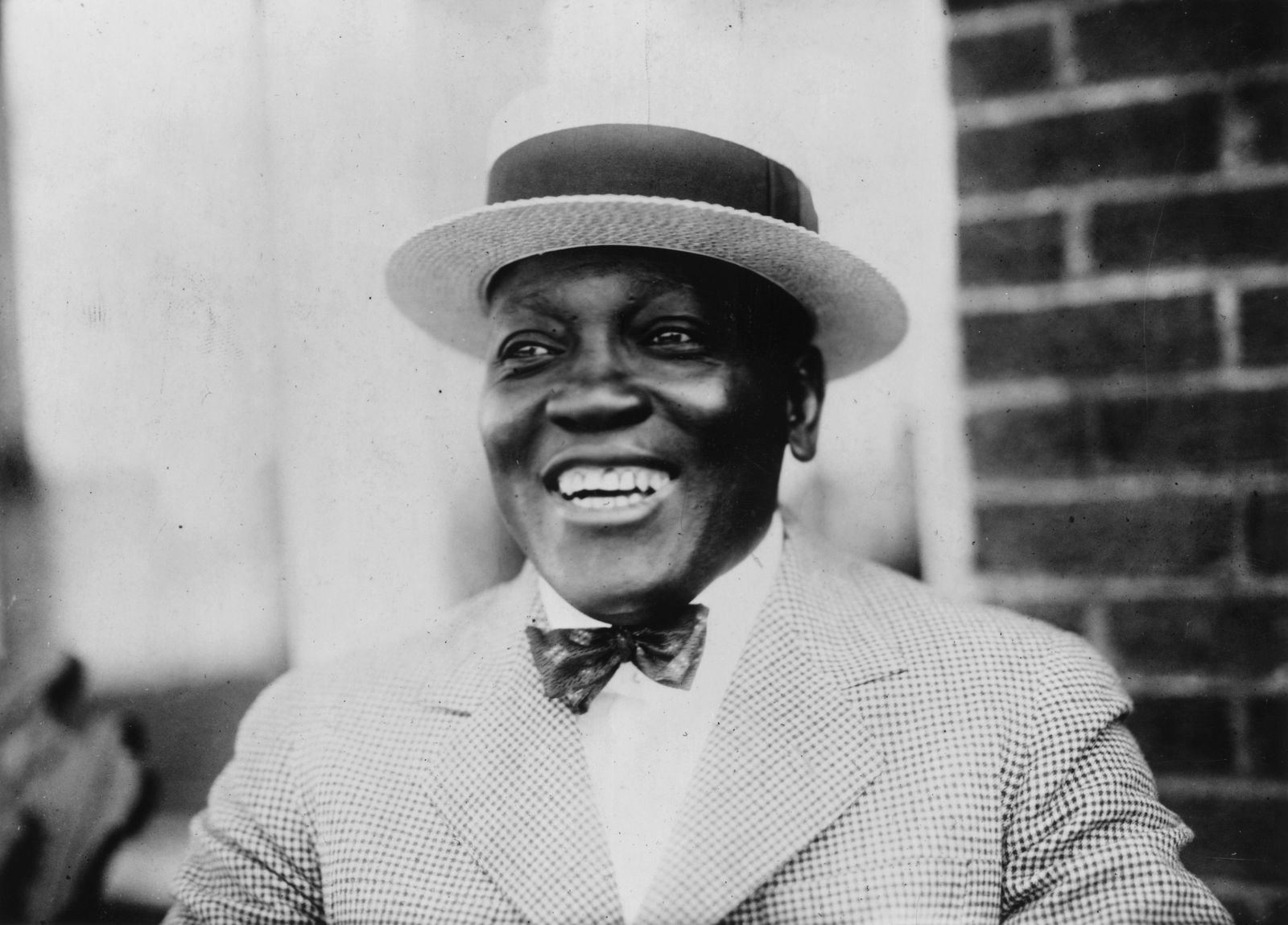
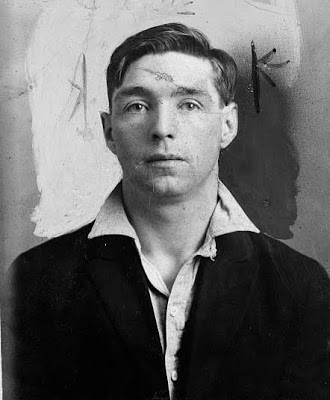
The Cotton Club was spawned from an earlier nightspot called Club Deluxe, owned by boxer Jack Johnson. (Below: Johnson in 1910)

Courtesy Getty Images)

Club Deluxe was renamed The Cotton Club in 1923 by Owney Madden, the mob boss and supplier of illegal booze.

owney

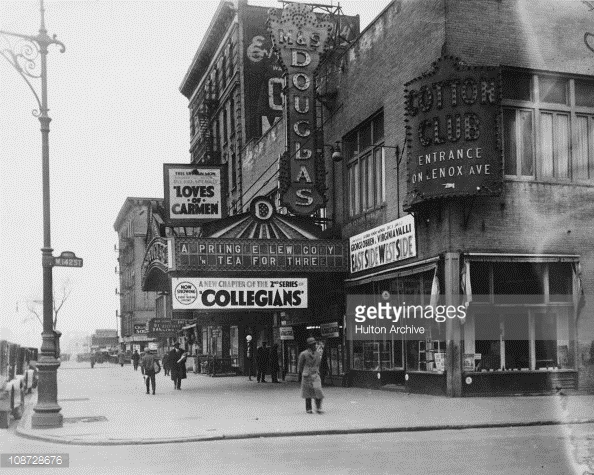
The original Cotton Club at 142nd Street and Lenox Avenue. The Douglas Theater, on the ground floor, is doing much better here, photo taken sometime in 1927:

108728676
Courtesy Getty Images


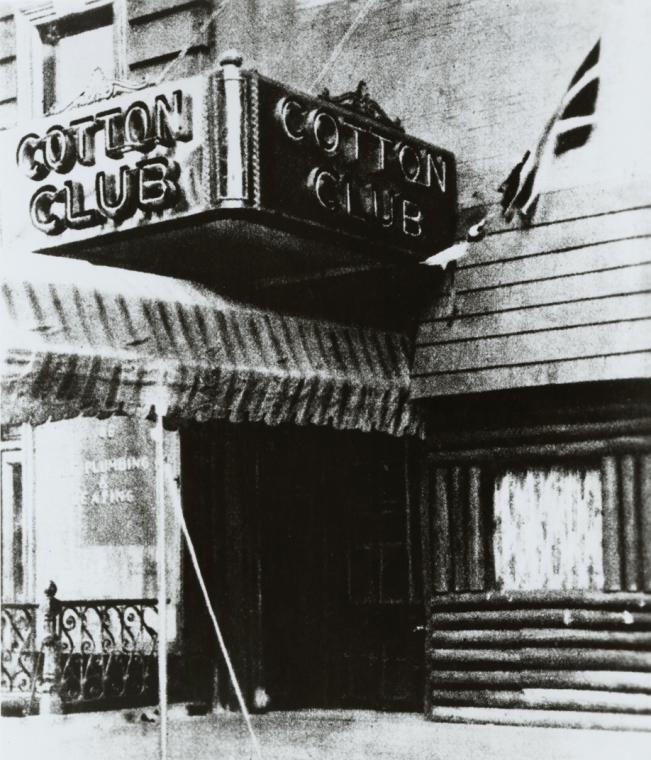
The entrance to the Harlem Cotton Club. Note the log decoration to make it appear like some old rugged shack.

Courtesy New York Public Library

A map from 1932 of the Harlem nightclub scene, featuring the Cotton Club, Small’s Paradise, Connie’s Inn, the Savoy Ballroom and more….

Courtesy Open Culture


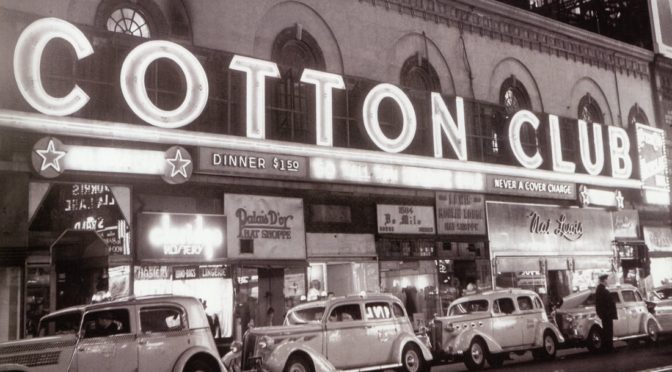
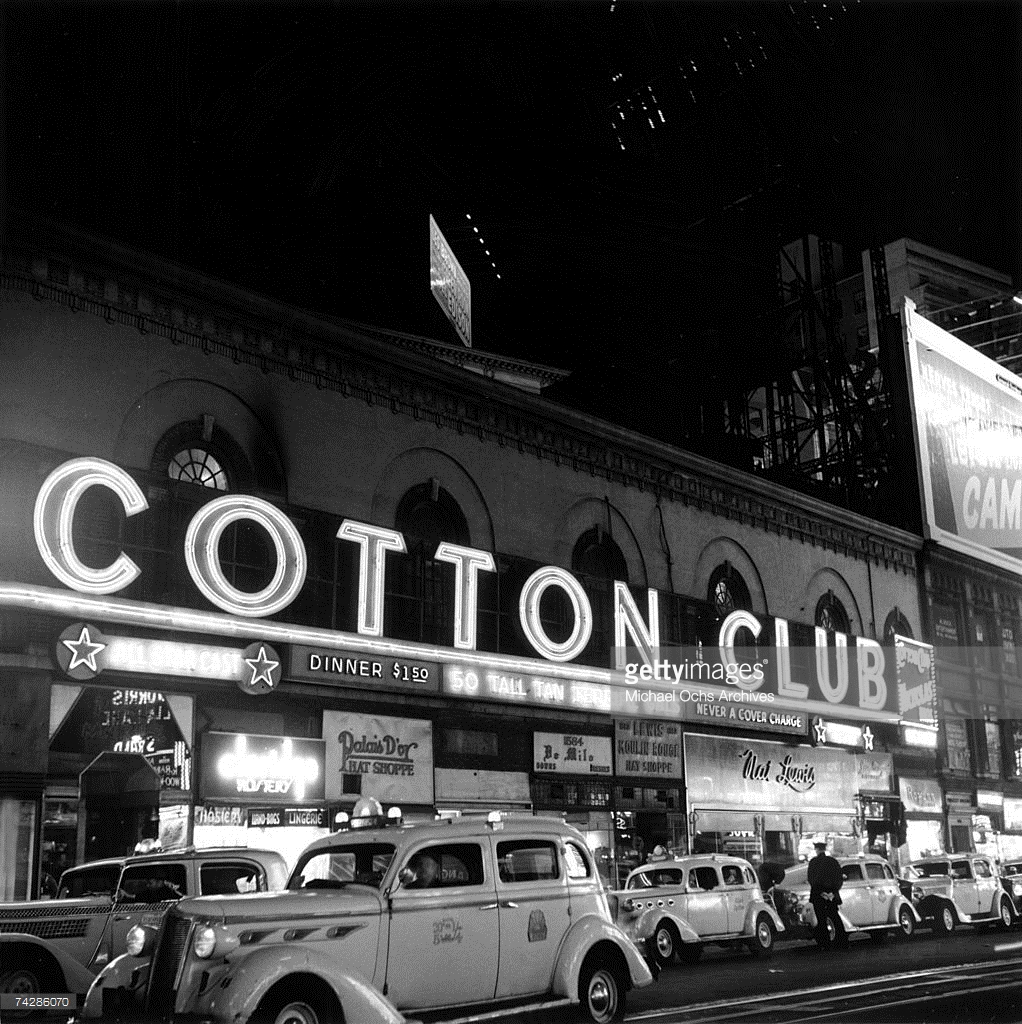
The Broadway Cotton Club as it looked one evening in 1938.

Courtesy Getty Images/ Michael Ochs Archives

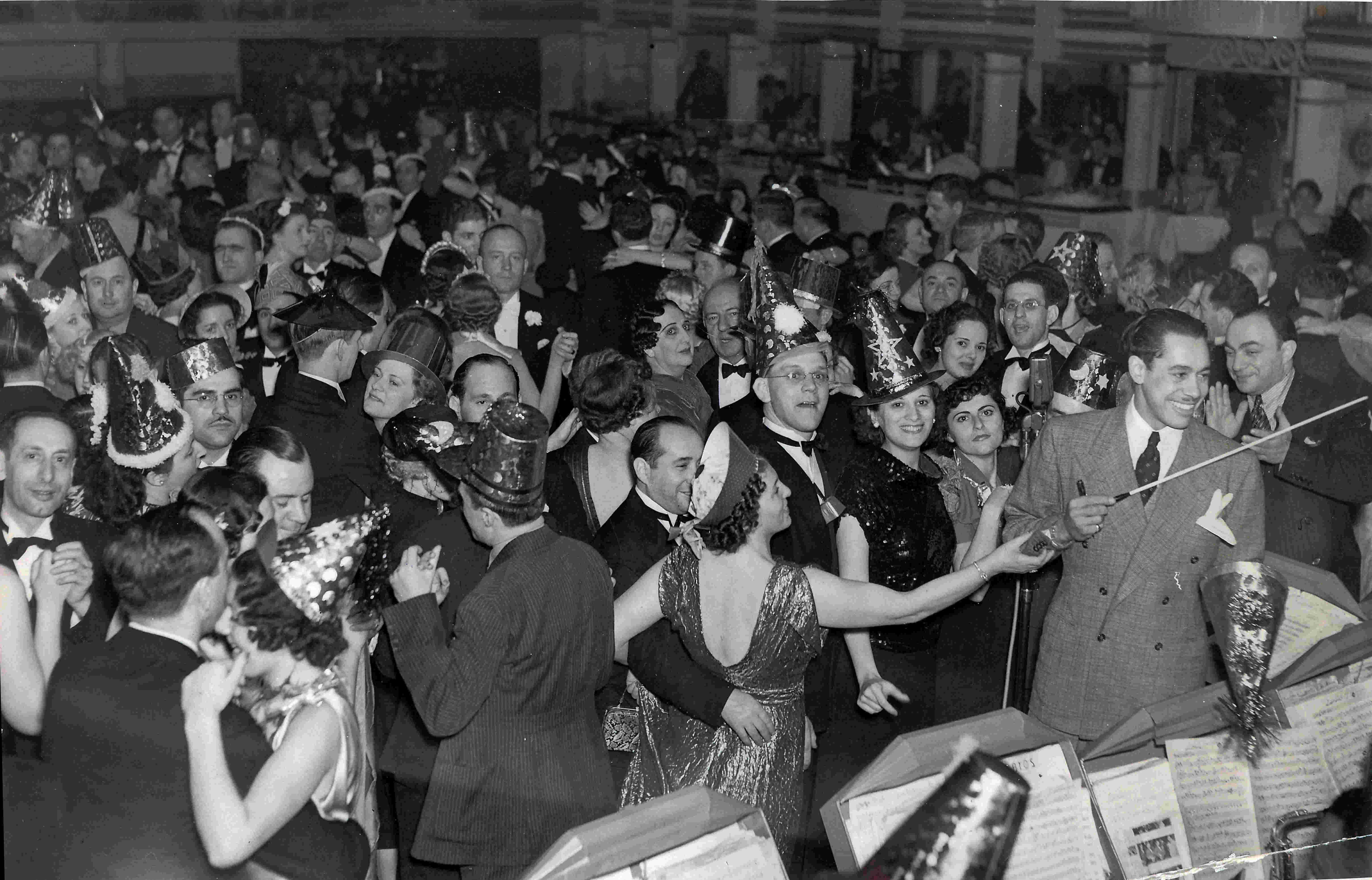
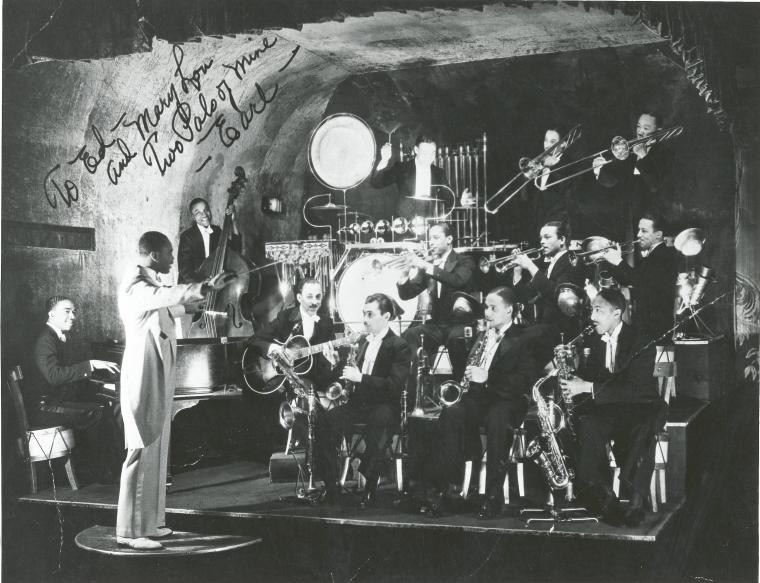
A look at the interior of the Broadway Cotton Club circa, during an New Year’s celebration, 1937, with Cab Calloway conducting.

Courtesy the Hi De Ho Blog, devoted to Cab Calloway


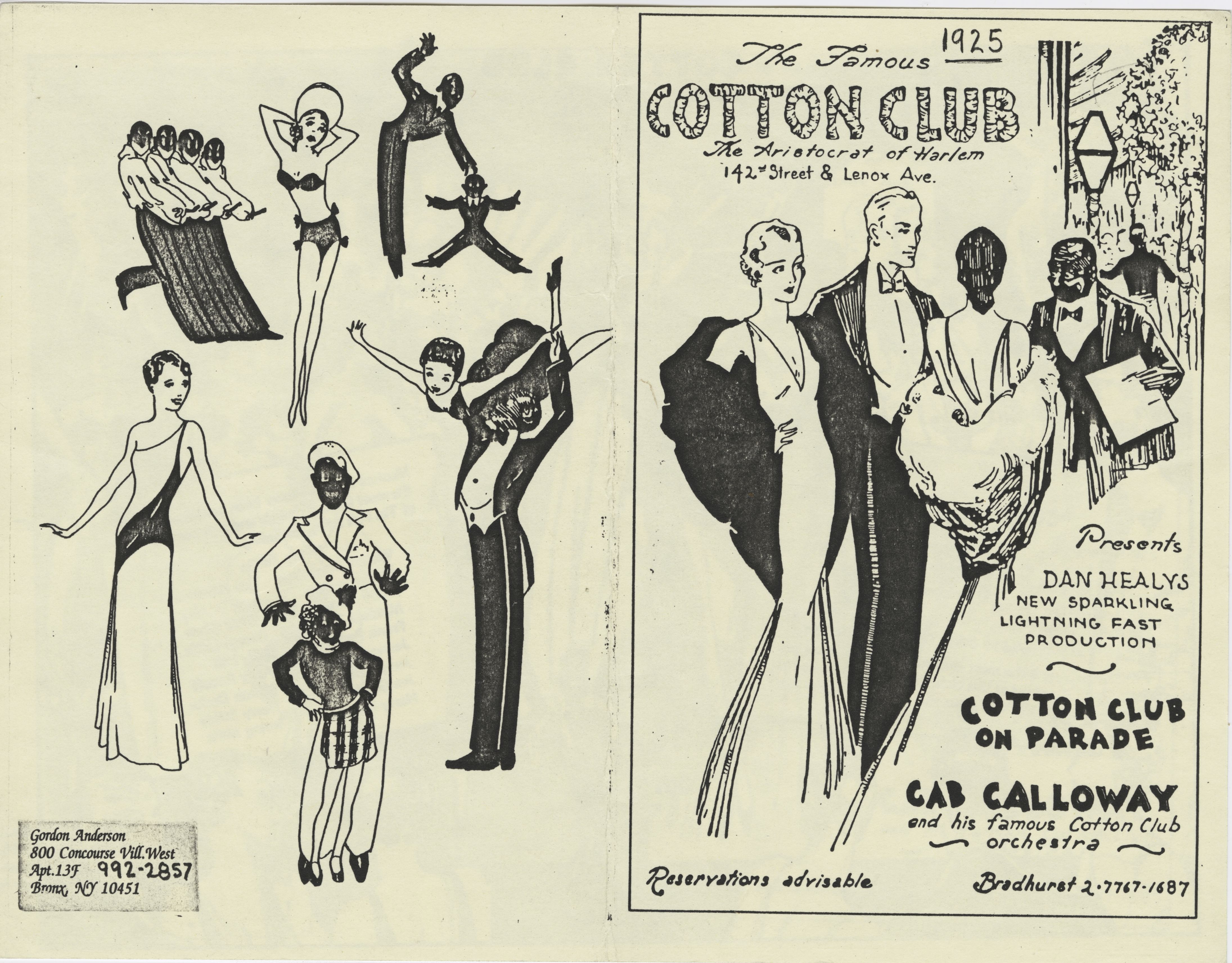
An advertisement or program for The Cotton Club. The year 1925 is penciled in at the top, but it has to be from a later date. Calloway had just graduated from high school in 1925!

Courtesy New York Public Library

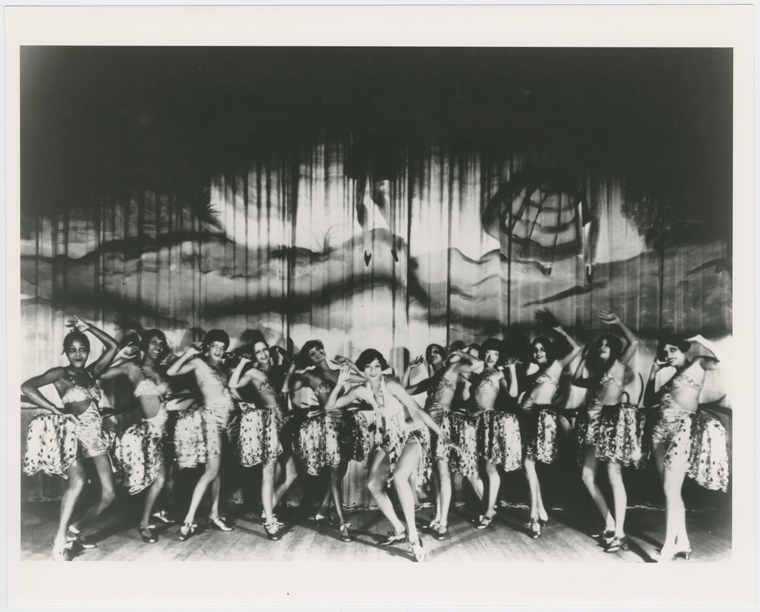
Maude Russel and her Ebony Steppers, performing in the 1929 Cotton Club show called ‘Just A Minute’.

Courtesy New York Public Library

A shot of Jimmy Lunceford and His Orchestra in 1934.

Courtesy New York Public Library


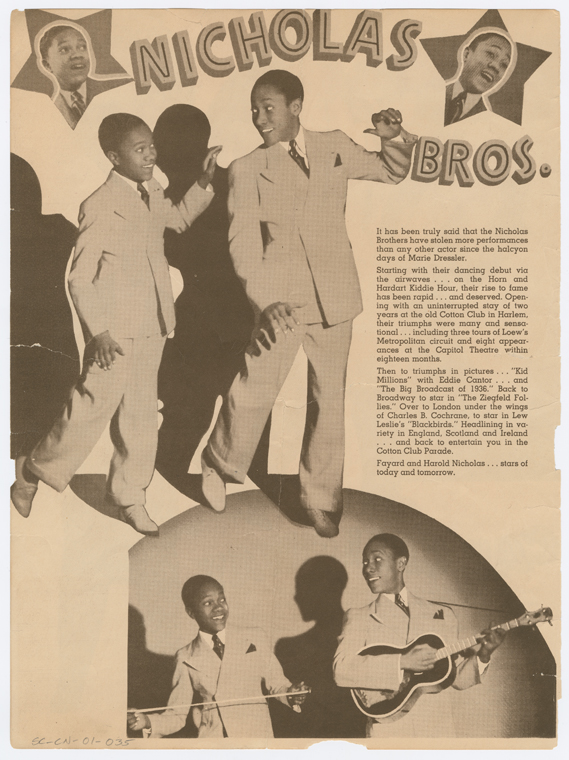
An advertisement for the Nicolas Brothers, for a performance in 1938 at the Broadway Cotton Club.

Courtesy New York Public Library


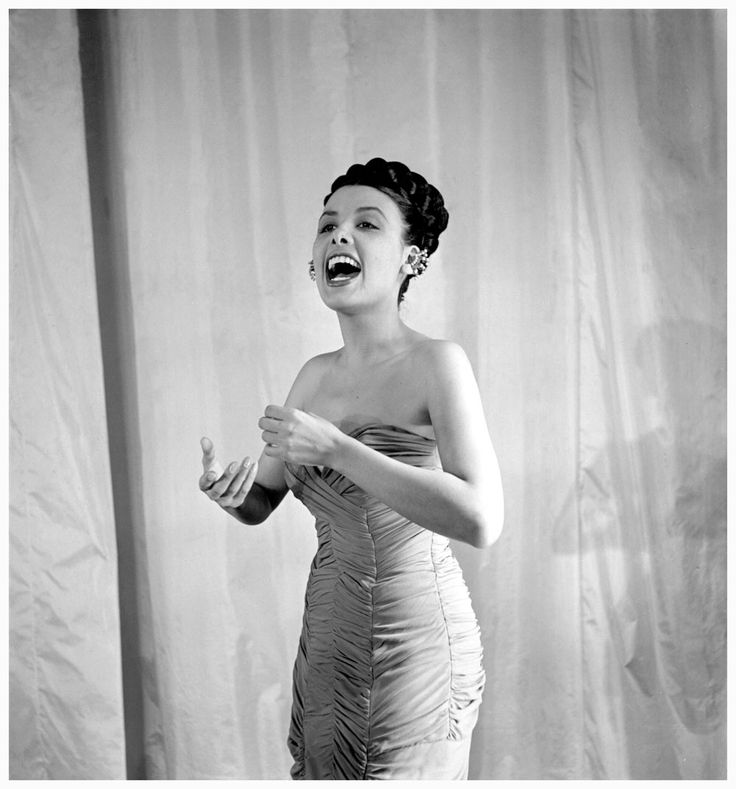
Lena Horne started out in the Cotton Club chorus line but eventually became a headlining star in her own right.

2d60b349c585fc130443fa0412f15ab0

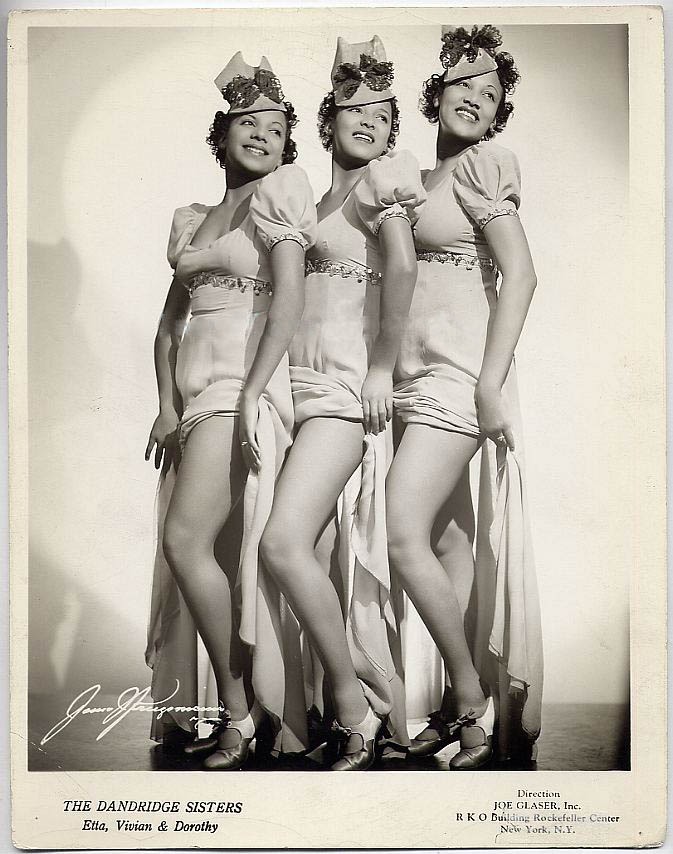
The Dandridge Sisters were notable performers in the final years of the Cotton Club.

tumblr_muku350orP1qlaando1_1280

The young and dashing Duke Ellington became a superstar in the years following his Cotton Club residency.

99699-004-9819D54D.jpg.pagespeed.ce.KVug26Qi8L


Duke Ellington and his Cotton Club Band, in a 1930 film appearance:

In 1934, Cab Calloway made this short film featuring his music:


Cab Calloway’s here too, in this clip from the film Stormy Weather, but the real stars are the Nicholas Brothers in a breathtaking dance number:


THIS PODCAST FEATURED MUSICAL SNIPPETS FROM THE FOLLOWING SONGS:

Black and Tan Fantasy – Duke Ellington

Drop Me Off In Harlem – Duke Ellington

Speak Easy Blues – King Oliver Jazz Band

Charleston – Paul Whiteman

Mood Indigo – Duke Ellington

Swing Session – Duke Ellington

If You Were In My Place – Duke Ellington

Minnie the Moocher – Cab Calloway

I’ve Got The World On A String – Duke Ellington

Stormy Weather – Ethel Waters

On The Sunny Side of the Street – Duke Ellington


NOTES ON THIS SHOW:

— I made two amusing flubs in this show 1) Duke Ellington’s nickname is probably inspired by the Duke of Wellington, not (obviously) the Duke of Ellington, 2) the name of the movie with Lena Horne and the Nicholas Brothers is obviously named Stormy Weather, not  Stormy Weathers (which must be the name of a drag queen somewhere)

Jack Johnson‘s story is so much more complex and I wish I had more time to talk about him. For more information, check out the incredible documentary (and the book it’s based on by Geoffrey C Ward) called Unforgivable Blackness: The Rise and Fall of Jack Johnson.


Categories
The Knick

The Knick Season 2: A History Recap from the brothel to the freak show

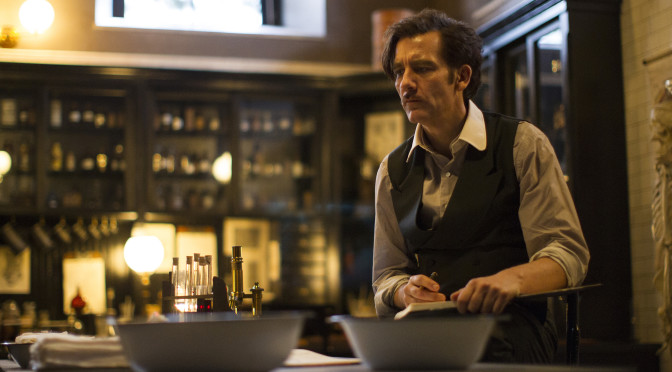
Pictured above: Dr. John Thackery (Clive Owen) explore several experimental procedures in the second season of The Knick, some more successful than others.

This post contains light spoilers of general themes from this season of The Knick although there are no specific plot twists discussed. You can use this as a primer for the second season before you begin, or review this list of historical moments before watching this evening’s finale.

Cinemax’s period hospital drama The Knick, now finishing its second season, spends a serious amount of time hunched over an operating table.

The able and ambitious surgeons of Knickerbocker Hospital cut open flesh, severed body parts, injected experimental serums and performed delicate incisions on brains, faces, throats and abdomens.

The special effects teams should be applauded for making me want to throw up on at least five occasions this year.

But The Knick is more than a procedural about a turn-of-the-century hospital although those watching for medical drama (or horror) will come away satisfied.  

With Season Two (set in 1901) this hospital drama rose to become a detective story about New York City itself.

In Season One historic figures populated a story about a growing hospital. In Season Two the show finally found its footing within the messy patchwork of the Gilded Age.

Below are some historical highlights from the season, taken from some of my Tweets from the show’s original broadcast over the past several weeks.

There are no plot spoilers here — in fact, I’ve chosen to not even mention any characters’ names — and some of you might even find this helpful before you watch.

ELECTRIC AUTOMOBILES

New Yorkers raced to find faster, more efficient solutions to horse-drawn vehicles. In the early years of automotive conveyance, it appeared the electric variety would lead the charge; however the earliest models were expensive and entirely inefficient.

Meanwhile oil refiners like the ones in Lima, Ohio, concerned that Edison’s electric light bulb was killing the kerosene market, began looking for other uses for their product.

THE CENTRAL PARK APARTMENT BOOM

Apartment living was all the rage with the upper middle class in the 1880s and developers around Central Park monopolized on the craze with lavish apartment complexes, bringing the amenities of upper crust life to those who couldn’t afford the upkeep of a mansion.

In particular, the Upper West Side was rapidly developed, becoming one of New York’s trendiest residential neighborhoods by 1900.

FEARS OF THE NEW SUBWAY

The ground was broken on New York’s ambitious new subway system on March 25th, 1900, but not everybody considered it progress. Miles of underground tunnel required unprecedented investment which tore into busy streets, creating nuisance and danger.

Those of the more sheltered class flinched at the idea of immigrant workers ripping into their streets. Most New Yorkers were certainly unsettled at the sound of dynamite explosions and feared that whole city blocks might blow up.

ADDICTION

Medical practice and scientific thought were expanding in the 1900s, but new modes of treating complicated conditions like drug and alcohol addiction were having a difficult time in the morality based institutions of the day.

Most physicians still believed that addictions exposed flaws of the human character and had little connection to the processes of the brain.

EUGENICS

Deteriorated or stunted moral character was also seen as endemic of new arriving immigrants especially those from southern Italy.

The study of eugenics — belief in the improvement of the human race through selective reproduction — rapidly grow in colleges and universities in the 1900s. Naturally the eugenics argument was also used against African-Americans and wielded as a threat against any who attempted to upend the status quo.

“DOING BUSINESS IN NEW YORK”

Although the scandals of Boss Tweed were almost 30 years old by 1901, Tammany Hall still held a viper’s grasp upon New York City infrastructure — from the ports to the construction projects.

A standard building project would often require many layers of ‘greased palms’, and expensive materials were often used because a corrupt middle-man could hide more layers of kickbacks there.

THE WORLD OF DRUGS

While the dangerous qualities of many common drugs were well known, few were actually banned in 1901. Cocaine and heroin were still used in the operating room, and even substances we consider deadly poisons today were available over the counter.

THE REALITIES OF ‘THE FREAK SHOW’

Inspired by P.T. Barnum’s American Museum and the popular cabinet of curiosities of Europe, ‘dime’ museums became a popular pastime for New Yorkers in the late 19th century. They were a hodgepodges of exhibits, from people with extraordinary abilities to exotic foreigners.

In places like Huber’s Museum in Union Square, some of the most popular attractions were humans with various deformities, the individuals who would make up the freak shows of Coney Island. Few considered these people in need of care, and they were often harshly abused by their handlers.

ABORTION AND SEXUALLY TRANSMITTED DISEASES

In a society so clearly judgmental of non-reproductive sexual behavior, STDs were poorly understood.

Syphilis remained a deadly illness running rampant through hundreds of New York brothels. Some protection, like condoms, did exist at the time, but they were terribly uncomfortable and not consistently made.

Pregnant girls were forced into the treacherous world of back-alley abortions. Many died during procedures — or afterwards due to unregulated and filthy conditions — and their bodies dumped into the river.

THE BIRTH OF HARLEM

Violent racial tensions in neighborhoods like Five Points and the Tenderloin forced many black New Yorkers to move north — to the largely Jewish neighborhood of Harlem.

By the year 1900 thousands of African-American lived here, creating a foundation for the huge wave of new residents who would arrive a couple decades later, turning Harlem into the center of American black culture.

THE SICILIAN BOOM

The greatest waves of immigration into America came in the early 1900s, and the largest group among them were southern Italians. Unlike the earlier wave of Italians, Sicilians were poorer and less educated. Difficulties in understanding led many New Yorkers to consider them a vastly inferior class and even dangerous.

THE GILDED AGE DELIGHTS

While the modern restaurant was essentially invented by Delmonico’s in the early 19th century, it wasn’t until the Gilded Age that the delights of public dining were properly indulged. With the influx of opulent life came the finest hotels and eateries, all equipped with modern conveniences. Most were situated on Broadway, from Union Square to Herald Square. Longacre Square (not yet Times Square) was a few years away from becoming the center of New York nightlife.

For more historical Tweets of The Knick and other television shows, just follow me on Twitter at @boweryboys.

Categories
It's Showtime Podcasts

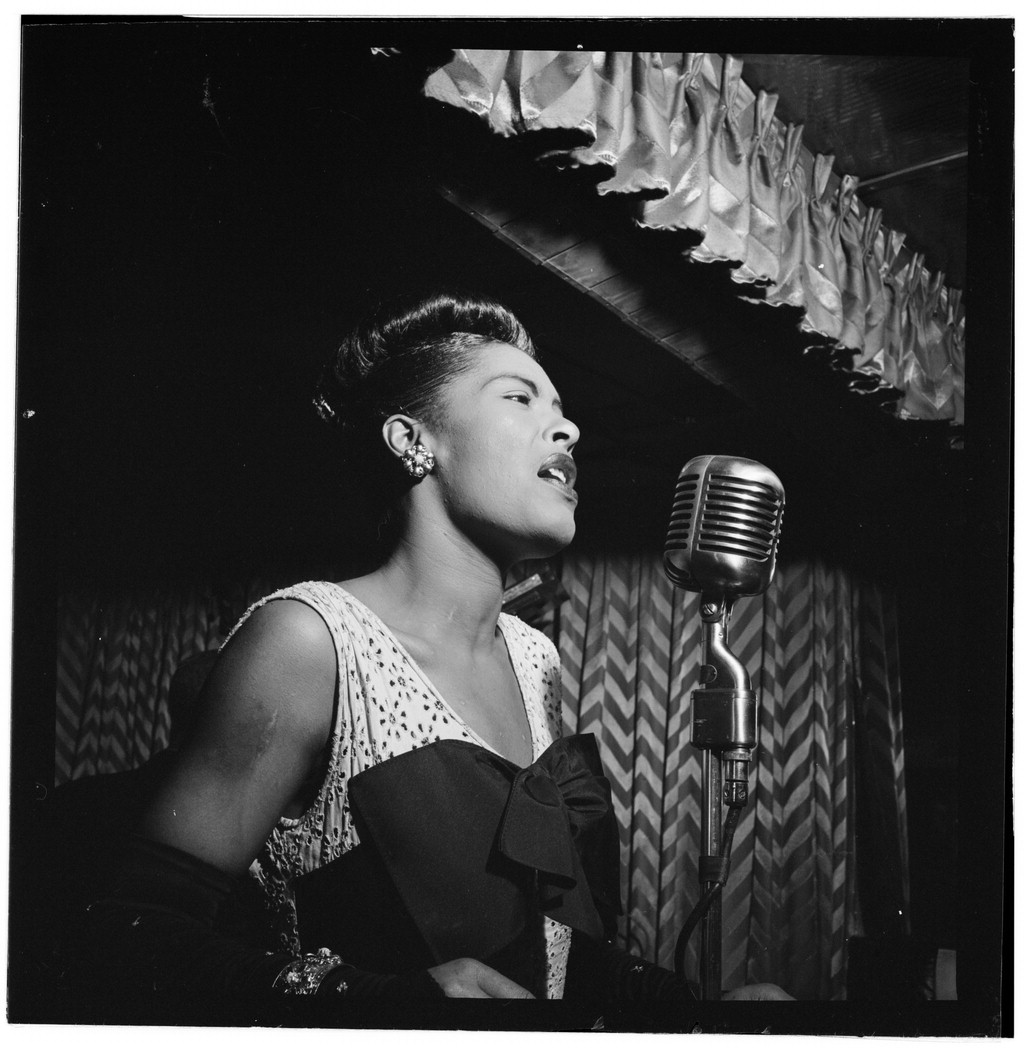
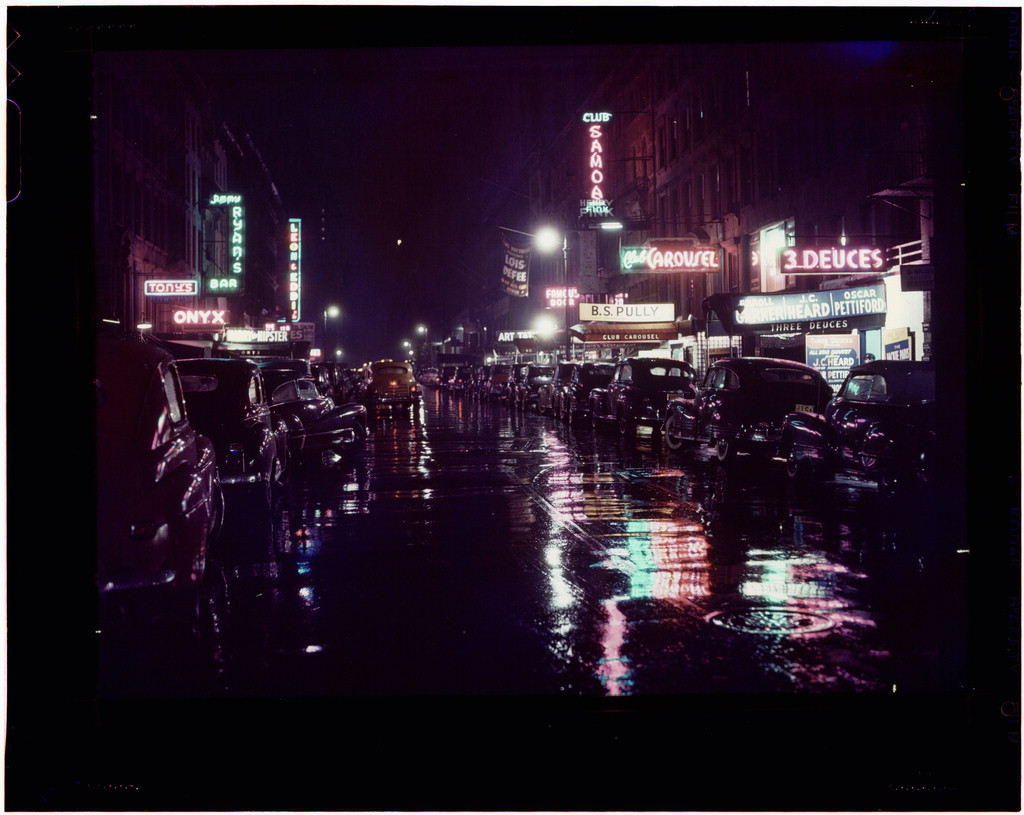
Billie Holiday’s New York: Here’s to Swing Street, Harlem’s 133rd Street and other landmarks of jazz

Courtesy Columbia Records

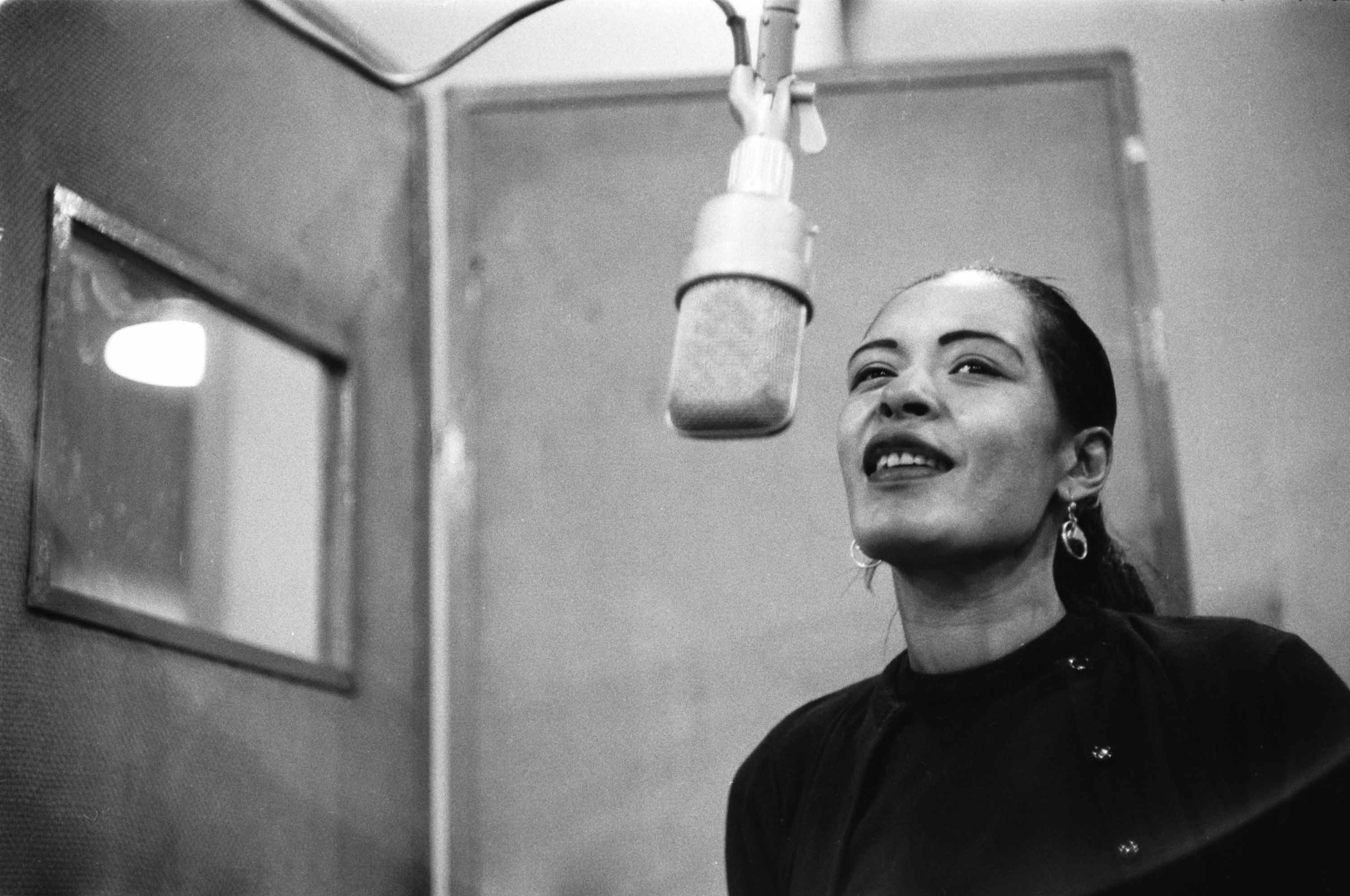
PODCAST Grab your fedora and take a trip with the Bowery Boys into the heart of New York City’s jazz scene — late nights, smoky bars, neon signs — through the eyes of one of the greatest American vocalists who ever lived here — Billie Holiday.

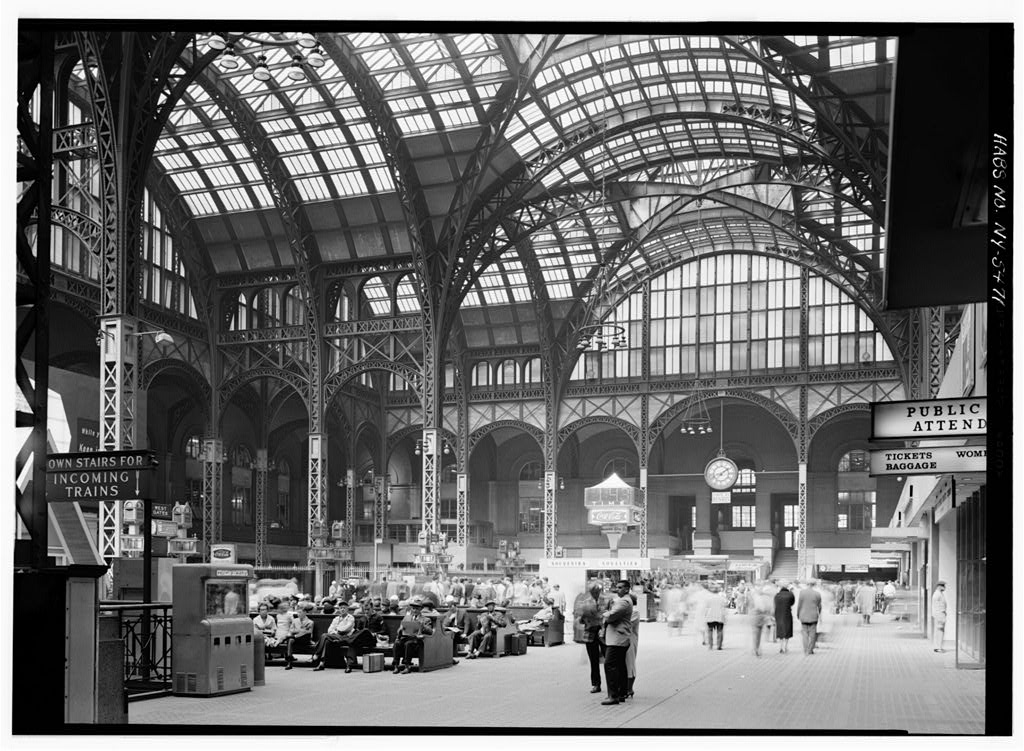
Eleanora Fagan walked out of Pennsylvania Station in 1929 and into the city that would help make her a superstar. Her early years were bleak, arrested for prostitution and thrown into the Welfare Island workhouse. But music would be her savior, breaking out in Harlem first in the nightclubs on 133rd Street, then in the basement clubs of ‘Swing Street’ on 52nd Street.

Her recordings make her an international star, but the venues of New York helped solidify her talents — from the Apollo Theater to Carnegie Hall. But one particular club in the West Village would provide her with a signature song, one that reflected the horrible realities of racism in the mid 20th century.


Billie Holiday at Club Downbeat, 1947

5020399920_ccd948ba9c_o

Locations featured in this episode:

1) Pennsylvania Station (circa 1930s-40s)

Courtesy Library of Congress

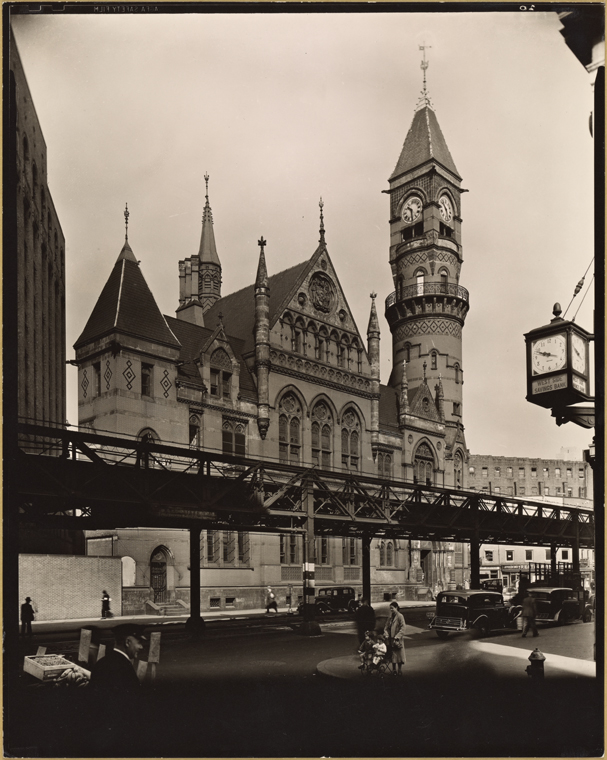
2) Jefferson Market Courthouse, pictured here in 1935

1
Photographed by Berenice Abbott, courtesy New York Public Library

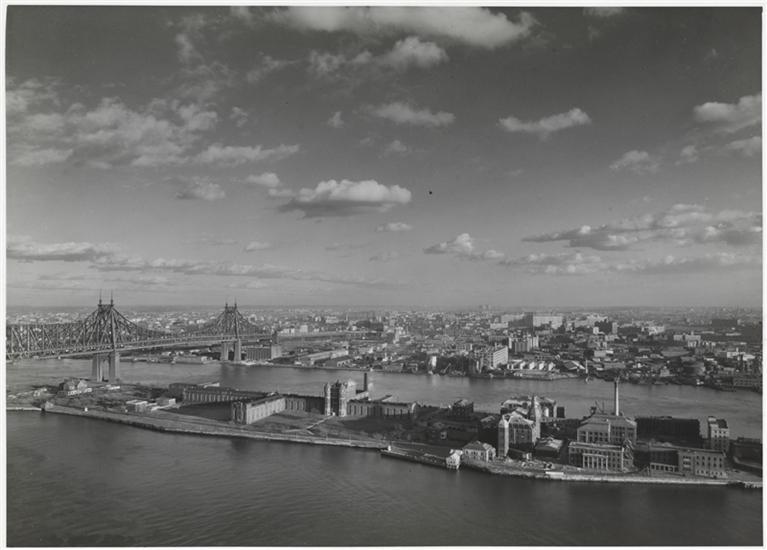
3) Welfare Island, pictured here in 1931

Photographed by Samuel H Gottscho, courtesy Museum of City of New York

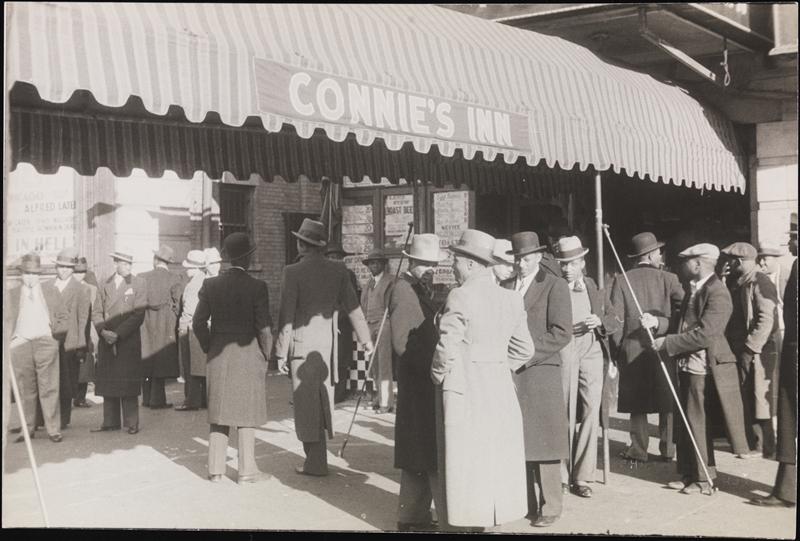
4) 133rd Street — “Jungle Alley” or The Street — outside Connie’s Inn

Courtesy Museum of the City of New York

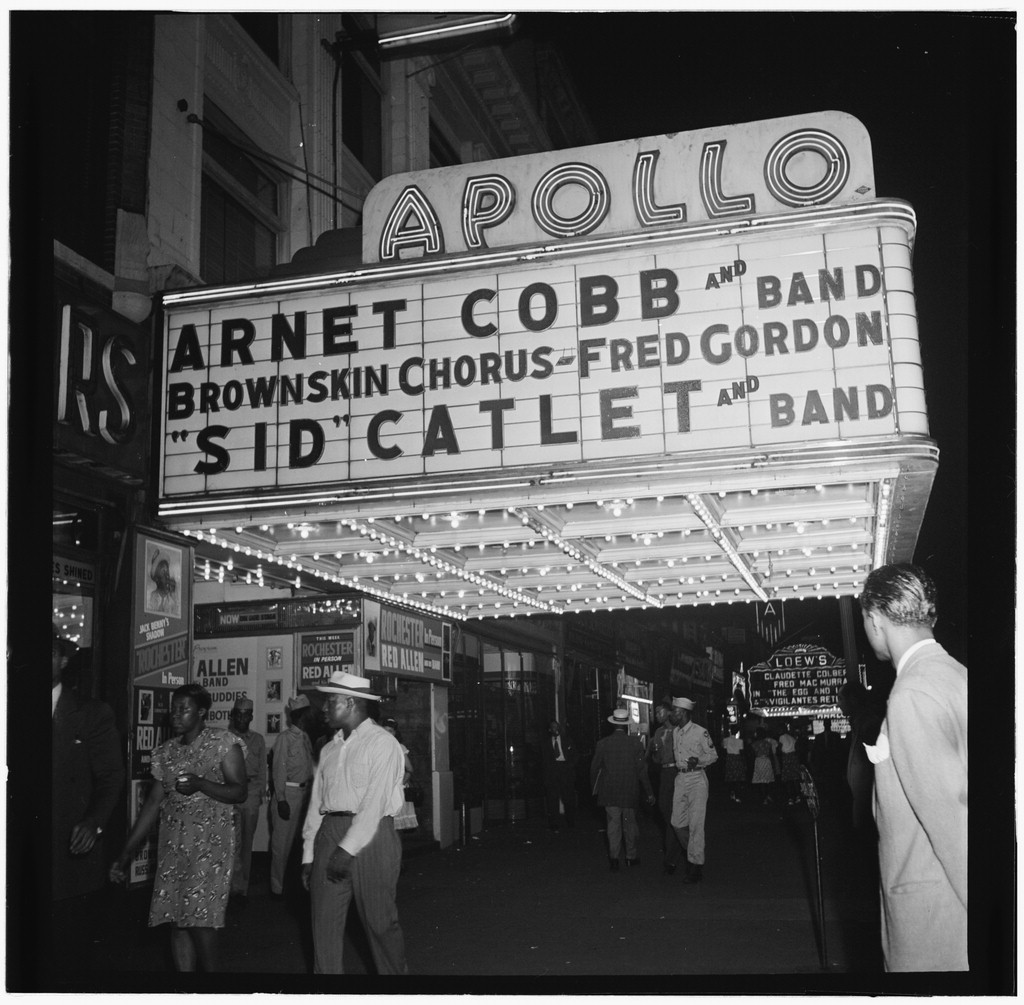
5) Apollo Theater, pictured here in the mid 1940s

Courtesy Library of Congress, photographer William Gottlieb

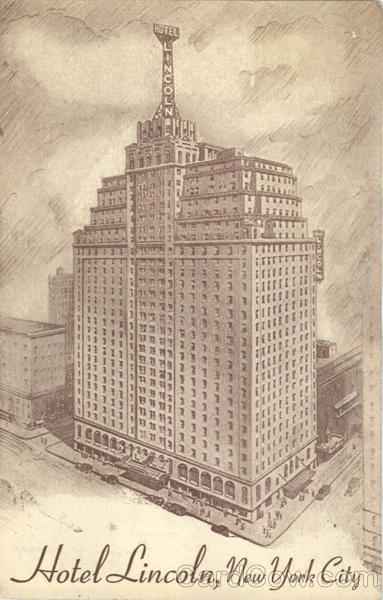
6) Lincoln Hotel

Hotel Lincoln, 44th to 45th Street at 8th Avenue New York City

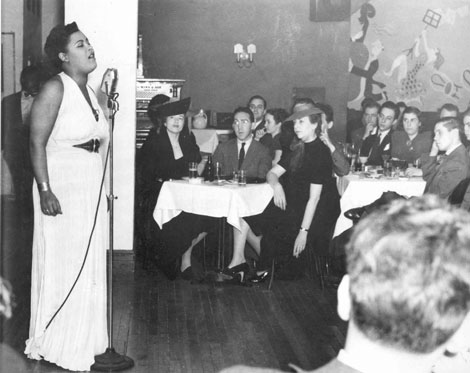
7) Billie Holiday at Cafe Society 1939

Photo by Charles B. Nadell

8) 52nd Street aka Swing Street

5268914553_ca77a01af0_o

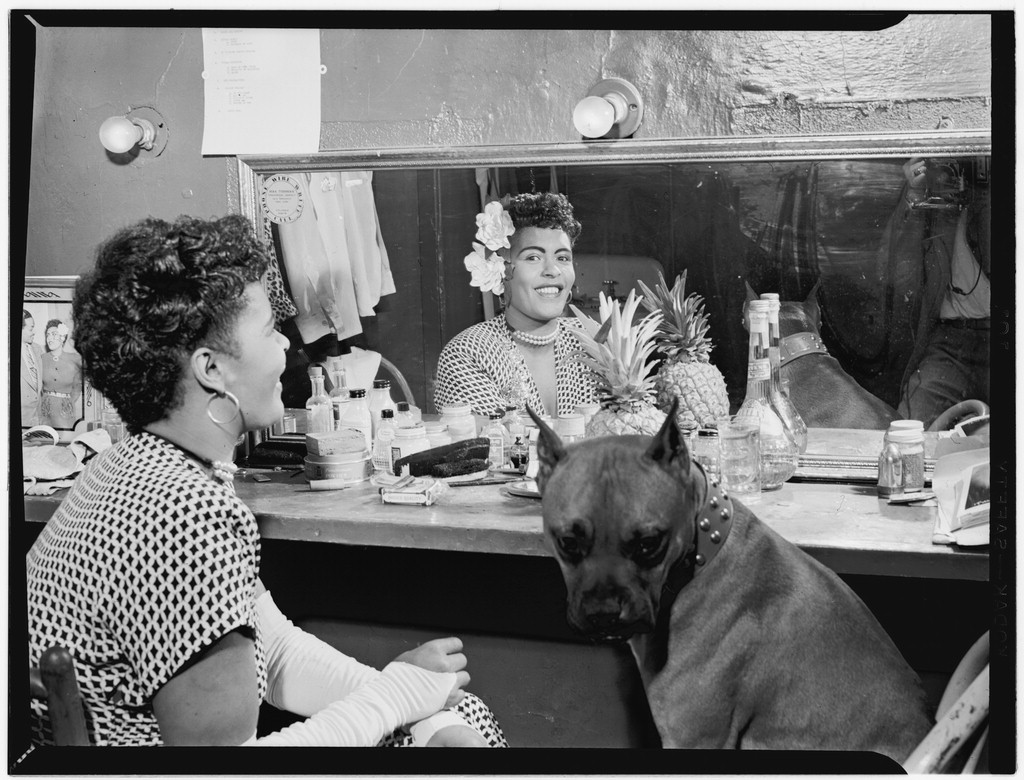
Billie at Club Downbeat (with her dog Mister) — June 1946

Courtesy Library of Congress

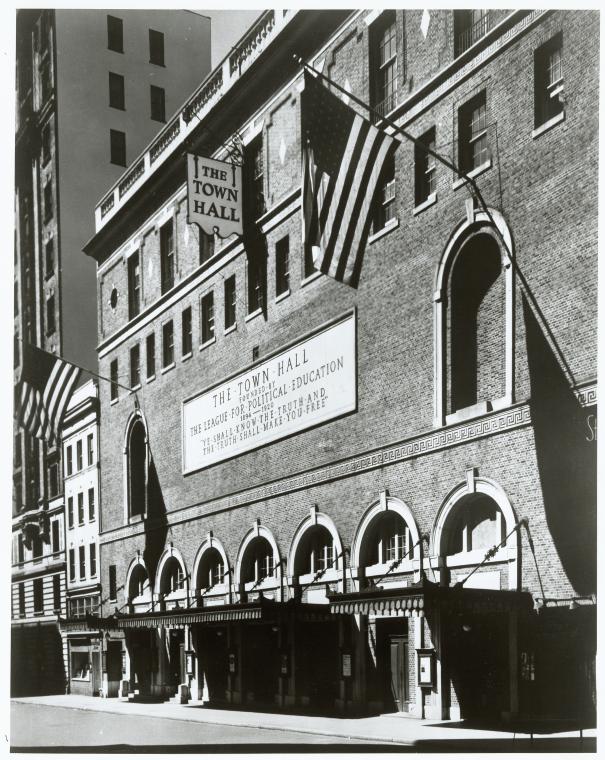
9) Town Hall, sometime in the 1940s

Exterior view of The Town Hall, courtesy New York Public Library

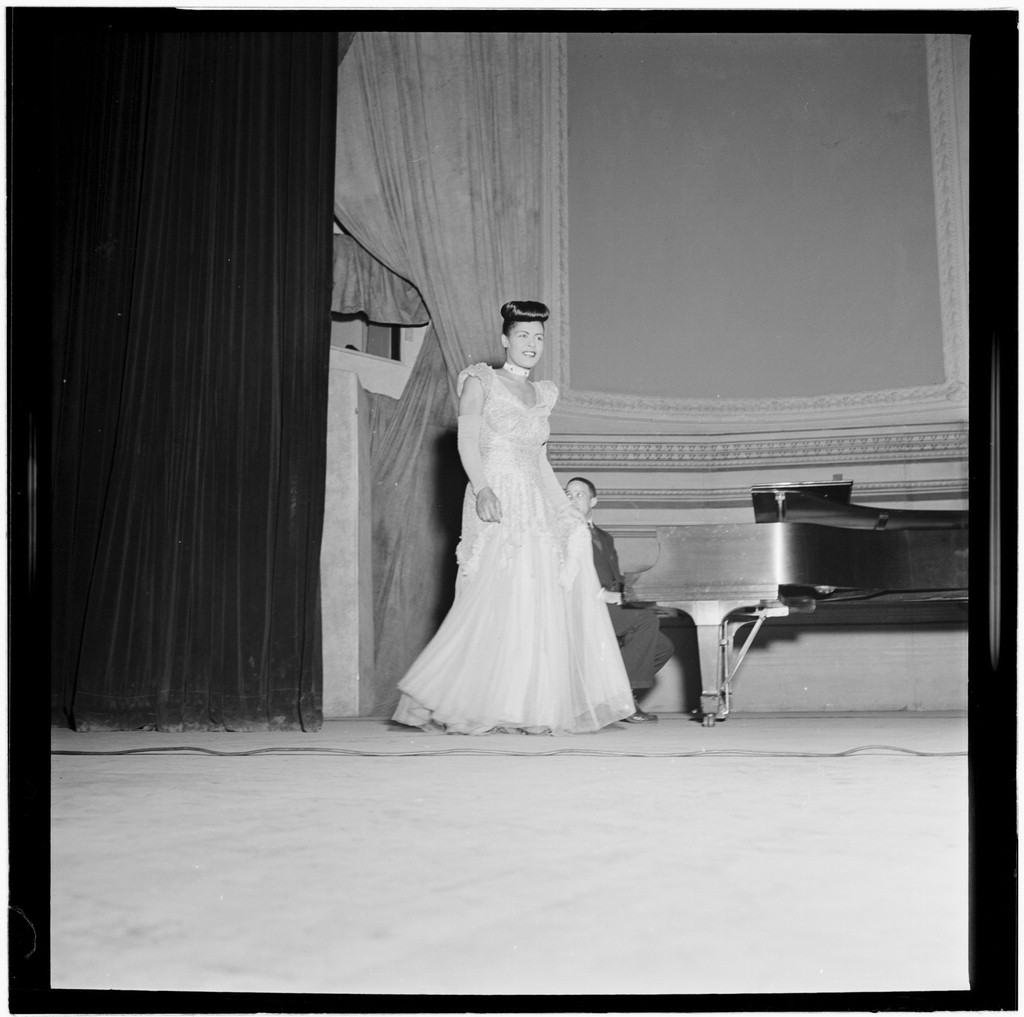
10) Billie Holiday at Carnegie Hall for her rave 1948 concert

Courtesy Library of Congress

An extraordinary performance of ‘Strange Fruit’, performed in February 1959, months before she died. This was recorded for a British television show called ‘Chelsea At Nine’.

https://www.youtube.com/watch?v=h4ZyuULy9zs

Billie Holiday — playing a maid — in the 1947 film New Orleans

And a live performance of one of her greatest songs — well, really, one of the greatest songs — “God Bless The Child”

http://youtu.be/U-3O-X6UUpY

Categories
Holidays

On this Veteran’s Day, a salute to the Harlem Hellfighters!

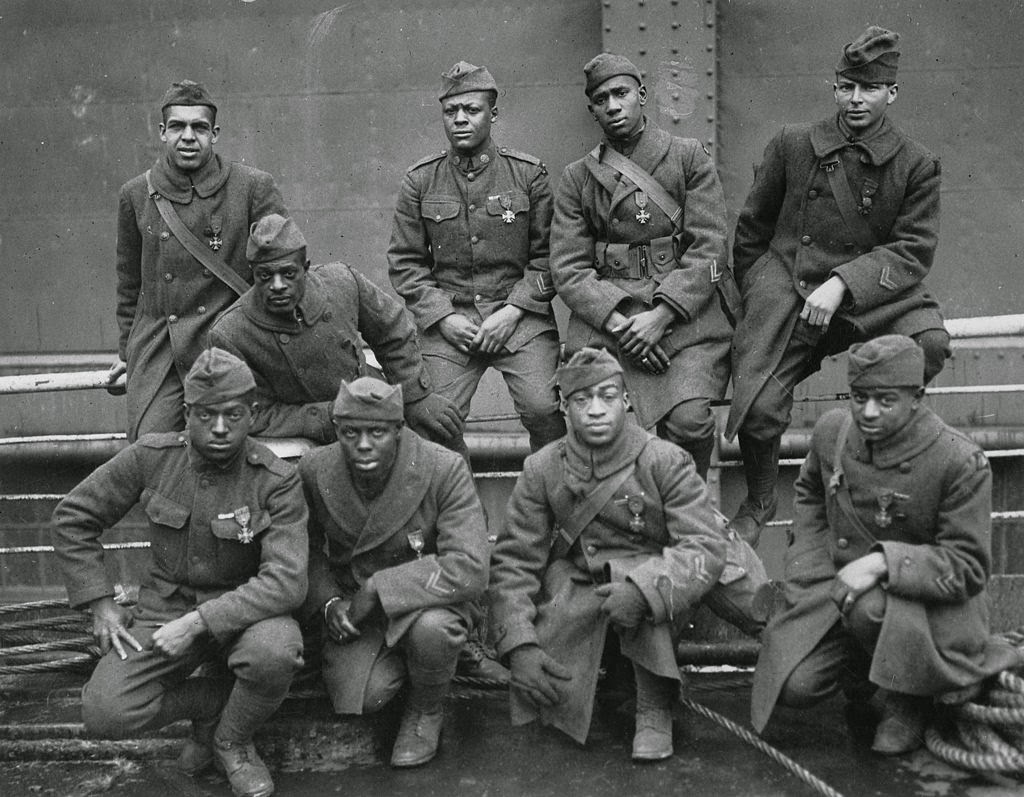
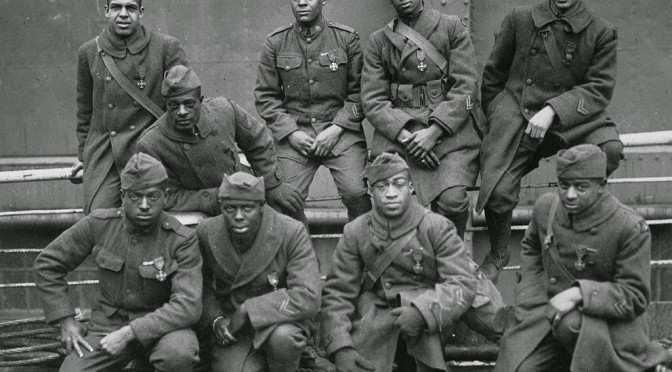
The men of the 369th who were awarded France’s Criox de Guerre for distinguished acts of heroism:  Pvt. Ed Williams, Herbert Taylor, Pvt. Leon Fraitor, Pvt. Ralph Hawkins. Back Row: Sgt. H. D. Prinas, Sgt. Dan Strorms, Pvt. Joe Williams, Pvt. Alfred Hanley, and Cpl. T. W. Taylor
New York’s 369th Infantry Regiment was America’s first African-American regiment engaged in World War I.  While many white American soldiers would have been happy to serve next to trained regiments of any color, intense racial prejudice in the United States forced many who signed up to fight for their country to instead be assigned to the French army.

Nicknamed the Harlem Hellfighters, the regiment served alongside the French during the summer and fall of 1918.  Perhaps the most famous soldier of the 369th was Private Henry Lincoln Johnson (at right) whose deadly efficiency on the battlefield earned him the grim nickname Black Death.  He became the first of dozens from the 369th to receive the prestigious Criox de Guerre, the equivalent of the American Medal of Honor.

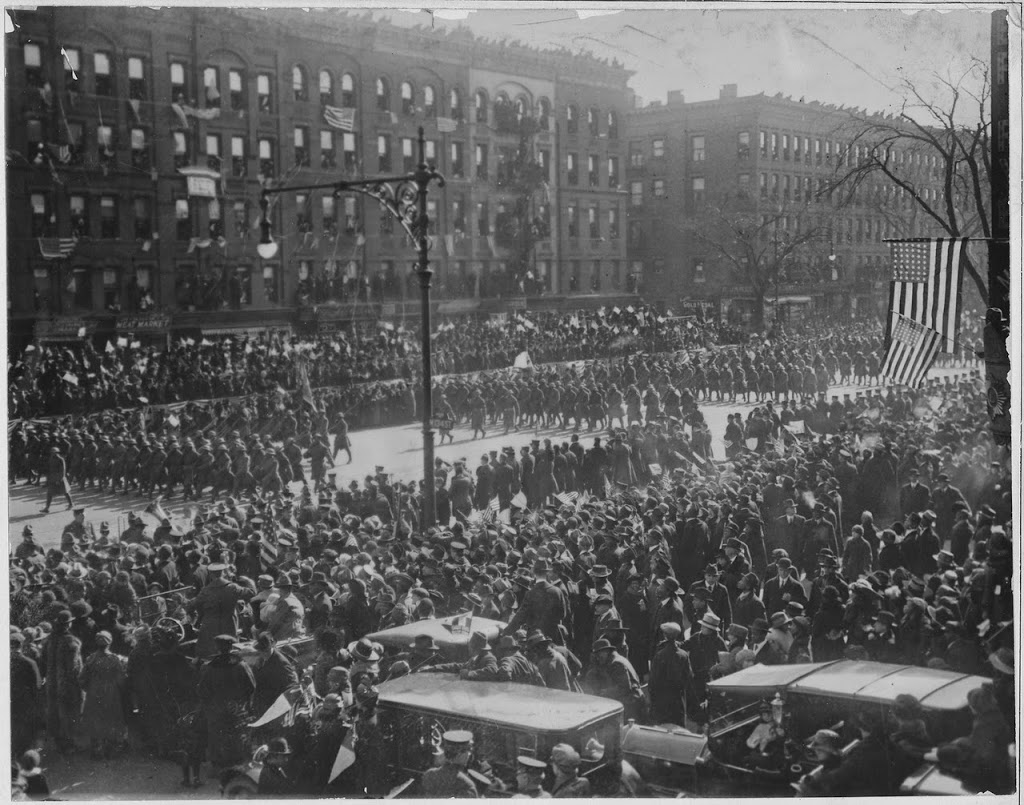
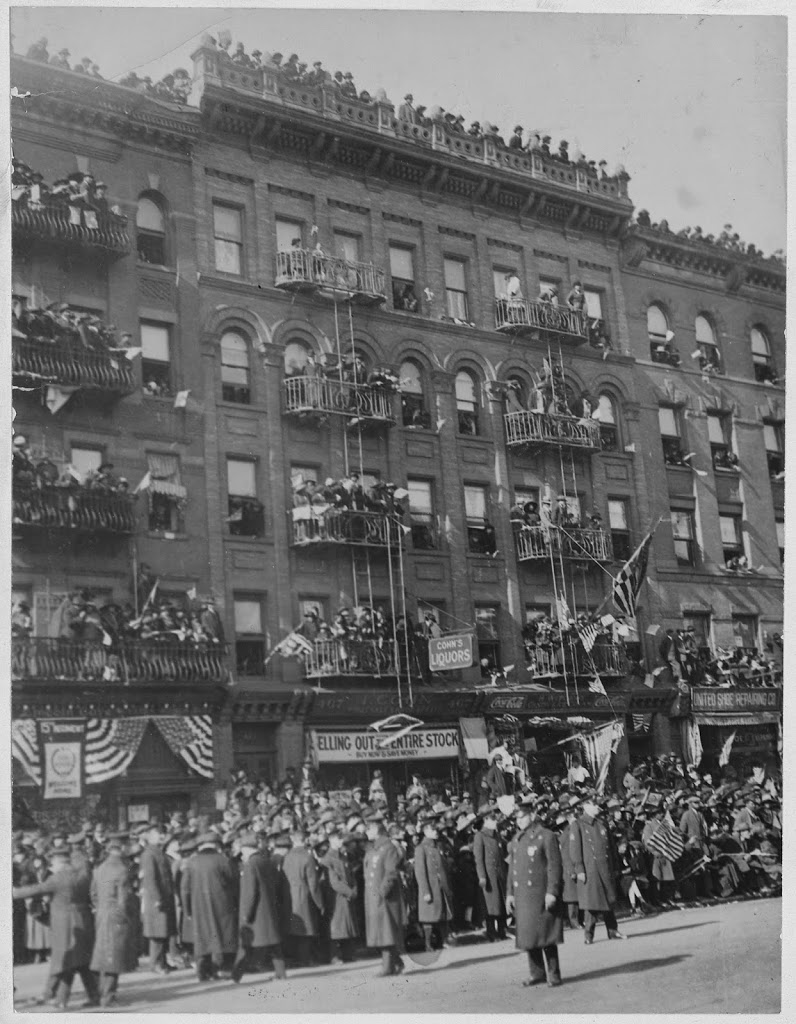
They returned to New York in February 1919 and marched through the streets of Manhattan on February 17 — from Greenwich Village to Harlem, in triumph.

From the New York Times the following day:

New York’s negro soldiers, bringing with them from France one of the bravest records achieved by any organization in the war, marched amidst waving flags and cheering crowds yesterday from Twenty-third Street and Fifth Avenue to 145th Street and Lenox Avenue.”

“At Thirty-Fourth Street the men marched under a shower of cigarettes and candy, and such tokens were pitched at them at other points in the line, but the files did not waver for an instant.

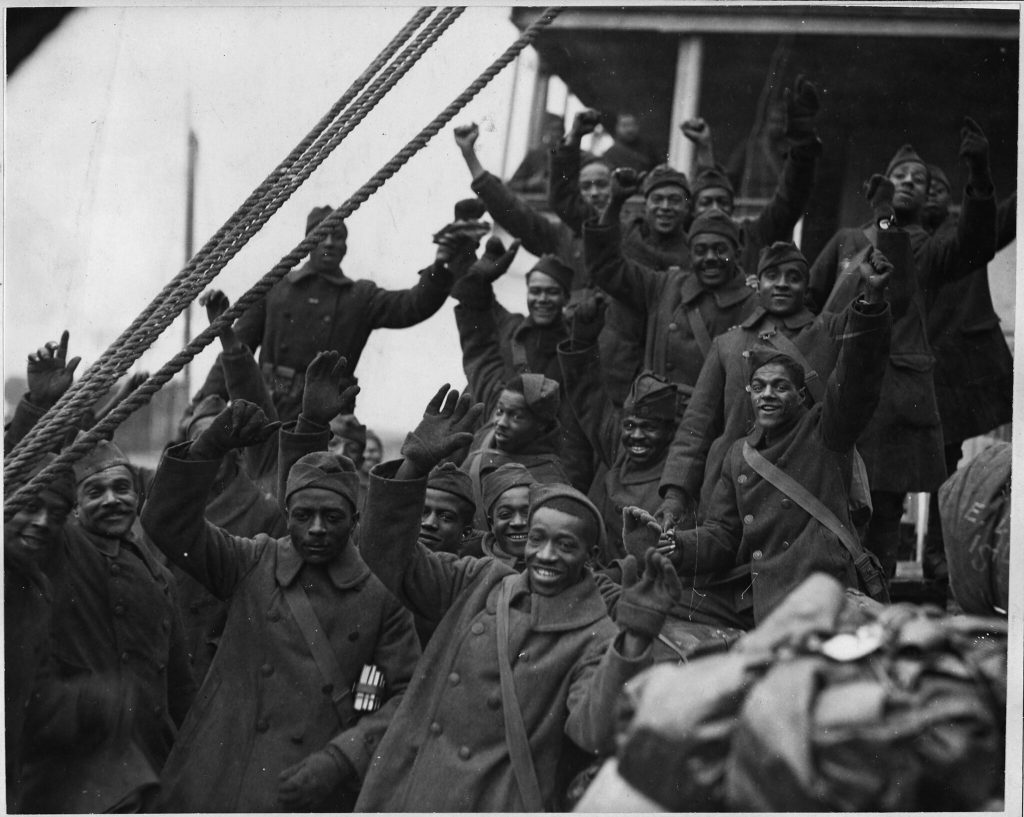
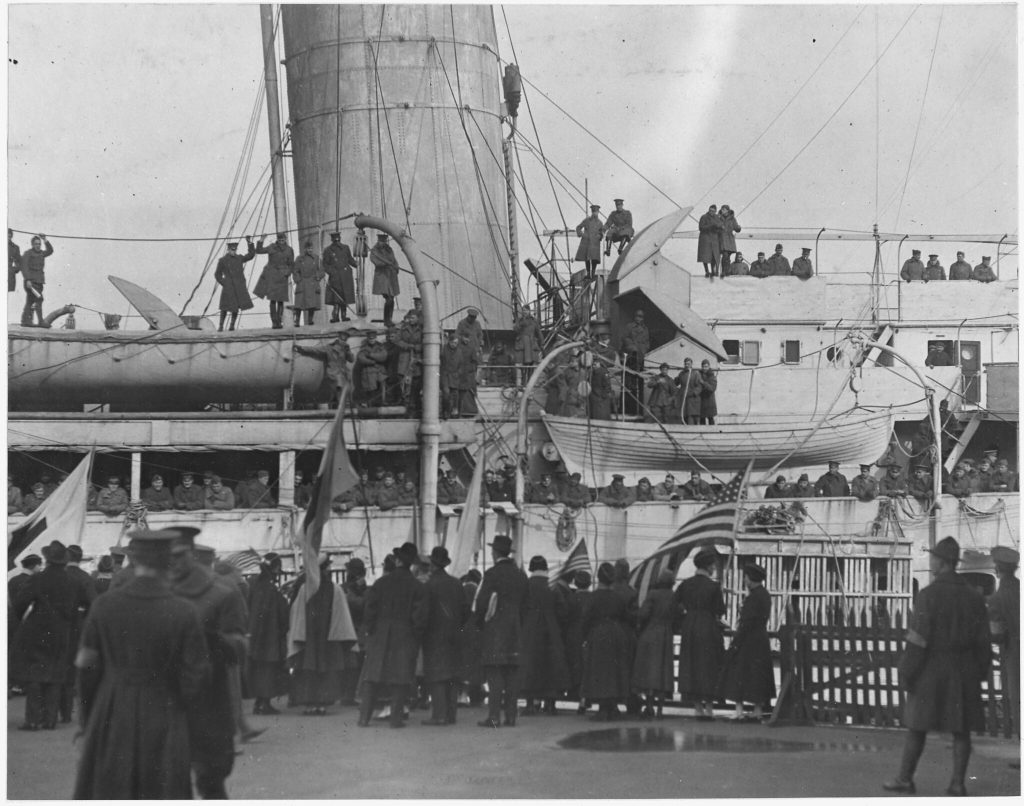
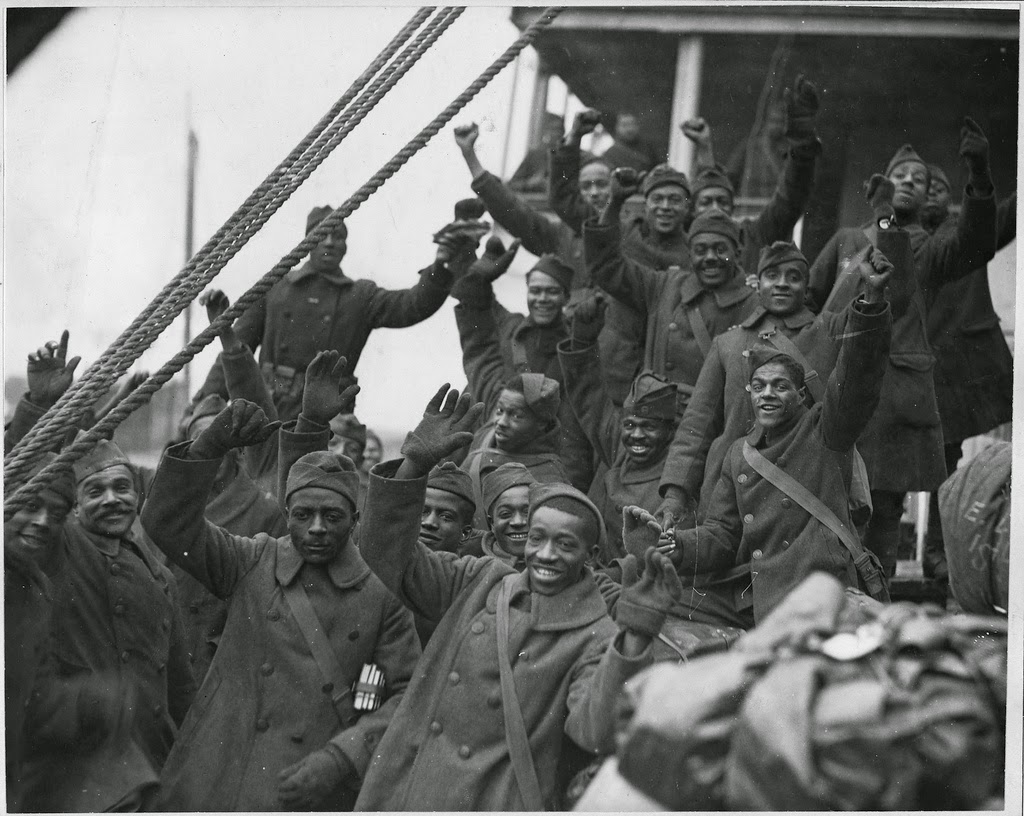
The men of the 369th photographed as they arrive back in New York City, 1919

From original caption (courtesy US National Archies):  “[The] 369th New York City Infantry (old 15th) [African American] troops and some of the 370th Infantry, Illinois [African American] troops, one of the most decorated regiments in the United States Army return to New York City. They saw [the] longest service of any American regiment as part of a foreign army, and had less training than any before going into action. They were never in an American division or brigade always being with the French.”

The 369th marching up Fifth Avenue.

The men are shown here in this assortment of newsreel footage from the war:

Pictures from the U.S. National Archives

Categories
The Knick Wartime New York

Knickerbocker Hospital: An inspiration for Cinemax’s The Knick

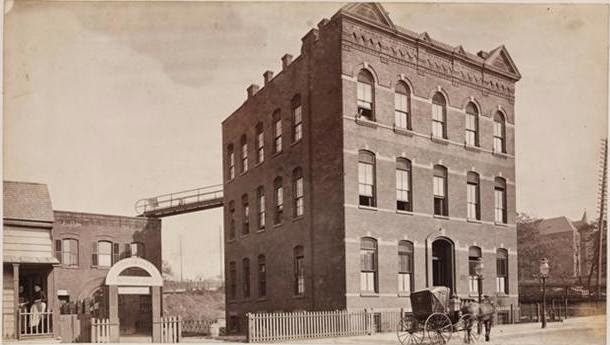
Photographed dated 1886, the institution was called Manhattan Hospital then, changing its name to J. Hood Wright Memorial Hospital, then to Knickerbocker Hospital in 1913 (Picture courtesy the Museum of the City of New York)

On Friday begins The Knick on Cinemax, a historical drama set in the turn-of-the-century Knickerbocker Hospital. . Last year, Tom wandered around the Broome Street set of The Knick. (Check out his pictures here.)  Are you checking this out live this Friday night (August 8, 10pm)?  Follow along with me on Twitter where I’ll try and keep up with historical tidbits about the era and the events that are depicted.

Although the hospital depicted in the show is technically fictional, there was a Knickerbocker Hospital in New York during this time period. It will be interesting to see if the show’s institution bears any resemblance to the real Knickerbocker:

Knickerbocker Hospital
Location: Covent Avenue and 131st Street
The hospital depicted in The Knick is much, much further downtown.  However, with the arrival of elevated trains and, later, the subway, some new immigrants would have settled in upper Manhattan to escape the crowded tenements. So the types of patients treated at these institutions would have been similar.
Purpose:  According to the 1914 Directory of Social and Health Agencies, “Gives free surgical and medical treatment to the worthy sick poor of New York City.  Incurable and contagious diseases and alcoholic, maternity and insane patients not admitted.  Emergency cases received at any hour.”
Statistics:  In 1914, they had 57 beds, 1,096 cases treated in a year
Funding: Care is free to “the worthy poor” and the hospital is supported by charitable contribution

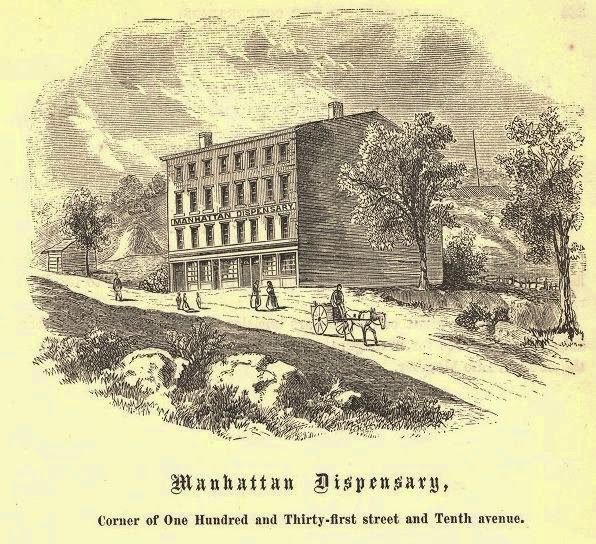
History:  The hospital began its existence as the Manhattan Dispensary in 1862, located in upper Manhattan when it pretty much looked like this:  (Image courtesy the US National Library of Medicine)

The hospital treated injured Civil War soldiers.  It was founded by a Philadelphia railroad man named James Hood Wright who worked for banker J.P. Morgan.  

Mr. Wright died suddenly on November 12, 1894, collapsing at an elevated train station on Rector Street and never regained consciousness.  In honor of his contributions, the hospital was renamed the J. Hood Wright Memorial Hospital, although, from reading the news clipping below, it seems that was not a great idea.

The name change was facilitated by a lack of funding for the hospital.  In 1910, hospital executives blatantly proclaimed “the hospital was inadequate to serve the needs of the west side of Harlem.”

From a notice in the New York Sun, June 23, 1913:

“The J. Hood Wright Memorial Hospital, which was incorporated in 1868 as the Manhattan Dispensary, has got permission from Supreme Court Justice Page to change its name to the Knickerbocker Hospital.

The petition says that since Mr. Wright’s death the population of the district served by the hospital has increased greatly and the necessity of more funds for the hospital has increased proportionately.


The hospital managers and Mr. Wright’s heirs believe that the present name of the hospital leads to the belief that it is so liberally endowed it does not require outside assistance and for this reason, none have been forthcoming.  They say Mr. Wright desired outsiders to contribute.”

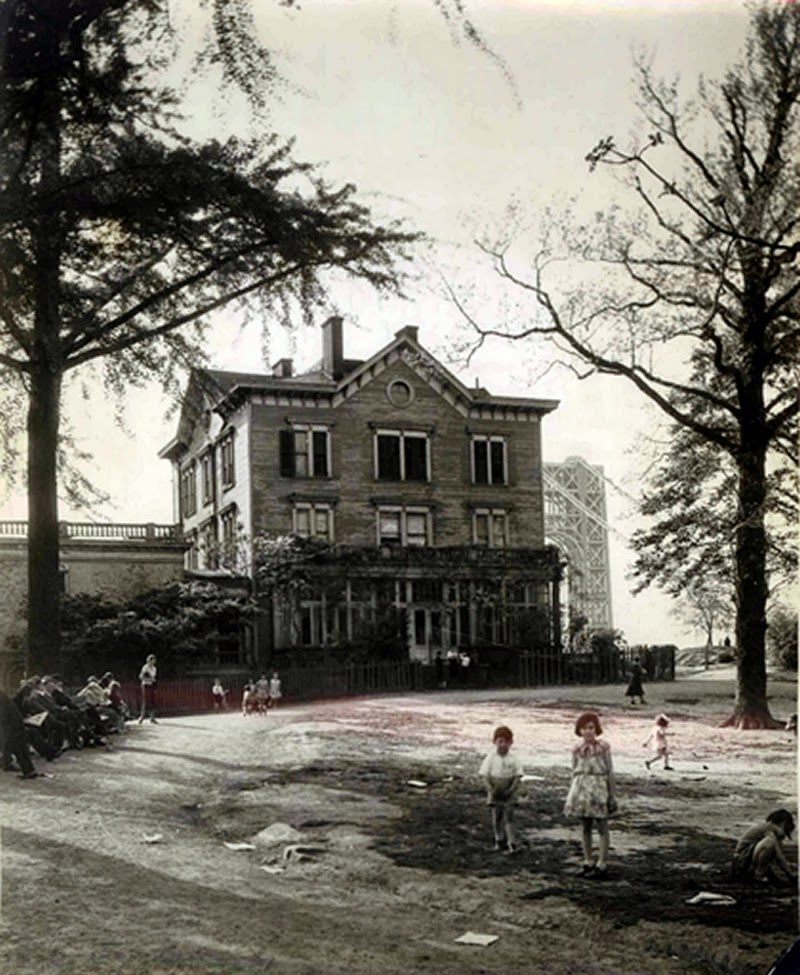
J. Hood Wright is memorialized in a public park just off the Manhattan approach to the George Washington Bridge. located on the land where Mr. Wright’s mansion once stood.

At right: A photo of the old Wright house. You can see the George Washington Bridge in the background. (Courtesy Museum of the City of New York)

The Knickerbocker’s neighborhood of Harlem became the heart of New York’s African-American culture, but hospital staffing did not reflect this change.

There were many reported incidents of black patients being poorly treated here during the 1920s and 30s.  According to author Nat Brandt, the wife of W.C. Handy “lay critically ill in an ambulance for more than an hour while officials of Knickerbocker Hospital discussed whether to admit her.” [source]

In May 1959, Billie Holiday was admitted here after collapsing in her apartment, but her liver and heart disease were so advanced that she was transferred to a hospital better suited for treatment. (She died a few weeks later.)

Knickerbocker Hospital remained open until the early 1970s when mounting debts almost forced it to close.  The state of New York took it over and renamed it Arthur C. Logan Memorial Hospital after a prominent black physician.  That hospital seemed to suffer from the same financial woes as the others and eventually closed for good in 1979.

I’m looking forward to doing more research New York’s medical institutions in the coming weeks, and I hope the show does it justice!

A scene from The Knick. There will be blood, I believe….

(Photograph courtesy Cinemax)
Categories
Mysterious Stories

Get Rich Magic: The astral adventures of Madame La Viesta and the Occult School of Science on Lexington Avenue

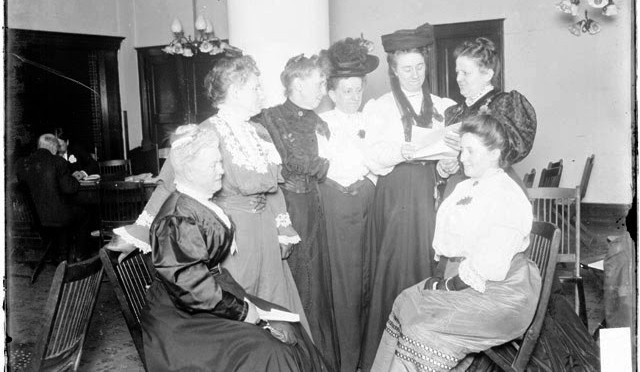
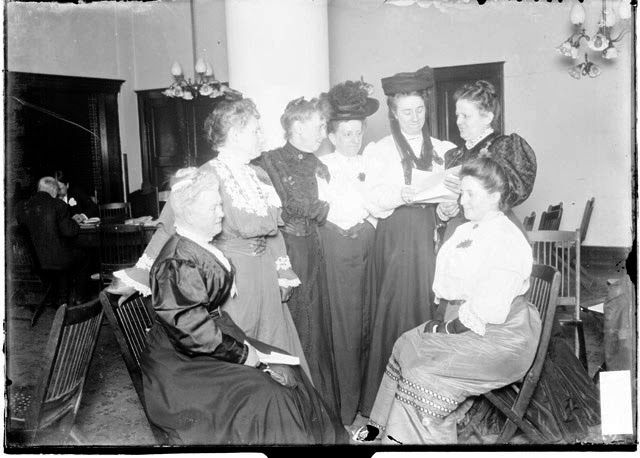
Above: Famed spiritualists gather in Chicago, 1906. The names weren’t listed, but perhaps Mme. La Viesta is pictured here? (Courtesy Chicago Daily News/Library of Congress) 

The Gilded Age brought us human beings of impossibly vast wealth.  It also brought us a mainstream appreciation of spiritualism, an exploration of  magic and the afterlife as a way of understanding a quickly changing world.

And sometimes it brought us both.   Frank W.Woolworth, builder of a retail empire and a legendary skyscraper, was a proponent of Egyptian occult practices, so much so that his mausoleum in Woodlawn Cemetery is an ode to the Egyptian theories of the afterlife.  The Chicago meat mogul Philip Armour was a rumored spiritualist.  The wives of robber barons frequently attended seances and psychic readings.  Few were immune to the lure of the spiritualism and the possibilities of otherworldly assistance in becoming rich.

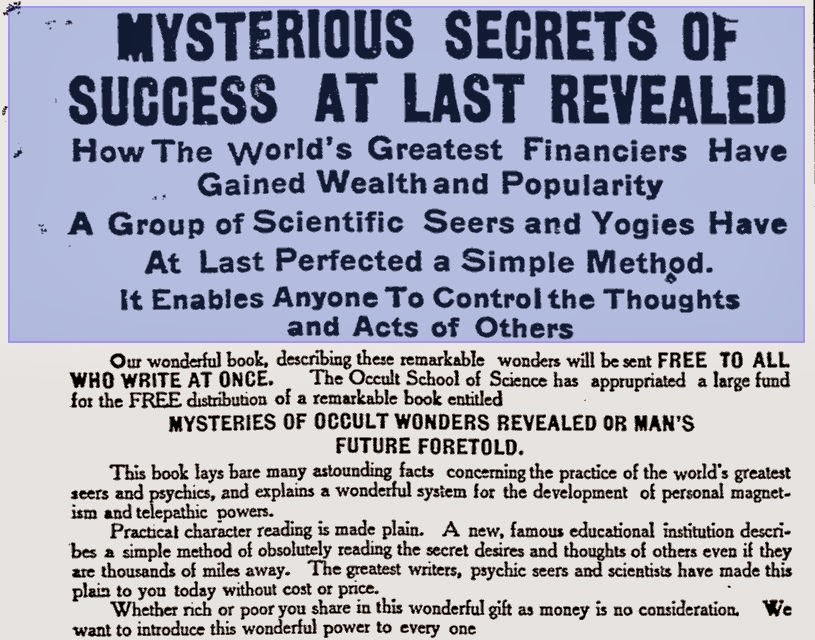
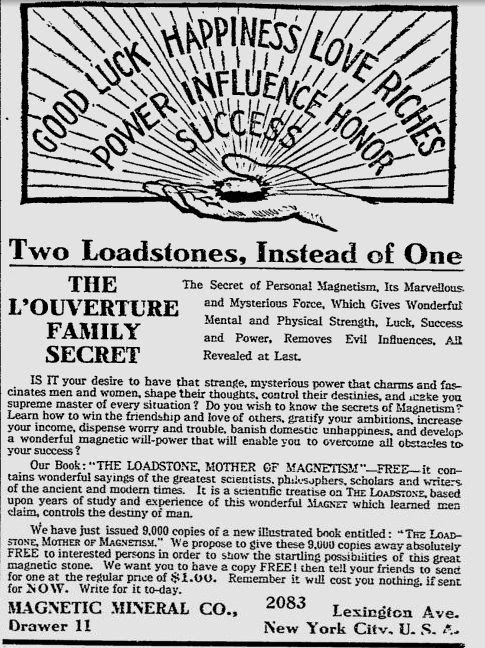
Do you want to be rich like Woolworth?  In 1913, the same year as the completion of the Woolworth Building, a series of curious advertisements ran in newspapers across the country:

The ad promoted a free book that revealed the secrets of a “great psychic force which learned men claim rules the destinies of man,” produced by the Occult School of Science, located at 2075 (or 2083) Lexington Avenue at 125th Street.**

At this unusual institution, a student could discover a gamut of psychic and magical practices in service of practical life, from finance to marriage.  Among its offerings included divination (“instructions for making a gold vibrator, for locating gold and silver ore”), fortune telling (course name: Methods of Successful Mediums) and the subconscious (“The Egyptian Interpretation of Dreams”).

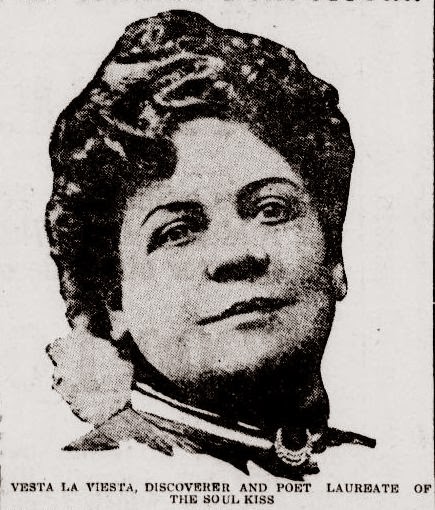
The writer of these curious lectures was none other than Madame Vesta La Viesta (at right), a well-known mystic and traveler of the galaxy.

La Viesta was well known to spiritualism enthusiasts, as well as to those who mocked them.  In 1904, at a place called the Cosmological Center, La Viesta described her recent visit to Mars and Venus via a projection of  her astral self.

Her descriptions predate John Gray’s famous book by decades.  Inhabitants of Venus “are associated most happily in soul mated couples, for they have a flexible astral or psychological tubing which invisibly connects their bodies.” [source]

In 1907, she revealed to the world the secret of the ‘soul kiss’, a rapturous and strangely indescribable form of love — taught to her on a recent astral voyage to Neptune — involving an aroused nervous system, cellular breathing and ‘wireless’ transmission of love from miles away.  She was so passionate about this shimmering new form of love that she wrote a song about it called “Description of a Soul Kiss.”

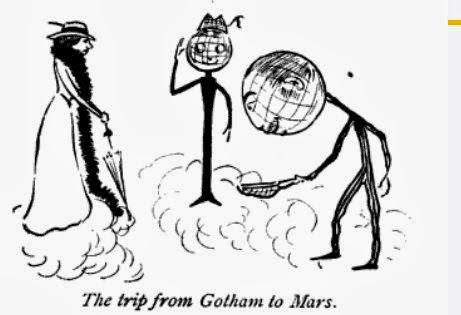
Below: Frank Leslie’s American Magazine mocked an earlier lecture La Viesta in this 1902 article:

She was known for unusual lectures given from her Upper West Side apartment where she resided over a room of both corporeal and astral students. (Meaning that it looked like a fairly uncrowded room.)  She suggested that both disease and finance were mere “states of mind” that could be controlled using vibrational or astral techniques.  It was possible to let life’s many inconveniences “evaporate into the nowhere and melt into the astral ethers.” [source]

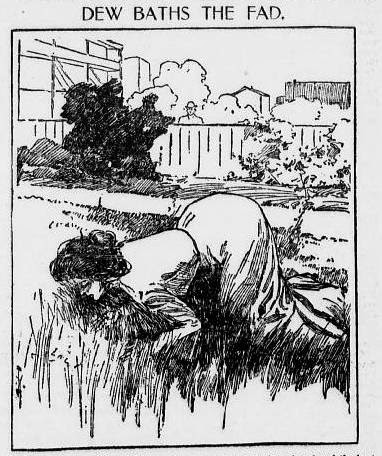
La Viesta was also a fan of the dew bath, involving women rubbing against morning grass which supposedly contained the secrets of age-defying beauty.

Said La Viesta:  “I have removed my clothing and have stood in the yard at the rear of my home in the darkness of the night and allowed the dew drops to collect over me until I was happy.” [You can read more on the curious dew-bath craze here.] At right: Illustration of a woman luxuriating in a dew bath, from 1902 NY Evening World

By 1912, at age 50, La Viesta became associated with the Occult School of Science, founded by Frederic Nugent.  Had she been clairvoyant, she might have known to stay away from Nugent, a notorious grifter.

Nugent, also known as Professor John D’Astro, seemed to approach spiritualism from a more cynical place; in short, he wanted to get rich himself.   Through his advertisements, he coerced people into ‘free’ spiritual guidance, then sent them catalogs full of useless and costly items.

The trickster specifically targeted poor people, placing hundreds of advertisements throughout the United States with trumped-up or falsified testimonials.  He also joined Madame La Viesta at the podium of the Occult School, offering courses of palmistry and phrenology that could cost up to $12.50 (or almost $300 today).

The Occult School wasn’t Nugent’s only scam.  He was apparently the mastermind behind at least six other mystical ruses, including the Iridescent Order of Iris, which purported to have over a thousand members, and a separate mail-order lodestone business, the Magnetic Mineral Company, which claimed to share the secrets of 18th century Haitian leader Toussaint Louverture.

Nugent’s lodestones granted good luck to their bearers, or so claimed his advertisements.  He bought the rocks from an unknown source at 12 cents a pound (today about $3), then re-sold the magic stones for up to $25 a pound (or about $570).

It was this scam that brought Nugent to the attention of U.S. Post Office inspectors who arrested him for using the mail system to defraud.  They seized “hundreds of pamphlets advertising Nugent’s schemes and thousands of testimonials.”  After spending a time in the Tombs, Nugent was indicted and sent to prison.

But whatever became of Vesta La Viesta, Nugent’s prized instructor?  Since that was not her real name (are you surprised?), it’s been difficult to track her later antics down.  It does appear she continued to share spiritual guidance, sometimes with people of some renown, such as the aviator Stanley Yale Beach.  In 1923, she wrote up her experiences in the book People Of Other Worlds.  Perhaps she finally left for the orbiting planets?

**They have several addresses listed, most of them on or around this intersection.  I also found 147 East 125th Street as a possible address.  Most likely, the mystics moved around!