Categories
Wartime New York

Governors Island: New York’s newly transformed monument (NPS 100)

This month America celebrates the 100th anniversary of the National Park Service, the organization which protects the great natural and historical treasures of the United States. There are a number of NPS locations in the five borough areas. Throughout the next few weeks, we will focus on a few of our favorites.   For more information, you can visit National Parks Centennial for a complete list of parks and monuments throughout the country.  For more blog posts in this series, click here.
The following also features an excerpt from the Bowery Boys Adventures In Old New York, now available for sale wherever books are sold and online at Amazon or Barnes and Noble.
IMG_0761
GOVERNORS ISLAND NATIONAL MONUMENT
NEW YORK HARBOR

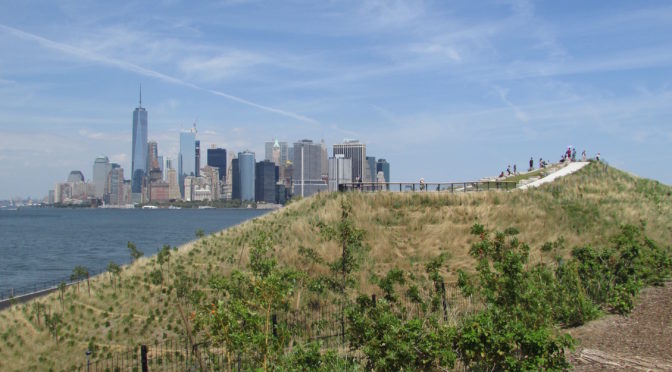
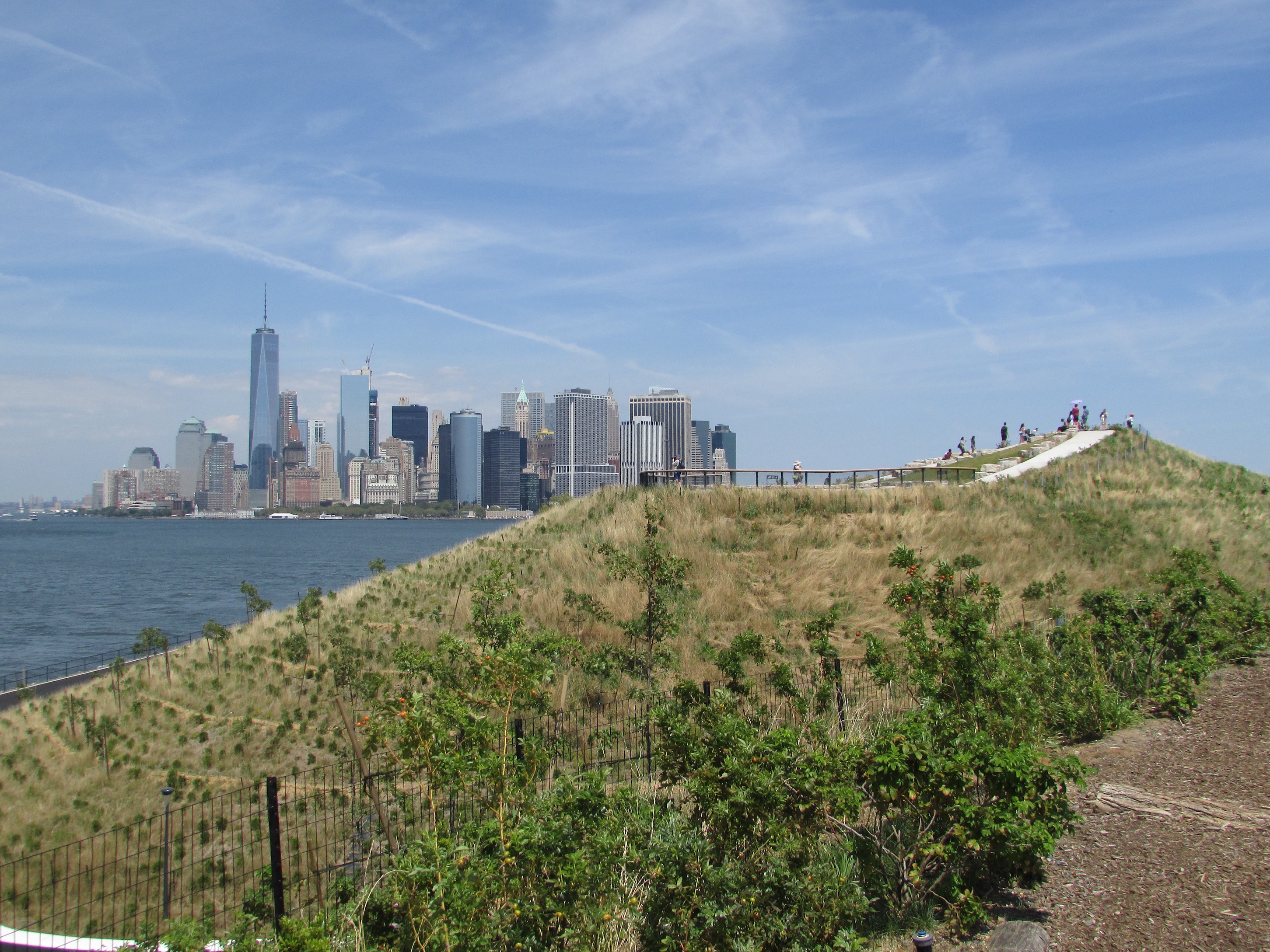
Governors Island has now inched a little closer to becoming an actual exotic island.

The cone-like southern portion, a landfill addition once populated with former U.S. Coast Guard buildings and an airstrip, has now sprouted fanciful hills of various shapes and sizes, providing extremely unique views of the surrounding harbor. The Hills feel both ancient and new, barren of trees but shaped like ancient landmasses which have conveniently emerged from the water, just in time for summer. Palm trees would not feel out of place.
IMG_0756

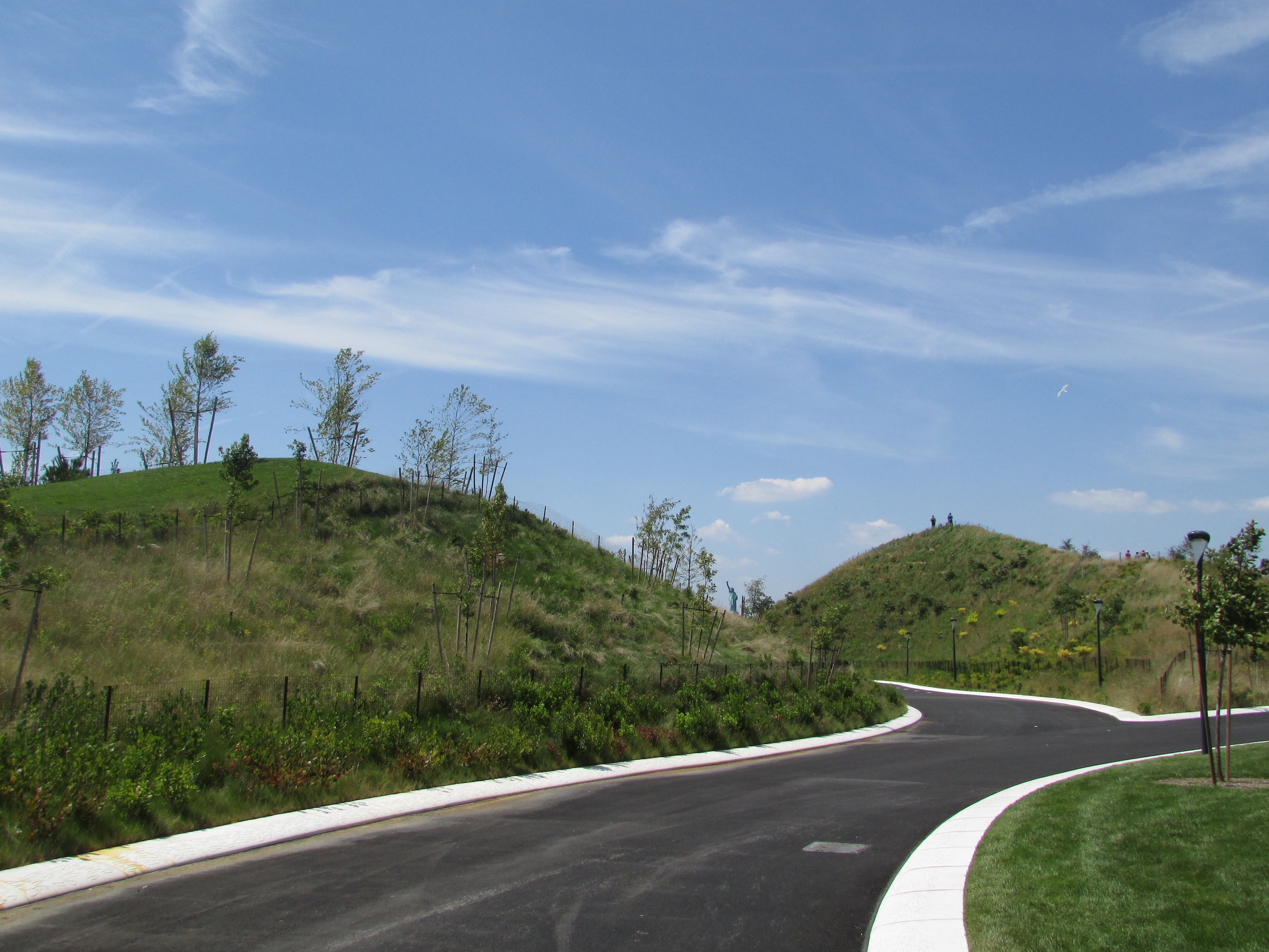
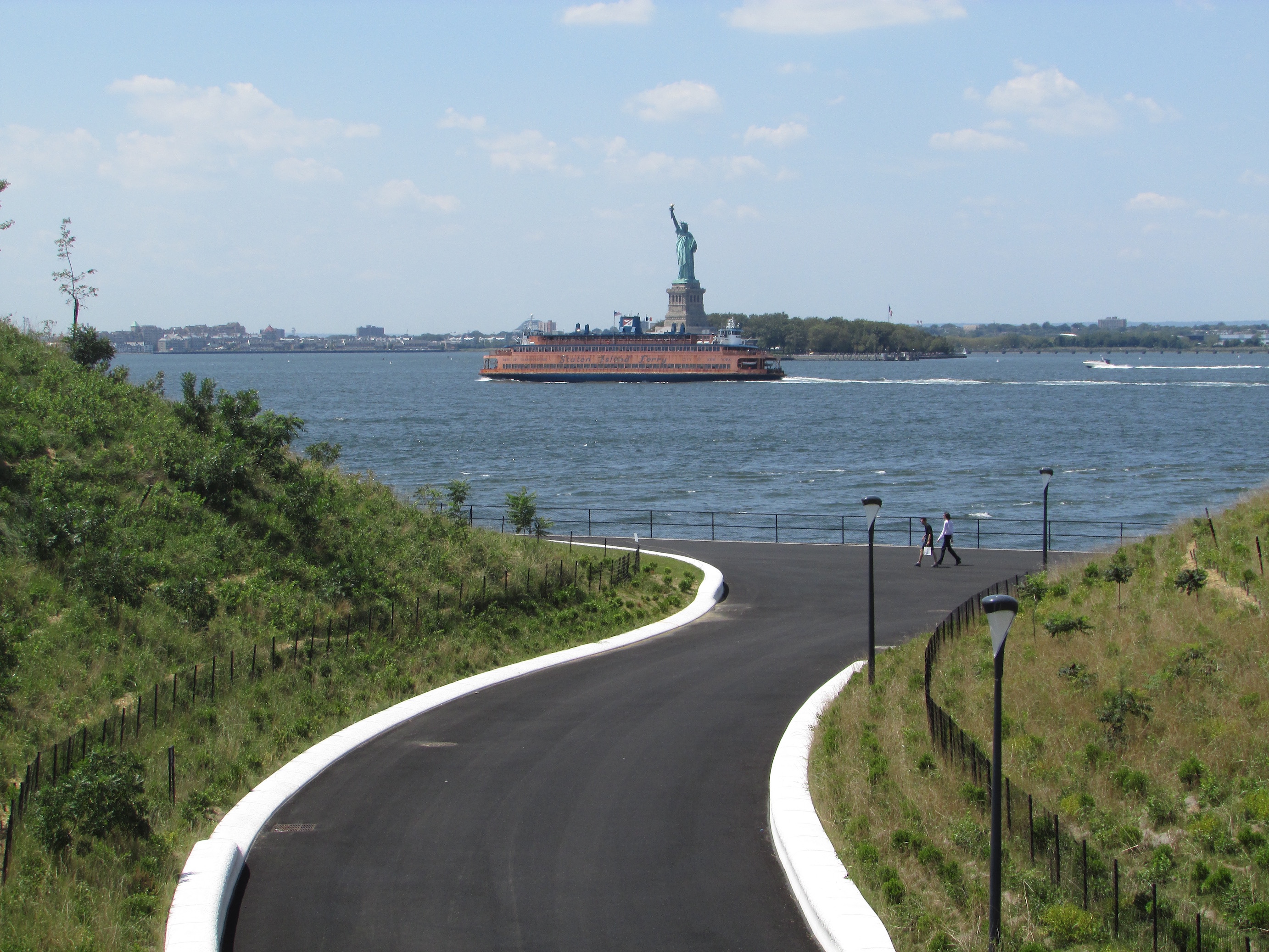
Graciously carved paths lead from the historic side of the island to these new topographical features, and along the way, you’ll be tempted to stop in the hammock grove or perhaps the urban farm with its tiny population of tiny goats.

The Hills are the latest addition to one of New York’s most secretive historical corners, a new diversion for an island blessed with so many unusual stories.
IMG_0758

Of the three small islands that sit in New York Harbor between Staten Island and Manhattan, two of them (Ellis Island and Liberty Island) have been embedded into the American consciousness as icons of freedom and opportunity. The third, Governors Island, is often overlooked by both visitors and residents.

However, for much of the city’s history, this ice-cream-cone shaped island, separated from Brooklyn by the richly named Buttermilk Channel, has been critically important to the nation’s defense. Fortunately, its most treasured historical landmarks are still around more than 200 years after they were constructed.

In 1624, when the Dutch brought the first settlers to the New World to establish what would become New Netherland, they deposited eight men on this small island, which they named Noten (Nut) Island. It was a convenient spot, just a short rowing distance from the future settlements of New Amsterdam and Breukelen. But it would be the British who would give it the name Governors Island after taking charge of the colony in 1664, as the royal governors of the New York colony would indeed live here.

Governors Island in 1824, the harbor’s military sentry even in times of peace.
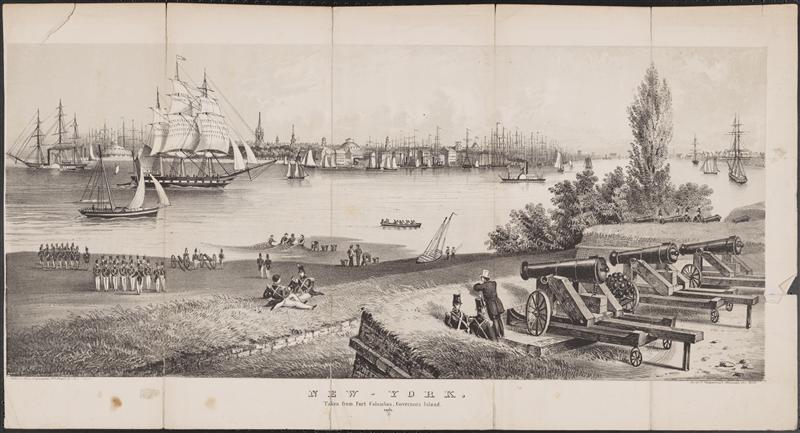
Courtesy Museum of City of New York

The island would be less hospitable to the British a century later, when in 1776 the Continental Army constructed earthen forts here to ward off British war vessels during the early years of the Revolutionary War. While its guns did scare off two British ships on July 12, 1776, the British succeeded in driving the Continental Army out of New York during the Battle of Long Island. They would occupy Governors Island—and all of New York—throughout the conflict.

In 1783, at the end of the war, the new Americans ushered the British out of the harbor with gusto. But fears of their return continued for decades afterward, presenting the young government
with the alarming thought of New York being recaptured.

A view of Castle Williams from the interior of the island.
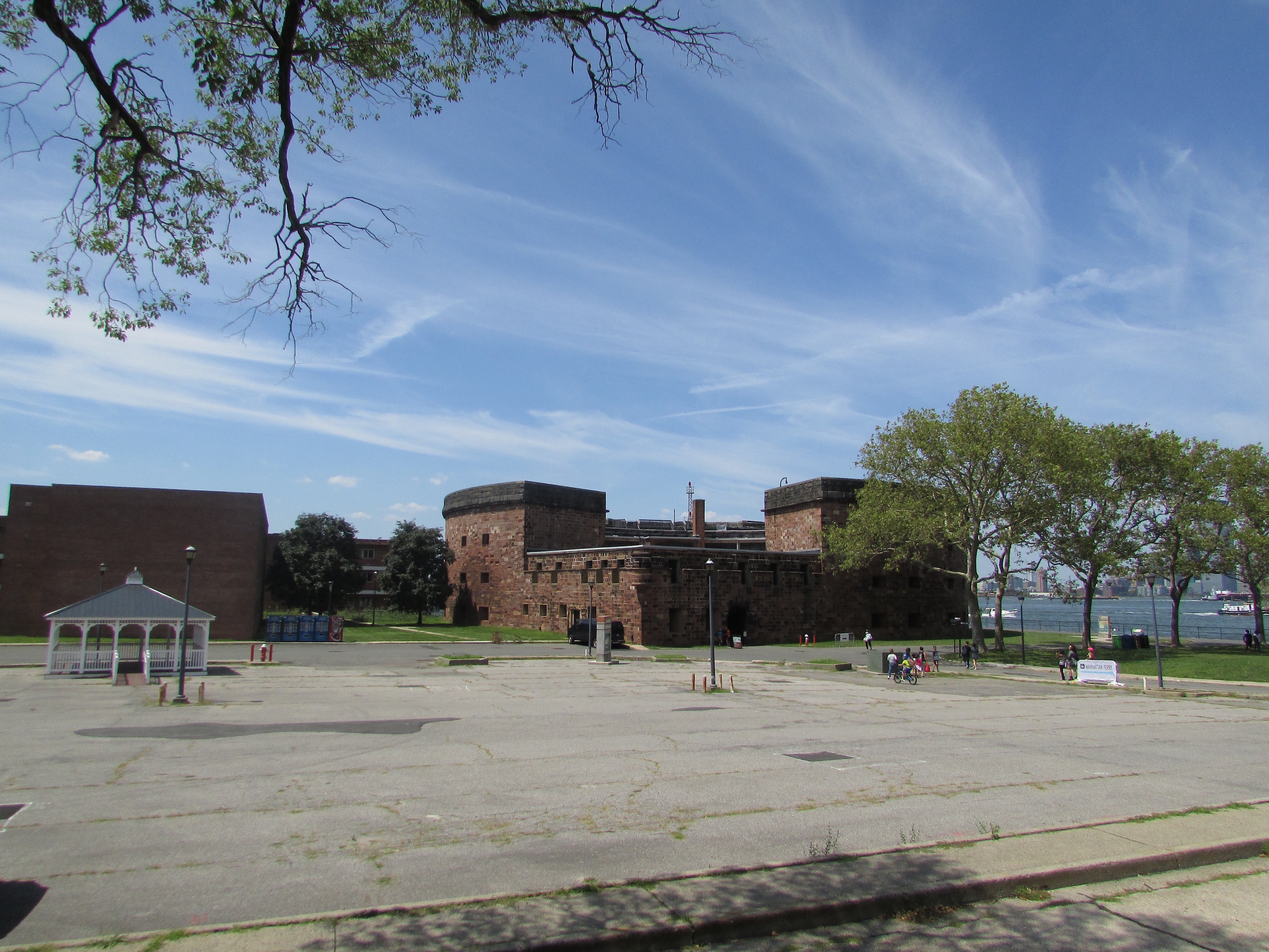
IMG_0744

And so, with tensions mounting in the run-up to the War of 1812, two very different fortresses were constructed here. Fort Jay, sitting on the site of the original Revolutionary War defense, was designed like a five-pointed star fort surrounded by a dry moat.

Castle Williams, sitting on the shoreline, was given an almost completely circular shape, punctured with openings for dozens of cannons. Both fortifications have survived and can be visited today, most likely because neither ever saw an actual battle.

Aware of the island’s strategic location for defending the nation’s most important city and harbor, the U.S. Army moved out to Governors Island in the 1830s, and would remain stationed there until 1965.

The shady lawn separating the officers homes from the administrative buildings.
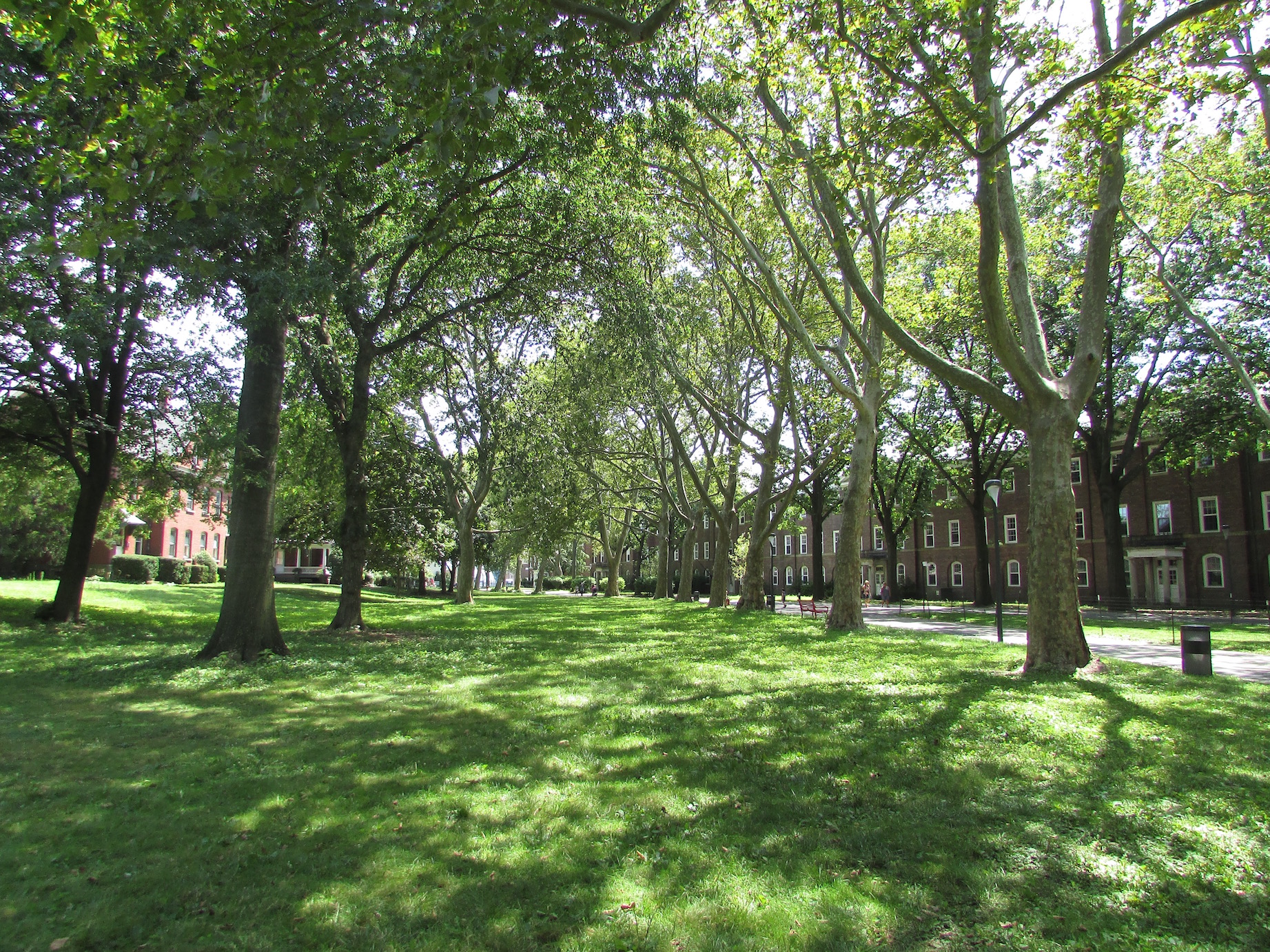
IMG_0755

During the Civil War, the forts were reworked into holding cells for Confederate soldiers, Union deserters, and criminals. Captured Confederate officers were held in relatively posh quarters at Fort Jay while regular soldiers were thrown into the much less comfortable prison at Castle Williams.

As Lower Manhattan developed skyward in the late nineteenth century, the close proximity of two military forts to the nation’s largest city was a bit, well, surreal. Meanwhile a sort of small-town life developed here on the island, and by the 1880s, rows of elegant Victorian brick houses were constructed for Army officers and their families. A genteel life among the cannons!

In the first years of the twentieth century, the island more than doubled in size —the “cone” was added to the ice-cream scoop—with landfill mostly taken from excavations of New York’s subway system, which opened in 1904.

Wright’s historic flight from Governors Island over the harbor to Manhattan.
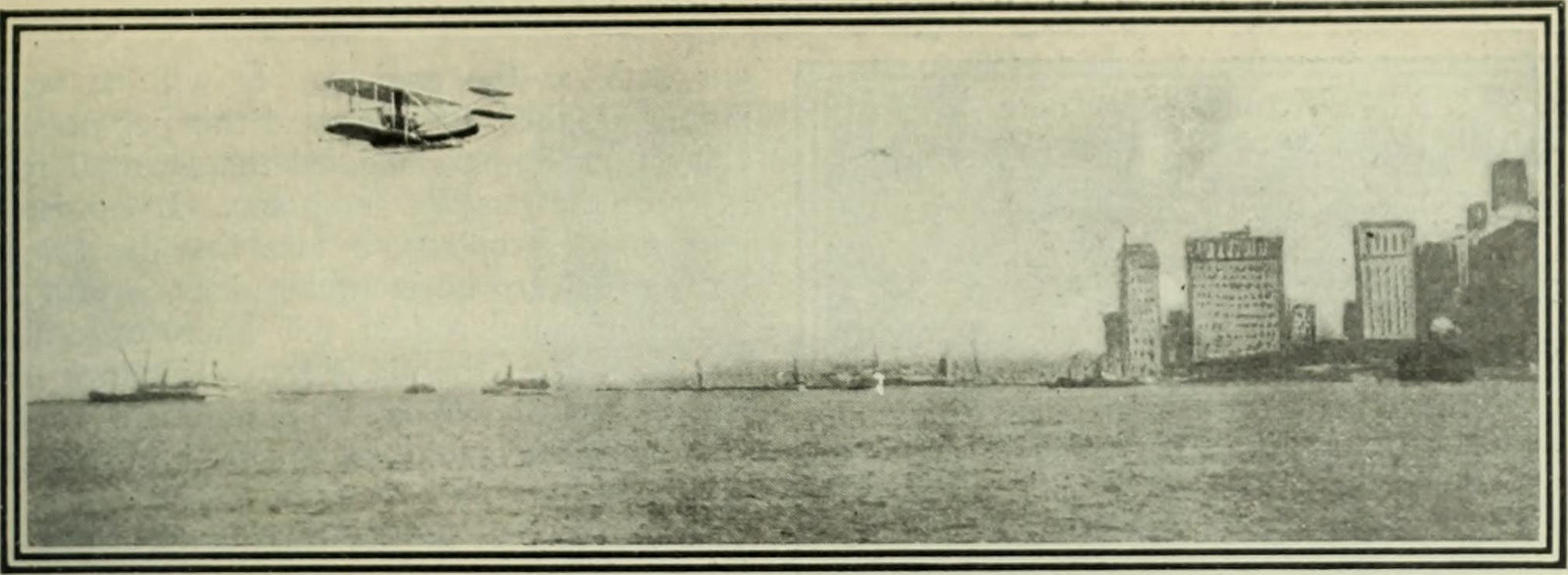
14597026607_42d37427e1_h
Internet Book Archive

This new flat expanse, located so close to lower Manhattan, was an ideal spot for the city’s first airstrip. In 1909 Wilbur Wright lifted off here in his flying machine, coasting around the Statue of Liberty and later up the West Side as far as Grant’s Tomb. It seemed like such a logical base for air transport that in the 1930s Mayor Fiorello La Guardia tried to build the city’s first permanent airport there.

The gigantic Building 400 (later renamed Liggett Hall) was the largest military building in the world when it was completed in 1930. The structure separates the original section of the island from its twentieth-century addition and lends the island something of a college campus feel. You can easily imagine how charming it must have been in the 1940s—there’s even a playhouse where Irving Berlin debuted a revue in 1942 called This Is the Army. Of course, charming revues couldn’t mask a more harrowing reality: The island’s residents were fully engaged in fighting World War II.

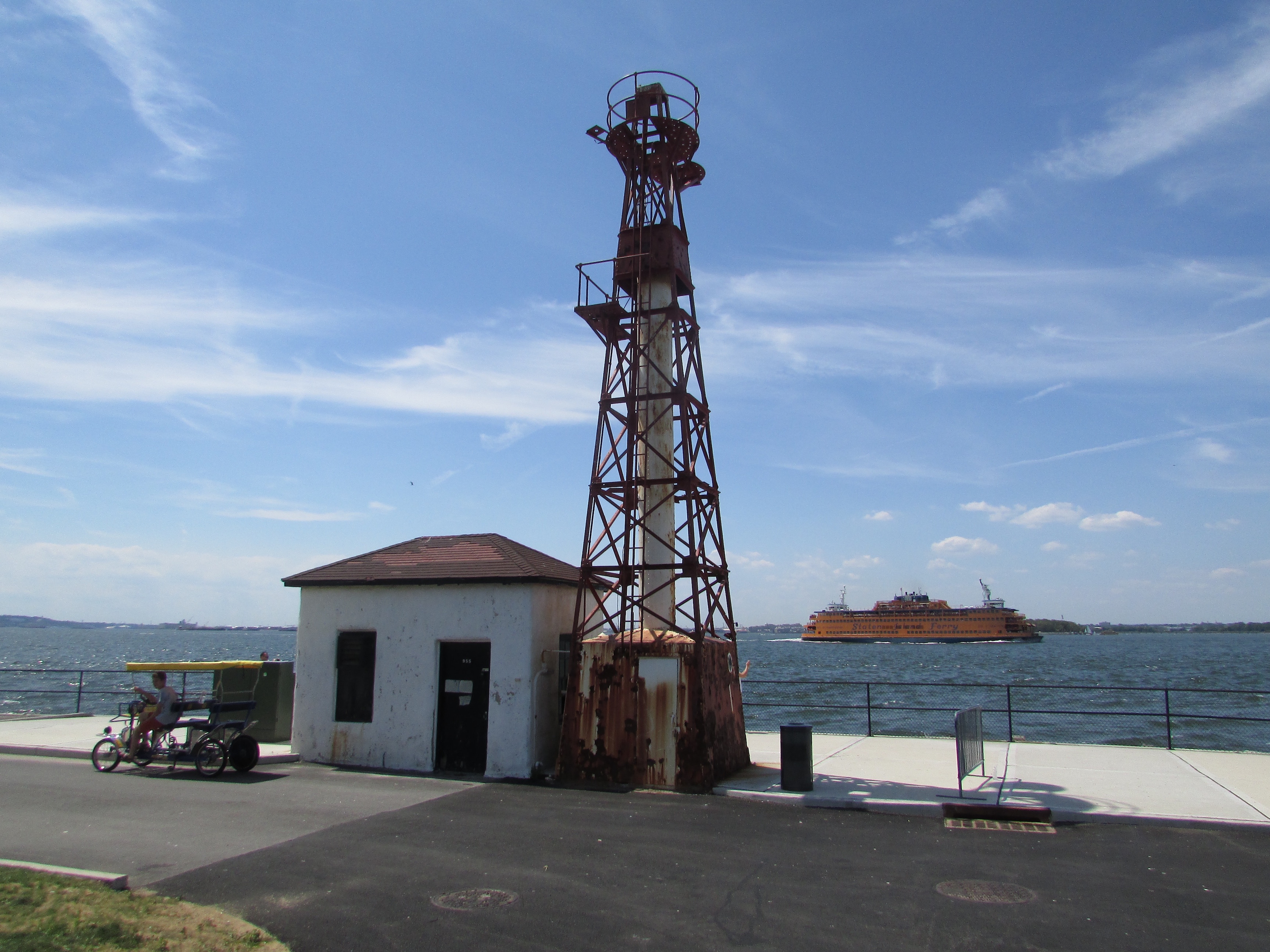
The ‘new’ section of Governors Island does feature a few artifacts from the past.
IMG_0765

In 1966, the island changed administrative hands, as the Coast Guard moved in and increased the population by nearly 4,000 people. The leafy lanes became ever more bucolic, as small-town amenities were added, including a bowling alley and a supermarket.  By 1996, the Coast Guard had departed for roomier shores, leaving the island desolate.

Governors Island had been the property of the federal government since the early nineteenth century. When in 2008 the island was sold to New York City, many wondered what could possibly become of the now-abandoned settlement. That same year the island opened its shores on weekends to visitors—they were free to explore, often with great astonishment, some of the empty structures, as if they were wandering ancient ruins.

Today, after more than a decade of thoughtful preservation and promotion, thousands of New Yorkers enjoy the island during the summer, visiting the officers’ homes (now home to arts and music groups), newly landscaped parks (in the landfilled “cone” section), and weekend arts and food festivals.

And after all this time, Fort Jay and Castle Williams, now maintained by the National Park Service, still stand watch over the harbor. Oh, the things they’ve seen.

WANT MORE INFORMATION? Visit the NPS Governors Island National Monument site for more information, as well as the Governors Island Alliance.

LISTEN TO OUR PODCAST! We have an entire show on the history of Governors Island. It’s Episode #185. You can find it on iTunes or download it from here.
Categories
Landmarks

African Burial Ground: New York’s unforgettable monument (NPS 100)

This month America celebrates the 100th anniversary of the National Park Service, the organization which protects the great natural and historical treasures of the United States. There are a number of NPS locations in the five borough areas. Throughout the next few weeks, we will focus on a few of our favorites.   For more information, you can visit National Parks Centennial for a complete list of parks and monuments throughout the country.  For more blog posts in this series, click here.
The following also features an excerpt from the Bowery Boys Adventures In Old New York, now available for sale wherever books are sold and online at Amazon or Barnes and Noble.


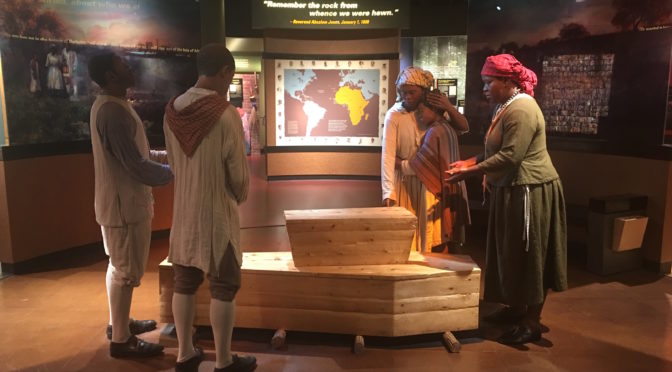
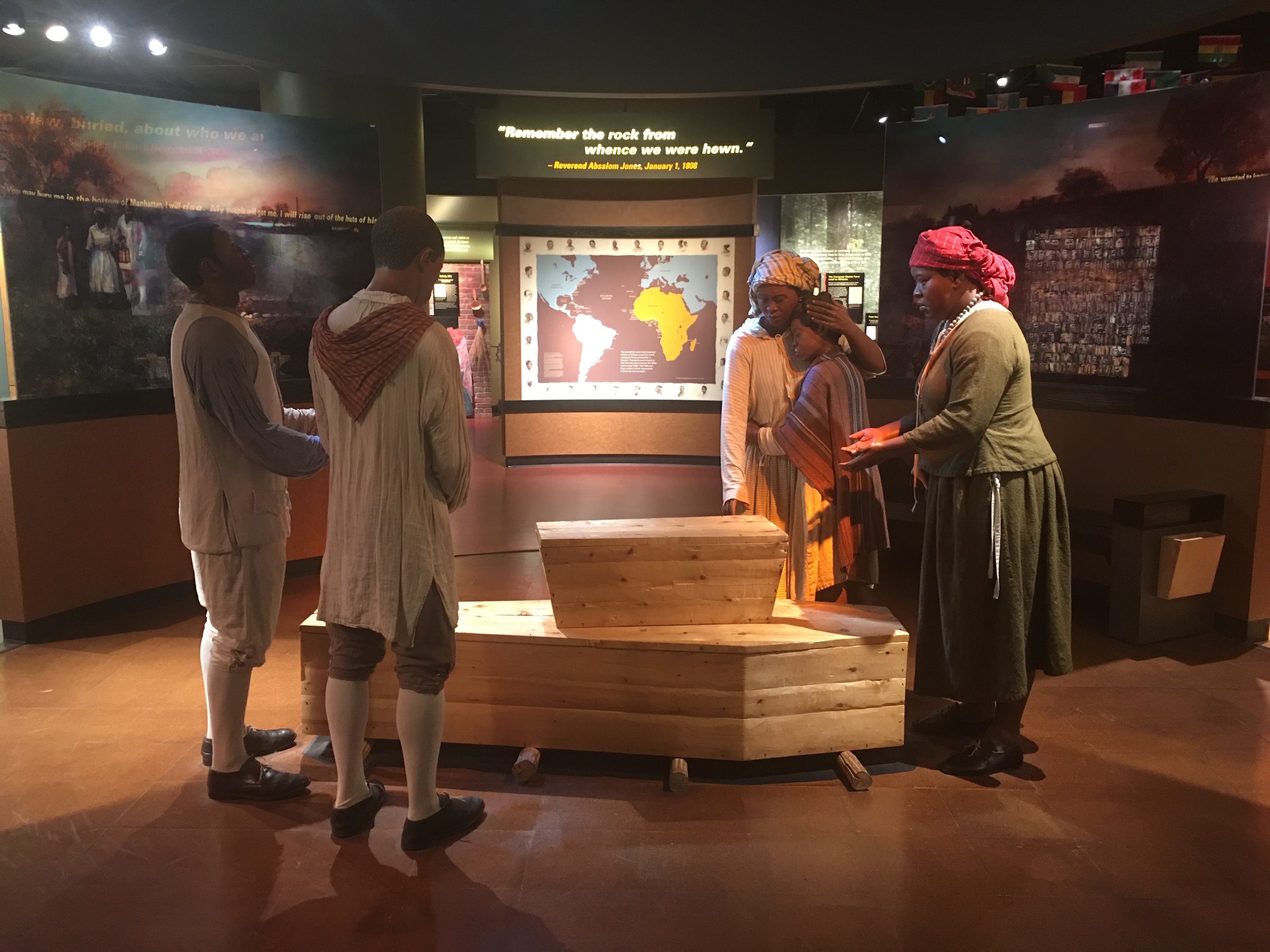
A vivid display inside the visitor center at 290 Broadway.

IMG_9966
AFRICAN BURIAL GROUND NATIONAL MONUMENT
DUANE STREET, CIVIC CENTER, MANHATTAN


The African Burial Ground, tucked right into the heart of Lower Manhattan, two blocks north of City Hall, represents one of the greatest archaeological finds and saddest stories in New York’s history. The somber monument, opened in 2007, gives long overdue respect and honor to the remains buried here of New York’s first African and West Indian communities.

 Contrast this with lower Manhattan’s other two burial grounds — at Trinity Church and St. Paul’s Chapel —with their carefully preserved marble tombstones and prestigious roster of permanent residents. Whereas Trinity’s cemetery has a fence to preserve the peace, this burial ground has no such border to keep the city at bay.

Photo 6.1

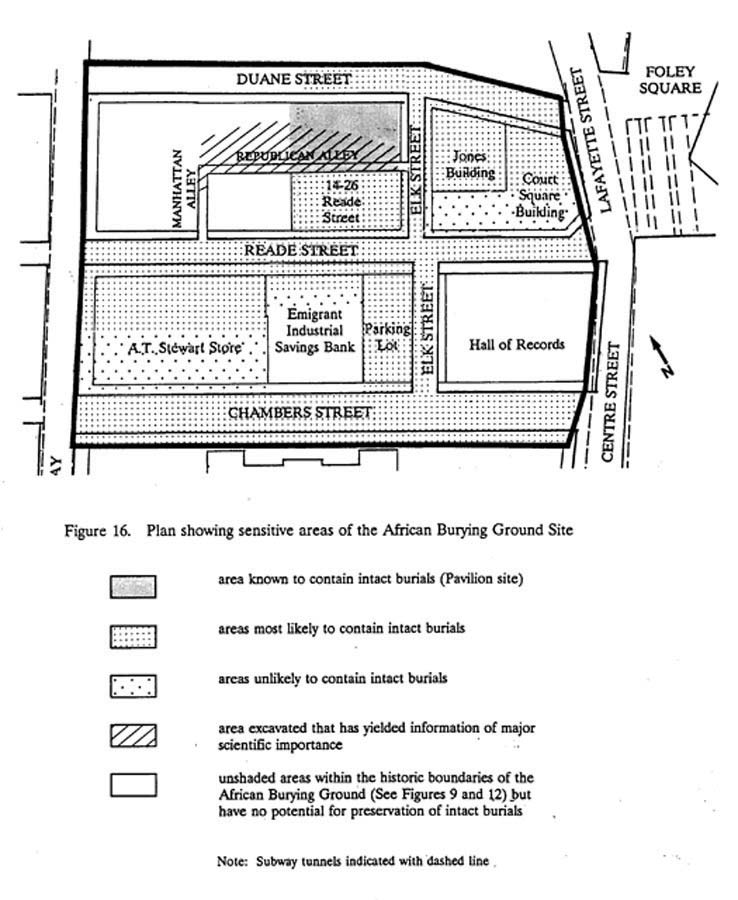
In fact, the African Burial Ground is far larger than the site of today’s monument. Its true size is unknown, although it is believed to cover about seven acres, stretching out under many of the surrounding buildings, including those in Foley Square and along Chambers Street.

The burial ground dates back to the seventeenth century, when New Amsterdam was a company town for the thriving Dutch West India Company, and the town’s early settlers were primarily traders, not builders or town planners. In their eyes, they didn’t sail all the way across the Atlantic from Holland to do menial work.

And so in 1626, to stimulate and facilitate the colony’s growth, the Dutch imported the New World’s first African slaves, a group of eleven people. Early records show that they were assigned names associated with their homelands or original captors: Antony Congo, Dorothe Angola, Jan Negro. Slave labor would be used to build many of New Amsterdam’s major structures, including the large wall that lined the northern edge of town.

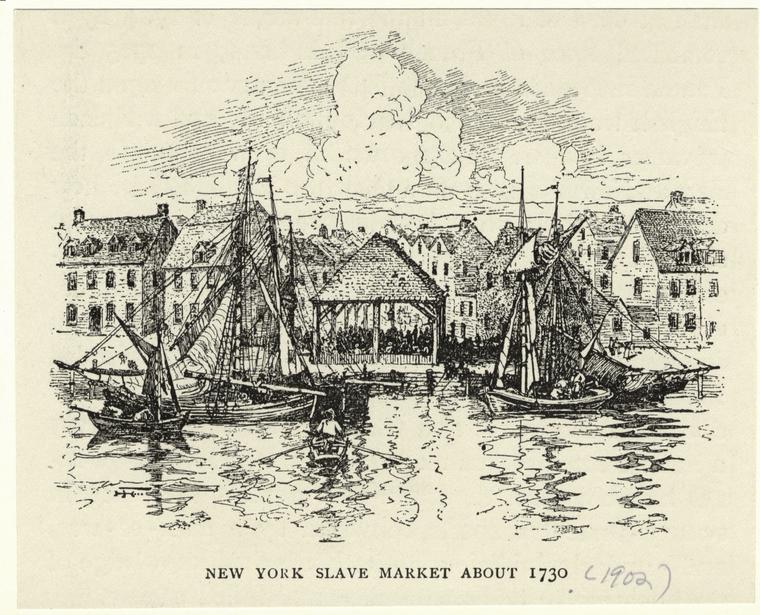
One of the most notorious landmarks of the slave trade sat at the corner of Wall and Water Streets (once the shoreline, back in British New York). The Meal Market was established in 1711 not only for the buying and selling of raw products like grains, but also for the purchase and leasing of “negroes and Indian slaves.”

Courtesy New York Public Library

It’s interesting to note that under the Dutch, enslaved men and women could earn their freedom and eventually own property. But those who did gain independence were not permitted to reside within the city’s walls. Instead, they were forced out beyond the borders to settle in the “free Negro lots” found around the southern edge of Collect Pond.

Things got worse for the colony’s slave population in 1664, when the British took control and renamed the colony New York.

They brought with them their own stricter slavery traditions and stripped away those meager legal protections that had been afforded by the Dutch. New York was not a plantation town; many families owned one or two slaves and they were usually kept in or near their homes. By the 1740s thousands of enslaved men and women from Africa and the Caribbean lived in New York, more than one-fifth of the city’s population.

The visitor center serves as a museum about slavery and an exhibit to the early black experience in New York

IMG_9971

While a diverse number of religions were practiced under English rule, most black New Yorkers eventually converted to the Anglican Church. But Trinity Church did not allow the remains of black people, slave or free, to be buried in its churchyard. And so this population was forced outside the city walls again, this time claiming some land south of Collect Pond as their own private burial ground.

In their burial ceremonies and mourning practices, the city’s African and Caribbean residents were able to display their original religious beliefs, and could come here and bury friends and loved ones according to traditional burial customs.

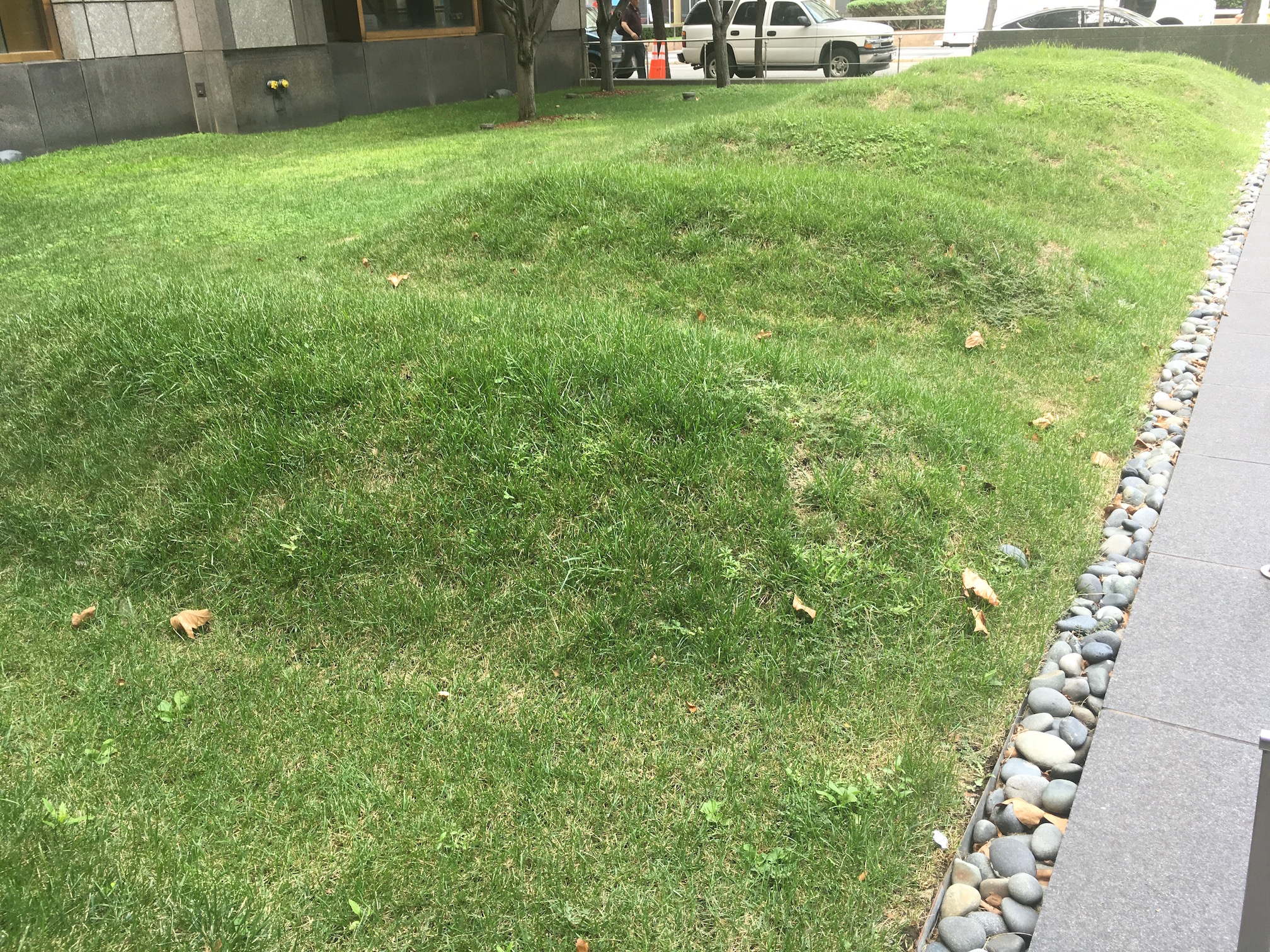
The remains of 419 individuals are contained in mounds outside next to the monument.

IMG_9977

In the early years, at dusk, New Yorkers would hear the foreign-sounding music, drum beats, and the sounds of exotic ceremonies drifting down from the burial yard.

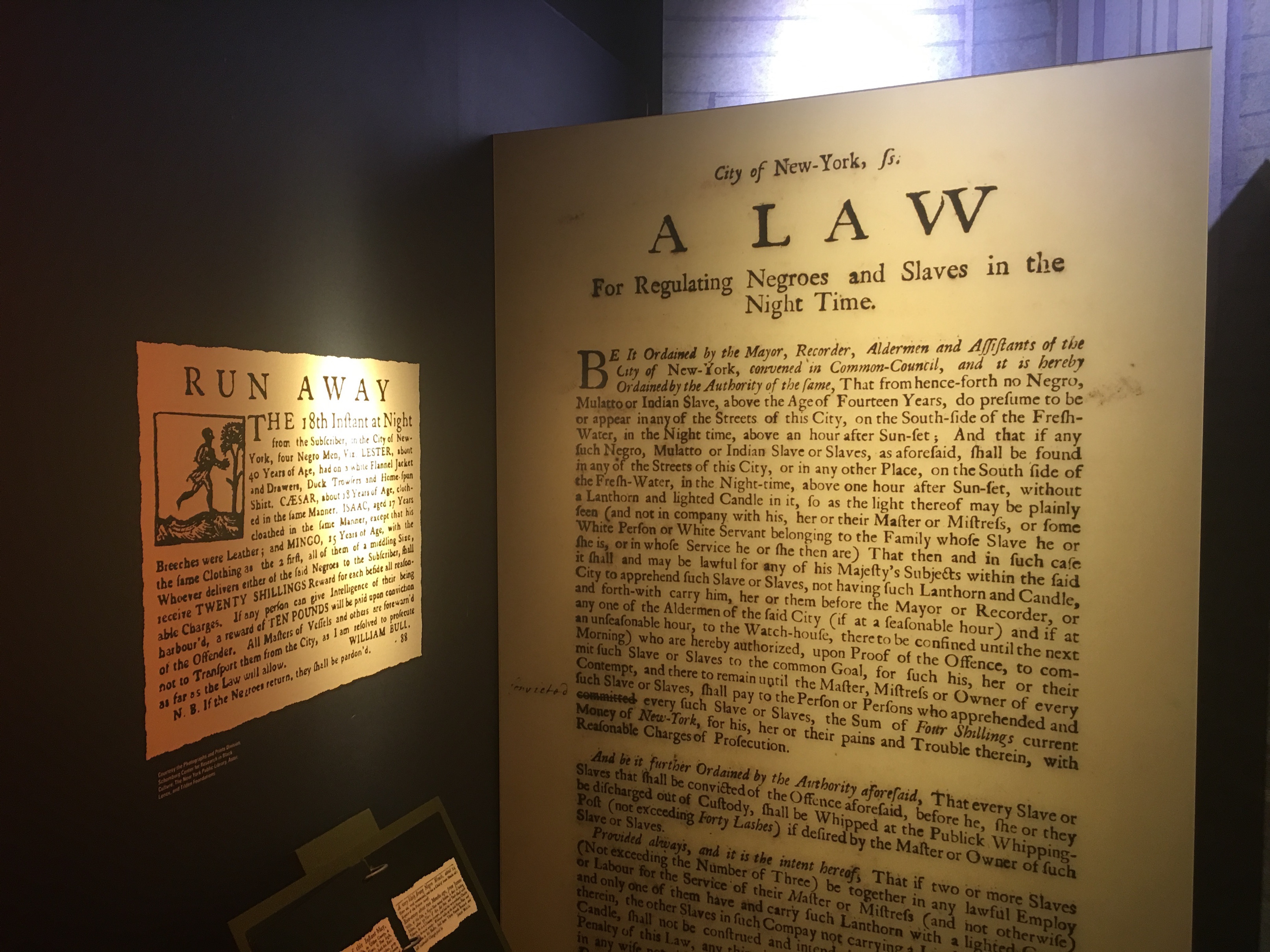
Well, that was simply too frightening for some white New Yorkers, and so, starting in 1722, it became illegal for blacks to congregate at night, and a 1731 law prohibited more than twelve people from gathering during the day at the burial ground. These draconian laws against black New Yorkers were instigated due to the events of April 1712, when a group of slaves conspired to burn the city. Twenty-one enslaved and freedmen were put to death in retaliation.

While these laws put a damper on many religious ceremonies, it was still possible to show some freedom of expression in the burials themselves. The dead were buried in wooden boxes, most facing east, as was customary for some African religions, and trinkets of religious or personal value (cowrie shells, pipes, buttons, and pieces of coral and crystal) were placed inside the coffins with the deceased.

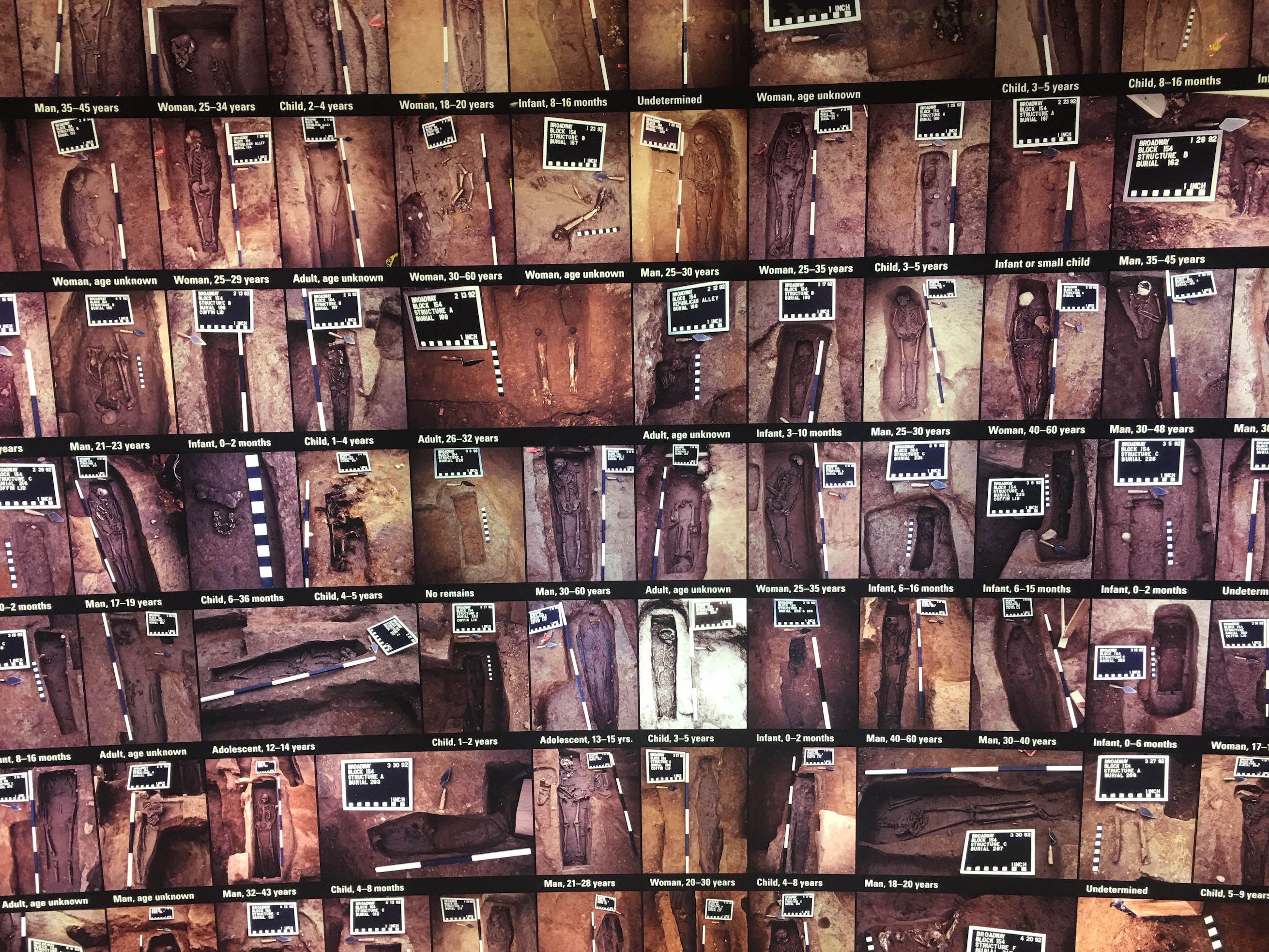
Images of the remains found on the site of the very building you’re standing in are displayed inside the visitors center.

IMG_9969

With the departure of the British in 1783 and the beginning of the city’s great march northward, this land quickly became much more valuable. By the early 1810s, Collect Pond and its now-spoiled natural surroundings were simply filled in, the marshes drained, the hills leveled.

The graves of many of New York’s early slave and free black population, the resting place of approximately 15,000 bodies here, were covered over in landfill, in some places 16 to 25 feet deep.

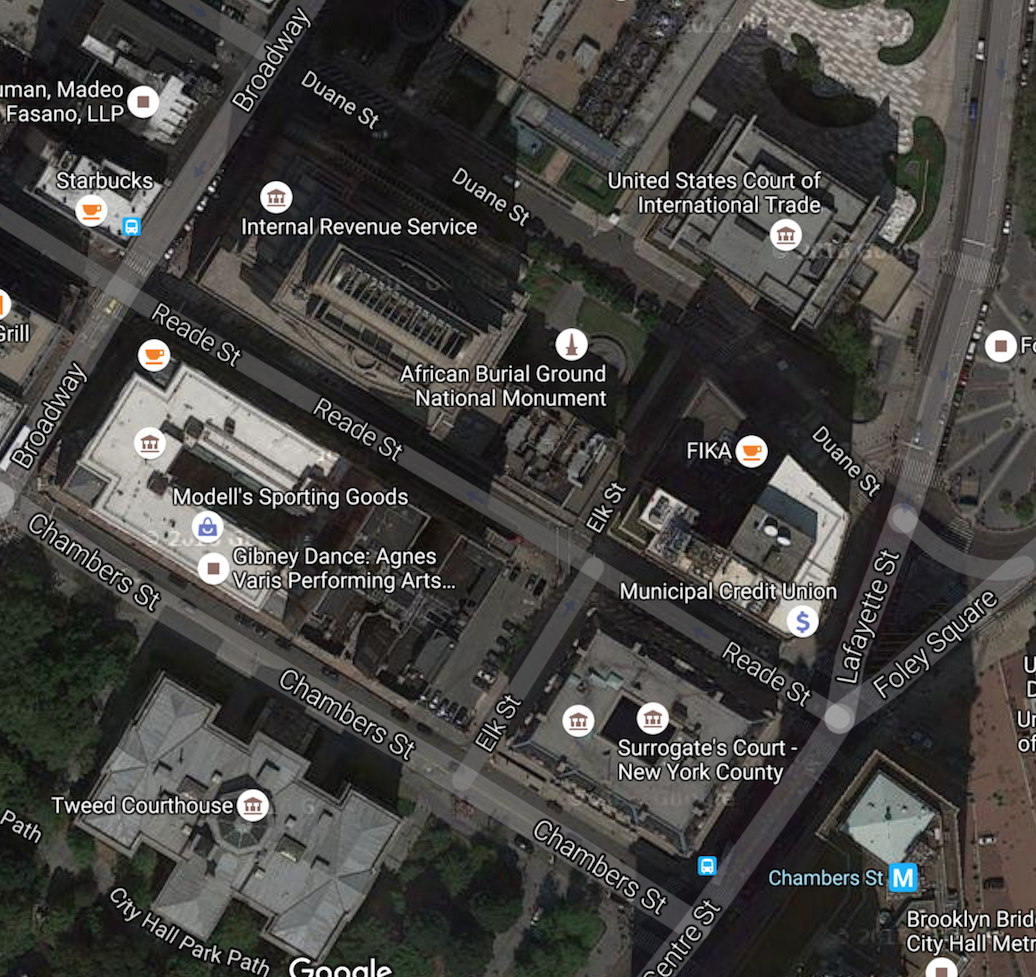
Map of the site and the projected location of other burials. Below is a current Google Map satellite view of the site:

Courtesy National Park Service

Screen Shot 2016-08-29 at 9.55.44 PM

The early structures built atop the burial ground were not very tall, none more than a few stories high. As a result, the depths of their foundations were no deeper than 20 feet or so. In some places, the burial ground lay below the newly erected buildings, completely preserved by the landfill that had been hastily thrown over it.

Flash forward—way forward—to 1991, when New York City was home to hundreds of skyscrapers, but unbelievably this small seven-acre area still only held structures of modest height. When work began on a nearby government building at 290 Broadway, excavators happened upon the first evidence of human remains. Throughout the next year, excavations would uncover a total of 419 bodies, along with a wide assortment of artifacts.

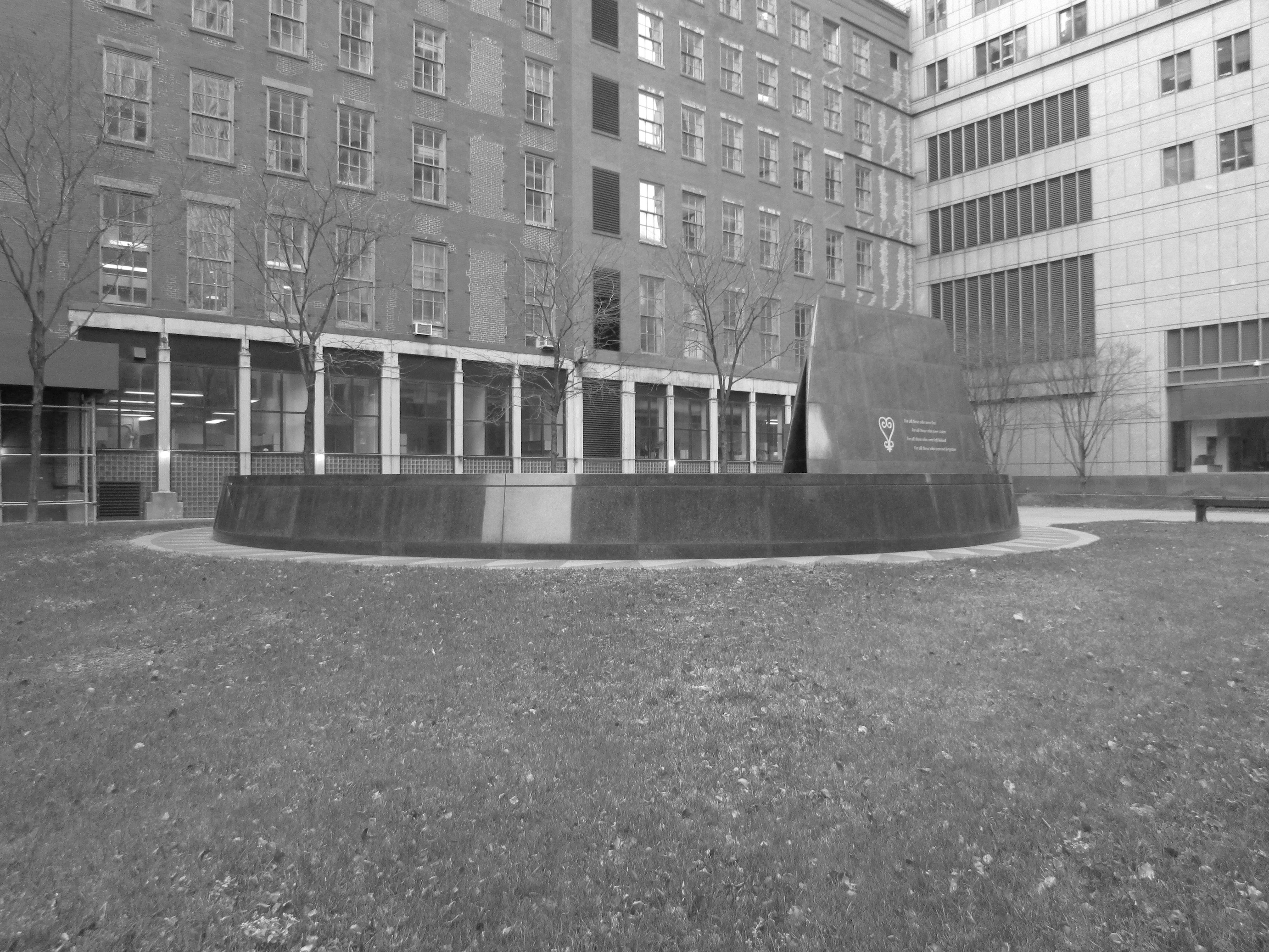
The monument to this discovery, completed in 2007 and operated by the National Park Service, returns a bit of grace and reverence to this site, and focuses on the spiritual beliefs of those who were interred here centuries ago. Immediately to your right is a set of seven evenly and elevated spaced beds of grass, where the bodies of the 419 have once again been buried, collected in hand-carved wooden sarcophagi.

The following words are inscribed upon the monument (Duane Street, between Broadway and Lafayette Street. Visitors’ center at 290 Broadway):

For all those who were lost
For all those who were stolen
For all those who were left behind
For all those who are not forgotten

WANT MORE INFORMATION? Visit the NPS African Burial Ground National Monument site for more information.

LISTEN TO OUR PODCAST! We have an entire show on the African Burial Ground. It’s Episode #115. You can find it on iTunes or download it from here.
Categories
Landmarks

Stonewall Inn: The story of New York’s newest National Monument (NPS 100)

This month America celebrates the 100th anniversary of the National Park Service, the organization which protects the great natural and historical treasures of the United States. There are a number of NPS locations in the five borough areas. Throughout the next few weeks, we will focus on a few of our favorites.
For more information, you can visit National Parks Centennial for a complete list of parks and monuments throughout the country. For more blog posts in this series, click here.

And listen to our podcast on this subject here:

IMG_9918
STONEWALL NATIONAL MONUMENT
CHRISTOPHER STREET, WEST VILLAGE, MANHATTAN

On June 24, 2016, President Obama — who had conjured the name of Stonewall Inn in his 2013 inaugural speech — designated the location of the 1969 Stonewall Riots as a National Monument, to be overseen by the National Park Service.

Twelve days earlier, a gunman walked into a gay nightclub in Orlando, Florida, and killed 49 people. It was the deadliest terrorist attack since September 11, 2001, and certainly the greatest single attack upon the American LGBT community in history.

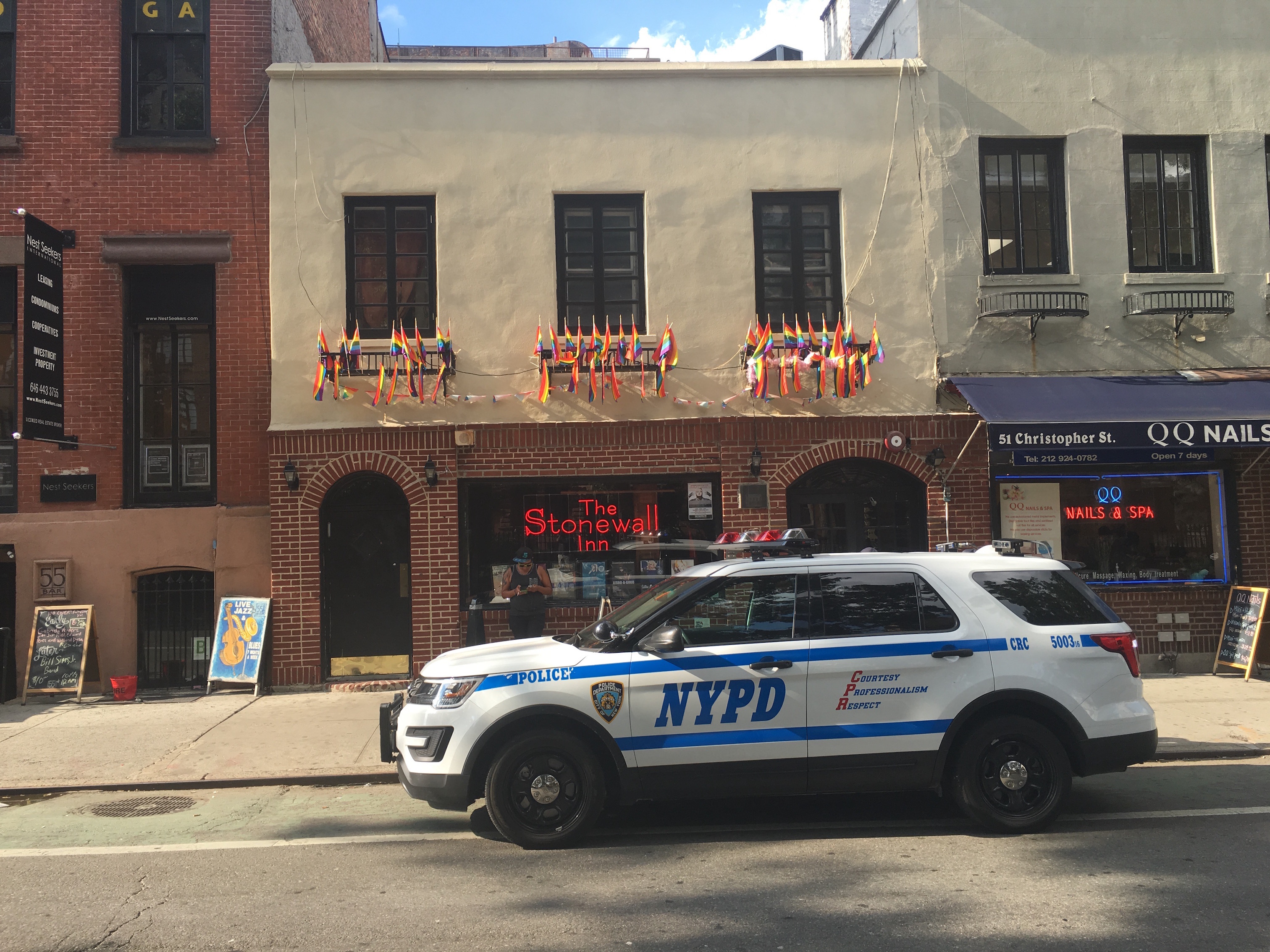
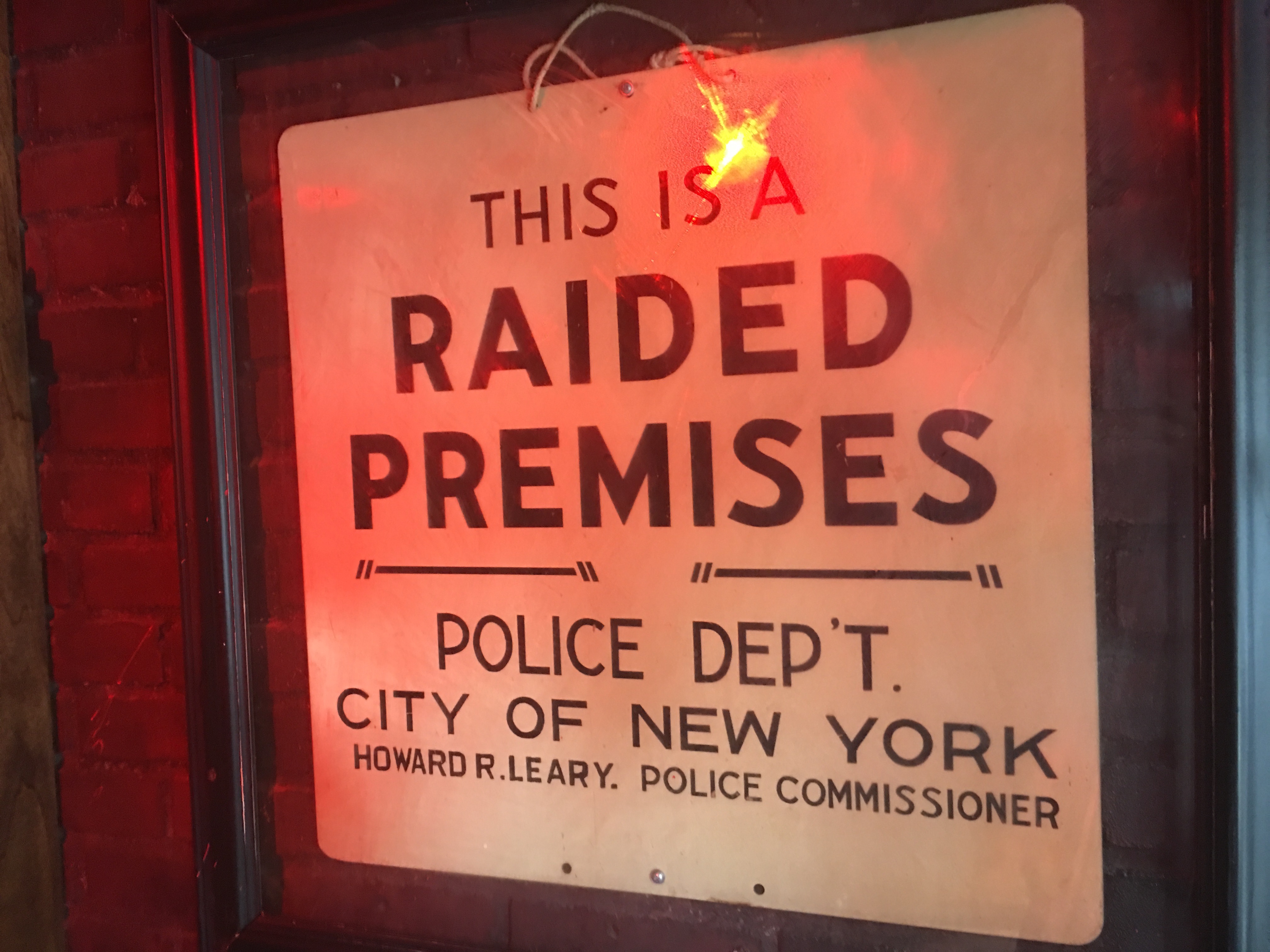
For days after, a makeshift memorial to the Orlando victims sat in front of Stonewall Inn. Even today, as you enter the building, a list of their names greets you upon the wall, next to an older sign that states ‘THIS IS A RAIDED PREMISES’, a vestige of a time when gay bars were diminished, not decorated.

IMG_9923

Thus is the power of Stonewall’s symbolism, the dignity and community represented in the air around this stumpy, architecturally unspectacular structure.

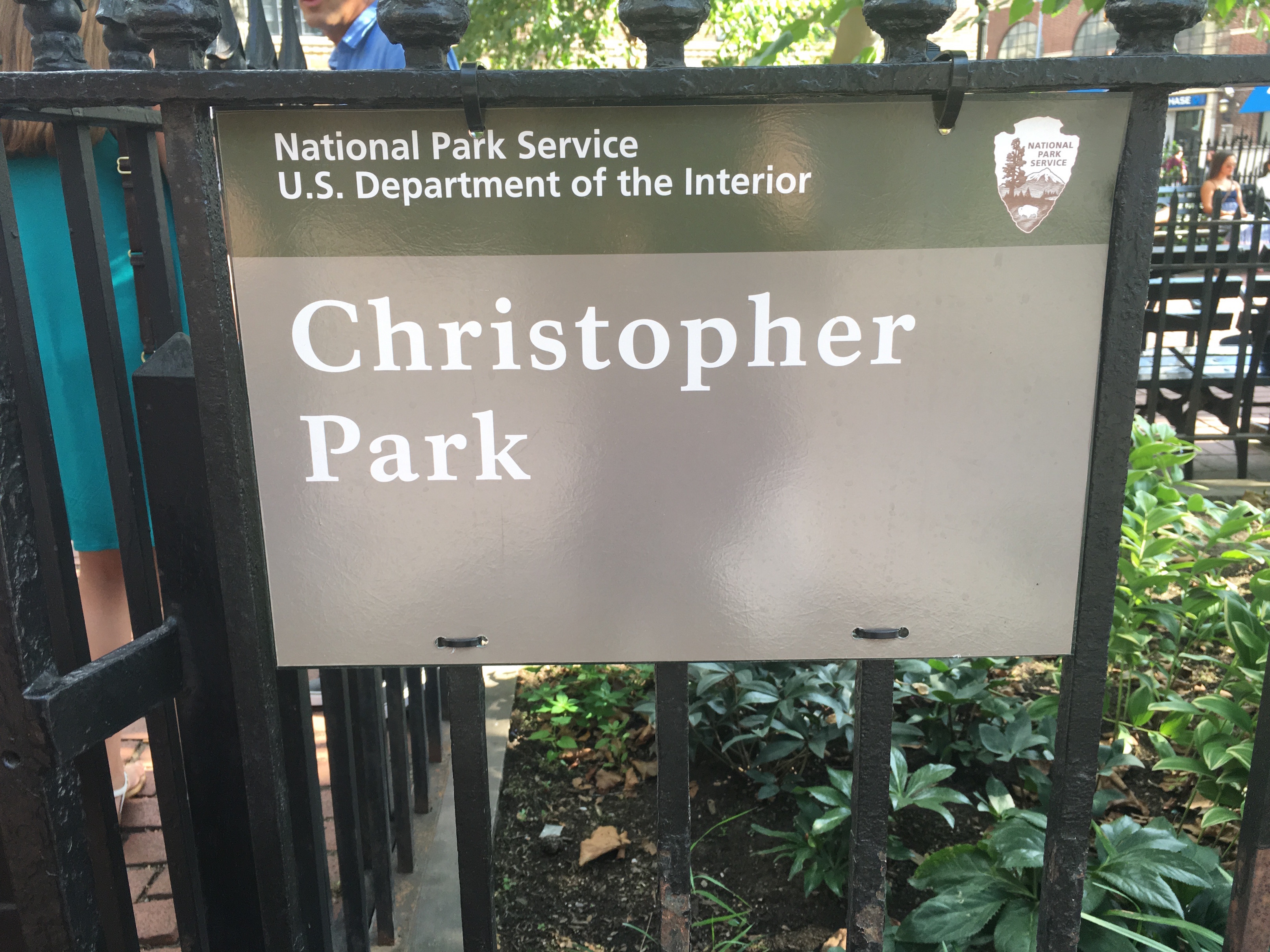
Recognizing the enigmatic atmosphere of this place, Stonewall National Monument is actually the building proper and the portion of Christopher Street which sits in front of it, as well as the entirety of triangular Christopher Park.

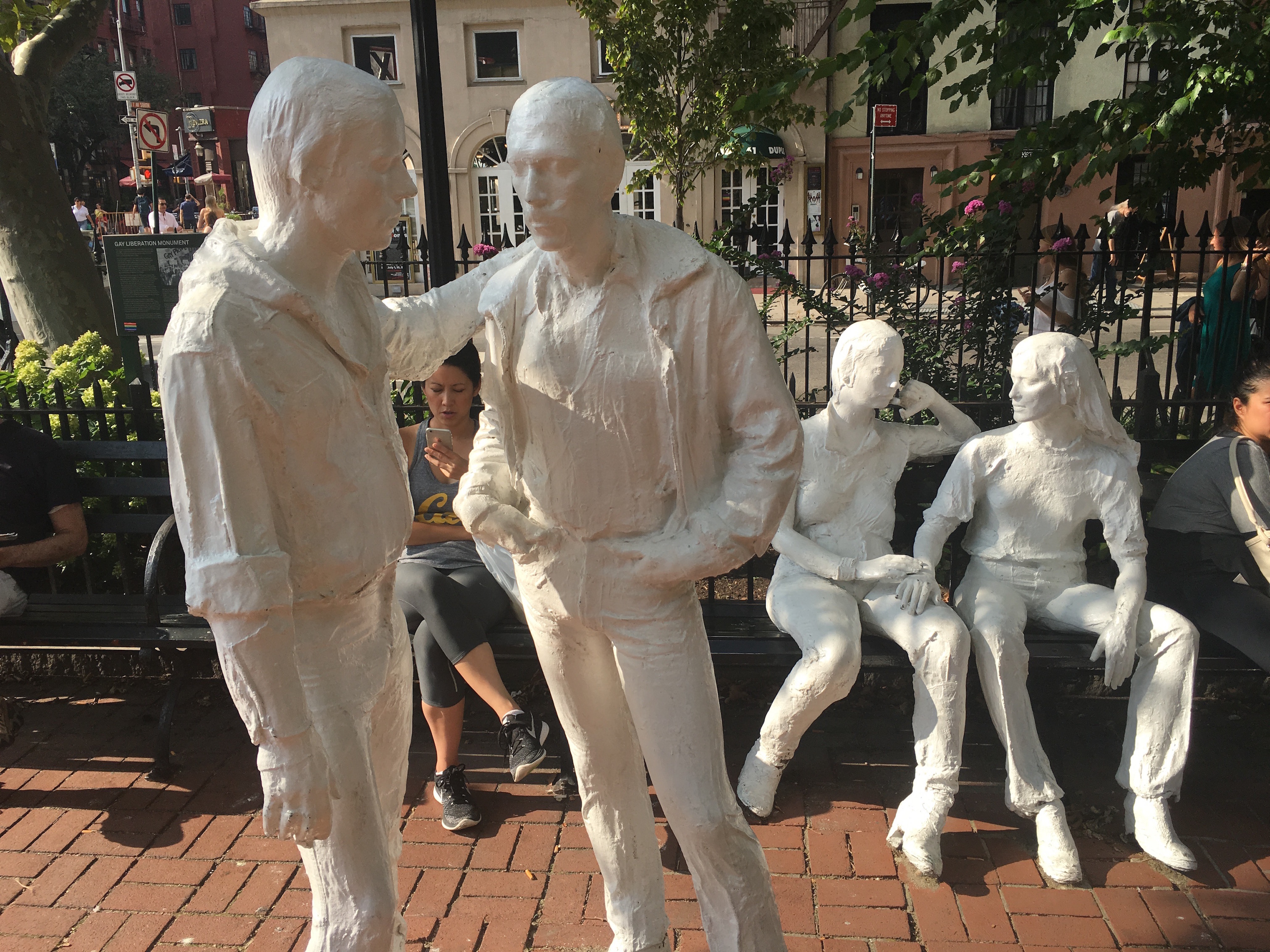
This includes one very relevant piece of art — the four human statues known as the Gay Liberation Monument (placed here in 1992) — and one somewhat random inclusion — a statue to Union general Philip Sheridan.

But perhaps the most unusual aspect to the National Park Service’s newest acquisition is that Stonewall Inn is still very much an active bar, even more so now for its fame. Its Big Gay Happy Hours are but one of many things which sets this NPS site apart from, say, Grant’s Tomb.

There’s a constant police presence in front of Stonewall Inn. On a given night you may even see armed guards out in front, a curious dichotomy with the drag queens who perform on the second floor. I cannot wait to see how they incorporate a temporary ranger station and a visitor center.

IMG_9920

It’s unfortunate that Stonewall — a historic symbol of safe space — should feel like slightly less of one because of current events. But this situation does provide another, more hopeful optic: the image of an alert and engaged law enforcement, entrusted in keeping a gay bar safe and secure.

If you could somehow go back in time to tell the men and women who were arrested in the early morning hours of June 28, 1969, about this, they would have laughed (and maybe spit) in your face.

IMG_9921

In the 1960s the mob had a veritable monopoly on the Greenwich Village gay scene, tucked invisibly down the neighborhood’s side streets.

No bar catering to gays and lesbians could stay open without paying bribes (to both the mob and the police), and complaining bar owners had a funny way of finding themselves arrested or worse. Indeed, police detectives sometimes posed as gay men to corner alleged homophiles.

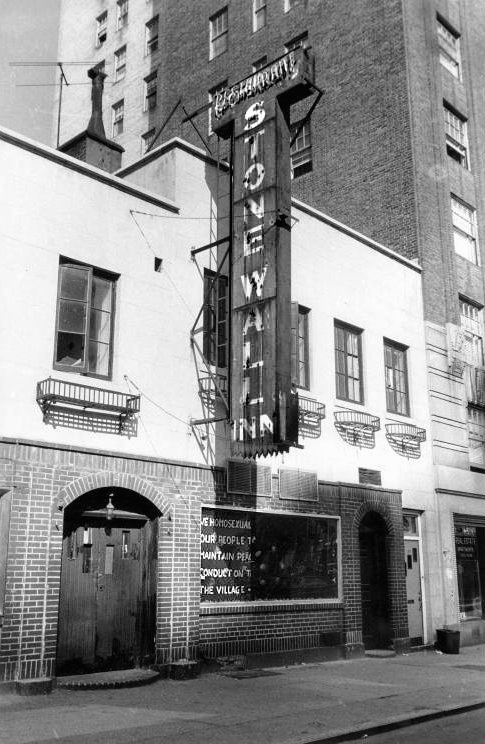
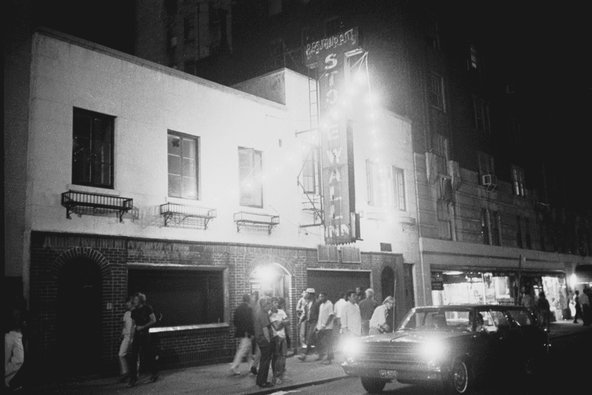
One of these dank and unappealing bars on Christopher Street was the Stonewall Inn. Its history was long and colorful: A former stable, it became a notorious teahouse 1930, then a somewhat respectable restaurant, then was gutted in a fire before becoming a darkened-window dive bar catering to homosexuals in 1967.

Stonewall_Inn_1969

There was nothing especially notable about the Stonewall, with its watered- down drinks and its hat-and-coat check. There was dancing and a jukebox and a good mix of white, African American, and Hispanic patrons just looking to have fun. Wouldn’t you be upset if they kept shutting you down for no good reason?

This is precisely what the police attempted just after 1 a.m. on June 28, 1969, when uniformed and undercover cops raided the packed bar and prepared to arrest the patrons.

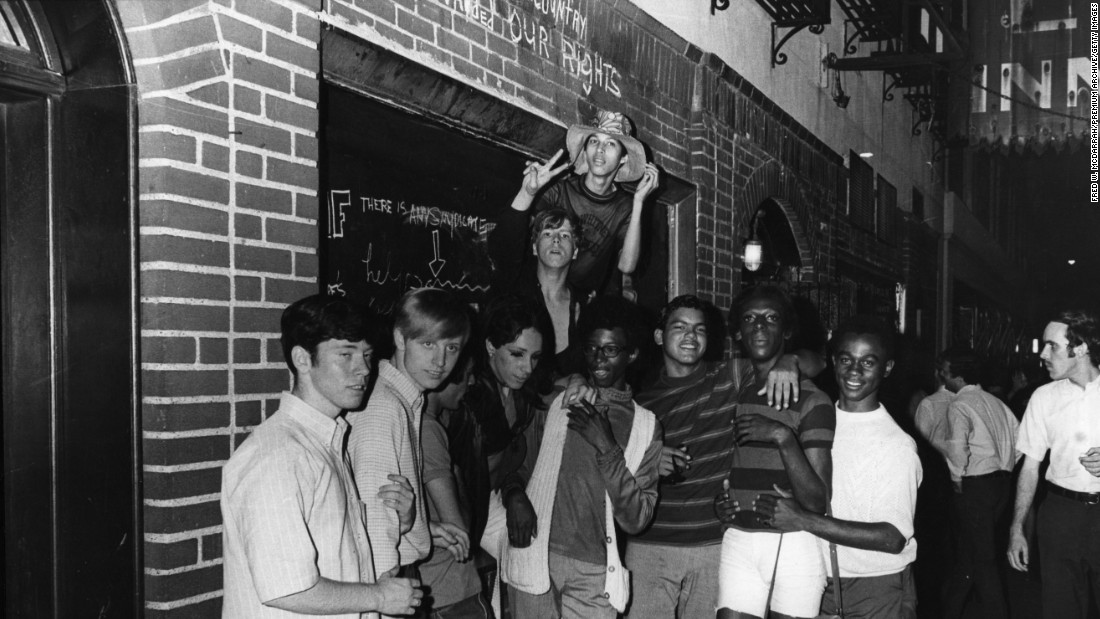
Protesters gathered in the streets outside the Stonewall Inn in the days following the riots on June 28.

Courtesy CNN
Courtesy CNN

But people were not having it. A crowd outside the bar began heckling the officers as they started their arrests, pulling patrons from the bar and loading them into wagons.

One woman in handcuffs fought fiercely, inspiring an extraordinary coalition of street youths and drag queens to push back against restraint. The crowds swelled as patrons from other bars joined the fracas, filling Christopher Street and pushing back against police harassment until well after four in the morning.

insider-stonewall1-tmagArticle

What began as proper rioting aimless anger in the streets grew more focused over the next several days, as hundreds of marginalized New Yorkers returned to the street in front of the Stonewall with a newfound sense of solidarity. Their example inspired people throughout the city and around the country.

One year after the raid, activists would gather in front of the Stonewall and march up to Central Park, an event that would become the city’s annual LGBT Pride March.

Today gay pride celebrations and parades in many European countries are referred to as Christopher Street Day celebrations. Although Stonewall Inn has gained national importance today, it is Christopher Street itself that retains the symbolism for many.

And that is why a very small portion of that street — forever associated with struggle — is America’s newest  National Monument.

WANT MORE INFORMATION? Visit the NPS Stonewall National Monument site for more information.

LISTEN TO OUR PODCAST!

Categories
American History

Hamilton Grange: New York’s Most Historic Mobile Home (NPS at 100)

This month America celebrates the 100th anniversary of the National Park Service, the organization which protects the great natural and historical treasures of the United States. There are a number of NPS locations in the five borough areas. Throughout the next few weeks, we will focus on a few of our favorites.   For more information, you can visit National Parks Centennial for a complete list of parks and monuments throughout the country.  For more blog posts in this series, click here.


IMG_0779

HAMILTON GRANGE
UPPER MANHATTAN. HAMILTON HEIGHTS. ST. NICHOLAS PARK.

I’m going to write a musical about Hamilton Grange.

This three-hour musical epic will be a complete survey of this historic home, which was built by Alexander Hamilton in an area of Manhattan a good hour and a half from town.

It will be a story of struggle, evolution, change, spirituality, love and melodrama.

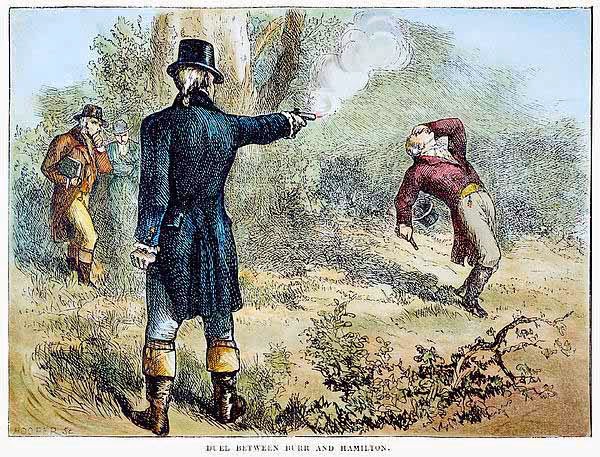
And here’s the catch — this imagined musical would begin with the death of Hamilton in his duel with Aaron Burr. (Far from giving this scoundrel a Tony-winning sized role, Burr would not even make an appearance!)  Because in most ways, that’s when the story of Hamilton Grange really begins.

14776265775_4b9019b09b_o
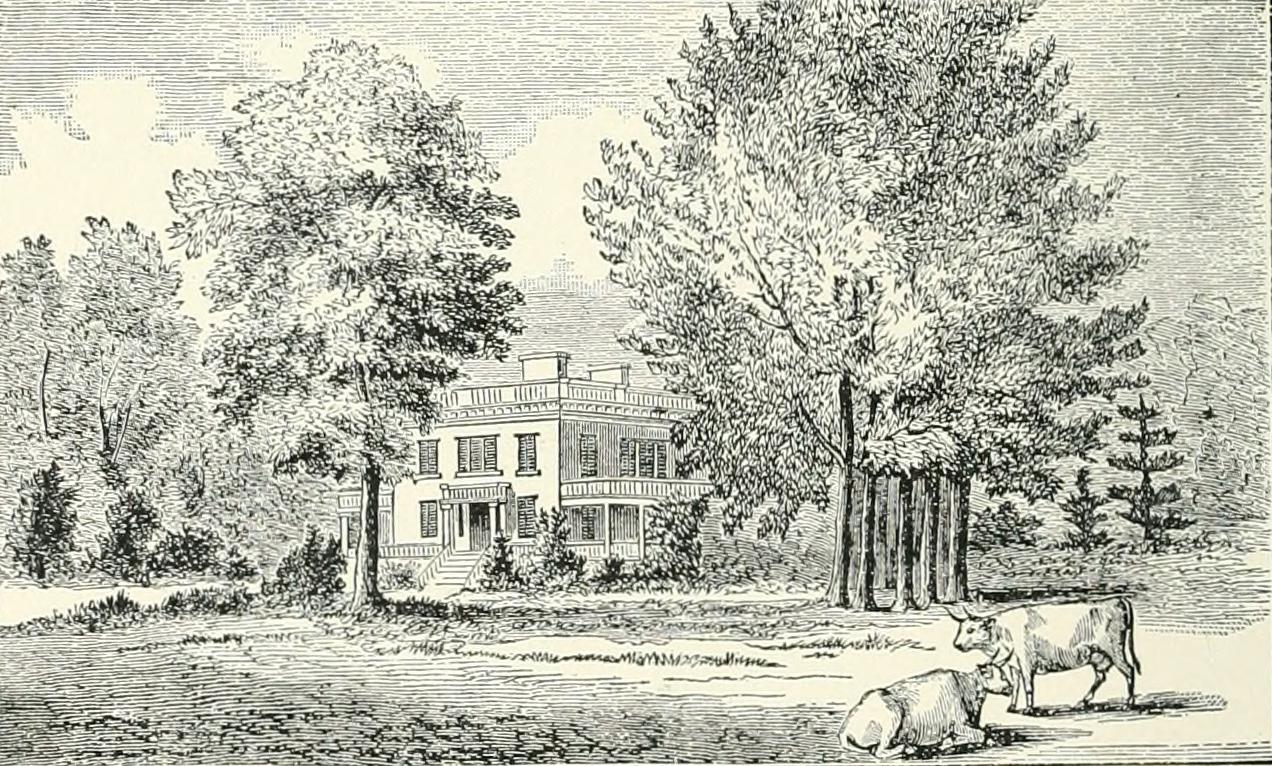
It will be Hamilton’s home until the cows come home.

Last week I took a free tour of this charming  National Park Service location, newly energized by musical appreciations of Hamilton and his life. My tour of Hamilton’s home was completely booked, and at least two people in the tour wore Hamilton: The Musical shirts. (Two other musical fans were turned away to join a later tour. My advice: Call ahead. Get on the list.)

You will ultimately visit only a small number of decorated rooms and in fact may have a richer educational experience in the Grange’s excellent gallery about Hamilton’s life.  But while several historic homes in the New York City area are larger and more spectacular, few have such an extraordinary tale of survival as Hamilton’s pet project.

hamilton_grange_no__1

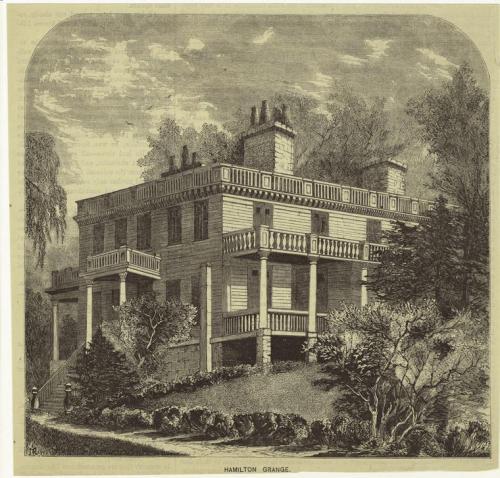
Hamilton purchased a set of upper Manhattan lots in 1800 in order construct a fine home for his family. Its name would be inspired by an ancestral Scottish mansion as well as his childhood home in St. Croix.  Designed by John Macomb Jr, (who was also commissioned for fellow NPS landmark Castle Clinton, as well as New York City Hall), the Hamilton Grange was completed in 1802, accompanied on the peaceful landscape by duck ponds, barns and an orchard.

IMG_9900

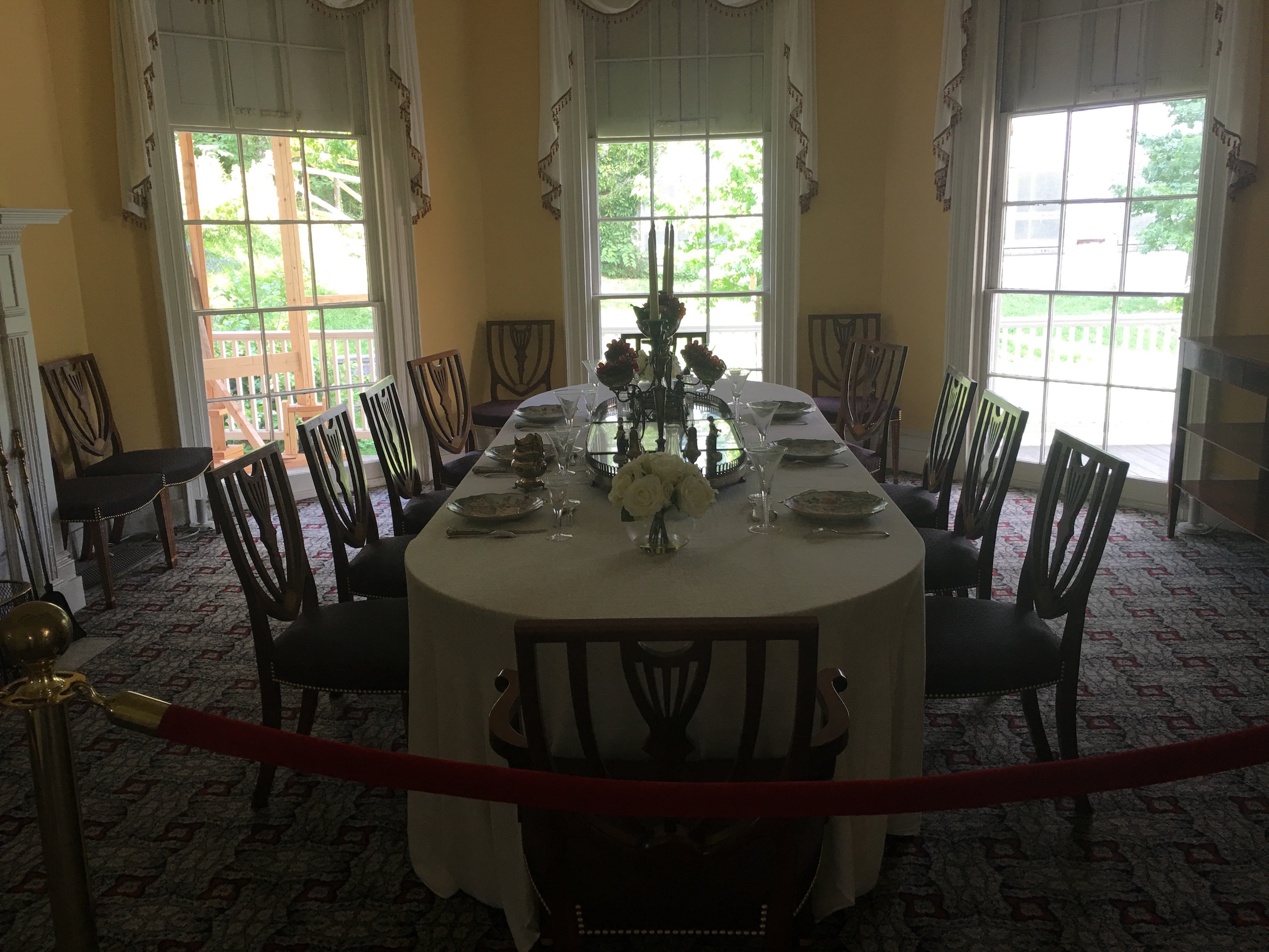
The house feted an extraordinary roster of politicians and dignitaries who ate and drank to their hearts’ content in the Hamiltons’ mirrored dining room (which you get to peek in on during the tour). Indeed, a week before the duel, the Hamiltons threw a lavish dinner party with the likes of John Trumbull and Nicholas Fish.

And like every good piece of New York City real estate, the Grange plunged the family into deep debt.

D’oh!

113

After Hamilton died in the summer of 1804, Hamilton’s widow Eliza Schuyler Hamilton struggled to maintain the family finances.  Eventually a group of supporters (led by good ole Gouverneur Morris) bought the home and sold it back to her for half price. She managed to stay there until 1833, at which point she moved into her son’s new home on St. Mark’s Place.

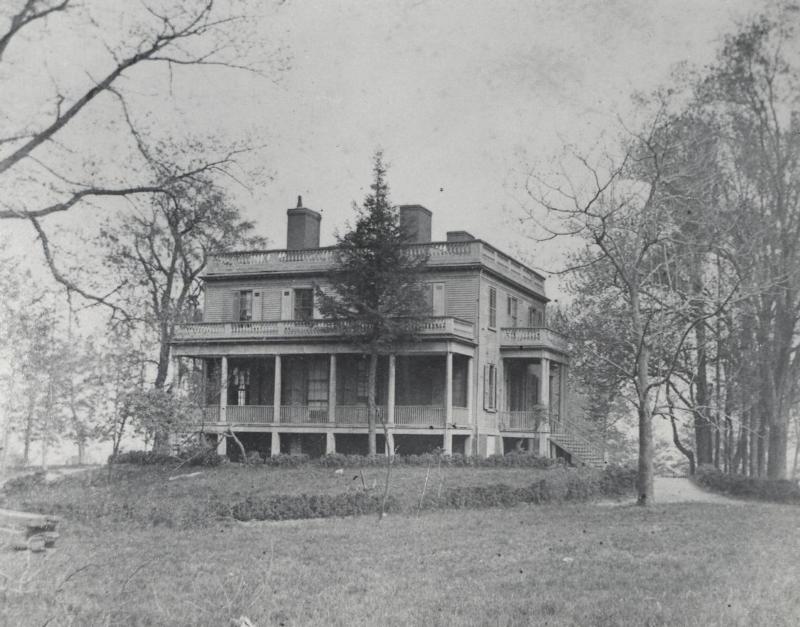
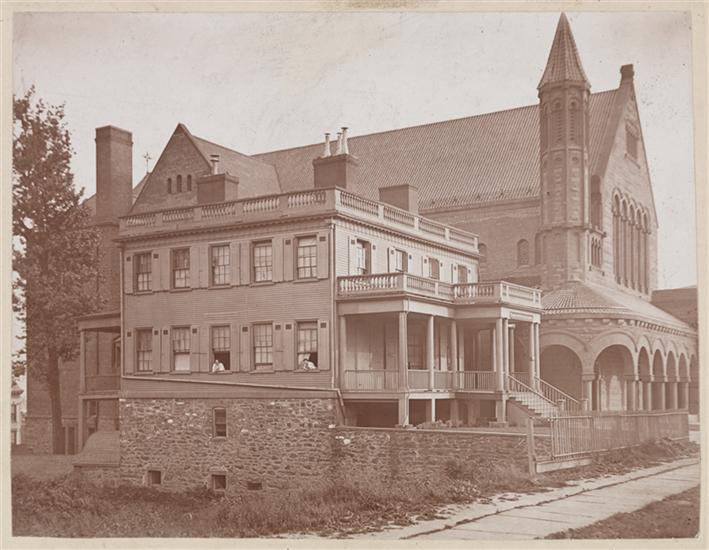
Below: The Grange, left adrift as the city moved up around it. Date of picture unknown,  but most likely early 1880s.

Courtesy NPS
Courtesy NPS

With the new grid plan eventually stretching up into upper Manhattan, farmhouses that were situated at all angles to maximize their glorious views now proved impossible to accommodate. Most were torn down with a few exceptions (such as the Dyckman Farmhouse, the oldest house in Manhattan).

The battered old Grange would certainly have been erased from history if not for the congregation of St. Luke’s Episcopal Church who found use for the structure as an uptown chapel. The catch — it needed to move to their lot a block and a half away, conforming to Convent Avenue. By 1888 the house then became Hamilton Grange Reformed Church.

By the following year, the Grange was joined by a larger church structure which practically enfolded itself around the old house.

Courtesy Museum of the City of New York

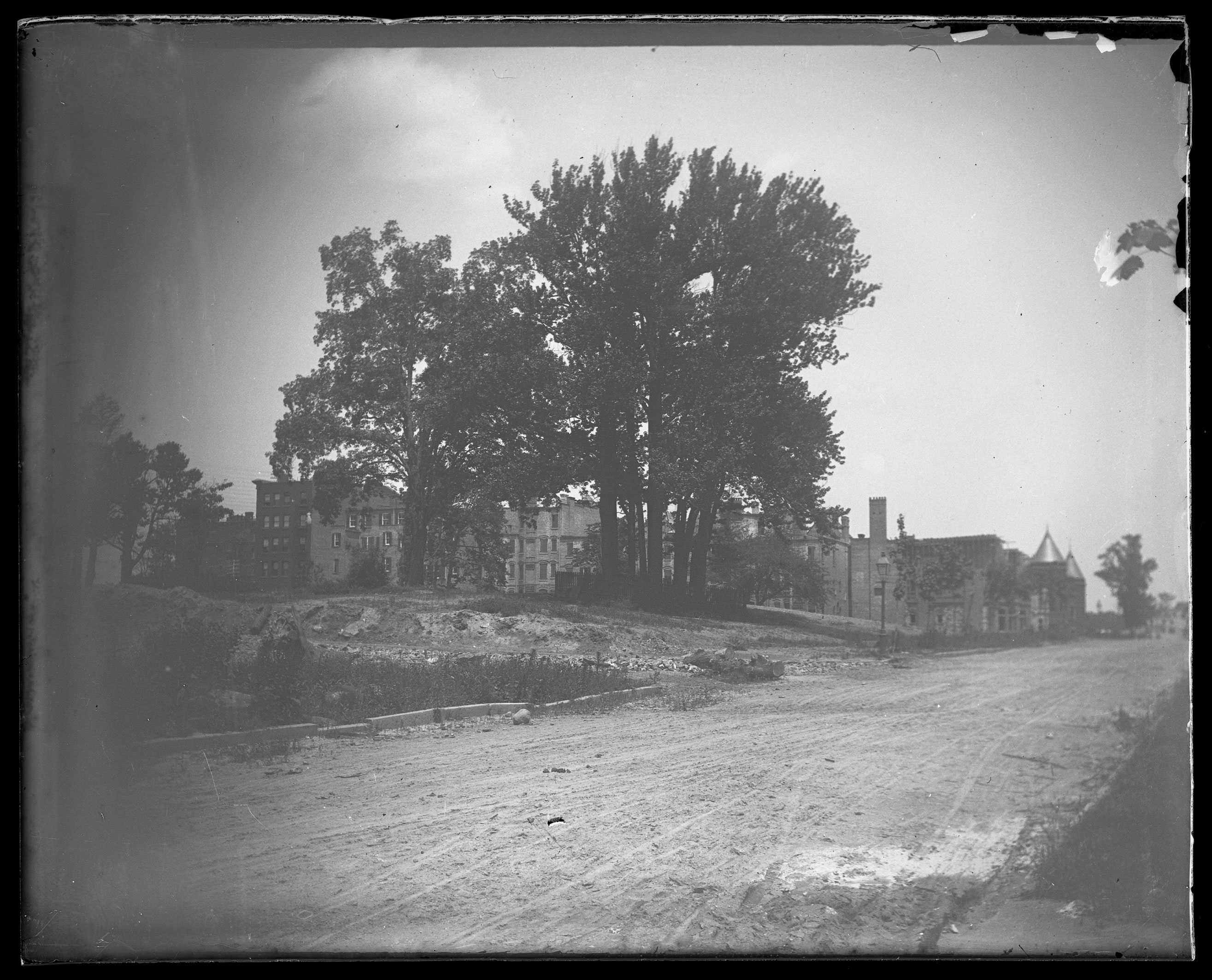
Sadly other nostalgic components of the property which still remained — Hamilton’s thirteen famous elm trees, pictured below — were unceremoniously torn out in 1900.

Courtesy New York Historical Society

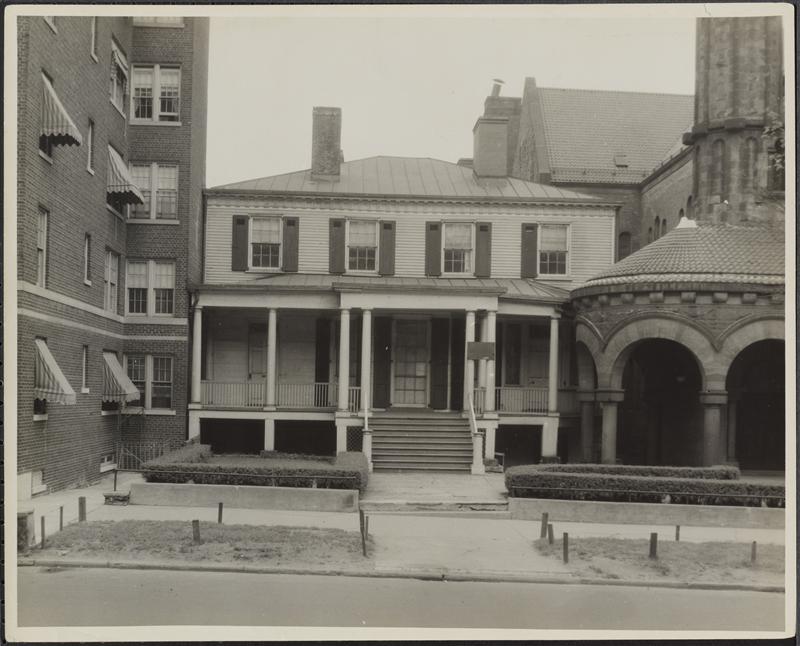
Further aesthetic travesties beset the house when an apartment complex was built onto the other side. Have you ever ridden a really, really packed subway? Now imagine riding that subway for almost a century. Thus was the fate of Hamilton Grange, a house-sized collectable artifact now shoved onto a tight shelf.

MNY80047

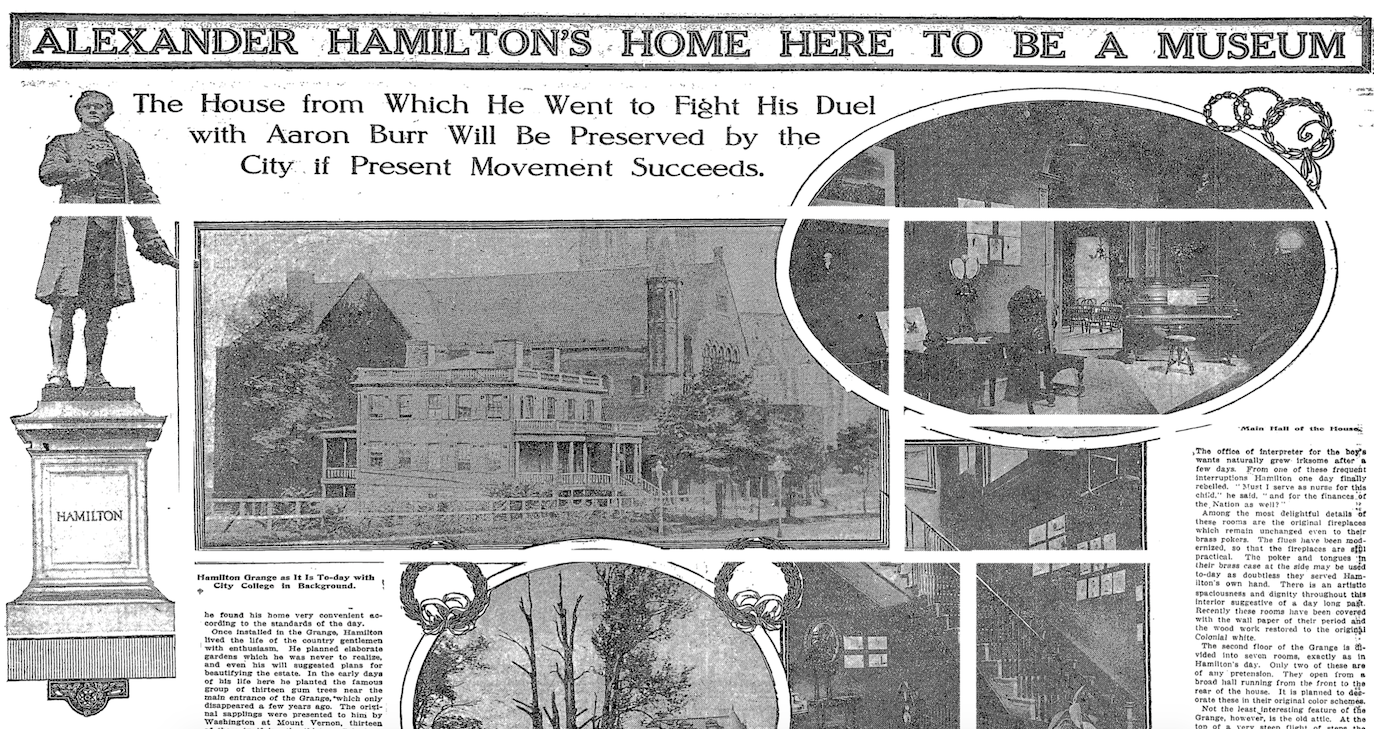
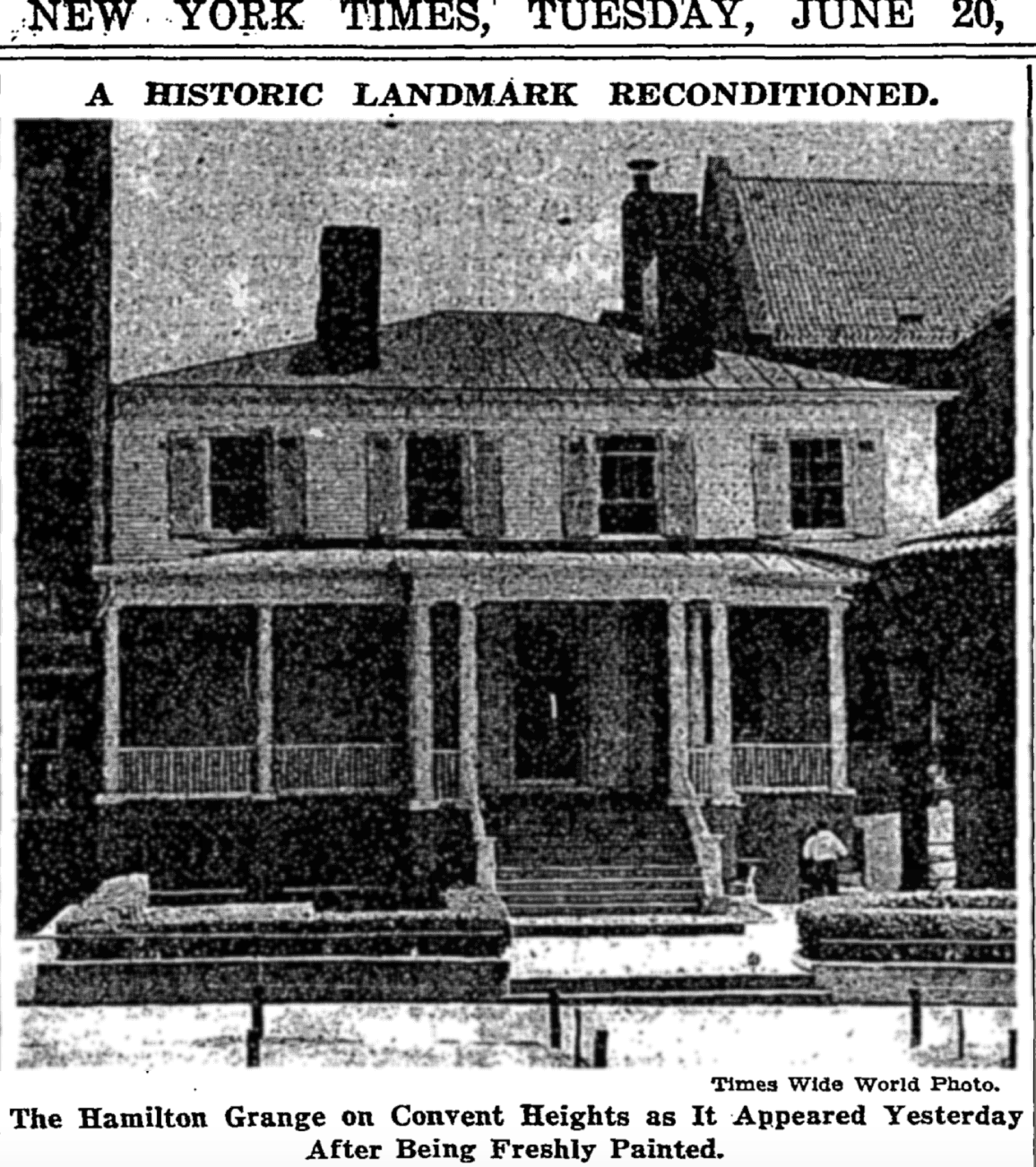
Almost immediately, concerned historians began discussing the rehabilitation of the house. “The Hamilton Grange is the oldest structure in this sector of the city, as it is assuredly the most historic,” observed the New York Times in a full-page spread in 1912. “In its present setting, hemmed in by rows of modern dwellings and apartments, its beautiful lines appear exceedingly incongruous.”  Daughters of the American Revolution beseeched the city to purchase the property.

Screen Shot 2016-08-23 at 11.46.43 AM

Curiously it was first proposed to move the Grange to St. Nicholas Park in 1915 as “it would not obstruct the landscape yet still stand on a portion of the Grange farm.” This prophesy would indeed come to pass almost 100 years later.

In the 1920s, plans were again picked up to transform the squished little house into a museum. Apparently there was some interest in moving the entire thing to Chicago when, in 1924, this glorious announcement was made:  “The rivalry of New York and Chicago to possess Alexander Hamilton’s historic home has been ended by preserving the stately old mansion as a public museum near its original position on Manhattan Island. Hamilton Grange, as it is generally known, has become the property of the American Scenic and Historic Preservation Society, after some twenty-five years of unremitting effort.”  In 1933 it finally reopened as a museum.

Screen Shot 2016-08-23 at 12.06.18 PM

But even with the church congregation gone, even with the house filled with artifacts that were once owned by the Hamilton, the house’s placement robbed it of any context.

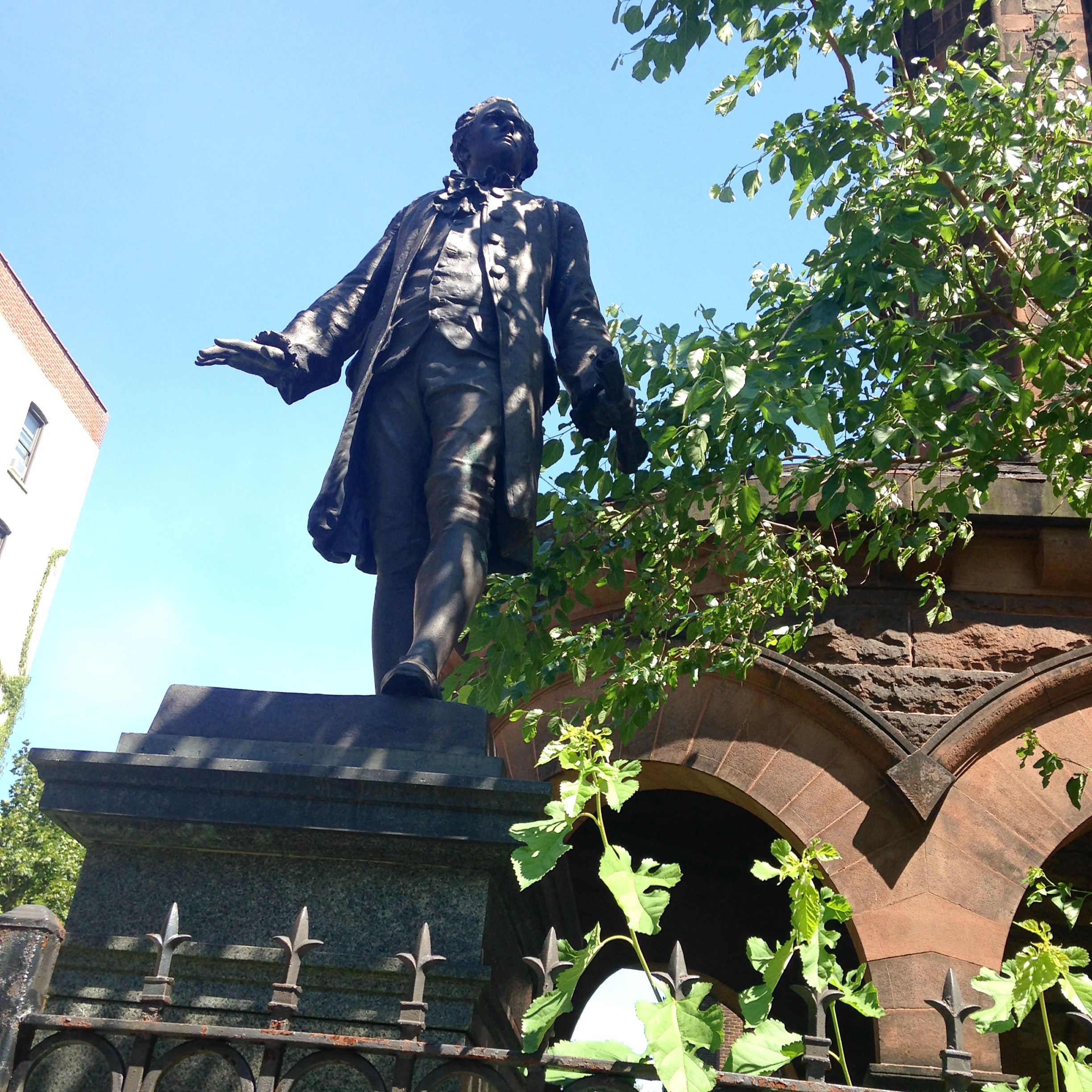
In 1936 a statue of Alexander Hamilton was mounted in front of the building. It was officially dedicated on the very same day that a statue of General Philip Sheridan was dedicated in a ceremony in Christopher Park.  Today — thanks to Stonewall National Monument — the Sheridan statue now too stands on property operated by the National Park Service.

The statue remains in front of the church even as the house is now gone.

IMG_4449 (1)

The NPS would finally get its hands on Hamilton Grange after it was declared a National Historic Landmark in 1960 and Congress declared it a National Monument in 1962.  The house was to be moved to another location and fully restored.

But unfortunately the city’s financial upheaval of the 1960s and 70s threw off any serious work on the house. Or to quote a historic preservation graduate student from a New York Times 1988 article:  ”’If the Grange were anywhere else, this would be a fait accompli,’ said Michael Adams, a Columbia University graduate student in historic preservation. ‘The only reason it has fallen into this deplorable condition is because it is in Harlem.’ ”

IMG_0787

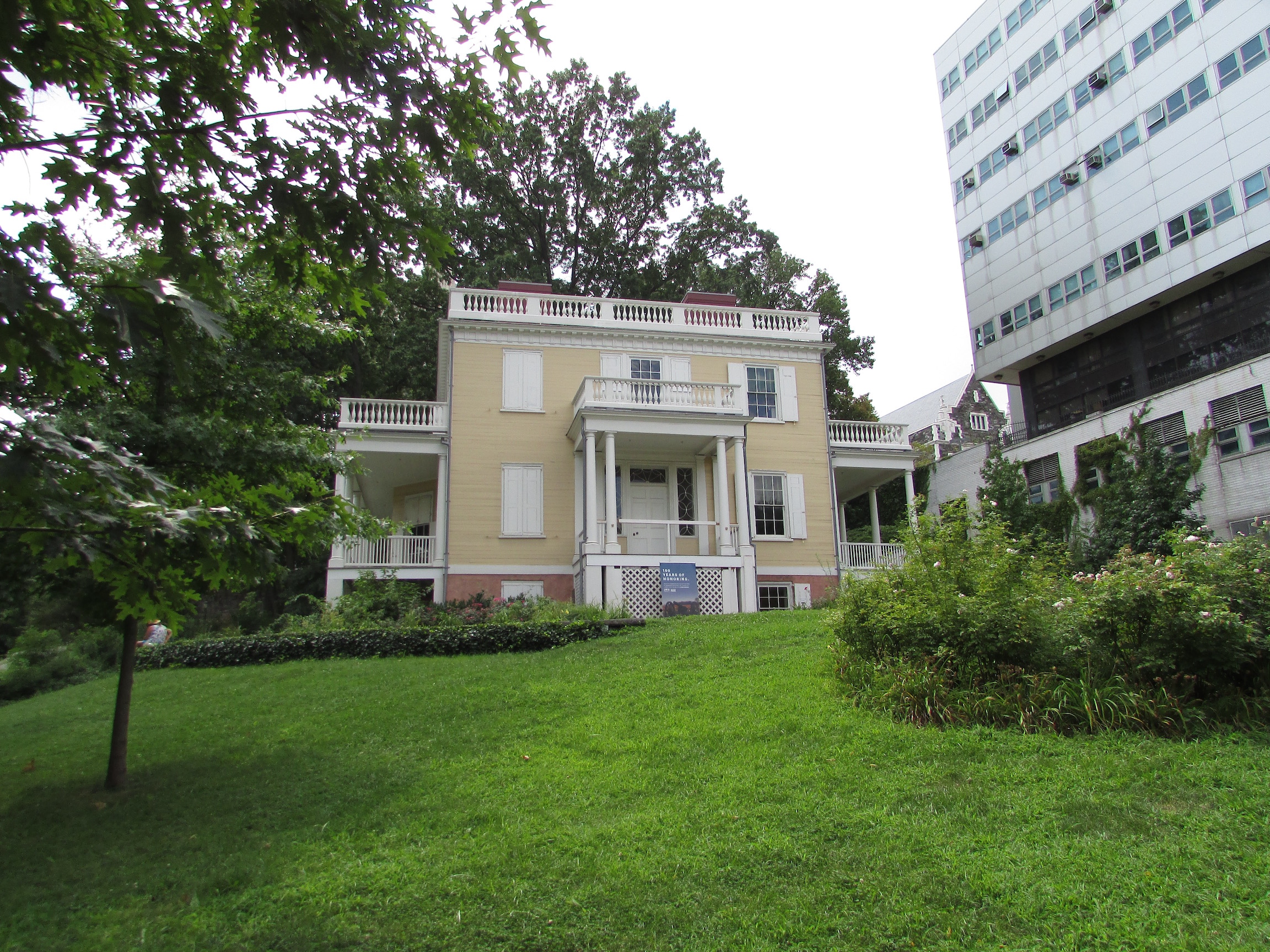
Finally in 2008, efforts were finally made to lift the house from its tucked-in spot near St. Luke’s to its new home in St. Nicholas Park. The newly revitalized house was opened to the public in 2011.

Here’s a dramatic video of its historic move:

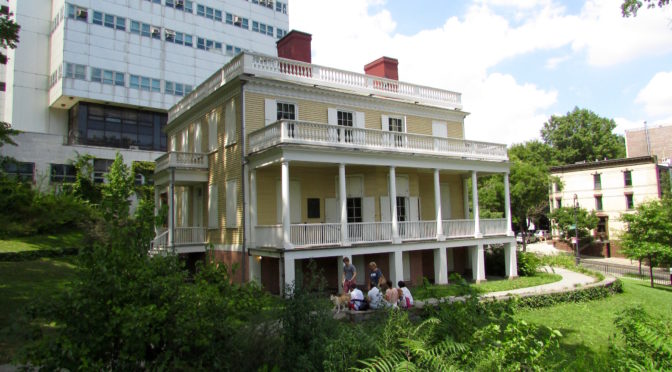
Today the Hamilton Grange feels out of place — but in the right way. Another tall structure hovers over it to the east, but at least it doesn’t smother the house’s natural beauty, restored in a bright canary yellow.  Surrounded by the rocky terrain of the park, visitors can get a sense of the calm that Alexander and his family might have felt as they gazed out from the porches.

And almost 175 years after his family moved from the house, the Hamilton Grange has finally become a show-stopper.

WANT MORE INFORMATION? Visit the NPS Hamilton Grange National Memorial site for more information.

LISTEN TO OUR PODCAST! We have a podcast on the famous duel between Alexander Hamilton and Aaron Burr. It’s Episode #168. You can find it on iTunes at our show page.  Or download it from here.
 

Categories
American History

Castle Clinton: New York’s Most Underappreciated Landmark (NPS 100)

This month America celebrates the 100th anniversary of the National Park Service, the organization which protects the great natural and historical treasures of the United States. There are a number of NPS locations in the five borough areas. Throughout the next few weeks, we will focus on a few of our favorites.   For more information, you can visit National Parks Centennial for a complete list of parks and monuments throughout the country. 
The following is also an excerpt from the Bowery Boys Adventures In Old New York, now available for sale wherever books are sold and online at Amazon or Barnes and Noble.
 

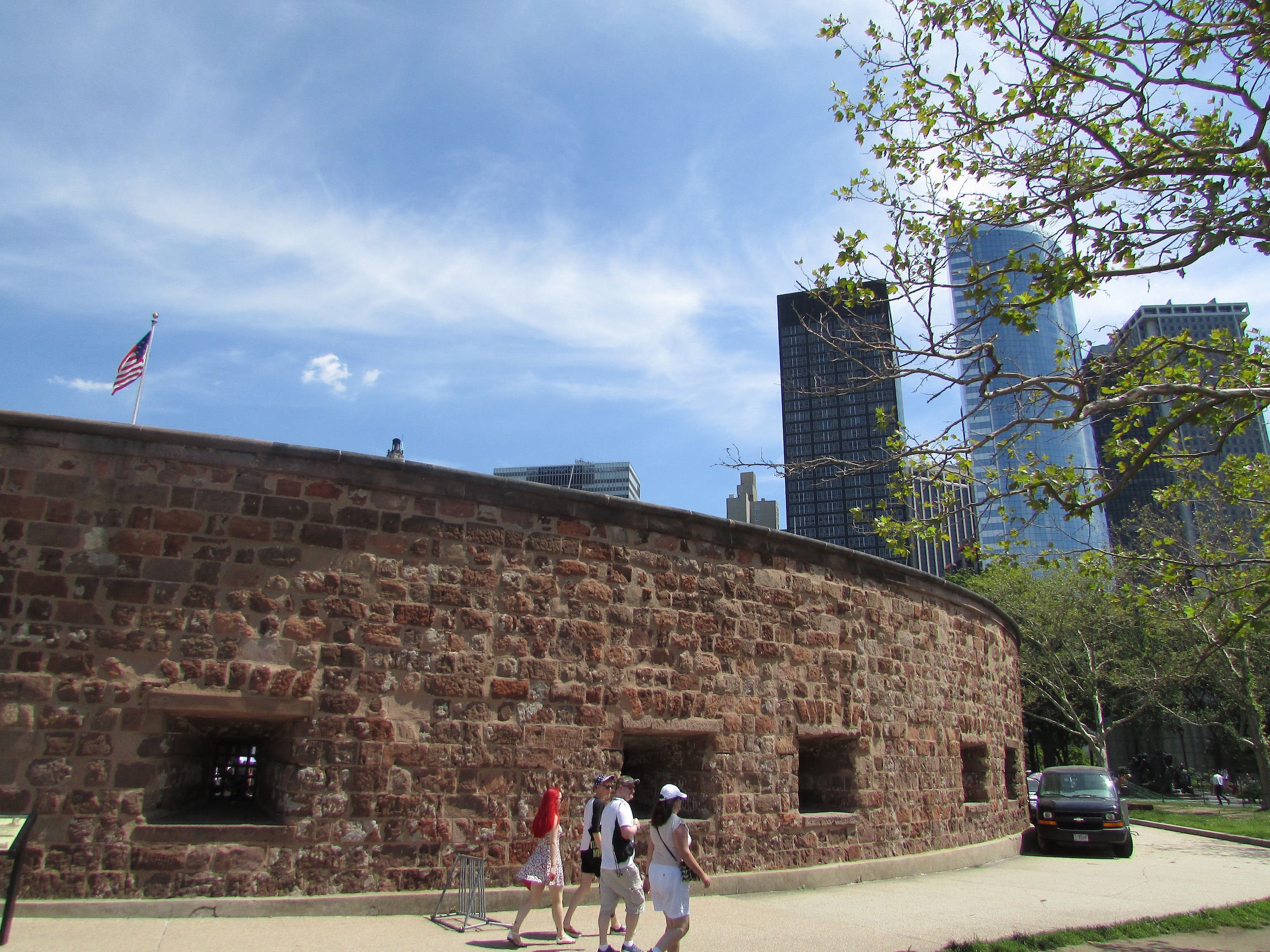
IMG_0739

CASTLE CLINTON
MANHATTAN. BATTERY PARK
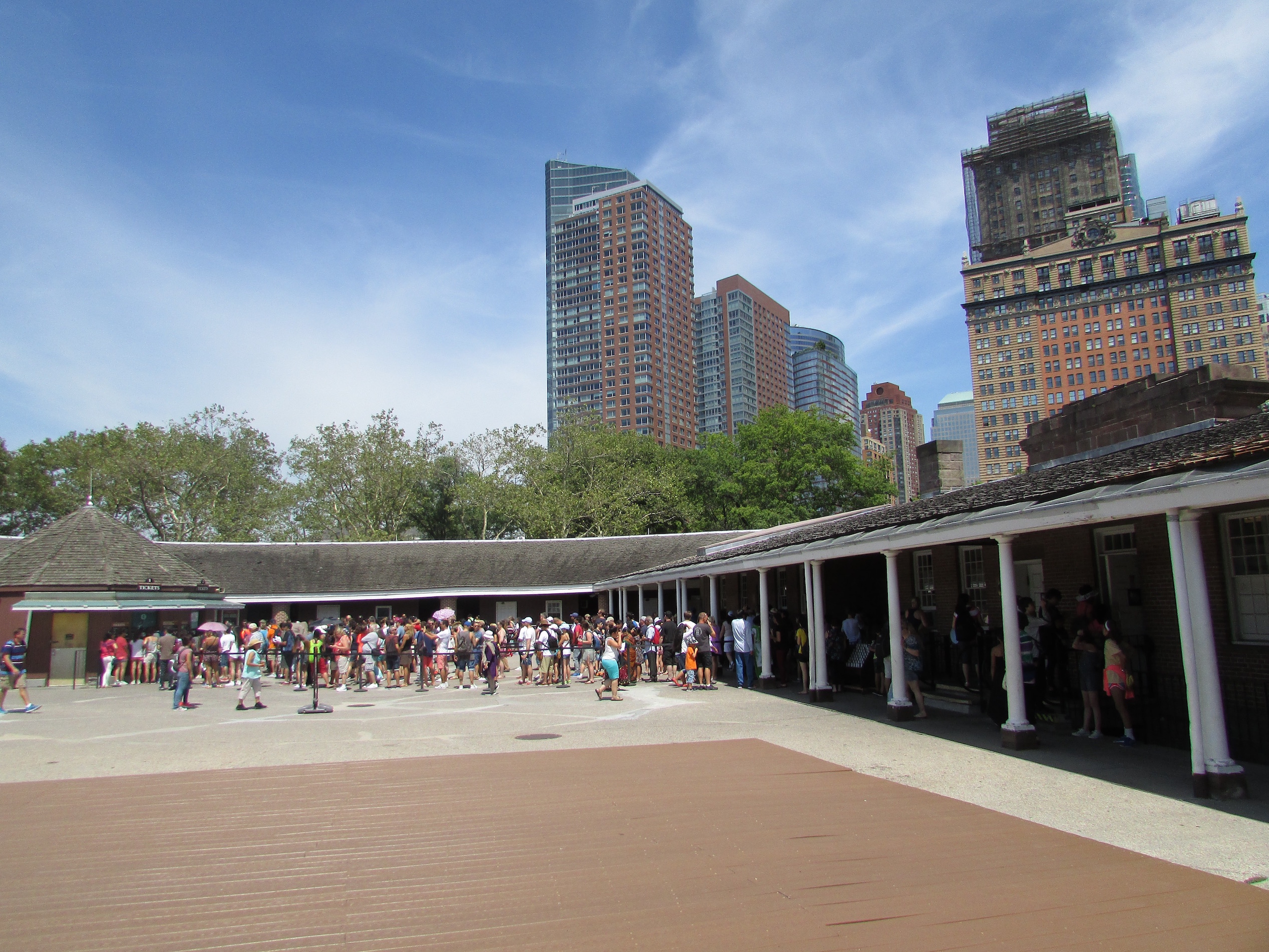
Tourists looking to purchase tickets to the Statue of Liberty and Ellis Island (also two landmarks that are maintained by the NPS) enter an old circular stone structure in Battery Park called Castle Clinton. Ticket selling is by far the least exciting job in the fort’s history, a rather banal function for a building that traces its origins to the founding of the United States.

Back in 1783, fresh from the victories of the Revolutionary War, New Yorkers gathered around the docks on November 25 to forever wave off the British from New York Harbor. When it was soon discovered that one last British flag remained hanging from a greased flagpole—a final goodbye prank, as it were—jaunty patriots shimmied up to remove it. This event would soon become the driving force of New York’s annual Evacuation Day celebrations, a symbolic marker of the end of British rule. (If we could come up with a method to safely secure drunk revelers as they climbed greased flagpoles today, then we’d say let’s bring it back!)

IMG_0738

But the threat of an unwelcome British return lingered on. In 1790, the city dismantled Fort George (the dilapidated fort built by the Dutch), and the cannons that gave the Battery its name were removed and replaced with a strolling promenade. But less than two decades later, new saber rattling by British forces so unnerved New Yorkers that they built new, stronger forts at locations scattered throughout the harbor. Some of them—like Fort Wadsworth on Staten Island and Castle Williams on Governors Island (another NPS property) —still stand today.

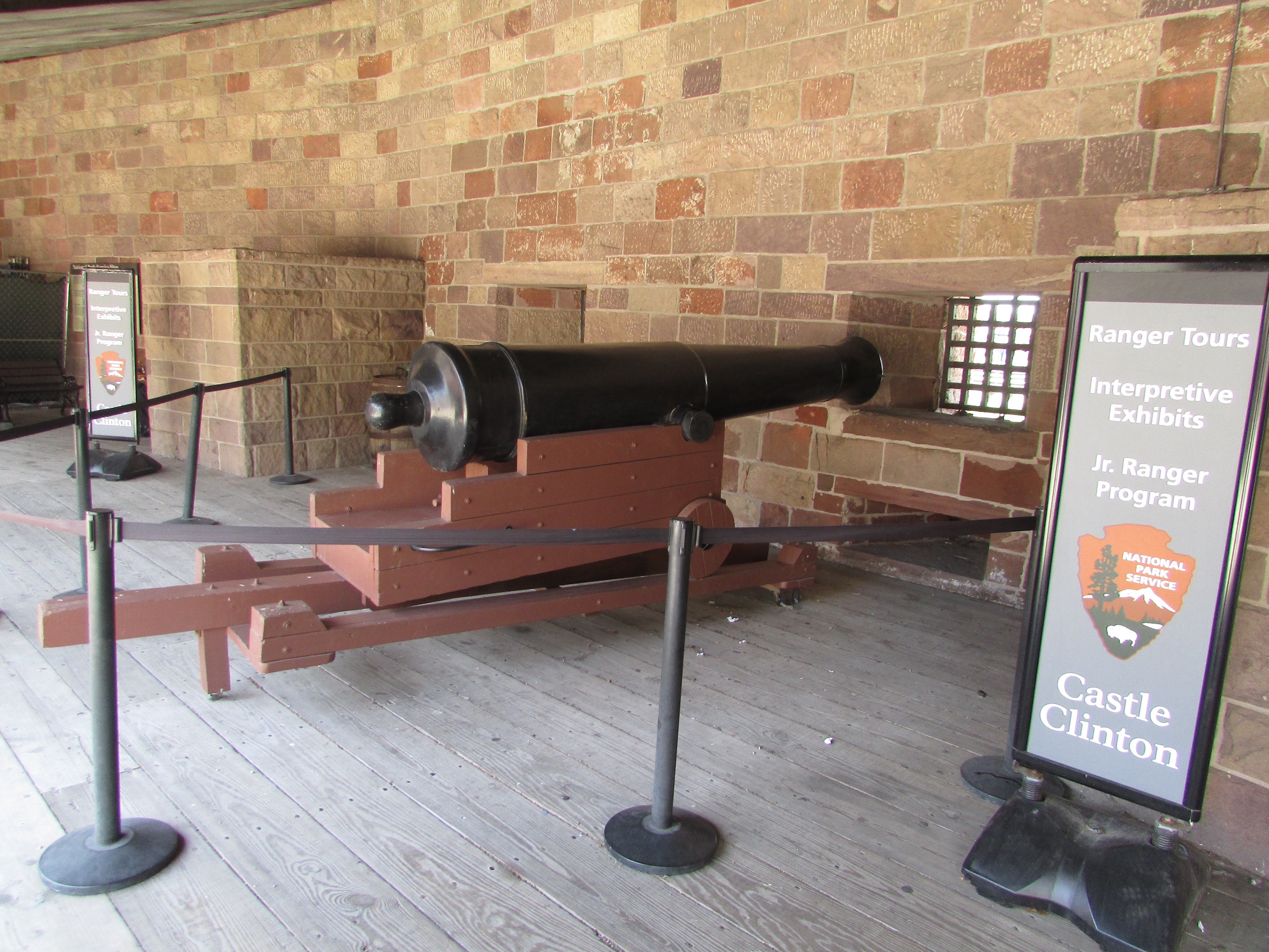
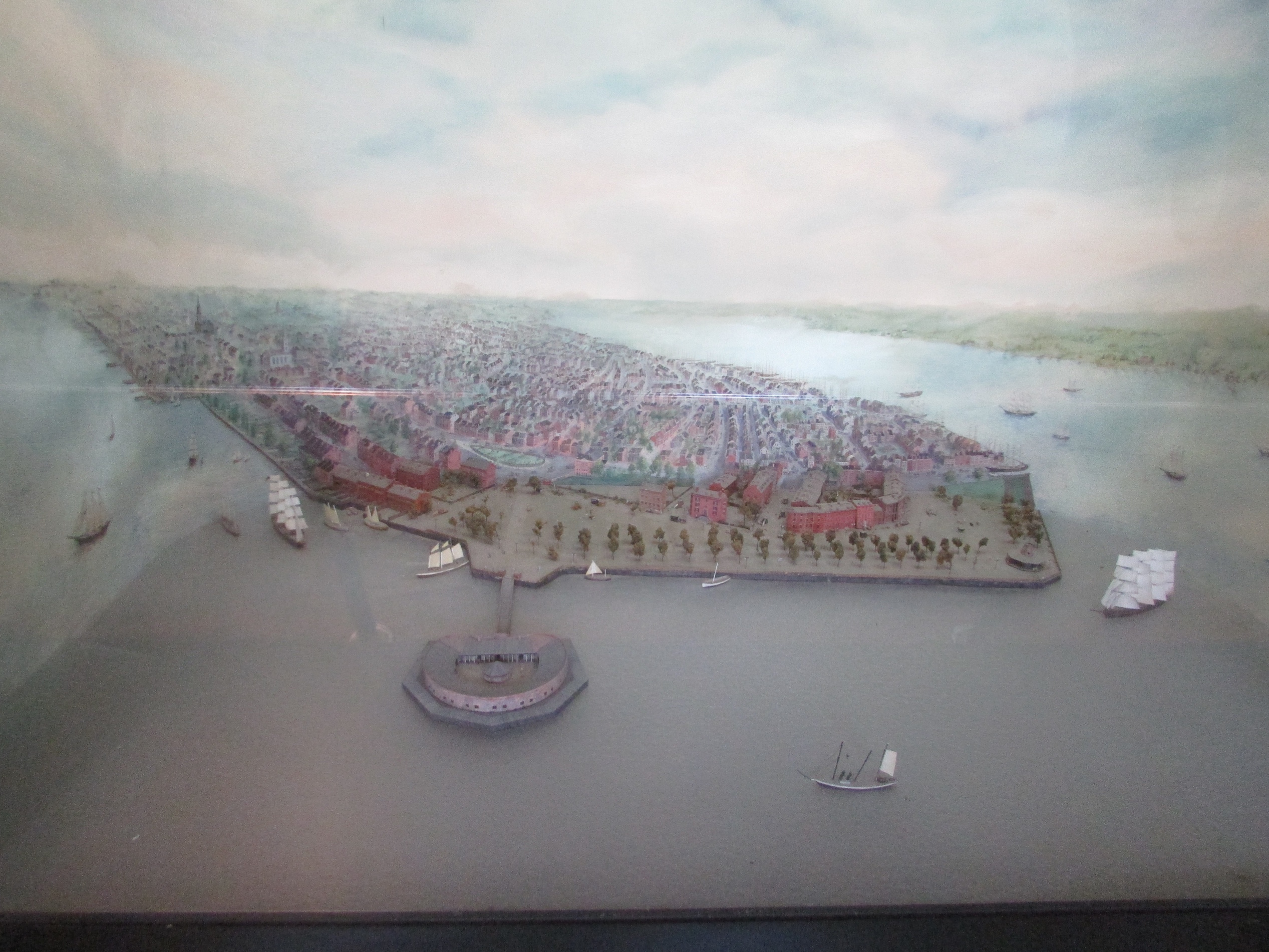
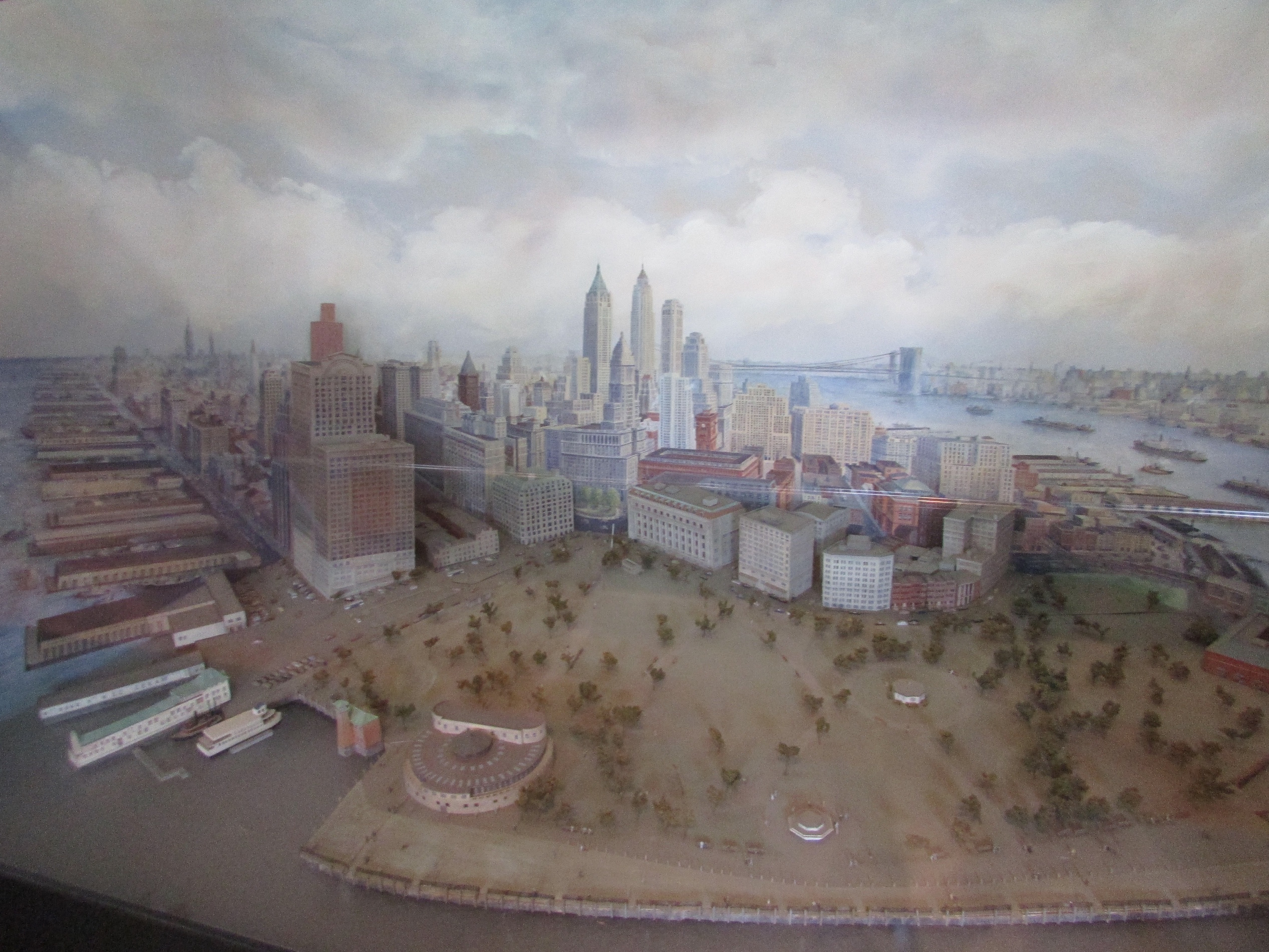
A modest museum inside Castle Clinton features three interesting models of how the structure used to look and how it related to the land around it.

IMG_0731

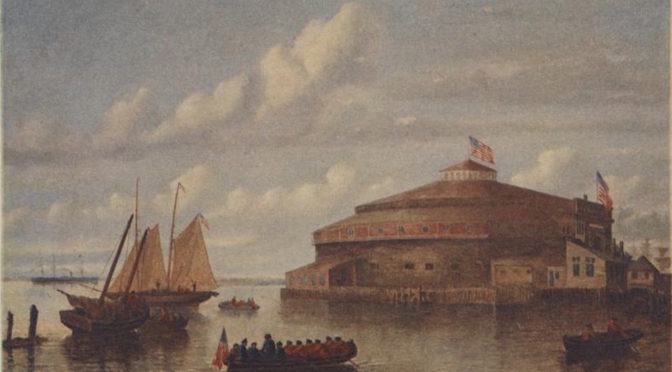
But none has had the inconceivable adventures of West Battery, completed in 1811 as an island fort, located 300 feet from shore and connected to the mainland by a long bridge. Its thick stone walls could withstand a vicious attack, and its 28 guns aimed into the harbor would surely beat back any aggressors. It was later renamed Castle Clinton, after New York’s governor (and former mayor) DeWitt Clinton, a hopeful name, given Clinton’s own political tenacity and endurance.

But while the War of 1812 would come to American shores, it never arrived in New York Harbor. After serving some minor military purposes, Castle Clinton was eventually sold by the federal government to the city in 1823. And it was then that things got decidedly more festive for the old fort.

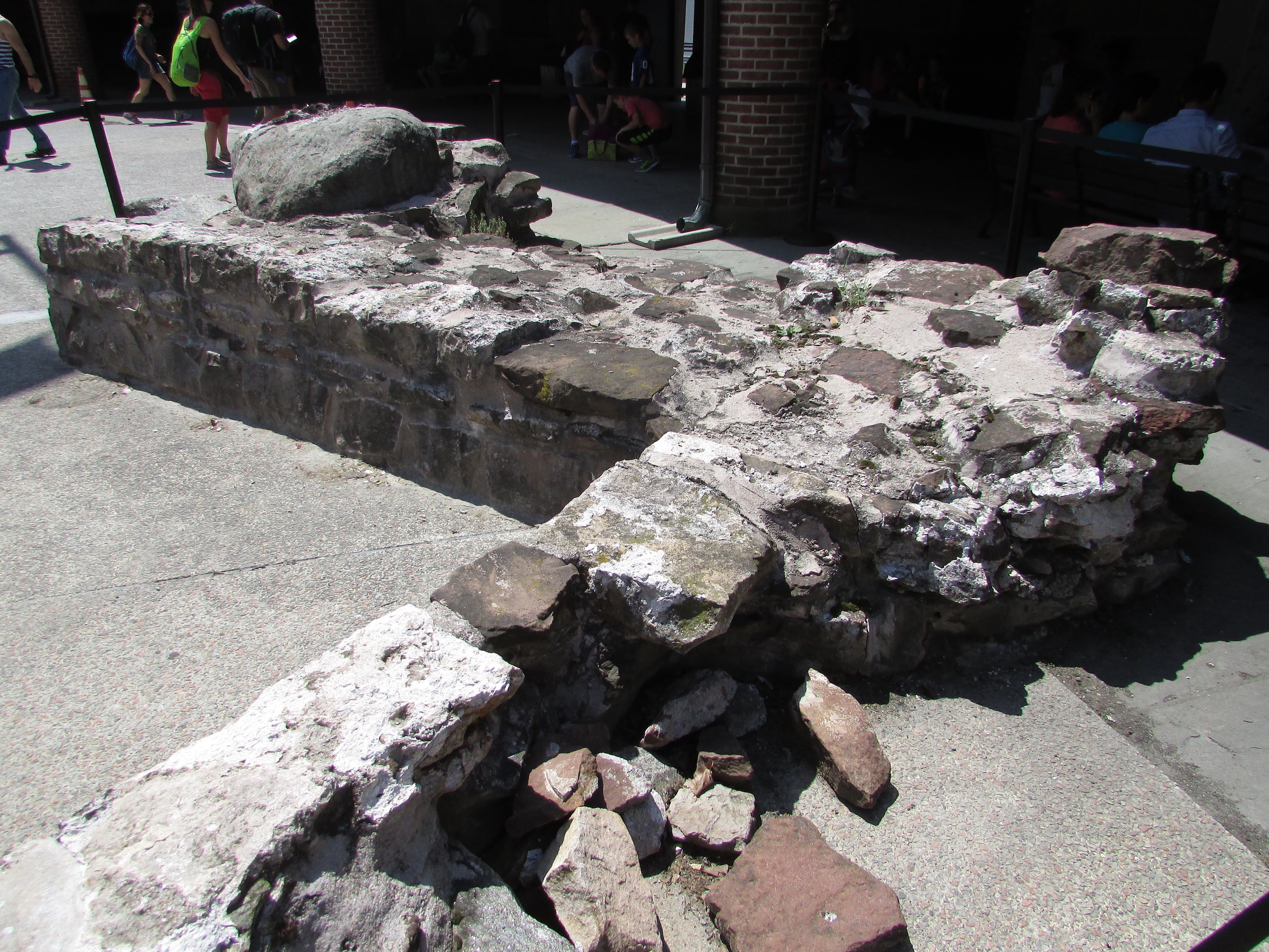
During an excavation in 2006, portions of the old Battery Wall were discovered.  They are displayed within Castle Clinton today.

IMG_0735

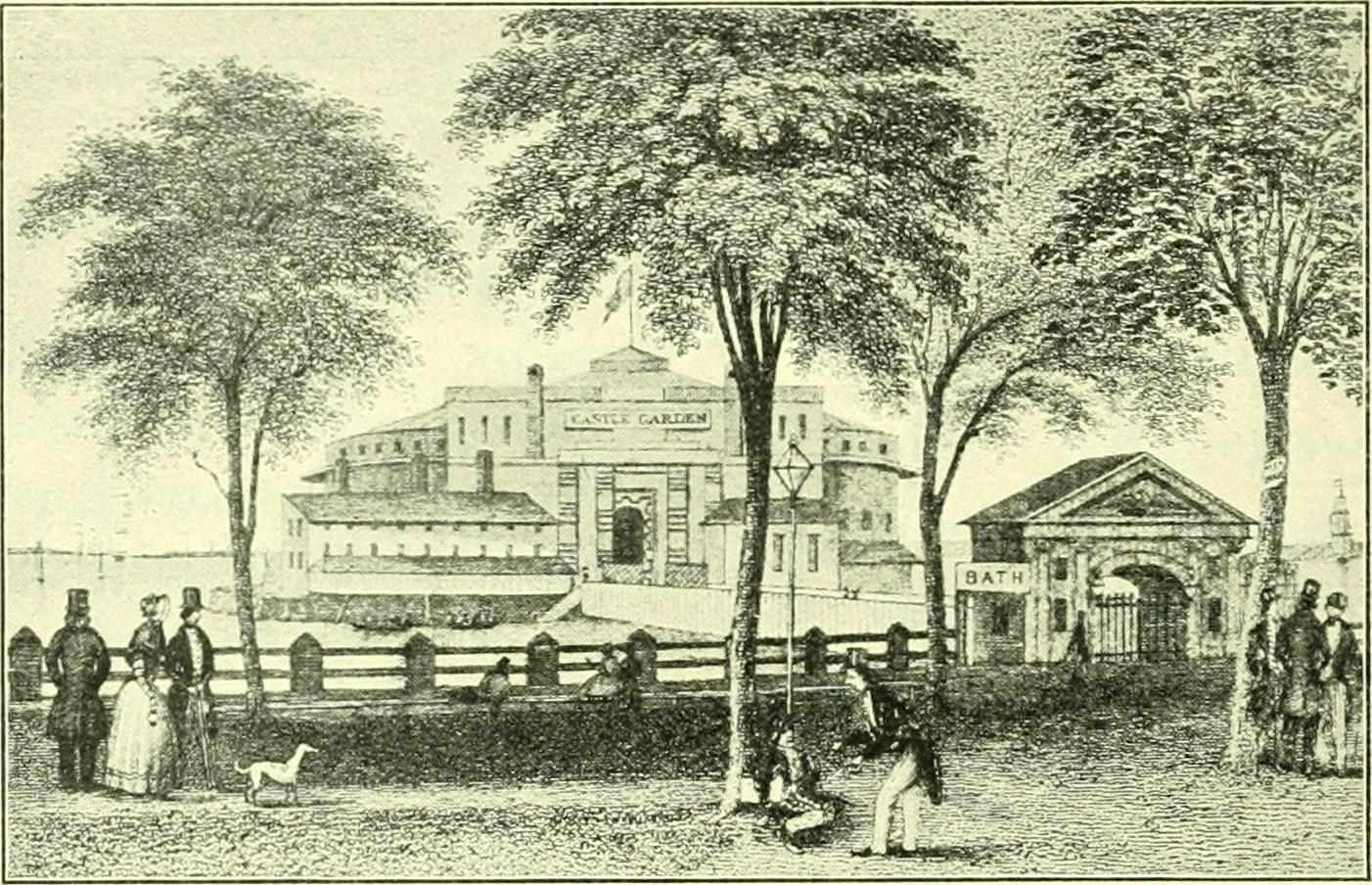
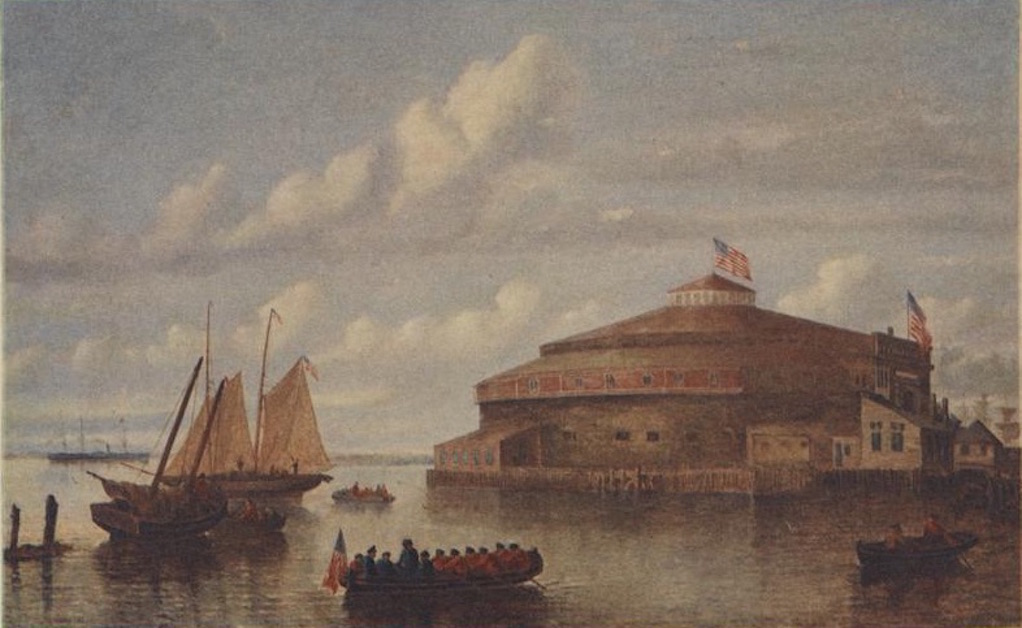
First it was transformed into an entertainment palace, rechristened Castle Garden, and greatly expanded, with a spacious second floor and an ornate fountain at its center. Still accessed by a narrow bridge, the experience was magical and otherworldly for visitors, its gaslight illuminations dancing above the waves.

Image from 'A Home Geography of New York City (1905).
Image from ‘A Home Geography of New York City (1905).


Castle Garden was a ballroom, concert venue, lecture space, and even beer hall. In 1824, the Marquis de Lafayette, the most exotic still-living embodiment of the Revolutionary era, was feted here by grateful New Yorkers. In 1842 Samuel Morse demonstrated a new gadget that would change the world—the telegraph. (A line was strung between here and Castle Williams; its first message was, rather dramatically, “What hath God wrought?” And they hadn’t even seen their phone bill yet!) For a short time, you could even enjoy luxurious saltwater baths out on the Battery promenade.

Courtesy Museum of the City of New York

But the most famous evenings at Castle Garden (pictured above in 1850) belonged to the Swedish opera singer Jenny Lind. Extensively hyped by impresario P. T. Barnum, the so-called Swedish nightingale brought New York music lovers to tears here on September 11 and 13, 1850, perhaps the most legendary concert nights in American history (pre–stadium seating, that is). “Jenny Lind has already won a hold on the sympathies of the American public, such as no other vocalist ever obtained,” cooed the New York Daily Tribune. “The audience for which she sang was the greatest ever assembled at a concert in this city.”

Just five years later, in 1855, Castle Garden would see thousands more foreign imports, albeit less enthusiastically proclaimed. For it was then that the old fort-turned-amusement venue became New York’s first immigration depot, a desperately needed transformation, coming as a tidal wave of European immigrants vexed the ports.

Newly arrived Irish and German immigrants during the 1840s and early ’50s had been taken advantage of by greedy “runners,” unscrupulous characters who led them into scams or false promises of housing and employment, often leaving them with neither (and empty pockets).

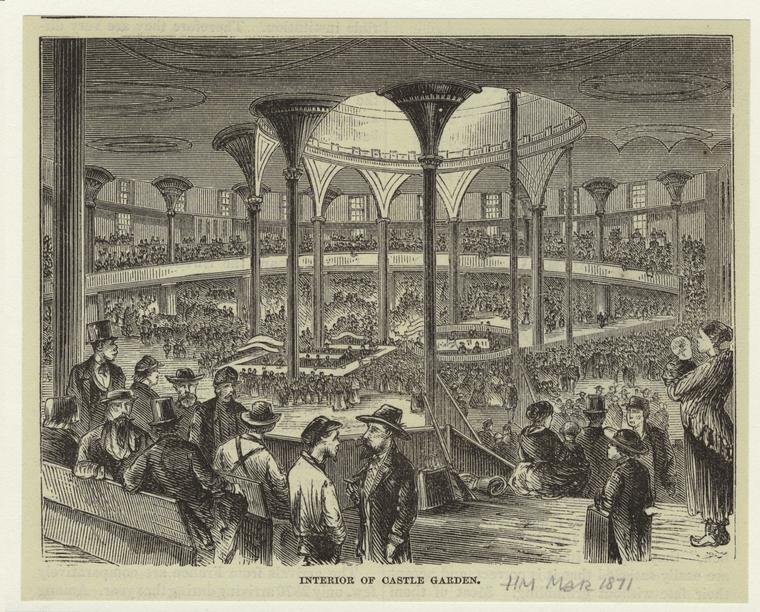
The interior of Castle Garden during its period as an immigration station.

New York Public Library

Castle Garden, as an immigration depot, registered the new arrivals and provided vital connections with immigrant aid societies. It would be a proto–Ellis Island, processing more than 8 million people upon their arrival to America. Most likely some of you reading this have ancestors who passed through the halls of Castle Garden.

Castle Garden as an immigration station, 1861, the former battery swarming with activity. Millions of immigrants arriving in New York passed through this depot.

Another model within Castle Clinton features the landscape as it looks during the period the structure housed the New  York Aquarium.

IMG_0733

By 1890 the federal government finally got involved with immigration processing and built a new processing center upon a little island in New York Harbor, long ago owned by Samuel Ellis. This switch freed Castle Garden to occupy itself with some other residents—this time of the underwater variety.

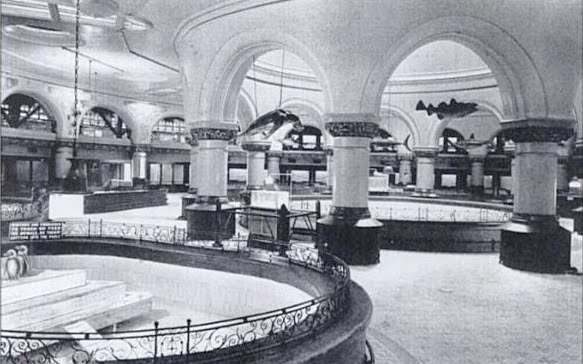
After a redesign by the renowned architectural firm of McKim, Mead, and White, the New York Aquarium would open here in 1896, its former concert hall and processing desks replaced with the latest aquatic technology of the day. By this time, of course, landfill had joined the structure to the mainland. Families could now gallivant through Battery Park and into the front gates to explore a maze of open pools and glass exhibition tanks, filled with a variety of creatures that (more often than not) did not survive the changing of seasons.

Today there are no aquatic creatures of any variety. However there are plenty of tourists from all over the world, lined up to get their boat tickets to the Statue of Liberty and Ellis Island.

IMG_0728

They were a surprising yet appropriate pairing, the old fort and a bunch of tropical fish, replete with harbor waves crashing nearby. Unfortunately, Parks Commissioner Robert Moses was not a fan and decreed that the retrofitted old fort had finally performed her last number. In 1941, Moses used the construction of the Brooklyn–Battery Tunnel as an excuse to move the popular aquarium to Coney Island, snarling that “the Aquarium is an ugly wart on the main axis leading straight to the Statue of Liberty.” The fort should be destroyed entirely, he explained, for “its guns never fired a shot against an enemy.”

Inside the New York Aquarium at Castle Garden:

Courtesy Castle Clinton

His destructive urges were only partially rebuffed by the community. Most of the frill and finery—almost everything that had been added since 1823—was removed, leaving only the barren stone form of the original fort intact. And that’s exactly how it has remained ever since. Castle Clinton received National Monument status in 1975.

Today the old fort quietly allows New York’s showier landmarks their day in the sun. But we challenge you, Mr. Moses. There may never have been a shot fired from Castle Clinton, but these walls have seen more drama and have been more important to the American experience than almost any other American fort standing today.

WANT MORE INFORMATION? Visit the NPS Castle Clinton National Monument site for more information.

LISTEN TO OUR PODCAST! We have an entire show on Battery Park and Castle Clinton. It’s Episode #31. You can find it on iTunes at the Bowery Boys Archive, featuring our older shows.  Or download it from here.