Categories
New York Islands Podcasts

The history of Hart Island, a place of strangeness and sorrow

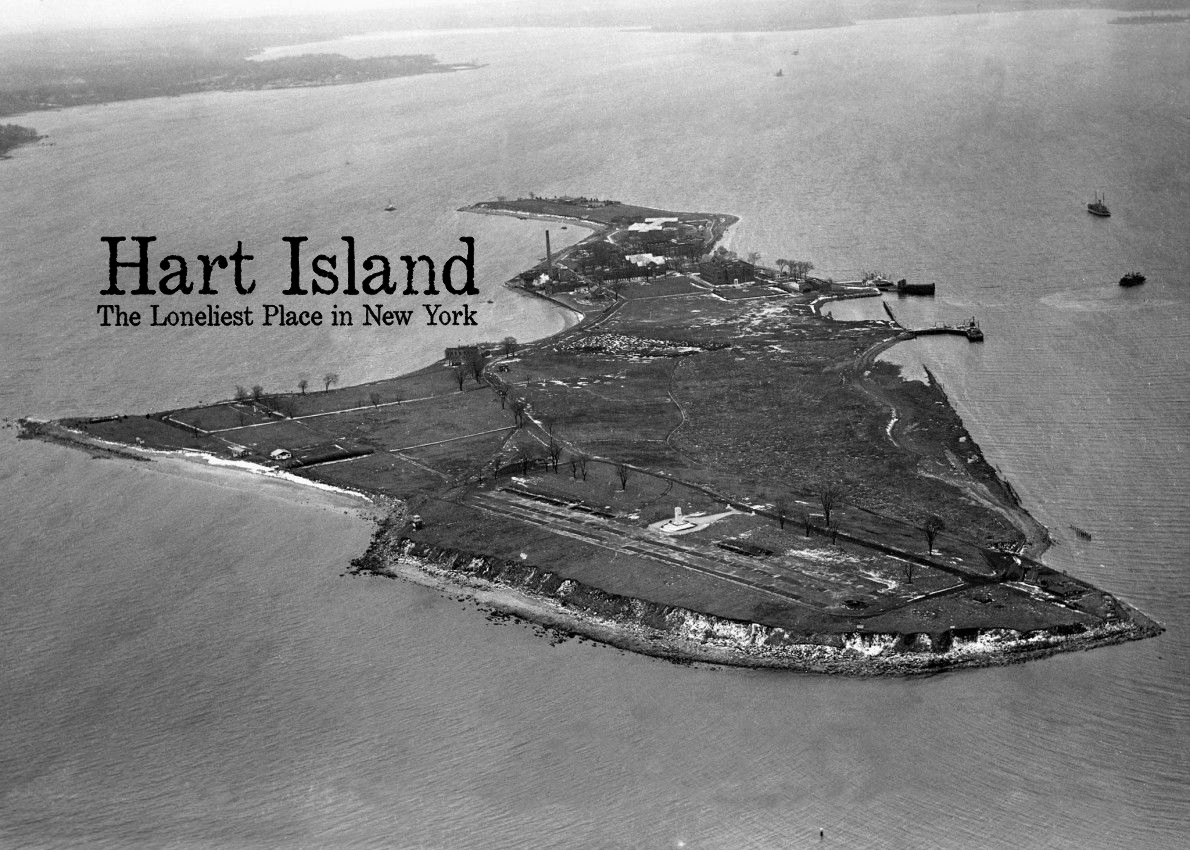
Few people are allowed to go onto Hart Island, the quiet, narrow island in the Long Island Sound, a lonely place in sight of the bustling community of City Island.

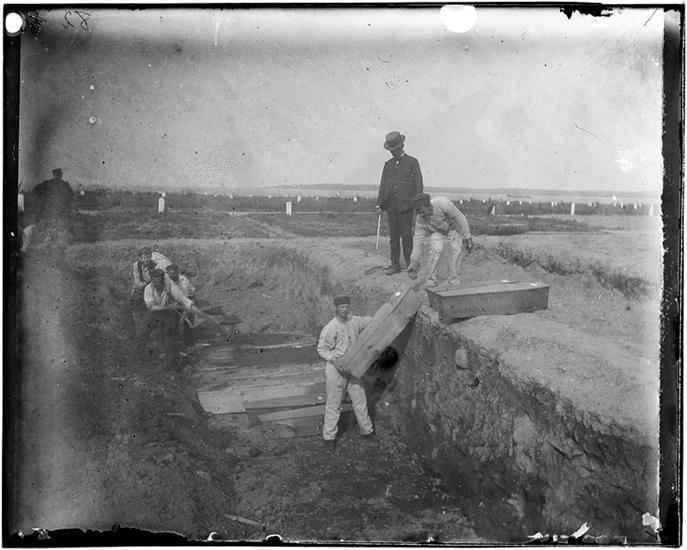
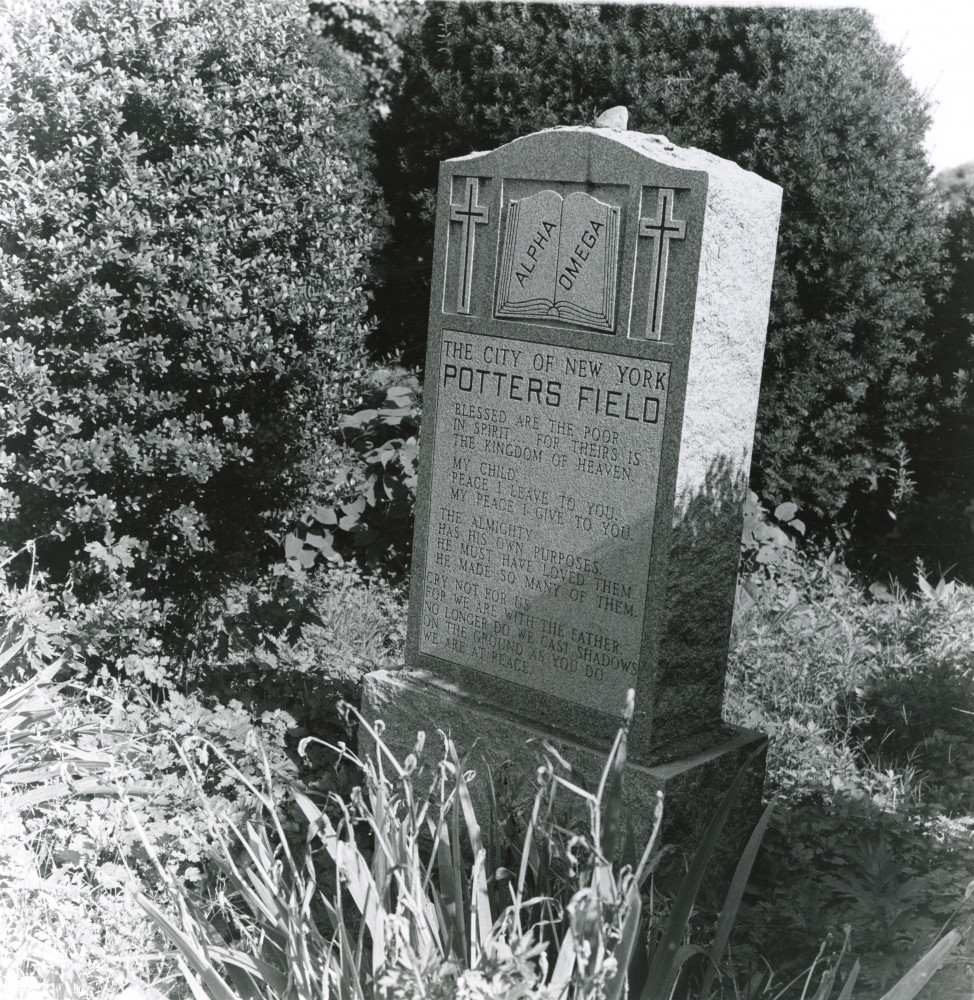
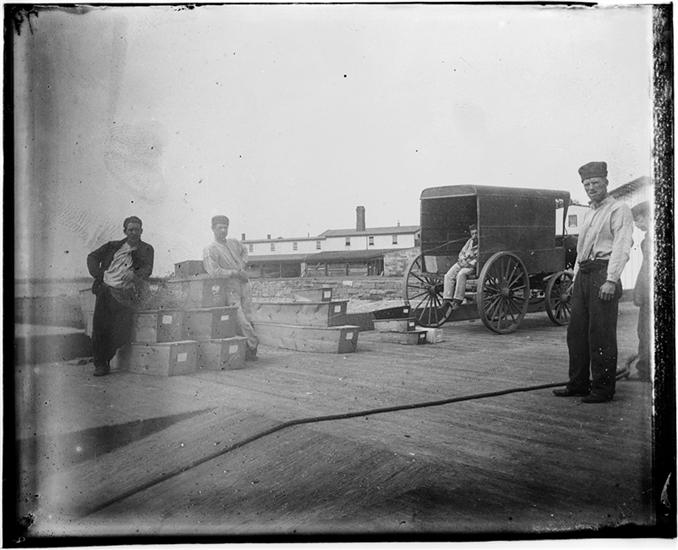
For over 150 years, Hart Island has been New York’s potter’s field, the burial site for over one million people — unclaimed bodies, stillborn babies, those who died of AIDS in the 1980s, and, in 2020, the location of burials of those who have died of COVID-19 coronavirus.
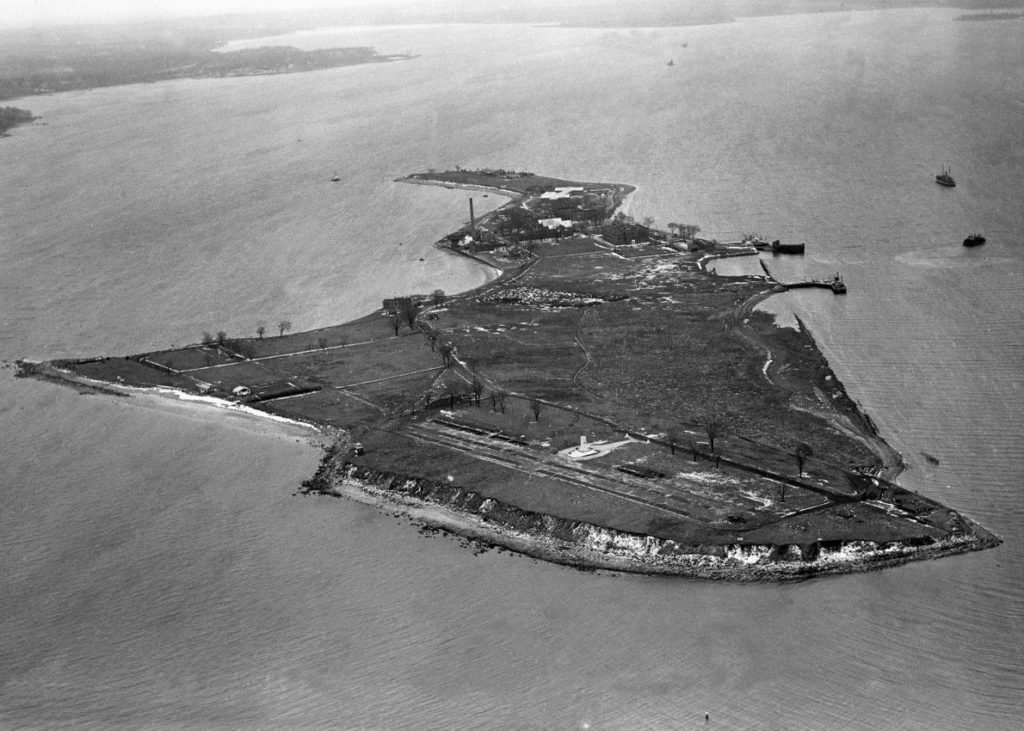
New York Daily News/Getty

Hart Island’s appearance in the international press this past week has drawn attention to the severity of the pandemic in New York City, but it has also drawn attention to the island itself.

By the early 19th century, this peaceful place — most likely named for deer which may have called it home — had already developed a violent reputation as a renegade site for boxing matches.

During the Civil War, black Union troops trained here and later Confederate soldiers were imprisoned in refitted prison barracks.

But in the late 1860s the city prepared the island for its eventual and longest lasting purpose. Today it is the world’s largest potter’s field. And thanks to groups like the Hart Island Project, New Yorkers may finally get a glimpse at this strange, forlorn place and the previously forgotten people buried here.

PLUS: That time that an amusement park was almost built on Hart Island.

LISTEN NOW — HART ISLAND: THE LONELIEST PLACE IN NEW YORK

To get this week’s episode, simply download or stream it forFREE from iTunes, Stitcher, Spotify or other podcasting services.You can also get it straight from our satellite site.
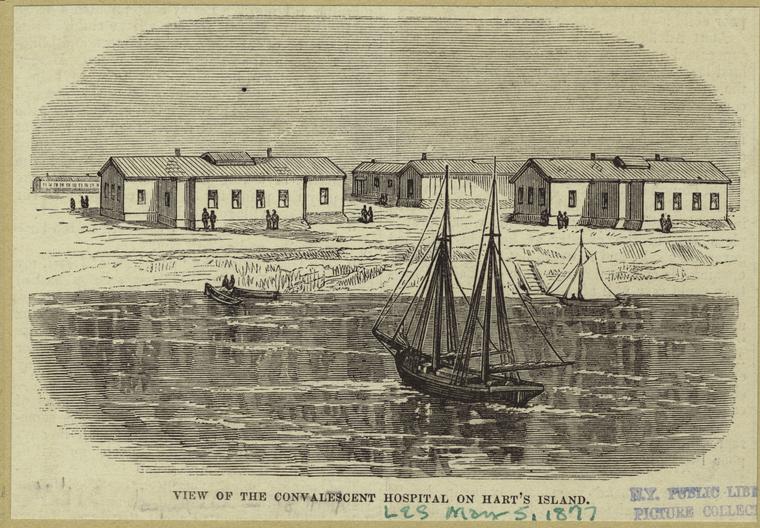
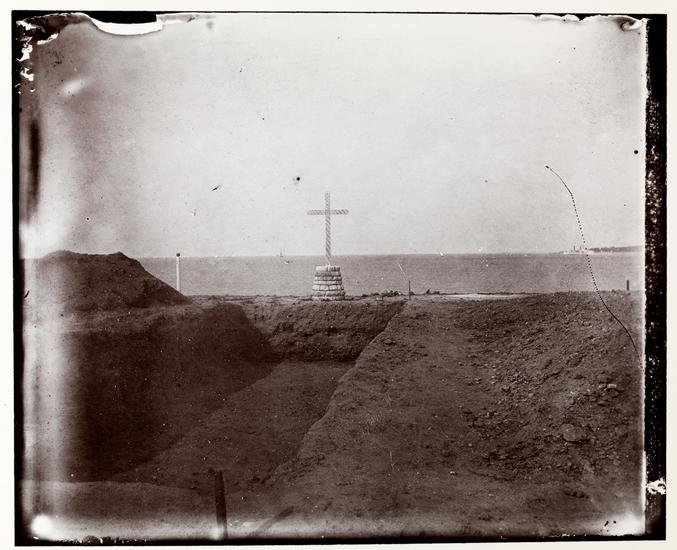
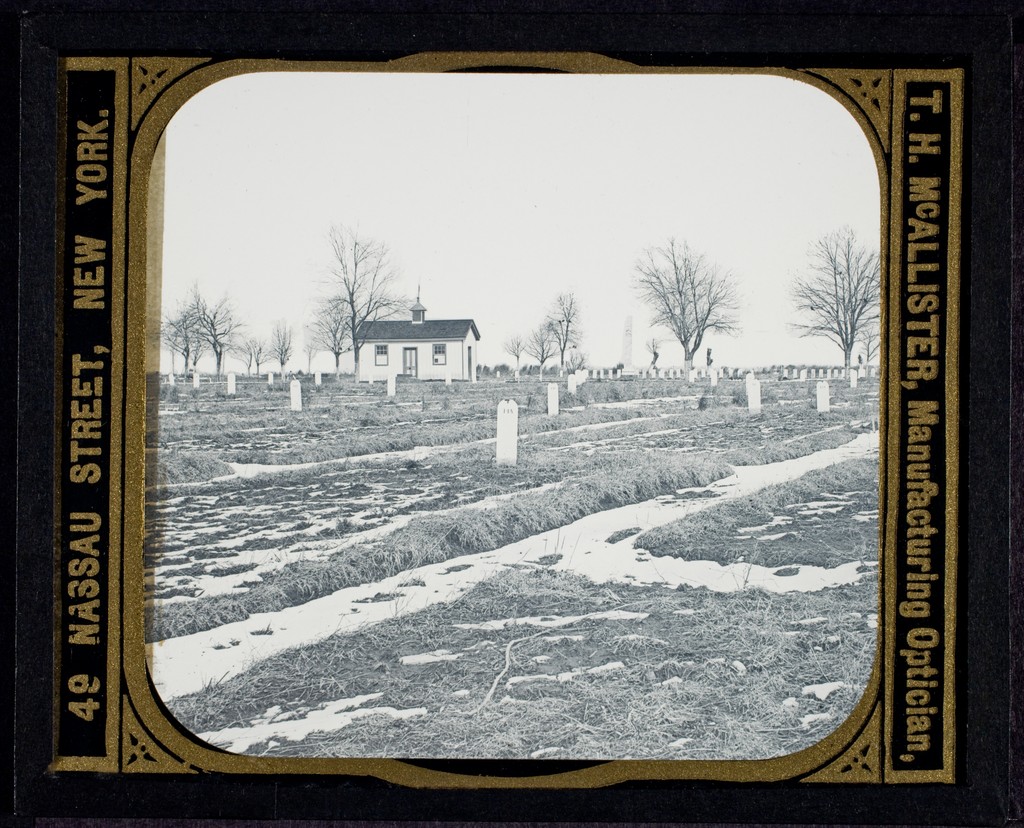
Hart Island 1877, courtesy New York Public Library
Hart Island 1890, photo by Jacob Riis/Museum of the City of New York
The Potter’s Field, Hart’s Island, 1898
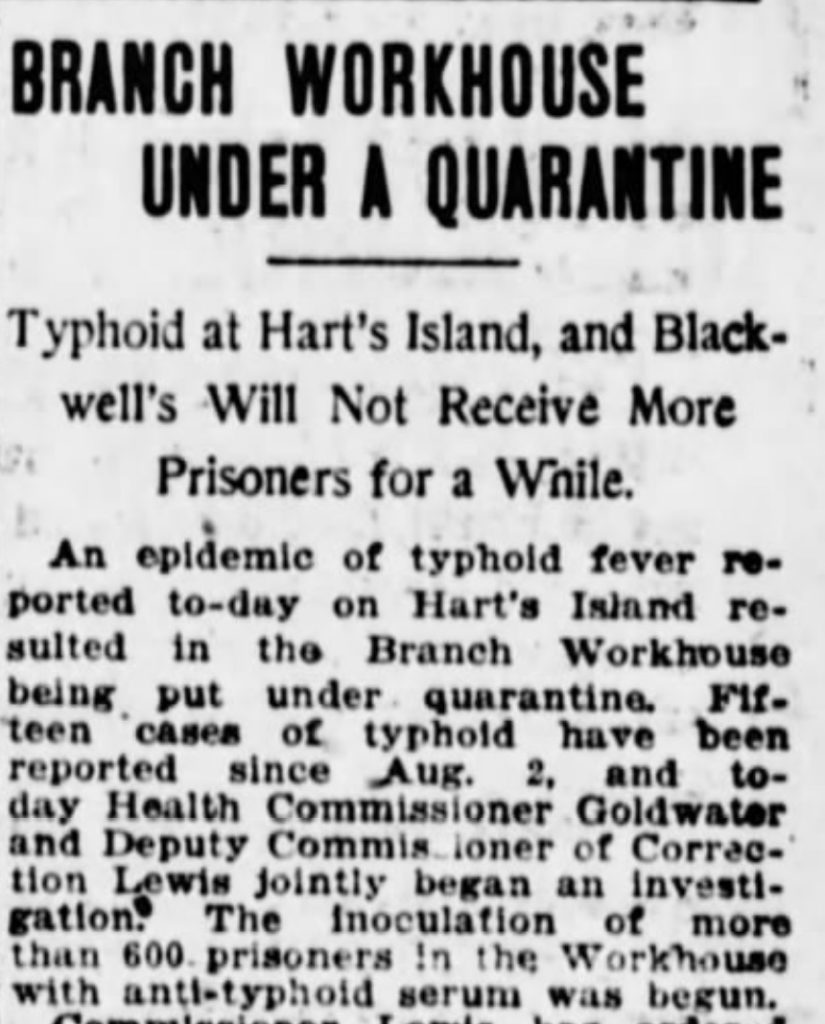
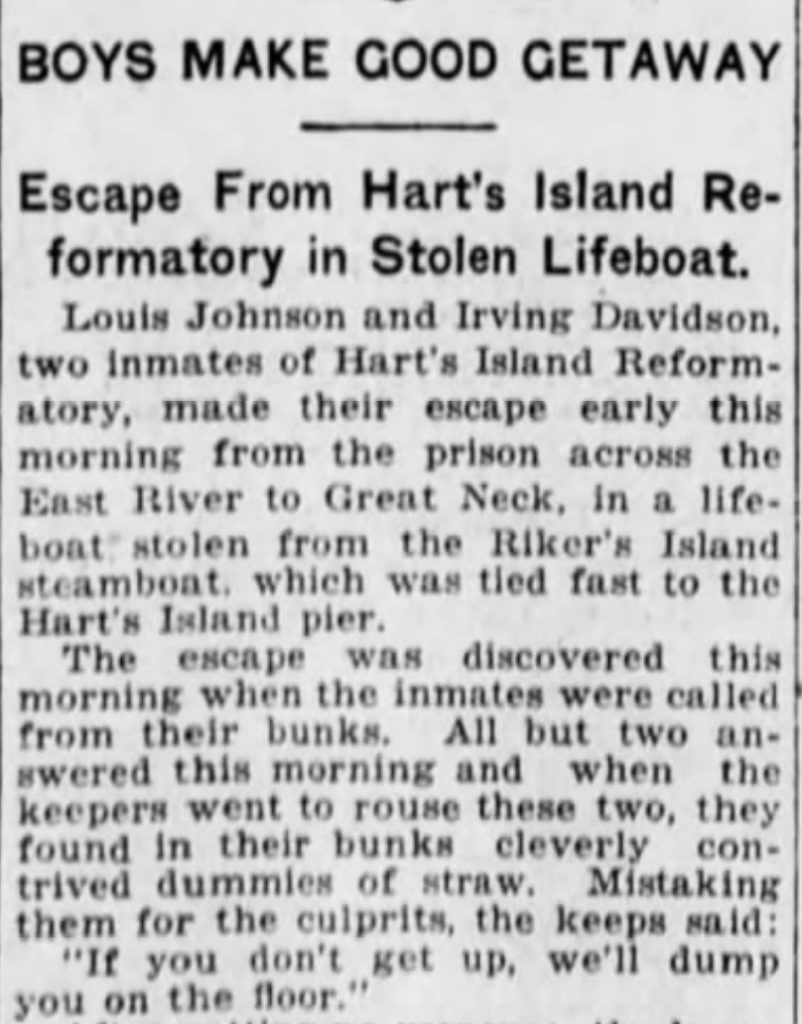
August 18, 1914, New York Evening Post (courtesy Newspapers.com)
March 20, 1916, Brooklyn Daily Eagle (courtesy Newspapers.com)
Claire Yaffa Children With Aids Photograph Collection, via New-York Historical Society
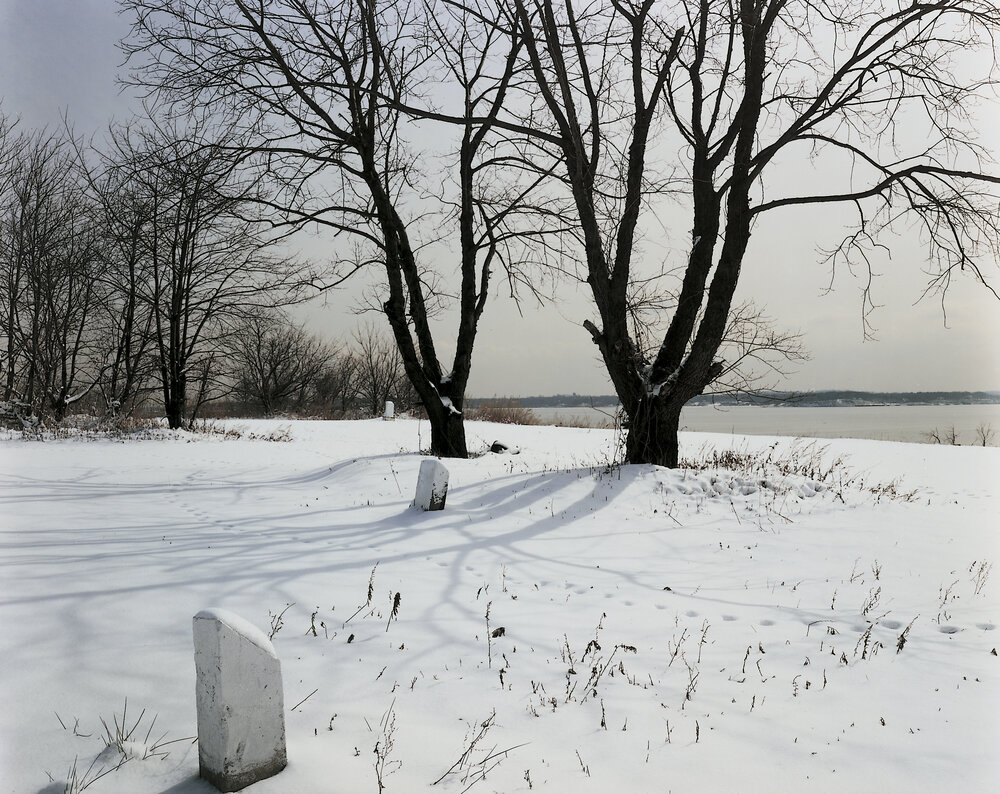
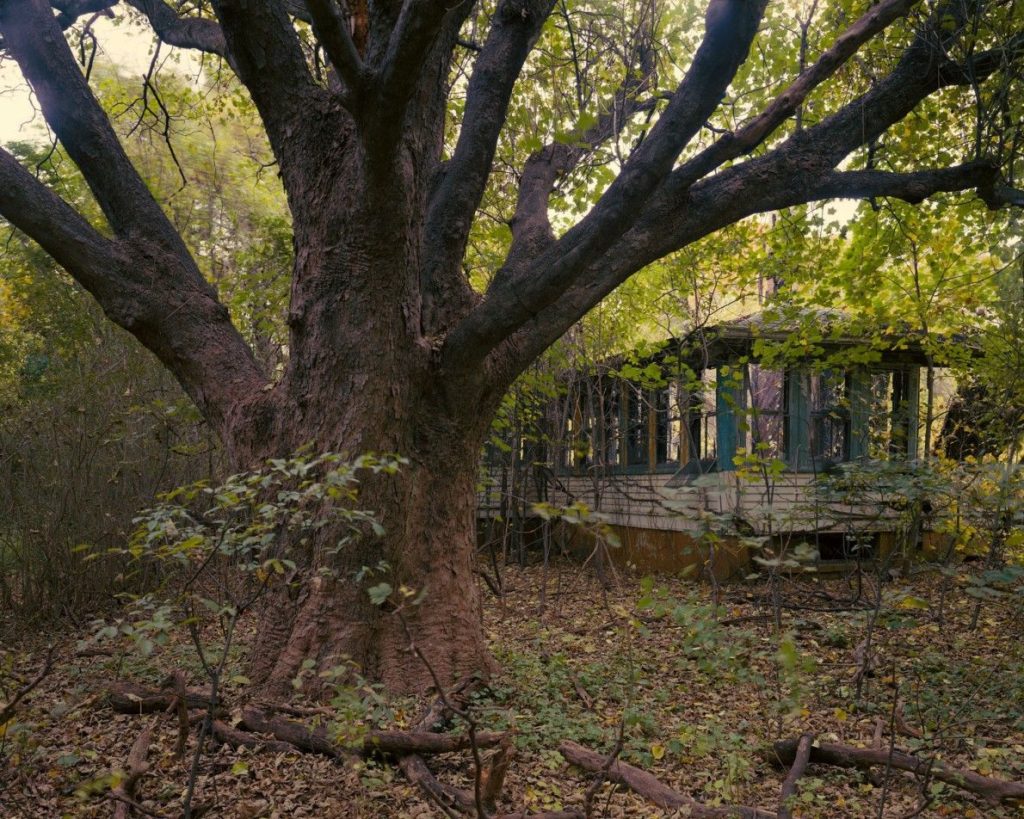
1993/Joel Sternfeld
The two images above were taken by Joel Sternfeld. Please check out his website for more haunting images of the island.

A 1978 news broadcast about Hart Island.

A 2015 piece about Hart Island from MSNBC.

FURTHER READING AND LISTENING

Believe it or not, potter’s fields and cemeteries play a huge role in the development of New York City. This article lists several sites that have once been burials grounds.

The lesser known islands of New York have very fascinating histories that you may not be aware of — try these stories about North Brother Island and City Island, for instance.

And these older podcasts on other New York City islands:

Blackwell’s Island/Roosevelt Island
Rikers Island
Randall’s Island and Wards Island

The Bowery Boys: New York City History podcast is brought to you …. by you!

We are now producing a new Bowery Boys podcast every other week. We’re also looking to improve and expand the show in other ways — publishing, social media, live events and other forms of media. But we can only do this with your help!

We are now a creator on Patreon, a patronage platform where you can support your favorite content creators.

Please visit our page on Patreon and watch a short video of us recording the show and talking about our expansion plans. If you’d like to help out, there are six different pledge levels. Check them out and consider being a sponsor.

For the next several weeks, in addition to our new two-episodes-a-week schedules, all those who support us on Patreon will receive a BONUS EPISODE every other Sunday.

We greatly appreciate our listeners and readers and thank you for joining us on this journey so far.
Categories
Landmarks

African Burial Ground: New York’s unforgettable monument (NPS 100)

This month America celebrates the 100th anniversary of the National Park Service, the organization which protects the great natural and historical treasures of the United States. There are a number of NPS locations in the five borough areas. Throughout the next few weeks, we will focus on a few of our favorites.   For more information, you can visit National Parks Centennial for a complete list of parks and monuments throughout the country.  For more blog posts in this series, click here.
The following also features an excerpt from the Bowery Boys Adventures In Old New York, now available for sale wherever books are sold and online at Amazon or Barnes and Noble.


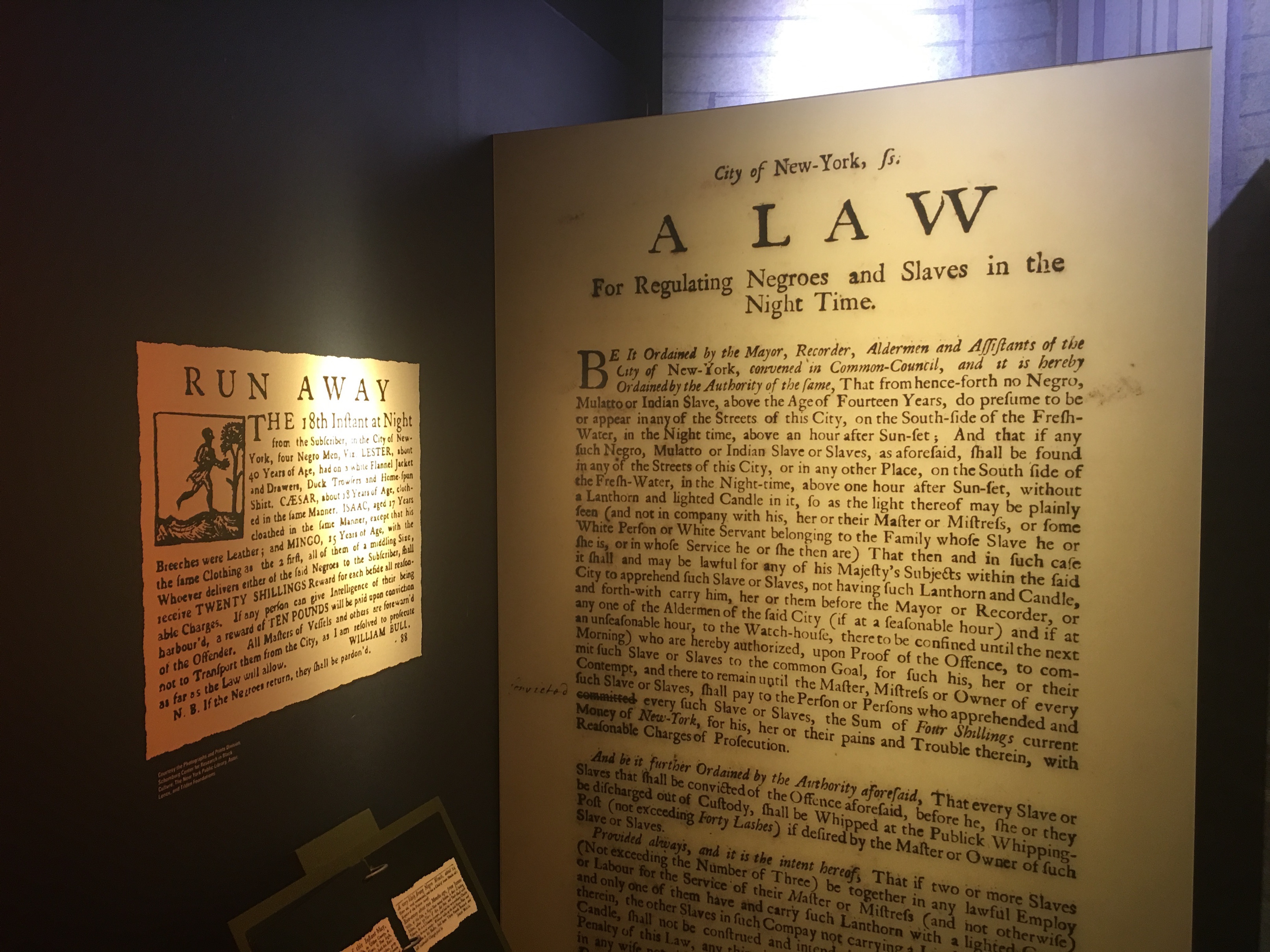
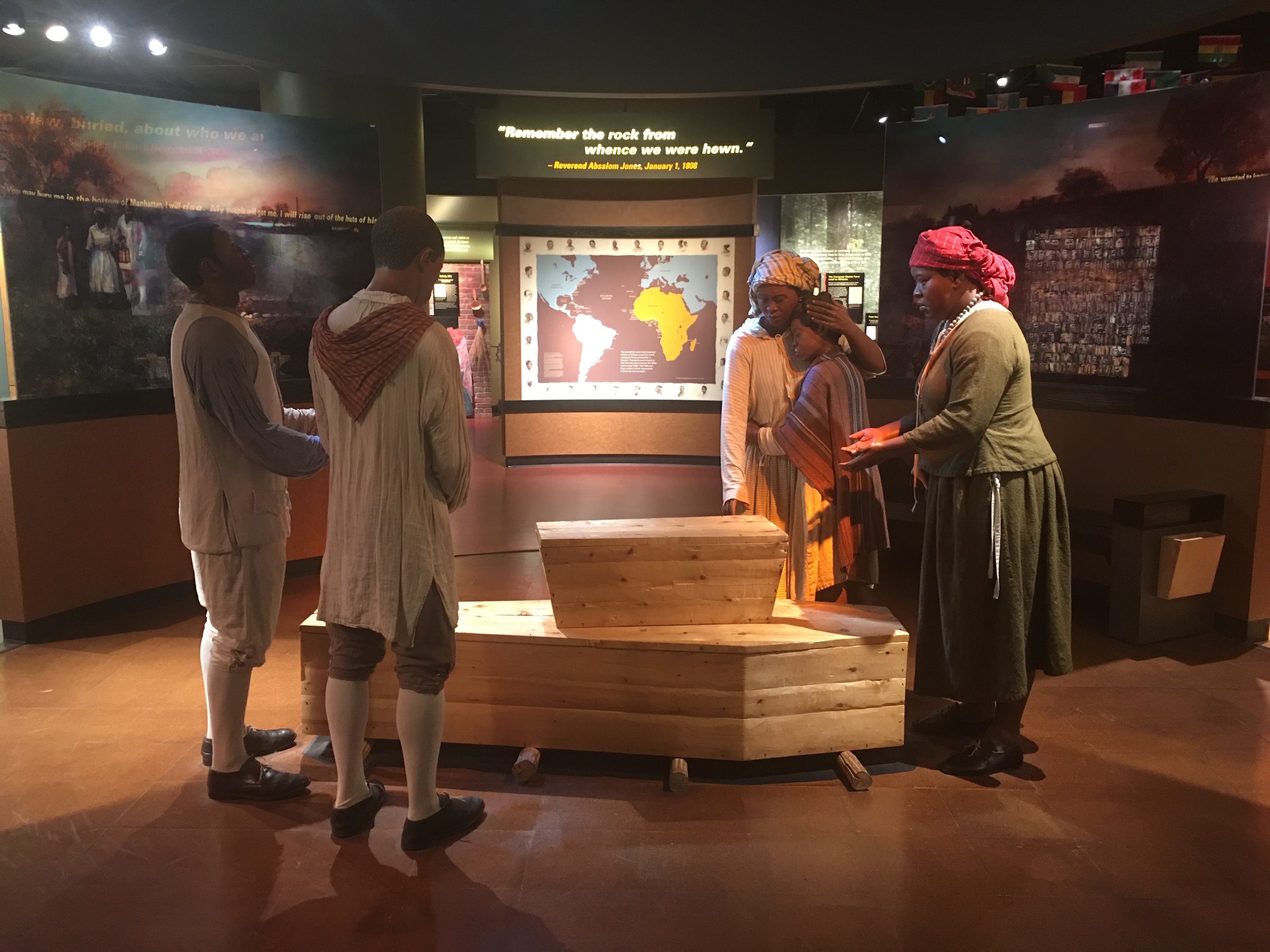
A vivid display inside the visitor center at 290 Broadway.

IMG_9966
AFRICAN BURIAL GROUND NATIONAL MONUMENT
DUANE STREET, CIVIC CENTER, MANHATTAN


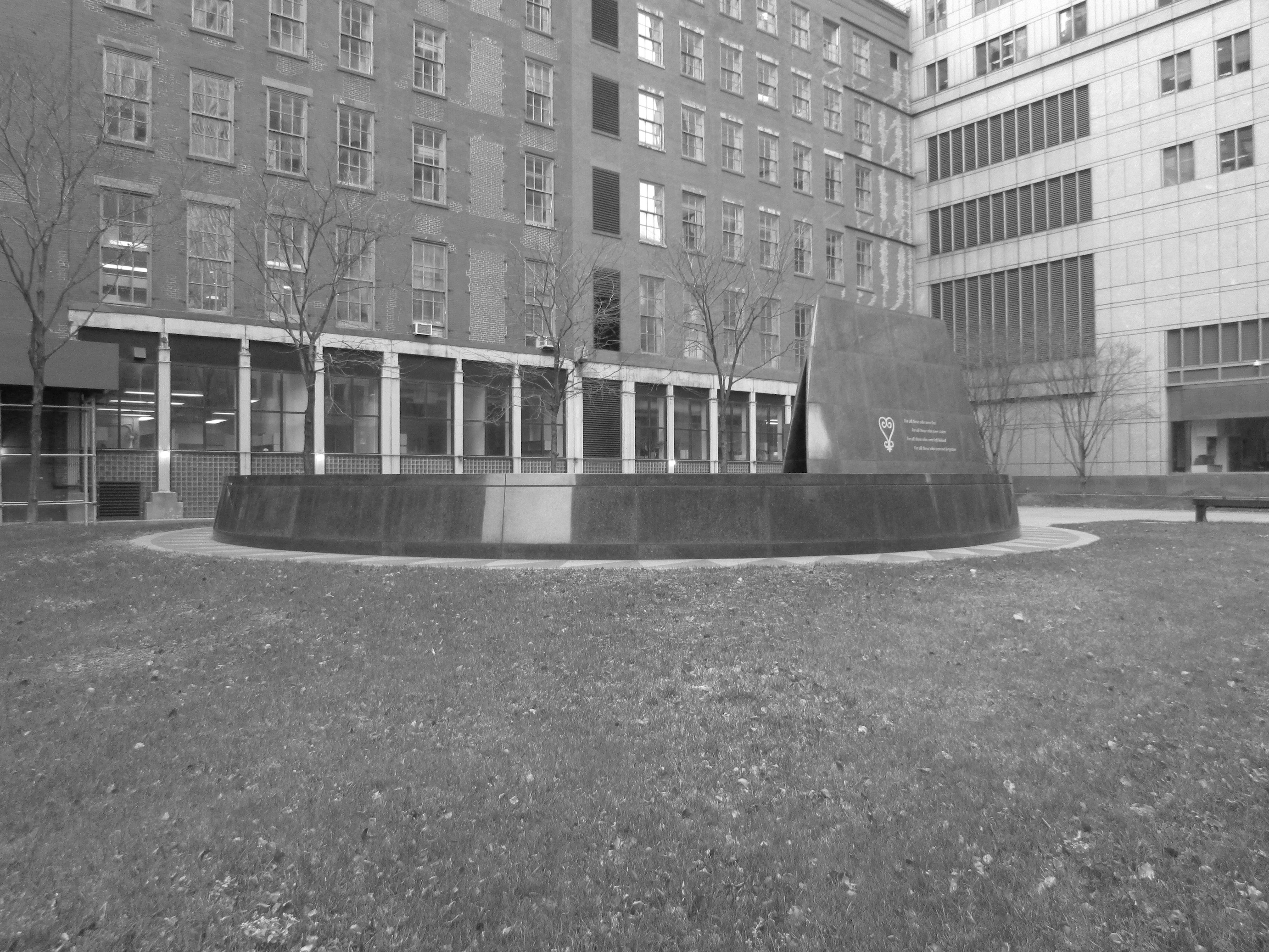
The African Burial Ground, tucked right into the heart of Lower Manhattan, two blocks north of City Hall, represents one of the greatest archaeological finds and saddest stories in New York’s history. The somber monument, opened in 2007, gives long overdue respect and honor to the remains buried here of New York’s first African and West Indian communities.

 Contrast this with lower Manhattan’s other two burial grounds — at Trinity Church and St. Paul’s Chapel —with their carefully preserved marble tombstones and prestigious roster of permanent residents. Whereas Trinity’s cemetery has a fence to preserve the peace, this burial ground has no such border to keep the city at bay.

Photo 6.1

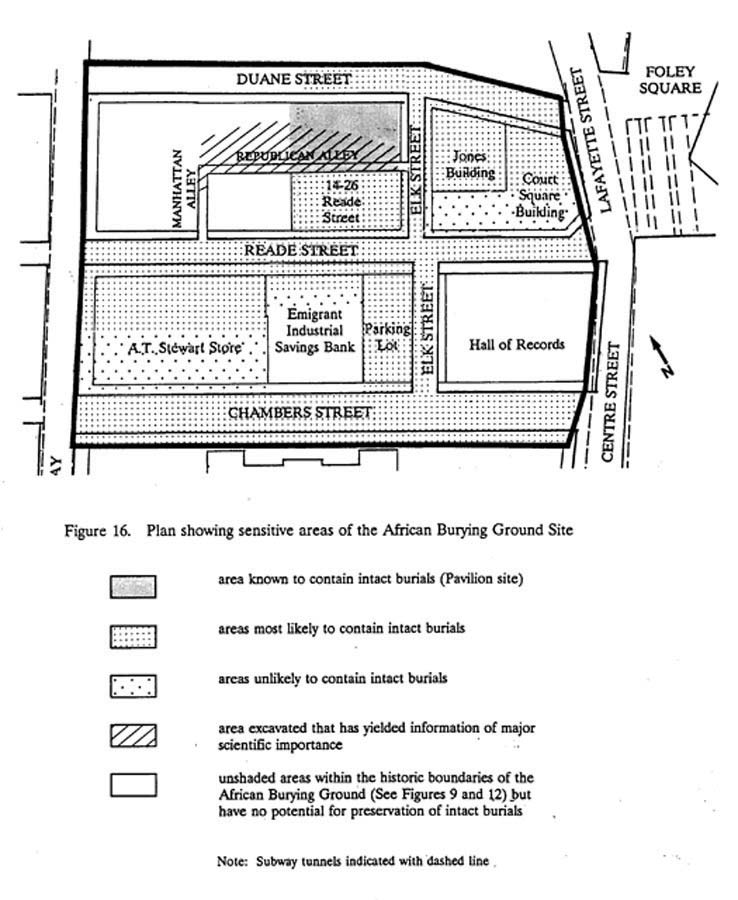
In fact, the African Burial Ground is far larger than the site of today’s monument. Its true size is unknown, although it is believed to cover about seven acres, stretching out under many of the surrounding buildings, including those in Foley Square and along Chambers Street.

The burial ground dates back to the seventeenth century, when New Amsterdam was a company town for the thriving Dutch West India Company, and the town’s early settlers were primarily traders, not builders or town planners. In their eyes, they didn’t sail all the way across the Atlantic from Holland to do menial work.

And so in 1626, to stimulate and facilitate the colony’s growth, the Dutch imported the New World’s first African slaves, a group of eleven people. Early records show that they were assigned names associated with their homelands or original captors: Antony Congo, Dorothe Angola, Jan Negro. Slave labor would be used to build many of New Amsterdam’s major structures, including the large wall that lined the northern edge of town.

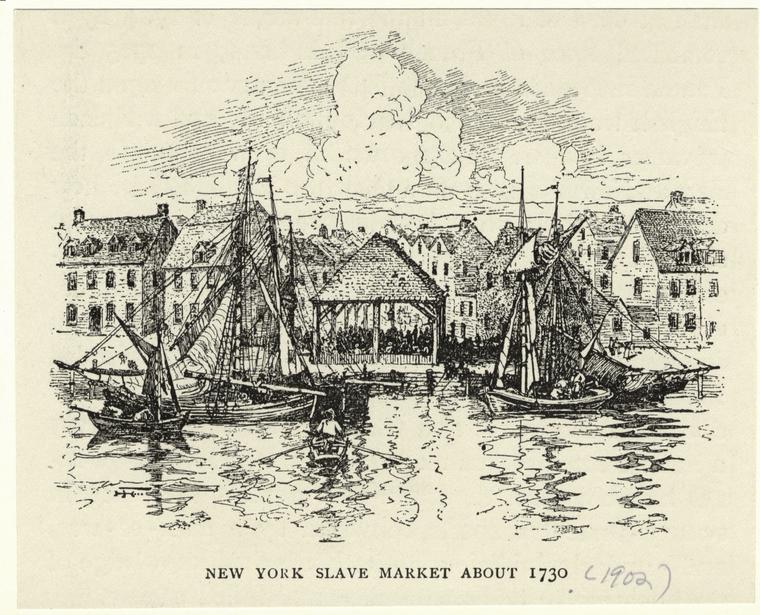
One of the most notorious landmarks of the slave trade sat at the corner of Wall and Water Streets (once the shoreline, back in British New York). The Meal Market was established in 1711 not only for the buying and selling of raw products like grains, but also for the purchase and leasing of “negroes and Indian slaves.”

Courtesy New York Public Library

It’s interesting to note that under the Dutch, enslaved men and women could earn their freedom and eventually own property. But those who did gain independence were not permitted to reside within the city’s walls. Instead, they were forced out beyond the borders to settle in the “free Negro lots” found around the southern edge of Collect Pond.

Things got worse for the colony’s slave population in 1664, when the British took control and renamed the colony New York.

They brought with them their own stricter slavery traditions and stripped away those meager legal protections that had been afforded by the Dutch. New York was not a plantation town; many families owned one or two slaves and they were usually kept in or near their homes. By the 1740s thousands of enslaved men and women from Africa and the Caribbean lived in New York, more than one-fifth of the city’s population.

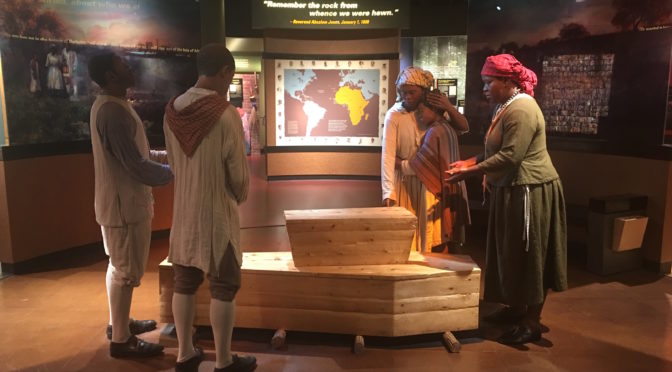
The visitor center serves as a museum about slavery and an exhibit to the early black experience in New York

IMG_9971

While a diverse number of religions were practiced under English rule, most black New Yorkers eventually converted to the Anglican Church. But Trinity Church did not allow the remains of black people, slave or free, to be buried in its churchyard. And so this population was forced outside the city walls again, this time claiming some land south of Collect Pond as their own private burial ground.

In their burial ceremonies and mourning practices, the city’s African and Caribbean residents were able to display their original religious beliefs, and could come here and bury friends and loved ones according to traditional burial customs.

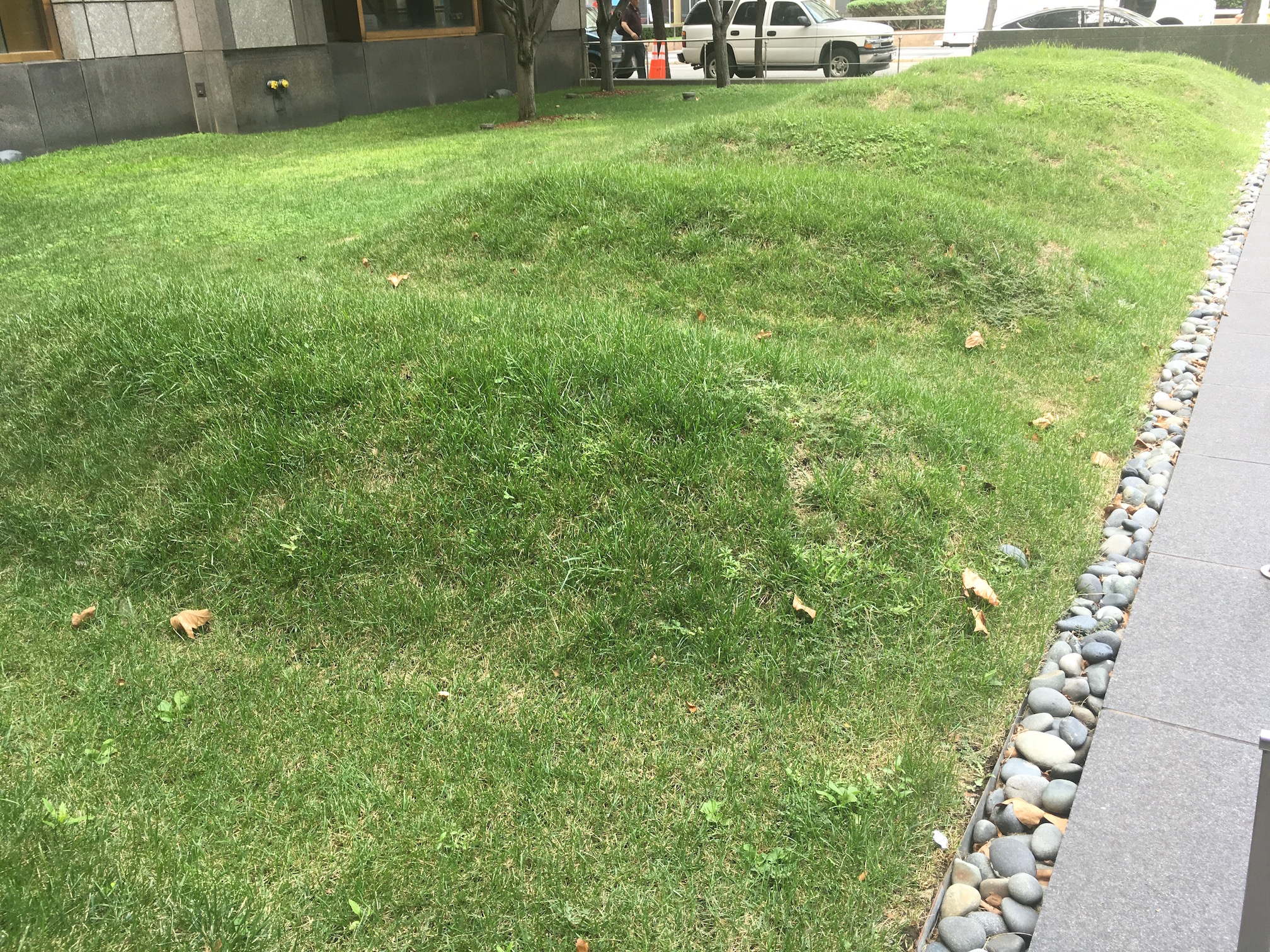
The remains of 419 individuals are contained in mounds outside next to the monument.

IMG_9977

In the early years, at dusk, New Yorkers would hear the foreign-sounding music, drum beats, and the sounds of exotic ceremonies drifting down from the burial yard.

Well, that was simply too frightening for some white New Yorkers, and so, starting in 1722, it became illegal for blacks to congregate at night, and a 1731 law prohibited more than twelve people from gathering during the day at the burial ground. These draconian laws against black New Yorkers were instigated due to the events of April 1712, when a group of slaves conspired to burn the city. Twenty-one enslaved and freedmen were put to death in retaliation.

While these laws put a damper on many religious ceremonies, it was still possible to show some freedom of expression in the burials themselves. The dead were buried in wooden boxes, most facing east, as was customary for some African religions, and trinkets of religious or personal value (cowrie shells, pipes, buttons, and pieces of coral and crystal) were placed inside the coffins with the deceased.

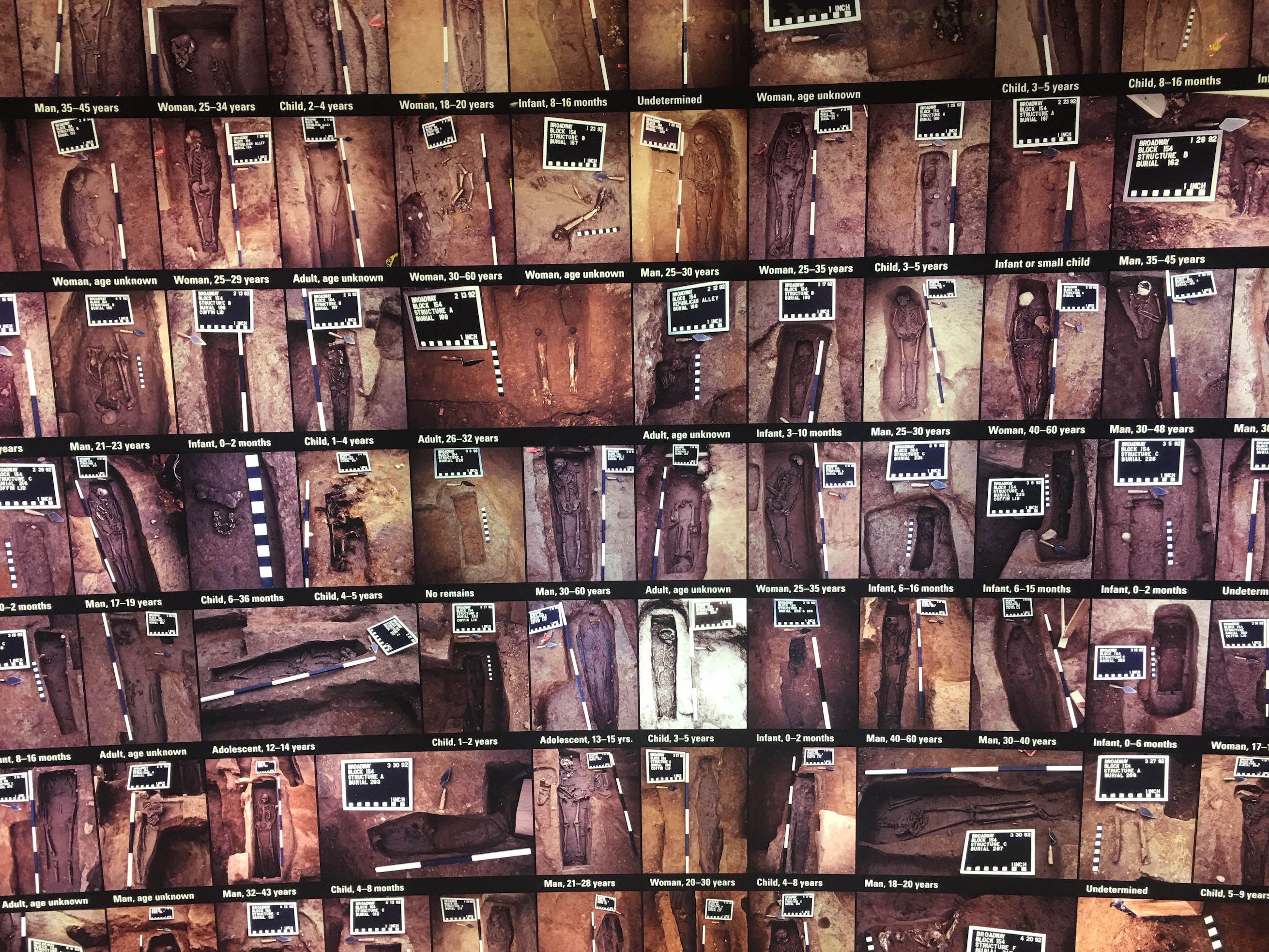
Images of the remains found on the site of the very building you’re standing in are displayed inside the visitors center.

IMG_9969

With the departure of the British in 1783 and the beginning of the city’s great march northward, this land quickly became much more valuable. By the early 1810s, Collect Pond and its now-spoiled natural surroundings were simply filled in, the marshes drained, the hills leveled.

The graves of many of New York’s early slave and free black population, the resting place of approximately 15,000 bodies here, were covered over in landfill, in some places 16 to 25 feet deep.

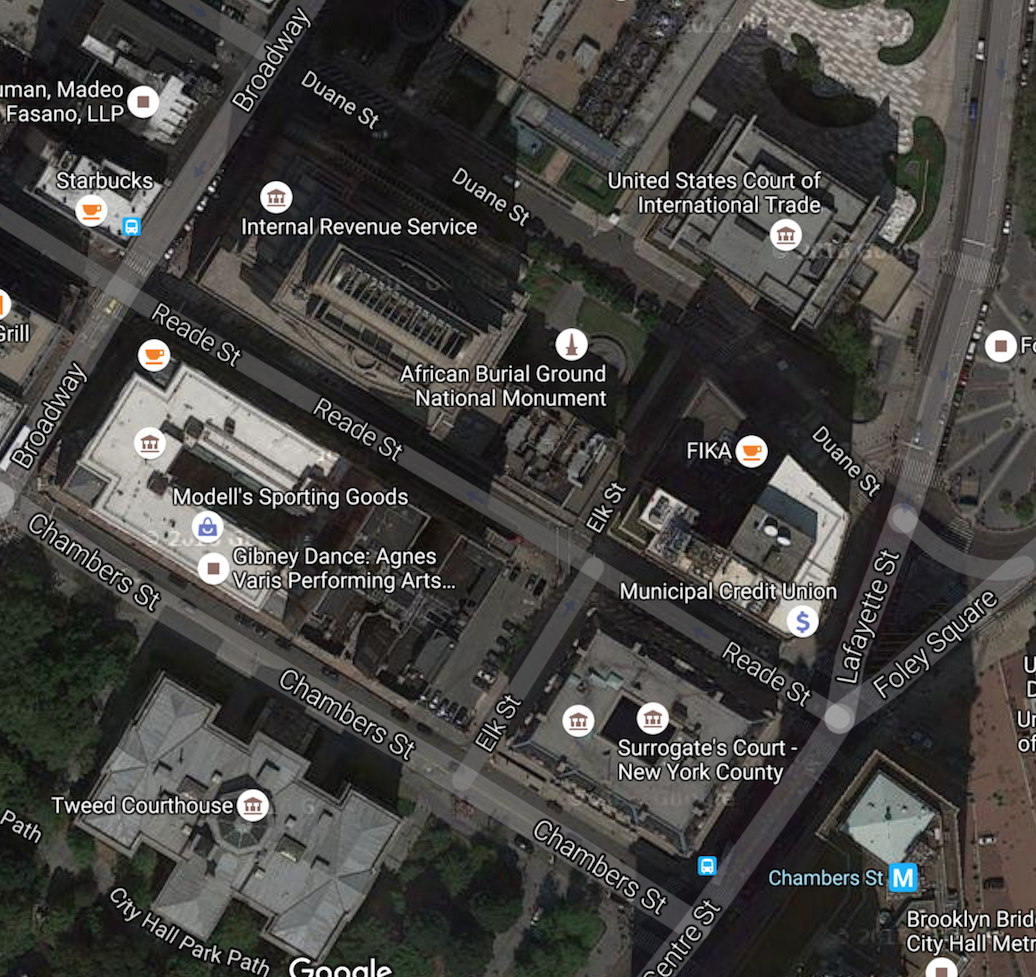
Map of the site and the projected location of other burials. Below is a current Google Map satellite view of the site:

Courtesy National Park Service

Screen Shot 2016-08-29 at 9.55.44 PM

The early structures built atop the burial ground were not very tall, none more than a few stories high. As a result, the depths of their foundations were no deeper than 20 feet or so. In some places, the burial ground lay below the newly erected buildings, completely preserved by the landfill that had been hastily thrown over it.

Flash forward—way forward—to 1991, when New York City was home to hundreds of skyscrapers, but unbelievably this small seven-acre area still only held structures of modest height. When work began on a nearby government building at 290 Broadway, excavators happened upon the first evidence of human remains. Throughout the next year, excavations would uncover a total of 419 bodies, along with a wide assortment of artifacts.

The monument to this discovery, completed in 2007 and operated by the National Park Service, returns a bit of grace and reverence to this site, and focuses on the spiritual beliefs of those who were interred here centuries ago. Immediately to your right is a set of seven evenly and elevated spaced beds of grass, where the bodies of the 419 have once again been buried, collected in hand-carved wooden sarcophagi.

The following words are inscribed upon the monument (Duane Street, between Broadway and Lafayette Street. Visitors’ center at 290 Broadway):

For all those who were lost
For all those who were stolen
For all those who were left behind
For all those who are not forgotten

WANT MORE INFORMATION? Visit the NPS African Burial Ground National Monument site for more information.

LISTEN TO OUR PODCAST! We have an entire show on the African Burial Ground. It’s Episode #115. You can find it on iTunes or download it from here.

Categories
Landmarks Mysterious Stories

The Ghost of Peter Stuyvesant May Still Haunt the East Village

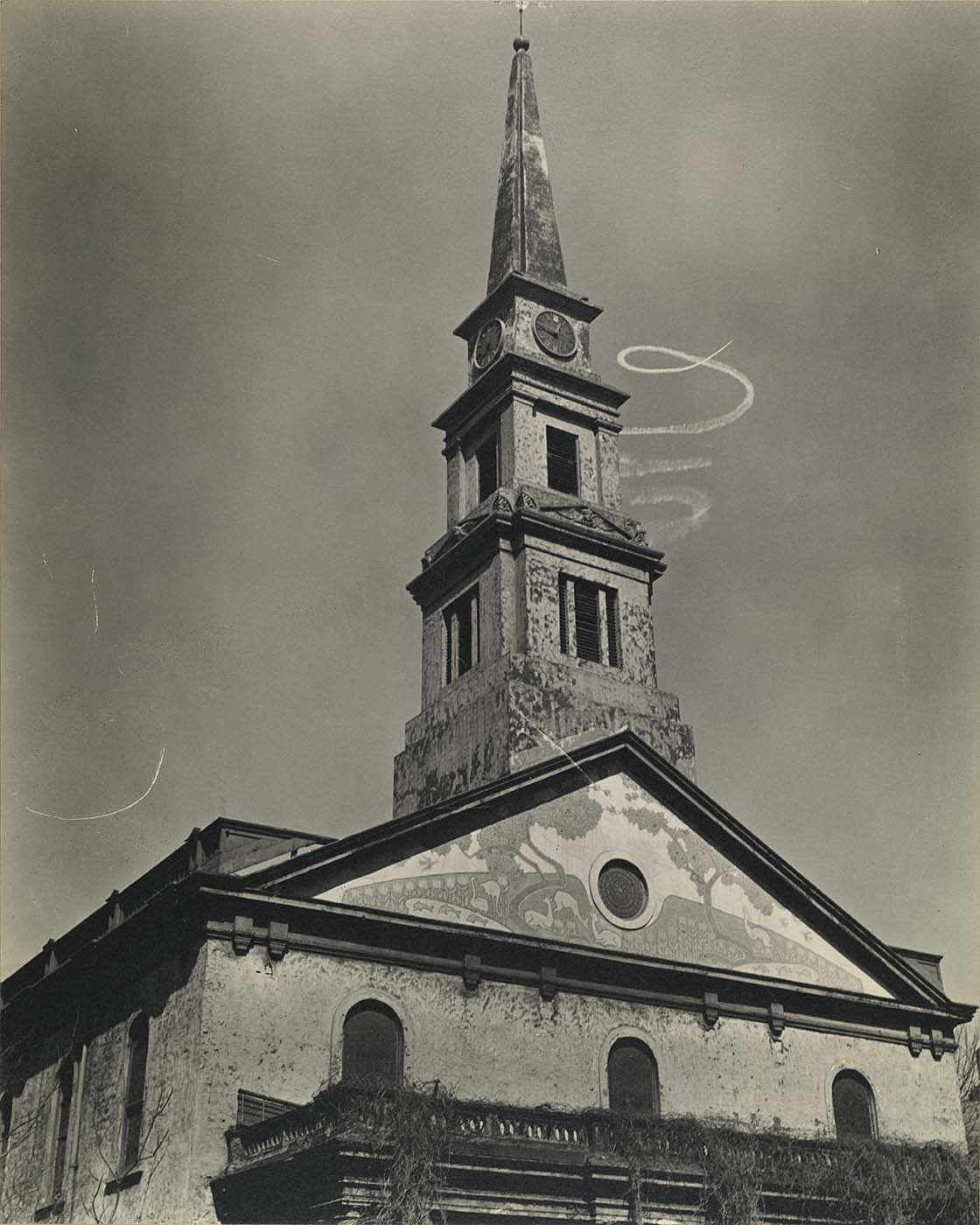
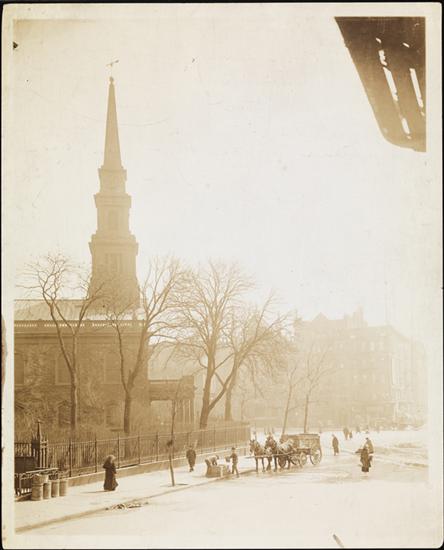
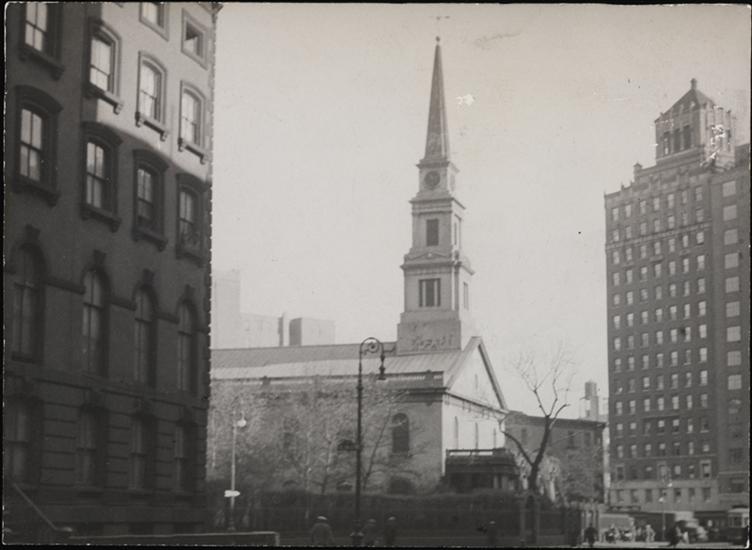
St. Mark’s Church-in-the-Bowery is the oldest standing structure in the East Village. Upon seeing it, you’re almost forced to reevaluate where you are.

It’s intriguing even to those who pass by it everyday. It’s mysterious even to those who work and worship here.

Built in 1799 by the Stuyvesant family, St. Mark’s chapel and cemetery conformed to a street grid plan unique to their farmland. Today the only street that exists from the old Stuyvesant plan is Stuyvesant Street, running diagonally through New York’s standard street grid.

The Stuyvesants planned the street on a true east-west access.  It’s the rest of the island that’s askew with the compass.

Photo by Berenice Abbott

Buried under the church ground are vaults of some of New York’s greatest civic leaders and social notables. Daniel D Tompkins, Vice President under James Monroe, is here, although the park that bears his name Tompkins Square Park is a couple avenues over. The department store king A.T. Stewart used to be here before his remains were stolen in a bizarre ransom attempt.

Philip Hone, the so-called ‘party mayor’ of New York, is interred in a vault here. From my profile of the mayor a few years ago:  “Mostly, he’s remembered as a cultural ambassador, even commissioning artwork for City Hall, approving of a developing theater district in the not-yet-seedy Bowery and encouraging the city’s growth as an American capitol of arts and sciences.”

Courtesy Museum of the City of New York

But of course the most famous individual beneath St. Mark’s is that of the original Stuyvesant — Petrus Stuyvesant, the director-general of New Amsterdam whose farms comprised much of today’s East Village and give the Bowery (Bouwerij) its name.

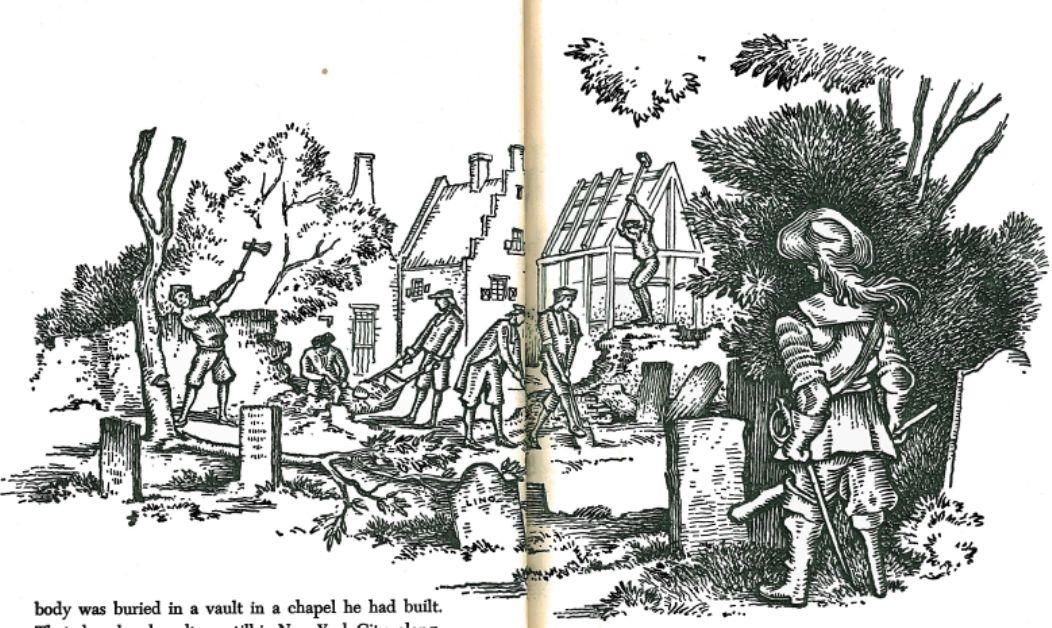
Stuyvesant died in 1672 in the British controlled colony of New York. From an 1893 history on Stuyvesant: “His remains were interred in a vault beneath the chapel which he had built near his house.  When the present St. Mark’s Church was erected, on the site of the old chapel, the vault was preserved, and a commemorative stone was placed upon its wall.”

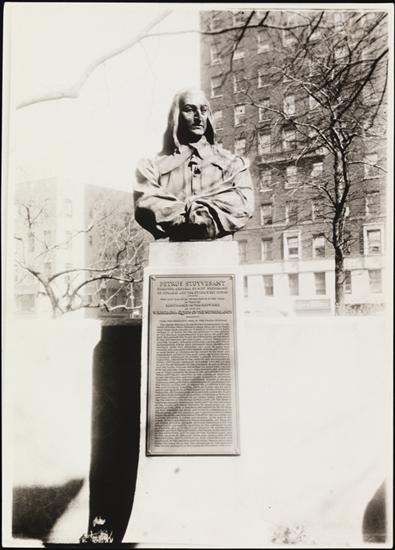
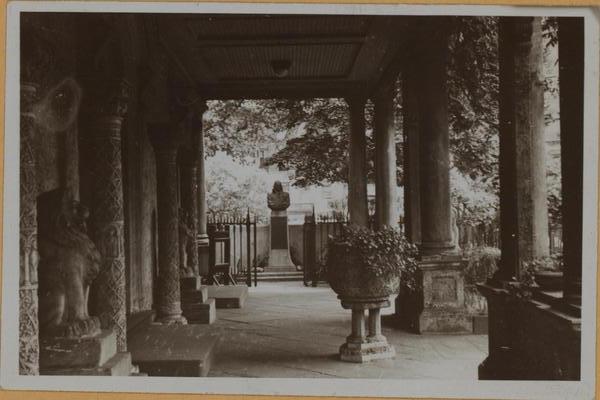
Today his vault marker can be easily seen along the side of the church, and a bust of Petrus sternly greets visitors into the church yard.

Courtesy Museum of the City of New York

The bust by Dutch sculptor Toon Dupuis is 100 years old, placed at St. Mark’s on December 6, 1915. Speaking at the ceremony, oddly enough, was General Leonard Wood, chief of staff of the U.S. Army. “Peter Stuyvesant was a headstrong, positive character with intolerance of lack of interest in the welfare of his company or colony.”

So headstrong that he’s still around perhaps? Legends of the ghost of Peter Stuyvesant have been associated with St. Mark’s since the 19th century.

Courtesy New York Public Library

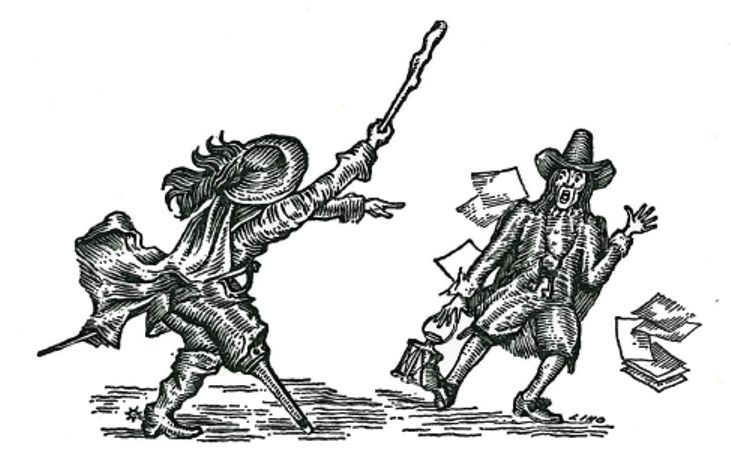
One version of his ghost story recounted in the 1966 children’s book The Ghost of Peg-Leg Peter by M.A. Jagendorf, with illustrations by Lino S. Lipinsky (reprinted here):

“His body had been put into a closed vault.  But that did not stop the ghost of the governor from stomping around on black or moonlit nights in his old haunts; his farm and the city hall where he had once reigned.  Folks heard his stomping peg leg with the silver band, and saw him — and ran away in fear. That pleased him, particularly if they were English. He wanted no one around his grave, least of all the enemy who had robbed him and the Dutch Government.”

st marks

The growth of New York up Manhattan island so that it soon included all of Stuyvesant’s farm apparently enraged his spirit to such an extent that his apparition was reported in locations surrounding the church.

One fateful night a sexton entered the church late at night to fetch something for the rector.

The moon was only half full, but bright enough to show church, trees … and ghost.

When the ghost saw the sexton, he raised his stick threateningly. The sexton raised his eye, took one look and ran off.

1

“The governor-ghost looked after the fleeing fellow with contempt and then stomped to the locked church door. He walked through it into the church and stomped up to the hanging bell rope. Taking it in his hands he began pulling it savagely. “

Ringing a church bell two hundred years ago meant an emergency — a fire in the region, perhaps, or a major announcement. According to legend, when neighbors ran to the church to inspect the sound, they found nobody inside. The bell rope had been torn off and its lower section was completely gone.

Over the years stories of his ghost crop up, usually tied with tales of a rapidly changing city.

One can only imagine how he’s taken to the  gentrification of the East Village!

Sometimes the ghost of the governor still comes out again and looks around sadly. But he never rings the bell any more, for he knows it will be of little use.”

Courtesy Museum of the City of New York

Another disturbing event occurred at the church in 1903 although the resolution to this mystery was a bit more mundane.

One day the old clock atop St Mark’s began to act very mysteriously. “Churchgoers and others noticed last Sunday that the clock was acting in a manner befitting neither its age nor its position as hour marker over the historic graveyard. Not only was its course unreliable, but its actions were positively skittish, the minute hand having been seen to wiggle in a most undignified manner.” [source]

After several days of peculiar operation, a repairman climbed to the tower to fix the clock, only to find the culprit — “a kite string and pigeon were found to be responsible for the charges of horological misconduct lodged against the ancient timepiece.”

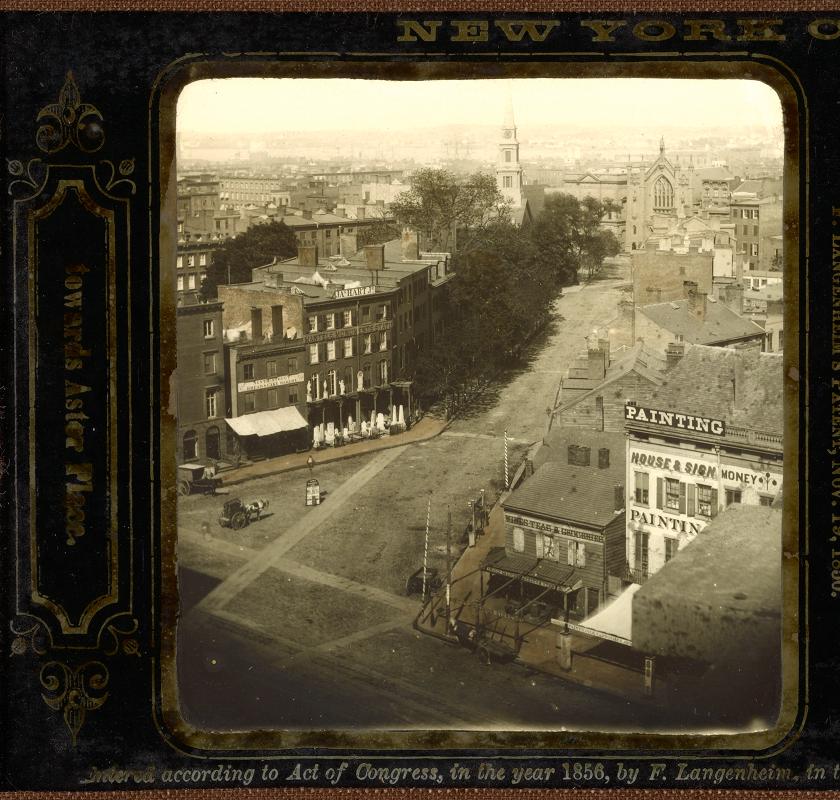
Below: Stuyvesant Street in 1856, an aberration to the city grid plan thanks in part to the presence of St. Mark’s Church and its well-established churchyard

1

For more information on St. Mark In-The-Bowery, check out our podcast on its amazing history.  And the ghost of Peter Stuyvesant pops up in our very FIRST ghost stories podcast.

Categories
Neighborhoods

The hole that swallowed Greenpoint and other treasures at Old NYC

The New York Public Library‘s Old NYC interface is pretty much one of the best things to happen to New York City history this year. It selects photographs from their extensive archives and maps them out — all five boroughs and pretty much most major intersections.  It’s like a Google Maps street-view of the past.

It’s been a true delight (and a major distraction) to revisit random avenues and see what things looked like over 75-100 years ago.  Try it out. Pick a street, any street.

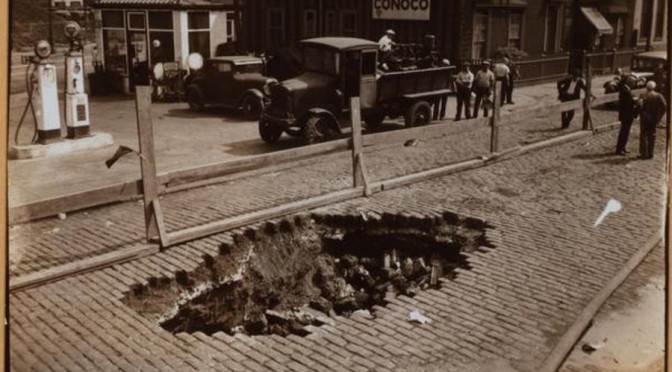
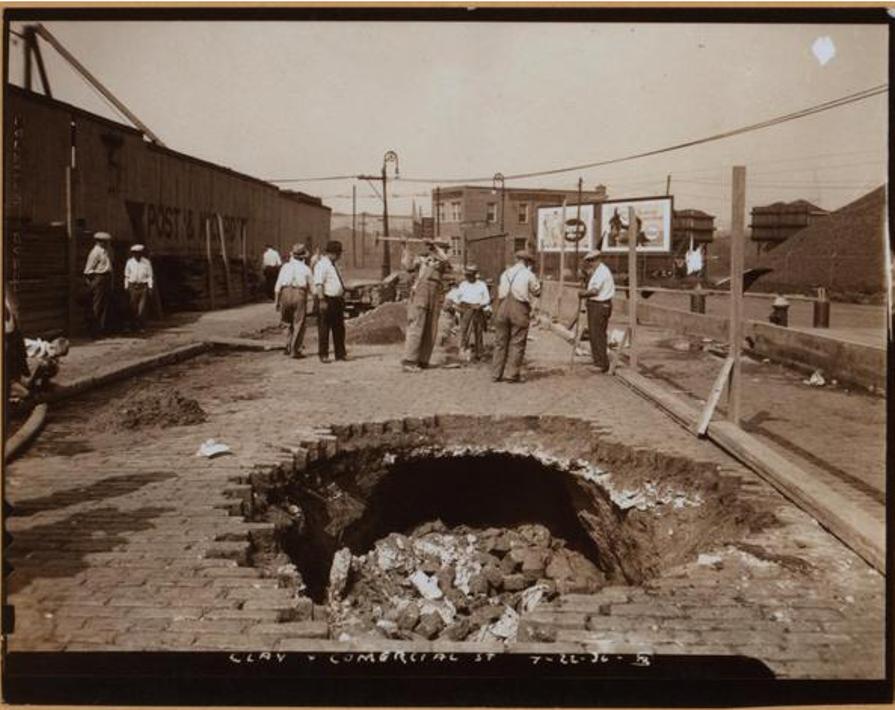
While stumbling through Brooklyn history, I can upon a startling sight at Clay Street and Commercial Street in Greenpoint.  According to the caption, the photos show “operations on a W. P. A. sewer project.”

Here’s another view (and check out the others here):

2


An in-depth plunge through this resource finds all sorts of unusual items from the past. Here are a few more that I discovered but, by all means, go hunt around for yourself!

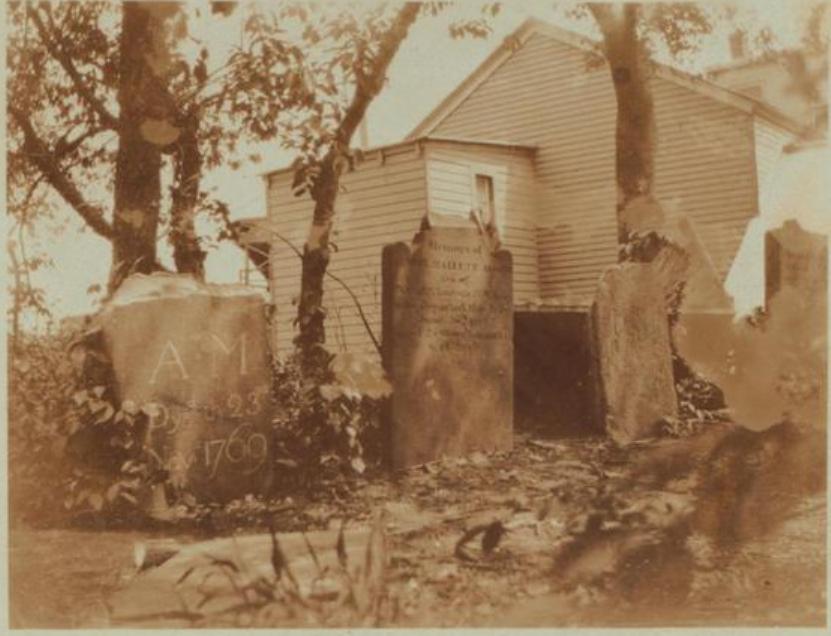
A spooky cemetery in Woodside, Queens, at 32nd Avenue and the northwest corner of 54th Street (or this intersection):

3

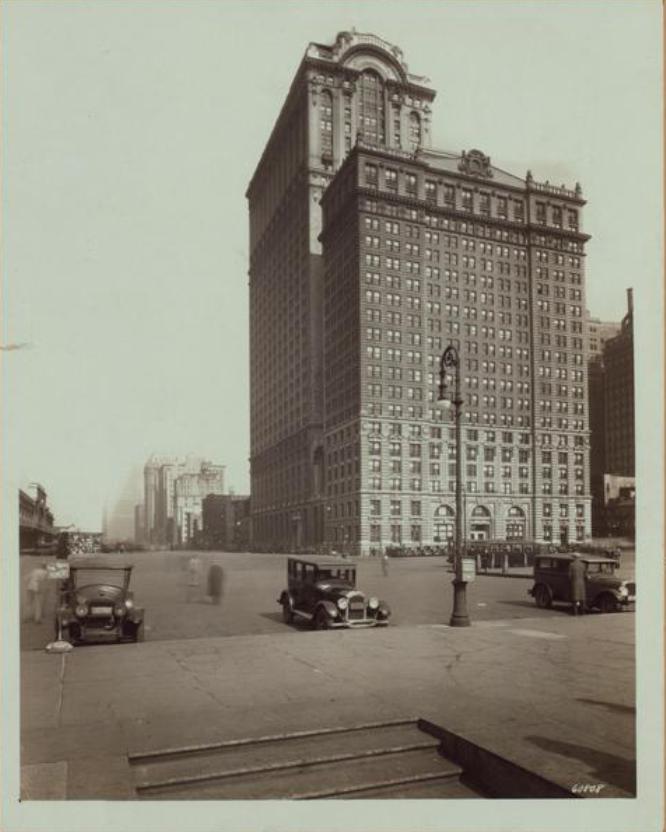
Back when one could just park your jalopy at the foot of West Street, 1920s. Here’s that view today. [source]

4

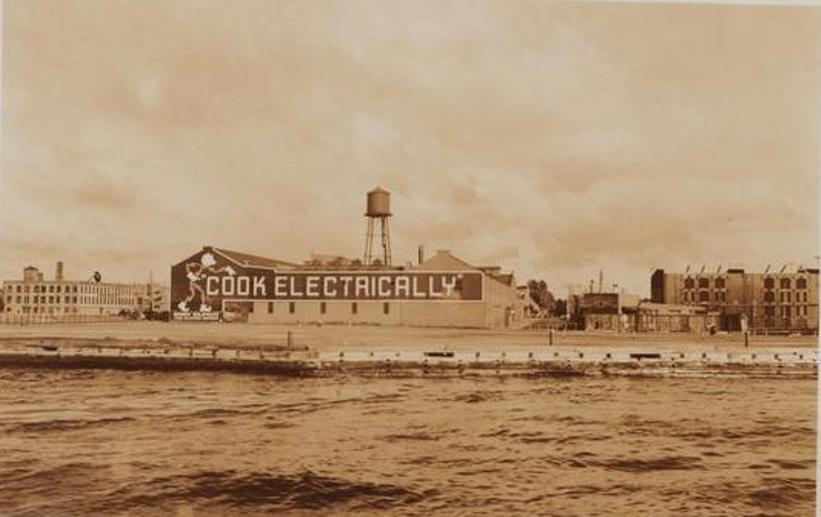
Edison Electric Company wants to encourage you to ‘COOK ELECTRICALLY’ from the vantage of a Ferris Street sign in Red Hook, Brooklyn. [source]

8

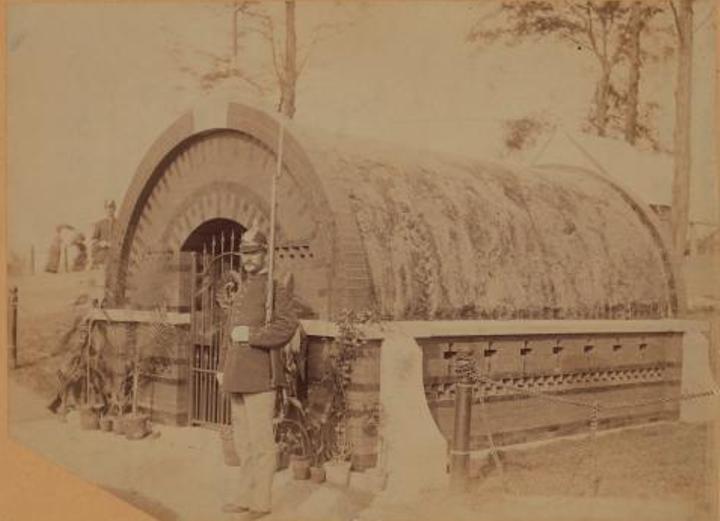
Before Ulysses S. Grant was interred in the monument that bears his name, he was kept in a temporary tomb near the same spot.  This picture is from the 1880s. [source]

9

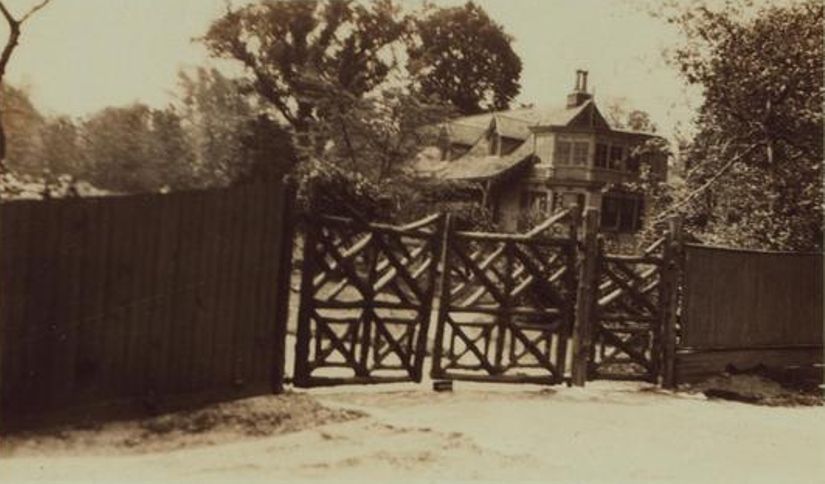
A rustic view of the Alice Austin House in Staten Island from 1926. Here’s that same view today:

5


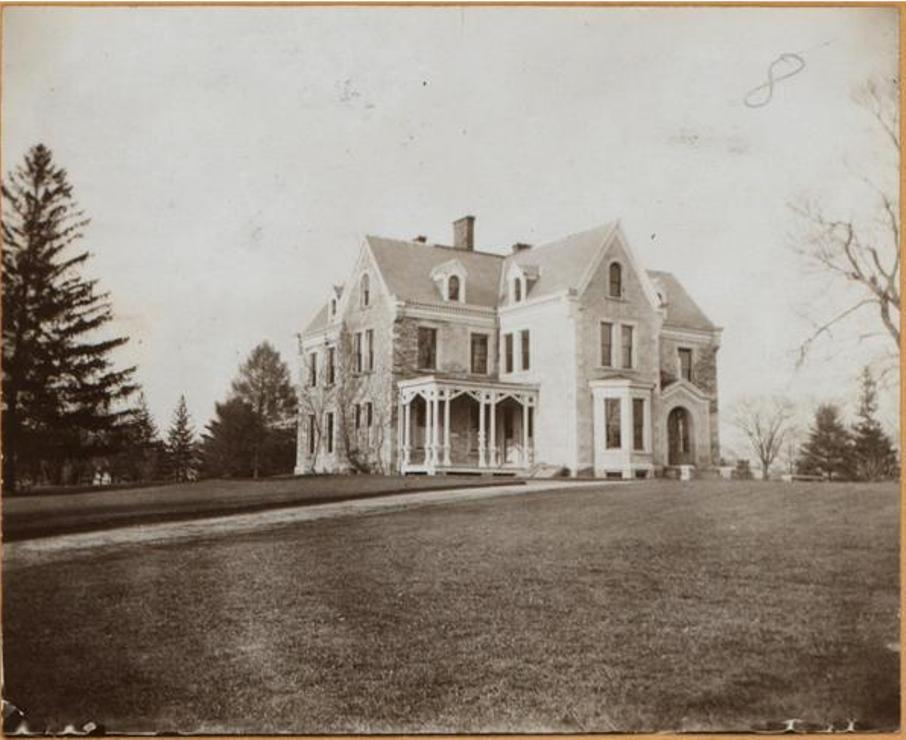
Graceful and long-gone Zborowski Mansion which once sat in Claremont Park in the Bronx. More information about this house here.


6


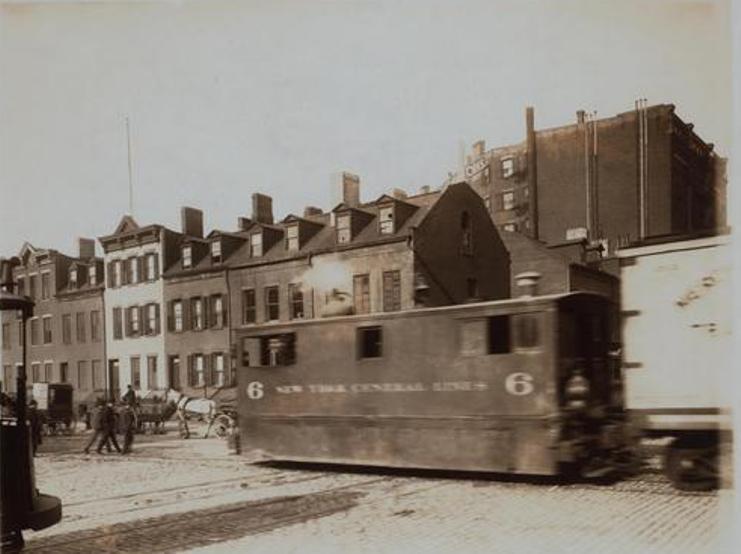
New York Central Railroad cars, just sailing down the street, at the corner of Hudson and Vestry Streets, in Manhattan. [source]

7


New York City Marble Cemetery had quite a weekend

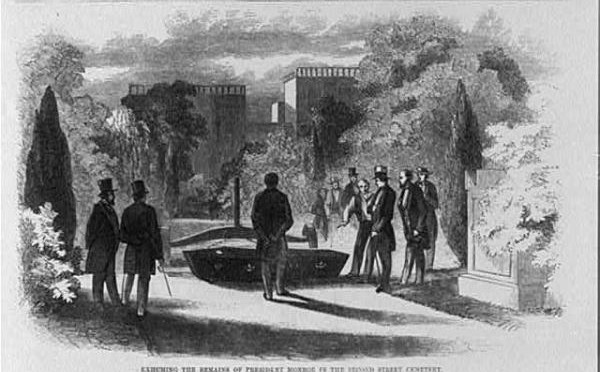
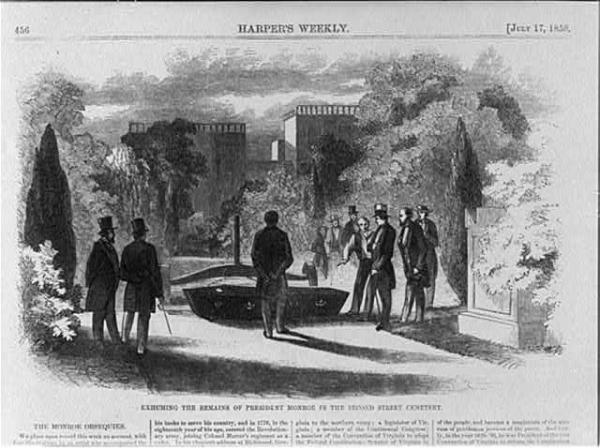
Above: President James Monroe laid to the rest at the New York City Marble Cemetery in 1831.

I hope many of you hit some of the Open House events throughout the city this weekend. Both the New York Marble Cemetery and the New York City Marble Cemetery were open to the public, both areas calm, quiet respites featuring the burial chambers of some early prominent New Yorkers. The similarly named resting places are a block away from each other in the East Village.

The less manicured New York Marble Cemetery is the oldest, dating from 1830, and includes the burial chamber of former mayor Aaron Clark . However the New York City Marble Cemetery, which opened one year later, is bit more aesthetically maintained and was once the final resting place of President James Monroe (before they moved him to Virginia), not to mention two mayors, Marinus Willett and Stephen Allen.

And of course, it was also home to a large cache of C-4 explosives!

New York Times: Explosives Abandoned In Cemetery Are Mystery
Gothamist: C-4 Found At Cemetery Becomes More Mysterious

(Illustration from Uncle Sam’s NY Tours)