Categories
Black History Podcasts

Seneca Village and Other Stories of New York’s Forgotten Black Communities

PODCAST The history of African-American settlements and neighborhoods which once existed in New York City

Today we sometimes define New York City’s African-American identity by the places where thriving black culture developed – Harlem, of course, and also Crown Heights and Bedford-Stuyvesant, neighborhoods that developed for groups of black residents in the 20th century.

But by no means were these the first in New York City. Other centers of black and African-American life existed long before then. In many cases, they were obliterated by the growth of the city, sometimes built over without a single marker, without recognition.

This is the story of a few of those places.  From the ‘land of the blacks‘ — the home to New Amsterdam and British New York’s early black population — to Seneca Village, a haven for black lives that was wiped away by a park.

From Little Africa — the Greenwich Village sector for the black working class in the late 19th century — to Sandy Ground, a rural escape in Staten Island with deep roots in the neighborhood today.

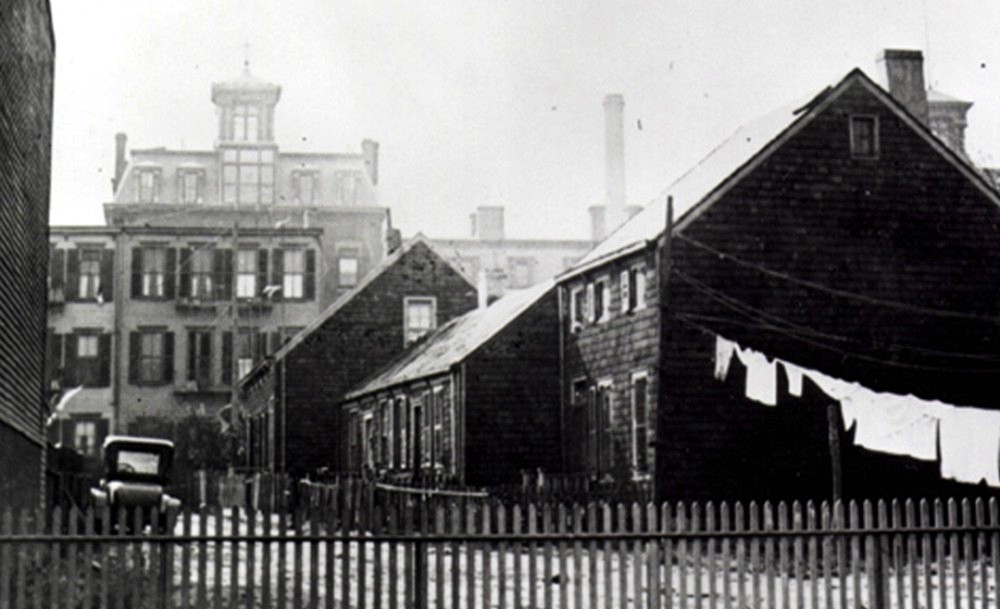
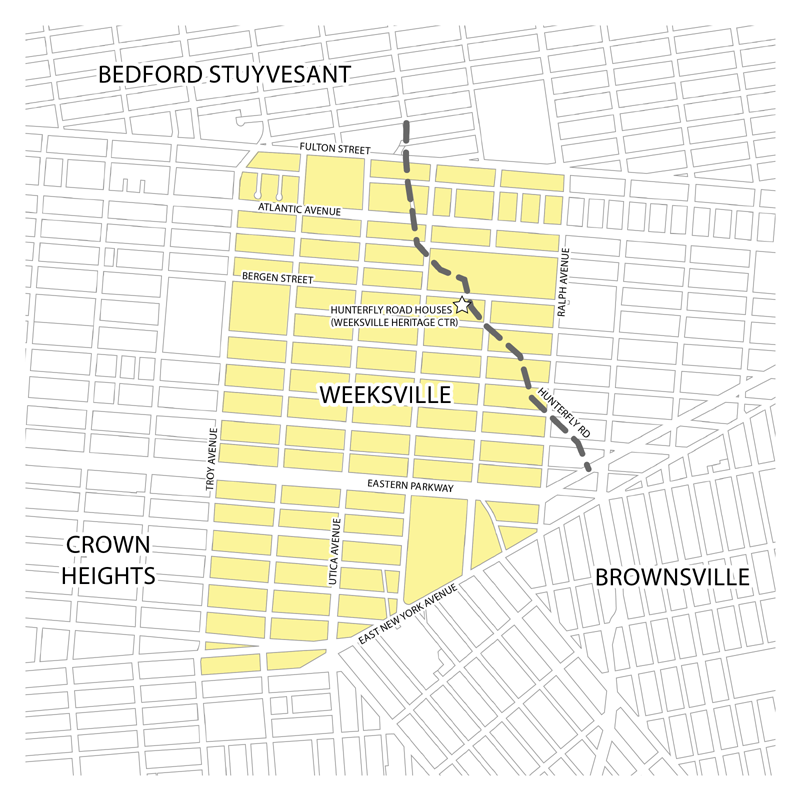
And then there’s Weeksville, Brooklyn, the visionary village built to bond a community and to develop a political foothold.

In this collection of short historical stories, Greg welcomes Kamau Ware (of the Black Gotham Experience) and Tia Powell Harris of the Weeksville Heritage Center to the show.

The episode is a rebroadcast of a show which first aired on June 9, 2017. Stay tuned to the end of this show for some newly written material and an update on the Black Gotham Experience and the Weeksville Heritage Center.

To get this week’s episode, just find our show on Stitcher or your favorite podcast streaming service. Or listen to it here:

___________________________________________________________________________

The Bowery Boys: New York City History podcast is brought to you …. by you!

We are now producing a new Bowery Boys podcast every week. We’re also looking to improve and expand the show in other ways — publishing, social media, live events and other forms of media. But we can only do this with your help!

We are now a creator on Patreon, a patronage platform where you can support your favorite content creators.

Please visit our page on Patreon and watch a short video of us recording the show and talking about our expansion plans.

If you’d like to help out, there are six different pledge levels. Check them out and consider being a sponsor.

We greatly appreciate our listeners and readers and thank you for joining us on this journey so far.

________________________________________________________________________

Our thanks to Weeksville Heritage Center and Black Gotham Experience. Visit their websites for further information about upcoming events and programs. In addition please check out the Sandy Ground Historical Society for information about this important site in Staten Island.

Weeksville is hosting a weekend of Juneteenth events. Please visit their website for further information:
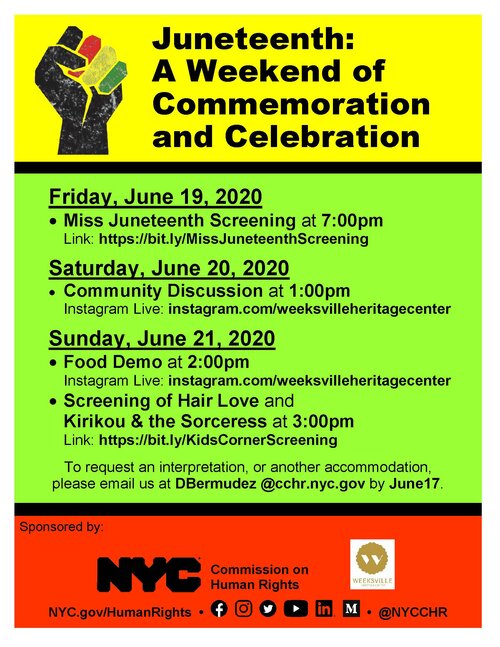

Check out the Black Gotham Experience website for information on online courses starting in July. And become a member to join in their work as BGX heads towards its 10th anniversary.


Three boys from Sandy Ground, Staten Island, circa 1912.
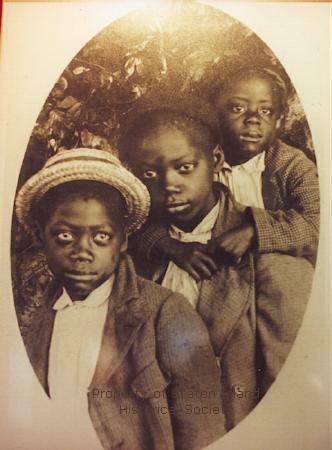
Staten Island Historical Society

More information about the Black Gotham Experience here, including a list of walking tours.  Check out the websites for Weeksville Heritage Center and the Sandy Ground Historical Society for more information about visiting hours and tours.

This map of Seneca Village was made by Andy Proehl illustrating what the settlement looked like in the years before its destruction.
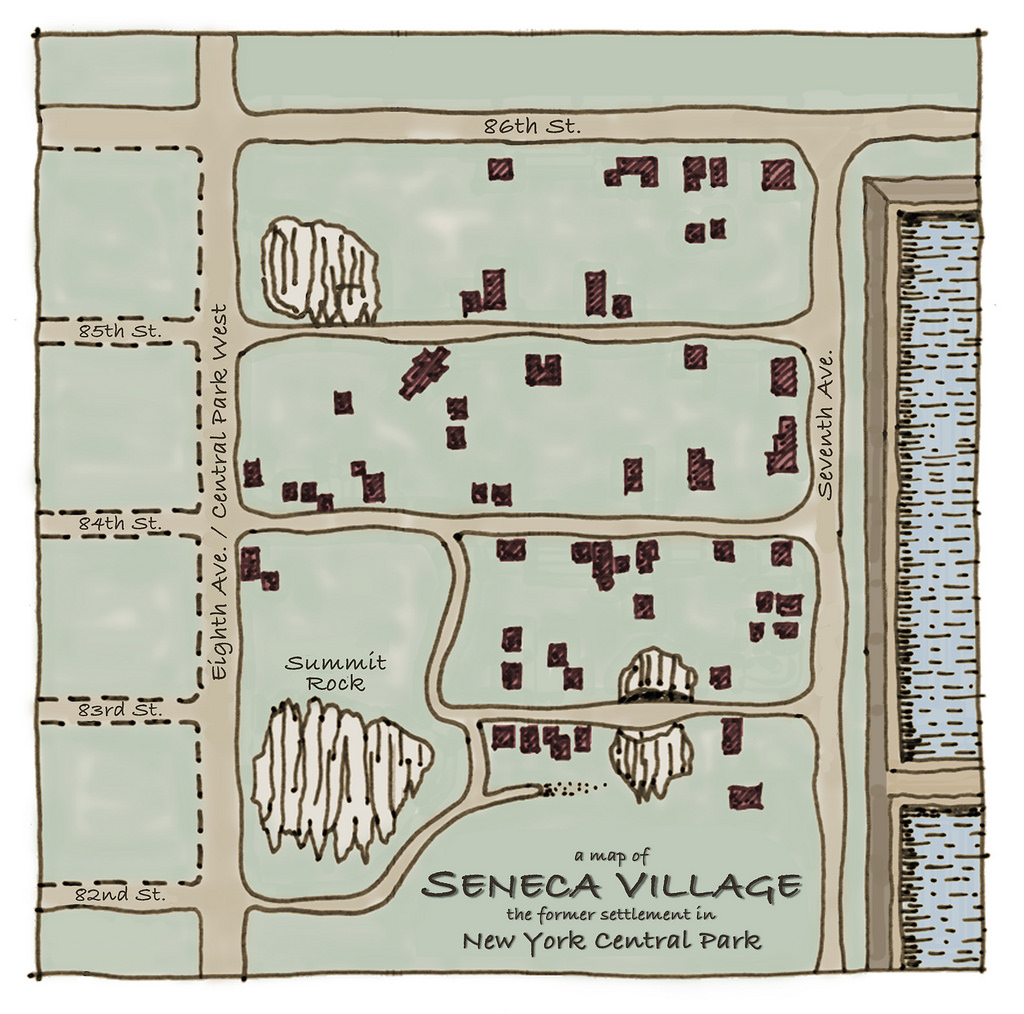
Courtesy Andy Proehl/Flickr

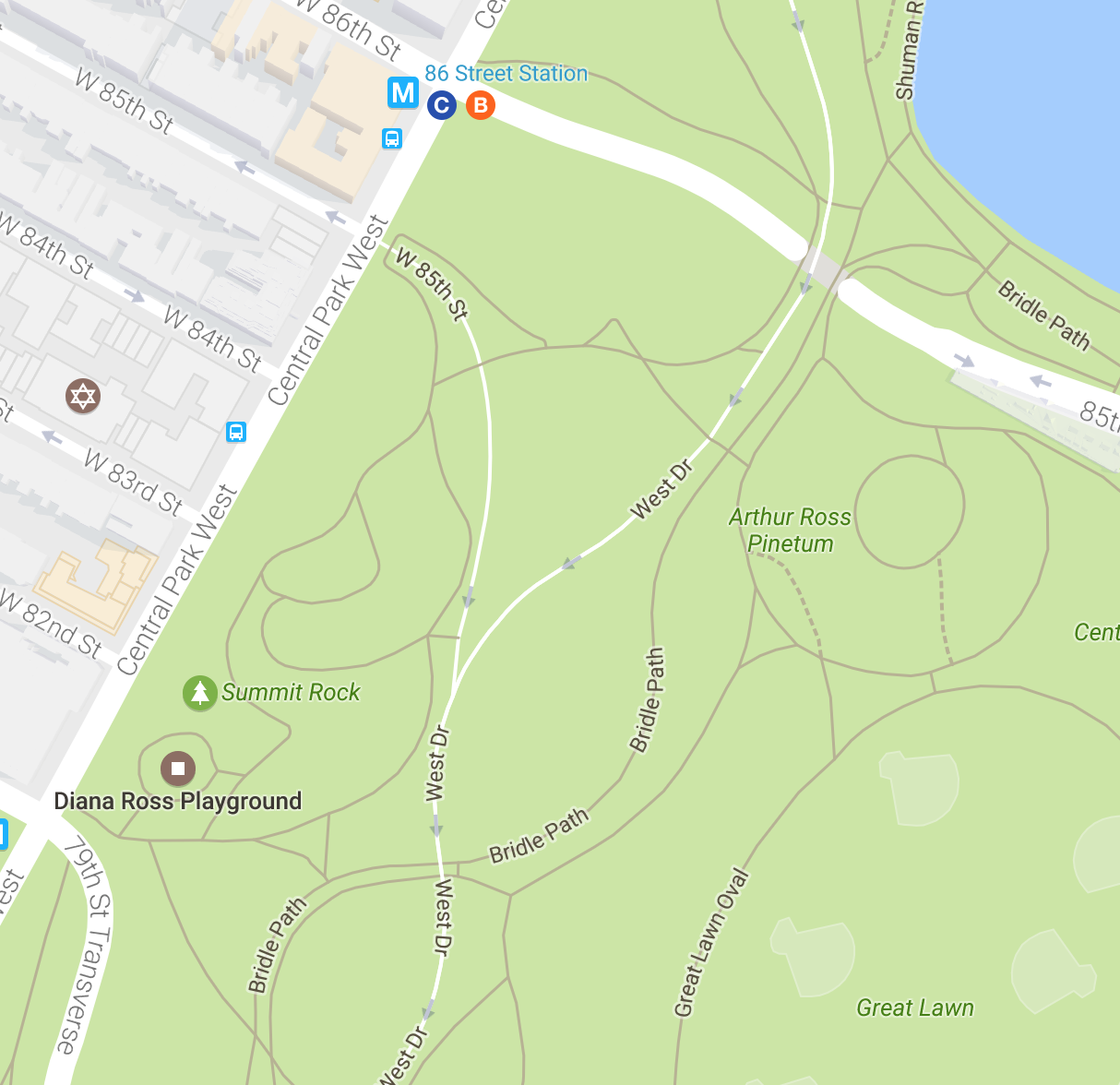
The approximate area via Google Maps. The Great Lawn now sits on the spot where the reservoir is.
The approximate area of Little Africa. The map is from 1889.
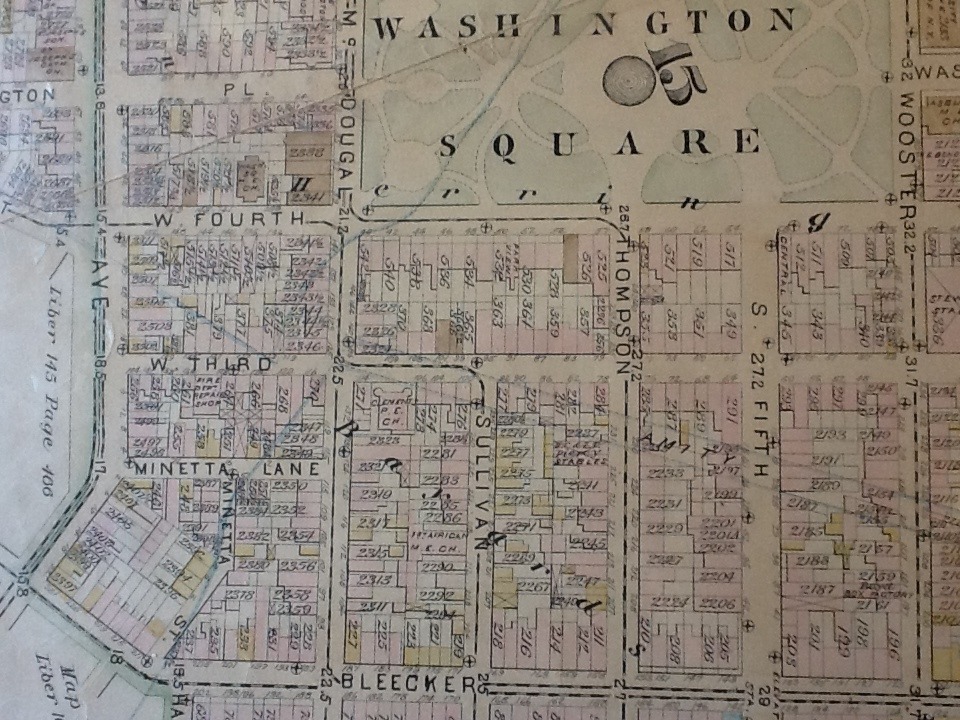
NYPL via Greenwich Village Society of Historical Perseveration

Richard Hoe Lawrence and Jacob Riis’s images of a “Black and Tan” dive bar on Broome Street near Wooster Street, 1890.
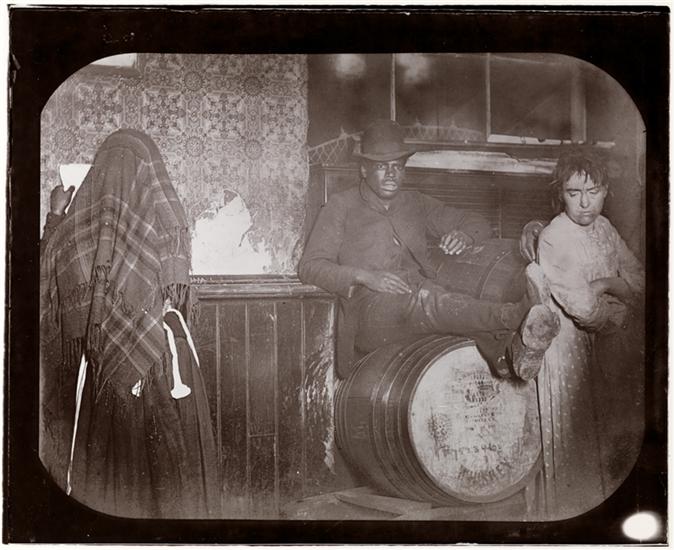
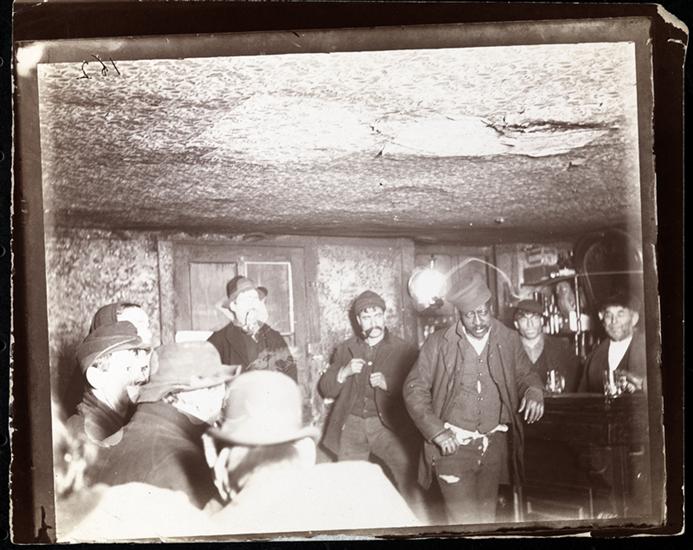
Courtesy Museum of the City of New York

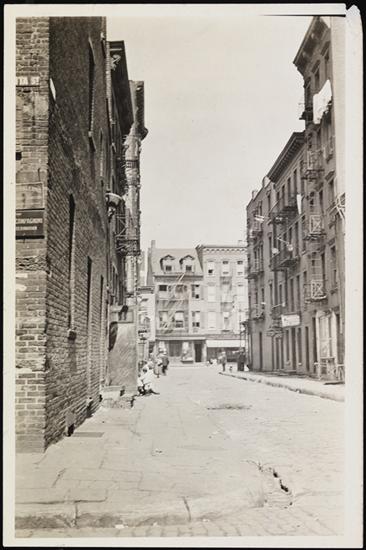
Minetta Lane, circa 1900.

MCNY

The approximate location of Weeksville, Brooklyn
Wikipedia
Brooklyn Public Library
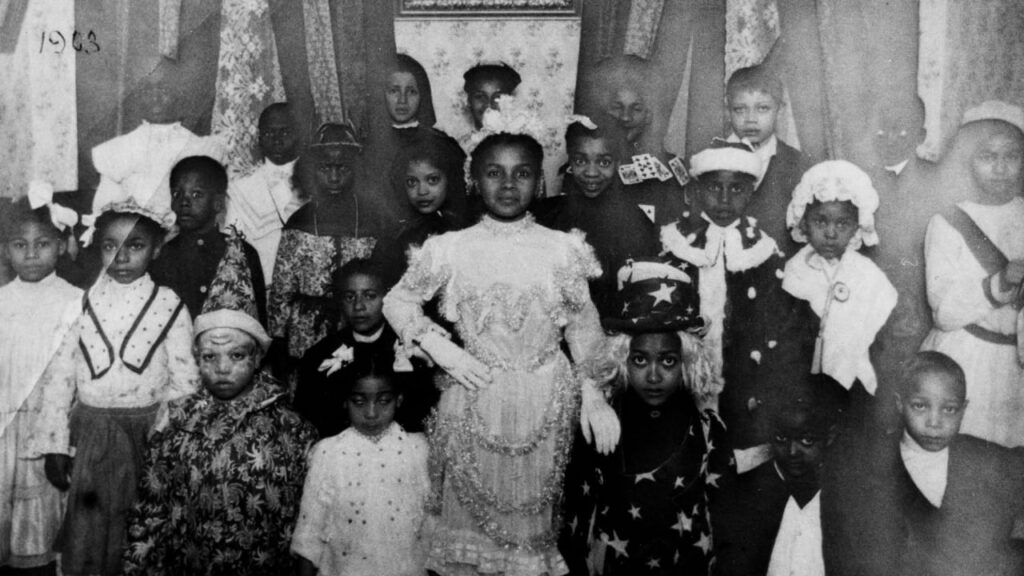
Halloween party by photographer and Weeksville resident Alexander Moore. [PHOTO: PERCY F. MOORE COLLECTION, COURTESY OF THE 5TH OF JULY RESOURCE CENTER FOR SELF-DETERMINATION & FREEDOM, WEEKSVILLE HERITAGE CENTER]

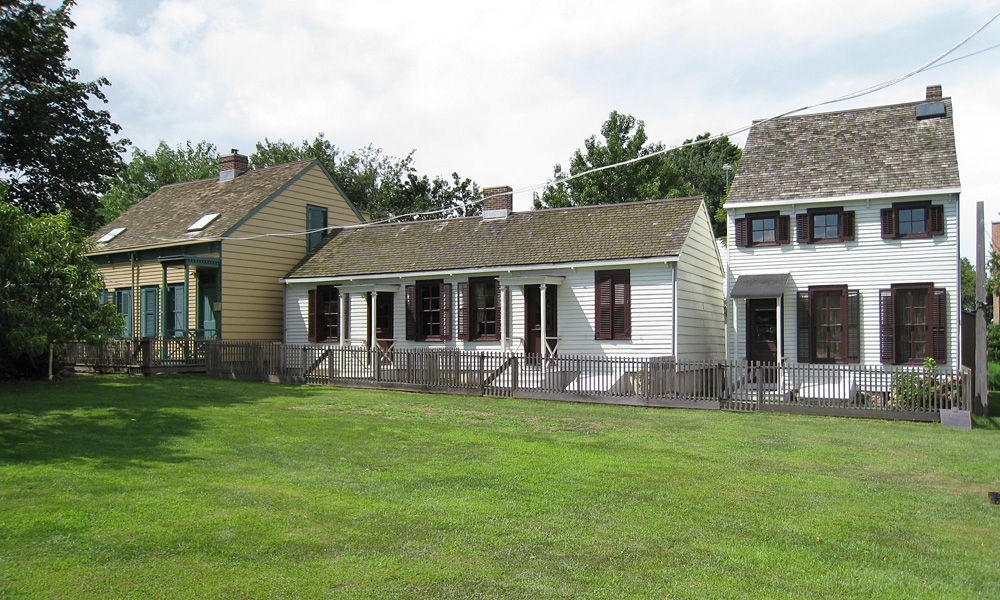
The three surviving houses today

The picture at top features an African-American family posed in front of the John Brown Homestead in Torrington, Connecticut, circa 1890s-1900. I particularly love this picture because the house is reminiscent of the Weeksville houses and those that were in Sandy Ground.
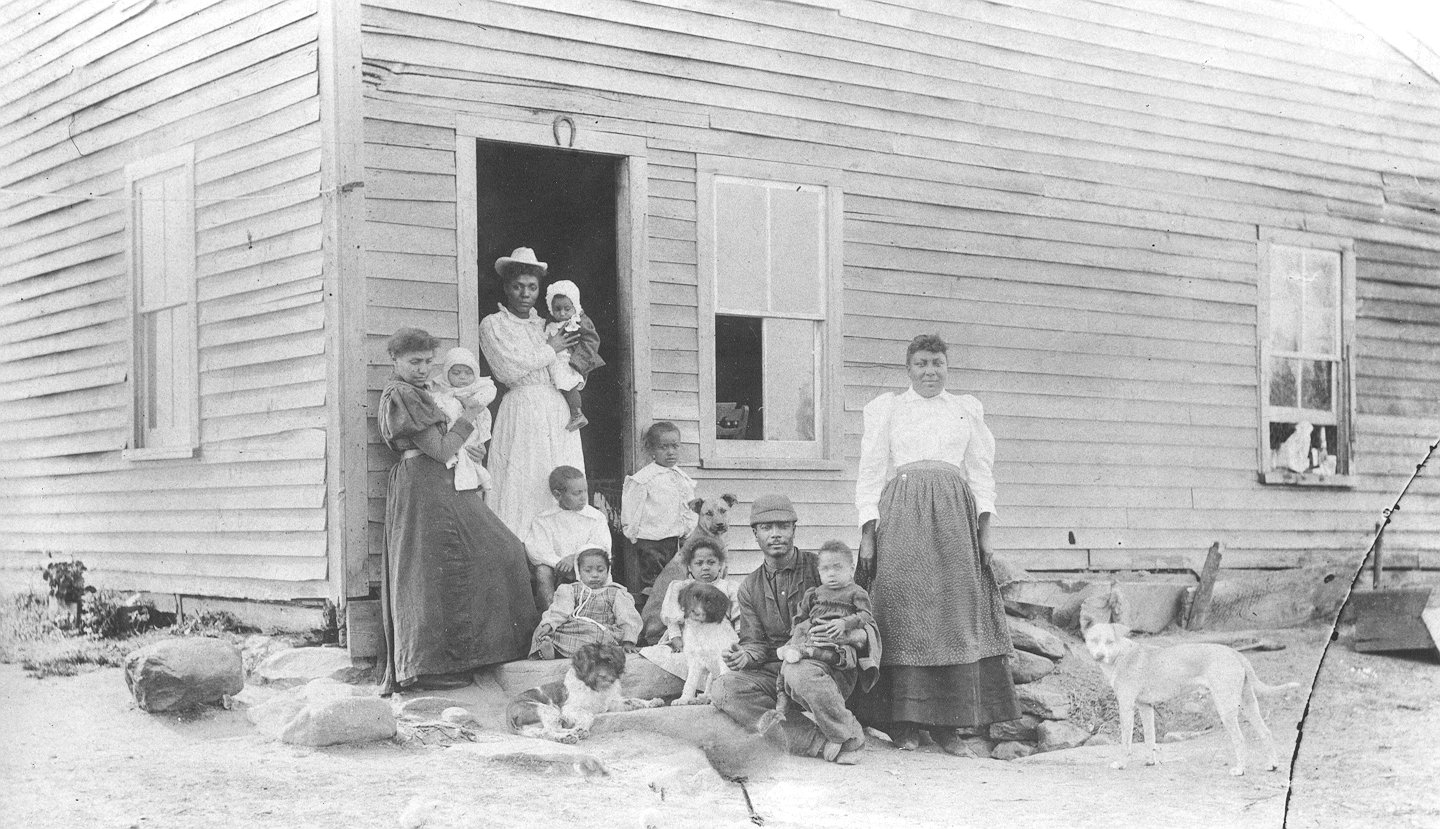
Connecticut Historical Society


FURTHER LISTENING

After you’ve listened to this episode on Seneca Village and New York’s forgotten black communities, check out these past Bowery Boys episodes about aspects of New York City history featured on this show:
Categories
Landmarks

African Burial Ground: New York’s unforgettable monument (NPS 100)

This month America celebrates the 100th anniversary of the National Park Service, the organization which protects the great natural and historical treasures of the United States. There are a number of NPS locations in the five borough areas. Throughout the next few weeks, we will focus on a few of our favorites.   For more information, you can visit National Parks Centennial for a complete list of parks and monuments throughout the country.  For more blog posts in this series, click here.
The following also features an excerpt from the Bowery Boys Adventures In Old New York, now available for sale wherever books are sold and online at Amazon or Barnes and Noble.


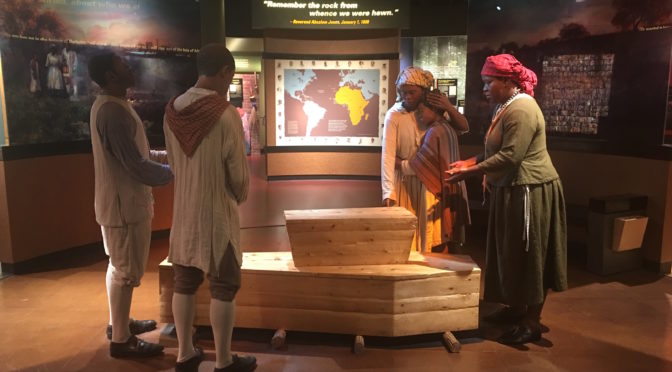
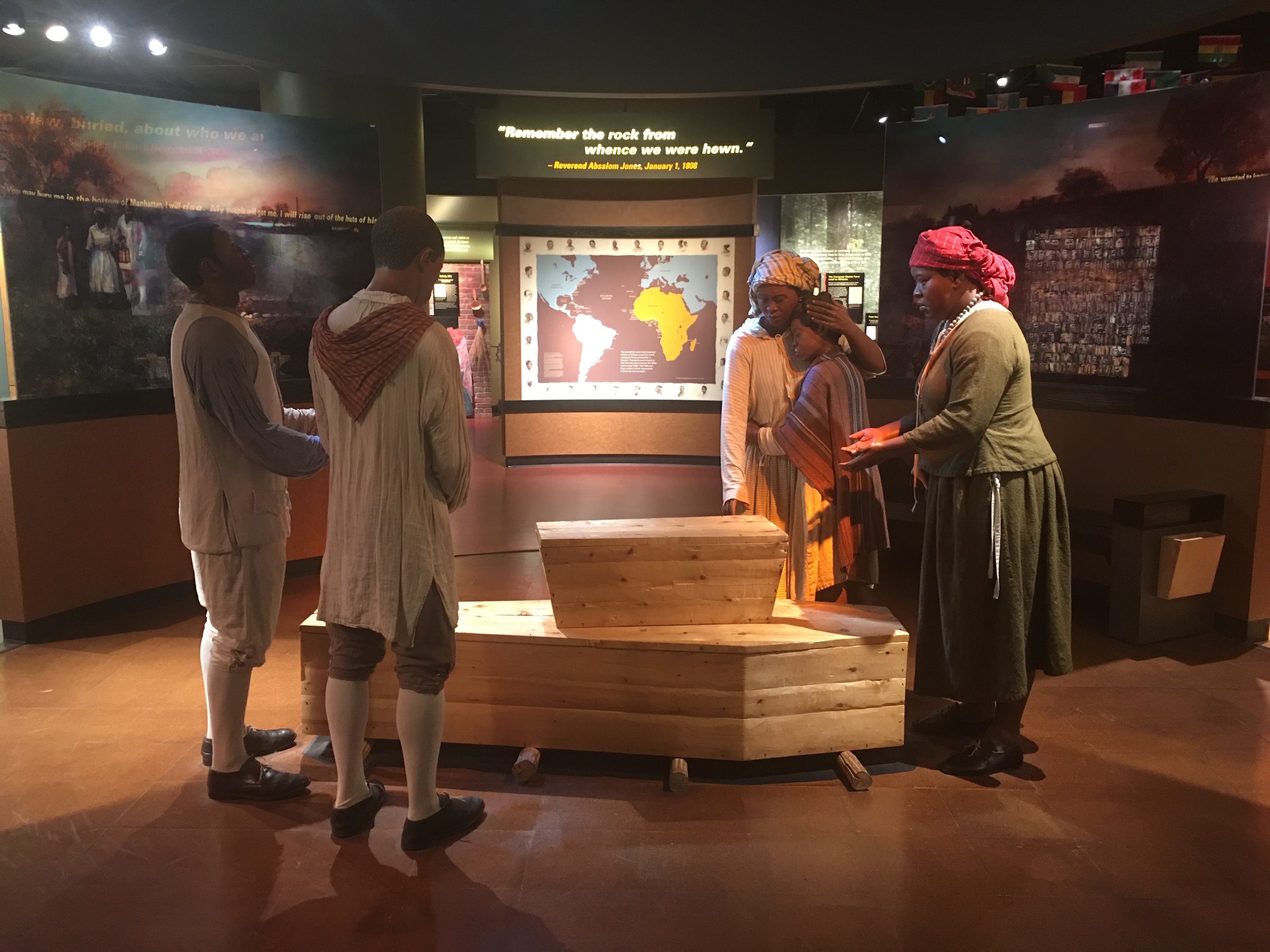
A vivid display inside the visitor center at 290 Broadway.

IMG_9966
AFRICAN BURIAL GROUND NATIONAL MONUMENT
DUANE STREET, CIVIC CENTER, MANHATTAN


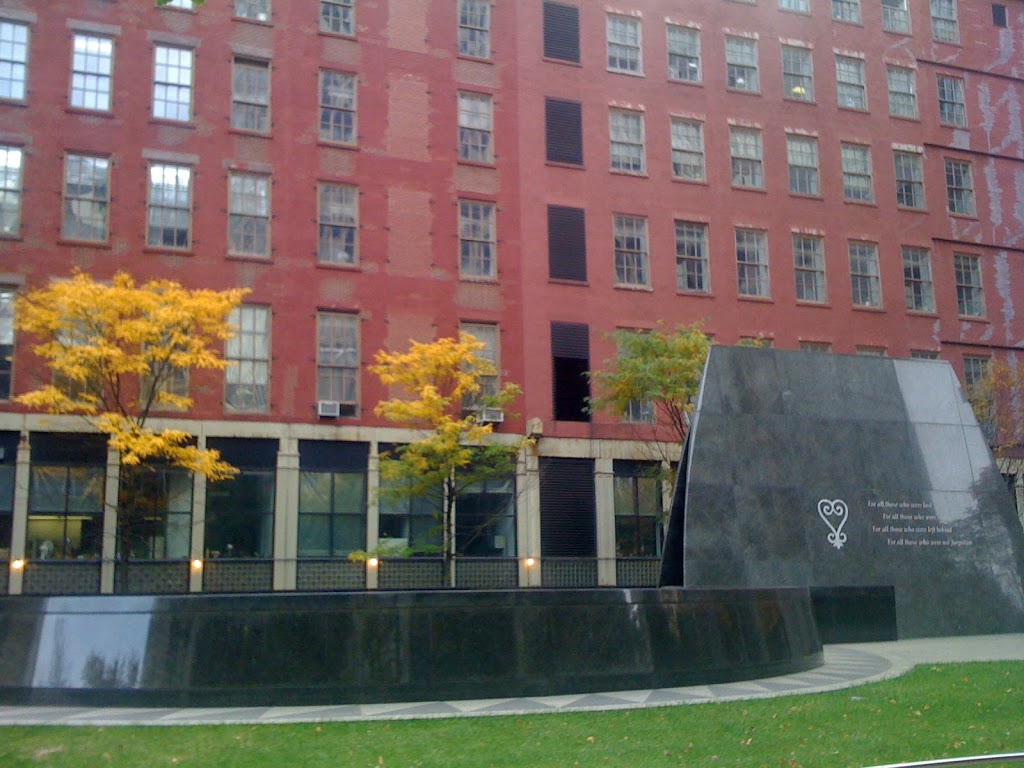
The African Burial Ground, tucked right into the heart of Lower Manhattan, two blocks north of City Hall, represents one of the greatest archaeological finds and saddest stories in New York’s history. The somber monument, opened in 2007, gives long overdue respect and honor to the remains buried here of New York’s first African and West Indian communities.

 Contrast this with lower Manhattan’s other two burial grounds — at Trinity Church and St. Paul’s Chapel —with their carefully preserved marble tombstones and prestigious roster of permanent residents. Whereas Trinity’s cemetery has a fence to preserve the peace, this burial ground has no such border to keep the city at bay.

Photo 6.1

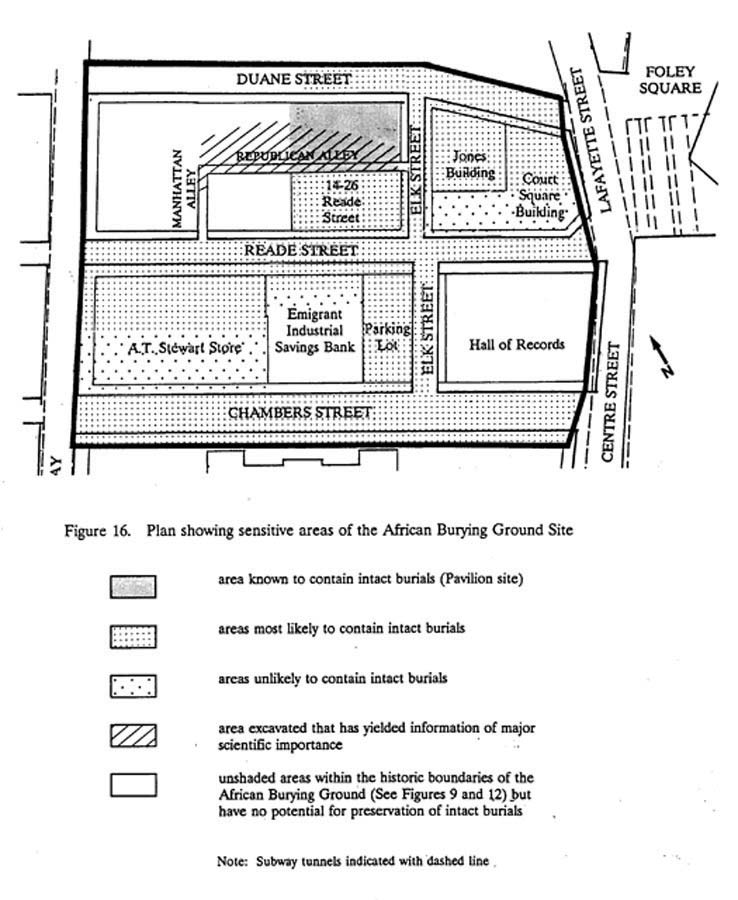
In fact, the African Burial Ground is far larger than the site of today’s monument. Its true size is unknown, although it is believed to cover about seven acres, stretching out under many of the surrounding buildings, including those in Foley Square and along Chambers Street.

The burial ground dates back to the seventeenth century, when New Amsterdam was a company town for the thriving Dutch West India Company, and the town’s early settlers were primarily traders, not builders or town planners. In their eyes, they didn’t sail all the way across the Atlantic from Holland to do menial work.

And so in 1626, to stimulate and facilitate the colony’s growth, the Dutch imported the New World’s first African slaves, a group of eleven people. Early records show that they were assigned names associated with their homelands or original captors: Antony Congo, Dorothe Angola, Jan Negro. Slave labor would be used to build many of New Amsterdam’s major structures, including the large wall that lined the northern edge of town.

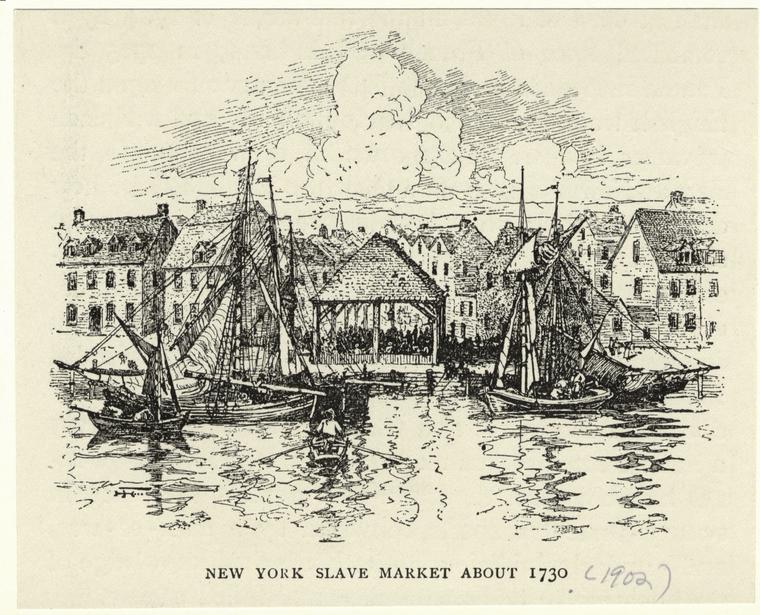
One of the most notorious landmarks of the slave trade sat at the corner of Wall and Water Streets (once the shoreline, back in British New York). The Meal Market was established in 1711 not only for the buying and selling of raw products like grains, but also for the purchase and leasing of “negroes and Indian slaves.”

Courtesy New York Public Library

It’s interesting to note that under the Dutch, enslaved men and women could earn their freedom and eventually own property. But those who did gain independence were not permitted to reside within the city’s walls. Instead, they were forced out beyond the borders to settle in the “free Negro lots” found around the southern edge of Collect Pond.

Things got worse for the colony’s slave population in 1664, when the British took control and renamed the colony New York.

They brought with them their own stricter slavery traditions and stripped away those meager legal protections that had been afforded by the Dutch. New York was not a plantation town; many families owned one or two slaves and they were usually kept in or near their homes. By the 1740s thousands of enslaved men and women from Africa and the Caribbean lived in New York, more than one-fifth of the city’s population.

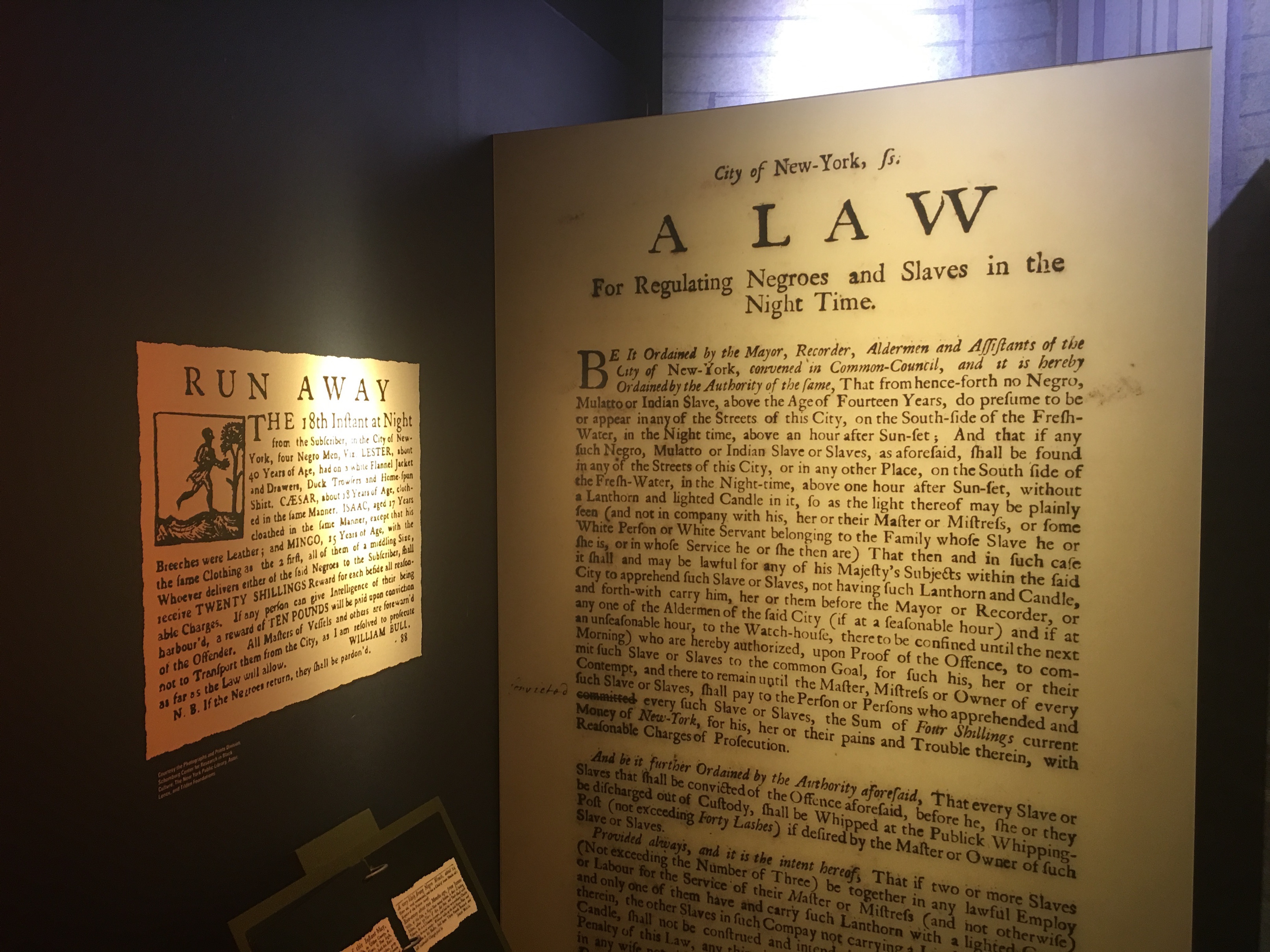
The visitor center serves as a museum about slavery and an exhibit to the early black experience in New York

IMG_9971

While a diverse number of religions were practiced under English rule, most black New Yorkers eventually converted to the Anglican Church. But Trinity Church did not allow the remains of black people, slave or free, to be buried in its churchyard. And so this population was forced outside the city walls again, this time claiming some land south of Collect Pond as their own private burial ground.

In their burial ceremonies and mourning practices, the city’s African and Caribbean residents were able to display their original religious beliefs, and could come here and bury friends and loved ones according to traditional burial customs.

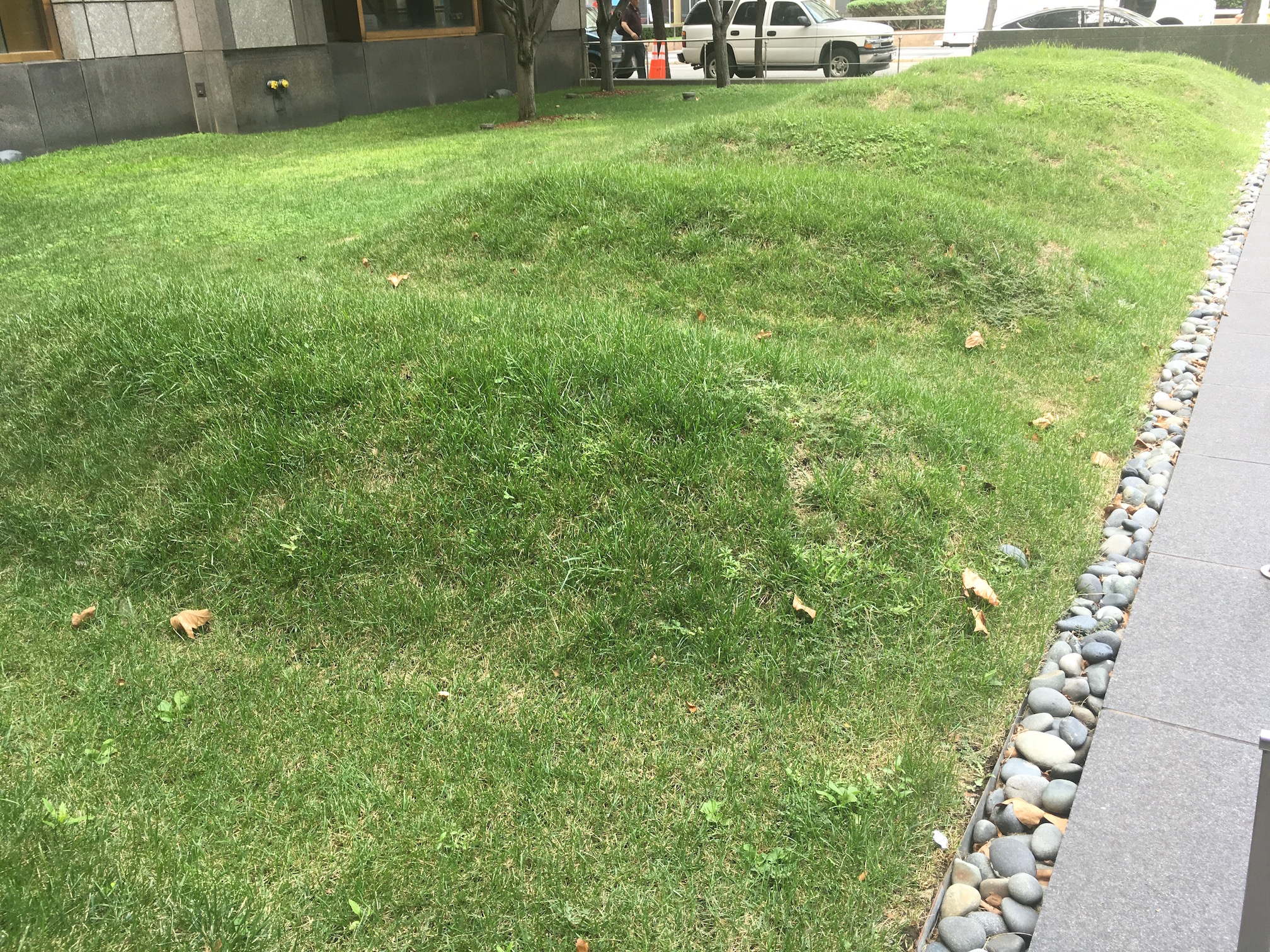
The remains of 419 individuals are contained in mounds outside next to the monument.

IMG_9977

In the early years, at dusk, New Yorkers would hear the foreign-sounding music, drum beats, and the sounds of exotic ceremonies drifting down from the burial yard.

Well, that was simply too frightening for some white New Yorkers, and so, starting in 1722, it became illegal for blacks to congregate at night, and a 1731 law prohibited more than twelve people from gathering during the day at the burial ground. These draconian laws against black New Yorkers were instigated due to the events of April 1712, when a group of slaves conspired to burn the city. Twenty-one enslaved and freedmen were put to death in retaliation.

While these laws put a damper on many religious ceremonies, it was still possible to show some freedom of expression in the burials themselves. The dead were buried in wooden boxes, most facing east, as was customary for some African religions, and trinkets of religious or personal value (cowrie shells, pipes, buttons, and pieces of coral and crystal) were placed inside the coffins with the deceased.

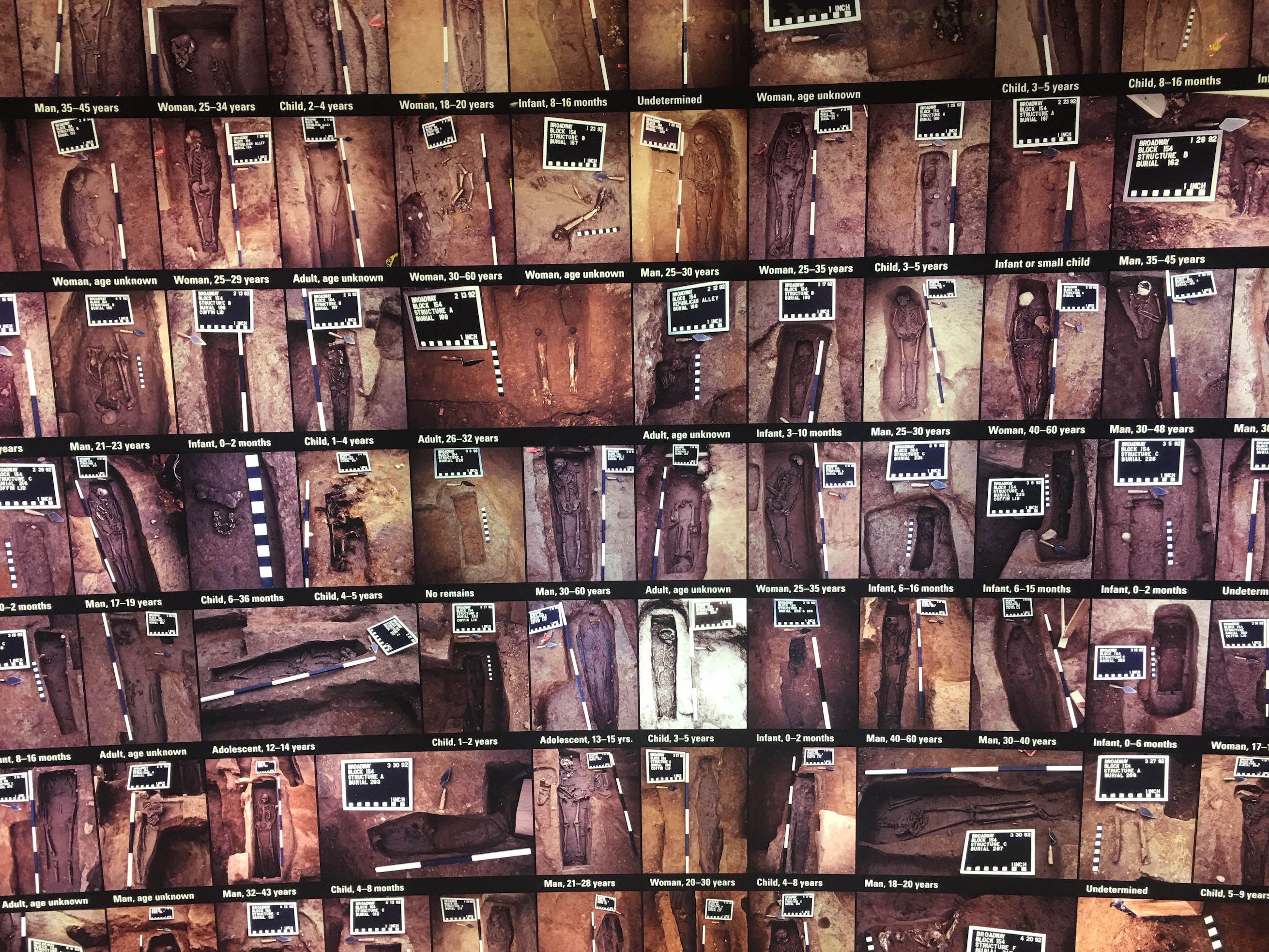
Images of the remains found on the site of the very building you’re standing in are displayed inside the visitors center.

IMG_9969

With the departure of the British in 1783 and the beginning of the city’s great march northward, this land quickly became much more valuable. By the early 1810s, Collect Pond and its now-spoiled natural surroundings were simply filled in, the marshes drained, the hills leveled.

The graves of many of New York’s early slave and free black population, the resting place of approximately 15,000 bodies here, were covered over in landfill, in some places 16 to 25 feet deep.

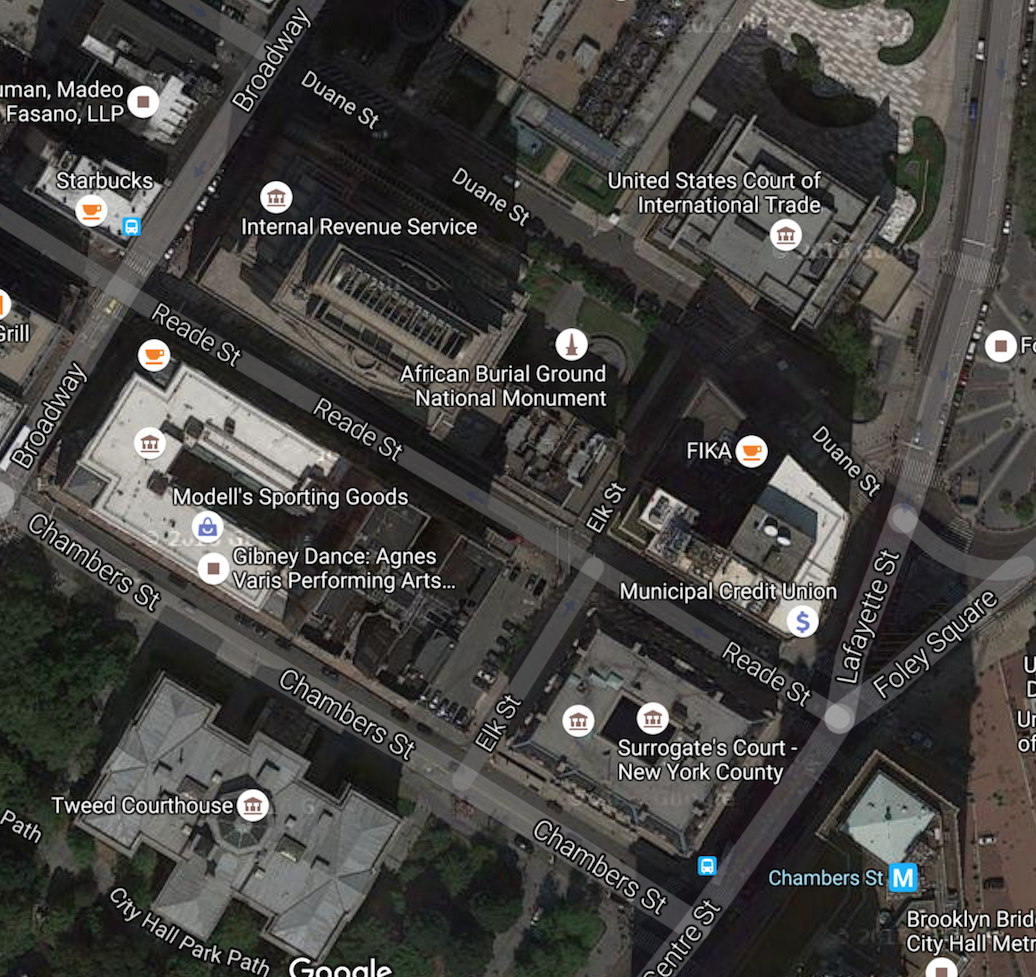
Map of the site and the projected location of other burials. Below is a current Google Map satellite view of the site:

Courtesy National Park Service

Screen Shot 2016-08-29 at 9.55.44 PM

The early structures built atop the burial ground were not very tall, none more than a few stories high. As a result, the depths of their foundations were no deeper than 20 feet or so. In some places, the burial ground lay below the newly erected buildings, completely preserved by the landfill that had been hastily thrown over it.

Flash forward—way forward—to 1991, when New York City was home to hundreds of skyscrapers, but unbelievably this small seven-acre area still only held structures of modest height. When work began on a nearby government building at 290 Broadway, excavators happened upon the first evidence of human remains. Throughout the next year, excavations would uncover a total of 419 bodies, along with a wide assortment of artifacts.

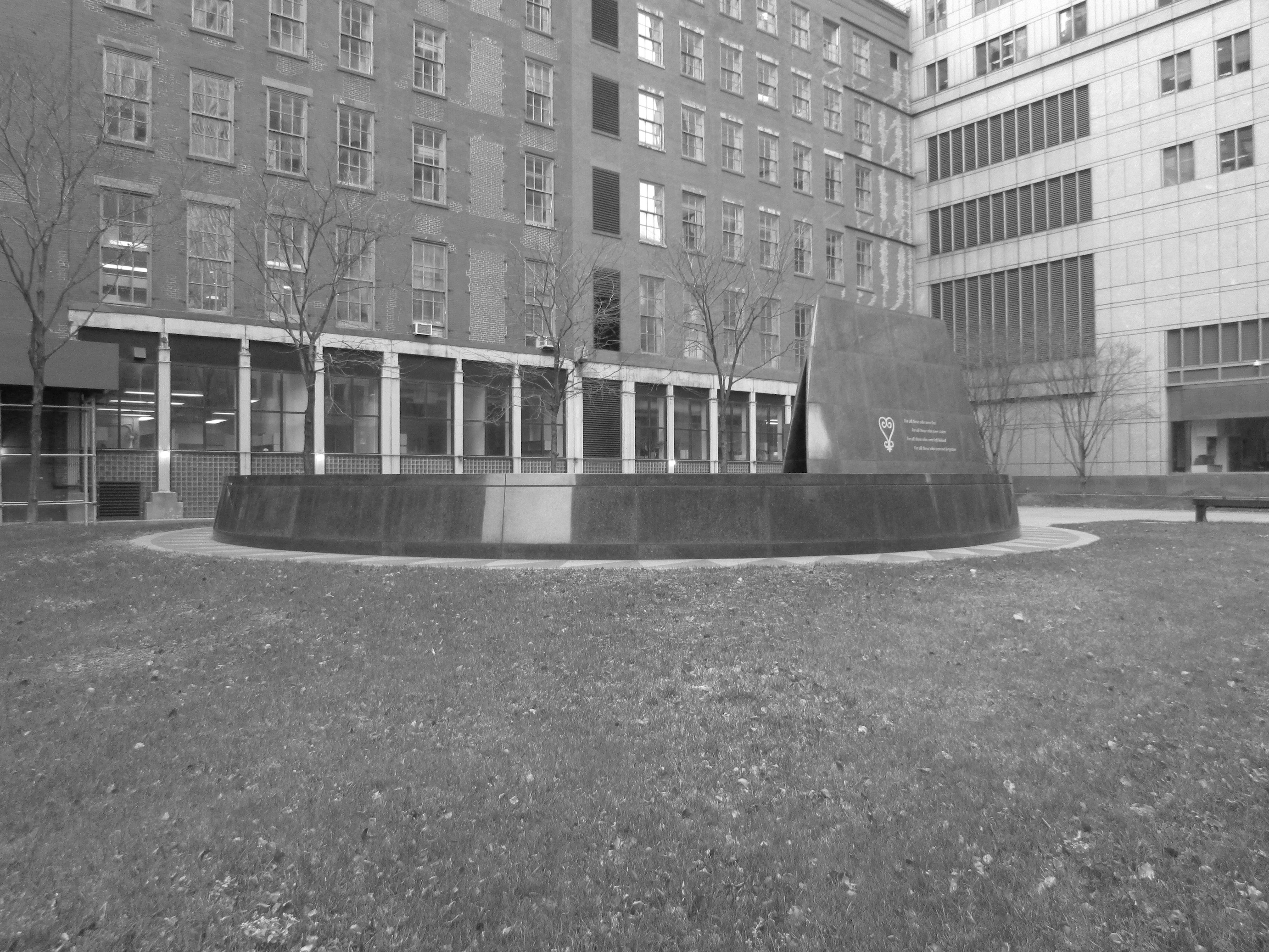
The monument to this discovery, completed in 2007 and operated by the National Park Service, returns a bit of grace and reverence to this site, and focuses on the spiritual beliefs of those who were interred here centuries ago. Immediately to your right is a set of seven evenly and elevated spaced beds of grass, where the bodies of the 419 have once again been buried, collected in hand-carved wooden sarcophagi.

The following words are inscribed upon the monument (Duane Street, between Broadway and Lafayette Street. Visitors’ center at 290 Broadway):

For all those who were lost
For all those who were stolen
For all those who were left behind
For all those who are not forgotten

WANT MORE INFORMATION? Visit the NPS African Burial Ground National Monument site for more information.

LISTEN TO OUR PODCAST! We have an entire show on the African Burial Ground. It’s Episode #115. You can find it on iTunes or download it from here.

Categories
Podcasts

African Burial Ground: History from underneath the city, and the secret tale of New Yorkers once forgotten

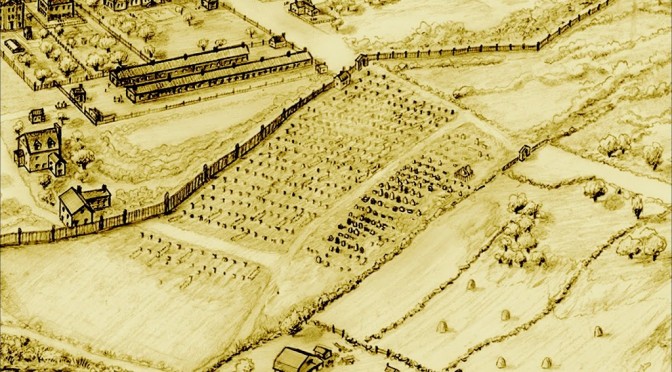
A small cemetery for African slaves and free black New Yorkers developed along the southern edge of Collect Pond. But when that filthy body of water was drained and filled, the burial ground disappeared underground with it. (Image courtesy Preserve America)

PODCAST During the construction of a downtown federal administration building, an extraordinary find was discovered — the remnants of a burial ground used by African slaves during the 18th Century.

In the earliest days of New Amsterdam, the first Africans were brought against their will to build the new Dutch port, slaves for a city that would be built upon their backs. Later, forced to repress the cultural expressions of their forefathers, the early black population of British New York did preserve their heritage in the form of burial rites, in a small ‘Negro Burial Ground’ to the south of Collect Pond (and just a couple short blocks to today’s City Hall).

How did this small plot of land — and its astounding contents — become preserved in the middle of the most bustling area of the most bustling city in the world? And why is it considered one of the most spectacular archaeological finds in New York City history?

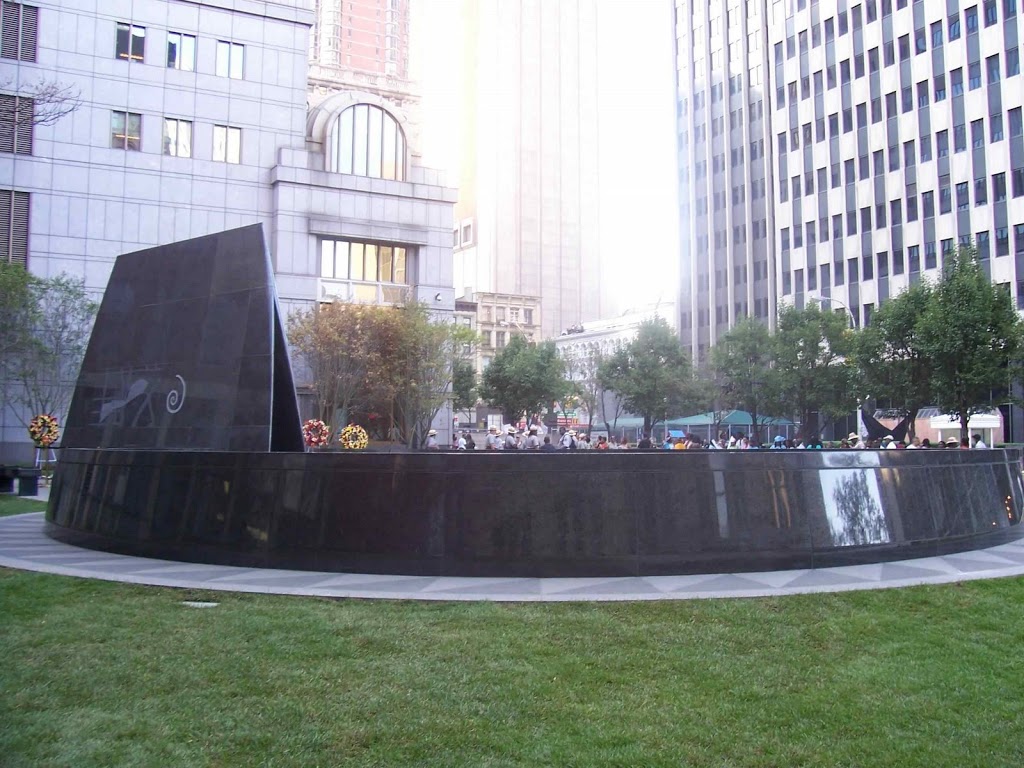
The African Burial Ground monument, at street level. Designed by Rodney Leon, the monument in contained on a quiet patch of land that seems to escape the bustle of the city around it.

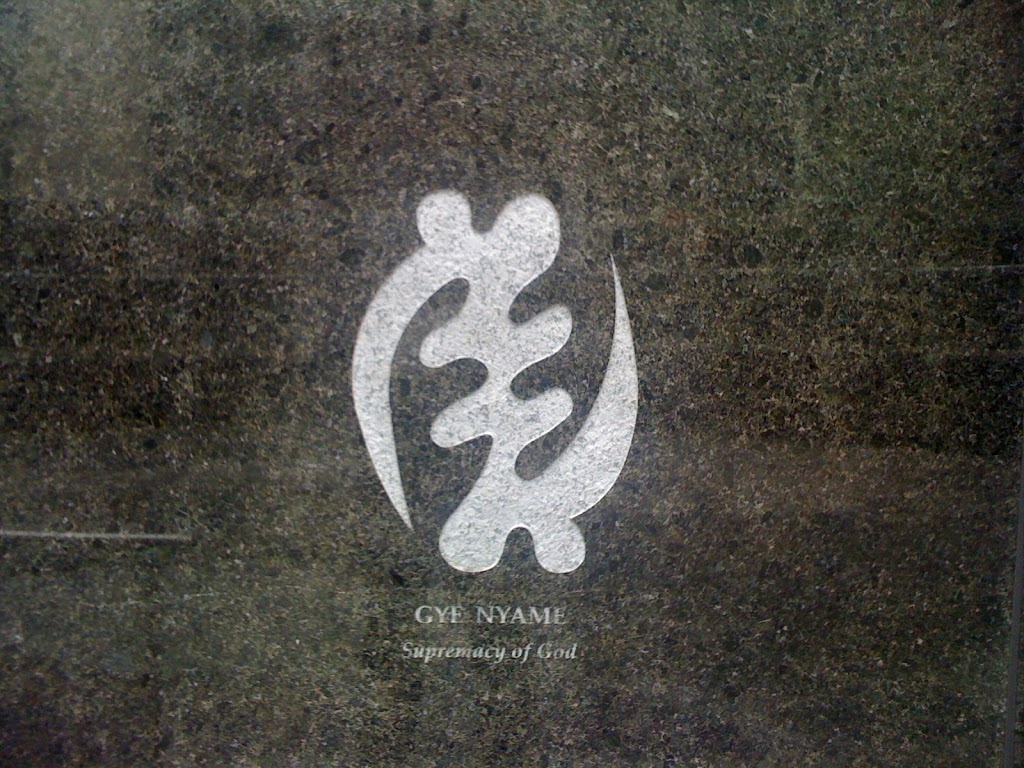
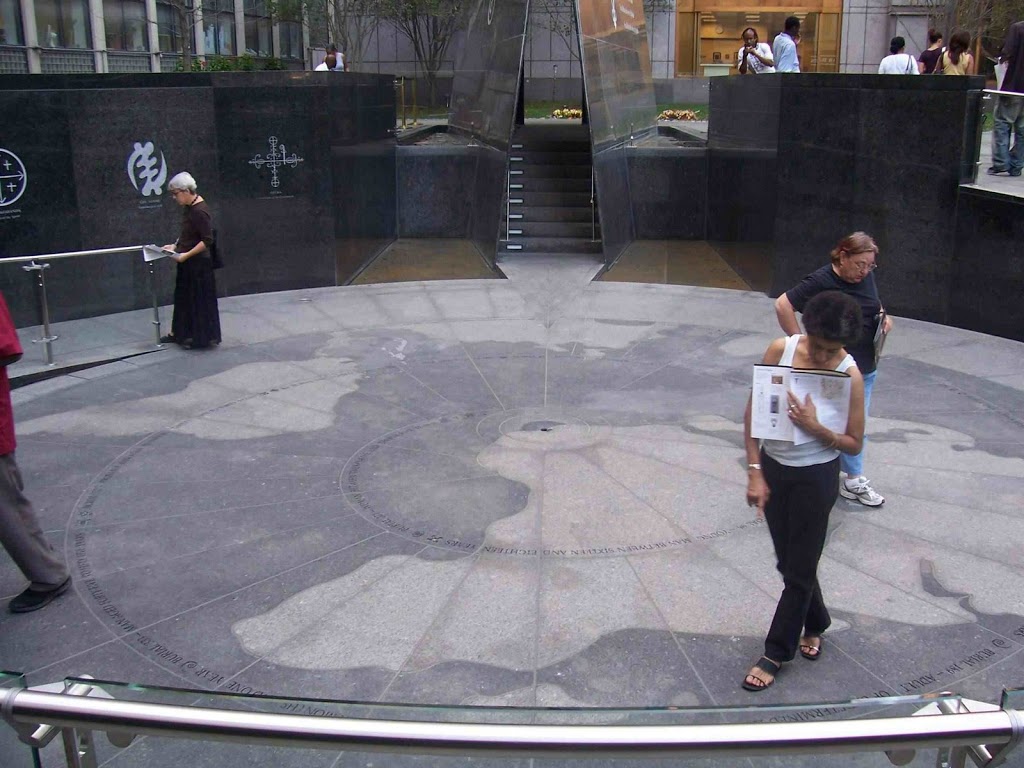
Within the ‘Circle of Diaspora’ are various spiritual and religious symbols, many quite exotic.


There’s no shortage of information about the history of slavery in New York. I would definite start with the materials related to the New York Historical Society’s extraordinary show from a few years ago. The GSA’s site on the African Burial Ground is a treasure trove of information as well.

For hours and directions, check out the National Park Service, not only for the Burial Ground, but New York’s many other national monuments.

Categories
Podcasts

PODCAST: Collect Pond and Canal Street

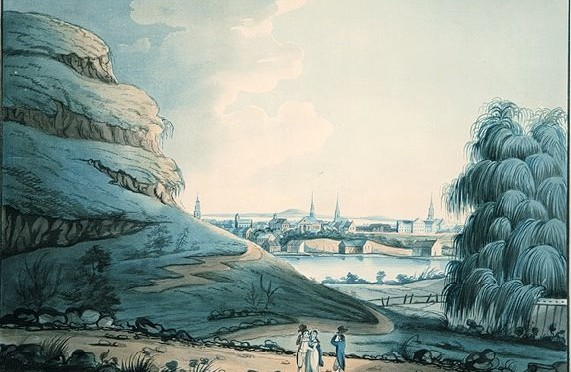
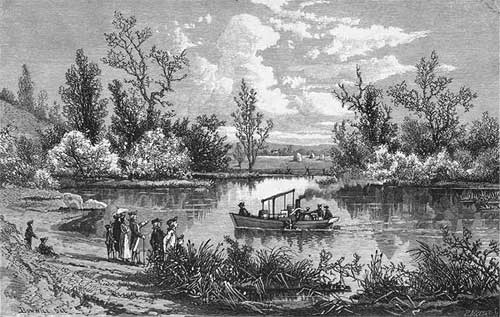
Collect Pond (and what I assume to be Bunker Hill) as depicted in watercolors by artist Archibald Robertson in 1798

We celebrate a year of New York City history podcasting by re-visiting the topic of our very first show.

Downtown Civic Center used to have a big ole pond in the middle of it which provided drinking water for the island’s first inhabitants.

What happened to it, why is it important today and how did it give rise to Canal Street, New York’s biggest traffic thoroughfare?

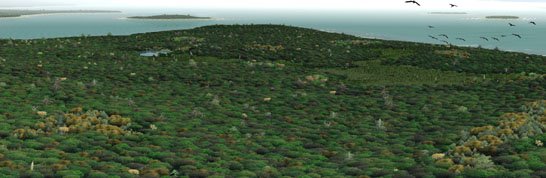
From the Mannahatta Project, a visualization of downtown Manhattan, with Collect Pond and acres of forest

Hard to believe, but this is downtown Manhattan and Collect Pond

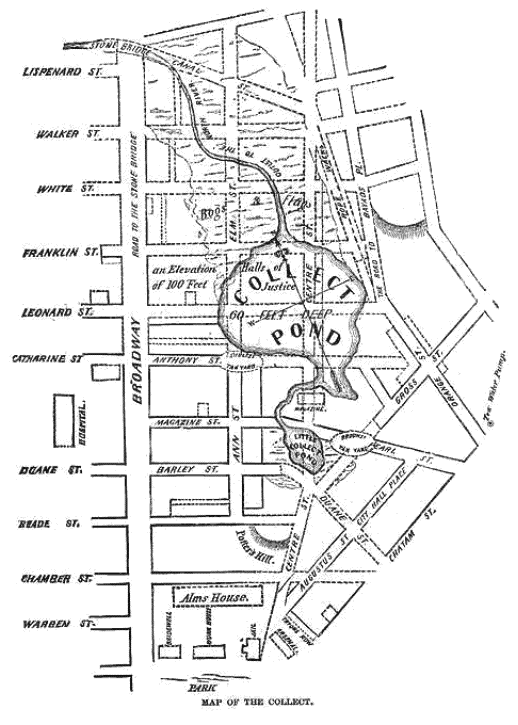
An early 19th century map of Collect Pond and the streets that usurped it. (Click into it to see details.)

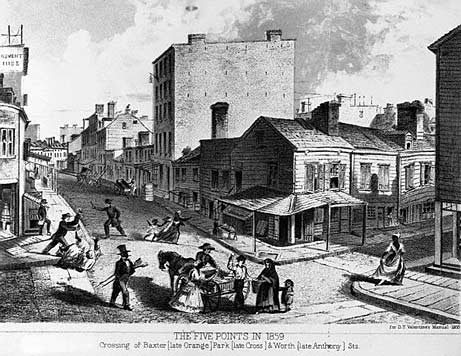
A mid-century depiction of Five Points, this corner in particular being where Paradise Square sprang up, an ambitious residential project doomed by soggy land and noxious odors

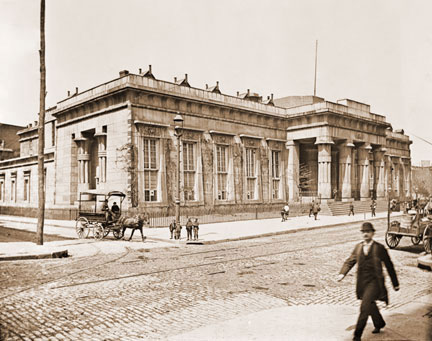
The Tombs Prison, in 1890, before being condemned. Its squalid conditions are legendary and are due in part to unsatisfactory construction over the former Collect Pond area

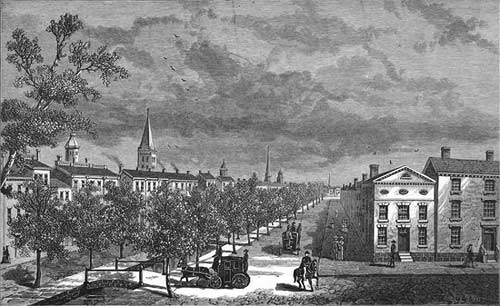
The early days of Canal Street. The actual foul-smellin canal was concealed with a row of lovely trees shielding the new tenements and businesses surrounding it

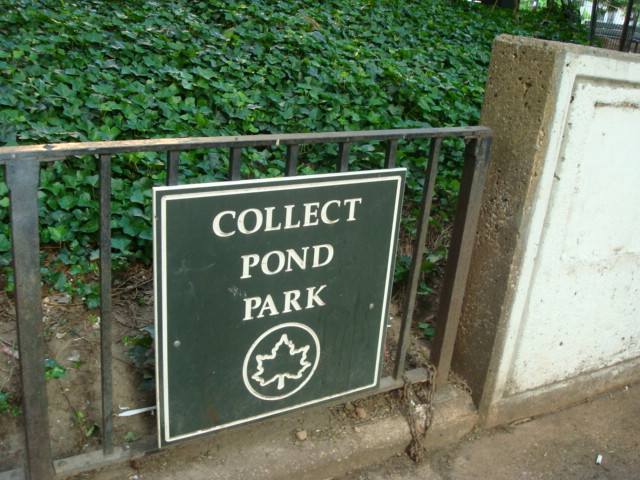
A tiny park surrounded by government buildings pays homage to the early (and far more natural) days

The most dramatic reminder of the neighborhood’s early days, however, is the African Burial Ground Memorial, which opened last year