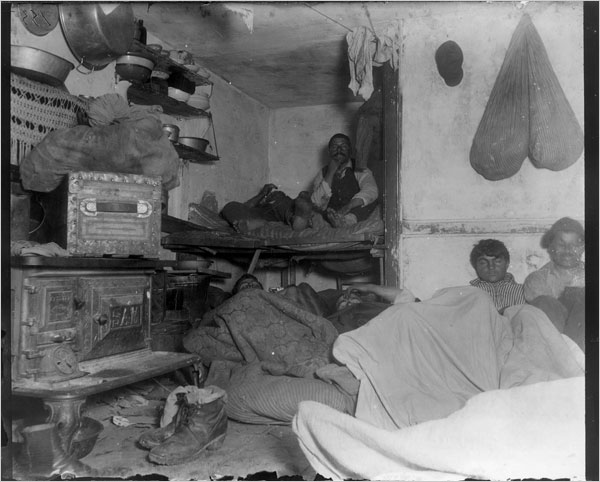
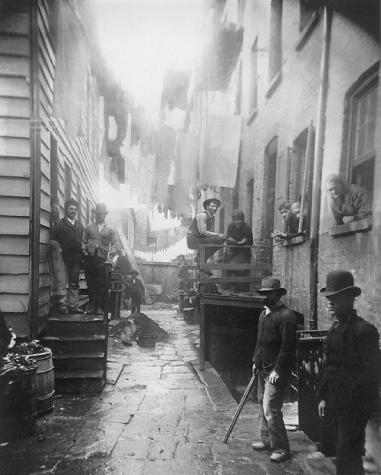
Jacob Riis changed the world with “How The Other Half Lives.” By using the new technology of flash photography, Riis was able to capture the squalid conditions of Manhattan tenements in a way no mere paragraph, drawing or sermon could.
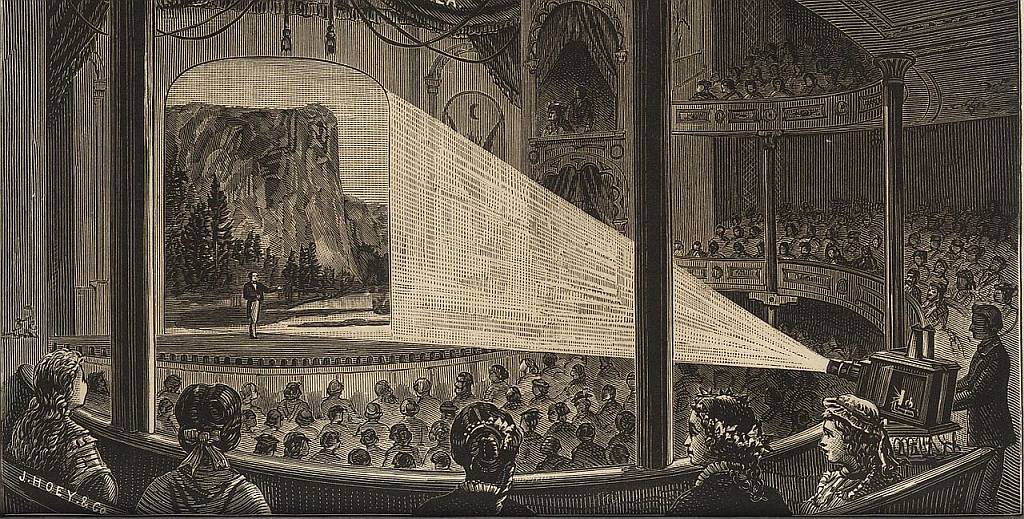
The startling photographs contained in this book did not originate there, however. Riis debuted them — and would continue to exhibit them — in “magic lantern” lectures, essentially the first slide shows.
But calling them magic lanterns is far more exciting, don’t you think? Wouldn’t you have gone to class a lot more had you known your professor was lighting up the magic lantern?
The magic lantern’s “real” name, the stereopticon, used a succession of glass slides (as few synthetic, transparent materials were not available at the time) transposed with a negative image that could be projected onto a hanging sheet.*
The magic lantern was created in the 1840s in Philadelphia and was originally intended for entertainment. In fact, one of Riis’s first schemes in New York used the magic lantern in a rather clever way.
He and a business partner would set up a stereopticon in a public park — a precursor to the Bryant Park film series — and project images of attractive people and international public landmarks, interspersing the pictures with advertisements from businesses nearby.
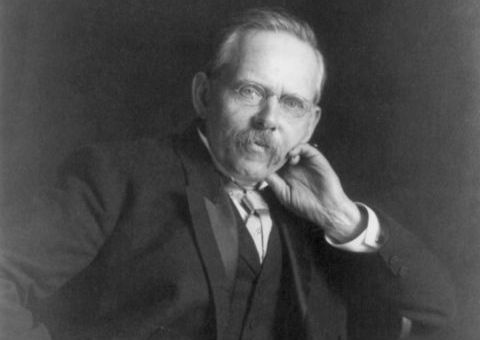
By 1888, however, Riis (pictured right) was using the technology to display the devastating images he had taken in the various slums around town. His first show was to the New York Society of Amateur Photographers, giving a vivid account according to some sources.
“Mr. Riis was so ingenious in describing the scenes and brought to his task .. a vein of humor,” according to a newspaper account quoted in Tyler Anbinder’s book Five Points.
Riis eventually took his ‘illustrated lectures’ on the road, electrifying audiences both taken with the modern marvel of the magic lantern and the images captured by the newly developed flash photography. “His viewers moaned, shuddered, fainted and even talked to the photographs he projected, reacting to the slides not as images but as a virtual reality that transported the new York slum world directly into the lecture hall.”
In essence, Riis was giving the equivalent of a show-stopping IMAX show to illuminate the plight of New York’s poorest and the unsafe conditions of their tenements. His shows could be considered the prototype of the film documentary.
The presentations would come with fiery speeches by Riis, often using the rhetoric of religious sermons in service of a more progressive, social cause. The shows were so successful that Riis grabbed a book deal and in 1890, his lectures and photographs were contained in his masterpiece “How The Other Half Lives.”
Interest in the magic lantern hasn’t waned today; in fact there’s a national organization that still revels in the wonder of the projected still image.
By the way, you can still find Jacob Riis all over the city. There are the Jacob Riis Houses on East 10th Street and Avenue D, built in 1949 on the site of a clump of tenements Riis railed on about, as well as the Jacob Riis Settlement House in western Queens and high school in the Lower East Side. And of course, there’s a huge Robert Moses park in Far Rockaway named for him.
*Read here for an interesting short history of the magic lantern and how images adhered to the glass
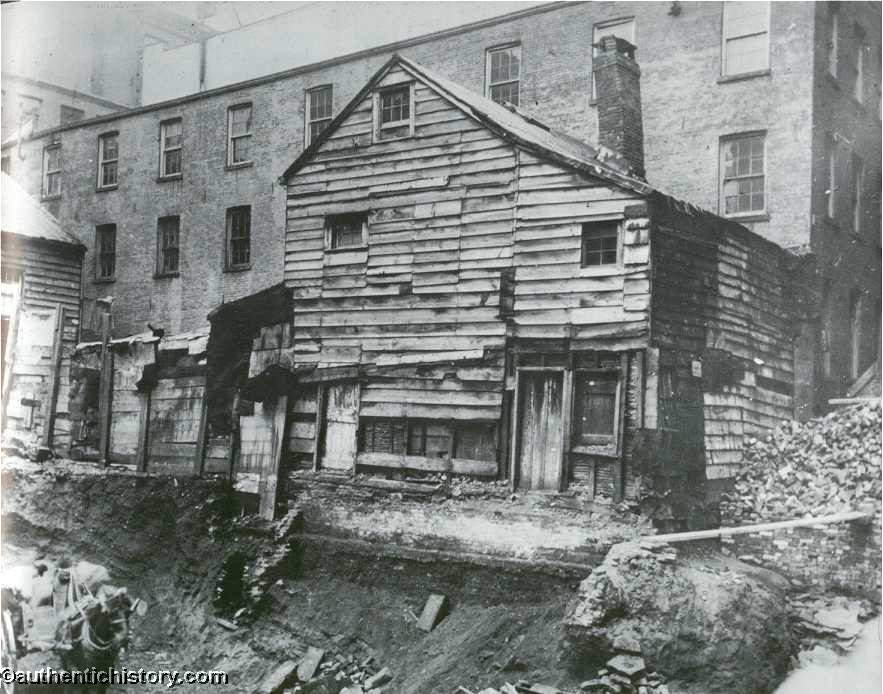
Below: a home on Bleeker Street (at Mercer and Greene streets), a Jacob Riis image that certainly must have popped up in one of his magic lantern shows
As a celebration of filmmaker Martin Scorsese (whose film The Irishman opens this month), we’ve just released an episode of the Bowery Boys Movie Clubto the general Bowery Boys: New York City History audience. This is an exclusive podcast for those who support us on Patreon.
For current patrons, we’ve also just released a brand new episode of the Movie Club, looking at the 1987 film Moonstruck. To listen to that episode and the past Movie Club episodes (discussing Midnight Cowboy, On The Town, Eyes of Laura Mars and many other films) become a Patreon supporter today!
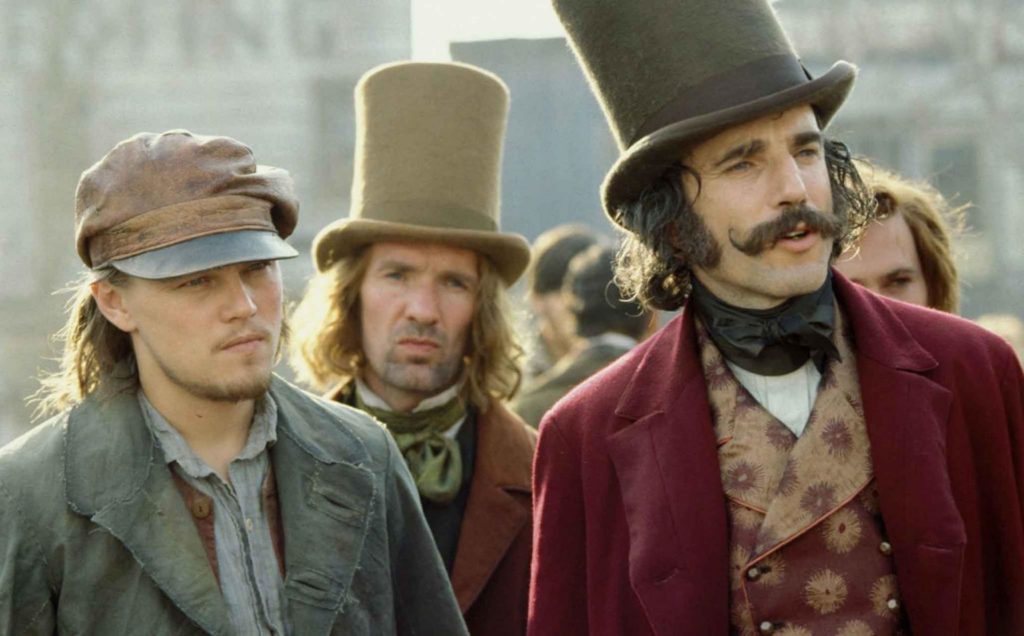
Gangs of New York is a one-of-a-kind film, a Martin Scorsese 2002 epic based on a 1927 history anthology by Herbert Asbury that celebrates the grit and grime of Old New York.
Its fictional story line uses a mix of real-life and imagined characters, summoned from a grab bag of historical anecdotes from the gutters of the 19th century and poured out into a setting known as New York City’s most notorious neighborhood — Five Points.
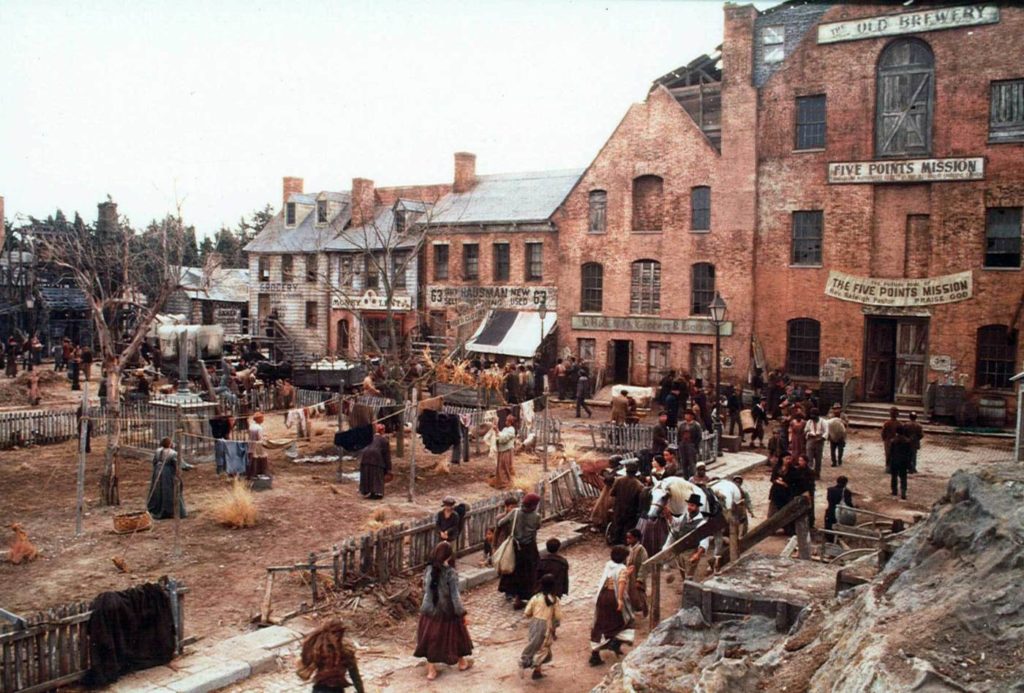
Listen in as Greg and Tom discuss the film’s unique blend of fact and fiction, taking Asbury’s already distorted view of life in the mid 19th century and reviving it with extraordinary set design and art direction. The film itself, released a year after September 11, 2001, had dated itself in some interesting ways.
And unfortunately some elements of the film are more relevant in 2019 than ever.
How do I get regular episodes of the Bowery Boys Movie Club? Simply support the Bowery Boys: New York City History podcast at any levelon Patreon.
Once you’re signed on, you’ll see a private RSS link that can be put directly into your favorite podcast player. It can also be played directly from the Patreon app once you’re signed in. Your support of the Bowery Boys podcast on Patreon assists us in producing our podcast and this website and it helps as we endeavor to share our love of New York City history with the world!
Should you watch the movie before you listen to this episode? This podcast can be enjoyed both by those who have seen the film and those who’ve never even heard of it.
We think our take on Gangs of New York might inspire you to look for the film’s many fascinating (but easy to overlook) historical details, so if you don’t mind being spoiled on the plot, give it a listen first, then watch the movie! Otherwise, come back to the show after you’ve watched it.
If you’d like to watch the movie first, it’s currently streaming on iTunes and Amazon. Or rent it from your local library.
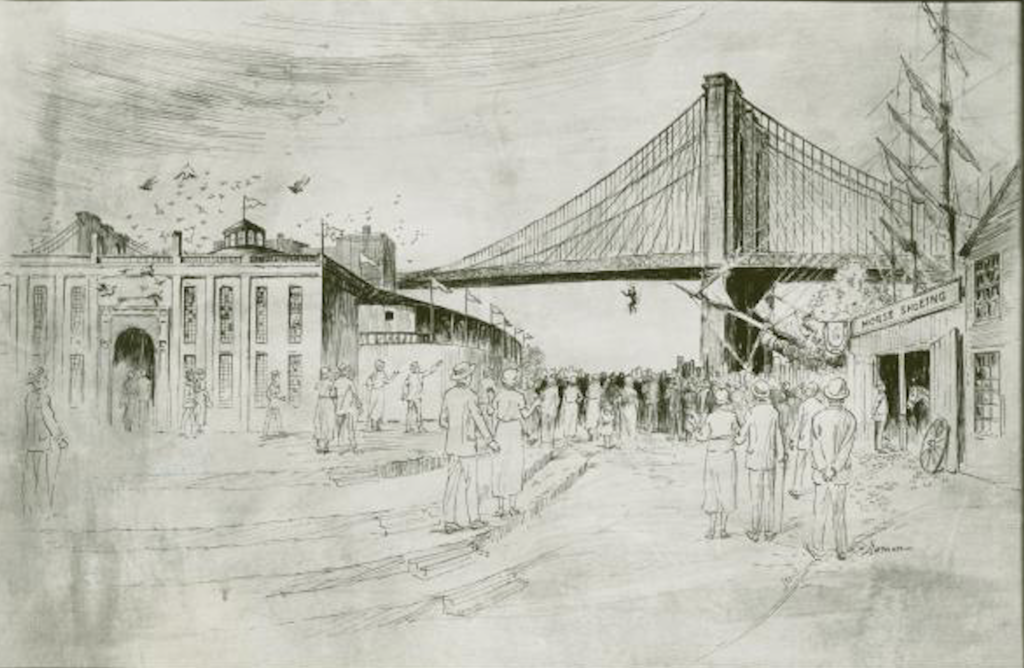
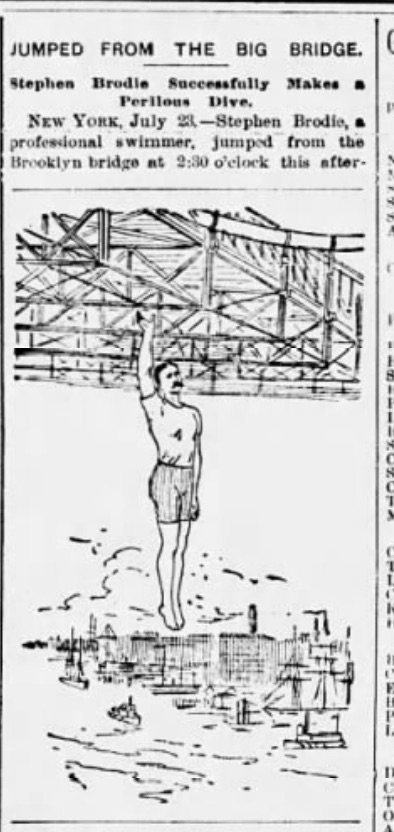
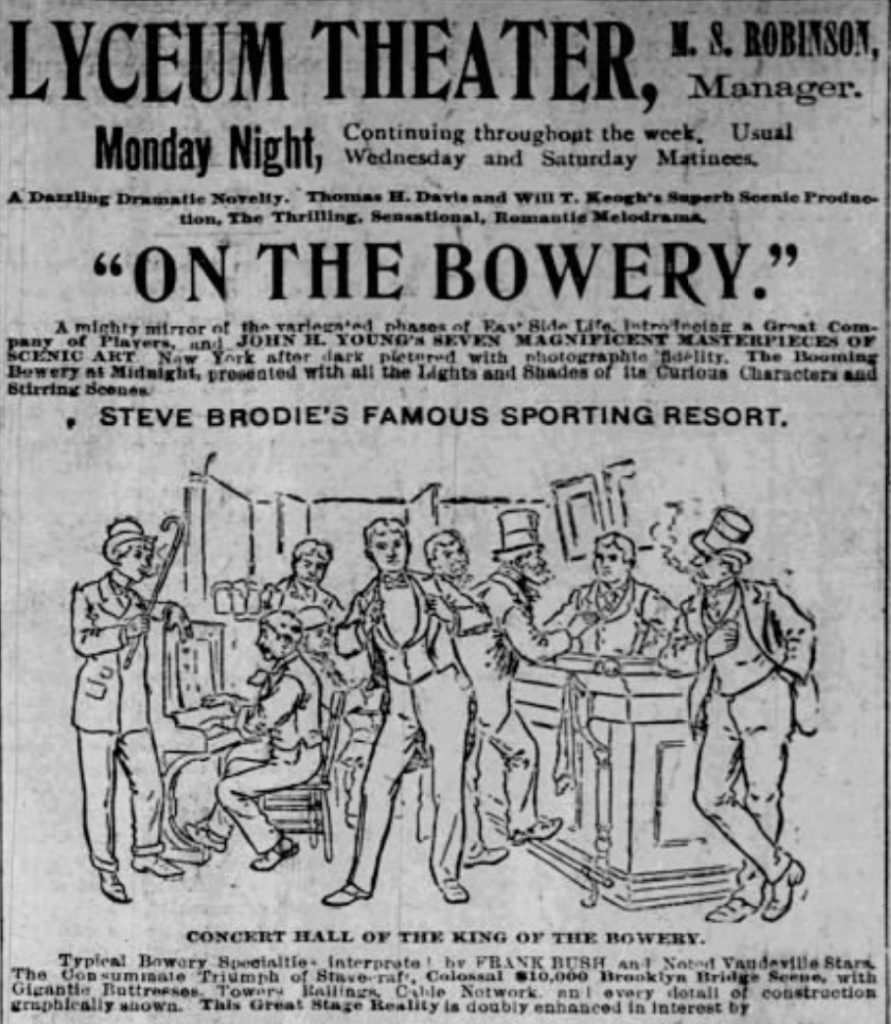
PODCAST A tale of the ‘sporting life’ of the Bowery from the 1870s and 80s. A former newsboy named Steve Brodie grabs the country’s attention by leaping off the Brooklyn Bridge on July 23, 1886. Or did he?
The story of Steve Brodie has all the ingredients of a Horatio Alger story. He worked the streets as a newsboy when he was very young, fighting the bullies (often his own brothers) to become one of the most respected newsies in Manhattan.
He experienced his first taste of adulation and respect as a minor sports celebrity, participating in pedestrian competitions across the country. Back in New York, Brodie started a family and promptly lost most of his money at the race track. He yearned to do something athletic and attention grabbing again.
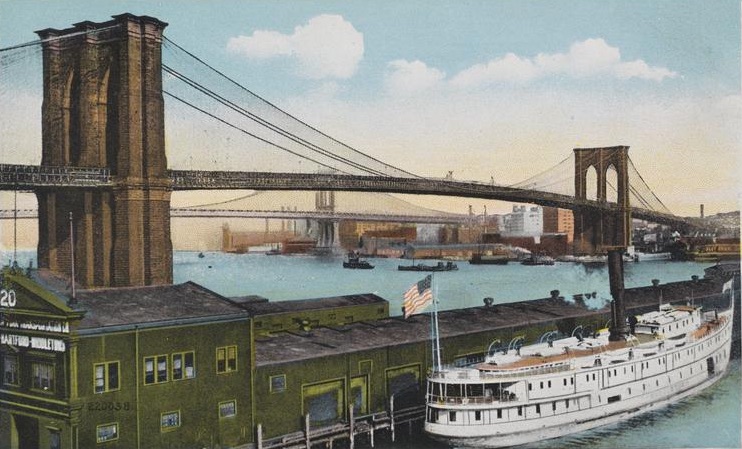
TheBrooklyn Bridge, completed in 1883, was a crowning architectural jewel linking two major cities; Brodie witnessed much of its construction during afternoons diving from East River docks. He now proposed an outrageous stunt that would garner him instant fame and fortune.
He would jump off the Brooklyn Bridge!
Was Steve Brodie a hero or a fool? A daredevil or a con artist? His story provides a window into the ‘sporting men’ life of the Bowery and a look into what may possibly be the greatest hoax of the Gilded Age.
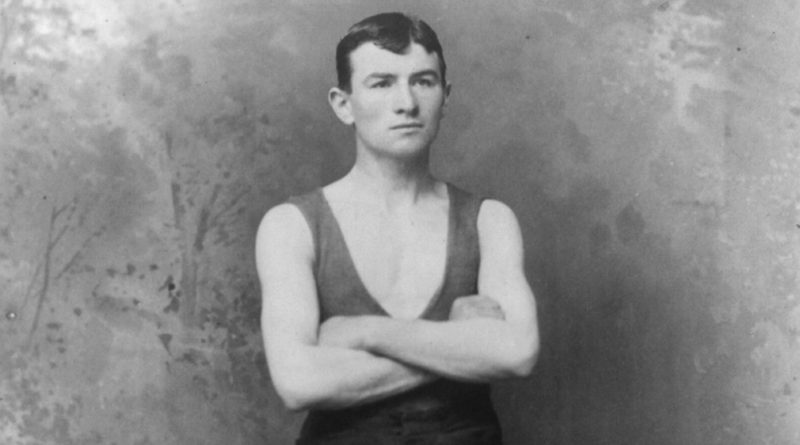
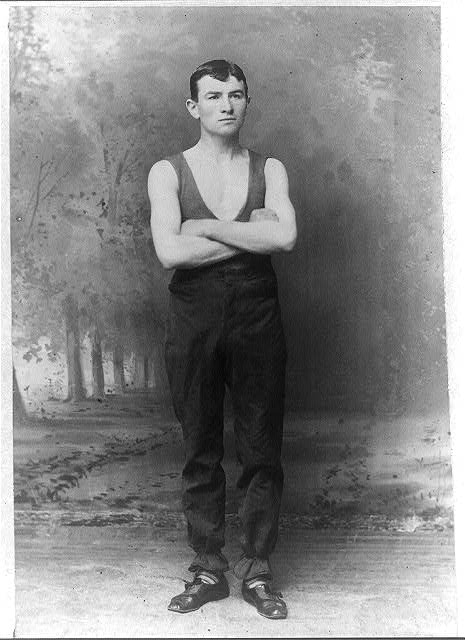
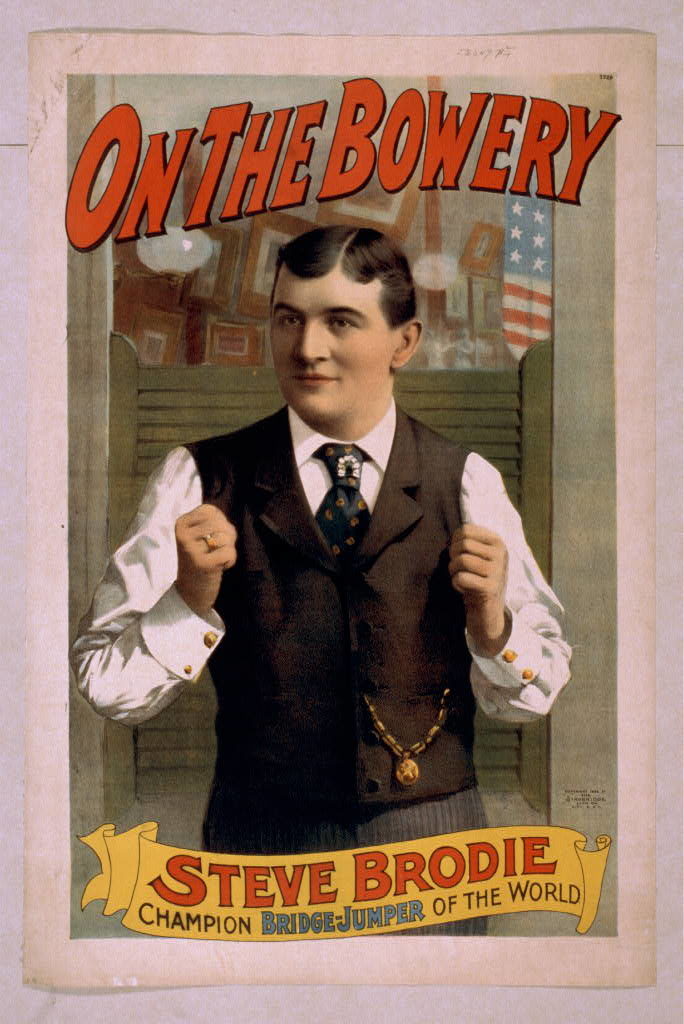
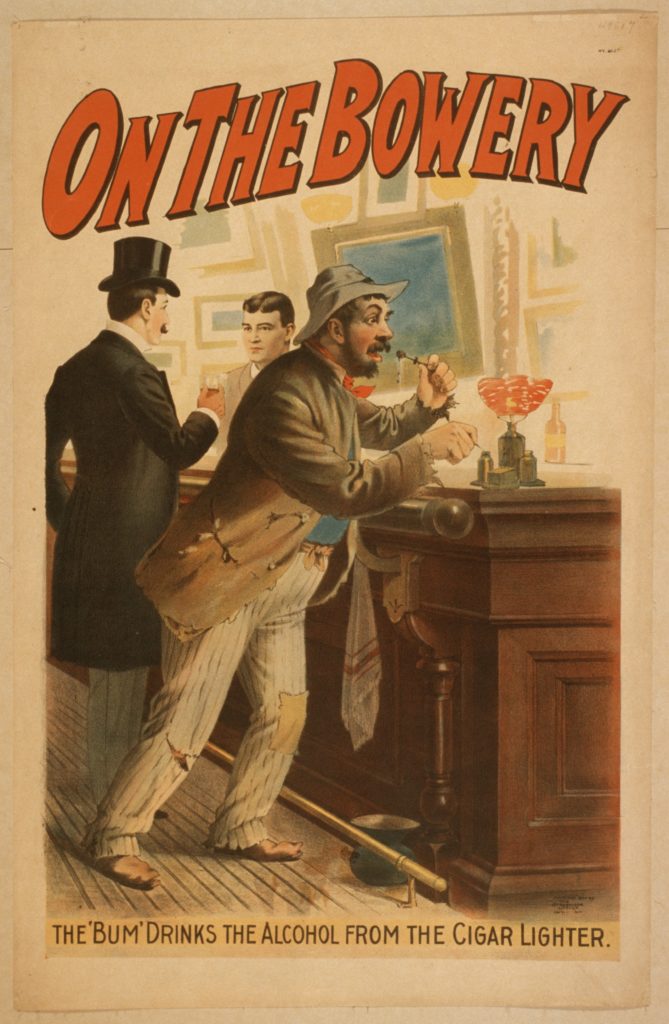
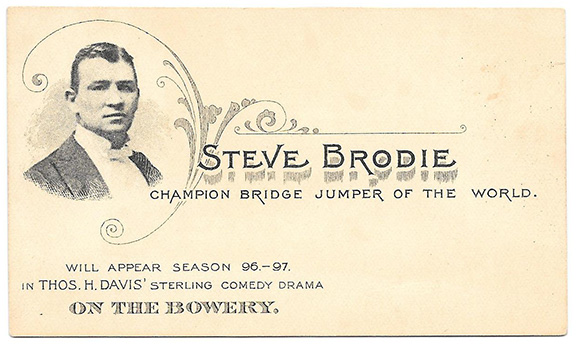
A photograph of Steve Brodie, taken on July 31, 1886, a week after his ‘jump’.Advertisements for the show On The BoweryImages courtesy Library of CongressAn illustration of Brodie’s jump made for the Old New York exhibition at the 1939 New York World’s Fair.
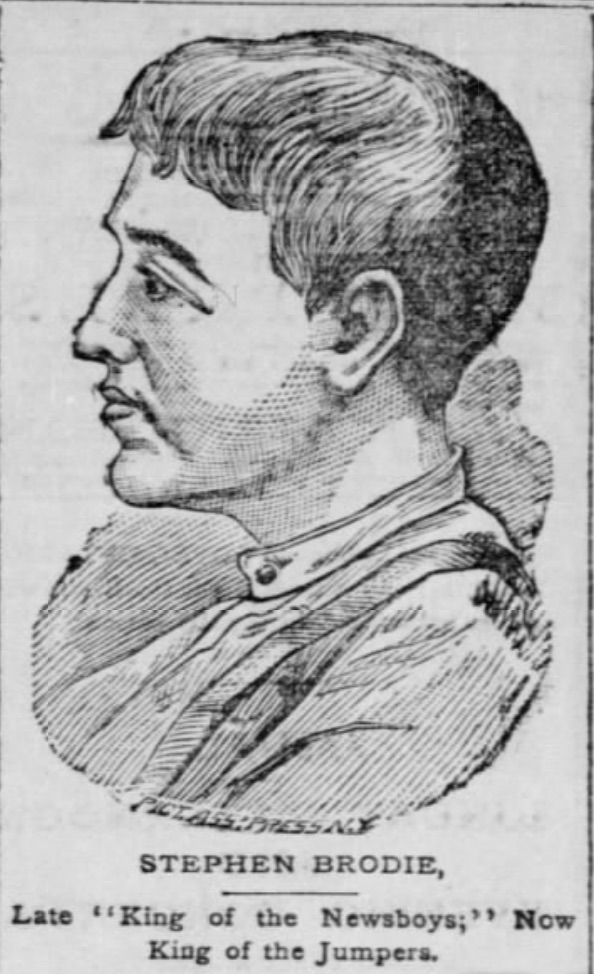
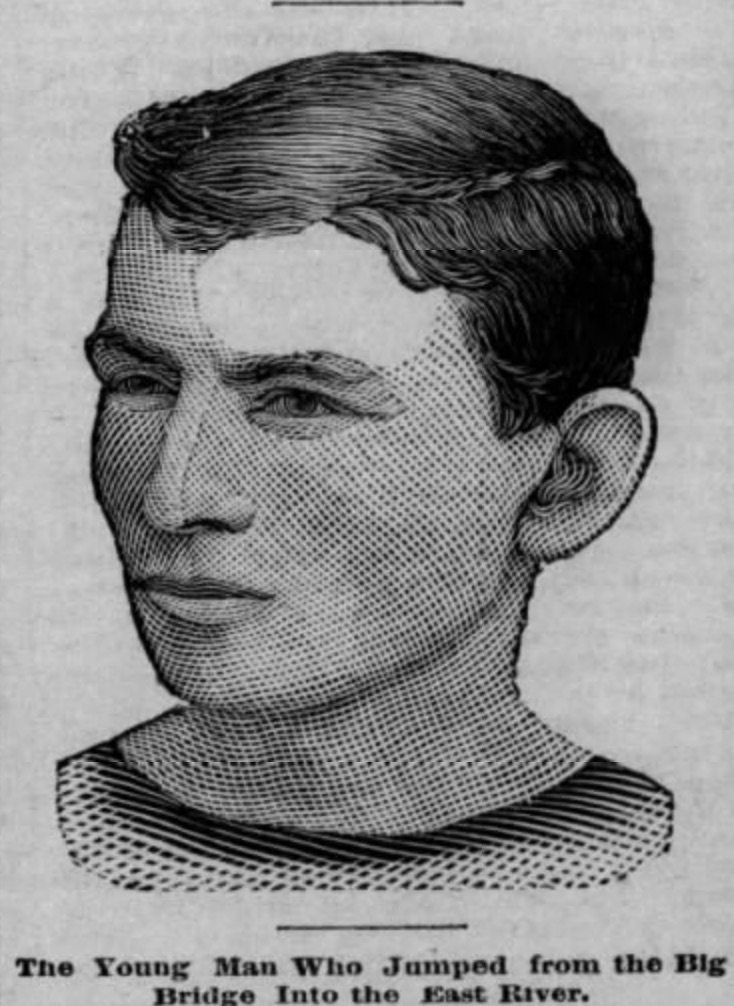
A few of the creative illustrations of Steve Brodie in the days and weeks following his stunt.
Here’s the Bugs Bunny cartoon Bowery Bugs (from 1949), courtesy the Internet Archive.
You can watch the 1933 film The Bowery on streaming services and even get the entire thing — in pieces — on YouTube. Here’s the section of the film featuring Brodie’s ‘brilliant idea’ (at around the 5:30 mark). By the way, this film is riddled with offensive stereotypes so be warned!
The actor Steve Brodie, who made his name in Western films and televisions shows, took his screen name from the Bowery’s Steve Brodie. You can also see Brodie in The Beast from 20,000 Fathoms!
My thanks to Grant Barrett for allowing me to use a clip from A Way With Words. Hopefully you’re all listeners of his excellent show with Martha Barnette about the history of language. Barrett and Barnette have been producing the show since 2007.
And here’s an article I wrote back in 2007 (!) about two saloons on the Bowery — including Brodie’s. This was written for our FRIDAY NIGHT FEVER series about the history of New York City nightlife. Past entries can be found here .
We’re going way, way, way back to New York’s seediest, filthiest and most notorious place — the Bowery in the late 19th century.
The nightlife of the old Bowery could have an entire blog in itself. It has been witness to some of the rowdiest, most shameless and debauched New Yorkers who have ever lived. They filled up dives and flophouses, brothels and saloons, and catered to the poorest of immigrants and the richest of the upper class ‘slumming it’ for a real idea of fun unimagined in the drawing rooms of the elite.
The two saloons from the late 19th century featured here weren’t extraordinary places as we would consider today — they would both fit comfortably in the 20th century sin-den the Limelight — but they were run by extraordinary people, ‘heroes’ of the Bowery brawler set.
Geoghegan’s at 105 Bowery has been described as “a rendezvous for professional mendicants.” Often called the Bastille of the Bowery, it didn’t just spawn a few fisticuffs; it catered to them. Because this two-floor boiserie featured two boxing rings, and one of the men in the ring was often the bar’s owner.
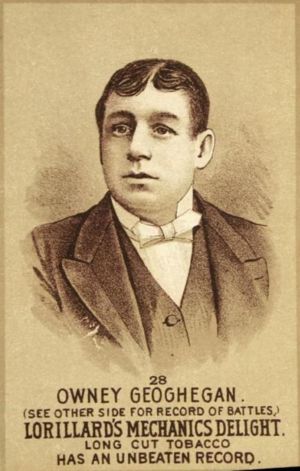
Owney’s boxing card.
Owney Geoghegan held the boxing distinction of Lightweight Champion of America from 1861 to 1964 when he retired to open his tavern/fight palace in the Bowery. His reputation naturally drew the crowds, and Geoghegan encouraged his patrons on to a little pugilism with the help of ample ales and whiskey. In 1891 the ‘Bastille’ even hosted a few rather fierce bouts of women’s wrestling, with the competitors required to cut their hair (to prevent pulling) and costume themselves wearing only tights.
Such a swarthy establishment was bound to attract the lowest elements and the most sinful gangs of New York. One journalist at the time describes it: “The faces around us are worse than those seen in a bench show of pugnacious dogs, and instinct teaches us to have a care for our nickels, for our pockets are in imminent danger.”
But perhaps the person the clientele should have feared the most was Geoghegan himself. A short but powerful Irish man, Geoghegan was known for his impressive, compact strength. And his penchant to cheat when needed.
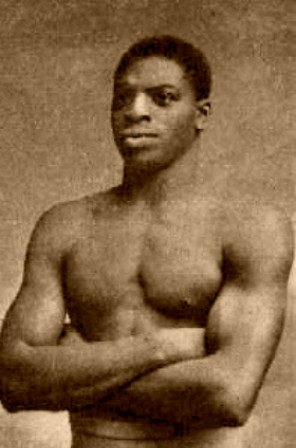
Viro Small, one of the Bowery’s most popular boxers.
Geoghegan was in the ring one night against Viro Small, a very popular black wrestler. Geoghegan was still in his prime but it was clear he was being bested in the ring by Small. The drunken crowd kept catcalling him, and he knew he couldn’t lose in his own establishment. So he had one of his henchmen hold a gun to the referee’s head and call the match for Geoghegan!
(Small didn’t hold a grudge. He later wrestled there again, with a man named Billy McCallum who afterward tried to murder him.)
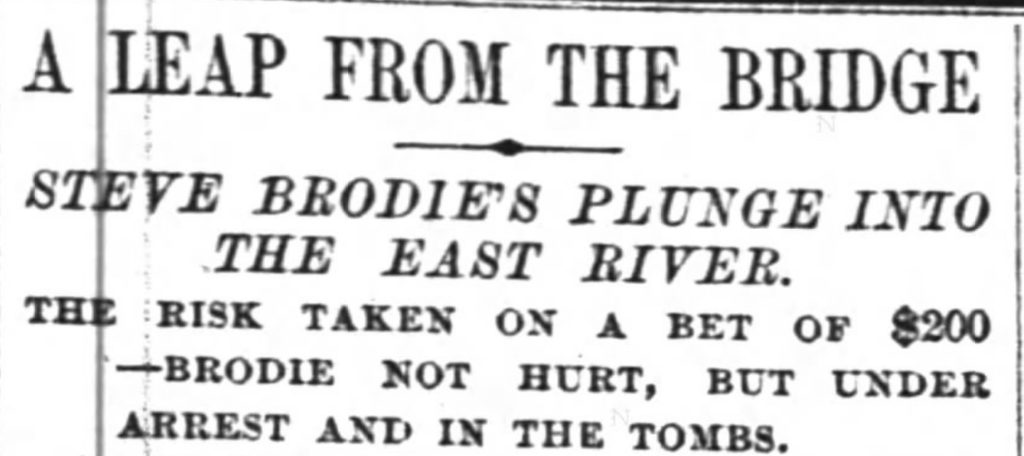
As Geoghegan flexed his strength to his barflies, another Bowery saloon owner was busy displaying his gifts of agility. In 1886 Steve Brodie, on a bet, jumped off the Brooklyn Bridge, the bridge being only about three years old at the time. What was amazing was not the amount of stupidity that took, but the fact that he survived and claimed his $100 bet money.
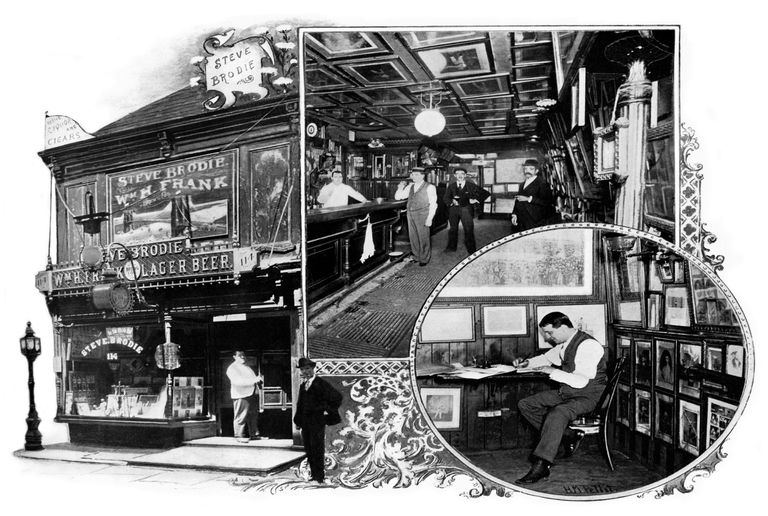
His feat was celebrated at the time and from the fame of this simple act, he was able to open Steve Brodie’s Saloon, 114 Bowery, at Bowery and Grand Street (a couple of doors down from Geoghegan’s place).
Brodie’s saloon. Note the Brooklyn Bridge mural above the bar entrance.
If Geoghegan’s dive was a celebration of his profession, Brodie’s was a celebration of his own personality. Behind the bar was an elaborate oil painting depicting Brodie bravely hurling off the bridge, along with a signed affidavit from the boat captain who fished him out of the water. The floor of the bar was inlaid with silver dollars to give it that wealthy feeling that money had been hurled to the floor.
For the cost of a drink, Brodie would gladly recount his tale. As silly as it seems today, he was able to pack in patrons, perhaps many from Geoghegan’s place, still drunk on booze and bloodletting.
Somehow he managed to turn his feat into a touring autobiographical performance entitled On The Bowery. Eventually, he tried to top his feat with a plunge down Niagara Falls in 1889. (It could never be proven that he actually went ahead with it!) He settled in Buffalo and opened another saloon there, but the enigma of his fame apparently didn’t carry that far. He moved to San Antonio and died at age 39.
Geoghegan had a similar short-lived fate. He lapsed into a severe depression at the death of his father and, traveling to Hot Springs, Ark., to try cure himself of his pain, actually died there, age 45.
As his obituary in the New York Times said: “There is mourning in the Bowery, sorrow on Houston and Bleecker streets, and desolation in the dance halls of the slums….. His career as a prizefighter, ward heeler and dive keeper was that of the typical New York rough, and is only interesting as it illustrates a phase of life little known to respectable people.”
The Bowery Boys: New York City History podcast is brought to you …. by you!
We are now producing a new Bowery Boys podcast every other week. We’re also looking to improve and expand the show in other ways — publishing, social media, live events and other forms of media. But we can only do this with your help!
We are now a member of Patreon, a patronage platform where you can support your favorite content creators.
Please visit our page on Patreon and watch a short video of us recording the show and talking about our expansion plans. If you’d like to help out, there are six different pledge levels. Check them out and consider being a sponsor.
And join us for the next episode of the Bowery Boys Movie Club, an exclusive podcast provided to our supporters on Patreon.
We greatly appreciate our listeners and readers and thank you for joining us on this journey so far.
Our first-ever Bowery Boys book, “Adventures in Old New York” is now out in bookstores! A time-traveling journey into a past that lives simultaneously besides the modern city.
Bowery Boys Walking Tours
Are you ready to walk through time? We’re excited to announce Bowery Boys Walks, our new walking tours developed around our podcast. Join us in the streets — beginning in October 2018!
Jacob Riis, 1890. Courtesy of Museum of City of New York.
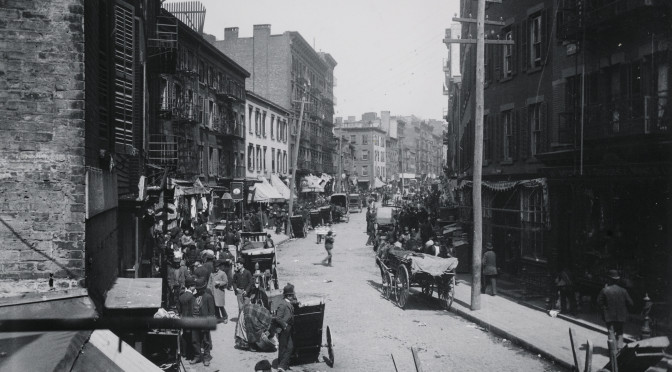
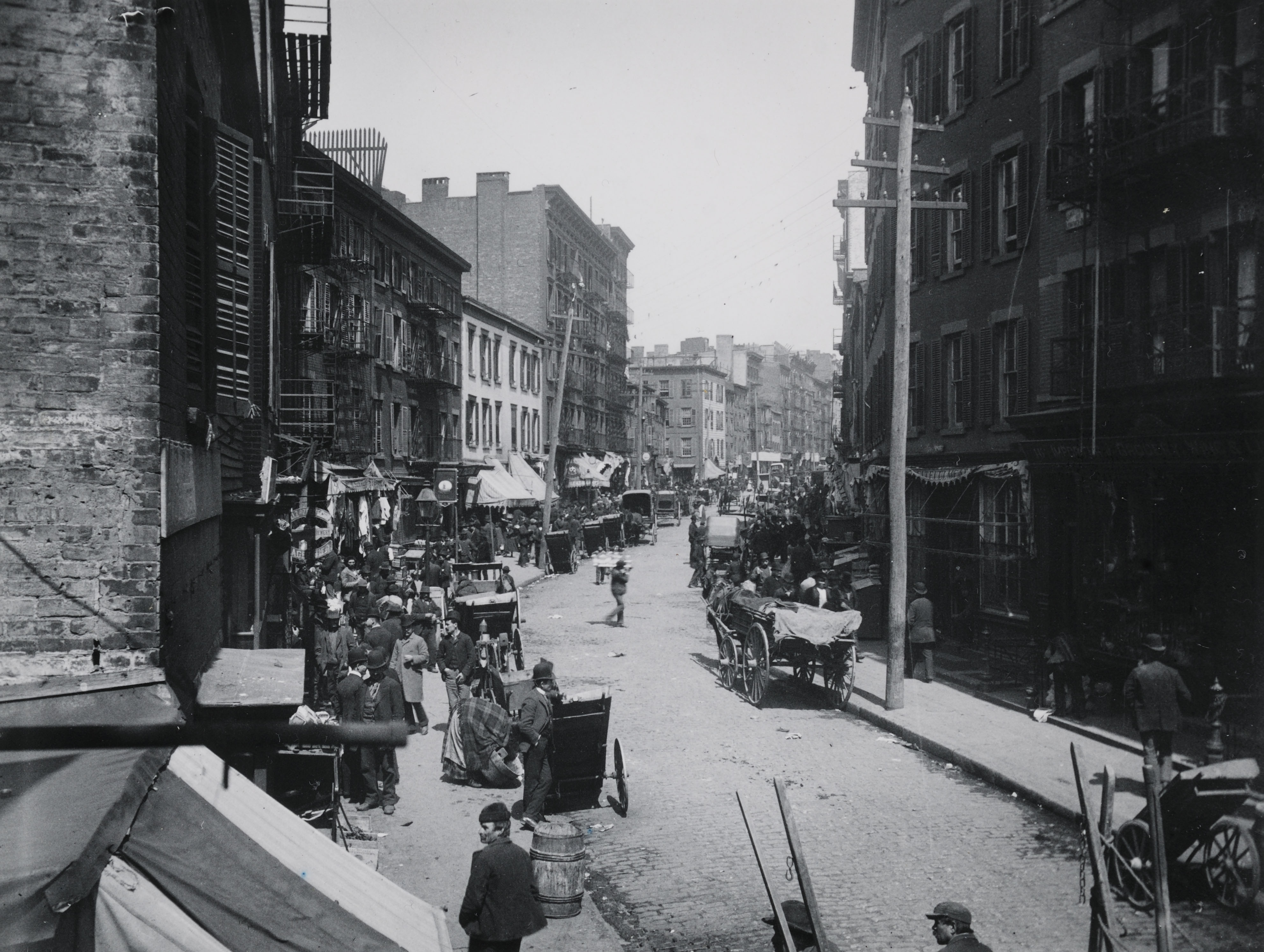
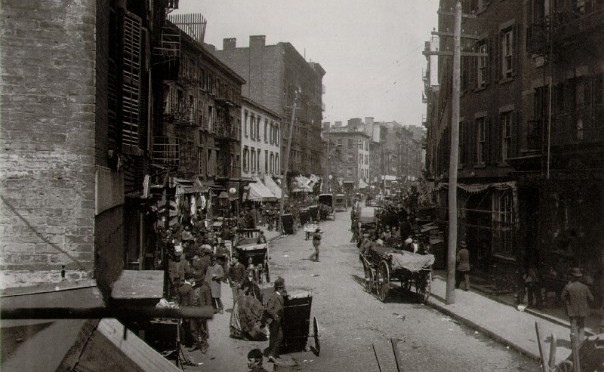
Mulberry Street is one of the most important streets in New York City history, a central artery of immigrant life for almost two hundred years.
Today its northern end is Bleecker Street, crossing Houston Street and heads all the way down to Bayard Street where it curves to the east (the so-called “Mulberry Bend”) where it finishes on Worth Street.
It is one of the many current streets that still retain a bit of their original nature in their names — likeSpring Street, for instance. In this case, that notable bend was once lined with mulberry trees.
In 1764, near the Bend, a linen factory was built here on this once-lazy street and a market specifically for the sale of clothing materials. Sounds so lovely and clean, yes?
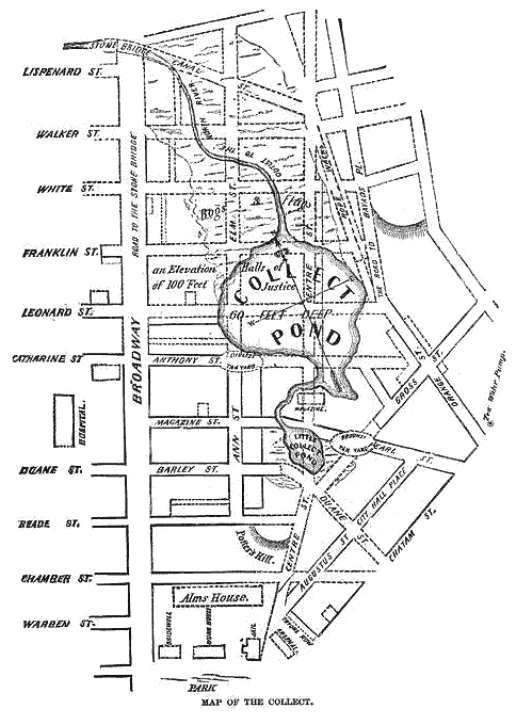
Well, Mulberry also happened to abut Collect Pond (or ‘Fresh Water Pond’) on its northeast shore, although the water here would not be considered ‘fresh’ for very much longer.
It would become a magnet for all sorts of filthy industries including tanneries and rope-makers — and especially slaughterhouses. So many slaughterhouses, in fact, that Mulberry’s first nickname was ‘Slaughterhouse Street‘.
An early 19th century butcher named Thomas De Voe lived in a cottage on Mulberry and Spring Streets. He described the street as “a very rough … road that passed along by several mulberry trees, which afterwards gave a name to the much-dreaded route.” He makes mention of 25 or 30 such houses staked on or around Mulberry.
In particular, Nicolas Bayard’s slaughterhouse was conveniently located here, near the pond (to dispose of waste) and near the Bull’s Head Tavern up on the Bowery (to buy cattle from farmers).
Who knows exactly when we lost the mulberry trees but such nature would not be seen again.
The pond was drained in the 1800s and the slaughterhouses soon escaped to the west side of Manhattan. The land that once adjoined Collect Pond was leveled for development. Unfortunately these initial properties, built upon swampy foundations, sank into the ground. Subsequent buildings — eventually the worst examples of tenements — were constructed here for poorer New Yorkers who could only afford these pathetic homes, their cellars perpetually flooded.
Jacob Riis, 1890. Courtesy of Museum of City of New York.
Within a decade, Mulberry would frame a neighborhood of grim notoriety, named for an intersection it would make with four other streets — Five Points.
The Bend would fester to become one of the most infamous areas of Five Points, over-crowded, filthy, “a continual depository of garbage,” according to the 1865 New York Tribune. Â Jacob Riis hearkens back to the path’s gentler days in How The Other Half Lives:
“Where Mulberry Street crooks like an elbow within hail of the old depravity of the Five Points, is “the Bend,” foul core of New York’s slums. Long years ago the cows coming home from the pasture trod a path over this hill. Echoes of tinkling bells linger there still, but they do not call up memories of green meadows and summer fields; they proclaim the home-coming of the rag-picker’s cart. In the memory of man the old cow-path has never been other than a vast human pig-sty.”
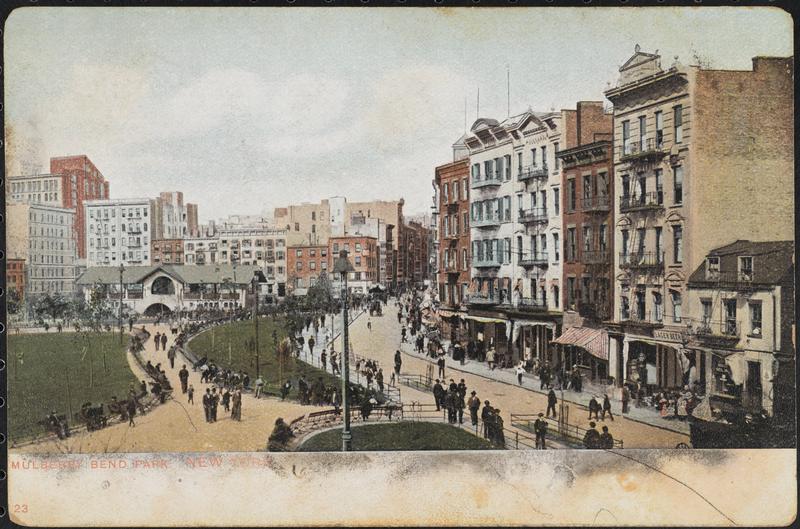
Only when the most terrible of these structures were demolished and replaced with a park in the 1890swould trees finally return to Mulberry Bend.
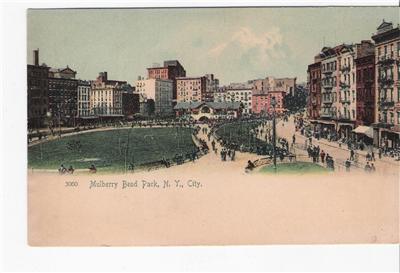
Below: Mulberry Bend Park, later renamed Columbus Park
WARNING The article contains a couple light spoilers about the current season ‘Mad Men’ on AMC and a few on last season’s ‘Copper’ on BBC America. Â
While 1968 comes to a close on Sunday night with the season finale of ‘Mad Men‘, another version of New York history returns on another channel.
‘Copper‘, starting season two on BBC America, will open in the early months of 1865, in the wake of a failed attack by Confederates that past November. Â Just as in this season’s ‘Mad Men’, set in a year of two assassinations, you can only begin watching a show set in early 1865 with the anticipated dread of one future tragedy.
If it makes you feel better, keep it all in the world of pop culture and imagine the events of Steven Spielberg’s ‘Lincoln‘ occurring simultaneously to those on ‘Copper’. Â Â Abraham Lincoln, fresh into his second term, was only just employing often cynical efforts to get the Fourteenth Amendment passed as the war between the states wound to its eventual completion.
Lincoln was still a divisive figure. Â In 1864, New York City, a Democratic stranglehold, had voted to replace him with George B. McClellan. Â Indeed, the city has such affection for McClellan Sr. that, fifty years later, they installed his son George B. McClellan Jr. as mayor. Â For many in New York, Lincoln represented a strike against common prosperity, flagrantly destroying America’s future — both literally, on the battlefields, and figuratively, with the freeing of slaves, weakening Southern commerce (and New York’s Southern interests).
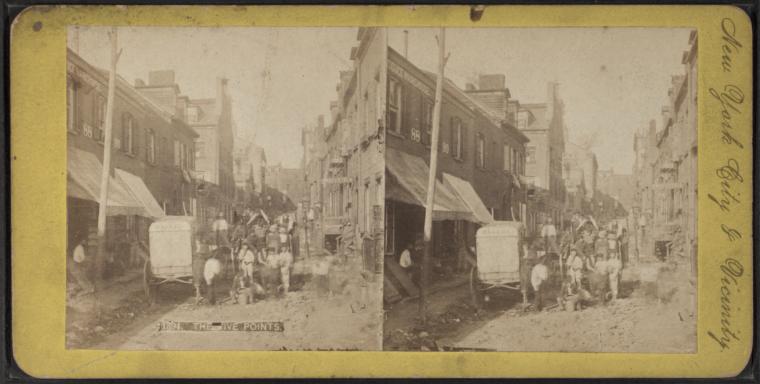
Below: A stereoscope photograph of Five Points in 1865 (NYPL)
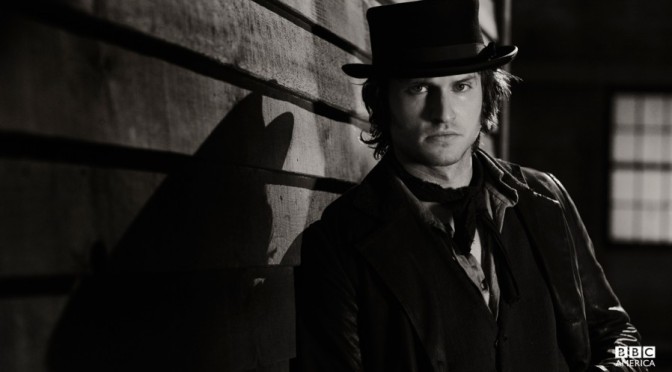
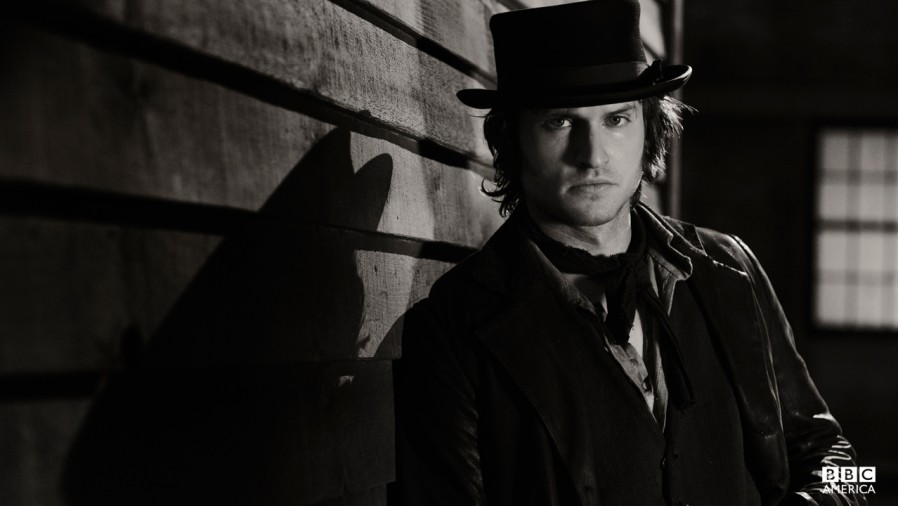
‘Copper’ follows the adventures of streetwise police officer Kevin Corcoran through the streets of Five Points, interacting with both the disreputable characters of that neighborhood (including one sassy brothel owner) and few genteel sorts from Fifth Avenue.  Between thwarting criminals and Confederate plots, Corky also found his amnesiac wife in an asylum.  He also seems to have developed a morphine problem.
What’s might we see in Season Two in regards to New York? 1865 was the year the city got serious about cleaning itself up physically — construction of city sewers was commissioned in this year — even as its government infrastructure was getting ever more corrupt (as in, Tweed was now the ‘Boss‘).
The new episode is set on the date February 5, 1865. Â The new New York Stock Exchange opened a few days before that date, reinforcing New York’s real center of power. The consequences of a long war were still ever-present; that February 4th, on Governor’s Island, a Union deserter was even executed.. And there’s still loose ends from that ugly Confederate ‘Greek fire’ business, namely the captive Robert Cobb Kennedy, held in old Fort Lafayette.
But the most tumultuous event of the year came with Lincoln’s assassination, throwing the entire country — and especially the city — into chaos.
Two political assassinations played central roles in this season of ‘Mad Men’, and some professional ones too.
Season Six was a full-on assault on the early ’60s complacency of the show’s initial premise. Â In prior seasons, New York City was almost solely depicted via bars and restaurants. Â In this season, we got grimy squatters apartments, rat infested walk-ups and allusions to race riots in far-off neighborhoods.
The sky-high haven of  Don and Megan Draper was invaded by imposters, glamorous lesbians and even the encroaching sounds of a dangerous city.  This was a season of menace, the usual bedroom/boardroom operatic antics, scored with the violent tones of the Vietnam War and a cynical presidential campaign forever in the background.
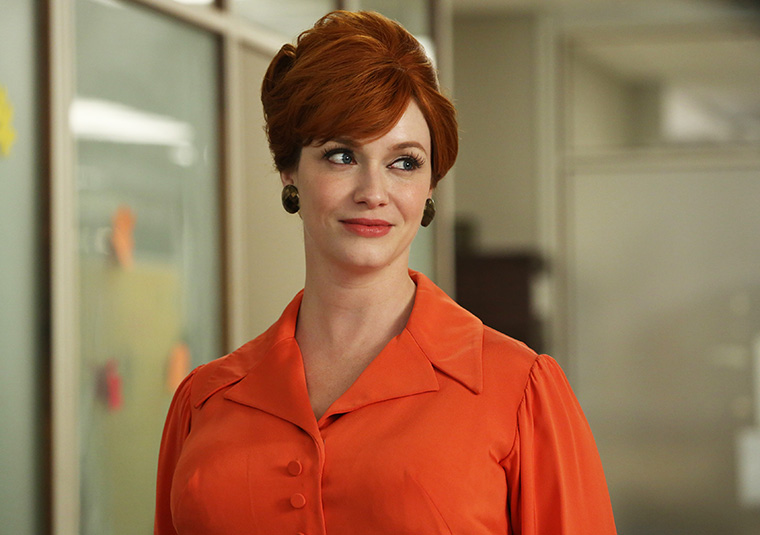
Maybe that’s why some of Don’s storyline this year felt so labored. Why should we care so much about his perpetual indiscretions when the world around him has shifted? How can we keep focused on him? Â Characters like Joan Holloway (above, fetching in orange) used the changing times to her seeming advantage. Â Pete Campbell, once again, tripped over himself. Â Peggy was forever caught between the old and the new, from her lifestyle and career to even her romantic interests.
And then we got an enigmatic new character, one who I fully expect to see hanging out at Stonewall in the summer of 1969, his Greek coffee cups replaced with watered-down cocktails. Â I mean, will the creators of ‘Mad Men’ be able to resist it?
As always, you can follow along with me on Twitter at @Boweryboys during the live airing of New York City history-based shows like AMC’s ‘Mad Men’ and BBC America’s ‘Copper’ (along with ‘Boardwalk Empire’, later this year). Â As the season finale of ‘Mad Men’ and the season premiere of ‘Copper’ are on at the same time this Sunday (10pm EST), I’ll be Tweeting along with ‘Mad Men’ first, then immediately following with ‘Copper’.
Sometimes you can look back at history and think that nothing ever changes. And sometimes you find something that makes New York seem extraordinary unrecognizable, a city besieged by near barbaric crises.
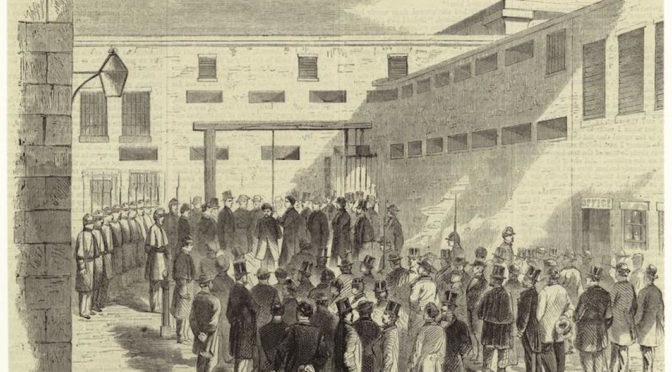
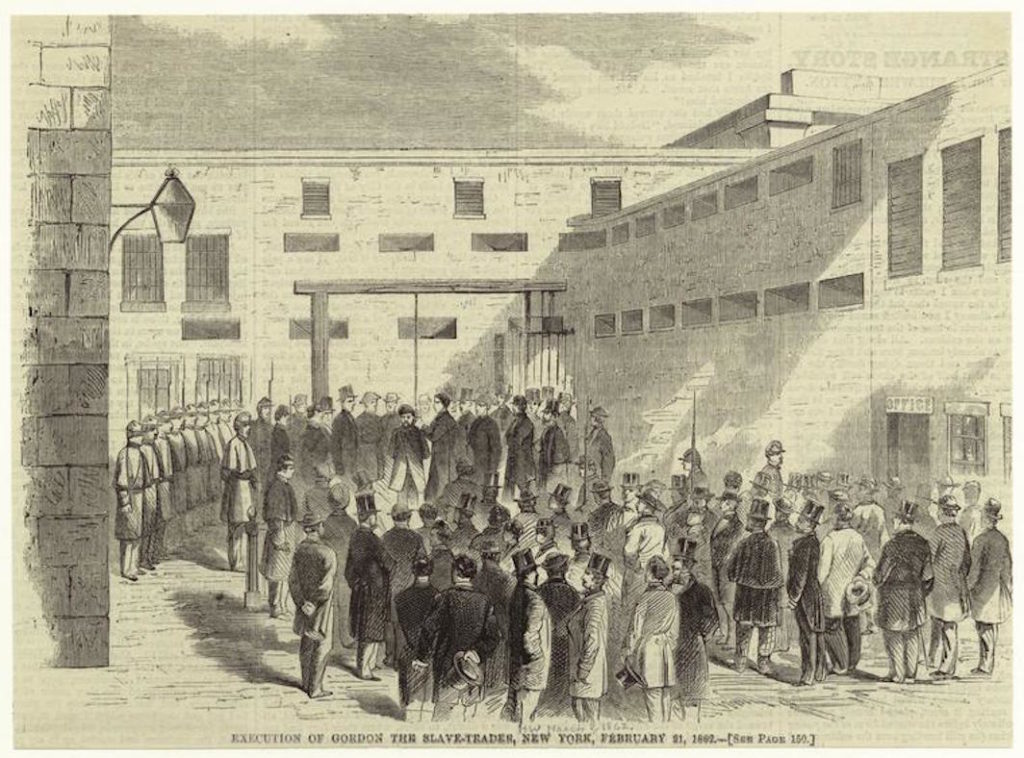
The image above depicts a scene from February 21, 1862, in the courtyard of the famous Tombs prison in the Five Points neighborhood.
The notoriously dank and foul-smelling complex was the scene of a great many public executions since its opening in 1838, but the one which took place on February 21 was particularly urgent, the crime cutting to the core of America’s central dilemma.
The man being hanged was Nathaniel Gordon, and his crime was international slave trade.
America was in the throes of a Civil War between the North and South, waged with slavery as its central issue. But the import and export of slaves into the United States has technically been banned decades earlier, and the U.S. Piracy Act of 1820 included human cargo in its definition of international piracy.
This did not deter Gordon, who sailed to North Africa in 1860 and loaded a boat with almost 900 people, intending to sell them to Southern plantations.
From a vivid description fromHarper’s Weekly, the boat was overloaded with “eight hundred and ninety-seven (897) negroes, men, women, and children, ranging from the age of six months to forty years. They were half children, one-fourth men, and one-fourth women, and so crowded when on the main deck that one could scarcely put his foot down without stepping on them. The stench from the hold was fearful, and the filth and dirt upon their persons indescribably offensive.”
Gordon was caught just 50 miles offshore and brought to the United States for trial. He would have received a stern sentence even before the war, but with the conflict in full swing by the time of his trial in late 1861, Gordon’s defense team never stood a chance.
Despite pleas from wealthy supporters, Gordon was sentenced to die on February 7, 1862. President Abraham Lincoln commuted the sentence by two weeks, and Gordon’s supporters might have even convinced him to commute it further had Lincoln’s young son Willie not died of typhoid on February 20.
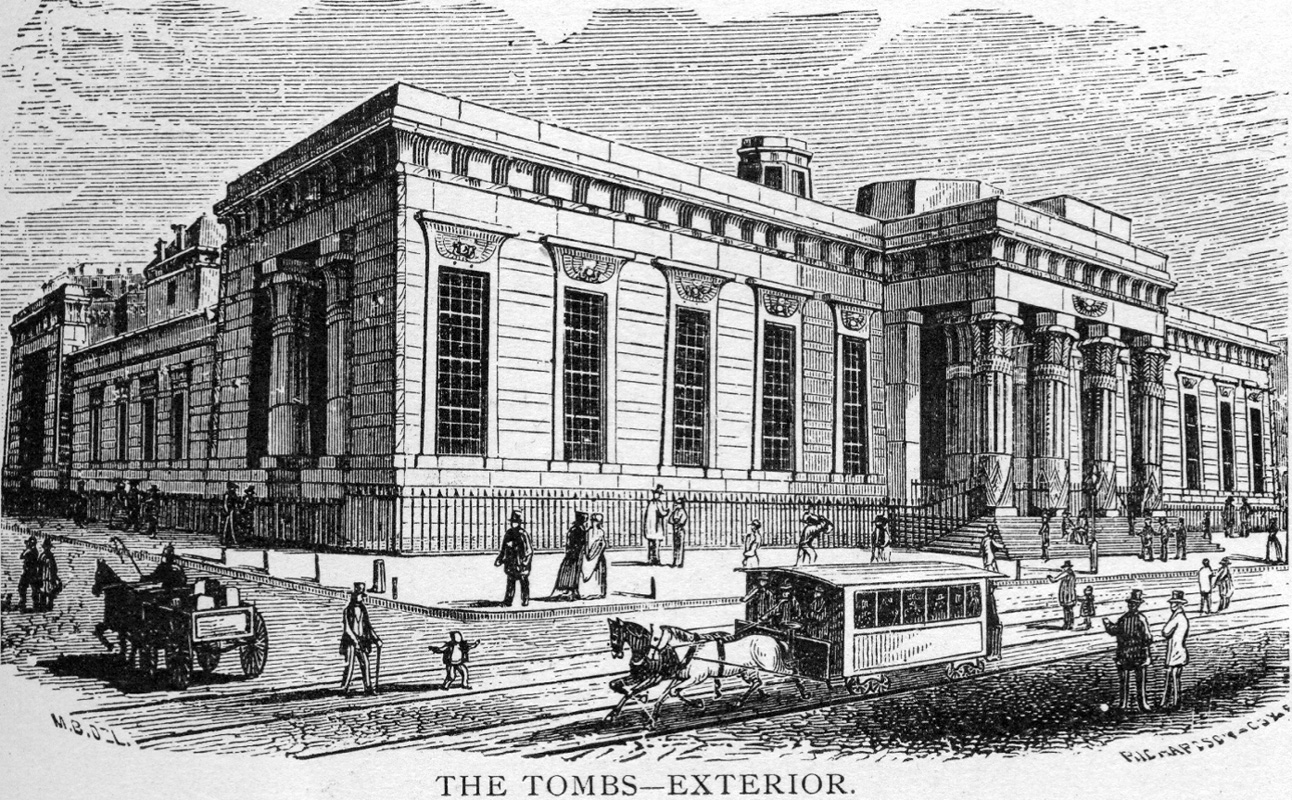
One notable fact about this execution is the Tombs (pictured above, in 1863) is a city prison, but the crime was a federal offense, the only such national execution to have taken place here.
Most federal executions took place at military installations. For instance ‘Pirate’ Albert Hicks was hanged on Bedloe’s Island, home of Fort Wood (and today the residence of the Statue of Liberty). Robert Cobb Kennedy, one of the Confederate conspirators who attempted to torch various New York hotels in November 1864, was executed at Fort Lafayette off the coast of Bay Ridge, Brooklyn.
Gordon was also the last person ever executed by the U.S. government for violations of the Piracy Act.
For more details on the execution, check out the great Corrections History blog which details the messy particulars of the execution.
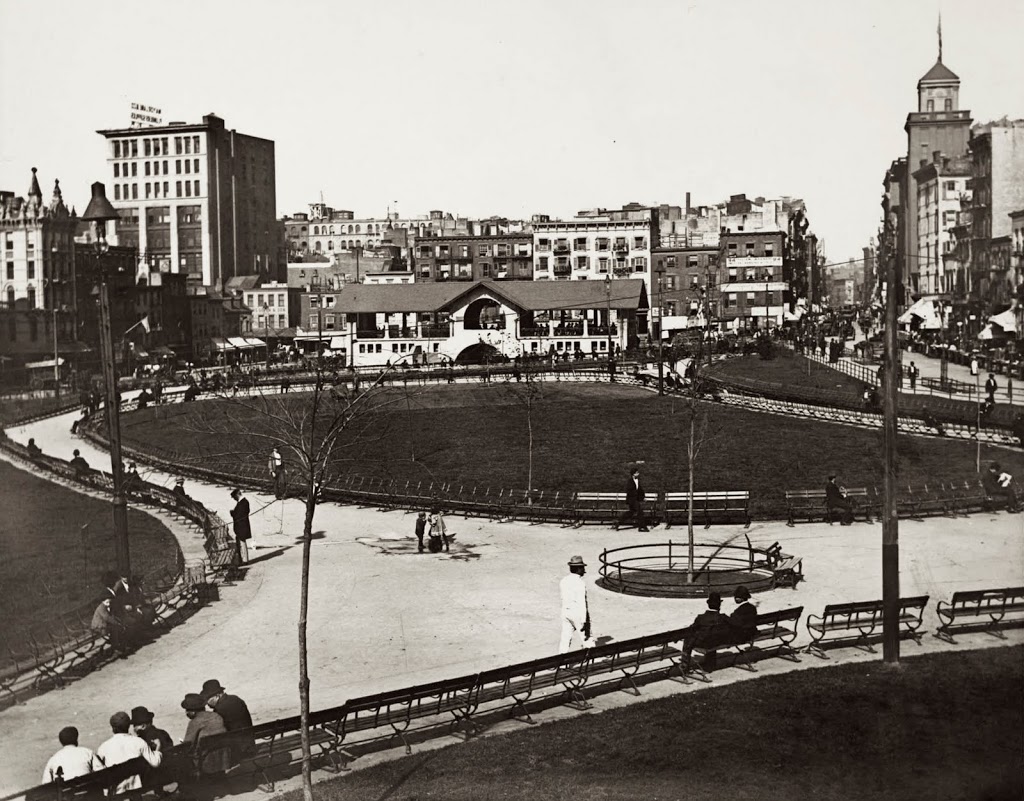
Next week begins ‘ghost stories’ week on the blog, but I need to make one more trip to Chinatown, the topic of the last podcast. As I just wrote about Columbus Day last week, I would be remiss if I skipped this very coincidental date in history. It was exactly one hundred years ago yesterday that the name of Mulberry Bend Park was officially changed to Columbus Park.
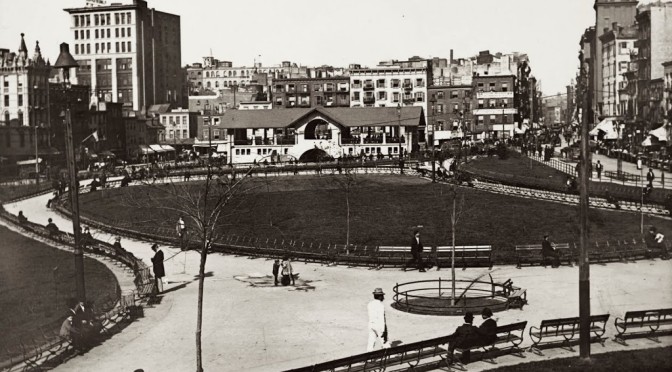
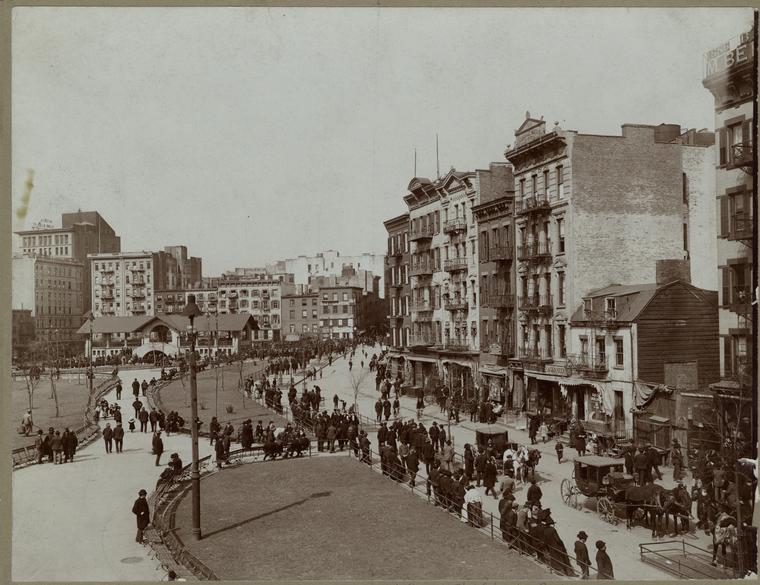
The park, of course, originally replaced the most decrepit of Five Points’ slums, allowing a sliver of greenery and sunlight to slip into the overly dense neighborhood. It took the city years to wrestle the original rundown tenements from their owners. “In its place will come trees and grass and flowers,” proclaimed its chief proponent Jacob Riis. The placid, English design by Calvert Vaux, typical for its day, insured a park so formal that people weren’t even allowed on the grass. (Today, located at the cusp of Chinatown and the Civic Center, the park is so busy and cluttered that it appears to almost have no grass at all.)
Mulberry Bend Park, named for the infamous hook in Mulberry Street to the park’s east side, opened in 1897. By this time, the area was populated by a mixture of immigrants, the largest group from Italy. Italian Americans soon defined the culture of the park’s surrounding streets, with obvious exception of those streets to the east dominated by Chinese businesses.
In 1911, the city explicitly declared the neighborhood’s changing character, at the behest of the Italian community, by renaming the park for America’s most famous Italian connection, the explorer Christopher Columbus. A crowd of 8,000 people gathered on Columbus Day that year to reopen the park under its new name.
The park now took on a more athletic character, with new track and field facilities, and on that first day with its new name, Columbus Park hosted competitions between boys from local playgrounds. “There were dashes, relay, half mile and potato races, shot puts and high jumps,” reported the Sun. “Five thousand more or less enthusiastic mamas and babies and papas and little mosquitolike boys insinuated their way to the very bars of the park enclosure…and looked on at the games.”
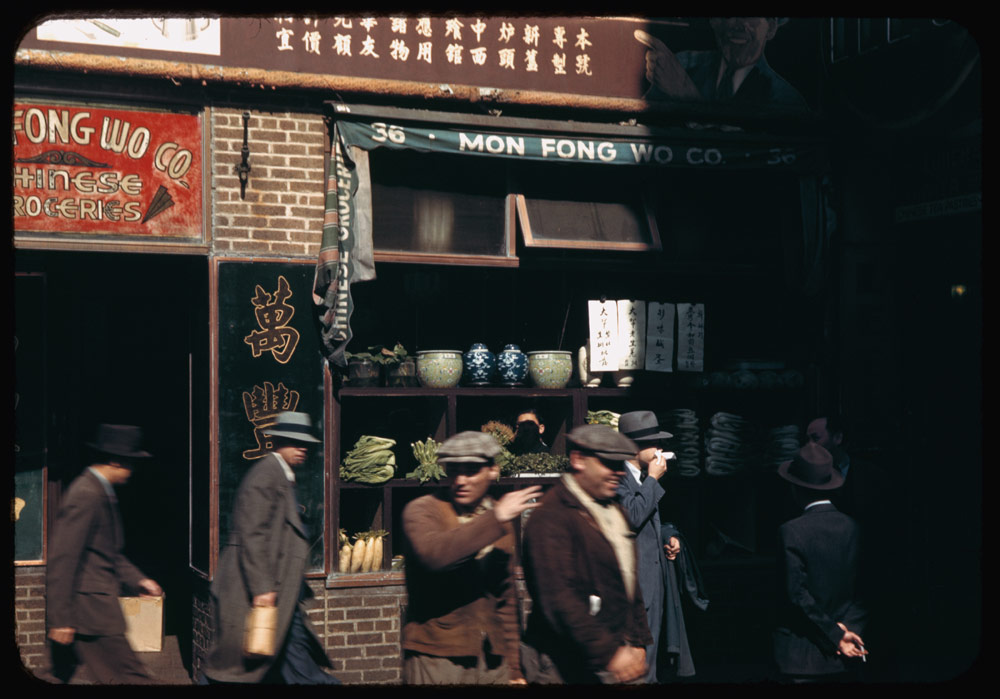
PODCAST Manhattan’s Chinatown is unique among New York neighborhoods as its origins and its provocative history can still be traced in many of the buildings and streets still in existence. Two hundred years ago, the sight of a Chinese person would have astonished New Yorkers, and the first to arrive in the city were either sailors or the subjects of tacky exhibition.
But with the first Chinese men setting on Mott Street, a new community was born, with thriving variety shops, cigar businesses and gambling dens alongside establishments of a more sensuous nature — opium dens and brothels. This mini-economy produced social clubs and secret societies (the legendary ‘tongs’), and rival gangs soon spilled blood along the neighborhood’s quirkiest lane.
And still today, modern Chinatown hides a few dark, startling secrets of its own.
ALSO: We give you a rundown of addresses along Mott Street and other places nearby. You can use this podcast as your official walking tour of the neighborhood!
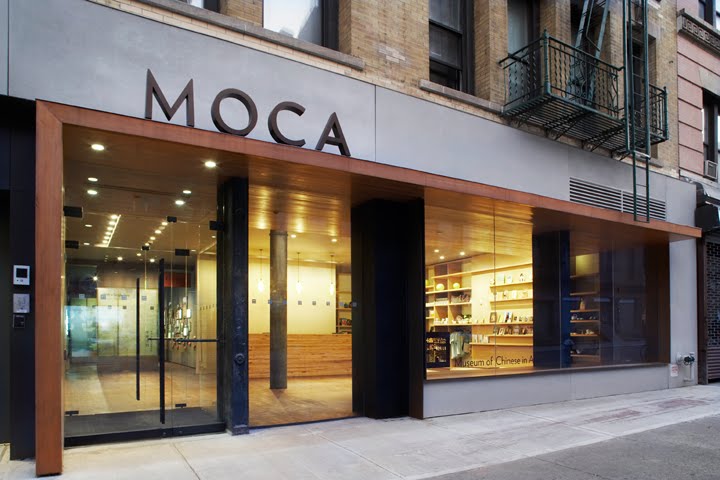
For a lot more information on the Chinese experience in America, I urge you to visit The Museum of the Chinese In America, located at 215 Centre Street. It’s free on Thursday and close to Chinatown. (Photo courtesy CUNY)
And here’s the addresses of places we mentioned in the podcast, as well as a couple other locations of interest. There are other places on these streets of great interest, so please meander freely:
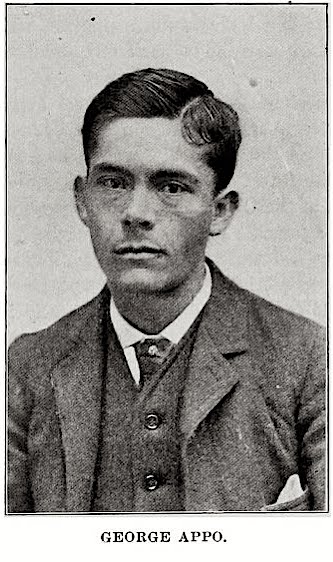
1. 50 Spring Street – Quimbo Appo’s tea shop Quimbo, an early Chinese success story in New York was in and out of prisons and mental wards later in his life. His son George Appo (below) was an equally notorious presence in the Five Points slums.
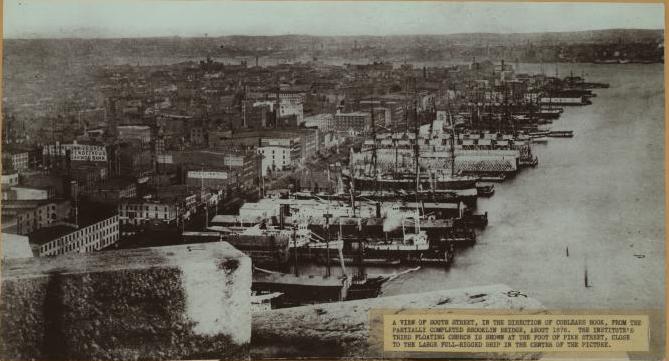
2. 62 Cherry Street – Ah Sue’s tobacco and Chinese Candy shop The East River docks stretching to Corlears Hook, where the first Chinese men (sailors) stayed in boardinghouses. This image is from 1876; Ah Sue’s waterfront business was at 62 Cherry Street, near Catherine Slip.
3. Corner of Catherine Street and East Broadway New York’s first Chinese laundromat
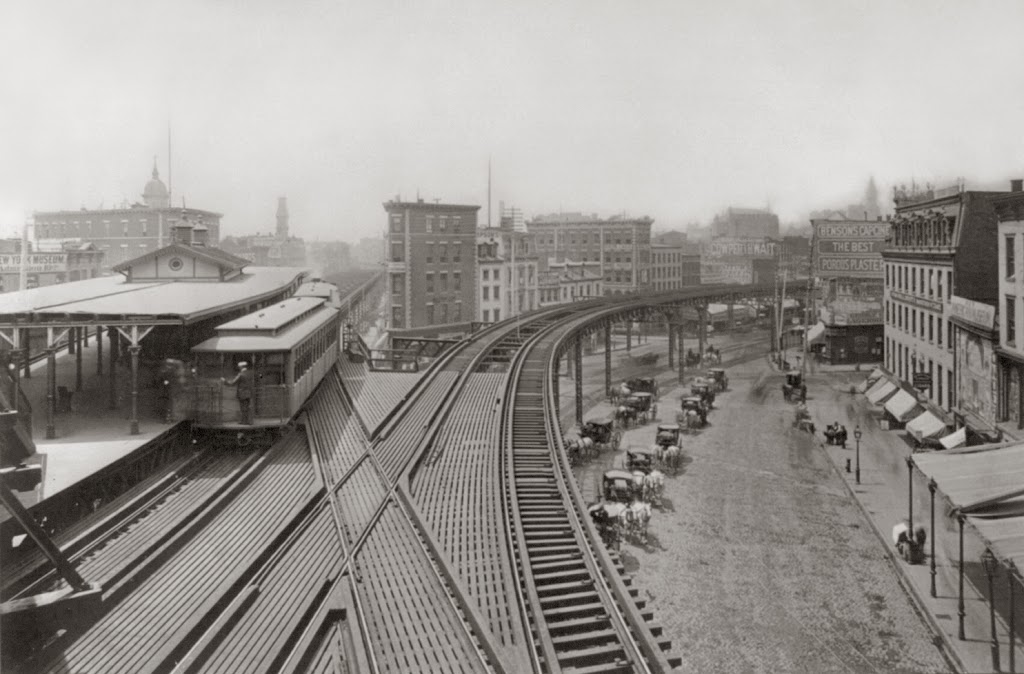
4. Chatham Square In the 1880s, the open area was consumed with elevated railroad tracks, quite a
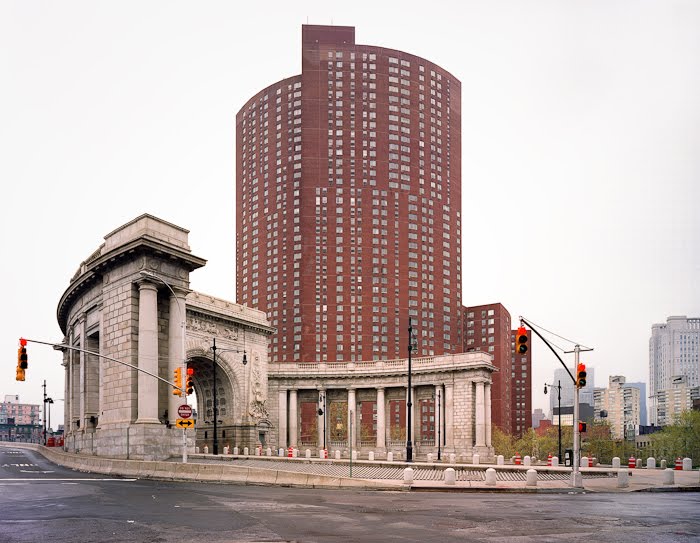
5. Confucius Plaza Built in 1975 and one of the largest buildings in downtown Manhattan outside of the Financial District. (Picture courtesy the pretty fabulous blog Iconic Facades)
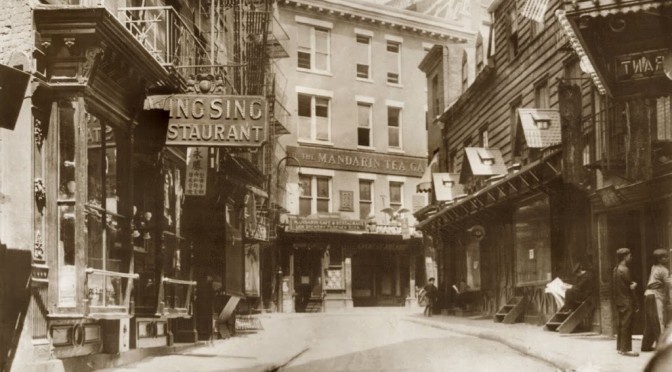
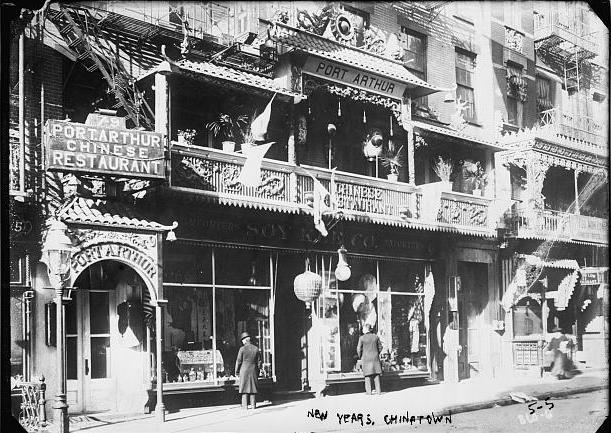
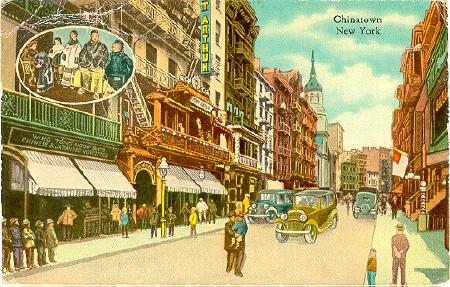
Not mentioned in the podcast, Port Arthur Chinese Restuarant, at 7-9 Mott Street, circa the 1900s, one of the first banquet halls of Chinatown
6. 11 Mott Street – the brothel owned by Tom Lee 7. 16 Mott Street – original home of the Chinese Consolidated Benevolent Association 8. 18 Mott Street – the first Chinese-owned building, and one of the earliest Chinese gambling dens
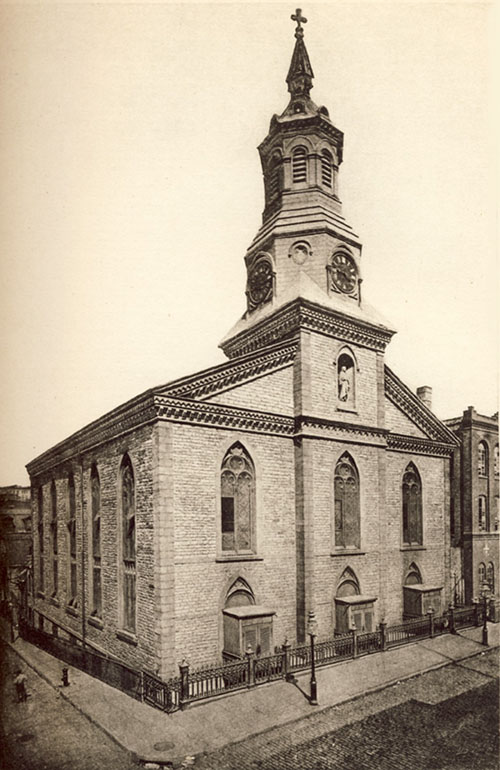
9. 25 Mott Street — Church of the Transfiguration Easily the oldest structure in the neighborhood, and home to early congregations that weren’t exactly welcoming to Mott Street’s early Chinese residents.
10. 62 Mott Street — current home of the Chinese Consolidated Benevolent Association, the unofficial ‘town hall’ of Chinatown
11. Columbus ParkMany of Five Points most decrepit tenements were eliminated to make way for this park created by Calvert Vaux. The park is a lively part of Chinatown today, particularly on the weekends. [source]
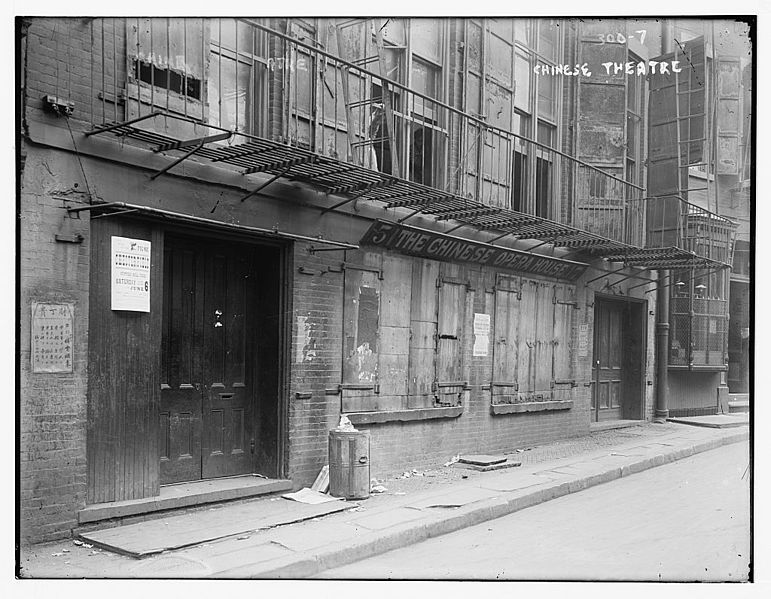
12. 5-7 Doyers Street – Chinese Theater A regular source of entertainment for locals and the sight of more than few altercations between rival tongs. Bodies were allegedly buried in the basement.
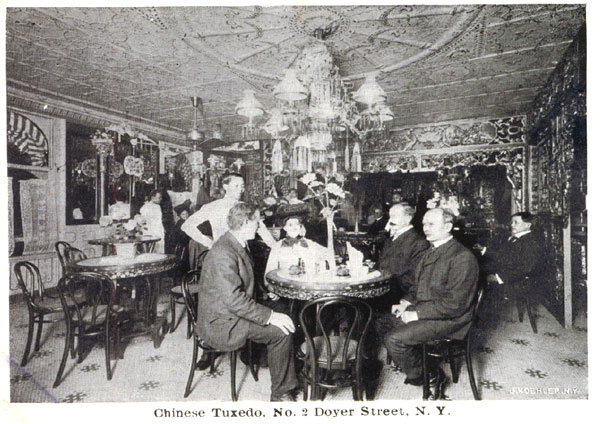
2 Doyers Street — Chinese Tuxedo Restaurant Chinese had a powerful allure to the non-Chinese and to ‘bohemians’. This restaurant attracted businessmen looking for an ‘exotic’ night on the town. It helped that the Tuxedo was near the elevated train. (Courtesy Flickr/straatis)
13. 9 East Broadway – Former home of the Golden Star Bar 14. 47 East Broadway – Yung Sun Restaurant, once operated by Sister Ping
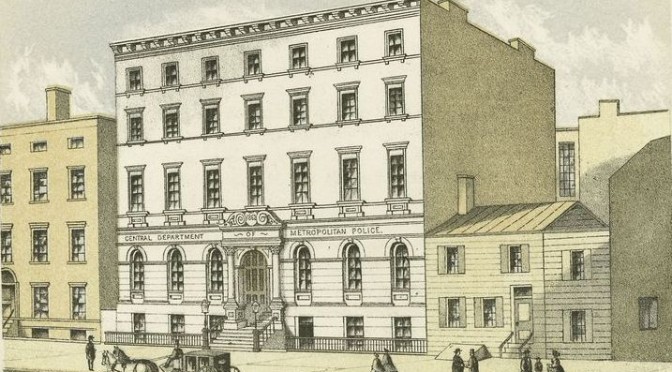
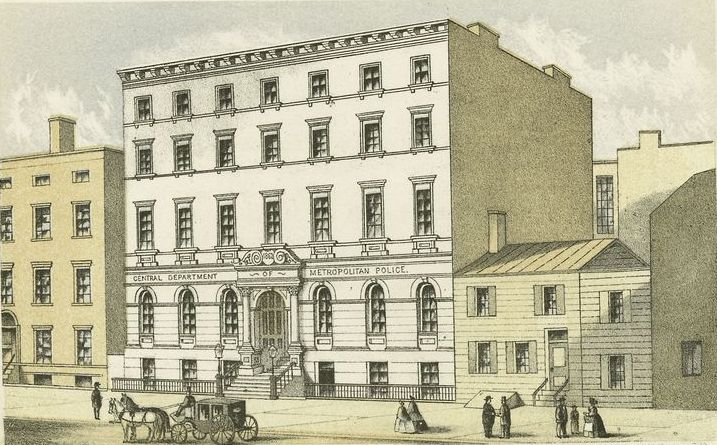
There is nothing extraordinary at 300 Mulberry Street anymore, just a standard five-story apartment complex and a parking garage, hugged to its south by a Subway sandwich shop. But for much of the Gilded Age, this address was the grand headquarters for New York’s police department.
The Mulberry Street building was New York’s center of law enforcement from 1862 to 1909. Not surprisingly, it was located close to the densest concentrations of tenements and just eight blocks down Mulberry to the heart of Five Points. And this spot is directly between Broadway and the Bowery.
The building had an unfortunate inauguration as the year after opening came the summer of the Civil War draft riots. The superintendent of police, John A. Kennedy, was savagely beaten and deposited at headquarters nearly dead. Rioters targeted telegraph poles throughout the city, leaving officers there in a 19th century version of a communication dead zone.
No doubt, overseeing the criminal behavior of a quickly multiplying populace in one of the world’s richest cities in the 19th century was no ordinary achievement. “No other building in the city, probably, is richer in memories than 300 Mulberry Street,” said the New York Times in 1909. “It is famous the world over.” In an other article, the paper triumphantly calls the force “America’s Scotland Yard.” Notable among its many rooms was the famed ‘Rogue’s Gallery’, a collection of photographs of the city’s most notorious criminals.
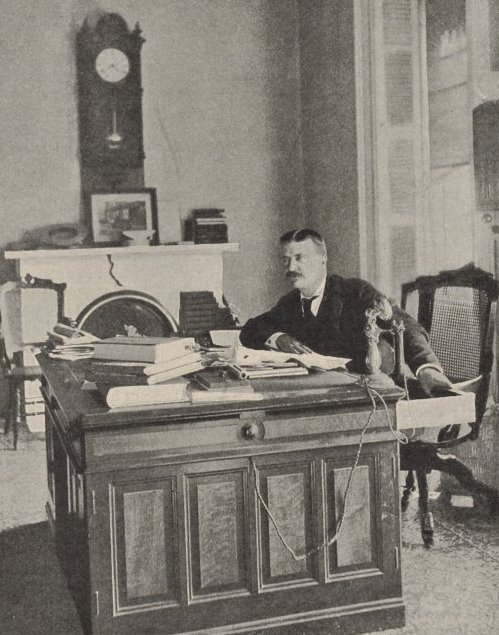
But during the 1870s and 80s, the department was mired in corruption; mayors throughout this period usually ran for election on the mantle of police reform, only to cave to the organization’s impossibly deep infrastructure of bribery and kickbacks. It would take the state-run Lexow Committee in the 1890s and later, in 1895, a reform commissioner named Theodore Roosevelt to clean up the shenanigans here. At right: Roosevelt in his Mulberry Street office.
According to a 1901 issue of the Evening World: “Today No. 300 Mulberry Street is the centre and disseminator of laziness, corruption, contempt for all the right standards of police duty. And the once superb detective branch, the pride of New York, has become feeble and almost ridiculous.”
The force used the excuse of expansion — and the needs of a consolidated five-borough city — to rehabilitate its image. It needed a larger, modern structure, one untainted by the reputation of corruption. And so, in 1909, after a flirtation with relocating to Times Square, the force moved to the elegant Beaux-Arts palace on Broome and Centre streets. That structure, at 240 Centre Street, still stands as a luxury condominium. The old headquarters at 300 Mulberry, however, were torn down and have been long forgotten. Not even a plaque!
A reconstruction of the interior can be briefly seen in the Draft Riots scene of Martin Scorsese’s ‘Gangs of New York’:
By the way, a few months ago, I wrote about a very notable saloon experiment from 1904 called the Subway Tavern, a non-alcoholic church-owned saloon which opened around the same time that the New York subway did. It was located on the corner, just a couple doors up from the police headquarters. [Read more about it here.]
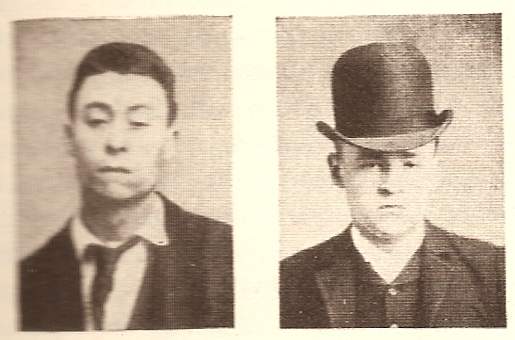
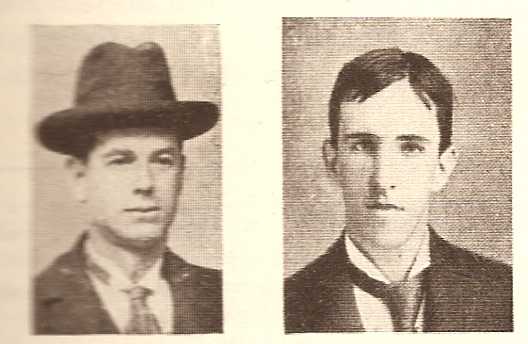
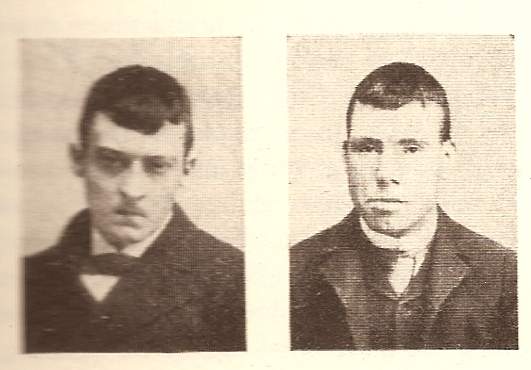
Faces of the Whyo Gang: Googy Corcoran, Clops Connolly, Big Josh Hines and Baboon Connolly
PODCAST: The Whyos (pronounced Why-Ohs)Â were New York’s most notorious gang after the Civil War, organizing their criminal activities and terrorizing law abiding citizens of the Gilded Age. Find out when they lived, how they broke the law and who they were — from Googie Corcoran to Dandy Johnny, as well as two particularly notable guys named Danny.
ALSO: How much does it cost to have somebody’s ear bitten off?
Above: the crowded streets of Five Points, where the Forty Thieves first made mischief
What does it mean to be the ‘first’ gang in New York? Most likely, it means you weren’t really the first. Just the first to be caught at doing it.
New Yorkers seem to create a grim romanticism around 19th century gang life because the underworld they lived in seem increasingly more exotic. They were unofficial rulers of neighborhoods vastly changed today. Hell’s Kitchen. The Tenderloin. The sleazy Fourth Ward.
And of course Five Points, the centerpiece of the Sixth Ward. That’s where New York’s first recorded gang, the Forty Thieves, got their start, in the back room of the ‘grocery store’ owned by one Rosanna Peers.
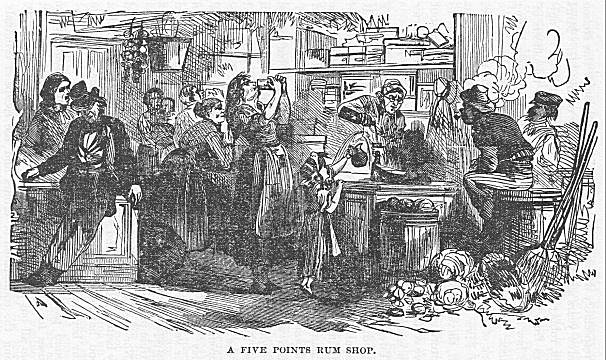
No evidence remains of what Rosanna might have looked like, but gather together what you will from the evidence. Selling hard liquors along with “brown-streaked cabbages and tattered lettuce,” Rosanna’s establishment was ostensibly the first bar on Centre Street in 1825, and would certainly not be the last.
I wouldn’t exactly lionize her abilities, but you can’t say she wasn’t an entrepreneur of sorts. The cheapness of her “rutgot rum” attracted the most charming thugs and pickpockets in the city, and soon they formed a merry band of crooks, watching each other’s backs, delineating common territory, and sharing their ill-gotten wealth. The Forty Thieves — almost all Irish immigrants and almost certainly more than forty — would grow to terrorize the streets of downtown New York for over 25 years.
Their first leader was Edward Coleman who must have some certain gruff charm as he gathered up teams of dime criminals for more elaborate jobs, including staking out this corner of Five Points, defending it from rivals. His organization included a rather strict quota system, where members had to bring back a certain amount of stolen goods or be thrown out. Rejects were either disposed of or fled to join rival gangs that soon organized in other neighborhoods.
Coleman would lead until 1838, when he violently beat and killed his wife, a ‘hot corn’ girl who had brought back inadequate wages from a day’s work. This heinous crime earned Coleman the distinction of being the first man hung in the newly built Tombs prison, just a few blocks away.
The Forty Thieves lived on without him and were such a successful organization that they recruited younger delinquents for a specialized Forty Little Thieves, filthy tots from the street of Five Points dispatched like ruddy faced Oliver Twists to pick pockets and troll the streets for law enforcement.
They fade away into New York history, breaking off and joining other, more powerful and more politically connected gangs. They were only the seed of lawlessness in a neighborhood that would soon grant a wretched neighborhood its rather notorious status today.
As for Ms. Peer, she apparently felt no ambivalence about her clientele; another early Five Points gang, the Kerryonians, also used her rum-filled backroom as a headquarters. The Kerryonions, comprised specifically of Irish immigrant men from the county Kerry, were less terrifying than the Forty Thieves — unless you were British, whom they reserved a special hatred for.
Jacob Riis, who helped define the early days of investigative journalism with his exposes on life in New York City slums
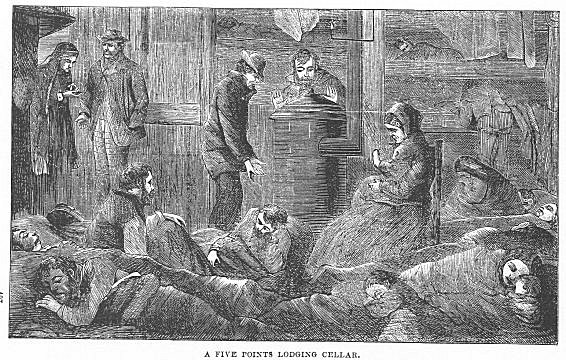
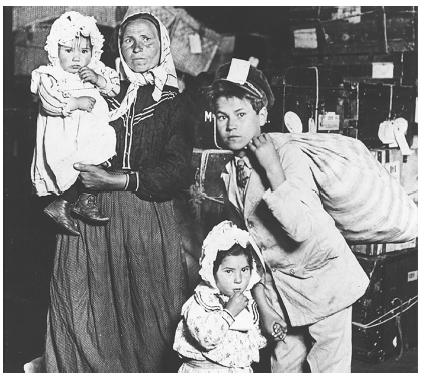
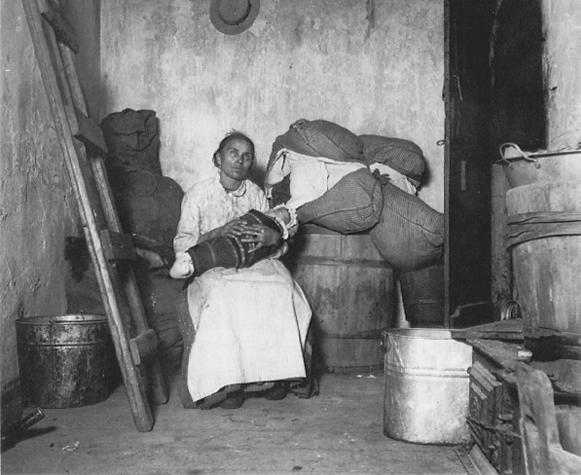
A Riis photograph of a typical residence that would have been found in Five Points
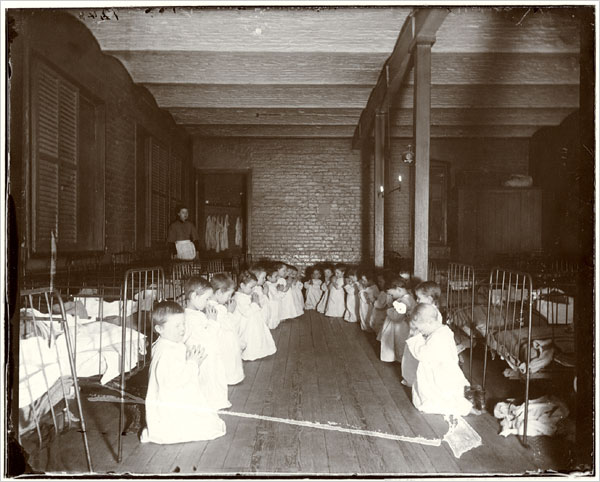
Inside the House of Industry in 1888
A look at the neighborhood after portions of Five Points was cleared away in 1895
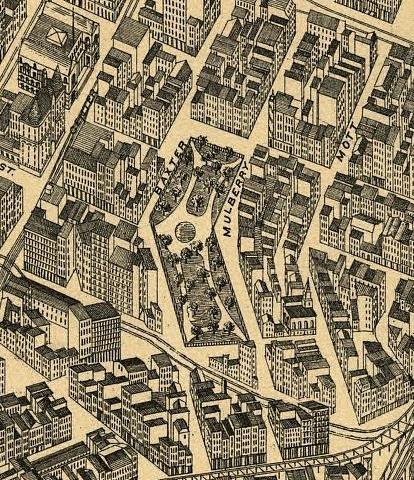
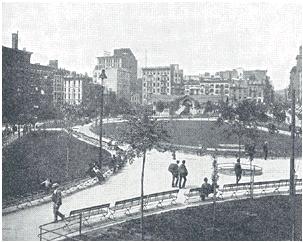
Mulberry Bend Park, designed by Calvert Vaux, and opened in 1897
Jacob Riis’ most famous photograph of Bandits Roost. Gang members stare menacingly at the camera. By the stairwell is a stale beer hall.
http://www.blogger.com/img/gl.link.gif
Greetings from Mulberry Bend Park. Who would have ever imagined this area as being perfect for a postcard a few years before this?
Not much remains of the once infamous Five Points intersection
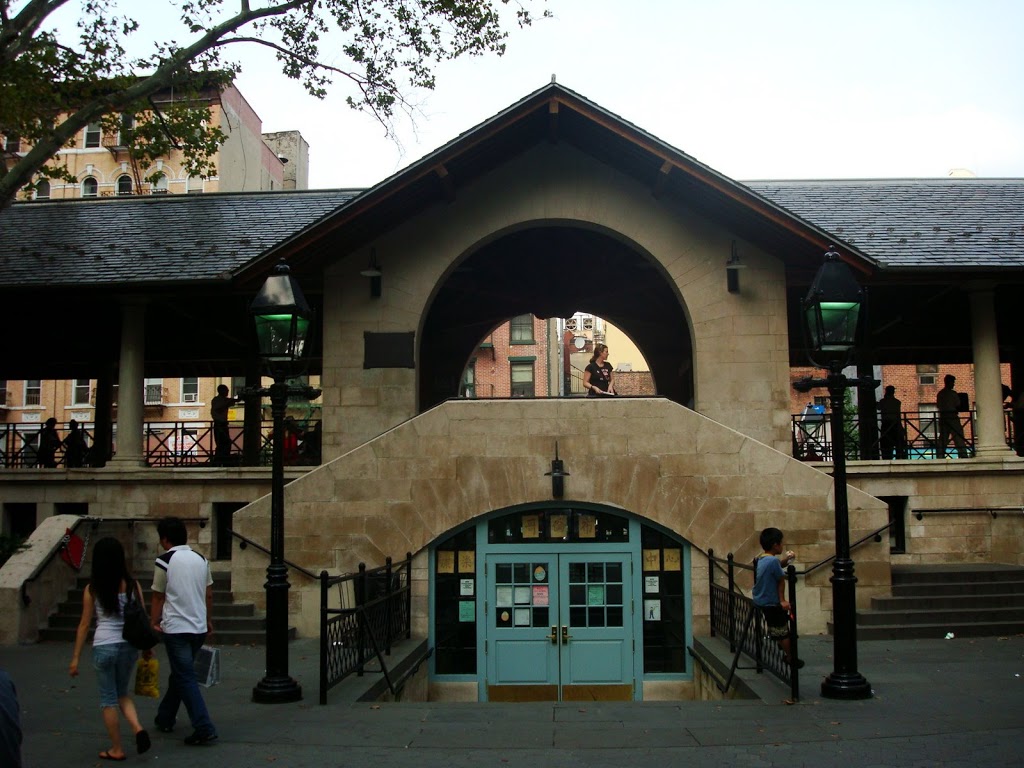
The pavilion in Columbus Park, erected in 1897 when the park was called Mulberry Bend Park
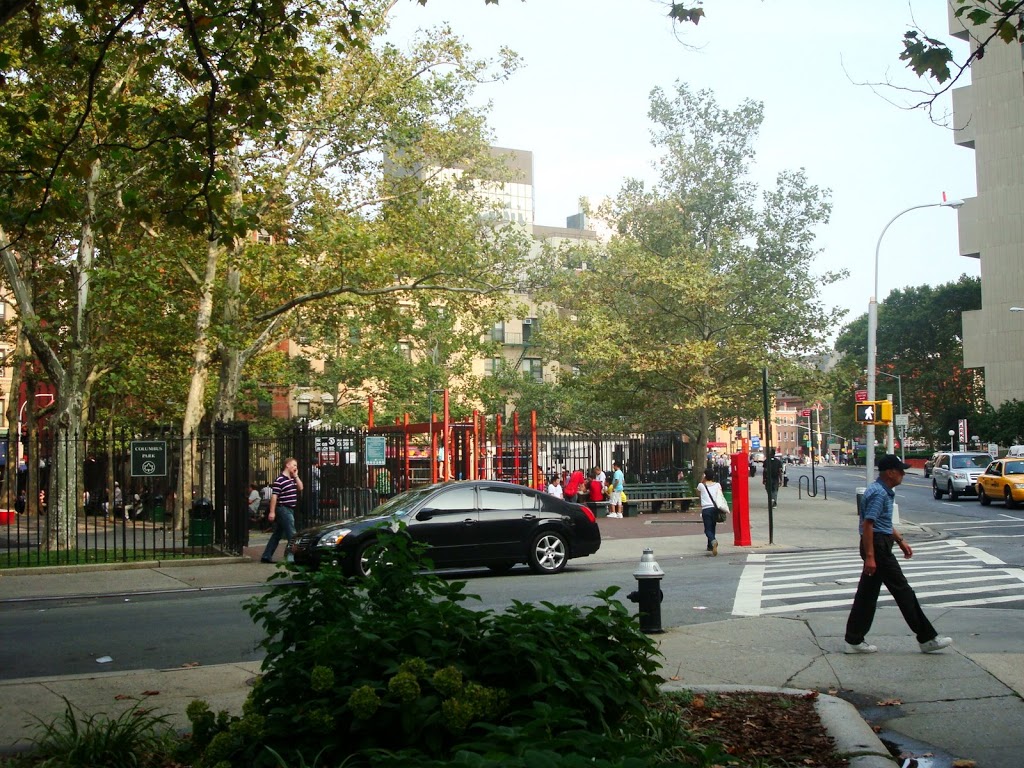
Columbus Park today: the FIve Points tenements replaced with playgrounds
Some other great resources about Five Points: An archaeological look at the area, and “Urbanography” which feature some great original source articles
You’ve heard the legend of New York’s most notorious neighborhood. Now come with us as we hit the streets of Five Points and dig up some of the nitty, gritty details of its birth, its first residents and its most scandalous pastimes.
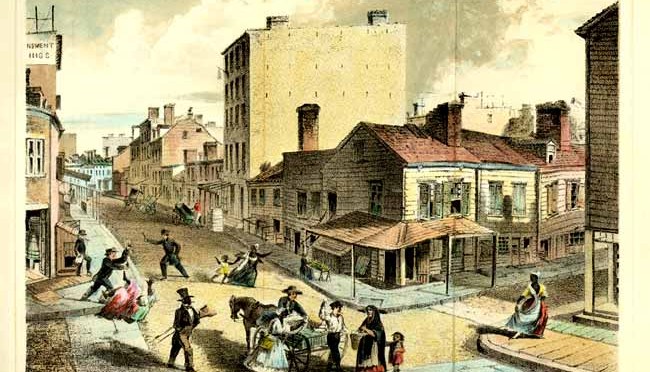
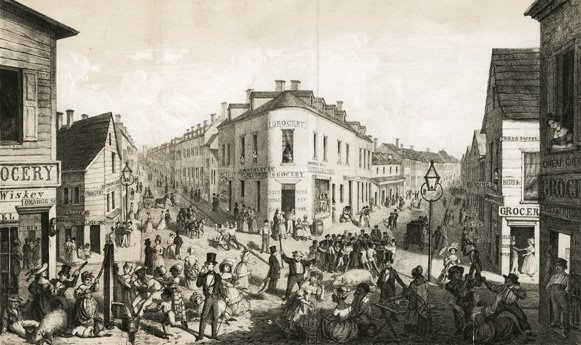
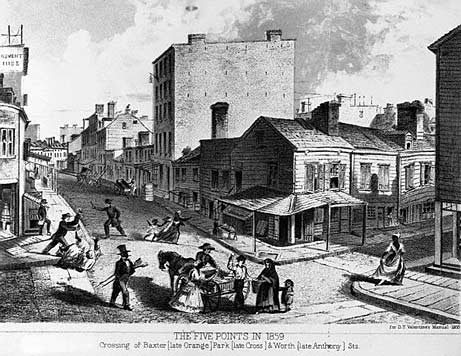
One of the most famous images of Five Points, accentuating its bustle and chaos
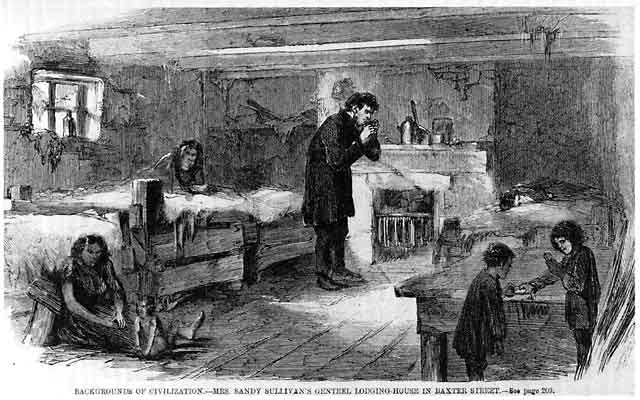
A dour living condition in a Baxter Street tenement
People drank their woes away at one of Five Points’ hundreds of groceries, rum shops and grog houses
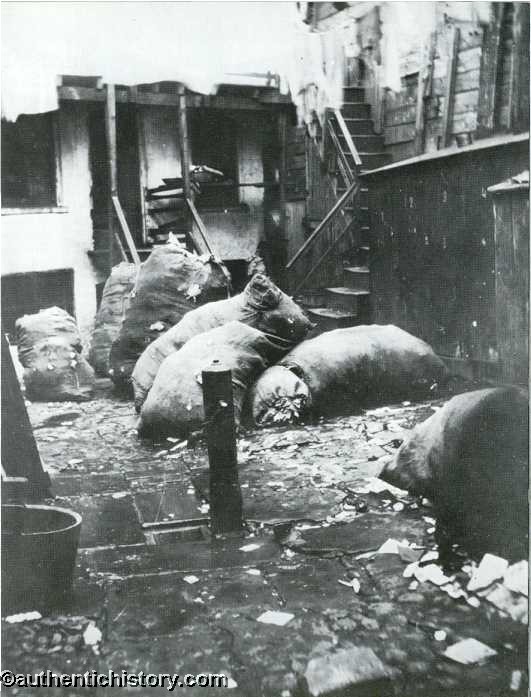
A typical scene down Bottle Alley
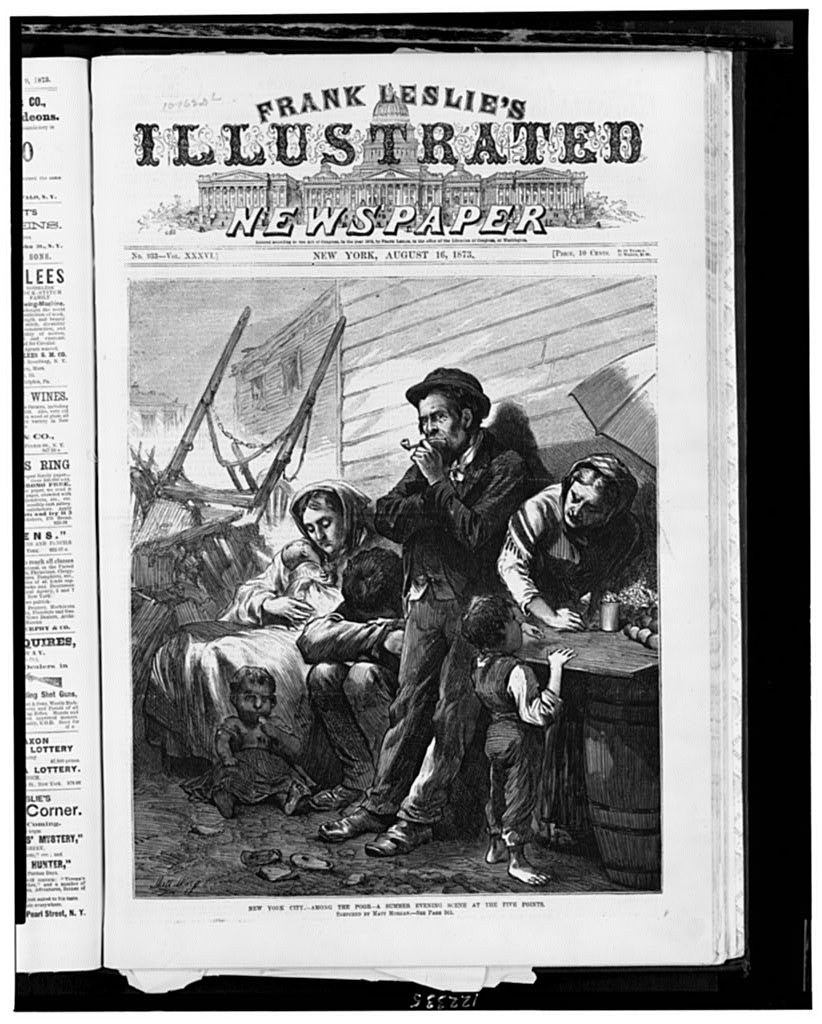
Newspapers kept images of Five Points’ squalor in the public eye for shock value
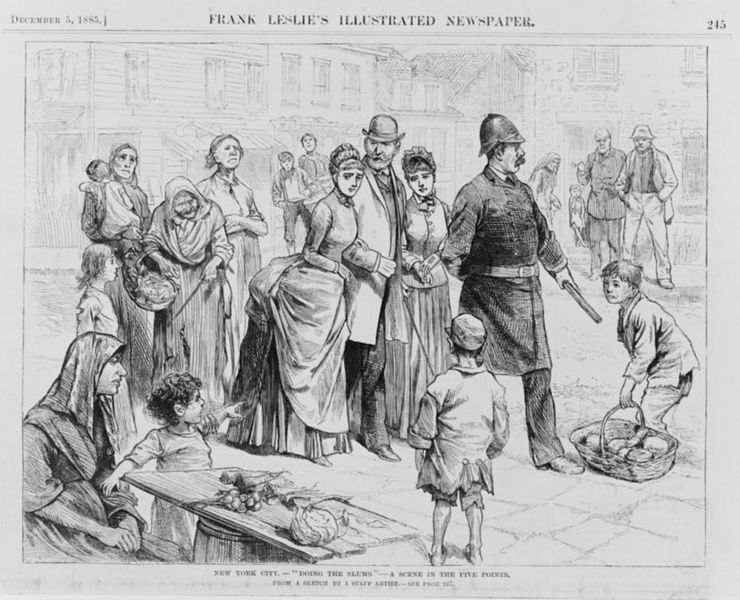
The rich would venture into Five Points on guided tours, observing its poverty and sordidness as though at a zoo
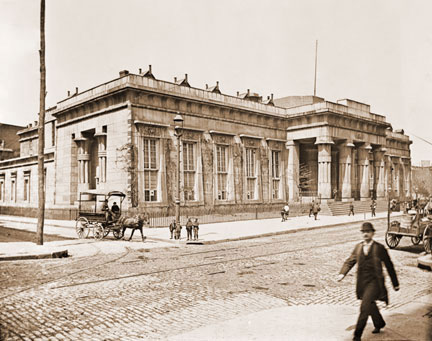
What is this dismal-fronted pile of bastard Egyptian, like an enchanter’s palace in a melodrama! – a famous prison, called The Tombs. Shall we go in?
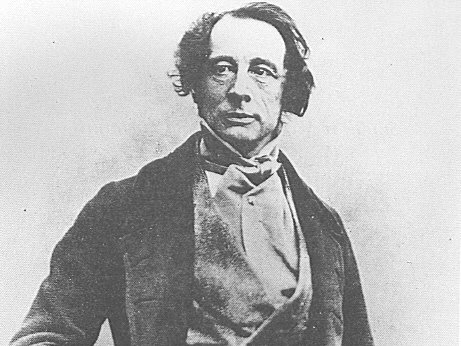
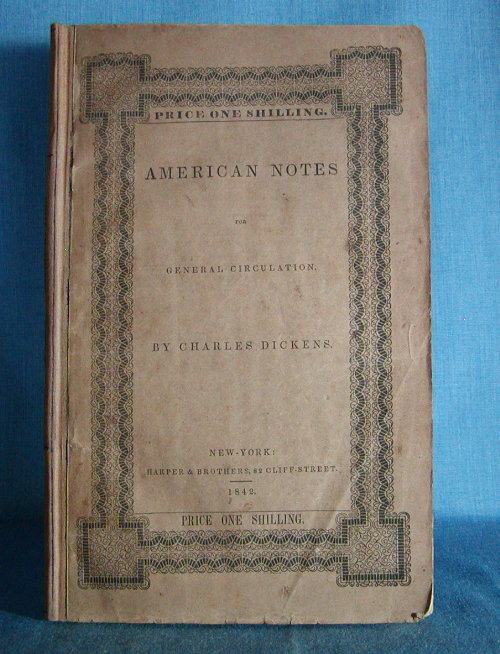
And thus in this voice continues the eager, fey, often condescending but spectacularly written account of Charles Dickens’ New York excursion as captured in his “American Notes for General Circulation,” written in 1842. (Read the entire thing here.)
Dickens’ was among the first published travelogues about America for European audiences, and among his travels through the states he devotes an entire chapter to young New York.
How young precisely? Dickens gives us a yardstick to measure it: “The great promenade and thoroughfare, as most people know, is Broadway; a wide and bustling street, which, from the Battery Gardens to its opposite termination in a country road, may be four miles long.” During the 1840s, the city would have ended at 42nd street, so this sounds accurate.
Dickens’ tone throughout “American Notes” is ebullient but persnickety, as if he’s smiling and curling his nose at the same time as the sights and sounds of the city. In real life, Dickens was treated like royalty, feted in sumptuous celebrations at the Park Theatre and Delmonico’s, courted by literati such as New York Evening Post editor William Cullen Bryant and aging Washington Irving.
Dickens had an ulterior motive to his American journey: to discuss international copyright laws, presently being violated with American reprints of Dickens novels. Surprisingly he turned most Americans off with what they considered to be ungrateful sniping. A bit of that shared animosity seeps through some of Dickens depictions, especially those in New York, which was doing a bulk of the copyright violation.
The book’s most famous descriptions come in his colorful look at Five Points, already a legendary neighborhood of filth and vice by 1842. These passages could have been ripped from any of his most famous novels:
“Ascend these pitch-dark stairs, heedful of a false footing on the trembling boards, and grope your way with me into this wolfish den, where neither ray of light nor breath of air, appears to come….”
“Here too are lanes and alleys, paved with mud knee-deep, underground chambers, where they dance and game; the walls bedecked with rough designs of ships, and forts, and flags, and American eagles out of number: ruined houses, open to the street, whence, through wide gaps in the walls, other ruins loom upon the eye, as though the world of vice and misery had nothing else to show: hideous tenements which take their name from robbery and murder: all that is loathsome, drooping, and decayed is here.”
And as if that wasn’t enough gothic material for him, he ends his New York piece by touring Blackwell’s Island (today’s Roosevelt Island), home of the city’s various asylums for lunatics and criminals:
“…everything had a lounging, listless, madhouse air, which was very painful. The moping idiot, cowering down with long dishevelled hair; the gibbering maniac, with his hideous laugh and pointed finger; the vacant eye, the fierce wild face, the gloomy picking of the hands and lips, and munching of the nails: there they were all, without disguise, in naked ugliness and horror.”
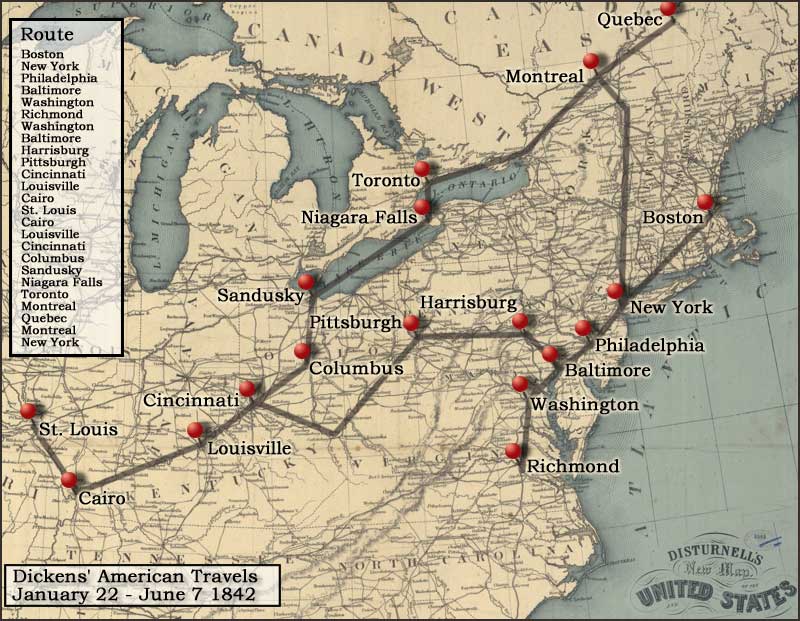
Below from the Charles Dickens Page, a list of all the places he visited during his American stay. They also feature a thorough description of his entire journey.
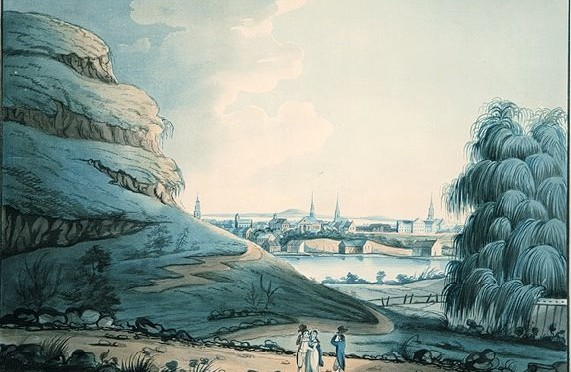
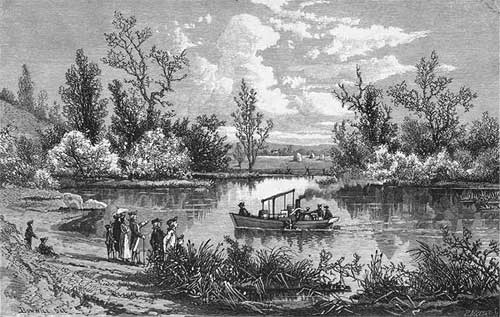
Collect Pond (and what I assume to be Bunker Hill) as depicted in watercolors by artist Archibald Robertson in 1798
We celebrate a year of New York City history podcasting by re-visiting the topic of our very first show.
Downtown Civic Center used to have a big ole pond in the middle of it which provided drinking water for the island’s first inhabitants.
What happened to it, why is it important today and how did it give rise to Canal Street, New York’s biggest traffic thoroughfare?
From the Mannahatta Project, a visualization of downtown Manhattan, with Collect Pond and acres of forest
Hard to believe, but this is downtown Manhattan and Collect Pond
An early 19th century map of Collect Pond and the streets that usurped it. (Click into it to see details.)
A mid-century depiction of Five Points, this corner in particular being where Paradise Square sprang up, an ambitious residential project doomed by soggy land and noxious odors
The Tombs Prison, in 1890, before being condemned. Its squalid conditions are legendary and are due in part to unsatisfactory construction over the former Collect Pond area
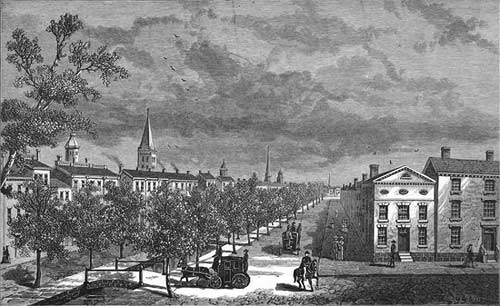
The early days of Canal Street. The actual foul-smellin canal was concealed with a row of lovely trees shielding the new tenements and businesses surrounding it
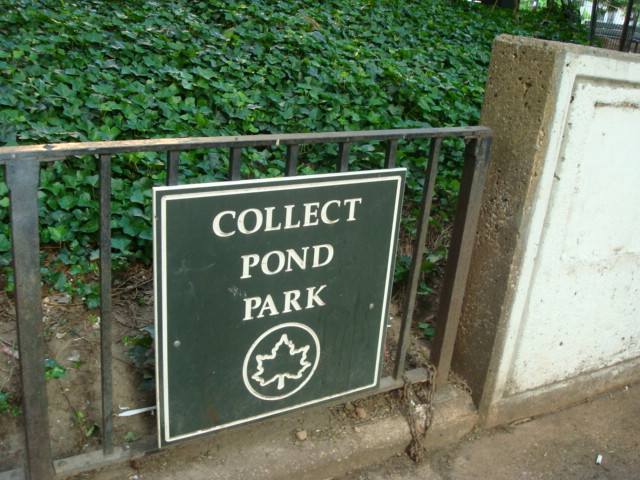
A tiny park surrounded by government buildings pays homage to the early (and far more natural) days
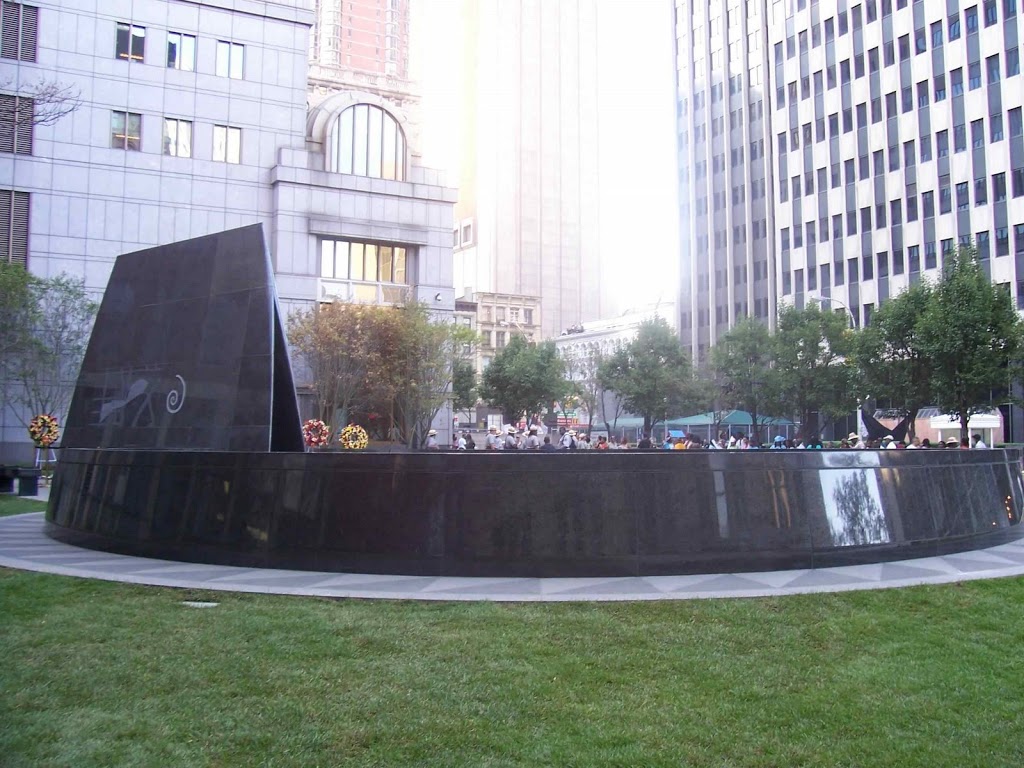
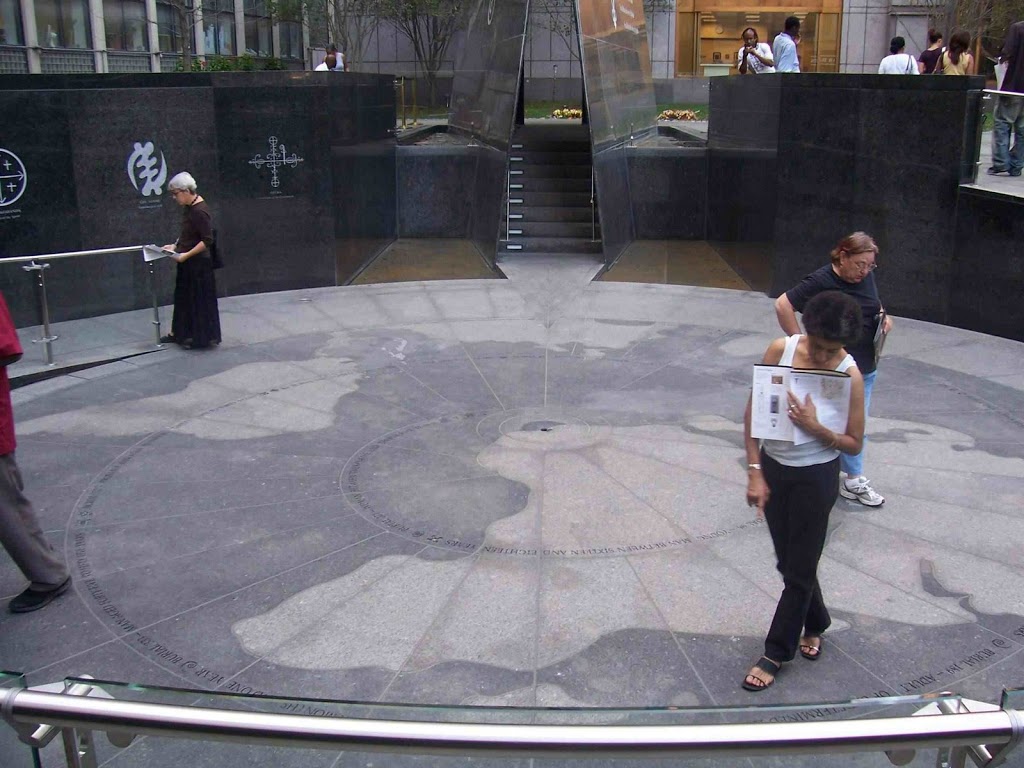
The most dramatic reminder of the neighborhood’s early days, however, is the African Burial Ground Memorial, which opened last year