Categories
Food History Podcasts

Chop Suey City: A History of Chinese Food in New York

EPISODE 328 New Yorkers eat a LOT of Chinese food and have enjoyed Chinese cuisine – either in a restaurant or as takeout – for well over 130 years. Chinese food entered the regular diet of the city LONG before the bagel, the hot dog and even pizza.

In this episode, Greg explores the history of Chinese food in New York — from the first Mott Street eateries in Manhattan’s Chinatown to the sleek 20th century eateries of Midtown.

We have one particular dish to thank for the mainstreaming of Chinese food — chop suey. By the 1920s, chop suey had taken New York by storm, the cuisine perfect for the Jazz Age.

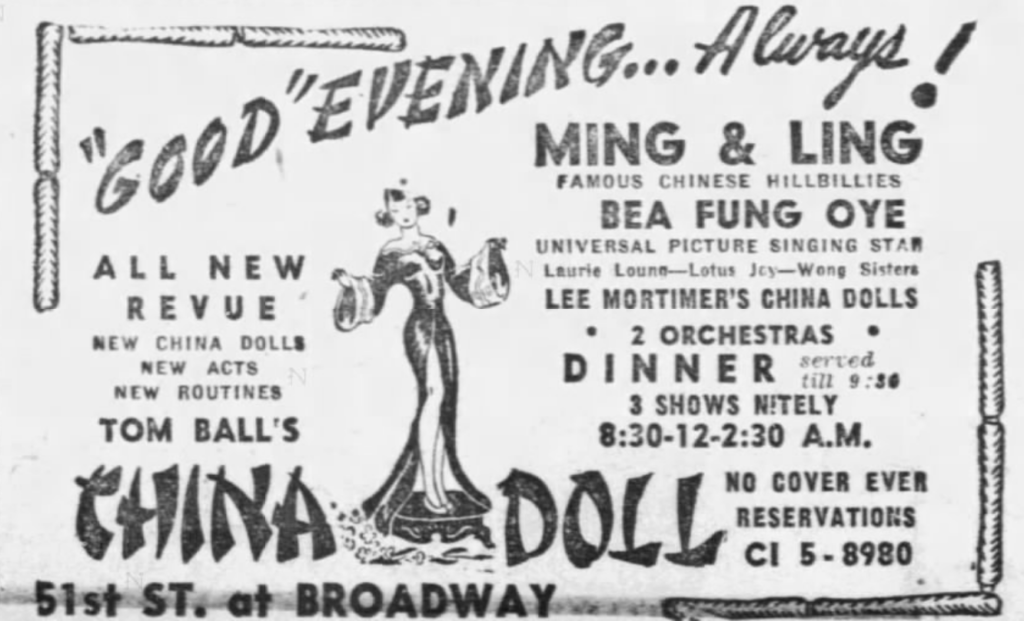
Through the next several decades, Chinese food would be transformed into something truly American and the Chinese dining experience would incorporate neon signs, fabulous cocktails and even glamorous floor shows in the 1940s.

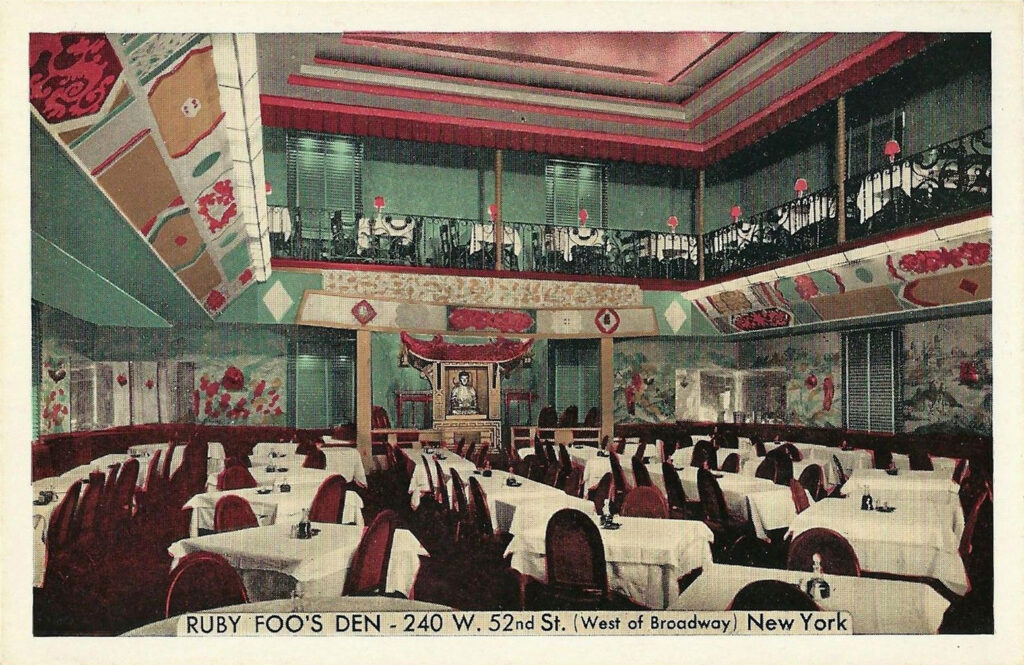
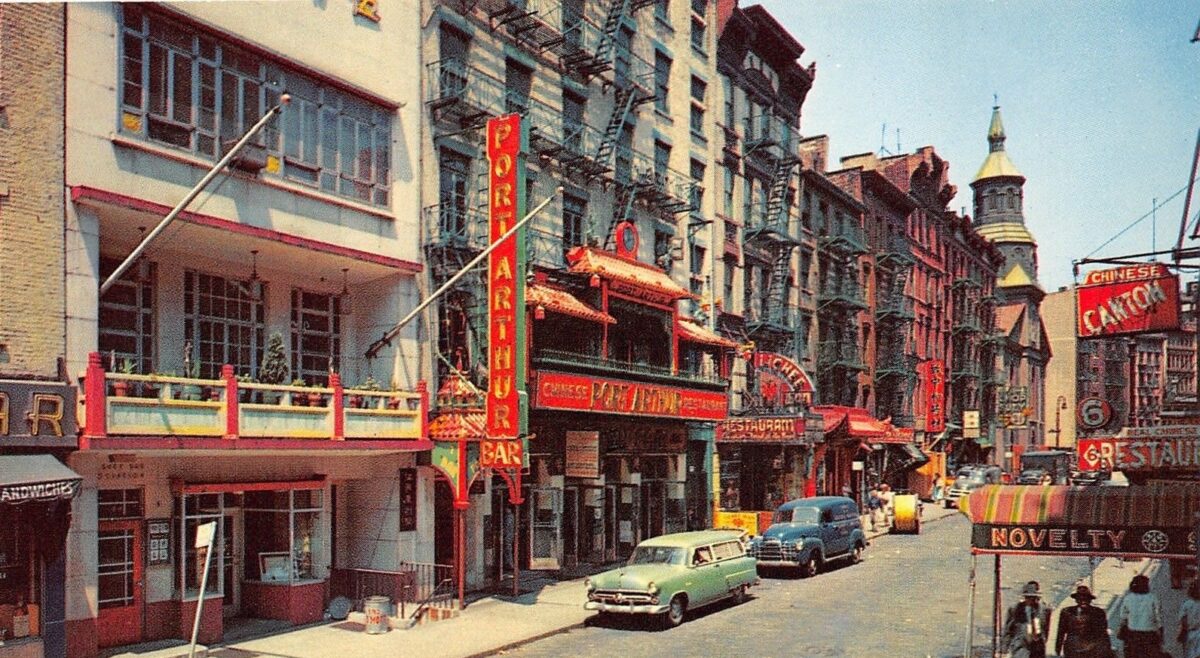
FEATURING: The Port Arthur Restaurant, the Chinese Tuxedo, Ruby Foo’s Den, Tao, Lucky Cheng’s and that place known as ‘Szechuan Valley’.

PLUS: The love affair between Chinese food and Jewish New Yorkers.

LISTEN NOW: CHOP SUEY CITY: A HISTORY OF CHINESE FOOD IN NEW YORK
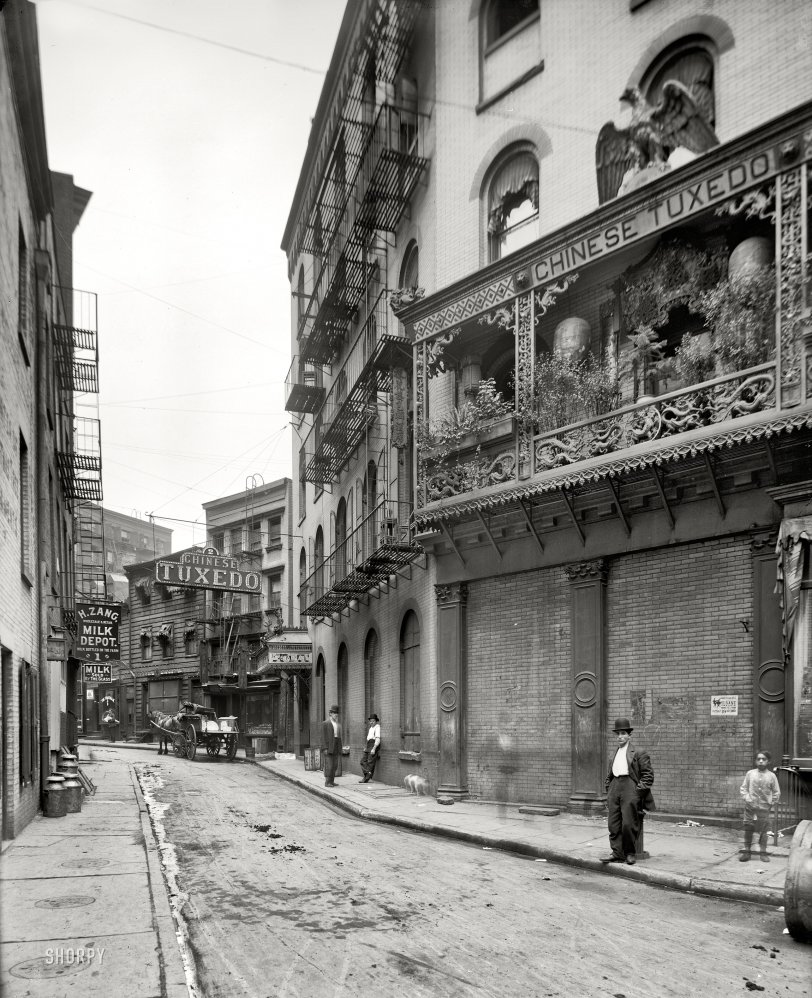
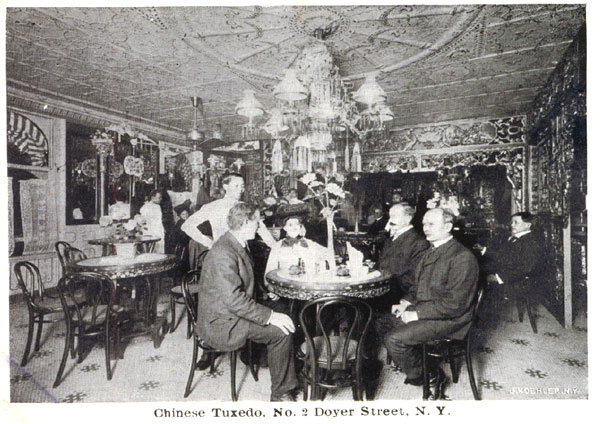
The Chinese Tuxedo on Doyers Street, 1901. (check out a detailed version of this photo over at Shorpy)
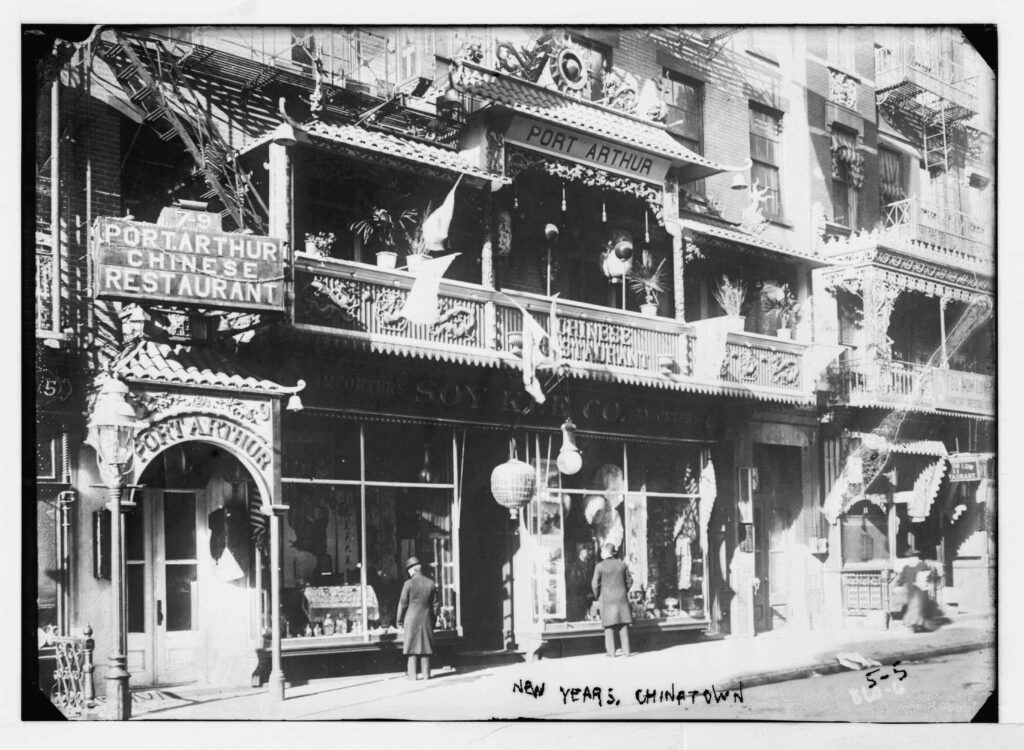
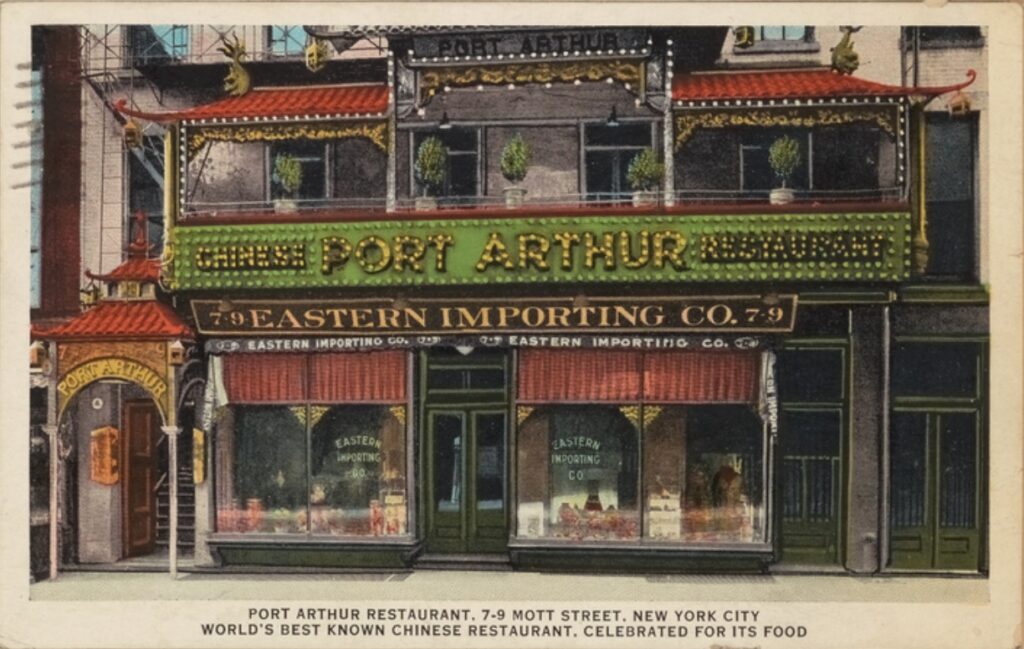
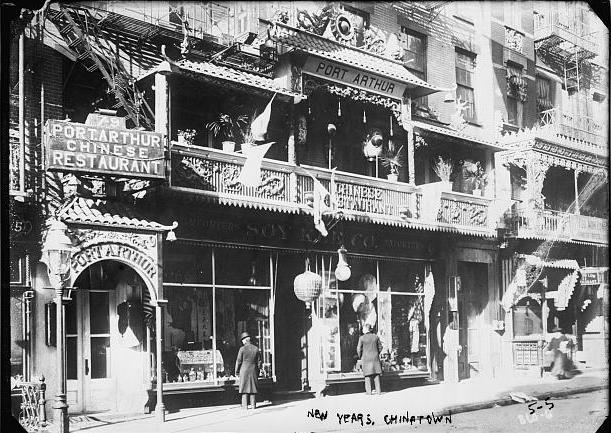
An early photograph of the Port Arthur on Mott Street (courtesy Library of Congress)
New York Public Library
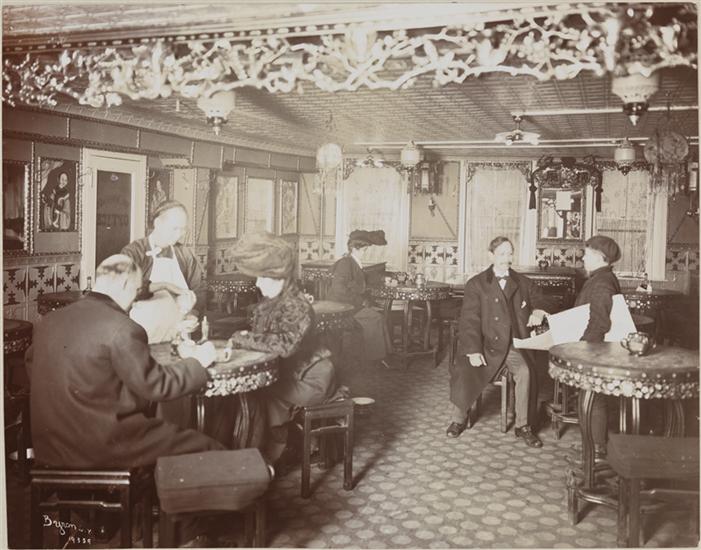
Interior of a Chinatown restaurant, 1905. Labeled as ‘the Chinese Delmonico’s’, perhaps the Port Arthur. (Byron Company/Museum of the City of New York)
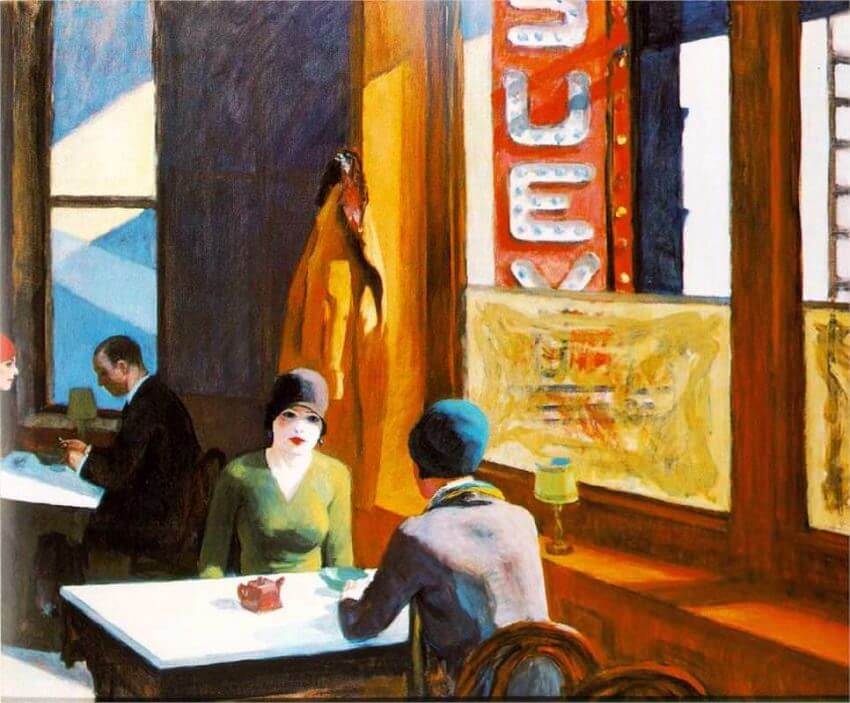
Edward Hopper / Chop Suey (1929)
The glamorous interior of Ruby Foo’s Den (via Restauranting Through History)
Via the Daily News (Newspapers.com)
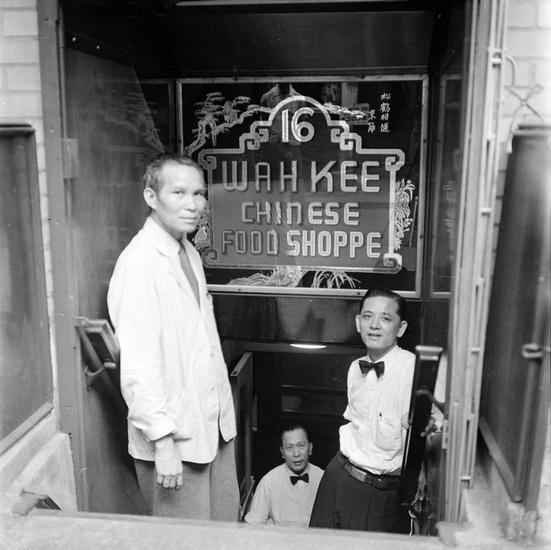
Taken in Chinatown, 1950, for Look Magazine by Robert Offergeld (Courtesy Museum of the City of New York)

Inside Bernstein-on-Essex in the 1970s:

FURTHER LISTENING

After listening to Chop Suey City, check out these past Bowery Boys episodes on subjects featured in the latest show.


The Bowery Boys: New York City History podcast is brought to you …. by you!

We are now producing a new Bowery Boys podcast every week. We’re also looking to improve and expand the show in other ways — publishing, social media, live events and other forms of media. But we can only do this with your help!

We are now a creator on Patreon, a patronage platform where you can support your favorite content creators.

Please visit our page on Patreon and watch a short video of us recording the show and talking about our expansion plans.

If you’d like to help out, there are six different pledge levels. Check them out and consider being a sponsor.

We greatly appreciate our listeners and readers and thank you for joining us on this journey so far.
Categories
Podcasts

Manhattan’s Chinatown: a tribute to the old neighborhood, and to the temptations of rich delicacies and basement vices


PODCAST Manhattan’s Chinatown is unique among New York neighborhoods as its origins and its provocative history can still be traced in many of the buildings and streets still in existence. Two hundred years ago, the sight of a Chinese person would have astonished New Yorkers, and the first to arrive in the city were either sailors or the subjects of tacky exhibition.

But with the first Chinese men setting on Mott Street, a new community was born, with thriving variety shops, cigar businesses and gambling dens alongside establishments of a more sensuous nature — opium dens and brothels. This mini-economy produced social clubs and secret societies (the legendary ‘tongs’), and rival gangs soon spilled blood along the neighborhood’s quirkiest lane.

And still today, modern Chinatown hides a few dark, startling secrets of its own.

ALSO: We give you a rundown of addresses along Mott Street and other places nearby. You can use this podcast as your official walking tour of the neighborhood!

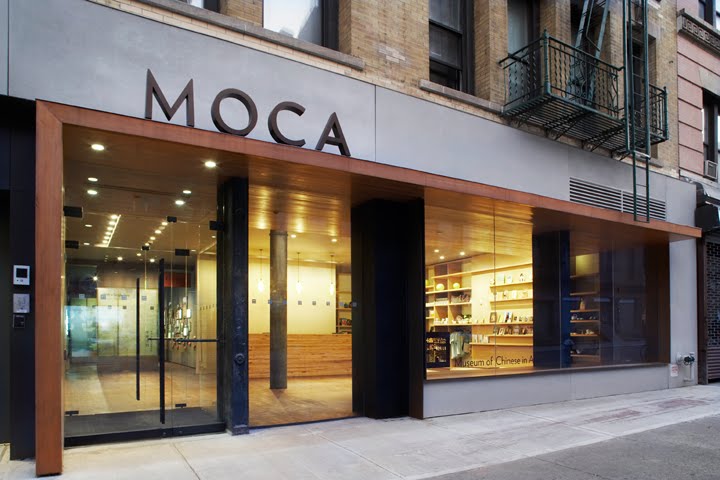
For a lot more information on the Chinese experience in America, I urge you to visit The Museum of the Chinese In America, located at 215 Centre Street. It’s free on Thursday and close to Chinatown. (Photo courtesy CUNY)

And here’s the addresses of places we mentioned in the podcast, as well as a couple other locations of interest. There are other places on these streets of great interest, so please meander freely:

1. 50 Spring StreetQuimbo Appo’s tea shop
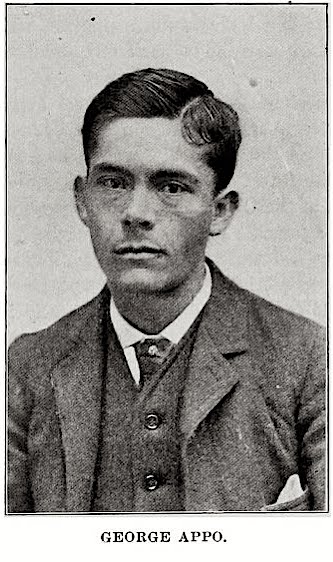
Quimbo, an early Chinese success story in New York was in and out of prisons and mental wards later in his life. His son George Appo (below) was an equally notorious presence in the Five Points slums.

2. 62 Cherry Street Ah Sue’s tobacco and Chinese Candy shop
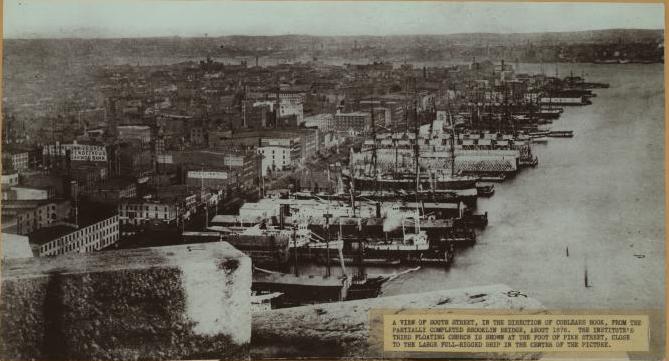
The East River docks stretching to Corlears Hook, where the first Chinese men (sailors) stayed in boardinghouses. This image is from 1876; Ah Sue’s waterfront business was at 62 Cherry Street, near Catherine Slip.

3. Corner of Catherine Street and East Broadway
New York’s first Chinese laundromat

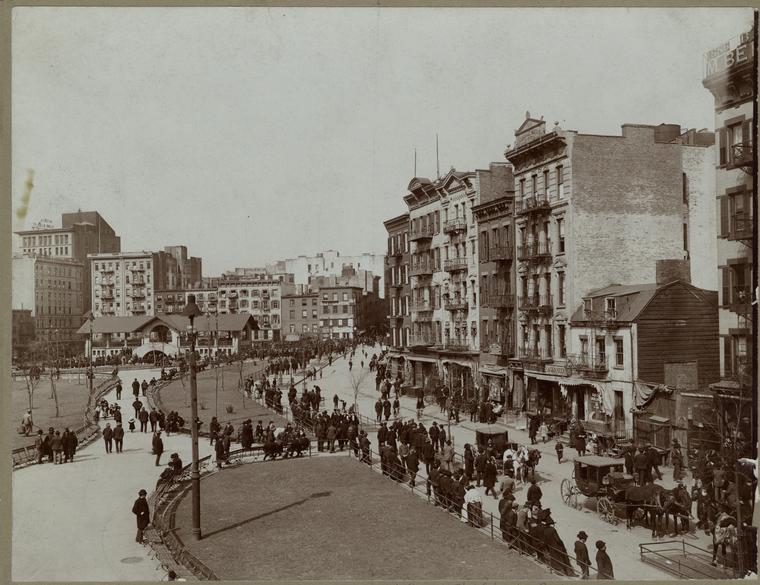
4. Chatham Square
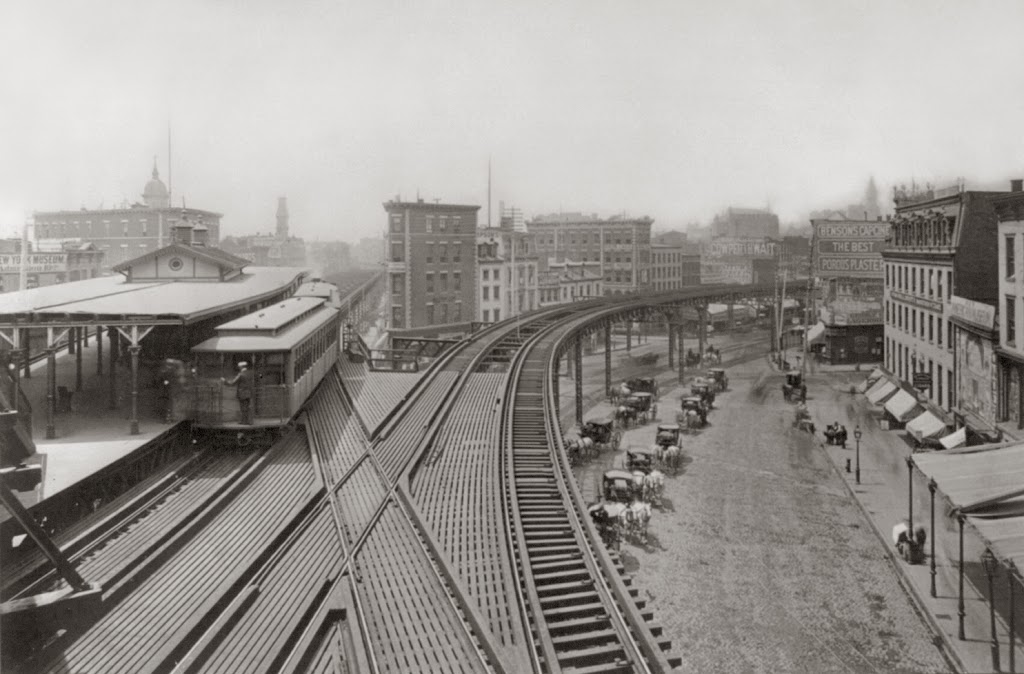
In the 1880s, the open area was consumed with elevated railroad tracks, quite a

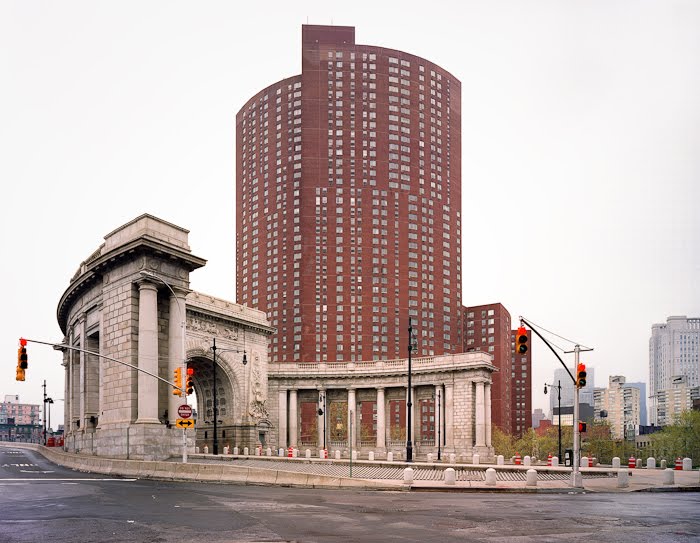
5. Confucius Plaza
Built in 1975 and one of the largest buildings in downtown Manhattan outside of the Financial District. (Picture courtesy the pretty fabulous blog Iconic Facades)

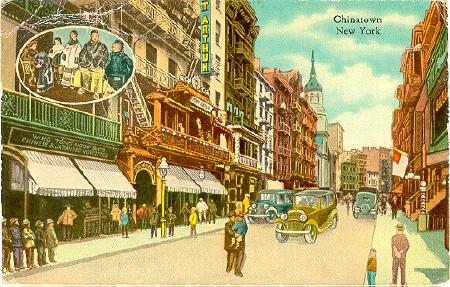
Not mentioned in the podcast, Port Arthur Chinese Restuarant, at 7-9 Mott Street, circa the 1900s, one of the first banquet halls of Chinatown

6. 11 Mott Street – the brothel owned by Tom Lee
7. 16 Mott Street – original home of the Chinese Consolidated Benevolent Association
8. 18 Mott Street – the first Chinese-owned building, and one of the earliest Chinese gambling dens

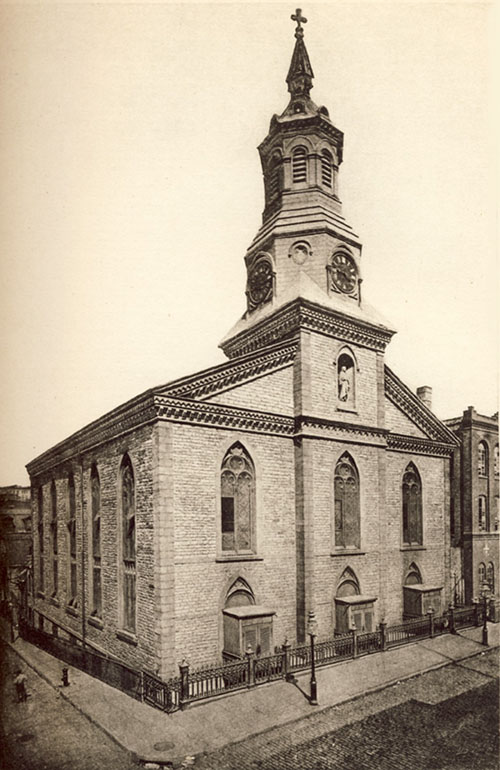
9. 25 Mott StreetChurch of the Transfiguration
Easily the oldest structure in the neighborhood, and home to early congregations that weren’t exactly welcoming to Mott Street’s early Chinese residents.

10. 62 Mott Street — current home of the Chinese Consolidated Benevolent Association, the unofficial ‘town hall’ of Chinatown

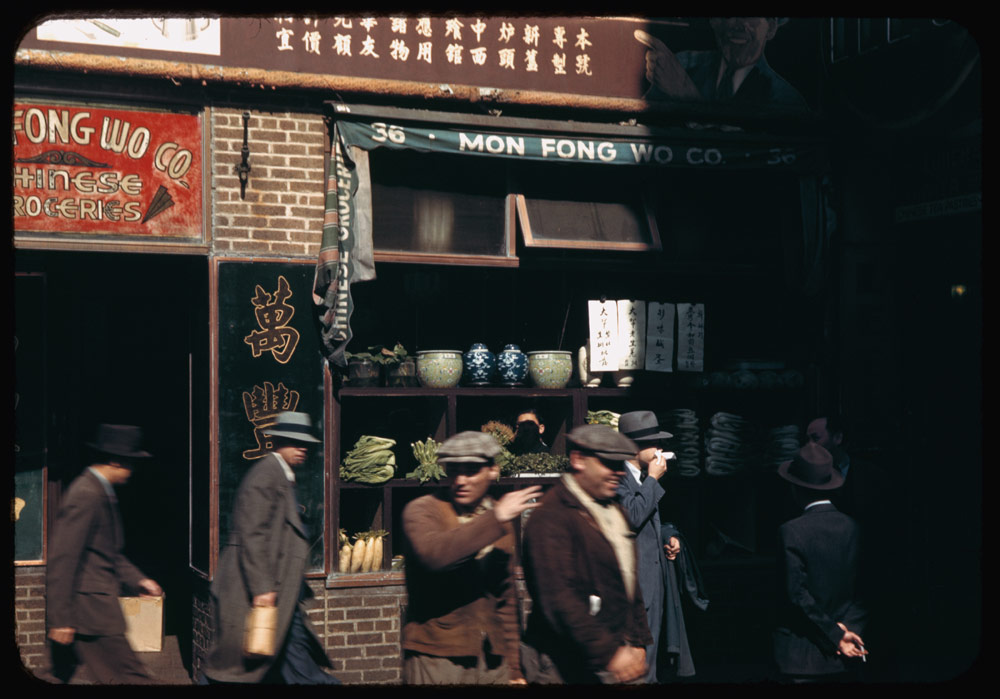
Mott Street in 1942: (Courtesy the Charles W. Cushman Photography Archive)

11. Columbus ParkMany of Five Points most decrepit tenements were eliminated to make way for this park created by Calvert Vaux. The park is a lively part of Chinatown today, particularly on the weekends. [source]

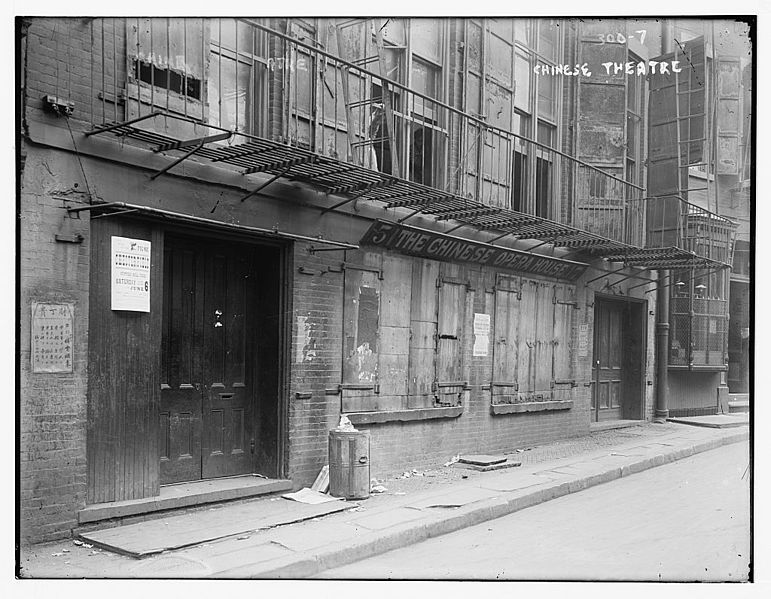
12. 5-7 Doyers Street – Chinese Theater
A regular source of entertainment for locals and the sight of more than few altercations between rival tongs. Bodies were allegedly buried in the basement.

2 Doyers Street — Chinese Tuxedo Restaurant
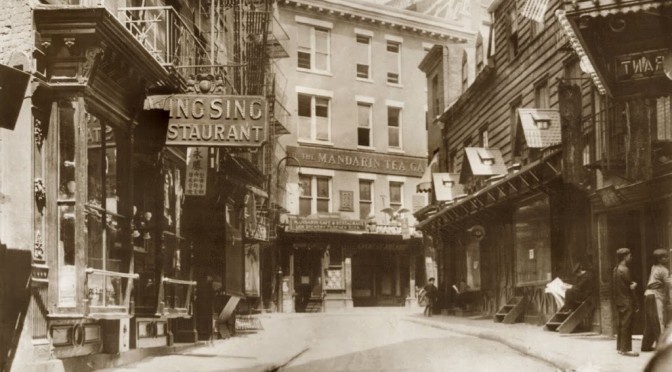
Chinese had a powerful allure to the non-Chinese and to ‘bohemians’. This restaurant attracted businessmen looking for an ‘exotic’ night on the town. It helped that the Tuxedo was near the elevated train. (Courtesy Flickr/straatis)

13. 9 East Broadway – Former home of the Golden Star Bar
14. 47 East Broadway – Yung Sun Restaurant, once operated by Sister Ping


The sad tale of New York’s first Asian female ‘celebrity’

Meet Afong Moy, the Chinese teenager who became the most famous Asian person in America in the 1830s. I would not exactly call her notoriety enviable.

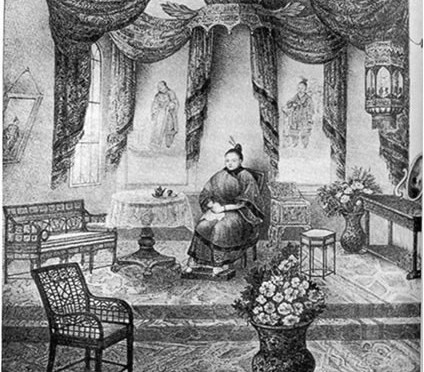
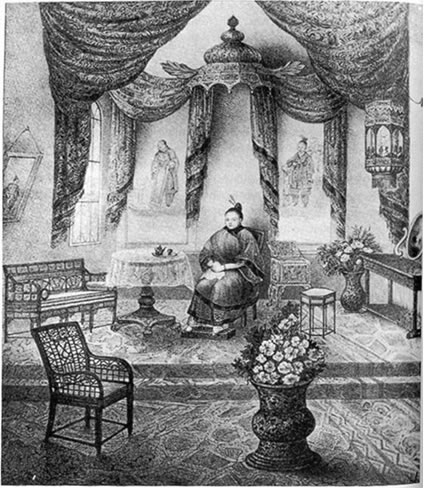
There’s a strong likelihood that Moy (in the illustration at right) was actually the first Asian woman to ever step foot in New York. Early trade with China, beginning in 1784, would have brought New Yorkers in contact with the Chinese for the first time, but the traders and sailors manning the trading vessels would have been male. By the 1830s, it would have been rare but not extraordinary sight to see a visiting Chinese sailor in the boatyards and taverns of Corlear’s Hook.

Moy arrived in New York by boat as well, on a trading ship called The Washington, owned by brother traders Frederick and Nathanial Carne. But she arrived in New York ostensibly as a possession, an exotic companion to a set of rich Oriental objects brought over by the Carne’s for exhibition.

Moy, between 16 and 19 years of age, was brought to the United States as part of a national tour of Chinese treasures, debuting on November 6, 1834. She was garbed in traditional fashion and displayed among a collection of imported finery and trappings brought over by the Carne brothers. It’s no surprise that her presentation was at New York’s American Museum. P.T Barnum wouldn’t own the holdings of the museum until the 1840s, so the museum, housed in the old almshouse in City Hall Park, was still in the hands of the Scudder family. (Listen to our podcast on Barnum’s American Museum for more information.)

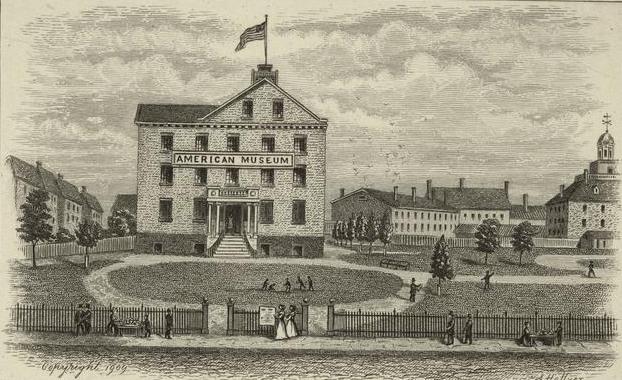
Above: Scudder’s American Museum, in City Hall Park (Picture courtesy NYPL)

For fifty cents, the curious could observed Moy in her fabricated ‘authentic’ chamber; “[T]he simple foreignness of Afong Moy was deemed sufficient novelty to warrent her display,” according to author James Moy. Of particular fascination to New Yorkers were her “little feet”. (The New York Times called them “monstrous feet.”) In an ad for a later exhibition at the museum of Rubens Peale, ad copy exclaimed, “Afong’s feet are four inches and an eighth in length, being about the size of an infant’s of one years old. And, to add to the interest of the exhibition, the shoe and the covering of the foot will be taken off.”

Moy would speak to audiences via an interpreter, entertain with a traditional Chinese song, and, at regular intervals, would circle the room and allow people to observe her ‘little feet’ in action. Newspapers made note of her reactions, including her fit of giggles at seeing something so unusual as a left-handed person.

Although she did indeed tour various American cities, she seemed to hit every major New York venue of the day, including Niblo’s Garden, the Brooklyn Institute, and Barnum’s own American Museum, when it opened in 1842.

Not much is known of Afong Moy, which was not her real name. (One thing I’m pretty sure of, her name was not “Juila Foochee ching-chang king, daughter of Hong wang-tzang tzee king,” as was listed in the New York Daily Advertiser.) She toured the country from 1834 to 1847, then disappears from the record. There does not appear to be a single record of an interview of Moy, or any letters or diaries. What we know of this singular woman is seen only through the twisted kaliedoscopic lens of mid 19th century public astonishment.

Top picture courtesy NYPL