Categories
Food History Podcasts

Chop Suey City: A History of Chinese Food in New York

EPISODE 328 New Yorkers eat a LOT of Chinese food and have enjoyed Chinese cuisine – either in a restaurant or as takeout – for well over 130 years. Chinese food entered the regular diet of the city LONG before the bagel, the hot dog and even pizza.

In this episode, Greg explores the history of Chinese food in New York — from the first Mott Street eateries in Manhattan’s Chinatown to the sleek 20th century eateries of Midtown.

We have one particular dish to thank for the mainstreaming of Chinese food — chop suey. By the 1920s, chop suey had taken New York by storm, the cuisine perfect for the Jazz Age.

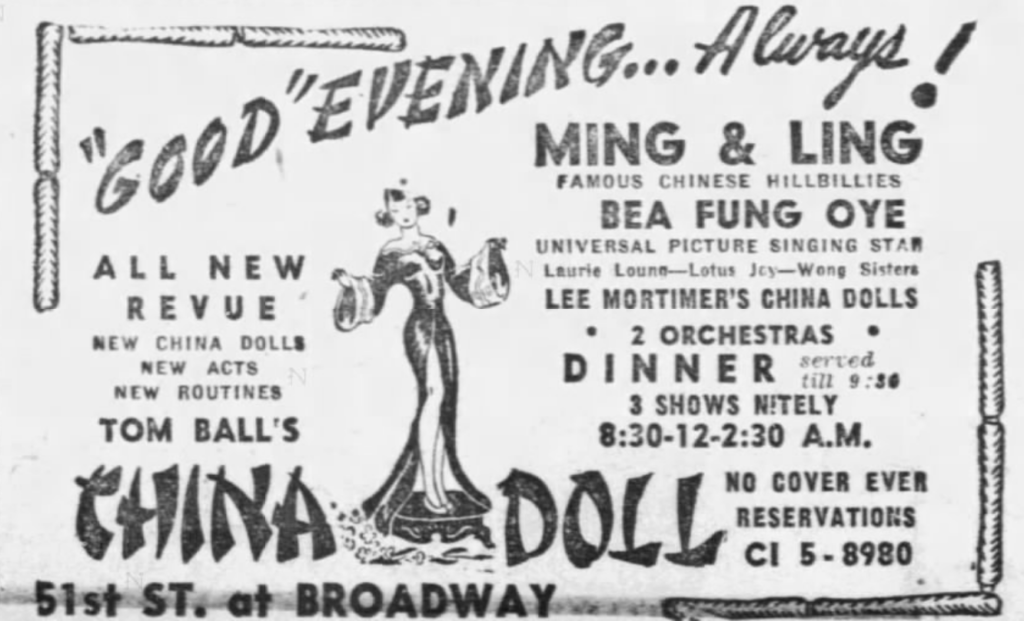
Through the next several decades, Chinese food would be transformed into something truly American and the Chinese dining experience would incorporate neon signs, fabulous cocktails and even glamorous floor shows in the 1940s.

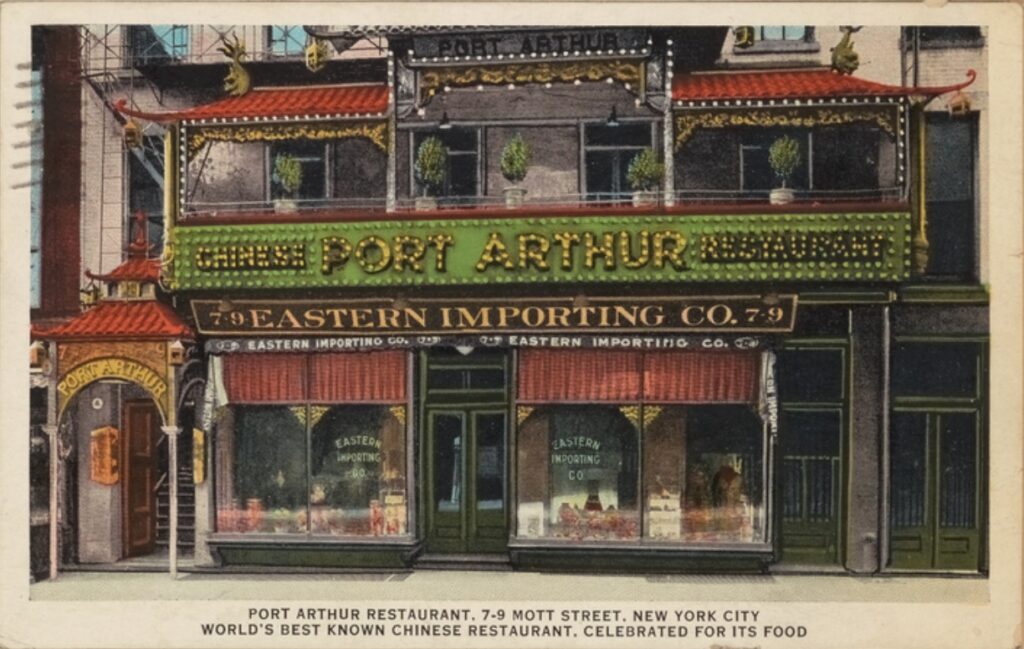
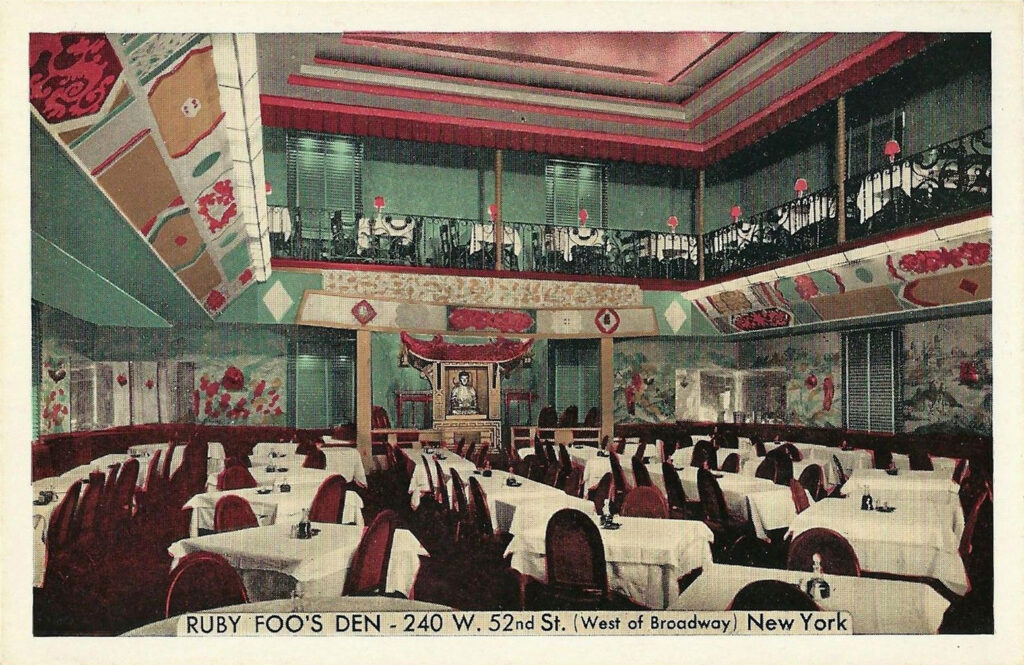
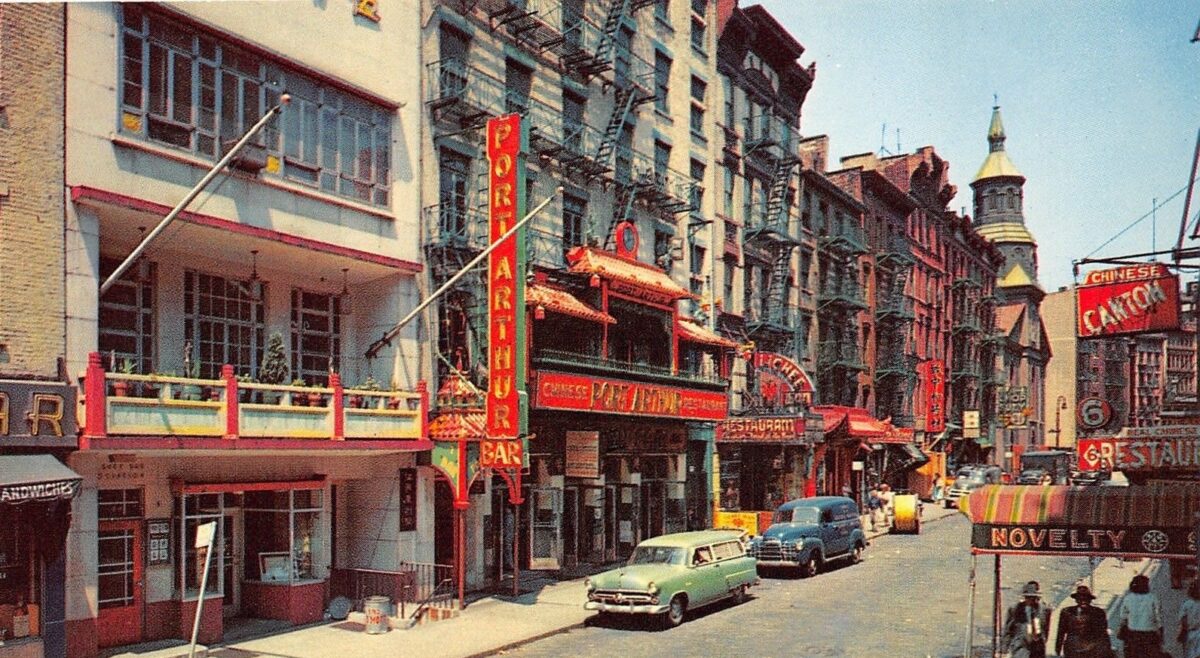
FEATURING: The Port Arthur Restaurant, the Chinese Tuxedo, Ruby Foo’s Den, Tao, Lucky Cheng’s and that place known as ‘Szechuan Valley’.

PLUS: The love affair between Chinese food and Jewish New Yorkers.

LISTEN NOW: CHOP SUEY CITY: A HISTORY OF CHINESE FOOD IN NEW YORK
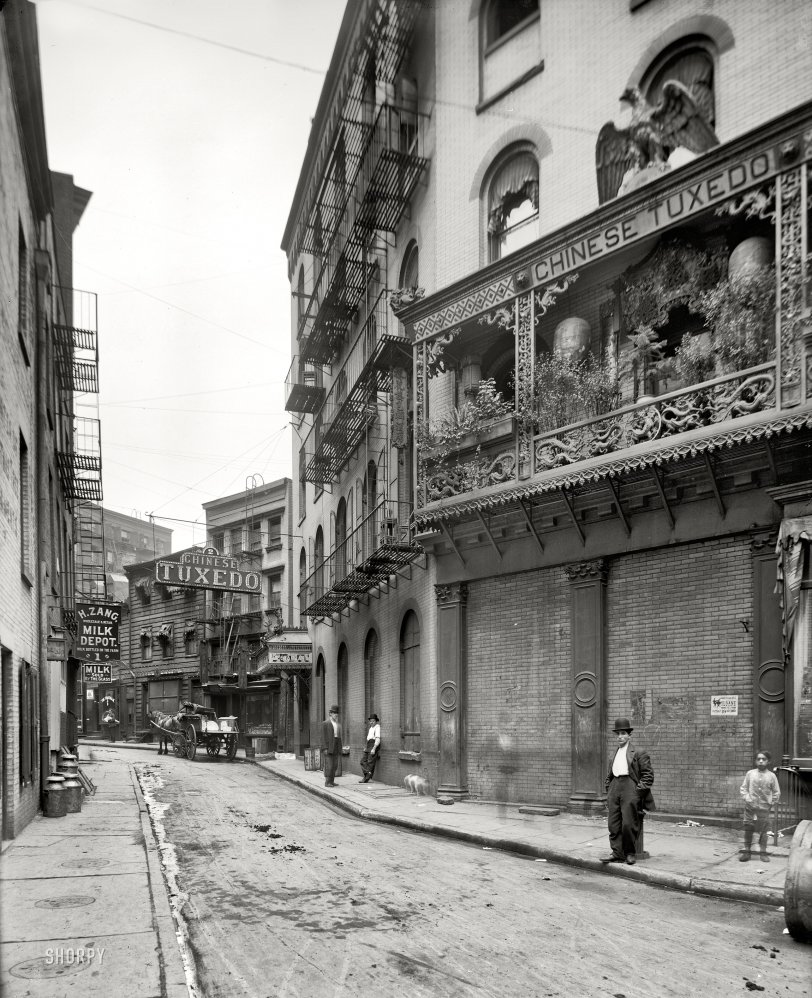
The Chinese Tuxedo on Doyers Street, 1901. (check out a detailed version of this photo over at Shorpy)
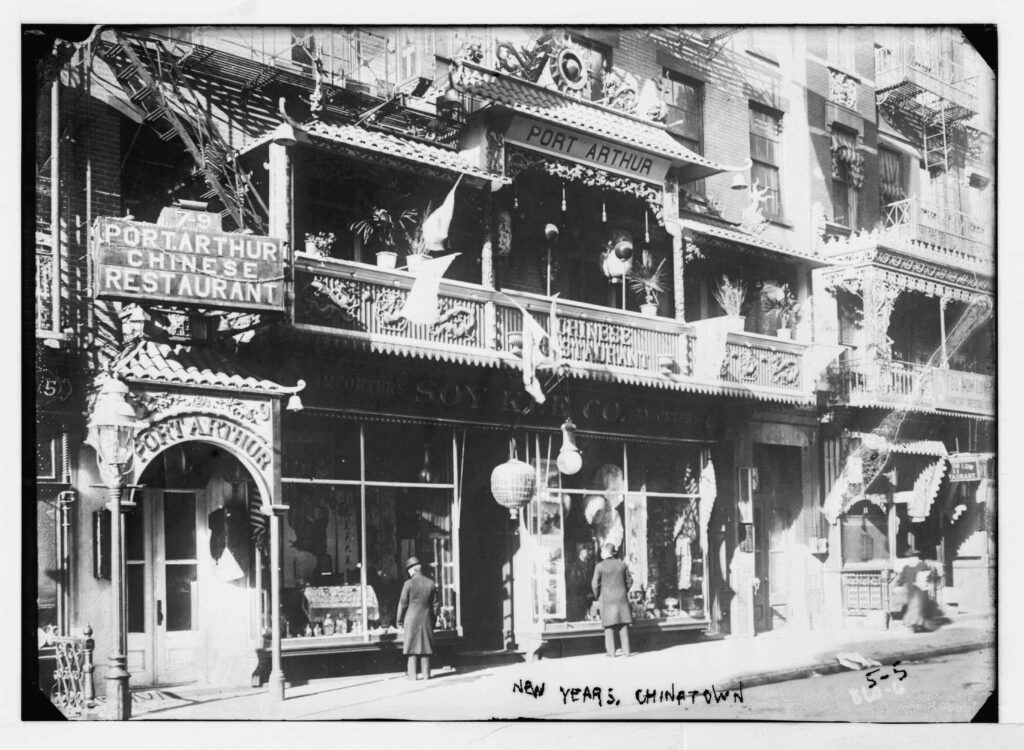
An early photograph of the Port Arthur on Mott Street (courtesy Library of Congress)
New York Public Library
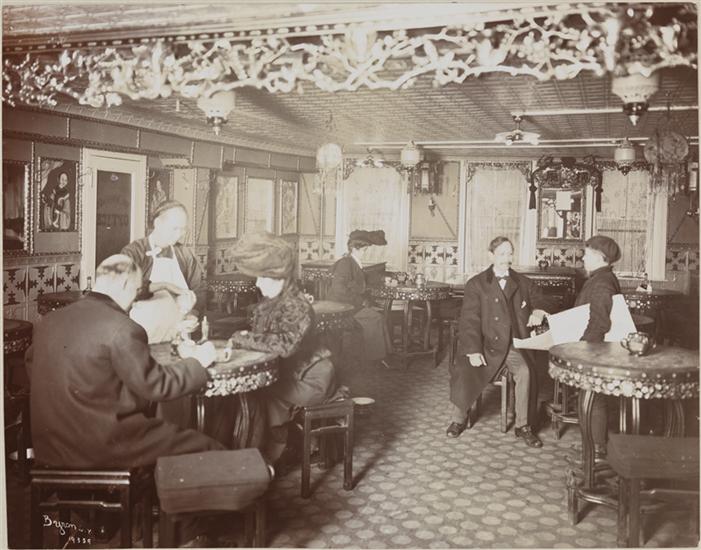
Interior of a Chinatown restaurant, 1905. Labeled as ‘the Chinese Delmonico’s’, perhaps the Port Arthur. (Byron Company/Museum of the City of New York)
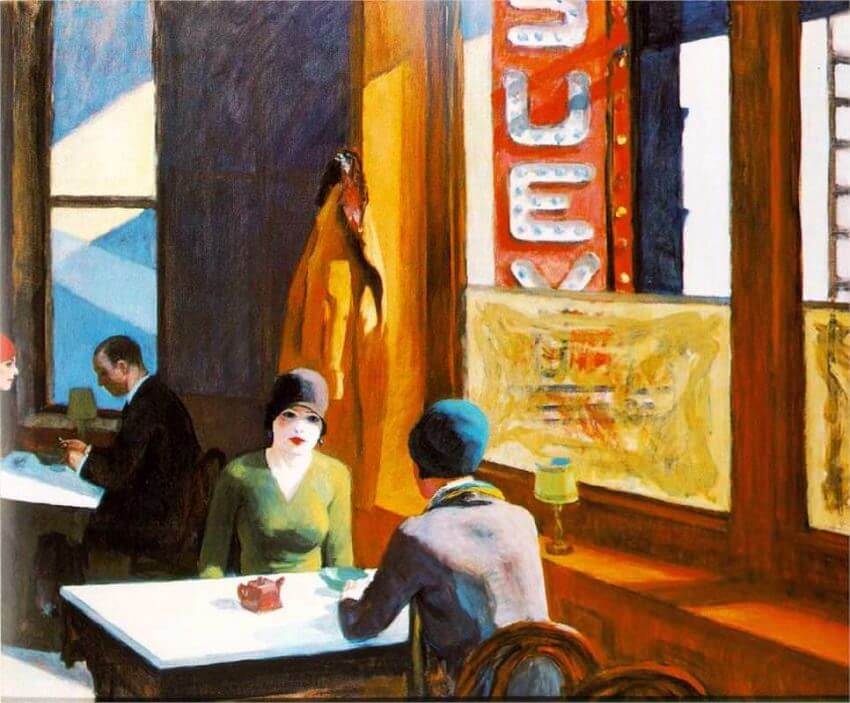
Edward Hopper / Chop Suey (1929)
The glamorous interior of Ruby Foo’s Den (via Restauranting Through History)
Via the Daily News (Newspapers.com)
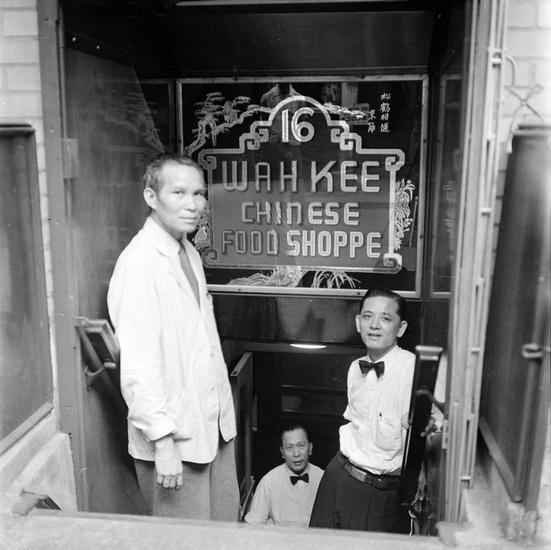
Taken in Chinatown, 1950, for Look Magazine by Robert Offergeld (Courtesy Museum of the City of New York)

Inside Bernstein-on-Essex in the 1970s:

FURTHER LISTENING

After listening to Chop Suey City, check out these past Bowery Boys episodes on subjects featured in the latest show.


The Bowery Boys: New York City History podcast is brought to you …. by you!

We are now producing a new Bowery Boys podcast every week. We’re also looking to improve and expand the show in other ways — publishing, social media, live events and other forms of media. But we can only do this with your help!

We are now a creator on Patreon, a patronage platform where you can support your favorite content creators.

Please visit our page on Patreon and watch a short video of us recording the show and talking about our expansion plans.

If you’d like to help out, there are six different pledge levels. Check them out and consider being a sponsor.

We greatly appreciate our listeners and readers and thank you for joining us on this journey so far.
Categories
American History

In Chinatown, A Poignant Reminder of the 1882 Chinese Exclusion Act

New York had no significant Asian population in 1880 outside of those who lived on a handful of small streets east of the Five Points neighborhood. Primarily focused around Mott Street, the first Chinese residents were businessmen and laborers, mostly men, close knit by design. Accurate population figures are hazy, but between 800 and 2,000 Chinese and other Asians lived in the Five Points and eastern waterfront region in 1880.

In cities around the country, small Chinese enclaves had been formed, most from workers who had arrived to work on the transcontinental railroad and other Western projects. In all places — and especially San Francisco, the  American city with the largest Asian population — the Chinese were met with prejudice, scorn and hatred.

It was for this reason that the United States passed what amounts to one of the most odious laws in this country’s history — the Chinese Exclusion Act of 1882.

Whereas in the opinion of the Government of the United States the coming of Chinese laborers to this country endangers the good order of certain localities within the territory thereof:

….

SEC. 14. That hereafter no State court or court of the United States shall admit Chinese to citizenship; and all laws in conflict with this act are hereby repealed.

[read the entire text of the law here]

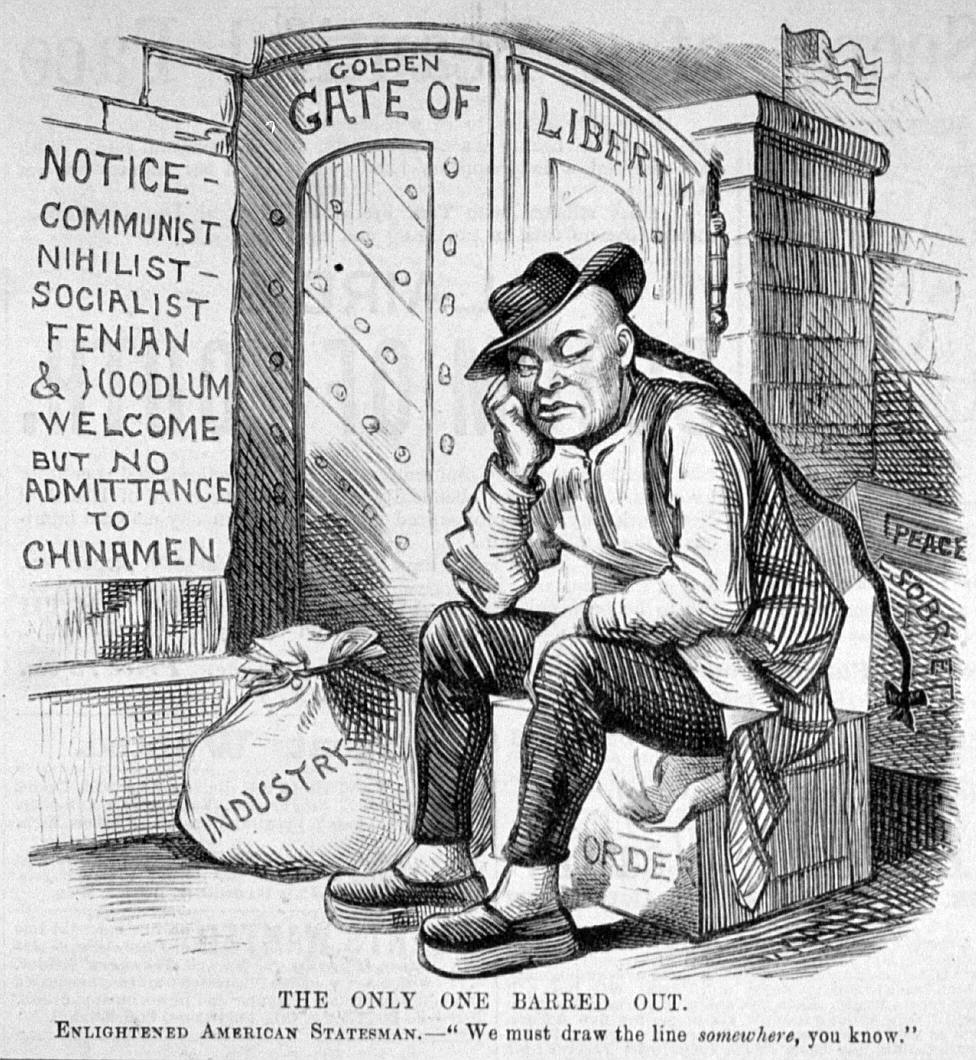
Below: From Frank Leslie’s Illustrated Newspaper, April 1882 — “We must draw the line somewhere, you know.”

The_only_one_barred_out_cph.3b48680


In these crazy political times, it’s always good to remind ourselves of the fearful restrictions and laws that the United States had once embraced.

A small but poignant exhibit on the effects of the Chinese Exclusion Act arrives in Chinatown this Sunday, May 22 — at the First Chinese Baptist Church (21 Pell Street).  Remembering 1882, The Chinese Exclusion Act and Chinese Railroad Workers Exhibit is a small traveling exhibit explore the racist causes and devastating effects of the law, which was eventually extended and made permanent (before finally being abolished in 1943).

Head over there by 2 pm and catch a screening of the film Ancestors In The Americas: Chinese In the Frontier West.

For more information, check out their Facebook page

And if you can’t make it on Sunday, perhaps you’d consider signing this White House petition, asking the president to officially apologize on behalf of the United States of America for the Chinese Exclusion Act of 1882.”


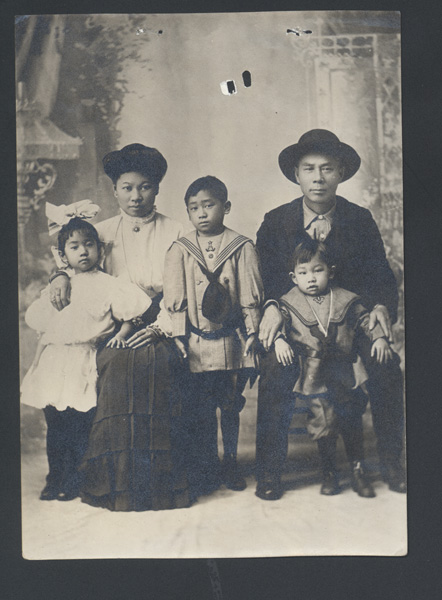
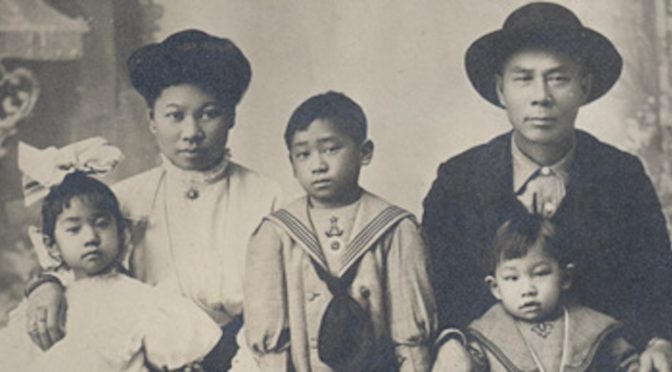
Image at top, per the original caption: Chin Quan Chan; Seattle District, Chinese Exclusion Act Case Files, Applications to Reenter, c. 1892-1900]: Chin Quan Chan Family, Chinese Exclusion Act Case File

5658036707_95b6e1ece7_o
Courtesy US National Archives