Categories
Food History Podcasts

Chop Suey City: A History of Chinese Food in New York

EPISODE 328 New Yorkers eat a LOT of Chinese food and have enjoyed Chinese cuisine – either in a restaurant or as takeout – for well over 130 years. Chinese food entered the regular diet of the city LONG before the bagel, the hot dog and even pizza.

In this episode, Greg explores the history of Chinese food in New York — from the first Mott Street eateries in Manhattan’s Chinatown to the sleek 20th century eateries of Midtown.

We have one particular dish to thank for the mainstreaming of Chinese food — chop suey. By the 1920s, chop suey had taken New York by storm, the cuisine perfect for the Jazz Age.

Through the next several decades, Chinese food would be transformed into something truly American and the Chinese dining experience would incorporate neon signs, fabulous cocktails and even glamorous floor shows in the 1940s.

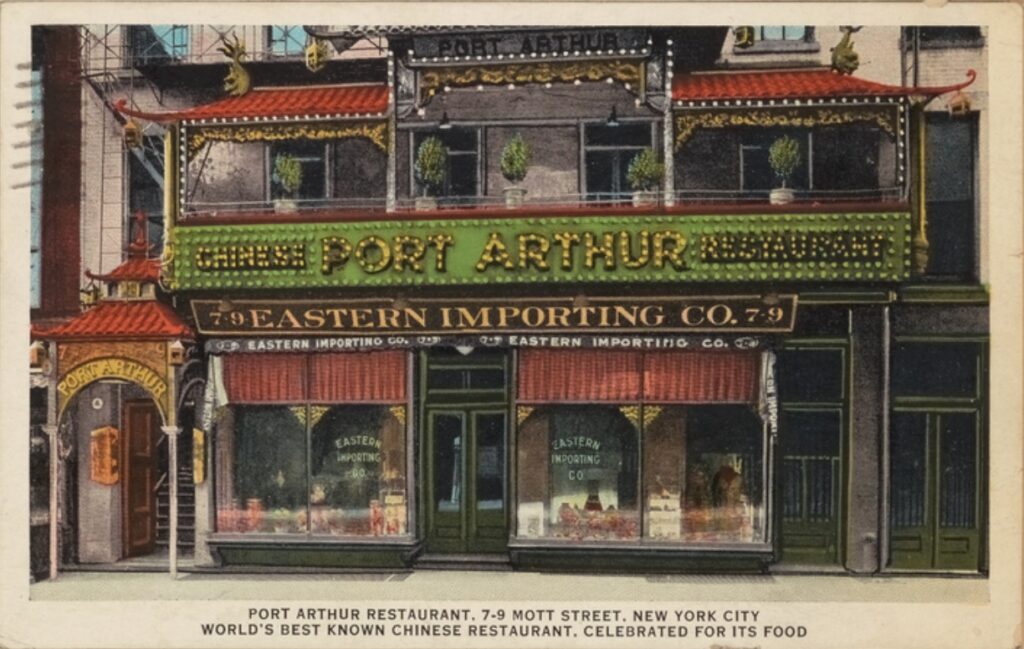
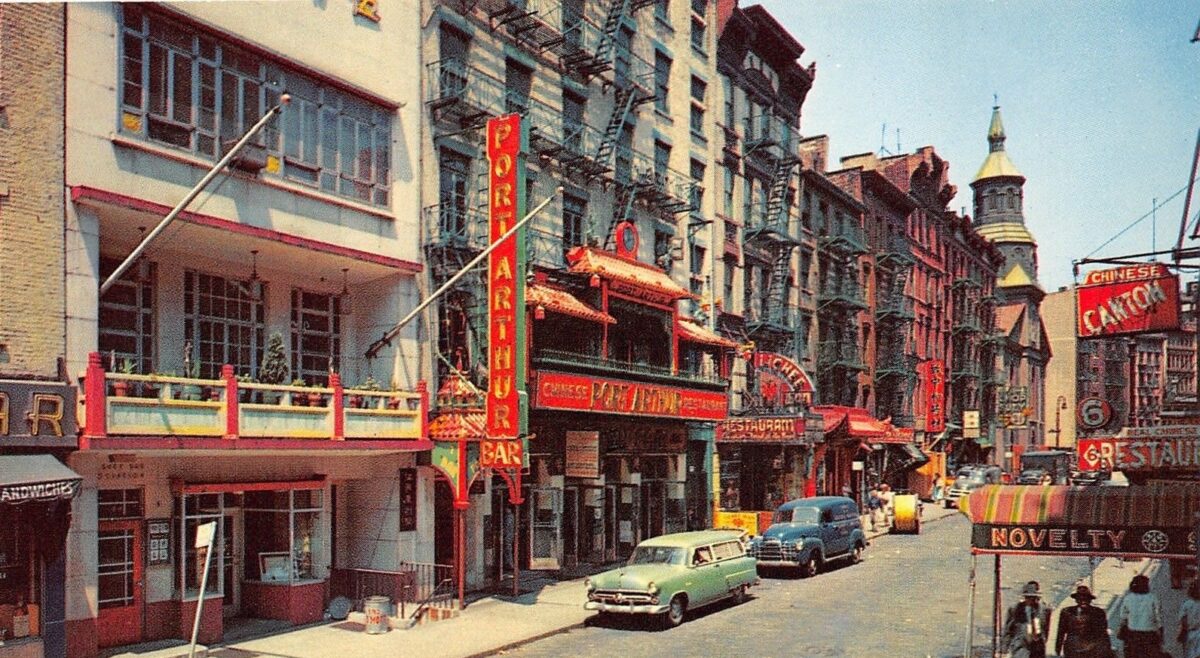
FEATURING: The Port Arthur Restaurant, the Chinese Tuxedo, Ruby Foo’s Den, Tao, Lucky Cheng’s and that place known as ‘Szechuan Valley’.

PLUS: The love affair between Chinese food and Jewish New Yorkers.

LISTEN NOW: CHOP SUEY CITY: A HISTORY OF CHINESE FOOD IN NEW YORK
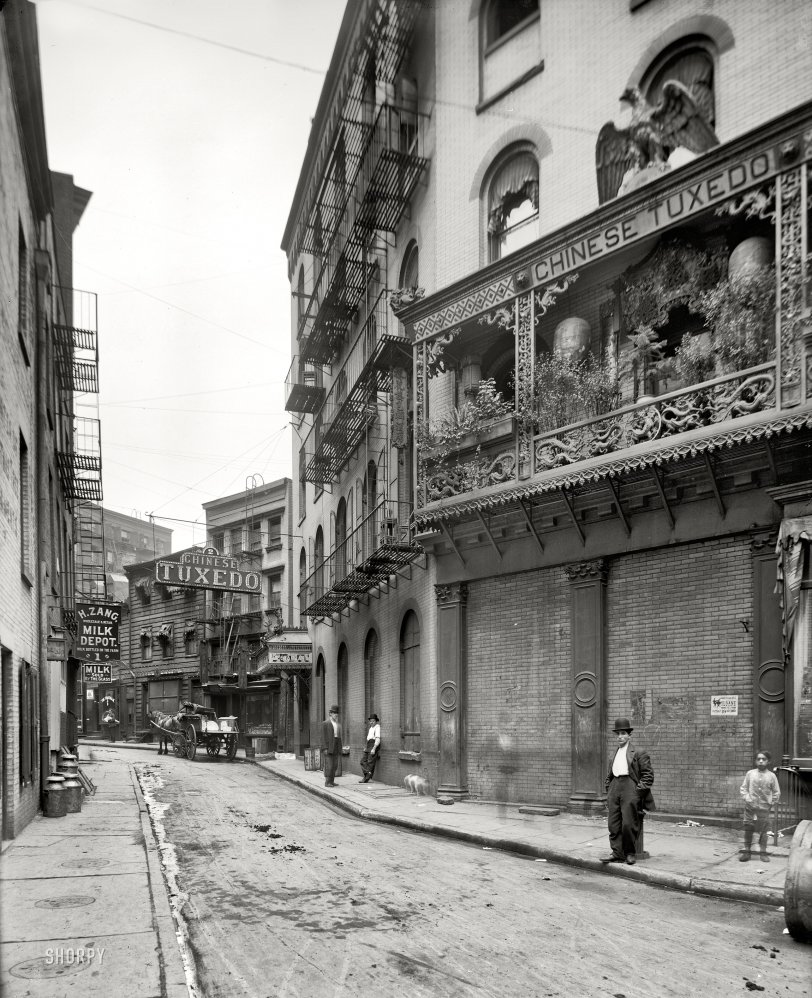
The Chinese Tuxedo on Doyers Street, 1901. (check out a detailed version of this photo over at Shorpy)
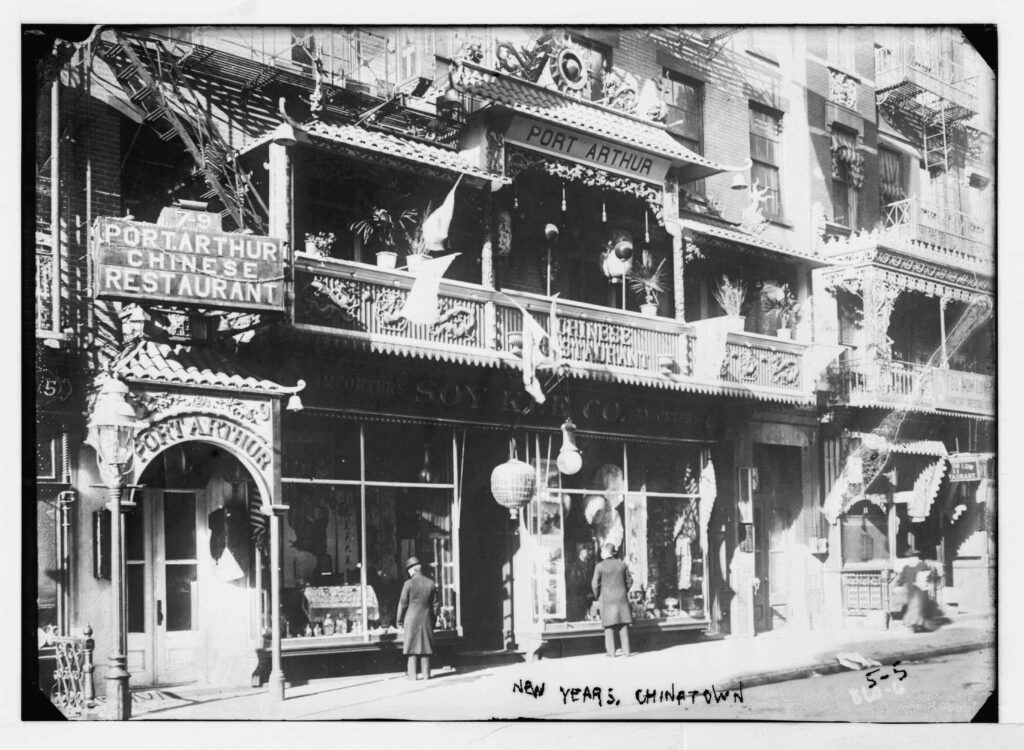
An early photograph of the Port Arthur on Mott Street (courtesy Library of Congress)
New York Public Library
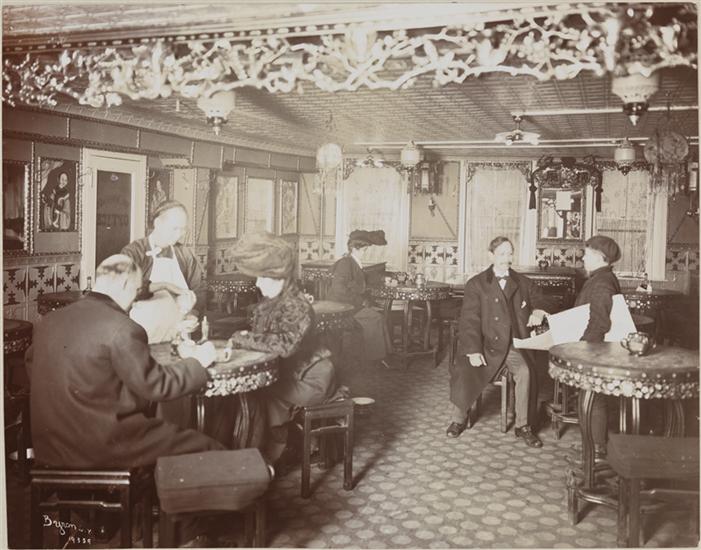
Interior of a Chinatown restaurant, 1905. Labeled as ‘the Chinese Delmonico’s’, perhaps the Port Arthur. (Byron Company/Museum of the City of New York)
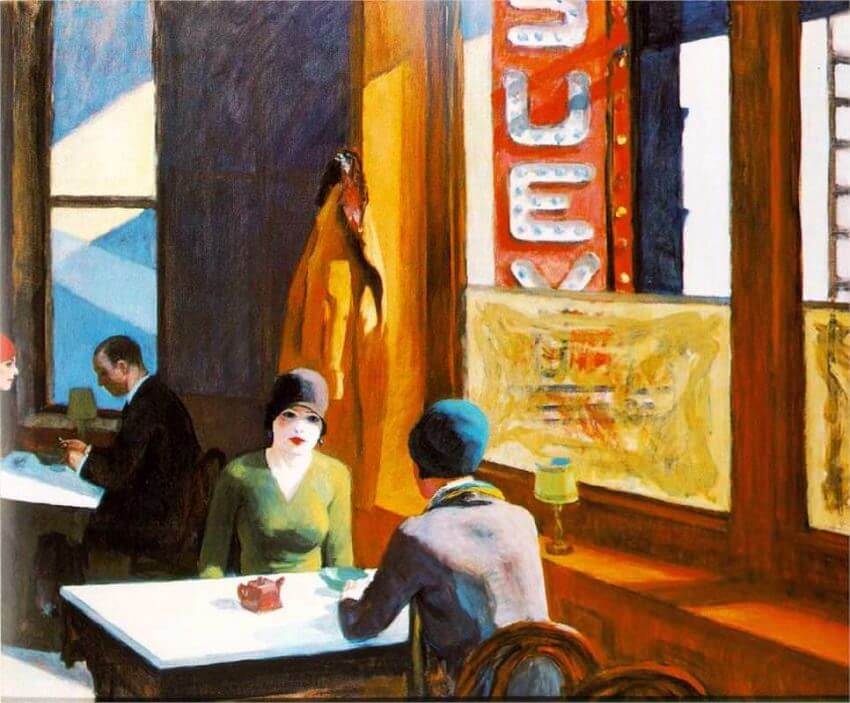
Edward Hopper / Chop Suey (1929)
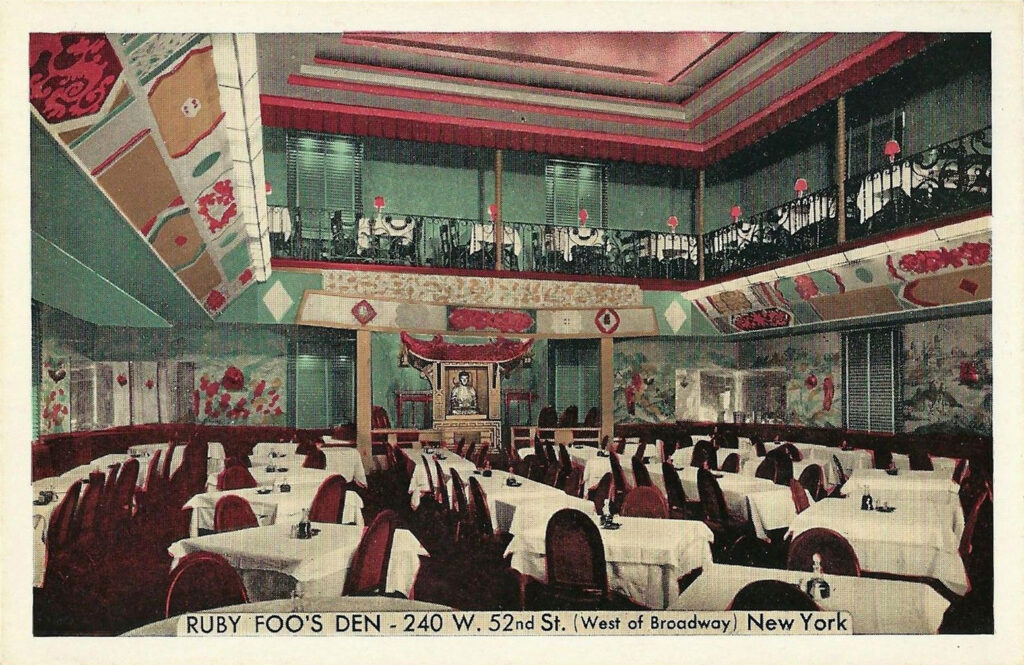
The glamorous interior of Ruby Foo’s Den (via Restauranting Through History)
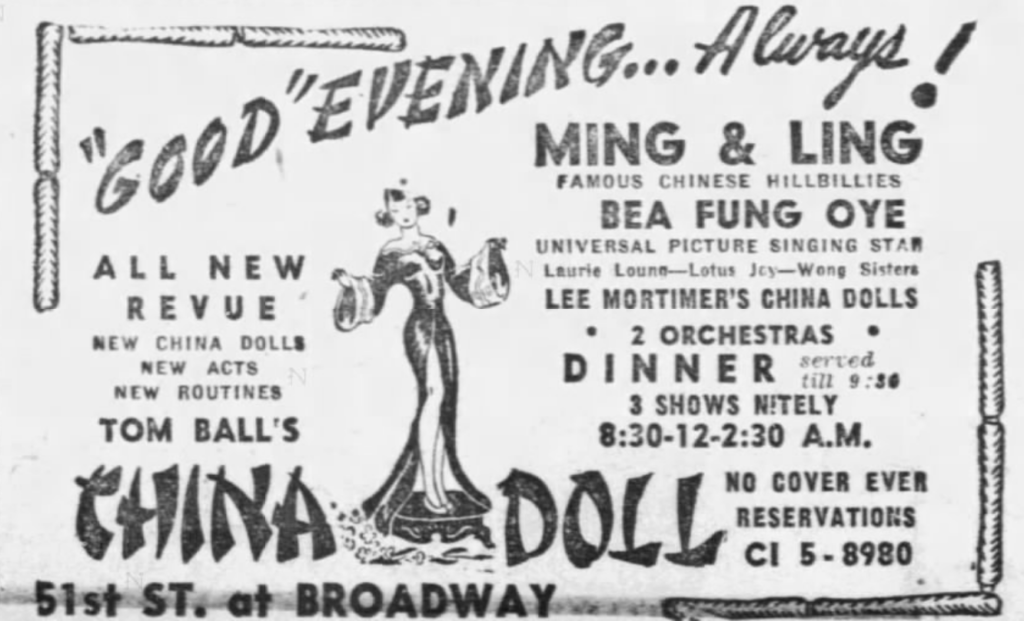
Via the Daily News (Newspapers.com)
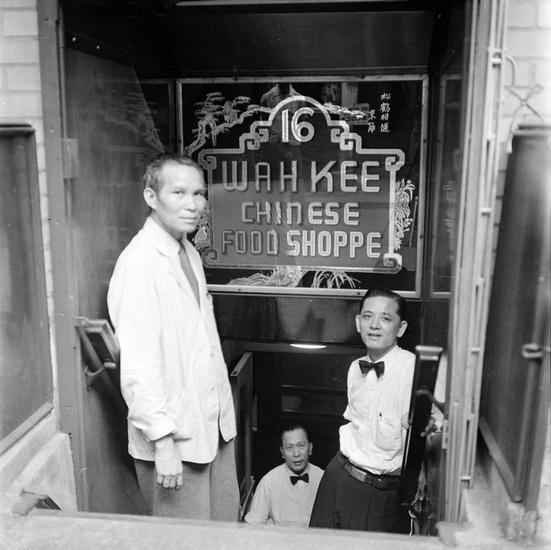
Taken in Chinatown, 1950, for Look Magazine by Robert Offergeld (Courtesy Museum of the City of New York)

Inside Bernstein-on-Essex in the 1970s:

FURTHER LISTENING

After listening to Chop Suey City, check out these past Bowery Boys episodes on subjects featured in the latest show.


The Bowery Boys: New York City History podcast is brought to you …. by you!

We are now producing a new Bowery Boys podcast every week. We’re also looking to improve and expand the show in other ways — publishing, social media, live events and other forms of media. But we can only do this with your help!

We are now a creator on Patreon, a patronage platform where you can support your favorite content creators.

Please visit our page on Patreon and watch a short video of us recording the show and talking about our expansion plans.

If you’d like to help out, there are six different pledge levels. Check them out and consider being a sponsor.

We greatly appreciate our listeners and readers and thank you for joining us on this journey so far.
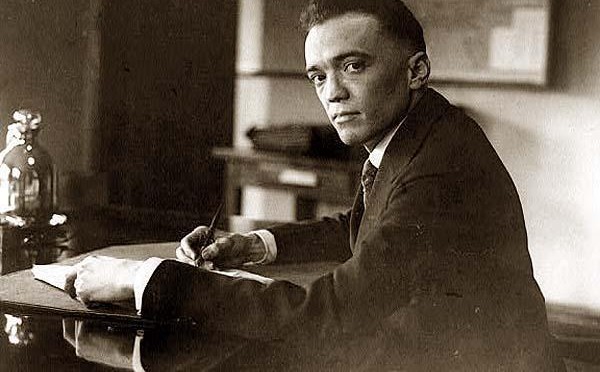
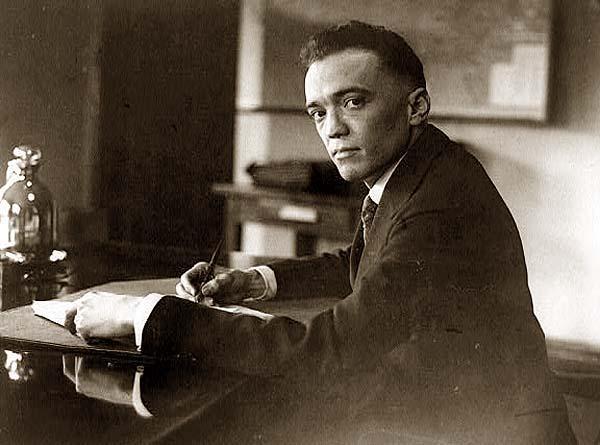
J. Edgar Hoover parties at New York’s hottest nightclub

Work hard, play hard: The FBI director in his early days

There are at least three scenes in the new Clint Eastwood-directed J. Edgar Hoover biopic ‘J. Edgar’ set in New York, one of which might surprise you.

The first features Hoover on Ellis Island, but he’s hardly there to greet new arrivals. The FBI director’s early career was spent ferreting out and deporting anarchists, and his biggest target was Emma Goldman. On October 27, 1919, Goldman was put on trial at Ellis — in the film, the Statue of Liberty stands at odds in the background — and she was eventually expelled from the United Statues using a tenuous interpretation of the status of her American citizenship.

The second scene, depicting the rural Bronx of 1933, typified Hoover’s career in the 1930s as a stiffly facaded embodiment of law enforcement. Here the movie envisions the arrest of Bruno Hauptmann, accused kidnapper of the child of Charles Lindburgh. Hoover’s interest in the case represented an expansion of federal powers for the agency, even if Hoover’s actual involvement is questionable.

But it’s the third view of old New York that I found more intriguing. Hoover was a teetotaler early in life and demanded his agents aspire to clean, moral living. So its interesting that he — and his companion Clyde Tolson — were regular habitues at New York’s hottest nightclub of the 1930s — the Stork Club.

Sherman Billingsley, a former bootlegger, would have been made Hoover’s enemy list during Prohibition. Instead, he regularly hosted the FBI director as his swanky club at 3 East 53rd Street (at Fifth Avenue).

Hoover schmoozed here with people who were useful to him, journalists like Walter Winchell who assisted with the capture of most-wanted criminals from his banquette in the Cub Room. The unscrupulous columnist was instrumental in the surrender of Louis “Lepke” Buchalter, leader of the mob’s assassination unit Murder Inc., and helped play up the image of Hoover’s G-Men to his millions of readers. In return, Hoover sometimes provided Winchell with FBI employees as bodyguards or drivers.

Winchell and others considered the Stork Club an invaluable nexus of social connections, and Hoover too made it his hangout when he was in town, often downing champagne and chatting with glitterati. The director was so associated with the nightclub in the 1930s, Tolson at his side, that adversaries sometimes called him ‘the Stork Club detective’.

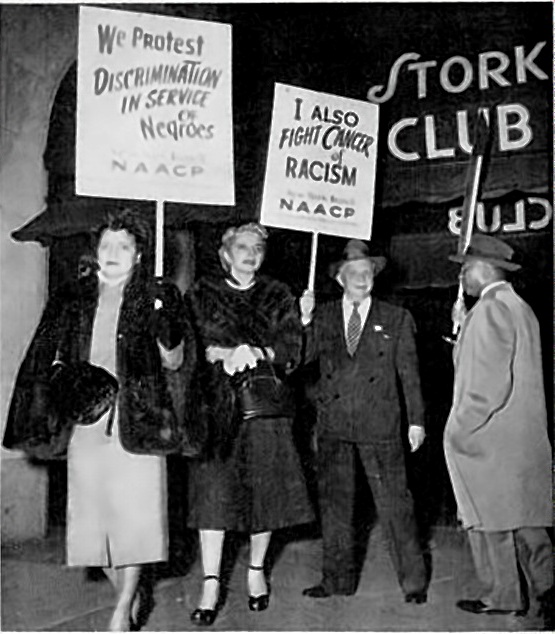
In a telling incident a few years later, in 1951, iconic entertainer Josephine Baker was denied service at the Stork Club. She filed a complaint with the police department, and supporters organized a protest outside the nightclub (pictured at right). When it was recommended that Hoover intervene on the behalf of Baker, he replied, “I don’t consider this to be any of my business.” [source]

Here’s a collection of photos of the Stork Club with musical accompaniment. Mr. Hoover appears in one image around minute 2:40:

Stork Club logo courtesy Daddy O’s Martini blog