Many of the early 20th century’s most renown gangsters were born in late January!
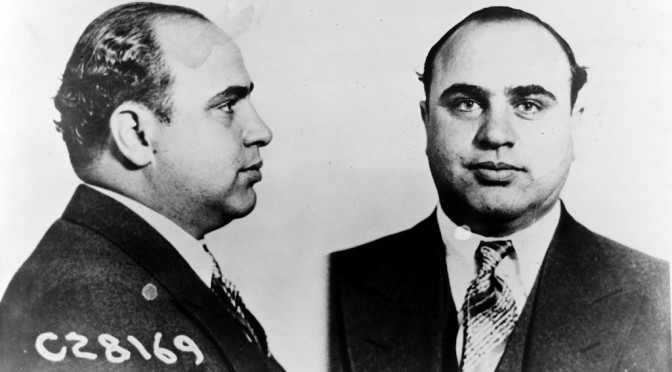
Today is Al Capone‘s birthday. (He’s pictured above in his infamous mugshot.) It’s also the birthday of gambler/ Jewish mobster Arnold Rothstein.  Joe Masseria, early New York Mafia leader, was also born on this date — January 17, 1886. Enoch ‘Nucky’ Johnson — the inspiration for Steve Buscemi’s Nucky Thompson — was born January 20, 1883.  Frank Costello, leader of the Luciano crime family post-Prohibition, was born January 26th.
Papa Johnny Torrio, Capone Chicago mentor, was born on January 20, 1882. Â Frankie Yale, another of Capone’s gangster employers, was born January 22, 1893.
And if we extend the coincidence even further to times of death, Lucky Luciano died of a heart attack on January 26, 1962. Â Meyer Lansky died in Florida on January 15, 1983. Â The bootlegger George Remus died on January 20, 1952.
Most of the men above are depicted in some form or another on HBO’s Boardwalk Empire. In fact most of the characters from that show appear to have late January birthdays.
I’m not too knowledgable about astrology, but is there something about the gangster way of life that appeals to those that reside on the Capricorn-Aquarius cusp?
Perhaps I should be afraid. My birthday was a few days ago. (Ack.)
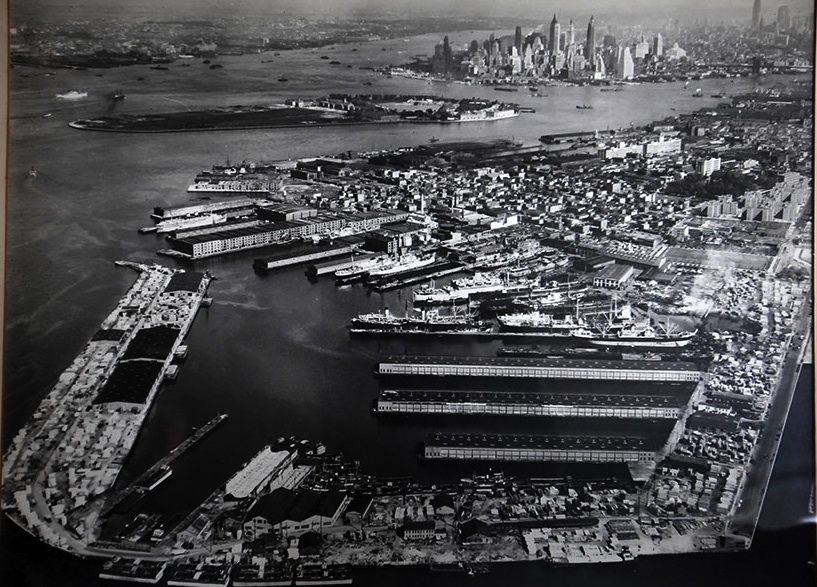
PODCASTRed Hook, Brooklyn, the neighborhood called by the Dutch ‘Roode Hoek’ for its red soil, became a key port during the 19th century, a stopping point for vessels carry a vast array of raw goods from the interior of the United States along the Erie Canal.
In particular, two manmade harbors were among the greatest developments in Brooklyn history, stepping in when Manhattan’s own decaying wharves became too overcrowded.
With these basins came a mix of ethnicities to Brooklyn, and along with new styles of row houses came the usual assortment of vices — saloons and brothels along Hamilton Avenue. This fostered the development of crime along the docks, and Red Hook soon witnessed firsthand the opening salvos of 20th Century organized crime.
How did the history-rich, nautical neighborhood go from a booming center of employment to one of the worst neighborhoods in the United States by the 1990s? And can some surprising twists of fate from the last twenty years help Red Hook return to its glory days?
Featuring: Revolutionary War forts, shantytowns, Vaseline factories, famous gangsters, the gateway to Hell, and cheap Swedish furniture!
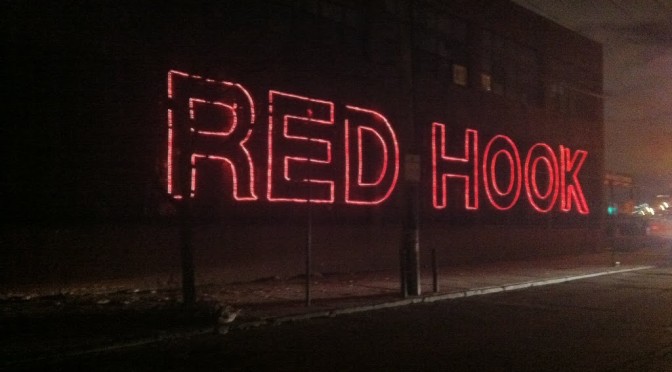
Photo above: Taken on Van Brunt street, 1/11/2012
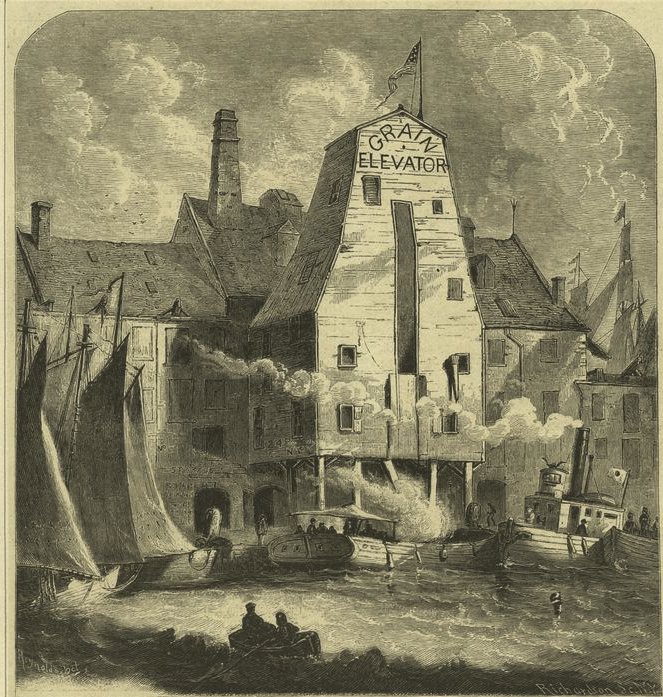
The Atlantic Docks, illustration taken from Booth’s History of New York. (care of NYPL)
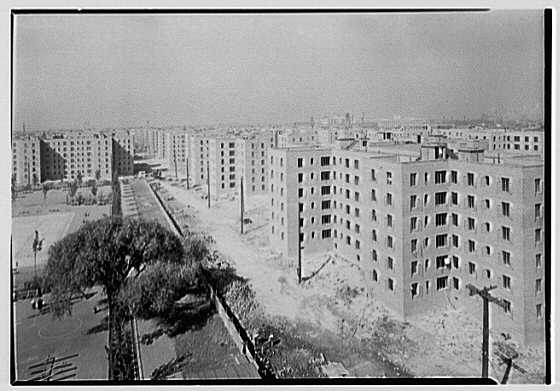
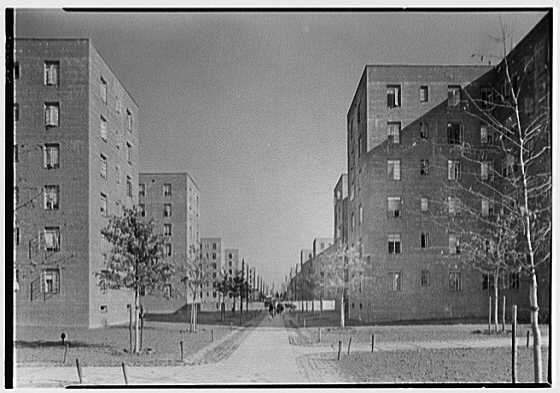
Modern living, circa 1939. The Red Hook Houses at their debut. Although the housing development cleared away a great many dilapidated homes — following a common model of urban redevelopment — the uninspired uniformity would put a dent in the neighborhood’s original character. (Courtesy LOC)
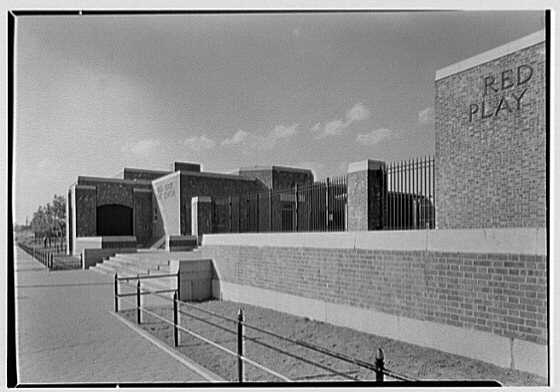
The Red Hook Play Center opened in 1936, the final of 11 swimming pools Robert Moses built during his early years as parks commissioner. Its Art Moderne style made it a beautiful if curious addition to the neighborhood.
The Erie Basin, a clutter of vessels and piers, is strangely beautiful from overhead in relation to the Manhattan skyline. (Pic courtesy Wired NY)
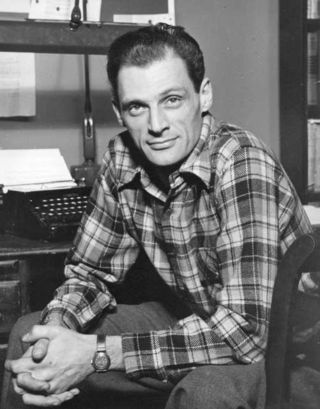
The crisis of organized crime and corruption within the longshoreman’s union along the Brooklyn waterfront was an inspiration for many writers, including Arthur Miller (below) in his unproduced screenplay ‘The Hook‘ — referring both to the neighborhood and the longshoreman’s “ever-present baling hook“. Later, Elia Kazan and screenwriter Budd Schulberg found similar inspiration for the Oscar winning film ‘On The Waterfront’, loosely basing events on situations that took place along the entire New York and Brooklyn waterfront. (The film was made in Hoboken, but there are of course famous shots of the Manhattan skyline.)
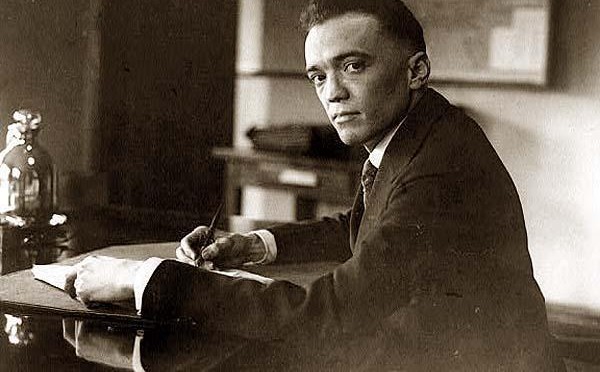
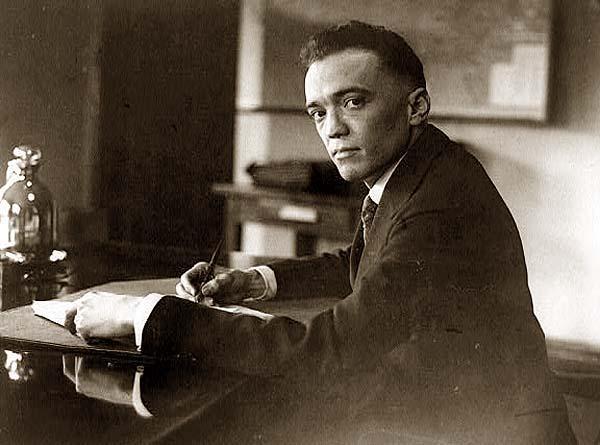
Work hard, play hard: The FBI director in his early days
There are at least three scenes in the new Clint Eastwood-directed J. Edgar Hoover biopic‘J. Edgar’ set in New York, one of which might surprise you.
The first features Hoover on Ellis Island, but he’s hardly there to greet new arrivals. The FBI director’s early career was spent ferreting out and deporting anarchists, and his biggest target was Emma Goldman. On October 27, 1919, Goldman was put on trial at Ellis — in the film, the Statue of Liberty stands at odds in the background — and she was eventually expelled from the United Statues using a tenuous interpretation of the status of her American citizenship.
The second scene, depicting the rural Bronx of 1933, typified Hoover’s career in the 1930s as a stiffly facaded embodiment of law enforcement. Here the movie envisions the arrest of Bruno Hauptmann, accused kidnapper of the child of Charles Lindburgh. Hoover’s interest in the case represented an expansion of federal powers for the agency, even if Hoover’s actual involvement is questionable.
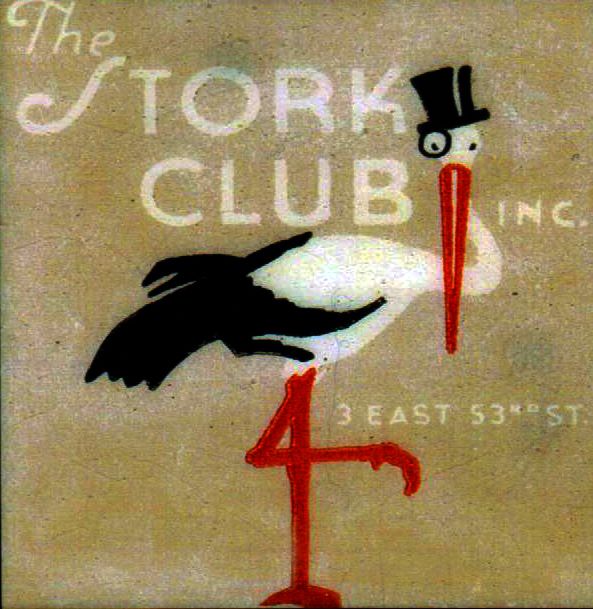
But it’s the third view of old New York that I found more intriguing. Hoover was a teetotaler early in life and demanded his agents aspire to clean, moral living. So its interesting that he — and his companion Clyde Tolson — were regular habitues at New York’s hottest nightclub of the 1930s — the Stork Club.
Sherman Billingsley, a former bootlegger, would have been made Hoover’s enemy list during Prohibition. Instead, he regularly hosted the FBI director as his swanky club at 3 East 53rd Street (at Fifth Avenue).
Hoover schmoozed here with people who were useful to him, journalists like Walter Winchell who assisted with the capture of most-wanted criminals from his banquette in the Cub Room. The unscrupulous columnist was instrumental in the surrender of Louis “Lepke” Buchalter, leader of the mob’s assassination unit Murder Inc., and helped play up the image of Hoover’s G-Men to his millions of readers. In return, Hoover sometimes provided Winchell with FBI employees as bodyguards or drivers.
Winchell and others considered the Stork Club an invaluable nexus of social connections, and Hoover too made it his hangout when he was in town, often downing champagne and chatting with glitterati. The director was so associated with the nightclub in the 1930s, Tolson at his side, that adversaries sometimes called him ‘the Stork Club detective’.
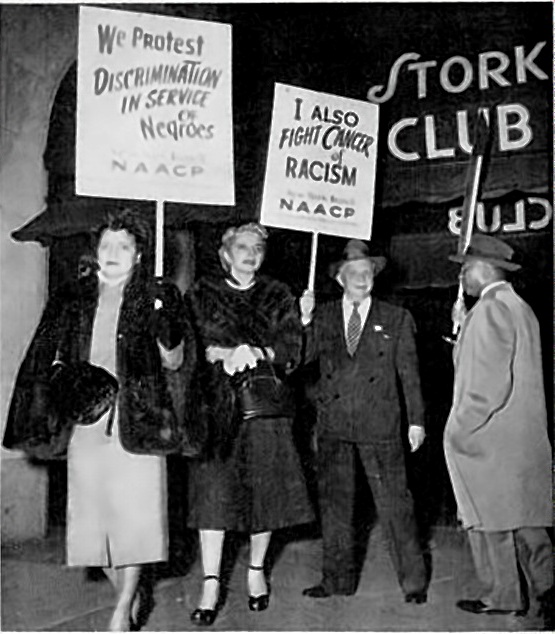
In a telling incident a few years later, in 1951, iconic entertainer Josephine Baker was denied service at the Stork Club. She filed a complaint with the police department, and supporters organized a protest outside the nightclub (pictured at right). When it was recommended that Hoover intervene on the behalf of Baker, he replied, “I don’t consider this to be any of my business.” [source]
Here’s a collection of photos of the Stork Club with musical accompaniment. Mr. Hoover appears in one image around minute 2:40:
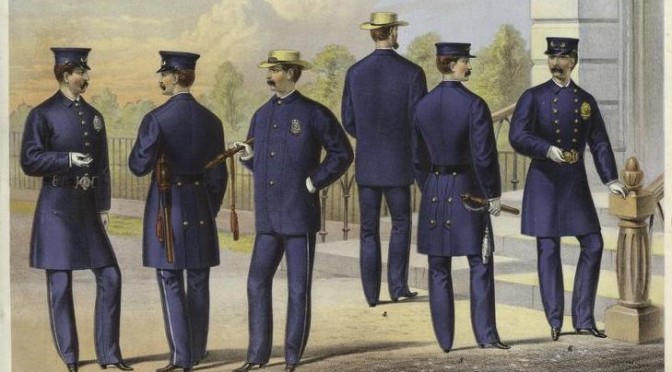
Uniformly chic: Law enforcement officers of the New York Metropolitan Police from 1871 show off their fancy blue threads. Twenty years previous, they weren’t even required to wear standardized apparel. (Courtesy NYPL Digital Library)
PODCASTWe’re playing Good Cop / Bad Cop this week, as we take a close look at four events from the early history of the New York Police Department. You’ll meet shining stars of the force like Jacob Hays, who kept the peace in the early 19th century armed with a mean billyclub — and the only man to ever hold the title of High Constable of New York. And then you’ll encounter Joseph Petrosino, the Italian immigrant turned secret weapon in the early battles against organized crime.
Not all the early men in blue were so recommendable. During the Police Riot of 1857, cop turned against cop while the city burned and “Five Points criminals danced in the streets.” And finally there’s the lamentable tale of officer Charles Becker, the only member of the New York Police Department to be executed for criminal misdeed.
But did he really commit the crime — commissioning the murder of a nervous gambler who was prepared to rat him out?
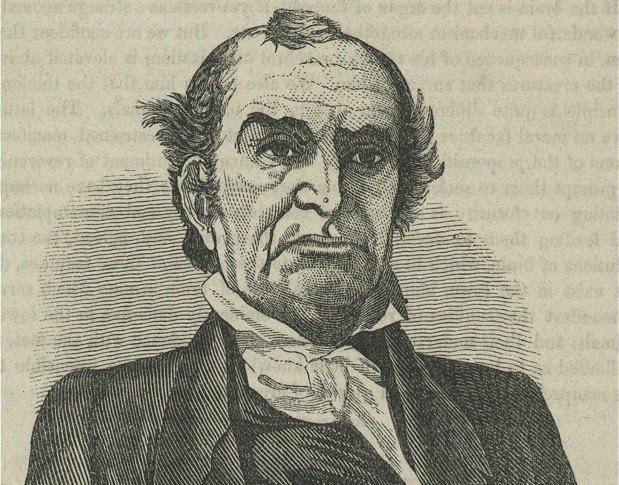
#1 The Saga of High Constable Hays Imagine encountering this face on a gaslit street at night! Jacob Hays watched over the streets of New York for over 40 years, one of the most dedicated men ever to watch over the city. Hays would become one of New York’s best known — and most feared — men, thanks to his agility with a billy club and his early skills of detection and crime solving. (NYPL)
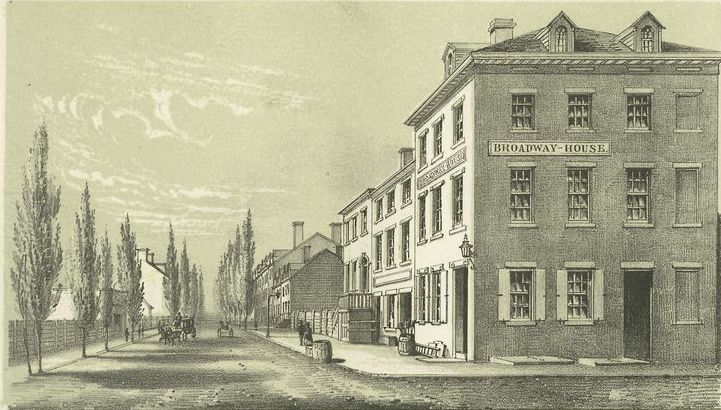
This is the corner of Broadway and Grand Street in 1818. A wildly bustling street corner today, but quite a different story back in Hays’ day. The constable roamed over a much smaller city — this was at the northern outskirts — and a far different range of crimes. By 1818, he would have only had about a couple dozen officers in his employ, all of whom reported directly to him. (NYPL)
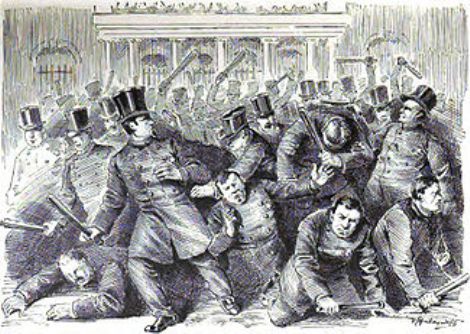
#2 The Police Riot of 1857 New York once had two different — and competing — police forces and boy they just did NOT get along. It all came to blows one June day in 1857, with state-sponsored Metropolitan police officers attacking the renegade men of the Municipal police force.
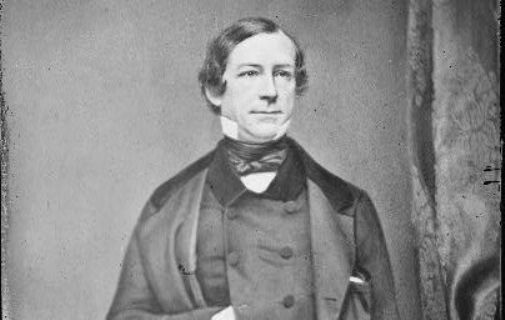
And it was because of Fernando Wood, the crafty mayor of New York in the 1850s who refused to comply to the state’s authority over city law enforcement. Wood used the police for his own political advantage and hastened its descent into corruption.
#3 Petrosino! The short Italian immigrant Joseph Petrosino, who become the NYPD’s most potent tool against the growing forces of organized crime during the first years of the 20th century.
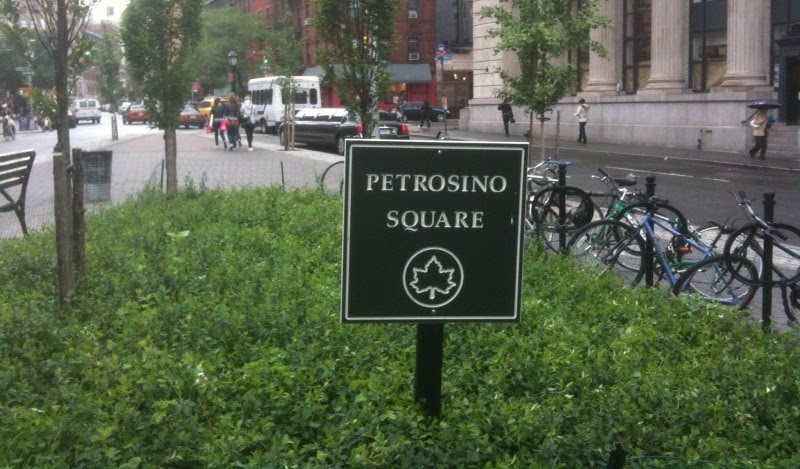
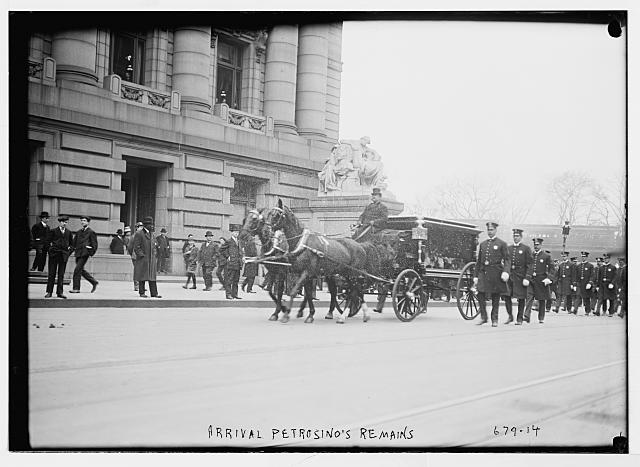
Petrosino was assassinated in Italy by the mob and his funeral procession through the city drew thousands of mourners. Today, you can visit the freshly refurbished Petrosino Square at Lafayette and Kenmare streets and see many artifacts relating to Petrosino at the New York City Police Museum.
Petrosino’s funeral procession passed by the U.S. Custom House, April 9, 1909. (LOC)
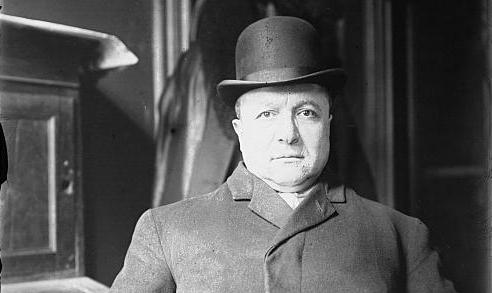
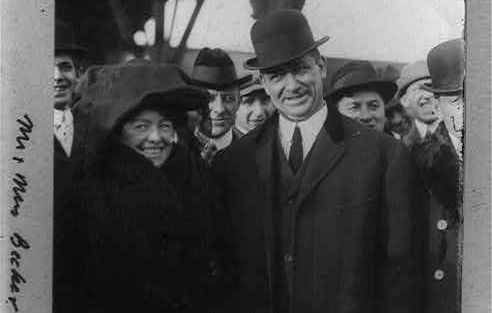
#4 Murder At The Metropole Charles Becker and his wife beaming to the press, although I don’t know what they’re smiling about. Becker was convicted of authorizing the murder of down-and-out gambler Herman Rosenthal. The disgraced cop was eventually sent to the electric chair.
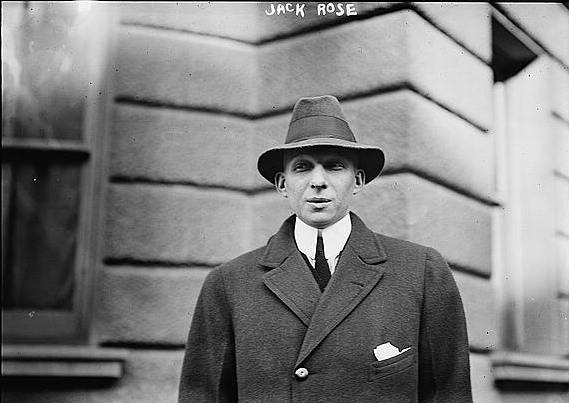
The prime witness against Becker was the otherworldly looking Bald Jack Rose, who claimed to have intimate details linking the officer to the vicious crime, which took place outside the Metropole Hotel in midtown.
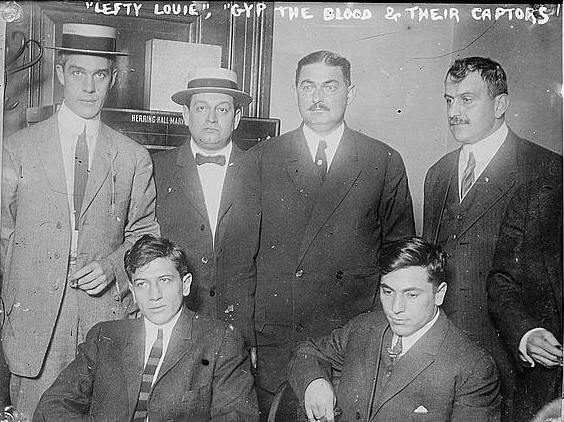
Two of the gunmen in the Rosenthal murder, nicknamed Gyp The Blood and Lefty Louie, pictured here with the men who brought them in.
CORRECTION: In referring to the new components of the Metropolitan Police, I mention the ‘city of Richmond’ when I meant the ‘county of Richmond’ — aka Staten Island.
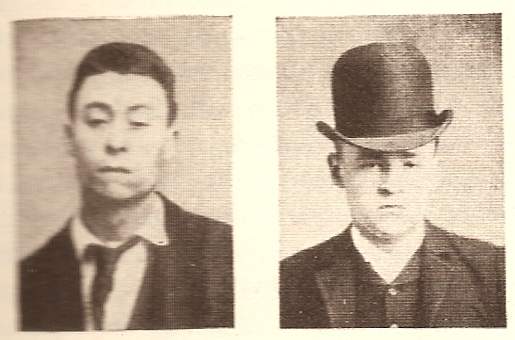
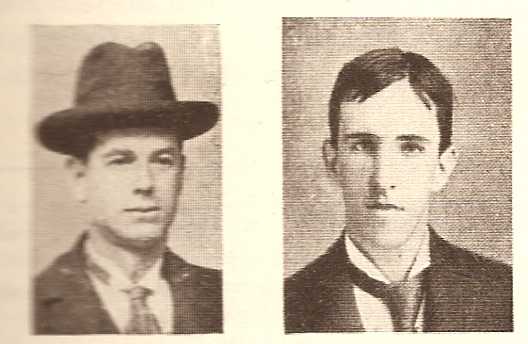
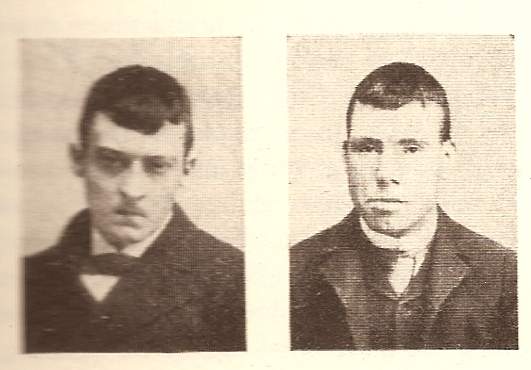
Faces of the Whyo Gang: Googy Corcoran, Clops Connolly, Big Josh Hines and Baboon Connolly
PODCAST: The Whyos (pronounced Why-Ohs)Â were New York’s most notorious gang after the Civil War, organizing their criminal activities and terrorizing law abiding citizens of the Gilded Age. Find out when they lived, how they broke the law and who they were — from Googie Corcoran to Dandy Johnny, as well as two particularly notable guys named Danny.
ALSO: How much does it cost to have somebody’s ear bitten off?
To get you in the mood for the weekend, every Friday we’ll be celebrating ‘FRIDAY NIGHT FEVER’, featuring an old New York nightlife haunt, from the dance halls of 19th Century Bowery, to the massive warehouse spaces of the mid-90s. Past entries can be found HERE.
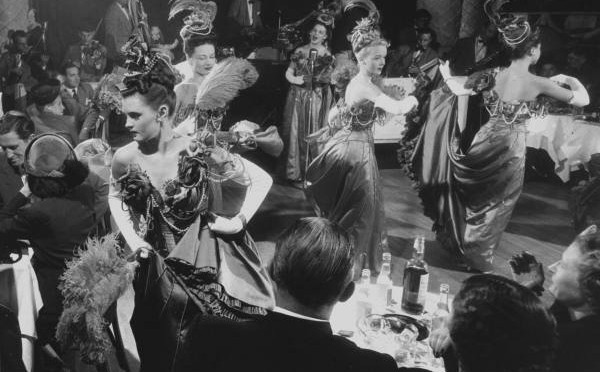
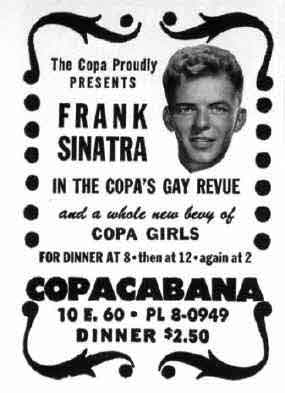
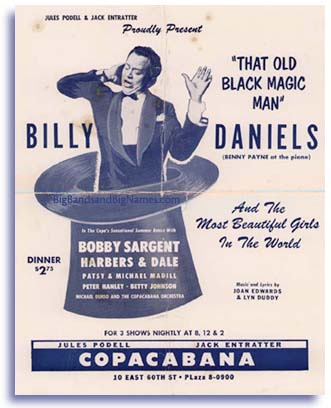
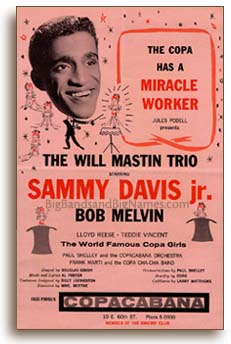
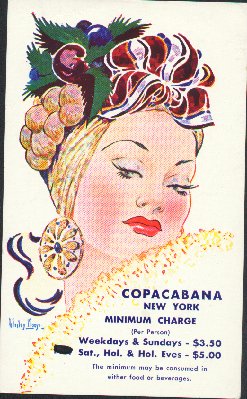
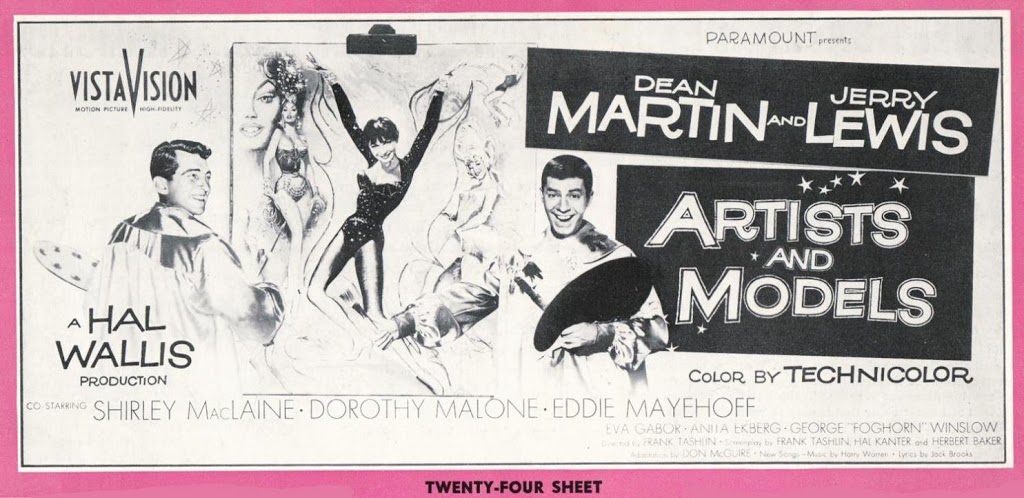
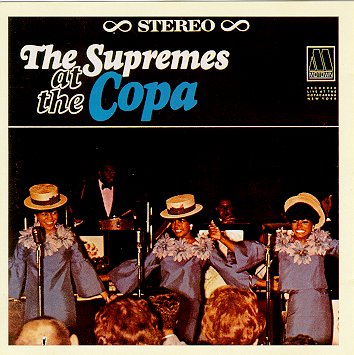
During the 40s and 50s, any celebrity worth their weight in fame either frequented or performed at the Copacabana, a swanky nightclub known for its showgirls, its Chinese food and its mafia ties. On this mini-podcast, we take you on a night on the town with Frank Sinatra, Sammy Davis Jr and a rowdy table of New York Yankees.
— FREUDIAN SLIP — I refer to Frank Costello as New York’s leading ‘media don’. Clearly, he’s a ‘mafia don’.
— JUST PLAIN MISSPEAK — The current Copacabana has closed to make way for the extension of the 7 train, not the 4 train.
—-
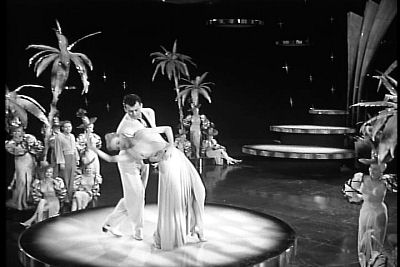
To boost popularity of the club, first Copa owner Marty Proser helped produce a film called ‘Copacabana’ in 1947, starring Groucho Marx and Carmen Miranda. The film was not a hit, however it gave some of the Copa Girls a chance at appearing on the big screen: