Categories
Film History Friday Night Fever

The film ‘Green Book’ visits the Copacabana, the pillar of New York’s glamorous, volatile nightlife

NOTE: This post features a slight spoiler of an event which occurs in the film’s first five minutes.

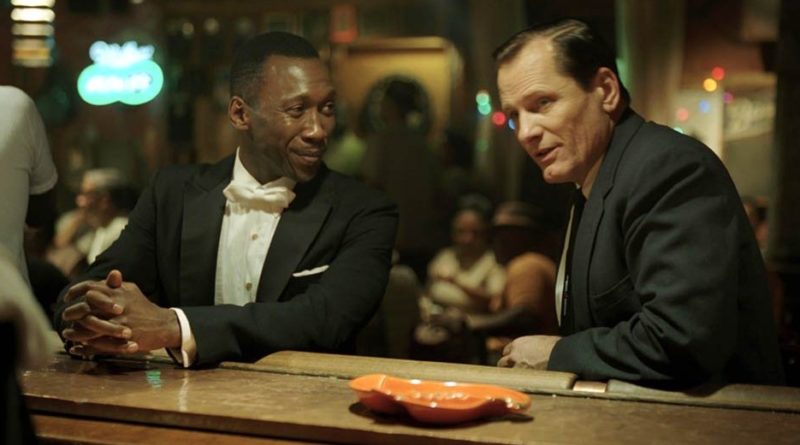
The period film Green Book — nominated for five Academy Awards, including Best Picture — goes cross-country with pianist Don Shirley (played by Mahershala Ali) and his chauffeur/bodyguard Tony Lip (played by Viggo Mortensen), depicting the varying gradients of class and race relations in America in the year 1962.

But the film is bookended by a look at vintage New York City from the perspective of three locations. Shirley really did live in one of the sumptuous artist units above Carnegie Hall — In fact, he lived there for over 50 years! — and the venue is depicted in all its regal, timeless glory. Meanwhile, Tony Lip — real name Tony Vallelonga — lived in an Italian neighborhood in the South Bronx, its street life and storefronts displayed in all their nostalgic beauty.

But when the film begins, we’re ushered into a space quite different from a concert hall or a Bronx apartment. In fact, we’re in one of the classiest, most renown nightclubs in New York City history — the Copacabana.
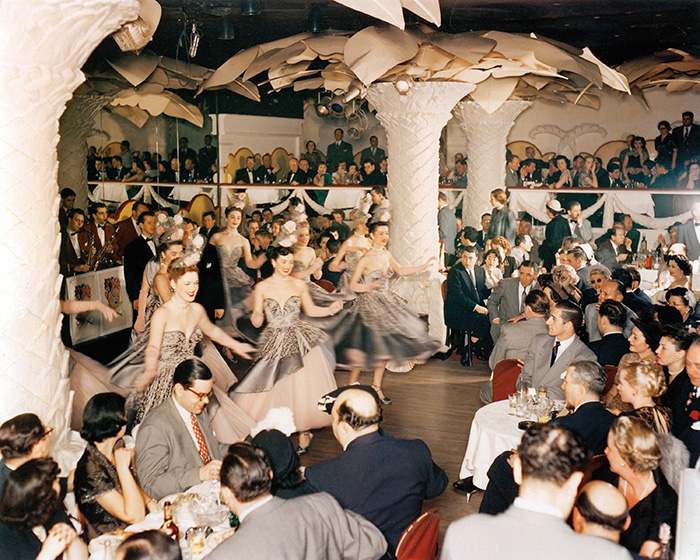
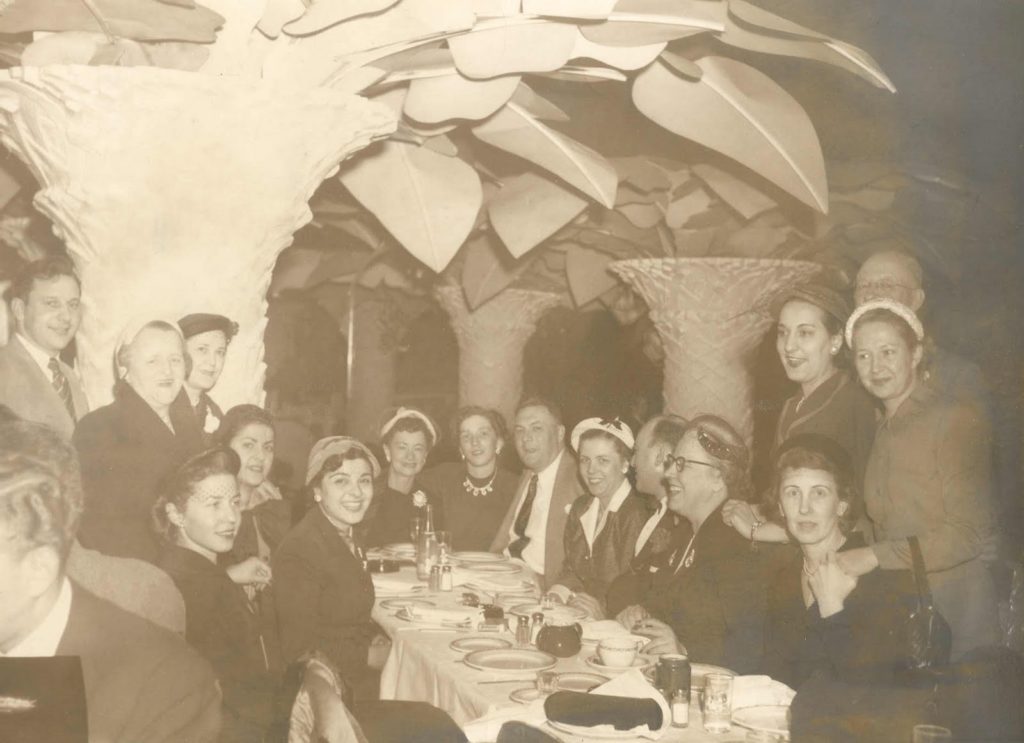
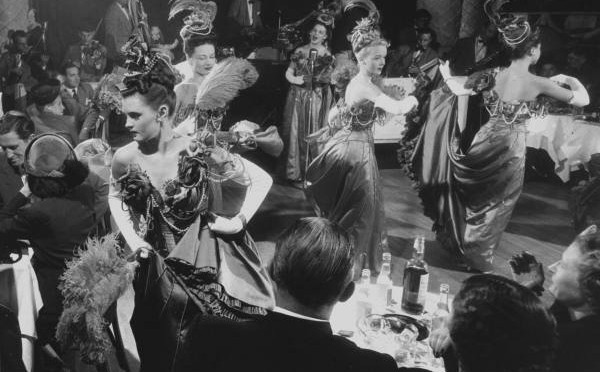
Copacabana circa 1950 / © Photofest

If you had to guess where the Copacabana was, most likely you would not have placed it at 10 East 60th Street near the entrance to Central Park and the aging mansions of Fifth Avenue. When it opened in 1940, Midtown Manhattan was exploding with nightlife, from the big-band supper clubs to the tiny jazz clubs of 52nd Street. (Billie Holiday was ruling the dives of Swing Street when during the Copa’s early years.)

The supper club scene was built for the wild and the wealthy, with fining dining and cocktails paired with floor shows by major stars and late-night dancing, a scene which greeted you whether you were at the Rainbow Room or El MoroccoThe Cotton Club or the Stork Club.

But the scene was mostly operated by the mob, whose foothold into New York nightlife began during Prohibition and reached its crescendo in the 1960s. Organized crime syndicates controlled virtually all aspects of going out, from West Village gay bars to even the most respectable spots in Midtown.

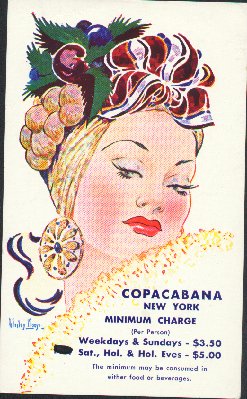
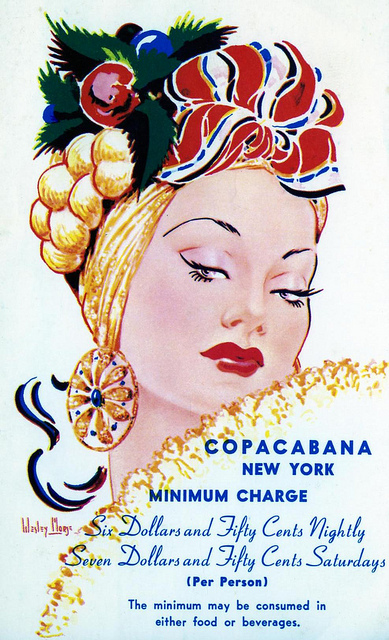
The Copacabana was owned by Broadway producer Monty Proser and was renown for its dazzling floorshow entertainment. Indeed its emblem was the face of Carmen Miranda herself, a Portuguese-Brazilian singer and dancer famous for her exotic, fruity headwear. Dean Martin and Jerry Lewis, who also made their name at the Copa, sometimes performed with Miranda before she died in 1955.

(We mentioned the Copa in our recent podcast on the history of live comedy.)
Tony Lip was a bouncer at the Copa, and at the opening of Green Book, we see a fight break out on the floor. Despite the club’s elegant airs, fights often broke out at the Copacabana, a venue which specifically courted wealthy (and famous) patrons known for partying a little too hard. Throw a bunch of drunken sports celebrities and mob bosses into the mix, and you were sure to see an ‘unplanned floor show’ at least once or twice a week. Lip was a busy man.

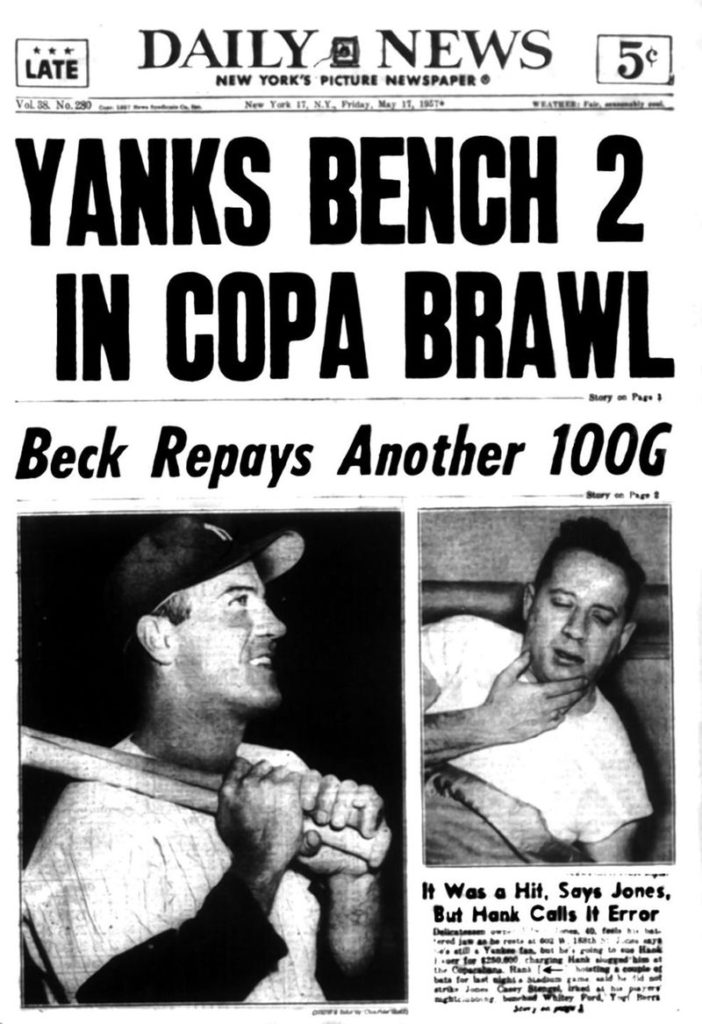
The most famous brawl of all happened on the night of May 16, 1957, during a performance by Sammy Davis Jr.

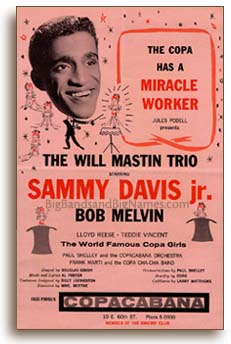
Below: A flyer for Davis’ 1960 show, apparently holiday themed.
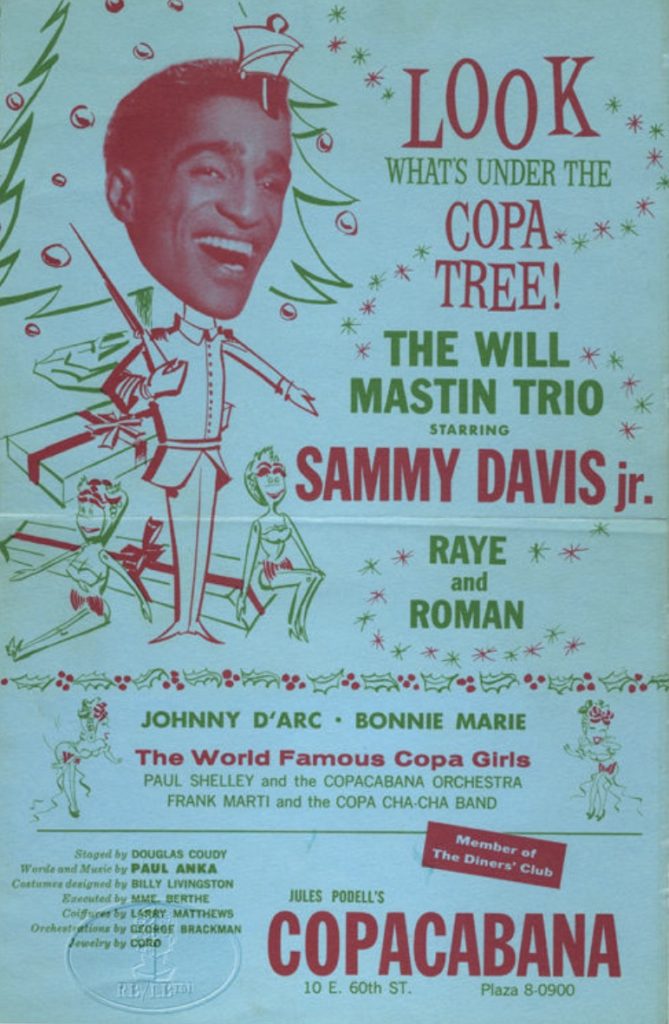
Like many Manhattan supper clubs (including some in Harlem), the dining area was for white patrons only — at least until 1957 when this racist policy was finally dropped. But many black musicians and dancers entertained at the Copa well before then, including Davis, who first performed for the all-white audience here (as part of the Will Mastin Trio) in 1954.

During the spring of 1957, Davis returned to the Copa, now with an integrated dining room, and it was during one performance in May that a group of men began heckling Davis, reportedly spewing racial epithets. Unfortunately for these men, also in attendance that evening were a table of six drunken New York Yankees, including Mickey Mantle, Yogi Berra and Whitey Ford, out celebrating the birthday of Billy Martin.

The players retaliated, attacking the table of hecklers. Right-fielder Hank Bauer reported broke the nose of one man. “BEAK BUSTED BY BAUER CLAIMS FAN.”
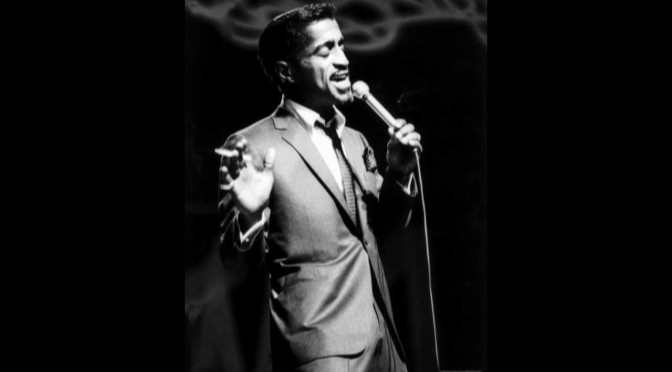
Sammy Davis Jr would later become the Copa’s most popular draw, breaking attendance records in 1964.

The Copacabana — in its supper club incarnation — would close in the early 1970s, later reopening as a discotheque.

And then, in 1978, this happened.

For the rest of the story and for more information on the Copacabana, reach back into our back catalog and listen to a whole episode on the night club’s history! (Episode #24)

NOTE: This was recorded a few years before a new incarnation of the Copacabana reopened in Times Square in 2011.

Originally published December 7, 2018
Categories
It's Showtime

Mr. Wonderful: A 90th birthday tribute to Sammy Davis Jr.

Frank Sinatra‘s 100th birthday is December 12 but you probably didn’t know that his fellow Rat Pack cool cat Sammy Davis Jr. was also born on the second week of December, 90 years ago today in Harlem.


sam


Davis was born on December 8, 1925, at Harlem Hospital on Lenox Avenue and 135th Street and his fate would lean closely to the popular entertainment venues nearby. His mother was a chorus girl who worked for many years at the Apollo Theater.

My first birthday was celebrated in a specially-contoured crib made up of  suitcases in a dressing room at the old Hippodrome Theater in New York.” — Ebony Magazine interview, 1960

From his 1990 obit:  “The showman was born in a Harlem tenement, grew up in vaudeville from the age of 3 and never went to school. His talents as a mime, comedian, trumpet player, drummer, pianist and vibraphonist as well as singer and dancer were shaped from his childhood and made him one of the nation’s first black performers to gain mainstream acclaim.”

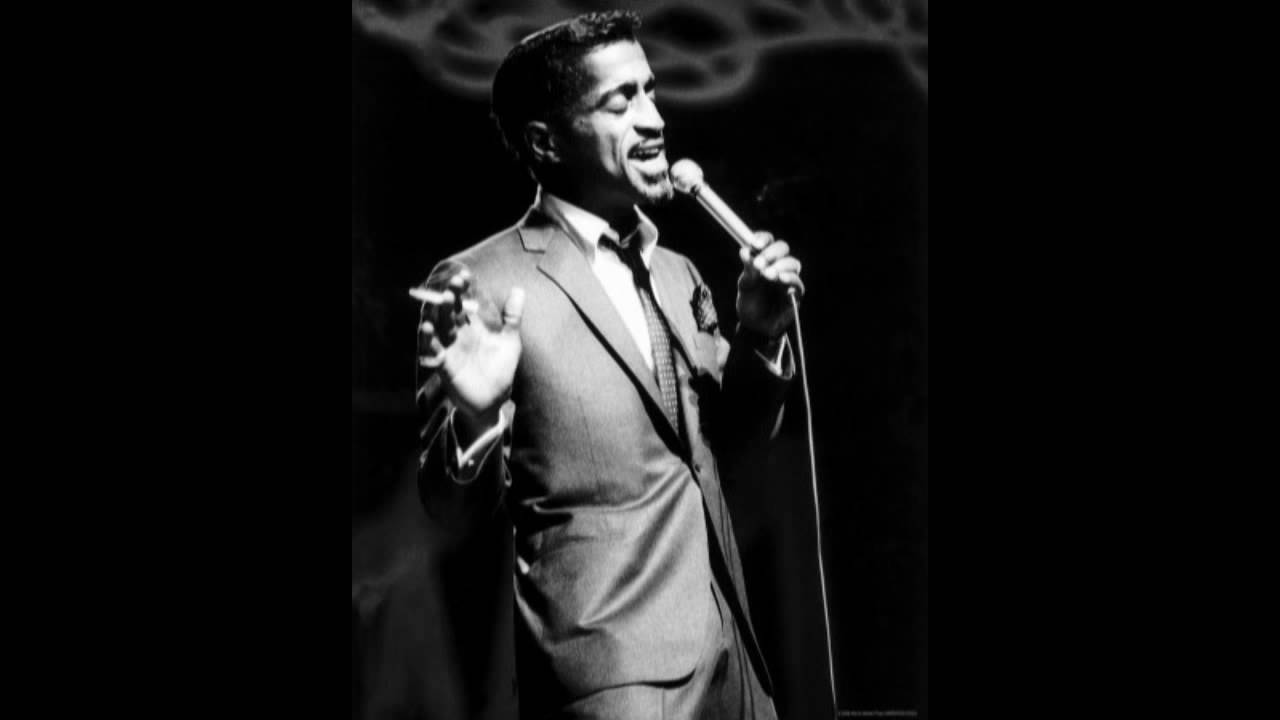
Courtesy Global Grind


Photo by Bob East
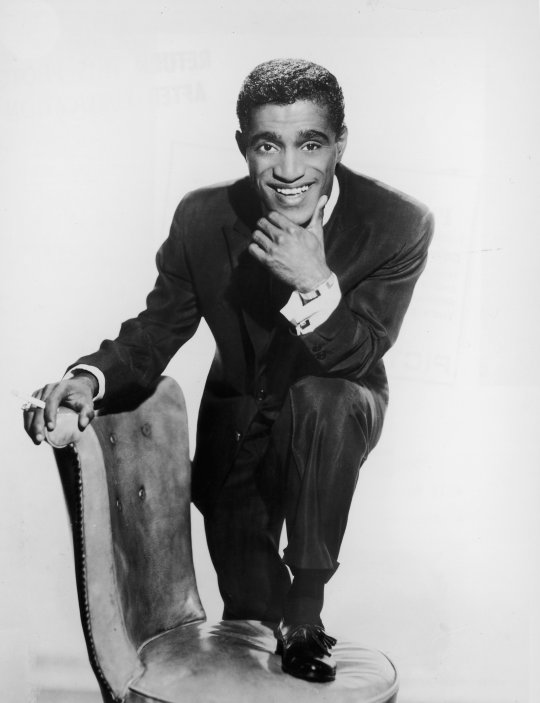
Photo by Bob East

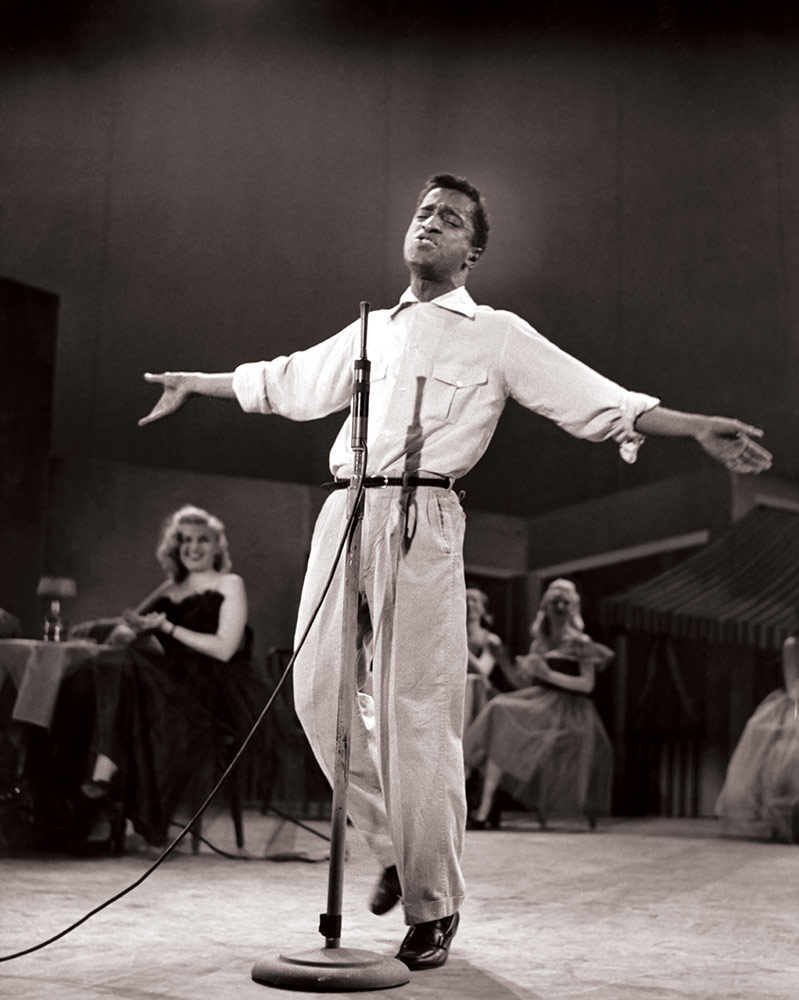
In performance in the early 1950s:
1


The above picture may be taken at the Copacabana. In my very old podcast on the history of the Copacabana, you may remember the tale of Davis’s performance that was heckled by a group of bigoted bowlers. Unfortunately for the bowlers, in the audience were Yankees legends Yogi Berra, Hank Bauer, Mickey Mantle and Whitey Ford who gave them a good dusting up.

Sammy Davis Jr. on the 1960 Frank Sinatra Timex Show singing a song from Porgy and Bess:

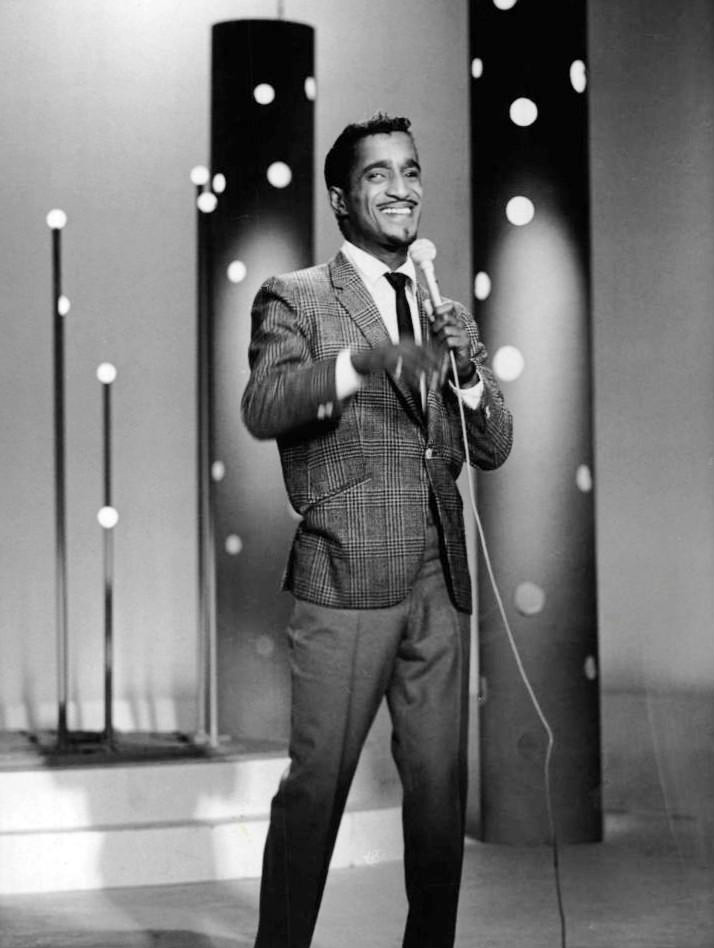
Davis, 1966, on the Perry Como Show for NBC

Davis, 1966, on the Perry Como Show for NBC


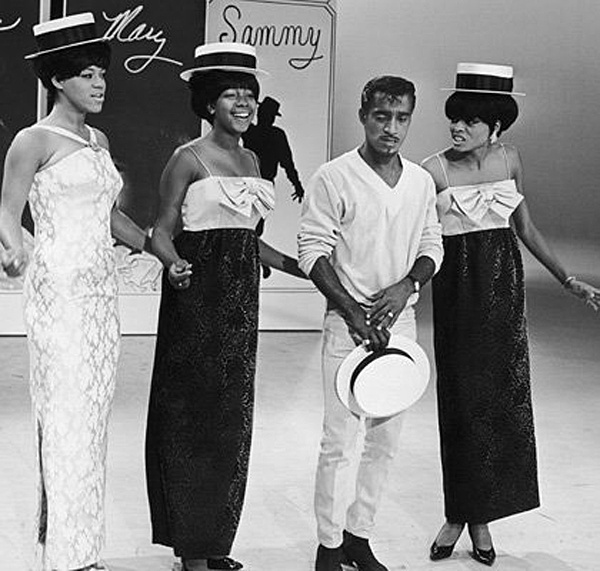
Davis had his own NBC variety show in 1966 which ran 14 episodes. It filmed at Rockefeller Center.  The March 11th broadcast featured the Supremes:

supremes

Diahann Carroll appeared on Sammy Davis’ variety show in 1966, so he returned the favor ten years later for her own variety show. (I love that people had variety shows!)


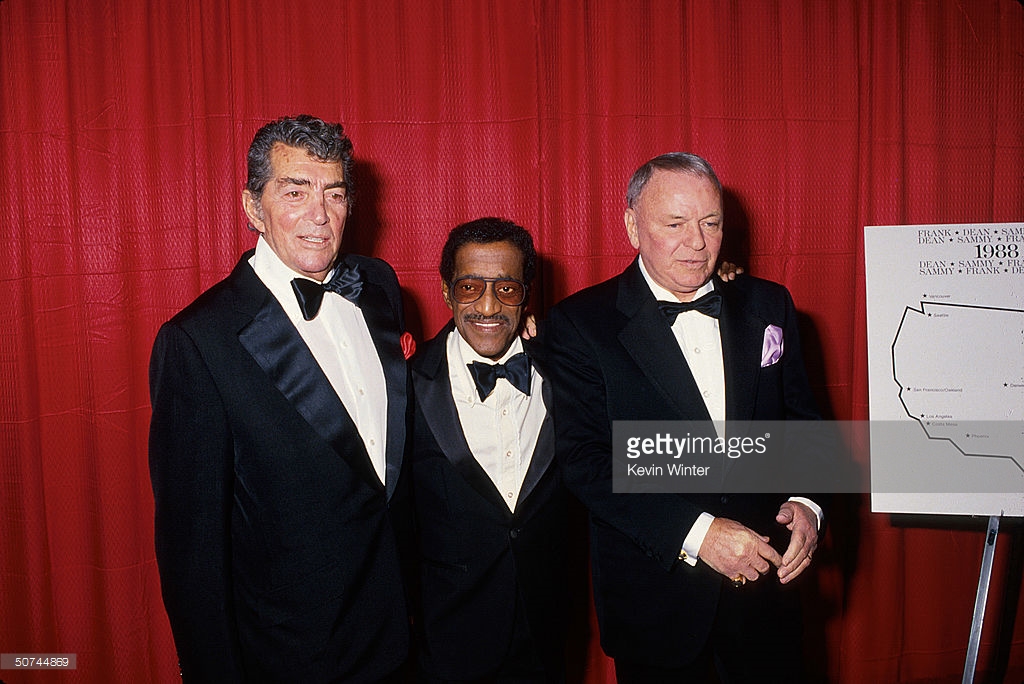
Check out the Getty Images archives for a lot of amazing photos of Davis with other icons. Here’s one from 1989 with Dean Martin and Frank Sinatra. Davis would die the following year of complications from throat cancer,

1
Getty Images. Credit: Kevin Winter

And finally, his rendition of ‘Music of the Night’ from The Phantom of the Opera from 1988,  one of last performances.


Categories
Mad Men

Cocktails with ‘Mad Men’ at the Hotel Pierre

The following posting is littered with television spoilers, so please avert your eyes if you’re a ‘Mad Men’ fan who hasn’t seen last night’s season finale.

The show is always a scavenger hunt for New York history buffs, the dialogue sprinkled with famous locations and events, most notably an entire episode to the destruction of Penn Station Last night’s episode, however, brought an accumulation of New York hotel namedropping.

— Withered Don Draper, newly separated from his wife, mentions he’s staying at the Roosevelt Hotel not far from the fictional Sterling Cooper offices at 405 Madison Ave. Up until then, the hotel, built in 1924, was best known as the residence of New York governor Thomas Dewey, who actually used a suite here as his administrative office. (Sorry Albany!)

— The rascally Pete Campbell, perhaps reflecting his ambitious social standing, mentions the luxury Sixth Avenue hotel St. Regis as a meeting place to his wife. Like any good Mad Man alcoholic, he could have enjoyed a bloody mary downstairs at the King Cole lounge, where the drink was allegedly first created.

— Last week’s episode featured a sexual liaison between Peggy Olson and Duck Phillips at the Elysee Hotel at 54th and Madison, against the backdrop of the assassination of JFK. Peggy and Duck might have ran into Marlon Brando or Joe Dimaggio, who both lived at the Elysee. Another famous figure in 1962, Tennessee Williams, resided here for many years and choked to death on an eyedrop bottle cap in one of the rooms here in 1983

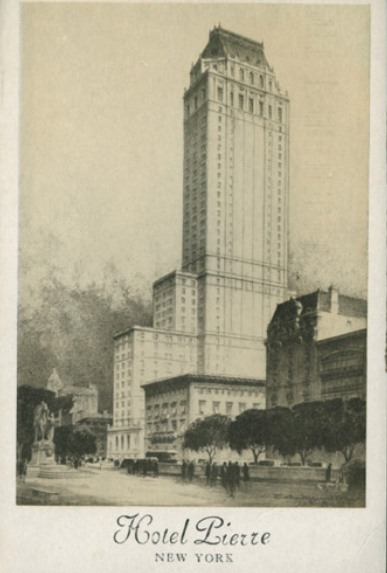
— The culmination of Mad Men’s high-class hotel fetish is a doozy: the ad firm actually moves into a hotel. In this case, the Hotel Pierre on Fifth Avenue, overlooking Central Park. This ornate 1930 gem, rescued from bankruptcy by J. Paul Getty, is slightly north of Madison Avenue’s ad-agency row. No doubt the characters will want to take a break from their new endeavor by having a few cocktails one block away — at the Copacabana, still one of New York’s most popular nightclubs in the early 60s.

And that’s not even to mention one of the show’s central plots this season — the relationship with Don and hotel magnate Conrad Hilton.

Categories
Podcasts

PODCAST: The Copacabana

To get you in the mood for the weekend, every Friday we’ll be celebrating ‘FRIDAY NIGHT FEVER’, featuring an old New York nightlife haunt, from the dance halls of 19th Century Bowery, to the massive warehouse spaces of the mid-90s. Past entries can be found HERE.

During the 40s and 50s, any celebrity worth their weight in fame either frequented or performed at the Copacabana, a swanky nightclub known for its showgirls, its Chinese food and its mafia ties. On this mini-podcast, we take you on a night on the town with Frank Sinatra, Sammy Davis Jr and a rowdy table of New York Yankees.

Listen to it for free on iTunes or other podcasting services. Or you can download or listen to it HERE

Two corrections to the podcast this week:

— FREUDIAN SLIP — I refer to Frank Costello as New York’s leading ‘media don’. Clearly, he’s a ‘mafia don’.
— JUST PLAIN MISSPEAK — The current Copacabana has closed to make way for the extension of the 7 train, not the 4 train.

—-

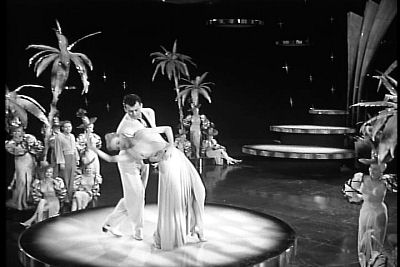
To boost popularity of the club, first Copa owner Marty Proser helped produce a film called ‘Copacabana’ in 1947, starring Groucho Marx and Carmen Miranda. The film was not a hit, however it gave some of the Copa Girls a chance at appearing on the big screen:

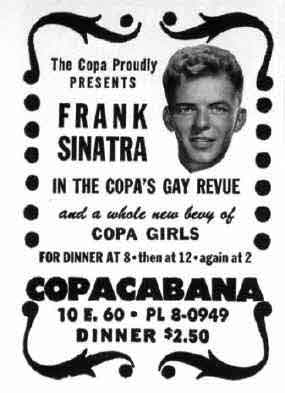
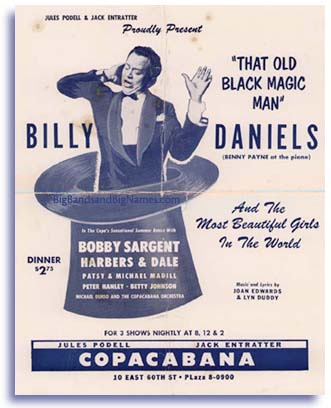
Some peppy flyers for the Copa:

I found some of these nostalgic flyers at a cool website calledBig Bands And Big Names.)

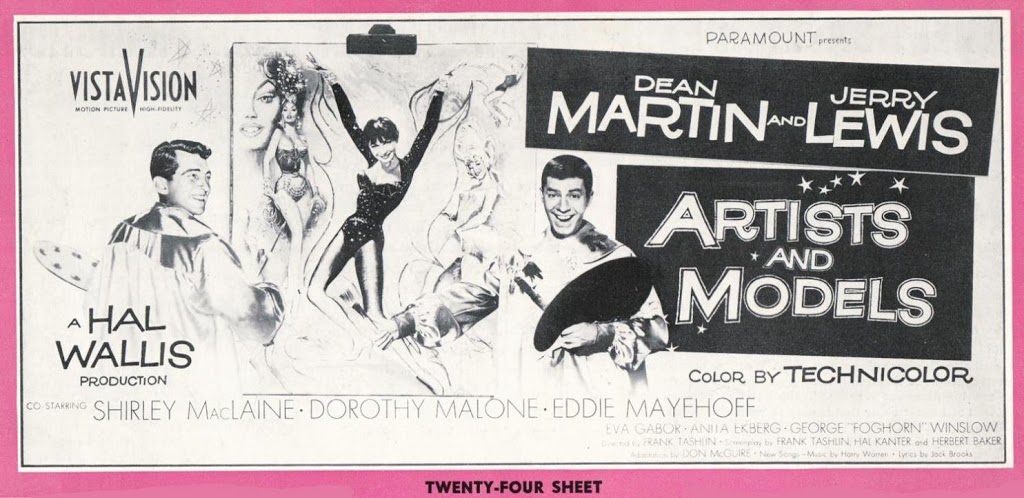
Dean Martin and Jerry Lewis spun off their fame from the Copa to make corny movies like this one:

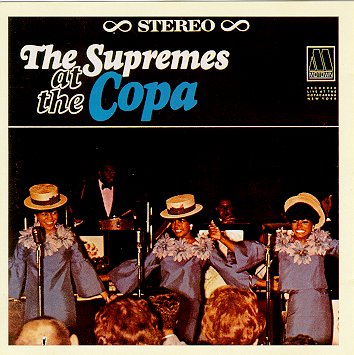
Although the Copa began to wane in popularity in the 1960s, artists like Marvin Gaye, the Temptations, and the Supremes recorded live albums there.