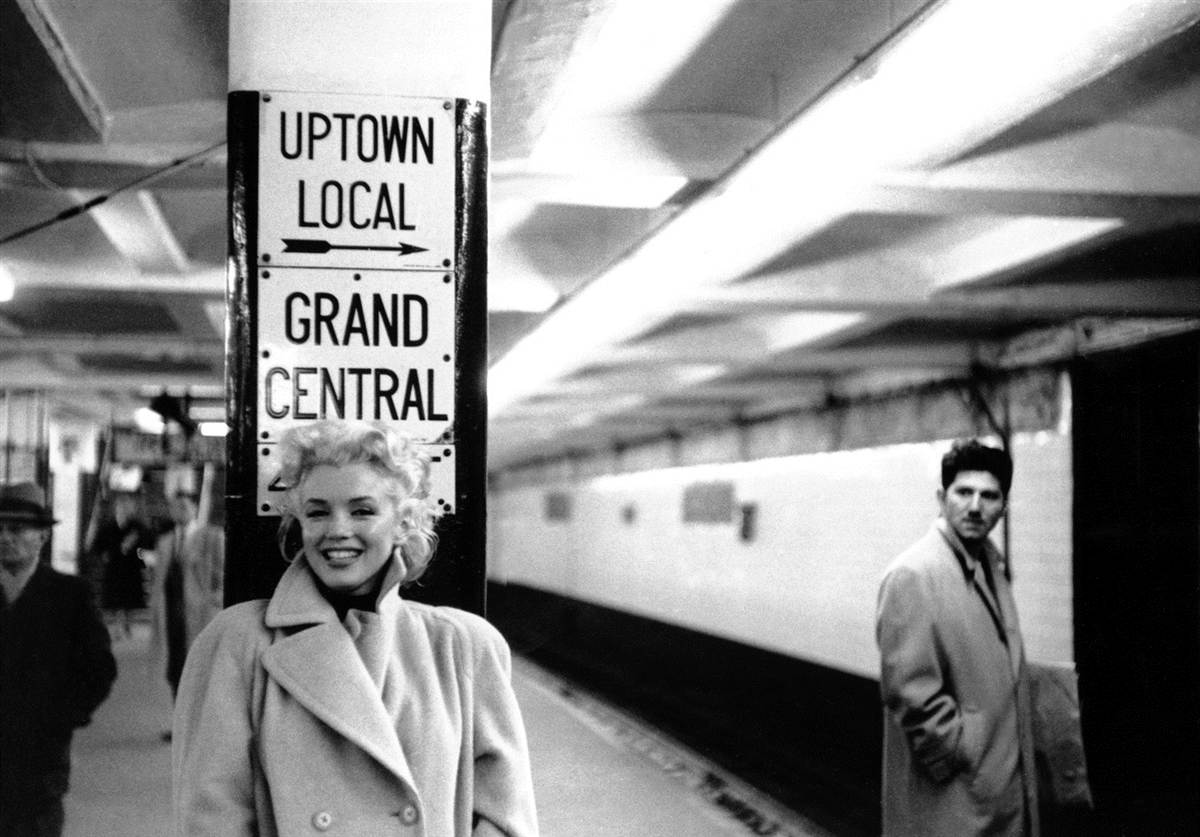
Marilyn Monroe was born Norma Jeane Mortenson 100 years ago on June 1, 1926.
In late 1954, on the cusp of major Hollywood stardom, Marilyn moved to New York City on a quest to become a better actress and to find a little peace on streets where she could sometimes go unnoticed.
The year 1955 was one of discovery for the star of The Seven-Year Itchand Gentlemen Prefer Blondes — exploring the city, working on her craft and generally being the toast of the town.
In particular, she came to New York to become a better actress via the Actors Studio and the influence of Lee Strasberg. But she also managed to see the most glamorous corners of New York.
That deep connection she made with New York City never left her.
We’re big old movie buffs here on the Bowery Boys, and to celebrate a century of Marilyn, we’ve remastered and re-edited a show we recorded on Marilyn’s New York back in 2022. So raise a toast to Marilyn tonight — and put on something a little extra glamorous for fun.
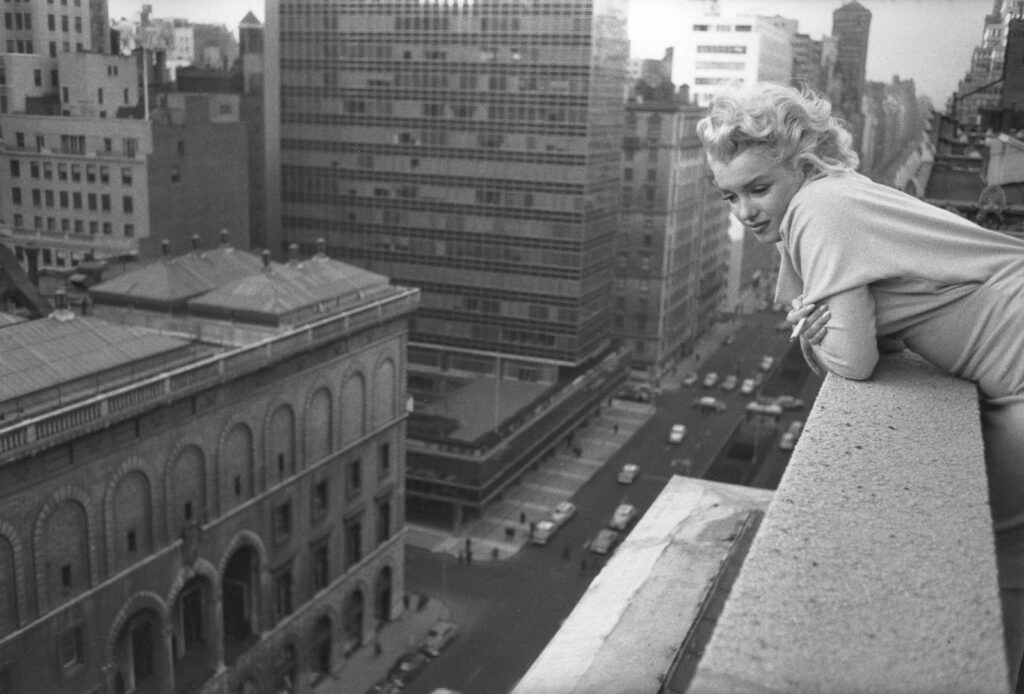
Marilyn Monroe overlooking Park Avenue from the roof of the Ambassador Hotel at Park and 51st. (The hotel was demolished in 1966). From here you can also see the Racquet and Tennis Club (1918) and the Lever House (1952). Photograph by Ed Feingersh, taken 1955.
FEATURING: New York in the 1950s with Frank Sinatra, Marlon Brando, Marlene Dietrich and many others.
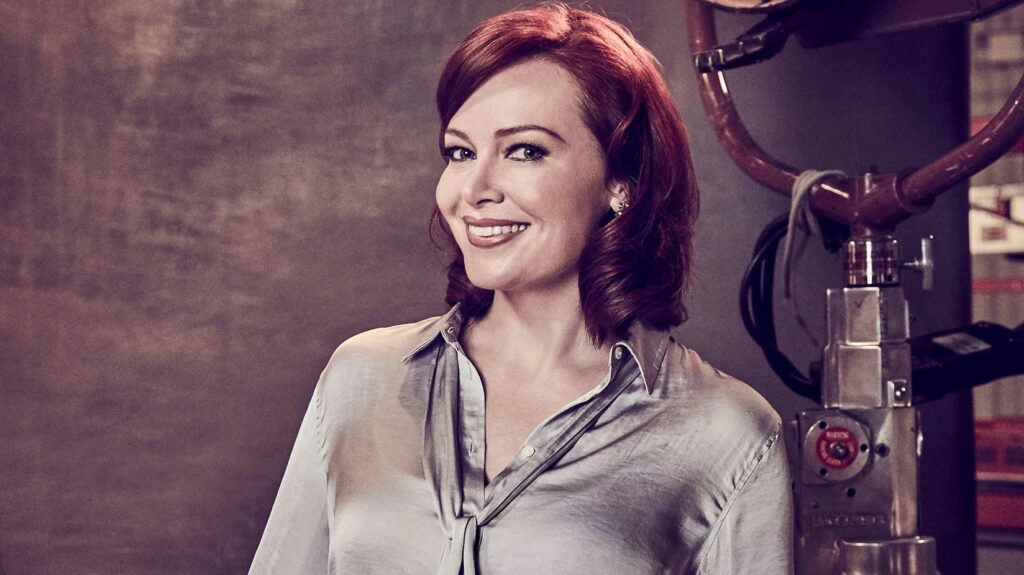
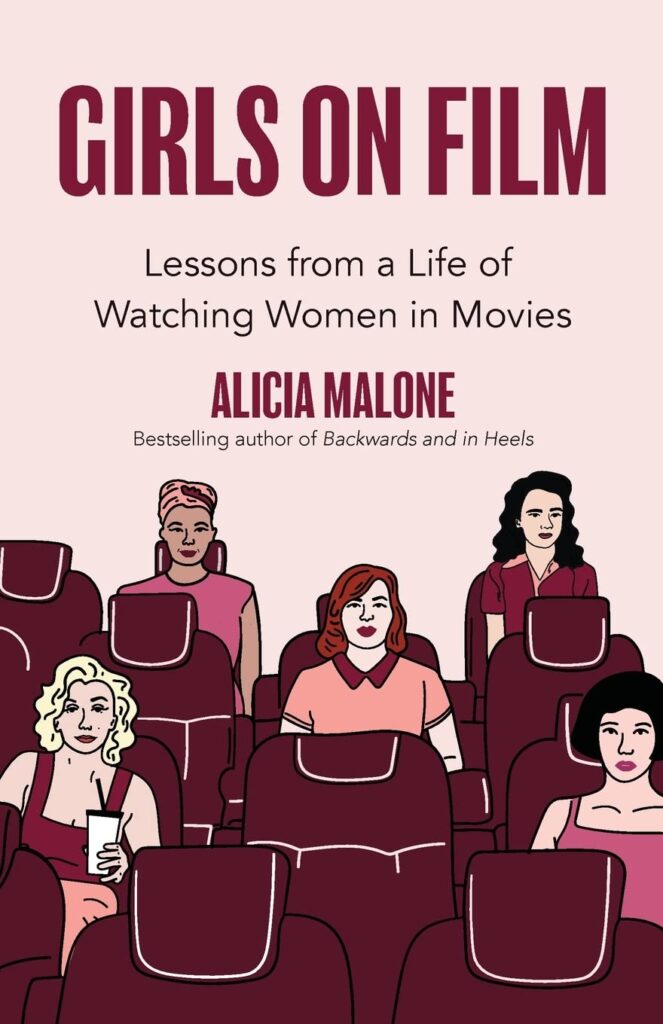
PLUS: As an extra treat, Greg and Tom are joined on the show by Alicia Malone of TCM (and Tom’s co-host on “The Official Gilded Age Podcast”) and author of the book Girls on Film: Lessons from a Life of Watching Women in Movies to discuss how the city changed her career and performances.
Alicia Malone/TCM
LISTEN NOW: MARILYN MONROE AT 100: HER LIFE IN NEW YORK CITY
This episode was remastered by Kieran Gannon.
FURTHER READING
Lois Banner Marilyn: The Passion and the Paradox Isaac Butler The Method: How The Twentieth Century Learned to Act Carl E Rollyson Marilyn Monroe: A Life of the Actress Donald Spoto Marilyn Monroe Gloria Steinem and George Barris Marilyn: Norma Jeane Anthony Summers Goddess: The Secret Lives of Marilyn Monroe Elizabeth Winder Marilyn in Manhattan: Her Year of Joy Donald H. Wolfe The Last Days of Marilyn Monroe
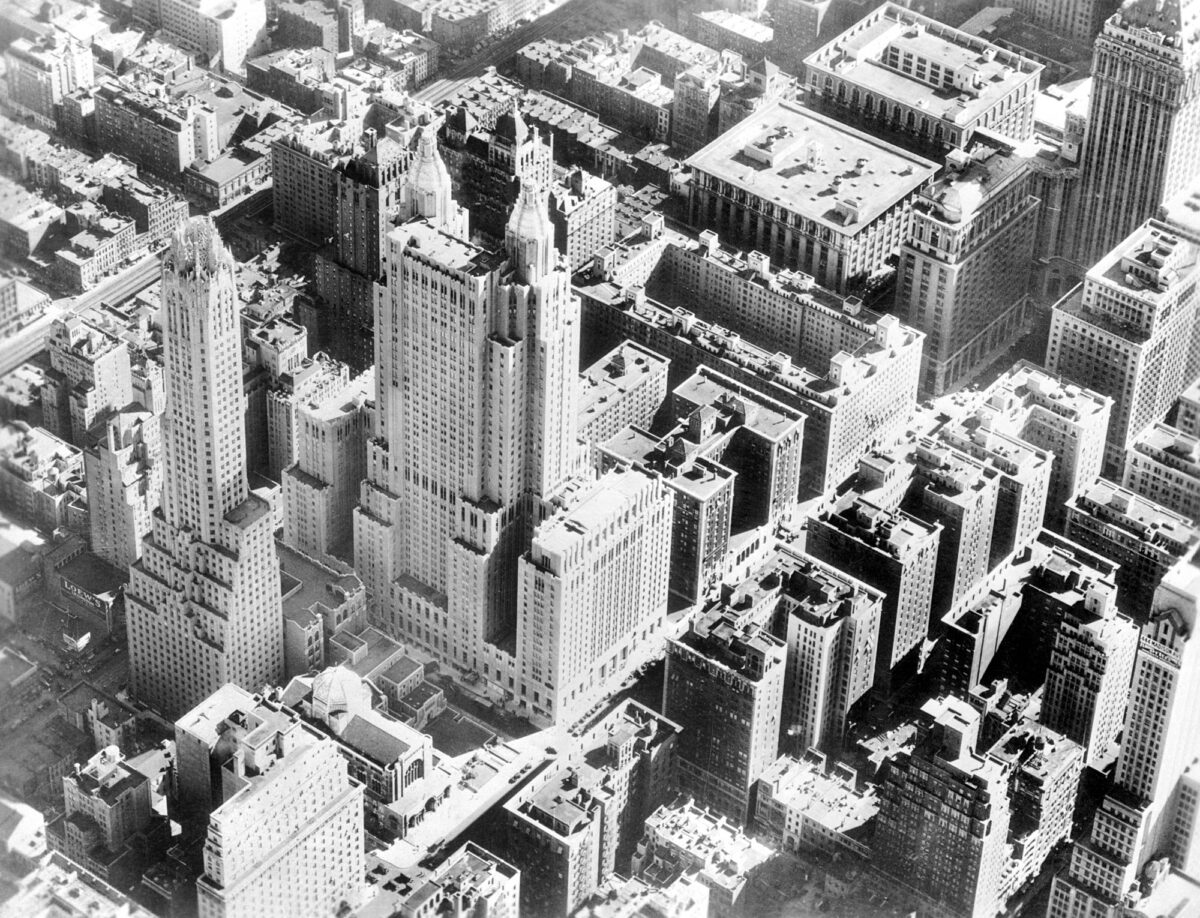
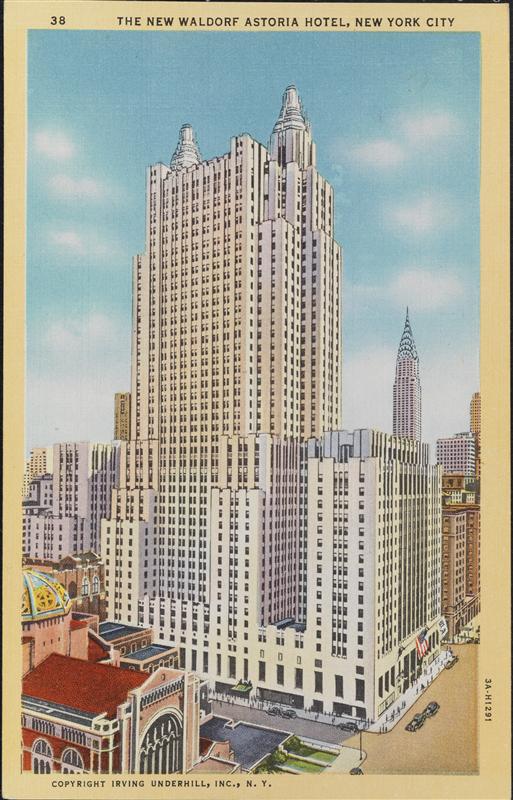
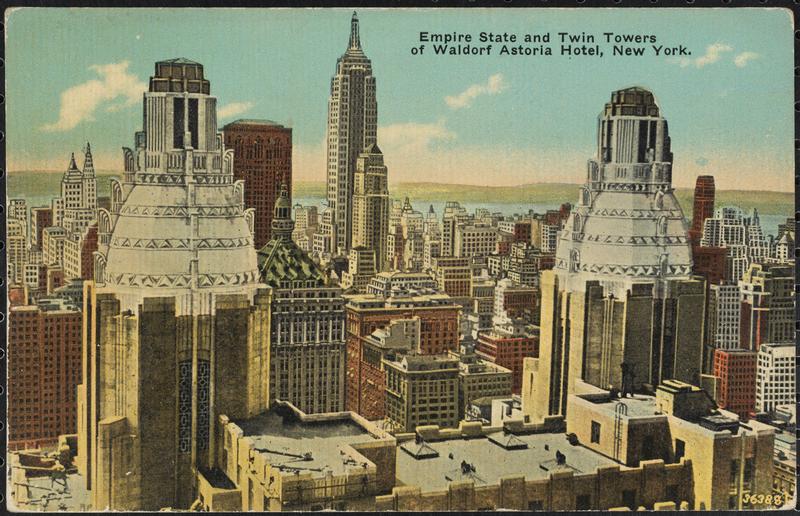
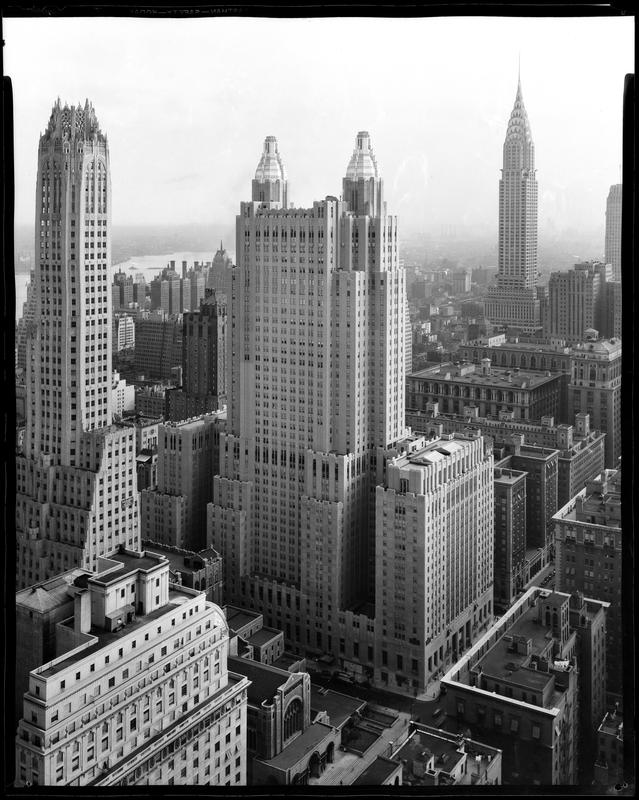
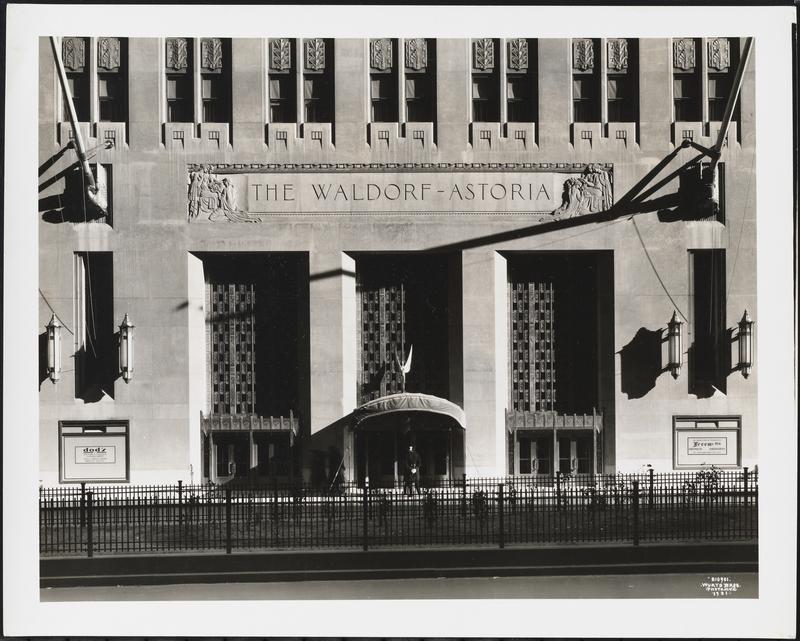
PODCASTA star of the New York City skyline is reborn — the Waldorf Astoria is reopening in 2025!
And so we thought we’d again raise a toast to one of the world’s most famous hotels, an Art Deco classic attached to the Gilded Age’s most prestigious name in luxury and refinement.
Now, you might think you know this story — the famous lobby clock, Peacock Alley, cocktail bars! — but do we have some surprises for you.
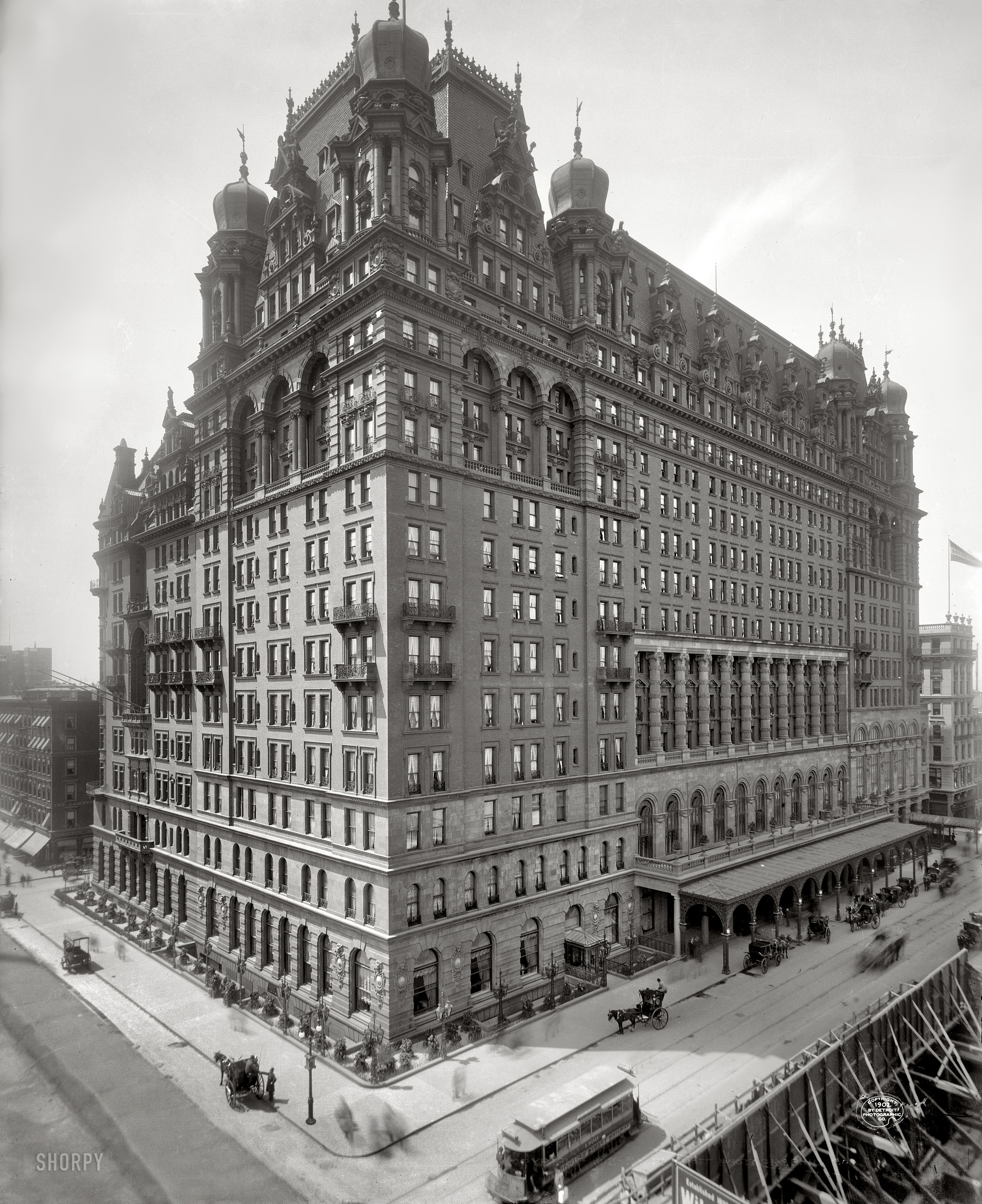
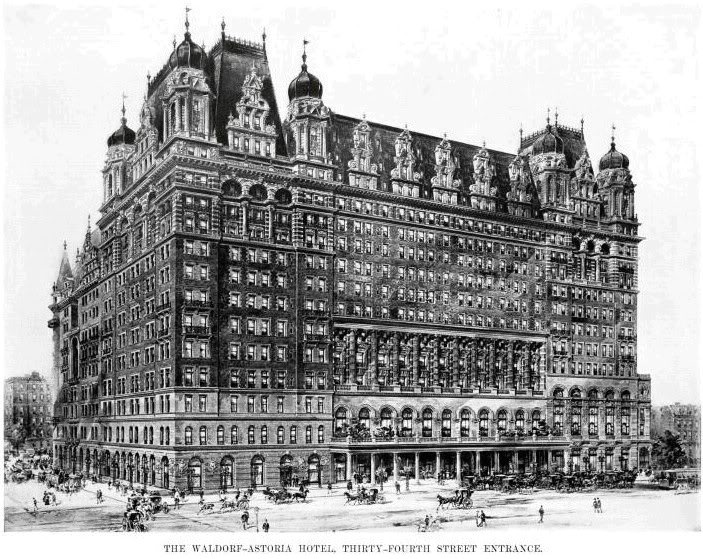
The Waldorf Astoria — once the Waldorf-Astoria and even the Waldorf=Astoria — has been a premier name in hotel accommodations since the opening of the very first edition on 34th Street and Fifth Avenue (the location of today’s Empire State Building).
But the history of the current incarnation on Park Avenue contains the twists and turns of world events, from World War II to recent diplomatic dramas. In essence, the Waldorf Astoria has become the world’s convention center.
Step past the extraordinary Art Deco trappings, and you’ll find rooms which have hosted a plethora of important gatherings, not to mention the frequent homes to Hollywood movie stars.
But its those very trappings — some of it well over a century old — that finds itself in danger today as recent changes threaten to wipe away its glamorous interiors entirely.
LISTEN NOW: THE RETURN OF THE WALDORF ASTORIA
The Bowery Boys: New York City History podcast is brought to you …. by you!
We are now producing a new Bowery Boys podcast every two weeks. We’re also looking to improve the show in other ways and expand in other ways as well — through publishing, social media, live events and other forms of media. But we can only do this with your help!
We are now a member of Patreon, a patronage platform where you can support your favorite content creators for as little as a $1 a month.
Please visitour page on Patreon and watch a short video of us recording the show and talking about our expansion plans. If you’d like to help out, there are five different pledge levels (and with clever names too — Mannahatta, New Amsterdam, Five Points, Gilded Age, Jazz Age and Empire State). Check them out and consider being a sponsor.
We greatly appreciate our listeners and readers and thank you for joining us on this journey so far. And the best is yet to come!
The original Waldorf-Astoria which once sat at 34th Street and Fifth Avenue. The first hotel, the Waldorf, is the shorter one facing 33rd Street.
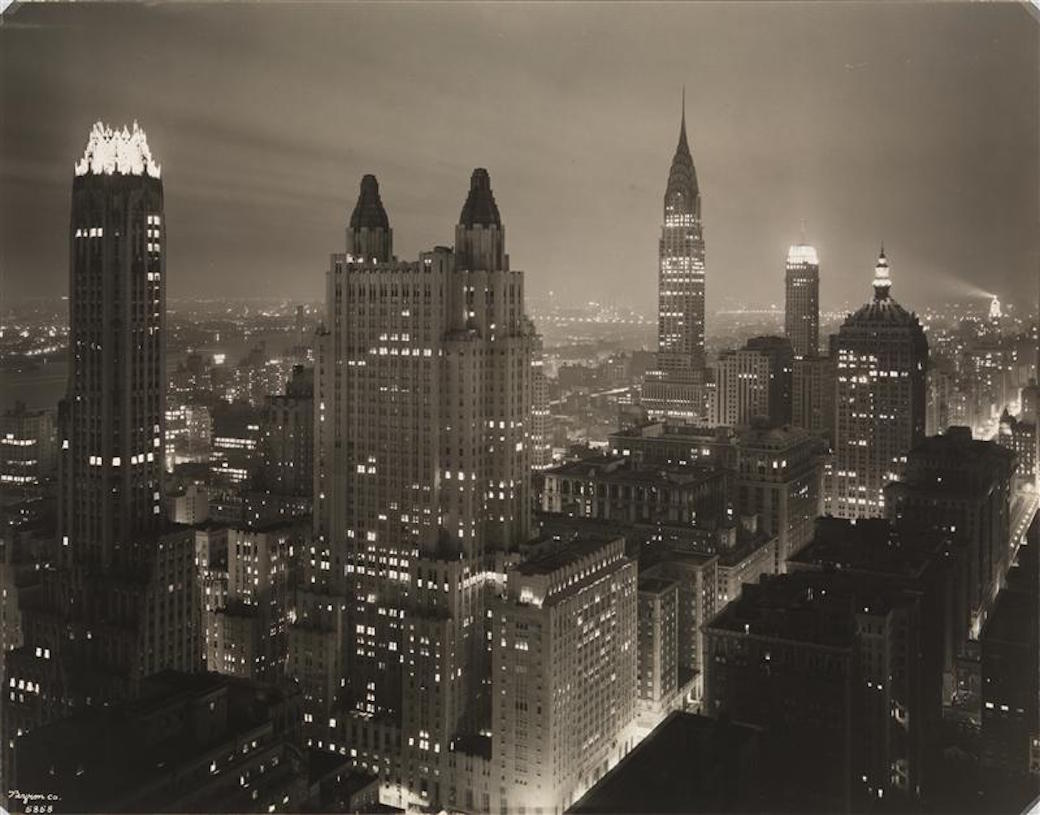
Park Avenue at nighttime, 1937. Seen here: 515 Mad. Ave, Gen. Electric, the Waldorf Astoria, the Chrysler Building, the Chanin Building, and the New York Central Building.
Museum of the City of New York
A 1931 postcard announcing the debut of the Waldorf Astoria with the Chrysler in the background.
Courtesy MCNY
MCNY
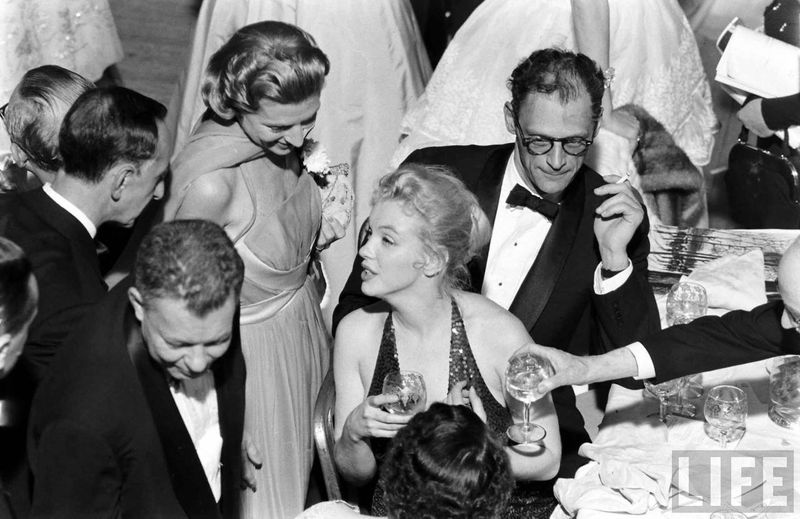
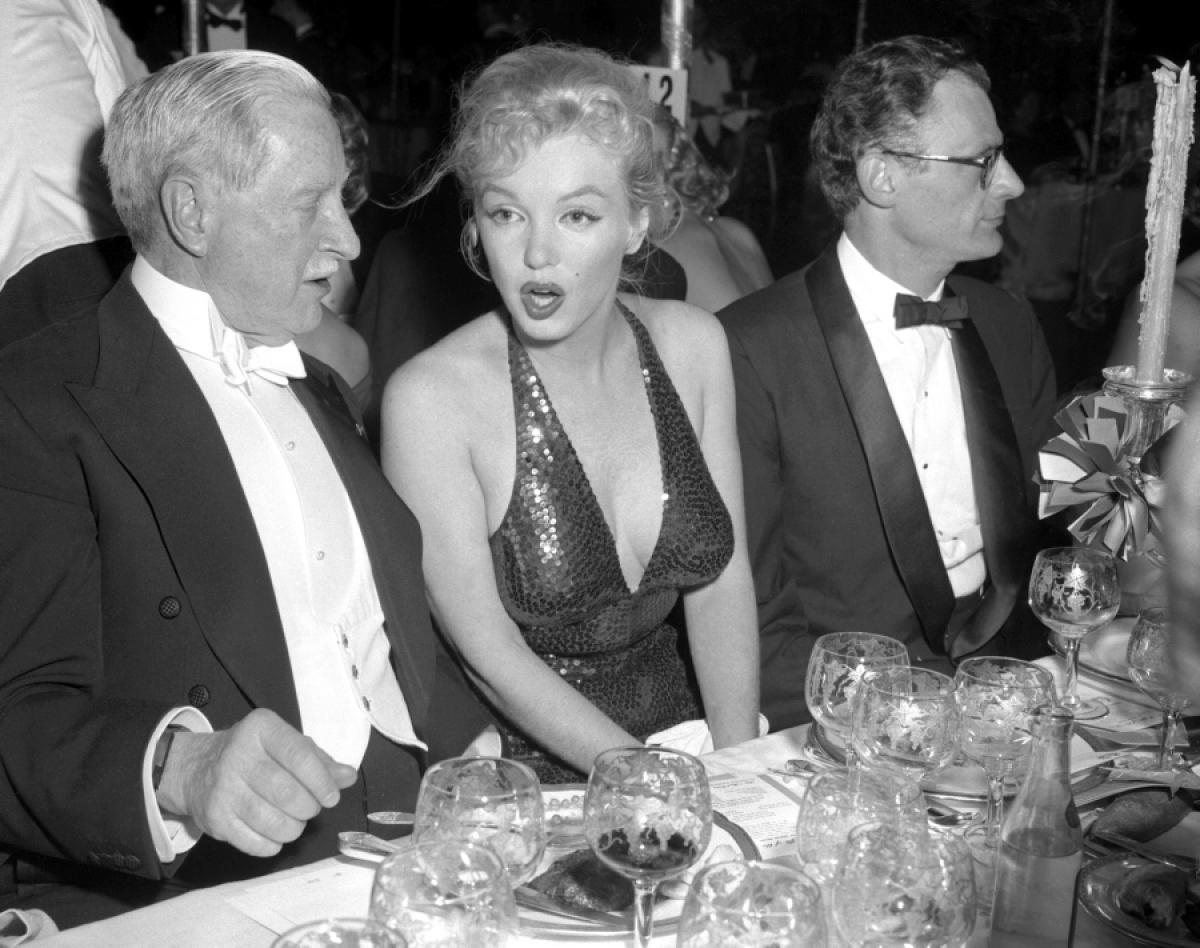
Marilyn Monroe at the Waldorf, her home in 1955. Here she is at the April In Paris ball with her then-husband Arthur Miller.
Courtesy New York Daily News
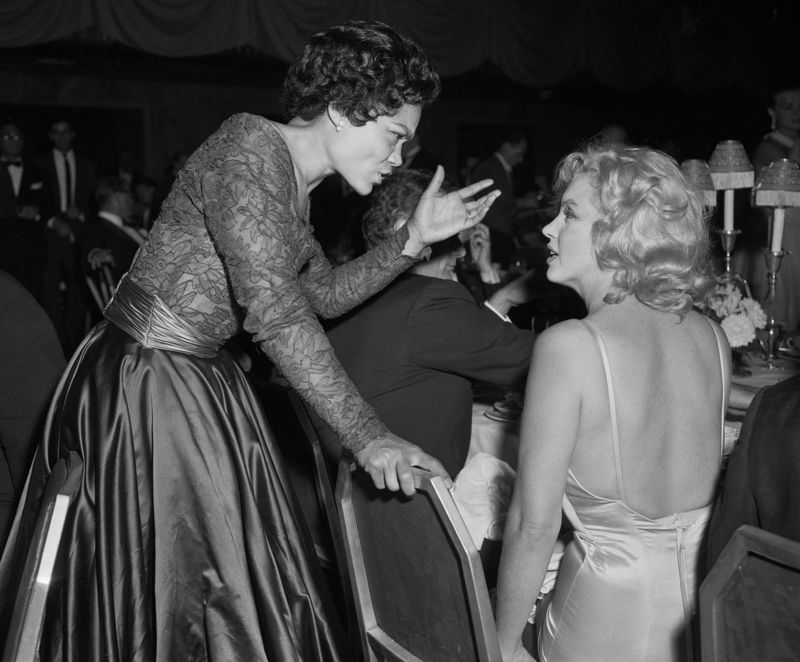
And at another function, this time chatting with Eartha Kitt.
A photo posted by Gregory Young (@boweryboysnyc) on
More information here on the Historic District Council’s efforts to help save the interior decor of the Waldorf Astoria.
CORRECTION: There are a few classic photographs of Marilyn Monroe at the Waldorf-Astoria; however the one that Greg described on the show is actually taken at the Ambassador Hotel, a couple blocks north of the Waldorf. (It was torn down in the 1960s.)
The double-breasted, cigar-chewing gentlemen who gathered in the sumptuous rooms of the Fifth Avenue Hotel were occasional connoisseurs of New York City history, and in particular, these amateur historians spoke of the very street corner where their hotel stood.
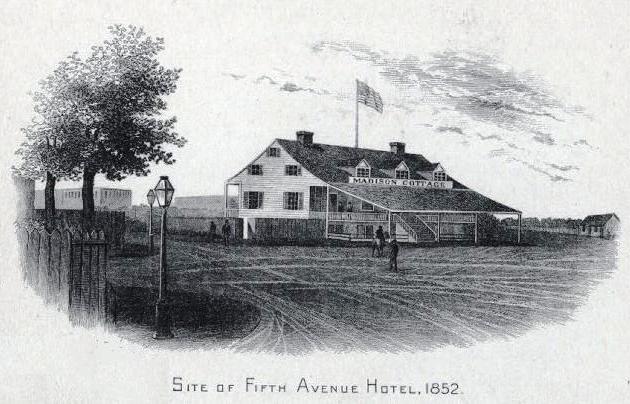
Before Madison Square, when the area was a barren parade ground, one Corporal Thompson opened a roadhouse and stagecoach station in the area that was to become 23rd Street and and Fifth Avenue.
Many spoke fondly of Thompson’s establishment, called Madison Cottage, because they remembered the place as young boys. They recalled the area’s rural quality, with carved rectangular blocks carved into the land and a dirt-road Broadway meandering north.
But that was the 1840s.
Madison Cottage, Hitchcock, Darling & Co.
Forty years later, Madison Square Park was the center of New York, a focal point of class, business and luxury that stretched south to Union Square, through that attractive collection of fine stores known as Ladies Mile, and up Fifth Avenue into the fabulous mansions of the rich.
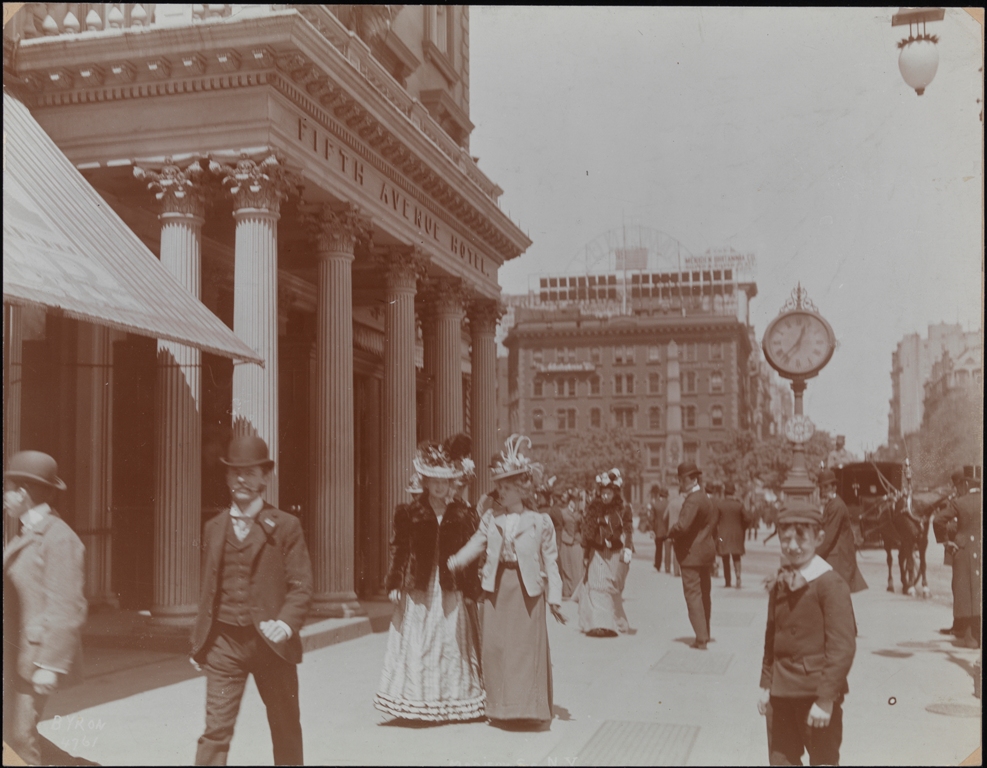
And dead center of all that activity was the Fifth Avenue Hotel, not only the “finest [hotel] in this metropolis”, the “leading hotel of the world ,” but quite simply one of the most surprising stages for American politics of the mid and late 19th century.
New York’s Hotel Revolution
Hotels were fast becoming the center of New York life from at least the days of the Astor House, located near City Hall, in the 1830s. Within two decades, trendy new hotels (such as the St. Nicholas and the Metropolitan) spread up along Broadway and eventually clustered around Union Square.
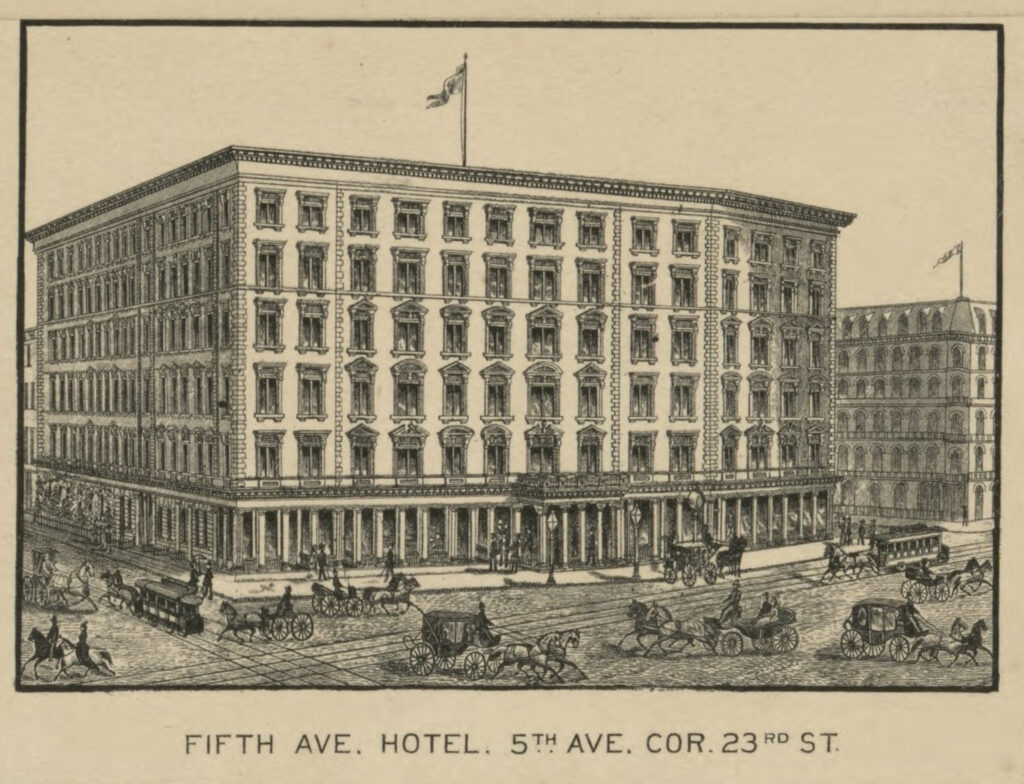
The Fifth Avenue Hotel opened in 1859, the venture of wealthy merchant Amos Richards Eno, who accurately gambled that the center of city commerce would soon settle at 23rd Street. So confident a speculator was Eno that he moved from his brownstone at 74 Broadway (the first New Yorkbrownstone, he claimed) to a massive home nearby the hotel.
Some thought it unwise to build so far north, and when workers unearthed dozens of skeletons during construction — the area once being a potter’s field — the corner was even considered cursed. Eno defied the naysayers, pouring his wealth into the hotel to make it the most modern, most luxurious accommodation of the day.
The Fifth Avenue Hotel, 1879. Courtesy Wikimedia Commons
A Gilded Age Confection
The Italian exterior was awash in five stories of imported marble, while austere, carpeted interiors of French design drew comparisons to European palaces.
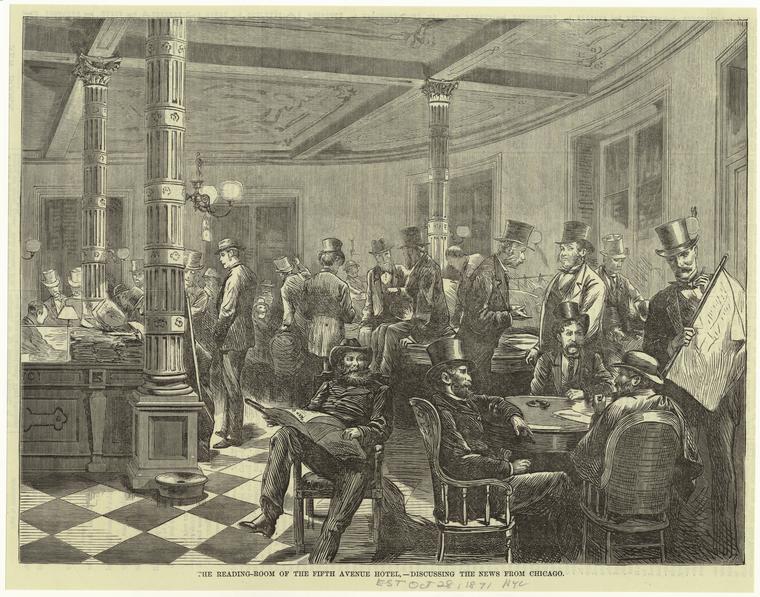
Guests enjoyed reading rooms, a luxurious bar, a barber shop, a dedicated telegraph office, and a variety of dining and drawing rooms, not to mention the first passenger elevator ever built in the United States, a steam-powered monstrosity whisking passengers to their floor.
The Fifth Avenue Hotel reading room, busy every weekend. (Boston: Fields, Osgood & Co.,)
Wheeling and Dealing
As the finest hotel in the city in the post Civil War years, it naturally became a magnet for politicians and financiers. Of all the ‘backrooms’ of American politics, none were as gleaming as the Fifth Avenue.
Bankers huddled in the legendary ‘parlor D. R.’ during the tense days of the financial panic of 1873. In particular, the hotel became a de facto headquarters for New York Republicans.
While often secondary to the city’s Democrats — this being the era of Tammany Hall‘s swelling power — Republicans were frequently in control of state government, and the Fifth Avenue Hotel became a smoky center of political wheeling and dealing.
During the 1870s, New York republicans became national power brokers and frequently hashed out crises here at the Fifth Avenue.
In the years before the Waldorf-Astoria, presidents and dignitaries all stayed here during visits. Seamier political maneuvers took place in the chambers of prominent politicians who held court here, including the inimitable Roscoe Conkling (at left), senator of New York and leader of the Republican faction known as the Stalwarts.
National Influence
When fractured Republicans at their convention in 1880 nominated non-Stalwart James Garfield for president, the nominee had to basically grovel for their support by symbolically ‘kissing the ring’ of the Stalwarts during a visit to the Fifth Avenue Hotel, partially agreeing to their system of patronage and taking Conkling ally Levi Morton as a member of his cabinet. (Garfield later backed out on this arrangement.)
Another frequent guest here was Chester A. Arthur, Garfield’s eventual vice president. When Arthur became president after Garfield’s assassination by Charles Guiteau (who had himself wandered the hotel’s hallways in delusion), he would set up his entire administration here during visits to his adopted city.
By the 1890s, a corridor of the hotel known as the ‘Amen Corner‘ was a famous congregation spot for Republican political bosses and reporters. As they frequently powwowed here on Sundays, gatherers would caustically shout ‘Amen!’ during heated discussions.
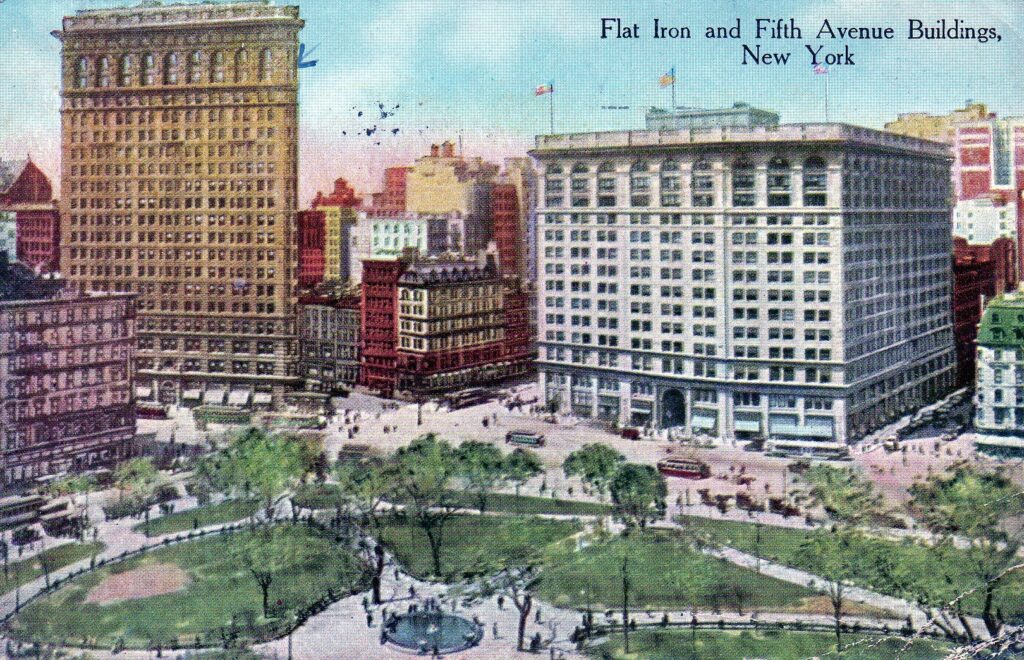
The Fifth Avenue Hotel in relation to the Flatiron Building
Checking Out
The hotel became a magnet for shenanigans of all varieties. In 1893, a couple hundred proponents of a U.S. monetary silver standard erupted into a riot that included two U.S. senators.
The bank robber Robert Montague was arrested here in 1896 thanks to a tip-off from a chambermaid. An early vestige of baseball’s National League met here annually, and the national pool competitions were held in the hotel’s billiard room.
By the new century, of course, the locus of New York activity was hastily moving uptown, and the Fifth Avenue Hotel was deemed a relic, even as a brand new structure across the street — the Flatiron Building — was being proclaimed the finest building in the city.
In 1908 the Fifth Avenue Hotel was torn down and replaced by the 16-story Toy Center (called the Fifth Avenue Building back in the day), the epicenter of toy manufacturing for much of the 20th century.
PODCAST The history of SoHo, New York’s 19th century warehouse district turned shopping mecca
Picture the neighborhood of SoHo (that’s right, South of Houston) in your head today, and you might get a headache. Crowded sidewalks on the weekend, filled with tourists, shoppers and vendors, could almost distract you from SoHo’s unique appeal as a place of extraordinary architecture and history.
On this podcast we present the story of how a portion of Hell’s Hundred Acres became one of the most famously trendy places in the world.
In the mid 19th century this area, centered along Broadway, became the heart of retail and entertainment, department stores and hotels setting up shop in grand palaces. (It also became New York’s most notorious brothel district). The streets between Houston and Canal became known as the Cast Iron District, thanks to an exciting construction innovation that transformed the Gilded Age.
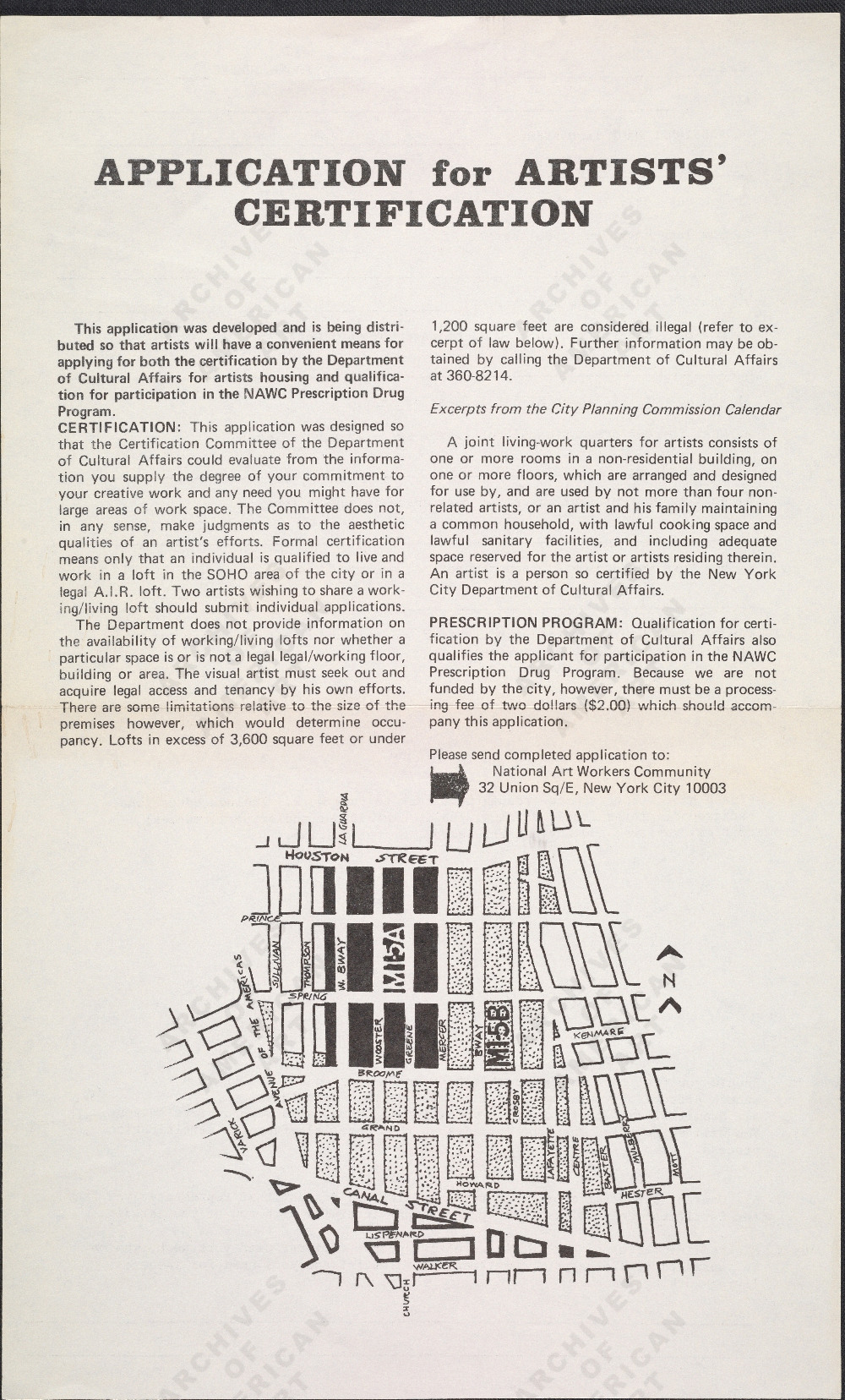
Today SoHo contains the world’s greatest surviving collection of cast-iron architecture. But these gorgeous iron tributes to New York industry were nearly destroyed — first by rampant fires, then by Robert Moses. Community activists saved these buildings, and just in time for artists to move into their spacious loft spaces in the 1960s and 70s. The artists are still there of course but these once-desolate cobblestone streets have almost unrecognizably changed, perhaps a victim of its own success.
The Bowery Boys: New York City History podcast is brought to you …. by you!
We are now producing a new Bowery Boys podcast every two weeks. We’re also looking to improve the show in other ways and expand in other ways as well — through publishing, social media, live events and other forms of media. But we can only do this with your help!
We are now a member of Patreon, a patronage platform where you can support your favorite content creators for as little as a $1 a month.
Please visitour page on Patreon and watch a short video of us recording the show and talking about our expansion plans. If you’d like to help out, there are five different pledge levels (and with clever names too — Mannahatta, New Amsterdam, Five Points, Gilded Age, Jazz Age and Empire State). Check them out and consider being a sponsor.
We greatly appreciate our listeners and readers and thank you for joining us on this journey so far. And the best is yet to come!
A map of the Bayard farm and how it was broken up and carved into the streets we know today.
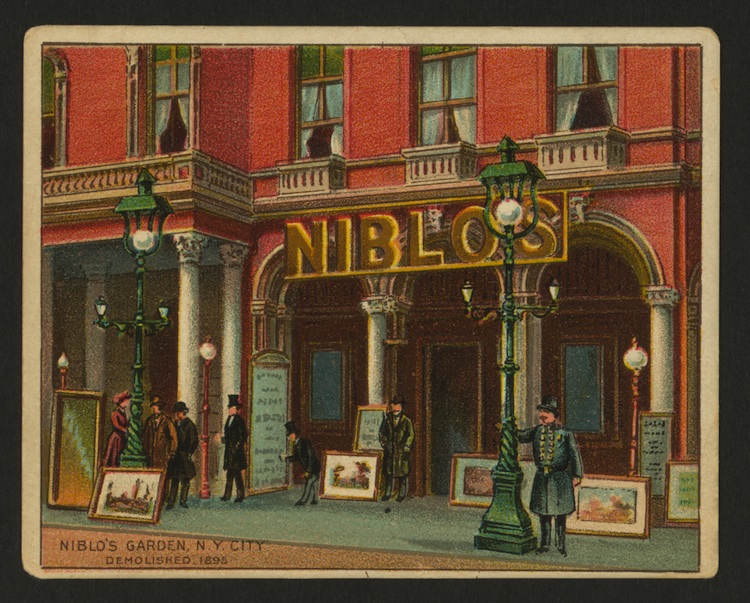
Niblo’sGarden, located at Broadway and Prince Streets, was one of the finest theaters along Broadway in the area of today’s SoHo.
Looking north along Broadway between Grand and Broome Street. The St. Nicholas Hotel is the white structure in the center of the photo.
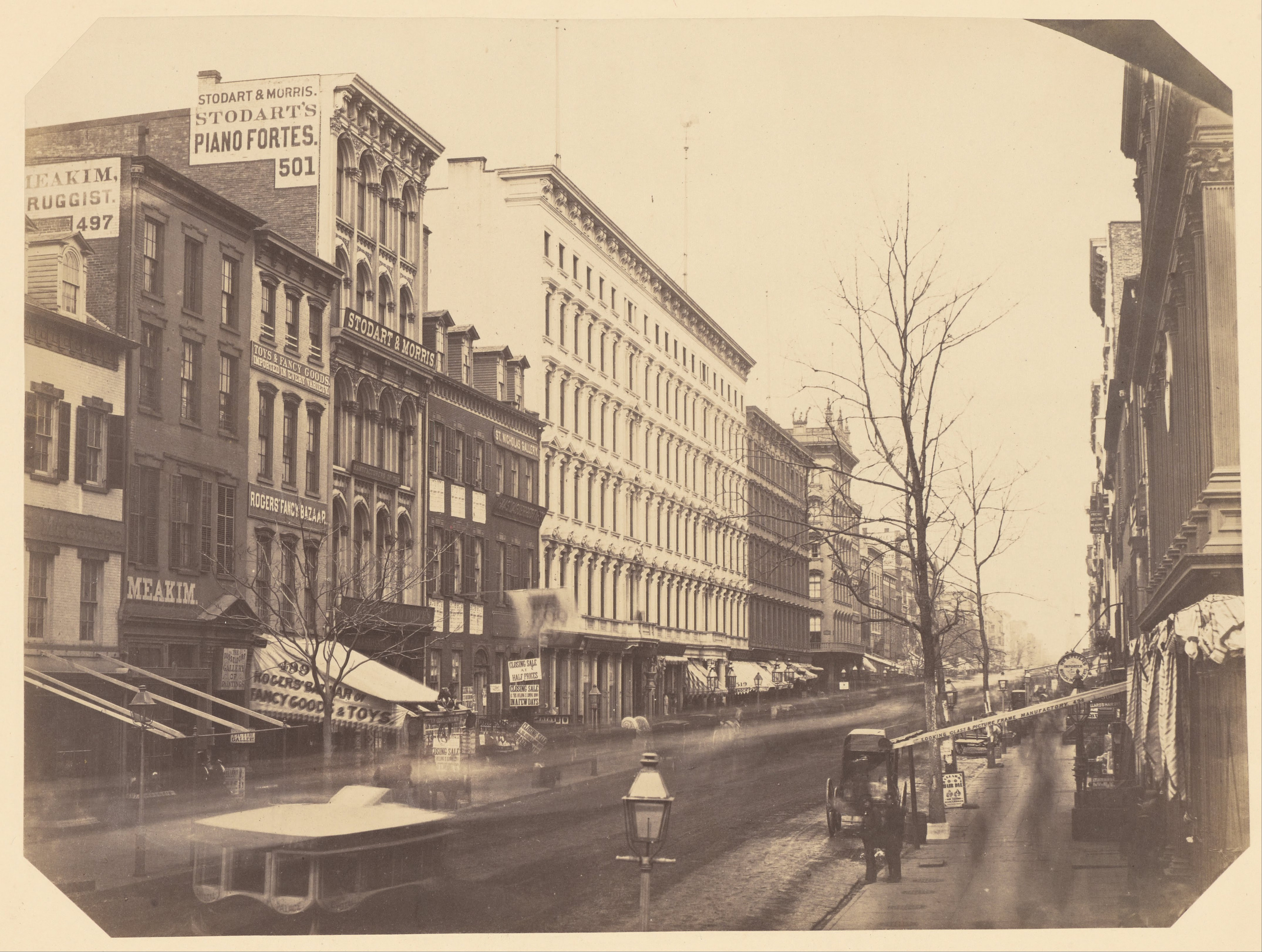
Photo attributed to Silas A Holmes
An auction poster from 1872 advertising a property on Broome Street and “South Fifth Avenue or Laurens Street” — today’s West Broadway.
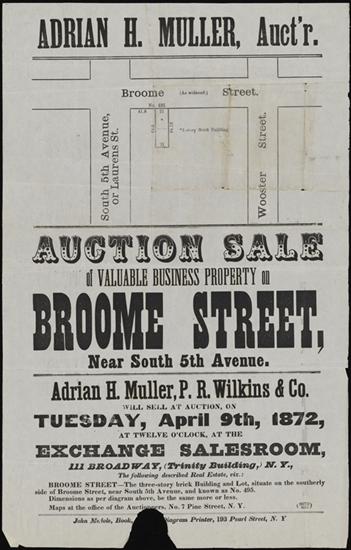
MCNY
Here is that corner at 504-506 Broome Street — in 1935 (photo by Berenice Abbott). Per Sean Sweeney on Facebook: “The two buildings were demolished and for years were a parking lot. Now a new 3-story retail building sits in their place.”
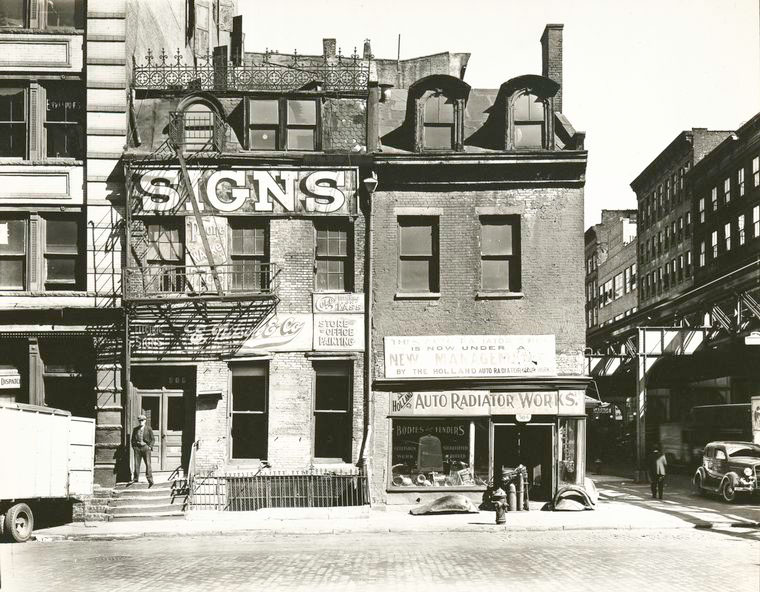
NYPL
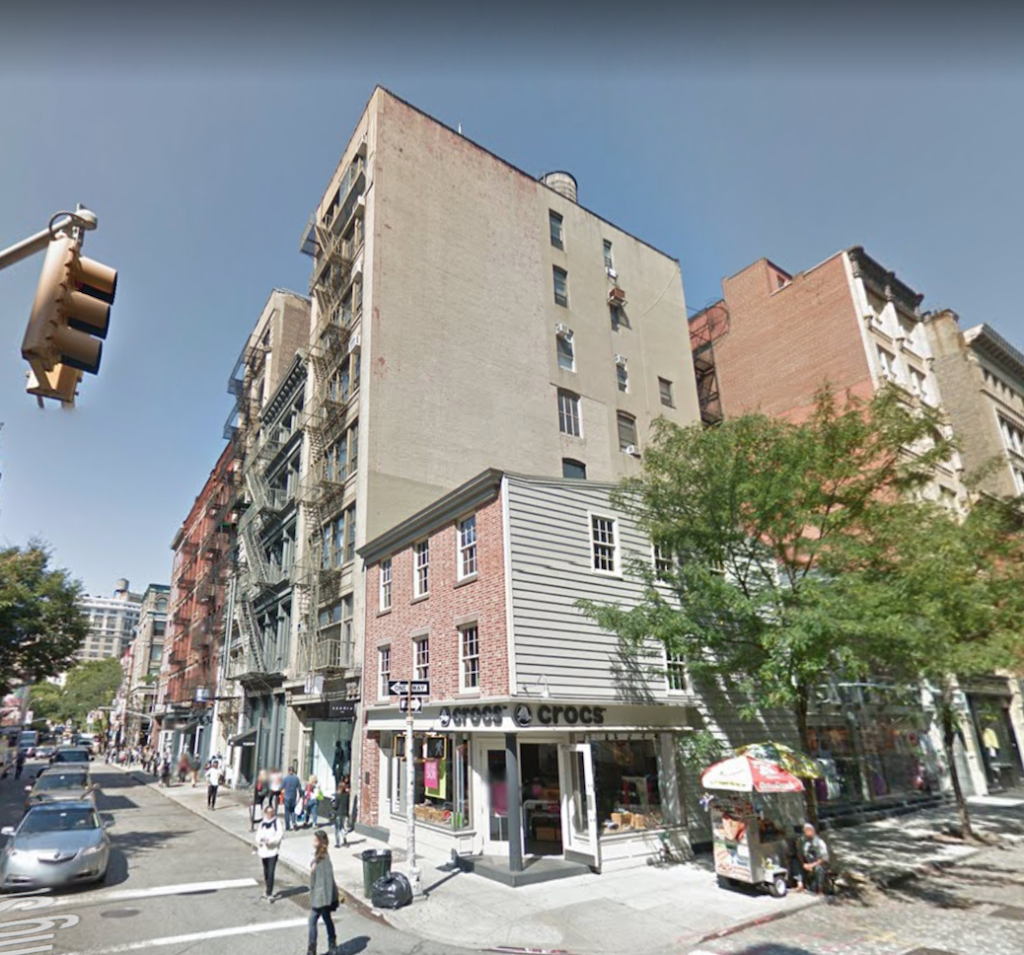
The house at 143 Spring Street — in 1932 (photograph by Charles Von Urban) and today (it’s a Crocs shop!)
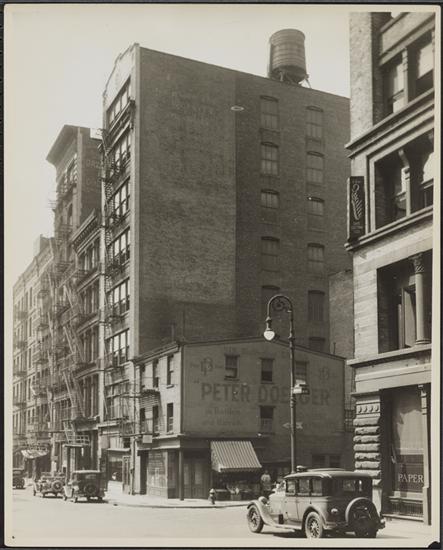
Museum of City of New York/Charles Von Urban collection
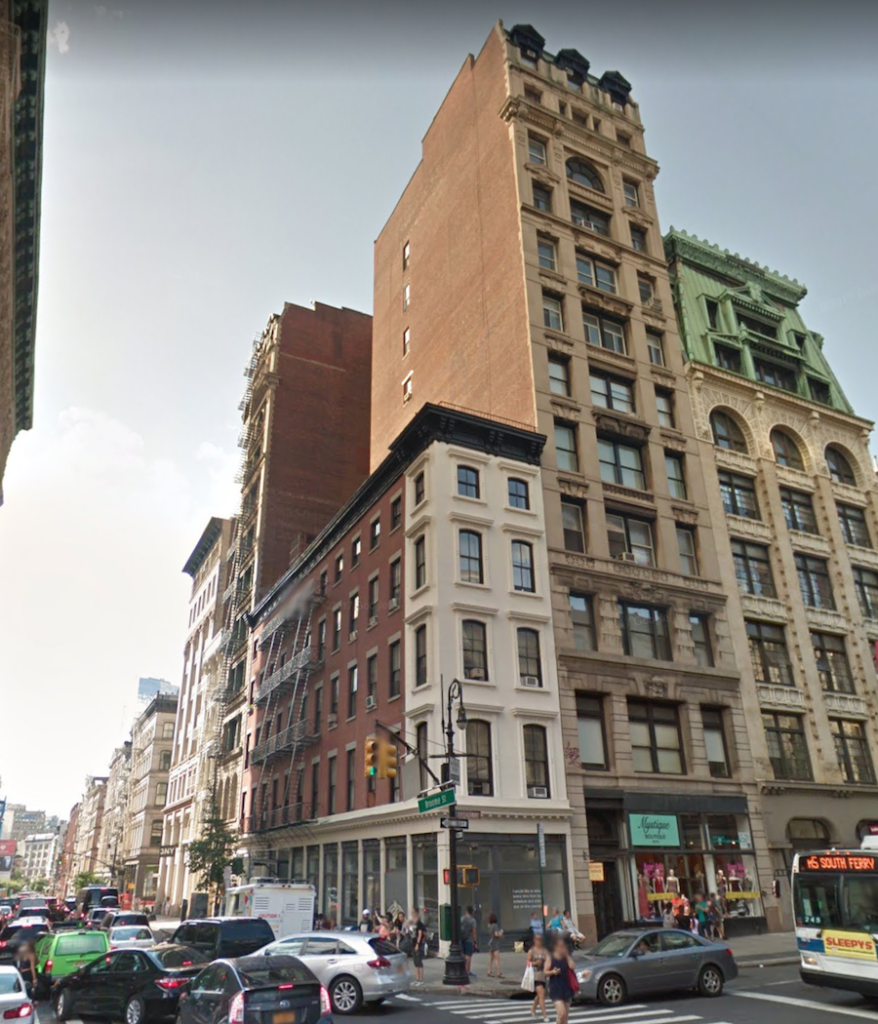
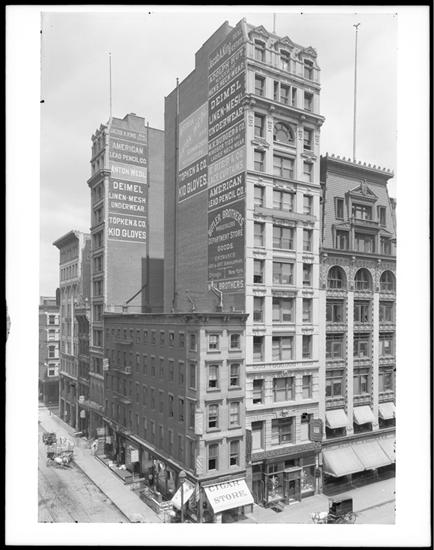
491 Broadway at Broome Street — in 1905 (photograph by the Wurts Bros.) and today
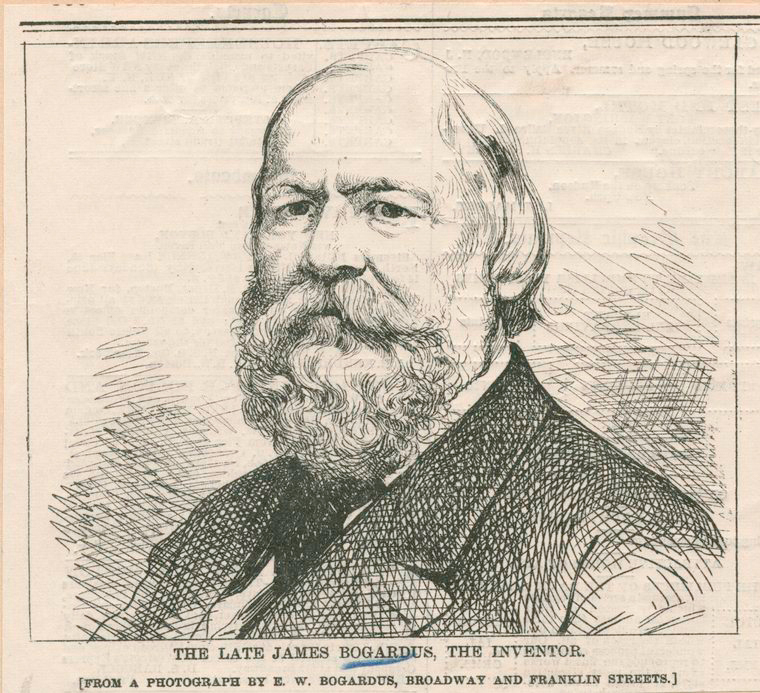
James Bogardus, the man who helped give SoHo its distinctive appearance thanks to his vigorous marketing and promotion of cast-iron architecture.
The first cast-iron structure in New York, built in 1848, was further south at the corner of Centre and Duane Streets.
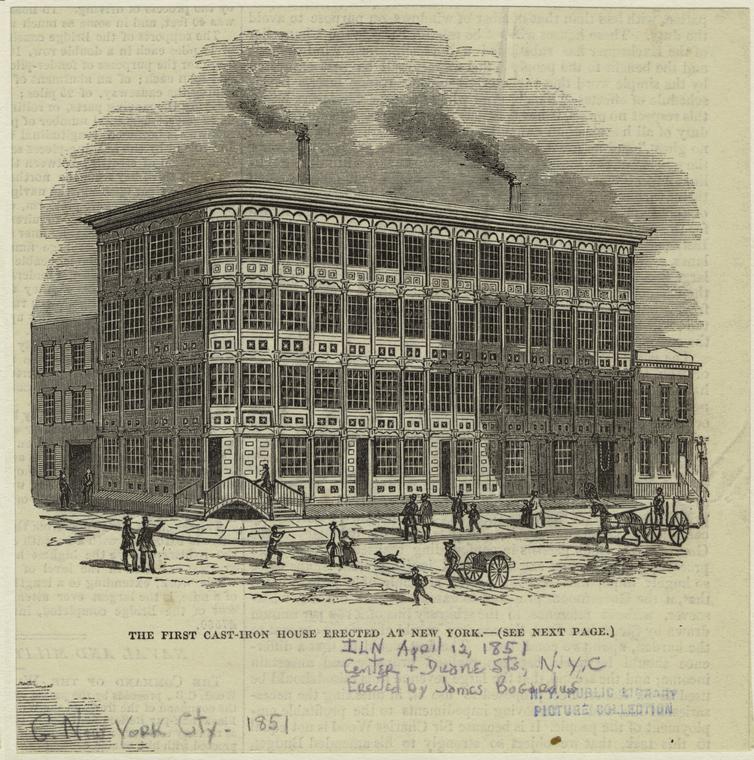
NYPL
Robert Moses’ view of Broome Street via his project Lower Manhattan Expressway project. Broom Street would have had an elevated highway, enclosed within modern buildings. A view of surviving cast-iron architecture on the right.
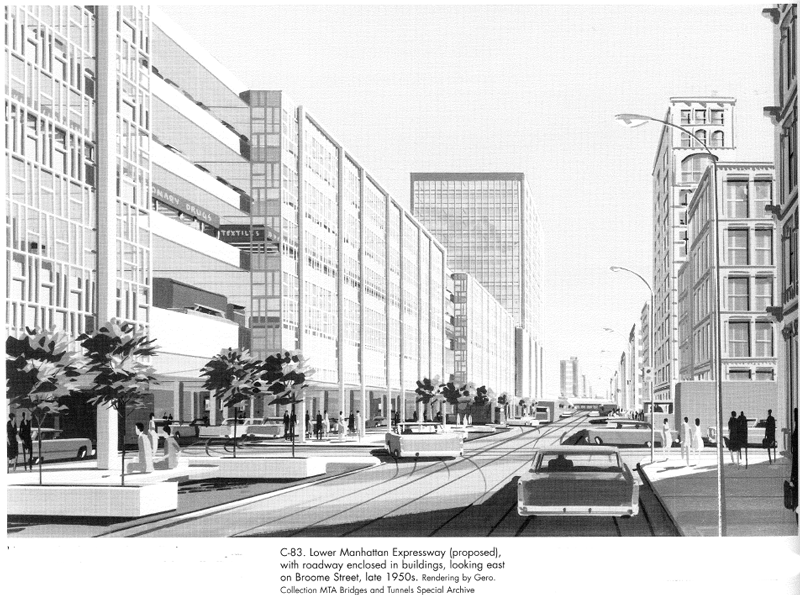
SoHo would have been eliminated (or greatly reduced) by Moses’ project which was thankfully nixed.
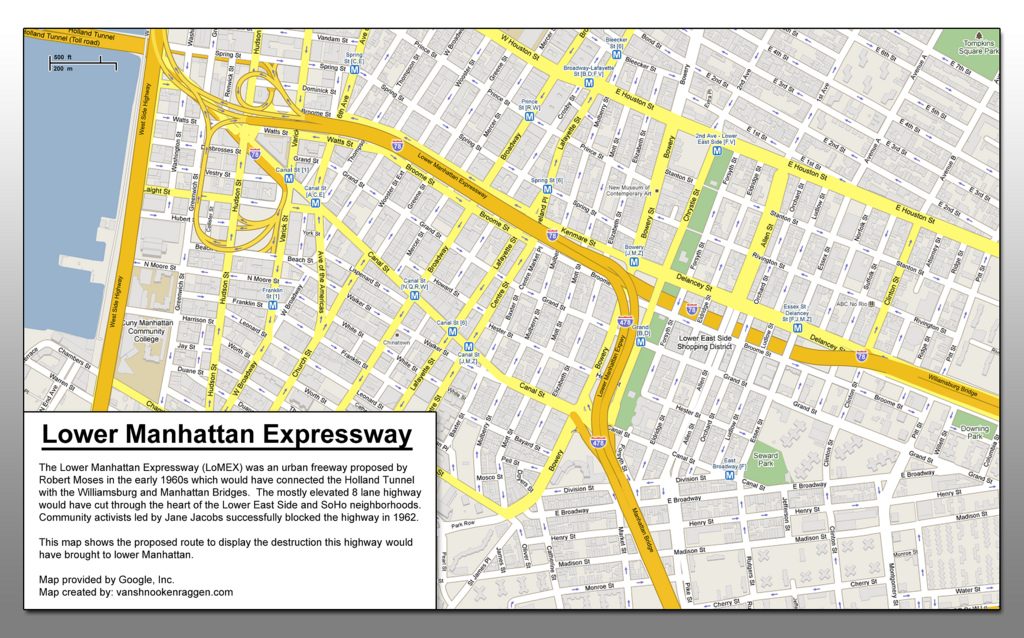
Map produced by vanshnookenraggen
A map of the art galleries in the SoHo art scene during the 1970s.
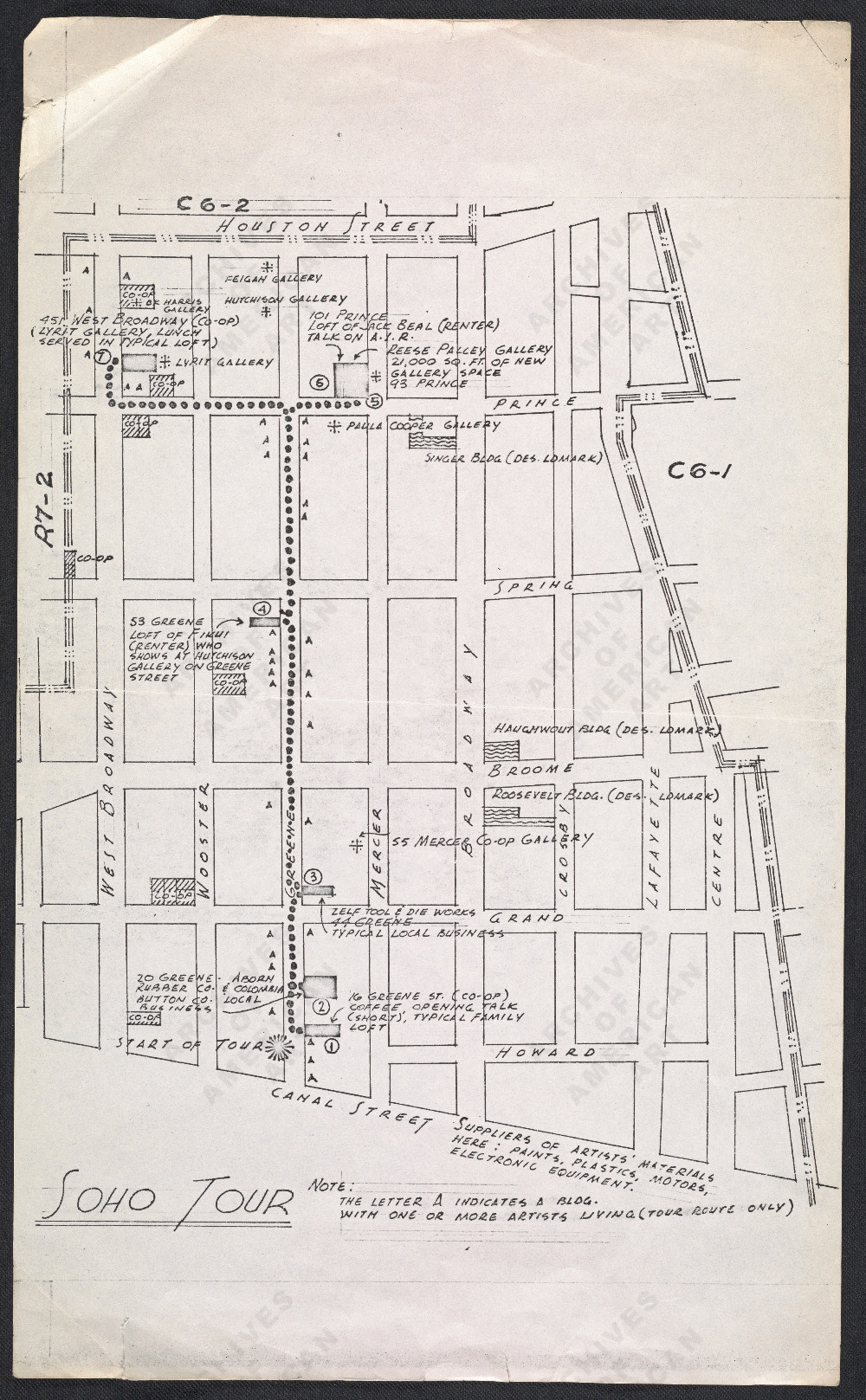
SoHo Artists Association Records, 1968-1978. Archives of American Art, Smithsonian Institution
We greatly encourage you to check out the SoHo Memory Project for a lot of fantastic and often deeply personal recollections about the SoHo days of yore.
For further listening, check out the following Bowery Boys podcasts which were referenced in this week’s show:
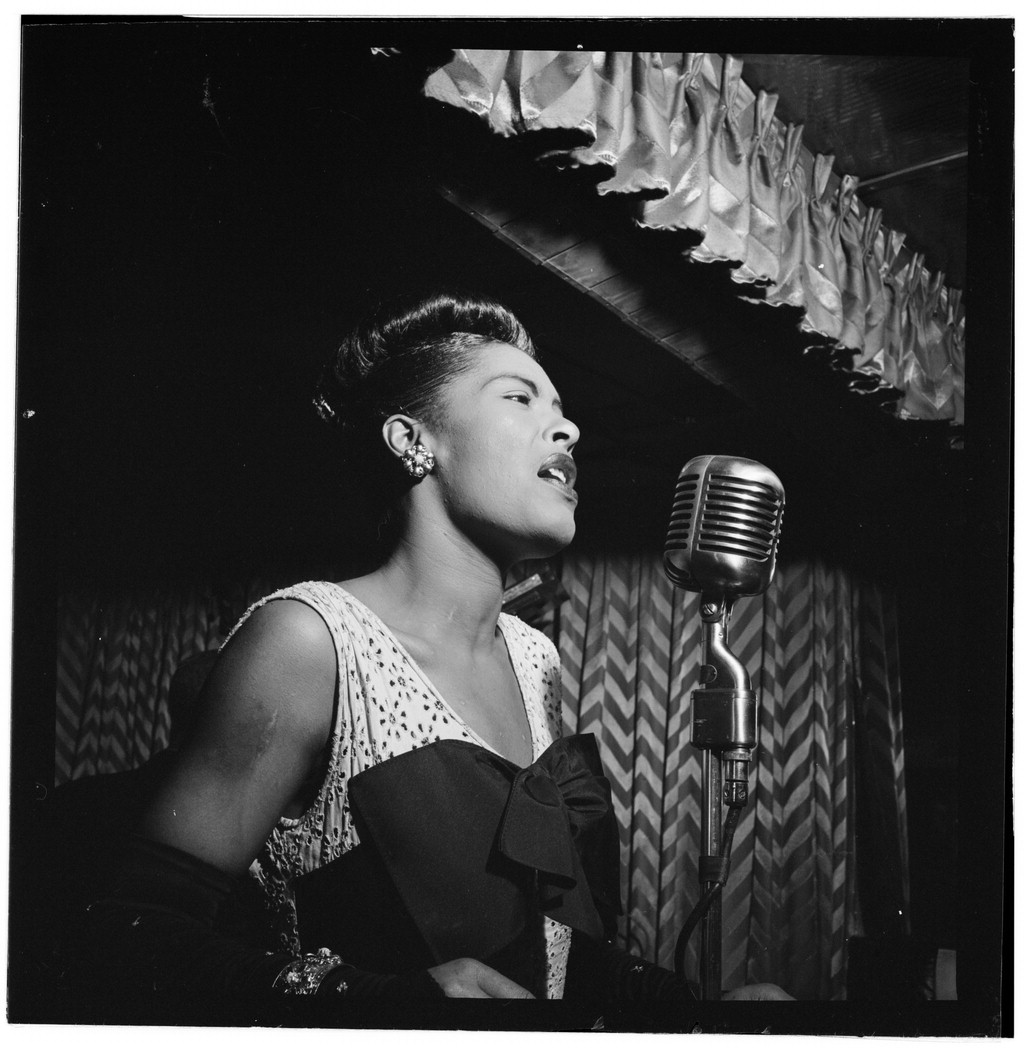
PODCAST Grab your fedora and take a trip with the Bowery Boys into the heart of New York City’s jazz scene — late nights, smoky bars, neon signs — through the eyes of one of the greatest American vocalists who ever lived here — Billie Holiday.
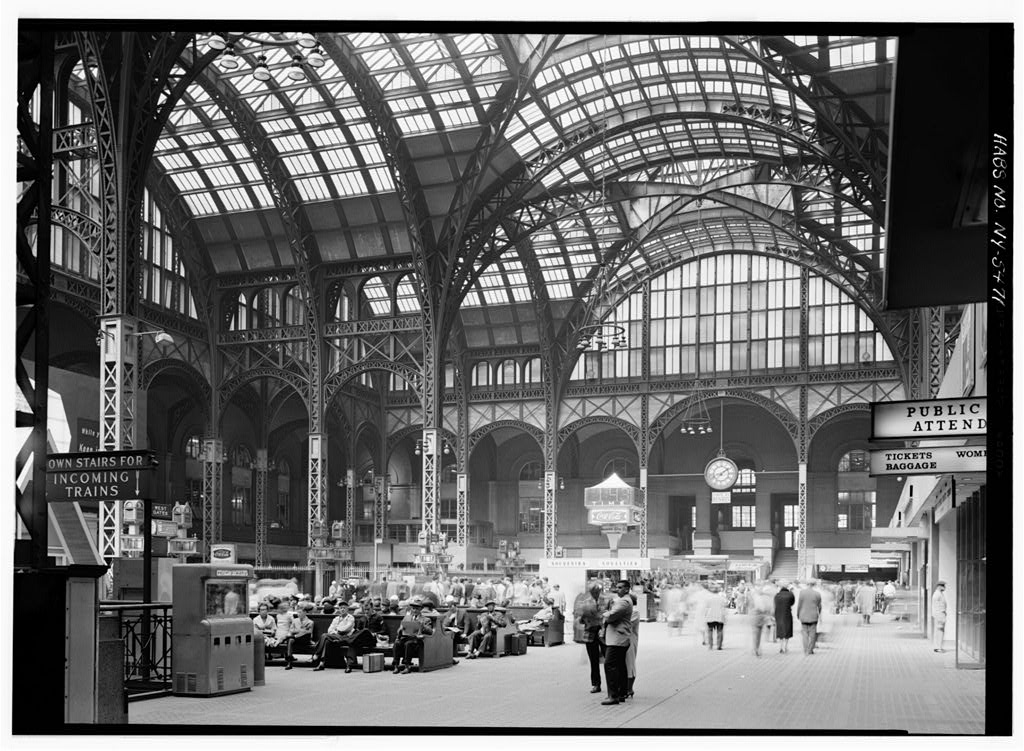
Eleanora Fagan walked out of Pennsylvania Station in 1929 and into the city that would help make her a superstar. Her early years were bleak, arrested for prostitution and thrown into the Welfare Island workhouse. But music would be her savior, breaking out in Harlem first in the nightclubs on 133rd Street, then in the basement clubs of ‘Swing Street’ on 52nd Street.
Her recordings make her an international star, but the venues of New York helped solidify her talents — from the Apollo Theater to Carnegie Hall. But one particular club in the West Village would provide her with a signature song, one that reflected the horrible realities of racism in the mid 20th century.
Billie Holiday at Club Downbeat, 1947
Locations featured in this episode:
1) Pennsylvania Station (circa 1930s-40s)
Courtesy Library of Congress
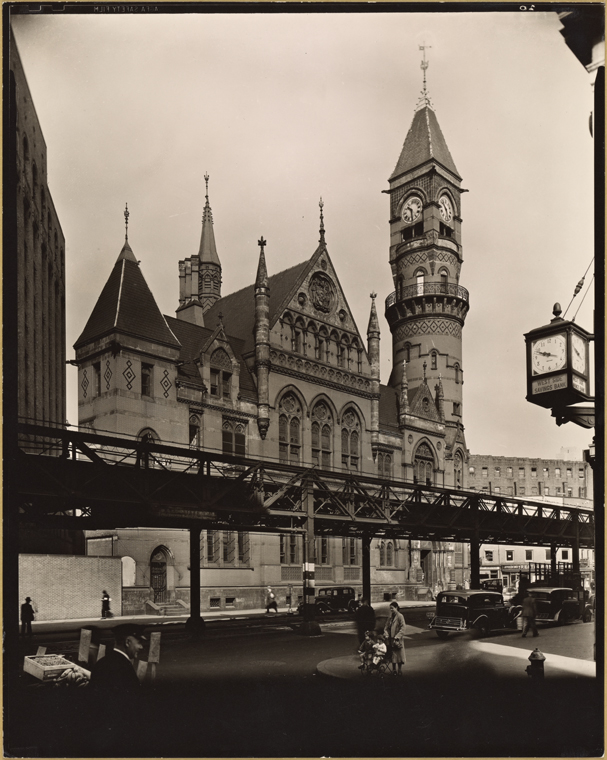
2) Jefferson Market Courthouse, pictured here in 1935
Photographed by Berenice Abbott, courtesy New York Public Library
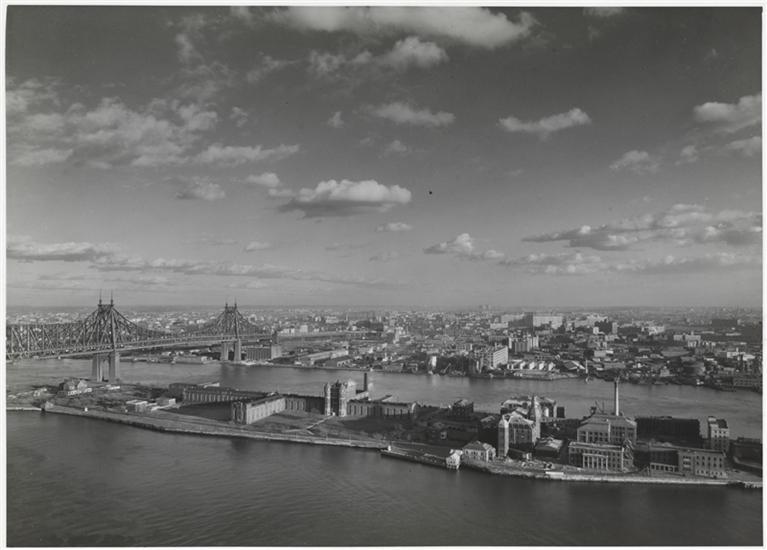
3) Welfare Island, pictured here in 1931
Photographed by Samuel H Gottscho, courtesy Museum of City of New York
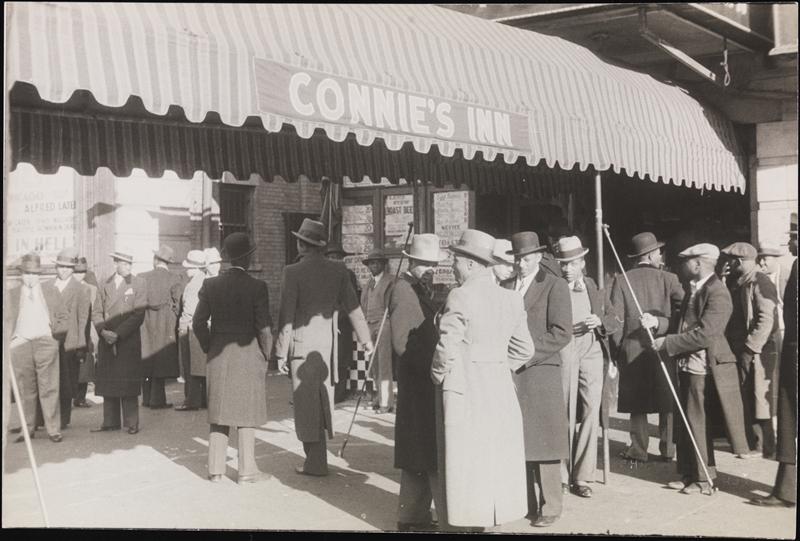
4) 133rd Street — “Jungle Alley” or The Street — outside Connie’s Inn
Courtesy Museum of the City of New York
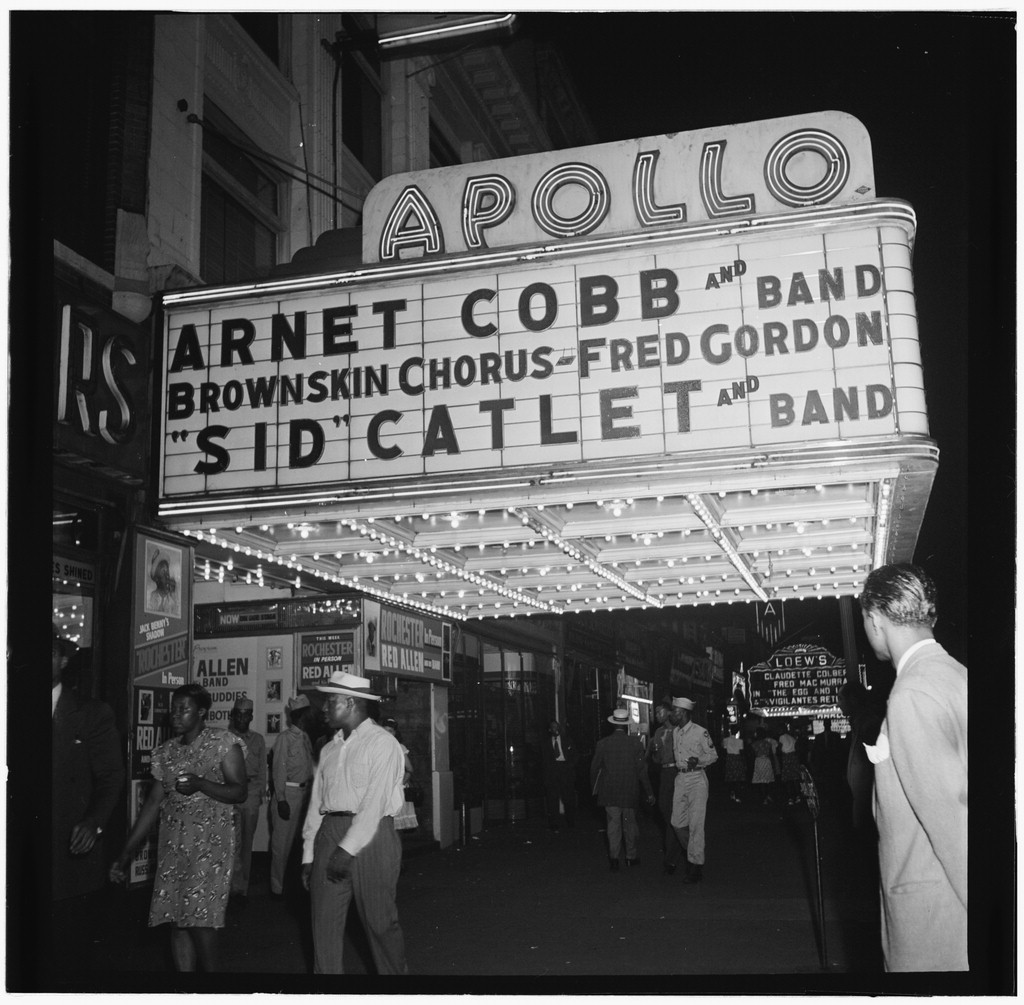
5) Apollo Theater, pictured here in the mid 1940s
Courtesy Library of Congress, photographer William Gottlieb
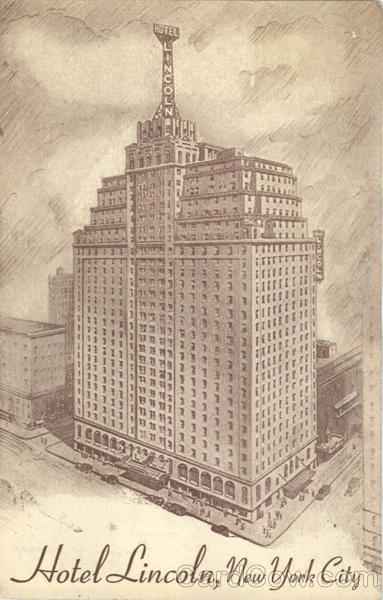
6) Lincoln Hotel
Hotel Lincoln, 44th to 45th Street at 8th Avenue New York City
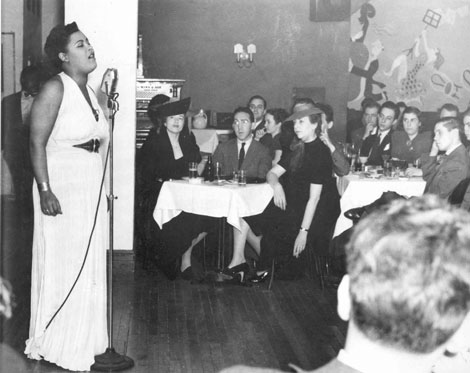
7) Billie Holiday at Cafe Society 1939
Photo by Charles B. Nadell
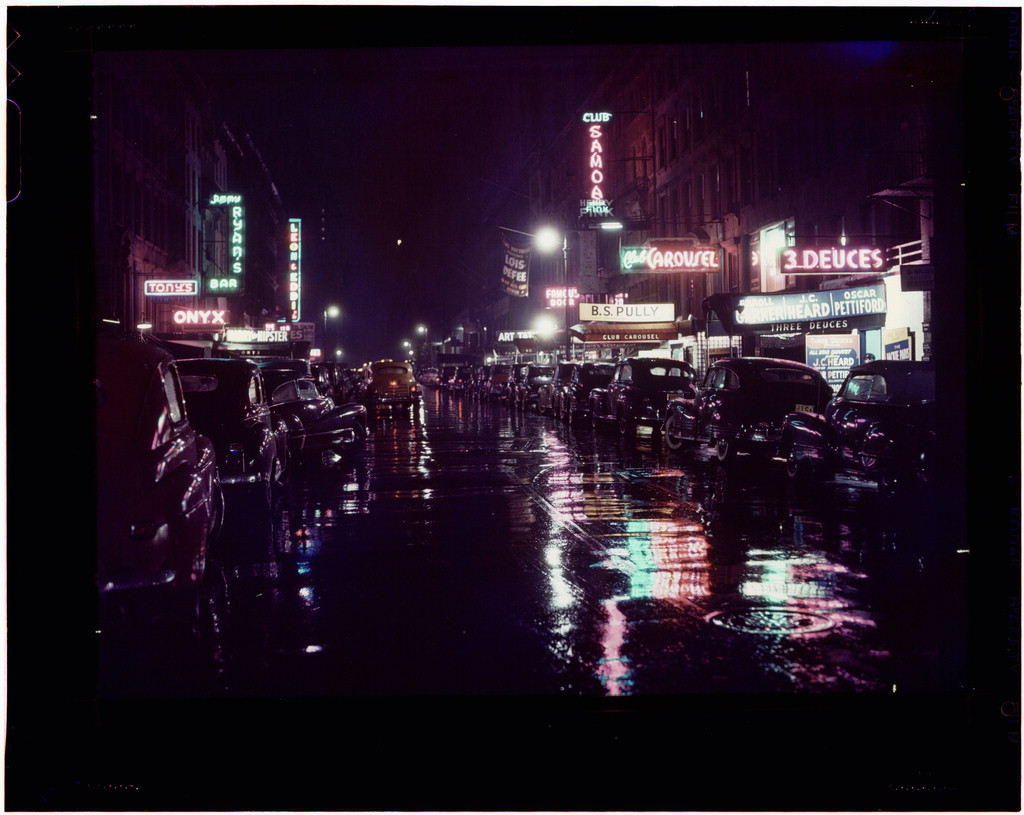
8) 52nd Street aka Swing Street
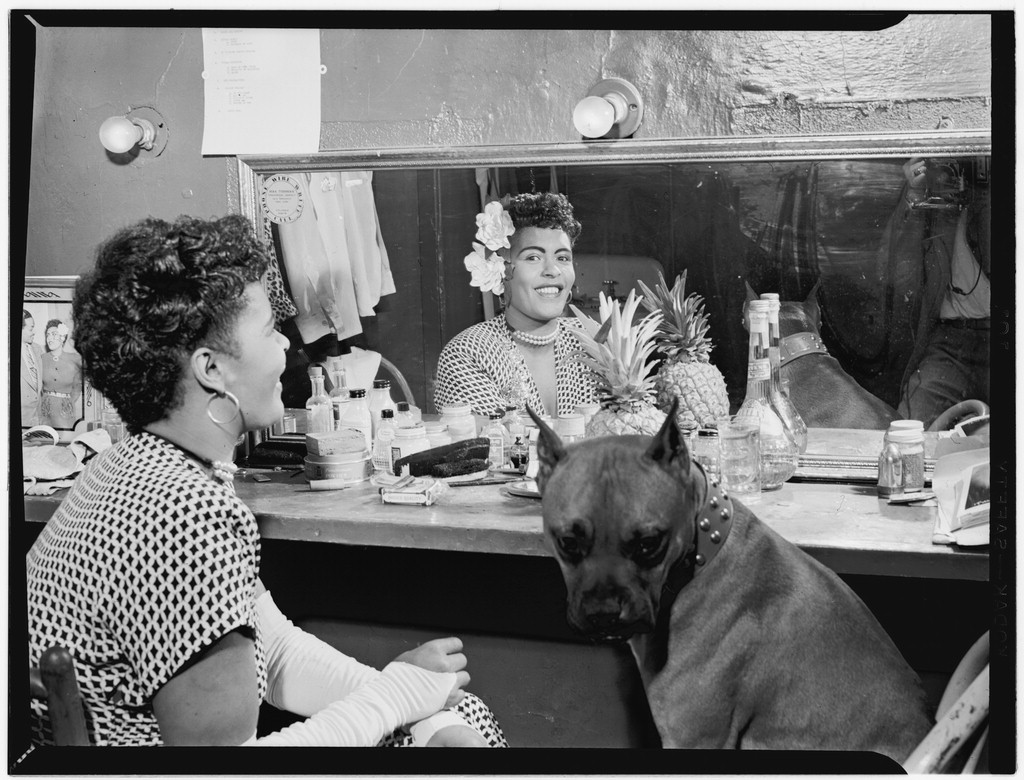
Billie at Club Downbeat (with her dog Mister) — June 1946
Courtesy Library of Congress
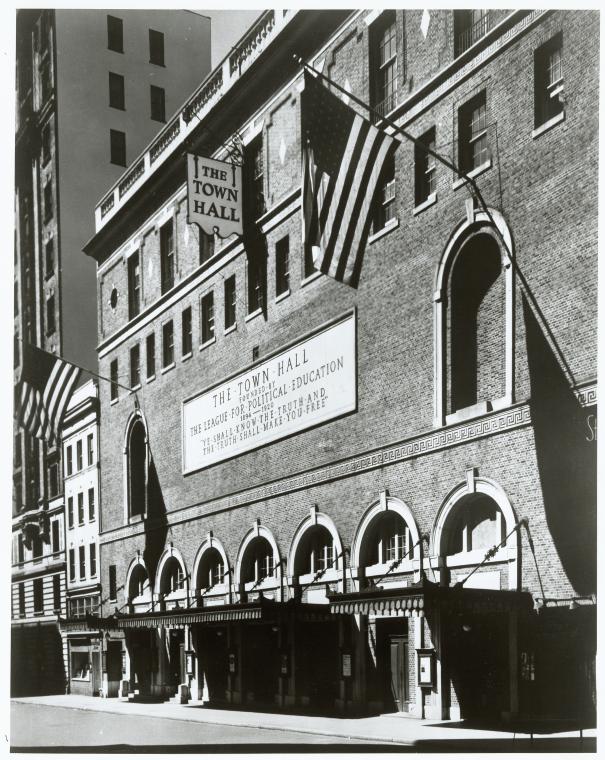
9) Town Hall, sometime in the 1940s
Exterior view of The Town Hall, courtesy New York Public Library
10) Billie Holiday at Carnegie Hall for her rave 1948 concert
Courtesy Library of Congress
An extraordinary performance of ‘Strange Fruit’, performed in February 1959, months before she died. This was recorded for a British television show called ‘Chelsea At Nine’.
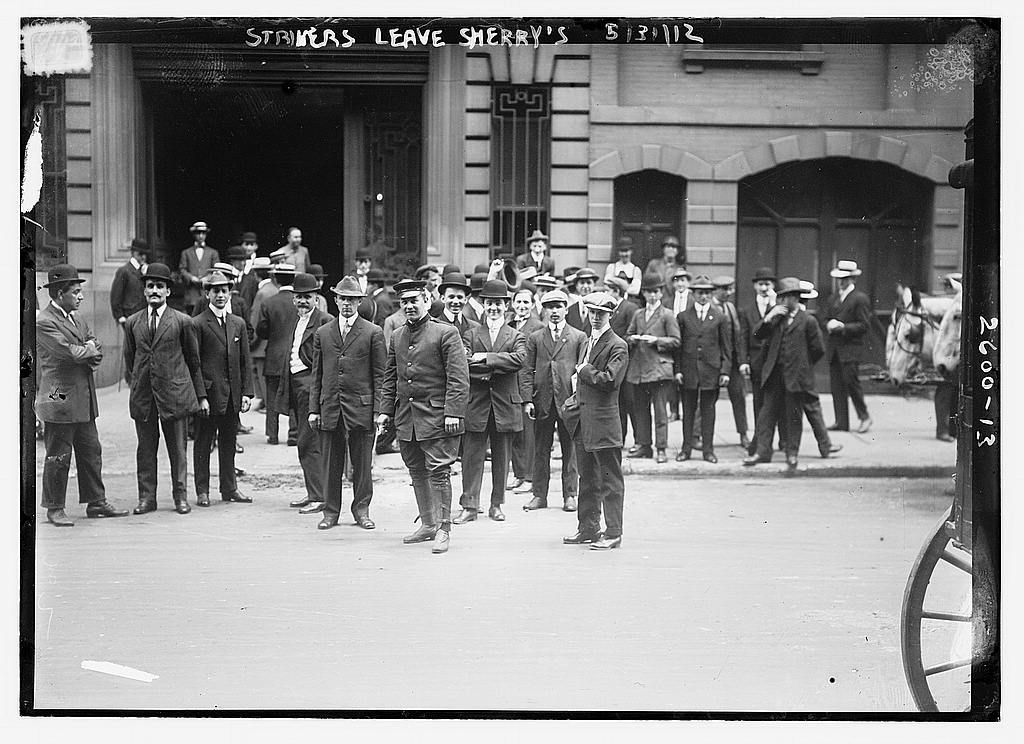
Above: Restaurant workers walk off the job at Sherry’s Restaurant at Fifth Avenue in 1912
One hundred years ago today, a rather peculiar worker’s strike ended, a protest which had paralyzed New York’s restaurant and hotel industries for almost two months. The strike had begun in early May, and by the month’s end, thousands of employees had walked off their jobs, leaving diners in emptied restaurants and wealthy hotel guests to carry their own luggage.
What made this particular walkout unusual weren’t the demands — improved conditions and pay, recognition of their newly formed union — but the locations where the strikes occurred. The employees of the very toniest and best known restaurants and hotels left their jobs in unison. Establishment affected includedthe Plaza, the Hotel Astor, Hotel Knickerbocker, the Waldorf-Astoria, the St. Regis, the Vanderbilt, and restaurants like Delmonico’s and Sherry’s (pictured above), among dozens of others.
Workers decided to return to work after a mass gathering on June 25, at the old New Amsterdam Opera House at 44th Street and Eighth Avenue. While some employers agreed to a few paltry changes, most of the strikers demands were not met, including the recognition of their union. (And to this day, they’re not unionized.)
Some hotels actually refused to hire back anybody who had join the strikers. Or as the proprietor of the Waldorf put it: “I told these men that a job at the Waldorf is not an apple hanging on a tree. I told them that we were doing better than ever, then I told them goodbye.”
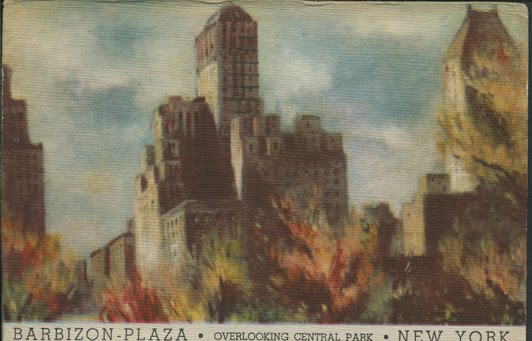
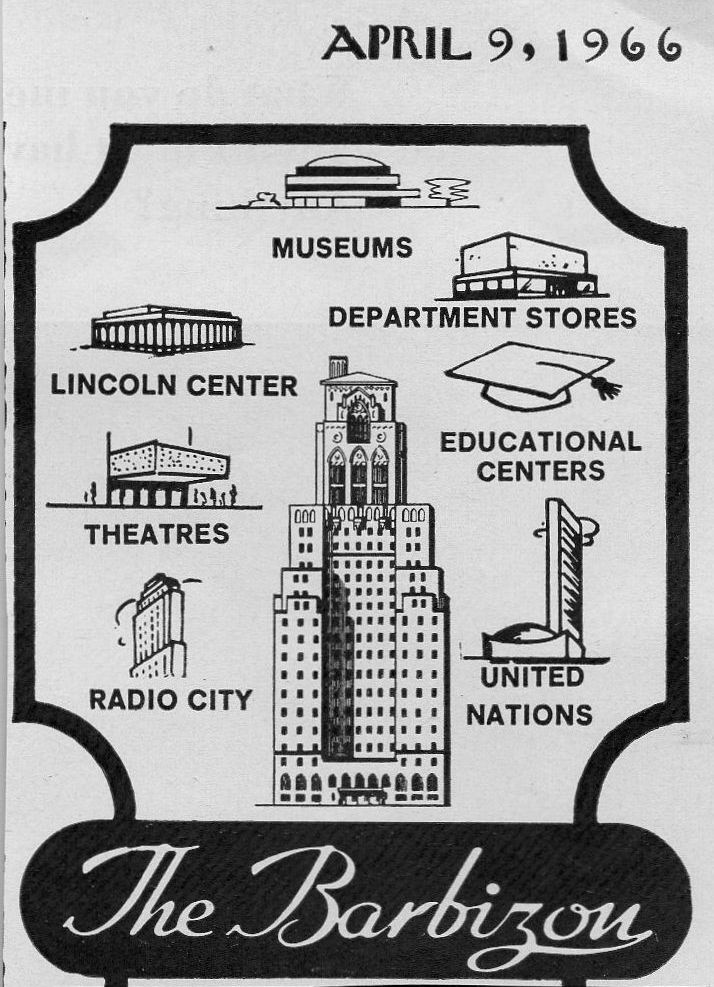
With Mad Men making its return last night on AMC, myself and many other bloggers (like the fabulous Natasha Vargas-Cooper and the folks over at the City Room) are scouring the episodes for fun New York City history references. One of my favorite buildings in the city made an appearance (or at least a notable mention) when, after a blind date, Don Draper drops his actress lady friend off at her home at the Barbizon Hotel for Women at 140 E. 63rd Street.
The Barbizon was a high-end complex for actresses and models, “a combined charm school and dormitory,” “the city’s elite dollhouse” according to Vanity Fair, offering single woman a luxurious address and a home base to pursue career and network. Some of its inhabitants, naturally, would go on to become major stars — Grace Kelly, Lauren Bacall, Cloris Leachman, Liza Minelli. Little Edie, of ‘Grey Gardens’ fame, lived here from 1947 to 1952 while trying to break into show business.
I personally love the dark grown, arch-heavy exterior, which the AIA calls a “romantic, neo-Gothic tawny brick charmer.” The building opened to men in 1981 and, as the Barbizon 63, is still a rather swanky address.
The Barbizon, however, was not known for sumptuous living back in the day. Apparently, a lady was just supposed to be grateful to be admitted here. The rooms were “not luxurious,” according to a biography on Kelly, “and a new girl’s first impression might have been that her austere quarters resembled a convent cell or a house of correction.” Kelly lived here as a teenager in 1947, quietly reading or having tea in the Barbizon’s dining area.
The building was designed in 1927 by the curiously named design firm of Murgatroyd & Ogden, who specialized in brick hotels and apartment complexes with quirky flair. Two years later, their Hotel Governor Clinton opened across the street from Pennsylvania Station.
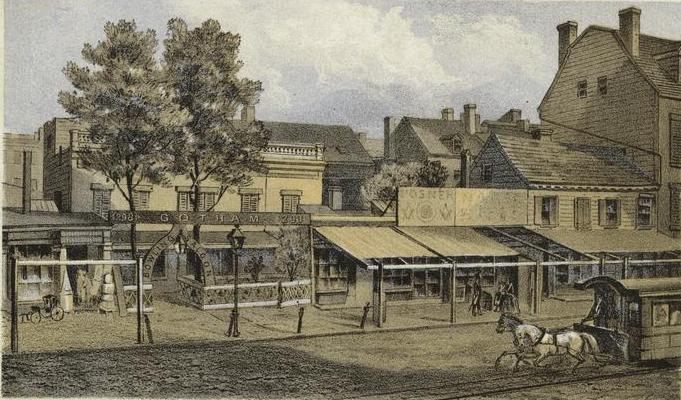
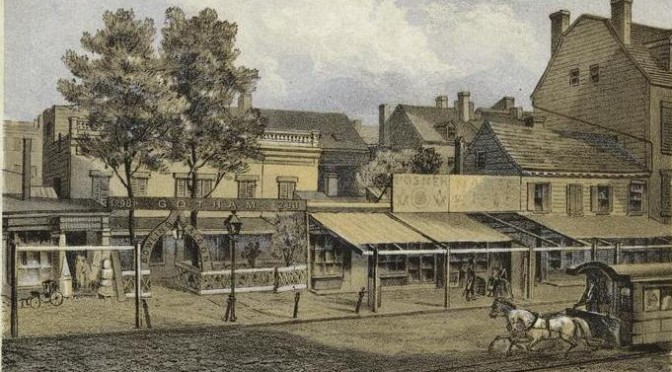
Above: The first of hundreds of Bowery hotels — the old Gotham Inn in 1862. The inn, which dated from the 1790s, sat quite close to where 315 Bowery is today, just north of Houston Street. (Pic courtesy NYPL)
The early history of buildings at 315 Bowery — the address that would later become the club CBGB’s — is spotty indeed, but some early references to the address reveal some rather odd events that took place here.
In the 1860s, the Bowery neighborhood would still have been a de facto theatrical district for the lower classes, “New York’s primary locale for down-market entertainment – saloons, beer gardens, amusement halls, dime museums, street vendors and oyster houses,” according to David Levinson. Not quite given over to the truly seedier elements which would define the street for over 100 years.
In the early 1860s, it appears a pet shop or bird supplier resided at the address 315 Bowery. One William F. Messenger, with profession listed only as ‘birds’, lived at this address in May 1861.
On January 31, 1862, the New York Times reported on a strange gathering at 315 Bowery and presumably at Messenger’s shop — the Bird Fanciers’ Third Annual Exhibition of prized fowl. Little is known of the group, which had reportedly been in existence over a decade by this time.
Prizes were awarded to bird lovers who kept roosters and hens, with a gentleman by the name of William Manson really cleaning up:
“First prize, yellow cock, WM. MANSON; second prize, yellow cock, JOHN WILLIAMSON; third prize, yellow cock, JOHN HIGGINBOTHAM. First prize, mealy cock and best bird exhibited, WM. MANSON; second prize, mealy cock, —- BAKER; third prize, mealy cock, —– BAKER. First prize, yellow hen, WM. MANSON; second prize, yellow hen, WM. MANSON; third prize, yellow hen, —-MURRAY. First prize, mealy hen, JOHN HIGGINBOTHAM; second prize, mealy hen, JOHN HIGGINBOTHAM; third prize, mealy hen, WM. MANSON.”
However, despite its avian beginnings, I was able to find mention of the address’s musical heritage during this period: a John Bogan is listed as living or working at the address in 1867-68 as a “banjoist”, a teaching instructor (and possible manufacturer) of banjos.
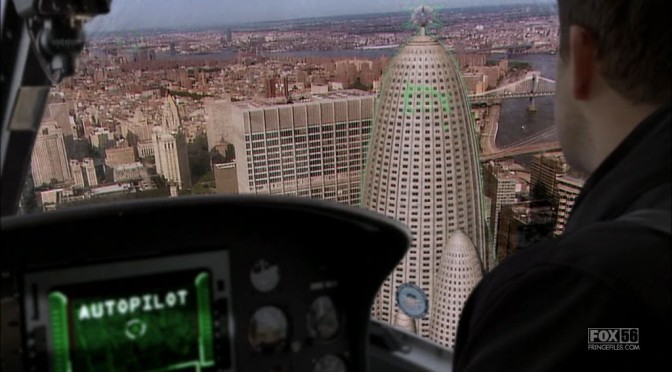
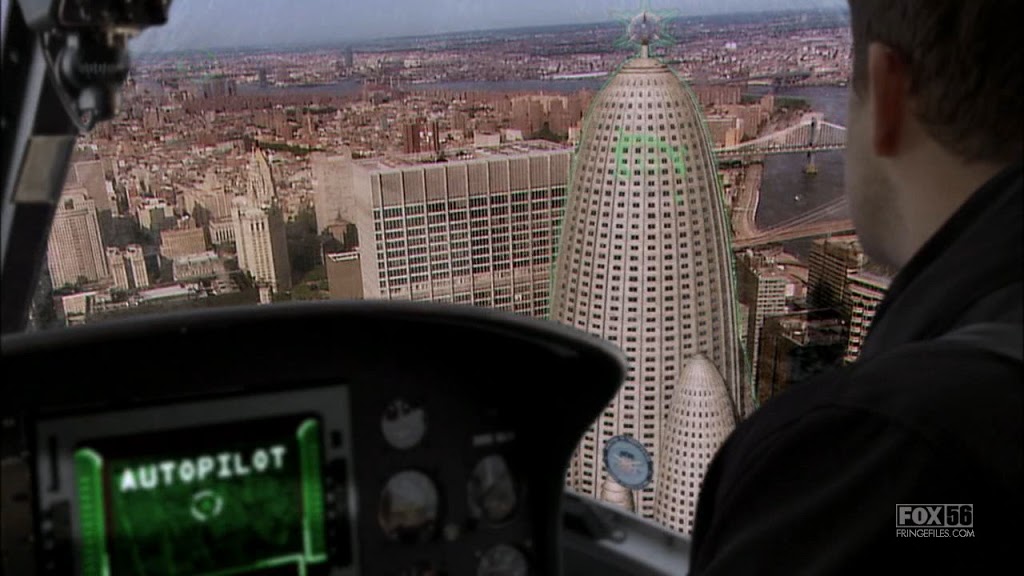
A running scientific theory running through the series is the notion of a parallel universe co-existing with ours, with some not so subtle differences. We discovered this alternate universe last season when a character popped inside the still-standing World Trade Center. In the harbor sits the Statue of Liberty, in her original copper sheen, assumably off-limits to tourists and since 1989, home of the nation’s Department of Defense.
In this universe, it appears the grave threat comes from within its very fabric, not terrorists. Madison Square Garden — and the 10,000 people within it — fall victim to an expanding wormhole in 1999 and are contained in ghastly amber cocoon. And if you think that’s bad, you should see Boston!
Silhouetted above this frightening fantasy skyline, however, is a work of art straight out of a New York City dream — the Grand Hotel, built in 1908, and designed by one of the world’s most eccentric architects, Antoni Gaudi. A spacecraft like mound of rounded forms, zeppelin-like curves shooting in the sky, mocking the Beaux-Arts and seeming like something that could be built in the city today (or tomorrow). Unlike the city’s space-time mishaps however, the Grand Hotel, believe it or not, was really planned by Gaudi to be an actual skyscraper.
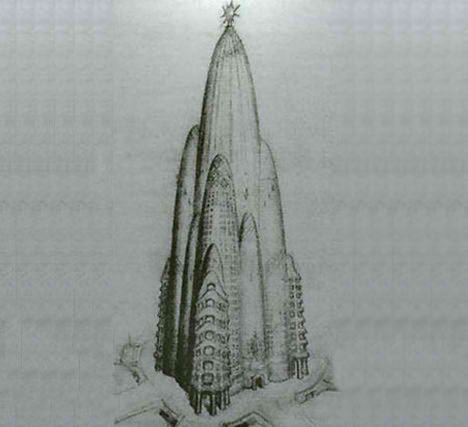
Gaudi’s original sketch:
Gaudi’s talents lived apart from the styles of his contemporaries at the turn of the century, appreciated daily by the citizens of Barcelona in many otherworldly buildings he created, most famously La Pedrera, and growing spires of the Sagrada FamÃlia. In 1906, it appears Gaudi was approached by two businessmen with property in New York, asking him to design a luxury hotel in the style of the Waldorf-Astoria on 34th Street.
This being Gaudi, of course, the resultant sketches (for a structure he called Hotel Attraction) were nothing like the rectangular and domed objects currently rising above New York. At 1,016 feet, the monstrous hotel would have towered over the plans of F.W. Woolworth, whose own skyscraper was still in the planning stages in 1908.
This odd shape would have glistened with alabaster and bits of glass and tile. The interior would have included an immense hall ringed with circumferal galleries above it and decorated with sculptures of every American president. Below this, guests would enjoy a cavernous restaurant decorated with cosmic murals and a concert hall with ceilings 100 feet overhead. This alien masterpiece was slated to sit in the exact area where the World Trade Center would later be built.
The Hotel Attraction never made it off the drawing boards, but there were some efforts by ardent Gaudi fans championing it as the ideal replacement for the Twin Towers after 9/11. Could you imagine if they’d actually decided to build it today? It’s not so strange an idea. Gaudi’s cathedral is still being built in Barcelona. And in our alternate universe, the Gaudi’s grand hotel looks just spiffy.
The following posting is littered with television spoilers, so please avert your eyes if you’re a ‘Mad Men’ fan who hasn’t seen last night’s season finale.
The show is always a scavenger hunt for New York history buffs, the dialogue sprinkled with famous locations and events, most notably an entire episode to the destruction of Penn Station Last night’s episode, however, brought an accumulation of New York hotel namedropping.
— Withered Don Draper, newly separated from his wife, mentions he’s staying at the Roosevelt Hotel not far from the fictional Sterling Cooper offices at 405 Madison Ave. Up until then, the hotel, built in 1924, was best known as the residence of New York governor Thomas Dewey, who actually used a suite here as his administrative office. (Sorry Albany!)
— The rascally Pete Campbell, perhaps reflecting his ambitious social standing, mentions the luxury Sixth Avenue hotel St. Regis as a meeting place to his wife. Like any good Mad Man alcoholic, he could have enjoyed a bloody mary downstairs at the King Cole lounge, where the drink was allegedly first created.
— Last week’s episode featured a sexual liaison between Peggy Olson and Duck Phillips at the Elysee Hotel at 54th and Madison, against the backdrop of the assassination of JFK. Peggy and Duck might have ran into Marlon Brando or Joe Dimaggio, who both lived at the Elysee. Another famous figure in 1962, Tennessee Williams, resided here for many years and choked to death on an eyedrop bottle cap in one of the rooms here in 1983
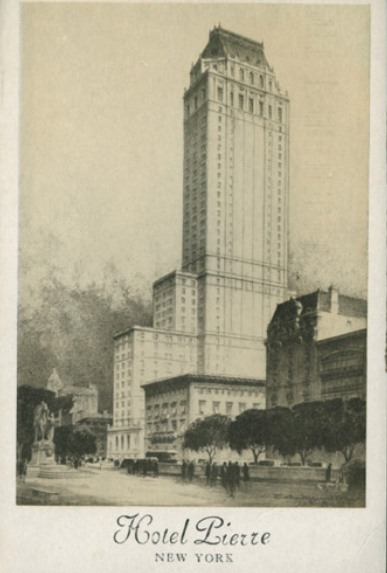
— The culmination of Mad Men’s high-class hotel fetish is a doozy: the ad firm actually moves into a hotel. In this case, the Hotel Pierre on Fifth Avenue, overlooking Central Park. This ornate 1930 gem, rescued from bankruptcy by J. Paul Getty, is slightly north of Madison Avenue’s ad-agency row. No doubt the characters will want to take a break from their new endeavor by having a few cocktails one block away — at the Copacabana, still one of New York’s most popular nightclubs in the early 60s.
And that’s not even to mention one of the show’s central plots this season — the relationship with Don and hotel magnate Conrad Hilton.
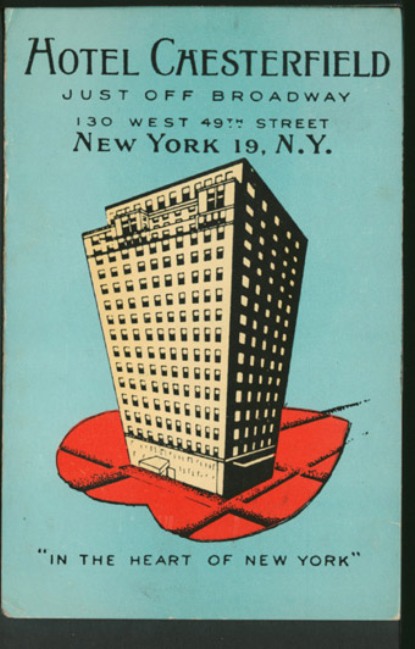
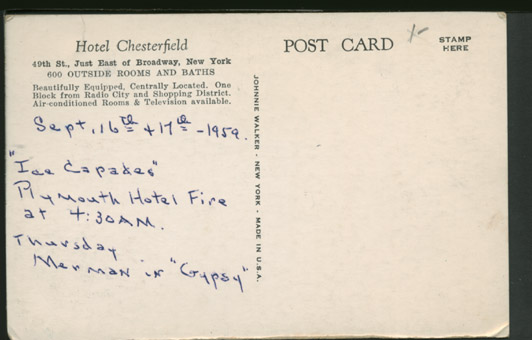
TEXT: “Sept 16th and 17th 1959 ‘Ice Capades’ Plymouth Hotel Fire at 4:30 AM Thursday Merman in ‘Gypsy'”
The Hotel Chesterfield (130-136 West 49th Street), built in 1927, was a luxury accommodation conveniently near Rockefeller Center and various Broadway theaters.
The Ice Capades referred to in this card are the well-reviewed Ice Capades program launched at Madison Square Garden. The Capades were a colossally cheesy ice extravaganza featuring music and elaborate production numbers staged upon a skating rink. The Capades played the Garden for decades, eventually dying out by the early 1990s.
The fire at the building across the street, the 18-floor Hotel Plymouth (137-143 West 49th Street), probably wasn’t severe. It was built in 1929 and often hosted stars from nearby Radio City Music Hall. Neither the Plymouth nor the Chesterfield are still standing today — demolished, in fact, to make way for a couple severe, International Style structures owned by Rockefeller Center.
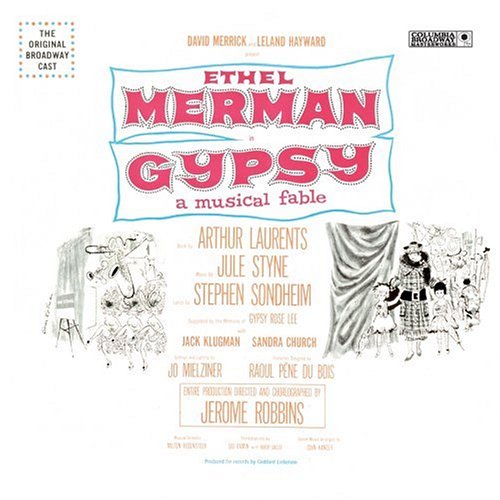
At least this visitor got to see something truly historic, at least in the annals of Broadway history — Ethel Merman in her classic performance in ‘Gypsy.
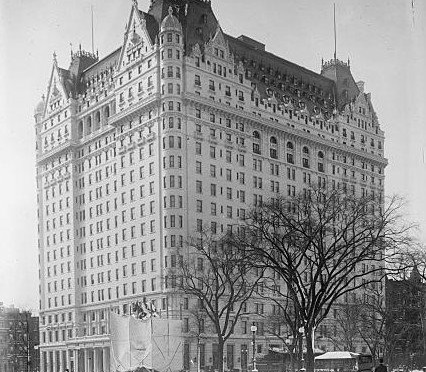
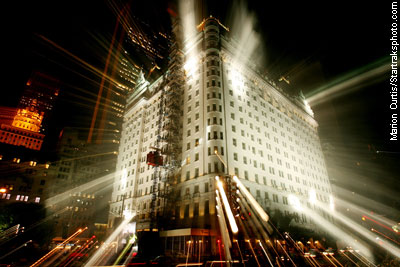
It got off to a rocky start, but the Plaza Hotel has become one of the most recognizable landmarks in New York City. We take a look at its kooky history, from its days as an upper class ‘transient hotel’ to a party place for celebrities. Starring: Henry Hardenberg, Eloise, Truman Capote and of course the unsinkable Mrs. Patrick Campbell.
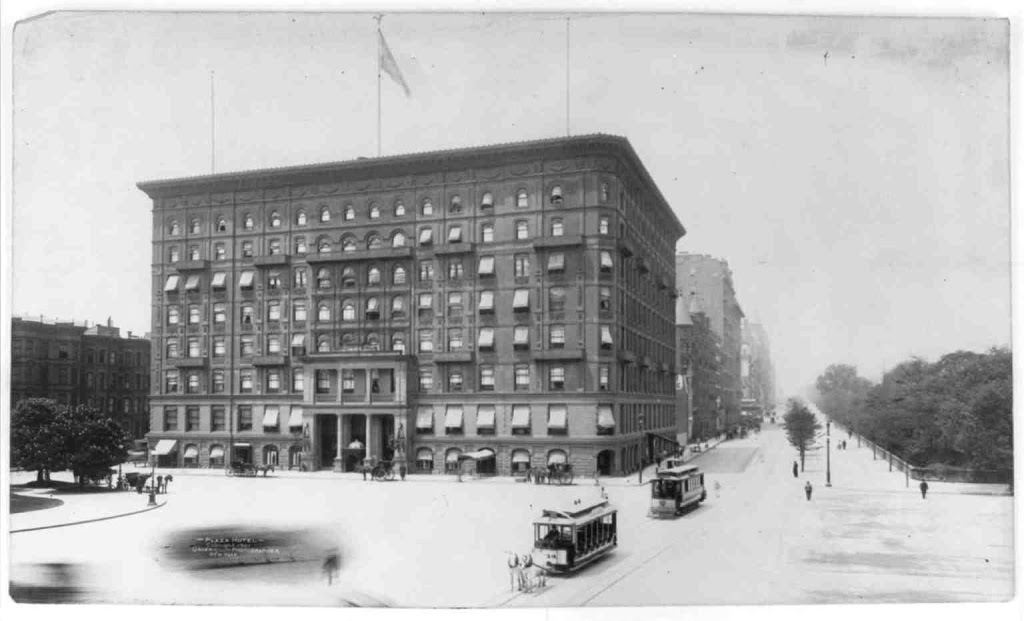
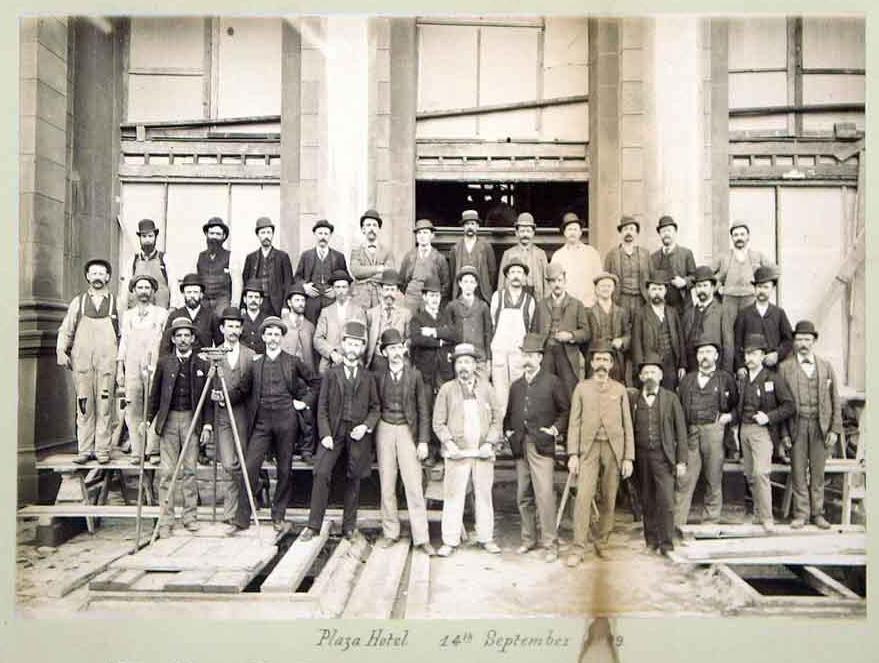
The first “Plaza,” as redesigned by McKim, Mead and White, was also a hotel, but it didn’t last long. Opened in 1890, it was demolished in 1905 to make way for the far grander vision of Henry Hardenbergh.
Workmen pause to stand in front of the first Plaza in 1889. Eventually the foundation of the building would not support the lofty plans for the new Plaza, so it had to be entirely torn down.
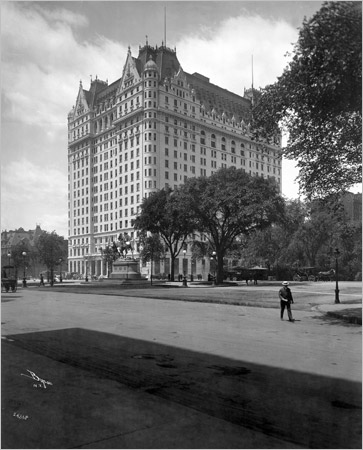
Believe it or not, here’s The Plaza in the year it opened, 1907! It looks like it’s in the countryside. Note the General Sherman equestrian statue in the foreground.
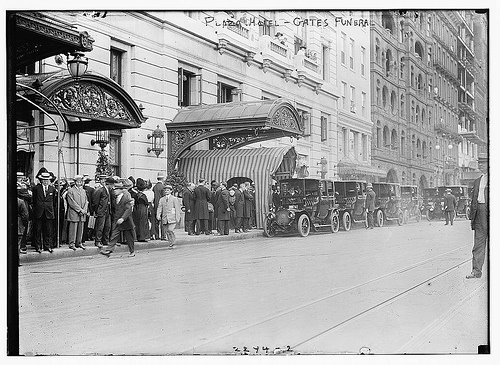
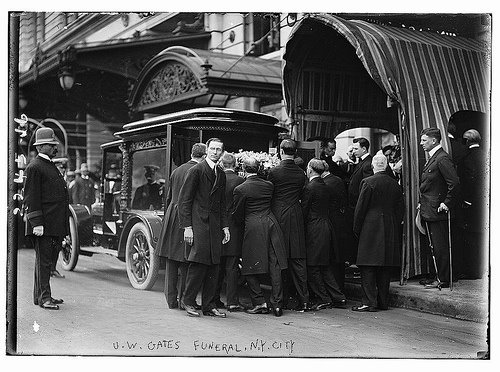
Two shots of the funeral of John “Bet-a-Million” Gates — who basically bankrolled the construction of the Plaza — pulls up to the entrance (on 59th street) of his famous hotel. It’s particularly interesting to see the development of buildings further west next to the Plaza. (Photo from Flickr, Library of Congress)
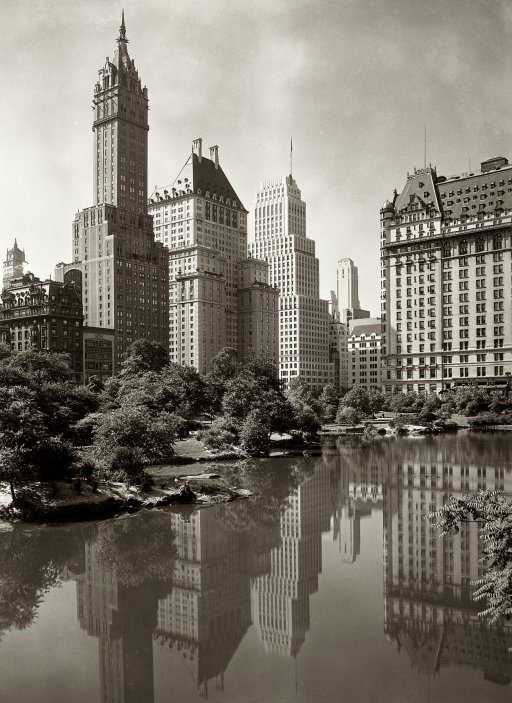
One of the Plaza’s immediate appeals was its proximity to both Central Park and the tony residents and luxury hotels of Fifth Avenue. (Picture courtesy of my favorite website Shorpy.)
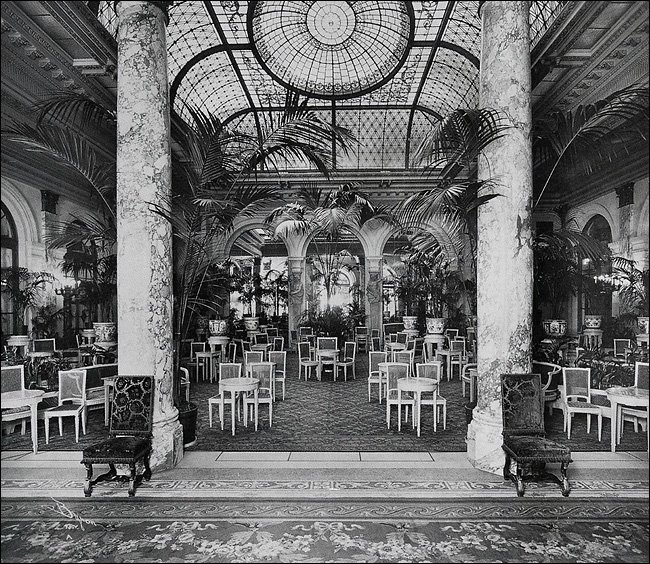
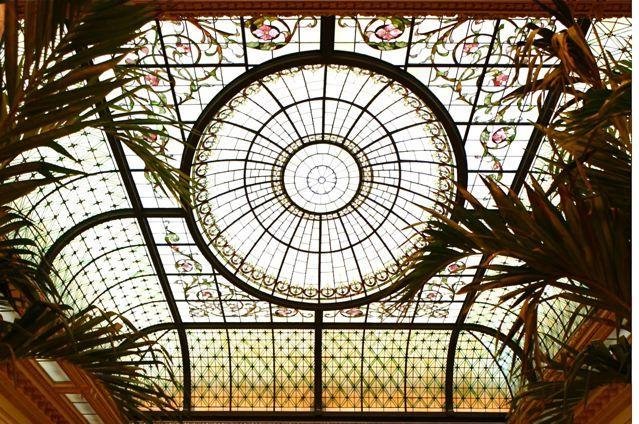
The elegant Palm Court, site of countless afternoon teas and the smoking rebellion of Mrs. Patrick Campbell. The ornate stained-glass dome would be removed in 1944, replaced with an air conditioning unit.
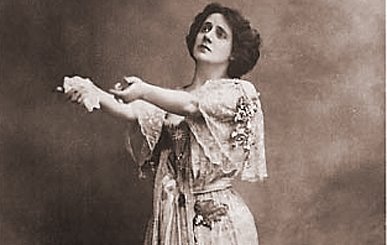
Mrs. Patrick Campbell, poster child for smokers and women’s rights everywhere
The fabulous Oak Room, probably the most unchanged of the Plaza’s public room, is festooned with Hardenburgh humor in the form of alcohol-related carvings. It was a popular drinking spot for the likes of F. Scott Fitzgerald, George M. Cohen, Bill Clinton and Harrison Ford.
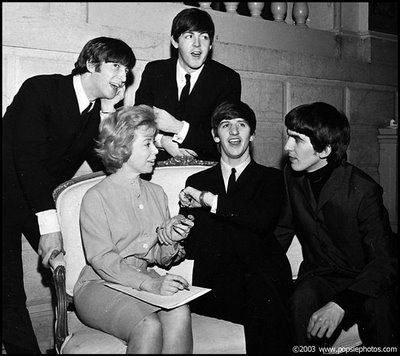
The Beatles and the Dr. Joyce Brothers enjoy a campy moment during an 1964 press conference at the Plaza.
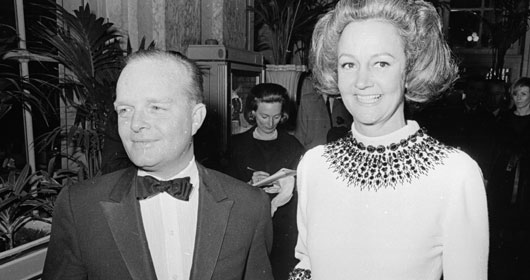
Truman Capote and Katharine Graham greet guests at the totally outrageous Black and White Ball.
Kay Thompson, later the author of the Eloise books, performs here at the Persian Room:
The Palm Court’s stained glass ceiling has returned in the modern renovation.
Check out the wonderful book At The Plaza: An Illustrated History of the World’s Most Famous Hotel by Curtis Gathje with many more details on the Plaza’s different and extraordinary rooms. And look below a couple posts for a picture of Barack Obama with the Plaza Hotel in the background!