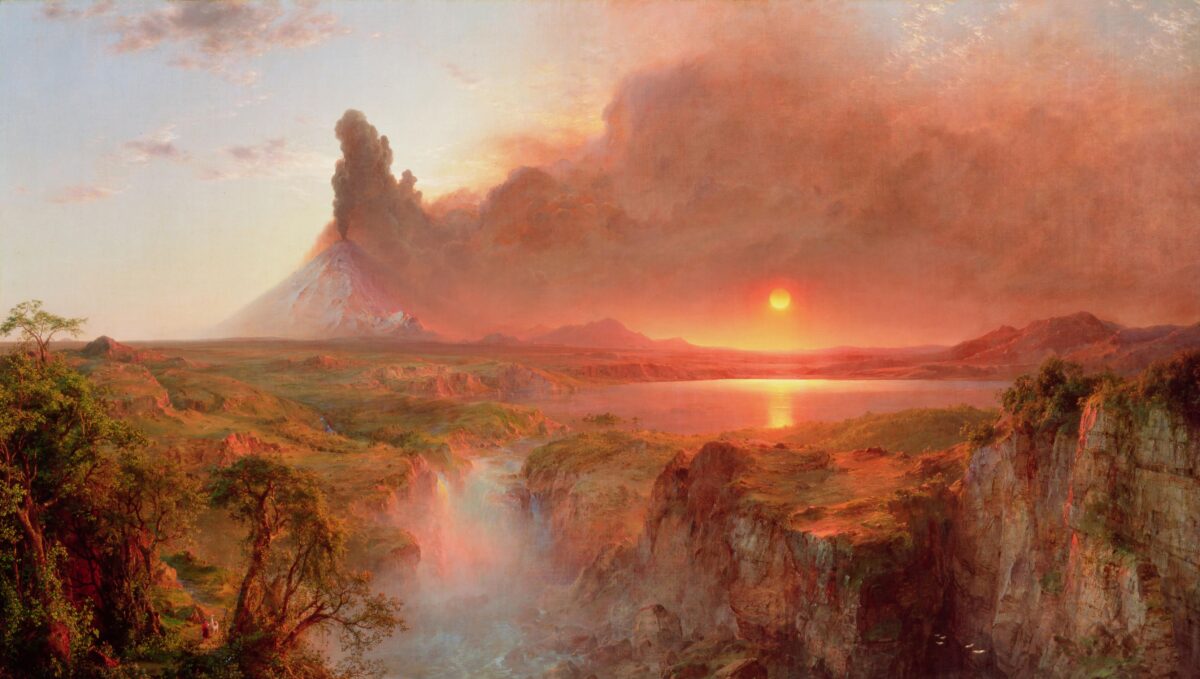
Cotopaxi, 1862, Detroit Institute of Arts, Michigan
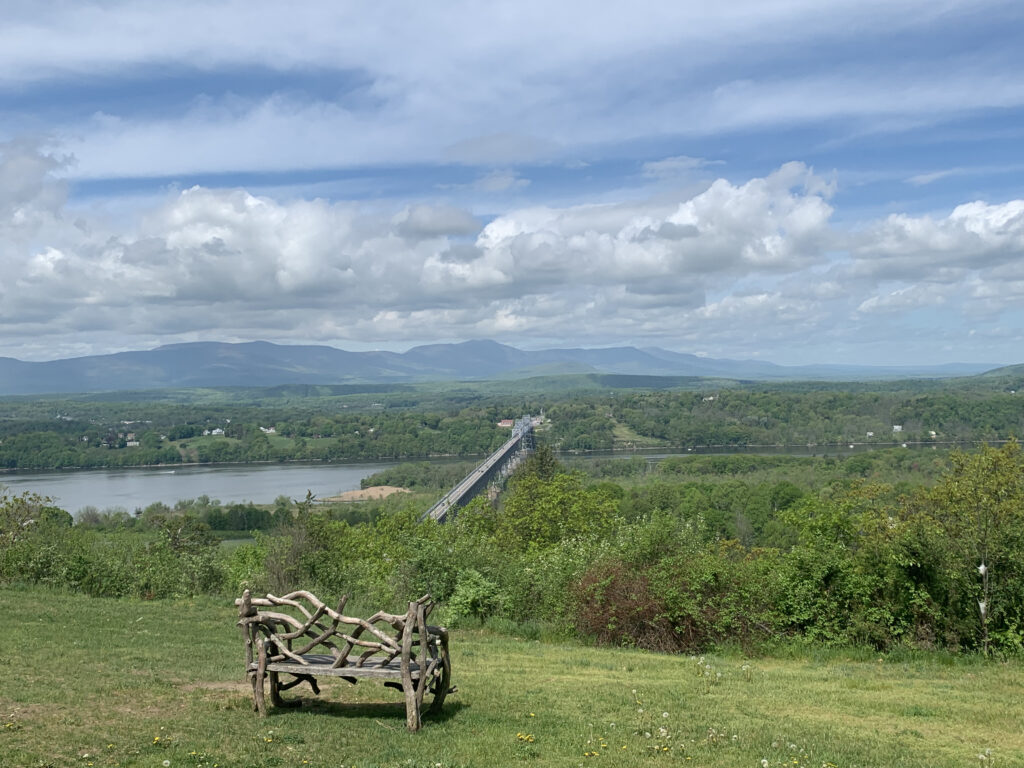
Perched over the Hudson River near the city of Hudson sits Olana State Historic Site, once the wondrous home of painter Frederic Church.
This Gilded Age mansion is unlike any in the valley, mystical and imposing, evoking Persian and Moorish architectural styles and reflecting the art and ambitions of its former owner.
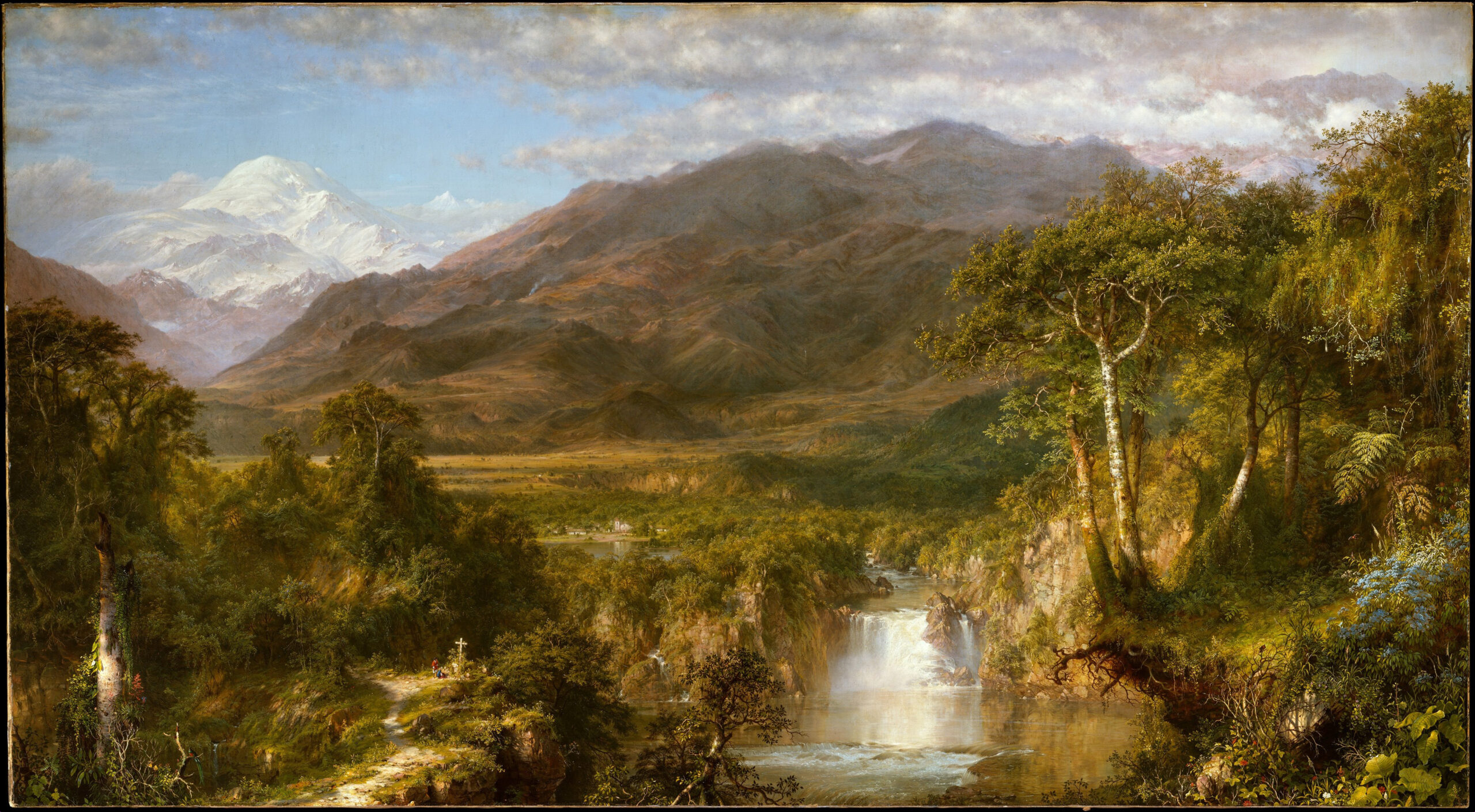
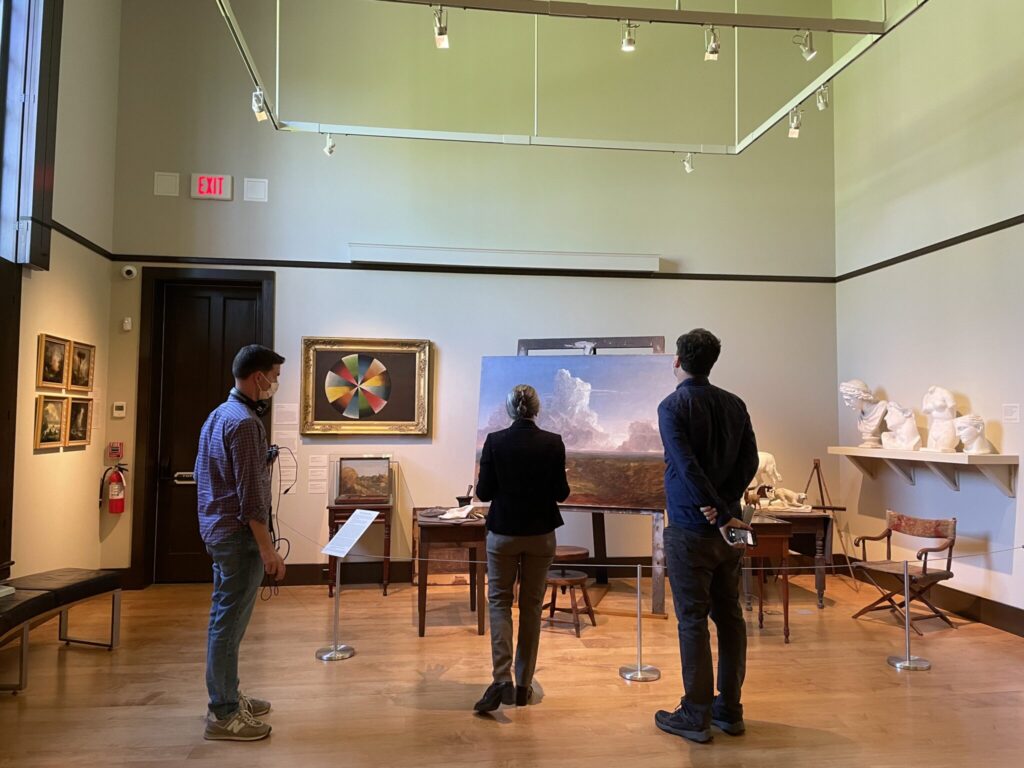
Church was more than a Hudson River School painter; he was an adventurer and dreamer, bringing the vistas of the world to America within his massive landscape creations. In 1859, when his Heart of the Andes made its New York debut, thousands lined up to soak in its impossible beauty.
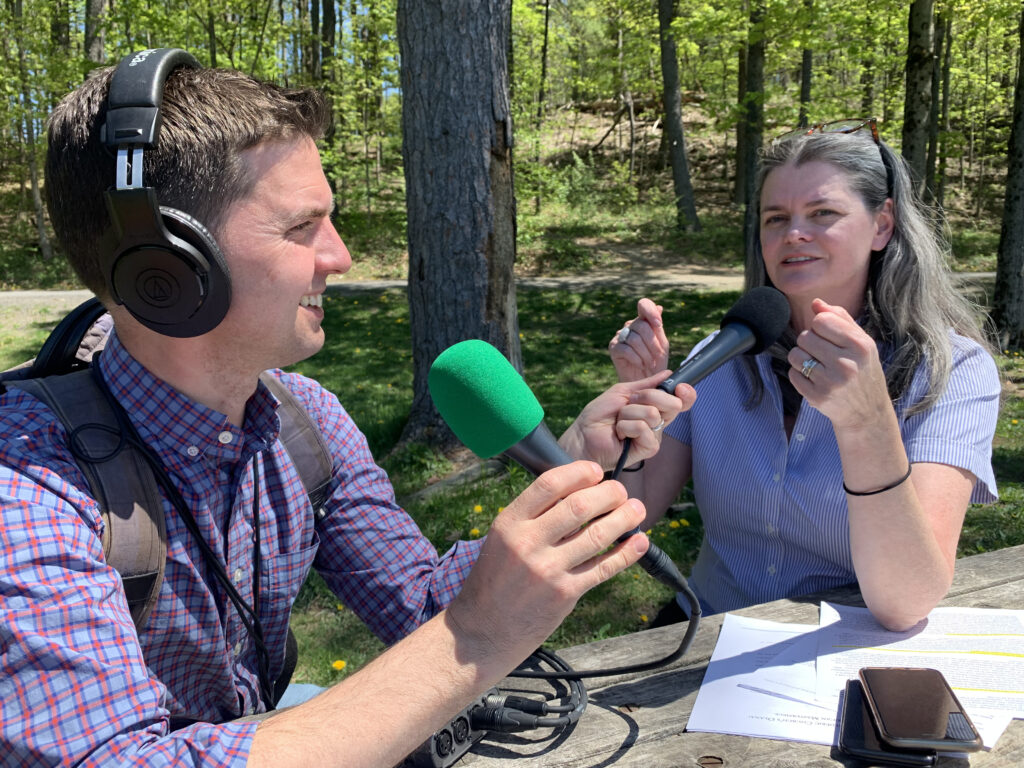
She joins Greg and Tom on the podcast this week to discuss Church’s unusual life — both as a New Yorker and as a daring traveler. After this show, you may never look at a landscape painting the same way again.
LISTEN HERE: THE PAINTER WHO BROUGHT THE WORLD TO NEW YORK
You can also find the podcast on Apple, Spotify, Overcast and YouTube.
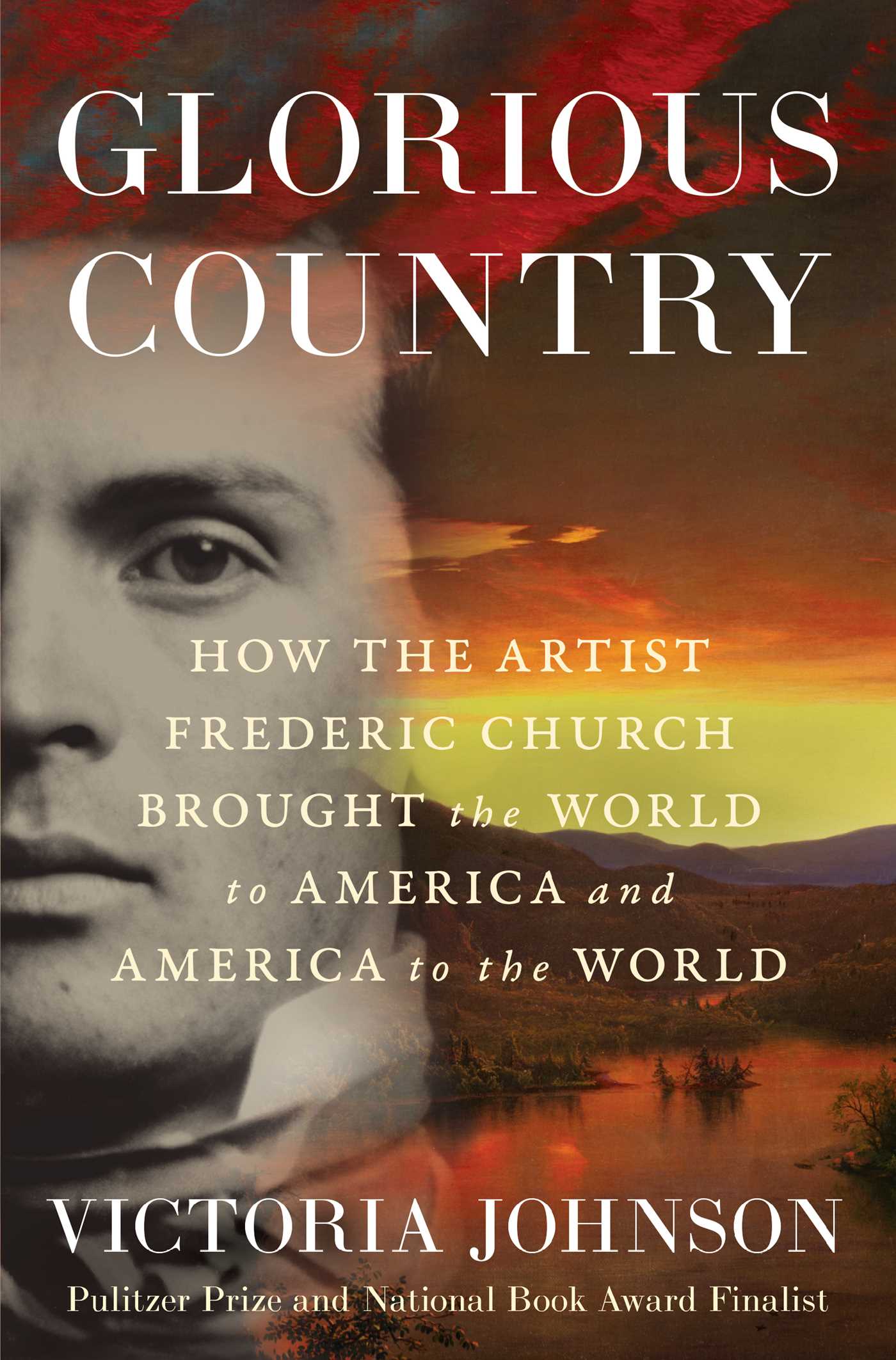
We want to thank Victoria Johnson for joining us on the Bowery Boys Podcast. Her new book Glorious Country is available on Scribner.
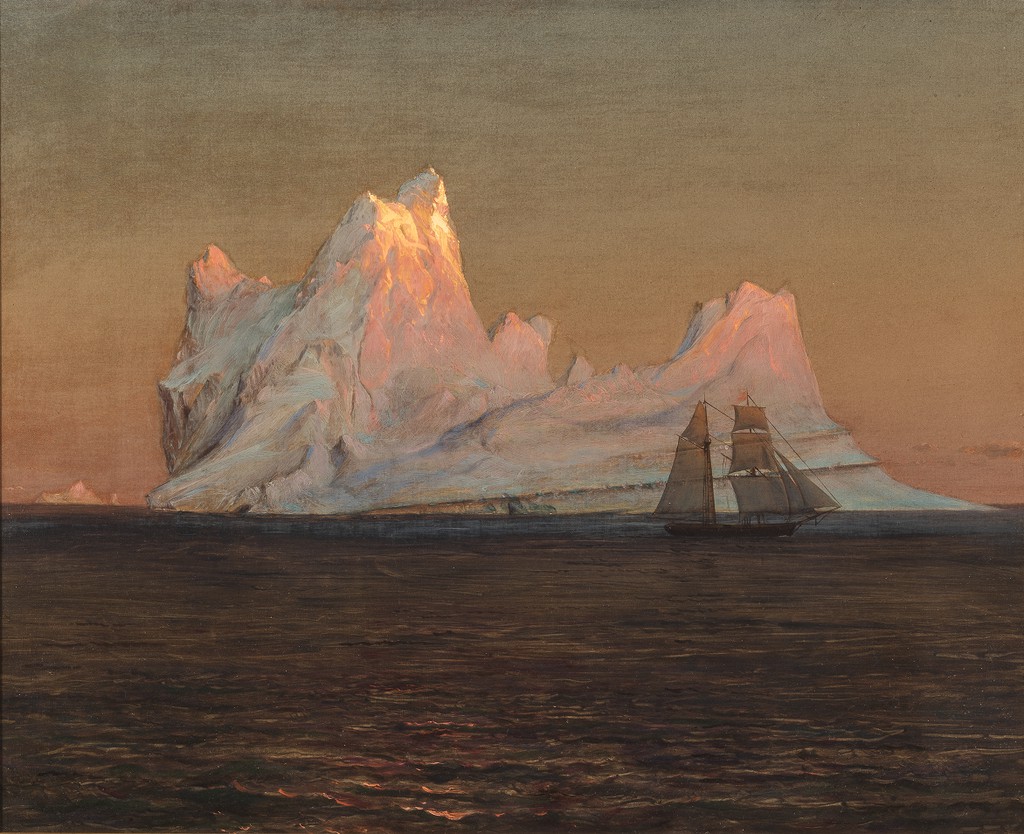
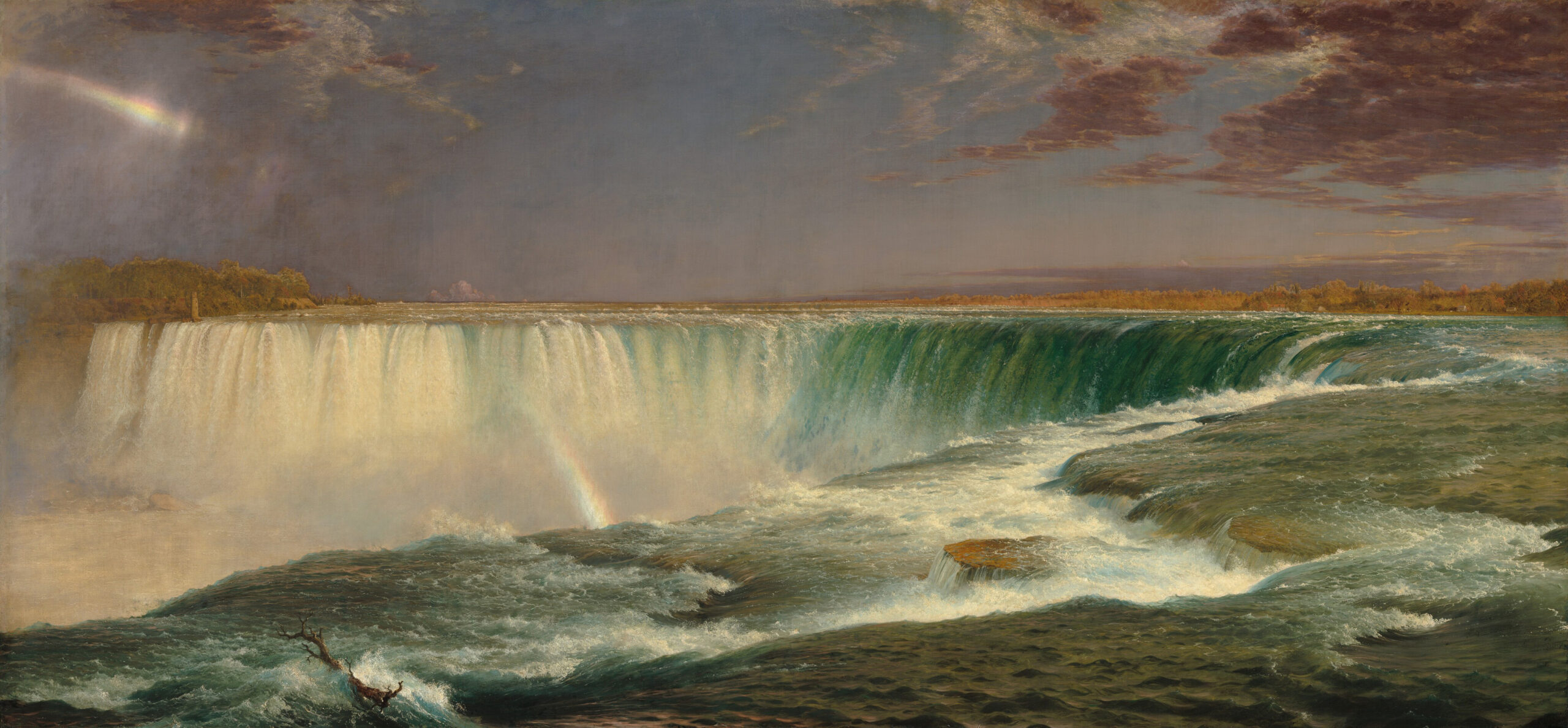
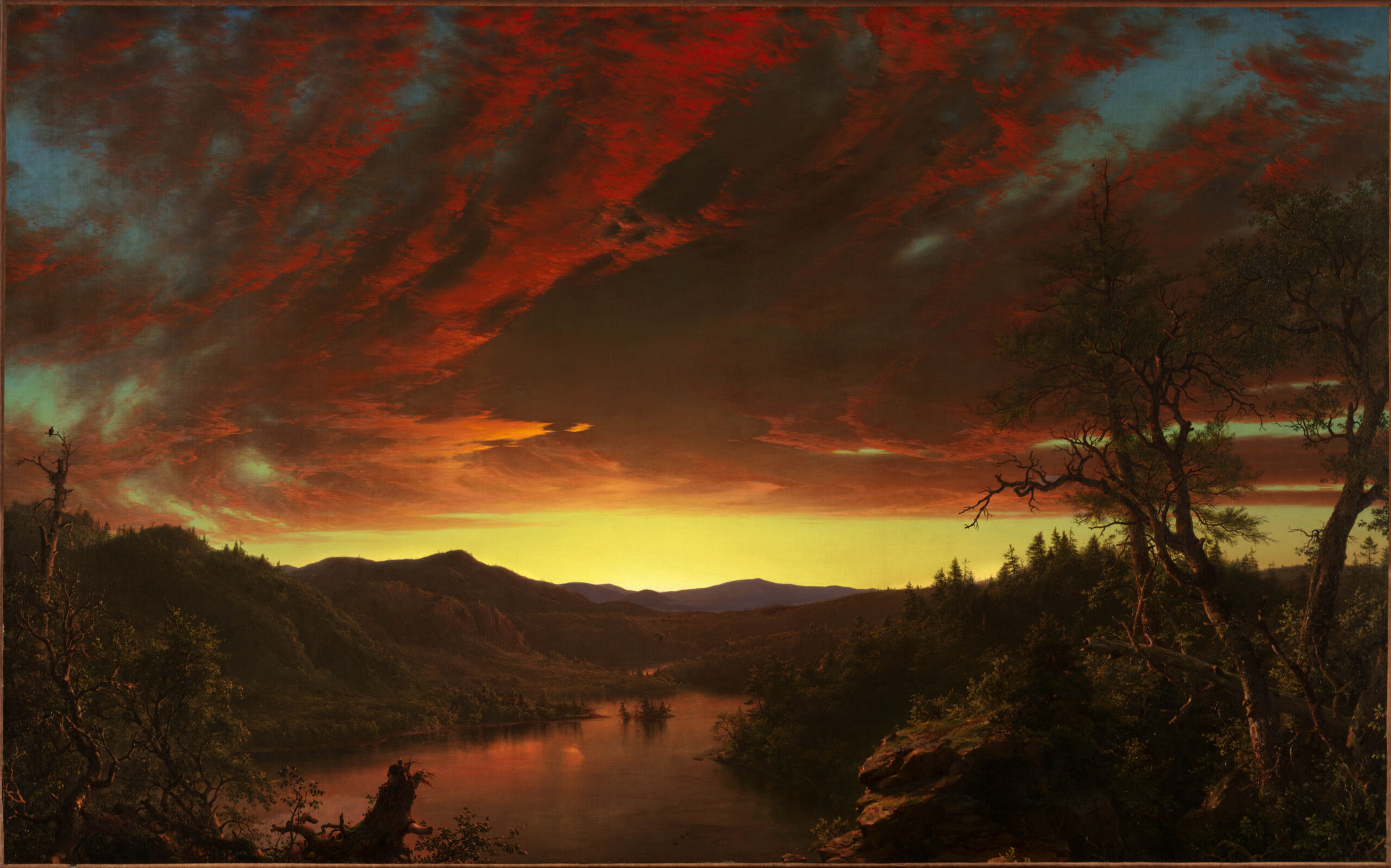
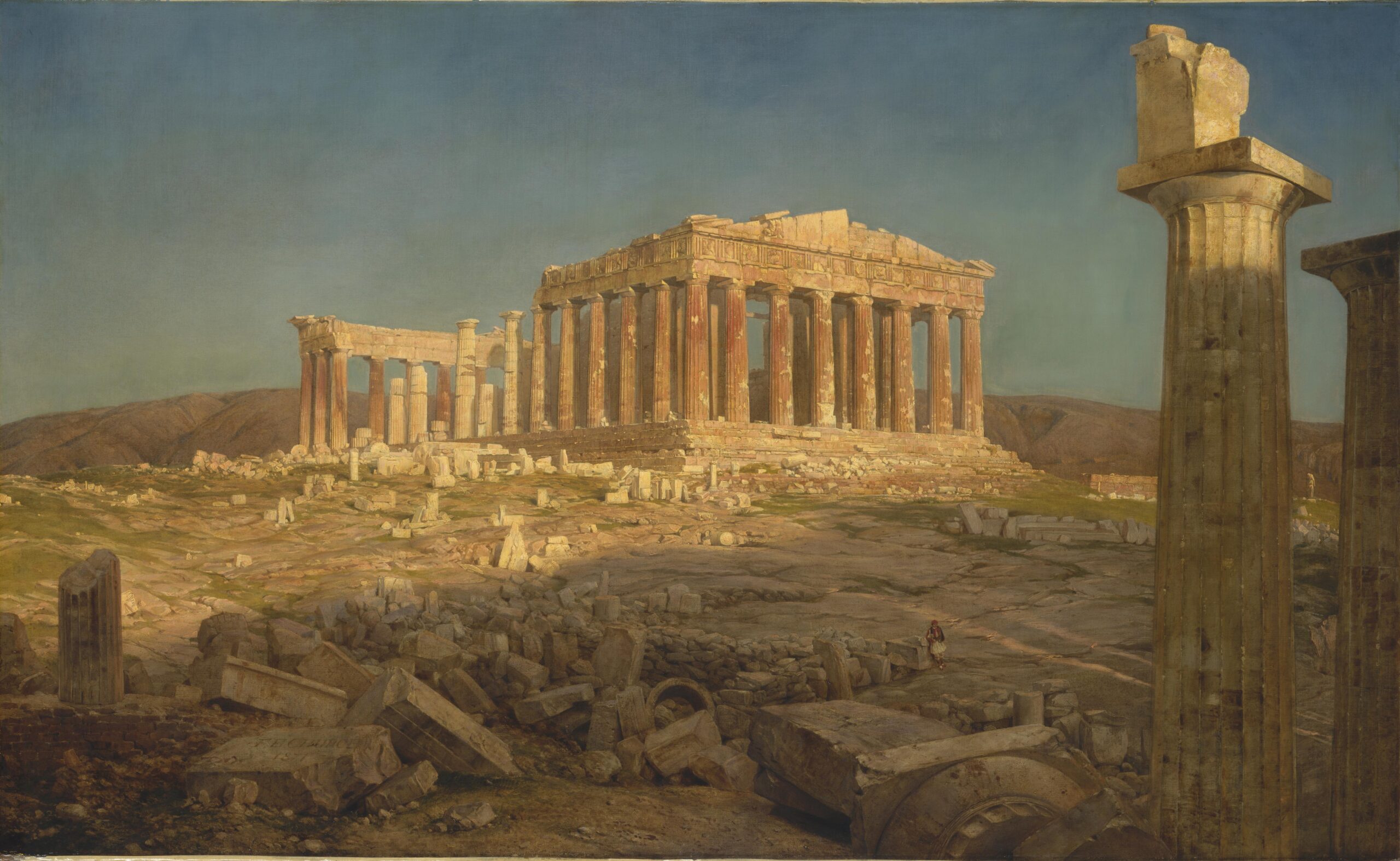
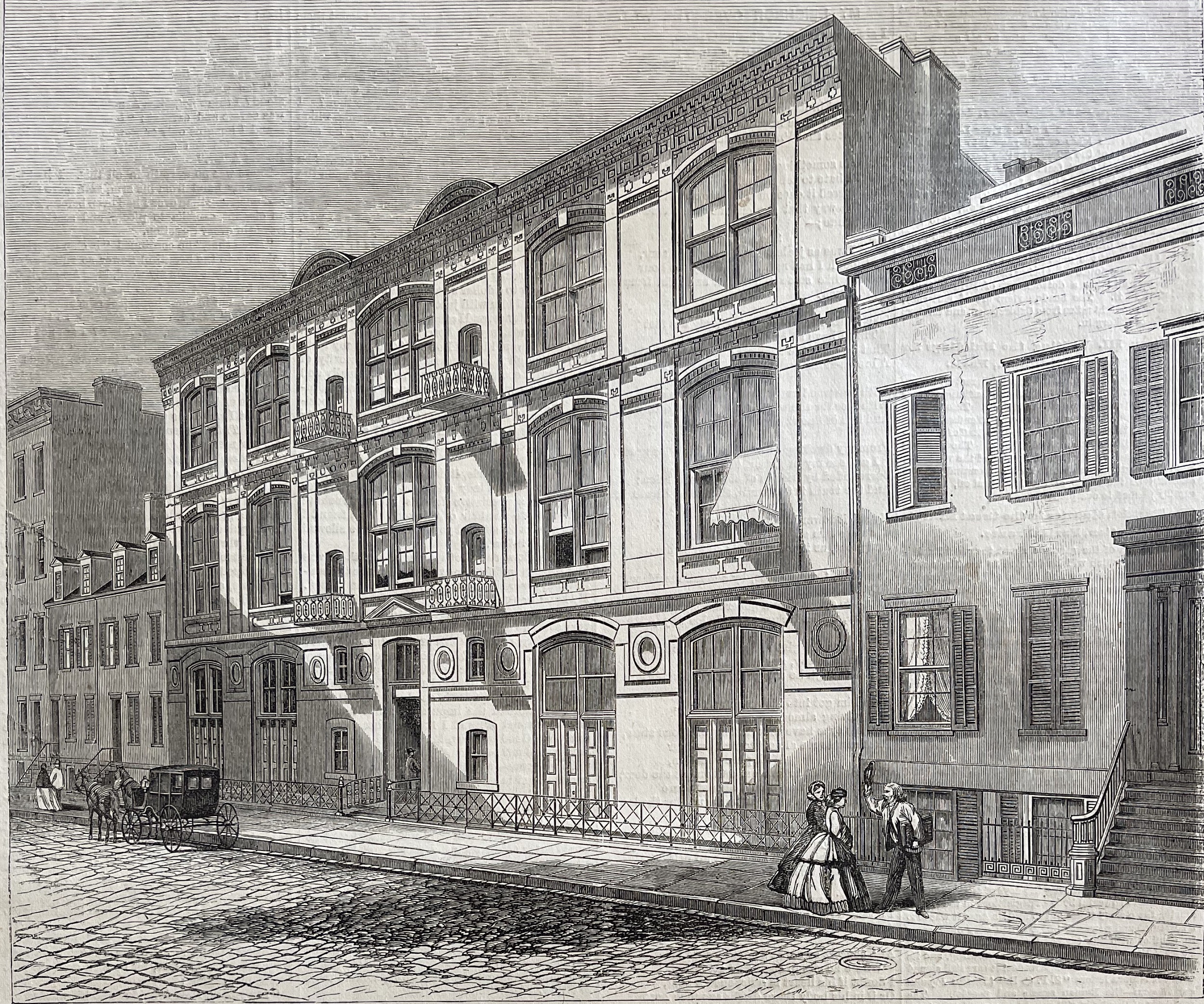
Floating Iceberg, Canada, June–July 1859, Cooper Hewitt, Smithsonian Design MuseumFrederic Edwin Church, Niagara Falls in Winter, March 1856, Cooper Hewitt, Smithsonian Design MuseumTwilight in the Wilderness, 1860, The Cleveland Museum of ArtThe Parthenon, 1871, The Metropolitan Museum of Art10th Street Studio, where Church’s studio was locatedFrederic Edwin Church, The Heart of the Andes, 1859, The Metropolitan Museum of Art
FURTHER LISTENING
Some other shows from the Bowery Boys Podcast related to this week’s show. Give them a listen when you’re done with our interview with Victoria Johnson:
Lets start the new year with something beautiful shall we?
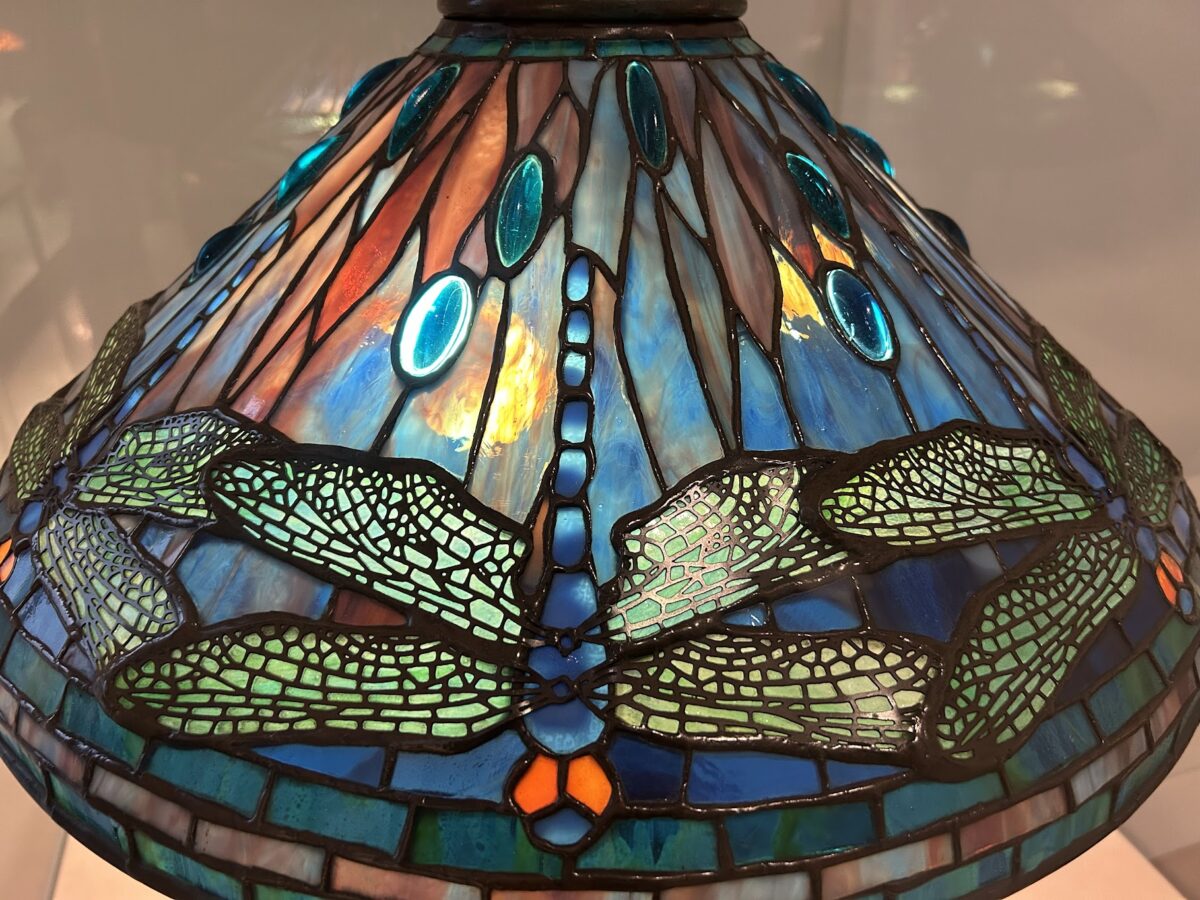
The latest in the Bowery Boys podcast feed — join Carl Raymond, host of The Gilded Gentleman podcast, and Lindsy Parrott of the Neustadt Collection of Tiffany Glass at the Queens Museum, as the luxury and elegant behind the name — Tiffany.
Just the name “Tiffany” evokes the glamour and elegance of the Gilded Age. But there is much more to the story than just the eponymous retailer who continues to sell fine jewelry and decorative objects today.
In this episode, Carl is joined by Lindsy Parrott, the Executive Director of The Neustadt Collection, one of the country’s most important collections of Tiffany glass and archival materials.
Lindsy and Cal discuss the two Tiffanys — Charles Lewis Tiffany who began the original retail silver and jewelry and his son Louis Comfort Tiffany who created revolutionary designs in stained glass.
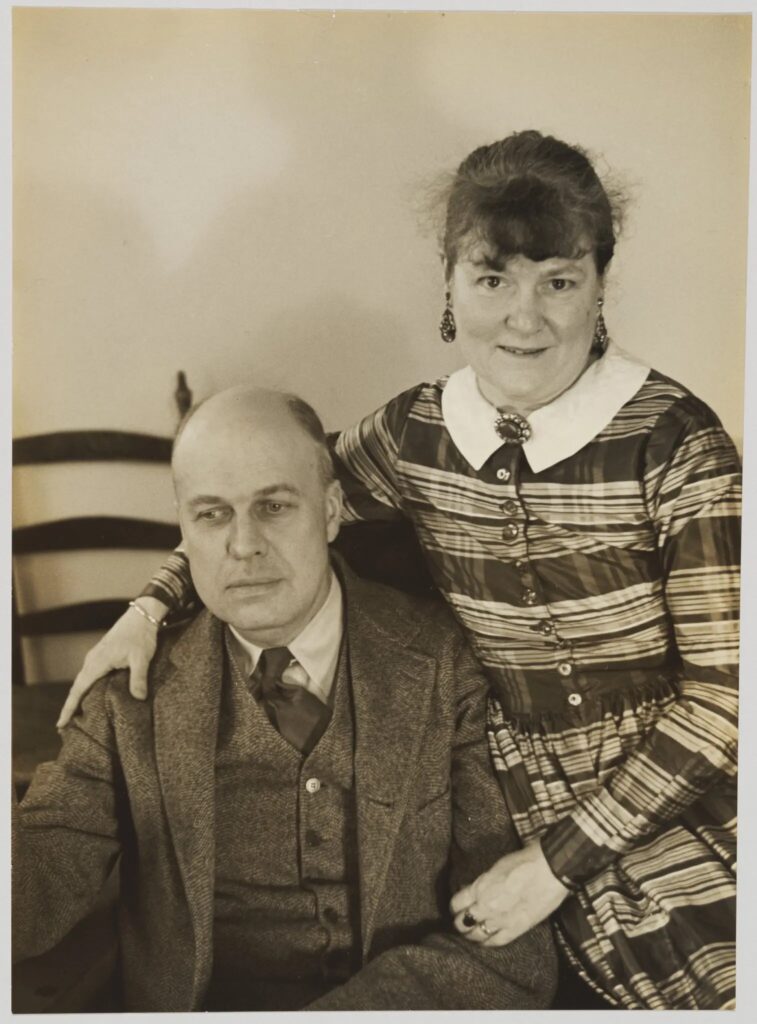
Within the New York City of Edward Hopper‘s imagination, the skyscrapers have vanished, the sidewalks are mysteriously wide and all the diners and Chop Suey restaurants are sparsely populated with well-dressed lonely people.
In this art-filled episode of the Bowery Boys, Tom and Greg look at Hopper’s life, influence and specific fascination with the city, inspired by the recent show Edward Hopper’s New Yorkat the Whitney Museum of American Art.
Hopper, a native of the Hudson River town of Nyack, painted New York City for over half a decade. In reality, the city experienced Prohibition and the Jazz Age, two world wars and the arrival of automobiles. But not in Hopper’s world.
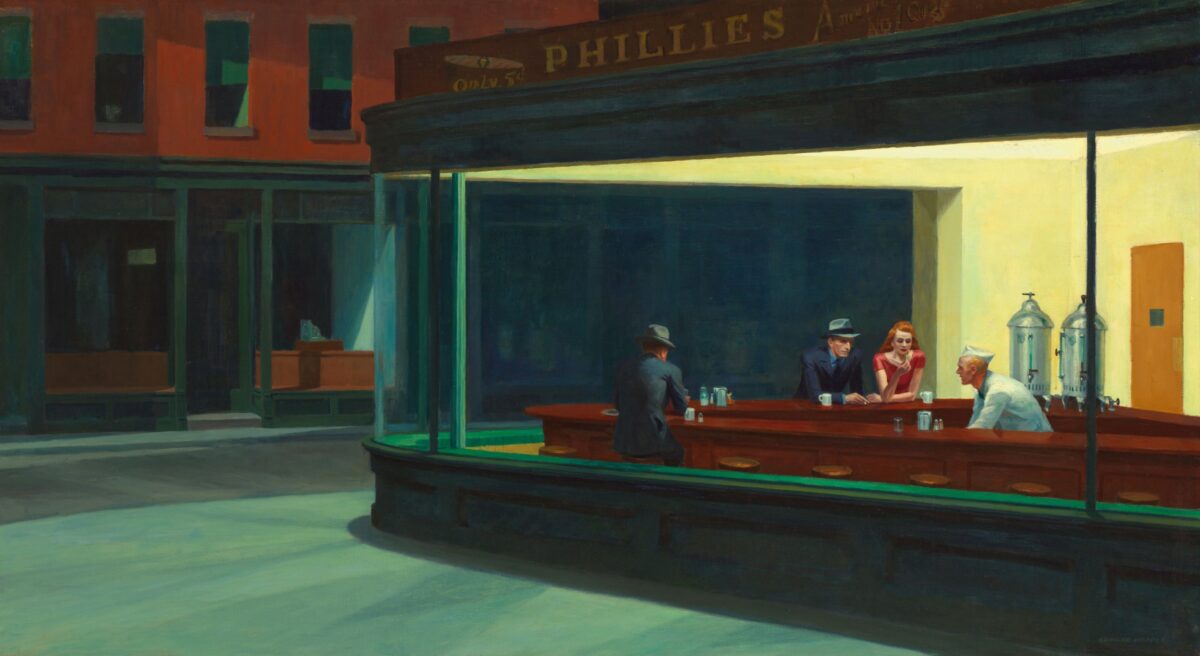
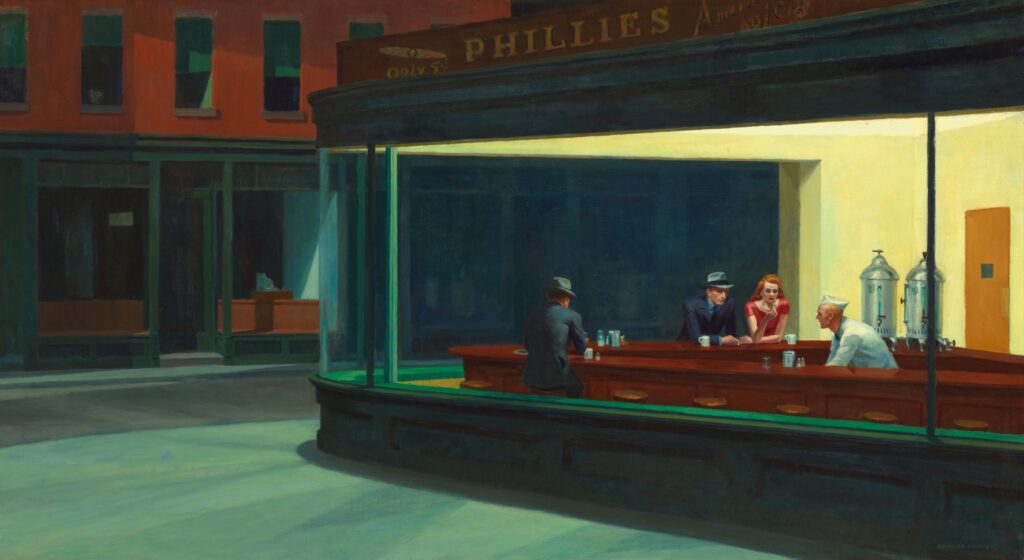
In his most famous work Nighthawks (1942), figures from a dreamlike film appear trapped in an aquarium-shaped diner. But Hopper has captured something else in this iconic painting: fear and paranoia. No wonder he’s considered a huge influence on Hollywood film noir and detective stories.
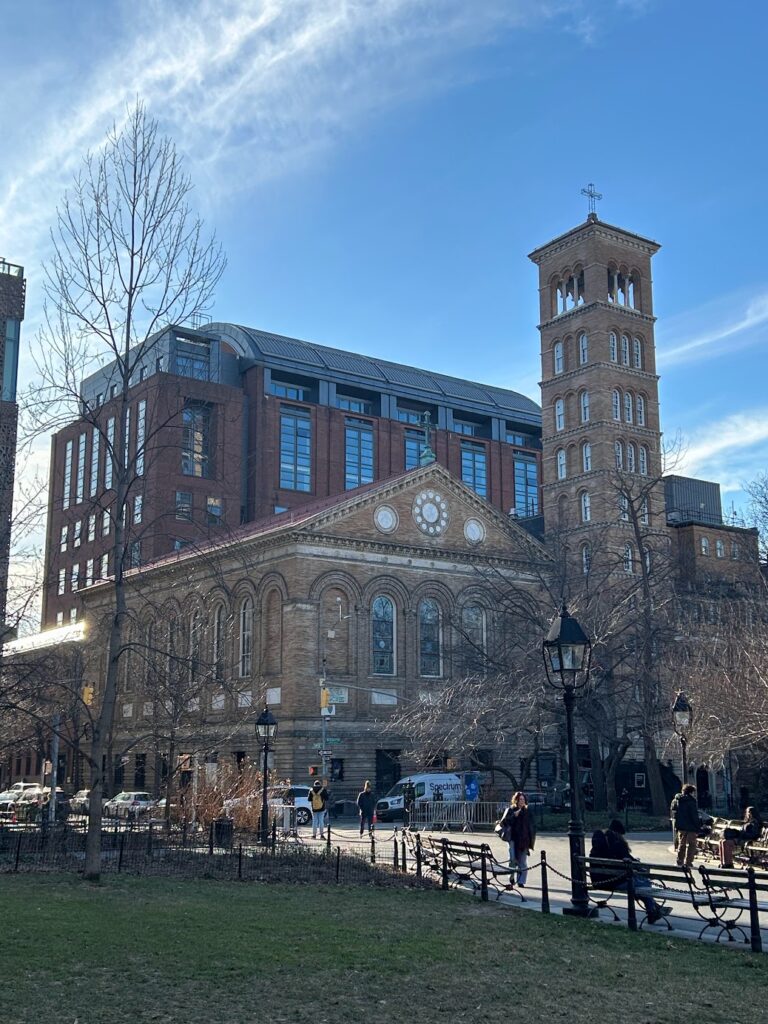
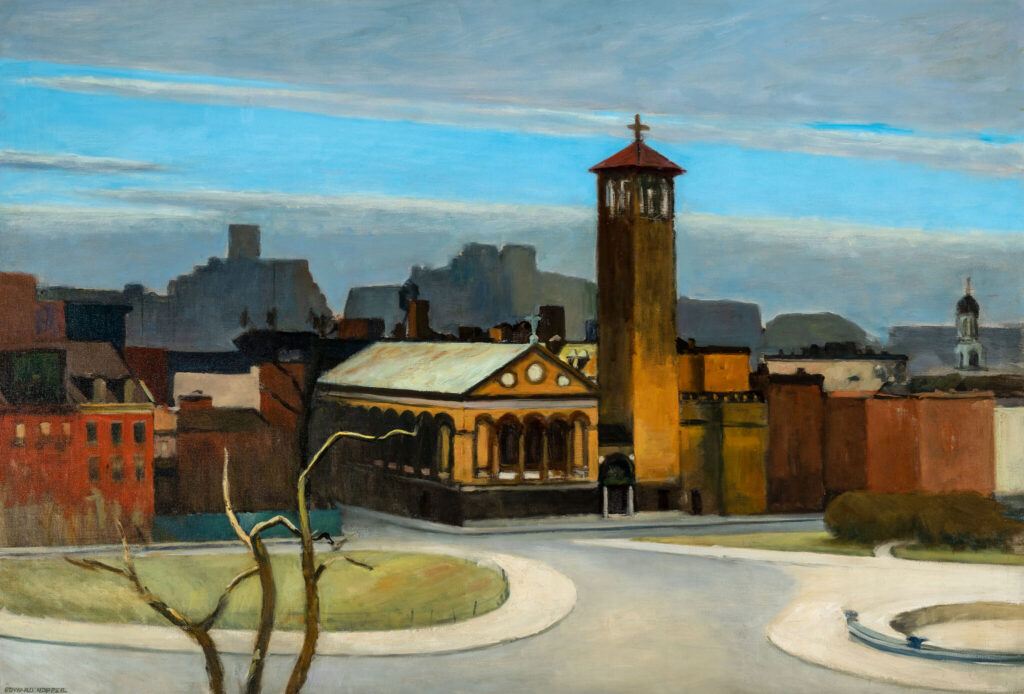
Hopper painted New York from his studio overlooking Washington Square Park, and both he and his wife Josephine Nivison Hopper would become true fixtures of the Greenwich Village scene.
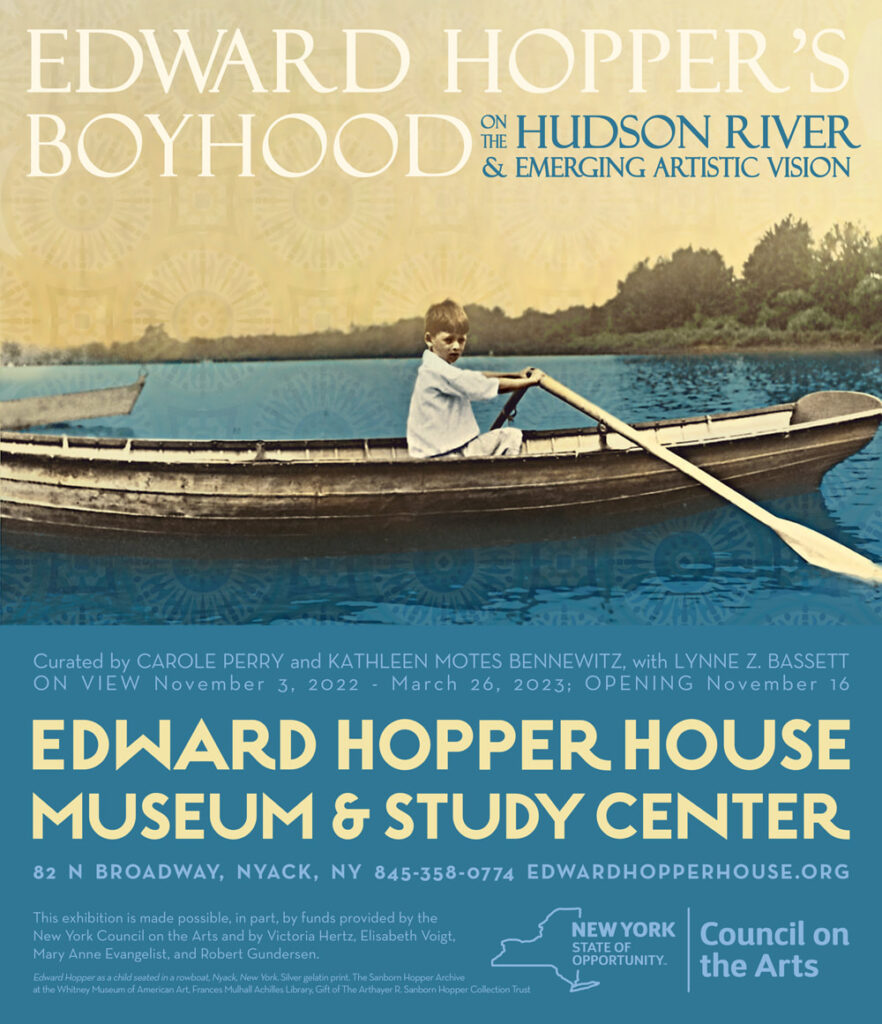
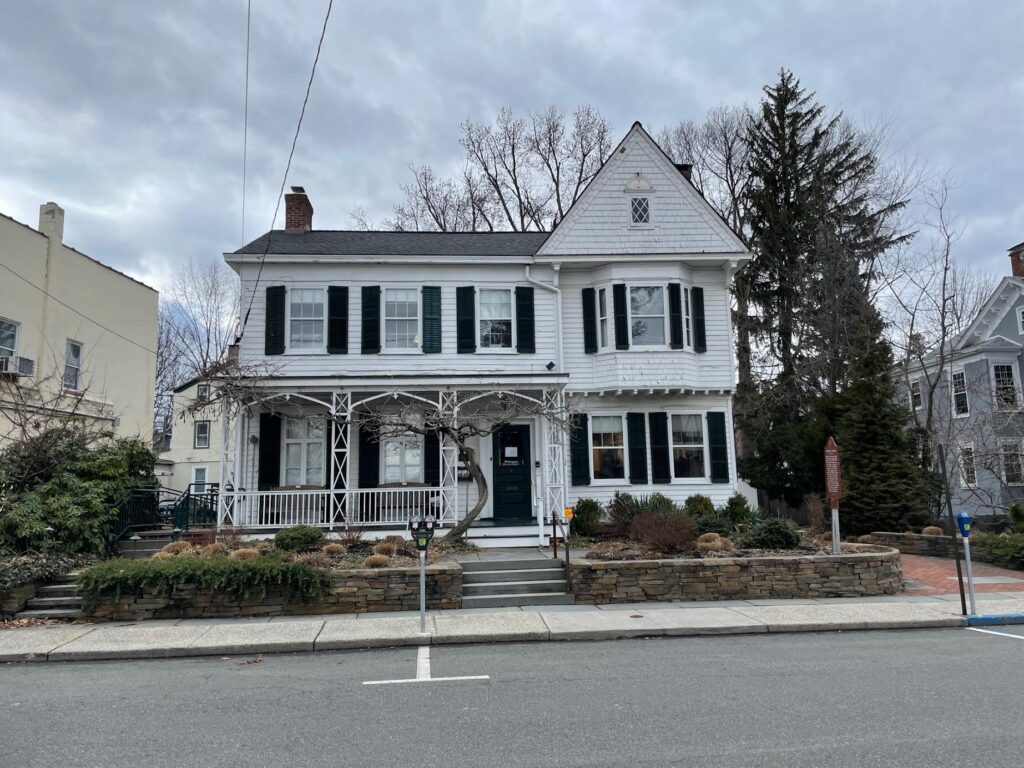
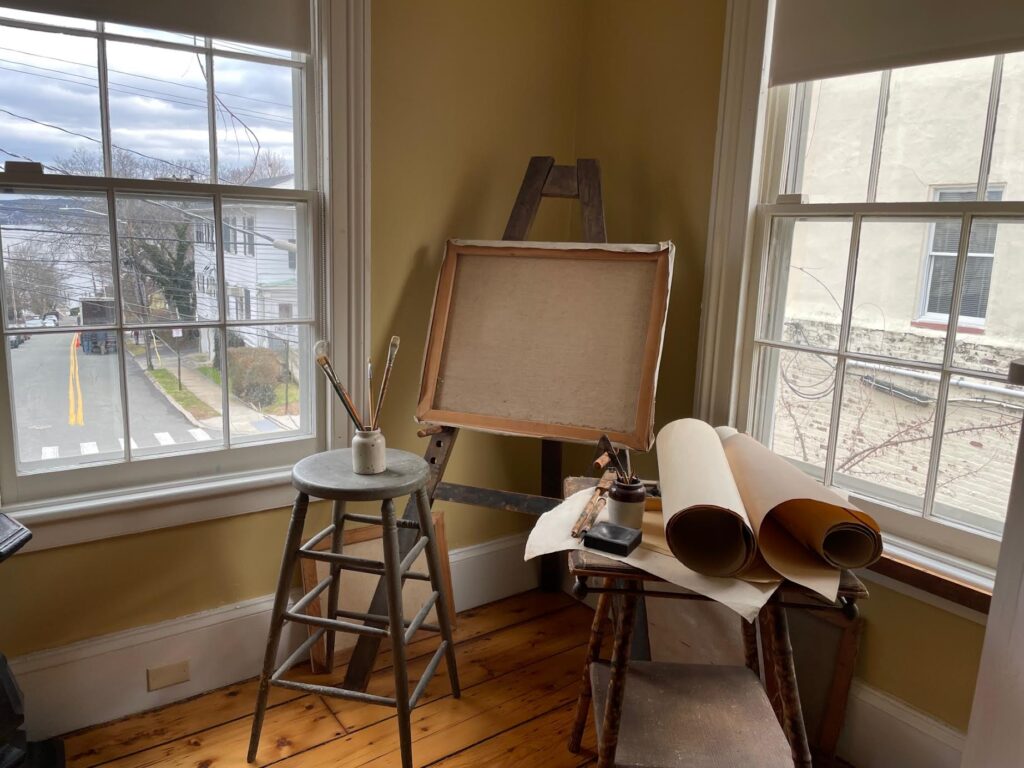
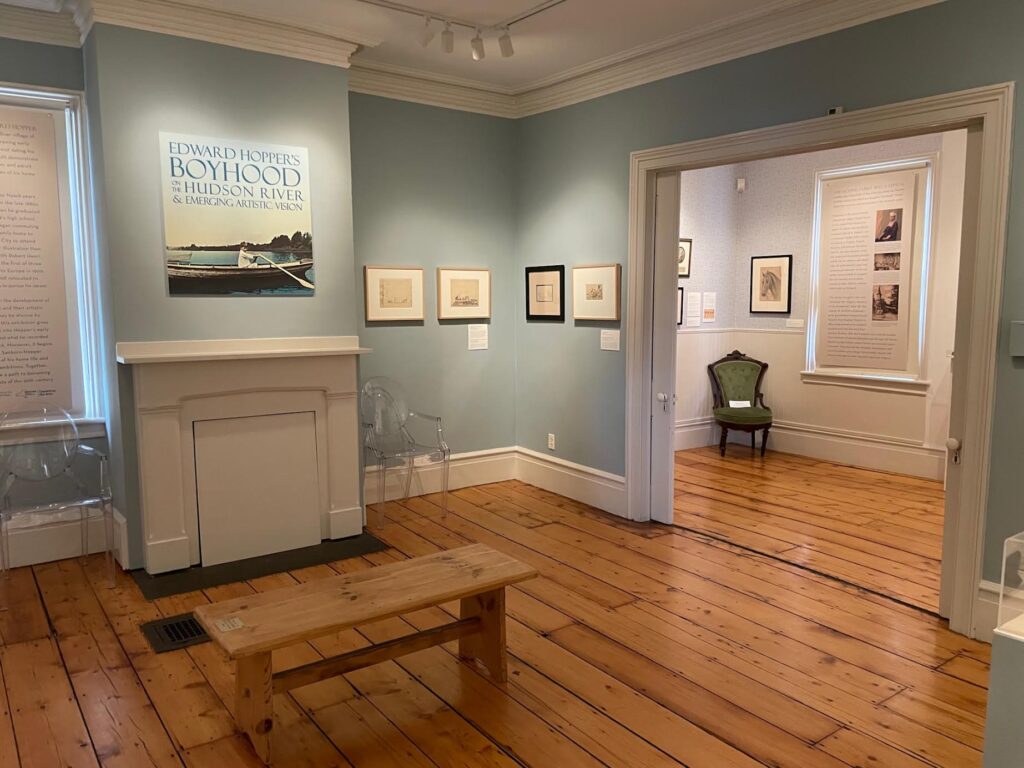
PLUS: Tom visits the Edward Hopper House Museumin Nyack, New York, to talk the artist’s early life with executive director Kathleen Motes Bennewitz. And Greg finds some of the hidden meanings in Hopper’s paintings thanks to American art historian Rena Tobey.
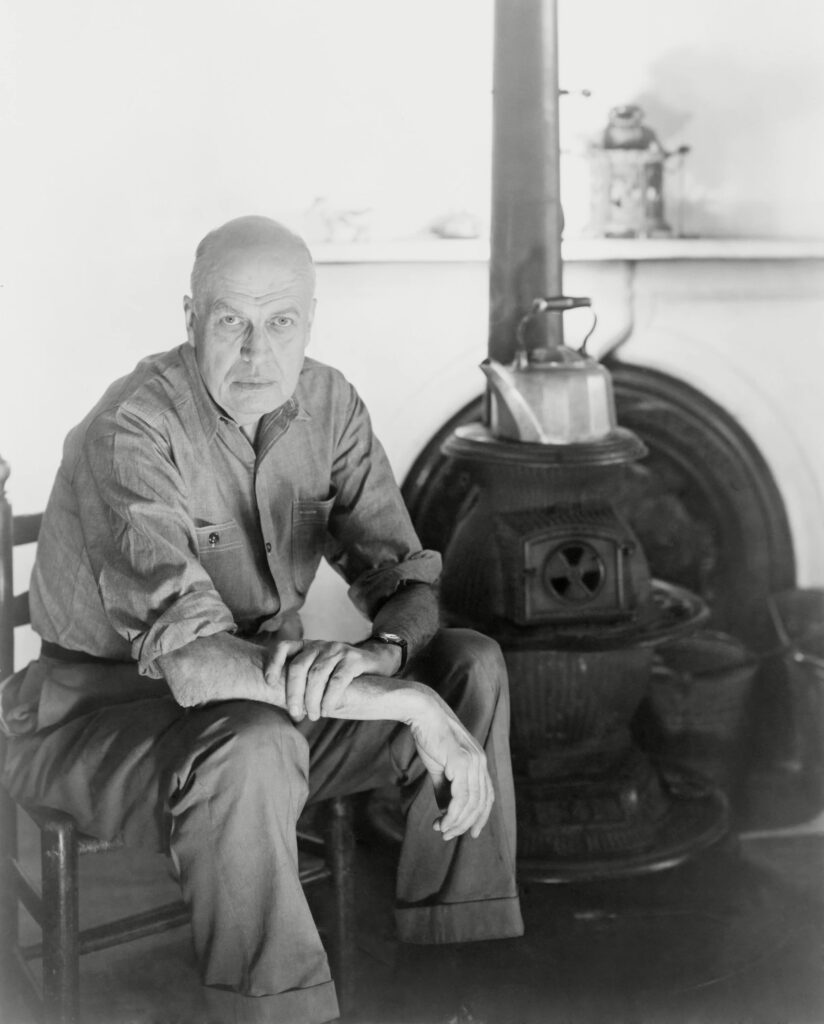
Edward Hopper in his studio. Courtesy Everett/ShutterstockCirca 1947. Photo courtesy Whitney Museum of American Art
From the Edward Hopper House Museum in Nyack, NY:
Photos by Tom Meyers
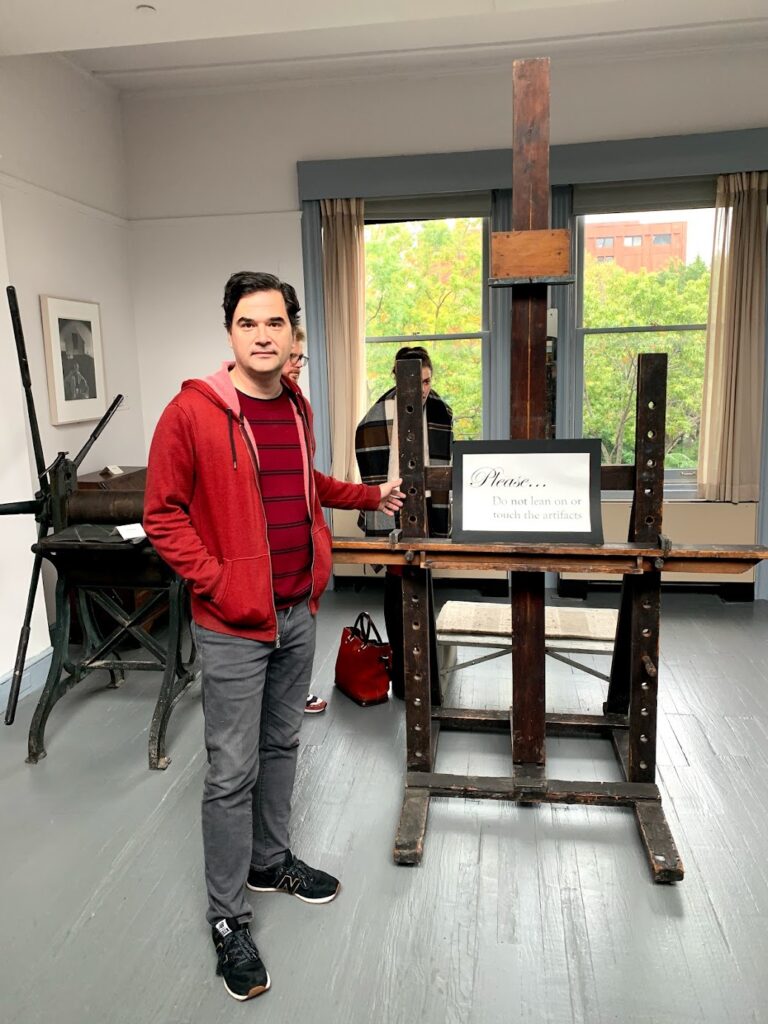
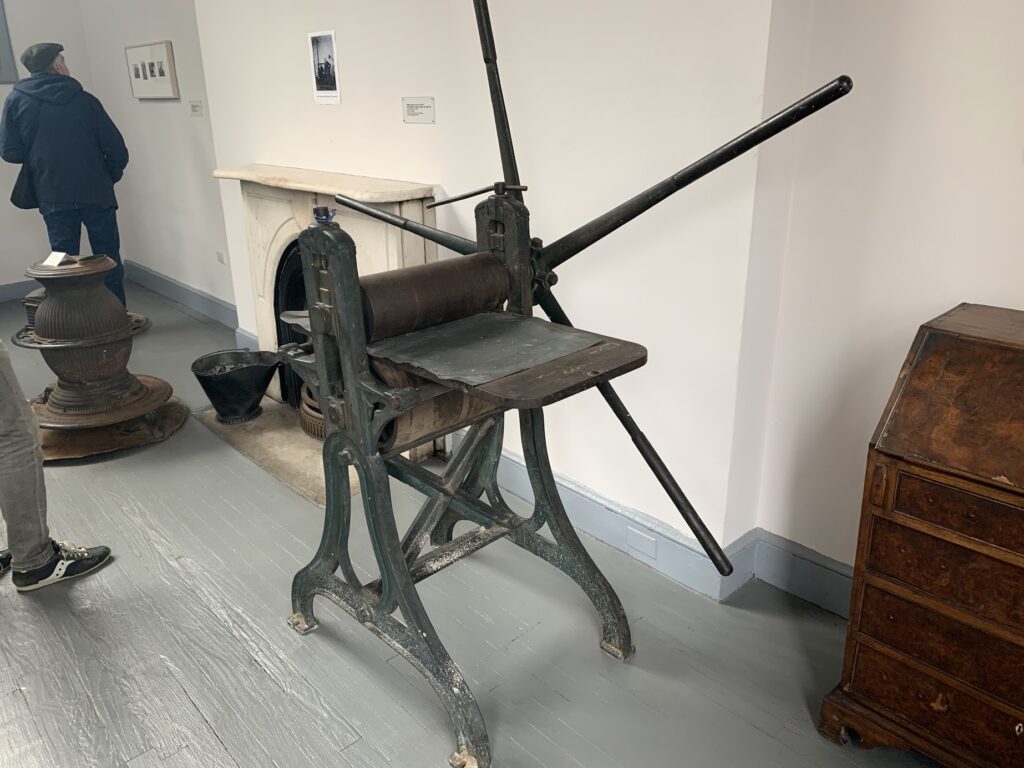
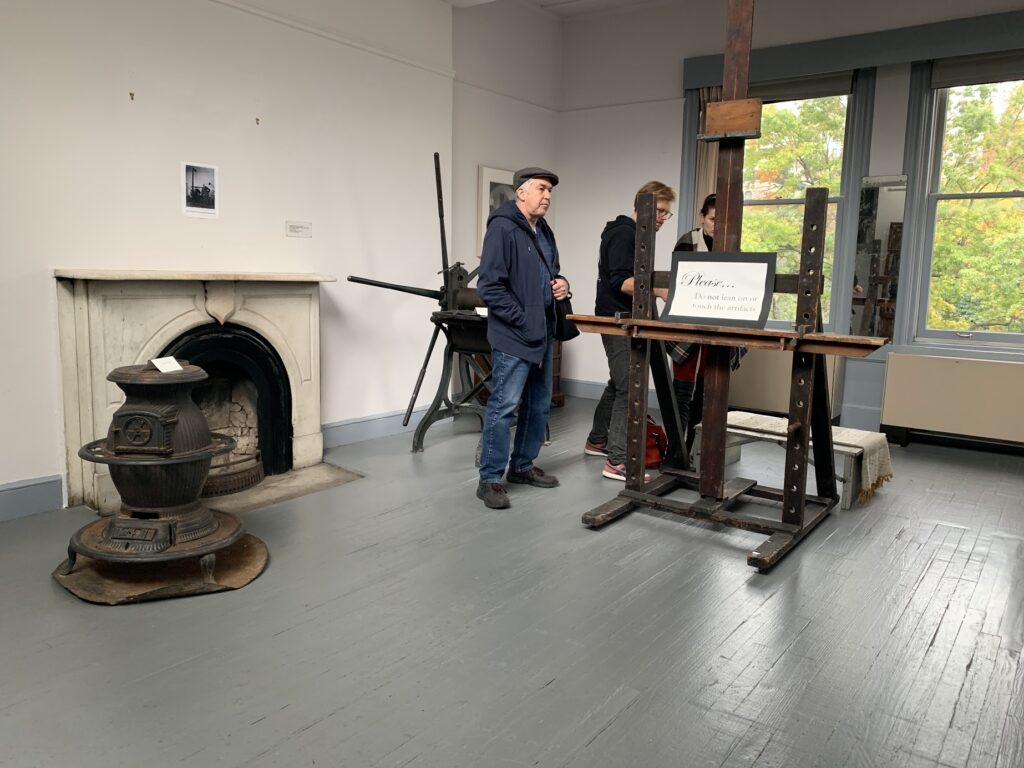
From inside Edward Hopper’s studio at 3 Washington Square North (from Open House NY 2019). Information on the studio here.
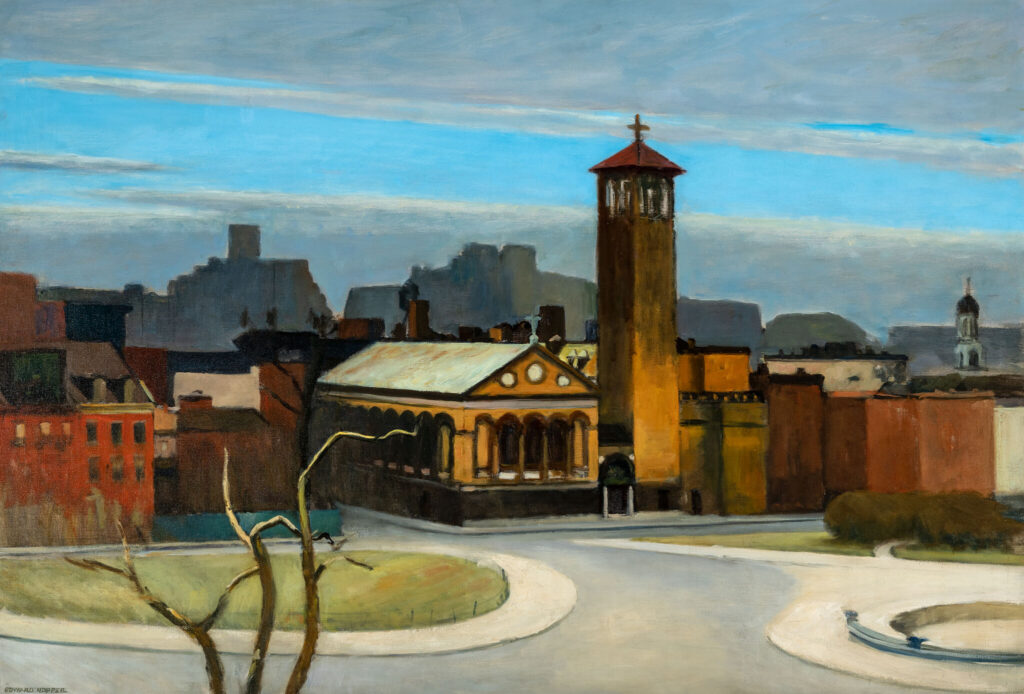
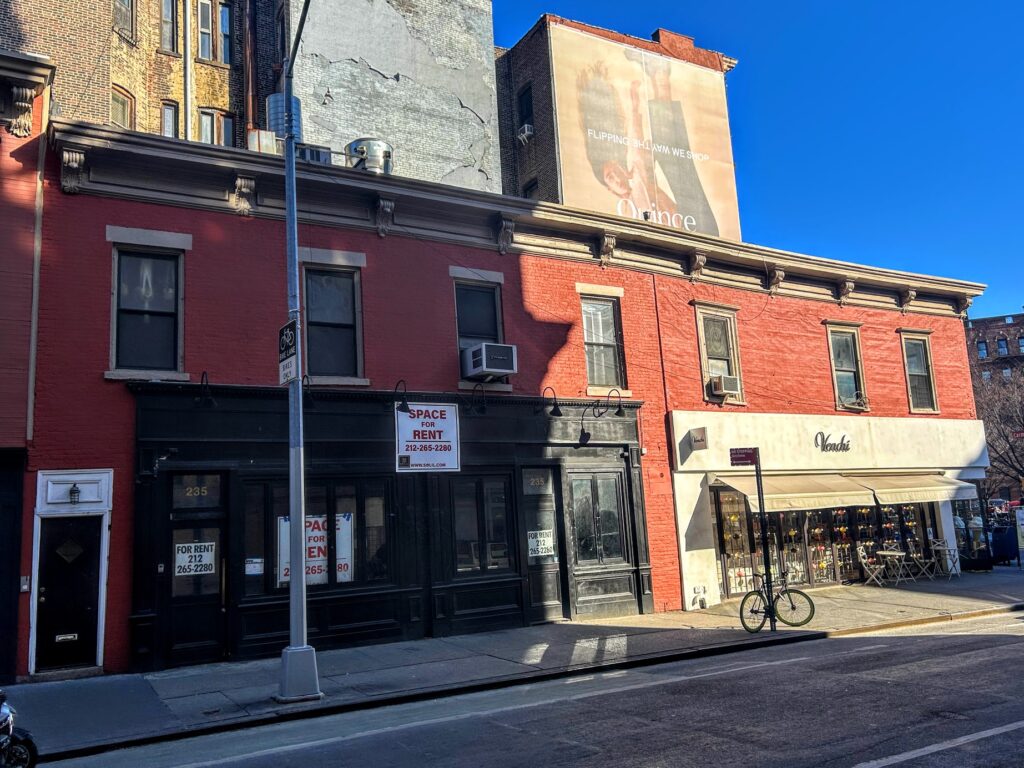
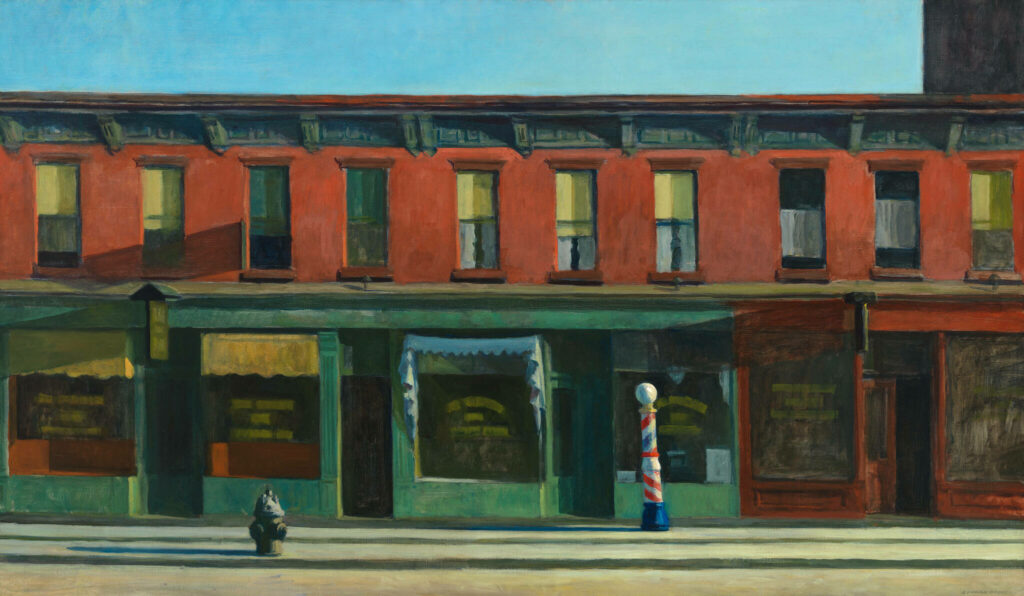
Although Hopper’s painting are mostly from the domain of his imagination, you can see some of his architectural subjects on the streets today. For more information, visit this interesting article posted at Village Preservation.
Bleecker and Carmine StreetEarly Sunday Morning, 1930Greenwich Avenue and Seventh AvenueNighthawks, 1942Judson Memorial ChurchNovember, Washington Square
FURTHER LISTENING
After finishing this show on Edward Hopper, dive back into our back catalog and experience other shows related to Hopper and his subjects:
The Bowery Boys Road Trip to the Hudson Valley mini-series, exploring stories of American history along the Hudson River, is now complete. Catch up on all three episodes — and join us on Patreon for a special ‘behind the scenes’ episode:
On the Trail of the Croton Aqueduct
Welcome to the Old Croton Aqueduct Trail, 26.5 miles of dusty pathway through some of the most interesting and beautiful towns and villages of Westchester County.
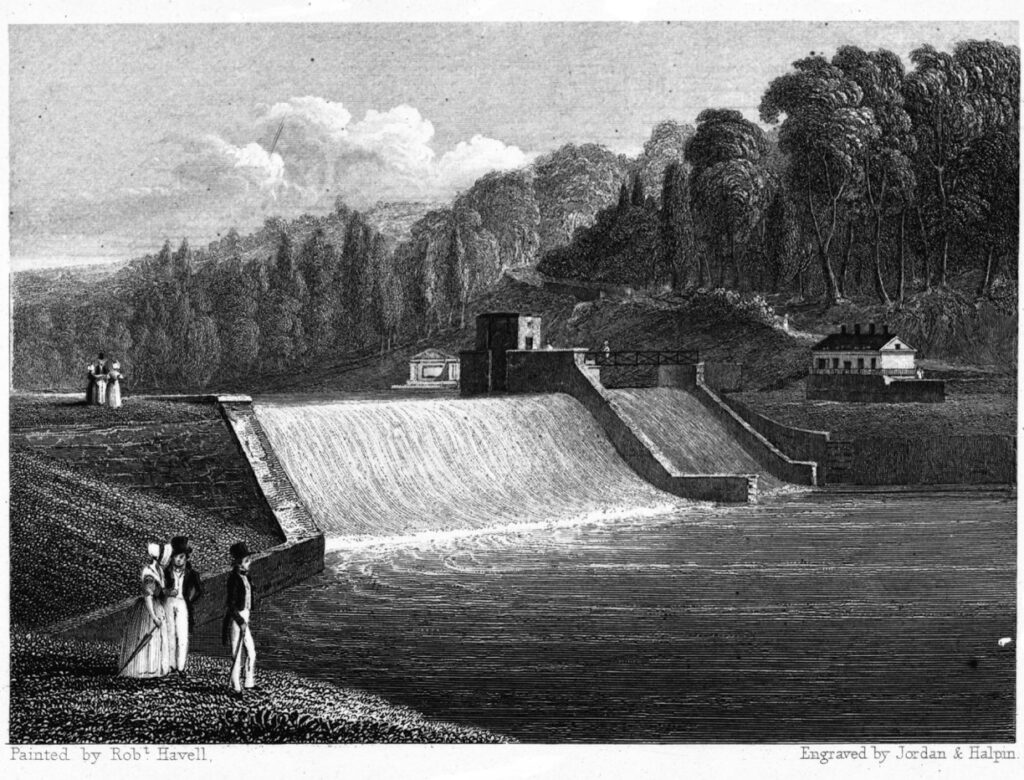
But this is more than a linear park. The trail runs atop — and sometimes alongside — the original Croton Aqueduct, a sloping water system which opened in 1842, inspired by ancient Roman technology which delivered fresh water to the growing metropolis over three dozen miles south.
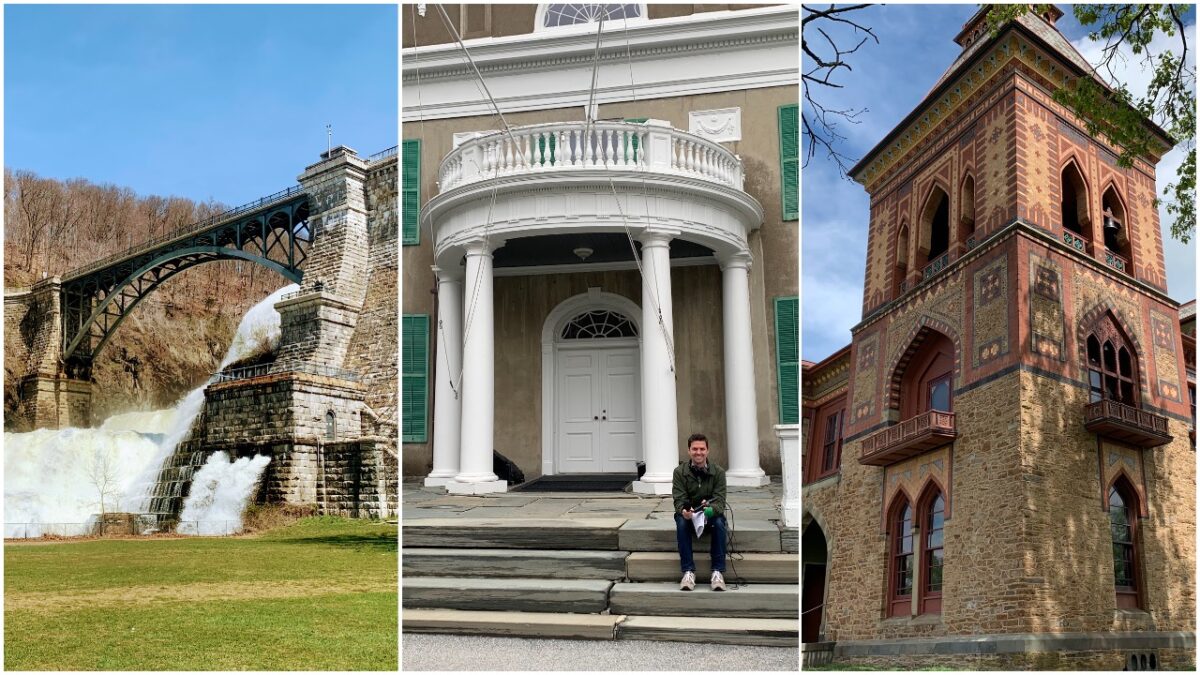
Locations featured: New Croton Dam, the Double Arch Bridge in Ossining, the Keeper’s House in Dobbs Ferry
Hyde Park: The Roosevelts on the Hudson
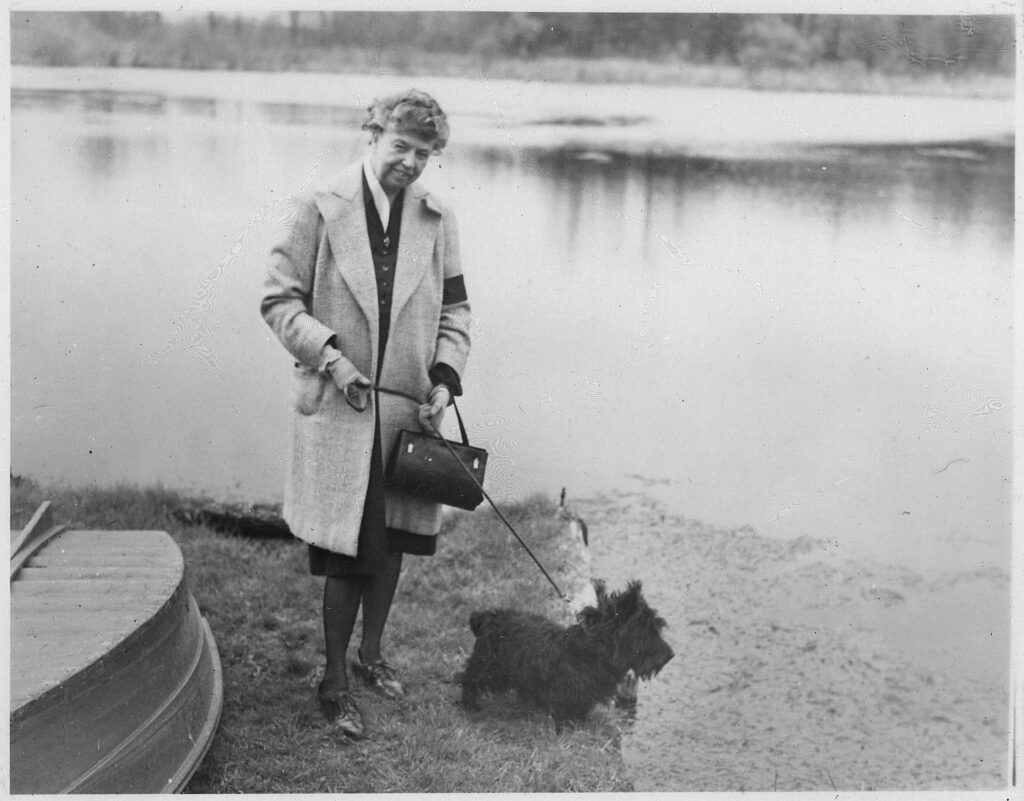
Hyde Park, New York was the home of Franklin Delano Roosevelt, the 32nd president of the United States. He was born here, he lived here throughout his life, and he’s buried here — alongside his wife Eleanor Roosevelt.
But it was more than simply a home.
The Hyde Park presence of the Roosevelts expands outwardly from the Roosevelt ancestral mansion of Springwood, over hundreds of forested acres from former farmlands on the eastern side to the shores of the Hudson River on the west.
Locations featured: Home of Franklin D. Roosevelt National Historic Site, FDR Presidential Library and Museum, Top Cottage, Val-Kill Cottage, all in Hyde Park
The Hudson River School: An American Art Revolution
Two landmarks to American art history sit on either side of the Rip Van Winkle Bridge over the Hudson River — the homes of visionary artists Thomas Cole and Frederic Edwin Church.
Cole and Church were leaders of the Hudson River School, a collective of 19th century American painters captivated by natural beauty and wide-open spaces. Many of these paintings, often of a massive size, depicted fantastic views of the Hudson River Valley where many of the artists lived.
Locations featured: Thomas Cole National Historic Site in Catskill, Olana State Historic Site in Hudson
Tom interviewing Amy Hausmann of the Olana State Historic Site
Road Trip to the Hudson Valley: Aftermath
In this Patreon exclusive, Greg and Tom look back on their adventures in the Hudson Valley and give you a behind-the-scenes look at their journeys along the Croton Aqueduct Trail, Hyde Park and the towns of Catskill and Hudson.
PLUS: Some tips on how to make these trips yourself this year.
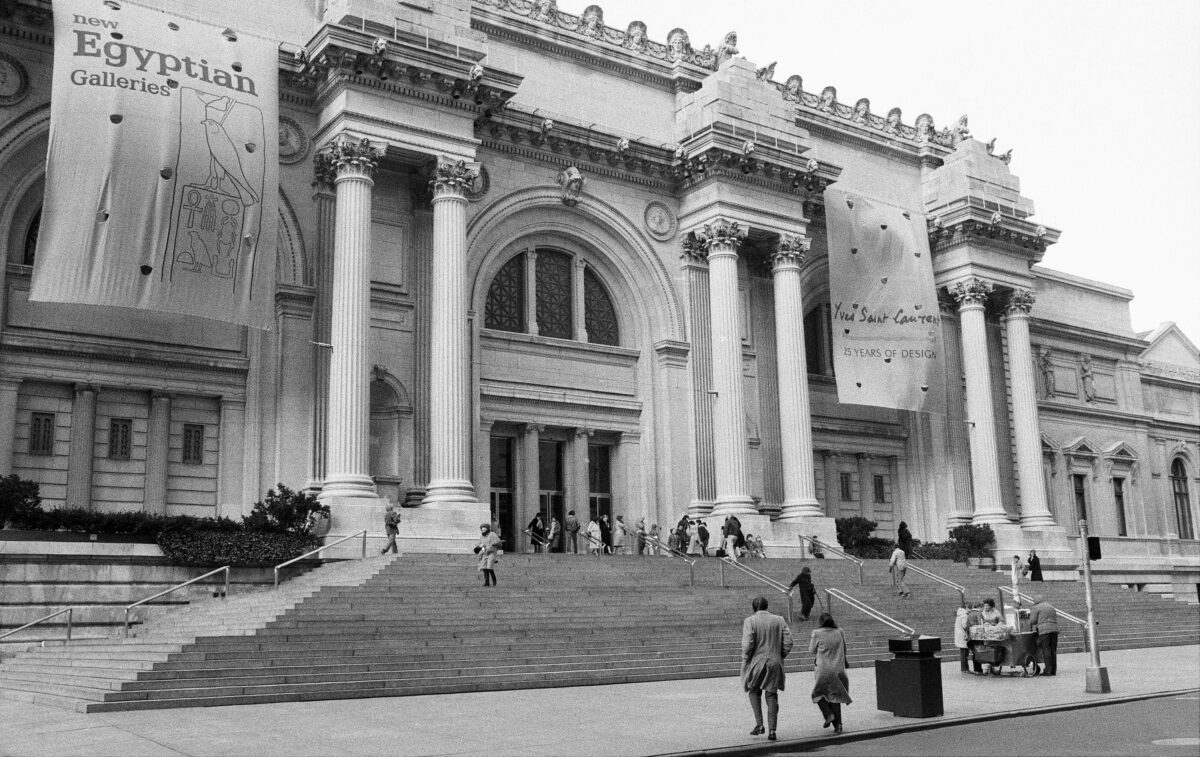
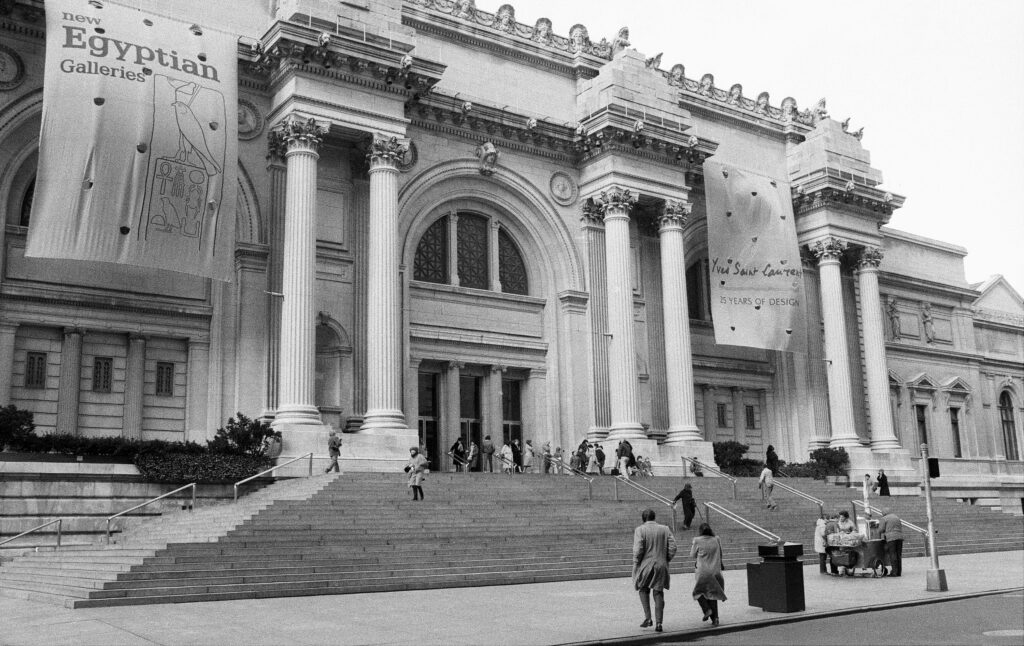
EPISODE 341 Celebrating the history of the Metropolitan Museum of Art in the 150th anniversary year of its founding — certainly one of the strangest years in its extraordinary existence.
The Met is really the king of New York attractions, with visitors heading up to Central Park and streaming through the doors by the millions to gasp at the latest blockbuster exhibitions and priceless works of art and history.
And who doesn’t love getting lost at the Met for an afternoon — wandering from the Greek and Roman galleries to the imposing artifacts within the Arms and Armor collection and the treasures of the Asian Art rooms?
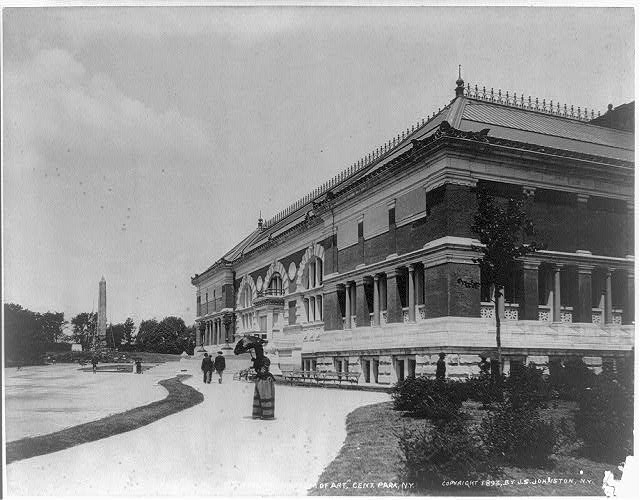
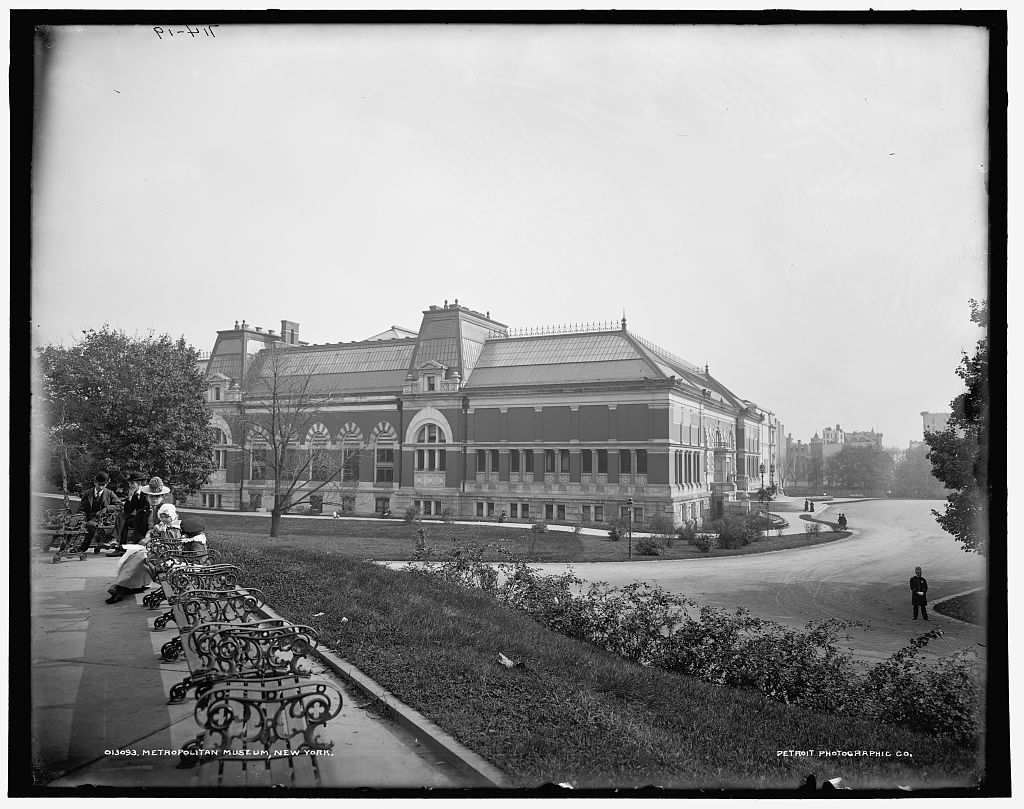
The Theodore Weston addition to the Met 1893, J.S. Johnston, Library of Congress
But this museum has a few surprising secrets in its history — and more than a few skeletons (or are those mummies?) in its closet.
WITH Ancient temples, fabulous fashions, classical relics, Dutch masters, controversial exhibitions and the decorative trappings of the Gilded Age.
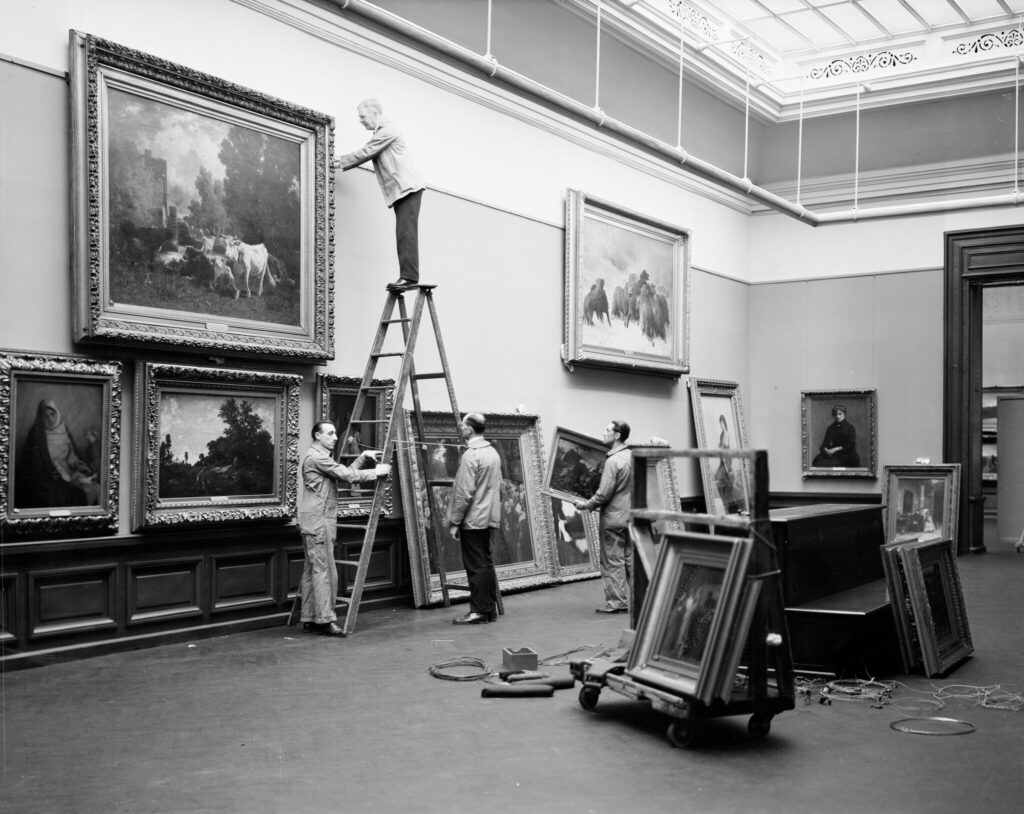
November 1928, photo courtesy The Metropolitan Museum of Art
AND Find out how the museum building has evolved over the years, employing some of the greatest architects in American history.
PLUS An interview with the Met’s Andrea Bayer, Deputy Director for Collections and Administration, on the museum’s celebratory exhibition Making the Met 1870-2020.
How do you launch an anniversary celebration during a pandemic and lockdown?
Listen today on your favorite podcast player:
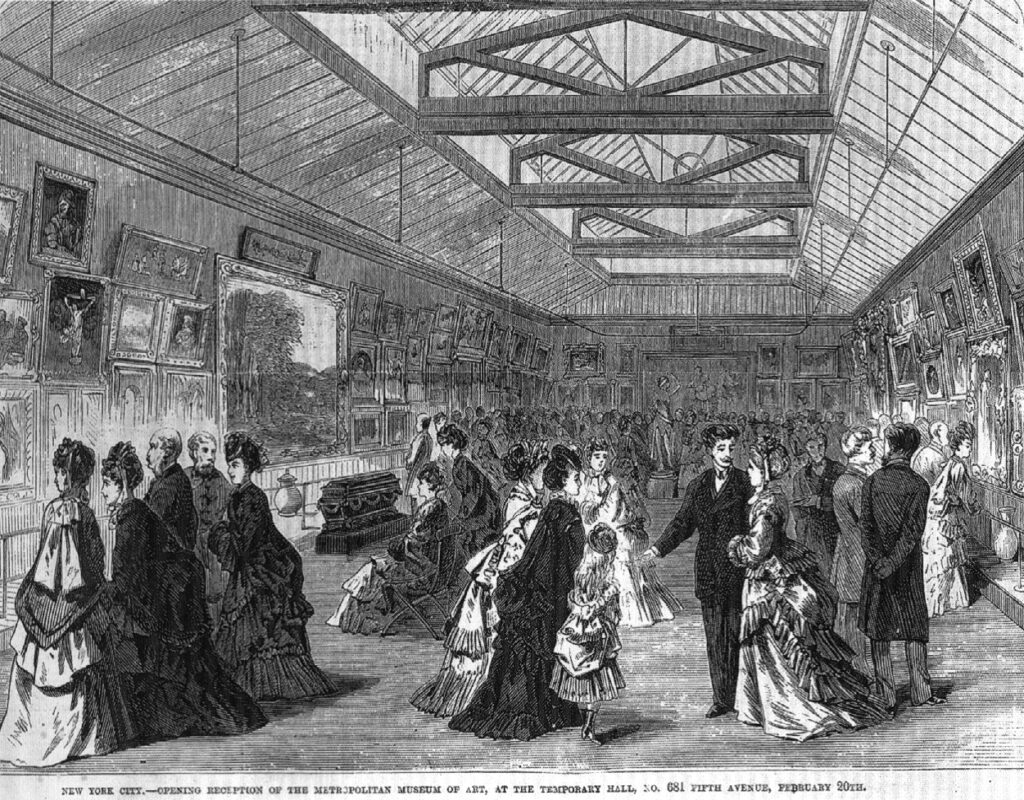
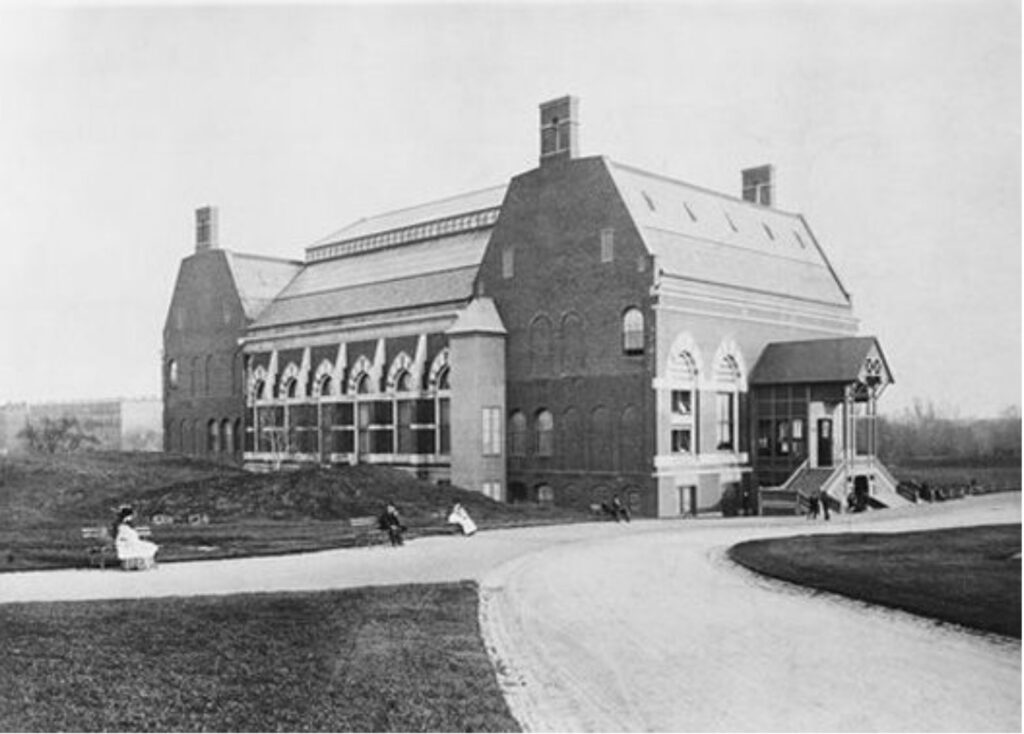
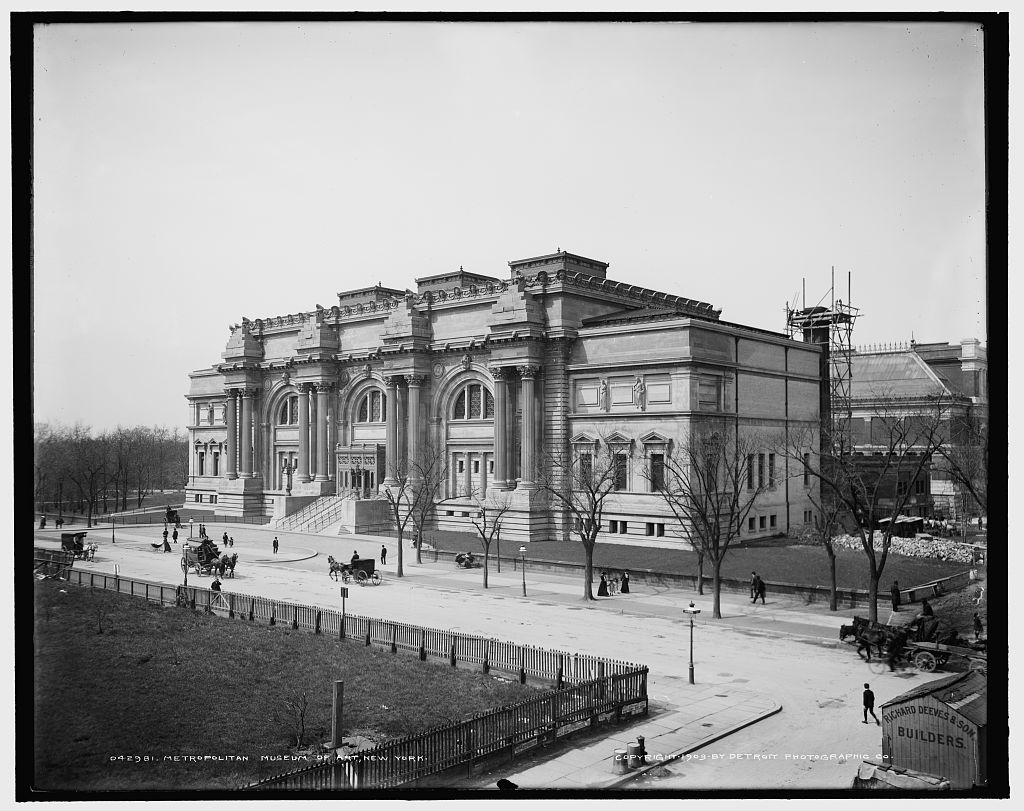
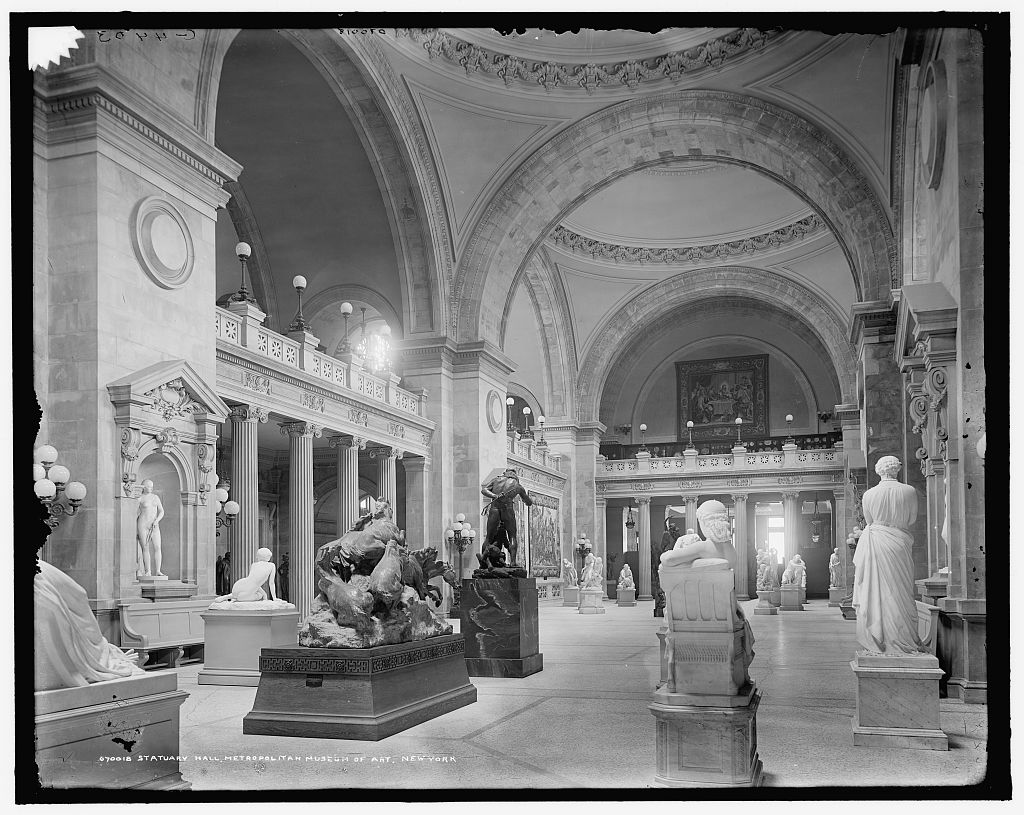
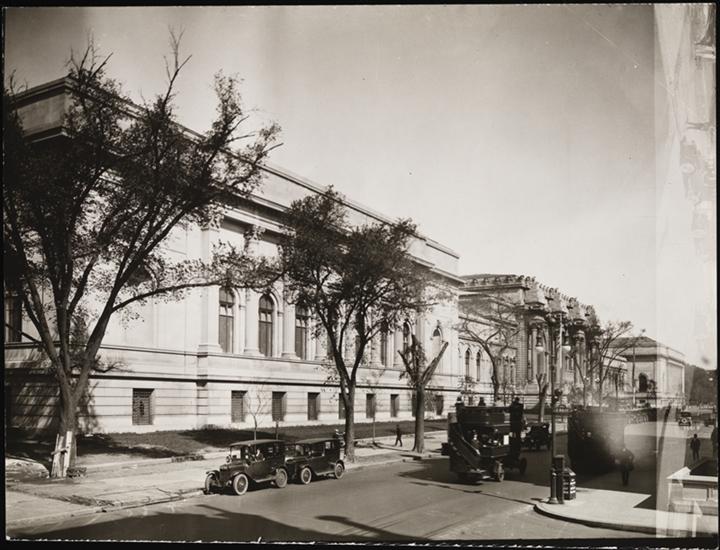
Opening reception in the picture gallery at 681 Fifth Avenue, February 20, 1872; wood-engraving published in Frank Leslie’s Weekly, March 9, 1872‘The Barn’, the original Met from Calvert Vaux and Jacob Wrey Mould, courtesy the Metropolitan Museum of Art1900, Detroit Pub Co, Library of CongressThe Richard Morris Hunt addition to the Met, 1903, Detroit Pub Co, Library of CongressThe Great Hall, 1907, Library of CongressThe Met in 1920, with the southern wing in place. Museum of the City of New YorkThe Met in 1983, Getty Images
Some excellent footage from the 1920s of the Met’s Egyptian excavations
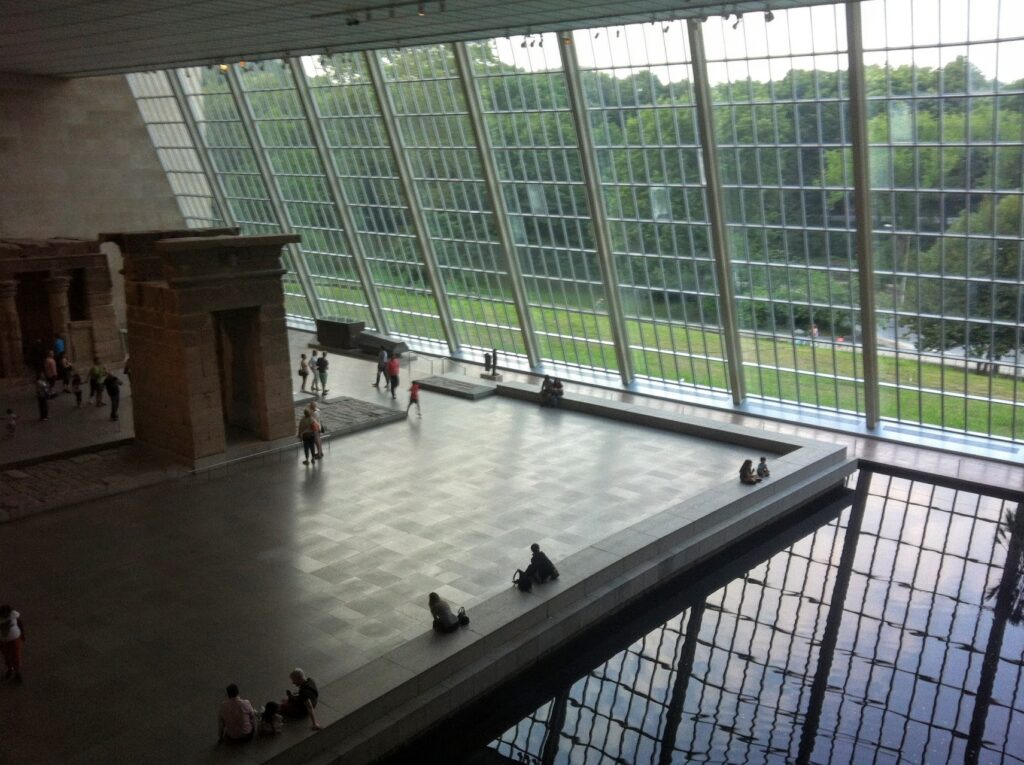
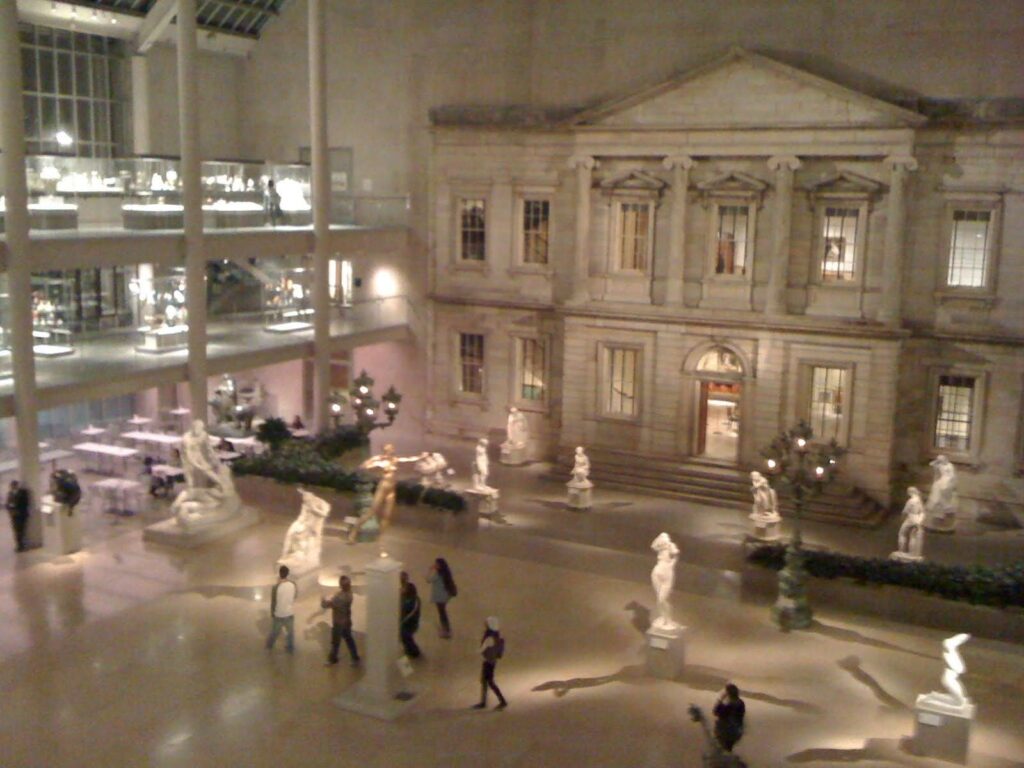
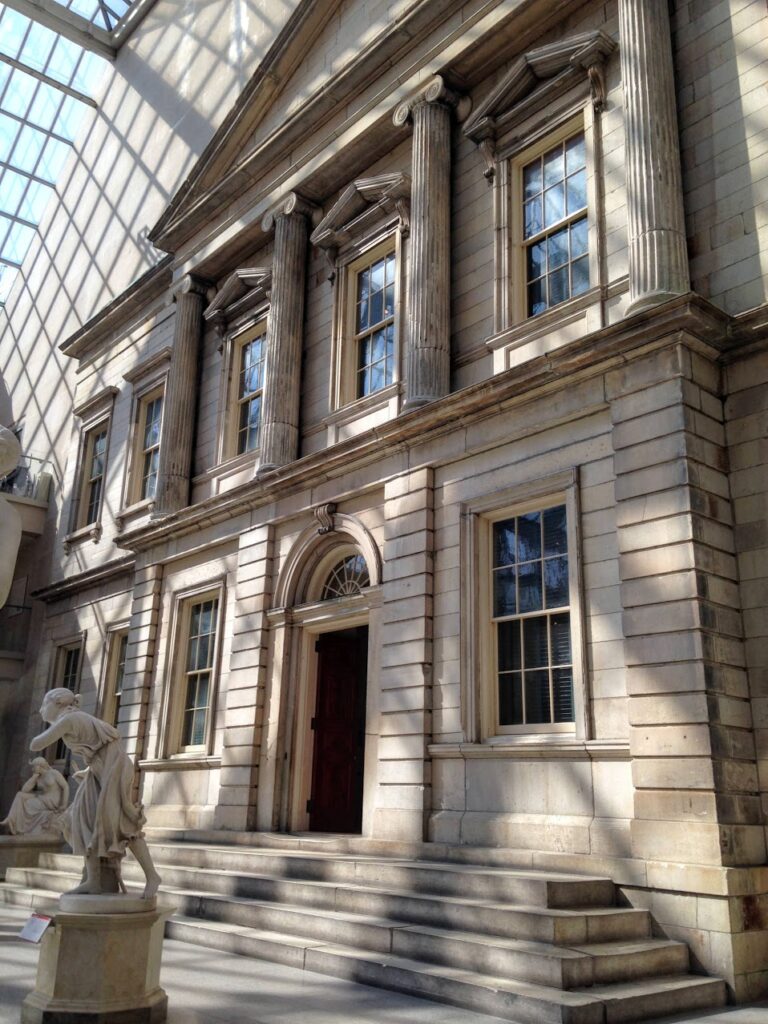
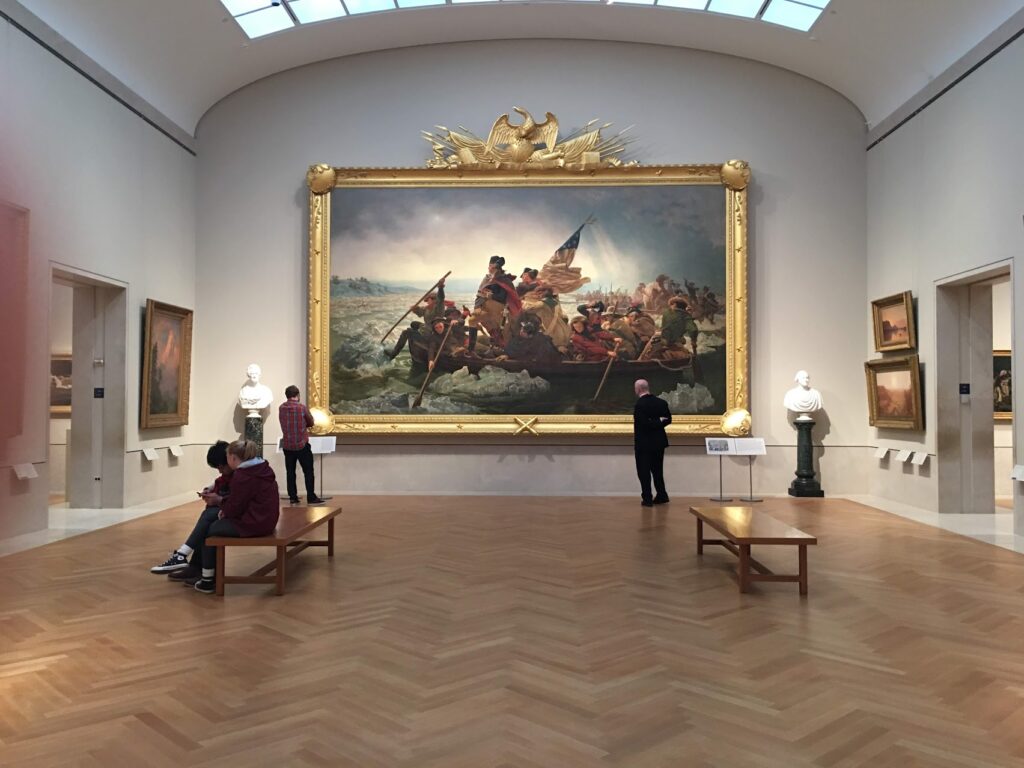
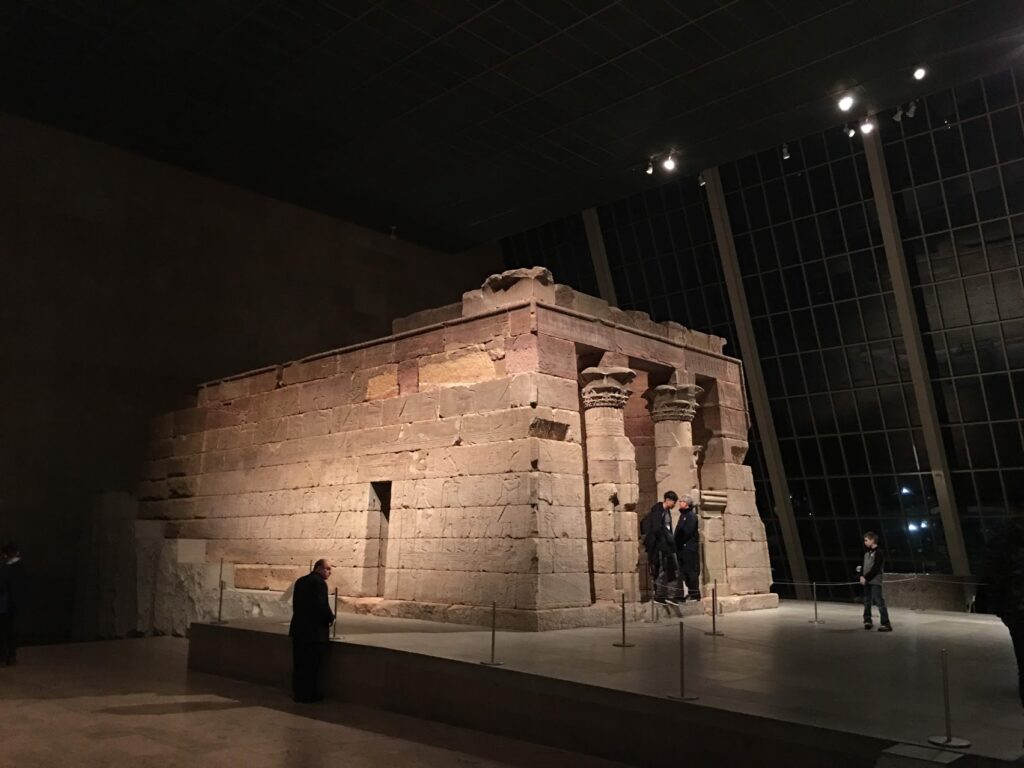
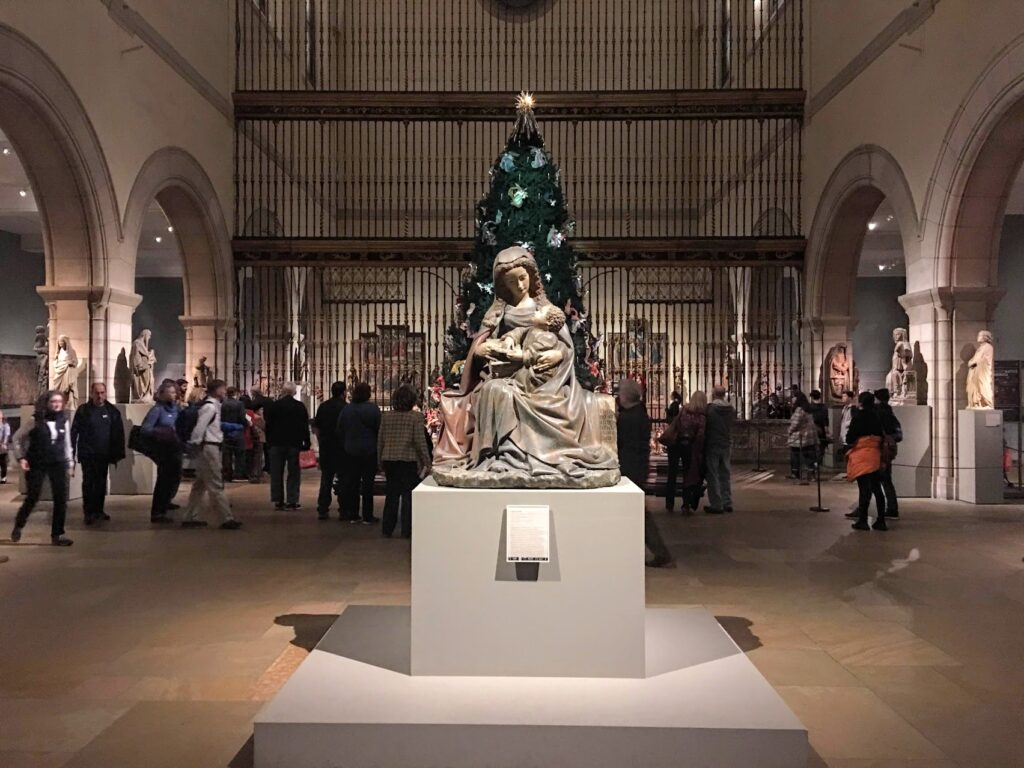
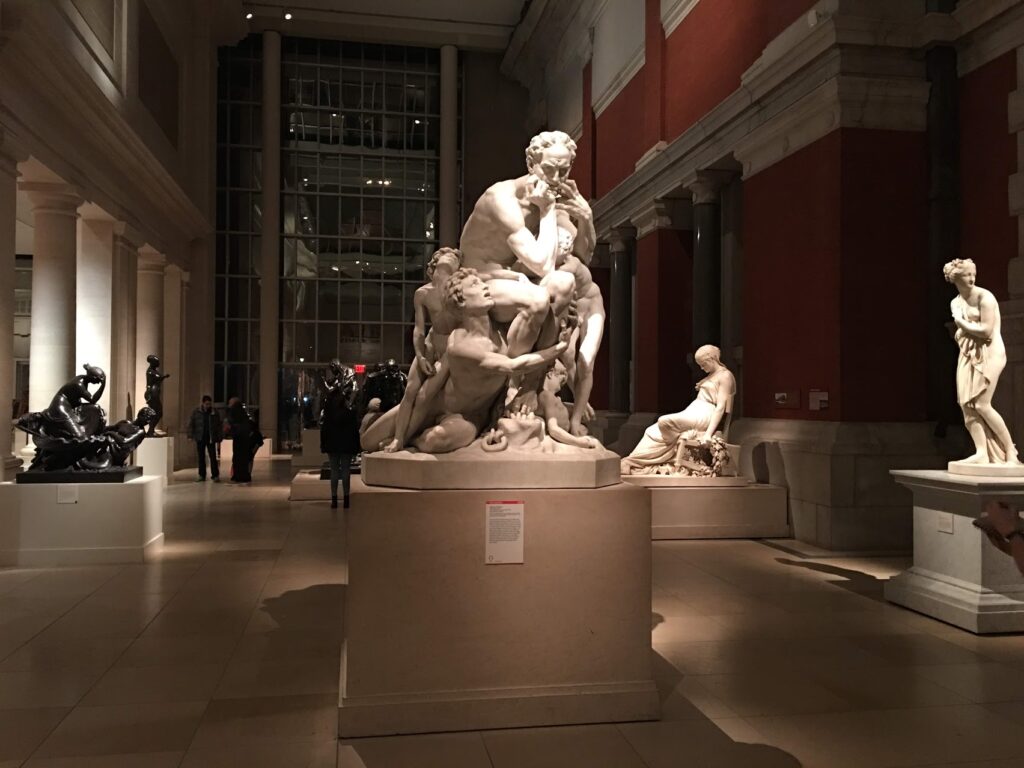
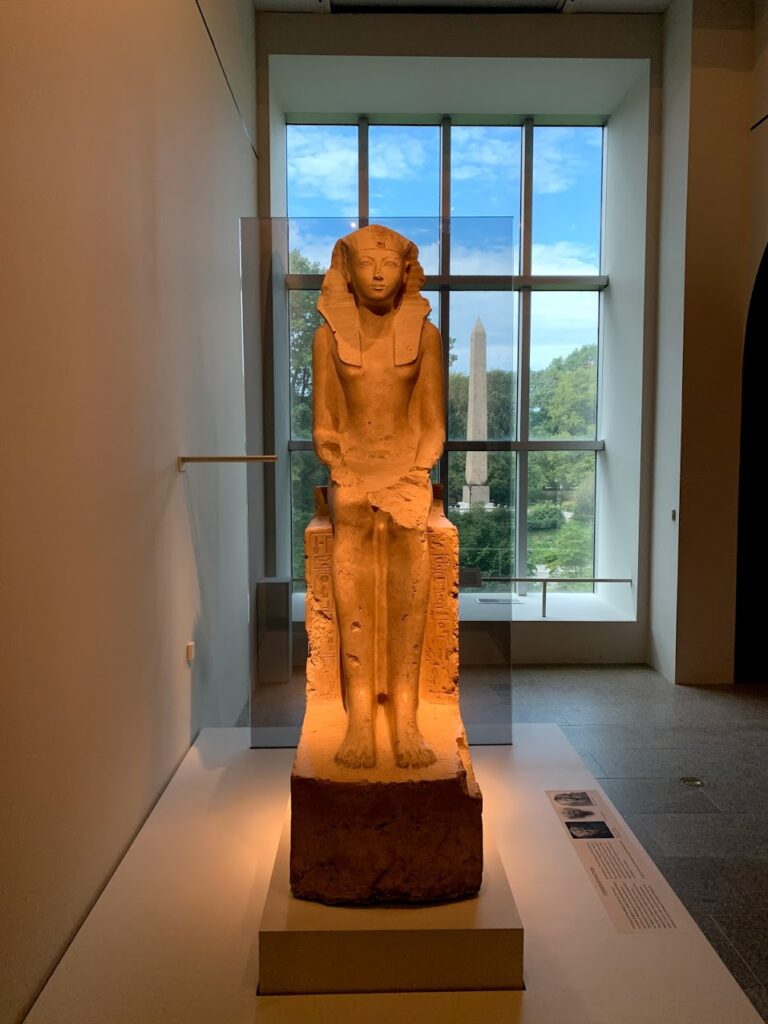
The Temple of Dendur. photo by Greg YoungThe American Wing sculpture garden at night, photo by Greg YoungBranch Bank entrance, 2012, photo by Greg YoungWashington Crossing the Delaware, taken 2017, photo by Greg YoungDendur at night, 2018, photo by Greg YoungThe Met at Christmas, 2018, photo by Greg YoungThe European sculpture garden at night, with views of the original 19th century facade in red brick. 2018, photo by Greg Young
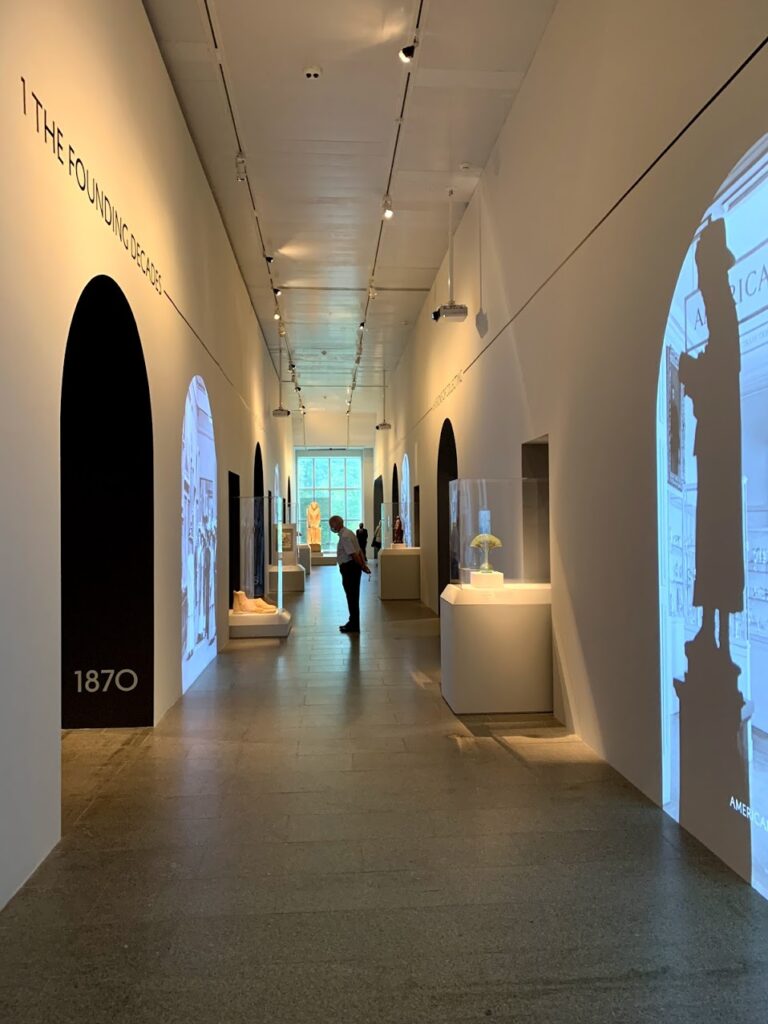
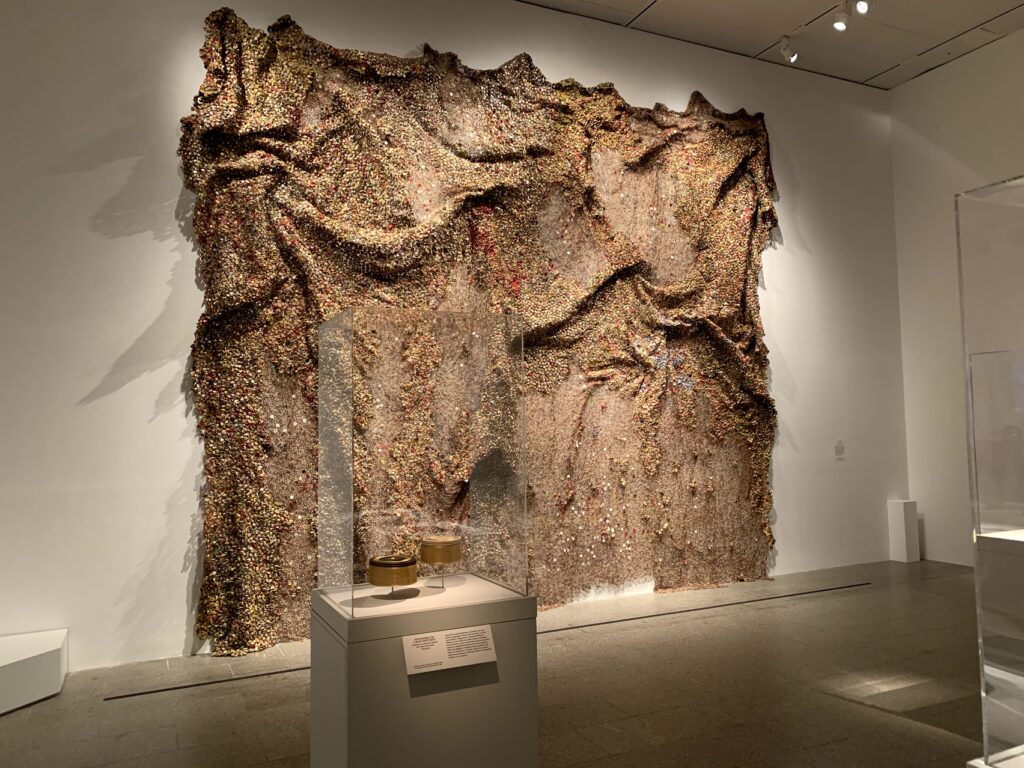
Views from Making the Met (photos by Greg Young):
The Bowery Boys: New York City History podcast is brought to you …. by you!
We are now producing a new Bowery Boys podcast every week. We’re also looking to improve and expand the show in other ways — publishing, social media, live events and other forms of media. But we can only do this with your help!
We are now a creator on Patreon, a patronage platform where you can support your favorite content creators.
Please visit our page on Patreon and watch a short video of us recording the show and talking about our expansion plans.
If you’d like to help out, there are six different pledge levels.Check them out and consider being a sponsor.
We greatly appreciate our listeners and readers and thank you for joining us on this journey so far.
FURTHER LISTENING
The Met was a bit behind the times when it came to celebrating Impressionism but New Yorkers could take a gander at the ‘shocking’ output from Europe — as well as examples from the New York’ Ashcan School — at the Armory Show of 1913.
The Met is a twin institution to the American Museum of Natural History which shares a similar origin story.
In the second half of our Fifth Avenue Mansions series, we look at how the wealthy mansions of Fifth Avenue left midtown and headed to the Upper East Side.
Sometimes an artist’s biography can work on two levels, providing both the sweep of history within the subject matter of the artist’s own output and a grand view of American art history in the artist’s working life.
In Mary Schmidt Campbell’s absorbing biography of the painter, illustrator and collagist Romare Bearden, we get to look at the New York City art world of the 20th century with insights into the life of an African-American painter who managed to remain relevant in a career of almost 60 years.
Campbell, currently the president of Spelman College, knew Bearden leading up to her role as executive director of the Studio Museum in Harlem in the 1970s and 80s. (The appendix features copies of handwritten letters from Bearden written on stationary from his Canal Street studio. That alone gave me chills.)
Bearden’s body of work is unique in that it reflects, in its longevity, both the changing tides of 20th century art and his own conflicts with depicting the American black experience on his canvas.
He came of age in Harlem in the 1920s, among the creative swirl of the Harlem Renaissance, even as his formal training came from the famed Art Students League in Midtown Manhattan. His mother Bessye Bearden was a noted journalist whose connections to such Harlem figures as Duke Ellington and A’Lelia Walker introduced Romare to a new world of possibilities for black creators. “She not only found her way into Harlem’s inner circle,” writes Campbell, “but she also helped define and expand its perimeter.”
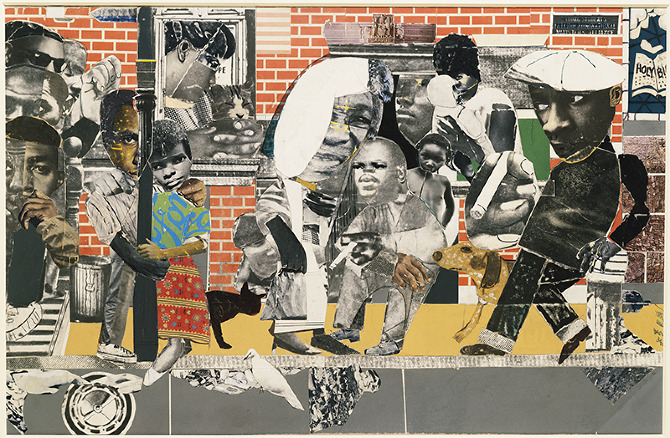
Young Students – Romare Bearden, 1964 – Romare Bearden Foundation
Romare developed into both an renowned artist and an insightful critic of the art world, setting up a studio right above the most famous place in Harlem — the Apollo Theater. It was here that he later pivoted his style away from concrete representational forms, finding his own path into the world of abstract modernism.
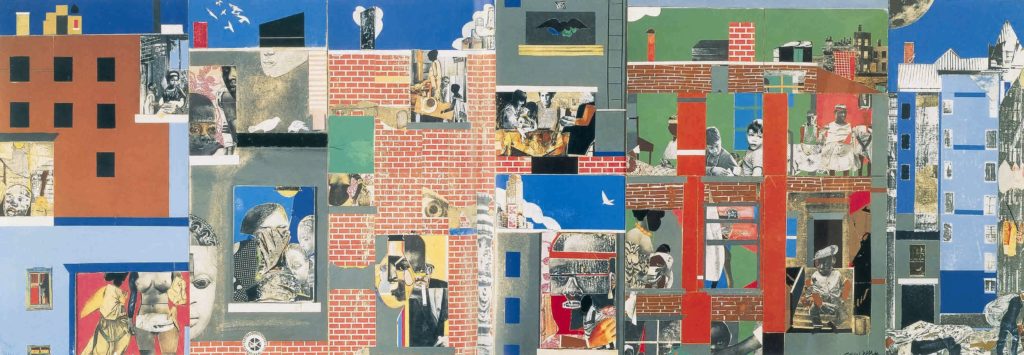
The Block by Romare Bearden, 1971 — Romare Bearden Foundation
By the late 1940s he oddly found himself an outsider — wanting to break out from shows that only featured black artists but eventually excluded from mainstream galleries for not being sufficiently abstract.
It took a revitalizing intellectual journey to Paris, a change of scenery within New York City (to the newly developed artists’ enclave in SoHo) and a shift to collage work to reinvent Bearden’s role in the art world. His groundbreaking 1964 show Projections also established him as an artist in conversation with the American civil rights movement.
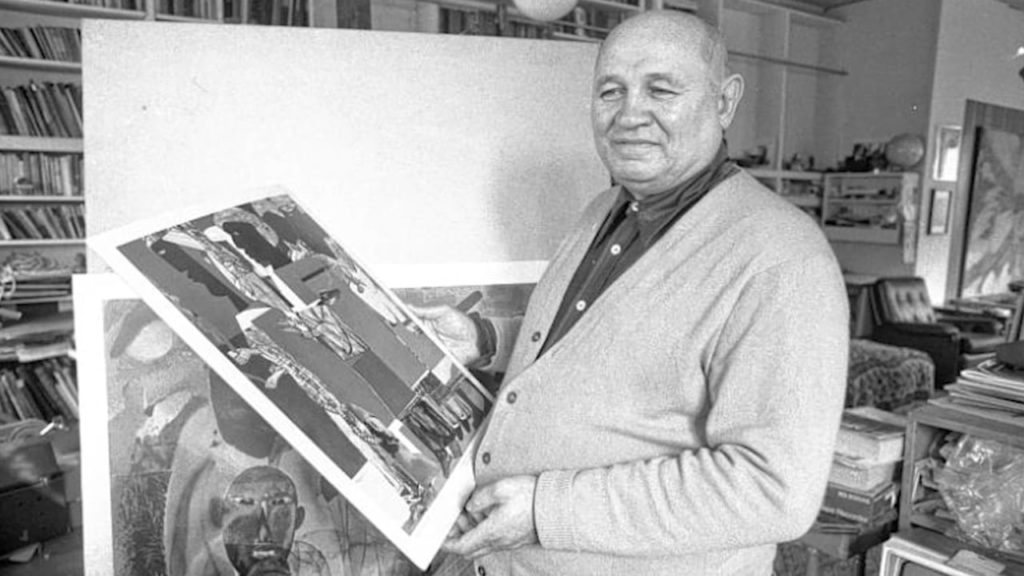
Bearden in his Long Island City studio
By 1987, when Ronald Reagan awarded Bearden the National Medal of the Arts, the artist had secured his legacy. Yet today his body of work — including some of his most profound collages — often remains unseen.
As Campbell explains, “Despite Bearden’s care in the assemblage of materials, his collages with their multitude of different materials are a preservationist’s nightmare. Major museums exhibit his works infrequently because they are so perishable.”
“Bearden’s legacy is as complicated as his art; he would become many things to many people — all at once.”
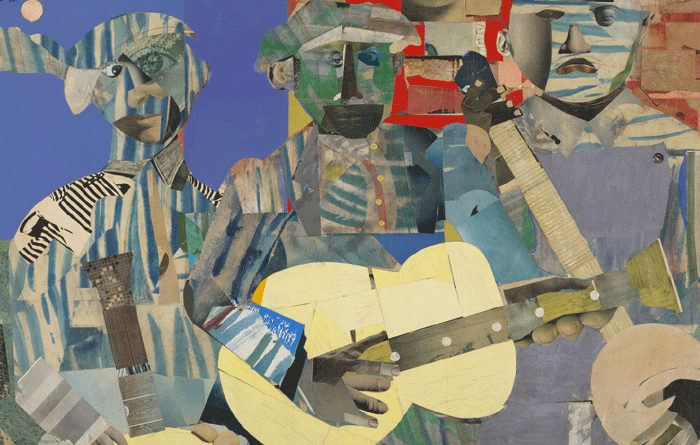
At top: Three Folk Musiciansby Romare Bearden / Virginia Museum of Fine Arts
PODCAST The history of SoHo, New York’s 19th century warehouse district turned shopping mecca
Picture the neighborhood of SoHo (that’s right, South of Houston) in your head today, and you might get a headache. Crowded sidewalks on the weekend, filled with tourists, shoppers and vendors, could almost distract you from SoHo’s unique appeal as a place of extraordinary architecture and history.
On this podcast we present the story of how a portion of Hell’s Hundred Acres became one of the most famously trendy places in the world.
In the mid 19th century this area, centered along Broadway, became the heart of retail and entertainment, department stores and hotels setting up shop in grand palaces. (It also became New York’s most notorious brothel district). The streets between Houston and Canal became known as the Cast Iron District, thanks to an exciting construction innovation that transformed the Gilded Age.
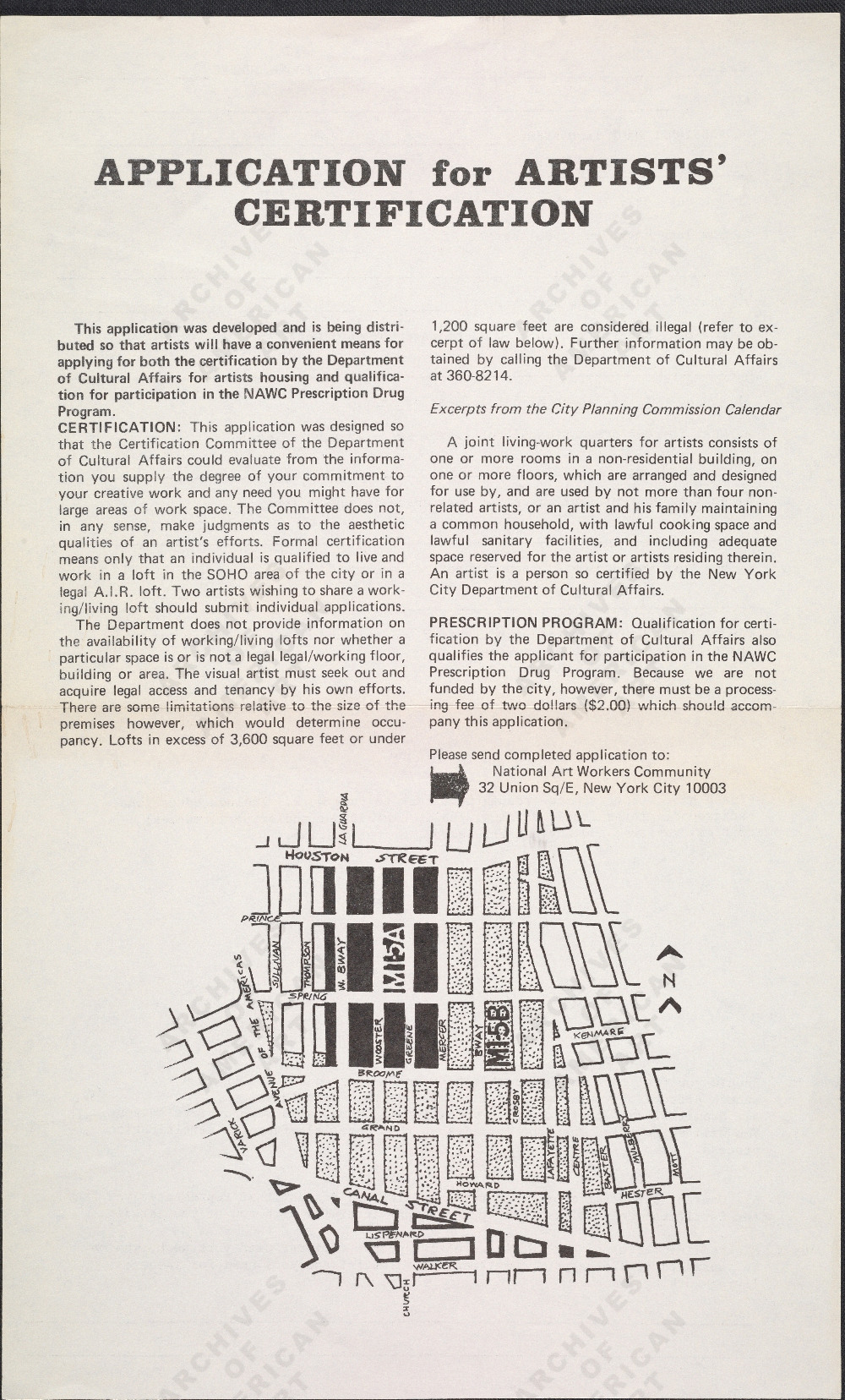
Today SoHo contains the world’s greatest surviving collection of cast-iron architecture. But these gorgeous iron tributes to New York industry were nearly destroyed — first by rampant fires, then by Robert Moses. Community activists saved these buildings, and just in time for artists to move into their spacious loft spaces in the 1960s and 70s. The artists are still there of course but these once-desolate cobblestone streets have almost unrecognizably changed, perhaps a victim of its own success.
The Bowery Boys: New York City History podcast is brought to you …. by you!
We are now producing a new Bowery Boys podcast every two weeks. We’re also looking to improve the show in other ways and expand in other ways as well — through publishing, social media, live events and other forms of media. But we can only do this with your help!
We are now a member of Patreon, a patronage platform where you can support your favorite content creators for as little as a $1 a month.
Please visitour page on Patreon and watch a short video of us recording the show and talking about our expansion plans. If you’d like to help out, there are five different pledge levels (and with clever names too — Mannahatta, New Amsterdam, Five Points, Gilded Age, Jazz Age and Empire State). Check them out and consider being a sponsor.
We greatly appreciate our listeners and readers and thank you for joining us on this journey so far. And the best is yet to come!
A map of the Bayard farm and how it was broken up and carved into the streets we know today.
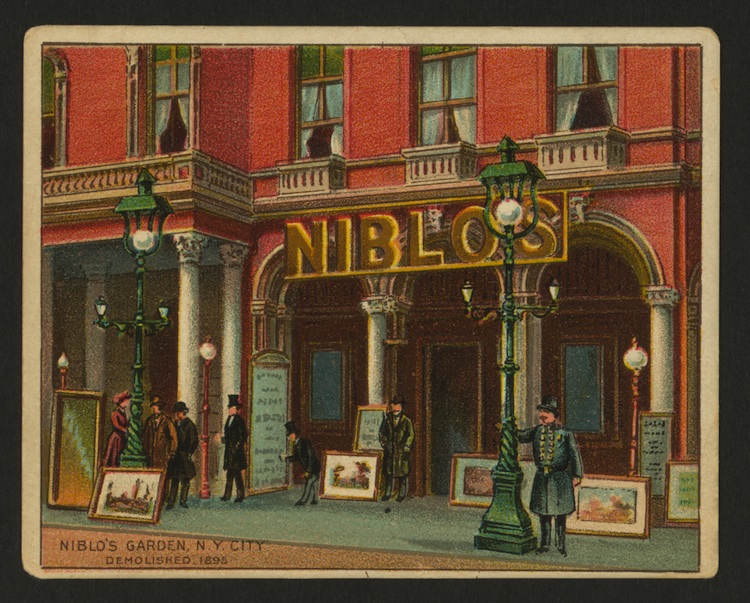
Niblo’sGarden, located at Broadway and Prince Streets, was one of the finest theaters along Broadway in the area of today’s SoHo.
Looking north along Broadway between Grand and Broome Street. The St. Nicholas Hotel is the white structure in the center of the photo.
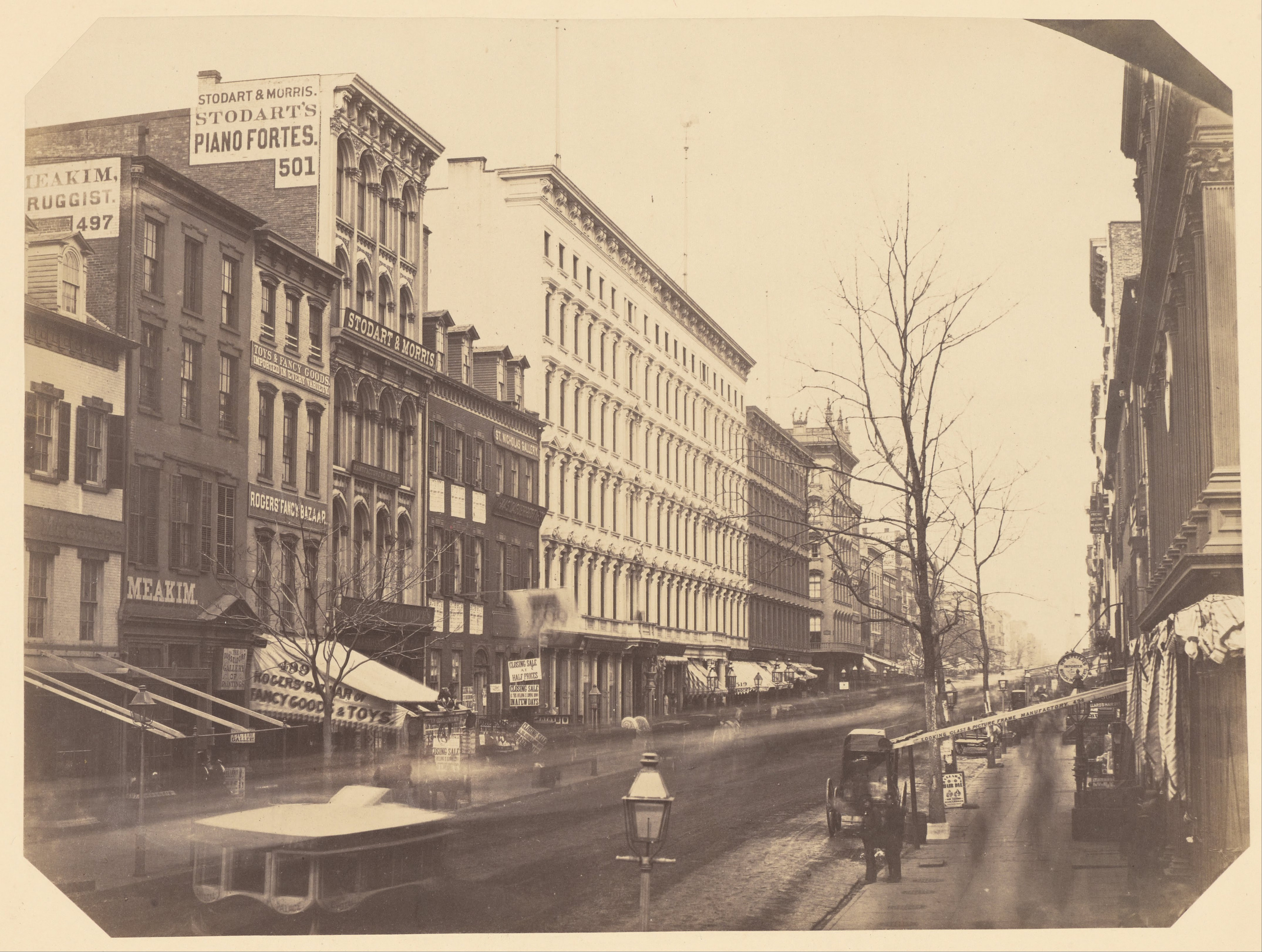
Photo attributed to Silas A Holmes
An auction poster from 1872 advertising a property on Broome Street and “South Fifth Avenue or Laurens Street” — today’s West Broadway.
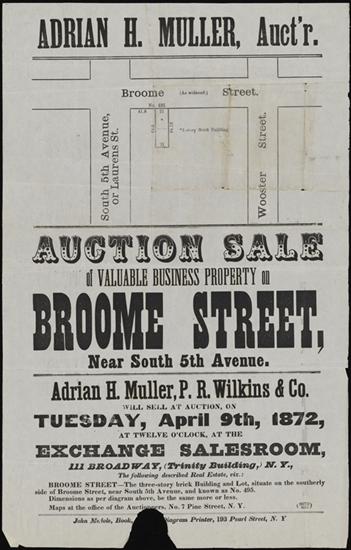
MCNY
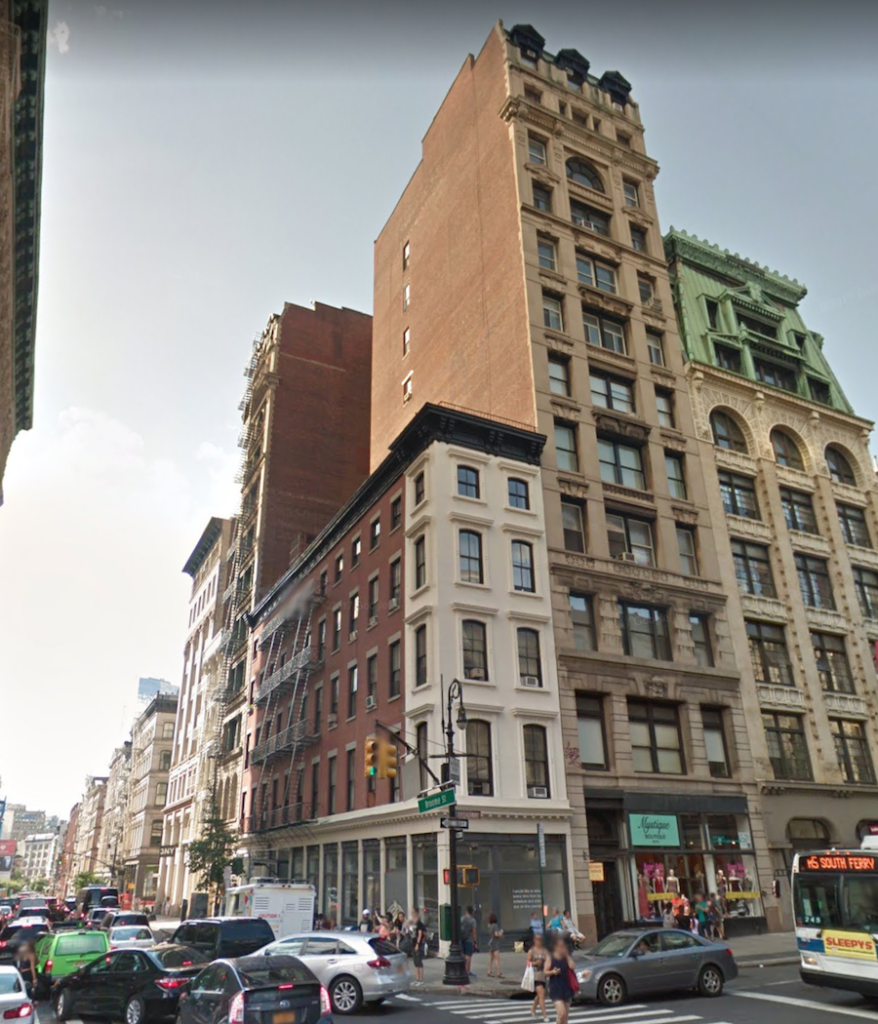
Here is that corner at 504-506 Broome Street — in 1935 (photo by Berenice Abbott). Per Sean Sweeney on Facebook: “The two buildings were demolished and for years were a parking lot. Now a new 3-story retail building sits in their place.”
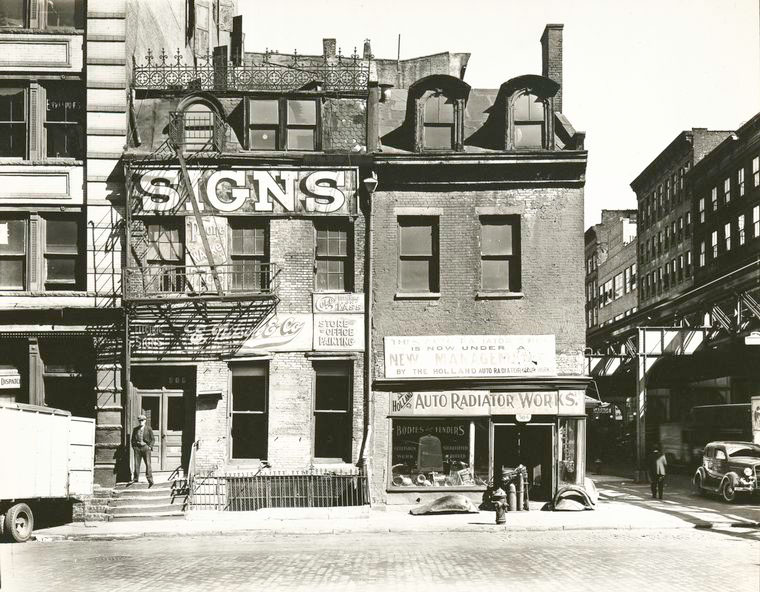
NYPL
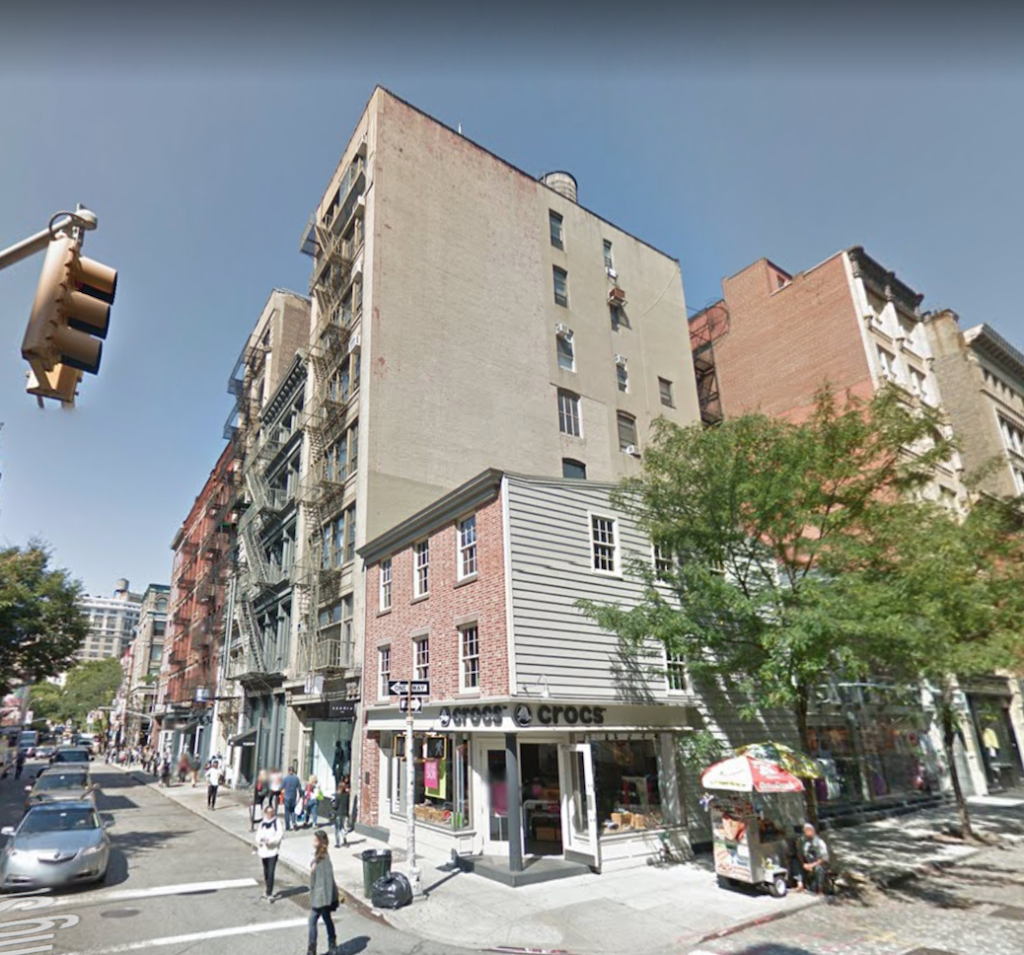
The house at 143 Spring Street — in 1932 (photograph by Charles Von Urban) and today (it’s a Crocs shop!)
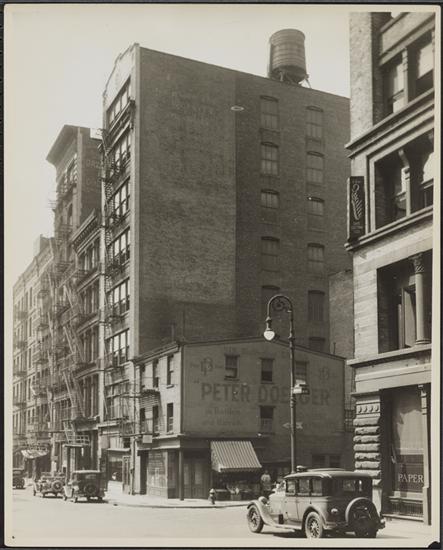
Museum of City of New York/Charles Von Urban collection
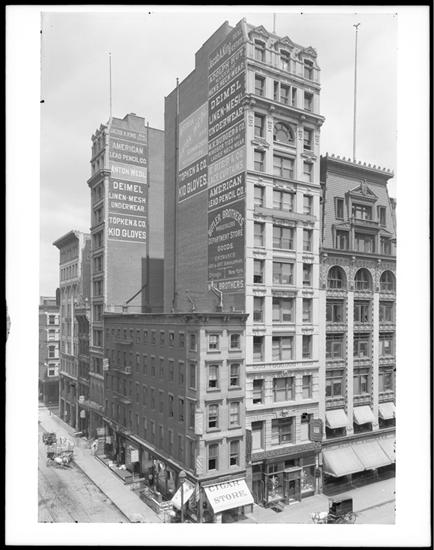
491 Broadway at Broome Street — in 1905 (photograph by the Wurts Bros.) and today
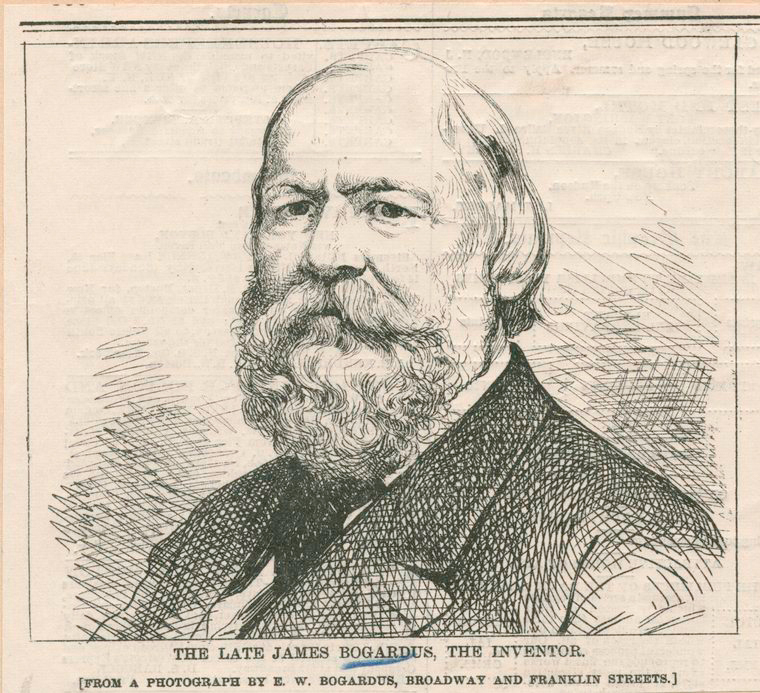
James Bogardus, the man who helped give SoHo its distinctive appearance thanks to his vigorous marketing and promotion of cast-iron architecture.
The first cast-iron structure in New York, built in 1848, was further south at the corner of Centre and Duane Streets.
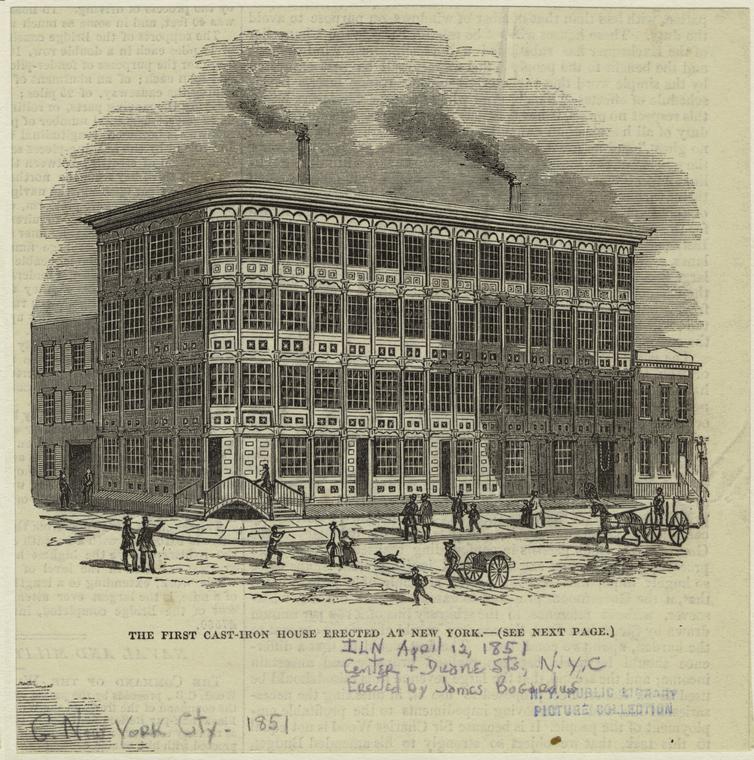
NYPL
Robert Moses’ view of Broome Street via his project Lower Manhattan Expressway project. Broom Street would have had an elevated highway, enclosed within modern buildings. A view of surviving cast-iron architecture on the right.
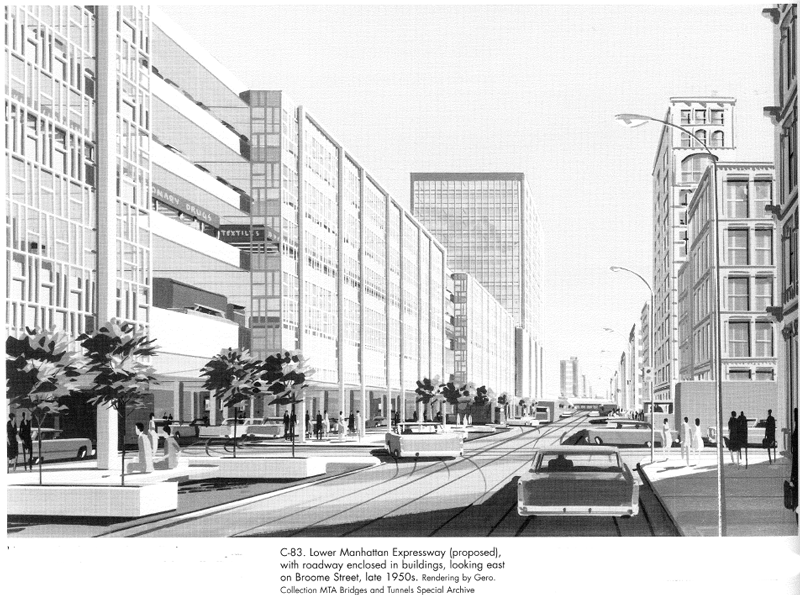
SoHo would have been eliminated (or greatly reduced) by Moses’ project which was thankfully nixed.
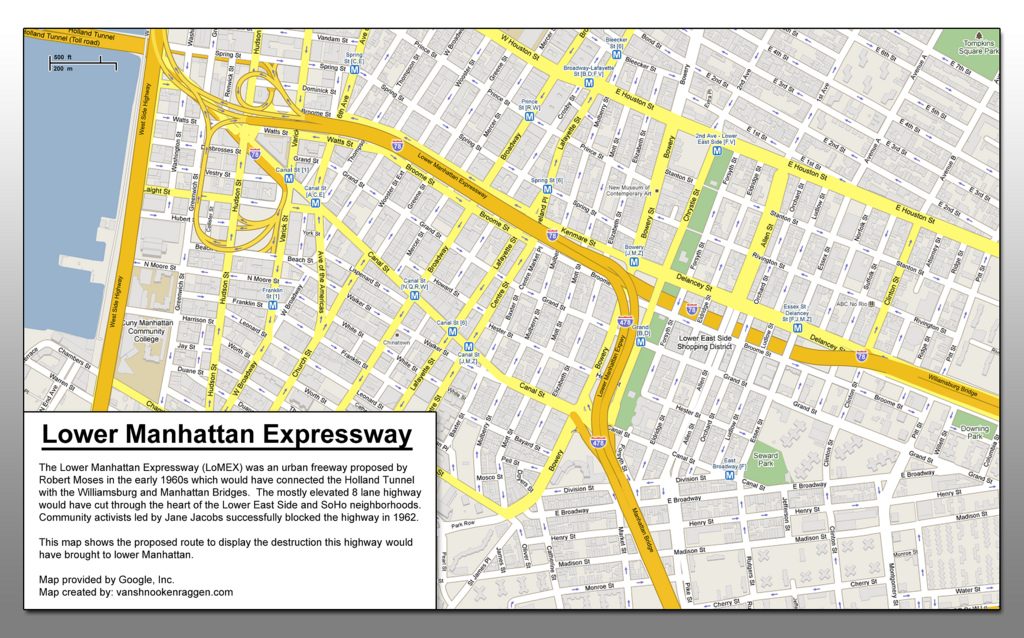
Map produced by vanshnookenraggen
A map of the art galleries in the SoHo art scene during the 1970s.
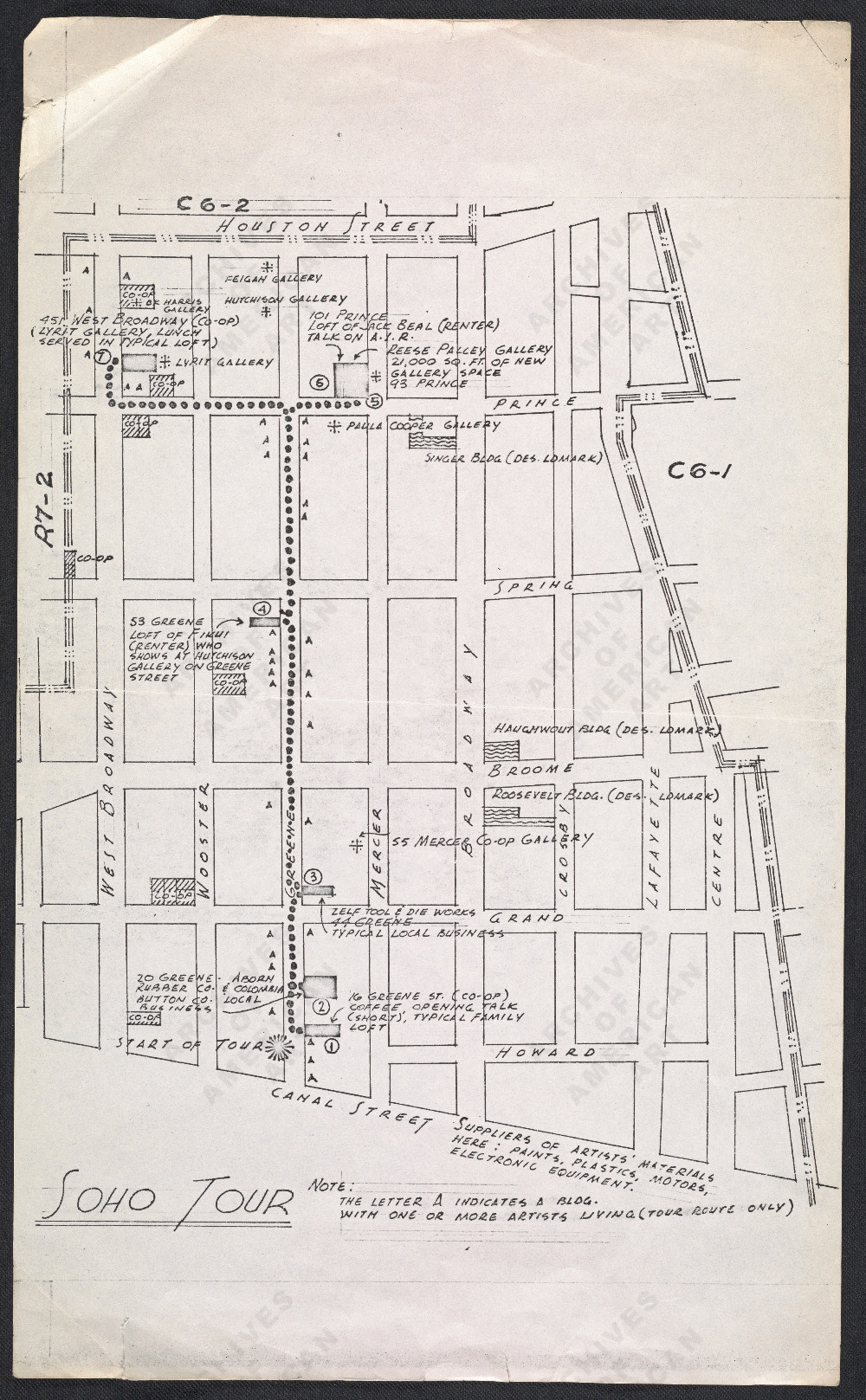
SoHo Artists Association Records, 1968-1978. Archives of American Art, Smithsonian Institution
We greatly encourage you to check out the SoHo Memory Project for a lot of fantastic and often deeply personal recollections about the SoHo days of yore.
For further listening, check out the following Bowery Boys podcasts which were referenced in this week’s show: