Categories
Landmarks The Gilded Gentleman

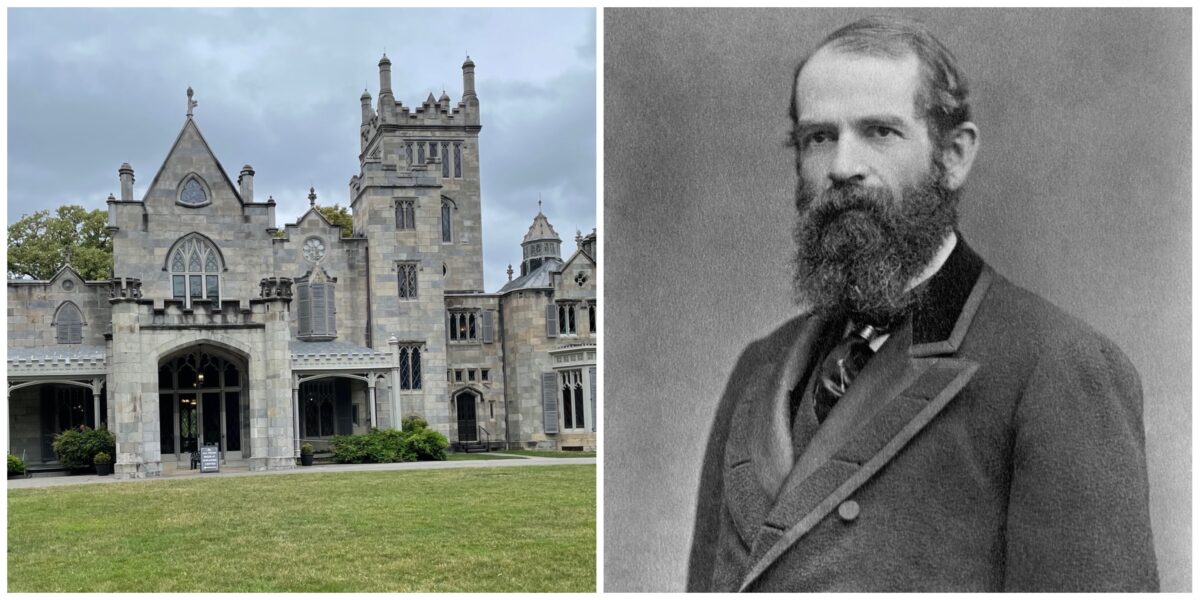
The Secrets of Lyndhurst Mansion, Jay Gould’s Gilded Age Escape

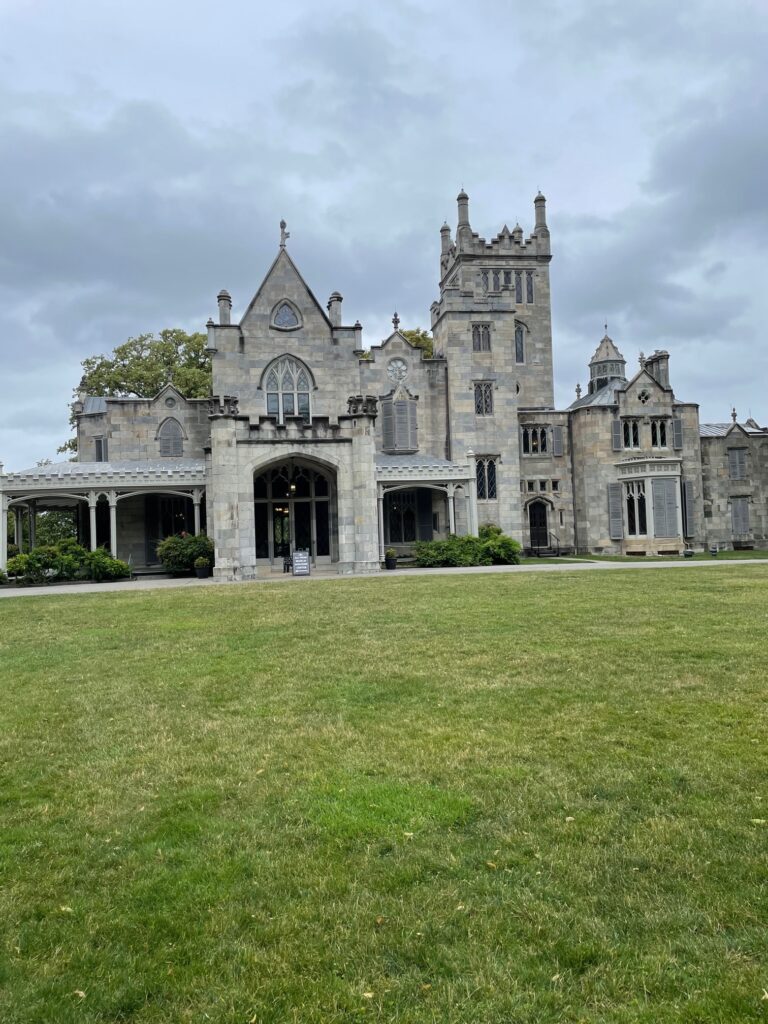
Lyndhurst Mansion may be familiar to viewers of the HBO series The Gilded Age since a number of this historic house’s rooms served as filming locations for the show. 

And its former owner was one of the most notorious figures of the Gilded Age — Jay Gould.

He was known as the one of the era’s most ruthless robber barons. He tangled with the Vanderbilts for control of the railroads and fought battle after battle on Wall Street. 

But there was a less contentious side to him as well. Gould sought respite from New York City with his family at his country home, Lyndhurst Mansion in Tarrytown, a rolling estate where he could transition from Wall Street warrior to father and husband. 

Carl Raymond

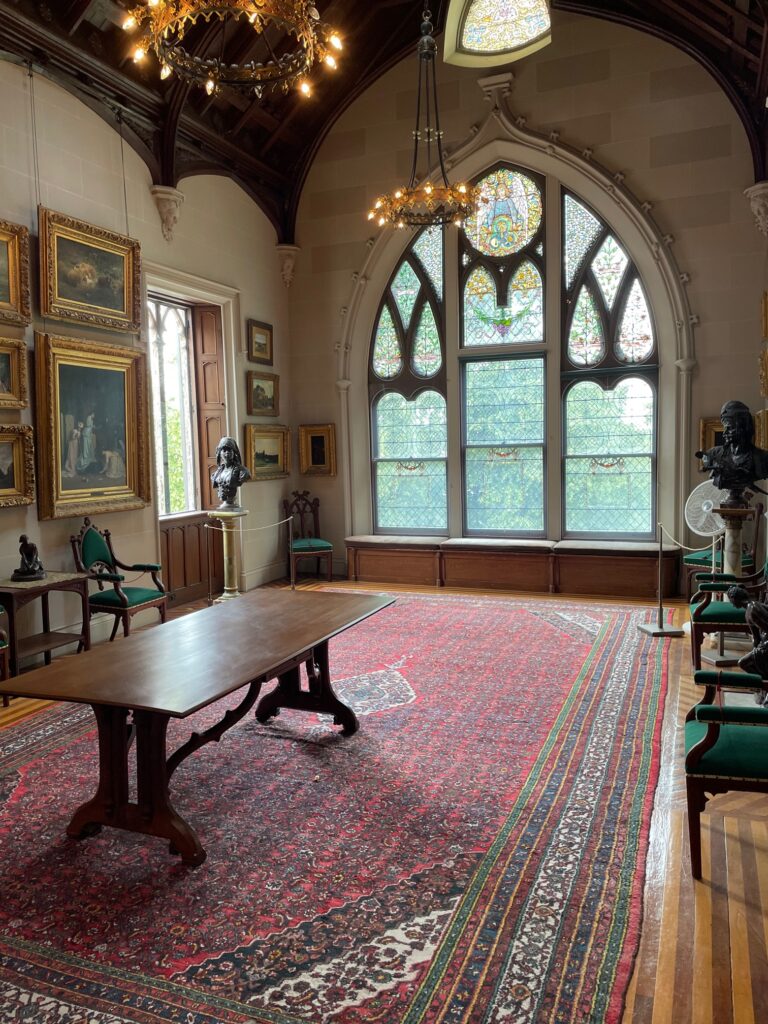
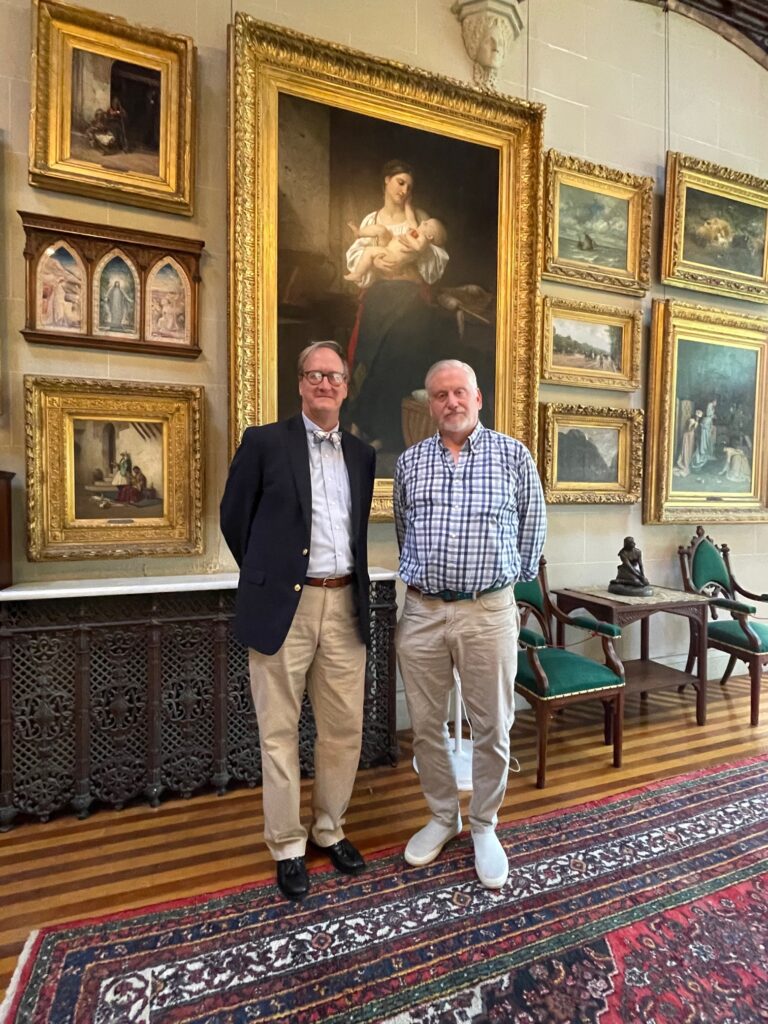
In this special episode, The Gilded Gentleman travels to Lyndhurst for a look inside both the mansion and the life of Jay Gould. Howard Zar, executive director of Lyndhurst, joins Carl for a fascinating interview recorded in the picture gallery in Jay Gould’s own mansion. 

Carl Raymond

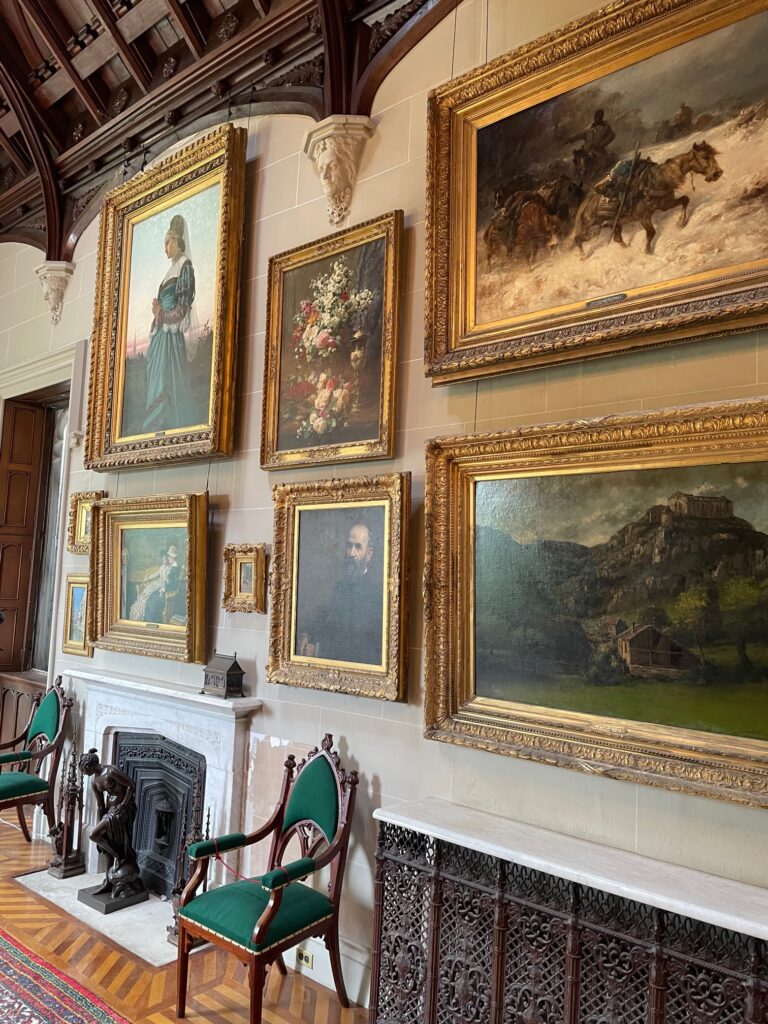
Surrounded by Gould’s precious hand-chosen art collection (still hung as Gould intended), Howard and Carl delve into what life was like at the Mansion and what visitors can see today. 

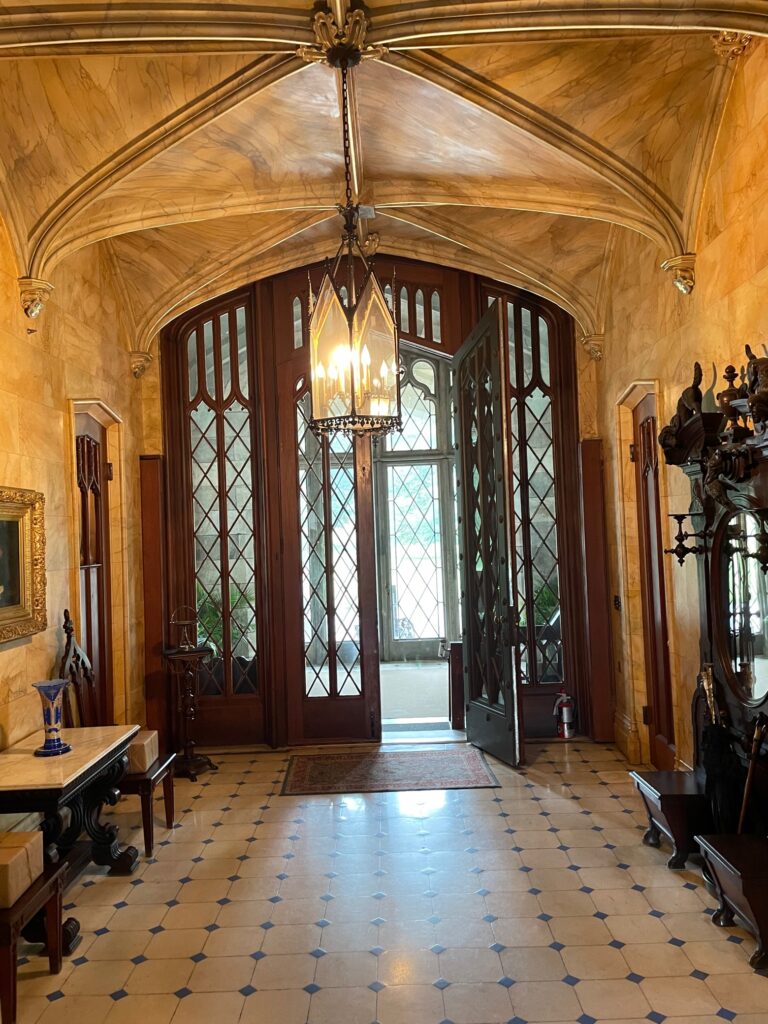
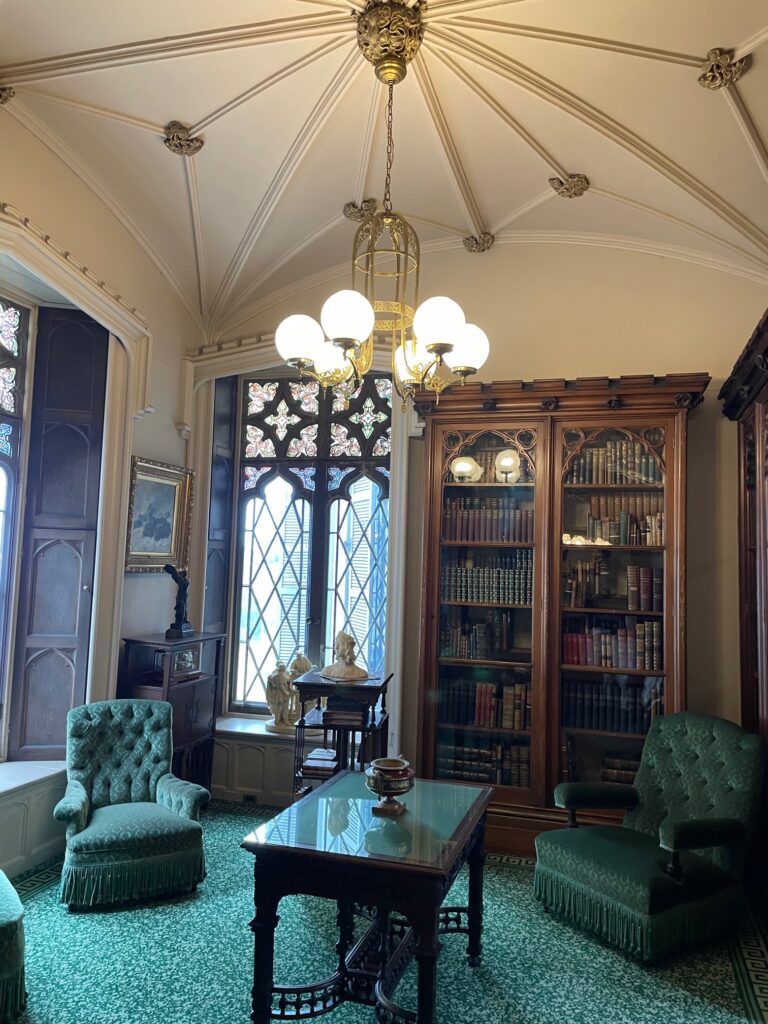
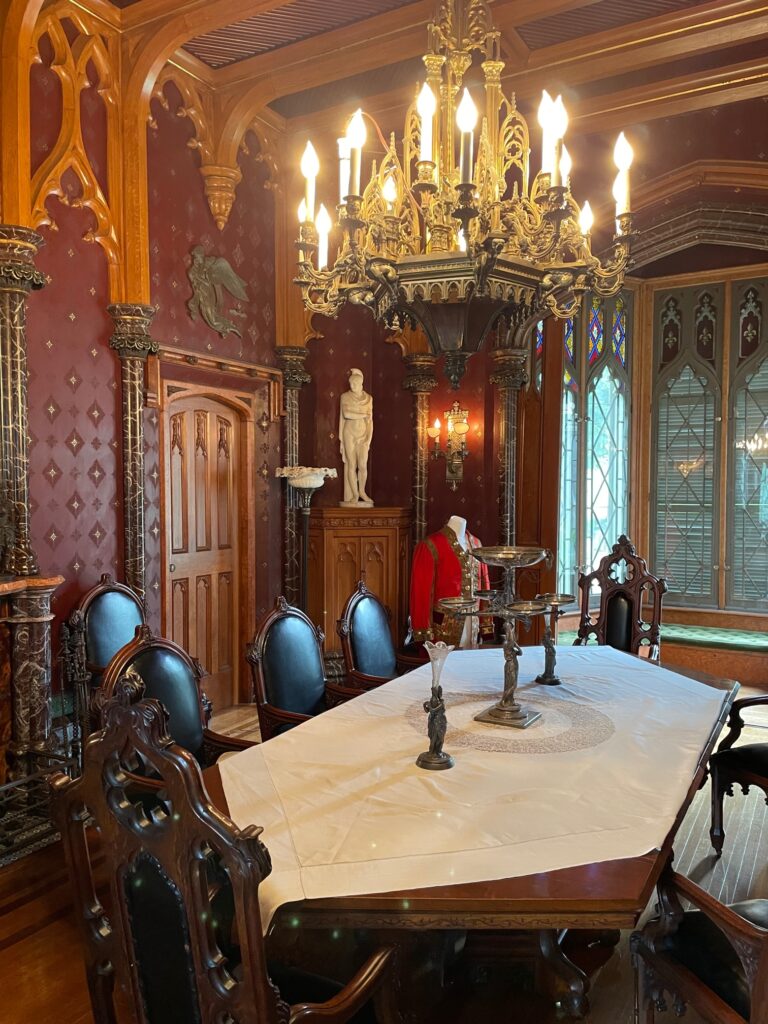
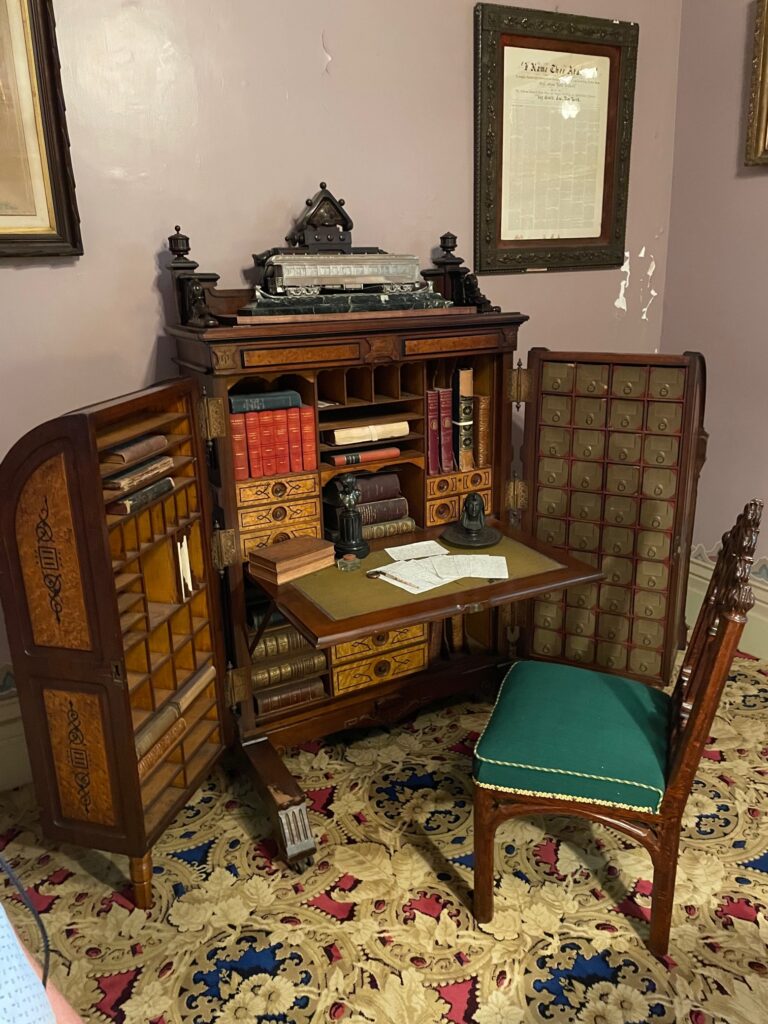
As a special treat, follow along with Howard and Carl on a tour through the Mansion visiting Gould’s reception room, library, private office and dining room. 

Download the latest episode of The Gilded Gentleman on Apple Podcasts, Spotify, Overcast or wherever you get your podcasts.

Or listen to it right here:

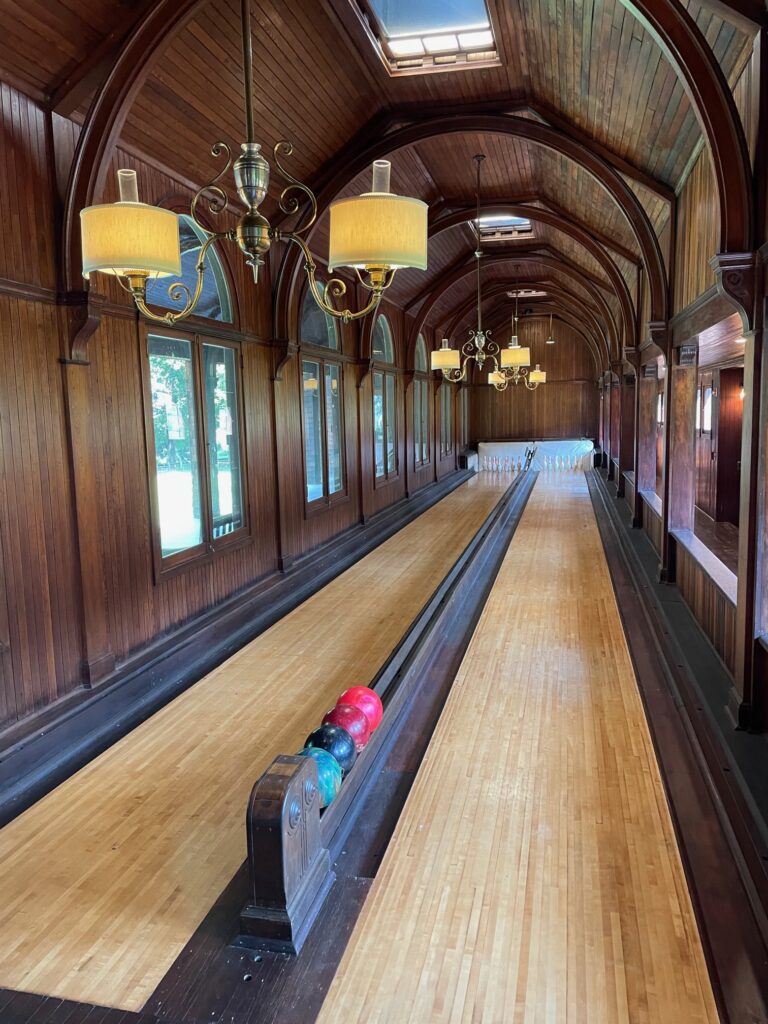
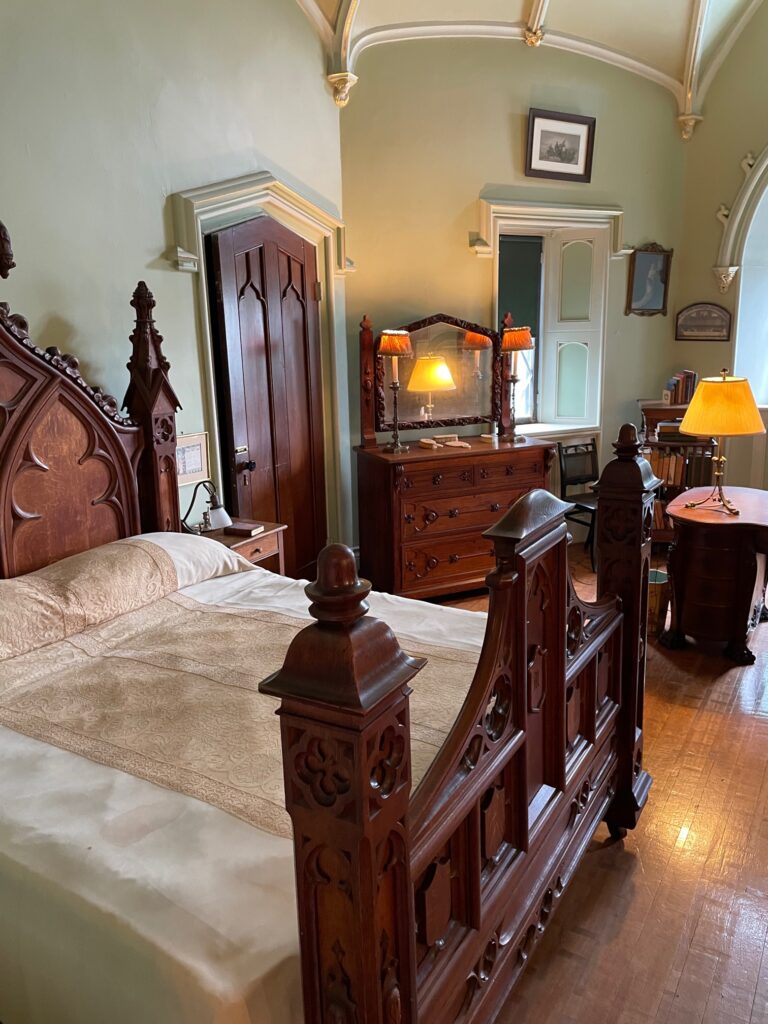
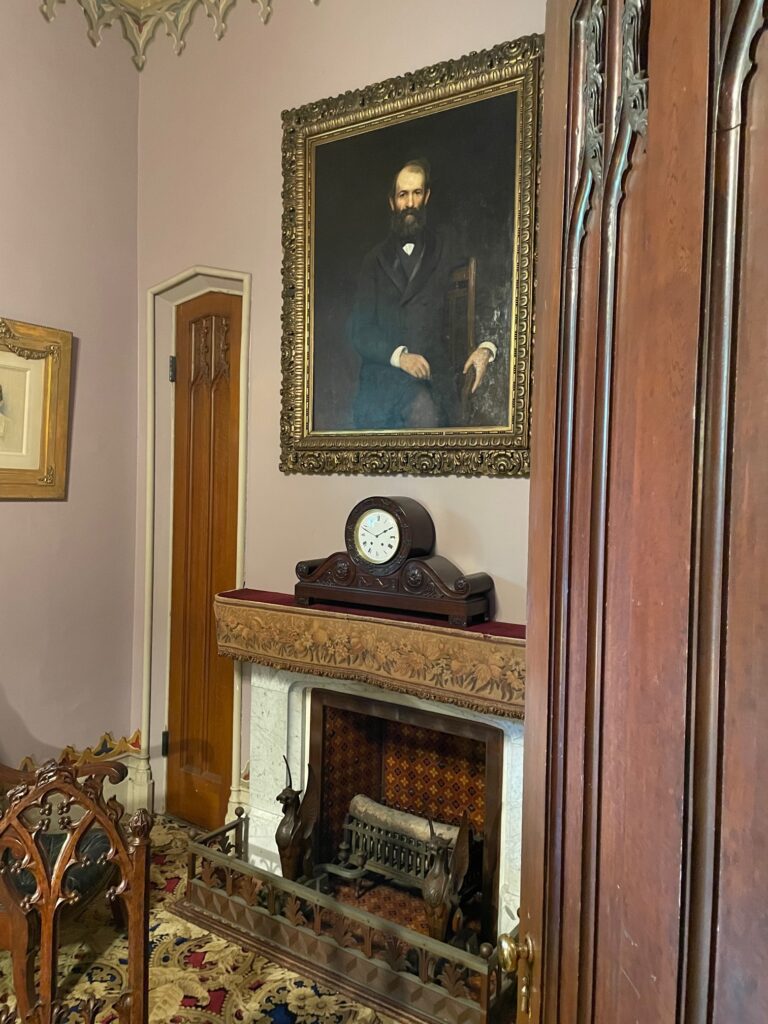
And check out these photos, all taken by Carl Raymond.

Carl Raymond
Carl Raymond
Carl Raymond
Carl Raymond
Carl Raymond
Carl Raymond
Carl Raymond
Carl Raymond
Carl Raymond
Categories
Hudson Valley Podcasts

Road Trip to the Hudson Valley: The Complete Series Now Available

The Bowery Boys Road Trip to the Hudson Valley mini-series, exploring stories of American history along the Hudson River, is now complete. Catch up on all three episodes — and join us on Patreon for a special ‘behind the scenes’ episode:

On the Trail of the Croton Aqueduct

Welcome to the Old Croton Aqueduct Trail, 26.5 miles of dusty pathway through some of the most interesting and beautiful towns and villages of Westchester County.

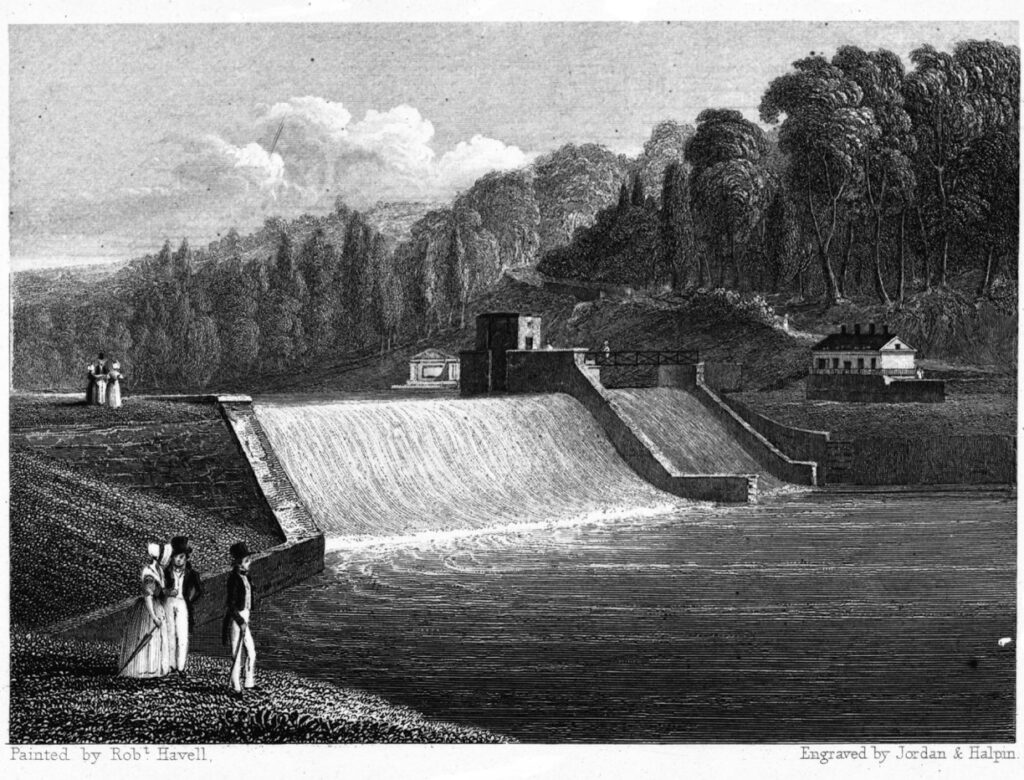
But this is more than a linear park. The trail runs atop — and sometimes alongside — the original Croton Aqueduct, a sloping water system which opened in 1842, inspired by ancient Roman technology which delivered fresh water to the growing metropolis over three dozen miles south.

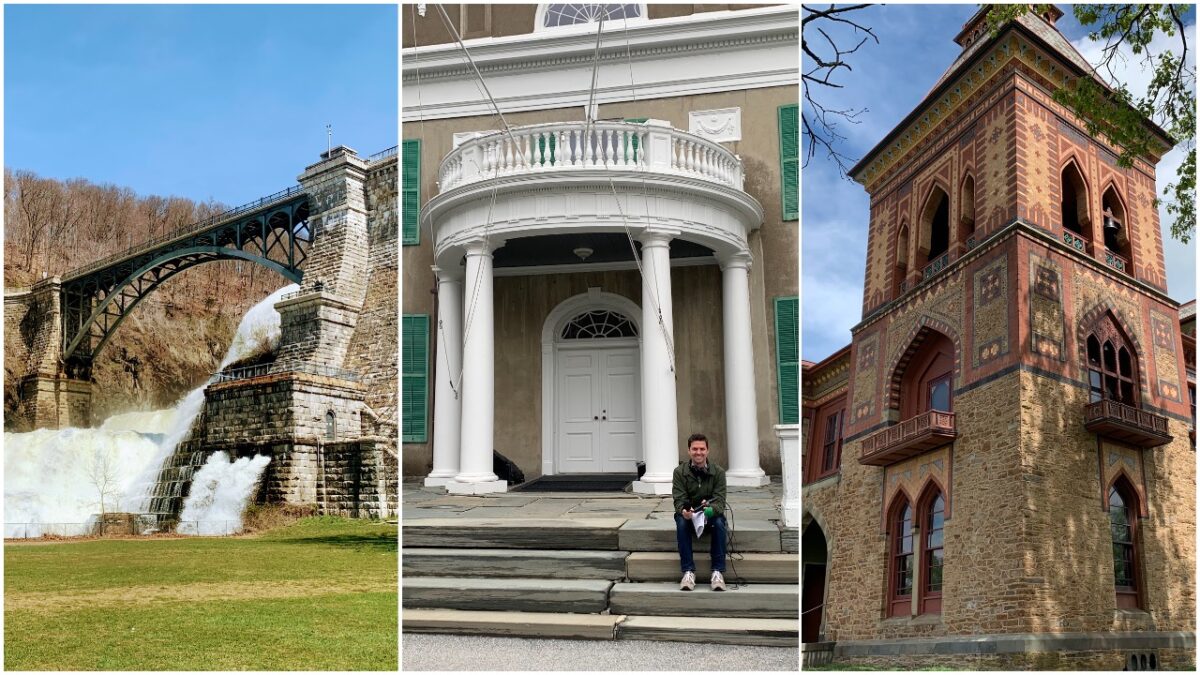
Locations featured: New Croton Dam, the Double Arch Bridge in Ossining, the Keeper’s House in Dobbs Ferry

Hyde Park: The Roosevelts on the Hudson

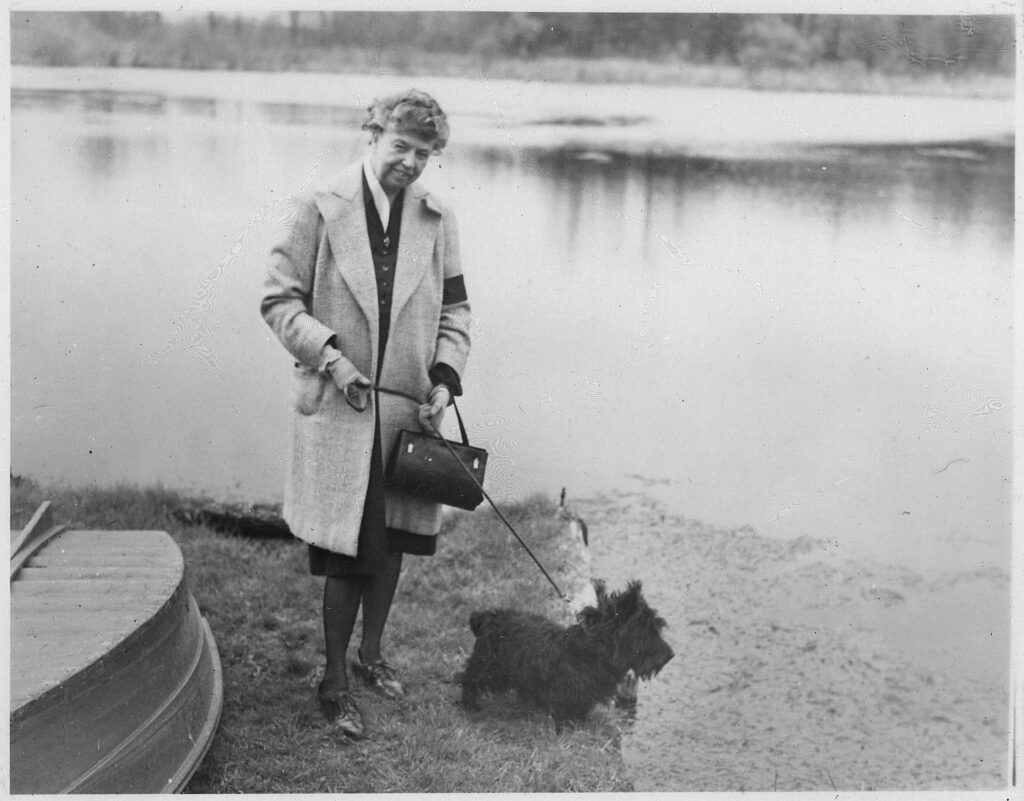
Hyde Park, New York was the home of Franklin Delano Roosevelt, the 32nd president of the United States. He was born here, he lived here throughout his life, and he’s buried here — alongside his wife Eleanor Roosevelt

But it was more than simply a home.

The Hyde Park presence of the Roosevelts expands outwardly from the Roosevelt ancestral mansion of Springwood, over hundreds of forested acres from former farmlands on the eastern side to the shores of the Hudson River on the west.

Locations featured: Home of Franklin D. Roosevelt National Historic Site, FDR Presidential Library and Museum, Top Cottage, Val-Kill Cottage, all in Hyde Park

The Hudson River School: An American Art Revolution

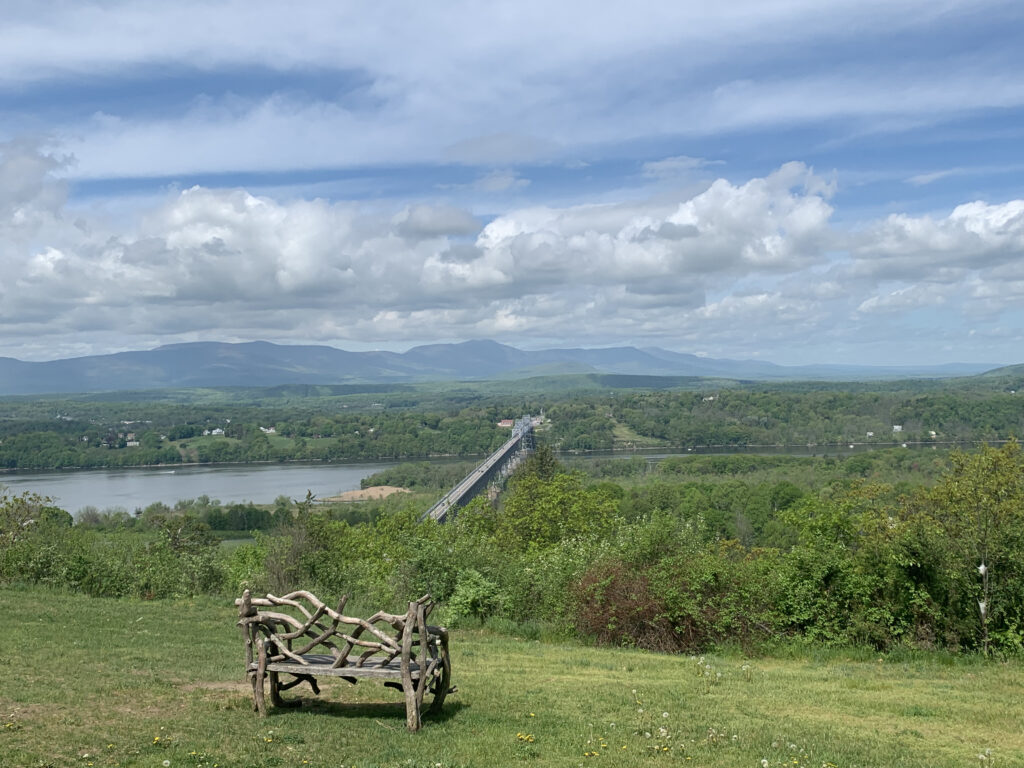
Two landmarks to American art history sit on either side of the Rip Van Winkle Bridge over the Hudson River — the homes of visionary artists Thomas Cole and Frederic Edwin Church.

Cole and Church were leaders of the Hudson River School, a collective of 19th century American painters captivated by natural beauty and wide-open spaces. Many of these paintings, often of a massive size, depicted fantastic views of the Hudson River Valley where many of the artists lived.

Locations featured: Thomas Cole National Historic Site in Catskill, Olana State Historic Site in Hudson

Tom interviewing Amy Hausmann of the Olana State Historic Site

Road Trip to the Hudson Valley: Aftermath

In this Patreon exclusive, Greg and Tom look back on their adventures in the Hudson Valley and give you a behind-the-scenes look at their journeys along the Croton Aqueduct Trail, Hyde Park and the towns of Catskill and Hudson

PLUS: Some tips on how to make these trips yourself this year.

To listen to this show, support the Bowery Boys Podcast on Patreon.

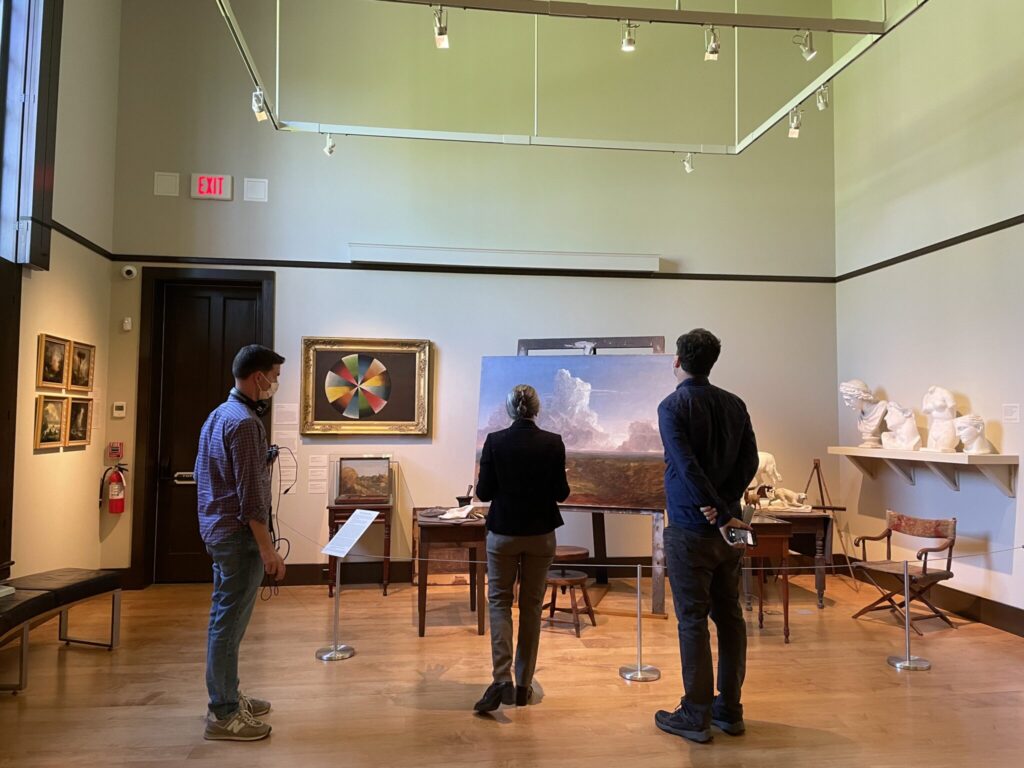
Greg and Tom with Betsy Jacks in the New Studio, admiring Cole’s unfinished painting.
Categories
Revolutionary History

Theodore Burr built the first Hudson River bridge – in the same year his cousin shot Alexander Hamilton

People have schemed to put a bridge over the Hudson River for well over two hundred years.  That task would prove most difficult to those in Manhattan, given the distance between its shores and those of New Jersey.

After several failed proposals, the two were linked with the Pennsylvania Railroad tunnels (1910), the Holland Tunnel (1927), and finally, the George Washington Bridge (1931).


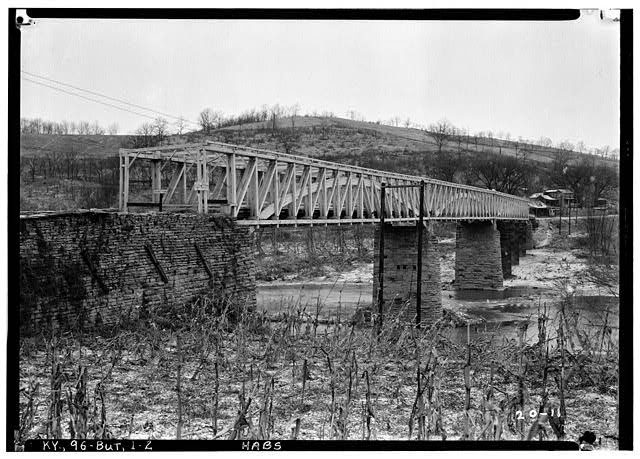
Above: A wooden bridge in Kentucky using the Burr truss, invented by Theodore Burr and first used over the Hudson River’s first bridge span. (Courtesy LOC)

But further upstate, industrious New Yorkers had an easier time of bridging the two sides, as the river became narrower in places and engineers could work upon sparsely populated lands.  

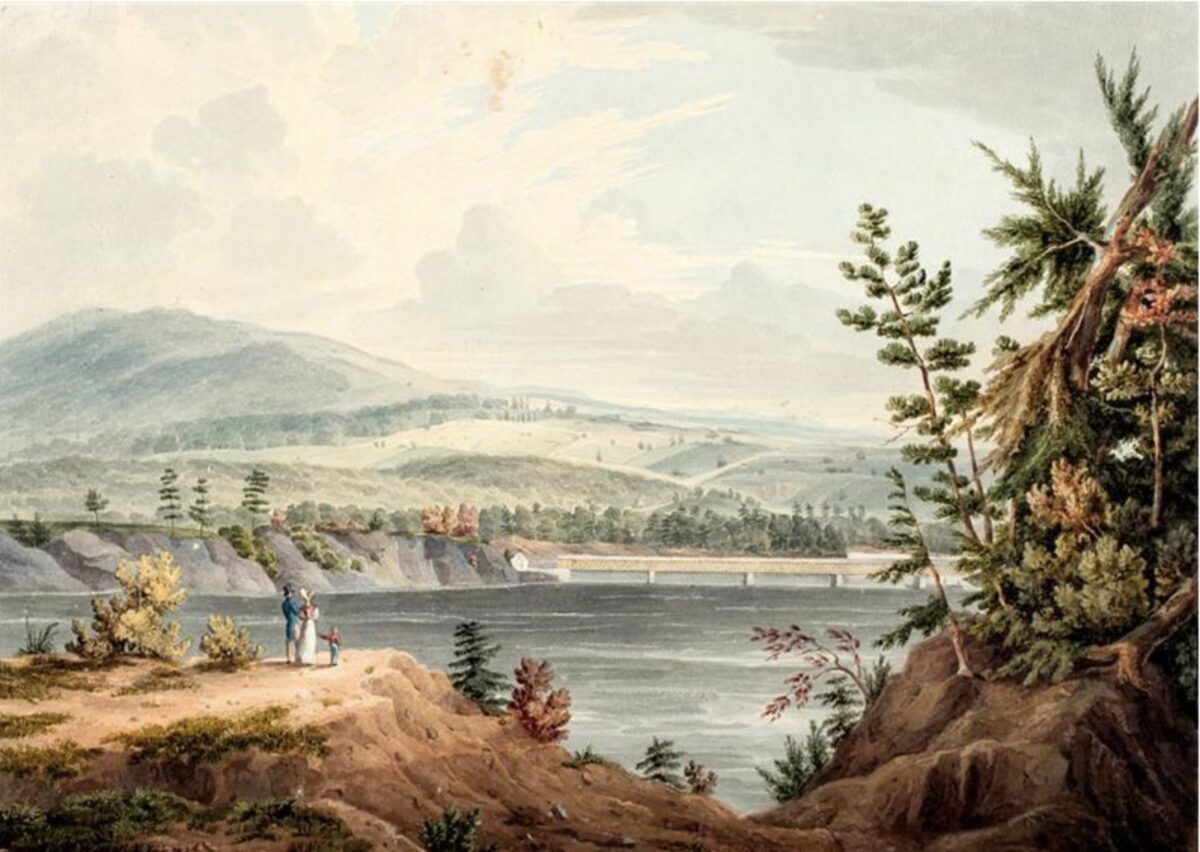
The first bridge over the Hudson River rose at the village of Waterford (near Albany) in 1804, the work of inventor Theodore Burr, the cousin of Vice President Aaron Burr.

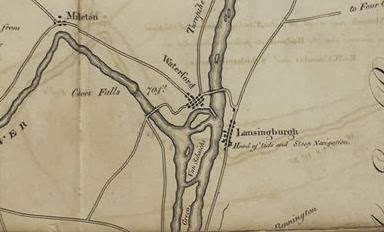
From an 1820 map of the Hudson River. You can see where Burr’s bridge was located, situated over the Hudson until the 20th century (courtesy NYPL):

While Aaron was engaging in a vituperative war of words with Alexander Hamilton, his cousin Theodore was crafting an extraordinary bridge, described in a later history by his ancestor as “four combined arch and truss spans, one of 154 feet, one of 161 feet, one of 176 feet, and a fourth at 180 feet.”  

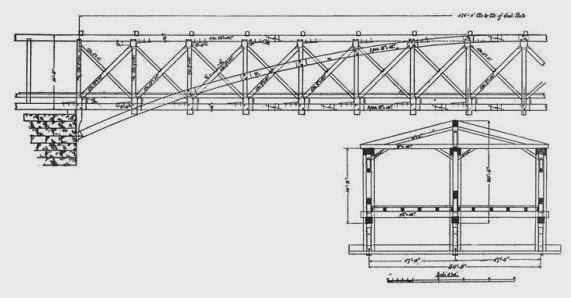
By this point, he was already a well-known, even adventurous builder, but the Waterford bridge was truly something unique.  He eventually patented his design, which became known as ‘a Burr Truss,’ used in the construction of covered bridges throughout the United States.

A sketch of the Waterford bridge, as illustrated by Thomas Cooper in 1889, and an excellent view of what became known as the Burr Truss:

The bridge was coming along nicely by the spring of 1804.  The local paper noted that “the erection is proceeding rapidly, the abutments, (on shore sides) and one of three piers are already near finished, and the frames of the arches are in a state of equal preparedness.  

Concerning the abutments and piers, there is not the least doubt that they will render the bridge secure from ice in spring seasons.”

I’m not sure where Theordore was in July, whether at the bridge site or back at his grist mill in Oxford.  The bridge was over one-third completed that month when Theodore got word that his esteemed cousin had met Hamilton in a duel at Weehawken, 150 miles down river, leading to the death of Hamilton.

But while Aaron’s reputation would quickly deteriorate, Theodore’s would briefly flower, becoming America’s most prolific bridge engineer in the early 19th century.  His most impressive span, the Susquehanna River Bridge in Pennsylvania, survived until 1857.

Strangely, however, Theodore’s eventual fate would eventually mirror his cousin’s. Many of his bridges fell apart, and his finances were ruefully mismanaged.  

He actually disappears from the historical record; according to author Donald E. Wolf, “[h]is heirs report that he died in 1822, but they have been unable to say what caused his death or to identify the place of his burial.”

The Union Bridge, as the Waterford-to-Lansingburgh crossing is sometimes called, was called “the greatest wooden span of its time.”  

Originally exposed to the elements, the bridge was later sheathed in a covering.  It held sturdy over the Hudson River until it was destroyed in a gas fire in 1909.

Categories
On The Waterfront Women's History

The Deep Sea Hotel: A nautical housing solution for independent women

Arbuckle’s Deep Sea Hotel was neither in the deep sea, nor was it a hotel.  But for hundreds of young, single women at the end of the Gilded Age, it was home.

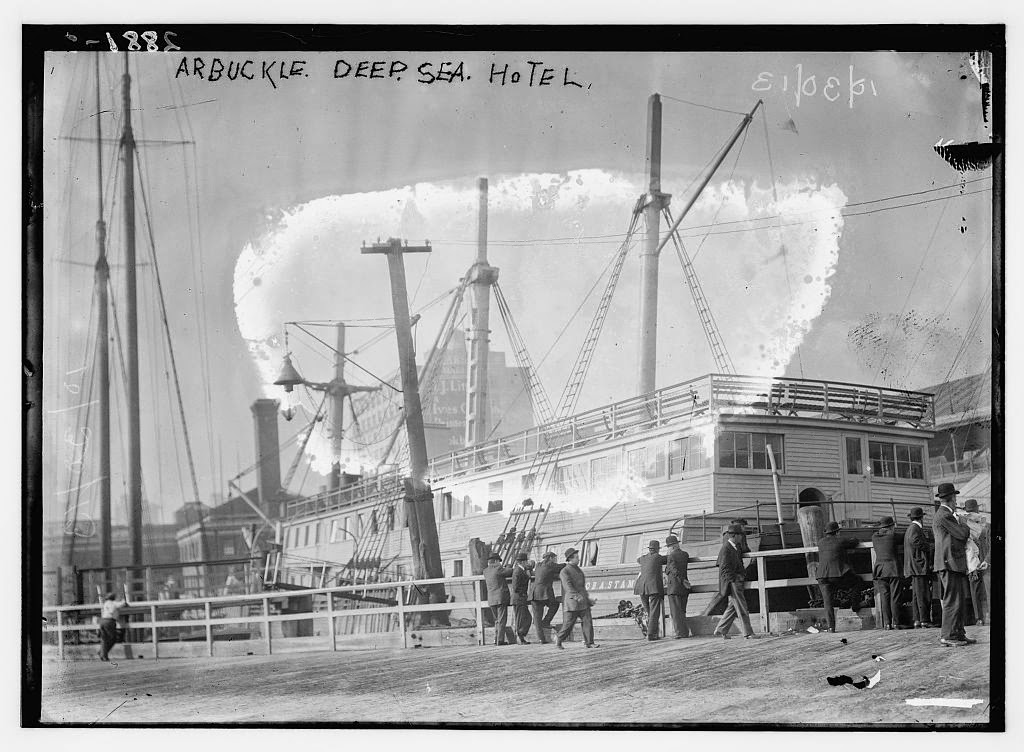
The boat hotel built by a coffee manufacturer, photo from January 1913 (Library of Congress)
The Challenges of Living Single

Accommodations were indeed limited for the thousands of young single women who arrived in New York City at the start of the 20th century.  

Wealthier single ladies could enjoy a degree of independence by indulging in fashionable apartment living. Affordable options like boarding houses were often socially binding.  

For instance, the morality-minded YWCA housed hundreds of New York women by the 1890s. It was often too expensive to rent on your own place, even with roommates, and the neighborhoods where such housing was available would not have been too desirable.

Enter Brooklyn coffee millionaire John Arbuckle.

A Caffeine Jolt

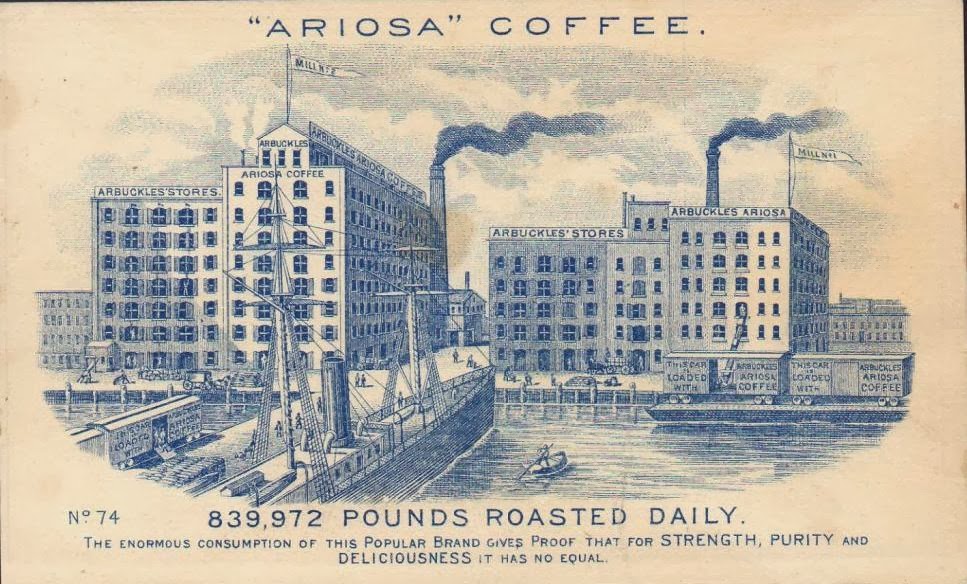
The sugar manufacturer, already a chief competitor of William Havemayer, innovated the mass production of coffee by the 1890s, making himself extremely wealthy and jumpstarting America’s love affair with coffee in the process.  

His Jay Street plants and Water Street warehouses dominated the Brooklyn waterfront in the area of today’s DUMBO.

In emulation of other progressive-minded New York philanthropists, Arbuckle commissioned free water-bound excursions for the overcrowded poor of the Lower East Side.

However, when a steamboat owned by another company — the PS General Slocum — exploded during one such excursion in 1904, killing over 1,000 people, such trips quickly went out of fashion.  

Arbuckle then decided to use one of his ships in a more unconventional way — a long-term hotel for single women.

The Floating Hotel

His ship the Jacob A. Stampler was turned into a floating hotel for one hundred women, with a smaller ship nearby for young working men. It was docked at West 21 Street on the Hudson River, near the massive piers for passengers liners.

“The fundamental idea of this hotel scheme,” according the New York Tribune in 1905, “is to benefit young men and young women who are receiving low wages and are striving to live respectable lives.”  

In 1905, its first year of operation, women paid “40 cents a day, or $2.80 a week, while the young men pay 50 cents a day or $3.50 a week.” [source]

From the Tribune profile:

While both genders benefited from the unusual hotel idea, Arbuckle’s focus was in the assistance of women.  

“A young fellow can fight for himself and get along his own way,” said the millionaire, “but it is different with a woman or girl confronted with problem of keeping herself respectable while working for low wages.”

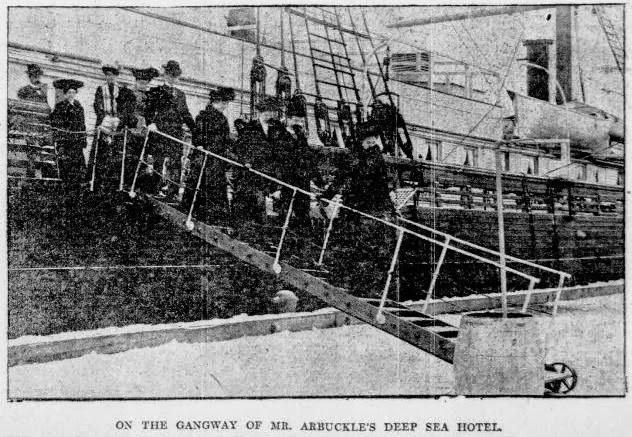
The women were fed well and provided a selection of magazines and newspapers, not to mention a piano for Sunday evening sing-alongs. They were also given sewing machines and laundry facilities.

The rocking of the boat and the relative bustle of a busy pier seems not to have bothered Arbuckle’s early tenants.  

“It’s so quiet here. No rattle and roar from the streets,” said one young woman. [source]  Ladies could receive gentlemen callers, but men had to vacate by 10 pm. As many women worked quite late in the day, this probably didn’t amount to much socializing.

A House and a Vacation Home

During the summer, the boat actually did take regular trips to various places in the region, from Coney Island to the shore of Staten Island.  

In July, the two floating hotels would head out to Coney Island every day, docking for a couple hours at Dreamland amusement park.

Surmising from its frequent journeys, I imagine Arbuckle’s floating hotels had few long-term summer tenants in these early days.

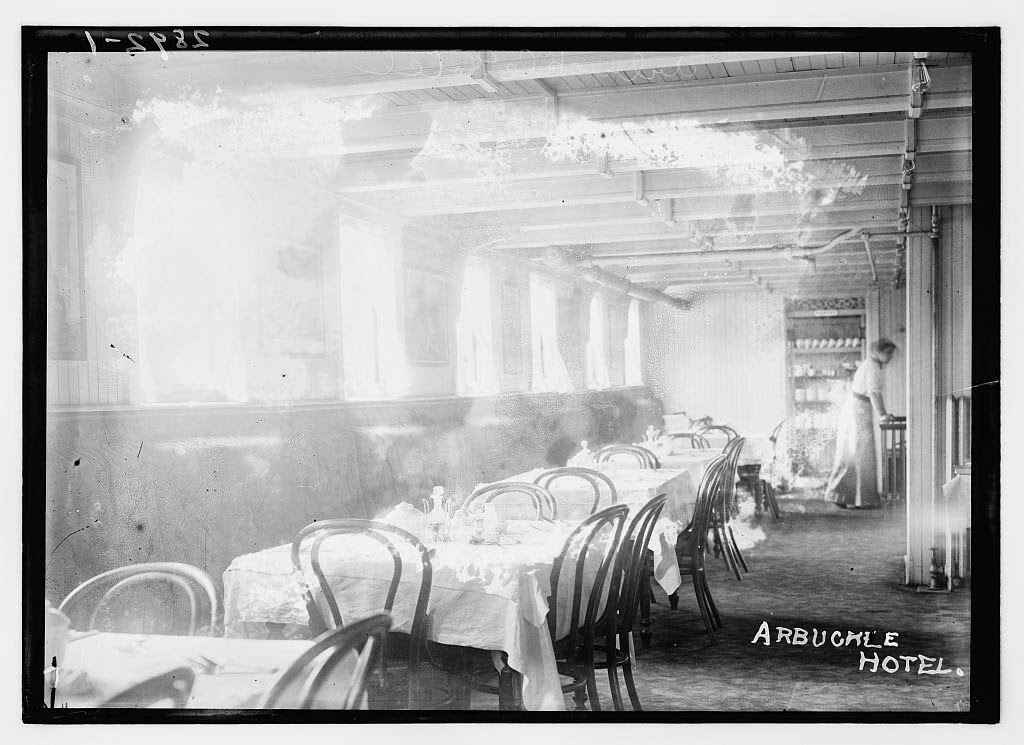
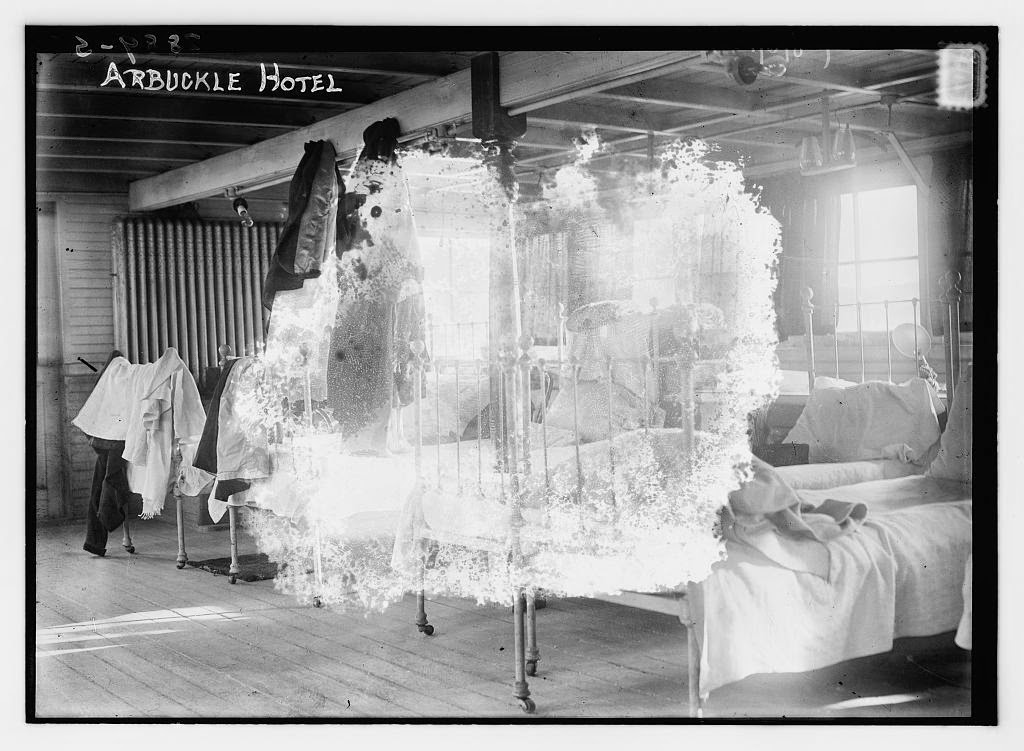
Below: The dining room and the sleeping quarters of the Deep Sea Hotel, circa 1913 (LOC)

The Final Days

Over the next ten years, the Deep Sea Hotel took fewer trips, becoming more or less a semi-permanent, floating apartment complex.

It was referred to by this point as the Working Girls Hotel.  

At some point, perhaps due to overwhelming traffic at the Chelsea piers, the Stampler made the east side its home, regularly docking at East 23rd Street.

The floating hotel never really made a profit, and after Arbuckle died in 1912, his inheritors attempted to shut it down.  

I should also note that the Stampler was a very, very old boat.

“[The] ship was beginning to rot and soon would be unsafe,” said the New York Sun.  The women who lived there, however, fought successfully to keep it open until 1915, when they were finally told to permanently disembark.

Interesting fact to note about its final days — both single men and women lived aboard the boat by 1915.  

Its last documented population was 50 girls and 16 boys, according to the Sun. (Most likely teenagers or adults in their early twenties.) The ship rarely sailed to Coney Island in the summer, but had become a destination in itself.  

“One of the five decks is fitted up as a dance hall,” “crowded every night with dancers” when music from a nearby pier begins to play.

The price of rent these days!

The last tenants finally left on September 1, 1915, with many unable to find further housing.  “There isn’t a girl on this boat that makes $9 a week,” said one mournful tenant, “and you know how far that goes in this city.” [source]

By 1917, the Stampler was a rotted breakwater off of Bayville Beach in Oyster Bay.  To this day, perhaps, some remnant of the ship still sits in the water off the coast of Long Island.

By the way, Arbuckle may no longer sponsor floating housing accommodations for working people, but they still make coffee.


For more information on Arbuckle and the New York coffee scene, check out our podcast on the history of DUMBO:
Categories
On The Waterfront

Troubled Waters: The story of the Grand Republic steamboat, the cursed sister ship of the General Slocum

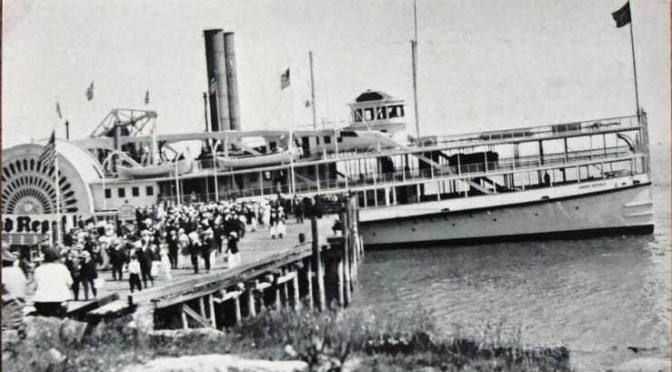
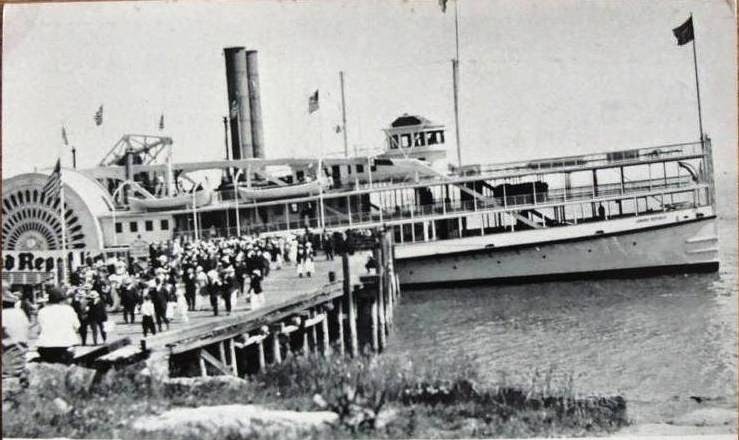
Above: The Grand Republic steamship. As you can see from its paddlewheel, it was a twin to the General Slocum [source]

This could not have made New Yorkers feel very safe about even the briefest of river excursions.

Days after the General Slocum excursion steamer caught fire and sank in the East River, killing over 1,000 people, its older sister ship the Grand Republic — a twin of the doomed vessel, owned by the same company — kept operating along the waters of New York Harbor.

To many, it looked like the ghost of the Slocum.

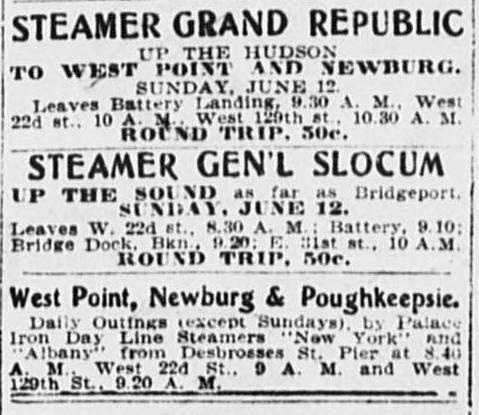
The Grand Republic often ran in tandem with the Slocum, transporting passengers to the seaside amusements of the Rockaways.  During the month of June 1904, the Grand Republic was assigned to the Hudson River, while the Slocum ran the Long Island Sound.

An advertisement in the New York Evening World, June 10, 1904

After the Slocum tragedy, steamboat inspectors were heavily scrutinized and excursion companies were accused of endangering lives for a fast dollar.

Rallying to the side of safety was, of all people, the venerated Daniel Sickles, former Congressman and Civil War officer.  (You may remember him from his early days back when he killed the son of Francis Scott Key.)

The retired politician had no tolerance for the bureaucrats he believed were responsible for the Slocum disaster.

“Scalp those moribund Federal officials who sit with their roll-top desks and draw their salaries for doing nothing while human life is allowed to be sacrificed by the hundreds,” he said. “Only yesterday, I am informed the Grand Republic was allowed to leave her wharf with more passengers than the law allows. Broadside these fellows and let every man and woman write President [Theodore] Roosevelt a letter demanding an investigation.” [source]

Sickles made good on his word, writing Roosevelt and lashing out at the steamer companies in no uncertain terms, the overcrowded General Republic his chief example of their continued malfeasance.

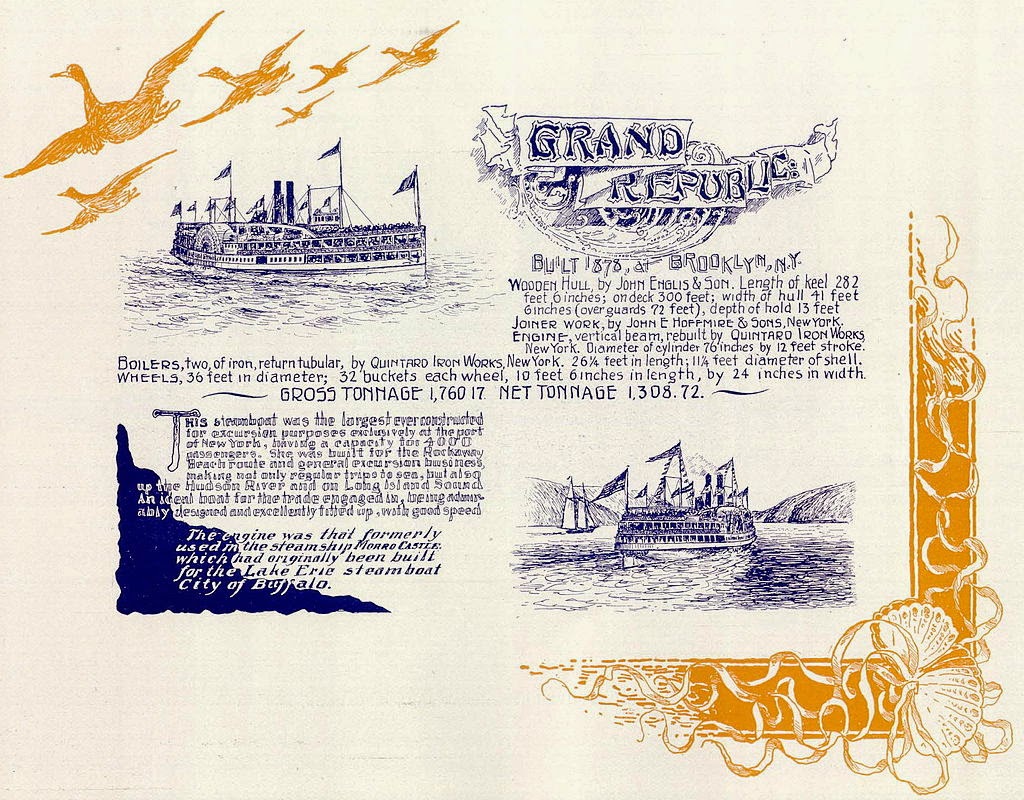
Below: A graphic on the Grand Republic in a book called American Steam Vessels. “Built in 1878” “This steamboat was the largest ever constructed for excursion purposes exclusively at the port of New York.”

The Slocum disaster obviously hit business hard for the entire excursion industry.  The weekend after the Slocum sank, the Grand Republic was supposed to host another church group for a tour of the Hudson, but, understandably, only one-fourth of its passenger list arrived. The Knickerbocker Steamboat Company, owner of the Slocum and Grand Republic, went out of business, and the Grand Republic was sold to another concern.

The captain of the Grand Republic steamer John Pease had been responsible for inspections on the Slocum and was eventually indicted, “criminally responsible for the Slocum disaster.”

Still that did not take the Grand Republic off the waters. ‘THE GRAND REPUBLIC STILL RUNS,” declared the Tribune on July 4, 1904.

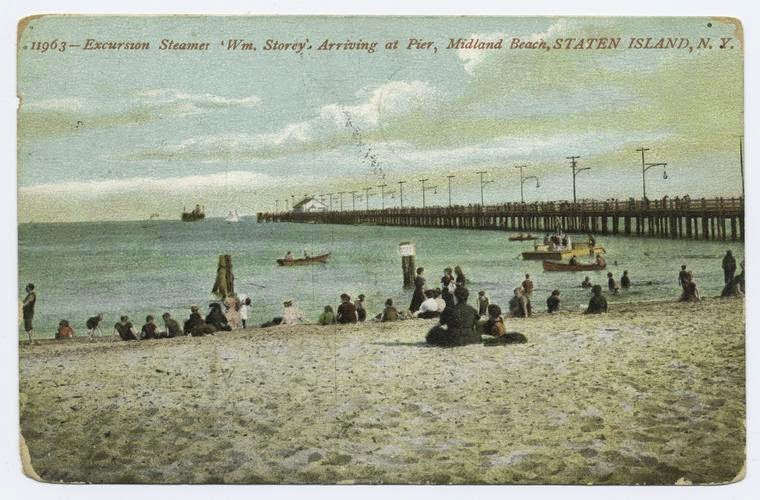
Below: A view of the Midland Beach pier, where excursion steamers would frequently dock. (NYPL)

Four days later, the Grand Republic almost crashed into another steamer off the coast of Coney Island. Two weeks later, with 500 passengers aboard, it slammed into the Kismet steam yacht.  In August, the boat was revealed to have the same sort of rotten life preservers that had so doomed the Slocum.

Still that did not take the Grand Republic off the waters. “GRAND REPUBLIC DEFIES ORDERS,” declared the Evening World on August 3, 1904.

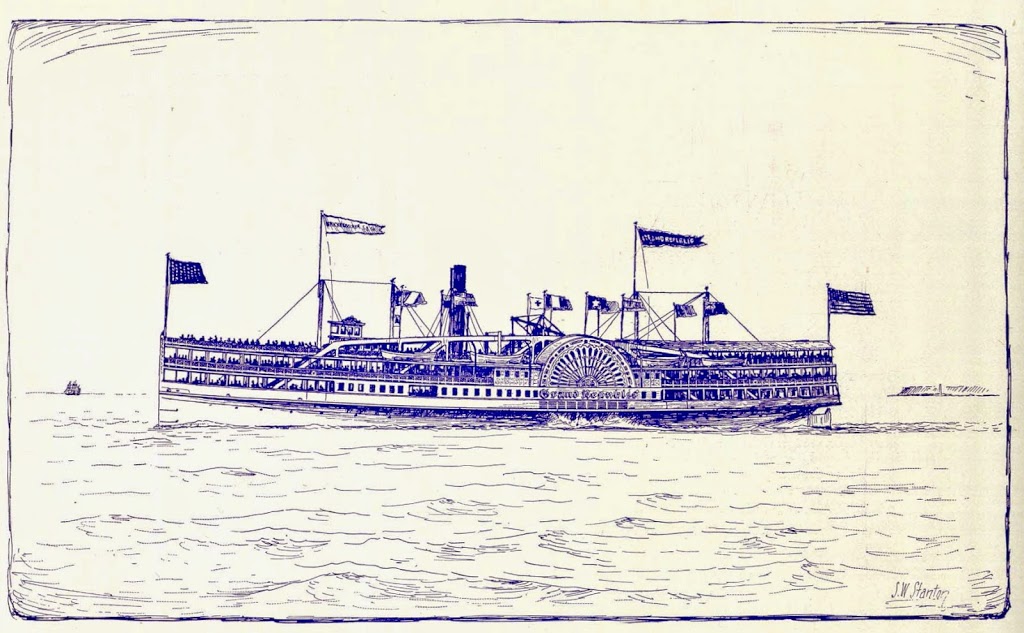
Below: The Grand Republic, illustration by Samuel Ward Stanton

The steamboat owners argued with the New York inspectors in the press, neither looking very trustworthy.  Eventually the boat owners surrendered the Grand Republic to the government for inspection.

Believe it or not, even with hundreds of life preservers declared ‘rotten’ and promptly removed, the boat was eventually declared safe, although its capacity was greatly lowered — from 3,750 to 1,250 passengers, a major financial blow to the owners.

It led a quiet career for many years afterwards, although many feared the boat’s association with the doomed General Slocum and refused to ride it.  It resumed trips to the Rockaways and Coney Island, taking tens of thousands of people through New York Harbor for many, many years.  And it even returned to taking church groups on day excursions, similar to the journeys that the General Slocum had taken.

But the boat would continue to get into rather significant accidents.  In 1915, even the suggestion of fire during one voyage sent a thousand people scrambling for the life preservers, resulting in several injuries.  In a disturbing parallel with the Slocum, “[w]omen shrieked as they were knocked down by the mob that surged about the lifeboats.” [source]

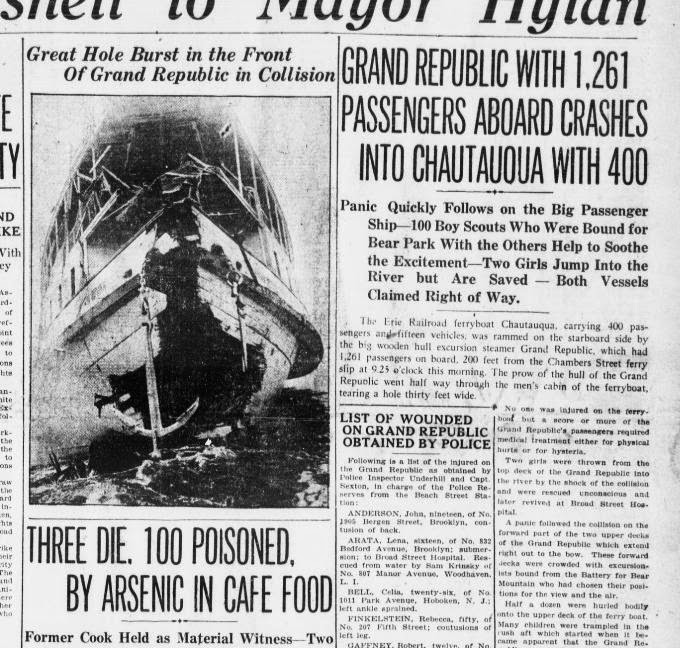
On August 1, 1922, the Grand Republic smashed into another boat in the Hudson River, injuring over a dozen people.  Luckily the boat was filled with Boy Scouts, who calmed the panicked passengers. (Below, from the Evening World)

You might think this would spell the end for the old steamboat, but no!  It remained in the waters, continuing to transport passengers to upstate New York, one of the oldest vessels in service.

The Grand Republic, like its sister ship, was brought down by fire, although luckily without the terrible casualties. In 1924, while docked along 155th Street, a severe dockside blaze caught several boats on fire, including the Grand Republic.

The fire erupted late at night, and thirty men were sleeping aboard the boat at that time. Fortunately, this was the era of the automobiles; car horns from a nearby street awoke two seamen, who safely evacuated the crew.  The Grand Republic, however, was lost, eventually sinking into the Hudson River.

By the time of its demise, the boat seems to have shaken off much of its bad reputation.  Later that year, in a sort-of obituary to the excursion steamer industry, the New York Times declared, “[C]ertainly the Grand Republic was a grand success as an excursion boat.”

Categories
Bowery Boys Bookshelf

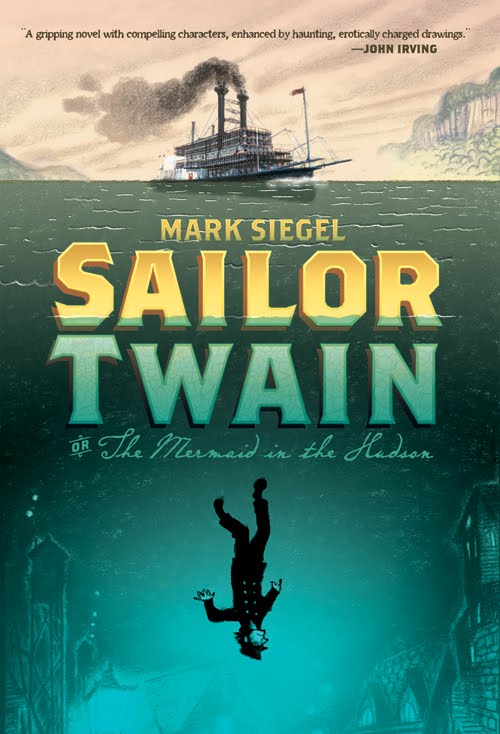
How to make a mermaid: A chat with Mark Siegel, the creator of ‘Sailor Twain, or The Mermaid in the Hudson’

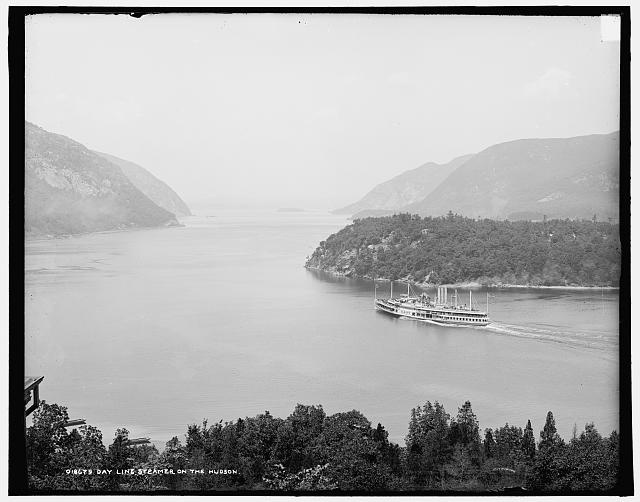
A passenger steamer passes along the Hudson, early 1900s. (Courtesy LOC)
As a kick-off to the Bowery Boys Book of the Month section, I thought I’d ask Mark Siegel, the author of Sailor Twain or The Mermaid in the Hudson,” a few questions on his inspiration for the graphic novel.  I was especially interested in the origin of the book-within-a-book, as it seemed like something familiar….

So which inspiration came first, a history-based story set on the Hudson or a love story involving a mermaid?

It’s hard to say, because the Hudson River and the mermaid have been inseparable in my mind for the nine years I was working on the book.  But the compulsion of a siren’s song was the initial spark—these things in life that compel us and override our reason and our common sense, things we would follow . . . down, down, down.

 The 1887 setting revealed itself very early.  There’s the romance of the Gilded Age, but also the cross currents of that time which I found irresistible: the industrial revolution waxing and the scientific mind in ascendance, the women’s suffrage movement, the uphill fight for Black people’s rights, the lingering shadows of the Civil War, and with poetry and literature, a search for a new and unique American myth and magic—from Irving to Twain to Whitman to Emily Dickinson… Such rich soil to plant a story’s seeds in.  But yes, the seed itself is a love story, or rather three interwoven love stories.

Why did you decide to name the captain Twain? The story makes a couple clever allusions to Mark Twain then launches into a genre quite unlike a Twain story. Is the randy Lafayette an allusion to a real life character as well (say Marquis de Lafayette perhaps)? 

With every major character in Sailor Twain I was interested in finding a resonance in the American psyche. Lafayette evokes the Marquis of course; a great emblem of France, and in the love-hate relationship between France and the United States, that name belongs on the love side: a France that embraces the American ideal.  Now at first, the Lafayette in our story seems like a cliché of the lecherous Latin man, but then his destiny takes him someplace beyond that.

Twain is a dangerous name to give a protagonist—it’s such a trademark of that Samuel Clemens fellow. And Captain Twain even resents being asked if he’s related to the writer! He grumbles “That’s not his real name, you know…” But that’s only the starting point.  Sailor Twain also plays with the Doppelganger theme—so splits or “twainings” of all kinds:  in the Captain, the passengers, the recent Blue and Grey Coats of the Civil War, even in the mighty Hudson herself.  The Algonquian name for the Hudson was “The River That Flows Two Ways.”  So the name Twain runs throughout every level of the story.  Early on in the making of it, it couldn’t be any other name for our doomed captain.

At the core of the graphic novel is a mysterious book ‘Secrets & Mysteries of the River Hudson’ written by the equally mysterious C.G. Beaverton. There’s something very vaguely familiar about this book, perhaps like something similar I’ve read doing research. Is it based on a real book? 

Oh good!  I hoped for exactly that sort of vague familiar feeling.  I wrote out most of that book within the book, so I could know it myself.  It’s like some travelogues, but also the mystical searches of Graham Hancock like in his The Sign and the Seal—part rigorous history, part guidebook, part fable and mystery-dream.  Leonardo DaVinci‘s travel journals were oddly enough an early inspiration: they’re mostly very detailed, very exact and truthful, and suddenly he talks about visiting foreign lands and seeing giants and impossible creatures and all kinds of baffling things. I love that.

How the Beaverton book evolved though, is the author became more of a story-collector than a visionary—something like Zora Neal Hurston, or the folk-song collectors in the Appalachian mountains.  Some of the Beaverton stories draw from actual Hudson folklore, and from all real places—plus some of my own strange visions in some of these places.


Your artistic style also seems inspired by old photographs, not just in the use of ink but in the framing of certain scenes (on the waterfront or in Central Park, for instance). What was your research process with ‘Sailor Twain’ and did any old archival photos or books inspire the direction of the story?

I collected thousands of pictures from all up and down the Hudson, indoors and outdoors, fashions, carriages, ship menus and timetables, anything I could get my hands on.  Lots online—imagine my joy when I first came across The Bowery Boys, which I have plundered shamelessly—but also many hours spent in New York historical societies, at the great NYHS itself, and the NY Public Library, for archival prints, 1880s newspapers and old maps especially.
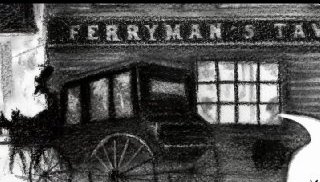

In a few instances I would draw directly from a photograph, or an engraving from Harper’s Weekly (“The Journal of Civilization”!) but more often than not, I “digested” the pictures and let them evolve in my imagination before drawing the finished pages of Sailor Twain.

Occasionally, some face in an old daguerreotype would strike me deeply, a beautiful face, or a mournful pair of eyes, and I would bring that person into the story, if only in the background. But I don’t think the story really took its cues from archival photos; everything I found seemed pressed into the service of the story, rather than the other way around.

The art has a mix of Gothic and impressionistic elements, with a few dips into the playful. (Lafayette, that nose! Twain, those eyes!) How did you settle upon the haunting, mystical tone of the images?

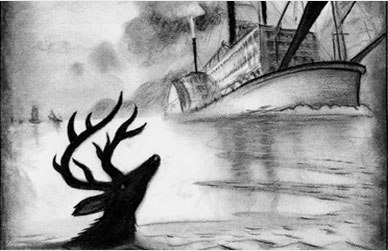
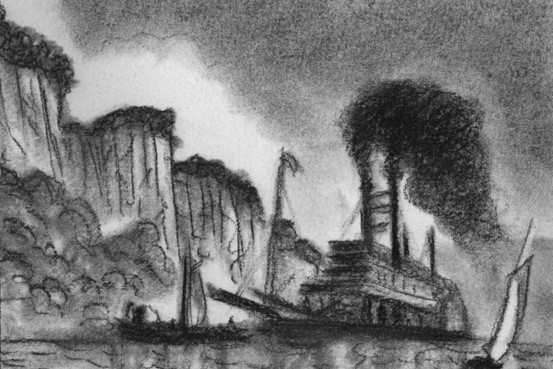
 There’s something I love about comics, something they can do which movies can’t too easily: mixing styles in different registers, blending for instance realistic characters with more cartoon-y ones.  Since I worked in charcoals, everything was unified by the shading; but within the smoky, smudgy, steamy atmosphere of it, there are some characters who are very naturalistic, others very iconic, almost geometric, like Captain Twain himself.  The mermaid, oddly, looks much more realistic than he is.

I was hoping for a mystical, haunting mood for the Hudson in this very stormy summer of 1887… Again the magic of charcoal lent a fog-shrouded quality, a bit like classical Chinese painting, where things appear and disappear in the mist…

And I enjoyed sabotaging some of the more serious moments with humor. Like in an early dramatic plot point, when the Captain finds a wounded mermaid, bleeding on his deck one night, and tries to pick her up—as it turns out, she is quite slimy and slippery and she slips through his arms and bonks her head on the floor.  Talk about killing the romantic buzz.   I like being able to go playful, then serious again, visually and narratively.

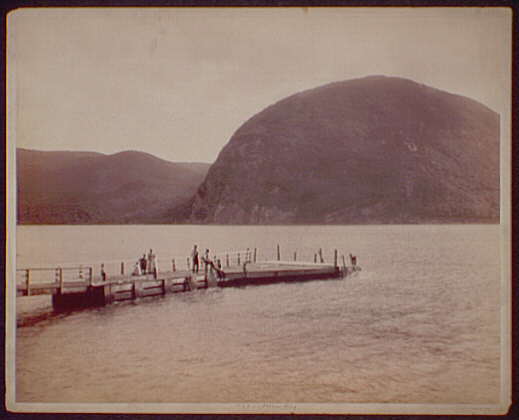
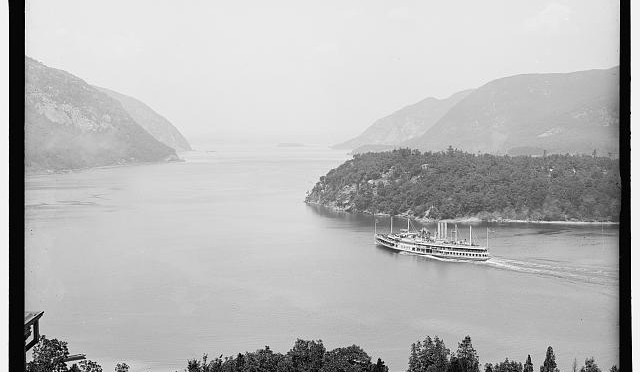
Storm King Mountain, circa 1890, from a photograph by William Henry Jackson (courtesy LOC)

Mermaids may not actually be living in the Hudson, but there are plenty of other urban legends associated with the Hudson River Valley. Any that are your particular favorite? 

 Mermaids may not be living in the Hudson, you say… But treacherous currents alone can’t account for all the shipwrecks at World’s End, just south of West Point Academy!

 But you’re right, there are so many great legends up and down the Hudson River Valley… The stories about Spuyten Duyvil; the supposed origin of the term “cocktails” in an Elmsford tavern where drinks were served with a cock’s feather in them (not true, I am told); the ghosts and various spirits attached to some of the Hudson mountains, like Storm King and Anthony’s Nose; of course I have a soft spot for Sleepy Hollow and Rip Van Winkle… I also like the one about Henry Hudson and the Catskill Gnomes.

Categories
Bowery Boys Bookshelf

‘Sailor Twain’ : A mystery at the bottom of a haunted river (Bowery Boys Book of the Month)


We’re trying out a new feature here on the blog by debuting our very first ever Bowery Boys Book of the Month selection!  Each month I’ll pick a book — either brand new or old, fiction or non-fiction — that offers an intriguing take on New York City history, something that uses history in a way that’s unconventional and different or exposes a previously unseen corner of our city’s complicated past.  Then over the next month, I’ll run an article or two about some of historical themes that are brought up in the selection. 

For the inaugural selection, a page-turning graphic novel that turns to the Hudson River’s 19th century steamship trade for inspiration…..

Sailor Twain, or The Mermaid In The Hudson
by Mark Siegel
First Second Books

Something lurks in the waters of the Hudson River in Mark Siegel’s moody new graphic novel.

“Sailor Twain; or the Mermaid In The Hudson,” shaded darkly and finely formed out of moody atmosphere, is an ethereal rumination on American urban legend, borrowing from history to create myth.

The Lorelai is a passenger steamship delivering Gilded Age passengers along a bustling Hudson riverfront in 1887, with the major city in New York Harbor ever at its root.  It untethers northward along a river famously known for strange secrets which lurk beneath its currents.

Elijah Twain has a familiar name for a steamboat captain in the late 19th century. “Are you related to the writer?” asks a fine lady.  “That’s not his REAL –” Twain attempts to explain before being interrupted by the boat’s owner, a French Lothario named Lafayette.  (I can’t help but think that this dandy is a nod to another historical figure, the Marquis de Lafayette.)

Their vessel the Lorelai, named for the famous siren who led sailors to their deaths, travels up and down the Hudson through murky and sometimes surreal waters, inviting to eccentric passengers and otherworldly specters alike..

Books mysteriously appear, as do two ghostly little boys.  Lafayette’s unexplainable lust for female passengers seems connected to his brother’s recent suicide.  Twain’s own moodiness derives from his wife Pearl, bedridden at home and seemingly a distant reality away.

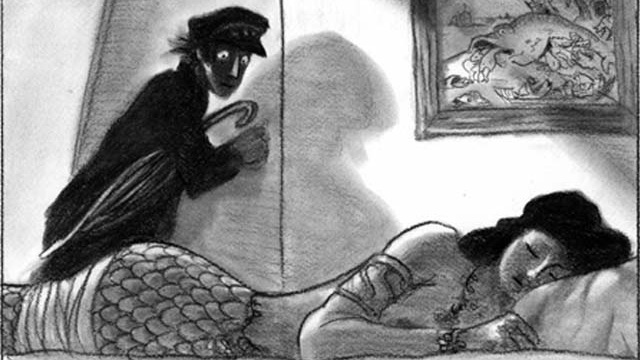
One evening Twain discovers what appears to be a woman who’s fallen overboard.  He lifts her to the deck to discover she’s a mermaid, naked down to her scaly fins and severely injured.  He secrets her away to his room, where the creature slowly casts an erotic spell over the captain.  Even his cabin is affected by her charms as ghostly seaweed slowly breaks through the floor.

Lafeyette’s randy exploits and Twain’s mysterious guest have a very sinister connection, potentially revealed by a book — inexplicably popular with New Yorkers — of local occult stories “Secrets and Mysteries of the River Hudson” by the reclusive C.G. Beaverton.  The author soon boards the Lorelai during a book tour and proves to carry secrets too scandalous even for print.

The heavy, charcoal-like images are a perfect complement to the story.  The Hudson River, as illustrated by Siegal, seems like the end of the earth, a world so choked in mist that it feels like the artist’s ink will rub off on your fingers. Siegal presents a lush, romantic view of historical New York, at equal points comic, erotic and melancholy. Some faces are cartoonish, others delicately real.  The art holds the mood as the story unfurls, from Gothic romance to horror parable.  It felt like a fog was rolling in each time I opened the book.

The moments where ‘Sailor Twain’ enters 1880s New York — from its cabarets and saloons to even Steinway Hall on 14th Street — are moments where sun and nostalgia briefly shine, before (and I mean this literally) submerging the main characters into the Hudson itself, entering a world H.G. Wells might have imagined.

We get to see the table of contents of Beaverton’s book, a fictional tome which promises other mysteries of the Hudson River Valley: famous shipwrecks, Indian legends, the ‘Wood People of Pocantino Hills’ and even cigarette-smoking ghosts.  Perhaps Siegel’s ‘Sailor Twain’ is just the first illustrated chapter of a whole menagerie of mysteries?

TOMORROW: A few questions with the creator of ‘Sailor Twain’ Mark Siegel!

Categories
Planes Trains and Automobiles Podcasts

The High Line: The wild, wild West Side, cowboys included, inspires an elevated railroad and a remarkable park

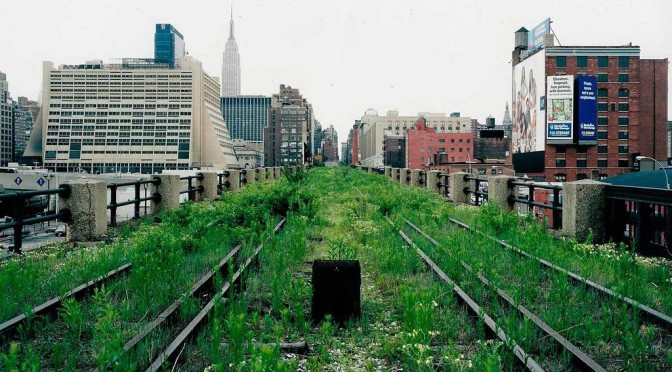
Joel Sternfeld’s extraordinary four-seasons photographs of the High Line — displayed in his 2002 show Walking The High Line — revealed a ribbon of nature surrounded by urbanity and presented a peek into forgotten history. These images greatly influenced the later design of the park, a mix of seamless design and tastefully untethered flora. Courtesy Joel Sternfeld

PODCAST  The High Line, which snakes up New York’s west side, is an ambitious park project refitting abandoned elevated train lines into a breathtaking contemporary park. This is the remnant of a raised freight-delivery track system that supported New York’s thriving meat, produce and refrigeration industries that have defined the city’s western edges.
 You can trace the footprints of this area back almost 200 years, to the introduction of the Hudson River Railroad and Cornelius Vanderbilt, who transformed the streets along the Hudson River into ‘the lifeline of New York’, filled with warehouses, marketplaces and abattoirs. And, of course, lots of traffic, turning 10th Avenue and 11th Avenue into ‘death avenues’, requiring New York’s first ‘urban cowboys’.  The West Side Elevated Freight Railroad was meant to relieve some of trauma on the street. That’s not exactly how it worked out.

We’ll tell you about its downfall, its transformation during the 70s as a haven for counter-culture, and its reinterpretation as an innovative urban playground.

FEATURING: Cows, dining cars, Russian caviar and sex clubs!


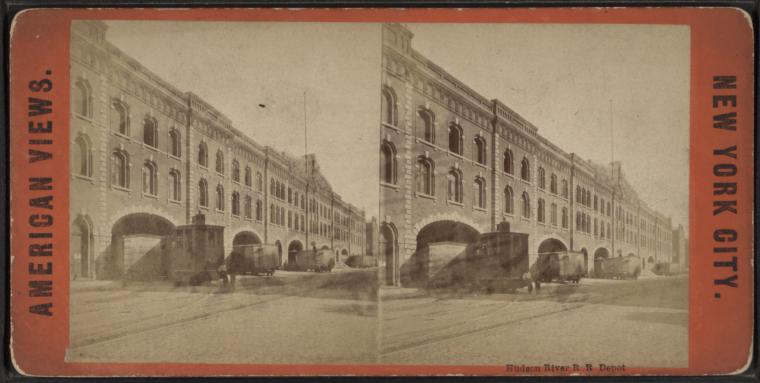
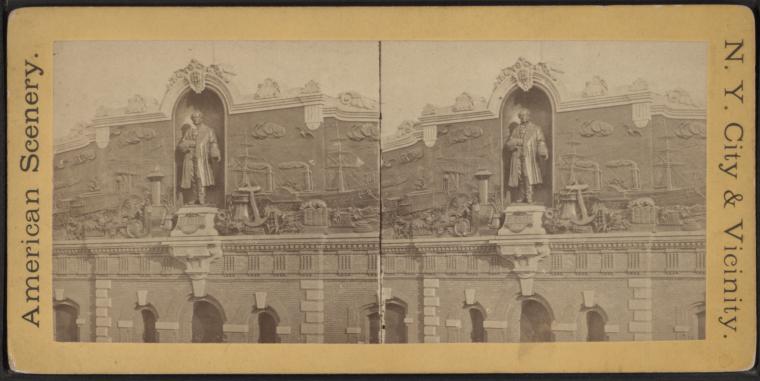
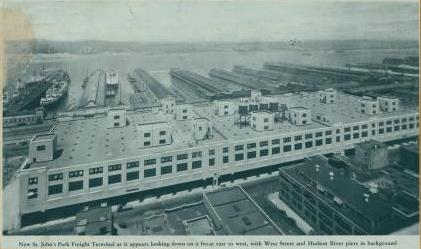
St. John’s Freight Depot, built in 1871. The Cornelius Vanderbilt statue stood watch over the bustling activity until the building was demolished in the 1930s. Mr. Vanderbilt was then moved to Grand Central Terminal, where he still stands today. Pictures courtesy NYPL digital images


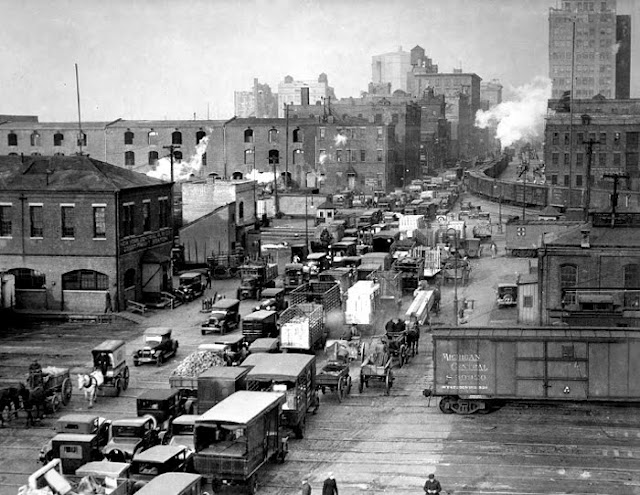
The businesses, the trains and the marketplaces of the west side created a nightmare traffic situation along 10th and 11th Avenues, resulting in dozens of death and the sinister moniker ‘Death Avenue’. (Picture courtesy Friends of the High Line)

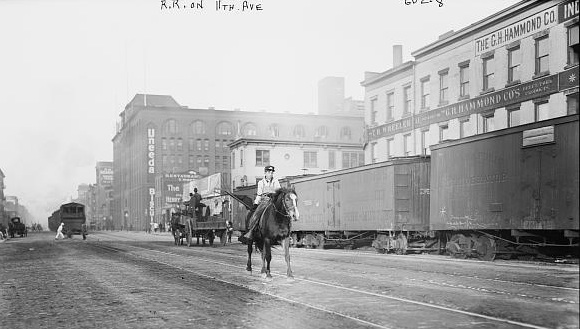
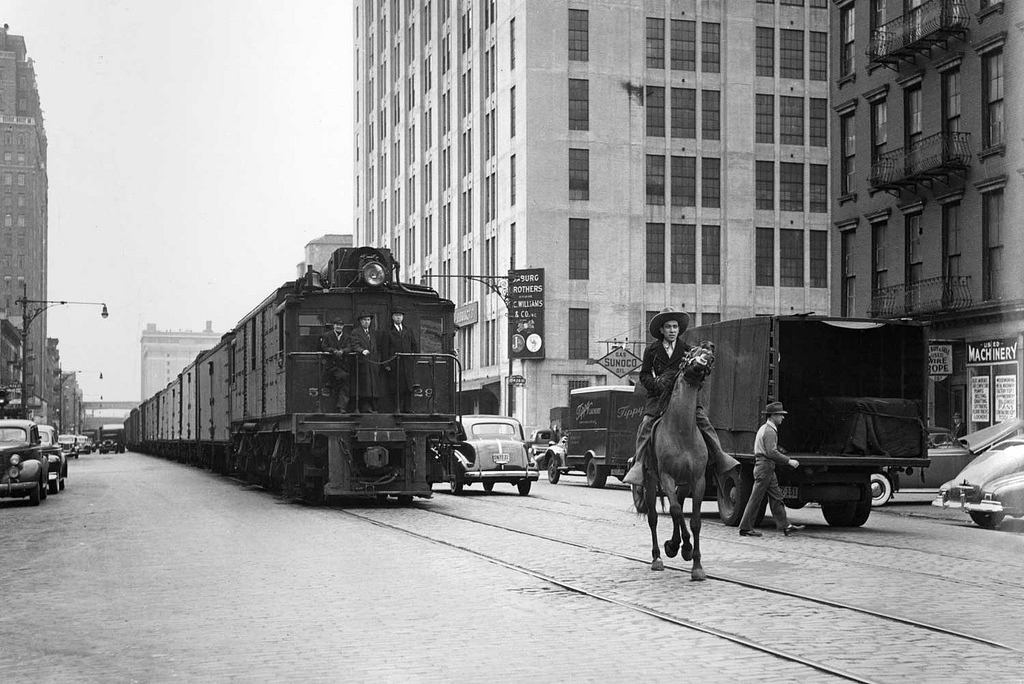
Rangers of Eleventh Avenue: A railroad cowboy marches ahead of an approaching train. Below that, many years later, another cowboy has his work cut out for him going up the avenue in 1922, the era of automobiles.


The relatively ‘modern’ St. Johns Terminal on Spring Street.

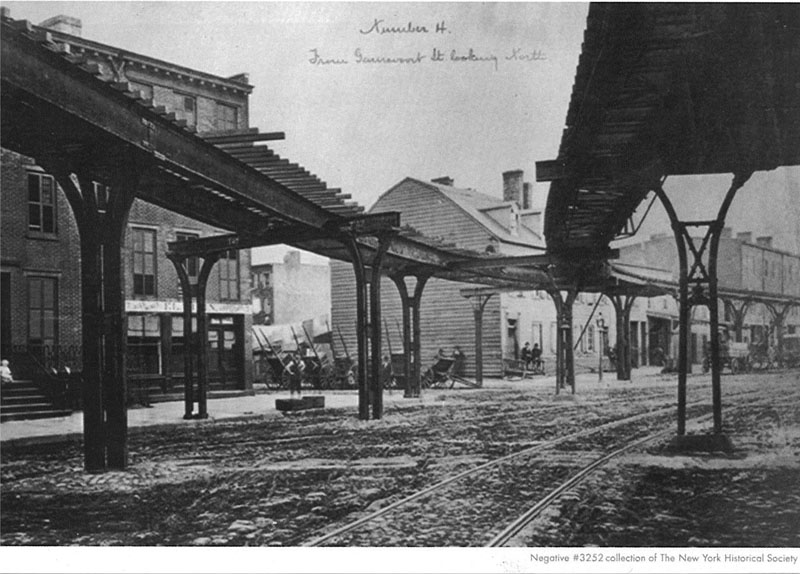
Building the elevated freight railroad: At Gansevoort Street, looking north. Picture courtesy the New York Historical Society

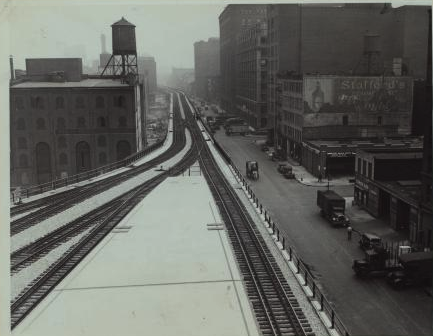
The elevated in 1934, West Street and Spring Street. This was one of the sections that was later ripped down. (Courtesy NYPL)

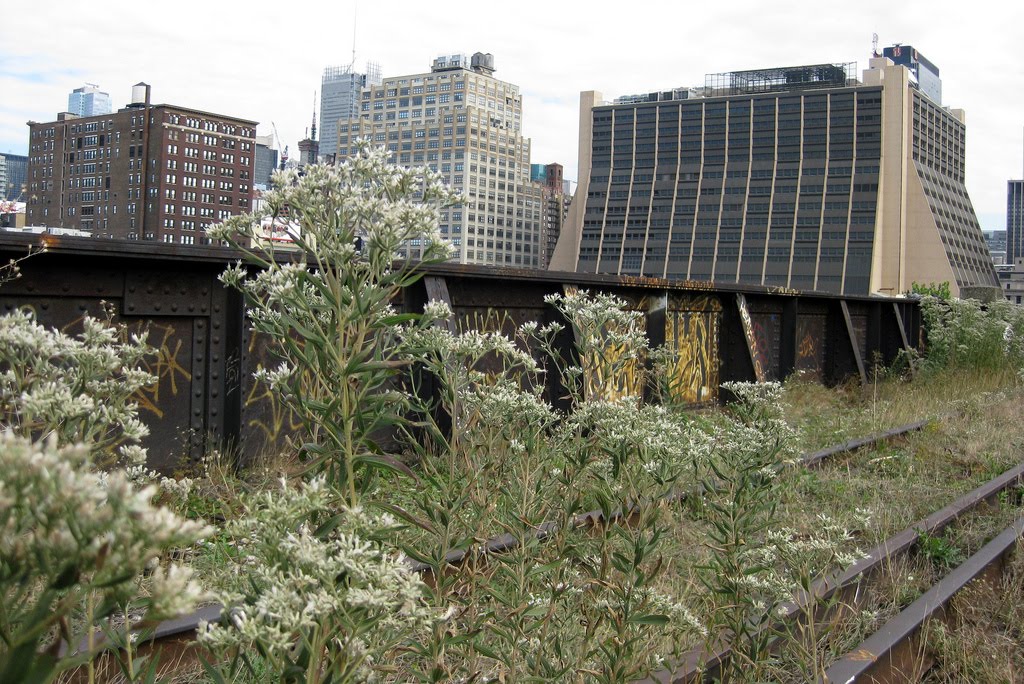
After the elevated railroad closed for good in 1980, the track sat abandoned, covered in natural overgrowth of the likes hardly seen anywhere else in Manhattan. ‘Urban explorers’ often traipsed along the mysterious rails, capturing the dichotomy between sudden natural landscape and metropolitan backdrop. (Photo courtesy wally g/Flickr)


The High Line Park opened in 2009, after almost a decade of awareness and fundraising. The linear park has helped transform the neighborhoods below it and has created a new must-see destination for tourists. (Courtesy Friends of the High Line)

Fun on the ice: Party time atop the frozen East River

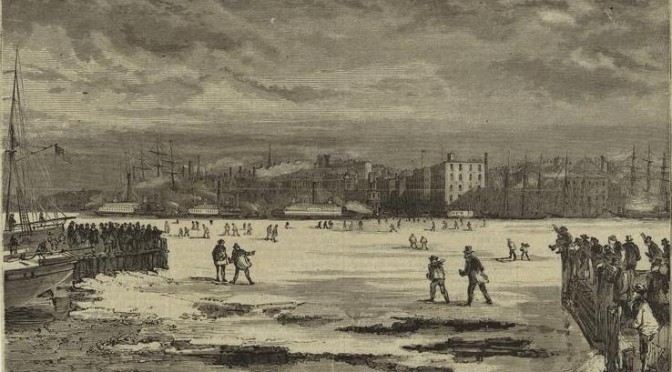
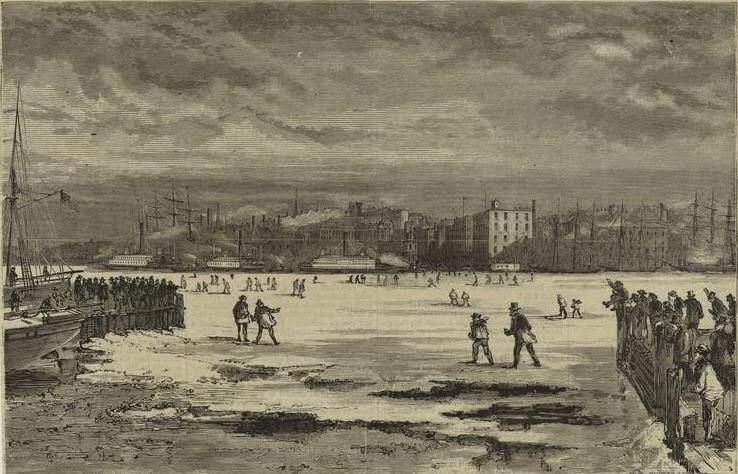
Daredevils trespassing the ice between New York and Brooklyn in 1871.

I spent much of New York’s Christmas blizzard nightmare in various airports throughout the country, unable to get back to La Guardia Airport, where it appears I would have just been stranded anyway.

With all the transportation fiascoes, the unplowed streets and the mounting piles of garbage, it seems like it was certainly the messiest of storms. But ranking in ranking it among the worst storms in New York City history, it doesn’t even make the top five! According to the city’s own ‘hazard mitigation plan’, “Since 1798, New York City has experienced 23 snowstorms with 16 inch or greater snowfall totals.” They also include a list of the most frightening blizzards in the city’s history, including the worst in 2006 and one from 1805 that doesn’t sound like so much fun (“48 hours of continuous snow”).

As horrible as it certainly was, however, imagine it paired with that most peculiar of natural interruptions — the freezing of the East River.

Having a key waterway turned into a veritable skating rink would be inconvenient today, though not the catastrophe it would have been in the 19th and early 20th centuries, when New York’s seaport was one of America’s centers of trade. Hundreds of vessels sat paralyzed along the waterfront, dozens more prevented from entering.

Before the railroad, New York relied solely on its ferry system to get people from Manhattan to neighboring towns like Brooklyn and Williamsburgh. These were clearly not functional when the East River froze, as it did on several occasions throughout its history, before heat-generating over development on both shores assured such events would happen less frequently.

Contemporary reports from one freeze in 1857 describe dozens of ferry cancellations in ways that hearken to the scenes in airports just a few days ago, with boats making their way across the river and returning to pick up new passengers — twelve hours later.

But just as people made the most of the late December blizzard fiasco — doing wacky things like skiing down Park Avenue at 40 mph — New Yorkers in the 1850s did not let something like a gigantic ice sheet go to waste. In 1852, “It is estimated that 20,000 persons must have taken advantage of the circumstance to walk, instead of sail from New York to Brooklyn and back.”

The thick ice sheet that accumulated over the East River in 1857 seems to have encouraged jovial behavior. Regaling the hundreds of walkers braving the temporary walkway, “the shores of either side were lined with people shouting, hurrahing and having a good time of it generally, and the utmost hilarity prevailed.” Among those that crossed the ice in the spirit of fun: the Reverend Henry Ward Beecher, “asserting that the trip was made to prove that it was not the wicked alone who could stand in slippery places.” [source]

It’s all fun and games, of course, until the ice starts melting. During an 1888 freeze, fish sellers at the Fulton Market lowered ladders down to the ice, allowing hundreds to cross. Unfortunately some got caught in the middle, trapped on ice floes, and had to be rescued by passing tugboats.

The year 1875 was an especially cold year, with the East River sitting frozen for almost four days. But an even rarer occurrence happened that year: the freezing of the Hudson River between Manhattan and New Jersey. While other parts of the Hudson regularly froze solid — indeed, the river was the principal supplier of ice for New Yorkers in the late 19th century — it was rare to have that span between New York and the shore to the west freeze to the point that people could cross with little difficulty.

It’s impossible to know the most severe freeze in the history of New York Harbor, but a leading candidate must certainly be the winter of late 1779-early 1780, which locked British-occupied New York in a sheath of solid ice and kept ships and ferries immobile for over a month. According to historian David Ludlum, “Judge Jones, who lived at Fort Neck (now Massapequa), wrote in his book that 200 provision-laden sleighs, pulled by two horses each, escorted by 200 light cavalry, made the five-mile trip from New York to Staten Island.”

Categories
Podcasts

Henry Hudson and the European Discovery of Mannahatta

We turn the clock back to the very beginnings of New York history — to the European discovery of Manahatta and the voyages of Henry Hudson.

Originally looking for a passage to Asia, Hudson fell upon New York harbor and the Lenape inhabitants of lands that would later make up New York City. The river that was eventually named after Hudson may not have provided access to Asia, but it did offer something else (hint: PETA won’t be happy) that attracted the Dutch and eventually their very first settlement — New Amsterdam.

LISTEN NOW: Henry Hudson

The island of Mannahatta in the days before the Dutch (courtesy the Mannahatta Project). Hudson would have anchored off the tip on the western side, his eyes on the river that stretched north.

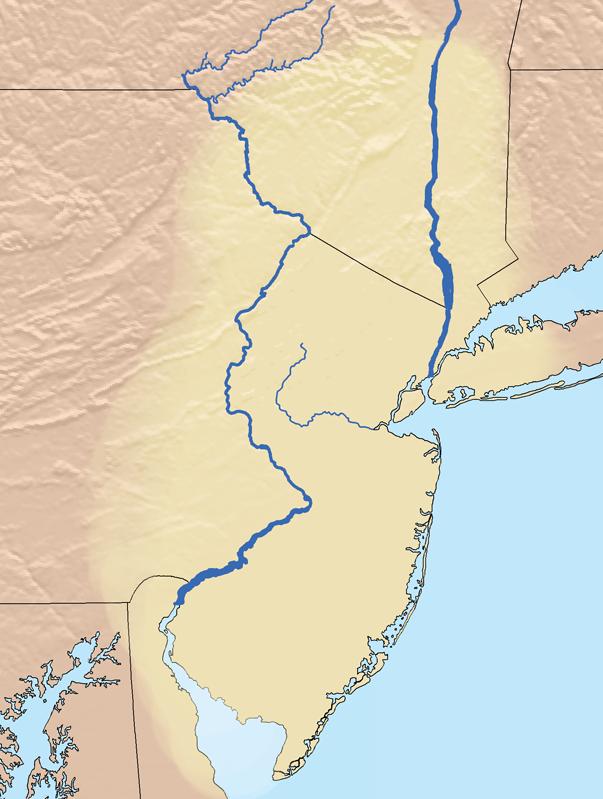
Lenapehoking: that’s what the original inhabitants of the area called the land that comprised the New York City metro area, New Jersey, western Long Island and surrounding areas (map courtesy wikimedia)

The first guy to arrive, Giovanni da Verrazano (or Verrazzano, depending on where you look), was greeted by the Lenape at the mouth of New York harbor. He touched down on today’s Staten Island but never ventured further into the harbor.

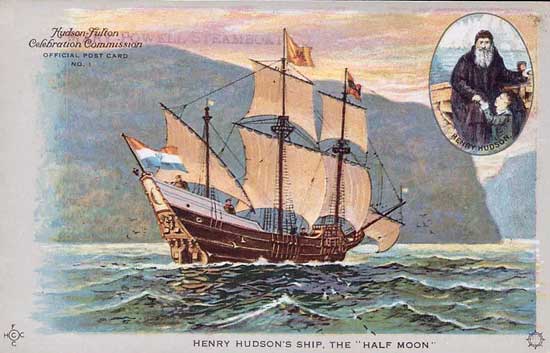
Hudson’s ship the Half Moon — or rather a replica that was launched for the 1909 Hudson-Fulton Celebration

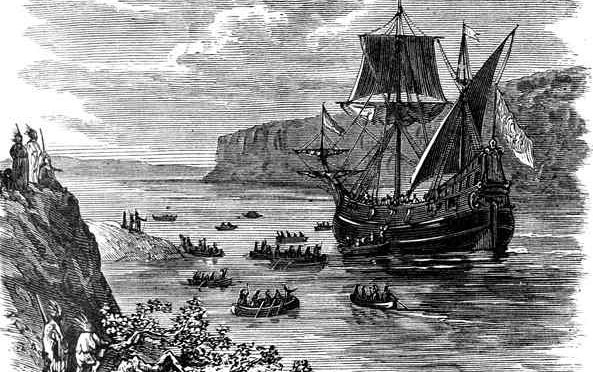
Henry Hudson, an Englishman who tried twice for his country to find a northern route to Asia before being enlisted by the Dutch East India Company. He never found a passage for them either, but he did find the river that today bares his name.

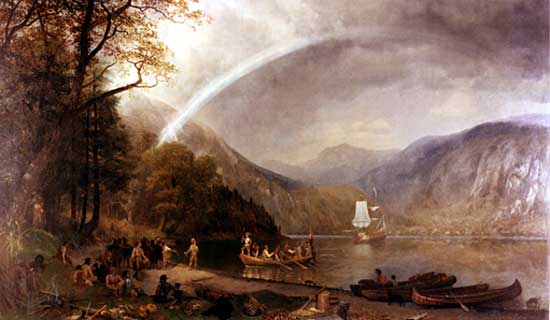
Hudson’s voyage up the Muhheakantuck (the Lenape name for the Hudson River) brought him into contact with several tribes, with encounters growing increasingly unfriendly. By the time he sailed back down the river to Mannahatta, they were flat out attacked by natives in canoes.

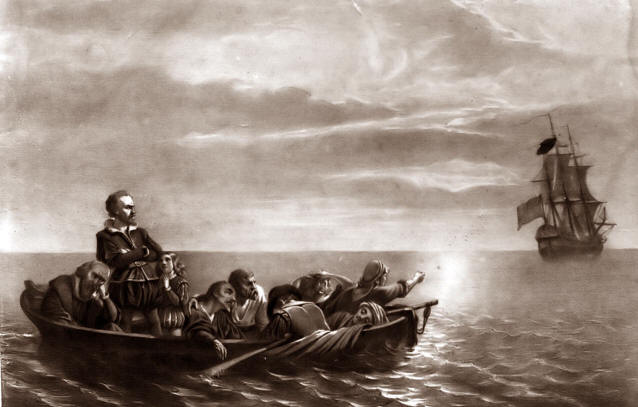
On his last voyage, Hudson’s crew mutinied, throwing the captain, his son and a few remaining loyal crewmen into a boat and setting it adrift in the Arctic.

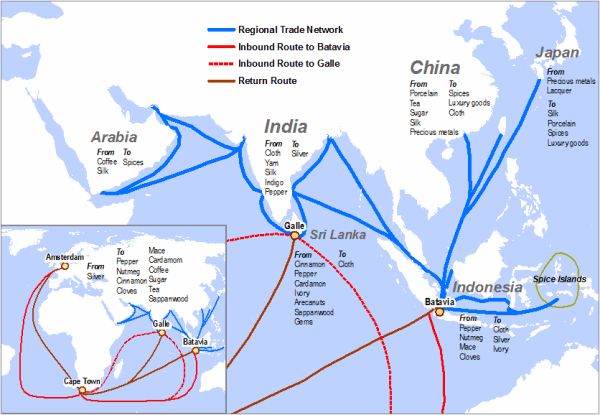
With no alternate route to Asia, the map below illustrates the trade routes the Dutch East India Company had to eventually travel to build their empire. (map courtesy Hofstra)

There are lots of events planned to celebrate the 400th anniversary of Hudson’s discovery. NY400: Holland on the Hudson celebrates New York’s Dutch heritage. Hudson 400 focuses on the explorer himself, with a timeline of events. Meanwhile Explore NY 400 lists statewide celebration.

I wrote about some of the more curious events of the Hudson-Fulton Celebration in a prior blog posting.

And for your immediate gratification, check out Amsterdam/New Amsterdam, the well reviewed show at the Museum of the City of New York

Apparently, the replica of the Half Moon was in Poughkeepsie just yesterday!

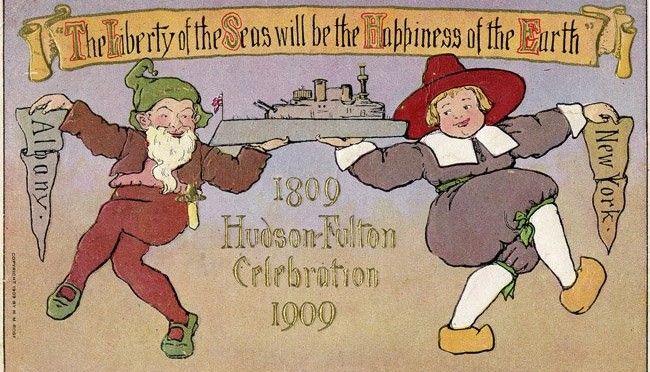
The Hudson-Fulton Celebration: not just another party

Four hundred years ago, on September 12, Henry Hudson sailed into New York harbor and casually discovered the island of Mannahatta, the future home of New Amsterdam, Wall Street, and the New York Yankees.

Two hundred years later, ferry mogul Robert Fulton patented the steamboat, an engineering marvel he perfected, but did not invent. Fulton, a Pennsylvanian who originally tested his ship in Paris, became associated with New York with the development of the successful Clermont North River steamboat service in 1807.

Reason to party, right?

New Yorkers thought so 100 years ago, planning the official Hudson-Fulton Celebration in the fall of 1909, as a grand, showy pat on the back to America’s industrial might. A state-wide soiree, it was New York’s own unofficial world’s fair, a chance to trumpet its innovations and riches via a celebration of its history and the central role of the Hudson River.

Make no mistake: as much as this was a celebration of New York, it was also a celebration of New York’s wealthy. This was the height of the Gilded Age, after all. The original plan was forged by Theodore Roosevelt’s uncle Robert, and the planning committee included Andrew Carnegie, J.P. Morgan, former vice president Levi Morton, Macys co-owner Oscar Straus, and members of the Rockefeller and Van Rensselaer families. They were celebrating New York; by extension, they were celebrating themselves.

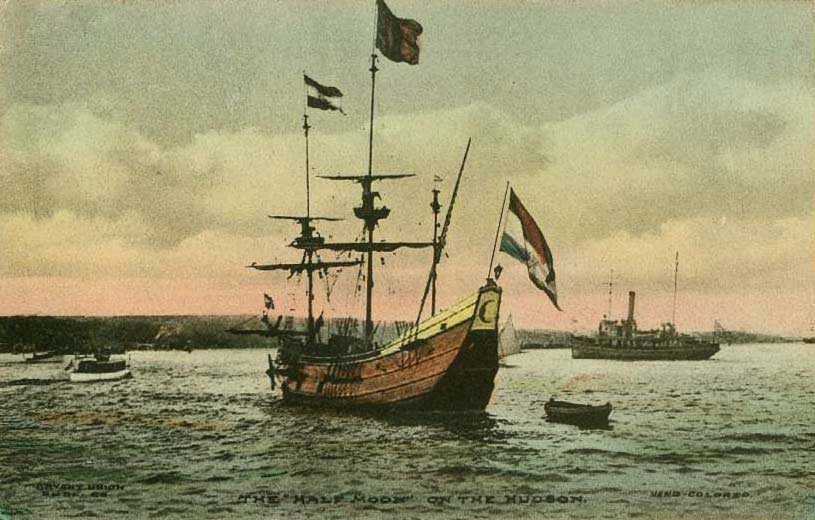
From September 25 to October 11, the river was clogged with shipping and military vessels festooned with electric lights, while overhead the skies were filled with nightly firework displays. Inaugeral nautical displays were capped with the ceremonial entry into the harbor of both Hudson’s ship the Half-Moone and Fulton’s Clermont, both re-created for the event. (The Half-Moone and Clermont unceremoniously collided into each other during the ceremony!)

Below: a postcard of the Half-Moone on its ‘revisit’ to New York harbor

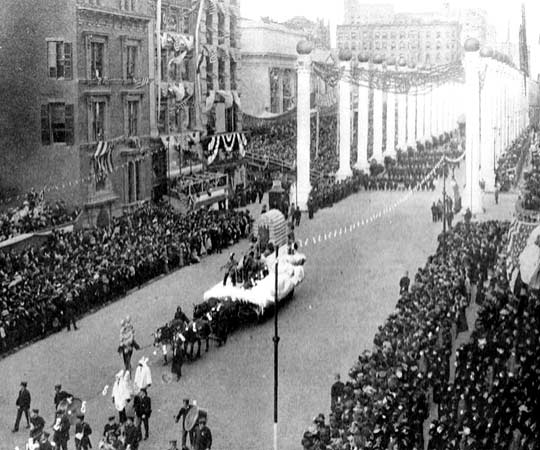
On land. it was a veritable history geek’s dream, with festivals and parades devoted to New York City’s past. Each day featured a different ‘historical pageant’ in each borough, culminating in two far livelier ‘carnival pageants’, one in Manhattan on October 2, and in Brooklyn one week later.

The historical pageant would be a six-mile, papier-mache Beaux-Arts extravaganza, striding from Central Park to Washington Square Park, displaying the political correctness of the day. The parade was led by a series of floats referred to as ‘the Red Man Band’, with such dioramas as ‘the Legend of Hiawatha’ and ‘the War Dance’, escorted by members of Tammany Hall.

Dutch-themed floats depicted Jonas Bronck, Peter Minuit’s purchase of Manhattan island, and a friendly game of bowling at Bowling Green. British and Revolutionary War floats followed, featuring the death of Nathan Hale and the legend of Rip Van Winkle. Peter Stuyvesant, Alexander Hamilton, the Statue of Liberty, the Marquis de Lafayette — they were all represented.

Below: part of the Hudson-Fulton history parade, 1909

Of course, that was nothing compared to the absolutely bizarre Carnival Pageant. Rather than represent anything relating to the celebration at hand, organizers chose to, according to official history, “recall the poetry of myth, legend, allegory and in a few cases of historic fact, which, while foreign in local origin, is an heritage of universal possession and belongs to all nation.”

Bafflingly, this led to a highly flamboyant parade with such European folklore themed floats as the “Crowning of Beethoven,” “Lohengrin,” “Walkure”, “Frost King”, “Orpheus Before Pluto” and “Elves of the Spring” — almost 30 in all. A couple sample descriptions:

Frost King — “This float represented the mythical Frost King, who has control over the snows and other elements of the winter. Around him were grouped his fairies, who have charge of the winds, the snows, the frost and the thaw. The Frost King was represented in his own directing the elements.”

Elves of the Spring — “This float represented the opening of the flowers and the fairies issuing therefrom, suggesting the magical change which comes over the face of nature with the retreat of winter.”

Keep in mind that many of the myths depicted in the carnival may have been quite familiar to New York’s new populations of European immigrants. Had such a procession sprouted up on the streets today, it might be mistaken for the Halloween parade.

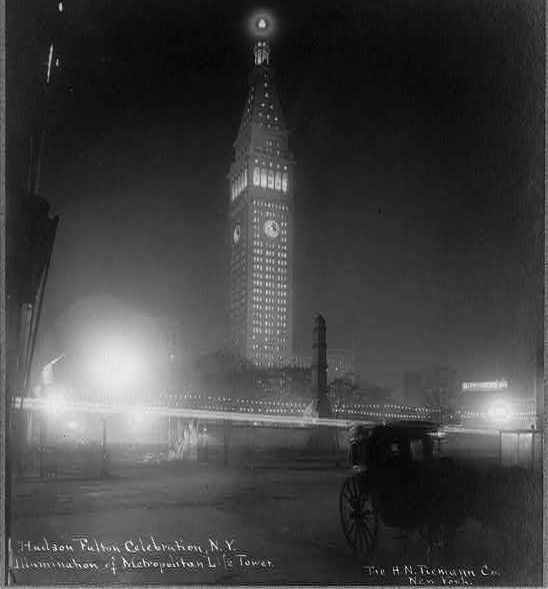
The Metropolitan Life Tower, the tallest building in New York, lights up the night sky during the 1909 Hudson-Fulton celebration

Meanwhile, mayor George McClellan Jr. and other city officials were busy elsewhere, as a flurry of monuments and plaques were dedicated that day. In fact, if you’re walking around the city and find any dedication related to the days of Dutch Manhattan, most likely it’s from the Celebration — from the marking of the old Dutch wall on Wall Street to the marker dedication to Dutch school teachers in Washington Square.

Strings of electric lights were hung from every available landmark and structure, in a sense creating the modern New York skyline that very day, as New Yorkers could now admire their city for the first time at night. Not just incidental illumination, but a decorative show that could be seen from miles away.

Thousands of lights were hung from the bridges and official buildings in all boroughs, paired with “elaborate private illuminations by the owners of large office buildings, stores and dwelling houses,” the lighted vessels in the harbor and the various pyrotechnics throughout the city to create “a veritable City of Light.”

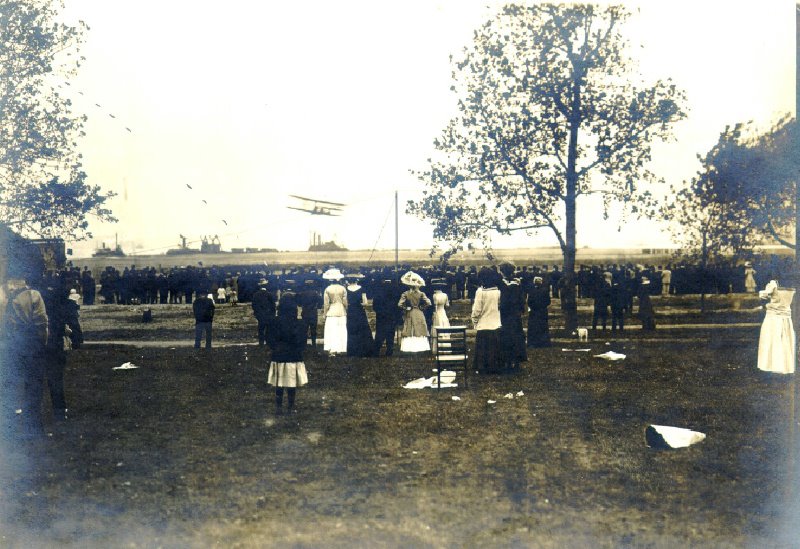
Of course, the most well-known — and most historically significant — event from the Hudson-Fulton Celebration was Wilbur Wright’s flight from Governor’s Island circling the Statue of Liberty, the very first flight over New York waters. (Check out our podcast on LaGuardia Airport and the history of flight for more information.)

Below: Amazed New Yorkers stare as Wilbur takes a second trip through New York skies, up the Hudson River to Grant’s Tomb, then back to Governor’s Island

This year we should be celebrating Hudson, Fulton and Wright, I guess. There are celebrations planned throughout the state, and we’ll hear more about them starting in June and continuing through the fall. Manhattan has already received a new commemorative flag in honor of the event.

And naturally, we’ll be alerting you to some of these events on this blog. Maybe we’ll even have our own. Anybody got a elf costume?

By the way, the official history of the Hudson-Fulton Celebration is worth a look, especially for its descriptions of regular events.

Name That Neighborhood: TriBeCa not so triangular

Some New York neighborhoods are simply named for their location on a map (East Village, Midtown). Others are given prefabricated real-estate designations (SoHo, DUMBO). But a few retain names that link them intimately with their pasts. Other entries in this series can be found here.

For all the New York City neighborhoods with wonderful old names hearkening back to Lenape, Dutch and British settlers, we have a small number crafted by other, more venerable tribes — real estate brokers and community organizers. Dumbo is not a city in the Netherlands; NoLiTa is not Lenape for ‘neighborhood’. And at least one –TriBeCa, that fashionable neighborhood northwest of City Hall — is made of comprised of a complex portmanteau that isn’t even technically accurate.

The area bounded on the north by Canal, south by Vesey Street, east by Broadway and west by the Hudson River is calm and quirky compared to other neighborhoods, owing to its shape, sculpted by a cross work of diagonal streets braced against the grid-like blocks between Church and Broadway. While the Lower West Side, as it was earlier known, began as a residential district in the late 18th century, its proximity to the docks and to the Hudson River Railroad’s St. John’s Park Depot transformed the neighborhood into a center of industry, primarily textiles by the 1850s.

Like the Meatpacking District further north, the western edge of the area also became a grocery center for New Yorkers, with fresh produce, dairy and meat. The streets of Washington Market, as it was known then, were clogged with buyers and sellers with vendors even set up along the Hudson River docks. A chaotic mess to be sure, to contrast with many of the gorgeous Italianate and Romanesque Revival buildings built by wealthy companies to house their offices and factories.

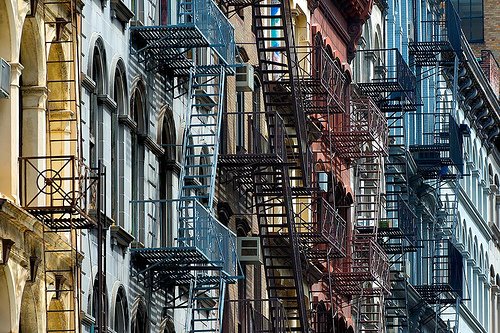
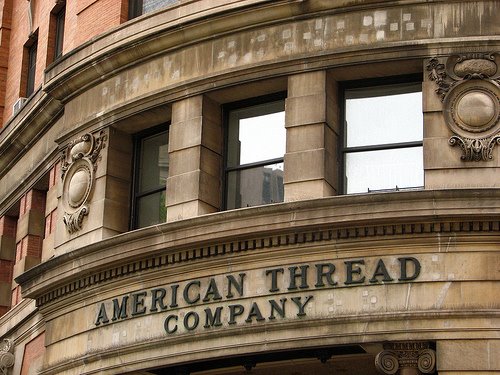
Below: You can easily find remnants of TriBeCa’s ‘material’ past

Flash forward to the 1960s. The factories long abandoned and the western warehouses cleared away to construct the West Side Highway, the large now-empty spaces attracted artists, musicians and “bohemians”, slowly returning the neighborhood to its original residential leanings. Similar, in fact, to the phenomenon of SoHo just north, also a locus for artists, whose tenacious effort to turn industrial space residential led to the creation of its made-up name (SOuth of HOuston) and historical landmark designation in 1973.

The residents of Washington Market followed suit. Or rather, those centered around an actual triangular block — the one with Canal to its north, Lispenard to its south and Church to its west. (It narrows pointing to Broadway on its eastern edge.) They formed a block association called the Triangle Below Canal to rally behind a similar designation for their area. Although they too are technically south of Houston — and Washington Market has a cleaner, historical ring to it — the organization’s name was truncated, and TriBeCa was soon born.

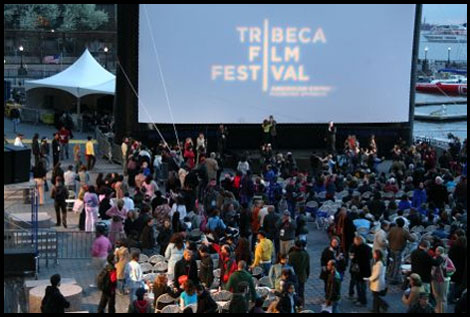
Although TriBeCa represents the entire area, in fact the neighborhood (outside of a few individual blocks) is not actually triangular at all. But as the true sign of the neighborhood’s drastic transformation, the area’s unofficial king is an Oscar-winning celebrity — Robert De Niro. The actor, who moved here in the ’90s, brought two restaurants and a film festival here, which allowed other celebrities to follow suit.

You can find more indepth information on the history of TriBeCa at its official website.

Below: Where once crowds of produce cellars clogged the streets, now filmgoers enjoy cocktails and watch film premieres