Categories
American History

New York’s Poignant Memorial to Lincoln’s Death Is In A Very Odd Place

Abraham Lincoln died 150 years ago today in a Washington DC rowhouse, shot and killed by the actor John Wilkes Booth while the president was attending a performance of Our American Cousin at Ford’s Theater the previous evening.

The news hit the North as some sort of horrible dream.  Confederate general Robert E Lee had just surrendered to Ulysses S. Grant at Appomattox Courthouse less than a week. The war was over in the minds of many. How could this have happened?

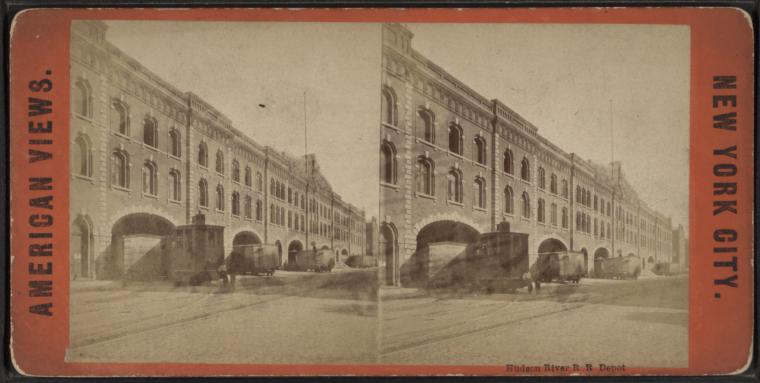
On April 21, Lincoln’s body began a mournful tour of the United States, taken from cities across the country via a funeral train.  Three days later, on April 24, the train with Lincoln’s body pulled into 30th Street Station, the depot which served the Hudson River Railroad back when the train brought passengers down the western side of Manhattan. (We give the details of this vanished station in our podcast on the High Line.)
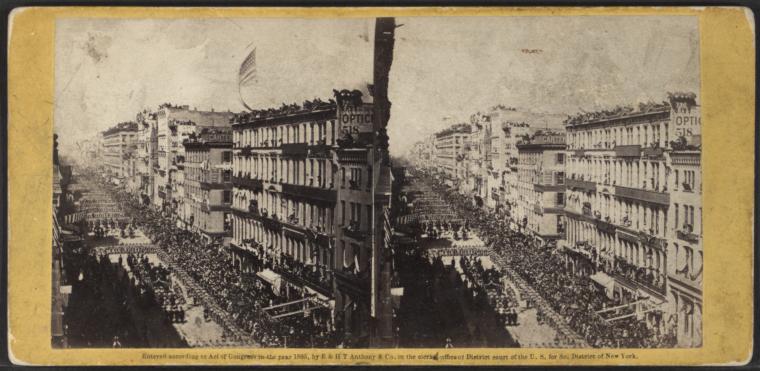
Funeral of President Lincoln in New-York, April 25th, 1865. (Courtesy of New York Public LIbrary)

From the New York Sun: “This morning the citizens of New  York are called upon to pay funeral honors to the remains of one whose tragic death, invests the ceremonies with an interest never before felt for any individual, who has occupied the highest office which the suffrages of a free people can confer upon a citizen of the Republic.”

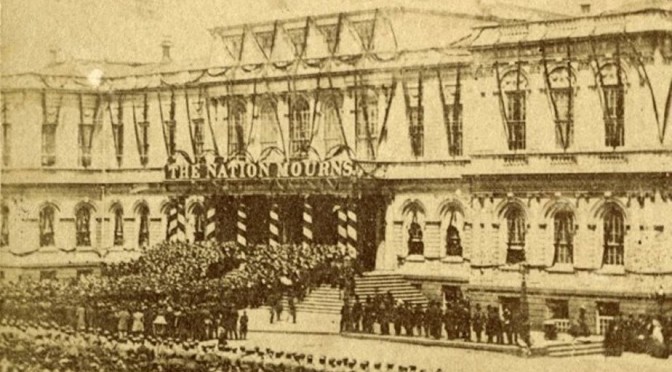
His body was taken to New York City Hall where he lay in visitation for almost an complete twenty four hours. Thousands of New Yorkers came to pay their respects.  In the afternoon of the April 25, his body was brought back to the 30th Street Station and transported to Albany, then to other cities, before its final destination in Springfield, Illinois.
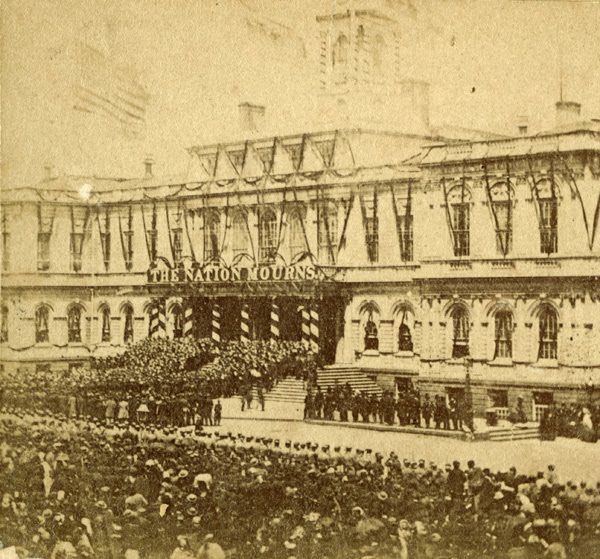
lincolns-funeral-at-city-hall

The Hudson River Railroad station is long gone. Standing in its place however is another large structure:  the United States Postal Service mail processing facility at 341 9th Avenue.  Unless you’re a fan of postal history — or you’ve stumbled around the neighborhood after stepping of the High Line — you’ve probably never given this building much notice.

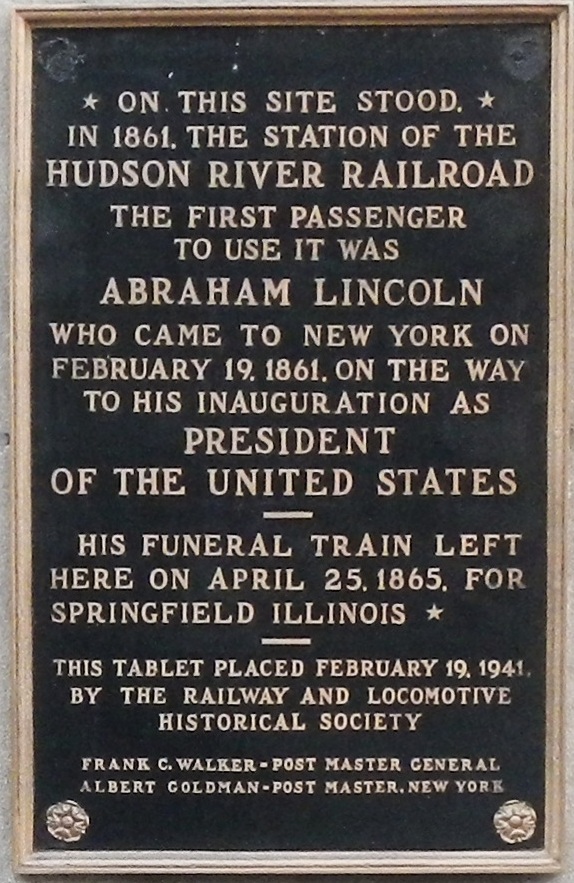
But visit the northern side of this building, and you’ll find the following plaque:
???????????????????????????????

“On this site stood in 1861 the station of the Hudson River Railroad. The first passenger to use it was Abraham Lincoln, who came to New York on February 19, 1861 on his way to his inauguration as President of the United States.  His funeral train left here on April 25, 1865 for Springfield, Illinois.  This tablet placed February 19, 1941 by the Railway & Locomotive Historical Society.”

That’s right — Lincoln was the first honorary passenger to arrive at Cornelius Vanderbilt’s new ‘uptown’ depot! Again the New York Sun, but on February 20, 1861:

“In that strange and dirty locality where the Hudson River R.R. Company have fixed upon their uptown depot, thousands of people began to congregate fully two hours before the hour when the expected train was due…..The great gate of the depot yard through which the train was to enter was guarded by a cordon of police, and outside these limits surged the crowds, unusually patient for a New York crowd awaiting a sensation probably from a general faith that Old Abe could be depended upon to come to time properly.”
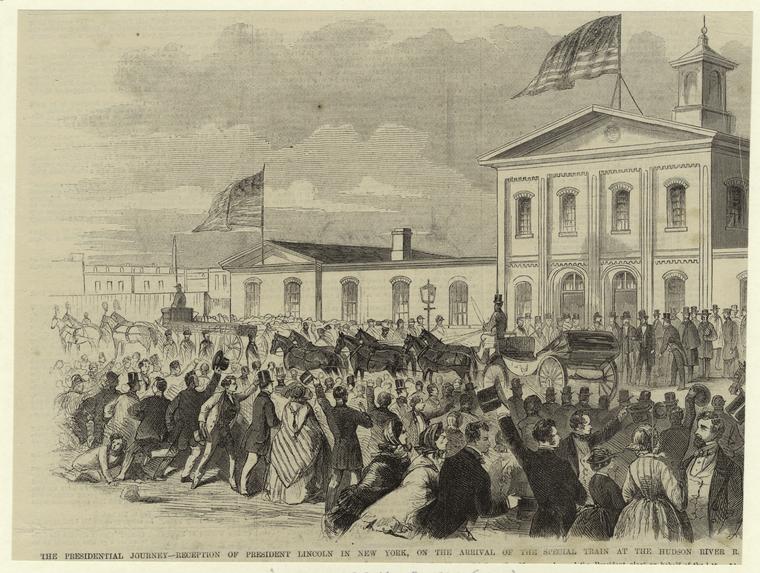
 

Presidential journey : reception of President Lincoln in New York, on the arrival of the special train at the Hudson River Railroad. (Courtesy New York Public Library)


Here’s a description of the exact same spot, over four years later (courtesy the New York Times):

Outside of the gate of the depot yard, on Tenth-avenue, the immense throng stationed there received in respectful and mournful silence the very brief and unsatisfactory glimpse they gained of the coffin of the dead President. Viewing with anxious eyes the train as it emerged from the gate, and gazing upon the gorgeously decorated car, and uncovering with sincere respect for the hallowed dead, the immense multitude beheld the departure of the train. 

 As the train fairly got into motion and disappeared round the curve, the immense mass of beings, so long kept within bounds, at last burst through all restraint, and the entire vicinity of the depot became the scene of the most extraordinary confusion. The police were totally inadequate to the impossible task of keeping the people in order, for they were carried like drift-wood before the flood as the impatient crowd broke up and started upon their several homeward ways.”

This plaque was placed on the side of the postal facility (called the Morgan Annex) on the afternoon of February 19, 1941, unveiled by the U.S. postmaster Albert Goldman.  The organization who sponsored it, the Railway & Locomotive Historical Society, still operates today.
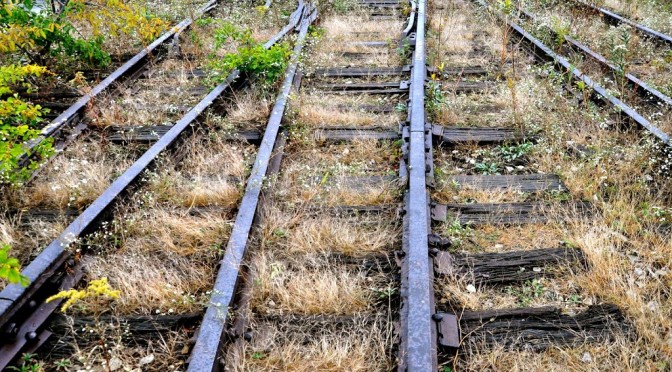
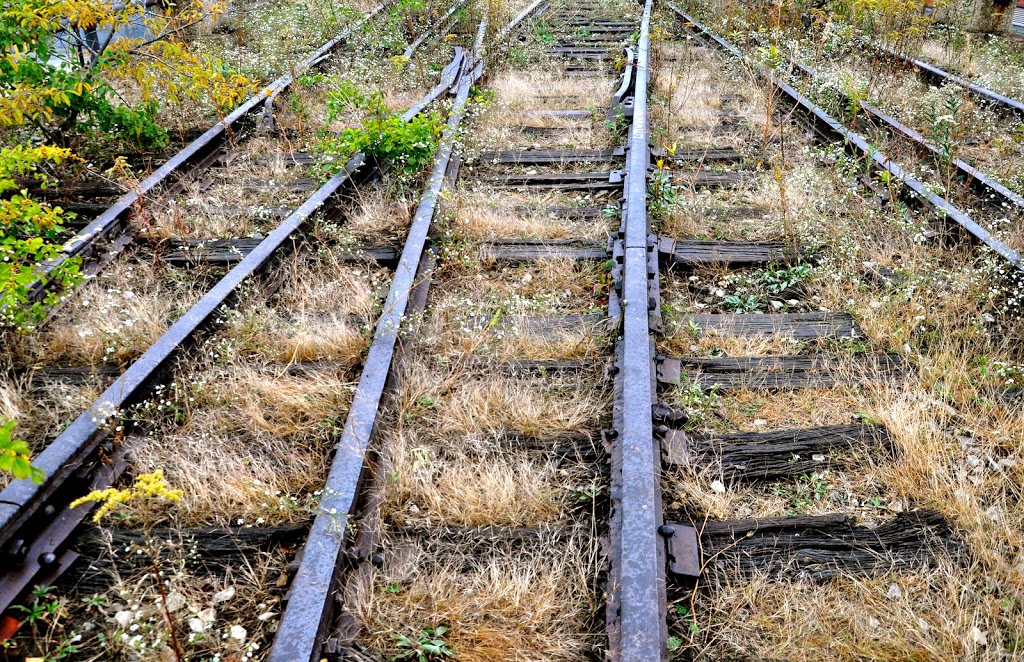


Rough and rusted: Walking the last section of the High Line


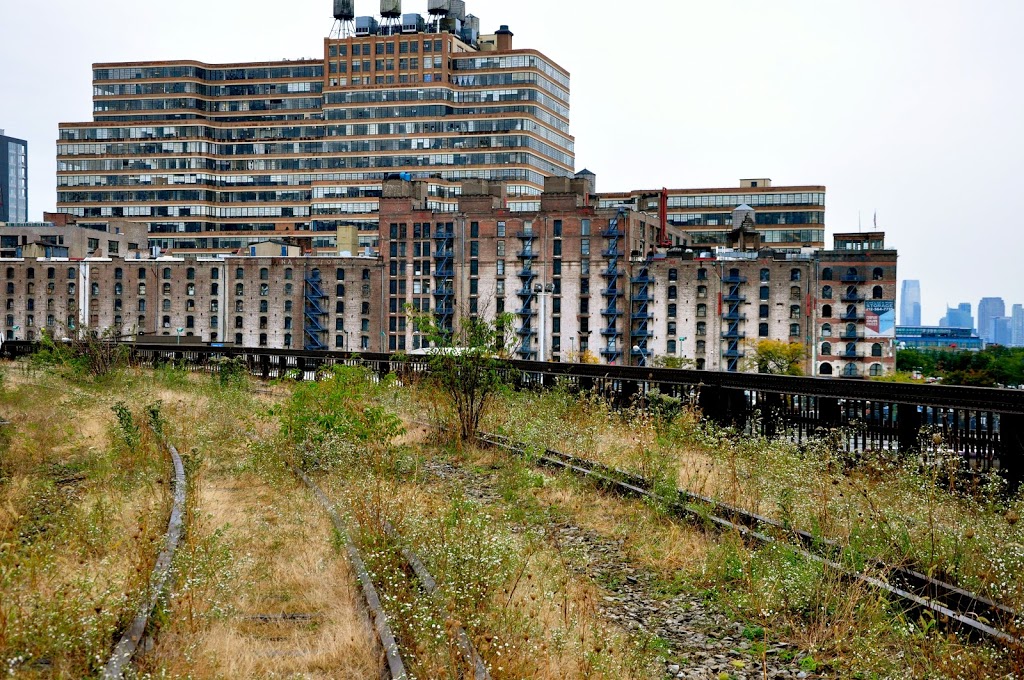
The last remaining unrenovated tracks of the West Side Elevated Railway: Seen better days, but haven’t we all? (Click onto pictures for a larger view)

This past weekend, Open House New York, in association with the clothing company Uniqlo, opened up the remaining portion of the West Side Elevated Railway — aka the High Line. Urban explorers could walk the rusted, overgrown loop from a street-level ramp on 34th Street and stroll over the Hudson train yards, eventually connecting with the end of the developed portion on 30th Street.

While this section of the elevated structure offers little in the way of beautiful surrounding architecture, it is notable for having unencumbered views of the Hudson and a dramatic bend over rows of unoccupied subway cars. That stunning view should be preserved when the $90 million rehabilitation begins later this year.

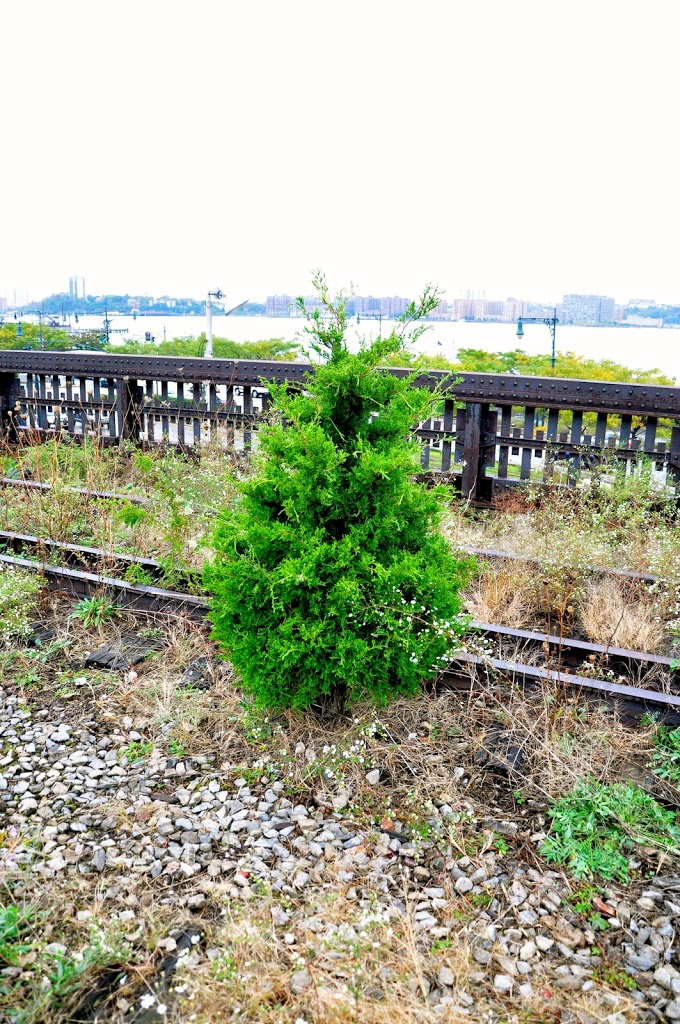
More uncertain is the fate of the strange growth that has sprouted upon the elevated trains since they were abandoned in the late 1970s. Bushes and small trees thrived from crevasses of rusted railroad ties.

At right, a perfectly healthy evergreen shrub of some sort, begging for Christmas decorations. I’m starting a movement — protect the High Line Christmas shrub!

 The first phase of new development will include a simple elevated walk constructed on the south portion of the tracks. In its current state, the corroded tracks disguised in thickets of weeds and were hardly safe for children or high heels. But for lovers of graceful urban decay, it was a rich opportunity. Uniquo is sponsoring another weekend on the tracks this weekend, but unfortunately it’s already sold-out too!

Maybe they should consider, I don’t know, leaving it wild and overgrown for awhile? New Yorkers seem to be enjoying it as is.

The pictures below are courtesy Sean Nowicke. You can visit his photo blog for many more amazing images of the undeveloped section.

For information on the history of the High Line, check out our podcast from earlier this year. (Here’s the blog page.) And you can find my free walking tour of the developed part of the High Line here, with mention of the Starrett-Lehigh Building, pictured below:

Categories
Planes Trains and Automobiles Podcasts

The High Line: The wild, wild West Side, cowboys included, inspires an elevated railroad and a remarkable park

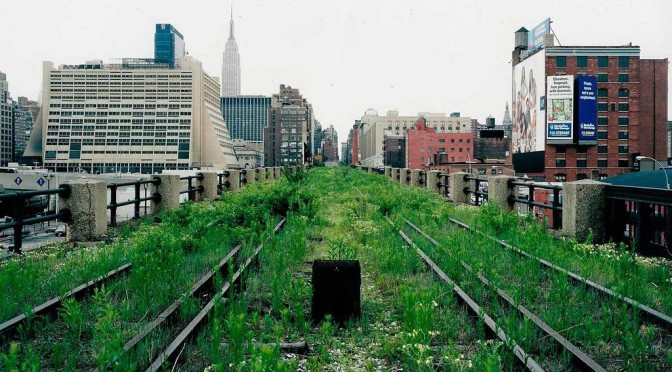
Joel Sternfeld’s extraordinary four-seasons photographs of the High Line — displayed in his 2002 show Walking The High Line — revealed a ribbon of nature surrounded by urbanity and presented a peek into forgotten history. These images greatly influenced the later design of the park, a mix of seamless design and tastefully untethered flora. Courtesy Joel Sternfeld

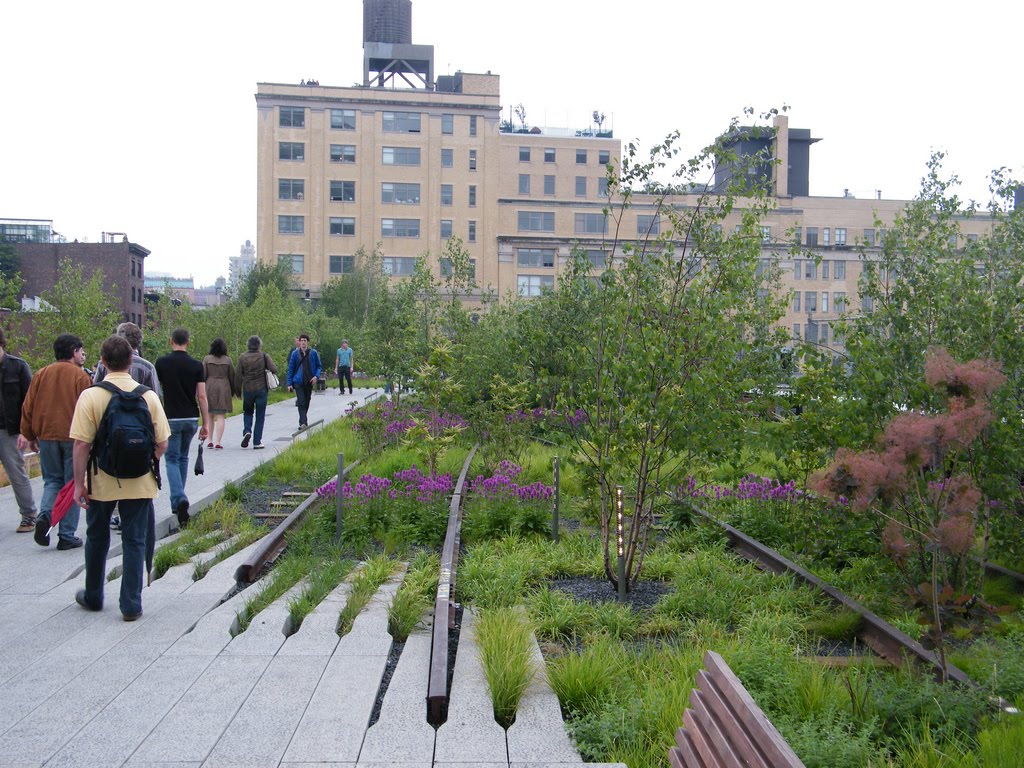
PODCAST  The High Line, which snakes up New York’s west side, is an ambitious park project refitting abandoned elevated train lines into a breathtaking contemporary park. This is the remnant of a raised freight-delivery track system that supported New York’s thriving meat, produce and refrigeration industries that have defined the city’s western edges.

 You can trace the footprints of this area back almost 200 years, to the introduction of the Hudson River Railroad and Cornelius Vanderbilt, who transformed the streets along the Hudson River into ‘the lifeline of New York’, filled with warehouses, marketplaces and abattoirs. And, of course, lots of traffic, turning 10th Avenue and 11th Avenue into ‘death avenues’, requiring New York’s first ‘urban cowboys’.  The West Side Elevated Freight Railroad was meant to relieve some of trauma on the street. That’s not exactly how it worked out.

We’ll tell you about its downfall, its transformation during the 70s as a haven for counter-culture, and its reinterpretation as an innovative urban playground.

FEATURING: Cows, dining cars, Russian caviar and sex clubs!


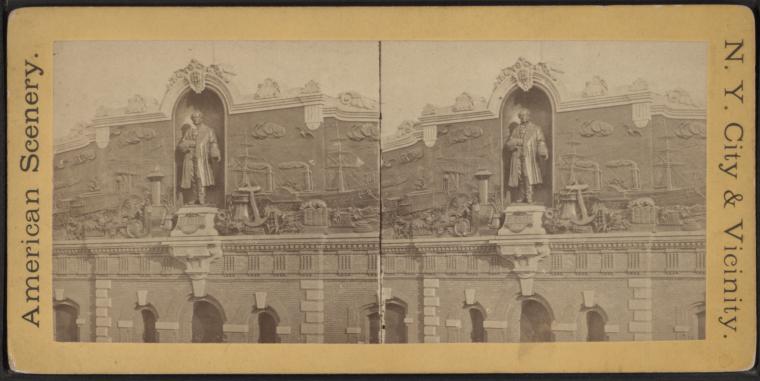
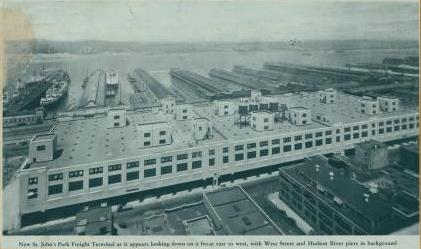
St. John’s Freight Depot, built in 1871. The Cornelius Vanderbilt statue stood watch over the bustling activity until the building was demolished in the 1930s. Mr. Vanderbilt was then moved to Grand Central Terminal, where he still stands today. Pictures courtesy NYPL digital images


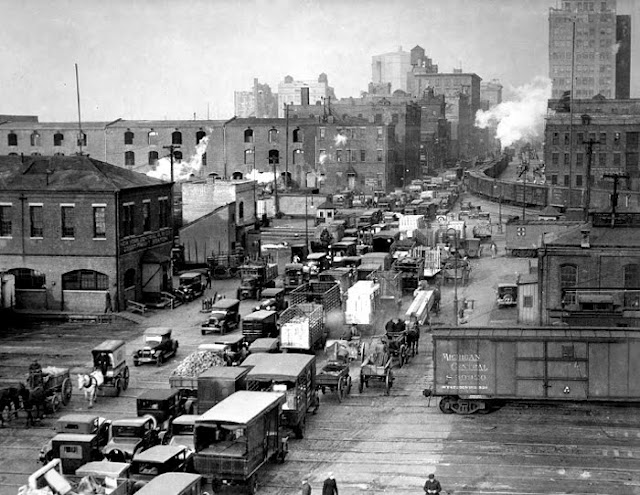
The businesses, the trains and the marketplaces of the west side created a nightmare traffic situation along 10th and 11th Avenues, resulting in dozens of death and the sinister moniker ‘Death Avenue’. (Picture courtesy Friends of the High Line)

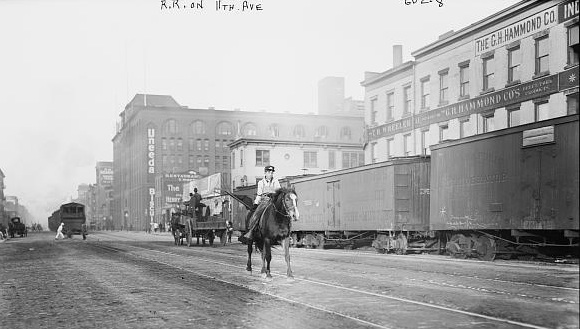
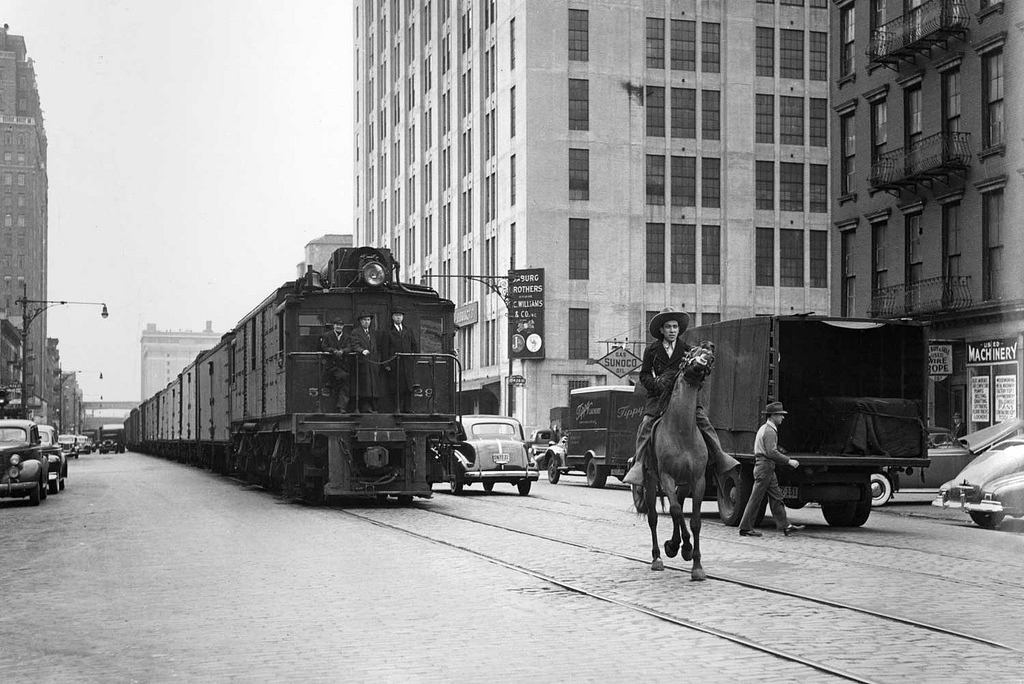
Rangers of Eleventh Avenue: A railroad cowboy marches ahead of an approaching train. Below that, many years later, another cowboy has his work cut out for him going up the avenue in 1922, the era of automobiles.


The relatively ‘modern’ St. Johns Terminal on Spring Street.

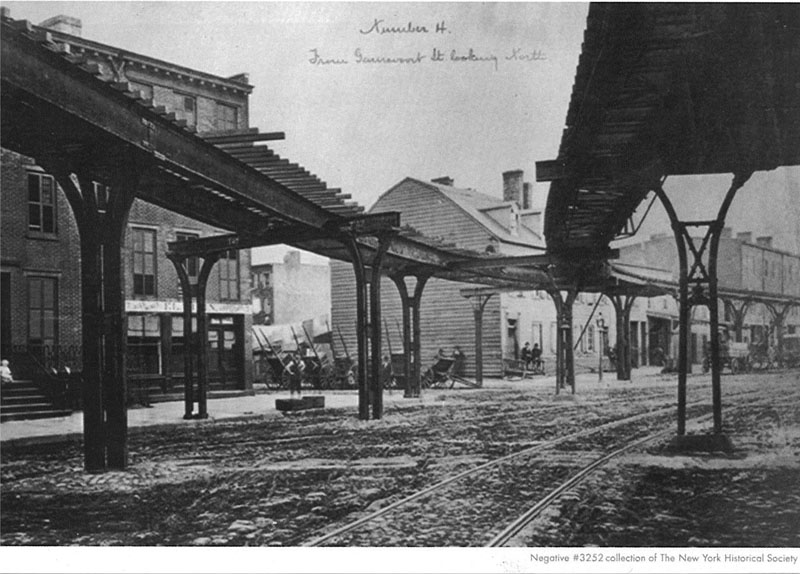
Building the elevated freight railroad: At Gansevoort Street, looking north. Picture courtesy the New York Historical Society

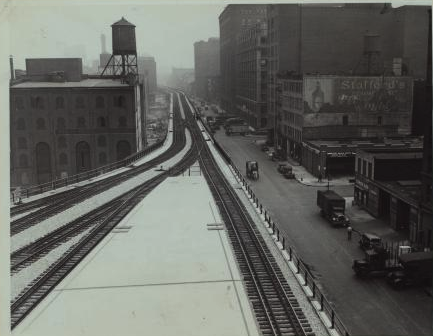
The elevated in 1934, West Street and Spring Street. This was one of the sections that was later ripped down. (Courtesy NYPL)

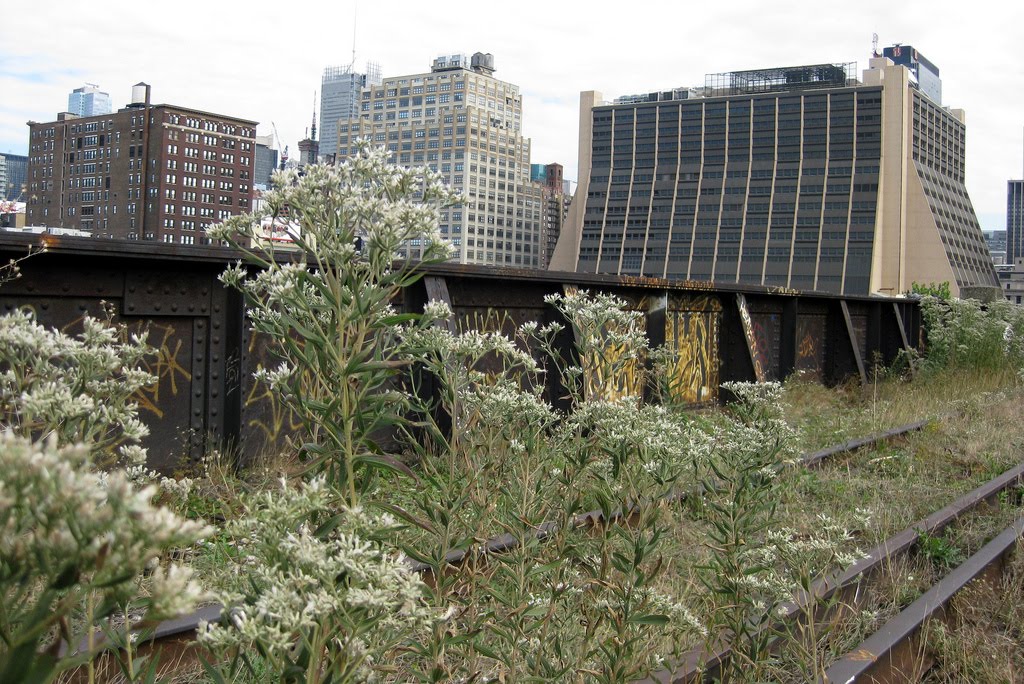
After the elevated railroad closed for good in 1980, the track sat abandoned, covered in natural overgrowth of the likes hardly seen anywhere else in Manhattan. ‘Urban explorers’ often traipsed along the mysterious rails, capturing the dichotomy between sudden natural landscape and metropolitan backdrop. (Photo courtesy wally g/Flickr)


The High Line Park opened in 2009, after almost a decade of awareness and fundraising. The linear park has helped transform the neighborhoods below it and has created a new must-see destination for tourists. (Courtesy Friends of the High Line)