Categories
On The Waterfront Women's History

The Deep Sea Hotel: A nautical housing solution for independent women

Arbuckle’s Deep Sea Hotel was neither in the deep sea, nor was it a hotel.  But for hundreds of young, single women at the end of the Gilded Age, it was home.
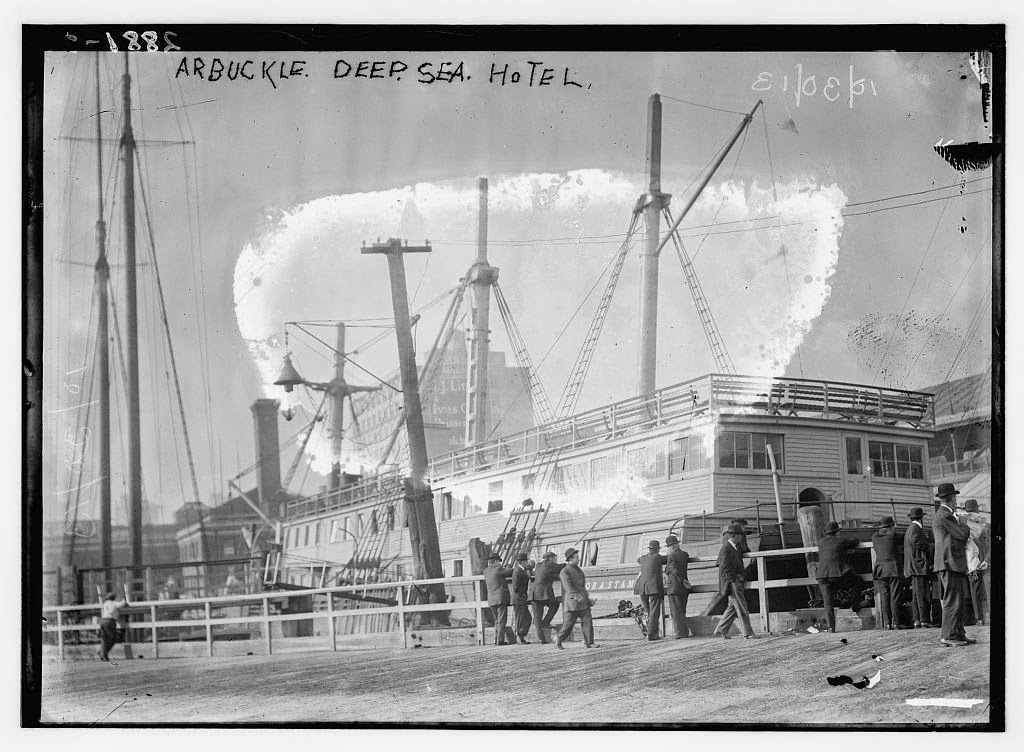
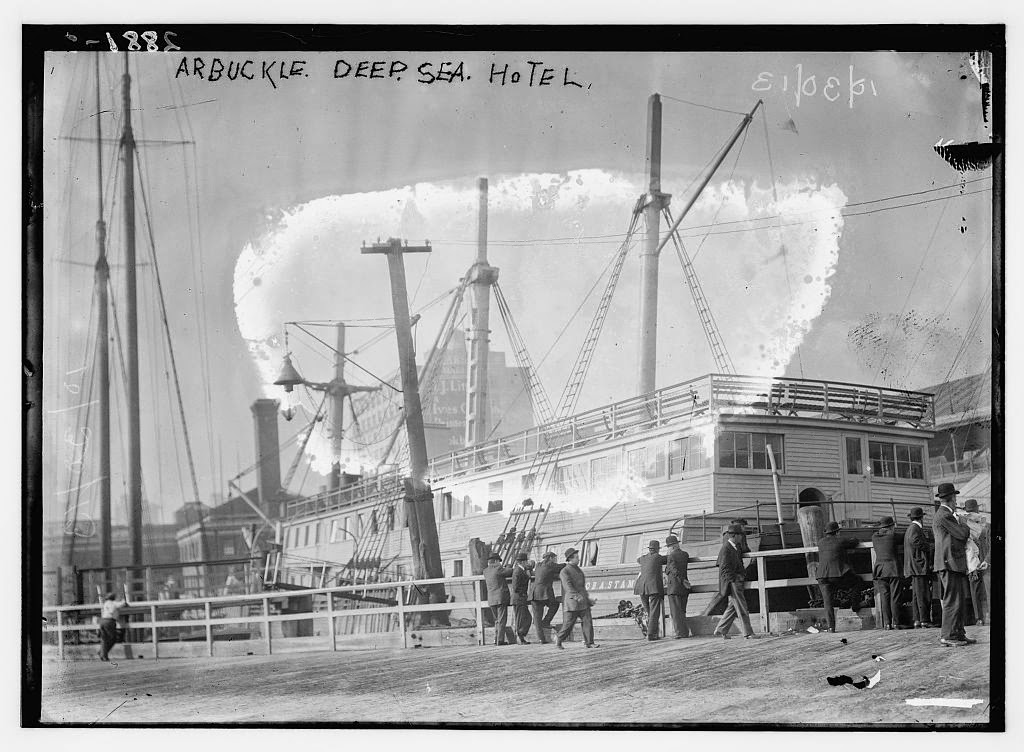
The boat hotel built by a coffee manufacturer, photo from January 1913 (Library of Congress)
The Challenges of Living Single

Accommodations were indeed limited for the thousands of young single women who arrived in New York City at the start of the 20th century.  

Wealthier single ladies could enjoy a degree of independence by indulging in fashionable apartment living. Affordable options like boarding houses were often socially binding.  

For instance, the morality-minded YWCA housed hundreds of New York women by the 1890s. It was often too expensive to rent on your own place, even with roommates, and the neighborhoods where such housing was available would not have been too desirable.

Enter Brooklyn coffee millionaire John Arbuckle.

A Caffeine Jolt

The sugar manufacturer, already a chief competitor of William Havemayer, innovated the mass production of coffee by the 1890s, making himself extremely wealthy and jumpstarting America’s love affair with coffee in the process.  

His Jay Street plants and Water Street warehouses dominated the Brooklyn waterfront in the area of today’s DUMBO.
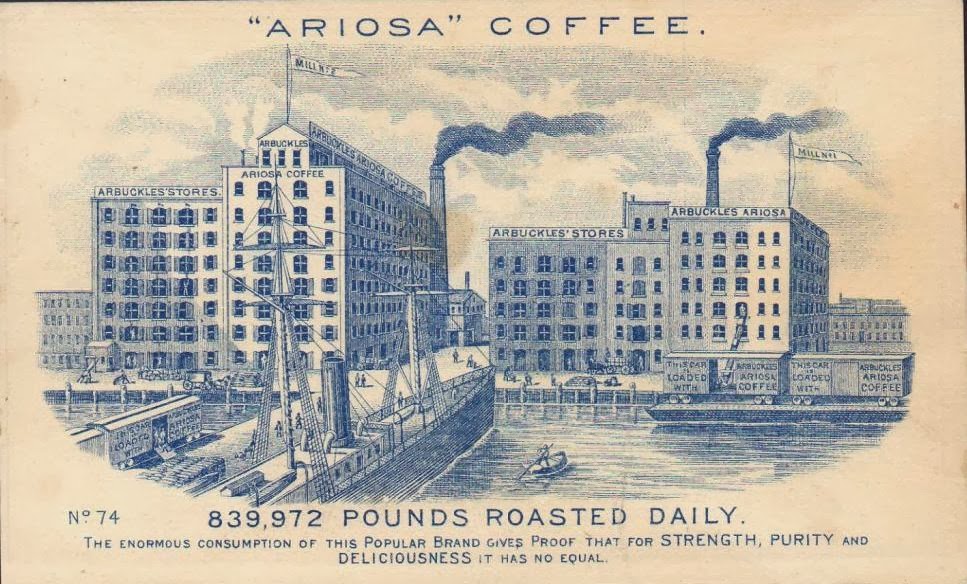
In emulation of other progressive-minded New York philanthropists, Arbuckle commissioned free water-bound excursions for the overcrowded poor of the Lower East Side.

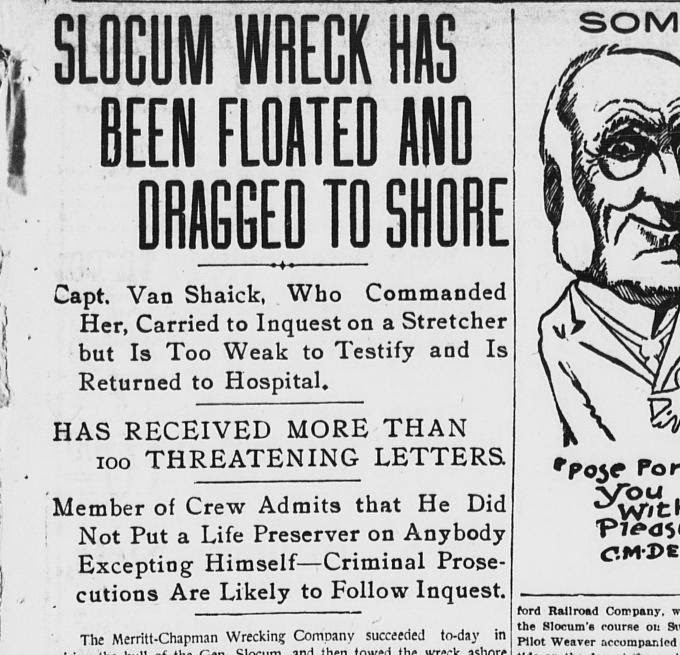
However, when a steamboat owned by another company — the PS General Slocum — exploded during one such excursion in 1904, killing over 1,000 people, such trips quickly went out of fashion.  

Arbuckle then decided to use one of his ships in a more unconventional way — a long-term hotel for single women.

The Floating Hotel

His ship the Jacob A. Stampler was turned into a floating hotel for one hundred women, with a smaller ship nearby for young working men. It was docked at West 21 Street on the Hudson River, near the massive piers for passengers liners.

“The fundamental idea of this hotel scheme,” according the New York Tribune in 1905, “is to benefit young men and young women who are receiving low wages and are striving to live respectable lives.”  

In 1905, its first year of operation, women paid “40 cents a day, or $2.80 a week, while the young men pay 50 cents a day or $3.50 a week.” [source]

From the Tribune profile:
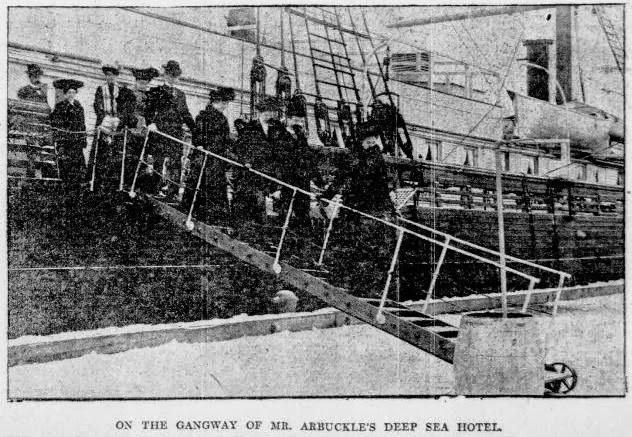
While both genders benefited from the unusual hotel idea, Arbuckle’s focus was in the assistance of women.  

“A young fellow can fight for himself and get along his own way,” said the millionaire, “but it is different with a woman or girl confronted with problem of keeping herself respectable while working for low wages.”

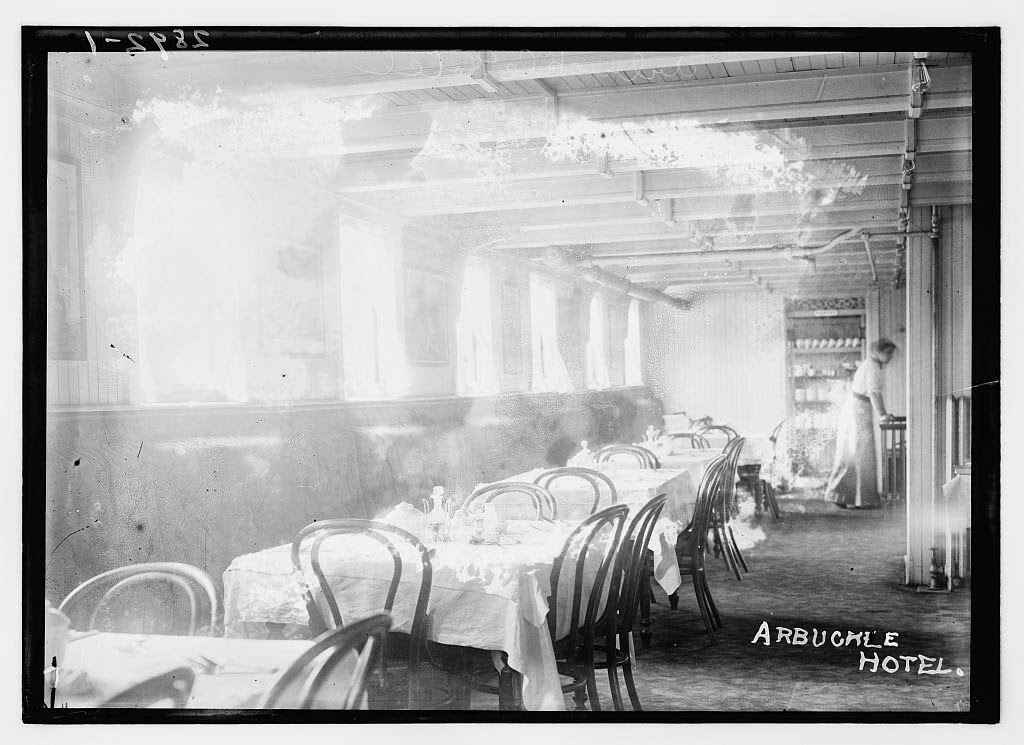
The women were fed well and provided a selection of magazines and newspapers, not to mention a piano for Sunday evening sing-alongs. They were also given sewing machines and laundry facilities.

The rocking of the boat and the relative bustle of a busy pier seems not to have bothered Arbuckle’s early tenants.  

“It’s so quiet here. No rattle and roar from the streets,” said one young woman. [source]  Ladies could receive gentlemen callers, but men had to vacate by 10 pm. As many women worked quite late in the day, this probably didn’t amount to much socializing.

A House and a Vacation Home

During the summer, the boat actually did take regular trips to various places in the region, from Coney Island to the shore of Staten Island.  

In July, the two floating hotels would head out to Coney Island every day, docking for a couple hours at Dreamland amusement park.

Surmising from its frequent journeys, I imagine Arbuckle’s floating hotels had few long-term summer tenants in these early days.

Below: The dining room and the sleeping quarters of the Deep Sea Hotel, circa 1913 (LOC)
The Final Days

Over the next ten years, the Deep Sea Hotel took fewer trips, becoming more or less a semi-permanent, floating apartment complex.

It was referred to by this point as the Working Girls Hotel.  

At some point, perhaps due to overwhelming traffic at the Chelsea piers, the Stampler made the east side its home, regularly docking at East 23rd Street.

The floating hotel never really made a profit, and after Arbuckle died in 1912, his inheritors attempted to shut it down.  

I should also note that the Stampler was a very, very old boat.

“[The] ship was beginning to rot and soon would be unsafe,” said the New York Sun.  The women who lived there, however, fought successfully to keep it open until 1915, when they were finally told to permanently disembark.
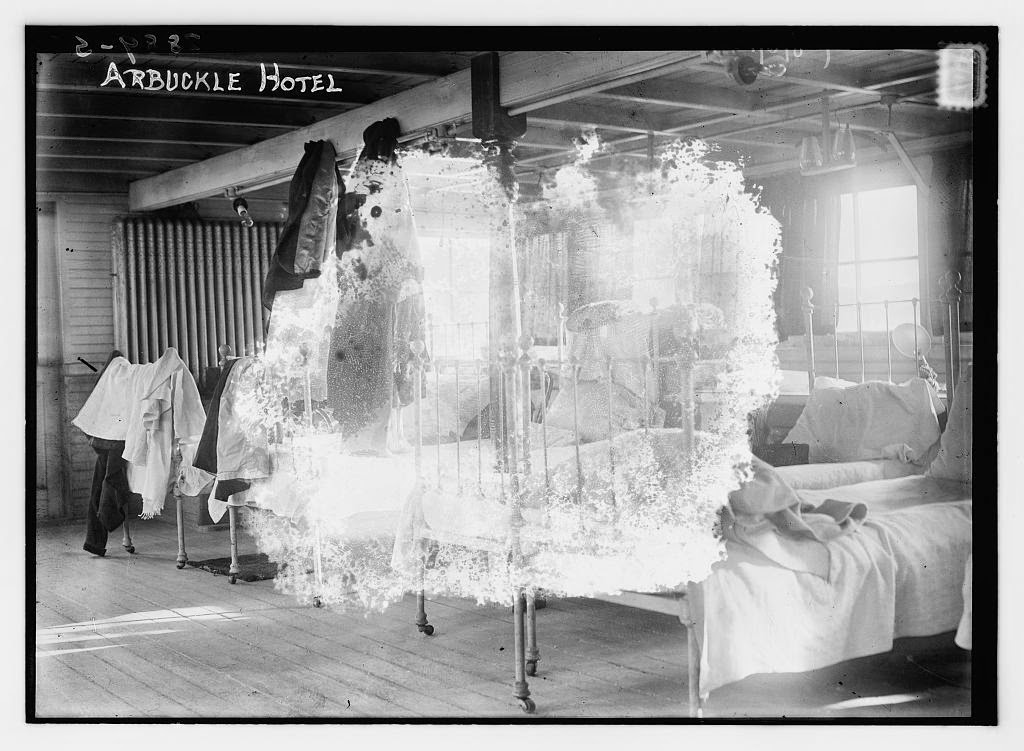
Interesting fact to note about its final days — both single men and women lived aboard the boat by 1915.  

Its last documented population was 50 girls and 16 boys, according to the Sun. (Most likely teenagers or adults in their early twenties.) The ship rarely sailed to Coney Island in the summer, but had become a destination in itself.  

“One of the five decks is fitted up as a dance hall,” “crowded every night with dancers” when music from a nearby pier begins to play.

The price of rent these days!

The last tenants finally left on September 1, 1915, with many unable to find further housing.  “There isn’t a girl on this boat that makes $9 a week,” said one mournful tenant, “and you know how far that goes in this city.” [source]

By 1917, the Stampler was a rotted breakwater off of Bayville Beach in Oyster Bay.  To this day, perhaps, some remnant of the ship still sits in the water off the coast of Long Island.

By the way, Arbuckle may no longer sponsor floating housing accommodations for working people, but they still make coffee.
For more information on Arbuckle and the New York coffee scene, check out our podcast on the history of DUMBO:
Categories
On The Waterfront

Troubled Waters: The story of the Grand Republic steamboat, the cursed sister ship of the General Slocum

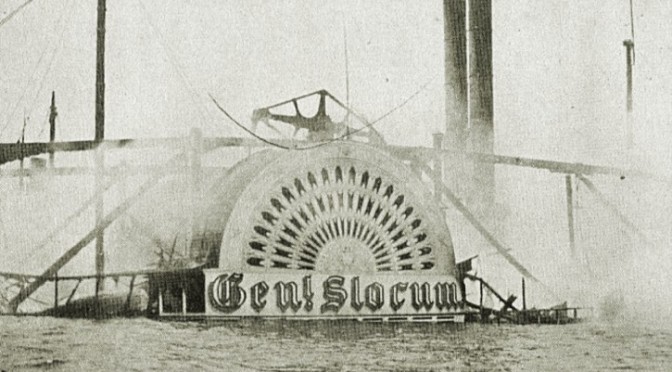
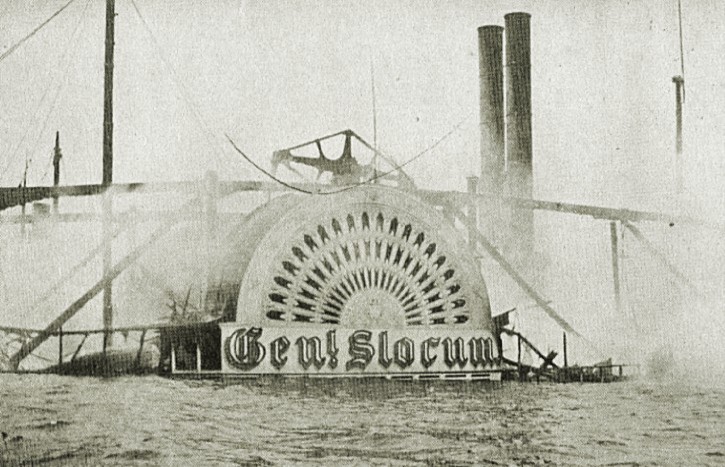
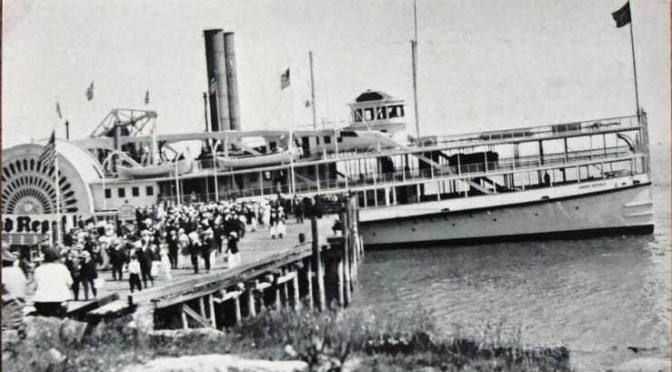
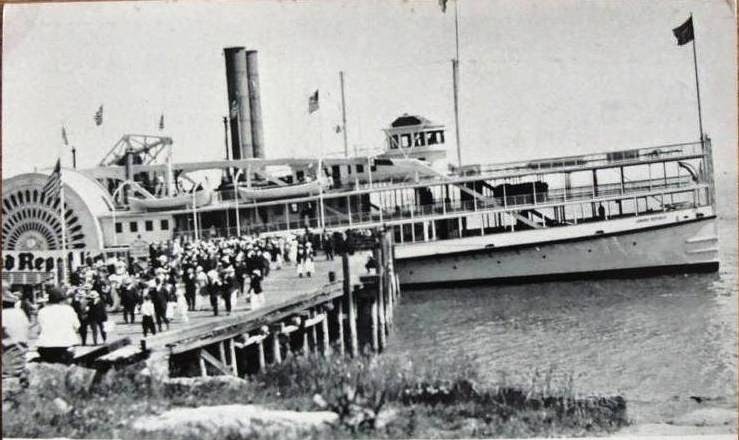
Above: The Grand Republic steamship. As you can see from its paddlewheel, it was a twin to the General Slocum [source]

This could not have made New Yorkers feel very safe about even the briefest of river excursions.

Days after the General Slocum excursion steamer caught fire and sank in the East River, killing over 1,000 people, its older sister ship the Grand Republic — a twin of the doomed vessel, owned by the same company — kept operating along the waters of New York Harbor.

To many, it looked like the ghost of the Slocum.

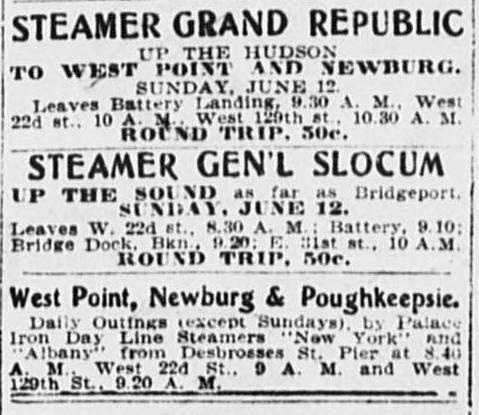
The Grand Republic often ran in tandem with the Slocum, transporting passengers to the seaside amusements of the Rockaways.  During the month of June 1904, the Grand Republic was assigned to the Hudson River, while the Slocum ran the Long Island Sound.

An advertisement in the New York Evening World, June 10, 1904

After the Slocum tragedy, steamboat inspectors were heavily scrutinized and excursion companies were accused of endangering lives for a fast dollar.

Rallying to the side of safety was, of all people, the venerated Daniel Sickles, former Congressman and Civil War officer.  (You may remember him from his early days back when he killed the son of Francis Scott Key.)

The retired politician had no tolerance for the bureaucrats he believed were responsible for the Slocum disaster.

“Scalp those moribund Federal officials who sit with their roll-top desks and draw their salaries for doing nothing while human life is allowed to be sacrificed by the hundreds,” he said. “Only yesterday, I am informed the Grand Republic was allowed to leave her wharf with more passengers than the law allows. Broadside these fellows and let every man and woman write President [Theodore] Roosevelt a letter demanding an investigation.” [source]

Sickles made good on his word, writing Roosevelt and lashing out at the steamer companies in no uncertain terms, the overcrowded General Republic his chief example of their continued malfeasance.

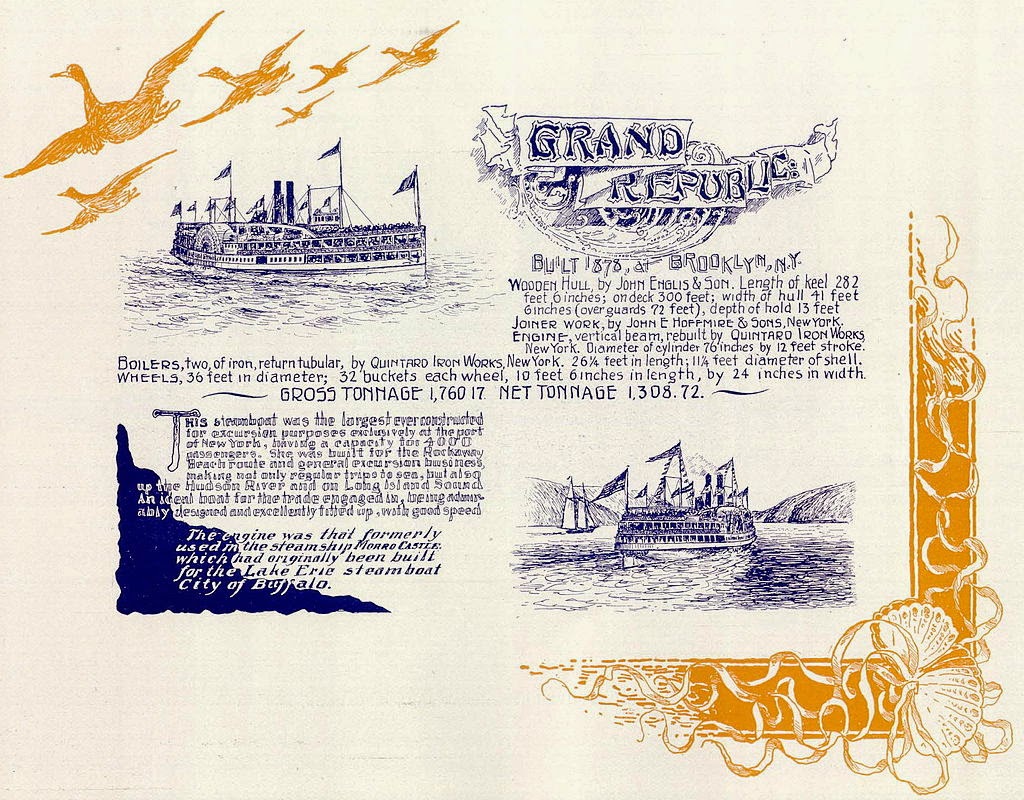
Below: A graphic on the Grand Republic in a book called American Steam Vessels. “Built in 1878” “This steamboat was the largest ever constructed for excursion purposes exclusively at the port of New York.”

The Slocum disaster obviously hit business hard for the entire excursion industry.  The weekend after the Slocum sank, the Grand Republic was supposed to host another church group for a tour of the Hudson, but, understandably, only one-fourth of its passenger list arrived. The Knickerbocker Steamboat Company, owner of the Slocum and Grand Republic, went out of business, and the Grand Republic was sold to another concern.

The captain of the Grand Republic steamer John Pease had been responsible for inspections on the Slocum and was eventually indicted, “criminally responsible for the Slocum disaster.”

Still that did not take the Grand Republic off the waters. ‘THE GRAND REPUBLIC STILL RUNS,” declared the Tribune on July 4, 1904.

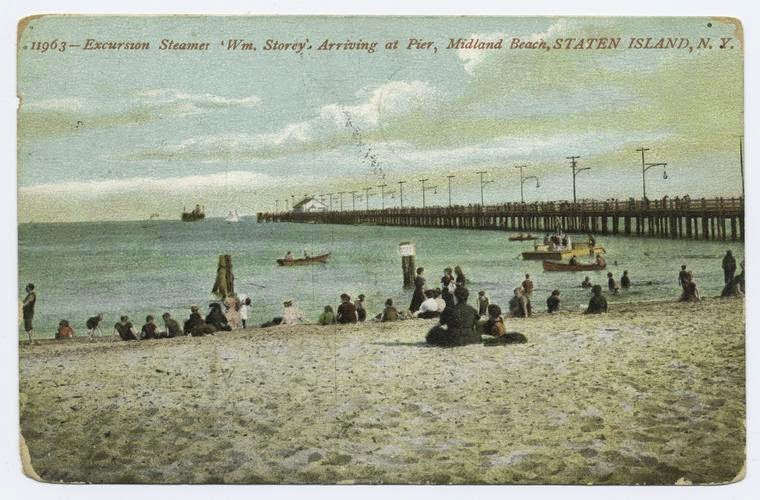
Below: A view of the Midland Beach pier, where excursion steamers would frequently dock. (NYPL)

Four days later, the Grand Republic almost crashed into another steamer off the coast of Coney Island. Two weeks later, with 500 passengers aboard, it slammed into the Kismet steam yacht.  In August, the boat was revealed to have the same sort of rotten life preservers that had so doomed the Slocum.

Still that did not take the Grand Republic off the waters. “GRAND REPUBLIC DEFIES ORDERS,” declared the Evening World on August 3, 1904.

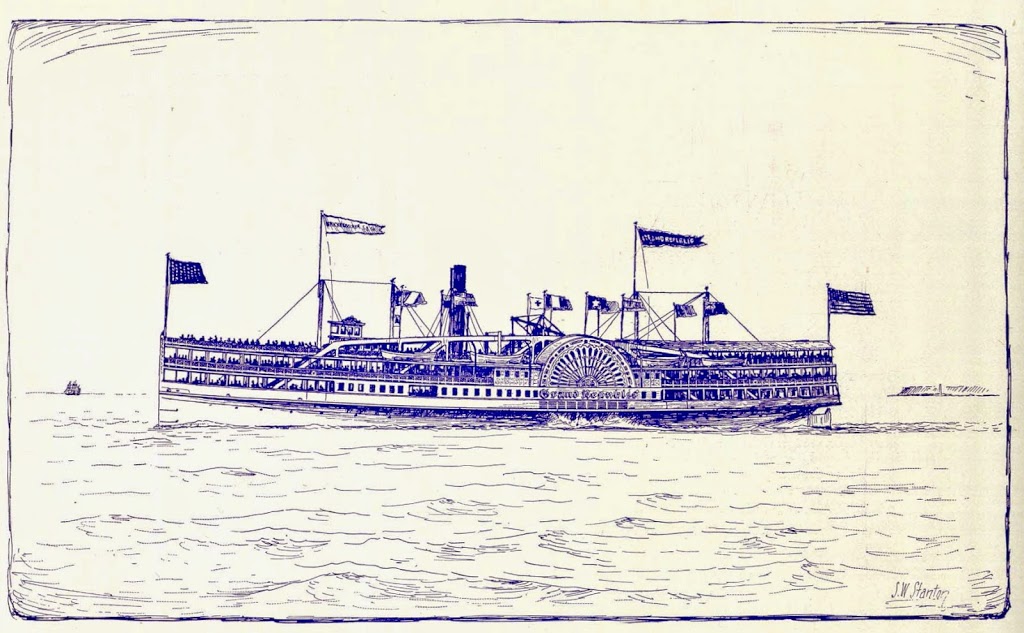
Below: The Grand Republic, illustration by Samuel Ward Stanton

The steamboat owners argued with the New York inspectors in the press, neither looking very trustworthy.  Eventually the boat owners surrendered the Grand Republic to the government for inspection.

Believe it or not, even with hundreds of life preservers declared ‘rotten’ and promptly removed, the boat was eventually declared safe, although its capacity was greatly lowered — from 3,750 to 1,250 passengers, a major financial blow to the owners.

It led a quiet career for many years afterwards, although many feared the boat’s association with the doomed General Slocum and refused to ride it.  It resumed trips to the Rockaways and Coney Island, taking tens of thousands of people through New York Harbor for many, many years.  And it even returned to taking church groups on day excursions, similar to the journeys that the General Slocum had taken.

But the boat would continue to get into rather significant accidents.  In 1915, even the suggestion of fire during one voyage sent a thousand people scrambling for the life preservers, resulting in several injuries.  In a disturbing parallel with the Slocum, “[w]omen shrieked as they were knocked down by the mob that surged about the lifeboats.” [source]

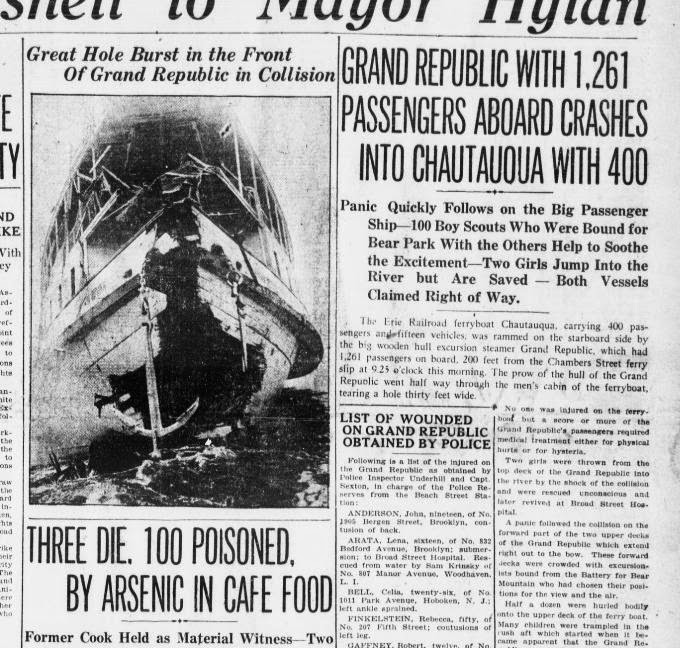
On August 1, 1922, the Grand Republic smashed into another boat in the Hudson River, injuring over a dozen people.  Luckily the boat was filled with Boy Scouts, who calmed the panicked passengers. (Below, from the Evening World)

You might think this would spell the end for the old steamboat, but no!  It remained in the waters, continuing to transport passengers to upstate New York, one of the oldest vessels in service.

The Grand Republic, like its sister ship, was brought down by fire, although luckily without the terrible casualties. In 1924, while docked along 155th Street, a severe dockside blaze caught several boats on fire, including the Grand Republic.

The fire erupted late at night, and thirty men were sleeping aboard the boat at that time. Fortunately, this was the era of the automobiles; car horns from a nearby street awoke two seamen, who safely evacuated the crew.  The Grand Republic, however, was lost, eventually sinking into the Hudson River.

By the time of its demise, the boat seems to have shaken off much of its bad reputation.  Later that year, in a sort-of obituary to the excursion steamer industry, the New York Times declared, “[C]ertainly the Grand Republic was a grand success as an excursion boat.”

Categories
On The Waterfront Podcasts

American tragedy: The tale of the General Slocum disaster

PODCAST On June 15, 1904, hundreds of residents of Kleindeutschland, the Lower East Side’s thriving German community, boarded the General Slocum excursion steamer to enjoy a day trip outside the city. Most of them would never return home.

The General Slocum disaster is, simply put, one of the greatest tragedies in American history. Before September 11, 2001, it was the largest loss of life of any event that has ever taken place here.

This is a harrowing story, brutal and tragic. The fire that engulfed the ship near the violent waters of the Hell Gate gave the passengers a horrible choice — die by fire or by drowning.

In the end, over one thousand people would lose their lives in an horrific catastrophe that could have been easily prevented. But there are also some surprising and even shocking stories of human survival here, real tales of bravery and heroism.

PLUS: The extraordinary fate of little Adella Liebenow Wotherspoon (at right)


And we would like to thank a new sponsor Audible, the premier provider of digital audiobooks. Get a FREE audiobook download and 30 day free trial at www.audibletrial.com/boweryboys. Over 150,000 titles to choose from for your iPhone, Android, Kindle or mp3 player Audible titles play on iPhone, Kindle, Android and more than 500 devices for listening anytime, anywhere.


The General Slocum, in its glory days.  I believe this photograph was taken in the Rockaways.

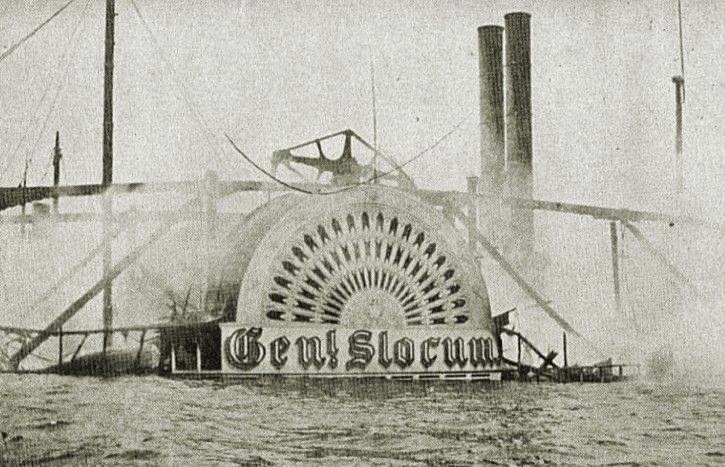
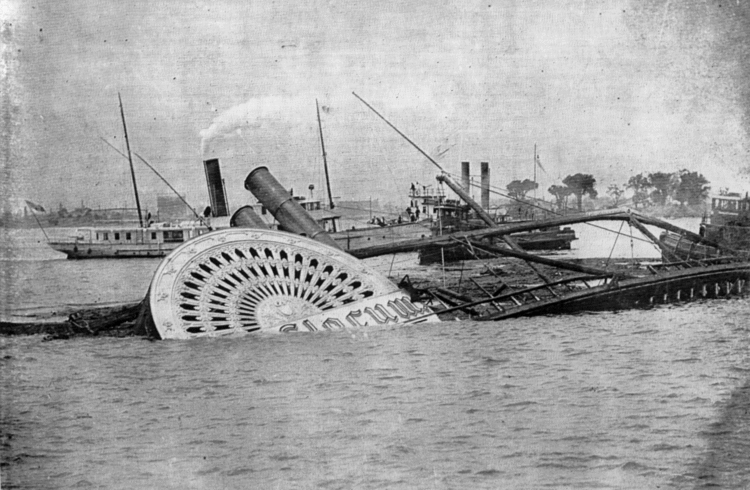
A tugboat attempts to put out the remaining flames of the Slocum, now a burning husk in the water.


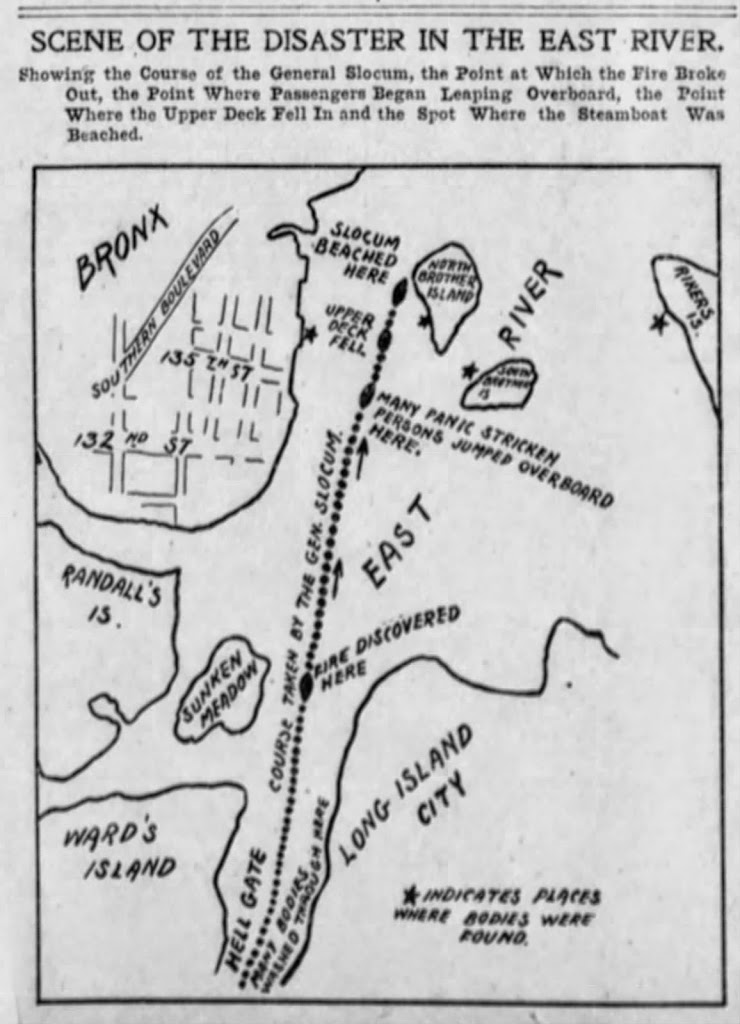
A make-shift map, from the Brooklyn Daily Eagle, June 15, 1904, late edition:

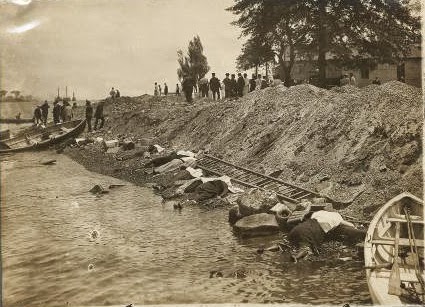
Bodies washed ashore on North Brother Island

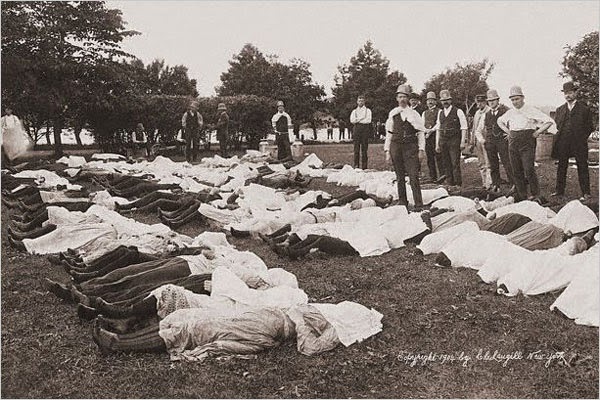
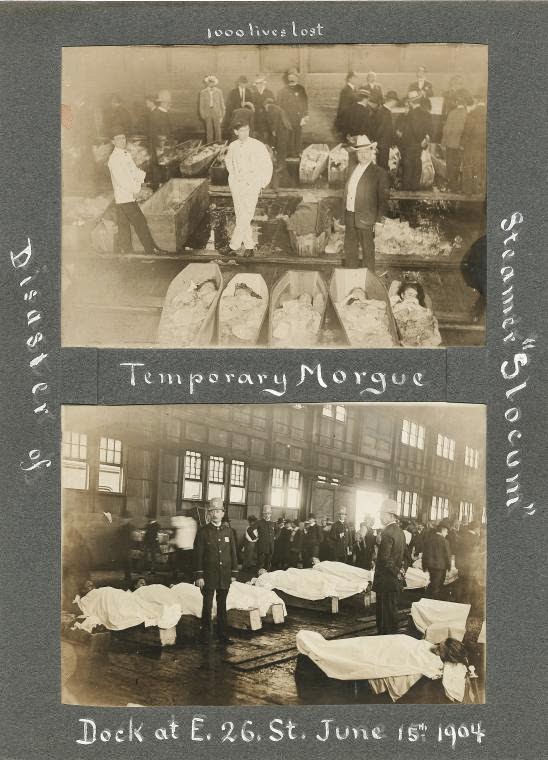
Two morbid photographs from Charities Pier:

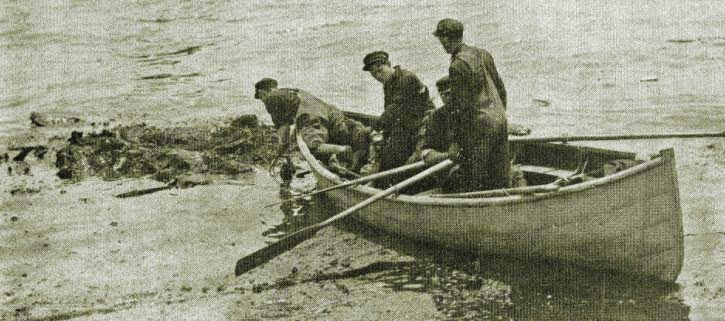
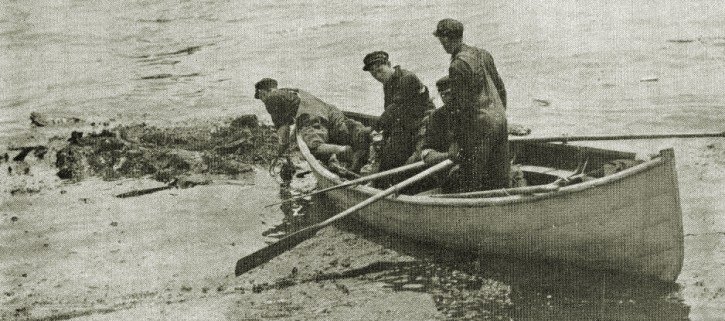
For days later, recovery workers sifted through East River debris, looking for additional bodies:

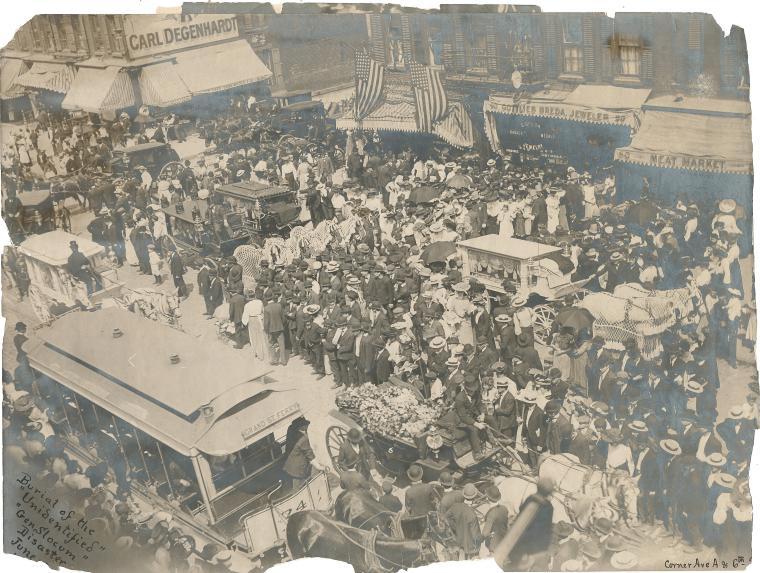
A funeral procession through the Lower East Side for some of the victims:

Two headlines from the New York Evening World, one week after the disaster:

The cover of Puck Magazine, one year after the disaster, wondering if justice would ever be served to those under indictment for the disaster. “Illustration shows an old and haggard “Justice” sitting in a chair on a rock in the East River, cobwebs have grown over her sword, scales, and an “Indictment” (Library of Congress)

From the Brooklyn Daily Eagle, the following day:

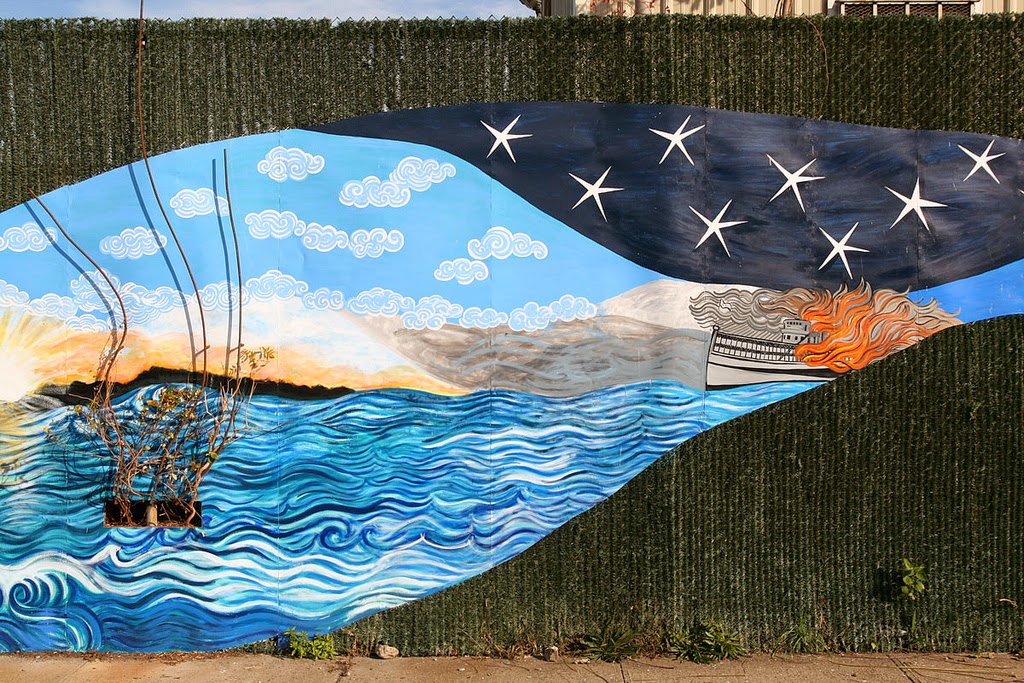
A mural in the Bronx that depicts the General Slocum disaster (courtesy Flickr/Joe Schumacher):

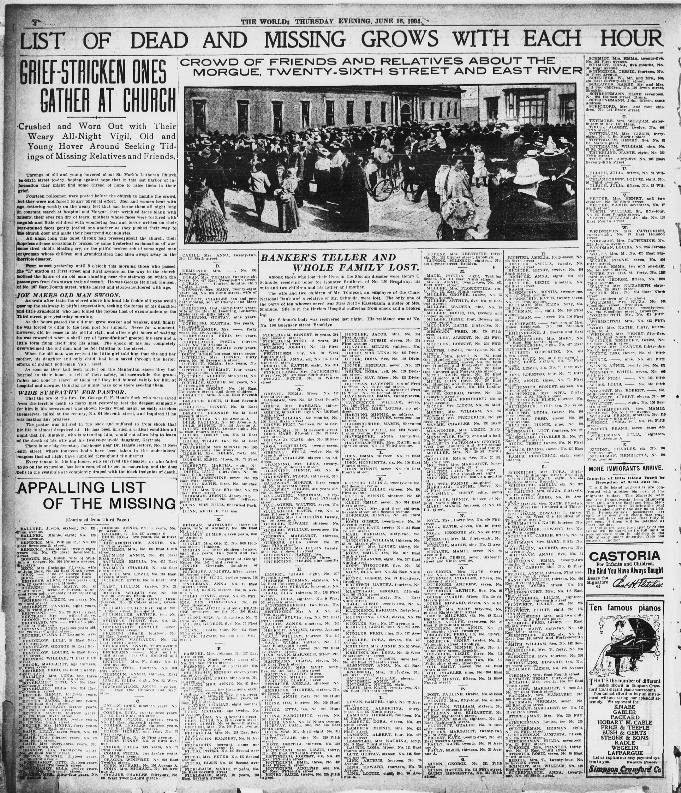
The initial list of the deceased, from the June 16, 1904 edition of the New York Evening World.  The number would increase over the coming days.


Categories
Bowery Boys Bookshelf

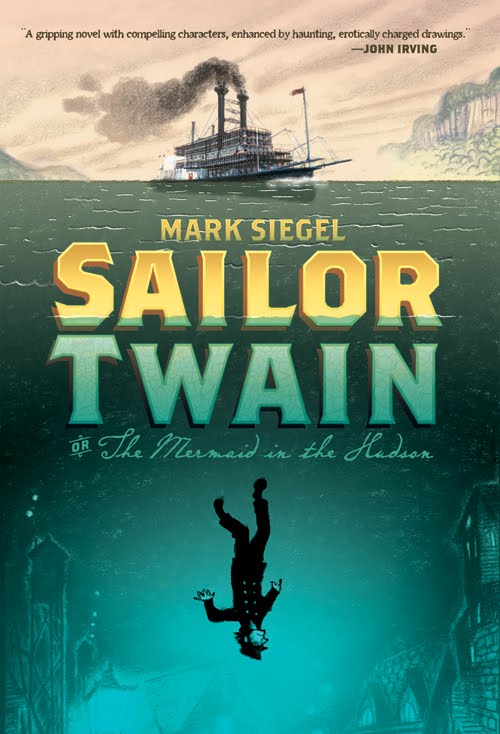
‘Sailor Twain’ : A mystery at the bottom of a haunted river (Bowery Boys Book of the Month)


We’re trying out a new feature here on the blog by debuting our very first ever Bowery Boys Book of the Month selection!  Each month I’ll pick a book — either brand new or old, fiction or non-fiction — that offers an intriguing take on New York City history, something that uses history in a way that’s unconventional and different or exposes a previously unseen corner of our city’s complicated past.  Then over the next month, I’ll run an article or two about some of historical themes that are brought up in the selection. 

For the inaugural selection, a page-turning graphic novel that turns to the Hudson River’s 19th century steamship trade for inspiration…..

Sailor Twain, or The Mermaid In The Hudson
by Mark Siegel
First Second Books

Something lurks in the waters of the Hudson River in Mark Siegel’s moody new graphic novel.

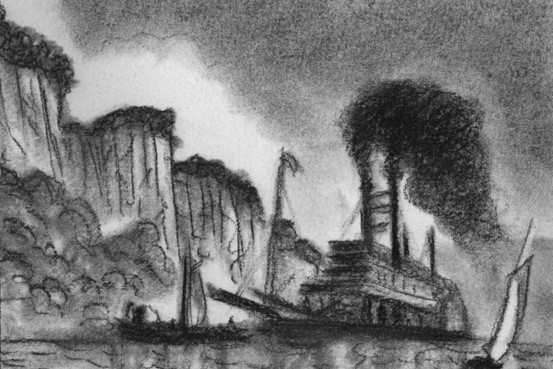
“Sailor Twain; or the Mermaid In The Hudson,” shaded darkly and finely formed out of moody atmosphere, is an ethereal rumination on American urban legend, borrowing from history to create myth.

The Lorelai is a passenger steamship delivering Gilded Age passengers along a bustling Hudson riverfront in 1887, with the major city in New York Harbor ever at its root.  It untethers northward along a river famously known for strange secrets which lurk beneath its currents.

Elijah Twain has a familiar name for a steamboat captain in the late 19th century. “Are you related to the writer?” asks a fine lady.  “That’s not his REAL –” Twain attempts to explain before being interrupted by the boat’s owner, a French Lothario named Lafayette.  (I can’t help but think that this dandy is a nod to another historical figure, the Marquis de Lafayette.)

Their vessel the Lorelai, named for the famous siren who led sailors to their deaths, travels up and down the Hudson through murky and sometimes surreal waters, inviting to eccentric passengers and otherworldly specters alike..

Books mysteriously appear, as do two ghostly little boys.  Lafayette’s unexplainable lust for female passengers seems connected to his brother’s recent suicide.  Twain’s own moodiness derives from his wife Pearl, bedridden at home and seemingly a distant reality away.

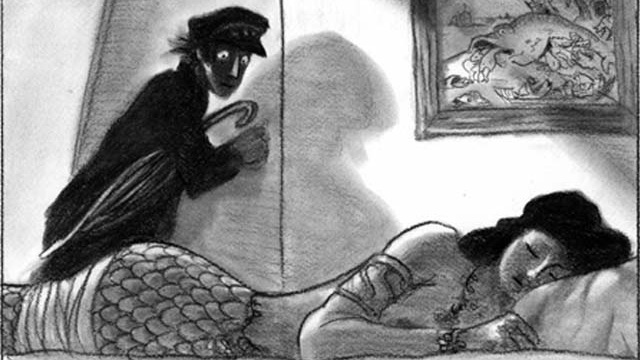
One evening Twain discovers what appears to be a woman who’s fallen overboard.  He lifts her to the deck to discover she’s a mermaid, naked down to her scaly fins and severely injured.  He secrets her away to his room, where the creature slowly casts an erotic spell over the captain.  Even his cabin is affected by her charms as ghostly seaweed slowly breaks through the floor.

Lafeyette’s randy exploits and Twain’s mysterious guest have a very sinister connection, potentially revealed by a book — inexplicably popular with New Yorkers — of local occult stories “Secrets and Mysteries of the River Hudson” by the reclusive C.G. Beaverton.  The author soon boards the Lorelai during a book tour and proves to carry secrets too scandalous even for print.

The heavy, charcoal-like images are a perfect complement to the story.  The Hudson River, as illustrated by Siegal, seems like the end of the earth, a world so choked in mist that it feels like the artist’s ink will rub off on your fingers. Siegal presents a lush, romantic view of historical New York, at equal points comic, erotic and melancholy. Some faces are cartoonish, others delicately real.  The art holds the mood as the story unfurls, from Gothic romance to horror parable.  It felt like a fog was rolling in each time I opened the book.

The moments where ‘Sailor Twain’ enters 1880s New York — from its cabarets and saloons to even Steinway Hall on 14th Street — are moments where sun and nostalgia briefly shine, before (and I mean this literally) submerging the main characters into the Hudson itself, entering a world H.G. Wells might have imagined.

We get to see the table of contents of Beaverton’s book, a fictional tome which promises other mysteries of the Hudson River Valley: famous shipwrecks, Indian legends, the ‘Wood People of Pocantino Hills’ and even cigarette-smoking ghosts.  Perhaps Siegel’s ‘Sailor Twain’ is just the first illustrated chapter of a whole menagerie of mysteries?

TOMORROW: A few questions with the creator of ‘Sailor Twain’ Mark Siegel!

June 15, 1904: Remembering the General Slocum disaster

The morning of June 15 — The steamboat smolders off of North Brother Island

Today is the anniversary of undoubtedly one of New York’s most tragic events, a disaster that famously eradicated a neighborhood and became the city’s single largest loss of life in the 20th century — the explosion of the steamboat General Slocum.

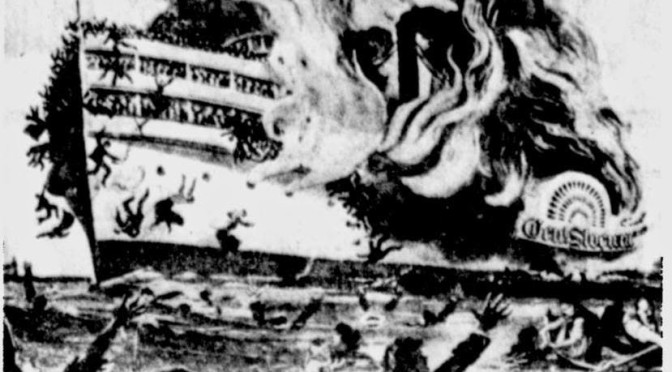
SInce the invention of the steamboat, New York Harbor has seen its share of steamboat disasters, often by technical malfunctions like exploding boilers or sometimes by collision. But what took the Slocum on the morning of Wednesday, June 15, was a problem that faced many tenements at the time — inflammatory materials catching fire with little to almost no preventions in place. The blaze began in a room full of kerosene and hay, its initial discovery by a child was ignored by the captain himself, and, when it was taken seriously, all available tools to fight the blaze — hoses and buckets — were rotted through and virtually useless.

When passengers tried to flee, they discovered that the life vests were old and disintegrating and rafts were merely decorative. Regular inspections of the boat’s safety equipment had in the past been paid off in bribes; the result now manifest itself in a fast-burning ship with 1,342 passengers unable to escape.

The unlucky were the mostly women and children congregants of St. Marks Lutheran Church, in New York’s Kleindeutschland (today, the heart of the East Village), the vibrant destination for new German immigrants, seeking solidarity and a friendly, recognizable culture in the new, foreign city.

Being a day excursion, most of the men were off at work, and their families were off to enjoy a daytrip picnic at Eatons Neck along Long Island’s north shore. The Slocum never made it out of the East River however. The fire spread with such horrifying speed that I can only illustrate it the following way — the boat left the 3rd Street Pier at 9:30 and less than an hour later, its smoldering hull ran ashore at North Brother Island, most of its passengers either burned alive, choking from smoke inhalation along the shores or drowned in the waters of the East River. According to author Edward O’Donnell, “At 10:55 a.m., even before the news of the disaster became general, the burning hulk that had been the General Slocum was raised by the incoming tide and set adrift.”

Below: Recovery workers scour the banks of the East River for days afterwards, looking for additional bodies

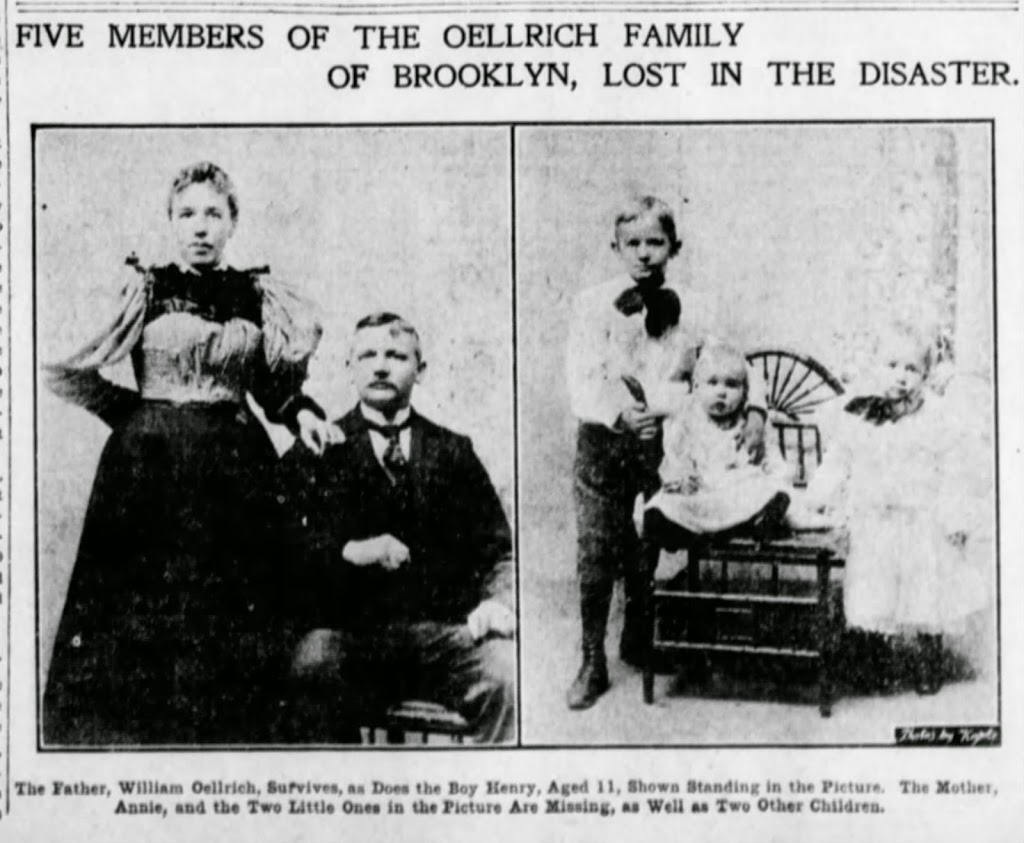
The tragedy sent the city into mourning. For the residents of Kleindeutschland, the disaster was simply too much to recover from. Of the 1,021 women and children who died, most lived in the German district of the Lower East Side. Their husbands and other family members moved on to other German neighborhoods, up to Yorkville or out to thriving districts in Queens and Brooklyn, or out of New York entirely.

Remnants of Little Germany can be found all throughout the East Village and Lower East Side, but for a memorial to the Slocum disaster, visit the original St. Mark’s Evangelical Lutheran Church on East Sixth Street.

Below: A funeral procession passes Avenue A and Sixth Street, the ‘burial of the unidentified’ according to the caption

[Pic from LESHP]