Categories
Amusements and Thrills Podcasts

The Jersey Shore Shark Attacks of 1916

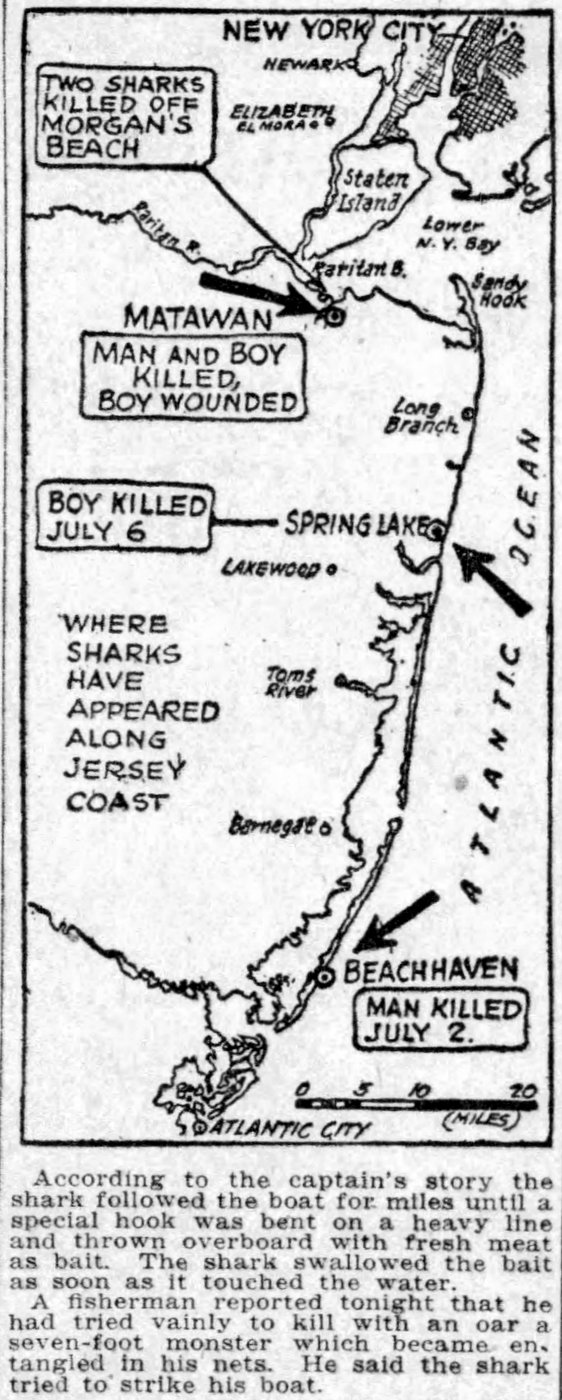
TERROR ON THE BEACH! Seaside resorts from Cape May, New Jersey, to Montauk, Long Island, were paralyzed in fear during the summer of 1916.

Not because of the threat of lurking German U-boats and saboteurs. But because of sharks.On July 1, 1916, Charles Epting Vansant was killed by a shark while swimming at a resort in Beach Haven, a popular destination on the Jersey Shore.

At first, this terrible tragedy received only limited attention. After all, millions were flocking to the beaches along the Jersey Shore and throughout the New York region — Coney Island, the Rockaways and Staten Island’s South Beach.

Shark attacks were the stuff of pirate legends and dramatic works of art. Most experts were skeptical that sharks were dangerous at all; the Maryland mogul Hermann Oelrichs offered $500 to any person with proof that sharks were dangerous to humans. Nobody claimed the reward.

But during that July, sharks did threaten the lives of humans — not only on sandy beaches, but even in tranquil watering holes, several miles inland. What was in the water in July of 1916?

This show contains descriptions of violence related to shark attacks. You’ve been warned.

This episode was brilliantly edited and produced by Kieran Gannon.


The Bowery Boys Podcast is proud to be sponsored by FOUNDED BY NYC, celebrating New York City’s 400th anniversary in 2025 and the 250th anniversary of the United States in 2026. Read about all the exciting events and world class institutions commemorating the five boroughs legacy of groundbreaking achievements, and find ways to celebrate the city that’s always making history.  foundedbynyc.com


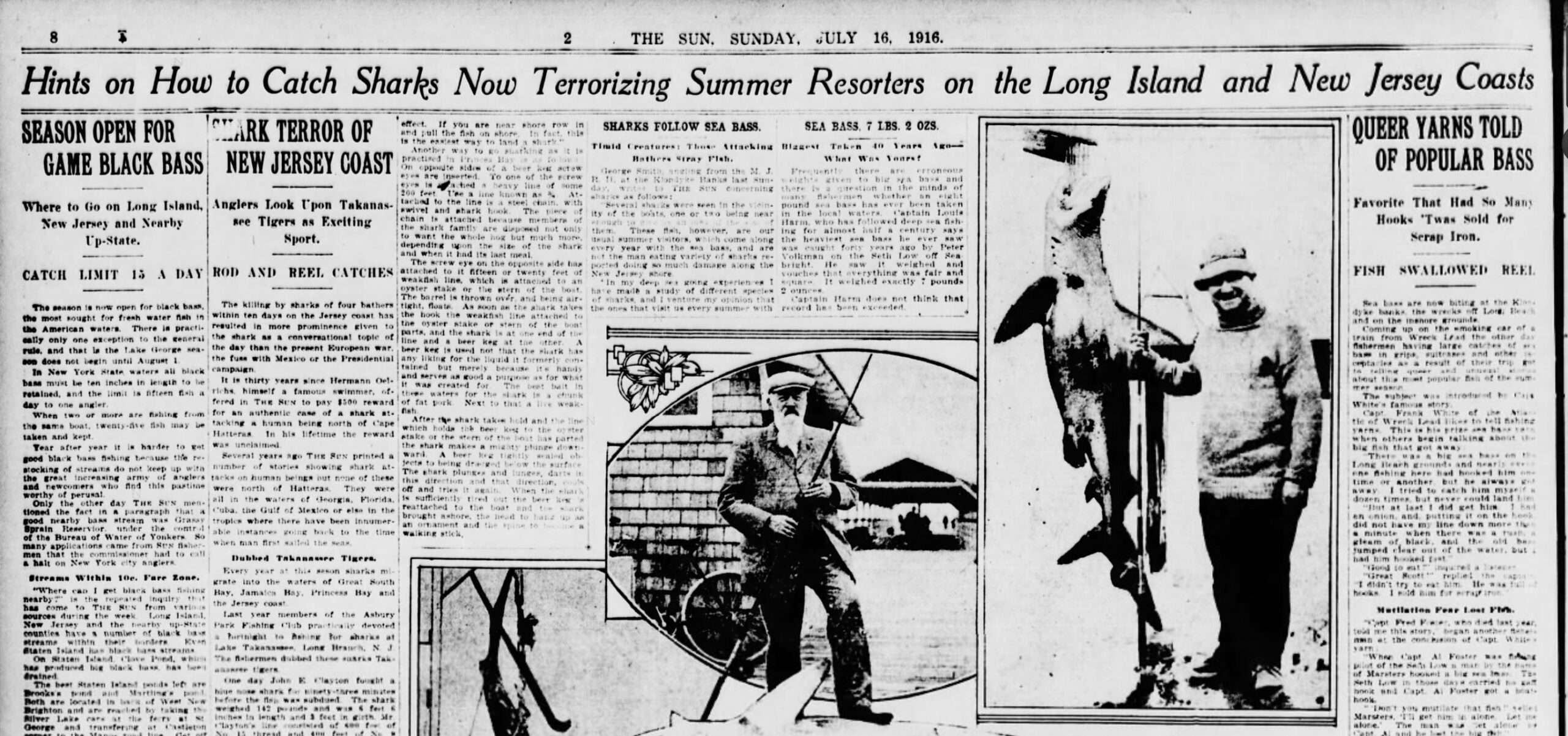
New York Herald, July 16, 1916
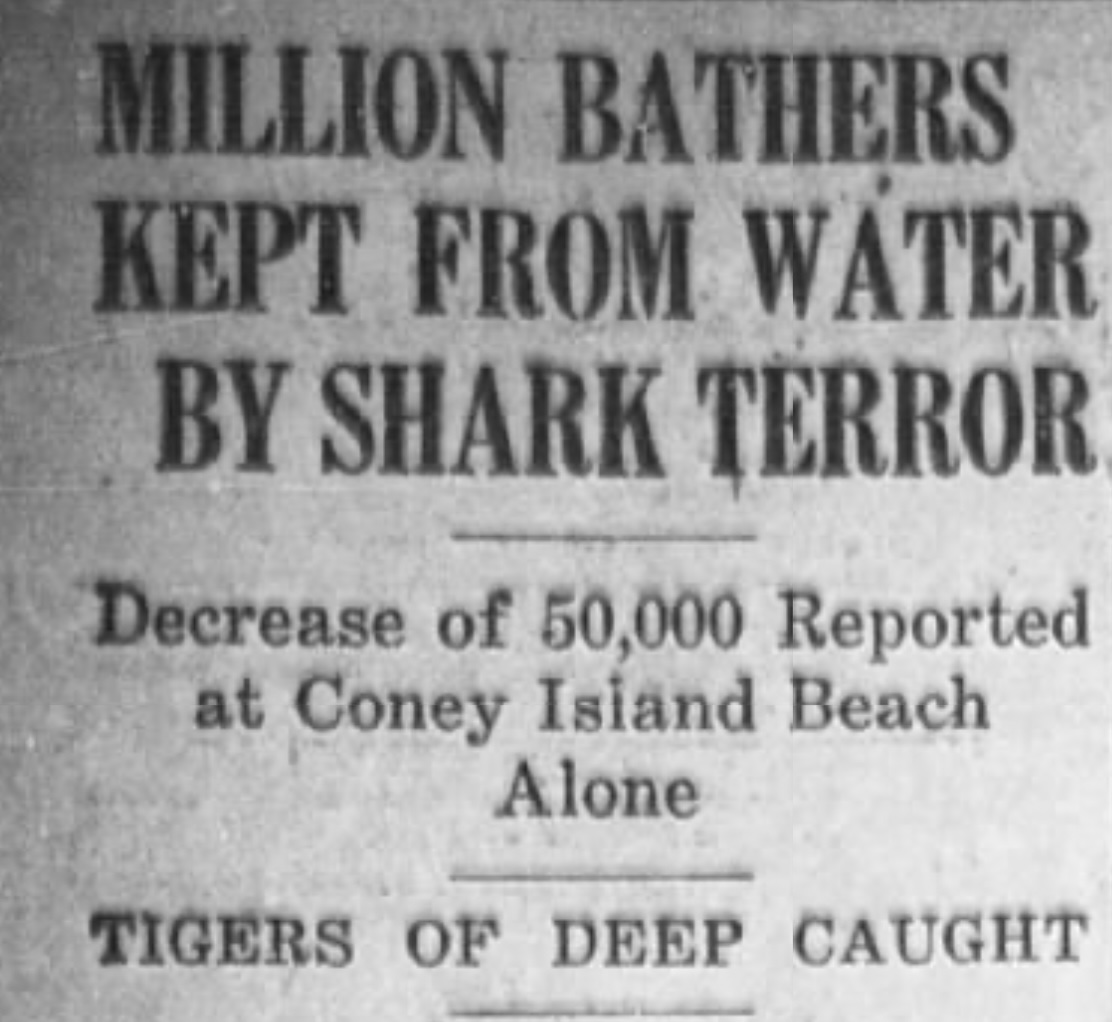
Evening Public Ledger, July 17, 1916
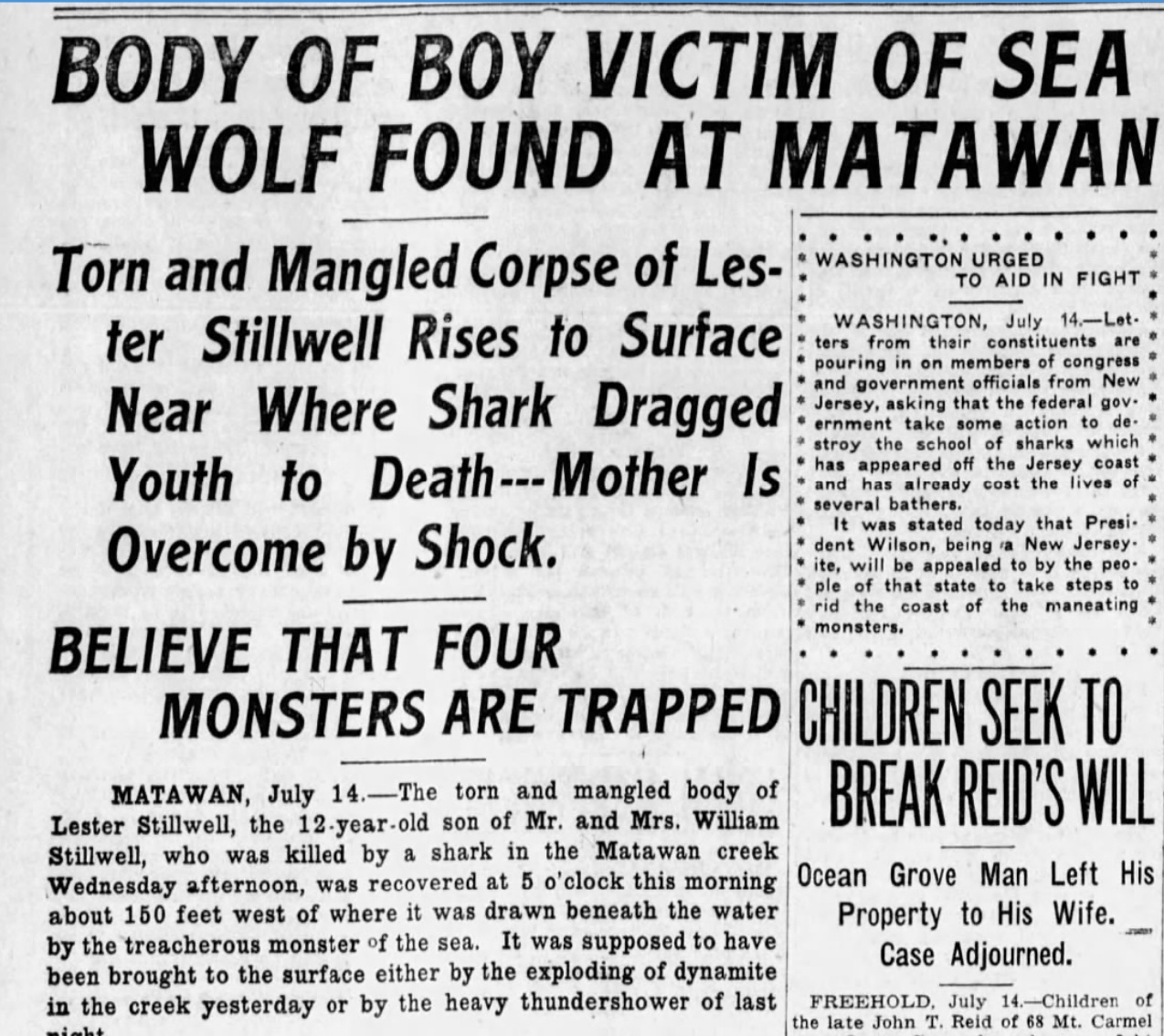
Asbury Park Press, July 14, 1916

FURTHER LISTENING

After you listen to this show, check out these episodes of the Bowery Boys podcast with similar themes.

Categories
On The Waterfront

Troubled Waters: The story of the Grand Republic steamboat, the cursed sister ship of the General Slocum

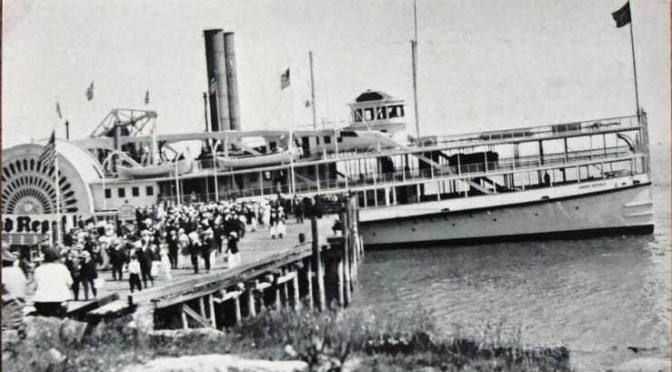
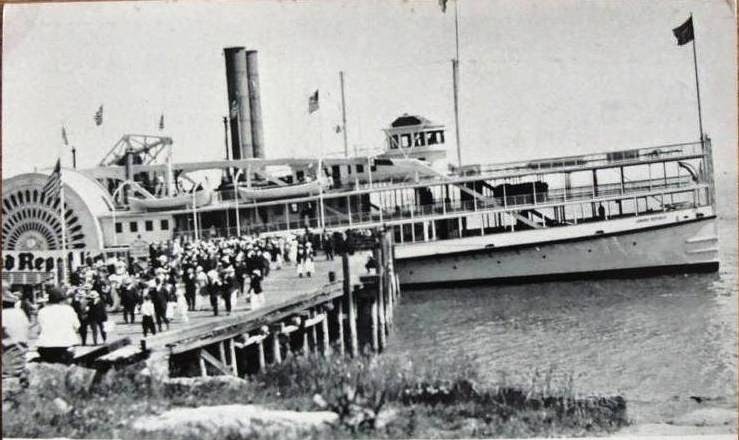
Above: The Grand Republic steamship. As you can see from its paddlewheel, it was a twin to the General Slocum [source]

This could not have made New Yorkers feel very safe about even the briefest of river excursions.

Days after the General Slocum excursion steamer caught fire and sank in the East River, killing over 1,000 people, its older sister ship the Grand Republic — a twin of the doomed vessel, owned by the same company — kept operating along the waters of New York Harbor.

To many, it looked like the ghost of the Slocum.

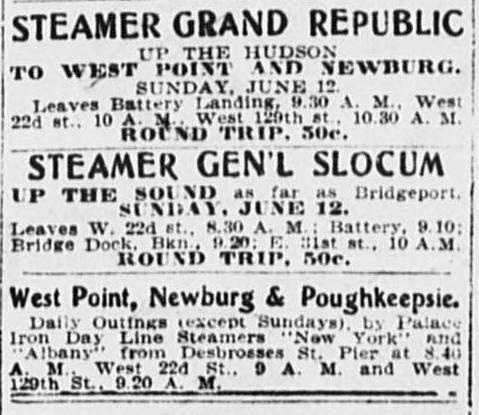
The Grand Republic often ran in tandem with the Slocum, transporting passengers to the seaside amusements of the Rockaways.  During the month of June 1904, the Grand Republic was assigned to the Hudson River, while the Slocum ran the Long Island Sound.

An advertisement in the New York Evening World, June 10, 1904

After the Slocum tragedy, steamboat inspectors were heavily scrutinized and excursion companies were accused of endangering lives for a fast dollar.

Rallying to the side of safety was, of all people, the venerated Daniel Sickles, former Congressman and Civil War officer.  (You may remember him from his early days back when he killed the son of Francis Scott Key.)

The retired politician had no tolerance for the bureaucrats he believed were responsible for the Slocum disaster.

“Scalp those moribund Federal officials who sit with their roll-top desks and draw their salaries for doing nothing while human life is allowed to be sacrificed by the hundreds,” he said. “Only yesterday, I am informed the Grand Republic was allowed to leave her wharf with more passengers than the law allows. Broadside these fellows and let every man and woman write President [Theodore] Roosevelt a letter demanding an investigation.” [source]

Sickles made good on his word, writing Roosevelt and lashing out at the steamer companies in no uncertain terms, the overcrowded General Republic his chief example of their continued malfeasance.

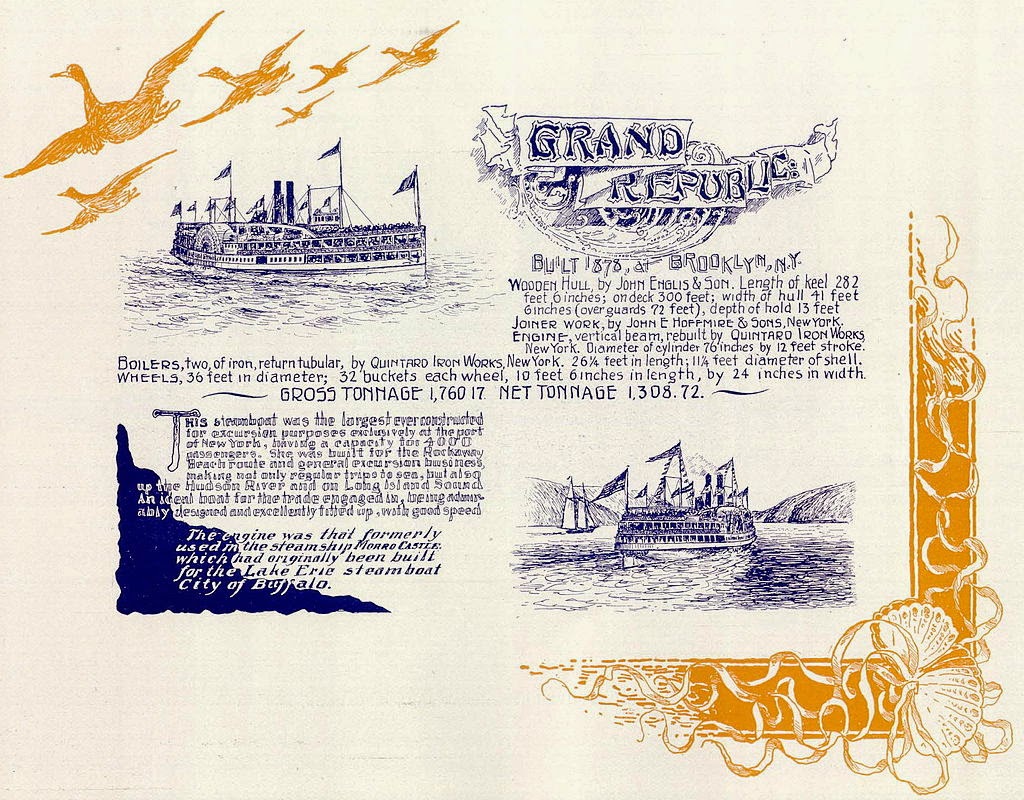
Below: A graphic on the Grand Republic in a book called American Steam Vessels. “Built in 1878” “This steamboat was the largest ever constructed for excursion purposes exclusively at the port of New York.”

The Slocum disaster obviously hit business hard for the entire excursion industry.  The weekend after the Slocum sank, the Grand Republic was supposed to host another church group for a tour of the Hudson, but, understandably, only one-fourth of its passenger list arrived. The Knickerbocker Steamboat Company, owner of the Slocum and Grand Republic, went out of business, and the Grand Republic was sold to another concern.

The captain of the Grand Republic steamer John Pease had been responsible for inspections on the Slocum and was eventually indicted, “criminally responsible for the Slocum disaster.”

Still that did not take the Grand Republic off the waters. ‘THE GRAND REPUBLIC STILL RUNS,” declared the Tribune on July 4, 1904.

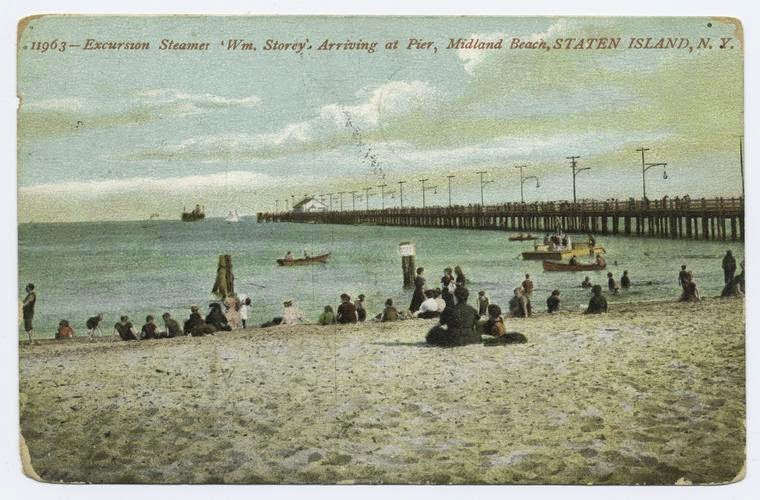
Below: A view of the Midland Beach pier, where excursion steamers would frequently dock. (NYPL)

Four days later, the Grand Republic almost crashed into another steamer off the coast of Coney Island. Two weeks later, with 500 passengers aboard, it slammed into the Kismet steam yacht.  In August, the boat was revealed to have the same sort of rotten life preservers that had so doomed the Slocum.

Still that did not take the Grand Republic off the waters. “GRAND REPUBLIC DEFIES ORDERS,” declared the Evening World on August 3, 1904.

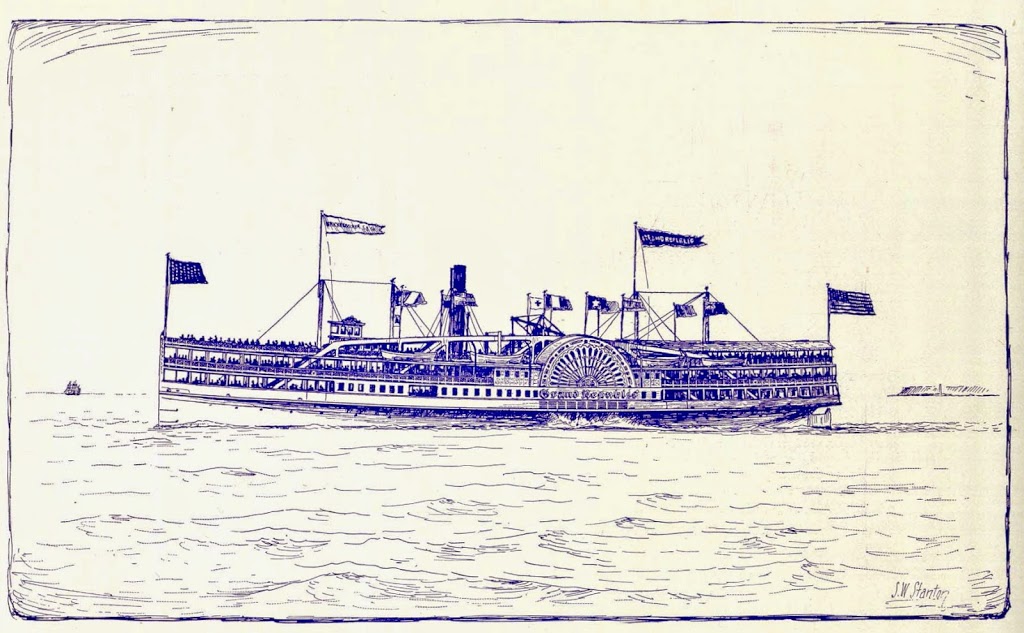
Below: The Grand Republic, illustration by Samuel Ward Stanton

The steamboat owners argued with the New York inspectors in the press, neither looking very trustworthy.  Eventually the boat owners surrendered the Grand Republic to the government for inspection.

Believe it or not, even with hundreds of life preservers declared ‘rotten’ and promptly removed, the boat was eventually declared safe, although its capacity was greatly lowered — from 3,750 to 1,250 passengers, a major financial blow to the owners.

It led a quiet career for many years afterwards, although many feared the boat’s association with the doomed General Slocum and refused to ride it.  It resumed trips to the Rockaways and Coney Island, taking tens of thousands of people through New York Harbor for many, many years.  And it even returned to taking church groups on day excursions, similar to the journeys that the General Slocum had taken.

But the boat would continue to get into rather significant accidents.  In 1915, even the suggestion of fire during one voyage sent a thousand people scrambling for the life preservers, resulting in several injuries.  In a disturbing parallel with the Slocum, “[w]omen shrieked as they were knocked down by the mob that surged about the lifeboats.” [source]

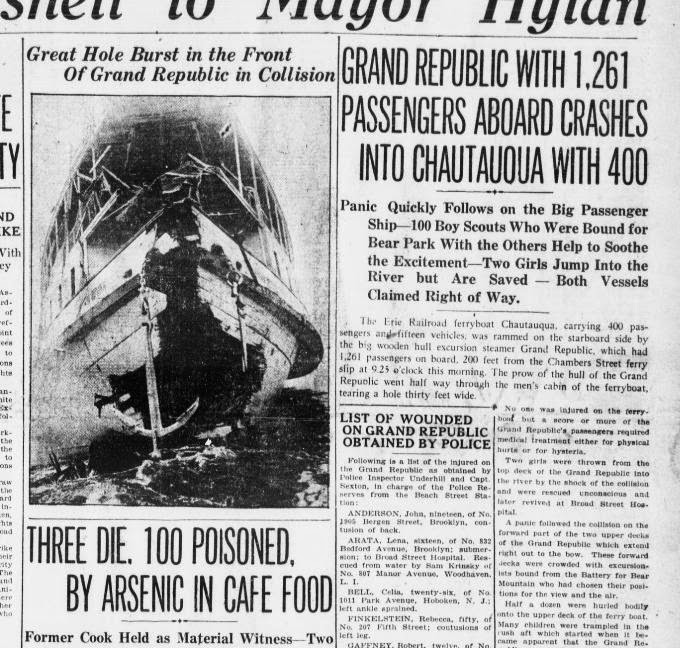
On August 1, 1922, the Grand Republic smashed into another boat in the Hudson River, injuring over a dozen people.  Luckily the boat was filled with Boy Scouts, who calmed the panicked passengers. (Below, from the Evening World)

You might think this would spell the end for the old steamboat, but no!  It remained in the waters, continuing to transport passengers to upstate New York, one of the oldest vessels in service.

The Grand Republic, like its sister ship, was brought down by fire, although luckily without the terrible casualties. In 1924, while docked along 155th Street, a severe dockside blaze caught several boats on fire, including the Grand Republic.

The fire erupted late at night, and thirty men were sleeping aboard the boat at that time. Fortunately, this was the era of the automobiles; car horns from a nearby street awoke two seamen, who safely evacuated the crew.  The Grand Republic, however, was lost, eventually sinking into the Hudson River.

By the time of its demise, the boat seems to have shaken off much of its bad reputation.  Later that year, in a sort-of obituary to the excursion steamer industry, the New York Times declared, “[C]ertainly the Grand Republic was a grand success as an excursion boat.”

PODCAST: A snapshot of Hurricane Sandy, Nov. 2, 2012


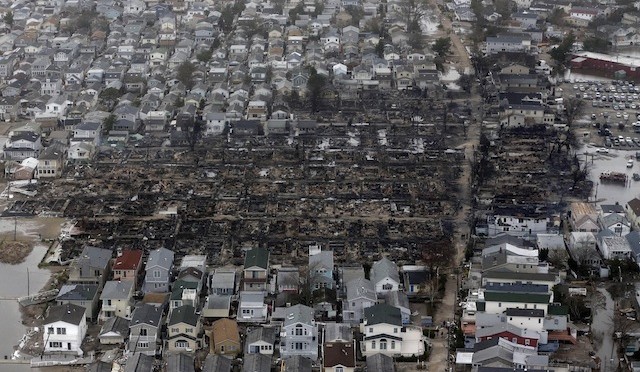
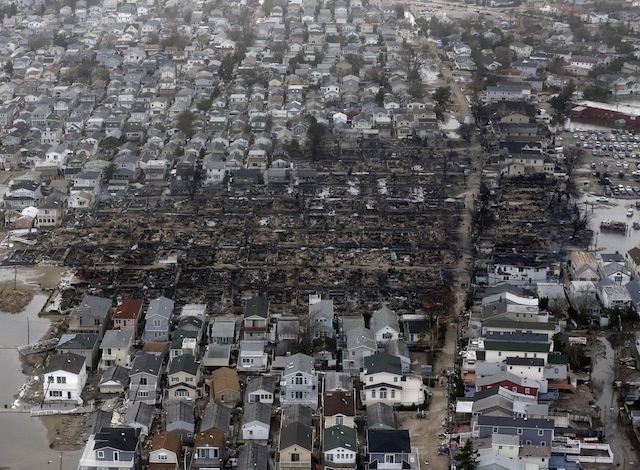
Above: Aftermath of a massive blaze in Breezy Point on the Rockaway Peninsula (Picture courtesy AP) 

PODCAST A brief encapsulation of what’s happening in the city as of Friday afternoon, November 2, reviewing some of the events associated with Hurricane Sandy, the catastrophic storm which hit the Northeast this week. Featuring some of the historical context for the storm. This is just a summary of what’s occurred as of now, so much of this information is sure to have changed after recording date. Please check your local news for up-to-date information.

To listen this episode, simply download it for FREE from iTunes or other podcasting services, subscribe to our RSS feed or get it straight from our satellite site.

You can also listen to the show on Stitcher streaming radio and Player FM from your mobile devices.

Or listen to straight from here:
The Bowery Boys: Hurricane Sandy Update

Throughout the weekend I’ll be compiling a list of relief organizations that you can contribute to, helping out those affected by Hurricane Sandy. If you know of any more — particularly those tailored to particular areas — please leave them in the comments section or email me, and I will include them on the list today and this weekend.

Tunnel To Towers Foundation [website]
Hope For New York [website]
Jewish Federation of North America [website]
New York Red Cross [website]
Support Breezy Point [website]
Rockaway Relief [website]
Belford NJ/ Jersey Shore Hurricane Relief Fund [website]
Salvation Army [website]

Visit NYC Service for information about volunteering in the area

“Not since the Great Blizzard!” “Bigger than 1821!” Hurricane Sandy inspires historical superlatives

When things get really, really bad, history provides validation and context.   The aftermath of Hurricane Sandy has already inspired newscasters, meteorologists and journalists to reach to the greatest disasters in New York City history for comparison.

These can seem very hyperbolic at times and even a little weird. (‘7 Devastating Hurricanes: Where Will Sandy Rank?‘ as though she were an American Idol contestant.)  It will be days before we really know if this was truly “the greatest disaster in New York history.”  But I do think the comparisons can not only bring home the severity of the current situation, they can also bring to life past traumas in a way that no faded black-and-white image ever could.

Here’s a few historical comparisons I’ve heard thus far, and I’m adding a couple of my own, events that popped into mind as I watched some of the terrifying images on television:

Worst Subway Shutdown Ever — The subways often flood after rainstorms, but snowstorms have also been a menace, particularly the blizzard of 1947 and one in 2006.  However, after Sandy, the MTA declared “The New York City subway system is 108 years old, but it has never faced a disaster as devastating as what we experienced last night.”  Last year’s Hurricane Irene was the first time the subway was ever preemptively shut down.  The decision this year proved wise indeed. [source]
 
Great Norfolk and Long Island Hurricane of 1821 — The Battery experienced high water levels of 11.2 feet during this 1821 event, still the only hurricane to ever directly hit New York. Last night, water levels surged to 13.88 feet, setting a new, disturbing record. Also known as the Great September Gale.

The Great New York Fire of 1835 — The images of runaway fires in Queens, mixed with the utter devastation of lower Manhattan, might remind you of the December blaze of 1835 which destroyed hundreds of buildings downtown. However, that exploding transformer on 14th Street — which caused a blackout to thousands of residents last night — also recall a series of explosions which occurred in New York in 1845, affectionately called the Great Explosion of 1845.  (Boy, they can really overuse a word like ‘great’.)

The Great Blizzard of 1888 — Sandy forced the shutdown of the New York Stock Exchange for a second day today, although the storm did not flood it, as rumors Monday night proclaimed. This was the first time the exchange has shut down for more than one day since the pulverizing snowstorm of 1888 paralyzed city transportation.

The Rockaway Fire of 1892 — One of the hardest hit areas in New York was Rockaway Beach, with its boardwalk destroyed and dozens of homes destroyed by fire over in Breezy Point.  The frightening images reminded me of something from our Rockaways podcast from this summer, a great fire which broke out in September of 1892 which destroyed most of the neighborhood of Seaside.

The Big Wind of 1912 — If contemporary sources are to be believed, the frozen windstorm which struck New York on February 22, 1912, blew at speeds more than double those of Sandy. The ‘giant among gales’ even stirred up a huge blaze in Red Hook, Brooklyn, and tested the steel of recently built skyscrapers.

The Long Island Express (New England Hurricane of 1938) — This powerful hurricane slammed into New England and Long Island in September of 1938.  It remains the most powerful storm to ever ravage the New England states.  According to Jeff Masters of Weather Underground, Sandy’s barometric pressure ties that of the Long Island storm, at 946 millibars.

The Ash Wednesday Hurricane of 1962 — Due to the ‘Frankenstorm‘ aspect to Sandy, another metric experts have used is the similarly formed, long-lingering March 1962 storm which hammered North Carolina, New Jersey and Long Island.

Hurricane Andrew 1992 —  Comparisons to this catastrophe are still out, as it’s mostly evoked due to the federal government’s poor disaster response. Another question left lingering is whether the cost of Sandy will rival that of Andrew, the third most expensive hurricane in American history (after Katrina and Ike).

September 11, 2001 — Then, of course, due to the shutdown of lower Manhattan, one can’t help but recall the attack on the World Trade Center, which actually was the worst thing to ever happen to New York City.

Crane Collapse at 303 East 51st Street 2008 — Anybody seeing the images of the broken crane which hung precariously at the construction site of One57 on West 57th Street might have remembered the horror which occurred at another midtown Manhattan site just four years ago, a crane collapse on East 51st Street which killed seven people. To this day, the uncompleted building stands as a reminder to this tragedy.

If you’ve heard any other historical comparisons used on your local newscast, please put them in the comments.

Notes from the podcast (#140) Rockaway Beach

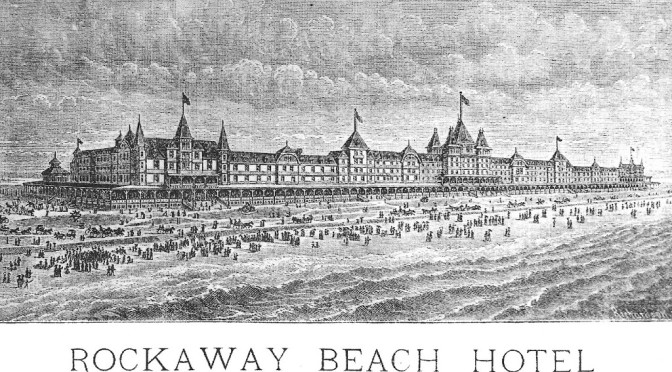
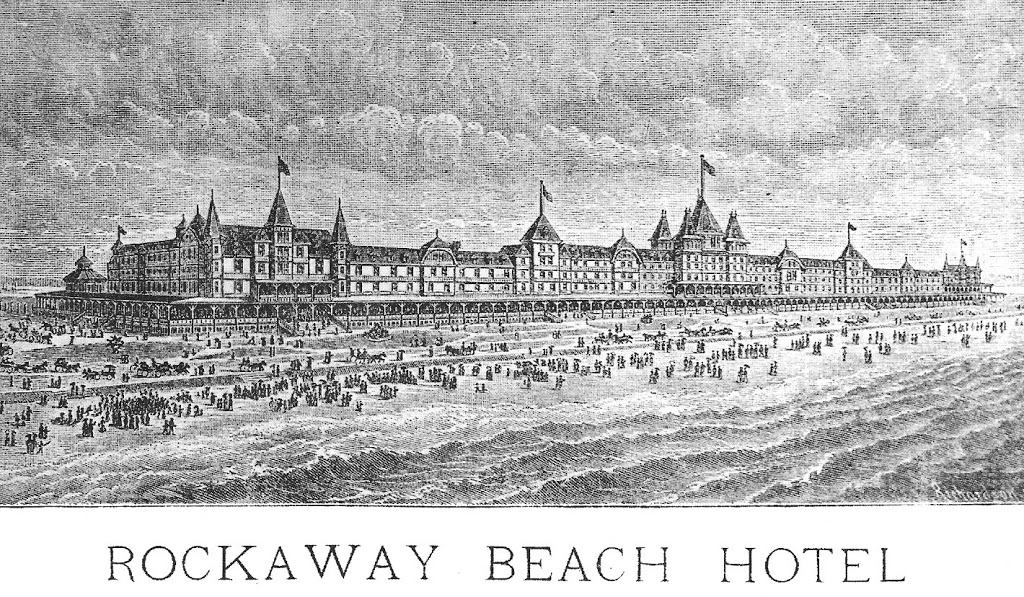
Behold the insanity: (Above) A lithograph of the Rockaway Beach Hotel, one of the most notorious failures in American history

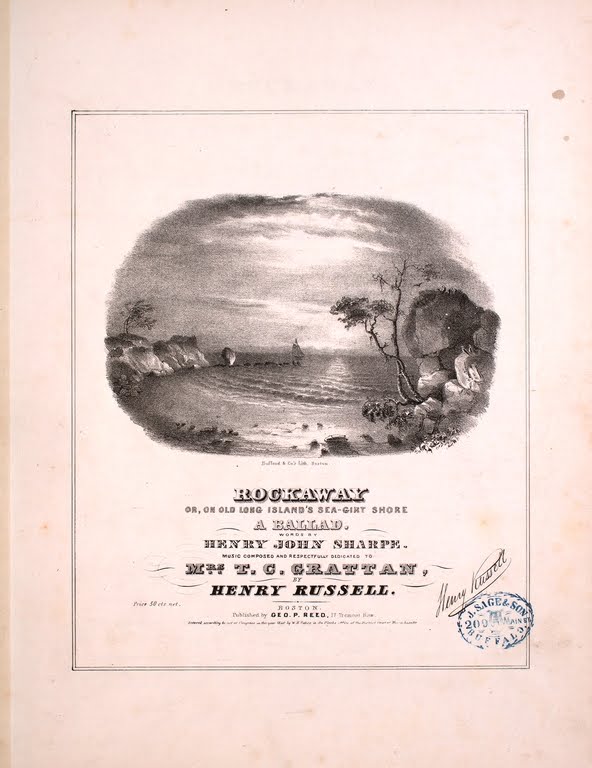
A Song About Brooklyn: I gave you a little taste of a poem about the Rockaways by balladeer Henry John Sharpe. Yes, that’s right, this is actually a song, with music by Henry Russell. Click here to listen to the entire melody.

Rockaway, or, On Long Island’s Sea-Girt Shore. A Ballad

ON old Long Island’s sea-girt shore,

 Many an hour I ’ve whiled away,
 In listening to the breakers’ roar
 That wash the beach at Rockaway.
Transfixed I ’ve stood while Nature’s lyre
In one harmonious concert broke,
And catching its Promethean fire,
 My inmost soul to rapture woke.


To hear the startling night-winds sigh,
 As dreamy twilight lulls to sleep;
While the pale moon reflects from high
 Her image in the mighty deep;
 Majestic scene where Nature dwells,
 Profound in everlasting love,
While her unmeasured music swells, 
The vaulted firmament above.

CORRECTION: We implied that Robert Moses had something to do with the naming of Jacob Riis Park, when in fact it appears to have already had this name applied to it by the time Moses came along to revitalize it in the early 1930s. It was much smaller, of course, and in the 1920s, the Naval Air Station actually wanted to take it over to expand their airfields.

The New York Times thundered in 1922: “By this time the Navy Department must be aware that the people of New York are opposed to the cession to the United States Government of a large part of the Jacob Riis Park at Rockaway Point for a permanent aviation base.” As it turned out, a decade later, it would be the station that closed, and Jacob Riis Park became a mini-Jones Beach.


FURTHER READING: I do think we rather glossed over the later, sadder years of Rockaways history, simply because the causes of the area’s many unusual changes starting in the 1950s are still being debated.

For more information, I must turn your attention to an amazing, if very sobering, book on the subject of the Rockaway’s recent history — Between Ocean And City: The Transformation of Rockaway, New York by Lawrence Kaplan and Carol P. Kaplan. It’s a hearty, in-depth grasp of the social changes of the area and give a nuanced analysis of Robert Moses’ role in the peninsula’s transformation from daytripping destination to a place of inadequate permanent residency for some New Yorkers.

For a stodgy but earnest throwback, you can download a copy of the 1918 book History of the Rockaways from the year 1685 to 1917 by Alfred Henry Bellot. Sandwiched between the lists of names and descriptions of churches that are no longer there are lots of lovely little anecdotes.

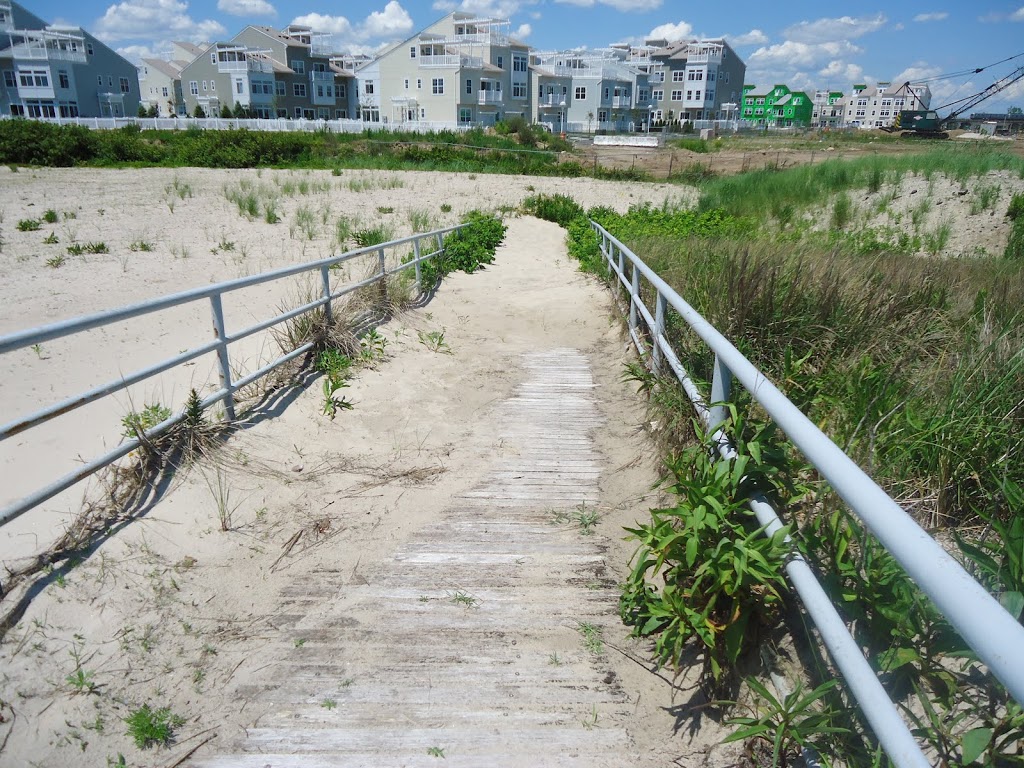
But the best way to explore the history of the Rockaways is to simply roam around the boardwalk. Hints of its glory days — and reminders of its less storied era — can be found scattered all along the way. You’ll see new beach housing that feels like a ghost town, sad 1970s style housing projects, Robert Moses-era storm shelters, surfers, convalescent homes, beach shacks, oddly placed municipal structures, quiet bird sanctuaries, trendy restaurants and rundown pizza joints.

Categories
Podcasts

The Rockaways and Rockaway Beach: The strange fortunes of New York’s former resort oasis and amusement getaway

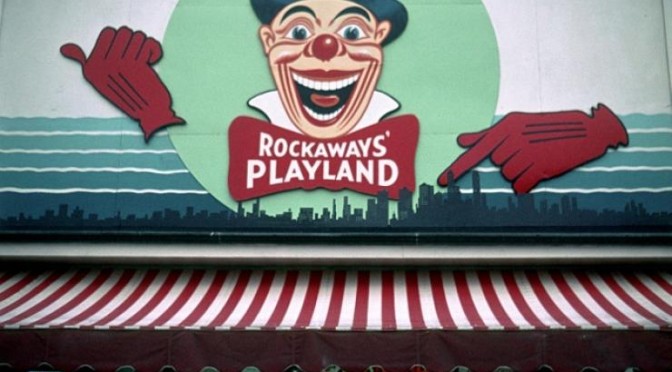
The entrance to Rockaways’ Playland in the 1960s, one of the more nostalgic reminders of an era in the Rockaways gone by. (Image courtesy the blog Sand In Your Shoes)


PODCAST The Rockaways are a world unto its own, a former resort destination with miles of beach facing into the Atlantic Ocean, a collection of diverse neighborhoods and a truly quirky history.

Retaining a variant of its original Lenape name, the peninsula remained relatively peaceful in the early years of New York history, aland holding of the ancestral family of a famous upstate New York university.

The Marine Pavilion, a luxury spa-like lodging which arrived in 1833 featuring the new trend of ‘sea bathing’, opened up vast opportunities for recreation on the peninsula, and soon Rockaway Beach was dotted with dozens of hotels, thousands of daytrippers and a even a famous amusement park.

Not even the fiasco known as the Rockaway Beach Hotel could drive away those seeking recreation here, including a huge population of Irish immigrants who helped define the unique spirit of the Rockaways.

The 20th century brought Robert Moses and his usual brand of reinvention, setting up the Rockaways for an uncertain century of decreased tourism, urban blight and uncommon solutions to preserve its unique identity.


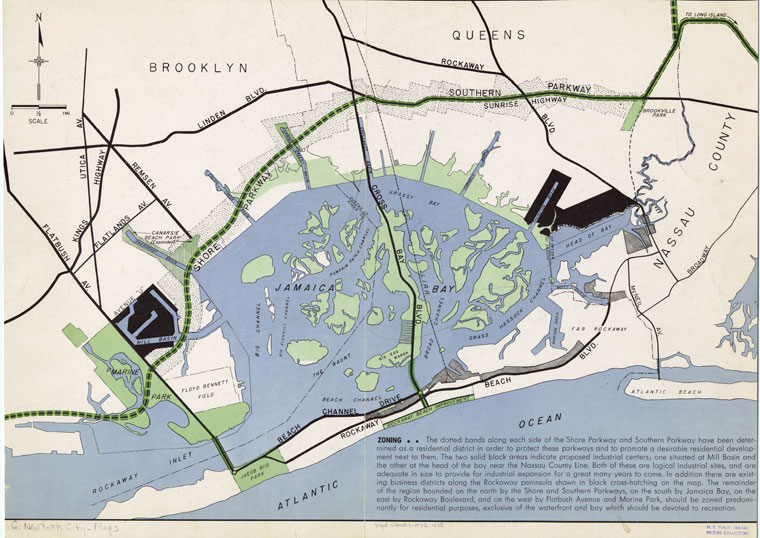
A zoning map of the Jamaica Bay region from 1937, featuring the Rockaway peninsula. A few interesting things to note about this, including: 1) no Idlewild Airport at this time, but Floyd Bennett Field was still in operation, 2) Rockaway Beach Improvement, 3) Everything west of Jacob Riis Park is basically ignored. [source]


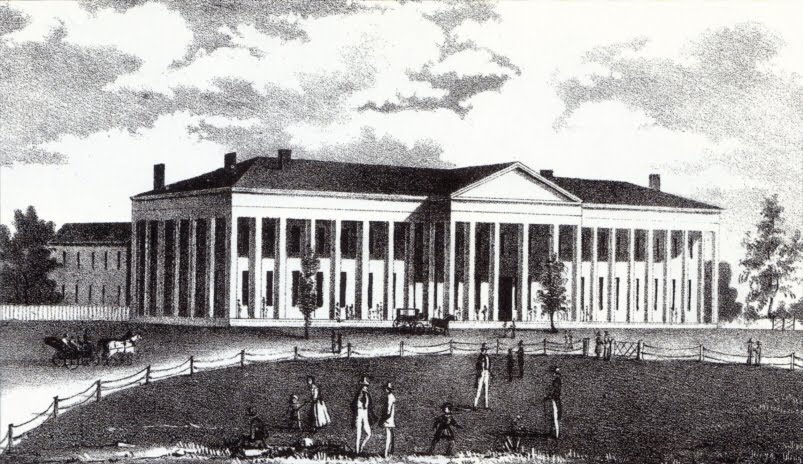
The Marine Pavilion, the first significant resort destination in the Rockaways, introduced the notion of sea bathing to New Yorkers and attracted famous writers and actors to this peaceful area. [Courtesy Rockaway Memories]


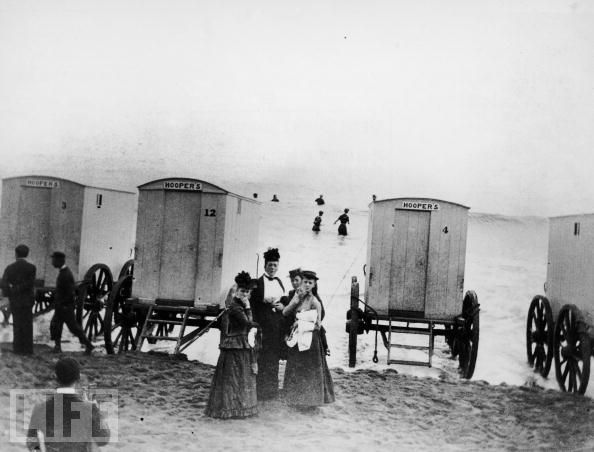
This is not an image from the Rockaways, but ‘bathing machines’ like these were most certainly used in the early days of Rockaway Beach.
 
 
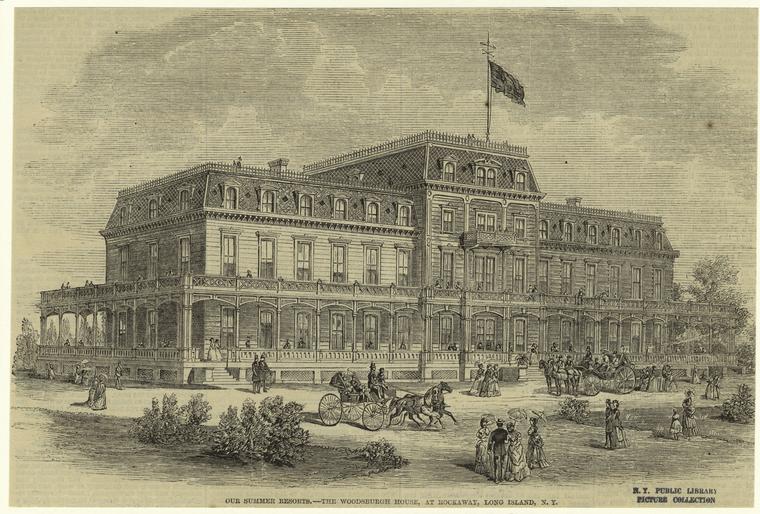
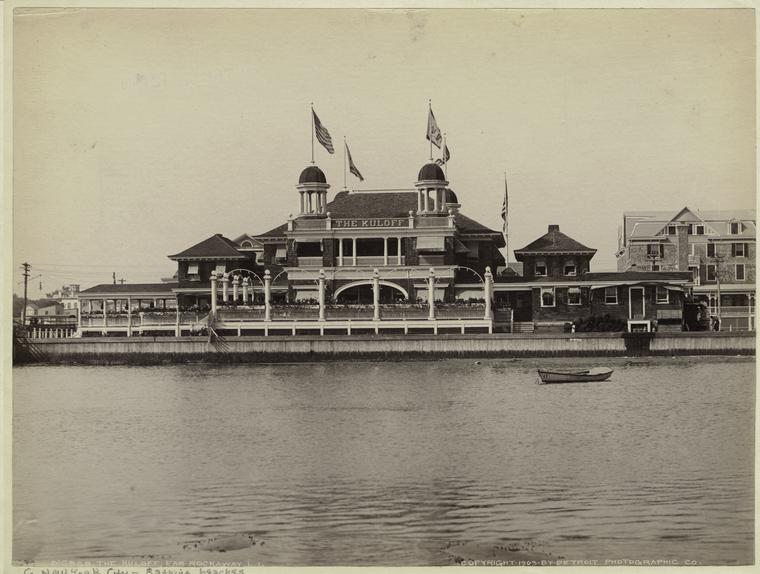
A couple examples of hotels that once filled the peninsula during the late 19th century, early 20th century, the Woodburgh House (at top) from 1870, the Kuloff (at bottom) from 1903.
 

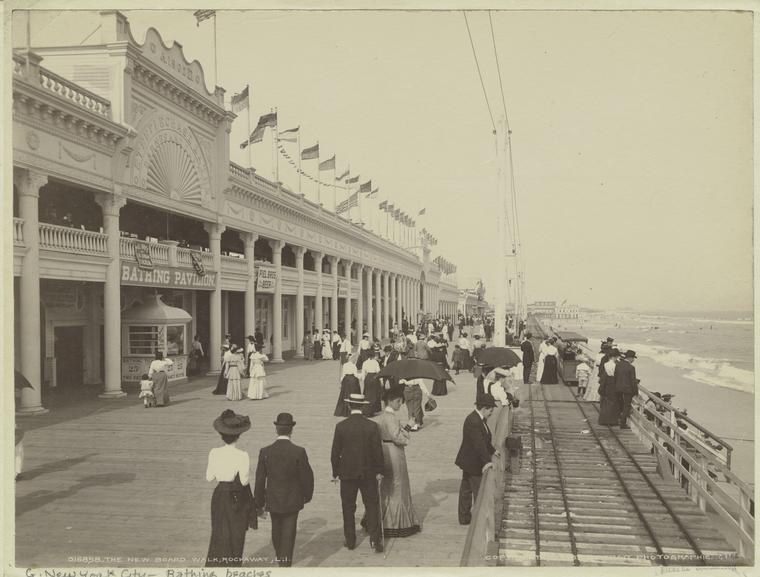
The boardwalk from 1903 in front of or near a section of Steeplechase Park, I believe, judging from the mini-railroad tracks along the side. [source]


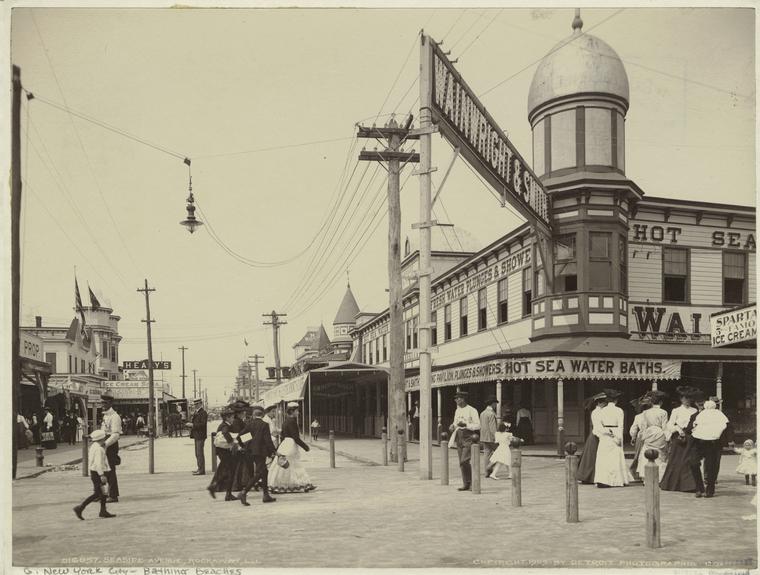
Along Seaside Avenue, possibly depicting an area of ‘Irishtown’, in 1903, rebuilt after a devastating fire the decade previous.

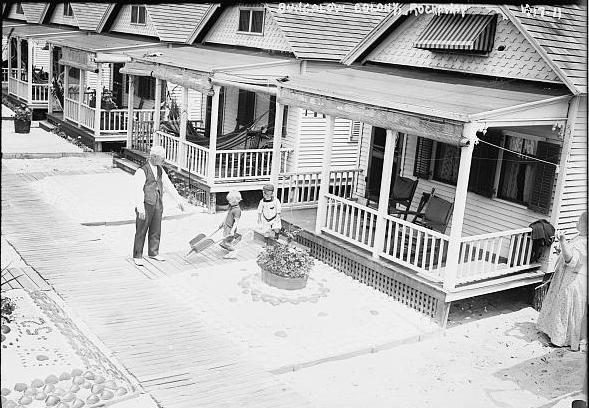
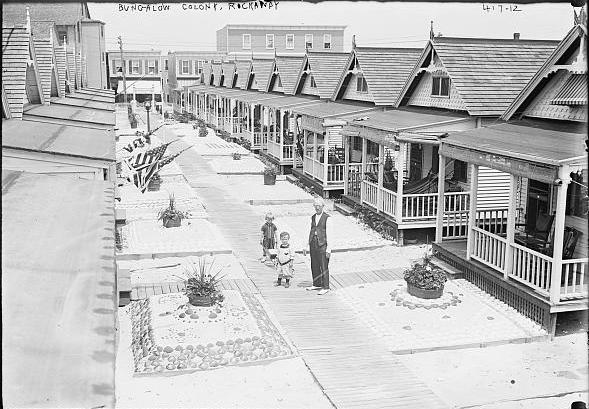
The bungalows of Rockaway. (Courtesy Library of Congress)


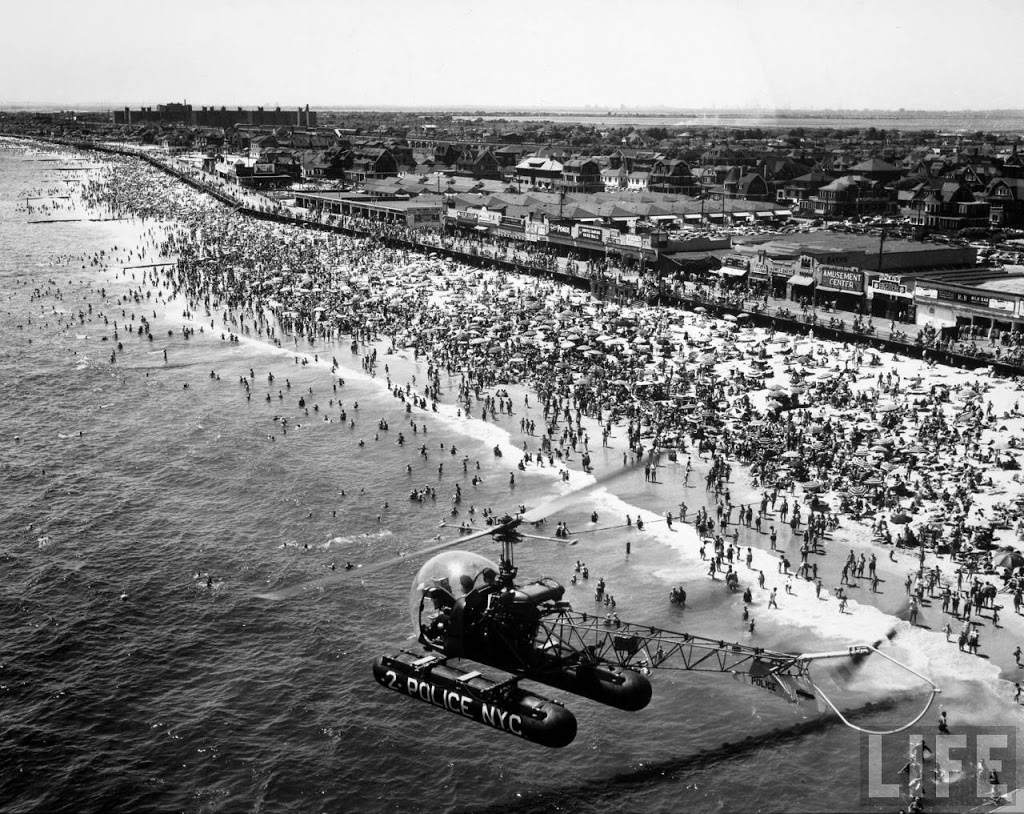
The 1950s began a long era of difficulties for the Rockaways, but you wouldn’t know it from this summertime Life Magazine photo from 1956. Click into the image to inspect some of the interesting and long-vanished shops and amusements along the boardwalk.


This almost-ghostly skeleton of a high-rise housing development never built stood for years as the residents of neighboring Breezy Point successfully fought to kill that project and other intrusive plans by the city in the late 1960s. Picture courtesy Arthur Tress/US National Archives.

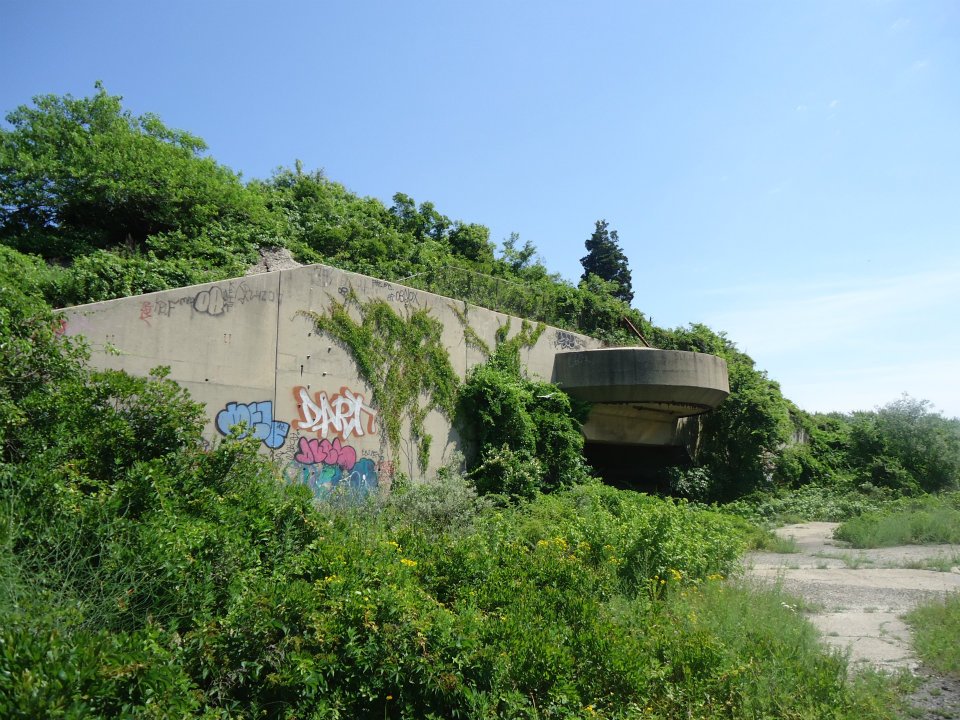
The mysterious remains of old Fort Tilden, now part of the Gateway Recreation Area and completely taken over by nature. For many more pictures of this area, please visit our Facebook page and check out my photo album on the ruins of Fort Tilden.

The thrashing waves of Rockaway make for good surfing:

And, what posting about the Rockaways would be complete without: