Notes from the podcast (#140) Rockaway Beach

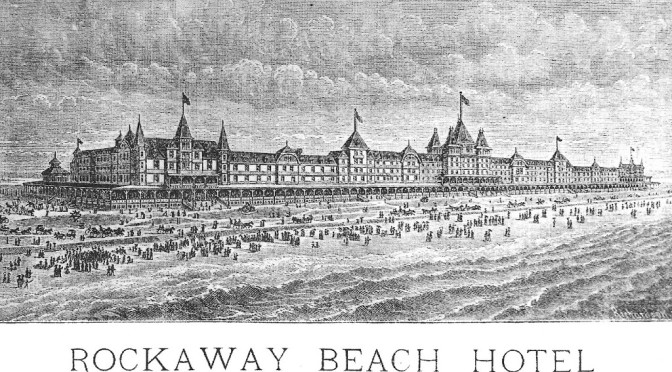
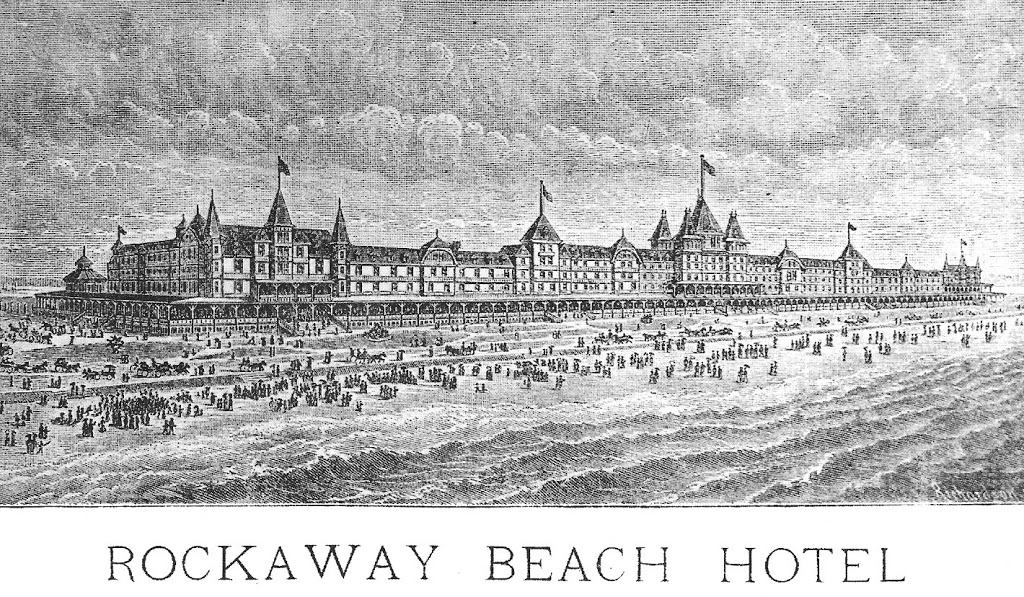
Behold the insanity: (Above) A lithograph of the Rockaway Beach Hotel, one of the most notorious failures in American history

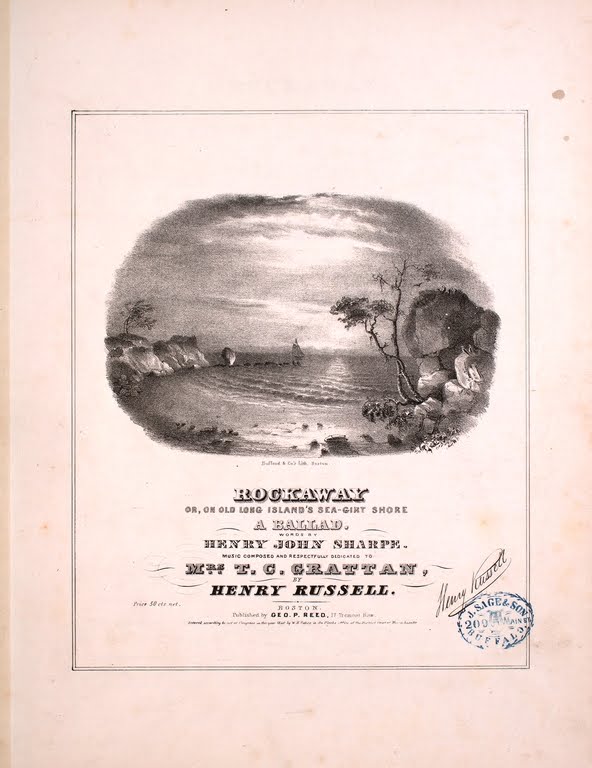
A Song About Brooklyn: I gave you a little taste of a poem about the Rockaways by balladeer Henry John Sharpe. Yes, that’s right, this is actually a song, with music by Henry Russell. Click here to listen to the entire melody.

Rockaway, or, On Long Island’s Sea-Girt Shore. A Ballad

ON old Long Island’s sea-girt shore,
 Many an hour I ’ve whiled away,
 In listening to the breakers’ roar
 That wash the beach at Rockaway.
Transfixed I ’ve stood while Nature’s lyre
In one harmonious concert broke,
And catching its Promethean fire,
 My inmost soul to rapture woke.


To hear the startling night-winds sigh,
 As dreamy twilight lulls to sleep;
While the pale moon reflects from high
 Her image in the mighty deep;
 Majestic scene where Nature dwells,
 Profound in everlasting love,
While her unmeasured music swells, 
The vaulted firmament above.

CORRECTION: We implied that Robert Moses had something to do with the naming of Jacob Riis Park, when in fact it appears to have already had this name applied to it by the time Moses came along to revitalize it in the early 1930s. It was much smaller, of course, and in the 1920s, the Naval Air Station actually wanted to take it over to expand their airfields.

The New York Times thundered in 1922: “By this time the Navy Department must be aware that the people of New York are opposed to the cession to the United States Government of a large part of the Jacob Riis Park at Rockaway Point for a permanent aviation base.” As it turned out, a decade later, it would be the station that closed, and Jacob Riis Park became a mini-Jones Beach.


FURTHER READING: I do think we rather glossed over the later, sadder years of Rockaways history, simply because the causes of the area’s many unusual changes starting in the 1950s are still being debated.

For more information, I must turn your attention to an amazing, if very sobering, book on the subject of the Rockaway’s recent history — Between Ocean And City: The Transformation of Rockaway, New York by Lawrence Kaplan and Carol P. Kaplan. It’s a hearty, in-depth grasp of the social changes of the area and give a nuanced analysis of Robert Moses’ role in the peninsula’s transformation from daytripping destination to a place of inadequate permanent residency for some New Yorkers.

For a stodgy but earnest throwback, you can download a copy of the 1918 book History of the Rockaways from the year 1685 to 1917 by Alfred Henry Bellot. Sandwiched between the lists of names and descriptions of churches that are no longer there are lots of lovely little anecdotes.

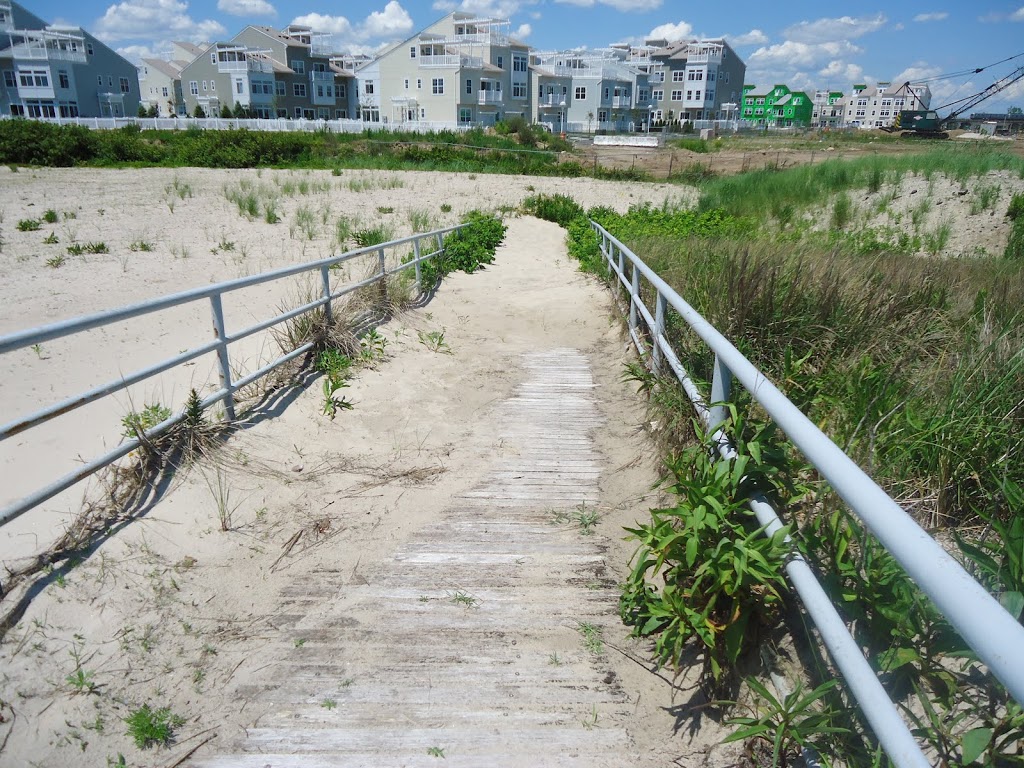
But the best way to explore the history of the Rockaways is to simply roam around the boardwalk. Hints of its glory days — and reminders of its less storied era — can be found scattered all along the way. You’ll see new beach housing that feels like a ghost town, sad 1970s style housing projects, Robert Moses-era storm shelters, surfers, convalescent homes, beach shacks, oddly placed municipal structures, quiet bird sanctuaries, trendy restaurants and rundown pizza joints.
Categories
Podcasts

The Rockaways and Rockaway Beach: The strange fortunes of New York’s former resort oasis and amusement getaway

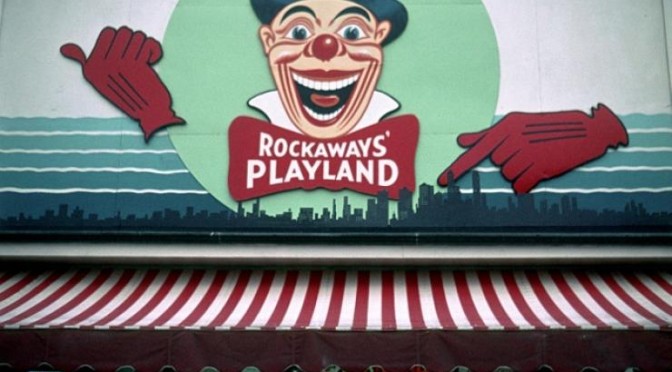
The entrance to Rockaways’ Playland in the 1960s, one of the more nostalgic reminders of an era in the Rockaways gone by. (Image courtesy the blog Sand In Your Shoes)


PODCAST The Rockaways are a world unto its own, a former resort destination with miles of beach facing into the Atlantic Ocean, a collection of diverse neighborhoods and a truly quirky history.

Retaining a variant of its original Lenape name, the peninsula remained relatively peaceful in the early years of New York history, aland holding of the ancestral family of a famous upstate New York university.

The Marine Pavilion, a luxury spa-like lodging which arrived in 1833 featuring the new trend of ‘sea bathing’, opened up vast opportunities for recreation on the peninsula, and soon Rockaway Beach was dotted with dozens of hotels, thousands of daytrippers and a even a famous amusement park.

Not even the fiasco known as the Rockaway Beach Hotel could drive away those seeking recreation here, including a huge population of Irish immigrants who helped define the unique spirit of the Rockaways.

The 20th century brought Robert Moses and his usual brand of reinvention, setting up the Rockaways for an uncertain century of decreased tourism, urban blight and uncommon solutions to preserve its unique identity.


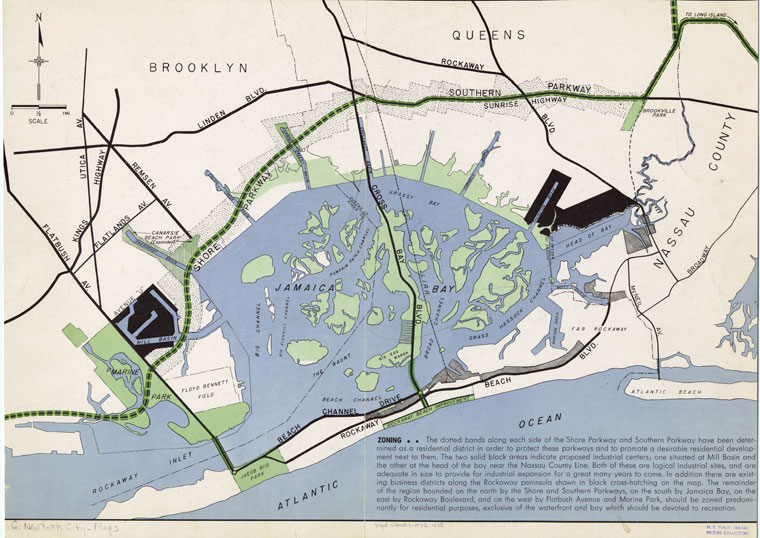
A zoning map of the Jamaica Bay region from 1937, featuring the Rockaway peninsula. A few interesting things to note about this, including: 1) no Idlewild Airport at this time, but Floyd Bennett Field was still in operation, 2) Rockaway Beach Improvement, 3) Everything west of Jacob Riis Park is basically ignored. [source]


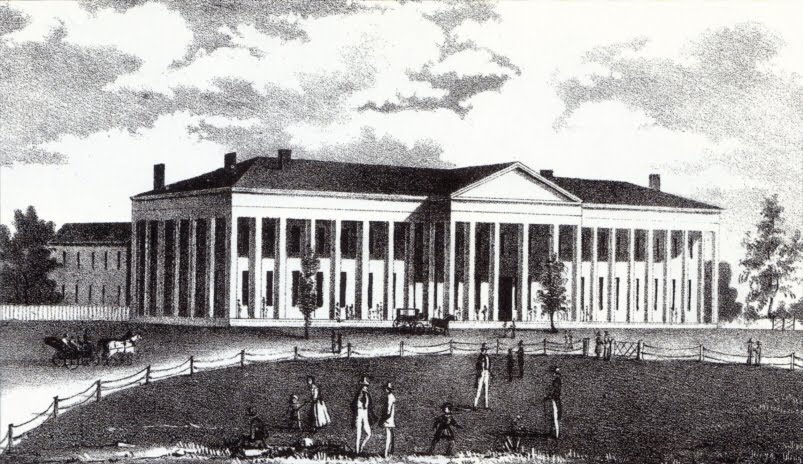
The Marine Pavilion, the first significant resort destination in the Rockaways, introduced the notion of sea bathing to New Yorkers and attracted famous writers and actors to this peaceful area. [Courtesy Rockaway Memories]


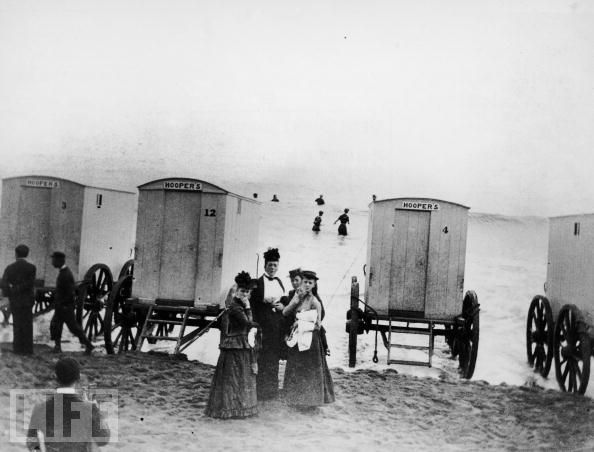
This is not an image from the Rockaways, but ‘bathing machines’ like these were most certainly used in the early days of Rockaway Beach.
 
 
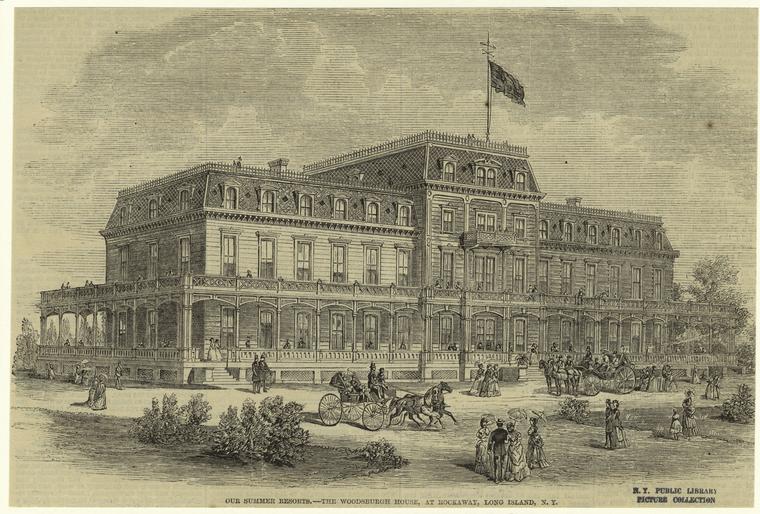
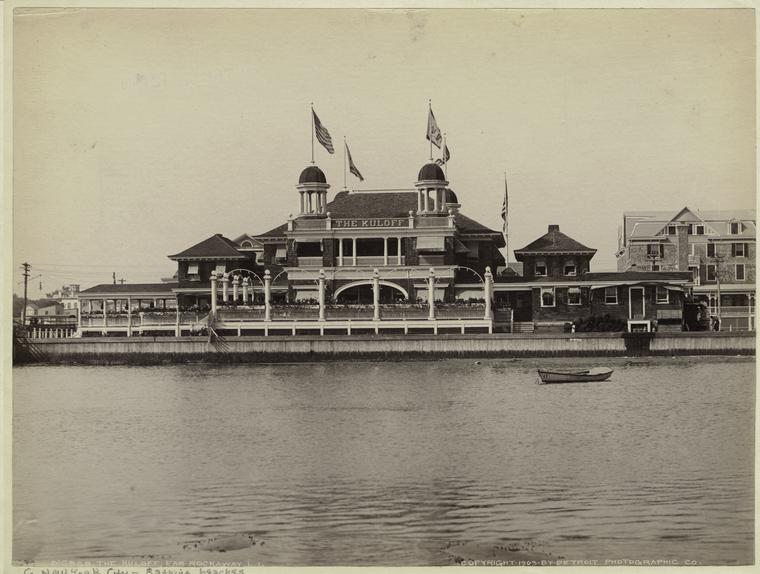
A couple examples of hotels that once filled the peninsula during the late 19th century, early 20th century, the Woodburgh House (at top) from 1870, the Kuloff (at bottom) from 1903.
 

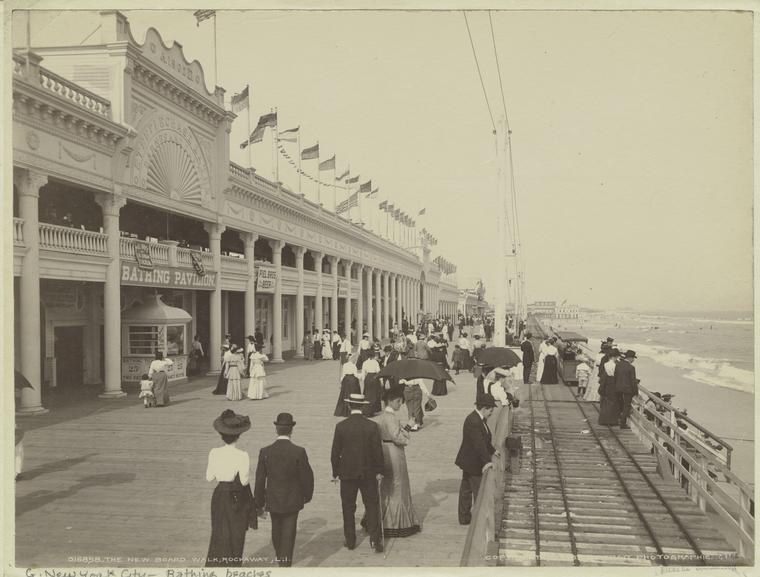
The boardwalk from 1903 in front of or near a section of Steeplechase Park, I believe, judging from the mini-railroad tracks along the side. [source]


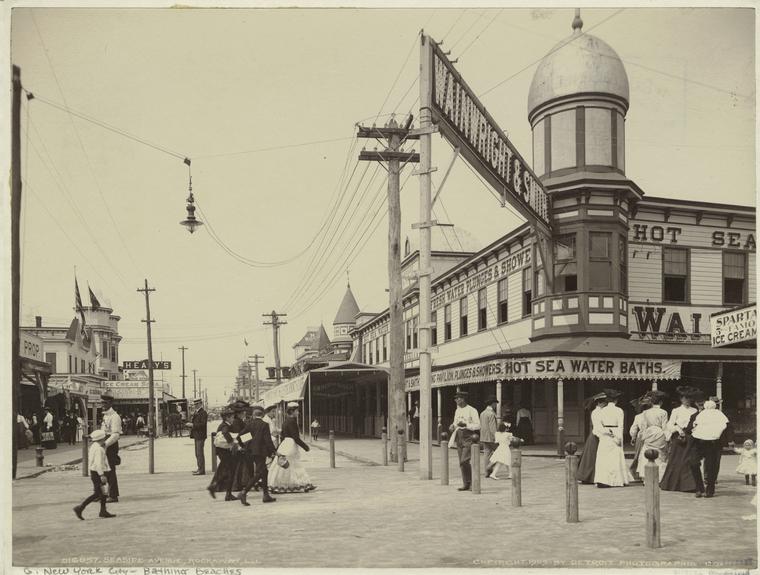
Along Seaside Avenue, possibly depicting an area of ‘Irishtown’, in 1903, rebuilt after a devastating fire the decade previous.

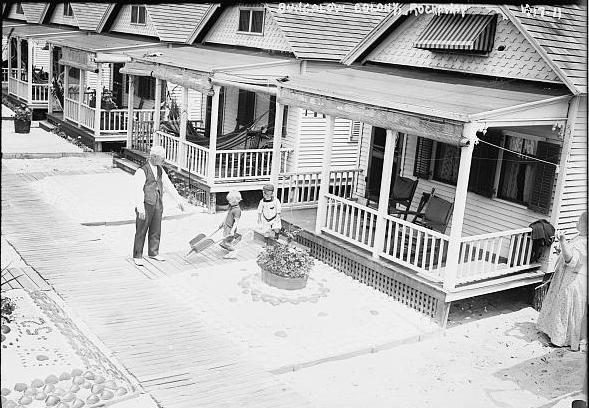
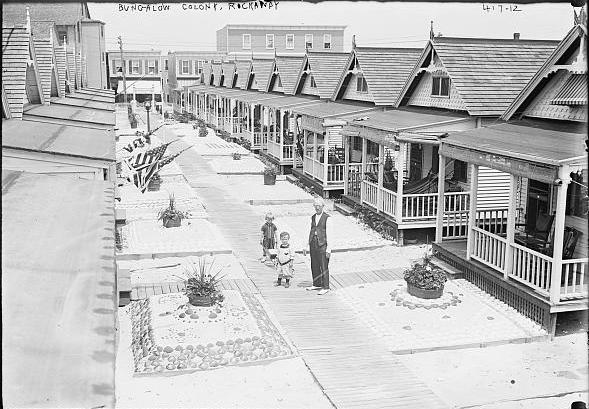
The bungalows of Rockaway. (Courtesy Library of Congress)


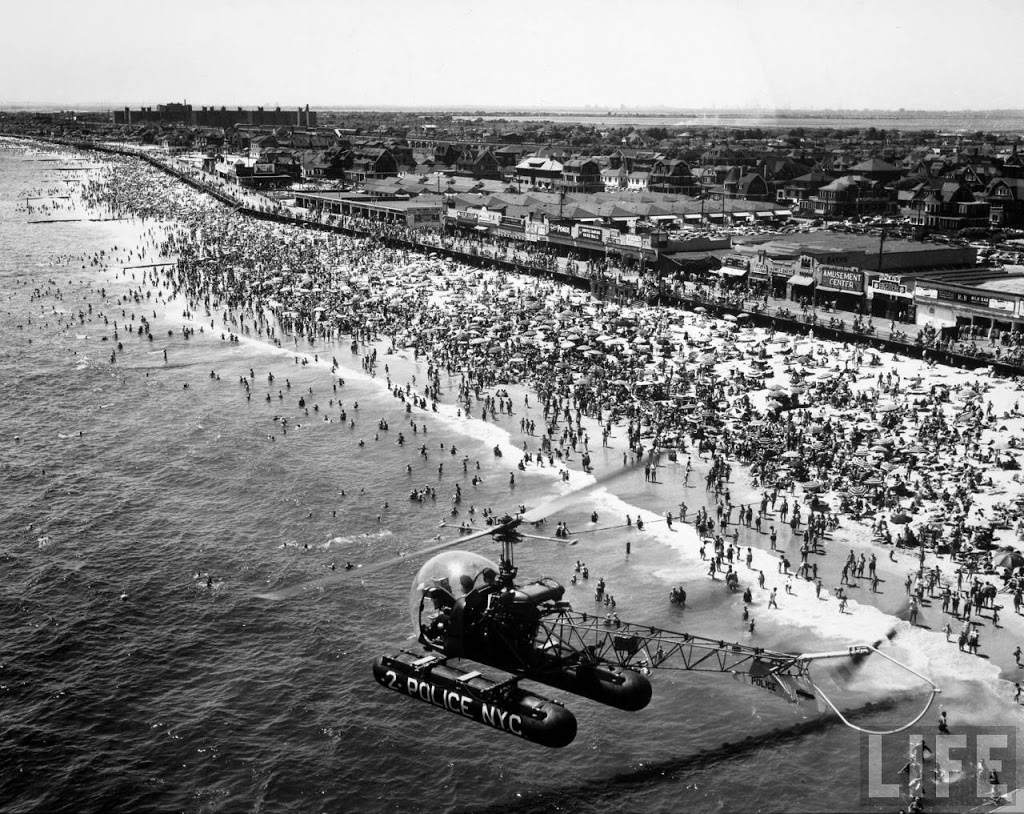
The 1950s began a long era of difficulties for the Rockaways, but you wouldn’t know it from this summertime Life Magazine photo from 1956. Click into the image to inspect some of the interesting and long-vanished shops and amusements along the boardwalk.


This almost-ghostly skeleton of a high-rise housing development never built stood for years as the residents of neighboring Breezy Point successfully fought to kill that project and other intrusive plans by the city in the late 1960s. Picture courtesy Arthur Tress/US National Archives.

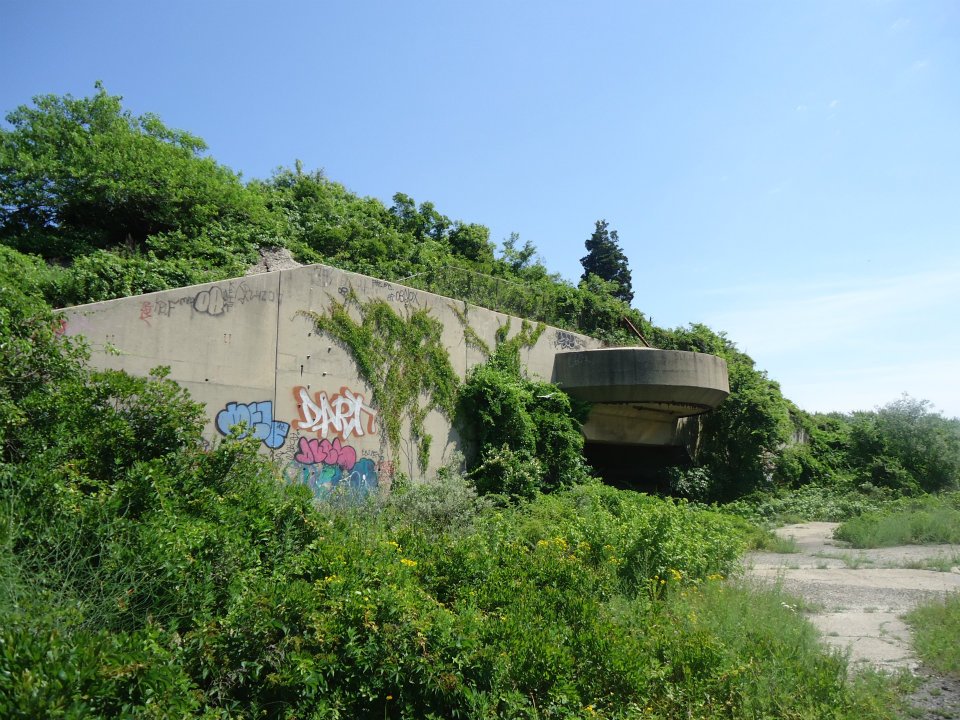
The mysterious remains of old Fort Tilden, now part of the Gateway Recreation Area and completely taken over by nature. For many more pictures of this area, please visit our Facebook page and check out my photo album on the ruins of Fort Tilden.

The thrashing waves of Rockaway make for good surfing:

And, what posting about the Rockaways would be complete without: