Categories
Film History Science

The original IMAX: Jacob Riis and his magic lantern

Jacob Riis changed the world with “How The Other Half Lives.” By using the new technology of flash photography, Riis was able to capture the squalid conditions of Manhattan tenements in a way no mere paragraph, drawing or sermon could.

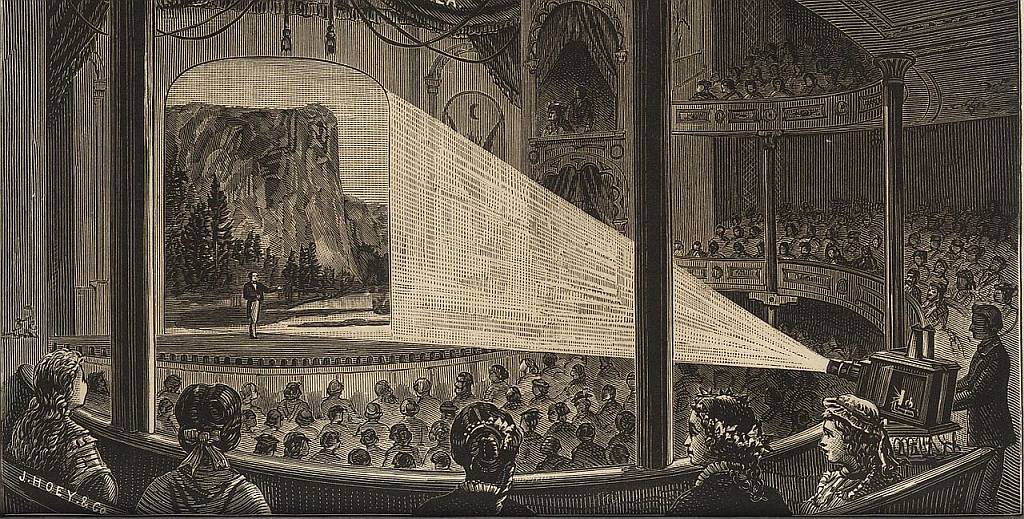
The startling photographs contained in this book did not originate there, however. Riis debuted them — and would continue to exhibit them — in “magic lantern” lectures, essentially the first slide shows.

But calling them magic lanterns is far more exciting, don’t you think? Wouldn’t you have gone to class a lot more had you known your professor was lighting up the magic lantern?

The magic lantern’s “real” name, the stereopticon, used a succession of glass slides (as few synthetic, transparent materials were not available at the time) transposed with a negative image that could be projected onto a hanging sheet.*

The magic lantern was created in the 1840s in Philadelphia and was originally intended for entertainment. In fact, one of Riis’s first schemes in New York used the magic lantern in a rather clever way.

He and a business partner would set up a stereopticon in a public park — a precursor to the Bryant Park film series — and project images of attractive people and international public landmarks, interspersing the pictures with advertisements from businesses nearby.

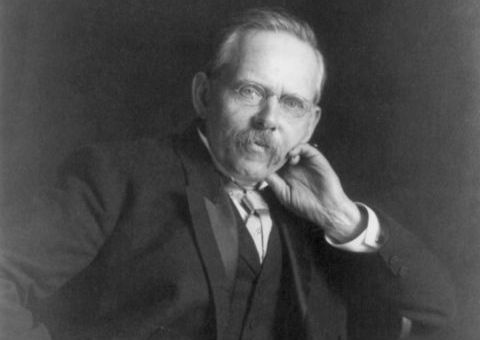
By 1888, however, Riis (pictured right) was using the technology to display the devastating images he had taken in the various slums around town. His first show was to the New York Society of Amateur Photographers, giving a vivid account according to some sources.

“Mr. Riis was so ingenious in describing the scenes and brought to his task .. a vein of humor,” according to a newspaper account quoted in Tyler Anbinder’s book Five Points.

Riis eventually took his ‘illustrated lectures’ on the road, electrifying audiences both taken with the modern marvel of the magic lantern and the images captured by the newly developed flash photography. “His viewers moaned, shuddered, fainted and even talked to the photographs he projected, reacting to the slides not as images but as a virtual reality that transported the new York slum world directly into the lecture hall.”

In essence, Riis was giving the equivalent of a show-stopping IMAX show to illuminate the plight of New York’s poorest and the unsafe conditions of their tenements. His shows could be considered the prototype of the film documentary.

The presentations would come with fiery speeches by Riis, often using the rhetoric of religious sermons in service of a more progressive, social cause. The shows were so successful that Riis grabbed a book deal and in 1890, his lectures and photographs were contained in his masterpiece “How The Other Half Lives.”

Interest in the magic lantern hasn’t waned today; in fact there’s a national organization that still revels in the wonder of the projected still image.

By the way, you can still find Jacob Riis all over the city. There are the Jacob Riis Houses on East 10th Street and Avenue D, built in 1949 on the site of a clump of tenements Riis railed on about, as well as the Jacob Riis Settlement House in western Queens and high school in the Lower East Side. And of course, there’s a huge Robert Moses park in Far Rockaway named for him.

*Read here for an interesting short history of the magic lantern and how images adhered to the glass

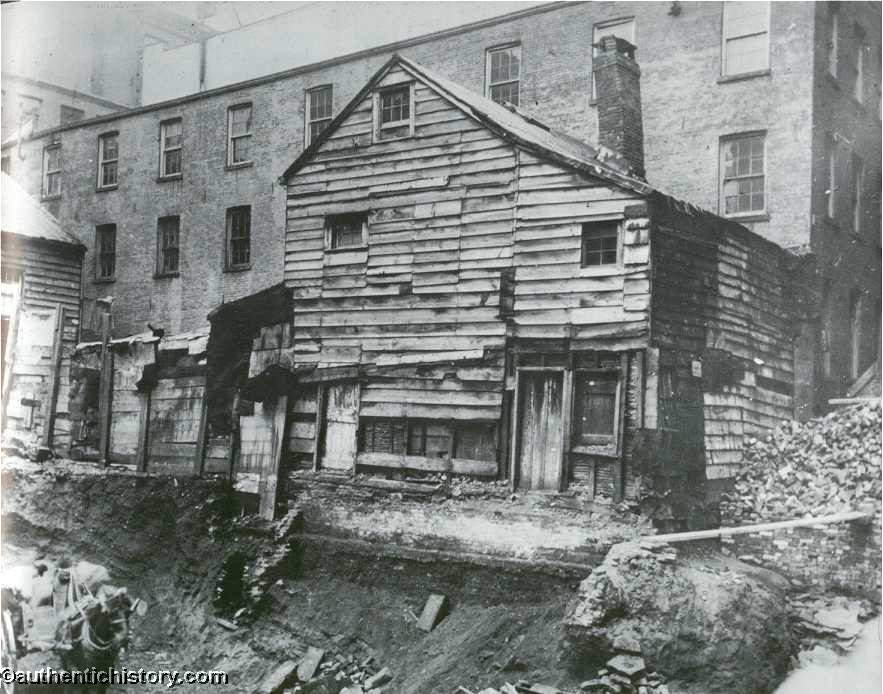
Below: a home on Bleeker Street (at Mercer and Greene streets), a Jacob Riis image that certainly must have popped up in one of his magic lantern shows
Categories
The Alienist

The harsh lives of New York City street kids, captured — in a flash — by Jacob Riis

HISTORY BEHIND THE SCENE What’s the real story behind that historical scene from your favorite TV show or feature film? A semi-regular feature on the Bowery Boys blog, we will be reviving this series as we follow along with TNT’s limited series The Alienist. Look for other articles here about other historically themed television shows (Mad MenThe KnickThe DeuceBoardwalk Empire and Copper). And follow along with the Bowery Boys on Twitter at @boweryboys for more historical context of your favorite shows. 
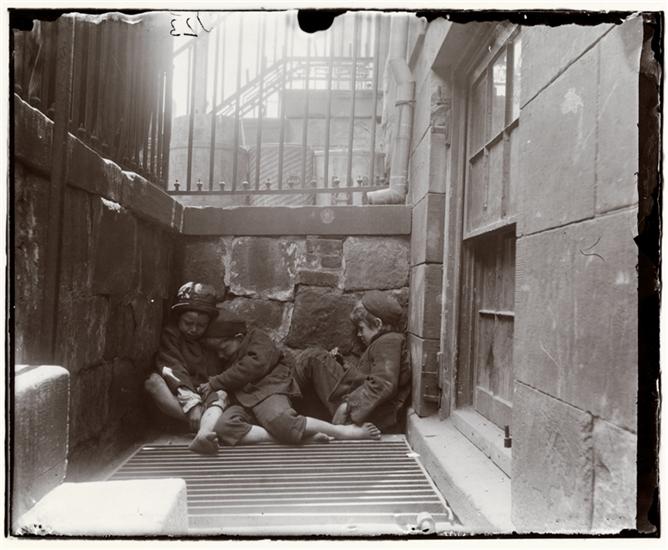
Look near the very end of the fourth episode of The Alienist, and you’ll see a surprising homage to an iconic, heartbreaking photograph.

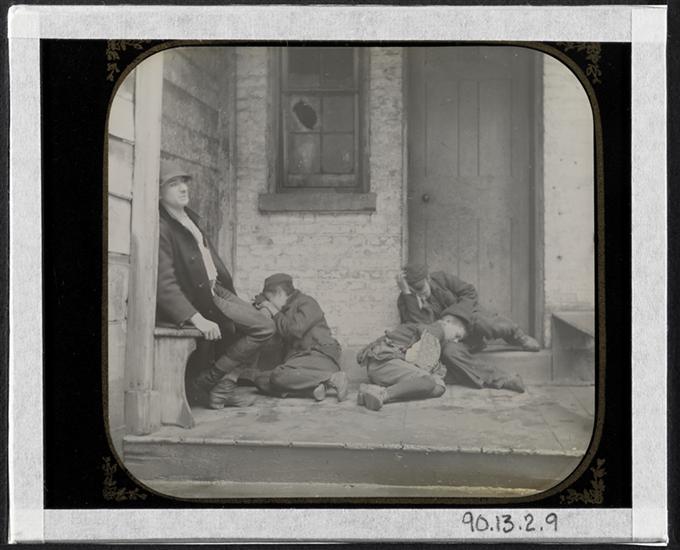
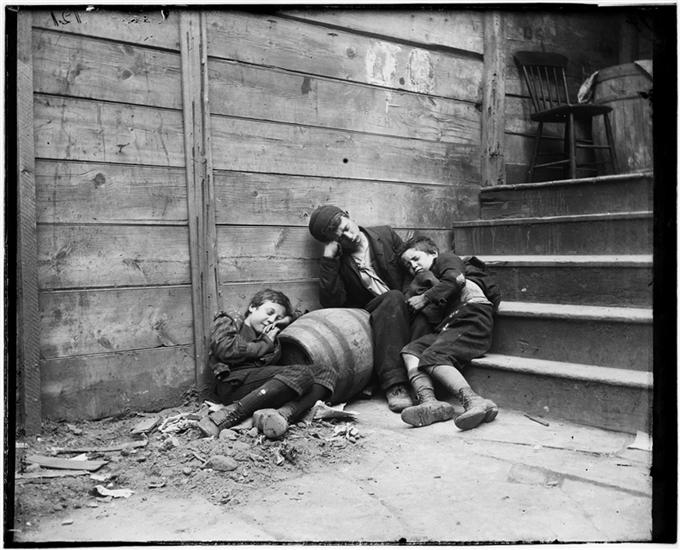
Called ‘Street Arabs in the Area of Mulberry Street‘, the image, taken in 1889, depicts three homeless boys sleeping over a heated vent on the bottom floor of a tenement (in the area of today’s Little Italy).

MCNY

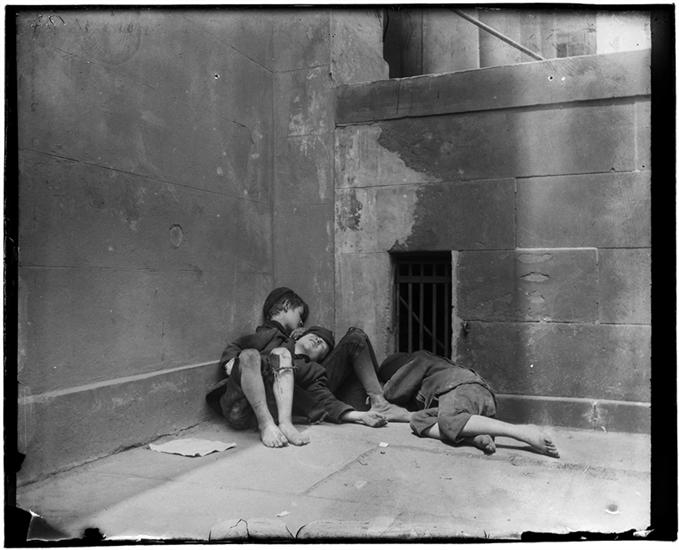
Their names are unknown. In the late 19th century, hundreds of children lived on the streets of New York, turned out of their homes or separated from their loved ones. Many actually did have loving families but living conditions in the tenements were so squalid that some chose to sleep on the street.

We have this image — and many, many similar ones — thanks to journalist and social reformer Jacob Riis.

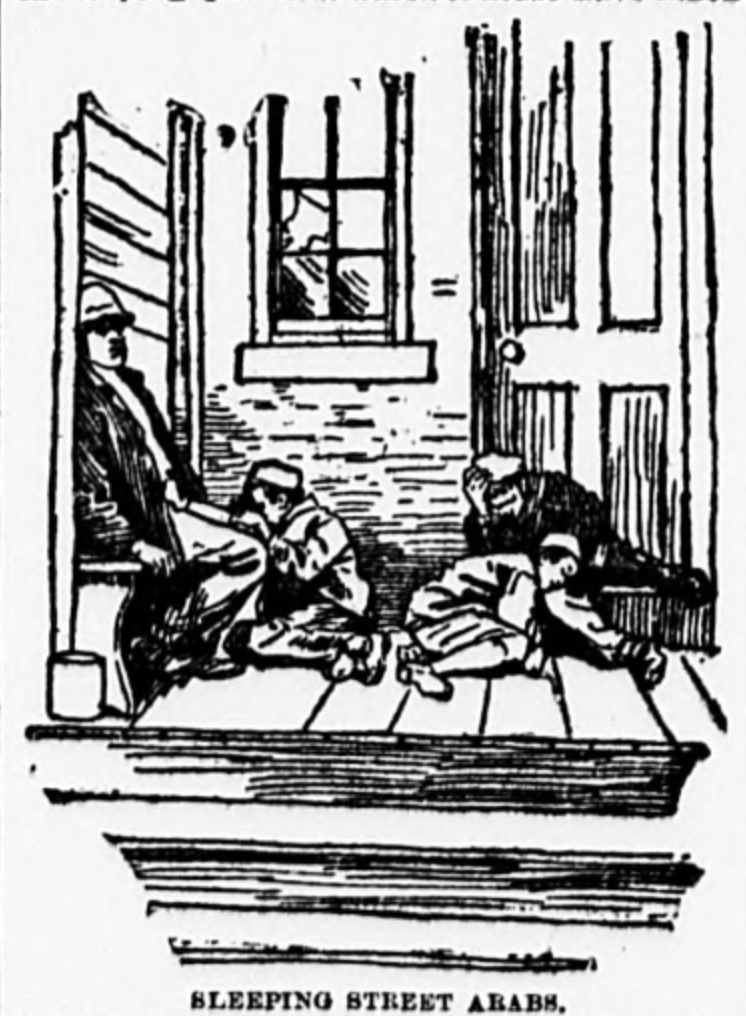
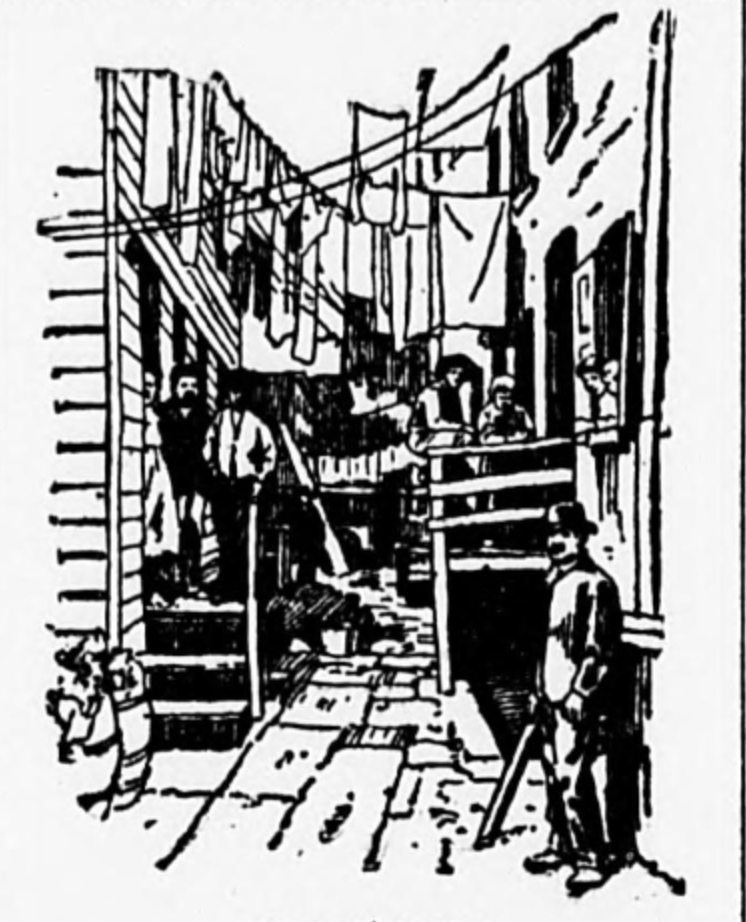
On February 12, 1888, Jacob Riis published his first investigation for the New York Sun, revealing the wretched conditions of New York’s worst slum neighborhoods by employing an experimental technology — flash photography. The startling pictures, by Riis and a team of other photographers, were at first rendered in line drawings, but the effect was nevertheless profound.

The entire article is available online but here’s the passage pertinent to the photograph above:

Another outcropping of the benevolent purpose of Mr. Riis … is his showing of a touching picture of street Arabs in sleeping quarters which it must have taken a hunt to discover. These youngers have evidently spent their lodging money for gallery seats at the show and have found shelter on the back stoop of an old tenement house.” 

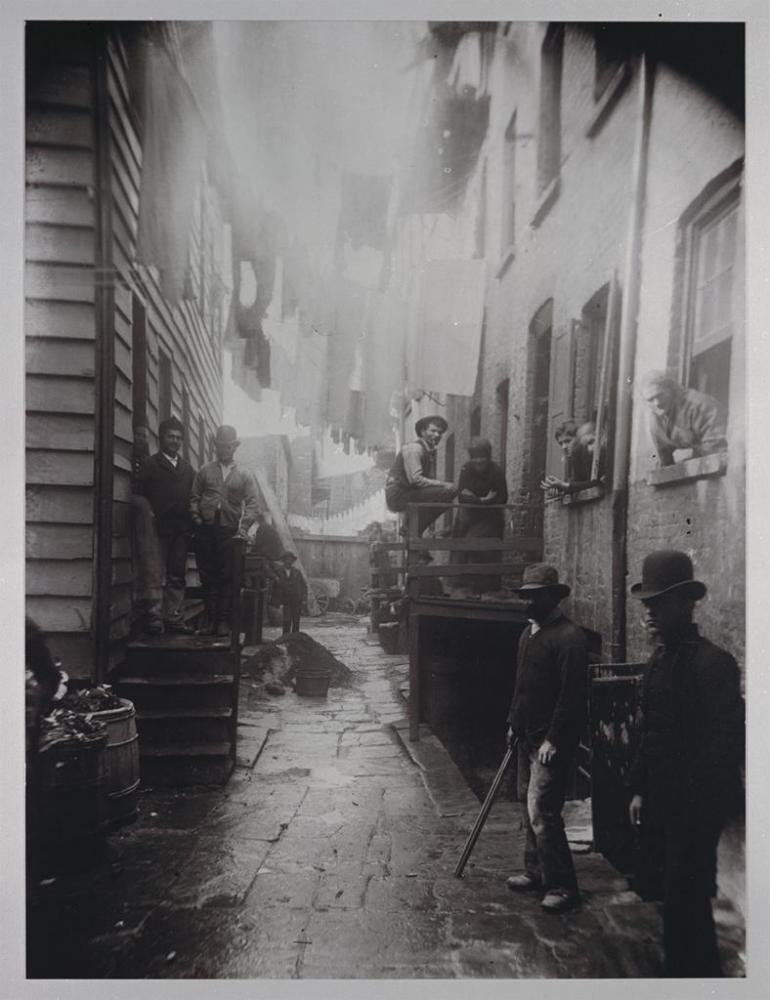
Below: An illustration from the Feb. 12, 1888, newspaper, and the Riis photograph (of Bandit’s Roost) that it represents.

The pictures are more than social activism; they’re history themselves, the first flash photography ever to be used in this fashion. Riis was showing New Yorkers a vivid glimpse of poverty — orphans in the gutter, street gangs in the alleyway — using a technique that few were regularly exposed to apart from portraiture.

Riis never considered himself a professional photographer. Later in his career, he even farmed out the photographic work to others as he focused on writing and social activism. And yet modern photojournalism wouldn’t really be what it was today without his first forays into slums, opium dens and beer halls with his bulky and costly equipment. His early work influenced an entire field of social photographers seeking to prove the adage “a picture is worth a thousand words” (a phrase which debuted near the end of Riis’ lifetime).

MCNY

His work would eventually be published as a book in 1890 — How The Other Half Lives: Studies Among the Tenements of New York — and Riis would spend the decade virtually proselytizing on behalf of the city’s needy.

In that book, he expounds upon the plight of the ‘street Arab’, aka street urchin.

“They are to be found all over the city, these Street Arabs, where the neighborhood offers a chance of picking up a living in the daytime and of “turning in” at night with a promise of security from surprise. In warm weather a truck in the street, a convenient out-house, or a dug-out in a hay-barge at the wharf make good bunks. Two were found making their nest once in the end of a big iron pipe up by the Harlem Bridge, and an old boiler at the East River served as an elegant flat for another couple.”

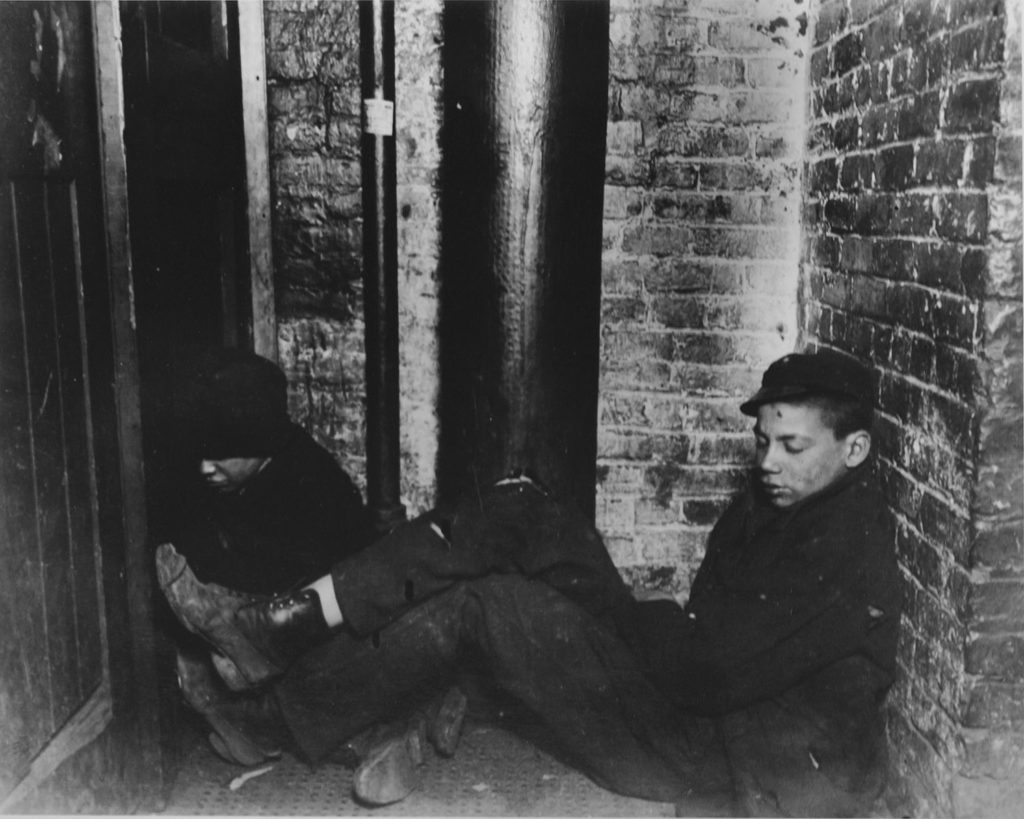
Below: Two boys asleep at 2 a.m. in the press room of the New York Sun newspaper.

Most street kids are newspaper boys or bootblacks, fighting for scraps and a few pennies. In another section, Riis writes:

“We wuz six,” said an urchin of twelve or thirteen I came across in the Newsboys’ Lodging House, “and we ain’t got no father. Some on us had to go.” And so he went, to make a living by blacking boots. The going is easy enough. There is very little to hold the boy who has never known anything but a home in a tenement. Very soon the wild life in the streets holds him fast, and thenceforward by his own effort there is no escape. Left alone to himself, he soon enough finds a place in the police books, and there would be no other answer to the second question: “what becomes of the boy?” than that given by the criminal courts every day in the week.”

“Didn’t live nowhere.” MCNY

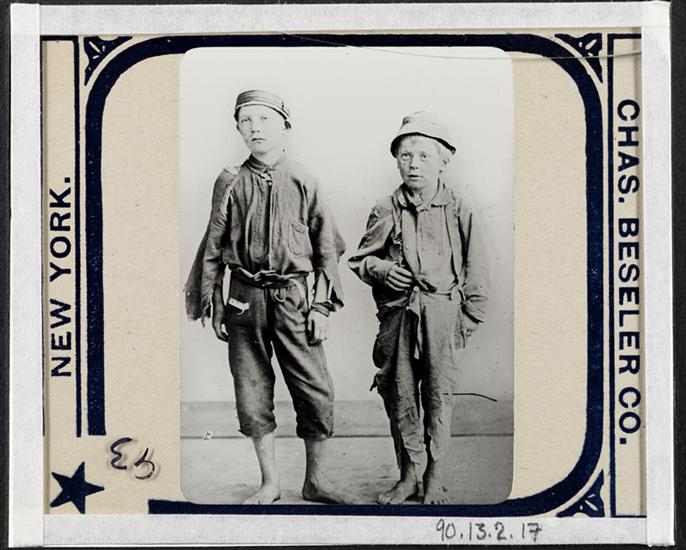
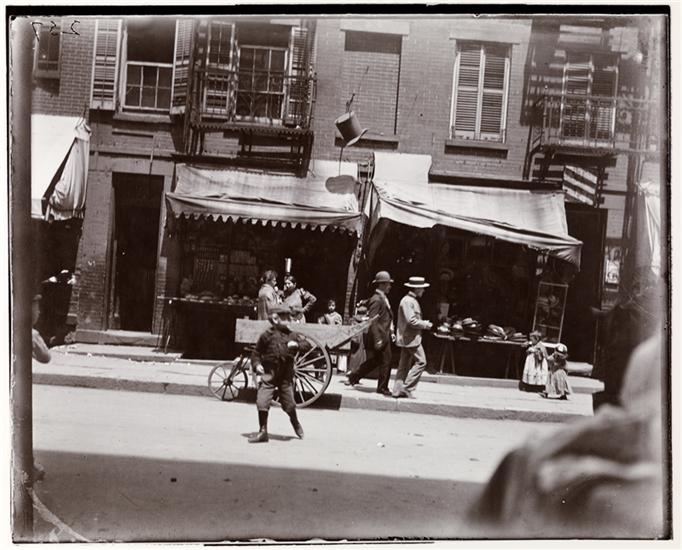
Below are more pictures of children on the streets of New York City in the late 1880s and early 1890s, taken by Riis and his associates, courtesy the Museum of the City of New York.

MCNY

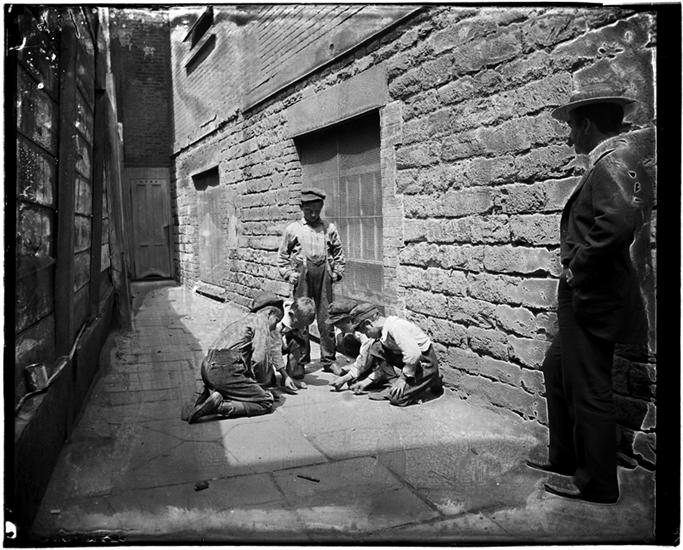
“Shooting Craps: The Game of the Street,” Bootblacks and Newsboys, 1894″ MCNY
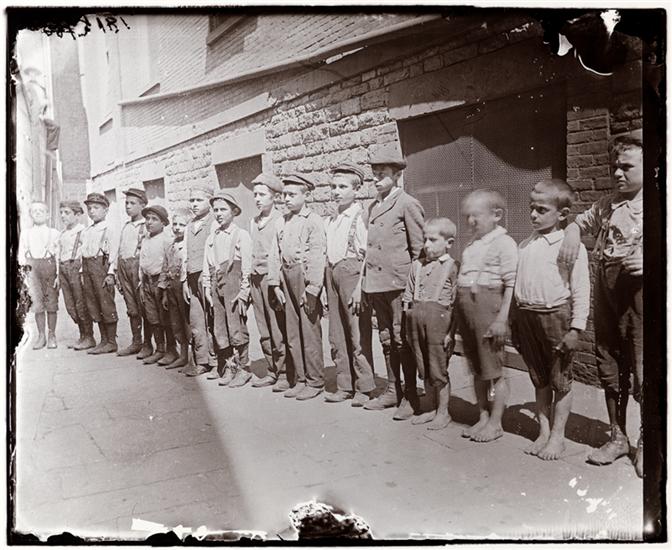
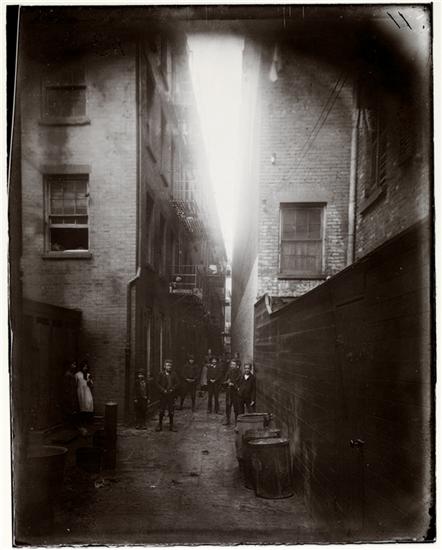
A line-up of boys in a Mulberry Street alley. 1890, MCNY
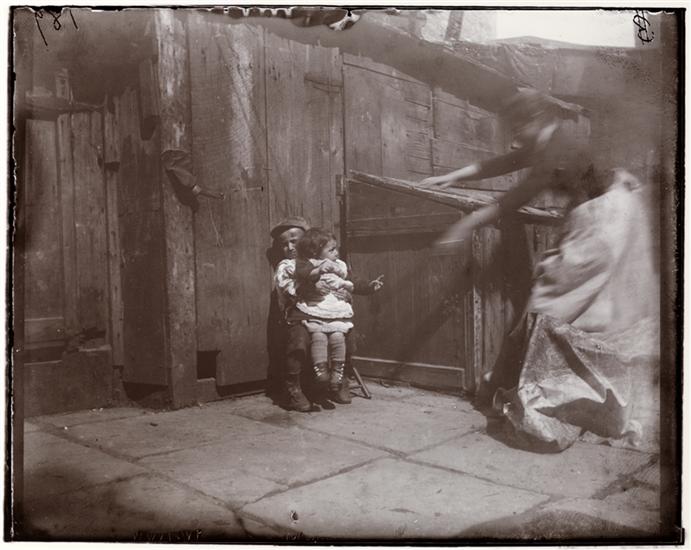
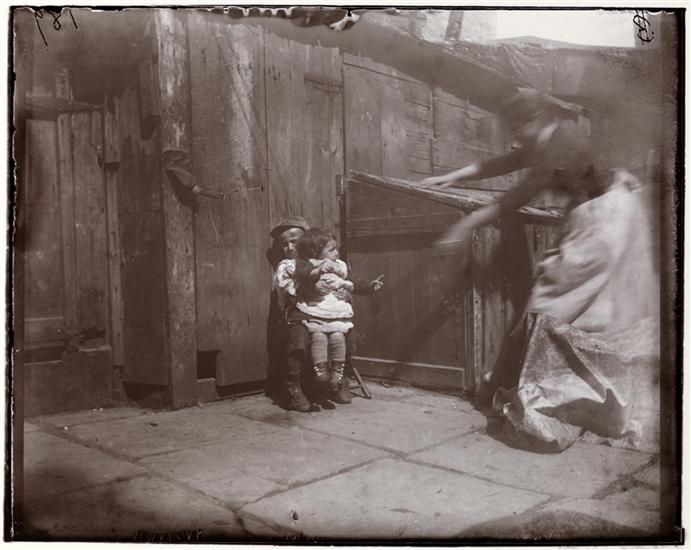
A young boy holding a baby, a woman reaches for them. 1890, MCNY
1890, MCNY
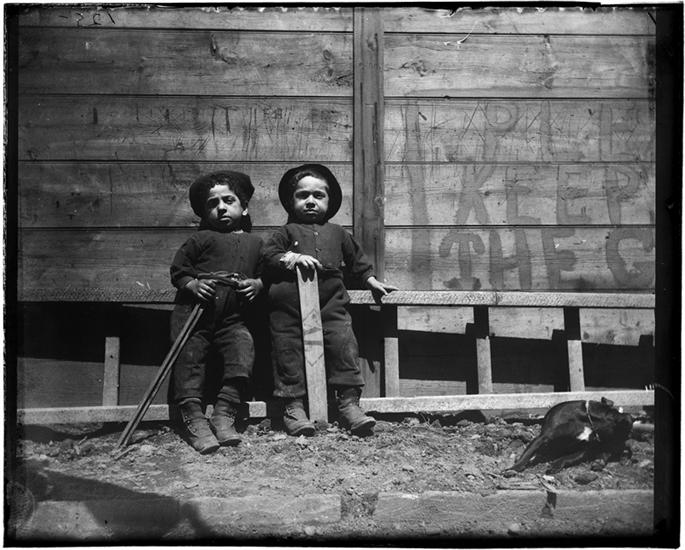
The Mott Street Boys, “Keep off the Grass”. 1890. MCNY

This article excerpts a portion of our review of the Museum of the City of New York’s 2015 exhibition on Riis.

Categories
Newspapers and Newsies

Jacob A. Riis: The Power of the Flash

The daredevil antics of Nellie Bly (subject of our last podcast) proved that investigative journalism could prove a benefit to society while also selling stacks of newspapers (specifically, those of Joseph Pullitzer’s New York World).

A few months after Bly’s trip to Blackwell’s Island, Jacob Riis published his first investigation for the New York Sun, revealing the wretched conditions of New York’s worst slum neighborhoods by employing an experimental technology — flash photography.  The startling pictures, by Riis and a team of other photographers, were at first rendered in line drawings, but the effect was nevertheless profound.

In the Museum of the City of New York’s fascinating new show on Riis — Jacob A. Riis: Revealing New York’s Other Half (on view until March 20, 2016) — we get to see his photos on an intimate scale, in original prints, stereographs and glass negatives, their subjects trapped forever in meager situations.

The pictures are more than social activism; they’re history themselves, the first flash photography ever to be used in this fashion. Riis was showing New Yorkers a vivid glimpse of poverty — orphans in the gutter, street gangs in the alleyway — using a technique that few were regularly exposed to apart from portraiture.

5389943368_0d7affb02e_b

Riis never considered himself a professional photographer. Later in his career, he even farmed out the photographic work to others as he focused on writing and social activism. And yet modern photojournalism wouldn’t really be what it was today without his first forays into slums, opium dens and beer halls with his bulky and costly equipment.  His early work influenced an entire field of social photographers seeking to prove the adage “a picture is worth a thousand words” (a phrase which debuted near the end of Riis’ lifetime),

With that in mind, it seems shocking that Revealing New York’s Other Half is the first museum retrospective of Riis’ work in over fifty years, culling from their own massive collection of photographs and papers from the Library of Congress and New York Public Library.  The show is complete but not over-crowded, starting with artifacts from his private life, then methodically spanning his career.

5389336131_c4873359a7_b

The Museum’s show also pays tribute to the 125th anniversary of Riis’ How The Other Half Lives, a landmark examination of New York’s lower classes which provoked many city improvements in housing and labor.

I was particularly taken with the original books and newspaper clippings of Riis’ work. We’re used to engaging closely with older photography, presented relatively largely and with the ability to study detail. But his first impactful images weren’t actual photos at all, but pencil engravings of his photos.  It would take many years after Riis’ debut for newspaper printing processes to effectively reproduce photographic images.

MNY31478

One very useful feature of the exhibit is a large map indicating the many locations in Manhattan from Riis’ photographs. He’s principally associated with the old Five Points neighborhood (mostly demolished due to work), but his work spans the entire island. In fact many of his most famous photographs were actually taken a short distance south of Five Points in the slum called Gotham Court.

You may be tempted to skip the exhibit’s final section — a slide-show lecture with a stern Jacob Riis-style voiceover — because it seems at first rather unpleasant. But in many ways, this is the best part of Revealing New York’s Other Half, a reenactment of Riis’ magic lantern show, the first illustrated TED Talks if you will, and the method in which he brought his messaging closest to the audience. The presentations were stark and eye-opening, not to mention stilted at times. But you can’t deny their effectiveness.


Jacob A. Riis: Revealing New York’s Other Half
October 14, 2015 – March 20, 2016
Museum of the City of New York
1220 Fifth Avenue (at 103rd Street)


Categories
Neighborhoods

Gotham Court and the lost neighborhood of Cherry Hill

Yesterday I went searching for remnants of the old Cherry Hill neighborhood. There are none, as far as I could tell.

It’s not the first New York City neighborhood to entirely vanish in the rush of progress — is it, Robert Moses ? — however it may be the one that began with the most impressive pedigree.

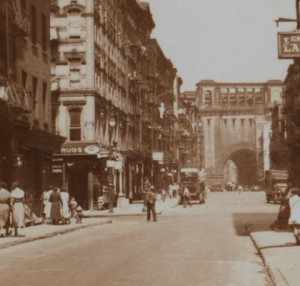
Cherry and Catherine streets, looking towards the Manhattan Bridge anchorage, in the once glorious Cherry Hill neighborhood. Pic courtesy Knickerbocker Village, who guesses photo to be from 1920s)

I’m not referring to the part of Central Park called Cherry Hill or even the upstate farm of Cherry Hill, best known for the prominent New York family the Van Rensselaers.

Downtown Manhattan’s Cherry Hill once lay near the waterfront in the area more literally called Two Bridges today, between the Brooklyn Bridge and the area just northeast of the Manhattan Bridge.

The Two Bridges Historical District was created in 2003, just to the north of the site of old Cherry Hill. Indeed there is nothing much left of the Cherry Hill neighborhood at all.

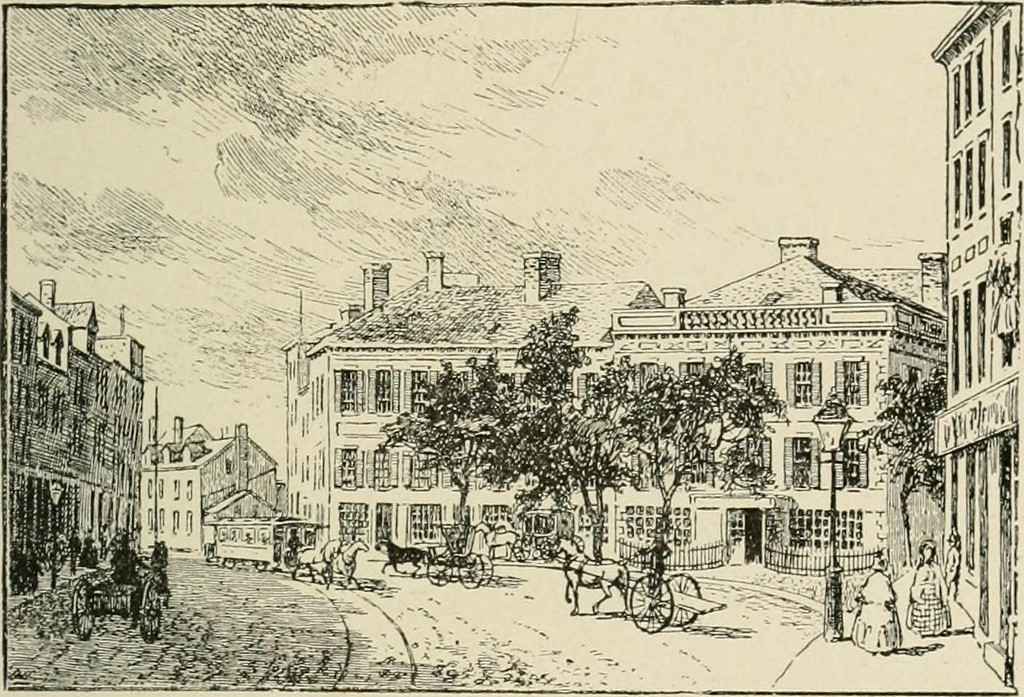
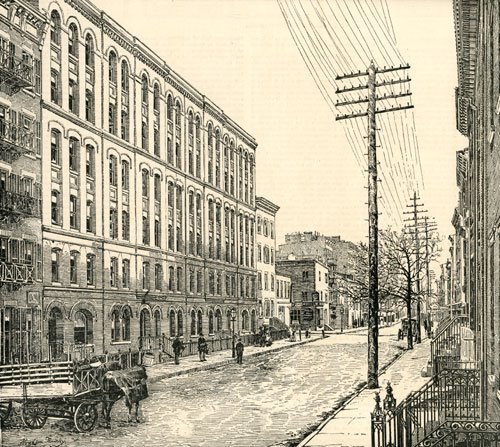
In 1890 Jacob Riis, in documenting what the neighborhood had become, referred to its early days as the “proud and fashionable Cherry Hill.” (pictured below)

Named for a Dutch cherry orchard, Cherry Hill featured a row of homes with a beautiful vista of the East River and hosted no less than George Washington‘s during his first term as president, at 1 Cherry Street.

Although he later moved to 39 Broadway, the neighborhood remained high on the list of the rich and important, including John Hancock (at 5 Cherry Street) and DeWitt Clinton (who moved into Washington’s old home).

Below: An illustration of the more genteel days of Cherry Hill, taken from the book When Old New York Was Young (written in 1902)

Courtesy Internet Archives Book Images

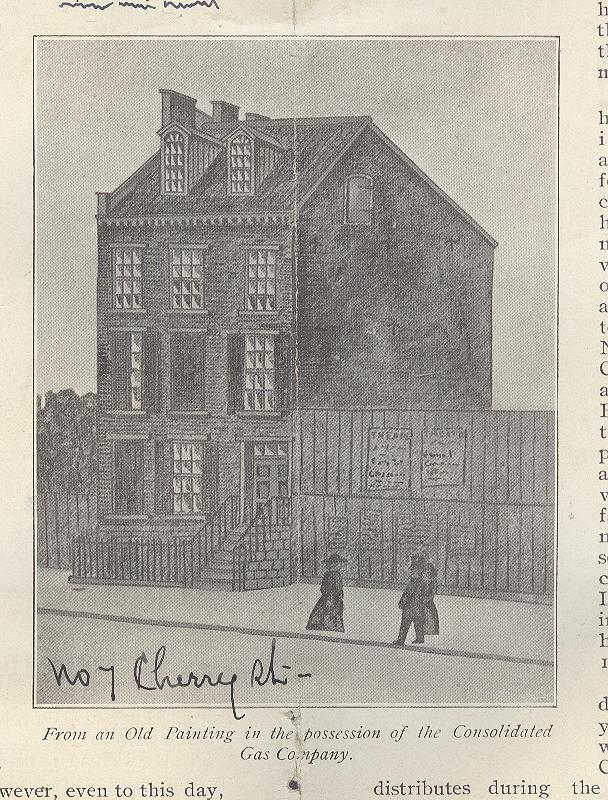
Even as late as the 1824, the area featured fine homes such as that of Samuel Leggett, founder of the New York Gas Light Company (later Con Edison), who enjoyed New York’s first interior gas lighting.

Here’s a picture of the first gas-lit home at 7 Cherry Street. (More information here)

louisa-leggett-001

If you’re looking for a symbolic date of Cherry Hill’s demise, look no further than April 3, 1823, birth date of William ‘Boss’ Tweed, who was born here and worked at a Cherry Hill chair shop in his early years.

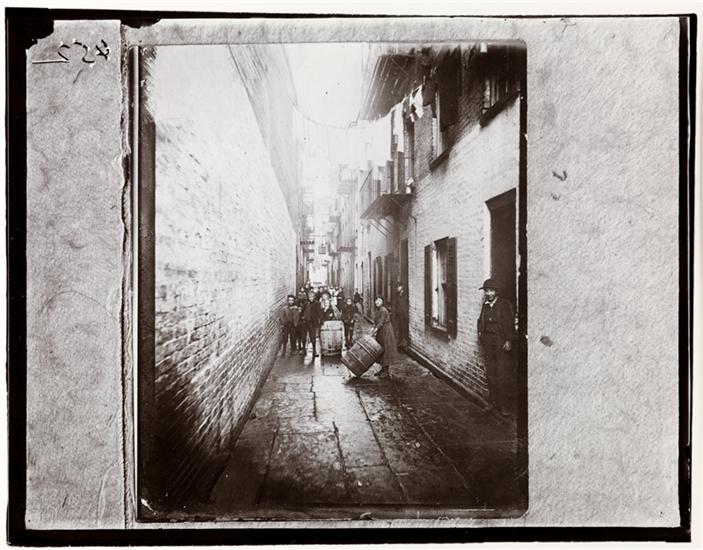
Below: Mullen’s Alley in Cherry Hill, picture taken by Jacob Riis in 1890. Courtesy the Museum of the City of New York

1

As many well-to-do neighborhoods would later do, Cherry Hill devolved into a slum, paralleling the decline of nearby Five Points. Its well-intentioned tenements soon became the worst in the city.

Located in the Fourth Ward, Cherry Hill abutted the saloons, boarding houses and brothels along Water Street, including the legendary Hole In The Wall (the former Bridge Cafe).

None of this would assist the neighborhood in escaping its fate.

Below: Blindman’s Alley at 22 Cherry Street, taken by Jacob Riis

Courtesy Museum of the City of New York

Cherry Hill is most unfortunately known for its most horrific slum — Gotham Court, “one of the worst tenements along the East River.”

It would later be made infamous in Jacob Riis’ renown 1890 blistering survey of How The Other Half Lives.  According to Riis:

“It is curious to find that this notorious block, whose name was so long synonymous with all that was desperately bad, was originally built (in 1851) by a benevolent Quaker for the express purpose of rescuing the poor people from the dreadful rookeries they were then living in.”

Below: photo from Gotham Court by Jacob Riis, 1890. “Minding the baby; Baby yells a Whirlwind Scream, Gotham Court.”

MNY200983

How long Gotham Court continued to be a so-called model tenement is not on record. It could not have been very long, for already in 1862, ten years after it was finished, a sanitary official counted 146 cases of sickness in the court, including “all kinds of infectious disease from small-pox down.”

Courtesy Museum of the City of New York

In 1894, the New York Tribune went as far as to make several attempts to describe Gotham Court as a prison. From the piece ‘Life in Gotham Court’:

The side alleys are narrower. They are not more than three or four feet wide. In order to enter either of these alleys one has to pass through an iron arch. The gate has been taken away, but enough remains to give unpleasant suggestions of a penitentiary..

The idea is not dissipated by the appearance of the houses inside the alley. The small windows with tiny panes of glass, the low, dark doors, through which iron gratings can be seen, and the bare brick walls are like those of a prison. The people move about free, as the prisoners do during exercise hour at the Tombs. All the doors are alike, all the windows are alike, and all are dilapidated, forlorn and forbidding.
Gotham Court and the rest of Cherry Hill were not long for this world. In the wake of Riis expose, Gotham Court was demolished in 1897.
By that time, efforts were made to construct more amenable tenements, including those built at 340, 342 and 344 Cherry Street in 1888. (See below, courtesy of Maggie Blanck)

By that time, the anchorage to the Brooklyn Bridge — and in 1909, with the Manhattan Bridge anchorage — would block in the neighborhood from the circulation of the city. The construction of traffic ramps to the Brooklyn Bridge and the downtown section of the FDR Drive (opened in 1942) obliterated much of what remained.

In its place would be more ambitious housing “super projects,” most notably one in the form of the Alfred E. Smith Houses, built in 1953 and named for the governor and saavy politico born very close by, at 25 Oliver Street.

His old street and a couple around it may give you the closest idea of what some areas of Cherry Hill may have looked like in earlier years.

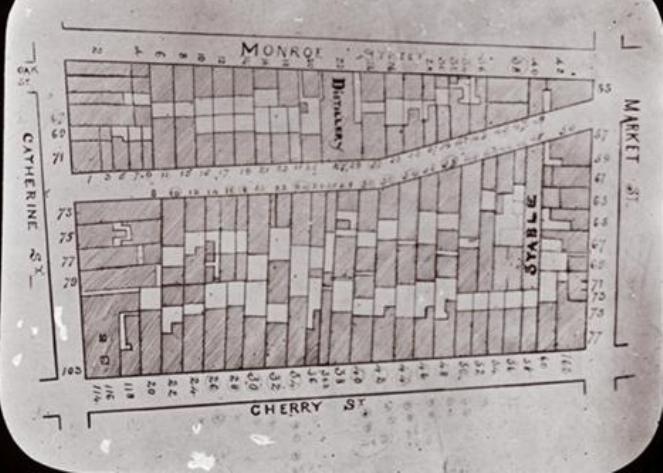
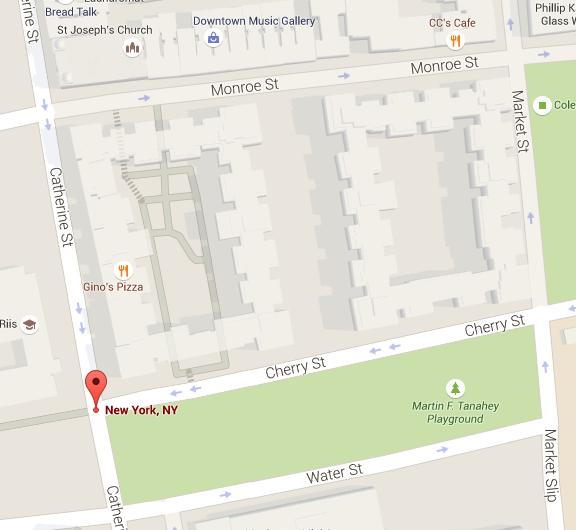
Two maps — one block of tenements in Cherry Hill in 1890 (from a map by Jacob Riis) and a Google map of the same block today:

2
1

Given its rather uniform appearance, I found it quite impossible to picture Cherry Hill’s early days here.

A shortened version of this article originally ran August 18, 2008. I’ve left the comments from that original run as they relate to the history.

Notes from the podcast (#140) Rockaway Beach

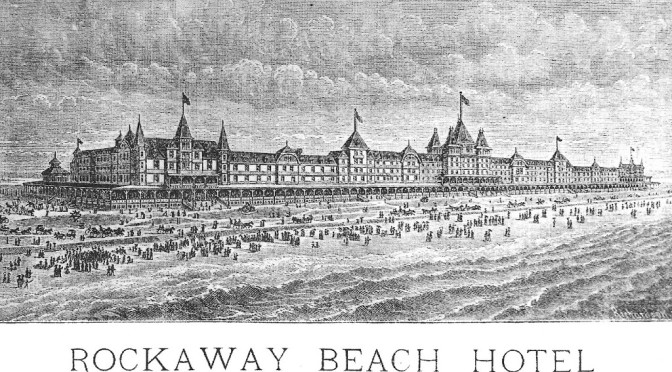
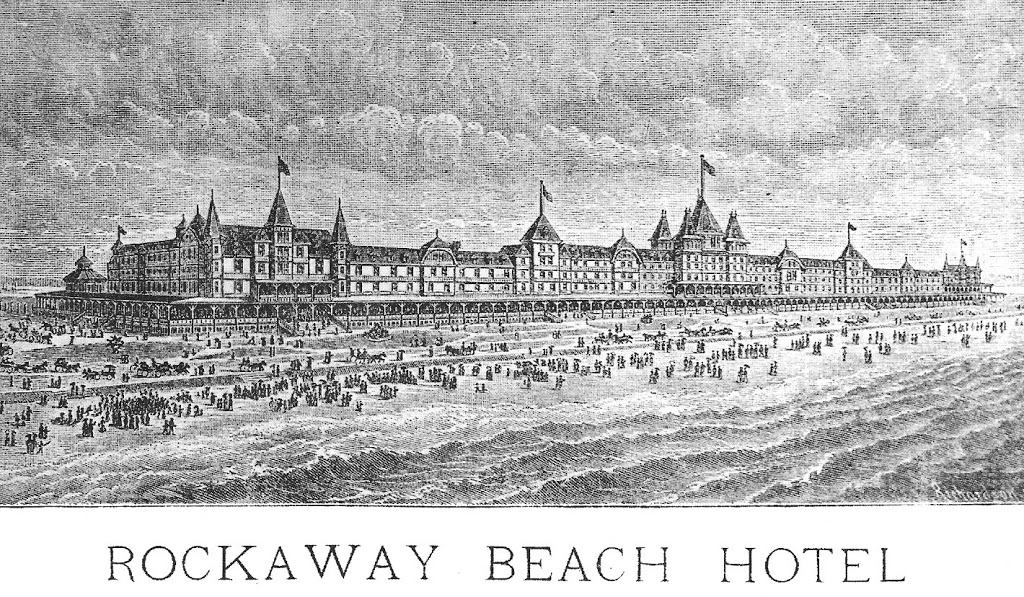
Behold the insanity: (Above) A lithograph of the Rockaway Beach Hotel, one of the most notorious failures in American history

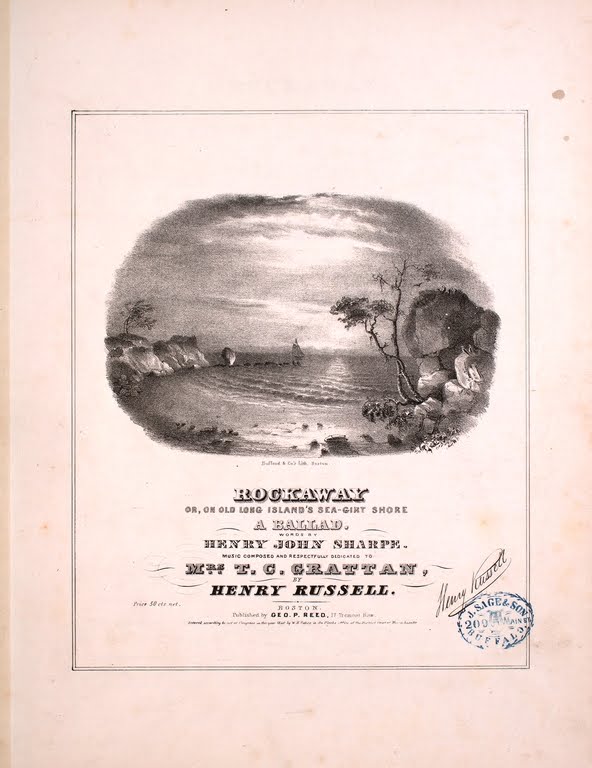
A Song About Brooklyn: I gave you a little taste of a poem about the Rockaways by balladeer Henry John Sharpe. Yes, that’s right, this is actually a song, with music by Henry Russell. Click here to listen to the entire melody.

Rockaway, or, On Long Island’s Sea-Girt Shore. A Ballad

ON old Long Island’s sea-girt shore,

 Many an hour I ’ve whiled away,
 In listening to the breakers’ roar
 That wash the beach at Rockaway.
Transfixed I ’ve stood while Nature’s lyre
In one harmonious concert broke,
And catching its Promethean fire,
 My inmost soul to rapture woke.


To hear the startling night-winds sigh,
 As dreamy twilight lulls to sleep;
While the pale moon reflects from high
 Her image in the mighty deep;
 Majestic scene where Nature dwells,
 Profound in everlasting love,
While her unmeasured music swells, 
The vaulted firmament above.

CORRECTION: We implied that Robert Moses had something to do with the naming of Jacob Riis Park, when in fact it appears to have already had this name applied to it by the time Moses came along to revitalize it in the early 1930s. It was much smaller, of course, and in the 1920s, the Naval Air Station actually wanted to take it over to expand their airfields.

The New York Times thundered in 1922: “By this time the Navy Department must be aware that the people of New York are opposed to the cession to the United States Government of a large part of the Jacob Riis Park at Rockaway Point for a permanent aviation base.” As it turned out, a decade later, it would be the station that closed, and Jacob Riis Park became a mini-Jones Beach.


FURTHER READING: I do think we rather glossed over the later, sadder years of Rockaways history, simply because the causes of the area’s many unusual changes starting in the 1950s are still being debated.

For more information, I must turn your attention to an amazing, if very sobering, book on the subject of the Rockaway’s recent history — Between Ocean And City: The Transformation of Rockaway, New York by Lawrence Kaplan and Carol P. Kaplan. It’s a hearty, in-depth grasp of the social changes of the area and give a nuanced analysis of Robert Moses’ role in the peninsula’s transformation from daytripping destination to a place of inadequate permanent residency for some New Yorkers.

For a stodgy but earnest throwback, you can download a copy of the 1918 book History of the Rockaways from the year 1685 to 1917 by Alfred Henry Bellot. Sandwiched between the lists of names and descriptions of churches that are no longer there are lots of lovely little anecdotes.

But the best way to explore the history of the Rockaways is to simply roam around the boardwalk. Hints of its glory days — and reminders of its less storied era — can be found scattered all along the way. You’ll see new beach housing that feels like a ghost town, sad 1970s style housing projects, Robert Moses-era storm shelters, surfers, convalescent homes, beach shacks, oddly placed municipal structures, quiet bird sanctuaries, trendy restaurants and rundown pizza joints.

Park life: The anniversary of a name change in Chinatown

Next week begins ‘ghost stories’ week on the blog, but I need to make one more trip to Chinatown, the topic of the last podcast. As I just wrote about Columbus Day last week, I would be remiss if I skipped this very coincidental date in history. It was exactly one hundred years ago yesterday that the name of Mulberry Bend Park was officially changed to Columbus Park.

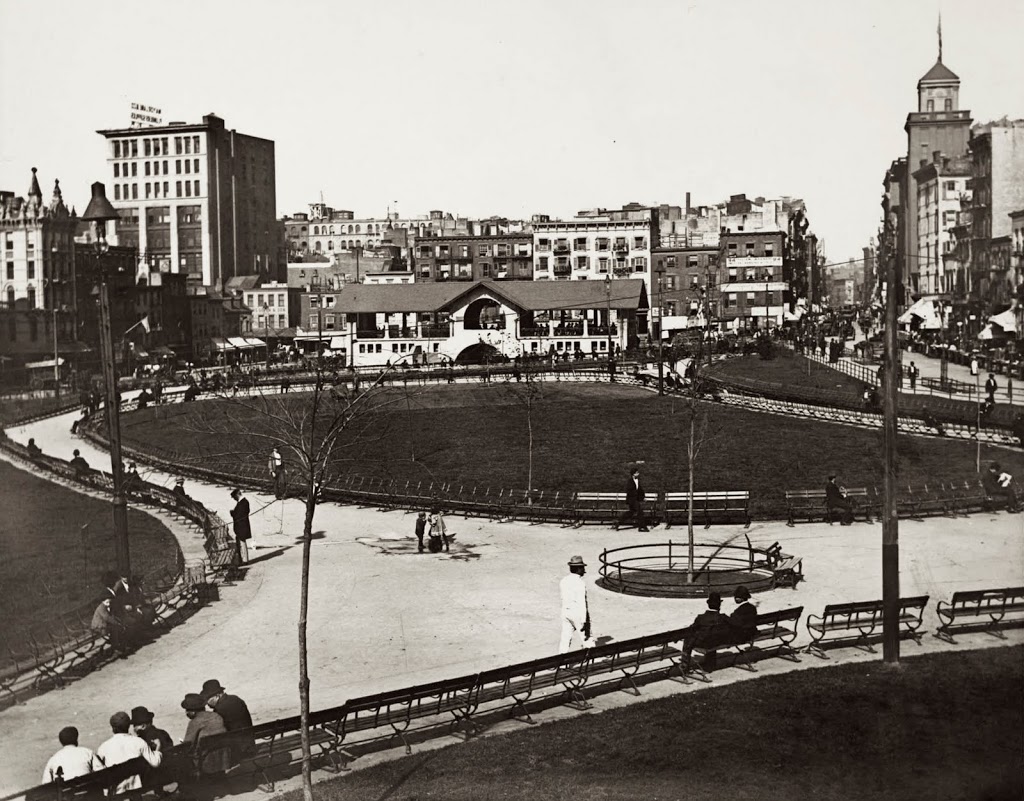
The park, of course, originally replaced the most decrepit of Five Points’ slums, allowing a sliver of greenery and sunlight to slip into the overly dense neighborhood. It took the city years to wrestle the original rundown tenements from their owners. “In its place will come trees and grass and flowers,” proclaimed its chief proponent Jacob Riis. The placid, English design by Calvert Vaux, typical for its day, insured a park so formal that people weren’t even allowed on the grass. (Today, located at the cusp of Chinatown and the Civic Center, the park is so busy and cluttered that it appears to almost have no grass at all.)

Mulberry Bend Park, named for the infamous hook in Mulberry Street to the park’s east side, opened in 1897. By this time, the area was populated by a mixture of immigrants, the largest group from Italy. Italian Americans soon defined the culture of the park’s surrounding streets, with obvious exception of those streets to the east dominated by Chinese businesses.

In 1911, the city explicitly declared the neighborhood’s changing character, at the behest of the Italian community, by renaming the park for America’s most famous Italian connection, the explorer Christopher Columbus. A crowd of 8,000 people gathered on Columbus Day that year to reopen the park under its new name.

The park now took on a more athletic character, with new track and field facilities, and on that first day with its new name, Columbus Park hosted competitions between boys from local playgrounds. “There were dashes, relay, half mile and potato races, shot puts and high jumps,” reported the Sun. “Five thousand more or less enthusiastic mamas and babies and papas and little mosquitolike boys insinuated their way to the very bars of the park enclosure…and looked on at the games.”

Above: Mulberry Bend Park in 1900

Categories
Holidays

Jacob Riis’ Not-so-Rockin’ ‘Sane’ New Years Celebration

Social reformer Jacob Riis is one of the most important men to New York City history, exposing the ghastly living conditions of city tenements and using his connections to enact change that affected thousands of New York’s poorest residents. In spreading the word, he wrote a social history masterpiece ‘How The Other Half Lives’ and innovated multi-media techniques to inform and titillate crowds. But not all of his ideas were inspired.

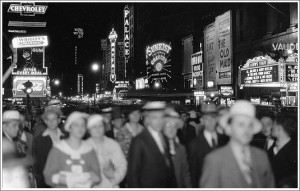
At the end of his life, Riis railed against corrupting influences like alcohol and their effects on poor communities. So imagine his disgust when the New York Times began sponsoring wild New Years Eve parties outside its new headquarters on 42nd Street. Inaugurated by a lavish firework display during the first seconds of 1905, the Times Square celebration eventually incorporated its famous balldrop in 1907. (Hear all about it in our Midnight In Times Square episode.)


As today, the outdoor celebration encourages revelry, drunkenness and chaos, things Riis did not believe benefited the city. To this extent, and with the help of former president (and good friend) Theodore Roosevelt, Riis proposed a ‘safe and sane New Years Eve’.


According to Riis, the good men of the city “have observed the licentious and riotous conduct of New Years crowds, with their tin horns, ticklers and bags of confetti. Anyone who has seen the crowds of rowdies on Broadway breaking hats and insulting women knows that a saner manner of celebration is desirable.”


The new celebration will feature organized singing at various city plazas throughout the city, including City Hall, Union and Madison squares, with Salvation Army singers, organized bands and bandstands, leading ‘civilized’ public outcries of celebration via “the singing of patriotic songs and New Years ballads,” per Riis.


It would be an uphill battle that evening of December 31, as the somber chorale of hymns and polite exaltation of the downtown rallies would be entirely drowned out by the throngs of cheers and music drifting from downtown. “SANE FESTIVAL SUBMERGED,” shouts a New York Times headline from the next day. “The choral hosts greeted the new year with song last night, but the songs were not heard for the very good reason that in each instance there were just enough horns, rattles and other noise-making apparatuses in the hands of the din-making contingent to render even the ‘Star Spangled Banner’ and ‘America’ unrecognizable.”


Such mass city-organized, end-of-year civility would never seriously be attempted again. And Riis would only live to see one more New Years Eve, dying on May 26, 1914.


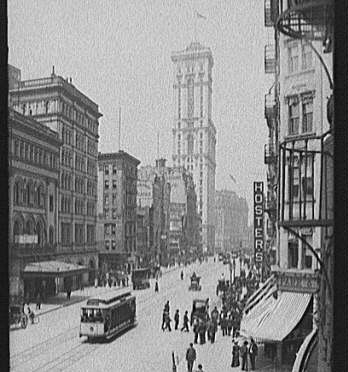
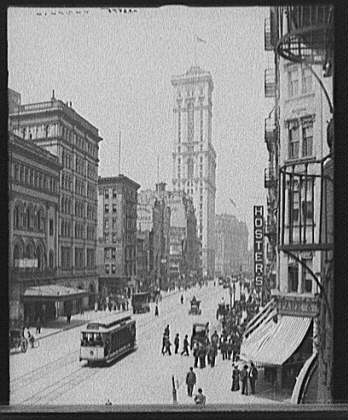
Top picture above: Time Square during the day, taken between 1903 and 1910. Courtesy LOC. Second picture, from the 1930s, courtesy Times Square NYC

Two East Village cemeteries open their gates

From the New York City Marble Cemetery

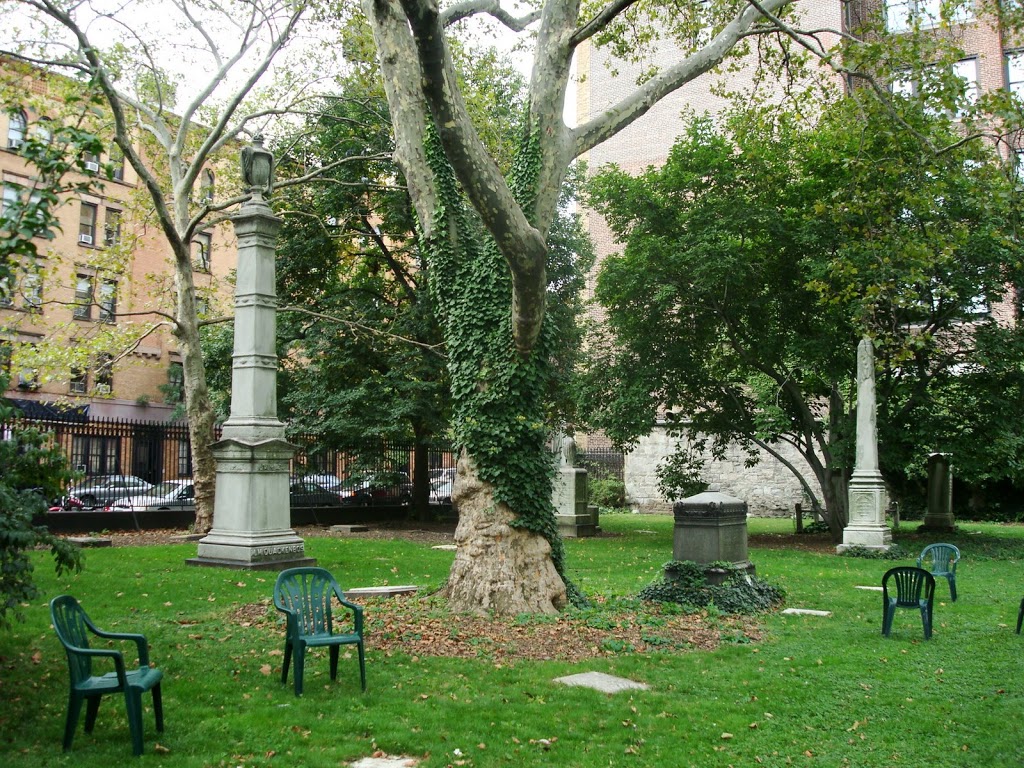
Two rarely seen artifacts of the East Village swung open their iron gates this weekend for Open House NY, New York’s two oldest cemeteries — the New York Marble Cemetery and the New York City Marble Cemetery. (Yes, you read that right.)

In a few respects they are the Paris and Nicole of ancient burial grounds — virtually identical and marked with occasional rivalries — however these unique New York landmarks are literally all depth, little surface. For below the serene, manicured lawns of both places lie the crypts of hundreds of 19th century New York’s leading families.

Before Green-Wood became the fashionable place to rest in peace, wealthy New Yorkers were lured to very first marble cemetery, opened in 1830. Unlike a traditional church cemetery, the New York Marble Cemetery (still listed at 41½ Second Avenue) was strictly a profit-generating venture of Perkins Nichols, who with a board of trustees purchased farmland funded by families already lined up to buy underground vaults.

Threats of disease during the early 1800s forced city officials to ban burials in lower Manhattan, below Canal Street. One of Nichols appeals was the Tuckahoe marble used to make the vaults; it was believed that disease was spread from traveling miasma which emanated from dead bodies, however the sturdy marble was believed to contain this effectively.

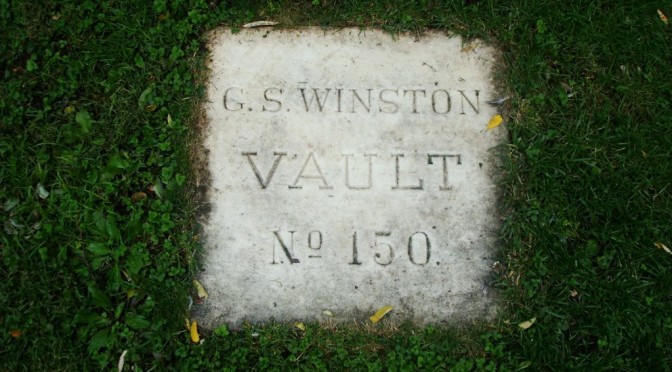
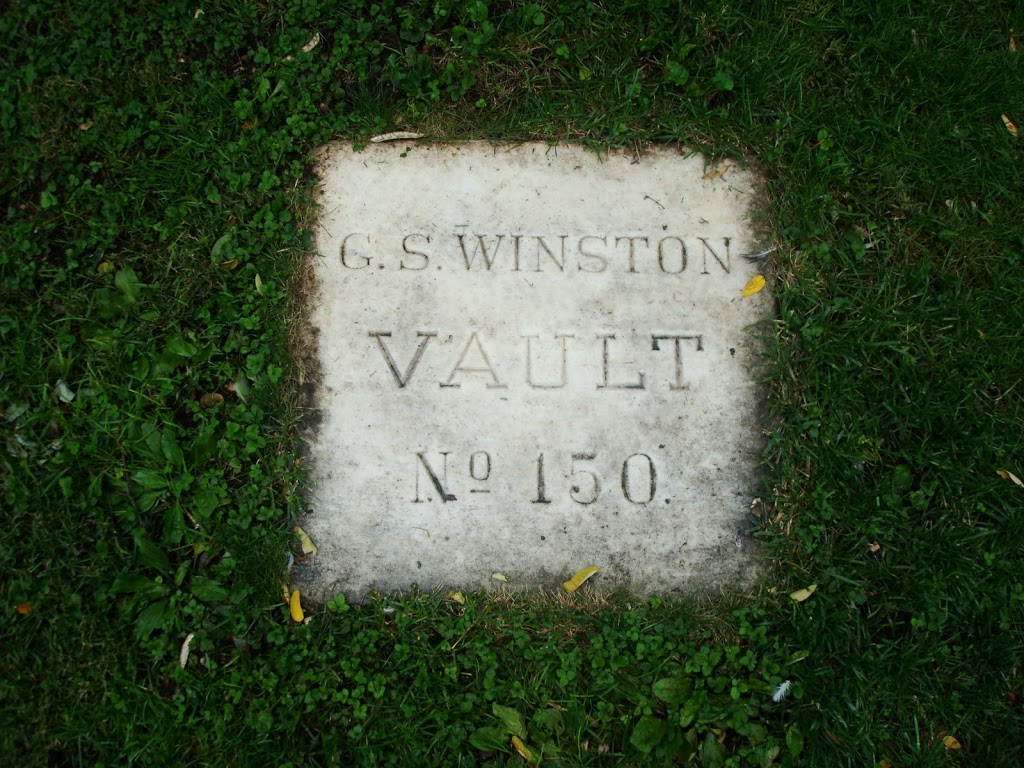
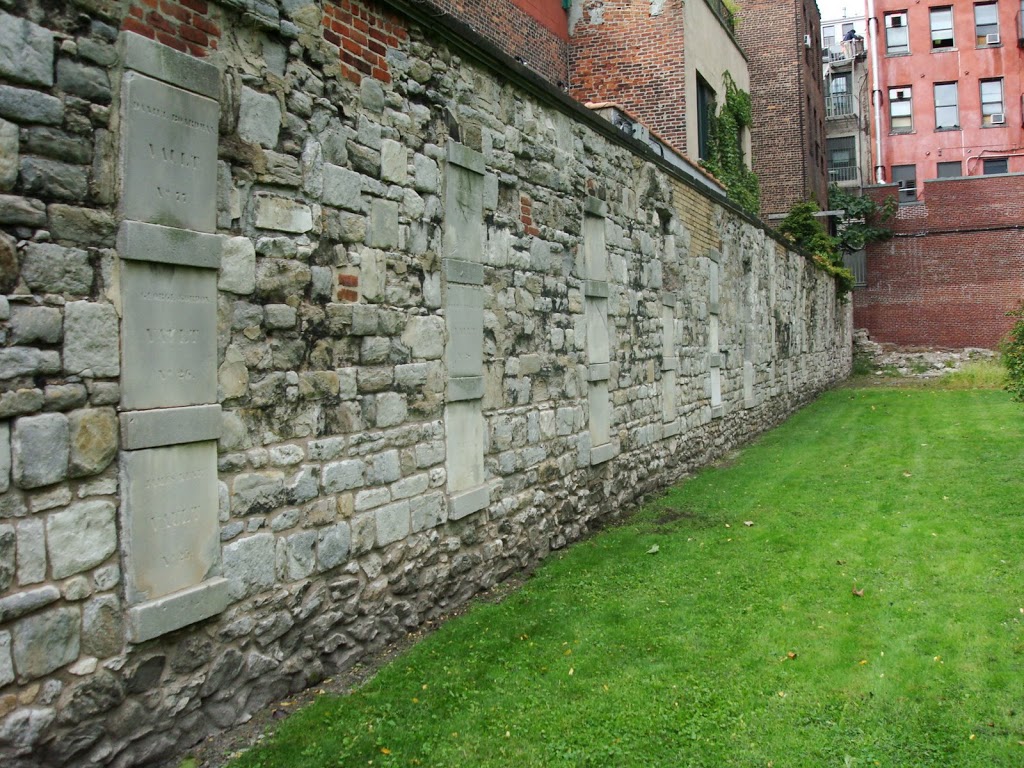
At $250 a pop, families could book themselves at this “Place of Interment for Gentlemen,” which eventually housed 156 vaults. The cemetery appealed more to rich merchants and businessmen, as old moneyed families usually had their own family plots at their country homes. Today it looks like an out of place backyard with fresh green grass and a few trees. Vault markers are placed on the walls surrounding the lawn.

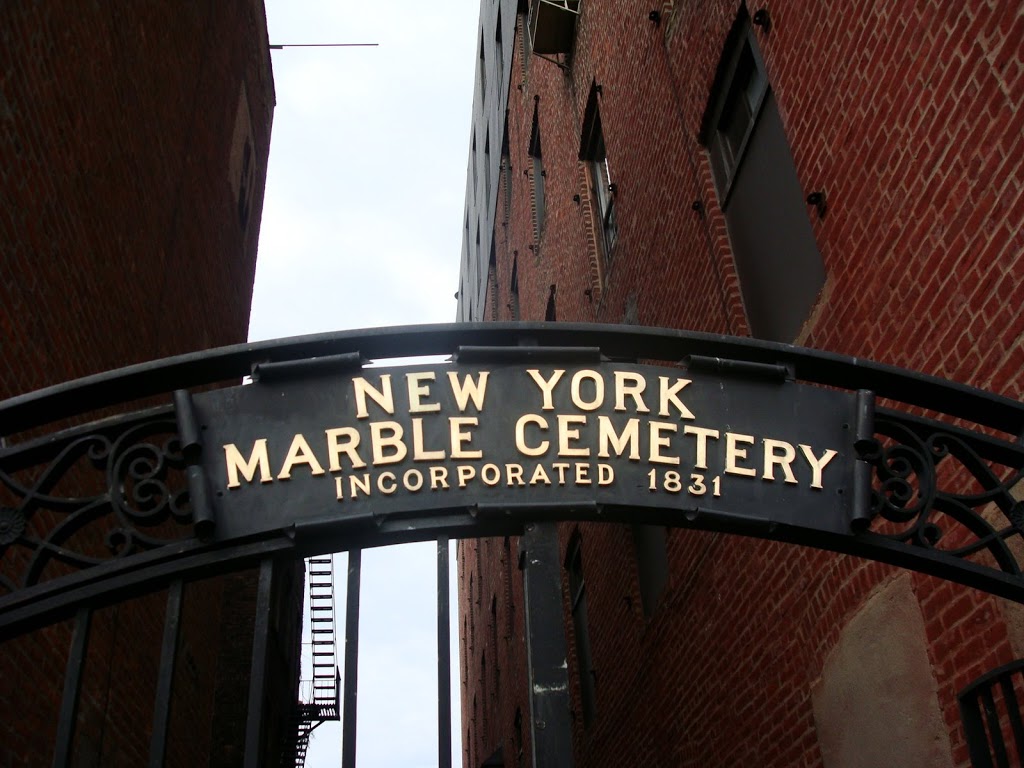
At the New York City Marble Cemetery a block away, the vault markers are affixed into the earth, sharing space with a few traditional grave markers. Trustees hired Nichols to open this plot a little less than a year later, in 1831, due to the success of the original. Not only is it a little larger — with 258 vaults underfoot — but it’s readily viewed from Second Street through the bars of some very rustic iron gates.

Although New York Marble Cemetery was first, New York City Marble Cemetery held a loftier roster of permanent residents, including New York Public Library benefactor James Lenox. Who you will no longer find here, however, is fifth president of the United States James Monroe, who was laid here at his death in 1831 and moved back to Virginia in 1858.

Below: the more dramatic New York City Marble Cemetery

Both cemeteries lost permanent inhabitants once Green-Wood opened, with families preferring to relocate their loved ones to the larger, more landscaped setting. In the 1890s, Jacob Riis almost successfully petitioned to have the original marble cemetery turned into a children’s playground, but the plan was later abandoned.

You can find more info at their official websites — Marble Cemetery and NYCMC.

I highly recommend swinging by either next time they’re open. In fact, New York Marble Cemetery, hidden away through an alleyway and thus far more quiet, is even open for parties and events. Who wouldn’t want to throw a wedding reception here?

Dandies of New York: the dapper Cherry Hill Gang

Above: Another local gang of the Lower East Side, the Shirt Tails of Corlear’s Hook, most likely fought with the Cherry Hill gang, the Batavia Street gang, or maybe even both (circa 1889 pic from courtesy of Irishinnyc)

We’re finally stepping away from the grime of the late 19th century, but not before giving a little shout-out to possibly one of my favorite gangs of the era, the Cherry Hill Gang.

Not much is known about them — street gangs don’t traditionally leave exhaustive archives about themselves — but current descriptions usually use one word to describe them : dandies.

Cherry Hill was the decrepit neighborhood near the waterfront in the Fourth Ward, lined with tenements as awful (and sometimes worse) as the ones in Five Points. Its resident mix of Jewish and Italian suffered the same conditions as those in other poor neighborhoods, and hard times dealt its share of saloons, prostitution, crime and ruffians.

An early variation of the gangs of Cherry Hill included young William ‘Boss’ Tweed as their leader. According to an early bio on Tweed, the Cherry Hills rivals were the boys on Henry Street, just three blocks away. According to author Denis Tilden Lynch, it was important to stay clean on your turf and spar on somebody elses:

“A gang, to survive, must be peaceful in its own neighborhood. Its petty offenses are invariably directed against peaceful citizens of distant streets. Piracy would never have been an honored profession if the black flag flew only in home waters.”

By the 1890s, the “roughs” of Cherry Hill had literally re-tailored themselves. To rob the rich, one must be able to mingle with them convincingly. So the Cherry Hill gang was known for their impeccable dress sense, their stolen funds apparently used to acquire elegant, dressy outfits of the day. Topping these foppish costumes were walking sticks tipped in metal to better thwack an unsuspecting victim.

The Bowery Boys of the 1850s and 1860s were also known as sharp dressers; however their dress sense reflected their well established reputation and political power. The Cherry Hills meanwhile dressed for success merely to infiltrate rich neighborhoods and rob unsuspecting gentlemen. And apparently to intimidate local rivals.

The primary rival of the Cherry Hill gang was the local Batavia Street gang. Batavia Street was a former street in the same area, “in the shadow of the Brooklyn Bridge” and apparently in one account was “the most [Charles] Dickensy street in New York.” (It’s also referred to in some accounts as Batavia Lane, but the Batavia Lane Gang doesn’t sound very menacing, does it?)

Like some Gilded Age variation of West Side Story, the Cherry Hill gang and the Batavia Street gang were set to meet on the dance floor of New Irving Hall (once located on 214 Broome Street). Lower East Side balls in the late 19th century were modeled after their upper class variations, but were far rowdier and certainly more fun.

The Cherry Hill gang were set to dazzle in their finest ensembles, certainly intending to steal the show (if not steal more material things in the process). The Batavias would not be outdone but were desperately broke. After the pawning of a stolen gold watch from Herman Segal’s jewelry shop failed to produce enough cash for fancy new threads, the jealous gang returned to the jewelry store and simply smashed the window in, running off with 44 gold rings “worth from $3 to $45 dollars apiece.

The Batavias were eventually captured — while trying on their newly bought suits, no less, on Division Street — and thrown in the Tombs. Apparently the Cherry Hill gang attended the ball as planned. They would eventually go on to influence the dress sense of other street gangs. New York has changed so drastically in the 110 years since the New Batavia ball, but it’s nice to see that the superficial love of fashion has never been altered.

You can read more about the Batavia’s foiled robbery in the The American Metropolis. The Tweed bio referenced above is called “Boss Tweed: The Story of a Grim Generation.”

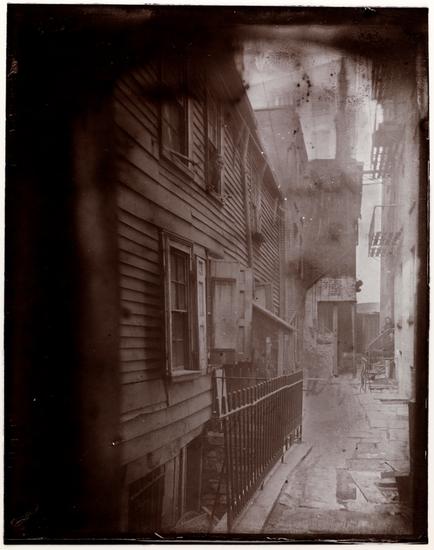
Below: The Jacob Riis photograph of the alleyway at Gotham Court in Cherry Hill

Categories
Podcasts

PODCAST: The Fate of Five Points

Part two of our “Five Points” podcast. Join us as we explore the “wicked” neighborhood’s clean up, fall from grace, and eventual destruction.

Listen to it for free on iTunes or other podcasting services. Or you can download or listen to it HERE

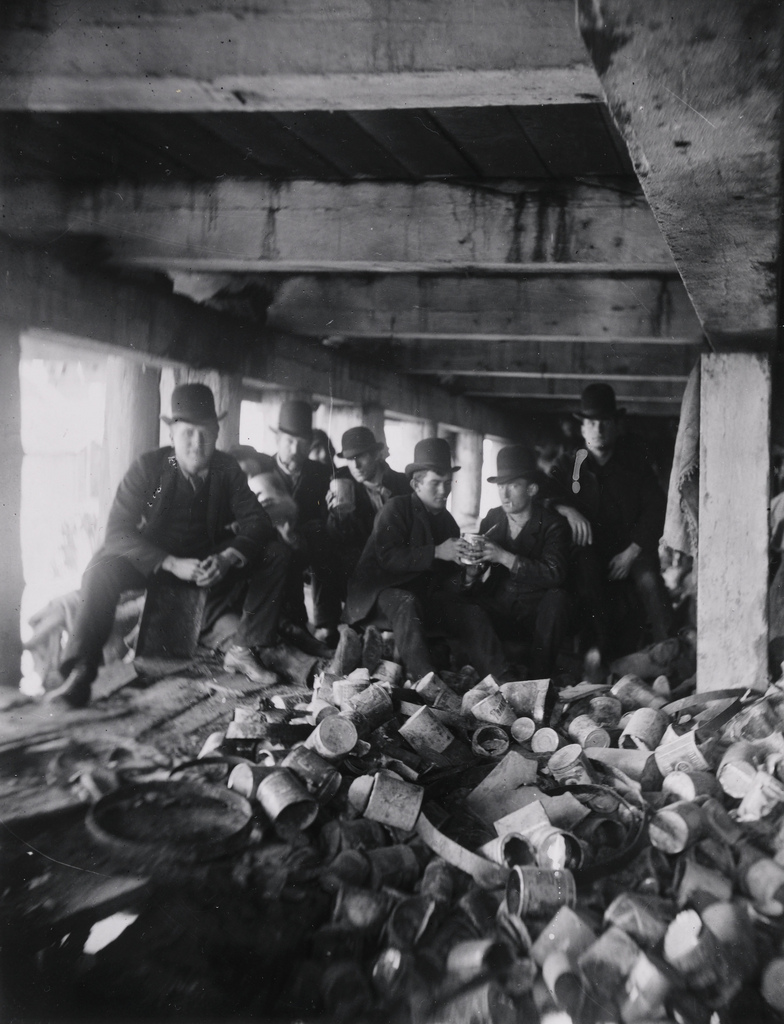
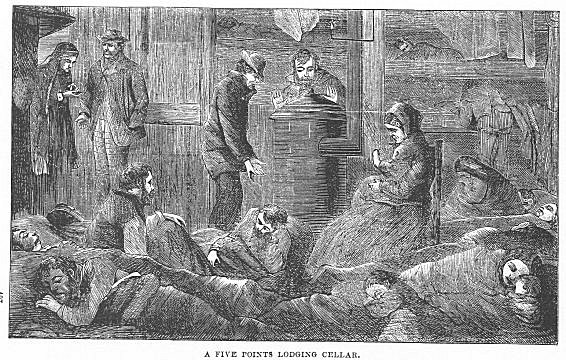
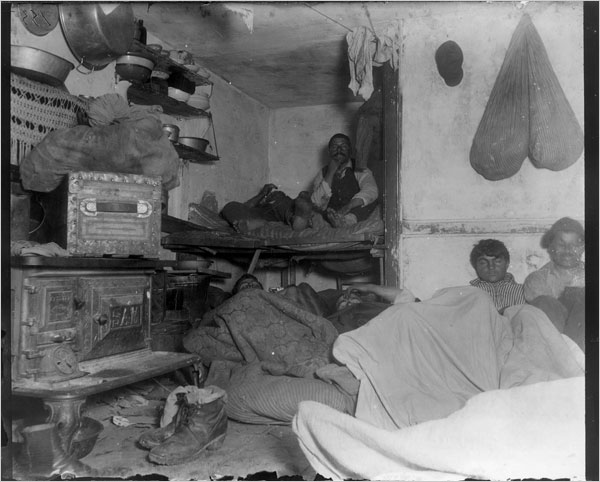
Sleeping quarters

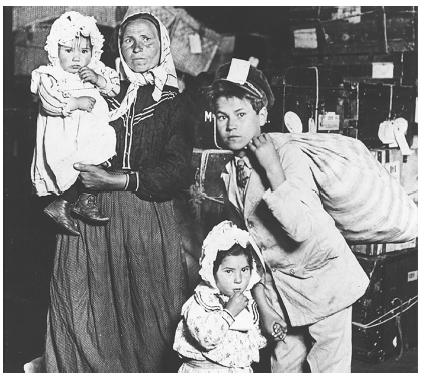
An Italian family newly arrived in New York.

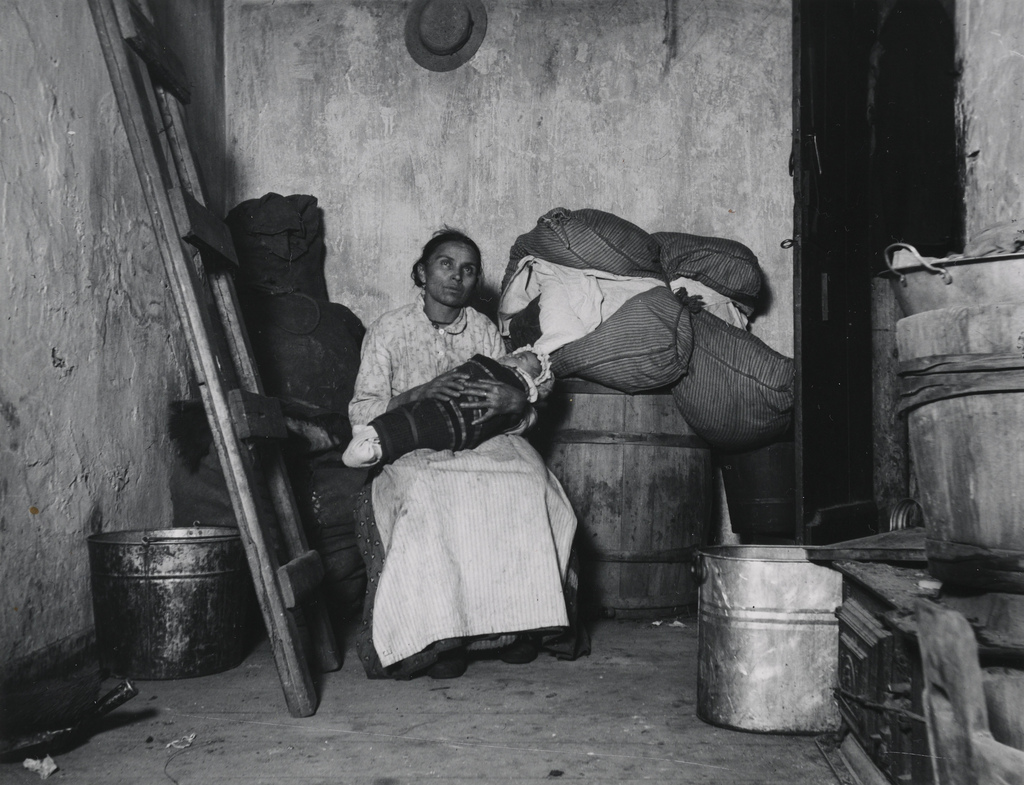
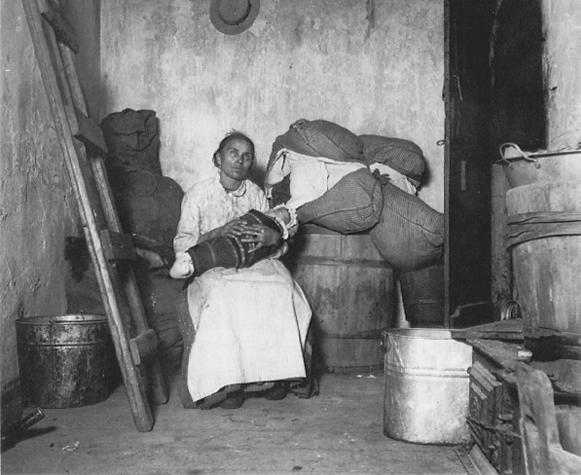
An Italian woman, employed as a ‘rag picker’

Jacob Riis, who helped define the early days of investigative journalism with his exposes on life in New York City slums

A Riis photograph of a typical residence that would have been found in Five Points

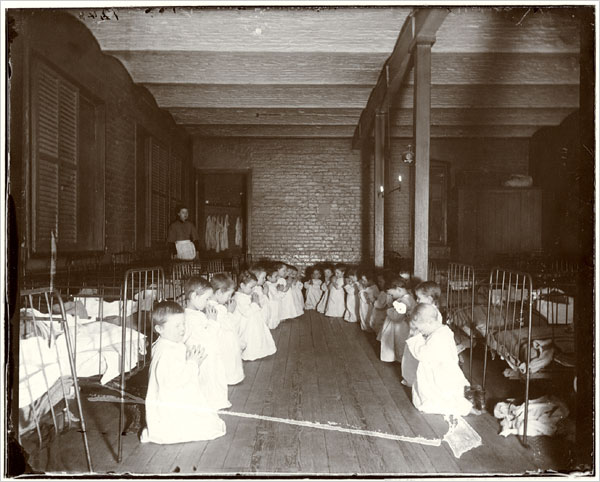
Inside the House of Industry in 1888

A look at the neighborhood after portions of Five Points was cleared away in 1895

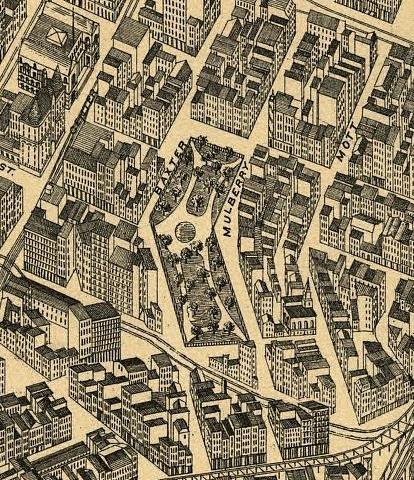
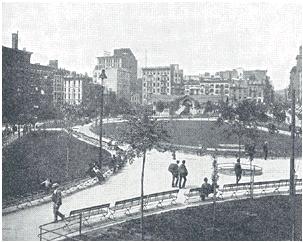
Mulberry Bend Park, designed by Calvert Vaux, and opened in 1897

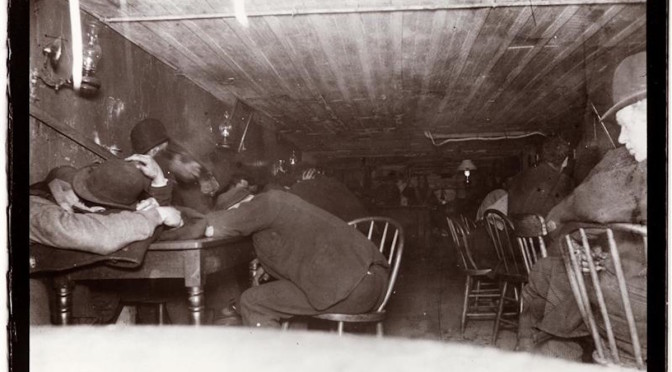
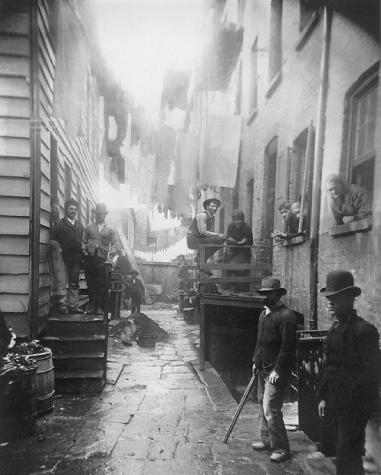
Jacob Riis’ most famous photograph of Bandits Roost. Gang members stare menacingly at the camera. By the stairwell is a stale beer hall.

http://www.blogger.com/img/gl.link.gif
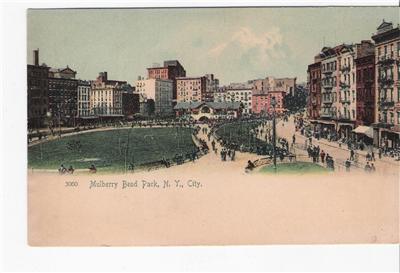
Greetings from Mulberry Bend Park. Who would have ever imagined this area as being perfect for a postcard a few years before this?

Not much remains of the once infamous Five Points intersection

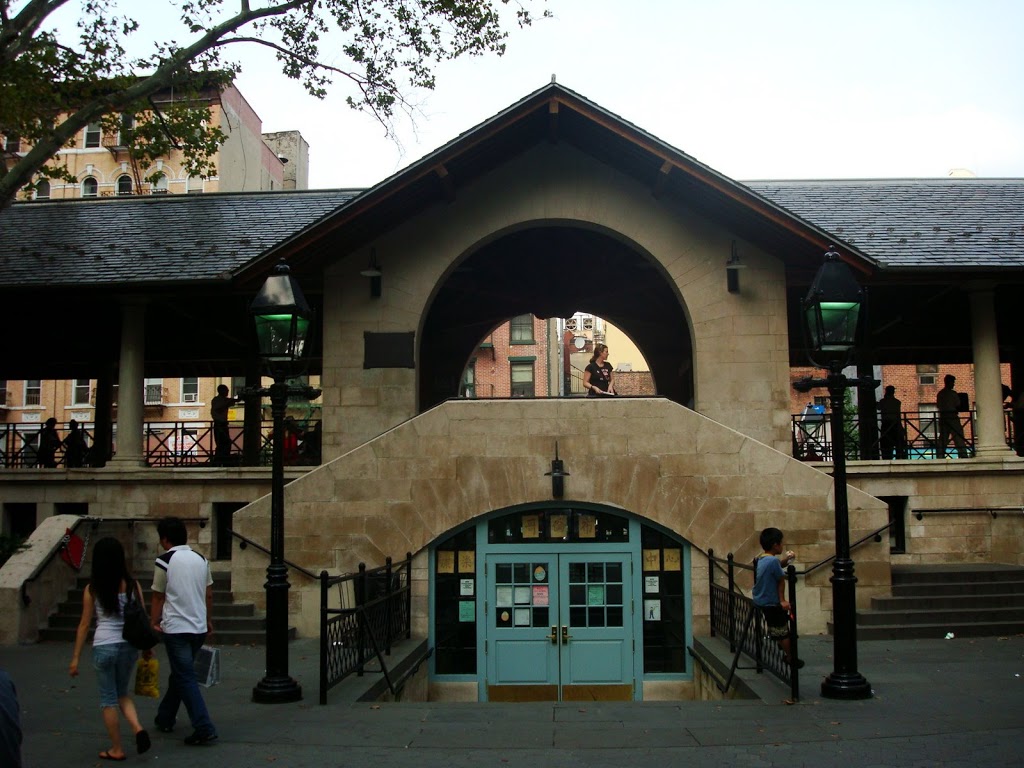
The pavilion in Columbus Park, erected in 1897 when the park was called Mulberry Bend Park

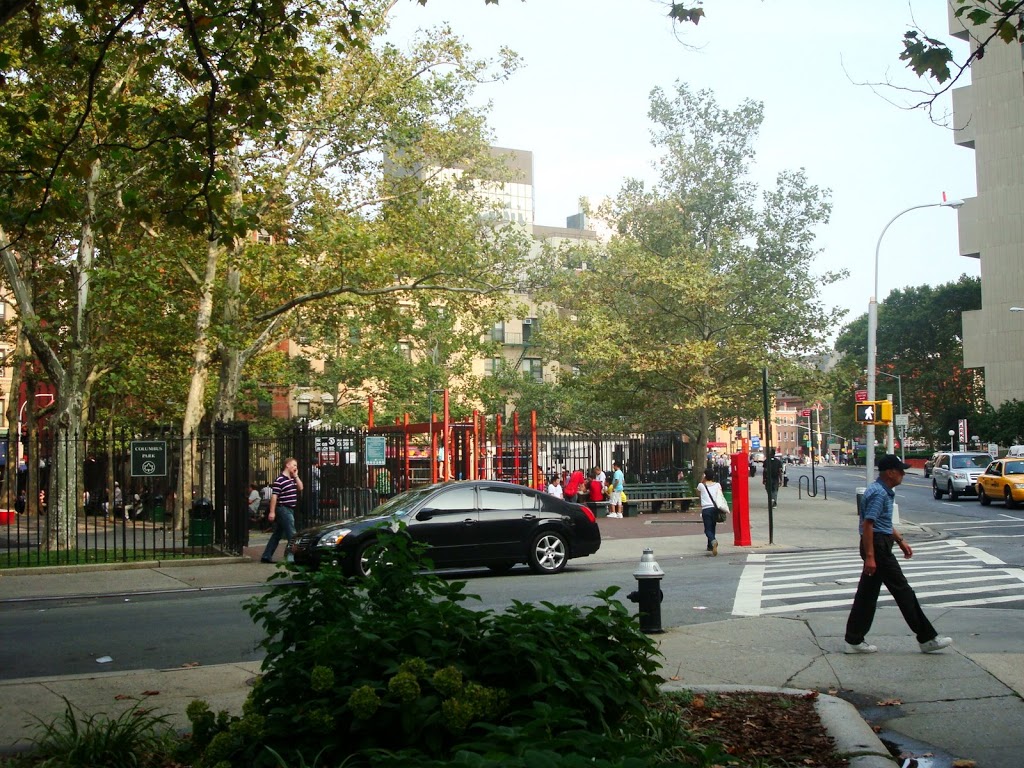
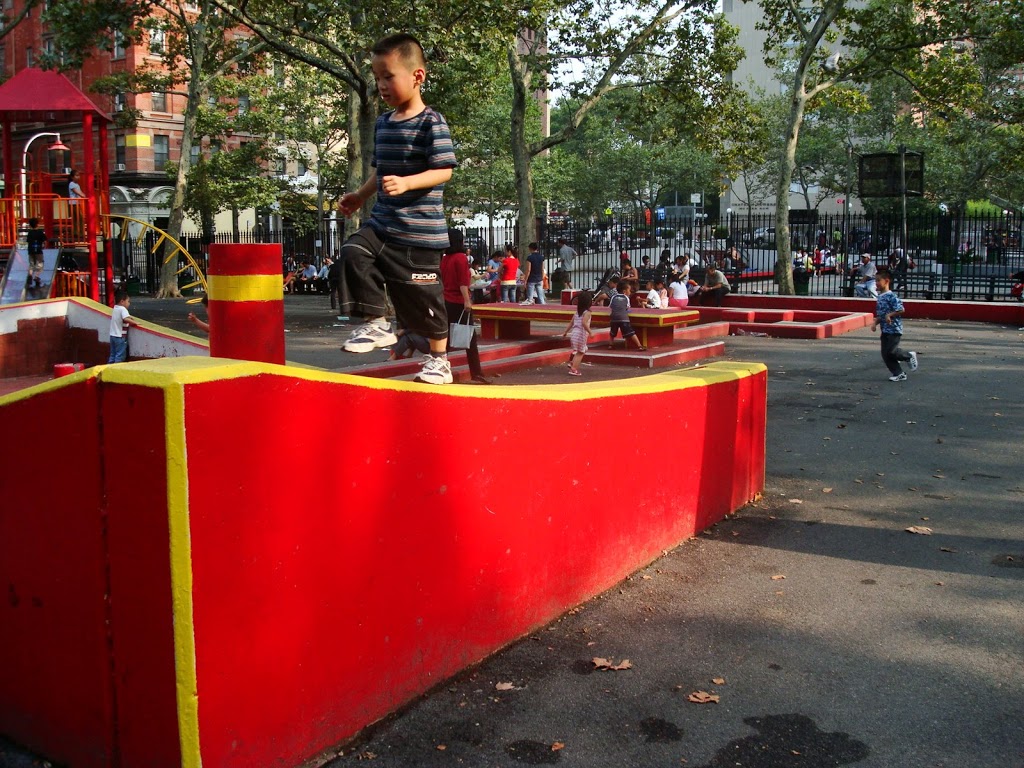
Columbus Park today: the FIve Points tenements replaced with playgrounds

Some other great resources about Five Points: An archaeological look at the area, and “Urbanography” which feature some great original source articles