Categories
The Immigrant Experience Women's History

Where They Lived: Remembering the victims of The Triangle Factory Fire

Today marks the 114th anniversary of the Triangle Factory Fire. For information on commemorations and other activities, visit Remember the Triangle Coalition.

For stories of the struggles faced by employees of the shirtwaist industry, check out our 2020 show on the Shirtwaist Strike of 1909:

And for more information on the Triangle Factory Fire itself, return again to one of our earliest shows:


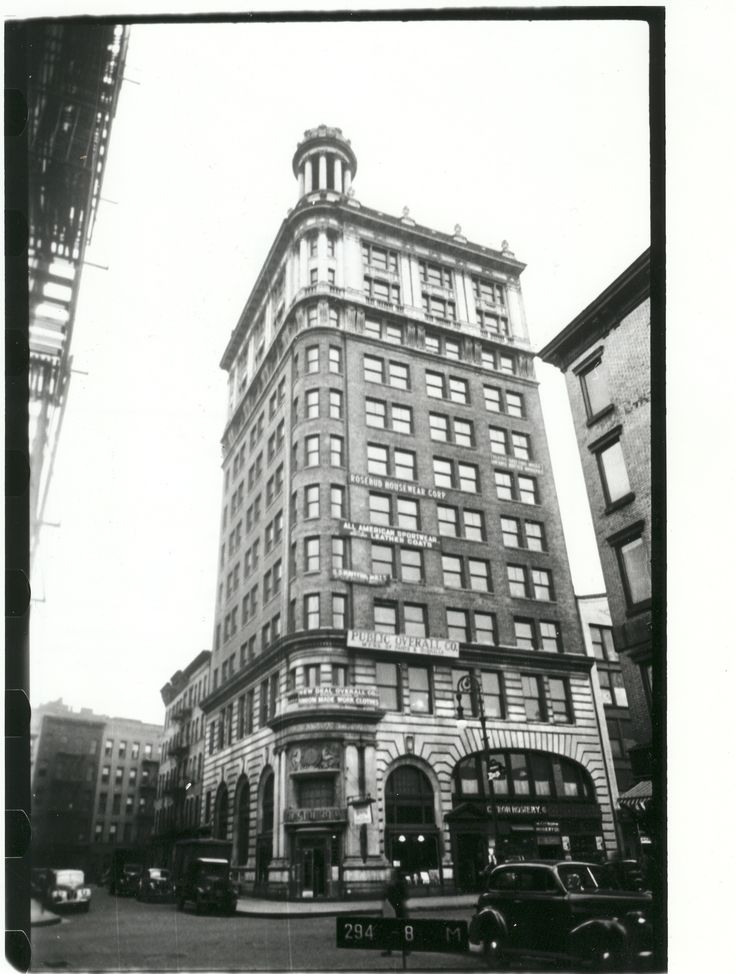
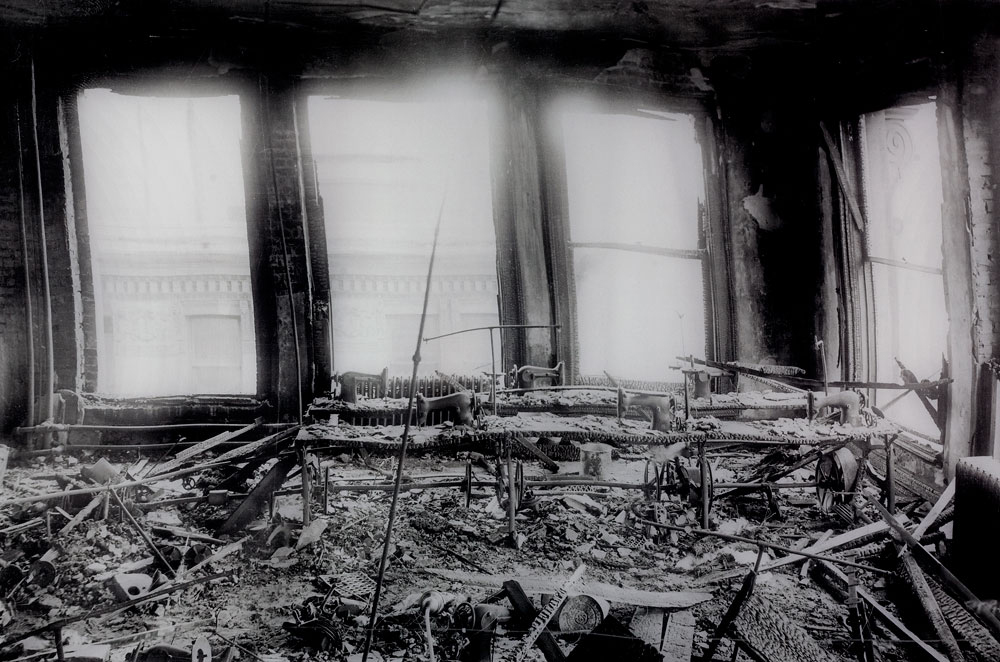
On this day in 1911, late in the afternoon, fire swept through the Triangle Shirtwaist Factory, located on the upper floors of a ten-story building near Washington Square Park.

Due to odious practices by the factory’s supervisors, the doorways were blocked and the fire escapes were in poor shape.
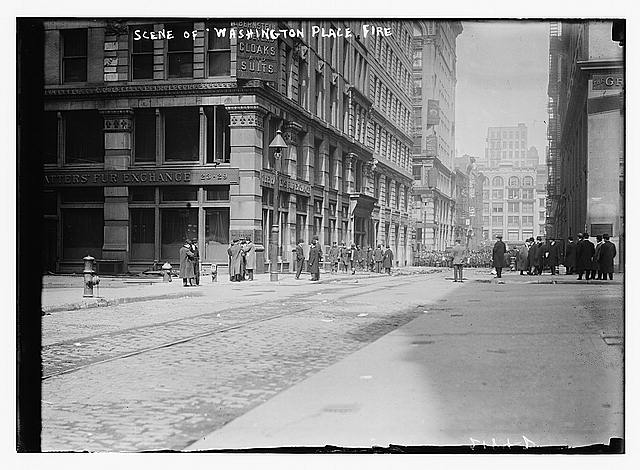
Library of Congress/Bain Collection

Hundreds of employees, mostly young immigrant women, scrambled to escape by any means necessary.

When the fire was finally extinguished, 146 workers had been killed in the blaze. Many, fearing death by the flames, leaped to the street below to the horror of onlookers who had stumbled over from the park.
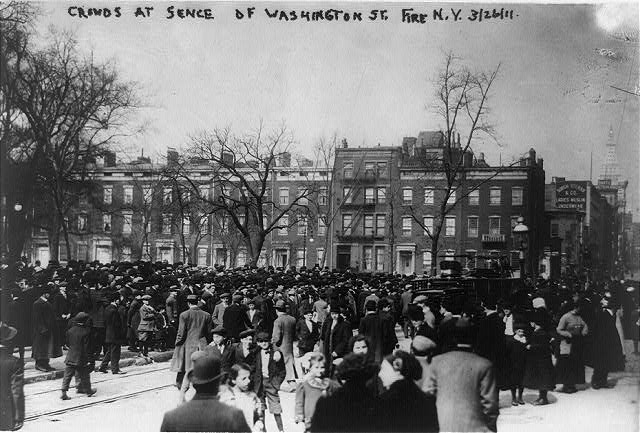
Library of Congress/Bain Collection

The Triangle Shirtwaist Factory Fire is one of the most horrible tragedies in American history, both an indictment on New York sweatshop industries and the lack of any oversight about safety in high rise buildings. Many building regulations that keep us safe today were directly put in place due to these events.

From the New York Tribune the following day:
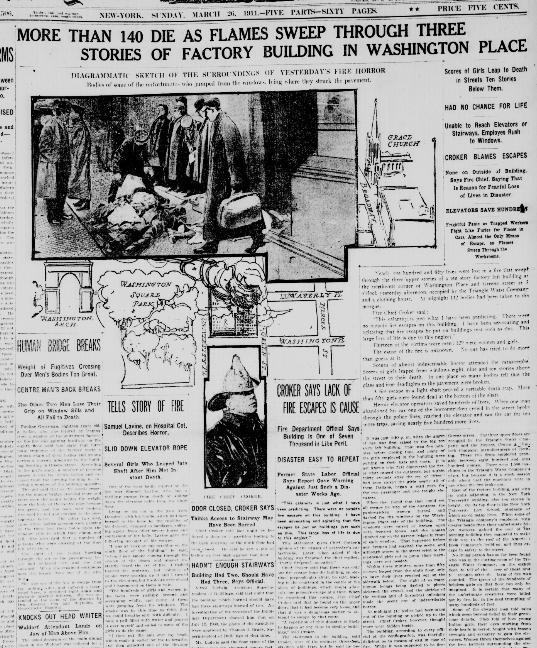
image_681x648_from_839,491_to_7890,7206

——–

Remembering Them

But on this anniversary I wanted to focus on the people who died at the Triangle Factory that day. Can we imagine something about them by looking at where they lived?

Thanks to the research of Michael Hirsch and the Kheel Center at Cornell University [found here], it’s possible to actually come up with a map of the homes of all 146 victims of the Triangle fire.

It would look something like the map below. Just zoom into it to look at the individual sites and take a look at which neighborhoods and boroughs that were most affected:

NOTE: The addresses are accurate, but a few of the points are approximately placed. In a few cases, the streets no longer exist, so I placed the points in close vicinity.

A Lower East Side Tragedy

To nobody’s surprise, the neighborhood most devastated by the tragedy is the Lower East Side (The east side above Houston Street — i.e. today’s East Village — didn’t take that new designation until the late 1950s.) There doesn’t seem to be a block in the neighborhood with an empty home that day one hundred years ago.

A few years before the Triangle fire, the Lower East Side had experienced an even more ghastly tragedy — the explosion of the General Slocum paddle steamer on June 15, 1904.

Among the 1,021 victims of that horrific event, most lived in this neighborhood and specifically in the German area of Kleindeutschland. As the victims were mostly women and children, the disaster effectively marked the end of the German enclave here.

New York wouldn’t see such a large loss of life until September 11, 2001. [There’s a Bowery Boys podcast on this subject, recorded on its 110th anniversary.]

The deaths of the 146 garment workers on March 25, 1911, did not produce the same effect to the neighborhood, but certainly the loss was gravely felt in tenements and houses throughout the city. The map shows that the disaster’s immediate impact reverberated even into the other boroughs.
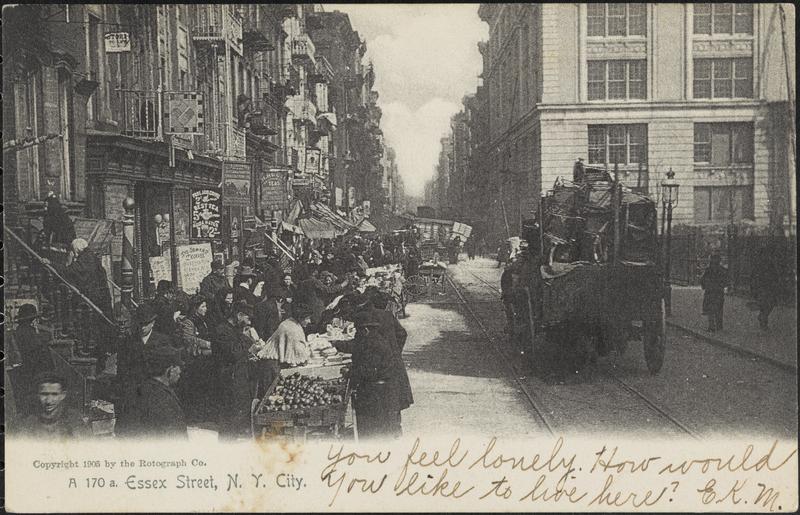
Museum of the City of New York
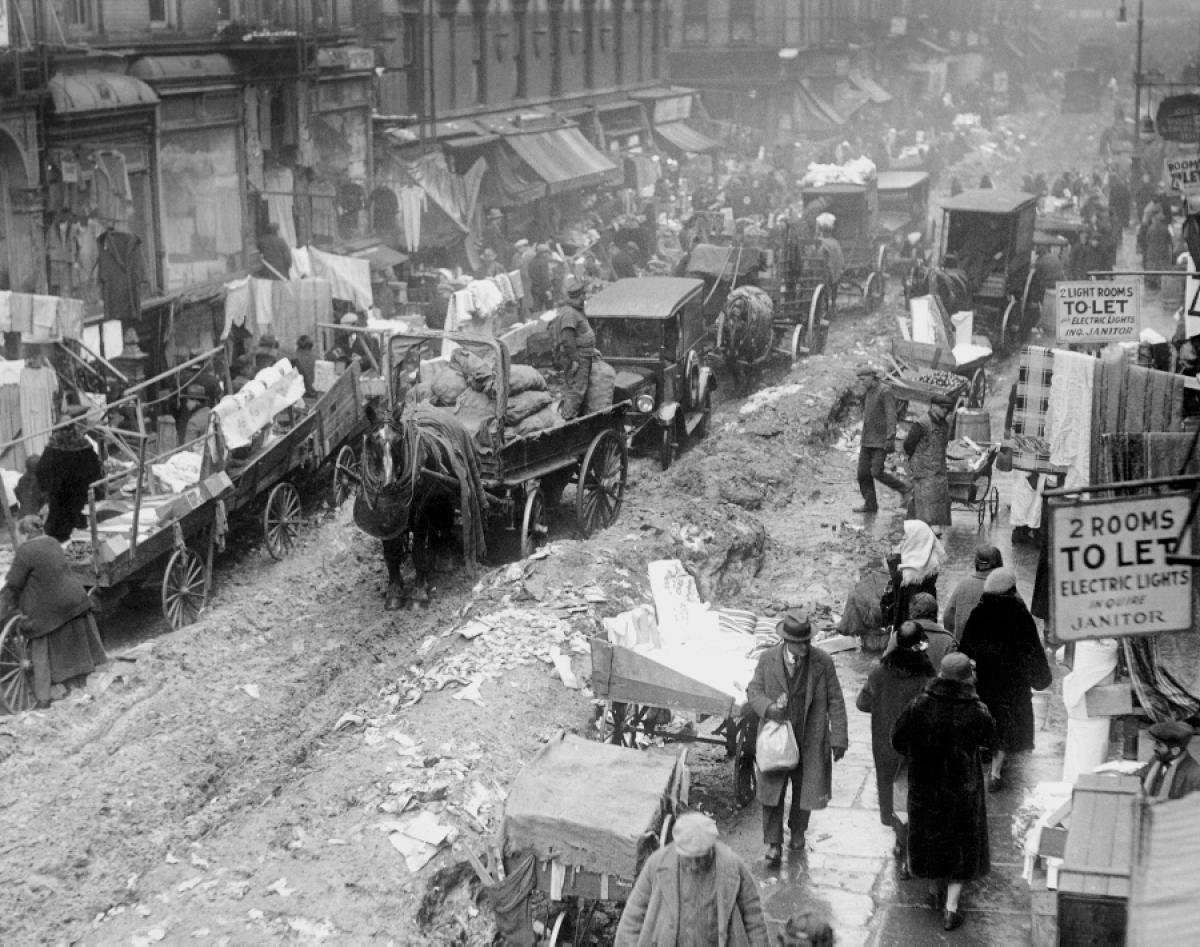
Essex Street in 1905. “You feel lonely. How would you like to live here?” Museum of the City of New York

East vs. West

Of the 146, most all of them were born in three countries — Italy, Russia or Austria. A handful were born in the United States, presumably the children of first generation immigrants.

So it’s no surprise most of them found homes in the Lower East Side, still the heart of immigrant life in the early 20th century. But I really didn’t expect it to be so decisive.

Outside of a small cluster of people who lived in Greenwich Village close to the factory, there were no victims who listed addresses anywhere on Manhattan’s west side — not in Hell’s Kitchen, the Upper West Side, or anywhere else.
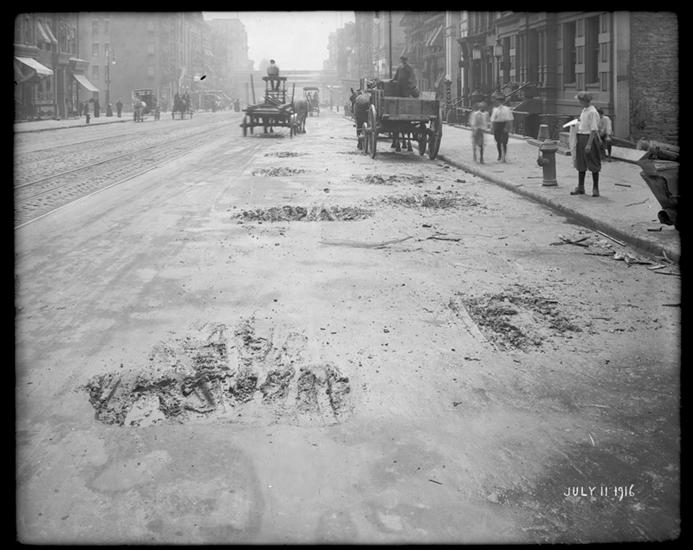
Museum of the City of New York
In front of 110-118 East 86th Street in July 1916, Museum of the City of New York

Yorkville and Beyond

I’m fascinated by those who lived further out, near the growing German neighborhood of Yorkville on the Upper East Side, for instance.

A great many took streetcars and elevated trains into work from Brooklyn and the Bronx, and some might even have taken advantage of the new subway (although in 1911, its route was very limited).

No surprise that none of them lived in Queens; the ethnic neighborhoods of that borough would really flourish after the 1920s.

And then there’s young Vincenza Billota, a 16 year old girl who lived out with her uncle in Hoboken, NJ — the only one of the victims to commute into the city.

Her uncle came in from New Jersey that night to identify Vincenza who burned alive inside the factory. He identified her because her shoes had recently been repaired; he recognized the cobbler’s work.
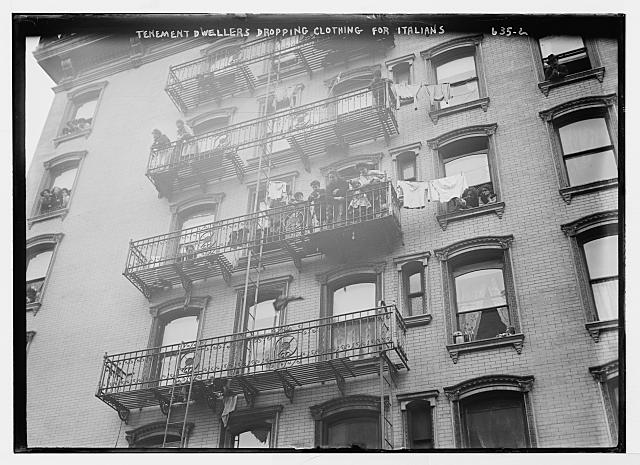
Library of Congress
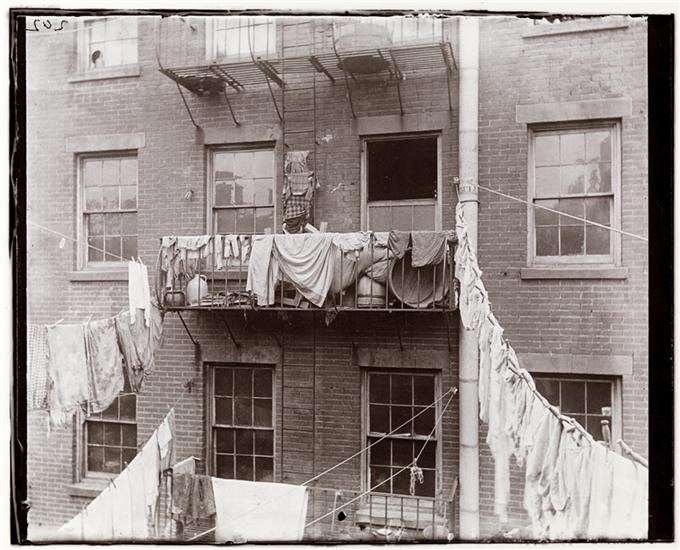
From 1909, the caption reads “Tenement dwellers dropping clothes from fire escape for Italians on East side.” Library of Congress

Missing Tenements

There’s something moving about finding and identifying the homes of the victims.

Most of these people had no solid roots, no property they owned. Only an address, a home they most likely shared with family members and other tenants.

Every year on the anniversary of the fire, the sidewalks outside these addresses are marked with chalk, the names and ages written on the ground as a yearly reminder. You can look at a photo array from the 2011 chalk excursions here.

They didn’t live in fabulous Beaux-Arts mansions or apartment buildings.

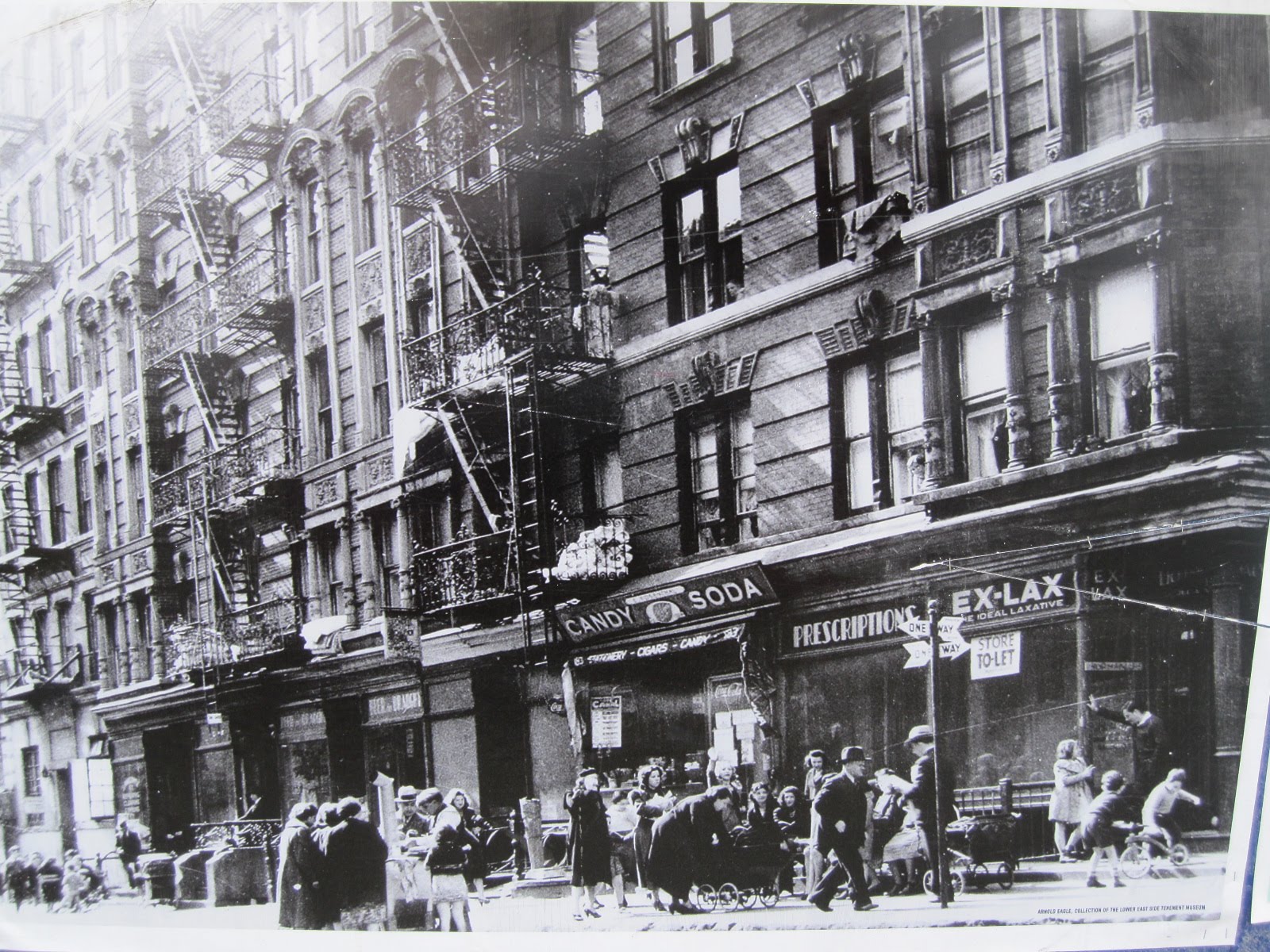
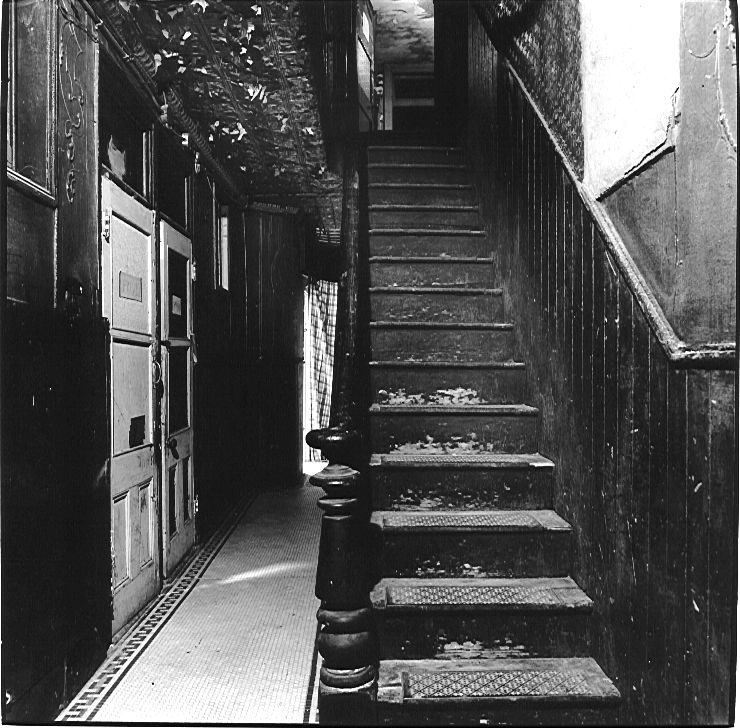
Their homes were tenements, most overcrowded and poorly maintained.

Thus, many of the actual buildings themselves are gone. In the cases of the victim’s homes on Monroe Street, even most of the street itself is gone, replaced with more modern housing projects.
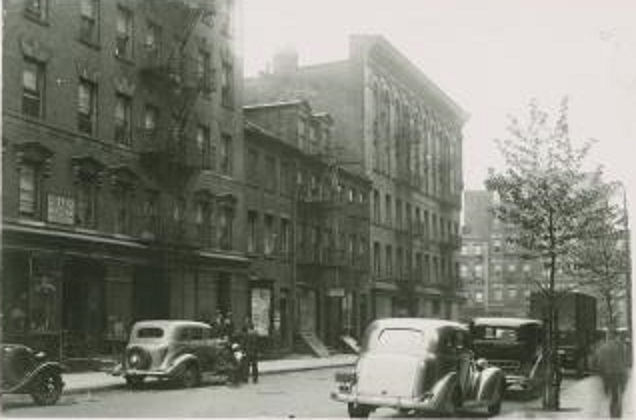
1
135 Cherry Street, the home of fire victim Rose Cirrito. The photo is from 1939 (courtesy NYPL); the entire row of buildings was later demolished.

509 East 13th Street was the home to two Italian girls, Antonietta Pasqualicchio and Annie L’Abate, and an older Italian woman Annina Ardito, who all lost their lives that day. But that building has been replaced with a modern apartment.

Family and Friends

To grasp a disaster of this magnitude — at a vantage over one century later — you have to deal with it in generalities.

The victims were mostly girls, mostly immigrants, mostly uneducated.

However, by singling out a particular address, the individual tragedies come into focus. And oddly, you get to place that person’s life next to what inhabits that address today.

In the case of the Lower East Side, some of these places are now restaurants, bars and luxury condos.

143 Essex Street was the home of two victims — two teenage brothers Max and Sam Lehrer from Austria. Both had arrived in the United States via Ellis Island in 1909; another Austrian, Sigmund Freud, also arrived at Ellis Island that year.

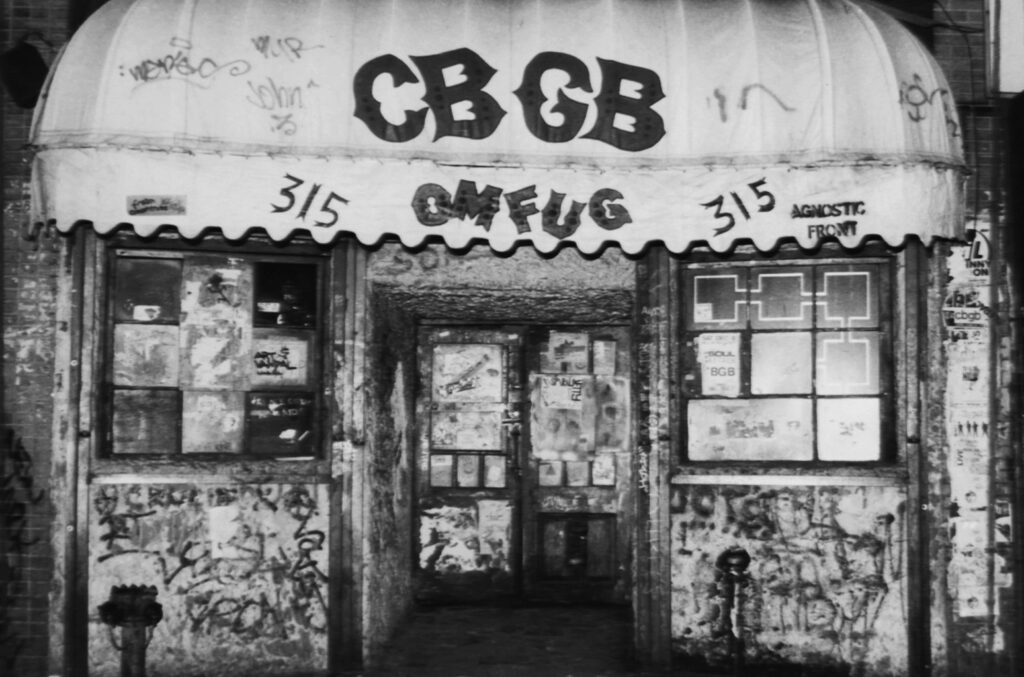
Young Jennie Stellino had lived in New York since she was 12 years old; she died in the blaze at age 16. She walked to the factory every day from her home at 315 Bowery, one of the few with a fairly easy commute.

Jennie survived the blaze but died from her burns three days later. Decades later, the building at that address became internationally renown for the tenant at its ground floor, CBGB’s.

I’m not sure there’s even a 35 Second Avenue anymore. The street is inhabited by a diner and a few bars today; the Anthology Film Archives sits across the street.

But it was the home to three women who lost their lives that day — Catherine Maltese and her two daughters.

________________________________________________________

For stories of the struggles faced by employees of the shirtwaist industry, check out our 2020 show on the Shirtwaist Strike of 1909:

And for more information on the Triangle Factory Fire itself, return again to one of our earliest shows:

This is an expanded version of an article which ran on this website on the 100th anniversary of this Triangle Factory Fire.
Categories
Music History Neighborhoods Podcasts Writers and Artists

Walking the East Village: Culture Among The Ruins 1976-1996

PODCAST The rebirth of the East Village in the late 1970s and the flowering of a new and original New York subculture — what Edmund White called “the Downtown Scene” — arose from the shadow of urban devastation and was anchored by a community that reclaimed its own deteriorating neighborhood.

In the last episode (Creating the East Village 1955-1975) this northern corner of New York’s Lower East Side became the desired home for new cultural venues — nightclubs, cafes, theaters, and bars — after the city tore down the Third Avenue Elevated in 1955.

But by the mid 1970s, the high wore off. The East Village was in crisis, one of the Manhattan neighborhoods hit hardest by the city’s fiscal difficulties and cutbacks. It had become a landscape of dark, unsafe streets, buildings demolished in flame.

But the next generation of creative interlopers (following the initial stampede of Greenwich Village beatniks and hippies) built upon the legacies of East Village counter-culture to create poems, music, paintings and stage performances heavily influenced by the apocalyptic situations around them.

This was something truly distinct, a creative scene that was thoroughly and uniquely an East Village creation — punk and hardcore, murals and graffiti, fashion and drag,

And much of that was created by people who did not fit in anywhere else in the world, whether that world which rejected them was a Queens suburb or New Jersey or the Midwest or well beyond. 

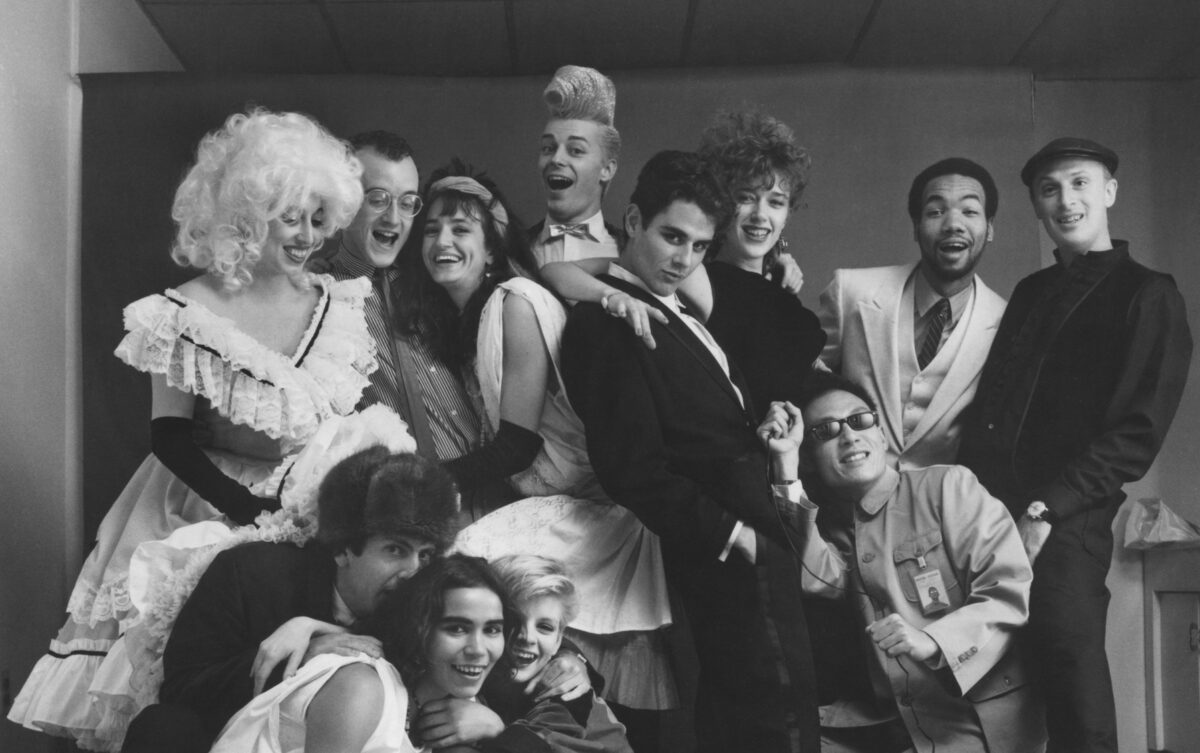
Photo: New York Daily News Archive

In this episode Greg hits the streets of the East Village with musician and tour guide Krikor Daglian (of True Tales of NYC), exploring the secrets of the recent past — from the origins of skateboarding to the seeds of the American alternative rock scene.

Follow along as they traipse to classic music venues and dive bars to uncover the special ingredients which made the East Village a most special place at the end of the 20th century.

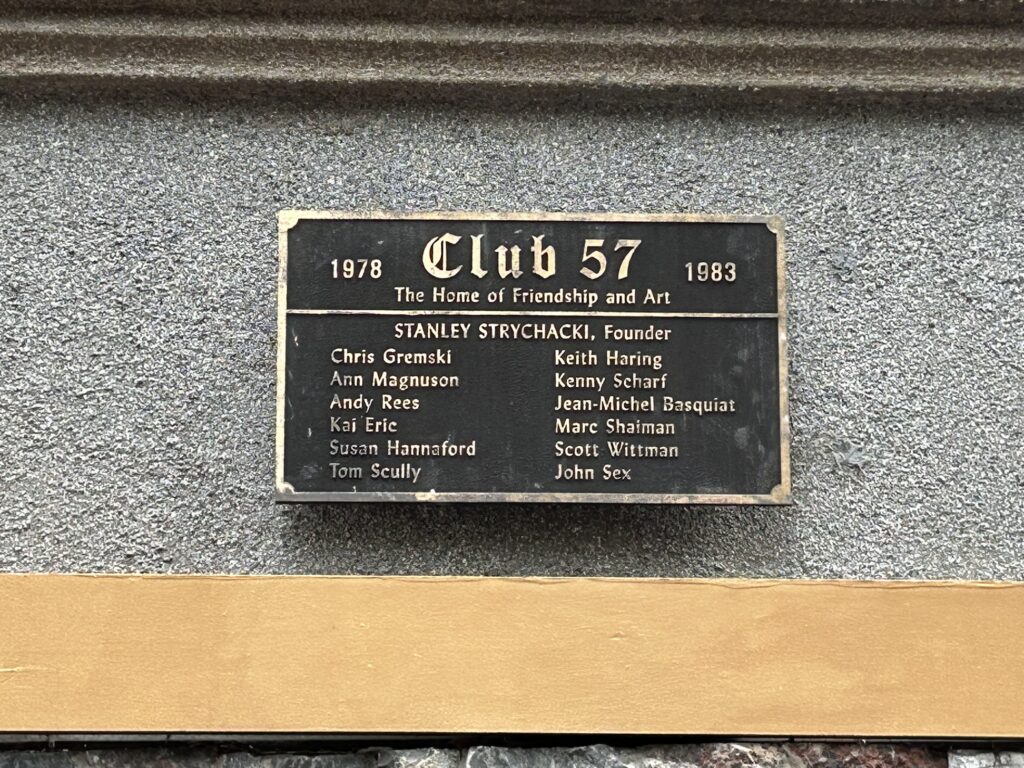
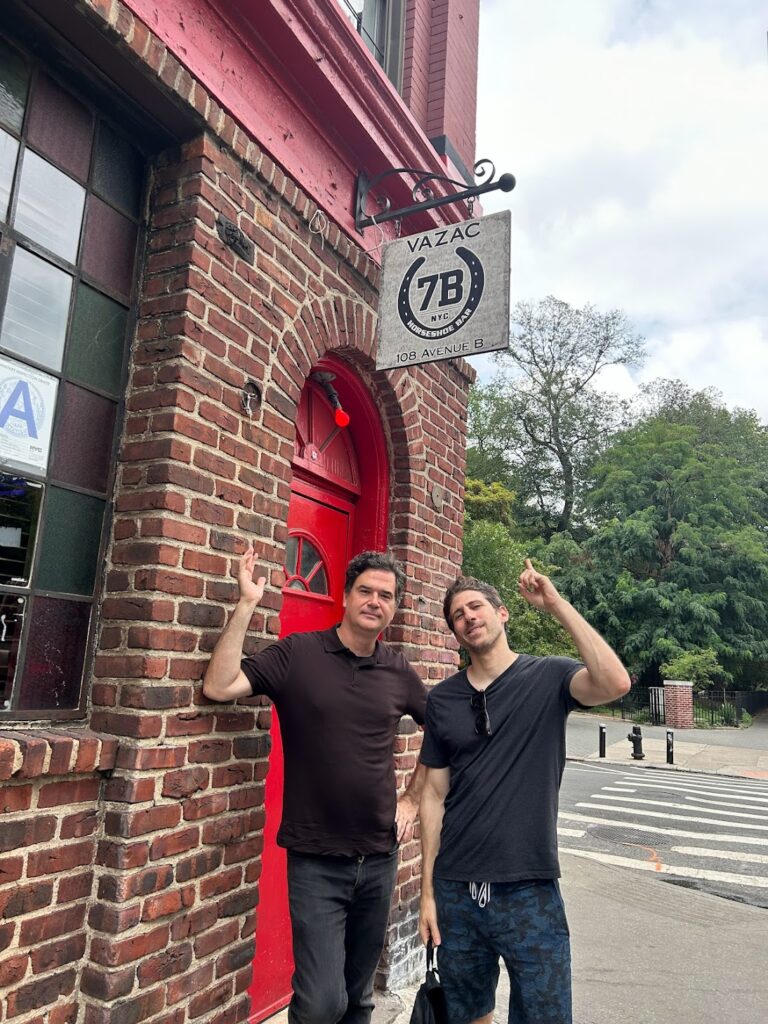
FEATURING: CBGB, Supreme, the Pyramid, Club 57, Niagara, 7B, Brownies and many others

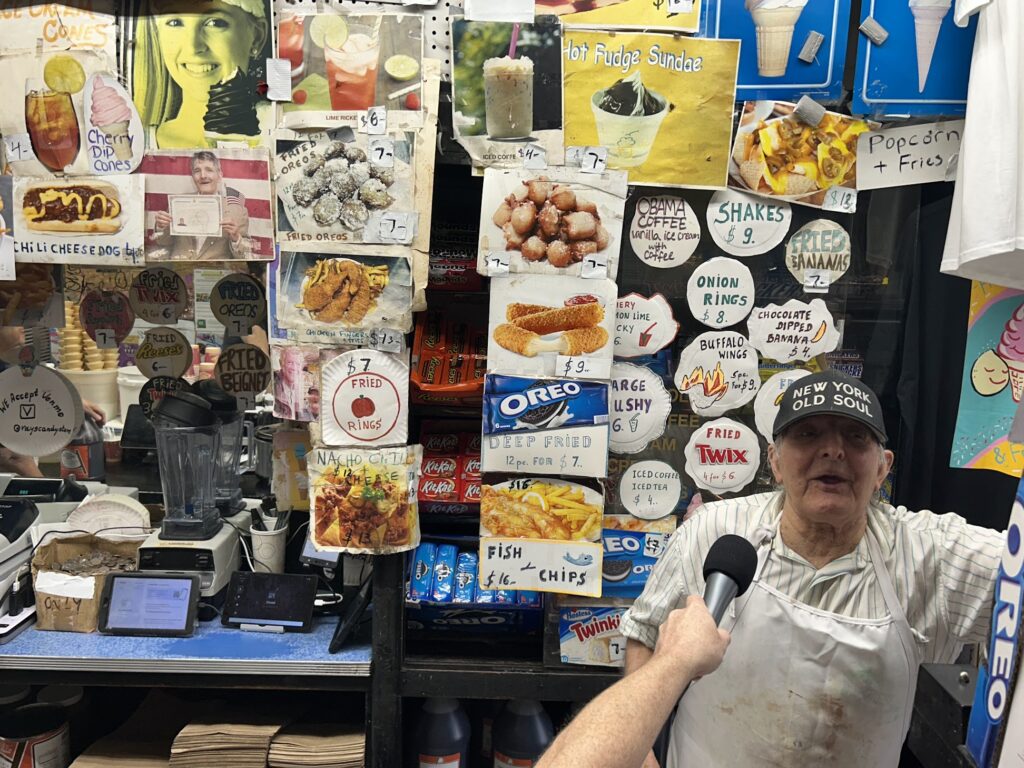
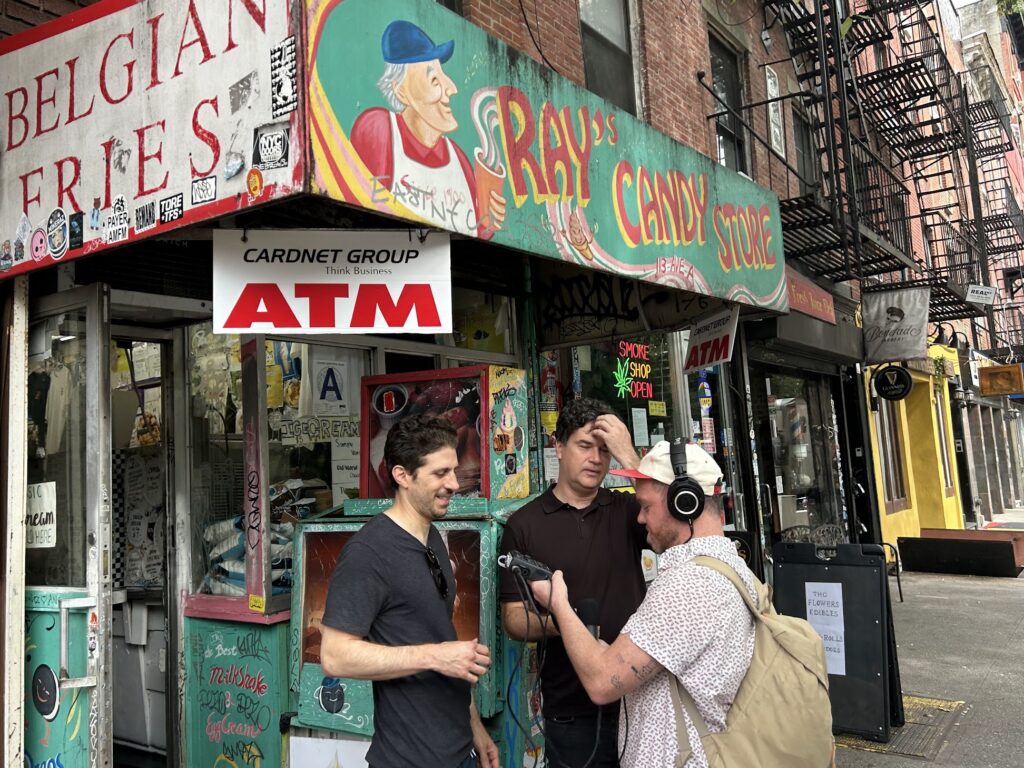
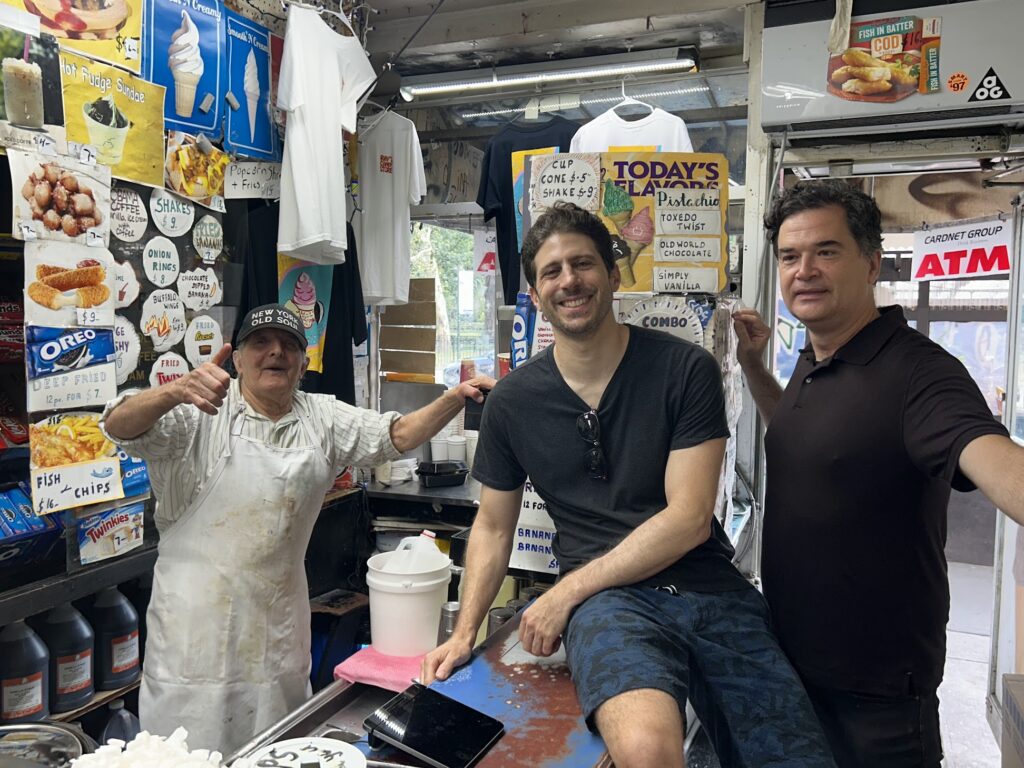
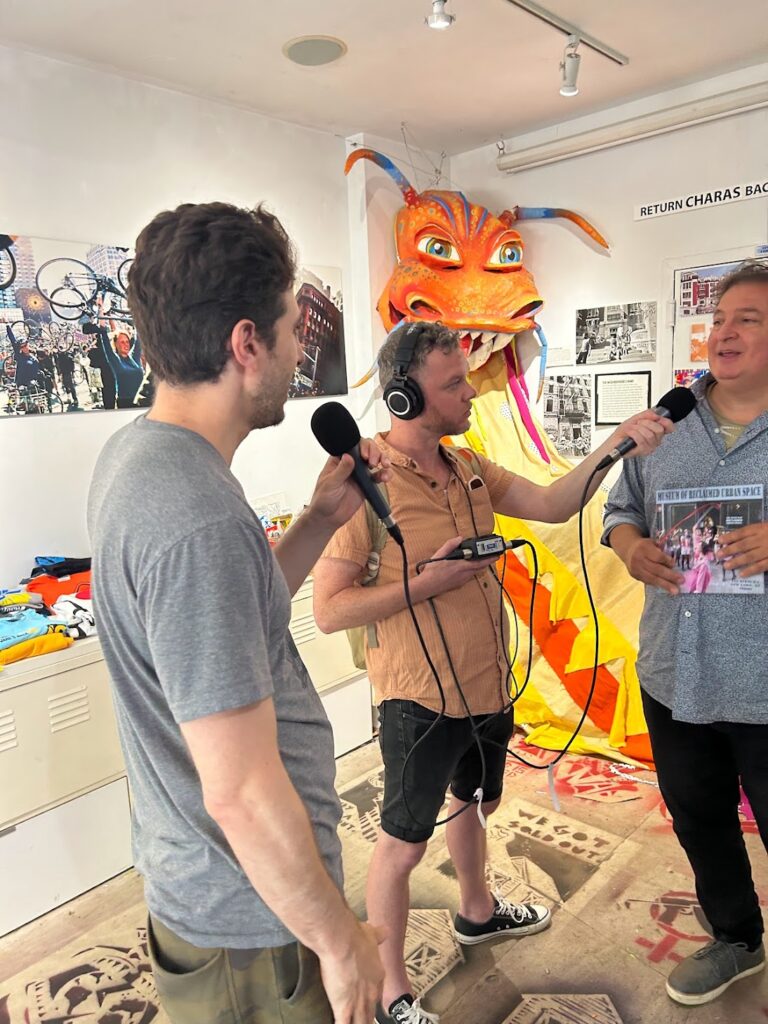
AND special guests Bill Di Paola from the Museum of Reclaimed Urban Space and Ramon ‘Ray’ Alvarez from Ray’s Candy Store

LISTEN HERE: WALKING THE EAST VILLAGE 1976-1996


When you’re done listening to this week’s show, check out our special Walking the East Village playlist, curated by Krikor and Greg:


We love you Ray!

Krikor and Greg with producer Kieran Gannon

Book tours with this episode’s special guest Krikor Daglian here and with Bowery Boys Walks. Krikor’s next “Artists, Oddballs & Provocateurs: East Village Since the 1950s” tours are on Saturday, October 7th and Saturday, November 4th.


Producer Kieran Gannon with Krikor and Bill De Paola

FURTHER LISTENING

After you listen to this week’s episode, check out these episodes with related themes:


FURTHER READING

The Drag Explosion: New York City’s Drag Scene of the 1980s and 90s / Linda Simpson
From Urban Village to East Village / Janet L. Abu-Ludhod
New York Rock: From the Rise of the Velvet Underground to the Fall of CBGB / Steven Blush
St. Marks Is Dead: The Many Lives of America’s Hippest Street / Ada Calhoun
The Village: 400 Years of Beats and Bohemians, Radicals and Rogues / John Strausbaugh
This Must Be The Place: Music, Community and Vanished Spaces in New York City / Jesse Rifkin

By a very fun coincidence, our two time guest — the marvelous Hugh Ryan — just so happens to have written “The Trashy, Freaky, DIY East Village Scene That Birthed Modern Drag” for Curbed this week. Excellent article about the 80s East Village drag scene with a focus on the Pyramid — where Greg and Krikor recorded some of the show!

Categories
Religious History

The Yom Kippur Riot of 1898: Lower East Side in Turmoil

When I hear of so-called “riots” on the Lower East Side during the late 19th century, my mind goes to disgruntled newsies or agitated garment workers, rising up for fair wages and employment.

Or maybe a vicious street gang like the Whyos primed to wreck havoc.

I don’t immediately think of the orthodox Jewish community.

But it was indeed dissatisfied members of this group that staged a bit of chaos on the corner of Canal and Division streets during Yom Kippur (the tenth day of Tishrei, or, in 1898, late September).

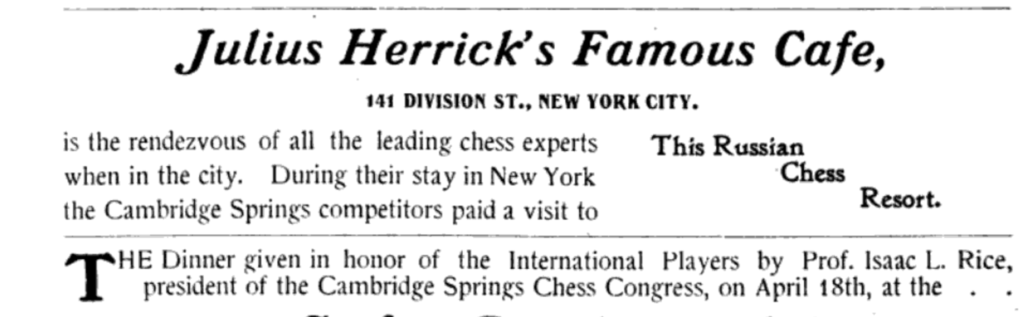
According to the New York Sun, the violence centered around a Russian Jewish coffee house owned by the Herrick brothers at 141 Division Street, a popular gathering place for ‘political spell-binders and labor agitators’ with likely a more casual atmosphere than the many Jewish restaurants surrounding it and certainly popular with young men.

Here’s an advertisement for Herrick’s in a chess journal from 1904. By then the cafe was clearly a notable spot for chess players:

Herrick’s was in the heart of Jewish social life in New York City.  The Yiddish theater hangout Schreiber’s Saloon was around the corner at 33 Canal Street and other Jewish-operated cafes were steps away.

Even as sundown approached and traditional Jewish places closed their doors for the holiday, Herrick’s cafe stayed open, with tables occupied with young men in apparent disregard for the custom of fasting.

The Sun article makes a point to label most offenders as ‘American-born’ and ’16 to 18 years old’ — as in rebellious, with an implied lack of respect towards tradition.

The Herricks had actually planned this display of defiance, going so far as to advertise in an ‘anarchistic‘ newspaper that they would remain open for the holiday. They were prepared for some opposition, certainly, but certainly not for what came next.

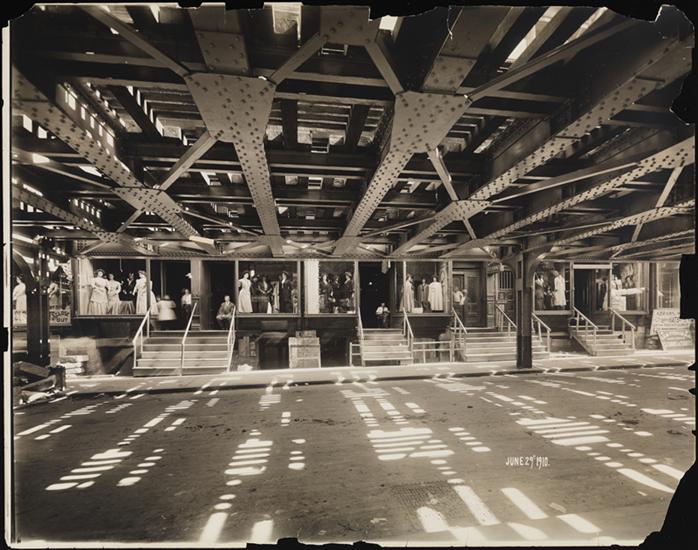
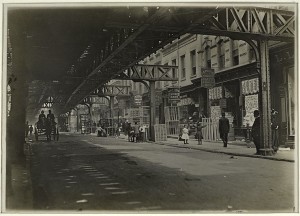
Below: Under the Division Street elevated, 1910

Courtesy Museum of the City of New York

According to the Sun, at sight of the violation, angry orthodox men mobbed the place, throwing stones and smashing the cafe windows.

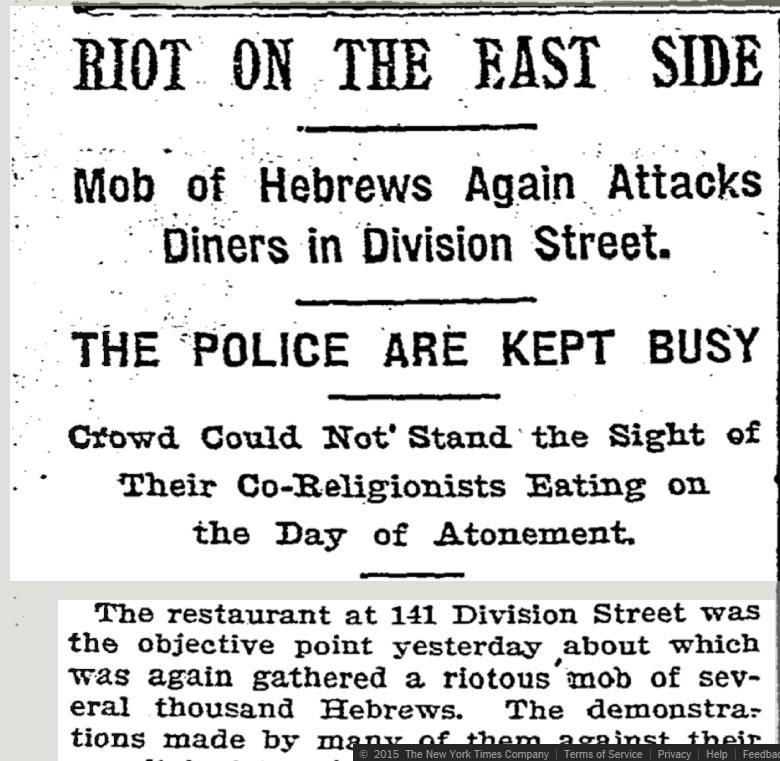
The New York Times reports that ‘several thousand Hebrews’ soon arrived to protest in the surrounding streets. The police from the local Madison Street station were called to quell the violence and asked the proprietors to close their cafe for the evening.

Below: The headline from the New York Times on September 27, 1898

1

But violence further escalated the following day, when one of the brothers reopened the cafe the next morning ‘for customers, Jewish and Gentile, all day, at the usual prices’.

Hat stores on Division Street, below the elevated train and a bit west of the action in this article. Picture is from around 1907 (NYPL)

Fearing a repeat of the evening’s disruptions, police cordoned off the street to no avail. When diners left the cafe this time, they were met by “several thousands* [who] gathered and threatened dire vengeance on those who would eat on the holy day.”

Many offenders were chased down the street for fear of their lives. Eventually, the angry protesters even managed to storm the restaurant again where they “overturned tables, smashed dishes and threw crockery at the proprietors.”

One diner was doused in hot tea. Another diner, with his three friends, happened to be military and ‘fired off a revolver to attract police’, scattered the crowd in fear. Police did arrive, with clubs drawn.

Soon the violence spilled into the streets and devolved, like so many riots of this type, into fisticuffs among angry young men.

By the end of the day, several rioters were taken into custody, and the neighborhood quickly returned to its peaceful celebration of the holiday.

As for Herrick’s, well, the advertisement at the top is from 1904, so they obviously continued stirring up ‘political spell-binders’ and controversy in the neighborhood for many more years.

*Early news reports are never very good at estimating crowd numbers, so ‘several thousands’ could also mean ‘several hundreds’. Given how crowded this neighborhood was in the 1890s, most could have simply been trying to figure out what was going on!

Categories
Film History Science

The original IMAX: Jacob Riis and his magic lantern

Jacob Riis changed the world with “How The Other Half Lives.” By using the new technology of flash photography, Riis was able to capture the squalid conditions of Manhattan tenements in a way no mere paragraph, drawing or sermon could.

The startling photographs contained in this book did not originate there, however. Riis debuted them — and would continue to exhibit them — in “magic lantern” lectures, essentially the first slide shows.

But calling them magic lanterns is far more exciting, don’t you think? Wouldn’t you have gone to class a lot more had you known your professor was lighting up the magic lantern?

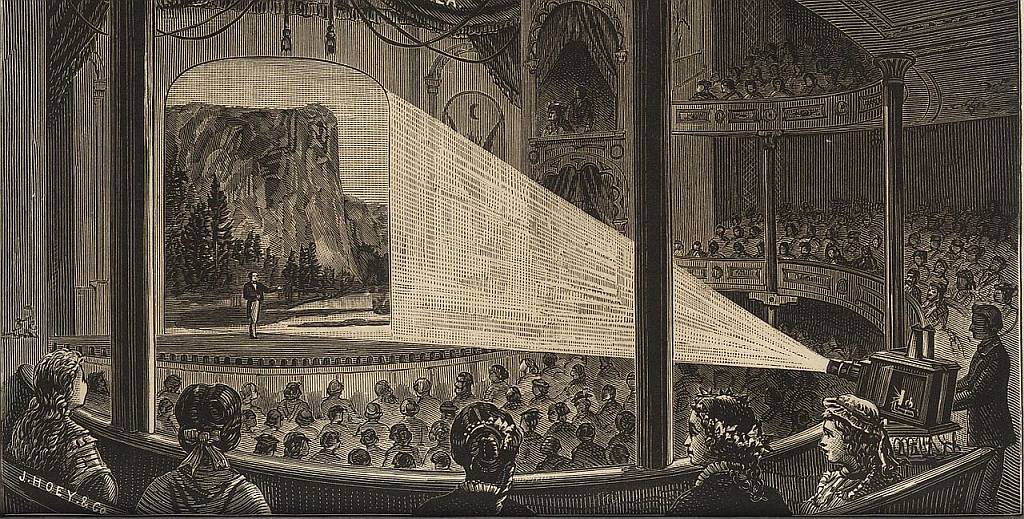
The magic lantern’s “real” name, the stereopticon, used a succession of glass slides (as few synthetic, transparent materials were not available at the time) transposed with a negative image that could be projected onto a hanging sheet.*

The magic lantern was created in the 1840s in Philadelphia and was originally intended for entertainment. In fact, one of Riis’s first schemes in New York used the magic lantern in a rather clever way.

He and a business partner would set up a stereopticon in a public park — a precursor to the Bryant Park film series — and project images of attractive people and international public landmarks, interspersing the pictures with advertisements from businesses nearby.

By 1888, however, Riis (pictured right) was using the technology to display the devastating images he had taken in the various slums around town. His first show was to the New York Society of Amateur Photographers, giving a vivid account according to some sources.

“Mr. Riis was so ingenious in describing the scenes and brought to his task .. a vein of humor,” according to a newspaper account quoted in Tyler Anbinder’s book Five Points.

Riis eventually took his ‘illustrated lectures’ on the road, electrifying audiences both taken with the modern marvel of the magic lantern and the images captured by the newly developed flash photography. “His viewers moaned, shuddered, fainted and even talked to the photographs he projected, reacting to the slides not as images but as a virtual reality that transported the new York slum world directly into the lecture hall.”

In essence, Riis was giving the equivalent of a show-stopping IMAX show to illuminate the plight of New York’s poorest and the unsafe conditions of their tenements. His shows could be considered the prototype of the film documentary.

The presentations would come with fiery speeches by Riis, often using the rhetoric of religious sermons in service of a more progressive, social cause. The shows were so successful that Riis grabbed a book deal and in 1890, his lectures and photographs were contained in his masterpiece “How The Other Half Lives.”

Interest in the magic lantern hasn’t waned today; in fact there’s a national organization that still revels in the wonder of the projected still image.

By the way, you can still find Jacob Riis all over the city. There are the Jacob Riis Houses on East 10th Street and Avenue D, built in 1949 on the site of a clump of tenements Riis railed on about, as well as the Jacob Riis Settlement House in western Queens and high school in the Lower East Side. And of course, there’s a huge Robert Moses park in Far Rockaway named for him.

*Read here for an interesting short history of the magic lantern and how images adhered to the glass

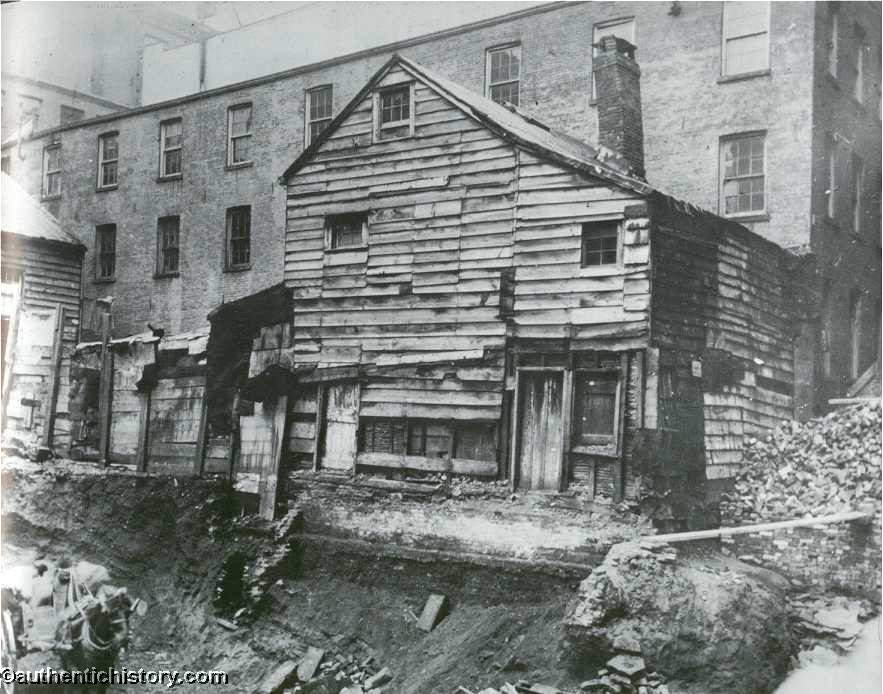
Below: a home on Bleeker Street (at Mercer and Greene streets), a Jacob Riis image that certainly must have popped up in one of his magic lantern shows

Categories
Bowery Boys Bookshelf Health and Living

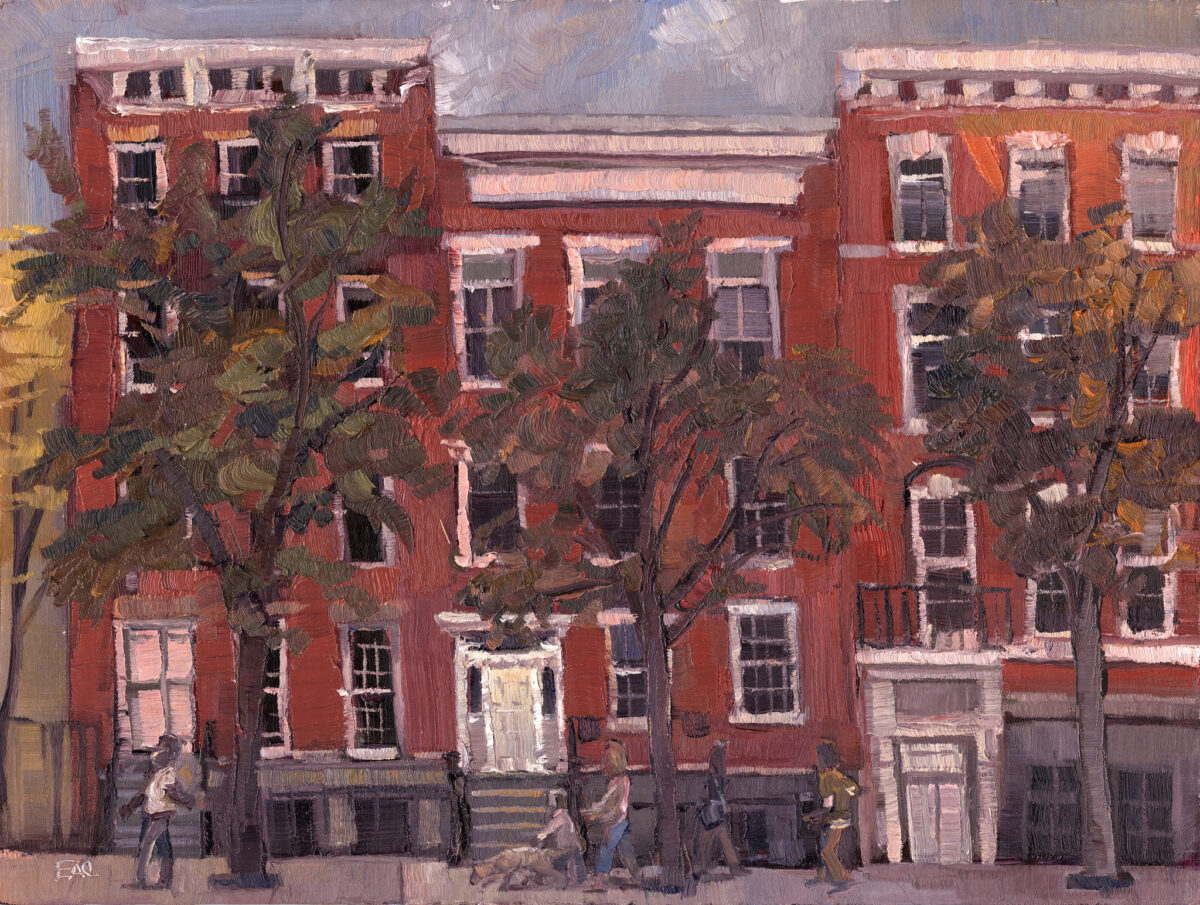
‘The House on Henry Street’: A new book on the mothers of modern activism

If you’re looking to read something about the possibility of doing absolute good in the world, then a story about the Henry Street Settlement is a good place to start.

The Lower East Side settlement house, founded by Lillian Wald in 1893, became not only a salvation to the hundreds of thousands of immigrants in the densely populated neighborhood, it created a template for social work and community care during the Progressive Era.

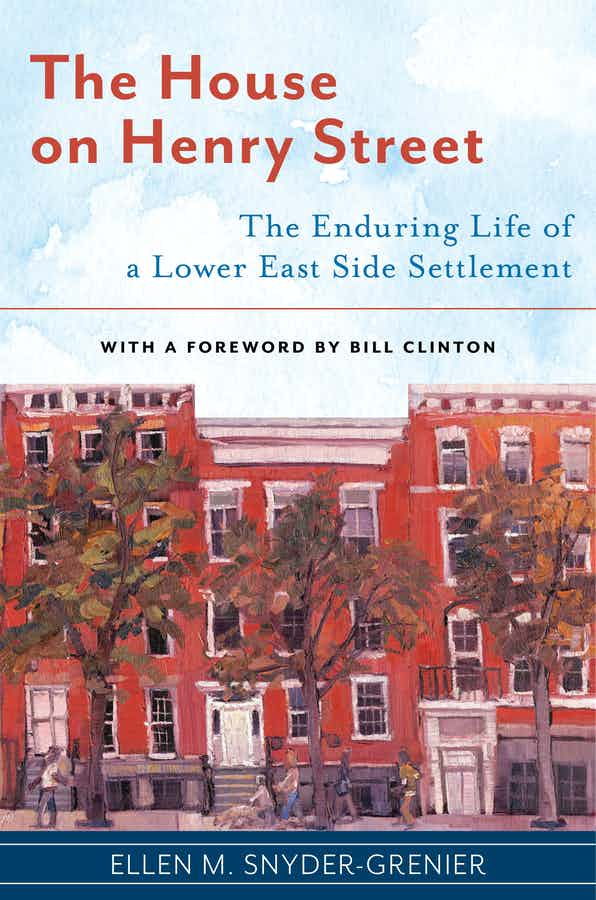
THE HOUSE ON HENRY STREET
The Enduring Life of a Lower East Side Settlement

by Ellen M. Snyder-Grenier
Washington Mews Books

But in a new book about Wald and her historic institution, curator Ellen M. Snyder-Grenier makes the convincing case that many roads of 21st century social justice pass through the doorway at 265 Henry Street as well.

Wald charted this ambitious project as a means to provide individualized nursing care to those in the Lower East Side who could not afford or were too unwilling to visit hospitals. Writes Snyder-Grenier:

Warm, inviting, and welcoming, the house on Henry Street was more than just a house; it was a home. Settlement women like Wald drew on a Victorian model of middle-class women presiding over their homes as wives and mothers with care, moral uplift and nurturing, redefining it for their modern endeavor, rejecting maternalism’s limiting aspects and owning its best and most useful parts.”

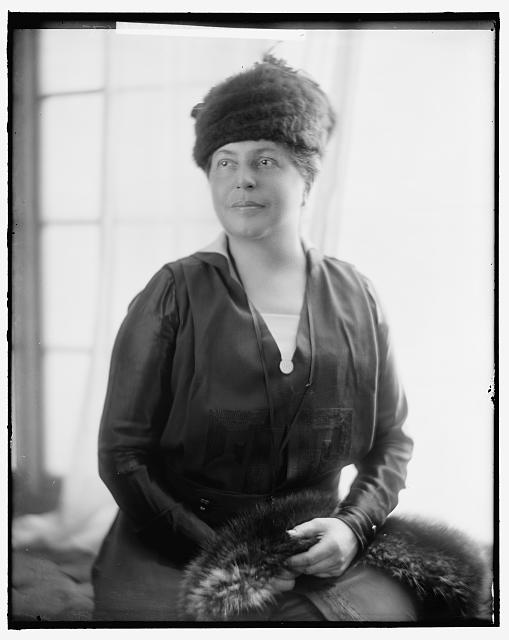
But Wald (pictured above) knew early on that struggling communities needed more than physical care. They needed advocates. “[H]er goal was not only to nurse the sick but to address the underlying social problems to poor public health.”

The Henry Street Settlement became a testing ground for social reform. Every child in America has been positively affected by Wald’s crusades, local endeavors which took wing across the country — for playgrounds, for free school lunches, for special education, for child labor laws.

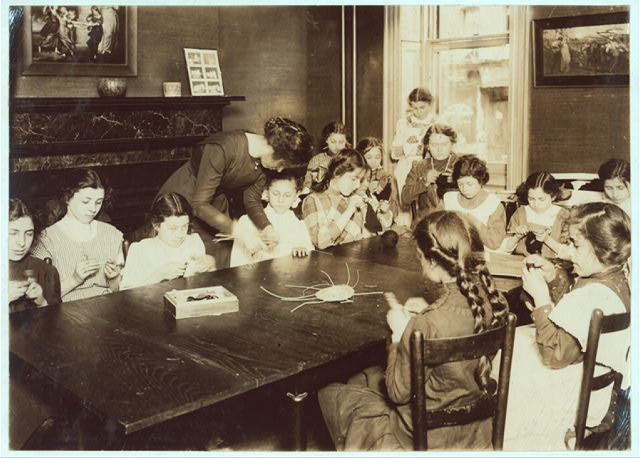
A knitting class in the famous Henry Street dining room, May 1910. The fireplace at left is still very much intact. (Library of Congress)

But Wald (and the Settlement, the fullest extension of her personality) also fought for gender equality and organized against racial injustice.

She expanded the Settlement into black neighborhoods like San Juan Hill and was on the board of the directors for the NAACP. And during wartime, she and the Settlement championed for peace.

Naturally, during conservative periods, Wald and her “seditious activities” were painted by some as anti-American.

The settlement house, around 1920. (Henry Street Settlement Collection)

After Wald’s death, Helen Hall became director of the Settlement, and for over thirty years she led the institution in directions that would have made Wald quite proud.

In particular, Hall and the Settlement became instrumental during the development of certain New Deal programs. Although, from the vantage of a social worker, FDR’s visionary programs did not go far enough.

“Hall was unhappy about what the legislation had left out — compulsory (universal) health insurance — an omission that continues to resonate in American life in politics.”

In fact the parallel with modern progressive politics is made so clear in The House of Henry Street that the book even comes with a forward written by Bill Clinton, who visited the Settlement in 1992:

“As I looked around, I saw the best of America — young and old, immigrant and native born — all there because they wanted to create a better future for themselves and their families.”


You can also check out our show from last year Saving The City: Women of the Progressive Era for more information on Wald and a tour of the Henry Street Settlement.

Categories
Planes Trains and Automobiles Podcasts

The East Side Elevateds: Life Under the Tracks

EPISODE 331 During the Gilded Age, New York City had one form of rapid transit — the elevated railroad.

The city’s population had massively grown by the 1870s thanks to large waves of immigration from Ireland and Germany. Yet its transportation options — mostly horse-drawn streetcars — were slow and cumbersome.

As a result, people rarely lived far from where they worked. And in the case of most working class New Yorkers, that meant staying in overcrowded neighborhoods like the Lower East Side.

In the 1870s, New York hoped to alleviate the population pressure by constructing four elevated railroad lines — along 2nd, 3rd, 6th and 9th Avenues — in the hopes that people would begin inhabiting Upper Manhattan and the newly acquired portion of Westchester County known as the Annexed District (today’s South Bronx).

In this show, we focus on the two eastern-most lines and their effects on the city’s growth. Take a ride with us — through Lower Manhattan, the Lower East Side, Midtown Manhattan, Yorkville, East Harlem and Mott Haven!

FEATURING an interview with elevated expert and tour guide Michael Morgenthal.

This episode is brought to you by the Historic Districts Council. Funding for this episode is provided by public funds from the New York City Department of Cultural Affairs in partnership with the City Council and Council Member Benjamin Kallos.


Listen to our podcast on the history of New York City’s East Side Elevateds here:


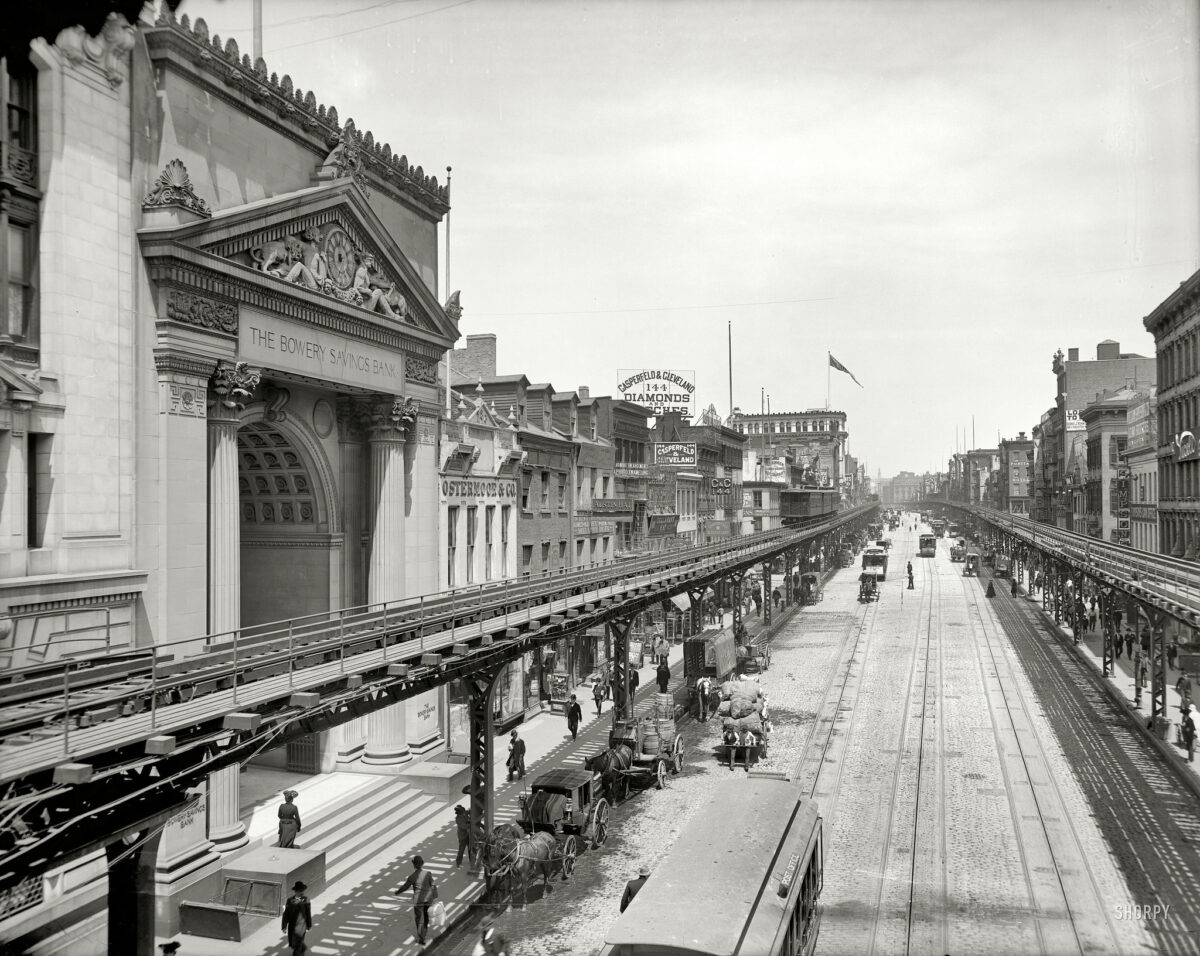
The Third Avenue elevated, 1910 — Image courtesy Shorpy. (Click here for a Hi-Res version with great detail)
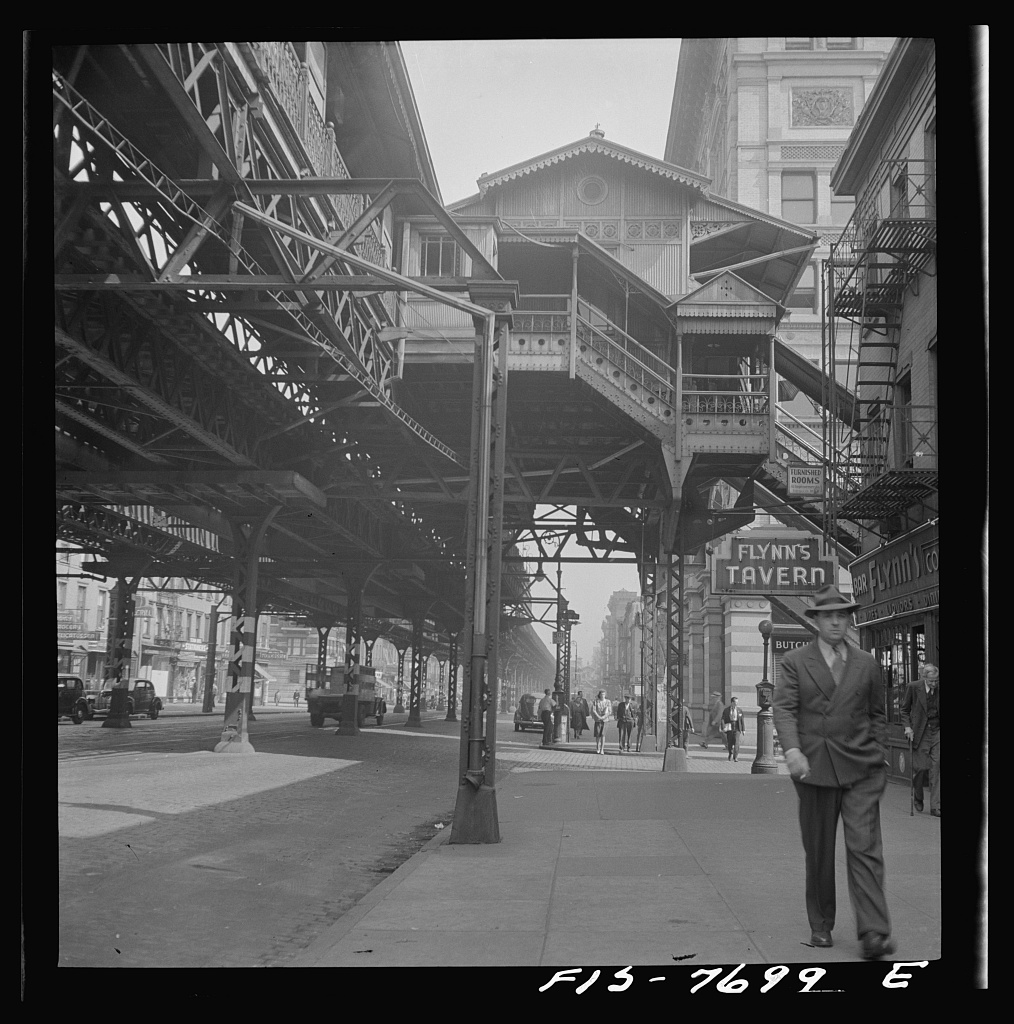
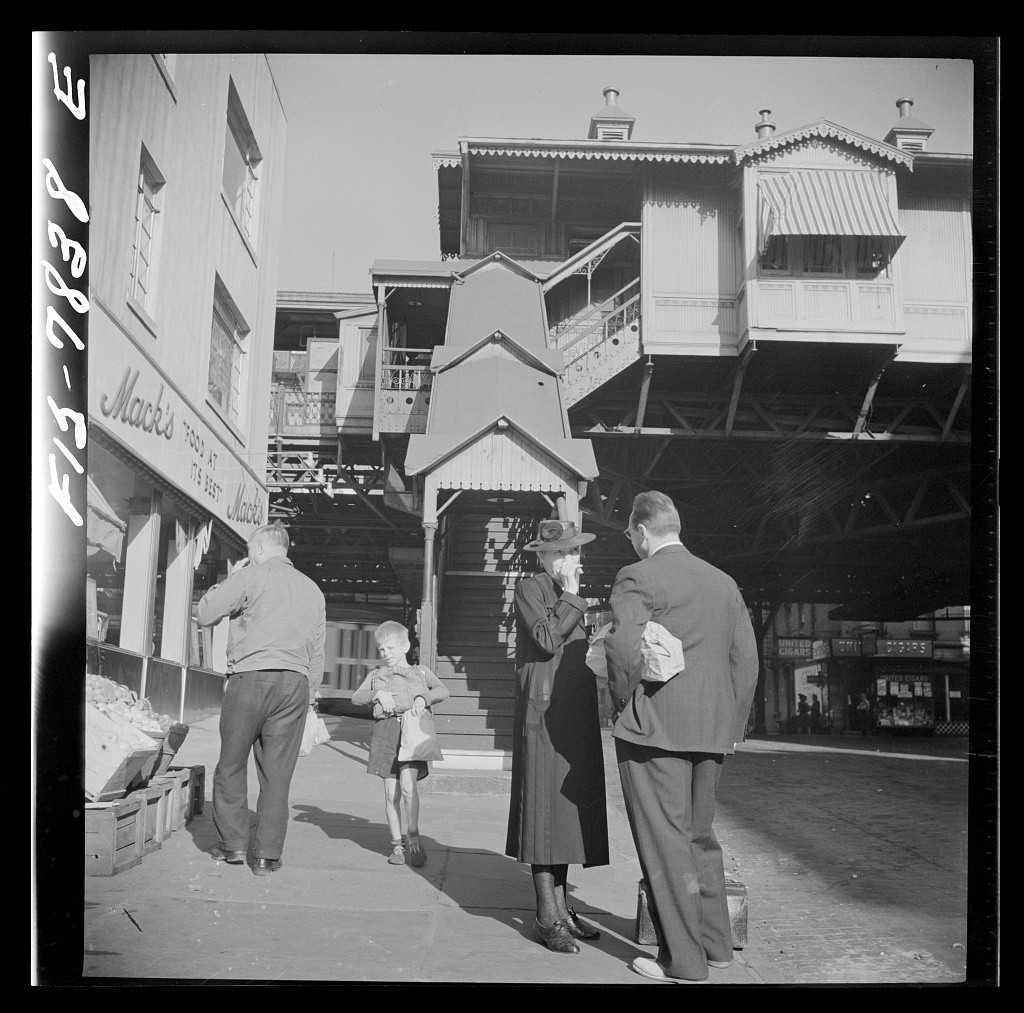
The Third Avenue El at 18th Street, September 1942. Courtesy Marjory Collins, United States Office of War Information.
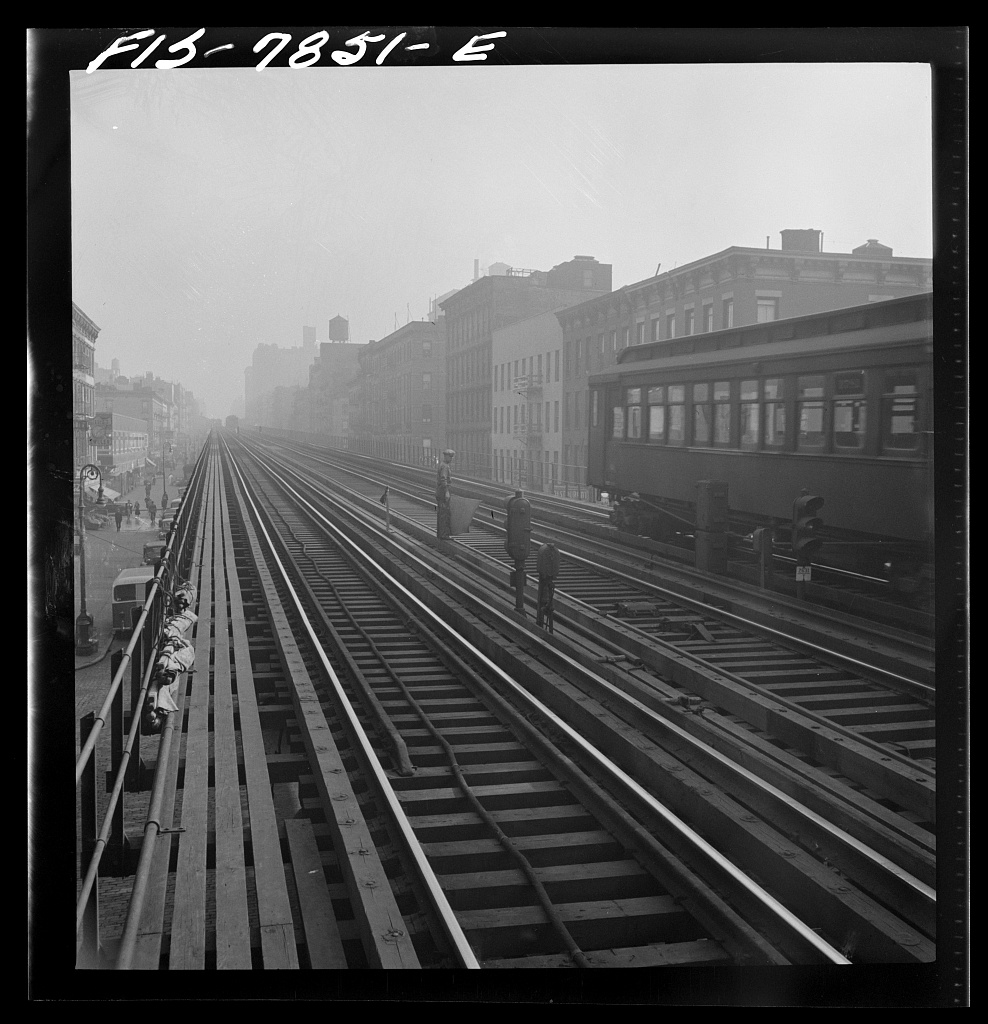
Signaller on the track of the Third Avenue elevated railway near 14th Street in the early morning, September 1942. Photographer Marjory Collins, courtesy United States Office of War Information.
Elevated railway station at Fourteenth Street and Third Avenue, September 1942. Photographer Marjory Collins, courtesy United States Office of War Information.
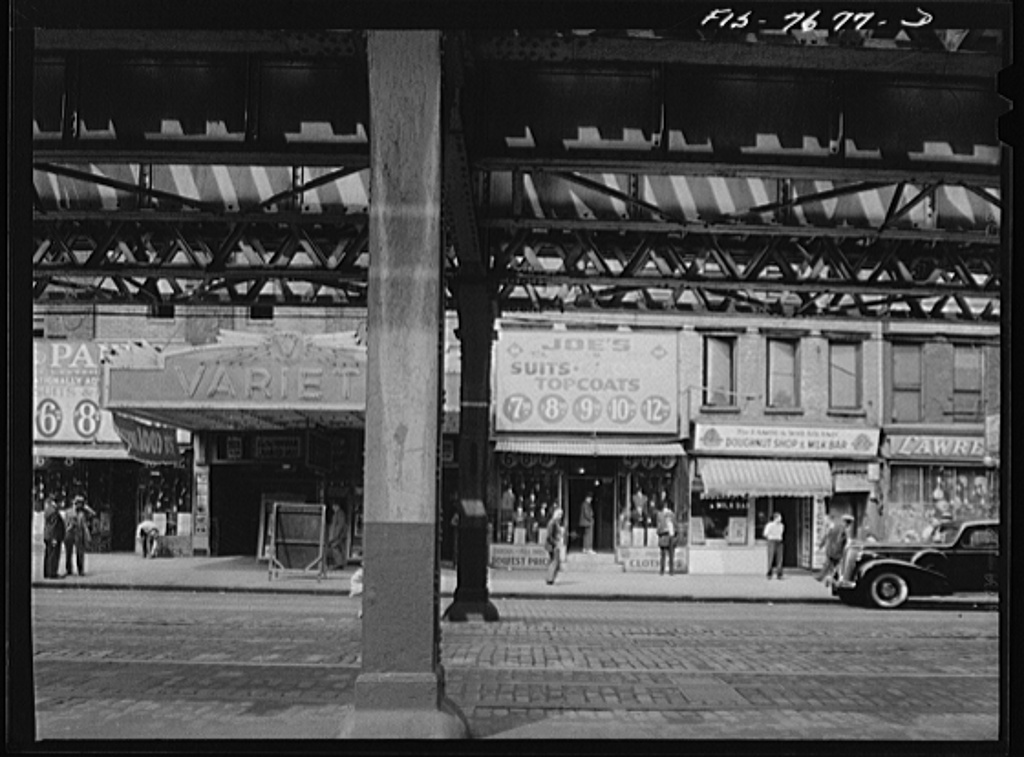
Second Avenue elevated railway at 14th Street in the midst of demolition, September 1942. Photographer Marjory Collins, courtesy United States Office of War Information.
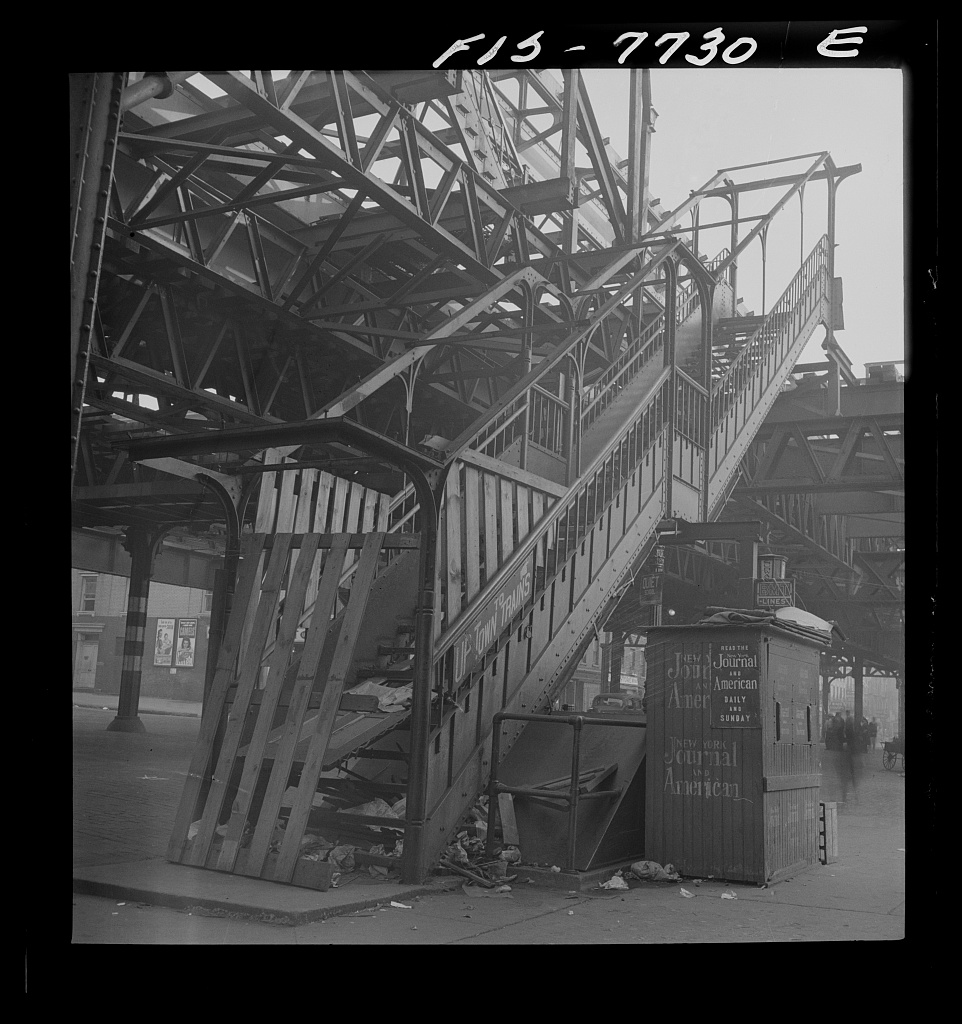
94th Street. Station of the Third Avenue elevated railway at 8 a.m. September 1942. Photographer Marjory Collins, courtesy United States Office of War Information.

FURTHER LISTENING

After listening to this episode, check out these past Bowery Boys episodes on subjects featured in the latest show.


The Bowery Boys: New York City History podcast is brought to you …. by you!

We are now producing a new Bowery Boys podcast every week. We’re also looking to improve and expand the show in other ways — publishing, social media, live events and other forms of media. But we can only do this with your help!

We are now a creator on Patreon, a patronage platform where you can support your favorite content creators.

Please visit our page on Patreon and watch a short video of us recording the show and talking about our expansion plans.

If you’d like to help out, there are six different pledge levels. Check them out and consider being a sponsor.

We greatly appreciate our listeners and readers and thank you for joining us on this journey so far.


Categories
Health and Living

Quarantine on the Lower East Side: A frightening tale from 1892

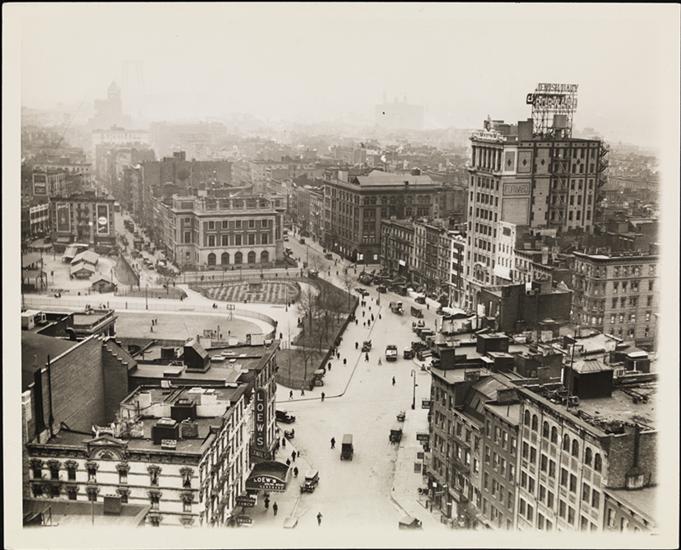
The neighborhood converging at the intersections of Essex Street, Rutgers Street, Canal Street and East Broadway on the Lower East Side — officially called Straus Square** — somehow seems exactly as it might have looked 125 years ago.

Anchored by Seward Park and its beautiful Carnegie library, it retains some of its turn-of-the-century character, while allowing for both Chinese-run restaurants and bakeries and trendier spillover in the form of designer restaurants and music lounges. There’s even a church from the 1840s (St. Teresa’s, at Rutgers and Henry Streets)

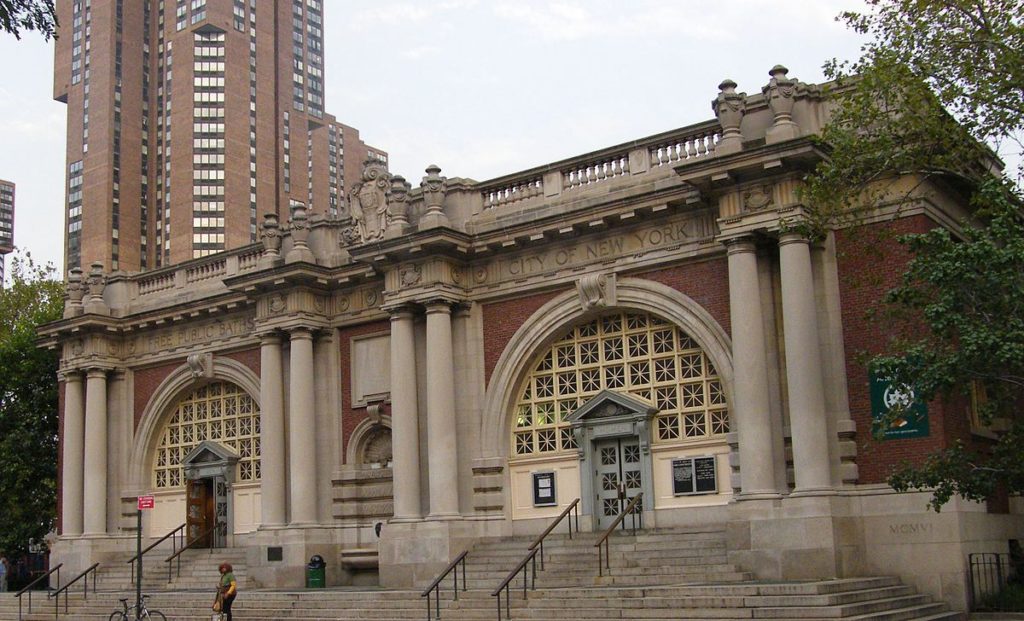
But one building that was once in the center of it all harbors a secret — 5 Essex Street.  

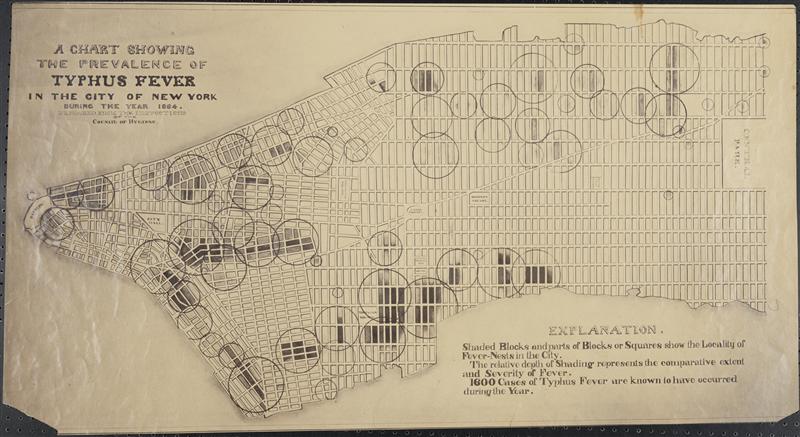
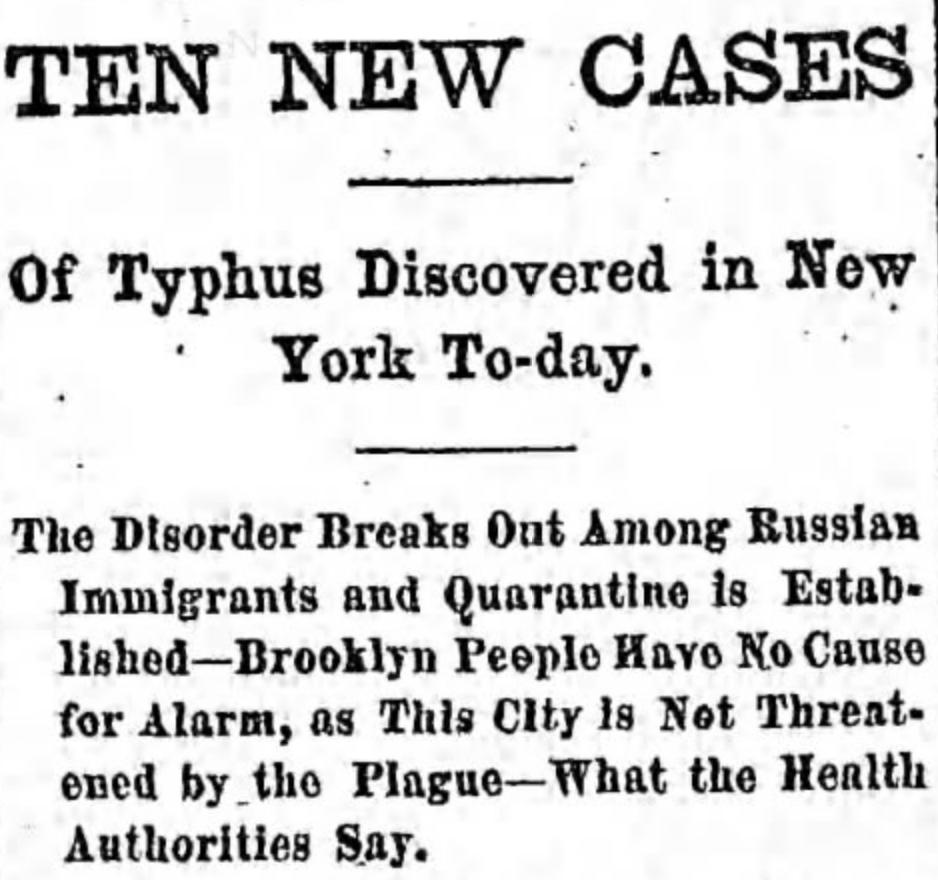
It was at this address in the winter of 1892 that dozens of victims of the dreaded typhus disease were quarantined.

A map of typhus outbreaks from the year 1864. Courtesy the Museum of the City of New York

Thousands of immigrants were arriving in New York harbor by the late 19th century and making their home here on the Lower East Side, where aid organizations would often house families without means to support themselves. By 1892, the Lower East Side had become one of the most densely populated places on earth.

These were also the opening days of Ellis Island, and the strict examination that would make the immigrant center infamous had not yet been established. New York had safeguards in place to stop the spread of diseases, but they weren’t perfect.

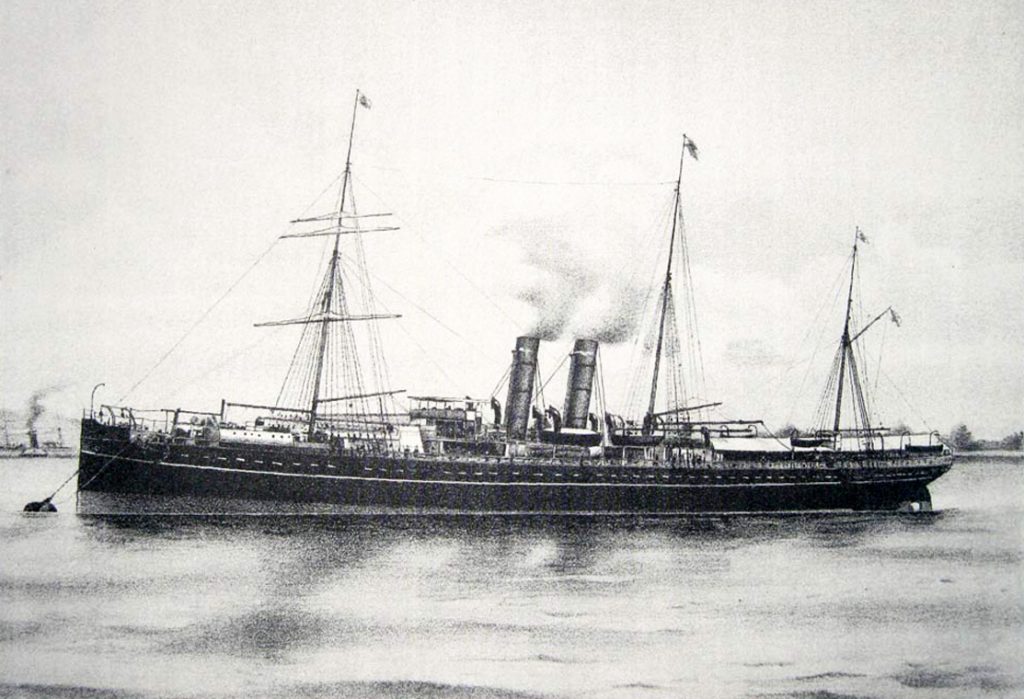
Courtesy Clyde Ships

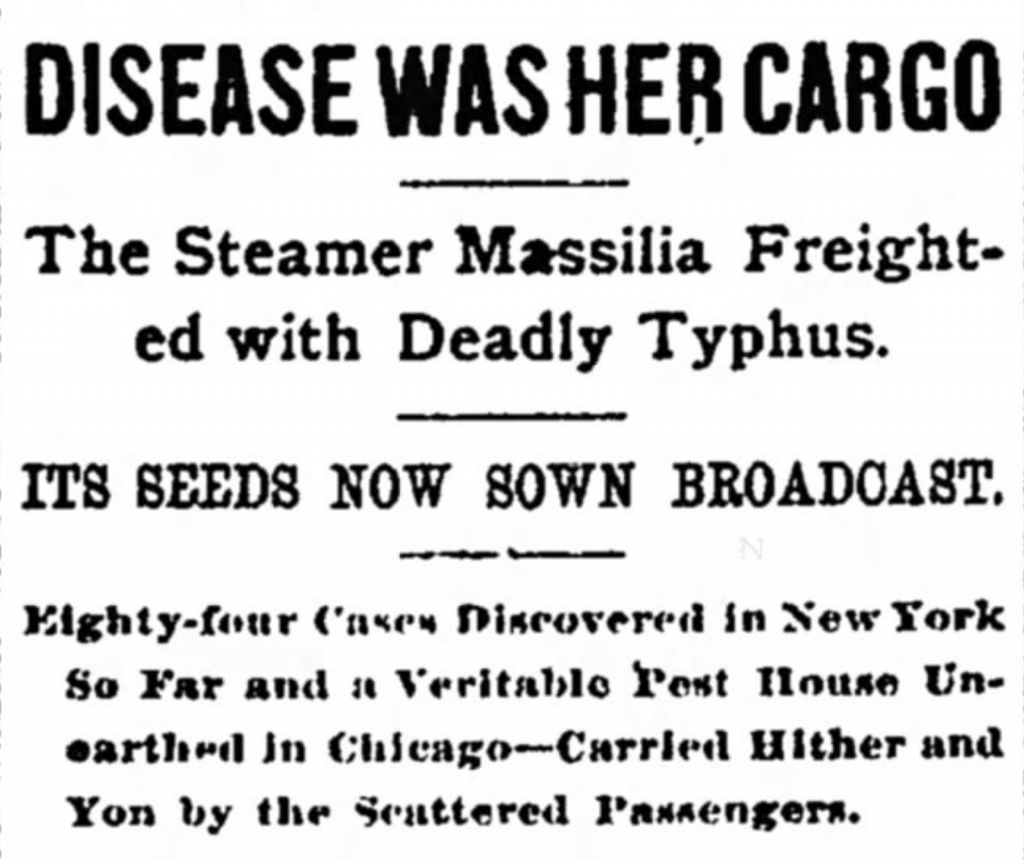
The steamship Massilia (pictured above) arrived during Ellis Island’s first month of operation, January 1892, carrying over 700 hopefuls, most of them Italians and Russian Jewish immigrants escaping persecution.

Most of them ended up on the Lower East Side, including members of the Mermer family, who the United Hebrew Charities organization arranged to live in the small tenement at 5 Essex Street.

1 Essex, 3 Essex and 5 Essex, seen from Straus Square, 1927. (Courtesy New York Public Library)

The passengers had not been properly checked for various diseases, including typhus, a devastating affliction that had swept through America during much of the 19th century. It would reach its height of destruction in Europe during World War I, where it would kill millions.

This horrifying sickness, spread by fleas or mites, was on the Massilia. And its passengers were now spread throughout the Lower East Side.

The condescending press of the day described the ship’s passengers as “the impoverished, unkempt class that usually comes from that land, and of the kind that such a scourge as typhus would be likely to mark as its own.”

Headline from the Brooklyn Daily Eagle, Feb. 12, 1892

It was first noticed among 15 Massilia passengers at another address, 42 East 12th Street. The city and the United Hebrew Charities scoured the city for all the remaining Massilia immigrants and found out to their horror that over 70 of them had typhus, including members of the Mermer family at 5 Essex.

Those with symptoms of the disease were transported out to North Brother Island. However all other passengers were forced into the two addresses — 5 Essex Street and 42 East 12th Street — and quarantined there, with police guarding the doors to make sure that nobody could go in. Or escape.

The remaining members of the Mermer family were now trapped at 5 Essex.

A melodramatic headline from the Middleton Times-Press, Feb 16, 1892. (Newspapers.com)

The mother Fayer was dead and two symptomatic children (who would later survive) were taken away. They were now quarantined in their home with dozens of others, unsure if they would all succumb to the same fate.

Even with increased precautions, the disease still found its way out. There had been little spread of typhus in the 1890s; now, with the arrival of the Massilia, dozens of cases were reported up and down the major cities of the East Coast.

Fearing a new outbreak, city officials did something drastic. In March, they emptied the two quarantined buildings and placed everybody who lived there on North Brother Island, whether they had the sickness or not.

It would be a nerve-racking month, a disturbing introduction to America. After a few weeks, if patients were without symptoms, they would finally be allowed to leave.

The quarantine seemed to do the trick; less than 50 people died from this potentially disastrous outbreak that struck the heart of the most densely populated neighborhood in New York.

Image courtesy the Lo Down

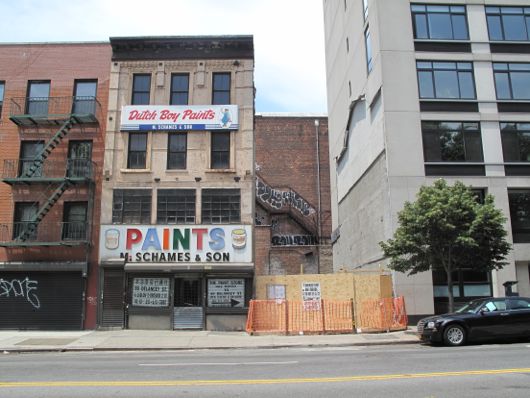
UPDATE: When I first published a version of this article back in 2008, 5 Essex Street was still standing. But the building was not landmarked and this area of the Lower East Side is not contained in a historic district.

But in 2010 it was torn down by a developer — and left empty. For the past three years, a cactus store greenhouse have sat on this spot.

_________________________________________________

Further contemporary news reports of the quarantine house at 5 Essex can be found here.

Picture at top (of Straus Square in 1928) courtesy the Museum of the City of New York

**Straus Square is named for Nathan Straus, the philantropist and co-owner of Macy’s Department Store. Coincidentally, Nathan’s brother Oscar would become Secretary of Commerce under Theodore Roosevelt and oversee the administration of Ellis Island. Nathan’s other brother Isidor would die on the Titanic.

Categories
Food History Podcasts

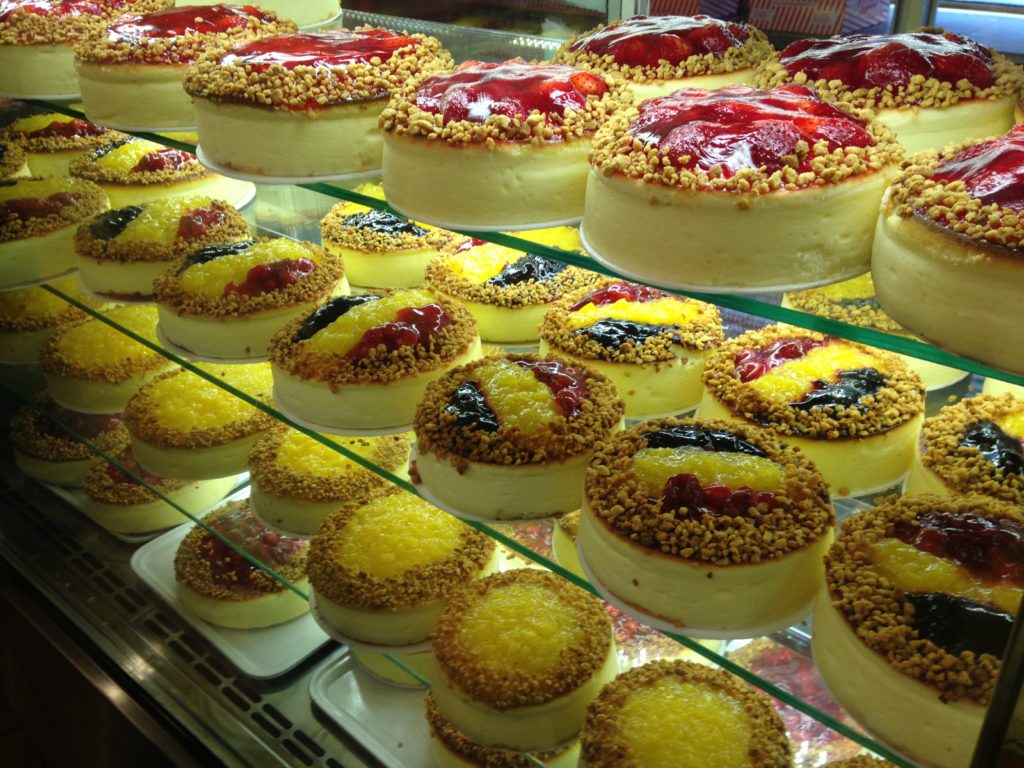
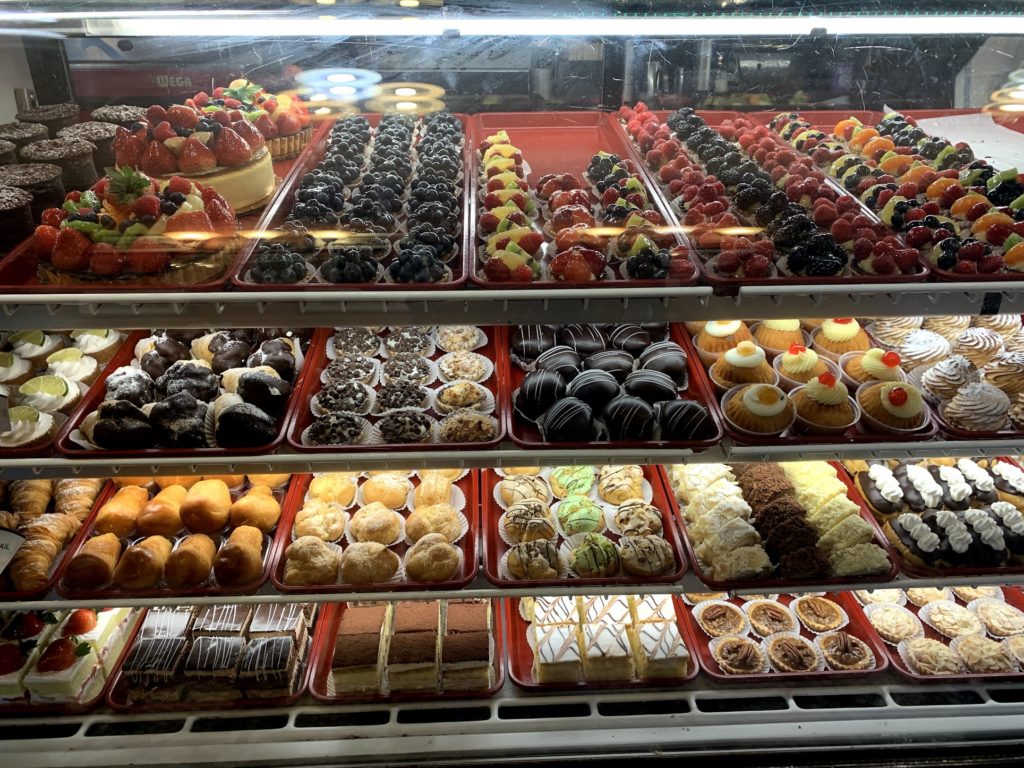
Just Desserts: The origins of New York cheesecake, cannoli and other glorious sweet things

EPISODE 306 Recorded live at the WNYC Greene Space

In this special episode, the Bowery Boys podcast focuses on the delicious treats that add to the New York experience. These aren’t just the famous foods that have been made in New York, but the unique desserts that make the city what it is today.

The origins of some of these treats go way, way back — the Dutch New Amsterdam. Others have become staples of the New York diet thanks to immigrant groups who first developed and perfected them in neighborhoods like the Lower East Side.

So while this show may seem like a trifle, the underlying story celebrates the contributions of local communities in creating timeless food classics, served in historic bake shops, candy stores and cafes.

Cheesecake and cannoli are two of our five historic treats. What are the other three? Tune in and find out! (And definitely save some room after dinner for dessert.)


LISTEN NOW — JUST DESSERTS


THE TAKEOUT — A bonus after-show podcast for those who support us on Patreon. Greg dives into further tales of sweet history. Near the Brooklyn Bridge sits a remnant of an old Revolutionary War sugar house with a disturbing history (and possibly ghosts). The Gilded Age shopping district of Ladies Mile was also the home of a short lived chocolate factory. And the tragic story behind the Tootsie Roll.

PLUS: More on the history of soft drinks. Who was Doctor Pepper?


A big thank you to WNYC and the Greene Space for holding this Bowery Boys live event. You can watch video of our recording session at the Greene Space website.


DESSERT PLACES WE MENTIONED ON THIS WEEK’S SHOW — and a few others that we love. Pay them all a visit!

Donut Pub, Manhattan (Chelsea), 203 W 14th St
Doughnut Plant, various locations in Manhattan and Brooklyn
Peter Pan Donut & Pastry Shop, Brooklyn (Greenpoint), 727 Manhattan Ave
Economy Candy, Manhattan (Lower East Side), 108 Rivington St
Brooklyn Farmacy & Soda Fountain, Brooklyn (Carroll Gardens), 513 Henry Street
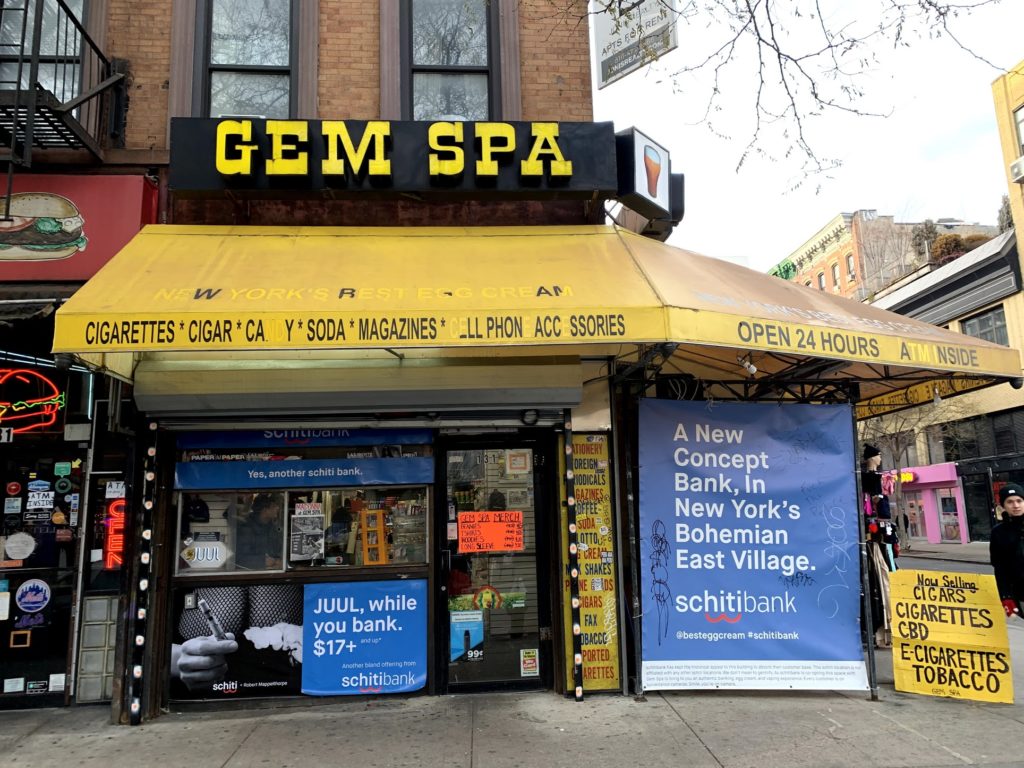
Gem Spa, Manhattan (East Village), 131 2nd Avenue
Ray’s Candy Store, Manhattan (East Village), 113 Avenue A
Junior’s Cheesecake, various locations in Manhattan and Brooklyn
Eileen’s Special Cheesecake, Manhattan (Nolita) 17 Cleveland Place
Court Pastry Shop, Brooklyn (Carroll Gardens) 298 Court Street
Caputo’s Bake Shop, Brooklyn (Carroll Gardens) 329 Court Street
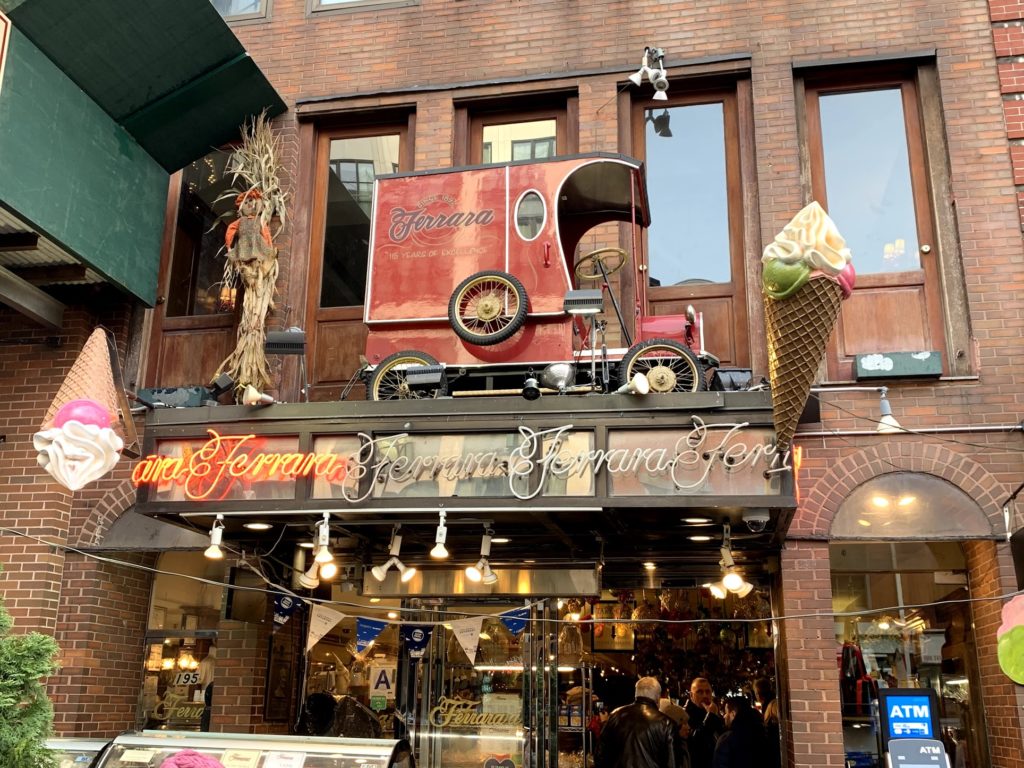
Cafe Ferrera, Manhattan (Little Italy), 195 Grand Street
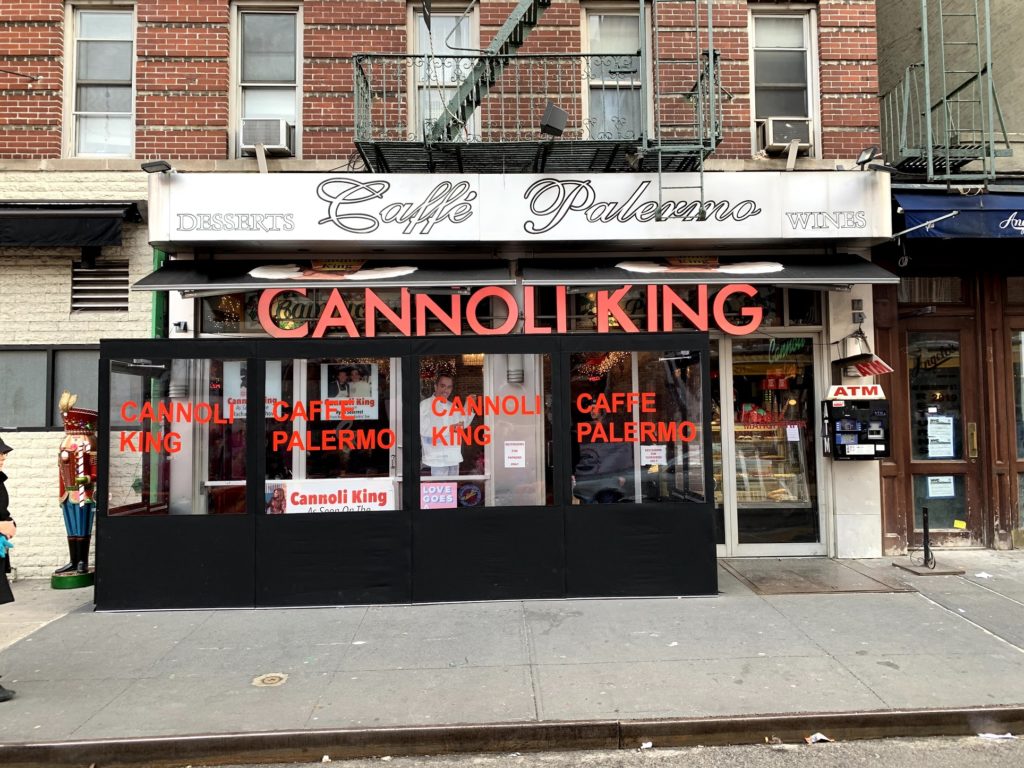
Caffe Palermo ‘The Cannoli King’, Manhattan (Little Italy), 148 Mulberry Street
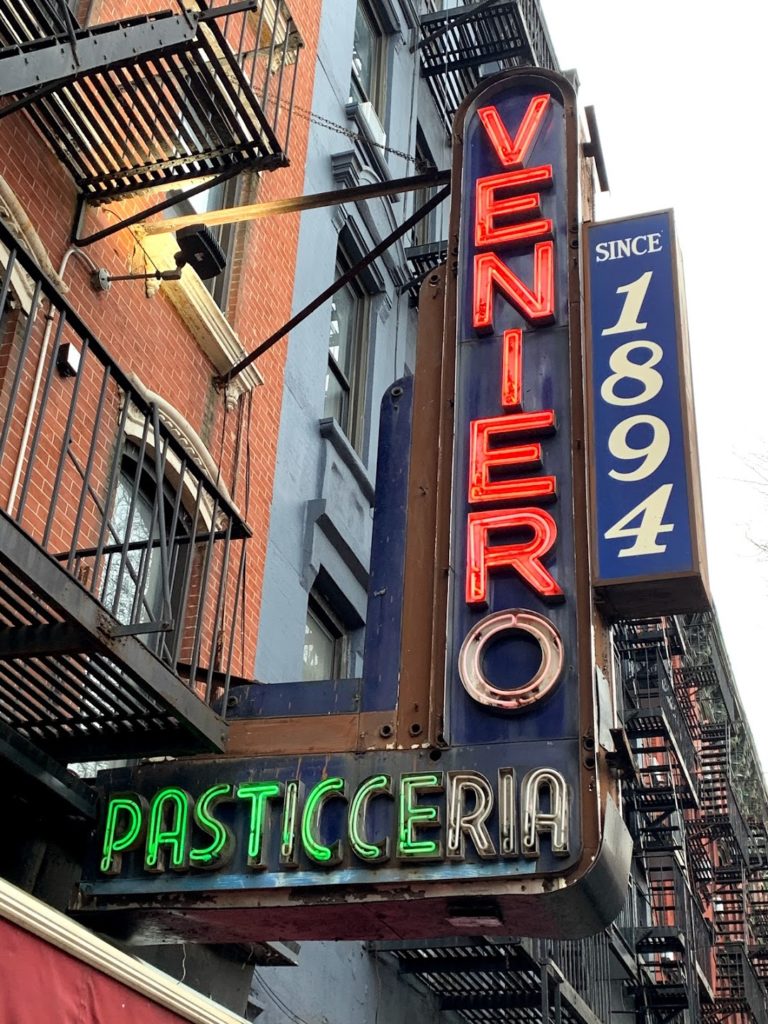
Veniero‘s Pasticceria & Caffé, Manhattan (East Village), 342 E 11th Street
William Greenberg Desserts, Manhattan (various locations)
Hemstrought’s Bakeries, Ithica, New York

FURTHER LISTENING: Check out our other food history episodes!


Inside the wonderful world of Junior’s in Brooklyn
A view inside Caputo’s Bake Shop in Carroll Gardens, Brooklyn
A no-fuss egg cream can still be had at Gem Spa, which has been serving them for generations.
Sweets to your heart’s delight at Veniero’s, celebrating 125 years.
Ferrara’s in Little Italy is always hopping with hungry patrons….
…as is Caffe Palermo’s around the corner, aka the Cannoli King!
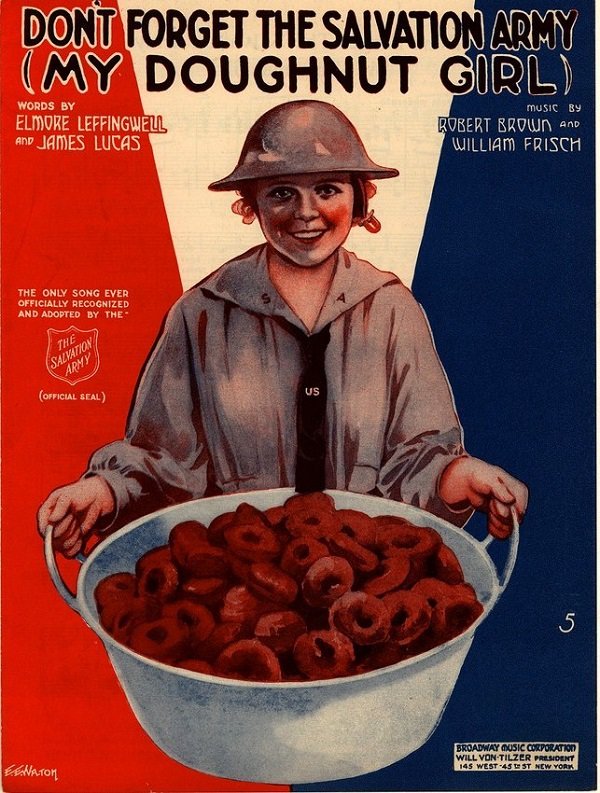
Sheet music celebrating the World War I ‘doughnut girl’
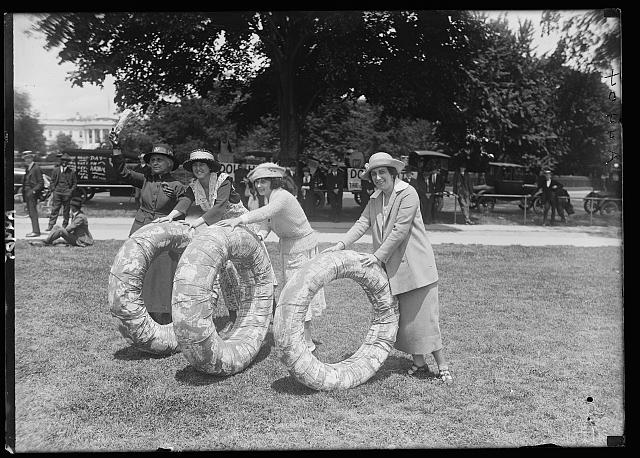
A 1922 Salvation Army ‘doughnut race’. Harris & Ewing, photographer, Library of Congress
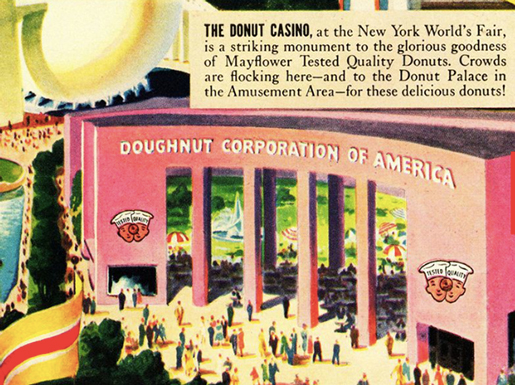
The Donut Casino, delivering thousands of free doughnuts to World’s Fair goers.
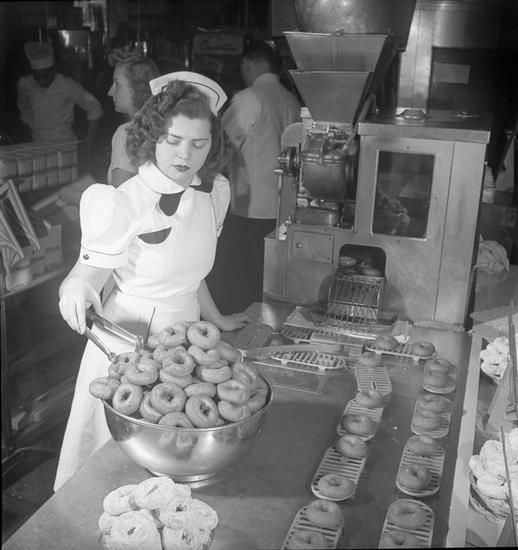
A well-dressed employee working a doughnut machine at a shop in Times Square. 1945, Bob Leavitt, Look Magazine. Courtesy Museum of the City of New York
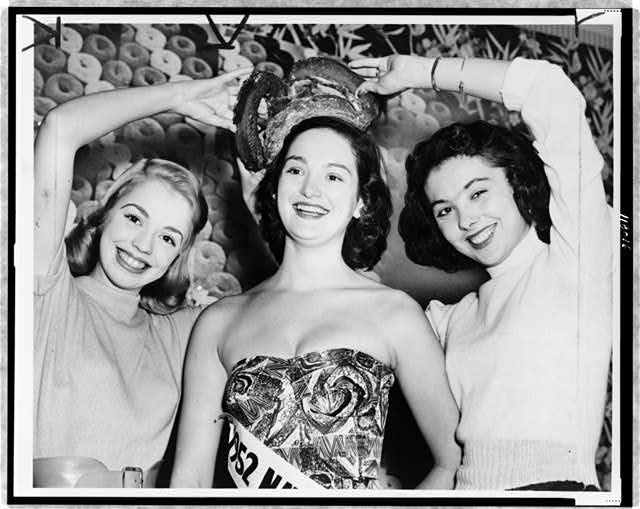
Nancy Templeton, the 1952 National Doughnut Queen flanked by her runners-up. orld Telegram & Sun photo by Fred Palumbo, Library of Congress
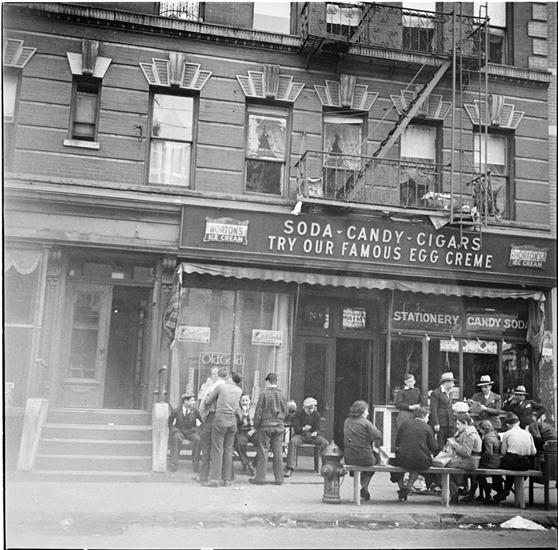
A New York City candy store, advertising egg creams, 1935. Arnold Eagle, photographer. Courtesy Museum of the City of New York.
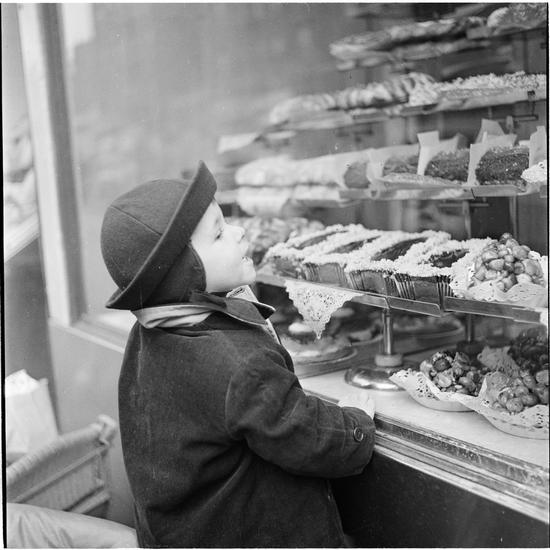
A photo taken by Stanley Kubrick in 1947 of a child admiring pastries. Courtesy Museum of the City of New York
Categories
Brooklyn History Podcasts

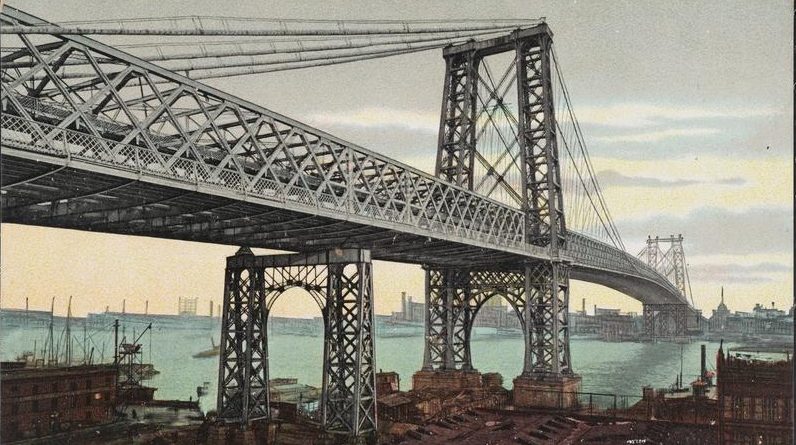
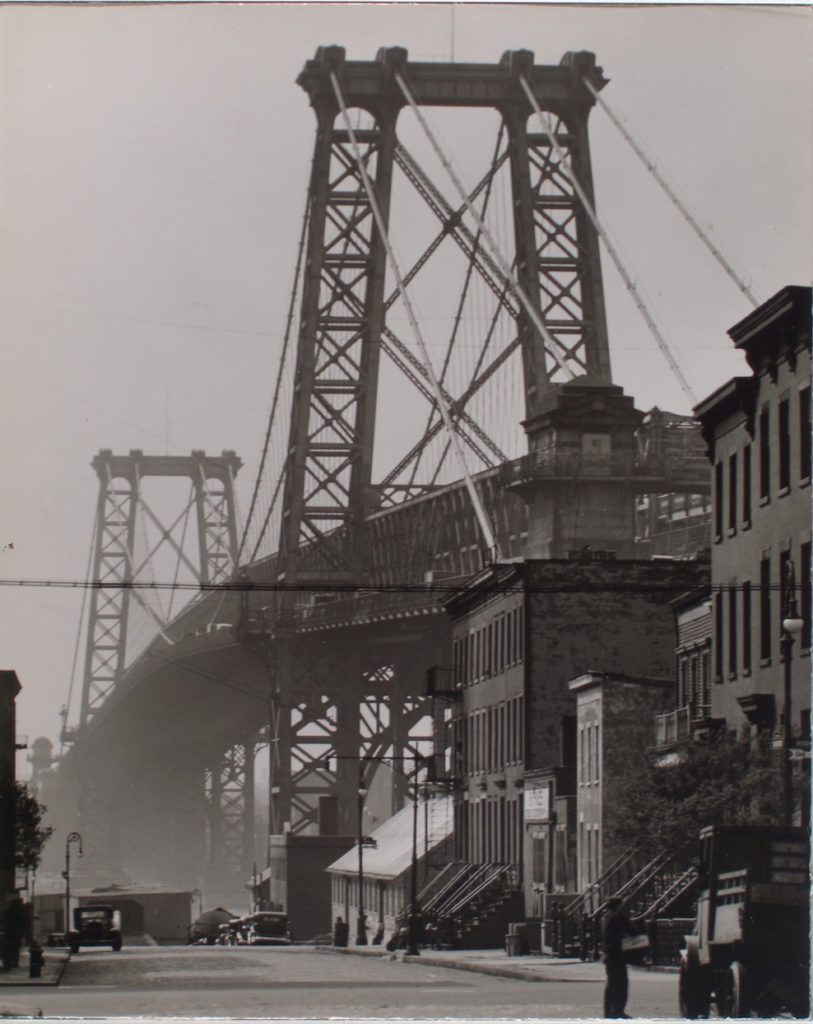
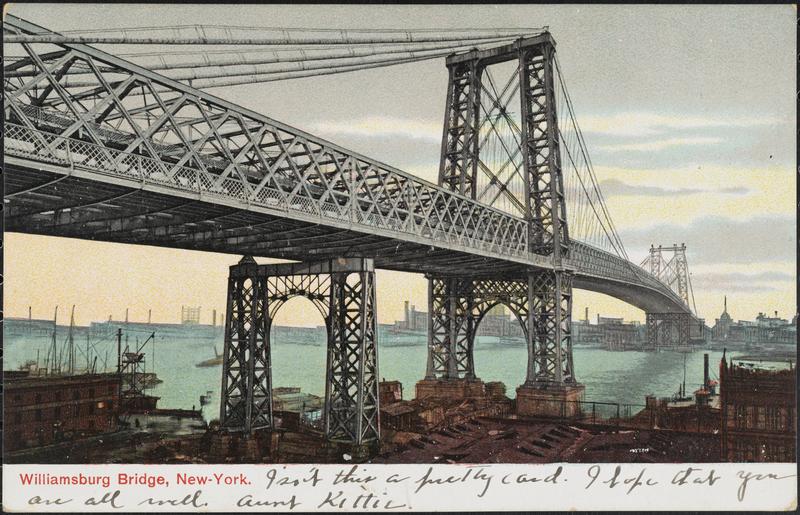
Crossing to Brooklyn: How the Williamsburg Bridge Changed New York City

PODCAST The story of the Williamsburg Bridge — poorly received when it was built but vital to the health of New York City

Sure, the Brooklyn Bridge gets all the praise, but the city’s second bridge of the East River has an exceptional story of its own.

In this episode, we’ll answer some interesting questions, including:

— Why is the bridge named for a 19th century industrial neighborhood in Brooklyn and why is it not, for instance, called the Manhattan Bridge (a name not in use yet in 1903) or the East River Bridge (which was its original name)?

— Why did everybody think the bridge looked so unusually ugly and how did the city belatedly try and solve the problem?

— Why did one population in the Lower East Side find the bridge more important than others?

— And why was the bridge is such terrible shape in the 20th century? Did it really almost collapse into the river?

PLUS: How the fate of the two neighborhoods linked by the Williamsburg Bridge would change radically in the 115 years since the bridge was opened.

Listen Now: Williamsburg Bridge Podcast

________________________________________________________

The Bowery Boys: New York City History podcast is brought to you …. by you!

We are now producing a new Bowery Boys podcast every other week.  We’re also looking to improve the show in other ways and expand in other ways as well — through publishing, social media, live events and other forms of media.  But we can only do this with your help!

We are now a member of Patreon, a patronage platform where you can support your favorite content creators for as little as a $1 a month.

Please visit our page on Patreon and watch a short video of us recording the show and talking about our expansion plans.  If you’d like to help out, there are five different pledge levels (and with clever names too — Mannahatta, New Amsterdam, Five Points, Gilded Age, Jazz Age and Empire State). Check them out and consider being a sponsor.

We greatly appreciate our listeners and readers and thank you for joining us on this journey so far. 

_________________________________________________________

We’d also like to thank WeWork for sponsoring the Bowery Boys podcast. Enter to win a 1-month hot desk membership to WeWork checking into this link. This contest only last a few more days and the winner will be announced on March 30.

we.co/boweryboyshotdesk

And we’d also like to thank our additional sponsors Hulu (and the gripping new thriller The Looming Tower) and Audible. For a free 30-day trial (and a free audiobook) go to audible.com/bowery or text the word BOWERY to 500-500

________________________________________________________________________

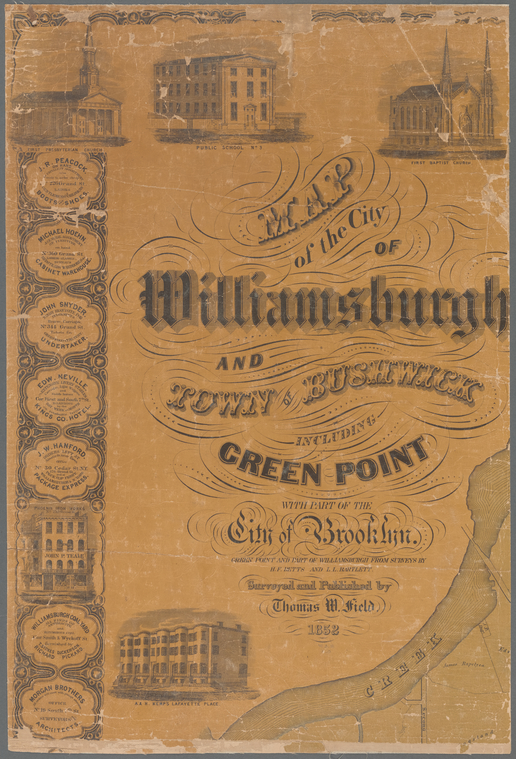
A map of the City of Williamsburgh and Town of Bushwick including Green Point, 1852

NYPL

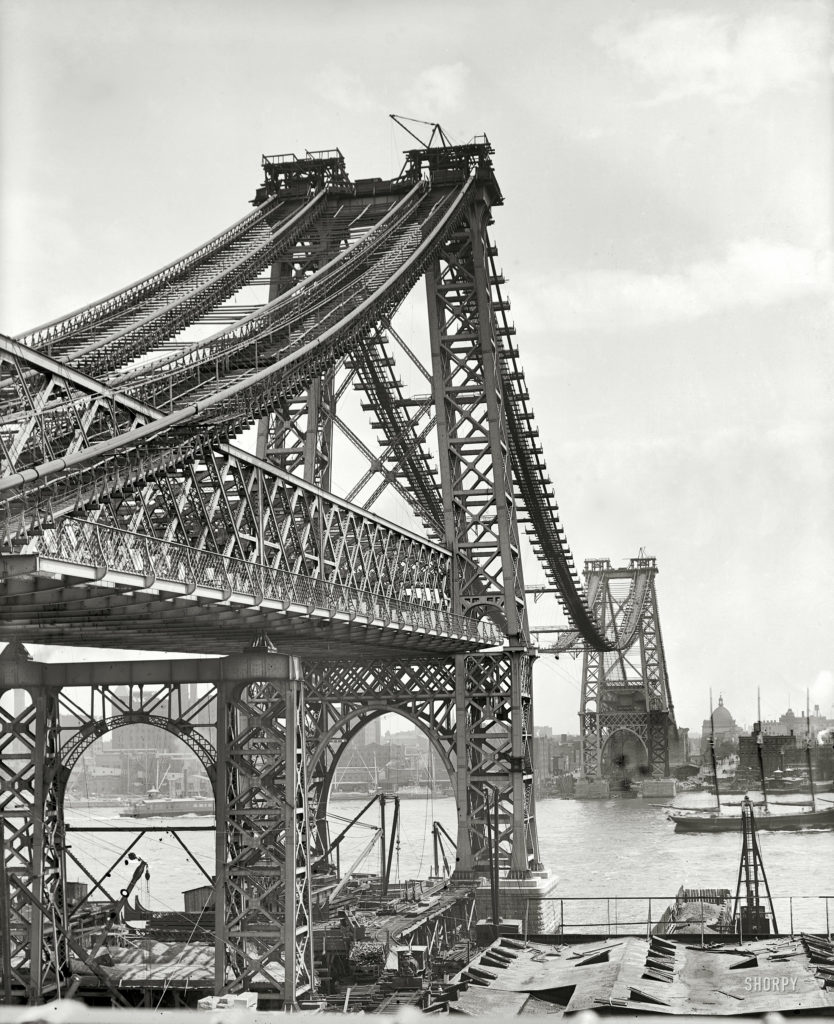
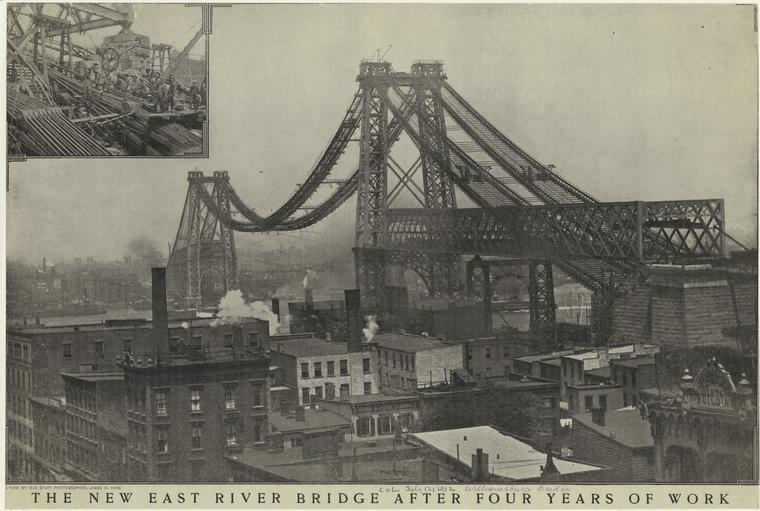
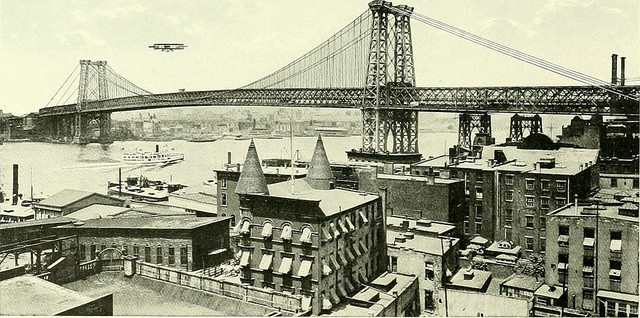
In 1902, the bridge was finally near completion, but many were worried about the bridge’s functional plainness.

Library of Congress/Cleaned up image courtesy Shorpy
New York Public Library

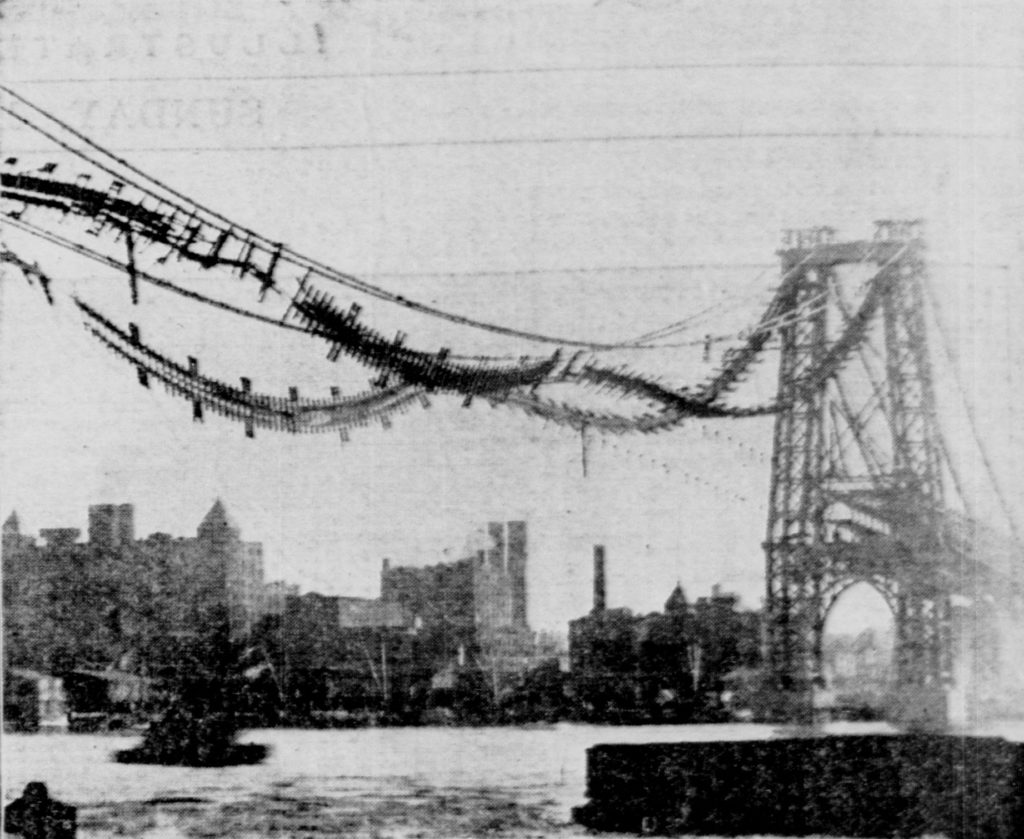
A 1903 fire on the bridge created a scary scene over the East River, but the cables and wires proved durable.

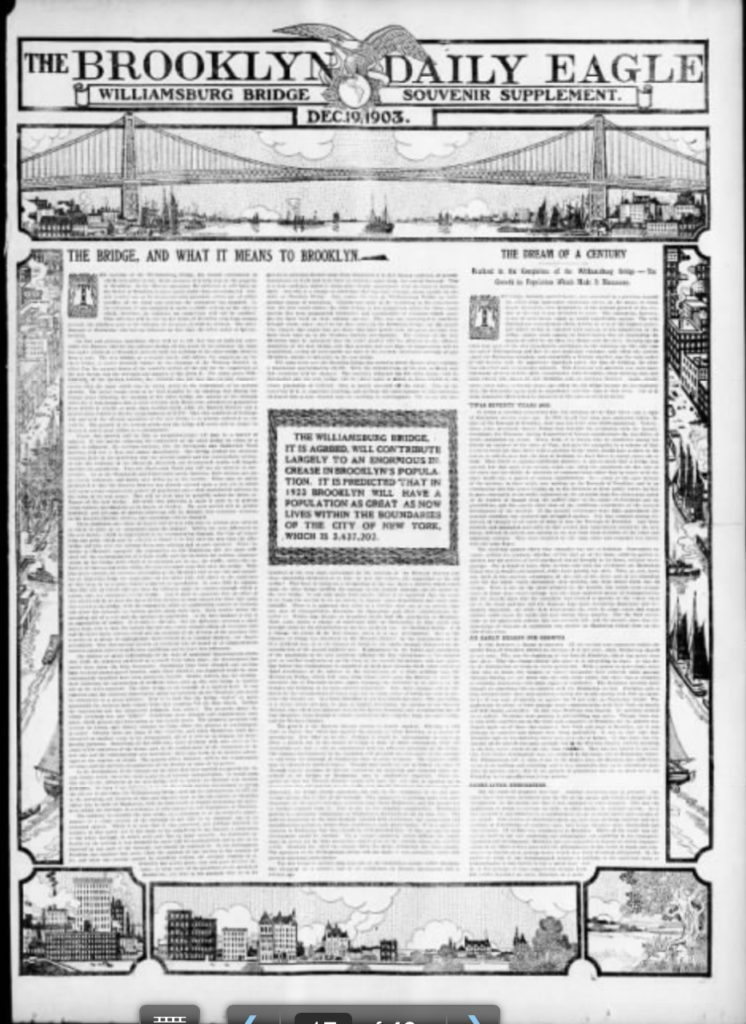
From the Brooklyn Daily Eagle souvenir section celebrating the opening of the bridge:

Bertrand Brown/MCNY

An illustration from the 1915 book New York: The Wonder City

Flickr commons

Seen from South Eighth and Berry Streets in Brooklyn, 1935.

Berenice Abbott/NYPL

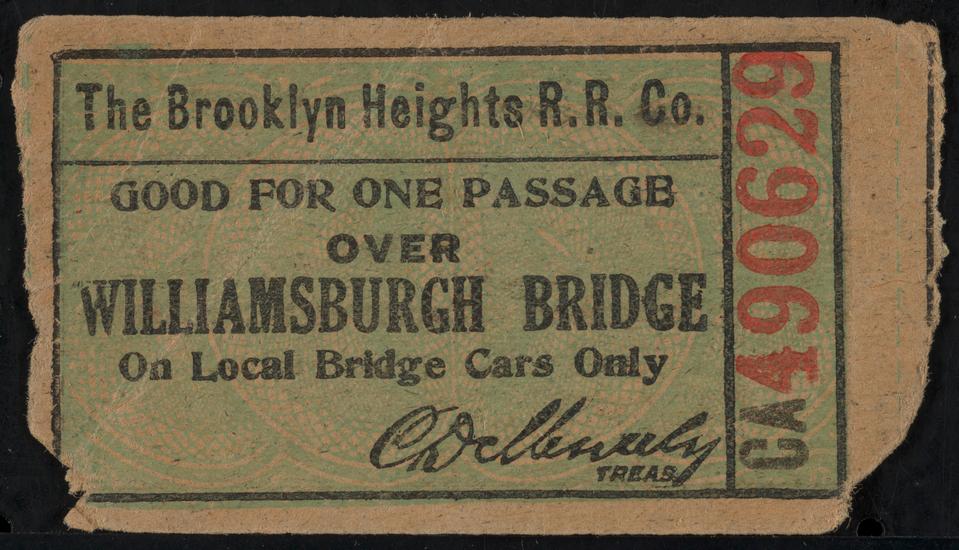
The old spelling of the name continually popped up in various places as late as the early 20th century. This passenger tickets dates to between 1903 and 1915.

MCNY

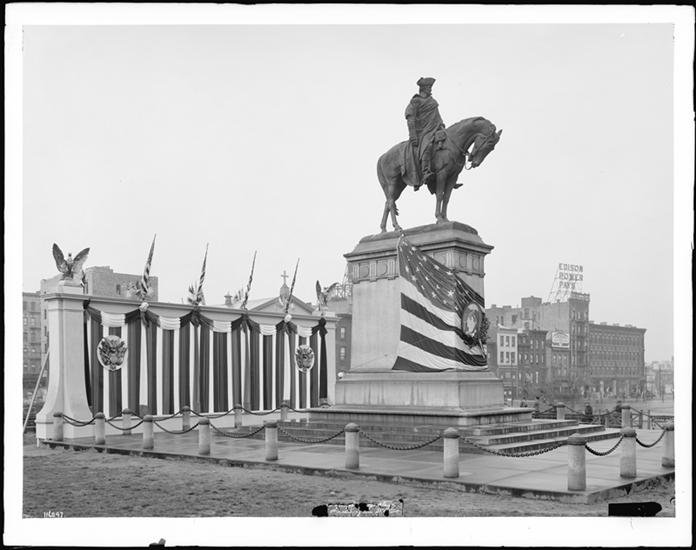
Williamsburg Bridge Plaza — and the handsome equestrian statue of George Washington — festooned with banners at the start of World War I.

MCNY

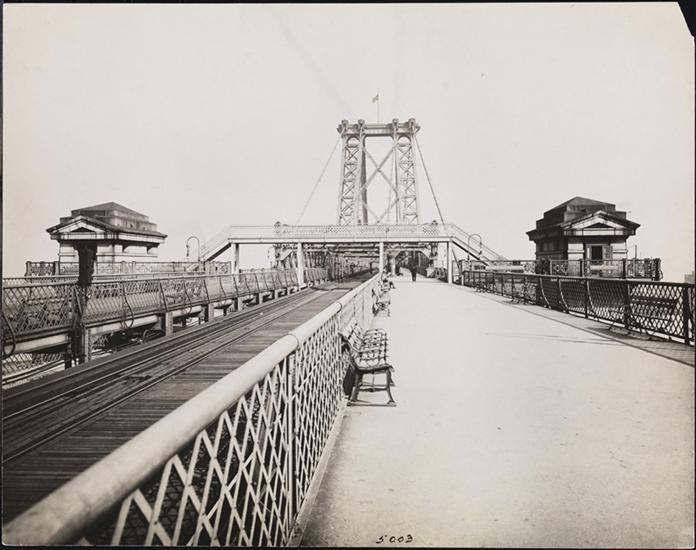
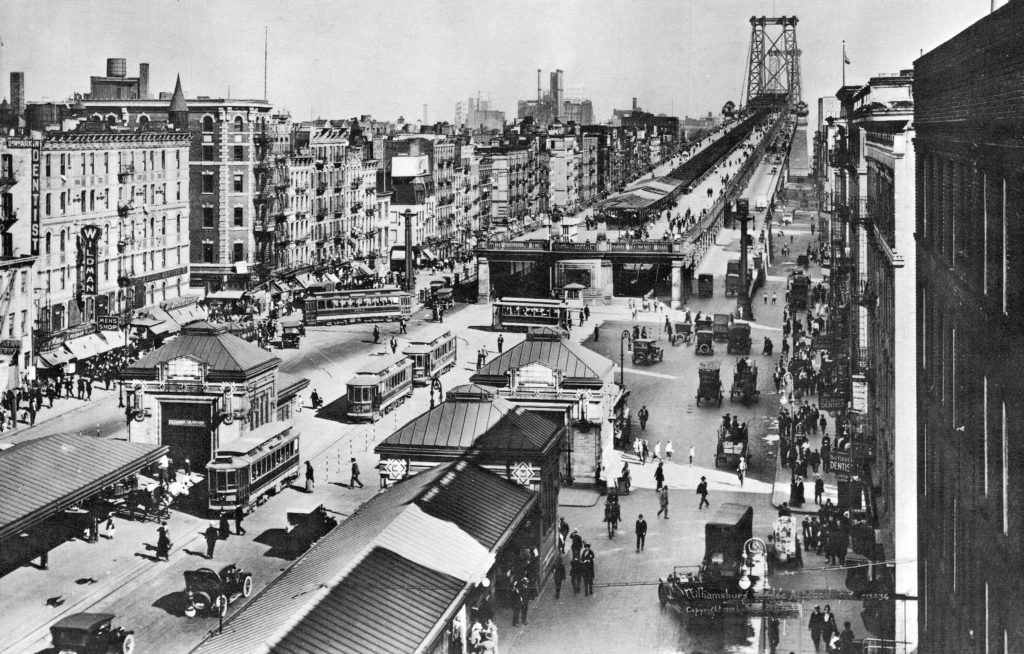
The approach to the Williamsburg Bridge from the Manhattan side. Delancey Street had to be widened to accommodate the influx of transportation options flooding onto the bridge.

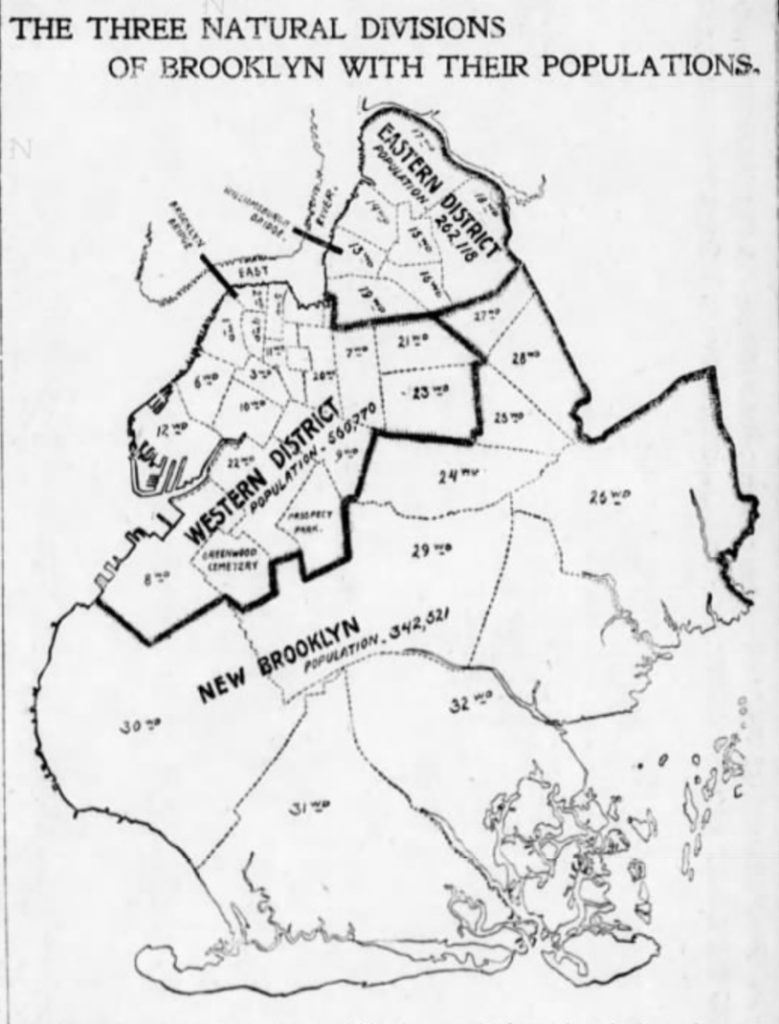
The bridge is central to the growth of New York’s immigrant (and particularly Jewish) communities. While its construction did displace thousands of people, the bridge would actually facilitate better living conditions for Lower East Side immigrant groups by encouraging migration to less populated Brooklyn neighborhoods.  The New York Herald even called it the “Jews Highway” as those of Eastern European and Russian Jewish heritage transplanted to Williamsburg.

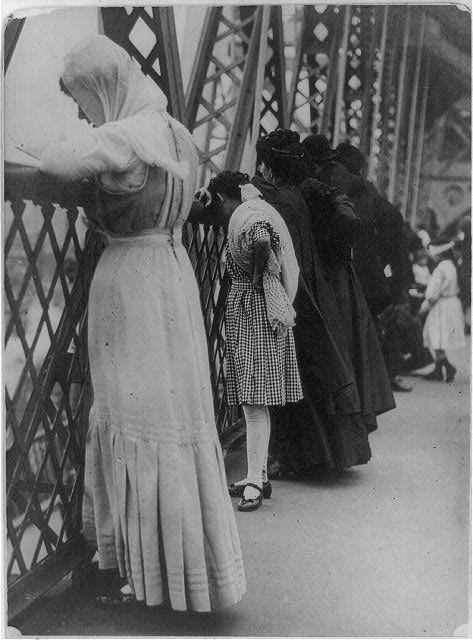
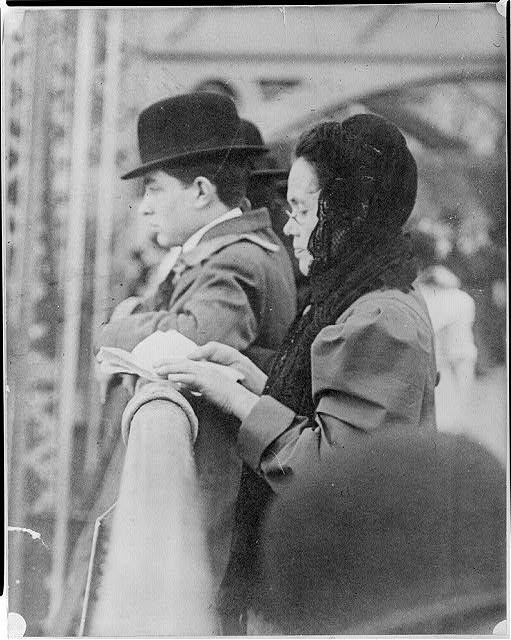
The ritual of tashlikh  תשליך‬‎ has often been performed on the bridge.

Library of Congress

From the film The Naked City

FURTHER LISTENING

These past episodes were mentioned in this week’s podcast. After finishing the Williamsburg Bridge show, go back and give these a listen:

Categories
Health and Living The Alienist

Scenes from New York’s public baths: How tenement dwellers got clean and cool

HISTORY BEHIND THE SCENE What’s the real story behind that historical scene from your favorite TV show or feature film? A semi-regular feature on the Bowery Boys blog, we will be reviving this series as we follow along with TNT’s limited series The Alienist. Look for other articles here about other historically themed television shows (Mad MenThe KnickThe DeuceBoardwalk Empire and Copper). And follow along with the Bowery Boys on Twitter at @boweryboys for more historical context of your favorite shows. 

Public bathhouses were an integral component of tenement districts in late 19th and early 20th century New York City. Running water was uncommon in the poorest areas of the city, and when it was available, rusty, filthy pipes ensured that its consumption would be an unpleasant and often unhealthy experience.

And of course there was often very little available for bathing. As a result, life was so very fragrant back then.

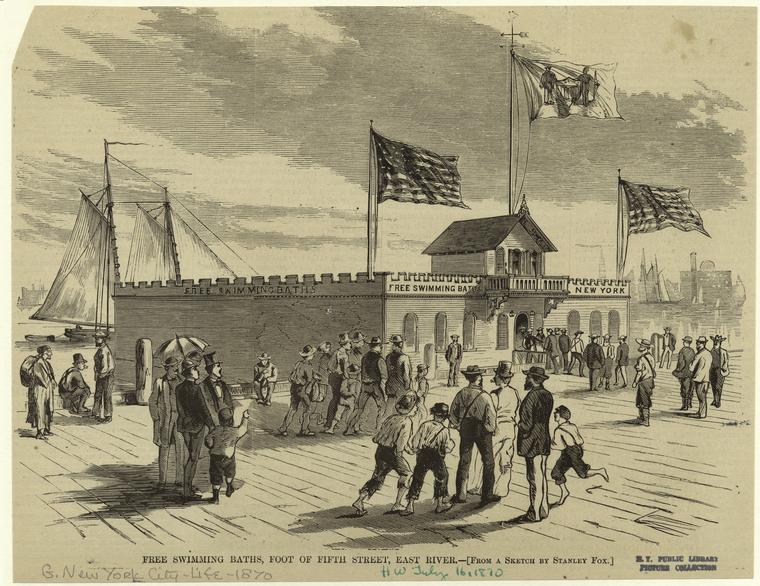
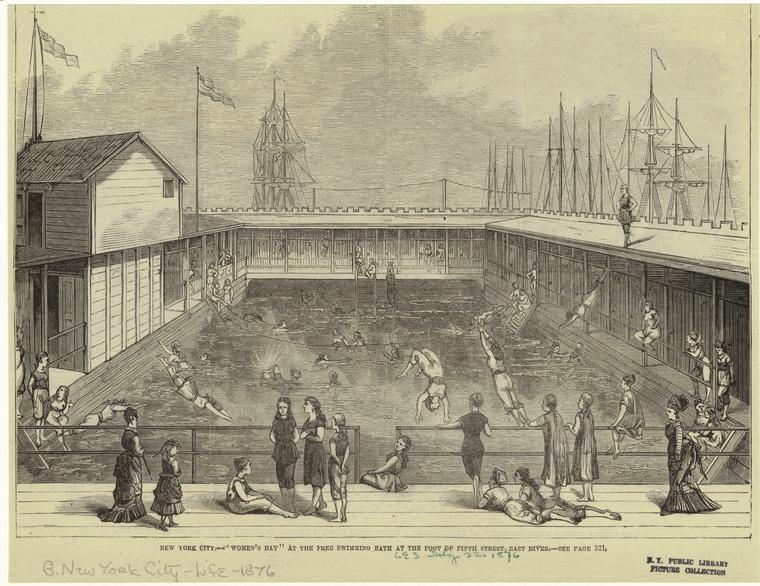
Temporary outdoor baths sprang up around the city during the summer such as this one off Fifth Street on the East River in 1870.

NYPL
NYPL

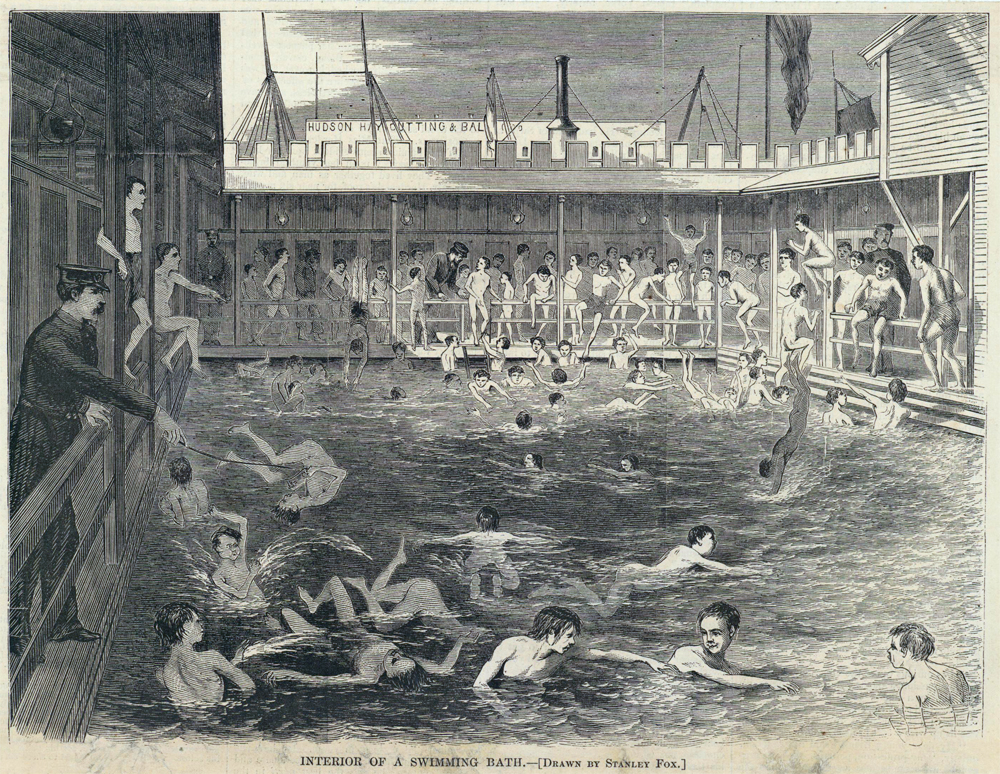
From Harper’s Weekly, August 20, 1870“We give on this page an illustration of the swimming bath at the foot of Charles Street. It contains 68 rooms, the water is four and a half deep and 200 bathers can be accommodated at one time. The success of these experiments should lead to the establishment of other baths in sufficient numbers to accommodate all who desire to avail themselves of these healthful privileges.”

New -York Historical Society

But the city’s objectives in opening public bath houses (starting in the 1880s) weren’t merely related to cleanliness. Most believed access to clean water promoted health and kept epidemics from spreading. This wasn’t strictly for the benefit of the poor, but for the wealthier classes who interacted with them in daily life.

From Gotham by Edwin G. Burrows & Mike Wallace: “[I]n the late 1880s, [German professor Simon] Baruch began a campaign stressing that baths, in addition to benefiting the poor and helping create “civic civilization” out of “urban barbarism,” were in the interest of “the better situated classes”: no longer unwashed, the employees, servants, laborers, and tradespeople next to whom they sat on crowded cars would not carry so many deadly germs. ”

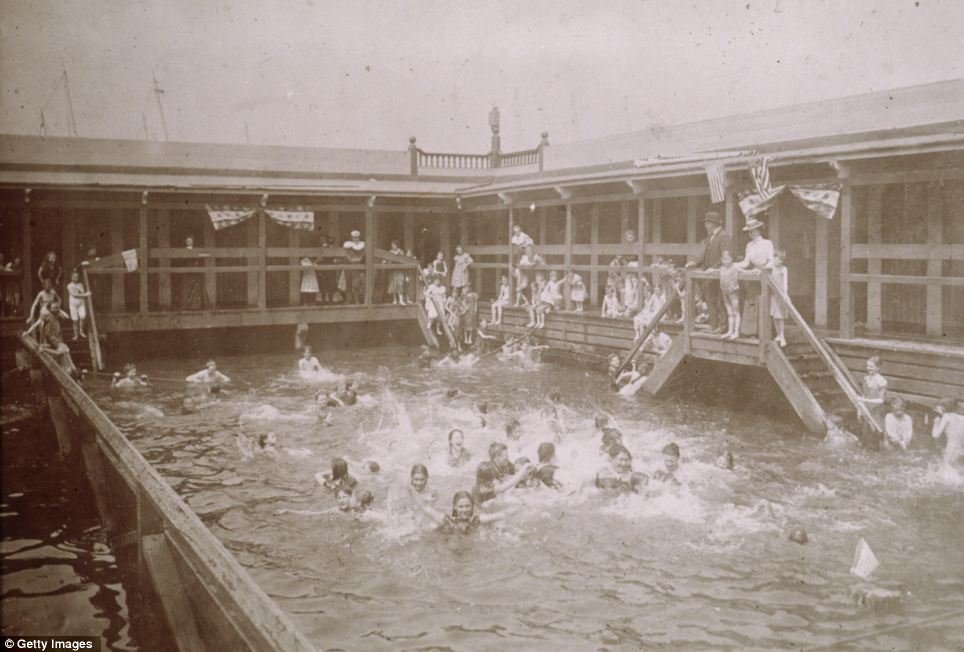
Public baths also provided relief in hot summer months — air conditioning and affordable electric fans were decades away — and encouraged physical activity. The public bath, in effect, gave rise to the urban swimming pool movement, drawing children from dangerous piers and swimming holes and into carefully monitored (if incredibly crowded) water environments.

In 1888, New York installed several outdoor baths within the city, imposing 20 minute time limits on swimmers to keep the water clean. (No matter; adventurous children hopped from pool to pool to skirt the rules).

Public Bath #10 on the Hudson River

Three years later, a grand People’s Bath (at Grand Street and Centre Street) provided people with soap and towels for the modest admission of five cents.

In 1895, public bathing became a priority for Mayor William Strong who authorized a Sub-Committee on Baths and Lavatories which reported that “New York City was lagging far behind European and other American cities in the building of baths and urged that the city begin immediately to remedy the situation.” State government soon concurred, passing a mandatory bath law that year, “making the establishment of public baths mandatory for all first- and second-class cities in the state.” [source]

Museum of the City of New York

New public baths began opening by the new century, many in the Lower East Side; the first, Rivington Street Bath (pictured above), even had 91 showers and 10 bathtubs.

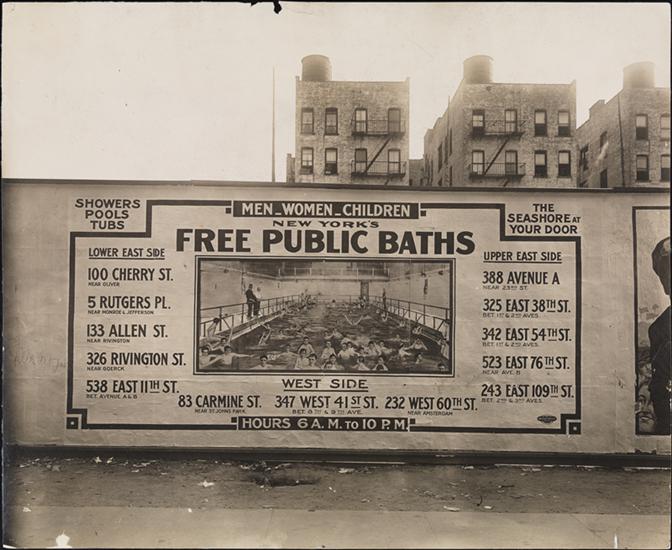
An advertisement for baths in 1935:

They’re mostly forgotten about today but a few remaining historical structures bear evidence of these important structures.

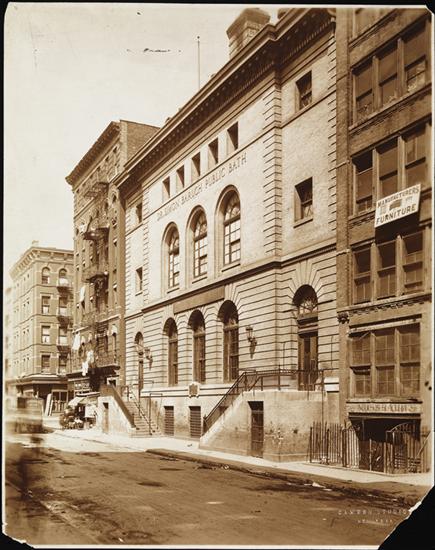
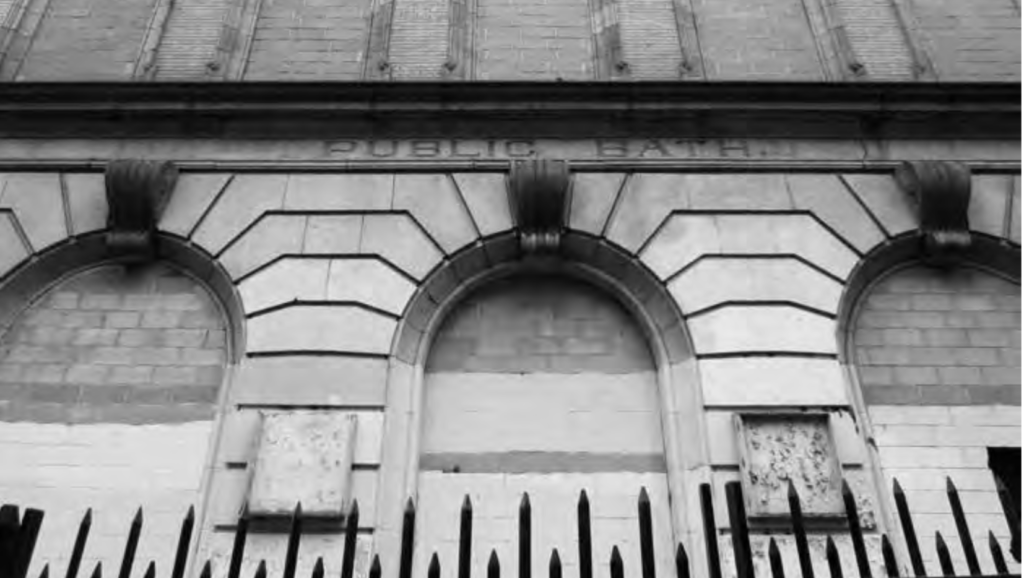
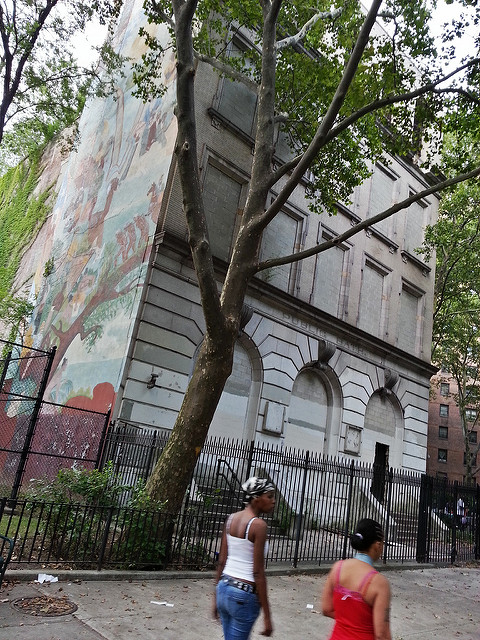
One such relic sits at Madison Street in the Lower East Side, within the La Guardia Houses development. (It’s listed in the above advertisement at 5 Rutgers Place.)

Matt Green/Flickr

Nicknamed the Whitehouse, the bathhouse opened on December 23, 1909, and was one of thirteen public bath facilities in New York at that time. By the 1940s indoor plumbing had rendered the public bath obsolete, and so it was converted into a public swimming pool and gymnasium. Today it sits unused, like many others throughout the city, a ruin from another time.

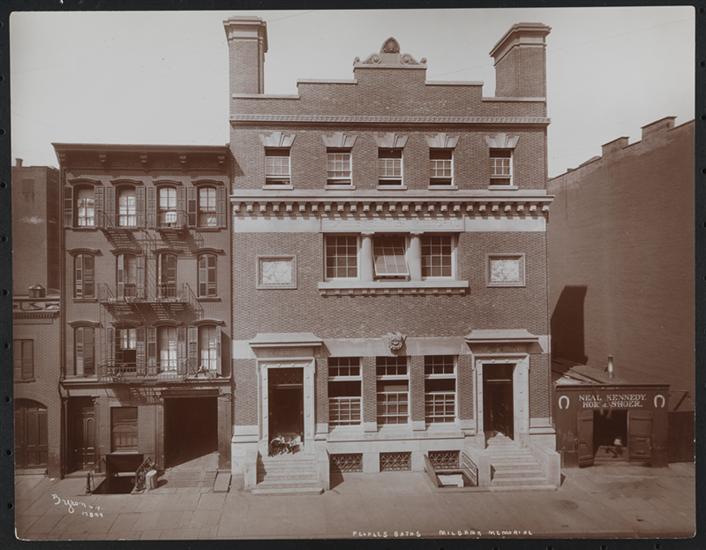
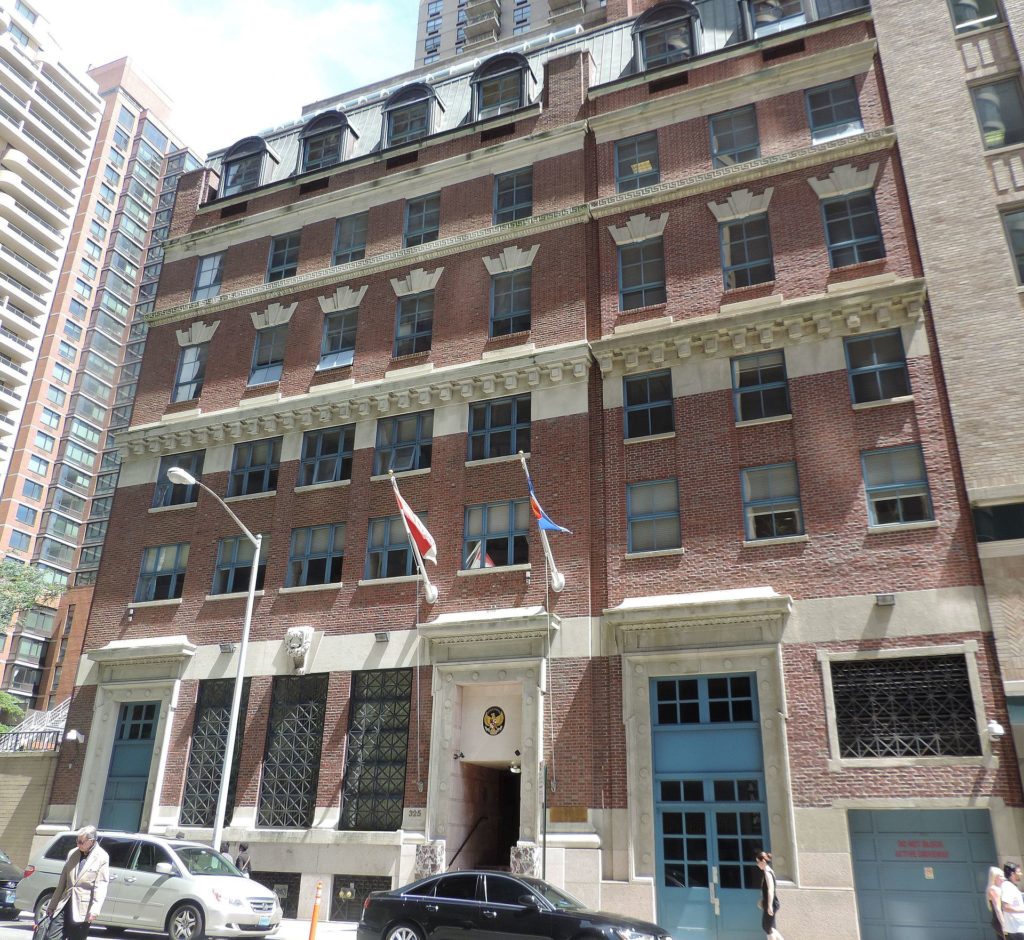
Others have been rescued and serve new purposes such as the Milbank Memorial Bath at 325-327 East 38th Street (pictured below)Today the structure is the Indonesian Mission to the United Nations, but when it opened, it was one of the biggest bathhouses in the city, serving up to 3,000 people.

MCNY
Jim Henderson/Wikimedia

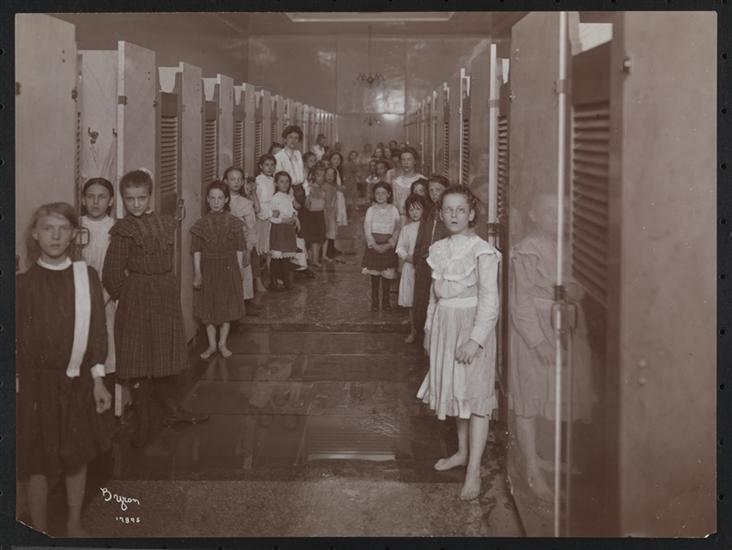
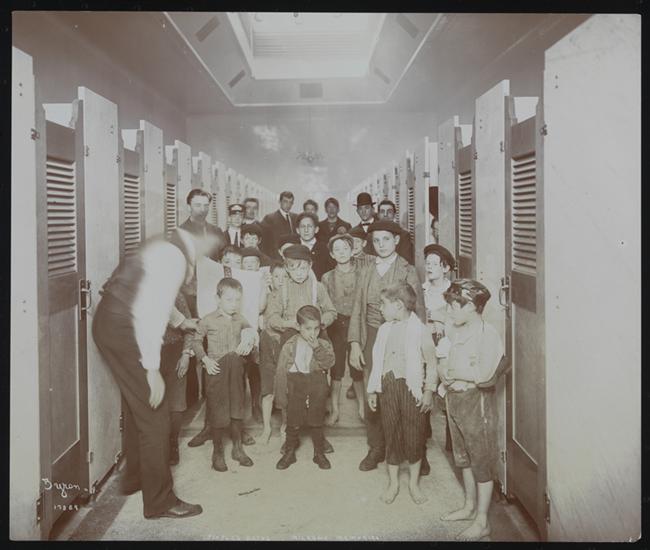
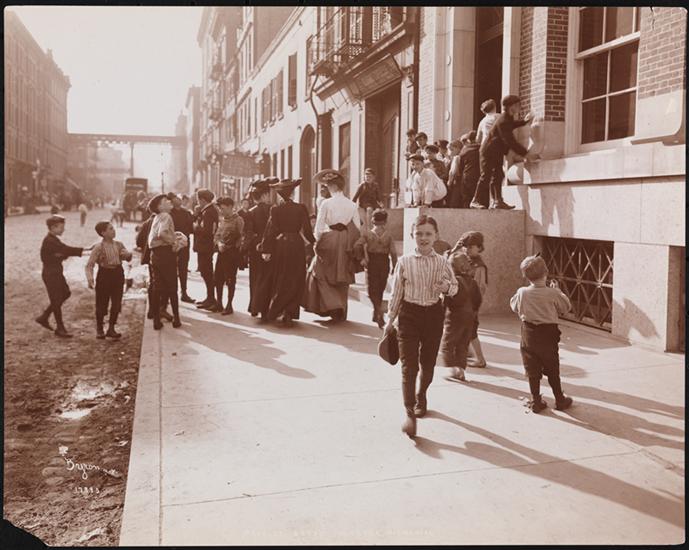
The grateful visitors of Milbank’s bath house:

MCNY
MCNY
MCNY

Perhaps the best known — and most beautiful — example of a public bath house standing in New York City today is the Asser Levy Public Bath in Kips Bay. (It’s also listed in the billboard image as 388 Avenue A.) Its unusual beauty is perhaps what saved it from demolition, and today it’s part of Asser Levy Recreation Center, serving in its original function — as a swimming pool for neighborhood children.

Wikimedia
Categories
Podcasts

Tales of a Tenement: Three Families Under One Roof

In today’s show, we’ll continue to explore housing in New York, but move far from the mansions of Fifth Avenue to the tenements of the Lower East Side in the 20th Century. Specifically, we’ll be visiting one building, 103 Orchard Street, which is today part of the Tenement Museum.


The Bowery Boys: New York City History podcast is brought to you — by you!

We are now producing a new Bowery Boys podcast every week.  We’re also looking to improve the show in other ways and expand in other ways as well — through publishing, social media, live events and other forms of media. But we can only do this with your help!

We are now a member of Patreon, a patronage platform where you can support your favorite content creators for as little as a $1 a month.

Please visit our page on Patreon and watch a short video of us recording the show and talking about our expansion plans. If you’d like to help out, there are five different pledge levels (and with clever names too — Mannahatta, New Amsterdam, Five Points, Gilded Age, Jazz Age and Empire State). Check them out and consider being a sponsor.

We greatly appreciate our listeners and readers and thank you for joining us on this journey so far.


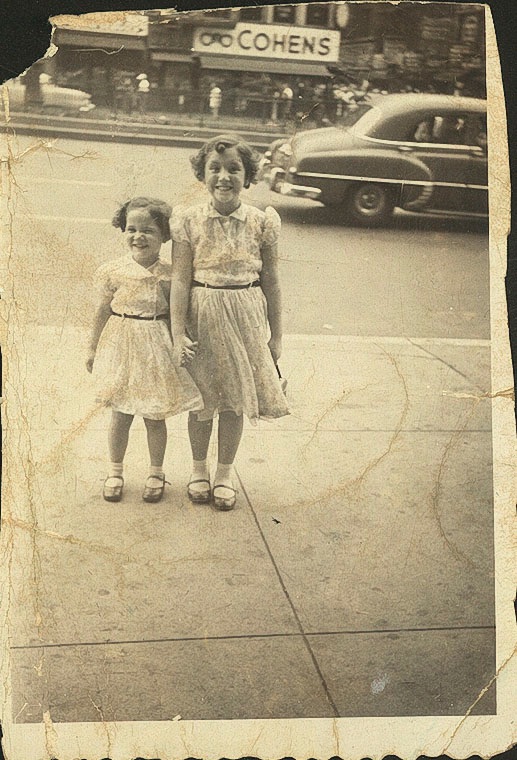
The Epstein sisters, posing on the streets of the Lower East Side. (Photo: The Tenement Museum)

When we step inside 103 Orchard, we’ll be meeting three families who lived there after World War II. We’ll be getting to know them by walking through their apartments, faithfully reconstructed, often with their very own furniture, to tell their stories.

The three families are the Epsteins, the Saez-Velez family, and the Wong family. The Epsteins were Holocaust survivors who moved into the building in the 1950s, the Saez-Velez family moved in during the 60s and were led by a mother who left Puerto Rico and worked as a seamstress here, and the Wong family, whose mother raised the family while working in Chinatown garment shops, moved in during the 1970s.

They’re included in an exciting new interactive exhibition at the Tenement Museum. This exhibit, which includes a tour of the apartments, is called “Under One Roof”, and opens to the public this month. We’re led through it on our show by Annie Polland, the museum’s curator of this exhibit.

For more information on the exhibit, visit tenement.org. While there, be sure to take a virtual tour of the apartment.

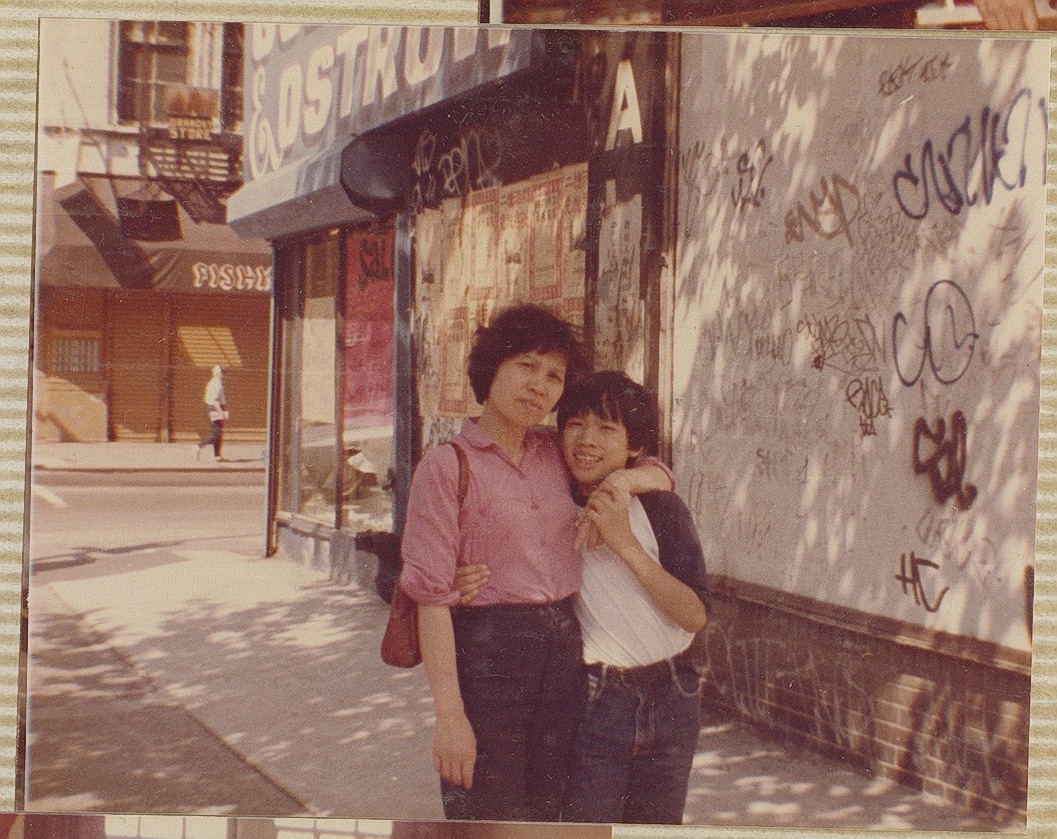
Mrs. Wong and her son Kevin. (Photo: The Tenement Museum)

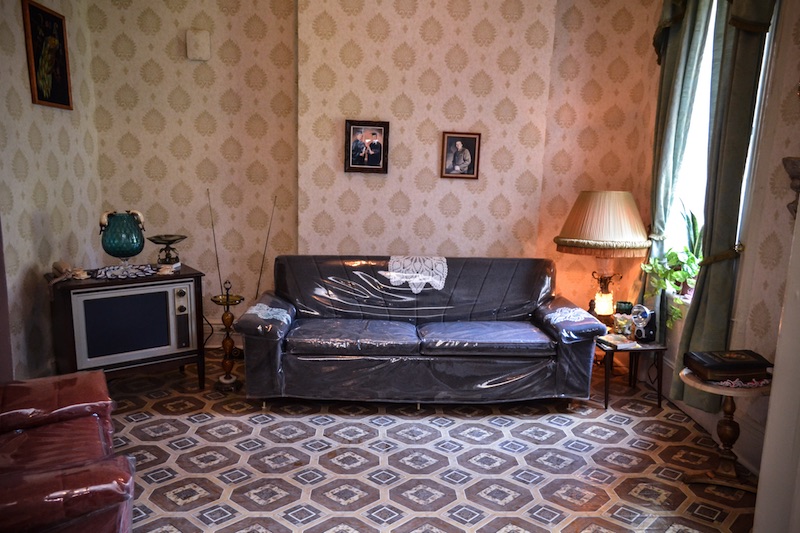
The living room in Ramonita Rivera Saez’s apartment. Photo: The Tenement Museum

Categories
Religious History

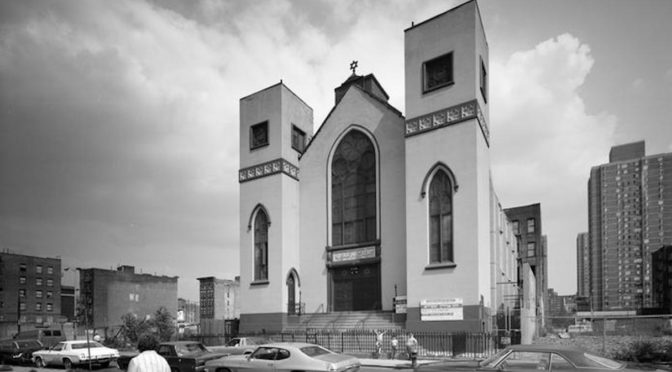
The Lower East Side lost a unique relic, a ruin of historical significance

Last night a haunting and inconceivable ruin of the Lower East Side was mysteriously destroyed in a massive fire.
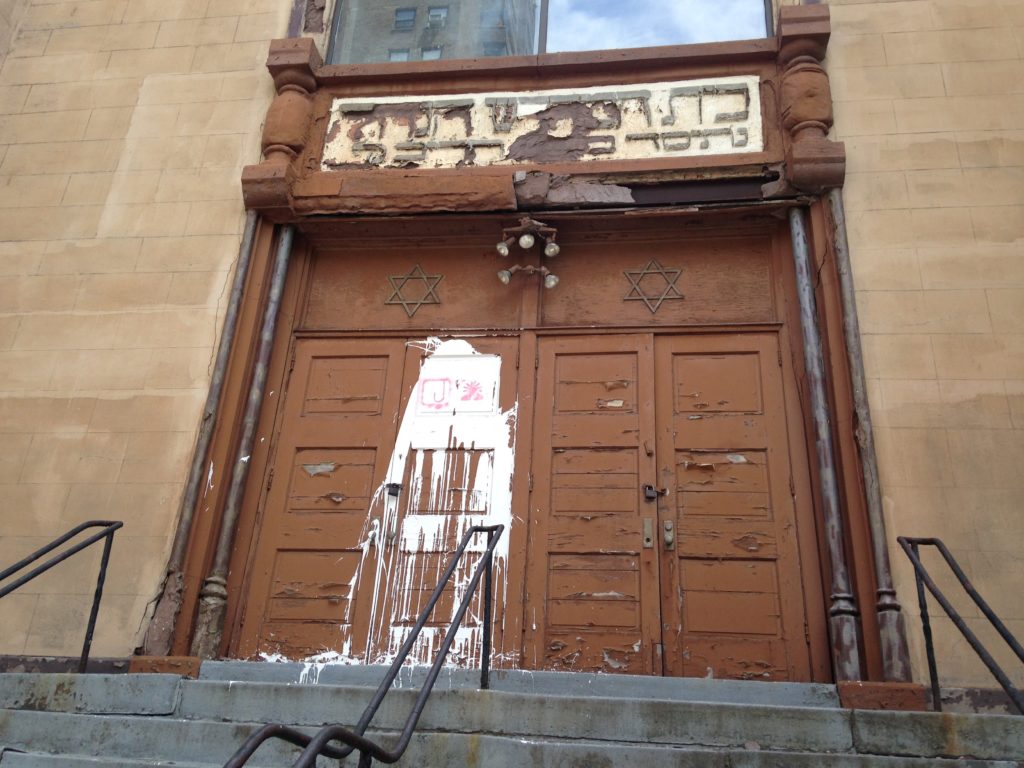
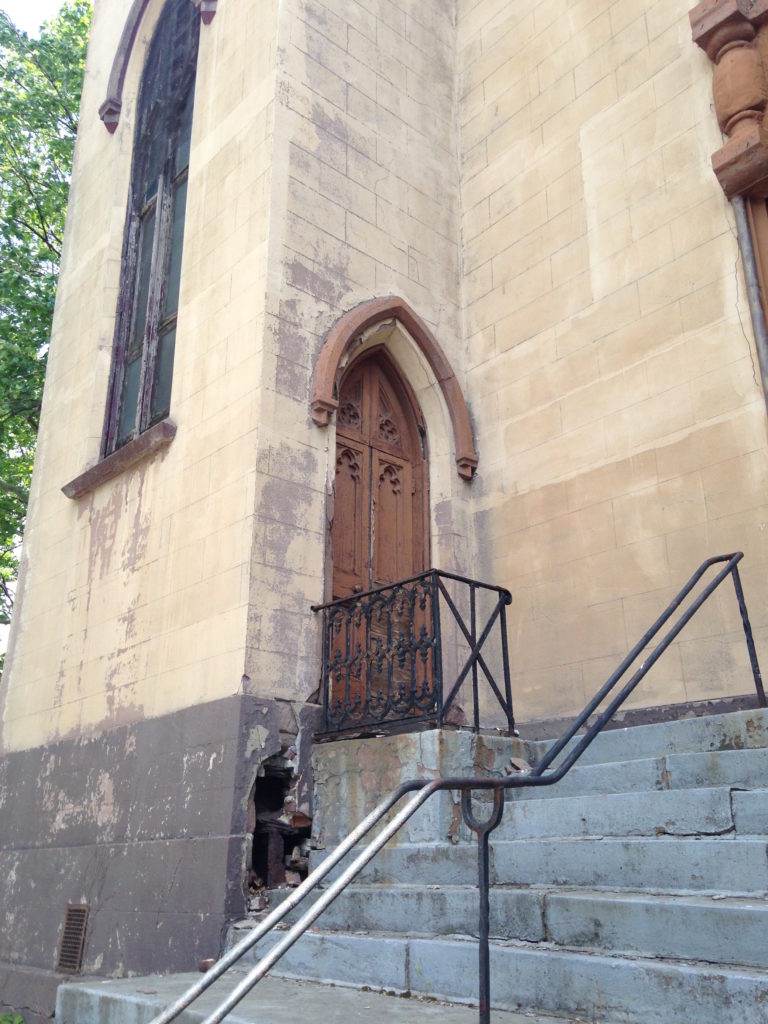
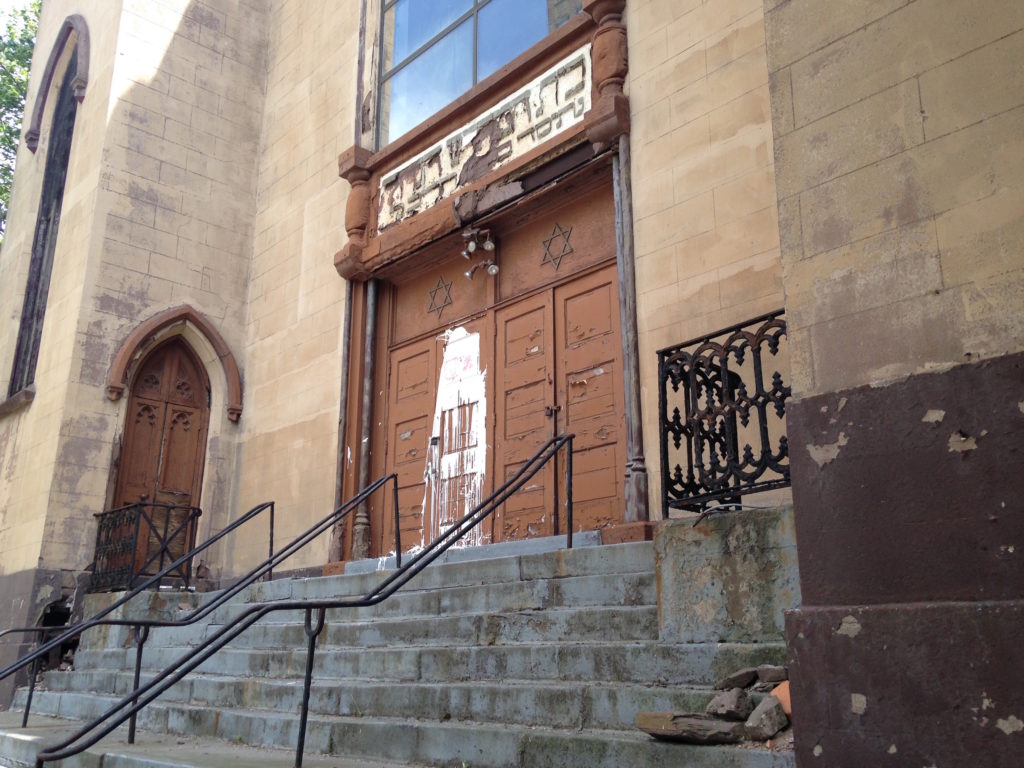
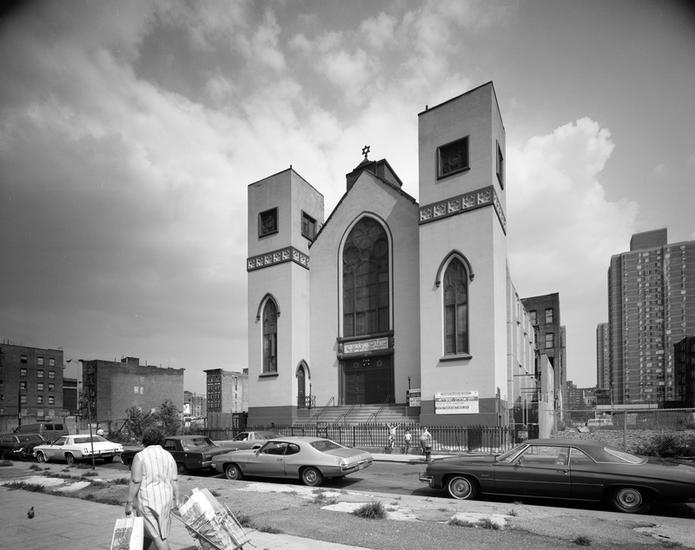
The abandoned shell of the old synagogue Beth Hamedrash Hagodol has been a feature of life of Norfolk Street, stubbornly nestled next to apartment buildings, a vestige of the past clinging to the present without care or purpose.

Here are a few pictures of the front of the synagogue as it looked several months ago:

Courtesy Bowery Boys

The building has an extraordinary history, important to the histories of both local Christian and Jewish communities.

The synagogue was featured in our book:

“Beth Hamedrash Hagodol, a nineteenth-century synagogue, sits in a sad, abandoned state today, as though everyone’s afraid to go near it. Built as a Baptist church in 1850, it too was converted into a synagogue in 1885. It played an important role in Jewish American history, as it was connected to the oldest Eastern European Jewish congregation in America (Beth Hamedrash, formed in 1853), and yet today it sits eerily unused. Hopefully somebody will come to its rescue before further deterioration”or the forces of gentrification”cause it permanent harm. (60-64 Norfolk Street)”

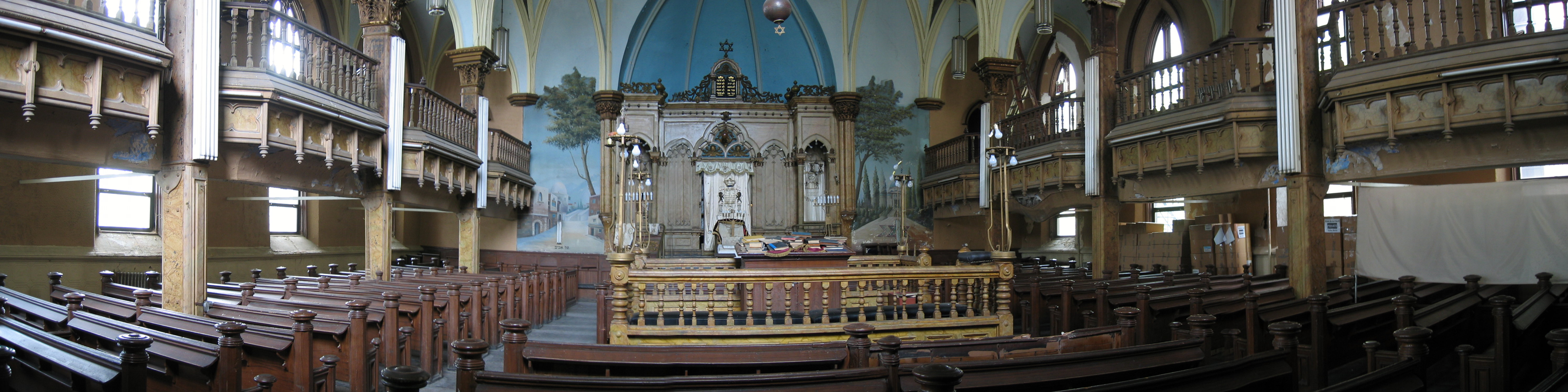
Below: The interior of the synagogue in an image taken in 2005 (courtesy Wikimedia)

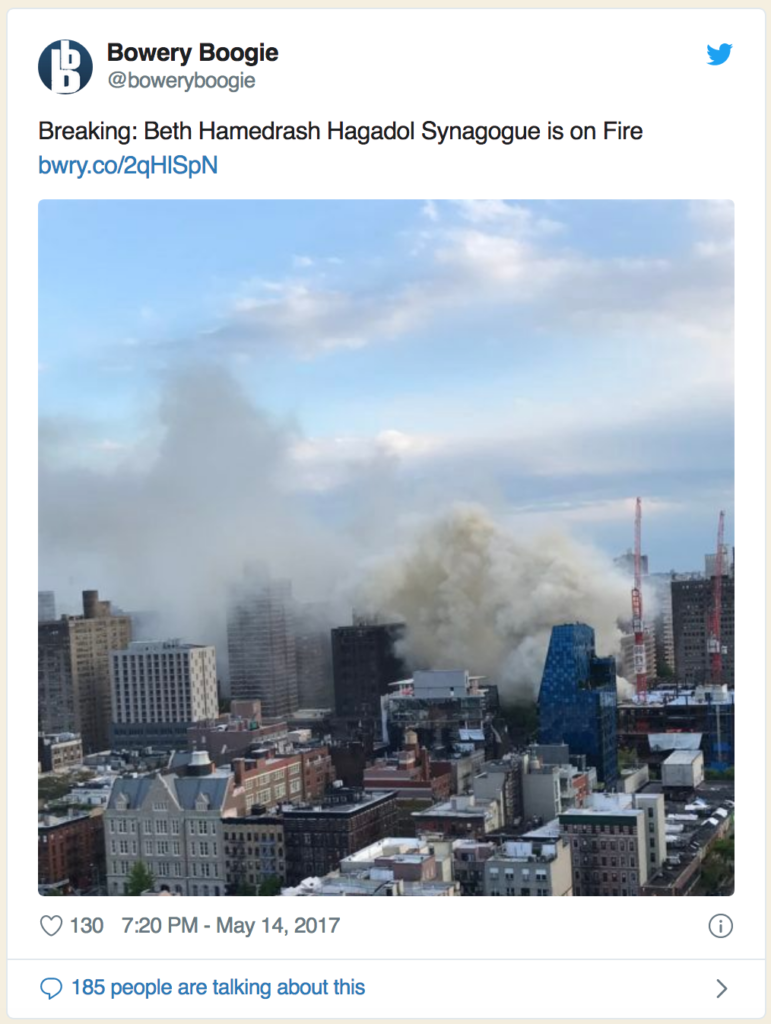
Last night the ruins were gutted in a three-alarm fire. Bowery Boogie was on the scene last night, first observing the disturbing plumes of smoke that filled the Lower East Side a little before sundown last night.
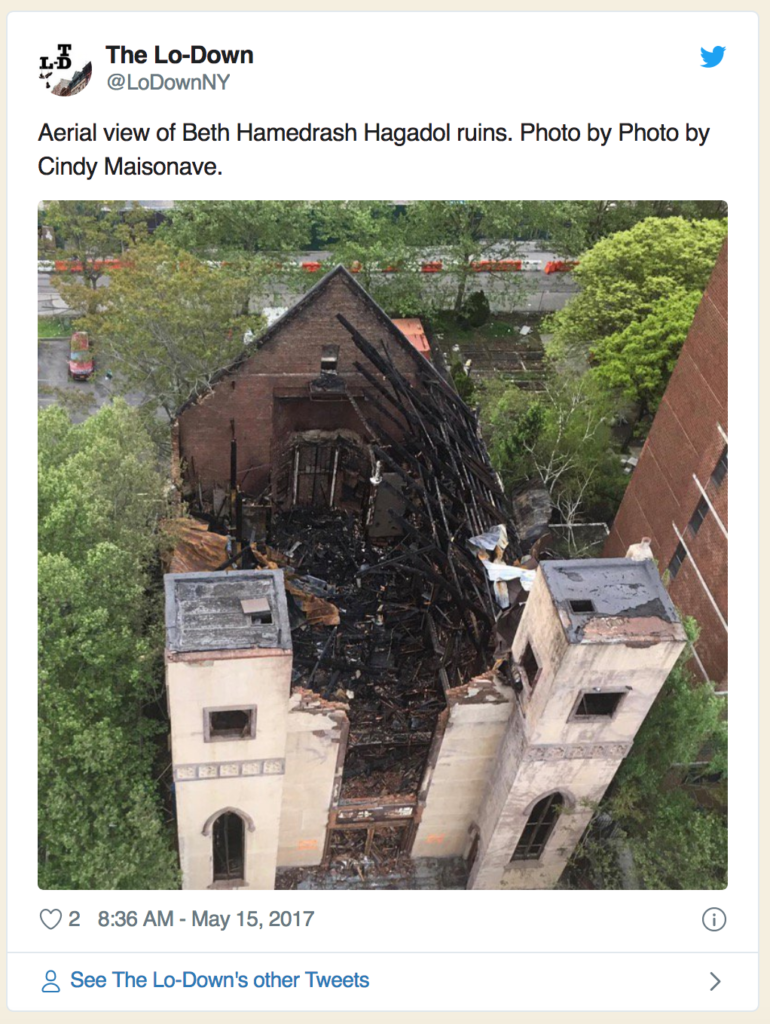
This morning they got a little closer to witness the horrifying aftermath.

The Lo-Down was also there to witness its destruction. Please visit their blog today for more images of the aftermath of the fire.
The fire seems to have some similarities to that of last year’s destruction of the Serbian Orthodox Cathedral of St. Sava, another New York City house of worship built in the 1850s with its own unique significance to the city’s history.

The new Essex Crossing development is rising just a couple blocks north, poised to transform this area of the Lower East Side. Consider me an optimist, but I always thought the ruins of the synagogue could somehow be saved in connection with the development. Now more than ever, we need to protest as many of its treasures as possible or else risk erasing the very identity of this vital historic neighborhood.

Beth Hamedrash Hagodol is now gone.

It existed only as a crumbling ruin and now not even as that. (Friends of the Lower East Side lamented the building’s fate as “demolition by neglect.“)  Certainly it will be cleared away so the land can be used for other purposes.  Instead of even the shell of the building living on as a reminder, it will be replaced by something inevitably glass, pretty and sleek.


The synagogue was recently featured in our podcast on the Eldridge Street Synagogue:

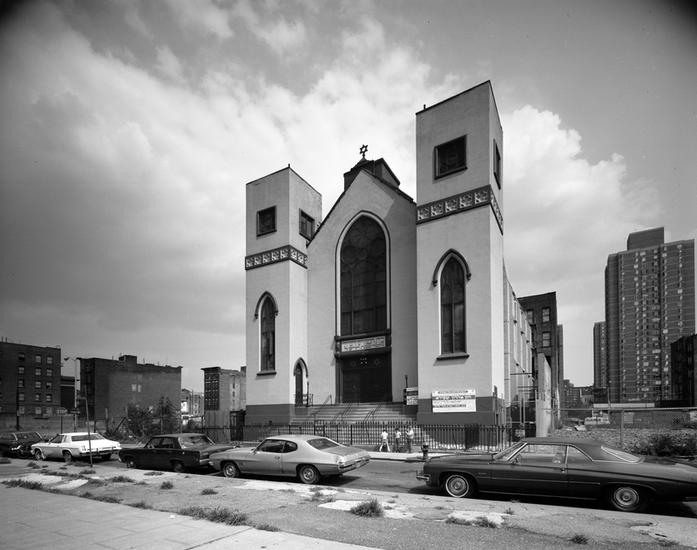
Pictured at top (and in the images below) — Beth Hamedrash Hagodol in 1979, in photos by Edmund Vincent Gillon.

Gillon/MCNY
Gillon/MCNY

NOTE: Two different spellings seem to be in use for this building — Beth Hamedrash Hagodol and Beth Hamedrash Hagadol


Categories
Neighborhoods Podcasts

A Culinary Tour of the Lower East Side

PODCAST A flavorful walk through the Lower East Side, exploring the neighborhood’s most famous foods.

Join Tom as he experience the tastes of another era by visiting some of the oldest culinary institutions of the Lower East Side. From McSorley’s to Katz’s, Russ & Daughters and Economy Candy — when did these shops open, who did they serve, and how, in the world are they still with us today? He explores the topic with author Sarah Lohman of the Four Pounds Flour blog.


The Bowery Boys: New York City History podcast is brought to you …. by you!

We are  now producing a new Bowery Boys podcast every two weeks. We’re also looking to improve the show in other ways and expand in other ways as well — through publishing, social media, live events and other forms of media. But we can only do this with your help!

We are now a member of Patreon, a patronage platform where you can support your favorite content creators for as little as a $1 a month.

Please visit our page on Patreon and watch a short video of us recording the show and talking about our expansion plans. If you’d like to help out, there are five different pledge levels (and with clever names too — Mannahatta, New Amsterdam, Five Points, Gilded Age, Jazz Age and Empire State). Check them out and consider being a sponsor.

We greatly appreciate our listeners and readers and thank you for joining us on this journey so far. And the best is yet to come!


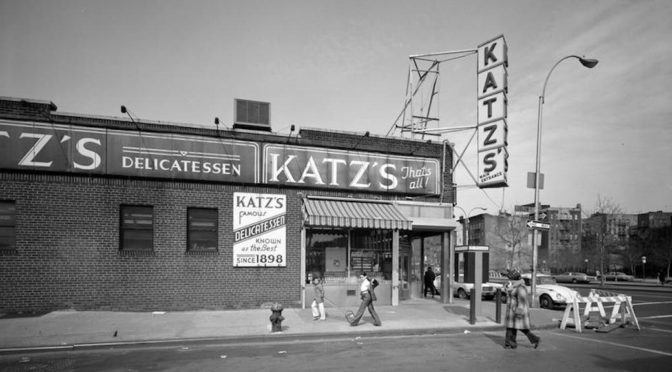
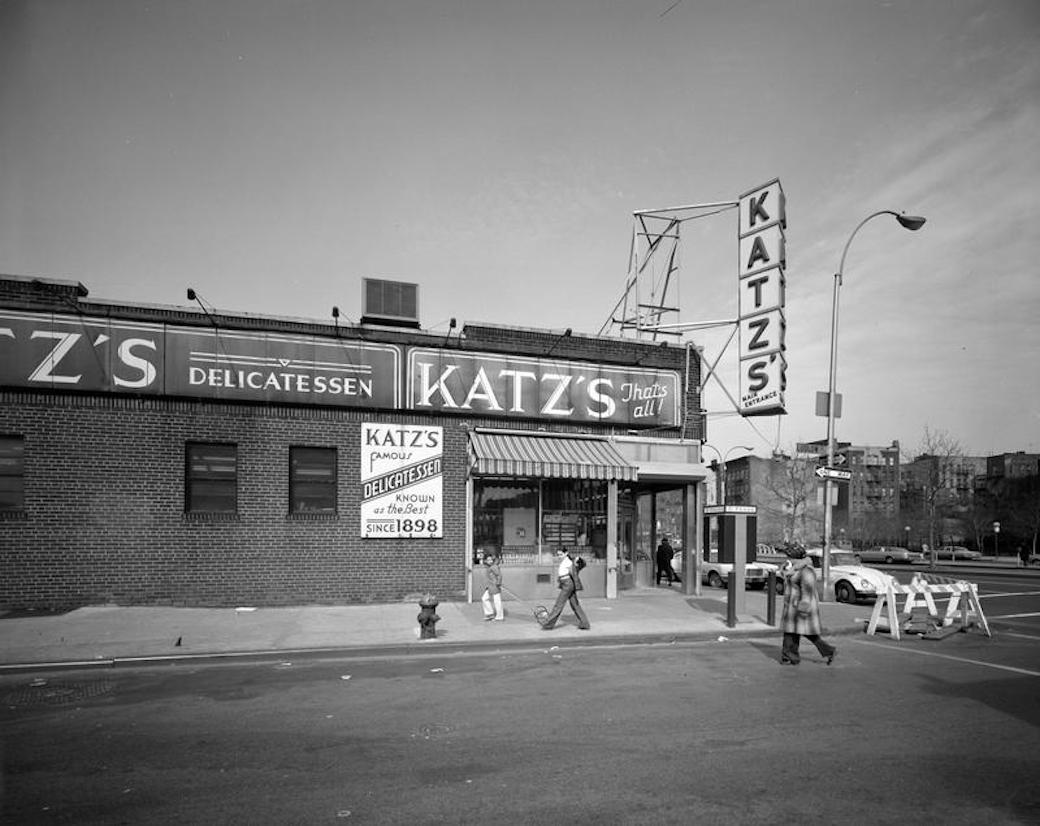
A groovy bite: How has Katz’s Delicatessen managed to last so long? This picture was taken in 1975 but it could have easily have been taken today with a black-and-white filter slapped over it.

MN124408

(Photo by Edmund Vincent Gillon, 1975, courtesy Museum of the City of New York)

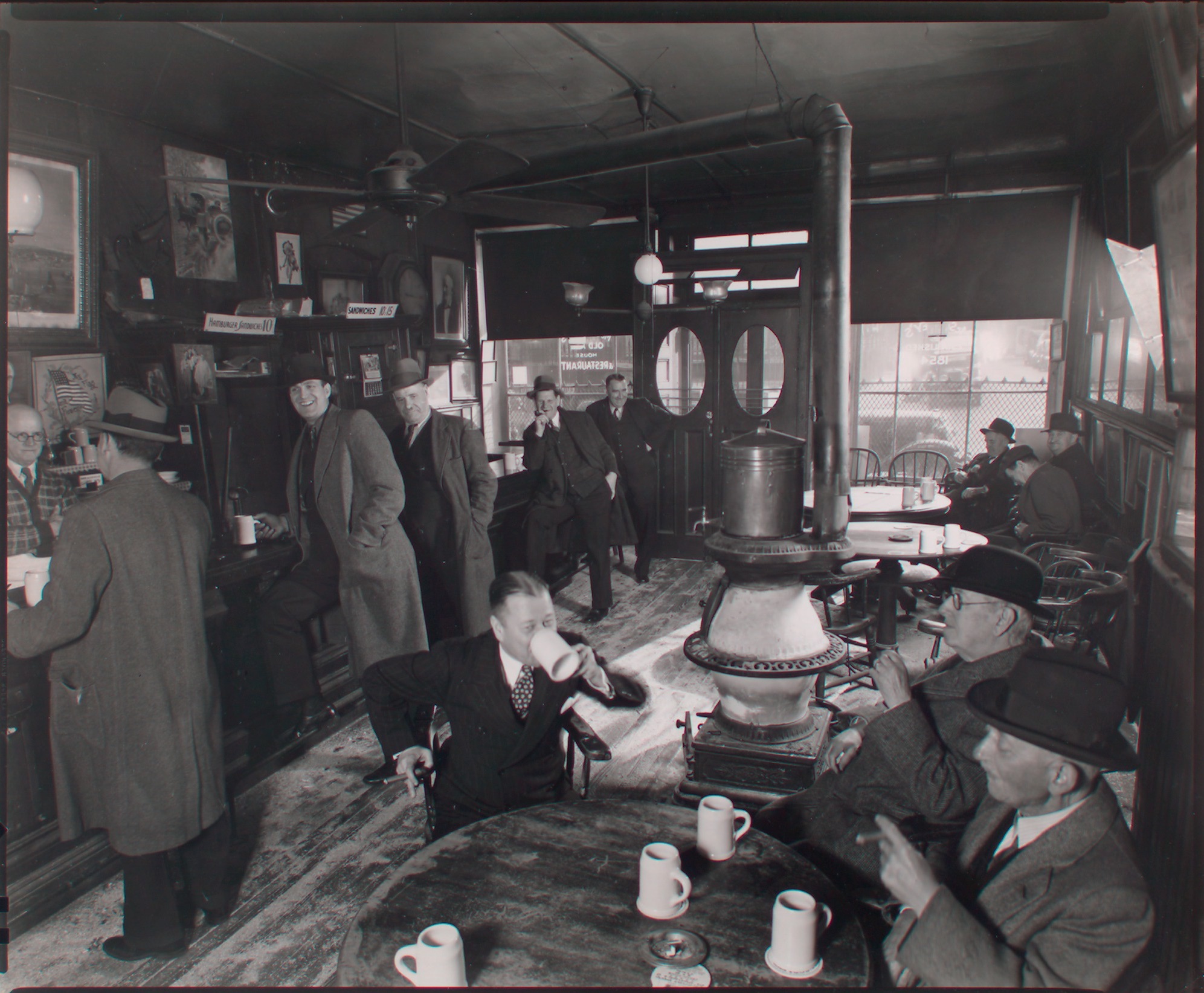
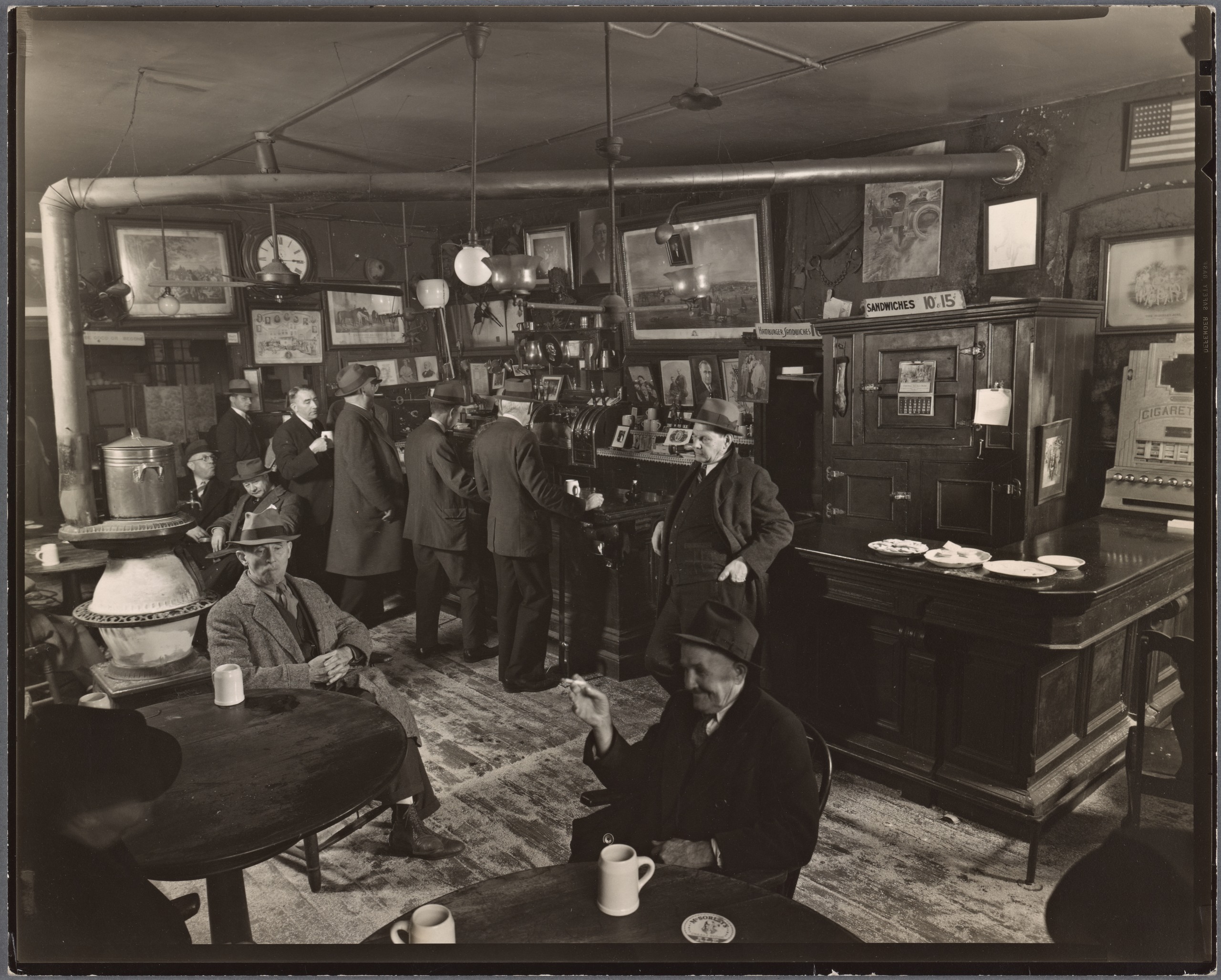
Another timeless classic — McSorley’s Old Ale House, in a photo taken by Berenice Abbott, 1937. (Ms. Abbott would have been one of the only women even allowed into McSorley’s in 1937!) How has this bar managed to stay open — and look virtually the same for over a century?

1

nypl.digitalcollections.510d47d9-4fca-a3d9-e040-e00a18064a99.001.v

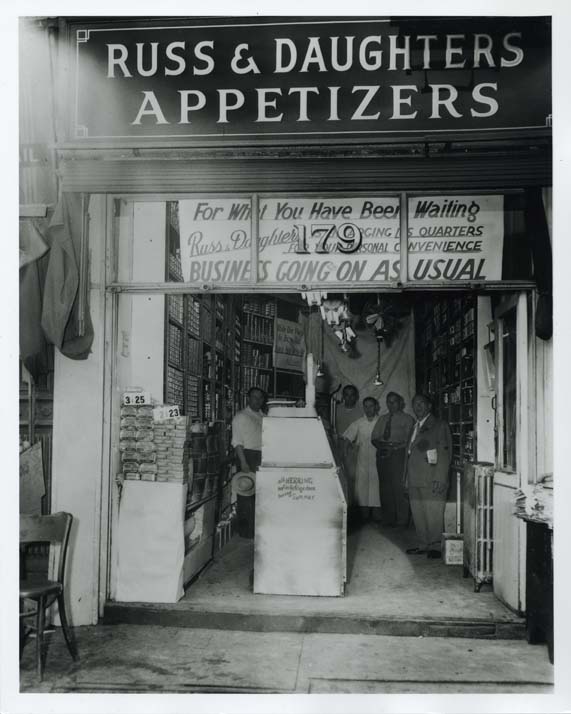
The Russ and Daughters interior before a renovation that widened the store.
Courtesy Russ and Daughters

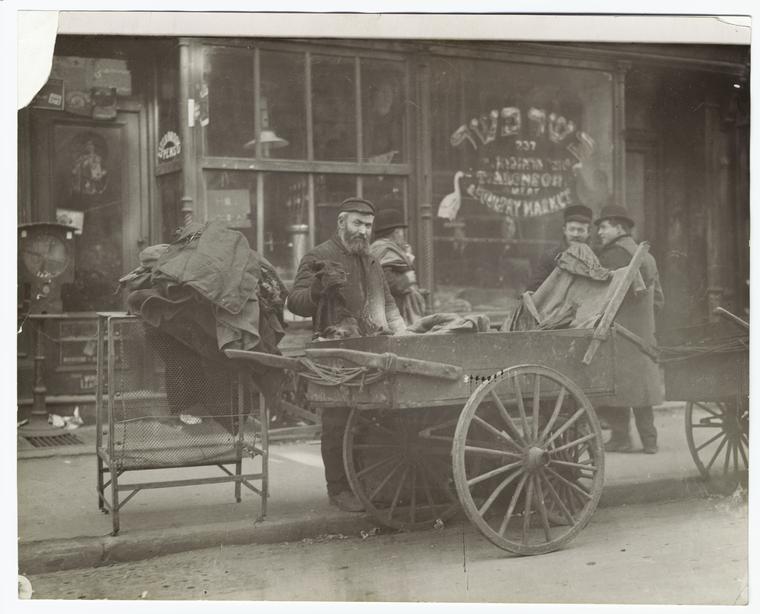
A potato merchant in the Lower East Side. It was because of the proliferation of these peddlers that the city eventually opened the Essex Street Market in the 20th century.
Courtesy New York Public Library

Tom, recording on the road at McSorley’s Old Ale House, being a day drinker!

image1

image3

For more information on guest host Sarah Lohman‘s upcoming book Four Pounds Flour, check out her website.

And for more information on the history of a few of the locations mentioned in the show, check out these other Bowery Boys: New York City History podcasts:

PODCAST: McSorley’s Old Ale House

https://www.boweryboyshistory.com/2010/03/bowery-boys-greatest-hits-back-to-katzs.html

Categories
Amusements and Thrills

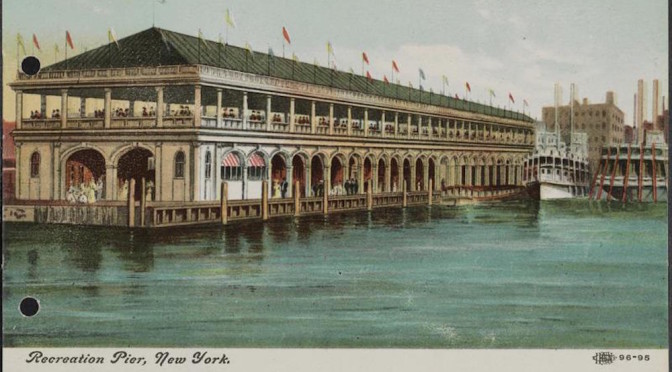
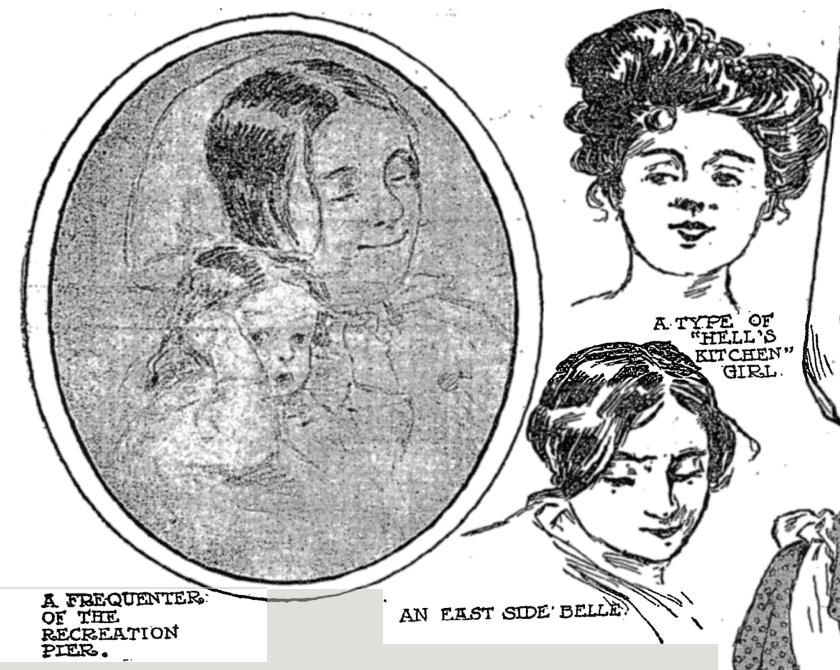
Hey gang, let’s go down to the Recreation Pier!

The end of the 19th century saw many new ways to get people out of New York City’s over-crowded tenement districts, with trains to beach havens like Coney Island and Rockaway Beach and steamers making day-trips up the Hudson River and to spots in Long Island.

For those who didn’t have the luxury of a free afternoon,  some relief was provided in the form of new community parks such as Columbus Park (1897), Seward Park (1903) and DeWitt Clinton Park (1906).

But what if you wanted some fresh ocean breezes? The piers of the East River and the Hudson River were clotted with industry and hardly suitable for relaxation.   But the city did attempt to make the waterfront available with the introduction of so-called ‘recreation piers’.

There were a great many industrial piers redesigned in the 1890s for public use. By 1905, the New York Times reports recreation piers on the East River side (at Market Street, 3rd Street, 24th Street and 112th Street) and a couple facing the Hudson River (Christopher/Barrow Street and 50th Street).

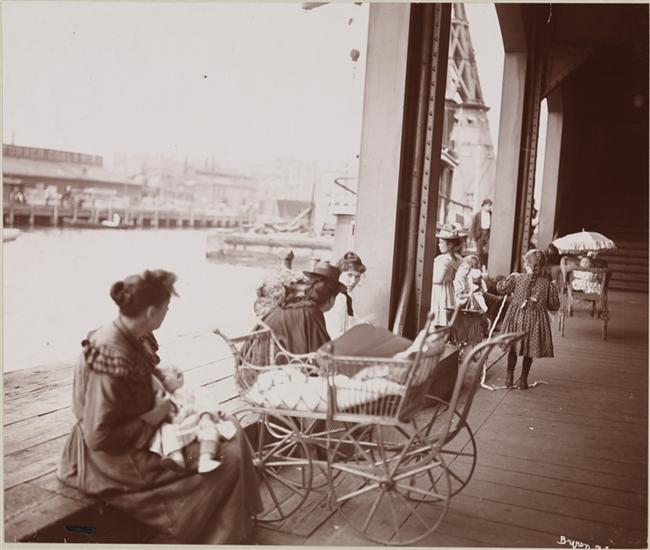
Below: Mothers and their children on the Harlem pier, 1901

Courtesy the Museum of the City of New York

By noon, during the summer months, the piers were packed with mothers and their babies, groups of young women off work, and scores of children darting through the crowds.

From the Times article: “The average for the pier at the East River and 24th Street alone is 10,000 persons a day. Almost directly across town, at 50th Street and the North River, which the police call the ‘mad dog’ pier, the daily attendance is nearly as large.”

An illustration from the New York Times, June 25, 1905:

times


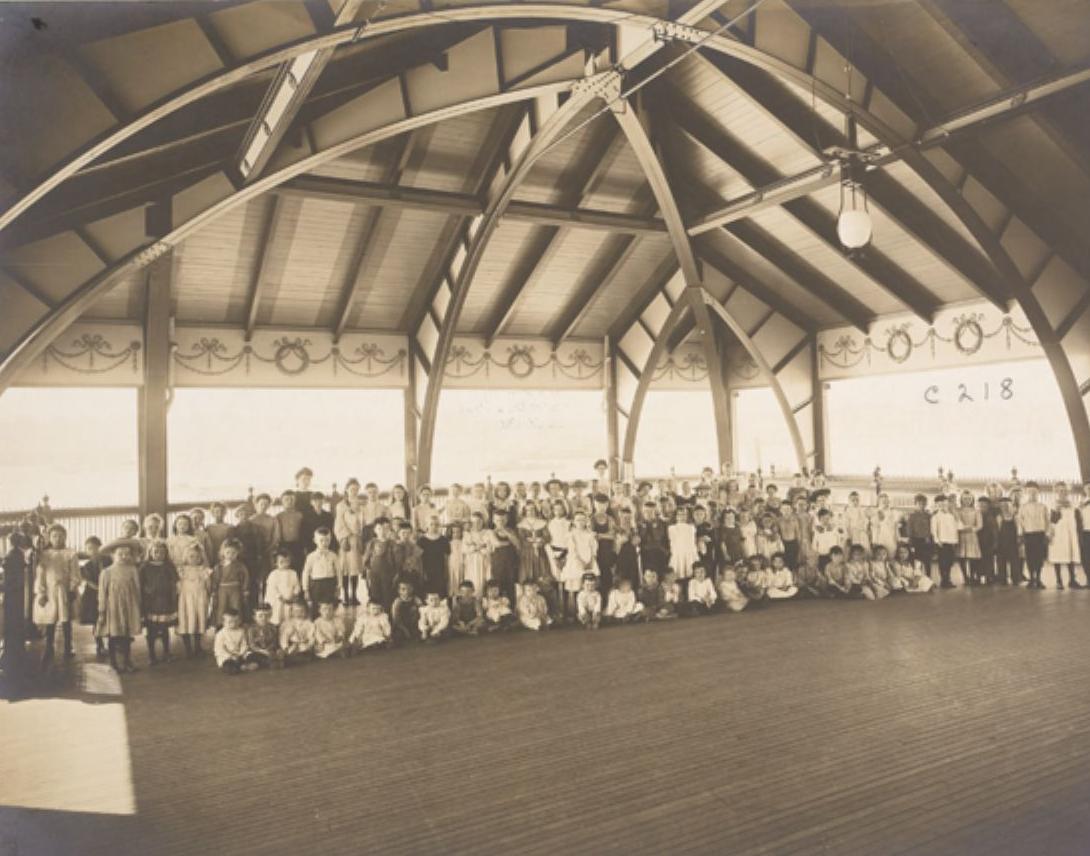
The piers provided a well-policed safe space for poor families, abundant cross breezes, and floating pools and swimming holes for those looking to escape the heat. Many of them regularly provided food vendors, musicians and even street performers, allowing city dwellers to enjoy the illusion of a short vacation getaway.

While no liquor was sold at the pier, many did their best to smuggle it past the watchful eye of the police officers.  “Flirting and open love making are prohibited,” warned the Times, “Smoking is not. A youth may puff away on his cigarettes, and a man may smoke as vile a cigar as he pleases, anywhere he pleases.”

Below: Children on the Hell’s Kitchen pier, 1903

Courtesy Harvard Libraries


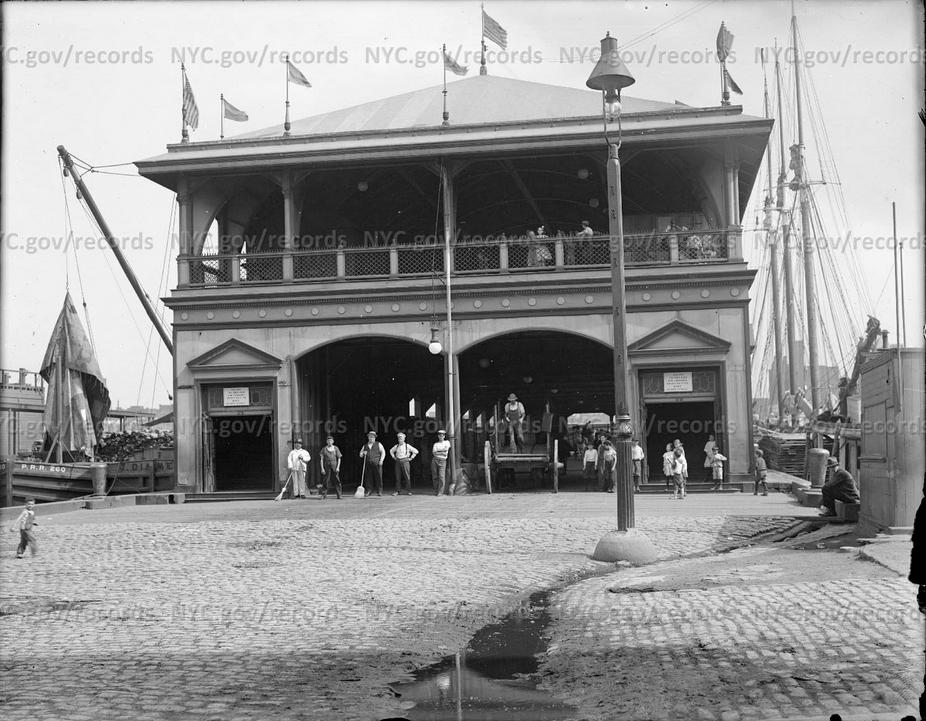
The Third Street pier provided immediate relief for residents of the Lower East Side.

“That long, low building jutting out into the water changed the ending of Third Street from a sandy, ugly refuge for crap playing boys into a breathing place for thousands of dwellers in the tall tenements all around.  It is still sandy and ugly, away from the pier itelf, but there is lots of fun going on, and when you are tired of looking shoreward there is the river, with its endless excitement.” [New  York Tribune, 1901]

Below: The Third Street pier. According to the signs over the door: “Dancing on this Pier for Children from 3 to 5pm Daily Except Sunday”

Department of Records


The piers were also popular spots for young lovers at night, the open air and the river traffic providing a bit of romance and mystery. The Harlem pier at 129th Street seems particularly enchanting as it was far from the center of the city and its bright, distracting lights.

“When the moon is shining the scene along this garden spot of the Hudson is not to be equaled anywhere around New York. There is nothing of the bustle of the city up here.” [source]

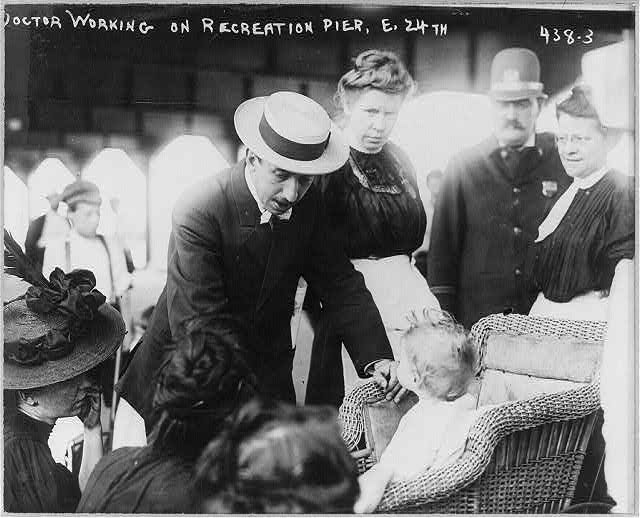
The city took advantage of the piers’ popularity with tenement dwellers in order to provide medical and social services. In 1912 ‘clean milk dispensaries’ provided mothers with free milk for their babies.  Below: a doctor inspects a young baby at the East 24th Street pier.

Library of Congress
Library of Congress

Not to be a buzzkill, however, but most of the piers were hardly secluded from the regular activities of the busy city. The Hell’s Kitchen pier, which opened in 1900, was perfumed with smells from the trash dump two piers away, not to mention flecks of filth from the neighboring ash dump. And crossing the busy avenue just to get to the pier was somewhat of a task.

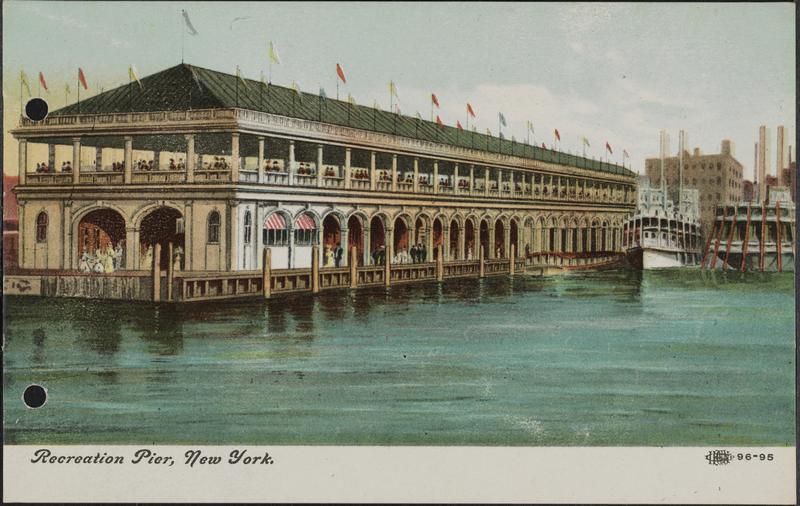
Today’s network of waterfront spaces in New York City are certainly more accommodating and convenient than these old piers, but I can’t help but wish one or two were still around, especially if they looked like this:

Courtesy the Museum of the city of New York


Categories
Neighborhoods Podcasts

The Grand Tale of Orchard Street and Life on the Lower East Side

PODCAST The Lower East Side is one of the most important neighborhoods in America with a rich history as dense as its former living quarters. Thousands of immigrants experienced American life on these many crowded streets. In this podcast, we look at this extraordinary cultural phenomenon through the lens of one of those — Orchard Street.

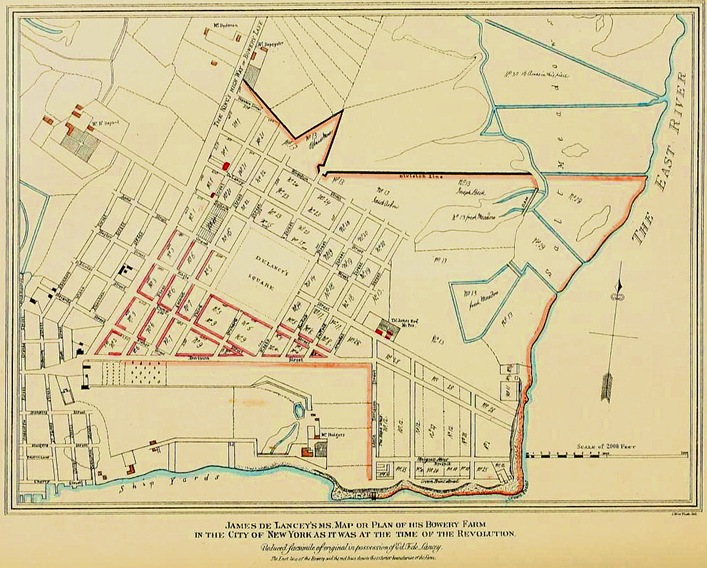
Its name traces itself to a literal orchard, owned by James De Lancey, a wealthy landowner and Loyalist during the Revolutionary War. By the 1840s the former orchard and farm was divided up into lots, and a brand new form of housing — the tenement — served new Irish and German communities who had just arrived in the United States.

A few decades later those residents were replaced by Russian and Eastern European newcomers, brought to the neighborhood due to its affordability and its established Jewish character.

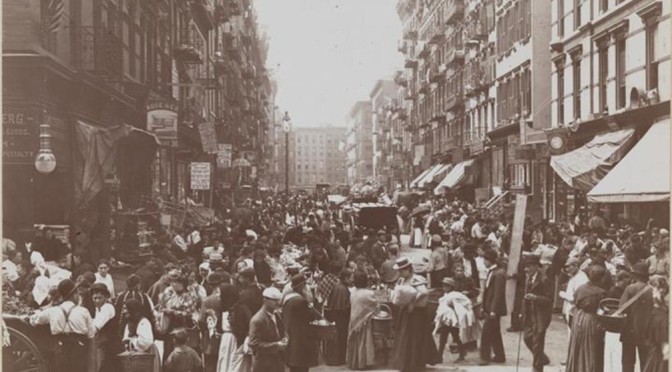
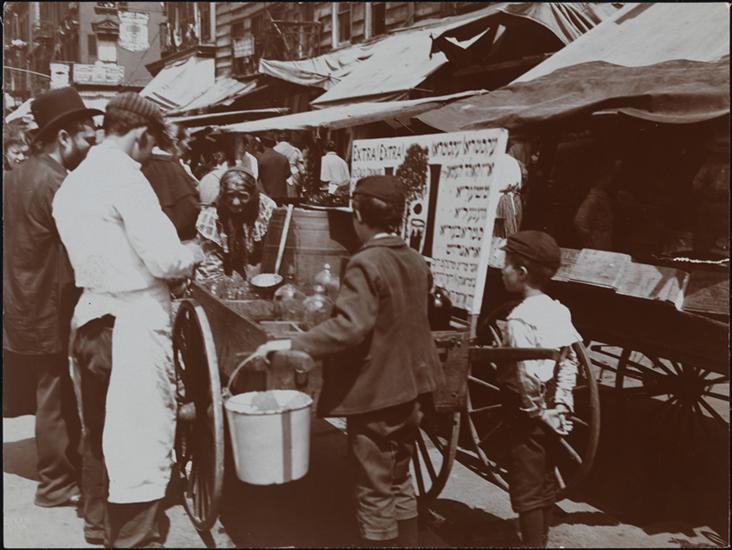
Living conditions were poor and most tenement apartment doubled as workspaces. Meanwhile, in the streets, tight conditions required a unique retail solution — the push cart, a form of independent enterprise that has given us some businesses that still thrive on Orchard Street today.

You can see this century-old life along Orchard Street today, if you know where to look. Luckily that’s what we’re here for! With some help from Adam Steinberg at the Tenement Museum, where the best place to interact with a preserved view of the old days.


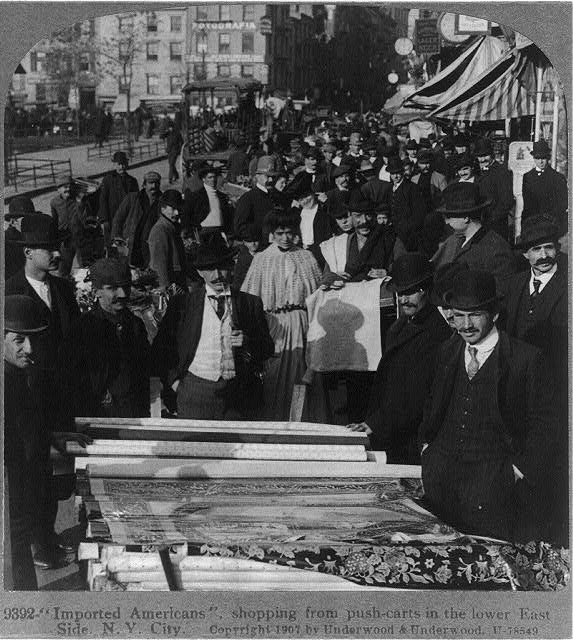
Below: “Imported Americans” — from a photo card, courtesy Library of Congress

imported

The Bowery Boys: New York City History podcast is brought to you …. by you!

Starting this month, we are doubling our number of episodes per month. Now you’ll hear a new Bowery Boys podcast every two weeks. We’re also looking to improve the show in other ways and expand in other ways as well — through publishing, social media, live events and other forms of media. But we can only do this with your help!

We are now a member of Patreon, a patronage platform where you can support your favorite content creators for as little as a $1 a month.

Please visit our page on Patreon and watch a short video of us recording the show and talking about our expansion plans. If you’d like to help out, there are five different pledge levels (and with clever names too — Mannahatta, New Amsterdam, Five Points, Gilded Age, Jazz Age and Empire State). Check them out and consider being a sponsor.

We greatly appreciate our listeners and readers and thank you for joining us on this journey so far. And the best is yet to come!


A look at the property of James De Lancey and his sophisticated plans to turn his farm into a wealthy neighborhood, probably in the spirit of St. John’s Park. The blog Manhattan Unlocked goes really deep into the story of De Lancey’s land holdings here.

1

I’m not sure where this picture was taken but it illustrates a cluster of buildings constructed before the advent of tenement construction.

11

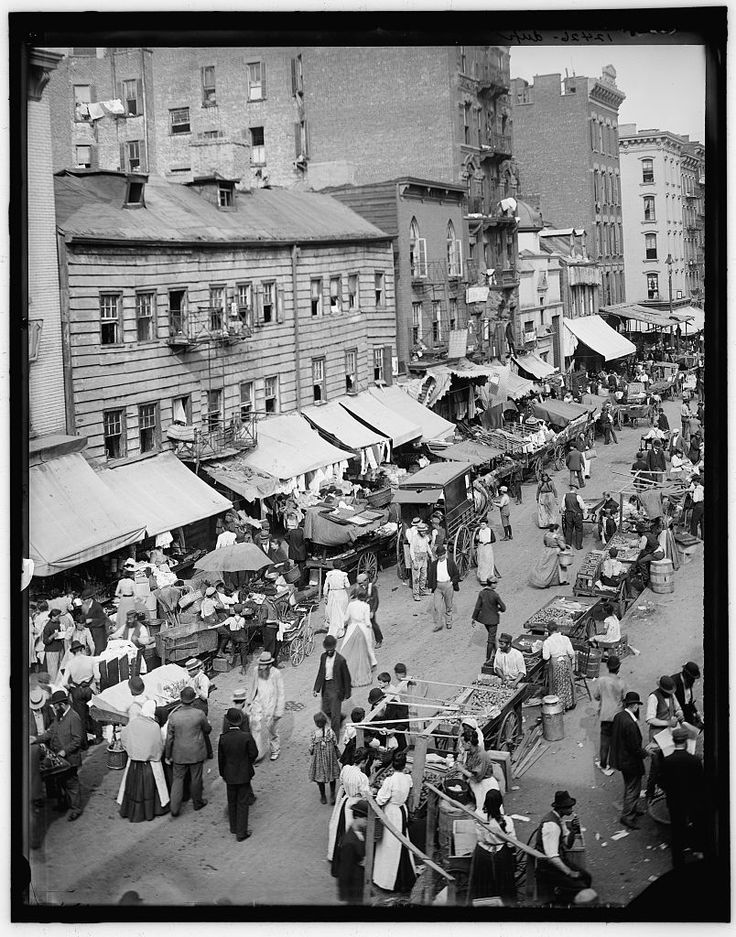
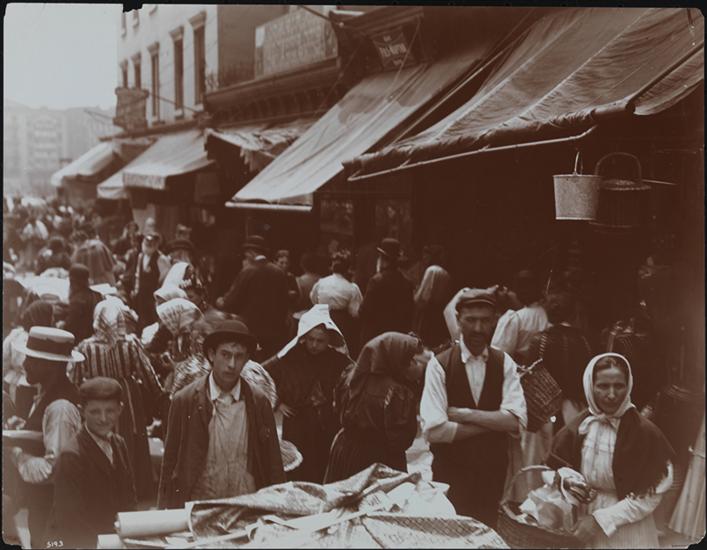
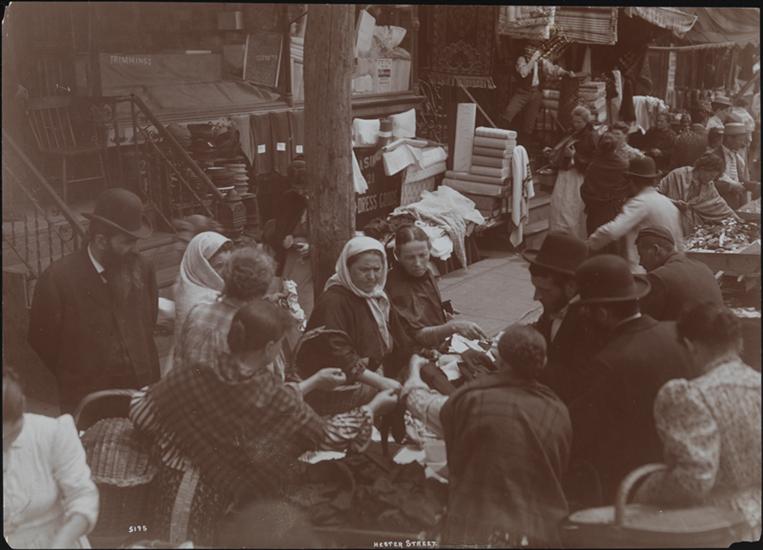
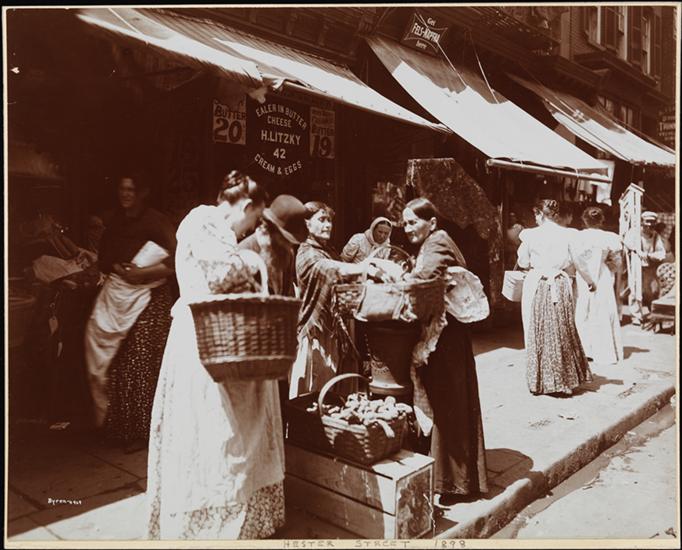
Here’s a selection of photographs from the archives of the Museum of the City of New York, illustrating the clogged streets of Orchard and Hester Streets, busy with the commerce of the day. All of these are from 1898.

1
2
3
5

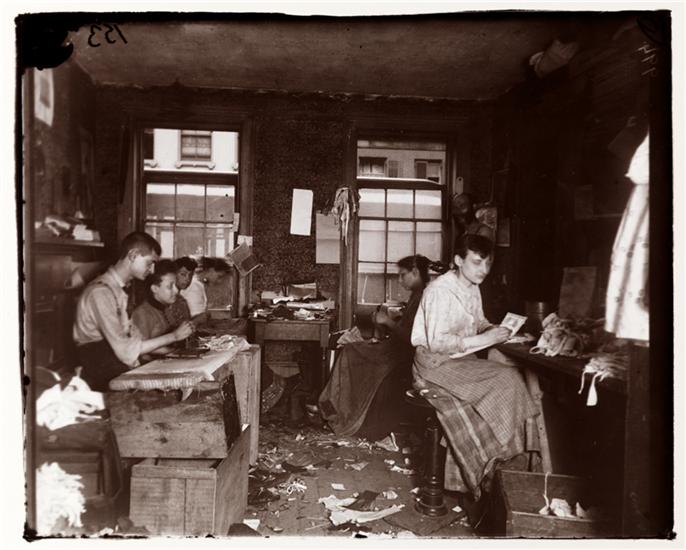
The home sweatshops, cramming an industry and several people into the parlor of a tenement building. Here’s a necktie ‘factory’ on Division Street in 1890.

Courtesy the Museum of the City of New York

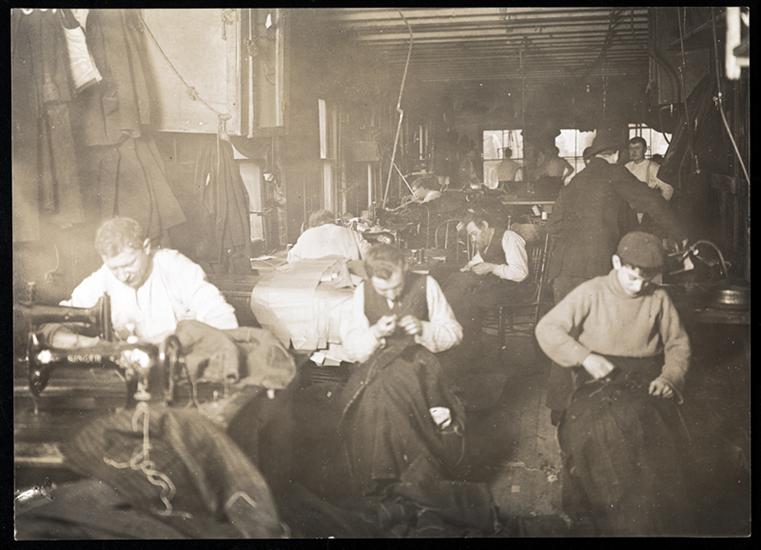
And another from 1911. Child labor in full view!

MNY8435

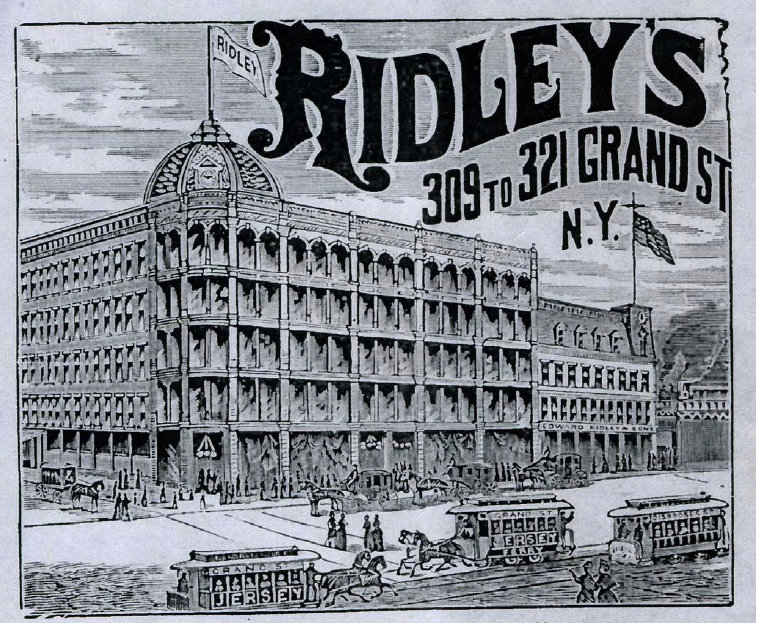
Ridley’s Department Store on the corner of Grand and Orchard Streets. They’ve really cleaned up the streets in this advertisement, haven’t they?

Courtesy the Tenement Museum

Here’s what all that mess on Orchard Street looks like in the winter! Pictured here in 1926.

Courtesy New York Daily News

An Allen Street tenement fire escape from 1890, obviously used for more purposes than emergencies! [source]

Courtesy Museum of City of New York

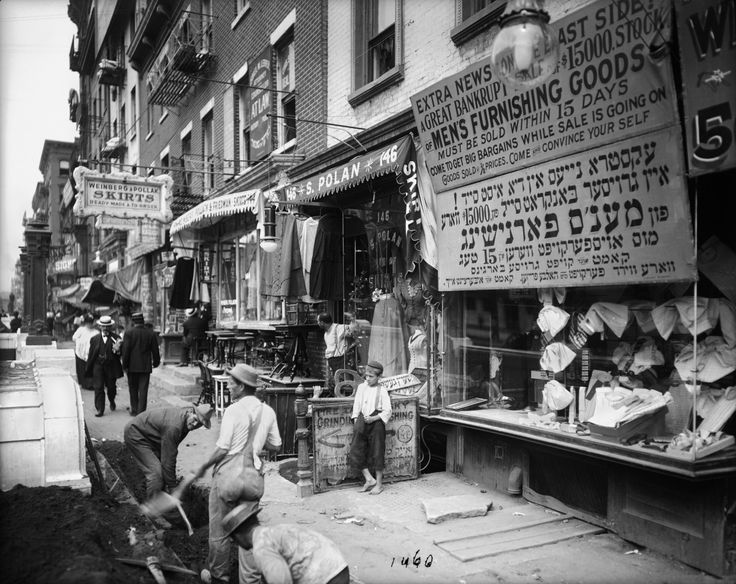
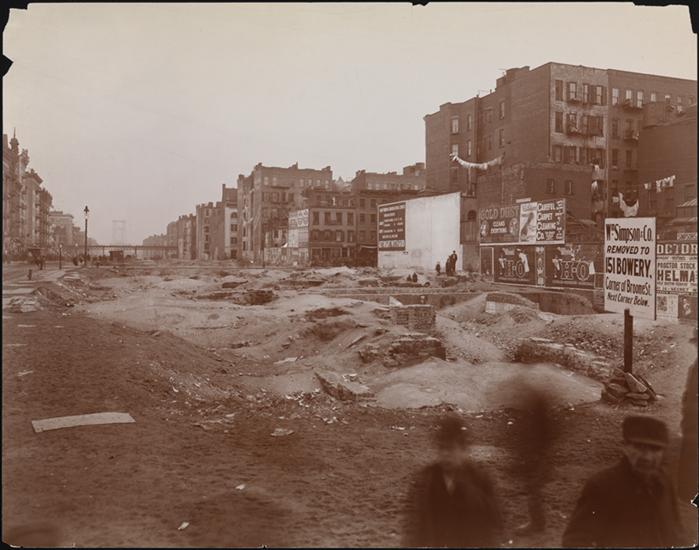
This photo was taken in 1908 (or somewhere around that date) showing a bit of the expansion of Delancey Street. Workers labor in the street while a Jewish boy looks on. (Department of Records)

12

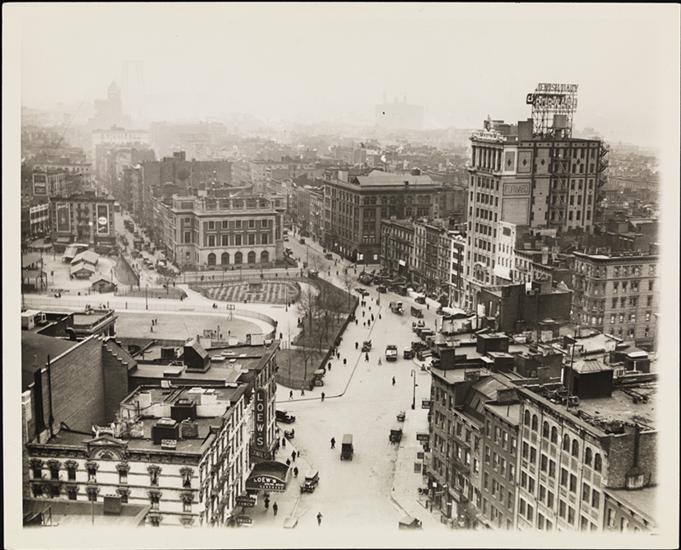
An overhead view of the intersection of East Broadway, Essex Street, Division Street and Canal Street, showing Seward Park and the library, both built to provide air and education to the Lower East Side. Photo is from 1928. [source]

9

An extraordinary view of Delancey Street in 1904 during the widening process for access to the Wililamsburg Bridge.

Courtesy Museum of the City of New York

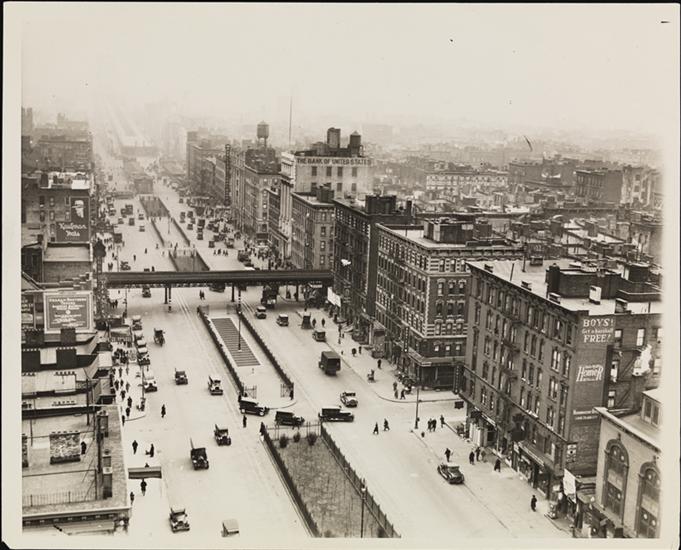
And here’s what Delancey looked like in 1928. This is from the top of a hotel from Delancey and Chrystie. You can see the elevated train that went down Allen Street. Orchard Street is the next block in the distance. Allen Street too was subject to expansion. And see the building labeled Bank of the United States? Here’s a little bit more about its fascinating history.

delancey

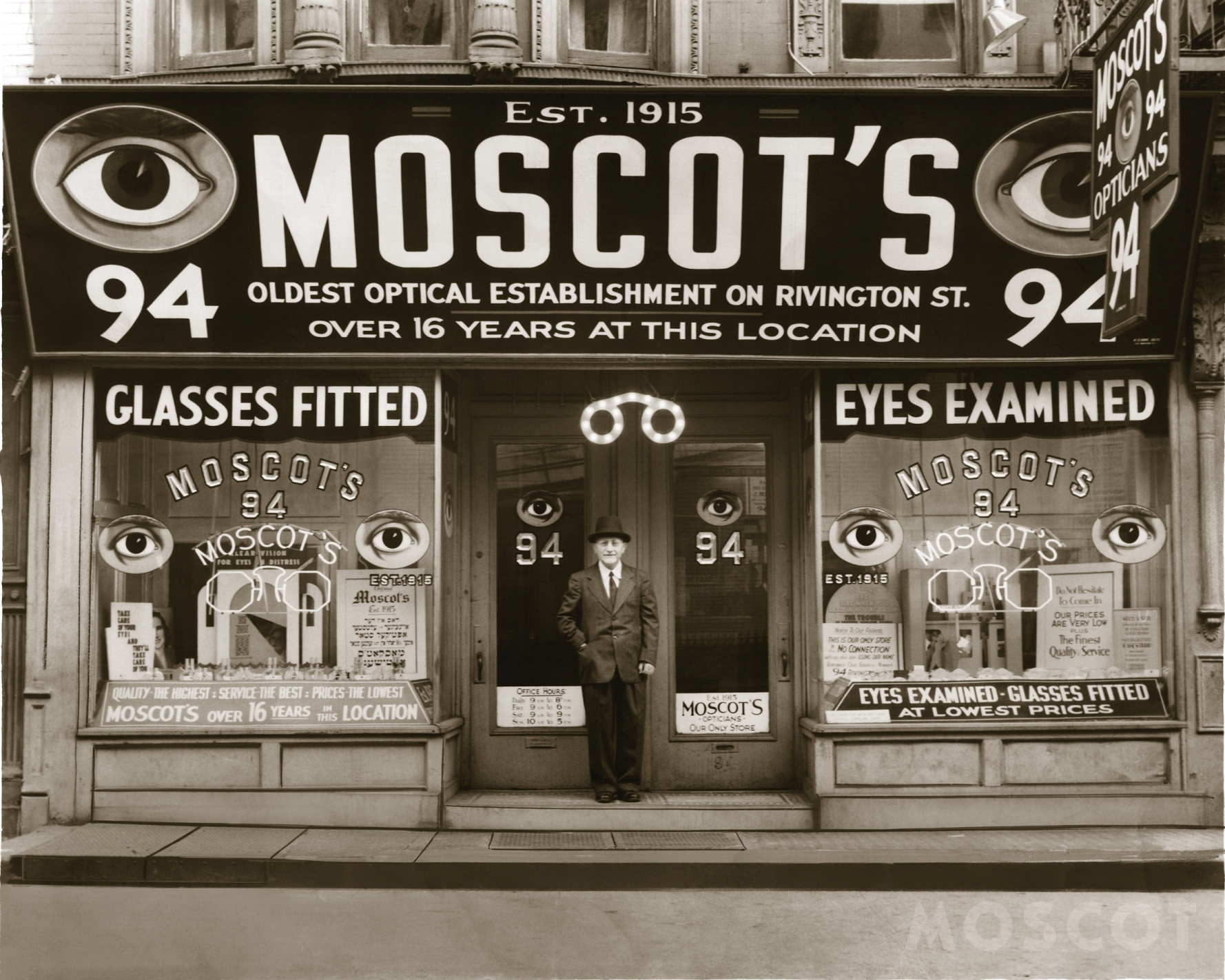
Hyman Moscot stands outside of his shop at 94 Rivington Street sometime in 1934. He began his business selling eyeglasses out of a pushcart.

Courtesy Sol Moscot
Courtesy Sol Moscot

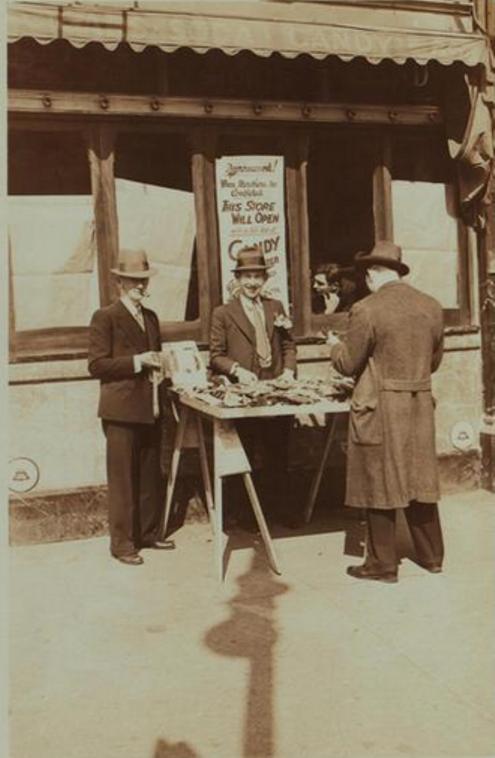
A men’s tie peddler has some success selling his ties on the street corner at Orchard Street and Delancey. Courtesy New York Public Library. Click here for more historic views of this corner.

Courtesy New York Public Library

The Lower East Side in the 1930s — less crowded in the streets with very active storefronts.

Courtesy Trace Work
Courtesy Trace Work


Jarmulowsky’s Bank at Orchard and Canal. The perch at top is no longer on the building. It was originally built there because Sender Jarmulowsky wanted to have the tallest building in the Lower East Side.

bank

The interior of 97 Orchard Street (today’s Tenement Museum) in 1988.

Courtesy the Tenement Museum

A big thanks to Adam Steinberg at the Tenement Museum! Visit their website for more information.