In today’s show, we’ll continue to explore housing in New York, but move far from the mansions of Fifth Avenue to the tenements of the Lower East Side in the 20th Century. Specifically, we’ll be visiting one building, 103 Orchard Street, which is today part of the Tenement Museum.
The Bowery Boys: New York City History podcast is brought to you — by you!
We are now producing a new Bowery Boys podcast every week. We’re also looking to improve the show in other ways and expand in other ways as well — through publishing, social media, live events and other forms of media. But we can only do this with your help!
We are now a member of Patreon, a patronage platform where you can support your favorite content creators for as little as a $1 a month.
Please visit our page on Patreon and watch a short video of us recording the show and talking about our expansion plans. If you’d like to help out, there are five different pledge levels (and with clever names too — Mannahatta, New Amsterdam, Five Points, Gilded Age, Jazz Age and Empire State). Check them out and consider being a sponsor.
We greatly appreciate our listeners and readers and thank you for joining us on this journey so far.
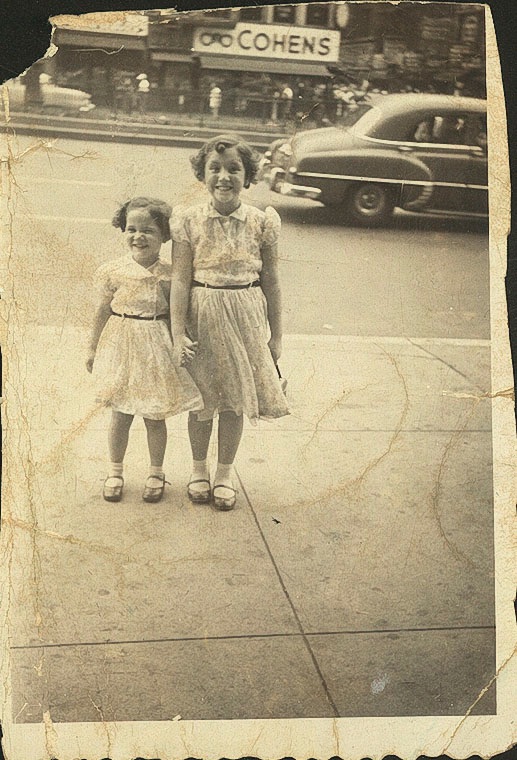
The Epstein sisters, posing on the streets of the Lower East Side. (Photo: The Tenement Museum)
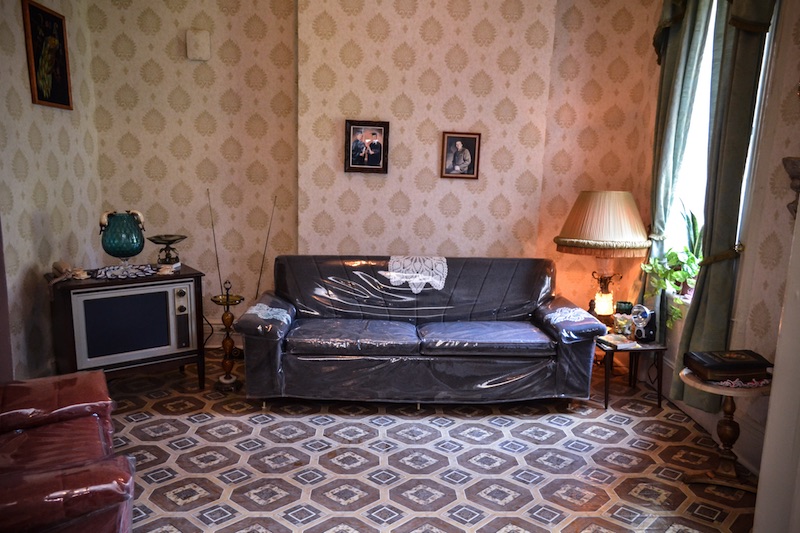
When we step inside 103 Orchard, we’ll be meeting three families who lived there after World War II. We’ll be getting to know them by walking through their apartments, faithfully reconstructed, often with their very own furniture, to tell their stories.
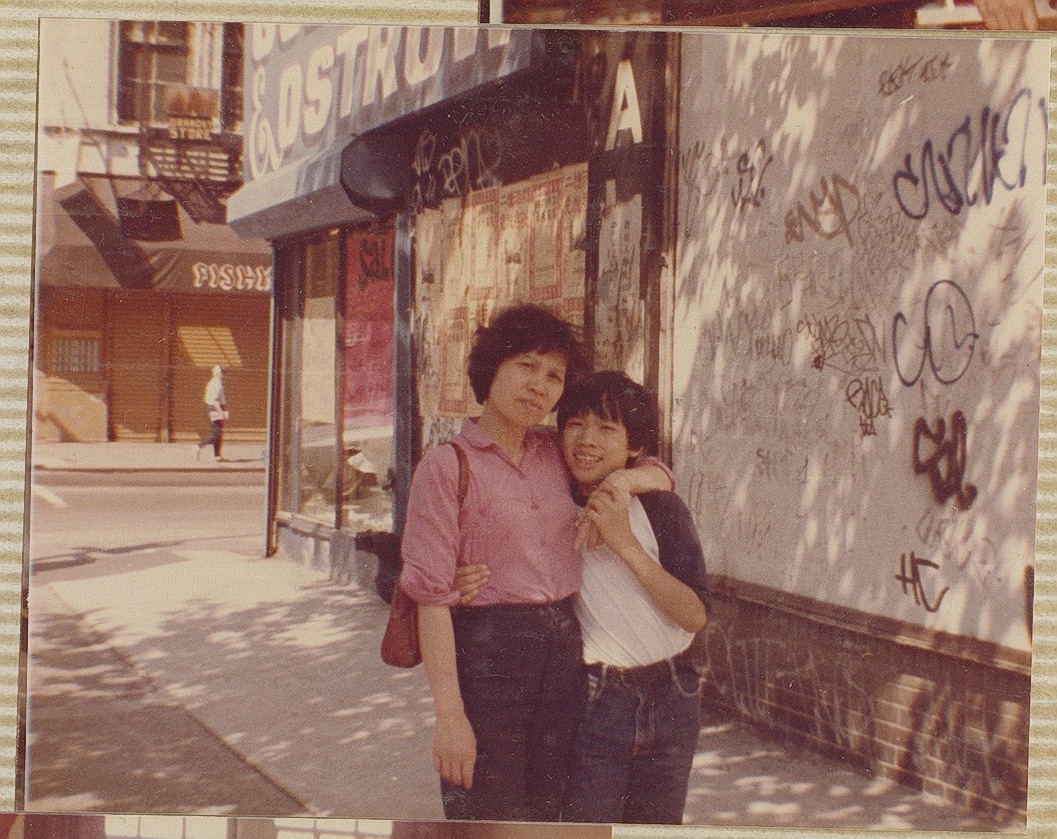
The three families are the Epsteins, the Saez-Velez family, and the Wong family. The Epsteins were Holocaust survivors who moved into the building in the 1950s, the Saez-Velez family moved in during the 60s and were led by a mother who left Puerto Rico and worked as a seamstress here, and the Wong family, whose mother raised the family while working in Chinatown garment shops, moved in during the 1970s.
They’re included in an exciting new interactive exhibition at the Tenement Museum. This exhibit, which includes a tour of the apartments, is called “Under One Roof”, and opens to the public this month. We’re led through it on our show by Annie Polland, the museum’s curator of this exhibit.
PODCAST The Lower East Side is one of the most important neighborhoods in America with a rich history as dense as its former living quarters. Thousands of immigrants experienced American life on these many crowded streets. In this podcast, we look at this extraordinary cultural phenomenon through the lens of one of those — Orchard Street.
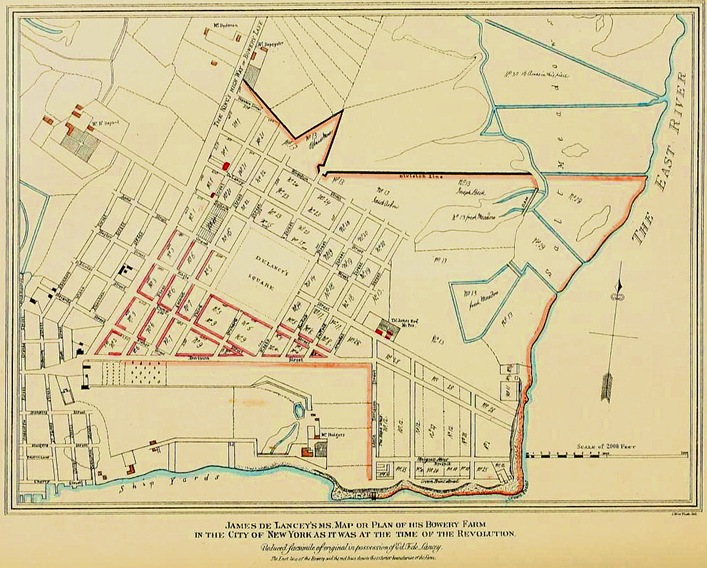
Its name traces itself to a literal orchard, owned by James De Lancey, a wealthy landowner and Loyalist during the Revolutionary War. By the 1840s the former orchard and farm was divided up into lots, and a brand new form of housing — the tenement — served new Irish and German communities who had just arrived in the United States.
A few decades later those residents were replaced by Russian and Eastern European newcomers, brought to the neighborhood due to its affordability and its established Jewish character.
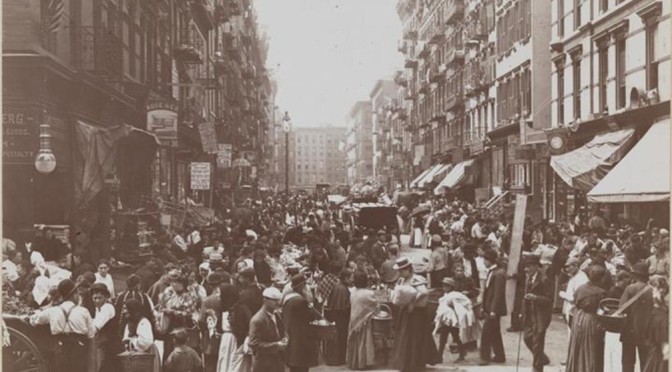
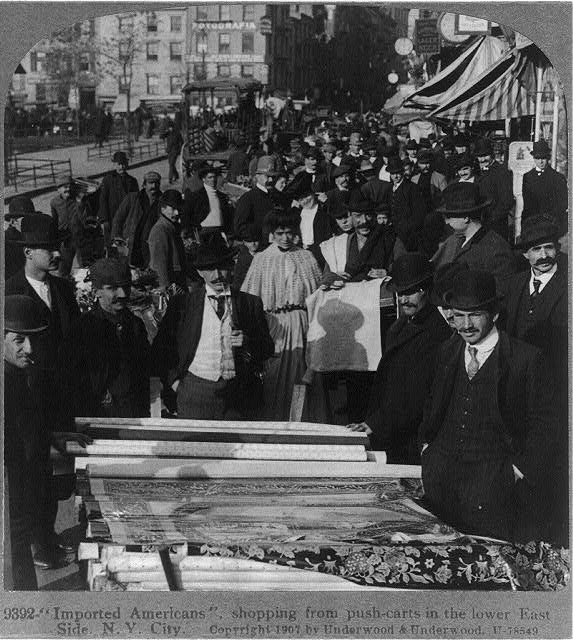
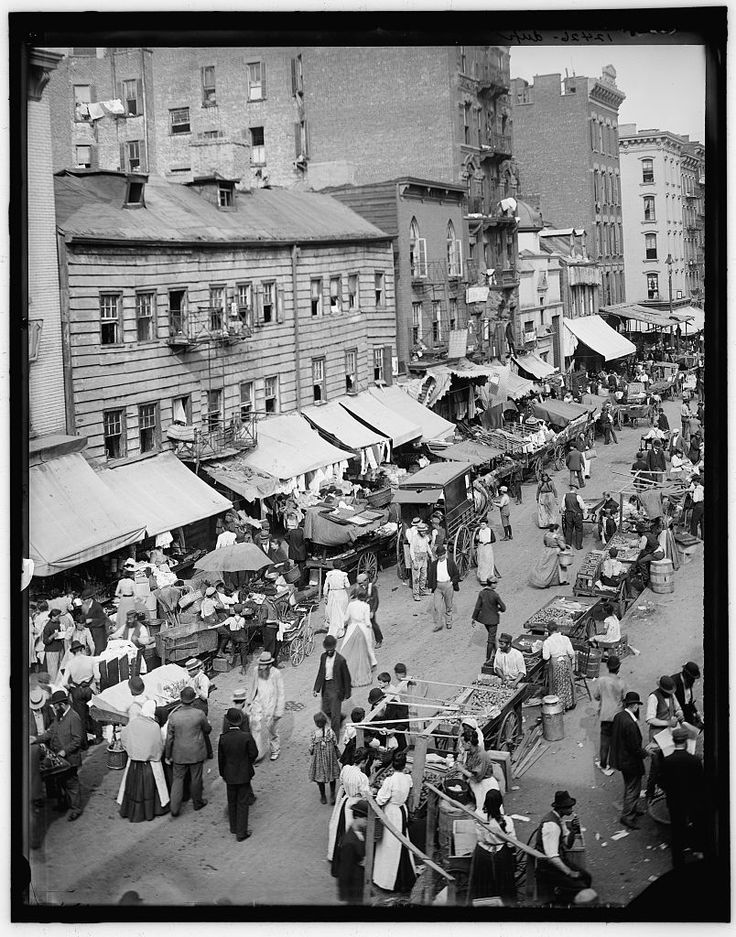
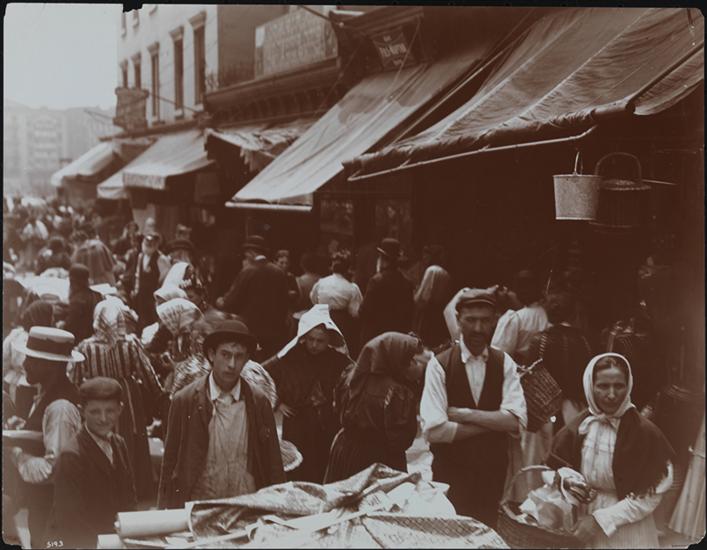
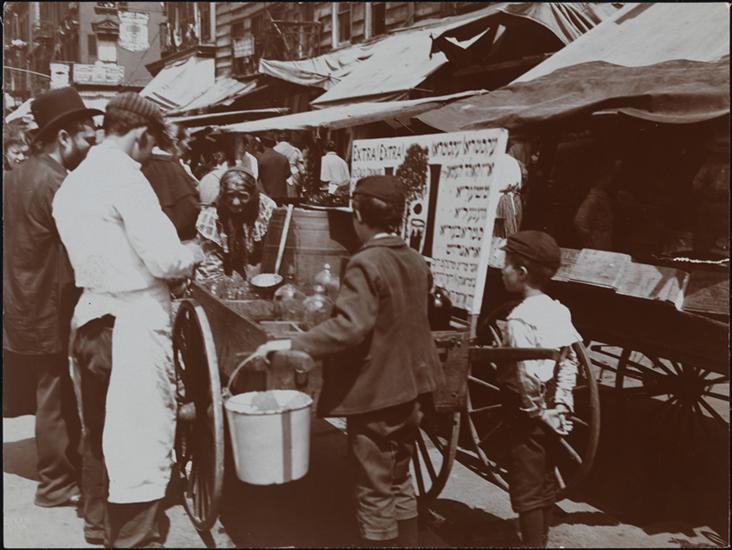
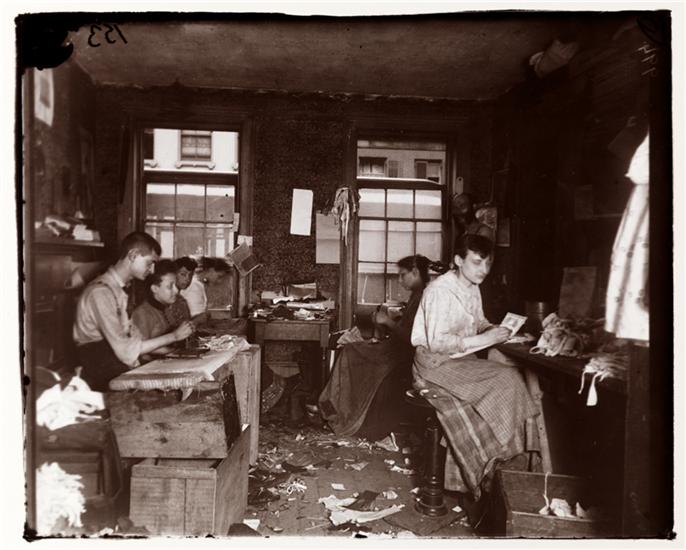
Living conditions were poor and most tenement apartment doubled as workspaces. Meanwhile, in the streets, tight conditions required a unique retail solution — the push cart, a form of independent enterprise that has given us some businesses that still thrive on Orchard Street today.
You can see this century-old life along Orchard Street today, if you know where to look. Luckily that’s what we’re here for! With some help fromAdam Steinberg at the Tenement Museum, where the best place to interact with a preserved view of the old days.
Below: “Imported Americans” — from a photo card, courtesy Library of Congress
The Bowery Boys: New York City History podcast is brought to you …. by you!
Starting this month, we are doubling our number of episodes per month. Now you’ll hear a new Bowery Boys podcast every two weeks. We’re also looking to improve the show in other ways and expand in other ways as well — through publishing, social media, live events and other forms of media. But we can only do this with your help!
We are now a member of Patreon, a patronage platform where you can support your favorite content creators for as little as a $1 a month.
Please visitour page on Patreon and watch a short video of us recording the show and talking about our expansion plans. If you’d like to help out, there are five different pledge levels (and with clever names too — Mannahatta, New Amsterdam, Five Points, Gilded Age, Jazz Age and Empire State). Check them out and consider being a sponsor.
We greatly appreciate our listeners and readers and thank you for joining us on this journey so far. And the best is yet to come!
A look at the property of James De Lancey and his sophisticated plans to turn his farm into a wealthy neighborhood, probably in the spirit of St. John’s Park. The blog Manhattan Unlocked goes really deep into the story of De Lancey’s land holdings here.
I’m not sure where this picture was taken but it illustrates a cluster of buildings constructed before the advent of tenement construction.
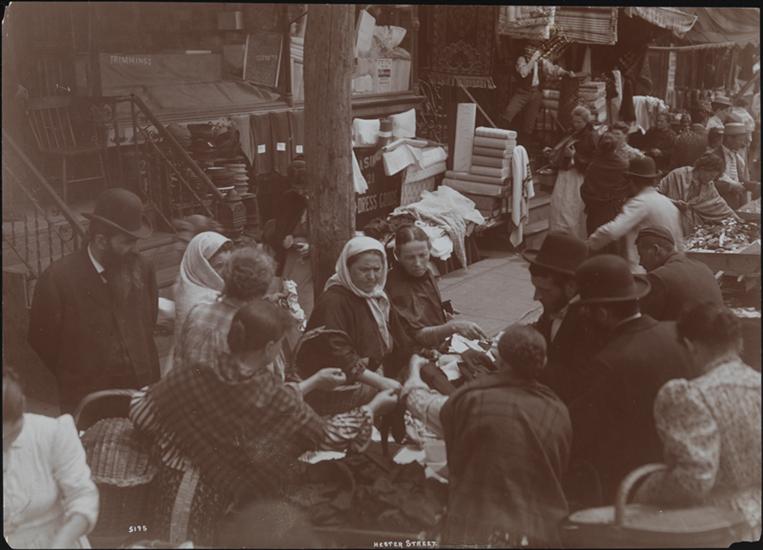
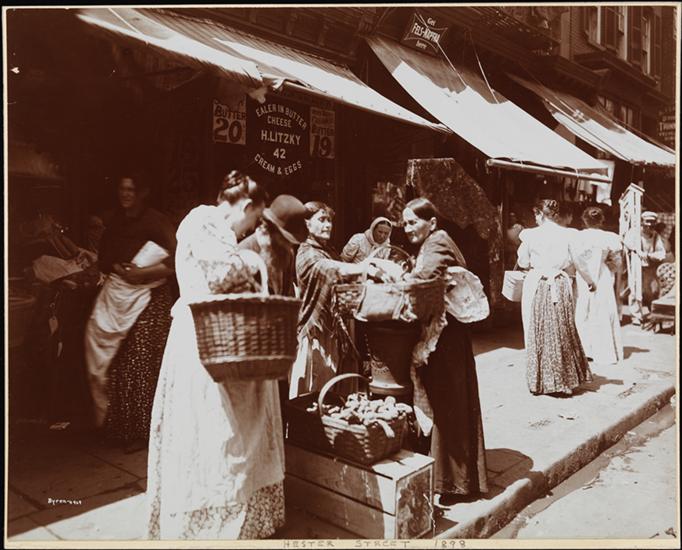
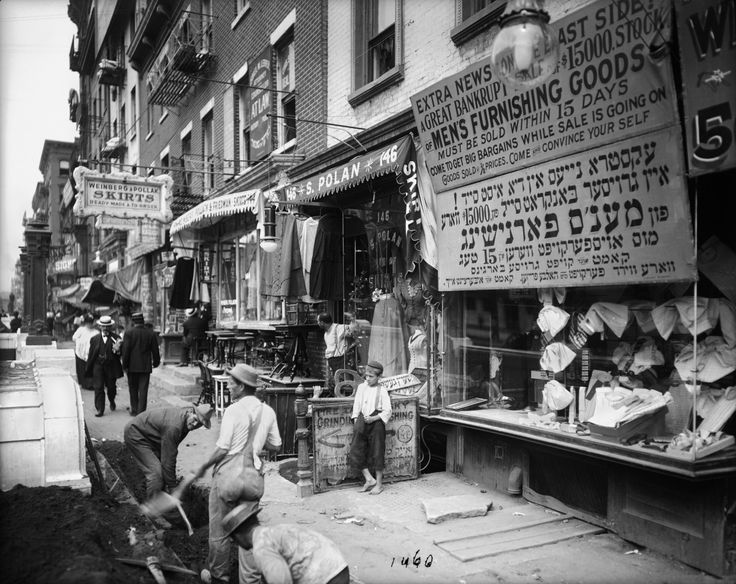
Here’s a selection of photographs from the archives of the Museum of the City of New York, illustrating the clogged streets of Orchard and Hester Streets, busy with the commerce of the day. All of these are from 1898.
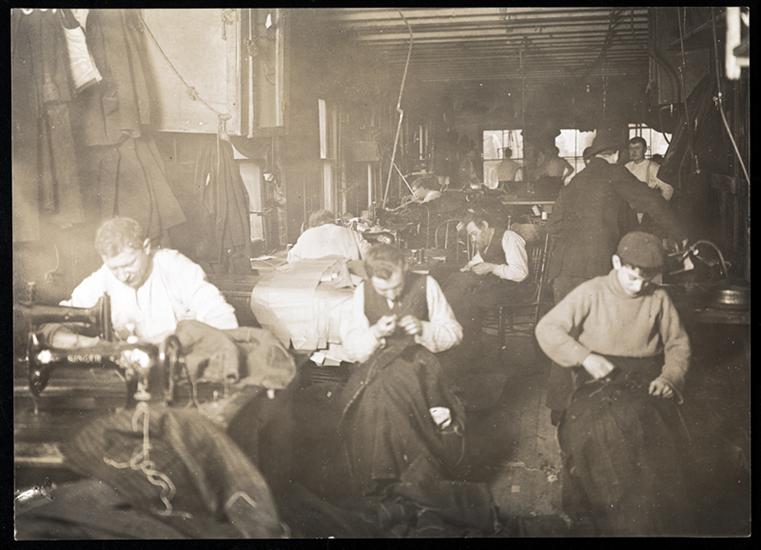
The home sweatshops, cramming an industry and several people into the parlor of a tenement building. Here’s a necktie ‘factory’ on Division Street in 1890.
Courtesy the Museum of the City of New York
And another from 1911. Child labor in full view!
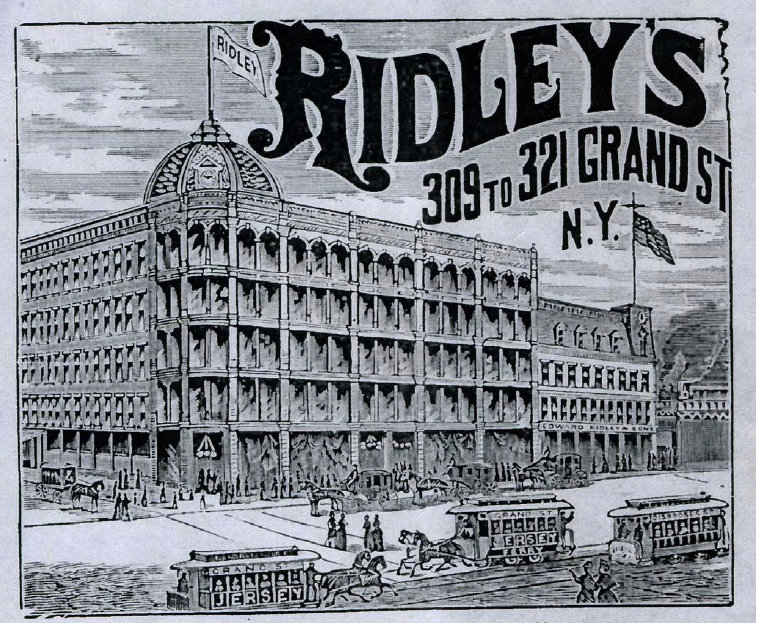
Ridley’s Department Store on the corner of Grand and Orchard Streets. They’ve really cleaned up the streets in this advertisement, haven’t they?
Courtesy the Tenement Museum
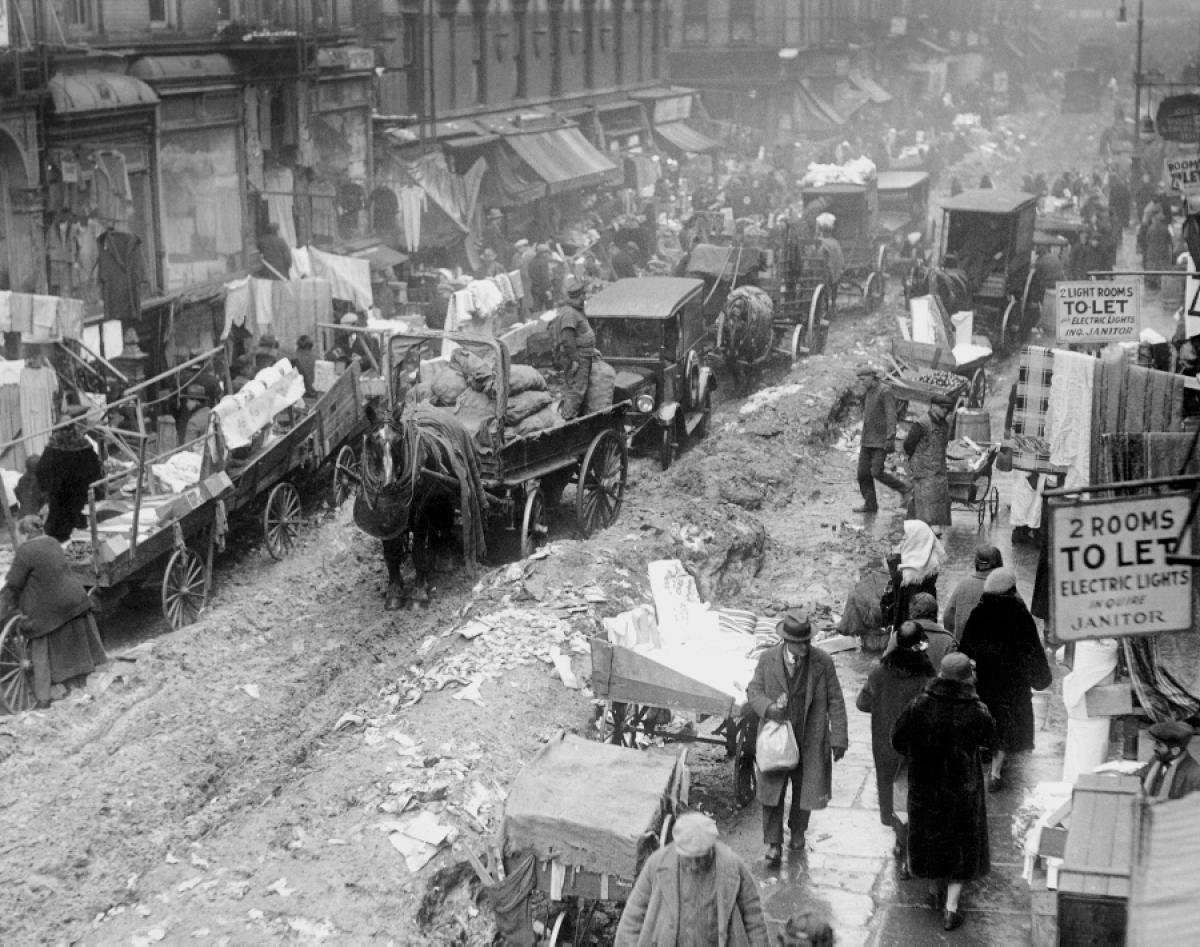
Here’s what all that mess on Orchard Street looks like in the winter! Pictured here in 1926.
Courtesy New York Daily News
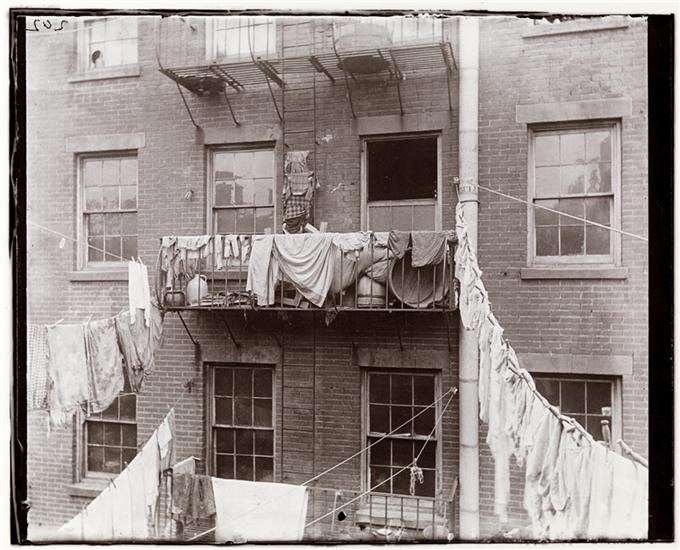
An Allen Street tenement fire escape from 1890, obviously used for more purposes than emergencies! [source]
Courtesy Museum of City of New York
This photo was taken in 1908 (or somewhere around that date) showing a bit of the expansion of Delancey Street. Workers labor in the street while a Jewish boy looks on. (Department of Records)
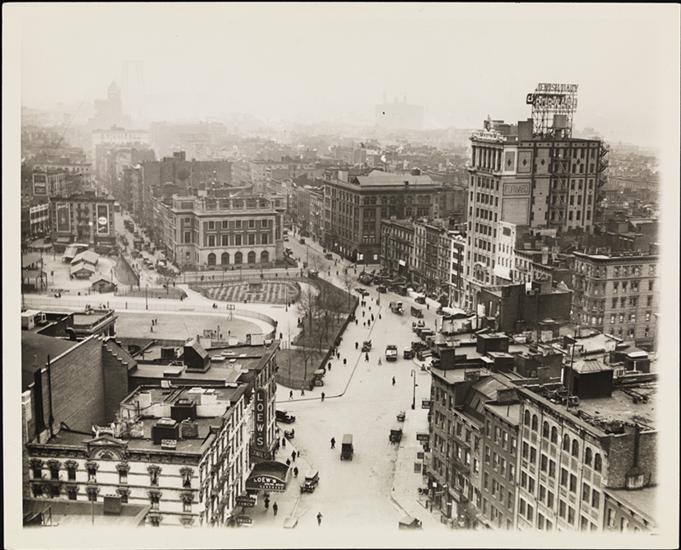
An overhead view of the intersection of East Broadway, Essex Street, Division Street and Canal Street, showing Seward Park and the library, both built to provide air and education to the Lower East Side. Photo is from 1928. [source]
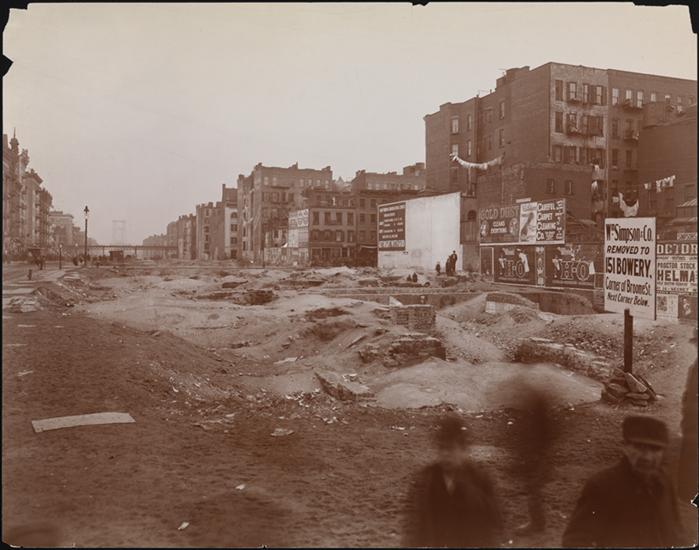
An extraordinary view of Delancey Street in 1904 during the widening process for access to the Wililamsburg Bridge.
Courtesy Museum of the City of New York
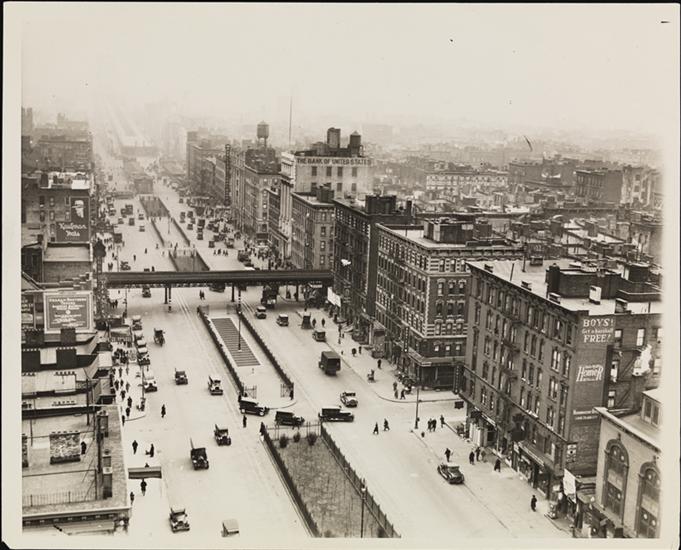
And here’s what Delancey looked like in 1928. This is from the top of a hotel from Delancey and Chrystie. You can see the elevated train that went down Allen Street. Orchard Street is the next block in the distance. Allen Street too was subject to expansion. And see the building labeled Bank of the United States?Here’s a little bit more about its fascinating history.
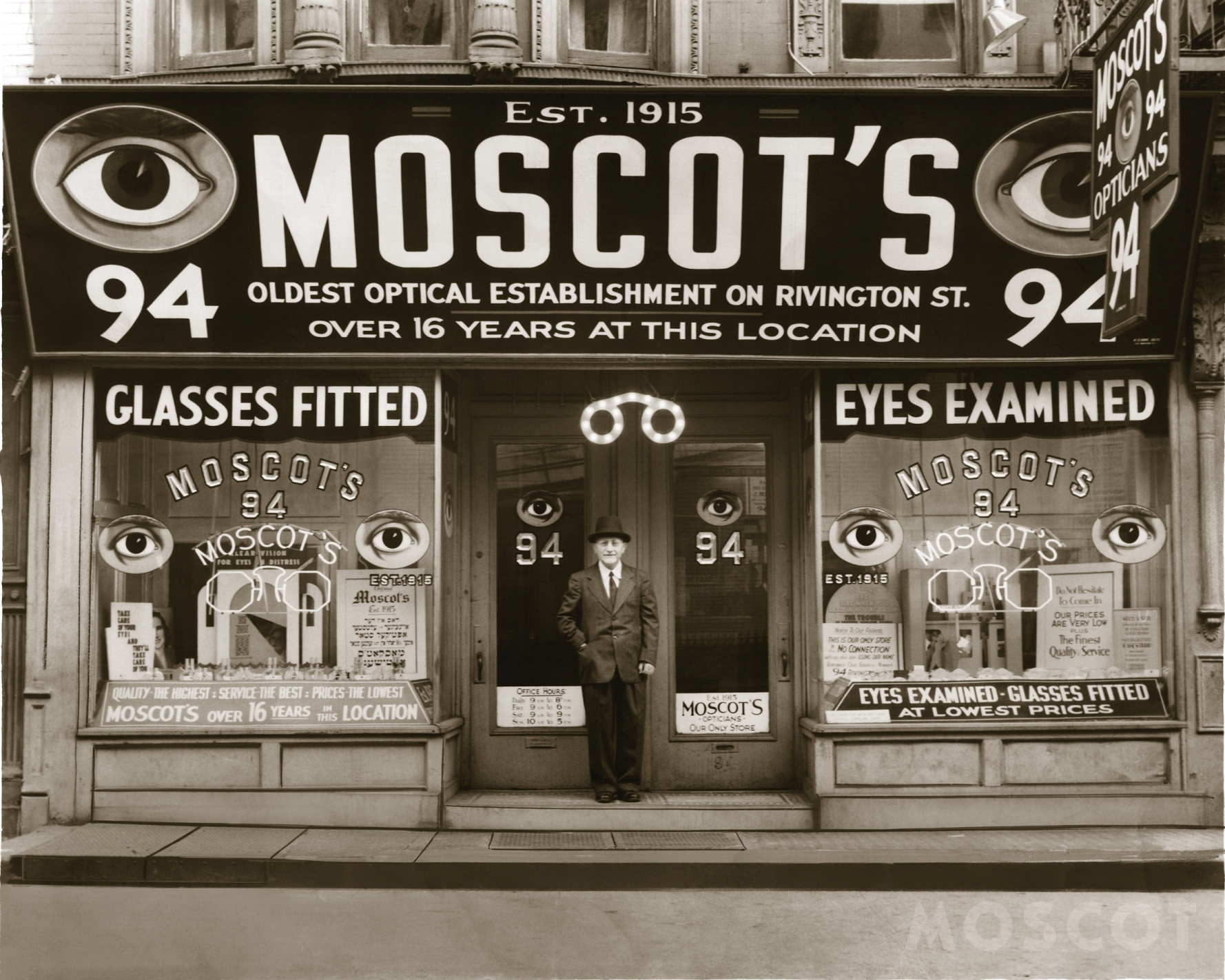
Hyman Moscot stands outside of his shop at 94 Rivington Street sometime in 1934. He began his business selling eyeglasses out of a pushcart.
Courtesy Sol Moscot
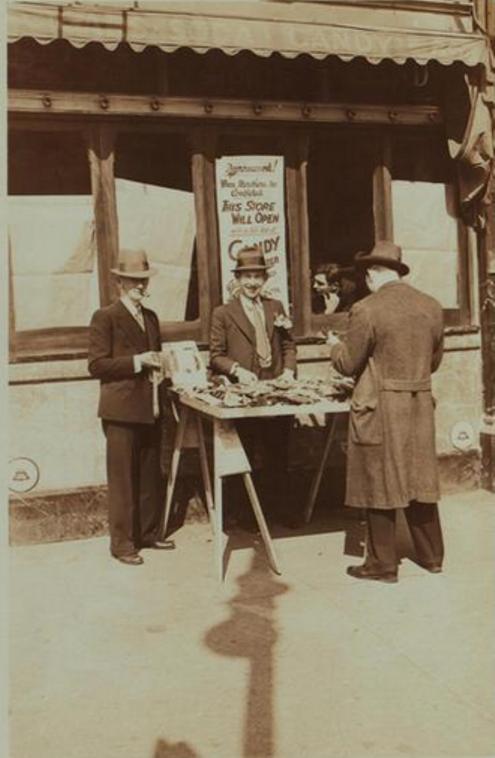
A men’s tie peddler has some success selling his ties on the street corner at Orchard Street and Delancey. Courtesy New York Public Library. Click here for more historic views of this corner.
Courtesy New York Public Library
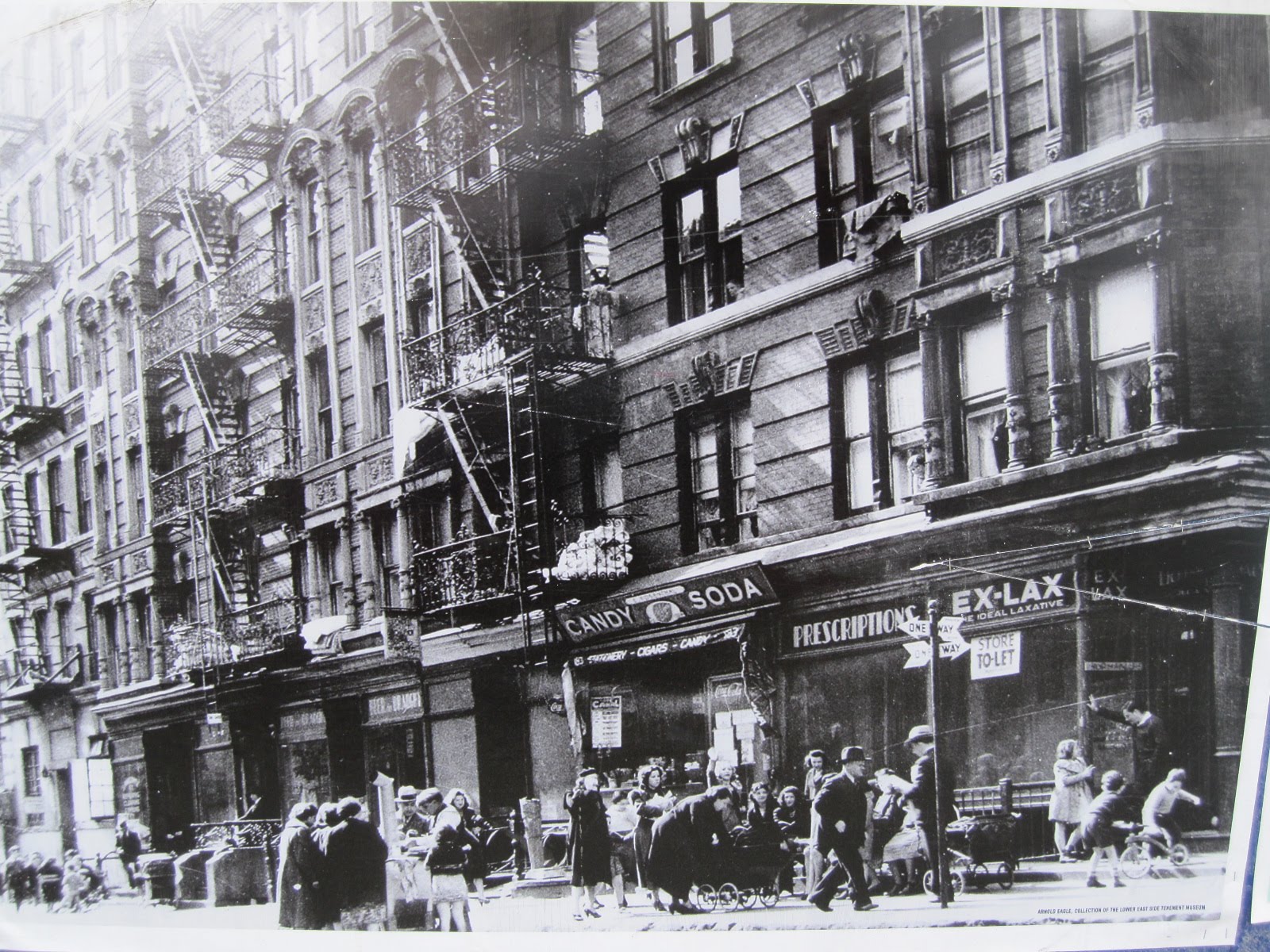
The Lower East Side in the 1930s — less crowded in the streets with very active storefronts.
Courtesy Trace Work
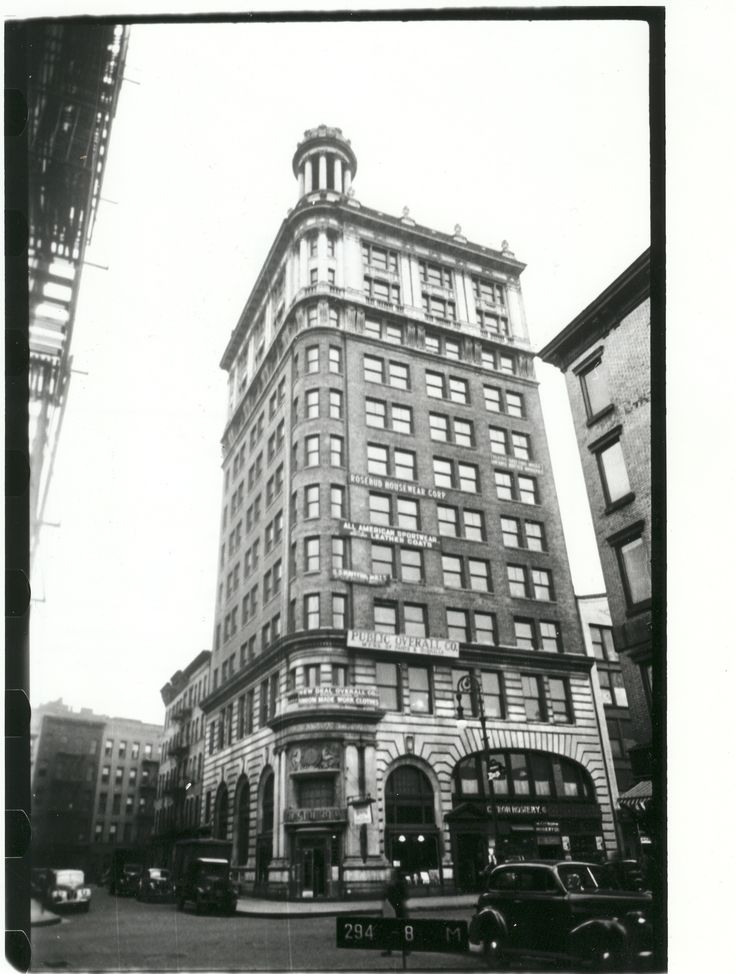
Jarmulowsky’s Bank at Orchard and Canal. The perch at top is no longer on the building. It was originally built there because Sender Jarmulowsky wanted to have the tallest building in the Lower East Side.
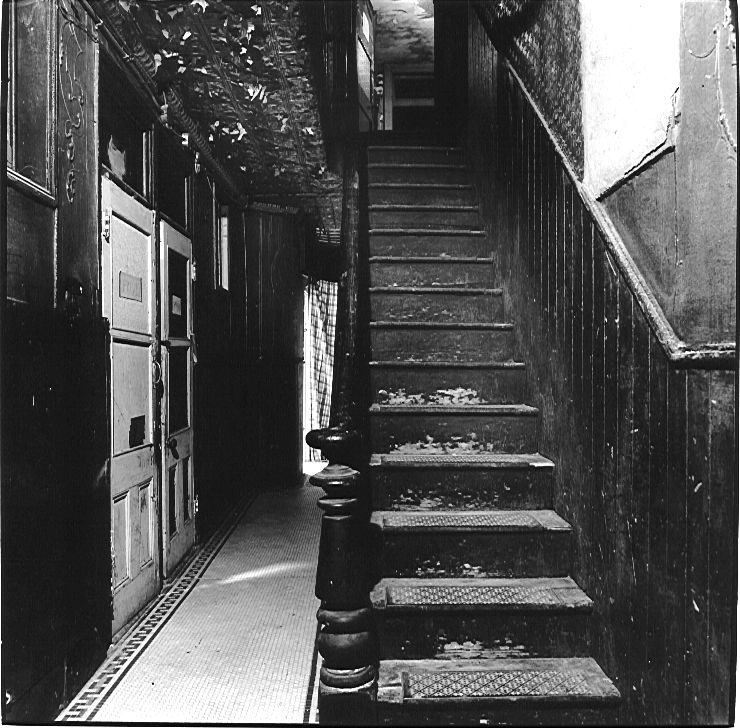
The interior of 97 Orchard Street (today’s Tenement Museum) in 1988.
Courtesy the Tenement Museum
A big thanks to Adam Steinberg at the Tenement Museum! Visit their website for more information.