Categories
Neighborhoods Podcasts

Hell’s Kitchen: New York’s Wild West

PODCAST Hell’s Kitchen, on the far west side of Midtown Manhattan, is a neighborhood of many secrets. The unique history of this working class district veers into many tales of New York’s criminal underworld and violent riots which have shaken the streets for over 150 years.

This sprawling tenement area was home to some of the most notorious slums in the city, and sinister streets like Battle Row were frequent sites of vice and unrest. The streets were ruled by such gangs as the Gophers and the Westies, leaving their bloody fingerprints in subtle ways today in gentrified buildings which at one time contained the most infamous speakeasies and taverns.

We break down this rip-roaring history and try to get to the real reason for its unusual name!


The Bowery Boys: New York City History podcast is brought to you …. by you!

Starting this month, we are doubling our number of episodes per month. Now you’ll hear a new Bowery Boys podcast every two weeks. We’re also looking to improve the show in other ways and expand in other ways as well — through publishing, social media, live events and other forms of media. But we can only do this with your help!

We are now a member of Patreon, a patronage platform where you can support your favorite content creators for as little as a $1 a month.

Please visit our page on Patreon and watch a short video of us recording the show and talking about our expansion plans. If you’d like to help out, there are five different pledge levels (and with clever names too — Mannahatta, New Amsterdam, Five Points, Gilded Age, Jazz Age and Empire State). Check them out and consider being a sponsor.

We greatly appreciate our listeners and readers and thank you for joining us on this journey so far. And the best is yet to come!


The mysteries begin over 200 years ago when ordered avenues and streets could scarcely be imagined, and the shoreline was a ragged coast.

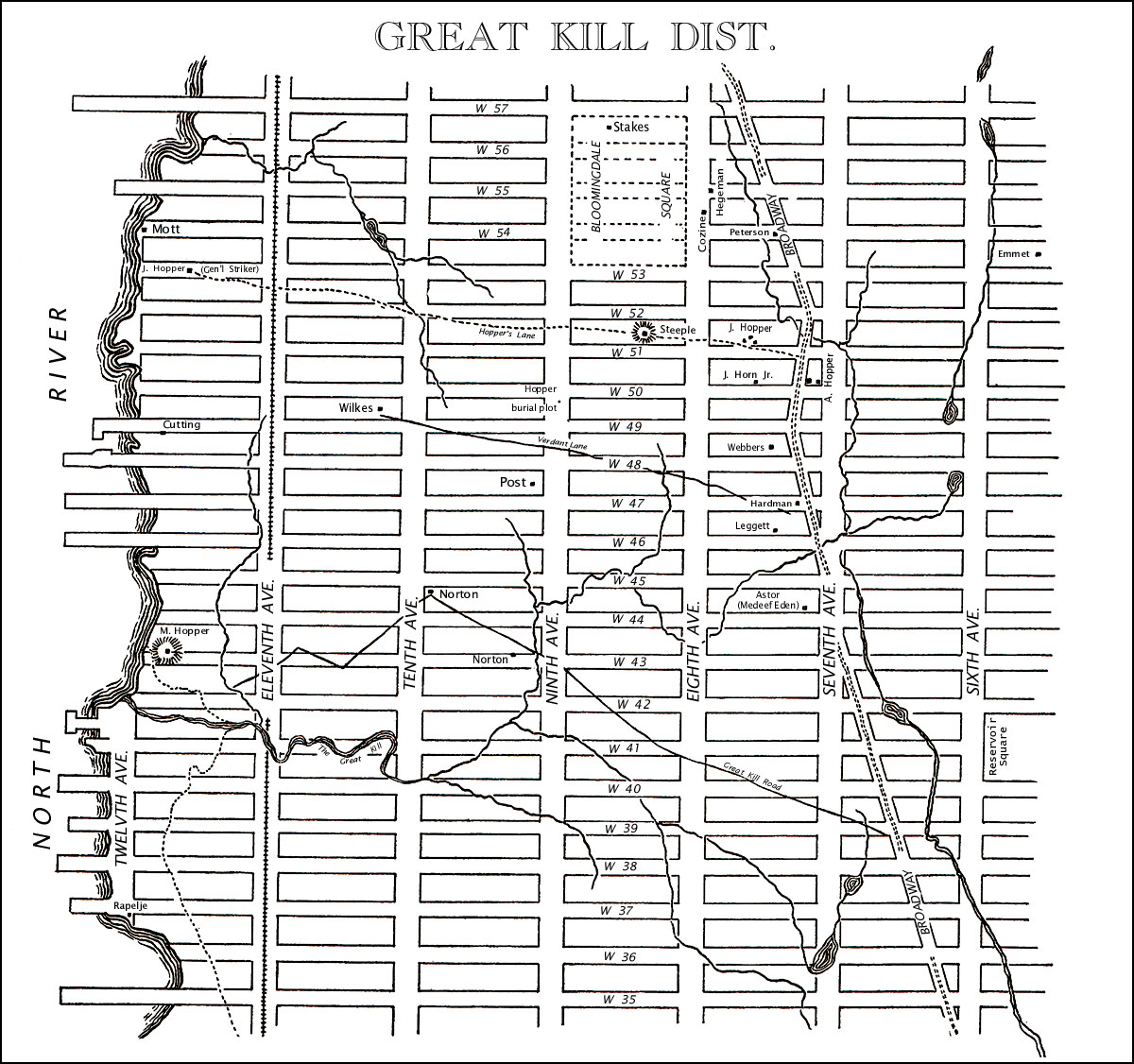
The Dutch later called it the Great Kill District, for the creek which emptied into the Hudson River (North River) at 42nd Street. As you can see from this diagram the shore was evened out with landfill to create 12th Avenue although the inward dip at 43rd Street is still visible on a modern map.
map

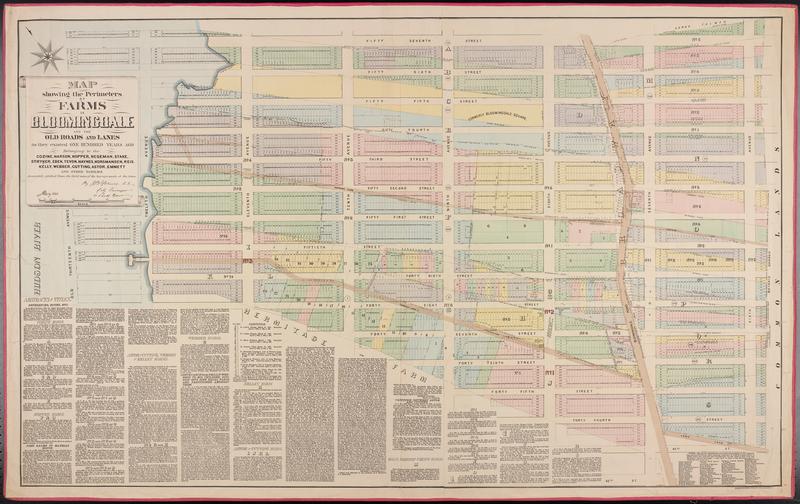
A map (drawn by John Bute Holmes) of the original estate borders of Bloomingdale from the late 18th century. The jagged shore line would later be filled in to make the blocks between 11th and 12th Avenues.
Courtesy Museum of the City of New York

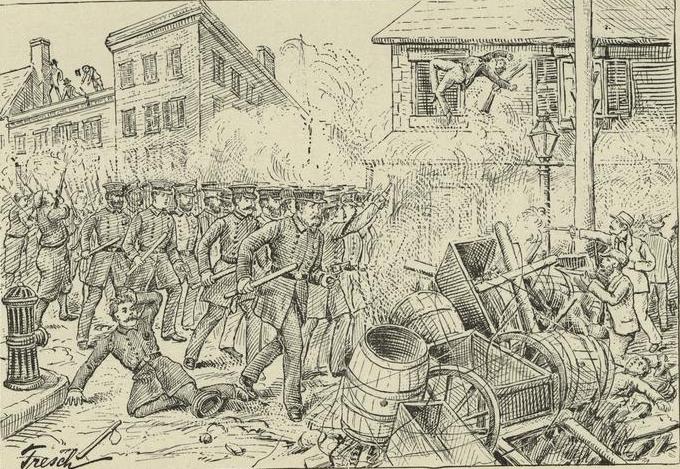
The Ninth Avenue barricades made by rioters in the area of Hell’s Kitchen during the Civil War Draft Riots.
barricades

The Orange Riot of July 12 from Eighth Avenue south from 25th street, an 1871 image from Frank Leslie’s Illustrated Newspaper.
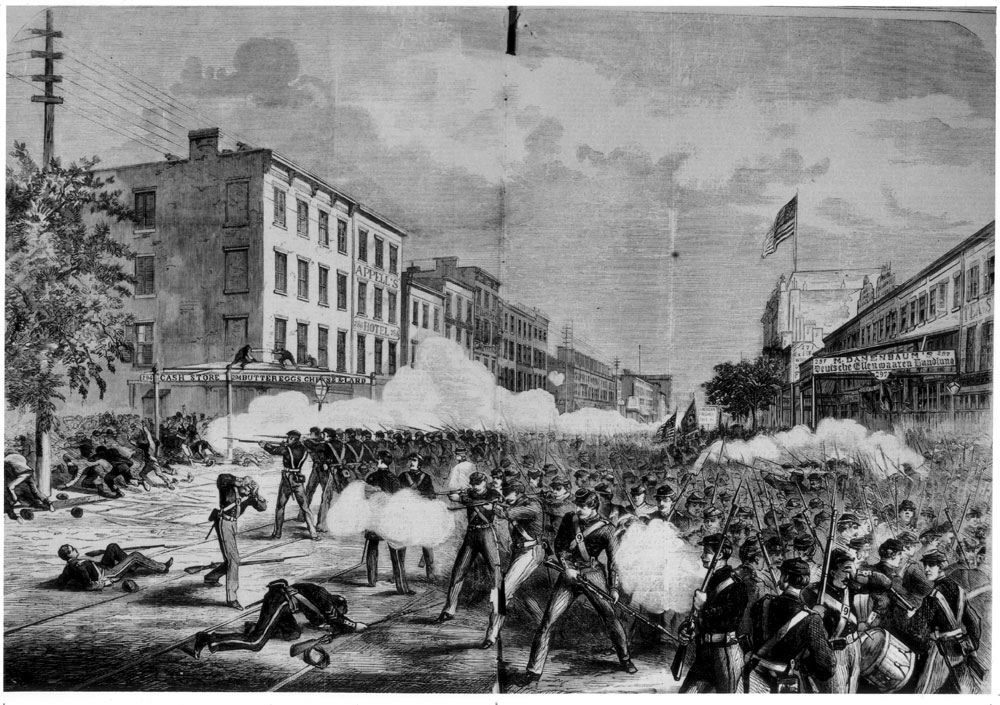
orange

Bad boys: Some Hell’s Kitchen ruffians show Jacob Riis how to rob people who have passed out.
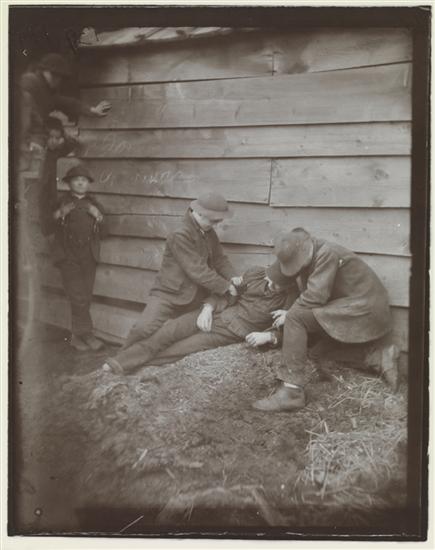
Jacob Riis
Jacob Riis

An intriguing shot of 58th Street between 8th and 9th Avenues
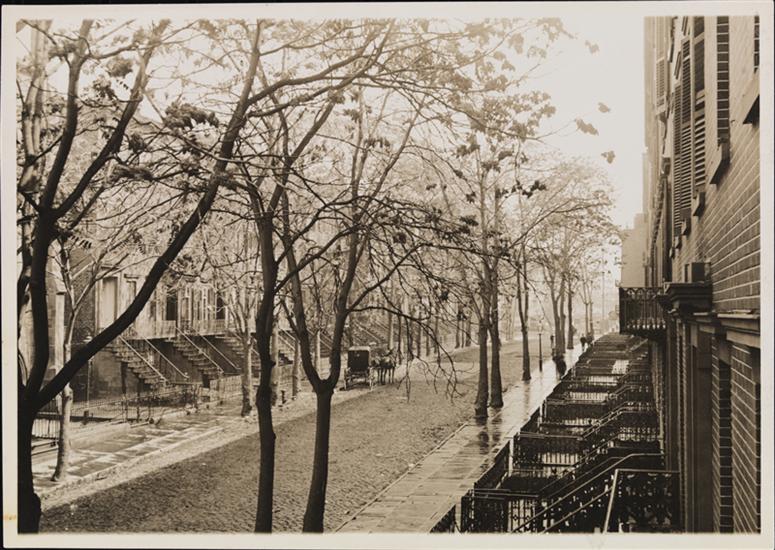
Museum of the City of New York

Jacob Riis’ photograph of the Hell’s Kitchen tenement and the remains of Sebastopol (the rocks), 1890
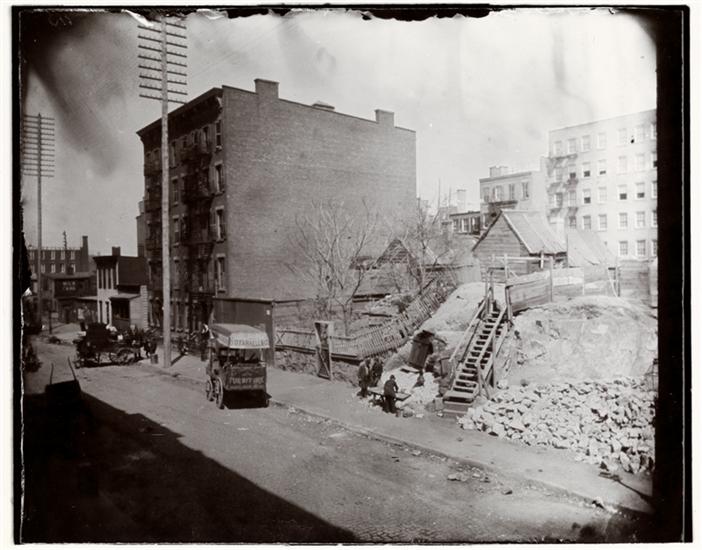
Photo by Jacob Riis
Photo by Jacob Riis

Street vendors under the 9th Avenue Elevated Railroad
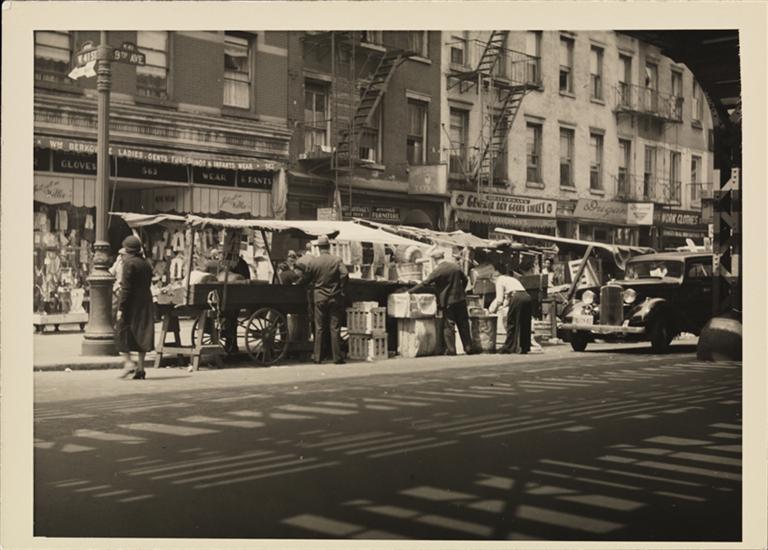
Museum of City of New York

The Hartley House, a settlement house for the Hell’s Kitchen community. on West 46th Street
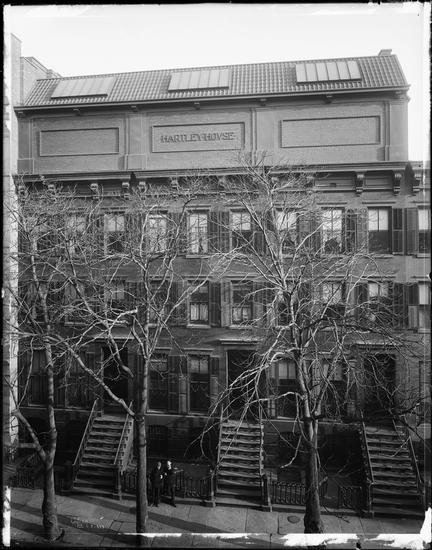
Museum of the City of New York

At the recreation pier — a public swimming hole at West 51st Street and the Hudson River.
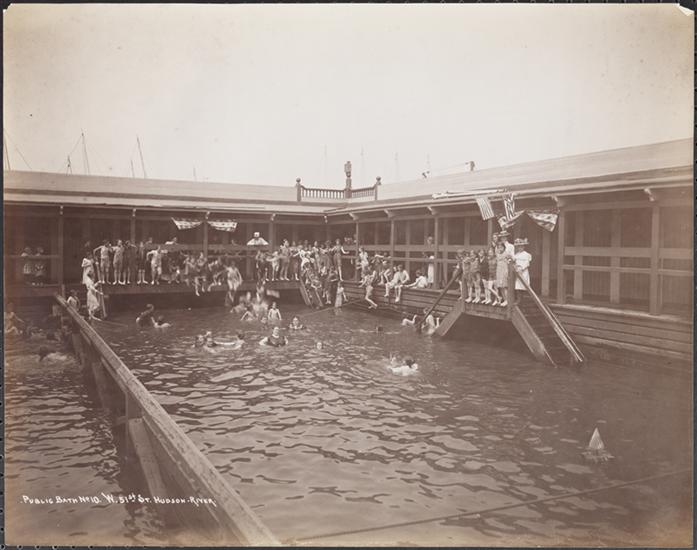
Museum of the City of New York

The later configuration of the Gophers. Owney Madden is on the back row, fourth from the left. A very rough and dangerous gang, but don’t they clean up nice?
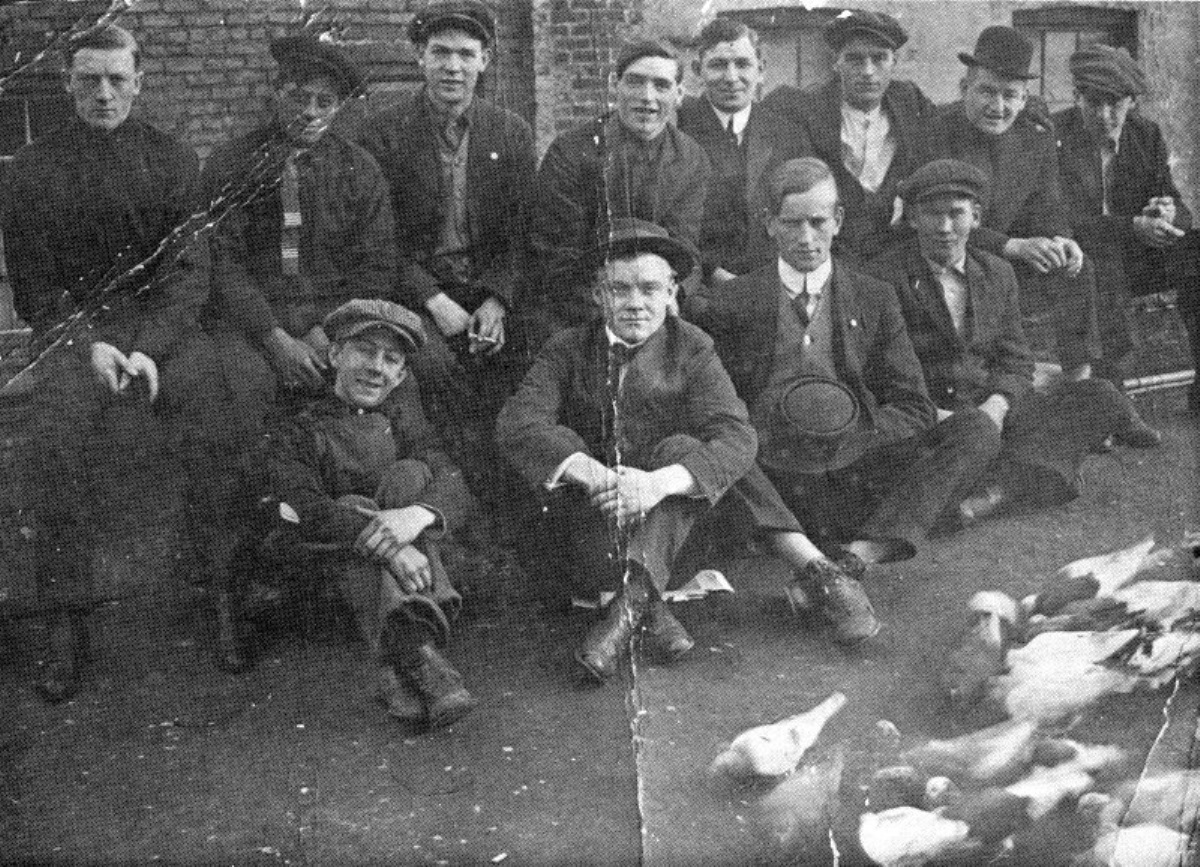
Courtesy of Garland County Historical Society and Butler Center Books

Owney Madden, the king of the Hell’s Kitchen speakeasy racket.
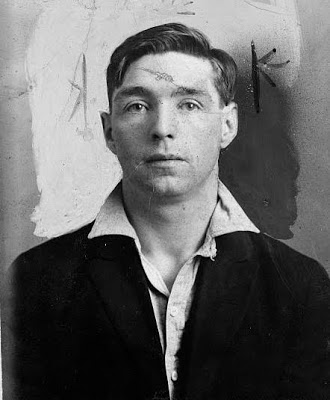
owney

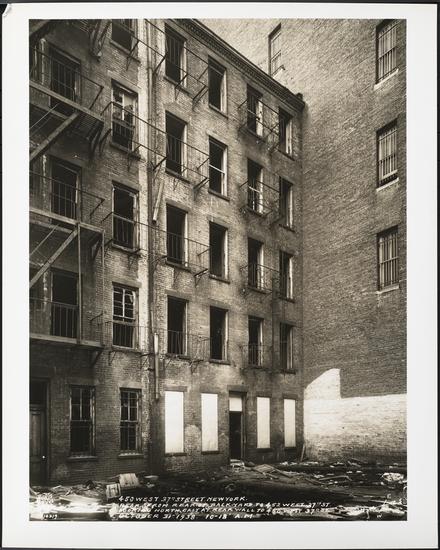
A couple spectacular shots of 1938 slum clearance — eliminating the tenements of 37th Street.
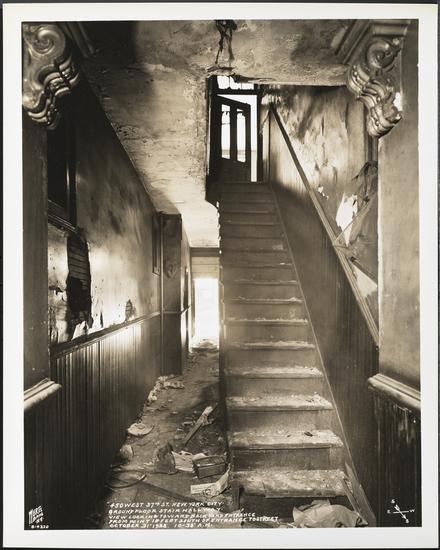
Wurts Brothers. Museum of the City of New York

Businesses on West 52nd Street, facing into DeWitt Clinton Park. It’s likely that William Hopper & Sons Truckmen at no. 626 probably traces itself back to the original Hopper land owners. Photograph by Charles von Urban
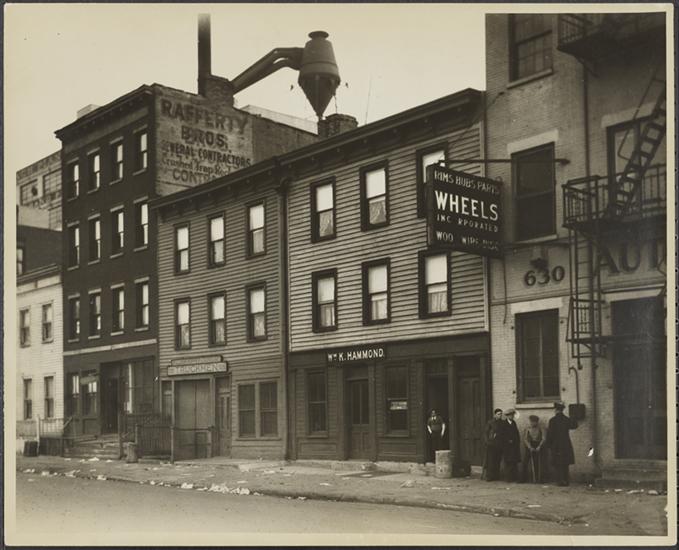
Courtesy Museum of the City of New York

The entrance to DeWitt Clinton Park (at 54th Street) in 1936
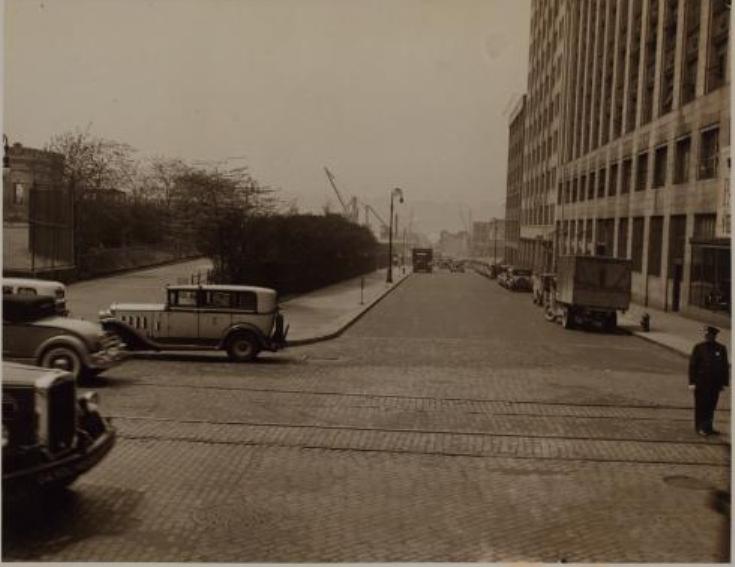
New York Public Library

Most of the pressures faced by the Hell’s Kitchen neighborhood came from its perimeter with dramatic changes to the waterfront to its west, Port Authority/Lincoln Tunnel to its south, Madison Square Garden/Times Square to its east and Lincoln Center/Columbus Circle to its north.

Below: The West Side Highway and piers 95-98, looking west from a roof on West 54th Street
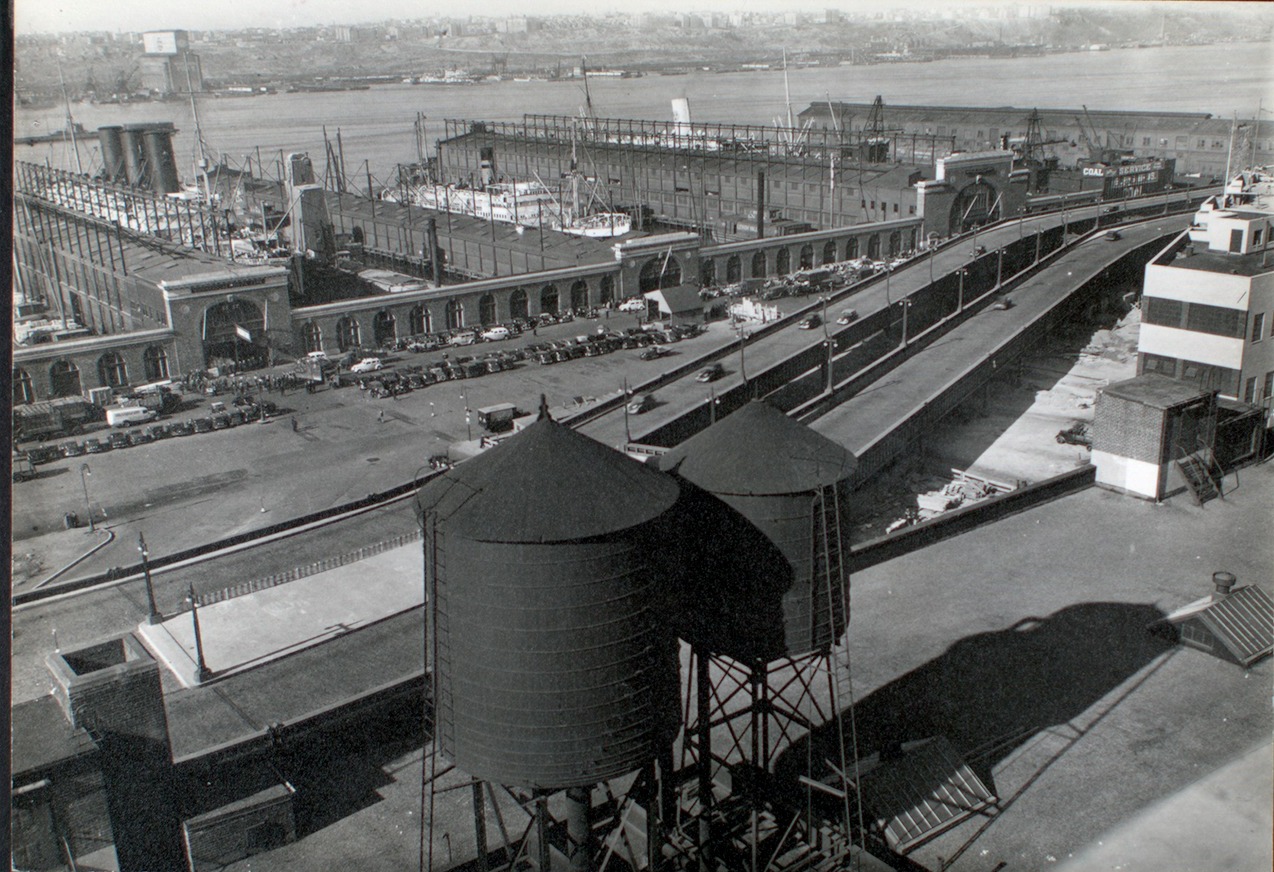
New York Public Library

The Port Authority Bus Terminal in 1950, at West 40th and 41st Streets and 8th Avenue.
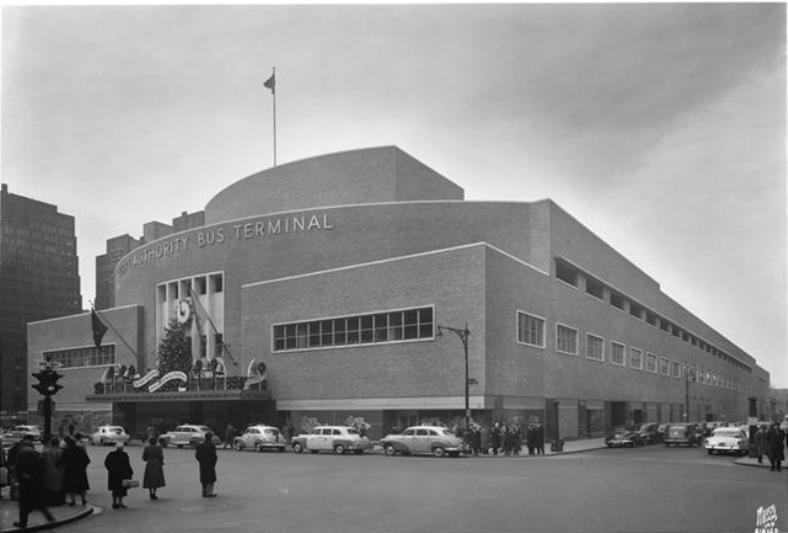
Wurts Brothers, courtesy Museum of the City of New York

The 8th Avenue Madison Square Garden, as seen in 1935.
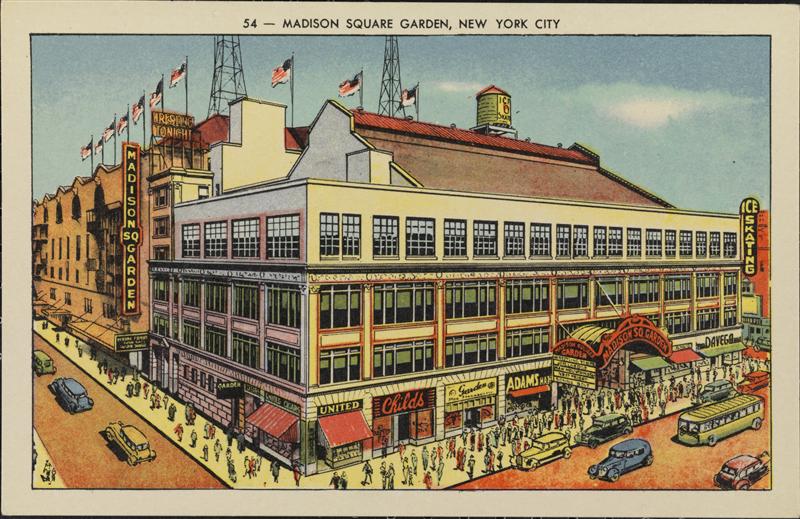
Courtesy Museum of the City of New York

A mural from 1974 — “The Neighborhood Belongs to the People Not Big Business.”
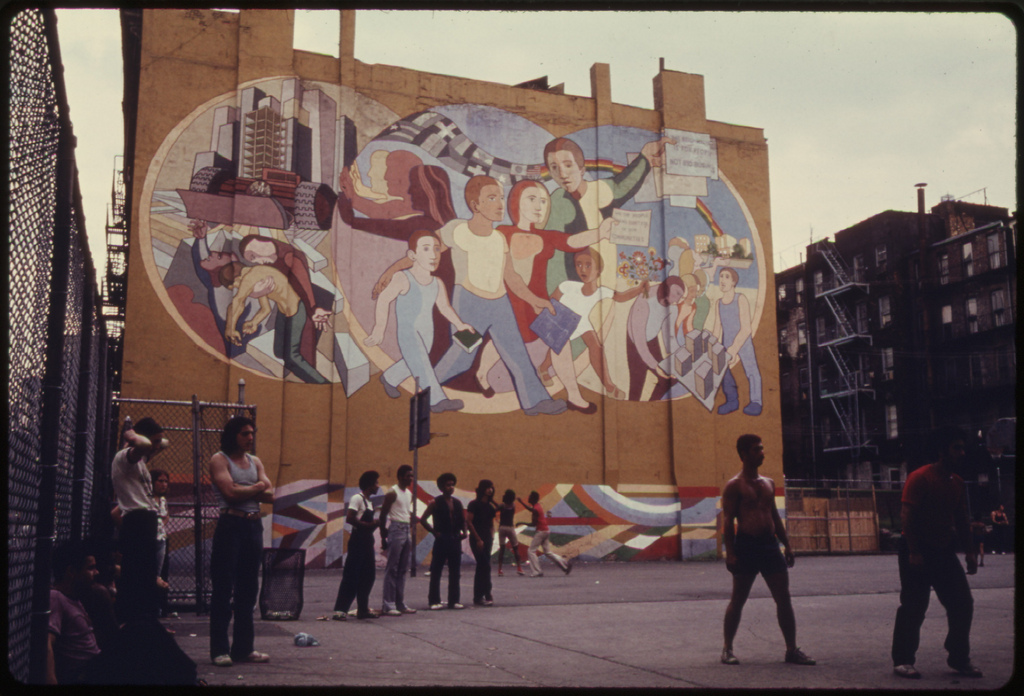
Courtesy US National Archives
Categories
Neighborhoods

Finding Pietro

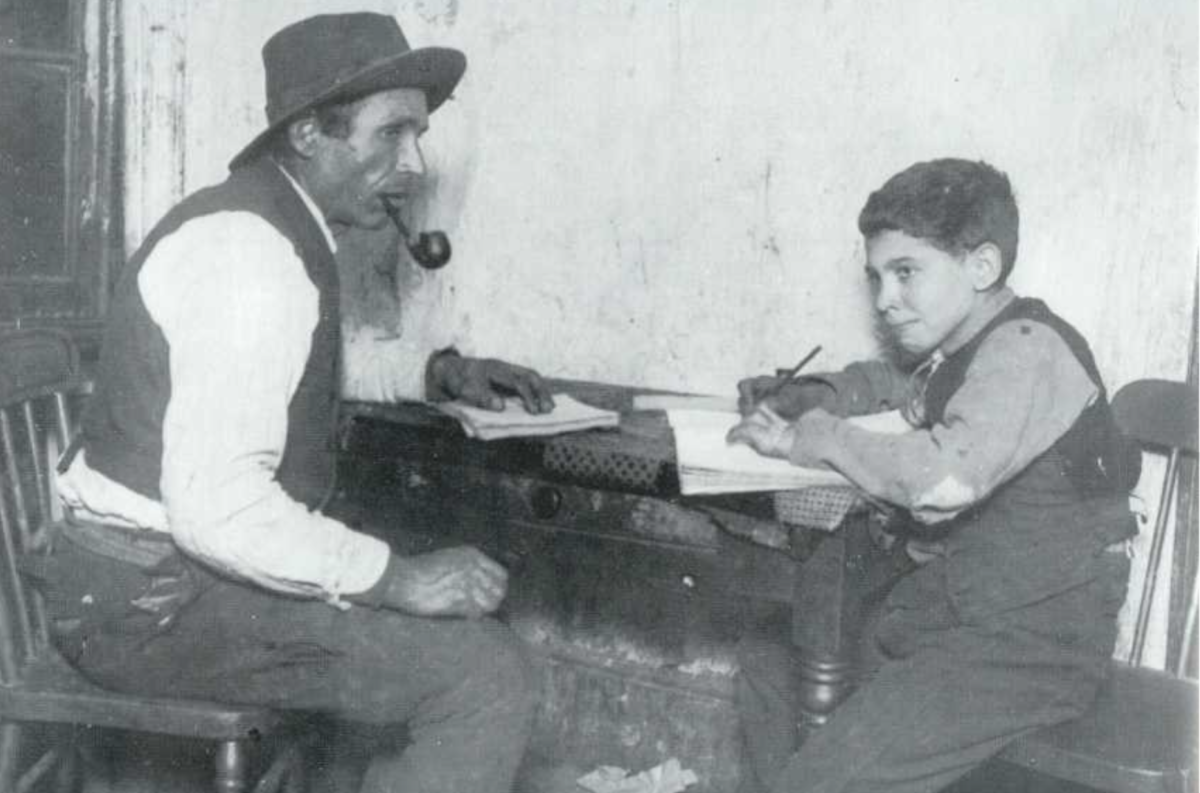
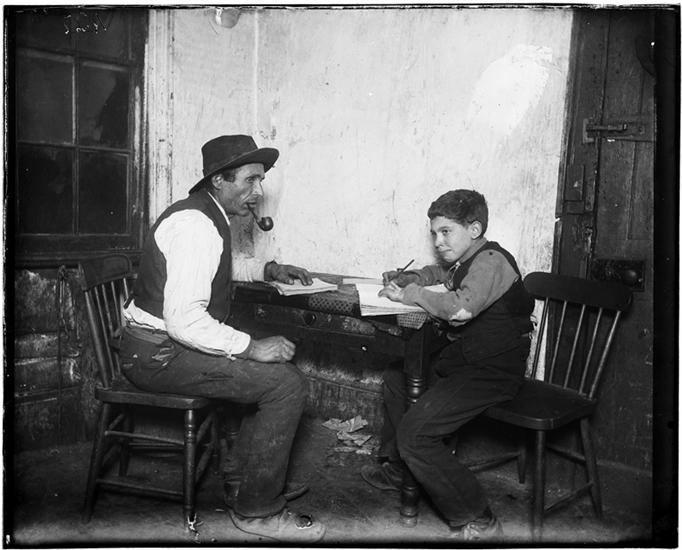
One of you may be related to Pietro, the boy in the picture. He was one of thousands of Italian immigrants who arrived in New York in the 1870s-80s. He seems to have been intelligent and even exceptional, weathering a set of truly dreary circumstances that would have defeated most men.

Pietro was not yet 13 years old when he was almost killed in a streetcar accident. He was permanently scarred and unable to support his family. If not for witnessing a shooting outside of his home, we might never know his name.

But in 1892,  Pietro became a profoundly moving subject in a new book by one of the greatest social reformers of the Gilded Age.

Jacob Riis was a pioneer social activist who used journalism and photography to change the living conditions of thousands of poor New Yorkers. He took his bulky camera to the most decrepit nooks of lower Manhattan, documenting a world entirely unseen by most people.

In 1890 he published How The Other Half Lives, exposing the squalid living conditions of downtown Manhattan’s mostly immigrant population.

Riis did help to change the face of New York. In Five Points, the worst tenements were demolished and replaced with government buildings and one very manicured park. But his depictions of ethnic groups, in retrospect, could be very simplistic, even condescending. In his goals to highlight an overwhelmingly malignant condition, he often glossed over some telling details of some of his subjects.

1

Pietro (I haven’t been able to find his last name) is one of Riis’ favorite subjects. He makes his debut in The Children of the Poor, Riis’ 1892 follow-up to How The Other Half Lives, as a model of the striving young student. Pietro is an ambassador of sorts, an avatar of social improvement, bringing “[e]very lesson of cleanliness, of order, of English” taught to him in school back to his tenement life.

He was born sometime in the early 1878 or 1879, just as the sudden increase of southern Italians began to permanently change the nature of the old tenement neighborhoods.

We know he was born in Italy — not “borned here” as Riis depicts him saying — and brought to a home somewhere at Mulberry and Jersey Street (in the shadow of the Puck Building.)

He lived in a single room with his parents and four younger siblings. As a small boy, he attended classes at the school run by Old St. Patrick’s until “his education was considered to have sufficiently advanced to warrant his graduating into the ranks of the family wage- earners.”

Being the eldest son, he would have gone to work immediately. In this case, as a bootblack, the most common occupation for poor Italian immigrants in the 1880s.

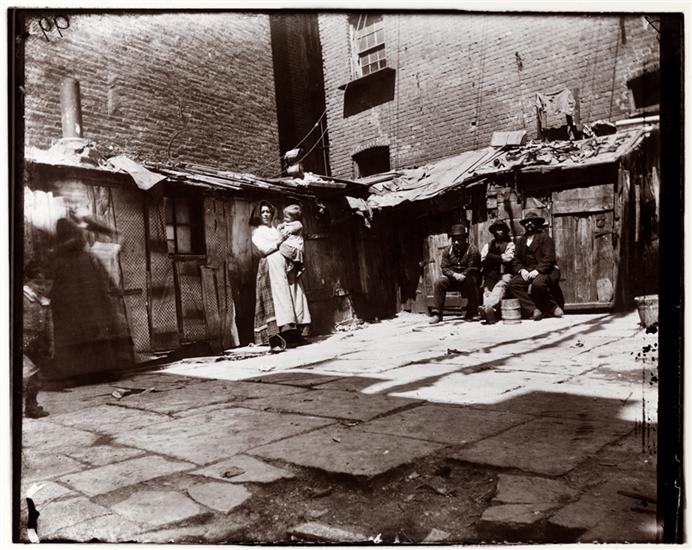
1897 Yard in Jersey Street (now gone). A woman holding a child, and men sitting in a rear yard of a Jersey Street tenement. Pietro lived on Jersey Street and one of these buildings may have been his home.

Probably around age 11 or 12, Pietro began shining shoes in a saloon somewhere in the neighborhood. One day, while crossing Broadway, he was struck by a streetcar and mangled so badly that it was assumed he would not survive. “They thought he was killed but he was only crippled for life.”

He met Riis one day at the police station at 300 Mulberry Street. He was there as a witness to a shooting which had occurred in front of his home. As Riis describes:

“With his rags, his dirty bare feet, and his shock of tousled hair, he seemed to fit in so entirely there of all places, and took so naturally to the ways of the police-station, that he might have escaped my notice altogether but for his maimed hand and his oddly grave but eager face, which no smile ever crossed despite his thirteen years.”

2

Riis gained the boy’s confidence and was invited into his home to document his life. Pietro was devoting his energies to education, improving both his Italian and English skills. It appears the accident left one or both of his hands impaired.

As Riis observes:

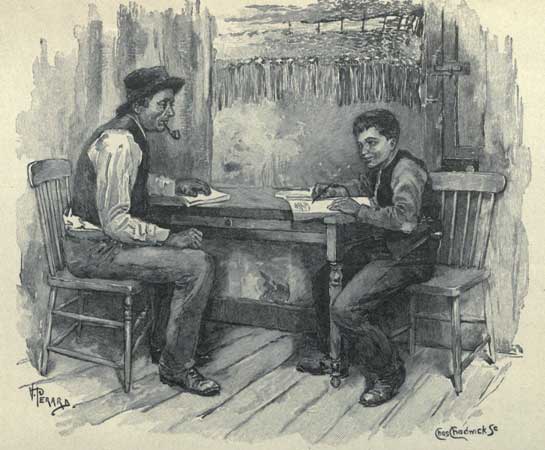
‘By ‘m by,’ said poor crippled Pietro to me, with a sober look, as he labored away on his writing lesson, holding down the paper with his maimed hand, ‘I learn t’ make an Englis’ letter; maybe my fadder he learn too.’

I had my doubts about the father. He sat watching Pietro with the pride in the achievement that was clearly proportionate to the struggle it cost, and mirrored in his own face every grimace and contortion the progress of education caused by the boy.

‘Si! si!’ he nodded eagerly. ‘Pietro he good a boy; make Englis’, Englis’!’ and he made a flourish with his clay-pipe, as if he too were making the English letter that was the subject of their common veneration.

Riis clearly views Pietro as a charity case burdened with the extraordinary responsibility of assimilating his family into American life.

At the maimed 13 year old eldest child of immigrants, his days of innocence were long gone. His situation had utterly defeated him. At least, that’s the image Riis very poignantly meant to convey in his final anecdote, turning to Pietro as he watched over his baby brother:

‘Pietro’,” I said with a sudden yearning to know, ‘did you ever laugh?’

The boy glanced from the baby to me with a wistful look.

‘I did wonst’, he said quietly and went on his way. And I would gladly have forgotten that I ever asked the question; even as Pietro had forgotten his laugh.’

We never see Pietro again. He’s used as a pitiful example of life in the Italian slums and then fades into the background, lost among the thousands of individuals who lived in the Mulberry Street slums.

Riis, however, does use the generic name ‘Pietro’ — now a stand-in for all disadvantaged Italian immigrants — in his 1902 book The Battle With the Slum.

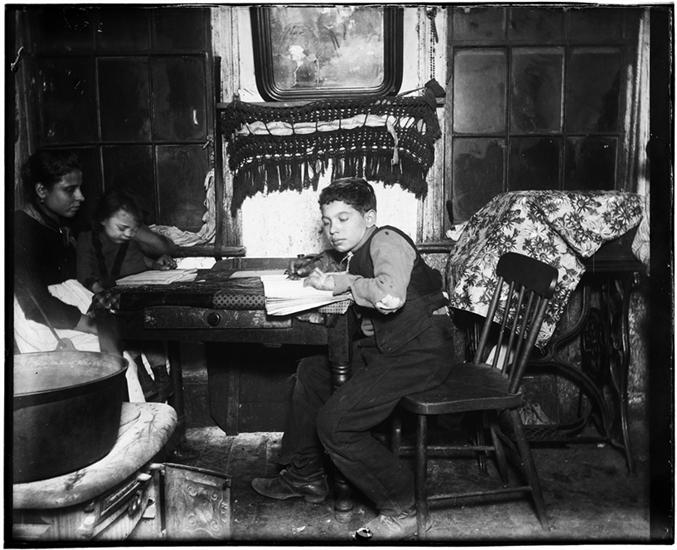
One of Riis' photographs, illustrated for the book Children of the Poor.
One of Riis’ photographs, illustrated for the book Children of the Poor.

Did Pietro ever make it out of the tenements? Did he get married, have children, begin a career? Did his physical condition ever improve? It’s rather likely that either he or one of his siblings had children, and one of those children might be your grandmother or grandfather.

You can read Jacob Riis’ Children of the Poor here.

Categories
Neighborhoods Podcasts

The Grand Tale of Orchard Street and Life on the Lower East Side

PODCAST The Lower East Side is one of the most important neighborhoods in America with a rich history as dense as its former living quarters. Thousands of immigrants experienced American life on these many crowded streets. In this podcast, we look at this extraordinary cultural phenomenon through the lens of one of those — Orchard Street.

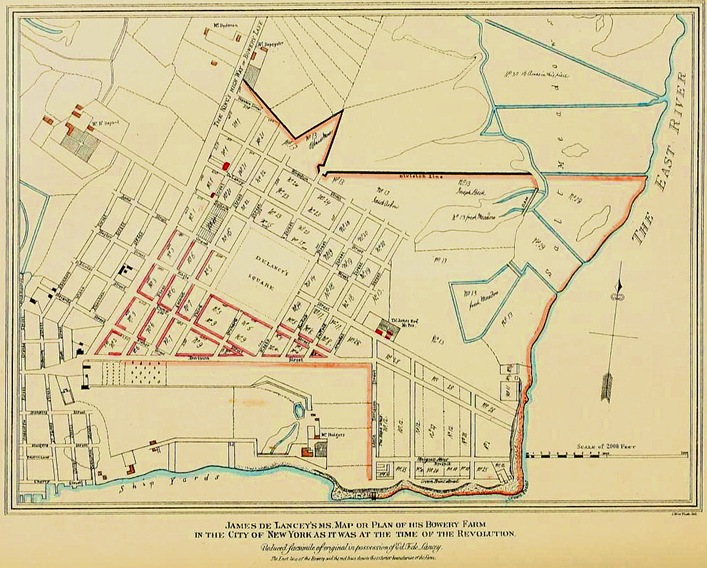
Its name traces itself to a literal orchard, owned by James De Lancey, a wealthy landowner and Loyalist during the Revolutionary War. By the 1840s the former orchard and farm was divided up into lots, and a brand new form of housing — the tenement — served new Irish and German communities who had just arrived in the United States.

A few decades later those residents were replaced by Russian and Eastern European newcomers, brought to the neighborhood due to its affordability and its established Jewish character.

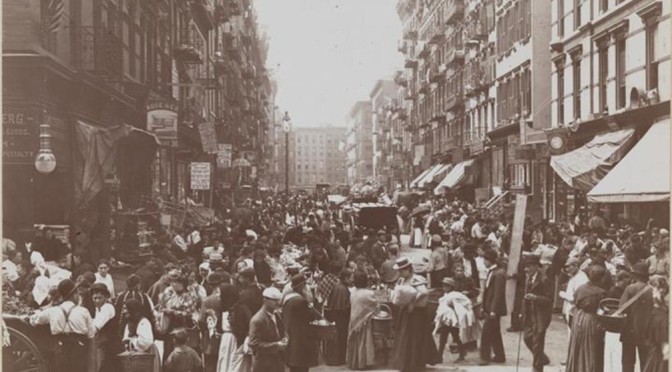
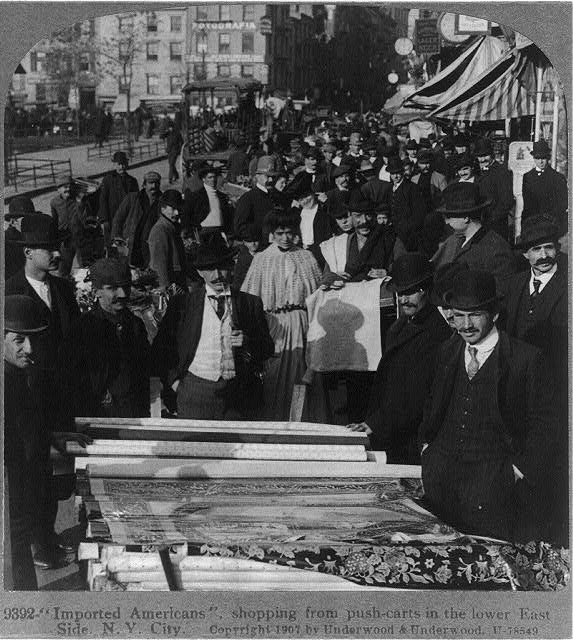
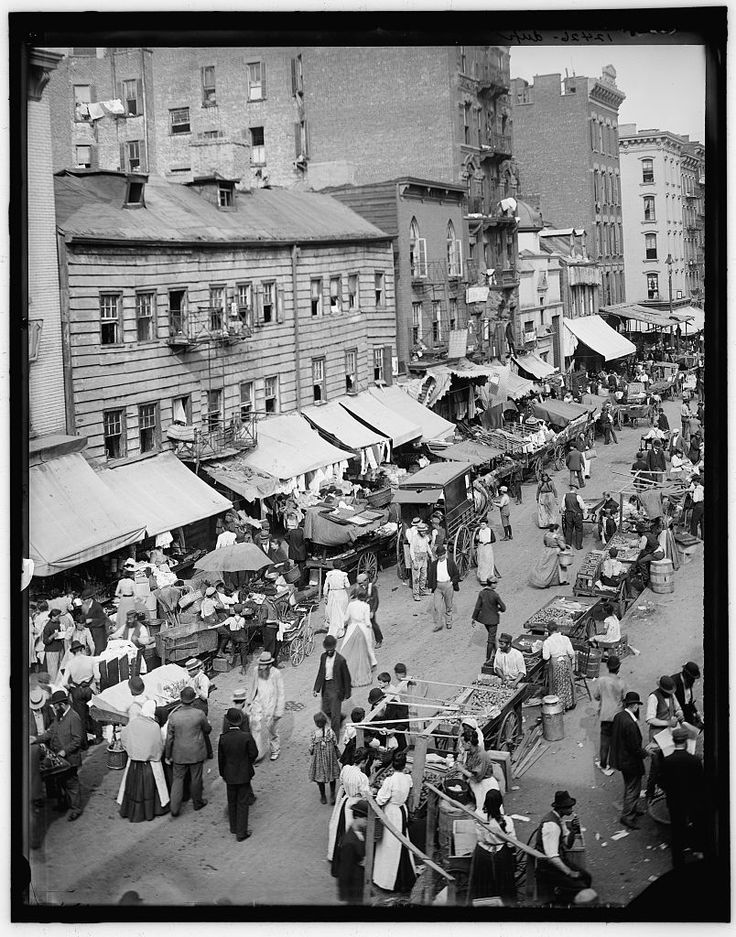
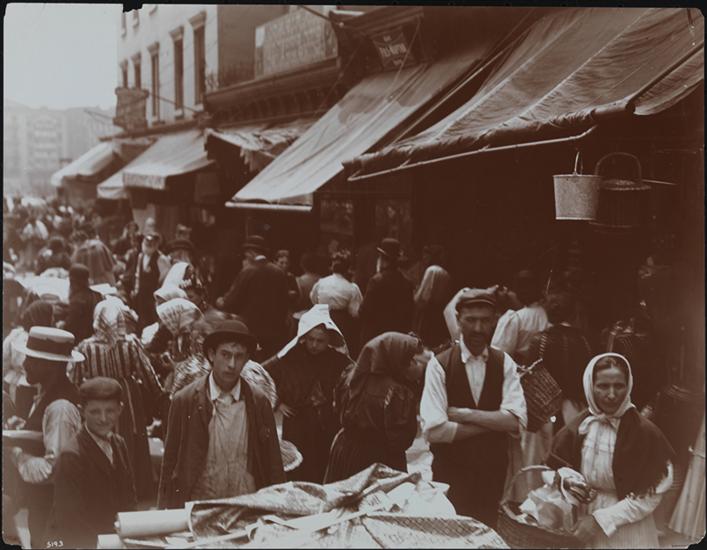
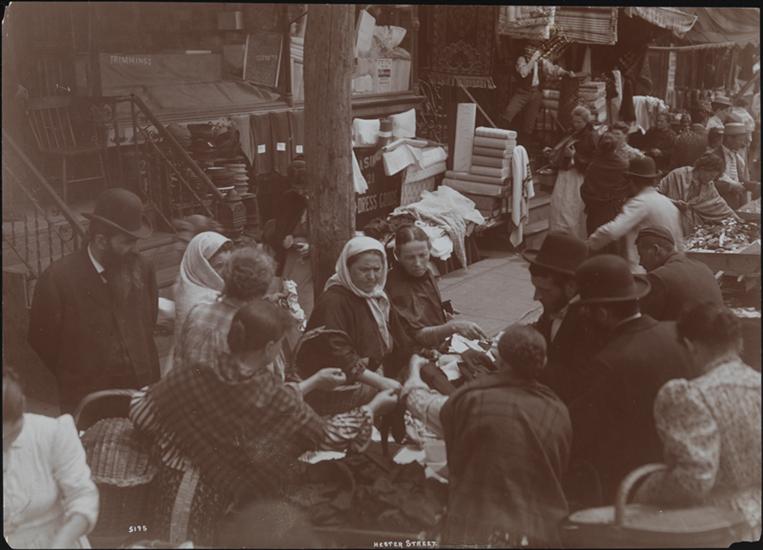
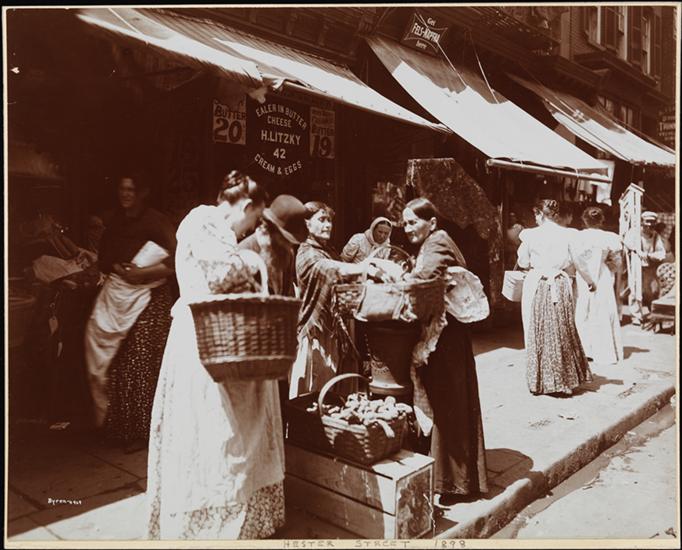
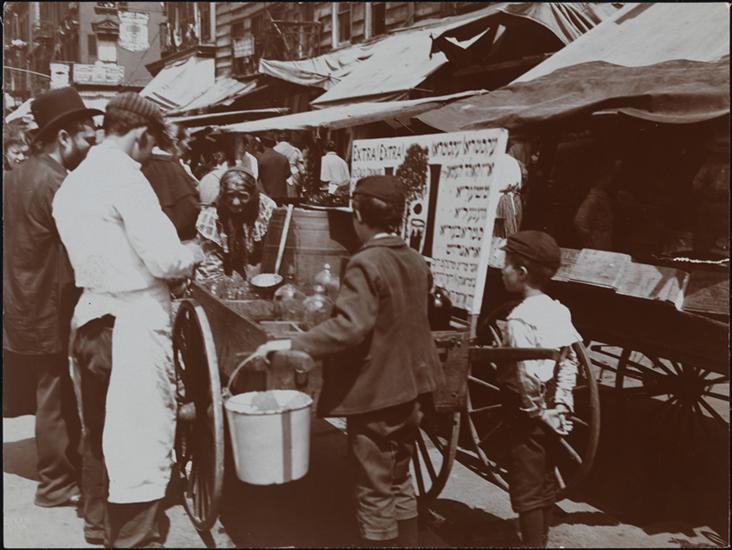
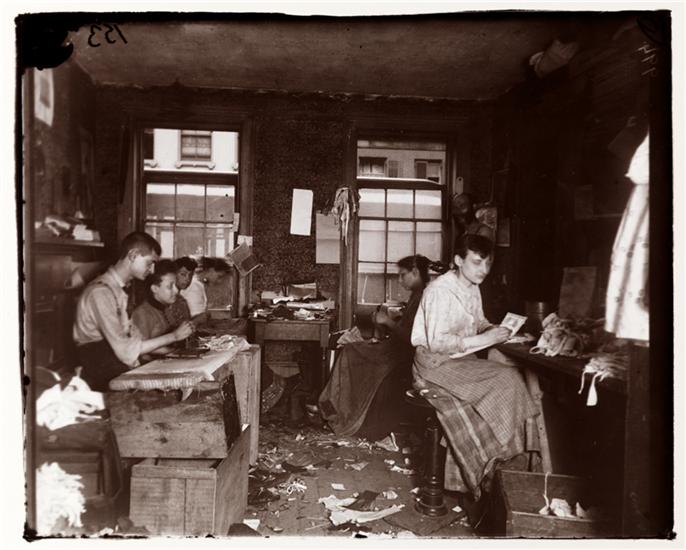
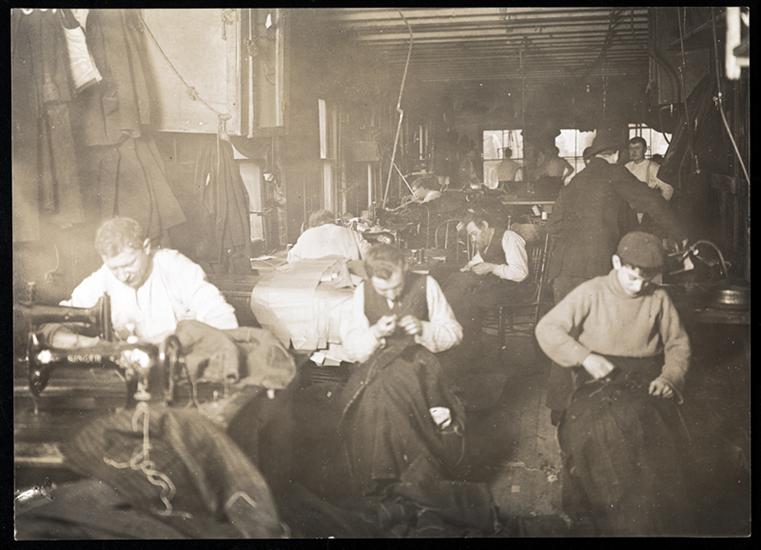
Living conditions were poor and most tenement apartment doubled as workspaces. Meanwhile, in the streets, tight conditions required a unique retail solution — the push cart, a form of independent enterprise that has given us some businesses that still thrive on Orchard Street today.

You can see this century-old life along Orchard Street today, if you know where to look. Luckily that’s what we’re here for! With some help from Adam Steinberg at the Tenement Museum, where the best place to interact with a preserved view of the old days.


Below: “Imported Americans” — from a photo card, courtesy Library of Congress

imported

The Bowery Boys: New York City History podcast is brought to you …. by you!

Starting this month, we are doubling our number of episodes per month. Now you’ll hear a new Bowery Boys podcast every two weeks. We’re also looking to improve the show in other ways and expand in other ways as well — through publishing, social media, live events and other forms of media. But we can only do this with your help!

We are now a member of Patreon, a patronage platform where you can support your favorite content creators for as little as a $1 a month.

Please visit our page on Patreon and watch a short video of us recording the show and talking about our expansion plans. If you’d like to help out, there are five different pledge levels (and with clever names too — Mannahatta, New Amsterdam, Five Points, Gilded Age, Jazz Age and Empire State). Check them out and consider being a sponsor.

We greatly appreciate our listeners and readers and thank you for joining us on this journey so far. And the best is yet to come!


A look at the property of James De Lancey and his sophisticated plans to turn his farm into a wealthy neighborhood, probably in the spirit of St. John’s Park. The blog Manhattan Unlocked goes really deep into the story of De Lancey’s land holdings here.

1

I’m not sure where this picture was taken but it illustrates a cluster of buildings constructed before the advent of tenement construction.

11

Here’s a selection of photographs from the archives of the Museum of the City of New York, illustrating the clogged streets of Orchard and Hester Streets, busy with the commerce of the day. All of these are from 1898.

1
2
3
5

The home sweatshops, cramming an industry and several people into the parlor of a tenement building. Here’s a necktie ‘factory’ on Division Street in 1890.

Courtesy the Museum of the City of New York

And another from 1911. Child labor in full view!

MNY8435

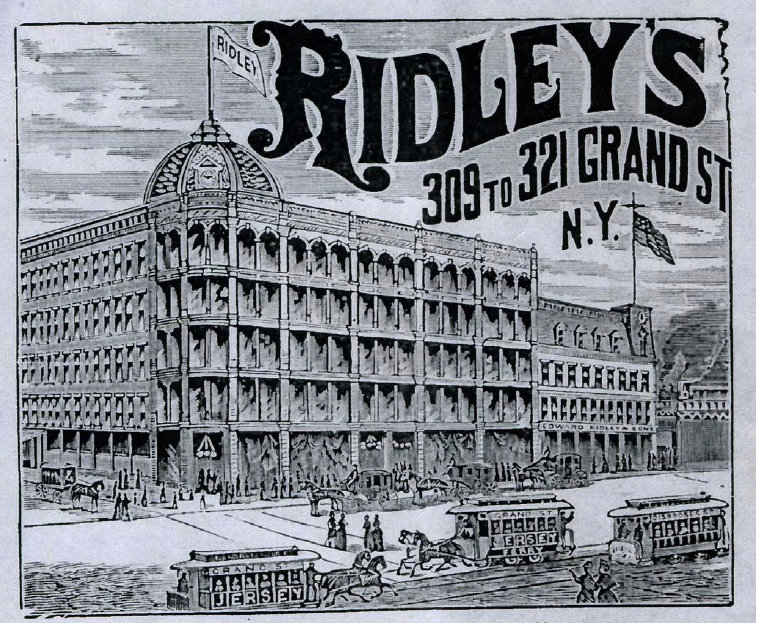
Ridley’s Department Store on the corner of Grand and Orchard Streets. They’ve really cleaned up the streets in this advertisement, haven’t they?

Courtesy the Tenement Museum

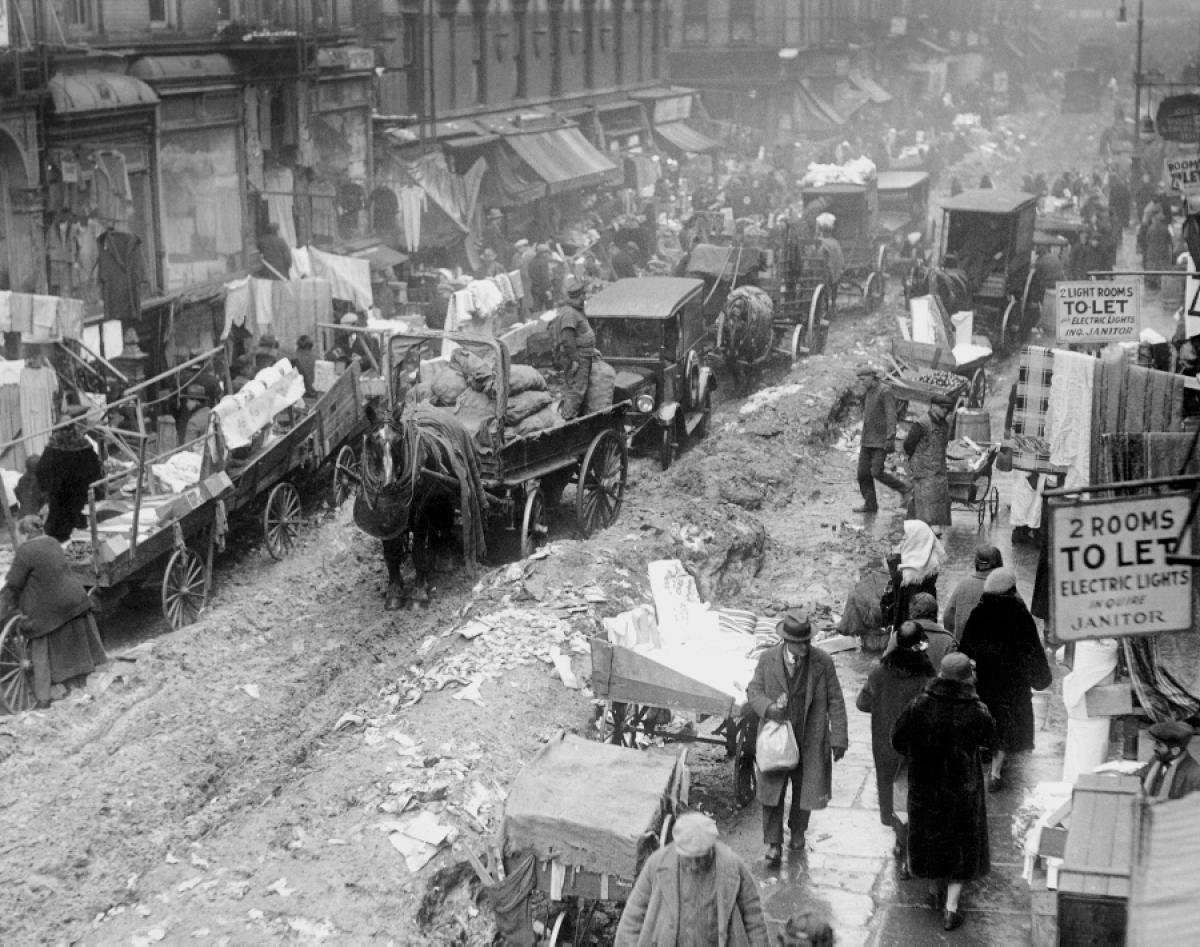
Here’s what all that mess on Orchard Street looks like in the winter! Pictured here in 1926.

Courtesy New York Daily News

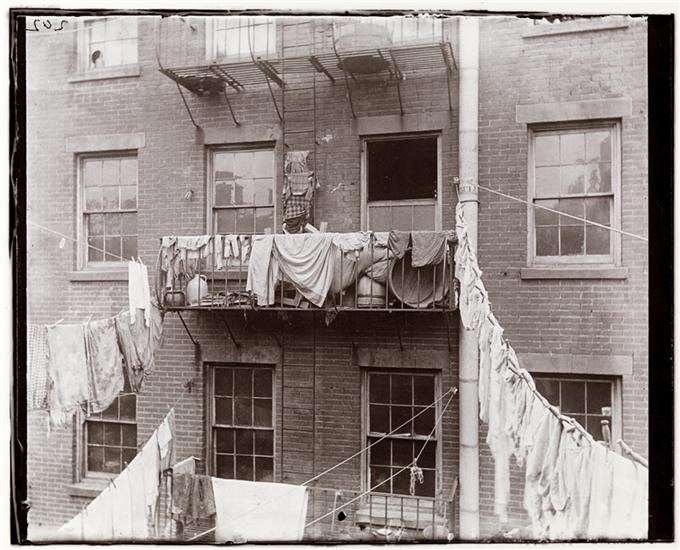
An Allen Street tenement fire escape from 1890, obviously used for more purposes than emergencies! [source]

Courtesy Museum of City of New York

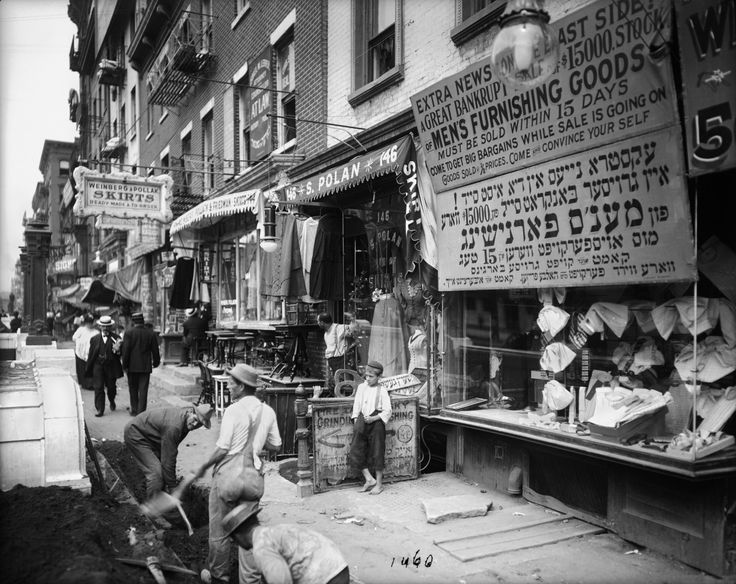
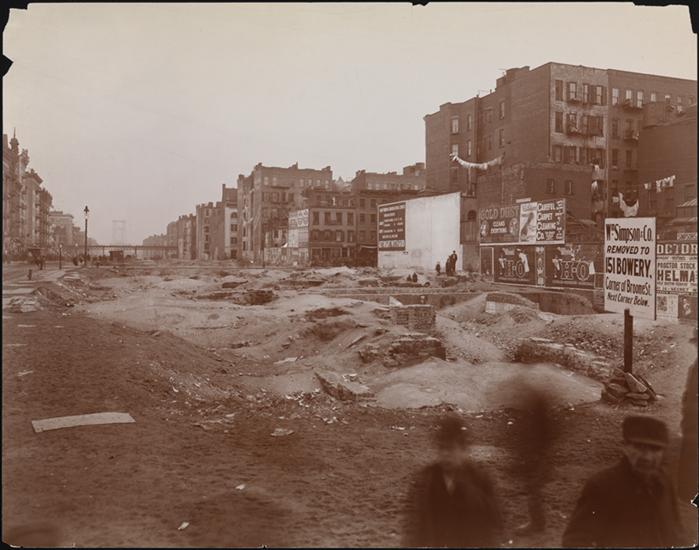
This photo was taken in 1908 (or somewhere around that date) showing a bit of the expansion of Delancey Street. Workers labor in the street while a Jewish boy looks on. (Department of Records)

12

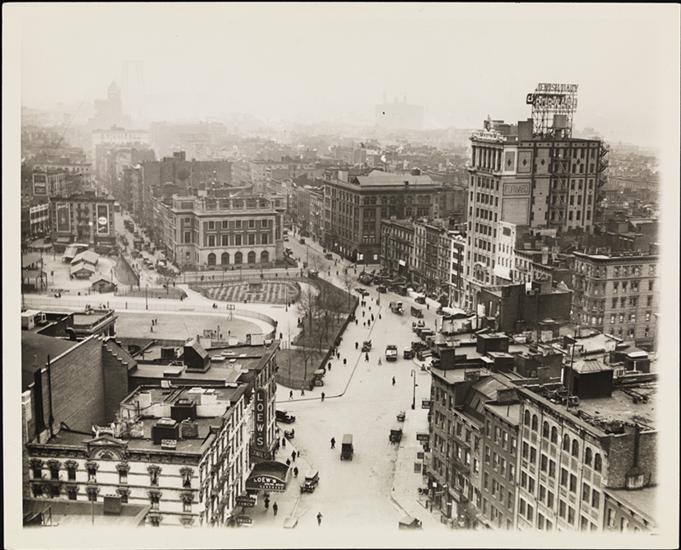
An overhead view of the intersection of East Broadway, Essex Street, Division Street and Canal Street, showing Seward Park and the library, both built to provide air and education to the Lower East Side. Photo is from 1928. [source]

9

An extraordinary view of Delancey Street in 1904 during the widening process for access to the Wililamsburg Bridge.

Courtesy Museum of the City of New York

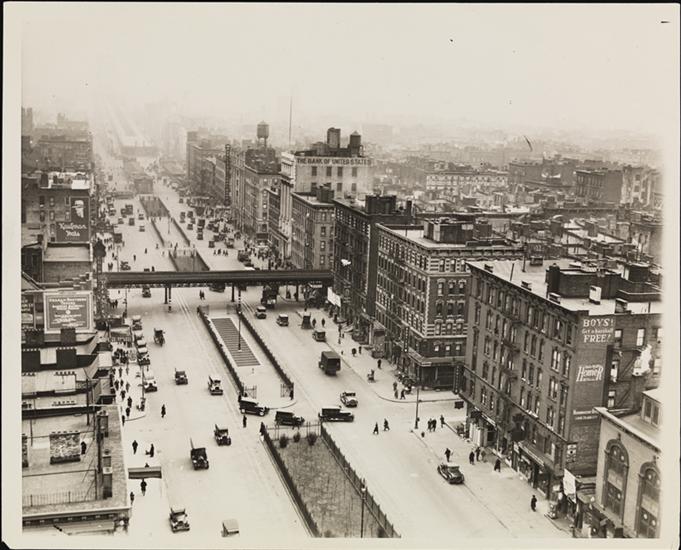
And here’s what Delancey looked like in 1928. This is from the top of a hotel from Delancey and Chrystie. You can see the elevated train that went down Allen Street. Orchard Street is the next block in the distance. Allen Street too was subject to expansion. And see the building labeled Bank of the United States? Here’s a little bit more about its fascinating history.

delancey

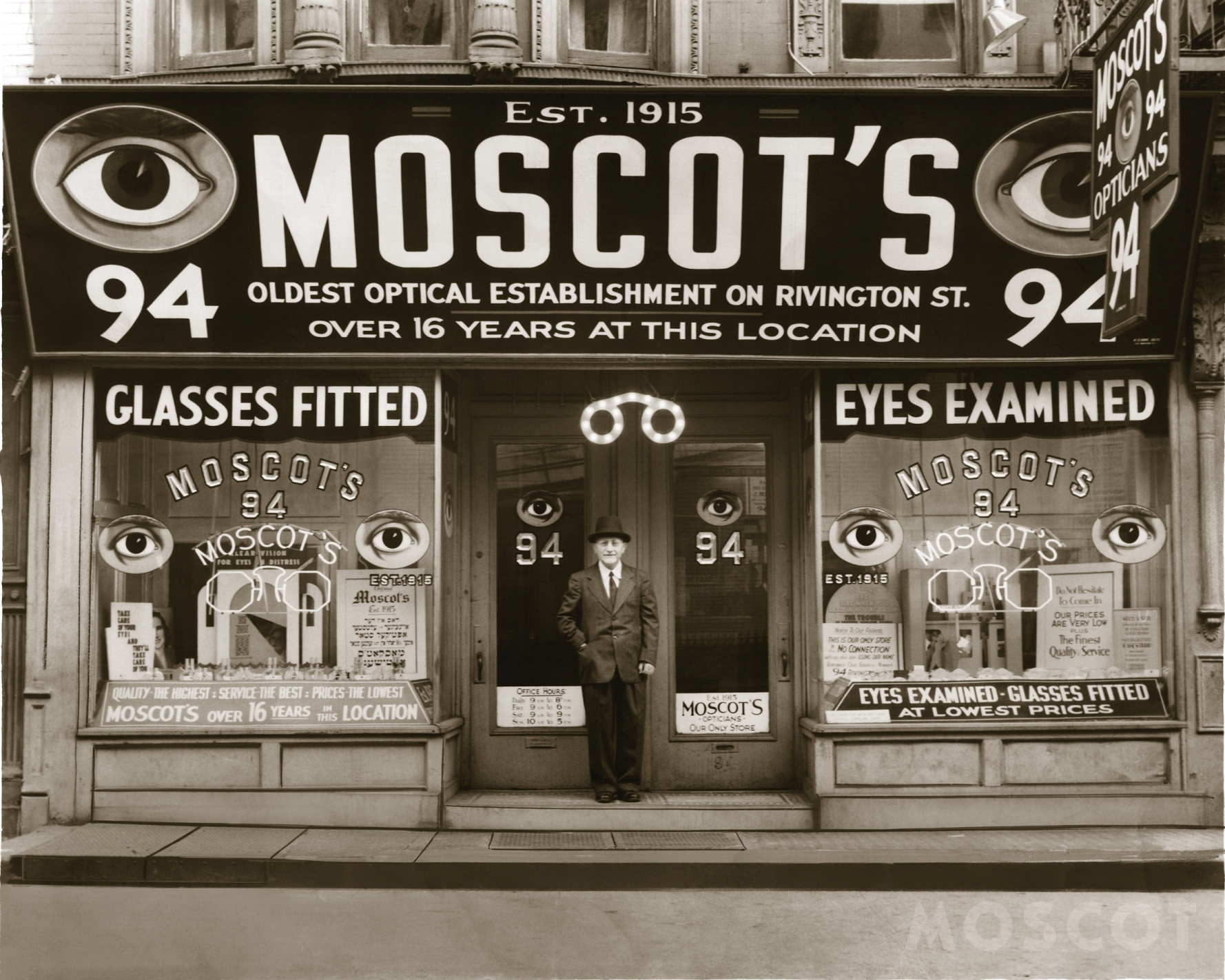
Hyman Moscot stands outside of his shop at 94 Rivington Street sometime in 1934. He began his business selling eyeglasses out of a pushcart.

Courtesy Sol Moscot
Courtesy Sol Moscot

A men’s tie peddler has some success selling his ties on the street corner at Orchard Street and Delancey. Courtesy New York Public Library. Click here for more historic views of this corner.

Courtesy New York Public Library

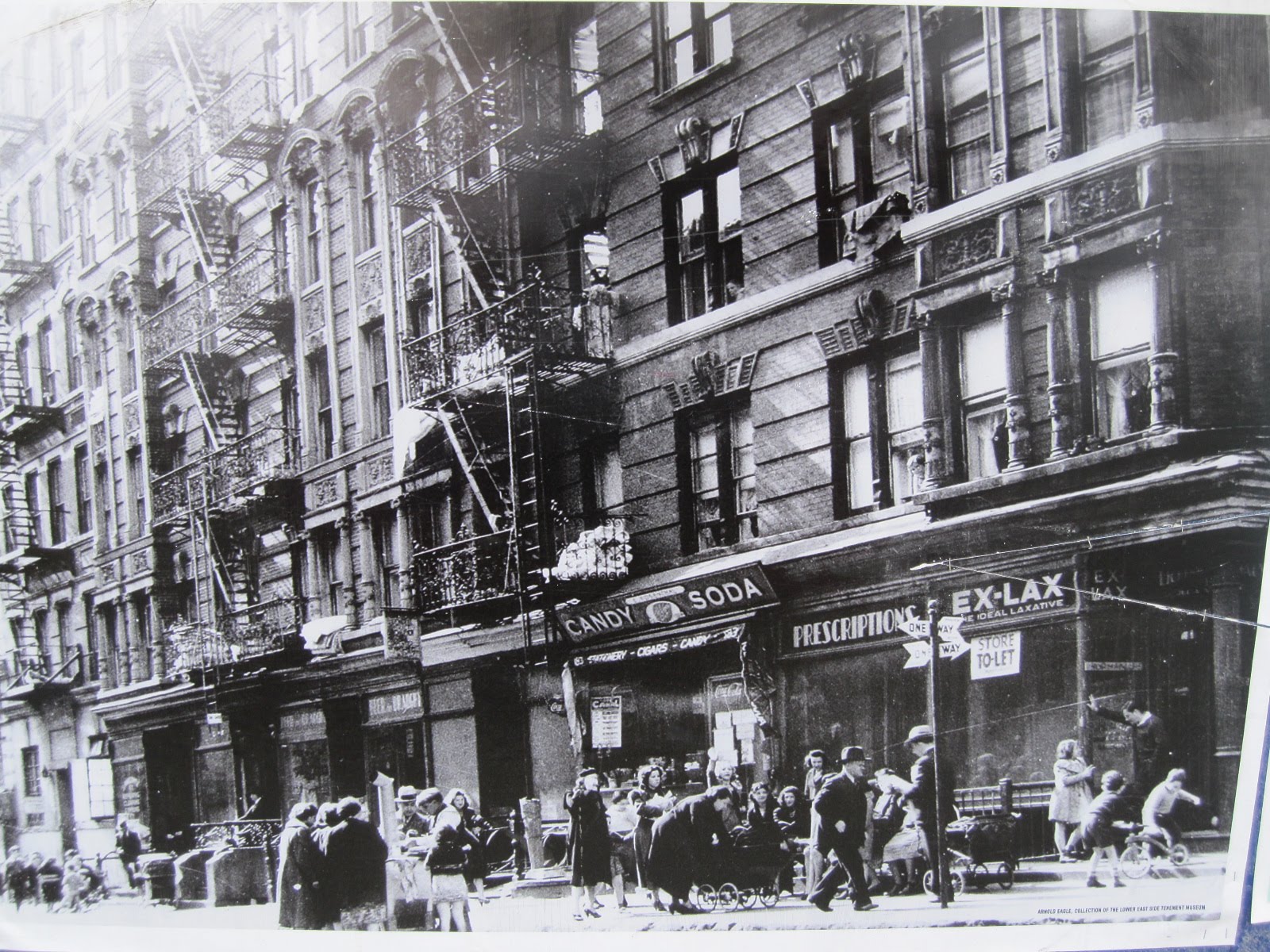
The Lower East Side in the 1930s — less crowded in the streets with very active storefronts.

Courtesy Trace Work
Courtesy Trace Work


Jarmulowsky’s Bank at Orchard and Canal. The perch at top is no longer on the building. It was originally built there because Sender Jarmulowsky wanted to have the tallest building in the Lower East Side.

bank

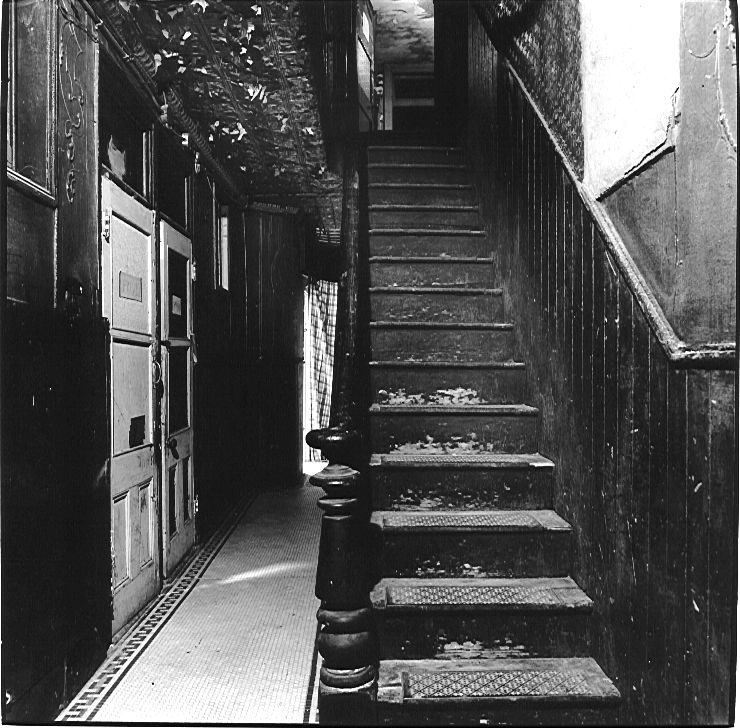
The interior of 97 Orchard Street (today’s Tenement Museum) in 1988.

Courtesy the Tenement Museum

A big thanks to Adam Steinberg at the Tenement Museum! Visit their website for more information.