Categories
Neighborhoods Podcasts

Hell’s Kitchen: New York’s Wild West

PODCAST Hell’s Kitchen, on the far west side of Midtown Manhattan, is a neighborhood of many secrets. The unique history of this working class district veers into many tales of New York’s criminal underworld and violent riots which have shaken the streets for over 150 years.

This sprawling tenement area was home to some of the most notorious slums in the city, and sinister streets like Battle Row were frequent sites of vice and unrest. The streets were ruled by such gangs as the Gophers and the Westies, leaving their bloody fingerprints in subtle ways today in gentrified buildings which at one time contained the most infamous speakeasies and taverns.

We break down this rip-roaring history and try to get to the real reason for its unusual name!


The Bowery Boys: New York City History podcast is brought to you …. by you!

Starting this month, we are doubling our number of episodes per month. Now you’ll hear a new Bowery Boys podcast every two weeks. We’re also looking to improve the show in other ways and expand in other ways as well — through publishing, social media, live events and other forms of media. But we can only do this with your help!

We are now a member of Patreon, a patronage platform where you can support your favorite content creators for as little as a $1 a month.

Please visit our page on Patreon and watch a short video of us recording the show and talking about our expansion plans. If you’d like to help out, there are five different pledge levels (and with clever names too — Mannahatta, New Amsterdam, Five Points, Gilded Age, Jazz Age and Empire State). Check them out and consider being a sponsor.

We greatly appreciate our listeners and readers and thank you for joining us on this journey so far. And the best is yet to come!


The mysteries begin over 200 years ago when ordered avenues and streets could scarcely be imagined, and the shoreline was a ragged coast.

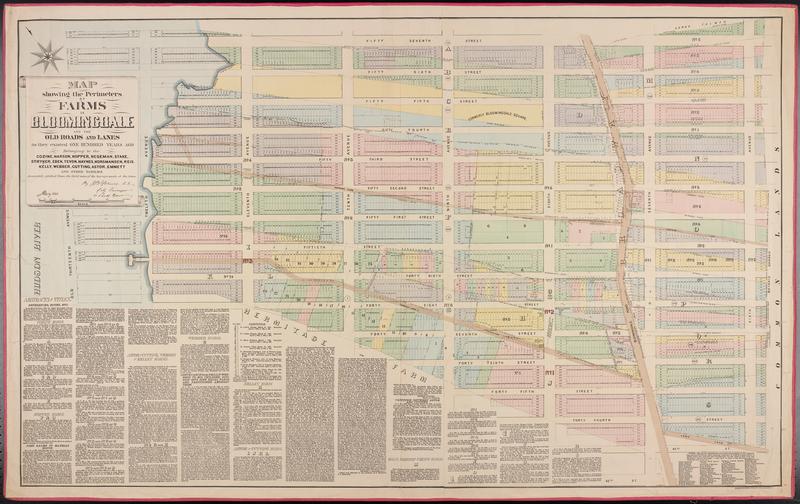
The Dutch later called it the Great Kill District, for the creek which emptied into the Hudson River (North River) at 42nd Street. As you can see from this diagram the shore was evened out with landfill to create 12th Avenue although the inward dip at 43rd Street is still visible on a modern map.
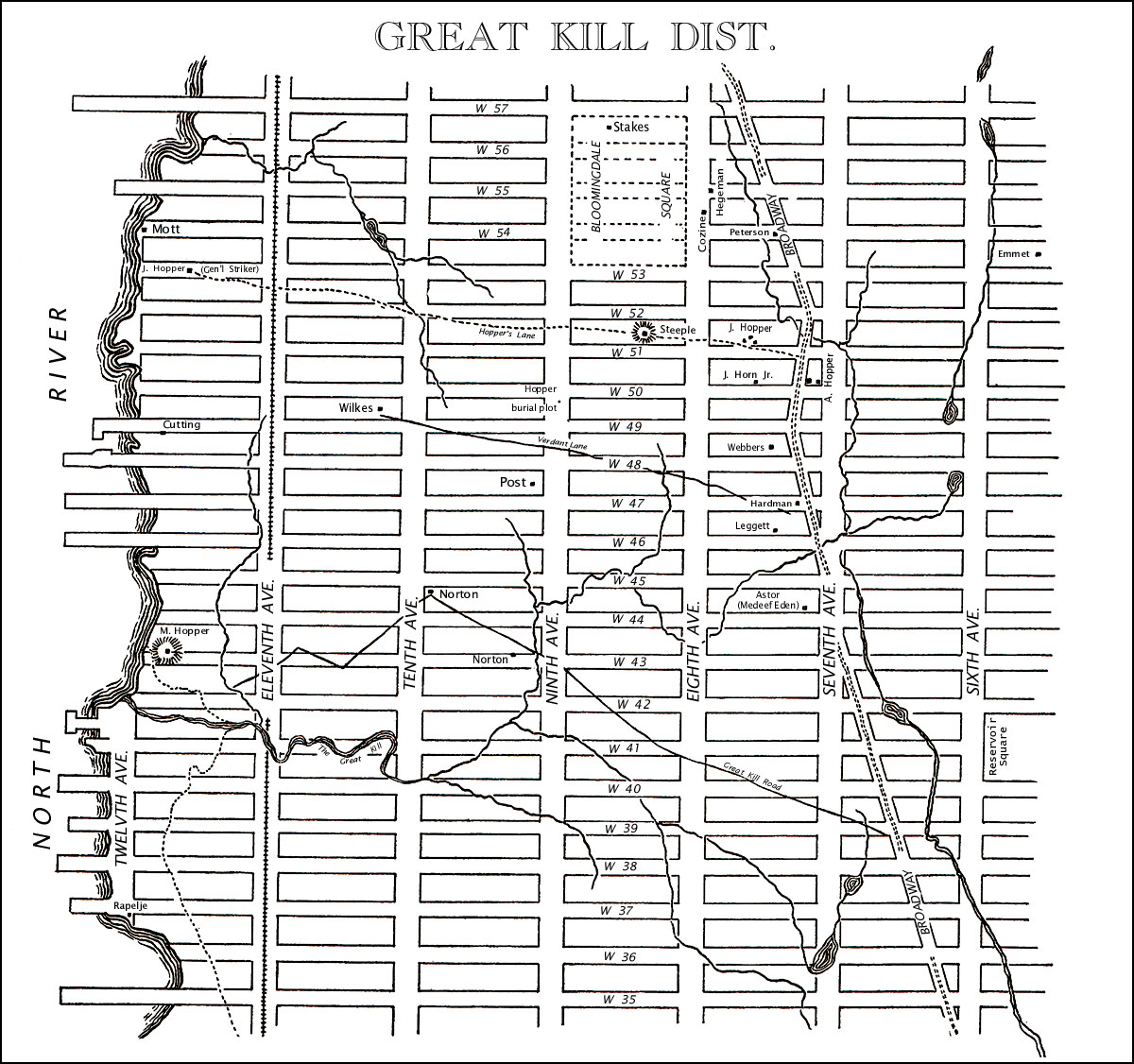
map

A map (drawn by John Bute Holmes) of the original estate borders of Bloomingdale from the late 18th century. The jagged shore line would later be filled in to make the blocks between 11th and 12th Avenues.
Courtesy Museum of the City of New York

The Ninth Avenue barricades made by rioters in the area of Hell’s Kitchen during the Civil War Draft Riots.
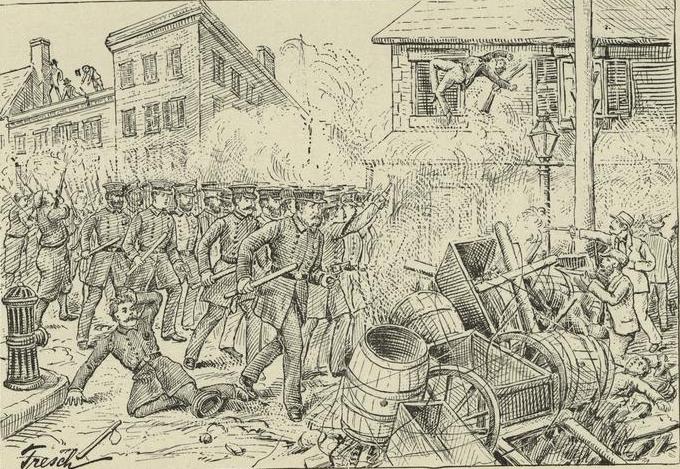
barricades

The Orange Riot of July 12 from Eighth Avenue south from 25th street, an 1871 image from Frank Leslie’s Illustrated Newspaper.
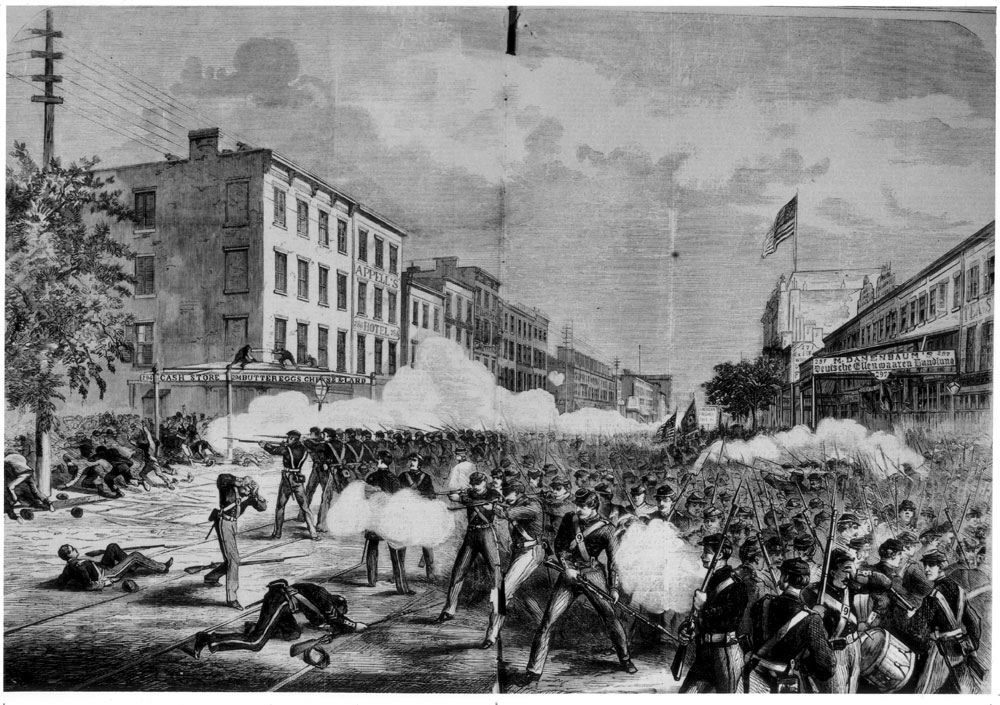
orange

Bad boys: Some Hell’s Kitchen ruffians show Jacob Riis how to rob people who have passed out.
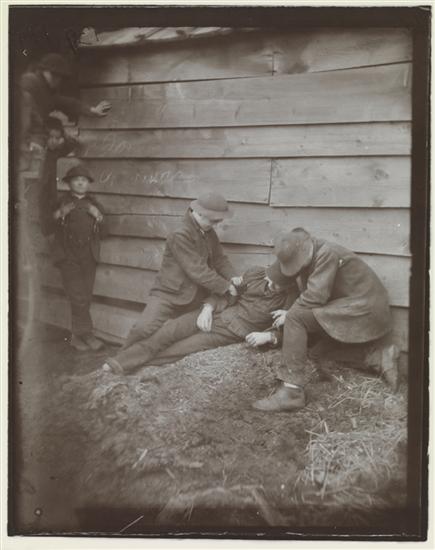
Jacob Riis
Jacob Riis

An intriguing shot of 58th Street between 8th and 9th Avenues
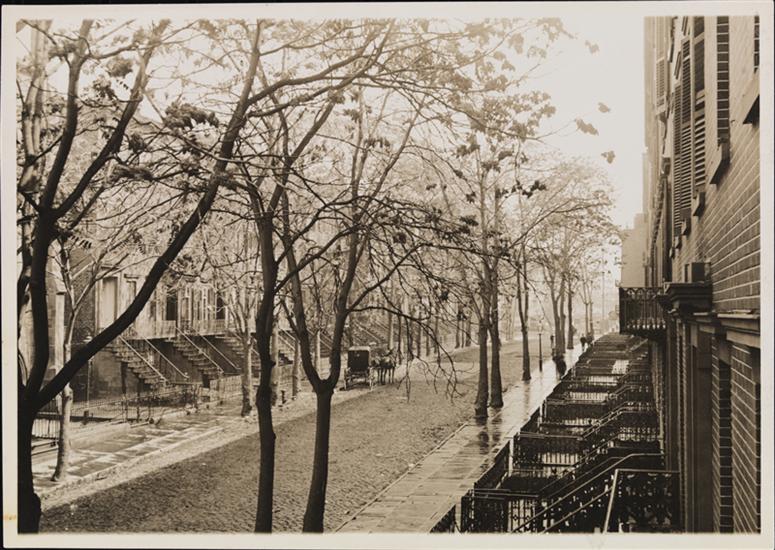
Museum of the City of New York

Jacob Riis’ photograph of the Hell’s Kitchen tenement and the remains of Sebastopol (the rocks), 1890
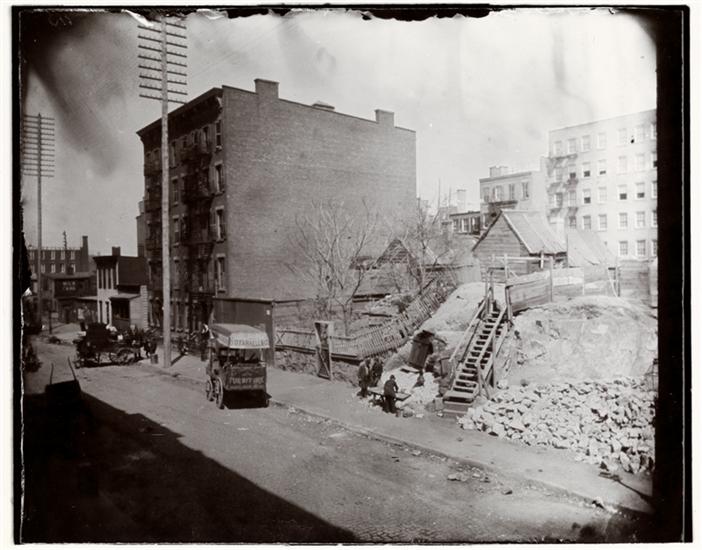
Photo by Jacob Riis
Photo by Jacob Riis

Street vendors under the 9th Avenue Elevated Railroad
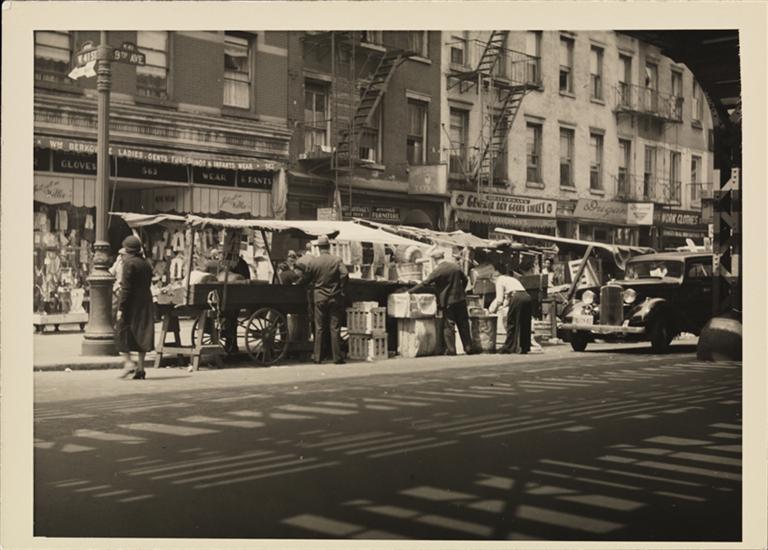
Museum of City of New York

The Hartley House, a settlement house for the Hell’s Kitchen community. on West 46th Street
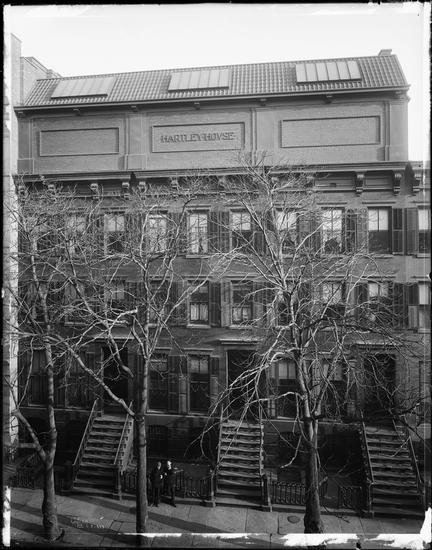
Museum of the City of New York

At the recreation pier — a public swimming hole at West 51st Street and the Hudson River.
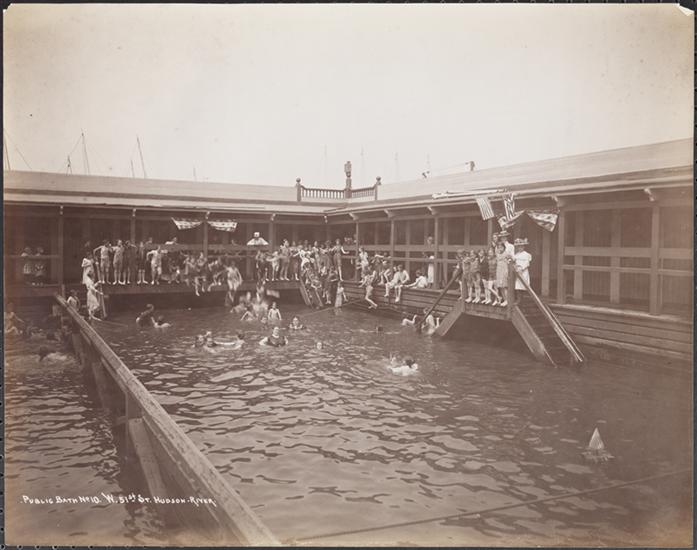
Museum of the City of New York

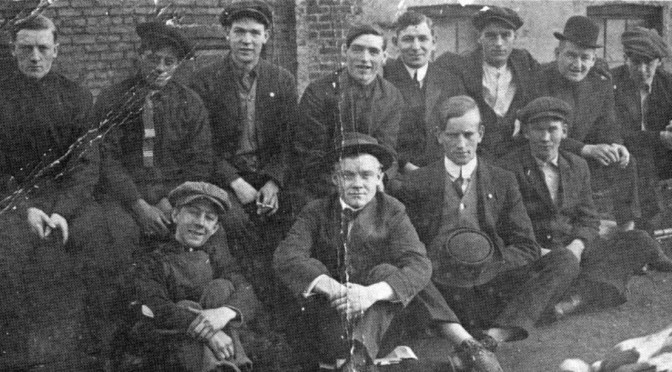
The later configuration of the Gophers. Owney Madden is on the back row, fourth from the left. A very rough and dangerous gang, but don’t they clean up nice?
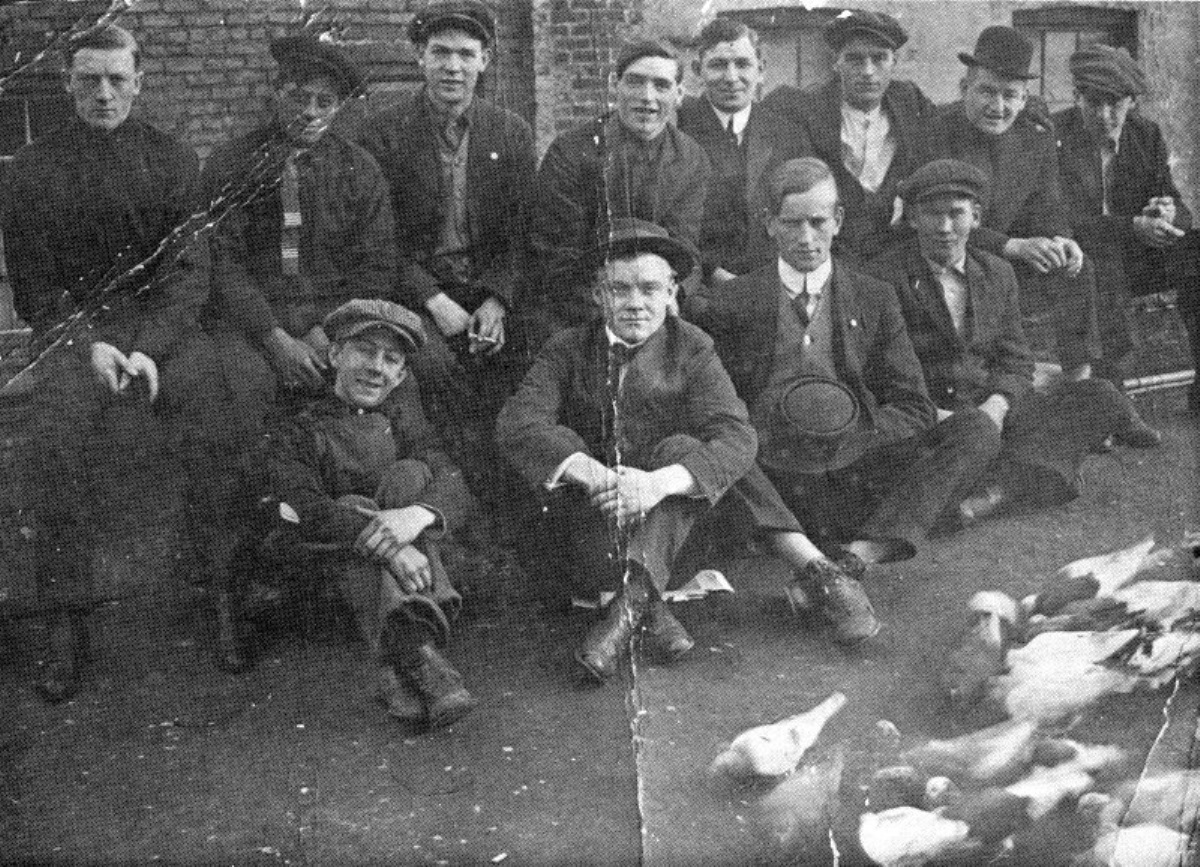
Courtesy of Garland County Historical Society and Butler Center Books

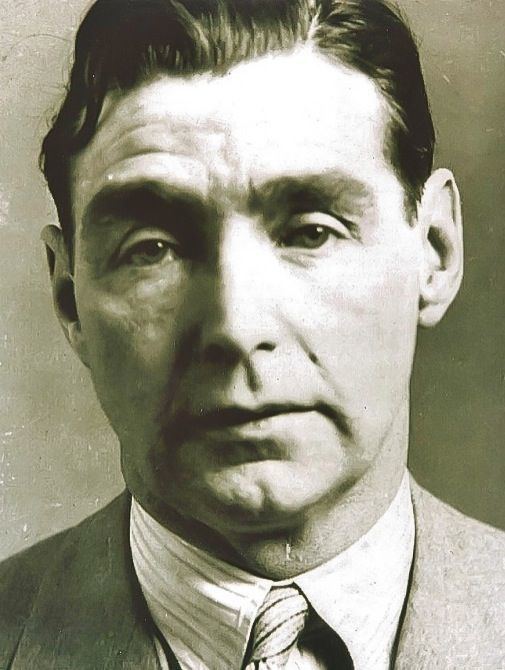
Owney Madden, the king of the Hell’s Kitchen speakeasy racket.
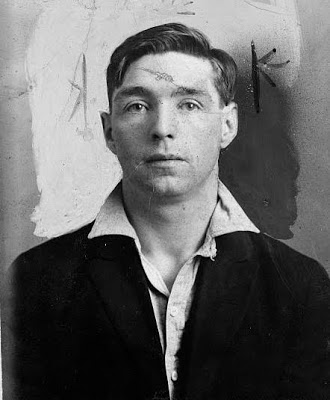
owney

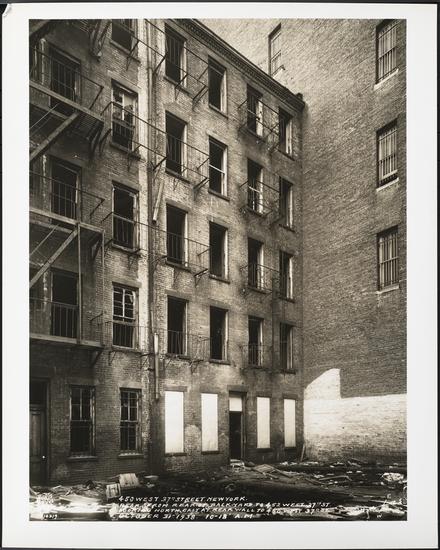
A couple spectacular shots of 1938 slum clearance — eliminating the tenements of 37th Street.
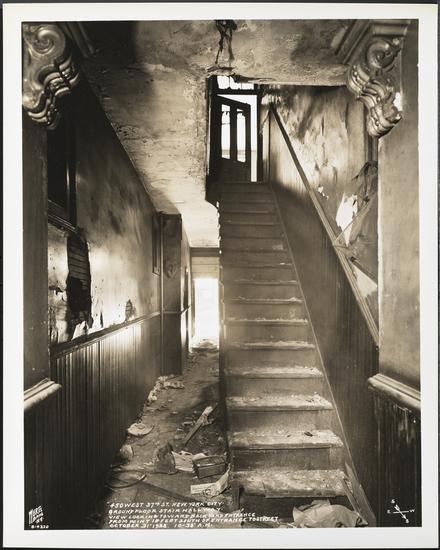
Wurts Brothers. Museum of the City of New York

Businesses on West 52nd Street, facing into DeWitt Clinton Park. It’s likely that William Hopper & Sons Truckmen at no. 626 probably traces itself back to the original Hopper land owners. Photograph by Charles von Urban
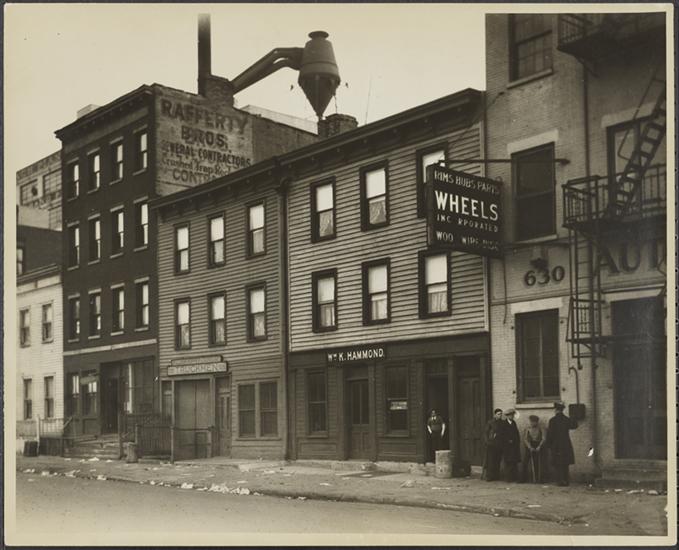
Courtesy Museum of the City of New York

The entrance to DeWitt Clinton Park (at 54th Street) in 1936
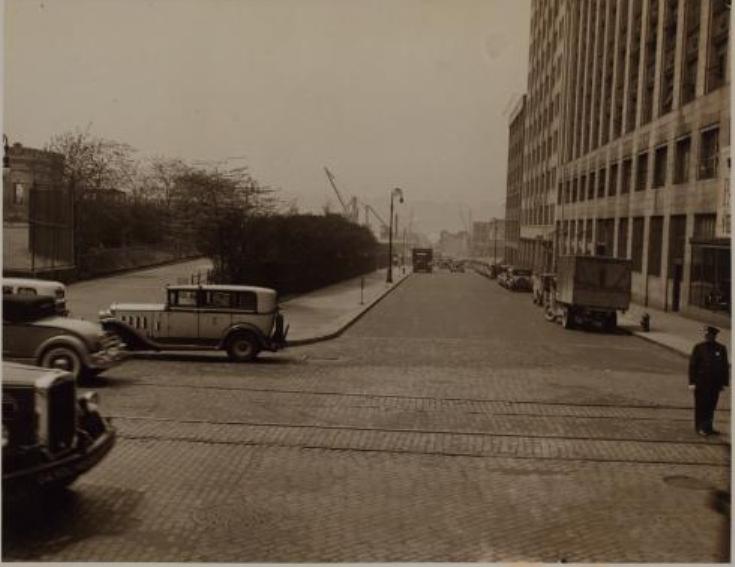
New York Public Library

Most of the pressures faced by the Hell’s Kitchen neighborhood came from its perimeter with dramatic changes to the waterfront to its west, Port Authority/Lincoln Tunnel to its south, Madison Square Garden/Times Square to its east and Lincoln Center/Columbus Circle to its north.

Below: The West Side Highway and piers 95-98, looking west from a roof on West 54th Street
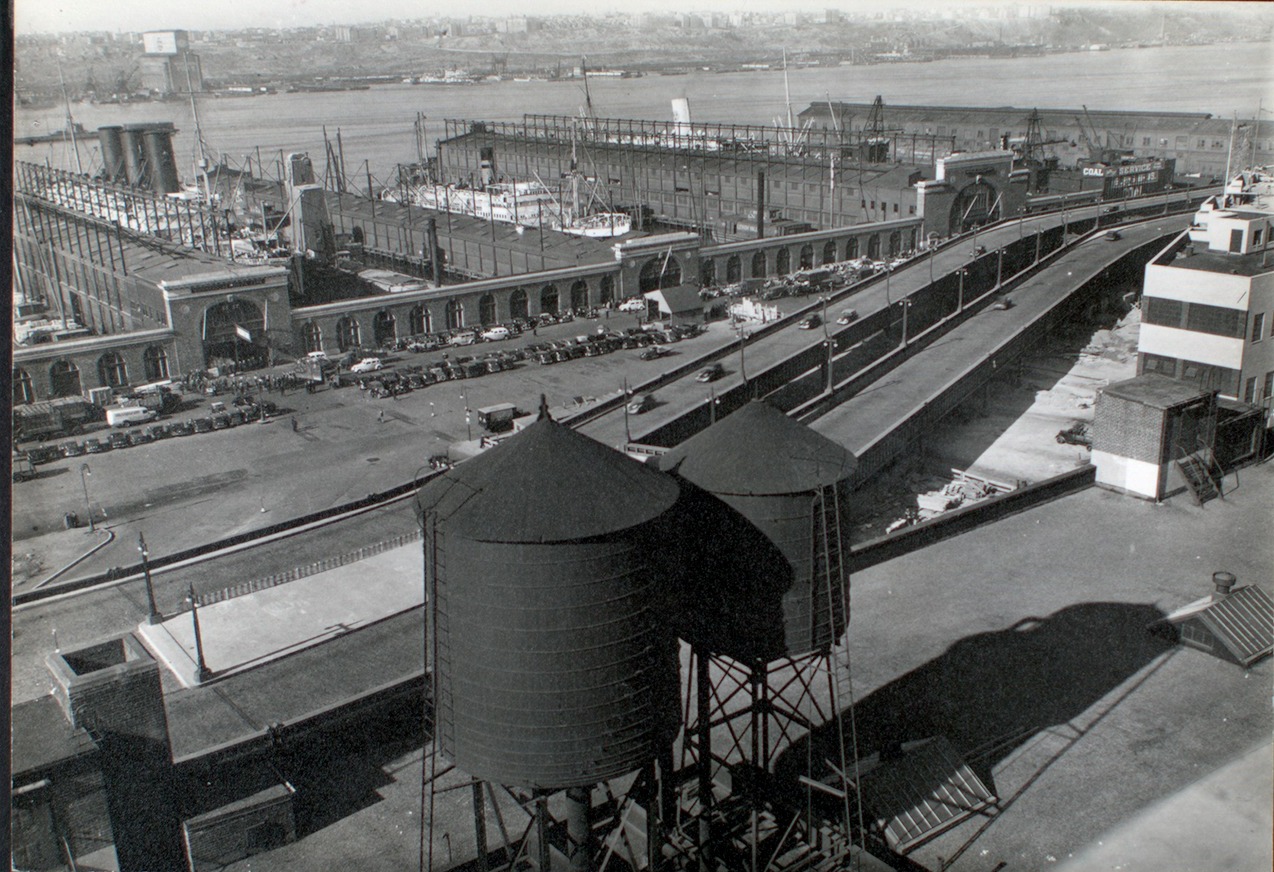
New York Public Library

The Port Authority Bus Terminal in 1950, at West 40th and 41st Streets and 8th Avenue.
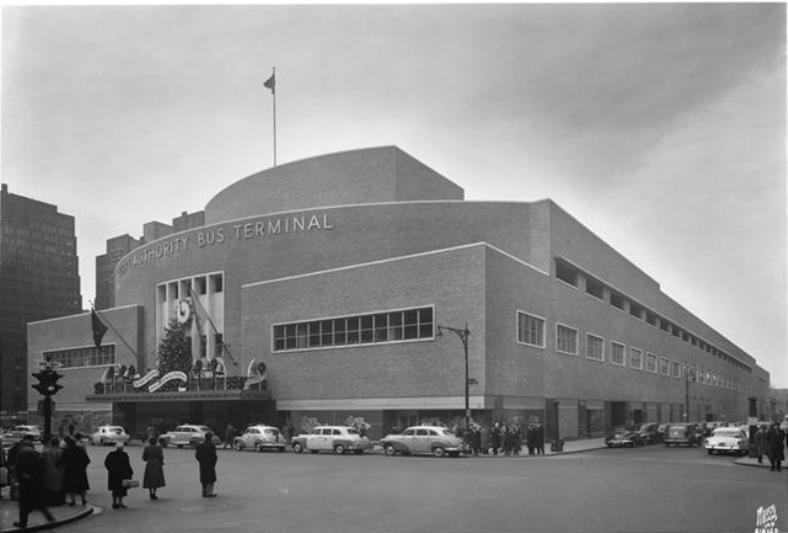
Wurts Brothers, courtesy Museum of the City of New York

The 8th Avenue Madison Square Garden, as seen in 1935.
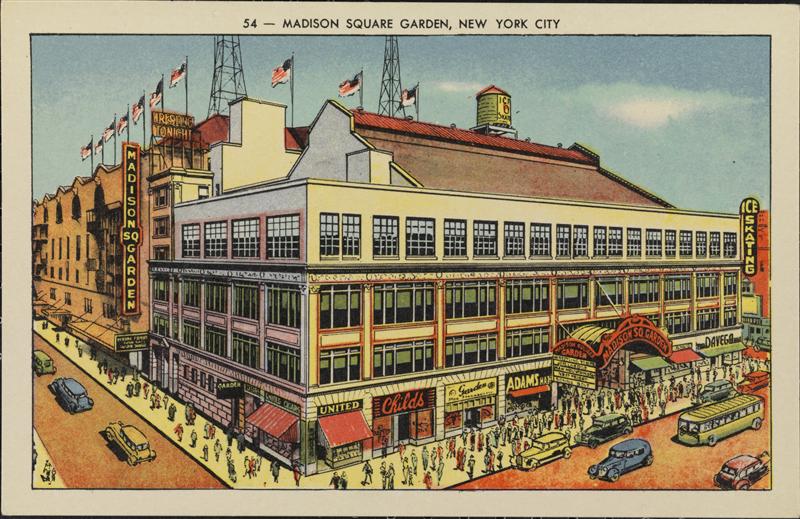
Courtesy Museum of the City of New York

A mural from 1974 — “The Neighborhood Belongs to the People Not Big Business.”
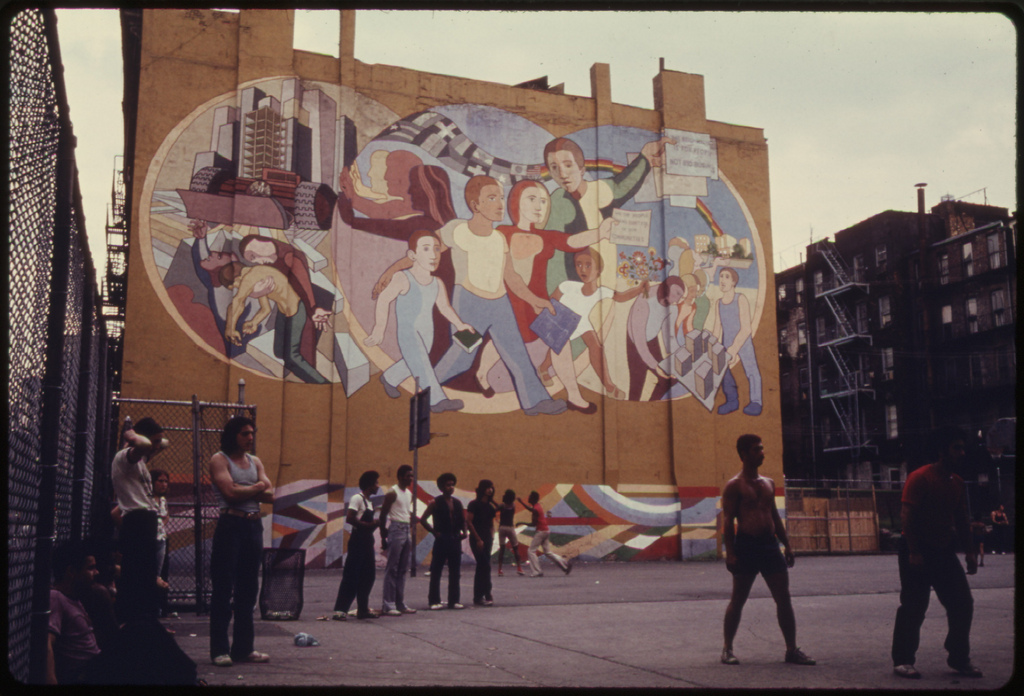
Courtesy US National Archives
Categories
Bowery Boys Bookshelf True Crime

‘The Vapors’: How an Arkansas spa town became a New York gangster paradise

Owney Madden was one of New York’s most infamous gangsters, a bootlegger and murderer who seemed to cross paths with every major cultural marker of the Roaring 20s. He opened the Cotton Club (with Jack Johnson), dated Mae West, and operated a liquor smuggling racket that catered to the city’s busiest speakeasies.

In essence Madden was the blistering face of Prohibition-era Manhattan.

And in 1935, he left it for good to go live in Hot Springs, Arkansas.

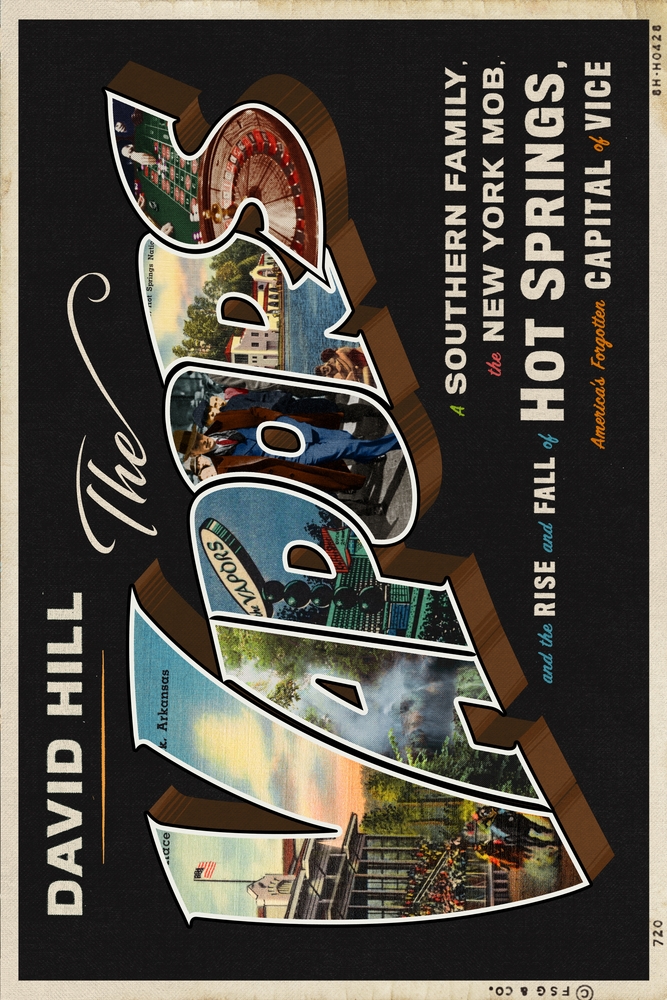
THE VAPORS
A Southern Family, the New York Mob and the Rise and Fall of Hot Springs, America’s Forgotten Capital of Vice
By David Hill
Farrar, Straus and Giroux

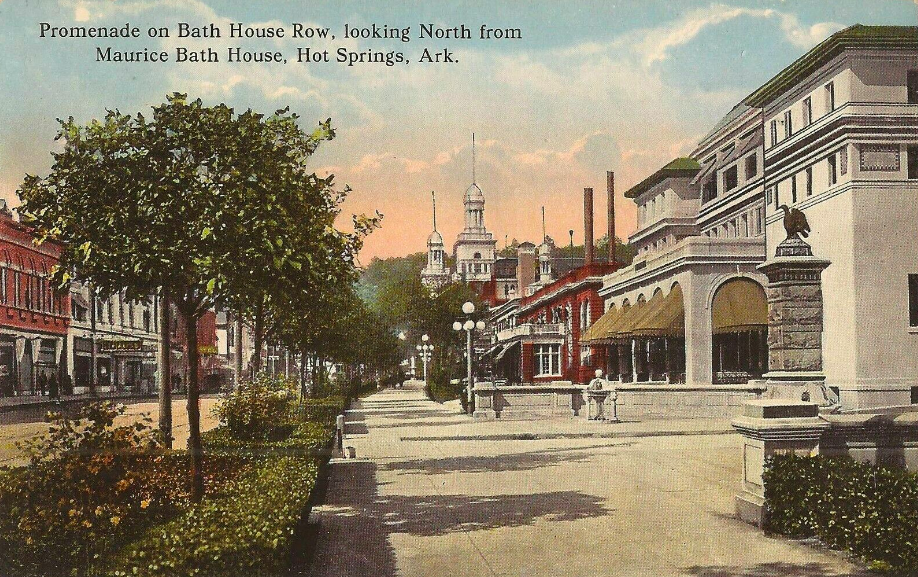
For a time, it seemed that Hot Springs, not Las Vegas, would be the vice capital of the United States. In David Hill’s captivating and beautifully written The Vapors, we’re re-introduced to an overlooked corner of history, a historic spa town with troubling secrets and a sleazy underbelly.

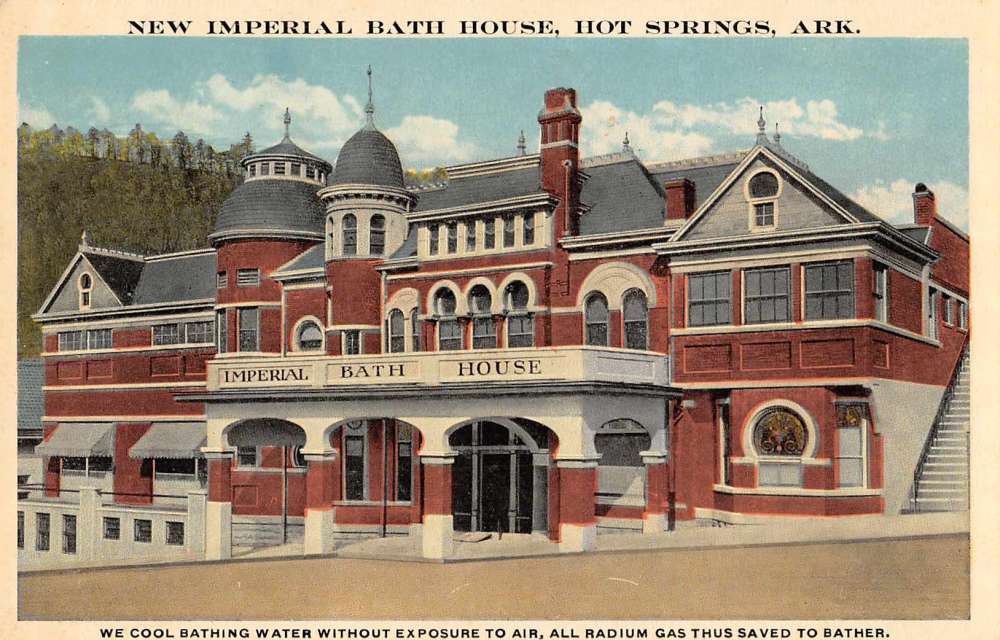
The Vapors was one of the last in a series of glamorous casinos and resorts which graced this mountain town during the 20th century, well established as a destination for illegal gambling by the time Madden arrived.

With Prohibition repealed, organized crime lords looked to gambling as their next best bet.

In the 1930s, Vegas was an uncertain proposition, sprouting haphazardly in the middle of the desert.

But here in Hot Springs, tourists had luxuriated in healing spring waters for decades. Sports heroes, politicians and musical entertainers all came here to relax. Lawmakers and law enforcement often looked the other way as it frequently benefited them to do so.

Madden was a celebrity in Hot Springs, a liaison between civic leaders and visiting gangsters, a man with unique powers who nonetheless had to learn the more delicate game of political control.

“Owney’s days of killing his enemies were long behind him,” writes Hill, “but it sure must have seemed cheaper than winning a fair election in Hot Springs. ‘You know, in my day, back in New York, how I’d have handled this…..’ Owney said to the gamblers. ‘No, no, no!’ they quickly cut him off.”

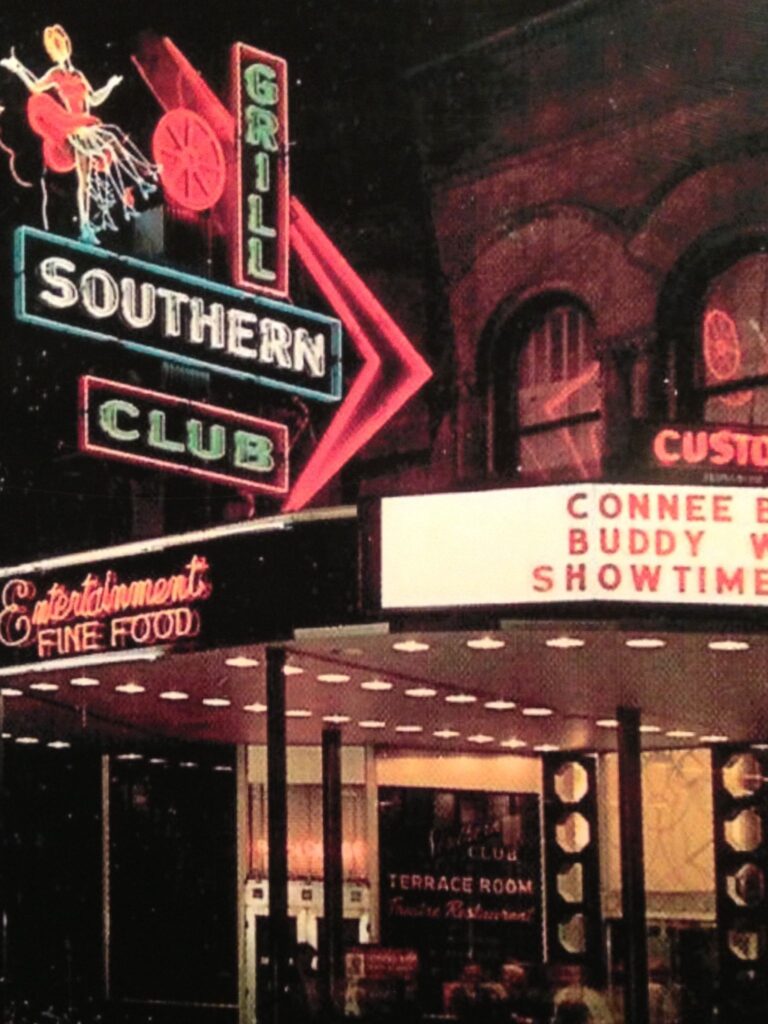
Madden’s roost was the Southern Club, an Arkansas variant of club’s like his old Cotton Club. Hill writes:

At the Southern, Owney was treated with discretion, not as if he were anyone else off the street, but not as anything special, either. The patrons knew to keep their distance. In Hot Springs, people had grown used to seeing famous folks out and about, and had learned to act like it wasn’t any big deal. In this way the spa had a lot in common with much larger cities, and the famous appreciated it as a form of hospitality. The notorious, even more so.”

The fate of Hot Spring’s lucrative gambling scene — and all its vice-ridden sideshows — rested on shady deals with law enforcement and local officials.

The city often resisted the presence of notorious gangsters for fear of the attention; in fact, another New York mob boss Charles ‘Lucky’ Luciano, who had considered Hot Springs a sort of gangster’s retreat, was arrested here in 1936.

Below: Owney Madden in his later years

Hill reconstructs the resort town with such vivid attention to detail — a haven of mist, fedoras and cheap-lipstick glamour — through exhaustive research and interviews. (Hill, who lives in New York, is a native Arkansan and you feel it.)

Alongside Madden, in a simple stroke of balanced narrative that really elevates The Vapors into the realm of prize-deserving literary magic, the author also follows the stories of Madden’s protege Dane Harris (the “boss gambler” of Hot Springs) and a tough lady named Hazel Hill, raising two sons during the city’s most tumultuous years.

Hazel’s story is told with an added degree of richness and sympathy, as well it should. She’s the author’s grandmother.