Categories
Neighborhoods Podcasts

Hell’s Kitchen: New York’s Wild West

PODCAST Hell’s Kitchen, on the far west side of Midtown Manhattan, is a neighborhood of many secrets. The unique history of this working class district veers into many tales of New York’s criminal underworld and violent riots which have shaken the streets for over 150 years.

This sprawling tenement area was home to some of the most notorious slums in the city, and sinister streets like Battle Row were frequent sites of vice and unrest. The streets were ruled by such gangs as the Gophers and the Westies, leaving their bloody fingerprints in subtle ways today in gentrified buildings which at one time contained the most infamous speakeasies and taverns.

We break down this rip-roaring history and try to get to the real reason for its unusual name!


The Bowery Boys: New York City History podcast is brought to you …. by you!

Starting this month, we are doubling our number of episodes per month. Now you’ll hear a new Bowery Boys podcast every two weeks. We’re also looking to improve the show in other ways and expand in other ways as well — through publishing, social media, live events and other forms of media. But we can only do this with your help!

We are now a member of Patreon, a patronage platform where you can support your favorite content creators for as little as a $1 a month.

Please visit our page on Patreon and watch a short video of us recording the show and talking about our expansion plans. If you’d like to help out, there are five different pledge levels (and with clever names too — Mannahatta, New Amsterdam, Five Points, Gilded Age, Jazz Age and Empire State). Check them out and consider being a sponsor.

We greatly appreciate our listeners and readers and thank you for joining us on this journey so far. And the best is yet to come!


The mysteries begin over 200 years ago when ordered avenues and streets could scarcely be imagined, and the shoreline was a ragged coast.

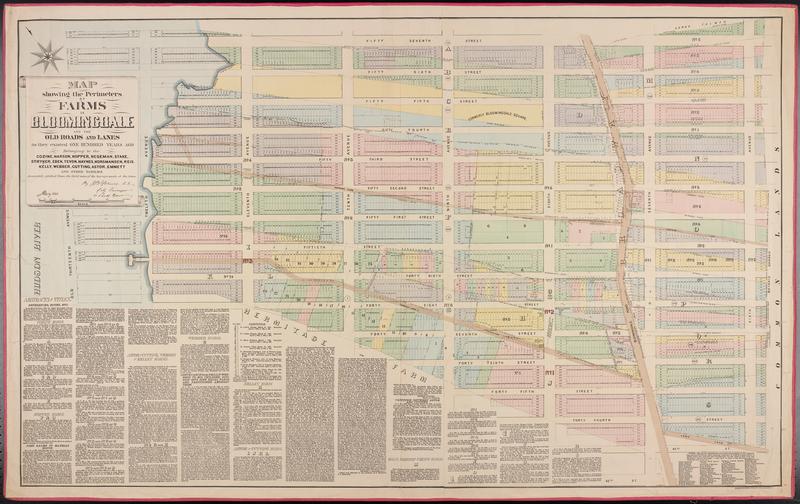
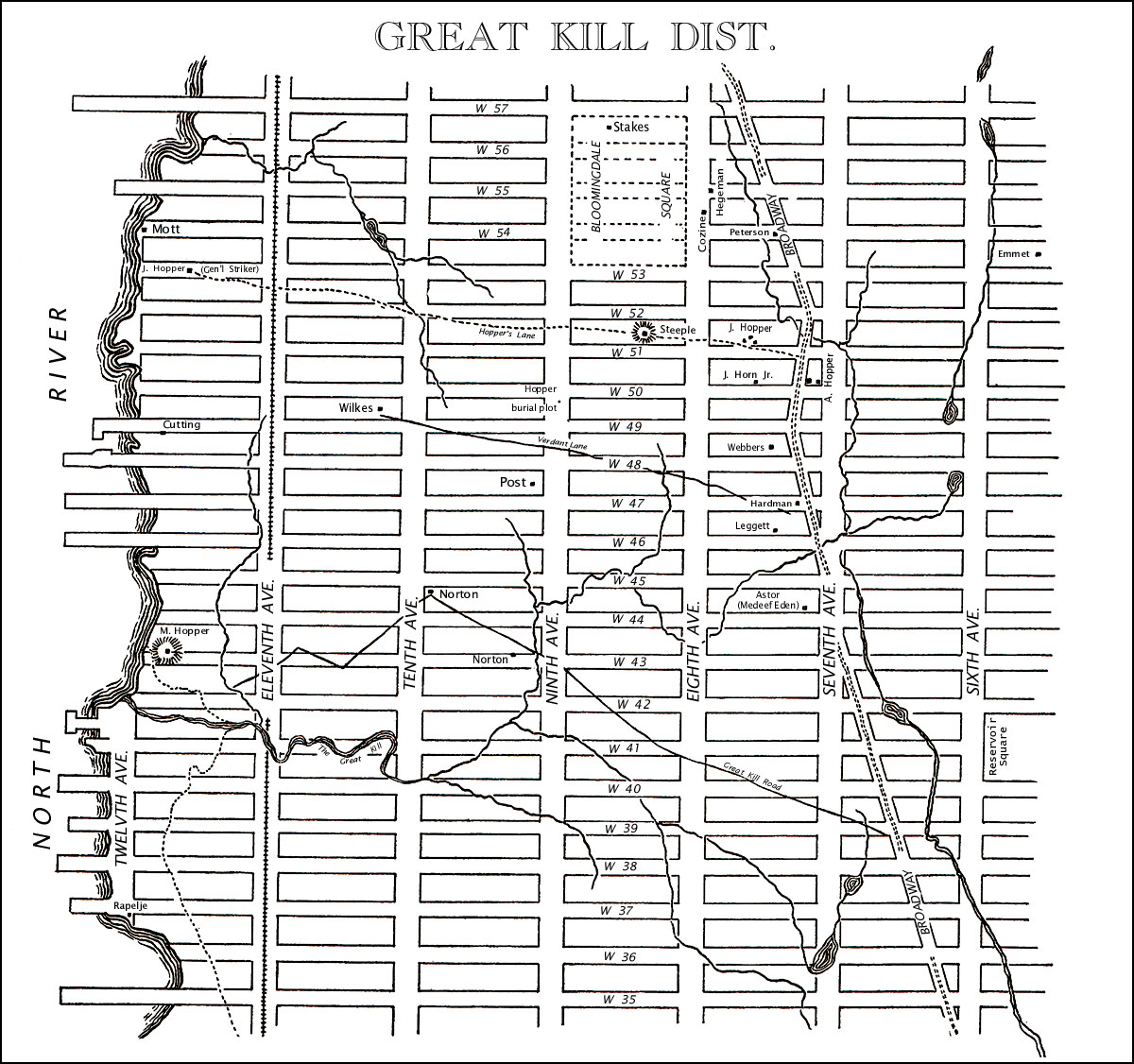
The Dutch later called it the Great Kill District, for the creek which emptied into the Hudson River (North River) at 42nd Street. As you can see from this diagram the shore was evened out with landfill to create 12th Avenue although the inward dip at 43rd Street is still visible on a modern map.

map

A map (drawn by John Bute Holmes) of the original estate borders of Bloomingdale from the late 18th century. The jagged shore line would later be filled in to make the blocks between 11th and 12th Avenues.

Courtesy Museum of the City of New York

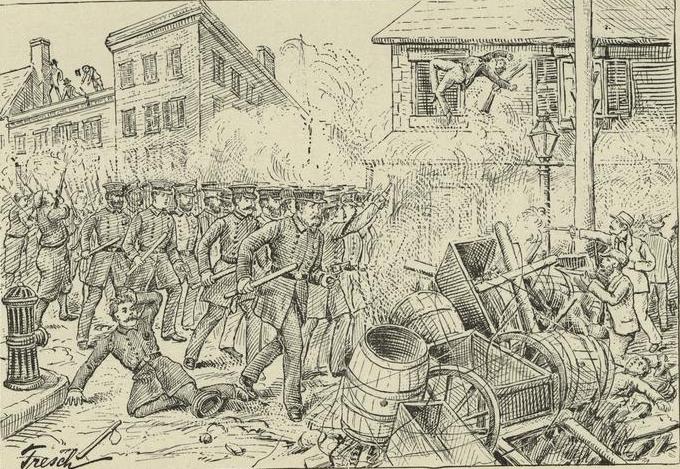
The Ninth Avenue barricades made by rioters in the area of Hell’s Kitchen during the Civil War Draft Riots.

barricades

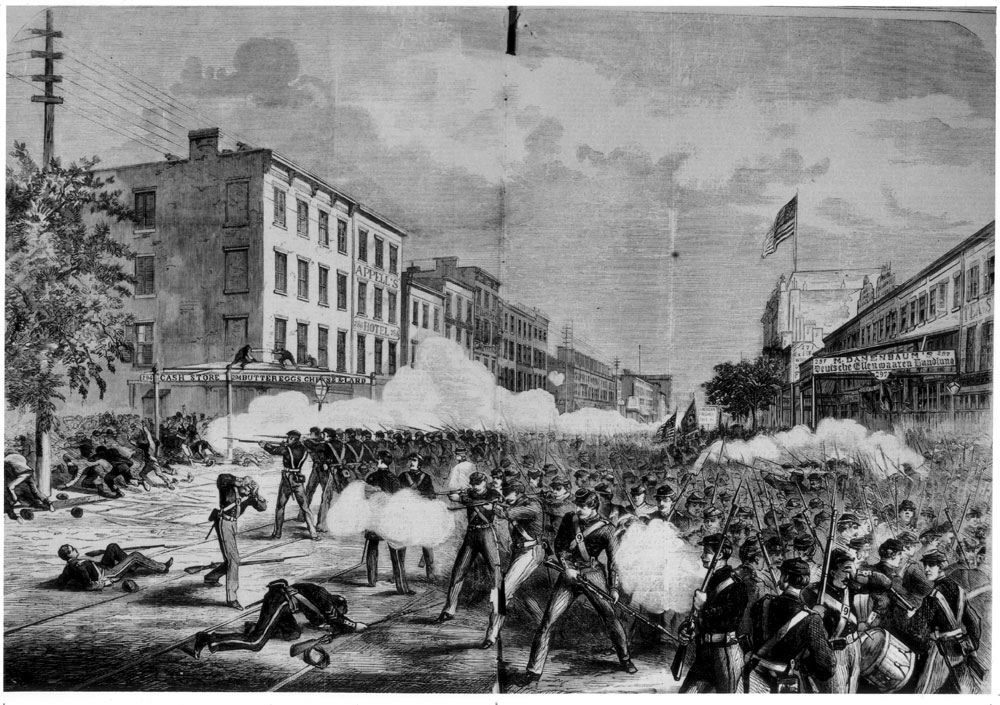
The Orange Riot of July 12 from Eighth Avenue south from 25th street, an 1871 image from Frank Leslie’s Illustrated Newspaper.

orange

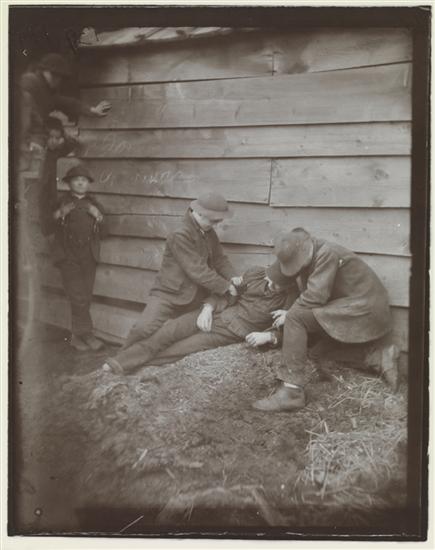
Bad boys: Some Hell’s Kitchen ruffians show Jacob Riis how to rob people who have passed out.

Jacob Riis
Jacob Riis

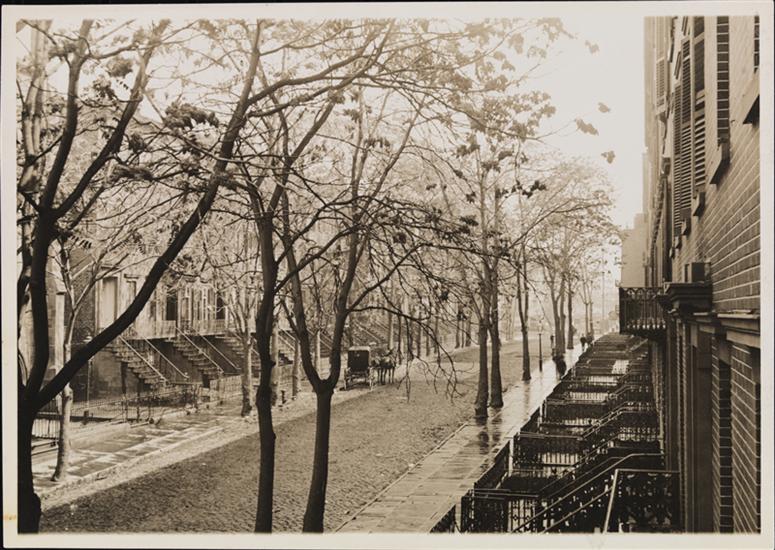
An intriguing shot of 58th Street between 8th and 9th Avenues

Museum of the City of New York

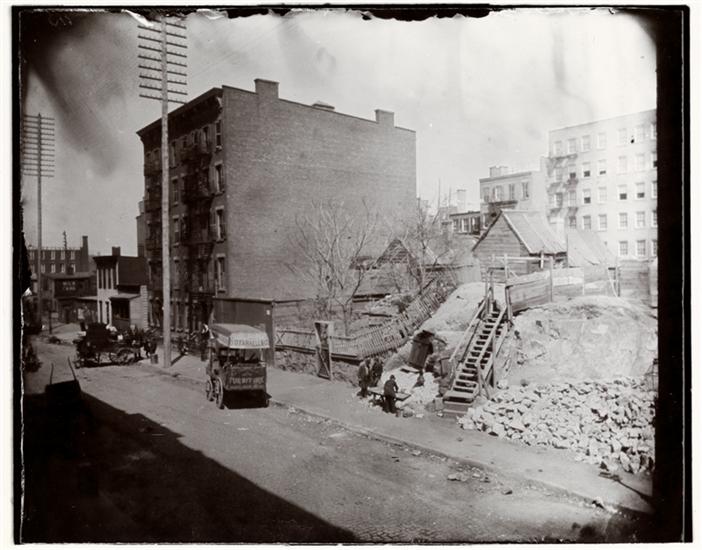
Jacob Riis’ photograph of the Hell’s Kitchen tenement and the remains of Sebastopol (the rocks), 1890

Photo by Jacob Riis
Photo by Jacob Riis

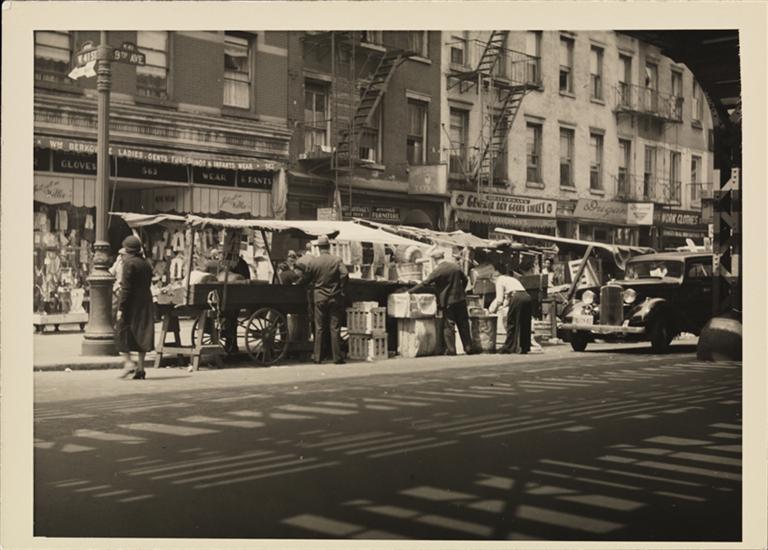
Street vendors under the 9th Avenue Elevated Railroad

Museum of City of New York

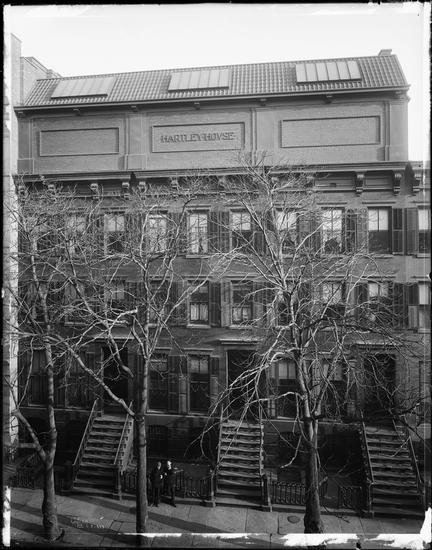
The Hartley House, a settlement house for the Hell’s Kitchen community. on West 46th Street

Museum of the City of New York

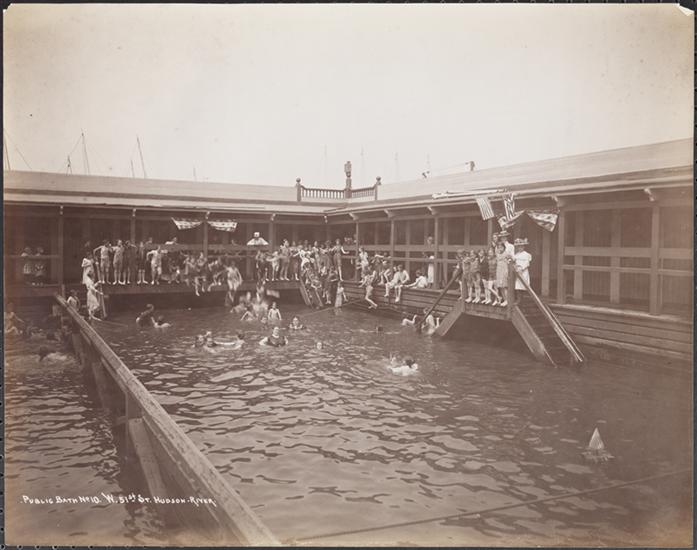
At the recreation pier — a public swimming hole at West 51st Street and the Hudson River.

Museum of the City of New York

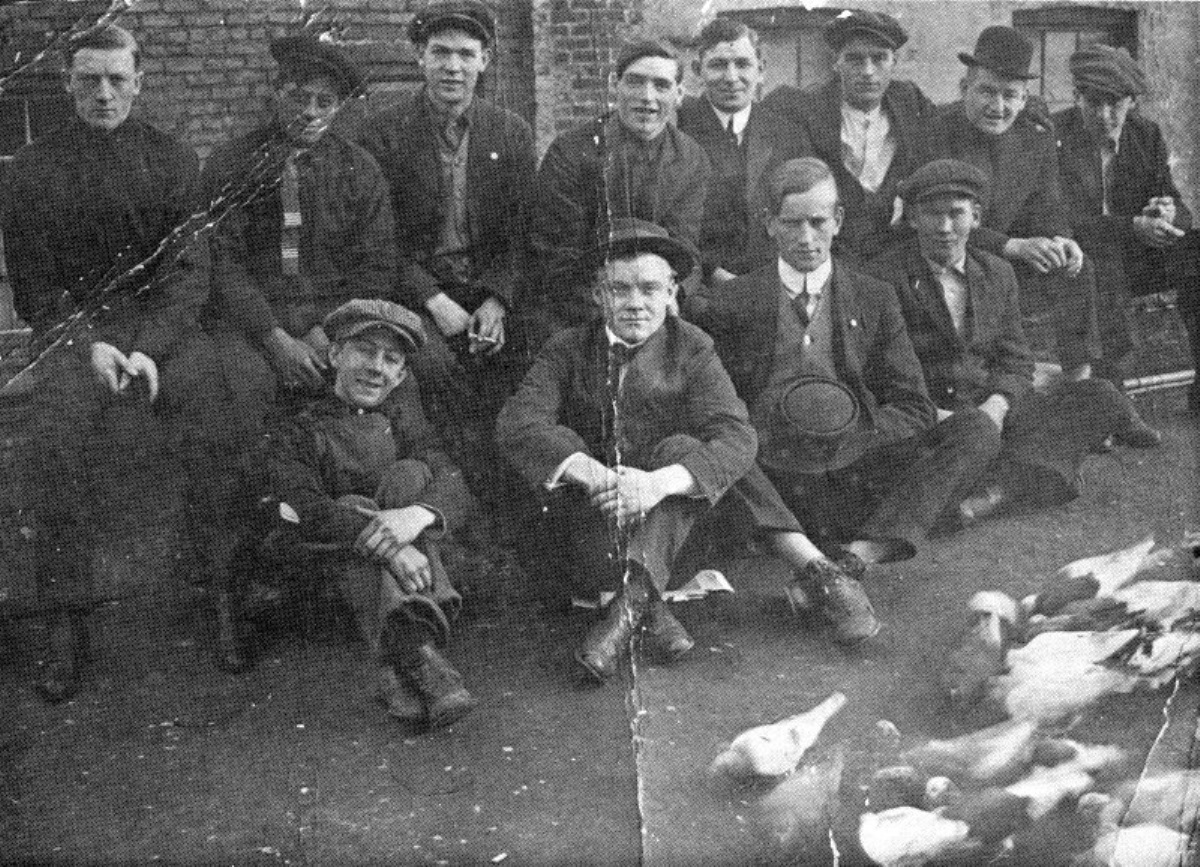
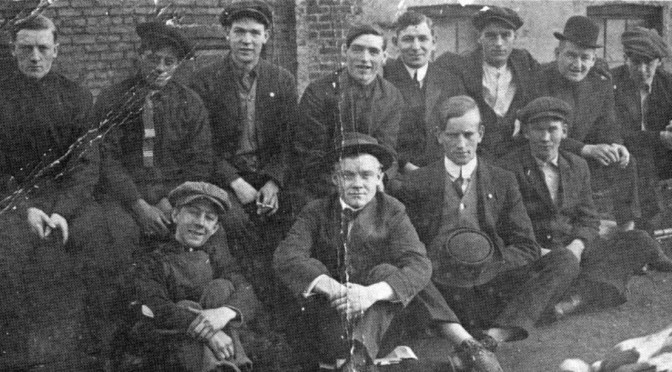
The later configuration of the Gophers. Owney Madden is on the back row, fourth from the left. A very rough and dangerous gang, but don’t they clean up nice?

Courtesy of Garland County Historical Society and Butler Center Books

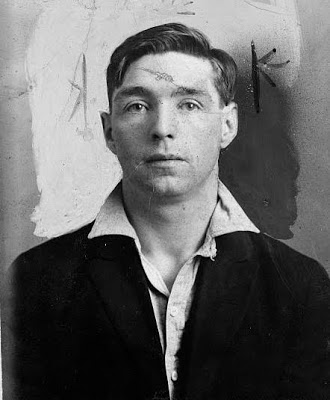
Owney Madden, the king of the Hell’s Kitchen speakeasy racket.

owney

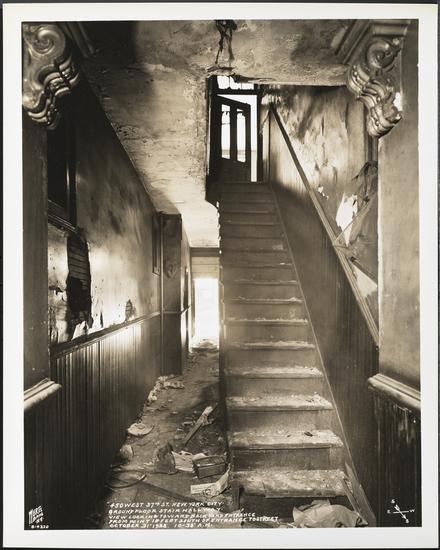
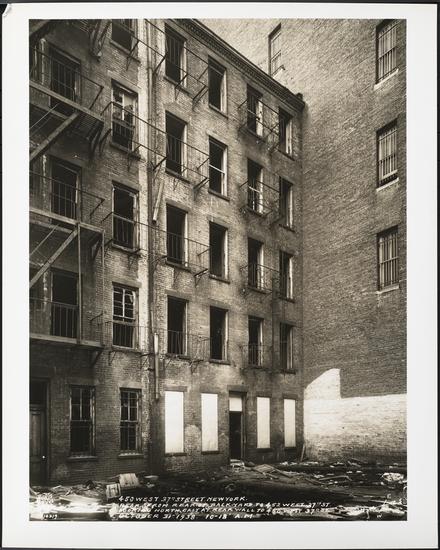
A couple spectacular shots of 1938 slum clearance — eliminating the tenements of 37th Street.

Wurts Brothers. Museum of the City of New York

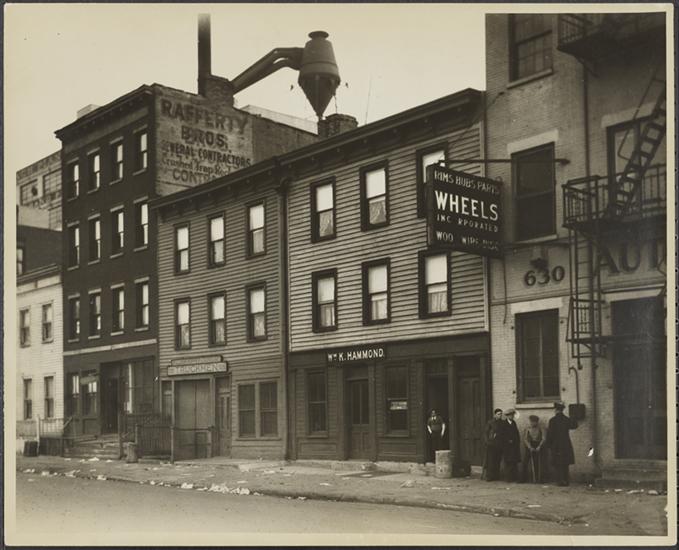
Businesses on West 52nd Street, facing into DeWitt Clinton Park. It’s likely that William Hopper & Sons Truckmen at no. 626 probably traces itself back to the original Hopper land owners. Photograph by Charles von Urban

Courtesy Museum of the City of New York

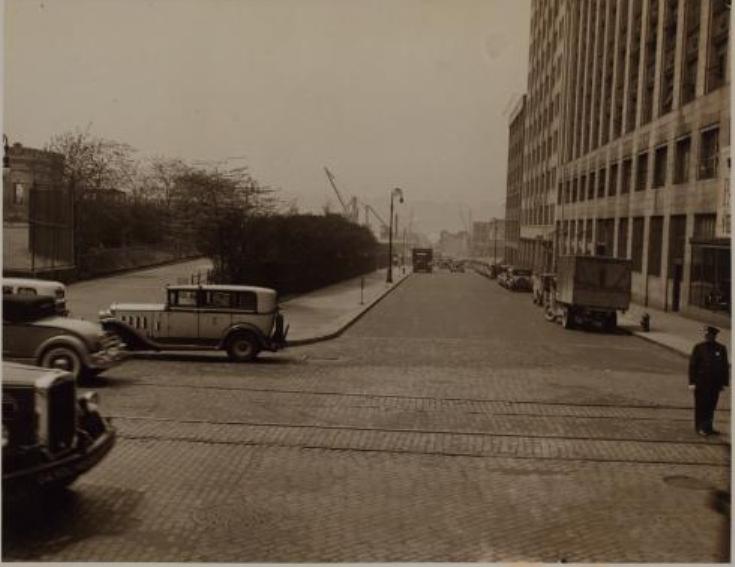
The entrance to DeWitt Clinton Park (at 54th Street) in 1936

New York Public Library

Most of the pressures faced by the Hell’s Kitchen neighborhood came from its perimeter with dramatic changes to the waterfront to its west, Port Authority/Lincoln Tunnel to its south, Madison Square Garden/Times Square to its east and Lincoln Center/Columbus Circle to its north.

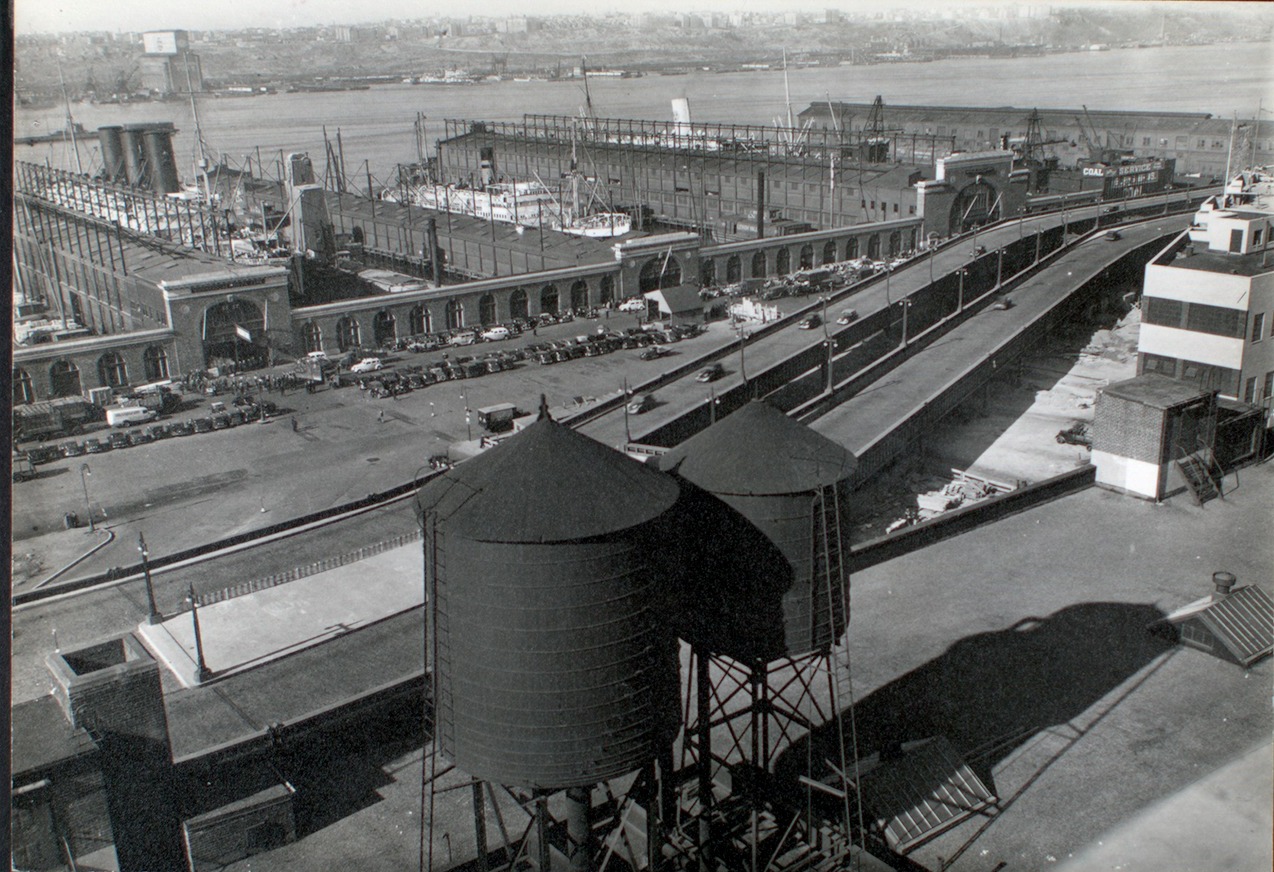
Below: The West Side Highway and piers 95-98, looking west from a roof on West 54th Street

New York Public Library

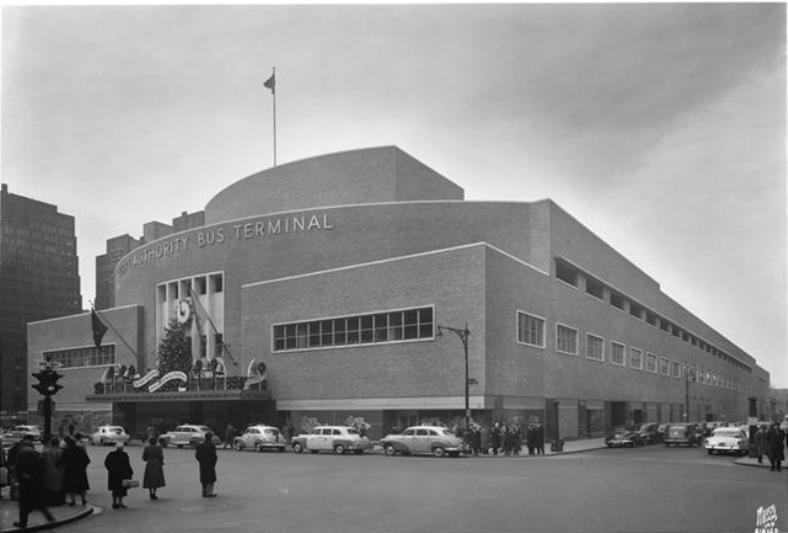
The Port Authority Bus Terminal in 1950, at West 40th and 41st Streets and 8th Avenue.

Wurts Brothers, courtesy Museum of the City of New York

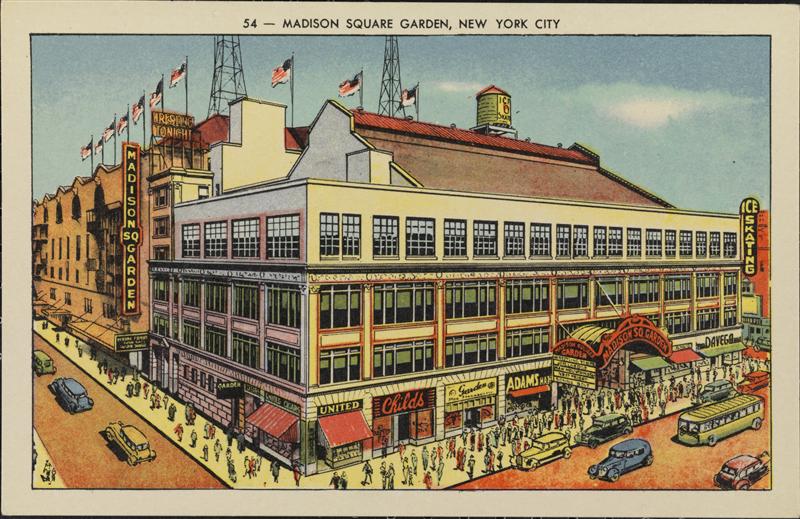
The 8th Avenue Madison Square Garden, as seen in 1935.

Courtesy Museum of the City of New York

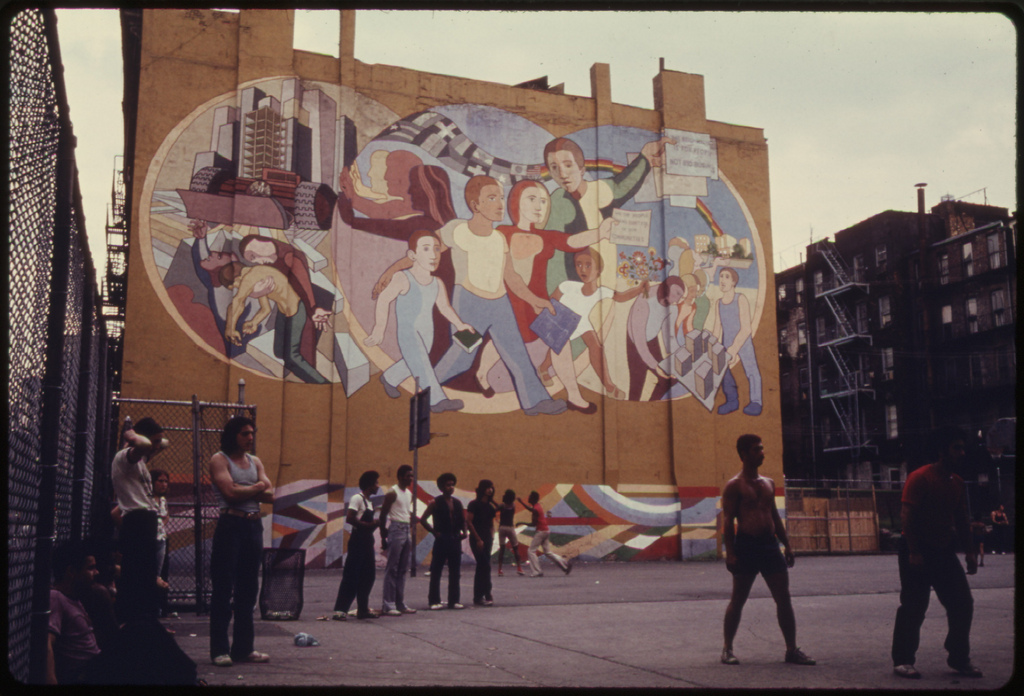
A mural from 1974 — “The Neighborhood Belongs to the People Not Big Business.”

Courtesy US National Archives
Categories
Podcasts Skyscrapers

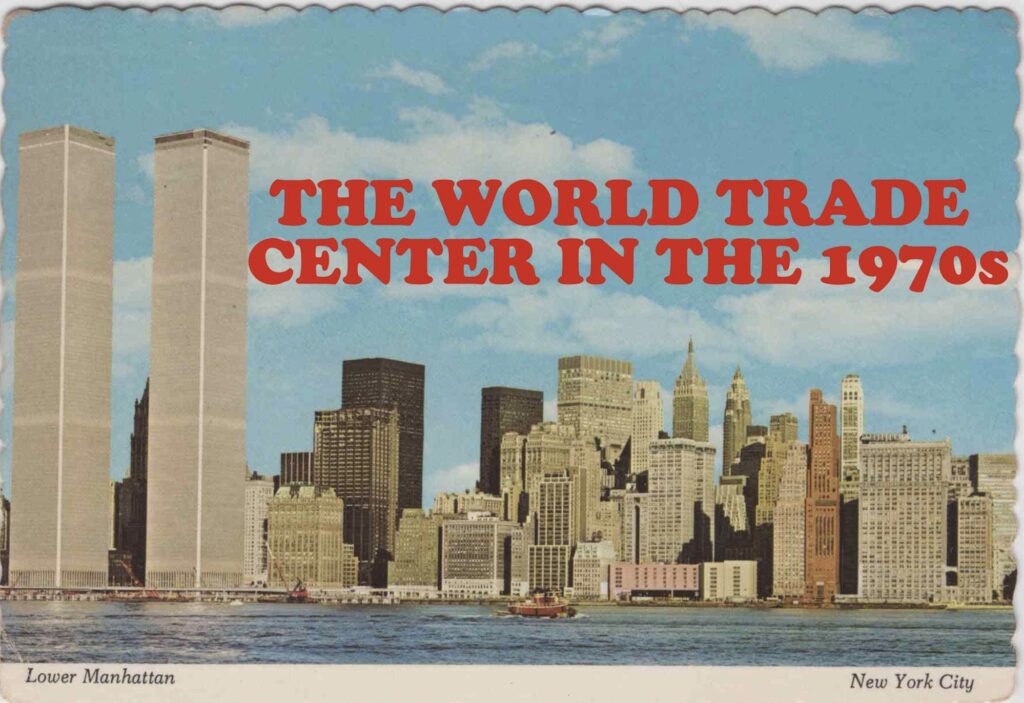
The World Trade Center in the 1970s

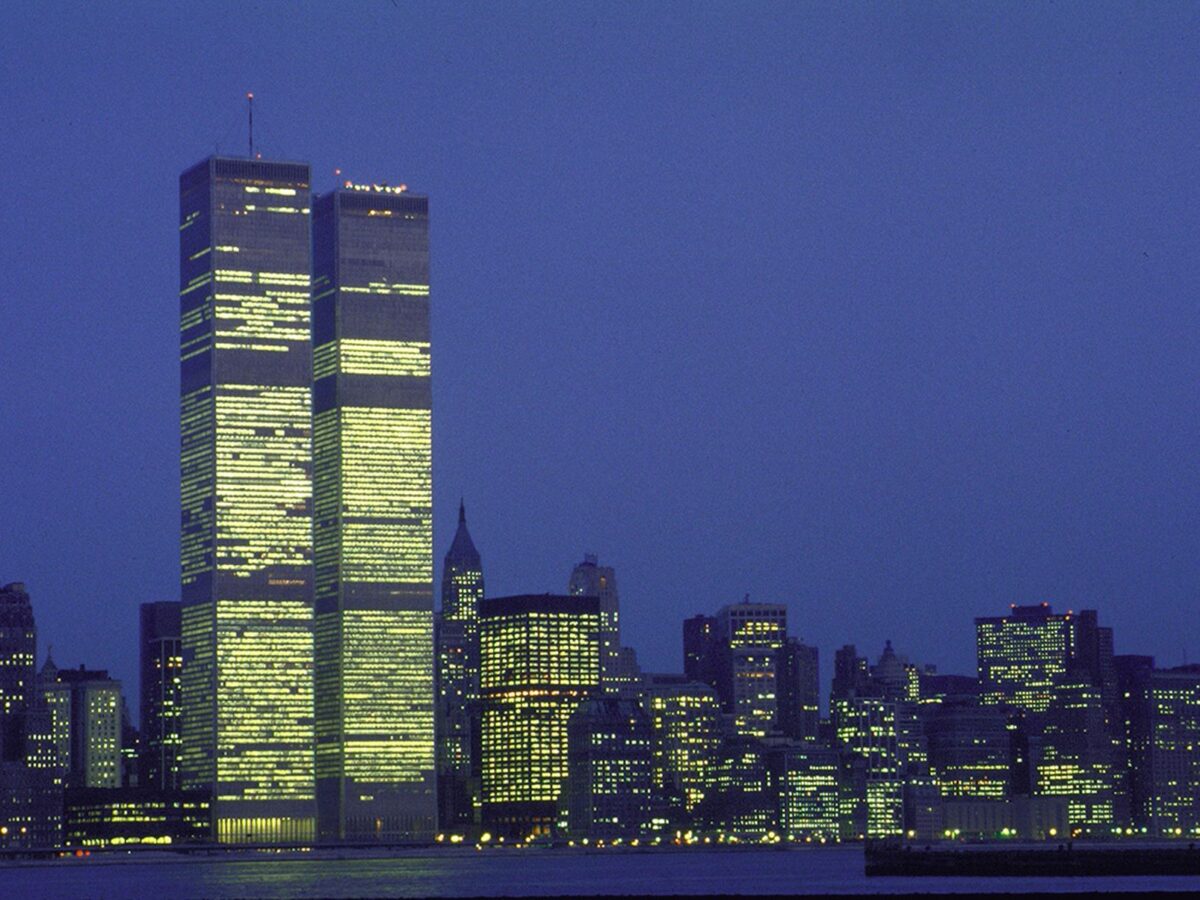
PODCAST The World Trade Center opened its distinctive towers during one of New York City’s most difficult decades, a beacon of modernity in a city beleaguered by debt and urban decay. Welcome to the 1970s.
EPISODE 350 This year, believe it or not, marks the 20th anniversary of the attacks on the Twin Towers on September 11, 2001.

Today there’s an entire generation that only knows the World Trade Center as an emblem of tragedy.

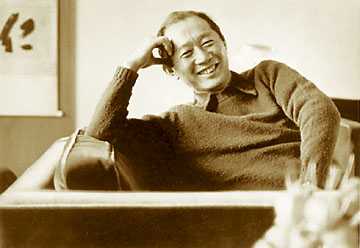
But people sometimes forget that the World Trade Center, designed by Japanese-American architect Minoru Yamasaki, was a very complicated addition to the New York skyline when it officially opened in 1973.

While it might be fun to think of New York City in the 1970s through the lens of places like Studio 54 or CBGB, it was really the Twin Towers that redefined New York.
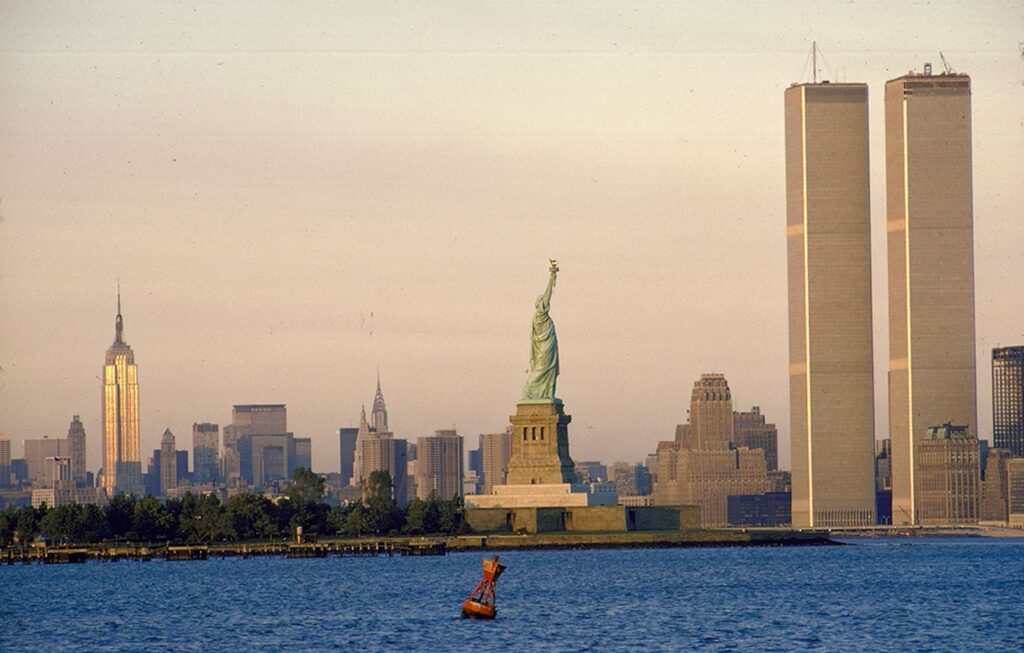
The journey to build the world’s tallest building and its expansive complex of office towers and underground shops began in an effort by David Rockefeller to stimulate development in Manhattan’s fading Financial District.

By the time Port Authority got onboard to fund the project, the Twin Towers were bonded together with another vital project — a commuter train from New Jersey.

The World Trade Center inspired strong opinions from critics and the public alike, but eventually many grew to admire the strange towers which marked the skyline.

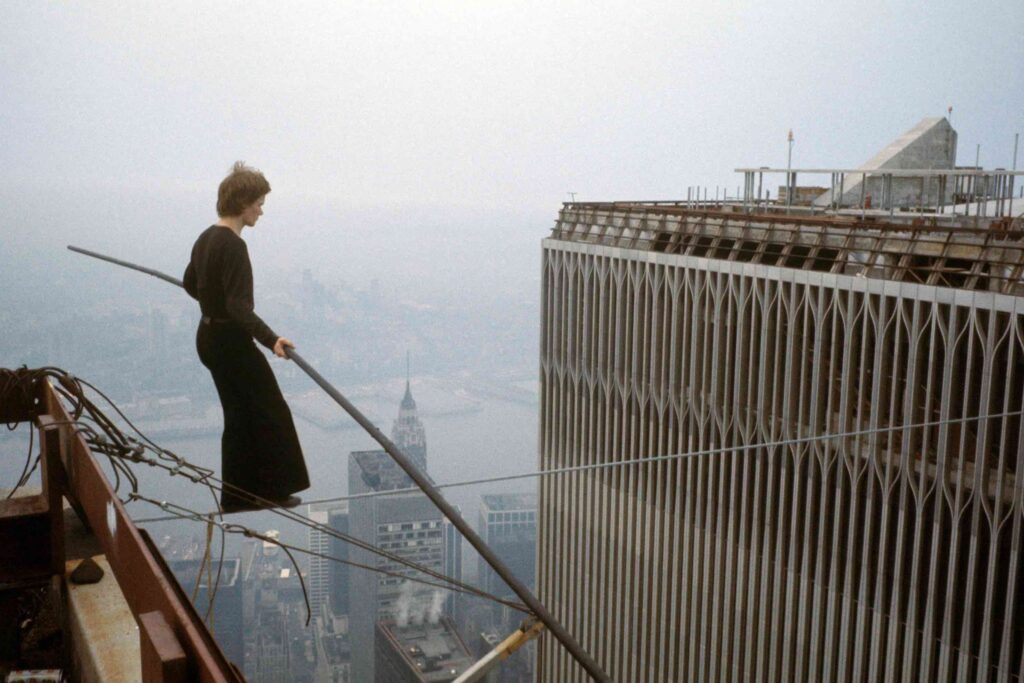
And for some, the Twin Towers became objects of obsession.
Jean-Louis Blondeau / Polaris Images

FEATURING: The insane, completely outlandish and ultimately successful feat of acrobatics by a very bold French tightrope walker.

PLUS: An interview with with Kate Monaghan Connolly of the National September 11 Memorial and Museum about how that institution memorializes those lost in the tragedy while still celebrating the technological marvels that once stood there.

Listen here or stream/download the episode from your favorite podcast player:


Go to websites for the National September 11 Memorial and Museum and One World Observatory for more information about visiting hours and COVID-19 safety precautions at each site.

Follow us on Instagram for more images of our adventures through New York City.


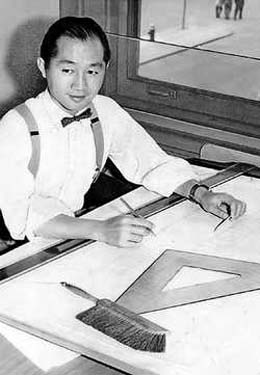
Architect Minoru Yamasaki with a model of this Twin Tower design for the World Trade Center, March 25, 1964
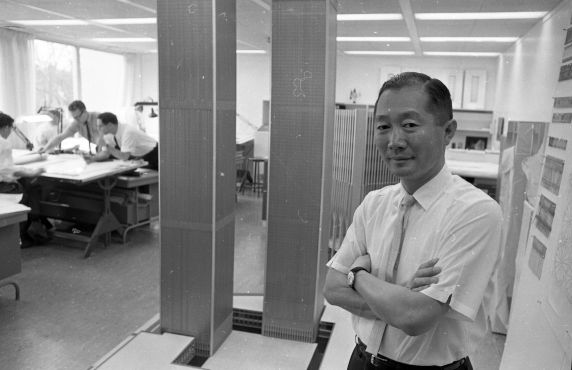
Photographer Tony Spina/Courtesy Walter P. Reuther Library

David Rockefeller with a model of the westside of lower Manhattan.
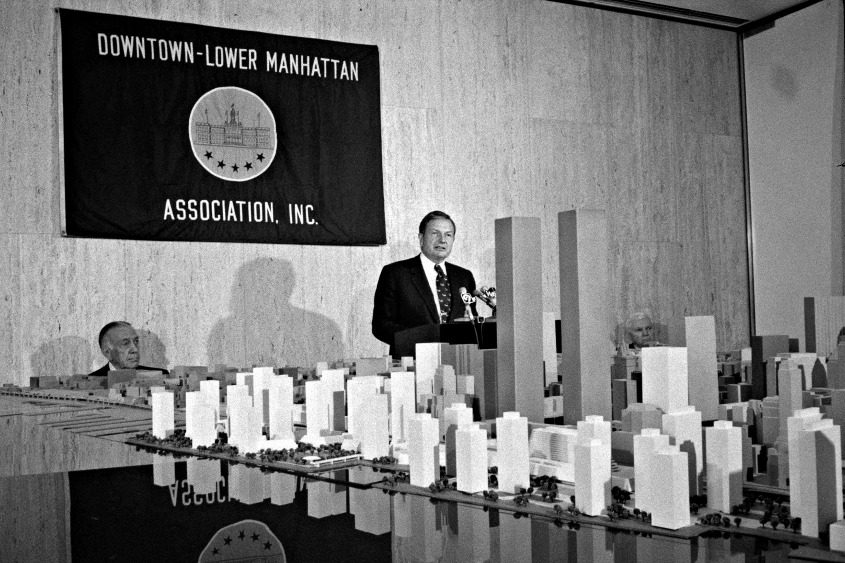
Courtesy John Duricka/Associated Press

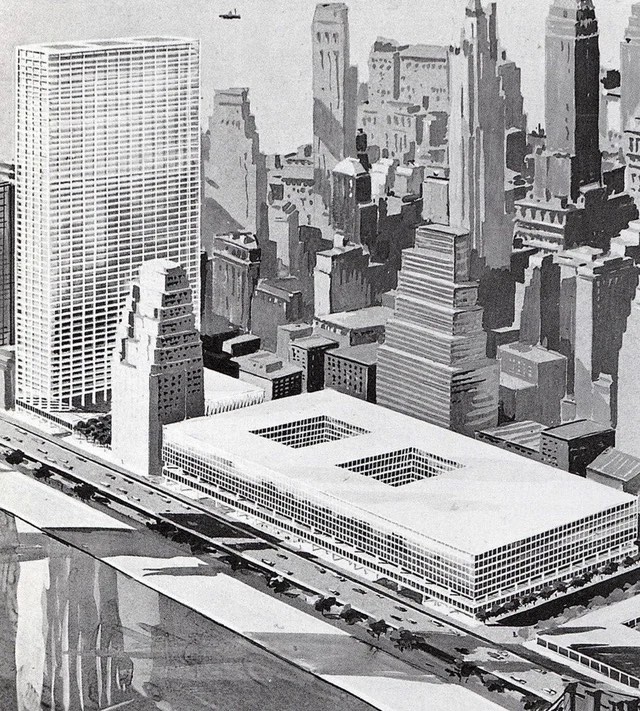
The first plan for the World Trade Center called for construction of a United Nations-inspired set of structures on the east side, most likely eliminating (or seriously reducing) the South Street Seaport.
Images of Radio Row, clearly showing a vibrant retail district that remained active over many decades. Had it remained, who knows how much larger it would have gotten with the advent of television?
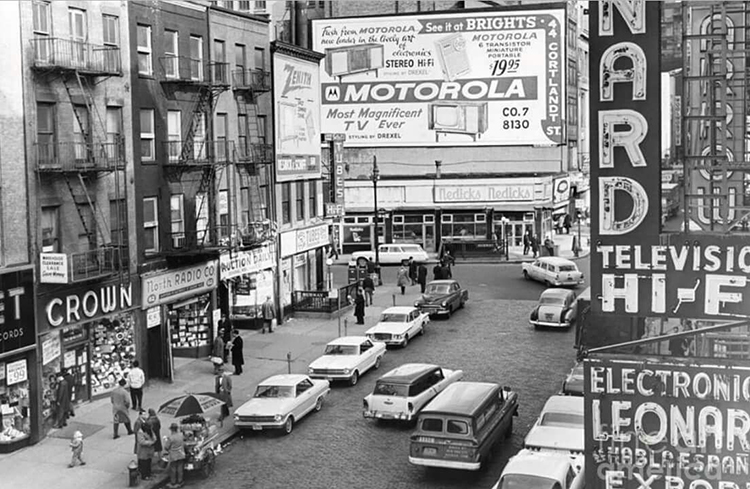
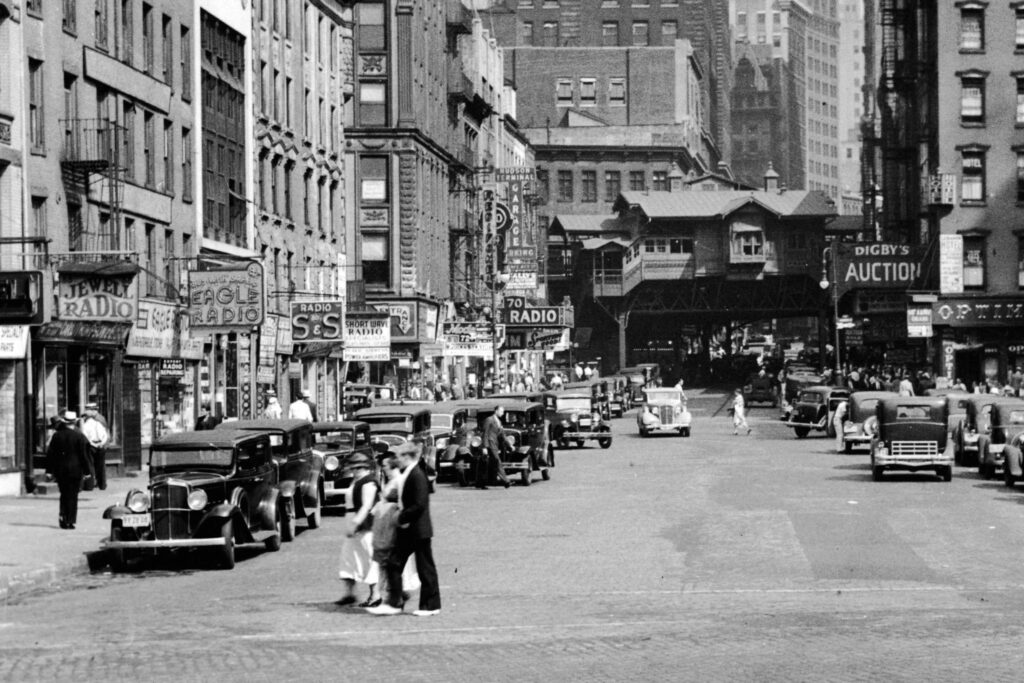
Hulton Archive/Getty Images

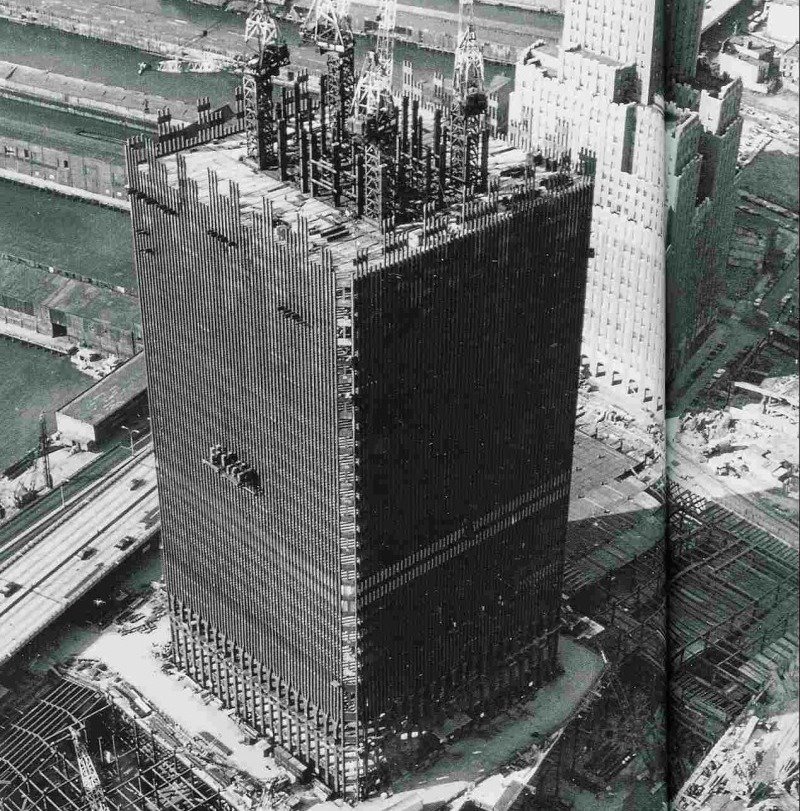
They were so prominent and tall that they become the world’s most observed construction project — for years.
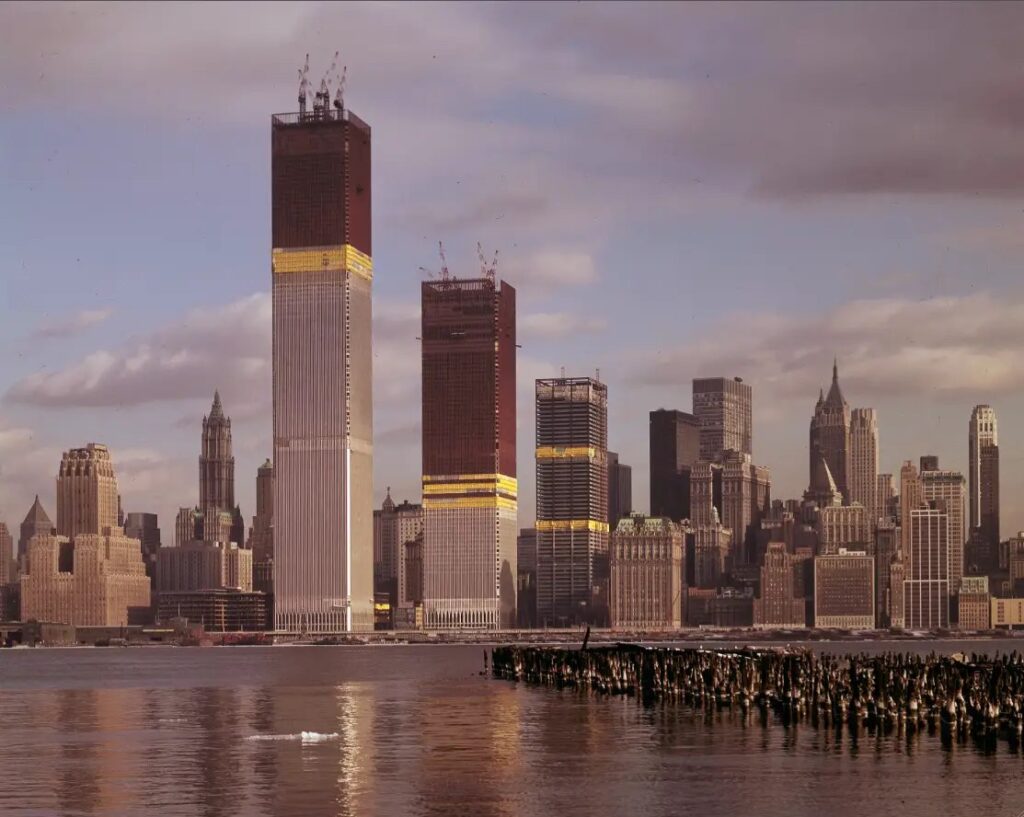
Courtesy AP

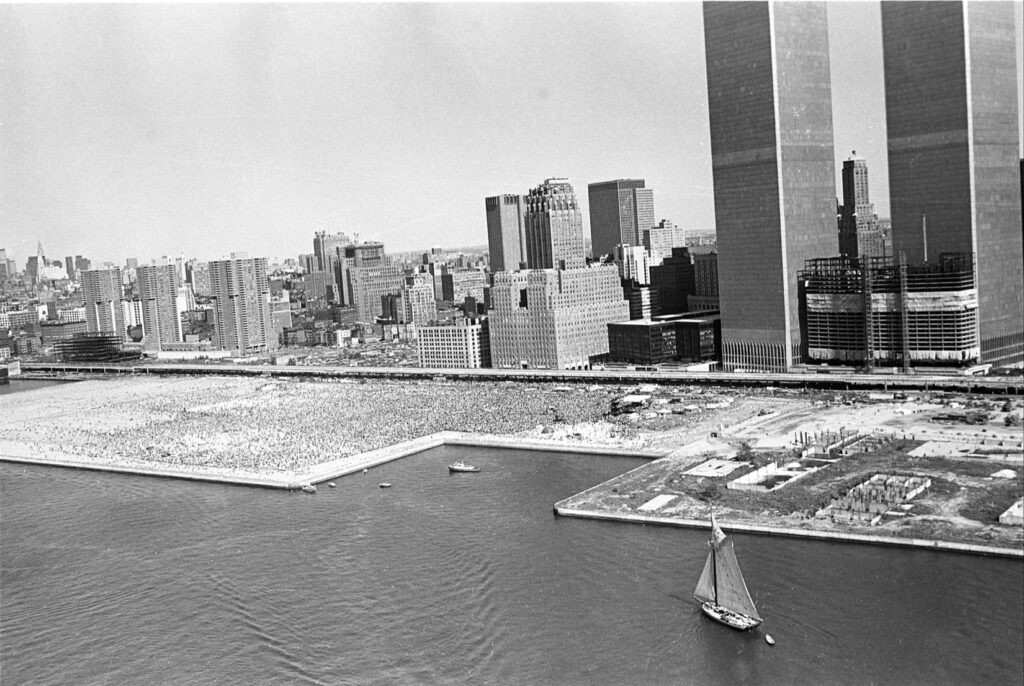
Over the years, the landfill site (and future home of Battery Park City) was used for performance art, musical performances and even circuses.
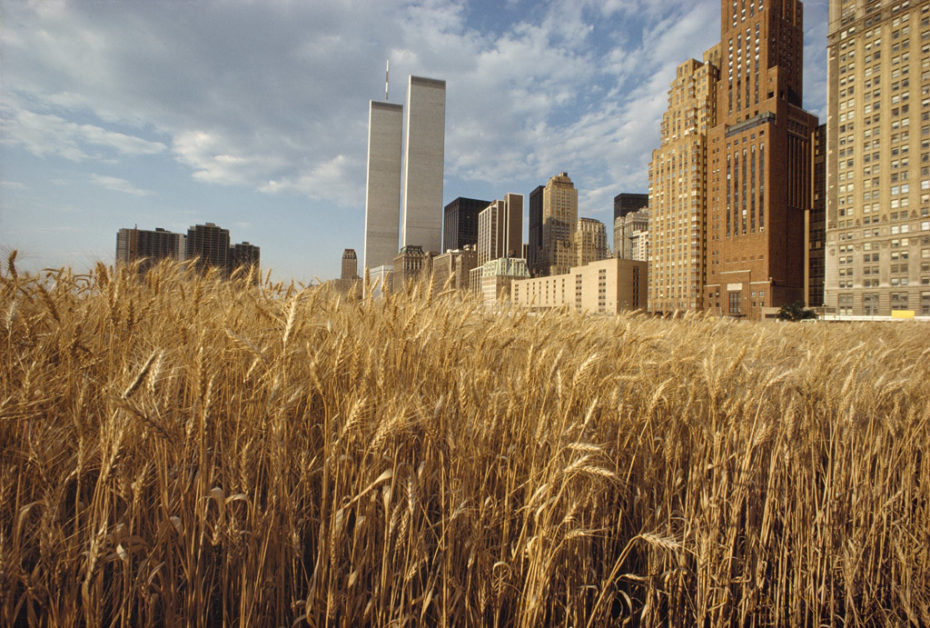
The wheat field (an art project by Agnes Denes), planted in 1982.
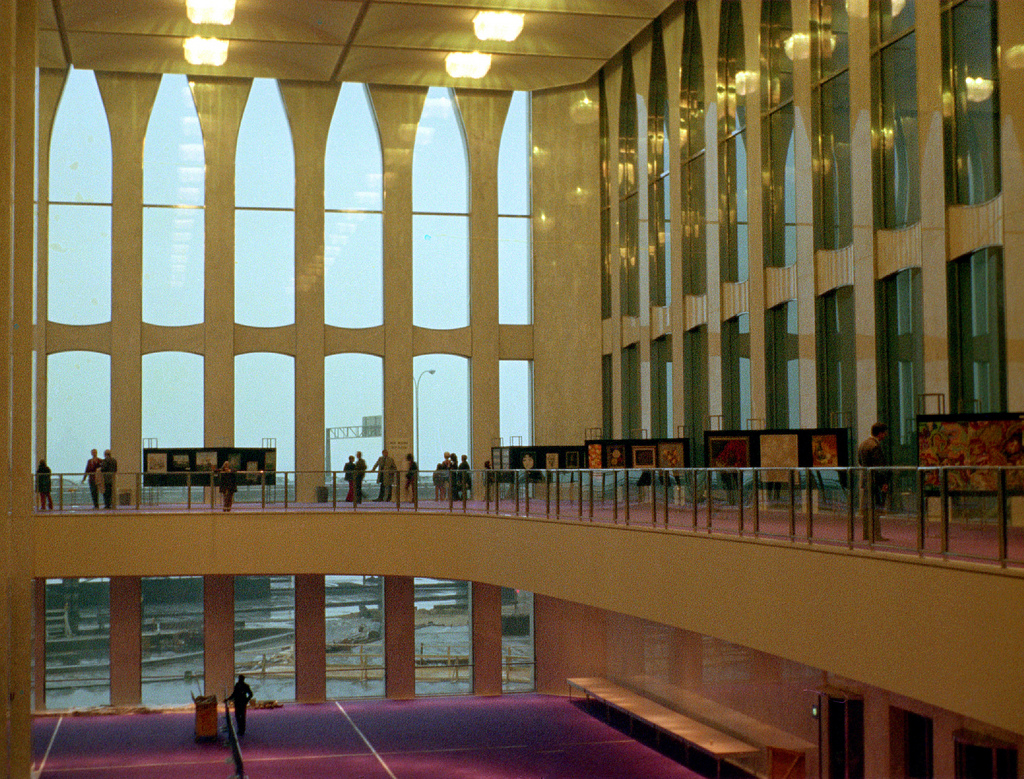
The lobby of one of the towers.
The Twin Towers from the film King Kong.

From the New York Daily News, August 8, 1974. For context, Richard Nixon resigned as President of the United States the following day (Friday, August 9).
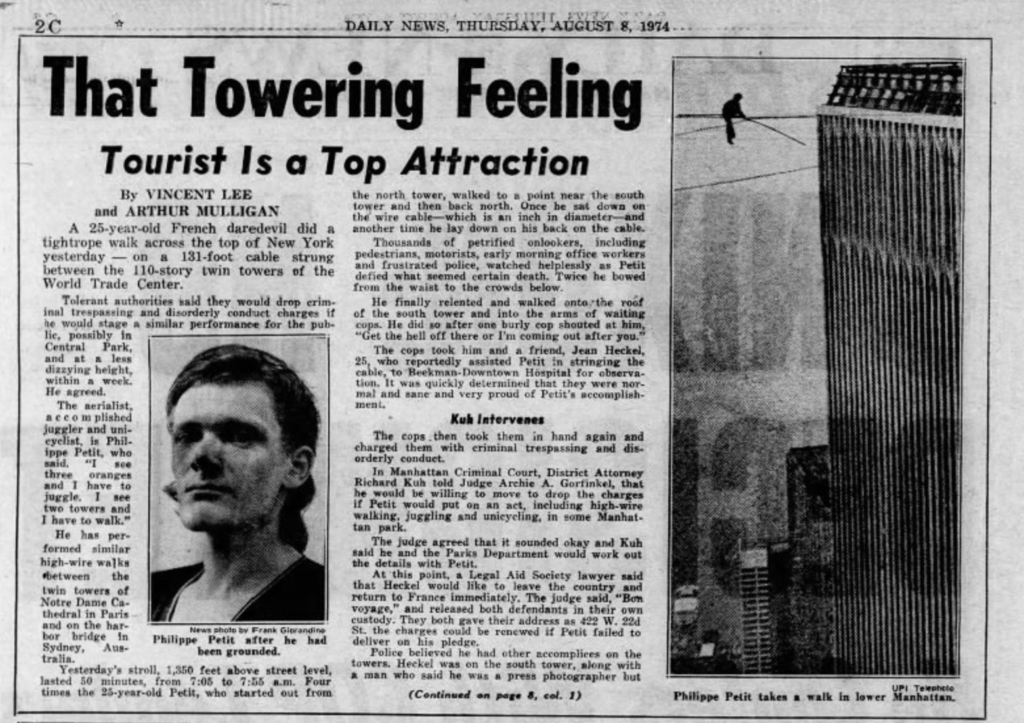
Courtesy Newspapers.com

The Philippe Petit story made international news. Here’s one example — from Butte, Montana!
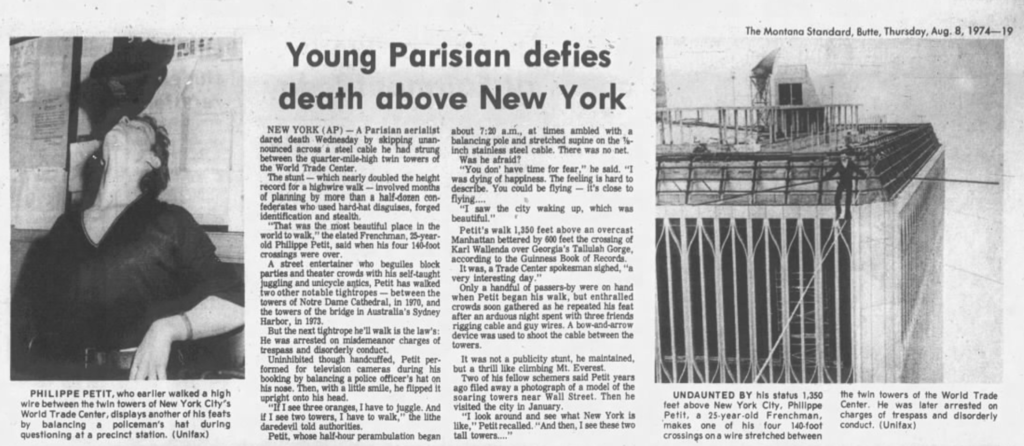
Courtesy Newspapers.com

From the Oscar-winning documentary Man On Wire:
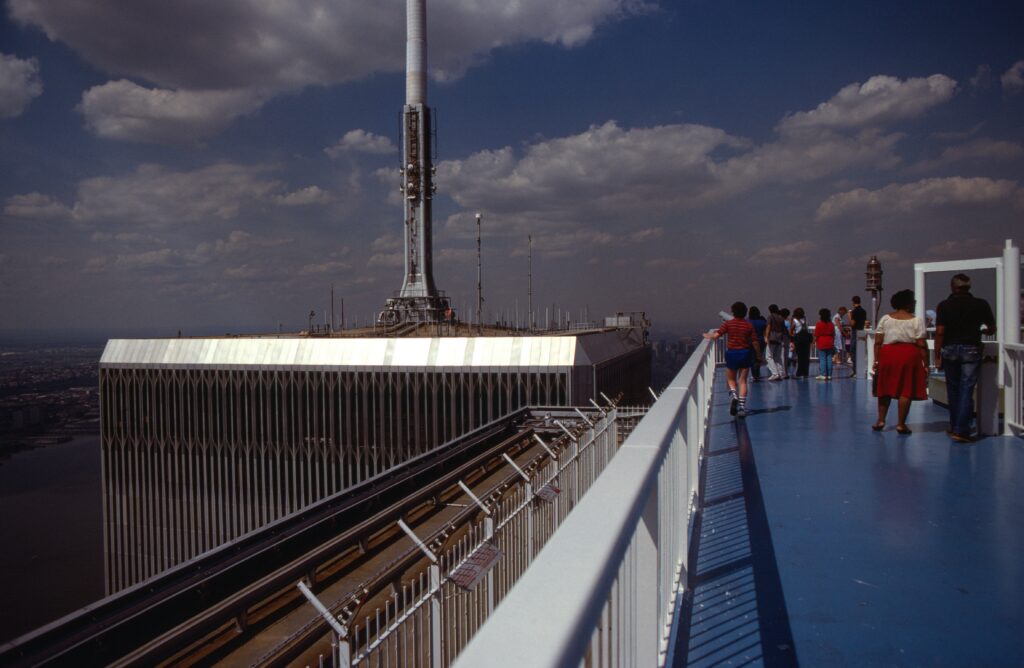

Photo by Lars Plougmann/Wikimedia Commons

Dolly Parton and Andy Warhol at Windows on the World, 1977.
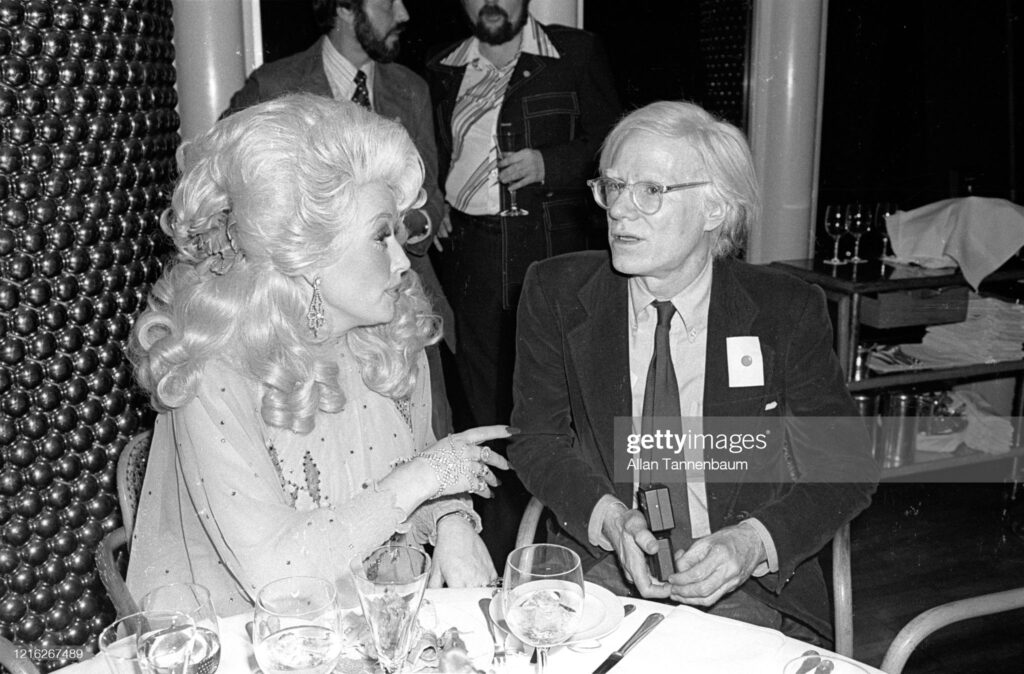
Photo by Allan Tannenbaum/Getty Images
FURTHER READING

City in the Sky: The Rise and Fall of the World Trade Center / James Glanz and Eric Lipton
Twin Towers: The Life of New York City’s World Trade Center / Angus Kress Gillespie
The World Trade Center: A Tribute / Bill Harris

FURTHER LISTENING

The Bowery Boys: New York City History podcast is brought to you …. by you!

We are now producing a new Bowery Boys podcast every other week. We’re also looking to improve and expand the show in other ways — publishing, social media, live events and other forms of media. But we can only do this with your help!

We are now a creator on Patreon, a patronage platform where you can support your favorite content creators.

Please visit our page on Patreon and watch a short video of us recording the show and talking about our expansion plans. If you’d like to help out, there are six different pledge levels. Check them out and consider being a sponsor.

We greatly appreciate our listeners and readers and thank you for joining us on this journey so far.
Minoru Yamasaki: The man who made the Twin Towers


In 1962, Minoru Yamasaki was given an improbable, totally ridiculous task.

Yamasaki, a Japanese-American architect best known at the time for his modernist designs of airports, university buildings and synagogues, won the World Trade Center job in 1962 over more internationally famous architects. He was paired with the prolific Emery Roth and Sons, who had marked Park Avenue with a chilling procession of tall concrete monoliths.

Yamasaki and Roth were commissioned by Port Authority, on an inspiration from the Rockefellers, to build a gargantuan office space on a relatively small area of land — 12 million square feet of usable space over a mere 16 acres, all the while with trains rushing beneath it and the Hudson River right next door.

It would take a balancing act worthy of Philippe Petit(the tight-rope walking subject of Man of Wire who later walked between the Twin Towers) to create something both elegant and functional on such absurd dimensions.

One massive tower over the space would tax even the most expert construction teams and cast a large looming shadow over the city. A cluster of buildings would, in the words of Paul Heyer, “[become] too approximate for their size and ‘looked too much like a housing project’.”

This spacial puzzle, however, proved no match for the exceptional Yamasaki. Born in Seattle in 1912, he worked his way through New York University and into the city architecture scene by sheer genius, during a time in the early 40s when many Japanese American back home were placed in internment camps. He started ambitiously — at Shreve, Lamb and Harmon, who brought New York many great skyscrapers including the Empire State Building — and branched out into his own firm in the 1950s.

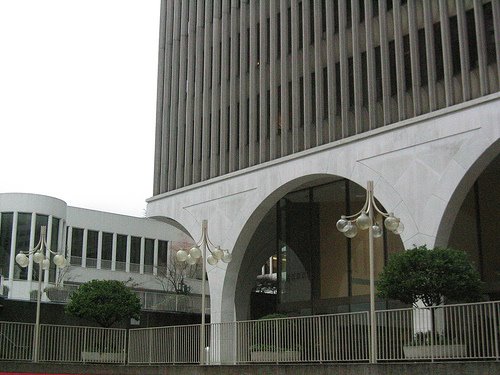
He distinguished himself with fabulous buildings in Seattle (the IBM Building) and throughout the Midwest, with a unique Gothic twist to the modernist aesthetic. In a world possessed by International style — with coarse, hard and lean as code words to a new world of architecture — Yamasaki was still a poet who eschewed pure brutality. Interestingly, for the World Trade Center, he was paired with New York’s main liners of architectural brutalism, Emery Roth, who never saw a slab of concrete he didn’t like.

Below: the IBM Building in Seattle, in many ways a practice run for the Twin Towers in its linear form and simplicity

Balancing his own principles with Roth’s, taking an impractical situation presented by Port Authority and the vast budget (eventually $900 million) attached to it, Yamasaki decided that to balance it all meant a physical symmetry — two buildings standing side by side, with an open plaza in between so that the sheer immensity could be admired.

Construction on the towers began in 1966 and the second tower was finally completed in 1973. By then, Yamasaki and his firm would scatter great buildings all over the world, working right up to his death in 1986. But although he would be known as a visionary architect, the World Trade Center was his only building for New York City.

“World Trade Center should, because of its importance, become a representation of man’s belief in humanity, his need for individual dignity, his beliefs in the cooperation of men, and through cooperation, his ability to find greatness.” — Yamasaki

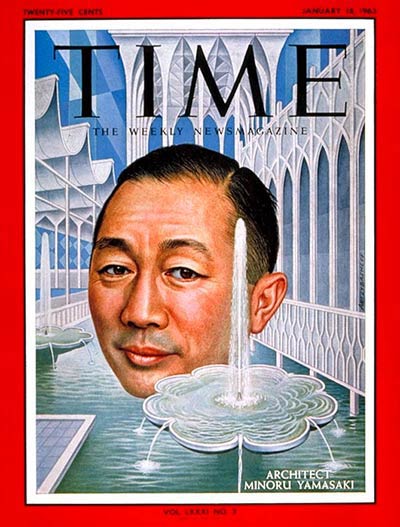
Below: Mere anticipation at the greatness of the World Trade Center planted Yamasaki on the cover of Time Magazine in 1963

Click here for our recollection of September 11, 2001 from last year.