Categories
Skyscrapers

The grand opening of the World Trade Center on April 4, 1973; Richard Nixon, labor strikes and “General Motors Gothic”

For our 350th episode, we looked at the history of the construction of the World Trade Center. After reading this article, listen to the show for a deeper dive into the story:


Let me take you back to a simpler time, back to a time where it might have been okay to hate the actual World Trade Center.

The World Trade Center was originally seen as a representation of New York’s own dreams and failures. The buildings represented progress to some, disruption to others.

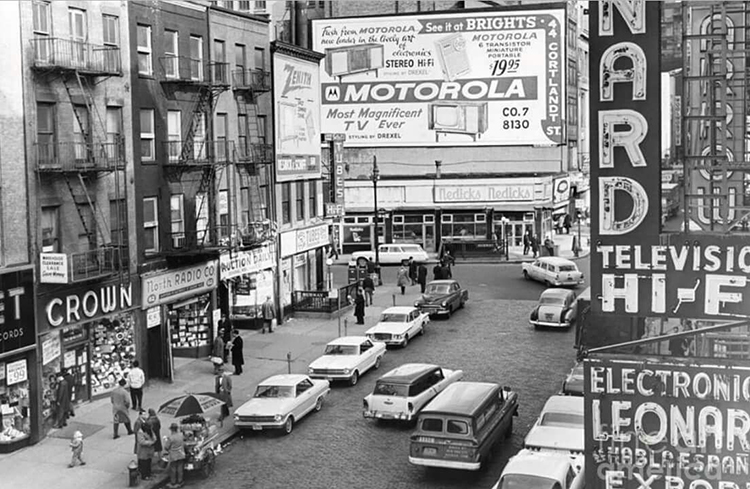
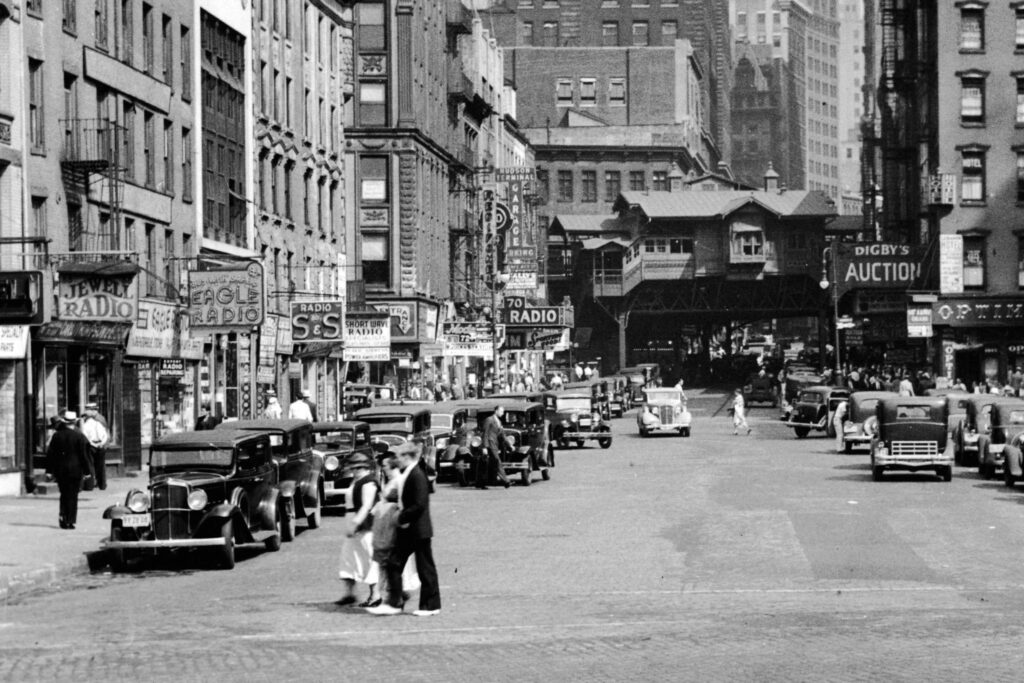
An entire business district — Radio Row — was eliminated in its construction. Another neighborhood — Battery Park City — sprang up in its shadow. The monumental design by Minoru Yamasaki radically altered (distorted?) the skyline. Some of New York’s oldest streets were now blocked from sunlight. On the other hand, an area of Manhattan that would have been susceptible to rising blight was now renewed.

It was the apotheosis of post-modern design, the apex of New York City construction.

Everything grand and intolerable about New York City in the late 1960s/early 1970s was embodied here in these two impossibly tall shafts of metal.

Many saw a waste of resources and state governments with skewered priorities.  Business interests were hopeful the buildings would reinvigorate the Financial District. They would, eventually.  

But back in 1973 many openly wondered how its owner, the Port Authority of New York and New Jersey, were even going to attract tenants.

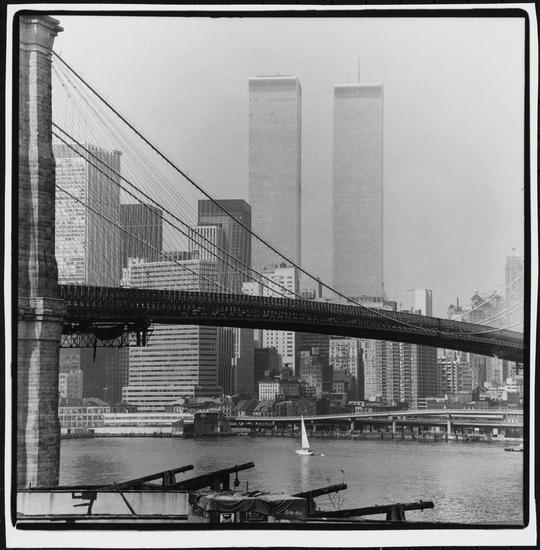
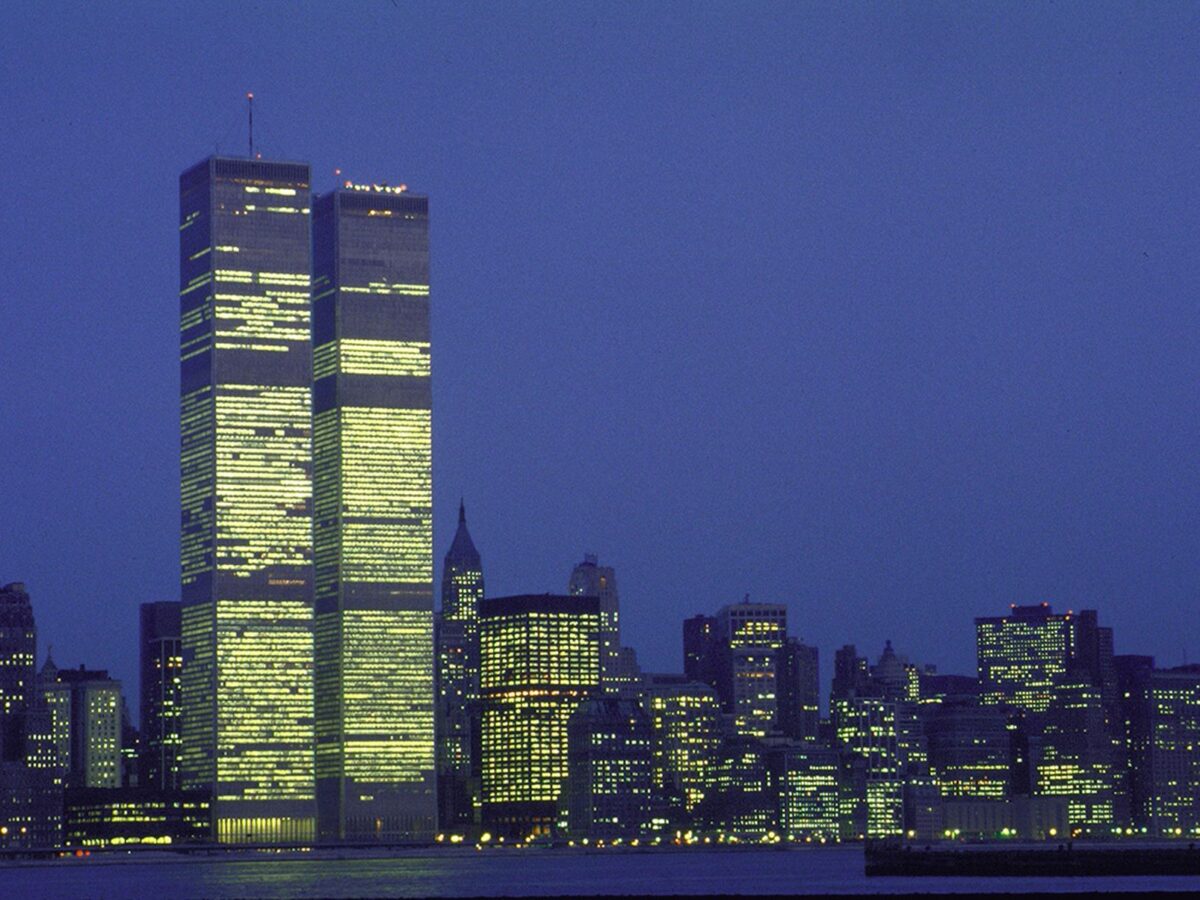
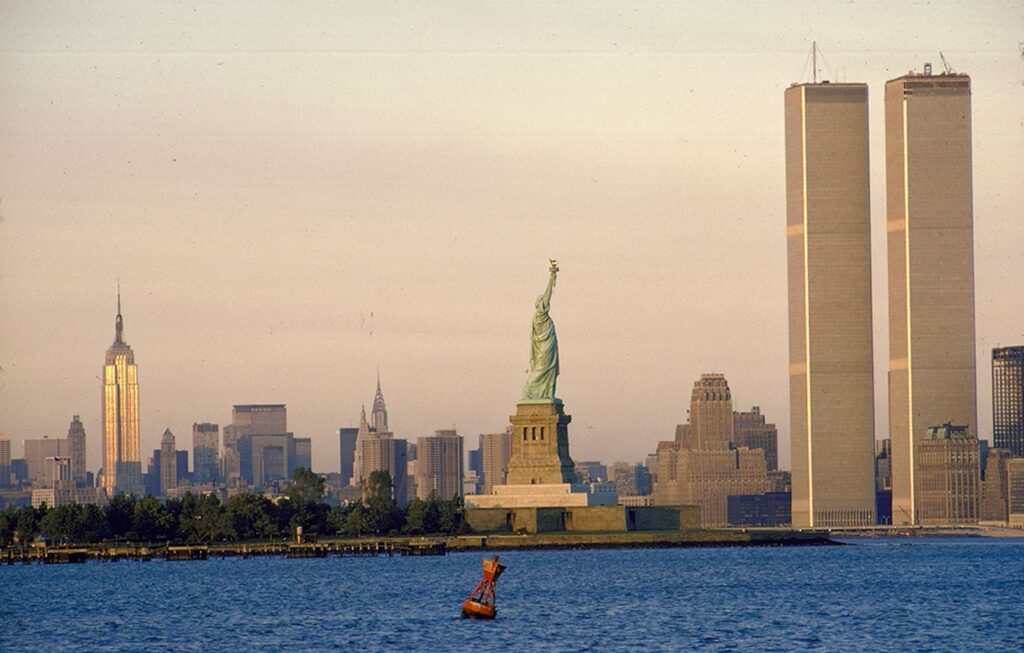
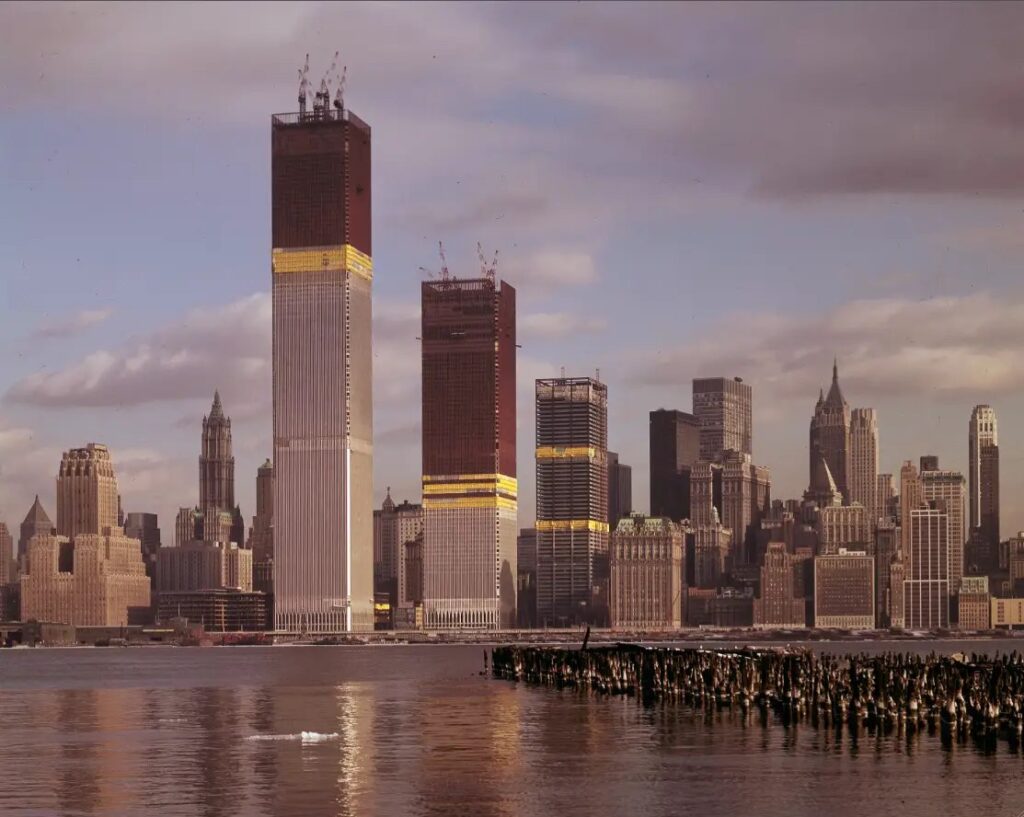
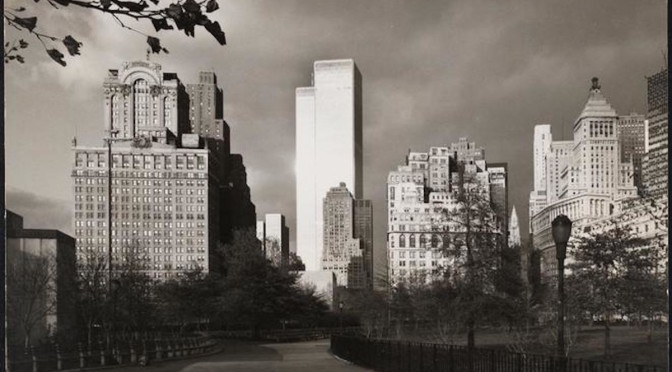
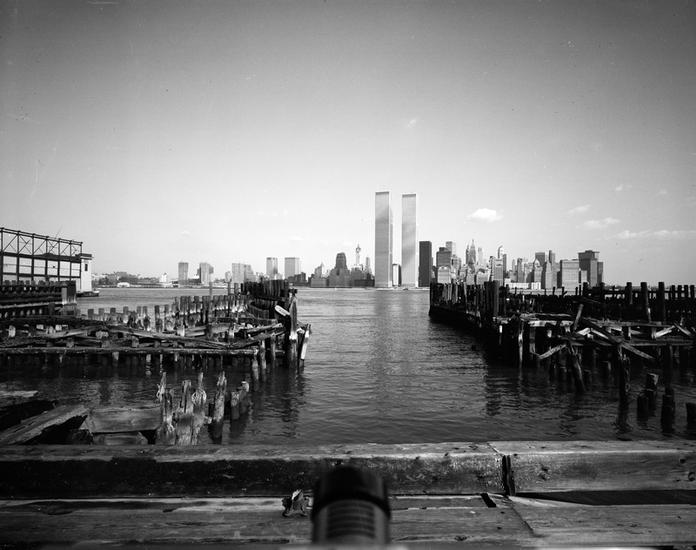
Below: The view of downtown Manhattan from a New Jersey marina

Courtesy Museum of the City of New York, Edmund V Gillon

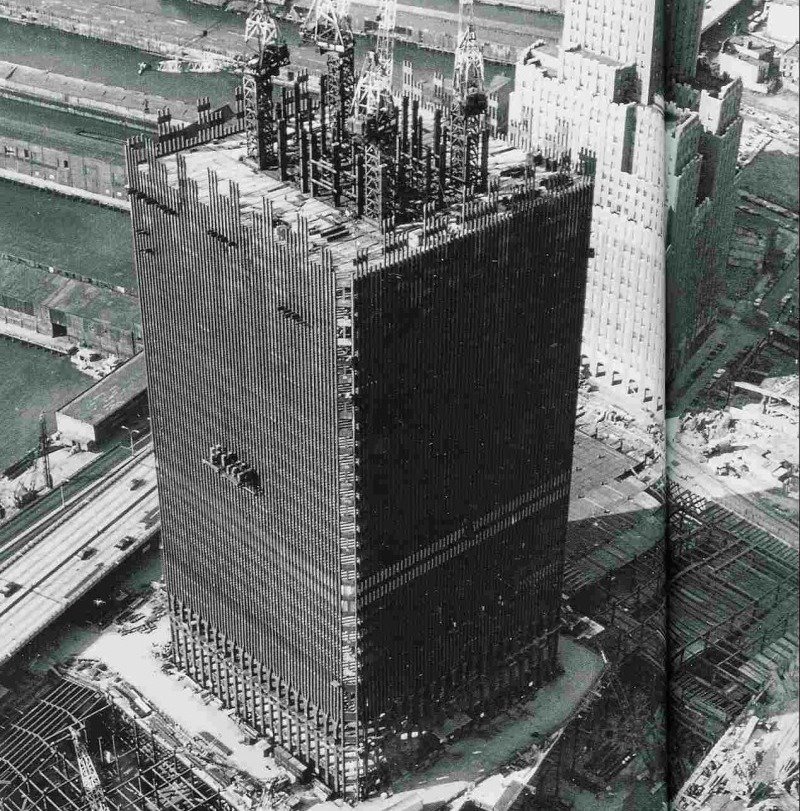
After years of construction that transformed lower Manhattan, the buildings were officially opened in a ribbon-cutting ceremony on April 4, 1973.  Far from a rapturous embrace, the opening of the world’s tallest buildings was met with relief, resignation and turmoil.

Few were in a mood to celebrate two shiny new symbols of wealth in a city slowly nearing bankruptcy.

Here are a few more details from its opening day and its aftermath:

People were already over it:  The opening was occasioned by severe rain. (It’s in good company; the opening of the Statue of Liberty was also met with a downpour.)  Even without it, however, the celebration would have been heavily muted.  

The ground was broken on the World Trade Center site almost seven years before, and New Yorkers had plenty of time to get used to the rising towers. The first tower had been completed by 1970, but by then, the city had become rather jaded to the expensive buildings.  As it was, lower levels of the second building were still not even completed.

Disagreements: The top luminaries at the opening were New York governor Nelson Rockefeller and New Jersey governor William T. Cahill.  The World Trade Center was a Port Authority project;  PATH trains to New Jersey were rumbling underneath (or were supposed to be, see below).

While the two governors seemed in playful spirits, Cahill openly resented the backseat his state took in the finished product.  According to author Eric Darton:  “Cahill implies that New Jersey’s commuter rail needs have taken second place to the trade center, and Rockefeller, still grinning, points towards the Jersey shore. ‘You see all those magnificent container ports,’ he says, ‘that took all those jobs away from New York.’ “

2013_3_2_ 365
 

In Absentia: Gone were the days when U.S. presidents showed up at the opening of New York landmarks, but President Richard Nixon did send a statement, hailing WTC as “a major factor for the expansion of the nation’s international trade.”  That very same month, the Watergate cover-up erupted into the scandal that would eventually lead to his resignation the following year.

STRIKE! Not only was Nixon not there, but the man he designated to read the speech — Peter J. Brennan — was not even there.  Three days earlier, the Brotherhood of Railway Carmen union began a strike against Port Authority.  Because of the strike, the PATH train — that glorious feature of the new World Trade Center — was closed for a total of 63 days.  Brennan was Nixon’s new Secretary of Labor, so it would hardly seem proper to break the picket line. Nixon’s speech was delivered instead by a Port Authority chairman.

MN112063

Critics, Part One: Noted labor leader and powerful mediator Theodore W. Kheel was violently against the states’ interest in the World Trade Center. Calling it “socialism at its worst,” he demanded the governors take the podium on ribbon-cutting day and sell the building to private investors “at the earliest possible date.”

Others were perhaps understandably concerned that the buildings, given special tax status, were now a quarter-filled with state offices and certainly destined to empty and bankrupt office buildings with no such tax breaks in the surrounding area.  Luckily, Kheel did live to see the building sold to private concerns in 1998.

Critics, Part Two: Somebody else was saving up some vitriol for opening day — noted architectural critic Ada Louise Huxtable.  Having years to craft some well-worded jabs, she did so in a column in the New York Times the following day. “These are big buildings, but they are not great architecture…..The Port Authority has built the ultimate Disneyland fairytale blockbuster. It is General Motors Gothic.”

Critics, Part Three:  Labor leaders were disgruntled. Critics dismissed it. But many New Yorkers outright loathed it. It’s a bit disturbing to read such outright disgust over structures that we have very different feelings about today.  From the Village Voice a week after the opening:  

“The ecology-minded and those who are concerned with the energy crisis are fond of predicting that the building will have to be torn down — or at the very least abandoned — on that not-to-distant day when the power it consumes puts an intolerable strain on our already-diminishing power reserves.”


2013_3_2_ 127

Nowhere to Eat: The World Trade Center could facilitate thousands of employees, but, on opening day, it had one restaurant, called “Eat and Drink,” where “the waitresses wear hard hats and its busboys wear vests inscribed “Ecologist” on the back.” 

In the second building, a makeshift sandwich shop opened on the unfinished 44th floor. Needless to say, outside food vendors in the area were not displeased.

Subversion The ribbon-cutting ceremony also marked the end of One World Trade Center’s dominance as the world’s tallest building. Chicago trumped it when Sears Tower topped out at 1,454-feet less than one month later.

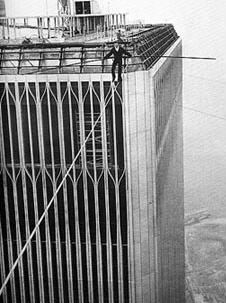
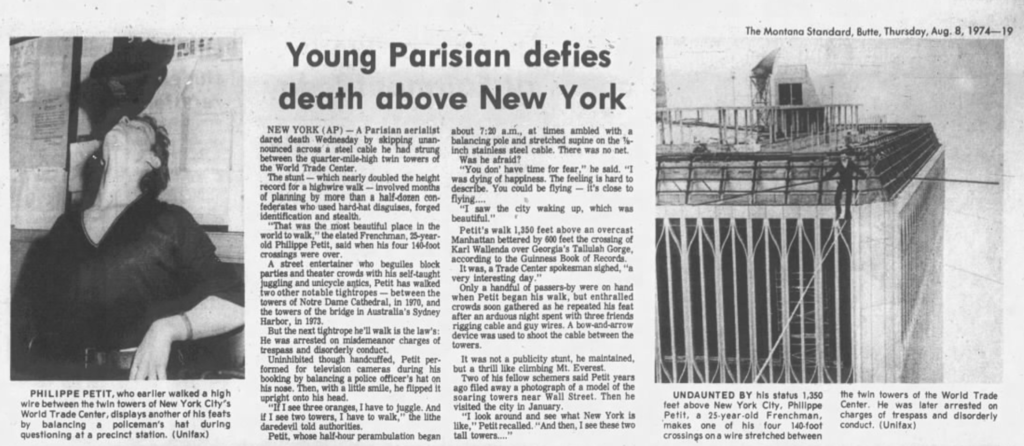
In New York, the buildings quickly became a totem of excess, of something that could be symbolically overcome. You may be familiar with the daredevil Philippe Petit and his insane and unbelievably majestic (and illegal) tightrope walk between the towers. But you may not remember that it took place just sixteen months after the opening, on August 6, 1974.

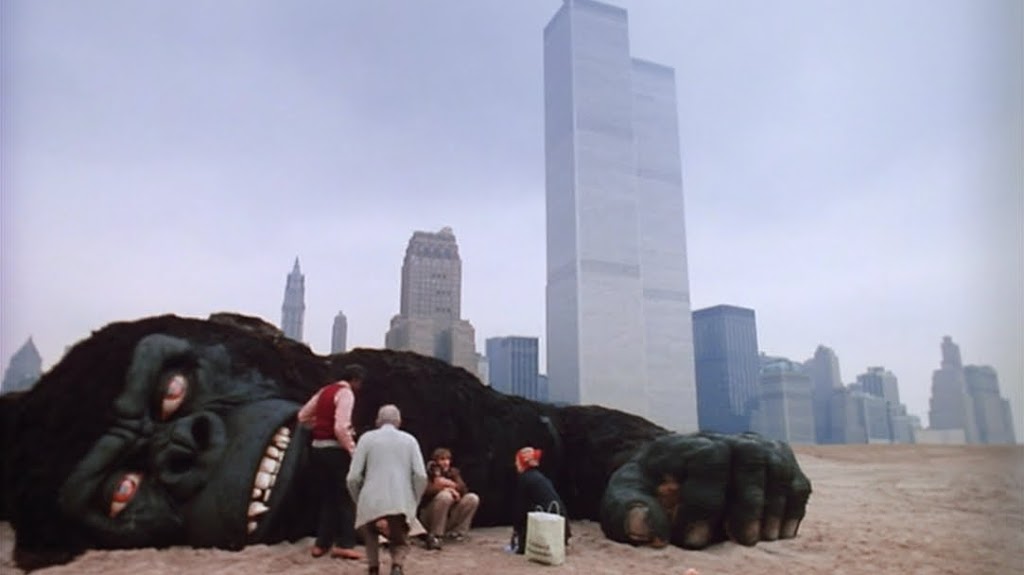
Two years later, King Kong performed a similar sort of feat in the 1976 remake starring Jessica Lange.

But there was magic in the air.  On the very same day as the ribbon-cutting, in a hospital across the water in Brooklyn, a woman went into labor and gave birth to a child who would later become the nightclub-loving illusionist David Blaine. The World Trade Center and David Blaine — born on the same day!

MN112707-1

Photography on this page, from various periods, by Edmund V. Gillon, courtesy of the Museum of the City of New York.  Check out their online gallery for some more beautiful black-and-white shots. 

This article originally ran on September 11, 2014.

Categories
Landmarks Politics and Protest Preservation

Federal Hall: Now and Always An American National Treasure

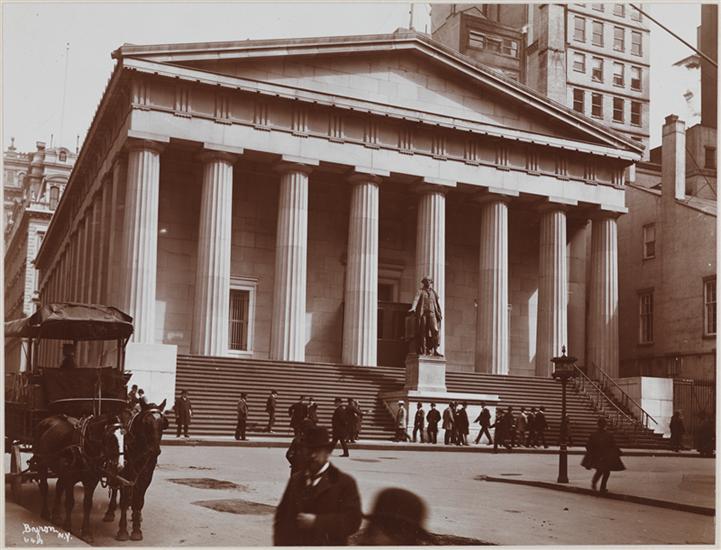
Federal Hall National Memorial, currently administered by the National Park Service, has always been a popular landmark with tourists thanks to its position on one of the most photographed intersections in New York. Who can resist that noble statue of George Washington silently meditating on the financial juggernaut of Wall Street?

In 2015 Federal Hall was officially named an official American National Treasure, part of the ongoing Saving Places program by National Trust for Historic Preservation calling attention to endangered landmarks of national significance. (The following article was originally posted that year in honor.)

It joins an impressive hodgepodge of local landmarks such as South Street Seaport, the Lower East Side Tenement Museum and the Whitney Studio.

While this sounds like a distinction that might pique the interest of Nicolas Cage — after all, he broke into Trinity Church up the street in the first National Treasure film — the National Treasure program gives a boost to historic places that may be otherwise neglected or under-appreciated. When’s the last time you were there?

Here are a few facts about the history of Federal Hall that you may not have known:

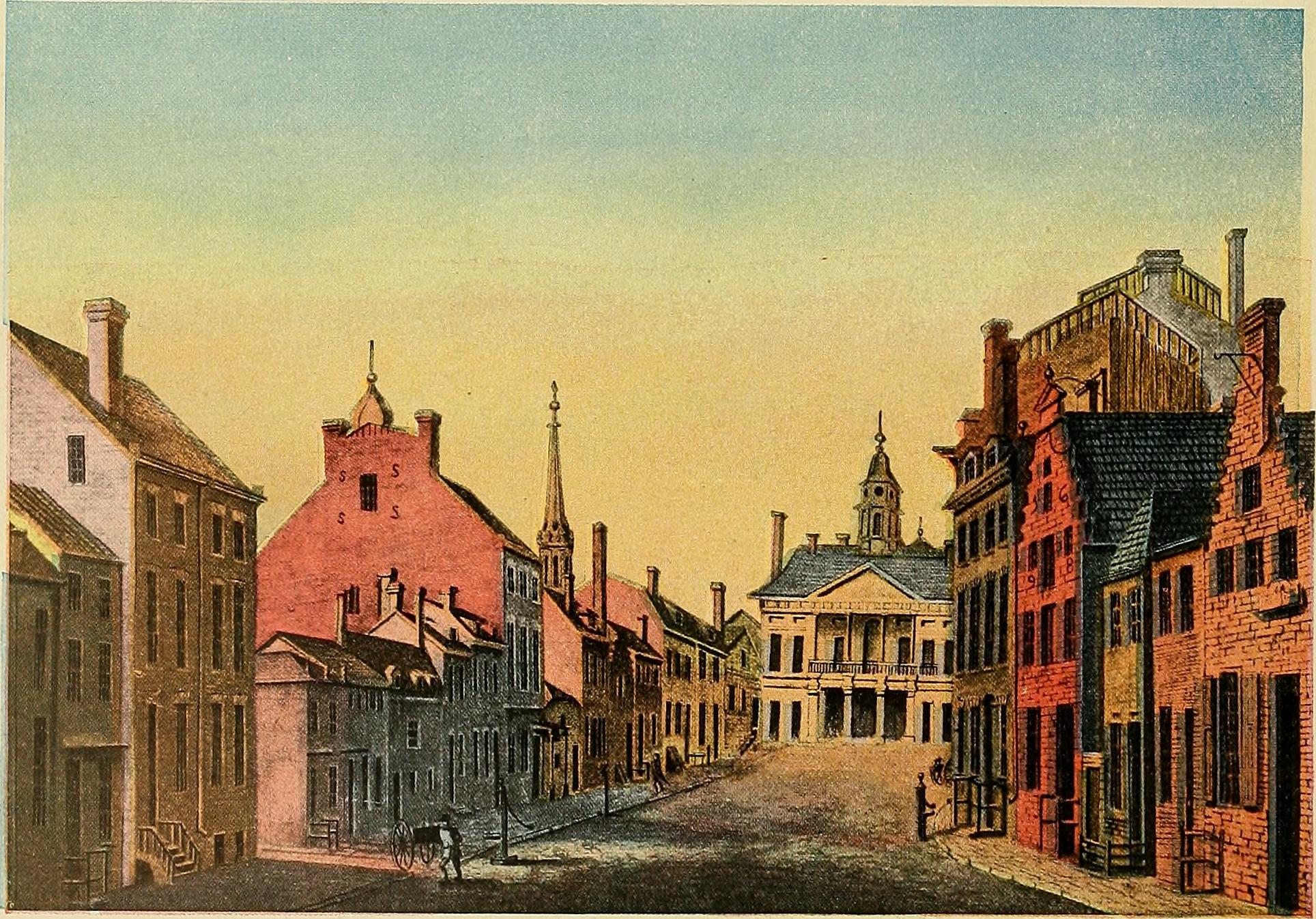
1. This isn’t the real Federal Hall The original structure was built in 1699, built by the British who used materials from the city’s demolished north defense wall — aka the wall of Wall Street — to construct it. It was the center of most governmental functions, from city administration to later federal functions.

5

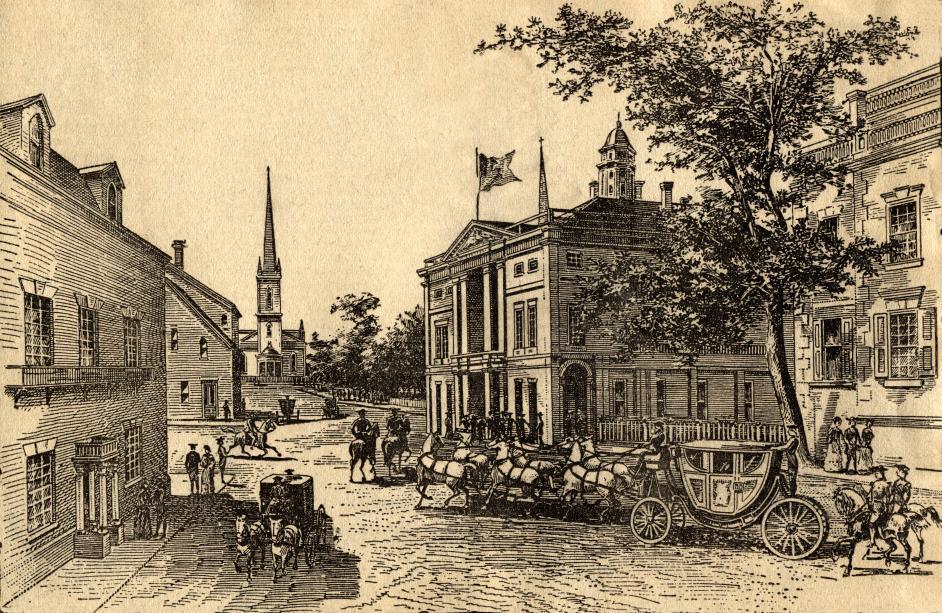
2. That Federal Hall was remodeled by a controversial architect. Pierre Charles L’Enfant, a successful city contractor and former Continental Army engineer redesigned the structure in time for its use as the first national capital.

According to David McCullough, it was the first building in America designed to exalt the national spirit, in what would come to be known as the Federal style. Lâ’Enfant would later work on the creation of Washington DC from Maryland swampland and be fired from that project by George Washington.

Courtesy Nationaal Archief

Courtesy Nationaal Archive

3. George Washington was first inaugurated here on April 30, 1789. The King James bible he was sworn in with — property of a New York Freemason lodge — is still at Federal Hall.

4. The original Federal Hall was torn down in 1812 when city administration moved to the new City Hall.  Its materials were sold off to make other buildings in the city.

Below: Wall Street in 1825 without a Federal Hall, either old or new!

New_York,_Wall_Street_1825

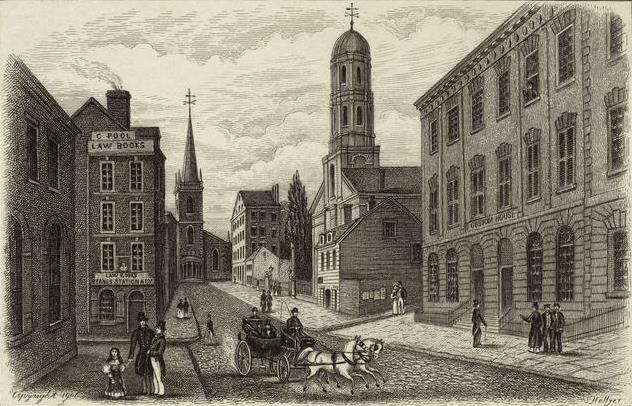
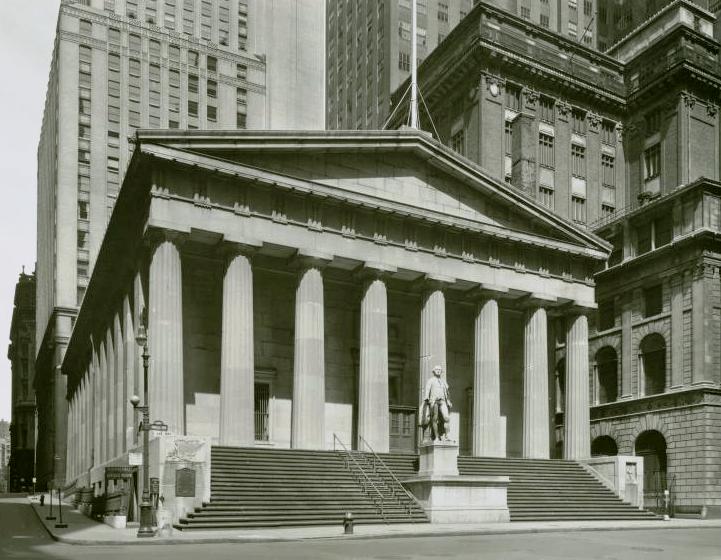
5. The current Federal Hall is actually the original U.S. Custom House which opened in 1842, replacing a structure used for that purpose at 22-24 Wall Street.

Courtesy Museum of the City of New York

6. The offices of the Custom House again moved in 1855, and the building was used as the U.S. Sub-Treasury building. In 1913 it became the first place in New York to buy the original buffalo nickel.

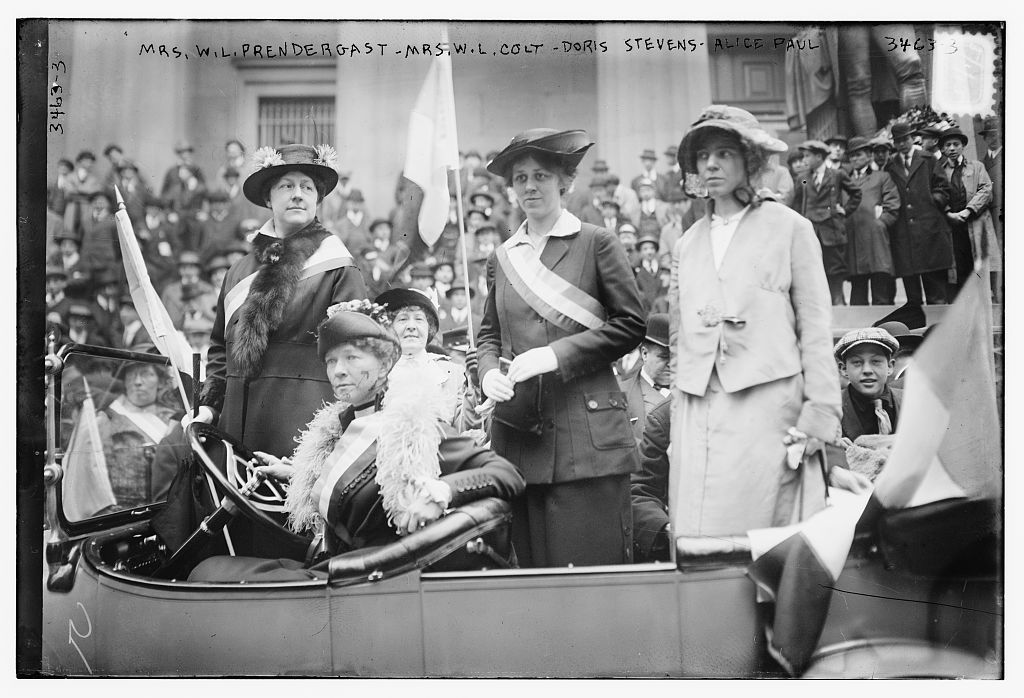
Below: Suffrage proponents Mrs. W.L. Prendergast, Mrs. W.L. Colt, Doris Stevens, Alice Paul stop in front of Federal Hall

Courtesy Library of Congress

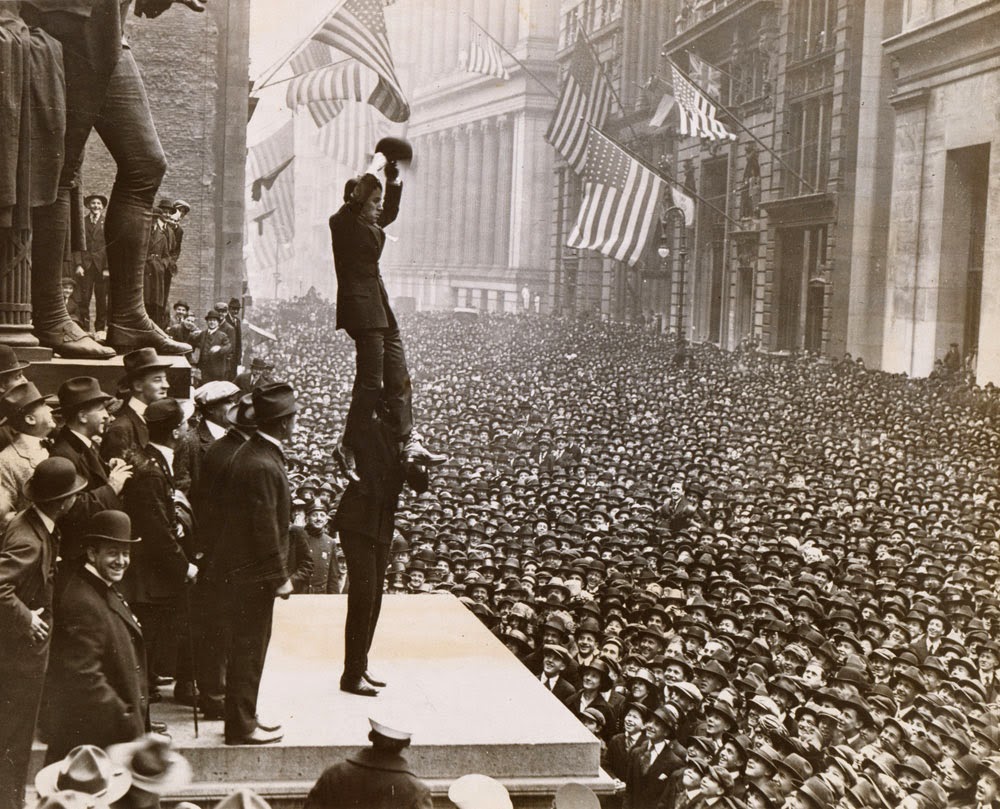
7. In 1918 Charlie Chaplin and Douglas Fairbanks famously drew thousands to the steps of Federal Hall to promote the sale of war bonds. Later that year doughnuts were auctioned off from its steps as a war fund-raiser.

129

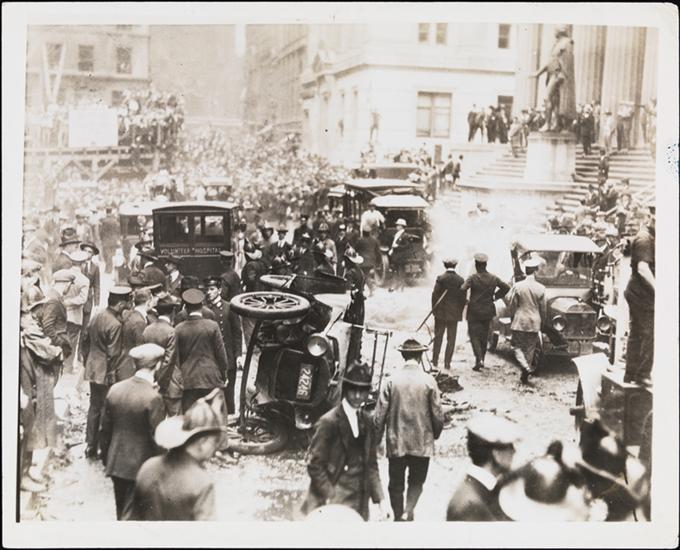
8. In 1920 a wagon full of dynamite exploded across the street from the Sub-Treasury, killing 38 people in what is today still an unsolved mystery.

Courtesy Museum of the City of New York

9. The Sub-Treasury had moved out by the 1930s, and the building was officially re-opened as the Federal Hall Memorial Museum in January 1940. It was inspired in part by America’s celebration of the 150th anniversary of Washington’s inauguration. The 1939-40 World’s Fair presented a replica of the original Federal Hall even after an earlier version of Federal Hall in Bryant Park failed to attract visitors. 

Courtesy New York Public Library

10. Federal Hall received a massive renovation in 2006 after the collapse of the World Trade Center in 2001 weakened the foundations of the building.

Check out the official announcement at the website for the National Trust for Historic Preservation.

Top image by the Wurts Brothers, taken in 1908. Courtesy Museum of the City of New York

Categories
Bowery Boys Movie Club Film History

The French Connection: Bowery Boys Movie Club

The new episode of the Bowery Boys Movie Club explores the new film The French Connection, the gritty action classic employing an astonishing array of on-location shots — from Midtown Manhattan to the streets of Brooklyn. It’s an exclusive podcast for those who support us on Patreon.

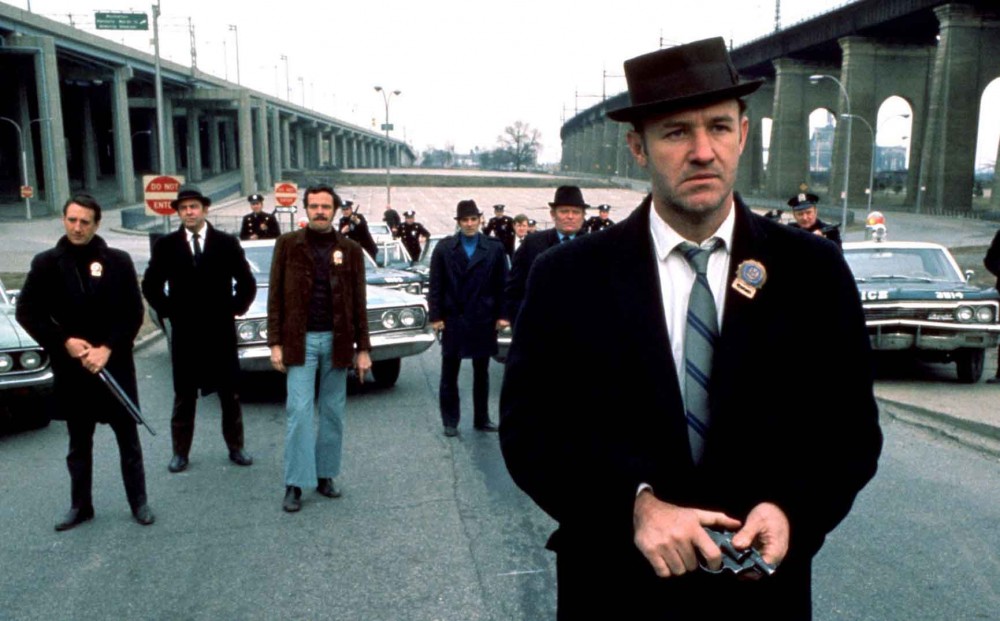
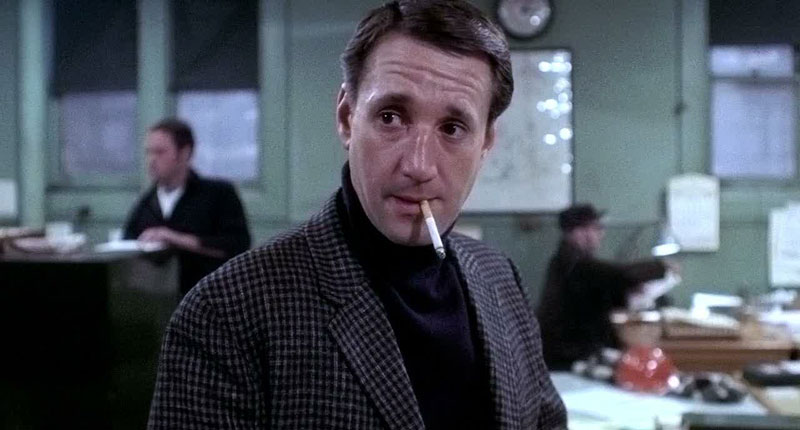
The French Connection, directed by William Friedkin and starring Gene Hackman, was released fifty years ago this year to critical and commercial success.

The movie would change the way film and TV action dramas were presented, a mix of real-life urban decay and brutal violence. But the film has much to say about New York City itself as it swerves into many pre-gentrified neighborhoods. 

SPOILER ALERT: The Bowery Boys Movie Club is a movie recap show, mixed with New York City history. We dive into the film, scene by scene… discussing its major plot turns and attempting to put it all into the historical context of New York City in late 60s/early 1970s.

We also discuss the plot, in quite a bit of detail. Haven’t seen the film yet? You might consider watching it first — it’s currently available for rent and also available for streaming on Showtime. 


How do I listen the Bowery Boys Movie Club?  Once you’re signed in on Patreon, you’ll see a private RSS link that can be put directly into your favorite podcast player. Even easier, it can also be played directly from the Patreon app.


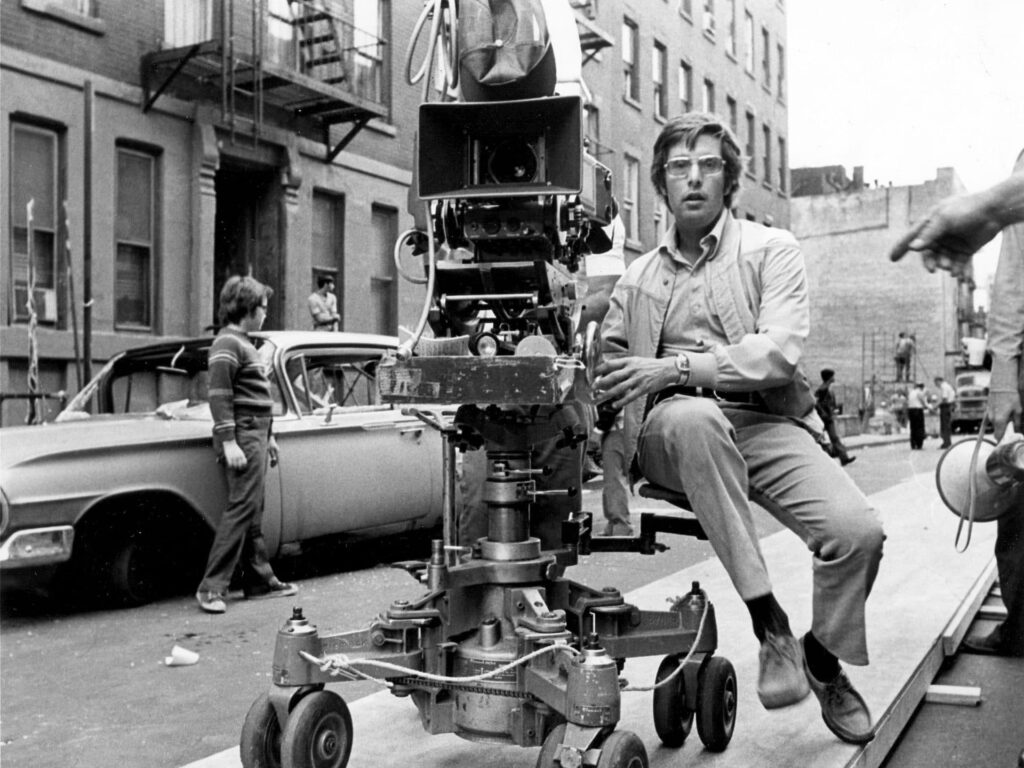
Director William Friedkin on the ‘set’ of The French Connection.

The French Connection was shot in New York — all over the place, uptown, downtown, on bridges, in bars. And much of it, on the fly and illegally. (There are, of course, famous scenes in Marseilles and Washington DC as well.)

Take the film’s most iconic moment, and possibly the greatest car chase scene in the history of film and cars. It’s filmed under the elevated D-line train, near Coney Island, along the course of 26 blocks, over the course of five weeks. However, N train stands in for what was then the B train, because, being New York in the 70s, they could find no clean-looking B trains.

Most of the ‘extras’ were actual residents going to and fro in their daily business. In fact, a car accident that happens at the corner of Stillwell Ave. and 86th Street actually happened; the unlucky vehicle was owned by a guy on his way to work.

The producers later paid for the cost of repairs. Today this would have spawned a multi-million dollar lawsuit!

That was the least of the mayhem. Friedkin and his producers filmed many scenes without the city’s permission at all, including much of the car chase, a staged traffic jam on the exit ramp of the Brooklyn Bridge, and an entire sequence on what is now the S-train between Grand Central and Times Square!

One treasured New York landmark featured in the film is sadly no longer with us. Popeye Doyle (Gene Hackman) and Cloudy Russo (Roy Schieder) stake out at Ratner’s Deli in the Lower East Side right off the Williamsburg Bridge.

Ratner’s was one the city’s legendary old Kosher deli’s, along with Katz’s just a few blocks away. Later in its life, its hidden ‘speak-easy’ Lansky Lounge became a hot spot during the 1990s.

Two Manhattan hotels are also featured prominently, the sumptuous Roosevelt Hotel in Midtown and the former Westbury Hotel, now residences.

Like The Taking of Pelham One Two Three, the movie brilliantly captures a New York on the precipice of near collapse but still retaining its rough-hewn charm. The fact that this classic could be filmed here — almost scot-free — gives a little insight into how massive and uncontrolled the city had gotten.

Categories
Film History Landmarks

The World Trade Center in its greatest film roles

How do you feel when you see the World Trade Center pop up in a movie from the 1970s and 80s? Sadness? Nostalgia? Or, with so many years gone by, do they just seem unusual to you?

Fortunately researcher and movie lover Donna Grunewald had documented every reference you need to revisit all those emotions.

The World Trade Center In Movies is a methodical look at the Twin Towers as they appear in motion pictures. (And recently updated fro 2021!) This site features buildings’ complete filmography, including silhouettes and appearances in skyline scenes.

Although the World Trade Center made many more appearances in the 1980s and 1990s, I prefer a good peek via a good 1970s film. Check out the extensive collection here. But here are a few of my favorites:

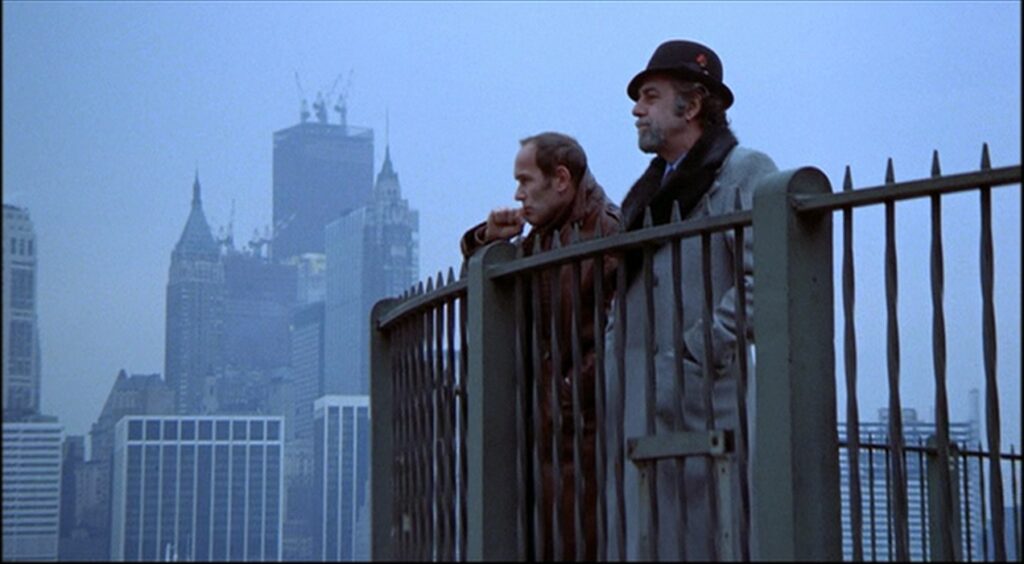
The World Trade Center, still under construction, appeared in The French Connection (1971), its jagged and unfinished silhouette adding to the film’s gritty ambiance.

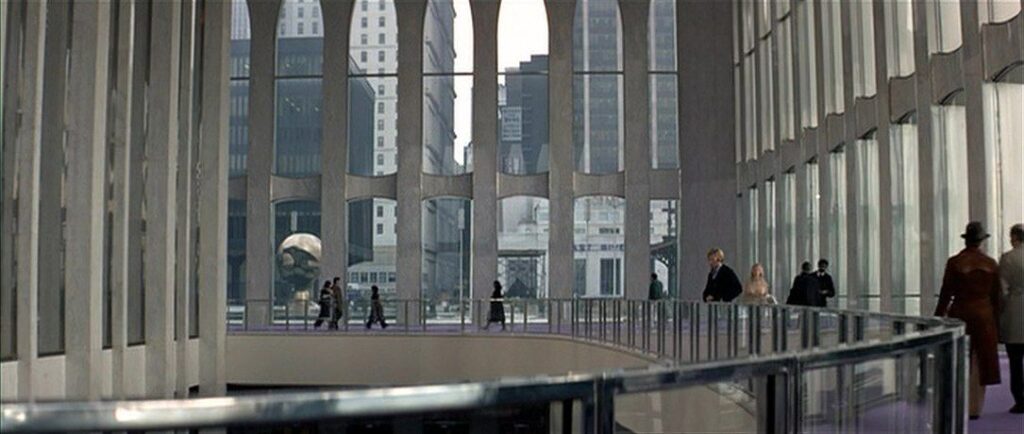
The lovely 1975 Robert Redford/Faye Dunaway thriller Three Days Of The Condor focuses on the towers’ modern beauty.

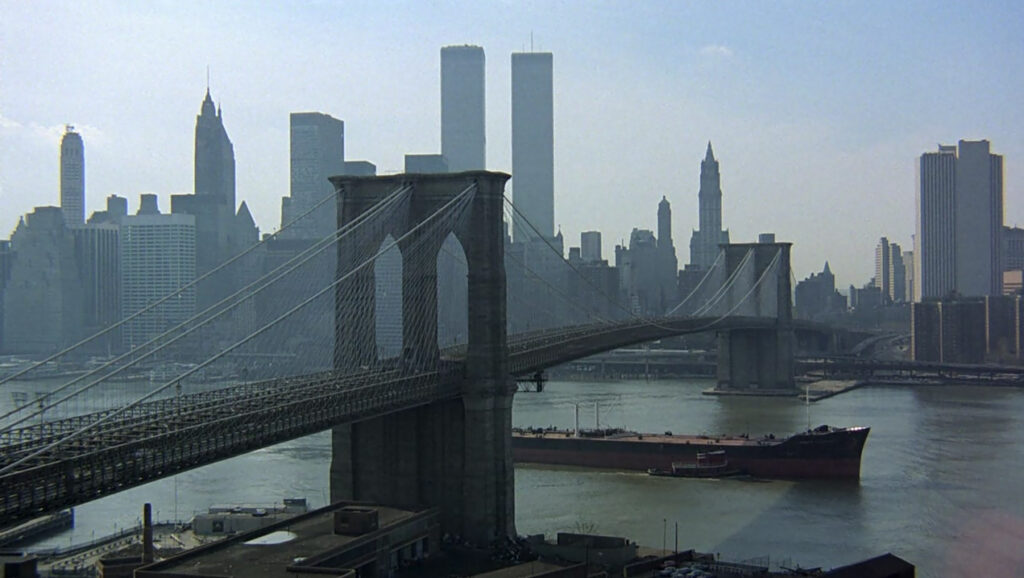
The breathtaking scenery in 1977’s Saturday Night Fever.

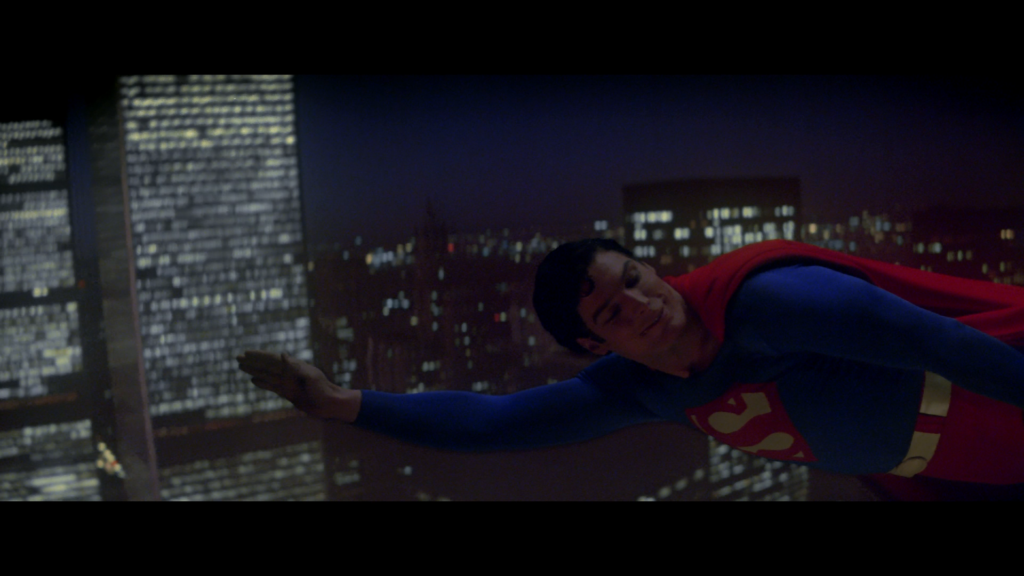
The website is so joyously exhaustive that it even documents brief cameos like the nighttime fly-by in 1978’s Superman: The Movie.

And in the 1978 oddity Bye Bye Monkey starring Gerard Depardieu, the World Trade Center is just along for the ride.

And the towers make a rather ominous appearance in the 1979 science fiction film Meteor. (Click here so see the movie poster.)


For more information on the early years of the World Trade Center, listen to our show from earlier this year:

Categories
Neighborhoods Podcasts

A Trip to Little Syria: A New York Immigrant Story

Just south of the World Trade Center district sits the location of a forgotten Manhattan immigrant community. Curious outsiders called it Little Syria although the residents themselves would have known it as the Syrian Colony.

Starting in the 1880s people from the Middle East began arriving at New York’s immigrant processing station — immigrants from Greater Syria which at that time was a part of the Ottoman Empire.

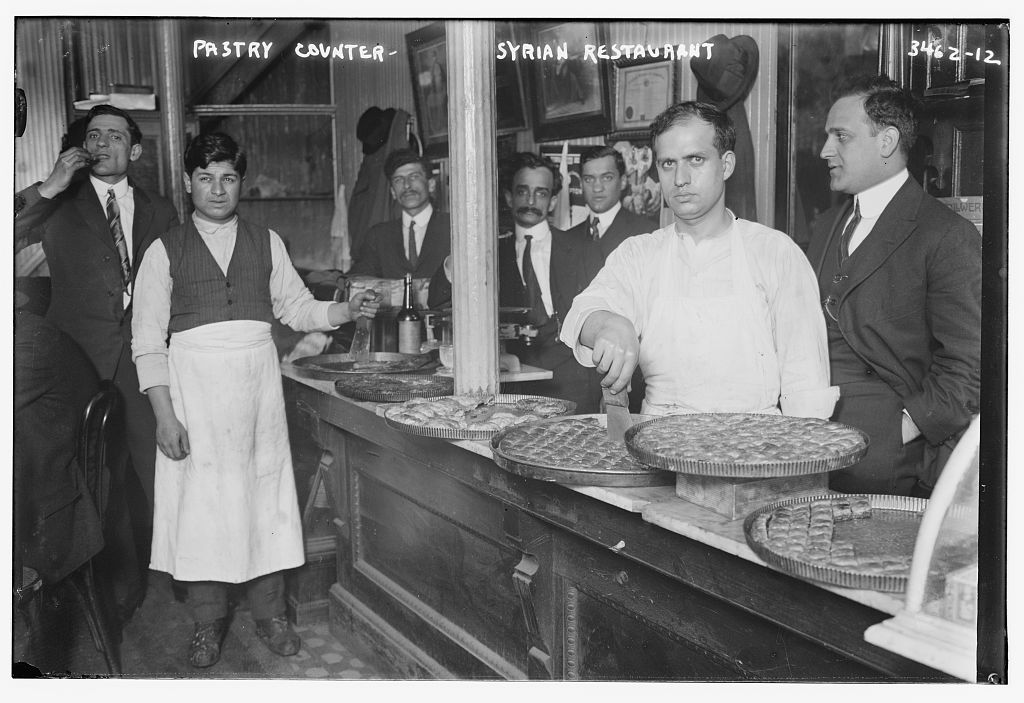
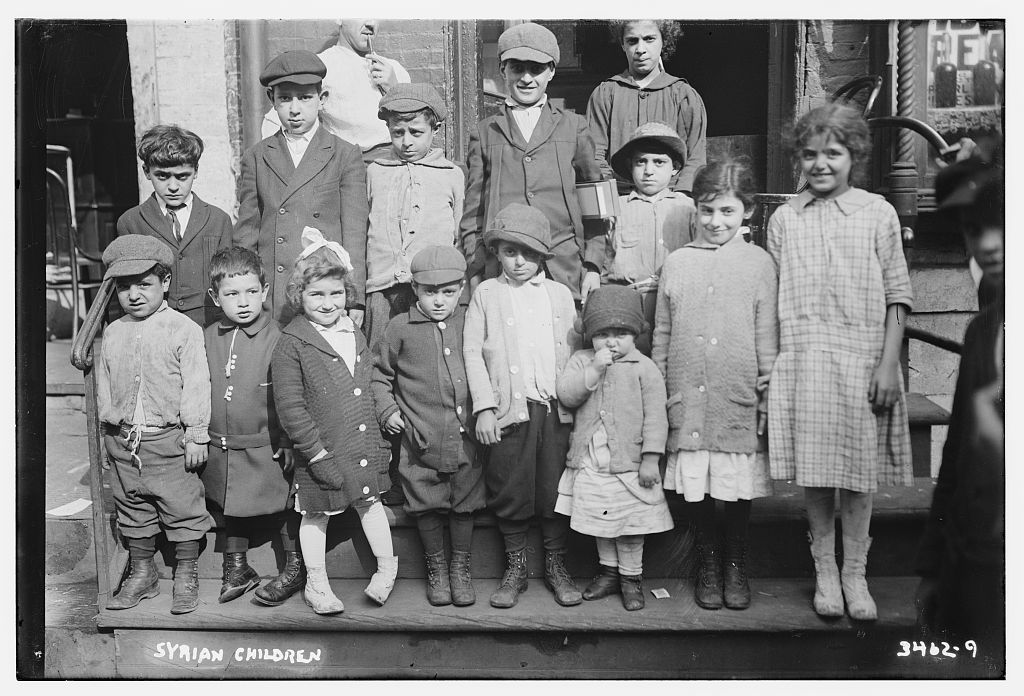
The Syrians of Old New York were mostly Christians who brought their trade, culture and cuisine to the streets of lower Manhattan. And many headed over to Atlantic Avenue in Brooklyn as well, creating another district for Middle Eastern American culture which would outlast the older Manhattan area.

Who were these Syrian immigrants who made their home here in New York? Why did they arrive? What were their lives like? And although Little Syria truly is long gone, what buildings remain of this extraordinary district?

PLUS: A visit to Sahadi’s, a fine food shop that anchors today’s remaining Middle Eastern scene in Brooklyn. Greg and Tom head to their warehouse in Sunset Park to get some insight on the shop’s historic connections to the first Syrian immigrants.

Listen Now – A Visit to Little Syria


Help save one of the last buildings still standing in the former Syrian Colony! Sign the petition to save the Downtown Community House, one of three buildings left standing from this era in New York City history.

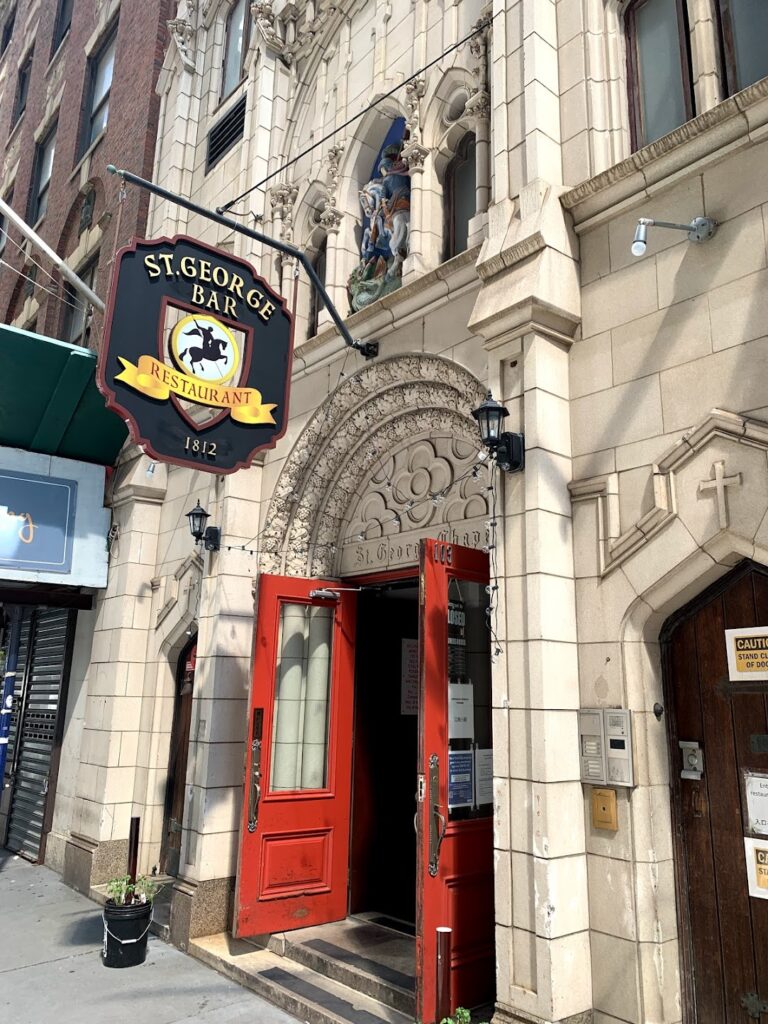
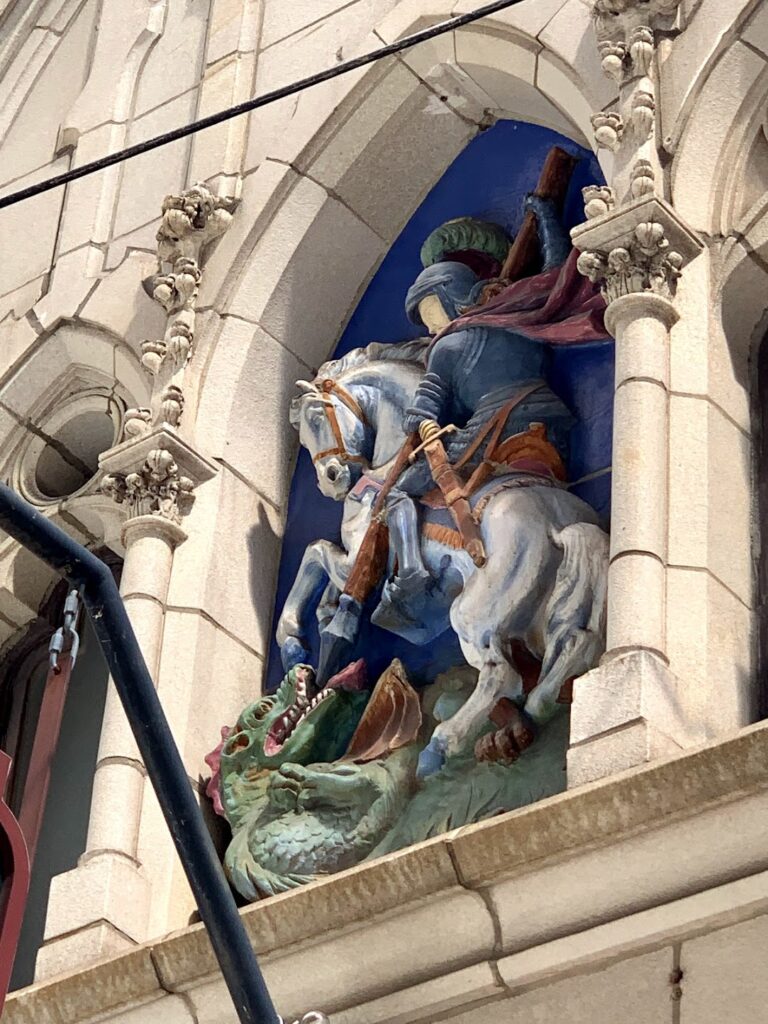
Below: St George’s Syrian Catholic Church (now a restaurant)

Photo by Greg Young

FURTHER LISTENING

After you’ve listened to this show on the history of New York’s Syrian population, dive back into the back catalog and listen to these shows referred to on the show:


The Bowery Boys: New York City History podcast is brought to you …. by you!

We are now producing a new Bowery Boys podcast every other week. We’re also looking to improve and expand the show in other ways — publishing, social media, live events and other forms of media. But we can only do this with your help!

We are now a creator on Patreon, a patronage platform where you can support your favorite content creators.

Please visit our page on Patreon and watch a short video of us recording the show and talking about our expansion plans. If you’d like to help out, there are several different pledge levels. Check them out and consider being a sponsor.

We greatly appreciate our listeners and readers and thank you for joining us on this journey so far.


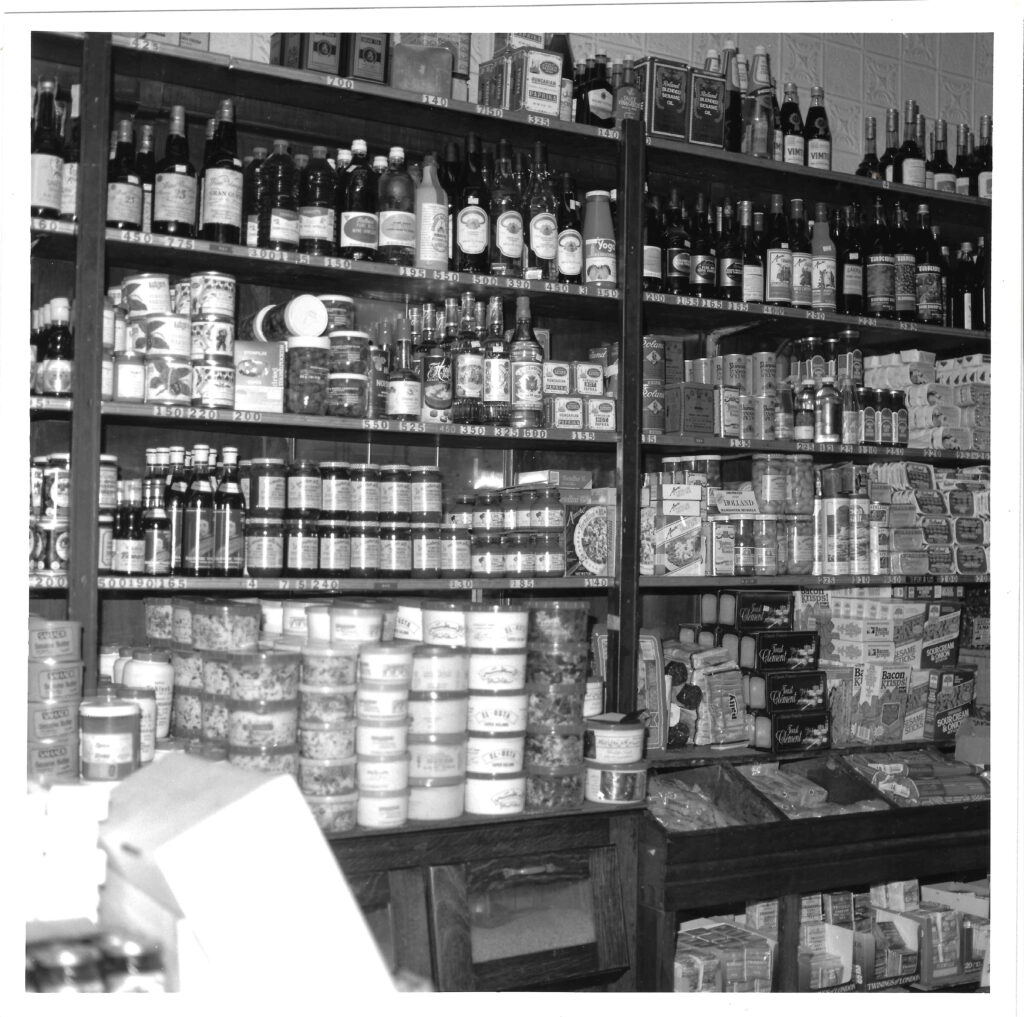
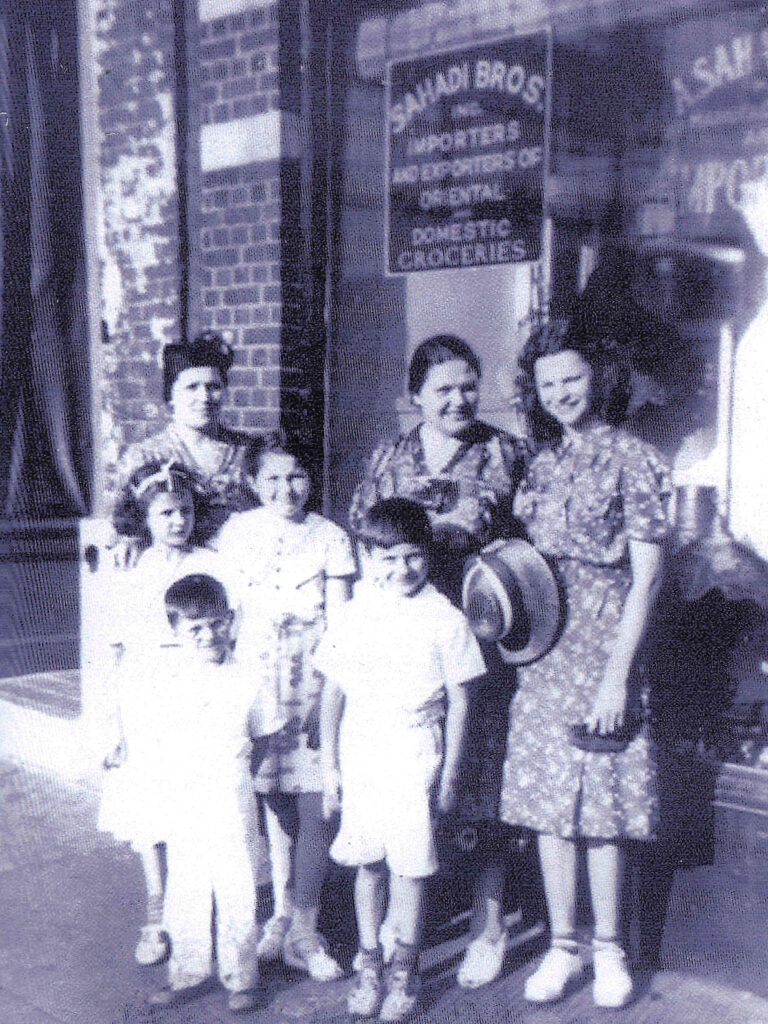
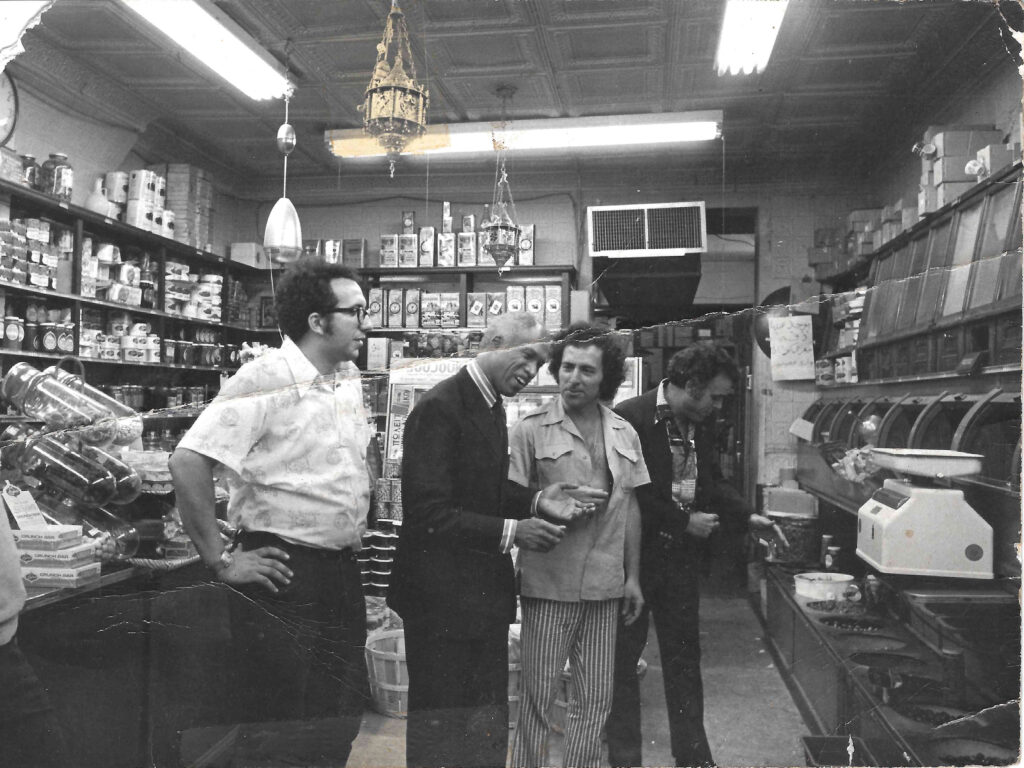
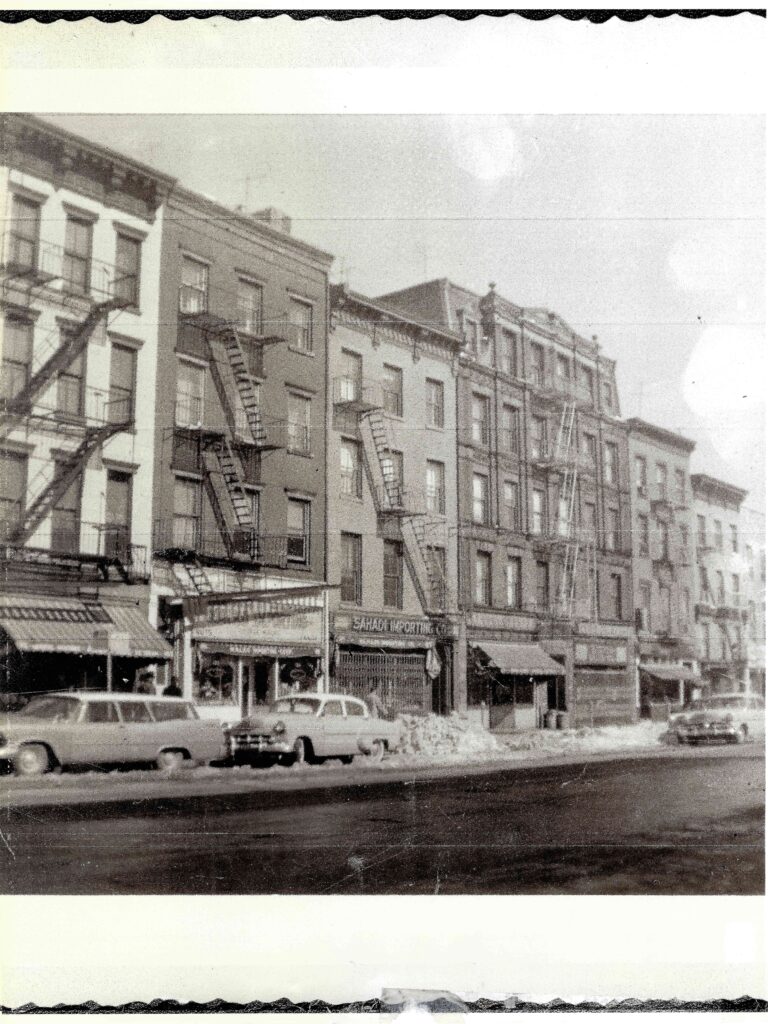
Images of Sahadi’s over the years (images courtesy Sahadi’s):

Sahadi’s in the 1970s

Sahadis’ on Atlantic Avenue, 1958

This podcast was partially based on this 2015 article written for this website:

Manhattan is profound for the layers of history that exist on even a modest spot of land. And in the case of blocks south of the World Trade Center, you don’t even have to go back far in time to find some surprising stories of the past.

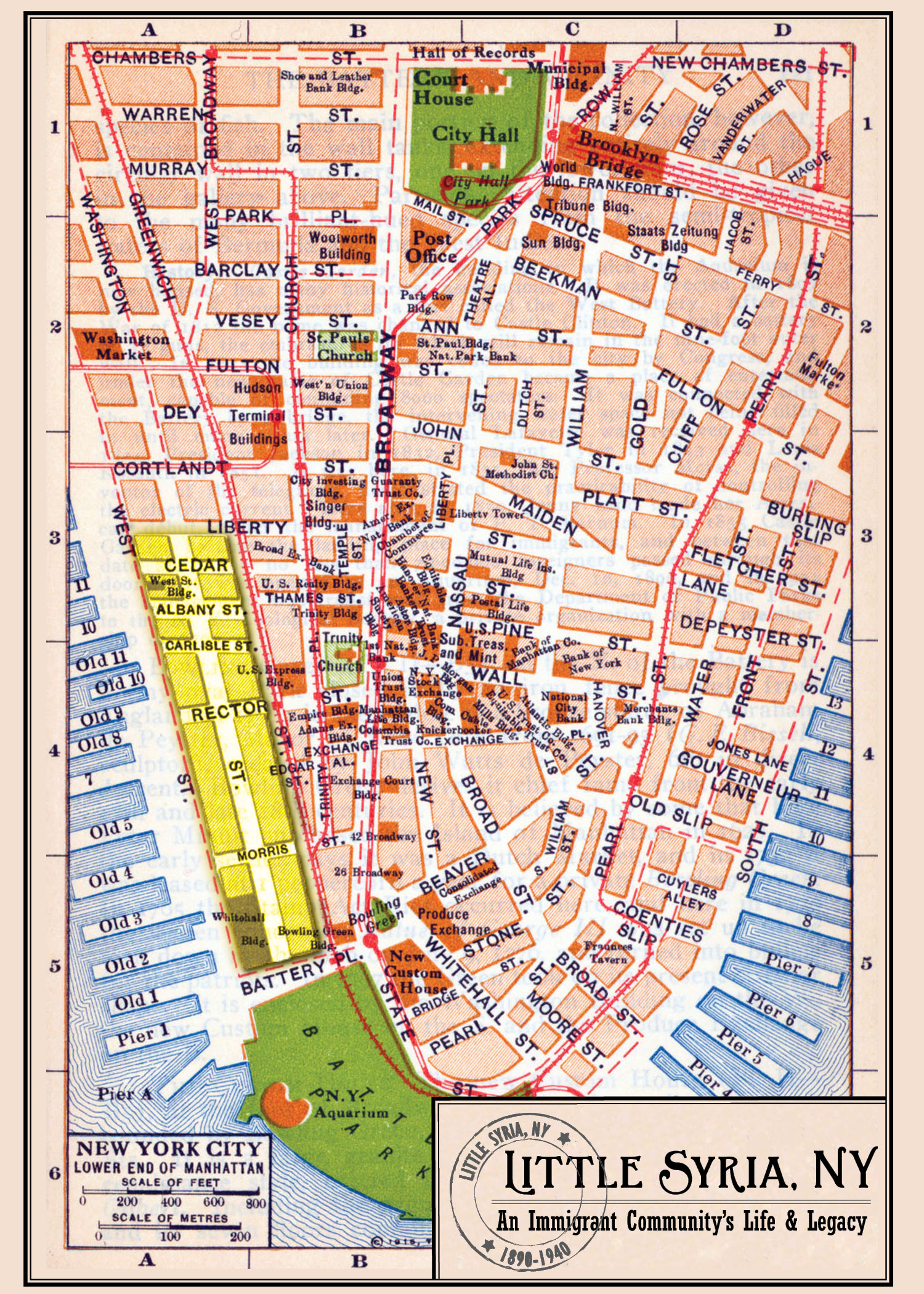
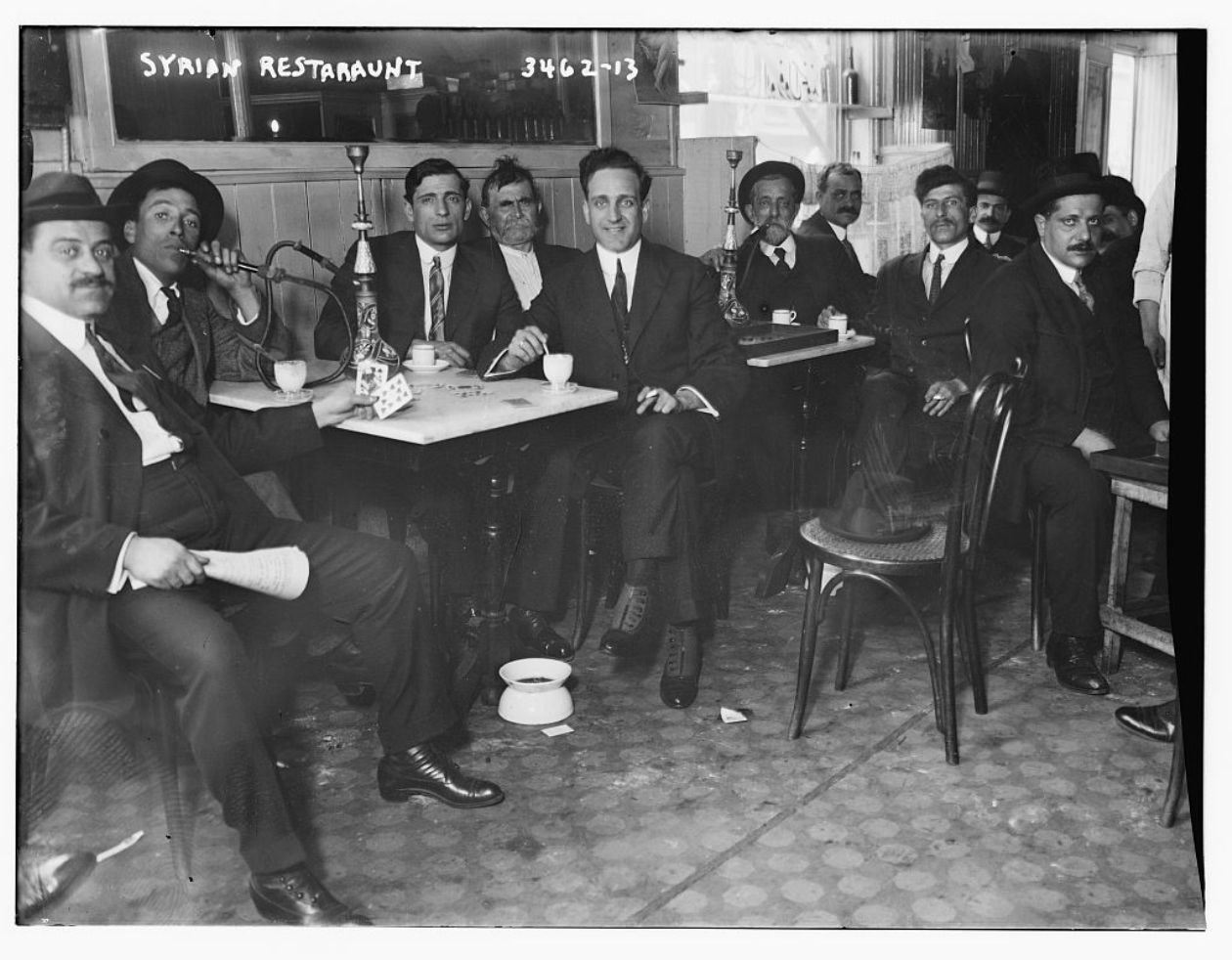
One hundred years ago, strolling along the southern ends of Washington and Greenwich streets, you would have found yourself within New York’s first Middle Eastern community.

An approximation of the district in yellow (courtesy the Arab American Museum):

Courtesy Arab American Museum

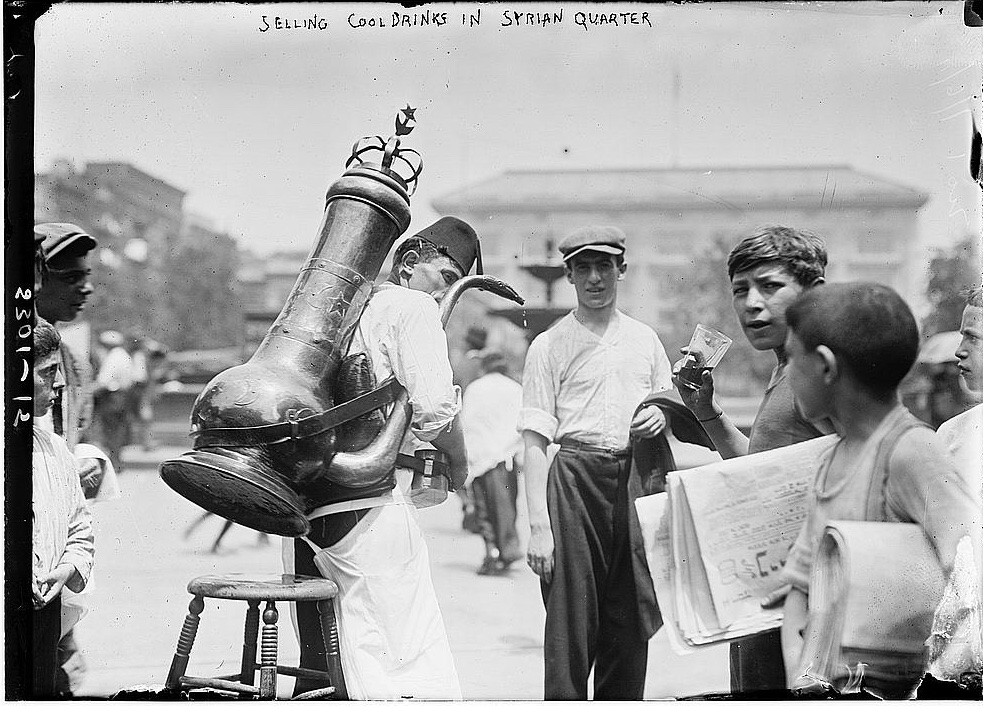
Little Syria (or the Syrian Quarter) featured rug and trinket shops and restaurants with “exotic” cuisine mentioned frequently by the newspapers of the day. In many ways it resembled the early days of Chinatown, a closed community, linked by language, rich in history and confounding to most New Yorkers.

3

Early New York Times writers were occasionally fascinated with this unusual pocket of settlement.

In 1898, they described it as quiet colony: “It differs much from other foreign quarters in New York. There is nothing forbidden in the aspect of the people or their places of business. The homes are clean and inviting and the stores where Turkish rugs, laces, perfumes, and tobacco are sold, display evidences of prosperity.”

While called ‘Little Syria’, it actually contained populations from several Middle Eastern communities. In the late 19th century, the idea of a ‘Greater Syria’ itself contained “modern Syria, Lebanon, Israel, Jordan, Palestinian Authority, Gaza Strip and parts of Turkey and Iraq.” [source]

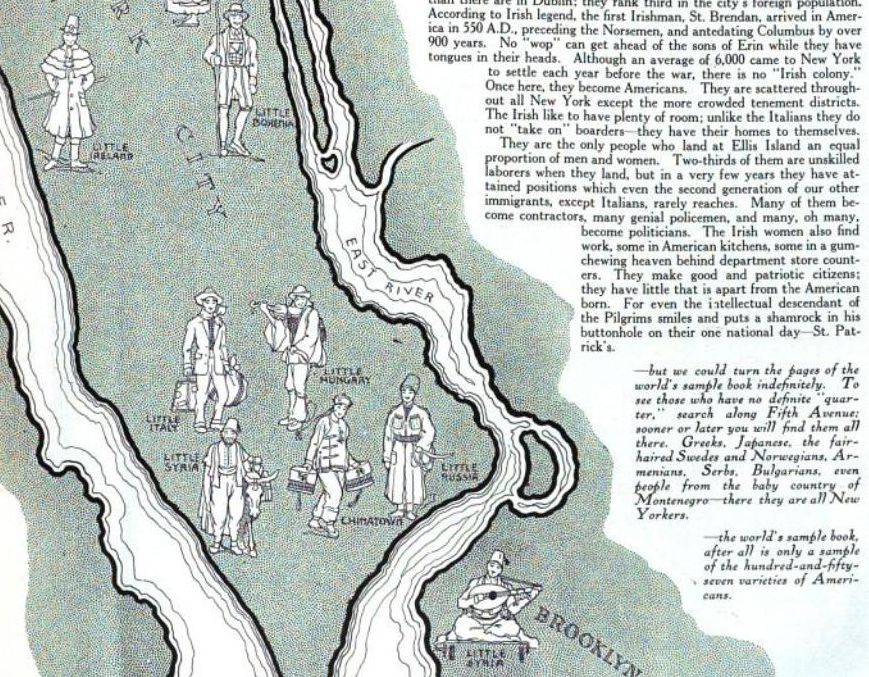
As a Gilded Age New Yorker, if you knew Little Syria at all — and most New Yorkers stayed away from the ethnic ‘Little’ neighborhoods (Italy, Africa, Hungary) — it was because of the food.

Another New York Times article from 1899 describes it with the passion of a modern restaurant critic: “It is in the restaurants that become cafes, after Syria has eaten her evening meal, that what is perhaps the most interesting life is to be seen.”

Of its inherent exoticness: “One glance at the Arabic bill of fare, written in Arabic script on a flimsy bit of white paper, shows the impossibility of making head or tail out of it.”

1
10

There were clearly few frames of references for those who visited this district. A 1903 New York Tribune describes the population of Little Syria as “fugitives from the Sultan’s tyranny” and describes the streets like something out of a chaotic wonderland:

“The shop windows are filled with huge Turkish pipes, whose water filled bulbs and serpentine stems would seem able to bring to the smoker all the dreams of the Thousand and One Nights. Here too the passerby may see lamps of Damascus brass, both great and small, and lighted by innumerable tiny tapers. They look much as the imagination might picture the lamp of Aladdin.”

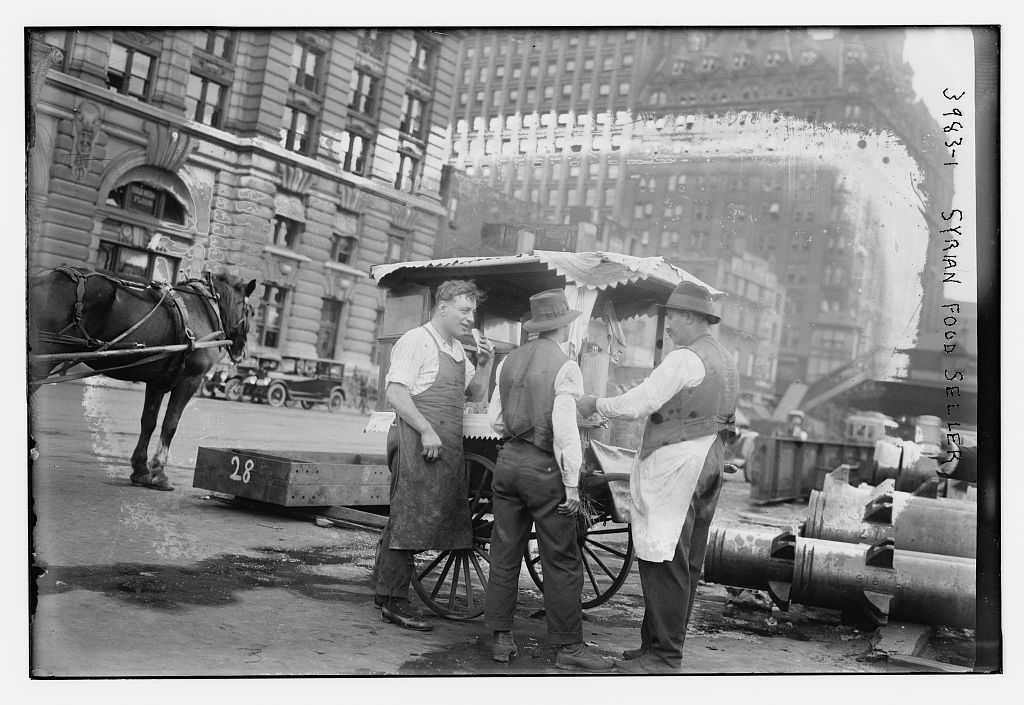
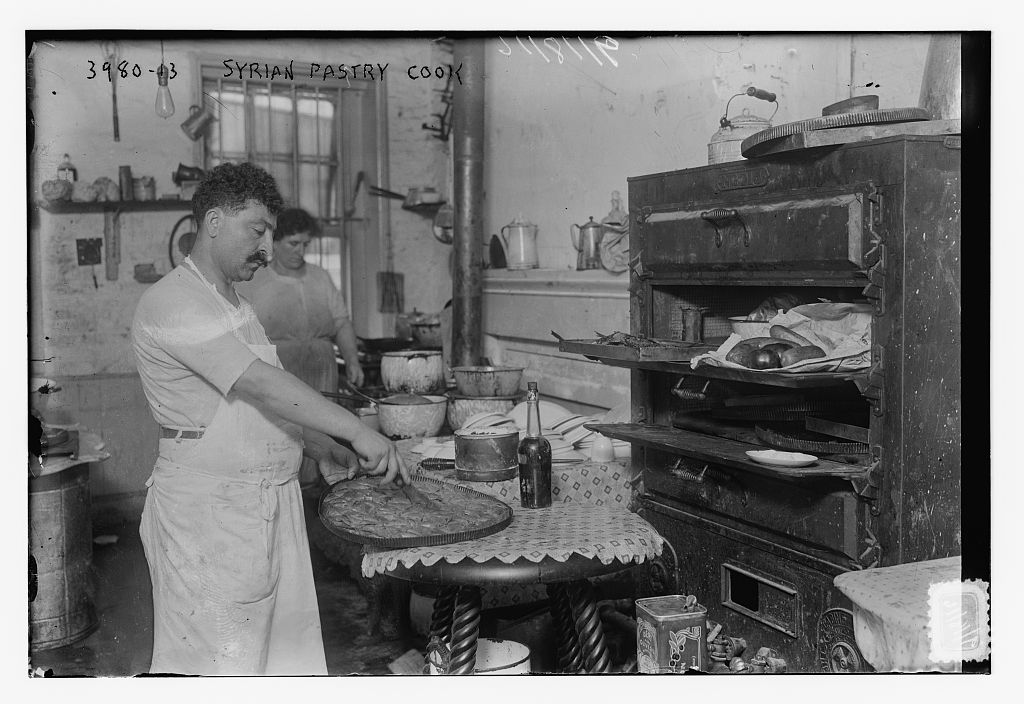
People may have been prone to stereotype Syrian shops, but in fact the Syrian Quarter was known for a wide variety of goods including jewelry, lace, embroidery, rugs, cigarettes, coffee and so-called ‘kimonos’ then (actually kaftans).

8

Over a quarter of a million people of Middle Eastern descent were living in America by the early 1920s. Although from a great swath of locations, they were frequently just called ‘Turks’ or ‘Syrians’. (The Sultanate of Ottoman Empire was abolished in 1922 and its territories made independent. )

The first Middle Eastern immigrants to the United States were Christian Syrians and mostly young men, following a similar pattern of immigration as the Italians.

Women and children began coming over soon afterwards once their husbands or brothers established themselves, either as workers on construction crews or as private business owners.

In 1903 the Tribune observed a line of “olive skinned women” diligently sewing on the street, employed as seamstresses in a scene being played out all over New York in other neighborhoods.

Many in the Syrian Quarter were silk and lace manufacturers back home, and some even commuted to work in Paterson, NJ, the so-called silk making capital in the United States at the turn of the century.

5

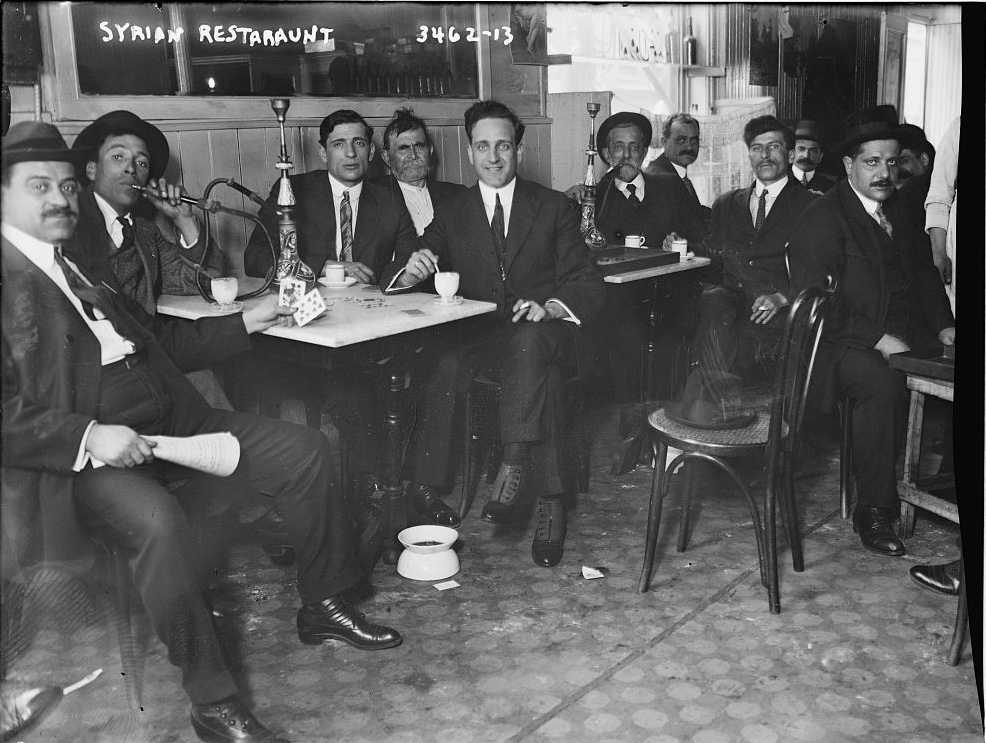
The pictures you see in this post were all taken sometimes between 1915 and 1916, a traumatic time in world affairs and the Middle East in particular.

Some were Armenians, cut off from regular news from back home and only sporadically aware of the horrors their families were experiencing.

The men who met up in Washington Street cafes smoked hookahs, drank coffee and played games of chess or checkers. Unlike the stereotypes presented in the press of ‘simple’ shop owners, many were well educated and spoke English.

8

While most of the earliest residents of the Syrian Quarter were actually Syrian Christians, by the 1910s both Christians and Muslims lived in the neighborhood.

The only vestige of Little Syria that remains today is the home of a former Catholic congregation — St. George’s Syrian Catholic Church at 103 Washington Street. 

The congregation moved here in 1925, but by that time, a larger Middle Eastern community was developing in Brooklyn on Atlantic Avenue. Many vestiges of Brooklyn’s ‘Syrian quarter’ still exist today along Atlantic Avenue between Court Street and the waterfront, most notably Sahadi’s.

Below: An illustration from a 1918 Methodist journal called World Outlook, marking the ethnic enclaves of New York

New Picture (7)

Most of Manhattan’s original Middle Eastern neighborhood was eliminated with the construction of the Brooklyn-Battery Tunnel which opened in 1950 (although a long construction period cleared out the neighborhood by the early 1940s).

Those shops that managed to stay on shared the streets with a surprising new neighbor — radio.

Radio Row, considered Manhattan’s first technology sector, arrived just as terrestrial radio became the latest craze. Shops sold radio consoles, speakers and (after World War II) even ham-radio equipment, all centered at the corner of Cortlandt and Greenwich streets.

9

Categories
Podcasts Skyscrapers

The World Trade Center in the 1970s

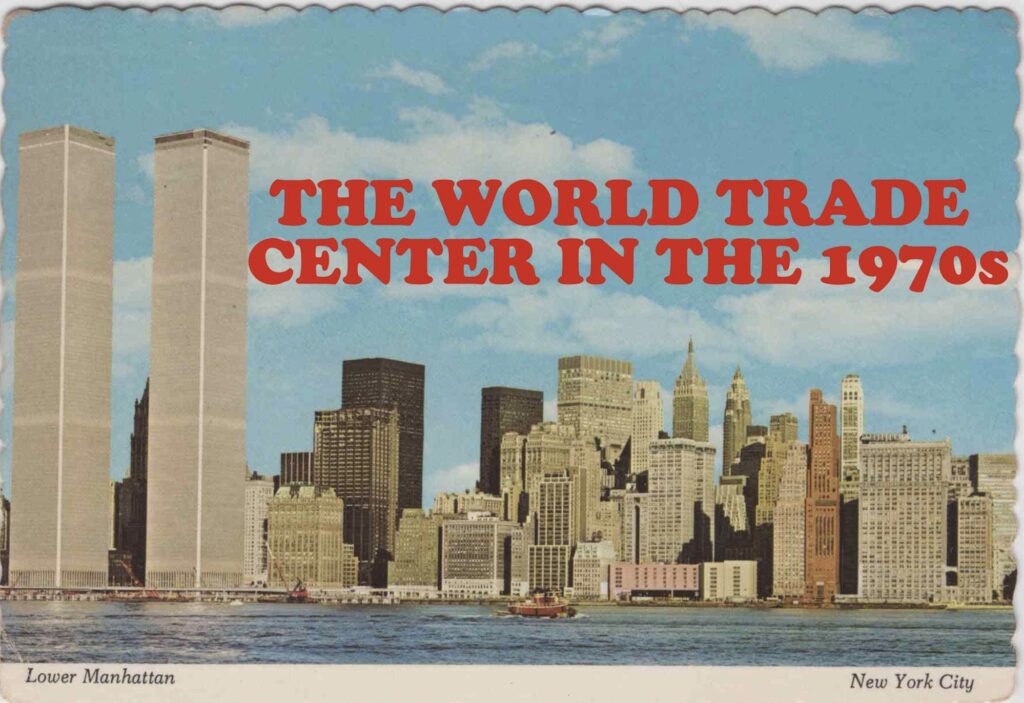
PODCAST The World Trade Center opened its distinctive towers during one of New York City’s most difficult decades, a beacon of modernity in a city beleaguered by debt and urban decay. Welcome to the 1970s.
EPISODE 350 This year, believe it or not, marks the 20th anniversary of the attacks on the Twin Towers on September 11, 2001.

Today there’s an entire generation that only knows the World Trade Center as an emblem of tragedy.

But people sometimes forget that the World Trade Center, designed by Japanese-American architect Minoru Yamasaki, was a very complicated addition to the New York skyline when it officially opened in 1973.

While it might be fun to think of New York City in the 1970s through the lens of places like Studio 54 or CBGB, it was really the Twin Towers that redefined New York.
The journey to build the world’s tallest building and its expansive complex of office towers and underground shops began in an effort by David Rockefeller to stimulate development in Manhattan’s fading Financial District.

By the time Port Authority got onboard to fund the project, the Twin Towers were bonded together with another vital project — a commuter train from New Jersey.

The World Trade Center inspired strong opinions from critics and the public alike, but eventually many grew to admire the strange towers which marked the skyline.

And for some, the Twin Towers became objects of obsession.
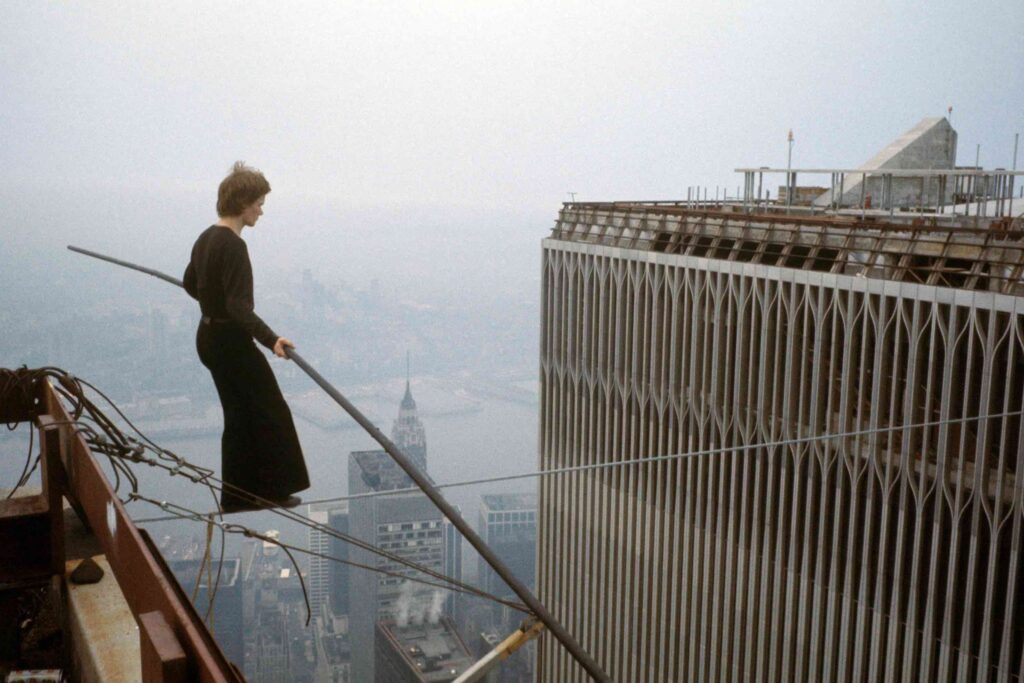
Jean-Louis Blondeau / Polaris Images

FEATURING: The insane, completely outlandish and ultimately successful feat of acrobatics by a very bold French tightrope walker.

PLUS: An interview with with Kate Monaghan Connolly of the National September 11 Memorial and Museum about how that institution memorializes those lost in the tragedy while still celebrating the technological marvels that once stood there.

Listen here or stream/download the episode from your favorite podcast player:


Go to websites for the National September 11 Memorial and Museum and One World Observatory for more information about visiting hours and COVID-19 safety precautions at each site.

Follow us on Instagram for more images of our adventures through New York City.


Architect Minoru Yamasaki with a model of this Twin Tower design for the World Trade Center, March 25, 1964
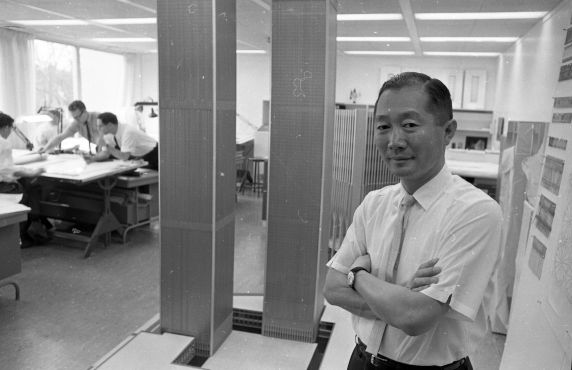
Photographer Tony Spina/Courtesy Walter P. Reuther Library

David Rockefeller with a model of the westside of lower Manhattan.
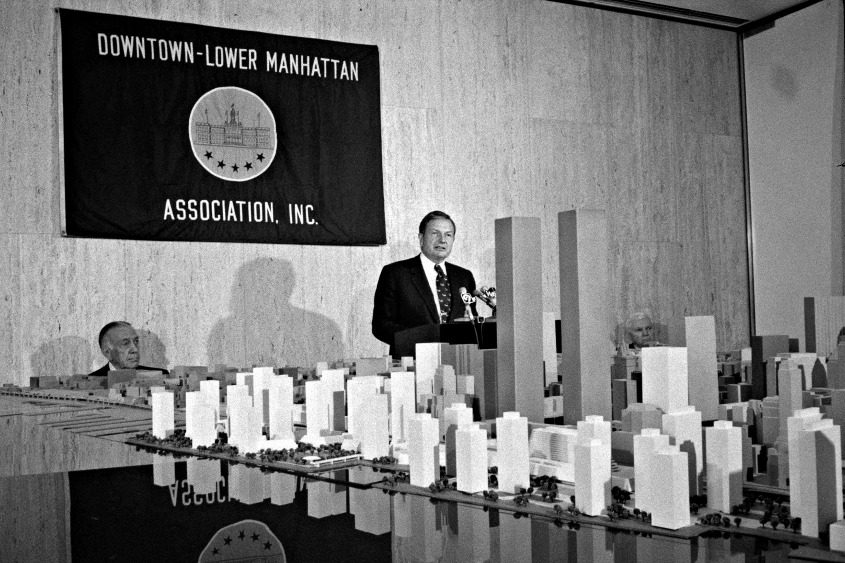
Courtesy John Duricka/Associated Press

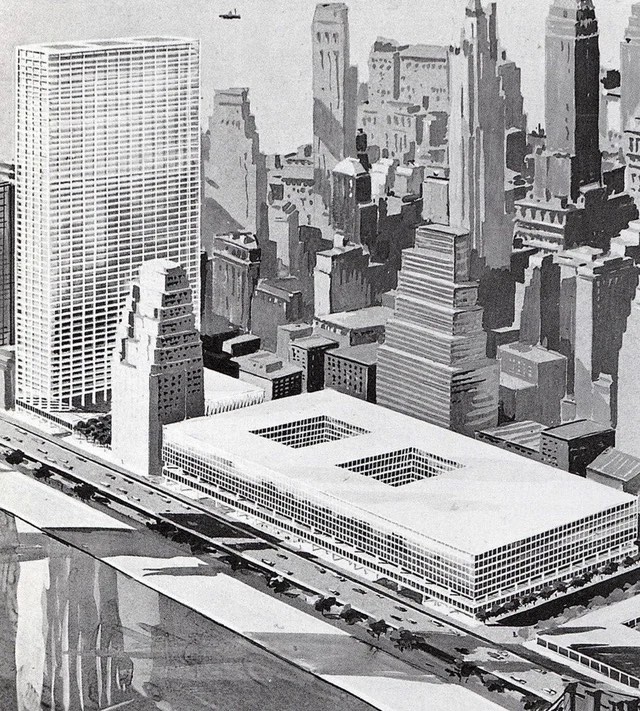
The first plan for the World Trade Center called for construction of a United Nations-inspired set of structures on the east side, most likely eliminating (or seriously reducing) the South Street Seaport.
Images of Radio Row, clearly showing a vibrant retail district that remained active over many decades. Had it remained, who knows how much larger it would have gotten with the advent of television?
Hulton Archive/Getty Images

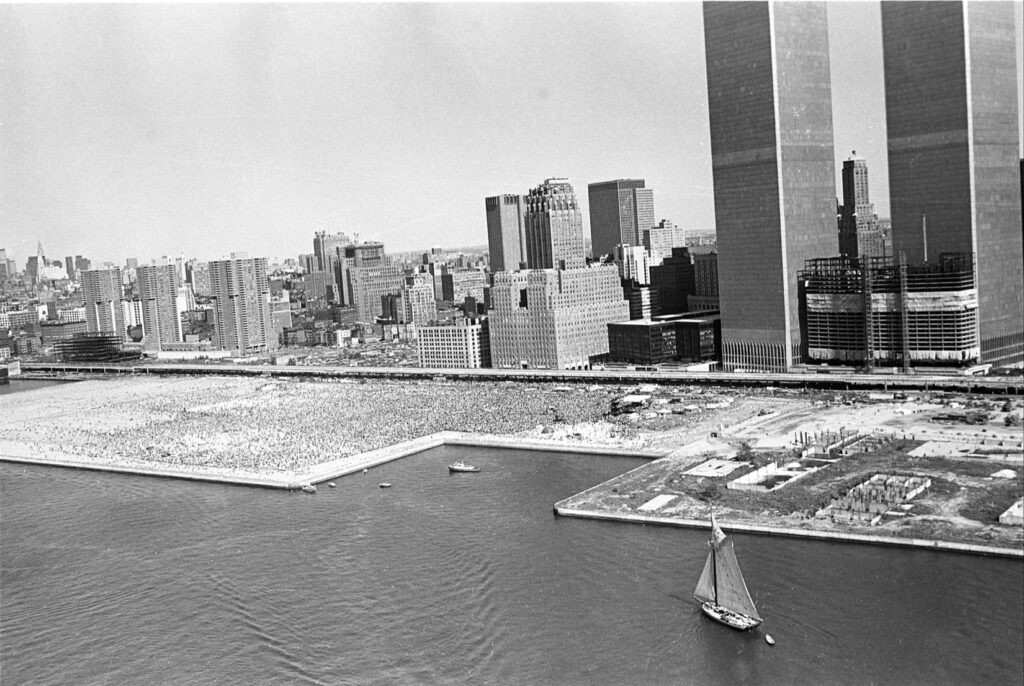
They were so prominent and tall that they become the world’s most observed construction project — for years.
Courtesy AP

Over the years, the landfill site (and future home of Battery Park City) was used for performance art, musical performances and even circuses.
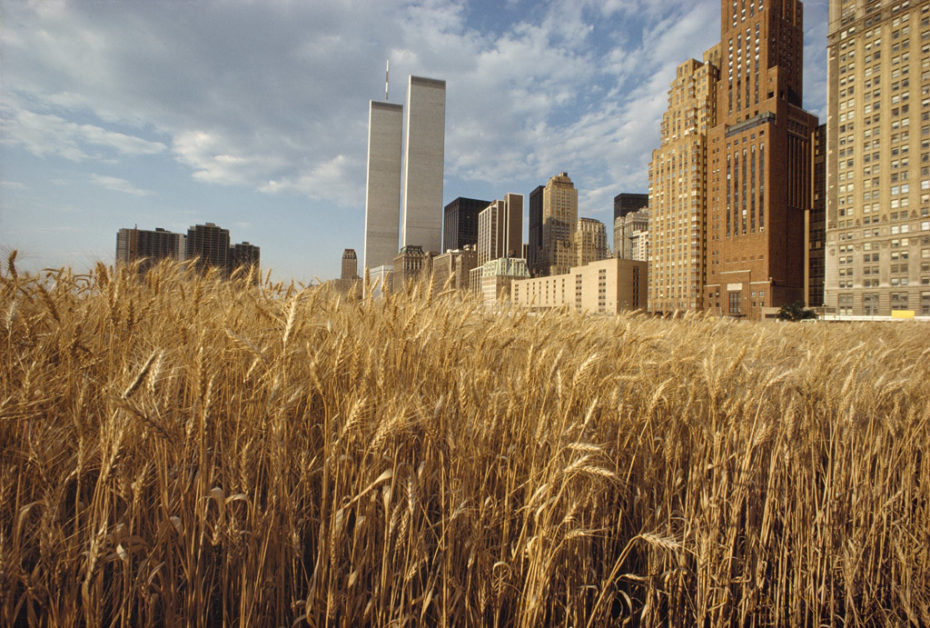
The wheat field (an art project by Agnes Denes), planted in 1982.
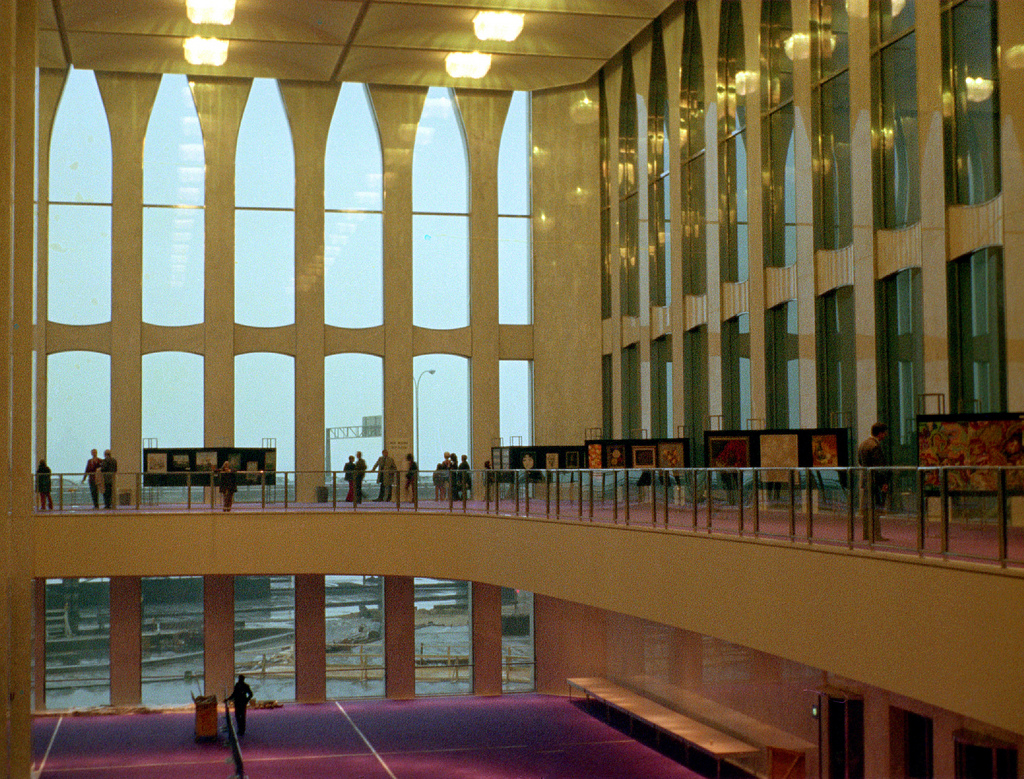
The lobby of one of the towers.
The Twin Towers from the film King Kong.

From the New York Daily News, August 8, 1974. For context, Richard Nixon resigned as President of the United States the following day (Friday, August 9).
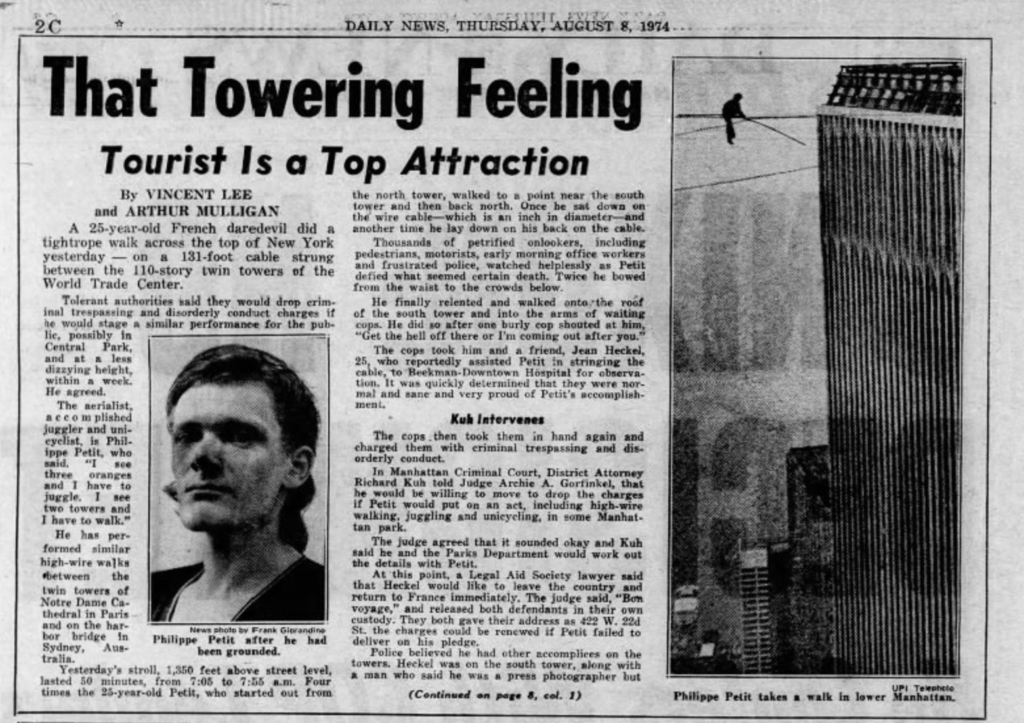
Courtesy Newspapers.com

The Philippe Petit story made international news. Here’s one example — from Butte, Montana!
Courtesy Newspapers.com

From the Oscar-winning documentary Man On Wire:
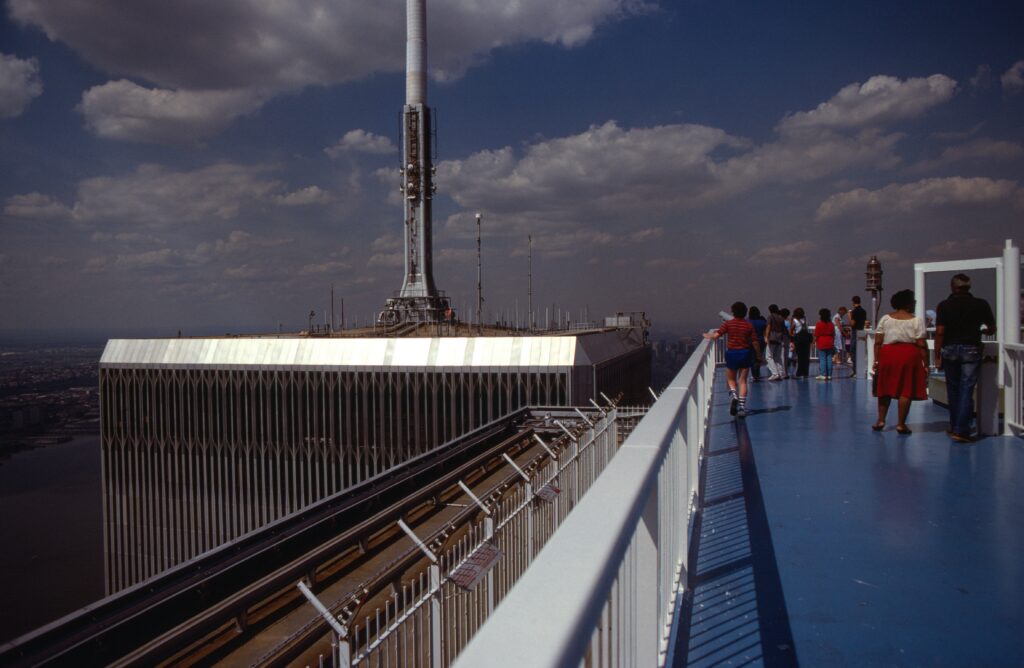

Photo by Lars Plougmann/Wikimedia Commons

Dolly Parton and Andy Warhol at Windows on the World, 1977.
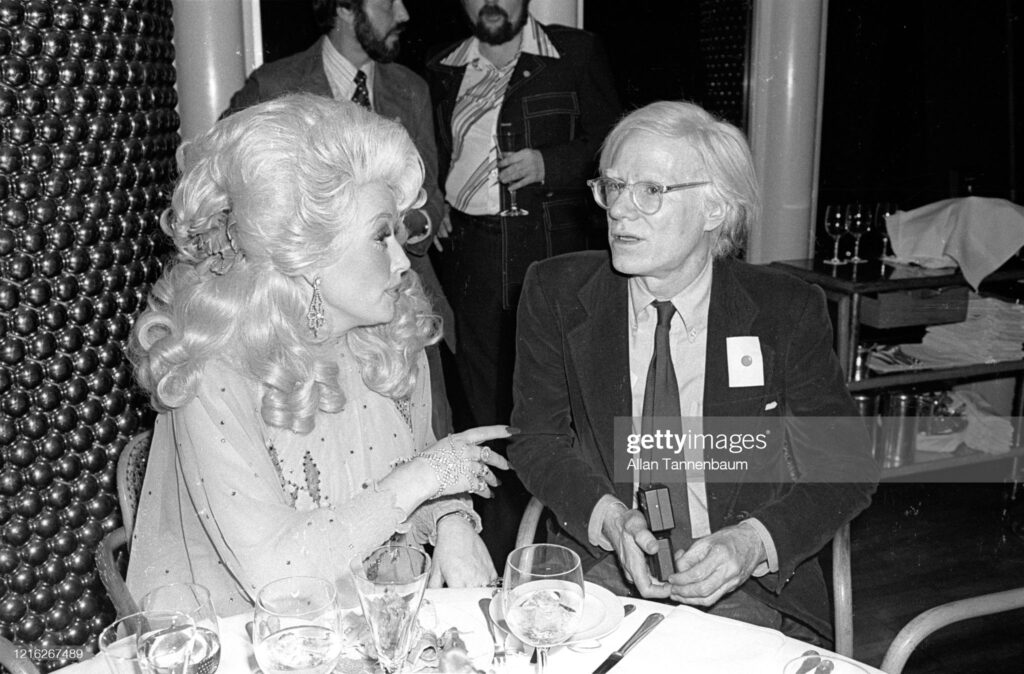
Photo by Allan Tannenbaum/Getty Images
FURTHER READING

City in the Sky: The Rise and Fall of the World Trade Center / James Glanz and Eric Lipton
Twin Towers: The Life of New York City’s World Trade Center / Angus Kress Gillespie
The World Trade Center: A Tribute / Bill Harris

FURTHER LISTENING

The Bowery Boys: New York City History podcast is brought to you …. by you!

We are now producing a new Bowery Boys podcast every other week. We’re also looking to improve and expand the show in other ways — publishing, social media, live events and other forms of media. But we can only do this with your help!

We are now a creator on Patreon, a patronage platform where you can support your favorite content creators.

Please visit our page on Patreon and watch a short video of us recording the show and talking about our expansion plans. If you’d like to help out, there are six different pledge levels. Check them out and consider being a sponsor.

We greatly appreciate our listeners and readers and thank you for joining us on this journey so far.
Categories
Amusements and Thrills Podcasts

Digital City: New York and the World of Video Games

PODCAST The history of video games and arcades in New York City.

New York has an interesting, complex and downright weird relationship with the video game, from the digital sewers below Manhattan to the neon-lit arcades of Times Square. It’s not all nostalgia and nerviness; video games in the Big Apple have helped create communities and have been exalted as artistry.

First — the relationship between the city and the arcade itself, once filled with shooting galleries and see ball. When pinball machines were introduced in the 1930s, many saw them as a gateway into gambling. Mayor Fiorello La Guardia personally saw to it that they were taken off the streets.

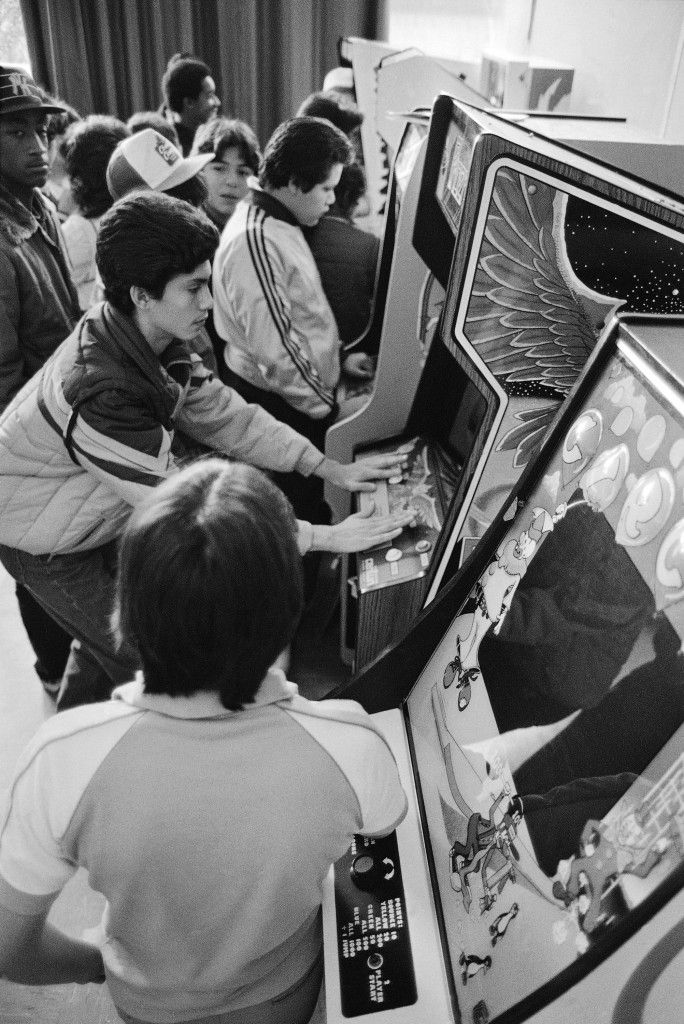
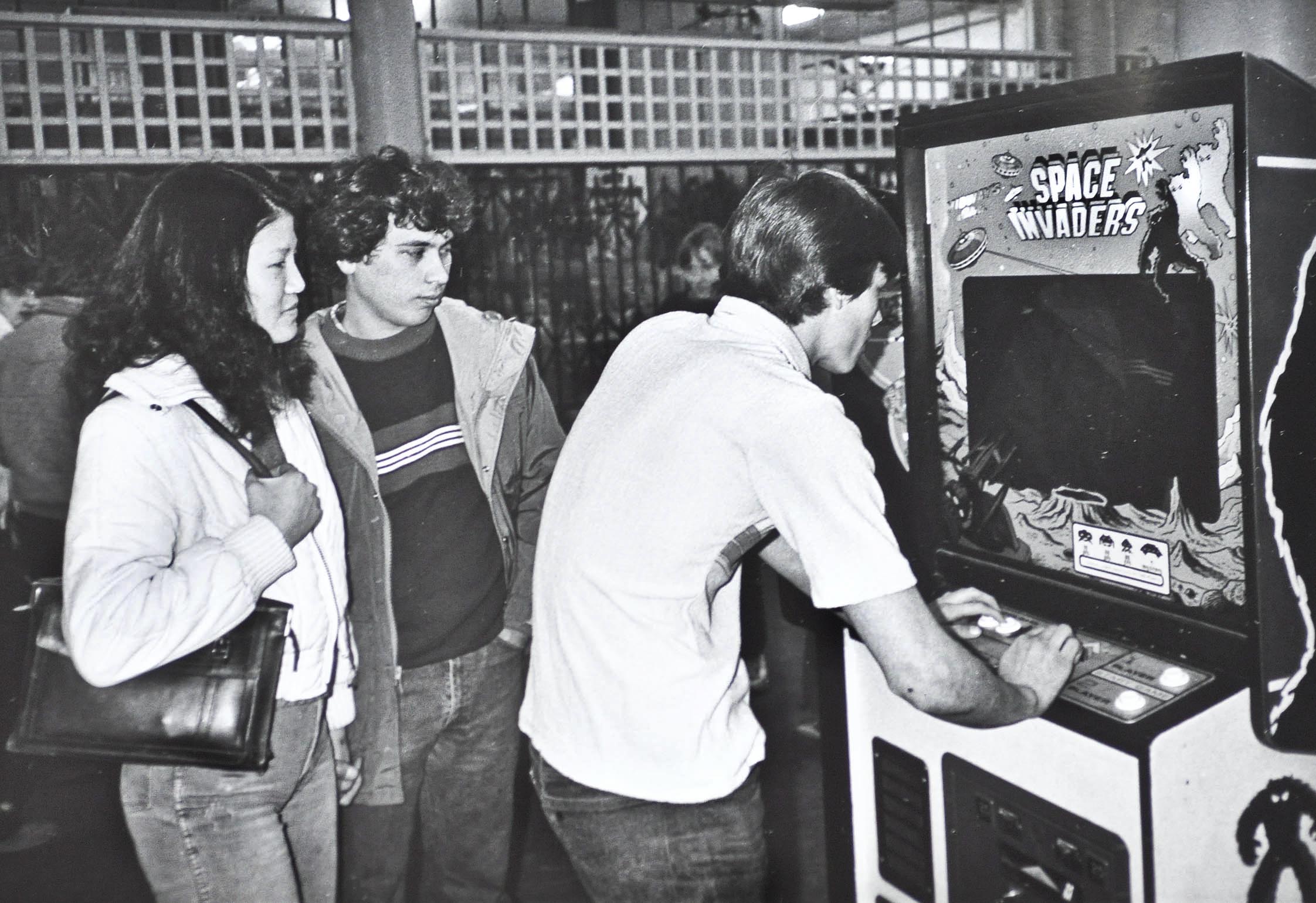
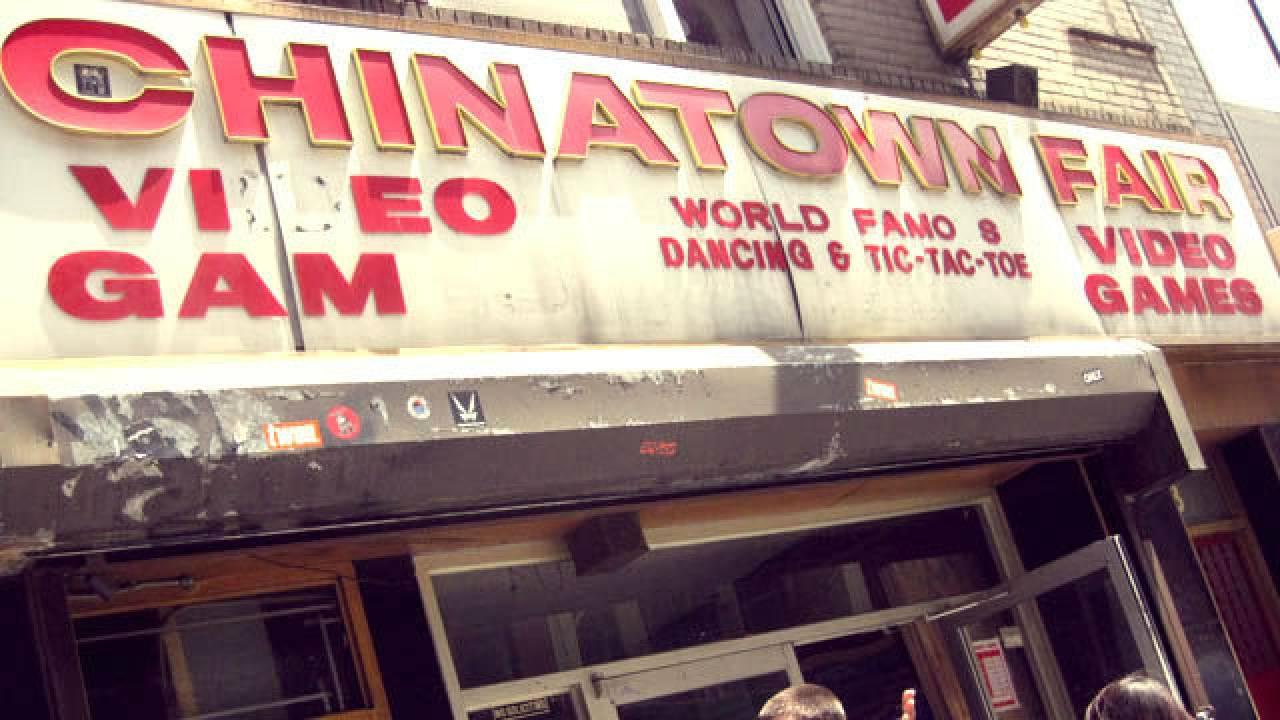
The era of Space Invaders, Pac Man and Donkey Kong descends in New York during its grittiest period – the late 70s/early 80s – and arrives, like an alien presence, into many neighborhood arcades including one of the most famous in Chinatown – an arcade that is still open and the subject of a new documentary The Lost Arcade.

While the video game industry is not something New York City is particularly associated with, the city does in fact set the stage for this revolution of blips and joysticks at the start of the 20th century and from such unconventional places as the West Village and Flushing Meadows-Corona Park.

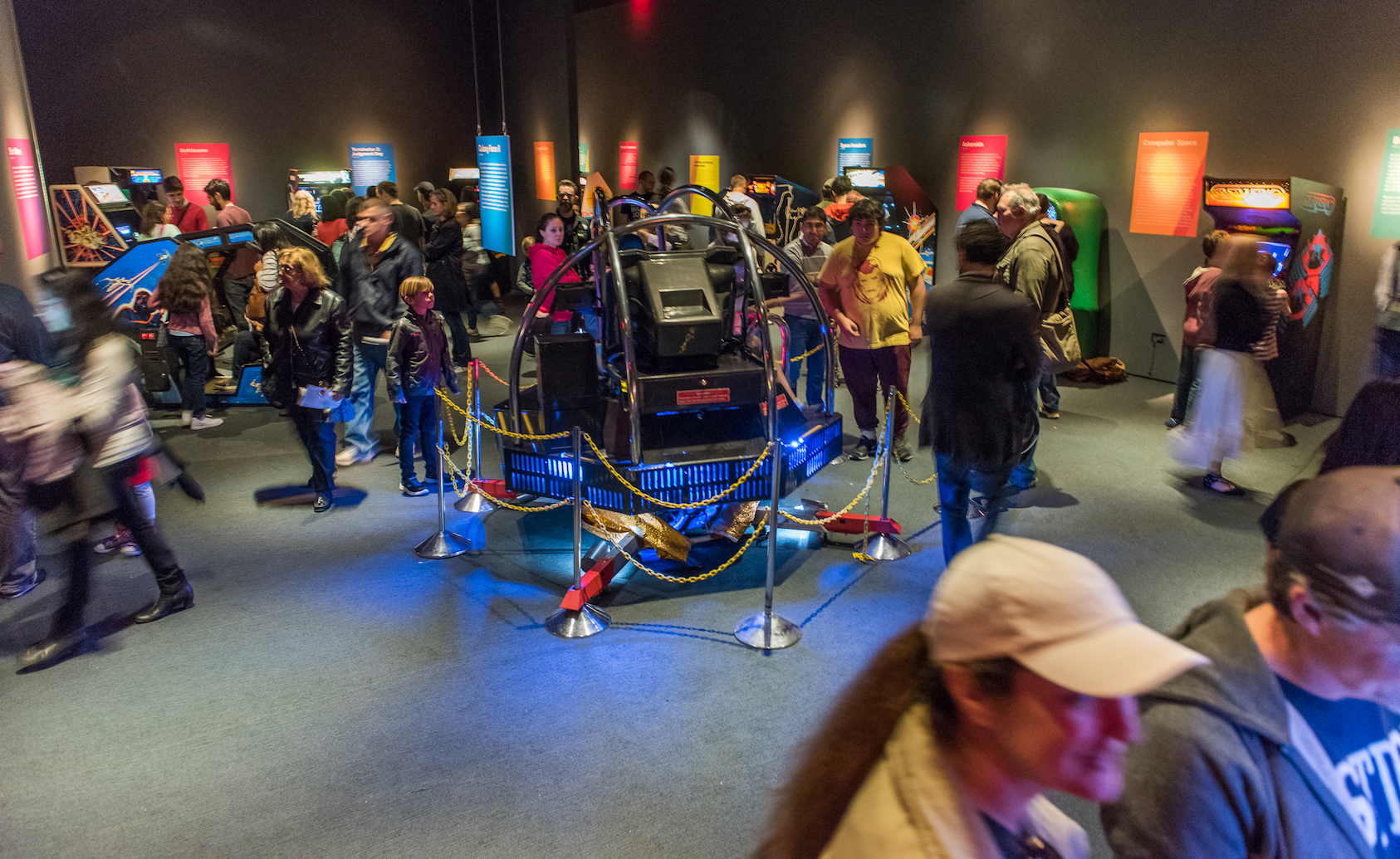
In Queens you’ll find one of America’s great tributes to the video game, in the spectacular arcade collection at the Museum of the Moving Image.

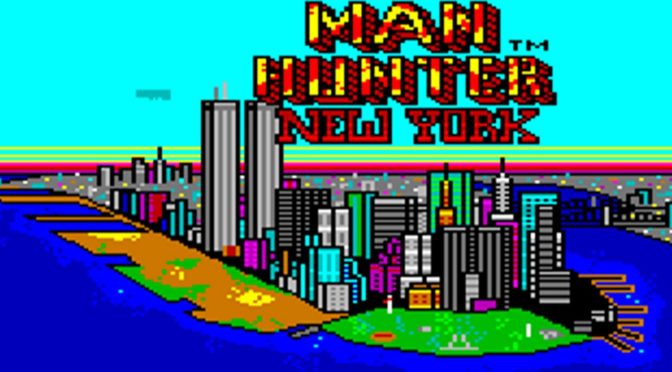
Finally — A look inside the games themselves to explore New York as a digital landscape that continues to be of fascination to game developers and players alike.

So are you ready Player One? Grab your quarters and log in to this New York adventure through the world of video games.


The Bowery Boys: New York City History podcast is brought to you …. by you!

We are now producing a new Bowery Boys podcast every two weeks. We’re also looking to improve the show in other ways and expand in other ways as well — through publishing, social media, live events and other forms of media. But we can only do this with your help!

We are now a member of Patreon, a patronage platform where you can support your favorite content creators for as little as a $1 a month.

Please visit our page on Patreon and watch a short video of us recording the show and talking about our expansion plans. If you’d like to help out, there are five different pledge levels (and with clever names too — Mannahatta, New Amsterdam, Five Points, Gilded Age, Jazz Age and Empire State). Check them out and consider being a sponsor.

We greatly appreciate our listeners and readers and thank you for joining us on this journey so far. And the best is yet to come!

The trailer for The Lost Arcade. It opens today in San Francisco at the Roxie and Friday, August 12, in New York at the Metrograph. Check out their Facebook page for more information about upcoming events and screenings.

The current exhibition at the Museum of the Moving Image — ARCADE CLASSICS: VIDEO GAMES FROM THE COLLECTION — continues until mid-September.

Courtesy Museum of the Moving Image

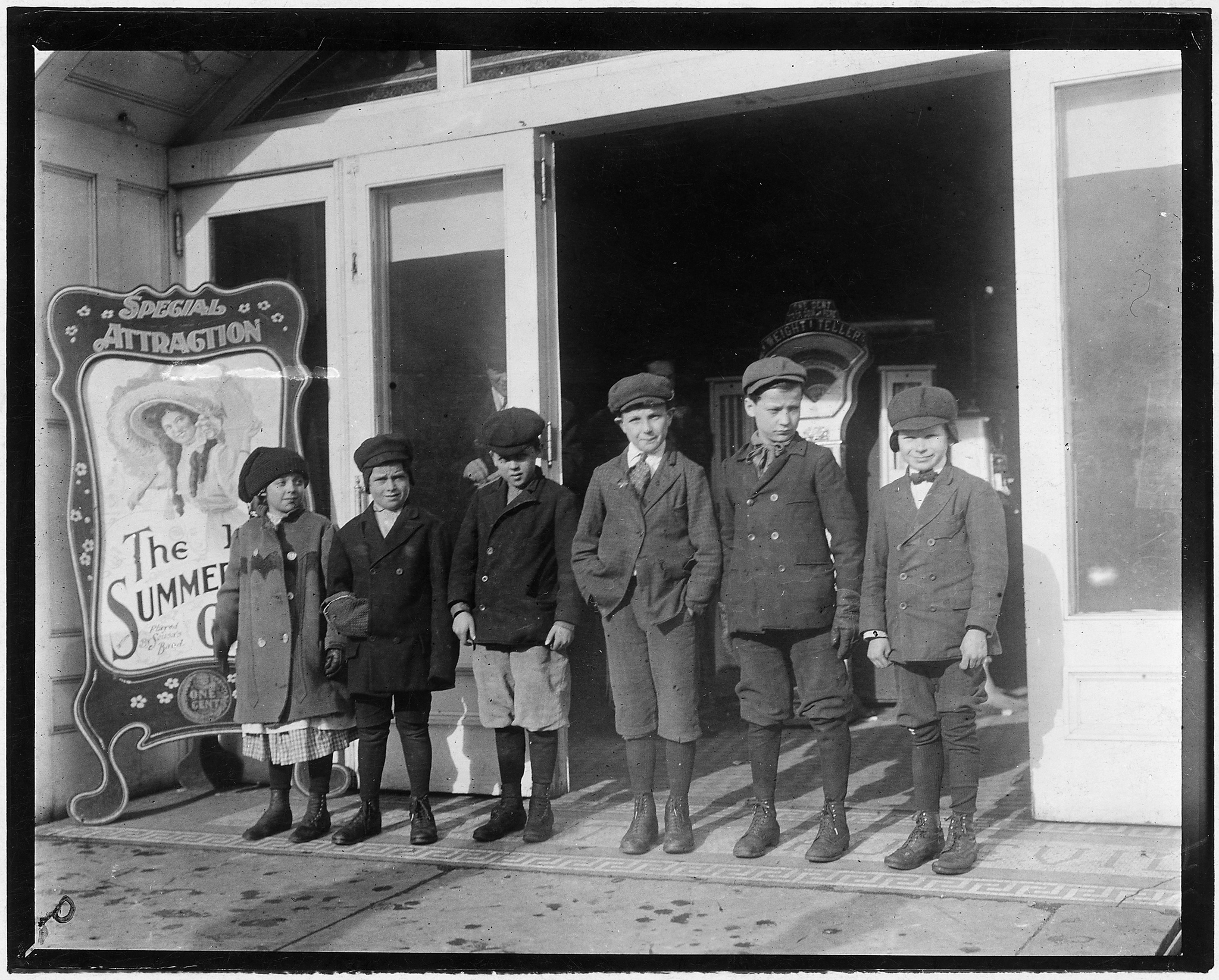
Children at a penny arcade in Schenectady, NY, in 1910

Photo by Lewis Hine, courtesy US National Archives

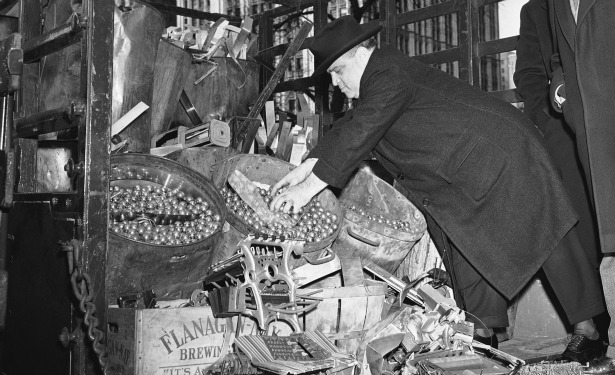
Mayor La Guardia was not a fan of pinball. Here, in a 1942, he rounds up the pinball balls. Read more in Seth Porges’ article for Popular Mechanics:

laguardiapinball.banner.AP.jpg

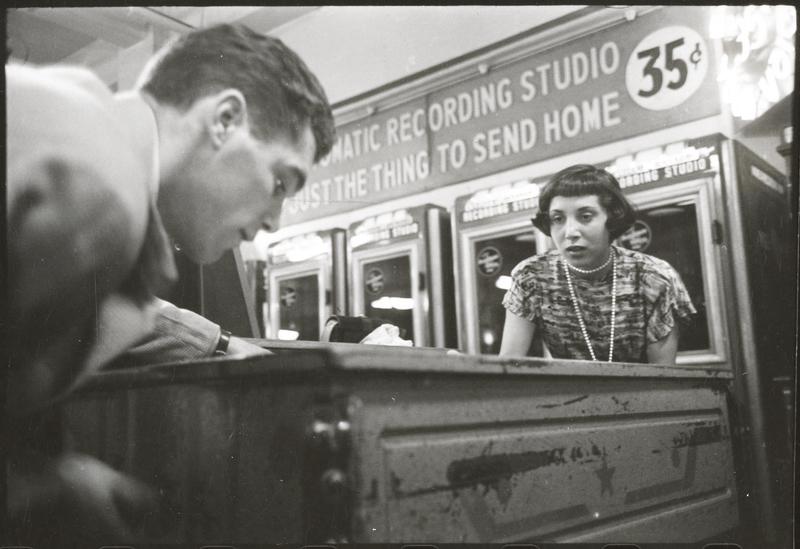
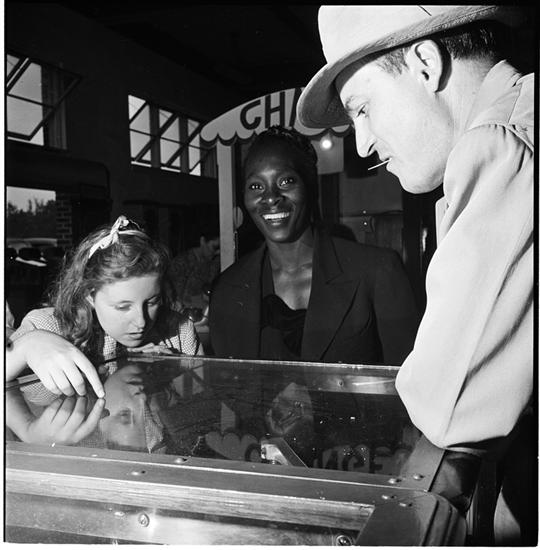
In a photo taken in 1948 by Stanley Kubrick for LOOK Magazine, prizefighter Walter Cartier plays an arcade game with a young woman.

Courtesy MCNY
Courtesy MCNY

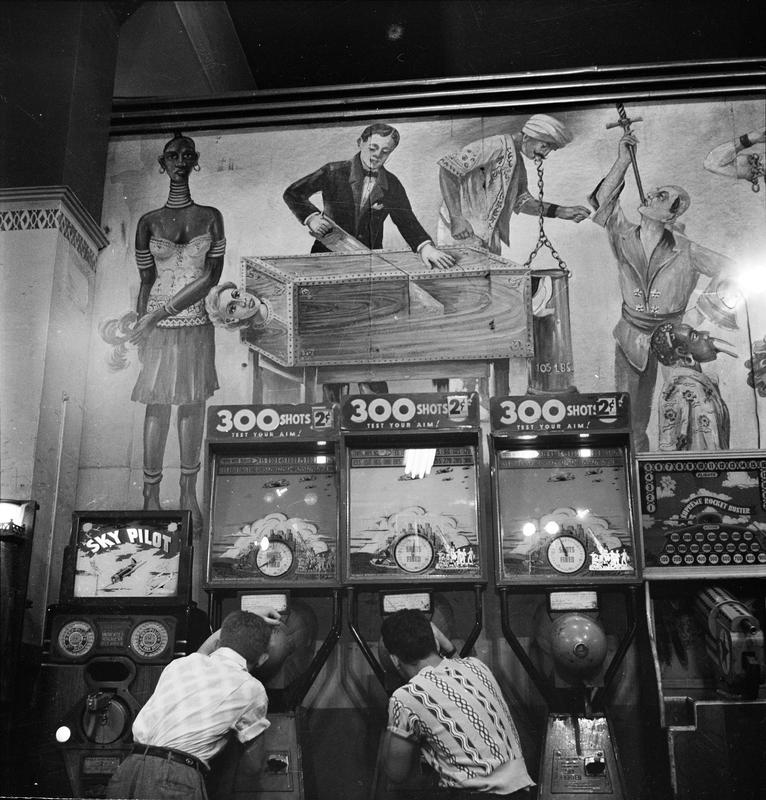
And another by Kubrick, from 1946, at Palisades Amusement Park.

MCNY
MCNY

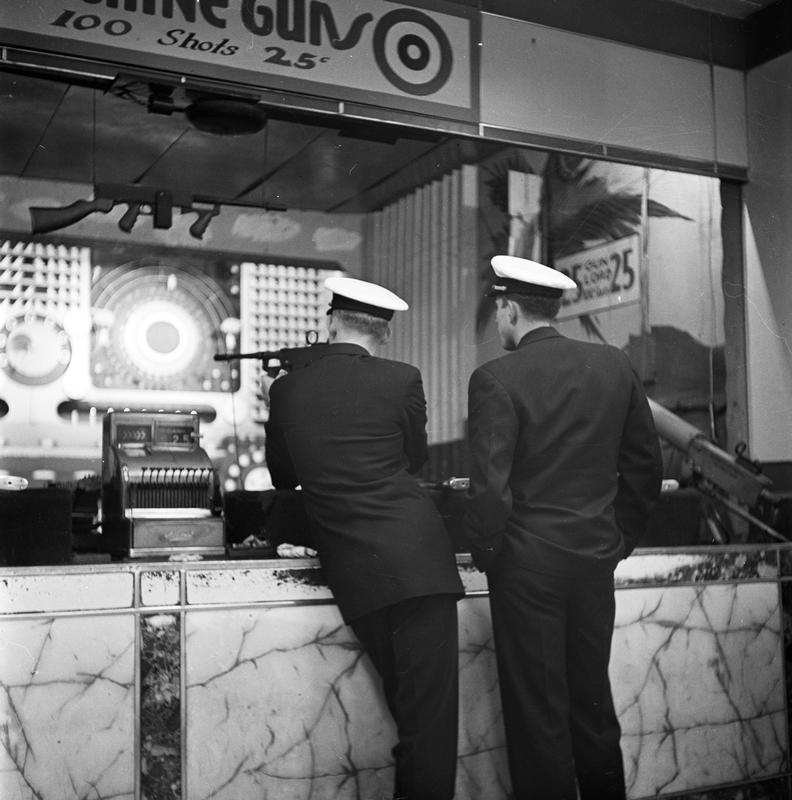
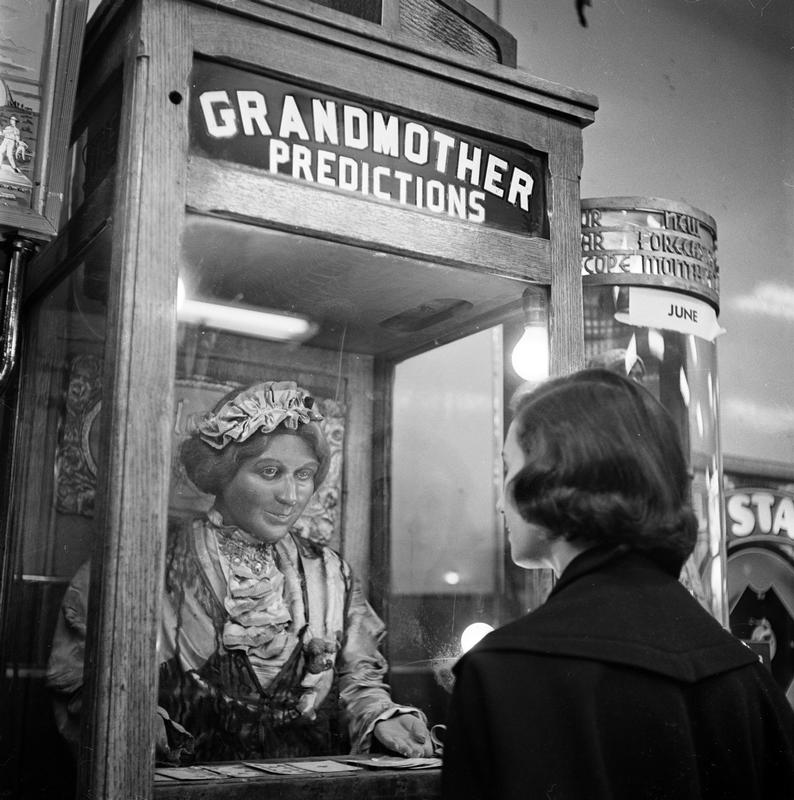
A couple images of a penny arcade and shooting gallery in 1950, photo by Robert Offergeld.

MNY326702

Courtesy MCNY
Courtesy MCNY
Courtesy MCNY
Courtesy MCNY

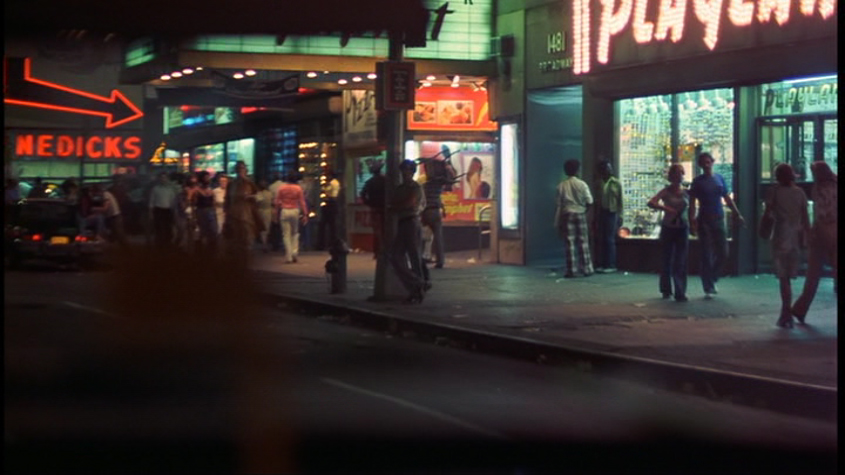
Playland on 42nd Street, courtesy the film Taxi Driver

Courtesy Scouting NY

5334486149_31979077f2_o

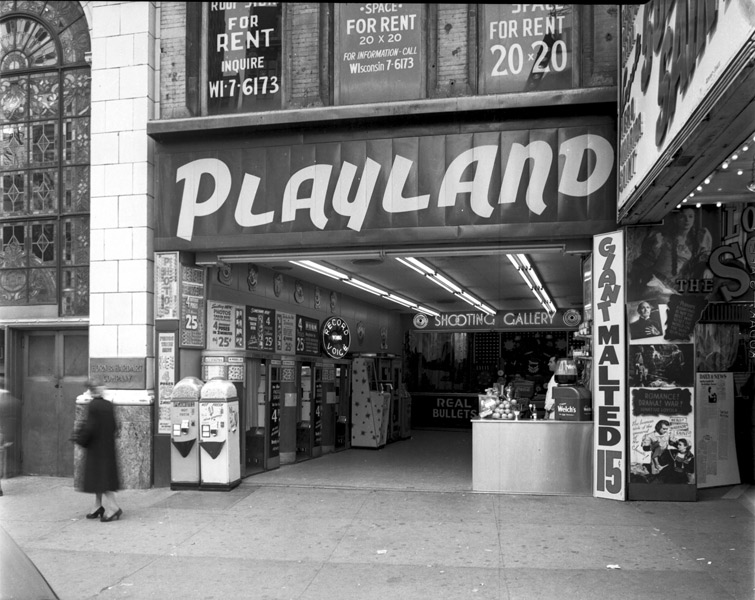
The other Playland at Broadway and 47th Street, pictured here in the 1950s. GIANT MALTED 15 CENTS!

Office for Metropolitan History

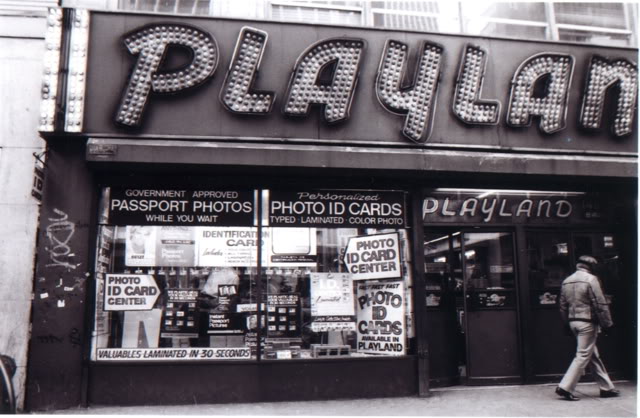
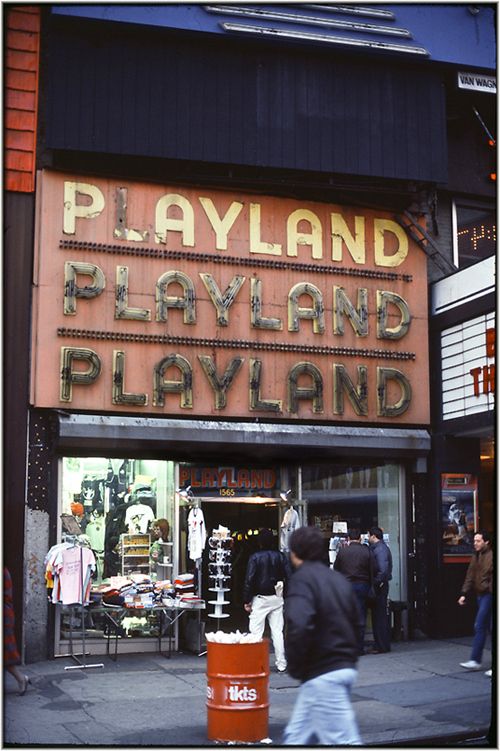
And later from the 1970s….

6a09ef0c0a54d711e169d152edb362b3


New York City arcade, 1981.

8f73ef985c84aa31fb92eff32c8f520e


Courtesy Twin Galaxies

The original Chinatown Fair sign, near its closure in 2011. It reopened the following year, perhaps a bit more family friendly than its precursor.

Courtesy Giant Bomb
Courtesy Giant Bomb

Screenshot from Mario Bros. (1983)

Courtesy GamesDBase
Courtesy GamesDBase


Screenshot from Amnesia (1986)

Courtesy Hazlift
Courtesy Hazlift


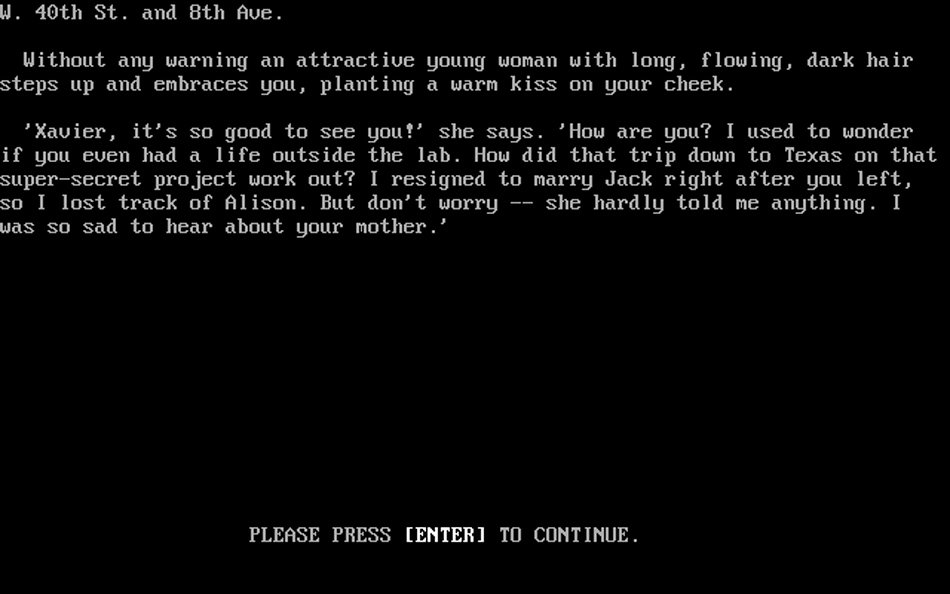
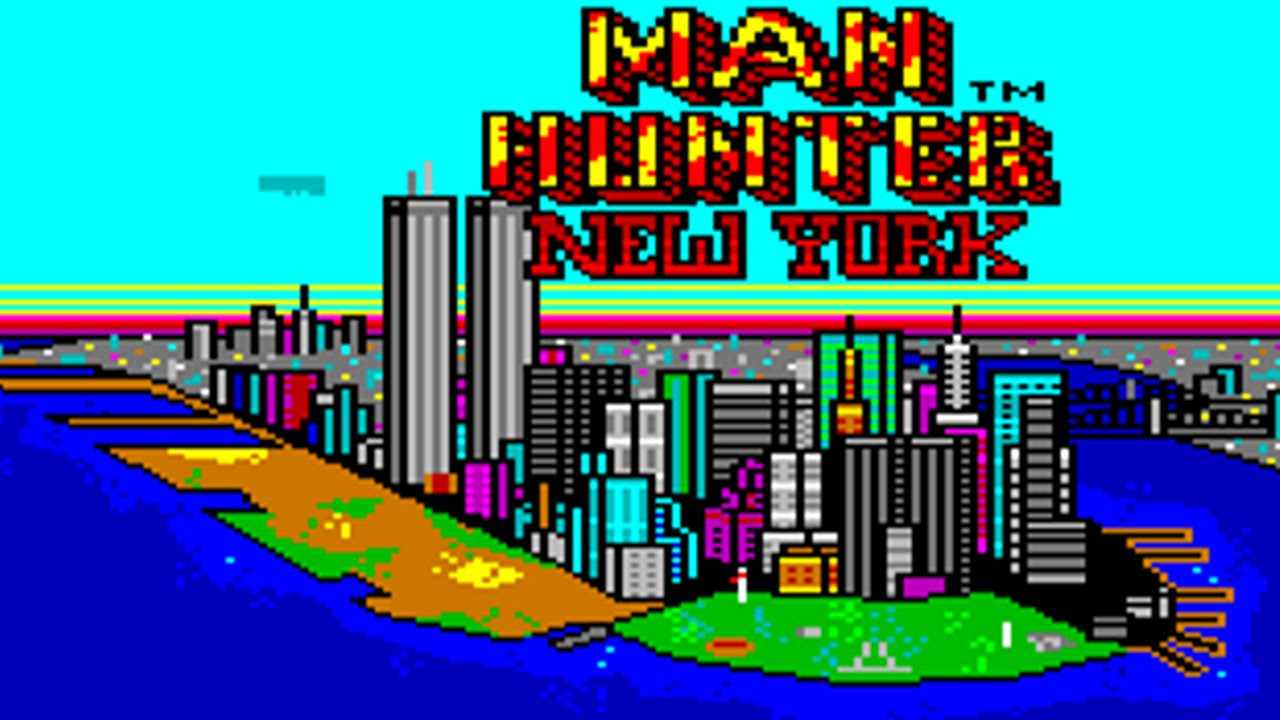
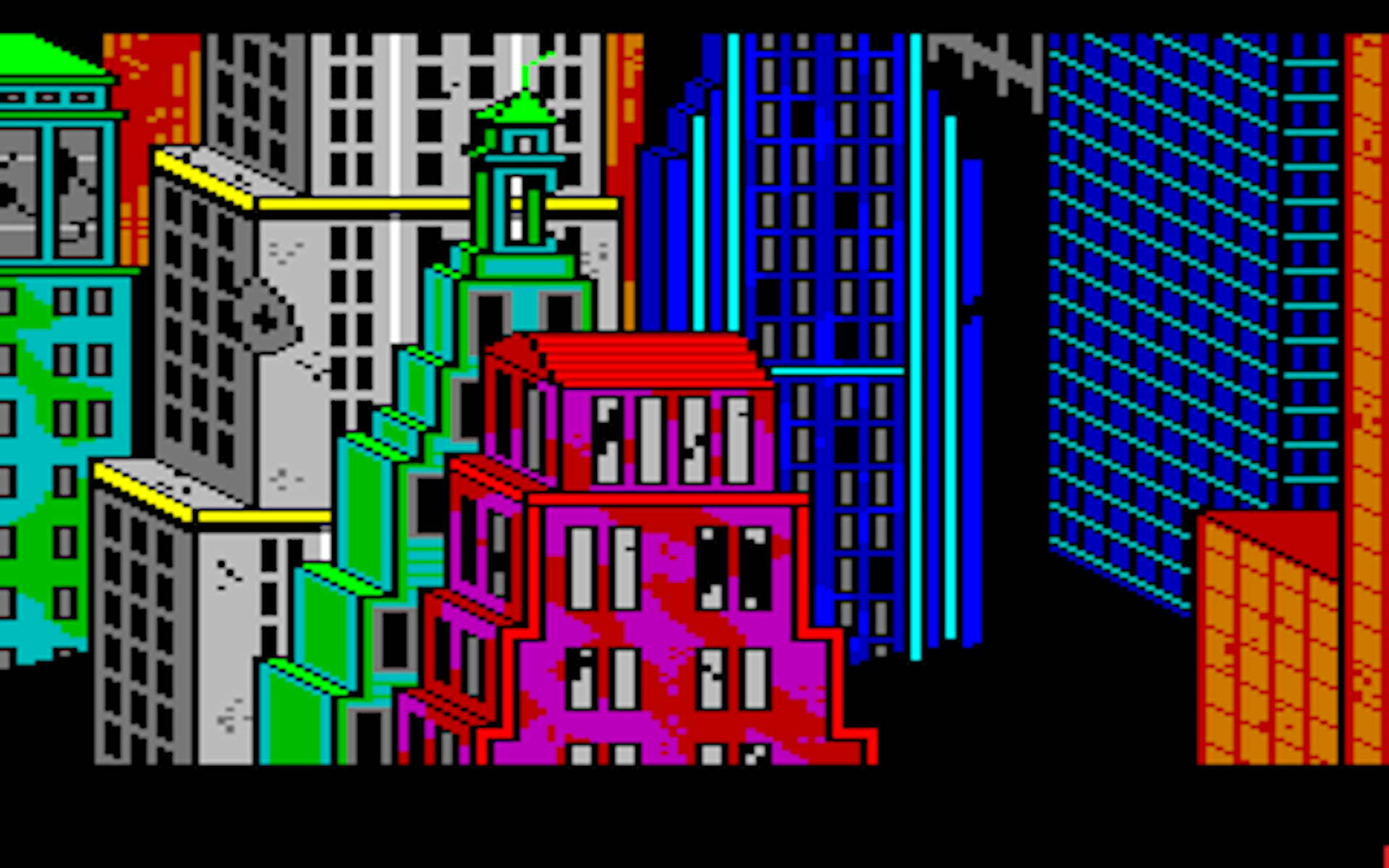
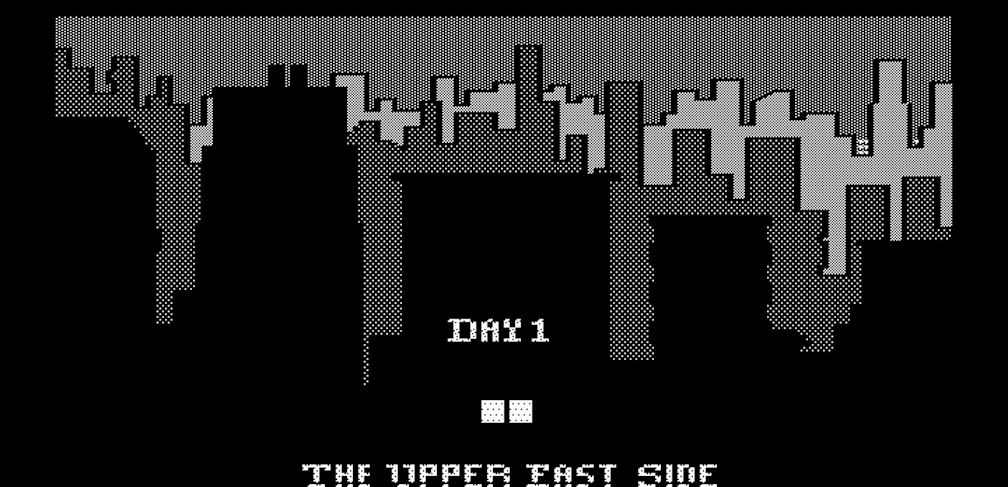
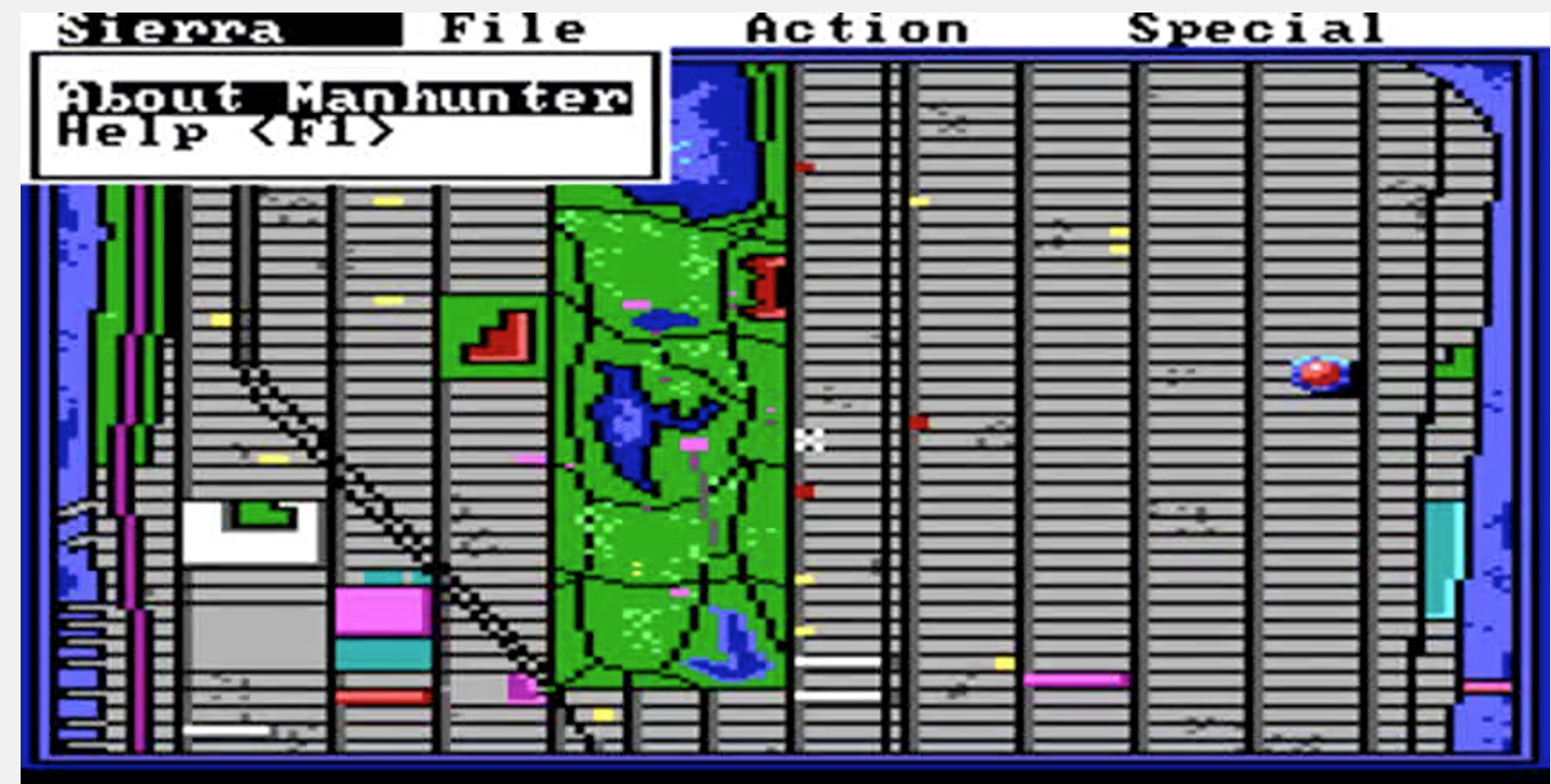
Images from Manhunter: New York (1988)

maxresdefault

335246-manhunter-new-york-amiga-screenshot-intro-new-york-looks-a

181573-manhunter-new-york-dos-screenshot-intro-hercules-graphics

Screen Shot 2016-08-04 at 12.14.12 PM


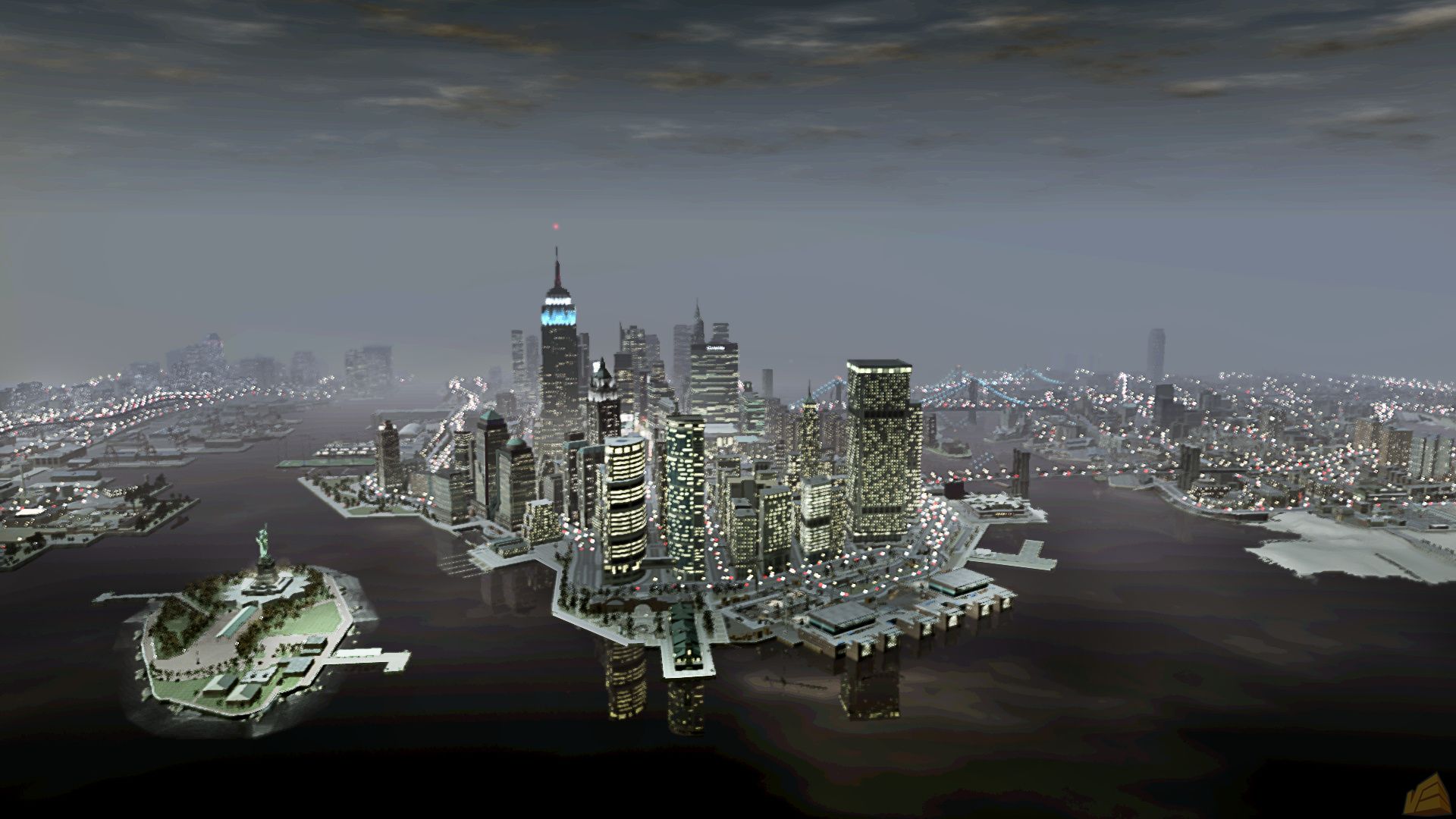
Screenshot from Grand Theft Auto‘s Liberty City

From GTA Wikia
From GTA Wikia

The area of Bowling Green, after the Great Fire of 1776, as depicted in Assassin’s Creed III.

Courtesy Assassin's Creed Wikia
Courtesy Assassin’s Creed Wikia

Defying gravity: New York’s most famous daredevils

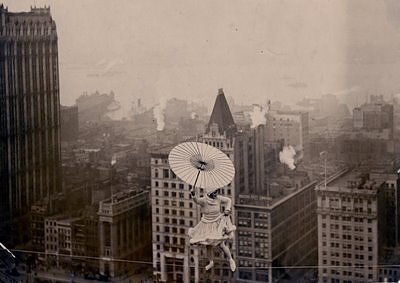
Bird in the sky: The delicate Ms. Millman makes it look easy

Last night on my walk home, I observed something you just don’t always see everyday — a renegade acrobat dangling from the top of the Williamsburg Bridge! The perilous pair, Seanna Sharpe and Savage Skinner, performed this foolhardy trapeze as traffic whizzed by below them, and the two were later apprehended by police. Will this stunt place them in the annals of great stuntwork performed by others who have used New York landmarks as their own personal stages?

1 Jules Leotard
This young French performer, renown in his home country, performed at New York’s Academy of Music in 1868 where he essentially debuted the art of the flying trapeze to startled New Yorkers. While we would not consider his feats particularly compelling today, audiences went wild, with local papers calling him a ‘dazzling, plumed bird’ and the Tribute referred to him as ‘tremendous, as a son of thunder’. He would return to Europe, where his tight, one-piece uniform would be mass produced and eventually bear his name.

2 Hanlon Brothers
The lofty endeavors of tightrope walking and trapeze acrobatics were forever changed on November 1, 1869, when an acrobatic troupe brought an aerial show to New York so ambitious for its time that it required one of its members to invent the aerial safety net! (William Hanlon eventually held the patent for it.) But here’s the odd part. The venue for that performance? Tammany Hall, at the time at 141 East 14th Street — and nearby the Academy of Music — making the block a sort of revolutionary spot for 19th century stuntwork.  [source]

Steve Brodie
A teenage newsie looked over at the Brooklyn Bridge as it slowly rose over the East River during its construction in the 1870s. He looked and thought, “I’m going to jump off that one day!” And so he did, on July 23, 1886 — or so he claimed — and the single event transformed him into a minor celebrity. He toured in a stage show recounting the event and opened a popular saloon at 114 Bowery (at Grand Street) in honor of his claim to fame. Today most people attempting such a ridiculous stunt are hardly considered heroic.

Harry Houdini
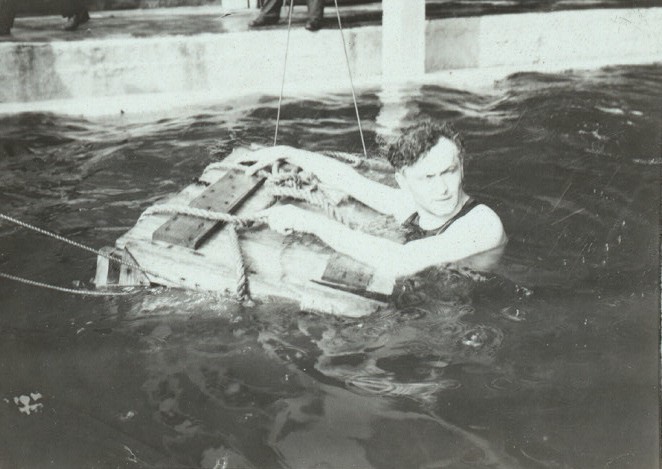
The legendary magician moved to New York at an early age  in the 1880s, and as he honed his crafts of illusion, he frequently used the city as a backdrop to heighten the drama. He was thrown into the East River on July 7, 1912, locked in a crate and bound in handcuffs and leg-irons. (Time it took him to escape: 57 seconds.) And in another rather famous trick in 1916, the escape artist, bound in a strait-jacket, hung precipitously from a crane over an excavation for the New York subway in the middle of Times Square. (Escape time: 2 minutes, 37 seconds.)

Below: Houdini, coming up for air (Pic courtesy NYPL)

Bird Millman
The lovely queen of the tightrope (pictured at top) was a favorite of the Ringling Brothers and Barnum & Bailey Circus, not to mention a featured performer for Florenz Ziegfeld. She performed hundreds of times within vaudeville theaters in New York well into the late 1920s, but occasionally she performed outside, dancing across tightropes stretched between buildings.

Evel Knievel
Garbed in his trademark patriotic colors, Knievel leapt over nine cars at Madison Square Garden during a series of shows in July of 1971 — his only major New York appearances. But the stuntman’s real dream never got off the ground:  the desire to jump his motorcycle from one great skyscraper to another. The city wouldn’t have approved of something so dangerous….

Philippe Petit

…which is why you don’t ask them. The eccentric French high-wire performer snuck into the World Trade Center several times to plan the specifics of an extraordinary display of daredevilry. And on August 13, 1974, this ‘Man on Wire’ walked a narrow cable from one tower to the other. A masterful display of personal courage, and a rather embarrassing on the Twin Towers’ lax security.

Alain Robert
This modern daredevil — the ‘modern Spider-man’ as the press has dubbed him — has scaled all sorts of tall surfaces throughout the world, including the Empire State Building in 1994. When the new New York Times headquarters was completed in 2008, it was like a red cape to a charging bull, and Robert took to the building on June 5, 2008, and unfurled a banner about global warming.

ALSO: Coney Island has been the site of a great many deathdefying performances over the decades. An August 14, 1904 issue of the New York Tribune marvels at the amazing stunts at the theme park Dreamland — “Men Must Do Much to Thrill The Public Now” — and notes one performer who fell off a rusty 725-foot sliding cable, tumbling into the ‘Shoot the Chutes’ ride!

Tribute to a scrappy typewriter tower in lower Manhattan (yes, typewriters, remember those?)

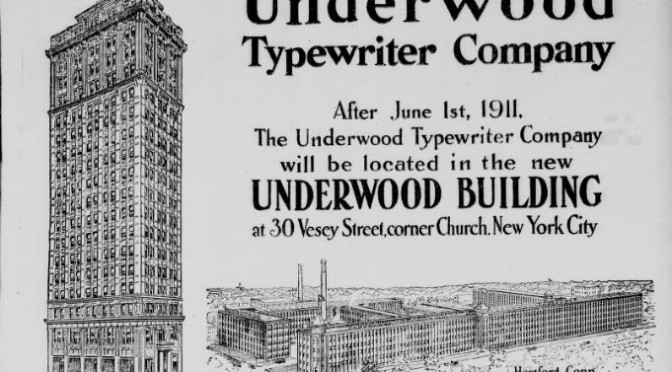
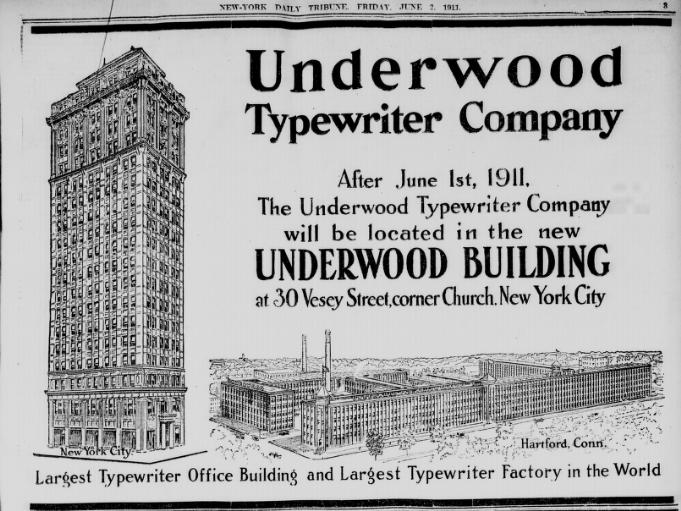
I found this advertisement in an issue of the New York Tribune from one hundred years ago:

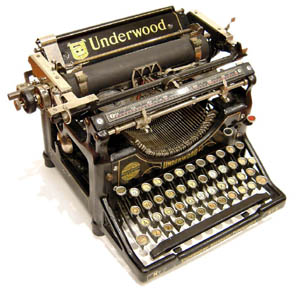
Although the famous Underwood Typewriter Company had principal manufacturing plants in Hartford, it was a New York company through and through. Its founder John Thomas Underwood became so wealthy that he built a stately home in the neighborhood of Clinton Hill, Brooklyn. Following his death in 1937, the estate was donated to the city and transformed into Underwood Park nearby Pratt Institute.

He desired a great skyscraper for his booming company, emulating those great towers built by industrialists like Frederick Bourne (of the Singer Sewing Machine Company and its companion Singer Building), and newspaper men like Joseph Pulitzer (who, after all, now used Underwood typewriters in their newsrooms at the mightt World Building on Park Row).

The Underwood building, at 30 Vesey Street, was designed by the firm of Starrett & Van Vleck, better known for their department stores than their skyscrapers. Their roster includes the flagship locations of Saks Fifth Avenue, Bloomingdale’s and Lord & Taylors. Looking up at all 17 floors of the Underwood Building, one can see some of its touches imitated in those more famous, accessible buildings.

The office building was quickly overshadowed just two years later by another skyscraper rising one block away, over three times larger than the Underwood and another great monument to industry — the Woolworth Building.

Ladies, you’ll be happy to know that a rest room facility has been placed on the ground floor of the Underwood, as of this 1918 trade-journal news clipping, where you can enjoy your lunch:

The article refers to “both buildings” of the Underwood Typewriter Company. By that time, they had expanded into a second office at Vesey and Greenwich streets. (That building no longer exists. I’m pretty sure it stood where 7 World Trade Center is today.)

The Underwood sustained serious damage during the attack upon the World Trade Center in 2001. But it still stands today, hovering over its old neighbor, St. Paul’s Chapel, and greeting a new one, One World Trade Center, rising to its west.

Given that it stands on a heavily trafficked corner surrounded by greater tourist sites, most don’t bother to give the Underwood its due. [Here’s the Underwood on Google Maps.]

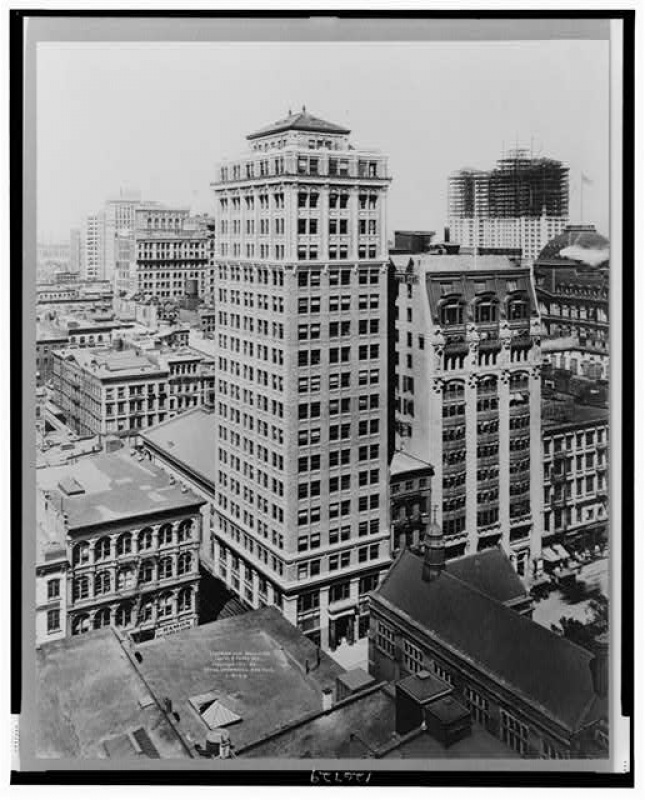
Below: the Underwood in 1911, photographed by noted city photographer Irving Underhill

MYSTERY! In the picture above, we see the south and west faces of the Underwood Building, the corner of Vesey and Church streets. (In the background you can see the Manhattan Municipal Building being constructed.) Today, across the street from the Underwood on the south side, is the famous St. Paul’s Chapel cemetery. However, in the picture above, there is clearly a building sitting there, the one with the odd little turret! Any idea as to what that is?

Categories
Mad Men

‘Mad Men’ notes: Swanky steaks and a market soiree


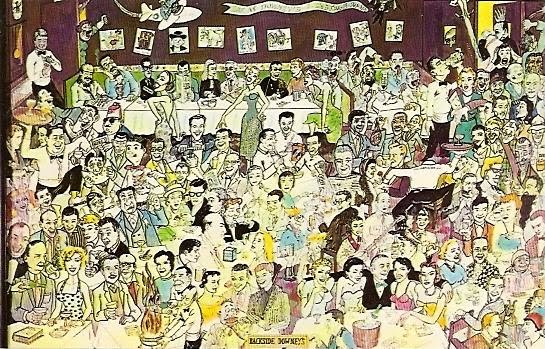
A postcard from Jim Downey’s showing a plethora of theatrical faces who frequented the place.

Every Monday I’ll try and check in with the Mad Men episode from the night before and focus in on one or two historical references made on the show. Spoilers aplenty, so read no further if you don’t want to know….

There were two long-gone destinations used in last night’s episode of ‘Mad Men’ to delineate the old and the new, contrasting the square with the hip.

Two former ad rivals Pete Campbell and Ken Cosgrove bury the hatchet over a meal at Jim Downey’s Steak House, a dapper theater-district hangout at 705 Eighth Avenue (at 44th Street), started in the late 1950s by an Irish immigrant who won big at the horse races one day and decided to open a restaurant (as the legend goes).

Downey’s, very much in the mold of classic midtown eateries like Sardi’s and Toot Shor’s, was considered more a destination for theater crowds than the professional set, so much so that its dining rooms had theatrical names (like the Backstage Room) and you could frequently find a theater star or two having Irish coffees at the bar, possibly standing by writer Brendan Behan, also a regular. Dustin Hoffman and Robert Duvall sat at a booth very much like the one depicted on the show, discussing women and literature.
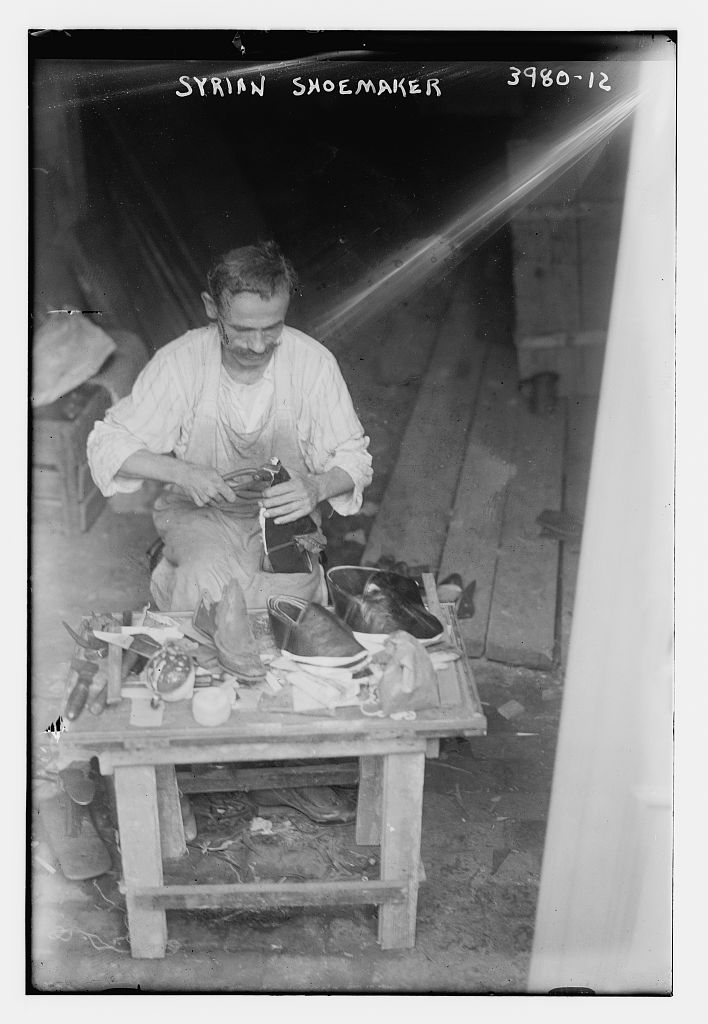
The restaurant was closed by the early ’80s, taken over by a Cajun restaurant, although Downey’s sons opened steak houses in other parts of the city.

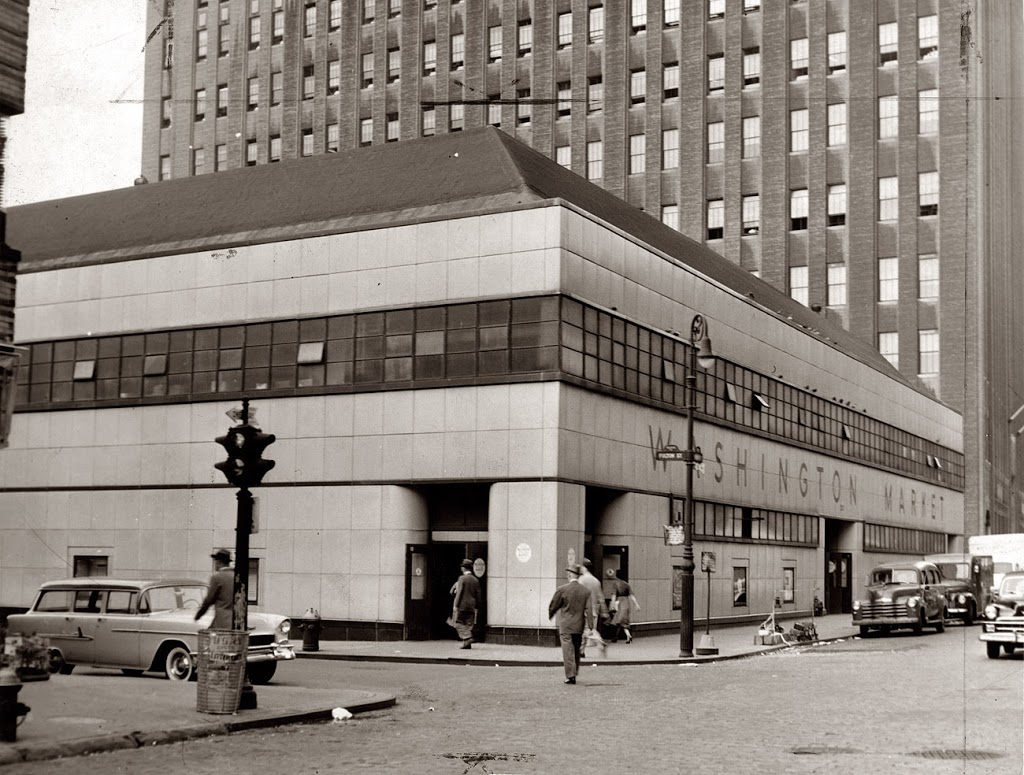
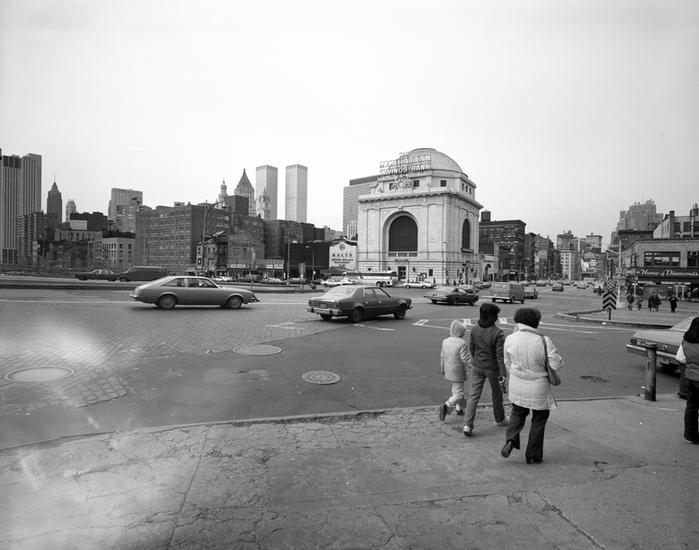
Meanwhile, Peggy Olsen got herself invited to a happening, or rather, an “I don’t even know what to call it” at old Washington Market (pictured below), the once lively indoor marketplace downtown. By 1956, however, the vendors — at one time, over 800 of them — had moved out (most up to the Hunts Point in the Bronx) and the forlorn shell of the building sat abandoned. It was eventually ripped down in 1967 to build the World Trade Center.
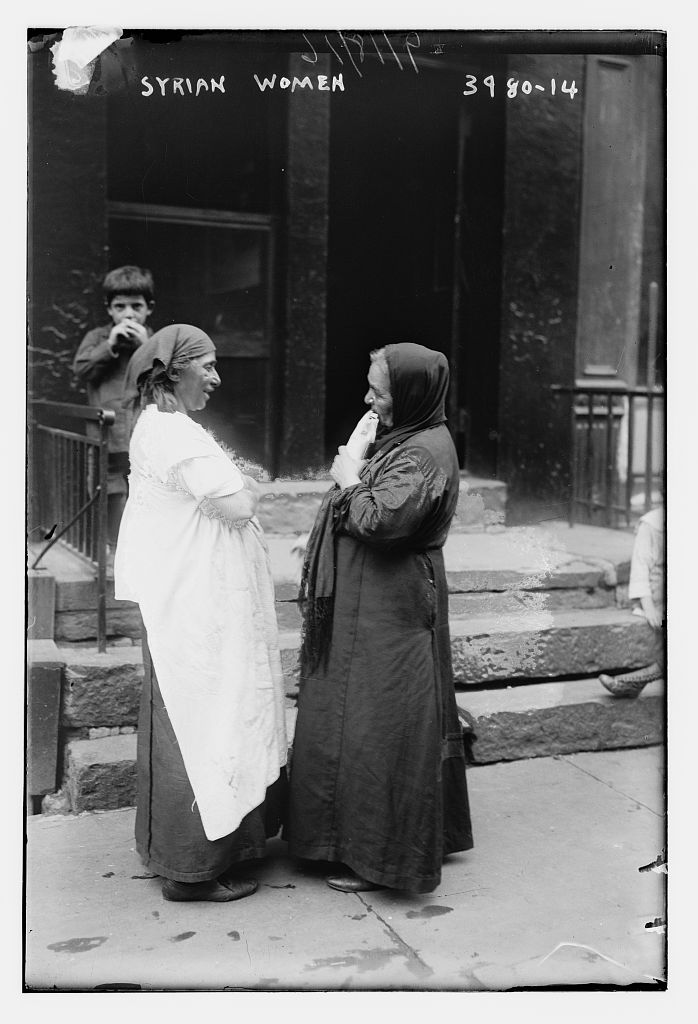

(Picture from Shorpy)

Antoni Gaudi’s grand New York hotel — built by sci-fi


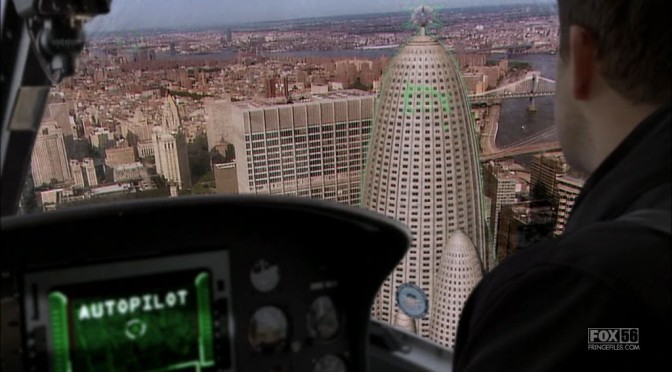
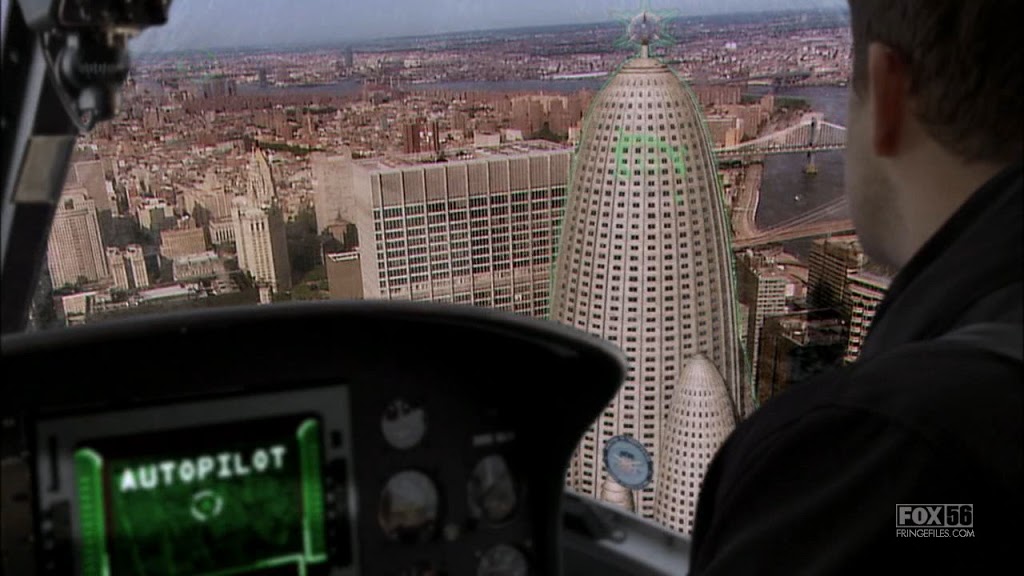
Joshua Jackson, looking down at Gaudi in an alternate universe. Courtesy Fringe Files
I promise, this is my last post on fake New York City history for awhile, but I couldn’t let the season finale of the FOX sci-fi series Fringe pass without comment.

A running scientific theory running through the series is the notion of a parallel universe co-existing with ours, with some not so subtle differences. We discovered this alternate universe last season when a character popped inside the still-standing World Trade Center. In the harbor sits the Statue of Liberty, in her original copper sheen, assumably off-limits to tourists and since 1989, home of the nation’s Department of Defense.

In this universe, it appears the grave threat comes from within its very fabric, not terrorists. Madison Square Garden — and the 10,000 people within it — fall victim to an expanding wormhole in 1999 and are contained in ghastly amber cocoon. And if you think that’s bad, you should see Boston!

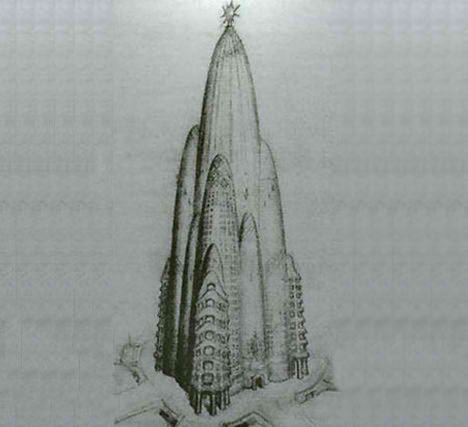
Silhouetted above this frightening fantasy skyline, however, is a work of art straight out of a New York City dream — the Grand Hotel, built in 1908, and designed by one of the world’s most eccentric architects, Antoni Gaudi. A spacecraft like mound of rounded forms, zeppelin-like curves shooting in the sky, mocking the Beaux-Arts and seeming like something that could be built in the city today (or tomorrow). Unlike the city’s space-time mishaps however, the Grand Hotel, believe it or not, was really planned by Gaudi to be an actual skyscraper.

Gaudi’s original sketch:

Gaudi’s talents lived apart from the styles of his contemporaries at the turn of the century, appreciated daily by the citizens of Barcelona in many otherworldly buildings he created, most famously La Pedrera, and growing spires of the Sagrada Família. In 1906, it appears Gaudi was approached by two businessmen with property in New York, asking him to design a luxury hotel in the style of the Waldorf-Astoria on 34th Street.

This being Gaudi, of course, the resultant sketches (for a structure he called Hotel Attraction) were nothing like the rectangular and domed objects currently rising above New York. At 1,016 feet, the monstrous hotel would have towered over the plans of F.W. Woolworth, whose own skyscraper was still in the planning stages in 1908.

This odd shape would have glistened with alabaster and bits of glass and tile. The interior would have included an immense hall ringed with circumferal galleries above it and decorated with sculptures of every American president. Below this, guests would enjoy a cavernous restaurant decorated with cosmic murals and a concert hall with ceilings 100 feet overhead. This alien masterpiece was slated to sit in the exact area where the World Trade Center would later be built.

The Hotel Attraction never made it off the drawing boards, but there were some efforts by ardent Gaudi fans championing it as the ideal replacement for the Twin Towers after 9/11. Could you imagine if they’d actually decided to build it today? It’s not so strange an idea. Gaudi’s cathedral is still being built in Barcelona. And in our alternate universe, the Gaudi’s grand hotel looks just spiffy.

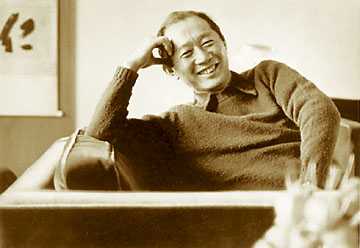
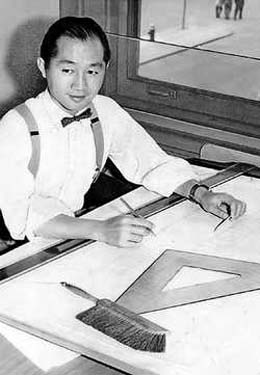
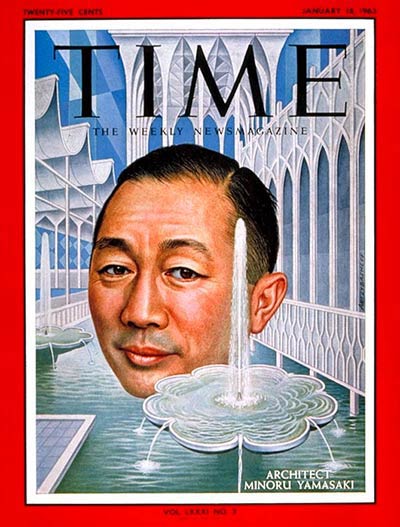
Minoru Yamasaki: The man who made the Twin Towers


In 1962, Minoru Yamasaki was given an improbable, totally ridiculous task.

Yamasaki, a Japanese-American architect best known at the time for his modernist designs of airports, university buildings and synagogues, won the World Trade Center job in 1962 over more internationally famous architects. He was paired with the prolific Emery Roth and Sons, who had marked Park Avenue with a chilling procession of tall concrete monoliths.

Yamasaki and Roth were commissioned by Port Authority, on an inspiration from the Rockefellers, to build a gargantuan office space on a relatively small area of land — 12 million square feet of usable space over a mere 16 acres, all the while with trains rushing beneath it and the Hudson River right next door.

It would take a balancing act worthy of Philippe Petit(the tight-rope walking subject of Man of Wire who later walked between the Twin Towers) to create something both elegant and functional on such absurd dimensions.

One massive tower over the space would tax even the most expert construction teams and cast a large looming shadow over the city. A cluster of buildings would, in the words of Paul Heyer, “[become] too approximate for their size and ‘looked too much like a housing project’.”

This spacial puzzle, however, proved no match for the exceptional Yamasaki. Born in Seattle in 1912, he worked his way through New York University and into the city architecture scene by sheer genius, during a time in the early 40s when many Japanese American back home were placed in internment camps. He started ambitiously — at Shreve, Lamb and Harmon, who brought New York many great skyscrapers including the Empire State Building — and branched out into his own firm in the 1950s.

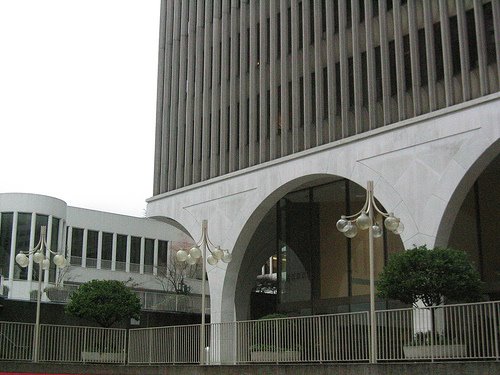
He distinguished himself with fabulous buildings in Seattle (the IBM Building) and throughout the Midwest, with a unique Gothic twist to the modernist aesthetic. In a world possessed by International style — with coarse, hard and lean as code words to a new world of architecture — Yamasaki was still a poet who eschewed pure brutality. Interestingly, for the World Trade Center, he was paired with New York’s main liners of architectural brutalism, Emery Roth, who never saw a slab of concrete he didn’t like.

Below: the IBM Building in Seattle, in many ways a practice run for the Twin Towers in its linear form and simplicity

Balancing his own principles with Roth’s, taking an impractical situation presented by Port Authority and the vast budget (eventually $900 million) attached to it, Yamasaki decided that to balance it all meant a physical symmetry — two buildings standing side by side, with an open plaza in between so that the sheer immensity could be admired.

Construction on the towers began in 1966 and the second tower was finally completed in 1973. By then, Yamasaki and his firm would scatter great buildings all over the world, working right up to his death in 1986. But although he would be known as a visionary architect, the World Trade Center was his only building for New York City.

“World Trade Center should, because of its importance, become a representation of man’s belief in humanity, his need for individual dignity, his beliefs in the cooperation of men, and through cooperation, his ability to find greatness.” — Yamasaki

Below: Mere anticipation at the greatness of the World Trade Center planted Yamasaki on the cover of Time Magazine in 1963

Click here for our recollection of September 11, 2001 from last year.