Categories
American History Podcasts

The Great Fire That Transformed New York

This month marks the 190th anniversary of one of the most devastating disasters in New York City history — The Great Fire of 1835.

This massive fire, among the worst in American history in terms of its economic impact, devastated the city during one freezing December evening, destroying hundreds of shops and warehouses and changing the face of Manhattan forever.

It also underscored the city’s need for a functioning water system and permanent fire department.

So why were there so many people drinking champagne in the street? And how did the son of Alexander Hamilton save the day?

FEATURING Such Old New York sites as the Tontine Coffee House, Stone Street, Hanover Square and Delmonico’s.

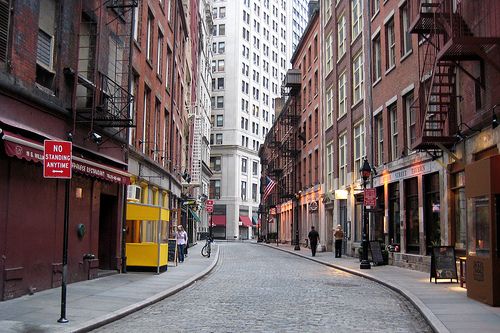
PLUS: We give you a another reason to check out the Stone Street Historic District

To mark this special anniversary, we have newly remastered and edited our classic Bowery Boys podcast on this subject which was originally released on March 13, 2009

LISTEN HERE: THE GREAT FIRE THAT TRANSFORMED NEW YORK


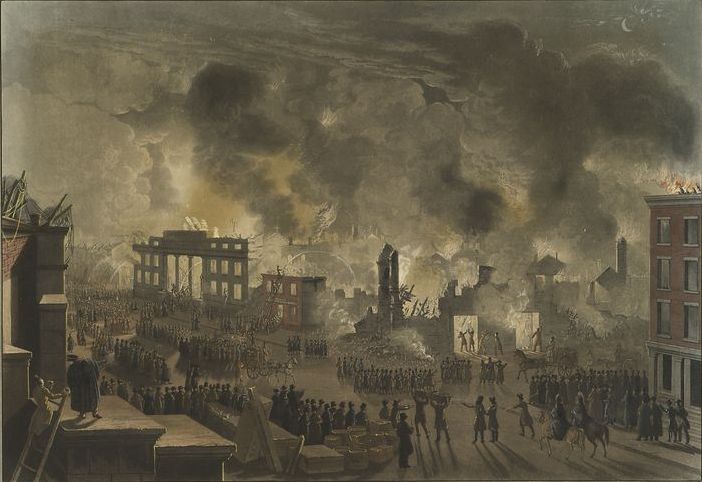
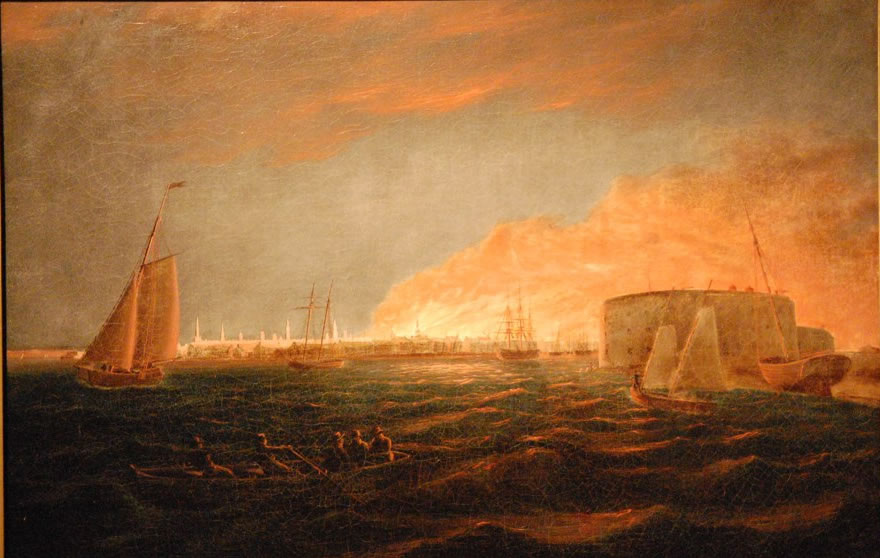
At top: Nicolino Calyo captured the terrible sight of the blaze as it might have looked from Red Hook, Brooklyn

Before the blaze: Charming Wall Street in 1825, from a 1920s guide book. Prosperity from the Erie Canal was just around the bend. (Courtesy Ephemeral New York)

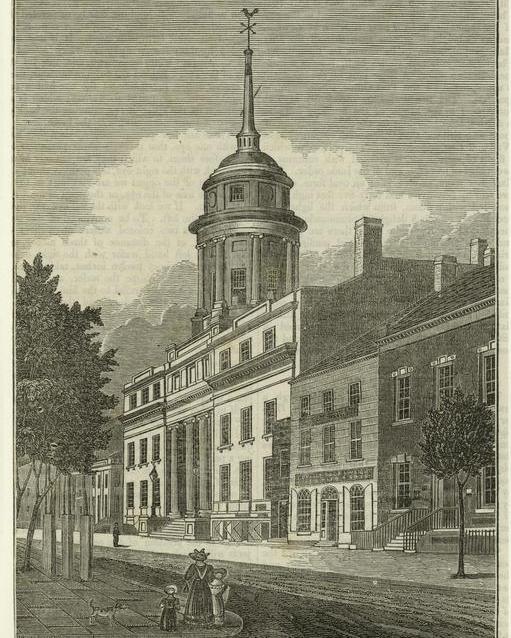
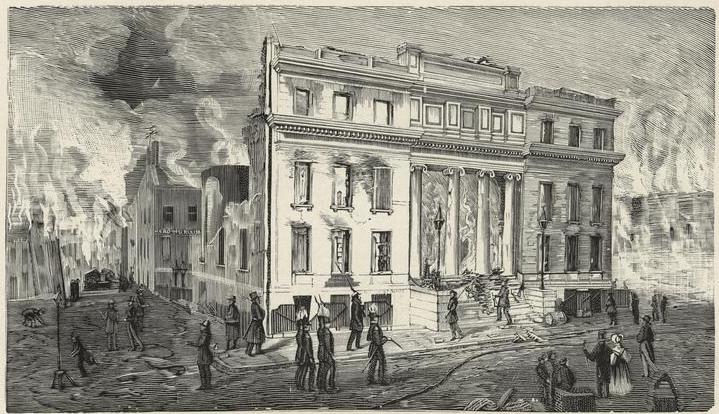
The original Merchant’s Exchange building, one of New York’s more ornate building, featuring a statue of Alexander Hamilton standing nobly in its rotunda. (Illustration courtesy the New York Public Library image gallery)

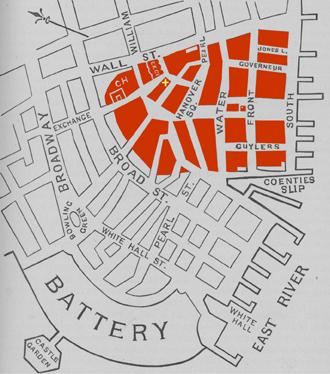
What’s the damage?: the red areas below indicate the blocks destroyed by the swift moving conflagration (map courtesy CUNY)

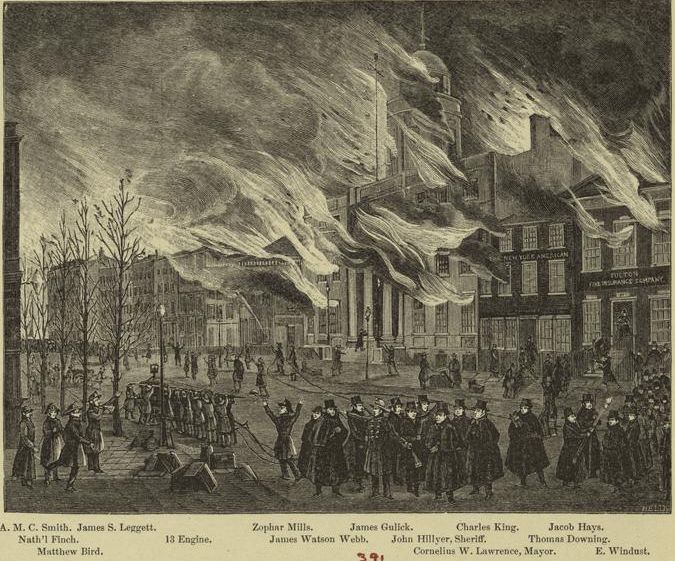
City officials, including mayor Cornelius Lawrence, could only watch and stare as the blaze over takes a stretch of prominent buildings. Also included below is Charles King, who watches as his newspaper the New York American is overcome by the fire.

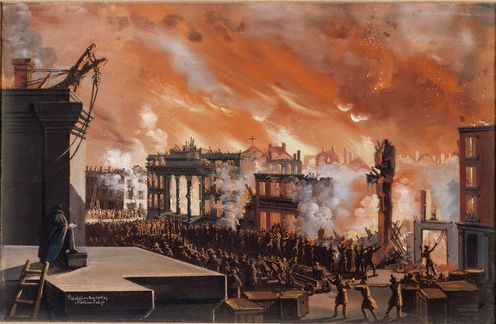
Calyo’s painted depiction of the “Burning of the Merchant’s Exchange”

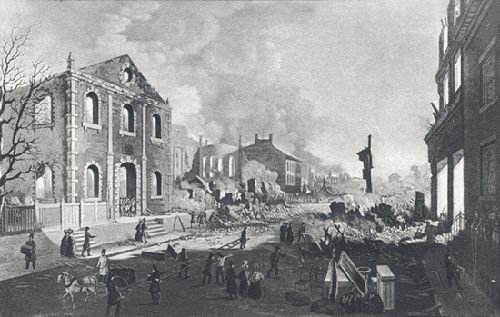
Another interpretation from the same angle — the futility of battling the blaze was chillingly illustrated from the corner Wall and William streets, where winds carried the flames from building to building, high above the heads of fighters below.

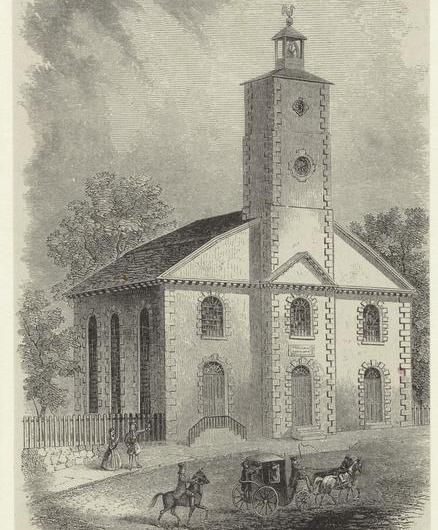
As the old Dutch Church on Garden Street caught fire, a morose parishioner mounted the organ and began playing a dirge. (Where’s Garden Street? According to Forgotten New York, Garden Street was “between William Street and Broadway, just south of Wall Street” and is now part of Exchange Place today.)

Aftermath at the Merchant’s Exchange. Many business owners actually tranferred their stock to the Exchange building, unfortunately thinking it would be impervious to the encroaching flames.

The devastation that met New Yorkers the following day led most to believe the city would never recover.

Most of the buildings on today’s Stone Street were built in the immediate years following the fire, Greek Revival-style countinghouses that are refitted for modern times as taverns and restaurants. It’s also one of the few cobblestone streets still around in the Financial District area.


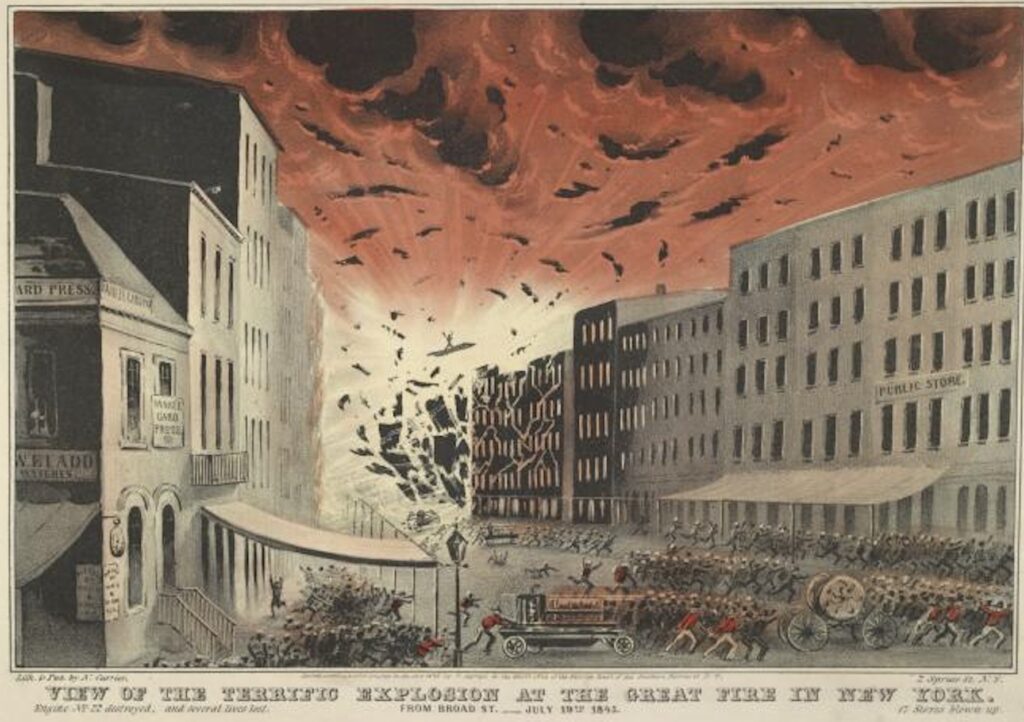
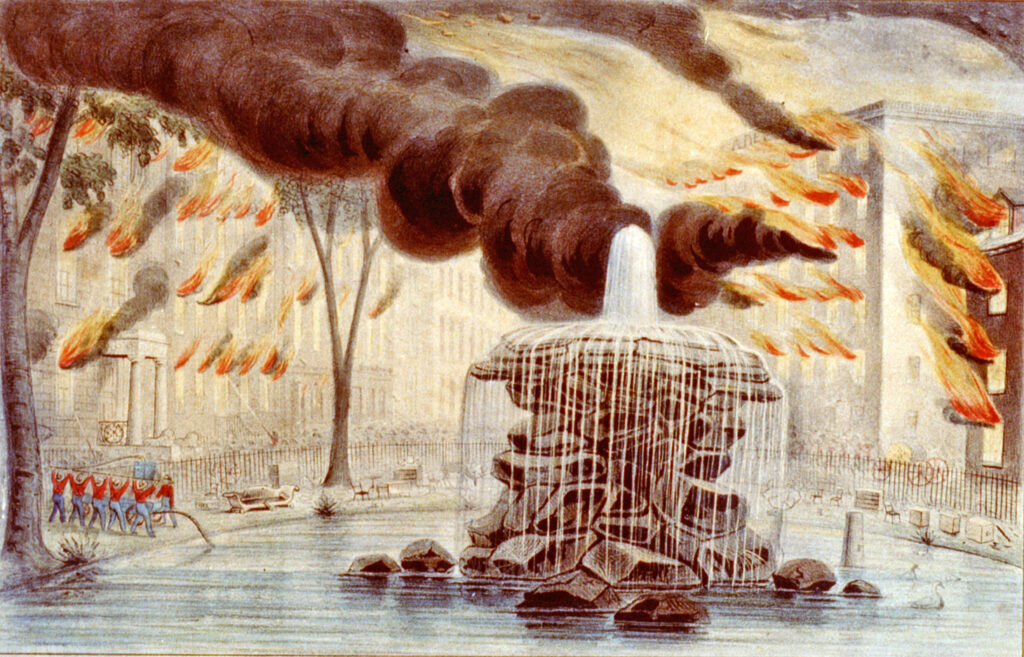
And did you know there was also a terrible fire ten years later — in almost the same location? Check out my article on the Great Fire of 1845 — and these captivating illustrations by Currier and Ives:

In this Currier & Ives lithograph, the serene fountain in Bowling Green as flames consume buildings all around it.

Who exactly was Nicolino Calyo, the man who painted so many vivid pictures of the Great Fire?

Nicolino Vicomte de Calyo was a political dissenter who fled Italy in the 1830s and settled in Baltimore, becoming entranced by the new American landscape.

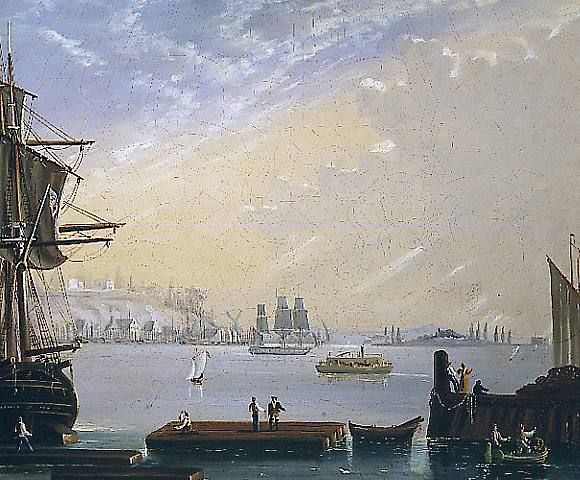
Although his most famous depictions of New York are of the city in flame, he also painted a few serene views (like the one below, a vantage of the harbor from Brooklyn Heights).

His works are in many New York museums, including the Burning of the Merchant’s Exchange which is at the Museum of the City of New York.

Another cool resource on the Great Fire is up at the CUNY website, with more pictures and more backstory as to New York’s capacity to fight blazes in the early 19th century.


FURTHER LISTENING

Other podcasts in our back catalog that relate to this week’s show:


The Bowery Boys: New York City History podcast is brought to you …. by you!

We’re also looking to improve and expand the show in other ways — publishing, social media, live events and other forms of media. But we can only do this with your help!

We are now a creator on Patreon, a patronage platform where you can support your favorite content creators.

Please visit our page on Patreon and watch a short video of us recording the show and talking about our expansion plans.

If you’d like to help out, there are six different pledge levels.Check them out and consider being a sponsor.

We greatly appreciate our listeners and readers and thank you for joining us on this journey so far.

Categories
Skyscrapers

The grand opening of the World Trade Center on April 4, 1973; Richard Nixon, labor strikes and “General Motors Gothic”

For our 350th episode, we looked at the history of the construction of the World Trade Center. After reading this article, listen to the show for a deeper dive into the story:


Let me take you back to a simpler time, back to a time where it might have been okay to hate the actual World Trade Center.

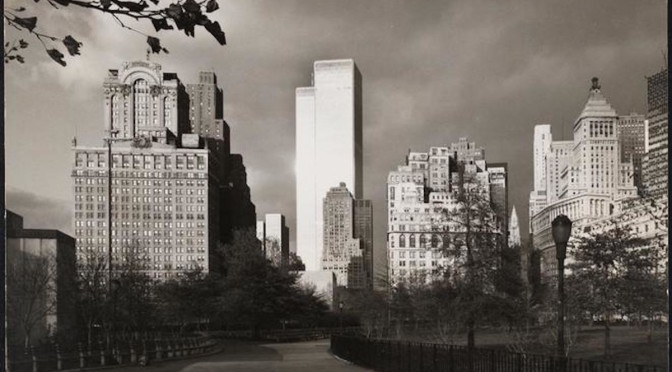
The World Trade Center was originally seen as a representation of New York’s own dreams and failures. The buildings represented progress to some, disruption to others.

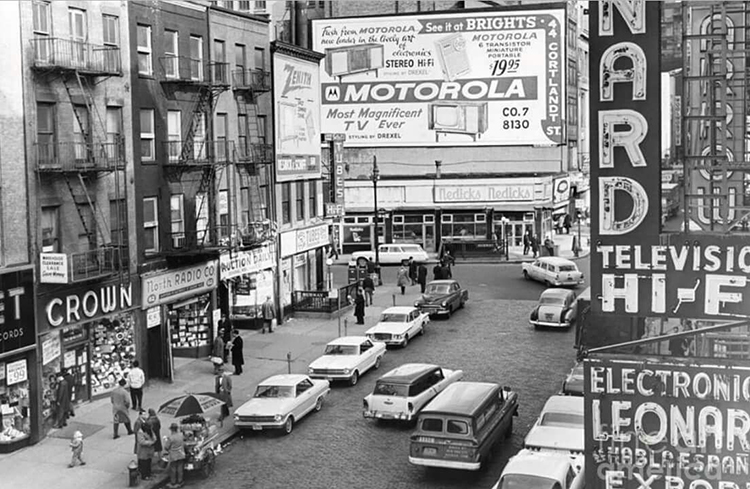
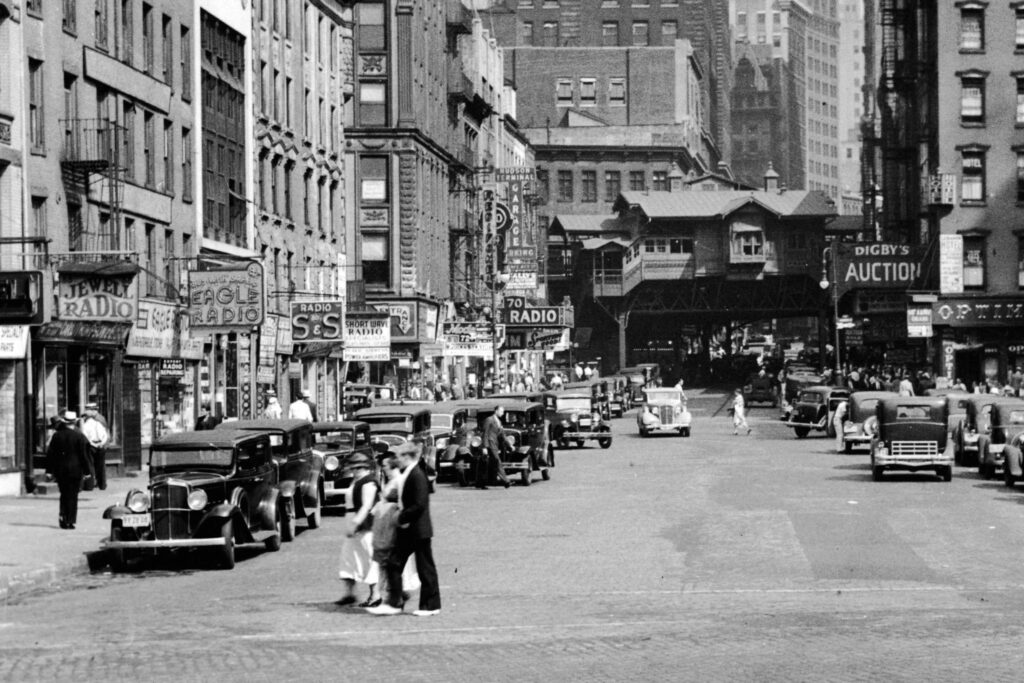
An entire business district — Radio Row — was eliminated in its construction. Another neighborhood — Battery Park City — sprang up in its shadow. The monumental design by Minoru Yamasaki radically altered (distorted?) the skyline. Some of New York’s oldest streets were now blocked from sunlight. On the other hand, an area of Manhattan that would have been susceptible to rising blight was now renewed.

It was the apotheosis of post-modern design, the apex of New York City construction.

Everything grand and intolerable about New York City in the late 1960s/early 1970s was embodied here in these two impossibly tall shafts of metal.

Many saw a waste of resources and state governments with skewered priorities.  Business interests were hopeful the buildings would reinvigorate the Financial District. They would, eventually.  

But back in 1973 many openly wondered how its owner, the Port Authority of New York and New Jersey, were even going to attract tenants.

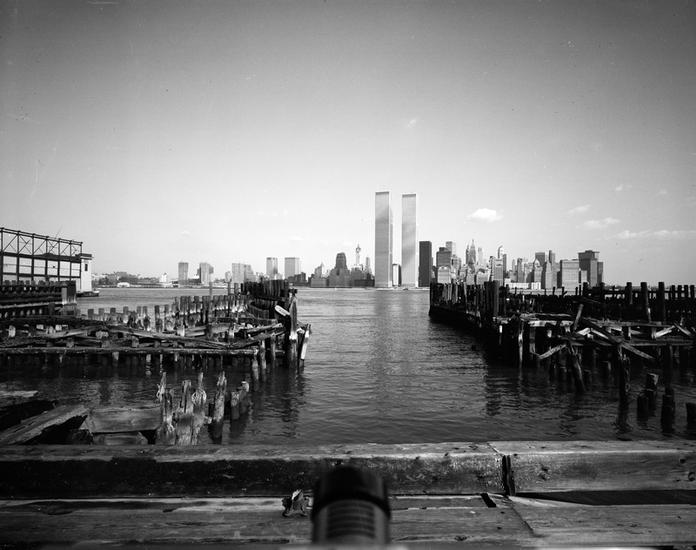
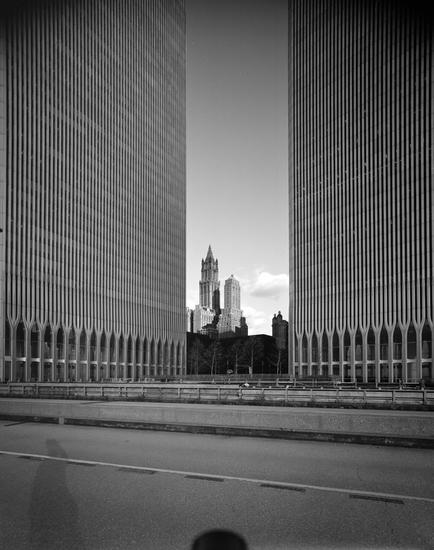
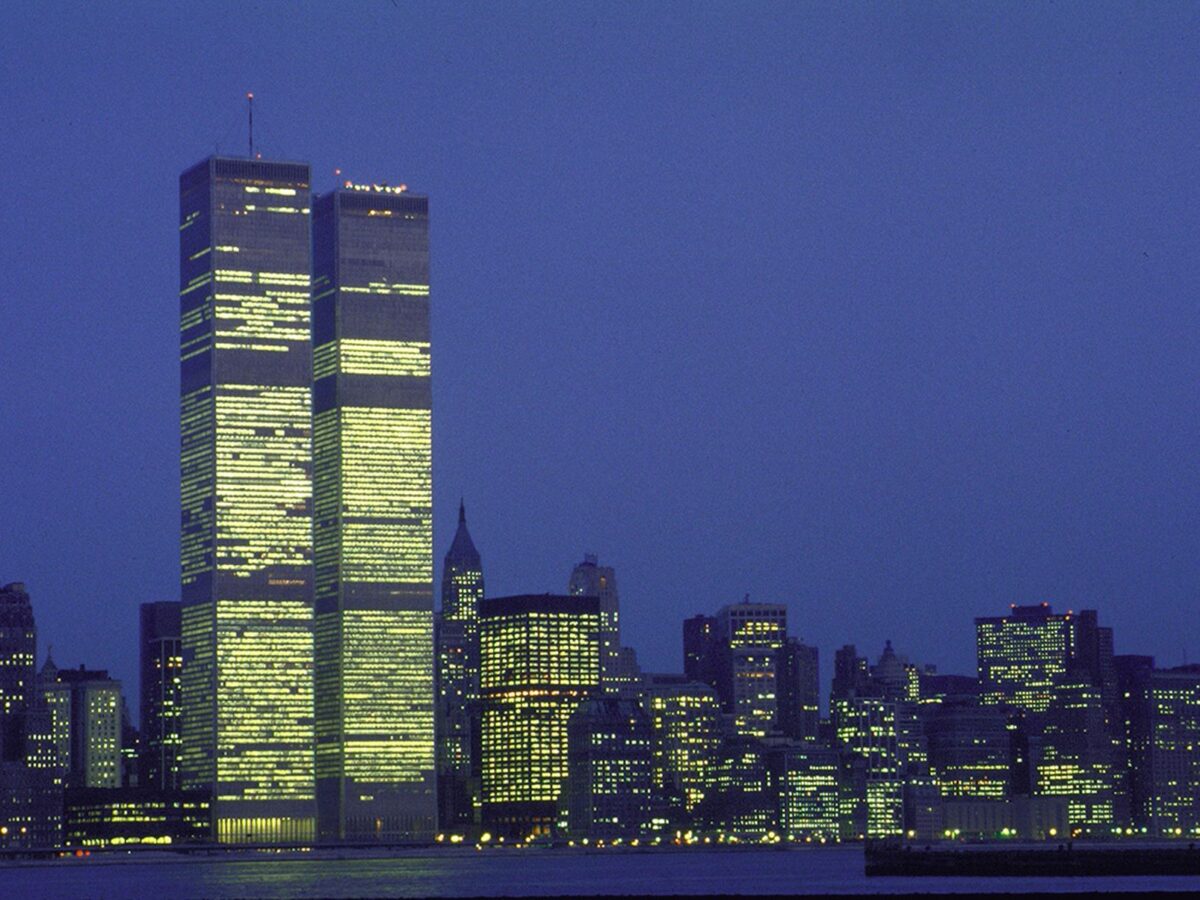
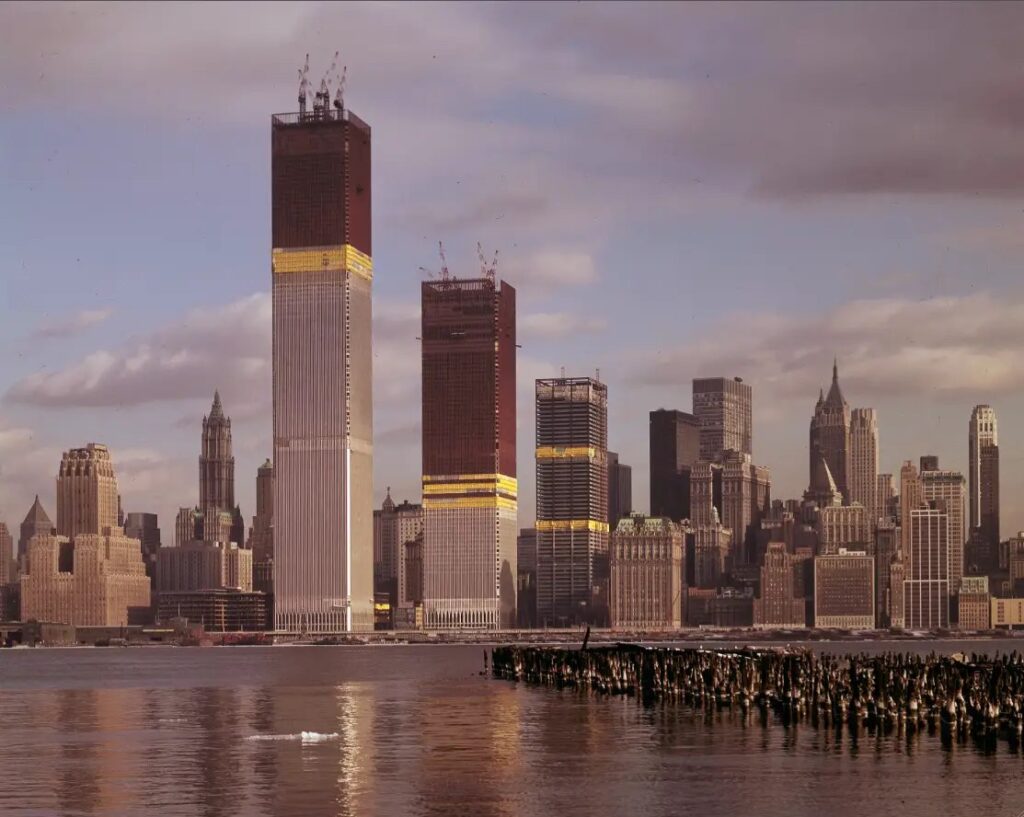
Below: The view of downtown Manhattan from a New Jersey marina

Courtesy Museum of the City of New York, Edmund V Gillon

After years of construction that transformed lower Manhattan, the buildings were officially opened in a ribbon-cutting ceremony on April 4, 1973.  Far from a rapturous embrace, the opening of the world’s tallest buildings was met with relief, resignation and turmoil.

Few were in a mood to celebrate two shiny new symbols of wealth in a city slowly nearing bankruptcy.

Here are a few more details from its opening day and its aftermath:

People were already over it:  The opening was occasioned by severe rain. (It’s in good company; the opening of the Statue of Liberty was also met with a downpour.)  Even without it, however, the celebration would have been heavily muted.  

The ground was broken on the World Trade Center site almost seven years before, and New Yorkers had plenty of time to get used to the rising towers. The first tower had been completed by 1970, but by then, the city had become rather jaded to the expensive buildings.  As it was, lower levels of the second building were still not even completed.

Disagreements: The top luminaries at the opening were New York governor Nelson Rockefeller and New Jersey governor William T. Cahill.  The World Trade Center was a Port Authority project;  PATH trains to New Jersey were rumbling underneath (or were supposed to be, see below).

While the two governors seemed in playful spirits, Cahill openly resented the backseat his state took in the finished product.  According to author Eric Darton:  “Cahill implies that New Jersey’s commuter rail needs have taken second place to the trade center, and Rockefeller, still grinning, points towards the Jersey shore. ‘You see all those magnificent container ports,’ he says, ‘that took all those jobs away from New York.’ “

2013_3_2_ 365
 

In Absentia: Gone were the days when U.S. presidents showed up at the opening of New York landmarks, but President Richard Nixon did send a statement, hailing WTC as “a major factor for the expansion of the nation’s international trade.”  That very same month, the Watergate cover-up erupted into the scandal that would eventually lead to his resignation the following year.

STRIKE! Not only was Nixon not there, but the man he designated to read the speech — Peter J. Brennan — was not even there.  Three days earlier, the Brotherhood of Railway Carmen union began a strike against Port Authority.  Because of the strike, the PATH train — that glorious feature of the new World Trade Center — was closed for a total of 63 days.  Brennan was Nixon’s new Secretary of Labor, so it would hardly seem proper to break the picket line. Nixon’s speech was delivered instead by a Port Authority chairman.

MN112063

Critics, Part One: Noted labor leader and powerful mediator Theodore W. Kheel was violently against the states’ interest in the World Trade Center. Calling it “socialism at its worst,” he demanded the governors take the podium on ribbon-cutting day and sell the building to private investors “at the earliest possible date.”

Others were perhaps understandably concerned that the buildings, given special tax status, were now a quarter-filled with state offices and certainly destined to empty and bankrupt office buildings with no such tax breaks in the surrounding area.  Luckily, Kheel did live to see the building sold to private concerns in 1998.

Critics, Part Two: Somebody else was saving up some vitriol for opening day — noted architectural critic Ada Louise Huxtable.  Having years to craft some well-worded jabs, she did so in a column in the New York Times the following day. “These are big buildings, but they are not great architecture…..The Port Authority has built the ultimate Disneyland fairytale blockbuster. It is General Motors Gothic.”

Critics, Part Three:  Labor leaders were disgruntled. Critics dismissed it. But many New Yorkers outright loathed it. It’s a bit disturbing to read such outright disgust over structures that we have very different feelings about today.  From the Village Voice a week after the opening:  

“The ecology-minded and those who are concerned with the energy crisis are fond of predicting that the building will have to be torn down — or at the very least abandoned — on that not-to-distant day when the power it consumes puts an intolerable strain on our already-diminishing power reserves.”


2013_3_2_ 127

Nowhere to Eat: The World Trade Center could facilitate thousands of employees, but, on opening day, it had one restaurant, called “Eat and Drink,” where “the waitresses wear hard hats and its busboys wear vests inscribed “Ecologist” on the back.” 

In the second building, a makeshift sandwich shop opened on the unfinished 44th floor. Needless to say, outside food vendors in the area were not displeased.

Subversion The ribbon-cutting ceremony also marked the end of One World Trade Center’s dominance as the world’s tallest building. Chicago trumped it when Sears Tower topped out at 1,454-feet less than one month later.

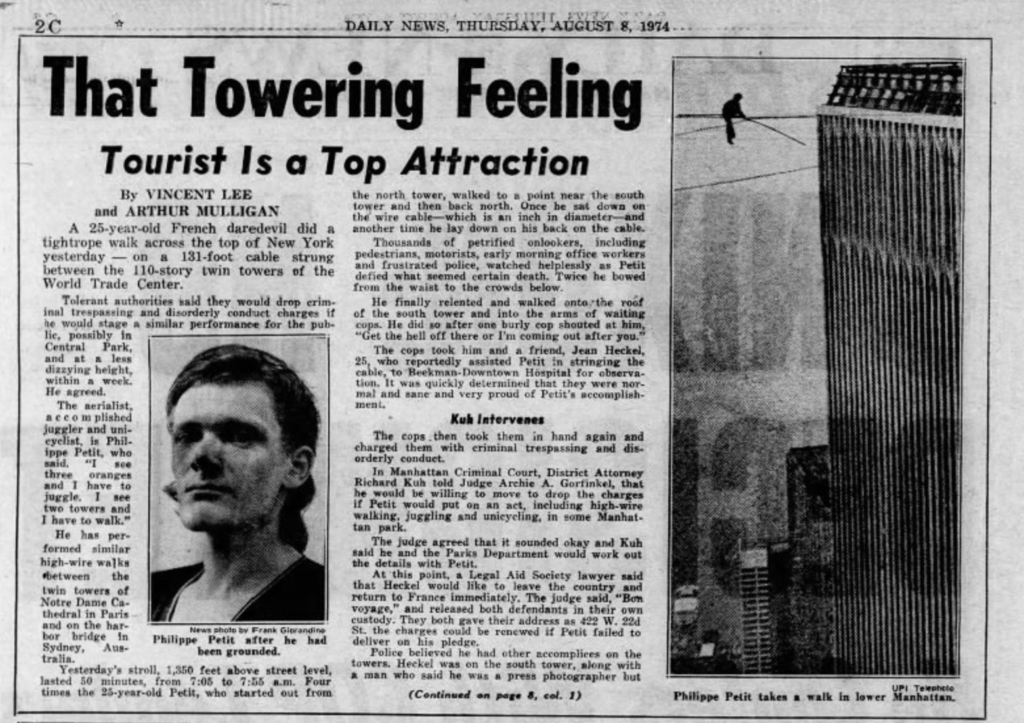
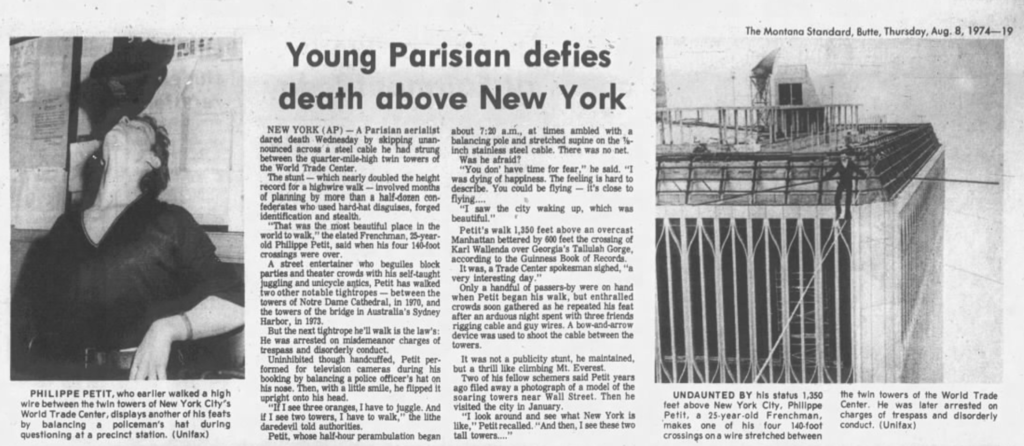
In New York, the buildings quickly became a totem of excess, of something that could be symbolically overcome. You may be familiar with the daredevil Philippe Petit and his insane and unbelievably majestic (and illegal) tightrope walk between the towers. But you may not remember that it took place just sixteen months after the opening, on August 6, 1974.

Two years later, King Kong performed a similar sort of feat in the 1976 remake starring Jessica Lange.

But there was magic in the air.  On the very same day as the ribbon-cutting, in a hospital across the water in Brooklyn, a woman went into labor and gave birth to a child who would later become the nightclub-loving illusionist David Blaine. The World Trade Center and David Blaine — born on the same day!

MN112707-1

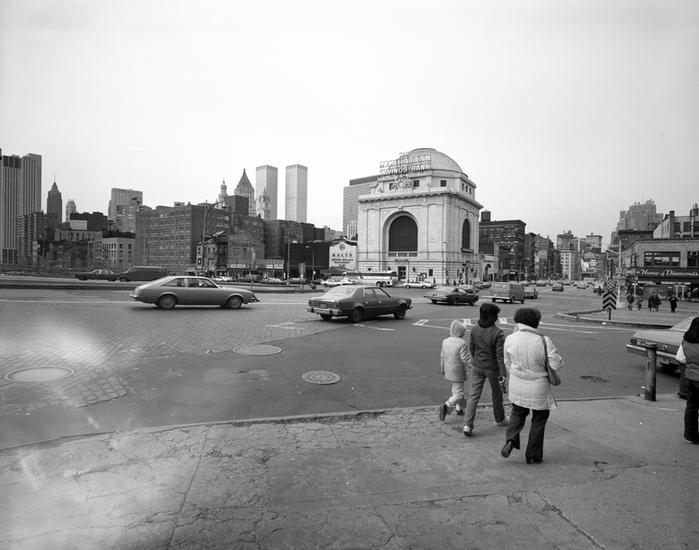
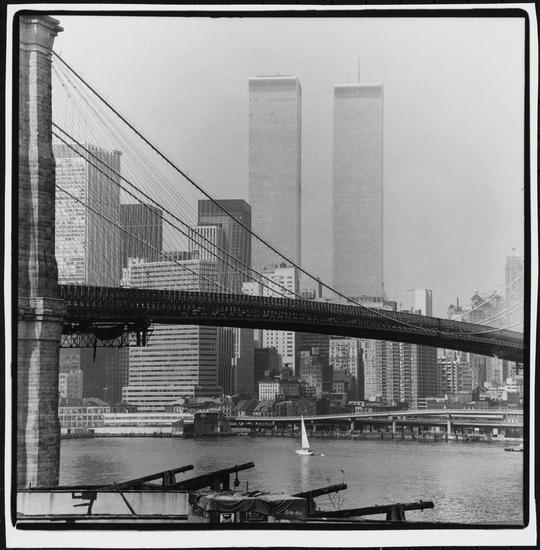
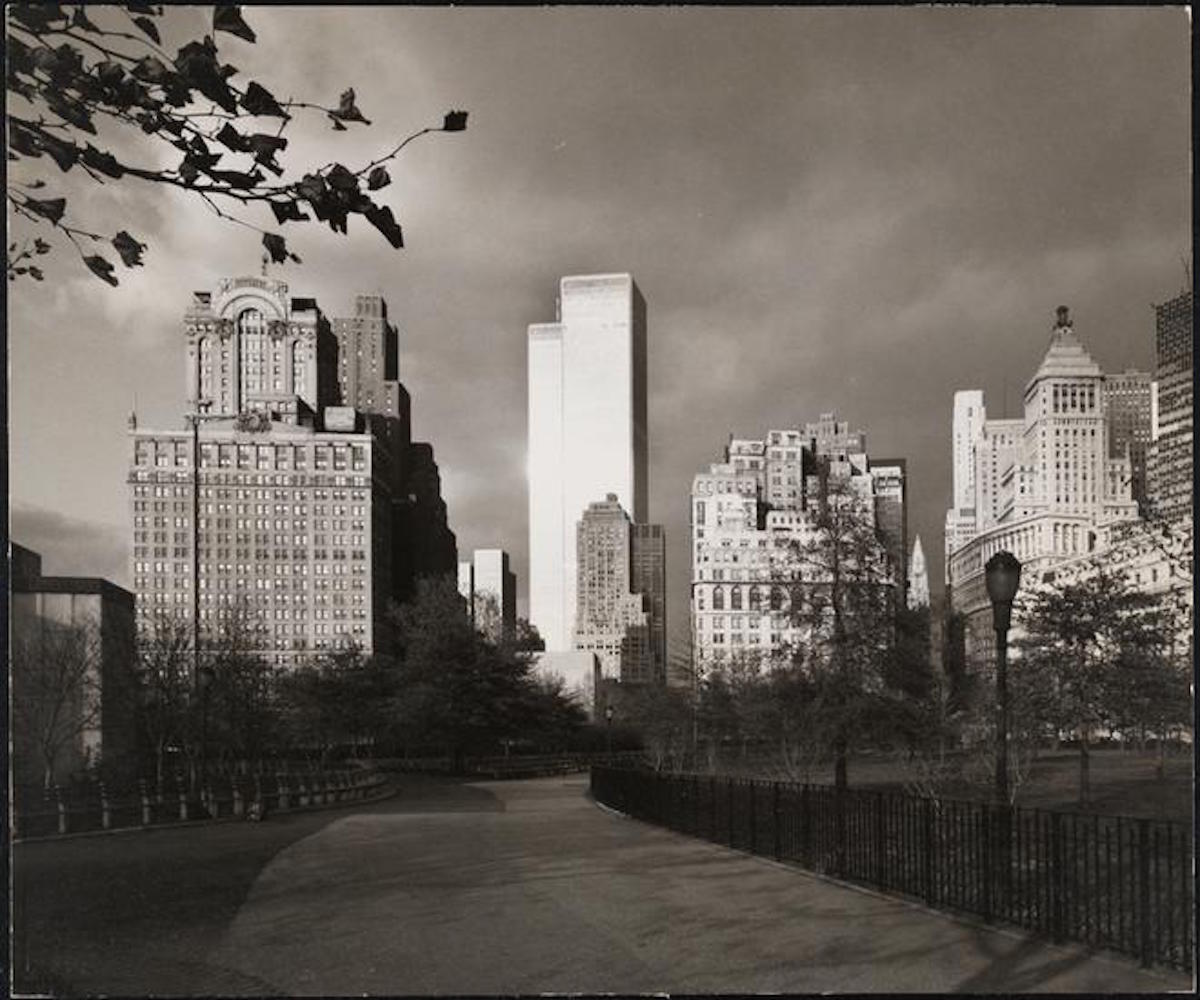
Photography on this page, from various periods, by Edmund V. Gillon, courtesy of the Museum of the City of New York.  Check out their online gallery for some more beautiful black-and-white shots. 

This article originally ran on September 11, 2014.

Categories
Neighborhoods Podcasts

A Trip to Little Syria: A New York Immigrant Story

Just south of the World Trade Center district sits the location of a forgotten Manhattan immigrant community. Curious outsiders called it Little Syria although the residents themselves would have known it as the Syrian Colony.

Starting in the 1880s people from the Middle East began arriving at New York’s immigrant processing station — immigrants from Greater Syria which at that time was a part of the Ottoman Empire.

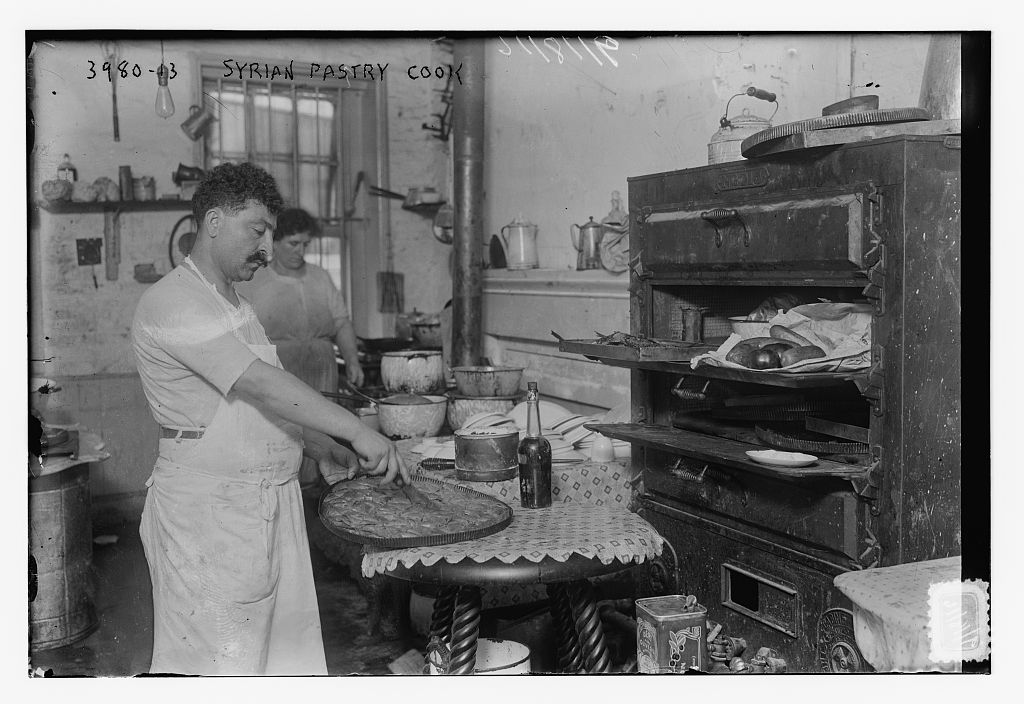
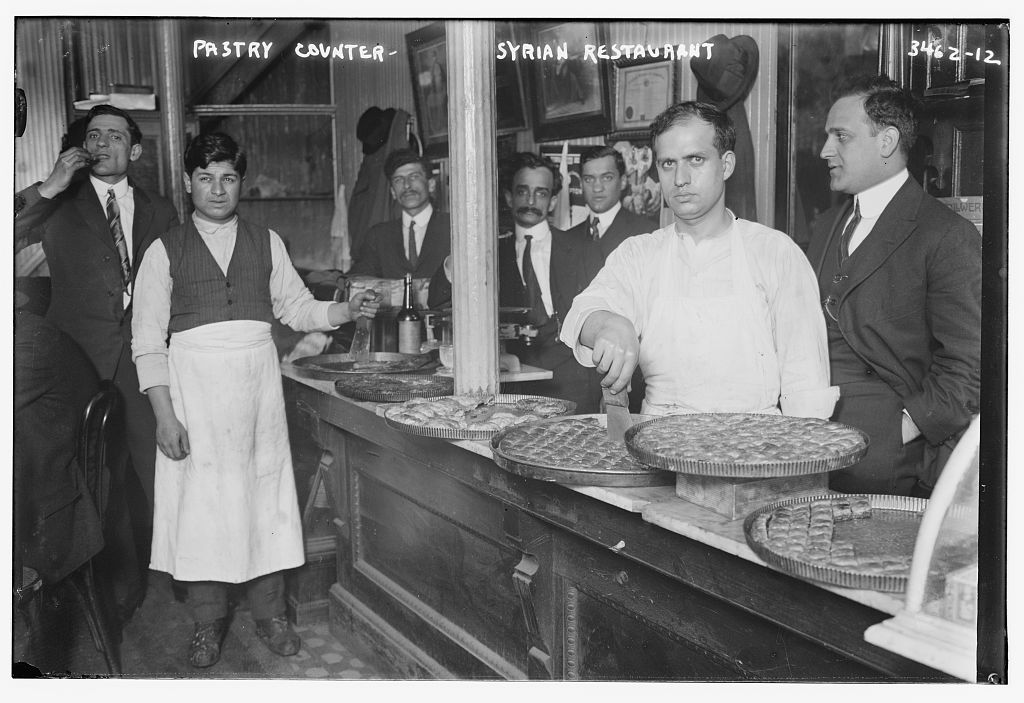
The Syrians of Old New York were mostly Christians who brought their trade, culture and cuisine to the streets of lower Manhattan. And many headed over to Atlantic Avenue in Brooklyn as well, creating another district for Middle Eastern American culture which would outlast the older Manhattan area.

Who were these Syrian immigrants who made their home here in New York? Why did they arrive? What were their lives like? And although Little Syria truly is long gone, what buildings remain of this extraordinary district?

PLUS: A visit to Sahadi’s, a fine food shop that anchors today’s remaining Middle Eastern scene in Brooklyn. Greg and Tom head to their warehouse in Sunset Park to get some insight on the shop’s historic connections to the first Syrian immigrants.

Listen Now – A Visit to Little Syria


Help save one of the last buildings still standing in the former Syrian Colony! Sign the petition to save the Downtown Community House, one of three buildings left standing from this era in New York City history.

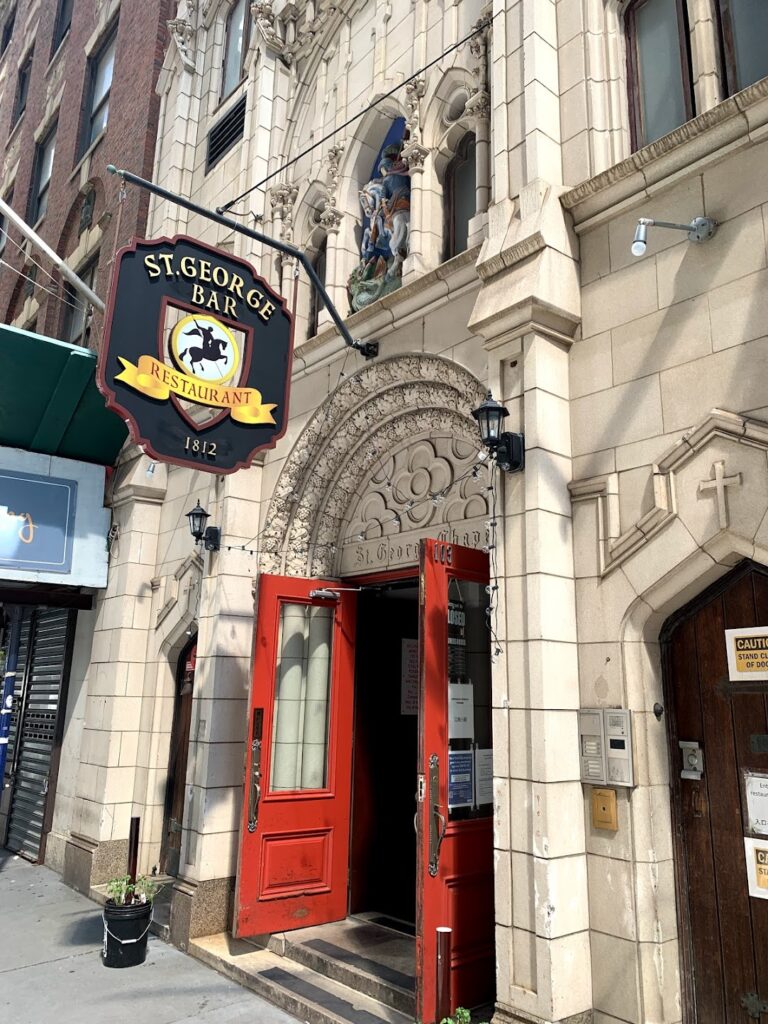
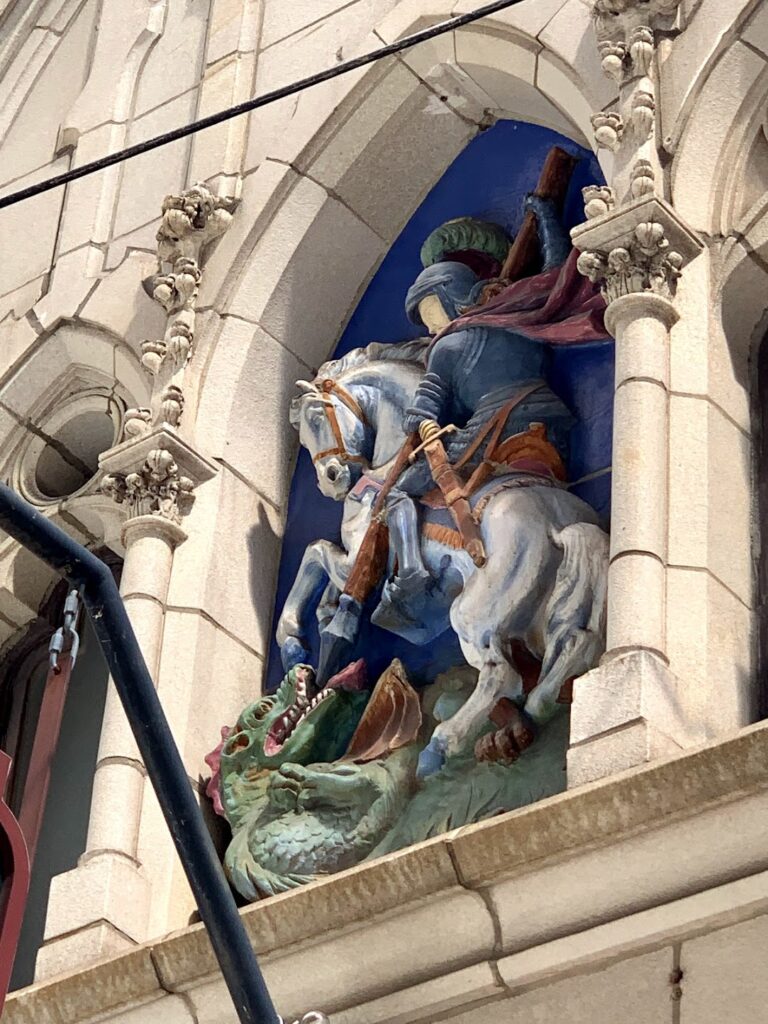
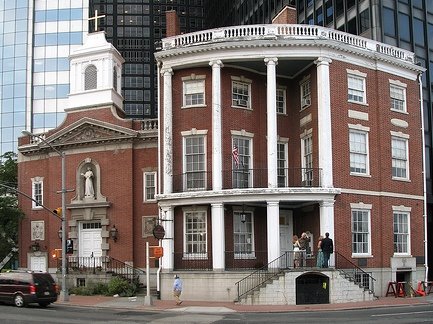
Below: St George’s Syrian Catholic Church (now a restaurant)

Photo by Greg Young

FURTHER LISTENING

After you’ve listened to this show on the history of New York’s Syrian population, dive back into the back catalog and listen to these shows referred to on the show:


The Bowery Boys: New York City History podcast is brought to you …. by you!

We are now producing a new Bowery Boys podcast every other week. We’re also looking to improve and expand the show in other ways — publishing, social media, live events and other forms of media. But we can only do this with your help!

We are now a creator on Patreon, a patronage platform where you can support your favorite content creators.

Please visit our page on Patreon and watch a short video of us recording the show and talking about our expansion plans. If you’d like to help out, there are several different pledge levels. Check them out and consider being a sponsor.

We greatly appreciate our listeners and readers and thank you for joining us on this journey so far.


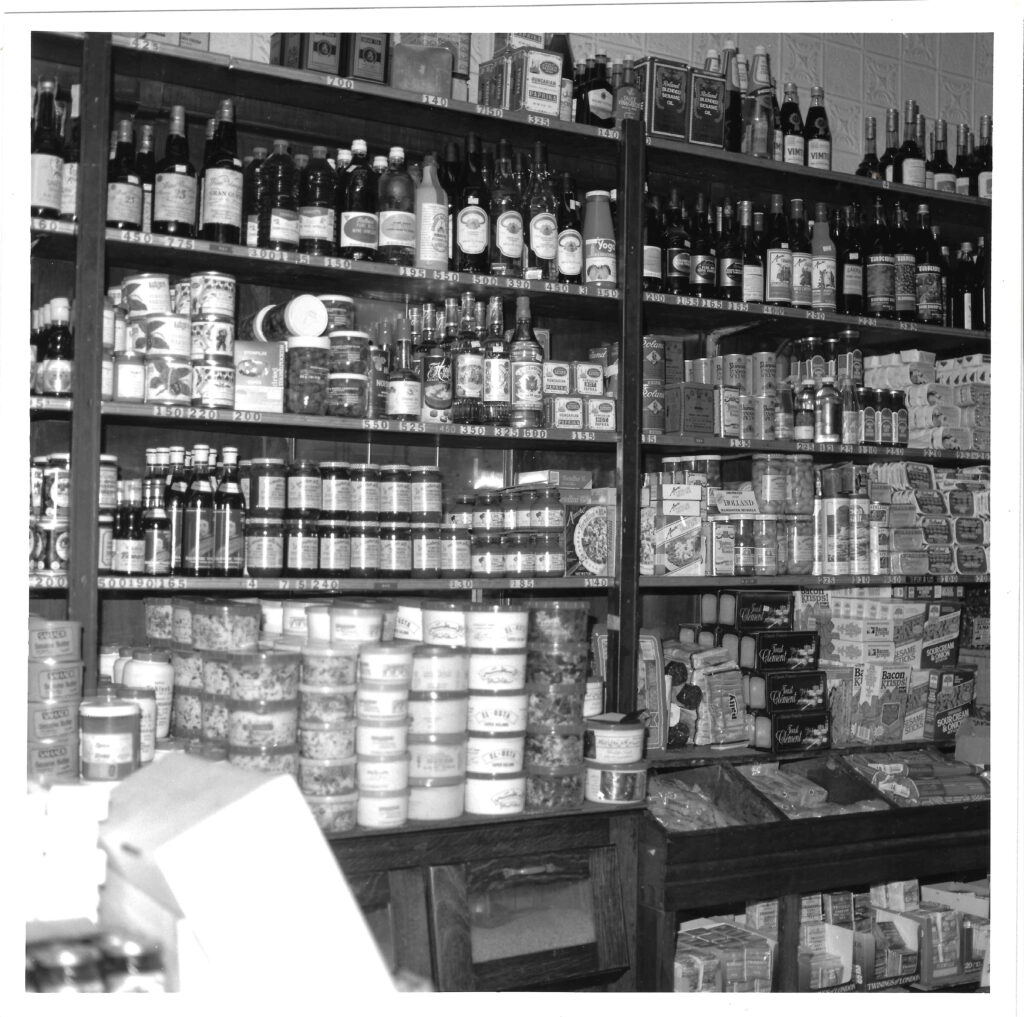
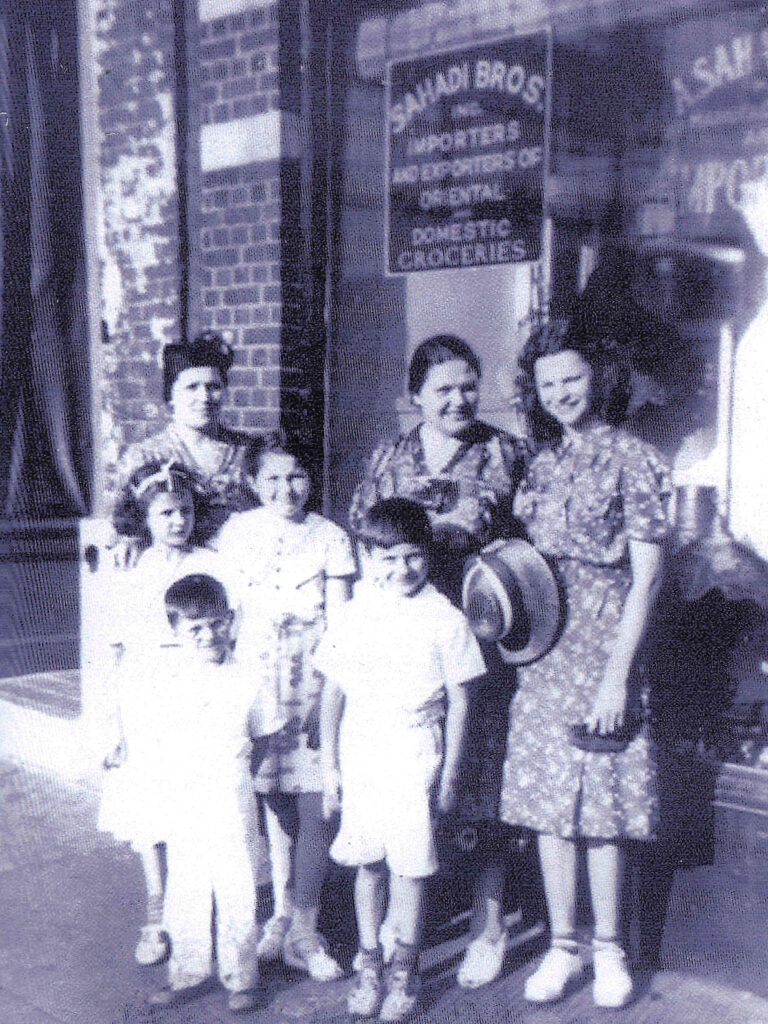
Images of Sahadi’s over the years (images courtesy Sahadi’s):

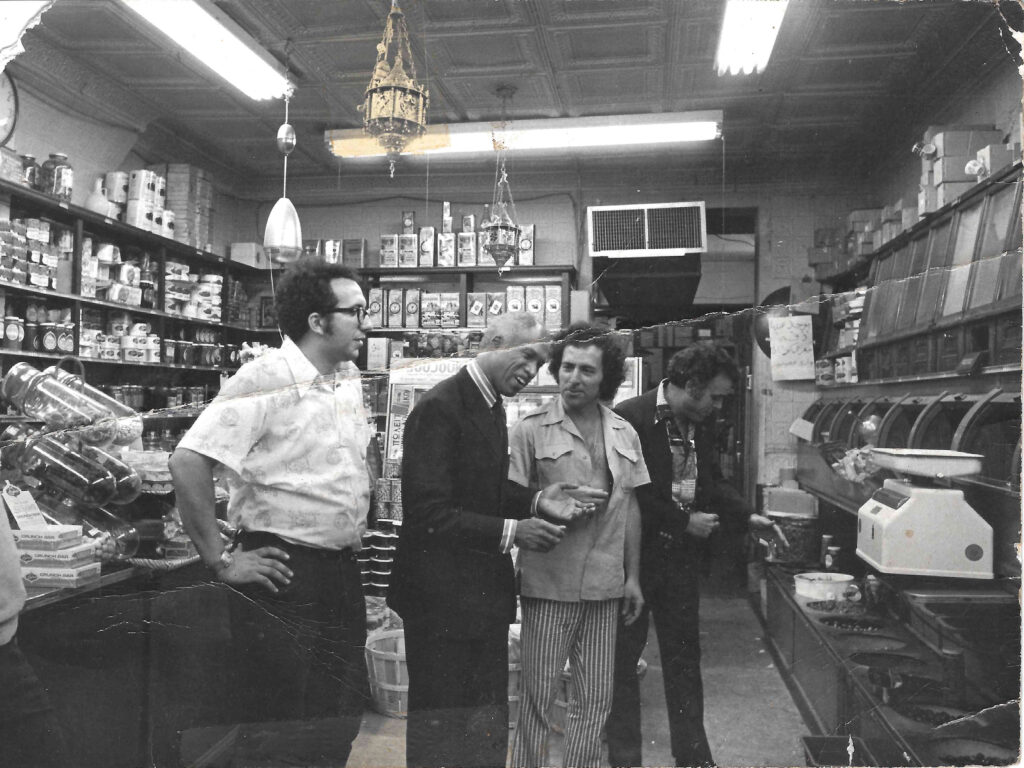
Sahadi’s in the 1970s

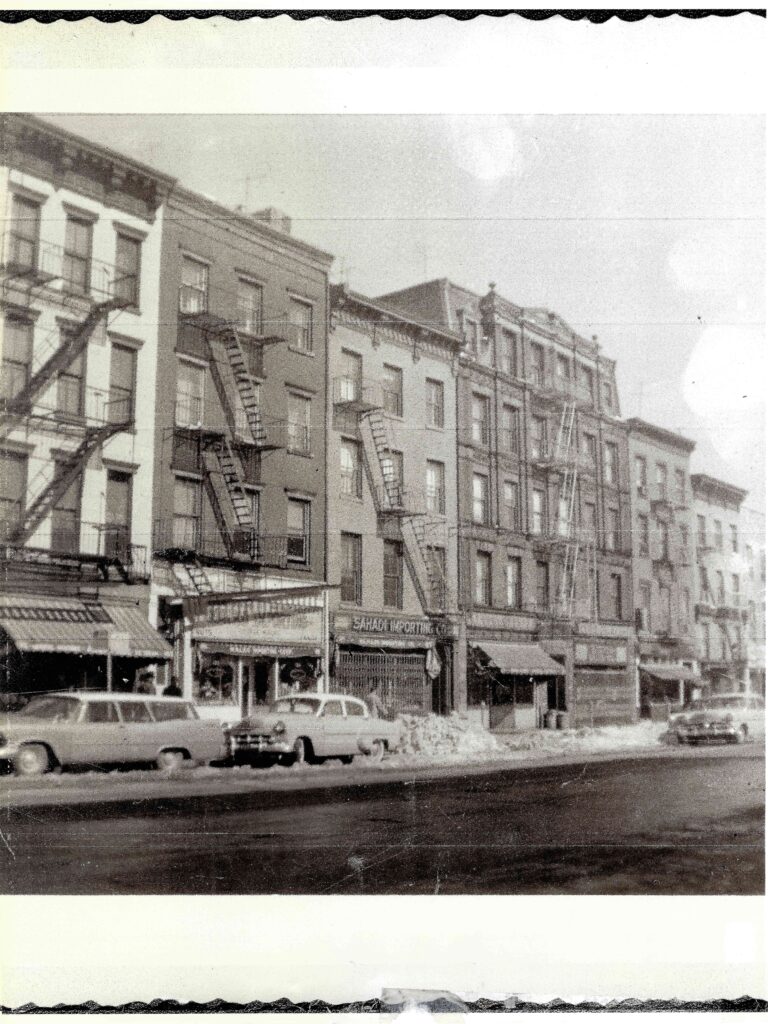
Sahadis’ on Atlantic Avenue, 1958

This podcast was partially based on this 2015 article written for this website:

Manhattan is profound for the layers of history that exist on even a modest spot of land. And in the case of blocks south of the World Trade Center, you don’t even have to go back far in time to find some surprising stories of the past.

One hundred years ago, strolling along the southern ends of Washington and Greenwich streets, you would have found yourself within New York’s first Middle Eastern community.

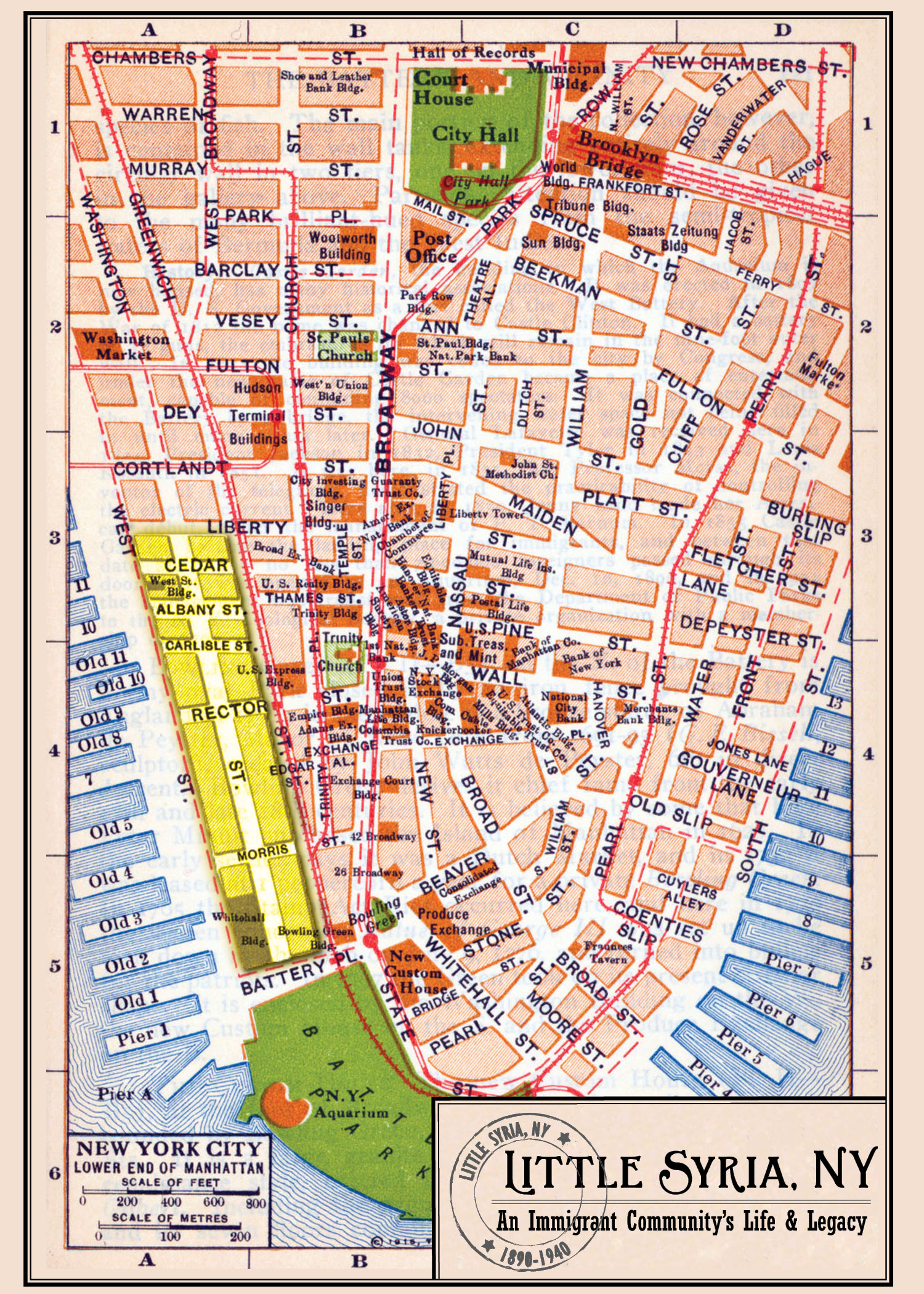
An approximation of the district in yellow (courtesy the Arab American Museum):

Courtesy Arab American Museum

Little Syria (or the Syrian Quarter) featured rug and trinket shops and restaurants with “exotic” cuisine mentioned frequently by the newspapers of the day. In many ways it resembled the early days of Chinatown, a closed community, linked by language, rich in history and confounding to most New Yorkers.

3

Early New York Times writers were occasionally fascinated with this unusual pocket of settlement.

In 1898, they described it as quiet colony: “It differs much from other foreign quarters in New York. There is nothing forbidden in the aspect of the people or their places of business. The homes are clean and inviting and the stores where Turkish rugs, laces, perfumes, and tobacco are sold, display evidences of prosperity.”

While called ‘Little Syria’, it actually contained populations from several Middle Eastern communities. In the late 19th century, the idea of a ‘Greater Syria’ itself contained “modern Syria, Lebanon, Israel, Jordan, Palestinian Authority, Gaza Strip and parts of Turkey and Iraq.” [source]

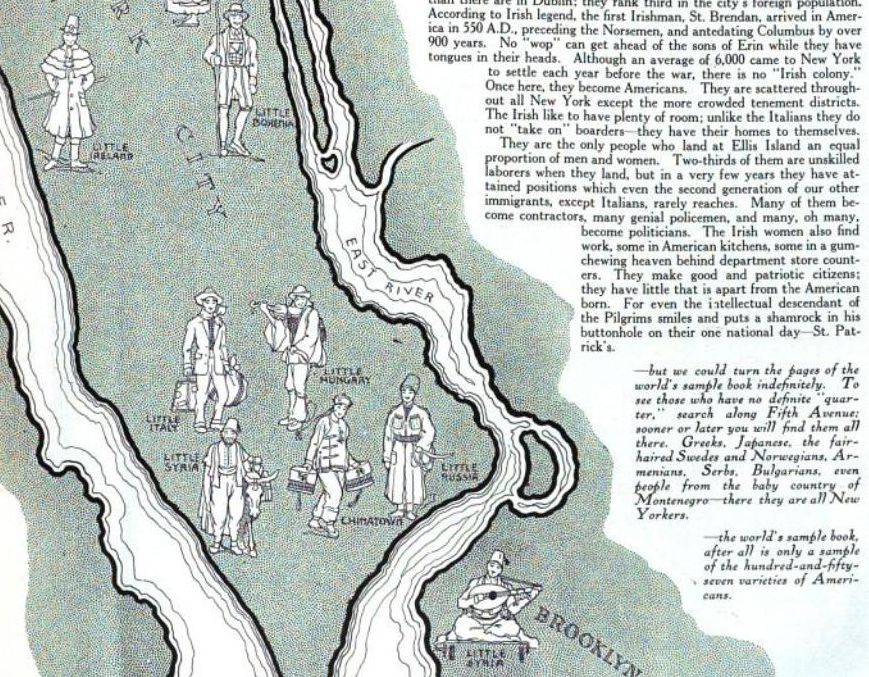
As a Gilded Age New Yorker, if you knew Little Syria at all — and most New Yorkers stayed away from the ethnic ‘Little’ neighborhoods (Italy, Africa, Hungary) — it was because of the food.

Another New York Times article from 1899 describes it with the passion of a modern restaurant critic: “It is in the restaurants that become cafes, after Syria has eaten her evening meal, that what is perhaps the most interesting life is to be seen.”

Of its inherent exoticness: “One glance at the Arabic bill of fare, written in Arabic script on a flimsy bit of white paper, shows the impossibility of making head or tail out of it.”

1
10

There were clearly few frames of references for those who visited this district. A 1903 New York Tribune describes the population of Little Syria as “fugitives from the Sultan’s tyranny” and describes the streets like something out of a chaotic wonderland:

“The shop windows are filled with huge Turkish pipes, whose water filled bulbs and serpentine stems would seem able to bring to the smoker all the dreams of the Thousand and One Nights. Here too the passerby may see lamps of Damascus brass, both great and small, and lighted by innumerable tiny tapers. They look much as the imagination might picture the lamp of Aladdin.”

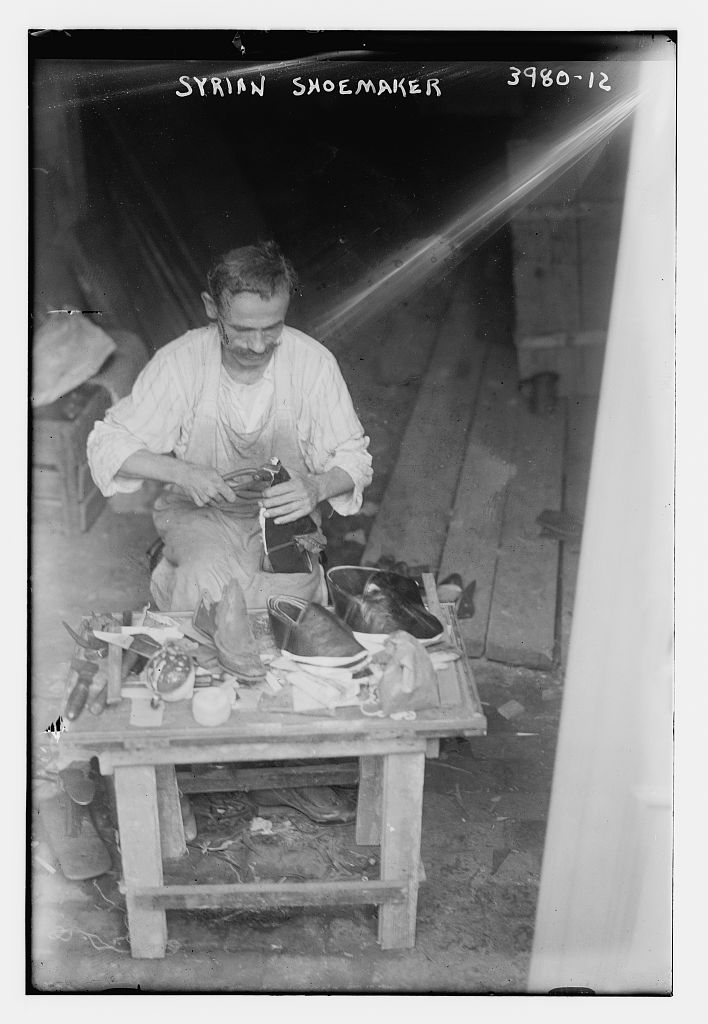
People may have been prone to stereotype Syrian shops, but in fact the Syrian Quarter was known for a wide variety of goods including jewelry, lace, embroidery, rugs, cigarettes, coffee and so-called ‘kimonos’ then (actually kaftans).

8

Over a quarter of a million people of Middle Eastern descent were living in America by the early 1920s. Although from a great swath of locations, they were frequently just called ‘Turks’ or ‘Syrians’. (The Sultanate of Ottoman Empire was abolished in 1922 and its territories made independent. )

The first Middle Eastern immigrants to the United States were Christian Syrians and mostly young men, following a similar pattern of immigration as the Italians.

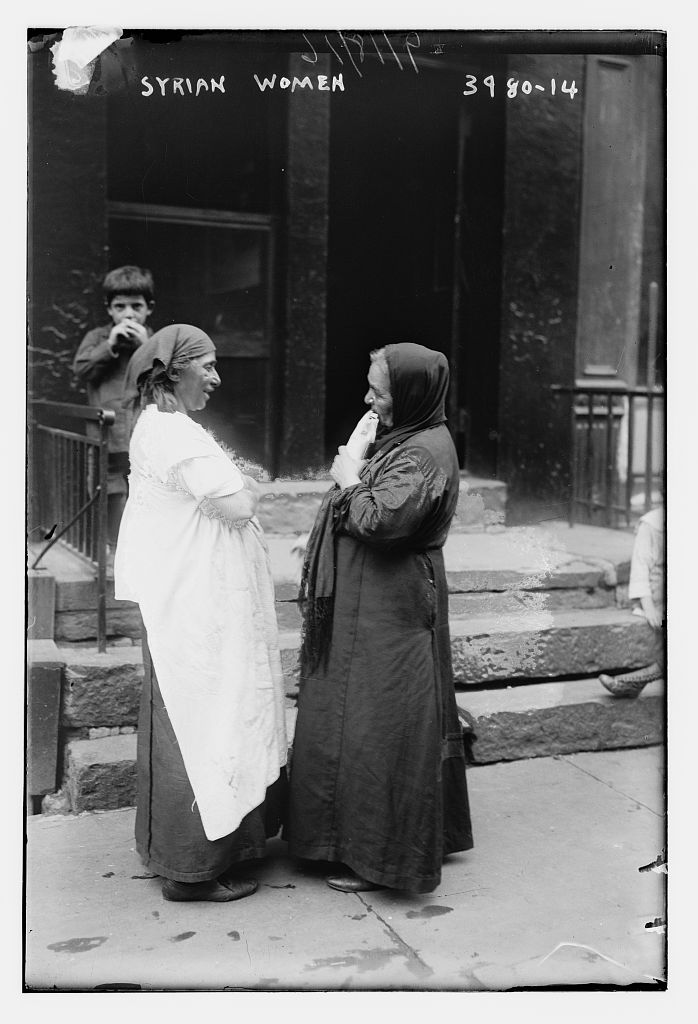
Women and children began coming over soon afterwards once their husbands or brothers established themselves, either as workers on construction crews or as private business owners.

In 1903 the Tribune observed a line of “olive skinned women” diligently sewing on the street, employed as seamstresses in a scene being played out all over New York in other neighborhoods.

Many in the Syrian Quarter were silk and lace manufacturers back home, and some even commuted to work in Paterson, NJ, the so-called silk making capital in the United States at the turn of the century.

5

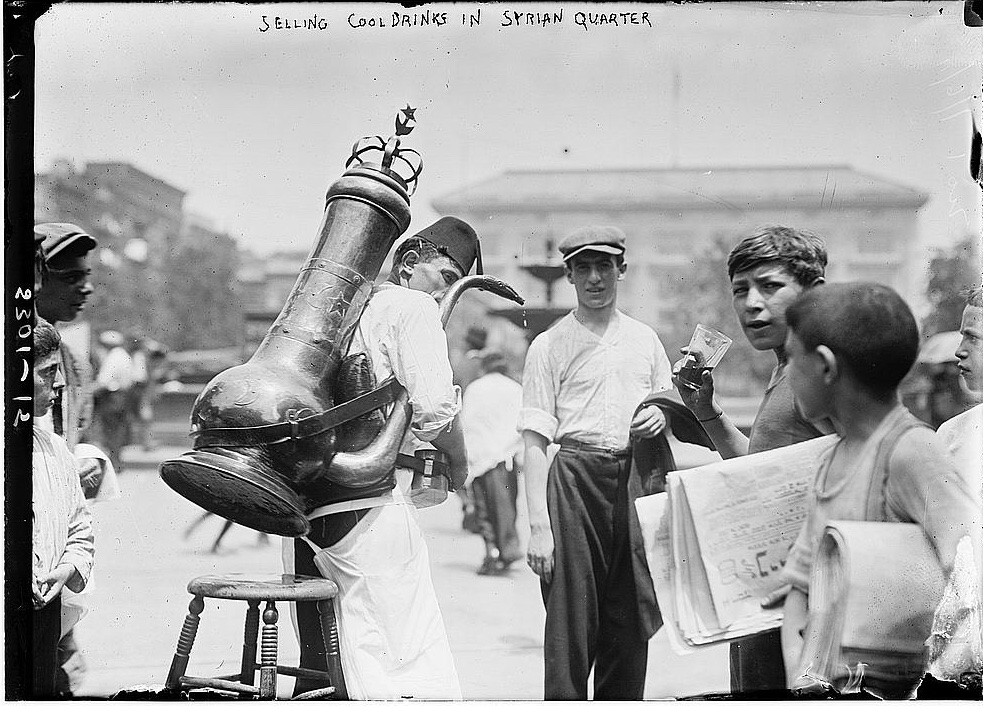
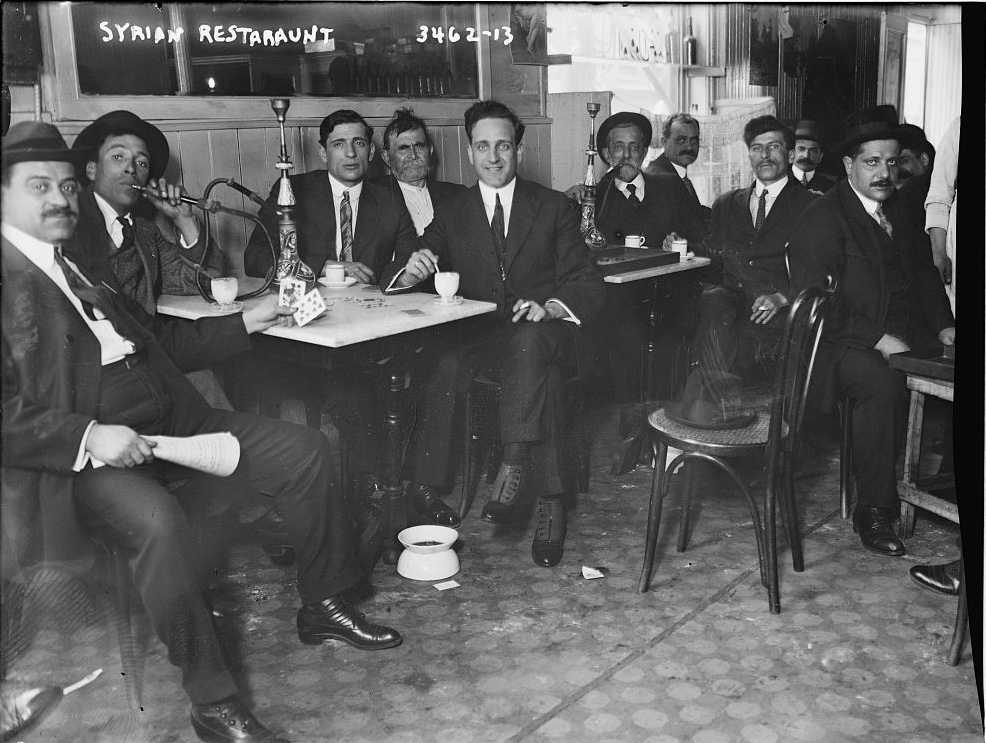
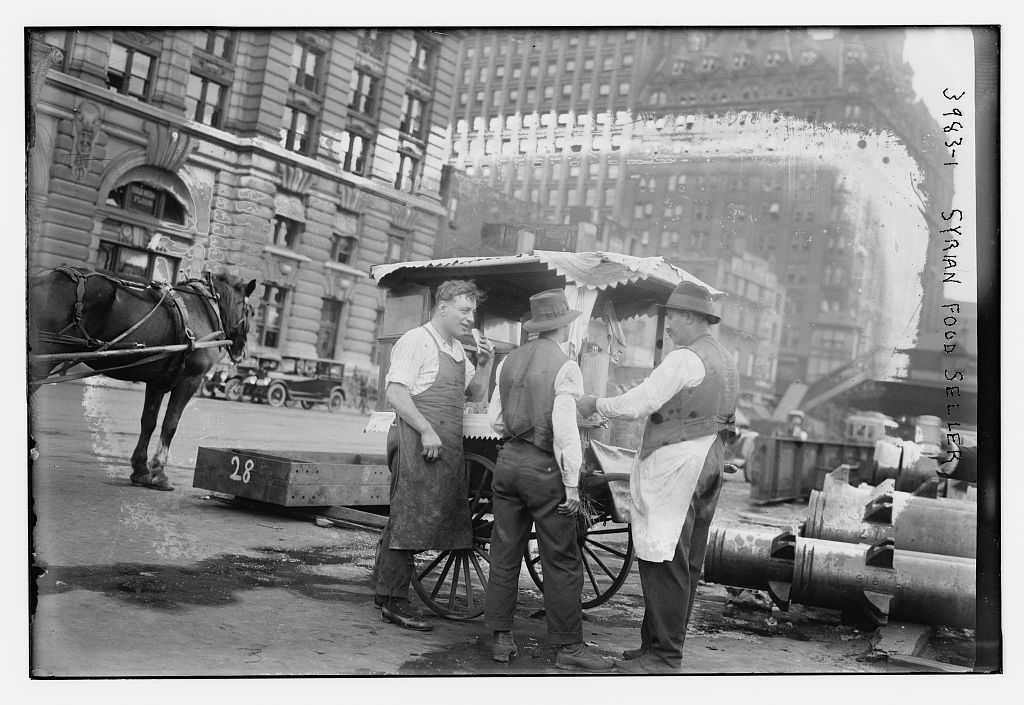
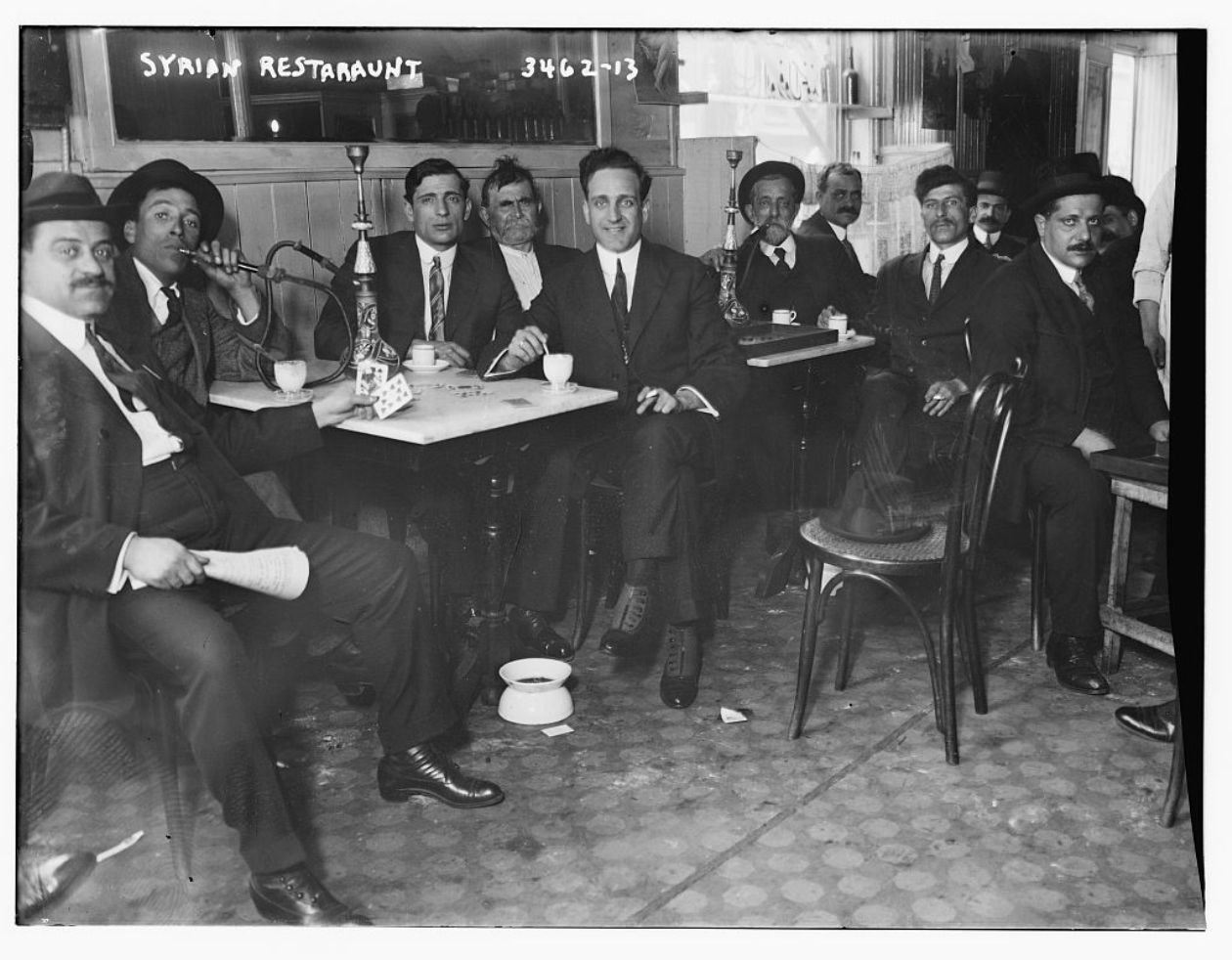
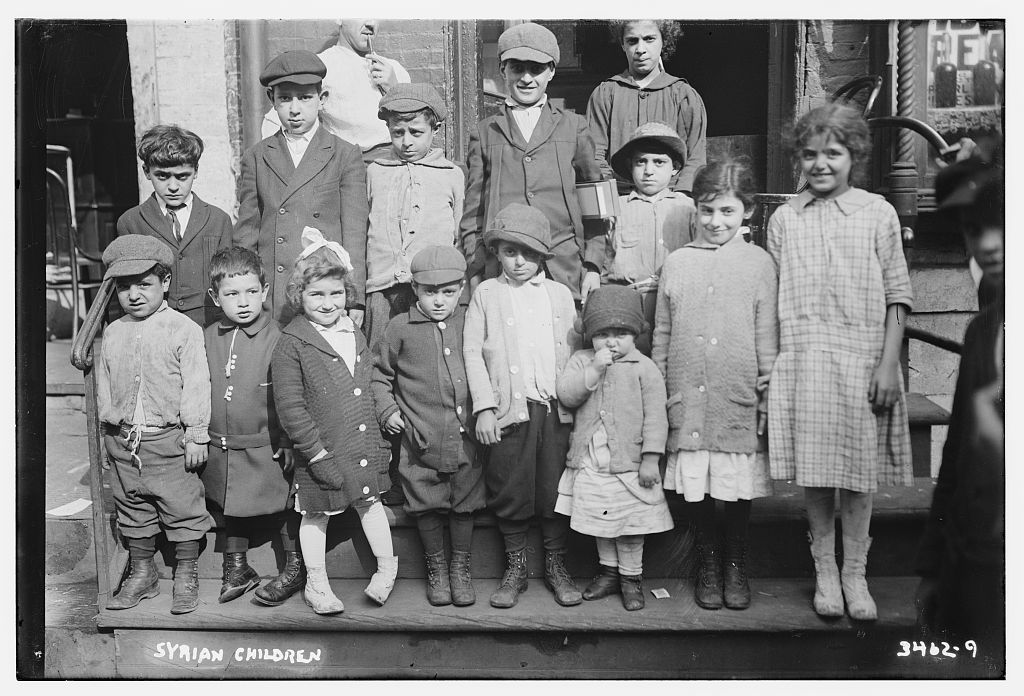
The pictures you see in this post were all taken sometimes between 1915 and 1916, a traumatic time in world affairs and the Middle East in particular.

Some were Armenians, cut off from regular news from back home and only sporadically aware of the horrors their families were experiencing.

The men who met up in Washington Street cafes smoked hookahs, drank coffee and played games of chess or checkers. Unlike the stereotypes presented in the press of ‘simple’ shop owners, many were well educated and spoke English.

8

While most of the earliest residents of the Syrian Quarter were actually Syrian Christians, by the 1910s both Christians and Muslims lived in the neighborhood.

The only vestige of Little Syria that remains today is the home of a former Catholic congregation — St. George’s Syrian Catholic Church at 103 Washington Street. 

The congregation moved here in 1925, but by that time, a larger Middle Eastern community was developing in Brooklyn on Atlantic Avenue. Many vestiges of Brooklyn’s ‘Syrian quarter’ still exist today along Atlantic Avenue between Court Street and the waterfront, most notably Sahadi’s.

Below: An illustration from a 1918 Methodist journal called World Outlook, marking the ethnic enclaves of New York

New Picture (7)

Most of Manhattan’s original Middle Eastern neighborhood was eliminated with the construction of the Brooklyn-Battery Tunnel which opened in 1950 (although a long construction period cleared out the neighborhood by the early 1940s).

Those shops that managed to stay on shared the streets with a surprising new neighbor — radio.

Radio Row, considered Manhattan’s first technology sector, arrived just as terrestrial radio became the latest craze. Shops sold radio consoles, speakers and (after World War II) even ham-radio equipment, all centered at the corner of Cortlandt and Greenwich streets.

9

Categories
Podcasts Skyscrapers

The World Trade Center in the 1970s

PODCAST The World Trade Center opened its distinctive towers during one of New York City’s most difficult decades, a beacon of modernity in a city beleaguered by debt and urban decay. Welcome to the 1970s.
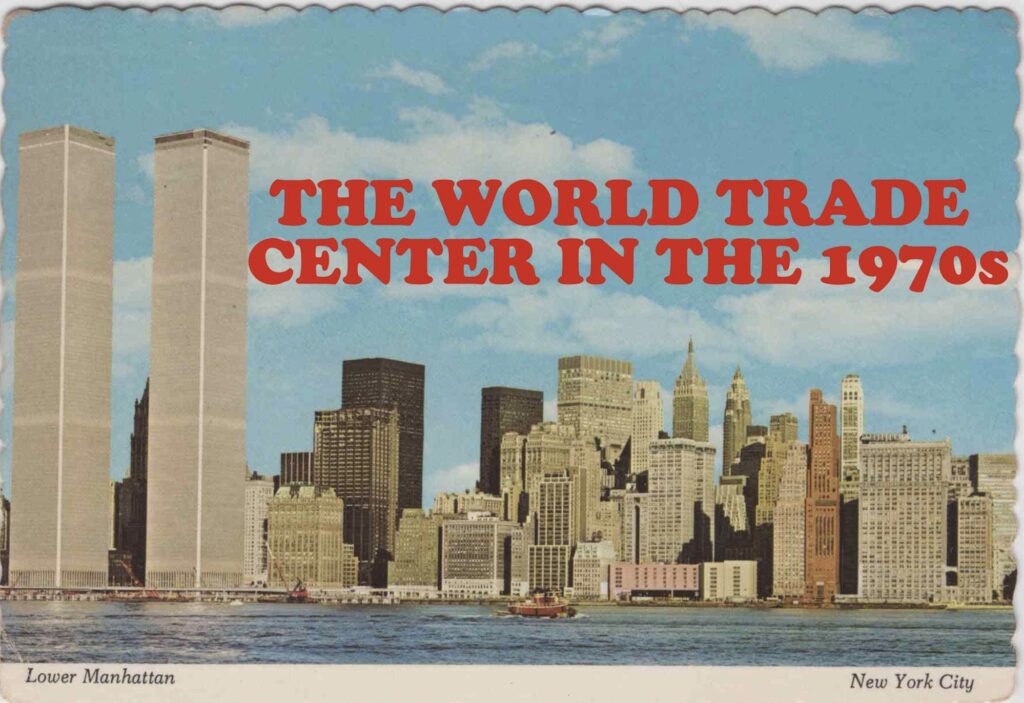
EPISODE 350 This year, believe it or not, marks the 20th anniversary of the attacks on the Twin Towers on September 11, 2001.

Today there’s an entire generation that only knows the World Trade Center as an emblem of tragedy.

But people sometimes forget that the World Trade Center, designed by Japanese-American architect Minoru Yamasaki, was a very complicated addition to the New York skyline when it officially opened in 1973.

While it might be fun to think of New York City in the 1970s through the lens of places like Studio 54 or CBGB, it was really the Twin Towers that redefined New York.
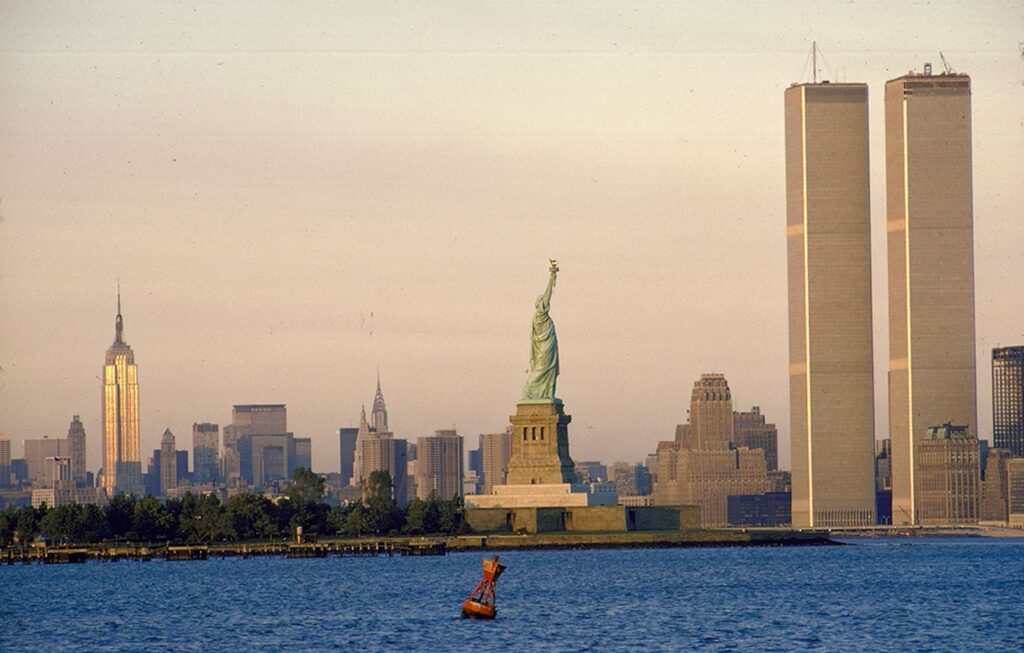
The journey to build the world’s tallest building and its expansive complex of office towers and underground shops began in an effort by David Rockefeller to stimulate development in Manhattan’s fading Financial District.

By the time Port Authority got onboard to fund the project, the Twin Towers were bonded together with another vital project — a commuter train from New Jersey.

The World Trade Center inspired strong opinions from critics and the public alike, but eventually many grew to admire the strange towers which marked the skyline.

And for some, the Twin Towers became objects of obsession.
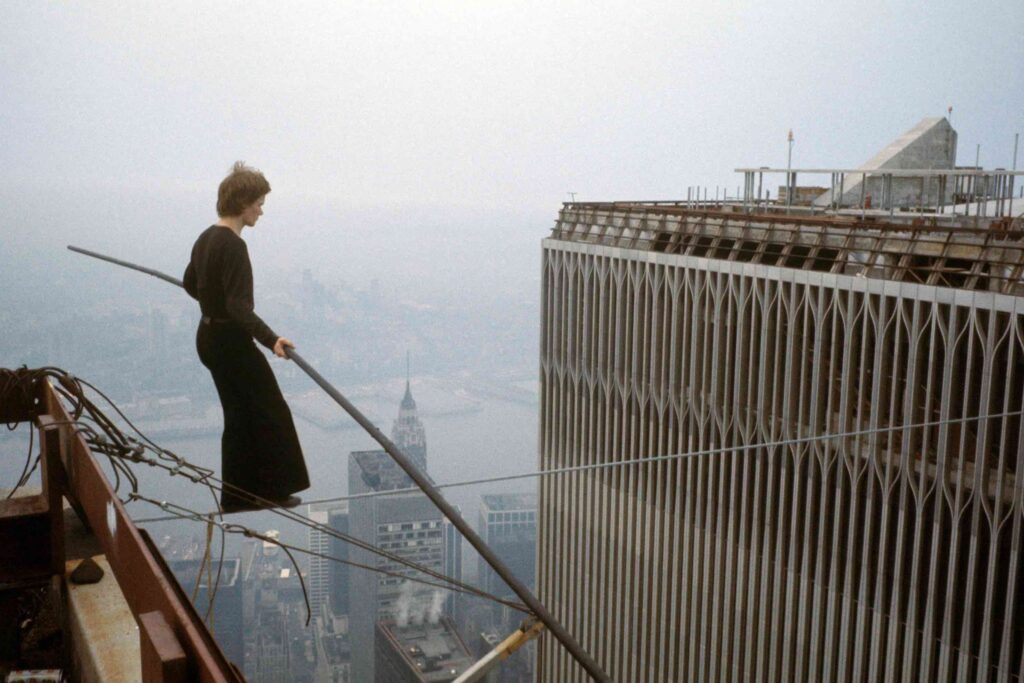
Jean-Louis Blondeau / Polaris Images

FEATURING: The insane, completely outlandish and ultimately successful feat of acrobatics by a very bold French tightrope walker.

PLUS: An interview with with Kate Monaghan Connolly of the National September 11 Memorial and Museum about how that institution memorializes those lost in the tragedy while still celebrating the technological marvels that once stood there.

Listen here or stream/download the episode from your favorite podcast player:


Go to websites for the National September 11 Memorial and Museum and One World Observatory for more information about visiting hours and COVID-19 safety precautions at each site.

Follow us on Instagram for more images of our adventures through New York City.


Architect Minoru Yamasaki with a model of this Twin Tower design for the World Trade Center, March 25, 1964
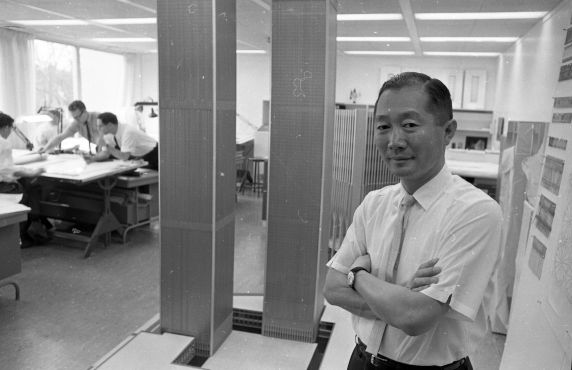
Photographer Tony Spina/Courtesy Walter P. Reuther Library

David Rockefeller with a model of the westside of lower Manhattan.
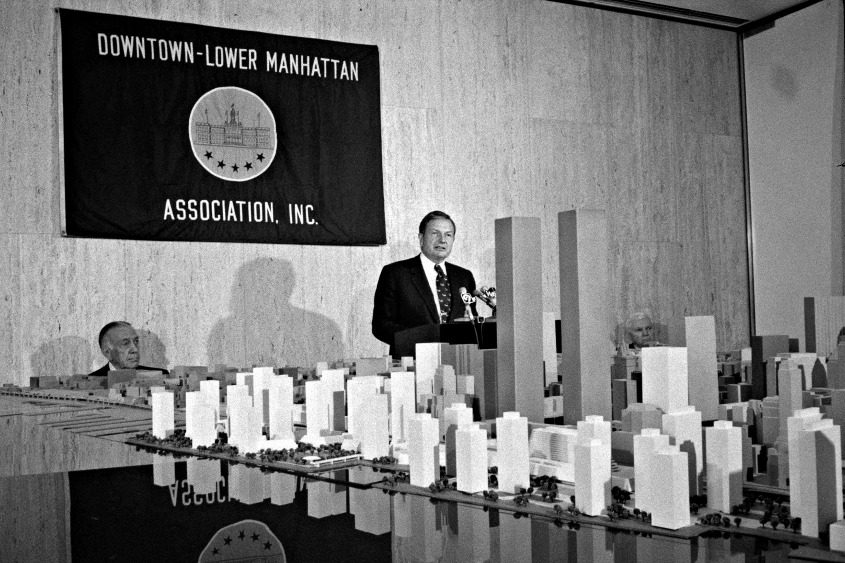
Courtesy John Duricka/Associated Press

The first plan for the World Trade Center called for construction of a United Nations-inspired set of structures on the east side, most likely eliminating (or seriously reducing) the South Street Seaport.
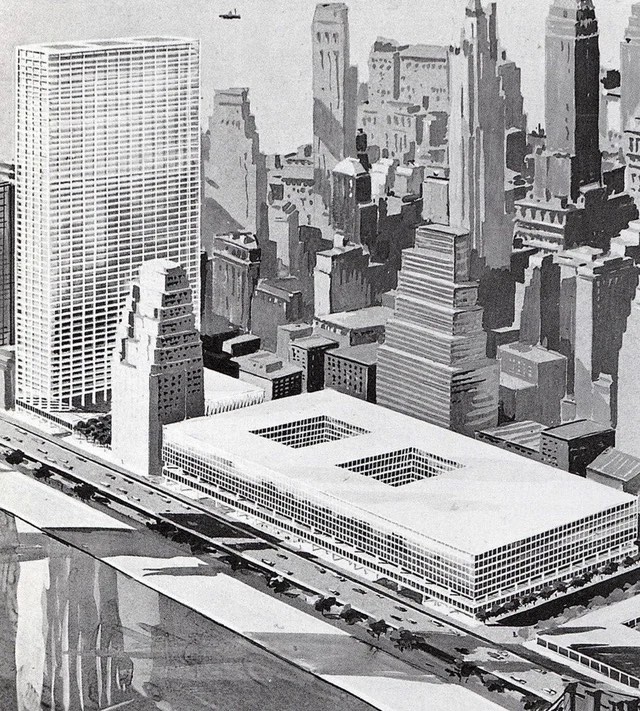
Images of Radio Row, clearly showing a vibrant retail district that remained active over many decades. Had it remained, who knows how much larger it would have gotten with the advent of television?
Hulton Archive/Getty Images

They were so prominent and tall that they become the world’s most observed construction project — for years.
Courtesy AP

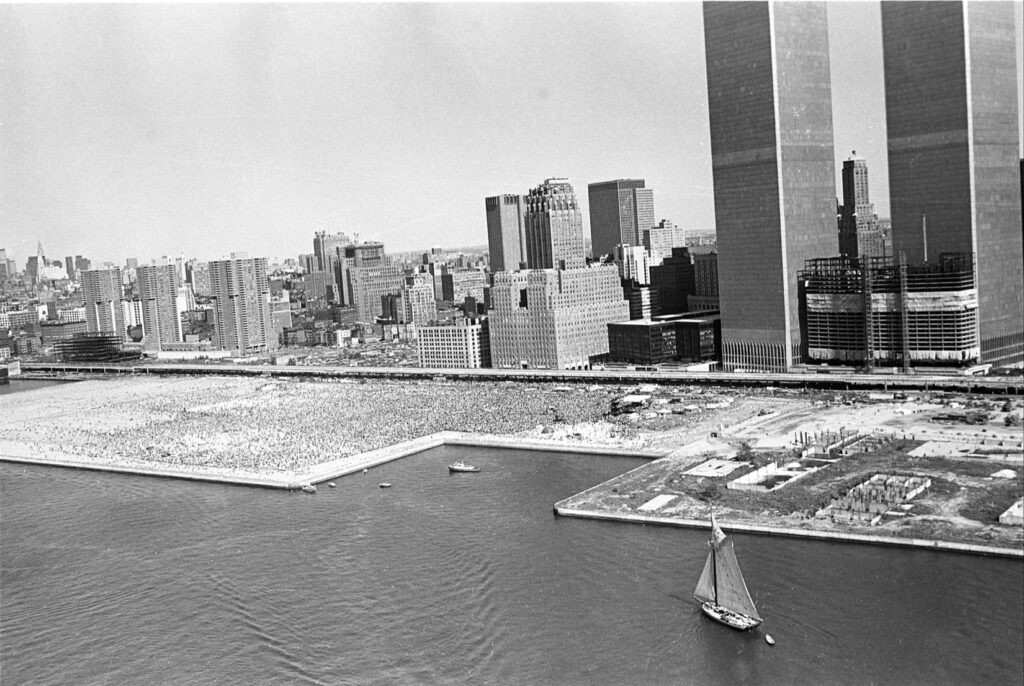
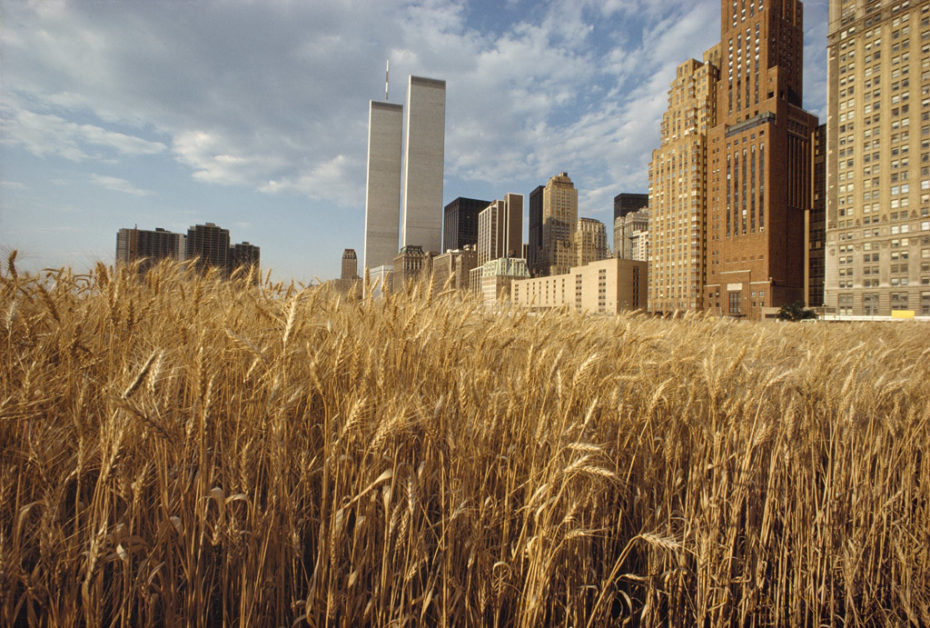
Over the years, the landfill site (and future home of Battery Park City) was used for performance art, musical performances and even circuses.
The wheat field (an art project by Agnes Denes), planted in 1982.
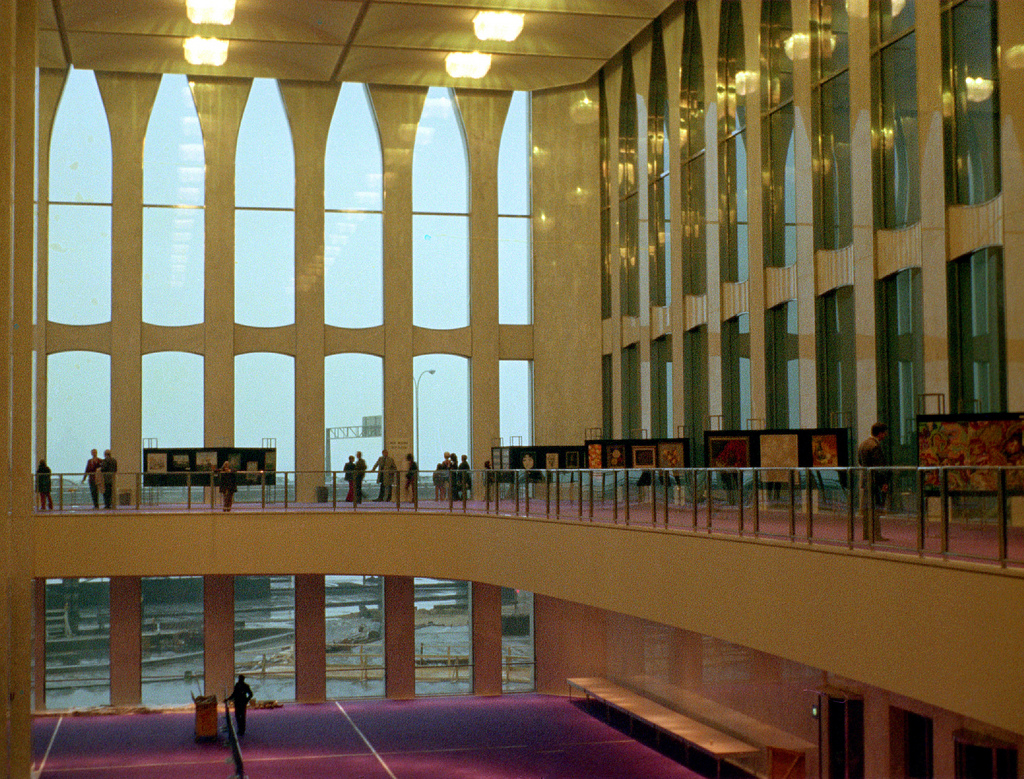
The lobby of one of the towers.
The Twin Towers from the film King Kong.

From the New York Daily News, August 8, 1974. For context, Richard Nixon resigned as President of the United States the following day (Friday, August 9).
Courtesy Newspapers.com

The Philippe Petit story made international news. Here’s one example — from Butte, Montana!
Courtesy Newspapers.com

From the Oscar-winning documentary Man On Wire:
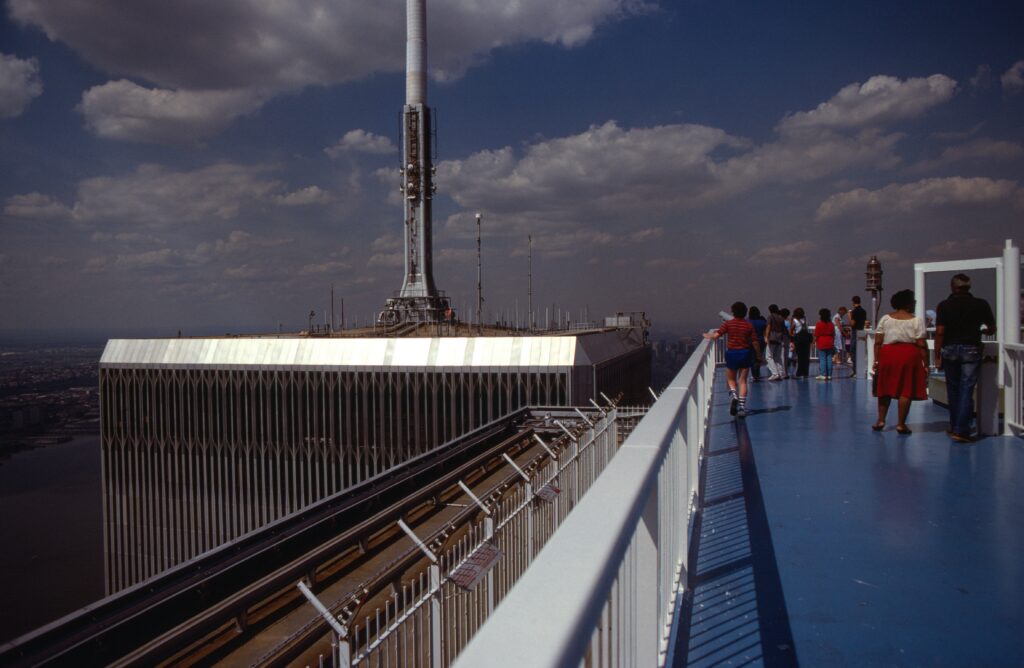

Photo by Lars Plougmann/Wikimedia Commons

Dolly Parton and Andy Warhol at Windows on the World, 1977.
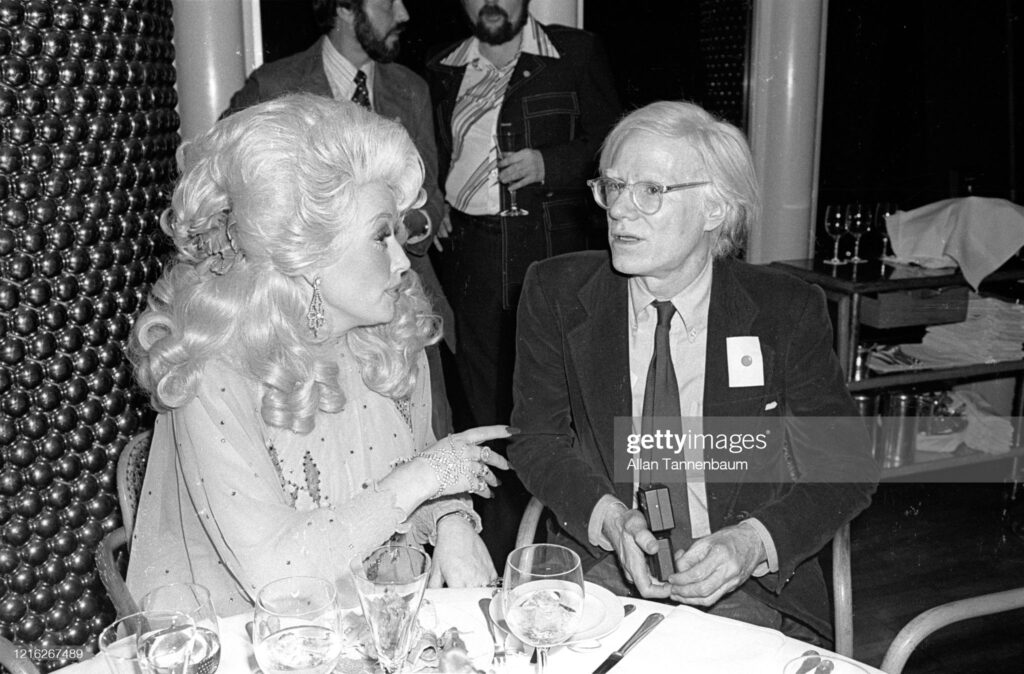
Photo by Allan Tannenbaum/Getty Images
FURTHER READING

City in the Sky: The Rise and Fall of the World Trade Center / James Glanz and Eric Lipton
Twin Towers: The Life of New York City’s World Trade Center / Angus Kress Gillespie
The World Trade Center: A Tribute / Bill Harris

FURTHER LISTENING

The Bowery Boys: New York City History podcast is brought to you …. by you!

We are now producing a new Bowery Boys podcast every other week. We’re also looking to improve and expand the show in other ways — publishing, social media, live events and other forms of media. But we can only do this with your help!

We are now a creator on Patreon, a patronage platform where you can support your favorite content creators.

Please visit our page on Patreon and watch a short video of us recording the show and talking about our expansion plans. If you’d like to help out, there are six different pledge levels. Check them out and consider being a sponsor.

We greatly appreciate our listeners and readers and thank you for joining us on this journey so far.
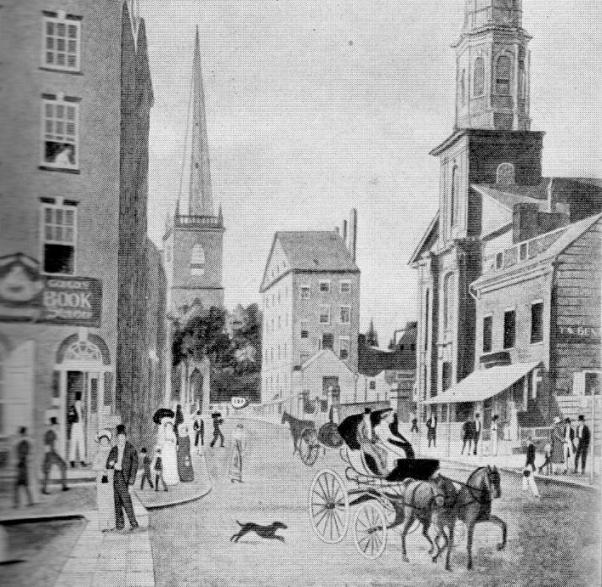
Goldman Sachs: things were much simpler then

The villain du jour of the latest financial scandal is investment firm Goldman Sachs, accused of fraud by the Securities and Exchange Commission for misleading investors on the shady details of certain ‘exotic’ mortgage-backed securities.

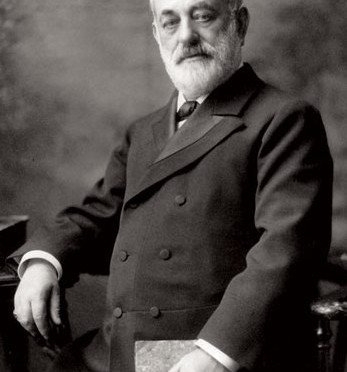
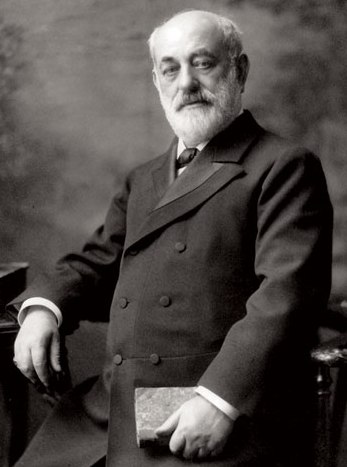
The magnitude of Goldman Sachs’ ambitions over the past 140 years — its seismic up and downs, through booms and recessions — belie its modest beginnings in a basement office next to a coal chute on a small block in downtown Manhattan. It’s doubtful that its founder, Marcus Goldman (at right), would recognize his own company today. Sitting upright on a single stool, well groomed in a Prince Albert jacket, the uniform of New York’s financial class, Goldman prepared to leap into a new venture, the future uncertain. His most important business accessory was a tall, silk hat.

The roots of Goldman Sachs lies within the increasing numbers of German immigrants who came to the United States starting in the late 1840s. There were 100,000 German in New York by 1860 with their own newspapers, schools and churches influencing the city’s cultural identity. Among them were publishers, musicians, bakers, merchants. And lots of bankers.

Early German financiers like Joseph Seligman (later known as the broker of railroad baron Jay Gould) were already established on Wall Street by the time young schoolteacher Marcus Goldman arrived here from Frankfurt in 1848. He started a family in Philadelphia, his wife Bertha employed as seamstress for society ladies while Marcus himself peddled from a horse-drawn cart, later opening his own clothing store.

But it was soon time for some reinvention. Closing his store, in 1869 the Goldmans moved to New York at his wife’s insistence, residing in a Murray Hill brownstone among the families of new wealth. Marcus opened a small business on 30 Pine Street, a small sign “Marcus Goldman, Banker and Broker” barely noticable among the counting houses, book stores and sidewalk trade made up the street parallel to Wall Street.

Goldman’s office was modest indeed, furnished only with a stool and a desk, employing a young apprentice and, according to Stephen Birmingham, “a wizened part-time bookkeeper (who worked afternoons for a funeral parlor).”

It didn’t matter, because Goldman was constantly on his feet anyway. His unique trade was as a broker of IOUs, the at-this-time new busness of commercial paper, transacting between the small merchants of the jewelry and leather trades and the uptown banks. Wandering down Maiden Lane, Goldman would visit the mostly Jewish tradesmen of the area, cultivate their trust and buy their debt at a set rate of interest, shoving notes into his silk hat until it bulged. According to Lisa Endlich, “It was said that a banker’s success each day could be measured by the ‘altitude of his hat’.”

Single-handedly, Goldman was making $5 million a year, keeping his family in finery and a growing number of servants. By 1880, the firm was raking in $30 million. Two years later, he was able to expand his business further by bringing his son-in-law into the fold — Samuel Sachs, son of a Bavarian saddlemaker, who also happened to be friends with one Philip Lehman, whose firm the Lehman Brothers would frequent partner with Goldman’s firm. (And would, 128 years later, file for bankrupsy.)

The new Goldman Sachs company allowed the two participating families to thrive in New York society. And soon, the lucrative firm would no longer be just a family affair, inviting in partners to become Goldman Sachs and Co. in 1885.

Samuel would take over for Marcus at his death in 1904 and would steer the company’s fortunes until his retirement in 1928, a year before the start of the Great Depression. Its fortunes at that point would be guided by Sidney Weinberg, a former janitor who climbed the corporate later to head the firm in 1930, aiming beyond the business dealings once stuff in Goldman’s hat and towards the wave of the future: investment banking.

Financial District’s little piece of heaven


Of all the people who lived in New York City during the Revolutionary War, of all the great Americans who helped shaped history here in the city, [cue deep-voiced announcer] only one can be called America’s first U.S.-born saint.

Commuters who zip on and off the Staten Island ferry and tourists gallivanting through Battery Park probably skip past the red brick Federal Style structure across the street, which serves as a church on Sundays and a rare reminder of early history on other days. Frankly, even been an unusually geeky history buff like myself, I have rushed by this building at least a hundred times before realizing what it was.

But it was here that Elizabeth Ann Seton, the charitable Catholic woman who became New York (and America’s) first saint, in honored in a shrine whose presence has helped save a spectacularly unique building.

Seton’s actually from Staten Island (born August 28, 1774) but lived in the house here for a few years. Whether or not you believe in the holy powers of the sainthood, you can definitely say that Seton’s former presence here saved this extraordinarily out-of-place home from the wrecking ball.

This home, originally built in 1794 by wealthy merchant James Watson, once stood with a row of similar Federal Style buildings facing a harbor clogged with shipping vessels.

NYC Architecture has some fantastic photos of the the Watson home’s former neighbors. Seriously, how this place somehow remained standing over the years is a testament to the sometimes random choices of the flippant New York real estate world.

Seton, born a protestant, became Catholicized at the former St. Peter’s Church on Barclay Street but made her name in Maryland by founding the Sisters of Charity, America’s first congregation of nuns. Seton’s strong draw to religious fate is attributed to living in New York City during its yellow fever epidemic of the late 19th century.

She was canonized on September 14, 1975. Seton Hall University, among many schools, is named in her honor.
Elizabeth Ann Seton fun facts:

— Like the cast of Gossip Girl, Elizabeth Seton was born into a prominent New York family and hobnobbed with the elite — which, in Revolutionary era New York, was centered at Trinity Church

Seton and her family lived upstairs at 61 Stone Street, where her husband ran a business into the ground, and they were evicted. Although the original building was destroyed in the Great Fire of 1835, today the space is occupied by the cute Wall Street Inn on one of the most picturesque streets in downtown Manhattan.
— After confirmation, she slapped a Mary in front of her name thus Seton would later sign everything merely with the initials M.E.A.S.

— In her final days, she drank only port wine