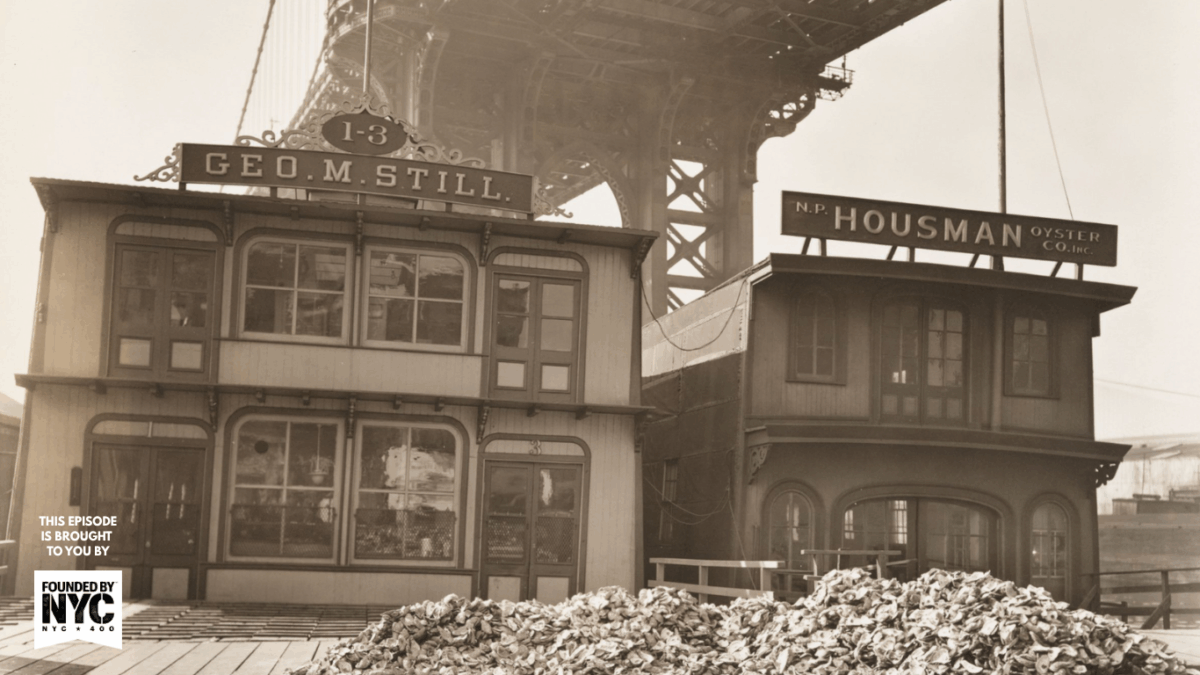
Once upon a time New York City oysters were not only plentiful and healthy in the harbor, they were an everyday, common food source. The original fast food!
For that reason, the oyster could be an official New York City mascot. Oyster farming was a major occupation. Oyster houses were an incredibly common place for people to eat. The greatest restaurants in the city served oysters, as did the small basement dives.
In many ways, they united all New Yorkers, not just from the Lower East Side to Fifth Avenue, but even with those people who came before – the Lenape indigenous tribes, the original Dutch settlers and even the colonial English.
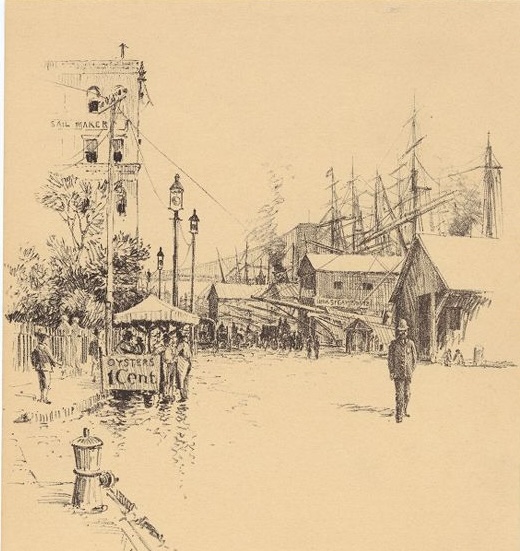
South Street from Coenties Slip, 1898. Today the elevated FDR blocks this view. Courtesy New York Public Library
Oysters defined the New York City palate by the early 19th century. Businessmen like Thomas Downing (one of New York’s first successful Black restaurateurs) fed the stock brokers on Wall Street while the Delmonico Brothers served them on the half-shell in their new French inspired eatery.
But today — New York City oysters are inedible. And for most of the 20th century, they were functionally extinct thanks to the harbor’s notoriously poor water quality.
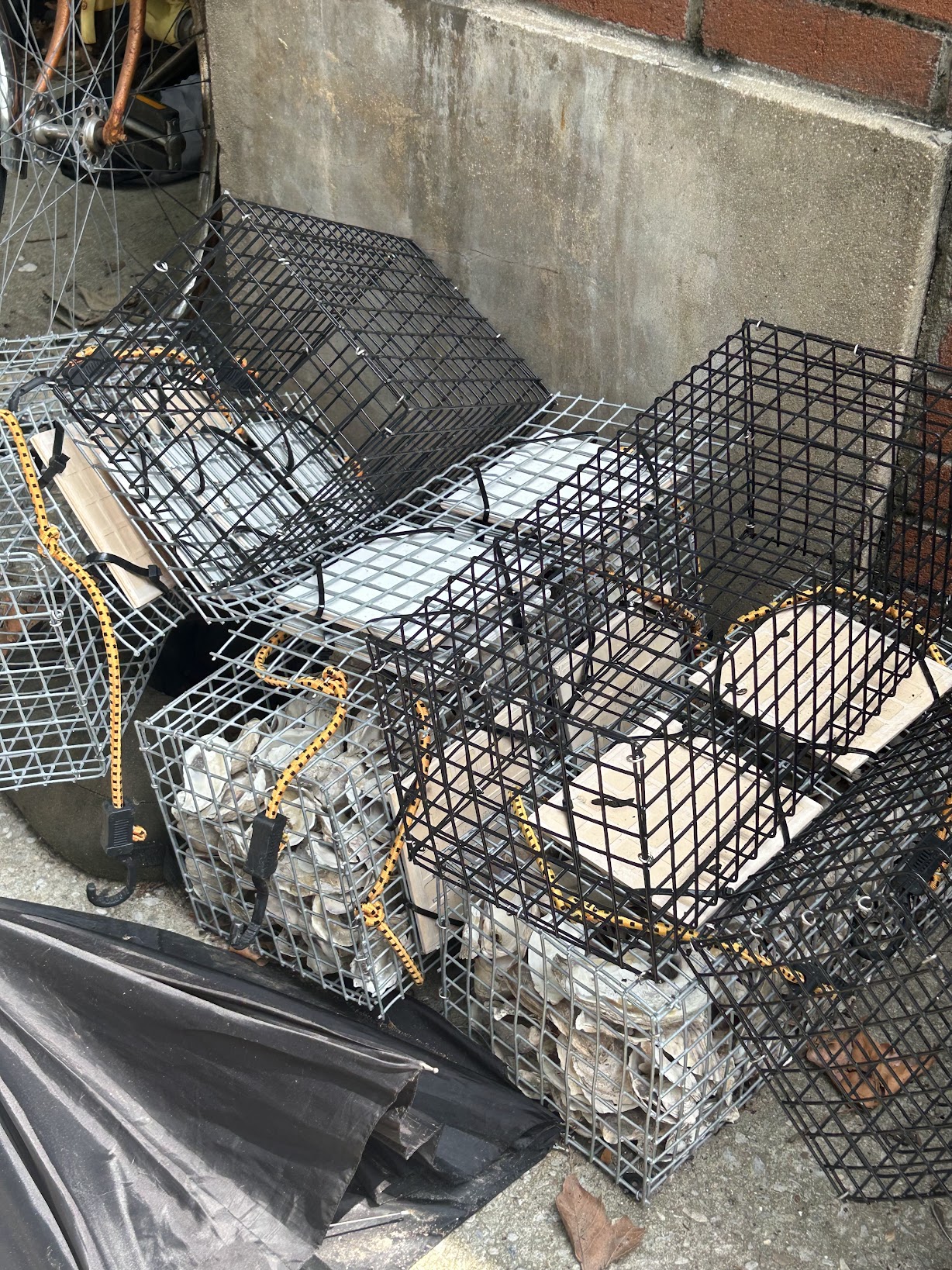
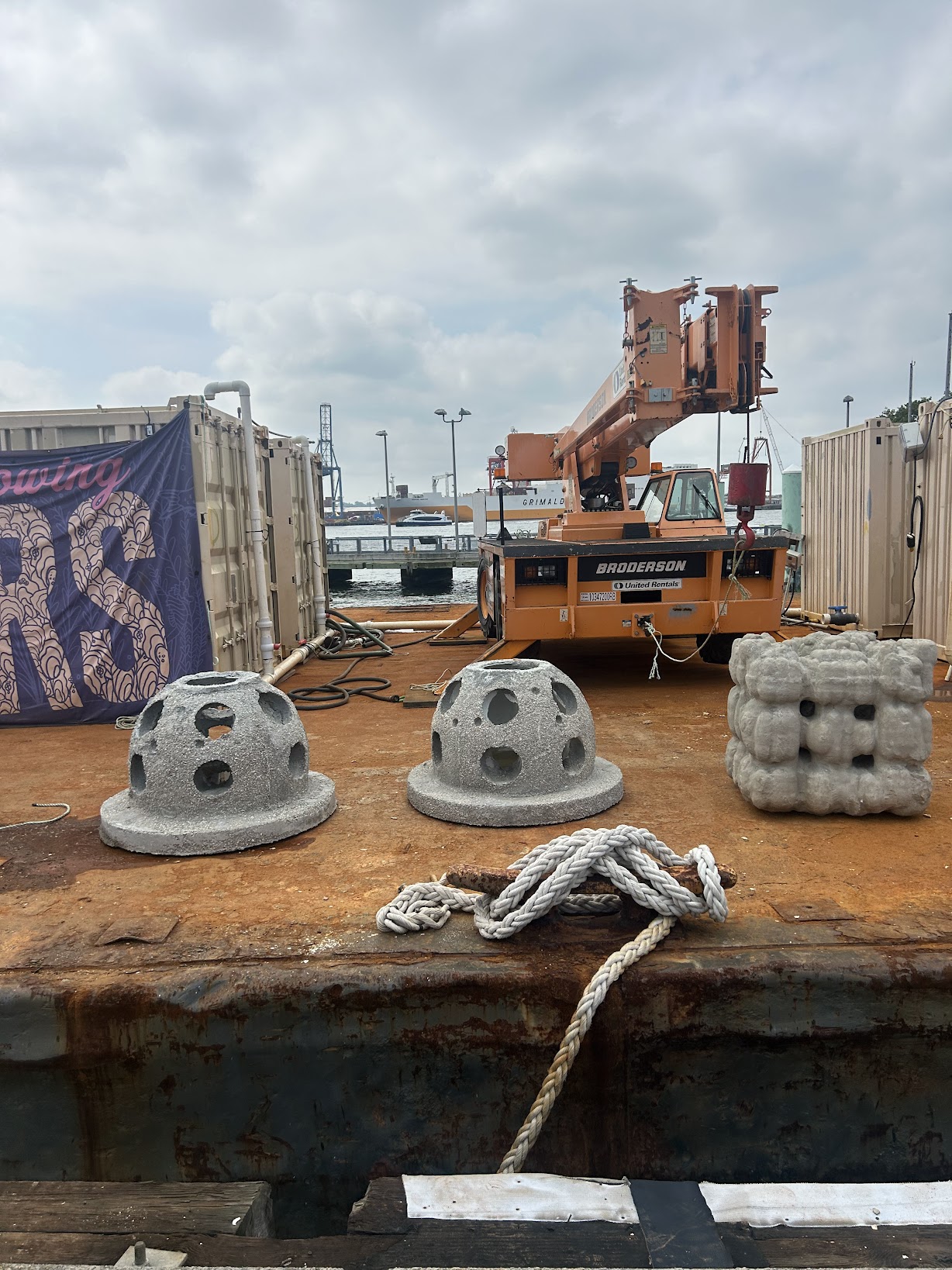
Thanks to organizations like the Billion Oyster Project, however, the oyster has returned to the harbor. And soon we may see a billion oysters — and more! Brian Reagor, director of development and communications at the Billion Oyster Project, joins Tom and Greg to discuss the fascinating process of reintroducing the oyster to its old home in New York harbor.
LISTEN NOW — NEW YORK: THE CITY OF OYSTERS
The Bowery Boys Podcast is proud to be sponsored by Founded By NYC, celebrating New York City’s 400th anniversary in 2025 and the 250th anniversary of the United States in 2026.
Read about all the exciting events and world class institutions commemorating the five boroughs legacy of groundbreaking achievements, and find ways to celebrate the city that’s always making history at Founded by NYC.
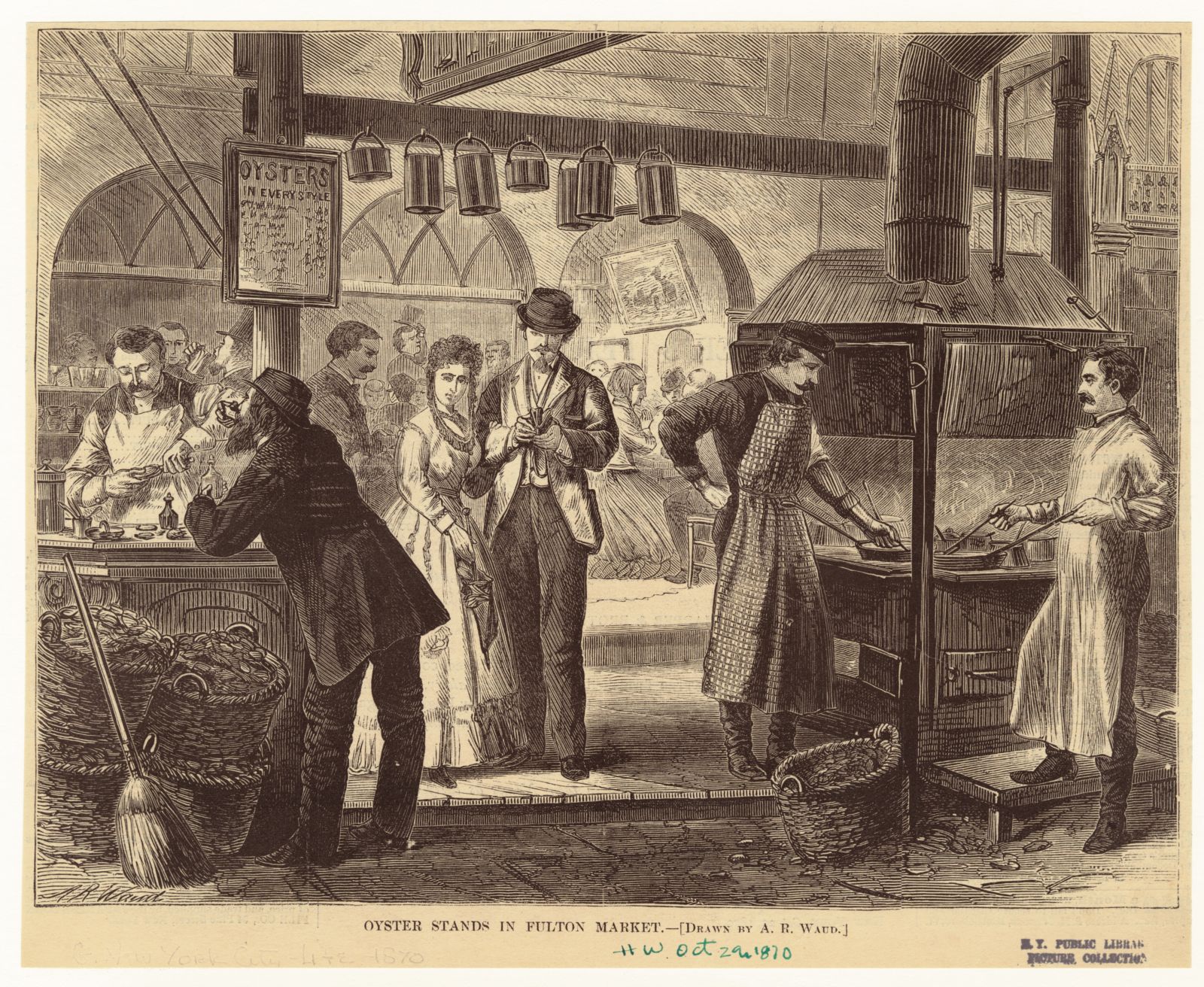
Oysters for days! An oyster shop in 1867, according to Frank Leslie’s Illustrated Newspaper.
Billion Oyster Projectwas founded in 2014 by Murray Fisher and Pete Malinowski who envisioned a healthy, biodiverse New York Harbor — and who shared the belief that restoration without education is temporary.
For more information and to look for ways to volunteer, visit their website.
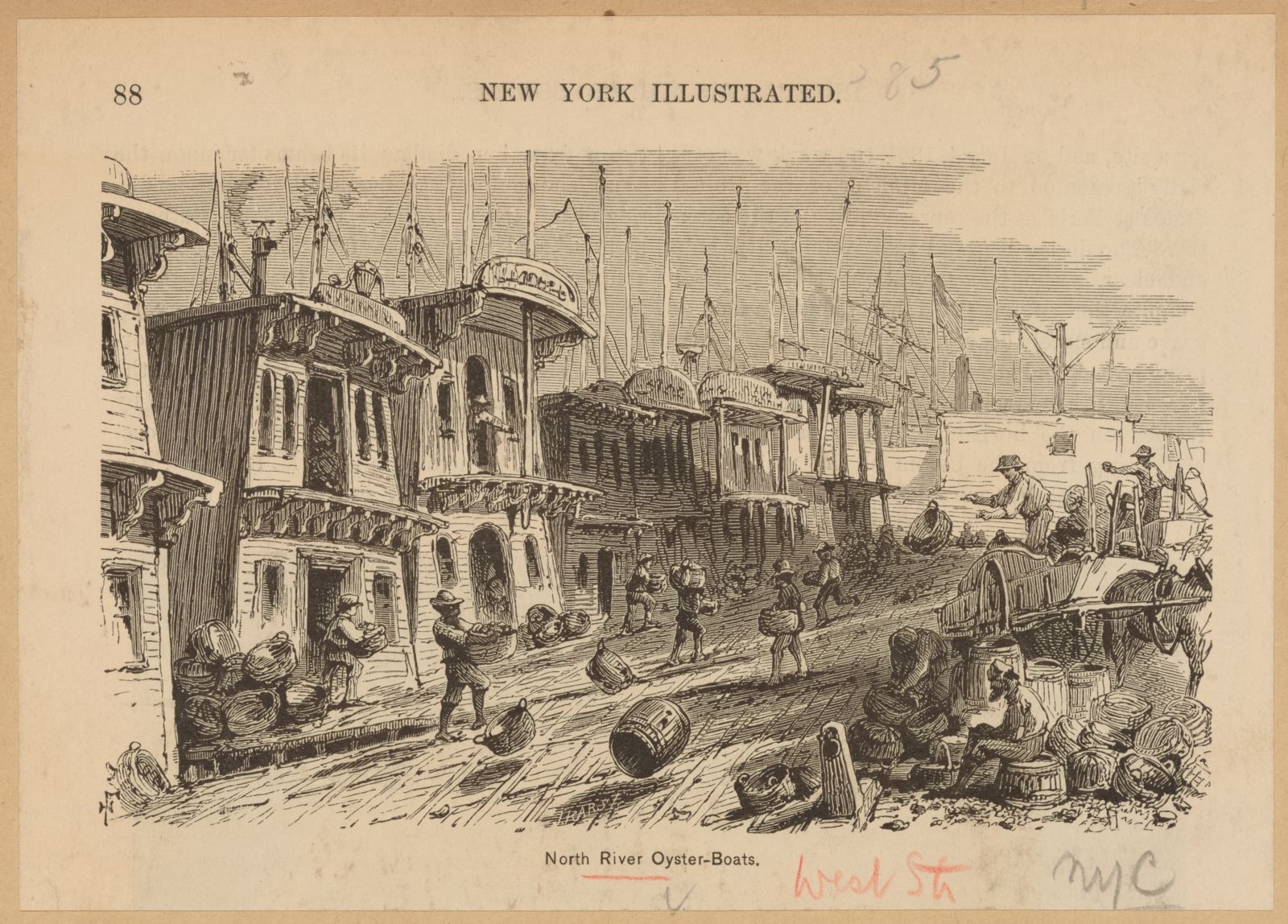
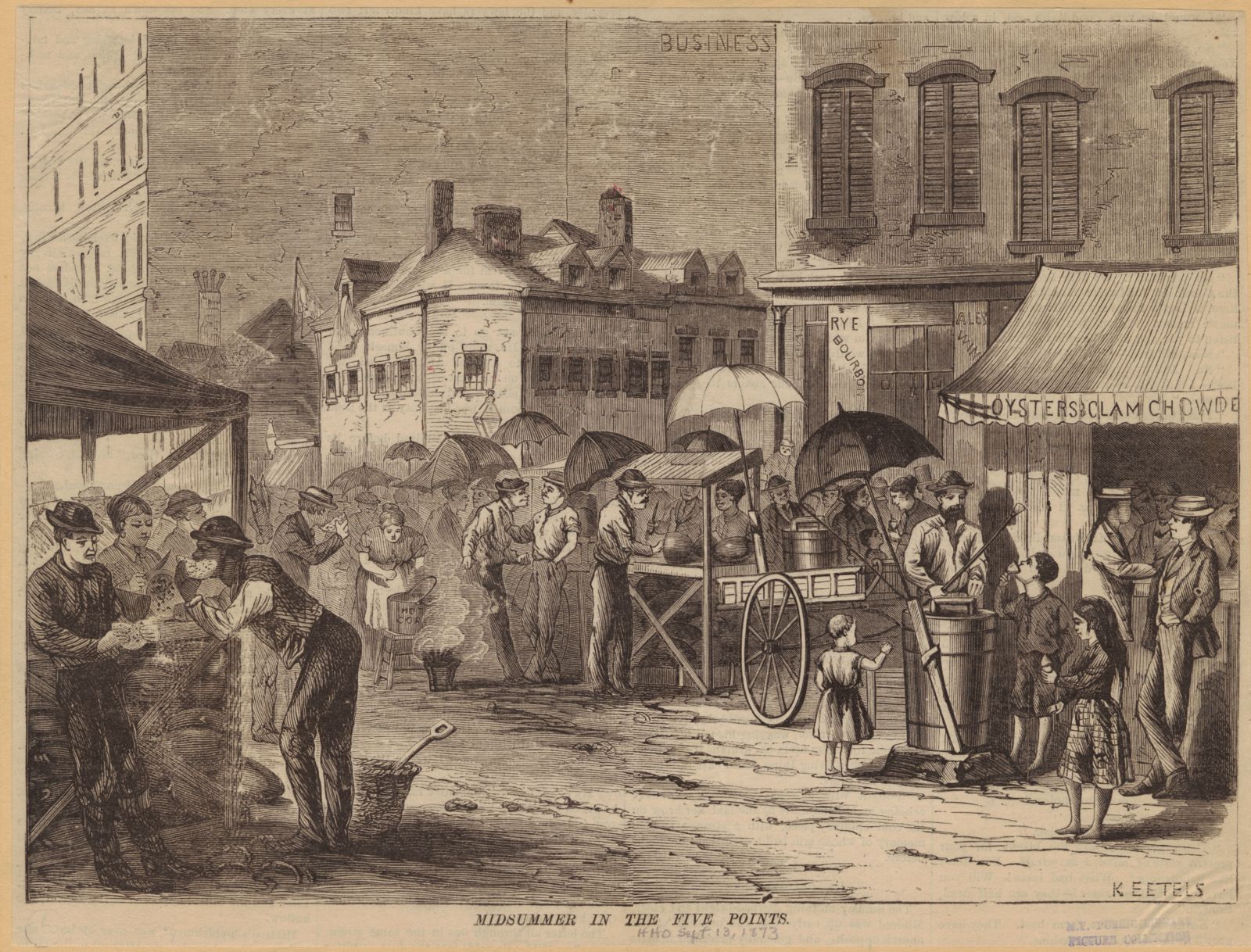
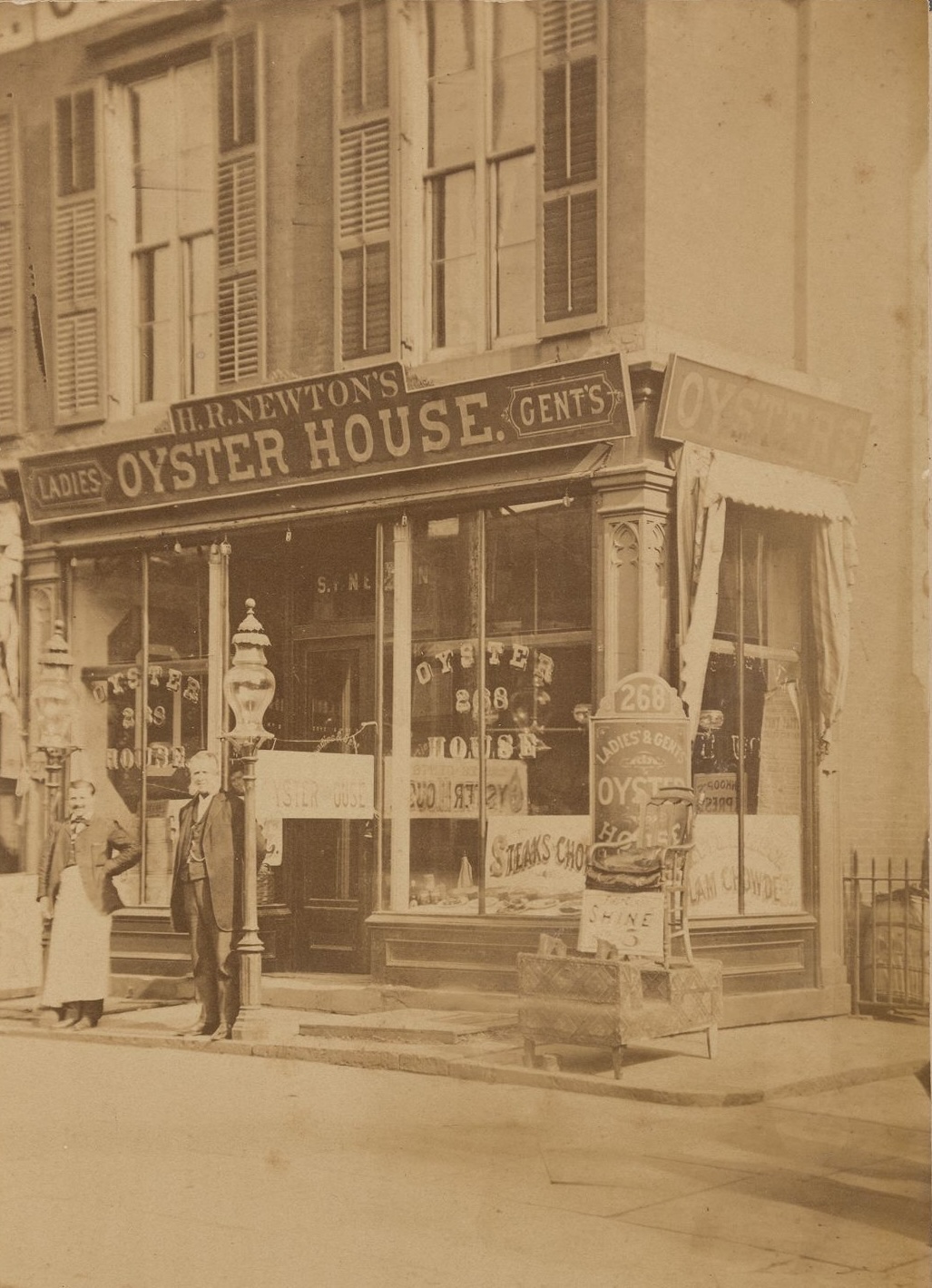
A fascinating view of the ‘North River’ (Hudson River) oyster boats, 1885. [link]Midsummer in the Five Points, 1873, from Hearth and Home magazine, courtesy New York Public LibraryHannah R. Newton’s Oyster House, photo taken 1890-94, courtesy New York Public Library. It was located at 268 Sixth Avenue, corner of 17th Street. “Her husband, Richard W. Newton (1834-1907), an oyster dealer, also farmed in Ronkonkoma, Long Island.” [link]
As we celebrate events in New York City through Founded by NYC, his week we’re celebrating Hamilton: An American Musicalwhich is marking its 10th anniversary this year – can you believe it, ten years since its debut at the Public Theater.
And Lin-Manuel Miranda and the rest of the production are celebrating with a special 10th anniversary production on August 6, 2025, at the Richard Rodgers Theater.
PLUS Leslie Odom Jr will soon be reprising his role as Aaron Burr, a role which earned him a Tony Award for Best Actor. Odom’s back in the show starting on Sept 9 for a limited run through November.
Read about Hamilton :An American Musical and all the other exciting events and world-class institutions commemorating the five boroughs’ legacy of groundbreaking achievements, and find ways to celebrate the city that’s always making history atFounded by NYC.
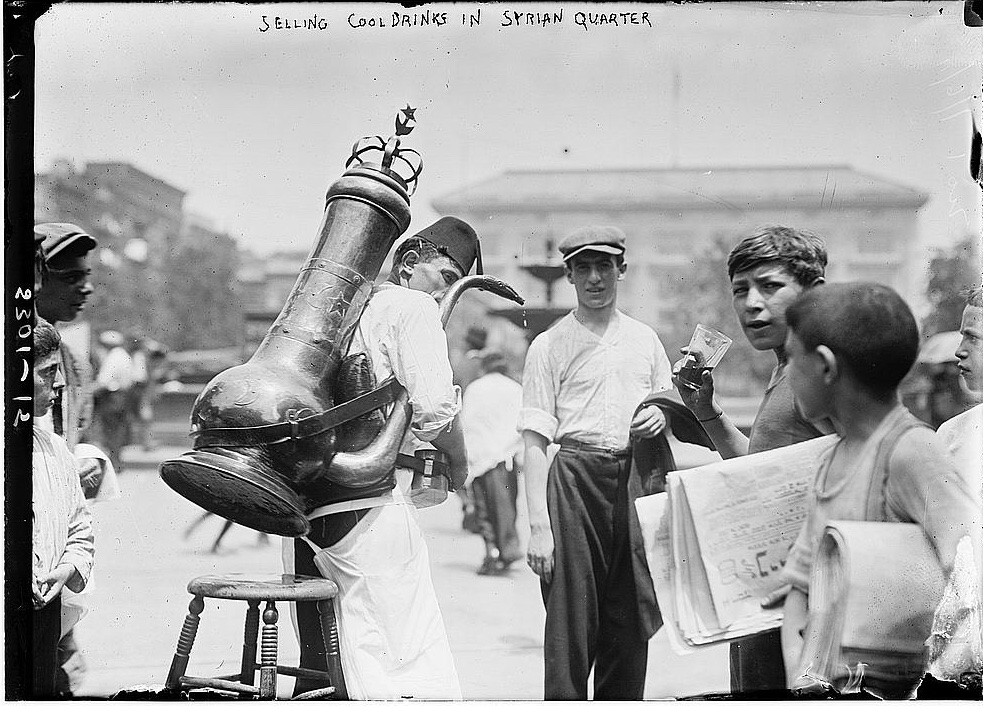
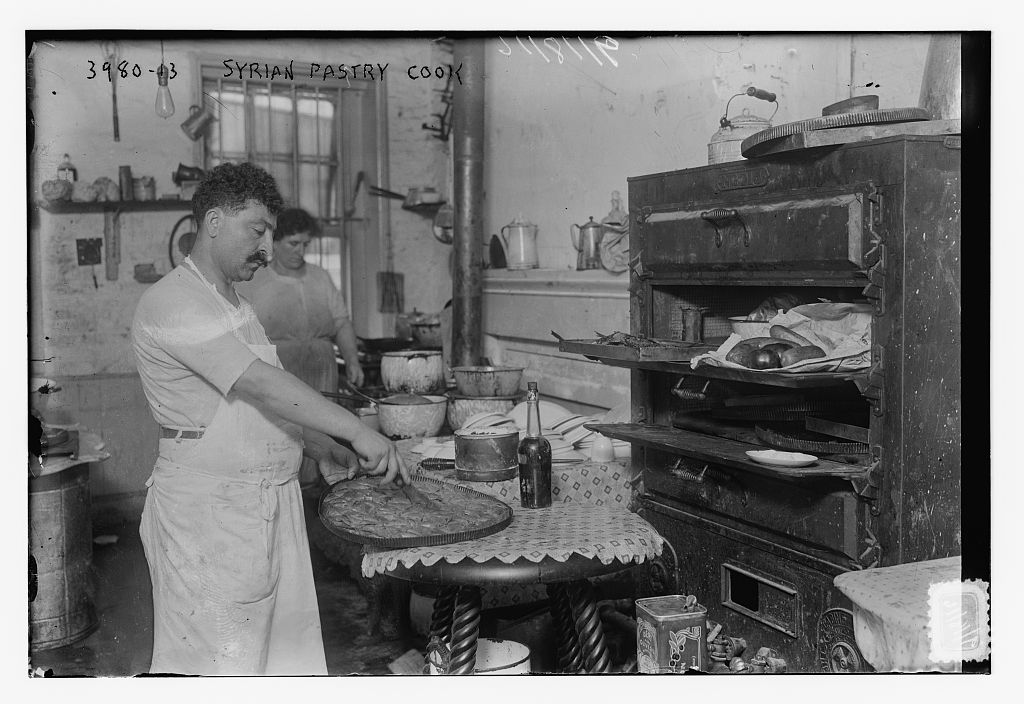
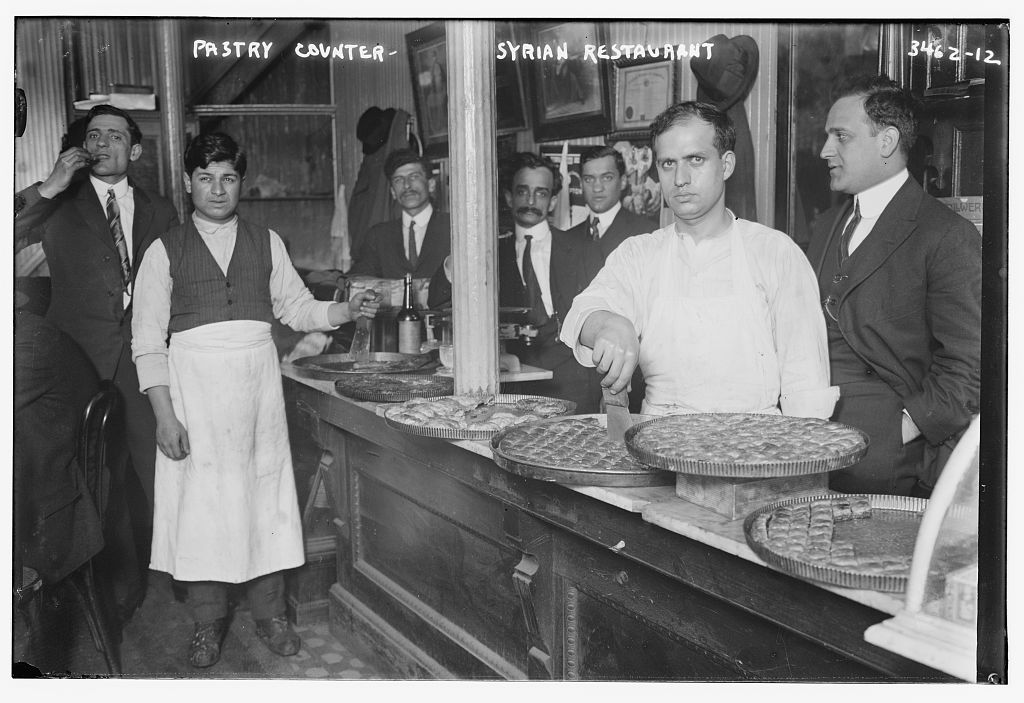
Just south of the World Trade Center district sits the location of a forgotten Manhattan immigrant community. Curious outsiders called it Little Syria although the residents themselves would have known it as the Syrian Colony.
Starting in the 1880s people from the Middle East began arriving at New York’s immigrant processing station — immigrants from Greater Syria which at that time was a part of the Ottoman Empire.
The Syrians of Old New York were mostly Christians who brought their trade, culture and cuisine to the streets of lower Manhattan. And many headed over to Atlantic Avenue in Brooklyn as well, creating another district for Middle Eastern American culture which would outlast the older Manhattan area.
Who were these Syrian immigrants who made their home here in New York? Why did they arrive? What were their lives like? And although Little Syria truly is long gone, what buildings remain of this extraordinary district?
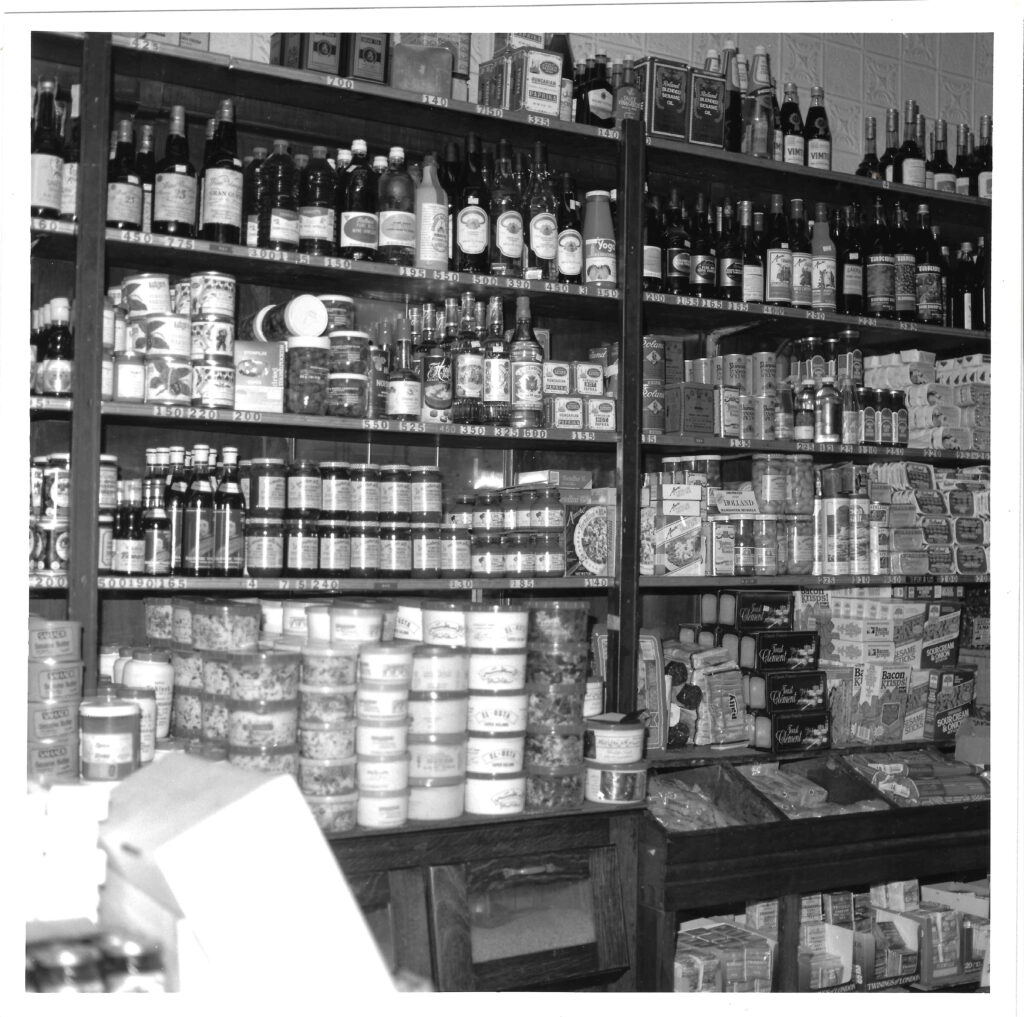
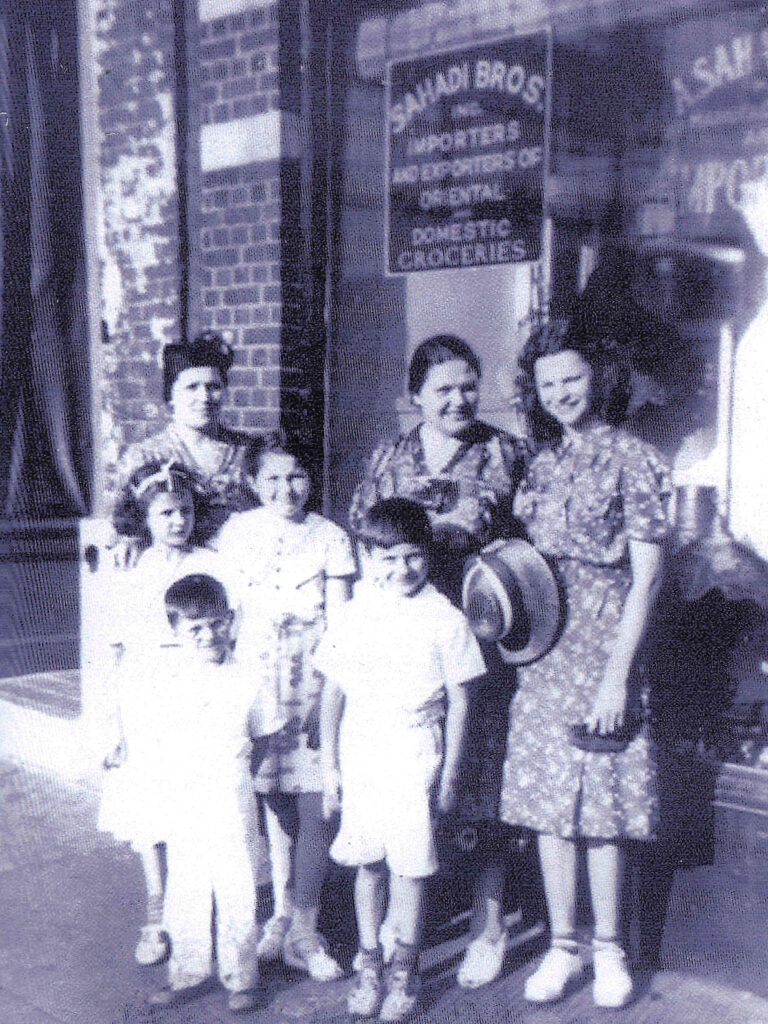
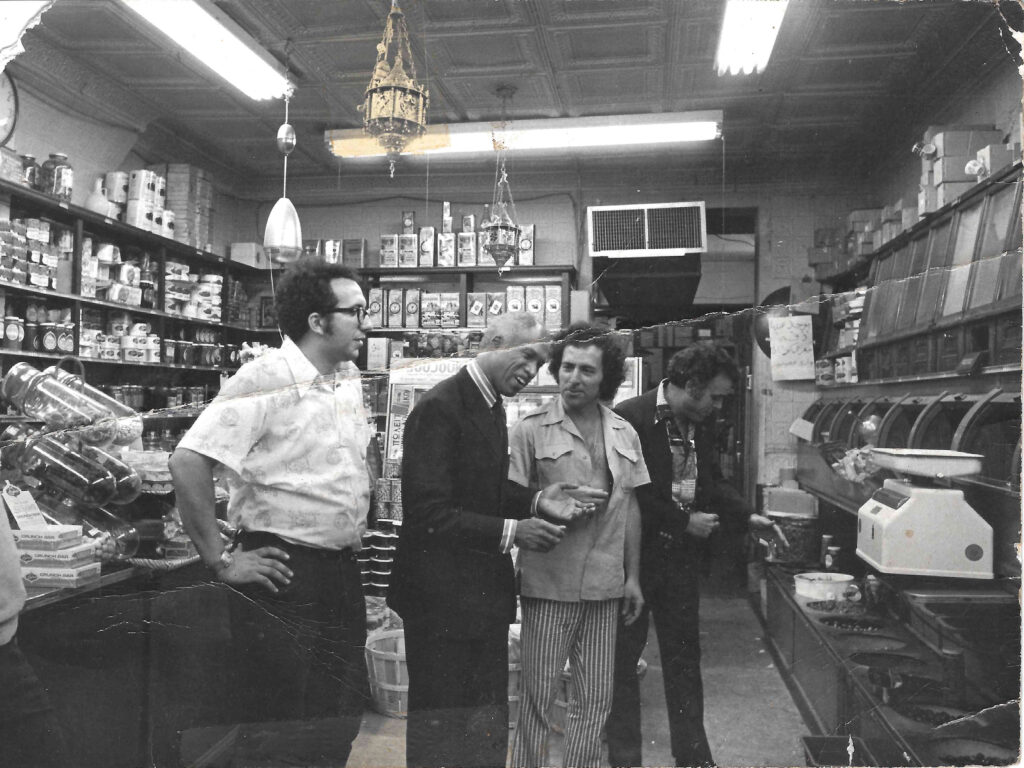
PLUS: A visit to Sahadi’s, a fine food shop that anchors today’s remaining Middle Eastern scene in Brooklyn. Greg and Tom head to their warehouse in Sunset Park to get some insight on the shop’s historic connections to the first Syrian immigrants.
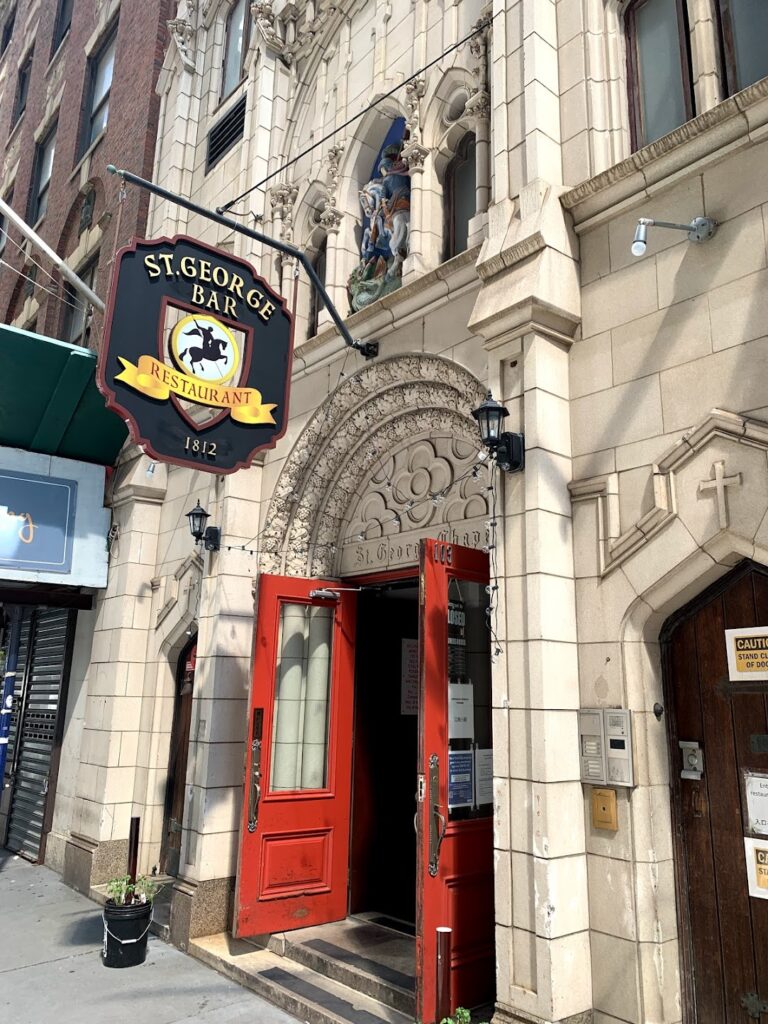
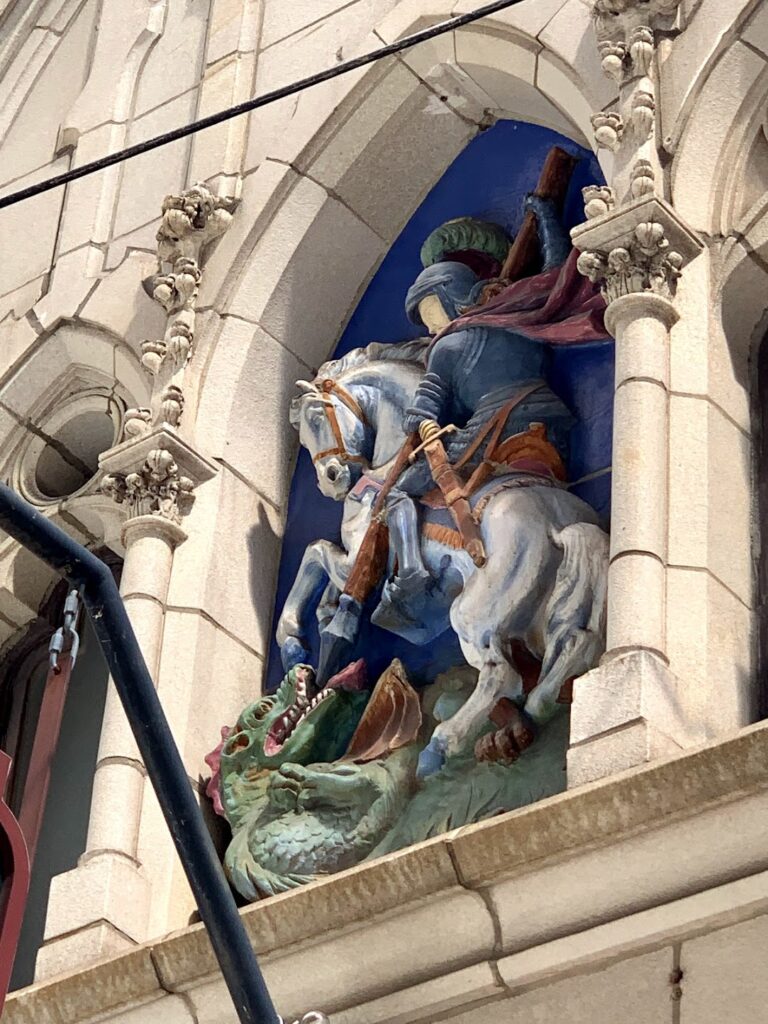
Below: St George’s Syrian Catholic Church (now a restaurant)
Photo by Greg Young
FURTHER LISTENING
After you’ve listened to this show on the history of New York’s Syrian population, dive back into the back catalog and listen to these shows referred to on the show:
The Bowery Boys: New York City History podcast is brought to you …. by you!
We are now producing a new Bowery Boys podcast every other week. We’re also looking to improve and expand the show in other ways — publishing, social media, live events and other forms of media. But we can only do this with your help!
We are now a creator on Patreon, a patronage platform where you can support your favorite content creators.
Please visit our page on Patreon and watch a short video of us recording the show and talking about our expansion plans. If you’d like to help out, there are several different pledge levels. Check them out and consider being a sponsor.
We greatly appreciate our listeners and readers and thank you for joining us on this journey so far.
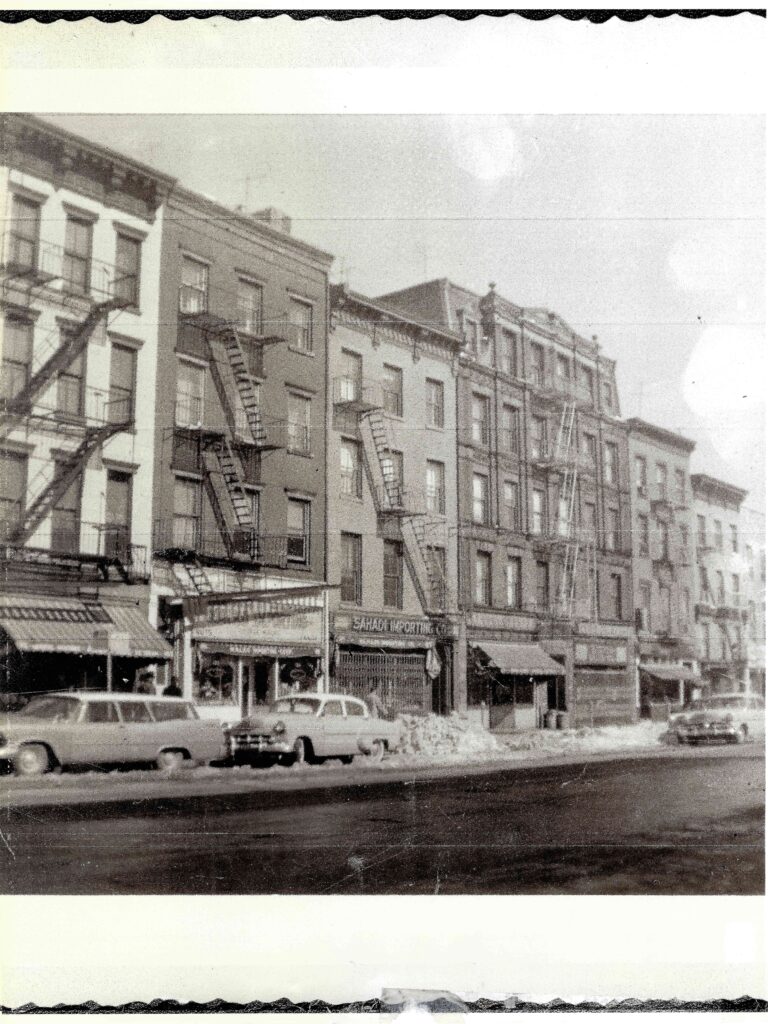
Images of Sahadi’s over the years (images courtesy Sahadi’s):
Sahadi’s in the 1970sSahadis’ on Atlantic Avenue, 1958
This podcast was partially based on this 2015 article written for this website:
Manhattan is profound for the layers of history that exist on even a modest spot of land. And in the case of blocks south of the World Trade Center, you don’t even have to go back far in time to find some surprising stories of the past.
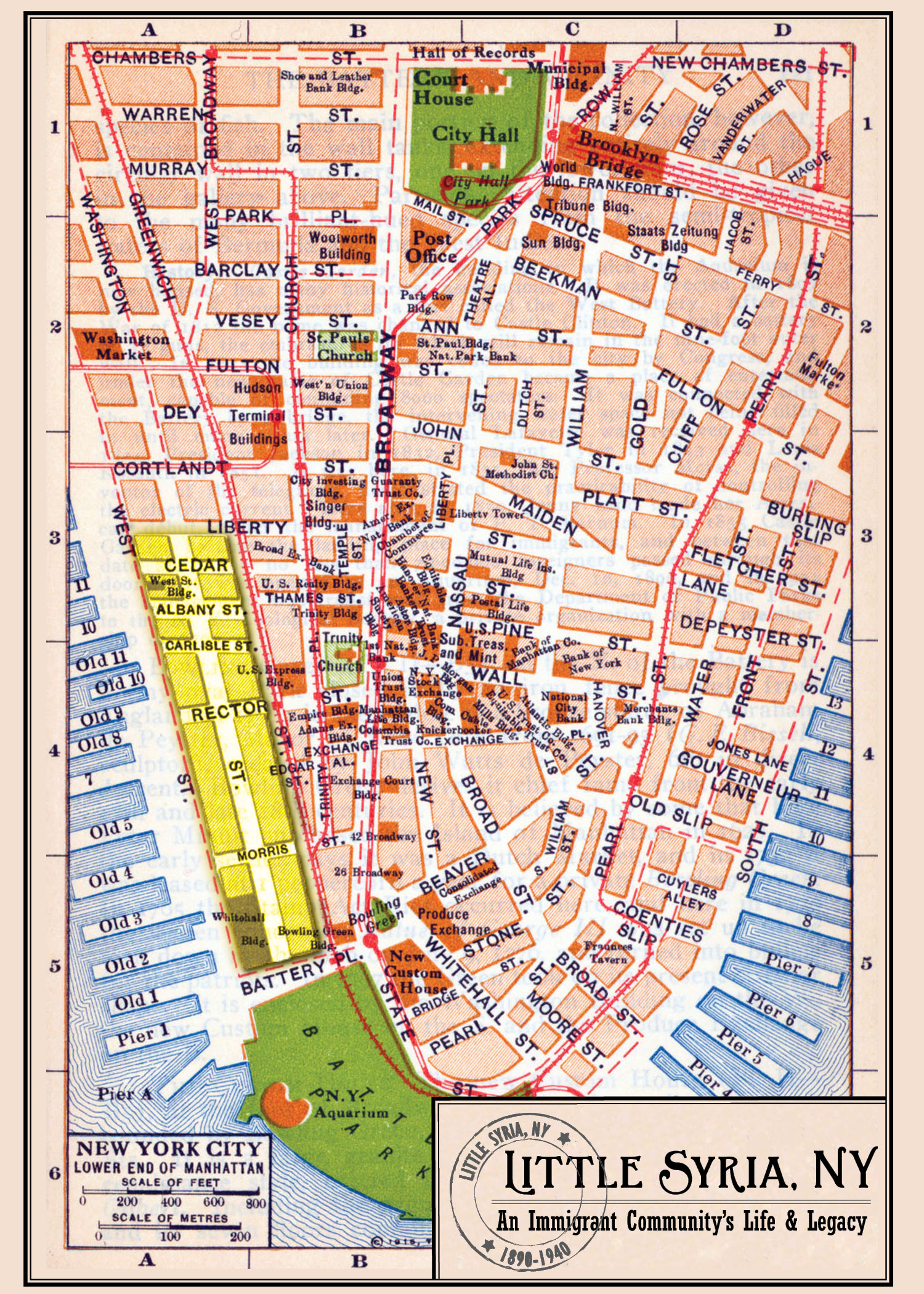
An approximation of the district in yellow (courtesy the Arab American Museum):
Courtesy Arab American Museum
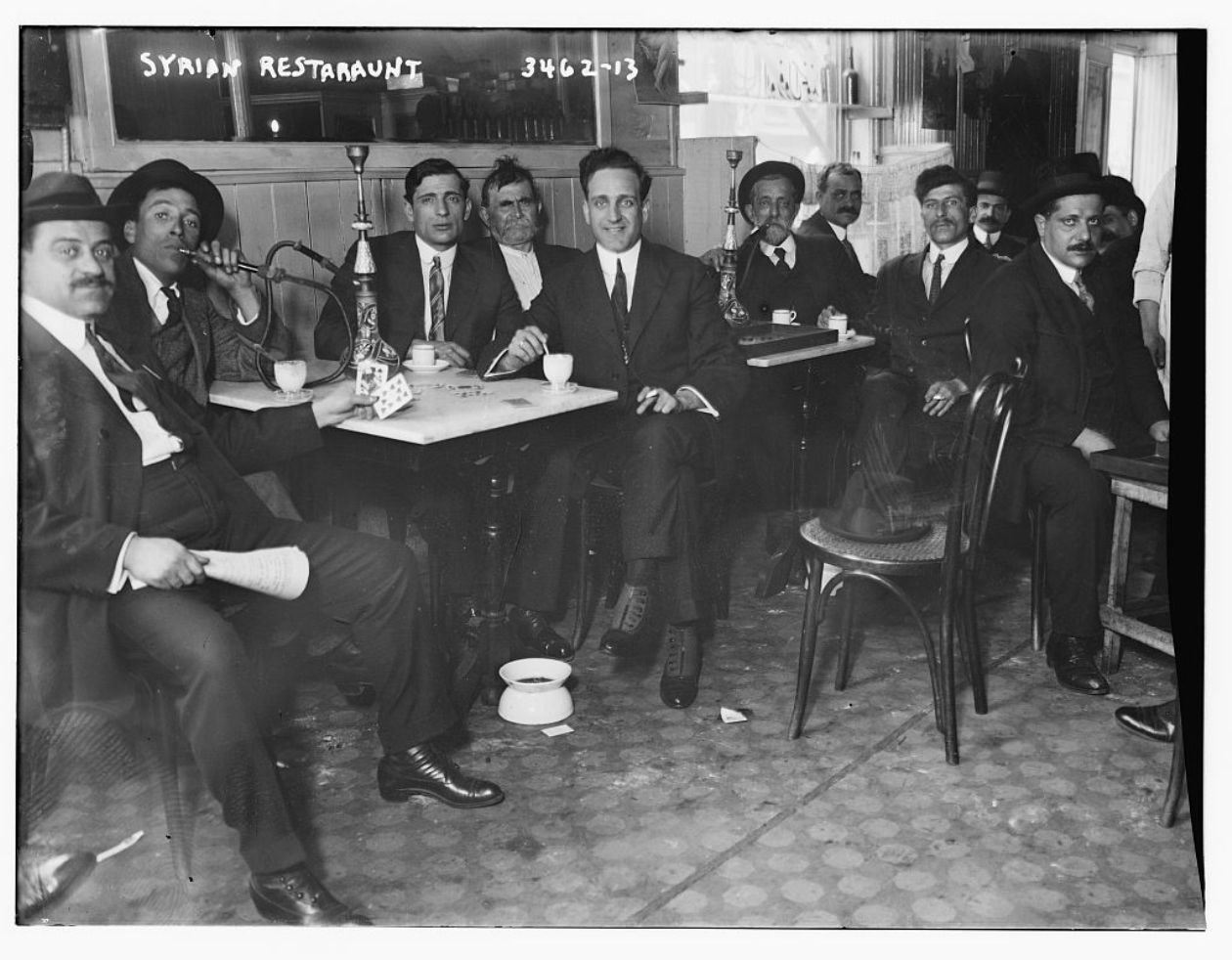
Little Syria (or the Syrian Quarter) featured rug and trinket shops and restaurants with “exotic” cuisine mentioned frequently by the newspapers of the day. In many ways it resembled the early days of Chinatown, a closed community, linked by language, rich in history and confounding to most New Yorkers.
Early New York Times writers were occasionally fascinated with this unusual pocket of settlement.
In 1898, they described it as quiet colony: “It differs much from other foreign quarters in New York. There is nothing forbidden in the aspect of the people or their places of business. The homes are clean and inviting and the stores where Turkish rugs, laces, perfumes, and tobacco are sold, display evidences of prosperity.”
While called ‘Little Syria’, it actually contained populations from several Middle Eastern communities. In the late 19th century, the idea of a ‘Greater Syria’ itself contained “modern Syria, Lebanon, Israel, Jordan, Palestinian Authority, Gaza Strip and parts of Turkey and Iraq.” [source]
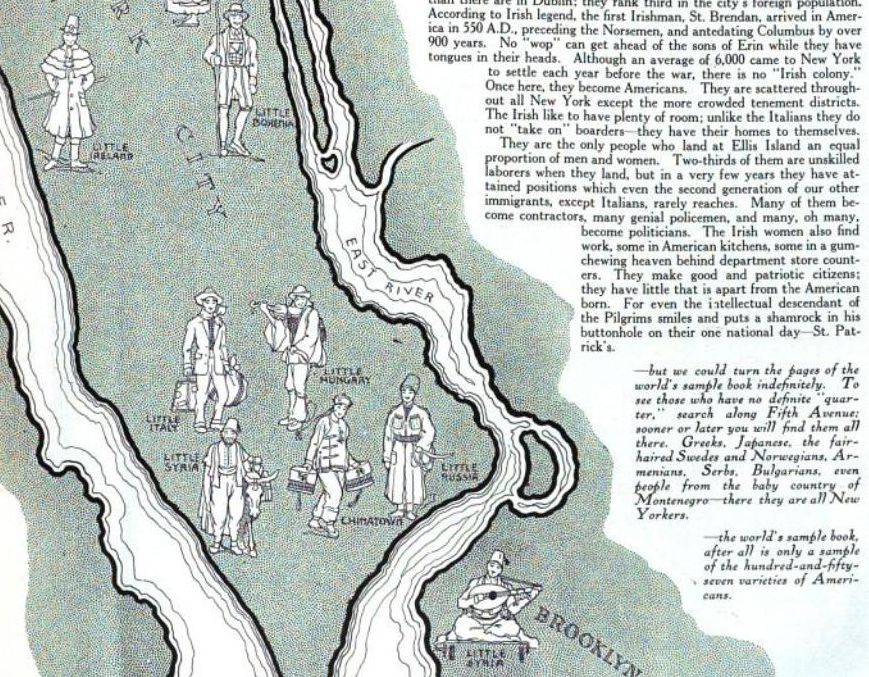
As a Gilded Age New Yorker, if you knew Little Syria at all — and most New Yorkers stayed away from the ethnic ‘Little’ neighborhoods (Italy, Africa, Hungary) — it was because of the food.
Another New York Times article from 1899 describes it with the passion of a modern restaurant critic: “It is in the restaurants that become cafes, after Syria has eaten her evening meal, that what is perhaps the most interesting life is to be seen.”
Of its inherent exoticness: “One glance at the Arabic bill of fare, written in Arabic script on a flimsy bit of white paper, shows the impossibility of making head or tail out of it.”
There were clearly few frames of references for those who visited this district. A 1903 New York Tribune describes the population of Little Syria as “fugitives from the Sultan’s tyranny” and describes the streets like something out of a chaotic wonderland:
“The shop windows are filled with huge Turkish pipes, whose water filled bulbs and serpentine stems would seem able to bring to the smoker all the dreams of the Thousand and One Nights. Here too the passerby may see lamps of Damascus brass, both great and small, and lighted by innumerable tiny tapers. They look much as the imagination might picture the lamp of Aladdin.”
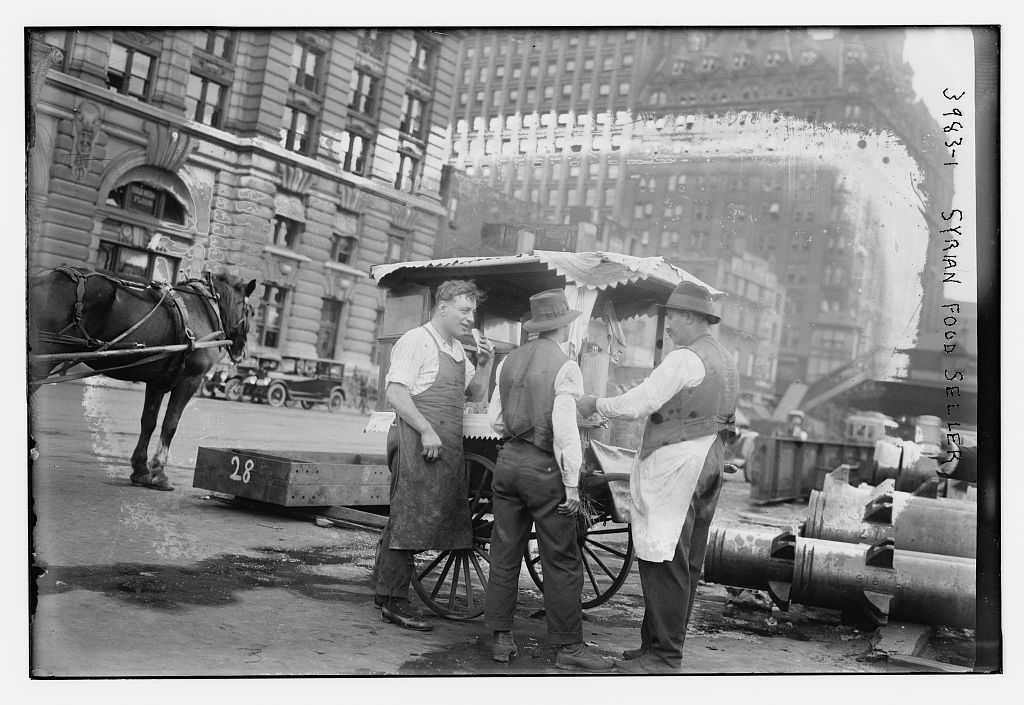
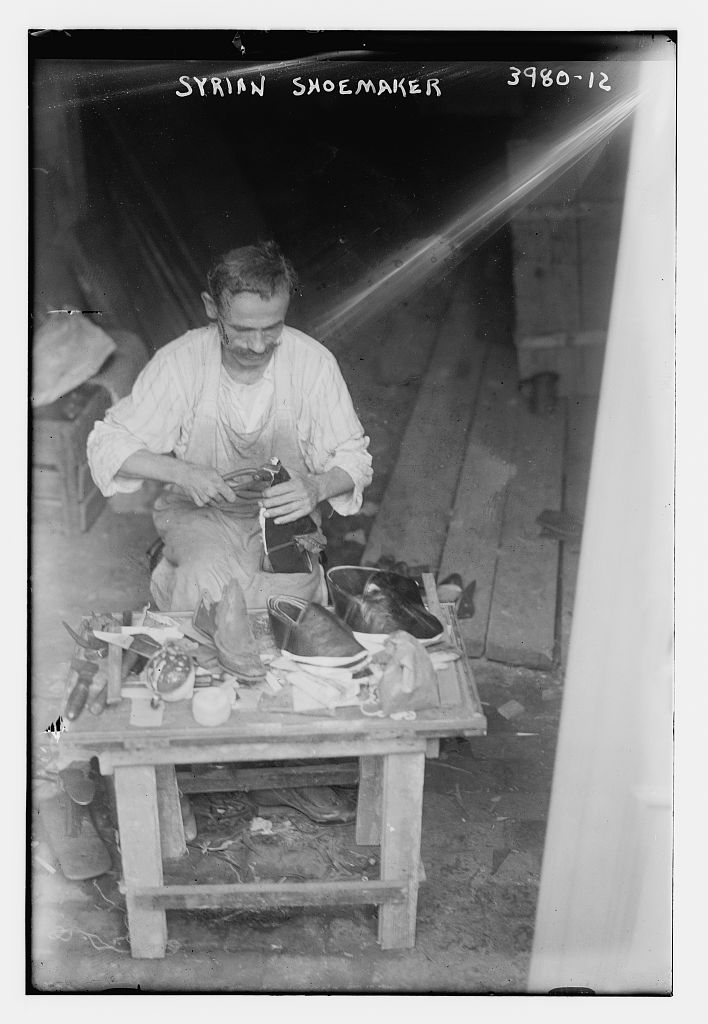
People may have been prone to stereotype Syrian shops, but in fact the Syrian Quarter was known for a wide variety of goods including jewelry, lace, embroidery, rugs, cigarettes, coffee and so-called ‘kimonos’ then (actually kaftans).
Over a quarter of a million people of Middle Eastern descent were living in America by the early 1920s. Although from a great swath of locations, they were frequently just called ‘Turks’ or ‘Syrians’. (The Sultanate of Ottoman Empire was abolished in 1922 and its territories made independent. )
The first Middle Eastern immigrants to the United States were Christian Syrians and mostly young men, following a similar pattern of immigration as the Italians.
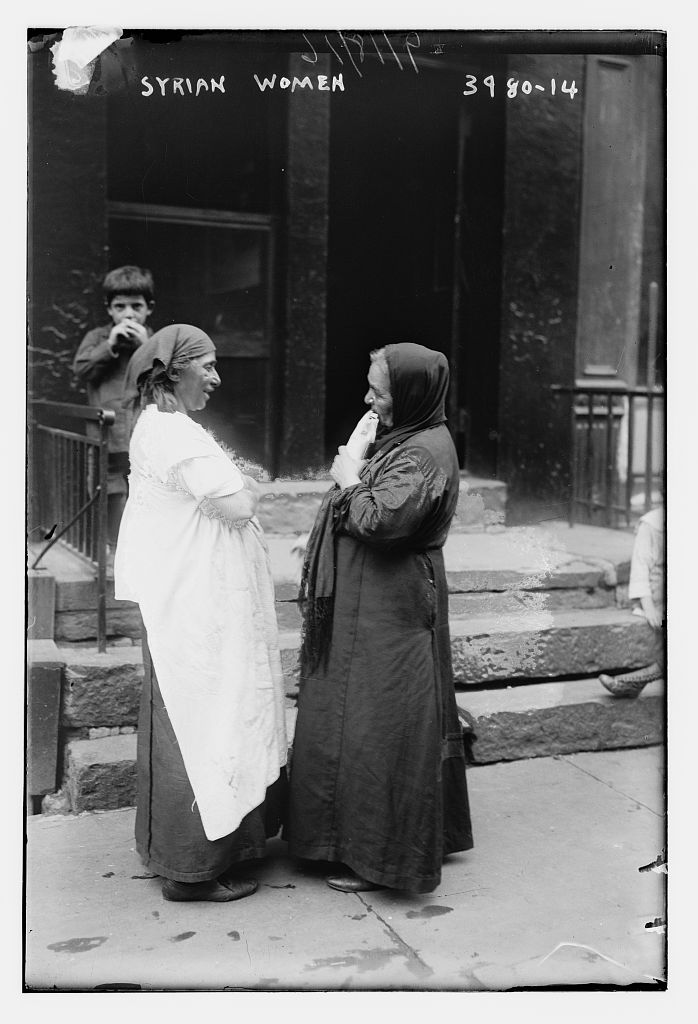
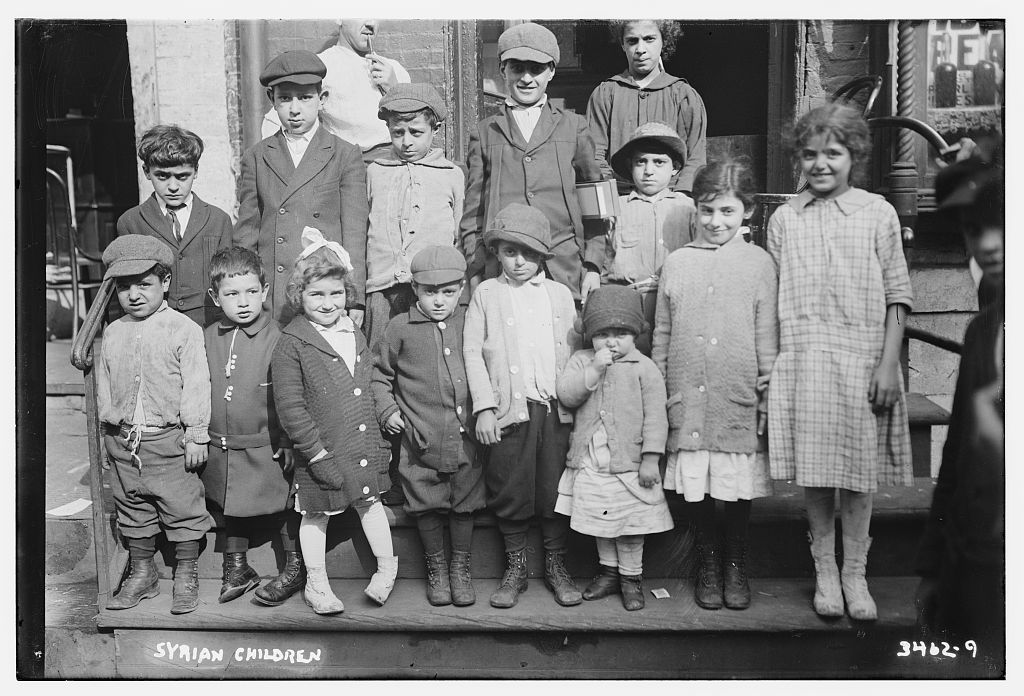
Women and children began coming over soon afterwards once their husbands or brothers established themselves, either as workers on construction crews or as private business owners.
In 1903 the Tribune observed a line of “olive skinned women” diligently sewing on the street, employed as seamstresses in a scene being played out all over New York in other neighborhoods.
Many in the Syrian Quarter were silk and lace manufacturers back home, and some even commuted to work in Paterson, NJ, the so-called silk making capital in the United States at the turn of the century.
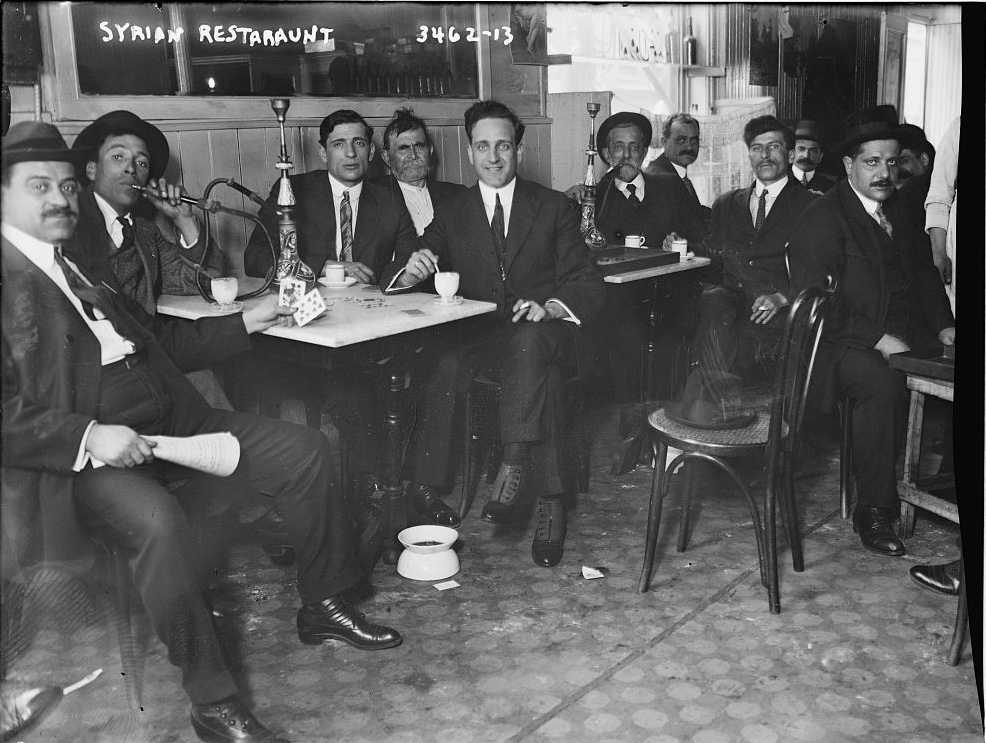
The pictures you see in this post were all taken sometimes between 1915 and 1916, a traumatic time in world affairs and the Middle East in particular.
Some were Armenians, cut off from regular news from back home and only sporadically aware of the horrors their families were experiencing.
The men who met up in Washington Street cafes smoked hookahs, drank coffee and played games of chess or checkers. Unlike the stereotypes presented in the press of ‘simple’ shop owners, many were well educated and spoke English.
While most of the earliest residents of the Syrian Quarter were actually Syrian Christians, by the 1910s both Christians and Muslims lived in the neighborhood.
The only vestige of Little Syria that remains today is the home of a former Catholic congregation — St. George’s Syrian Catholic Church at 103 Washington Street.
The congregation moved here in 1925, but by that time, a larger Middle Eastern community was developing in Brooklyn on Atlantic Avenue. Many vestiges of Brooklyn’s ‘Syrian quarter’ still exist today along Atlantic Avenue between Court Street and the waterfront, most notably Sahadi’s.
Below: An illustration from a 1918 Methodist journal called World Outlook, marking the ethnic enclaves of New York
Most of Manhattan’s original Middle Eastern neighborhood was eliminated with the construction of the Brooklyn-Battery Tunnel which opened in 1950 (although a long construction period cleared out the neighborhood by the early 1940s).
Those shops that managed to stay on shared the streets with a surprising new neighbor — radio.
Radio Row, considered Manhattan’s first technology sector, arrived just as terrestrial radio became the latest craze. Shops sold radio consoles, speakers and (after World War II) even ham-radio equipment, all centered at the corner of Cortlandt and Greenwich streets.
Today is National Doughnut Day which is not a real holiday although that shouldn’t stop you from celebrating in whatever powdered, glazed, creme-filled way you see fit.
However you will be surprised to learn that this day traces its roots to the Salvation Army and World War I.
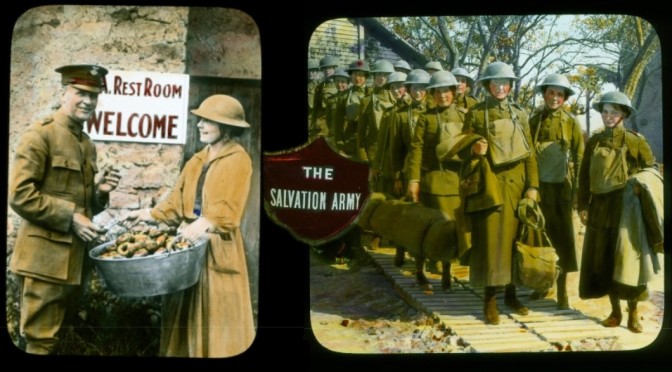
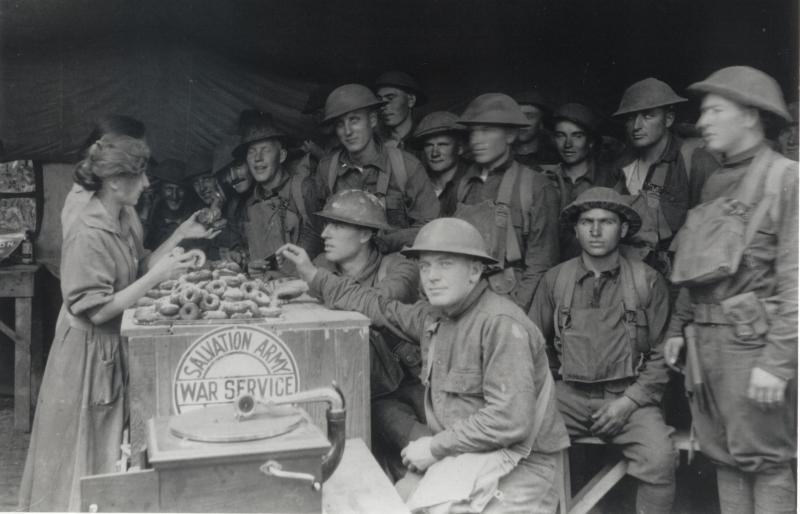
To provide for the American troops fighting in France in 1917-18, Salvation Army workers set up small tents or ‘huts’, providing the comforts of home, with nourishing meals, a quiet place to write letters or to get clothing mended.
Time to make the doughnuts: A Salvation Army hut during World War I (Courtesy the Salvation Army)
There were actually several dozen of these Salvation Army huts already set up in the United States near military bases so the tradition was simply transferred over to Europe when the war began, with workers often setting up huts in abandoned or even bombed-out buildings.
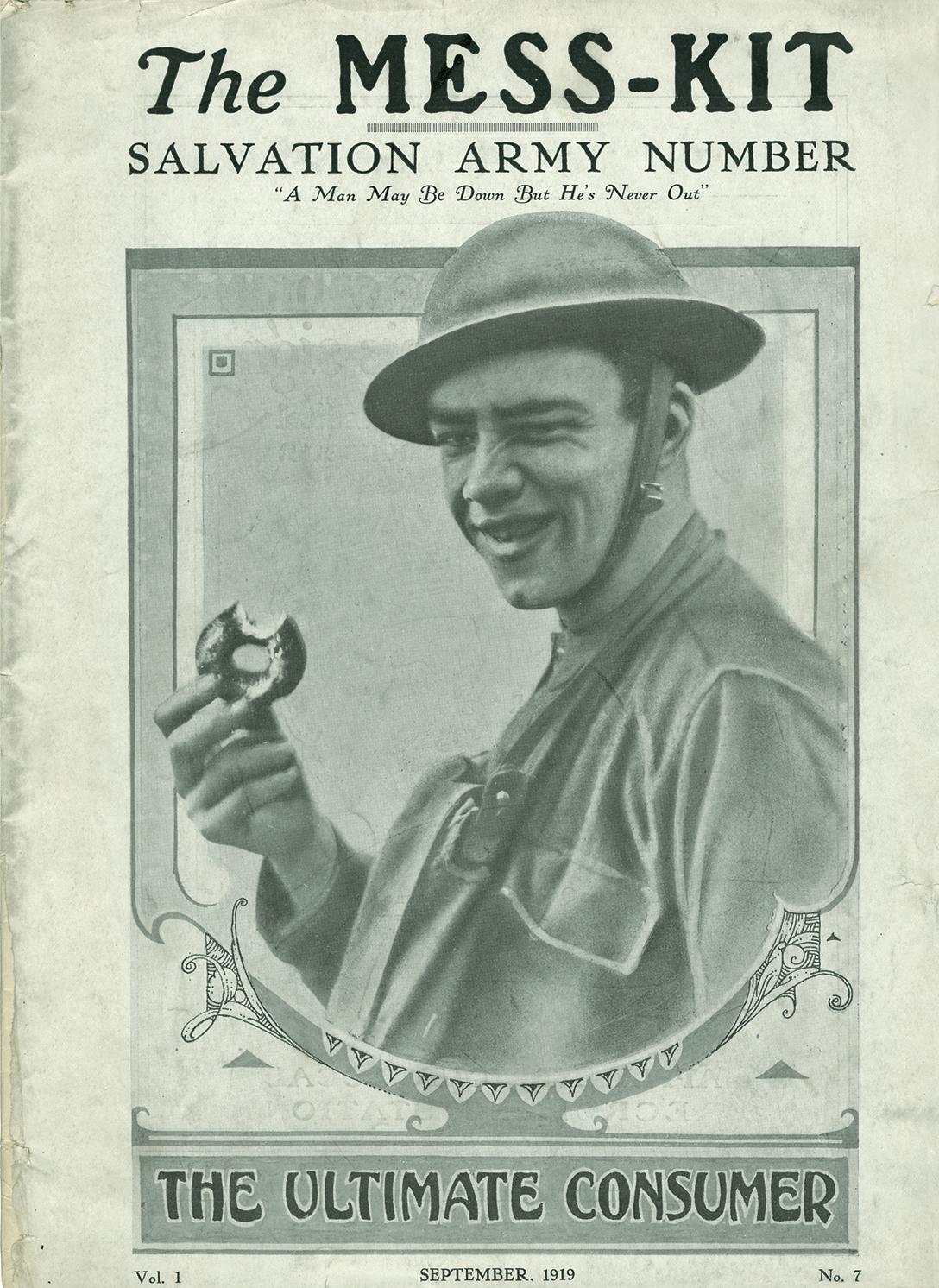
Below: A doughboy eating a doughnut on a 1919 magazine cover. (LOC)
What brings greater pleasure than a baked good? But the Salvation Army couldn’t transport large baking ovens, so they improvised with the doughnut, deep-frying dough on small portable stoves.
Irving and the Oly Koek
The round pastry was not invented by the Salvation Army. Indeed, Washington Irvinghimself is credited with the first mention of the doughnut in print back in 1809.
Regaling on old Dutch custom, he writes “[I]t was always sure to boast of an enormous dish of balls of sweetened dough, fried in hog’s fat, and called dough-nuts, or oly koeks: a delicious kind of cake, at present known scarce to this city, except in genuine Dutch families.”
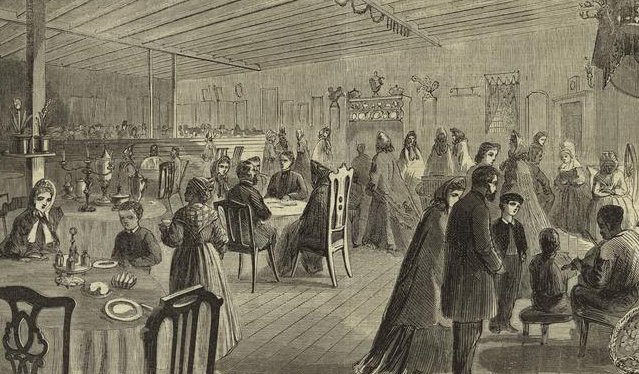
Above: A scene from the Knickerbocker Kitchen in 1864 (NYPL)
Due to their ease of preparation, doughnuts became associated with wartime cuisine. But even the original Dutch ‘oly koeks’ made a wartime return as well, brought back as a fund-raiser during the Civil War, sold during the 1864 Metropolitan Fair in the Knickerbocker Kitchen, a sort-of theme restaurant where Dutch delights were sold.
The Battleship in Union Square
Interestingly, the Knickerbocker pavilion was located just off of Union Square. Many decades later, the doughnut would return to Union Square for yet another war-related pageant.
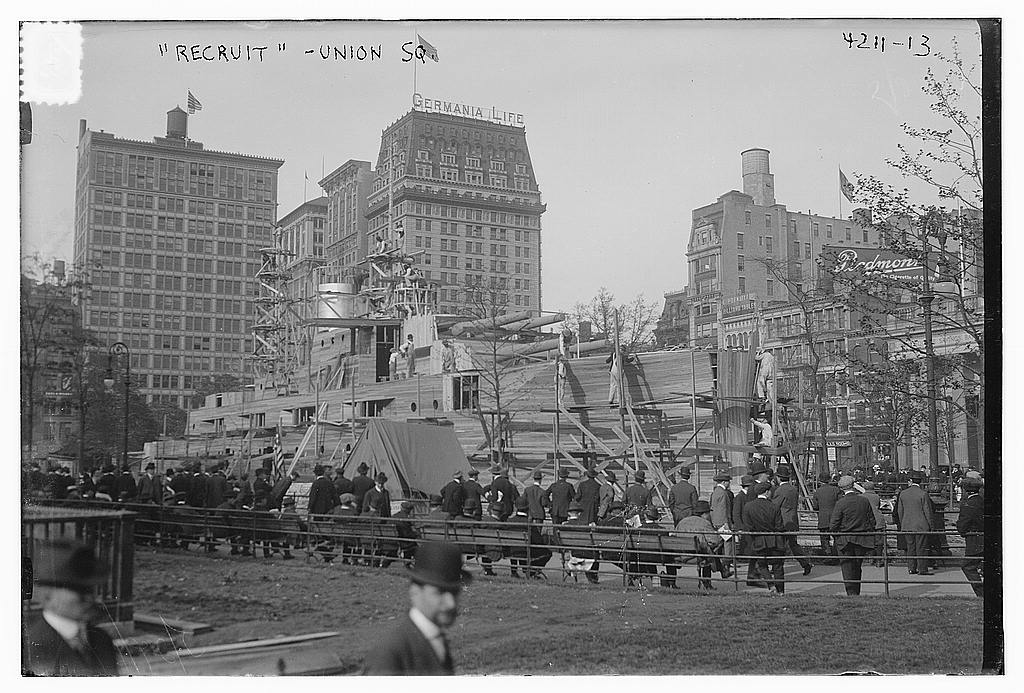
Once the war was over, the Salvation Army thought it would be a kind gesture to those New Yorkers were fought in the war to recreate their welcoming war huts. And it made natural sense to set one up here in Union Square, next to the wooden battleship and conveniently located near their headquarters on West 14th Street (still there today).
The Salvation Army’s Union Square hut opened for business January 12, 1919, with a grand ceremony around the USS Recruit and military officers from the Brooklyn Navy Yard.
Inside Salvation Army workers were busily preparing the doughnuts, using the same tools as on the battlefield. It was led by Adjutant Violet McAllister, one of the original “doughnut sweethearts” of the war, with “flour on her nose and a great white apron over her khaki uniform.
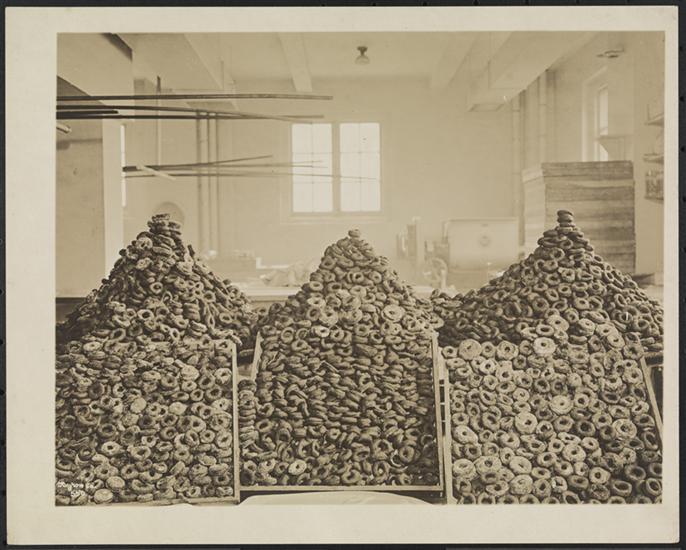
That day over 1,000 doughnuts were prepared, many for soldiers returning from the war. In emulation of the war front huts, the Union Square edition was “open every day for reading, writing and gossip, with doughnut and coffee for 10 cents for all men in uniform.” [source]
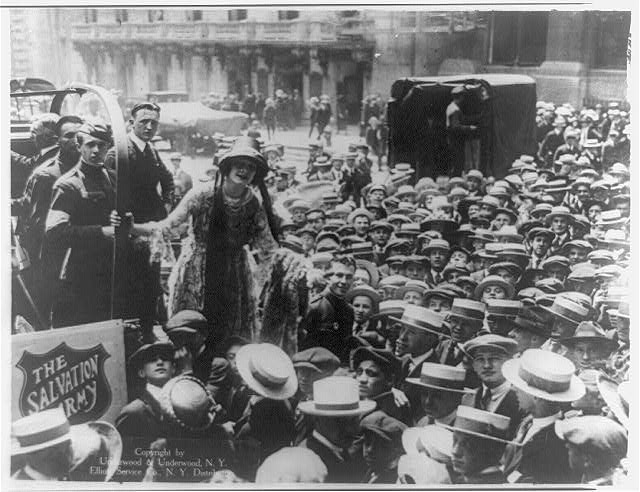
Above: Silent film star and New Yorker Martha Mansfield sells doughnuts for $1 apiece on the streets of New York during a fundraiser for the Salvation Army. (LOC)
Below: The doughnuts were prepared at the Hotel Commodore, Lexington and 42nd Street.
Courtesy Museum of the City of New York
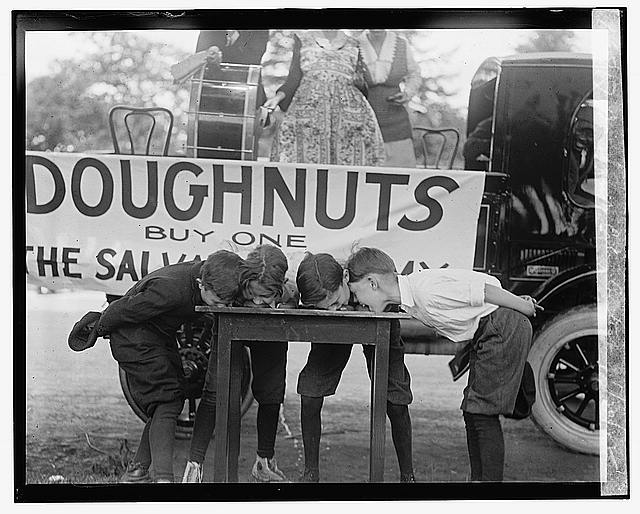
By 1920, the battleship — and I assume the doughnut hut as well — were dismantled. In 1938, two decades after World War I, the Salvation Army started National Doughnut Day as a fundraiser and in honor of its phalanx of busy doughnut makers.
New Yorkers of course no longer needed to associate this food with wartime activities as the pastry soon sprang up at every lunch corner and automat in town.
PODCAST REWINDNew Yorkers are serious about their pizza, and it all started with a tiny grocery store in today’s Little Italy and a group of young men who became the masters of pizza making.
In this podcast, you’ll find out all about the city’s oldest and most revered pizzerias — Lombardi’s, Totonno’s, John’s, Grimaldi’s and Patsy’s in all its variations.
But if those are the greatest names in New York-style pizza, then who the heck is Ray — Original, Famous or otherwise?
NOW UPDATED with several minutes of new pizza history –– including an update on Totonno’s in Coney Island, the pizza war firing up underneath the Brooklyn Bridge and the story of Sbarro’s mall pizza domination.
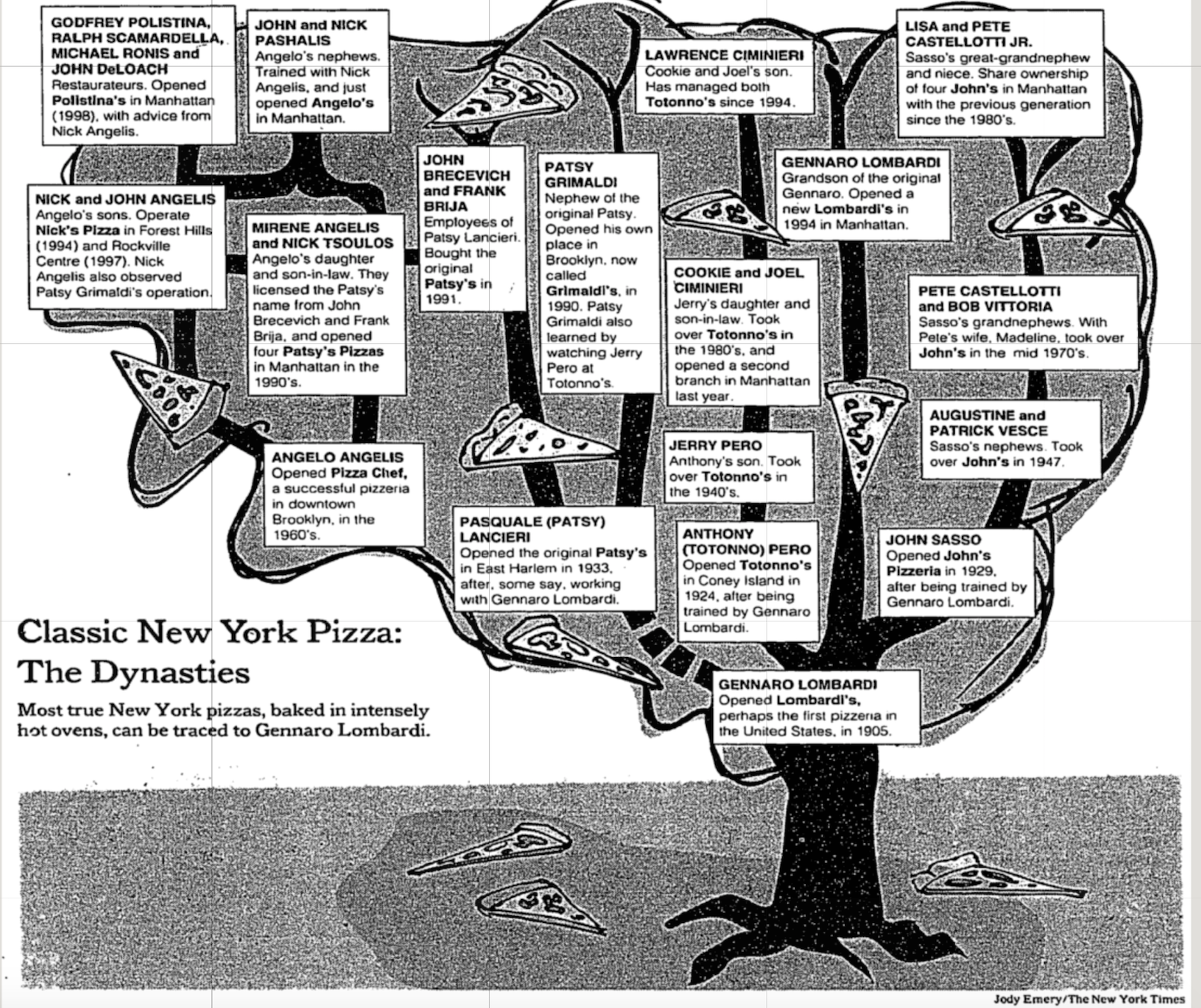
A New York ‘pizza tree’ which ran in the New York Times in 1998, outlining the lineage of local pizza. (Read the entire article here, section F6, page 87.)
Courtesy New York Times
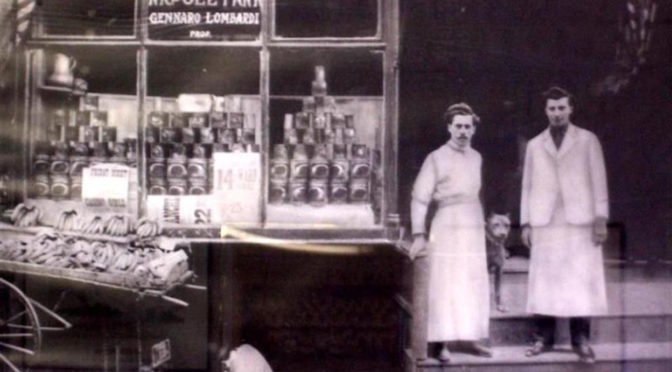
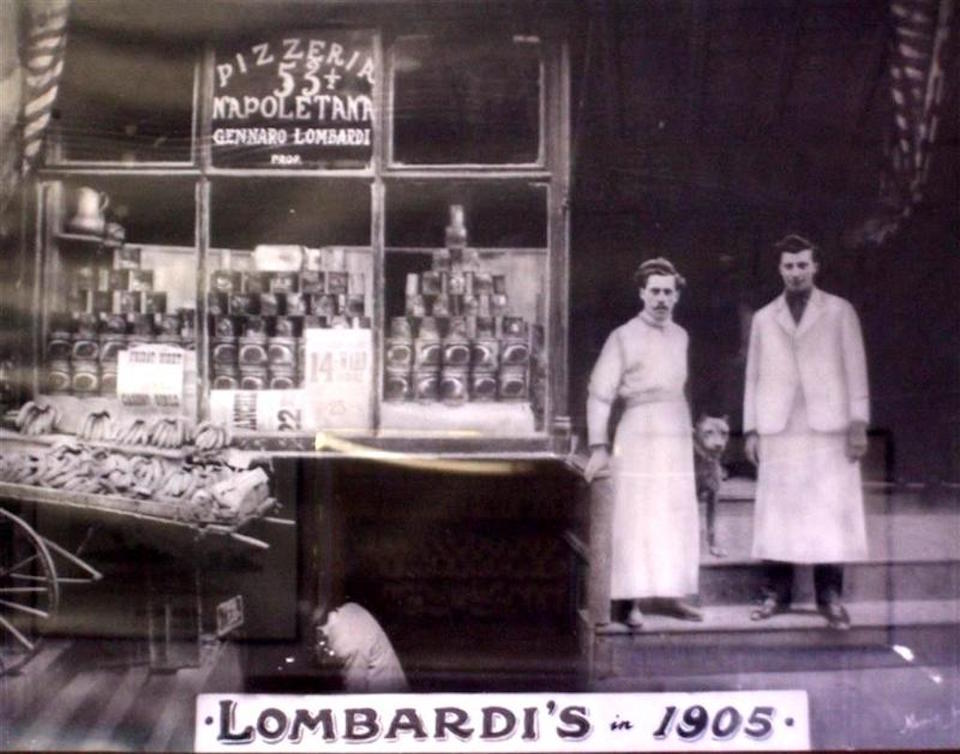
Below: The original Lombardi’s back when it sold a lot more than just pizza.
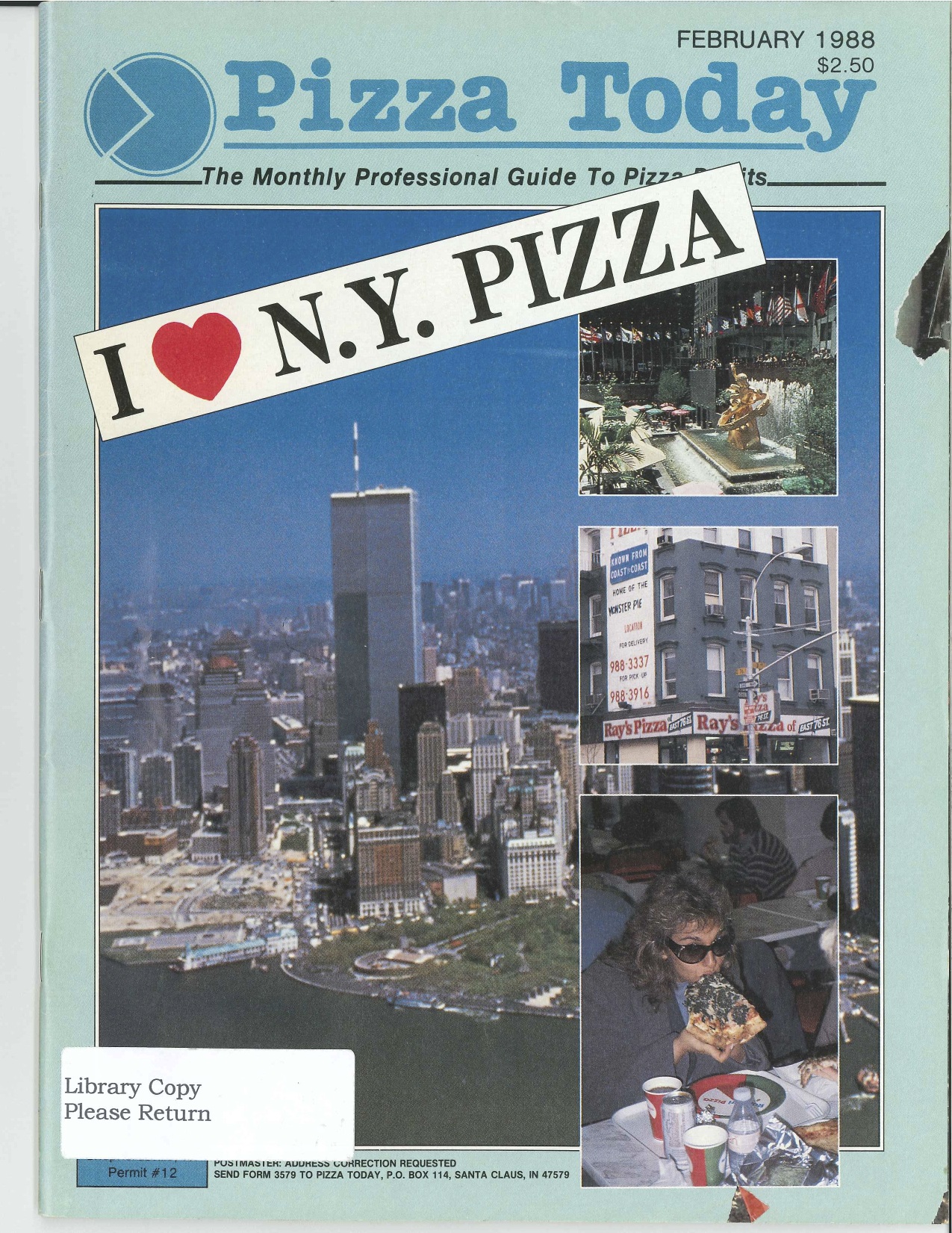
The 1988 issue of the trade journal Pizza Today, extolling the virtues of New York and one of its signature dishes.
PODCAST A flavorful walk through the Lower East Side, exploring the neighborhood’s most famous foods.
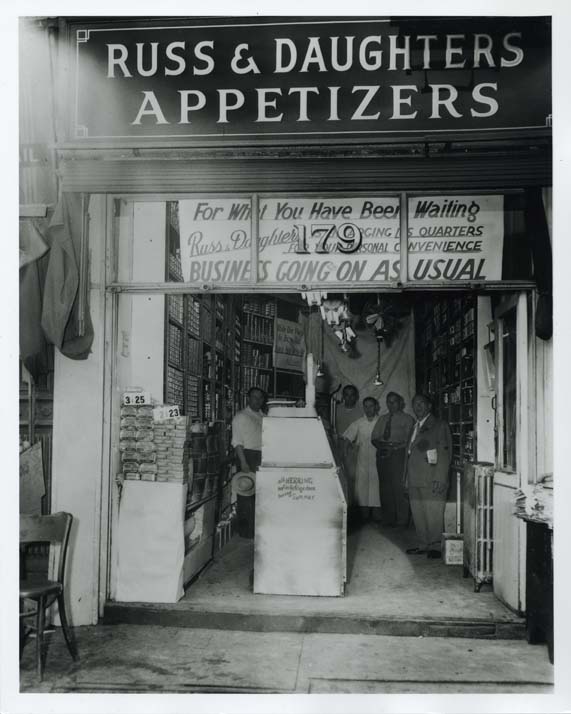
Join Tom as he experience the tastes of another era by visiting some of the oldest culinary institutions of the Lower East Side. From McSorley’s to Katz’s, Russ & Daughters and Economy Candy — when did these shops open, who did they serve, and how, in the world are they still with us today? He explores the topic with author Sarah Lohman of the Four Pounds Flour blog.
The Bowery Boys: New York City History podcast is brought to you …. by you!
We are now producing a new Bowery Boys podcast every two weeks. We’re also looking to improve the show in other ways and expand in other ways as well — through publishing, social media, live events and other forms of media. But we can only do this with your help!
We are now a member of Patreon, a patronage platform where you can support your favorite content creators for as little as a $1 a month.
Please visitour page on Patreon and watch a short video of us recording the show and talking about our expansion plans. If you’d like to help out, there are five different pledge levels (and with clever names too — Mannahatta, New Amsterdam, Five Points, Gilded Age, Jazz Age and Empire State). Check them out and consider being a sponsor.
We greatly appreciate our listeners and readers and thank you for joining us on this journey so far. And the best is yet to come!
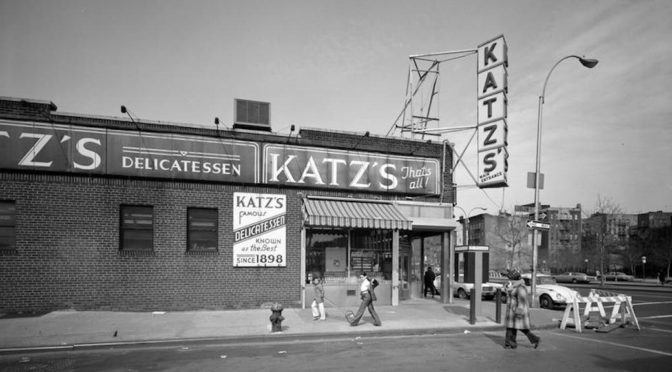
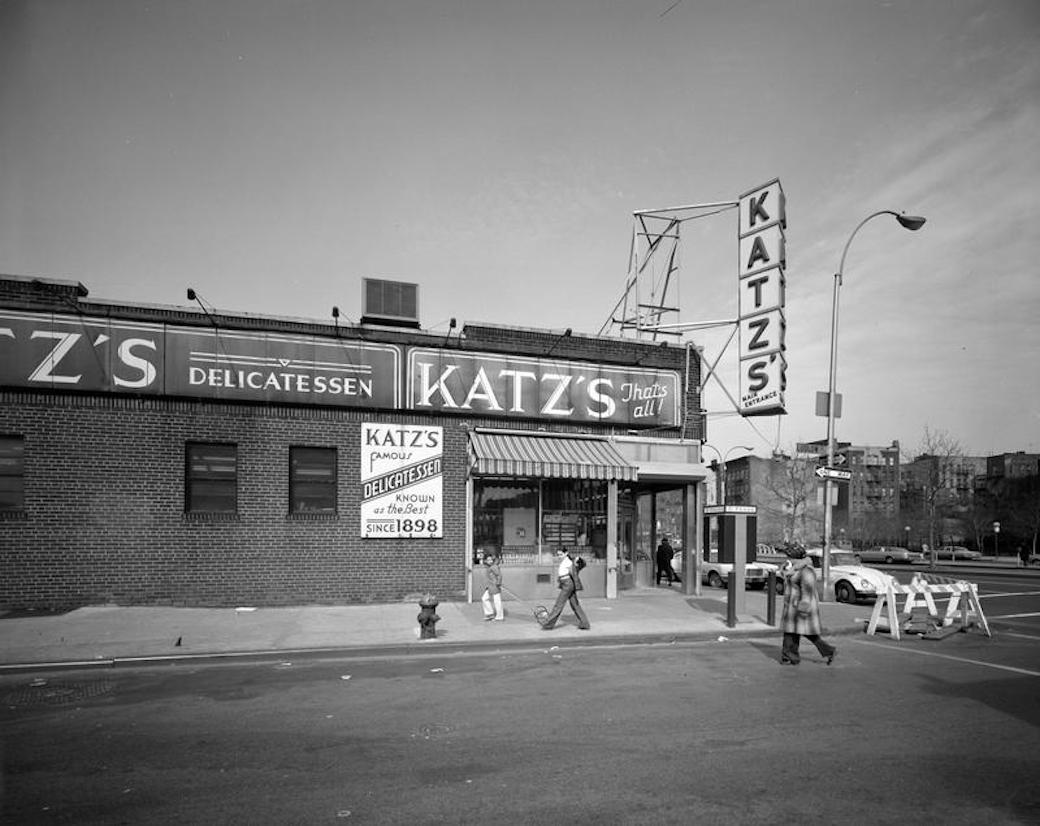
A groovy bite: How has Katz’s Delicatessen managed to last so long? This picture was taken in 1975 but it could have easily have been taken today with a black-and-white filter slapped over it.
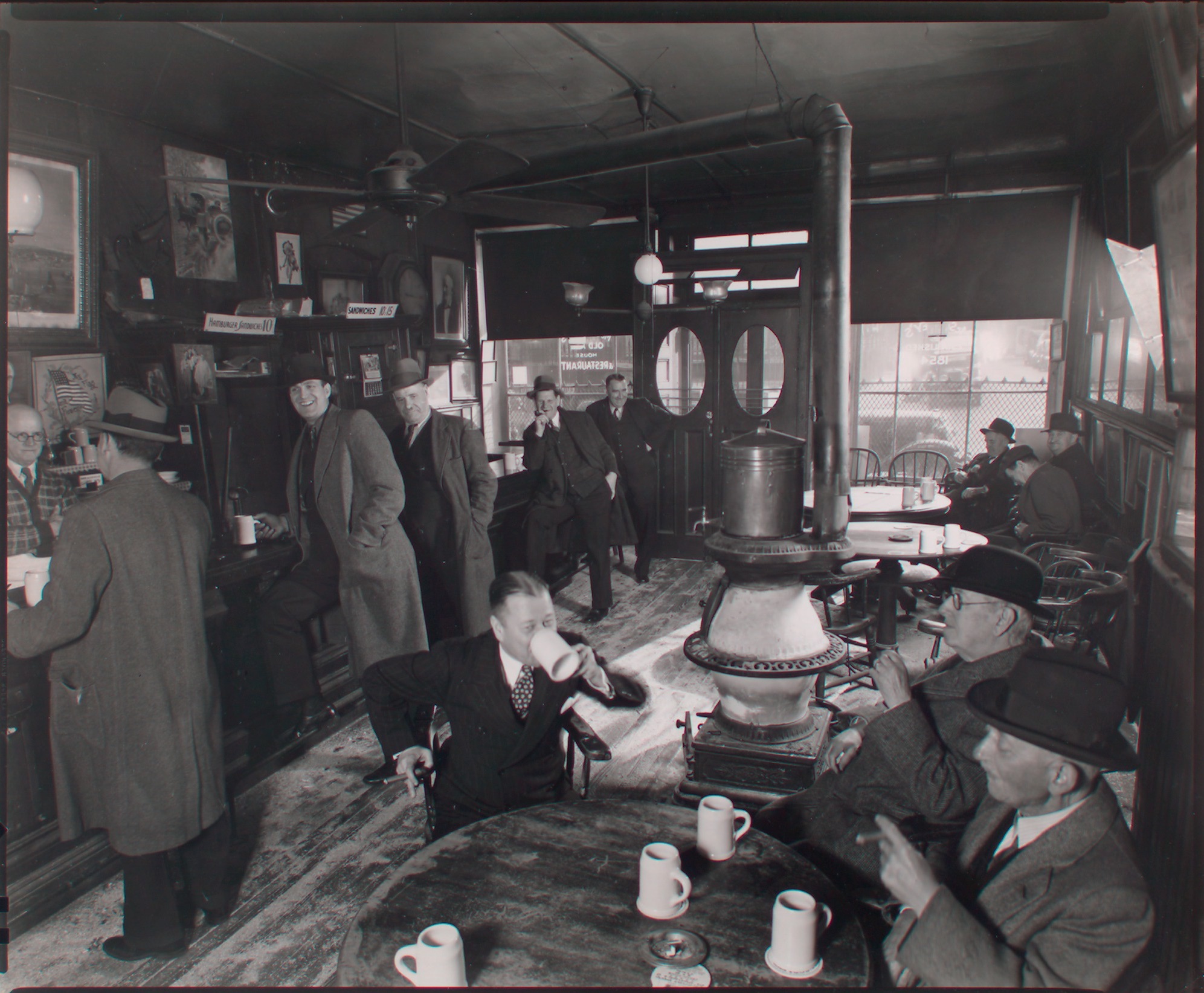
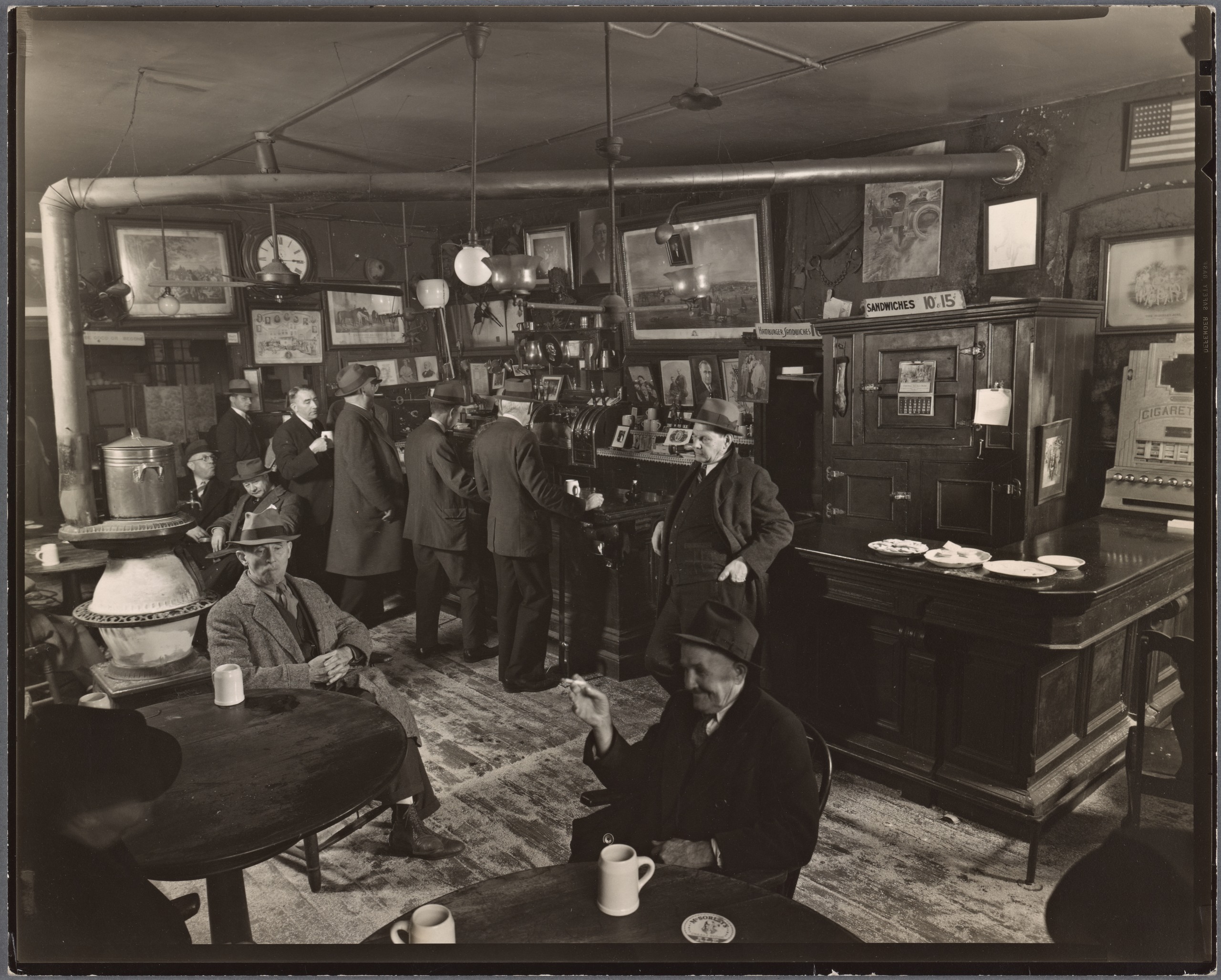
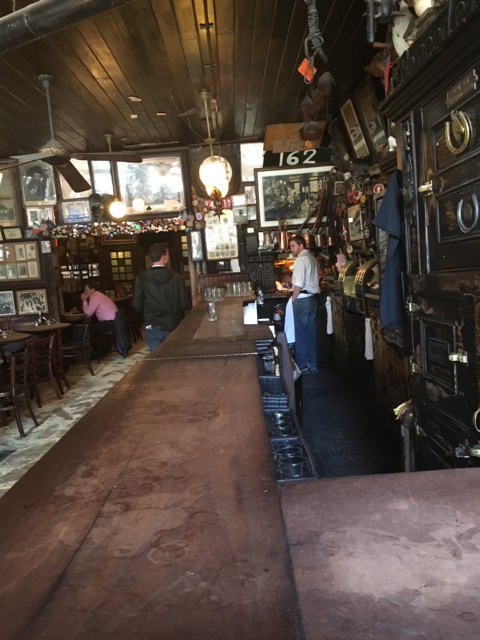
Another timeless classic — McSorley’s Old Ale House, in a photo taken by Berenice Abbott, 1937. (Ms. Abbott would have been one of the only women even allowed into McSorley’s in 1937!) How has this bar managed to stay open — and look virtually the same for over a century?
The Russ and Daughters interior before a renovation that widened the store.
Courtesy Russ and Daughters
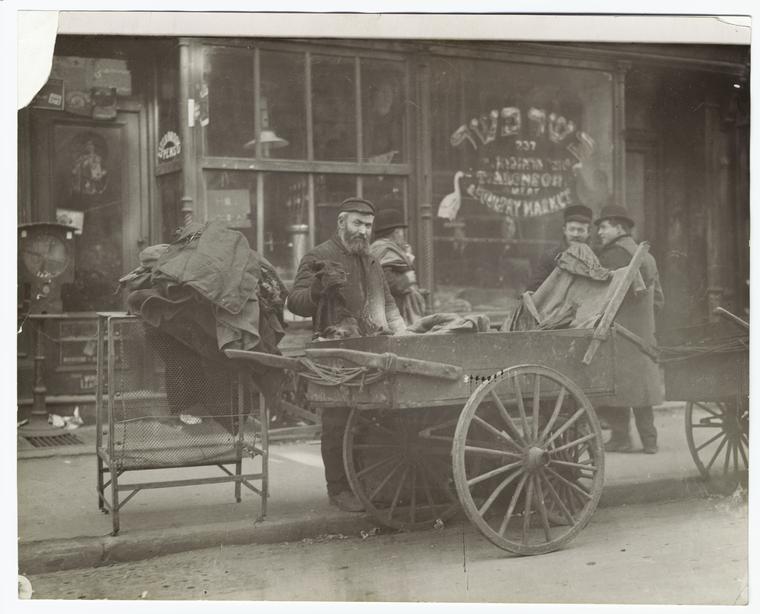
A potato merchant in the Lower East Side. It was because of the proliferation of these peddlers that the city eventually opened the Essex Street Market in the 20th century.
Courtesy New York Public Library
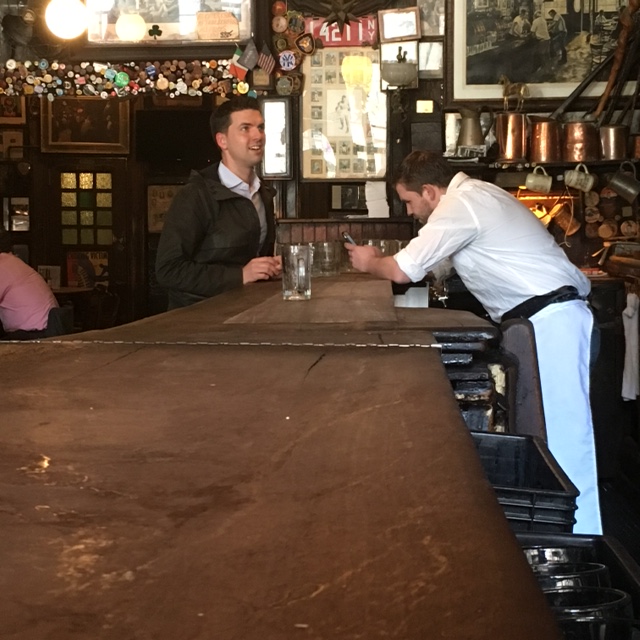
Tom, recording on the road at McSorley’s Old Ale House, being a day drinker!
For more information on guest host Sarah Lohman‘s upcoming book Four Pounds Flour,check out her website.
And for more information on the history of a few of the locations mentioned in the show, check out these other Bowery Boys: New York City History podcasts:
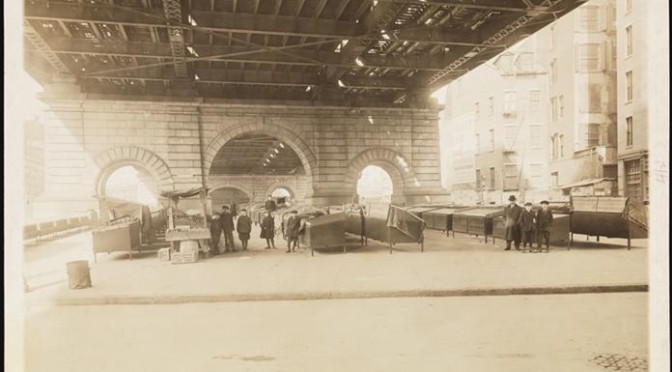
Setting up a market under the Manhattan Bridge. (Courtesy MCNY. Note: This photo may be of an earlier market here, but this gives you an idea of where the 1914-15 markets would have been located.)
Groceries are becoming more expensive as retailers mark up prices due to food shortages (or simple price gouging at perceived shortages). So people are turning to rather unconventional methods of getting fresh meat and produce. Is this 2014 or 1914?
At the start of World War I, there was an immediate shortage of certain food items at New York grocers. Local distributors greatly took advantage of this special circumstance, marking up a variety of essential items. “Sugar and flour, which have been increasing in price so rapidly, gave indications of continuing their upward march,” an article from August 19, 1914 proclaimed.
Shopping at a typical New York grocer, 1903 (MCNY):
Fifty years before, New Yorkers could interact with farmers and butchers directly at open-air markets. But by the 1910s, most transactions were governed by local distributors. Old Washington Market was by this time a thriving indoor wholesale market. Local grocers had limited space with limited selection. The era of the modern supermarket — with greater selections and better values — was still a decade or two in the future. (The first supermarket is often considered to be Piggly Wiggly, which opened in Tennessee in 1916.)
To fend off rising food rates, the city of New York did something rather extraordinary: it opened its own direct markets (or “open markets”) which cut out the middle-man entirely.
Manhattan Borough President Marcus M. Marks authorized the opening of four such markets in the following open areas — under the Manhattan sides of the Manhattan and Queensboro Bridges, the intersection of 3rd Avenue and 129th Street (today’s Harlem River Park), and the Fort Lee Ferry Terminal (West 139th Street and the Hudson River, near today’s Riverbank State Park). A similar program was also set up in Tompkinsville, Staten Island.
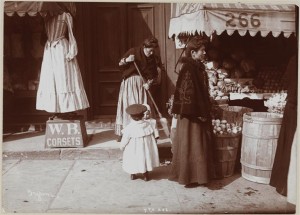
Below: Interior of the Queensboro Bridge Market, 1915 (MCNY)
The markets opened in September 1914 with dozens of Long Island and New Jersey farmers bringing their wares to New York. Pushcart vendors, already spread throughout the city, also set up shop here. What makes this such a controversial move is that it was a clear attempt to undercut all established grocers, to force distributors to quit gouging price.
They were an immediate hit despite being located in areas quite distant from certain populated areas. The markets appealed to women of many classes, because who doesn’t love a bargain? “At this market were many housewives who came in automobiles to buy from the farmers,” said a report from September 20, 1914. “Baskets filled with fresh vegetables and fruits were on seats, and the legs of more than one chicken projected from paper parcels under the chauffeur’s elbows.” By 1915, the markets were considered by some “a social affair.”
The open markets were so successful that stock was usually emptied out by mid-morning. Late-arriving women “actually wept when the market was bought out.” [source]
Naturally, retail grocers were angered by the city’s bold move and soon went on the offensive. “There is nothing but politics in this open market game, gentleman, from start to finish,” declared one speaker at a grocers union rally that October.
The city counteracted the grocer’s propaganda by providing ‘bargain days’ for extra values, reeling in the participation of farmers, butchers, poultry brokers and even honey producers. “A butcher, who will open a new stand, says that he will give a head of cabbage in lieu of trading stamps to every purchaser of a piece of corned beef.” [October 15, source]
The markets lasted only a few months and, strangely enough, it was the city itself that killed them. Obviously bending to pressure from local businessmen, the city began charging high rents for a spot at the markets, and smaller farmers soon fled. The Evening World noticed rents that would equal up to “$900 a year”. That’s $20,000 in 2014 currency.
In essence, this was one end of New York government attempting to dampen the authority of the other (namely, the borough president’s office). Vendors had to raise prices to keep their place, and so the usefulness of the markets swiftly faded.
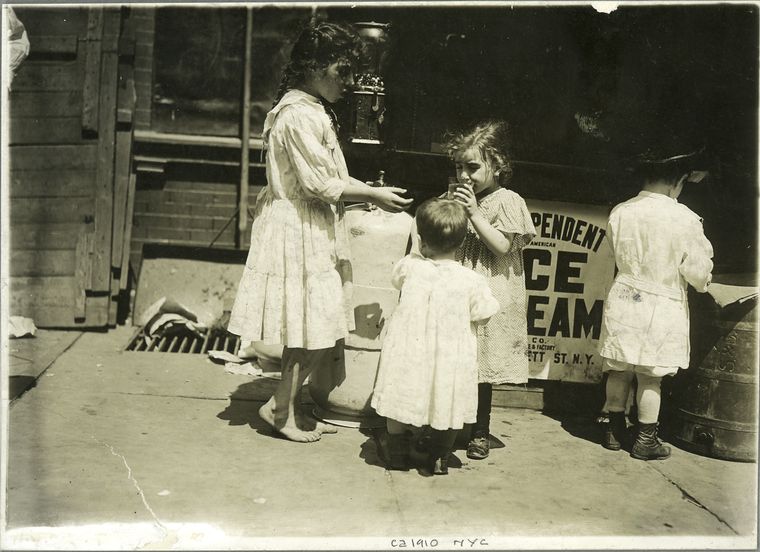
Lewis Wickes’ photograph of a few children enjoying a bit of ice cream on a hot day, 1910. (NYPL)
1. America’s first ice cream shop was located on Dock Street** (roughly today’s Pearl Street) in 1774. The British confectioner Philip Lenzi advertised ice cream of “any sort”, along with a host of treats, including sugar plums, jams and sweetmeats.
2. Hanover Square (near Stone and Pearl streets) was the center of commerce in colonial New York, and apparently of confections as well. In 1777, in the midst of British-occupied New York during the Revolutionary War, Lenzi moved his shop up into Hanover Square next to another ice cream shop owned by Joseph Corree at 120 Hanover Square. [source]
3. George Washington and his wife Martha were huge fans of ice cream. During the first year of Washington’s presidency, back in 1789, when the seat of government resided in New York, Martha would make several batches of it from the Washington’s home at One Cherry Street. She sometimes complained of the lack of fresh cream, sometimes serving “unusually stale and rancid” desserts at her weekly tea parties. One well-repeated legend states that the Washington’s spent over $700 on ice cream desserts in the summer of 1789.
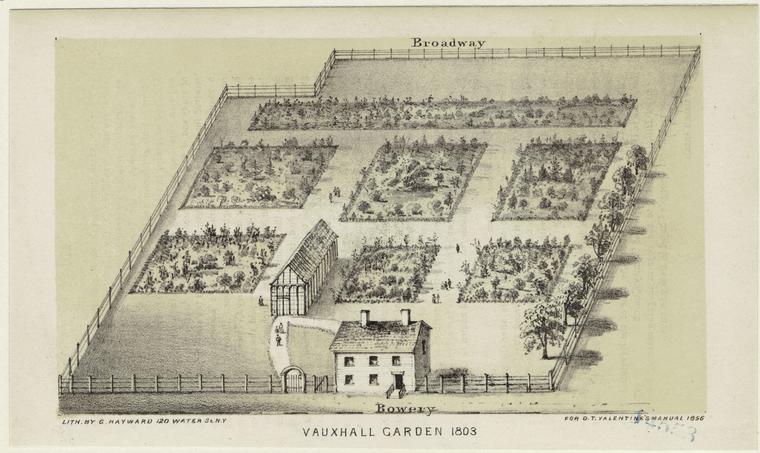
Above: A 1803 map of Vauxhall Garden, at Broome Street between the Bowery and Broadway, a lovely place to enjoy a bowl of ice cream in early New York
4. Manhattan’s pleasure gardens — early precursors to the modern park — became instrumental in spreading the joy of ice cream. The aforementioned Joseph Corree opened the Mount Vernon Garden at Broadway and Leonard Street in 1800, a few months after ice cream-lovin’ Washington died at his estate in Mount Vernon.
On top of the many festive entertainments at the garden — fireworks, theatricals, topiary, tableaux vivant — Corree also offered ice cream for sale. Other popular pleasure gardens of the day, such Vauxhall Garden and Niblo’s Garden, would follow suit.
5. Delmonico’s, before it became the finest name in restaurant dining in New York in the 19th century, got its start as a small confectionery shop on 23 William Street in 1827 which featured ice cream on its menu. (Learn more about Delmonico’s from my podcast on its history.)
6. Ice cream vendors were on the streets of New York as early as the 1820s, the best way for less affluent people to enjoy the dessert. Within a couple decades, of course, the ‘pleasure gardens’ would lose their patina of class and become playgrounds for poorer New Yorkers. In 1852, one garden near the Bowery was described as “a sort of ice-creamery, and general rendezvous for the Bowery fashionables.” [source]
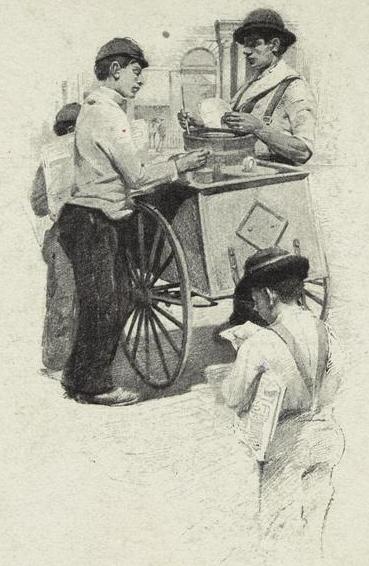
At right: A Century Magazine illustration from 1901 of a New York ice cream vendor or ‘hokey pokey man’ (NYPL)
7. Ice cream saloons, by mid-19th century, were aplenty along the main thoroughfares of New York, experimenting with different kinds of production. One saloon, Parkinson’s on Broadway, claims to have invented pistachio ice cream. Another, the Patent Steam Ice Cream Saloon, named for its steam-operated freezing unit, catered to the women of the middle class, “the wives and daughters of the substantial tradesmen, mechanics and artisans of the day,” according to New York by Gas-Light.
8. The hokey pokey men, the nickname for one-cent ice cream street vendors, were briefly hindered by the Ice Cream Strike of 1913, a walkout by all 2,500 members of the Ice Cream Workers Union in New York, effectively shutting down the production of ice cream, especially in the Lower East Side. The strike lasted several weeks.
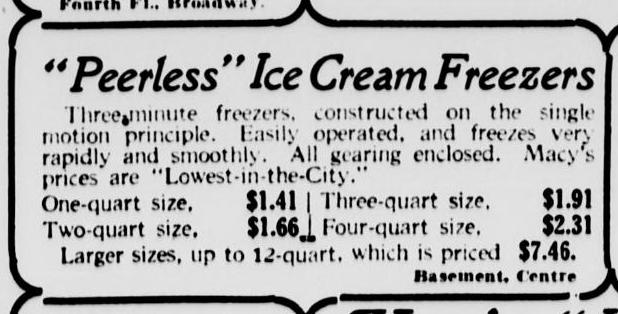
Below: A Macy’s ad in 1913 for a home ice-cream maker:
9. Ice Cream Profiteering or Newspaper Self-Promotion? After the war, many merchants continued to sell massively overpriced ice cream. The Evening World reported in 1921 that “profits from ice cream range from 500 to 1,000 percent” at a survey of local ice cream vendors. “In few articles of food has there been found any greater evidence of extortion from the consumer.” [source]
A few days later, the newspaper extolled upon its own crack reporting, claiming that ice cream prices were going down because of their investigations. “Hundreds of manufacturers and retails have already cut prices,” the World boasted.
10. Haagen-Dazs Ice Creamwas not created anywhere near Scandinavia, but rather in the Bronx, the product of two Polish-Jewish confectioners Reuben and Rose Mattus. The official reason for the name was “to convey an aura of the old-world traditions and craftsmanship to which he remained dedicated.” Reuben later admitted, “We wanted people to take a second look and say, ‘Is this imported?'”
The first Haagen-Dazs ice cream shop, which opened in 1976, is located at 120 Montague Street in Brooklyn Heights. The store is still going strong.
EXTRA: Frozen yogurt was the original cronut. The trendy dessert was first sold over the counter in New York at Bloomingdale’s Department Store in the early 1970s. As far as I can tell, the first actual yogurt store in the city — the first of many — was the Dannon Yogurt Store at 207 East 86th Street, opening in February 1975.
That was the year that New Yorkers first went WILD for frozen yogurt, well at least according to the New York Times (but you know how they are with trend stories!)
**There were two Dock Streets back in old New York, so it’s possible (although more unlikely) the original shop could have been on the other one, which is near today’s Water Street and Coenties Slip.


![[Manhattan open market.]](https://boweryboyshistory.com/wp-content/uploads/2014/09/MNY217292-300x237.jpg)
![[Interior of market under the Queensboro Bridge.]](https://boweryboyshistory.com/wp-content/uploads/2014/09/MNY224301-300x241.jpg)