Categories
Health and Living Podcasts Staten Island History

The Staten Island Quarantine War

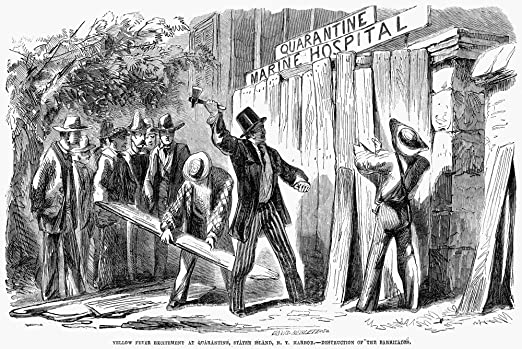
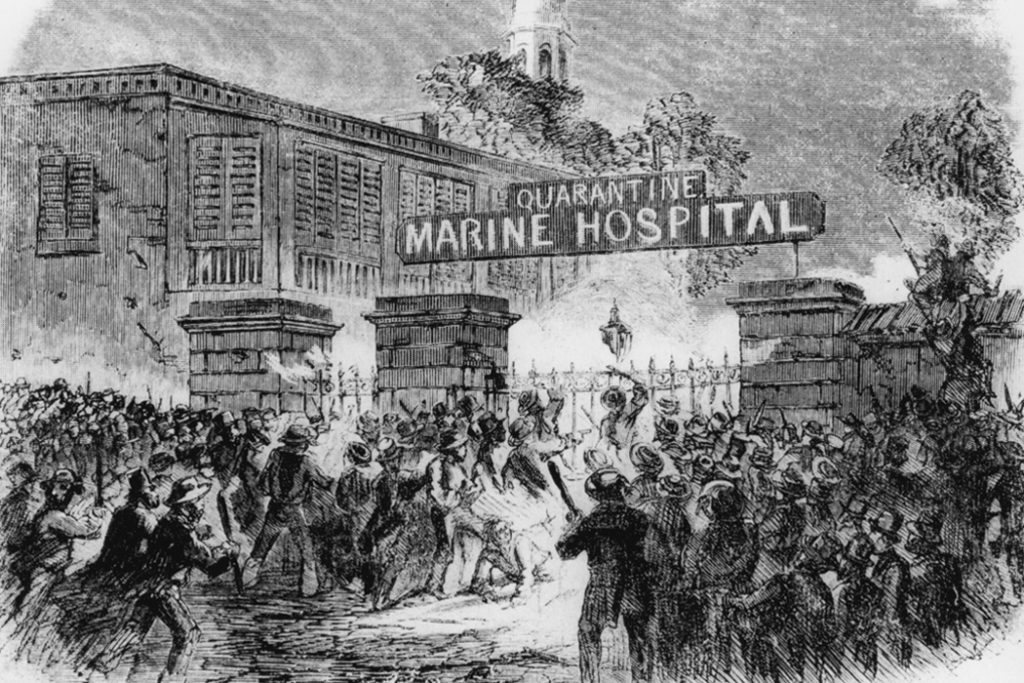
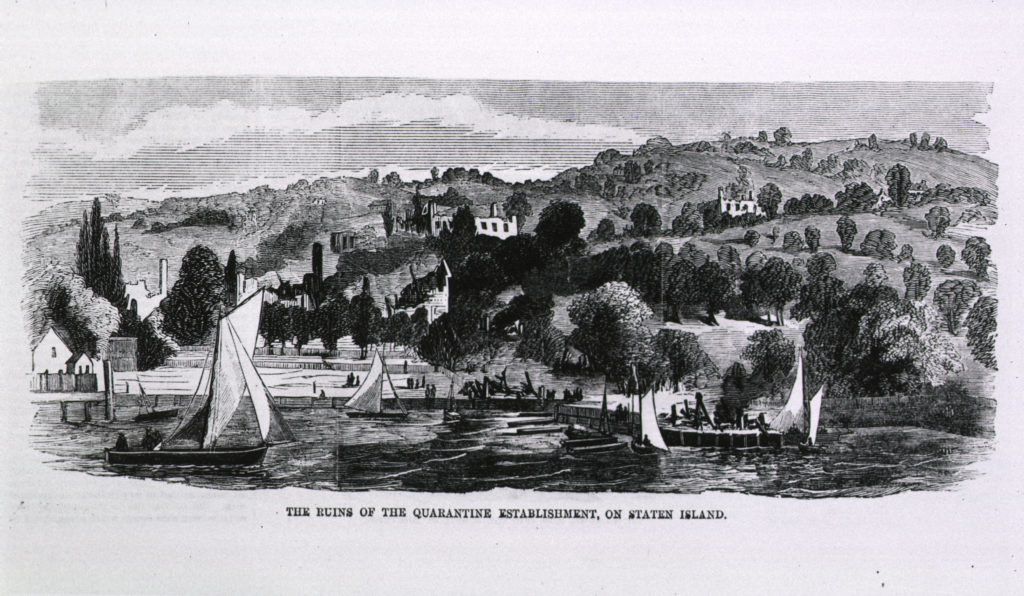
EPISODE 325 In 1858, during two terrible nights of violence, the needs of the few outweighed the needs of the many when a community, endangered for decades and ignored by the state, finally reached its breaking point.

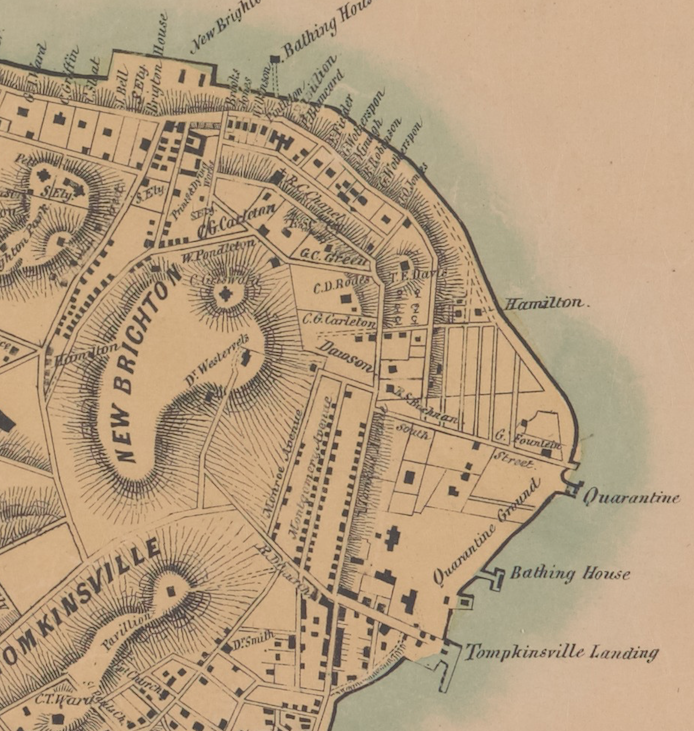
In Staten Island, just south the spot of today’s St. George Ferry Terminal, where thousands board and disembark the Staten Island Ferry everyday, was once America’s largest quarantine station – 30 acres of hospitals, medical facilities, shanties and homes, surrounded by a six-foot-tall brick wall.
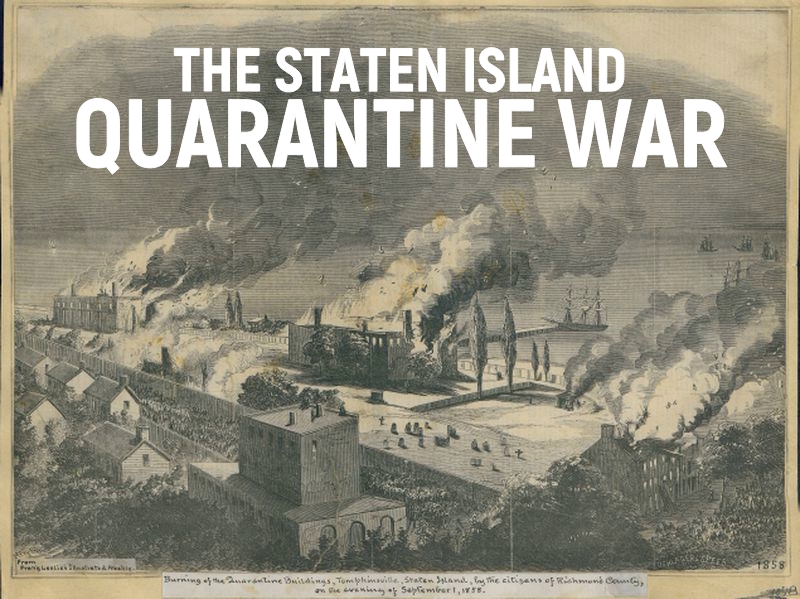
Since its construction in the year 1799, Staten Islanders had fought the its removal of the Quarantine Ground, considered a menacing danger to the health of residents and a blight upon any possible development.

Yet the need for such an extensive facility at the Narrows — the gateway to the New York Upper Bay and the Hudson River — was so important that the state of New York mostly turned a blind eye to their wishes.

And so the residents of Staten Island took matters into their own hands.

Was this a case of righteous revolution in the service of safety and well-being against a tyrannical state? Or a grave and malicious act of terror?

To get this episode, simply stream or download it from your favorite podcast player.

Or listen to it straight from here: THE STATEN ISLAND QUARANTINE WAR
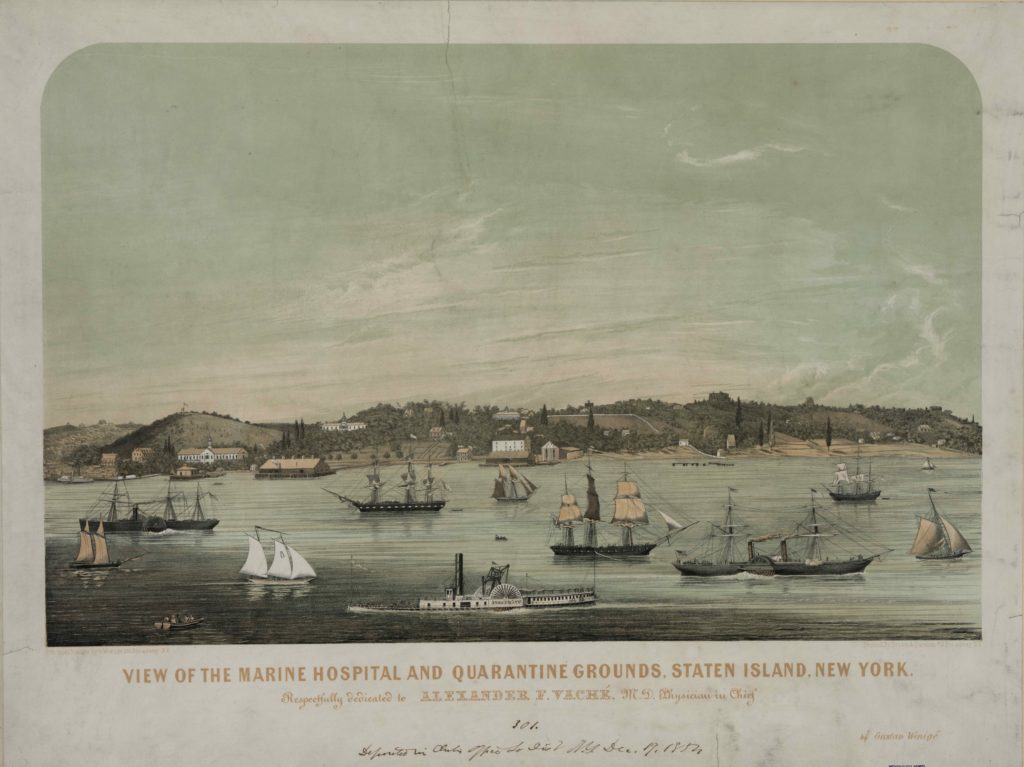

New York Public Library
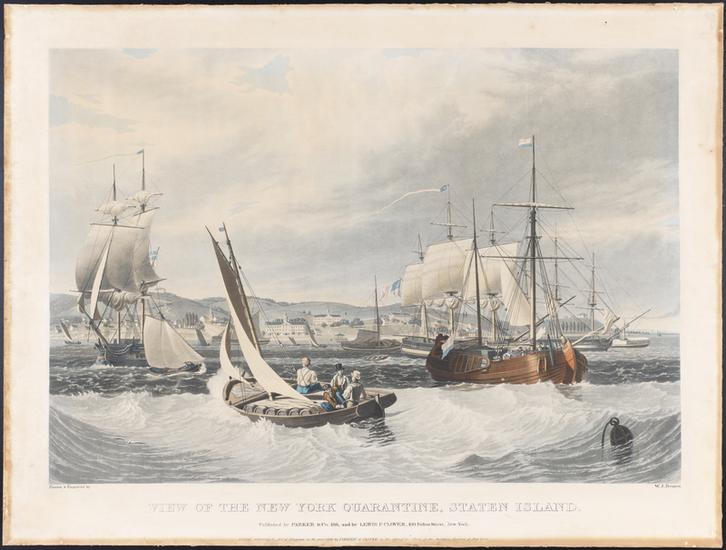
Published by Parker & Co. 186, and by Lewis P. Clover, 180 Fulton Street, New-York. Entered according to Act of Congress in the year 1833 by Parker & Clover in the office of the Clerk of the Southern District of New York. — Museum of the City of New York
The Quarantine Hospital on Staten Island, 1858 — New York Public Library
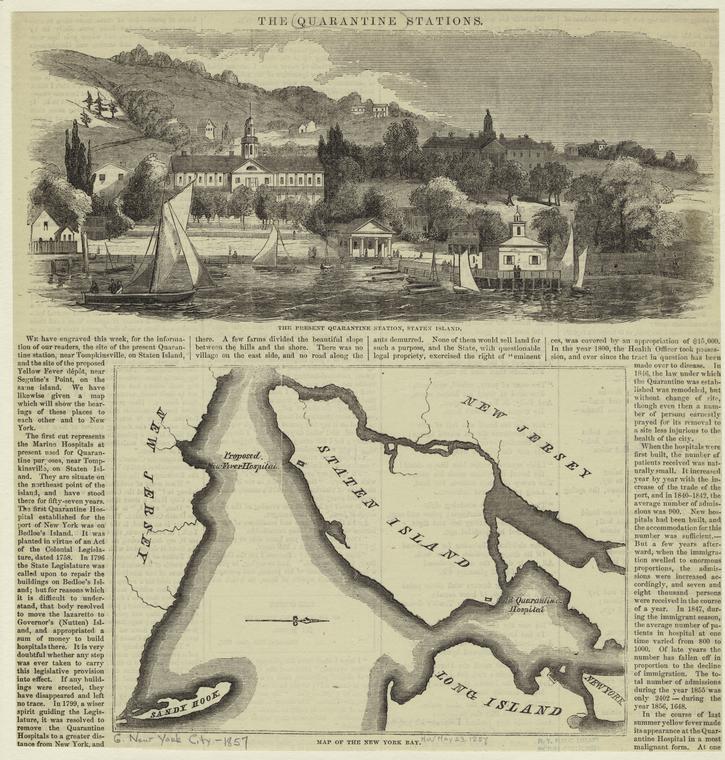
The present quarantine station, Staten Island ; Map of the New York Bay. 1857. Also marks the site of Sanguine’s Point, a proposed quarantine spot that was never constructed. New York Public Library
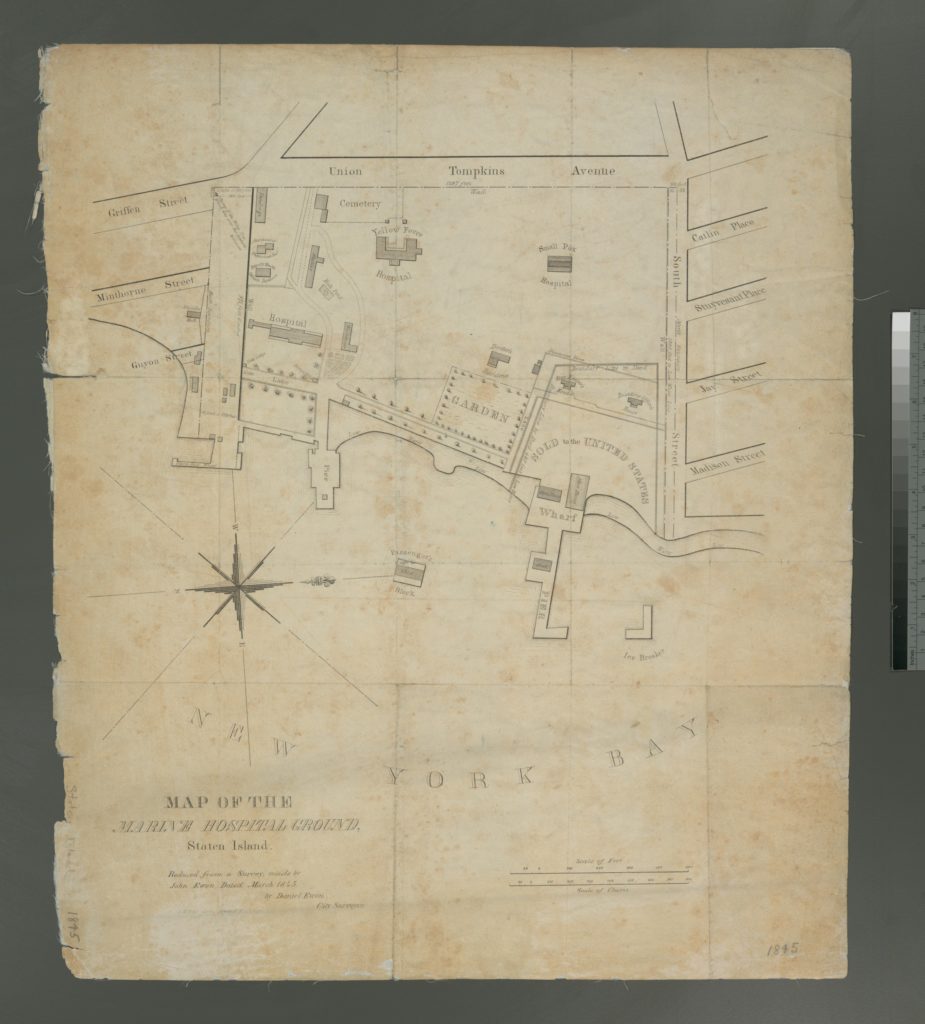
Map of the Quarantine Grounds, New York Public Library Digital Collections. 1845
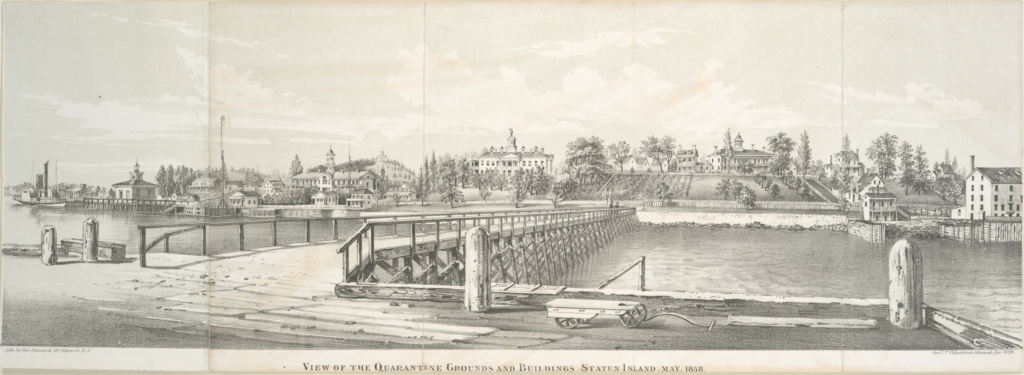
The Quarantine Grounds at Tompkinsville, Staten Island, in 1853 — courtesy the New York Cemeteries Project
Harper’s Weekly,1858/Getty Images
Harper’s Weekly / Sept. 11, 1858

FURTHER LISTENING

After listening to The Staten Island Quarantine War, check out these past Bowery Boys episodes on subjects featured in the latest show.


The Bowery Boys: New York City History podcast is brought to you …. by you!

We are now producing a new Bowery Boys podcast every week. We’re also looking to improve and expand the show in other ways — publishing, social media, live events and other forms of media. But we can only do this with your help!

We are now a creator on Patreon, a patronage platform where you can support your favorite content creators.

Please visit our page on Patreon and watch a short video of us recording the show and talking about our expansion plans. If you’d like to help out, there are six different pledge levels. Check them out and consider being a sponsor.

We greatly appreciate our listeners and readers and thank you for joining us on this journey so far.
Categories
Those Were The Days

Housewives demand open markets! One century ago, New York radically changed how people bought groceries

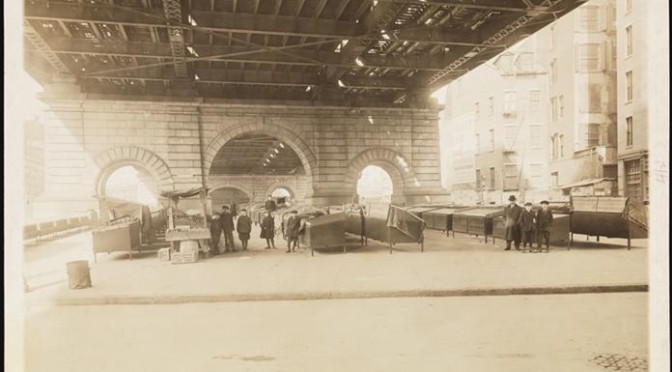
[Manhattan open market.]

Setting up a market under the Manhattan Bridge. (Courtesy MCNY. Note: This photo may be of an earlier market here, but this gives you an idea of where the 1914-15 markets would have been located.)

Groceries are becoming more expensive as retailers mark up prices due to food shortages (or simple price gouging at perceived shortages). So people are turning to rather unconventional methods of getting fresh meat and produce.  Is this 2014 or 1914?

At the start of World War I, there was an immediate shortage of certain food items at New York grocers. Local distributors greatly took advantage of this special circumstance, marking up a variety of essential items.  “Sugar and flour, which have been increasing in price so rapidly, gave indications of continuing their upward march,” an article from August 19, 1914 proclaimed.

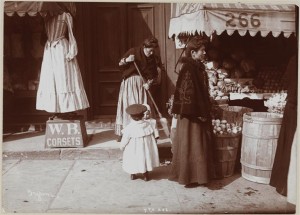
Shopping at a typical New York grocer, 1903 (MCNY): 

266 Seventh Avenue c. 1903.

Fifty years before, New Yorkers could interact with farmers and butchers directly at open-air markets.  But by the 1910s, most transactions were governed by local distributors. Old Washington Market was by this time a thriving indoor wholesale market. Local grocers had limited space with limited selection. The era of the modern supermarket — with greater selections and better values — was still a decade or two in the future. (The first supermarket is often considered to be Piggly Wiggly, which opened in Tennessee in 1916.)

To fend off rising food rates, the city of New York did something rather extraordinary:  it opened its own direct markets (or “open markets”) which cut out the middle-man entirely.

Manhattan Borough President Marcus M. Marks authorized the opening of four such markets in the following open areas — under the Manhattan sides of the Manhattan and Queensboro Bridges, the intersection of 3rd Avenue and 129th Street (today’s Harlem River Park), and the Fort Lee Ferry Terminal (West 139th Street and the Hudson River, near today’s Riverbank State Park).  A similar program was also set up in Tompkinsville, Staten Island.

Below: Interior of the Queensboro Bridge Market, 1915 (MCNY)

[Interior of market under the Queensboro Bridge.]

The markets opened in September 1914 with dozens of Long Island and New Jersey farmers bringing their wares to New York. Pushcart vendors, already spread throughout the city, also set up shop here.  What makes this such a controversial move is that it was a clear attempt to undercut all established grocers, to force distributors to quit gouging price.

They were an immediate hit despite being located in areas quite distant from certain populated areas. The markets appealed to women of many classes, because who doesn’t love a bargain? “At this market were many housewives who came in automobiles to buy from the farmers,” said a report from September 20, 1914. “Baskets filled with fresh vegetables and fruits were on seats, and the legs of more than one chicken projected from paper parcels under the chauffeur’s elbows.”  By 1915, the markets were considered by some “a social affair.”

Below: from an April 1915 profile from the Sun:

 The open markets were so successful that stock was usually emptied out by mid-morning.  Late-arriving women “actually wept when the market was bought out.” [source]

Naturally, retail grocers were angered by the city’s bold move and soon went on the offensive. “There is nothing but politics in this open market game, gentleman, from start to finish,” declared one speaker at a grocers union rally that October.

The city counteracted the grocer’s propaganda by providing ‘bargain days’ for extra values, reeling in the participation of farmers, butchers, poultry brokers and even honey producers.  “A butcher, who will open a new stand, says that he will give a head of cabbage in lieu of trading stamps to every purchaser of a piece of corned beef.” [October 15, source]

The markets lasted only a few months and, strangely enough, it was the city itself that killed them. Obviously bending to pressure from local businessmen, the city began charging high rents for a spot at the markets, and smaller farmers soon fled.  The Evening World noticed rents that would equal up to “$900 a year”. That’s $20,000 in 2014 currency.

In essence, this was one end of New York government attempting to dampen the authority of the other (namely, the borough president’s office).  Vendors had to raise prices to keep their place, and so the usefulness of the markets swiftly faded.