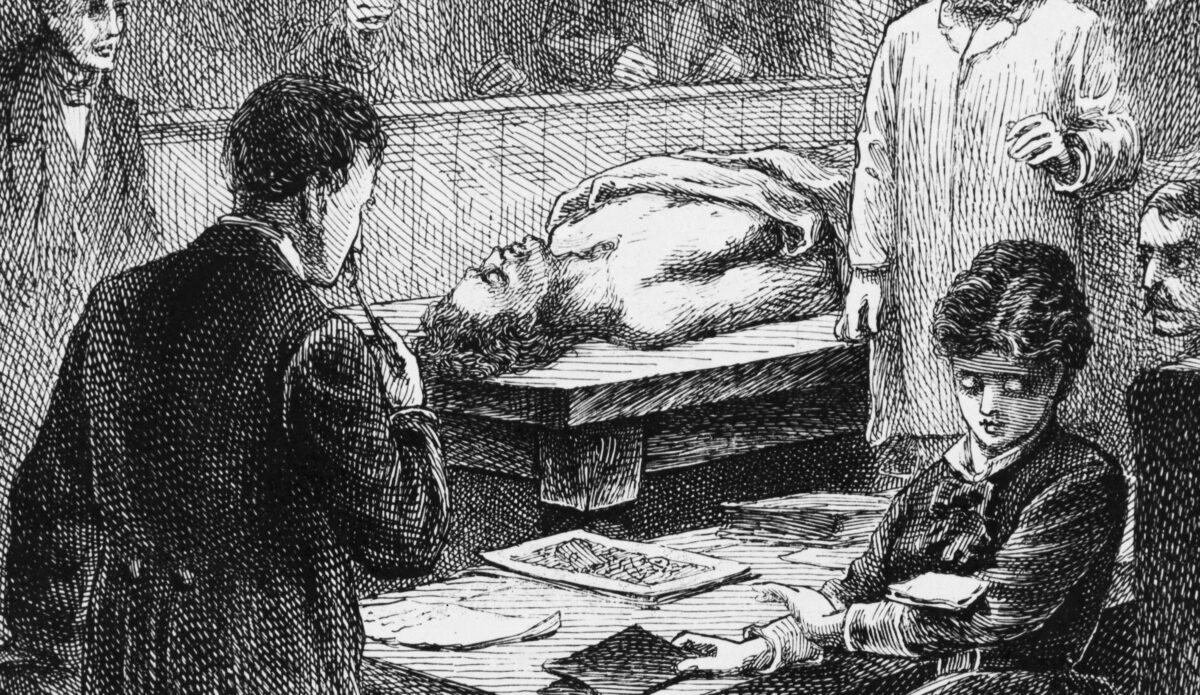
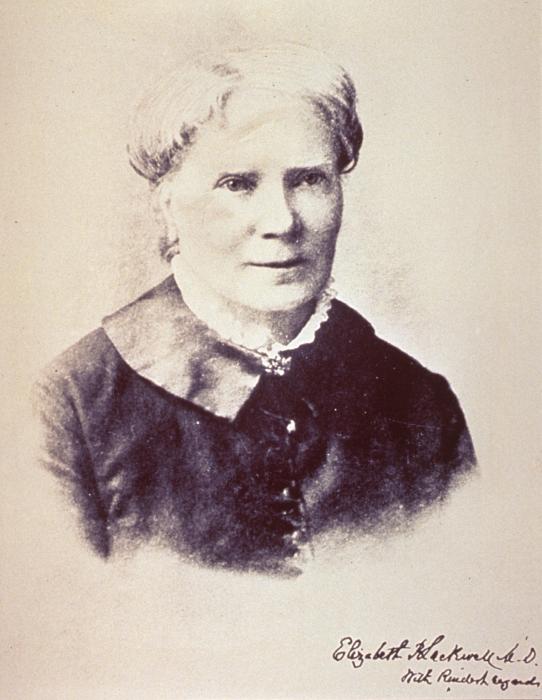
Elizabeth Blackwell at Geneva Medical College in upstate New York. Her presence caused quite the commotion at the all-male school -- and changed American history. Getty Images
In 1857 Elizabeth and Emily Blackwell threw open the doors to the New York Infirmary for Women and Children at 58 Bleecker Street, revolutionary as being the first hospital in the world to employ an all-female staff.
We rightly see this today as a major stride in the rights of women as medical professionals and a breakthrough for treating the medical issues of women with forward-thinking understanding.
But the Blackwell sisters were not feminists (in the way we might understand that phrase today) and their journeys to becoming early health care pioneers were certainly not conventional.
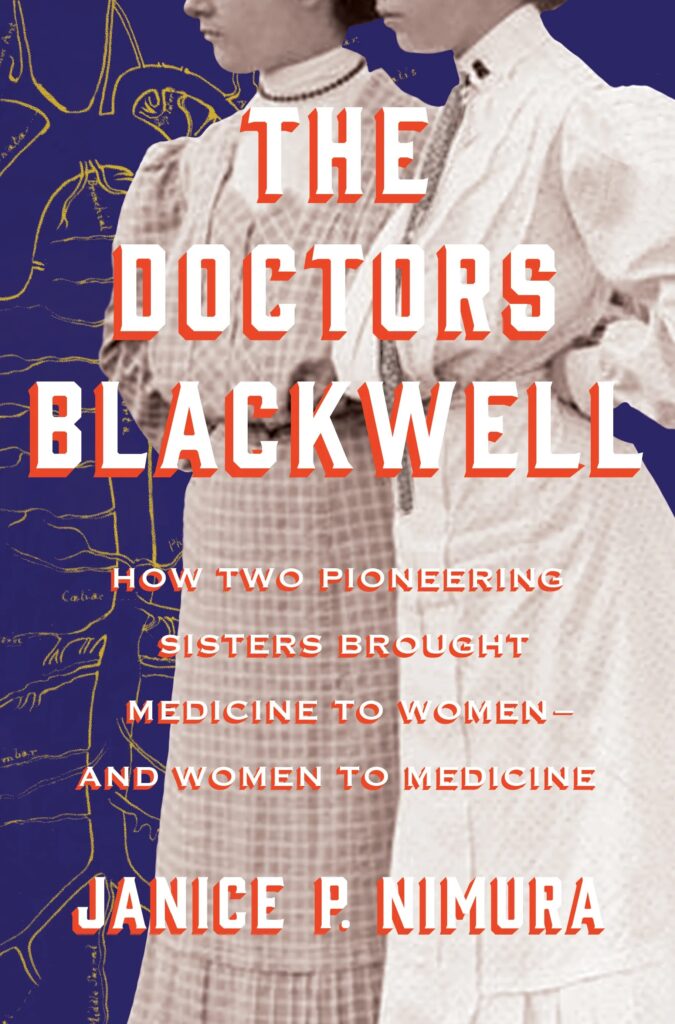
The Doctors Blackwell: How Two Pioneering Sisters Brought Medicine to Women and Women to Medicine Janice P. Nimura WW Norton & Company
In The Doctors Blackwell — a finalist for this year’s Pulitzer Prize for Biography — Janice P. Nimura illuminates the lives of two important women whose rich personal adventures have gotten lost in the shadow of their legacies.
Elizabeth was the first woman in the United States to earn a medical degree and that experience alone made her a celebrity. The only woman in operating theaters and classrooms, she didn’t consider herself a standard-bearer for all women but an example of what a woman could do when highly educated.
“Through Elizabeth was undoubtedly a reformer and a lady,” writes Nimura, “she placed herself in a separate category. She sympathized with the general goals of the women’s movement, but she chuckled dismissively at its tactics.”
(Her brothers would eventually marry two leading women’s rights leaders — Lucy Stone and Antoinette Brown. On those occasional times the family sat around the dinner table together, conversations must have been fascinating.)
Emily’s novel journey to a medical degree was more difficult; the spectacle of Elizabeth’s appearance at all-male schools made institutions (and their faculties) wary of the attention and distraction. Both sisters initially rejected ideas of separate women’s medical schools. (Although eventually they would found one themselves in New York.)
Dr. Elizabeth Blackwell
The medical landscape in New York for professional women in the 1850s was virtually nonexistent. Nimura writes, “In 1851 the term female physician meant something quite different from ‘woman with a medical degree’. For most New Yorkers, it meant one person: [notorious abortionist] Madame Restell.“
There was also the esteemed J. Marion Sims, the so-called father of gynecology. (He is no longer esteemed today.) By 1855 he established a Women’s Hospital, staffed mostly by men with a purely symbolic list of prominent women as managers.
“Half are doctors’ wives, the stiffest of the stiff,” Elizabeth remarked, one of dozens of passages Nimura highlights which reveals her subject’s sharp, sometimes exasperated thoughts.
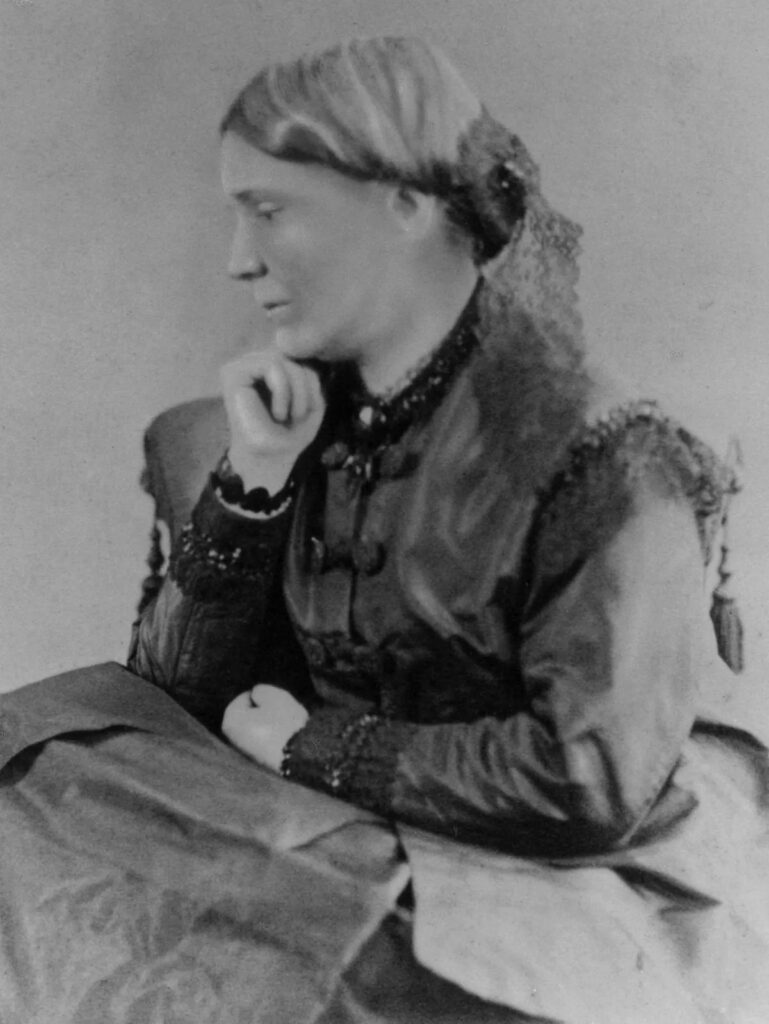
Dr Emily Blackwell
By the time Elizabeth and Emily open the infirmary (with Polish physician Marie Zakrzewska, who deserves her own book one day), Nimura has masterfully laid out the specific challenges of being a professional woman in America in the 1850s.
And more importantly, she has salvaged their voices and beautifully staged their lives in one of the most enjoyable biographies of the past few years.
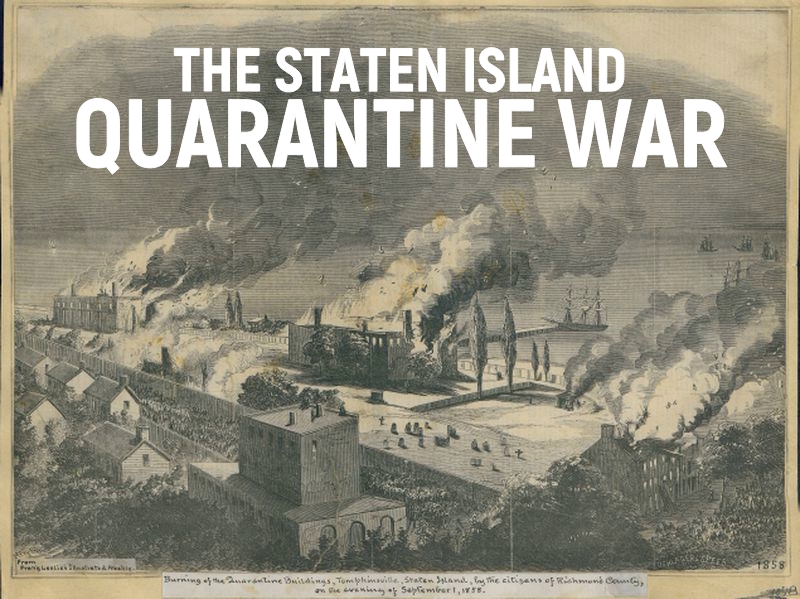
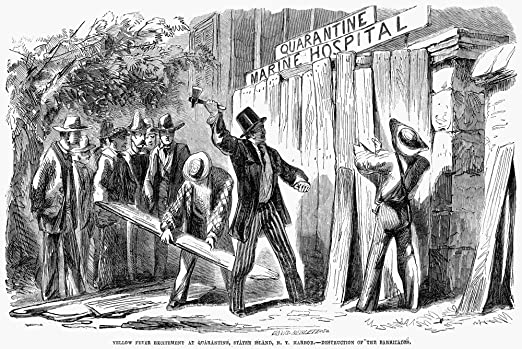
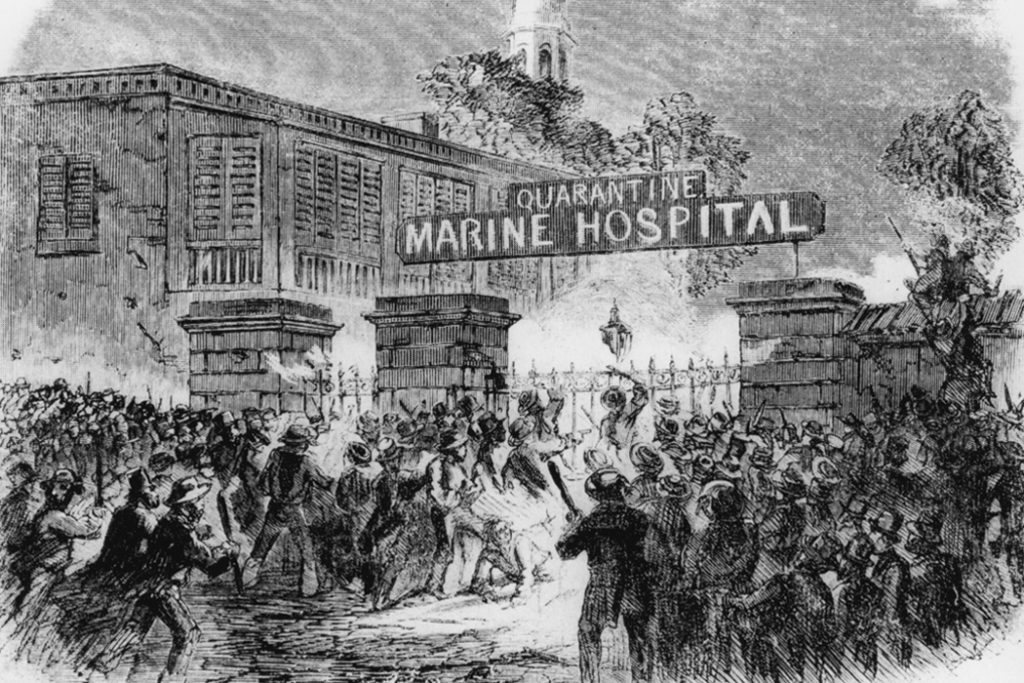
EPISODE 325 In 1858, during two terrible nights of violence, the needs of the few outweighed the needs of the many when a community, endangered for decades and ignored by the state, finally reached its breaking point.
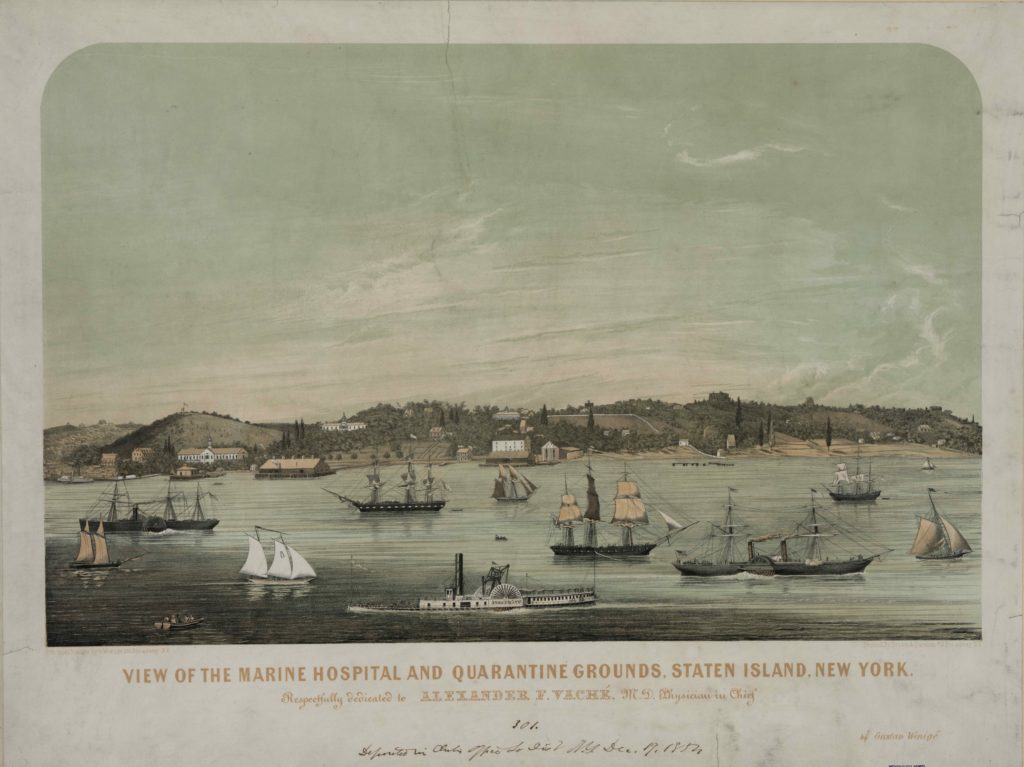
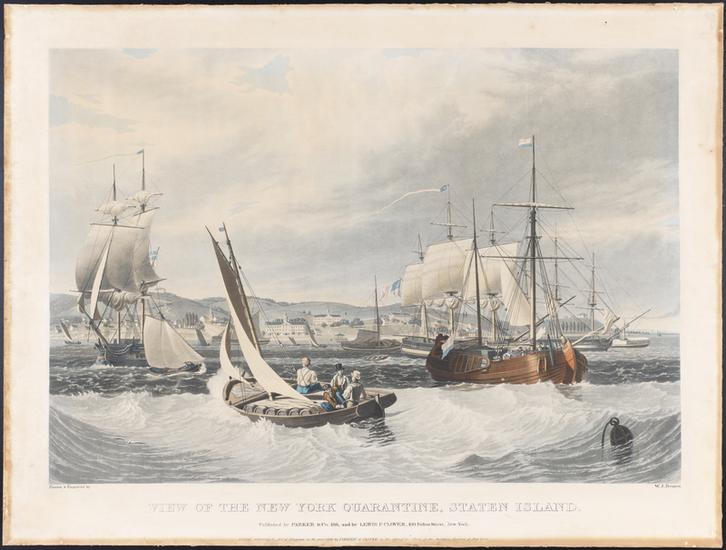
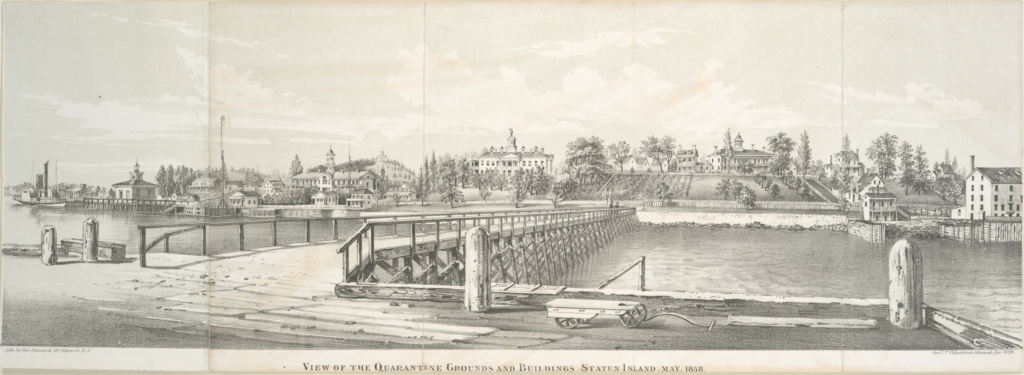
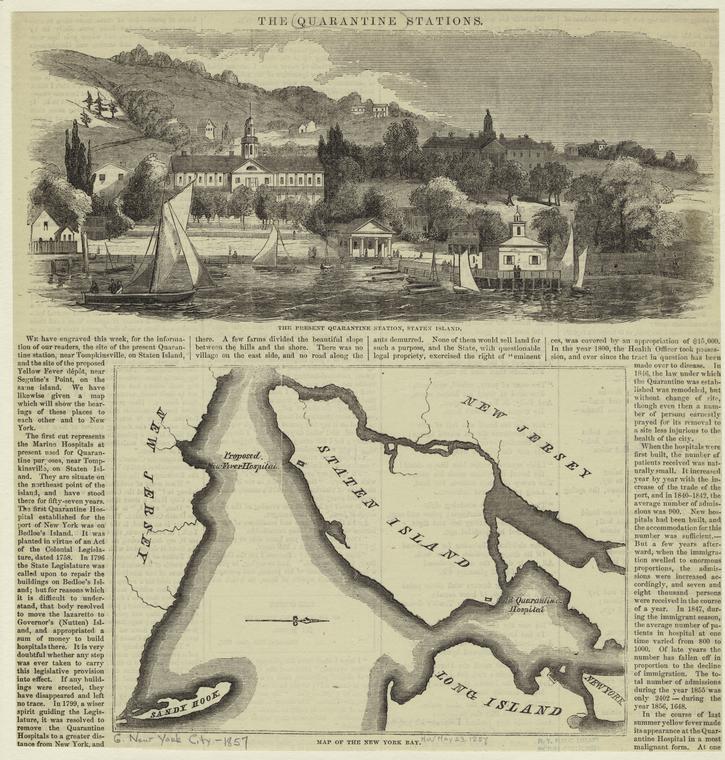
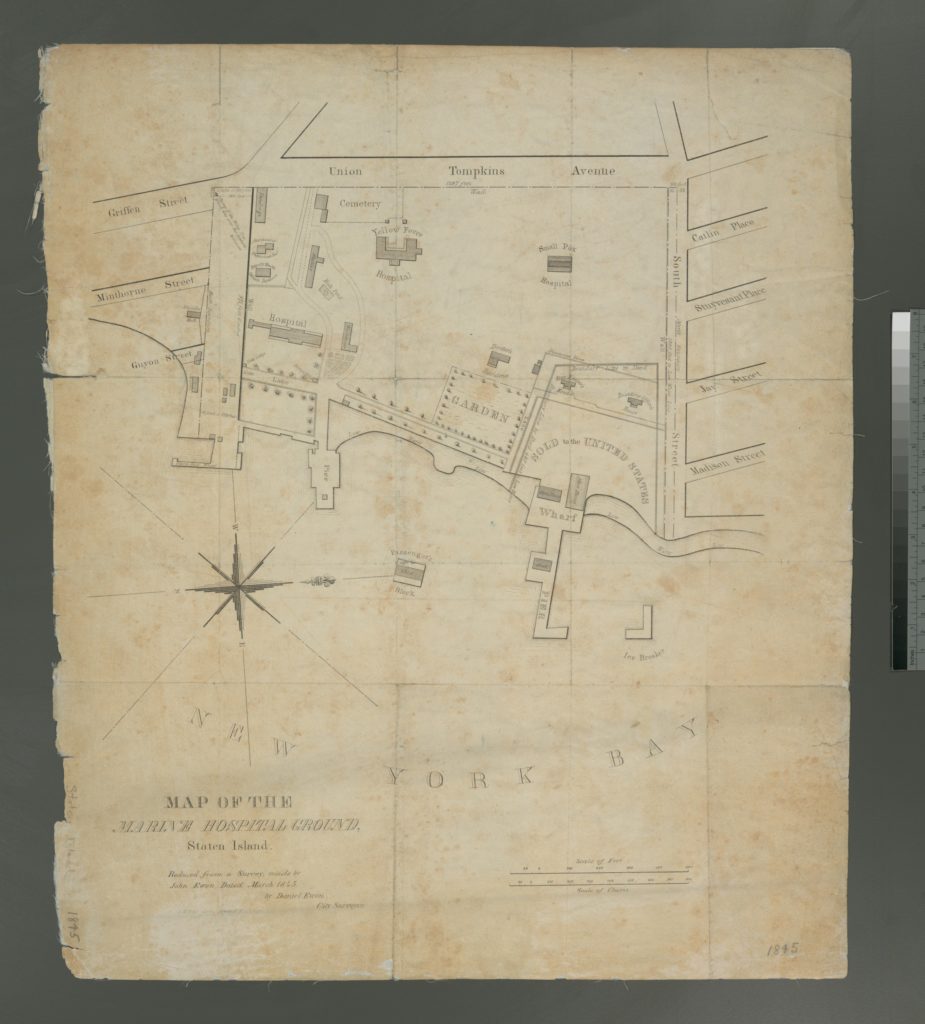
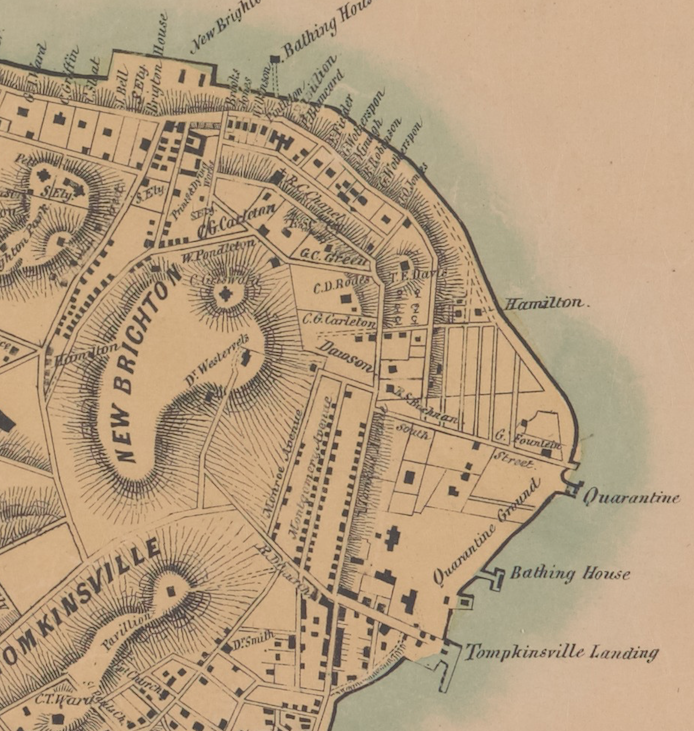
In Staten Island, just south the spot of today’s St. George Ferry Terminal, where thousands board and disembark the Staten Island Ferry everyday, was once America’s largest quarantine station – 30 acres of hospitals, medical facilities, shanties and homes, surrounded by a six-foot-tall brick wall.
Since its construction in the year 1799, Staten Islanders had fought the its removal of the Quarantine Ground, considered a menacing danger to the health of residents and a blight upon any possible development.
Yet the need for such an extensive facility at the Narrows — the gateway to the New York Upper Bay and the Hudson River — was so important that the state of New York mostly turned a blind eye to their wishes.
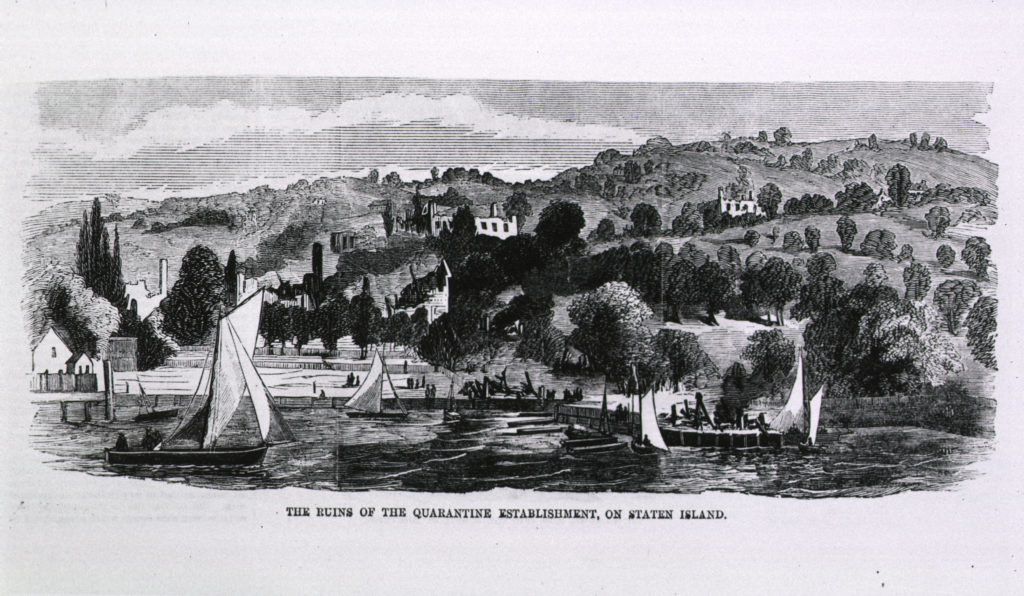
And so the residents of Staten Island took matters into their own hands.
Was this a case of righteous revolution in the service of safety and well-being against a tyrannical state? Or a grave and malicious act of terror?
New York Public LibraryPublished by Parker & Co. 186, and by Lewis P. Clover, 180 Fulton Street, New-York. Entered according to Act of Congress in the year 1833 by Parker & Clover in the office of the Clerk of the Southern District of New York. — Museum of the City of New YorkThe Quarantine Hospital on Staten Island, 1858 — New York Public LibraryThe present quarantine station, Staten Island ; Map of the New York Bay. 1857. Also marks the site of Sanguine’s Point, a proposed quarantine spot that was never constructed. New York Public LibraryMap of the Quarantine Grounds, New York Public Library Digital Collections. 1845The Quarantine Grounds at Tompkinsville, Staten Island, in 1853 — courtesy the New York Cemeteries Project
After listening to The Staten Island Quarantine War, check out these past Bowery Boys episodes on subjects featured in the latest show.
The Bowery Boys: New York City History podcast is brought to you …. by you!
We are now producing a new Bowery Boys podcast every week. We’re also looking to improve and expand the show in other ways — publishing, social media, live events and other forms of media. But we can only do this with your help!
We are now a creator on Patreon, a patronage platform where you can support your favorite content creators.
Please visit our page on Patreon and watch a short video of us recording the show and talking about our expansion plans. If you’d like to help out, there are six different pledge levels. Check them out and consider being a sponsor.
We greatly appreciate our listeners and readers and thank you for joining us on this journey so far.
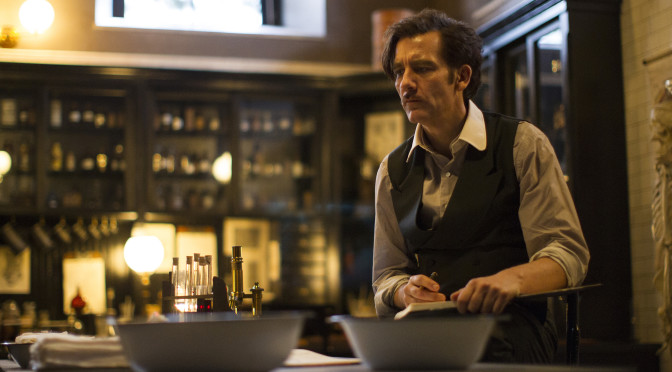
Pictured above: Dr. John Thackery (Clive Owen) explore several experimental procedures in the second season of The Knick, some more successful than others.
This post contains light spoilers of general themes from this season of The Knick although there are no specific plot twists discussed. You can use this as a primer for the second season before you begin, or review this list of historical moments before watching this evening’s finale.
Cinemax’s period hospital drama The Knick, now finishing its second season, spends a serious amount of time hunched over an operating table.
The able and ambitious surgeons of Knickerbocker Hospital cut open flesh, severed body parts, injected experimental serums and performed delicate incisions on brains, faces, throats and abdomens.
The special effects teams should be applauded for making me want to throw up on at least five occasions this year.
But The Knick is more than a procedural about a turn-of-the-century hospital although those watching for medical drama (or horror) will come away satisfied.
With Season Two (set in 1901) this hospital drama rose to become a detective story about New York City itself.
In Season One historic figures populated a story about a growing hospital. In Season Two the show finally found its footing within the messy patchwork of the Gilded Age.
Below are some historical highlights from the season, taken from some of my Tweets from the show’s original broadcast over the past several weeks.
There are no plot spoilers here — in fact, I’ve chosen to not even mention any characters’ names — and some of you might even find this helpful before you watch.
ELECTRIC AUTOMOBILES
New Yorkers raced to find faster, more efficient solutions to horse-drawn vehicles. In the early years of automotive conveyance, it appeared the electric variety would lead the charge; however the earliest models were expensive and entirely inefficient.
Meanwhile oil refiners like the ones in Lima, Ohio, concerned that Edison’s electric light bulb was killing the kerosene market, began looking for other uses for their product.
Apartment living was all the rage with the upper middle class in the 1880s and developers around Central Park monopolized on the craze with lavish apartment complexes, bringing the amenities of upper crust life to those who couldn’t afford the upkeep of a mansion.
In particular, the Upper West Side was rapidly developed, becoming one of New York’s trendiest residential neighborhoods by 1900.
The "bottom of Central Park" had impressive selection of apartment buildings in 1900s like Navarro Flats: #TheKnickpic.twitter.com/4igeGcw0QK
The ground was broken on New York’s ambitious new subway system on March 25th, 1900, but not everybody considered it progress. Miles of underground tunnel required unprecedented investment which tore into busy streets, creating nuisance and danger.
Those of the more sheltered class flinched at the idea of immigrant workers ripping into their streets. Most New Yorkers were certainly unsettled at the sound of dynamite explosions and feared that whole city blocks might blow up.
Medical practice and scientific thought were expanding in the 1900s, but new modes of treating complicated conditions like drug and alcohol addiction were having a difficult time in the morality based institutions of the day.
Most physicians still believed that addictions exposed flaws of the human character and had little connection to the processes of the brain.
Deteriorated or stunted moral character was also seen as endemic of new arriving immigrants especially those from southern Italy.
The study of eugenics — belief in the improvement of the human race through selective reproduction — rapidly grow in colleges and universities in the 1900s. Naturally the eugenics argument was also used against African-Americans and wielded as a threat against any who attempted to upend the status quo.
Although the scandals of Boss Tweed were almost 30 years old by 1901, Tammany Hall still held a viper’s grasp upon New York City infrastructure — from the ports to the construction projects.
A standard building project would often require many layers of ‘greased palms’, and expensive materials were often used because a corrupt middle-man could hide more layers of kickbacks there.
While the dangerous qualities of many common drugs were well known, few were actually banned in 1901. Cocaine and heroin were still used in the operating room, and even substances we consider deadly poisons today were available over the counter.
Inspired by P.T. Barnum’s American Museum and the popular cabinet of curiosities of Europe, ‘dime’ museums became a popular pastime for New Yorkers in the late 19th century. They were a hodgepodges of exhibits, from people with extraordinary abilities to exotic foreigners.
In places like Huber’s Museum in Union Square, some of the most popular attractions were humans with various deformities, the individuals who would make up the freak shows of Coney Island. Few considered these people in need of care, and they were often harshly abused by their handlers.
Huber's Museum was located in Union Square, 14th Street and 4th Ave., filled w. exotic, unusual delights: #TheKnickpic.twitter.com/8WeFsdKL7v
In a society so clearly judgmental of non-reproductive sexual behavior, STDs were poorly understood.
Syphilis remained a deadly illness running rampant through hundreds of New York brothels. Some protection, like condoms, did exist at the time, but they were terribly uncomfortable and not consistently made.
Pregnant girls were forced into the treacherous world of back-alley abortions. Many died during procedures — or afterwards due to unregulated and filthy conditions — and their bodies dumped into the river.
Violent racial tensions in neighborhoods like Five Points and the Tenderloin forced many black New Yorkers to move north — to the largely Jewish neighborhood of Harlem.
By the year 1900 thousands of African-American lived here, creating a foundation for the huge wave of new residents who would arrive a couple decades later, turning Harlem into the center of American black culture.
Harlem 1901: Thousands of black New Yorkers were recent arrivals but not yet the cultural mecca of 1920s: #TheKnickpic.twitter.com/E6K1pnreFo
The greatest waves of immigration into America came in the early 1900s, and the largest group among them were southern Italians. Unlike the earlier wave of Italians, Sicilians were poorer and less educated. Difficulties in understanding led many New Yorkers to consider them a vastly inferior class and even dangerous.
Thousands of Sicilian immigrants came to Ellis Island in 1900s, considered 'inferior' to north Italians. #TheKnickpic.twitter.com/kRZW6hOWkQ
While the modern restaurant was essentially invented by Delmonico’s in the early 19th century, it wasn’t until the Gilded Age that the delights of public dining were properly indulged. With the influx of opulent life came the finest hotels and eateries, all equipped with modern conveniences. Most were situated on Broadway, from Union Square to Herald Square. Longacre Square (not yet Times Square) was a few years away from becoming the center of New York nightlife.
The political landscape of modern New York City is a stew of neighborhood, borough, financial and ethnic interests built upon over two centuries of experience and tradition.  The most interesting story of the past fifty years — both locally and nationally — is the ascension of minority voices into the public sphere, reflecting population changes but also rising strategies of organization.
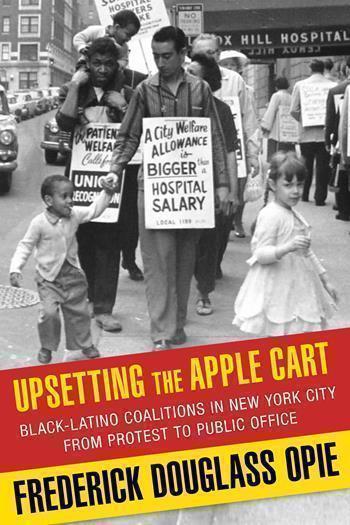
How did non-white New Yorkers first find their voice in modern politics? In Upsetting the Apple Cart, an impressive navigation through late 20th century politics by Frederick Douglass Opie, the answer comes from seemingly surprising places — the hospital, the classroom, the kitchen table.
Opie, a professor at Babson College, inspects the particular relationship between New York’s black and Latino communities as they find ways to align at the workplace and in the voting booth. Today it seems obvious that two large minority interest groups might team up to achieve common goals, but it wasn’t until after labor and student activists explored the relationship in the 1950s and 60s that alliances were forged in the major political spheres.
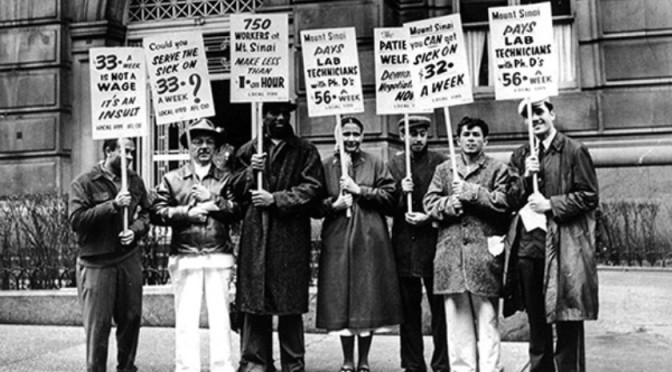
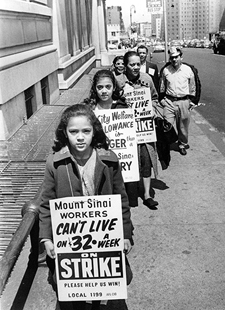
The first half of Upsetting the Apple Cart traces the influences of both the unions and the civil rights movement upon minority workers at local hospitals and students at universities. Â Frustrated by lower pay and unfair hours in comparison to their white counterparts, black and Puerto Rican New Yorkers found common ground and successfully organized. This culminated in a massive, ultimately successful city-wide strike on May 8, 1959, lasting almost two months.
Minority higher-education students at Columbia University, Hunter College and other school found other reasons to work together — to improve enrollment and educational needs. At Columbia students successfully closed the campus in protest over a new gymnasium being built in Morningside Heights, seen by many as an encroachment into the majority black neighborhood.
Personally I found the second half of Upsetting the Apple Cart more intriguing, but then, I love rooting around in the history of New York backroom political alliances. Â Opie’s book excellently explains the early history of black and Latino political organization, from the rise of power in Harlem by the Gang of Four (including David Dinkins and Charlie Rangel) to the first politicians of Puerto Rican, Mexican and Dominican descent in New York.
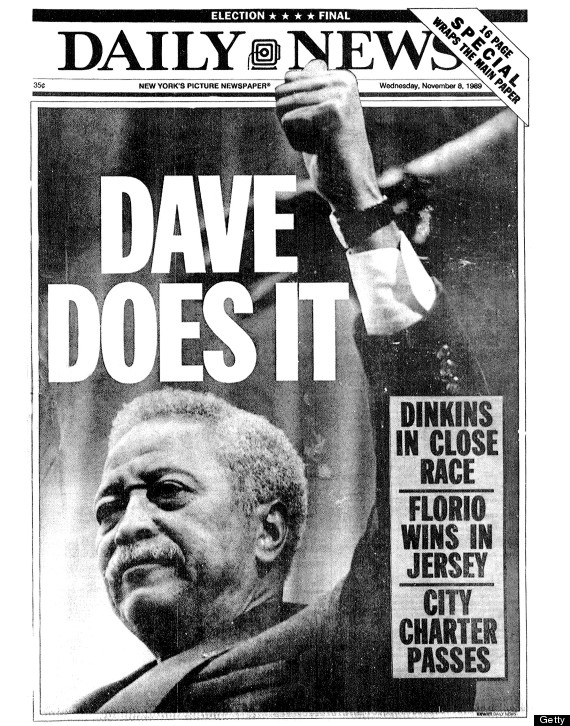
UNITED STATES – NOVEMBER 08: Daily News front page dated Nov. 8, 1989, Headlines: DAVE DOES IT, Dinkins in close race, Florio wins in jersey, City Charter passes, David Dinkins elected Mayor of New York City (Photo by NY Daily News Archive via Getty Images)
Politics is made from shifting alliances but it wasn’t until the victory of Harold Washington as mayor of Chicago in 1983 that the united front of African-American, Hispanic and Latino-American activists made itself felt in a major political race. Such unification of goals made its way to New York through the presidential aspirations of Jesse Jackson and the various (ultimately unsuccessful) attempts to unseat New York mayor Ed Koch.
The apex of minority political alliances occurred with the election of David Dinkins, famous for his appeal to the “gorgeous mosaic” of New York ethnicities. Dinkins won because, in the end, he appealed to a majority of New Yorkers. But Opie makes note of the unique organizations of outer-borough Hispanics that helped get him elected.
Wait, did I mention that Upsetting  the Apple Cart is also a cookbook? Somewhat incongruously, traditional recipes for tamales, arroz con pollo, fried chicken and other dishes pop up throughout the chapters. Opie, a food traditions professor, emphasizes the role of social interaction in creating these unique coalitions.  To paraphrase a popular adage, the best way to a neighbor’s heart is through her stomach.  The success of these early alliances lends some credence to food as the great uniter.
Upsetting the Apple Cart: Black-Latino Coalitions in New York City from Protest to Public Office
by Frederick Douglass Opie
Columbia University Press
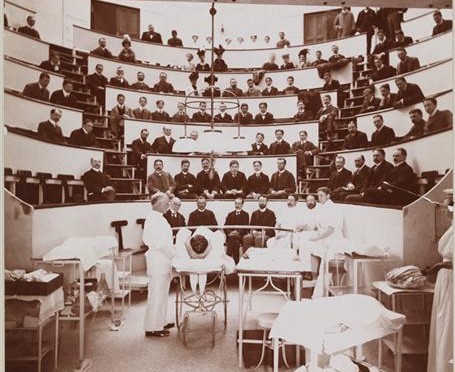
Syms operating theater at Roosevelt Hospital in 1900, perhaps one of the cleanest places in Manhattan! (Picture courtesy Museum of the City of New York)
It was not a fair fight.
In 1895, in celebrating the innovative new surgery building at Roosevelt Hospital, the New York Times decided to compare its revolutionary new features to an antiquated hospital, one that had been serving patients for decades in that metropolis right across the water — Long Island College Hospital in Brooklyn.
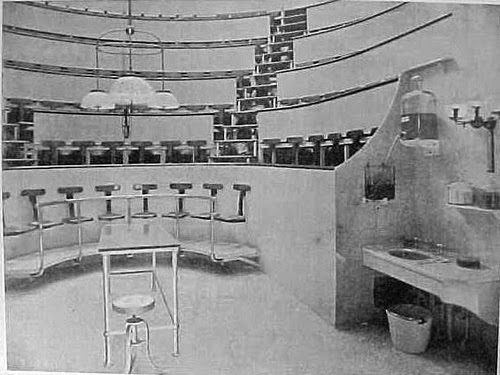
Upon its opening in 1892, William J. Syms Operating Theater, west of Columbus Circle, was a jewel in the crown of the Roosevelt Hospital complex, employing the latest antiseptic techniques, even using materials in its construction that were believed to be less germ prone — glass operating tables, a mosaic floor, iron chairs.
New rules of cleanliness were employed within its surgical theater. “[The visitor] will see everywhere signs of the most exquisite cleanliness. [He] will see no sign of haste or confusion, of dirt or litter, of human pain or suffering.”
Below: The inside of the Syms operating room from 1893: (Scouting NY)
In heralding this sparkly new institution, the newspaper decided to throw a vaunted, albeit older, one under the bus.
“In the operating theater of the Long Island College Hospital the conditions obtain [sic] today are more in keeping with the practices of half a century ago. The large and ugly theatre is fitted with wooden benches, upon which generations of students have done their whittling. The floor beneath the benches acts as a convenient and frequent receptacle for tobacco juice. The walls are tinted with a dirty, bluish color, and on the side nearest the operating table there is an ominous stain of seepage from the floor above.”
The description continues rather grotesquely — I’ll get to more of it in a second — but is it a fair characterization?
While disquieting to our modern understanding of cleanliness, in fact, the Brooklyn institution was certainly deteriorating, but probably in better shape than most places of this type in America in the 1890s.
The Tale of Long Island College Hospital The story of Long Island College Hospital is the tale of the neighborhood of Cobble Hill, Brooklyn.
Well before south Brooklyn was urban-planned into a grid of respectable blocks, the area that is today’s Cobble Hill was called Ponkiesberg, much of it the farmland of a man named Ralph Patchen. Near the eastern edge of his property sat the ruins of the old Revolutionary War fort . [You may remember this fort from our ghost stories podcast from last year.]
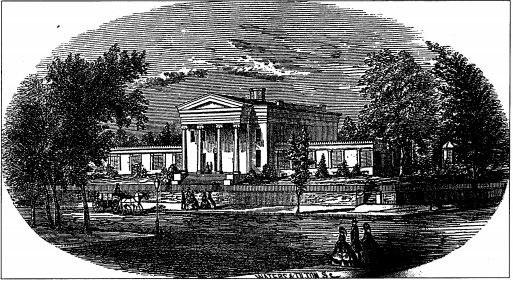
Patchen’s farm was purchased by Joseph A. Perry, later known for his contributions for planning Green-Wood Cemetery. Â On this former lot he built a sumptuous mansion which stood at Henry Street, between Amity and Pacific (pictured below).
Meanwhile, on the edge of his property, two doctors recently arrived from Germany opened a clinic exclusively for Brooklyn’s small, but emerging German population. In the late 1850s, they and other prominent doctors sought to found a college hospital and purchased the Perry mansion in 1858.
From this old house sprang the roots of Long Island College Hospital. While the United States already had a few medical schools, this was America’s first college hospital — on-the-job training as it were, with students interacting directly with patients.
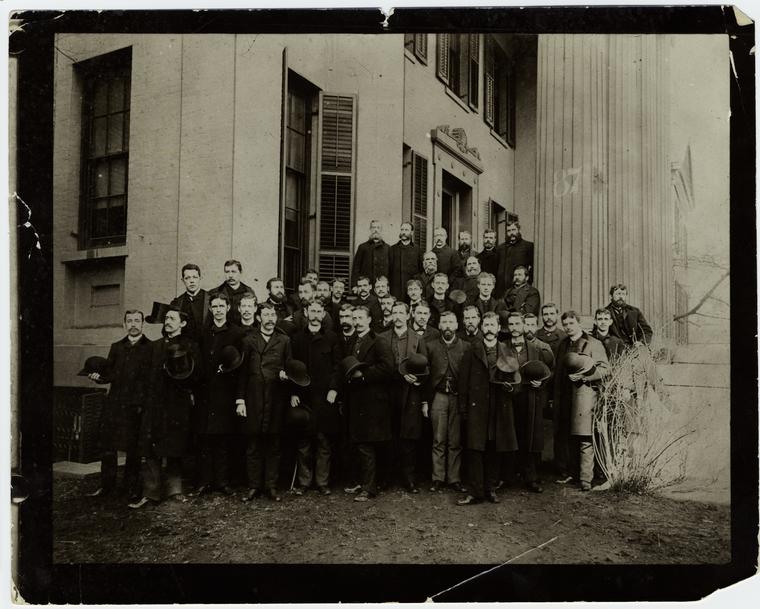
Below: Faculty and students of the medical school pose on the steps of the Perry Mansion, LICH’s principal structure in the mid-19th century
It was an institution quite well known for innovations in the late 19th century.
Many of America’s finest physicians passed through here at some point in their storied careers.
The clinician Austin Flint brought many European techniques to the school, including the stethoscope, a variant of which making its debut here. (Flint actually has a heart murmur named after him, too.)
In 1888 the Hoagland Laboratory opened on campus, providing facilities for both research and education that kept Long Island College Hospital at the forefront of medicine.
In many ways, it was still a respected institution in 1895, but they were often in debt and in desperate need of an upgrade.
Its conditions were probably not unlike most medical institutions of the day, but it paled in comparison to the spectacular new operating theater built for Roosevelt Hospital as a gift.
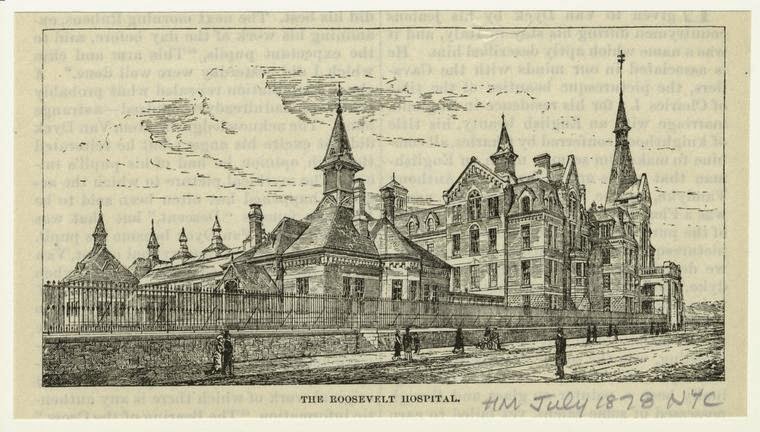
The Tale of Syms Operating Theater Roosevelt Hospital (pictured above) was born out of the generosity of James H. Roosevelt, a wealthy philanthropist confined to his manor for most of his life by illness. When he died, he bequeathed his entire fortune to the creation of a new hospital in his name. Roosevelt Hospital’s first building opened in 1871, over ten years after the opening of Long Island College Hospital.
Many years later, another wealthy benefactor — gun merchant William Syms — benefited from a successful operation at Roosevelt Hospital and donated most of his fortune to the hospital, with the specific intent of building a new operating center.
When Syms Operating Theater opened in 1892, the press trumpeted its sleek innovations in sanitation, creating a brightly lit, aseptic environment previously unseen except in a few places in New York.
It was perhaps the cleanest place in Manhattan or, at least, it was touted as such.
From a citation by the Landmarks Preservation Commission: “Aseptic operating rooms were bright, clean, hard, undecorated spaces; they were the ‘high tech’ spaces of their day.”
Below: The sleek interior of the Syms Operating Theater, 1925. (Picture courtesy Museum of City of New York)
This was not simply for the health of patients and staff. A building of such profound innovations — such as a moat around the basement for thorough drainage — was meant to ease the tensions of New Yorkers who considered operating rooms barbaric and even obscene.
Disturbing descriptions The administrators at Long Island College Hospital could not have been thrilled when they picked up the New York Times on April 27, 1895.
Right there on the front page was a horror story with their historic institution as a backdrop.
“It is from this upper floor that foul and inexpressibly nauseating odors are wafted through the operating theater at all times, because it is there that the students of the college and hospital practice anatomy on eighteen or twenty decomposing cadavers.”
The reporter noted the routine delivery of dead bodies from room to room and the grim procedures of dissection witnessed by dozens of disinterested students.
“In spite of the rising temperature, which should render dissection almost impossible in a building exclusively devoted to the purpose, it is plain from the stench that the hot weather had not stopped the students of Long Island College Hospital.”
Due to the proximity of the autopsy theater to regular patients, “whatever ills result from breathing such a tainted atmosphere must be shared to a lesser extent by the surgical patients of the hospital.”
Sepsis was an omnipresent and growing.danger. As if to confirm this, the hospital refused to provide its mortality records.
The renown doctor Alexander Skene, perhaps the best known physician at the hospital, blamed a lack of funding for the institution’s woes.
“The people of Brooklyn are to blame in some measure because they do not give the hospital the financial support it needs and merits,” said Skene. “The school is very prosperous, while the hospital is very much the reverse.”
(Skene, a leader in the field of gynecology, died just a few years later. Today you can find him in bust form in Brooklyn’s Grand Army Plaza.)
Aftermath The regents of Long Island College Hospital responded with disbelief, even outrage. “I am there everyday, and I never feel any smell,” said a chairman. “We have the plans all ready for a new operating room … but we have no money.”
Fortunately, the hospital and its patients were rescued from further embarrassment by Caroline Polhemus, the wife of one of the hospital’s regents Henry Ditmas Polhemus.
When her husband died that year in 1895, a society matron donated a sizable chunk of her fortune to create the Polhemus Memorial Clinic (pictured at right) in her husband’s honor.
All autopsies for educational purposes were moved to the top floor of the clinic, across the street and far away from the hallways regular hospital.
The building is still around — you can see it here — although it is no longer associated with the hospital.
The Syms Operating Theater served Roosevelt Hospital for several decades before it, too, was declared inadequate.
That building is also still around however; Scouting New York has a nice feature on its current whereabouts, a must-see stop on any New York medical-inspired walking tour.
It’s safe to say that both hospitals are held in high regard in the annals of medical history.
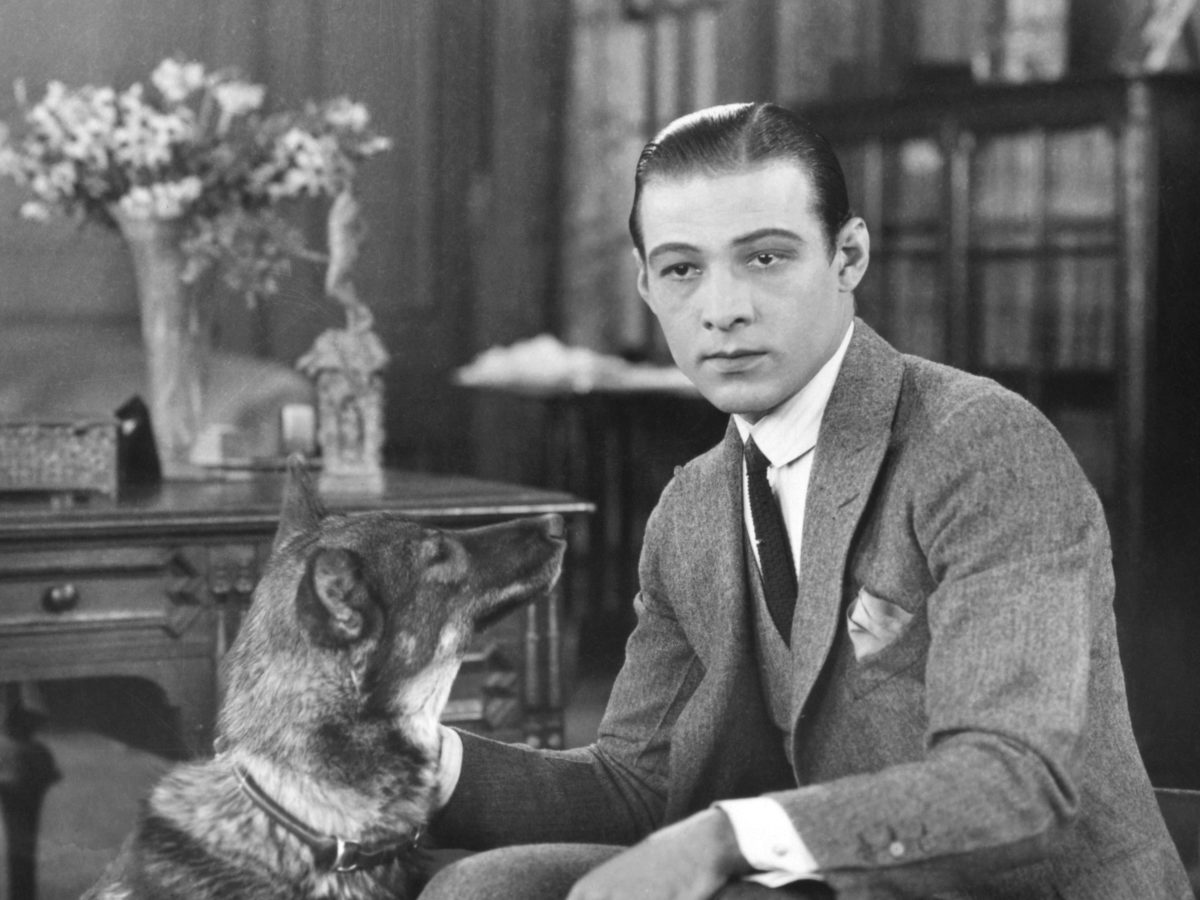
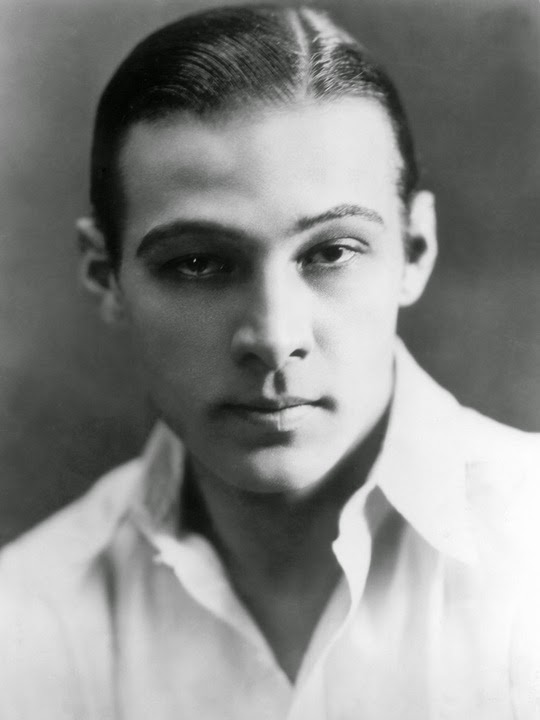
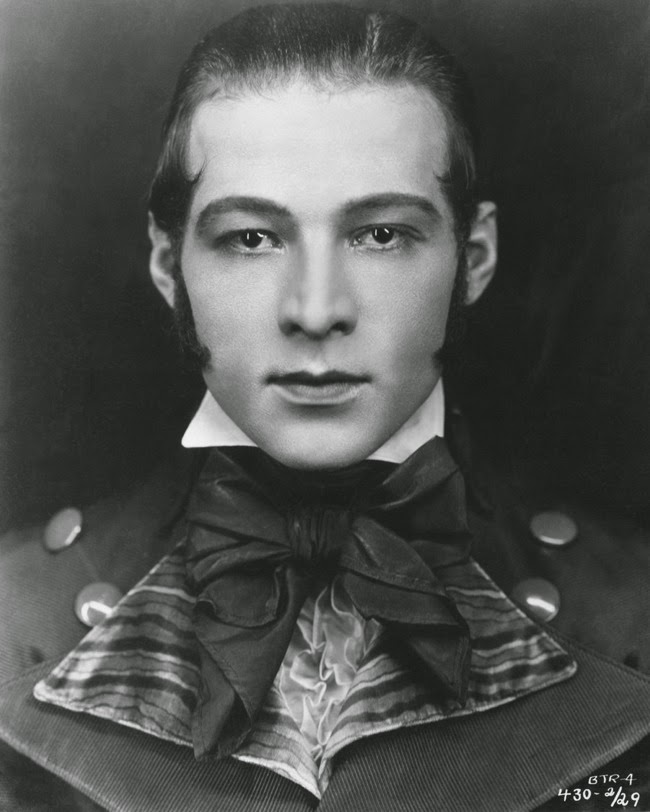
PODCAST Rudolph Valentino was an star from the early years of Hollywood, but his elegant, randy years in New York City should not be forgotten. They helped make him a premier dancer and a glamorous actor. And on August 23, 1926, this is where the silent film icon died.
Valentino arrived in Ellis Island in 1913, one of millions of Italians heading to America to begin a new life. Â In his case, he was escaping a restless life in Italy and a set of mounting debts! But he quickly distinguished himself in New York thanks to his job as a taxi dancer at the glamorous club Maxim’s, where he mingled with one particular Chilean femme fatale.
He headed to Hollywood and became a huge film star in 1921, thanks to the film The Sheik, which set his reputation as the consummate Latin Lover. Â Throughout his career, he returned to New York to make features (in particular, those as his Astoria movie studio), and he once even judged a very curious beauty pageant at Madison Square Garden.
In 1926, he headed here not only to promote his sequel Son Of The Sheik, but to display his masculinity after a scathing article blamed him for the effeminacy of the American male!
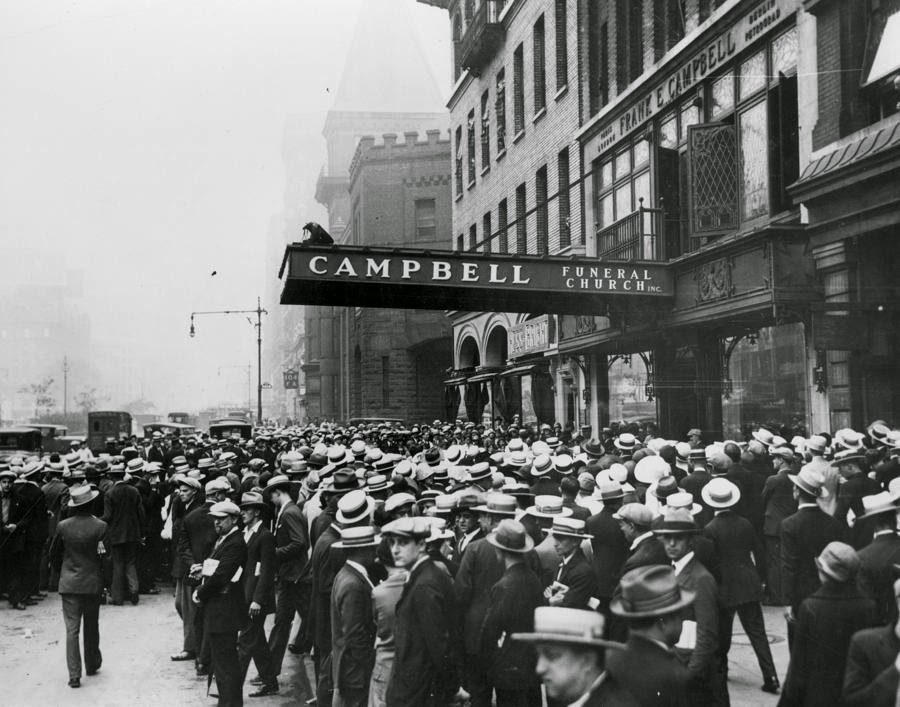
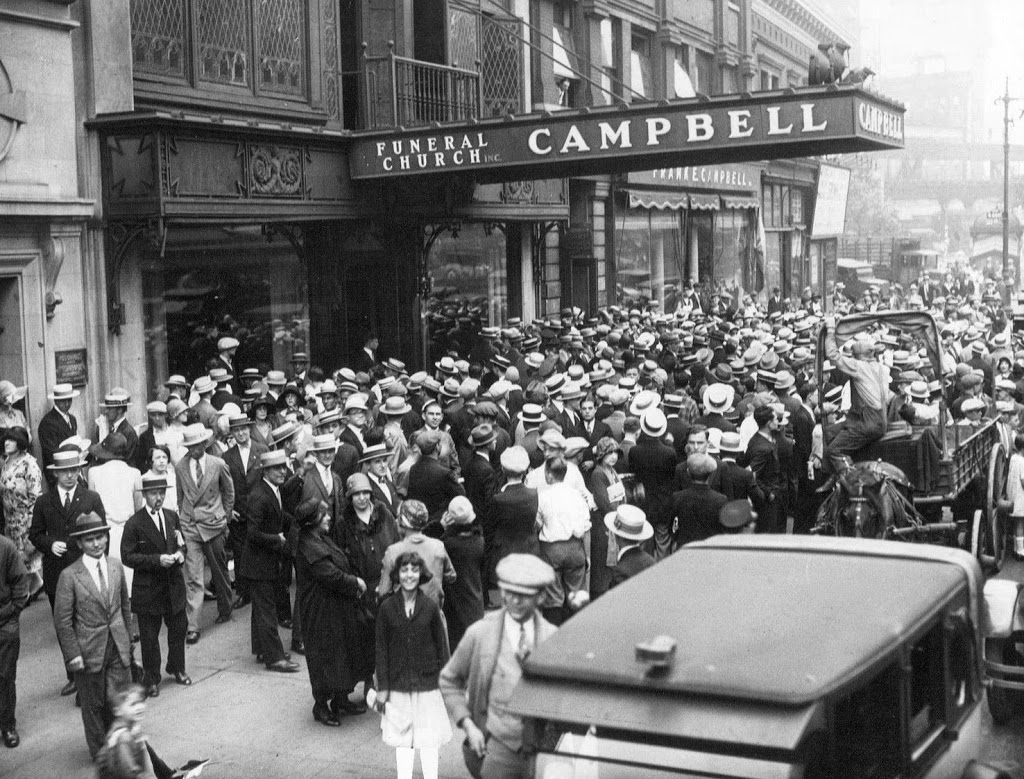
Sadly, however, he tragically and suddenly (and, some would say, mysteriously) died at a Midtown hospital. Â People were so shocked by his demise that the funeral chapel (in the area of today’s Lincoln Center) was mobbed for almost a week, its windows smashed and the streets paralyzed by mourners — or where those people paid by the film studio?Here are the details of the tragedy that many consider one of the most important cultural events of the 1920s.
ALSO: We are proud to introduce to you — POLA!
To get this week’s episode, simply download it for FREE from iTunes or other podcasting services.
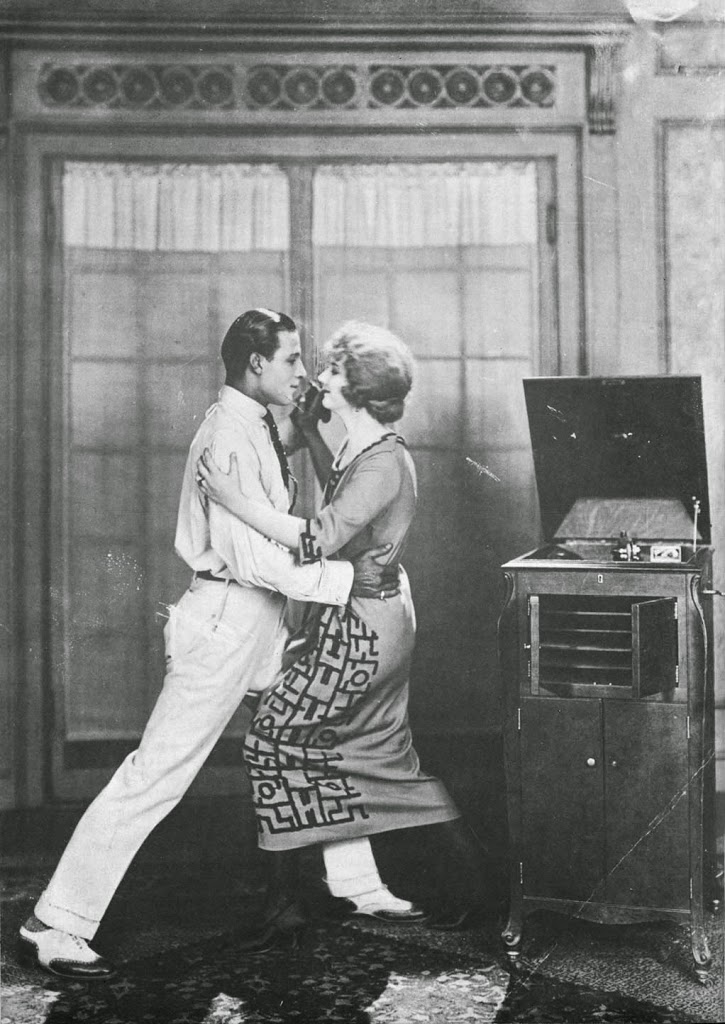
The young dancer was employed at Maxims on 110 West 38th Street. From a 1916 guidebook: “A famous ‘smart’ restaurant. A la carte. Music, dancing, cabaret, from 6:30 to close. High prices. Special ladies luncheon at noon.” Valentino would use his skills as a struggling actor in Los Angeles and incorporate it into his film work. Below: Valentino with Alice Terry
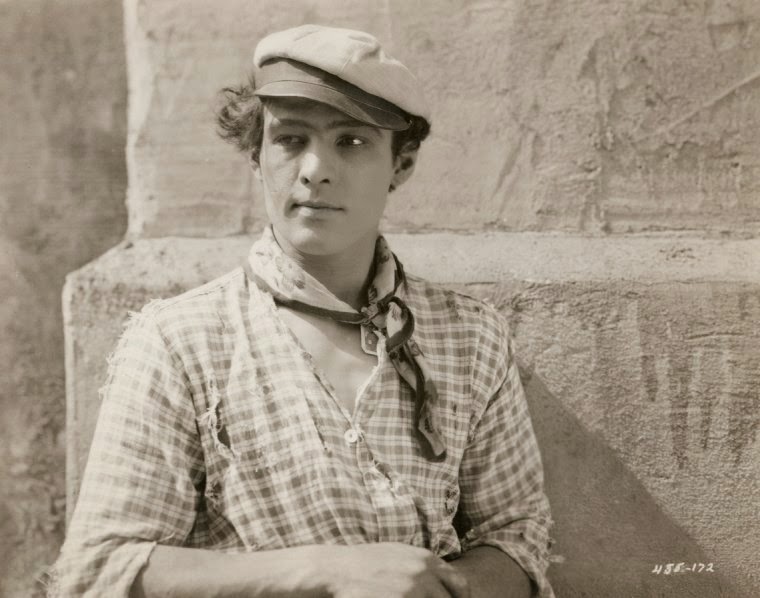
Valentino’s breakthrough film — The Four Horsemen of the Apocalypse. “He paints the town red!” “Each kiss flamed with danger!” Like many of his movies, the plot seems taken from his life. Valentino spent some time as a youth in Paris, dancing and dining his way through the city (and into debt). (NYPL)
The Sheik, the film that made his reputation:
From Blood and Sand (1922) — In this one, the Italian Valentino plays a Spanish toreador. (NYPL)
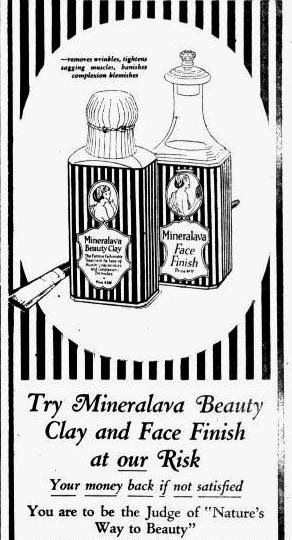
Mineralava Beauty Clay, the sponsor of Valentino and Rambova’s cross-country tango trip:
Newsreel footage of Valentino at Madison Square Garden judging the Mineralava Beauty Clay competition:
The Hotel Ambassador at Park Avenue and 51 Street. This is where Valentino boxed the reporter (on the rooftop) to defend his masculinity and where he was staying on August 15, 1926, when he collapsed.
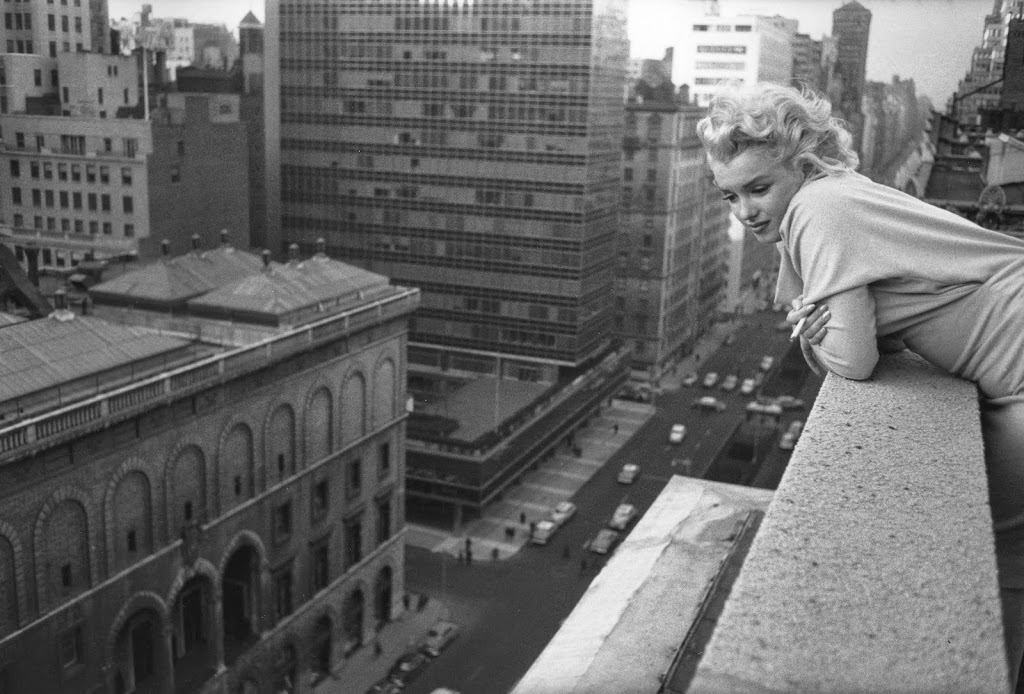
Most people are familiar with the Ambassador due to another iconic film star and her memorable photo shoot (by Ed Feingersh) on the rooftop:
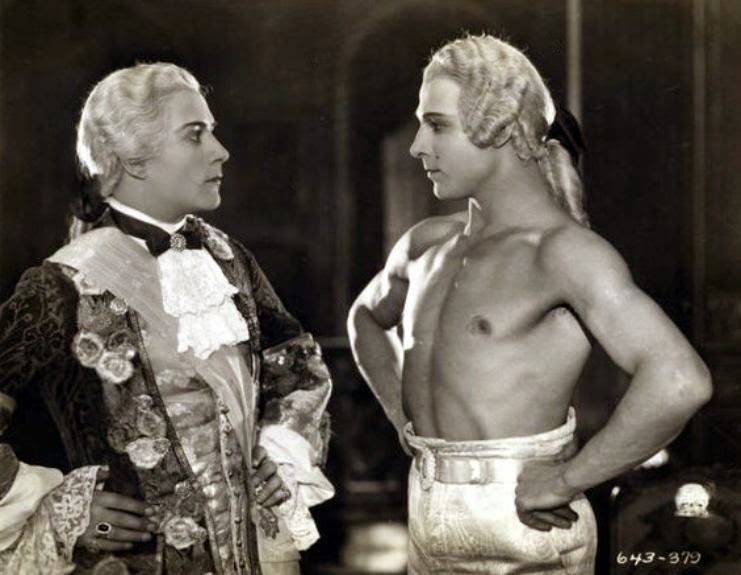
Rudolph in Monsieur Beaucaire, filmed at the Famous Players (later Paramount) studio in Astoria, Queens:
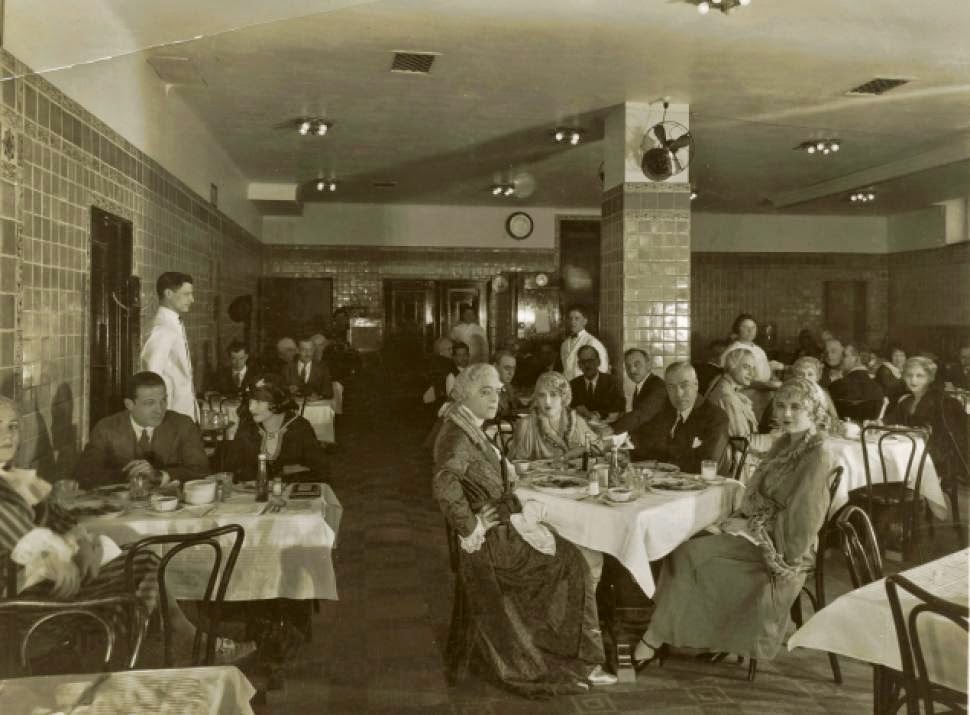
Downstairs, in the studio commissary, with Valentino (at left) and the cast of the film. Today this room is a restaurant named The Astor Room, which features cocktails named for silent film stars. There’s even a Valentino-themed cocktail called Blood and Sand!
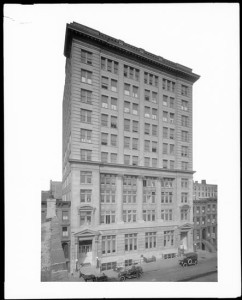
Polyclinic Hospital at 345 West 50th Street, where Valentino died on August 23, 1926. The building still exists today as an apartment complex. (Picture courtesy Museum of the City of New York)
Pictures of the mad, chaotic crowds outside Frank Campbell’s Funeral Church during the week of August 23-30, 1926:
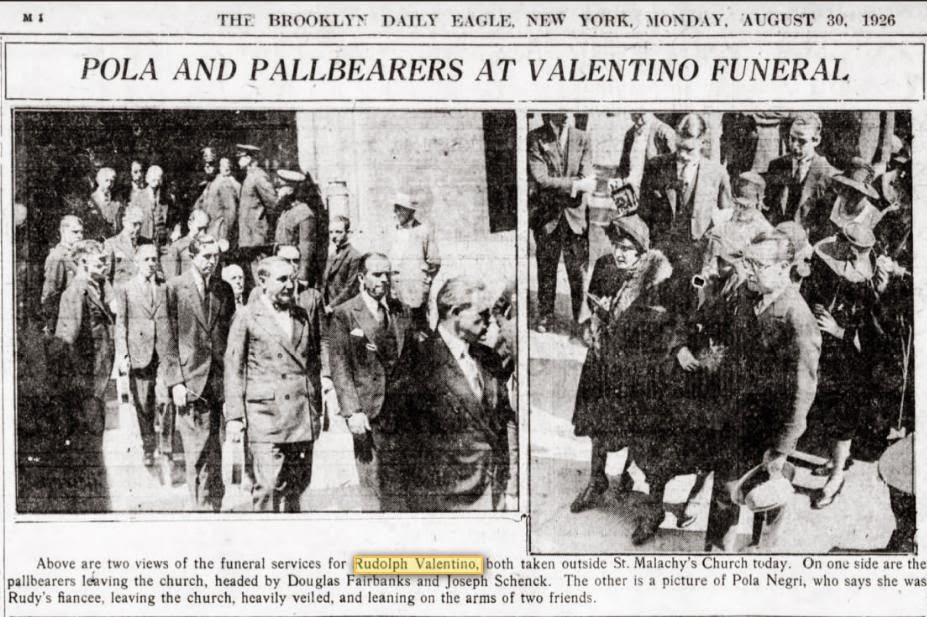
Pola Negri, who made quite a scene at the funeral of Valentino (NYPL):
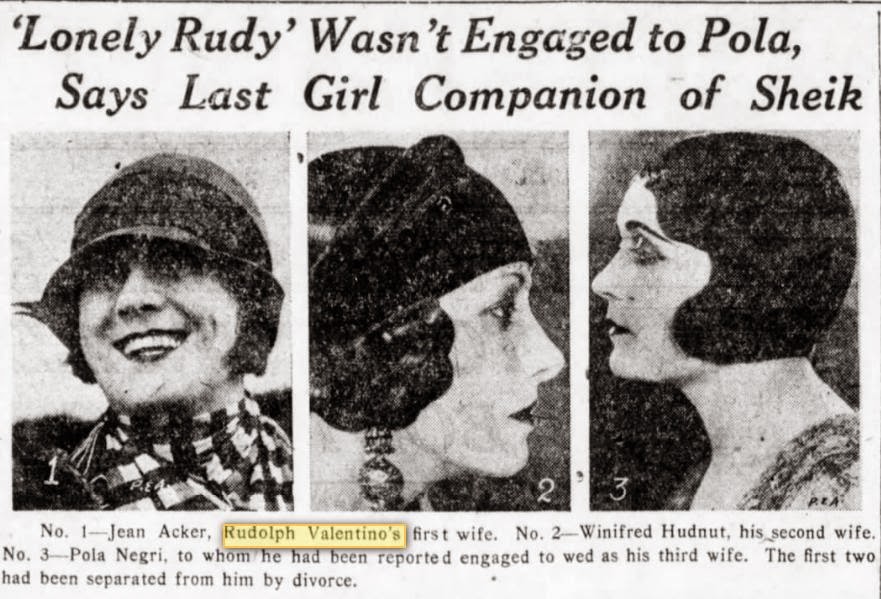
From the Brooklyn Daily Eagle, August 30, 1926
Newsreel footage of his funeral in Midtown Manhattan — from Frank Campbell’s (in today’s Lincoln Center area) to St Malachy’s on West 49th Street:
SOURCES AND SUGGESTED READING: Note: Don’t say we didn’t warn you! There’s a lot of material that seems to be based on speculation. Thoughts of possible sexual adventures have sent many authors into wild fits of imagination. ( Â Enter the back catalog of Valentino at your own risk:
Rudolph Valentino: A Wife’s Memories of an Icon by Natacha Rambova and Hala Pickford The Valentino Mystique: The Death and Afterlife of a Silent Film Idol by Allen R Ellenberger and Edoardo Ballerini Dark Lover: The Life and Death of Rudolph Valentino by Emily W. Leider The Valentino Affair: The Jazz Age Murder Scandal That Shocked New York Society and Gripped The World by Colin Evans The Intimate Life of Rudolph Valentino by Jack Scagnetti Falcon Lair— an indispensable online resource for all things Valentino Publications sited: New York Times, New Yorker, Newark News, Brooklyn Daily Eagle, New York Sun
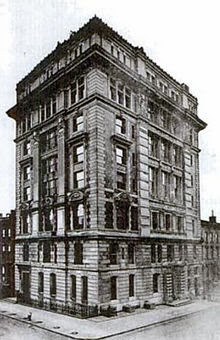
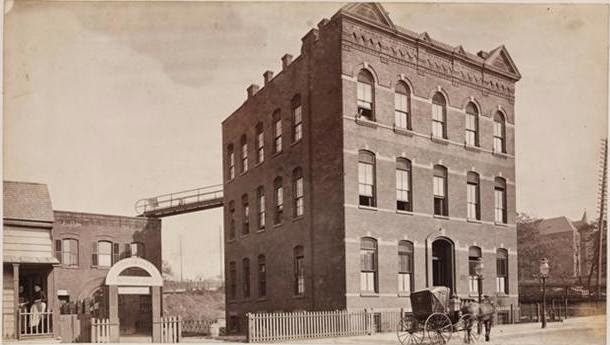
Photographed dated 1886, the institution was called Manhattan Hospital then, changing its name to J. Hood Wright Memorial Hospital, then to Knickerbocker Hospital in 1913 (Picture courtesy the Museum of the City of New York)
On Friday begins The Knick on Cinemax, a historical drama set in the turn-of-the-century Knickerbocker Hospital. . Last year, Tom wandered around the Broome Street set of The Knick. (Check out his pictures here.) Are you checking this out live this Friday night (August 8, 10pm)? Follow along with me on Twitter where I’ll try and keep up with historical tidbits about the era and the events that are depicted.
Although the hospital depicted in the show is technically fictional, there was a Knickerbocker Hospital in New York during this time period. It will be interesting to see if the show’s institution bears any resemblance to the real Knickerbocker:
Knickerbocker Hospital Location: Covent Avenue and 131st Street The hospital depicted in The Knick is much, much further downtown. However, with the arrival of elevated trains and, later, the subway, some new immigrants would have settled in upper Manhattan to escape the crowded tenements. So the types of patients treated at these institutions would have been similar.
Purpose: According to the 1914 Directory of Social and Health Agencies, “Gives free surgical and medical treatment to the worthy sick poor of New York City. Incurable and contagious diseases and alcoholic, maternity and insane patients not admitted. Emergency cases received at any hour.” Statistics: In 1914, they had 57 beds, 1,096 cases treated in a year Funding: Care is free to “the worthy poor” and the hospital is supported by charitable contribution
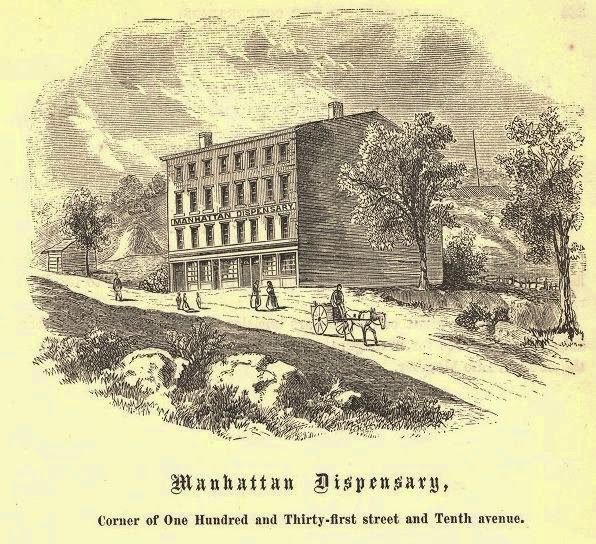
History: The hospital began its existence as the Manhattan Dispensary in 1862, located in upper Manhattan when it pretty much looked like this: (Image courtesy the US National Library of Medicine)
The hospital treated injured Civil War soldiers. It was founded by a Philadelphia railroad man named James Hood Wright who worked for banker J.P. Morgan.
Mr. Wright died suddenly on November 12, 1894, collapsing at an elevated train station on Rector Street and never regained consciousness. In honor of his contributions, the hospital was renamed the J. Hood Wright Memorial Hospital, although, from reading the news clipping below, it seems that was not a great idea.
The name change was facilitated by a lack of funding for the hospital. In 1910, hospital executives blatantly proclaimed “the hospital was inadequate to serve the needs of the west side of Harlem.”
From a notice in the New York Sun, June 23, 1913:
“The J. Hood Wright Memorial Hospital, which was incorporated in 1868 as the Manhattan Dispensary, has got permission from Supreme Court Justice Page to change its name to the Knickerbocker Hospital. The petition says that since Mr. Wright’s death the population of the district served by the hospital has increased greatly and the necessity of more funds for the hospital has increased proportionately.
The hospital managers and Mr. Wright’s heirs believe that the present name of the hospital leads to the belief that it is so liberally endowed it does not require outside assistance and for this reason, none have been forthcoming. They say Mr. Wright desired outsiders to contribute.”
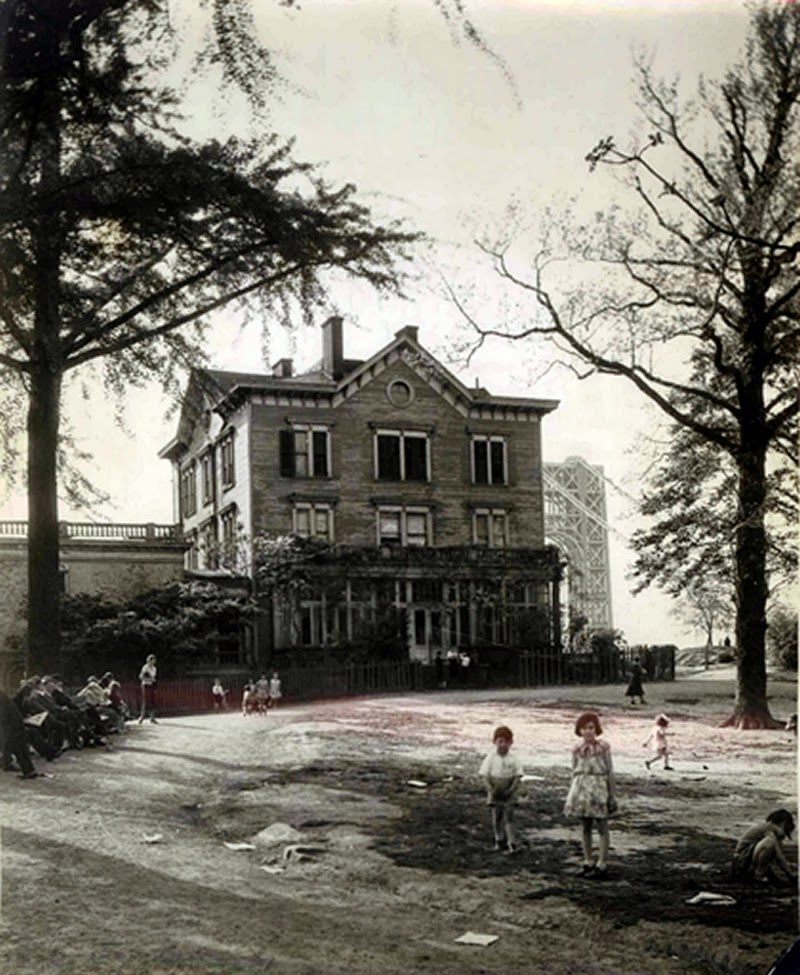
J. Hood Wright is memorialized in a public park just off the Manhattan approach to the George Washington Bridge. located on the land where Mr. Wright’s mansion once stood.
At right: A photo of the old Wright house. You can see the George Washington Bridge in the background. (Courtesy Museum of the City of New York)
The Knickerbocker’s neighborhood of Harlem became the heart of New York’s African-American culture, but hospital staffing did not reflect this change.
There were many reported incidents of black patients being poorly treated here during the 1920s and 30s. According to author Nat Brandt, the wife of W.C. Handy “lay critically ill in an ambulance for more than an hour while officials of Knickerbocker Hospital discussed whether to admit her.” [source]
In May 1959, Billie Holiday was admitted here after collapsing in her apartment, but her liver and heart disease were so advanced that she was transferred to a hospital better suited for treatment. (She died a few weeks later.)
Knickerbocker Hospital remained open until the early 1970s when mounting debts almost forced it to close. The state of New York took it over and renamed it Arthur C. Logan Memorial Hospital after a prominent black physician. That hospital seemed to suffer from the same financial woes as the others and eventually closed for good in 1979.
I’m looking forward to doing more research New York’s medical institutions in the coming weeks, and I hope the show does it justice!
A scene from The Knick. There will be blood, I believe….
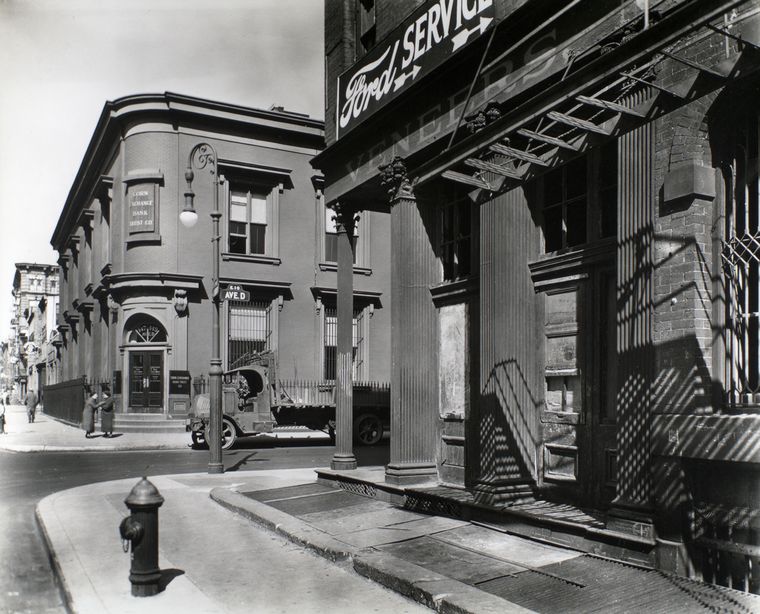
A genuine survivor: The building to the right was once the Strangers Hospital in the 1870s. This picture, by Berenice Abbott, was taken many decades later, in 1937. And the building is still around today! (Picture NYPL)
New York used to lump the sick, the poor and the homeless into one mass of needy unwanted. Since its founding, the city has struggled take care of the growing dual problems of poverty and plague, but in a way that kept the unwanted safely invisible to its wealthier classes.
With the rise of immigration starting in the 1840s, the problem became too pervasive to simply throw people into large catch-all institutions like Bellevue Hospital (which, in its early years, served as almshouse, hospital, quarantine, prison and morgue). Soon Blackwell’s Island became the solution, with a string of grim institutions lining the East River island.
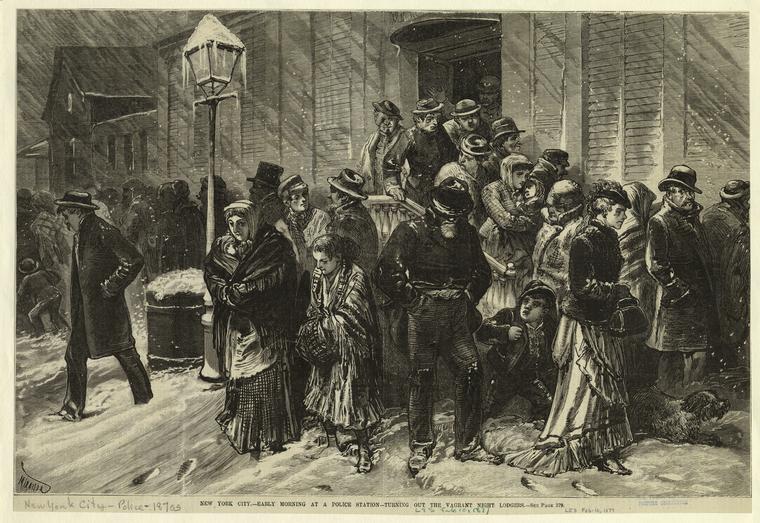
Below: For those less ‘worthy’, a cold night might have meant sleeping in the local police station. In the illustration below (1877), the homeless are turned out into the street at morning’s light. (NYPL)
Another solution for the homeless arose in 1870s in the delirious days of the scandals of the Tweed Ring.John H. Keyser made his fortune in the growing new field of indoor plumbing; in fact, he seemed to be wildly successful at it, a sudden millionaire in an era were certain men — with certain connections — grew wealthy overnight.
Keyser may have had friends in high places, but he expressed an unusual need for the common man. Perhaps his outreach was a tad cynical; the poor he helped often voted the way Keyser preferred. But with the city facing a severe poverty crisis, even the baited gesture had beneficial results.
The plumber king operated a ‘Strangers Rest’ at 510 Pearl Street in 1869, a boarding house for vagrant men and women. The vagrant house was situated halfway between City Hall and Five Points, and it operated on that spirit as well, an abode of good will and a little favoritism. You could stay if you were deemed “worthy,” meaning either good behavior or an unofficial pledge of allegiance to the Democratic Party.
The following year, Keyser purchased a building for $8,000 owned by the New York Dry Dock Company and transformed it into the Strangers Hospital, a vagrant home and care center in the vastly crowded Lower East Side. The building is still standing today at 143-145 Avenue D. Across the street is the Dry Dock Playground.
The Strangers Hospital opened in January 1871 with dozens of bed in several wards, a reading room, Russian and Turkish baths, a recreation room, and a chapel, with walls made of “India rubber, to avert the absorption of any infectious materials.”
An opening day blessing announced its unique mission: “It is not intended for the benefit of the wealthy, who in times of sickness can command the comforts of a well-ordered home and the attendance of a skillful physician or surgeon. Nor yet the beggar, who leads a life of dissolute idleness, rotating in winter and in sickness about the charitable institutions of this city. It is intended for the succor and restoration of the deserving poor……strangers — strangers to the home of plenty and comfort in which they have been born and nurtured, and from which misfortune and disease have parted them.”
In other words, you were worthy if they deemed you to be so.
It was an odd differentiation. As an accommodation for up to 200 people, it served not only as a regular treatment hospital for the ‘deserving poor’, but as a convalescent home and halfway house. Most likely, you had to be recommended but a tenant in good standing and, as I mentioned, it probably helped if you were a Democrat.
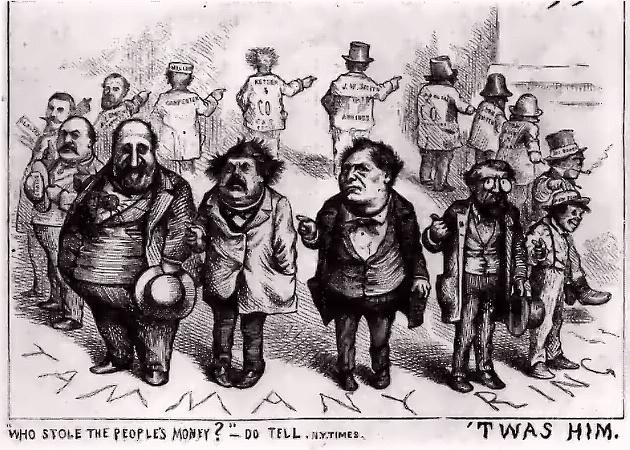
I underscore that because the Strangers Hospital didn’t last very long, closing in 1874. And this is why — Keyser was known as the ‘Ring Plumber’, a crony of William ‘Boss’ Tweed who enjoyed thousands of dollars in kickbacks and special favors. Tweed went to trial in 1873 for his crimes, and his cronies, although never formally charged, were disgraced.
Below: Keyser would have been one of the links of this chain of favoritism, envisioned by illustrator Thomas Nast
Contemporary sources of the day are not kind to Keyser, with one account call him “a real live Oily Gammon [arch-villian, from an English phrase which meant fatty ham], an Americanized specimen of the article — revised and improved in order to fit him to be a bright and shining light in the fraternity of which he is a member.”
By 1877 Keyser went bankrupt. Still, his obituary lists several more philanthropic efforts by Keyser, including a “free eating house” in Washington Square in 1888. From the headline: “Thousands were aided by Man Accused to Being Tweed’s Partner.” So whether or not his actions were sincere, he did manage to fund the feeding and caring of thousands of poor and sick New Yorkers. Where does such a legacy stand?

![[Roosevelt Hospital, Sym's Operating Room.]](https://boweryboyshistory.com/wp-content/uploads/2014/09/MNY68242-300x242.jpg)