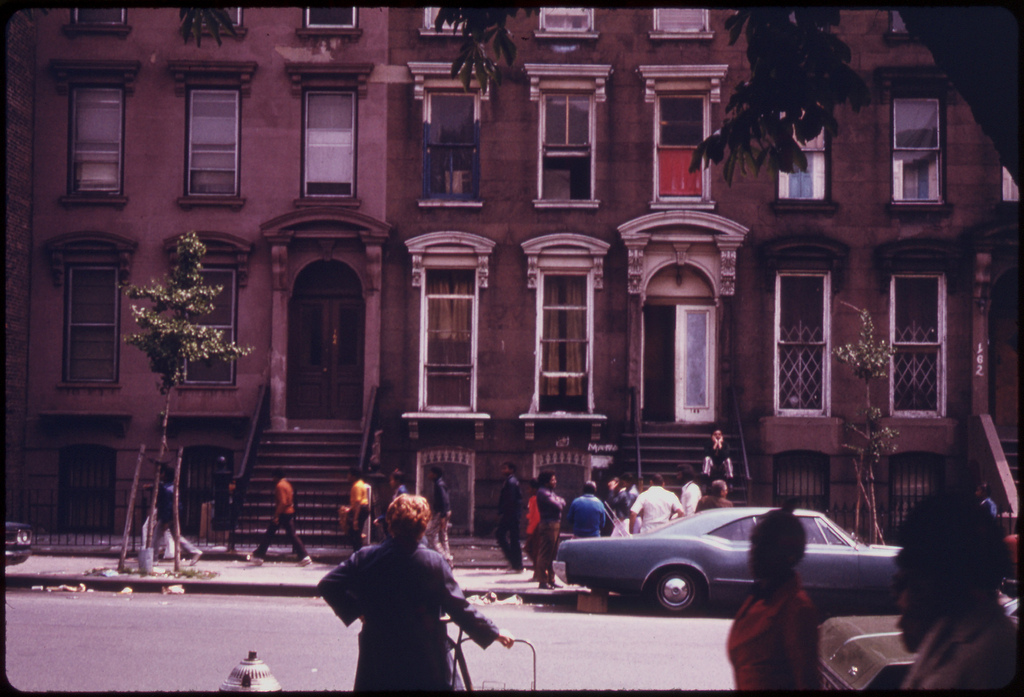
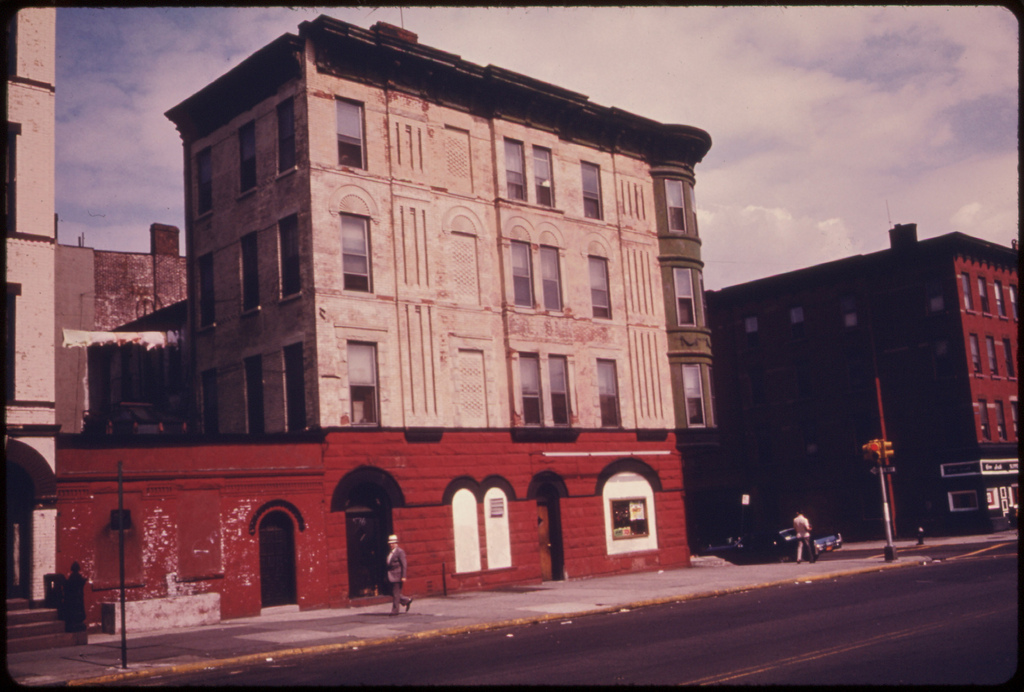
The new Bowery Boys podcast that comes out this Friday will be about Brooklyn. So let’s get in the mood with some pre-Instagram tinted photography from the U.S. National Archives, most of them taken in 1974 by Danny Lyon. followed by some black and white images by Edmund V Gillon.
You might have seen many of these photographs before (perhaps even here on this blog), but it’s striking to revisit them in context of Brooklyn current gentrification patterns.
The homes of Brooklyn Heights began seeing the arrival of ‘bohemians’ as early as the 1910s, and brownstone revivalists (the so-called ‘pioneers’) discovered the neighborhood after World War II.
But a noticeable trend of Brooklyn gentrification happened in earnest in the late 1950s, with wealthy escapees from Manhattan (fending off the urge to suburbanize) moving into South Brooklyn brownstones and row houses and giving enclaves attractive new names like Boerum Hill, Cobble Hill and Carroll Gardens.
The most successful example occurred up on the park slope as a movement of urban activists and historical preservations refurbished and brought to life one of Brooklyn’s original Gold Coasts. Its official name became, of course, Park Slope.
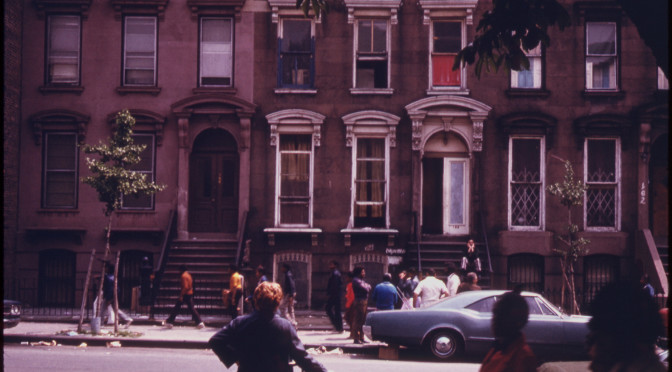
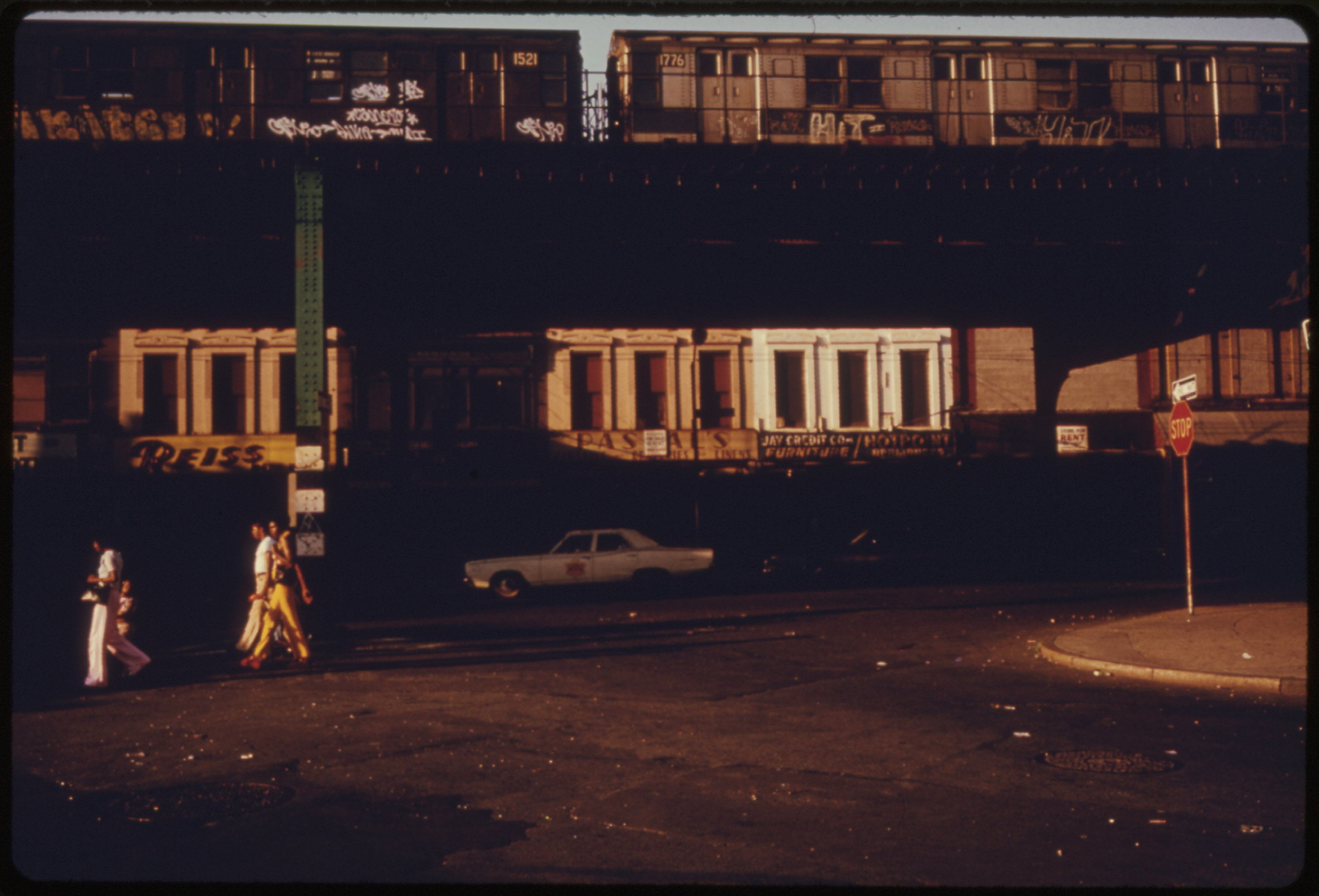
While the ‘brownstone Brooklyn’ movement was well at hand in 1974-5 — the date of most of these photographs — much of the borough was still facing blight and deterioration then. Most of the neighborhoods pictured below are today considered ‘hot’, trendy places with incredibly high rents.
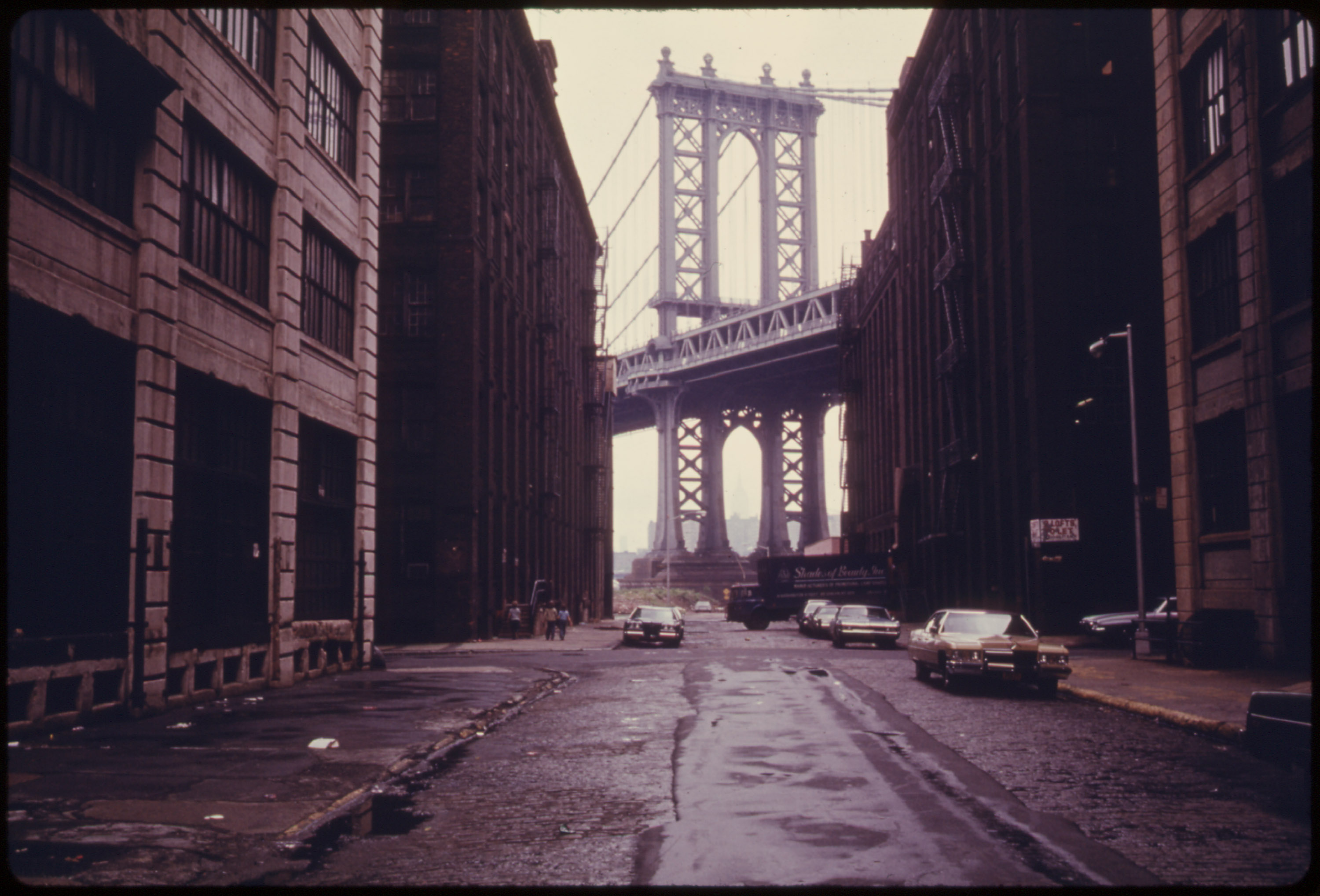
DUMBO, a name invented in the late 1970s, Down Under the Manhattan Bridge Overpass.
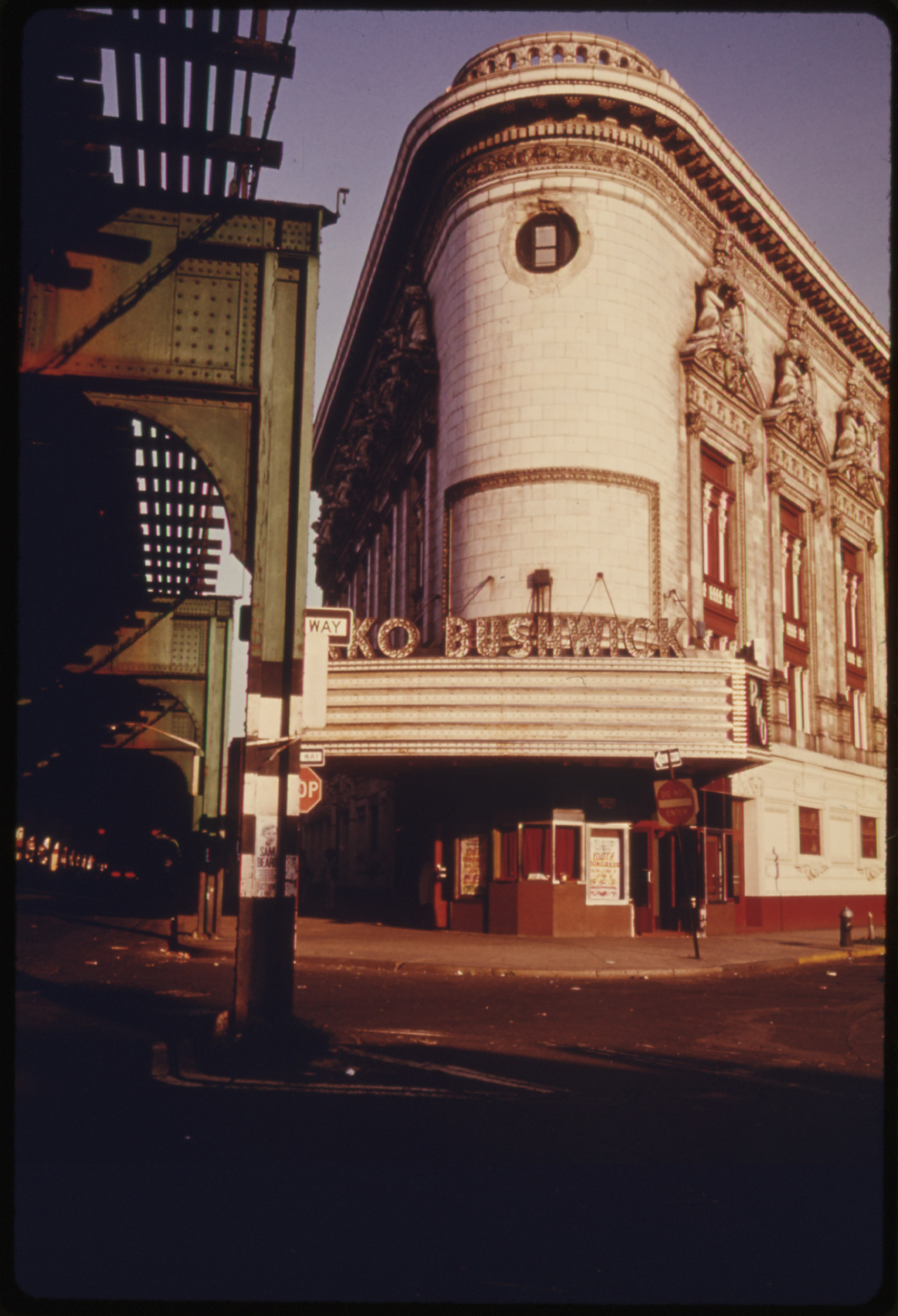
The RKO Bushwick Theater, at the Bushwick/Bed-Stuy border.
Bushwick Avenue
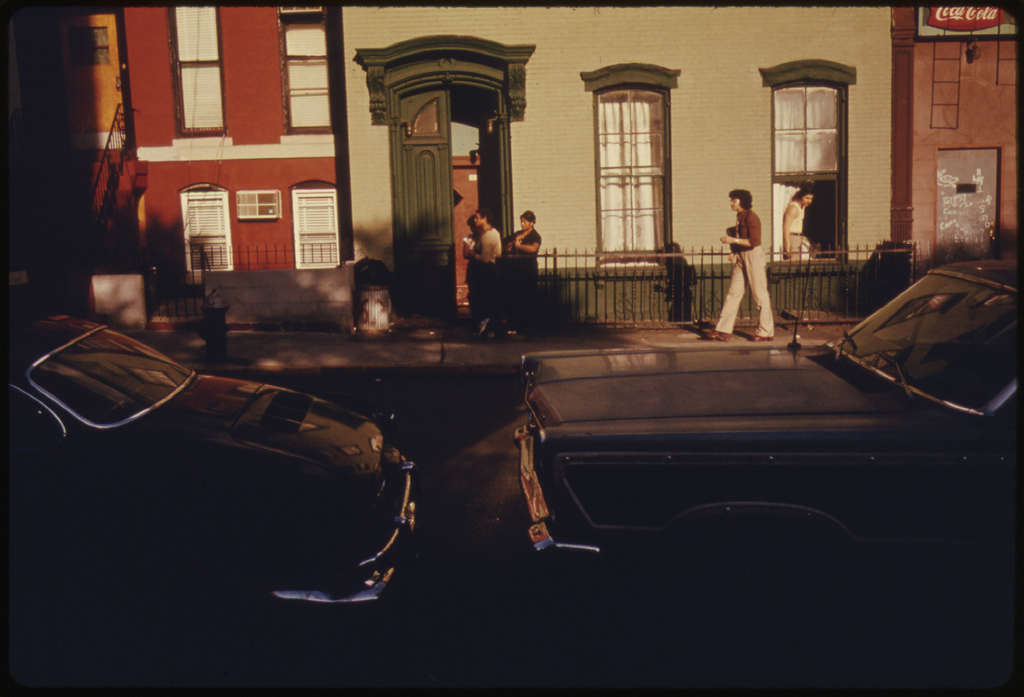
Two pictures of Bond Street
Across from Lynch Park, near the Brooklyn Navy Yard
There’s no location listed in the caption but probably Park Slope?
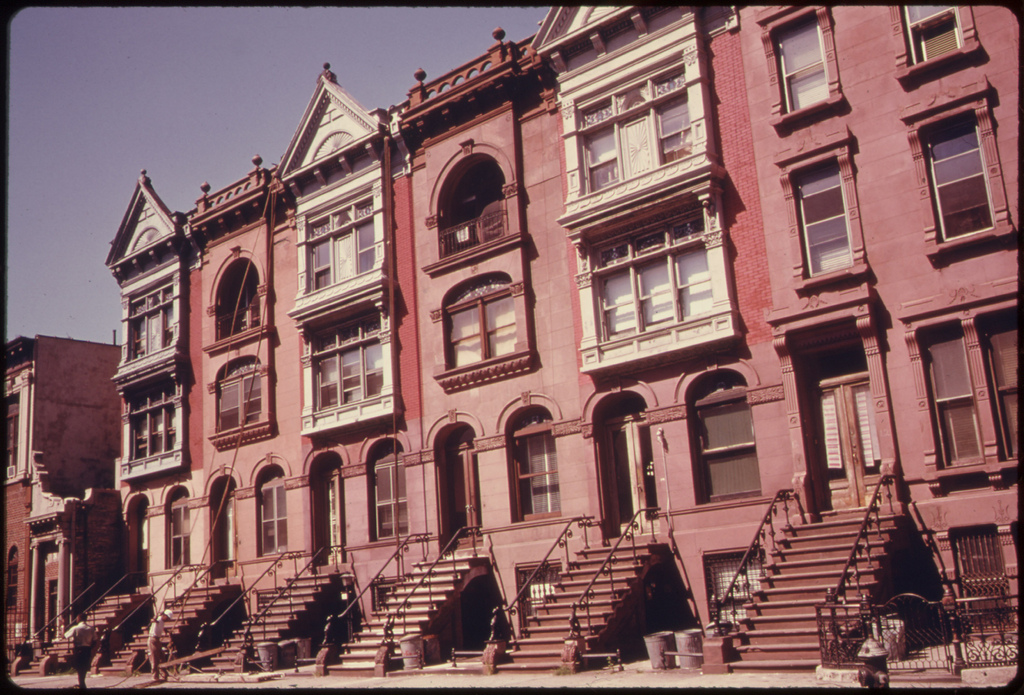
Fort Greene, across from the park.
This is taken on Vanderbilt Avenue but I can’t ascertain exactly here. Perhaps today’s Prospect Heights area.
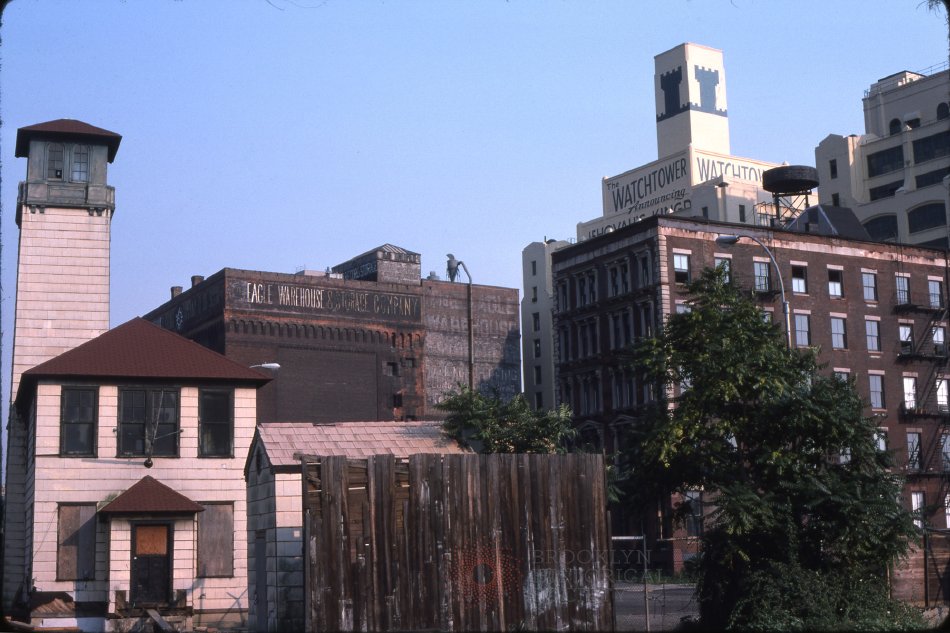
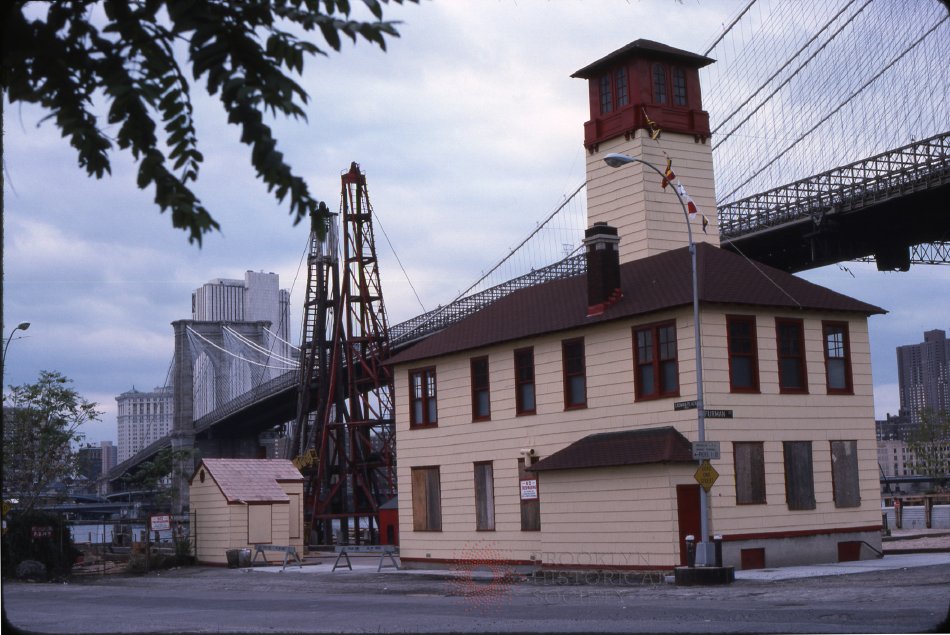
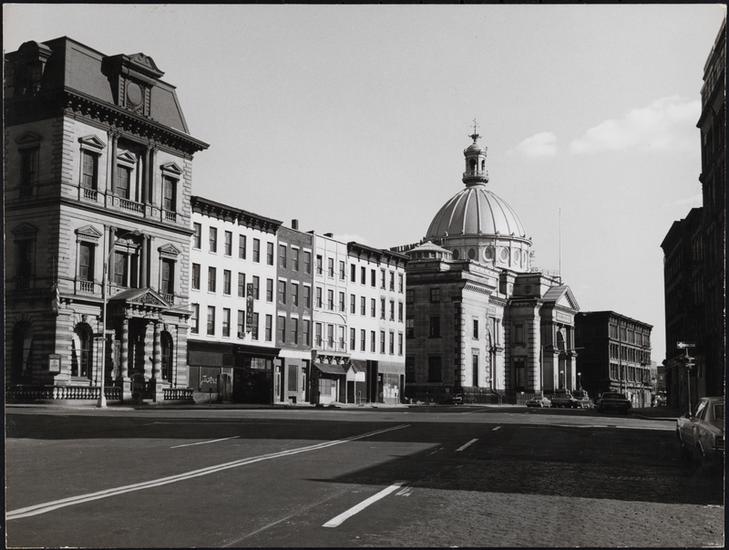
Images of the Fulton Ferry area in 1975 (courtesy the Brooklyn Historical Society)
And a couple images from the Museum of the City of New York archives, all from 1975, taken by Edmund V Gillon. You can find many more of astounding photographs here:
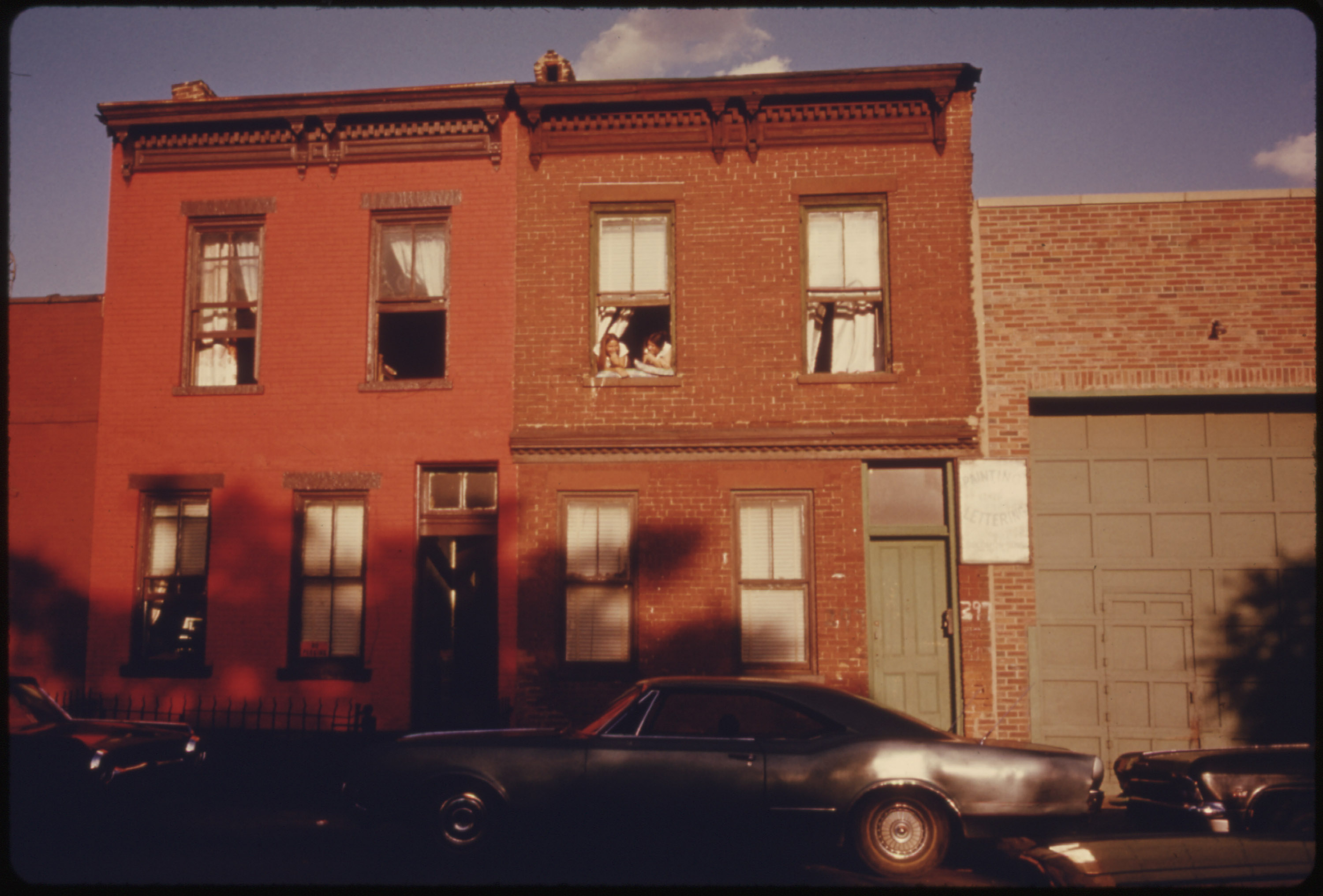
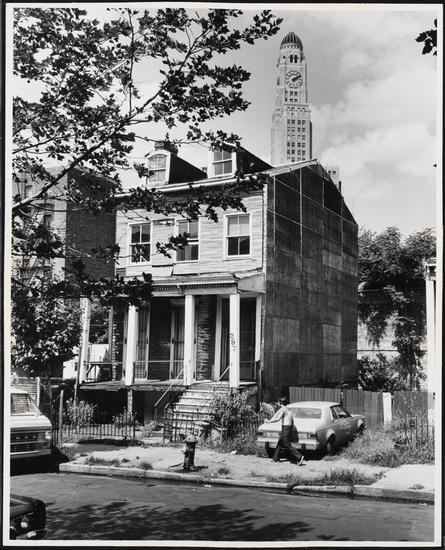
397 Dean Street, considered part of Park Slope today
Williamsburg, looking east on Broadway from Bedford Avenue and South 6th Street.
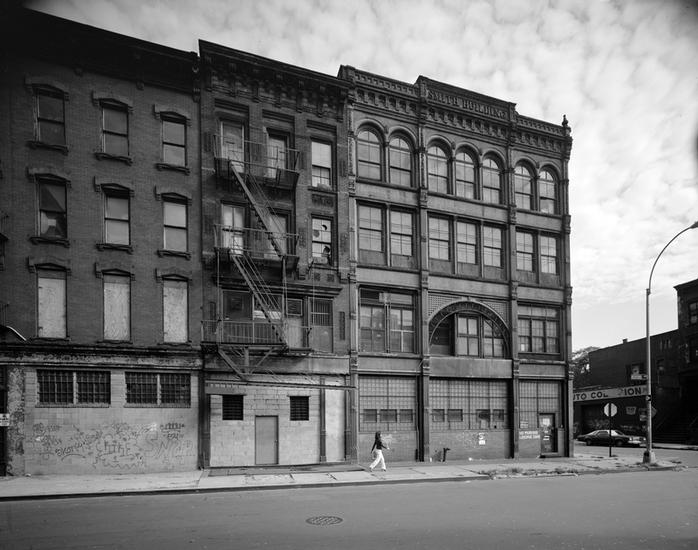
Boarded-up buildings and the Bedford Avenue façade of the Smith Building, 123 South 8th Street
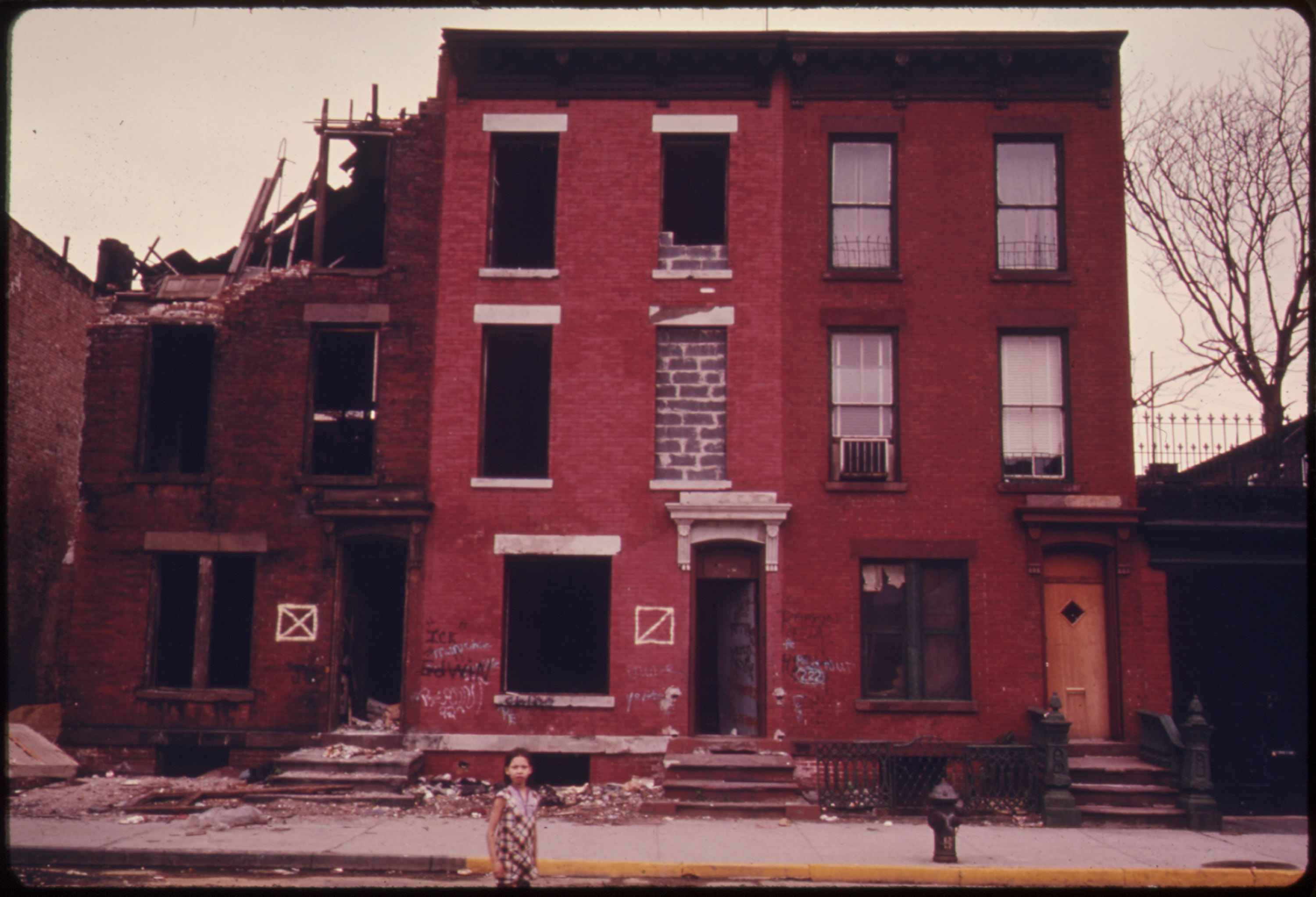
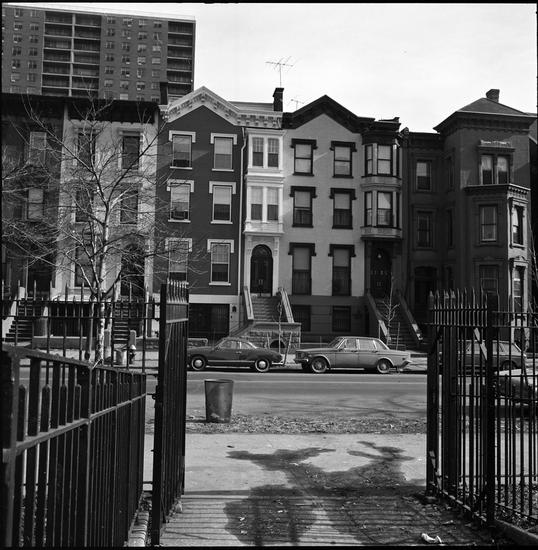
Clinton Hill:Â Row houses on the eastern side of Washington Avenue between Dekalb and Lafayette Avenues
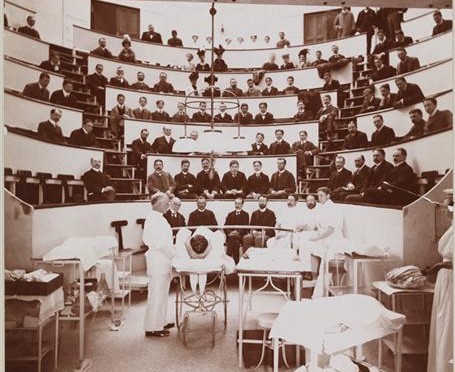
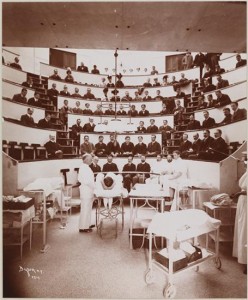
Syms operating theater at Roosevelt Hospital in 1900, perhaps one of the cleanest places in Manhattan! (Picture courtesy Museum of the City of New York)
It was not a fair fight.
In 1895, in celebrating the innovative new surgery building at Roosevelt Hospital, the New York Times decided to compare its revolutionary new features to an antiquated hospital, one that had been serving patients for decades in that metropolis right across the water — Long Island College Hospital in Brooklyn.
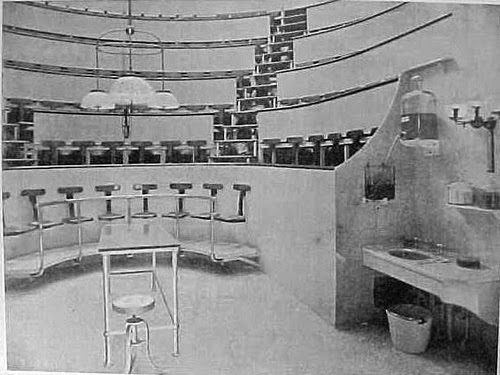
Upon its opening in 1892, William J. Syms Operating Theater, west of Columbus Circle, was a jewel in the crown of the Roosevelt Hospital complex, employing the latest antiseptic techniques, even using materials in its construction that were believed to be less germ prone — glass operating tables, a mosaic floor, iron chairs.
New rules of cleanliness were employed within its surgical theater. “[The visitor] will see everywhere signs of the most exquisite cleanliness. [He] will see no sign of haste or confusion, of dirt or litter, of human pain or suffering.”
Below: The inside of the Syms operating room from 1893: (Scouting NY)
In heralding this sparkly new institution, the newspaper decided to throw a vaunted, albeit older, one under the bus.
“In the operating theater of the Long Island College Hospital the conditions obtain [sic] today are more in keeping with the practices of half a century ago. The large and ugly theatre is fitted with wooden benches, upon which generations of students have done their whittling. The floor beneath the benches acts as a convenient and frequent receptacle for tobacco juice. The walls are tinted with a dirty, bluish color, and on the side nearest the operating table there is an ominous stain of seepage from the floor above.”
The description continues rather grotesquely — I’ll get to more of it in a second — but is it a fair characterization?
While disquieting to our modern understanding of cleanliness, in fact, the Brooklyn institution was certainly deteriorating, but probably in better shape than most places of this type in America in the 1890s.
The Tale of Long Island College Hospital The story of Long Island College Hospital is the tale of the neighborhood of Cobble Hill, Brooklyn.
Well before south Brooklyn was urban-planned into a grid of respectable blocks, the area that is today’s Cobble Hill was called Ponkiesberg, much of it the farmland of a man named Ralph Patchen. Near the eastern edge of his property sat the ruins of the old Revolutionary War fort . [You may remember this fort from our ghost stories podcast from last year.]
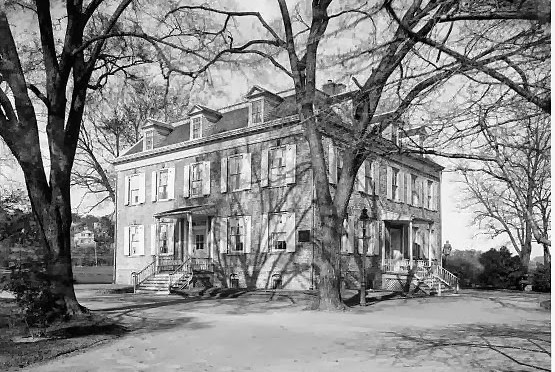
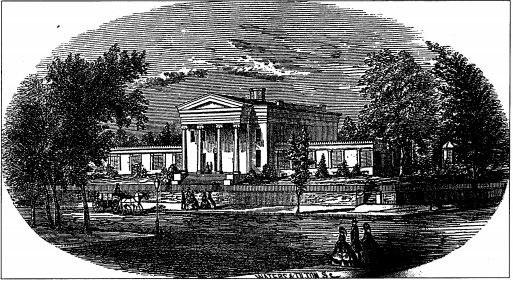
Patchen’s farm was purchased by Joseph A. Perry, later known for his contributions for planning Green-Wood Cemetery. Â On this former lot he built a sumptuous mansion which stood at Henry Street, between Amity and Pacific (pictured below).
Meanwhile, on the edge of his property, two doctors recently arrived from Germany opened a clinic exclusively for Brooklyn’s small, but emerging German population. In the late 1850s, they and other prominent doctors sought to found a college hospital and purchased the Perry mansion in 1858.
From this old house sprang the roots of Long Island College Hospital. While the United States already had a few medical schools, this was America’s first college hospital — on-the-job training as it were, with students interacting directly with patients.
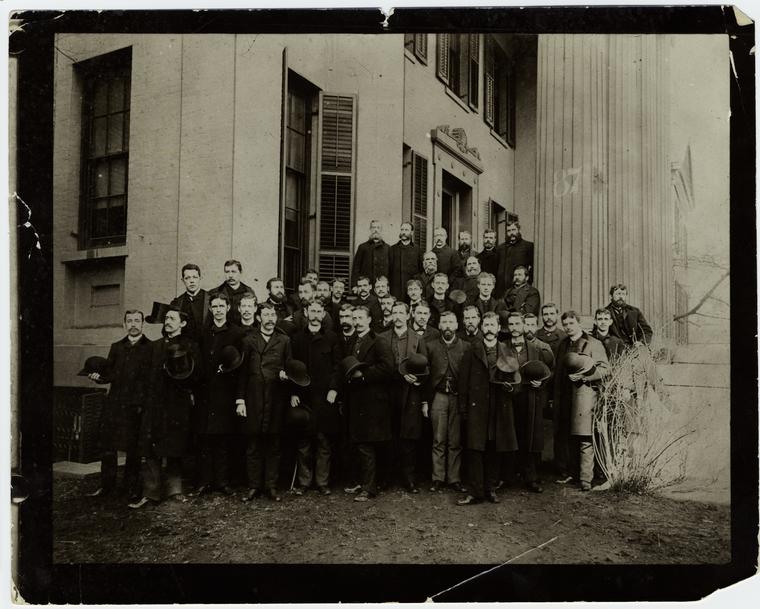
Below: Faculty and students of the medical school pose on the steps of the Perry Mansion, LICH’s principal structure in the mid-19th century
It was an institution quite well known for innovations in the late 19th century.
Many of America’s finest physicians passed through here at some point in their storied careers.
The clinician Austin Flint brought many European techniques to the school, including the stethoscope, a variant of which making its debut here. (Flint actually has a heart murmur named after him, too.)
In 1888 the Hoagland Laboratory opened on campus, providing facilities for both research and education that kept Long Island College Hospital at the forefront of medicine.
In many ways, it was still a respected institution in 1895, but they were often in debt and in desperate need of an upgrade.
Its conditions were probably not unlike most medical institutions of the day, but it paled in comparison to the spectacular new operating theater built for Roosevelt Hospital as a gift.
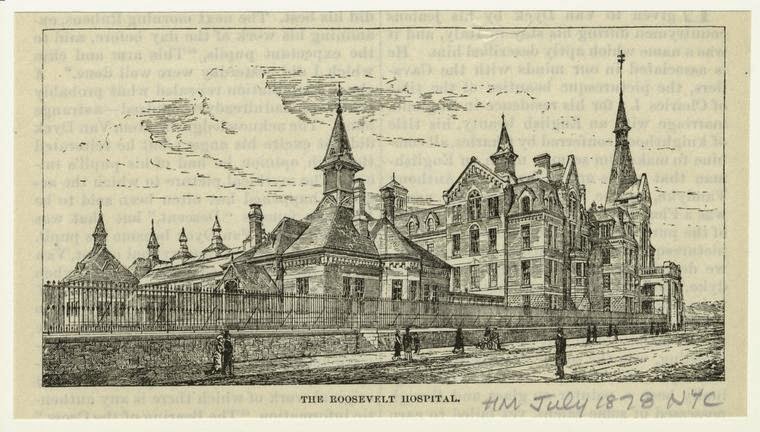
The Tale of Syms Operating Theater Roosevelt Hospital (pictured above) was born out of the generosity of James H. Roosevelt, a wealthy philanthropist confined to his manor for most of his life by illness. When he died, he bequeathed his entire fortune to the creation of a new hospital in his name. Roosevelt Hospital’s first building opened in 1871, over ten years after the opening of Long Island College Hospital.
Many years later, another wealthy benefactor — gun merchant William Syms — benefited from a successful operation at Roosevelt Hospital and donated most of his fortune to the hospital, with the specific intent of building a new operating center.
When Syms Operating Theater opened in 1892, the press trumpeted its sleek innovations in sanitation, creating a brightly lit, aseptic environment previously unseen except in a few places in New York.
It was perhaps the cleanest place in Manhattan or, at least, it was touted as such.
From a citation by the Landmarks Preservation Commission: “Aseptic operating rooms were bright, clean, hard, undecorated spaces; they were the ‘high tech’ spaces of their day.”
Below: The sleek interior of the Syms Operating Theater, 1925. (Picture courtesy Museum of City of New York)
This was not simply for the health of patients and staff. A building of such profound innovations — such as a moat around the basement for thorough drainage — was meant to ease the tensions of New Yorkers who considered operating rooms barbaric and even obscene.
Disturbing descriptions The administrators at Long Island College Hospital could not have been thrilled when they picked up the New York Times on April 27, 1895.
Right there on the front page was a horror story with their historic institution as a backdrop.
“It is from this upper floor that foul and inexpressibly nauseating odors are wafted through the operating theater at all times, because it is there that the students of the college and hospital practice anatomy on eighteen or twenty decomposing cadavers.”
The reporter noted the routine delivery of dead bodies from room to room and the grim procedures of dissection witnessed by dozens of disinterested students.
“In spite of the rising temperature, which should render dissection almost impossible in a building exclusively devoted to the purpose, it is plain from the stench that the hot weather had not stopped the students of Long Island College Hospital.”
Due to the proximity of the autopsy theater to regular patients, “whatever ills result from breathing such a tainted atmosphere must be shared to a lesser extent by the surgical patients of the hospital.”
Sepsis was an omnipresent and growing.danger. As if to confirm this, the hospital refused to provide its mortality records.
The renown doctor Alexander Skene, perhaps the best known physician at the hospital, blamed a lack of funding for the institution’s woes.
“The people of Brooklyn are to blame in some measure because they do not give the hospital the financial support it needs and merits,” said Skene. “The school is very prosperous, while the hospital is very much the reverse.”
(Skene, a leader in the field of gynecology, died just a few years later. Today you can find him in bust form in Brooklyn’s Grand Army Plaza.)
Aftermath The regents of Long Island College Hospital responded with disbelief, even outrage. “I am there everyday, and I never feel any smell,” said a chairman. “We have the plans all ready for a new operating room … but we have no money.”
Fortunately, the hospital and its patients were rescued from further embarrassment by Caroline Polhemus, the wife of one of the hospital’s regents Henry Ditmas Polhemus.
When her husband died that year in 1895, a society matron donated a sizable chunk of her fortune to create the Polhemus Memorial Clinic (pictured at right) in her husband’s honor.
All autopsies for educational purposes were moved to the top floor of the clinic, across the street and far away from the hallways regular hospital.
The building is still around — you can see it here — although it is no longer associated with the hospital.
The Syms Operating Theater served Roosevelt Hospital for several decades before it, too, was declared inadequate.
That building is also still around however; Scouting New York has a nice feature on its current whereabouts, a must-see stop on any New York medical-inspired walking tour.
It’s safe to say that both hospitals are held in high regard in the annals of medical history.
The Van Cortlandt House, 1906 PODCAST This is the Bowery Boys 7th annual Halloween podcast, with four new scary stories to chill your bones and keep you up at night, generously doused with strange and fascinating facts about New York City.
For this episode, we’ve decided to go truly old-school, reaching back to old legends and tales from the years of the Revolutionary War and early 19th century. These ghosts have two things in common — George Washington (directly or indirectly) and ghosts! Although no ghosts of George Washington.
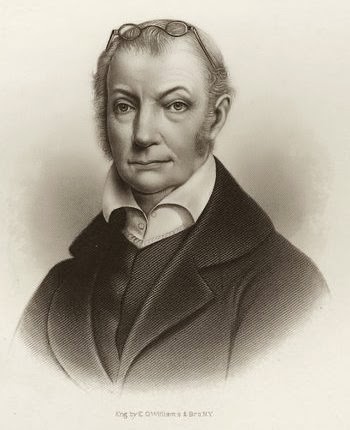
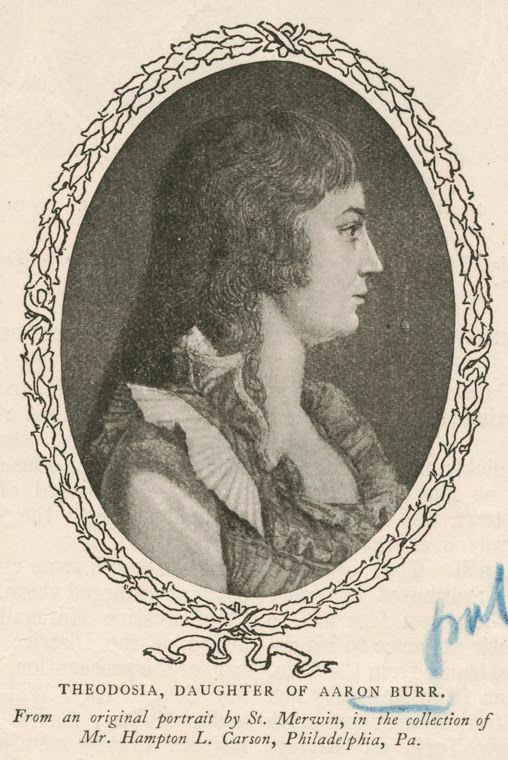
We venture to the haunted woods of Van Cortlandt Park for the tale of an Indian massacre and a forlorn servant girl, looking for her master’s silver. From there, we head to the early days of Greenwich Village and tormented vice president Aaron Burr (at right), waiting for his daughter’s return.
Meanwhile, over in Brooklyn, the ruins of an old Revolutionary War fort in the future neighborhood of Cobble Hill provide the setting for a horrific tale of a late-night booze run gone wrong. And, finally, no Bowery Boys Halloween podcast would be complete without an historic cemetery (in this case, the burial ground at St. Paul’s Chapel) and the ghost of a dramatic actor — in this case, one without his head!
PLUS: How did Westchester County become so rocky? The Devil did it!
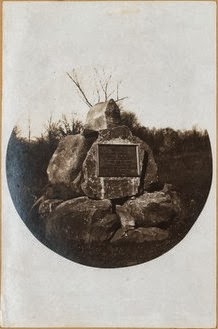
A cairn of stones memorializing Danial Nimham at Indian Field in Van Cortlandt Park, in 1906, the year it was placed here by the Daughters of the American Revolution. The original plaque states that 17 members of the Stockbridge Militia lost their lives, though it’s now believed that up to 40 men may have died during the massacre of August 1778. (NYPL)
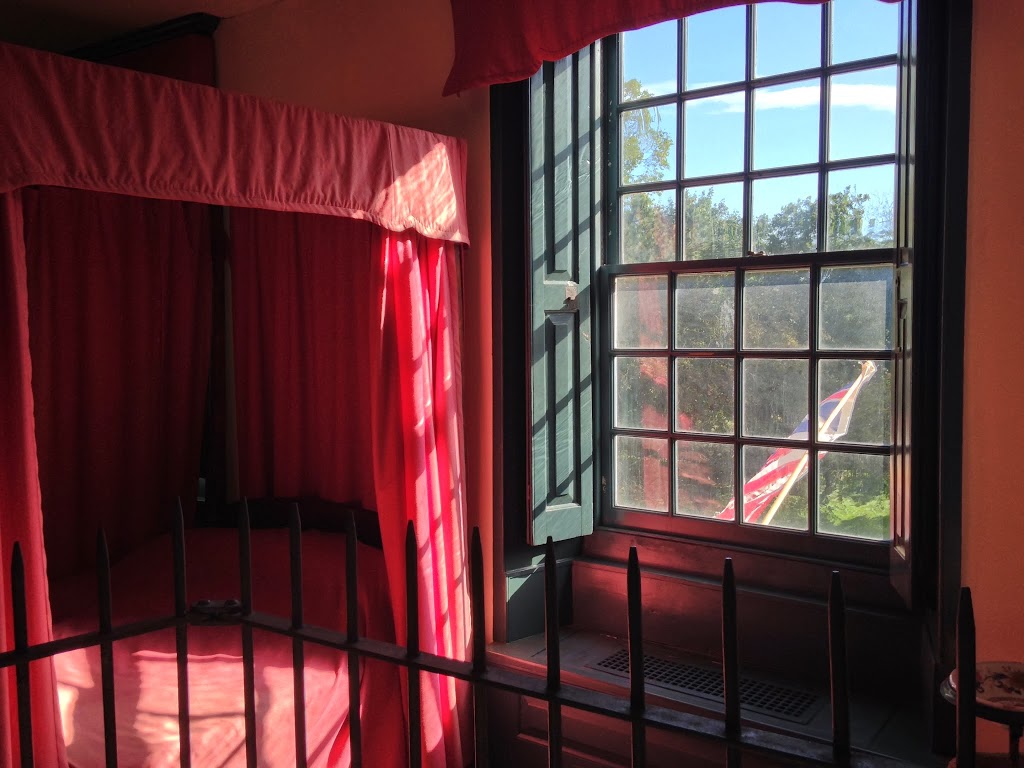
Looking out the upstairs window of the Van Cortlandt House, looking out in the park. The house has seen its share of strife and, if legends can be believed, more than a few spirits.
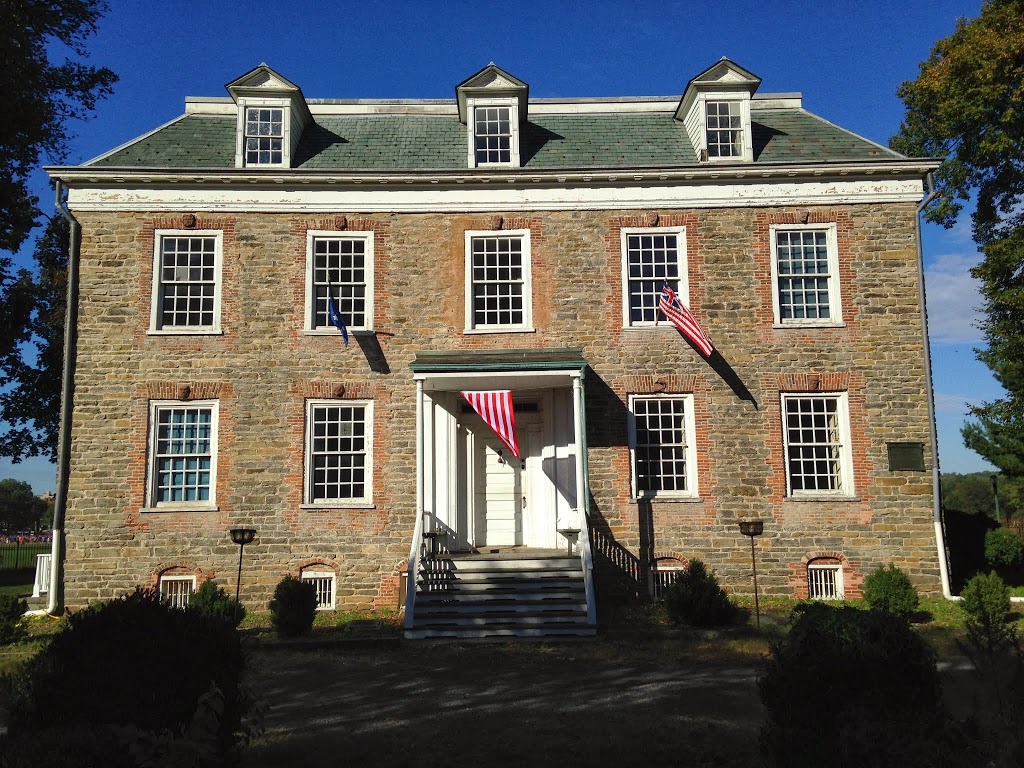
Van Cortlandt House as it looked last weekend. What’s that in the window?
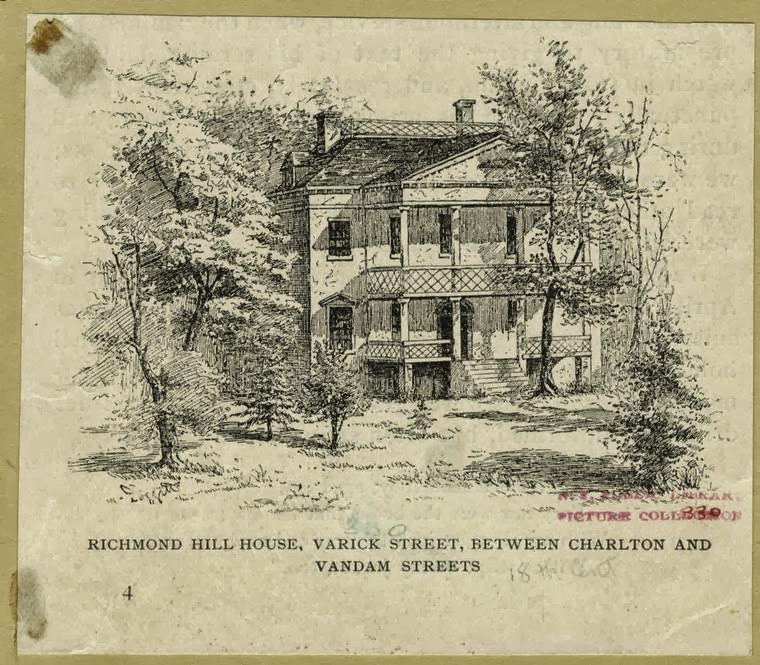
Richmond Hill, the beautiful mansion home of both John Adams and Aaron Burr. The carriage house from this old manor was moved to Barrow Street and is today the restaurant One If By Land, Two If By Sea. (NYPL)
Theodosia Burr, the daughter of Vice President Aaron Burr, who was mysteriously lost at sea. Was she shipwrecked, rescued by an Indian prince, or forced to walk the plank? (Courtesy NYPL)
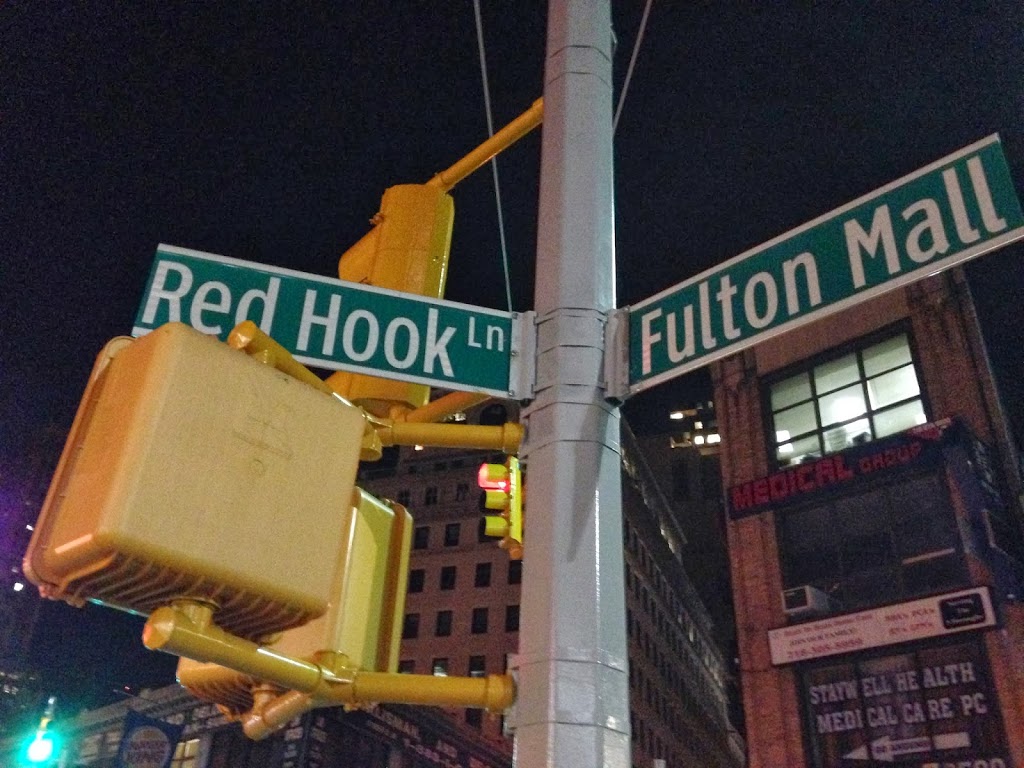
A short remnant of Red Hook Lane still exists in downtown Brooklyn. You are unlikely to find anything too scary at this street corner however.
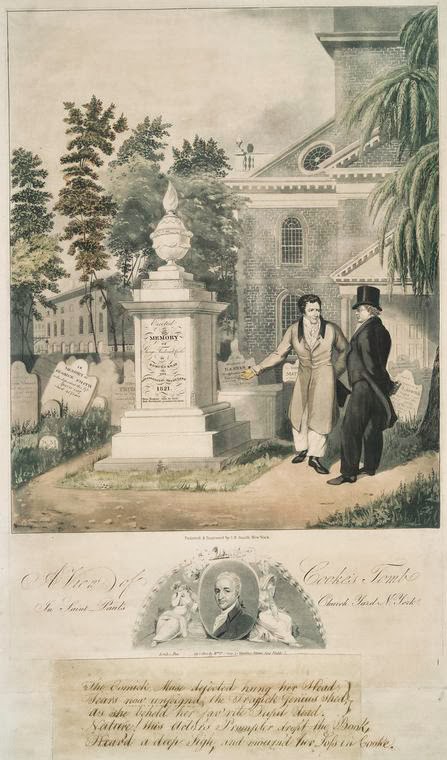
A 1822 illustration of the George Frederick Cooke monument and the man who paid for it, actor Edmund Kean. Kean so admired the late actor that he actually took a very odd portion of his body back with him to England.
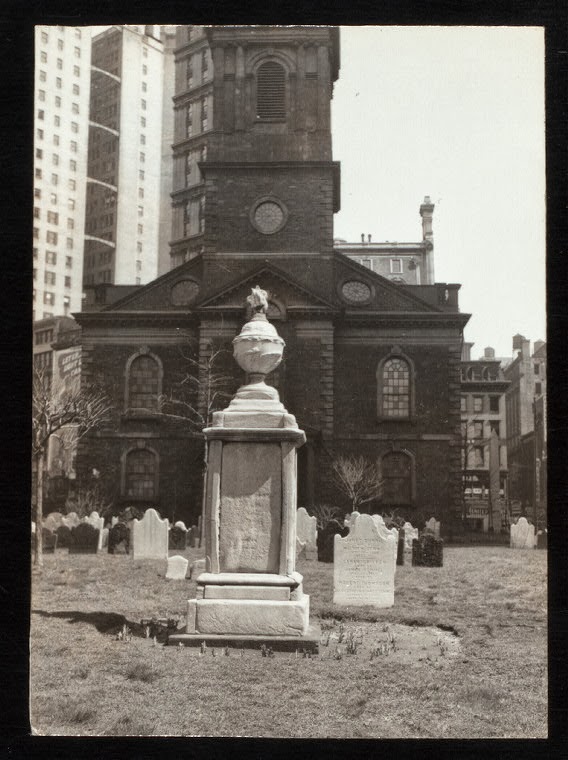
The monument to George Frederick Cooke in the graveyard at St. Paul’s Chapel, pictured here sometime in the 1940s. Does his ghost still linger here? [NYPL]
We had a very chilling event occur as we were recording last weekend. Just as I began to launch into the ghosts of the Stockbridge Militia, our recording equipment went all insane, spewing out a distorted and very disturbing version of our voices. It went on for about 20 minutes. Below is a sampling of the audio. What do you think — otherworldly interference or a faulty mixing board?
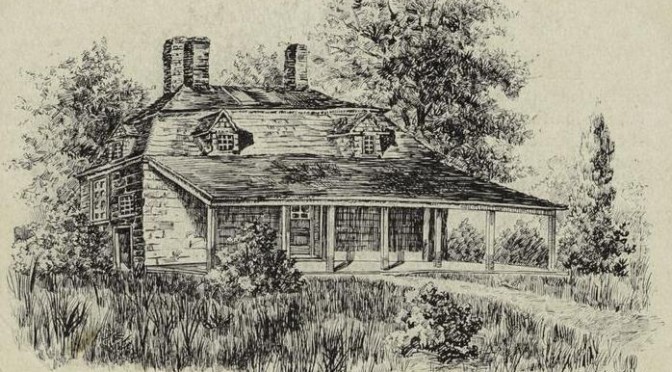
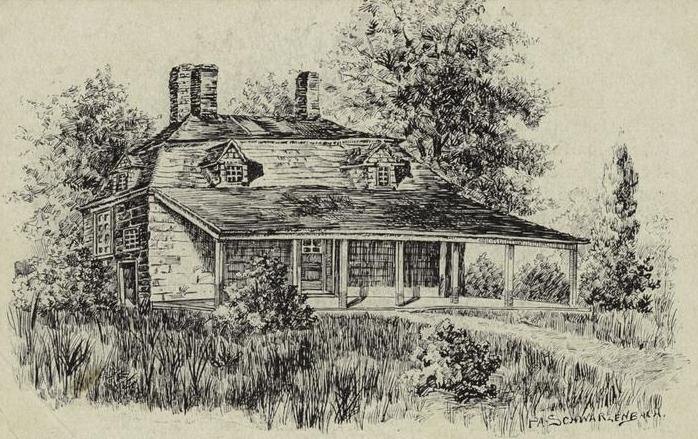
Above: While this is the old Brooklyn Schermerhorn house, it’s of a similar type to one that Ms. Melmoth may have owned, quickly becoming a tavern after her death.
Less than two hundred years ago, in the area approximate to the neighborhood of Carroll Gardens today, there was a very, very rowdy tavern.
It was located east of Red Hook Lane, “in a retired and beautiful spot, near the line of the present Carroll, between Clinton and Henry street,” a place of intense merriment and gluttony, partaking of beer and hunted game, devouring buckets of oysters taken from the shore. (Many years later, perhaps in penance, St. Paul’s Episcopal Church would be built near this spot.)
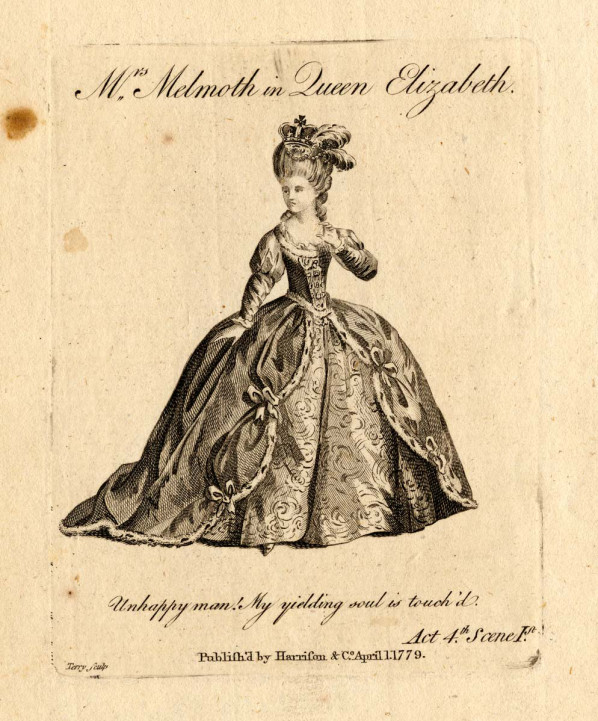
The tavern had once been the home of the famous British stage actress Charlotte Melmoth (depicted at right, in one of her finest roles as Queen Elizabeth). She retired in 1812 to this grand home off Red Hook lane and spent her last days instructing the children of wealthy Brooklyn families. Although an actress (hardly the most respected field of work in the early 19th century), her skills of etiquette and elocution brought up the next generation of Pierreponts and Cornells and Luquers.
However, when she died in 1826, her once-proper home took a detour into the debauched, becoming a popular location for young revelers. Melmoth, buried at St. Patrick’s Old Cathedral on Mott Street, certainly rolled in her grave.
The secluded, wooded tavern attracted young men, farmers and sailors, “their orgies being carried on with a freedom to which the retired character of the spot was particular conducive.” [source]
The gridded streets had not yet been cut through the wooded areas. Slightly north, in the distance, sat the ruins of old Cobbleshill Fort, the hill itself leveled decades ago by the British. The fort was briefly refurbished for possible conflict due to the War of 1812 — old Fort Swift, they called it — by the late 1820s, much of the stone would have been covered with dense overgrowth.
According to legend, one evening at around 11 p.m., the men at the converted tavern discovered they had run out of brandy. Unacceptable, of course, to a bunch of rowdy drunks! To replenish their supply, somebody needed only to run down Red Hook Lane to the Brooklyn ferry and retrieve more.
Less than a half-mile walk, of course, but one that passed by the old ruined fort, approximately near the intersection of today’s Court and Pacific streets. Sitting near to the fort was “a ghost-haunted spot,” a frightening, decrepit place well-known to locals, “about which dreadful stories are whispered, which lent wings to the feet of such unwary village urchins as chanced to pass it after dark.”
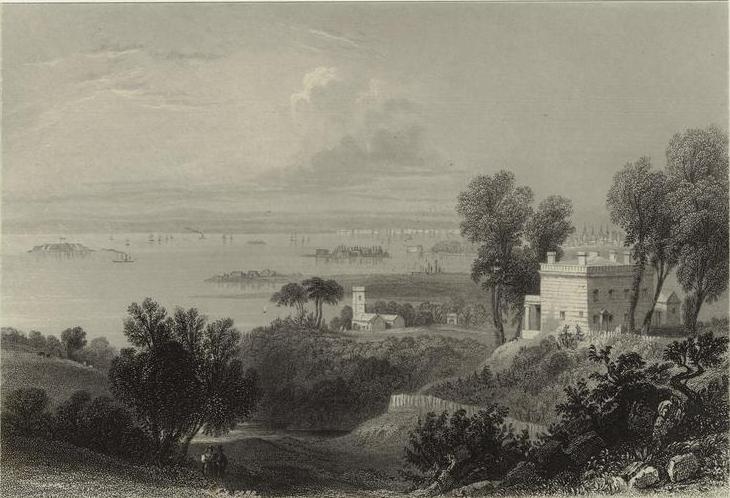
Below: Brooklyn and the East River in the early 1800s, from Gowanus Heights (today’s Green-Wood Cemetery), from an original painting by W. Bartlett. This is a bit south of the events described but gives you a good (if romanticized) idea of the still-verdant countryside that defined the area.
Nobody wanted to admit they were frightened to venture out alone, and yet despite their incredible thirst, nobody volunteered for the task. Finally, a man named Boerum, thirsty and bold, declared he would head to the ferry and retrieve the brandy. And if he happened to run into a ghost, all the better, he proclaimed!
It’s safe to assume this Boerum (whose first name is not given) is of the same Dutch Boerum clan which gives the neighborhood Boerum Hill its name. Sadly for this fellow, he would not live long to carry on his family’s good name.
According to Henry Reed Stile‘s 1869 history of Brooklyn, Boerum jumped on his horse and headed down the lane , toward the ferry and that sweet, sweet brandy. Two hours later, when Boerum had not yet returned, his anxious (and sobered-up) friends became concerned and decided to venture out looking for him. Safety in numbers, after all.
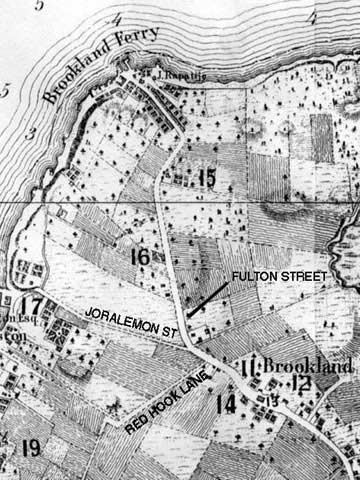
At right: where Red Hook lane would have been located, cutting through the modern neighborhood of Cobble Hill.
“Mounting, not in hot haste, they turned their horses’ heads towards the village and on approaching the haunted ground, they found Boerum’s horse standing against the fence not far from the house, and when they reach the spot itself, their companion was discovered lying senseless on the road, with features horribly distorted.”
We can only guess what “horribly distorted” might mean. The friends quickly took Boerum back to the tavern, but the man was too far gone. “[H]e lingered for two or three more days, in a speechless condition, then died.”
What had happened to young Boerum? He had never made it to the ferry to fetch the brandy, and no evidence was ever found among the ruins.
Within a few years, the ruins themselves were leveled, and even most of Red Hook Lane was eliminated, as a street plan turned the region into orderly neighborhoods. Still, as you pass through Cobble Hill at night, on your way perhaps for a little brandy of your own, remember the cautionary tale of young Boerum.
The ghost story is featured alongside more standard history in Stile’s 1869 two-volume history of Brooklyn. Pictures courtesy New York Public Library, except for labeled map, showing Red Hook Lane, which is from Forgotten New York

![[Roosevelt Hospital, Sym's Operating Room.]](https://boweryboyshistory.com/wp-content/uploads/2014/09/MNY68242-300x242.jpg)