Categories
Brooklyn History Mysterious Stories

For Whom The Ghost Tolls: A Haunting in Bedford-Stuyvesant

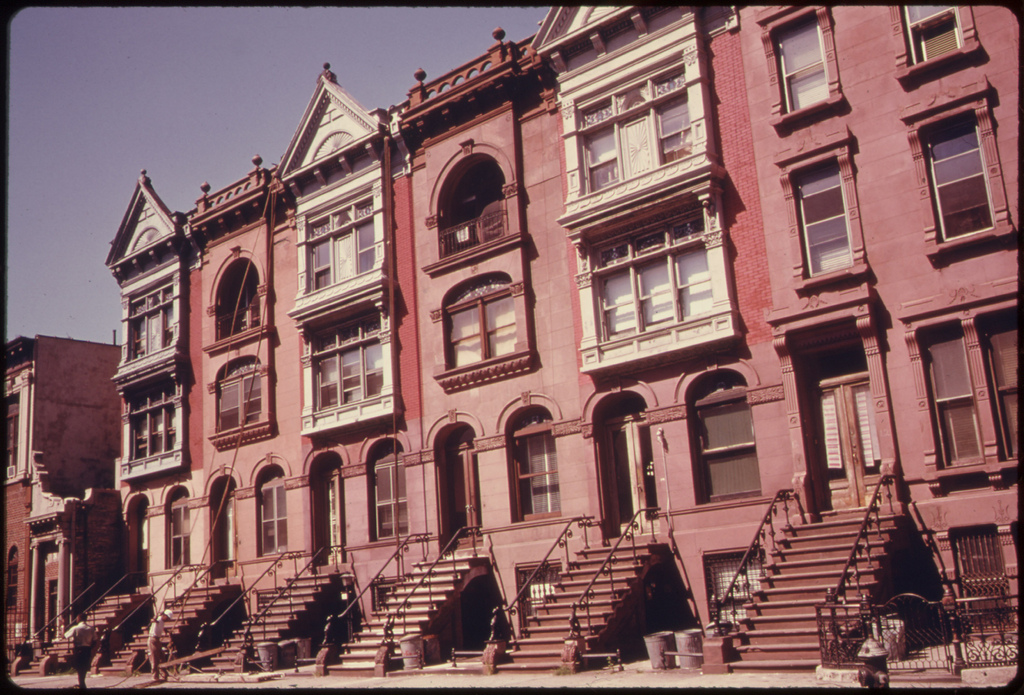
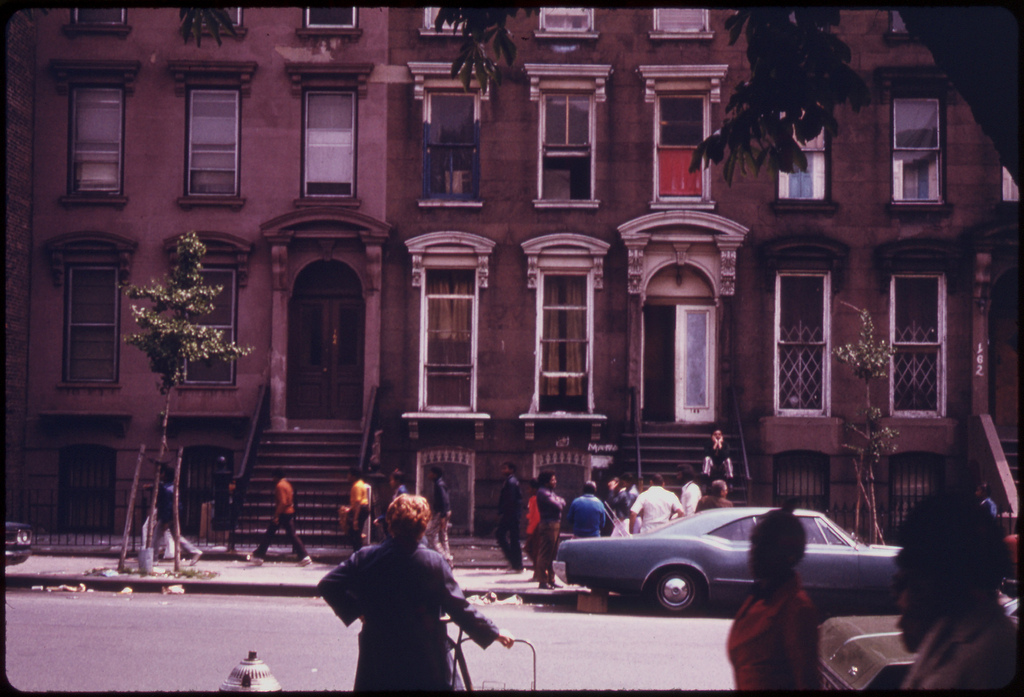
The Brooklyn neighborhood of Bedford-Stuyvesant is defined by its architectural character, rows of impressive brownstones and ornate apartment buildings which trace back to the late 19th century.  

It was once two separate villages — Bedford and Stuyvesant Heights — combined to appeal to new residents in the ever-expanding city of Brooklyn.  The Bed-Stuy of the 20th century was the heart of African-American residential life; gentrification may alter that definition in the 21st.

Another feature of the neighborhood that may have passed down through the decades are its ghosts.

Simply mix a neighborhood of families full of imaginative children with severe and dramatic old architecture, and voila! You’ve got ghost stories.  

Anybody born and raised in Bed-Stuy probably has one story of a purported haunted house, either a structure uninhabited and boarded up or an old home with a single unseen resident, the yard out front overtaken with neglect.

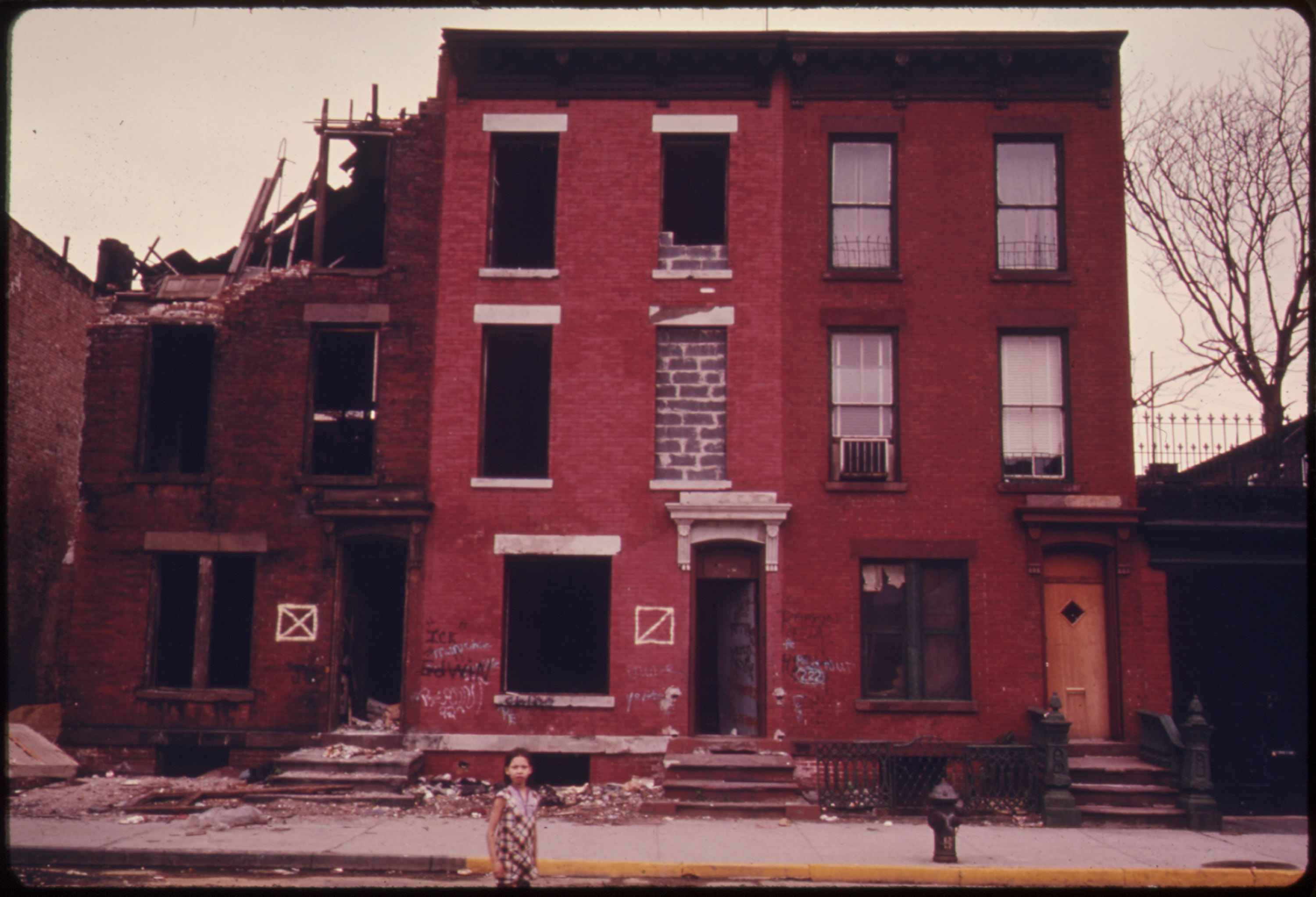
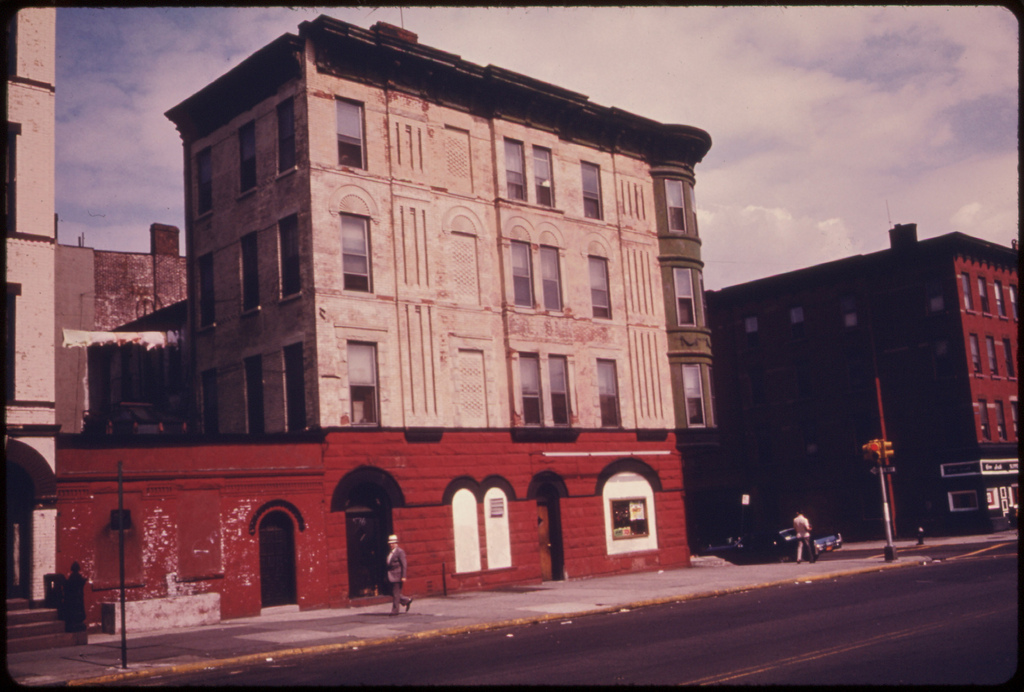
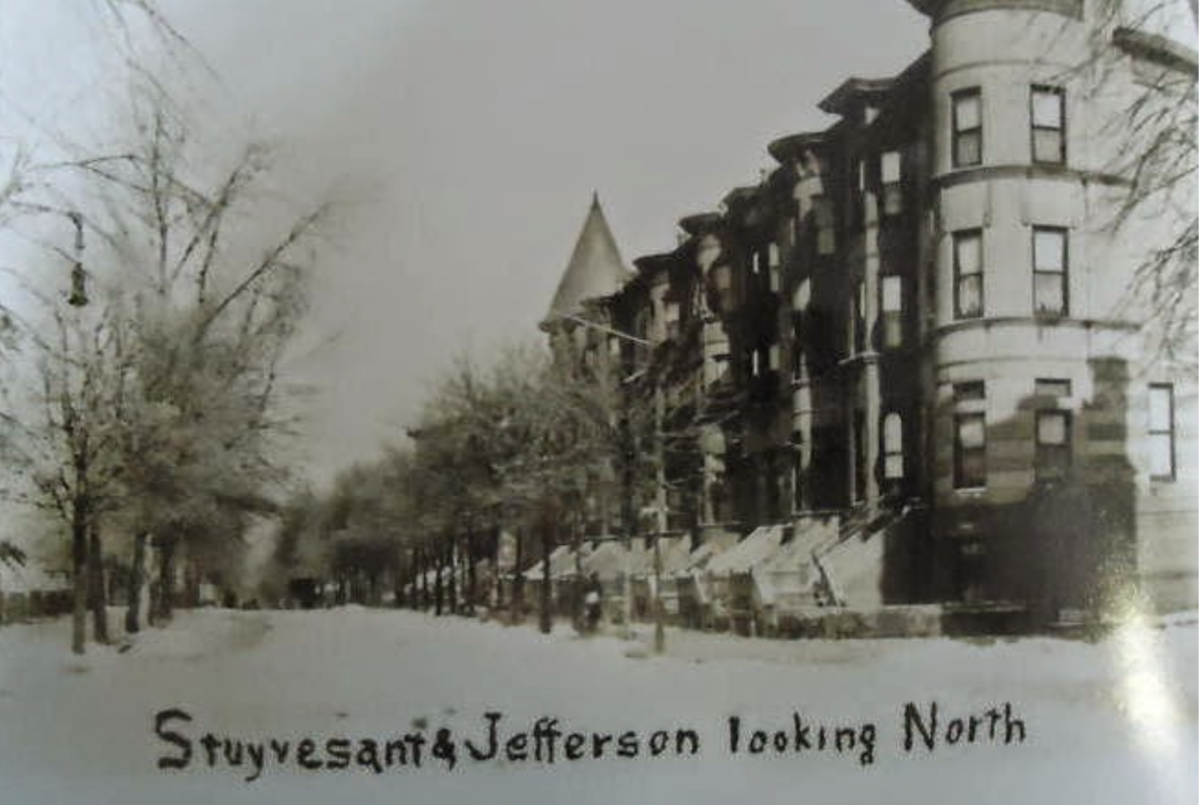
But perhaps one of Bed-Stuy’s most interesting ghost stories comes not from legend but from an actual newspaper report — the haunting of 281 Stuyvesant Avenue in Stuyvesant Heights.

The four-floor building was originally built in 1897 as a small apartment house. Although included in the Stuyvesant Heights Historic District, its modest apperance pales next to its neighbor, Grace Presbyterian Church (today’s Bridge Street AME Church).

On October 23, 1901, the Brooklyn Daily Eagle reported on a disturbing and frankly stressful time had by the building’s first-floor newlyweds Mr. and Mrs. Joseph Griffin.

The school teacher and his wife moved into the flat in July and immediately experienced some truly unusual phenomenon.  At precisely 2 pm every afternoon the new electric doorbell stationed in the vestibule would ring, prompting the lady of the house to open the door.  But nobody would be there.

After a few days of this activity, Joseph naturally assumed it was troublesome kids.  However one day, Griffin stood in the vestibule at precisely 2 pm.  To his astonishment, the bell ring with no human agency present.

This was only the beginning.  The ghost continued to torment the Griffins with “hollow groans, creepy sidesteps on the staircase and unexpected trips from room to room by articles of furniture.”

A haunting so close to Grace Presbyterian were particularly unsettling. “His temerity in operating in a flat, the windows of which look right out on the stained glass panes of a church, is especially startling.”

The Griffins, more irritated than frightened, could not take this disturbing presence in their home any further and immediately moved out.  The skeptical reporter, of course, took note of the fact that nobody else in the building had experienced any particular supernatural phenomenon.

The upstairs neighbor complained of rats and mice and wind gusts with the strength to swing open doors.

The neighbor added, “The pipes groan and the plumbing rattles too, and my husband says its the spookiest house he was ever lived in, but ghosts! — nonsense.”
Categories
Brooklyn History

Ungentrified: Brooklyn in the 1970s

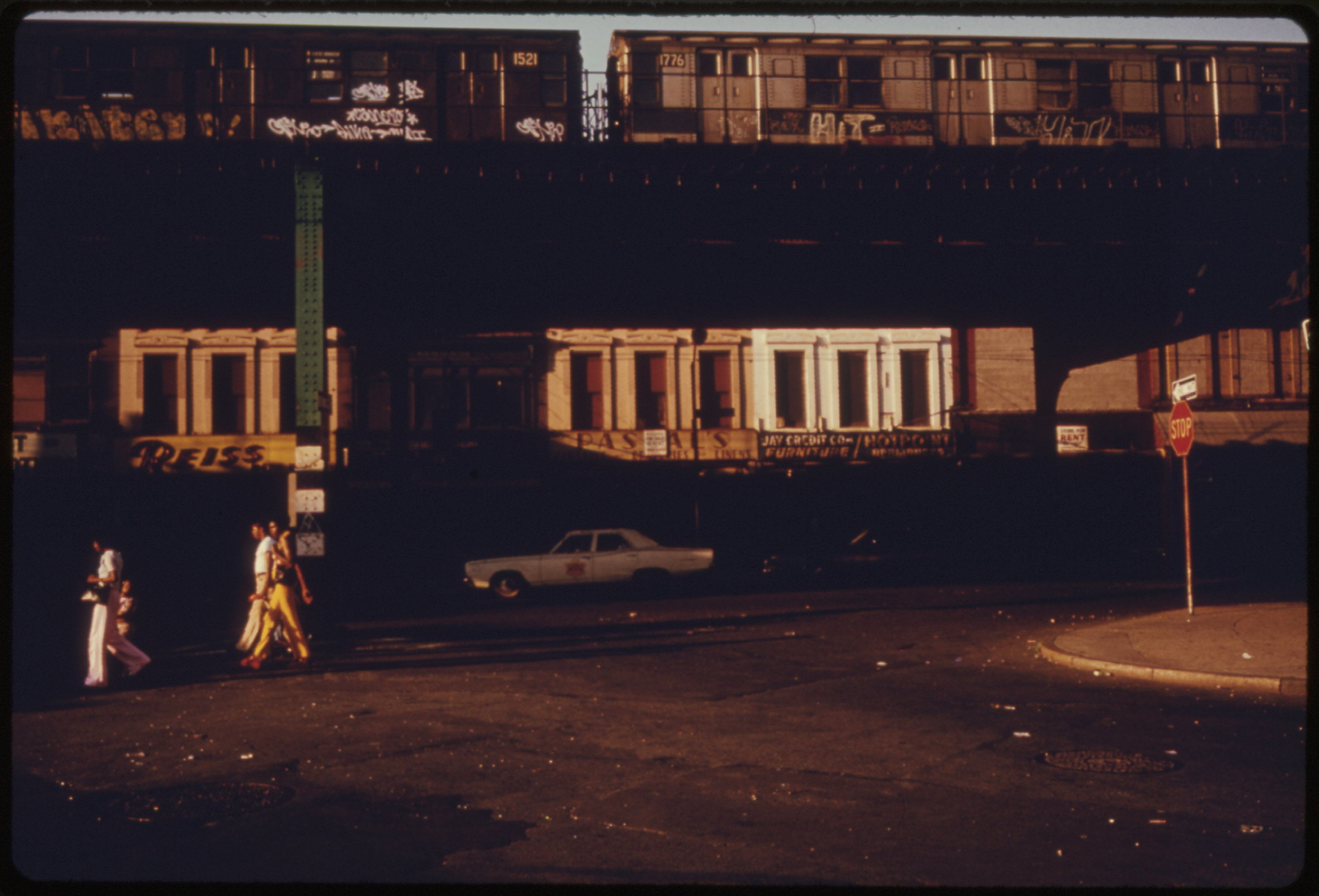
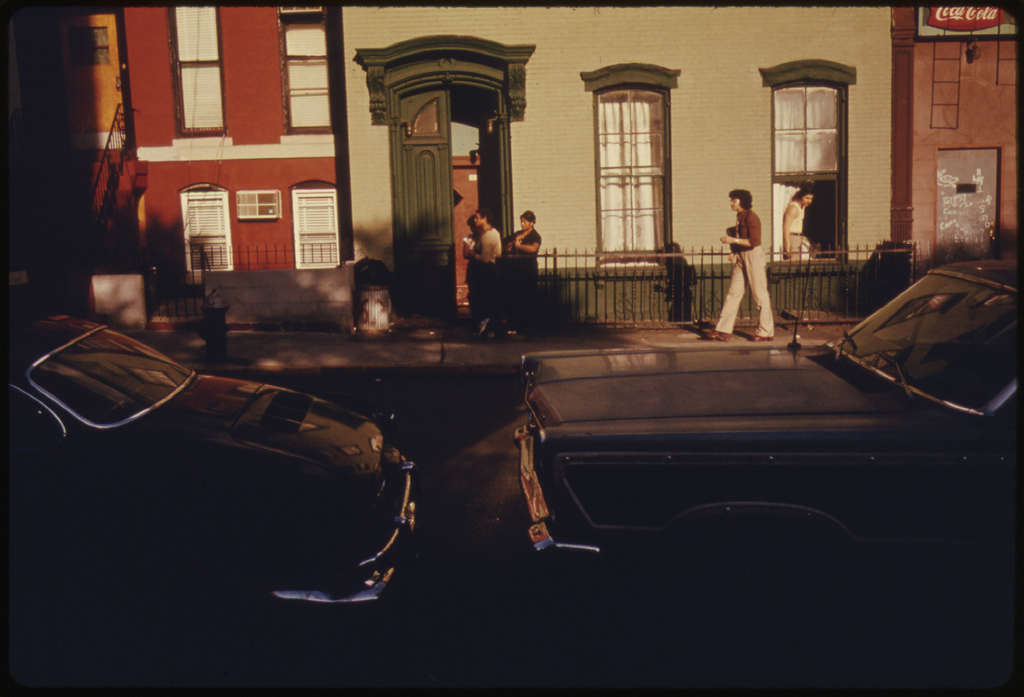
The new Bowery Boys podcast that comes out this Friday will be about Brooklyn. So let’s get in the mood with some pre-Instagram tinted photography from the U.S. National Archives, most of them taken in 1974 by Danny Lyon. followed by some black and white images by Edmund V Gillon.

You might have seen many of these photographs before (perhaps even here on this blog), but it’s striking to revisit them in context of Brooklyn current gentrification patterns.

The homes of Brooklyn Heights began seeing the arrival of ‘bohemians’ as early as the 1910s, and brownstone revivalists (the so-called ‘pioneers’) discovered the neighborhood after World War II.

But a noticeable trend of Brooklyn gentrification happened in earnest in the late 1950s, with wealthy escapees from Manhattan (fending off the urge to suburbanize) moving into South Brooklyn brownstones and row houses and giving enclaves attractive new names like Boerum Hill, Cobble Hill and Carroll Gardens.

The most successful example occurred up on the park slope as a movement of urban activists and historical preservations refurbished and brought to life one of Brooklyn’s original Gold Coasts. Its official name became, of course, Park Slope.

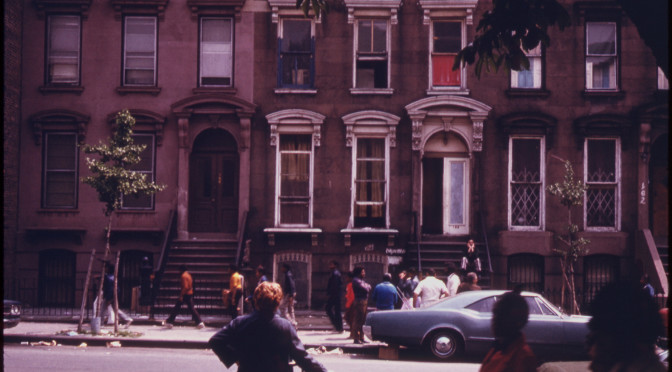
While the ‘brownstone Brooklyn’ movement was well at hand in 1974-5 — the date of most of these photographs — much of the borough was still facing blight and deterioration then.  Most of the neighborhoods pictured below are today considered ‘hot’, trendy places with incredibly high rents.

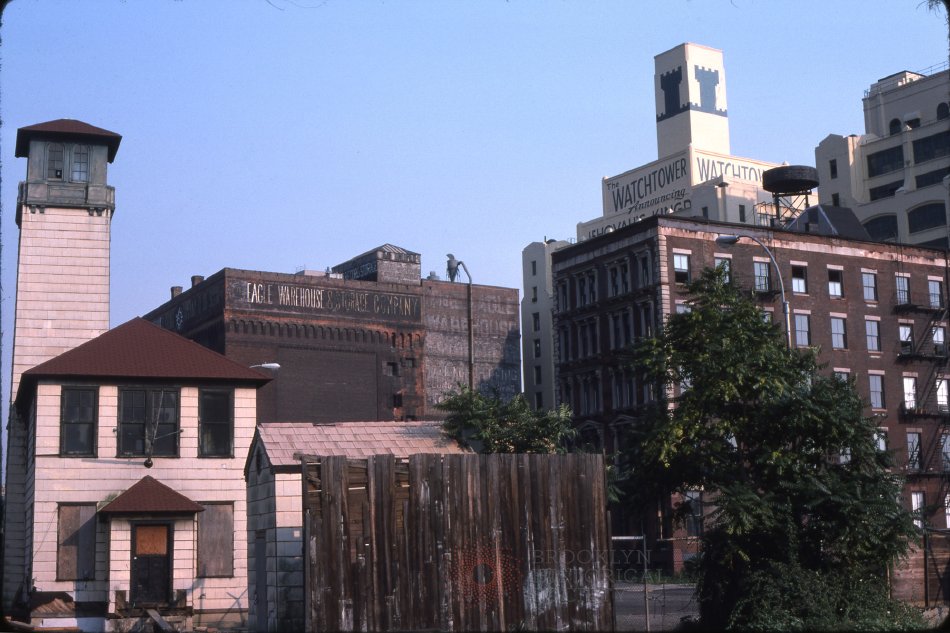
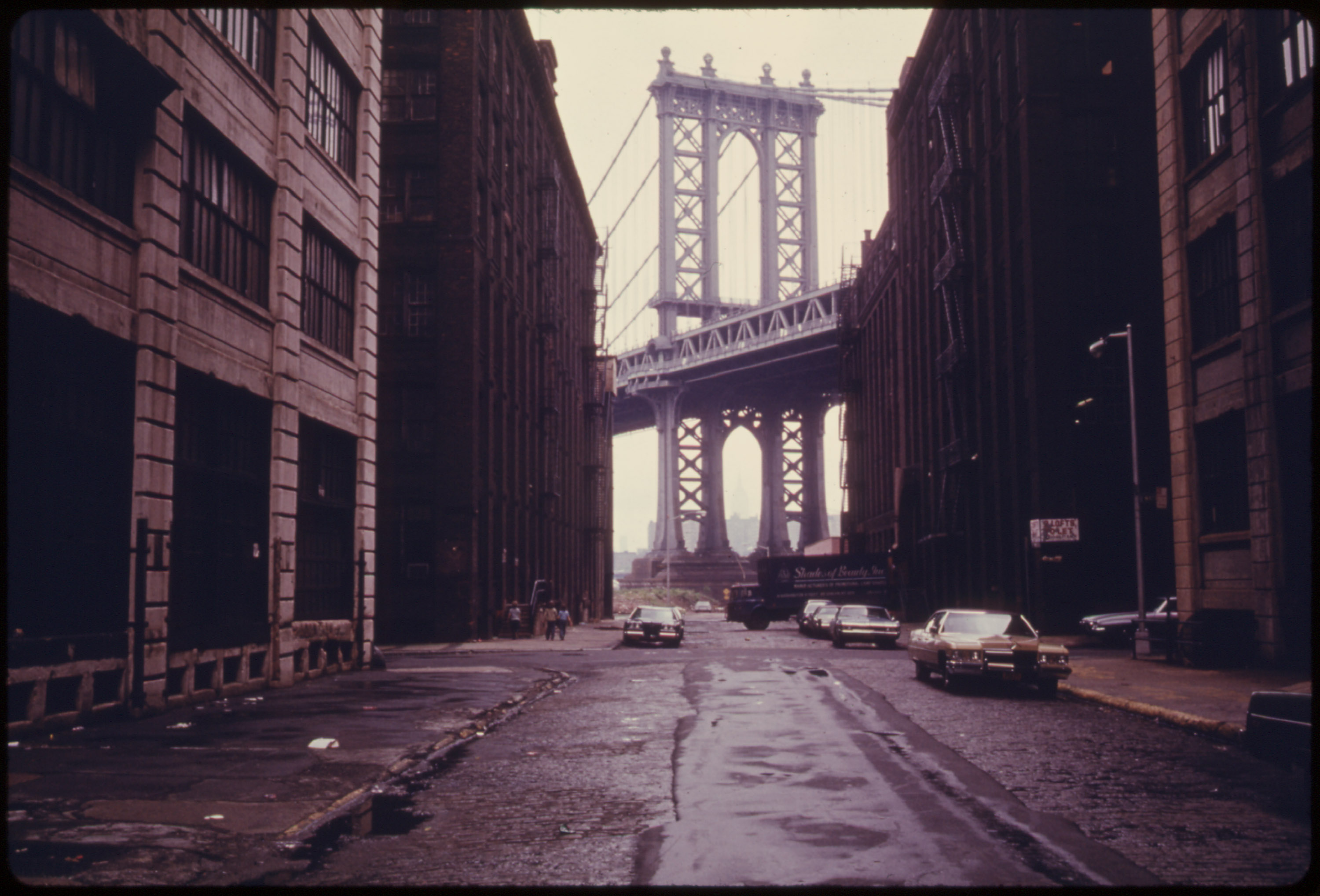
DUMBO, a name invented in the late 1970s, Down Under the Manhattan Bridge Overpass.

Landscape

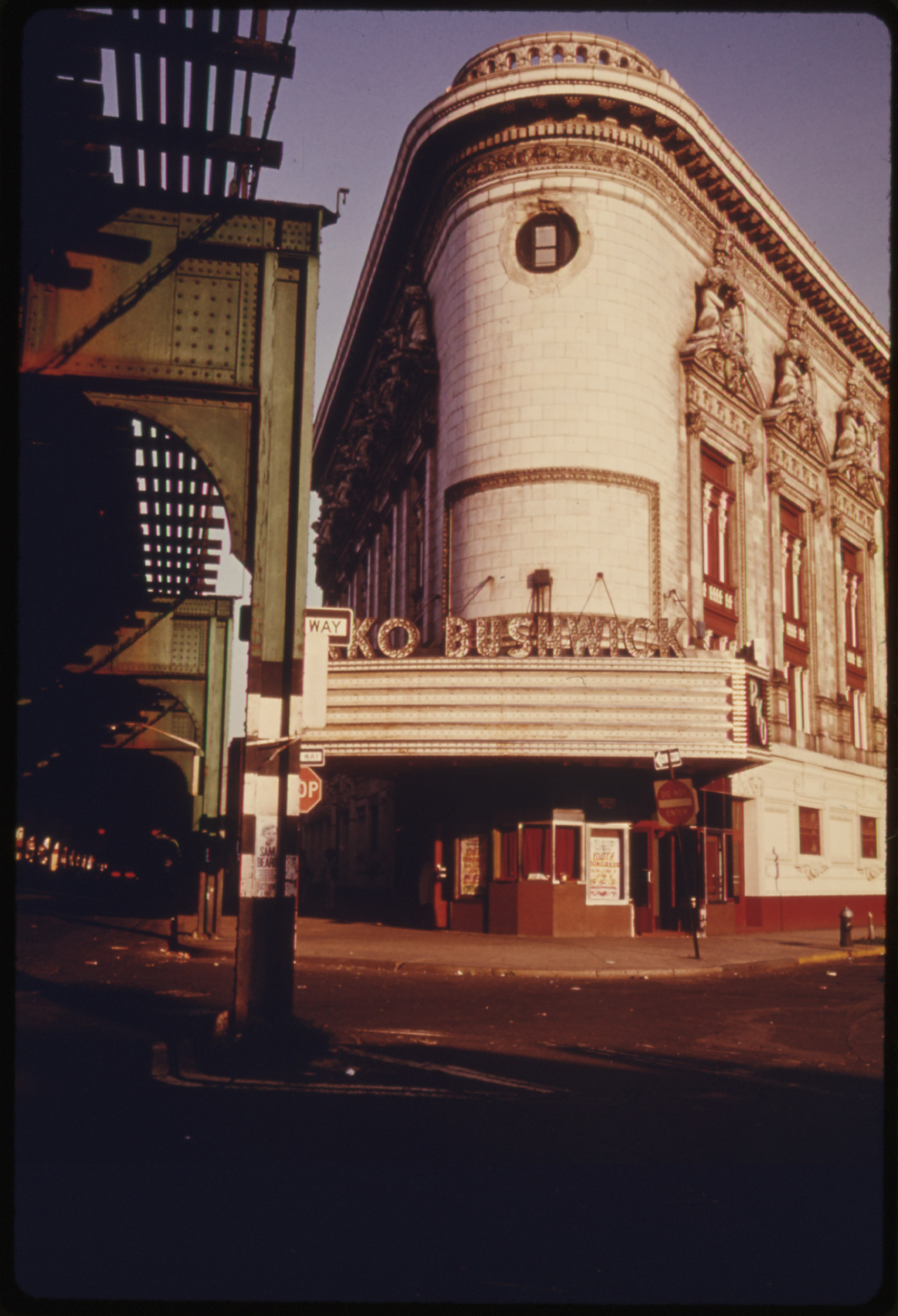
The RKO Bushwick Theater, at the Bushwick/Bed-Stuy border.

Portrait

Bushwick Avenue

Landscape

Two pictures of Bond Street

Landscape
Landscape

Across from Lynch Park, near the Brooklyn Navy Yard

Landscape

There’s no location listed in the caption but probably Park Slope?

Landscape
Landscape

Fort Greene, across from the park.

This is taken on Vanderbilt Avenue but I can’t ascertain exactly here. Perhaps today’s Prospect Heights area.

Landscape

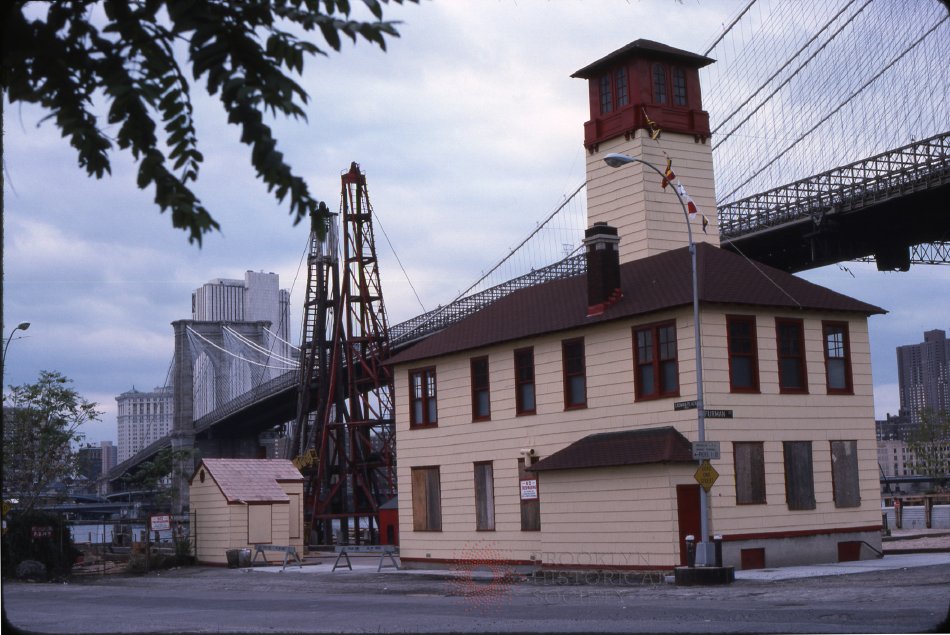
Images of the Fulton Ferry area in 1975 (courtesy the Brooklyn Historical Society)

V19891866
V19891847-1

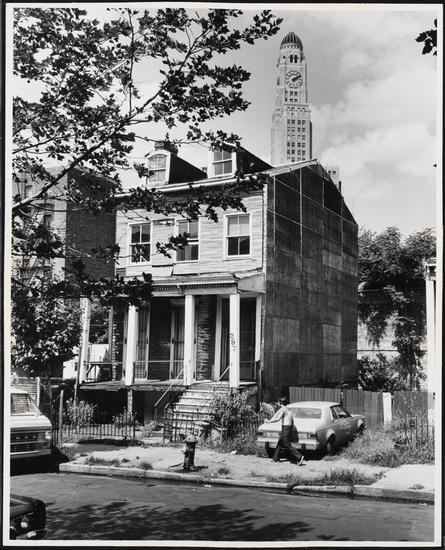
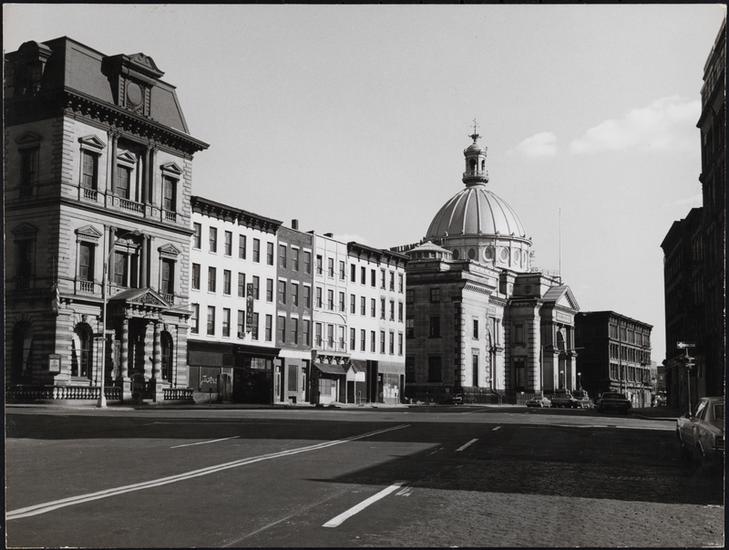
And a couple images from the Museum of the City of New York archives, all from 1975, taken by Edmund V Gillon. You can find many more of astounding photographs here:

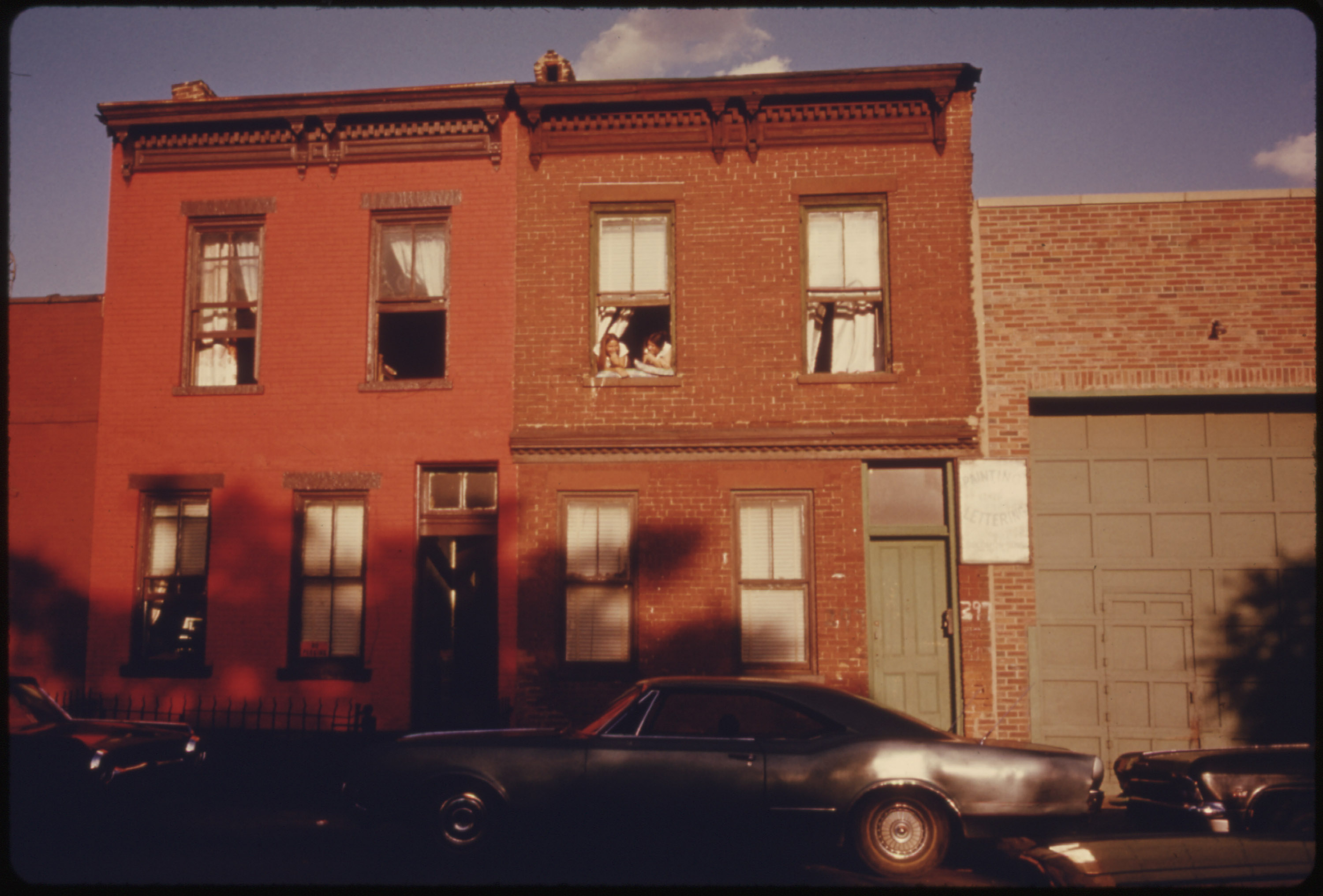
397 Dean Street, considered part of Park Slope today

MN112866

Williamsburg, looking east on Broadway from Bedford Avenue and South 6th Street.

MN112215

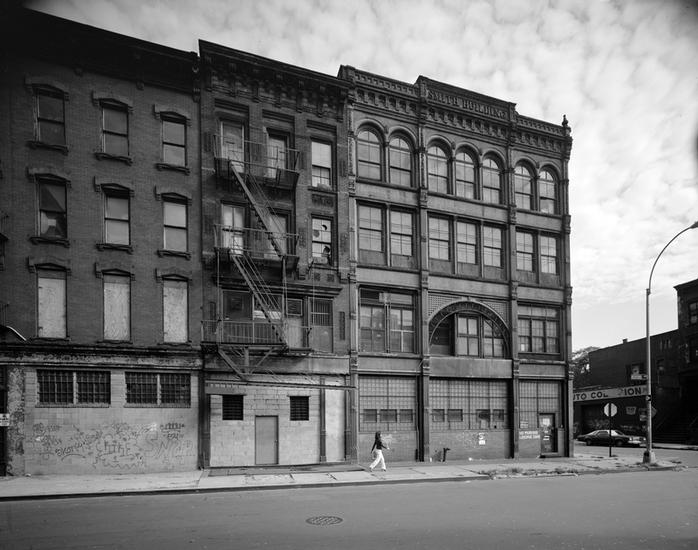
Boarded-up buildings and the Bedford Avenue façade of the Smith Building, 123 South 8th Street

2013_3_2_ 546

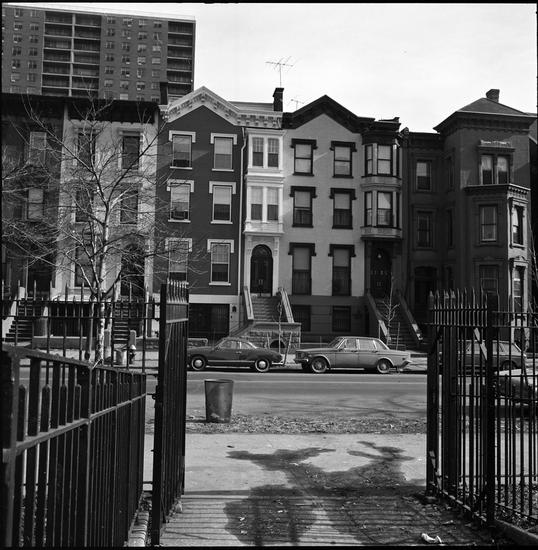
Clinton Hill: Row houses on the eastern side of Washington Avenue between Dekalb and Lafayette Avenues

66cm_2013_3_2_ 025

New York’s best film performances – Part Two

My list of New York’s best movie scenes continues with two in Brooklyn — and one that almost gets there….

Tension
7. Do The Right Thing (1989)
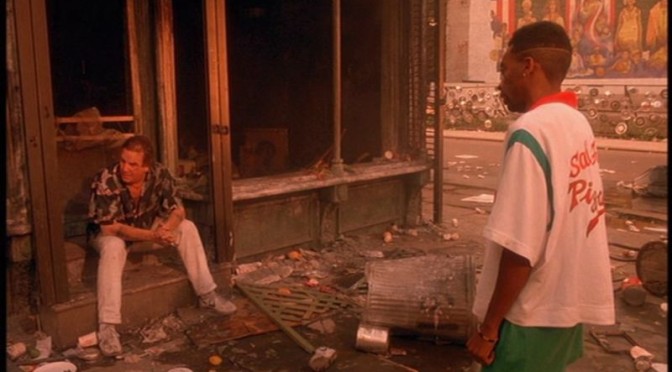
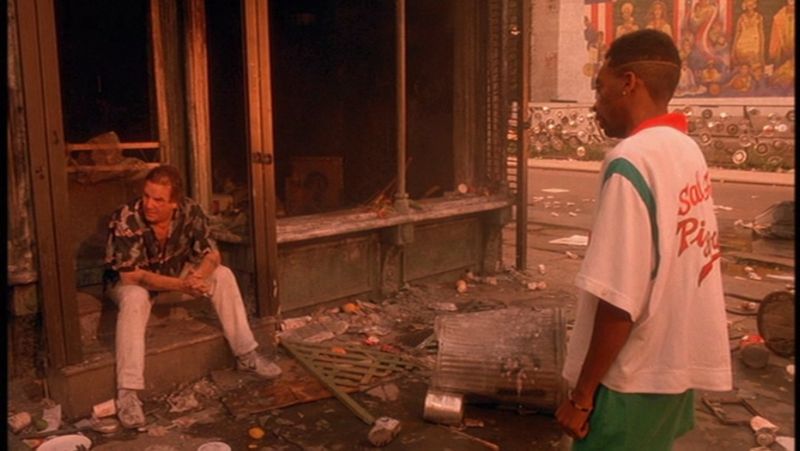
Mookie throws a trash can

Spike Lee is only one of a few directors who knows how to turn New York City into a character in his films. With ‘Do The Right Thing’, he photographs a typically drab streetcorner in Bedford-Stuyvesant with the sorts of color and pizazz more associated with 1950s musicals. Better to match the residents — everybody from the old men on the corner to the customers at Sal’s Pizzeria — a cross-section of vivid characters and a balance of different races getting along. Until, of course, Mookie throws that trashcan through Sal’s window.

The film is loosely based on a violent 1986 incident that occured in Howard Beach, Queens, involving the death of a black teenager after being harassed with his friends at a pizzeria. Mookie’s act of violence — the “did he do the right thing” moment — sparks a mob scene that greatly parallels many incidents during the New York blackout of 1977.

Not suprisingly, Lee goes back to the motif of the ‘hottest day of the summer’ in another great movie actually set in 1977 — “Summer of Sam” — a film loaded with on-location shots in Queens and the Bronx.


Grit
6. The Naked City (1948)
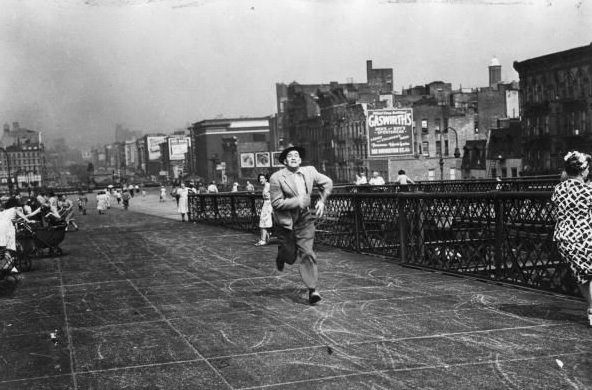
Shootout on the bridge

The Williamsburg Bridge’s best moment ever in a recorded medium is this scene in the Naked City, the climactic chase and shootout in a film already known as one of the best look New York City movies ever made.

Forget the standard issue film noir plot, fun but unspectacular; it’s all about William H. Daniels’ verite cinematography, which won him an Oscar. The Naked City is one of the first film to shoot almost everything on location in New York, 107 on-location scenes in all. The film, and New York, looks better the older it gets.

Among its more famous locales include the ole Roxy Theater, the Whitehall Building, and the City Morgue (!), but its crowning scene is its last, a breathtaking shoot-out literally up in the proverbial rafters of the Williamsburg Bridge. NO film (not even the next on my list) has ever used a bridge to such tangible effect.


Decadence
5. Saturday Night Fever (1977)
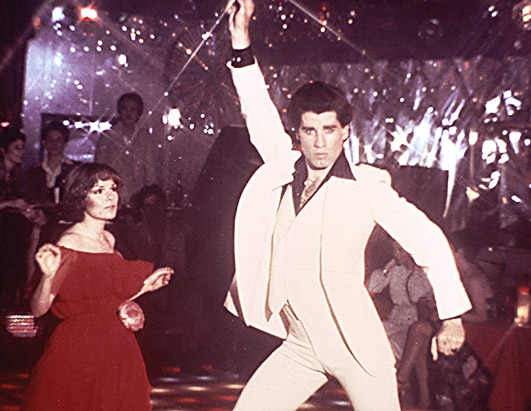
Tony and Stephanie cut a rug

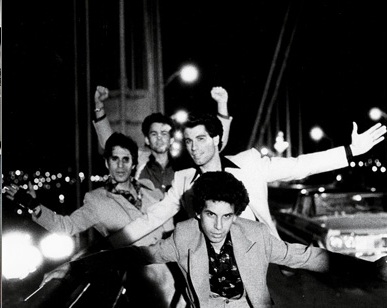
I couldn’t not pick the famous danceoff scene with Tony Manero and Stephanie Mangano. It defines the style of New York nightlife outside the VIP area of the 1970s. But for the record, Saturday Night Fever has two equally beautiful scenes using New York backdrops that are utterly fabulous — Tony strutting down the street with paintcans and, of course, the tragic encounter at the Verrazano-Narrows bridge. I can probably go on record and say ‘Fever’ is the coolest movie about New York City ever filmed.

I’ll save myself some typing and direct you to my writeup a few months ago on Saturday Night Fever and the club where it was filmed 2001 Odyssey, which also includes a report the fate of that sacred dance floor.

By the way, the original name of the movie was ‘Tribal Rights of Saturday Night’, as the film itself is based on a magazine article called ‘Tribal Rights of a New Saturday Night.’