Categories
Brooklyn History

Ungentrified: Brooklyn in the 1970s

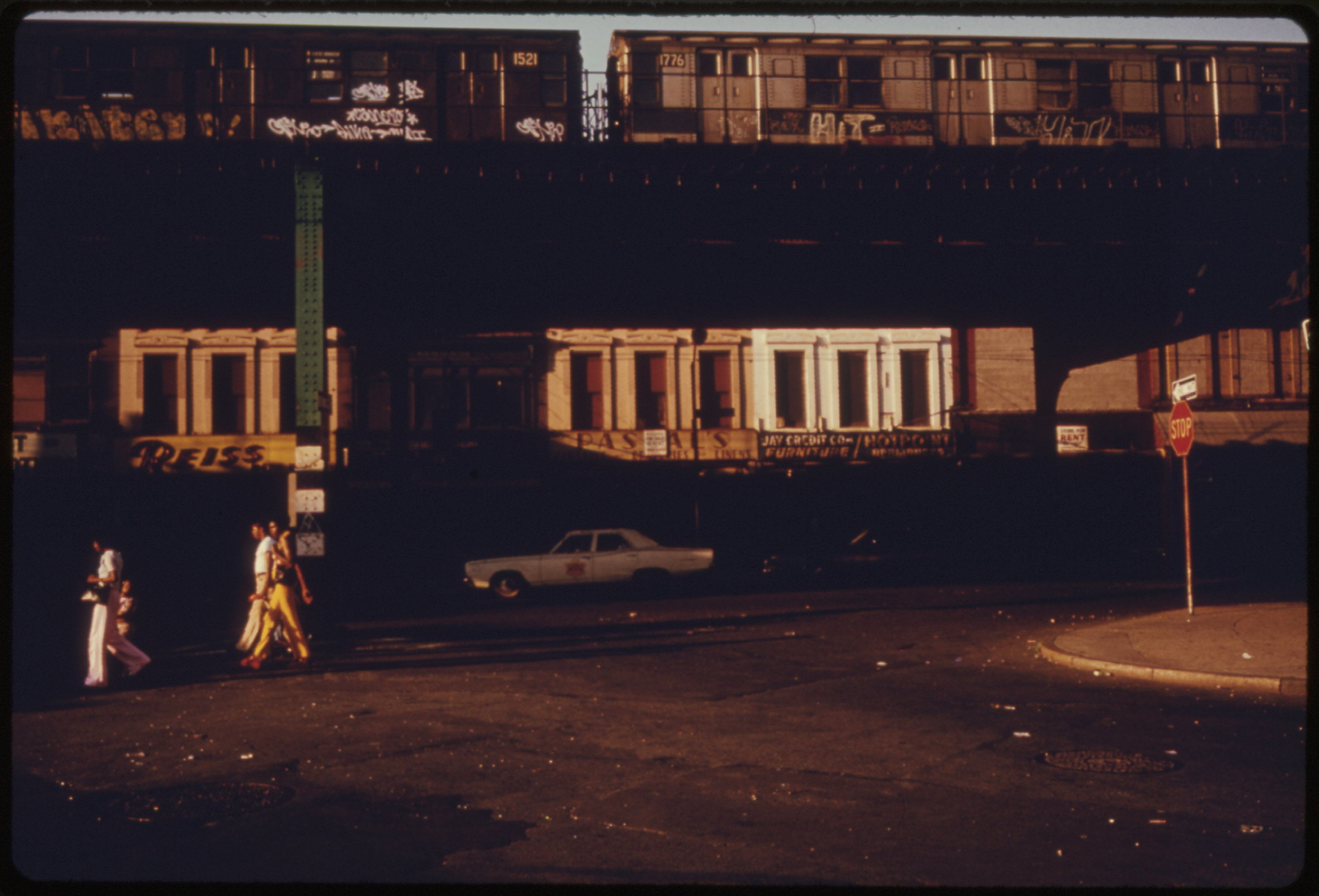
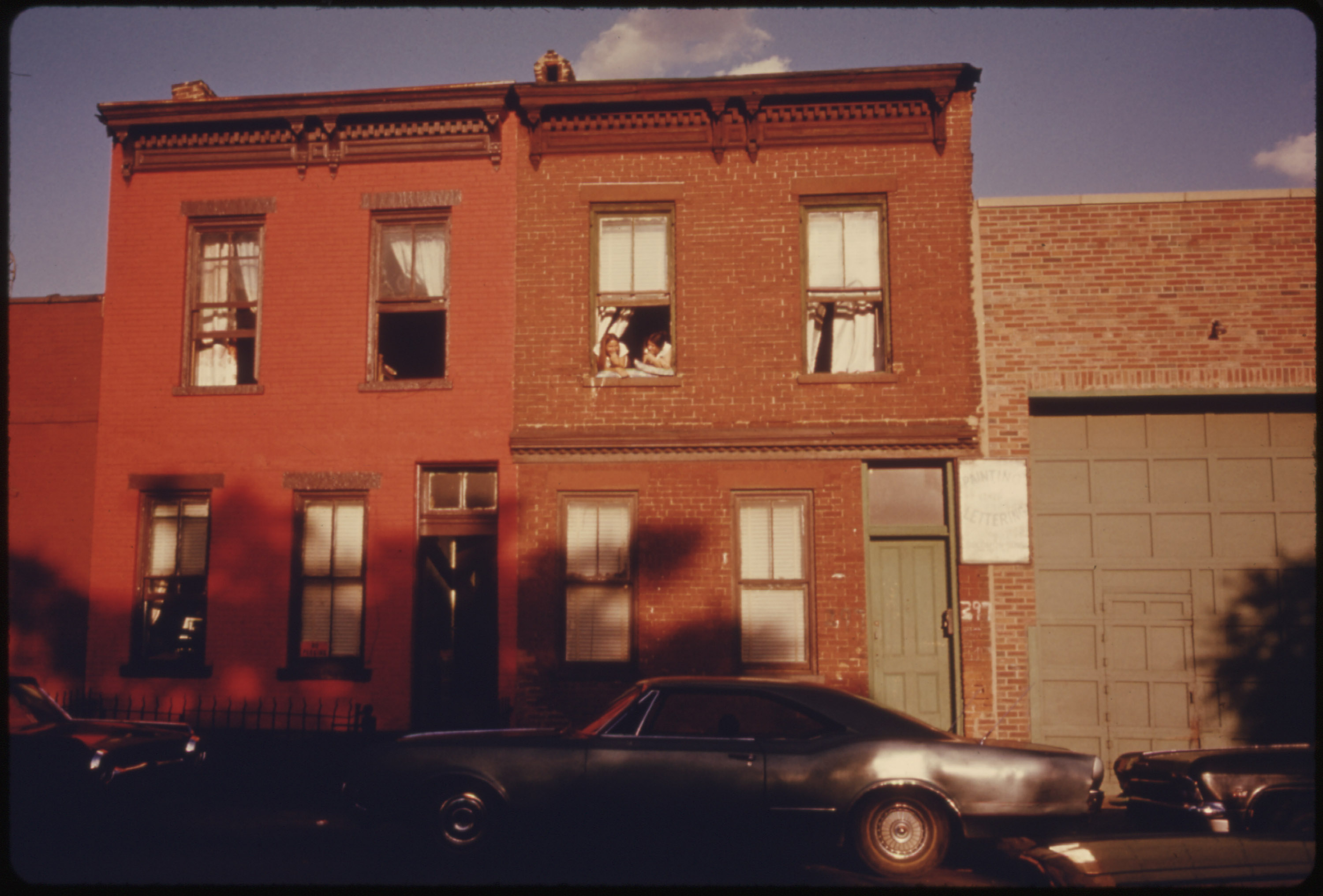
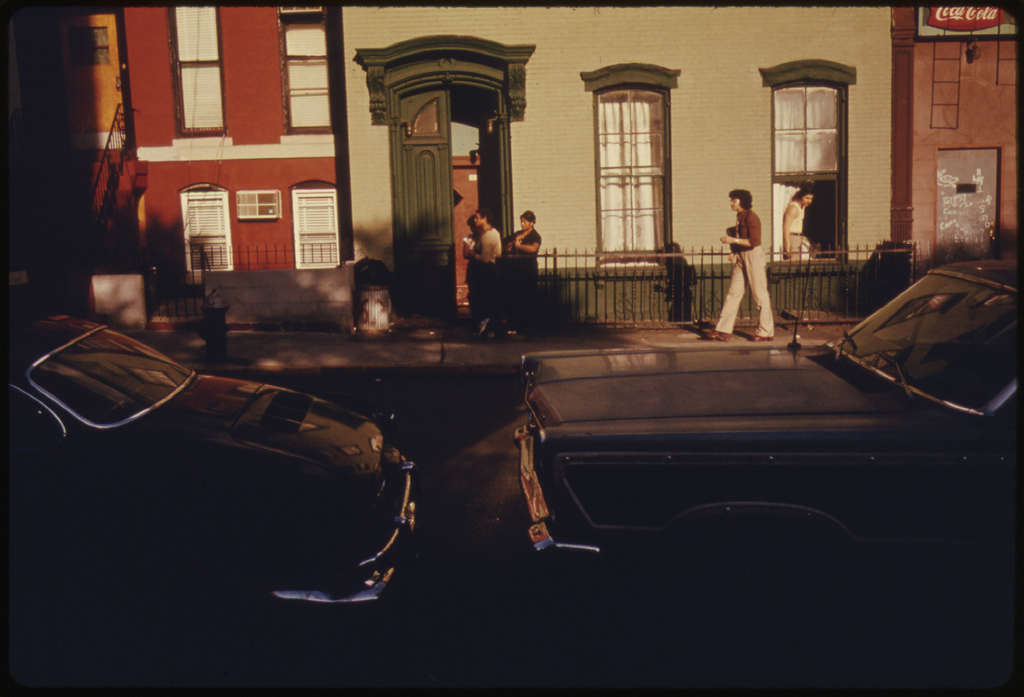
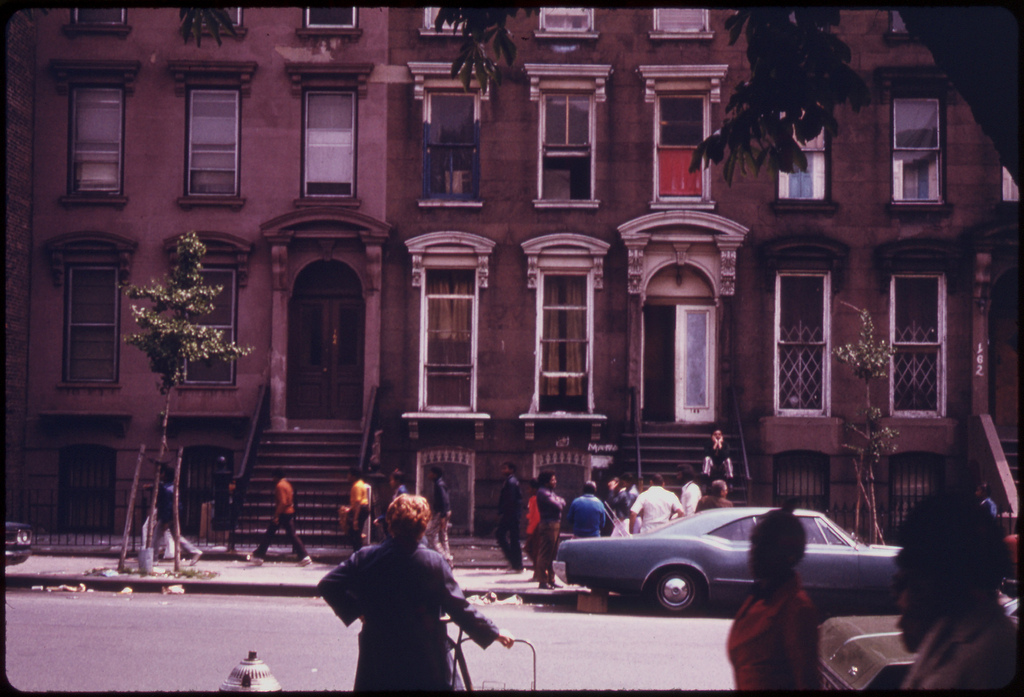
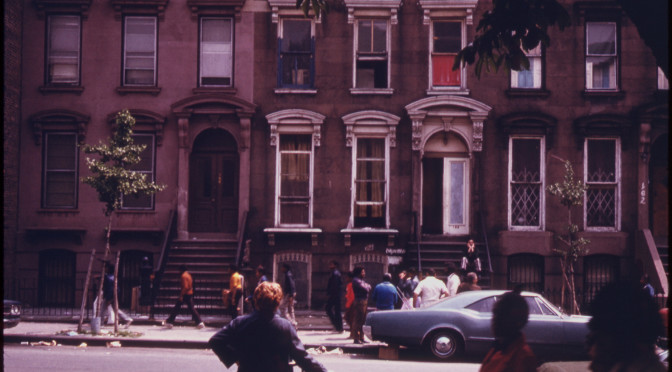
The new Bowery Boys podcast that comes out this Friday will be about Brooklyn. So let’s get in the mood with some pre-Instagram tinted photography from the U.S. National Archives, most of them taken in 1974 by Danny Lyon. followed by some black and white images by Edmund V Gillon.

You might have seen many of these photographs before (perhaps even here on this blog), but it’s striking to revisit them in context of Brooklyn current gentrification patterns.

The homes of Brooklyn Heights began seeing the arrival of ‘bohemians’ as early as the 1910s, and brownstone revivalists (the so-called ‘pioneers’) discovered the neighborhood after World War II.

But a noticeable trend of Brooklyn gentrification happened in earnest in the late 1950s, with wealthy escapees from Manhattan (fending off the urge to suburbanize) moving into South Brooklyn brownstones and row houses and giving enclaves attractive new names like Boerum Hill, Cobble Hill and Carroll Gardens.

The most successful example occurred up on the park slope as a movement of urban activists and historical preservations refurbished and brought to life one of Brooklyn’s original Gold Coasts. Its official name became, of course, Park Slope.

While the ‘brownstone Brooklyn’ movement was well at hand in 1974-5 — the date of most of these photographs — much of the borough was still facing blight and deterioration then.  Most of the neighborhoods pictured below are today considered ‘hot’, trendy places with incredibly high rents.

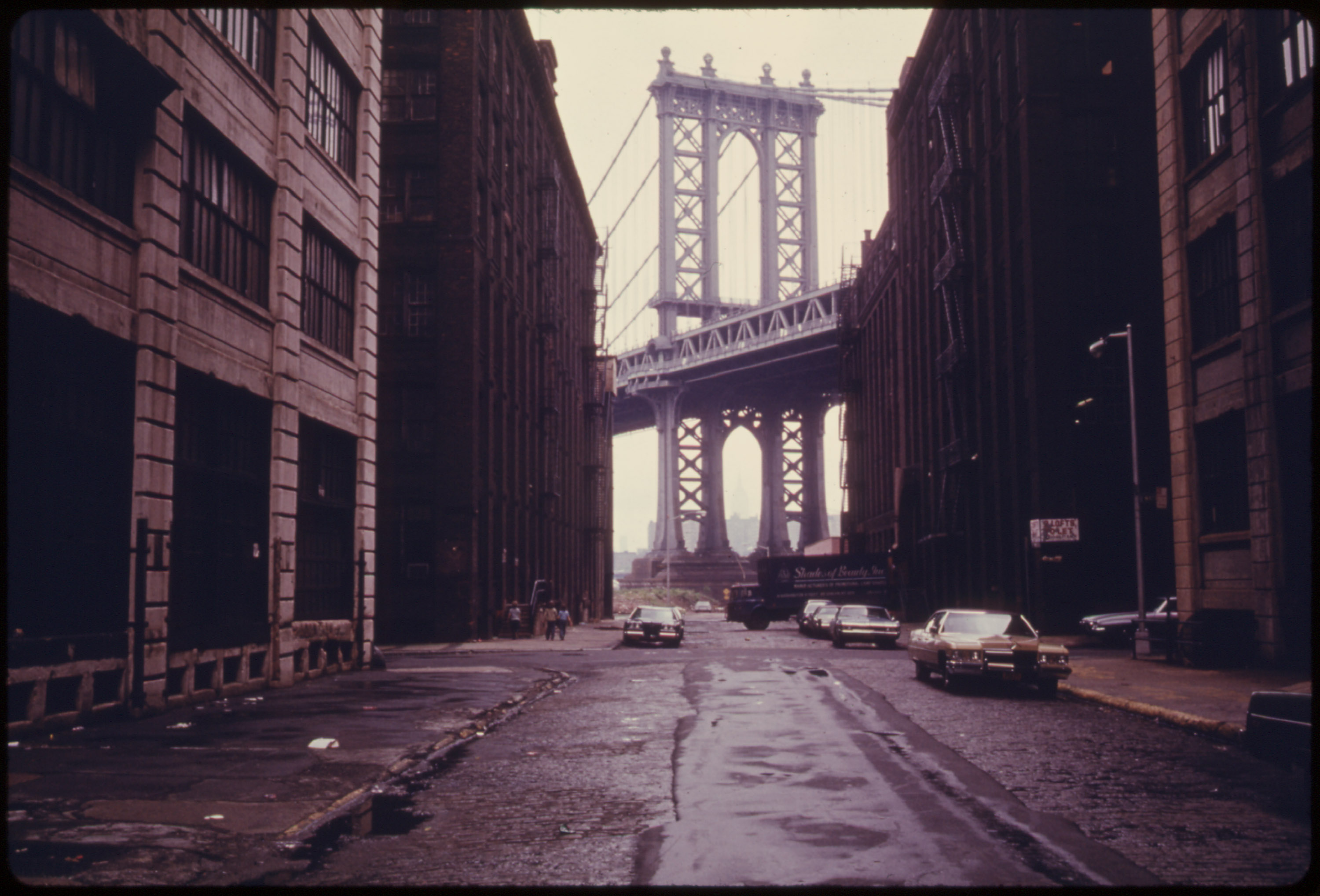
DUMBO, a name invented in the late 1970s, Down Under the Manhattan Bridge Overpass.
Landscape

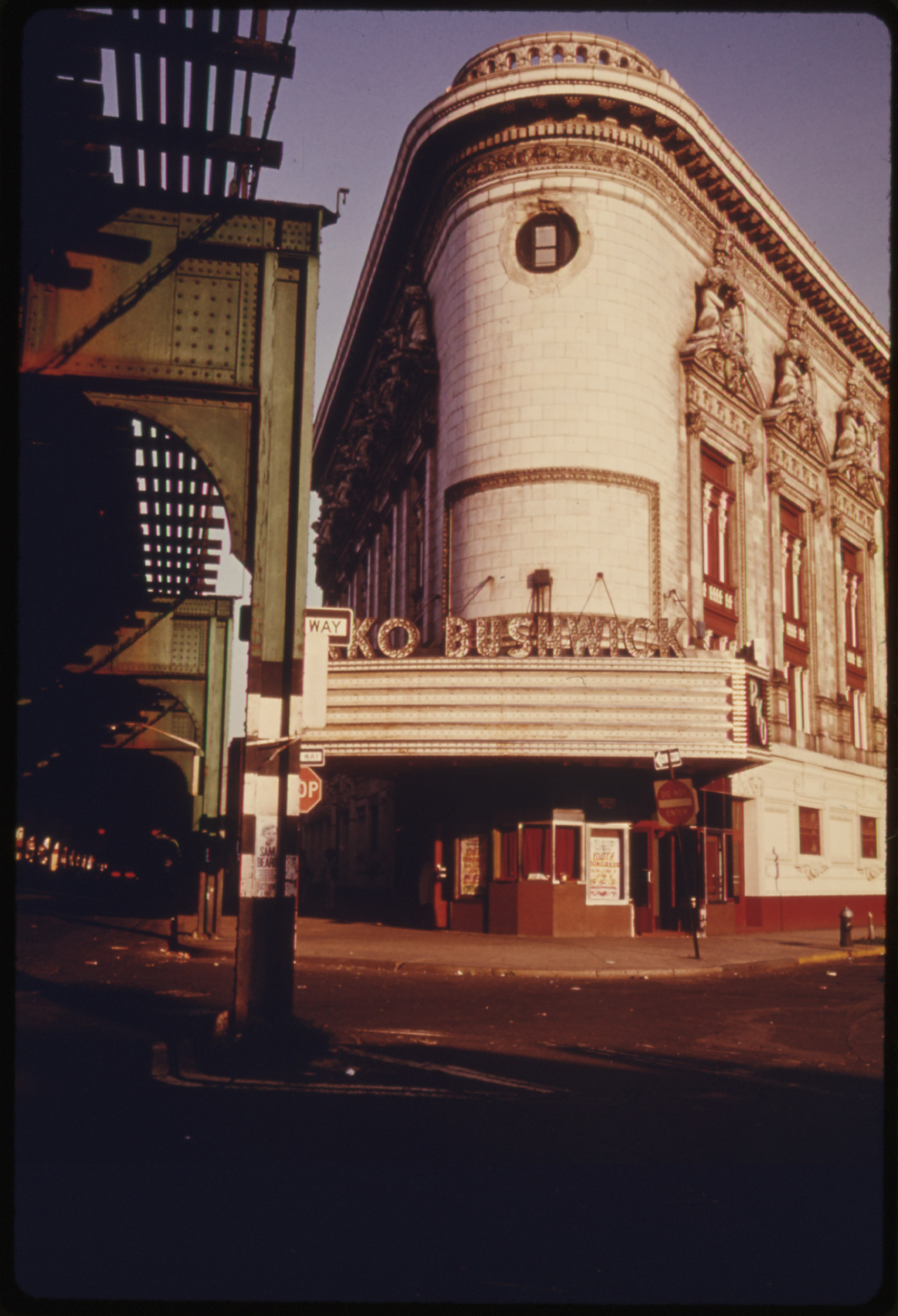
The RKO Bushwick Theater, at the Bushwick/Bed-Stuy border.
Portrait

Bushwick Avenue

Landscape

Two pictures of Bond Street

Landscape
Landscape

Across from Lynch Park, near the Brooklyn Navy Yard
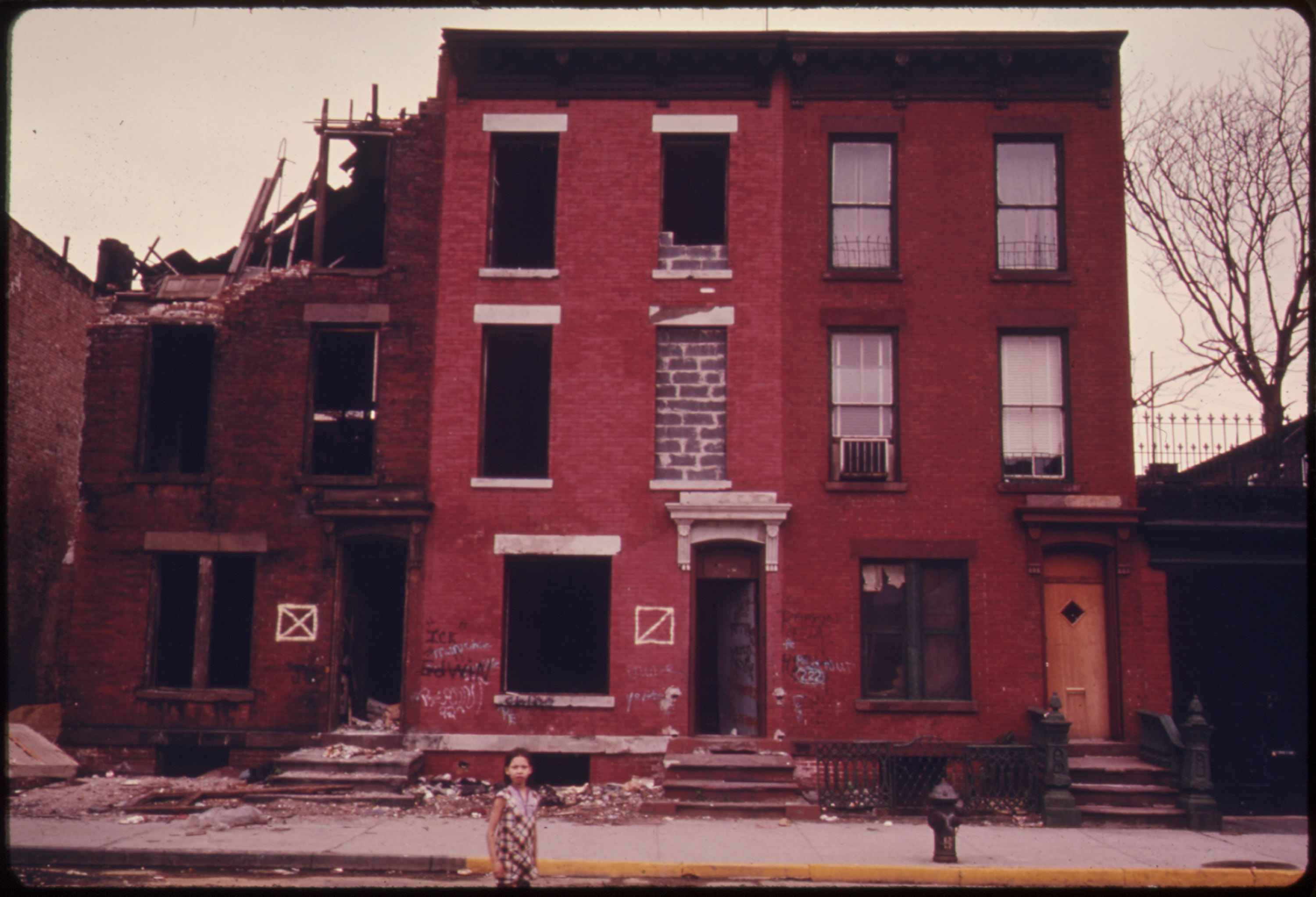
Landscape

There’s no location listed in the caption but probably Park Slope?
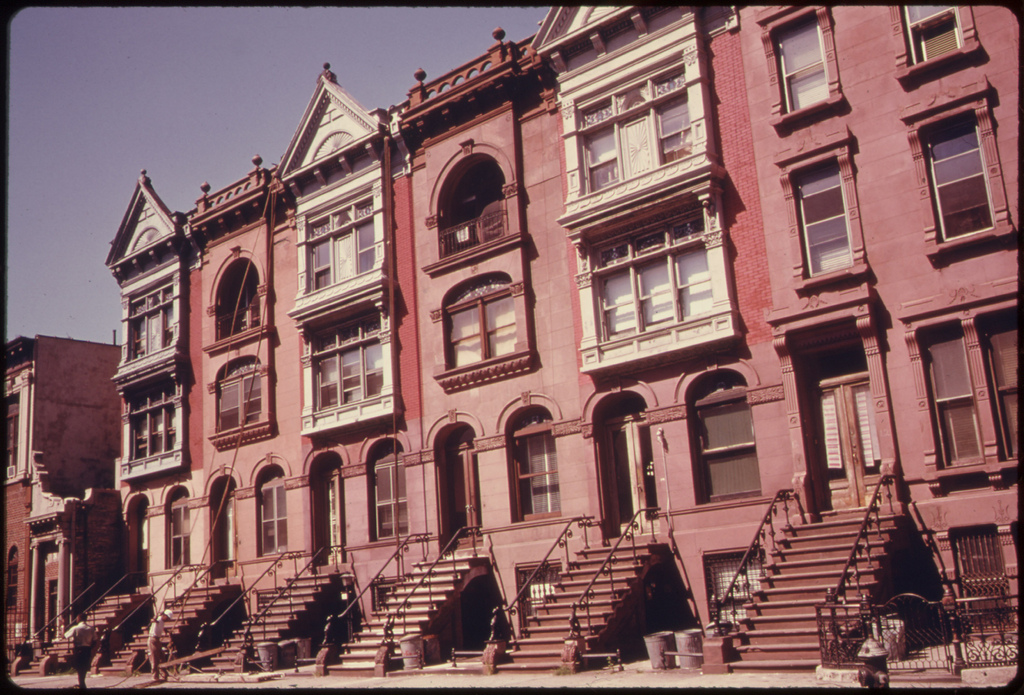
Landscape
Landscape

Fort Greene, across from the park.

This is taken on Vanderbilt Avenue but I can’t ascertain exactly here. Perhaps today’s Prospect Heights area.
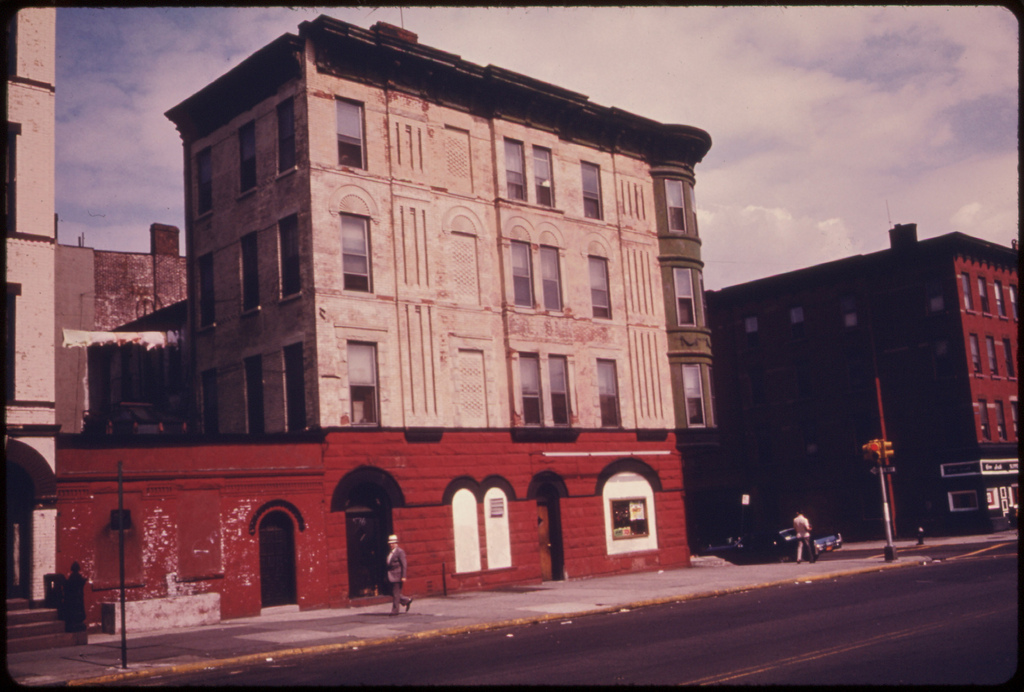
Landscape

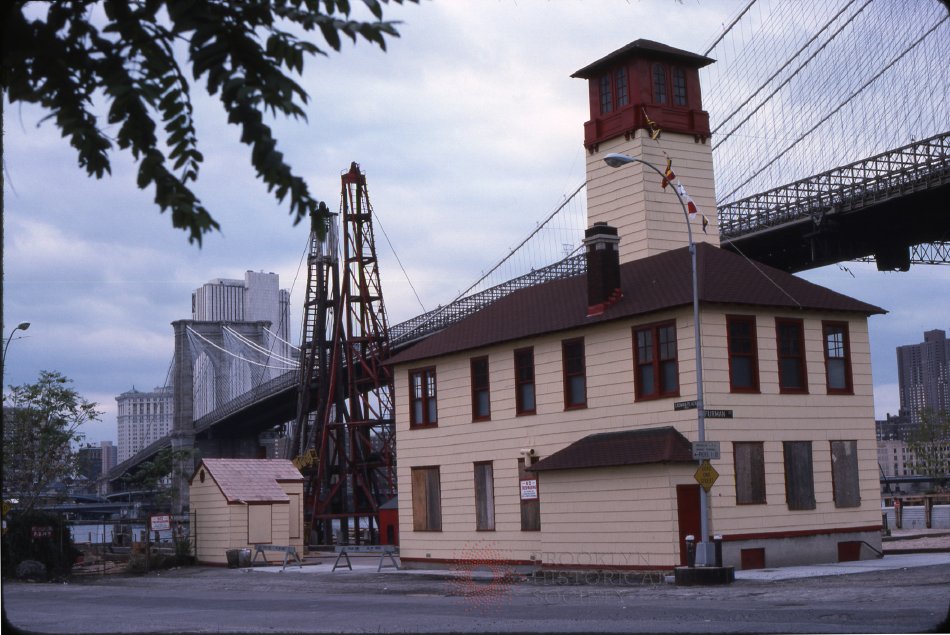
Images of the Fulton Ferry area in 1975 (courtesy the Brooklyn Historical Society)
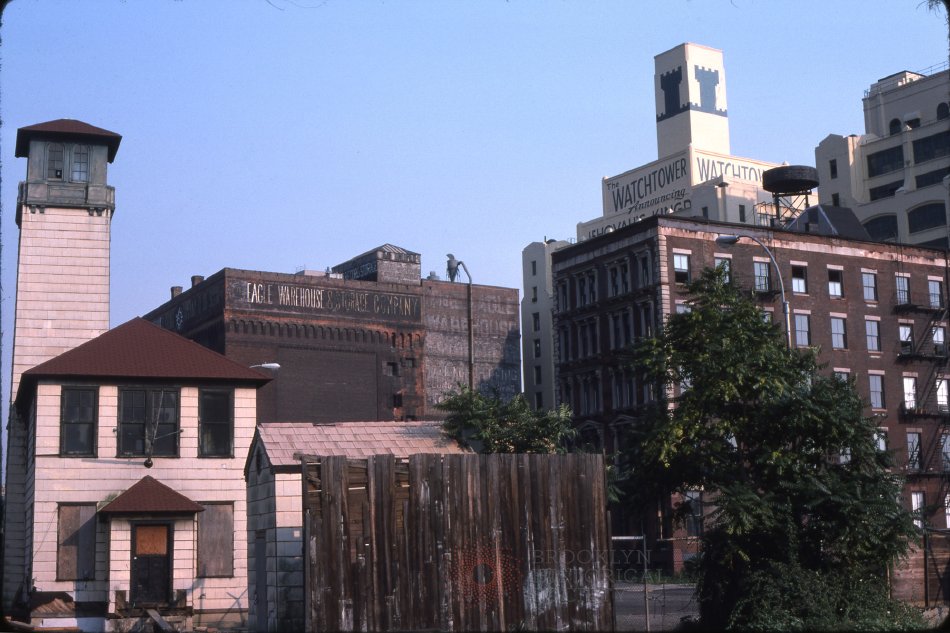
V19891866
V19891847-1

And a couple images from the Museum of the City of New York archives, all from 1975, taken by Edmund V Gillon. You can find many more of astounding photographs here:

397 Dean Street, considered part of Park Slope today
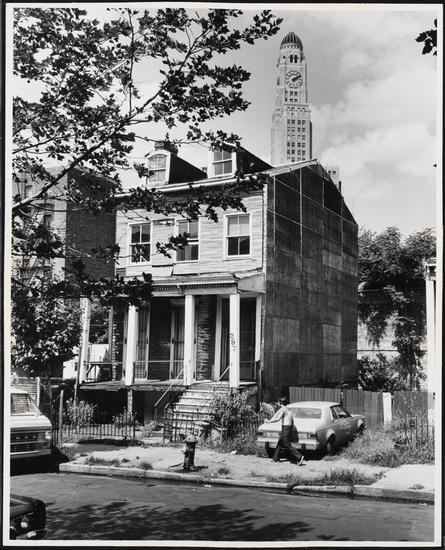
MN112866

Williamsburg, looking east on Broadway from Bedford Avenue and South 6th Street.
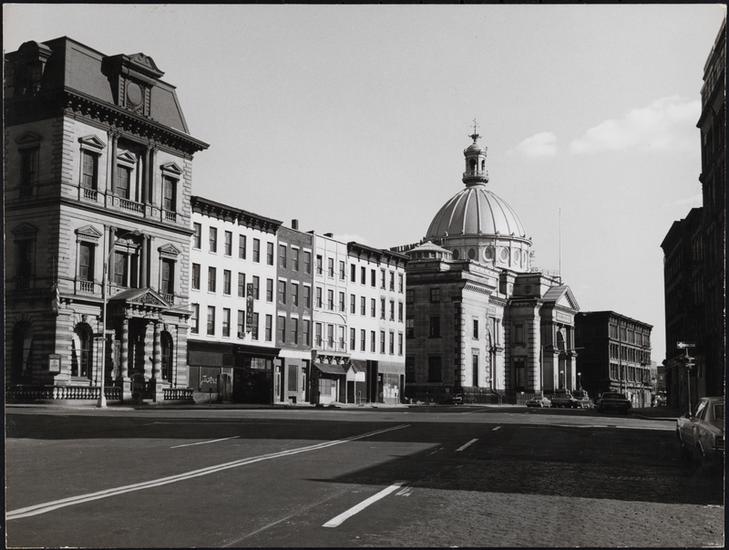
MN112215

Boarded-up buildings and the Bedford Avenue façade of the Smith Building, 123 South 8th Street
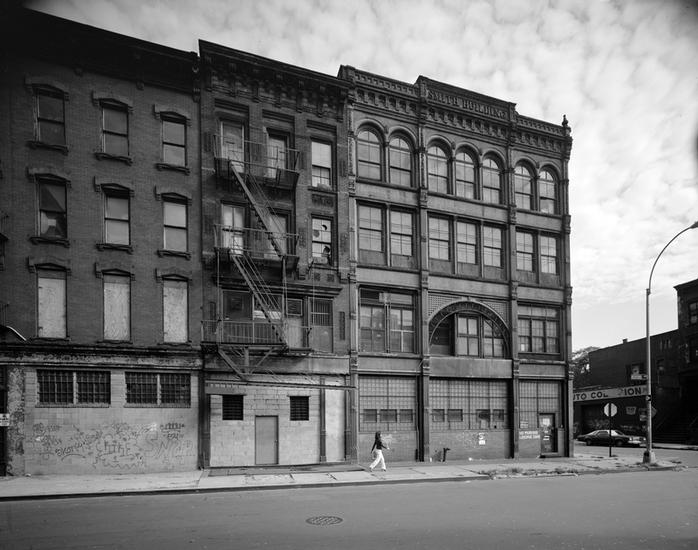
2013_3_2_ 546

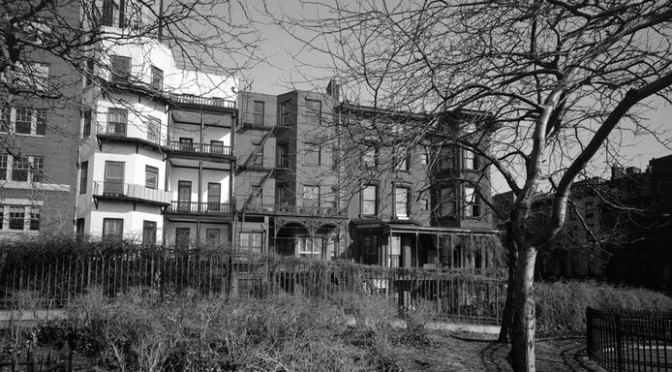
Clinton Hill: Row houses on the eastern side of Washington Avenue between Dekalb and Lafayette Avenues
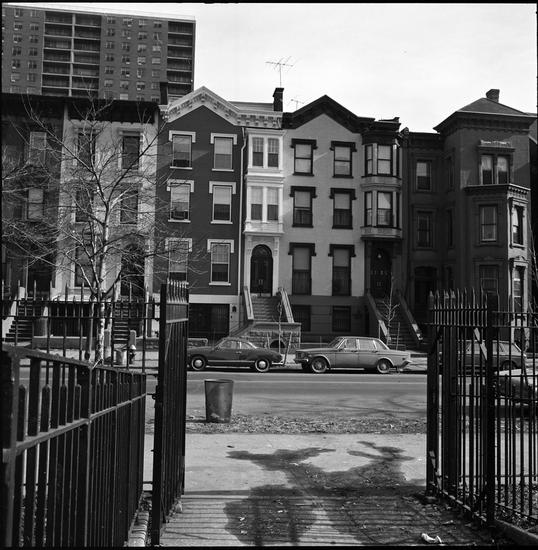
66cm_2013_3_2_ 025
Categories
Mysterious Stories Podcasts

Haunted Hipsters: Four Ghost Stories of Brooklyn

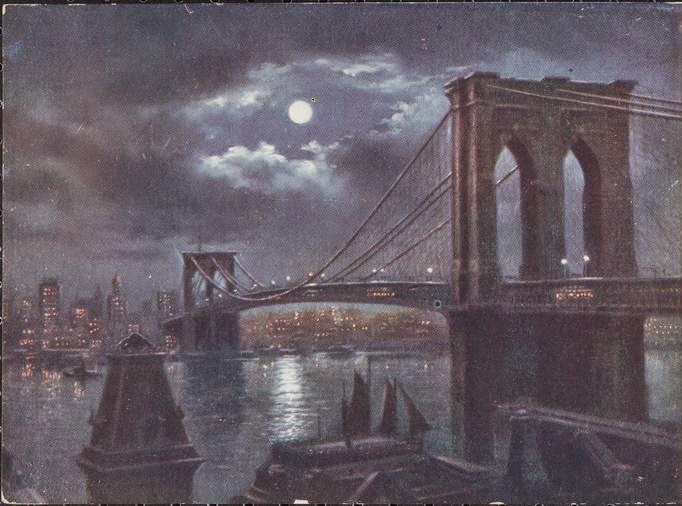
Dark skies over the Brooklyn Bridge, from a 1905 postcard (courtesy MCNY)

PODCAST  Brooklyn is the setting for this quartet of classic ghost stories, all set before the independent city was an official borough of New York City.  This is a Brooklyn of old stately mansions and farms, with railroad tracks laid through forests and large tracks of land carved up, awaiting development.  These stories also have another curious resemblance — they all come from local newspapers of the day, reporting on ghost stories with amusement and more than a little skepticism.

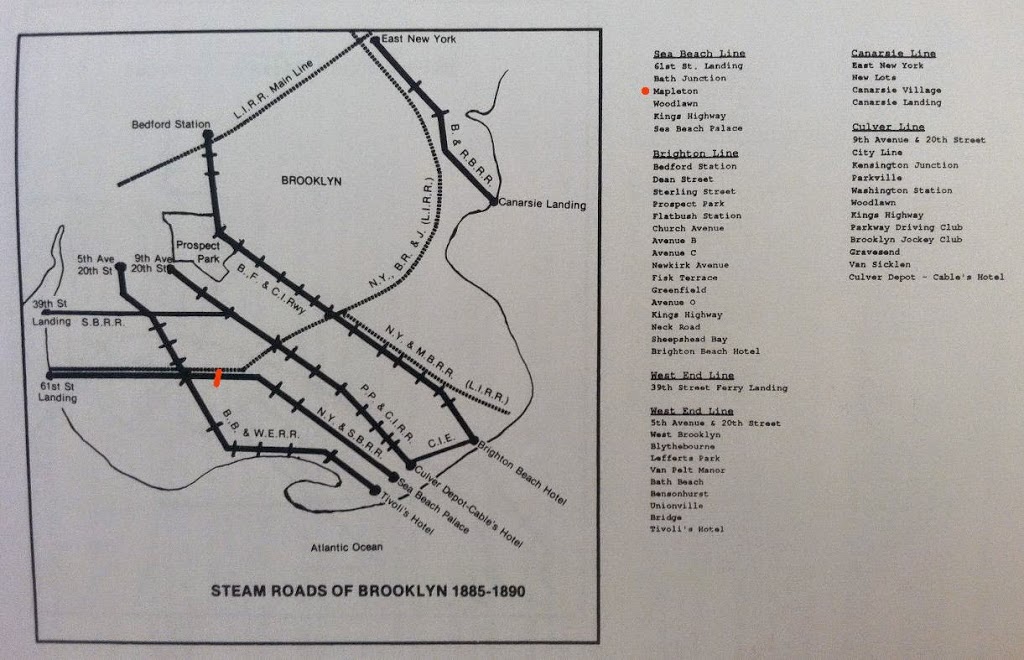
1)  The Coney Island and Sea Beach Railroad took passengers to and from Brooklyn’s amusement district.  But nobody was particularly amused one evening to be stopped by a horrific, gangly ghost upon the tracks near Mapleton.

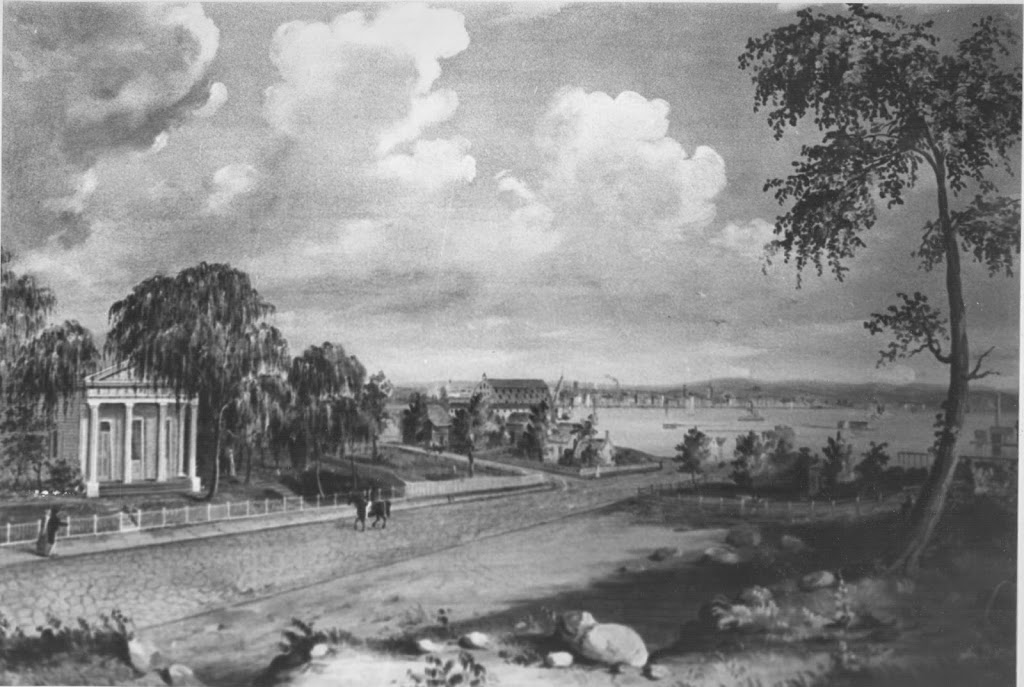
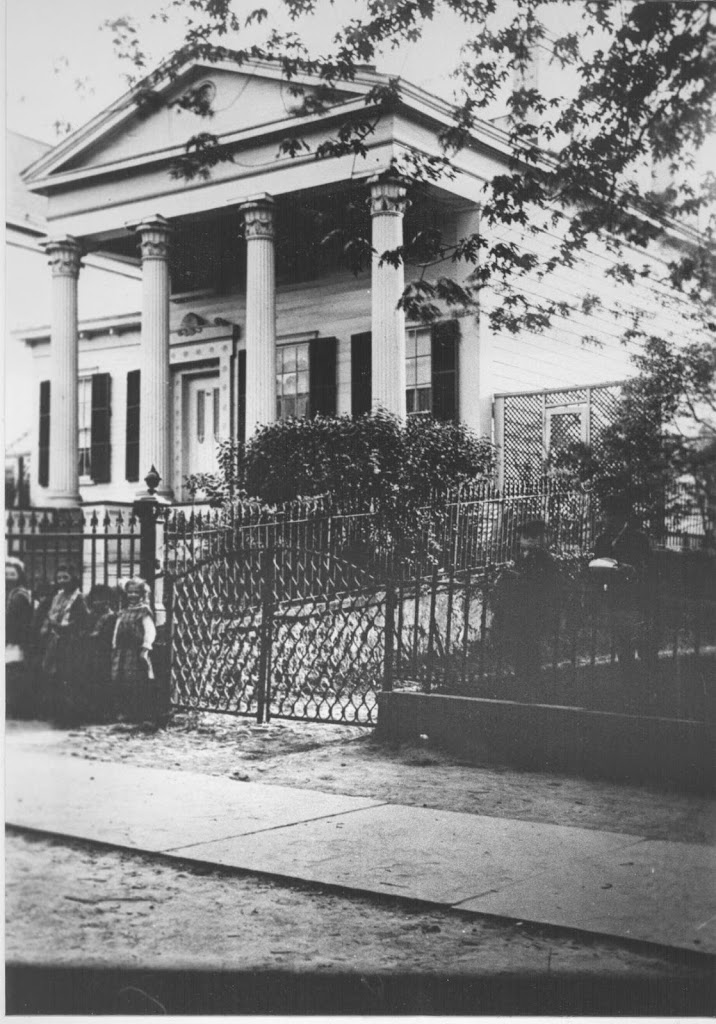
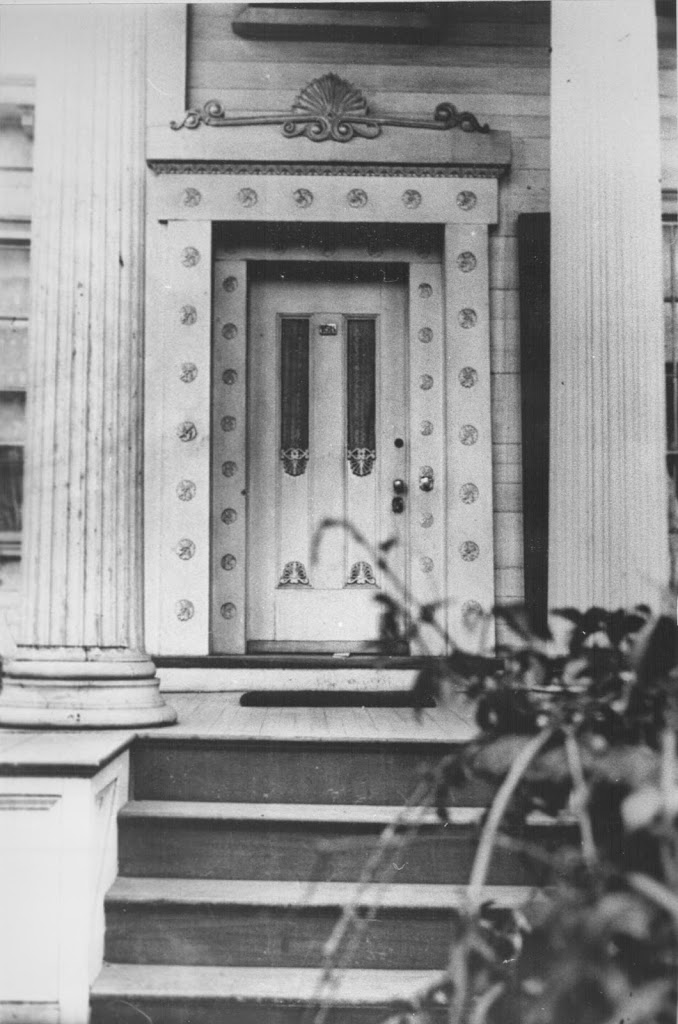
2)  In Clinton Hill, a plantation-style house built in the early years of the Brooklyn Navy Yard has survived hundreds of unusual tenants over the years, but certainly the scariest days in this historic home occurred in 1878 with a relentless, invisible hand that would not stop knocking.

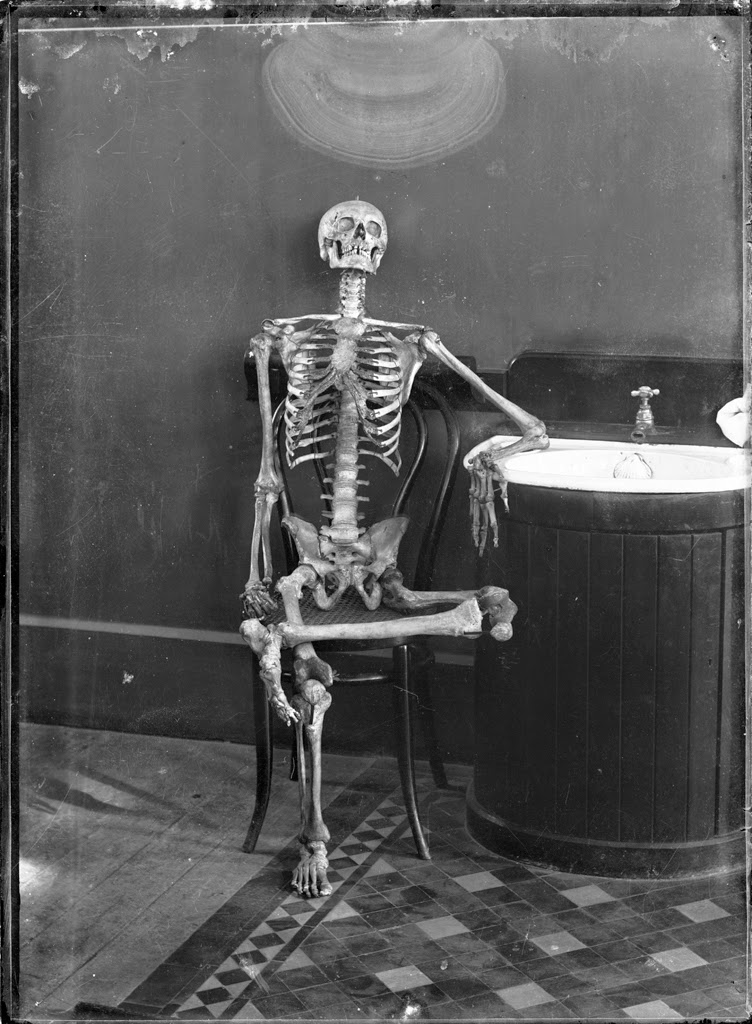
At right: Death will not deter this Brooklynite from ordering a great craft beer. (courtesy Powerhouse Museum)

3)  The Oceanic Hotel was one of Coney Island’s first great hotels, an accommodation for almost 500 near the increasingly popular beaches of Brighton Beach.  But in 1894, the hotel was virtually emptied out and reportedly haunted.  Did it have something to do with the murder upstairs in Room 30?

4) And finally, the area of Bushwick nearest the Queens border are populated with various burial grounds like the Evergreens Cemetery, borne of the rural cemetery movement which transplanted thousands of previously buried bodies from Manhattan to Brooklyn.

In 1894, with Bushwick prepared for a spate of new development, the sudden appearance of an oddly dressed spirit threatens to disrupt the entire neighborhood.  During one evening, a drunken party of 300 ghost hunters, brandishing swords and revolvers, come across one terror that proved to be very real indeed.

ALSO: Secrets of The Sentinel, a 1977 horror film set in an old house along the Brooklyn Promenade.


10 Montague Terrace, setting for the 1970s horror film The Sentinel, sits at the end of this elegant block on the Brooklyn Promenade.

[Looking west from Brooklyn Bridge Park to the houses on Montague Terrace.]

The theatrical trailer to The Sentinel

1) MIDNIGHT TRAIN TO TERROR
Phenomena reported August 1894 in several publications, including the New York Evening World

The incident in question occurred near the Mapleton station along the Coney Island and Sea Beach Railroad (Map of Brooklyn railroad lines courtesy The Weekly Nabe who has more information on the early days of Mapleton.)


2) WHO’S KNOCKING AT MY DOOR?
Phenomena reported December 1878 in several publications, including the New York Sun
 
A view of Wallabout Bay and the land which became the Brooklyn Navy Yard, circa 1830s.  That would appear to 136 Clinton Avenue (the oldest house in the area) however the general proportion of the region looks a bit off.  Below it, two pictures of the house on Clinton Avenue, including a close-up of the infamous door. (Pics courtesy Flickr/sjcny and Long Island Historical Society)


3) THE GHOSTLY GUEST IN ROOM 30
Phenomena reported August 1892 in several publications, including the Brooklyn Daily Eagle

The haunted Oceanic Hotel, located at Neptune Avenue and W. 6th Street. Perhaps this looks surprising for a 500-room hotel, but out of frame are bungalows and other adjoined buildings.  But you can see how this sort of accommodation went out of fashion rather quickly.

[First hotel at Coney Island, Oceanic Hotel.]
http://timesmachine.nytimes.com/timesmachine/1930/07/01/98307449.html?pageNumber=18

4) THE GHOST OF KNICKERBOCKER AVENUE
Phenomena reported November 1894 in several publications, including the New York Times

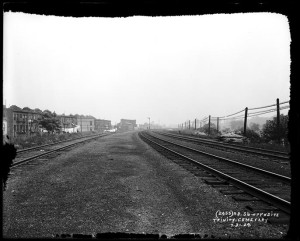
1924 — A view of the tracks which separate Bushwick from a cluster of cemeteries. Buildings to the left sit in the vacant lots which were mentioned in this story.  The cemetery nearest this photograph is Most Holy Trinity Cemetery.  You may remember the name Most Holy Trinity for it was this Bushwick congregation that was featured in a ghost story a couple years ago in the show ‘Haunted Histories of New York.’

Opposite Trinity Cemetery.