Categories
Friday Night Fever

Recollections of the Electric Circus: “If you remembered much of what happened, you weren’t really there.”

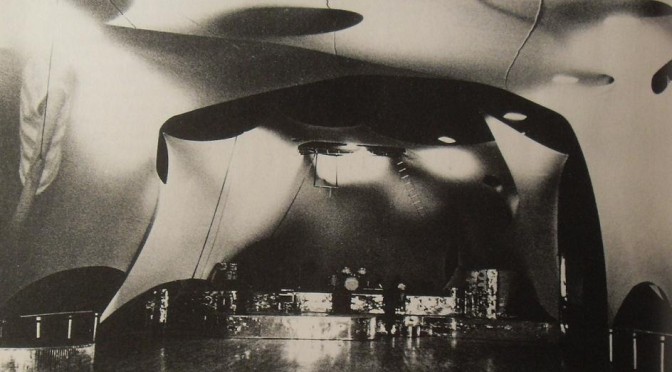
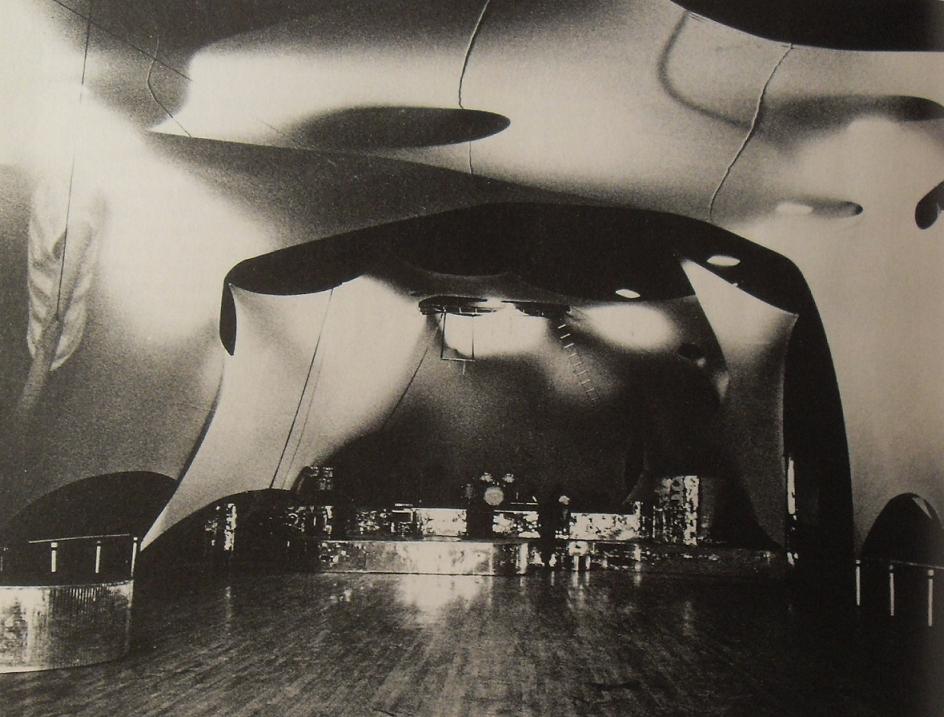
The interior of the Electric Circus on St. Mark’s Place. Pic courtesy Christian Montone/flickr

WARNING The article contains a couple light spoilers about last night’s ‘Mad Men’ on AMC.  If you’re a fan of the show, come back once you’re watched the episode.  But these posts are about a specific element of New York history from the 1960s and can be read even by those who don’t watch the show at all.  You can find other articles in this series here

Almost predictably, a couple characters from ‘Mad Men‘ finally interact with a psychedelic temple of Andy Warhol, in this case the nightclub Electric Circus at 19-25 St. Mark’s Place, today the site of a Chipotle and a Supercuts.

As I wrote back in an article from 2007: “It became the East Village fuse box for Warhol’s talents and those of his entourage, in particular the Velvet Underground and Nico.  The dazzling synthesis of psychedelica and glamour, of the Velvet’s strange atmospheric music and Warhol’s performance displays of lights and costumes, immediately attracted the scenesters to this odd little street — according to the New York Times, “everyone from hippies to Tom Wolfe and George Plimpton” — way before St. Marks would make its reputation in the 1970s with the punk scene.”

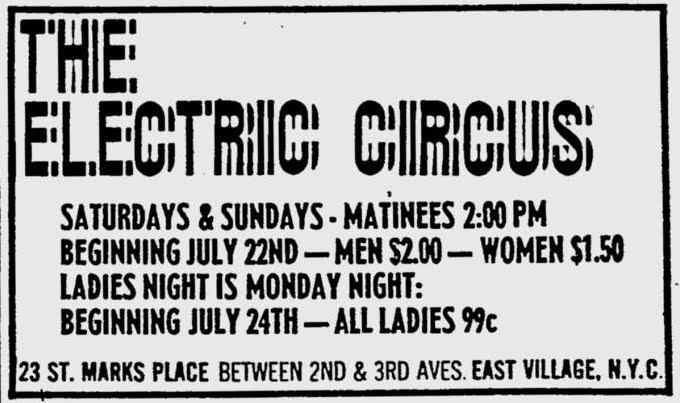
An original ad from the Electic Circus, summer of 1967 (courtesy butdoesitfloat)
Since I wrote that article, many people have chimed in within the comments section to relive their memories of Electric Circus.  Here are a few of my favorite comments from those who were actually there:

“What memories.  I started working at the E.C. as a ticket taker.  I say working, but in reality we didn’t get paid, we got let in for our work.  Like Woodstock, if you remembered much of what happened at the E.C. you weren’t really there.” – Being the Best

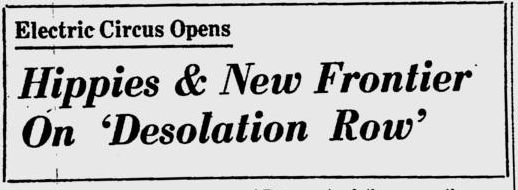
Below: Headline from the Village Voice, July 6, 1967
“I worked at the Electric Circus, 67-68-ish.  I was the fire-eater, and mime/clown, working with another mime named Michael Grando.  Larry Pizoni was the director of the circus show.  We had a trapeze artist named Sandy [Alexander], and security was a biker club called the Aliens (which worked, unlike Altamont).

Everytime I’m in New York, in the East Village, I stop on St Mark’s and bow my head.  I wanted to have someone put up a plaque, but nobody in the stores knew who to call.” – Richard Bluejay

“I was one of 5 or 6 people who worked at Limbo* for number of years across from the Electric Circus.  I was there at the opening night, and then on for a long time I remember we use to give discounts to the Circus employees so we get in free. Can not tell you how many times I was in there but it was a lot!!!!  It was great time back then.  Fillmore East was around the corner and Max’s Kansas City was not far away.  East Village was where it was at back then ” – Anonymous

A freakout-indusing video from Electric Circus, scored to the music of Frank Zappa: 

“I remember two things about the electric circus from my one visit in 1969. One was the fact that the walls were not at a right angle to the floor, which combined with the strobe lights and swirling crowd, made for a delightfully disorienting experience. The other was a dark room off to the side where couples — or even strangers I suppose — could sit and smooch. In addition to all kinds of nooks and crannies for this purpose there was a rotating upholstered carousel in the middle of the room, divided into sections, one per couple.” — Anonymous

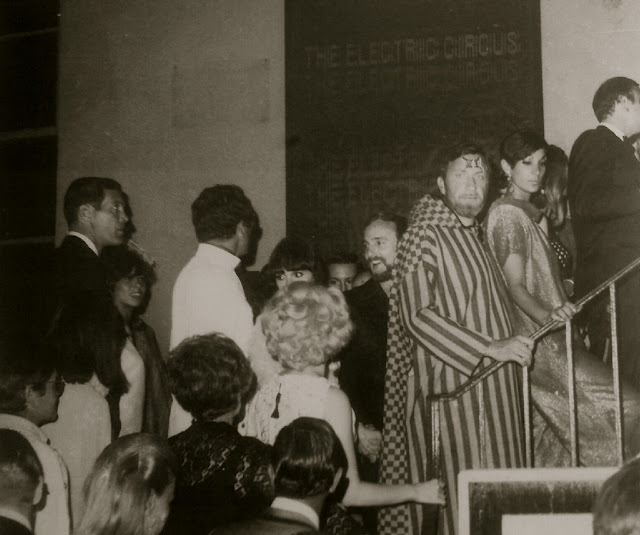
Below: A typical crowd on the stairs outside the Electric Circus (pic courtesy Old New York)
“I’m so excited, after all these decades to hear from people who got to experience the the most amazing Electric Circus, as I did.  By far dancing myself into a dazed, psychedelic trance, while absorbing the magical energy of the Chambers Brothers sing ‘Time’, was right up there in my top ten of life altering experiences.  I was a runaway, living with new friends in the Village.

I used to panhandle on St. Marks Place, and spend all my money on clothes at the Limbo, pizza, and tickets to hear my fav bands, except for the times I used to get in for free.” — Sonny

Below: Sonny’s jam from the floor of the Electric Circus:

“I can’t remember exactly how I arrived at St. Marks Place that first night.  I had never been to St Marks Place and I certainly didn’t know about Electic Circus.  I was just following a friend of mine who was interested enough in the new culture to find out where to go and what to do.

There must have been some kind of happening that night because the streets were full of people.  People were hanging all over the stairs leading up to the Circus.  And, you didn’t have to pay.  We just walked in. I still remember it emotionally.

The big room was completely decorated with fabric amorphously draped on walls and spanning corners and cornices.  Projectors behind the fabric ran continuous short loops of films. Of course it was dimly lit so as not to wash out the films.  People were everywhere and moved mysteriously in the smoky dim light.  I was born in Brooklyn and had already lived a few years in Manhattan, but I never saw anything like this before.  The next time I saw EC the decor had changed. I never paid to get in because I was a member of the PABLO Light** show.” — Anonymous

* Limbo was a famed ‘hippie clothing’ boutique where today’s Trash & Vaudeville sits today.

** That would be Lights By Pablo, a leading ‘liquid light show’ exhibitor of the late 1960s, frequently here and at Fillmore East.
Categories
Brooklyn History Podcasts

The History of DUMBO, the Brooklyn neighborhood built upon a legacy of coffee and cardboard boxes

PODCAST The history of Brooklyn’s DUMBO neighborhood — from its industrial past to its hi-tech future.

Down Under Manhattan Bridge Overpass (DUMBO) is, we think, a rather drab name for a historically significant place in Brooklyn where some of the daily habits of everyday Americans were invented.

This industrial area between the Brooklyn and Manhattan bridges traces its story to the birth of Brooklyn itself, to the vital ferry service that linked the first residents to the marketplaces of New York. Two early (lesser) Founding Fathers even attempted to build a utopian society here called Olympia.

Instead the coastline’s fate would turn to industrial and shipping concerns. Its waterfront was lined with brick warehouses, so impressive and uniform that Brooklyn received the nickname ‘the Walled City‘.

The industries based directly behind the warehouses were equally as important to the American economy. Most of their factories comprise the architecture of today’s DUMBO, grand industrial fortresses of brick and concrete, towering above cobbled streets etched with railroad tracks.

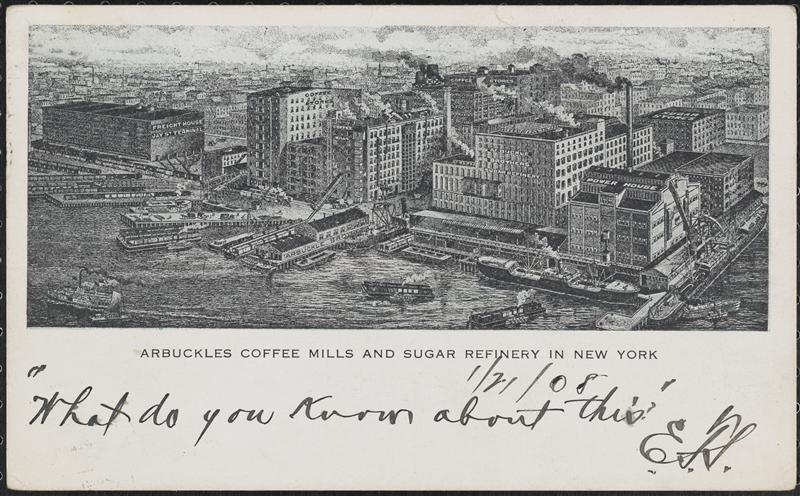
The cardboard-box titan Robert Gair was so dominant in this region that his many buildings were collectively referred to as Gairville. But coffee and tea traditions also came here — not just the manufacture, but the revolutionary ways in which people with buy and drink those beverages.

How did this early New York manufacturing district become a modern American tech hub, with luxury loft apartments and splendid coffee shops? This story of repurpose and gentrification is very different from those told in other neighborhoods.

PLUS: And, no, really, what is up with that name?

Listen Now: DUMBO History

Or listen to it straight from here:

________________________________________________________

The Bowery Boys: New York City History podcast is brought to you …. by you!

We are now producing a new Bowery Boys podcast every week.  We’re also looking to improve the show in other ways and expand in other ways as well — through publishing, social media, live events and other forms of media.  But we can only do this with your help!

We are now a member of Patreon, a patronage platform where you can support your favorite content creators for as little as a $1 a month.

Please visit our page on Patreon and watch a short video of us recording the show and talking about our expansion plans.  If you’d like to help out, there are five different pledge levels (and with clever names too — Mannahatta, New Amsterdam, Five Points, Gilded Age, Jazz Age and Empire State). Check them out and consider being a sponsor.

We greatly appreciate our listeners and readers and thank you for joining us on this journey so far. 

_______________________________________________________

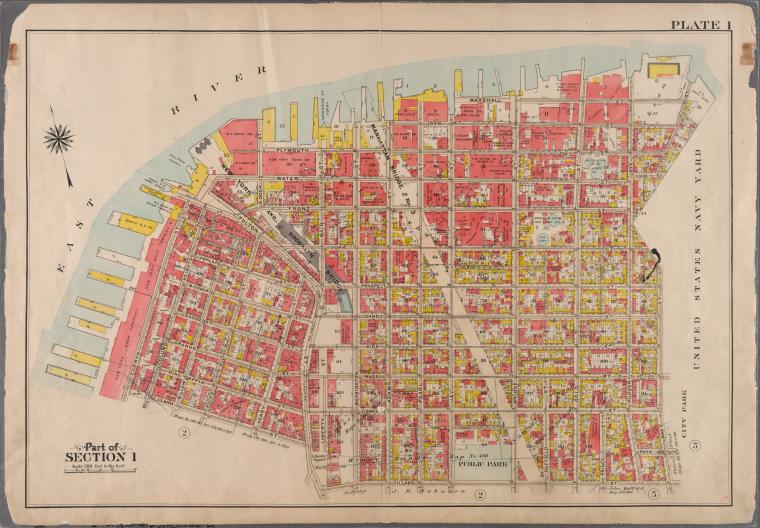
The DUMBO neighborhood, Brooklyn Heights and downtown Brooklyn on this 1908 survey map.

New York Public Library

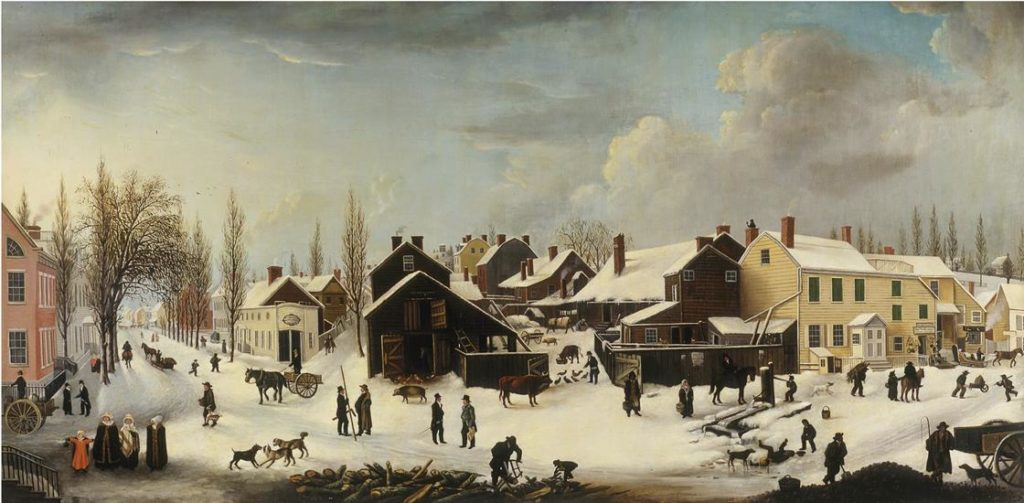
This painting by Francis Guy) actually depicts the area of downtown Brooklyn as it looked during the area’s ‘Olympia period’.

MCNY

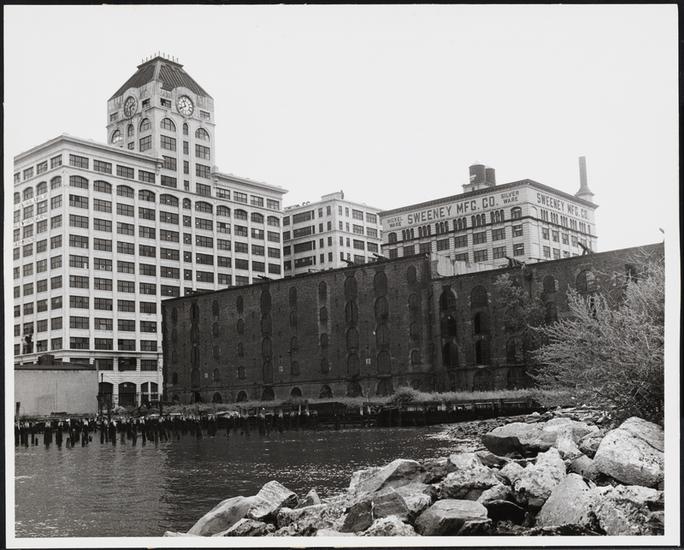
The waterfront in 1974 — the Empire Stores, the former Gair building (1 Main Street) and Sweeney Manufacturing (the kitchenware company)

MCNY
MCNY

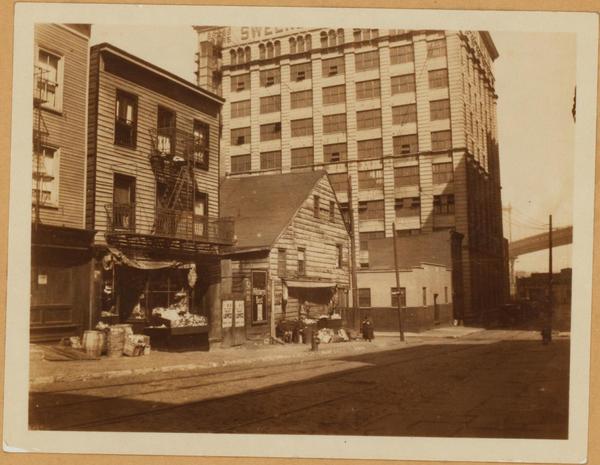
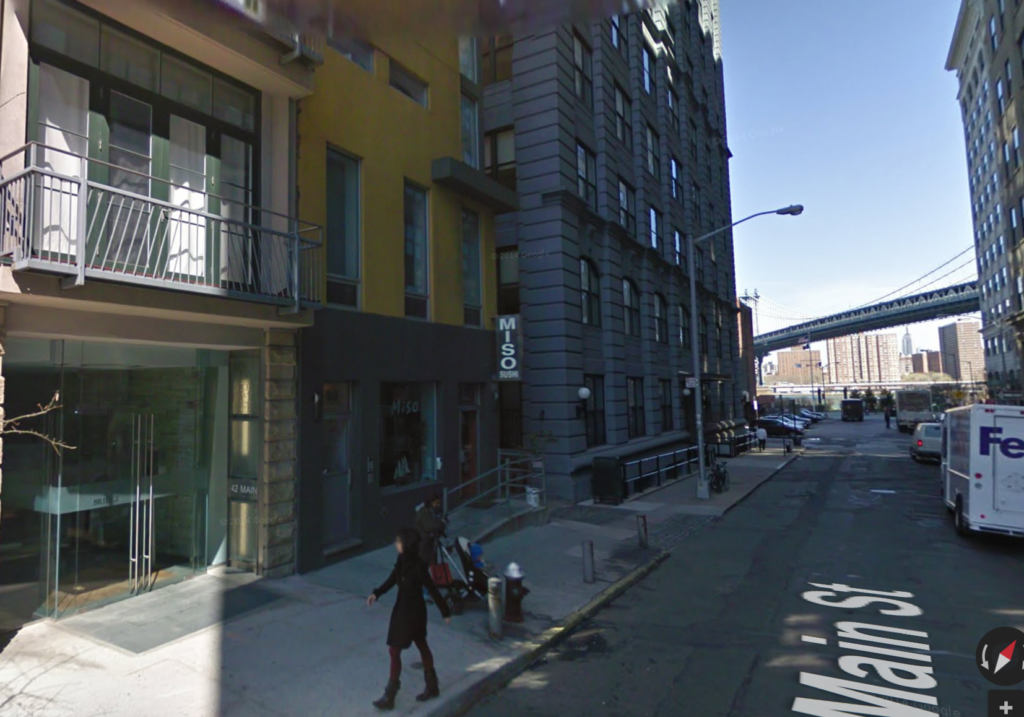
While the neighborhood is dominated by industrial architecture today, it wasn’t always so. This picture from 1924 (looking down Main Street with the wooden building sitting at Howard Alley) and the same view today

NYPL

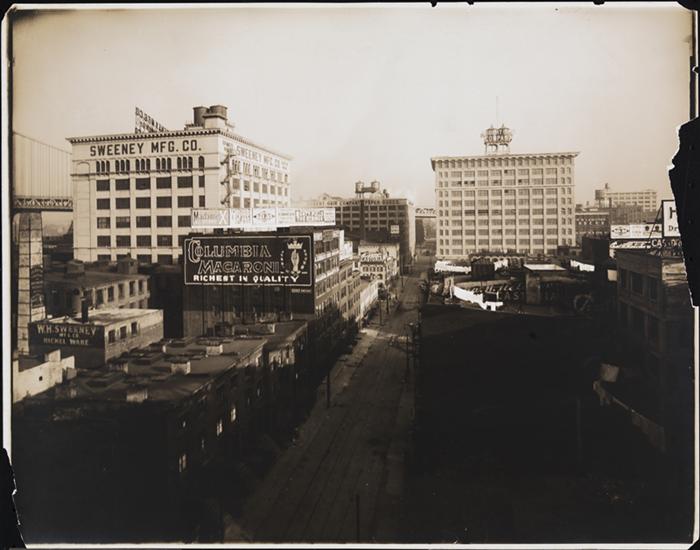
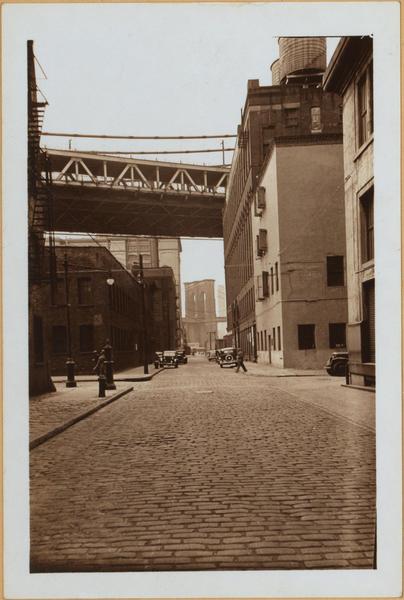
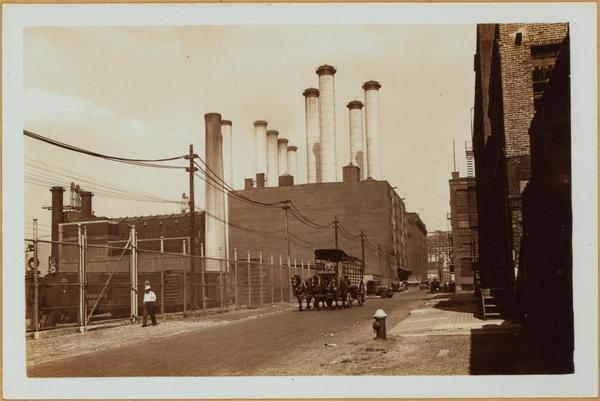
Plymouth Street, west from Pearl Street, showing at the right one of the Arbuckle Bros. Coffee Co. building. April 4, 1938.

NYPL

John Street, east from Jay Street, 1938

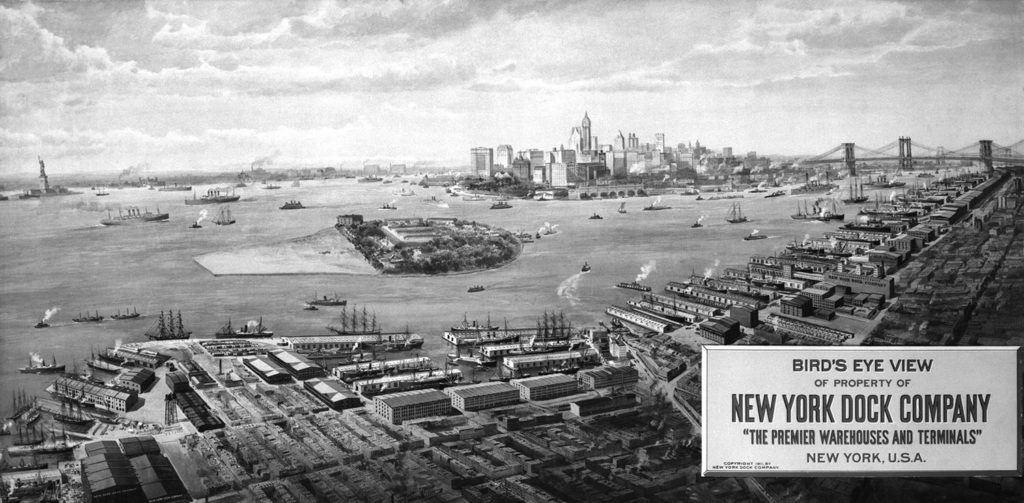
Brooklyn waterfront was lined with warehouses during the 20th century. Here’s a view of the coastline from the Fulton Ferry area down to Red Hook.

Brooklyn Historical Society

A 1908 view of waterfront properties from Jay Street to Washington Street (pre Manhattan Bridge of course)

MCNY

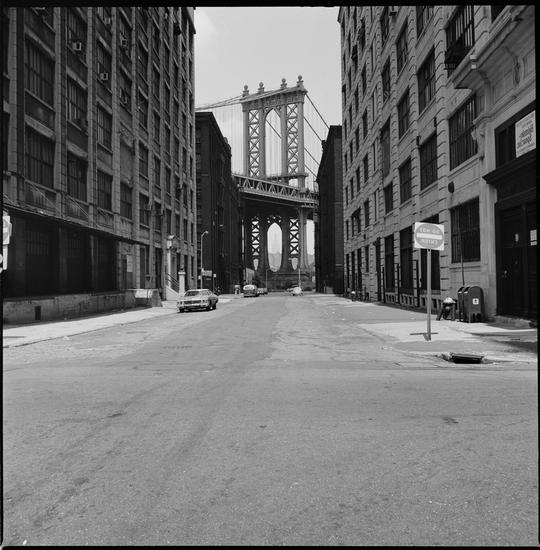
Today you’ll find dozens of people every day on the street, taking selfies in front of this view. But back in 1978, the district was virtually abandoned.

MCNY

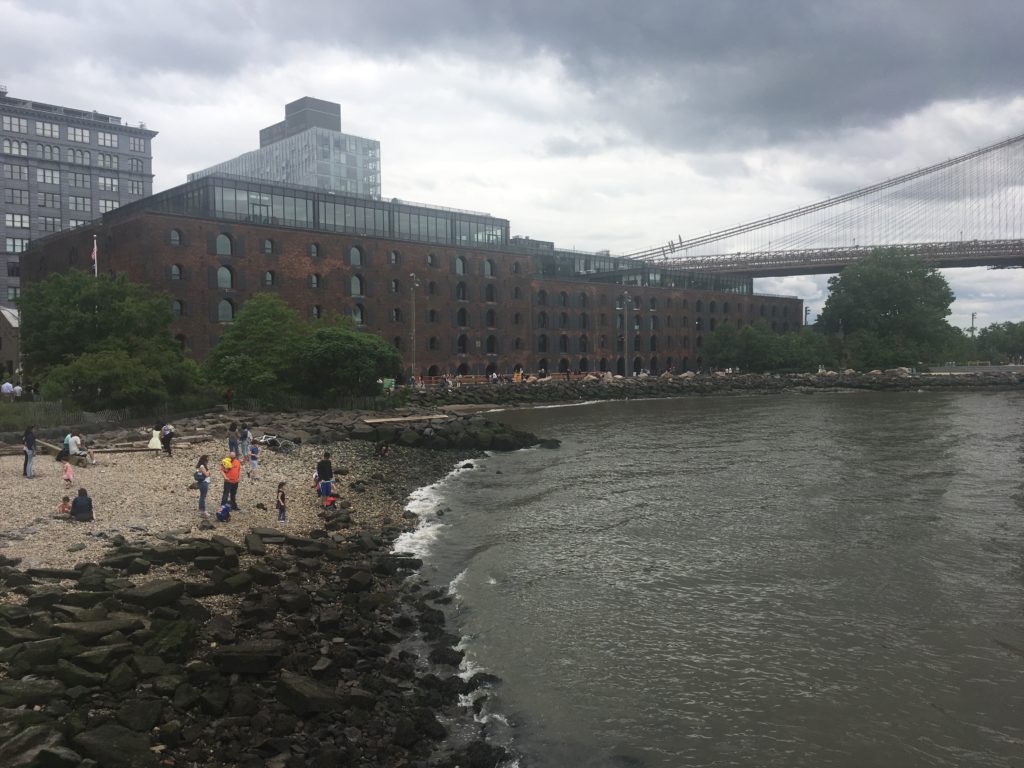
Inside the repurposed Empire Stores, now the headquarters of West Elm and home of the Brooklyn Historical Society annex.

EXHIBITS
Waterfront at the Brooklyn Historical Society’s DUMBO gallery
Featuring many aspects of life along the Brooklyn waterfront. Plus an excellent short film At Water’s Edge surveying 20,000 years of Brooklyn history.

FURTHER LISTENING
We mentioned these past Bowery Boys podcast on the show. After you’ve finished listening to our DUMBO: Life on the Brooklyn Waterfront show, give these a try!

Categories
Bowery Boys Bookshelf

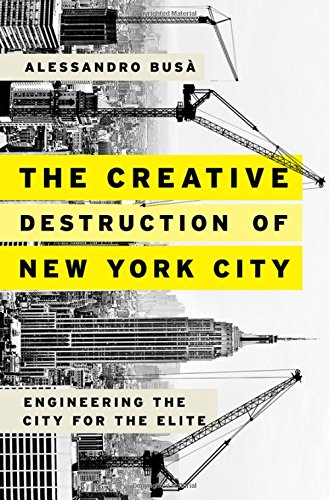
‘The Creative Destruction of New York City’: The Tools For Fighting Back Against Unwanted Change

Talk of hyper-gentrification, skyrocketing real estate and the ‘end of New York’ comes bundled with despair and helplessness. Walk down 59th Street and gaze as the super-talls blocking the sun, built for foreign investors who may never once step inside these luxury caverns.

Or stroll along Smith Street in Cobble Hill, observing the rows of boarded-up or vacant store fronts, their rents too high for most actual human retails. Or head to 125th Street to experience the amazing history of Harlem, only to be met with a smorgasbord of national brand retailers with few connections to locals.

What can I do about any of this?, you might think hopelessly. Activism, voting, speaking out — we must all do these things to protect the city we love. But the first step is education on the basic matters of rezoning and gentrification. Where do you even begin?

THE CREATIVE DESTRUCTION OF NEW YORK CITY
Engineering the City of the Elite
Alessandro Busà
Oxford University Press

In The Creative Destruction of New York City, a manual for the big-city activist, the critical urban scholar Busà lays out the current crisis in an explanatory, high-level inspection.  One must turn to points in the past — 9/11, the near-bankrupt ’70s, even the destructive shenanigans of Robert Moses — to understand the often soulless and demoralizing changes to the city in 2017. The most troubling development trends began as remedies for past urban decay.  In essence, the city is now choking on its former cures.

Courtesy brklyn is over/Flickr

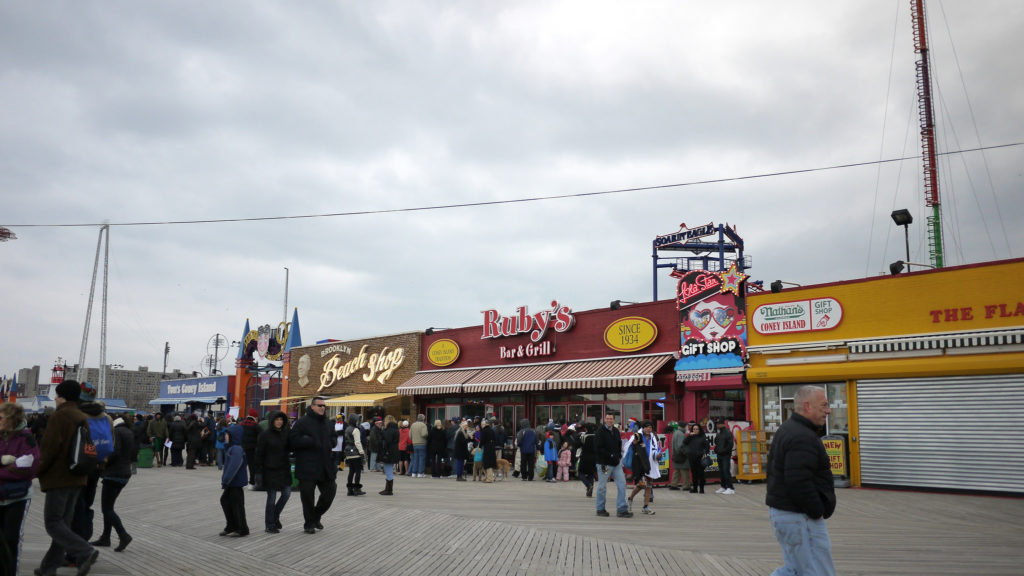
As examples, Busà focuses on two neighborhoods in particular — Harlem and Coney Island.  Neither of these places were ‘gentrified’ in the traditional sense — as in, initially driven by artists and the artists-formerly-known-as ‘bohemians’ that staked out Williamsburg in the 1980s and 90s. (Unlike other, angrier screeds, Busà mostly steers clear from blanket condemnations of hipsters.)

Portions of Harlem were refitted for big-box retailers who quickly closed in on the mom-and-pop establishments of 125th Street, while luxury housing monopolized on Harlem’s rich history to attract wealthy urbanites looking a condo in a hip neighborhood. Coney Island’s redevelopment woes have eliminated parts of the iconic amusement district and wiped historic buildings from the map.

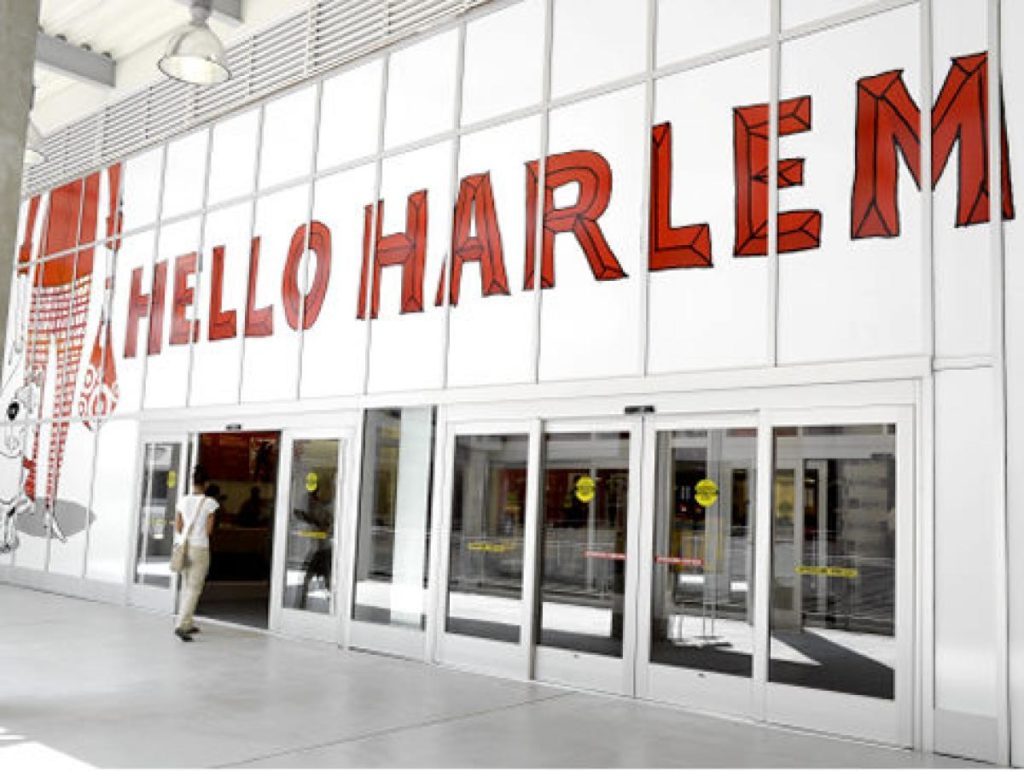
Below: Target opened in East Harlem in 2010. Today there are at least 15 Target stores throughout the five boroughs. 

ALFRED GIANCARLI/Daily News

At the core of both is that pesky, misunderstood implement known as rezoning. It’s a simple enough concept of course, the mechanism by which certain areas designated for one purpose (residential, commercial, industrial) switch to another. But as Busà says, “As of late, it has become the buzzword loaded with rather negative connotations in New York City. While for some residents it’s nothing more than some technocratic yaw-inducing mumbo-jumbo, for others this loathed word means a call to arms.”

Busà breaks down the major players in city government and civic life who control these decisions and identifies the tools those parties may use in transforming New York, often for less-than-altruistic ends. At times, during the administrations of Bloomberg and De Blasio, rezoning seems to have no more purpose than to create wealth for a few private players.

The Creative Destruction of New York City, written by an academic, is dispassionate and often dry; consider this a compliment. There are many outlets for well-meaning, instructive outrage. (Every time I want to do something — call a congressman or join a protest — I go to Jeremiah’s Vanishing New York first.) Busà‘s more academic take on the crisis will help you understand the rules of the game and those who move the pieces. It’s the book you reach for after you get angry.

Categories
Friday Night Fever

Webster Hall will return: The end of an era for NYC’s oldest party room

When news circulated this week that East Village nightclub Webster Hall would be closing for renovation in August, people understandably freaked out. It seems we’re losing historically significantly places at an alarming rate, places that seem to take a little bit of New York City’s personality with them when they disappear forever.

It was announced earlier this year that the venue was switching to new corporate owner Barclays/AEG/Bowery Presents in an effort to “bring them up to contemporary standards and add a few more customer features.” For many people, that’s code for stripping a place of its charm.

But don’t panic! This change is but the latest for this storied party venue. The hall has had many facelifts over the past 130 years, evolving to mirror the tastes of Greenwich Village residents. Indeed this corporate upgrade is a belated reflection of the neighborhood’s various sleek changes. (The projected renovations seem positively mild in comparison to the blistering reinvention of Astor Place.)

In 2008 Webster Hall was designated a New York City landmark for its impressive terra-cotta architecture and its status as a beacon of ethnic and social counter-culture during the late 19th and early 20th centuries.

As we wrote in our book Adventures In Old New York: “Opened in 1886, the hall hosted the annual Greenwich Village Ball from the 1910s to the 1930s, a bacchanalia where artists, bohemians, drag queens, and general reprobates of the best kind came to drink, dance, and seriously make merry until early morning. It worked hard to earn its nickname “the devil’s playhouse.”

Author Allan Church wrote, “So many dances-till-dawn and fancy dress balls were held there that one Villager said of himself and his wife: ‘We’ve sold our bed. Why sleep when there’s a dance every night at Webster Hall?’ ”

—————

In celebration of its new landmark status, we recorded an entire episode on the history of Webster Hall back in January 2009. In 2015, some additional material was added to the show.  Listen to it here or look for it in our Bowery Boys Archive feed (episode #73):

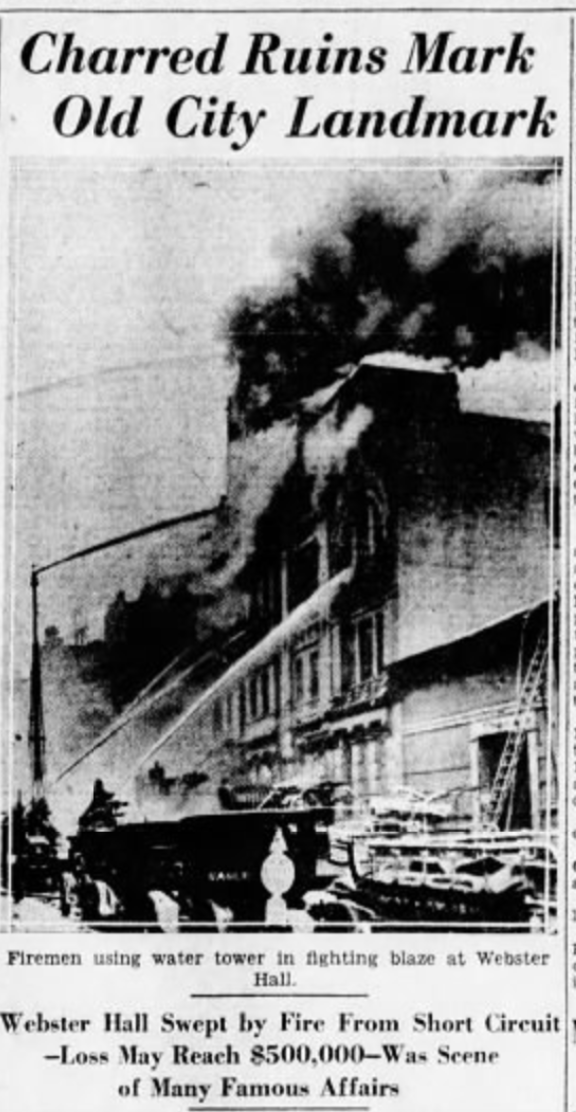
We look forward to visiting the new Webster Hall but of course we’ll be swinging by before August 5 to bid adieu to present incarnation.  Here’s a few clippings from old newspapers, giving you a few additional insights into Webster Hall’s spectacular history:

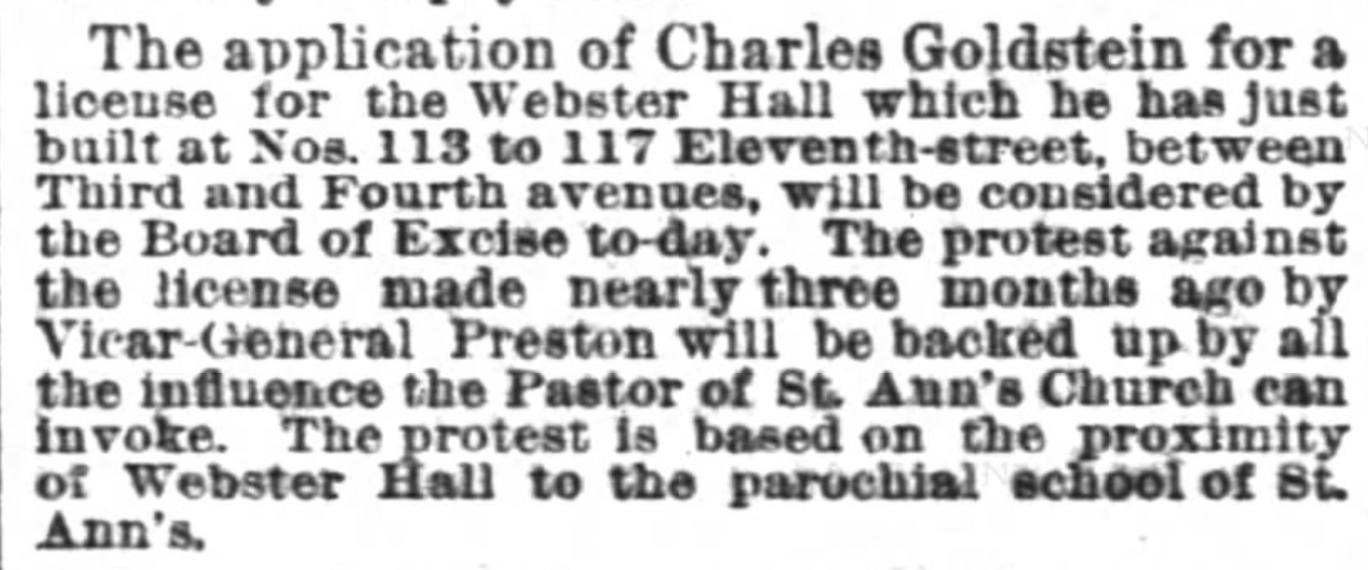
Webster Hall was rebellious before it even opened. St. Ann’s, the church which most vigorously decried its existence, has all been erased except for its entrance:

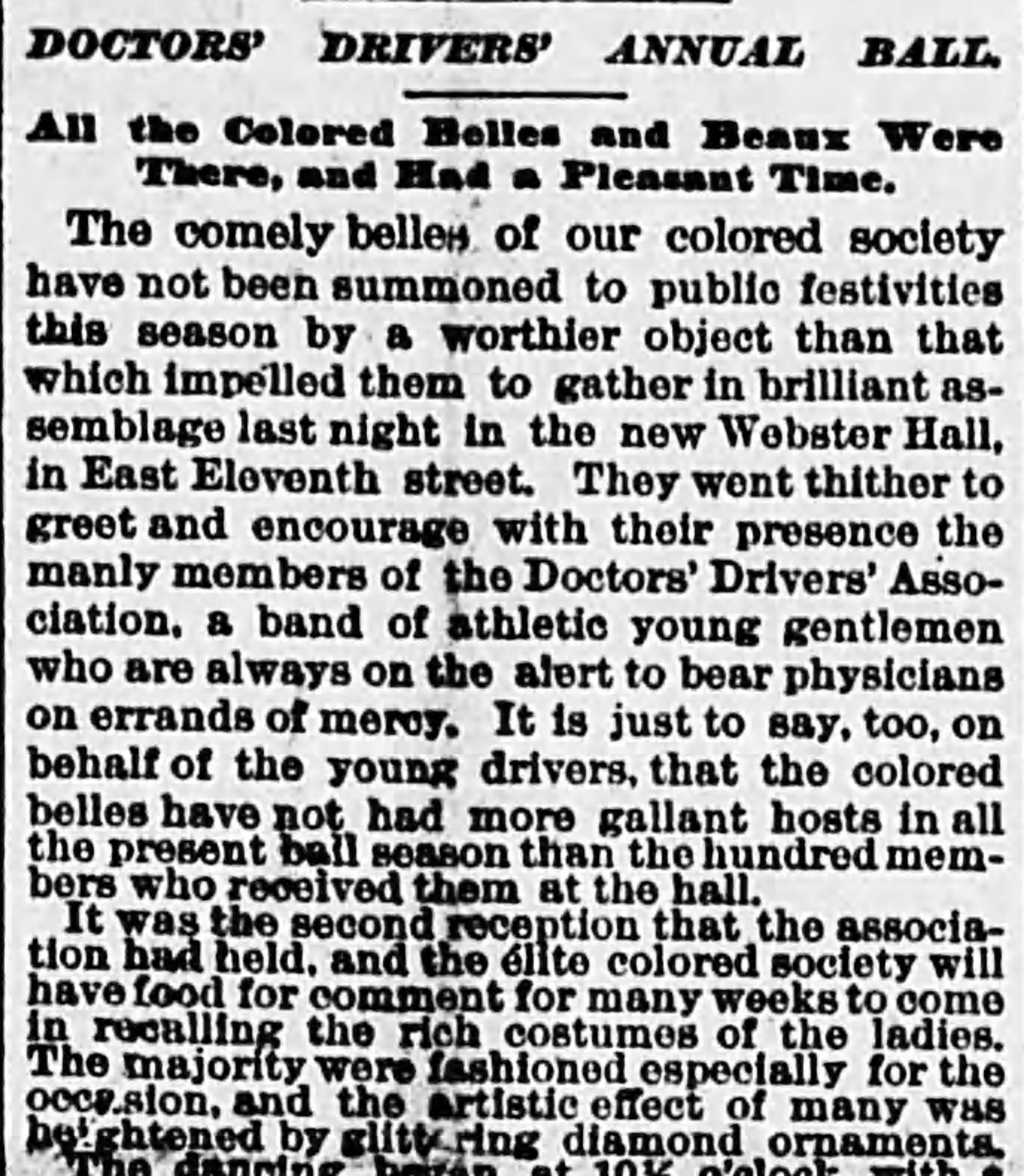
In 1887 Webster Hall played host to a private dance for wealthy black New Yorkers, members of the Doctors’ Drivers’ Association, “a band of athletic young gentlemen who are always on the alert to bear physicians on errands of mercy.”

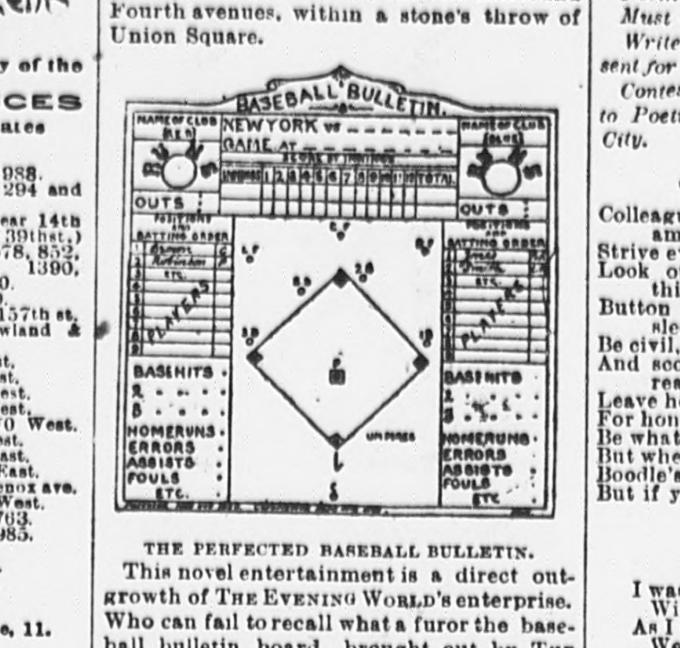
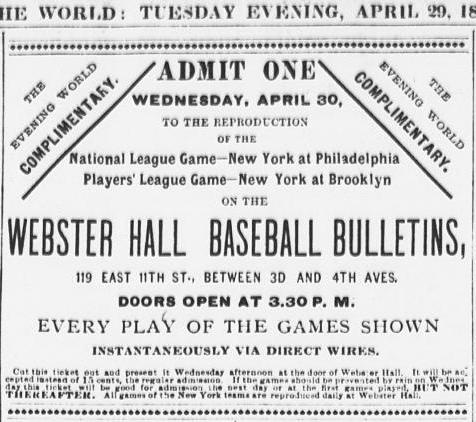
A depiction of the baseball scoreboard that was installed by the New  York Evening World to ‘instantaneously’ update baseball scores from Boston in 1890. [The complete article is here.]

New York Evening World

1


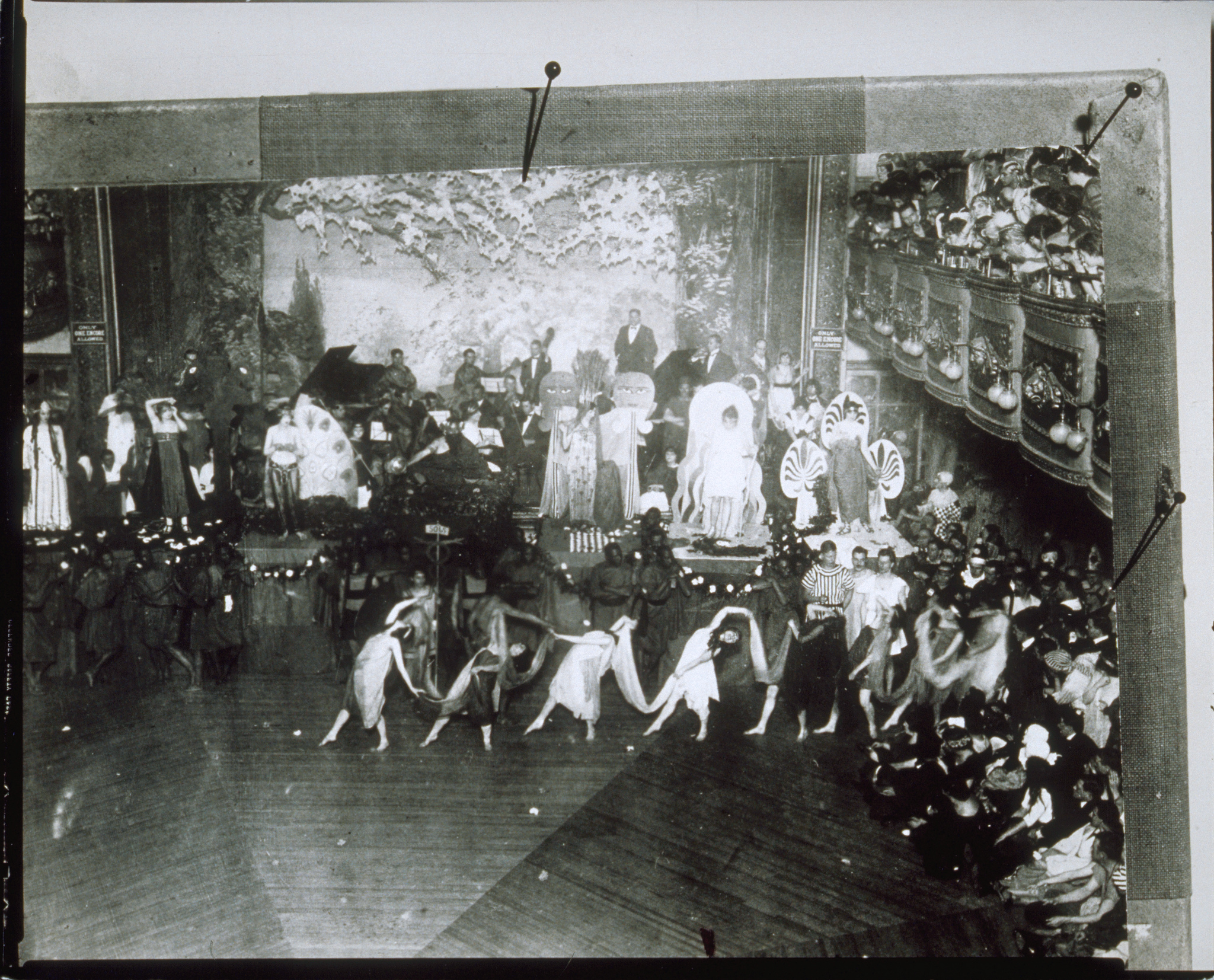
The party rages at a Webster Hall costume ball, in a photo by the great Jessie Tarbox Beals. Just click into this photo for a closer view and observe the bizarre costumes.

Courtesy Schlesinger Library


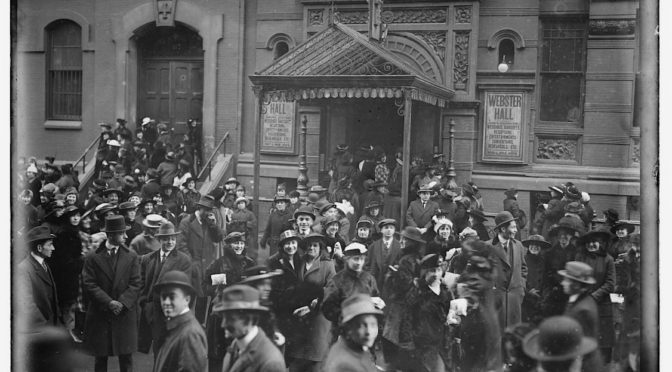
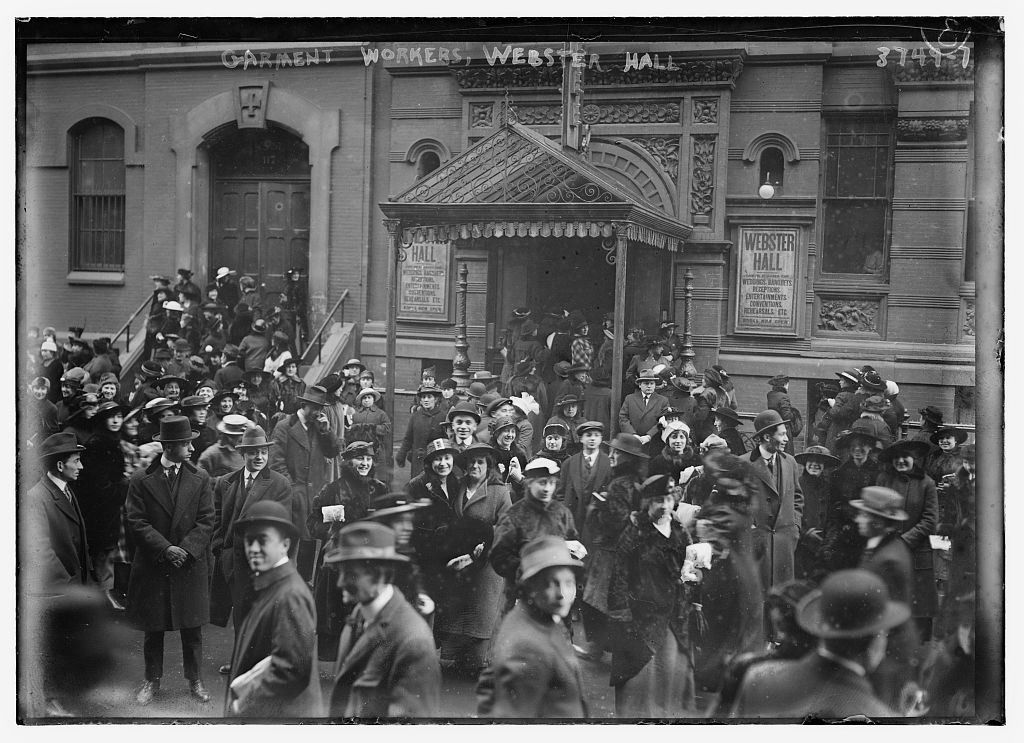
Garment workers meet out in front of Webster Hall, between 1910-1915.  The venue was a pivotal meeting spot for union groups, political activists and anarchist leaders like Emma Goldman.

Courtesy Library of Congress


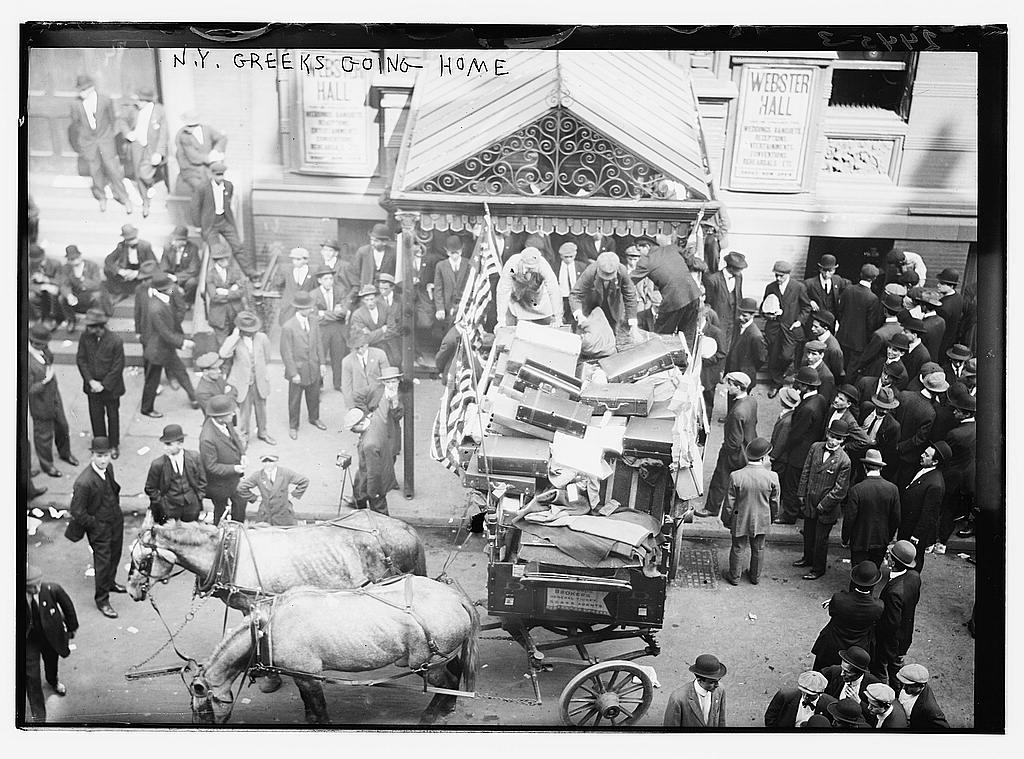
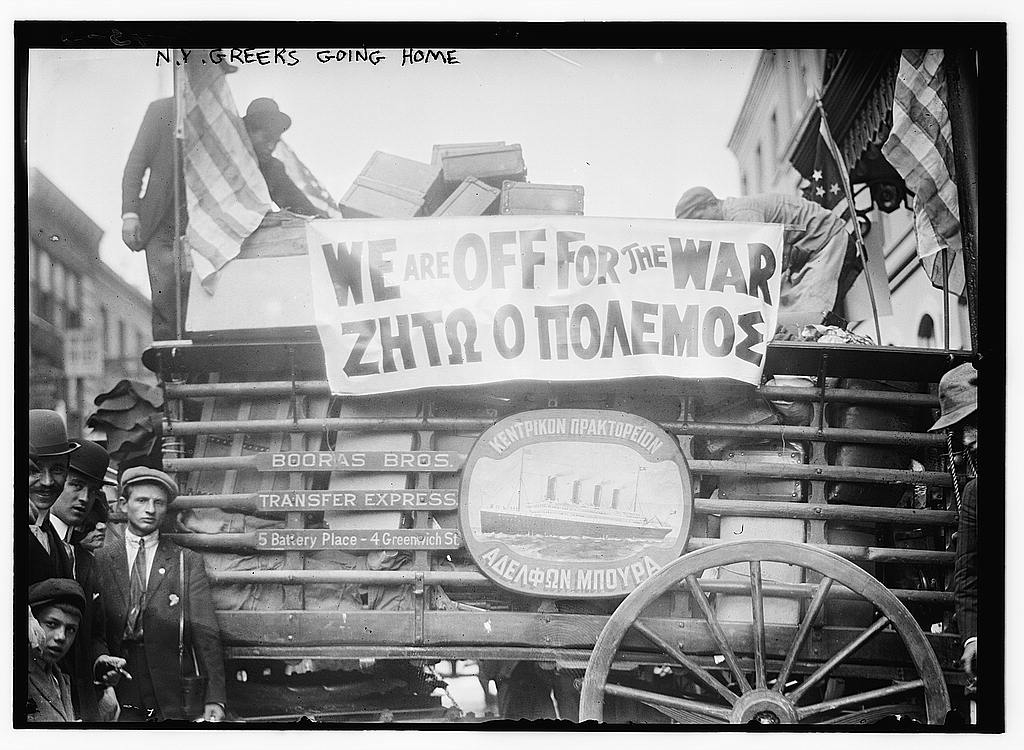
Greek immigrants gather in front of Webster Hall as they prepare to return to their country to engage in the first Balkan war (October 1912).

Courtesy Library of Congress

Courtesy Library of Congress

From a 1930 article:


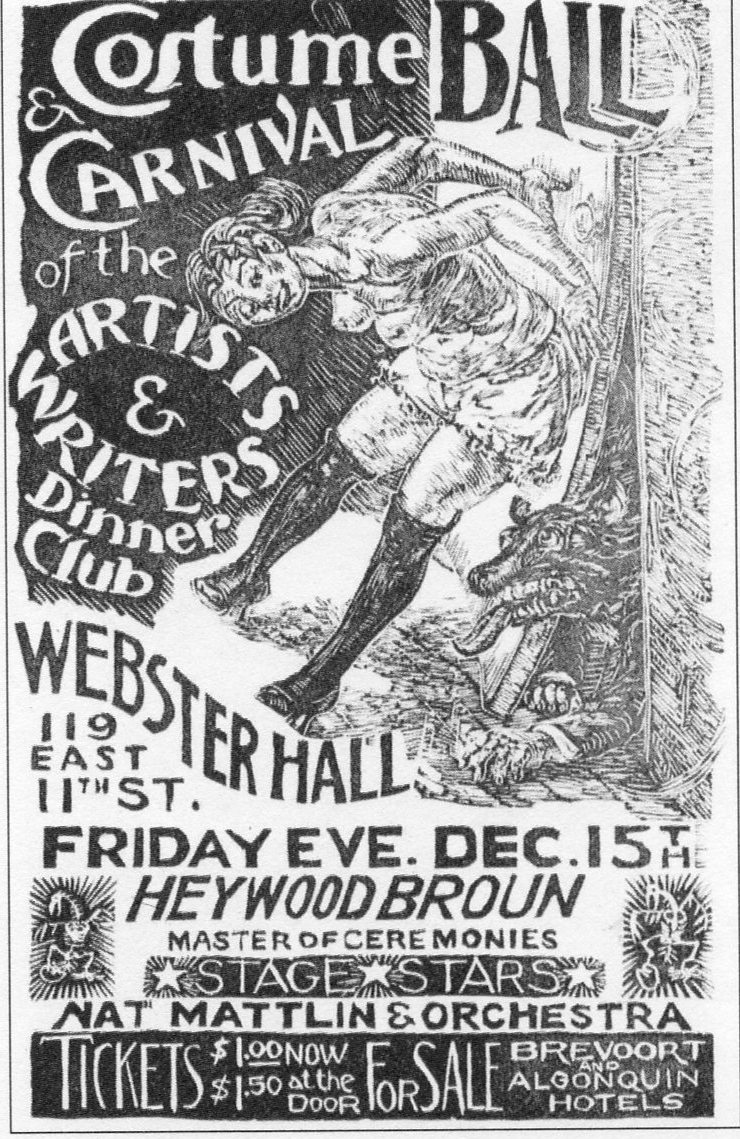
A 1933 poster advertising the annual Greenwich Village costume ball, designed by John Sloan

Courtesy Ephemeral New York
CourtesyLibrary of Congress


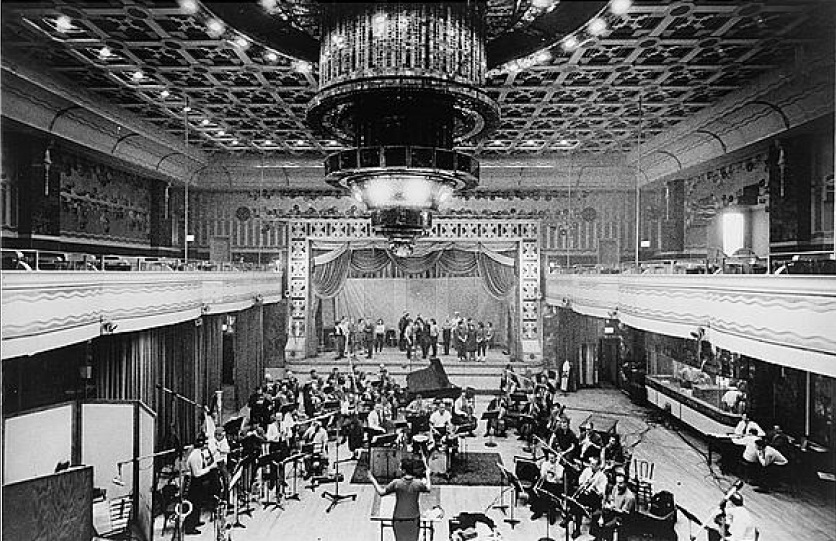
The cast of ‘How To Succeed In Business Without Really Trying’ recording the cast album at Webster Hall, 1961.

cast


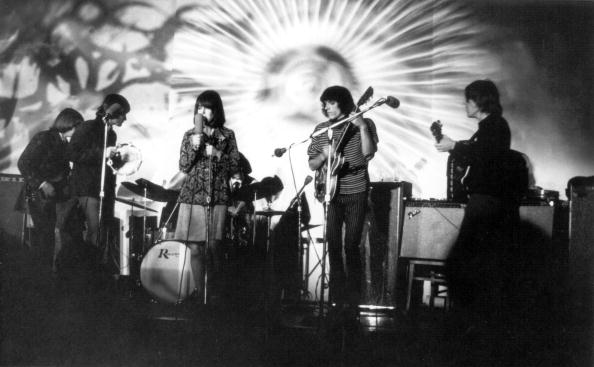
Jefferson Airplane’s first New York concert, January 8, 1967, at Webster Hall

(Photo by Michael Ochs Archives/Getty Images)


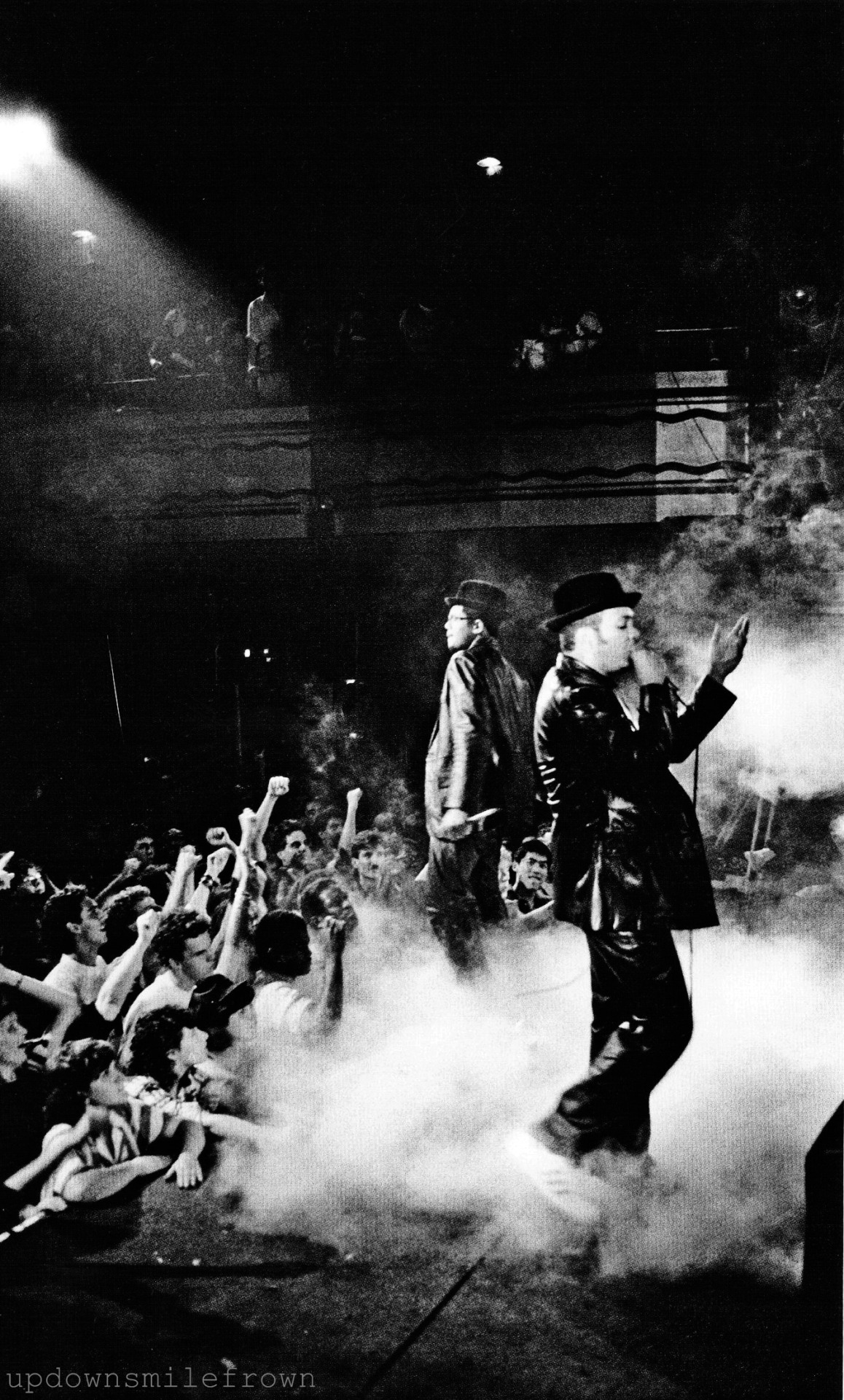
Run DMC performing at The Ritz, May 15, 1984

Photograph by Josh Cheuse/updownsmilefrown


Categories
Podcasts Preservation

Jane Jacobs: Saving Greenwich Village

PODCAST The story of Jane Jacobs, the urban activist and writer who changed the way we live in cities and her fights to preserve Greenwich Village in the 1950s and ’60s.

Washington Square Park torn in two. The West Village erased and re-written. Soho, Little Italy and the Lower East Side ripped asunder by an elevated highway. This is what would have happened in New York City in the 1950s and 60s if not for enraged residents and community activists, lead and inspired by a woman from Scranton, Pennsylvania.

Jane Jacobs is one of the most important urban thinkers of the 20th century. As a young woman, she fell in love with Greenwich Village (and met her husband there) which contained a unique alchemy of life and culture that one could only find in an urban area. As an adroit and intuitive architectural writer, she formed ideas about urban development that flew in the face of mainstream city planning. As a community activist, she fought for her own neighborhood and set an example for other embattled districts in New York City.

Her legacy is fascinating, often radical and not always positive for cities in 2016. But she is an extraordinary New Yorker, and for our 200th episode, we had to celebrate this remarkable woman on the 100th anniversary of her birth.

FEATURING: Mrs. Jacobs herself in clips interspersed through the show.

PLUS: ROOOOBERT MOOOOSES!


The Bowery Boys: New York City History podcast is brought to you …. by you!

We are now producing a new Bowery Boys podcast every two weeks. We’re also looking to improve the show in other ways and expand in other ways as well — through publishing, social media, live events and other forms of media. But we can only do this with your help!

We are now a member of Patreon, a patronage platform where you can support your favorite content creators for as little as a $1 a month.

Please visit our page on Patreon and watch a short video of us recording the show and talking about our expansion plans. If you’d like to help out, there are five different pledge levels (and with clever names too — Mannahatta, New Amsterdam, Five Points, Gilded Age, Jazz Age and Empire State). Check them out and consider being a sponsor.

We greatly appreciate our listeners and readers and thank you for joining us on this journey so far. And the best is yet to come!


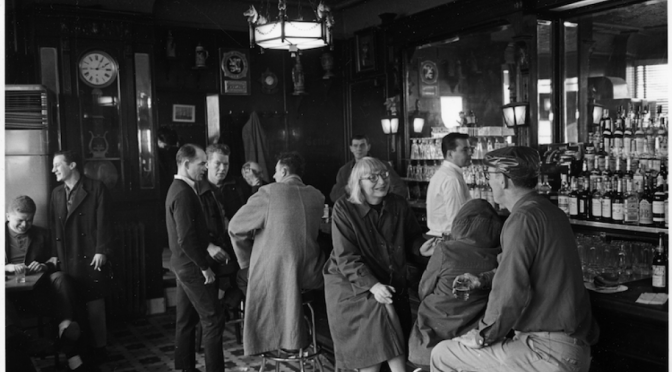
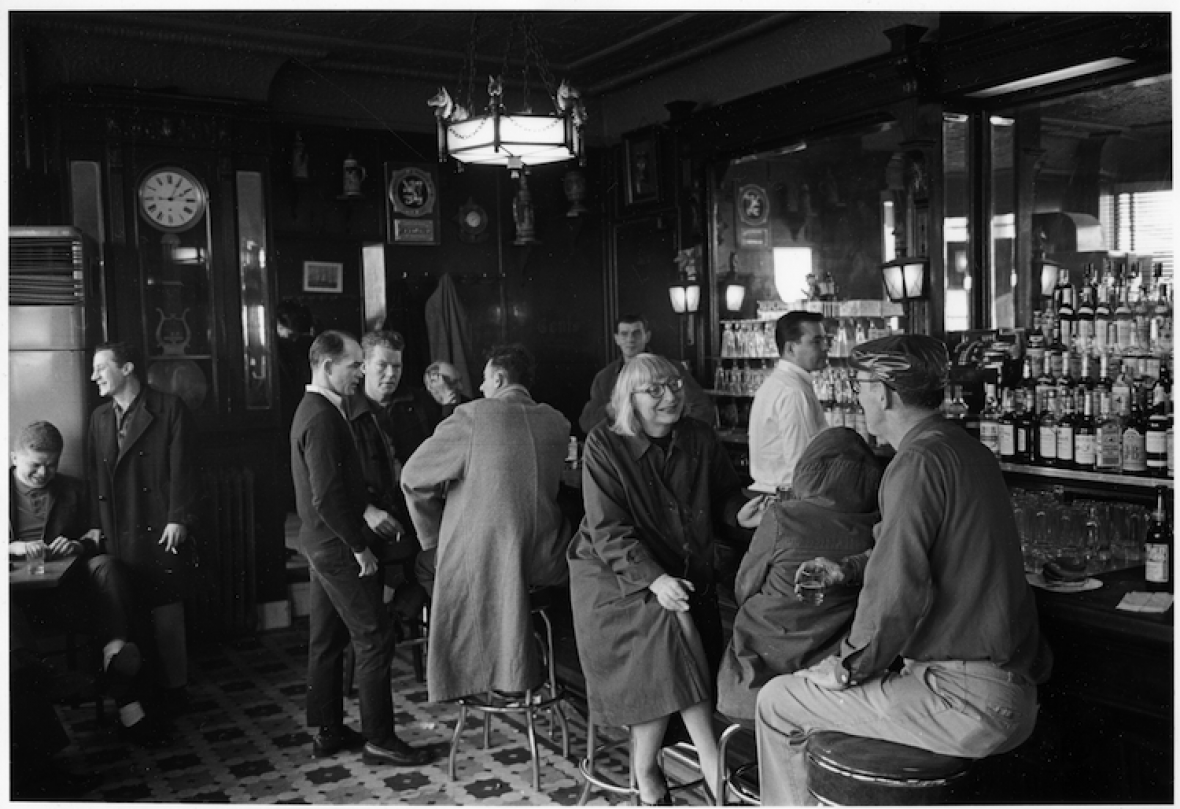
Jacobs at the White Horse Tavern, sometime in the 1960s. Jane lived on the block!

Cervin Robinson/New York Times (http://cervinrobinson.com/)
Photography by Cervin Robinson/New York Times. Visit his website for more extraordinary images of New York City (http://cervinrobinson.com/)

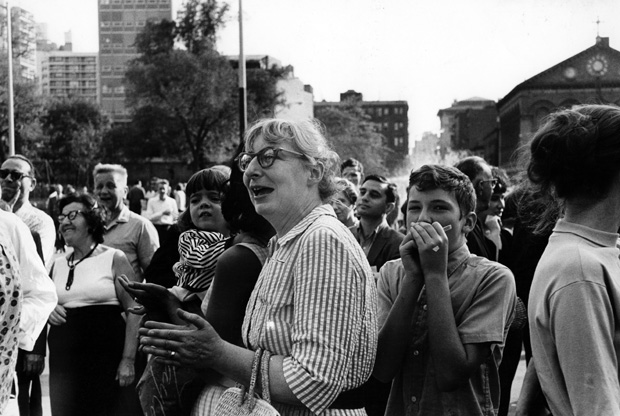
Jacobs in Washington Square Park (though I believe this is 1963 and not during the 1958 protest).

Fred W. McDarrah/Getty Images

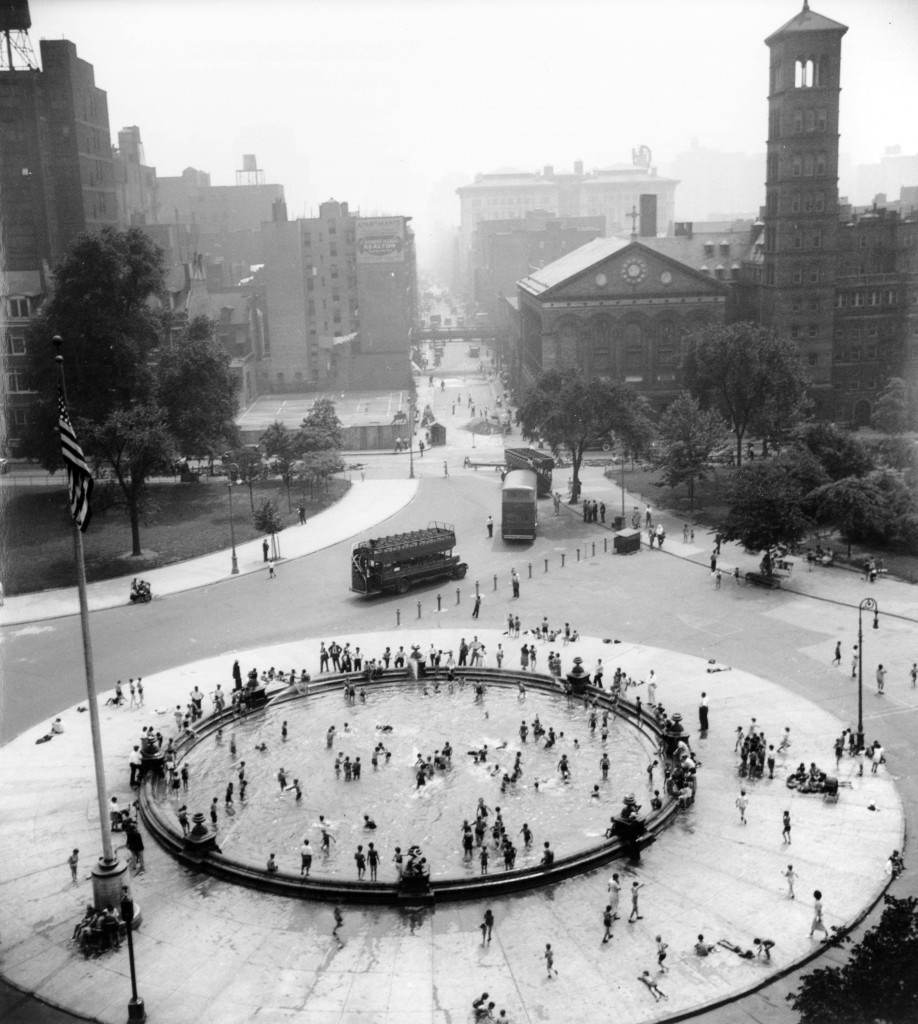
Washington Square Park in 1935. The 1958 activists were so successful in their goal of saving the park that they were able to banish automobile traffic from it entirely.

New York Parks Department

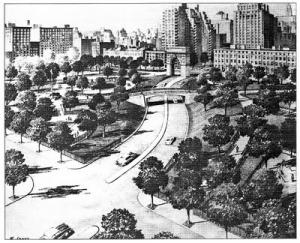
What Moses had planned for the park:

NYPL
NYPL

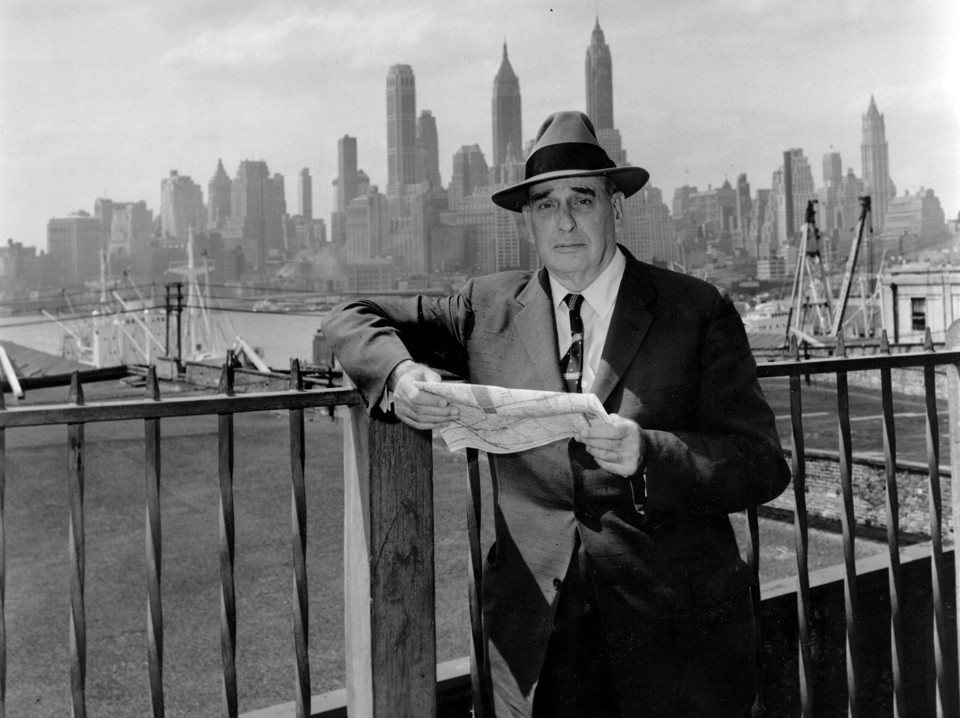
Robert Moses, pictured here in Brooklyn in 1956. Although he frequently situated as the arch-nemesis to Jane Jacobs, in fact they were rarely in the same room together. Their battles were fought in the press and in City Hall.

AP
AP

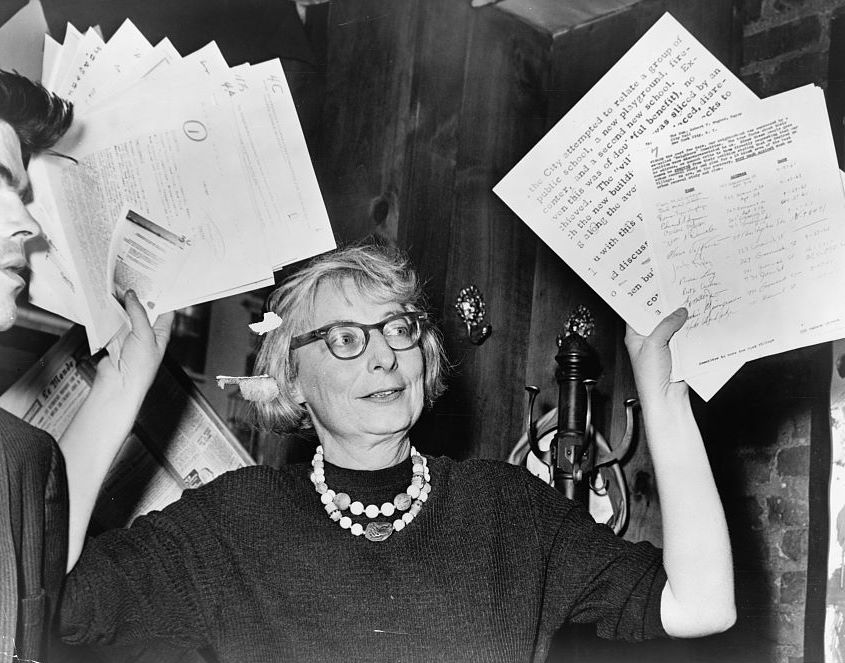
Jacobs presenting damning evidence about the proposed West Village demolition, taken at their main headquarters the Lion’s Head, in 1961 at the corner of Hudson and Charles Streets.

Jane_Jacobs

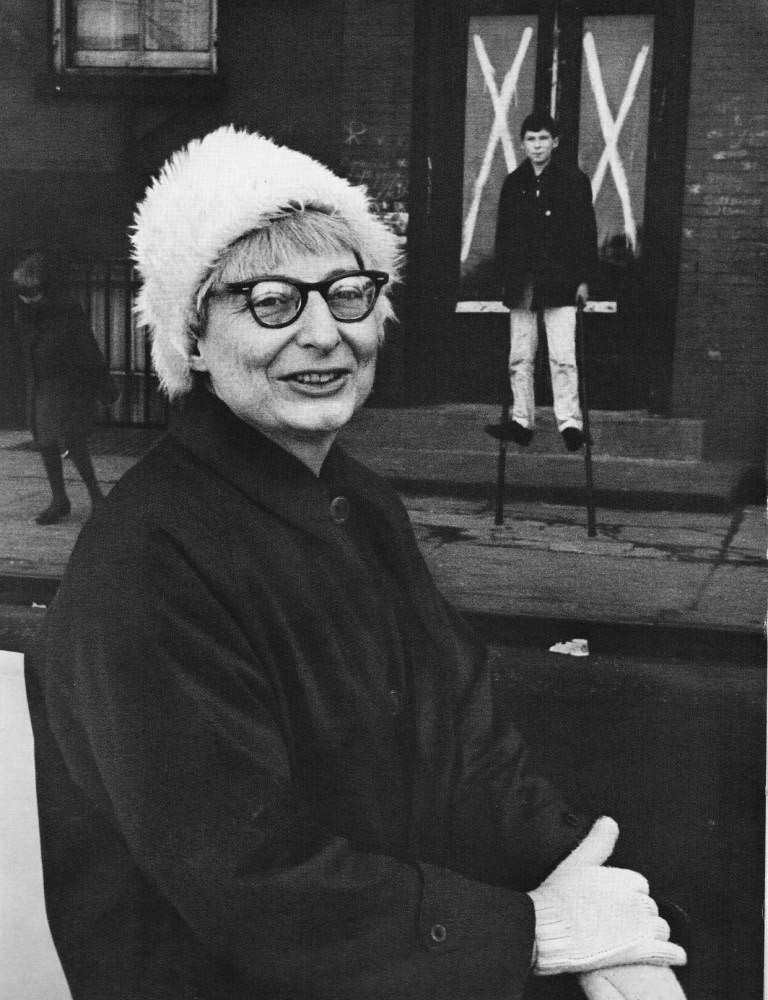
Jane Jacobs and her son Ned in 1961, during the West Village protests. The Xs were placed on buildings to be condemned. Activists wore sunglasses with Xs on the lenses in protest.
1
Photo courtesy Aesthetic Realism

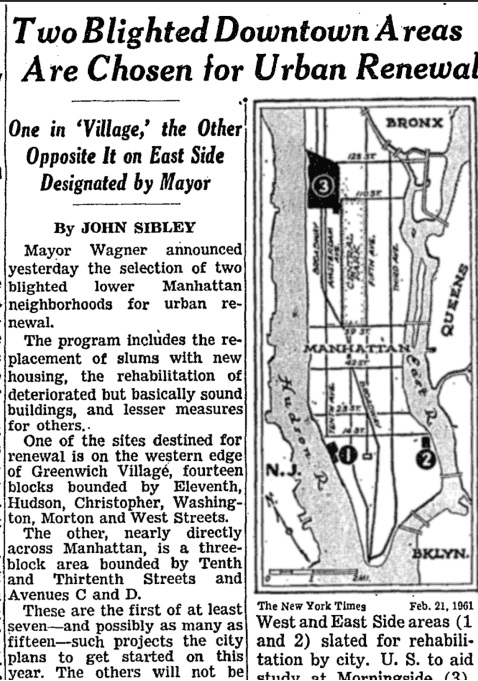
The February 21, 1961, article from the New York Times which riled up the West Village. The East Side project would eventually become Haven Plaza Apartments, but residents would fight off the designation in the West Village.

Untitled

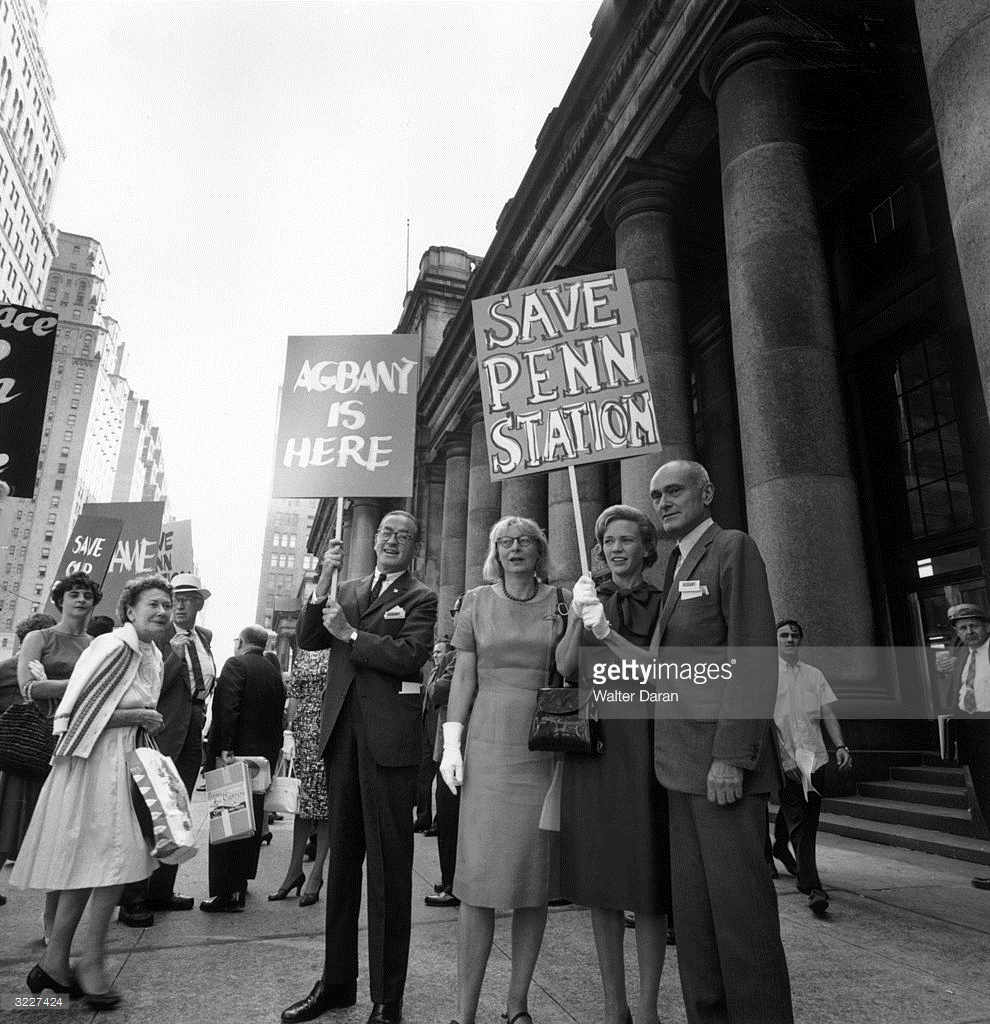
January 01, 1963 — Jacobs protests the destruction of Pennsylvania Station with architect Philip Johnson.

14

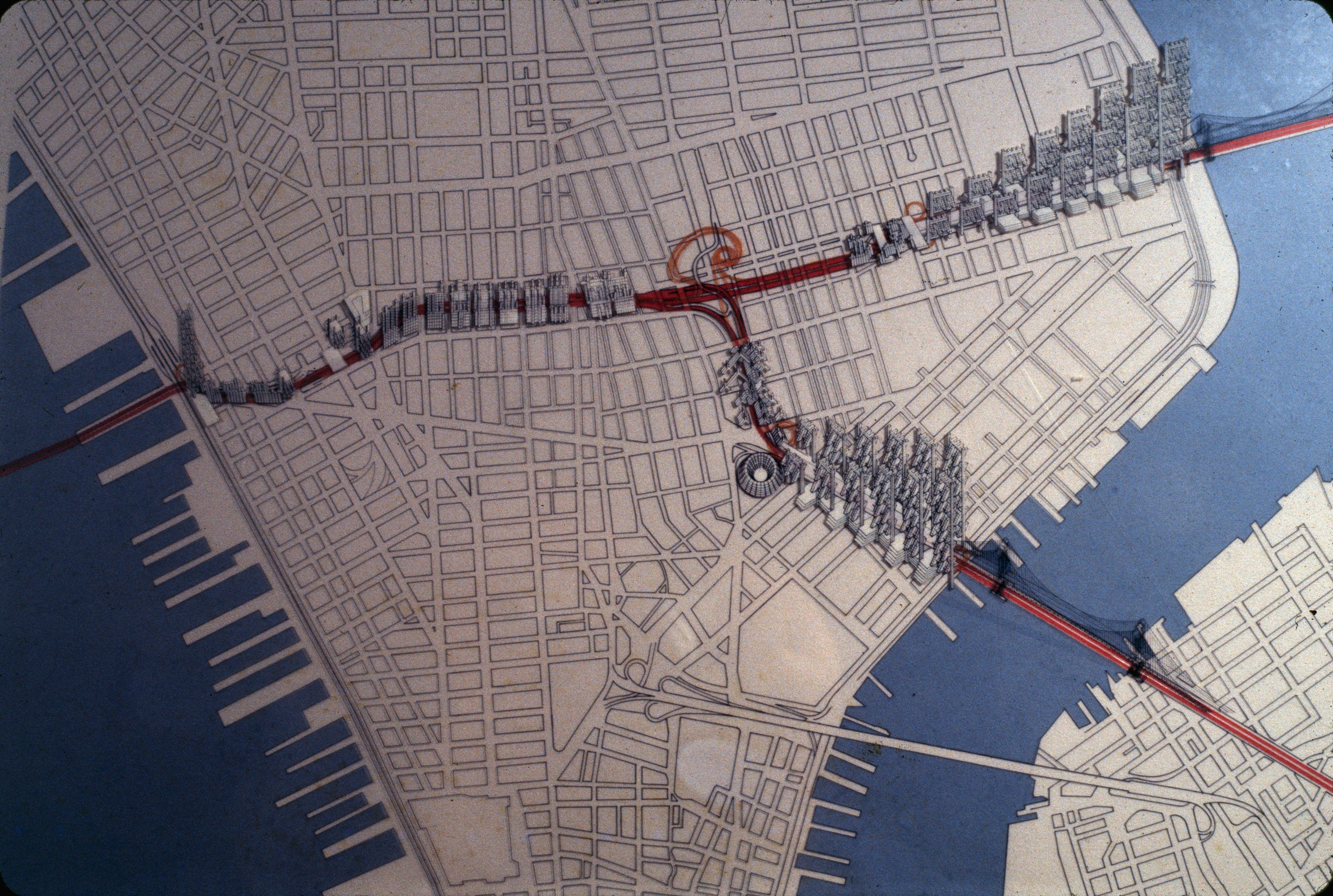
A map of the Lower Manhattan Expressway. Although this plan never came to fruition, the stack of buildings near the bridges seems to be coming to pass — on the Brooklyn side!

Library of Congress
Library of Congress

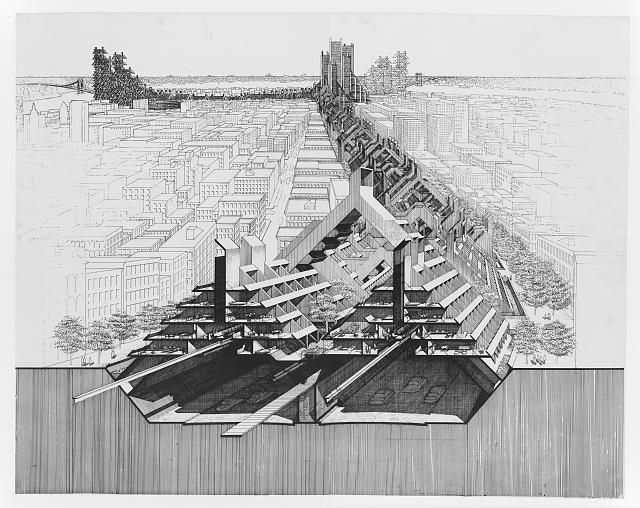
Another sketch by Paul Rudolph of the Lower Manhattan Expressway, showing the new construction from the Holland Tunnel as it enters through Manhattan.

paul

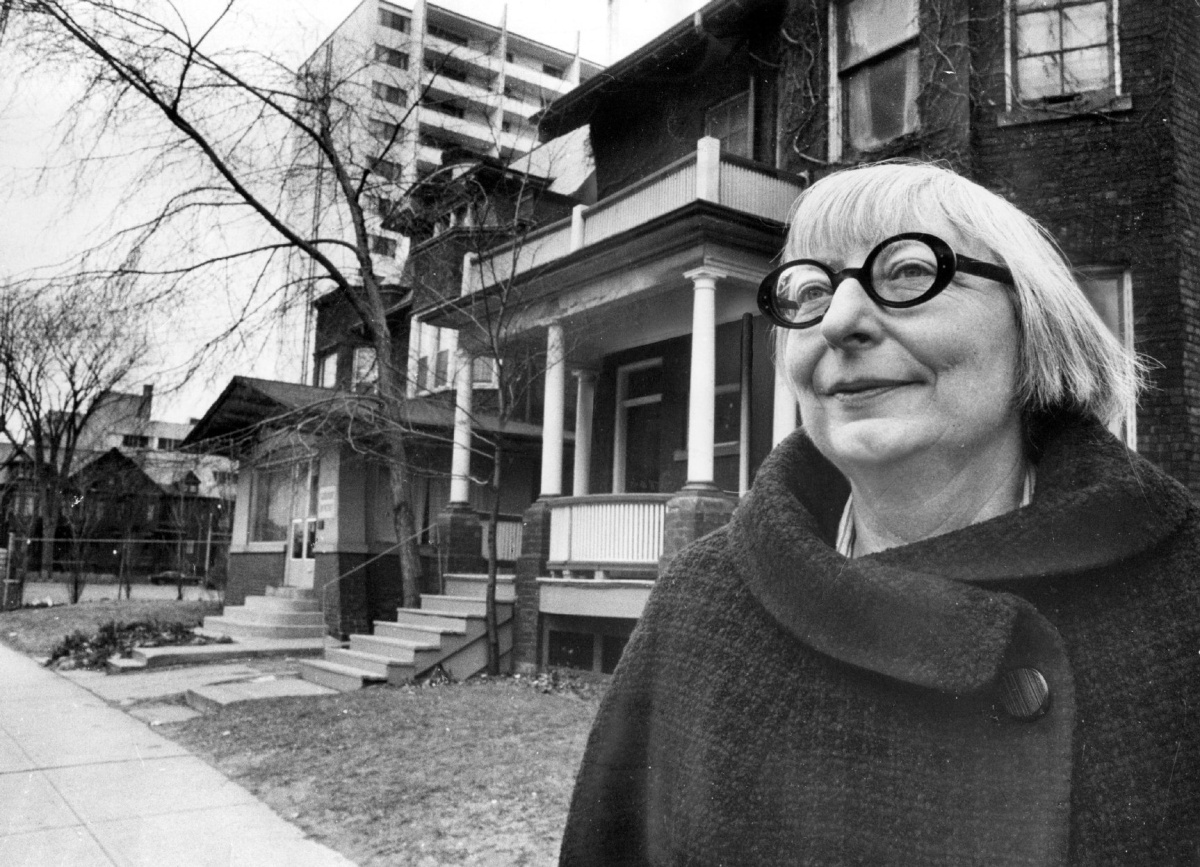
Jane Jacobs in Toronto, Dec. 21, 1968. She would continue her activism there, helping other community activists in foiling plans to build the Spadina Expressway.

SCANNED FROM THE TORONTO STAR LIBRARY *U42 GRAPHIC Jane Jacobs outside her home on Spadina Road just north of Bloor Street. Photo taken by Frank Lennon/Toronto Star Dec. 21, 1968. Also published 19730425 with caption: Jane Jacobs. Urban affairs expert. Also published 19740520 with caption: Toronto's in good shape, says author Jane Jacobs, but "We've got to be thinking about how we make sure it stays that way." Just being Canadian gives it some advantage, she says, but she fears amalgamation will bring some of the problems of cities like New York.
TORONTO STAR LIBRARY
Categories
Bowery Boys Bookshelf

The history and future of Gowanus: Interview with author Joseph Alexiou

Brooklyn gentrification has reached a curious impasse — the Gowanus Canal.

The neighborhood surrounding it thrives with new housing developments, trendy restaurants and bars, music venues, shuffleboard clubs and even a Whole Foods. Curbed just named it neighborhood of the year. It’s now a destination for foodies. Pity about that fetid and uniquely aromatic body of water then, a SuperFund site since 2010 and a problem that has vexed Brooklyn for decades. (Black mayonnaise anyone?)

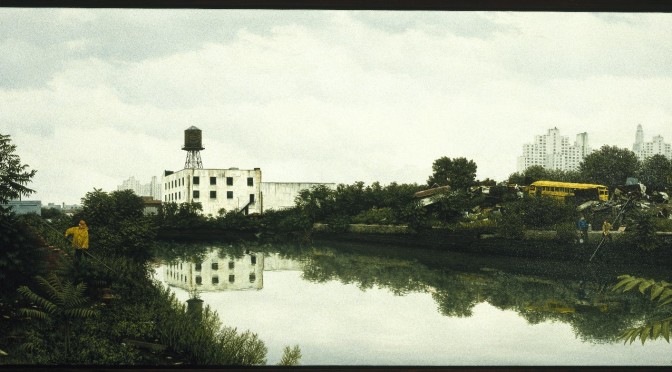
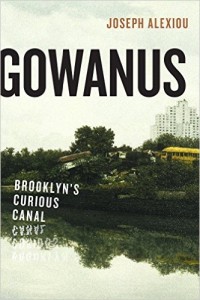
The Gowanus is also pivotal to the history of Brooklyn — and all of New  York City — as enjoyably laid out by author Joseph Alexiou in his new book Gowanus: Brooklyn’s Curious Canal.

The shores of Gowanus Creek have been critical to Brooklyn’s growth since the early Dutch days.  Its story is surprisingly thrilling and robust, from the bloody Revolutionary War battle fought on its shores to its transformation into an artery for industry.  Residents  have struggled with the Gowanus’ toxic qualities — both in the water itself and the criminal life it seems to regularly attract — for over a century and a half.

I wish there was a book like this for every foul, troublesome thing in New York.  Gowanus feels like a biography with an engaging protagonist — plucked from innocence and slowly corrupted — that you want to help save by the end.

Given the current situation in the neighborhood — anybody looking for a cheap apartment?Gowanus is an important and urgent read.  Plus the book is nominated for a GANYC Apple Award for outstanding achievement in non-fiction book writing! (Check out the full list of nominees here.) On the eve of the awards ceremony this Monday, I asked Alexiou a few questions about his experiences researching this curious creek:

Greg Young: What’s your particular connection to the Gowanus? How did you decide to develop this as a book subject?

Joseph Alexiou: I lived in Gowanus from 2006–2011, and happened upon the canal quite by accident, but it was love at first sight. I spent  several years  in the neighborhood  before making my foray into freelance writing, when I realized the area was a goldmine of funny stories and and weird characters.
The pollution was also so extreme and kind of surprising, which I learned about thanks to the appearance of Sludgie the Whale in 2007. Eventually, I ended up in journalism school, where my obsessions and nerdish love of history became the subject for a book proposal class.
 1


GY: Since your book is really arranged like a biography of the Gowanus, what would say has been its personality over the decades?

JA: The Gowanus has always been stubborn and dependable, and muddy. Definitely thoughtful— a calm, earthly reminder of the powers of nature with that occasional tendency to overflow. But the beginning it was a lot more crunchy and pastoral, full of wildlife and pleasant breezes. But as industry arrived, the Gowanus became stinky, smelly, exciting and unsavory—perhaps just a little bit dangerous. The foreboding sense of doom was its personality for a long time. But with the dynamic nature of cities and waterways, that grittiness is evolving yet again.


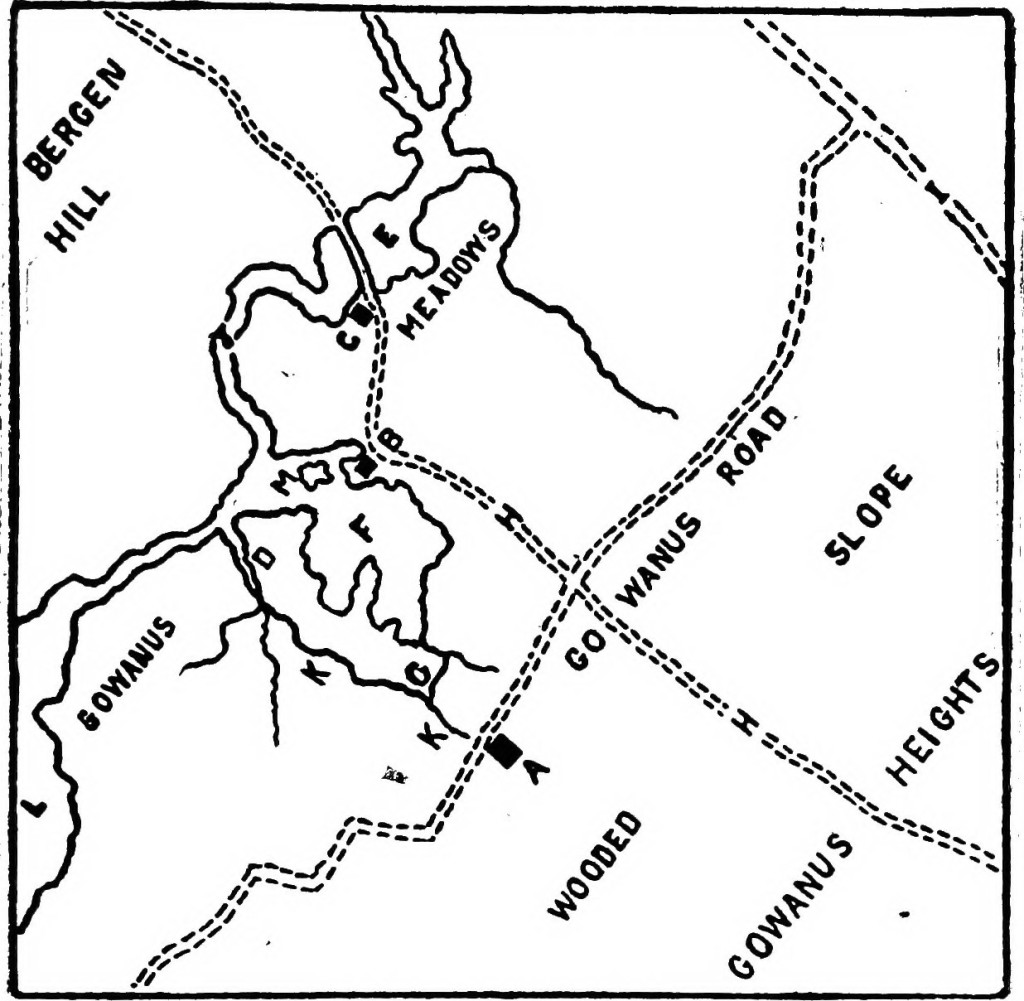
Illustration from The Stone House of Gowanus, Scene of the Battle of Long Island (1909) by Georgia Fraser
1


GY: Were you surprised to find how important the Gowanus has been to the overall history of Brooklyn? It seems like its story reflects many of the changes that have happening to the city (and borough) over the decades?

JA: When I discovered that the name “Gowanus” appeared in some of the oldest documented history of New York—dating back to 1636—that’s how I knew there was a particular history to be told. It was a surprise, but also a relief when I discovered how often the name “Gowanus” appeared across newspaper pages and old documents, once I had started really researching the book. So many people used it for business, pleasure, crossed its banks, complained about the traffic, fell into it!


It’s a really unique kind of New York waterway—naturally occurring, then industrialized, then neglected. It’s difficult to move and get around, and often caused much trouble because of the flooding. So many people have invested in it, cursed it, pondered its existence, and written about Gowanus throughout history because it was weird and offbeat, a wrinkle in the map. That proved to be quite a boon, and a great vantage point from which to observe the history of Brooklyn.


GY: Is there anything truly ‘natural’ about the Gowanus anymore? I confess to strolling around it sometimes, trying to picture it as a natural body of water. Is there anything about it at all that remotely resembles the creek that you introduce us to at the beginning?

JA: Well, the rise and fall of the tide is one of the remaining original aspects of the canal. There’s no real wetland left around the canal, although if the walls were knocked down it would start to rebuild itself. Perhaps I should give a nod to little snippets of nature that pop up at street ends (Second Avenue comes to mind) that sort of mimic the original landscape. But imagination is helpful!


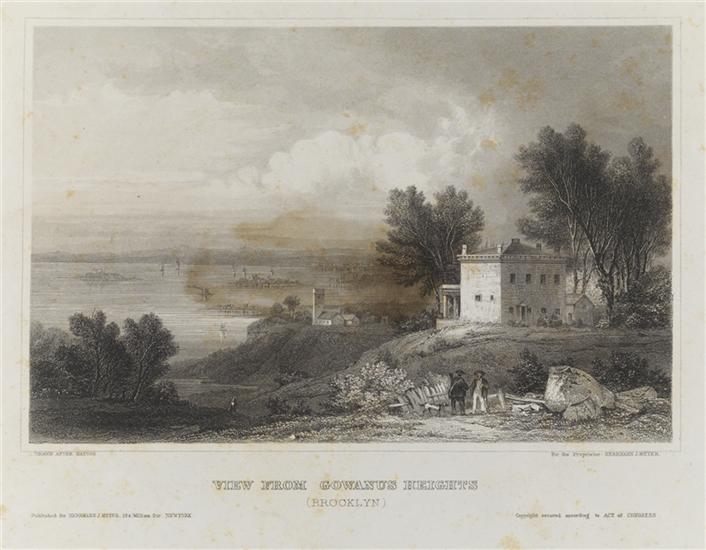
View from Gowanus Heights, Brooklyn, 1840, painted by Herrmann Julius Meyer (courtesy Museum of the City of New York)
M3Y29255


GY: The community has a fondness and love for the Gowanus, even considering the health concerns that have vexed it for decades. What do you think is the specific appeal to living near here?

JA: For a very long time it was simply that it didn’t cost very much. But lately, for the more visually-minded, the neighborhood has a unique shape apart from the grid. The industrial architecture, bridges, funny signs, graffiti—all of this gives the neighborhood great character and personality. A soaring warehouse building or an unusual edifice gives a break from the monotony of endless streets. It’s very Jane Jacobsian, but strange breaks in the city grid, or old buildings repurposed, allow for newly creative use and exploration. This particular appeal has long existed in contemporary Gowanus.

 Gowanus Canal from Second Street, 1986, Randy Dudley, from the Brooklyn Museum collection1

GY: Your book explores the struggles to clean up the Gowanus over the decades. There’s obviously a great urgency now due to the residential boom in the neighborhood.  Do you think it’s really possible to rehabilitate the Gowanus at this point, at least in a cost effective way? Do you think it will ever be considered ‘safe’ in our lifetimes?

JA: “Safe” is a relative term, and within the next two decades I do believe it will become much cleaner, and safer. I don’t know if the canal will ever be swimmable though, as raw sewage will always be in danger of spilling into the water (albeit much less than now, if the EPA plans go accordingly)—some problems are just too immense to totally solve.


GY: And, out of concern for your safety – just how much time did you actually have to spend near the Gowanus itself? God forbid you didn’t actually go anywhere close to the water?!

JA: I’ve been down to the Gowanus quite a bit, and gone out on a boat, no less than three times! I can’t say I felt totally safe during any of the voyages, but it was exhilarating! It’s a fantastic and totally unique way of seeing Brooklyn, and the city!

Categories
Brooklyn History Podcasts

Park Slope and the Story of Brownstone Brooklyn

PODCAST Park Slope — or simply the park slope, as they used to say — is best known for its spectacular Victorian-era mansions and brownstones, one of the most romantic neighborhoods in all of Brooklyn. It’s also a leading example of the gentrifying forces that are currently changing the make-up of the borough of Brooklyn to this day.

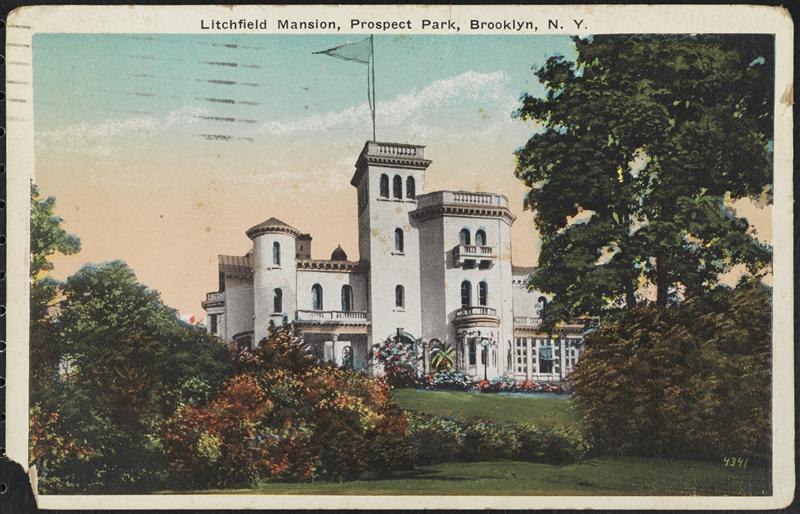
During the 18th century this sloping land was subject to one of the most demoralizing battles of the Revolutionary War, embodied today by the Old Stone House, an anchor of this changing neighborhood. In the 1850s, the railroad baron Edwin Clark Litchfield brought the first real estate development to this area in the form of his fabulous villa on the hill. By the 1890s the blocks were stacked with charming house, mostly for occupancy by wealthy families.

Circumstances during the Great Depression and World War II reconfigured most of these old (and old fashioned) homes into boarding houses and working-class housing. Then a funny thing happens, something of a surprising development in the 1960s: the arrival of the brownstoners, self-proclaimed — pioneers — who refurbished deteriorating homes.

The revitalization of Park Slope has been a mixed blessing as later waves of gentrification and rising prices threaten to push out both older residents and original gentrifiers alike.

PLUS: The terrifying details of one of the worst plane crashes in American history, a disaster that almost took out one of the oldest corners of the neighborhood.

And a special thanks to our guests on this show — Kim Maier from the Old Stone House; Julie Golia, Director of Public History, Brooklyn Historical Society; and  John Casson and Michael Cairl, both of Park Slope Civic Council.


The Bowery Boys: New York City History podcast is brought to you …. by you!

Starting this month, we are doubling our number of episodes per month. Now you’ll hear a new Bowery Boys podcast every two weeks. We’re also looking to improve the show in other ways and expand in other ways as well — through publishing, social media, live events and other forms of media. But we can only do this with your help!

We are now a member of Patreon, a patronage platform where you can support your favorite content creators for as little as a $1 a month.

Please visit our page on Patreon and watch a short video of us recording the show and talking about our expansion plans. If you’d like to help out, there are five different pledge levels (and with clever names too — Mannahatta, New Amsterdam, Five Points, Gilded Age, Jazz Age and Empire State). Check them out and consider being a sponsor.

We greatly appreciate our listeners and readers and thank you for joining us on this journey so far. And the best is yet to come!


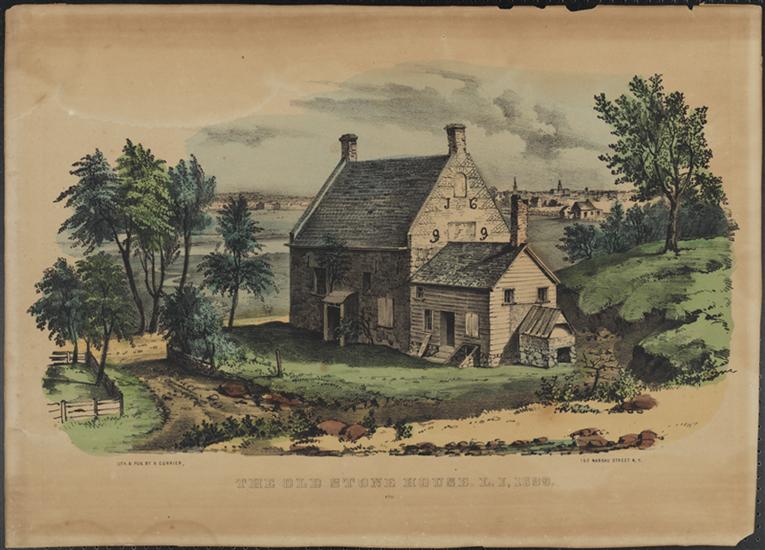
The Vechte Cortelyou House (aka the Old Stone House) depicted as it looked in 1699 (from a hand colored lithograph by the firm of Nathaniel Currier, MCNY)

MNY323785

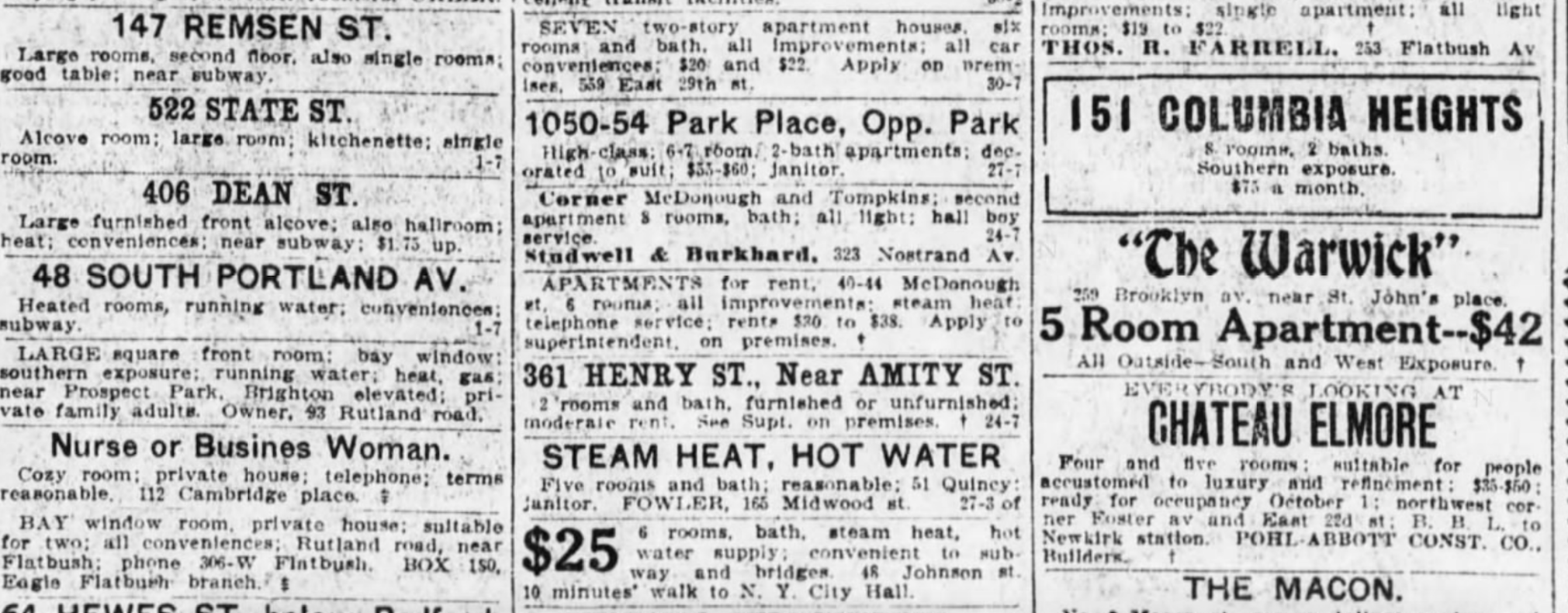
A collection of classified ads from the December 1, 1912 issue of the Brooklyn Daily Eagle, offering several living options in the park slope area.

Screen Shot 2015-05-01 at 9.03.50 AM
 
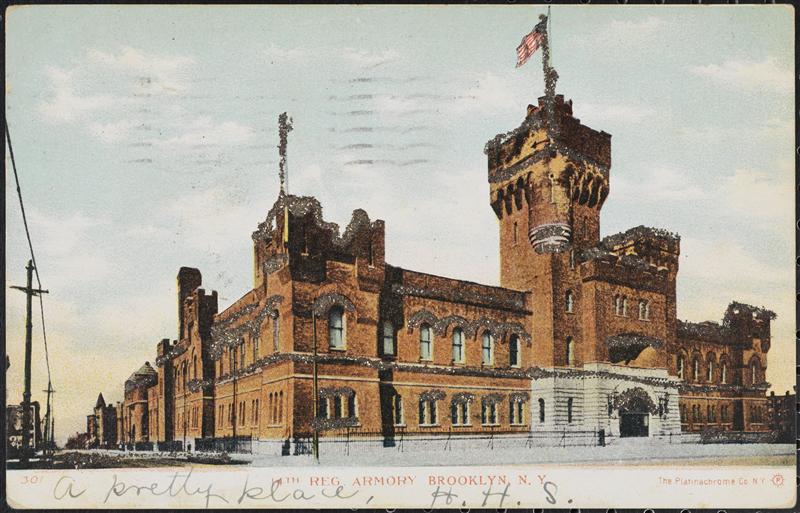
The stark Fourteenth Street Armory, located in the South Slope, depicted here as it looked in 1906 — “a pretty place” (MCNY)
M3Y44090
 
 
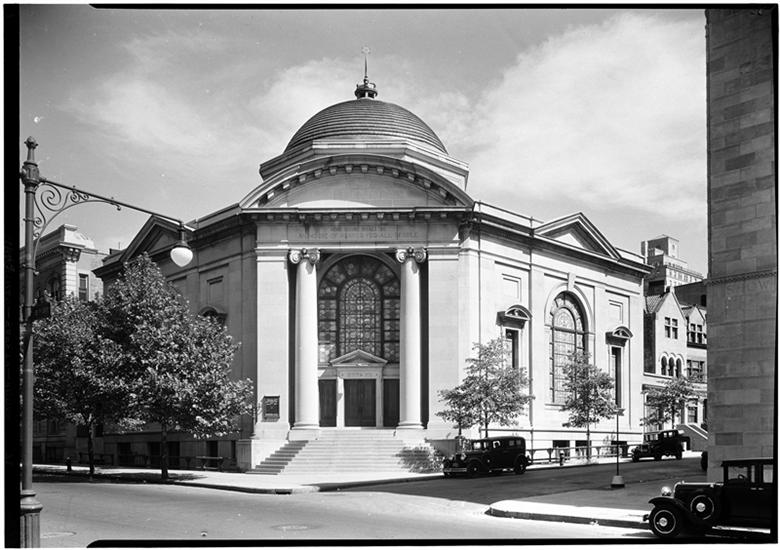
Congregation Beth Elohim, pictured here on September 16, 1929, located at Garfield Place and 8th Avenue. (MCNY)
MNY195546

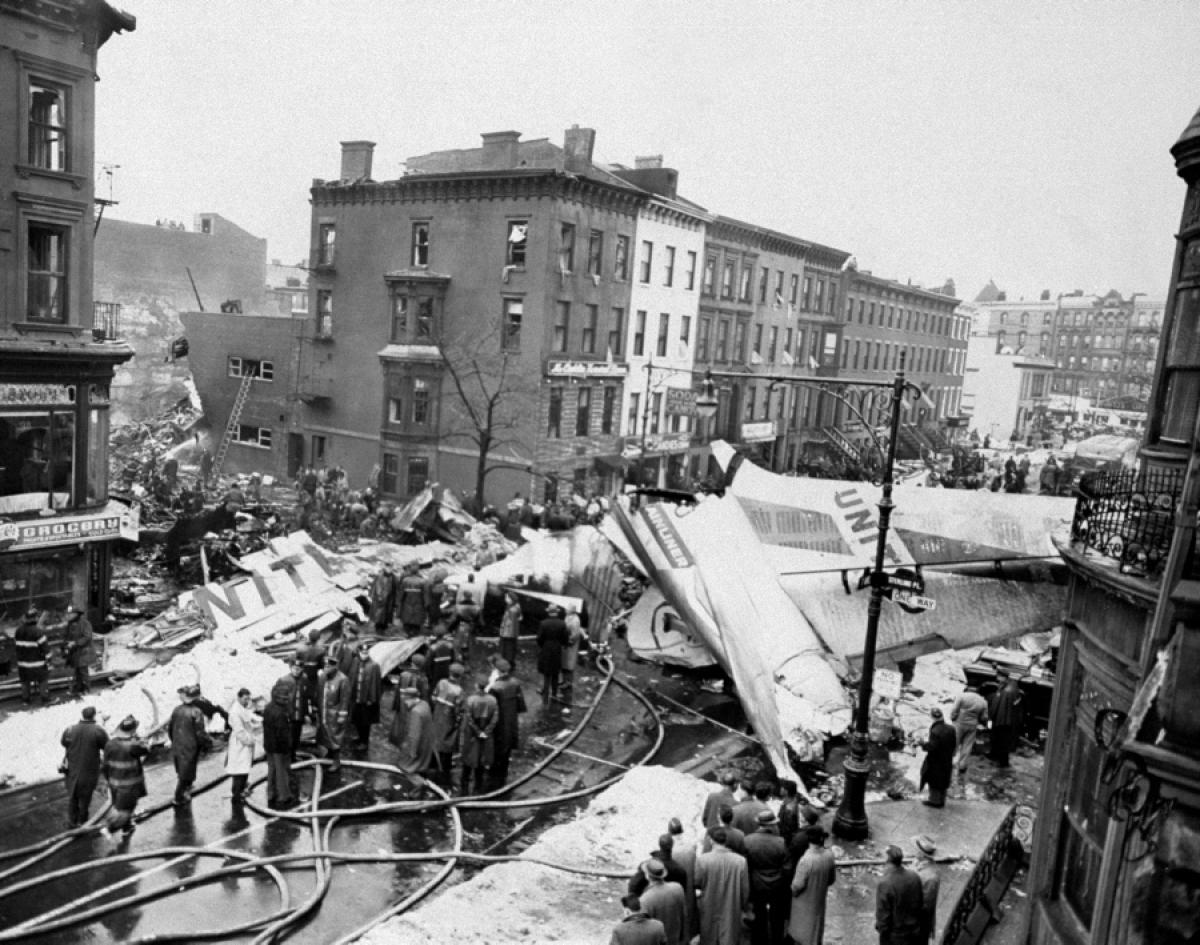
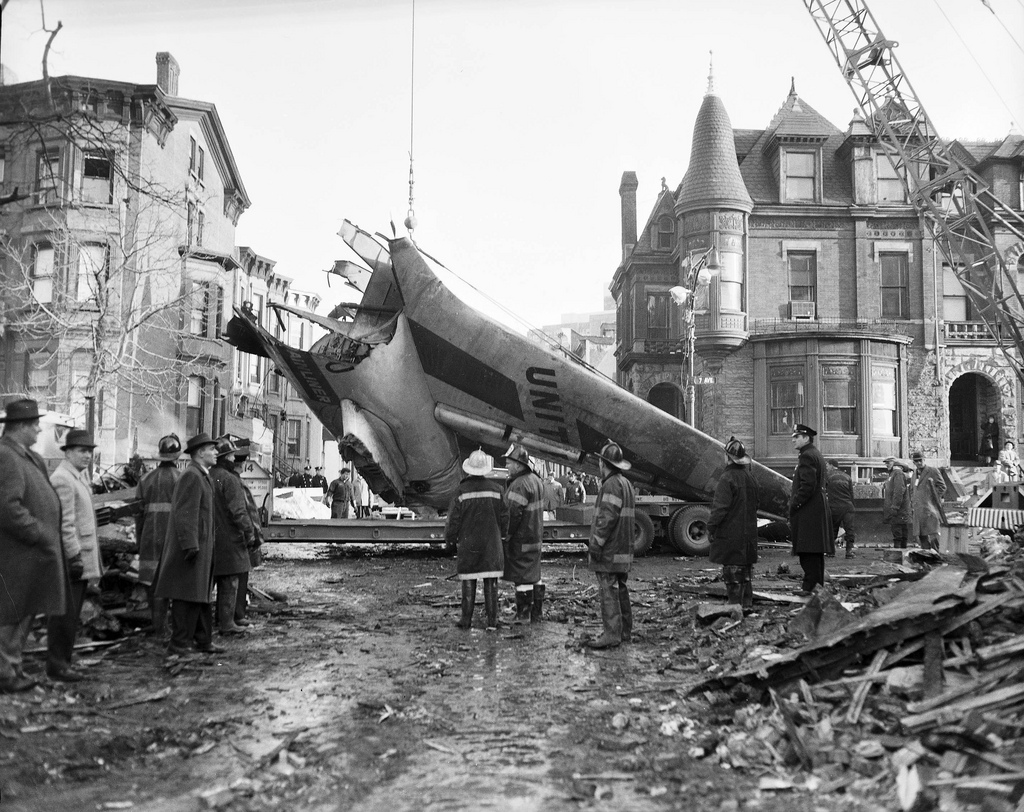
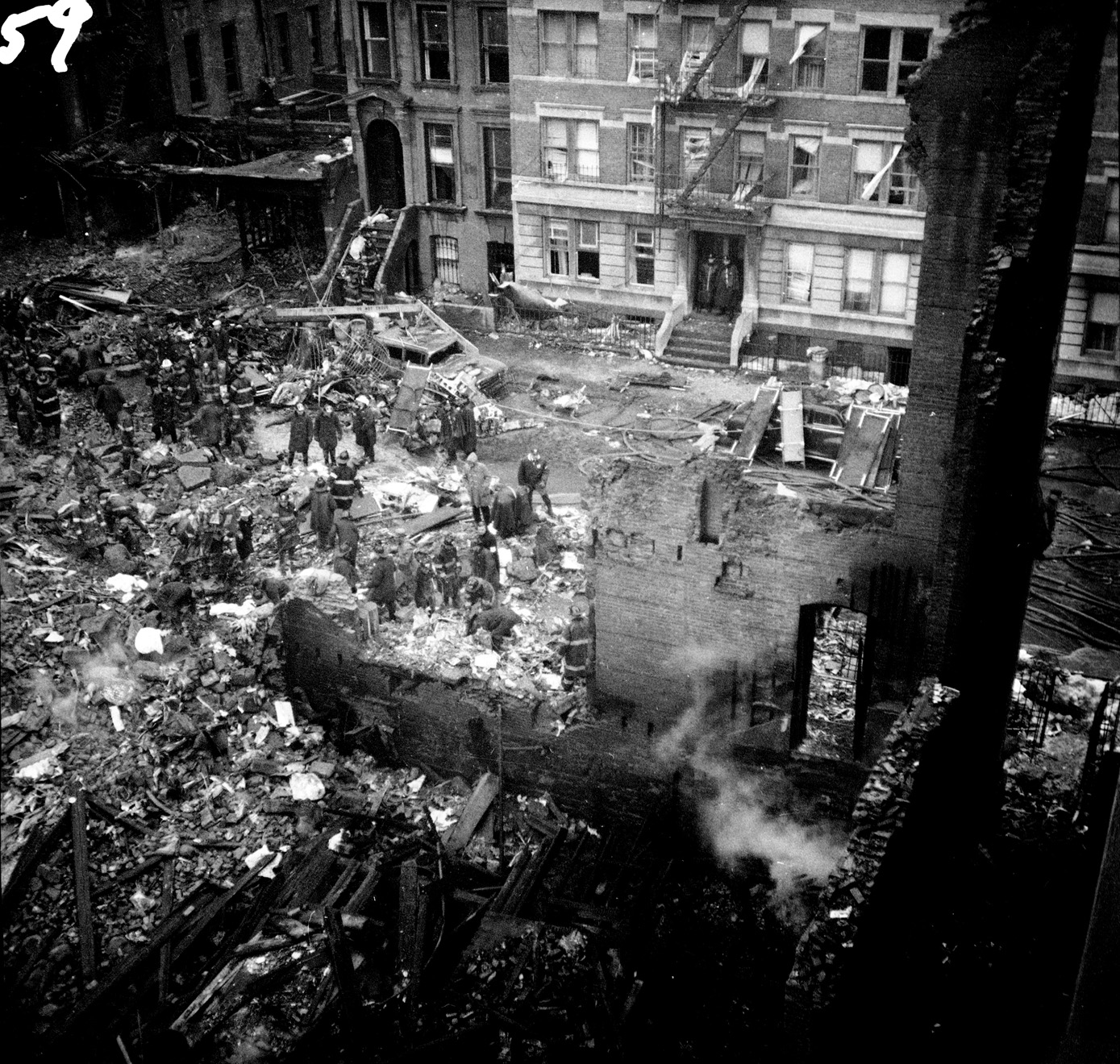
The horrific place crash of December 16, 1960 — United Airlines Flight 826, bound for Idlewild Airport, colliding with Trans World Airlines Flight 266, heading to LaGuardia Airport. 128 passengers were killed, along with six people on the ground. (Top picture courtesy New York Daily News; the two after are from the New York Fire Deparment. You can find further images here)

park-slope-plane-crash-1960
6523090255_8a5f5ab891_b
6523086749_f7564b2665_o

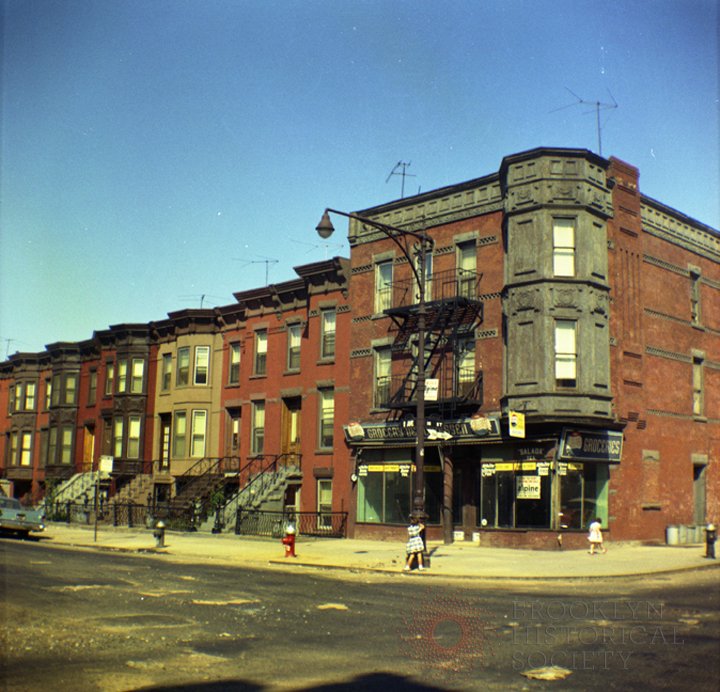
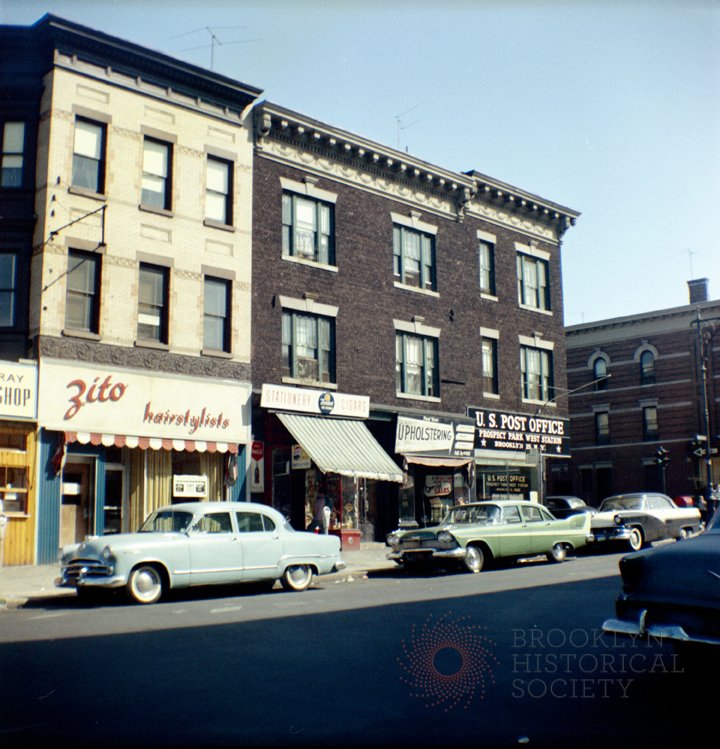
Some images from 1961 by John Morrell from the archives of the Brooklyn Historical Society:

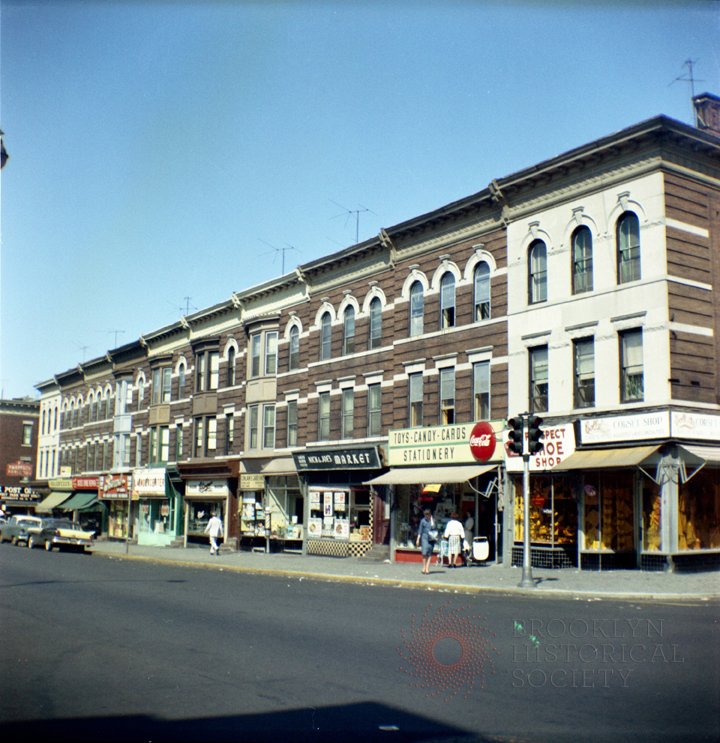
A view along Prospect Park West at and 16th Street and Windsor Place.

V19749246

View of east side of 8th Avenue between 15th and 16th Streets looking north. n.e. cor. 16th Street (right) & 8th Avenue.

V19749250

Prospect Park West looking south toward Prospect Park/branch, U.S. Post Office (at northeast corner of Prospect Park W. & 16th Street).

V19749245

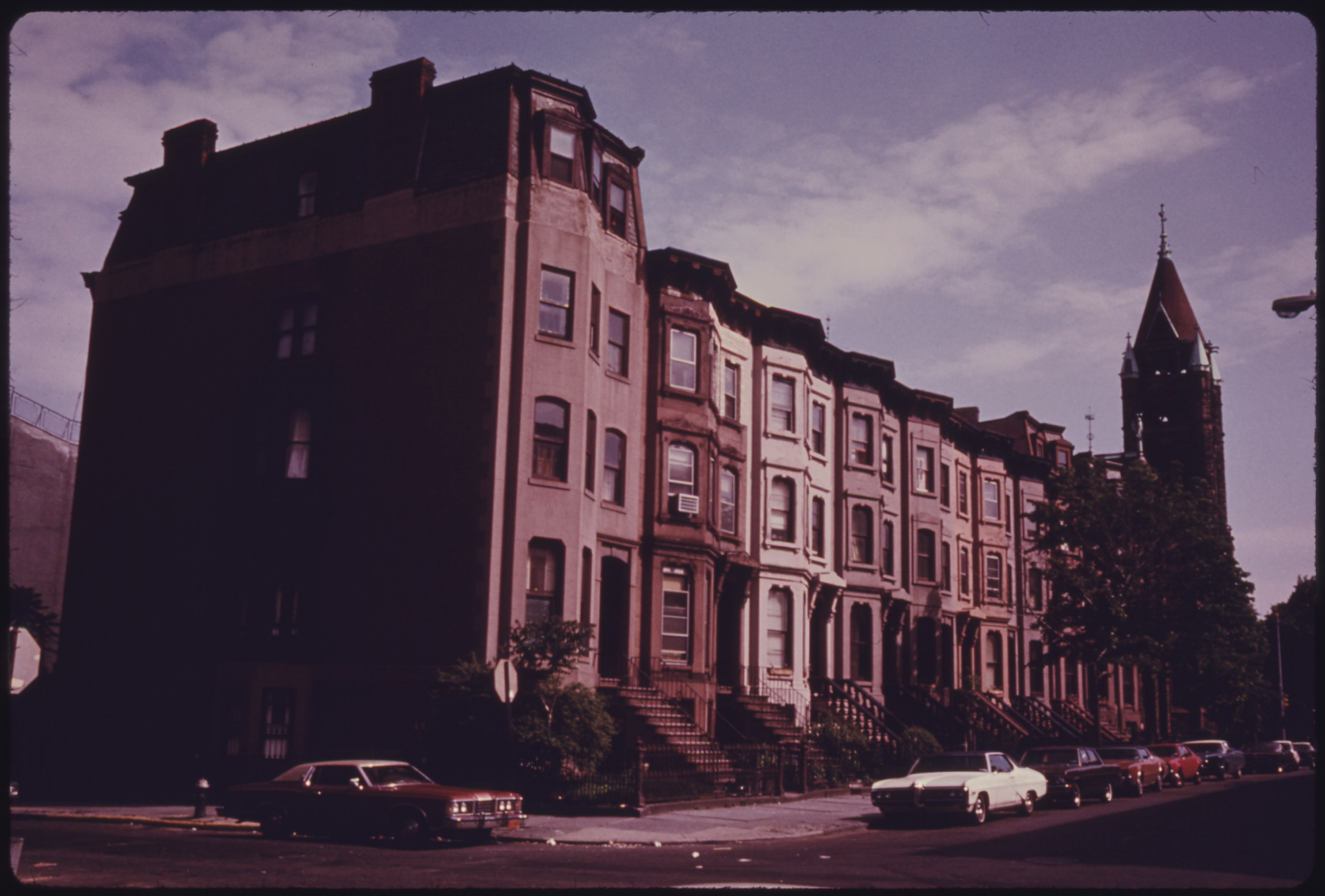
By the 1970s so mansions and brownstones close to the park were getting renovated by ‘pioneers’ with the means to restore these homes to their original splendor.

Landscape

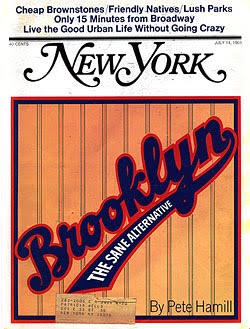
In 1969, New York Magazine touted the ‘radical’ alternative of moving to Brooklyn in an article by Pete Hamill:

1969-0714-cover-250

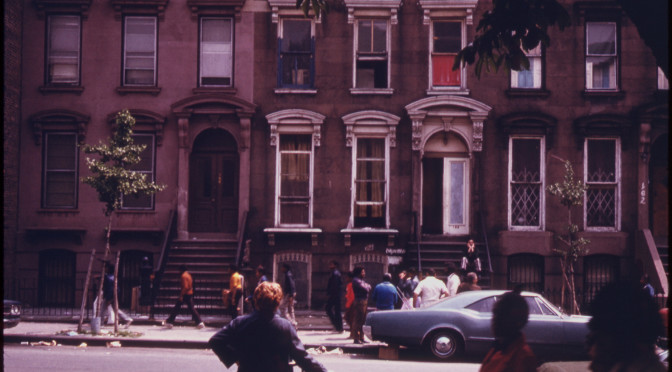
TOP PHOTOGRAPH by Luci West from Moving Postcard

Categories
Brooklyn History

Ungentrified: Brooklyn in the 1970s

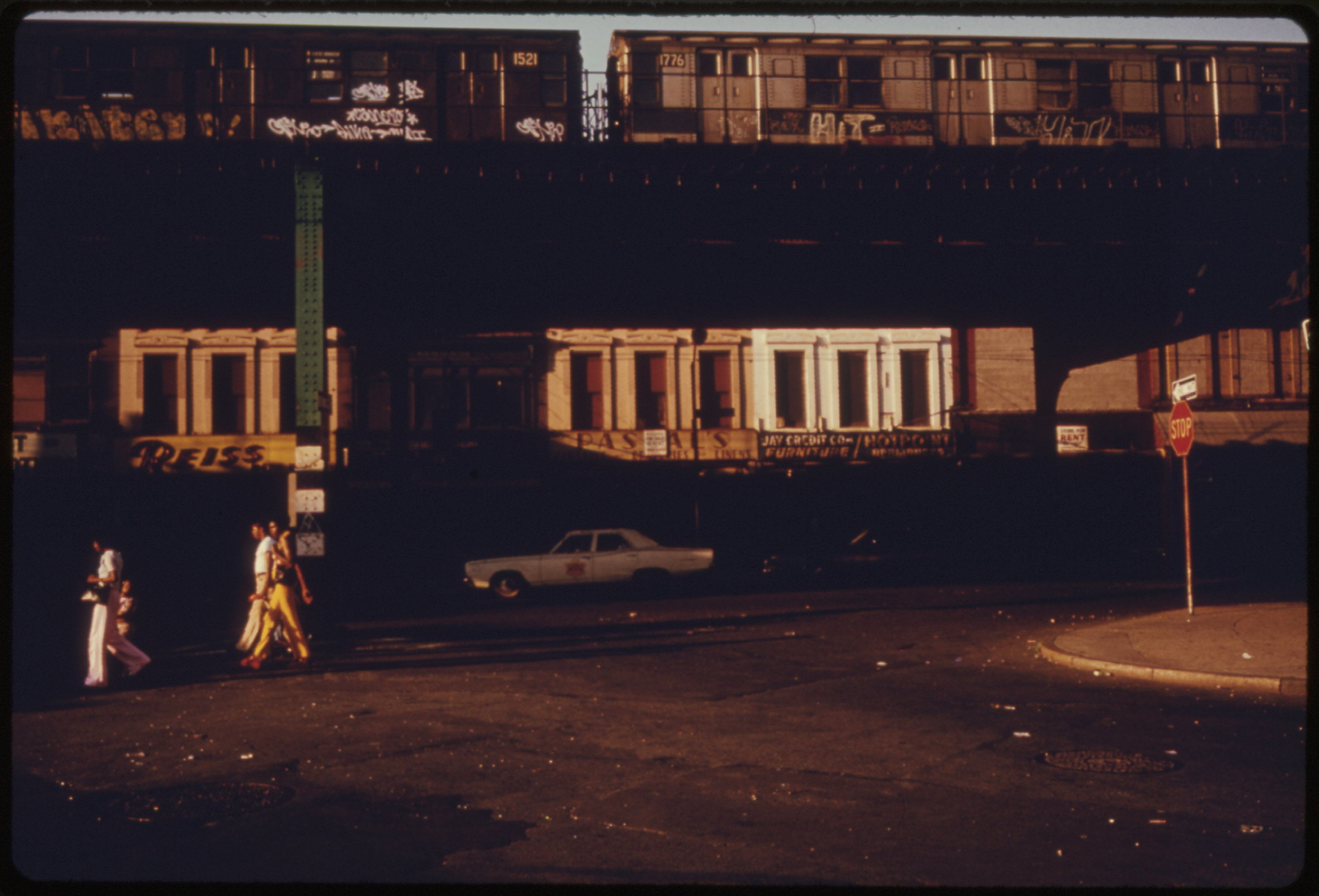
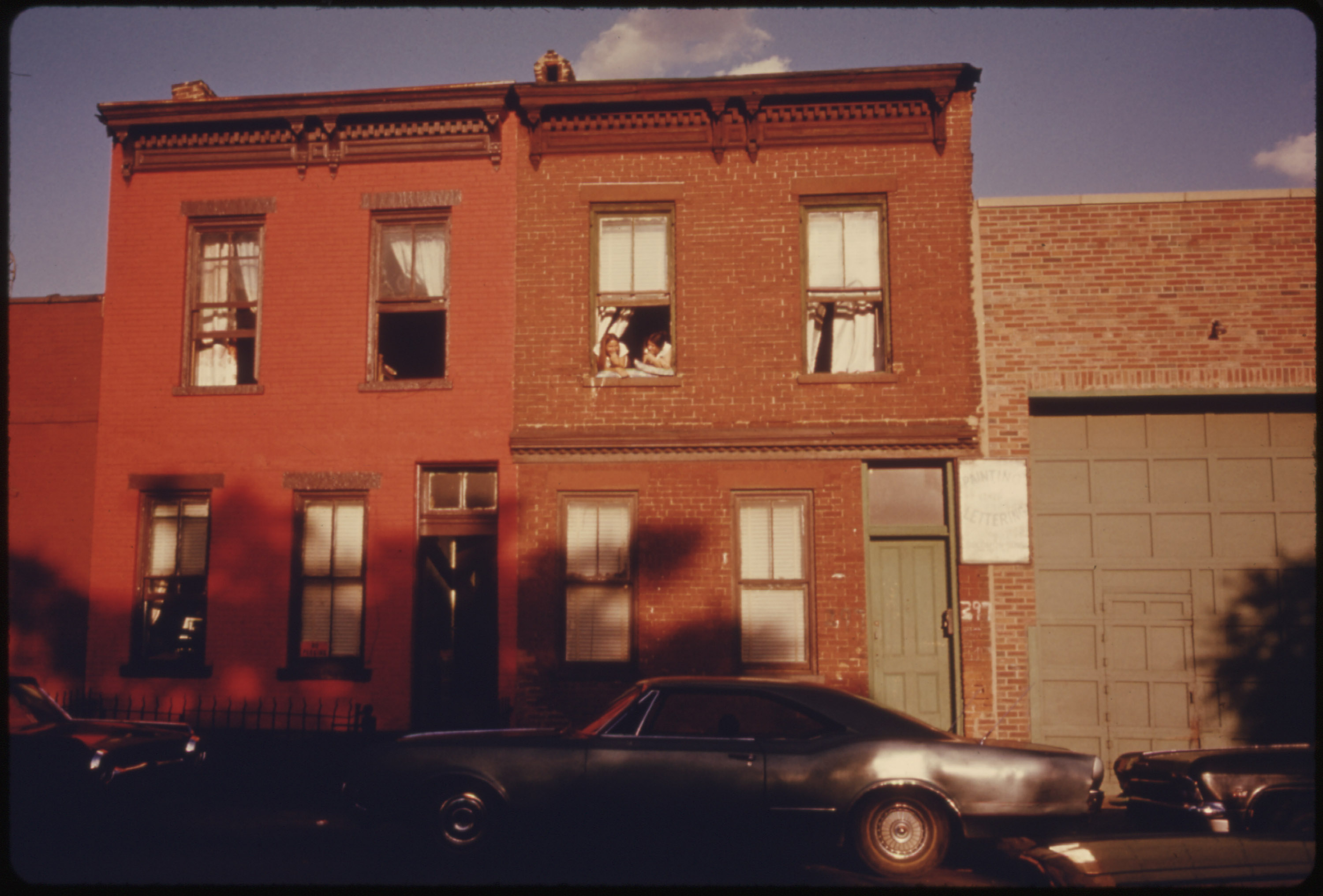
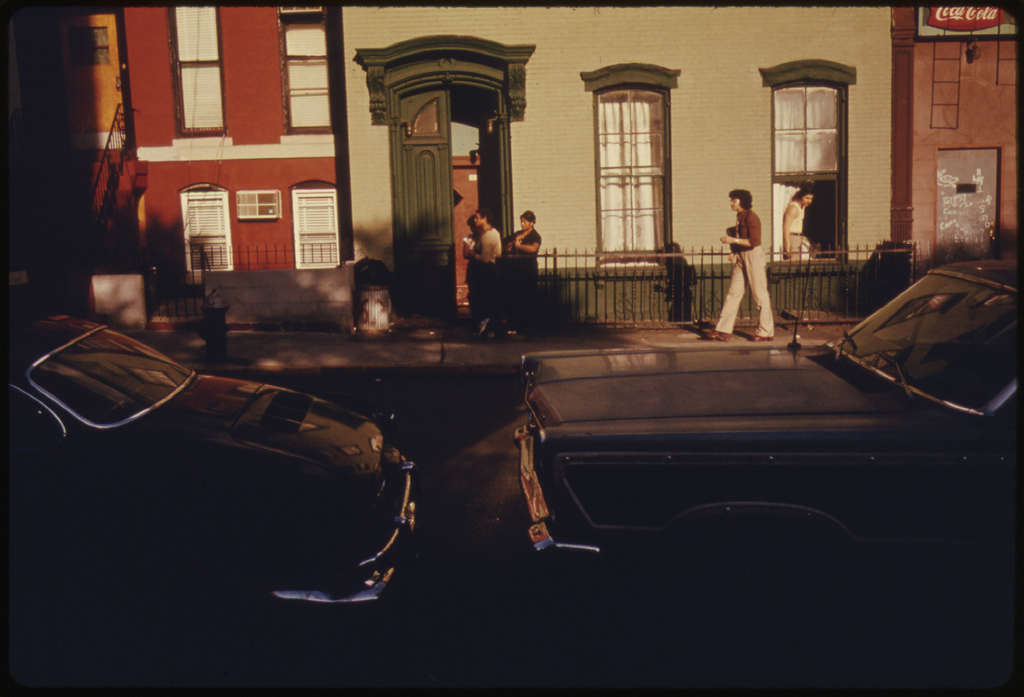
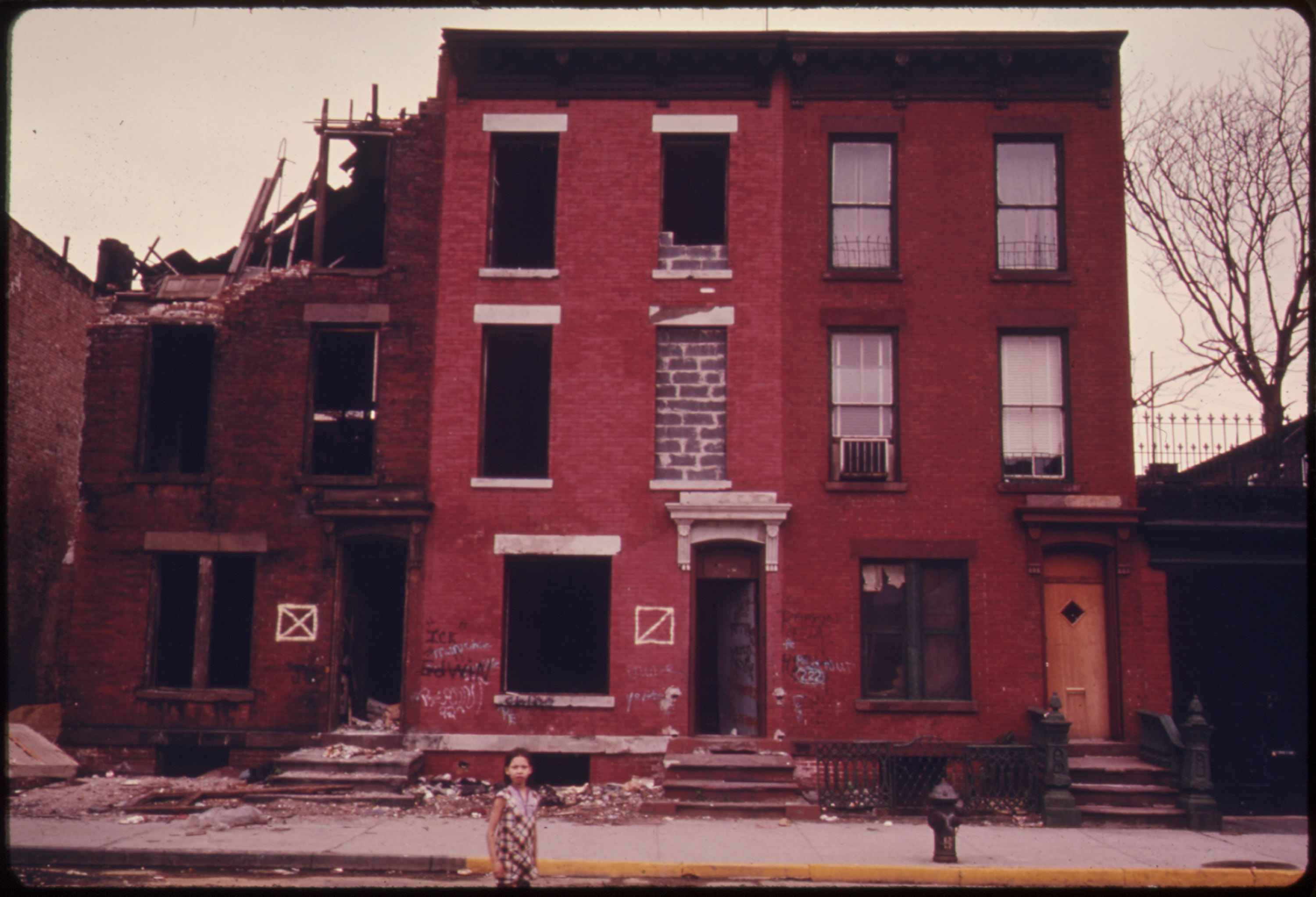
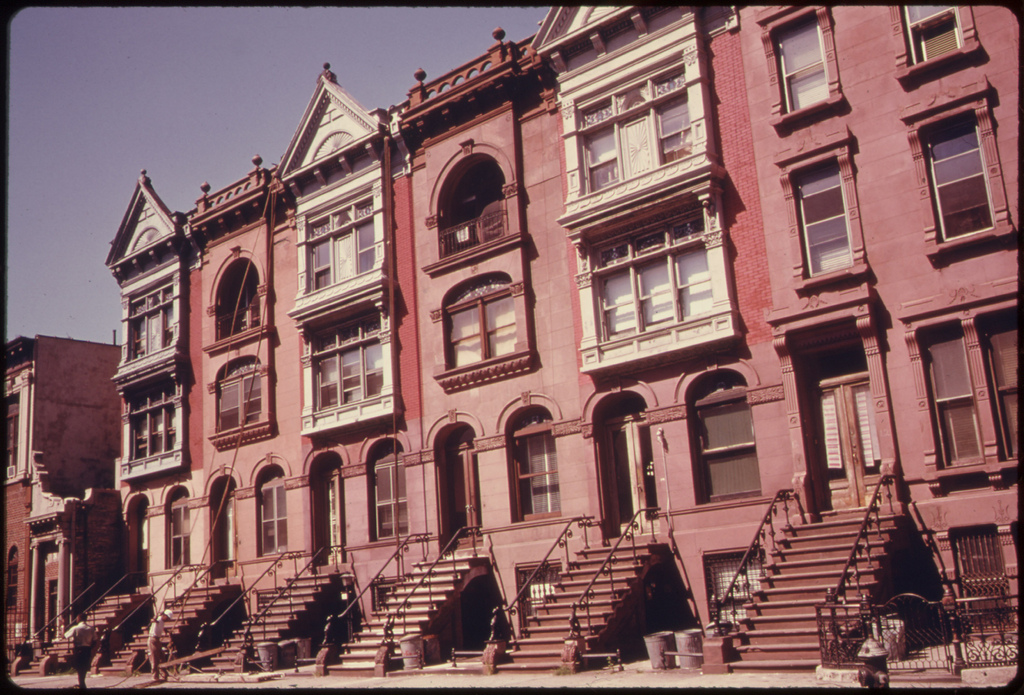
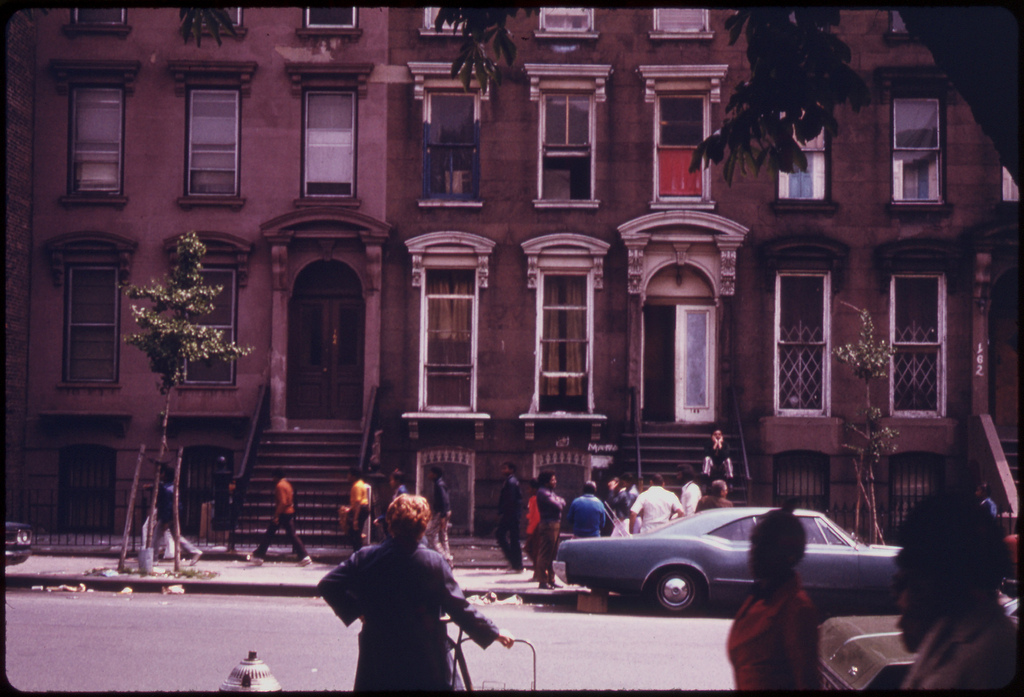
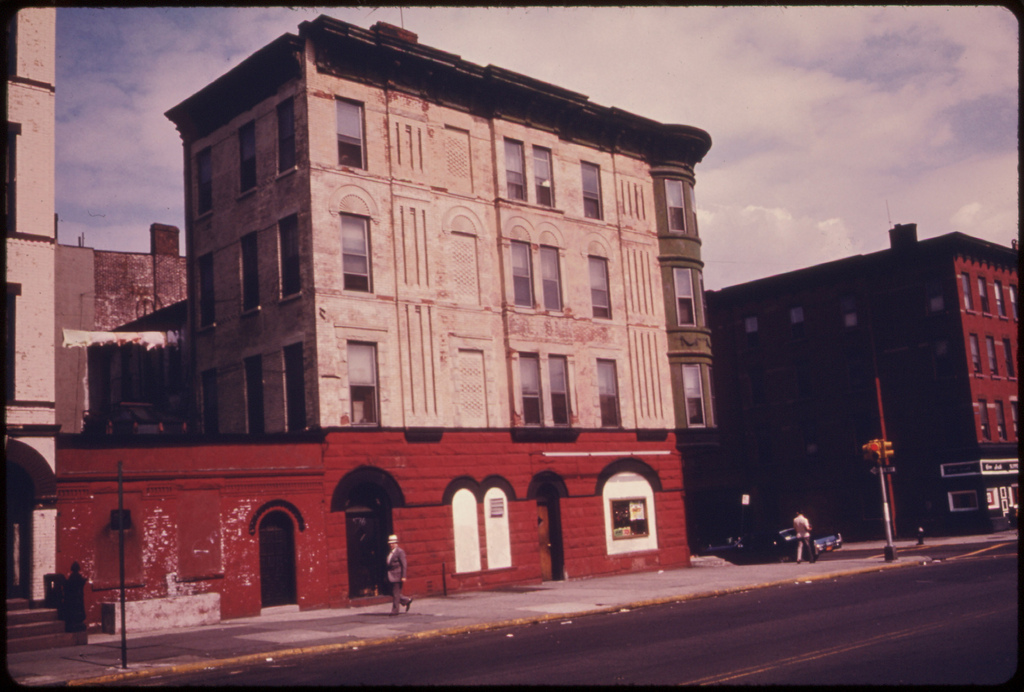
The new Bowery Boys podcast that comes out this Friday will be about Brooklyn. So let’s get in the mood with some pre-Instagram tinted photography from the U.S. National Archives, most of them taken in 1974 by Danny Lyon. followed by some black and white images by Edmund V Gillon.

You might have seen many of these photographs before (perhaps even here on this blog), but it’s striking to revisit them in context of Brooklyn current gentrification patterns.

The homes of Brooklyn Heights began seeing the arrival of ‘bohemians’ as early as the 1910s, and brownstone revivalists (the so-called ‘pioneers’) discovered the neighborhood after World War II.

But a noticeable trend of Brooklyn gentrification happened in earnest in the late 1950s, with wealthy escapees from Manhattan (fending off the urge to suburbanize) moving into South Brooklyn brownstones and row houses and giving enclaves attractive new names like Boerum Hill, Cobble Hill and Carroll Gardens.

The most successful example occurred up on the park slope as a movement of urban activists and historical preservations refurbished and brought to life one of Brooklyn’s original Gold Coasts. Its official name became, of course, Park Slope.

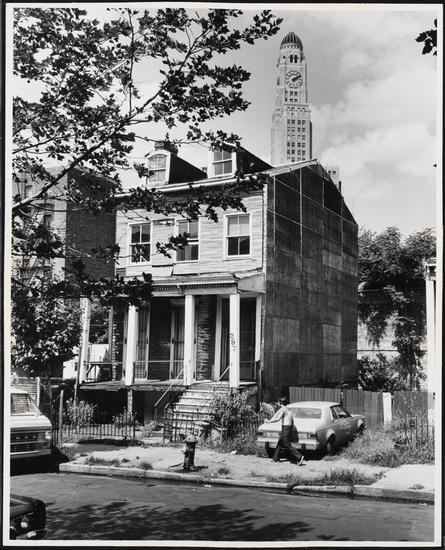
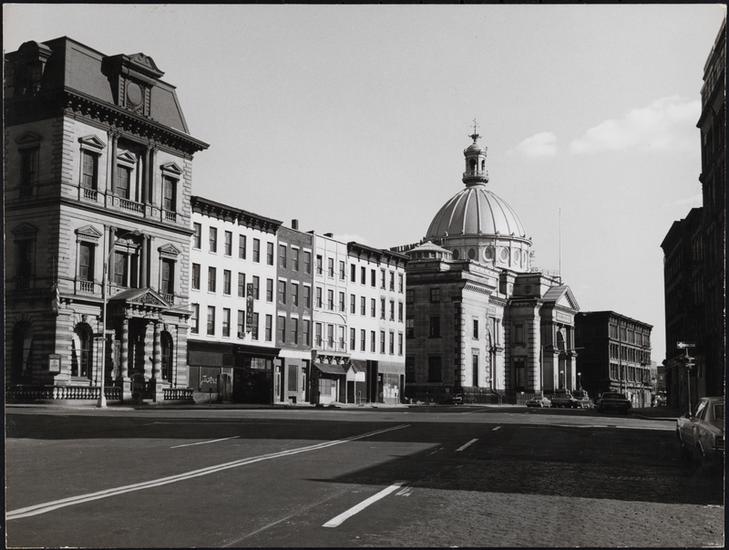
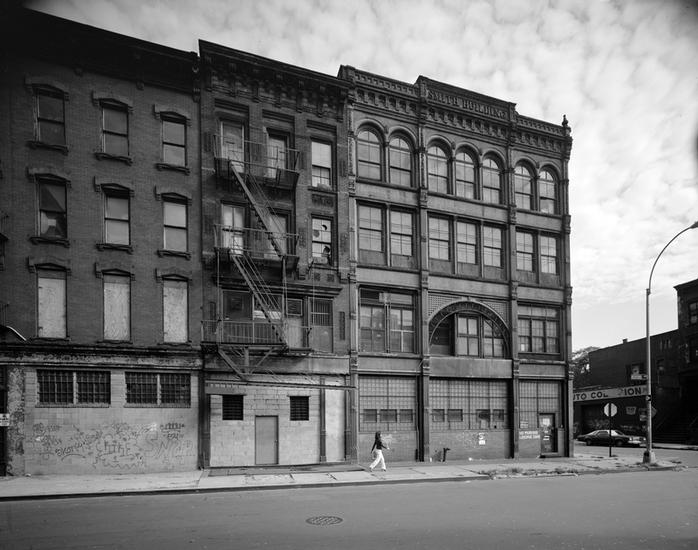
While the ‘brownstone Brooklyn’ movement was well at hand in 1974-5 — the date of most of these photographs — much of the borough was still facing blight and deterioration then.  Most of the neighborhoods pictured below are today considered ‘hot’, trendy places with incredibly high rents.

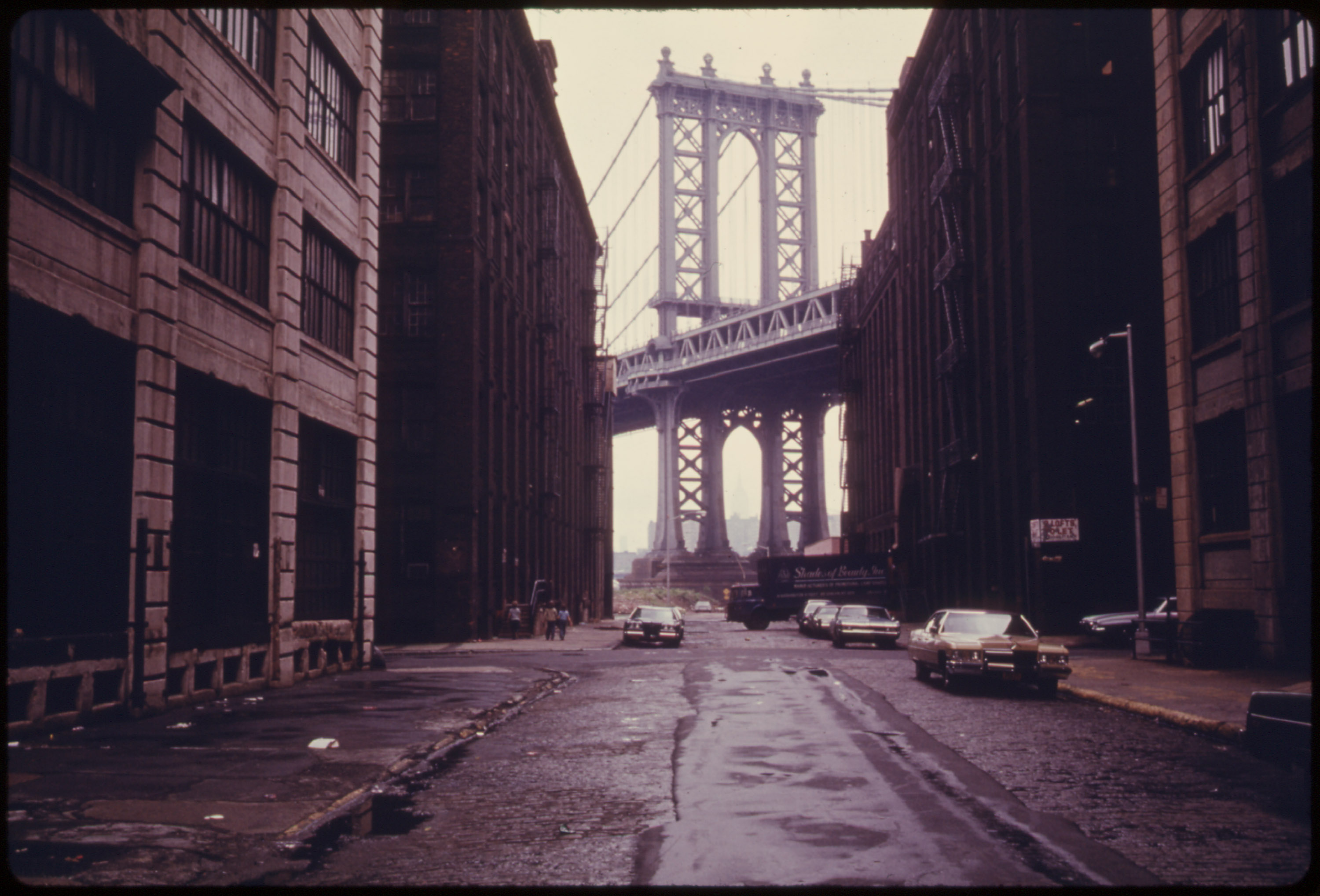
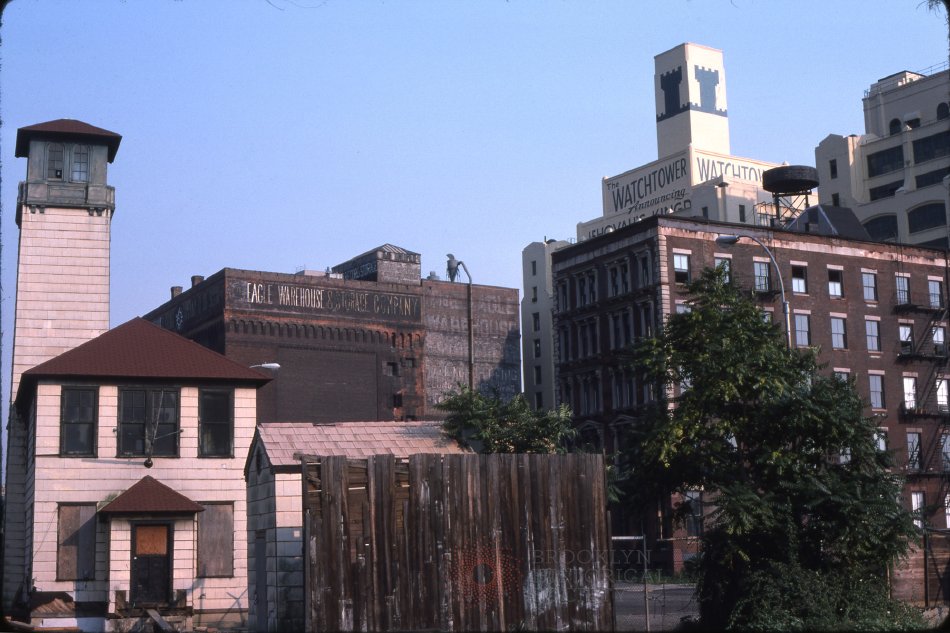
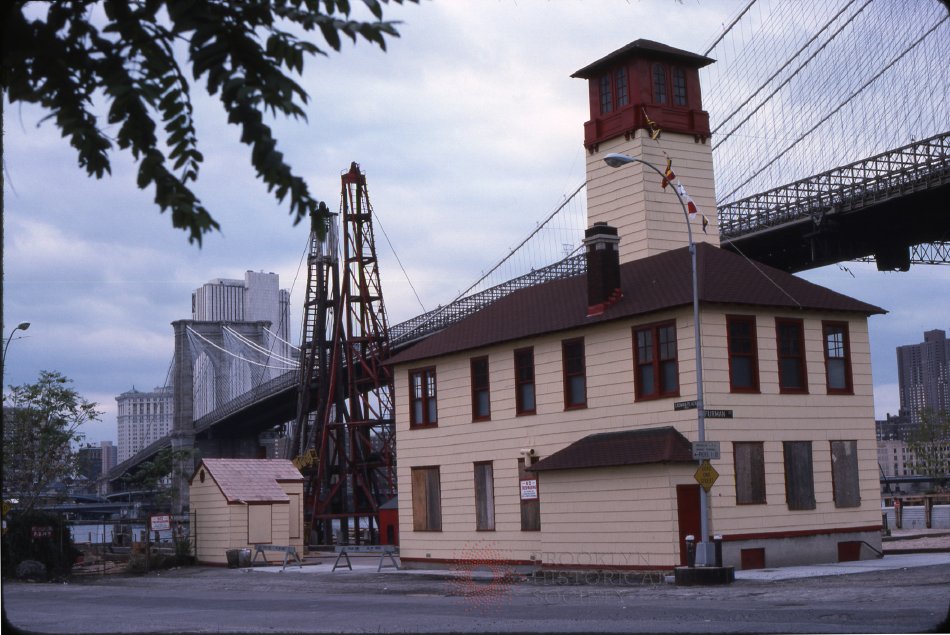
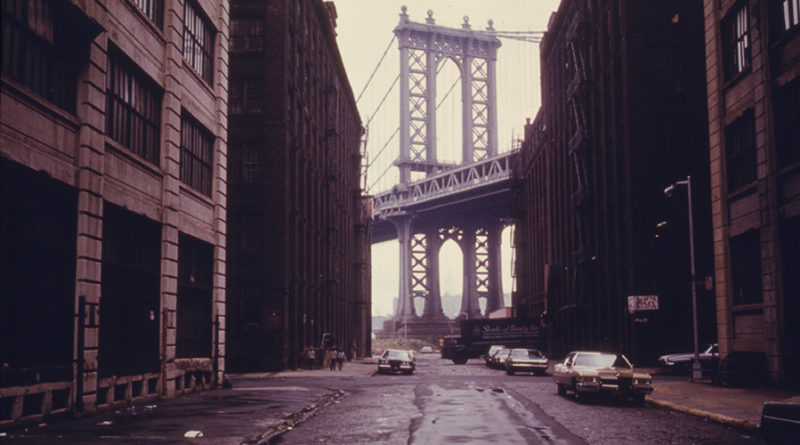
DUMBO, a name invented in the late 1970s, Down Under the Manhattan Bridge Overpass.

Landscape

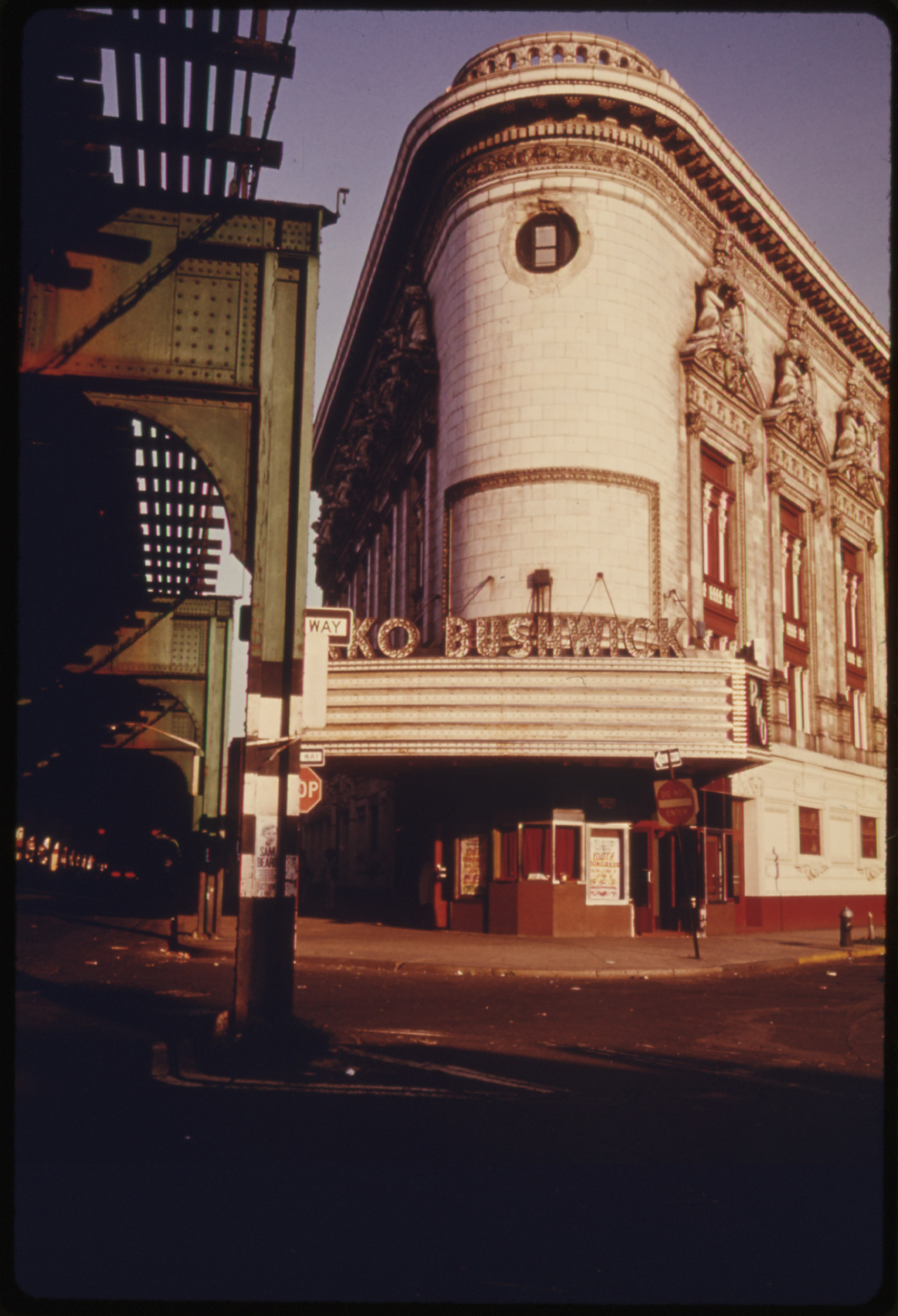
The RKO Bushwick Theater, at the Bushwick/Bed-Stuy border.

Portrait

Bushwick Avenue

Landscape

Two pictures of Bond Street

Landscape
Landscape

Across from Lynch Park, near the Brooklyn Navy Yard

Landscape

There’s no location listed in the caption but probably Park Slope?

Landscape
Landscape

Fort Greene, across from the park.

This is taken on Vanderbilt Avenue but I can’t ascertain exactly here. Perhaps today’s Prospect Heights area.

Landscape

Images of the Fulton Ferry area in 1975 (courtesy the Brooklyn Historical Society)

V19891866
V19891847-1

And a couple images from the Museum of the City of New York archives, all from 1975, taken by Edmund V Gillon. You can find many more of astounding photographs here:

397 Dean Street, considered part of Park Slope today

MN112866

Williamsburg, looking east on Broadway from Bedford Avenue and South 6th Street.

MN112215

Boarded-up buildings and the Bedford Avenue façade of the Smith Building, 123 South 8th Street

2013_3_2_ 546

Clinton Hill: Row houses on the eastern side of Washington Avenue between Dekalb and Lafayette Avenues

66cm_2013_3_2_ 025