Categories
It's Showtime Podcasts

Absolutely Flawless: A History of Drag in New York

PODCAST The story of New York City’s most colorful profession.

Television audiences are currently obsessed with shows like RuPaul’s Drag Race and FX’s Pose, presenting different angles on the profession and art of drag. New York City has been crucial to its current moment in pop culture and people have been performing and enjoy drag performers for well over a century.

In the beginning there were two kinds of drag — vaudeville and ballroom. As female impersonators filled Broadway theaters — one theater is even named for a famed gender illusionist — thrill seekers were heading to the popular balls of Greenwich Village and Harlem.

During the middle of the 20th century, the gay scene retreated into the shadows, governed by mob control and harshly policed by the city. By design, drag became political. It also became a huge counter-cultural influence in the late 1960s — from the glamour of Andy Warhol‘s superstars to the jubilant schtick of Charles Busch.

But it was the 1980s that brought the most significant influences to our current pop cultural moment. Joining Greg on this show are two experts on two late 80s/early 90s scenes — Felix Rodriguez, a videographer of the ballroom culture (made famous in the landmark documentary Paris Is Burning) and Linda Simpson, one of the great queens of East Village drag.

FEATURING: Drag kings! Wigstock! And a famous drag queen superstar who got struck by lightning.

Listen Now: Drag Queen History Podcast

_________________________________________________________

The Bowery Boys: New York City History podcast is brought to you …. by you!

We are now producing a new Bowery Boys podcast every other week. We’re also looking to improve the show in other ways and expand in other ways as well — through publishing, social media, live events and other forms of media. But we can only do this with your help!

We are now a member of Patreon, a patronage platform where you can support your favorite content creators for as little as a $1 a month.

Please visit our page on Patreon and watch a short video of us recording the show and talking about our expansion plans. If you’d like to help out, there are five different pledge levels (and with clever names too — Mannahatta, New Amsterdam, Five Points, Gilded Age, Jazz Age and Empire State). Check them out and consider being a sponsor.

We greatly appreciate our listeners and readers and thank you for joining us on this journey so far.

_______________________________________________________

Big thanks to Felix and Linda for joining me on the show! For more information on the history they spoke about, reach out to their work directly.

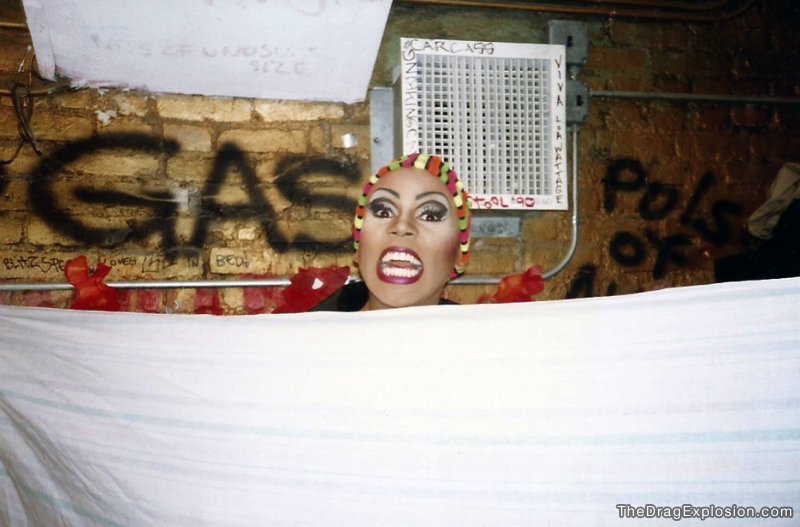
The Drag Explosion — Simpson’s collection of spectacular photographs from the late 80s/early 90s East Village drag scene.

And visit Linda Simpson at her long-running bingo night at (le) poisson rouge
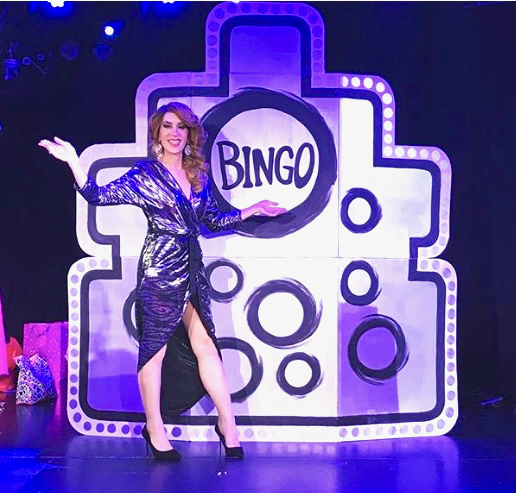
Courtesy Linda Simpson

And here’s one of Felix’s videos featuring the early 90s ballroom scene. Find many more at his YouTube page:

A couple images from Linda Simpson’s Drag Explosion project:
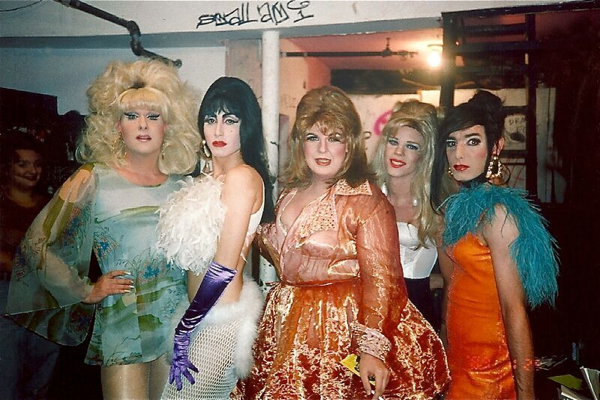
The Drag Explosion

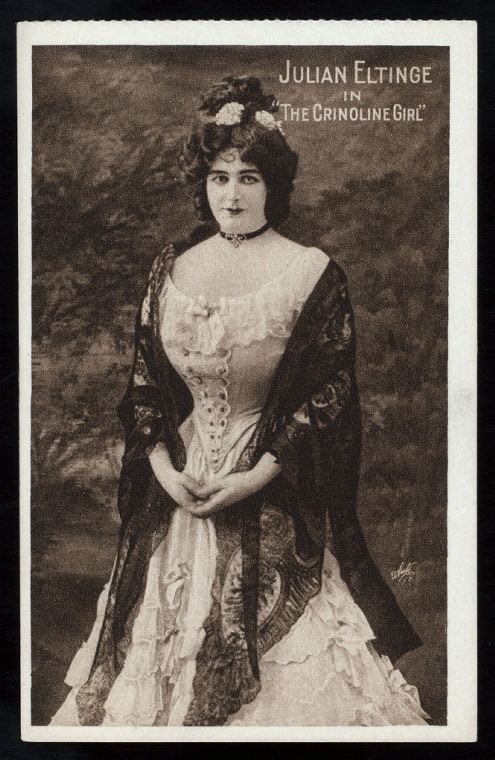
Vaudeville superstar Julian Eltinge, in a couple of popular looks:
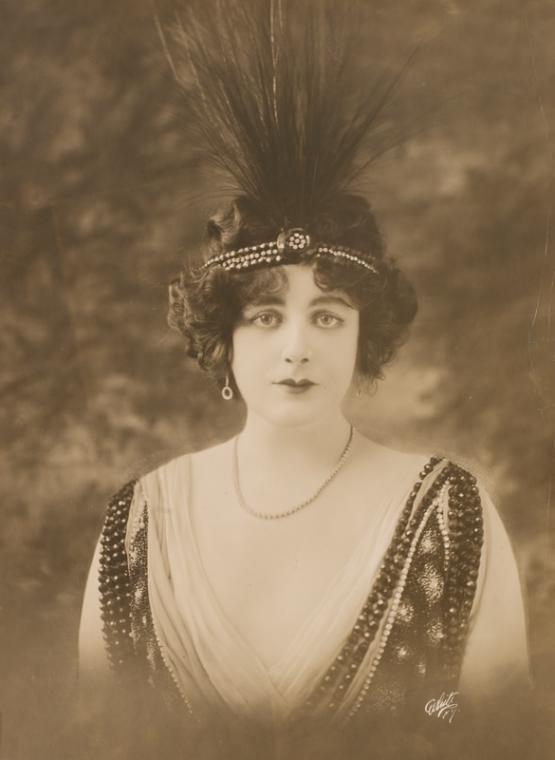
New York Public Library

A postcard from Club 82. (Queer Music Heritage has an unbelievable collection of these.)
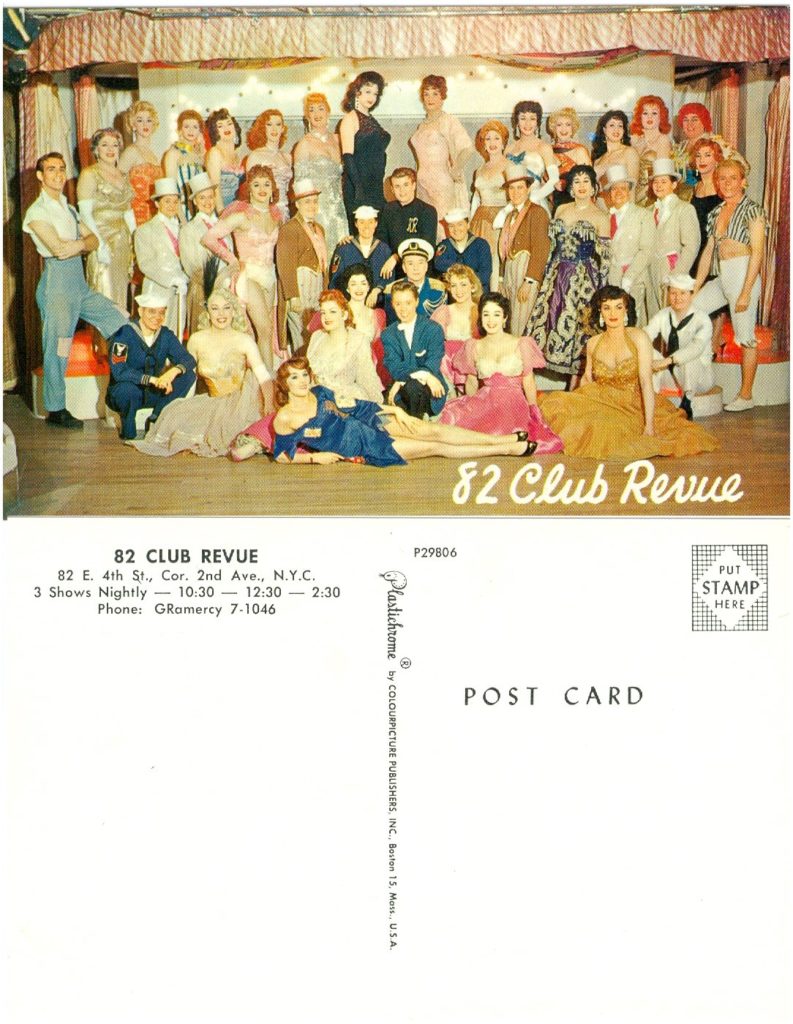
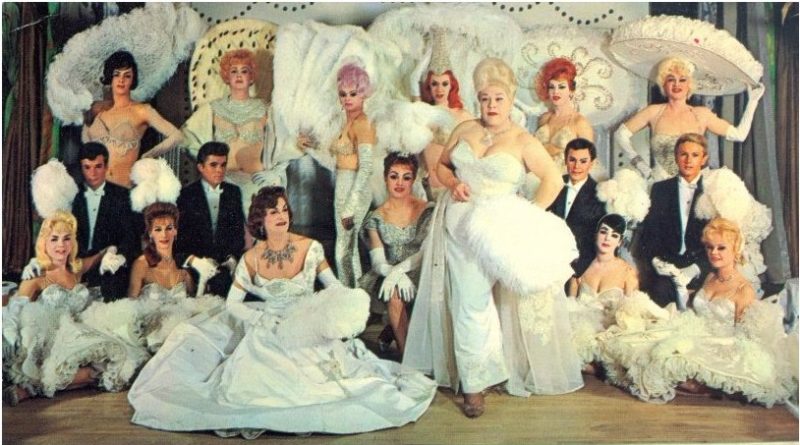
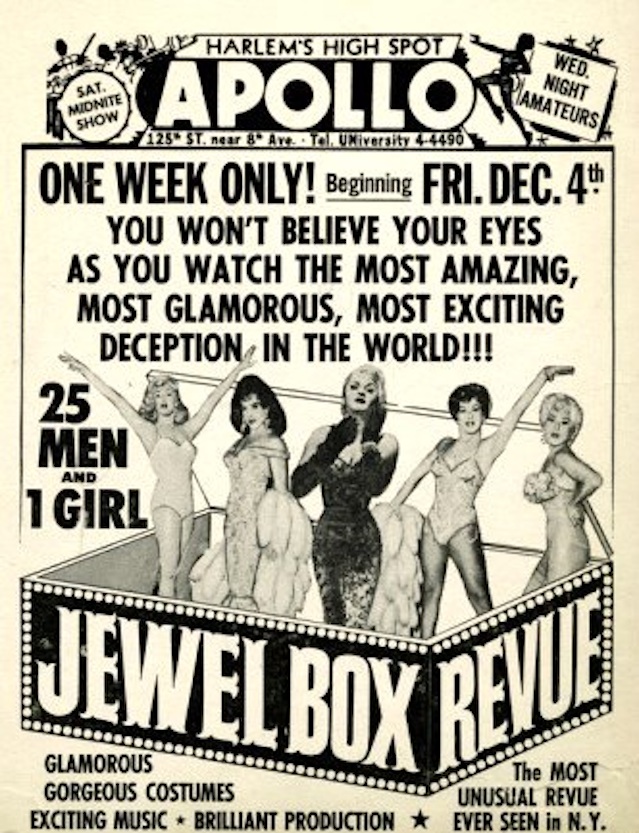
From the Jewel Box Revue’s 1960 appearance at the Apollo Theatre:
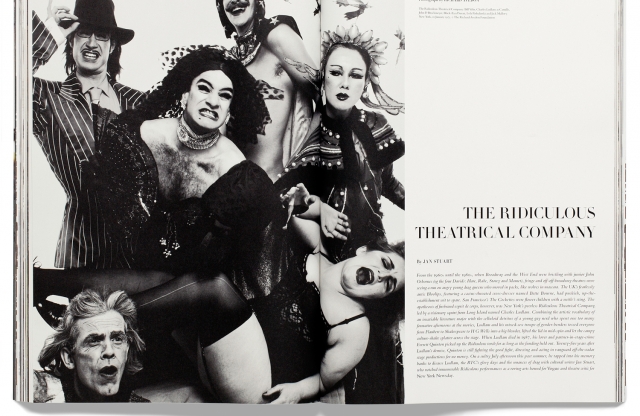
The Ridiculous Theatrical Company (with Charles Ludlum), one of the great influences on the modern drag scene.
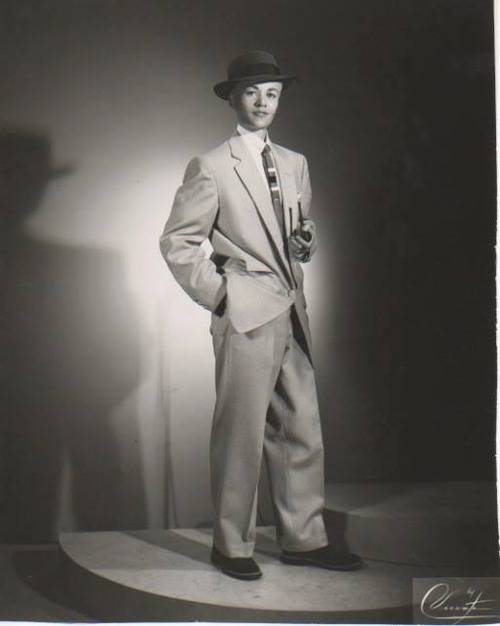
Stormé DeLarverie who performed with the Jewel Box Revue. DeLarverie was also a participant at the Stonewall Riots.
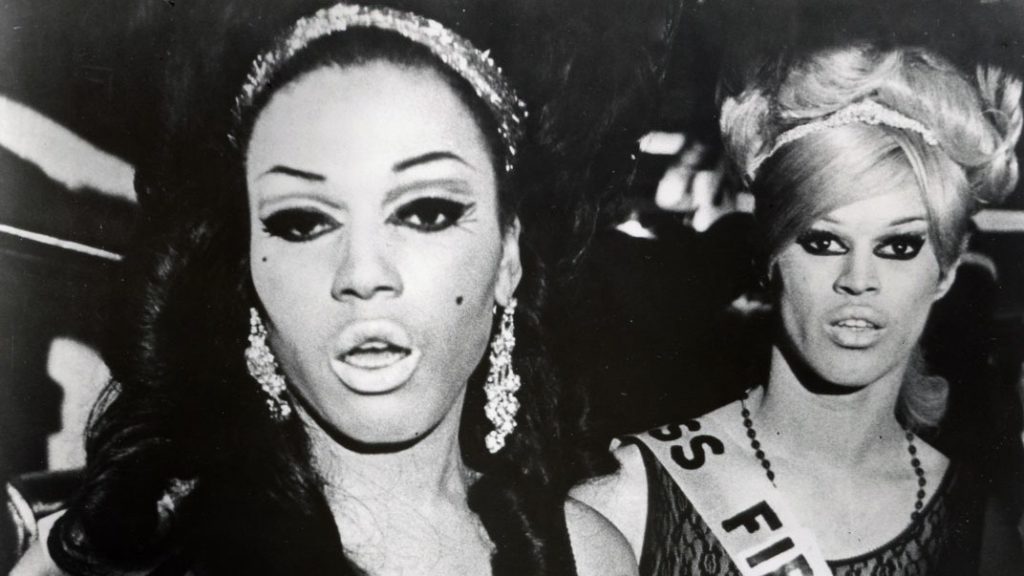
The stars of the eye-opening documentary The Queen
Jackie Curtis with Divine
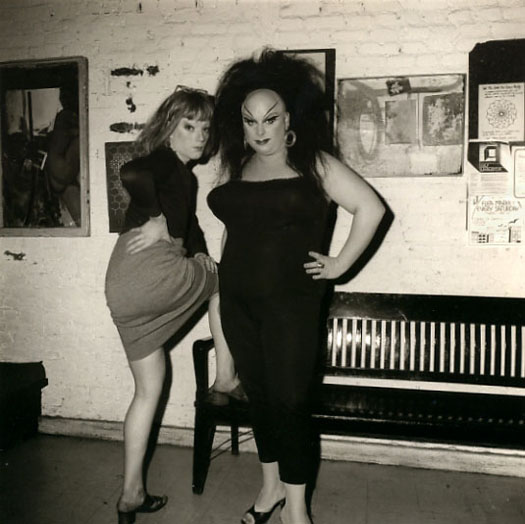
Flickr/Confetta

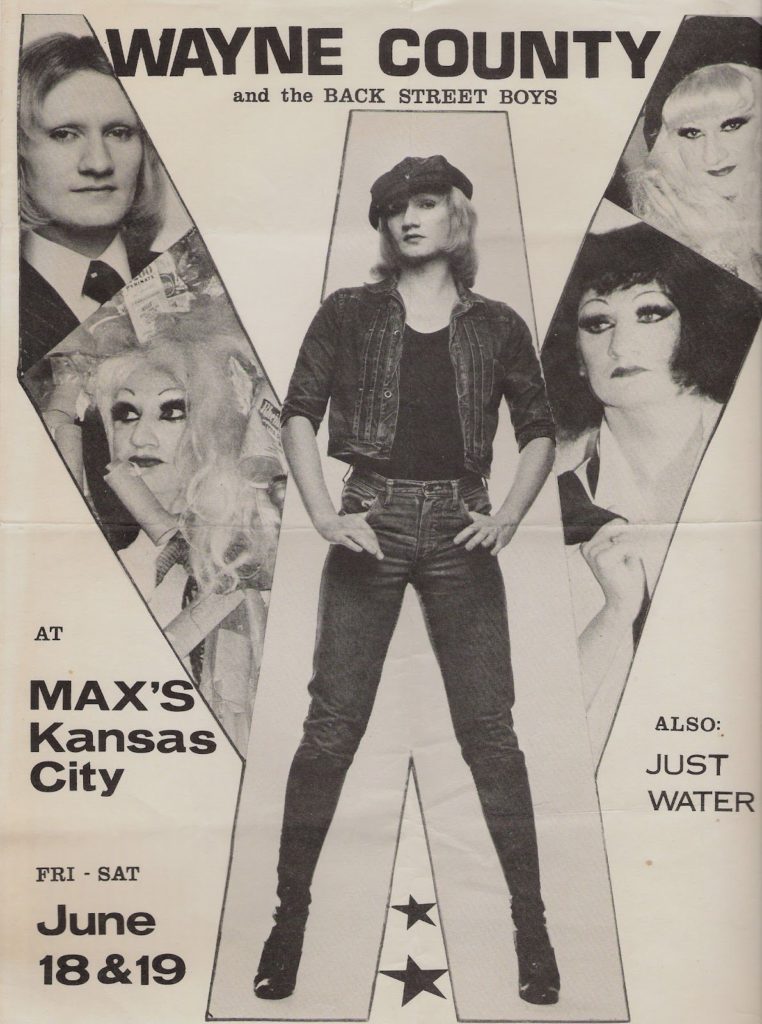
A flyer for a Wayne County (with the Back Street Boys) at the iconic rock venue Max’s Kansas City.
Categories
Friday Night Fever

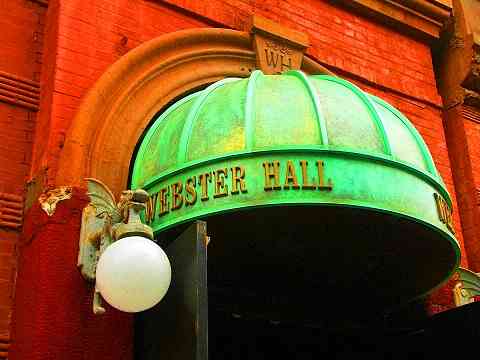
Webster Hall will return: The end of an era for NYC’s oldest party room

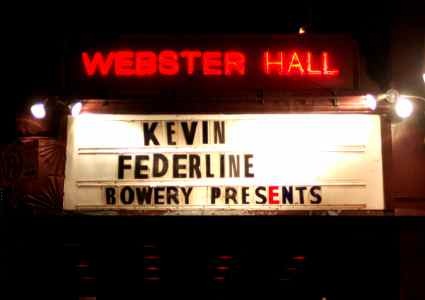
When news circulated this week that East Village nightclub Webster Hall would be closing for renovation in August, people understandably freaked out. It seems we’re losing historically significantly places at an alarming rate, places that seem to take a little bit of New York City’s personality with them when they disappear forever.

It was announced earlier this year that the venue was switching to new corporate owner Barclays/AEG/Bowery Presents in an effort to “bring them up to contemporary standards and add a few more customer features.” For many people, that’s code for stripping a place of its charm.

But don’t panic! This change is but the latest for this storied party venue. The hall has had many facelifts over the past 130 years, evolving to mirror the tastes of Greenwich Village residents. Indeed this corporate upgrade is a belated reflection of the neighborhood’s various sleek changes. (The projected renovations seem positively mild in comparison to the blistering reinvention of Astor Place.)

In 2008 Webster Hall was designated a New York City landmark for its impressive terra-cotta architecture and its status as a beacon of ethnic and social counter-culture during the late 19th and early 20th centuries.

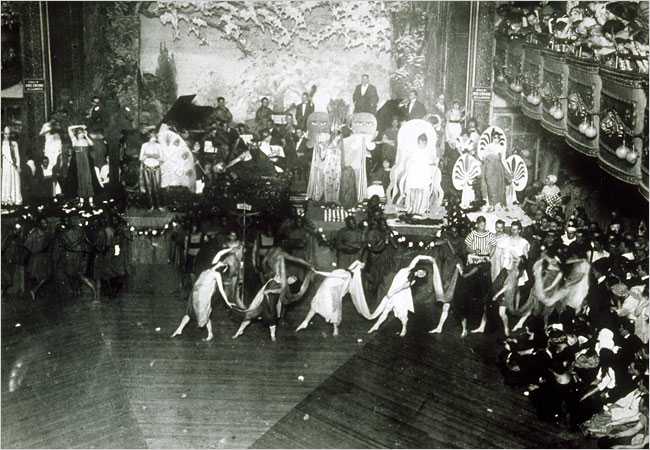
As we wrote in our book Adventures In Old New York: “Opened in 1886, the hall hosted the annual Greenwich Village Ball from the 1910s to the 1930s, a bacchanalia where artists, bohemians, drag queens, and general reprobates of the best kind came to drink, dance, and seriously make merry until early morning. It worked hard to earn its nickname “the devil’s playhouse.”

Author Allan Church wrote, “So many dances-till-dawn and fancy dress balls were held there that one Villager said of himself and his wife: ‘We’ve sold our bed. Why sleep when there’s a dance every night at Webster Hall?’ ”

—————

In celebration of its new landmark status, we recorded an entire episode on the history of Webster Hall back in January 2009. In 2015, some additional material was added to the show.  Listen to it here or look for it in our Bowery Boys Archive feed (episode #73):

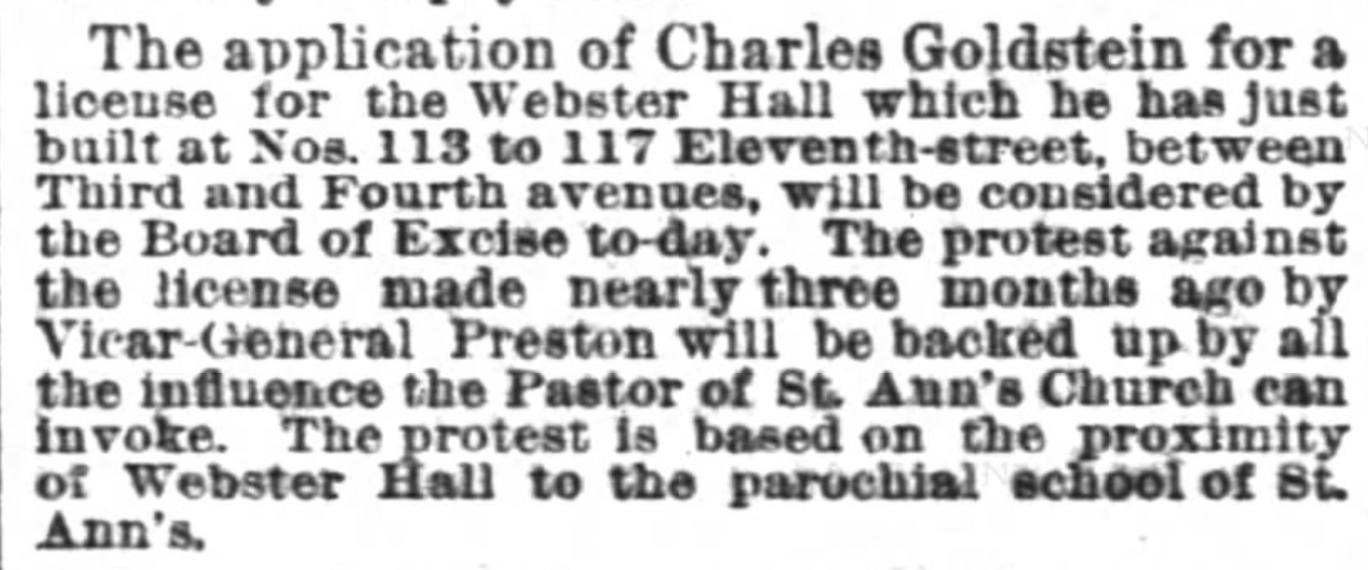
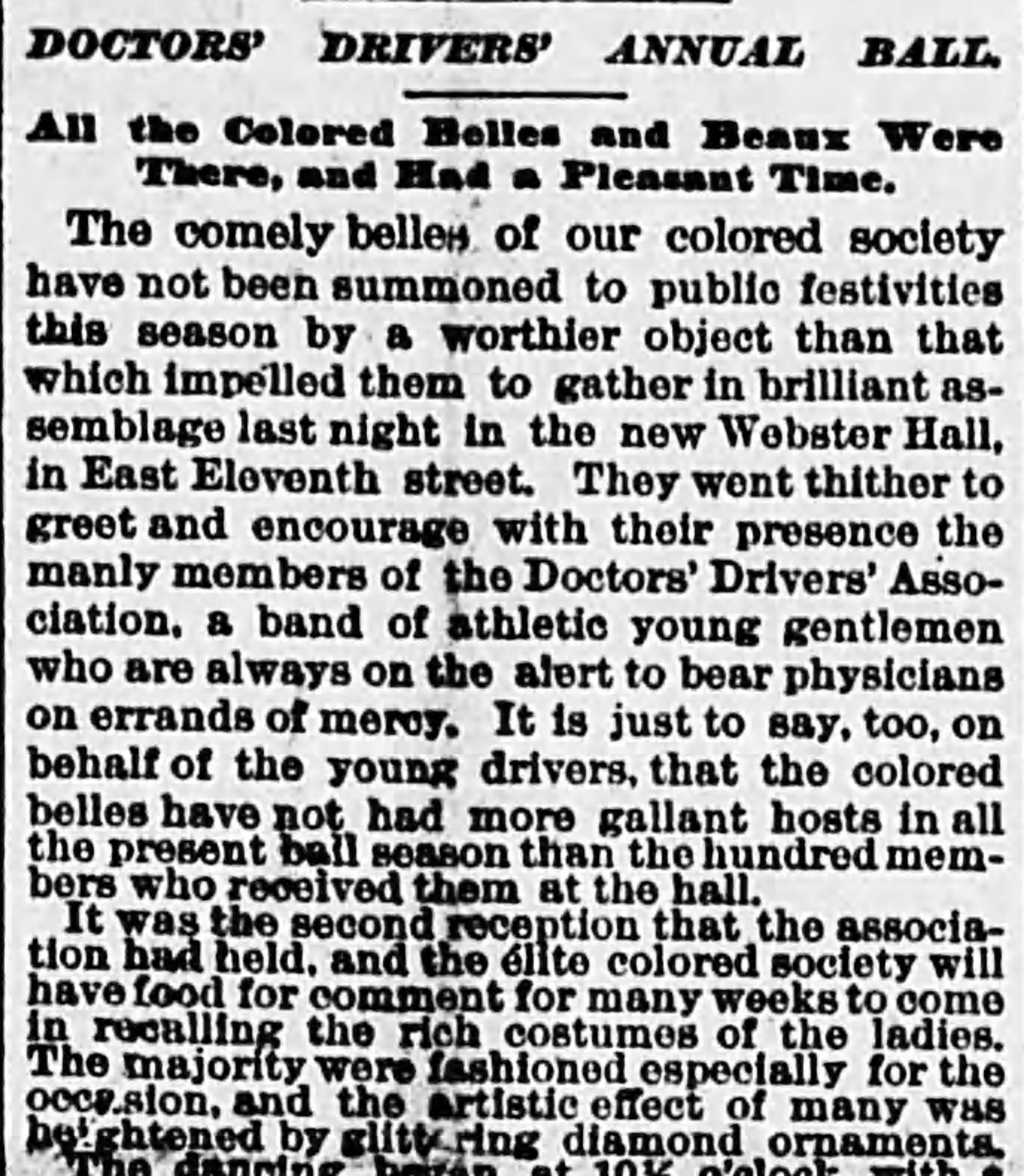
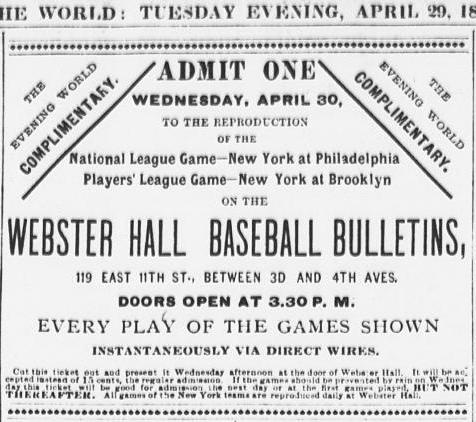
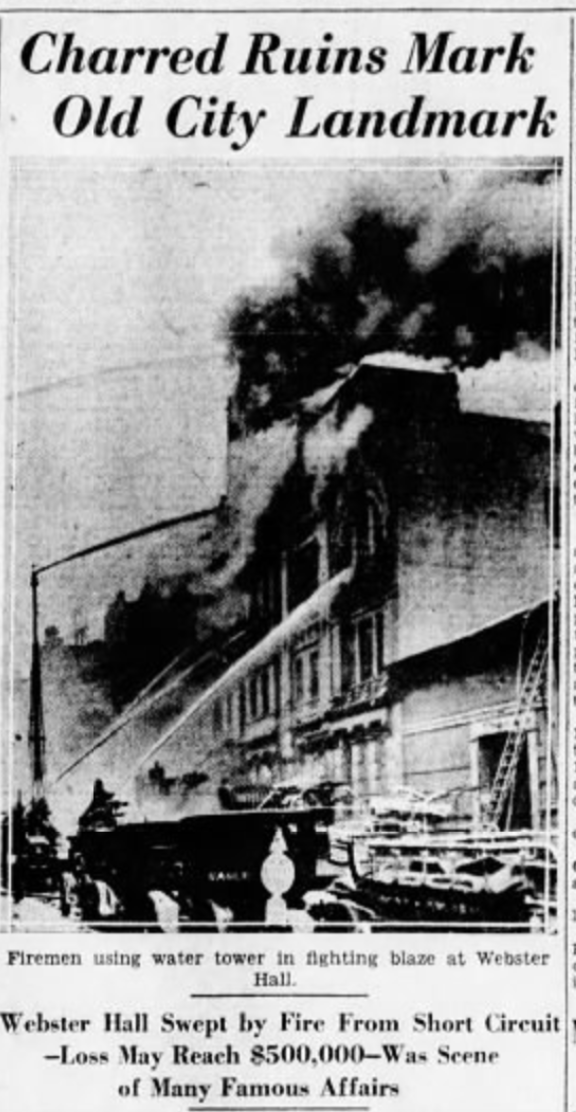
We look forward to visiting the new Webster Hall but of course we’ll be swinging by before August 5 to bid adieu to present incarnation.  Here’s a few clippings from old newspapers, giving you a few additional insights into Webster Hall’s spectacular history:

Webster Hall was rebellious before it even opened. St. Ann’s, the church which most vigorously decried its existence, has all been erased except for its entrance:

In 1887 Webster Hall played host to a private dance for wealthy black New Yorkers, members of the Doctors’ Drivers’ Association, “a band of athletic young gentlemen who are always on the alert to bear physicians on errands of mercy.”

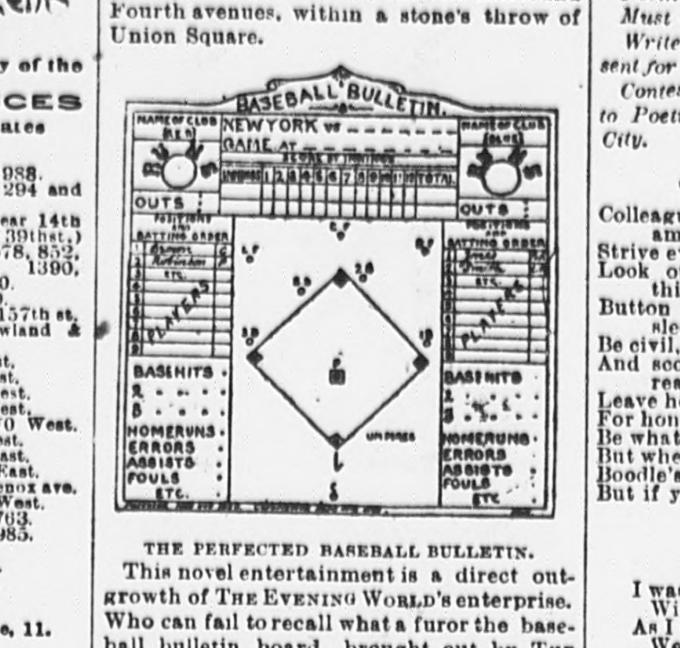
A depiction of the baseball scoreboard that was installed by the New  York Evening World to ‘instantaneously’ update baseball scores from Boston in 1890. [The complete article is here.]

New York Evening World

1


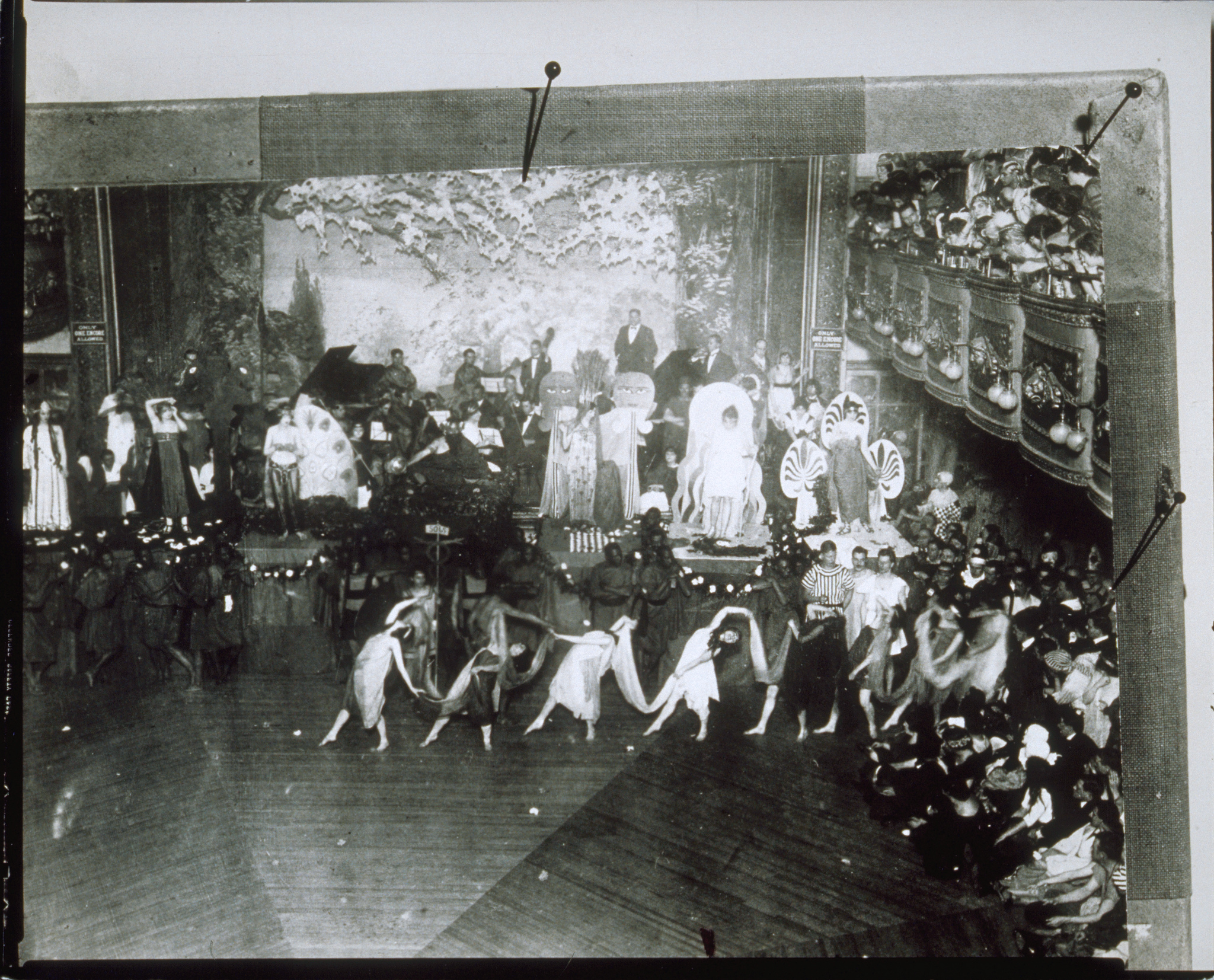
The party rages at a Webster Hall costume ball, in a photo by the great Jessie Tarbox Beals. Just click into this photo for a closer view and observe the bizarre costumes.

Courtesy Schlesinger Library


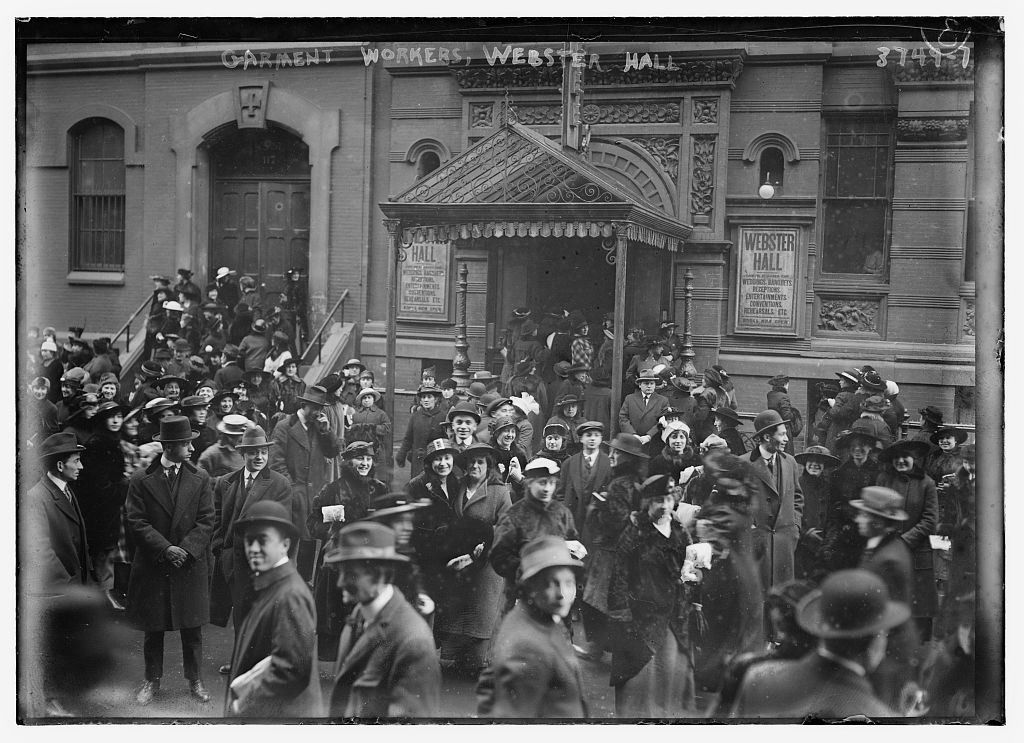
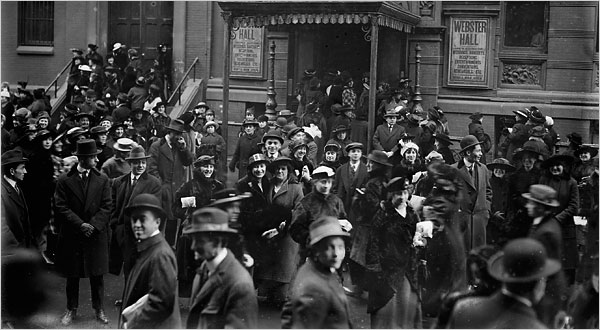
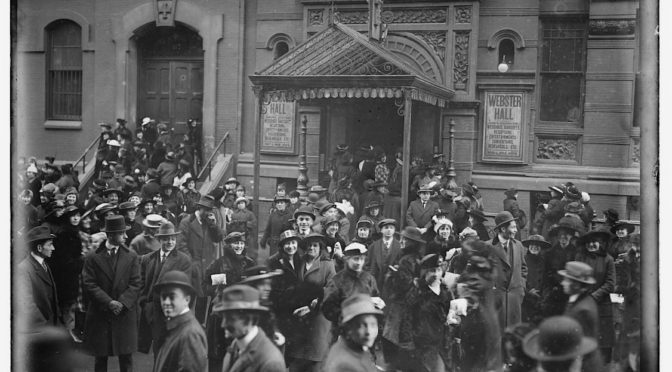
Garment workers meet out in front of Webster Hall, between 1910-1915.  The venue was a pivotal meeting spot for union groups, political activists and anarchist leaders like Emma Goldman.

Courtesy Library of Congress


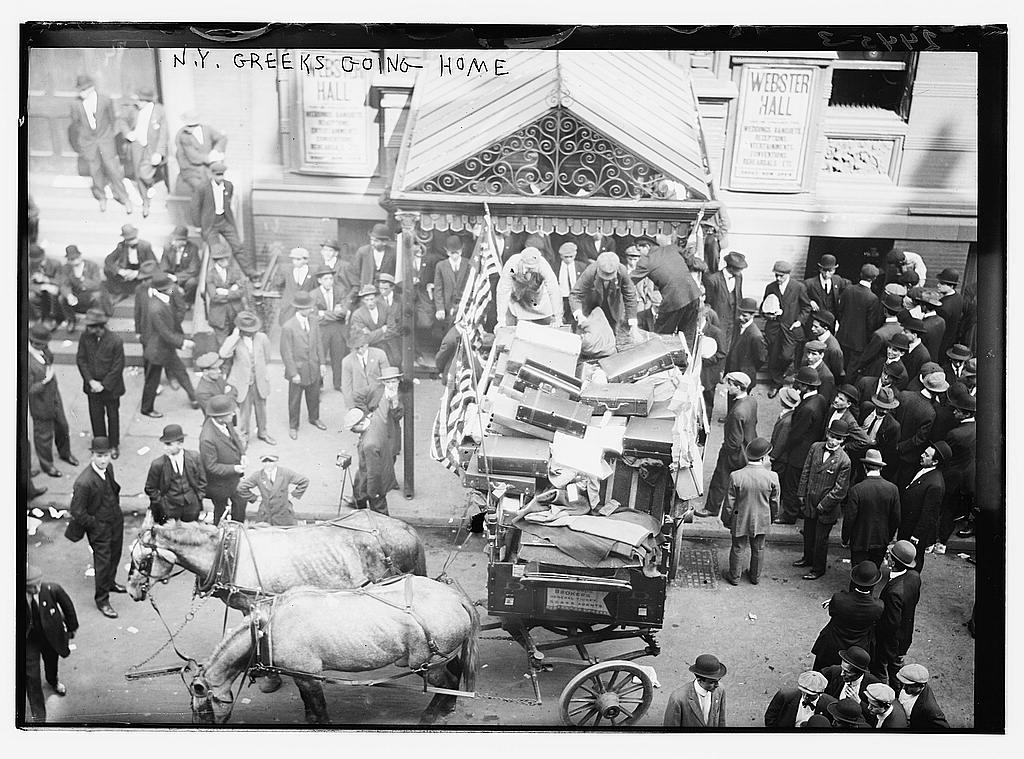
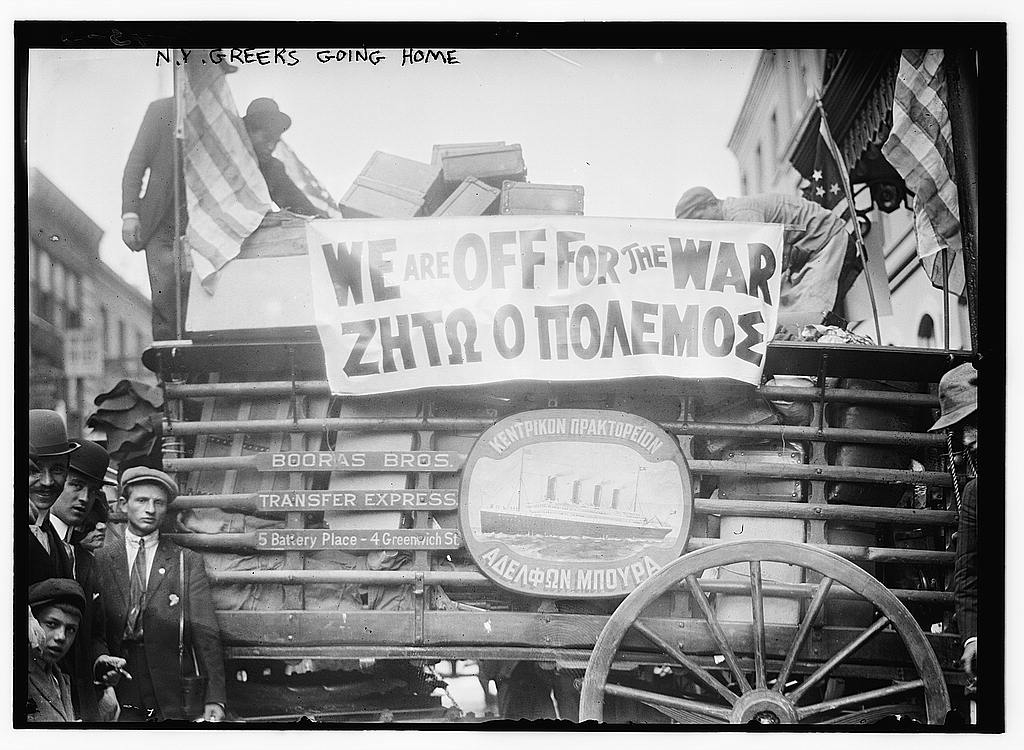
Greek immigrants gather in front of Webster Hall as they prepare to return to their country to engage in the first Balkan war (October 1912).

Courtesy Library of Congress

Courtesy Library of Congress

From a 1930 article:


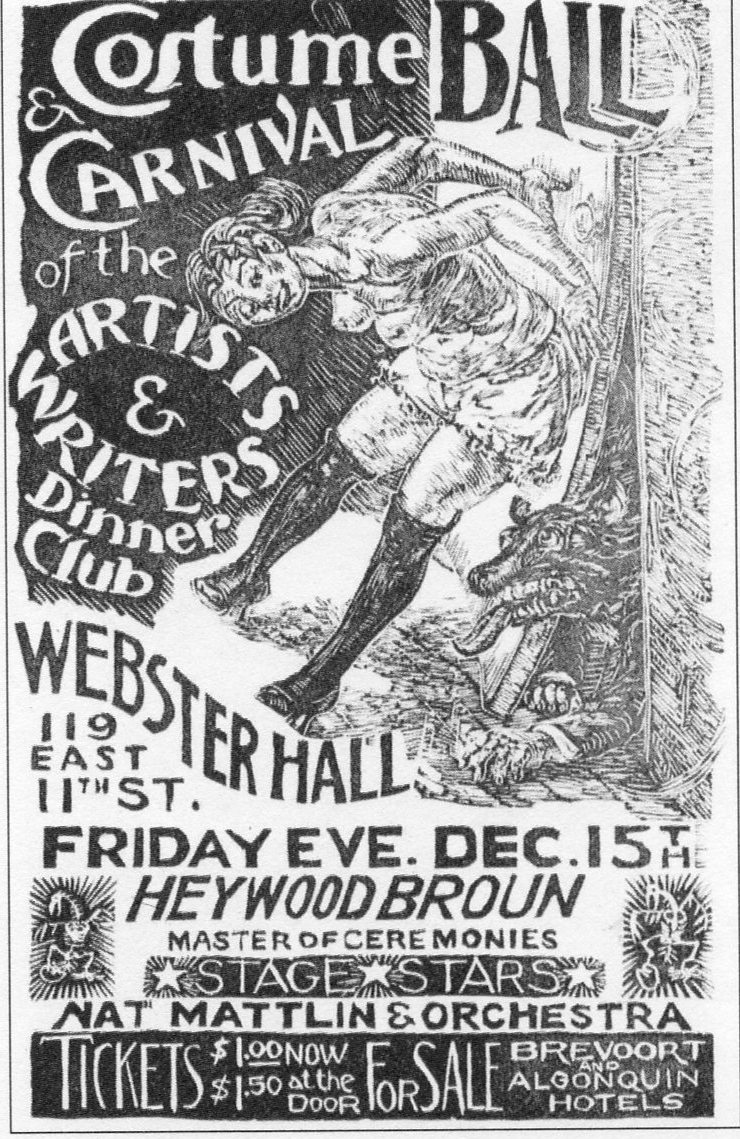
A 1933 poster advertising the annual Greenwich Village costume ball, designed by John Sloan

Courtesy Ephemeral New York
CourtesyLibrary of Congress


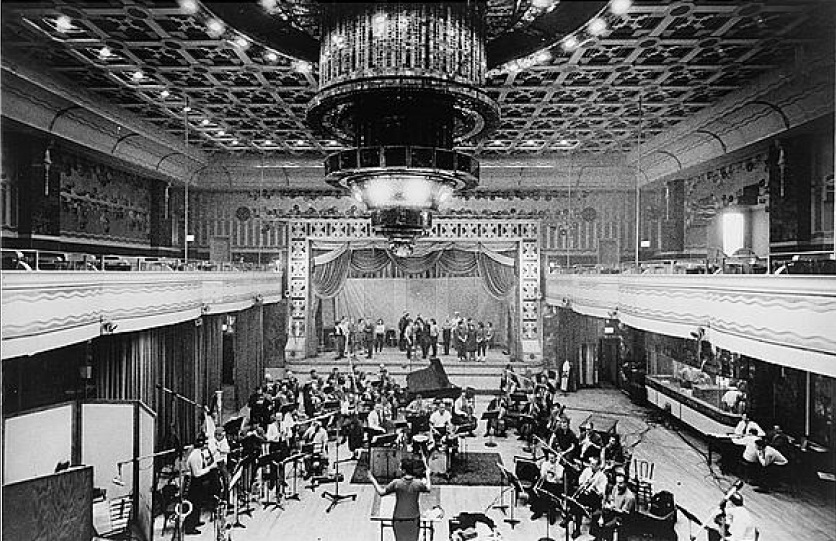
The cast of ‘How To Succeed In Business Without Really Trying’ recording the cast album at Webster Hall, 1961.

cast


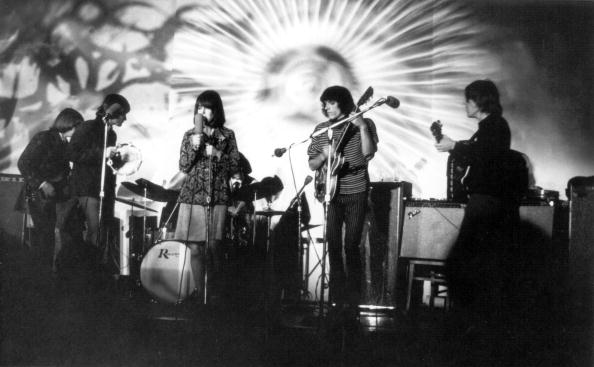
Jefferson Airplane’s first New York concert, January 8, 1967, at Webster Hall

(Photo by Michael Ochs Archives/Getty Images)


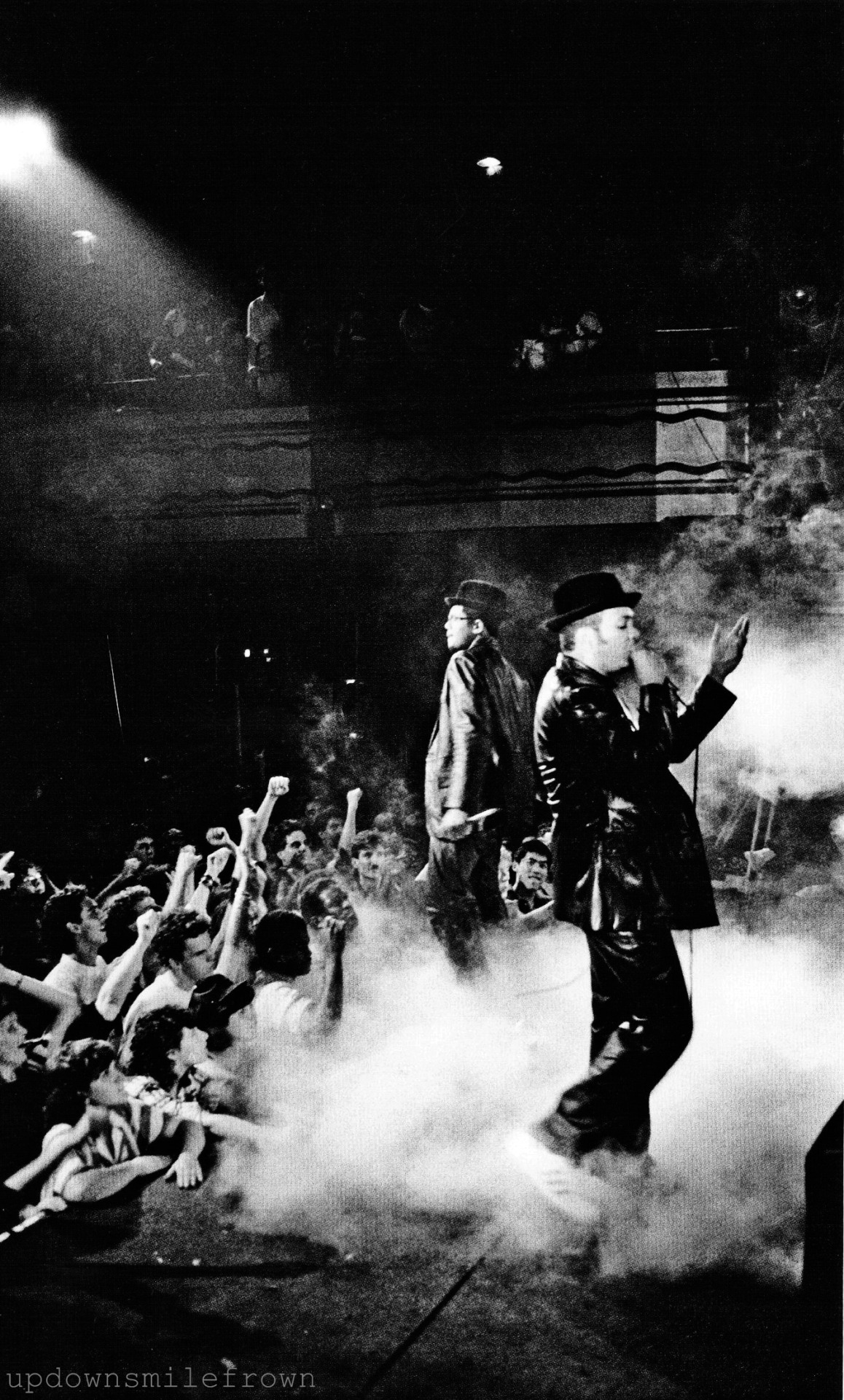
Run DMC performing at The Ritz, May 15, 1984

Photograph by Josh Cheuse/updownsmilefrown


More Webster Hall history: Riot at the Ritz


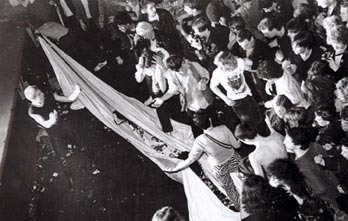
Fans incensed by PiL’s cheeky use of a video screen began attacking the stage

It may not have the historical cache of a Civil War draft riot, but Webster Hall has had its share of violence. The discontent of union workers? Anger over its salacious activities? NO. Just pissed off Public Image Limited fans in May 1981. You can read all about it here from a Rolling Stone article.

“PiL play behind a large screen, on which pre-taped video footage is projected. However, the audience doesn’t get the concept (or joke…) and smashes the venue apart after 25 minutes!”

A year earlier, young Irish rock band U2 had their American debut at Webster Hall, back in its days as the Ritz. Their second performance there, in March of 1981, was reviewed by the New York Times, and the original review — by Stephen Holden, no less — is worth a look if you’re a U2 fan. My favorite line:

Bono Hewson, U2’s lead singer, has a moderately strong voice that was partially drowned out at the Ritz. This was a shame, since the band’s material is of considerable interest.”

Categories
Podcasts

PODCAST: Webster Hall

Webster Hall, as beautifully worn and rough-hewn as it was during its heyday in the 1910s and 20s, disguises a very surprising past, a significant venue in the history of the labor movement, Greenwich Village bohemia, gay and lesbian life, and pop and rock music. Its ballroom has hosted the likes of Emma Goldman, Marcel Duchamp, Elvis Presley, Robert F Kennedy and Madonna. Listen in to find out how it got its reputation as ‘the devil’s playhouse’.

Listen to it for FREE on iTunes or other podcasting services. Or click this link to listen to the show or download it directly from our satellite site.

Webster Hall in its first decade of the 20th century….

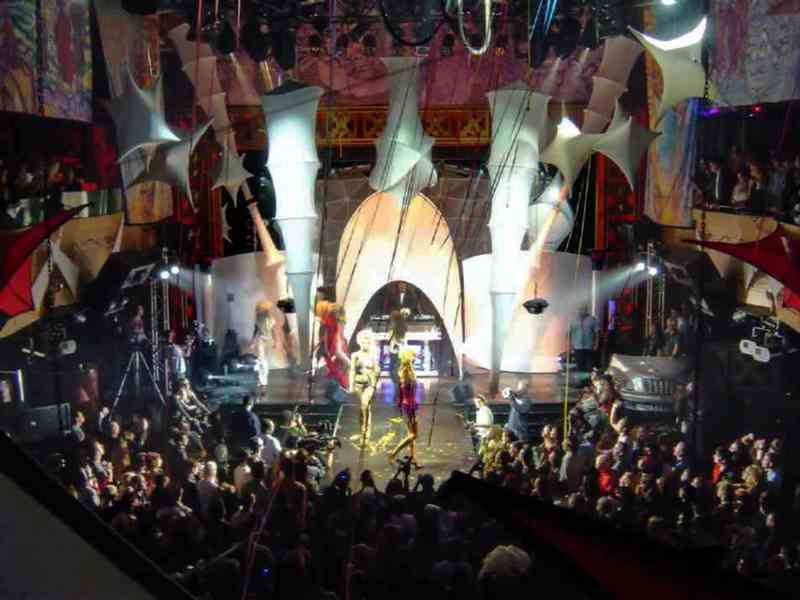
…and the first decade of the 21st century

Outside the club during a labor rally in the 1910s (pic courtesy Library of Congress

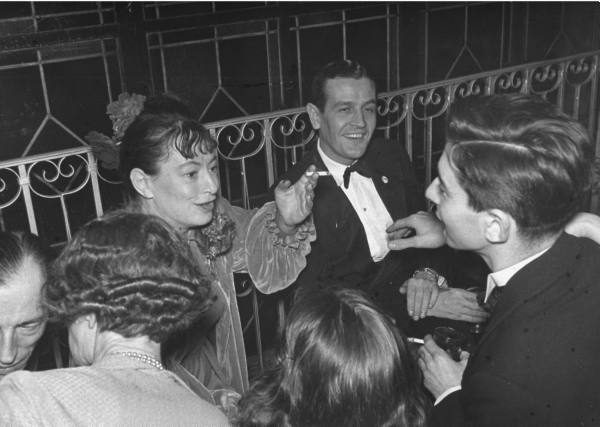
Dorothy Parker arrives at Webster Hall in 1938 with husband Alan Campbell

In its years as an RCA recording studio, Webster Hall saw most of the greats of pop, jazz, classical and Broadway making albums here.

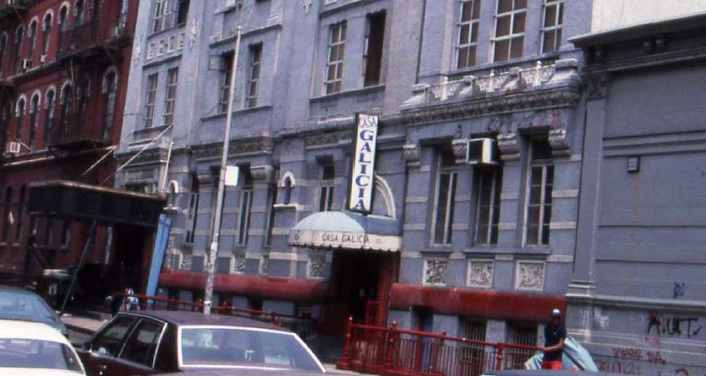
As the Casa Galicia during the 1970s

Elvis, Madonna, Lena Horne, Louis Armstrong, Frank Sinatra, James Brown, Jefferson Airplane, Run DMC, Prince, U2 — all the greats have performed at Webster Hall. And then there’s ….