Categories
Parks and Recreation Podcasts

The rebellious history of Tompkins Square Park

This episode on the history of Tompkins Square Park ties right into an all-new two-part episode coming in September, the first part coming at you next week. 

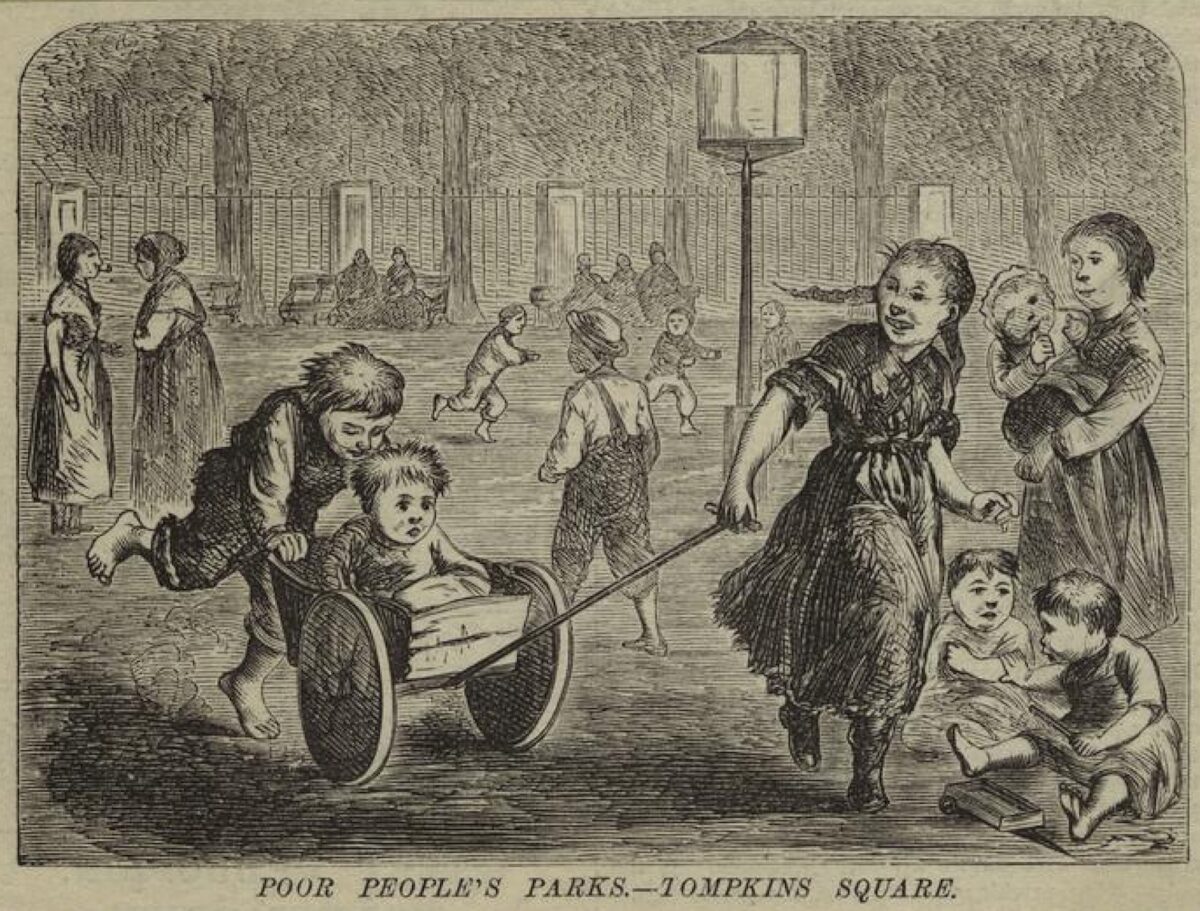
Central Park has frequently been called ‘the people’s park,” but we think Tompkins Square Park may have a better claim to that title.  From its inception, this East Village recreational spot — named for Vice President Daniel D Tompkins — has catered to those who might not have felt welcome in other New York parks.

Carved from the marshy area of Peter Stuyvesant‘s old farm, Tompkins Square immediately reflected the personality of German immigrants who moved here, calling it Der Weisse Garten.  With large immigrants groups came rallies and demands for improved working conditions, leading to more than a number of altercations with the police in the 19th century.

Progressives introduced playgrounds here, and Robert Moses changed the very shape of Tompkins Square.  But the most radical transformation here took place starting in the late 1950s, with the introduction of beatnik and ‘hippie’ culture and infusion of youth and music.

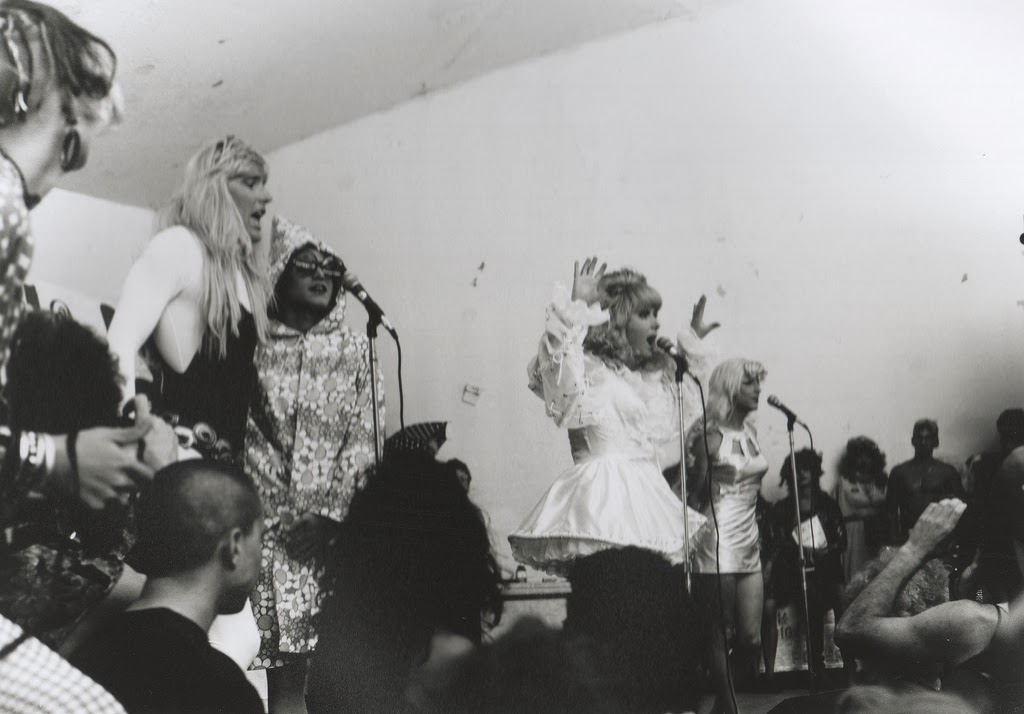
By the 1980s, the park became known not only for embodying the spirit of the East Village through punk music and drag shows (above: Lady Bunny), but also as a haven for the homeless.  Clashes with police echoed the clashes that happened here one century before.  The park still maintains a curfew left over from the strife of the late 1980s.

FEATURING:  Lillian Wald, the Grateful Dead, Charlie Parker, Samuel S. Cox, Lady Bunny … and Chevy Chase?

LISTEN NOW: TOMPKINS SQUARE PARK

A version of this show was originally released in 2014 (episode #160)


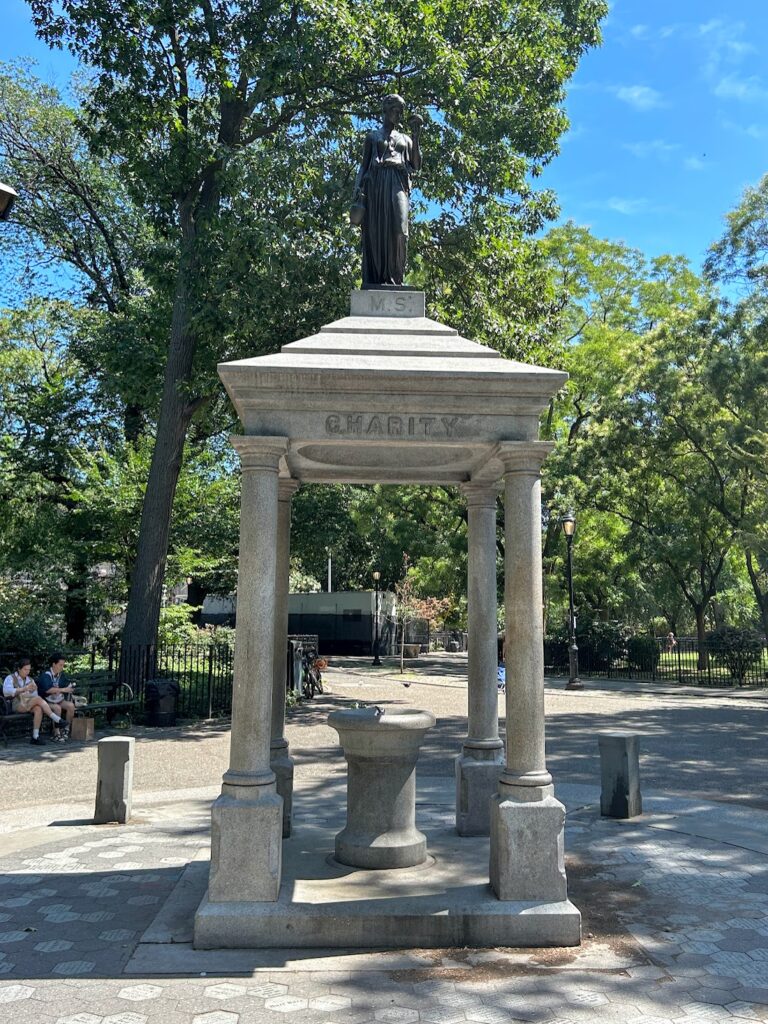
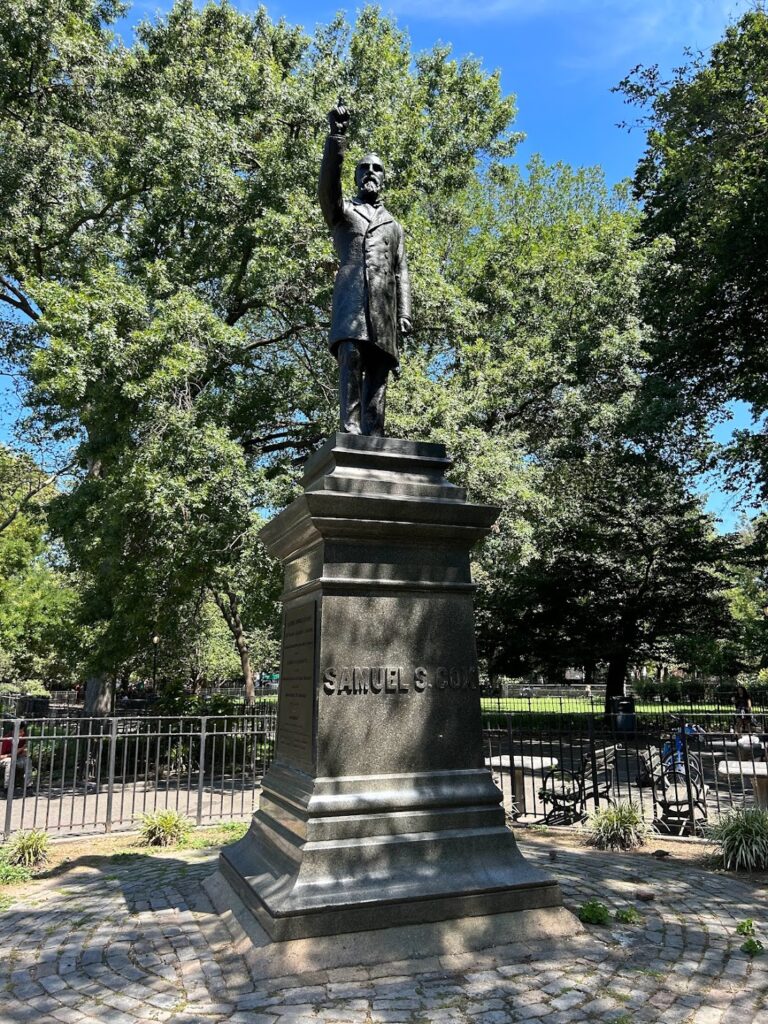
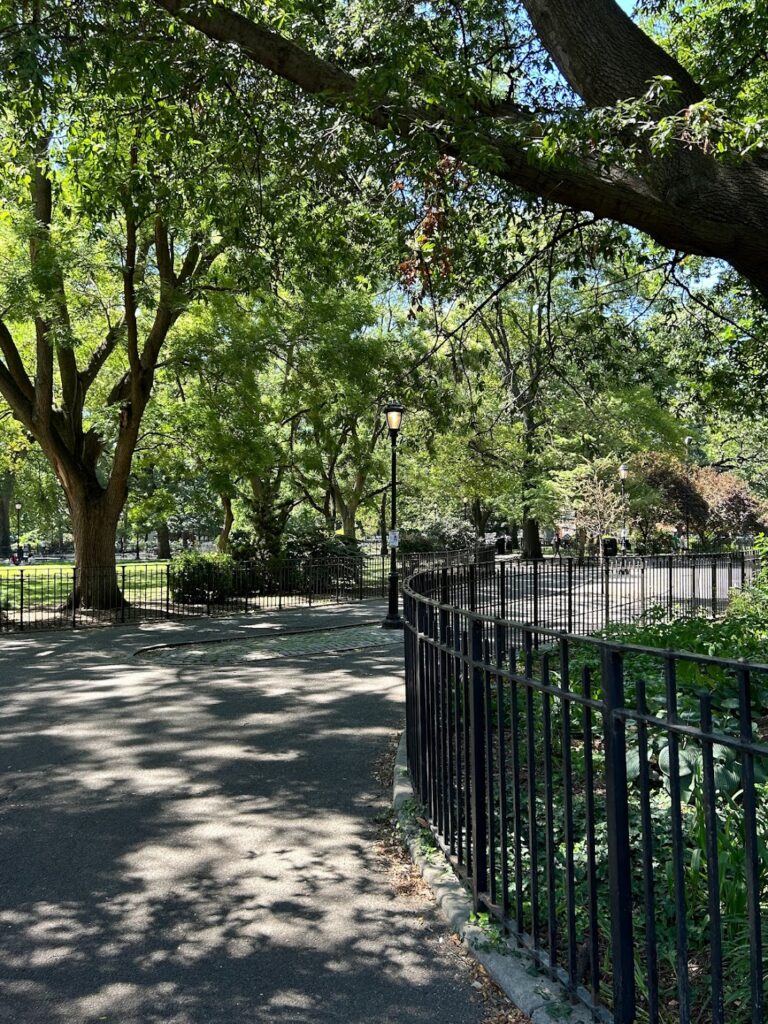
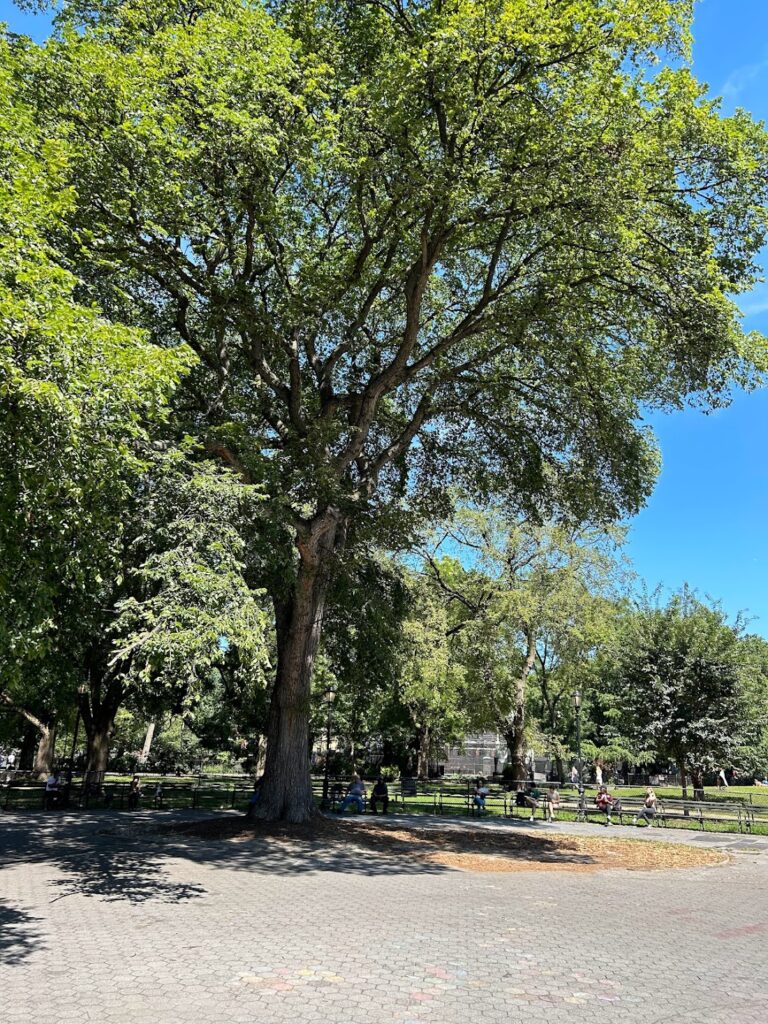
Images from the park this week (August 2023)

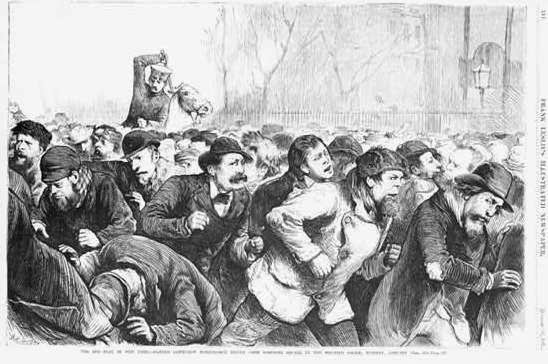
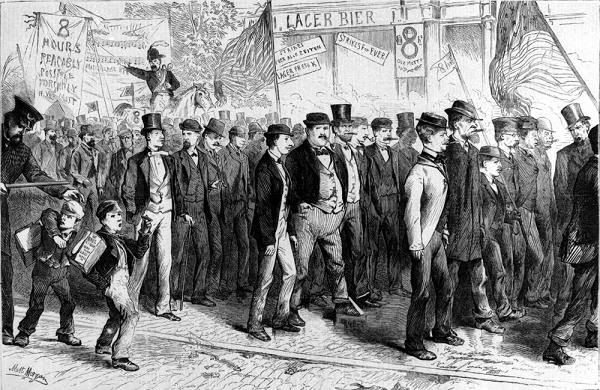
It’s doubtful that the image below is accurately depicted by the caption which accompanied it in Frank Leslie’s Illustrated Newspaper in 1874: “The red flag in New York – riotous Communist workingmen driven from Tompkins Square by the mounted police, Tuesday, January 13th.” [Courtesy LOC]
Another illustration of the 1874 protests, notably featuring a German establishment in the background. (More information on the Tenement Museum blog.)
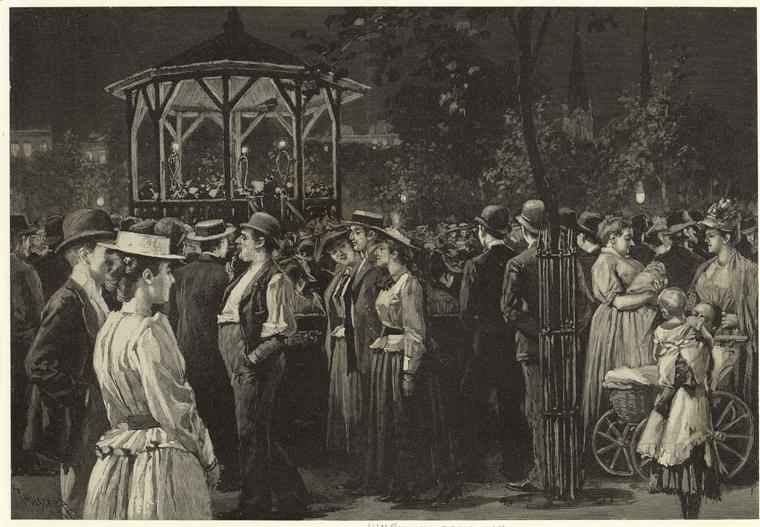
People enjoying (most likely) German music and entertainment in Tompkins Square Park, 1891. An image from Harper’s Weekly by Thure de Thulstrup. (NYPL)
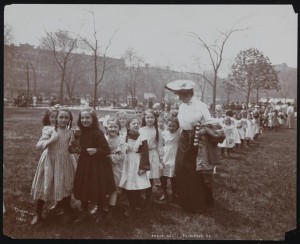
Women and children enjoying themselves in Tompkins Square Park, Arbor Day, 1904, on the brand new playground for girls. (Photos courtesy Museum of the City of New York)
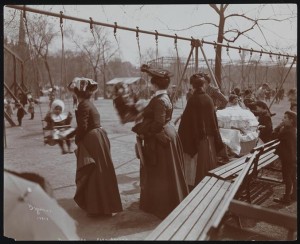
Thompson Sq., Play Ground.
Arbor Day, Thompson Sq.
German Play Ground.

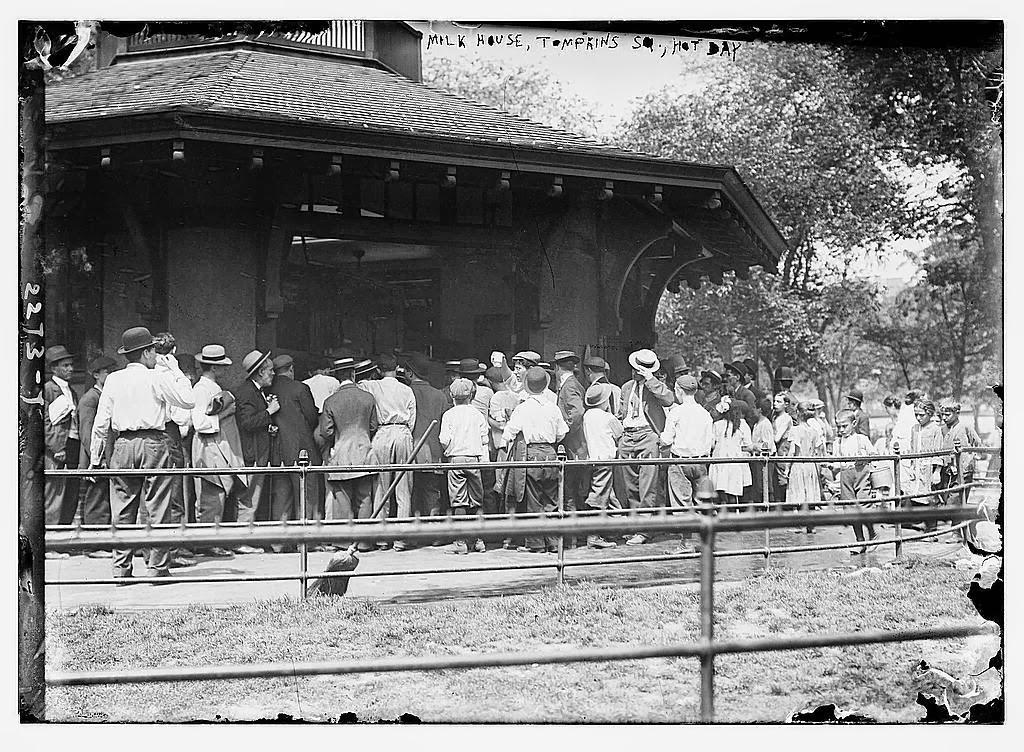
The Tompkins Square Milk House, which provided clean, healthy milk to families in the 1910s.
The statue of Samuel Cox, funded by New York postal workers. (1900, pic courtesy Museum of the City of New York

[Samuel Sullivan Cox statue.]

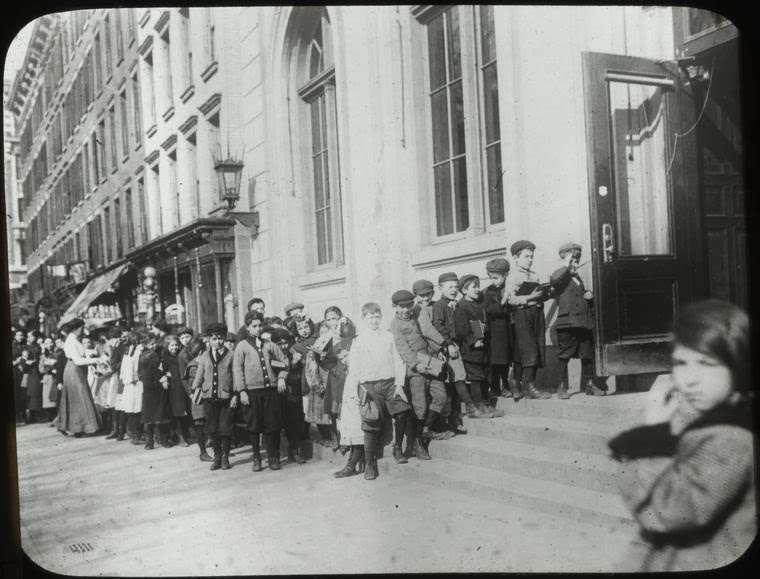
Children waiting in line to use the children’s reading room at the Tompkins Square branch library. (NYPL)
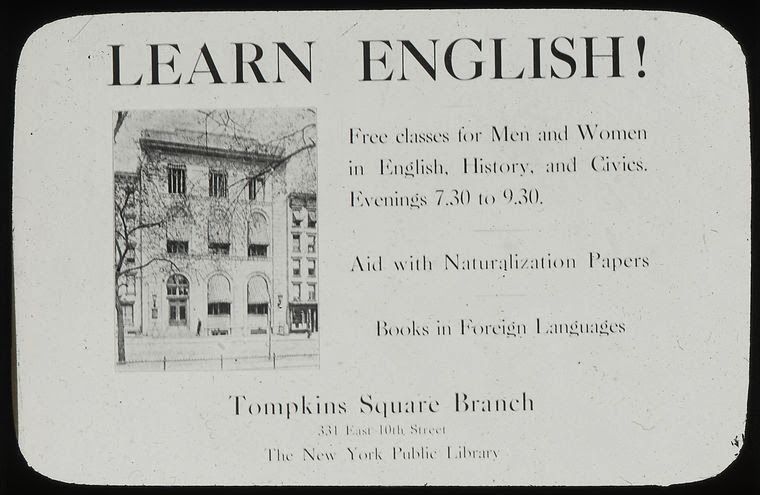
An advertisement from 1920, urging residents of the Lower East Side to take English courses at the Tompkins Square branch library. There are several of these posters in different languages here. (NYPL)
 Lady Bunny and friends, performing at Wigstock 1988 (Picture courtesy aquaman6 on Flickr)
The Tompkins Square Police Riot from 1988 (courtesy Quilas)
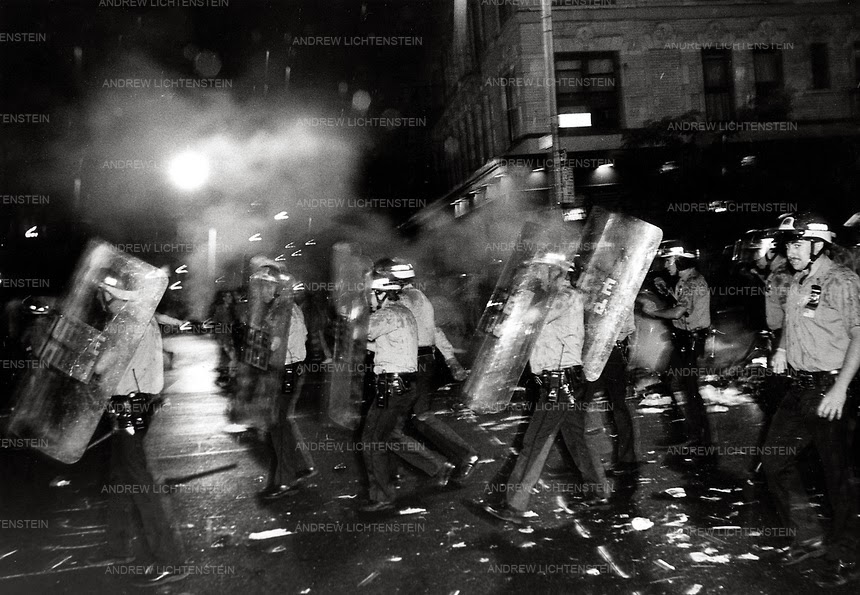
Police retake Avenue A during a riot outside Tompkins Square Park that erupted after police allegedly beat a homeless man. The late 1980’s and early 1990’s was a period of rapid gentrification in the East Village, and many homeless residents, activists, and squatters, battled the process, frequently clashing with the police around Tompkins Square Park.

The Tompkins Square Park bandshell, which was torn down by the city in 1991.  (Photo courtesy Flickr/Mike Evans)
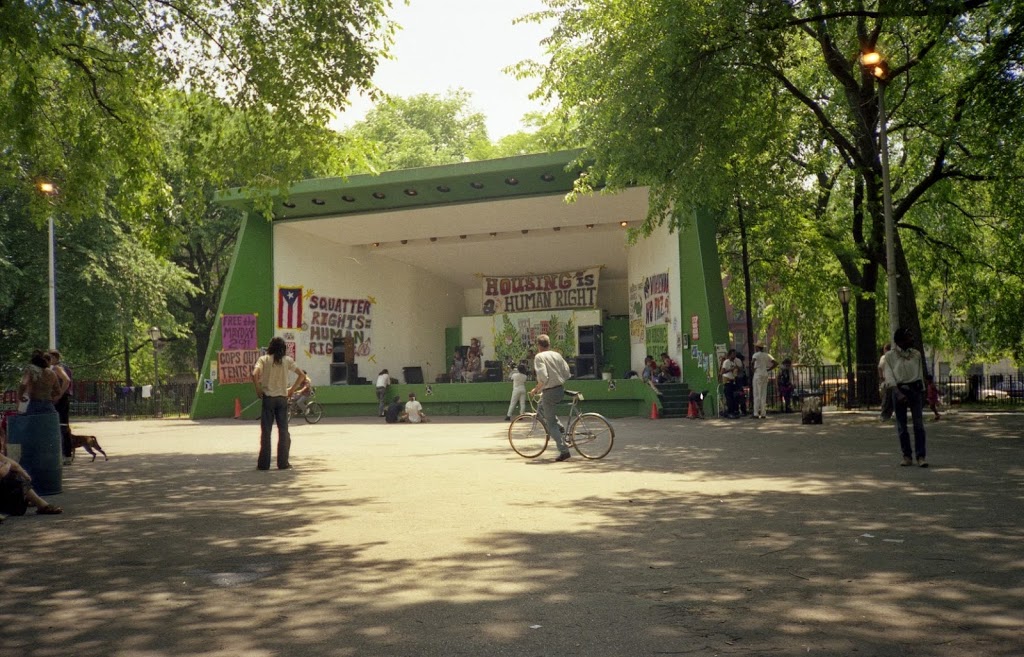
A performance by the hardcore band Breakdown at the bandshell in 1988

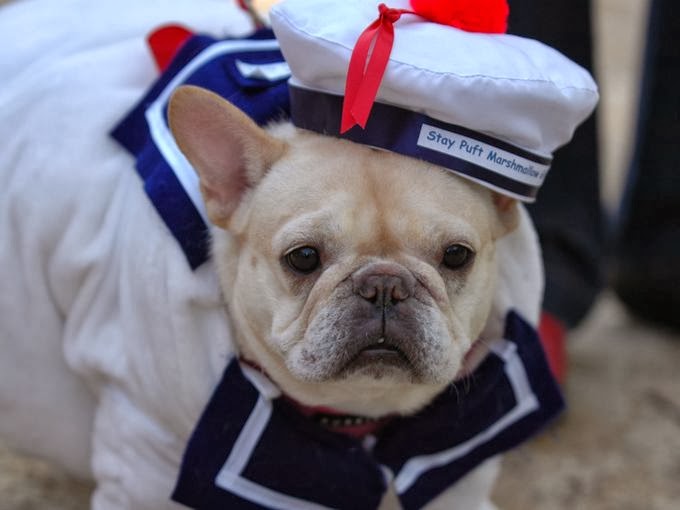
A Ghostbusters-themed entrant in the Halloween Dog Parade in 2013 (Courtesy USA Today)
Categories
It's Showtime Podcasts

Absolutely Flawless: A History of Drag in New York

PODCAST The story of New York City’s most colorful profession.

Television audiences are currently obsessed with shows like RuPaul’s Drag Race and FX’s Pose, presenting different angles on the profession and art of drag. New York City has been crucial to its current moment in pop culture and people have been performing and enjoy drag performers for well over a century.

In the beginning there were two kinds of drag — vaudeville and ballroom. As female impersonators filled Broadway theaters — one theater is even named for a famed gender illusionist — thrill seekers were heading to the popular balls of Greenwich Village and Harlem.

During the middle of the 20th century, the gay scene retreated into the shadows, governed by mob control and harshly policed by the city. By design, drag became political. It also became a huge counter-cultural influence in the late 1960s — from the glamour of Andy Warhol‘s superstars to the jubilant schtick of Charles Busch.

But it was the 1980s that brought the most significant influences to our current pop cultural moment. Joining Greg on this show are two experts on two late 80s/early 90s scenes — Felix Rodriguez, a videographer of the ballroom culture (made famous in the landmark documentary Paris Is Burning) and Linda Simpson, one of the great queens of East Village drag.

FEATURING: Drag kings! Wigstock! And a famous drag queen superstar who got struck by lightning.

Listen Now: Drag Queen History Podcast

_________________________________________________________

The Bowery Boys: New York City History podcast is brought to you …. by you!

We are now producing a new Bowery Boys podcast every other week. We’re also looking to improve the show in other ways and expand in other ways as well — through publishing, social media, live events and other forms of media. But we can only do this with your help!

We are now a member of Patreon, a patronage platform where you can support your favorite content creators for as little as a $1 a month.

Please visit our page on Patreon and watch a short video of us recording the show and talking about our expansion plans. If you’d like to help out, there are five different pledge levels (and with clever names too — Mannahatta, New Amsterdam, Five Points, Gilded Age, Jazz Age and Empire State). Check them out and consider being a sponsor.

We greatly appreciate our listeners and readers and thank you for joining us on this journey so far.

_______________________________________________________

Big thanks to Felix and Linda for joining me on the show! For more information on the history they spoke about, reach out to their work directly.

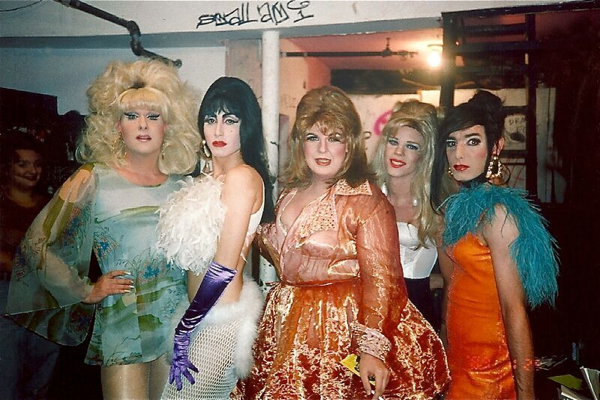
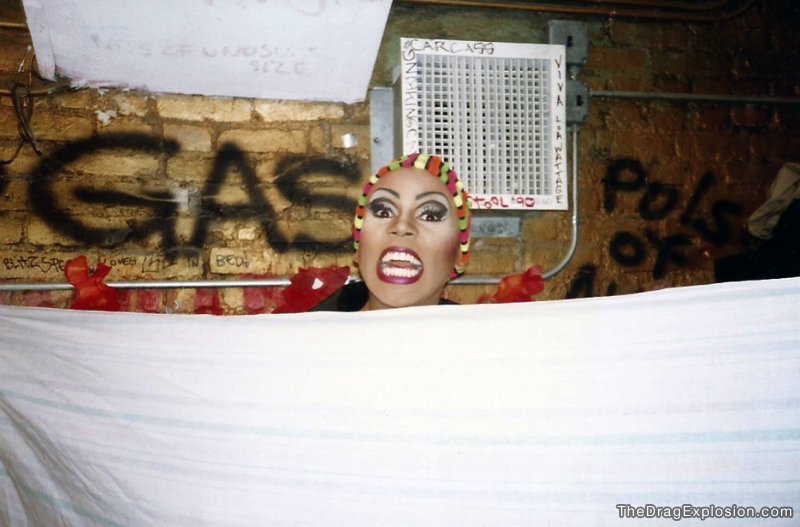
The Drag Explosion — Simpson’s collection of spectacular photographs from the late 80s/early 90s East Village drag scene.

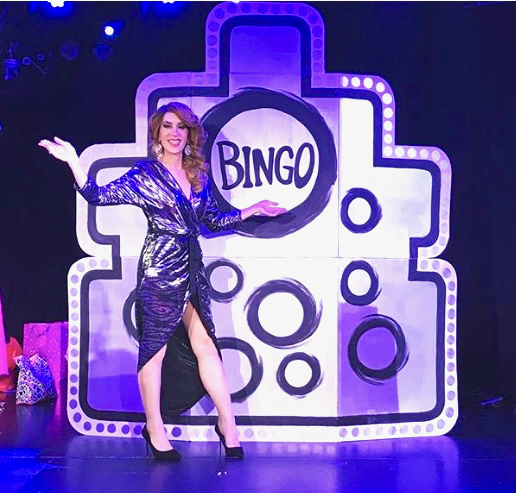
And visit Linda Simpson at her long-running bingo night at (le) poisson rouge

Courtesy Linda Simpson

And here’s one of Felix’s videos featuring the early 90s ballroom scene. Find many more at his YouTube page:

A couple images from Linda Simpson’s Drag Explosion project:

The Drag Explosion

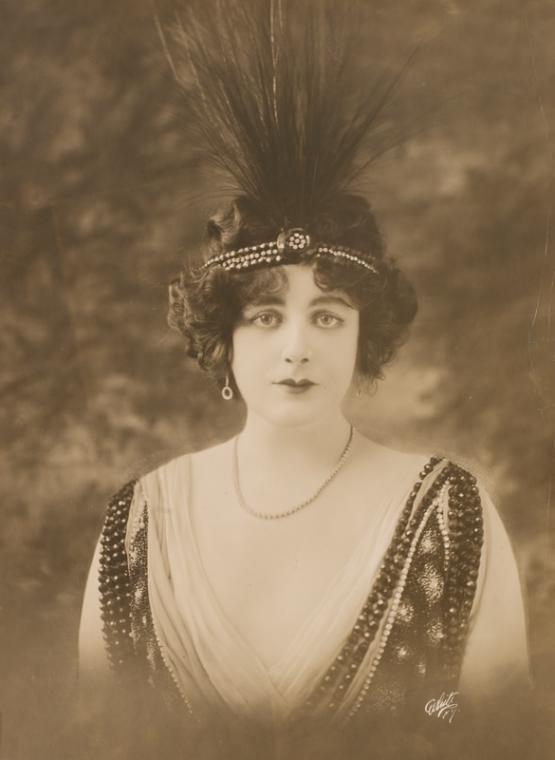
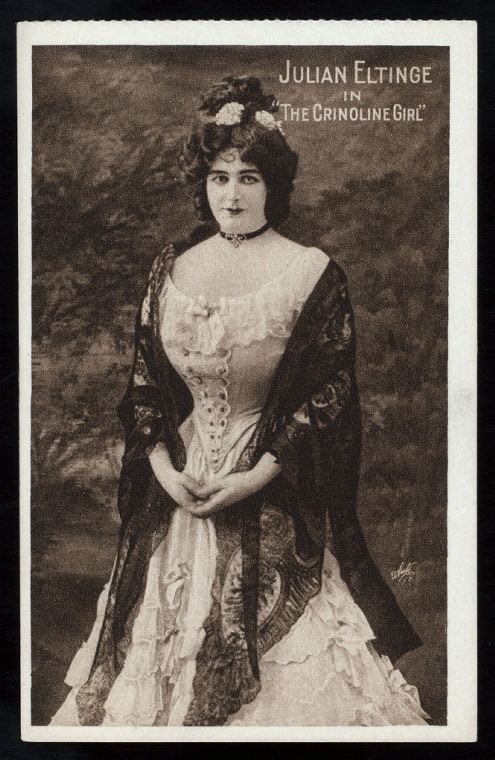
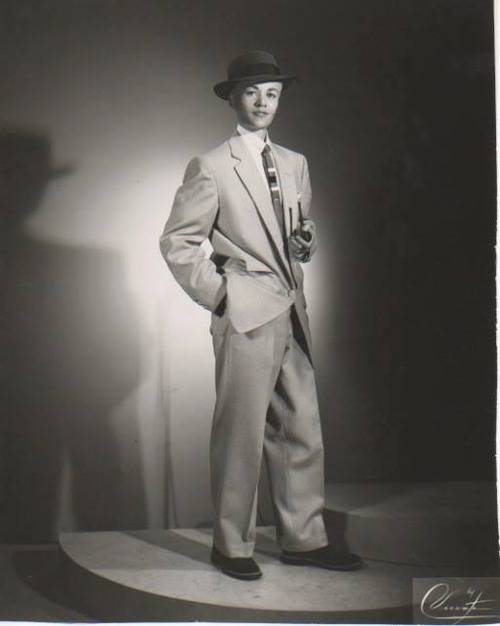
Vaudeville superstar Julian Eltinge, in a couple of popular looks:

New York Public Library

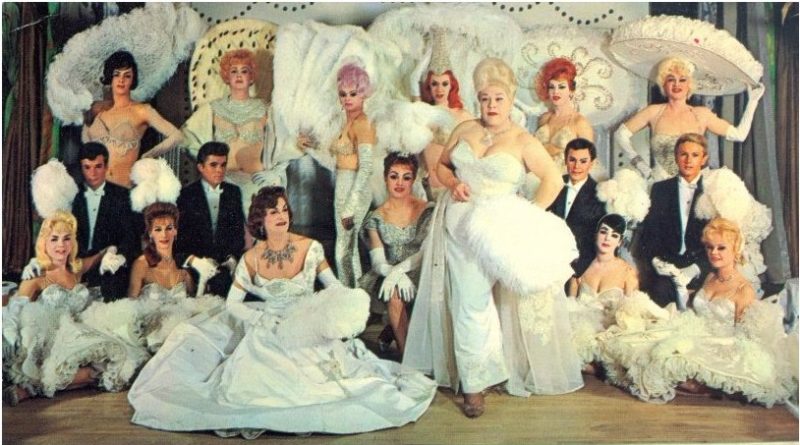
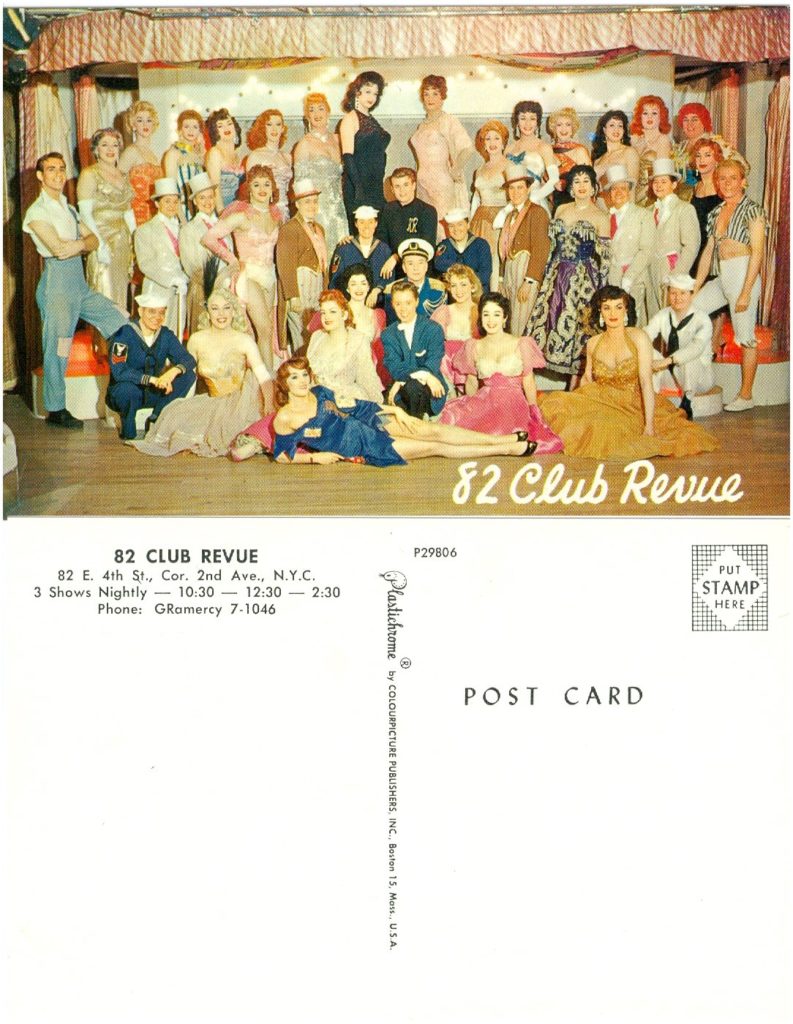
A postcard from Club 82. (Queer Music Heritage has an unbelievable collection of these.)

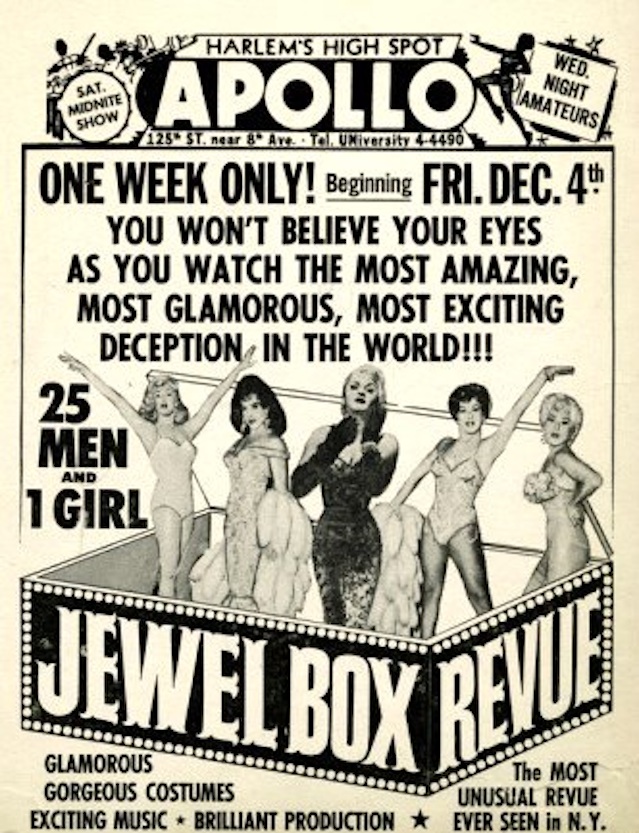
From the Jewel Box Revue’s 1960 appearance at the Apollo Theatre:

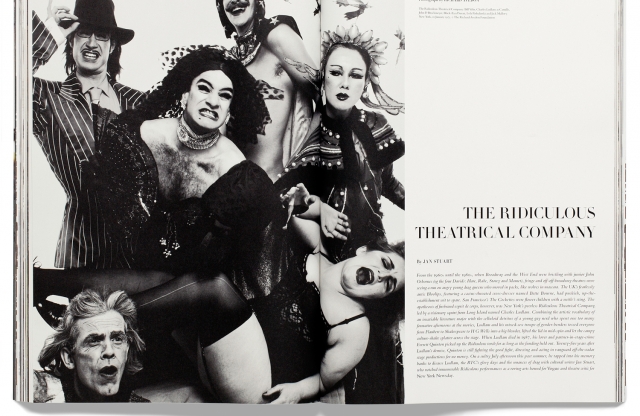
The Ridiculous Theatrical Company (with Charles Ludlum), one of the great influences on the modern drag scene.

Stormé DeLarverie who performed with the Jewel Box Revue. DeLarverie was also a participant at the Stonewall Riots.

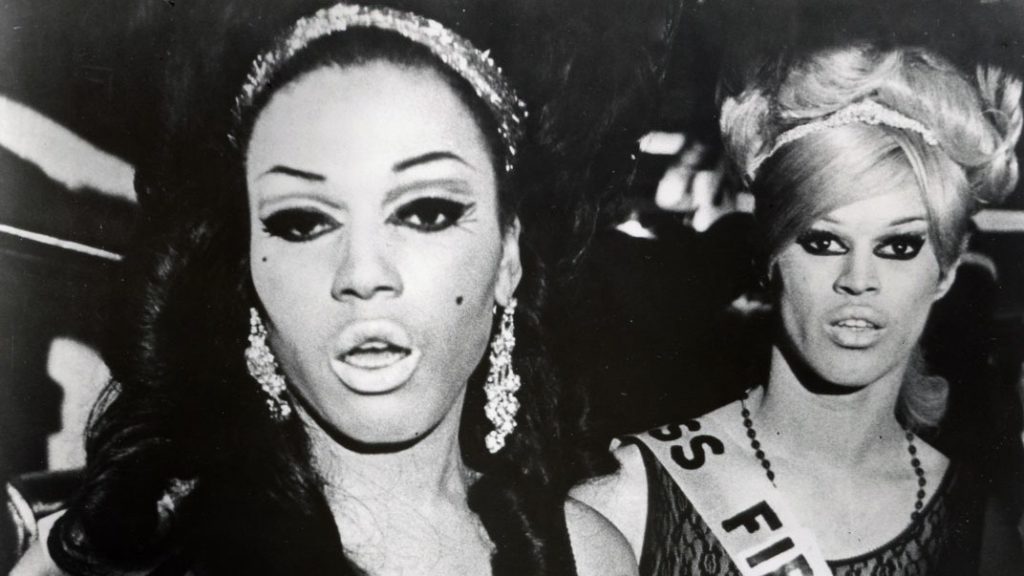
The stars of the eye-opening documentary The Queen

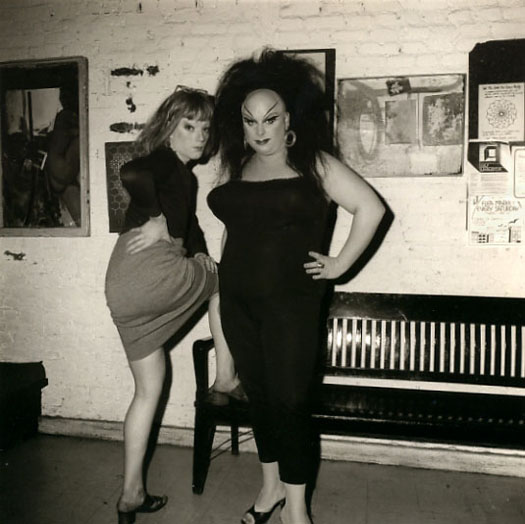
Jackie Curtis with Divine

Flickr/Confetta

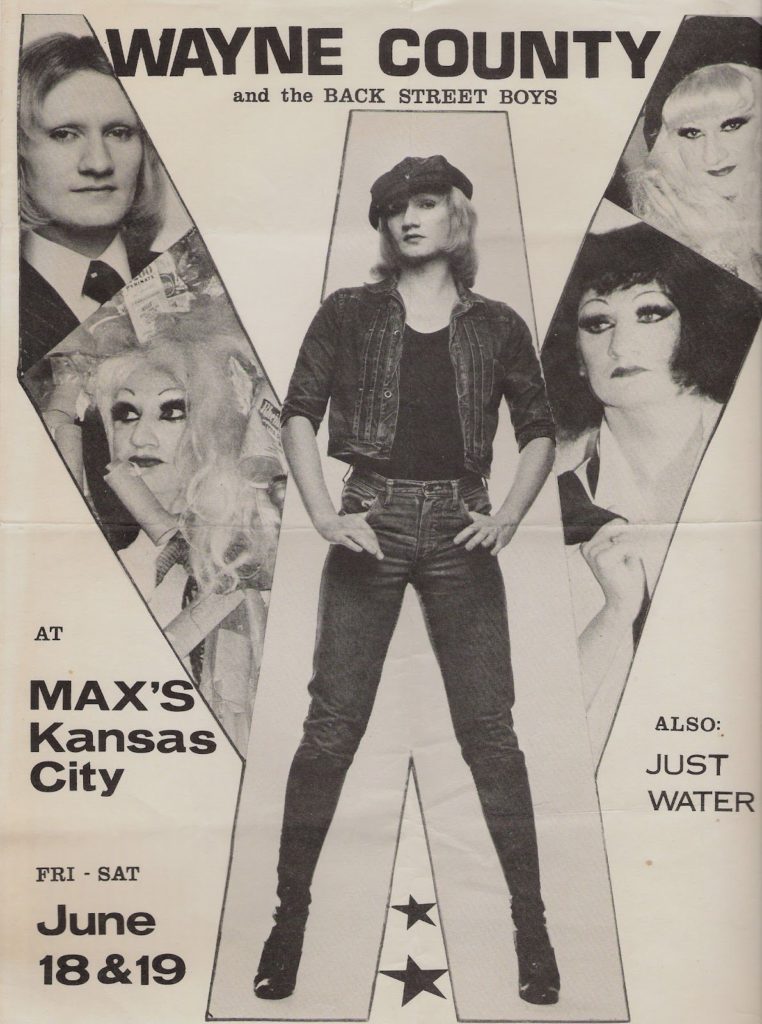
A flyer for a Wayne County (with the Back Street Boys) at the iconic rock venue Max’s Kansas City.