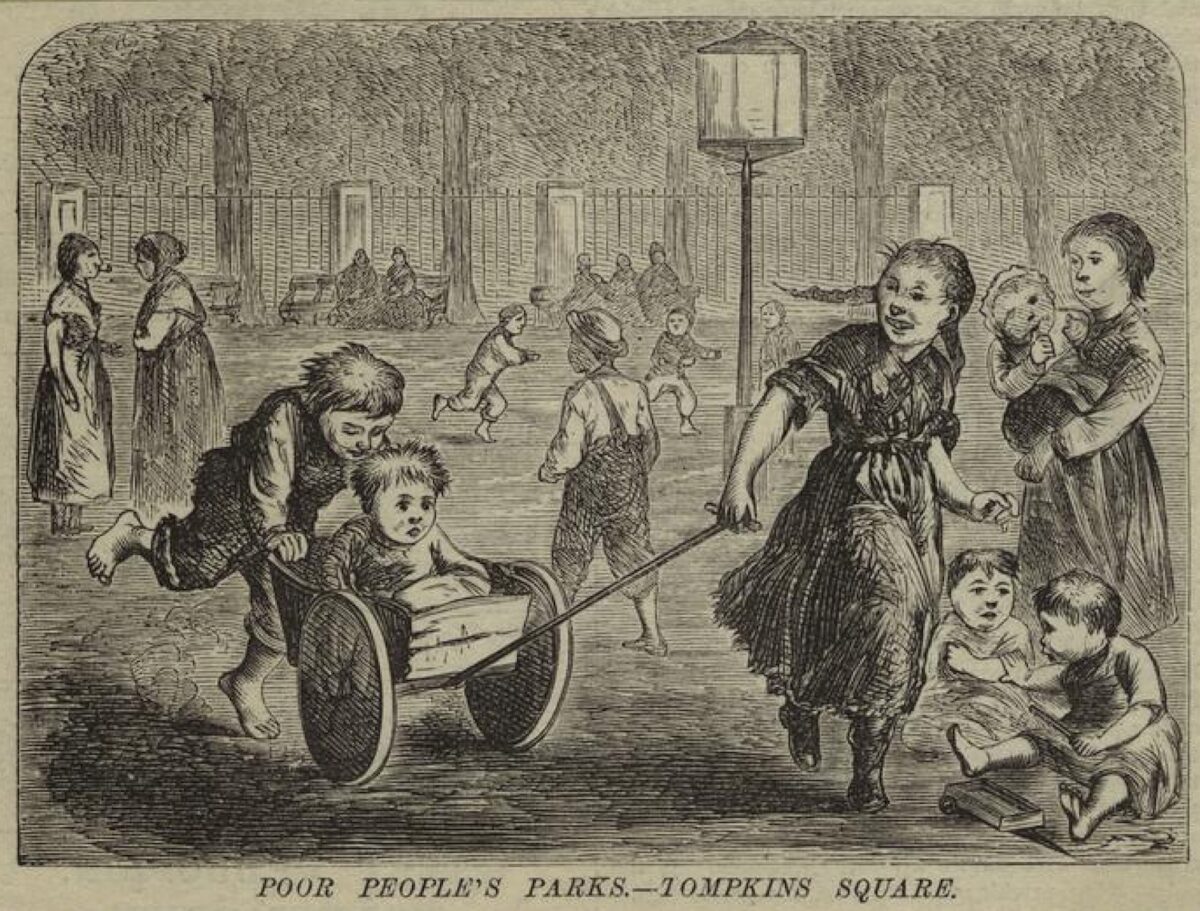
A condescending illustration of Tompkins Square Park from the New York journal Hearth and Home, 1873. (NYPL)
This episode on the history of Tompkins Square Park ties right into an all-new two-part episode coming in September, the first part coming at you next week.
Central Park has frequently been called ‘the people’s park,” but we think Tompkins Square Park may have a better claim to that title. From its inception, this East Village recreational spot — named for Vice President Daniel D Tompkins — has catered to those who might not have felt welcome in other New York parks.
Carved from the marshy area of Peter Stuyvesant‘s old farm, Tompkins Square immediately reflected the personality of German immigrants who moved here, calling it Der Weisse Garten. With large immigrants groups came rallies and demands for improved working conditions, leading to more than a number of altercations with the police in the 19th century.
Progressives introduced playgrounds here, and Robert Moses changed the very shape of Tompkins Square. But the most radical transformation here took place starting in the late 1950s, with the introduction of beatnik and ‘hippie’ culture and infusion of youth and music.
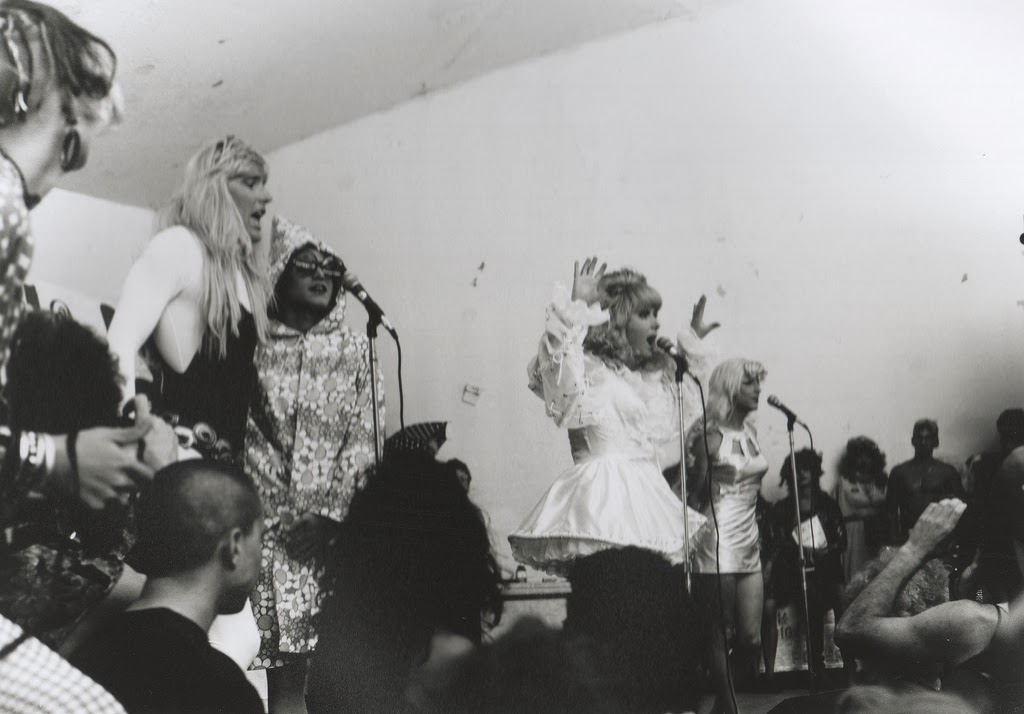
By the 1980s, the park became known not only for embodying the spirit of the East Village through punk music and drag shows (above: Lady Bunny), but also as a haven for the homeless. Clashes with police echoed the clashes that happened here one century before. The park still maintains a curfew left over from the strife of the late 1980s.
FEATURING: Lillian Wald, the Grateful Dead, Charlie Parker, Samuel S. Cox, Lady Bunny … and Chevy Chase?
LISTEN NOW: TOMPKINS SQUARE PARK
A version of this show was originally released in 2014 (episode #160)
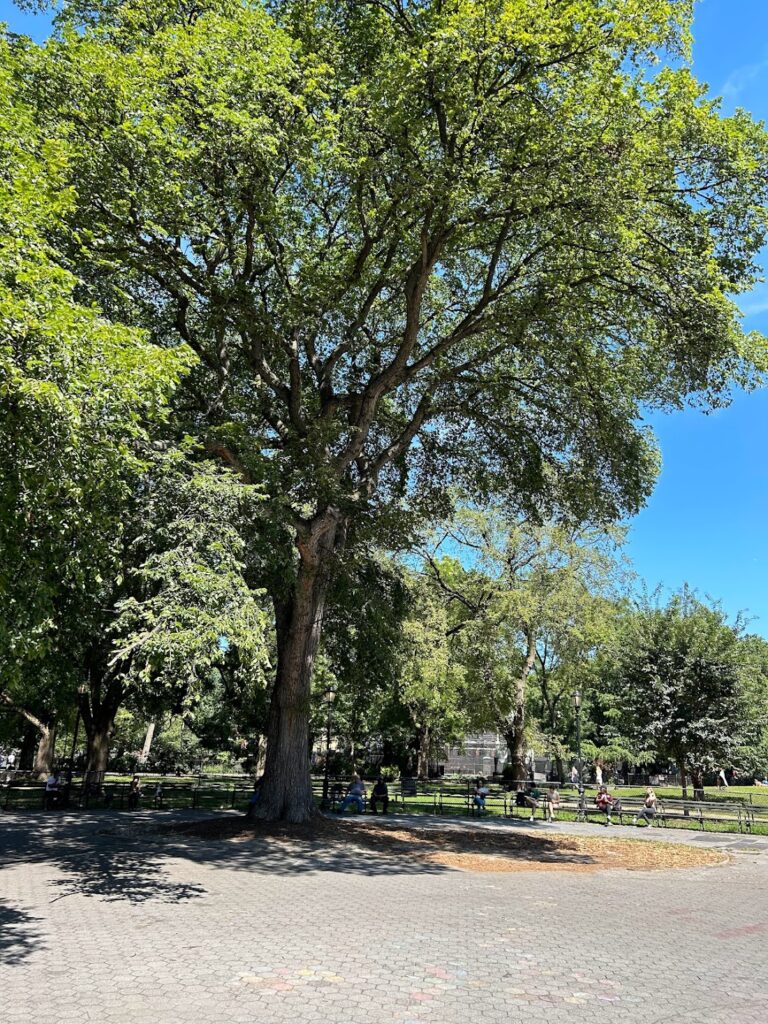
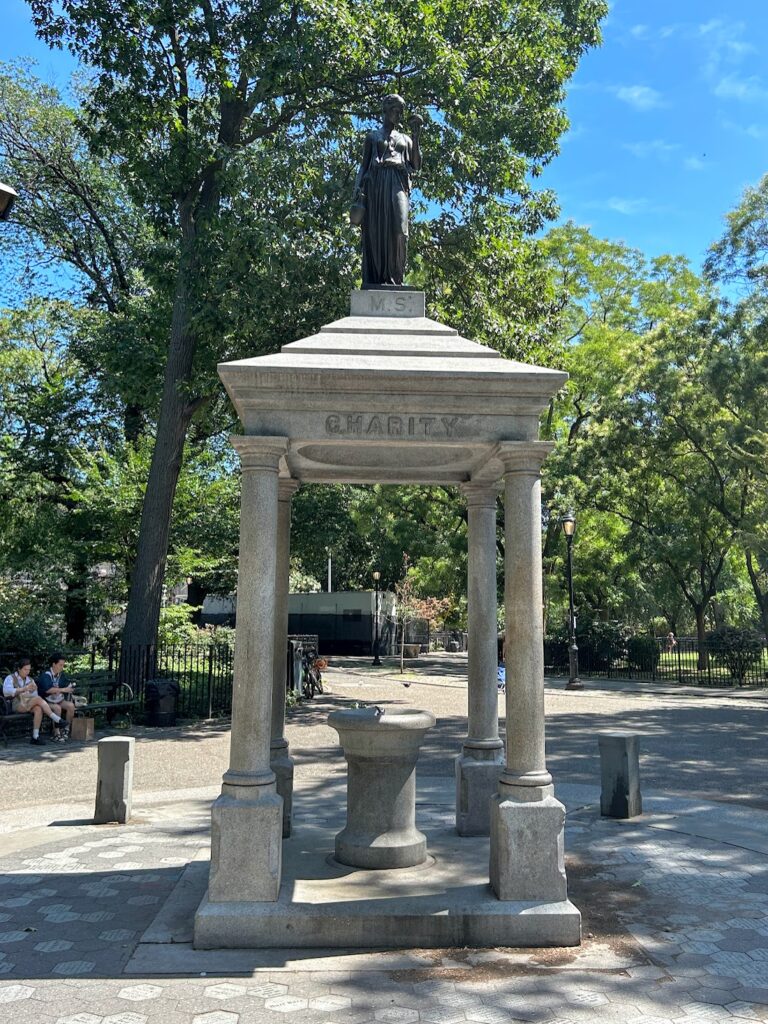
Images from the park this week (August 2023)
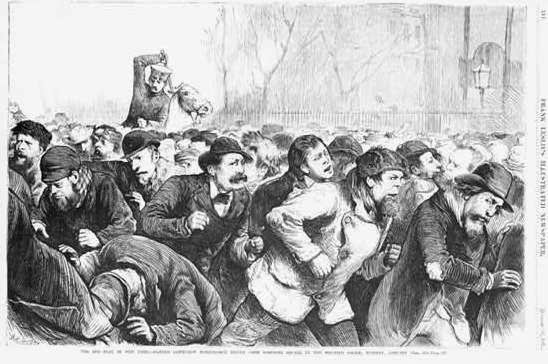
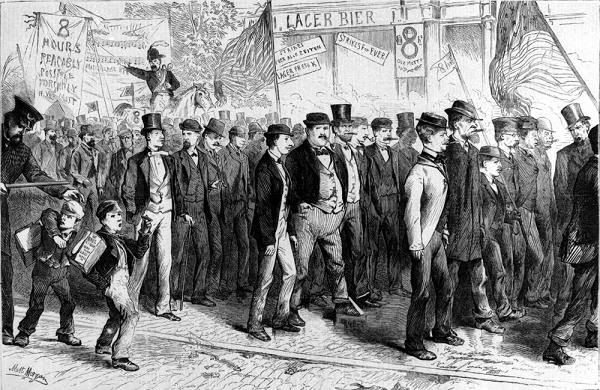
It’s doubtful that the image below is accurately depicted by the caption which accompanied it in Frank Leslie’s Illustrated Newspaper in 1874: “The red flag in New York – riotous Communist workingmen driven from Tompkins Square by the mounted police, Tuesday, January 13th.” [Courtesy LOC]
Another illustration of the 1874 protests, notably featuring a German establishment in the background. (More information on the Tenement Museum blog.)
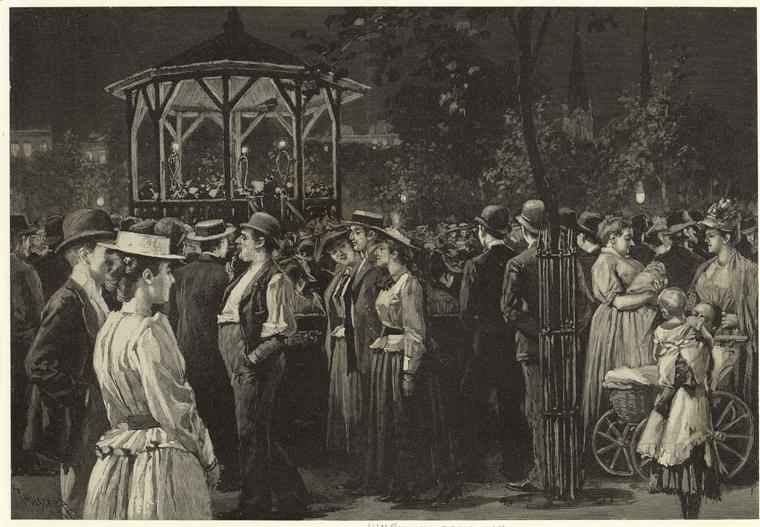
People enjoying (most likely) German music and entertainment in Tompkins Square Park, 1891. An image from Harper’s Weekly by Thure de Thulstrup. (NYPL)
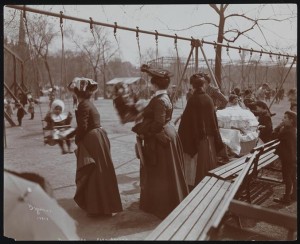
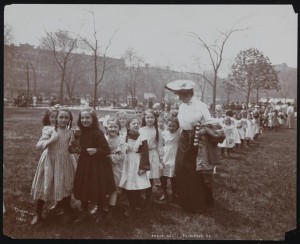
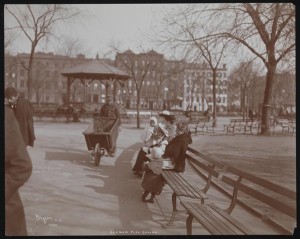
Women and children enjoying themselves in Tompkins Square Park, Arbor Day, 1904, on the brand new playground for girls. (Photos courtesy Museum of the City of New York)
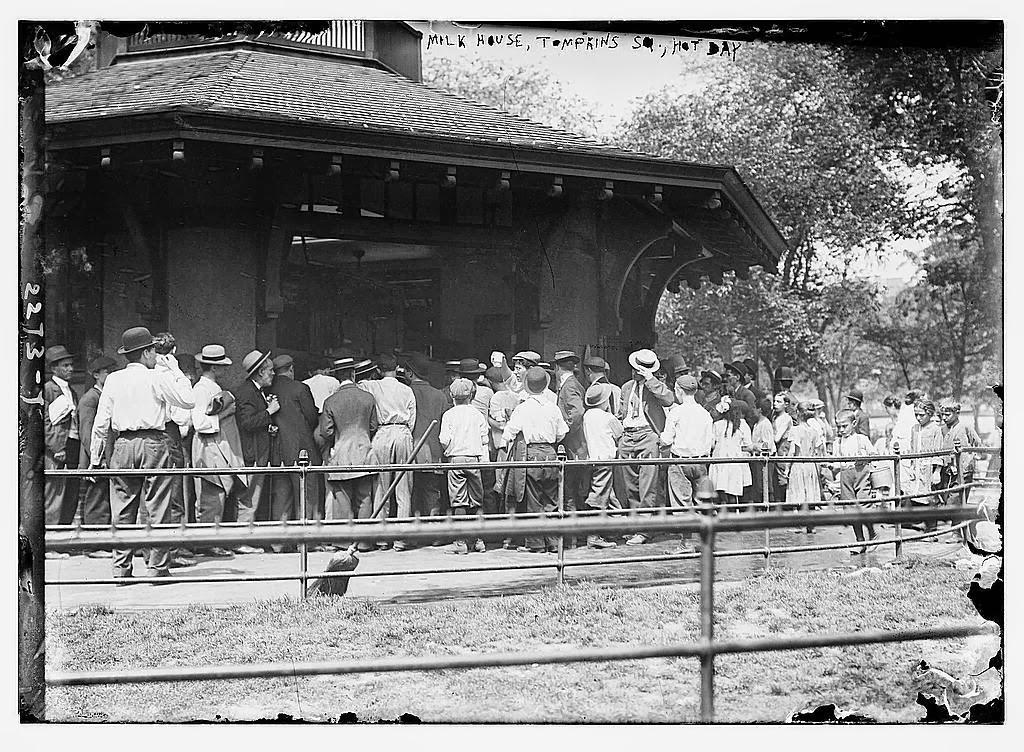
The Tompkins Square Milk House, which provided clean, healthy milk to families in the 1910s.
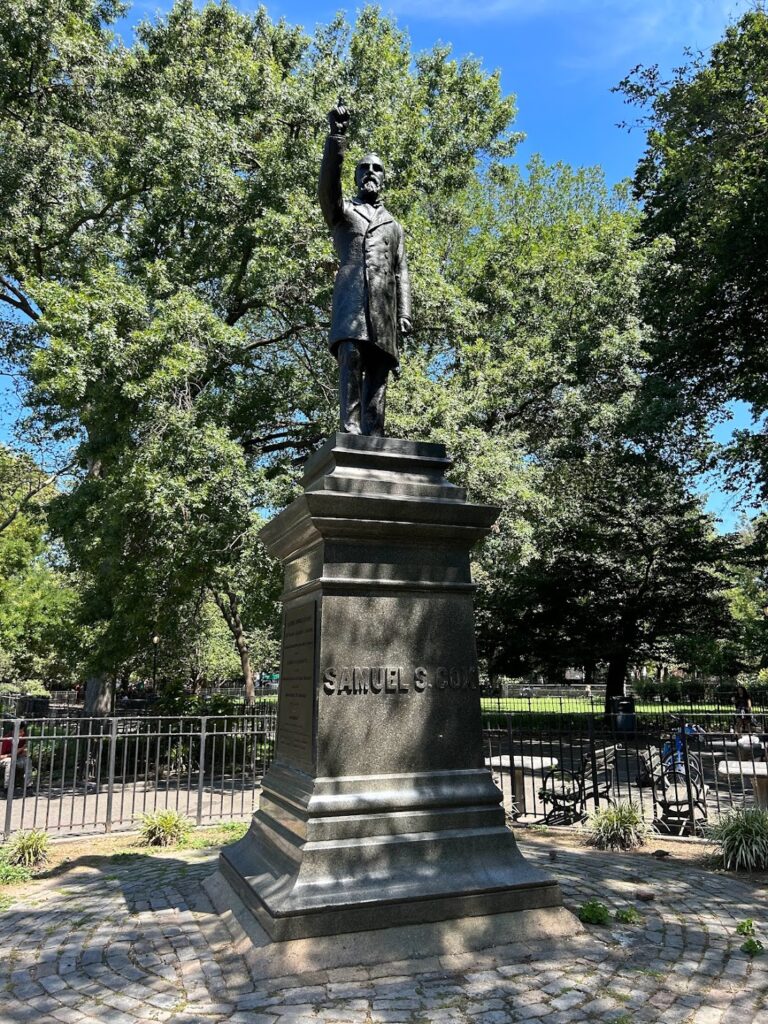
The statue of Samuel Cox, funded by New York postal workers. (1900, pic courtesy Museum of the City of New York
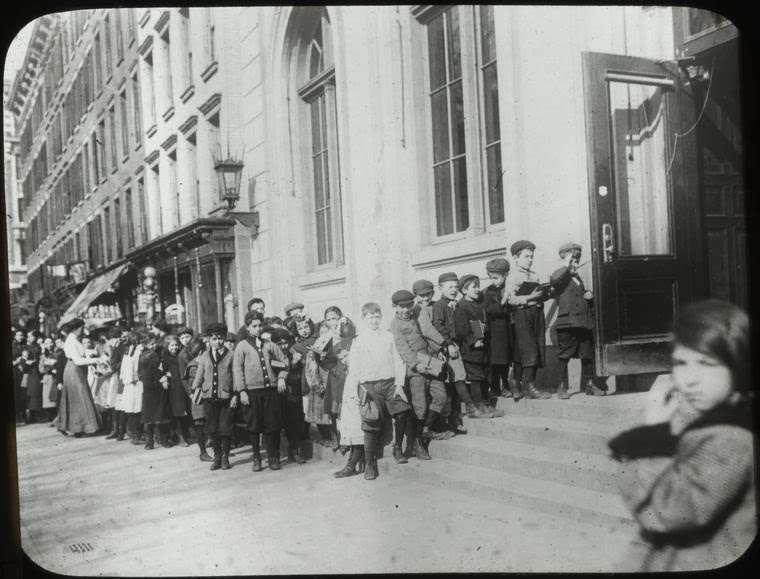
Children waiting in line to use the children’s reading room at the Tompkins Square branch library. (NYPL)
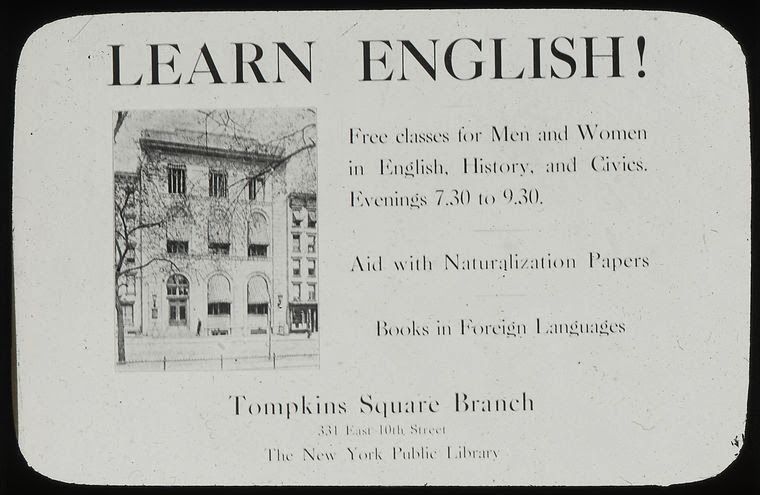
An advertisement from 1920, urging residents of the Lower East Side to take English courses at the Tompkins Square branch library. There are several of these posters in different languages here. (NYPL)
Lady Bunny and friends, performing at Wigstock 1988 (Picture courtesy aquaman6 on Flickr)
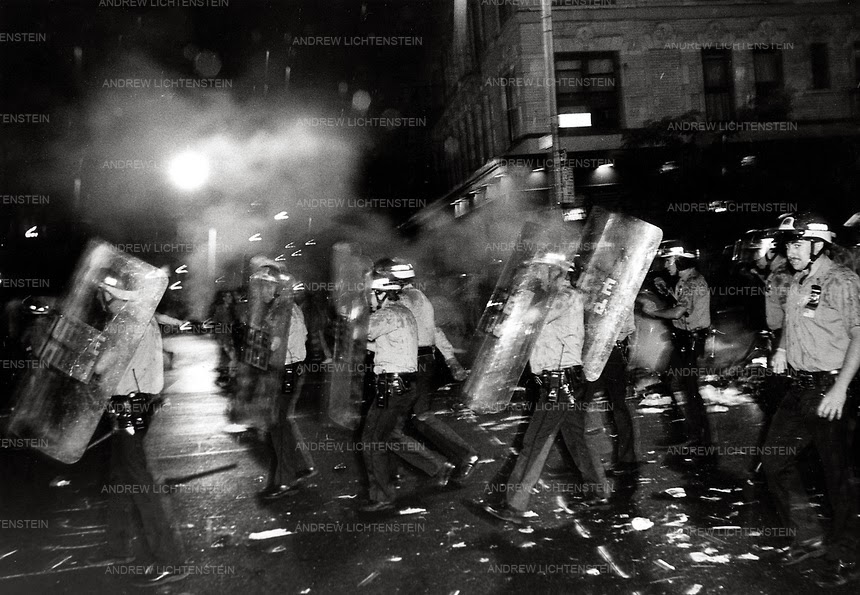
The Tompkins Square Police Riot from 1988 (courtesy Quilas)
Police retake Avenue A during a riot outside Tompkins Square Park that erupted after police allegedly beat a homeless man. The late 1980’s and early 1990’s was a period of rapid gentrification in the East Village, and many homeless residents, activists, and squatters, battled the process, frequently clashing with the police around Tompkins Square Park.
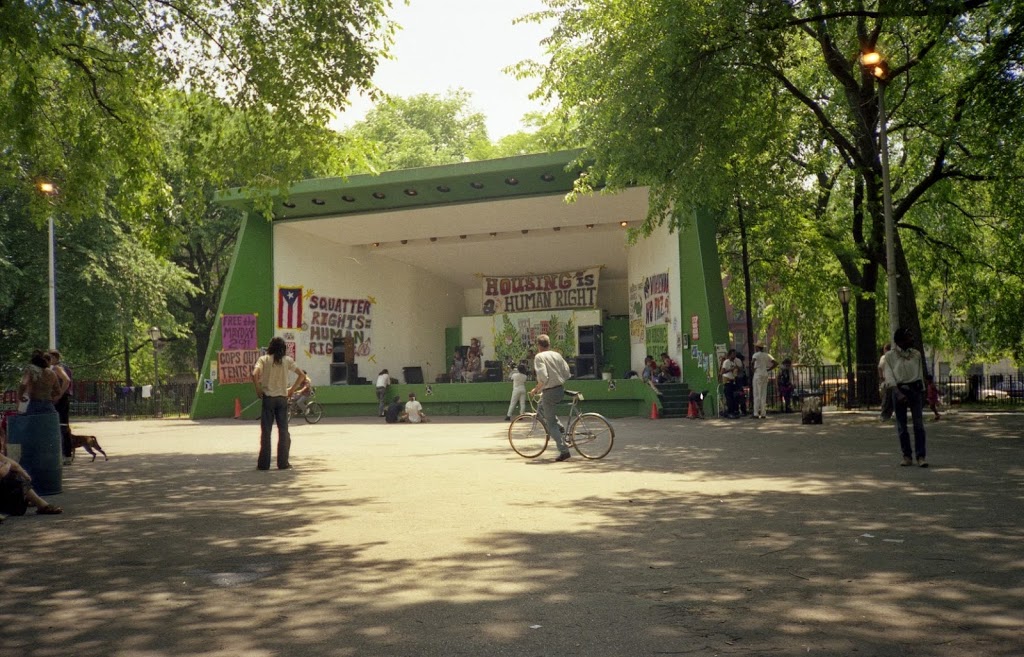
The Tompkins Square Park bandshell, which was torn down by the city in 1991. (Photo courtesy Flickr/Mike Evans)
A performance by the hardcore band Breakdown at the bandshell in 1988
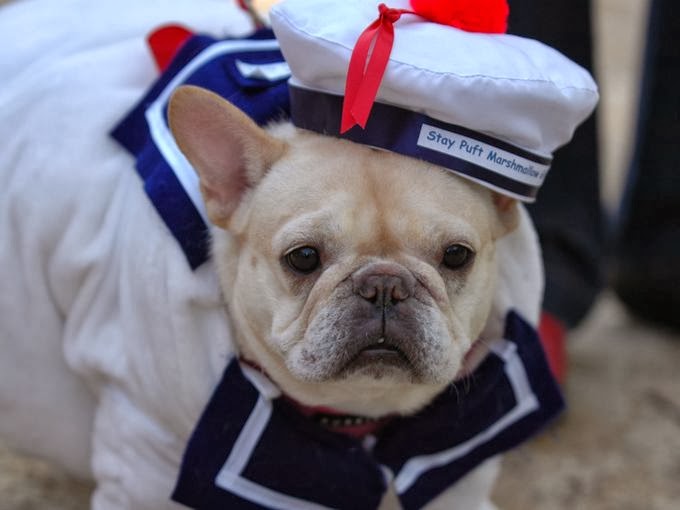
A Ghostbusters-themed entrant in the Halloween Dog Parade in 2013 (Courtesy USA Today)
Listen to our podcast on the history of the Silent Parade of 1917here:
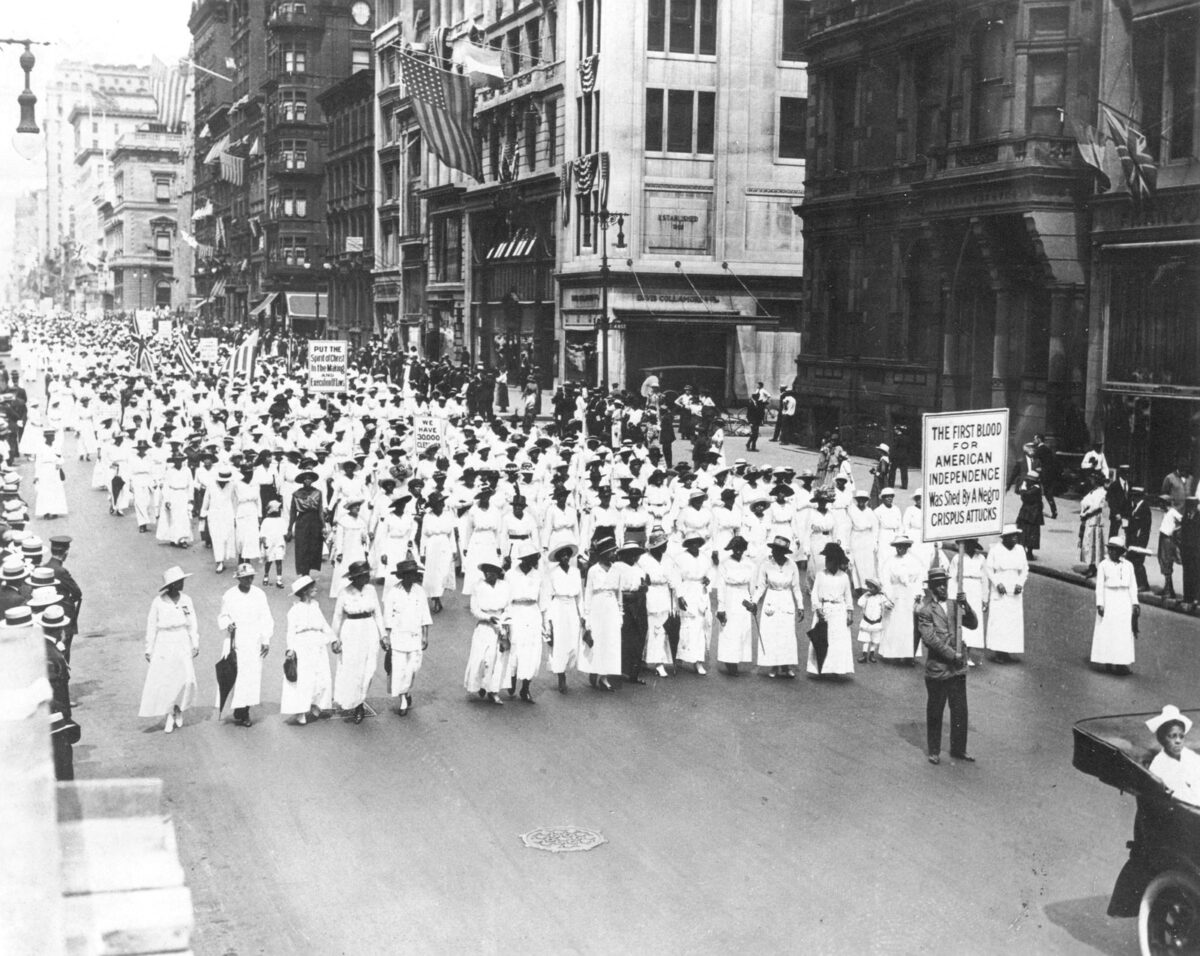
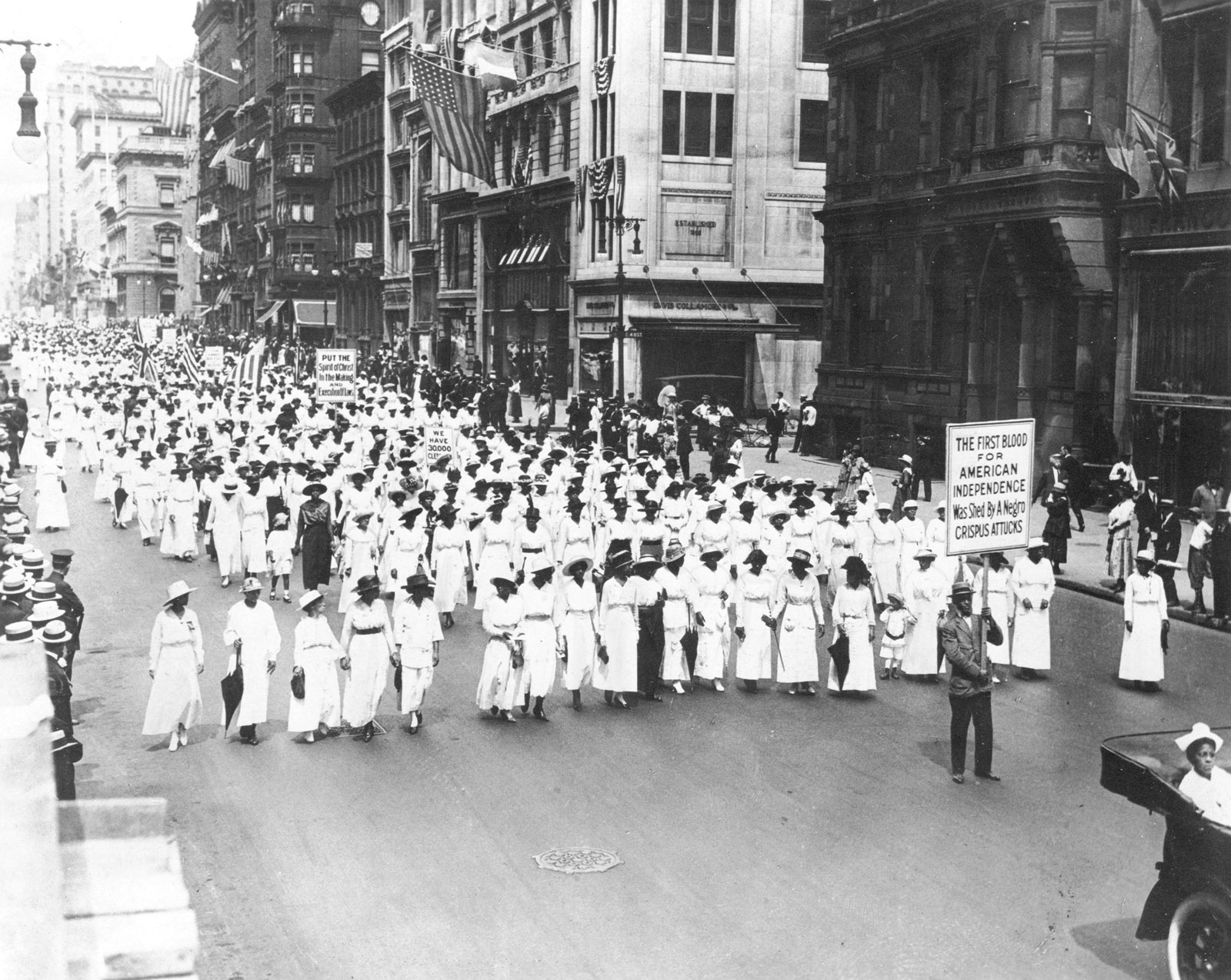
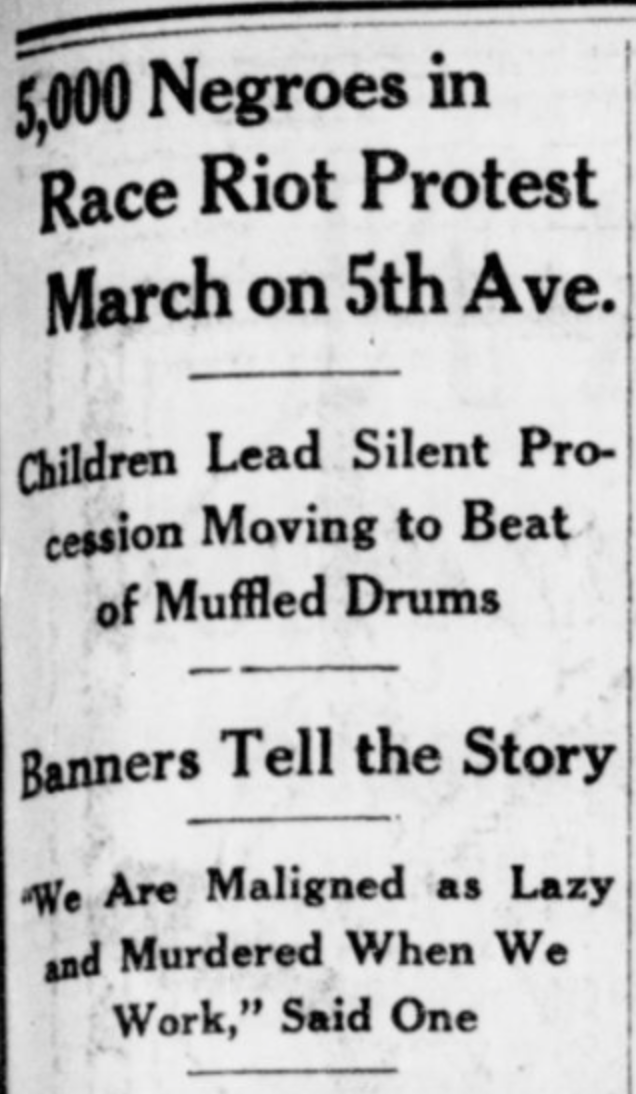
“To the beat of muffled drums 8,000 negro men, women and children marched down Fifth Avenue yesterday in a parade of ‘silent protest against acts of discrimination and oppression’ inflicted upon them in this country, and in other parts of the world. Without a shout or a cheer they made their cause known through the many banners which they carried, calling attention to Jim Crowism, segregation, disfranchisement, and riots of Waco, Memphis and East St. Louis.” — New York Times
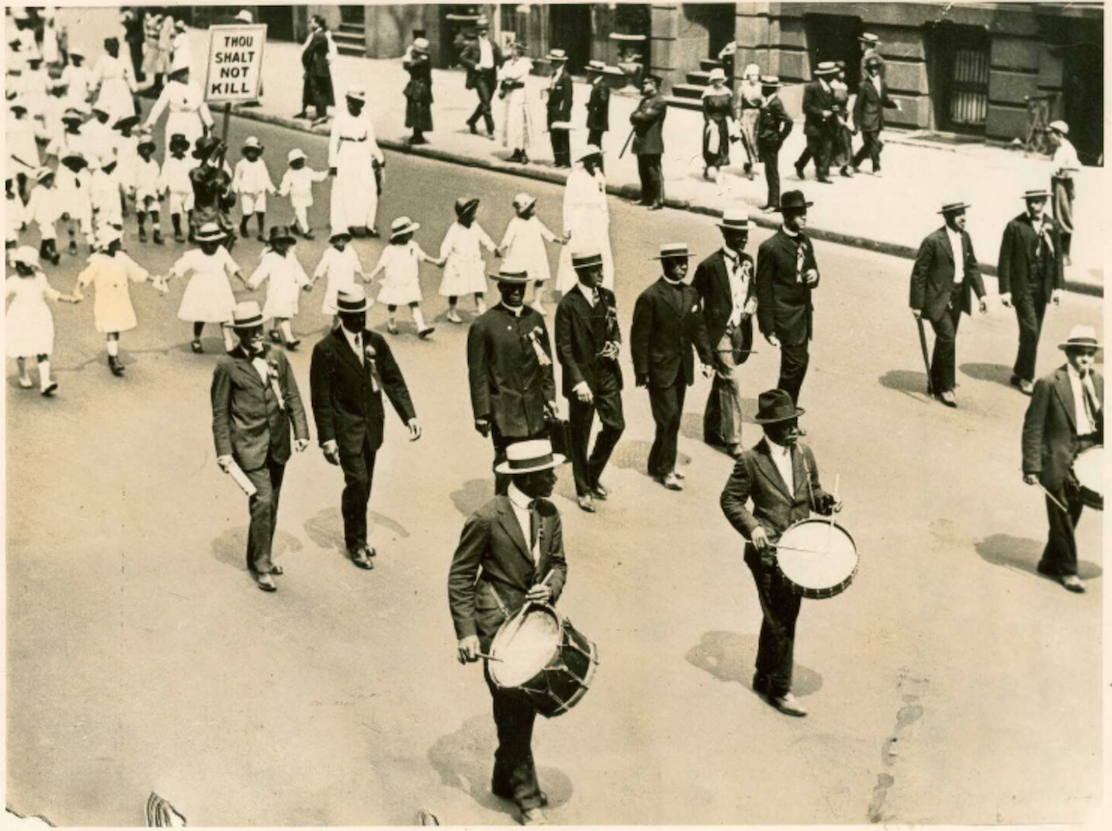
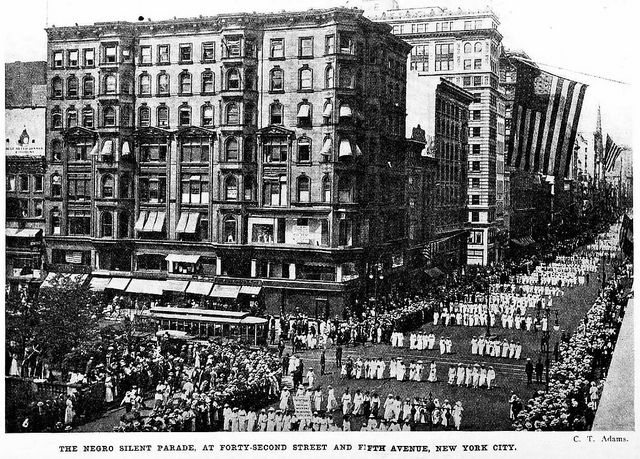
The Silent Parade of July 28, 1917, was unlike anything ever seen in New York City. Today it is considered New York’s (and most likely America’s) first African-American civil rights march.
New York had seen its share of protest parades since the start of World War I, but none had featured so prominently the city’s African-American population, gathering in such impressive numbers along New York’s wealthiest street.
This extraordinary procession was organized by the National Association of the Advancement of Colored People (NAACP), a group of concerned black and white activists and intellectuals which had formed less than a decade earlier in New York.
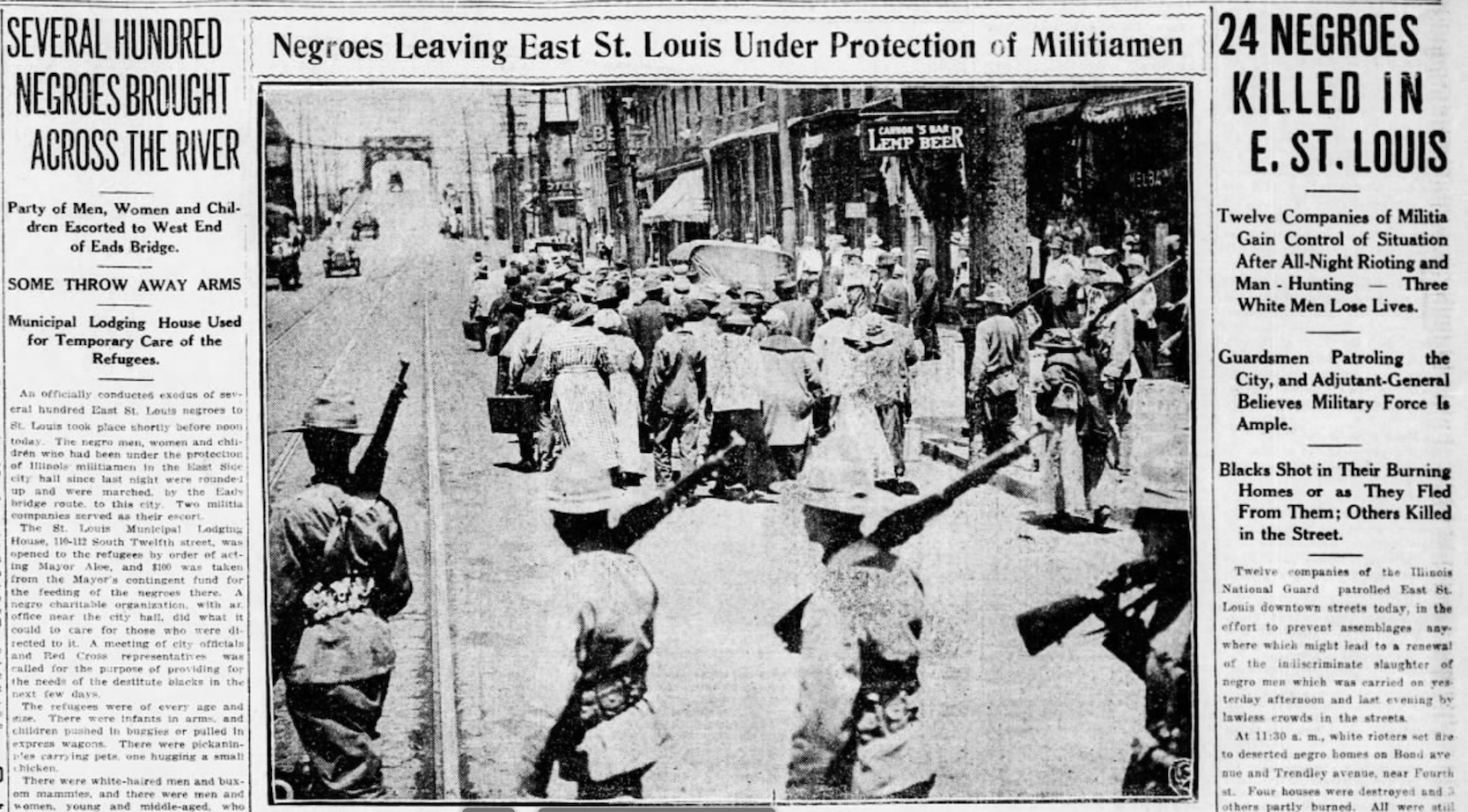
The march was organized in direct response to a horrible plague of violence against black Americans in the 1910s, culminating in the East St. Louis Riots*, a massacre involving white mobs storming black neighborhoods in sheer racial animus.
In Illinois, two sets of riots in May and July 1917 left almost 200 people dead. Rioters burned black neighborhoods, cutting off water hoses and watched as families fled the burning buildings — to be picked off by gunmen.
This massacre was but one of several violent incidents aimed at new black laborers, pointed attacks meant to strike fear in the hearts of black Americans.
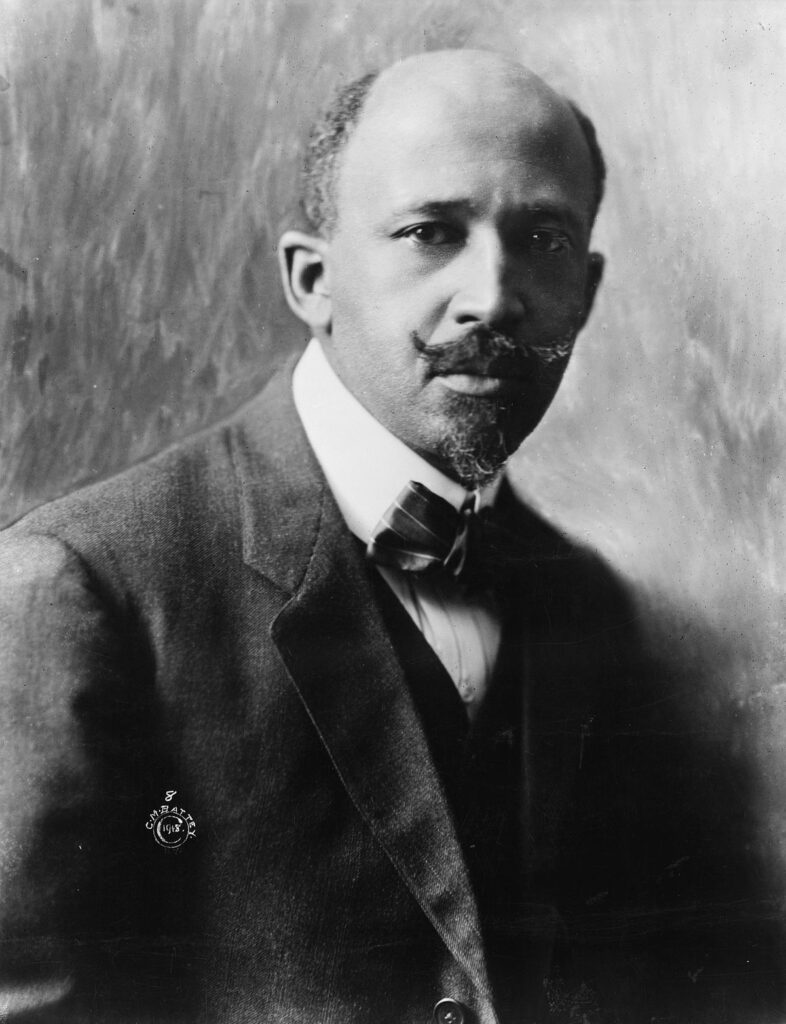
The circumstances of World War I exacerbated an already volatile crisis. As W.E.B. DuBoiswould explain it,
“The Negro, attracted by higher wages in the North and repelled by the menace of lynchinig and caste in the South moves in to fill the new labor demand [caused by the war]. The common laborer in the North is caught between the tyranny of exclusive trade unions and the underbidding of blacks. The rest is murder and riot and unrest…. White Northern laborers find killing Negroes a safe, lucrative employment which commends them to the American Federation of Labor.”
W.E.B Du Bois in 1918.
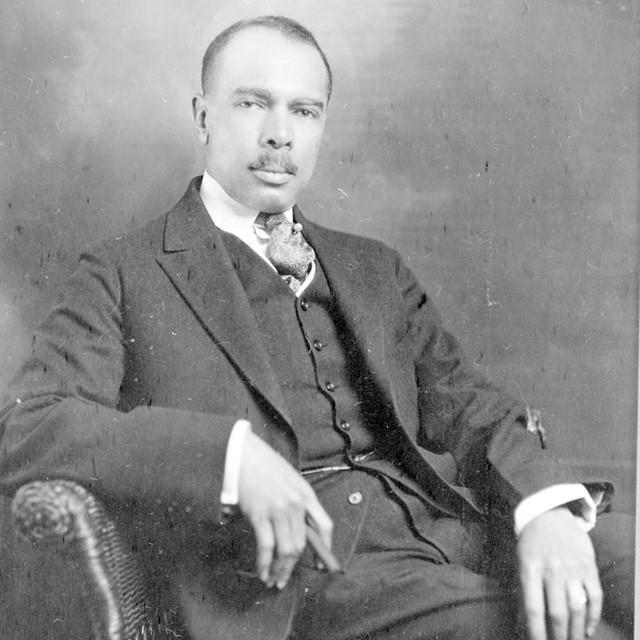
In New York, at a meeting of the NAACP in Harlem, president James Weldon Johnson (at the suggestion of New York Evening Post editor Oswald Villard) proposed an unusual but effective form of protest — an army of marchers along Fifth Avenue, drawing attention to the victims of the East St. Louis riot.
And in an unprecedented decision by the organizers, it would consist only of black marchers.
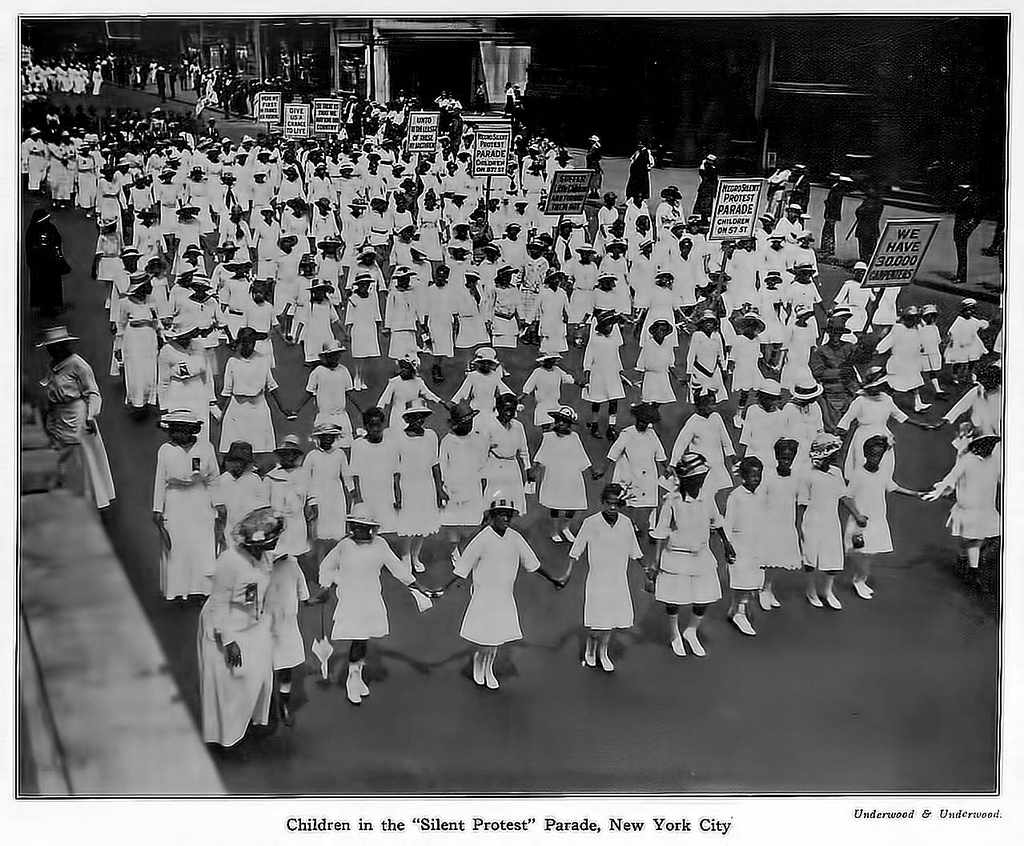
Underwood & Underwood
New York newspaper reports of the riot passively mentioned the tragic cost to the black residents of East St. Louis; a dramatic march down the city’s most prosperous street — comprised of those very people most likely to be victimized in such riots — would jar the delicate sensibilities of insulated New Yorkers.
This was a fairly radical idea for its time. Decades after the Civil War, most Americans, even in the most progressive states, still looked skeptically at organized black movements. Part of the NAACP’s early legitimacy for many was that it was formed by a mixture of black and white activists.
James Weldon Johnson, one of the architects of the Silent Parade
In 1915, the NAACP (in a crusade led by newspaper editor William Monroe Trotter) protested the release of the film Birth of a Nation, the trailblazing film that positively depicted the Ku Klux Klan while demonizing African-Americans. The protests failed to stop the film’s release but this organized resistance galvanized the NAACP and the black community for future battles.
While the East St. Louis tragedy was the focus of the mournful July 28th gathering, the march was intended as a larger protest against civil rights abuses in the United States. One of many flyers passed around during the march declared :
“We march because we are thoroughly opposed to Jim Crow cars, segregation, disenfranchisement and the host of evils that are forced upon us. We march in memory of our butchered dead, the massacre of honest toilers who were removing the reproach of laziness and thriftlessness hurled at the entire race. They died to prove our worthiness to live. We live in spite of death shadowing us and ours.”Â
Below: The organizers marched in front of the women and children. At far right are W.E.B. Du Bois and James Weldon Johnson.
Underwood and Underwood
The thousands of people who marched that day came from virtually every African-American church in New York City and the surrounding area. A drum corps and a troupe of black Boy Scouts vibrantly led the parade, with women and children following behind, garbed in white dresses.
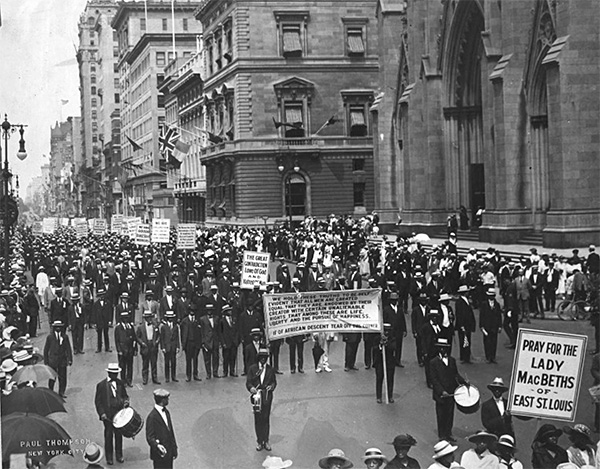
The men, some in United States army uniforms, marched last behind a row of flag bearers, holding representative flags from the United States, Great Britain, Liberia and Haiti.
New York Tribune
There were no chants or rallying cries. The throng remained silent during the length of the parade, a commonpractice for peace parades but one pregnant with meaning here. The black communities in East St. Louis and in the South had little opportunity to engage in such protests.
New Yorkers, in solidarity, would echo that reverberating silence. (It may also have been prudent for large groups of African-Americans marching along the city’s whitest street to keep themselves calcified.)
The marchers were orderly and stone-faced as they walked down Fifth Avenue — from 57th Street to 24th Street, culminating at Madison Square Park. They were not allowed to gather there; according to the New York Sun, “When the marchers reached Twenty-Fourth Street, they turned west and were dismissed.”
While there were no chants, political intentions were made known via a series of banners interspersed among the marchers:
‘Your Hands Are Full of Blood’
‘Pray for the Lady Macbeths of East St. Louis’**
‘We Are Maligned as Lazy and Murdered When We Work’
‘From Bunker Hill to Carrizal*** We Have Done Our Duty’
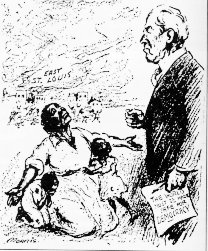
One ‘controversial’ sign was thrown out of the march. According to the Times, the sign “displayed a picture of a negro woman kneeling before President Wilson and appealing to him to bring democracy to America before carrying it to Europe.” The police intervened, and the sign was removed.
Below: A newspaper illustration that was most certainly used in the offending sign
No other incidents surrounding the march were reported that day. Thousands of onlookers had lined the parade route that day out of curiosity, amusement, pride, anger and joy. Some were shaken to the core.
“[T]he streets of New York have witnessed many strange sites, but I judge, never one stranger than this; among the watchers were those with tears in their eyes. — James Weldon Johnson, The Autobiography of James Weldon Johnson, 1937
FURTHER LISTENING
After you’ve listened to this podcast on the Silent Parade of 1917, check out these past episodes of our show that feature topics referenced in the new episode:
NOTE: The number of marchers so widely varies from source to source that I can safely say that it was between 5,000 and 15,000 marchers. Not exactly precise! Judging from all reports, I would guess the actual number is closer to 15,000.
*East St. Louis, on the Illinois side, is about 15 miles away from Ferguson, the St. Louis suburb on the Missouri side.
**According to authorNikki Brown, the ‘Lady Macbeth’ sign references “an alleged incident wherein at least two white women pulled black women off a streetcar, tore off one woman’s clothing and ‘then took off her shoes and beat her over the face and head with their shoe heels’.”
***The Battle ofCarrizal had been fought in Mexico a year before the march. Unlike the battles in Europe, African-American soldiers served with American units on the front lines of this engagement.
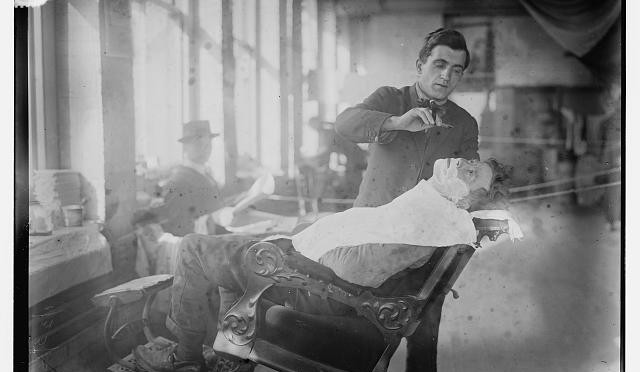
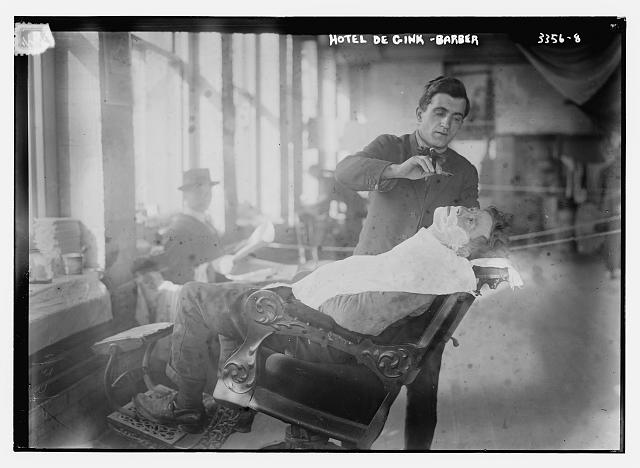
A barber shop at the Hotel de Gink on the Bowery, circa 1910-15 [LOC]
The fight for worker’s rights swept through a variety of occupations over a century ago as New York City laborers rebelled against unfair corporate practices and unsafe working conditions.
And one hundred years ago this month, it was the barbers turn to march.
Many of the same leaders from other occupational strikes were at the center of the barber strike, which got its footing in the Brooklyn neighborhood of Brownsville. Soon, barbers across the city had dropped their razors and foaming brushes and left work in consolidation for better hours.
A letter-writer to a wonderfully named 1913 journal called Journeyman Barber, Hairdresser, Cosmetologist and Proprietorwrote, “I will say that on a certain bright morning in the month of May, I found that the entire barber industry was paralyzed. Nearly 13,000 workingmen were out on strike. Isn’t that a miracle? Thirteen thousand barbers on strike!”
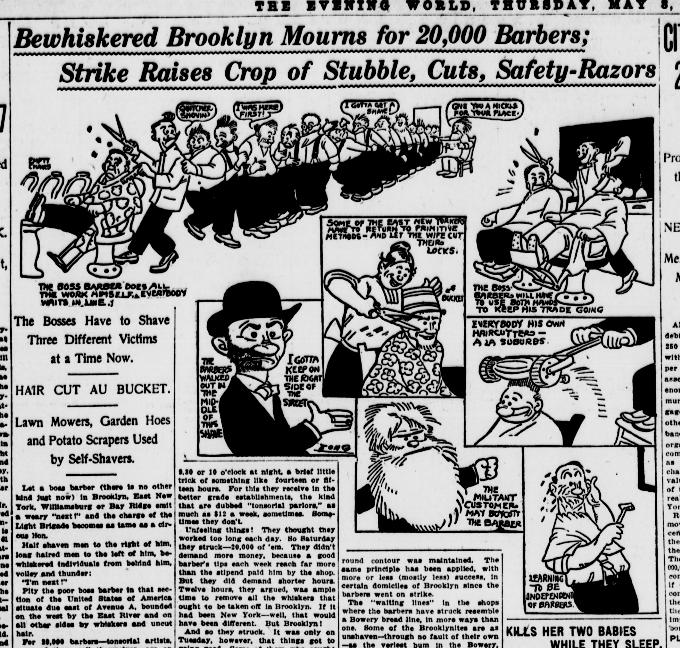
Mayhem reigned upon the craggy, unshaven faces of Brooklyn men. “From Bushwick to Bay Ridge haggard men go about with the telltale blemish encroaching upon their visages like a noxious fungus. Half-shaved men slink about the alleys, avoiding the light of day.” [source]
Scenes of violence did erupt throughout the city, as strike-breakers were attacked and angry mobs filled the street. A mob of 5,000 strikers — “singing socialistic songs,” noted the New York Tribune — clashed with police in Brownsville on May 7th, customers fleeing barber shops in “a shower of vegetables” and the occasional flying rock.
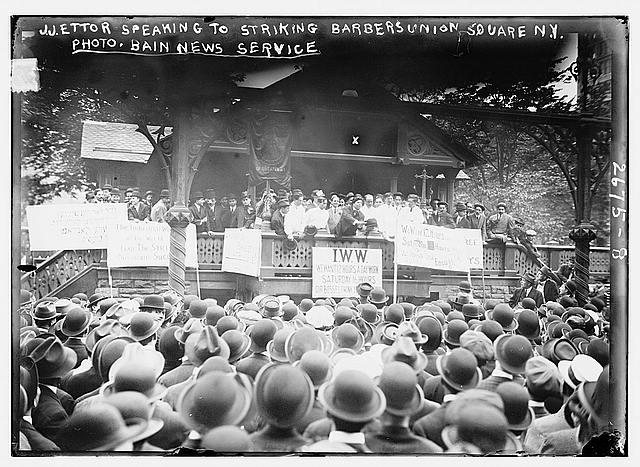
A couple days later, thousands of barbers marched across the Brooklyn Bridge to Union Square, gathering up working men along the way, emptying barber shops of employees and leaving stunned customers in their chairs. In Union Squarethe strikers heard speeches from organizers including Joseph James Ettor (pictured below), who had helped organize the waiter’s strike just a few months before.
Manhattan barbers joined their Brooklyn brothers by mid-month, setting up a Manhattan strike headquarters at 140 Second Avenue. (Today, that the address of the Ukrainian East Village restaurant.) Arlington Hall at nearby St. Mark’s Place was the scene of several union gatherings for striking barbers.
Descriptions of rioting barbers sound a bit like scenes from the Civil War draft riots, although much of that description was the newspaper flourish of the day.
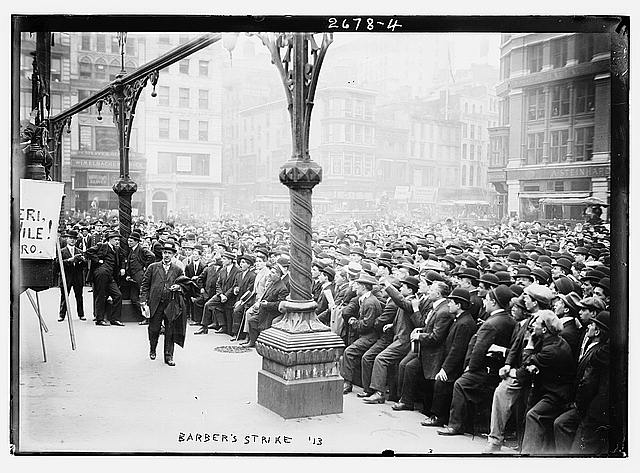
Below: Thousands of barber shop workers and their supporters gather in Union Square in 1913. I believe this is the northwest corner of the park. (LOC)
But it does sound like a violent few days in Manhattan. Shop windows were smashed by rioters in the Ladies Mile shopping district, and altercations with store owners put many in the hospital. The Sun noted: “Window smashing and attacks on workers, common all day, culminated in dozens of small riots all over the city, so many and so rapid that police headquarters heard of them in bunches.”
Eventually, the strike proved a success, as barbershop owners agreed to worker’s demands. According to one source, instead of working up to 92 hours a week, employers now agreed to the relatively mild 62 hours a week for their workers, with one entire day off on Sunday! [source]
“2,300 Boss Barbers Capitulate,” declared the Evening World on May 30th. “Brooklyn Strike Over.” By the first of June, it was safe again to go to a barber shop.
WARNING The article contains a couple light spoilers about last night’s ‘Mad Men’ on AMC. If you’re a fan of the show, come back once you’re watched the episode. But these posts are about a specific element of New York history from the 1960s and can be read even by those who don’t watch the show at all. You can find other articles in this series here.
The 1960s were obviously momentous for American culture and for New York specifically. But that decade was especially strange for Central Park.
Olmsted and Vaux’s urban oasis was a well-trodden destination for protest in the 1960s, a haven for “be-ins” and demonstration (with a little free love thrown in, I imagine). In December 1967, agitated anti-war protesters even burned a Christmas tree. Two years later, the first gay pride parade would also culminate here. (Here’s some video of the second pride celebration in Central Park the following year.)
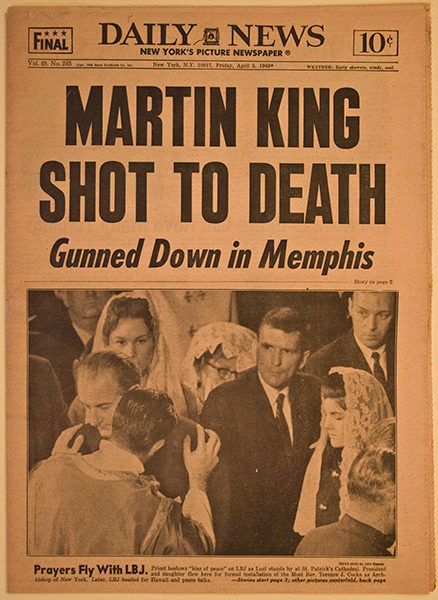
Almost 24 hours after Dr. Martin Luther King Jr was assassinated in Memphis on April 4, 1968, angered New Yorkers — mostly students — gathered for a rally in Central Park at the Naumberg Bandshell to honor the man’s extraordinary life and to cope with the sudden, inconceivable loss.
At right: The unusual headline from the New York Daily News. This particular front page popped up on last night’s show. Did you catch it?
The city was in a veritable lock down throughout the day, with many businesses and schools closing early on April 5. In case you couldn’t make it into the city that evening — and given reports of rioting, many chose to stay home — the ceremonies were actually broadcast by WBAI. (You can download a recording of the broadcast here, courtesy Pacifica Radio Archives.)
Those invited to speak at the gathering were friends and admirers from a variety of fields. Looking at the list of speakers, perhaps the most unusual one that jumps out is Dr. Benjamin Spock, the famed pediatrician and best-selling novelist. Spock was an ardent, high-profile protester of the Vietnam War and a friend of Dr. King’s, frequently seen at his side in 1967 at war protest events.
Others who spoke at the rally included actor Ossie Davis and activists Florynce Kennedy and James Forman. Perhaps the most damning words were spoken by Jarvis Tyner, chairman of the DeBois Clubs of America, who declared that Mayor John Lindsay was poised to send armored tanks to Harlem.
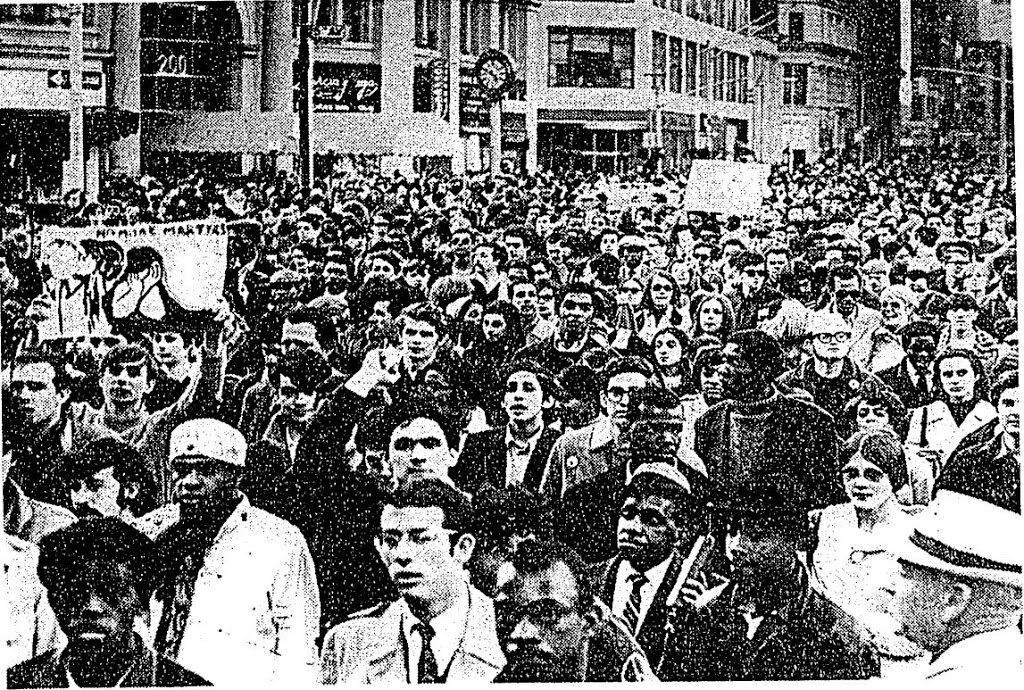
Below: Crowds cross 23rd Street on their way to City Hall. Picture courtesy NYT
Things got rather out of hand once the rally turned into a march down Broadway to City Hall. According to the New York Times, throngs of students filtered down the streets, occasionally breaking windows along the way. Trying to stem the violence among their number, others were heard shouting. “Let’s keep order for Martin Luther King.”
The following day, mourners marched from Harlem to an all-faith rally held by local religious leaders in the park.. (It seems likelier that this was the event attended by Megan and her step-children!)
On last night’s episode of ‘Mad Men’, we see Don’s own reaction to the tragedy — going to see ‘Planet of the Apes’ with his son! According to the same article, this was not an unusual reaction after the tragedy. While other forms of entertainment saw a notable decrease in attendance, movie theaters saw no such effect, even with fears of a possible riot awaiting moviegoers when they left the theater. “Times Square movie theaters reported either normal or better than usual crowds and both the Baronet and Coronet Theaters on Third Avenue at 59th Street said they had long lines of people waiting to buy tickets for the early evening shows.”
The April 5th rally for Martin Luther King wasn’t even the most unusual thing to happen in Central Park that day. That distinction would go President Lyndon B. Johnson, who planned a surprise trip to the United Nations that day and touched down his helicopter in the park!
![[Samuel Sullivan Cox statue.]](https://www.boweryboyshistory.com/wp-content/uploads/2014/01/M3Y44713-188x300.jpg)