Categories
Neighborhoods

Remembering the General Slocum disaster, one of the greatest tragedies in NYC history

Listen to our podcast on the General Slocum Disaster:

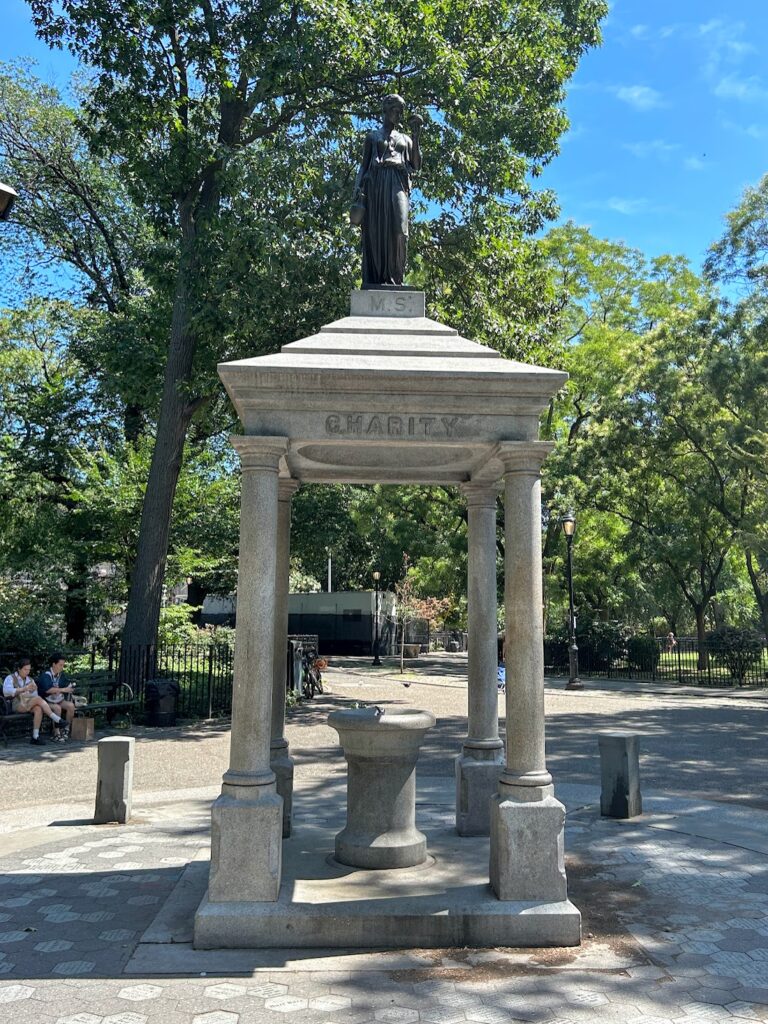
The General Slocum Memorial Fountain is one of the sole reminders of one of New York City’s darkest days, and it’s not a very awe-inspiring memorial.

This is no dig at the custodians of Tompkins Square Park, where the memorial has been on display since 1906, nor at Bruno Louis Zimm, the fountain’s sculptor whose creation presents two children in idyllic profile, next to an engraving: “They were Earth’s purest children, young and fair.”

Its left side unveils its more tragic context: “In memory of those who lost their lives in the disaster to the steamer General Slocum, June XV MCMIV.”
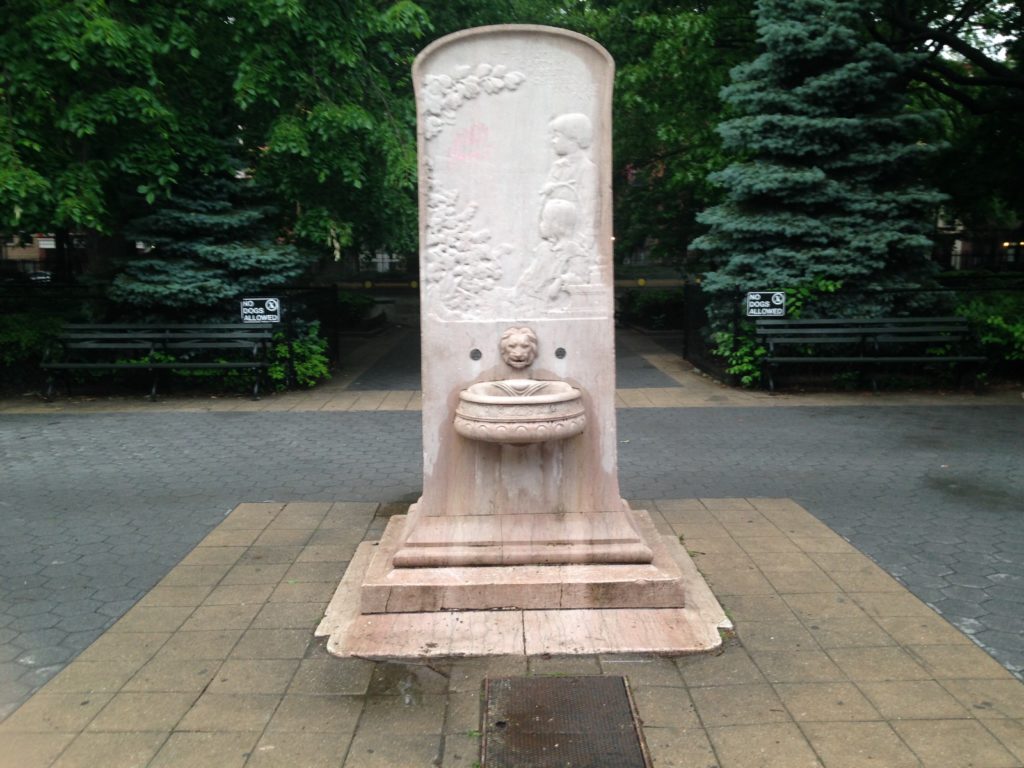
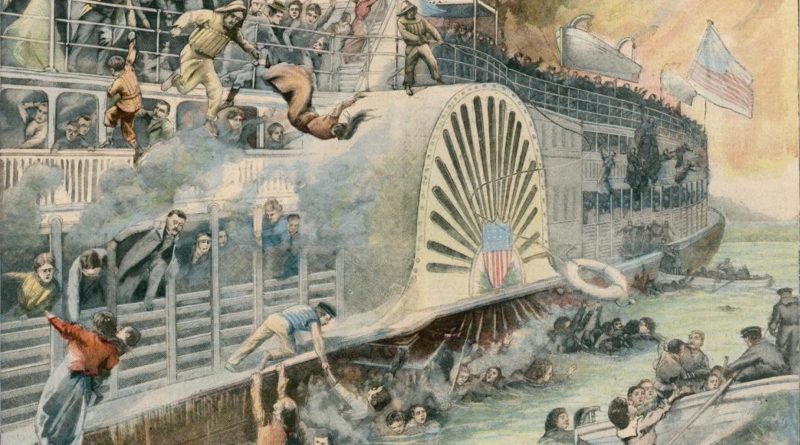
The fountain, while charming and tranquil, is inadequate in expressing the grief and horror that filled New Yorkers on June 15, 1904, when, during a church-sponsored day trip headed for the Long Island Sound, the General Slocum steamboat caught fire and sank in the East River, killing more than a thousand passengers, mostly women and children.

This tragedy was the single deadliest event in New York City history until September 11, 2001.
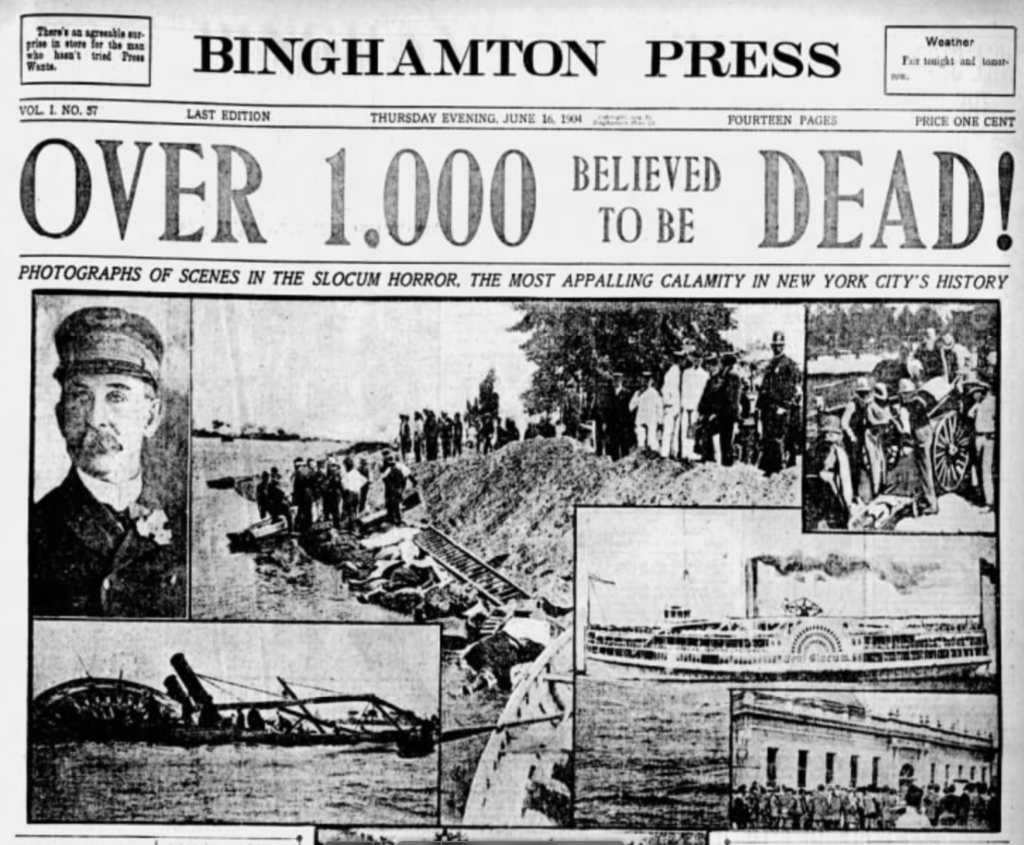
This disaster virtually wiped out the German presence on the Lower East Side—entire families perished, many of whom had just gotten a foothold in New York a generation before. In a single morning the lights of Kleindeutschland, New York’s Little Germany, permanently faded.

The boat had been chartered by St. Mark’s Evangelical Lutheran Church* for their yearly day trip excursion to the Long Island Sound. The East River was filled with excursion steamers such as the General Slocum and its sister ship the Grand Republic (a vessel with a doomed story of its own).

It was a chance for the congregation to briefly break out of the crowded Lower East Side to enjoy a day in the sun. Among the passengers was the Liebenow family, which consisted of parents and their three daughters, Anna, Helen, and Adella, along with several aunts and cousins.

A postcard featuring General Slocum from the Museum of the City of New York collection.
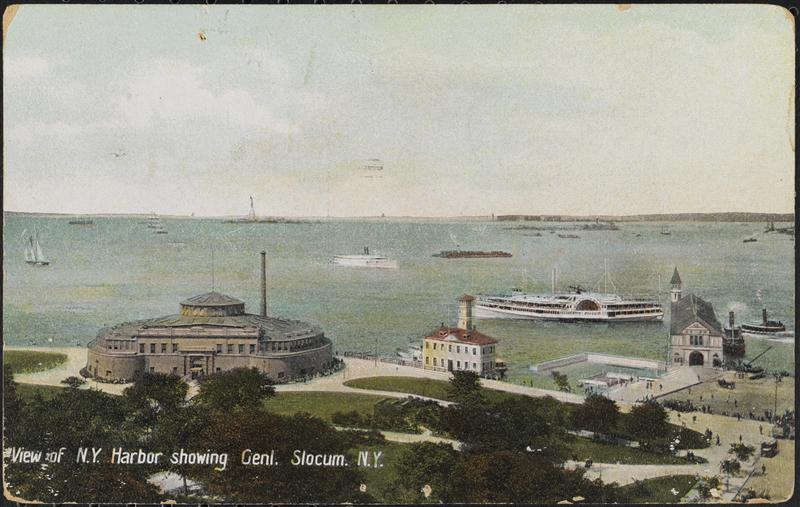
Courtesy MCNY

The Slocum left the pier shortly before 9 a.m. and began its slow crawl up the East River.

Captain William Van Schaick had been principally concerned that morning with one turbulent spot up the East River, a dangerous confluence of waters known as the Hell Gate. It had already sunk hundreds of vessels as far back as the seventeenth century. By 1904 it was still a dangerous pass, but on this day, the Hell Gate would not be the problem.

About 30 minutes into the voyage, a child noticed that a small fire had started in the lamp room below the main deck.

A crewman tried to stamp it out, throwing charcoal on it in an effort to contain it. But the flames only grew larger.

Crew members grabbed a firehose—only to find it rotten to the point that it burst wide open. These were not men trained for emergency situations; once they realized the hoses were useless, they simply gave up.
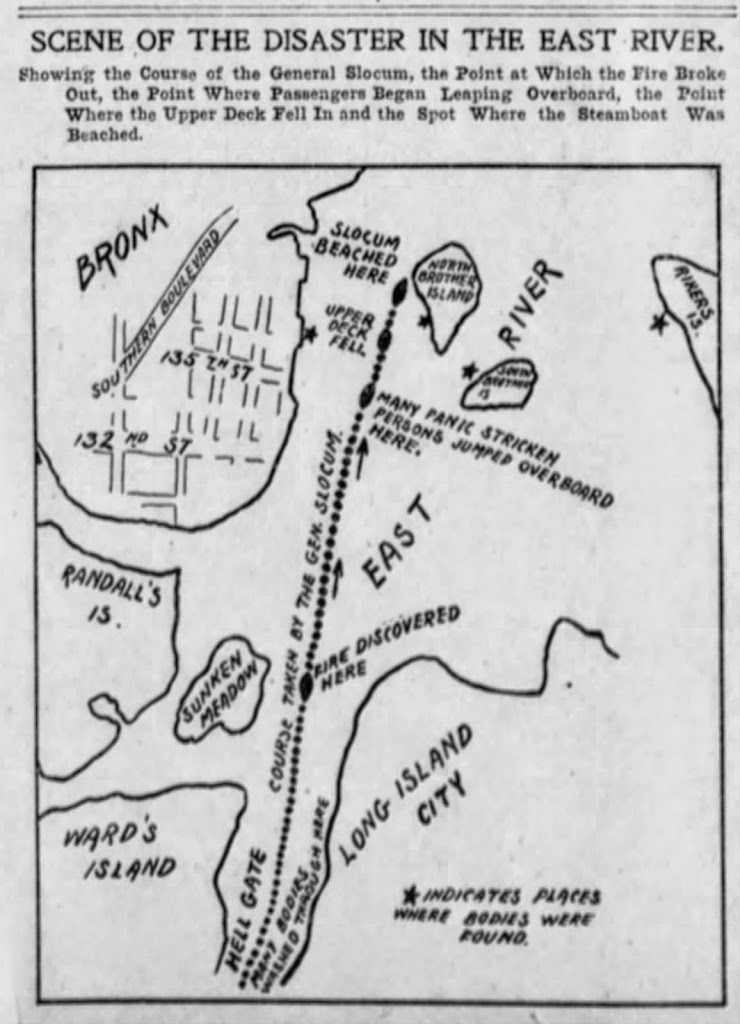
from the Brooklyn Daily Eagle

Civilized behavior soon gave way to panic as the flames quickly spread through the lower levels of the steamer, fire jumping from passengers’ clothing to hair.

Families moved away from the flames only to find themselves pressed up against the boat’s railings as panicked crowds pushed forward in search of fresh air. Children lost hold of their parents, never to see them again.

Crowds surged toward the Slocum’s six lifeboats and attempted to hoist them down. But they wouldn’t budge—somebody had wired them to the wall.

The life preservers, never properly inspected, were filled with rotten cork, and several exploded into dust. They were not only useless—they were actually dangerous. Panicked parents strapped preservers to their children and tossed them overboard, only to watch in horror as they sank from sight.
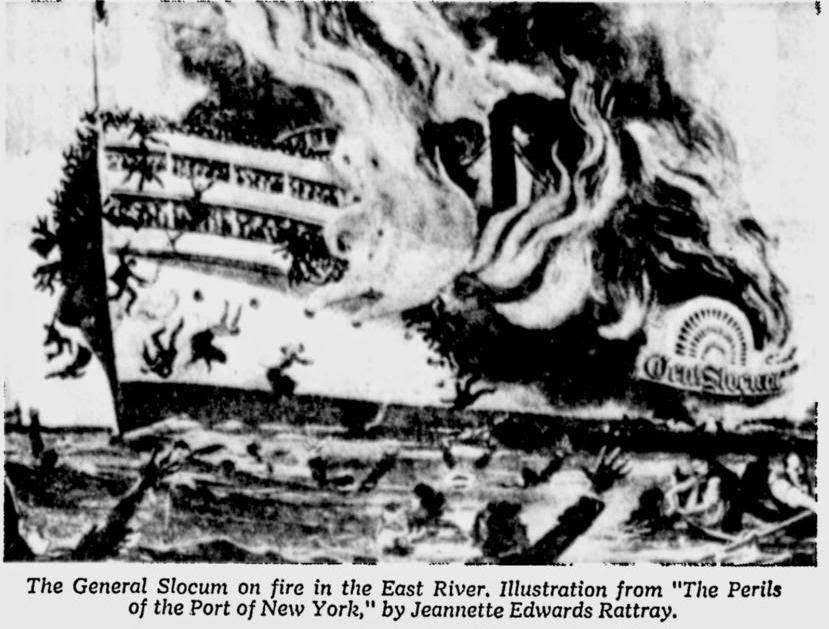
Below deck, passengers were burned to death—huddled in groups and trapped in corners. Smoke choked many, causing unconsciousness; many were trampled underfoot.

Some jumped into the violent waves. “There was little hope that any of the children who jumped overboard could be saved,” reported the New York Evening World. “The current all along the course taken is on a section of the river where not even a strong swimmer can breast the currents. Scores of little ones were sucked in by the whirlpools in Hell Gate.”
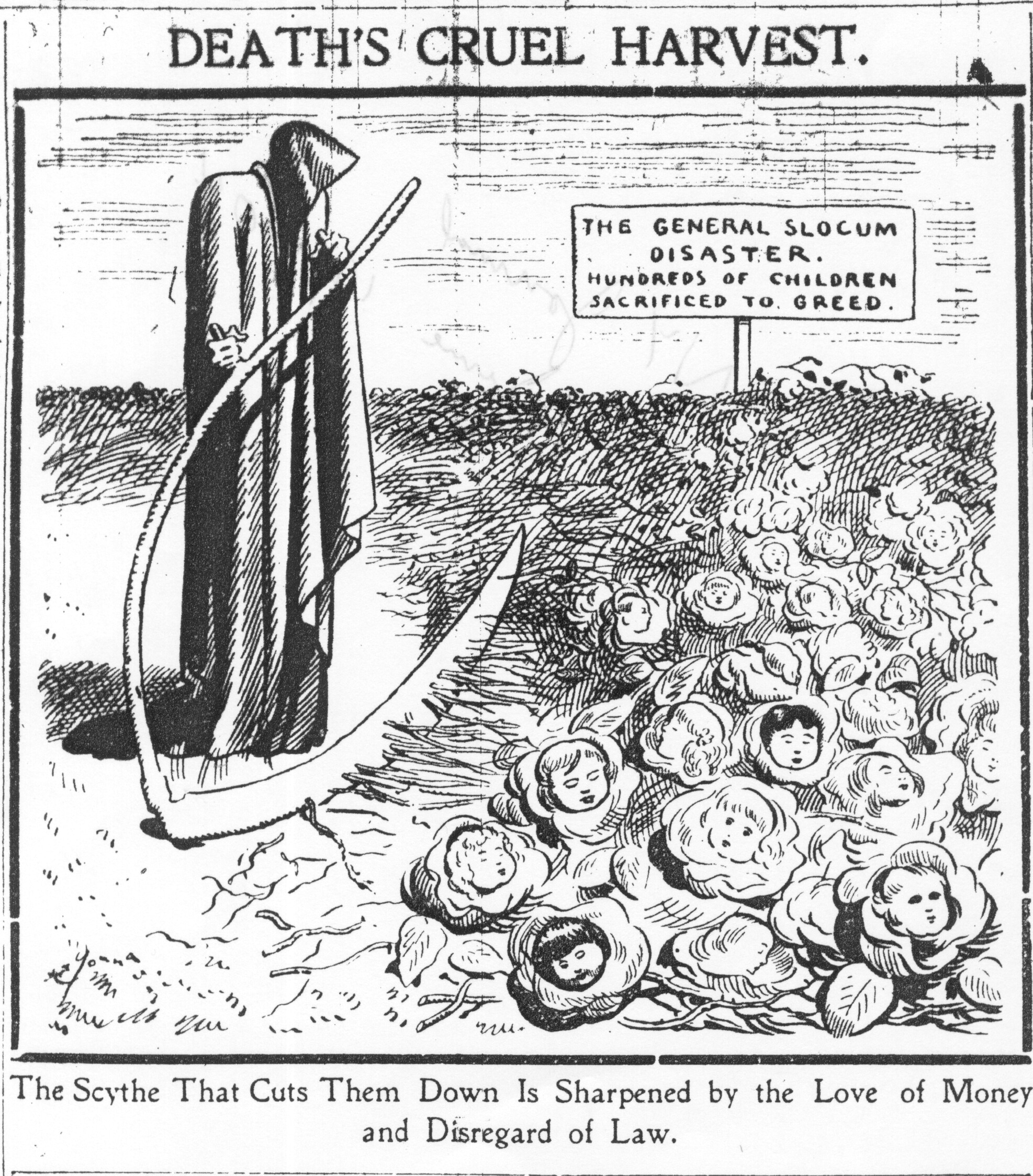
Greenwich Village Society of Historic Preservation

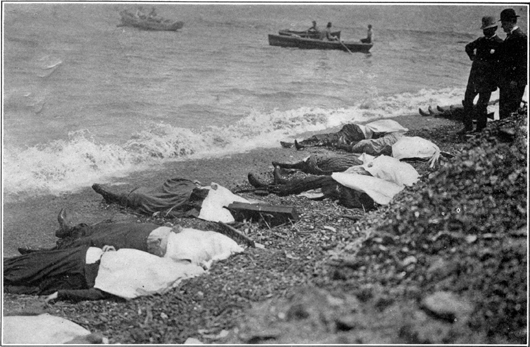
Crowds formed along the shores, and their attention was drawn by the billowing smoke, fire, and horrifying spectacle before them. The captain managed to steer the boat toward North Brother Island, where nurses, doctors, and even patients from the smallpox hospital ran to the water to rescue and attempt to revive those who had washed ashore.

Bodies on the shore of North Brother Island
The Slocum eventually floated out into the Long Island Sound, puffing clouds of cork dust into the air, while leaving a trail of tragedy in its wake.

Just after noon, the burning vessel sank, a single paddle box and a smokestack jutting out of the water.
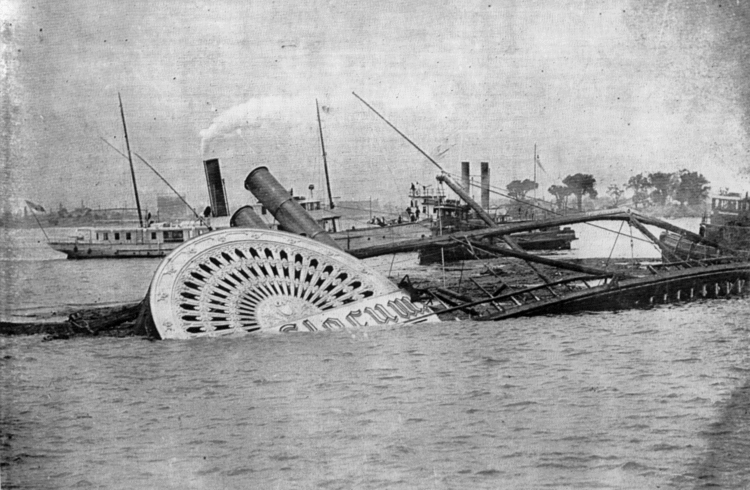
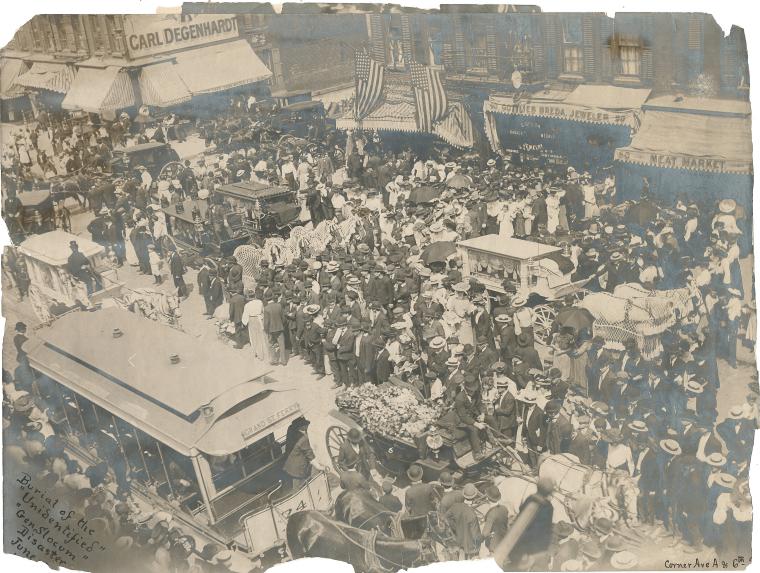
By the final count, 1,021 people perished in the General Slocum disaster that day, making it the deadliest single event in the city’s history up to that date. In the weeks following the disaster, the streets of Kleindeutschland—today’s East Village—were filled with mourners. The community attended funerals in the homes of those who had perished and held solemn processions through the streets.

A mass funeral through the streets of the Lower East Side — “burial of the unidentified”
New York Public Library

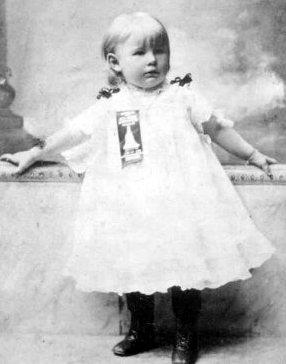
The Liebenow family was hit particularly hard. The entire Liebenow family died in the disaster—all except baby Adella (pictured below), just six months old at the time of the tragedy.
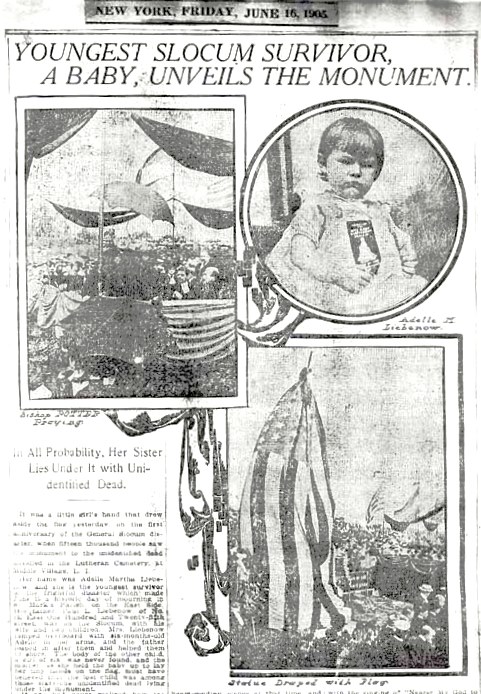
Two years later, now only two-and-a-half years old, Adella was hoisted to a podium here in Tompkins Square Park. She stood before a community that hadn’t yet fully recovered—would they ever?—as she tugged at a cloth to unveil the General Slocum Memorial Fountain.
NYHS

No, the fountain is not perfect. How could it be?

But why hasn’t this tragedy been better memorialized? It’s such an important event in the city’s history, and yet so many don’t know its whole story. There are a few theories about this, many having to do with the anti-German sentiment that cropped up a decade later at the beginning of World War I.

Or was it the social class of the victims that caused it to recede from memory? Adella, who died in 2004, 100 years after the disaster, believed that this might be the case. To a crowd at a 1999 commemoration of the tragedy, she said, “The Titanic had a great many famous people on it. This was just a family picnic.”

*St. Mark’s is located on East 6th Street, between First and Second Avenues, in the heart of New York’s first and largest German neighborhood. A plaque honoring the victims hangs in front.

There’s also a monument to the victims at a cemetery in Middle Village, Queens

The above is an excerpt from our book The Bowery Boys Adventures In Old New York, now available at bookstores everywhere.
Listen to our podcast on the General Slocum Disaster here:
Categories
Parks and Recreation Podcasts

The rebellious history of Tompkins Square Park

This episode on the history of Tompkins Square Park ties right into an all-new two-part episode coming in September, the first part coming at you next week. 

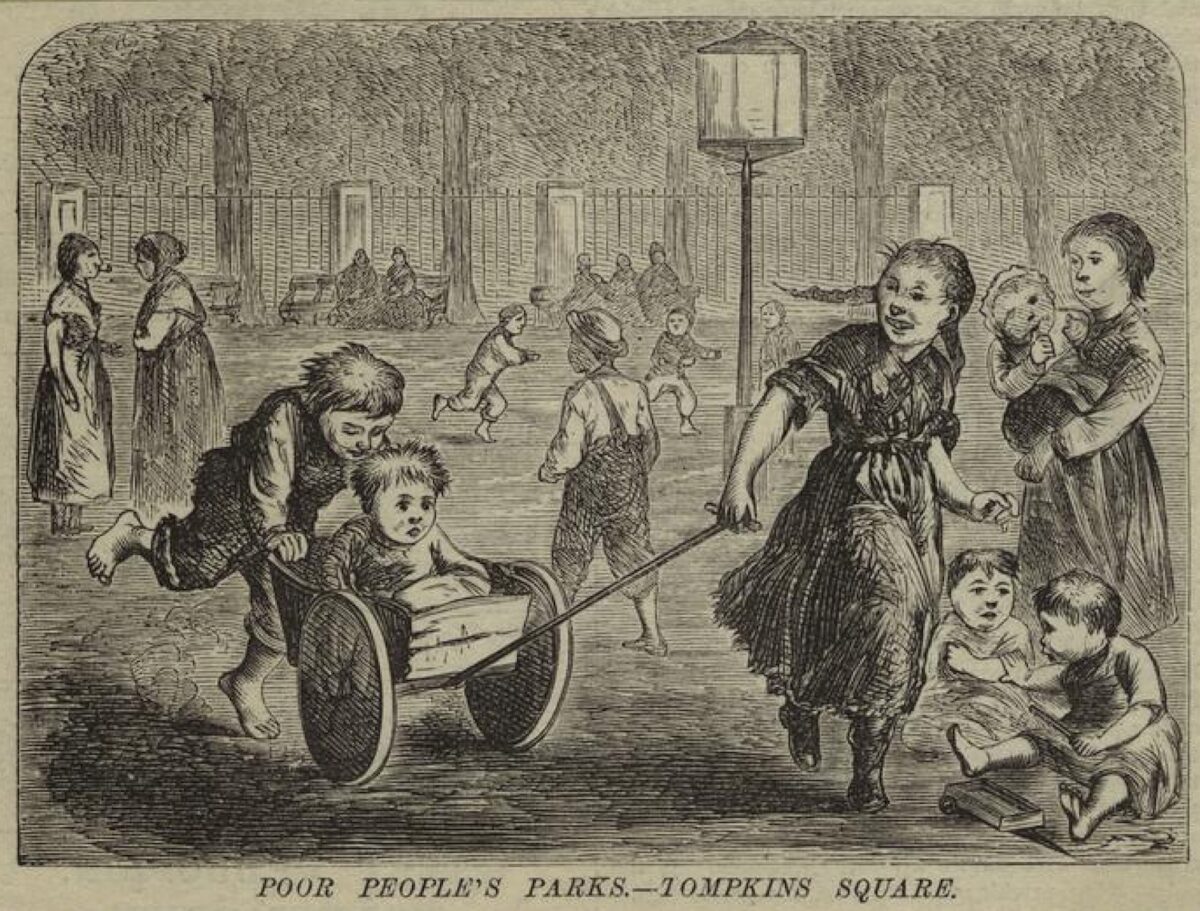
Central Park has frequently been called ‘the people’s park,” but we think Tompkins Square Park may have a better claim to that title.  From its inception, this East Village recreational spot — named for Vice President Daniel D Tompkins — has catered to those who might not have felt welcome in other New York parks.

Carved from the marshy area of Peter Stuyvesant‘s old farm, Tompkins Square immediately reflected the personality of German immigrants who moved here, calling it Der Weisse Garten.  With large immigrants groups came rallies and demands for improved working conditions, leading to more than a number of altercations with the police in the 19th century.

Progressives introduced playgrounds here, and Robert Moses changed the very shape of Tompkins Square.  But the most radical transformation here took place starting in the late 1950s, with the introduction of beatnik and ‘hippie’ culture and infusion of youth and music.

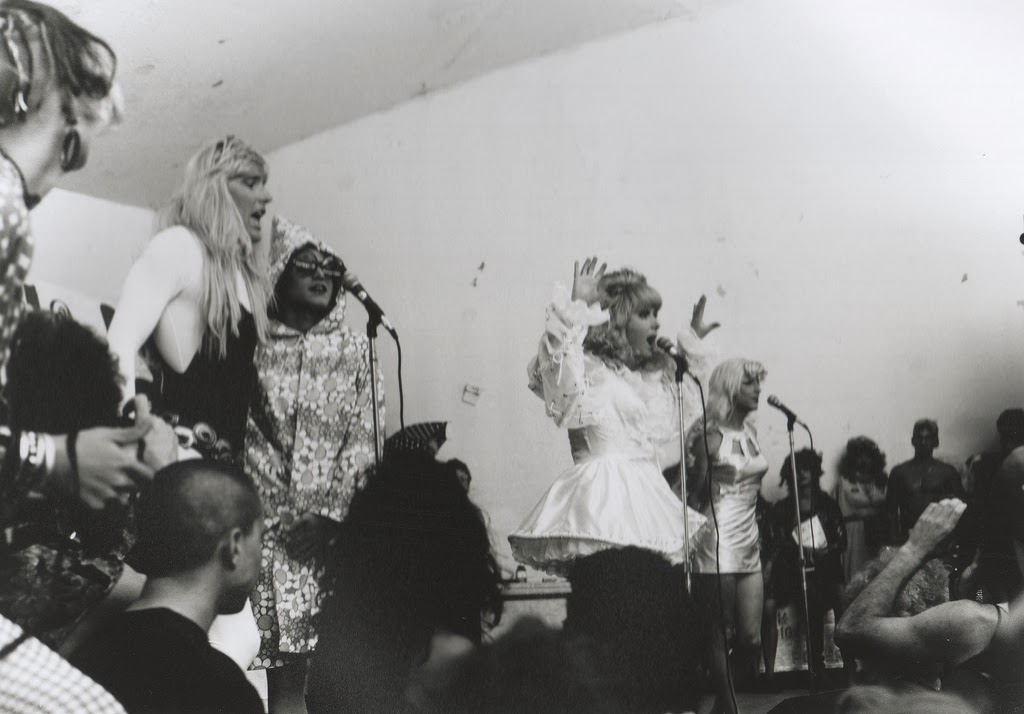
By the 1980s, the park became known not only for embodying the spirit of the East Village through punk music and drag shows (above: Lady Bunny), but also as a haven for the homeless.  Clashes with police echoed the clashes that happened here one century before.  The park still maintains a curfew left over from the strife of the late 1980s.

FEATURING:  Lillian Wald, the Grateful Dead, Charlie Parker, Samuel S. Cox, Lady Bunny … and Chevy Chase?

LISTEN NOW: TOMPKINS SQUARE PARK

A version of this show was originally released in 2014 (episode #160)


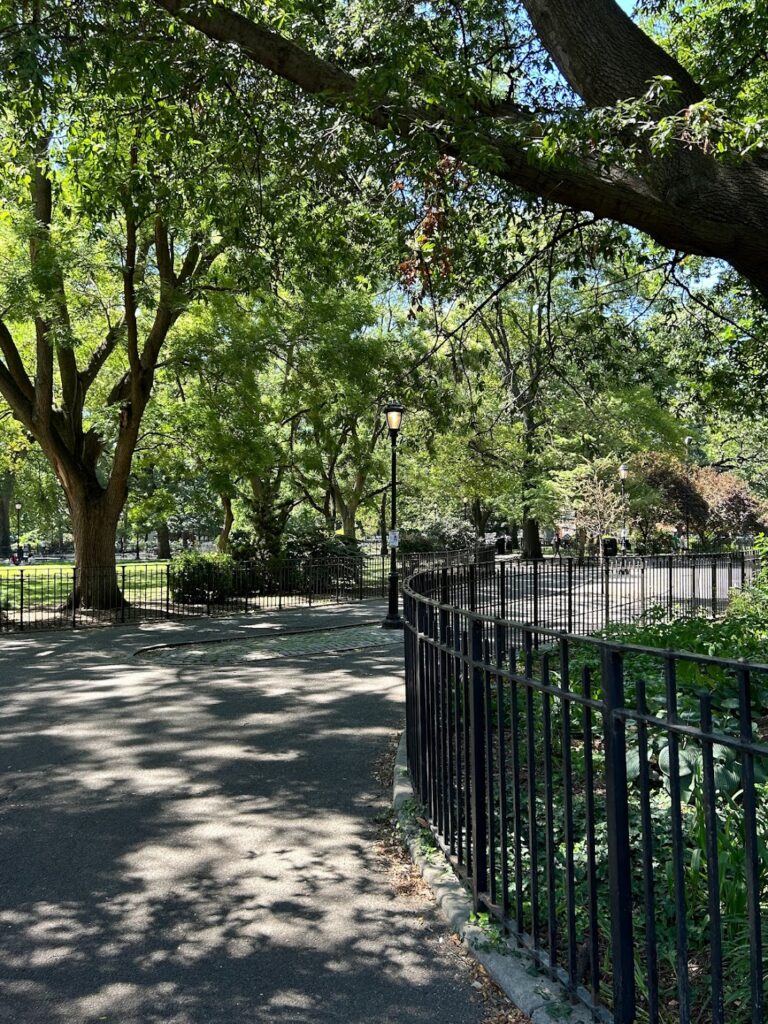
Images from the park this week (August 2023)


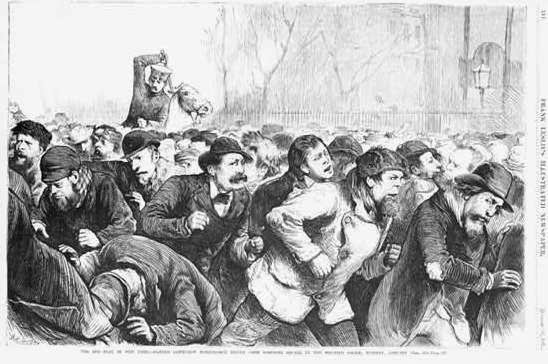
It’s doubtful that the image below is accurately depicted by the caption which accompanied it in Frank Leslie’s Illustrated Newspaper in 1874: “The red flag in New York – riotous Communist workingmen driven from Tompkins Square by the mounted police, Tuesday, January 13th.” [Courtesy LOC]

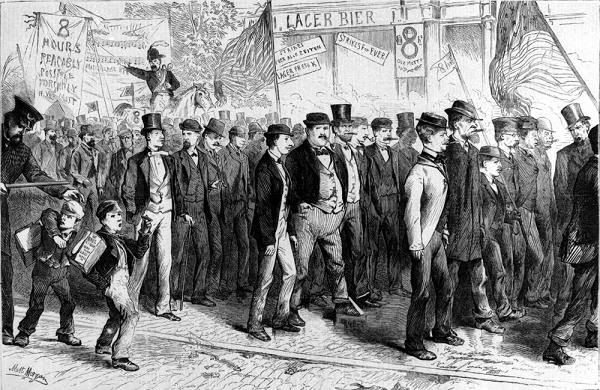
Another illustration of the 1874 protests, notably featuring a German establishment in the background. (More information on the Tenement Museum blog.)

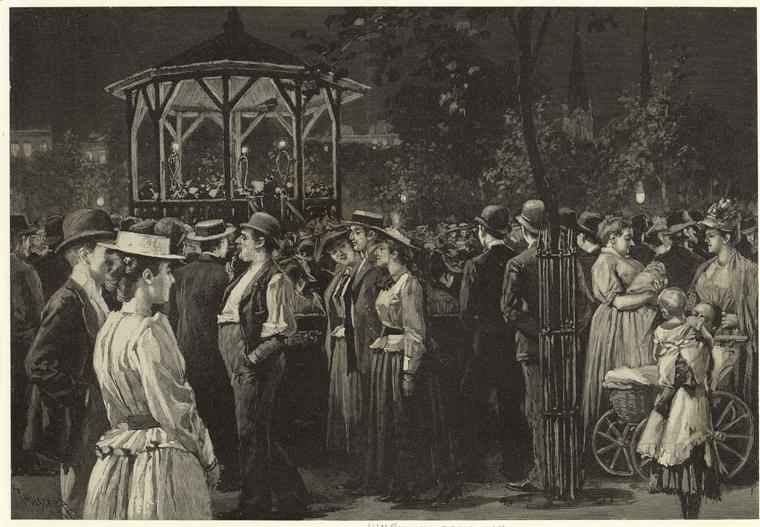
People enjoying (most likely) German music and entertainment in Tompkins Square Park, 1891. An image from Harper’s Weekly by Thure de Thulstrup. (NYPL)

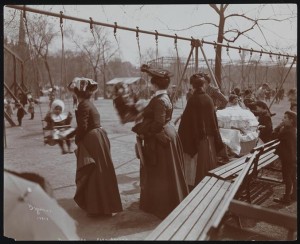
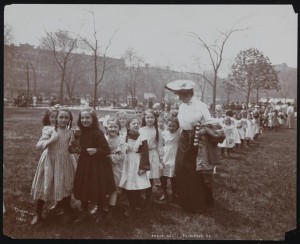
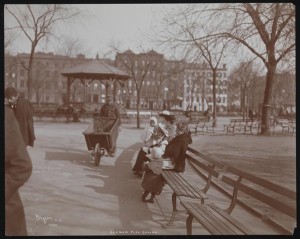
Women and children enjoying themselves in Tompkins Square Park, Arbor Day, 1904, on the brand new playground for girls. (Photos courtesy Museum of the City of New York)

Thompson Sq., Play Ground.
Arbor Day, Thompson Sq.
German Play Ground.

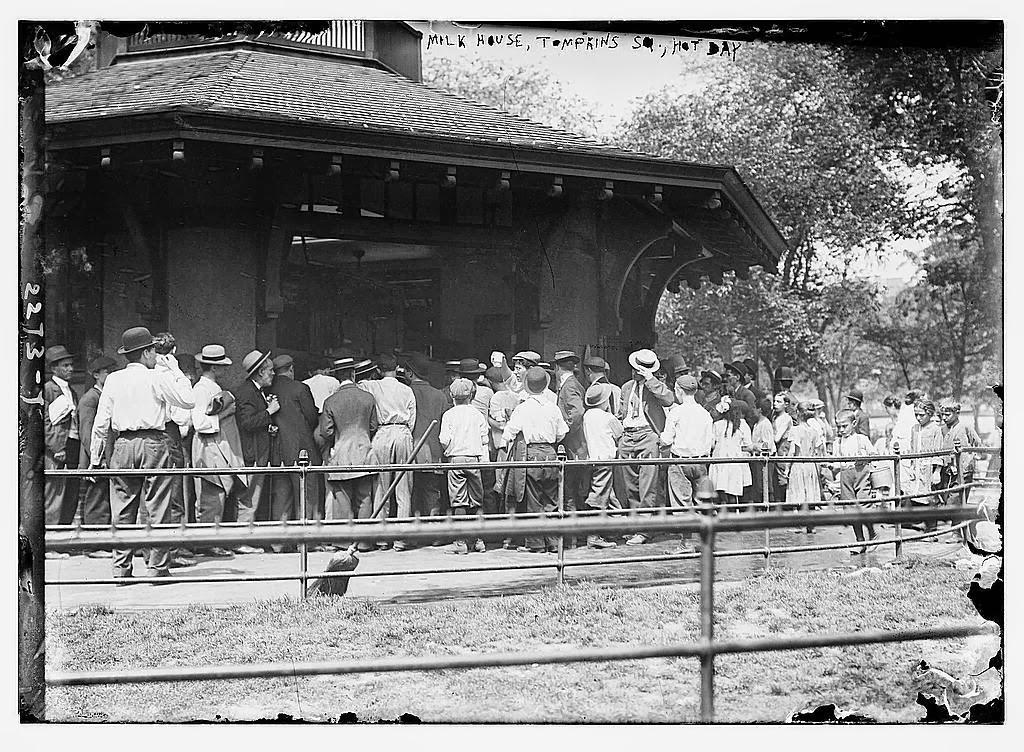
The Tompkins Square Milk House, which provided clean, healthy milk to families in the 1910s.

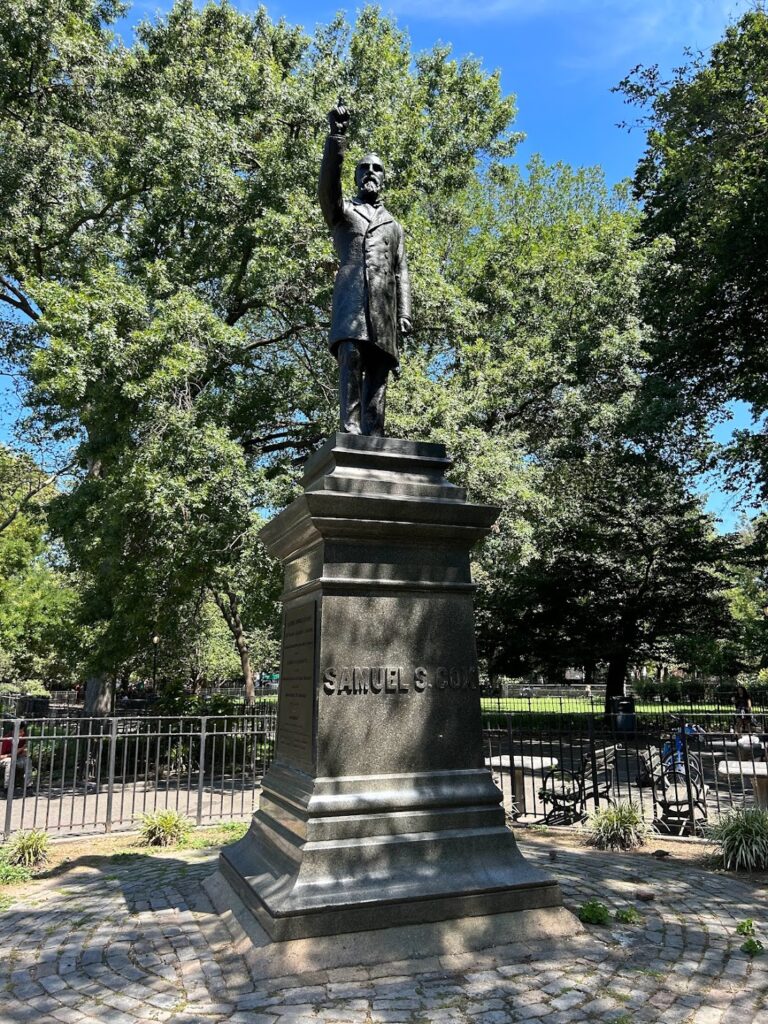
The statue of Samuel Cox, funded by New York postal workers. (1900, pic courtesy Museum of the City of New York

[Samuel Sullivan Cox statue.]

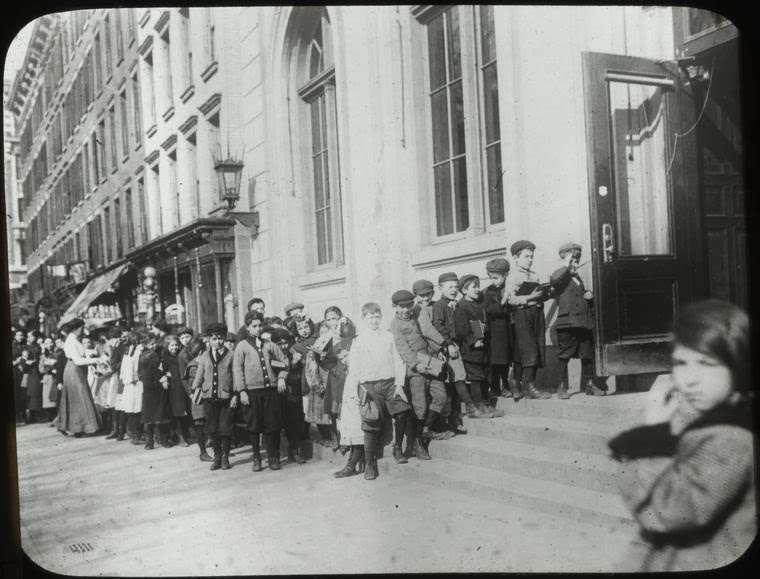
Children waiting in line to use the children’s reading room at the Tompkins Square branch library. (NYPL)

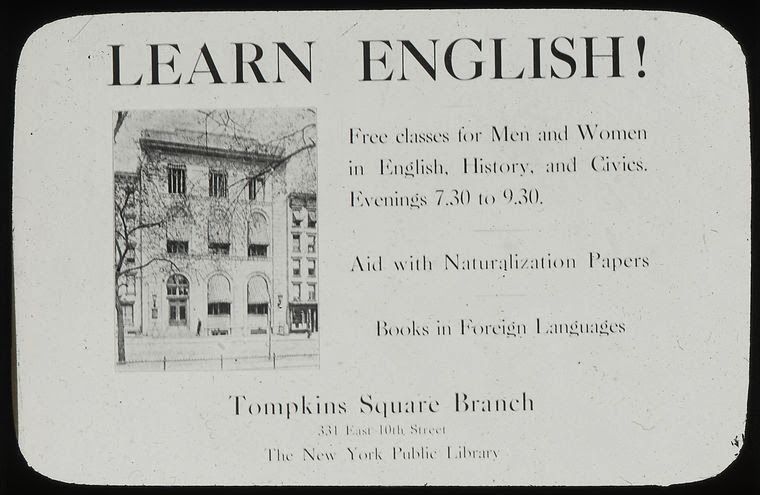
An advertisement from 1920, urging residents of the Lower East Side to take English courses at the Tompkins Square branch library. There are several of these posters in different languages here. (NYPL)

 Lady Bunny and friends, performing at Wigstock 1988 (Picture courtesy aquaman6 on Flickr)

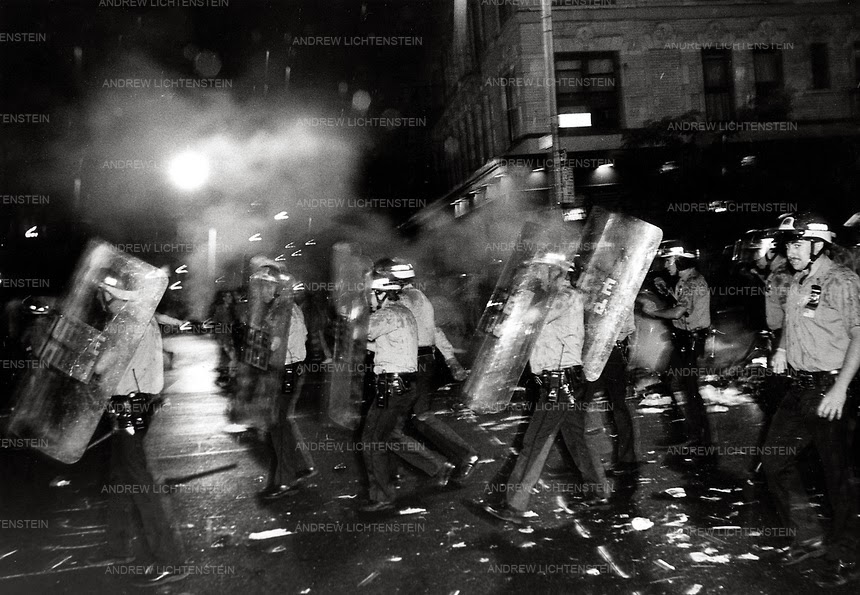
The Tompkins Square Police Riot from 1988 (courtesy Quilas)

Police retake Avenue A during a riot outside Tompkins Square Park that erupted after police allegedly beat a homeless man. The late 1980’s and early 1990’s was a period of rapid gentrification in the East Village, and many homeless residents, activists, and squatters, battled the process, frequently clashing with the police around Tompkins Square Park.

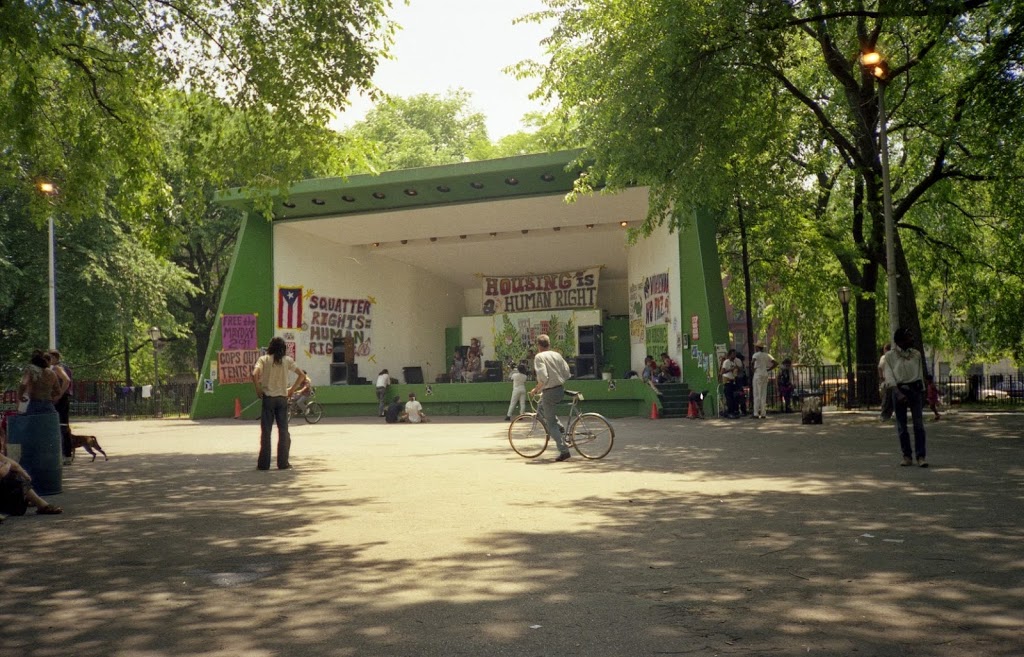
The Tompkins Square Park bandshell, which was torn down by the city in 1991.  (Photo courtesy Flickr/Mike Evans)

A performance by the hardcore band Breakdown at the bandshell in 1988

A Ghostbusters-themed entrant in the Halloween Dog Parade in 2013 (Courtesy USA Today)

Categories
Mad Men

‘Mad Men’ notes: Hare Krishna blossoms in the East Village

Prabhupada in his early days in New York (Courtesy the Hare Krishna Movement blog)

WARNING The article contains a couple spoilers about last night’s ‘Mad Men’ on AMC. If you’re a fan of the show, come back once you’re watched the episode. But these posts are about a specific element of New York history from the 1960s and can be read even by those who don’t watch the show at all. You can find other articles in this series here. 

An unusual subplot takes Harry Crane, Sterling Cooper Draper Pryce’s smug television liaison, down to Second Avenue and the temple of the Hare Krishnas where he finds new recruit Paul Kinsey, a former agency employee. In his prior existence as a pipe-smoking gadabout, Kinsey always made note of his own hipness, and, in this case, as an acolyte of a religious thought only a few months old, we can confirm that he’s ahead of the curve again.

The Hare Krishna movement, derived from Hindu philosophies and reformatted for the groovy ’60s, was actually fostered and popularized here in the East Village.

A.C. Bhaktivedanta Swami Prabhupada, a Hindu teacher and proponent of Gaudiya Vaishnavism, left India in 1965 to spread his religious teaching. Eschewing material possessions, he arrived in New York in 1966 and gravitated towards the East Village, the nucleus of cultural counter-culture.

His reputation preceded him and soon gathered a small group of followers, including artist Harvey Cohen, who soon set up Prabhupada in an apartment on 72nd Street on the Upper West Side and a small studio for religious practice on the Bowery. From here the swami formed the core of what would become the Hare Krishna movement, aka the International Society of Krishna Consciousness.

Given the location, most of his early followers were young people, fascinated by Hindu imagery in books and music and in particular by Prabhupada’s expressions of religious thought, purifying secular consciousness expanding rhetoric into a simple spiritual regiment.

For many, he was as much a mystery as an answer. One early follower confessed later, “I didn’t know what Prabhupada was about. I mean we understood about one-millionth of what Prabhupada was saying.”

Key to religious practice is the ubiquitous mantra, rhythmically repeating the name of God. Said Prabhupada in a lecture in 2010. “[T]his sound, this Hare Krsna, Hare Krsna, Krsna Krsna, Hare Hare. Hare Rama, Hare Rama, Rama Rama, Hare Hare, is the sound representation of the Supreme Lord.”

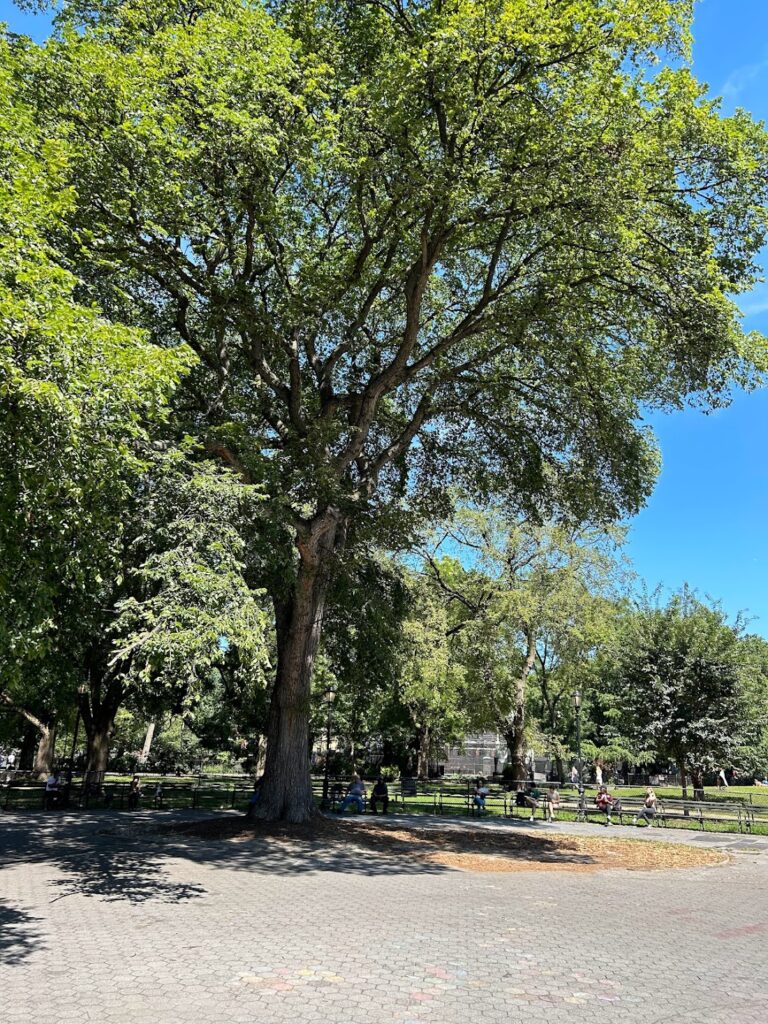
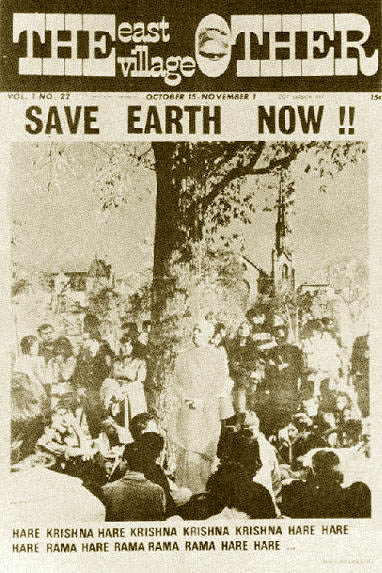
Prabhupada and his followers would frequently be heard chanting their familiar mantra throughout the East Village, but they would be known for one particular destination. On October 19, 1966, Prabhupada led an outdoor chant underneath a elm tree in Tompkins Square Park that lasted for almost two hours, so transcendent that even the New York Times took notice: ‘Swami’s Flock Chants in Park to Find Ecstasy.’ Today that tree (called the Hare Krishna tree) is one of the park’s most popular spots and a mecca for current adherents.

Above: From the late October issue of the East Village Other, in front of the  Hare Krishna tree [source]

By this time, Prabhupada had a new home, a former curio shop at 26 Second Avenue (between First and Second Streets). They kept the old sign ‘Matchless Gifts’ over door, while followers decorated the interior with handmade tapestries. This became the central New York temple and remains central to local worshippers to this day. “[I]n this small room on Second Avenue, guest found themselves transported into another dimension, a spiritual dimension, in which the anxieties and pressures of New York City simply did not exist.” [source]

In that first year, 1966, Prabhupada had only a few dozen followers, but at least one famous one — Allen Ginsberg.


Below: Video of Prabhupada and followers at Tompkins Square Park in 1966

Â