Categories
Friday Night Fever

Recollections of the Electric Circus: “If you remembered much of what happened, you weren’t really there.”

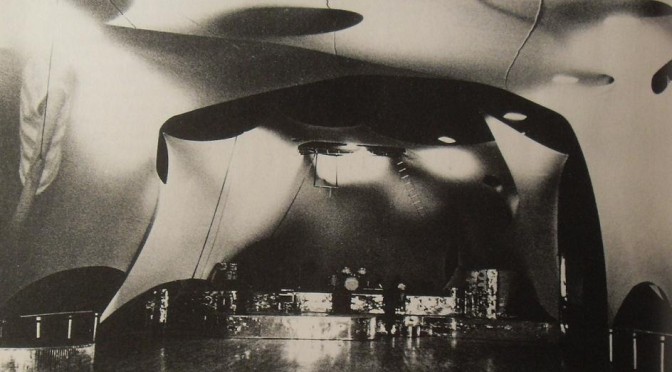
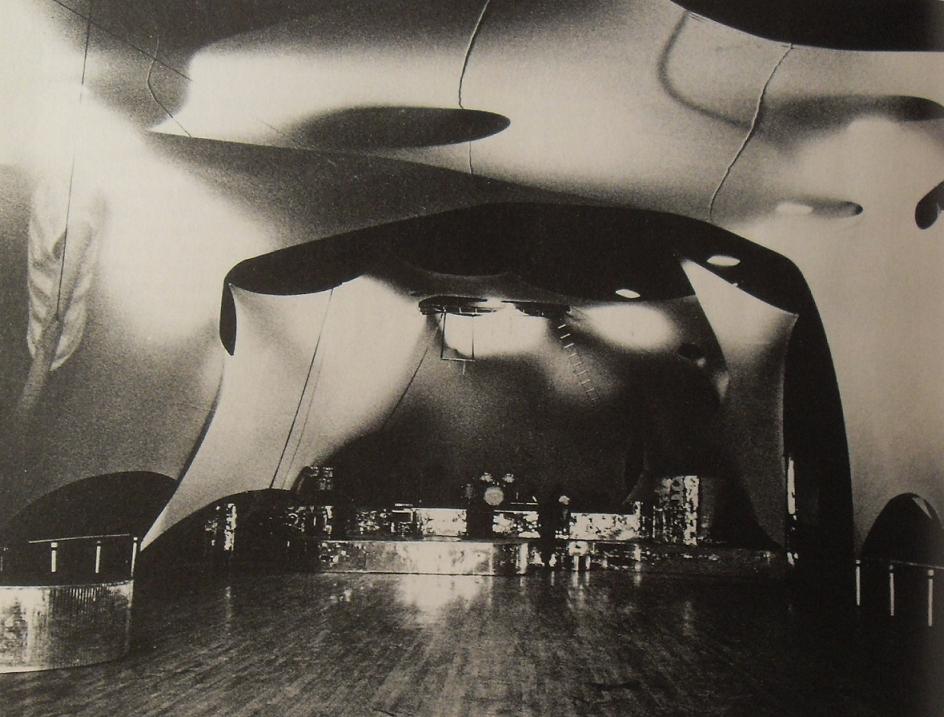
The interior of the Electric Circus on St. Mark’s Place. Pic courtesy Christian Montone/flickr

WARNING The article contains a couple light spoilers about last night’s ‘Mad Men’ on AMC.  If you’re a fan of the show, come back once you’re watched the episode.  But these posts are about a specific element of New York history from the 1960s and can be read even by those who don’t watch the show at all.  You can find other articles in this series here

Almost predictably, a couple characters from ‘Mad Men‘ finally interact with a psychedelic temple of Andy Warhol, in this case the nightclub Electric Circus at 19-25 St. Mark’s Place, today the site of a Chipotle and a Supercuts.

As I wrote back in an article from 2007: “It became the East Village fuse box for Warhol’s talents and those of his entourage, in particular the Velvet Underground and Nico.  The dazzling synthesis of psychedelica and glamour, of the Velvet’s strange atmospheric music and Warhol’s performance displays of lights and costumes, immediately attracted the scenesters to this odd little street — according to the New York Times, “everyone from hippies to Tom Wolfe and George Plimpton” — way before St. Marks would make its reputation in the 1970s with the punk scene.”

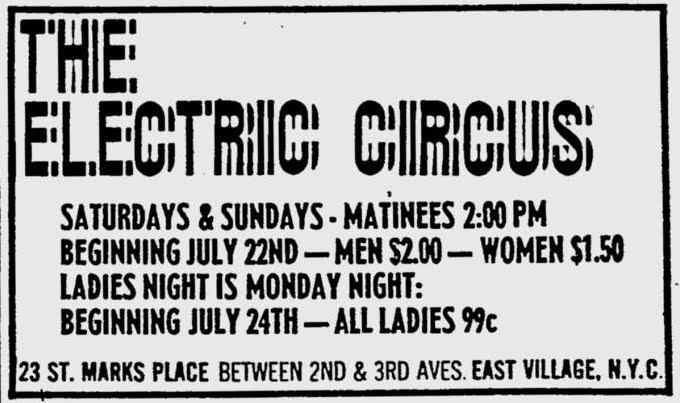
An original ad from the Electic Circus, summer of 1967 (courtesy butdoesitfloat)
Since I wrote that article, many people have chimed in within the comments section to relive their memories of Electric Circus.  Here are a few of my favorite comments from those who were actually there:

“What memories.  I started working at the E.C. as a ticket taker.  I say working, but in reality we didn’t get paid, we got let in for our work.  Like Woodstock, if you remembered much of what happened at the E.C. you weren’t really there.” – Being the Best

Below: Headline from the Village Voice, July 6, 1967
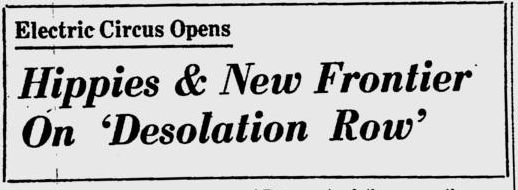
“I worked at the Electric Circus, 67-68-ish.  I was the fire-eater, and mime/clown, working with another mime named Michael Grando.  Larry Pizoni was the director of the circus show.  We had a trapeze artist named Sandy [Alexander], and security was a biker club called the Aliens (which worked, unlike Altamont).

Everytime I’m in New York, in the East Village, I stop on St Mark’s and bow my head.  I wanted to have someone put up a plaque, but nobody in the stores knew who to call.” – Richard Bluejay

“I was one of 5 or 6 people who worked at Limbo* for number of years across from the Electric Circus.  I was there at the opening night, and then on for a long time I remember we use to give discounts to the Circus employees so we get in free. Can not tell you how many times I was in there but it was a lot!!!!  It was great time back then.  Fillmore East was around the corner and Max’s Kansas City was not far away.  East Village was where it was at back then ” – Anonymous

A freakout-indusing video from Electric Circus, scored to the music of Frank Zappa: 

“I remember two things about the electric circus from my one visit in 1969. One was the fact that the walls were not at a right angle to the floor, which combined with the strobe lights and swirling crowd, made for a delightfully disorienting experience. The other was a dark room off to the side where couples — or even strangers I suppose — could sit and smooch. In addition to all kinds of nooks and crannies for this purpose there was a rotating upholstered carousel in the middle of the room, divided into sections, one per couple.” — Anonymous

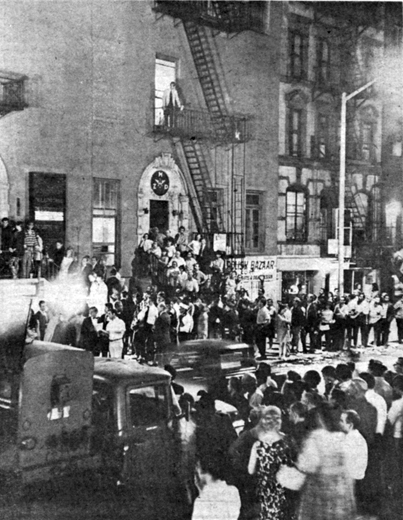
Below: A typical crowd on the stairs outside the Electric Circus (pic courtesy Old New York)
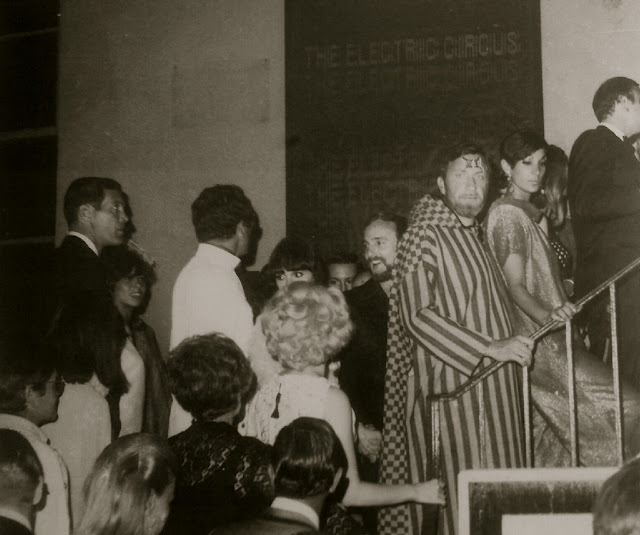
“I’m so excited, after all these decades to hear from people who got to experience the the most amazing Electric Circus, as I did.  By far dancing myself into a dazed, psychedelic trance, while absorbing the magical energy of the Chambers Brothers sing ‘Time’, was right up there in my top ten of life altering experiences.  I was a runaway, living with new friends in the Village.

I used to panhandle on St. Marks Place, and spend all my money on clothes at the Limbo, pizza, and tickets to hear my fav bands, except for the times I used to get in for free.” — Sonny

Below: Sonny’s jam from the floor of the Electric Circus:

“I can’t remember exactly how I arrived at St. Marks Place that first night.  I had never been to St Marks Place and I certainly didn’t know about Electic Circus.  I was just following a friend of mine who was interested enough in the new culture to find out where to go and what to do.

There must have been some kind of happening that night because the streets were full of people.  People were hanging all over the stairs leading up to the Circus.  And, you didn’t have to pay.  We just walked in. I still remember it emotionally.

The big room was completely decorated with fabric amorphously draped on walls and spanning corners and cornices.  Projectors behind the fabric ran continuous short loops of films. Of course it was dimly lit so as not to wash out the films.  People were everywhere and moved mysteriously in the smoky dim light.  I was born in Brooklyn and had already lived a few years in Manhattan, but I never saw anything like this before.  The next time I saw EC the decor had changed. I never paid to get in because I was a member of the PABLO Light** show.” — Anonymous

* Limbo was a famed ‘hippie clothing’ boutique where today’s Trash & Vaudeville sits today.

** That would be Lights By Pablo, a leading ‘liquid light show’ exhibitor of the late 1960s, frequently here and at Fillmore East.
Categories
Neighborhoods Podcasts

St. Mark’s Place: It’s Party Time in the East Village!

PODCAST: The big, brash history of St. Mark’s Place, the East Village’s most interesting street.

St. Mark’s Place may be named for a saint but it’s been a street full of sinners for much of its history.

One of the most fascinating streets in the city, St. Mark’s traces its story back to Peter Stuyvesant, meets up with the wife of Alexander Hamilton in the 1830s, experiences the incredible influx of German and Polish immigrants in the late 19th century, then veers into the heart of counter-culture — from the political activism of Abbie Hoffman to the glamorously psychedelic parties of Andy Warhol.

And that’s when the party really gets started! St. Mark’s is known for music, fashion, rebellion and pandemonium. In the 1970s and 80s, clothing stores like Limbo and club nights like Club 57 helped define its character — punk, new wave, alternative, raucous.


The Bowery Boys: New York City History podcast is brought to you …. by you!

We are now producing a new Bowery Boys podcast every two weeks. We’re also looking to improve the show in other ways and expand in other ways as well — through publishing, social media, live events and other forms of media. But we can only do this with your help!

We are now a member of Patreon, a patronage platform where you can support your favorite content creators for as little as a $1 a month.

Please visit our page on Patreon and watch a short video of us recording the show and talking about our expansion plans. If you’d like to help out, there are five different pledge levels (and with clever names too — Mannahatta, New Amsterdam, Five Points, Gilded Age, Jazz Age and Empire State). Check them out and consider being a sponsor.

We greatly appreciate our listeners and readers and thank you for joining us on this journey so far. And the best is yet to come!


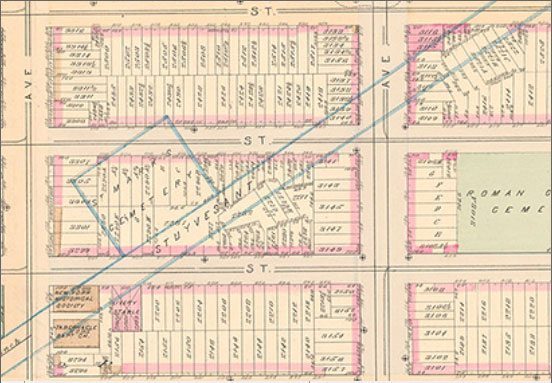
Stuyvesant Street superimposed over the planned grid. Ultimately the street was allowed to remain, breaking the grid. By the way, see that green patch at the far right? That was also a cemetery.

Courtesy EV Transitions

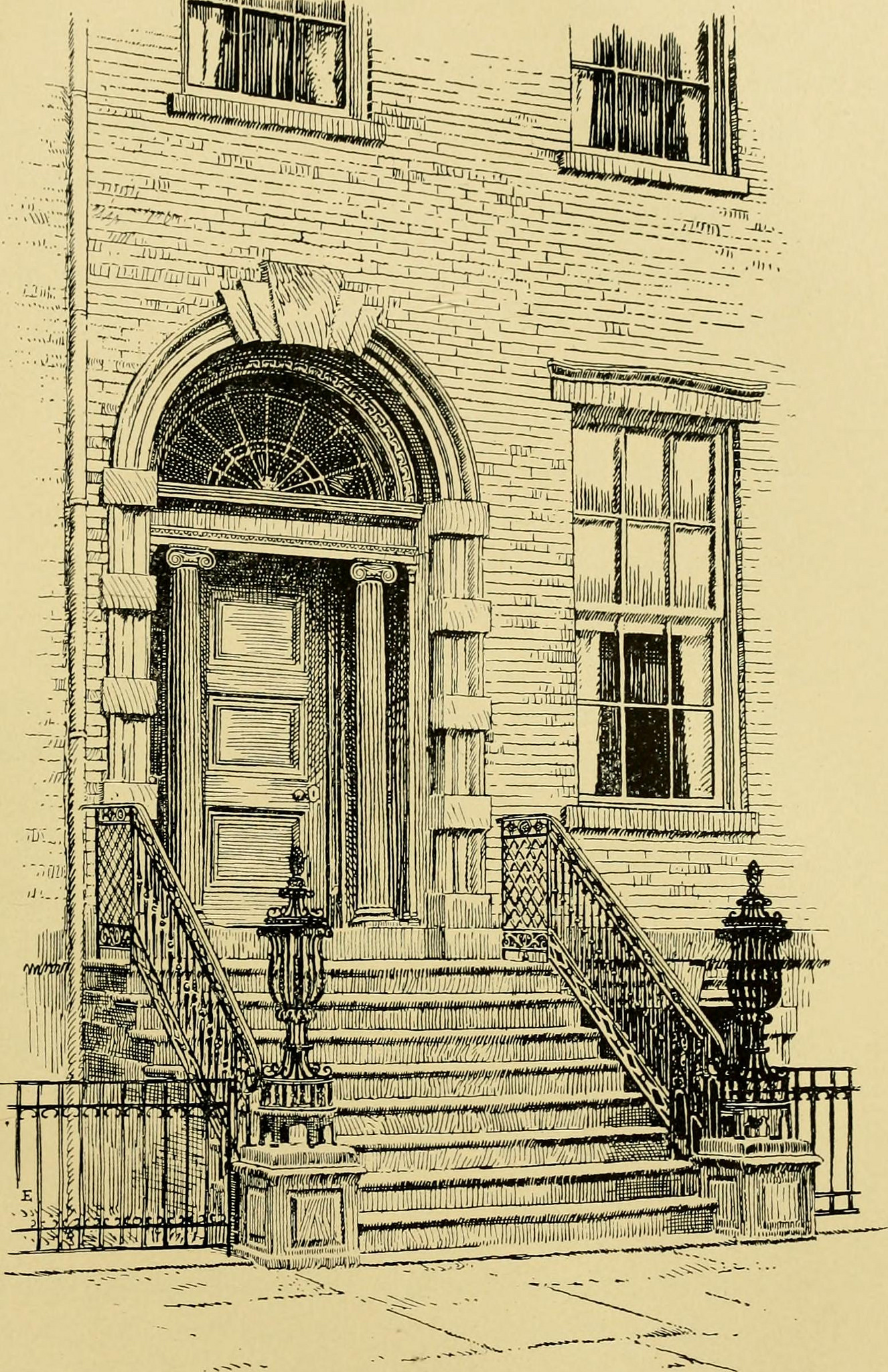
The front of 22 St. Mark’s Place from a 1914 history book. (It looks almost identical to 20 St. Mark’s, the old Daniel LeRoy House, which is still there.). “It had a tea room in the rear of the first floor, which [the tenant] altered into a library, constructing a bathroom in connection with it. A new bedroom was added above the library, and in the basement was installed a cook.” [source]

1

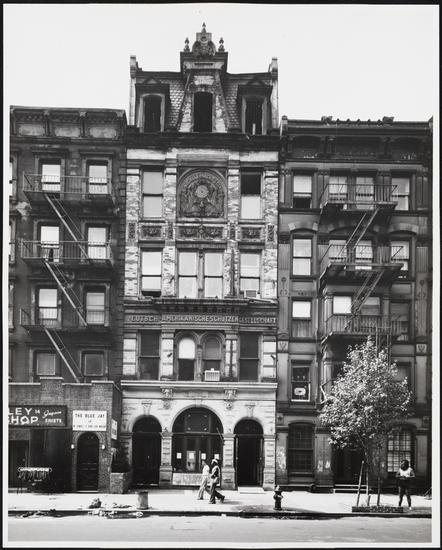
Deutsch-Amerikanische-Schützen Gesellschaft (German-American Shooting Society) building, 12 St. Mark’s Place, pictured here in 1975 in a photograph by Edmund Gillon

Courtesy Museum of the City of New York

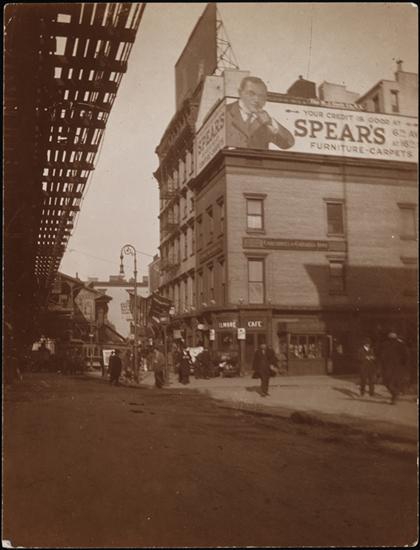
St. Mark’s Place and Third Avenue in 1914, the same year as the shootout at Arlington Hall! The Third Avenue elevated train framed St. Mark’s on the west end, the Second Avenue elevated (which actually ran along First Avenue in the East Village) to the east.

Courtesy Museum of the City of New York

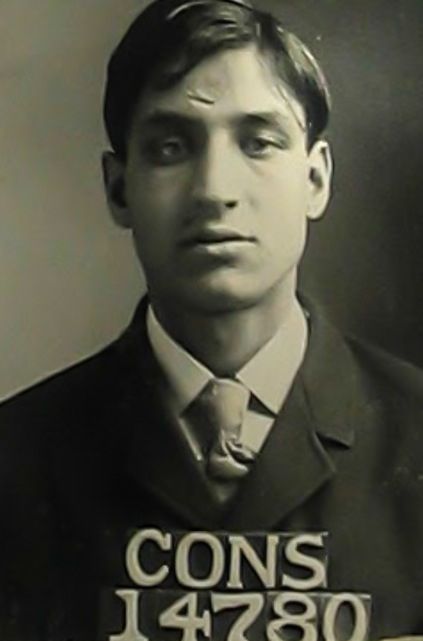
The mugshot of Dopey Benny whose gang was involved in the shootout which killed a city official.

dopey

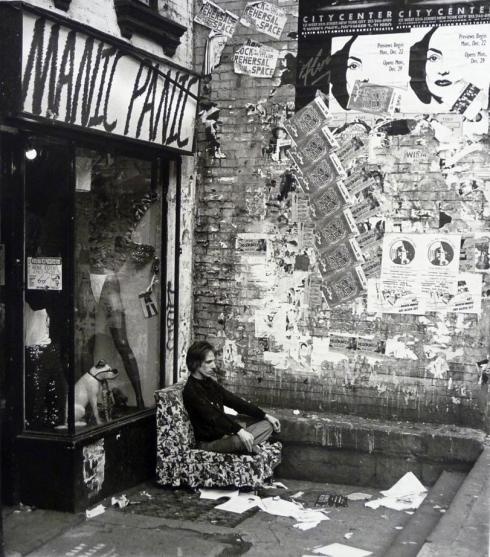
A photo by Victor George Macarol of the boutique Manic Panic (and a man in meditation), 1975

3

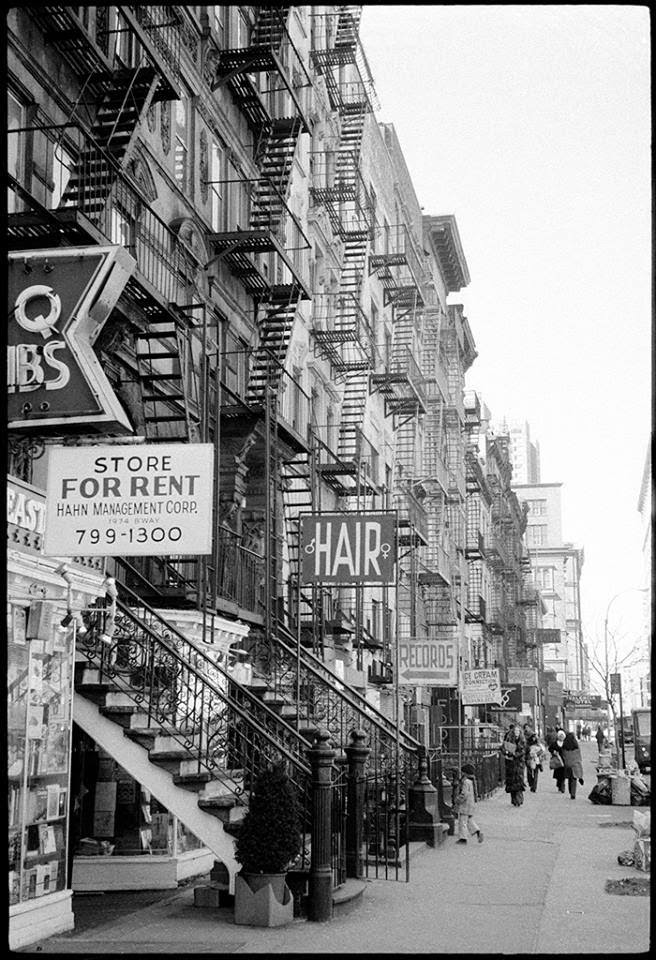
The south side of St. Mark’s Place, 1975

EV Grieve
EV Grieve

Crowds waiting to get into the Electric Circus

courtesy Alex Ross
courtesy Alex Ross

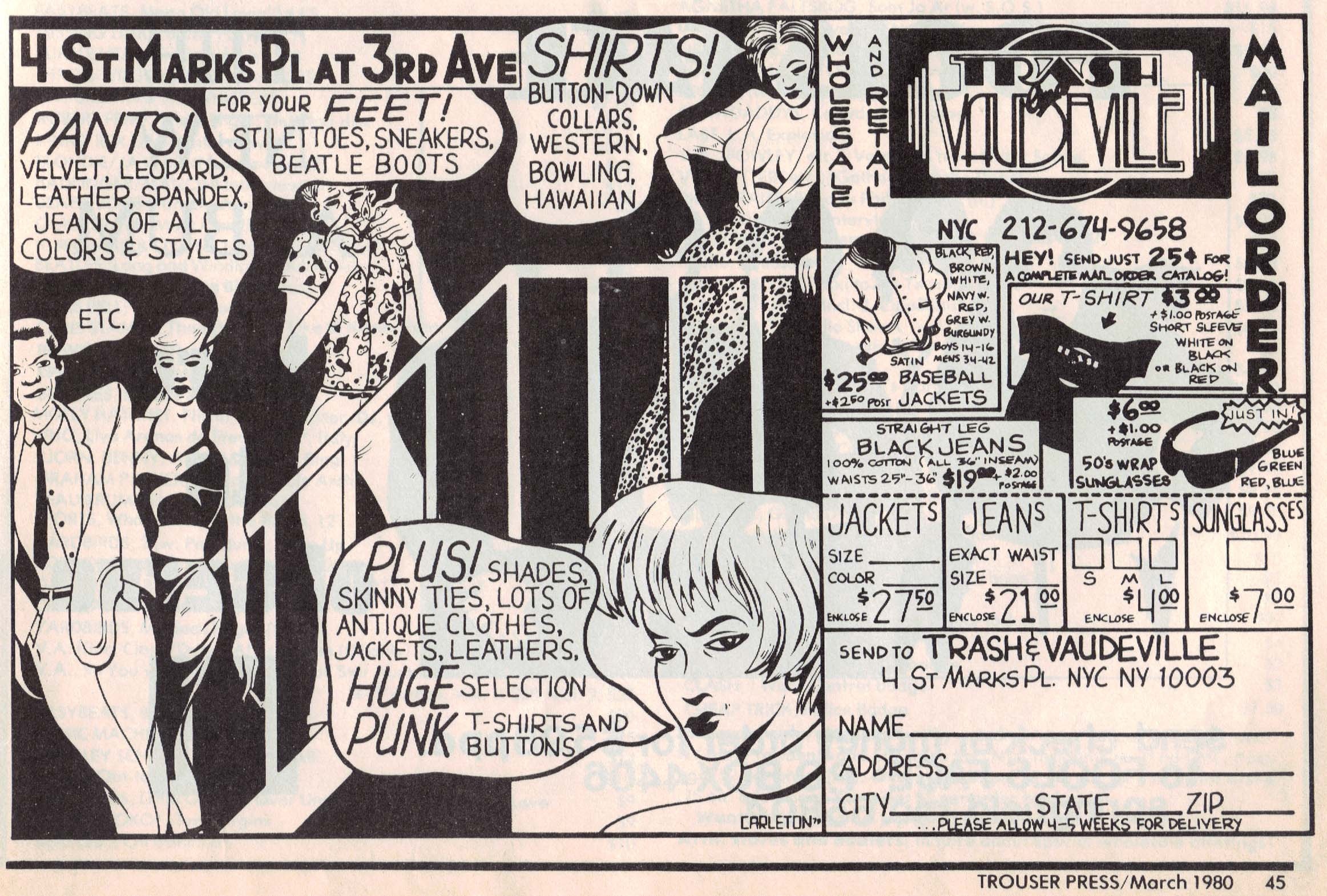
A flyer for Trash and Vaudeville…

trash

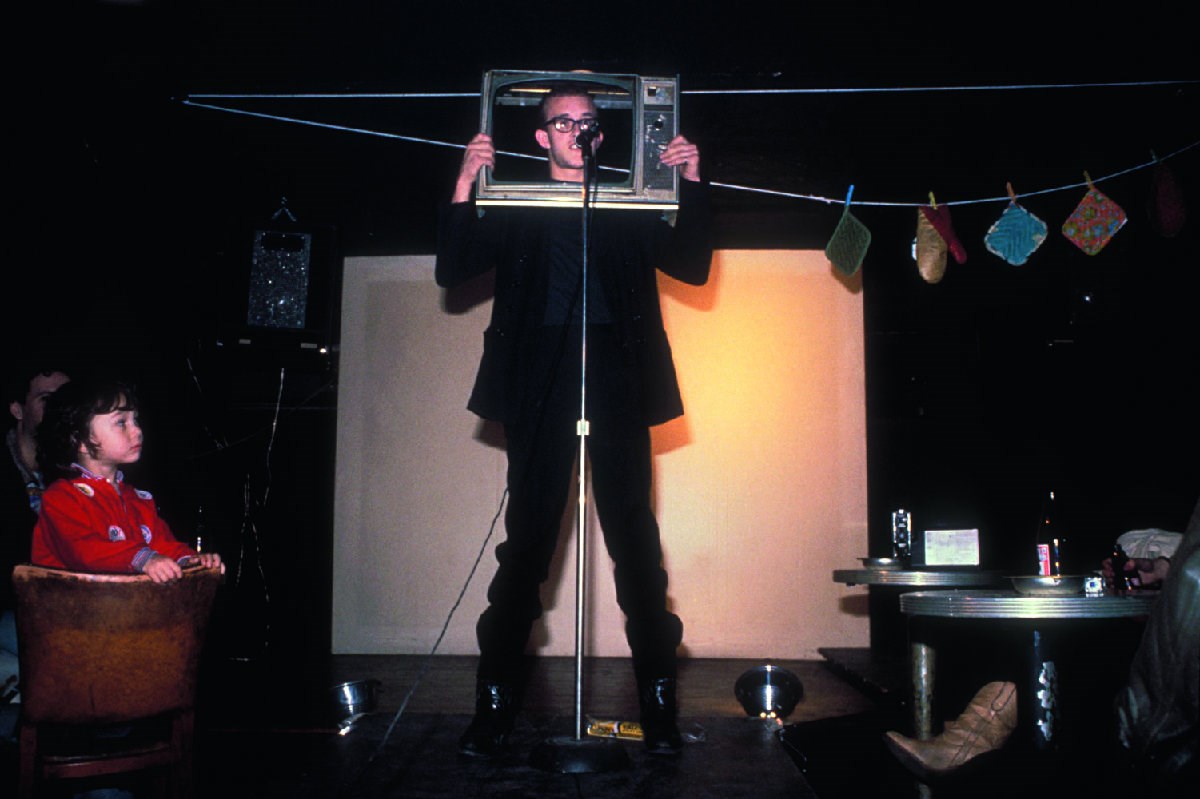
Keith Haring performing at Club 57 in a themed evening called Acts of Live Art. For more information on Club 57, you can read my earlier article about this extraordinary club here. Dazed has a pretty great article about the place here.

Photo by Joseph Szkodzinski

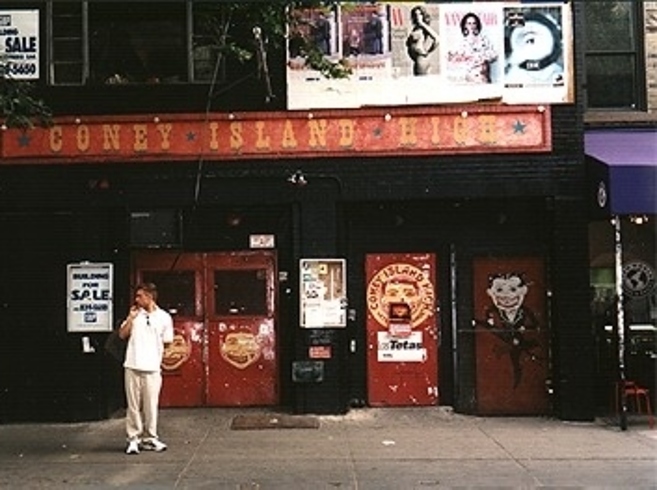
Coney Island High, a pivotal East Village venue during the 1990s.

Courtesy Buzzfeed
Courtesy Buzzfeed

Top photo — St. Mark’s Place in 1978, Photos by Leonard Freed / Magnum Photos, care of Vintage Everyday

Categories
Health and Living Those Were The Days

Close shave: A century ago, barbers riot through New York, leaving half-shaved men in vacated barber shops

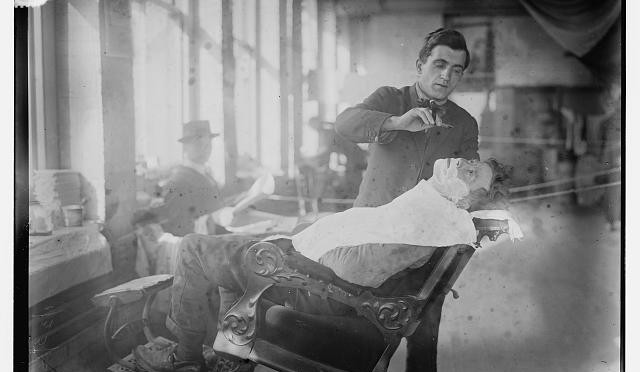
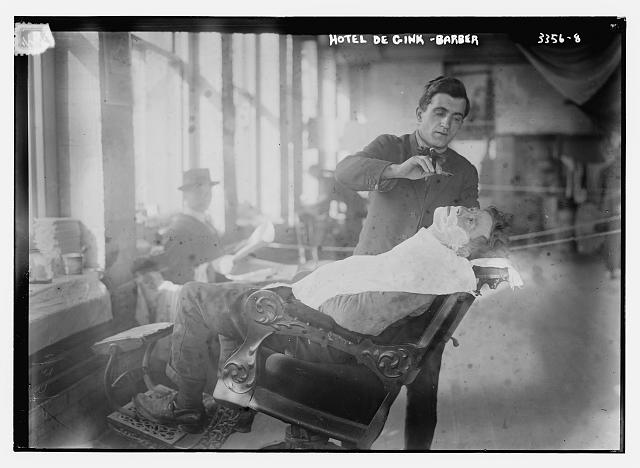
A barber shop at the Hotel de Gink on the Bowery, circa 1910-15 [LOC]

The fight for worker’s rights swept through a variety of occupations over a century ago as New York City laborers rebelled against unfair corporate practices and unsafe working conditions.

Garment workers marched the avenues in protest following the tragic Triangle Factory fire of 1911, as did underpaid street cleaners and ashcart men, leaving heaps of un-retrieved rubbish on the street in protest.  The following year, the waiters and staff of dozens of New York’s finest hotels took to the streets for better pay. Why, by 1913, even some players on the Brooklyn Dodgers were unionizing!

And one hundred years ago this month, it was the barbers turn to march.
Many of the same leaders from other occupational strikes were at the center of the barber strike, which got its footing in the Brooklyn neighborhood of Brownsville.  Soon, barbers across the city had dropped their razors and foaming brushes and left work in consolidation for better hours.
A letter-writer to a wonderfully named 1913 journal called Journeyman Barber, Hairdresser, Cosmetologist and Proprietor wrote, “I will say that on a certain bright morning in the month of May, I found that the entire barber industry was paralyzed.  Nearly 13,000 workingmen were out on strike. Isn’t that a miracle?  Thirteen thousand barbers on strike!”
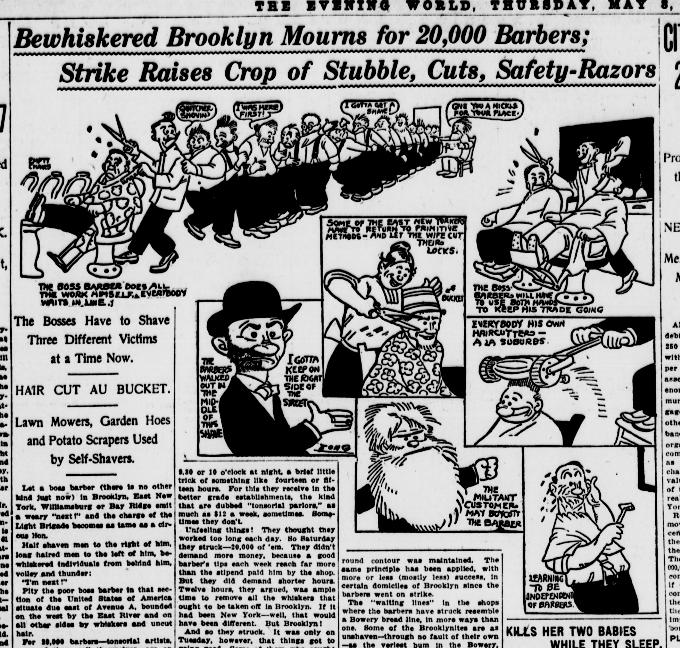
Mayhem reigned upon the craggy, unshaven faces of Brooklyn men.  “From Bushwick to Bay Ridge haggard men go about with the telltale blemish encroaching upon their visages like a noxious fungus.  Half-shaved men slink about the alleys, avoiding the light of day.” [source]
Scenes of violence did erupt throughout the city, as strike-breakers were attacked and angry mobs filled the street.  A mob of 5,000 strikers — “singing socialistic songs,” noted the New York Tribune — clashed with police in Brownsville on May 7th, customers fleeing barber shops in “a shower of vegetables” and the occasional flying rock.

Below: a cheeky editorial cartoon from the May 8th 1913 Evening World

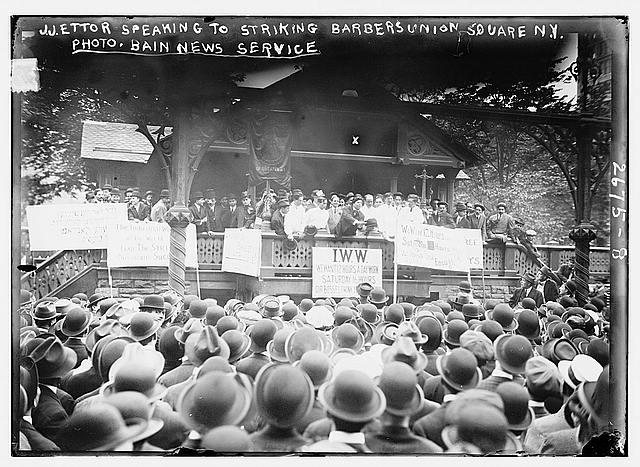
A couple days later, thousands of barbers marched across the Brooklyn Bridge to Union Square, gathering up working men along the way, emptying barber shops of employees and leaving stunned customers in their chairs.  In Union Square the strikers heard speeches from organizers including Joseph James Ettor (pictured below), who had helped organize the waiter’s strike just a few months before.

The Evening World makes curious note of one exception to this striking throng. “ONLY LADY BARBERS WORK IN BROOKLYN WHILE MEN STRIKE” went the headline.  “Such a business as the feminine barber shops did!”

Manhattan barbers joined their Brooklyn brothers by mid-month, setting up a Manhattan strike headquarters at 140 Second Avenue.  (Today, that the address of the Ukrainian East Village restaurant.)  Arlington Hall at nearby St. Mark’s Place was the scene of several union gatherings for striking barbers.

Descriptions of rioting barbers sound a bit like scenes from the Civil War draft riots, although much of that description was the newspaper flourish of the day.

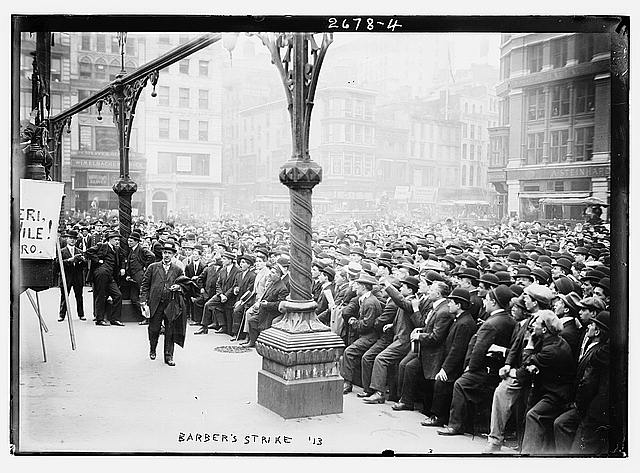
Below: Thousands of barber shop workers and their supporters gather in Union Square in 1913. I believe this is the northwest corner of the park. (LOC)

But it does sound like a violent few days in Manhattan.  Shop windows were smashed by rioters in the Ladies Mile shopping district, and altercations with store owners put many in the hospital.  The Sun noted: “Window smashing and attacks on workers, common all day, culminated in dozens of small riots all over the city, so many and so rapid that police headquarters heard of them in bunches.”

Eventually, the strike proved a success, as barbershop owners agreed to worker’s demands.  According to one source, instead of working up to 92 hours a week, employers now agreed to the relatively mild 62 hours a week for their workers, with one entire day off on Sunday! [source]

“2,300 Boss Barbers Capitulate,” declared the Evening World on May 30th. “Brooklyn Strike Over.” By the first of June, it was safe again to go to a barber shop.

Categories
Neighborhoods Podcasts

The secrets of St. Mark’s Church in-the-Bowery, and uncovering the East Village footprint of Peter Stuyvesant


FOR YOUR CONSIDERATION Until May 21st, you can vote every day in the Partners In Preservation initiative, which will award grant money to certain New York cultural and historical sites among 40 nominees. Having trouble deciding which site to support? I’ll be featuring on a few select sites here on the blog, providing you with a window into their history and hopefully giving you many reasons to visit these places, long after this competition is done. Read about other candidates here.


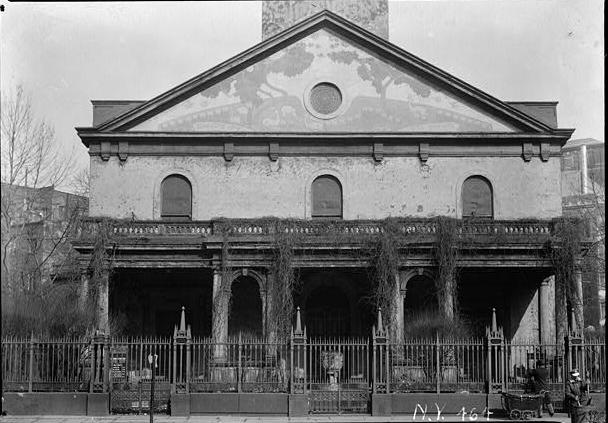
PODCAST The church of St. Mark’s-in-the-Bowery is one of Manhattan’s most interesting and mysterious links to early New York history. This East Village church was built in 1799 atop the location of the original chapel of Peter Stuyvesant, New Amsterdam’s peg-legged director-general. His descendants — with the help of Alexander Hamilton and the architect of New York City Hall — built this new chapel with the intention of serving the local farming community of Bowery Village.

But in many ways, the more thrilling tales occur among the honeycomb of burial vaults underneath the church, the final resting place of vice presidents, mayors, and even Peter himself.

St. Mark’s reflected the changes that swept through Greenwich Village during the 20th century, with experimental and sometimes scandalous church activities, from hypnotism, modern dance and even a trippy foray into psychedelic Christian rock.

ALSO: Find out why you can never EVER go down into the vault of Peter Stuyvesant. And why is the church IN the Bowery, not ON the Bowery?

NOTE ABOUT THE NAME: The modern name of this historic structure is technically St. Mark’s Church In-The-Bowery. However most 18th-19th century sources drop the ‘church’ from the middle of the name. The hearty bust of Peter Stuyvesant in the courtyard calls it ‘Saint-Mark’s-in-the-Bowerie’.

Hyphens are liberally or reservedly applied based on the source. As we decided to spend a great deal of time talking about the old farm and the early years, we settled on ‘St. Mark’s in-the-Bowery’. But I even twisted myself around during recording and said ‘on-the-Bowery’ accidentally at least twice, so sorry for the confusion!

I’ll post some more notes on the show next week, some thank-yous, further information and some further sources to check out for more information.


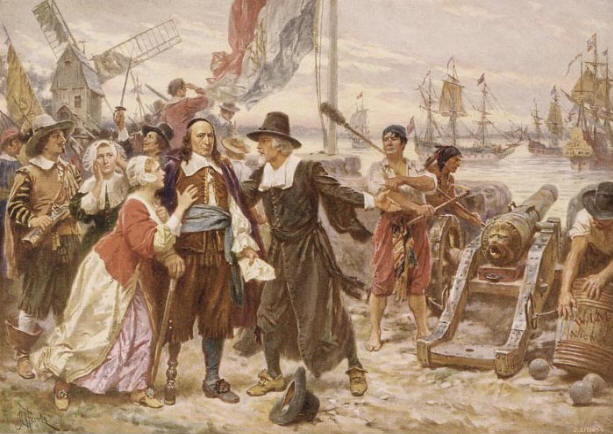
Below: The residents of New Amsterdam beseech Peter Stuyvesant to surrender to the coming British forces in 1664. He is clearly not pleased. The official surrender actually took place at Stuyvesant’s farm house, two miles outside of town along the bouweij or Bowery road. Listen here for the real pronunciation of bouwerij.

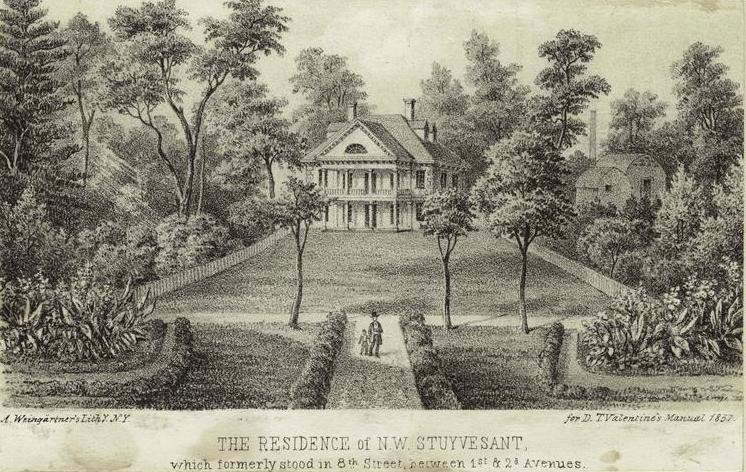
The caption reads ‘The Residence of N.W. Stuyvesant’ which formerly stood in 8th Street, between 1st and 2nd Avenue‘, one property on the land estate of the Stuyvesants during the 18th century. (NYPL) I’ve seen this same illustration differently labeled, dated 1800 and called simply ‘the Bowery House’.

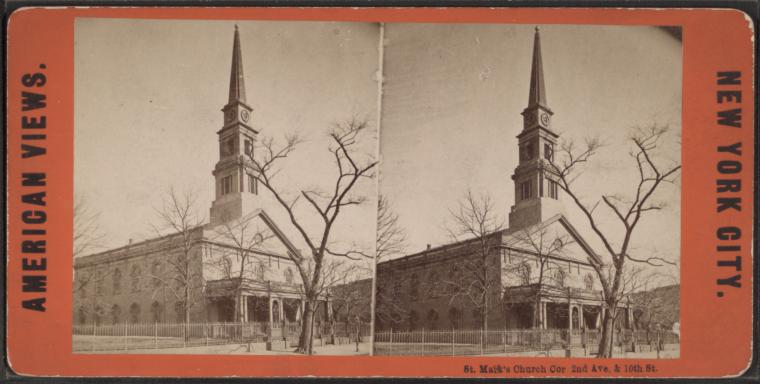
 St. Marks in 1865, rendered in an early stereoptic photograph. The church itself looks pretty much as it does today. But the surrounding churchyard would be radically transformed. (NYPL)

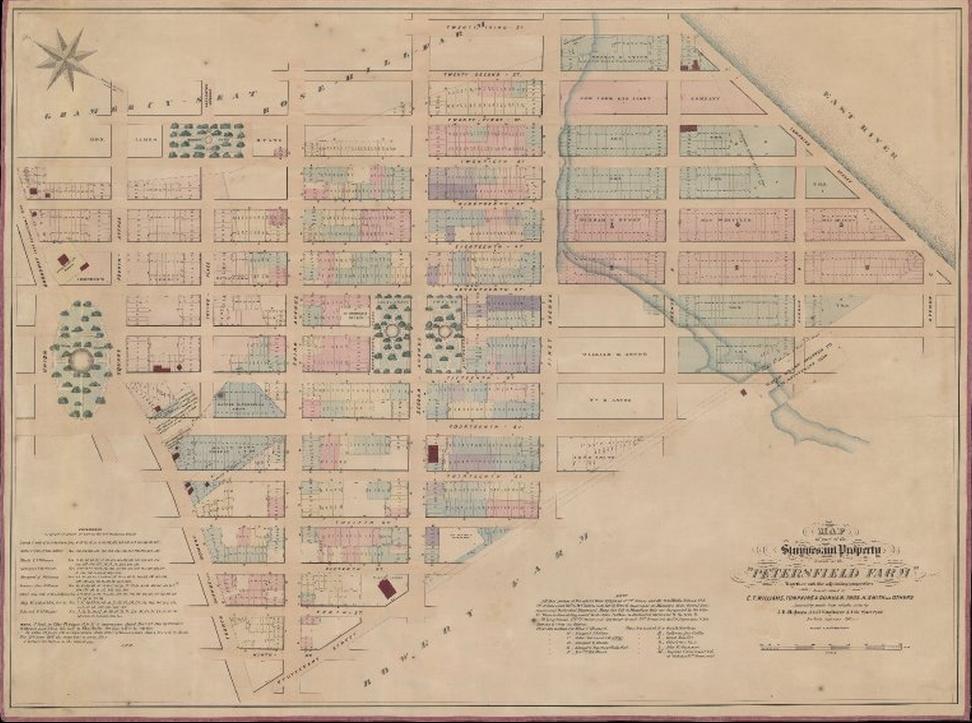
A real estate map, imprinted with the grid plan over the Stuyvesant property. You can see Stuyvesant Street at the bottom. The collected properties were also known as ‘Petersfield’ after a manor home of one of the Stuyvesant descendants. (NYPL)

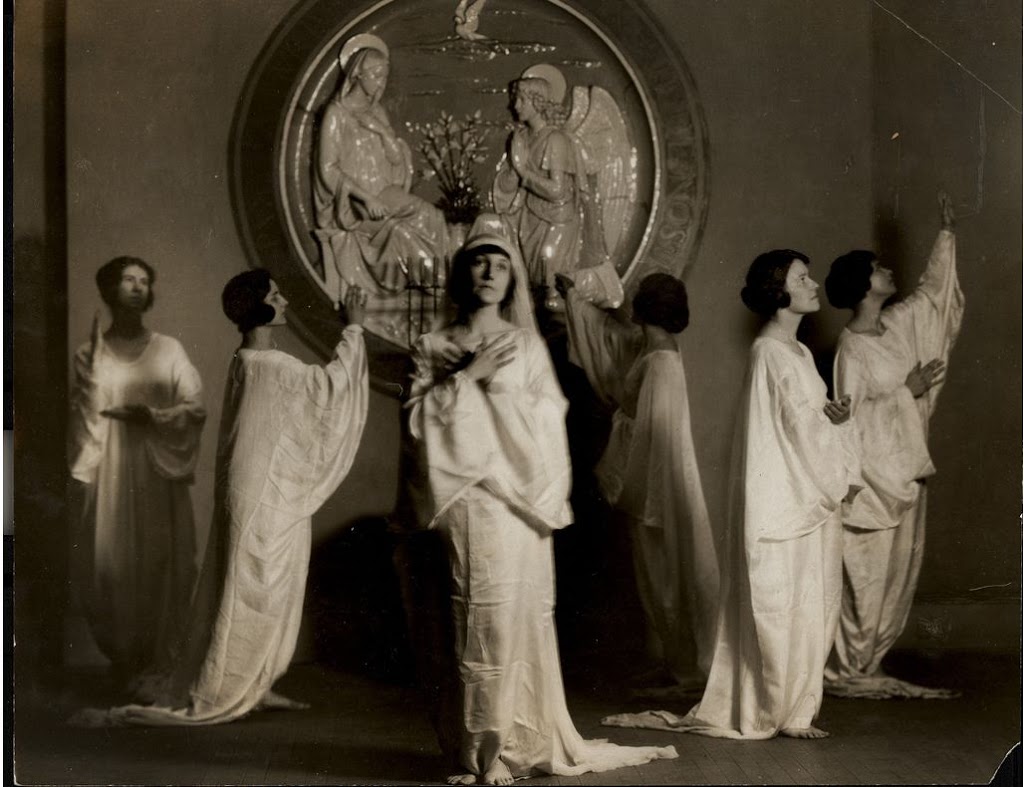
The interpretive dancers of Dr William Norman Guthrie,  the Scottish clergyman who oversaw many radical changes to the standard St. Mark’s services.


An excerpt from the Mind Garage’s ‘Electric Liturgy‘, which was performed at St. Mark’s Church in 1969


Visit St. Mark’s website for a virtual tour of the St. Mark’s church yard.

  Disclosure: I have partnered up with Partners in Preservation as a blog ambassador to help spread the word and raise awareness of select historical sites throughout the tri-state area. Though I am compensated for my time, I have not been instructed to express any particular point of view. All opinions expressed here are strictly my own. And since writing about New York landmarks is kinda my thing anyway, I’m thrilled to share my love of these places!

Club 57 and the sweet, sweet smell of St. Mark’s Place


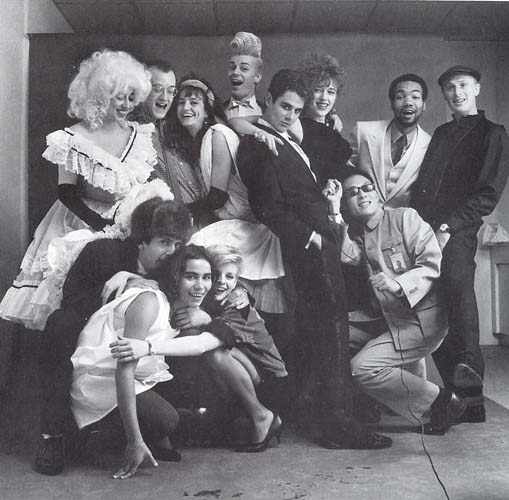
Those crazy kids! The revelers of Club 57 (featuring, among others, Keith Haring), circa 1980

FRIDAY NIGHT FEVER To get you in the mood for the weekend, every other Friday we’ll be featuring an old New York nightlife haunt, from the dance halls of 19th Century Bowery, to the massive warehouse clubs of the mid-1990s. Past entries can be found HERE.

I try not to editorialize too much about the places I write about, because like people, the beauty of a neighborhood is in the eye of the beholder. But these young whippersnappers today just do not understand how profoundly awesome St. Mark’s Place used to be. *waves fist* There’s a Pinkberry there now. Kim’s Video is gone. Where’s the edge?

Yes, yes, things change. And not everyone would agree anyway; in fact, a traditional New York history buff might look upon anything that happened on this East Village street after 1960 as being pure deterioration. Formerly a part of Peter Stuyvesant’s farm, the street transformed from luxury mansions to the heart of German immigrant culture at the turn of the 20th Century. You could say St. Mark’s suffers from a ghost limb. The street used to officially extend one block west before dignified Cooper Union moved into the neighborhood. It now starts at Third Avenue and barrels through to end at the foot of Tompkins Square Park on Avenue A.

The street was also one of New York’s great epicenters for counter-culture, the home to agitators like Emma Goldman and Leon Trotsky, underground jazz clubs and gay bath houses, avant-garde artists and musicians, and finally, by the late 70s, the stomping grounds of punk youth. It’s during this period that our subject, Club 57, enters the story.

Nightlife in the late 70s was epitomized by Studio 54 — high fashion, disco, celebrity and, quite frankly, aristocratic staleness. If disco didn’t appeal to you, it might have been the most loathsome place in the universe. As more and more clubs began aping and distorting the Studio 54 formula, what was your average East Village, pink-haired, multiple pierced, non-traditionally beautiful transgendered girl to do?

We’ve already seen in this column one rebellious strain — the Paradise Garage, which took the big club aesthetic and transformed it into a temple for music worship. When Club 57 opened up in the basement of the Holy Cross Polish National Church at 57 St. Mark’s Place, it had another philosophy: why must celebrities have all the fun?

The strange and the beautiful (Photo by Harvey Wang)

Club 57 was an anti-disco, anti-glitz dingy diamond of the early new wave era, a ‘punk do-it-yourself’ romper room managed by budding performance artist Ann Magnuson. (She’s now an icon of the downtown New York scene. You may remember her from Desperately Seeking Susan.)

According to Ann, she was hired in 1979 by the owner of Irving Plaza whose smaller club here at St. Mark’s needed to be spiced up with “‘alternative’ entertainment” that reflected the clientele of the neighborhood. With some creativity and abandon, Magnuson and her gang of misfits turned the basement into her own “low rent answer to Andy Warhol’s Factory,” “a center for personal exorcism, devising theme parties (or “enviroteques,” as one drug-dealing-conceptual-artist ex-boyfriend liked to call them),” for its outcast, straight, gay, vanguard clientele.

The theme parties would mock serious musical conventions, often requiring silly or even conventional dress done in an ironic fashion — nights like Putt-Putt Reggae night, ‘A Night At the Opry’, and Elvis Memorial night (where everybody dressed as their distorted version of the King). One event featured club goers sitting around making model planes; another emulated the thrill of lady wrestling.

These probably weren’t like the costume parties you’re used to. Kenny Scharf: “There were drugs and promiscuity — it was one big orgy family. Sometimes I’d look around and say ‘Oh my God! I’ve had sex with everybody in this room!”

One of Club 57’s more successful nights was the Monster Movie Club, every Tuesday, showing “the worst monster movie they could find,” according to Drew Straub.

The soundtrack for these absurdist weekly carnival shows were stars of the outer reaches of punk, new wave and rap. The club featured performances by St. Marks resident Klaus Nomi, Fab Five Freddy and John Sex. When it did feature more established names, they were along the lines of the Buzzcocks and the Cramps

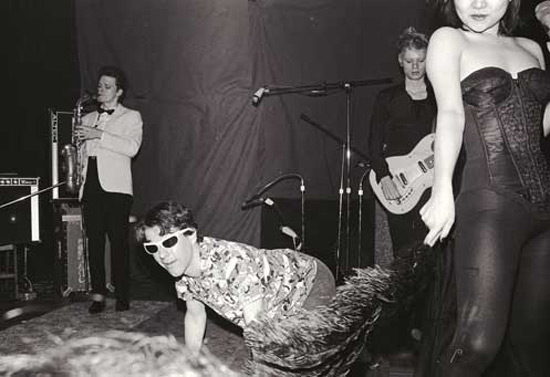
Below: the band Certain General plays at Club 57, April 1981

The club soon gained a rowdy reputation. According to Magnuson, her Elvis Memorial night was disrupted when “local juvenile delinquents” caught the air conditioner on fire, sending bizarre Elvis lookalikes spilling into the street. Its reputation was spirited enough to keep away to more ‘cultured’ avant garde of venues like the Mudd Club. Said Magnuson, “The Mudd Club was more into coolness and being hip and shadowy and mysterious, while Club 57 was about being loud and bright and colorful and kooky and silly — and doing mushrooms.”

However one artist who was not detoured was Keith Haring who frequented the club and credits it for inspiring “the beginning of a whole career as the organizer and curator of some really interesting art shows.”

Club 57’s time was brief; it opened in 1979 and closed four years later. But its influence would spread into many other underground clubs, including the longer lasting Jackie 60. Today’s St. Mark’s Place could definitely benefit from a little infusion of its wild, retro chaos.

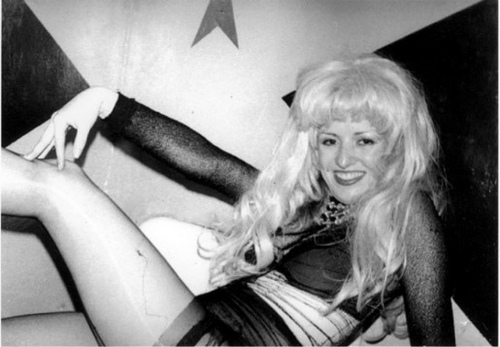
Below: the wonderful Wendy Wild, a fixture of Club 57 (Photo by Ande Whyland)