Club 57 and the sweet, sweet smell of St. Mark’s Place


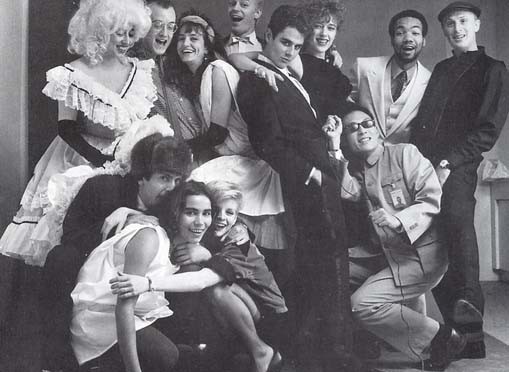
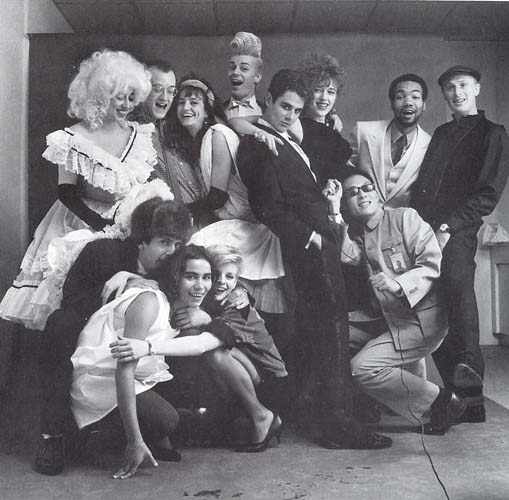
Those crazy kids! The revelers of Club 57 (featuring, among others, Keith Haring), circa 1980

FRIDAY NIGHT FEVER To get you in the mood for the weekend, every other Friday we’ll be featuring an old New York nightlife haunt, from the dance halls of 19th Century Bowery, to the massive warehouse clubs of the mid-1990s. Past entries can be found HERE.

I try not to editorialize too much about the places I write about, because like people, the beauty of a neighborhood is in the eye of the beholder. But these young whippersnappers today just do not understand how profoundly awesome St. Mark’s Place used to be. *waves fist* There’s a Pinkberry there now. Kim’s Video is gone. Where’s the edge?

Yes, yes, things change. And not everyone would agree anyway; in fact, a traditional New York history buff might look upon anything that happened on this East Village street after 1960 as being pure deterioration. Formerly a part of Peter Stuyvesant’s farm, the street transformed from luxury mansions to the heart of German immigrant culture at the turn of the 20th Century. You could say St. Mark’s suffers from a ghost limb. The street used to officially extend one block west before dignified Cooper Union moved into the neighborhood. It now starts at Third Avenue and barrels through to end at the foot of Tompkins Square Park on Avenue A.

The street was also one of New York’s great epicenters for counter-culture, the home to agitators like Emma Goldman and Leon Trotsky, underground jazz clubs and gay bath houses, avant-garde artists and musicians, and finally, by the late 70s, the stomping grounds of punk youth. It’s during this period that our subject, Club 57, enters the story.

Nightlife in the late 70s was epitomized by Studio 54 — high fashion, disco, celebrity and, quite frankly, aristocratic staleness. If disco didn’t appeal to you, it might have been the most loathsome place in the universe. As more and more clubs began aping and distorting the Studio 54 formula, what was your average East Village, pink-haired, multiple pierced, non-traditionally beautiful transgendered girl to do?

We’ve already seen in this column one rebellious strain — the Paradise Garage, which took the big club aesthetic and transformed it into a temple for music worship. When Club 57 opened up in the basement of the Holy Cross Polish National Church at 57 St. Mark’s Place, it had another philosophy: why must celebrities have all the fun?

The strange and the beautiful (Photo by Harvey Wang)
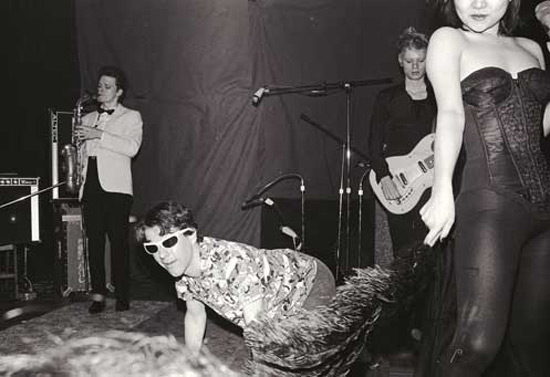
Club 57 was an anti-disco, anti-glitz dingy diamond of the early new wave era, a ‘punk do-it-yourself’ romper room managed by budding performance artist Ann Magnuson. (She’s now an icon of the downtown New York scene. You may remember her from Desperately Seeking Susan.)

According to Ann, she was hired in 1979 by the owner of Irving Plaza whose smaller club here at St. Mark’s needed to be spiced up with “‘alternative’ entertainment” that reflected the clientele of the neighborhood. With some creativity and abandon, Magnuson and her gang of misfits turned the basement into her own “low rent answer to Andy Warhol’s Factory,” “a center for personal exorcism, devising theme parties (or “enviroteques,” as one drug-dealing-conceptual-artist ex-boyfriend liked to call them),” for its outcast, straight, gay, vanguard clientele.

The theme parties would mock serious musical conventions, often requiring silly or even conventional dress done in an ironic fashion — nights like Putt-Putt Reggae night, ‘A Night At the Opry’, and Elvis Memorial night (where everybody dressed as their distorted version of the King). One event featured club goers sitting around making model planes; another emulated the thrill of lady wrestling.

These probably weren’t like the costume parties you’re used to. Kenny Scharf: “There were drugs and promiscuity — it was one big orgy family. Sometimes I’d look around and say ‘Oh my God! I’ve had sex with everybody in this room!”

One of Club 57’s more successful nights was the Monster Movie Club, every Tuesday, showing “the worst monster movie they could find,” according to Drew Straub.

The soundtrack for these absurdist weekly carnival shows were stars of the outer reaches of punk, new wave and rap. The club featured performances by St. Marks resident Klaus Nomi, Fab Five Freddy and John Sex. When it did feature more established names, they were along the lines of the Buzzcocks and the Cramps

Below: the band Certain General plays at Club 57, April 1981

The club soon gained a rowdy reputation. According to Magnuson, her Elvis Memorial night was disrupted when “local juvenile delinquents” caught the air conditioner on fire, sending bizarre Elvis lookalikes spilling into the street. Its reputation was spirited enough to keep away to more ‘cultured’ avant garde of venues like the Mudd Club. Said Magnuson, “The Mudd Club was more into coolness and being hip and shadowy and mysterious, while Club 57 was about being loud and bright and colorful and kooky and silly — and doing mushrooms.”

However one artist who was not detoured was Keith Haring who frequented the club and credits it for inspiring “the beginning of a whole career as the organizer and curator of some really interesting art shows.”

Club 57’s time was brief; it opened in 1979 and closed four years later. But its influence would spread into many other underground clubs, including the longer lasting Jackie 60. Today’s St. Mark’s Place could definitely benefit from a little infusion of its wild, retro chaos.

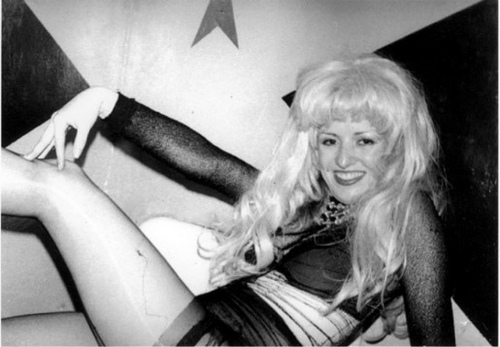
Below: the wonderful Wendy Wild, a fixture of Club 57 (Photo by Ande Whyland)
FRIDAY NIGHT FEVER: Jackie 60


To get you in the mood for the weekend, every Friday we’ll be celebrating ‘FRIDAY NIGHT FEVER’, featuring an old New York nightlife haunt, from the dance halls of 19th Century Bowery, to the massive warehouse spaces of the mid-90s. Past entries can be found here

I was reading Vanishing New York’s piece yesterday on the absurd descent of condos and high fashion culture onto the Meatpacking District, into an area that still, well, processes meat. And it got me thinking of the days when that area was a lot less burdened with designer clothing stores. The days when its aesthetic was dictated not by fashionistas and the upwardly mobile, but by burly leathermen and transsexual prostitutes.

In the ’80s and ’90s, Meatpacking was host to some truly ‘alternative’ nightclubbing options. For the gay leather set, you had The Lure (featured in the controversial 80s Al Pacino flick Cruising), while straight folks with debauched inclinations had the Hellfire Club. The still operating Hogs & Heifers, with its mountain of discarded bras, made the East Village’s Coyote Ugly seem like a classic three-star restaurant. (Hogs has since lapsed into a camp tourist destination.)

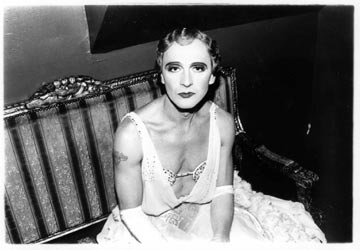
But lording over the region was the dark and quirky Mother, a small, caverned club that found its niche as a freakshow outside the universe of the ’90s mega-clubs. And no evening at Mother quite resonated throughout the city as Jackie 60, the Tuesday night party of kooks and costume.

What set it apart from the mega-clubs was its unique sense of creativity and inclusiveness. In fact, its creators Chi Ci Valenti and Johnny Dynell specifically designed it to emulate the fertile spirit of late ’70s places like the Mudd Club (featured in our very first Friday Night Fever article).

According to Chi Chi, “We decided to create a place in the spirit of those smaller clubs. And when someone who used to go to a place like the Mudd Club walks in to Jackie and says, “This feels like those days,” well, that’s when I feel like we’ve really done our job.”

The two met at the Mudd Club and soon created a party together that took some of the neighborhood ideas (remote locale, S&M and sexual imagery) and combined it with striking costumes and themes, incorporating punk, drag and theater. They soon added British fashion designer Kitty Boots and choreographer Richard Move to the mix, and the flamboyant stage was set.

Unlike the spirit of exclusivity that possessed the monster doormen at big clubs, Jackie 60 drew a wide range of people, the only criteria being a flair for the dramatic — and the guts and confidence to exhibit it. As Dynell describes it, “For example, you never know what somebody is here. They could be anything. They could be straight. They could be straight to bed. At Jackie we have an expression: For every cup there is a saucer.”

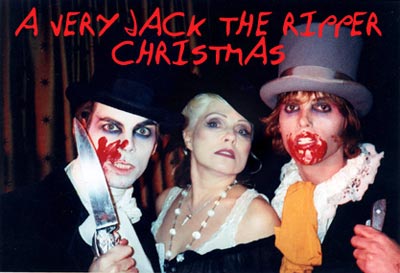
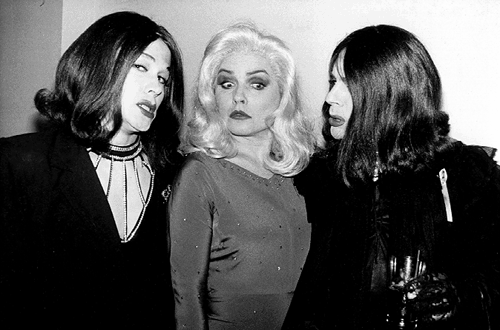
Frequent special guest Deborah Harry (seen in the pic at the top and below) being the exception, celebrities like Mick Jagger, Marc Jacobs, Jack Nicholson, and Robert Deniro came through and were barely noticed. How could you be noticed?

Along with a ‘classic dress code’ (attire within reason, basically), Jackie 60 frequently had an inspired weekly dress code. For example, on Bleak House night (yes, as in Charles Dickens) one must wear ‘Vivienne Westwood urchin-look’ with ‘gruel bowls and utensils’. You can just imagine what Klingon Women Night (an actual theme night) must have looked like.

The regular clientele came attired often in the theme of the evening — Rimbaud night, Hasidic hip-hop, Hooker’s Ball, even supermodel disasters night.

Jackie 60 even had a monthly poetry reading at midnight, with verse delivered from the most painted of lips. Satellite Jackie events included theatrical productions (with one written by Michael Musto) and spinoff parties (Click + Drag, a cyber themed soiree in the days before iPods).


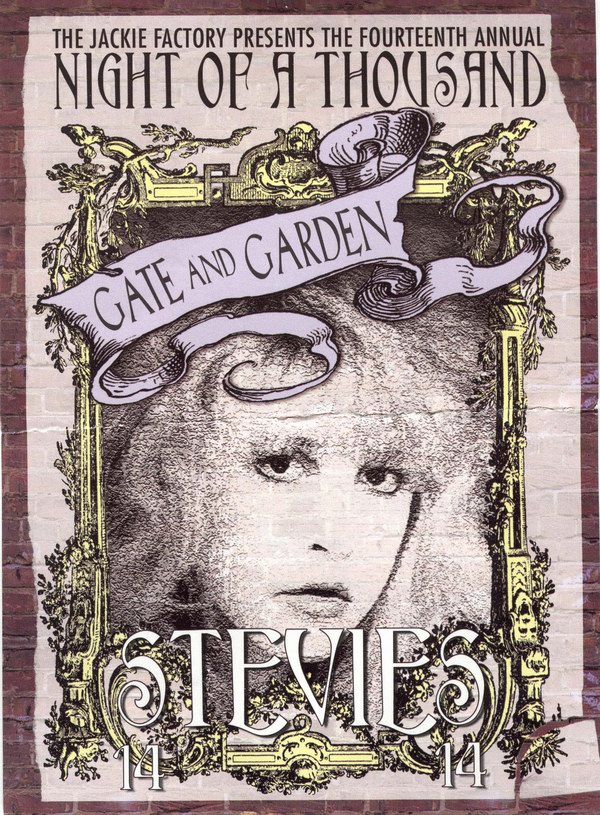
But what was easily their most celebrated event was the Night of a Thousand Stevies, a yearly gathering where hundreds of Stevie Nicks fans from around the country descended on that little hole in the Meatpacking District to worship their favorite songstress. Men and women, young and old, beautiful and not-so, for one night each year, the cobblestone streets were filled with swirling shawls and tambourines.

Jackie 60 closed on the last Tuesday of the 20th century, but the Night of a Thousand Stevies parties live on every May, as do other events in the Jackie 60 brand. In these days of nightlife homogeny, the kids at Jackie 60 just look better with age.

A loving tribute with tons of photos can be found here, or visit their official tribute site and one from Mother.

FRIDAY NIGHT FEVER: Mudd Club


To get you in the mood for the weekend, every Friday we’ll be celebrating ‘FRIDAY NIGHT FEVER’, featuring an old New York nightlife haunt, from the dance halls of 19th Century Bowery, to the massive warehouse spaces of the mid-90s.

First on the list is the Mudd Club, often viewed as the mirror image of its more known uptown competitor Studio 54. Located between the borderlands of TriBeCa and Chinatown (77 White Street, near mysterious Cortlandt Alley), Mudd was a multi-level playground for the avant garde and strictly fabulous (i.e. one of the most notoriously elite clubs in the 70s), playing more to the burgeoning new wave and punk scene than to the disco beats echoing through other halls.

Unlike nightclubs today, which seem to cater A-list celebrities and their worshipers, the Mudd Club with its gold stairs and dark halls attracted a serious cult set of icons from the deep trenches of New York culture, particularly latter era Warhol proteges and art rock stars like Lydia Lunch.

Mudd owner Steve Moss was able to attract such rough-and-tumble innovators by combining its chicly trashy main floors with an art gallery on the fourth floor. The place became known as much for its Jean Michel Basquiat exhibititions as it did for its groundbreaking performances by the Talking Heads, Klaus Nomi and Bow Wow Wow.

In fact, David Byrne and the Talking Heads immortalized the club in their song ‘Life During Wartime’: “This ain’t the Mudd Club or CBGB’s, I ain’t got time for that now…”

On any given night you could stumble into the club (if you were ‘downtown’ enough) and, for instance, hear Debbie Harry rapping with Fab Five Freddy.

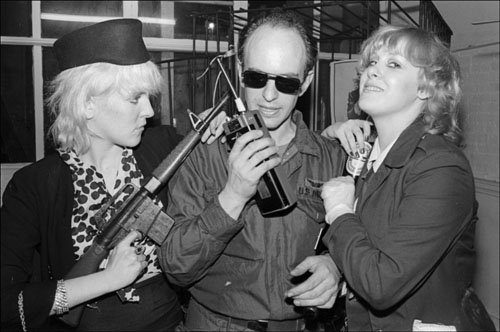
The club thrived on the degenerate but respectable synergy between art and music, a concept that would become mainstreamed in the late 80s. Although its no longer open in NY, its owner Steve Moss opened another version in Berlin in 2001, and purportedly he sits at the bar, still overseeing his nightly menagerie, even as most of the artists and performers he helped create in the 70s and 80s have passed on. (In fact, that’s Steve in the photo above, with members of the punk band Combat Rock.)

In addition to a European club, the former haunt also lives on as a shade of makeup.

There are tons of fun pictures from the Mudd Club’s heydey here.

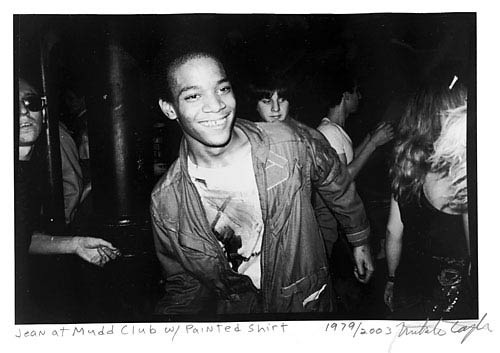
And here’s Jean-Michel, basking in his brief fame:

With his short term girlfriend Madonna looking on, Basquiat’s band GRAY almost exclusively performed at Mudd Club, featuring bassist and future filmmaker Vincent Gallo.

And why the Mudd Club? The urban legend claims that it was alledgedly named after the doctor and alledged Confederate conspirator (or maligned innocent, depending on who you talk to) Samuel Mudd, who helped John Wilkes Booth escape after he murdered Abraham Lincoln. Mudd mended Booth’s broken leg which he received when he fled D.C., and the long stick he used to set the bone was known as ‘Mudd’s club’.

HAPPY FRIDAY!