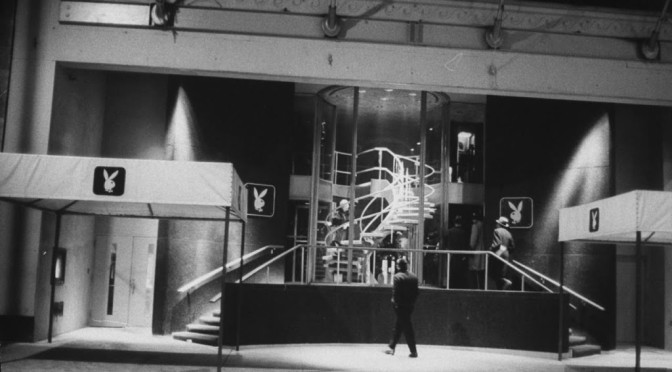
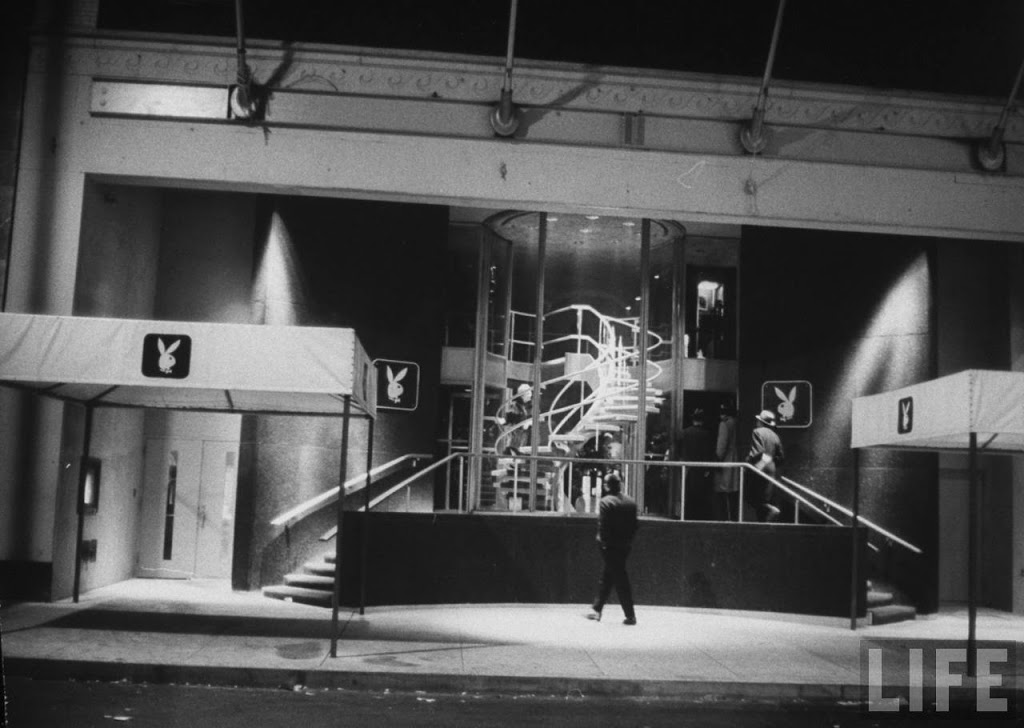
 Above: the Manhattan Playboy Club, at 5 East 59th Street
Every Monday I’ll try and check in with the Mad Men episode from the night before and focus in on one or two historical references made on the show. Spoilers aplenty, so read no further if you don’t want to know….
In 1964, a salacious pulp novel was published with the title ‘I Was A Negro Playboy Bunny,” billed with the tagline “The beautiful woman you see on this cover was once a Playboy bunny….read the startling story (in her owns words) of what goes on behind the doors of the wildest sex palace in the world – the New York Playboy club – and behind her own doors!”
This novel might have been an inspiration to the writers of ‘Mad Men’ who featured the New York Playboy Club in last night’s episode, and in particular, an engaging black cocktail hostess formost in the heart (but not the priorities) of one of the partners of Sterling Cooper Draper Pryce.
The author, Anna English, worked at the New York Playboy Club, a Manhattan branch of the successful swanky lounge franchise started by Hugh Hefner in Chicago in 1960. The Manhattan venue was located at 5 East 59th Street (between Fifth and Madison), and, like those in Chicago, Miami and New Orleans, was famously a members-only club; you gained admittance by possession of an exclusive key decorated with the Playboy logo, described by comedian Dick Gregory as “a status symbol, like a Mercedes is now.”
You would think Manhattan would have gotten its own Playboy Club earlier than December 1963, but Hefner had troubles getting his liquor license. “It is a shame that the biggest city in the country should have this sort of problem,” Hef lamented. Due to the political content of the magazine (yes, this was back when people read Playboy), Hefner also had problems with the FBI, which he faced with aplomb, sending J. Edgar Hoover the following letter:
“Dear Mr. Hoover,
Hugh Hefner, Editor-Publisher of Playboy Magazine and President of the Playboy Clubs, has asked me to welcome you back to New York, and to make certain that whenever you wish, the facilities of the New York Playboy Club will be made available to you and your guests.
Therefore, at Mr. Hefner’s request, we are enclosing a special Celebrity Key which will make it possible for you and your friends to visit the Club anytime during your stay. . . .”
(No word on whether Hoover used his gift.)
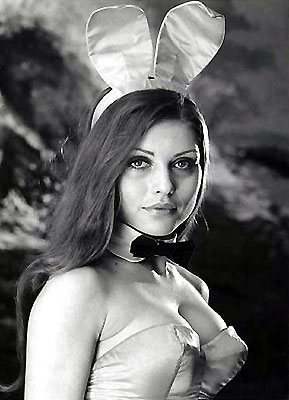 Like a campy (or campier) version of Hooters, businessmen were greeted by sexy cocktail waitresses, dressed in the trademark Playboy bunny ears and cottontail. A young Gloria Steinem went ‘undercover’ at the New York location for a magazine expose*, revealing some of the more unsavory requirements in the ‘Playboy Club Bunny Manual’. (‘Bunnies are reminded that there are many pleasing means they can employ to stimulate club’s liquor volume’.) You can read the sad, hilarious, thoroughly bizarre article here, featuring the excerpt: “‘My tail droops,’ she said, pushing it into position with one finger. ‘Those damn customers always yank it.'”
Another notable employee of the Manhattan club? Deborah Harry, making ends meet in a bunny outfit in the late 1960s. Believe it or not, that’s her in the picture, at right.
The shimmery glitz and respectability of the Playboy Clubs (and the misogyny it embodied) faded with the 1970s, and by the following decade, New York’s tattered hotspot was a joke that even People Magazine took a moment to poke fun of: “A large illuminated rabbit’s head glows over the door. It seems impossible now to look at the logo without thinking of an automobile air freshener.” The club closed in 1986.
*Steinem’s article was called ‘I Was A Playboy Bunny’. I believe Ms. English’s book was most likely a play off this title. A 1963 issue of Jet Magazine ran a picture of Anna with a blurb about the club.
Oh, and the major cultural event mentioned in the episode (The Beatles at Shea Stadium)? More on that this Friday….
Top photo courtesy Life Google images; bottom photo from Marlene44