Categories
Holidays Newspapers and Newsies

How New York newspapers covered the first Labor Day — September 5, 1882

Clothing cutters, horseshoers, shoemakers, upholsterers, printers, house painters, freight handlers, cabinet makers, varnishers, cigar makers, bricklayers and piano makers.

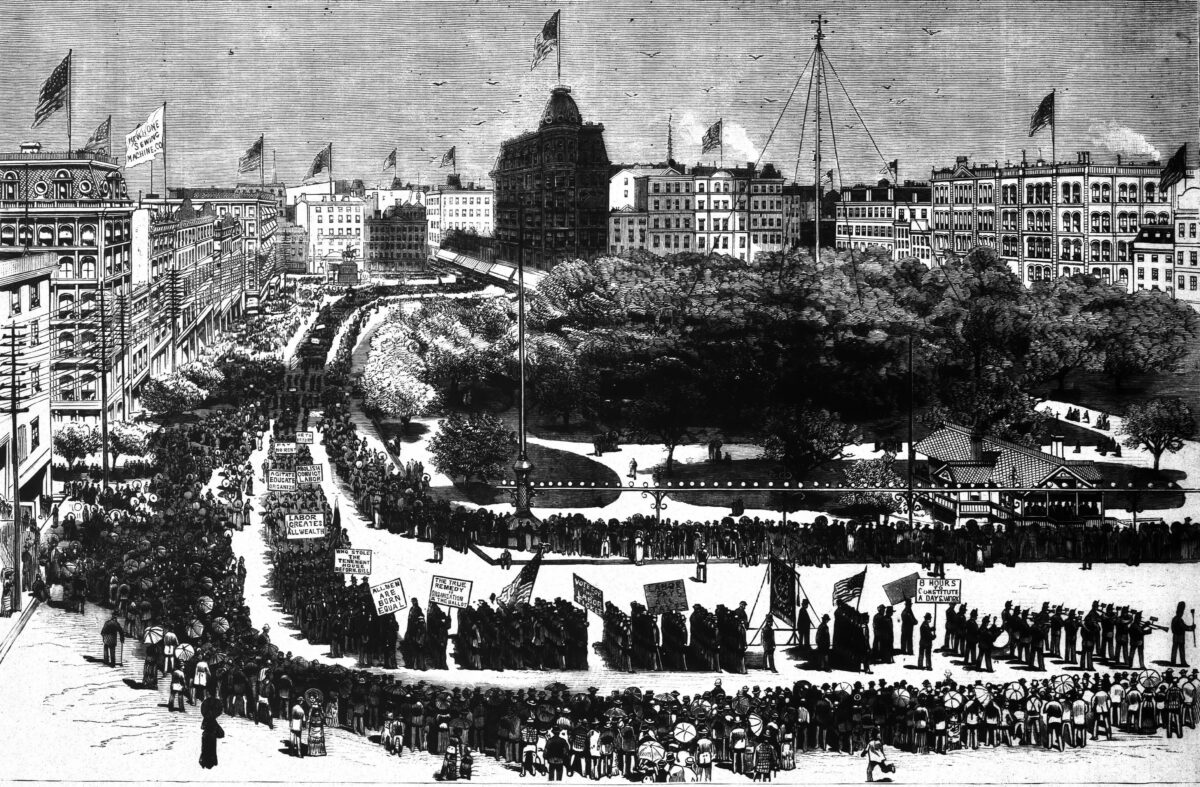
The first American Labor Day began on September 5, 1882, with 10,000 workers from a wide variety of occupations circling Union Square, then parading up to the area of today’s Bryant Park. (A picnic ‘after party’ of sorts took place at a park at today’s Columbus Avenue and 92nd Street.)

Individual workers organizations had taken to the street before, sometimes violently. But this peaceful protest, this public solidarity, took the issues of New York laborers to the heart of the city in a way that could not be ignored.*

*New Yorkers got the Labor Day idea from Canada. Read more about the differences between May Day and Labor Day in this article

Illustration of the first Labor Day parade around Union Square, 1882
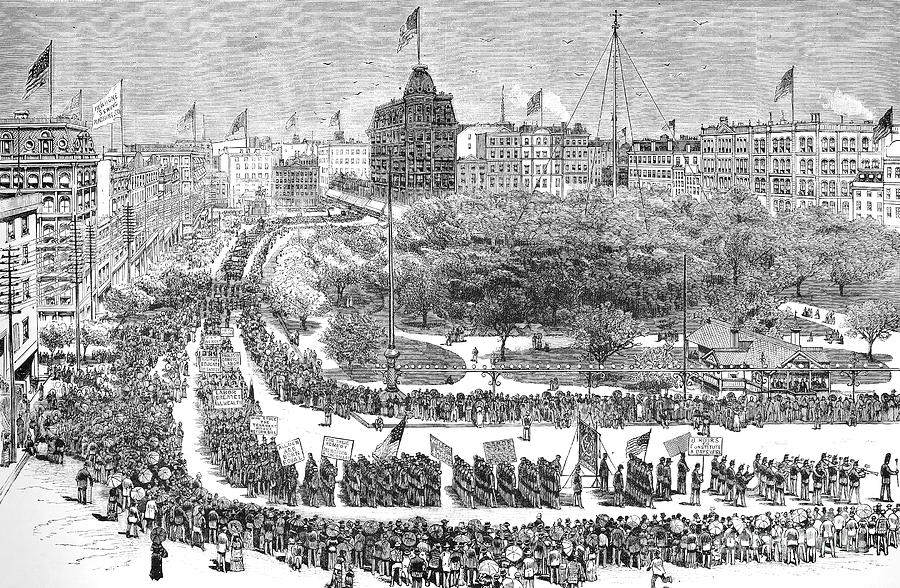
We take it for granted today. Labor Day is no more than a day off for most people today.

But looking at the original press notices from newspapers of the day (from the following day, September 6, 1882) suggest an event certain New Yorkers recognized as monumental.

Others considered it trivial, a nuisance or even a dangerous gathering of malicious intent.

Union Square would continue to be the location of Labor Day festivities for decades afterwards. The image below is of a parade from 1909 (courtesy LOC):
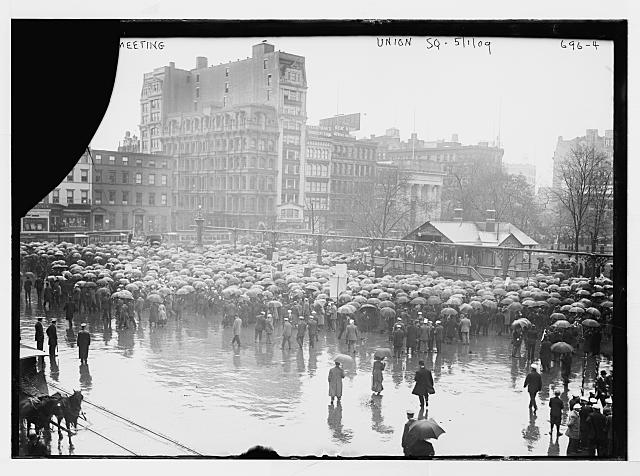
The New York Tribune begins nice enough. “The men who took part in the labor parade generally appeared to be persons of no small intelligence.” The paper’s vitriol was saved for the leaders of the movement, in this case organizers from the Central Labor Union, “demagogues of the worst kind.”

“It is a pity that workingmen allow themselves to be so cheapened.” The Tribune accuse the organizers of an ulterior motive — political chest-thumping.

“But it is not at all unlikely that certain demagogues and dishonest leaders thought it a good time of year to show the two great political parties that there are ten thousand ballots in this city in the hands of men who … might be at the disposal of somebody — for a consideration.”

Indeed, there would be a statewide election exactly two months later, sweeping a host of Democrats into office, including Grover Cleveland into the governor’s office.

Even their reporting of the parade itself is tinged with a little condescension.

“The parade of workingmen yesterday morning was not nearly as large as was expected by the leaders.  This is probably due to the unwillingness of many workmen to lose a day’s work.”

Labor Day parade in Union Square, 1887 (NYPL)
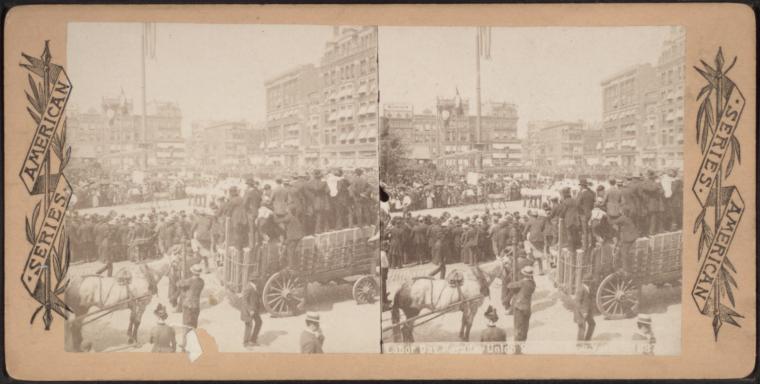
The New York Times seemed to find the parade slightly whimsical, almost superfluous. It echoed the disappointing turnout, but describes the event as calm, “conducted in an orderly and pleasant manner.”

The coverage focuses undue attention on the paraders’ fashionable attire.

“The great majority smoked cigars.” However they stress that the good behavior is attributable to the fact that organizers banned alcohol. This detail is mentioned in no other coverage that I read.

Where the Tribune attested the lower-than-expected turnout to men not leaving their posts, the Times found a different reason — “due to the fact that [laborers] preferred to enjoy the day in quiet excursions in Coney Island, Glen Island and elsewhere.”

Children at the Union Square Labor Day parade, 1909 (NYPL)
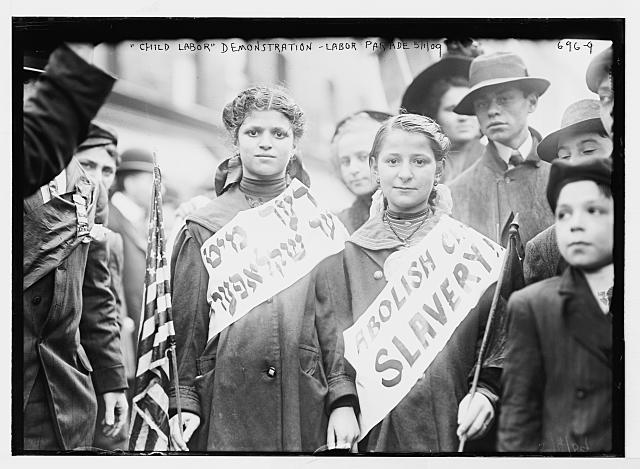
The enthusiastic New York Sun describes it as a dry and brutal day. “[T]he rays of sun even in the early morning were very hot, and not a breath of wind brought relief from the oppressive heat.”

The same parade considered disappointing by the Tribune and the Times was conversely described by the Sun as a mob scene.

“As far ahead as one could see and as far down the side streets as forms and faces could be distinguished, the windows and roofs and even the lamp posts and awning frames were occupied by people anxious to get a good view of the first parade in New York of workingmen of all trades united in one organization.”

Far from a nuisance, the Sun recognized the parade as an important banner moment in history. Its description of events is truly painstaking.

Many newspapers outside New York mentioned the parade the following day.  St. Paul’s Daily Globe in Minnesota said “the great labor demonstration today was a success,” quoting a number in attendance (20,000) almost double the actual projected number.

So did the Dallas Daily Herald, who put the event on their front page.

Meanwhile, it should be noted that most major New York newspapers neglected to put the labor parade on their front pages.
Categories
Health and Living Those Were The Days

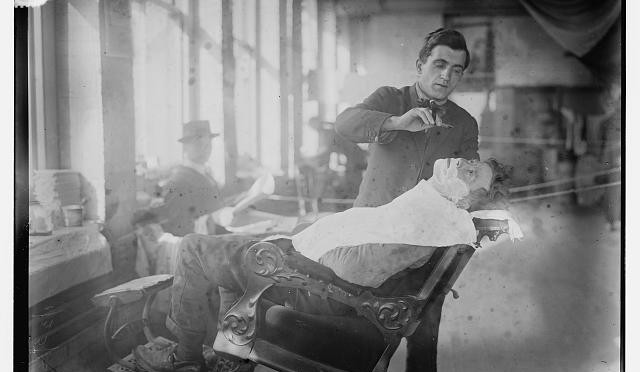
Close shave: A century ago, barbers riot through New York, leaving half-shaved men in vacated barber shops

A barber shop at the Hotel de Gink on the Bowery, circa 1910-15 [LOC]

The fight for worker’s rights swept through a variety of occupations over a century ago as New York City laborers rebelled against unfair corporate practices and unsafe working conditions.

Garment workers marched the avenues in protest following the tragic Triangle Factory fire of 1911, as did underpaid street cleaners and ashcart men, leaving heaps of un-retrieved rubbish on the street in protest.  The following year, the waiters and staff of dozens of New York’s finest hotels took to the streets for better pay. Why, by 1913, even some players on the Brooklyn Dodgers were unionizing!

And one hundred years ago this month, it was the barbers turn to march.
Many of the same leaders from other occupational strikes were at the center of the barber strike, which got its footing in the Brooklyn neighborhood of Brownsville.  Soon, barbers across the city had dropped their razors and foaming brushes and left work in consolidation for better hours.
A letter-writer to a wonderfully named 1913 journal called Journeyman Barber, Hairdresser, Cosmetologist and Proprietor wrote, “I will say that on a certain bright morning in the month of May, I found that the entire barber industry was paralyzed.  Nearly 13,000 workingmen were out on strike. Isn’t that a miracle?  Thirteen thousand barbers on strike!”
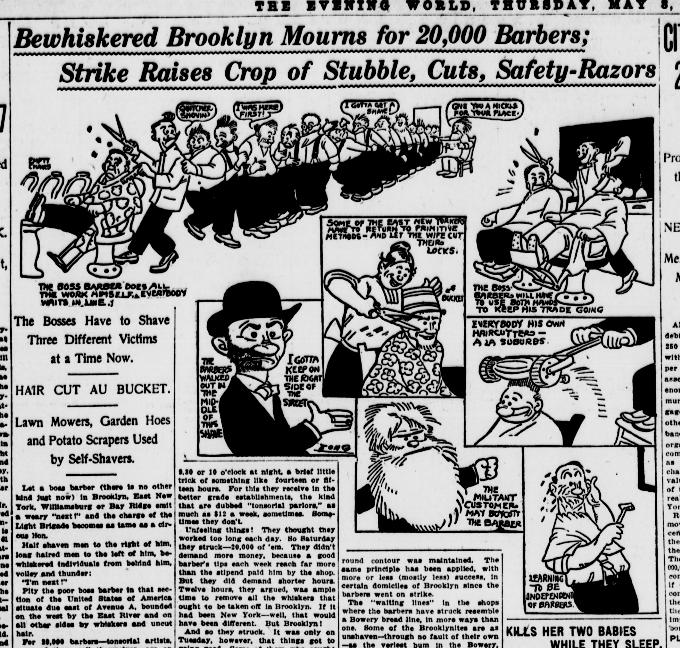
Mayhem reigned upon the craggy, unshaven faces of Brooklyn men.  “From Bushwick to Bay Ridge haggard men go about with the telltale blemish encroaching upon their visages like a noxious fungus.  Half-shaved men slink about the alleys, avoiding the light of day.” [source]
Scenes of violence did erupt throughout the city, as strike-breakers were attacked and angry mobs filled the street.  A mob of 5,000 strikers — “singing socialistic songs,” noted the New York Tribune — clashed with police in Brownsville on May 7th, customers fleeing barber shops in “a shower of vegetables” and the occasional flying rock.

Below: a cheeky editorial cartoon from the May 8th 1913 Evening World

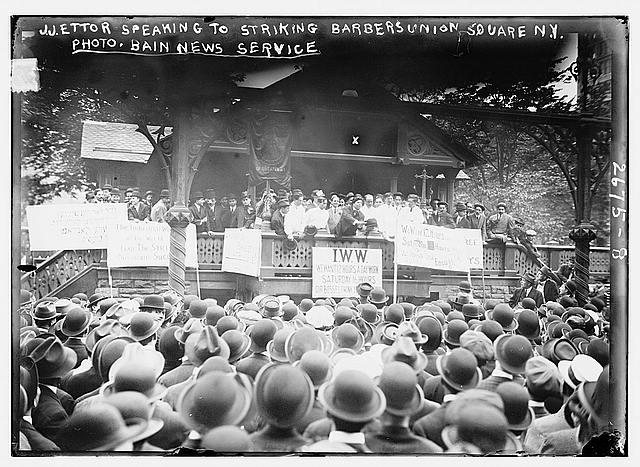
A couple days later, thousands of barbers marched across the Brooklyn Bridge to Union Square, gathering up working men along the way, emptying barber shops of employees and leaving stunned customers in their chairs.  In Union Square the strikers heard speeches from organizers including Joseph James Ettor (pictured below), who had helped organize the waiter’s strike just a few months before.

The Evening World makes curious note of one exception to this striking throng. “ONLY LADY BARBERS WORK IN BROOKLYN WHILE MEN STRIKE” went the headline.  “Such a business as the feminine barber shops did!”

Manhattan barbers joined their Brooklyn brothers by mid-month, setting up a Manhattan strike headquarters at 140 Second Avenue.  (Today, that the address of the Ukrainian East Village restaurant.)  Arlington Hall at nearby St. Mark’s Place was the scene of several union gatherings for striking barbers.

Descriptions of rioting barbers sound a bit like scenes from the Civil War draft riots, although much of that description was the newspaper flourish of the day.

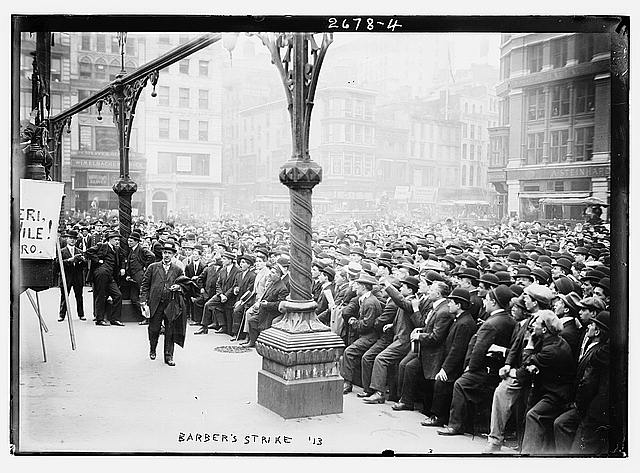
Below: Thousands of barber shop workers and their supporters gather in Union Square in 1913. I believe this is the northwest corner of the park. (LOC)

But it does sound like a violent few days in Manhattan.  Shop windows were smashed by rioters in the Ladies Mile shopping district, and altercations with store owners put many in the hospital.  The Sun noted: “Window smashing and attacks on workers, common all day, culminated in dozens of small riots all over the city, so many and so rapid that police headquarters heard of them in bunches.”

Eventually, the strike proved a success, as barbershop owners agreed to worker’s demands.  According to one source, instead of working up to 92 hours a week, employers now agreed to the relatively mild 62 hours a week for their workers, with one entire day off on Sunday! [source]

“2,300 Boss Barbers Capitulate,” declared the Evening World on May 30th. “Brooklyn Strike Over.” By the first of June, it was safe again to go to a barber shop.

Categories
Sports

‘Arctic blasts’, union rousers and hunchbacks: Ten bits of trivia about Ebbets Field’s opening day, 100 years ago today


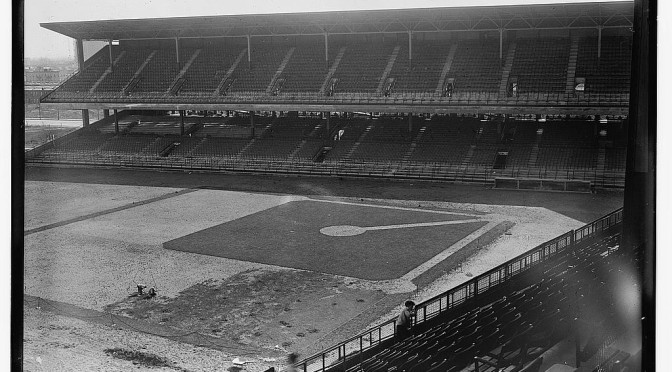
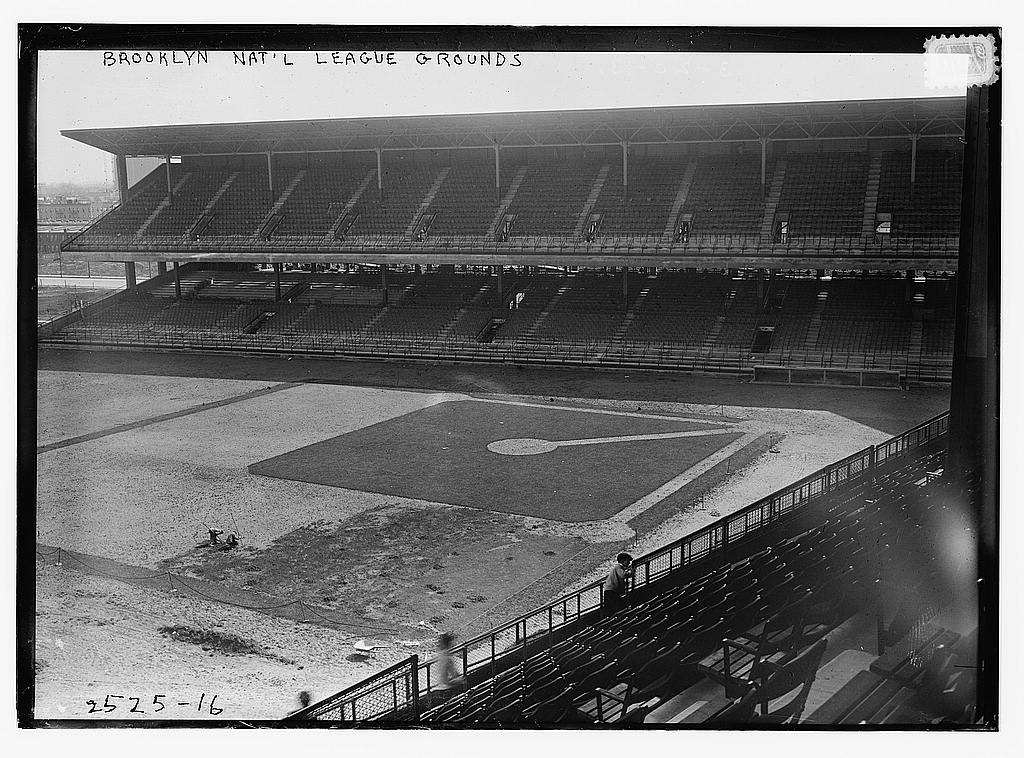
Inside Ebbets Field, 1913, Library of Congress

The first-ever regular season baseball game at Ebbets Field was played 100 years ago today.  The legendary field, once located in the Flatbush neighborhood of Brooklyn, was home to the Brooklyn Dodgers from 1913 until the team left for Los Angeles in 1958.

Here are ten interesting facts about the opening game, played on April 9, 1913:

1)  The Dodgers were thirty years old by the time their lavish new field opened. The team was originally formed under the name the Brooklyn Grays in 1883 by real estate speculator Charles Byrne.  Like many early ball fields, their first home, Washington Park in today’s Park Slope neighborhood, was frozen over during the winter to become Brooklyn’s leading skating rink.

2)  They were originally nicknamed the Brooklyn Trolley Dodgers, for the treacherous skill exhibited by their fans crossing rail-covered streets to get to the ball field.  There were still a great many streetcar lines near their new home of Ebbets Field, but by 1913 the team was more affectionately known as just ‘the Dodgers’.

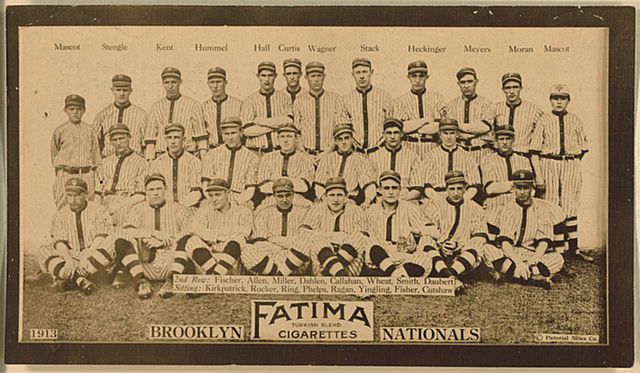
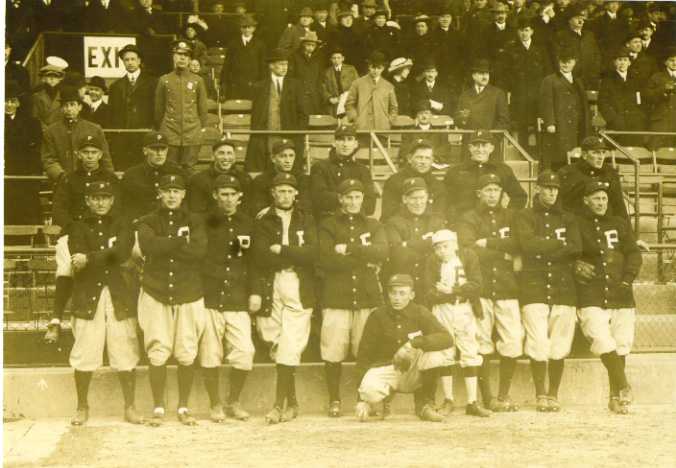
However several names would be casually attached to the team by fans and local journalists — the picture above calls them the Brooklyn Nationals — until 1933, when the name DODGERS would finally be added to both their home and road uniforms.

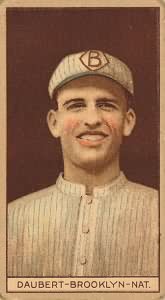
3)  As a nod to its first-ever day, Ebbets Field was allowed to open one day before everybody else in the National League.  One of their most popular players, first baseman Jake Daubert (at right), was presented with a golden bat and a floral horseshoe in a ceremony before the game and would, by season’s end, go on to win the league’s Most Valuable Player honor.

“Gentleman Jake,” as he was called, is better known today as being one of the founders of the baseball’s unionization movement.   This did not make him popular with the namesake of Ebbets Field, owner Charles Ebbet, who traded Daubert in 1917 after a salary dispute.   His union connection may also explain why this unique, well-liked and exemplary ballplayer is not currently listed within National Baseball’s Hall of Fame.

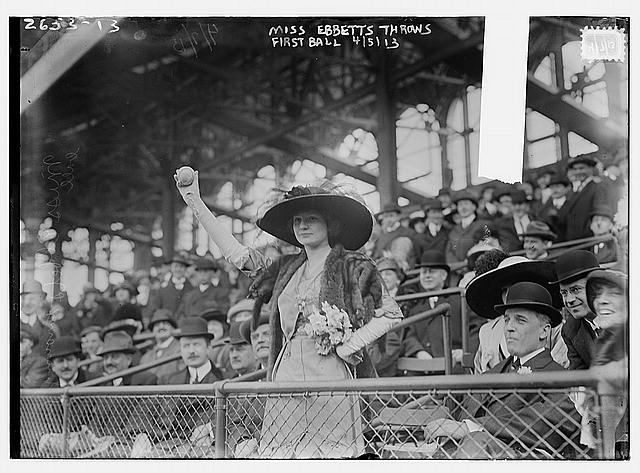
4)  The ceremonial first ball was thrown in by Brooklyn Borough President Alfred E. Steers, a resident of the neighborhood Ebbets Field made its home — Flatbush.   However, at an exhibition game played just a few days earlier, Ebbets’ lovely daughter Genevieve Ebbets tossed out the first pitch.


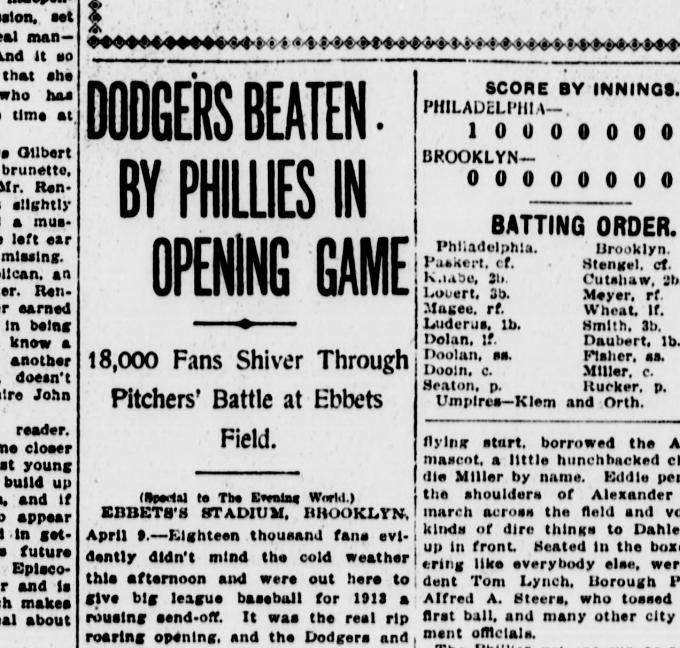
5) The Brooklyn Dodgers played the Philadelphia Phillies that day, which should have boded well for the team in their new home. The Phillies weren’t yet considered a formidable team and were more associated with constant injury. Despite this, the Phillies beat the Dodgers that day, 1-0.

6) Why did the Dodgers lose? Uh, it was unseasonably cold? The Tribune reported that the frightful chill kept the brand-new grandstand partially empty. From the New York Times, April 10, 1913: “It was so cold that the attendance was seriously affected, about 10,000 spectators braving the arctic blasts to see the Phillies win a well-played game by a score of 1 to 0.” [source]

7) The Phillies also had with them an unusual mascot — a hunchback teenage dwarf.  The Phillies home rival the Philadelphia Athletics had a hunchback mascot of their own named Louis Van Zelst, and owner Connie Mack wanted to emulate their success. By, apparently, finding his own young man with a hunchback. Unfortunately, this boy’s name is unknown, but he appears in a 1913 picture with the team:

NOTE: The Tribune infers that this may have been Mr. Van Zelst himself and not another teenager. As the name of the boy in the picture above has not been reported, it’s quite likely that this is the Athletics ‘mascot’.  Note that in the article, the Dodgers are called by yet another name — the Superbas.  

Courtesy the Philadelphia Athletics Historical Society

8) As you could imagine with a 1-0 game, the first-day crowds at Ebbets Field were hardly cheerful.  One might even described them as bored.  The upper seats were barely filled, and the crowd didn’t exactly “wax enthusiastic until the eighth inning” when the Dodgers finally got somebody on base.

9) The first Dodger to ever score a hit in the new field was second baseman George Cutshaw who had only been with the team one year when he scored a single in the first inning.  Ironically, the second basemen was called out when he was caught trying to steal second base.

10) The Dodgers would fare poorly in their first season at Ebbets Field, eventually placing sixth out of eight teams. The winning team that season were their rivals across the East River — the New York Giants.  They would finally bring Ebbets its first pennant victory in 1916.

Union busted: Hotel and restaurant workers end their strike

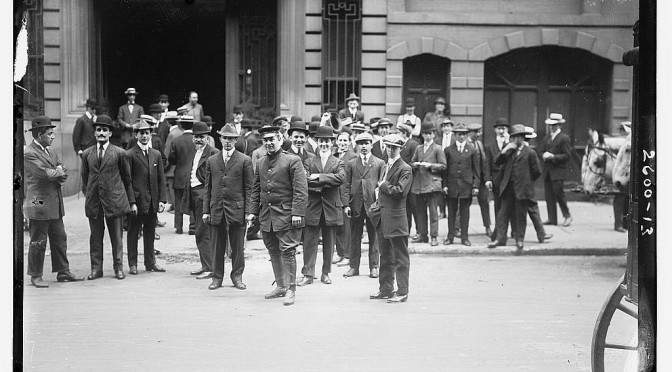
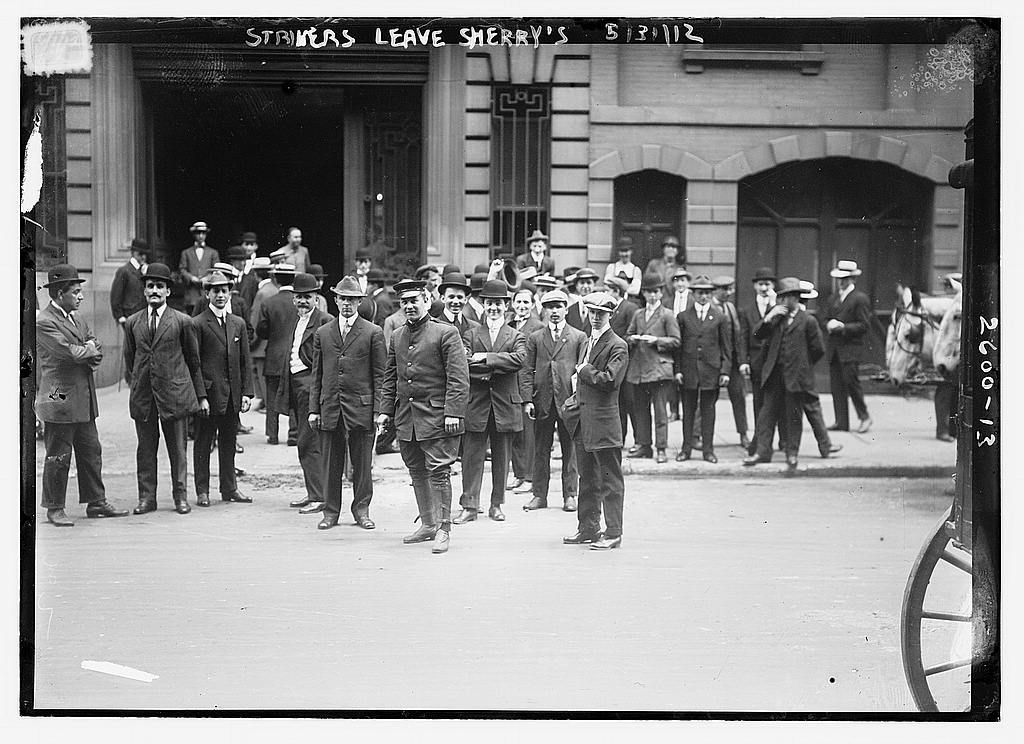
Above: Restaurant workers walk off the job at Sherry’s Restaurant at Fifth Avenue in 1912

One hundred years ago today, a rather peculiar worker’s strike ended, a protest which had paralyzed New York’s restaurant and hotel industries for almost two months. The strike had begun in early May, and by the month’s end, thousands of employees had walked off their jobs, leaving diners in emptied restaurants and wealthy hotel guests to carry their own luggage.

What made this particular walkout unusual weren’t the demands — improved conditions and pay, recognition of their newly formed union — but the locations where the strikes occurred. The employees of the very toniest and best known restaurants and hotels left their jobs in unison. Establishment affected included the Plaza, the Hotel Astor, Hotel Knickerbocker, the Waldorf-Astoria, the St. Regis, the Vanderbilt, and restaurants like Delmonico’s and Sherry’s (pictured above), among dozens of others.

Workers decided to return to work after a mass gathering on June 25, at the old New Amsterdam Opera House at 44th Street and Eighth Avenue. While some employers agreed to a few paltry changes, most of the strikers demands were not met, including the recognition of their union. (And to this day, they’re not unionized.)

Some hotels actually refused to hire back anybody who had join the strikers. Or as the proprietor of the Waldorf  put it: “I told these men that a job at the Waldorf is not an apple hanging on a tree. I told them that we were doing better than ever, then I told them goodbye.”

And even their timing was lousy. Drama at the Democratic presidential convention in Baltimore knocked the strike almost completely out of the headlines that week.

The week New York smelled more awful than usual

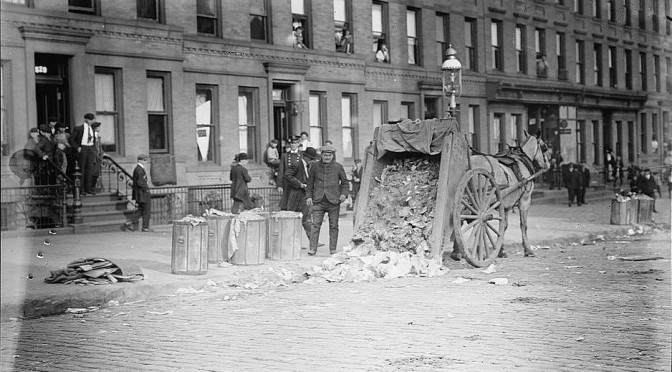
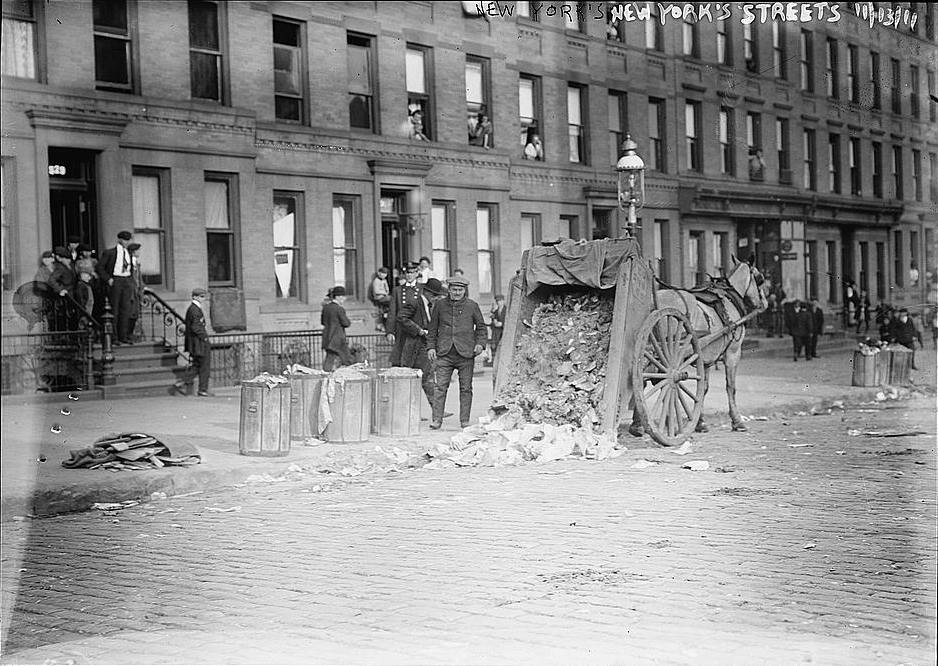
Above: a typical scene during the Garbage Strike of 1911

New York street cleaners and garbage workers (sometimes referred to as ‘ashcart men’) went on strike on November 8, 1911, over 2,000 men walking off their jobs in protest over staffing and work conditions.

More importantly, that April, the city relegated garbage pickup to nighttime shifts only, and cleaners often worked solo. This may have been acceptable in warmer weather, but winter was approaching. At a union rally that evening, a union representative proclaimed, “A 200-pound can was a mighty big load for one man to lift into a garbage wagon ……. [Our] men are already falling ill with pneumonia and rheumatism and … they demanded the right to work in the sunlight and the warmer weather of the daytime.”

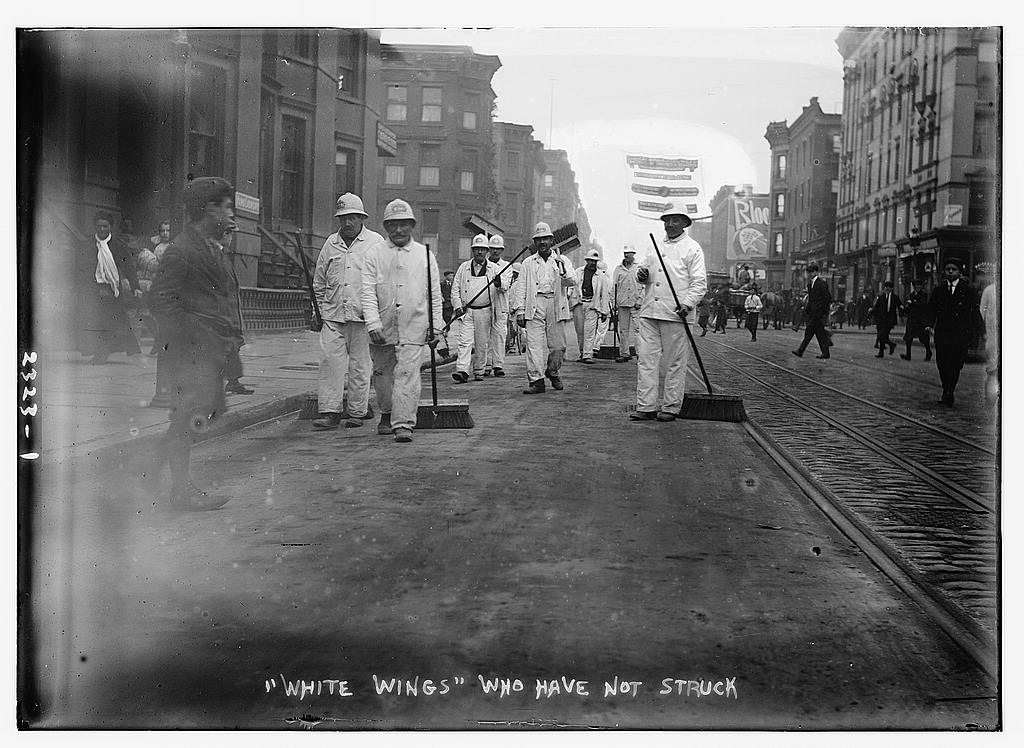
By Nov. 11, garbage was heaped along street corners, and coal ash swirled into the street, creating a blackened, smelly stew in the streets. The city brought in temporary workers to carry off the more egregious piles of filth away, but harangues and violence by union protesters required they be protected by police.

New Yorkers had lived through such a strike before, as recently as 1907, but strikers found little public support this time around. Newspapers, little sympathetic to the strikers, highlighted the growing threat of disease and the perceived selfishness of the workers. “The right to strike of public employees, who enjoy the advantage of being listed in the civil service, is more than doubtful,” said the New York Times.

During bouts between strikebreakers and police, over two dozen people were injured and one man was even killed by a falling chimney. Meanwhile, Mayor William Jay Gaynor was resolute in rejecting the cleaners demands. The efforts of the workers failed, and many went back to their jobs the next week, some heavily penalized for their participation in the strike.

Below: the city shipped in workers from out of town to sweep the streets during the strike