PODCAST There’s no business like show business — thanks to Lee, Sam and JJ Shubert, the Syracuse brothers who forever changed the American theatrical business in the 20th century.
Broadway is back! And the marquees of New York’s theater district are again glowing with the excitement of live entertainment.
And many of these theaters were built and operated by the Shubert Brothers, impresarios who helped shape the physical nature of the Broadway theater district itself, creating the close cluster of stages that give Times Square its energy and glamour.
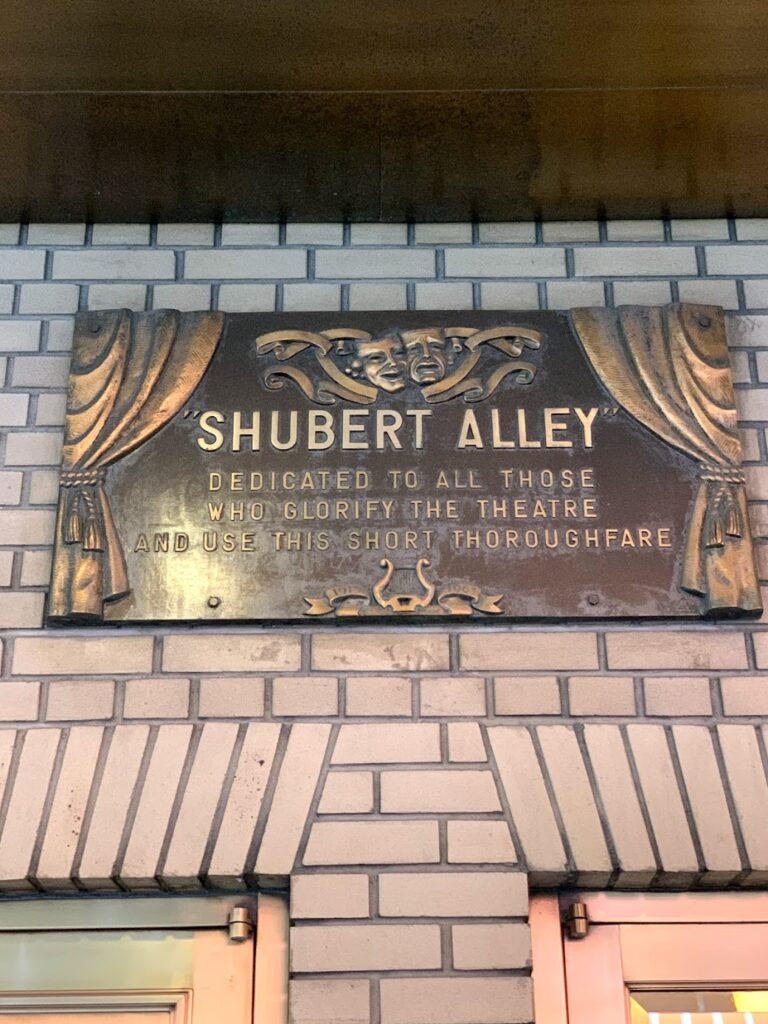
The Shuberts were there from the beginning. After fending off their rivals (namely the Syndicate), the Shuberts centered their empire around an alleyway that would quickly take their name — Shubert Alley.
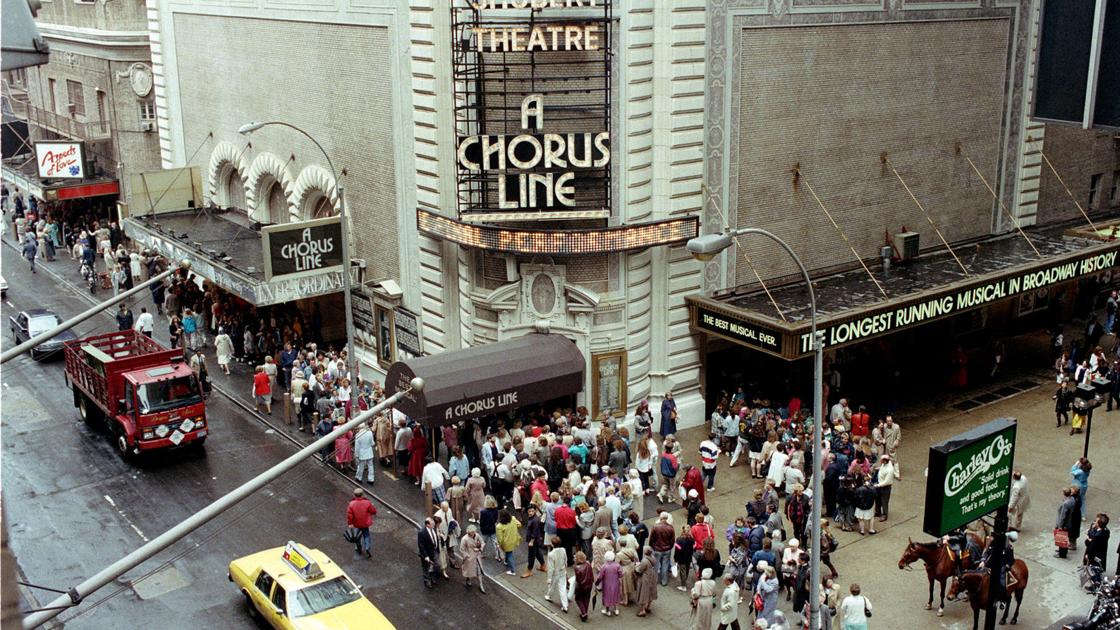
They were innovative and they were ruthless, generous and often cruel (especially to each other). During the 1950s and 60s, the Shubert empire almost crumbled — only to rise again in the 1970s and 1980s thanks to A Chorus Line and some very musical felines.
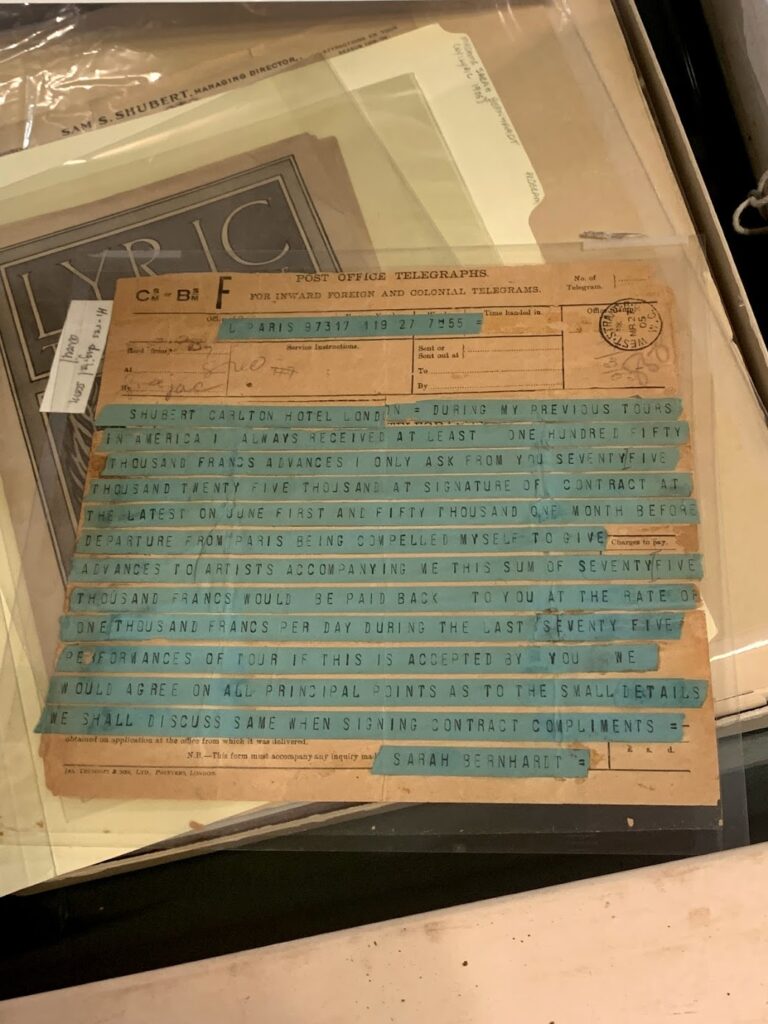
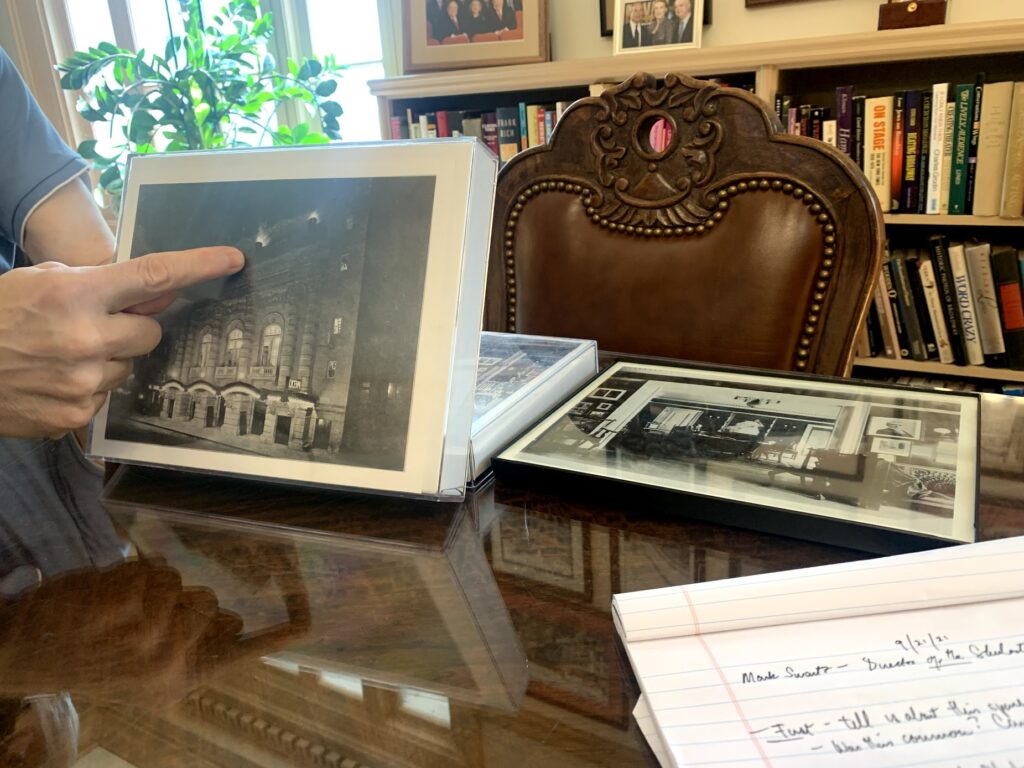
FEATURING A visit to the Shubert Archive above the Lyceum Theatre, a magical trove of historical items from the American stage.
Listen Now – The Shuberts
Our thanks to Mark E. Swartz, Sylvia Wang and Arielle Dorlester for giving us a marvelous tour of the Shubert Archive.
FURTHER LISTENING
After you’ve listened to this show on the history of Broadway, dive back into the back catalog and listen to these shows referred to on the show:
And here’s a special Spotify playlist inspired by this week’s show, featuring tunes which were made famous in America on Shubert stages — either in original runs or very acclaimed revivals.
The Bowery Boys: New York City History podcast is brought to you …. by you!
We are now producing a new Bowery Boys podcast every other week. We’re also looking to improve and expand the show in other ways — publishing, social media, live events and other forms of media. But we can only do this with your help!
We are now a creator on Patreon, a patronage platform where you can support your favorite content creators.
Please visit our page on Patreon and watch a short video of us recording the show and talking about our expansion plans. If you’d like to help out, there are several different pledge levels. Check them out and consider being a sponsor.
We greatly appreciate our listeners and readers and thank you for joining us on this journey so far.
In Times Square
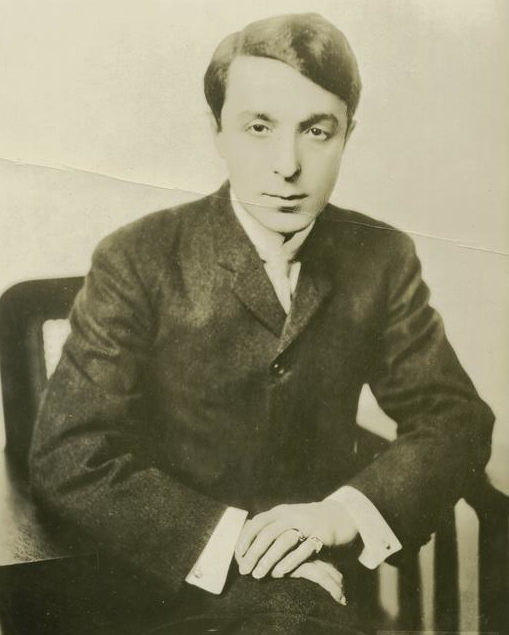
Sam Shubert. He had moxie!
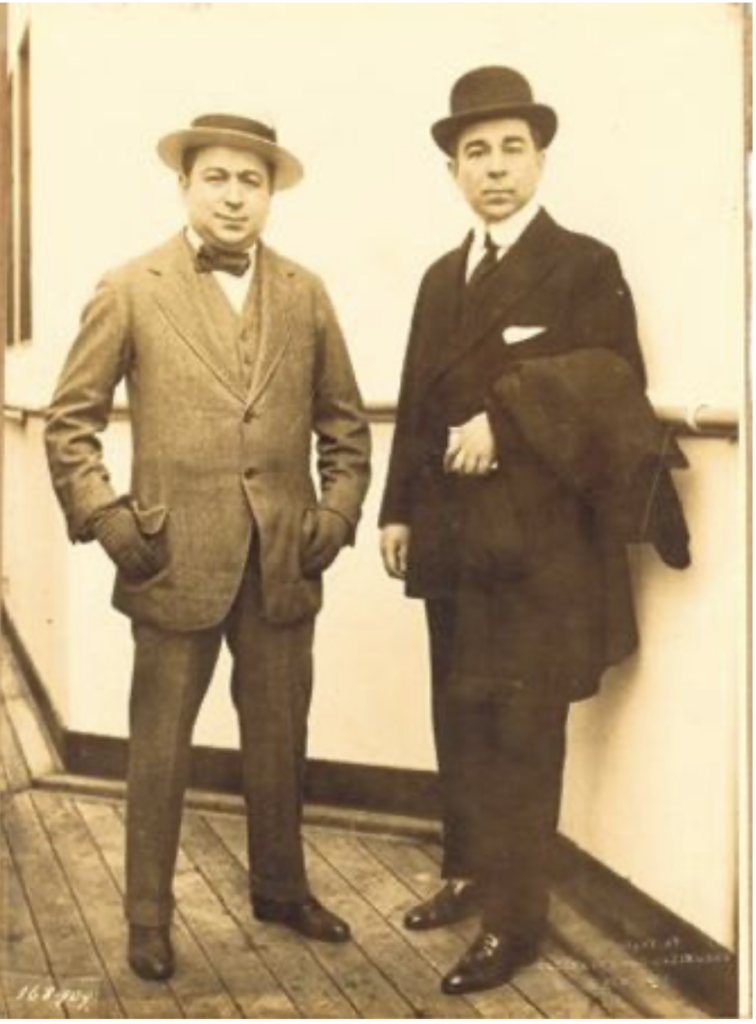
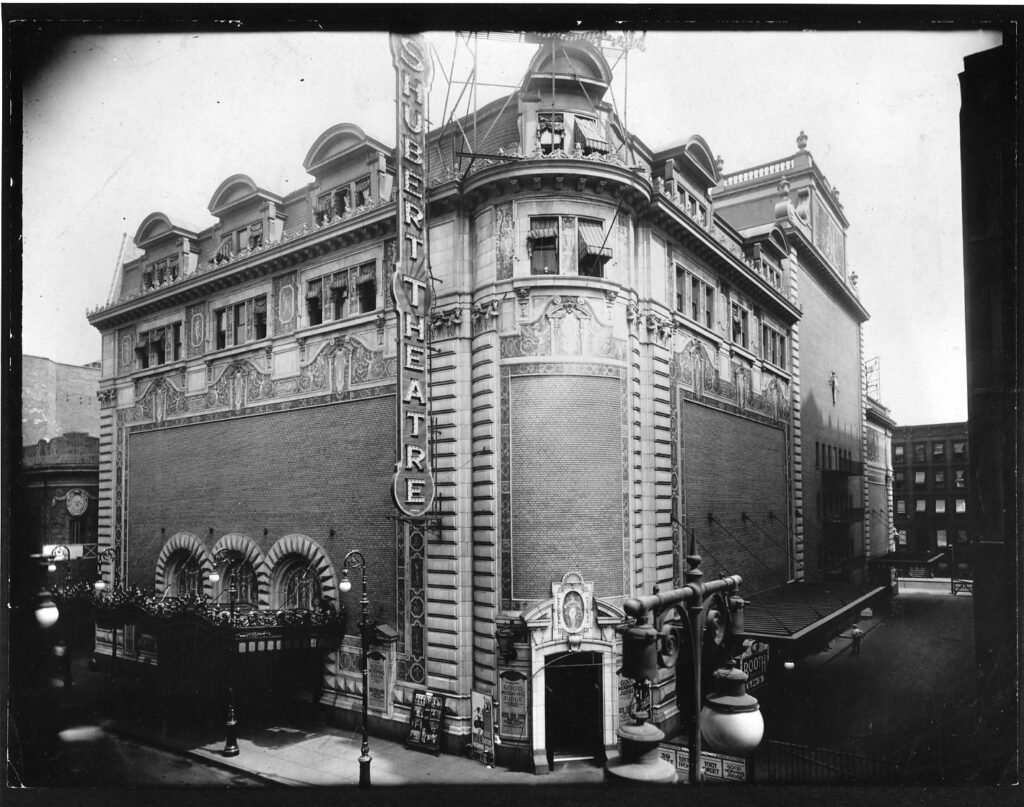
JJ and Lee Shubert, in a rare picture with each other. (Shubert Archive)Shubert Theatre (ca. 1919)
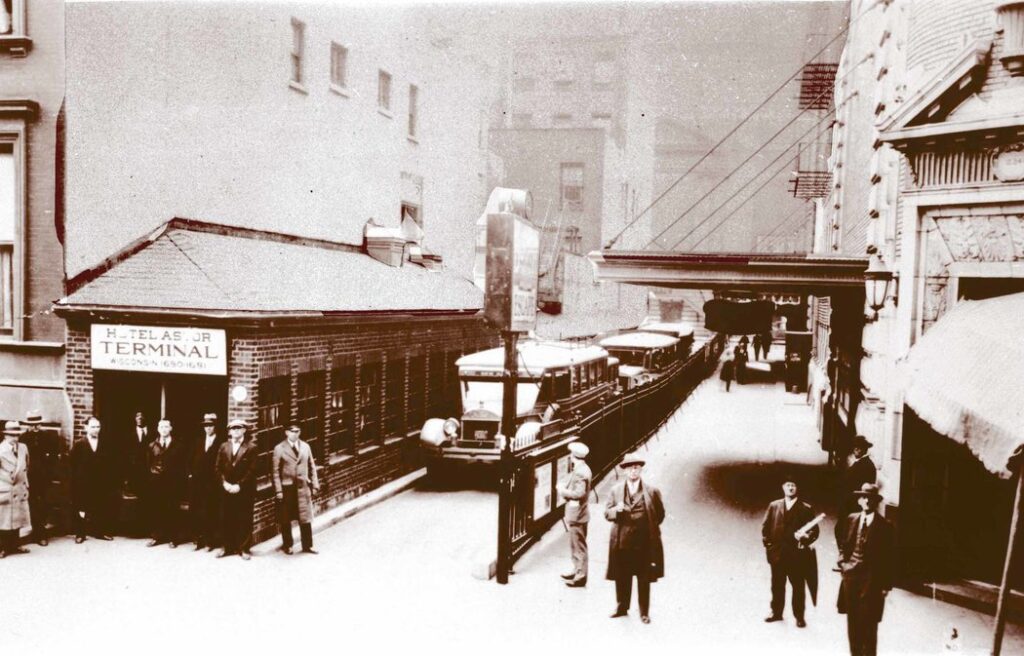
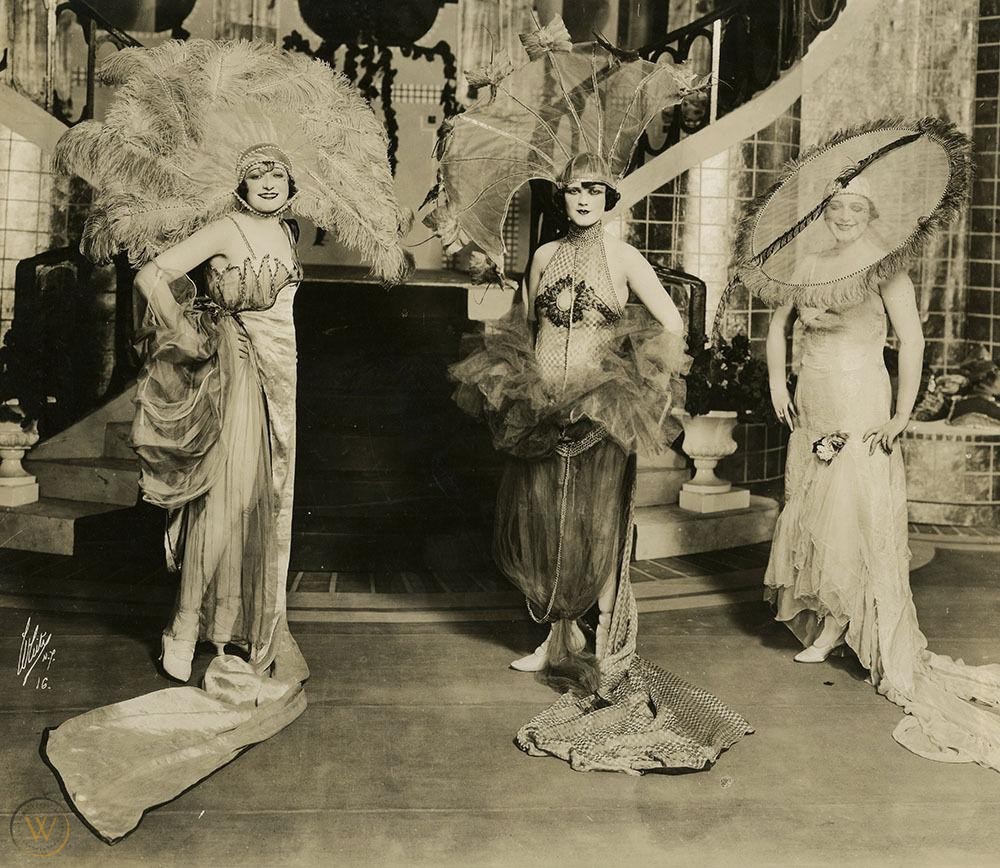
Shubert Alley in the 1930s, looking south, the Booth Theater to the right.Showgirls from The Passing Show
Images from the Shubert Archive (taken by Greg):
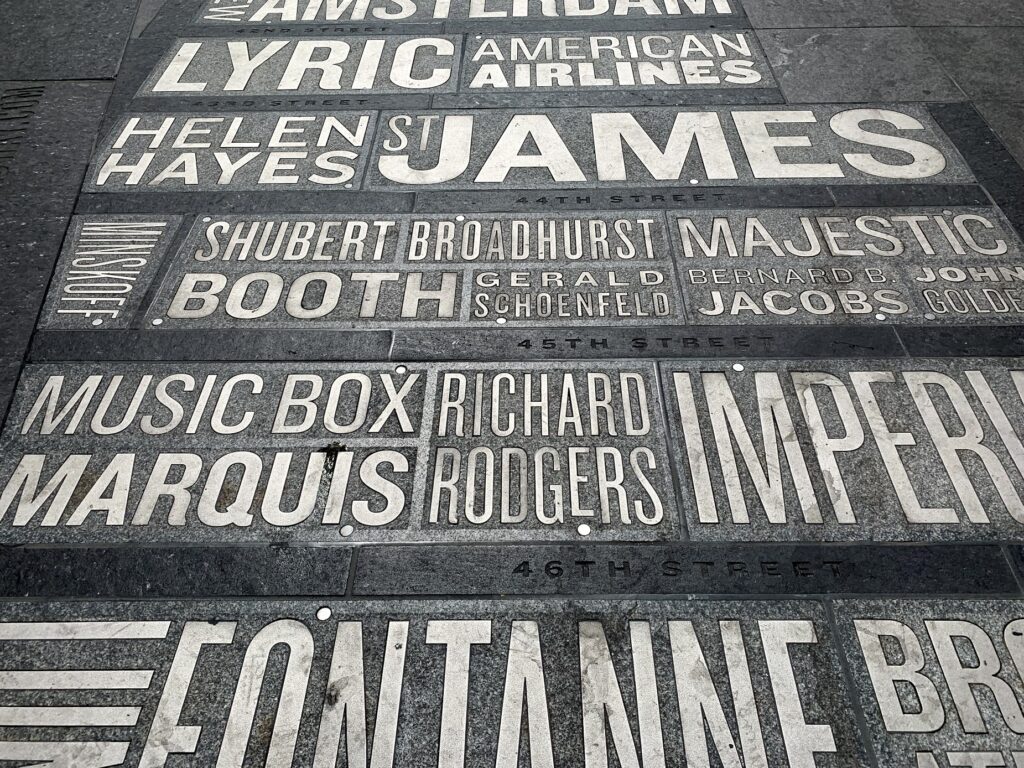
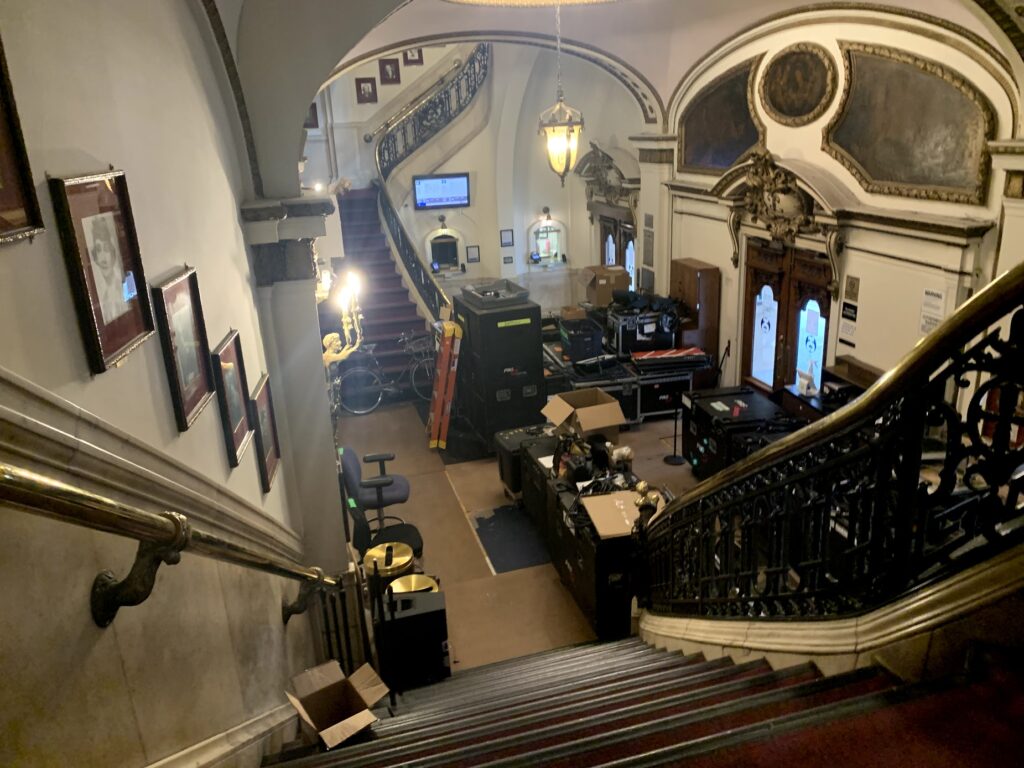
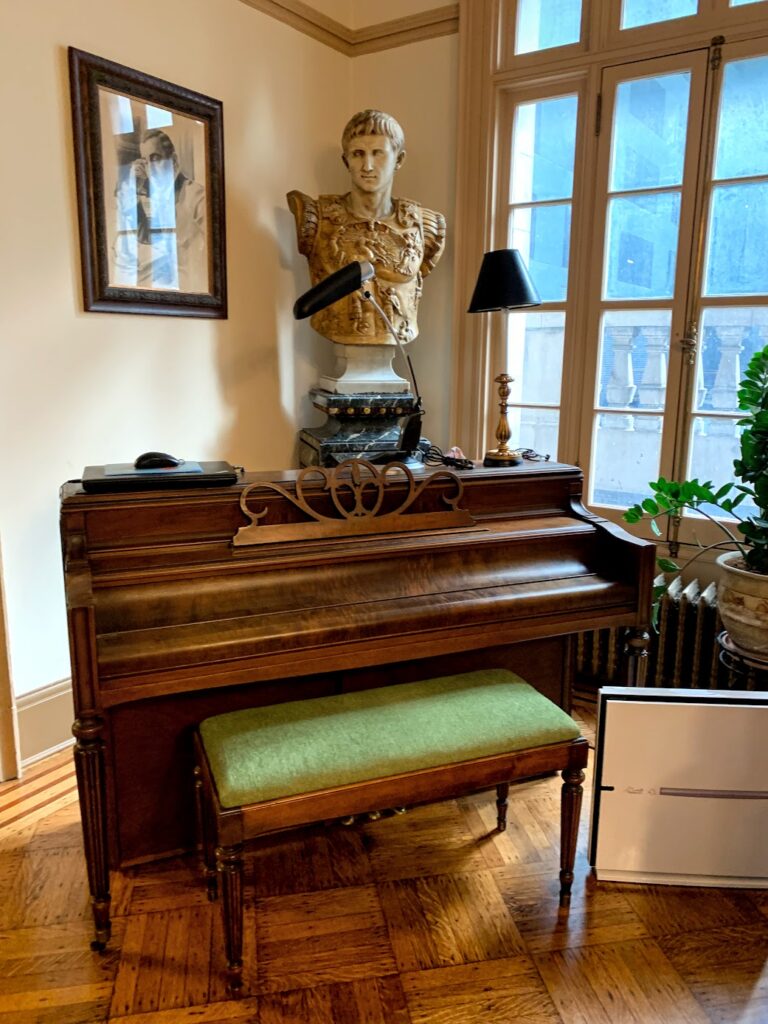
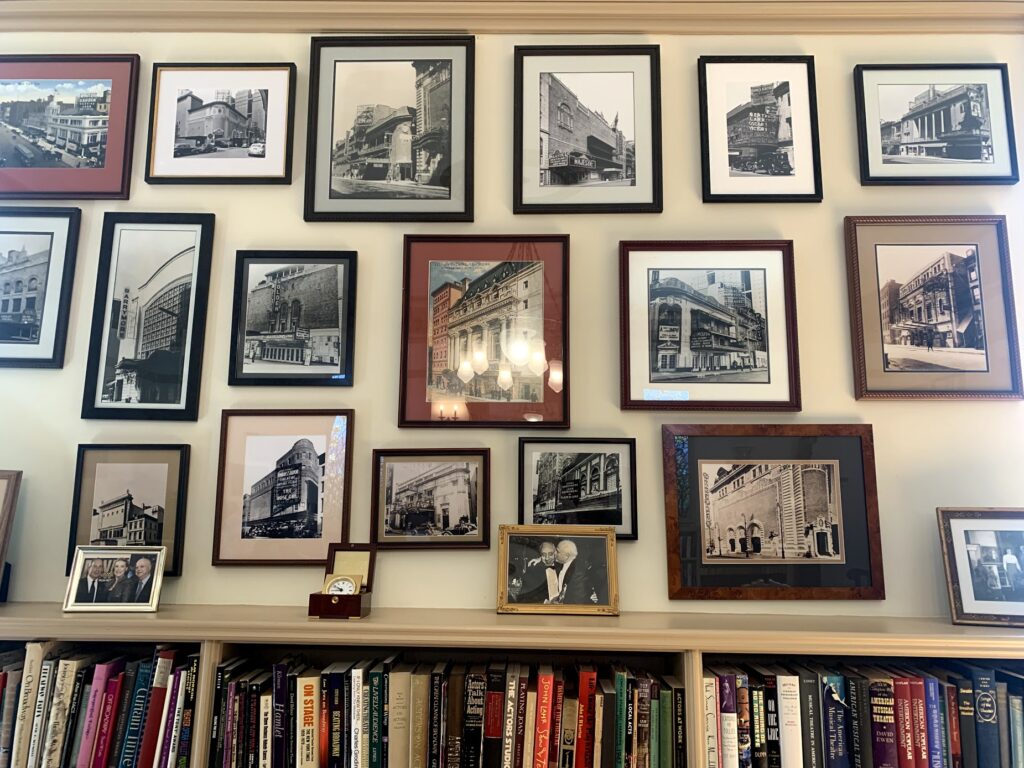
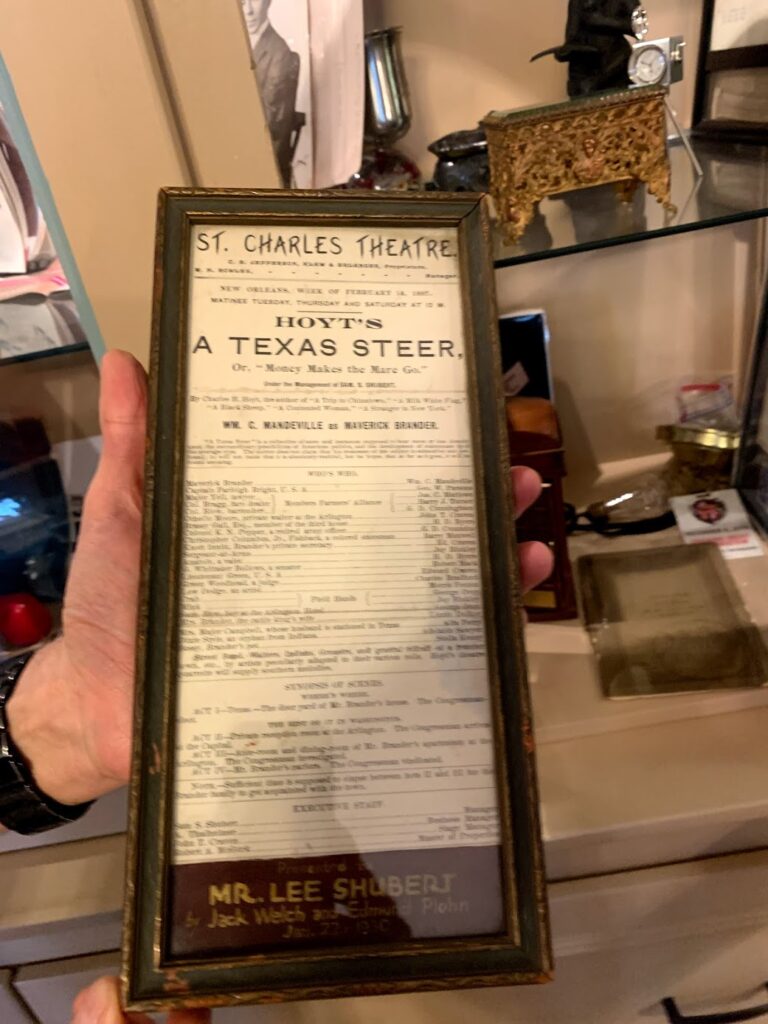
Taking the stairs to the elevator at the Lyceum Theatre.Gerald Schoenfeld’s pianoTelegram from Sarah BernhardtAt the Shubert dining table, looking at old photos of the LyceumWall of Shubert theaters!A notice for A Texas Steer, Sam Shubert’s first show.
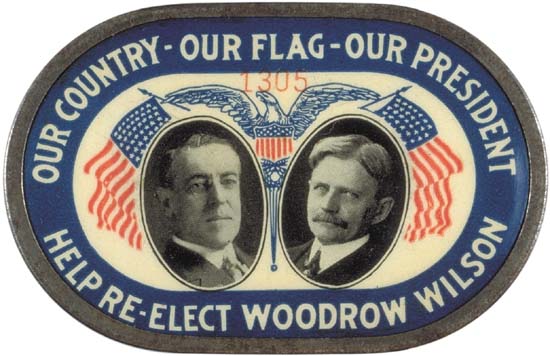
One hundred years ago today, Americans went to the polls to vote for the President of the United States — between the Democrat and incumbent President Woodrow Wilson and the Republican Charles Evans Hughes.
The election was held on November 7, 1916, and it’s interesting to peruse the details of the day itself and the headlines from the following days, looking for parallels to our current election.
Like the current 2016 election, the choice back then sprouted from local political figures, pitting the former governor of New Jersey (Wilson) with the former governor of New York (Hughes). Imagine Chris Christie running against Andrew Cuomo. (On second thought, don’t!)
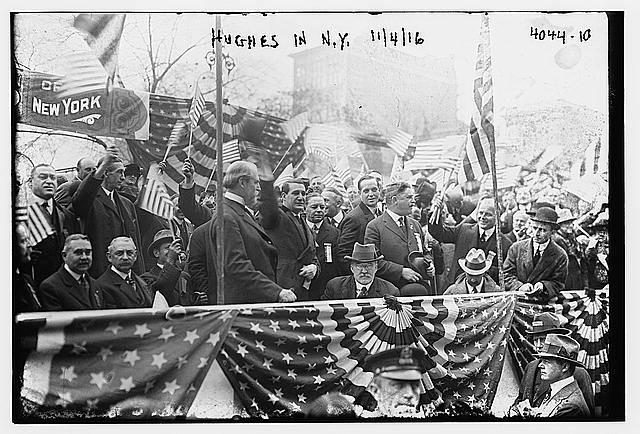
Below: Hughes at a rally in New York a few days before Election Day.
Of course, technically there was a third candidate on the ballot and one with the deepest New York roots — Theodore Roosevelt. After great entreaties by supporters, the former president was submitted as the Progressive Party candidate, only to withdraw his name late in the process to endorse Hughes.
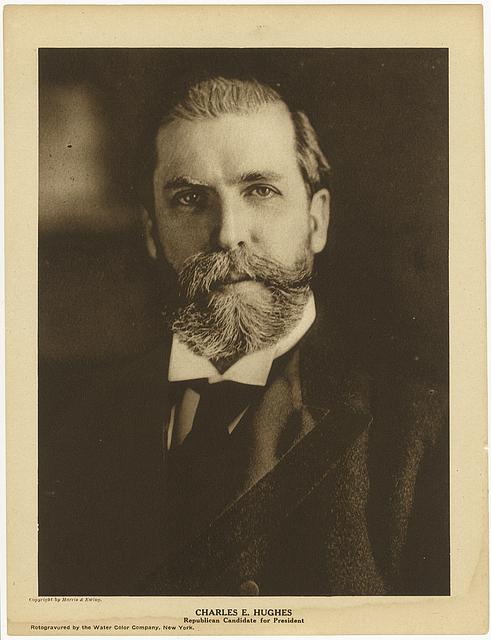
Hughes (pictured above) was a hand-picked recommendation of Charles S. Whitman, the popular New York governor who was himself re-elected that November.
Hughes, who sat on the New York Supreme Court after his tenure as governor, was a popular candidate for President but he was no match for Wilson’s anti-war message. (Literally anti-war. Wilson’s slogan was “He kept us out of war.” President Wilson would eventually enter the war five months after he was elected.)
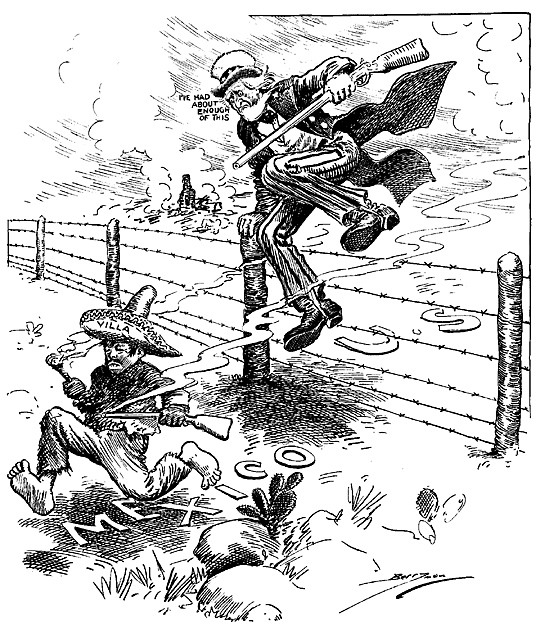
Also on voters’ minds — Mexico. Several Americans had been killed in Mexico and on the border, and the U.S. was in the middle of a punitive attack against Pancho Villa and his militias which had begun that Spring.
Voting looking quite different than it does today. In New York, there were no designated polling places and no absentee voting for non-military members. Half of today’s electorate was missing as women would not achieve the right to vote on the federal level for another few years. (However they would receive voting rights in New York in 1917.)
Secret ballots and voting machines were relatively new installations to the voting process thanks to the election reforms of the 1890s. It was still a wild and relatively imperfect process but a great improvement over the mid-19th century heyday of voter intimidation and fraud.
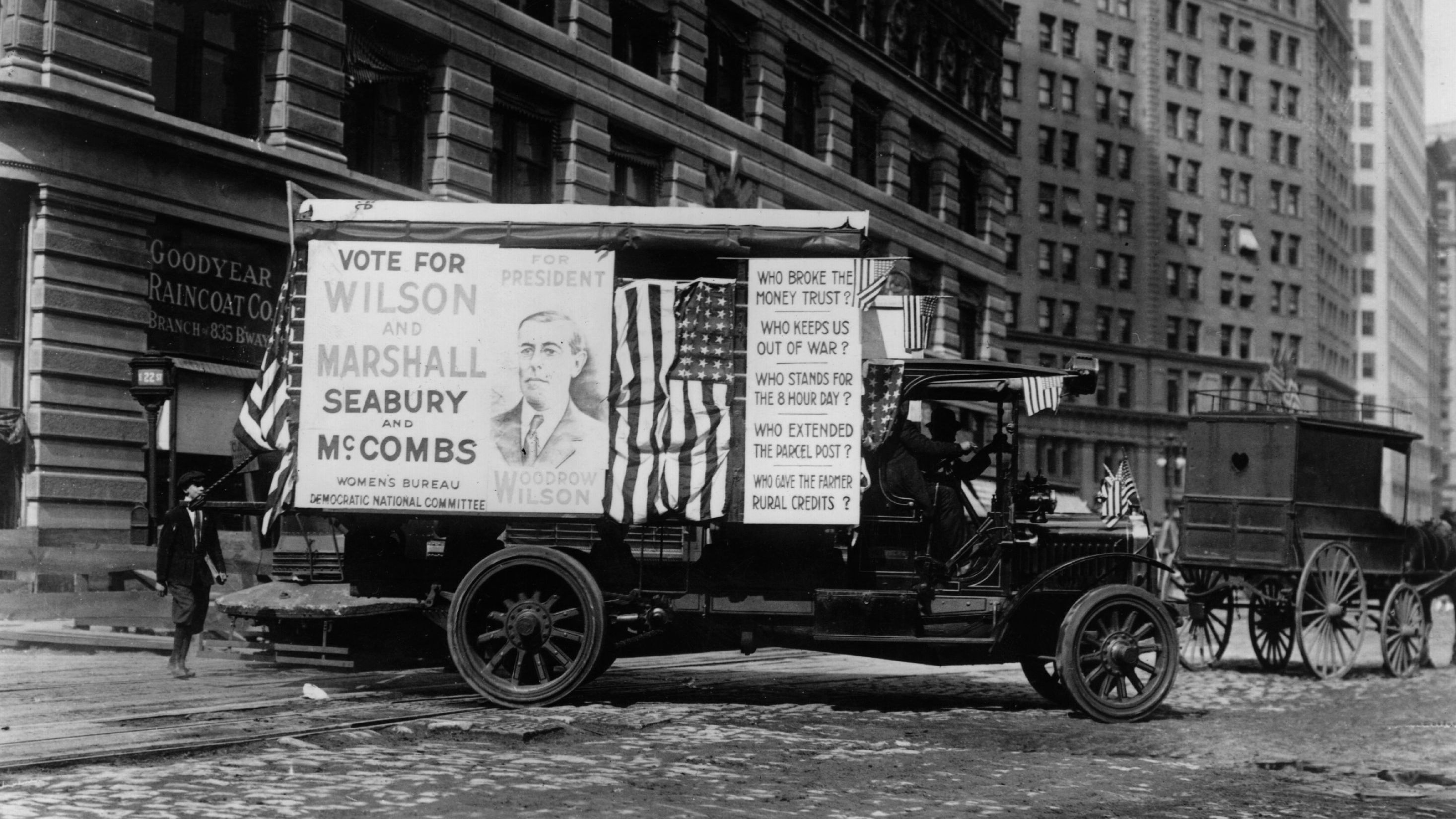
An election campaign car, backing incumbent Woodrow Wilson for president in 1916 in New York.
Of course Hughes was a Republican and at a disadvantage in New York, still considerably controlled by the Democrats and, in particular, the political machine Tammany Hall. Â “Tammany leaders did not give out any figures regarding New York City, but it was asserted at Tammany Hall that Charles F. Murphy was confident that the city would roll up a big Democratic plurality, and that New York state would go Democratic.”
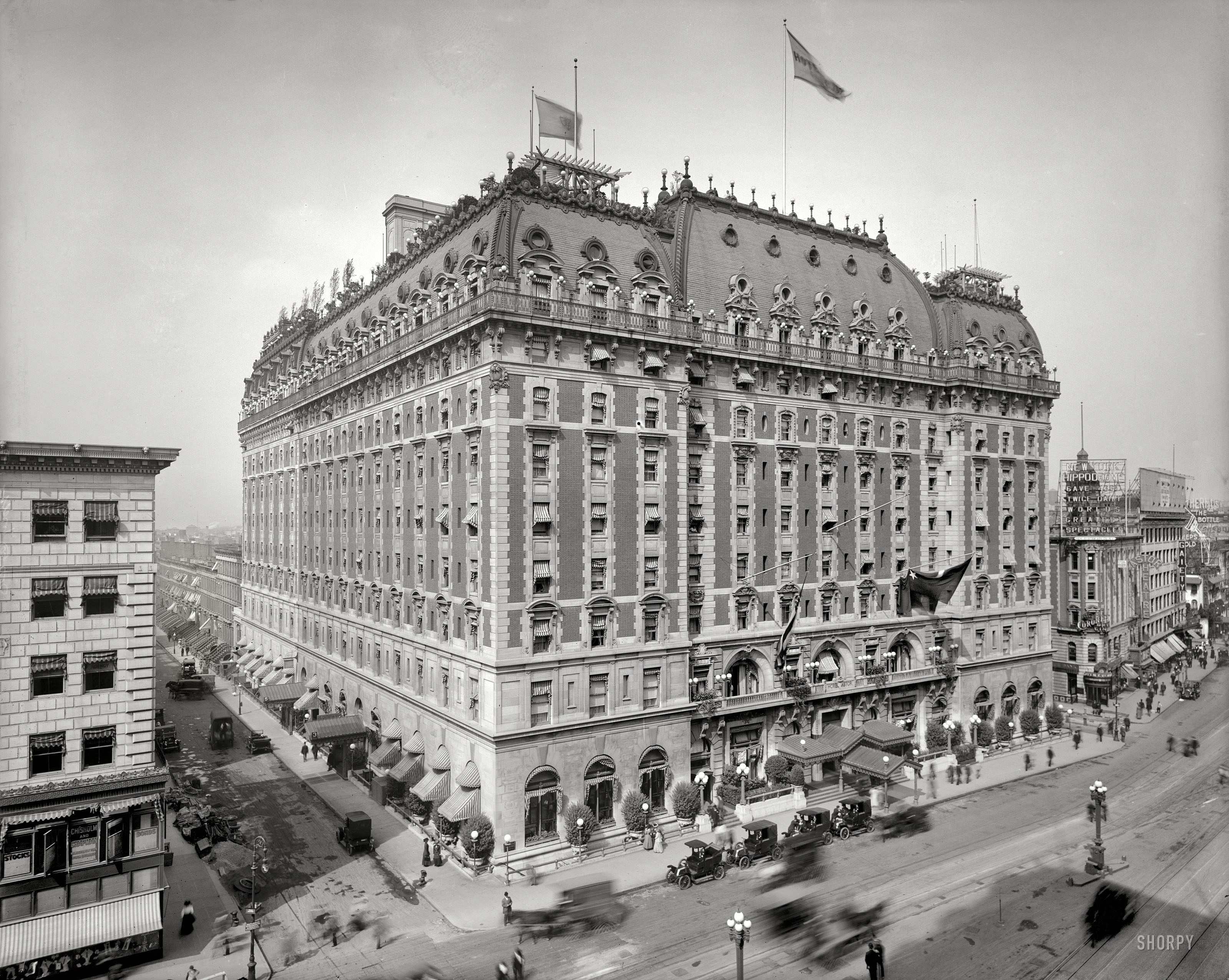
Hughes watched the election results from New York City that day. According to the Times, he voted “in a little laundry in Eighth Avenue between 44th and 45th Streets,” and spent the day at the Hotel Astor in Times Square(pictured below).
While influencers supporting specific candidates were not allowed at the polls, suffragists were certainly there, passing out flyers for their cause and in certain cases, providing poll workers with sandwiches and coffee.
How They Watched The Results
As with many celebrations, there were three gathering points of information, all near newspaper offices — Times Square, Herald Square and City Hall Park. In midtown, people awaited a gigantic searchlight atop of the New York Times building for signs of victory. Late that evening, a red light filled the sky, and New Yorkers who were Hughes supporters began celebrating. At the Hotel Astor, the name HUGHES lit up in electric lights as thousands celebrated below.
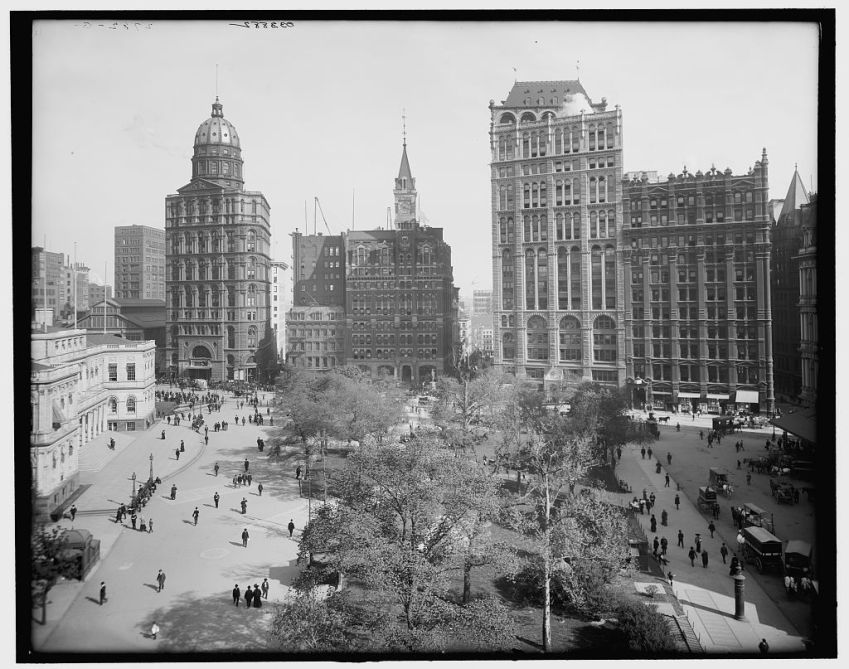
It was a confusing time; downtown at the New York World building (pictured below), a white searchlight announced Wilson as the winner. (It would take days for results from all 48 states to come in.)
The streets of Times Square were thick with revelers — it was comparable to New Years Eve crowds and, in fact, probably exceeded them — although this was mostly due to the fine weather and the results coming in at around the same time as the Broadway theaters let out.
Earlier in the week, city officials authorized the shutting down Times Square due subway construction but it seems people still managed to gather around the edges, looking “like the exit of the Polo Grounds after a world’s series game.” The sounds of horns were deafening. Bonfires were set along side streets.
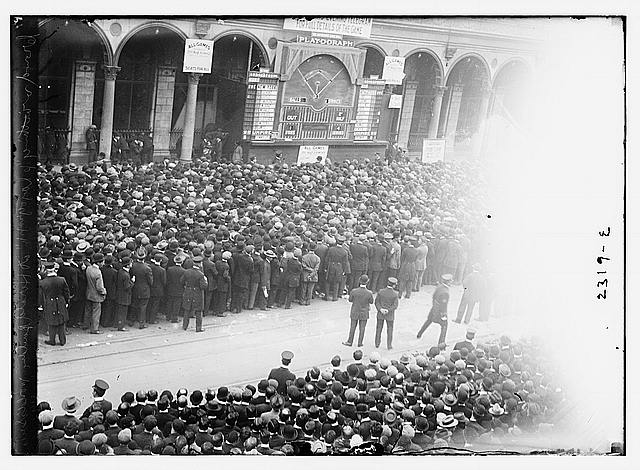
Below: In 1911, in front of the New York Herald building in Herald Square, crowds watch a sporting event via ‘playograph’, a hand-manipulated board. Election results were posted in a similar fashion.
In Herald Square and in Times Square, information on election tallies was delivered via constantly updated bulletins. “[B]ulletins followed each other every few seconds as reports to The Times were telephoned over to the operators from The Times Annex, and the lofty canvas screen was within the view of probably 100,000 people down Broadway and Seventh Avenue.”
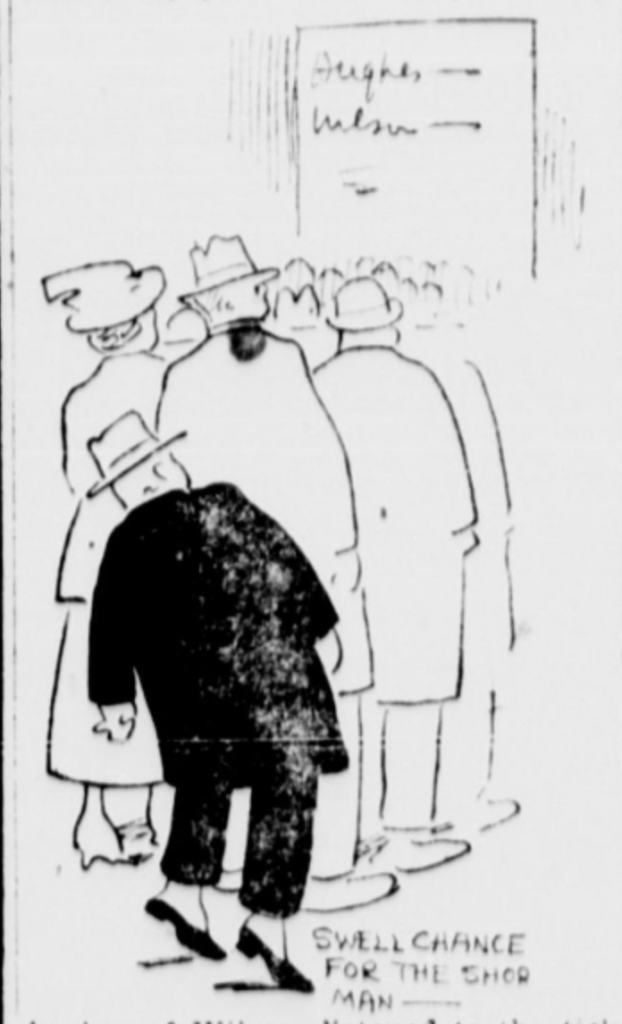
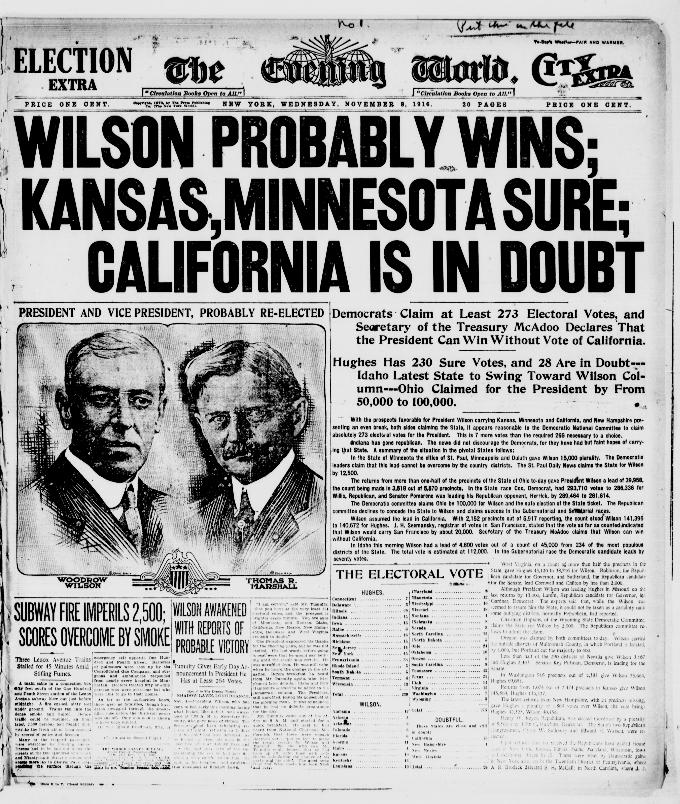
The New York Evening World had a merry go of it, lampooning election enthusiasts on the street. The merry-makers was festively illustrated (see above and below and here for the rest). Yes Election Night used to be fun!
Bulletins were also posted in Columbus Circle. Due to disliked results or perhaps the trauma of the crowd, one man “drop dead there early in the evening.” [source]
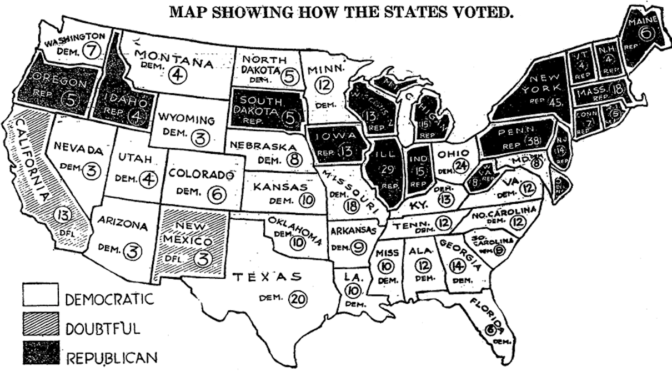
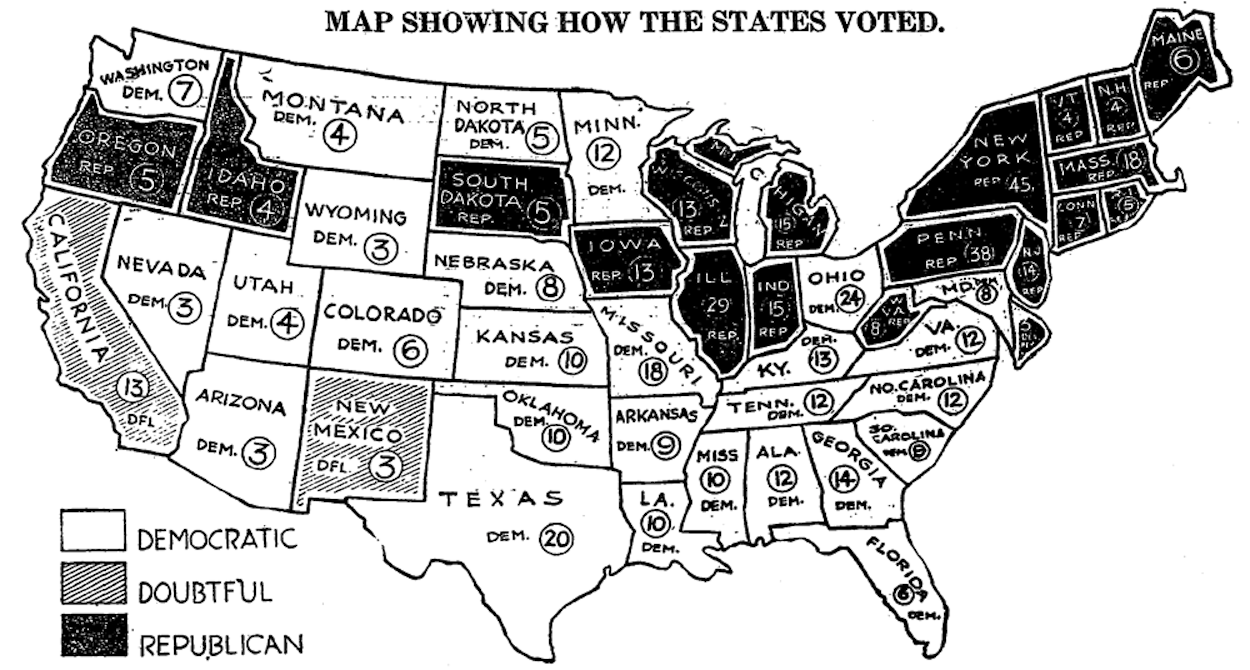
A map of election results which ran in the New York Times on November 8, 1916, is remarkably similar to one which might run in newspapers today. Of course, given the evolution (or de-evolution, depending on you how you choose to look at it) of American politics, the party affiliations have remarkably changed!
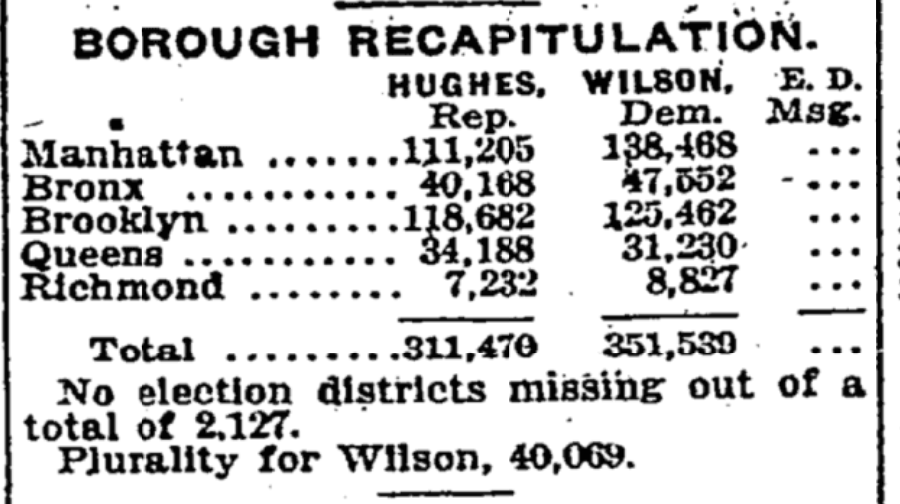
In the end, as with many other elections, New York’s electoral votes went to the Republicans but New York City firmly voted for Wilson. “New York City gave Woodrow Wilson a scant plurality of 40,069 to offset the 186,930 plurality for Charles E. Hughes which the up-State counties sent down to the Bronx line. The city’s vote for Wilson was 351,539, compared with 312,386 which it gave him for President four years ago.” Â [source]
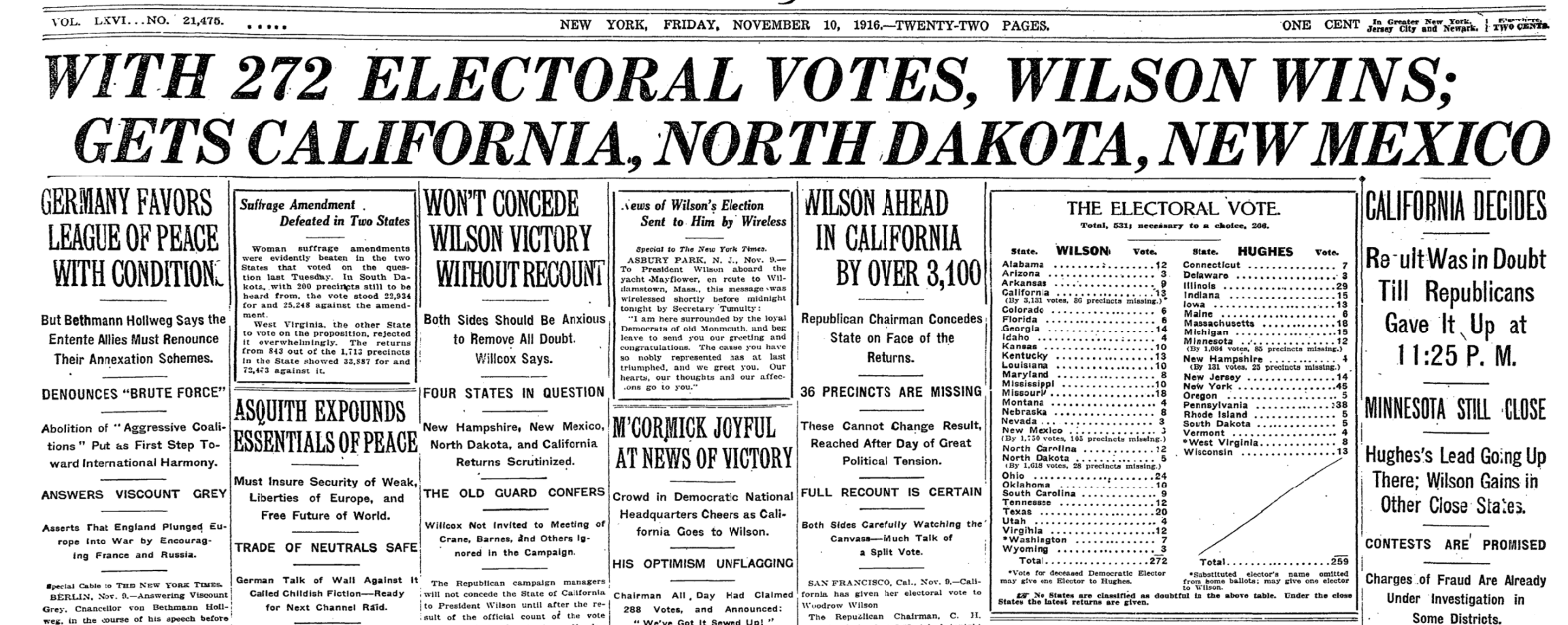
The election was not ultimately determined for a few days. The newspaper front page below is from November 10, four days after Election Day:
Hughes supporters instantly leveled charges of fraud at their opponent but the former governor was too dignified to take the bait. While not yet conceding on November 11, “Mr. Hughes declared that in the absence of absolutely proof of fraud no such cry should be revised to becloud the title of the next President of the United States.” [source]
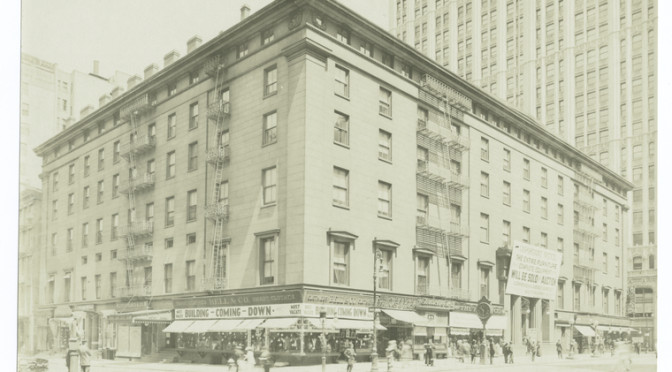
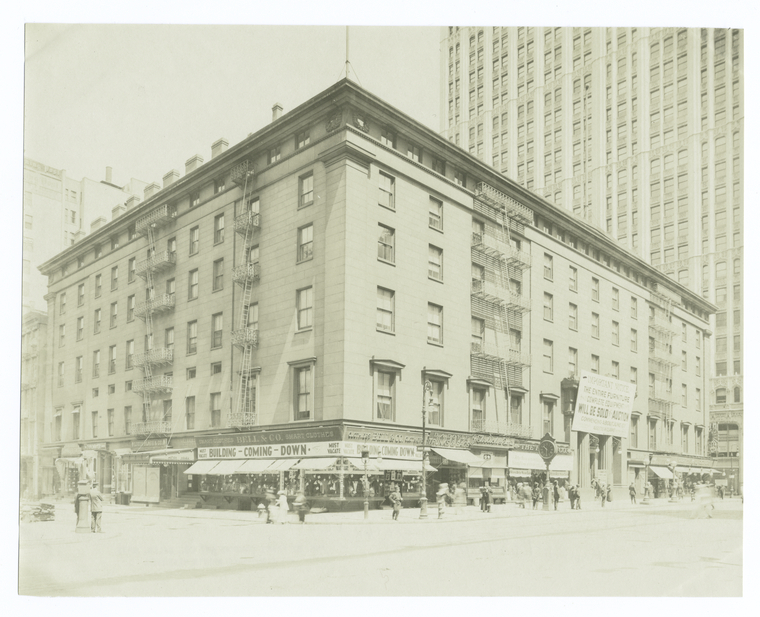
The Astor House was New York City’s first great hotel, opened in 1836 by John Jacob Astor himself, a premier accommodation for the city throughout the 19th century. But by 1913, it was time to tear it down.
It was a symbolic moment for many older New Yorkers. As you can tell from the image above, the ancient hotel had a new neighbor: the Woolworth Building, a symbol of the ‘new’ New York City. As dozens of more modern hotels opened uptown, the old Astor was greatly reduced, with whole sections partitioned for other uses.
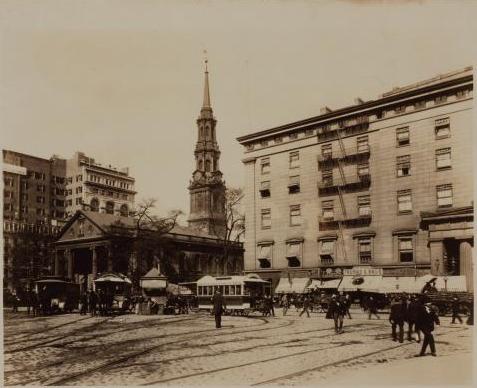
For a little comparison, here’s how the building looked in the 1890s, already minimized in its appearance:
Hotels were now flocking to the Times Square area. In fact, so to did the Astor name, with the beautiful Hotel Astoropening there in 1904.
The hotel might have survived a little longer if not for new subway construction in the area, endangering the foundation of the old building. On May 29, 1913, the hotel closed its doors, and over the next few weeks, the southern section of the Astor House was torn down. But not without a bevy of reminiscences from old New Yorkers, and a little teeth-gnashing too of a colder, modern city overtaking the gentle comforts of the old.
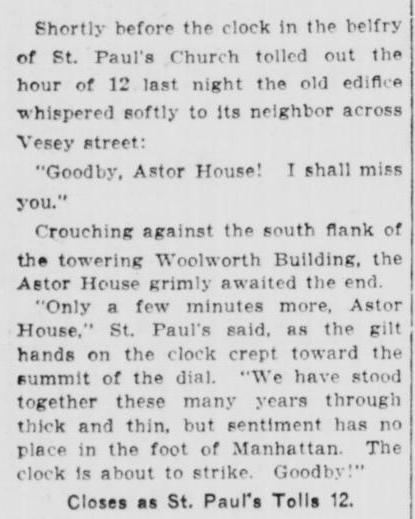
And then, there’s this dramatic article from the New York Tribune, depicting a literal farewell between the Astor and its neighbor to the south, St. Paul’s Church:
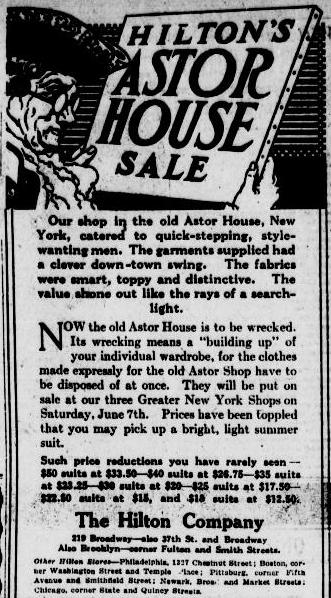
While this spelled doom for a certain memory of New York, those who liked firesales of sorts could take comfort in liquidation sales from famous shops which operated from the old Astor Hotel, such as the Hilton Company:
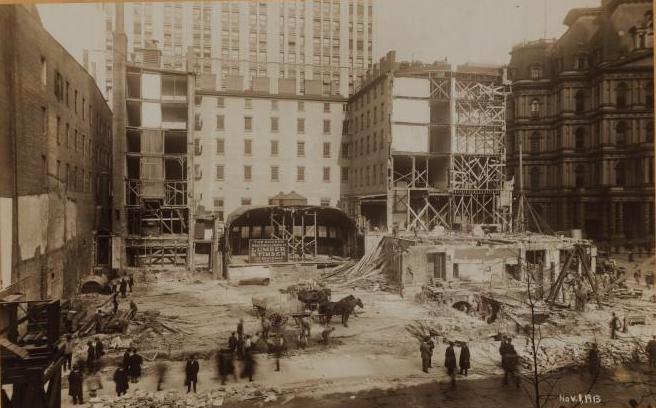
This is what the space looked like within a couple months. By the way, that’s the old Post Office to the right of the picture, a structure that would last another quarter century before it too was demolished in 1939:
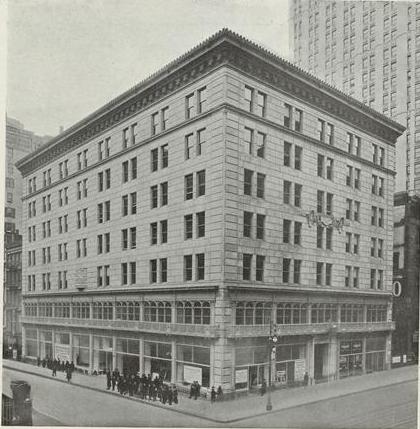
In 1915, it was replaced with the Astor House Building, a small suite of office spaces that remains on that street corner to this day. It’s where the Staples store is
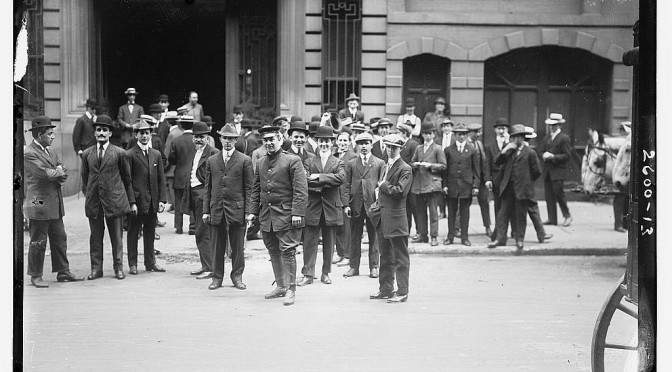
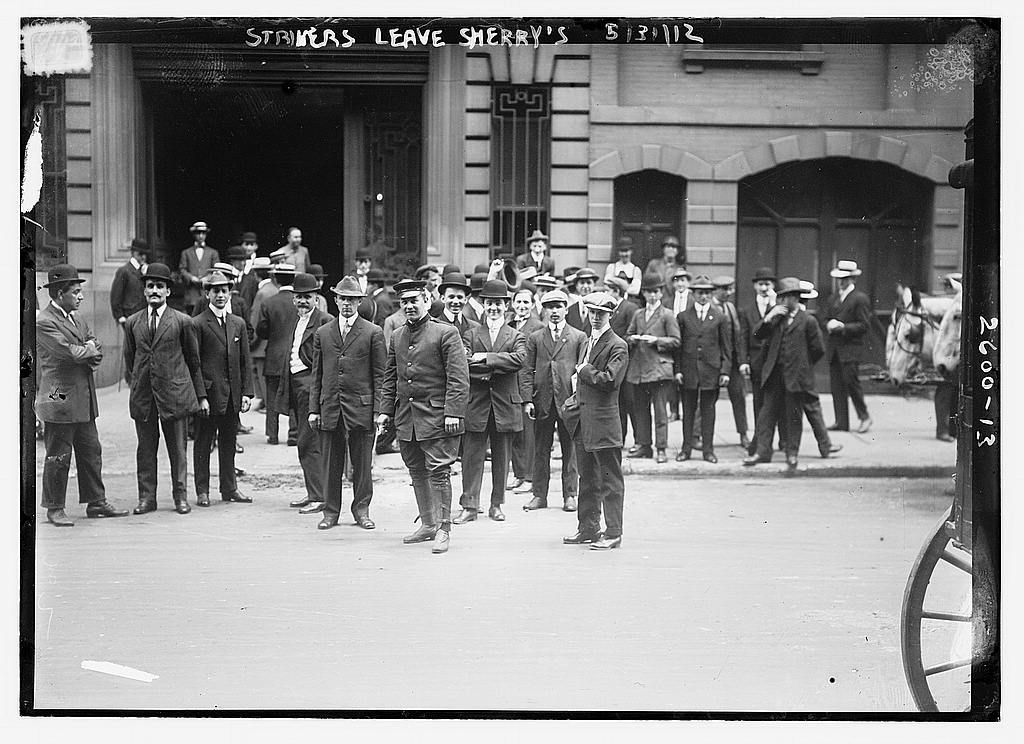
Above: Restaurant workers walk off the job at Sherry’s Restaurant at Fifth Avenue in 1912
One hundred years ago today, a rather peculiar worker’s strike ended, a protest which had paralyzed New York’s restaurant and hotel industries for almost two months. The strike had begun in early May, and by the month’s end, thousands of employees had walked off their jobs, leaving diners in emptied restaurants and wealthy hotel guests to carry their own luggage.
What made this particular walkout unusual weren’t the demands — improved conditions and pay, recognition of their newly formed union — but the locations where the strikes occurred. The employees of the very toniest and best known restaurants and hotels left their jobs in unison. Establishment affected includedthe Plaza, the Hotel Astor, Hotel Knickerbocker, the Waldorf-Astoria, the St. Regis, the Vanderbilt, and restaurants like Delmonico’s and Sherry’s (pictured above), among dozens of others.
Workers decided to return to work after a mass gathering on June 25, at the old New Amsterdam Opera House at 44th Street and Eighth Avenue. While some employers agreed to a few paltry changes, most of the strikers demands were not met, including the recognition of their union. (And to this day, they’re not unionized.)
Some hotels actually refused to hire back anybody who had join the strikers. Or as the proprietor of the Waldorf put it: “I told these men that a job at the Waldorf is not an apple hanging on a tree. I told them that we were doing better than ever, then I told them goodbye.”
The recent trailer to Baz Luhrmann’s The Great Gatsby, aka ‘Moulin Rouge in Manhattan’, seems to have left everyone in a state of awe (and horror) in its vivid, hyper-electro-glossy depiction of Prohibition-era New York. And it left many feeling slight panic, even apoplexy, especially considering the entire spectacle will be rendered in 3D when it’s released in December. Oh God. Will flappers kick whimsily towards the camera?
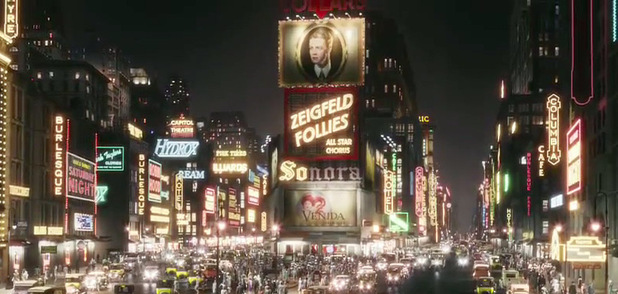
So how accurate was Lurhmann in his glamorous take on Times Square of 1922? How accurate was it supposed to be? Many have already taken note of one glaring and unforgivable error — misspelling the name of Florenz Ziegfeld on the sign for the ‘Ziegfeld Follies’. That ridiculous mistake overshadows a possibly smaller error, that the Follies were actually performed down at the New Amsterdam Theatre on 42nd Street in 1922. However, the Follies from the year before were hosted at the Globe Theater on West 46th Street (today’s Lunt-Fontanne Theatre), quite close to this sign. So perhaps they just kept it up.
Here’s the entire trailer:
Clearly, Luhrmann is interpreting New York, not emulating it. ‘Moulin Rouge’, after all, was Paris through a hazy scrim. He’s filtering the glitz of F. Scott Fitzgerald‘s work through his own dreamlike aesthetic and doesn’t need to fact-check every sign and street corner. Still, the trailer does feature some interesting obscure details, and I can’t help myself. If you saw a different detail, please post about it in the comments section:
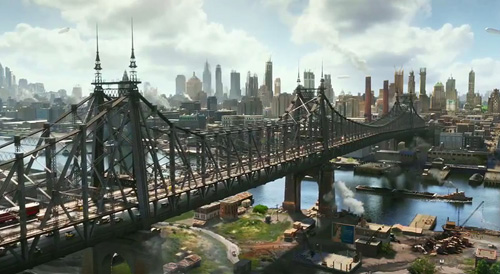
— Queensboro BridgeThe trailer opens with a spectacular look at the Queensboro Bridge, a potent symbol in the Fitzgerald novel. “Over the great bridge, with the sunlight through the girders making a constant flicker upon the moving cars, with the city rising up across the river in white heaps and sugar lumps all built with a wish out of non-olfactory money.”
The bridge opened in 1909, and it’s a defining image of the Jazz Age, not least of which because the population of Queens almost tripled during the 1920s. There were certainly trains on the Queensboro — it was built to accommodate them — but I’m not sure about that particular train. Below it sits grimy old Blackwell’s Island, renamed Welfare Island in 1921 and certainly looking the part.
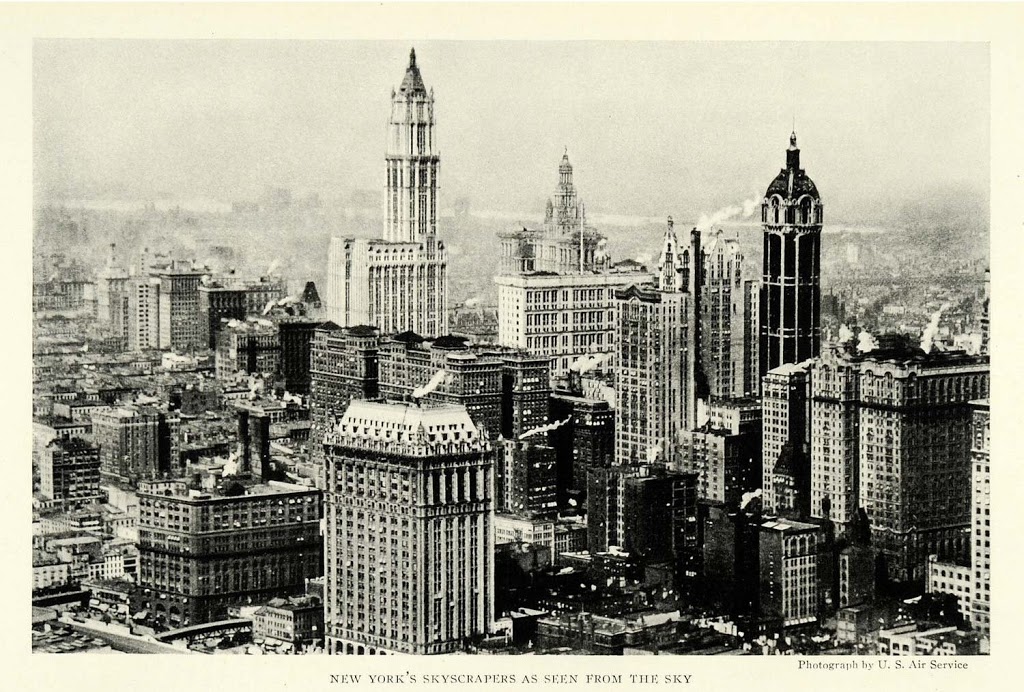
— SkyscrapersOh Lord.I don’t think this depicts New York at all but is a composite view of various buildings of the age. Far to the left in the trailer I see structures that look like the Singer Building and the Woolworth Building, but they would not be seen from this angle. Besides, the Woolworth would be taller than the Singer. See below for a size comparison, in a picture from 1922, looking northeast.
There are some vaguely Flatiron Building/Met Life Tower type structures, but they look like they’re on 42nd Street. And why do I think I can see something that clearly looks like the New York Central Building (later the Helmsley Building) which wasn’t finished until 1929?
— Times Square Signs An array of illuminated products logos — in various colorful hues foreign to Times Square in 1922 — gives the Crossroads of the World a mystical glow. The tony Hotel Astor adorned in lights dominates the plaza to the left. Nearby is an ad for Douglas Fairbank‘s ‘Robin Hood’, released in October 1922. It played at the Lyric Theatre. Fairbank’s rival Rudolph Valentino and actress Norma Talmadge created a buzz when they attended the film’s premiere together here.
It’s next to the advertisement for Hydrox (the sandwich cookie which debuted in 1908) and the Capitol Theater, a movie palace which opened in 1919. The tire ad is a nice touch, recalling Times Square’s status as the center of automobile sales and repair during the early 20th century.
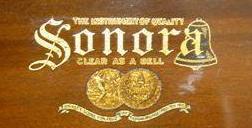
Below the Zeigfeld [sic] Follies sign is an advertisement for Sonora, a phonograph company that began producing radios in 1924. Their slogan ‘Clear As A Bell’ harkens back to the company’s original product line — clock chimes.
Later on in the trailer, an ad can be seen for Arrow Collars, the detatchable shirt collar company that went on to spawn America’s first male model type, the ‘Arrow Collar Man’, the sort of debonair type who populates the world of Gatsby. Of course, the demand for collared shirts pretty much killed of this industry by the end of the decade.
— Grand Central Oyster BarThere appears to be a brief scene at this lush location with its vaulted ceilings. The Oyster Bar would have indeed been a thriving spot in 1922 and an ideal place to mix business with pleasure. A few years later, so goes the legend, David Sarnoff formed RKO Pictures over a few oysters here with Joseph Kennedy. In 1922, Tin Pan Alley lyricist Al Lubin met his music partner Harry Warren here. They went on to create the film musical 42nd Street in 1933.
— Yellow Cab Co.? There are many brief glimpses of taxicabs, including those of the Yellow Cab fleet, which would later be purchased by the Checkered Cab company in 1929. In 1922, the Yellow Cab successfully won a ruling barring other paid-ride automobiles from being painted yellow. ‘1,000 Cabs Face Change of Paint.‘
— Blood And Sand A prominent movie marquee is shown near the trailer’s end for Rudolph Valentino‘s ‘Blood And Sand’, a summer box office smash in 1922. This film debuted at the Rivoli, at 1620 Broadway, at 49th Street. From the New York Times film review on its debut: “Mr. Valentino has not been doing much acting of late. He’s been slicking his hair and posing for the most part. But here he becomes an actor again.” Let’s hope the same can be said of Leonardo DiCaprio, who plays Mr. Gatsby.
By the way, the 1974 version of ‘The Great Gatsby’, starring Robert Redford and Mia Farrow, premiered — with attendees in full ’20s regalia — at the Loews State Theater at 1540 Broadway at 45th Street. “The guests, many of them in Teflon or Daisy white, whatever you want to call it, were greeted by hundreds of celebrity gawkers, reporters and photographers.” [source]
Below: A clip from the Valentino film:
As I rewatch the trailer over the next few days, I may amend this article with further information. If there’s something obvious that I’ve missed, please let me know in the comments below!
Thanks to Michael Raisch, whose Tweet to me last night inspired this article. Screenshots courtesy of Curbed and Entertainment Weekly.